Tag: imperfect

  • We All Make Mistakes, So Let’s Try to Remember the Good

    We All Make Mistakes, So Let’s Try to Remember the Good

    Julius Caesar has long been my favorite work of William Shakespeare. I am drawn to the political intrigue, the betrayal, the powerful words of Marc Antony.

    One line from the play has always remained lodged in my mind:

    “The evil that men do lives after them; the good is oft interred with their bones.”

    The line often pops into my head when I feel unjustly persecuted or blamed. Shakespeare understood hundreds of years ago that human nature causes us to feel self-centered and unjustly targeted.

    While I recognize I am not now nor was I ever a perfect mother, I do know I was not a terrible mother. I never missed a school event. I made the dioramas. I read with my kids every night. I helped them prepare for no fewer than three competitive spelling bees.

    I ran school carnival booths. I made the calls to the principals and superintendents when unjust policies were implemented.

    My house was the spot where my son’s friends always came to hang out.

    I gave an epic Jackass themed birthday party when my son turned thirteen that remains legendary among his friends.

    While my ex-husbandwouldn’t often get up early on Saturdays, I never missed one of my daughter’s soccer games. I made sure I stayed involved in tennis, soccer, and swimming.

    I sharpened two pencils for my son every morning and set them out before he left for school. I put a sticky note of encouragement in my daughter’s lunch each day.

    I fought for them against abstinence-only education, ministers eating lunch in school without parental permission, and any other unjust issue my kids needed me to fight against.

    I worked on every college scholarship application with my daughter. I attended every college visit with her.

    She and I have been to dozens of Broadway shows together.

    I do not recount those events to receive accolades or praise. Millions of mothers do the same activities daily.

    Those memories are just some of my strongest as a mother. That is the reason for my recounting those memories. I remember the good about motherhood. The carnivals, the laughter, the vacations.

    No doubt my kids remember the bad more strongly. Because of my problems with alcohol, I remember a humiliating event where I chased my son trying to get him to try a drink in front of his cousin and friends. I know I got drunk the first day of my daughter’s freshman year and passed out that afternoon.

    I am sure they have multiple other negative stories about me. I began drinking in a dysfunctional manner off and on at age twenty-eight. I take responsibility for it. I’ve stupidly driven drunk. I’ve experienced the ire of both of my children in response to my drinking. I’ve spent years sober and spent months in relapses.

    Addiction appears in the DSM-V as a disease. I will fight it for the rest of my life, but I live in fear that the evil overtakes the good in the memories of those I love.

    The evil I’ve done lives on; the good remains buried. I recognize that is probably my own shame and self-pity surfacing, but I continue to feel the good remains buried.

    I experienced a similar childhood and understand now that I react to my mother in an equally unfair manner.

    My mom was the “cool mom.” She was the first one who would stand up for me or any other underdog. She was funny, edgy… My friends all loved her.

    Monetarily, I never wanted for anything. I grew up in suburban America. We went on vacations—nothing fancy: Tennessee, Arkansas, New Mexico. I had new school clothes and shoes every year. My mother never missed any event in which I participated.

    I remember the silly songs my mother would sing to me. I sentimentally keep a list of them on my phone. I remember my mother’s laugh. I am remembering the good. I want the good to live on.

    Like my own children, I will admit that it’s the “evil” I tend to remember more easily. I continue to fight that urge.

    My mother too battled with alcohol. She would get off work at 5:00 p.m. and disappear. I memorized the phone number of every regular bar she visited, every jail, and every hospital in the area. I called so frequently looking for my mother that I knew every phone number by heart.

    She drove drunk, picking up a friend and me from the movie theater, drunkenly yelling out the window. Meanwhile the grease she’d put on the stove to cook chicken at home had caught on fire.

    She passed out half-naked in my room when I was thirteen and a friend was spending the night. We had to try to drag her to bed. This event occurred after a special night of her hurling pornographic obscenities at a Craig T. Nelson character and a Jim McMahon commercial while watching television with us.

    She ran into a dumpster while driving home one night. She called us, but was so drunk she could not explain where she was.

    I am now conscious of the fact that I am guilty of that same Julius Caesar line regarding my mother. The good that she has done remains interred. The evil tends to run unfairly on repeat in my mind.

    My mother was a good mother. She was flawed, as I am, as we all are, but she was my biggest ally when I was a child.

    I am going to make a commitment to remember the good. I do not want it interred with her bones. I owe her the same that I hope for myself. Let my kids remember the good. Let that be my legacy. I owe it to my mother for the good that she has done to be her legacy.

    I cannot ever take back the hurt I’ve caused for my children, but I also know that I can strive to be better. That’s all any of us can do. We’re all only human. We all make mistakes. And we all have the choice to honor each other by remembering the best moments instead of focusing on the worst.
  • Overcoming Shame: Forgive Yourself and Let Go

    Overcoming Shame: Forgive Yourself and Let Go

    “Stop beating yourself up. You are a work in progress; which means you get there a little at a time, not all at once.” ~Unknown

    I haven’t always been the woman I am today.

    I used to be scared. Of everything. And everyone. Painfully shy and insecure, I saw myself as a victim of my circumstances and was always waiting, on guard, for the next rejection. I masked my insecurity in a blanket of perfectionism, and worked hard to put forth the image that I had everything together and had it all figured out.

    I did a good job looking the part. On the outside most people just saw an attractive, intelligent, successful woman, and had very little awareness or understanding of the pain and fear that was living inside.

    To further protect myself, I oftentimes took advantage of knowing that others believed my facade.

    I believed myself to be unworthy of love or loving, and there were times when the only way I knew to feel good about myself was to treat others harshly, often by knowing I could intimidate them just by being my “perfect” self.  

    I had split the world into people that I was either better than or less than.

    It’s been said that someone once asked the Buddha whether it was possible to be critical and judgmental of other people and not treat oneself the same way.

    He said that if one is critical and judgmental of others, it is impossible not to treat oneself the same. And that while at times it appears that people can be judgmental toward others, but seem completely satisfied themselves, this is just not possible.

    How we treat others is how we treat ourselves, and vice versa.

    I’ve spent the last four years working on finding compassion for myself and those who I blamed for my pain, embracing the concept of self-love so that I could find a sense of peace within. I’m proud of myself for how far I’ve come and the life that I lead today.

    However, it was recently brought to my attention that, despite the hard work I’ve done and the large shifts I’ve made, there are still some people who have a negative perception of me, and some hurtful words were used to describe my qualities and attributes.

    When this was shared with me, I immediately felt the stinging pain of rejection and my automatic response was to go to shame. I felt really bad about myself.

    Aside from the fact that I don’t think it ever feels good to hear that someone doesn’t like you, I’ve spent a long time working to heal these very wounded parts of myself, and in a moment they were all brought back to the surface in a very painful way.

    When memories arise of behaviors and situations we’re not proud of, it can be easy to turn to shame. However, shame has very little usefulness, as it oftentimes serves to shut us down, isolate, and close ourselves off from others and our own healing.

    Seeing this reaction in myself was an indication that there was work I needed to do, something within that I needed to address.

    This situation showed me that I have spent years turning my back on this former image of myself, striving to be better, but what was still lacking was compassion and forgiveness.

    Pema Chodron describes emotional upheaval, feelings of distress, embarrassment, or anger that we assume is a spiritual faux pas, as actually being the place where the warrior learns compassion.

    When we learn to stop struggling with ourselves and dwell in the places that scare us, we are able to see and accept ourselves and others exactly as we are, complete with imperfections.

    We all act unconsciously and without consideration for others at times. When we allow ourselves to be honest about these behaviors, without the judgment of shame, we are left with remorse, which is a quality we are actually quite fortunate exists.

    Remorse can help us refine our actions and to live a more authentic life. It does not mean that we are useless and unworthy or that we made some horrible mistake beyond repair. It simply means that we are human, and that like all humans, we are in a learning process.

    Remorse can be a sign that we are becoming more aware and that what was previously unconscious is coming into consciousness.

    However, if we move into shame and beating ourselves up, we stop ourselves in our tracks, get stuck and likely remain in the mistake, and deprive ourselves of a lesson learned and opportunity to do things differently moving forward.

    In order to keep moving forward in the face of remorse, we need to be able to find compassion and forgiveness for ourselves. We all know, however, that forgiveness cannot be forced. But if we can find the courage to open our hearts up to ourselves, forgiveness will slowly emerge.

    The simplest way I know how to do this is to, in the face of painful feelings, start by just forgiving myself for being human. This can be done with a simple breath practice.

    By bringing awareness to our experiences and acknowledging our feelings, we can then start to breathe these feelings into our hearts, allowing our breath to slowly open it up as wide as possible. And then from this place, with our breath, we can send ourselves forgiveness.

    And then, in the spirit of not dwelling, we let it go. Breathe it out and make a fresh start.

    This practice of acknowledge, forgive, and start anew doesn’t magically heal our wounds overnight and it’s not a linear process.

    I find that forgiveness is a state that we move in and out of, and will continue to revisit, oftentimes, for many years, oscillating between shame (or anger, resentment, fear, etc) and compassion. Ideally though, with practice and patience the time spent in shame will become fewer and farther between.

    If we practice this way, continuing to acknowledge, forgive, and let go, we will learn to make peace with the feelings of remorse and regret for having hurt ourselves and others. We will learn self-forgiveness and eventually, we will learn to forgive those who have harmed us too.

    Photo by Don 

  • We Deserve Love Even When We Do Things We Regret

    We Deserve Love Even When We Do Things We Regret

    Sad Woman

    “You are imperfect, you are wired for struggle, but you are worthy of love and belonging.” ~Brené Brown

    Do you have parts of yourself that you’d like to change? Maybe even parts of your personality you’re a little embarrassed by?

    I do.

    And if I started to list them I probably wouldn’t know where to stop.

    I can be a complainer and whiner. Even worse, I sometimes turn into a martyr and feel sorry for myself. Other times I’m overly impulsive and have been known to have a really erratic temper.

    But the thing is, we’re not our behavior. Often we know when we’re not acting our best and if you’re like me, you’re exceptionally hard on yourself.

    In the past when these less than noble parts of myself raised their whiny heads, I cringed and felt ashamed. It seemed proof that I had not traveled far at all on the road of self-discovery.

    For instance, I often write about mindful living.

    Yet in the past year I alienated an editor and lost a writing gig by not thinking before I fired off a rather rude email.

    I hurt a friend when I wasn’t sensitive to the things happening in her life.

    I’m an advocate of eating healthy, organic food yet twice in the past month I bought a bag of Fritos and devoured it.

    Who the f*&% am I to be writing about mindfulness and healthy living?

    Oh, yeah, and I swear too much.

    If I indulged myself, I would start to think why even bother trying to be my best? Nothing is going to work out anyway. I’ll be the same sorry loser I always was. But that kind of thinking gets us nowhere. And when we’re feeling bad, our lesser selves often rise to the surface.

    When we sink into these places of despair it can be so hard to crawl back out.

    But we have to. We need to recognize when despair first begins to wrap its slimy arms around our necks and threatens to pull us into that dark hole of depression.

    We need to develop tools and learn to call on them in times of crisis. We may need to see a doctor and get medication. It’s nothing to be ashamed of.

    We can change how we act. It’s not easy. It takes a lot of work but it can be done.

    And something happens when we change our behavior. We begin to change inside as well.

    Who are your ignoble selves? We all have them.

    • Do you judge others?
    • Do you feel like you could tell everyone a thing or two about religion, politics or life?
    • Do you make fun of people for doing or saying things you find unintelligent?

    Our judgment usually comes for a sense of inadequacy in our own lives. We all do this from time to time, so you don’t need to judge yourself for doing it. But you can leverage this awareness to change your thoughts and behavior. The key is to work toward change from a place of self-compassion instead of motivating yourself with shame. How do we do that?

    Practice acceptance.

    If I could choose one word that has helped me to live with my ignoble selves it would be acceptance.

    It’s a simple concept, yet hard to practice. But acceptance has been far more helpful to me than either love or forgiveness.

    The truth is, there are people in my life I have a hard time forgiving or loving, but I’ve been able to create positive change in my life by accepting what they’ve done.

    I really can’t forgive my grandfather who molested me as a young child. And I certainly feel no love for him.

    I’m not sure I’ve forgiven my sweet, scared, and skittish mother for not seeing the deep, acute pain I was in and doing something about it, but I will always love her just the same.

    Acceptance has led me along the path of love and forgiveness, but I couldn’t get there without first accepting the reality of life as it is: imperfect and painful as well as fulfilling and full of joy. Both realities are accurate.

    Acceptance ultimately comes back to accepting ourselves as we are with all our beautiful imperfections. Once we truly accept who we are for what we are, we open the way to change.

    Forgive yourself.

    We often forgive others much more easily than we forgive ourselves, but after acceptance, forgiving yourself may be the next most important step.

    Forgive yourself for your imperfections.

    Forgive yourself for your less than noble behavior.

    Forgive yourself for not being the person you think your lover or friends or family want you to be.

    Forgive yourself if you’re still not living the life you think you should live.

    Life is not easy on any of us.

    We’ve all had traumas and losses. We all have personality traits that are less than stellar.

    But if we begin with acceptance and move onto forgiveness, we will inevitably come to the ultimate goal: love.

    And when we truly love ourselves, we’ll find our ignoble selves become less and less dominant. They’ll still show up from time to time. That’s just the nature of things, but with love we can kindly refuse to indulge them.

    Love brings laughter back into our lives and helps us turn our ignoble selves into one perfectly flawed being alive with joy and love.

    Sad woman image via Shutterstock

  • You Don’t Have to Appear Perfect: It’s Okay to Admit You’re Flawed

    You Don’t Have to Appear Perfect: It’s Okay to Admit You’re Flawed

    You Were Born to Be Real

    “Out of your vulnerabilities will come your strength.” ~Sigmund Freud

    If you’re anything like I was, you have an image of yourself that you want other people to adopt. You think people expect that of you or would like you better if that’s who you were, so you pretend to be that person.

    Over time, you put on layers of protection to prevent people from seeing the imperfections that would undermine that perception. You refuse to admit to those imperfections. You may also blame others, the weather, or fate for any perceived failure—anything but yourself.

    As a result, you can’t interact with people in a real way because you can never let your guard down and be yourself. So your relationships are less than they could be.

    And you can’t really grow, because that would involve admitting you have a weakness.

    I’ve been there.

    I spent decades trying to live up to the image I thought people wanted and expected of me: the golden-boy, the successful one, the smart one.

    I am an only child and the oldest kid in my generation in my family. With that came a lot of pressure, mostly self-imposed.

    I got good grades in smart-kid classes, I didn’t drink, I didn’t do drugs, I started on my high school basketball team, I could do things on my own without help, I didn’t make mistakes.

    The problem was I did make mistakes. For example, when I was seventeen I wrecked my friend’s car because I didn’t look before I pulled into traffic, but I blamed the clutch.

    After a basketball game in which I missed a few free throws, at the next practice, our coach put me on the free-throw line and made me shoot until I made two in a row.

    Every time I missed, the whole team had to run except for me. The team ended up running twenty times before I finally hit the free throws. Instead of taking responsibility for not putting in the work to make sure I made the free throws, I blamed the coach for putting me in that “unfair” position.

    When my college relationship broke up, I blamed my girlfriend for being clingy and selfish. But the reality was that we just weren’t right for each other and it had as much, or more, to do with me than it had to do with her.

    What I perceived as clingy and selfish was just her totally reasonable reaction to my fear of commitment and my resulting withdrawal. Not recognizing that it was mostly my issue led to a series of relationships where I made similar mistakes, always concluding my partner was clingy—until I finally took a look in the mirror and recognized the only consistent variable was me.

    In each of these examples, and countless other times, I just ignored my mistake or made some excuse for it and kept moving on because recognizing it wouldn’t fit in with the perfect version of myself I thought everyone expected.

    The more time I spent being this polished up version of myself, the more removed I became from who I actually was. And it just built on itself all throughout adulthood.

    In fact, even when I started being okay doing things I would have perceived as a mistake when I was younger, like drinking socially, I wouldn’t do it around my family. Not even at holiday functions when everyone else was drinking.

    I felt like I needed to live up to the idealized version of myself that I envisioned they had. So I kept up appearances.

    The longer I lived that version of life, the more difficult, almost impossible, it became for me to grow, because to do so meant I had to recognize I did actually make mistakes and had room to grow.

    It may sound like I was conceited and super full of myself, but that wasn’t really it. It wasn’t that I believed I was perfect; I just needed everyone else to believe I was, which meant I had to pretend. I was terrified of anyone finding out it wasn’t true.

    When I finally came to terms with the fact that playing perfect (unsuccessfully, I might add) was a terrible way to go about being happy, having real relationships, and making choices in life, it was terrifying.

    It meant I had to do something I never really had before—admit weaknesses, admit I needed help with things, admit mistakes were my fault, not someone else’s or just bad luck.

    Peeling off the layers of protection is an ongoing process. But it has allowed me to reach out for help and truly grow as a person for the first time in a long time.

    Ironically, becoming vulnerable has allowed me to get closer to being (although certainly not actually becoming) the person I pretended to be for so long.

    It can do the same thing for you.

    You Aren’t Sir So and So, Take Off the Knight-like Suit of Armor

    Being hurt sucks, whether it’s physically, mentally, or emotionally. So we protect ourselves from pain.

    And we are generally good at minimizing the physical kind.

    Our lives are climate-controlled, we rarely feel the pangs of hunger or a desperate thirst, we treat our illnesses and minor aches with medicines that knock them out before they really get started, and we rarely experience the loss of a loved one before old age.

    All of that is great, and a fairly good list of why we should be thankful to live in the modern world rather than any of those that preceded it.

    But we also spend a lot of energy protecting ourselves from the type of emotional pain that comes along with being authentic and vulnerable, admitting our weaknesses.

    And, ironically, that causes us significant emotional pain because having to always be a shined-up, polished version of ourselves is hard and stressful.

    Plus, it cheats us out of the type of emotional pleasure we want because when we aren’t authentic with people, it’s very difficult to have authentic emotional connections.

    It also blocks our growth.

    The longer you act as though you are perfect the way you are, the harder it is for you to see where you need or want to grow.

    You become so used to acting perfect, you start to believe it. Maybe not intellectually, but subconsciously, you think, “I’m pretty good as I am. I just need a lucky break and then I’ll be happy and successful.”

    And when you start putting the focus and power on your future success on something external like “a lucky break,” you fairly quickly lose any motivation for self-improvement and instead just sit around doing what you have been doing, waiting for fortune to smile on you one way or another.

    This is not a great formula for improvement, or success for that matter.

    Also, not being vulnerable makes it is difficult, if not impossible, to recruit anyone else to help you because to do so, you have to admit you aren’t perfect.

    So how do you start this process?

    The first step is to the difference between who you are and the version you show to the people in your life.

    This will take time, because (if you are anything like me) you have been play-acting “super-you” for so long that it’s actually hard to tease out the difference. That’s okay.

    Start small. Just listen to yourself talk to people over the next couple of days. In what situations do you say things you really don’t believe so that you can fit in? Are there particular people that you do it more often with?

    Once you’ve identified your situations where you tend to cover up your flaws, the next step is doing something about it.

    When you find yourself in the situations in which you tend to be less than honest about who you are, be diligent about being true to yourself. Stop yourself, or even correct yourself if you say something dishonest.

    If you can start to be vulnerable in those situations, it will start to be much easier to do it throughout your entire day.

    That has certainly been the case for me.

    For a long time I regularly covered up my faults and weaknesses with my family because I desperately wanted to meet their expectations. So when they asked, everything was always great. School was great, work was great, and my relationship was great, even when they weren’t.
    Once I decided to just be real with my family, my relationships with them, which had previously felt inauthentic, plastic, and rigid, started to warm, soften, and deepen.  

    The other situation where I was rarely, if ever, willing to admit mistakes was in athletics. When something went wrong while I was playing, it was always bad luck or someone else’s fault.

    When I recognized my tendency to be inauthentic in team situations, and embraced it, taking responsibility when things were my fault, a couple things happened.

    One, no one kicked me out and judged me as incompetent (which was my fear), and two, I was able to get help to get better at things.

    Taking strides toward admitting my imperfections in these areas carried over to other situations too.

    For example, I am now much more likely to admit that I did something wrong at home or in my personal relationships.

    When you allow yourself to recognize you aren’t perfect, you will also be able pursue growth, stop making the same mistakes over and over again, and deepen your relationships with everyone you interact with.

    Shedding the layers of protection you have put on over the years is hard, but once you give yourself permission to do it, the freedom will feel tangible. You will breathe an exhilarating sigh of relief.

    And once you’ve started the process, the momentum will carry you. You will start living a life and having relationships that are true to you, not to whatever you thought everyone else wanted from you.

    And it is all within your power. You just have to decide, and then do it.

    You were born to be real image via Shutterstock

  • How to Stop Beating Yourself Up Over the Little Things

    How to Stop Beating Yourself Up Over the Little Things

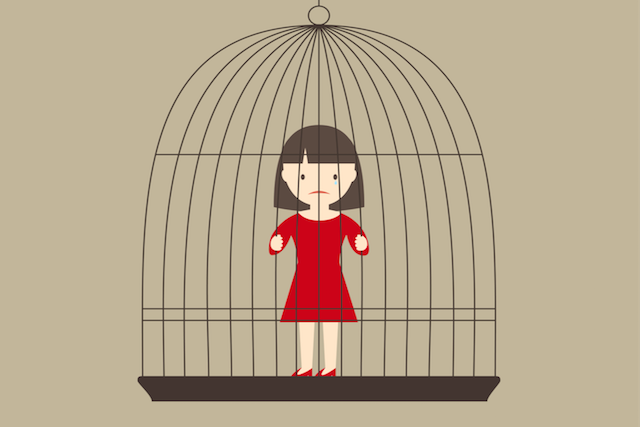
    Woman in a Cage

    “You are perfect just as you are and you could use a little improvement.” ~Shunryu Suzuki-roshi

    A few weeks ago, I had a day that I felt like an utter failure.

    I had eaten junk food even though I was trying to get healthy. I’d skipped out on going to the gym for no good reason. I forgot to call my parents even though I promised them I would. I didn’t meet my daily writing goals and ended up watching two movies I’d already seen.

    In other words, I slid into a lot of bad habits all at once.

    I think we all know the feeling you get after a day like that.

    I was spinning out of control, losing hold on everything I’d managed to build so carefully over so many months.

    My grip on order felt slippery at best, like trying to catch a determined fish with your bare hands. I remember sitting down on the floor and just crying, full of the shame that comes with letting yourself down.

    The worst part? It was the third day in a row I’d felt this way. It was the third in a series of days in which I’d gone to bed feeling like my life was falling apart on my watch.

    I felt like the ultimate letdown, consistently messing up something that I knew was in my control. It was my life! Why was I having so much trouble getting a handle on it?

    Then I remembered someone long ago who had said to me, “You are perfect just as you are, but you are still growing.”

    I don’t remember who said that or in what context this little olive branch was offered to my soul, but like all integral memories, it surfaced at just the right time. I got off the floor, brushed myself off, and said, “I’ll do better tomorrow.”

    And I did.

    As a writer, I let myself down all the time. I don’t reach my word quota. I watch too much TV when I should be working. I forget my house chores, the gym, the cat. I eat badly because I’m eager to get back to work, or I take a long lunch to procrastinate something important.

    But even before I was writing, back when I was in the medical field, I remember that there wasn’t a day that passed where I wouldn’t let myself down in some small way. Forgot to take out the trash. Said something thoughtless or rude. Ate more than my fill.

    This wormhole is a tempting one to enter, the I’m-not-good-enough black spiral of thoughts that can suck you in forever. Your brain is always happy to supply an infinite list of reasons that you’re not good enough, smart enough, loving enough, witty enough, pretty enough, and so on.

    And if you feed that cycle, fixating on all the tiny ways you failed, then it comes back. You condition your brain to think that you want those thoughts, so it offers more of them.

    Trust me, I’ve been there.

    What if we all forgave ourselves for the little failures? What if we let go of the tiny mishaps that happen in a day and focus instead on what went well? What if we released the shame and pain of all the ways we didn’t measure up and allowed ourselves to relish in everything we already are?

    It’s an old argument, but it bears repeating because it’s a practice that must be rehearsed every day. I know I’m human. I know I’ll fail. I’m not perfect, and that’s part of the beauty of life. I am perfectly imperfect, an exquisite human specimen who’s doing the best with what she’s got.

    However, accepting that doesn’t mean we are allowed to stagnate, because we are still improving. We can fail today and aim to do better tomorrow.

    We need not feel ashamed or inferior because of slip-ups. All we need to feel is normal, accepting the challenges of a life on this Earth with patience and grace.

    Taking it one day at a time, we can always do better tomorrow.

    I started focusing on this practice after my meltdown week. Ever since then, I’ve tried focusing on doing the best that I can on a given day.

    I give every task my all, give all my love to my friends and family, pour all my energy into whatever I’m doing. And I don’t (or at least try not to) focus on how I fall short. I do the best that I can that day, and when I feel like it didn’t bring me as close to my goal as I wanted it to, I simply say “I’ll do better tomorrow.”

    Because that’s all I can do.

    In this bustling, high-speed country, I think we all strive for our slice of perfection. We fight for the perfect body, marriage, home, kids, job, etc. without any real idea of what that fight is doing to our psyche.

    What’s the point in pursuing perfection if we don’t get to enjoy the journey there? And the shame we gather in not reaching the ludicrously unattainable goals we set for ourselves dulls the bright colors of our life.

    This toxic feeling of inadequacy is a poison that will ruin the pleasure of striving for a goal. Not only that, shame will make the pursuit of a goal that much more difficult. Negative reinforcement and mentally beating yourself up will halt any progress in its tracks, and that will only push the spiral deeper.

    Fight this venom before it ruins your days.

    Self-forgiveness and acceptance are the counter-wind to that inner tornado.

    Allowing yourself to be human, perfect as you are, enough will bring you far more joy than focusing on all the ways you are insufficient.

    Don’t be ashamed of what you’re not, be joyful in what you are! You are a human being, struggling to be better, but whole and perfect in this moment.

    And we’re all right there with you.

    Woman in a cage image via Shutterstock

  • How to Handle Life: Get Out of Your Critical Head

    How to Handle Life: Get Out of Your Critical Head

    Stressed

    “Just trust yourself, then you will know how to live.” ~Johann Wolfgang von Goethe

    There was a time when I lived almost completely inside myself. I couldn’t handle much of the outside world.

    Yes, I am an introvert, but back then, I had such low self-esteem that the only place I felt safe was inside my own head. I had a low tolerance for problems and mistakes. I was life intolerant.

    Yet, my inner world wasn’t exactly a peaceful sanctuary; it was a cold, discomforting, and harsh place to be. Mainly because I was fat. Or so I thought. I was obsessed with how I looked. My study time was directed at my legs. I appraised my ankles, I graded my thigh gap. And for those failings, I beat myself up.

    What terrible thing could have befallen me for me to have retracted into my shell like that? The answer: nothing major. In fact, my childhood was good and my parents were great.

    But there was something, or a series of somethings in my childhood that led me to live inside my critical head.

    One was that I wasn’t allowed to do much. If anything, I was kind of spoiled. That didn’t really help me because I unconsciously stamped this message on my psyche: “Unable to perform tasks.”

    Second of all, I wasn’t allowed to rectify my mistakes. Just small things—a plate I broke was cleared up before I had a chance to, a garden rake was taken out of my hands because I didn’t know how to weed properly. The underlying takeaway for me was: “Just can’t handle stuff.”

    With those mottos, I plodded through life, slightly shy and fearful.

    But I’m not like that today. In fact, I’m the opposite. My self-talk now is mostly positive, and I encourage myself. I’m kind to myself, and I look out for me.

    How did this come about?

    A not-so-great relationship. I met someone, and unsurprisingly, depended on them for my self-esteem.

    If they thought I was good enough, then I was good enough. But how tumultuous it is to live on the rough seas of someone else’s appraisal! Somehow, amidst those choppy waters, I saw a lighthouse; and it was therapy. I took myself there, and I found a safe harbor.

    I also went to meditation classes.

    Those two things slowly worked away at me, chipping away at those walls I’d put up around myself. I became mindful through meditation, and through therapy I came to realize I needed to become my own best friend.

    So I did. I changed my self-talk. It was a challenge, but I pushed through.

    From there on out, my allergy to living life went away. The relationship ended, but I was equipped with new tools for living. I go out and socialize, I embrace challenges, I live my life with my eyes open—and I can handle it.

    These are the tools I learned along my way.

    Accept.

    Accept what is happening, be it a critical remark or a mistake. When you accept whatever is in front of you, you are allowing yourself to feel discomfort and trusting that you can handle it.

    It can feel quite vulnerable to be so open with no defenses and say, “Yes, this is really happening.” But once you start accepting, it gets easier, because you learn that you can cope with it.

    It’s not pushing away, or denying, which can feel stressful. It’s a calm response to life. Start with accepting small, inconsequential things like spilling food or sending an email with a typo. This will put you in good place to start accepting the bigger toughies down the road.

    Talk kindly to yourself.

    When the going gets tough, you need some back up, and the best are self-soothing sentences.

    “Everything is okay.” “I am capable.” “I trust that I can handle this.”

    They don’t just pop up; you need to work on them daily so that they are there for you when you need them.

    This is where mindfulness and meditation come in, because these practices are like sending your concentration muscle to the gym.

    Once you become mindful in your day, you become aware of how you are talking to yourself. Making it a daily commitment to change negativity into an upbeat outlook is training yourself for the day when something big goes down. When it does, those self-beliefs will come to your aid.

    Allow yourself to be imperfect.

    Sometimes you will need to engage with critical people who make judgments on who you are or a public faux pas, and they will demand that you respond.

    You have choices in how you do so. It takes time to accurately measure which response is best, so try a few.

    You don’t have to be defensive all the time. In fact, you can send your ego on holiday and even agree with some criticism. It can be a huge boost to your self-esteem when you finally allow yourself to not be absolutely perfect, and laugh at yourself instead.

    You can choose to own up to a mistake and try again. No big deal, just “Let me start again,” or “That wasn’t right, I’ll come back with it fixed.” No catastrophizing, but solutions instead.

    Once you start trusting yourself to find solutions, mega worries become tame, because you have learned that you are someone who can find a way forward.

    Finally, you can choose to explain openly what happened, or not. A bit of self-defense is not a bad thing, because you are worth looking out for, after all.

    From today onward, believe in yourself and practice self-acceptance. May your life be a wonderful journey that you take part in, every step of the way.

    Stressed woman image via Shutterstock

  • Every Imperfect Person Has Something to Teach Us

    Every Imperfect Person Has Something to Teach Us

    Seated Group

    “My experience is that the teachers we need most are the people we’re living with right now.” ~Byron Katie

    I have always been of the opinion that the people around us are our teachers.

    Specifically, I have always seen what I perceive to be negative traits in others as opportunities to develop patience or kindness toward them. I see it as a struggle they are going through, and if I can be patient or kind, then that helps them. It also teaches me how to embody those qualities even when I don’t feel like it.

    If a colleague, friend, or acquaintance is abrasive or aggressive, I try to mentally extend loving thoughts to them.

    I think about what it’s like to be in their shoes and how I can lead by example by being kind to them. I breathe in their perceived negativity and breathe out positivity. I tell myself, this is your opportunity to practice. So I practice.

    And I think without realizing it, sometimes I can be smug about it. Subconsciously, despite all my yogic training, my interest in Buddhism, and my general belief that we are all the same, I inadvertently elevate myself in stature compared to others.

    I am mentally giving myself yogic brownie points—which, in the very nature of yoga, do not exist!

    When you’re on a spiritual path in particular, it can be easy sometimes to fall into the illusion that you’ve made it. You’ve figured it out. You are enlightened and can now teach everybody else how to be just like you.

    One morning recently I had an epiphany about my philosophy that everybody is my teacher. I still believe it to be the case, but I realized that by thinking from my ego, I was always seeing other people as teaching me qualities to help deal with them better. I wasn’t really thinking about how I could be better.

    It was always about being more patient with grumpiness, being more loving toward animosity, opening my heart to a closed one.

    There goes the illusion again, that I have made it—I have learned all I need to learn about my less than desirable qualities, and just need to learn about how to handle other imperfect people. It makes me laugh now as I’m typing it.

    In simple terms, I had basically forgotten that I also had the potential to be quite annoying or difficult too. Just like every other human on the planet. I’m not perfect. And it’s something I have to keep remembering.

    Then I realized in a moment of genuine clarity that one of my greatest teachers is my partner. He will probably scoff when he reads this, as he won’t see himself in this light, but it’s true.

    He loves me for who I am, whether that’s a yogi getting up at 5AM to practice and unwittingly waking him up by chanting quietly in the next room, or someone who proclaims she’s on a vegan diet this week and then sneaks in a bit of cheese in a moment of weakness.

    He patiently (most of the time!) catches spiders for me despite it clearly being an irrational fear that I should probably deal with. He laughs at my jokes even when they aren’t funny, which I shamefully never do for him.

    He forgives and loves people, again and again, in a much more graceful way than I ever have. He knows he is not perfect and that nobody else is. He doesn’t try to attain perfection. He just lives as well as he can in that moment.

    In seeing how he embraces all of me, I realize the goal isn’t merely to learn from other people’s imperfections, but also to accept them—and to accept that I too have room for growth, and that’s perfectly okay. None us will ever have it all figured out, and none of us needs to be perfect.

    Instead of looking at how to deal with qualities in others that I perceive negatively, I now look at how to embrace their positive qualities so I can gradually start to embody them more myself. I still aim to lead by example, but I also strive to follow the many positive examples others set.

    And this is how we can all teach other—by seeing the best in each other and bringing out the best in each other. We are all on equal footing, human and imperfect. Let’s learn and love together.

    Group of meditators image via Shutterstock

  • Why Life Is A Lot More Fun When We Stop Trying to Be Perfect

    Why Life Is A Lot More Fun When We Stop Trying to Be Perfect

    Friends Having Fun

    “The thing that is really hard, and really amazing, is giving up on being perfect and beginning the work of becoming yourself.” ~Anna Quindlen

    “Oh, my god,” she said, “I forgot to shave my left leg!”

    That may not sound like a particularly dramatic announcement, but Jenny and I were sharing a seat on the chartered bus taking our senior class to the beach for “Senior Cut Day” a few weeks before graduation, and her discovery horrified me.

    An unshaved leg, it seemed to me at the time, was scandalous in the extreme.

    Had it been me who forgot to shave, I would have kept my sweats on all day rather than display my embarrassing imperfection.

    Jenny, on the other hand, not only shared her faux pas with me, she then announced it loudly to the entire bus. She laughed about it, and invited everyone else to laugh, too!

    I was appalled.

    I was also fascinated. That someone could intentionally draw attention to her imperfection, and laugh about it, was mortifying, yes, but also intriguing…

    It was hot at the beach that day. My well-shaved legs were bare, but I had forgotten to pack a T-shirt, and because I was self-conscious that my belly wasn’t perfectly flat as a pancake, I kept my sweatshirt on over my bikini.

    Rivulets of sweat rolled down my torso, but heaven forbid I put my imperfection on display!

    Jenny, meanwhile, spent the day laughing, playing volleyball, splashing in the waves, quite unconcerned about her hairy left leg.

    Can you guess who had the better time?

    You might think that this experience would have taught me something, but in fact, before I finally began to let go of perfectionism and ease into becoming myself in all my flawed, imperfect glory, I spent decades flagellating myself for not being perfect.

    Somehow I believed that I couldn’t be lovable if I weren’t perfect, so I was caught in a vicious cycle: aiming for perfection, failing, then beating myself up for the failure and goading myself on toward perfection again. Lather, rinse, repeat.

    Throughout my teens and twenties, in pursuit of the perfect body, I was plagued with eating disorders, kept carefully secret so as not to reveal my flaws to the world.

    In college, nothing less than an A was acceptable. The pure joy of learning took a back seat to striving for the perfect grade point average.

    Meanwhile, in relationships I hid my true self behind a mask, fearing that nobody would love me if they saw the real, flawed me.

    Amazingly, I did find a man I could be myself with, but when we decided to get married, I was the quintessential “Bridezilla,” completely focused on planning the perfect wedding.

    My obsessive pursuit of perfection helped me stay in denial about the fact that, although we loved each other, the relationship was built on a shaky foundation.

    During my marriage I discovered a love for making art, but the joy I experienced when creating was soon overtaken by misery, because nothing I made ever felt good enough. Eventually it seemed easier not to create at all. I became paralyzed by perfectionism.

    I could say that it was the very public “failure” of my divorce that started me on the road to accepting myself. Or that it was the college classes in Feminist theory, which helped me overcome my eating disorder and start to accept my body the way it was.

    In fact, I see self-acceptance as a long and winding journey, composed of thousands upon thousands of teeny, tiny baby steps, over the course of an entire lifetime.

    Baby steps like the revelation—thanks to Jenny on that high school bus ride—that it’s possible to laugh at yourself, and even draw attention to your flaws, and that this may be a more comfortable way to deal with them than trying to hide them all the time.

    Baby steps like the gradual dawning that instead of beating myself up, I could forgive myself for my mistakes and missteps, and that responding with self-compassion was a much more pleasant way to live.

    Baby steps like the epiphany that making ugly messes at my art table is infinitely more fun and satisfying than making nothing at all (and that often what I deem “ugly” at first, appears less so after some time has passed!)

    Gradually I untangled the false belief that only if I were perfect would I be worthy of love and happy.

    Letting go of the attempt to be perfect took a long time. At first it felt like a dishonorable surrender, like giving up and “letting myself go.” But when I thought about the people I loved most in my life, I realized that of course not one of them was perfect.

    I realized that the people I love being around the most are those who accept themselves as they are, who are comfortable in their own skin. Why should I expect anything different from myself?

    Little by little I began to deprogram myself. In fact, I intentionally embraced imperfectionism, and discovered, much to my surprise, that the more I allowed myself to just be me, the happier, more serene, and more content I became. And the more attracted other people were to me, too!

    There’s nothing wrong with self-improvement, but the truth is, none of us is—or can even hope to be—perfect. We may pursue mastery, excellence, improvement, and be challenged by the pursuit, but insisting on perfection can only lead to self-disgust and unhappiness.

    The only thing we can ever really hope to be perfect at is being our flawed and wonderful selves.

    If you’ve been stuck in a perfectionist spin cycle, what’s one thing you might do to press the pause button?

    Giving up on being perfect is hard. The work of becoming yourself is hard. The payoff, though, is truly amazing, and you’ll continue to reap the benefits for the rest of your life.

    Friends having fun image via Shutterstock

  • Releasing Comparisons: No One Is Perfect and We All Deserve Love

    Releasing Comparisons: No One Is Perfect and We All Deserve Love

    Woman Hugging Herself

    “Comparison is the thief of joy.” ~Theodore Roosevelt

    I spent my teenage years and early twenties believing that my weight was my worth; that I had to look and be a particular way to be accepted or loved.

    I lived in a negative cycle of comparing myself to everyone. I remember sitting in on one of my lectures in university, trying to work out if my lecturer was fatter or thinner than me.

    I look back now and wonder how many times I missed the fun and parties I was too scared to go to because I felt too fat or uncool or whatever negative feeling I was dwelling on at the time.

    When I was twenty-seven, my boyfriend of three years dumped me, on the day I found out I was pregnant. Worse still, or so it felt at the time, just a few months later he had a new girlfriend, a beautiful girl, who was also a single mother.

    I think the day I saw them together was the day I hit rock bottom. I cried so much and lost fourteen pounds in five days. I felt absolutely shattered and utterly worthless.

    Why wasn’t I good enough?

    How could he not want his own baby yet love another man’s child?

    Was I too ugly?

    Was I too fat?

    Why wasn’t I lovable?

    Destructive thoughts whizzed around my head in a very unhealthy manor.

    I lost my baby, which also made me feel worthless.

    His new girlfriend had everything I thought I wanted. She had the perfect body, she was absolutely gorgeous, she also had a baby, and the man I loved, loved her.

    I had to learn to love myself. It wasn’t easy to start, but the first step was to stop comparing myself unfavorably to everyone, especially her.

    It was destroying me.

    With everything that happens to you, you can either feel sorry for yourself or treat it as a gift.

    I wallowed in self-pity, regret, and depression for eighteen months. One day I stumbled upon Dr. Wayne Dyer’s Your Erroneous Zone. It was the book that woke me up and made me realize only I could change the way I was seeing myself and my past.

    The past was gone, done, over. I couldn’t change it, no matter how much it hurt. I had to accept what was, and most importantly, I had to learn to see myself in a different light.

    Here’s I how I did it.

    At first I kept a list of everything nice anyone said to me.

    I started a gratitude journal.

    I went back to basics—appreciation, picking love over fear.

    I learned that just because he didn’t love me, that didn’t mean that I’m unlovable.

    Slowly but surely, I began to see my value.

    I realized I was a worthwhile human being after all.

    As a nutritionist, I help clients change their health every day, so whenever I felt truly helpless, I would find some who needed my help and offer it for free. Was it good business? Some would say no, but for me, it was therapy.

    Kindness therapy, you get what you give. I was giving love, and in return I found myself. If you ever feel helpless, reach out and help someone. Smile at a stranger. It maybe the only person they see smile at them all day. You never know the ripple effect of the kindness you spread.

    I wrote articles on nutrition for magazines. At first, I think this was to give me validation. Seeing my name printed in a magazine must mean I’m a worthwhile human being, right?

    But the letters of gratitude I received made me realize that I knew things that could help people. One lady wrote to me saying her daughter’s behavior had improved dramatically after she implemented the changes I had suggested.

    These small things helped me realize that while I may not look like a Victoria’s Secret model, like my ex’s new girlfriend, I am still a worthwhile human being who has the ability to help people.

    I also started to see that even those who appear to “have it all” to the outside world often still have their own issues going on. I realized that having looks like a Victoria’s Secret model doesn’t protect you from heartbreak or sadness, a fact I had ignored until now.

    Cheryl Cole is one of the most beautiful women in show business, yet her husband cheated on her.

    We have to love ourselves. Comparison and envy are destructive forces that steal away contentment and block the flow of love. We don’t have to prove we are good enough to anyone; we just have to realize we were born worthy of love, and we’re lovable exactly as we are.

    I’ve learned that there will always be people who are more and less attractive than me. However, beauty is subjective, and we all have different taste.

    I believe beauty is a characteristic of a person. Beauty comes from a person’s soul. Beauty is in a person’s actions, how they treat people, how they care about people, and who they are as a person.

    So don’t live a half-life comparing yourself to others. Comparison in any form is destructive. Downward comparisons can make you vain and upward comparisons can make you bitter.

    We all deserve to be loved by others and to love others, but first we need to love ourselves.

    Love yourself just as you are. You, as much as anyone else in the world, deserve your own love.

    Woman hugging herself image via Shutterstock

  • How to Stop Feeling Inadequate and Embrace Your Imperfect Self

    How to Stop Feeling Inadequate and Embrace Your Imperfect Self

    “The thing that is really hard, and really amazing, is giving up on being perfect and beginning the work of becoming yourself.” ~Anna Quindlen

    As I sit in bed typing this, all cozied up with a hot cup of tea and my fuzz ball Maestro relaxing at my feet, I feel happy and at ease.

    I scan the room and see a couple of stacks of laundry that need to be put away. I recall that my daughter’s toys are still strewn across the house because I didn’t feel much like stopping to pick them up prior to my retreat to writing, my happy place. I realize that I have an inbox full of emails to answer. That can all wait.

    Sounds kind of normal, right? But, for me, this maintained mellowness in a sea of what could be perceived as chaos is a pretty big deal.

    You see, I’m a recovering perfectionist. There was a time in my life when uncleaned messes, unanswered emails, and other various untied loose ends would have gnawed at my very core and robbed me of my peace until I finally cried mercy, giving them the attention they demanded.

    But at some point I realized that the stacks of certificates and awards collecting dust inside a drawer in my perfectly clean house weren’t doing much for me. In fact, they were only temporary fixes to fill the voids of my spirit, as I desperately avoided being completely honest with myself and opening up to my truth and vulnerability.

    I would take on one project after the other and work myself to the bone until they were executed perfectly.

    Putting in more than fifty hours a week at the office and hitting the gym six days a week was, once upon a time, my norm.

    I remember days of changing my outfit a dozen times before leaving the house and then doing fifty sit-ups for good measure. The voice in my head was telling there was room for improvement, to reach perfection.

    I hid behind my straight A’s in school, my top sales awards as an employee, and the recognition and accolades I fought for as I dove head first into my entrepreneurial adventures. They were my mask, my shield.

    What’s wrong with all of that, some might ask? The pursuit of excellence is a good thing, right? Aren’t hard work and dedication admirable traits? Yes, and no.

    Following your passion and making a difference in the world are certainly high up on the list of things to do for a happy life. But, when you are coming from a place of lack instead of a place of love and when you get so caught up in the end results that you totally miss out on the journey, that’s a recipe for burnout and a life unfulfilled.

    So, what is the difference between perfection and excellence? It’s quite subtle, actually, but they feel very different.

    Perfect feels constrictive, judgmental, painful (especially when the mark is missed), and is fueled by feelings of lack, of wanting to be accepted and liked. Excellence, on the other hands, feels warm, honorable, accepting, and is fueled by feelings of love and pure intentions of being in service and becoming a little bit better version of yourself each day.

    When you come up a bit short of excellence, you still win. When you strive for perfect, you’re never quite good enough. It’s like being in an abusive relationship—with yourself.

    Simply put: In the pursuit of perfect, we miss out on much of the beauty around us in our everyday lives. Nobody is actually perfect, so it’s really like living a lie. The truth is buried under all the “perfect” walls that we put up.

    Perfectionism is a cozy little blanket we try to wrap ourselves in. But, while we trick ourselves into believing it is keeping us safe and warm, in reality, it’s just a shield to hide what’s really going on inside.

    Becoming “mommy” six years ago was the catalyst in my life that finally helped me to see past my crutch.

    I believe that our actions are our strongest teacher, and I didn’t want my daughters to learn through mine how to torture themselves and feel inadequate by striving for the delusional ideal of being perfect.

    Plus, it feels pretty amazing to just relax and enjoy the journey of life moment by moment. Basking in my children’s laughter, sharing with them my presence and genuine goofiness. No outside validation or approval required.

    If you can relate to this at all and are ready to peel back some of your own layers, here are a few things to think about. These really helped me along my road to accepting my perfectly imperfect authenticity.

    1. Remember: You are enough!

    Ask yourself this: Whose approval are you after, anyway? You don’t need to impress anybody! Think about it. What does outside approval even get you? Other people think you are cool? They give you the “thumbs up”? You’re living your life in a way that somebody else agrees with? Hmmm.

    Well, at the end of the day, if you are not living your own truth and doing things that are in alignment with your own soul’s calling, then you will be left feeling unfulfilled and always grasping for that outside validation.

    Instead, remember this: Everything you need is already inside of you. Learn to drown out all that outside noise and just celebrate your unique beauty. A good self-check is to ask, “Am I doing this for the cause or the applause?”

    2. Perfection is an illusion.

    There is simply no such thing. We’re not meant to be perfect—by design, humans make mistakes. (Otherwise, we’d be called robots).

    We all have good days and bad days. Plus, one person’s definition of “perfect” can be completely different from the next. So, why act like a crazy person and give yourself a hard time over something that is delusional? Stop the madness!

    3. Think “Wabi-Sabi.”

    No, not the spicy green horseradish-like stuff you eat with sushi! It’s a Japanese aesthetic that describes beauty as imperfections. It celebrates cracks and crevices and other marks of time. Yes, it is, in fact, our imperfections that make us beautiful. Embrace them.

    4. Consider: What is the impression you want to leave on the world?

    In pursuit of perfection, we can seem aloof, despondent, closed in. It’s because by being so focused on the end result, we put some serious blinders on and miss out on beautiful connections with others. People will much more closely connect with your truth (especially the right connections for you). No need to hide. Let your soul shine!

    5. There is pure joy and love in truth and vulnerability.

    Allowing ourselves to be real and vulnerable is not always easy. However, living a life hiding from our true identity is even more painful.

    Living your truth means embracing and accepting all aspects of you—bumps, bruises, and all. This is, after all, the meaning of life. Unlock the potential of unlimited happiness in your life by letting go.

    Our existence here on earth is too short to live it under the neurotic premises of doing everything perfectly. Throw caution to the wind, embrace your imperfections, celebrate your authenticity, breathe in each precious moment, and give vulnerability and acceptance a try.

    You might just discover the glorious freedom that exists within, underneath the “perfect” armor.

    Once you peel back all those layers and discover the breathtaking beauty of self, you might even find yourself tilting your head back toward the sky and allowing a giant smile come across your lips. You are home. Enjoy, enjoy, enjoy. Namaste.

  • Stop Aiming for Perfection: Can You Let Good Enough Be Good Enough?

    Stop Aiming for Perfection: Can You Let Good Enough Be Good Enough?

    Ready to Receive

    “Good enough is the new perfect.” ~Becky Beaupre Gillespie

    The music started. Pachelbel’s Canon in D on harp and flute. I was supposed to enter the room near the end of the piece.

    I knew there were fourteen sets of four measures each, but in my nervous state I quickly lost track. I picked a random moment in the music that I thought might be near the end (surely I’d been waiting forever already), opened the door, and walked in.

    Then: BAM!

    The door startled me by suddenly slamming shut behind me. Oops… That was not supposed to happen.

    Thus started my recent wedding, with the bride oh-so inelegantly slamming a door.

    Then, uh-oh, I heard my dad stumble over a note on his flute. And when I got to my designated spot by my groom and our officiants, I realized—oops—I had entered way too early. We all had to stand there awkwardly while the piece played on for what seemed like ages.

    Twenty years ago, at my first wedding, this stuttering start probably would have horrified me. This time, thank goodness, things were different.

    Instead of being horrified that my perfect day was being ruined, I just beamed. My heart swelled that my parents, who get so nervous playing for a rapt audience, were the ones sharing their music with us. I giggled as my groom and I mimed flirting with each other while the music played, and everyone else laughed along.

    All the “mistakes” were part of the fun and specialness of the day.

    Twenty years before, when I got married the first time, I was a card-holding Perfectionist with a capital P. I sought out the best string quartet, the best photographer, the best caterer, the best florist, the best makeup artist.

    When my custom-made gown (made by the best seamstress) didn’t turn out exactly the way I wanted (read: perfect), I feared the world might end.

    Oh, yes, I was one of those brides. I admit it. The sad fact is that I was a perfectionist about the wedding because some desperate, scared, insecure part of me unconsciously believed that if the wedding were perfect, maybe it would somehow fix my flawed relationship and make it okay.

    If the wedding were perfect, maybe my life would be good enough.

    As you may already have gleaned, from the fact that there was a second wedding, this isn’t how things worked out.

    That first wedding was perfect. Or, at least, darn near close to it. And this, not surprisingly, did nothing to save what was ultimately a doomed marriage.

    Yet for years I still hid behind a perfectionist mask, believing that if I only showed my shiny highlight reel with the world, and never revealed the messy, broken, confused, imperfect self underneath, somehow my life would be good.

    It was the continuation of a lifetime of perfectionism.

    When I was in school, happiness seemed to depend on getting straight A’s.

    As a newlywed, happiness seemed to depend on the perfect, beautiful home.

    Then, as I started exploring the world of art and calligraphy, and gradually grew a small business from my creative work, happiness still seemed to depend on keeping up a shiny, perfect front.

    I did my best to hide my flaws and mistakes. And as my marriage disintegrated, I focused even more intently on achieving perfection in my work.

    But of course, true perfection is not possible, so all of this seeking of happiness through perfection only left me miserable.

    I became too scared of imperfection to try anything. My creative flow dried up.

    Who can create anything when only “perfect” is considered good enough?

    I suspect the ultimate collapse of my marriage played a big part in getting me on the road to recovering perfectionism. A divorce makes it very hard to pretend to the world that everything is perfect.

    And once you acknowledge that you aren’t perfect, that your life isn’t perfect after all, you no longer have to keep up the charade. Suddenly, it becomes acceptable to simply be you, in all your glorious imperfection.

    Letting go of a lifetime of perfectionism is not easy. Like recovering from alcoholism, I see it as an ongoing pursuit, and I consider myself a recovering perfectionist.

    Now, though, instead of aiming for perfection, I intentionally embrace imperfection. I proudly call myself an Imperfectionist with a capital I!

    I’ve learned the hard way that when I wait until something is perfect before I can try it or share it with the world, I stay permanently stuck in perfectionist paralysis.

    Whether building a website, learning to sing, asking someone out on a date, broaching that difficult conversation, putting a new product on the market, or anything else, the only way to move forward in life is to allow yourself to be imperfect.

    Plus, embracing imperfection is just a kinder, gentler way to live. I haven’t given up on my quest for excellence, but I’m a strong believer that going for “good enough” leads to a lot more happiness than going for “perfect.”

    This was certainly true when, twenty years after my first wedding, fifteen years after that “perfect” marriage ended in divorce, I said “I do” a second time.

    This time around, instead of seeking out a passel of the best wedding vendors, we aimed for “good enough.”

    I knew that the marriage was the truly important thing, while the wedding was merely a small entertainment we were doing because it gave us pleasure, and because it gave our families pleasure, which in turn gave us pleasure.

    Freed from my perfectionist paralysis, I even wrote a song to sing at the ceremony, as a surprise for my new husband. I’d started writing it a few years before, but had never managed to finish. Perhaps I’d been trying to make it perfect?

    Now, though, I had a new goal: not a perfect song, but simply a complete song—a good enough song.

    I also had a deadline, and deadlines are magical things, especially when combined with imperfectionism.

    I did complete my “good enough” song and I surprised my groom with it, right before our officiant officially declared us married. Like my dad on the flute, I was a bit nervous. My voice wasn’t the absolute best it’s ever been, and I messed up one of the chords.

    And you know what? It was perfect.

    Where can you let go of “perfect” in your life, and replace it with “good enough”?

    Photo by AJ Leon

  • 5 Tips to Accept Your Imperfections, No Matter How Different You Feel

    5 Tips to Accept Your Imperfections, No Matter How Different You Feel

    Cheerful Girl

    “I follow four dictates: face it, accept it, deal with it, then let it go.” ~Sheng Yen

    Growing up different isn’t easy for anyone.

    I was born normal, happy, and healthy. I had five fingers and five toes. I reached all my developmental milestones and showed promise as a vivacious, energetic child. It all changed when I was ten months old.

    I became violently ill with bacterial meningitis. I battled the infection with a strength I was naturally graced with at birth. One week into my hospital stay, I was finally able to lift my head; two weeks later, I was back home.

    I was lucky to escape with my life from the meningitis. When it’s not fatal, it can result in long-term complications, such as low IQ, cognitive impairment, loss of limbs, and learning difficulties, to name a few.

    I came away with profound hearing loss. Not quite deaf, but enough loss to have it impact on my daily functioning.

    At seven years of age, I got my first pair of hearing aids. It opened my world to a whole new experience. I could hear a lot more and I have this vivid memory of hearing a leaf scatter across the pavement for the first time. I couldn’t for the life of me figure out what that noise was.

    It brought challenges along with it too.

    I was known as the kid with “the things in her ears.” I was bullied for being different. I hung out with the boys playing football and cricket because the girls didn’t want a bar of me.

    It left me emotionally dead. I was really good at burying all the pain inside and trudging along every day.

    I became a master robot—a mechanical human being incapable of trusting and feeling. It was my survival mechanism doing its best to avoid accepting who I really am.

    Entering the real world after school became a shock. Out of my comfort zone, I had to enter a world of large groups, noisy parties where I couldn’t hear what anyone was saying, large lecture rooms, and meeting new people. I had to suddenly be more than okay with my hearing loss.

    I had to be okay with being a little different.

    It was the biggest lesson of my life—my own perceived fears are far more powerful than anything else.

    I perceived people would treat me different or look at me differently if I told them I had hearing loss. By believing this, I practically encouraged them to treat me differently without realizing it.

    So there I was, in my late teens, brewing with years of buried emotions and a confronting new reality of accepting who I am. So what did I do? Partied hard of course. The emotions came out in a flurry of binge drinking and hangovers worthy of a death bed.

    It took me three years to finally wake up. Three years to finally realize that I must accept every part of me in order to live the life I want. Negative emotions continue to build up when we cannot accept ourselves for who we really are, and burying our emotions is no different to avoiding our true self.

    Accepting who we are is a beautiful, bone-achingly hard thing to do. It’s about being vulnerable, consciously opening our eyes to our flaws, and seeing them in a whole new light. It hurts at first, but it’s a pain worth a thousand lifetimes.

    By changing our perception to see our flaws as neutral traits that are both good and bad, we change how we choose to react to things. It will ultimately change our life for the better.

    I’ve learned to see the benefits of my hearing loss. I’m a world-class lip reader who can probably “hear” better than you in loud settings. I’m more visually aware and observant than most, which has been incredibly handy in understanding human behavior.

    I had to face my hearing loss through accepting it as a genuine, unique part of me. I am absolutely in love with my life, despite all its challenges and pitfalls, and I have no doubt that if I didn’t have this unique part of me, I would be in a very, very different place.

    If I could give you five tips to help you accept who you are, they would be this:

    1. See your perceived flaws in a whole new light.

    Nothing is ever completely good or completely bad. In fact, everything is in perfect, harmonious balance. Find the benefit of that one thing you have trouble accepting, and change your perception to see that it’s not so bad having it after all.

    2. Practice gratitude daily.

    We all have so much to be grateful for. Gratitude helps to cultivate a positive mindset, which will help you to accept yourself for who you really are.

    Create a daily gratitude journal and list three things for which you are grateful. Do this in the morning to start your day on a positive note.

    3. Recognize that you are not your thoughts.

    We get so lost in the story that goes through our minds. Our egoistic mind is, in fact, our greatest storyteller. And too often, we believe everything it tells us.

    Learn to recognize that thoughts are created by an egoistic, survival-focused mind. It sees the threat in everything. Start to separate yourself by asking your mind this: “Does this thought serve me and my purpose? Does this thought actually help me?”

    4. Be vulnerable with others.

    You will be pleasantly surprised to know that you are not alone in this big, beautiful world. Someone out there has gone through your tribulations and trials, and they will understand what you are going through.

    We can feel so alone with our ego at times, so sharing with others can help us to see the light at the end of the tunnel. It also helps us to change our perception, as others can guide us to a different angle.

    5. Look after yourself.

    Eat a nourishing diet, move regularly, rest often, and be mindful. We, too often, underestimate how the mind and body work both ways. By looking after your body, you are creating a sacred environment for your true being. It makes acceptance a lot easier when you look after the house your soul resides in.

    It wasn’t until I started applying these five tips that I finally began the arduous process of accepting every little part of me, including that ever so tough one of my hearing loss. Every day, I accept myself a little more.

    I just want you to remember this: you are imperfectly perfect, just the way you are.

    Photo by g-imagination

  • Why Accepting Your Imperfections Is a Gift to the World

    Why Accepting Your Imperfections Is a Gift to the World

    Holding the Earth

    “The thing that is really hard, and really amazing, is giving up on being perfect and beginning the work of becoming yourself.” ~Anna Quindlen

    Being yourself seems like it would be an easy thing, right? Just be! But when you’re someone who has lived their life seeking the approval of others constantly, it’s not such an easy thing.

    You have to attempt to move past years of trying to appear this way, wondering if people will judge you if do that, or doing your best not to cause waves and avoid conflict.

    When you don’t fully understand who your “self” is, it’s pretty much impossible to actually be that person. 

    I didn’t realize just how deep my desire to please others went until very recently, after a couple of very deep soul searching years.

    I saw how automatic it had become for me to try to be what everyone else wanted me to be. Even when I “liked” a page on Facebook, I thought twice about it and wondered if people would judge me for it.

    I wanted to appear a certain way to people. I wanted to appear like I had it all together, that I was “perfect.” Most importantly, though, I didn’t want to appear disabled.

    If I liked all of the “right” things, if I was cool, if I was funny, if I was pretty, and wore the most stylish clothes or had my makeup done just right, then maybe people would notice all of that instead of my muscular dystrophy and the limp that came with it.

    Maybe they wouldn’t notice the difficulty I had going up stairs. If I fell, maybe they wouldn’t judge me because they would see I was awesome in so many other ways.

    Trying to be everything to everyone is one of the most exhausting things. It feels like that toy that a lot of us used to play with when you try to fit the shaped blocks into the correct corresponding hole.

    I was the triangle constantly trying to fit in the square hole. 

    I honestly don’t know how I even functioned sometimes in my twenty-plus years on earth with the weight of that on my shoulders. Worrying so much about what people thought or hoping they liked me and having no real sense of my own self.

    From friends to coworkers, to dates or boyfriends, I was always trying to please everyone else but never thought to try please myself first or embrace who I really was.

    It never even occurred to me that it was okay if some people didn’t like me, or if I didn’t have all the right clothes or that I wasn’t physically able to do all the same things that my peers could.

    I didn’t realize that it didn’t make me any less worthy or valuable of a person if someone didn’t like me or if I wasn’t “perfect.”

    That if a guy wasn’t interested or someone didn’t want to be my friend, that it didn’t mean I was ugly or worthless or needed to fix something about myself.

    I didn’t realize that trying to fit myself into everyone else’s perceptions and society’s perception of “normal” was denying everyone and the world of all my gifts and who I really was. That my disability made me special and gave me a platform to try and help others all over the world with disabilities too.

    That it gave me such a deep capacity for love and empathy that I wouldn’t trade for anything.

    I couldn’t see that people don’t love each other because they’re perfect. They love each other for everything, including the flaws. 

    In fact, I think we love each other in large part because of our flaws. Because we are all human. Because we make mistakes. 

    Our imperfections and our differences are what set us apart and make us unique. When have you ever heard someone say, “I really like that Jackie. She’s just so perfect!”?

    Not caring what other people think and just being is something we all struggle with in one way or another.

    Something I’ve found to be very helpful for connecting with myself and just being is a kind of a brief meditation. Whether I’m driving, at work, on vacation, or just sitting at home, I try to take a few moments each day where I just sit, stop what I’m doing, take a deep breath in, and silence my mind.

    I focus on the blood flowing through my veins or the way my breath feels when I exhale. I just let myself sit there in silence for a few minutes and just enjoy being in my skin, my body, and my spirit. As small as it may seem, it really helps to calm me and get me refocused on myself.

    Learning to embrace yourself and shut out the need to people please or be what everyone else might want us to be is hard and it’s not something that can be an overnight change.

    But learning to accept all of the parts of yourself, including the ones you may not like, is not only the greatest gift you can give to yourself, it’s the greatest gift you can give to the world around you too.

    When you stop caring so much about what everyone else thinks of you and start becoming you, it’s then that you can truly offer the world the most.

    You offer it you in all of your wonderful and unique glory!

    Photo by Jason Rogers

  • Imperfection Is Lovable and You Are Enough

    Imperfection Is Lovable and You Are Enough

    “You’re imperfect, and you’re wired for struggle, but you are worthy of love and belonging.” ~Brene Brown

    We are all perfectly imperfect just as we are.

    Yes, it’s true. Sometimes hard to believe, but always the truth. Believe me.

    I’ve always recognized that I am a perfectionist.

    I was the little girl who wanted to know how to play the piano at my first lesson, how to roller blade the first time I tried, how to do the splits at my first gymnastics class.

    I’ve always wanted to do it right the first time.

    On the one hand, I appreciate my intention to do and be my best at whatever I do, but on the other hand, I see how this mentality has often paralyzed my efforts and prevented me from daring and learning to be brilliant.

    The one practice I’ve committed to in my life, where I’ve been willing to be less than perfect and continue to embrace each day, is yoga.

    The meditative quality, the healing breath, the invigorating movement all resonate with me and remind me to just be where and who I am, in each moment.

    It’s been fifteen years now since I began my yoga practice in an effort to release the tension in my neck that was triggering chronic headaches during my first year studying at UCLA.

    I felt transformed after my very first yoga class and just knew that I would grow and expand with my practice.

    In the beginning, most of my transformation was physical—feeling more relaxed, open, energized, and flexible. In recent years, my practice has guided me to expand my perspective, and I find myself open to understanding life anew.

    I’m discovering new ways of being and of seeing the world.

    Just two months ago I had a revelation.

    I was communicating with a life coach who is an incredible listener, endeavoring to understand why I was constantly feeling challenged in my relationship with my husband. Together, we realized that I was creating the same expectations of perfection for him as I had carried for myself since childhood.

    A memory surfaced: me, around twelve years old, sharing my report card with my father.

    “Why are they not all As?” he questioned unapologetically.

    I glanced at my grades, noticing that I’d earned six A’s and one B+, and said, “I did my best.”

    “I expect all A’s next time,” he firmly instructed.

    “I’ll do better,” I submissively acquiesced.

    And this stuck. The need to do better than my best. The desire to be better than myself. I wanted my father’s approval. I wanted my father’s love. I wanted my father’s attention. And so, I worked even harder and earned a 4.0 GPA each semester.

    But you know what? It was never enough.

    I never felt enough. I never could earn the love and attention that I desperately craved from him. 

    I needed to look within myself.

    Now, some twenty years later, I’m still struggling with my tendency toward perfectionism.

    This insight is life changing: A chance to understand myself better. A reflection of how and why I choose to think and act the way I do. An opportunity to acknowledge that I’ve associated being perfect with being lovable.

    Now, without judgment or criticism for myself or my father, I have the choice to change.

    I can choose to shift my perspective and tell a new story. I choose to embrace a new truth…

    Imperfection is lovable.

    With this knowledge, I see my relationship with myself and with my husband, my children, my family, my friends—with life itself—in a new light.

    We are all imperfect.

    But who wants to be perfect anyway? How boring that would be!

    The most fun is in the growing, in the expansion, in the learning and becoming ever more who we are.

    I release the compulsion to be perfect, to constantly achieve, do more, handle every task on my to-do list immediately.

    I allow myself to be more present, to be in the moment, to remember what matters most: love.

    I can let go of always doing and instead let myself be. I can stop rushing around handling tasks, and allow myself to stop and smell the roses with my daughters, kiss my husband, call a friend, stare in wonder at the beauty of our universe.

    I am worthy of love, I know I belong, I recognize my life has meaning, and I give myself permission to take it easy and just be me.

    I embrace this truth:

    I am good enough. I do enough. I have enough. I work enough. I love enough. I am beautiful enough. I am smart enough.

    I am enough.

    Can you say this to yourself and really mean it? Practice. Notice how it feels.

    With this new perspective, everything blossoms.

    I allow myself to make mistakes without being judgmental.

    I give others space to be imperfect without being critical.

    I allow myself to be me.

    I allow myself to love myself just as I am.

    I allow myself to love others just as they are.

    Whenever I begin to lose focus of this reassuring truth, when I start to feel overwhelmed by all the “shoulds” and judgments in my mind, I sit in stillness in my meditation space.

    I read the words I’ve etched on my chalkboard wall:

    I am enough. Surrender. Live and let live. Imperfection is lovable. Be human.

    Immersed in the sensation of my breath, I choose to focus my mind on these powerful truths. Soon, I relax into the comfort of knowing that all is well. And I begin again the journey of self-love and acceptance.

    I am grateful for being where I am, for all the wisdom and love so many gracious and kind people have shared, and for the powerful practice of yoga that encourages self-awareness and growth.

    I am grateful for the opportunity to recognize the perfection in our imperfection and to use this wisdom to infinitely improve my interactions with the people I love the most.

    Our minds are powerful. Our thoughts are powerful. Our love is powerful.

    Let us choose to focus on the good, appreciate who we are, share our love unconditionally.

    Let us remember that we are enough.

    Let us embrace our value and know we belong.

    Let us always remember that our imperfections are lovable.

    Can you practice loving yourself and others unconditionally today?

    Every beautiful journey and inspiring transformation begins with an intention and moving in the direction of where you hope to be.

    Wishing you ease in loving and freedom to be just who you are.

    Be human. Be perfectly imperfect. Be you. Just be.

  • Overcoming Perfectionism in a Culture That Promotes It

    Overcoming Perfectionism in a Culture That Promotes It

    Concept: Abandoned Person. Close up of an old doll`s face with tear. Spesial grunge-fashioned image with grain

    “Good enough is the new perfect.” ~Becky Beauprie Gillespie

    I stand accused of being a perfectionist.

    My plea? Not guilty, of course! “I’m not perfect enough to be a perfectionist!” I counter.

    But the evidence is stacked against me. Ladies and gentlemen of the jury, Exhibit A:

    My first year at University, our mid-term examination in literature. There was major building work going on outside, and concentration was nigh on impossible. As a result, our tutor added 10% on to everyone’s scores to make up for the disruption.

    What did I get? 110%.

    And what was my first thought: “Hmm, I could’ve done better. And any way, it was so easy.”

    But, out of the 140 other kids in the class, how many others got 110%?

    You guessed it, it was just me.

    This is it, you see, the madness of perfection: it isn’t even satisfied with perfection.

    Another example: A couple of years later, I planned, cooked for, and led the wedding ceremony for my own wedding. The day went smoothly. Many people said it was the most special, and personal wedding they had ever attended.

    But I felt disappointed, in floods of tears at the minor imperfections which no one but me had noticed. And despite having lost thirty pounds and being on the verge of being underweight, I still felt fat.

    What is tragic is that I know I am not alone in this.

    I had been hypnotized by the madness of the perfection-focused culture we inhabit, where even the most beautiful of bodies are airbrushed, and talented voices are digitally enhanced to reach ever new heights of perfection.  (more…)

  • Loving Ourselves and Each Other, Imperfections and All

    Loving Ourselves and Each Other, Imperfections and All

    love makes the world go round

    “We come to love not by finding a perfect person, but by learning to see an imperfect person perfectly.” ~Sam Keen

    I heard this story the other day about the collection of homes called Favelas surrounding Rio De Janeiro.

    If you aren’t familiar with them, they are a large collection of small run-down homes built on the side of the hills surrounding the city. They scatter and protrude across the landscape like paper litter in the tall grass along the highway.

    The conditions can be poor, and unsanitary, often with raw sewage running down the side of the hill where the houses are built. Many people live right across from houses that sell drugs or prostitution. Even reaching the houses is difficult, with the only options being a treacherous road or walking up as many as 800 stone steps.

    When a man who was giving a tour of the area was asked if most people living there are poor and have no choice but to live there, the reply came back “No.”

    Many people work, make a descent living, and choose to live here. In fact, he explained, he himself lives there.  That begged the question: why not move out if you can?

    The man answered, “Because my life is here, my friends, my family. I love it here.”

    I thought to myself, how could anyone love it there? How could anyone love those houses, love that neighborhood, those living conditions?

    But then I thought, what does it mean to love something? What does it mean to be loved by someone?

    You see, growing up, and most of my life up to this point, I don’t think I’ve understood this. Love is, for most of us, what the world says it should be because that’s what we’ve been conditioned to believe. That’s what we’ve been taught.

    Love is a frantic kiss and a firm embrace at the end of a Hollywood movie.

    Love is what you should feel when you see a beautiful model wearing exquisite clothing rocketing away on her motorcycle in a crisply baked marketing ad.

    Love is what you want to feel, what you want to have, how you want to look, and how others should look. If I had that, if I looked that way, if I had that girl for a girlfriend, I would love it—because I would be loved. (more…)

  • We Are All Imperfect: How to Own it & Keep Growing

    We Are All Imperfect: How to Own it & Keep Growing

    Imperfection

    “Be what you are. This is the first step toward becoming better than you are.” ~Julius Charles Hare

    A few weeks ago, I made a mistake.

    I wrote a newsletter about my relationship with money, explaining that I used to get worried about money, but I feel differently now. I wrote that I’d realized that doing what I love is the most important thing.

    As long as I am doing what I loved, I don’t have to feel anxious. I trust that the money will appear, without me having to chase it.

    After I sent the newsletter out to the 500 people on my subscription list, I had a funny feeling in my stomach.

    The next day, I asked a friend what she’d thought about what I’d written.

    She said, “It sounds like you’re still worried about money.”

    She was right. That explained the funny feeling in my stomach.

    The things I said weren’t quite true. I wanted them to be true because I wanted to be the kind of person who doesn’t worry about material things.

    It was true that I’ve made some progress in my relationship with money. But I’m certainly not as serene and trusting as I portrayed myself in my newsletter. I still have mornings when I feel panicky about finances. (more…)

  • 4 Ways to Embrace Imperfections

    4 Ways to Embrace Imperfections

    “Be yourself; everyone else is already taken.” ~Oscar Wilde”

    I have the amazing privilege and overwhelming responsibility of raising three daughters. I’m deliberate in the personal choices I make, knowing I set an example of what a strong, independent woman of integrity looks like.

    I don’t always succeed.

    As hard as I try to parent gently and with smart guidance, I’m imperfect and sometimes I get it wrong.

    All relationships go hand in hand with feelings of regret and disappointment, and a sense we haven’t given our best at some point. Here are a few ways I have learned to parent with grace despite the fact that I am imperfect.

    Even if you’re not a parent, you may find these ideas helpful in accepting yourself just as you are—even when you don’t get everything right in relationships.

    1. Accept that we are human and humans are messy.

    I am most authentic when I am forced to humbly admit I don’t know everything and I sometimes make mistakes. This makes me much more likely to accept the imperfections in others and love them anyway.

    It’s easier to be authentic when you take the pressure of perfection off the table—and it’s easier to be compassionate and kind when you understand everyone is messy. (more…)