Tag: impatient

  • If You Feel Stuck and Tired of Waiting for Things to Get Better

    If You Feel Stuck and Tired of Waiting for Things to Get Better

    “I am not a product of my circumstances. I am a product of my decisions.” ~Stephen Covey

    In August 2019, I was sitting in my therapist’s office with my head in my hands. I was heartbroken over a recently ended relationship, stuck working a job I wasn’t excited about, and I was living across the country from my closest friends and family. I felt like I couldn’t do much to change my situation because I was about to enter my final year of university, and I needed to stay put.

    “Sometimes, life is a logjam,” my therapist said. I visualized giant, sliced-up oak trees floating on a river, stacked up on top of each other.

    “You’ll be done university by April next year, then you’ll be free to do what you like,” she said. I don’t think my therapist intended for me to interpret her message this way, but at that moment, I dubbed my life the “logjam.” I accepted that life would be hard for me until graduation in April 2020.

    It was easy for me to feel sorry for myself. First thing in the morning, I would roll over to my phone and scroll mindlessly. I started each day by looking at people online: people in happy relationships, traveling freely, eating fancy food at fancy places. I started to notice that this action was causing me to suffer.

    One morning, I decided I wouldn’t start my day like that. Instead, I’d leave the phone where it was and go for a walk. I began my days by heading out for a thirty-minute walk, rain or shine. The boost of exercise endorphins paired with distance from my smartphone felt great.

    As I walked, I fantasized about April 2020—the month when I’d be able to take a trip somewhere to celebrate my graduation, I’d find a new job, I could move to a new city, and without being in school… I’d have time for dating again! The countdown was on. In April, I’d finally be able to enjoy my life again.

    When my university closed down in March due to COVID-19, I thought for sure it would reopen by graduation in April.

    We all know where this is going.

    April 2020 came and went, and the pandemic spread across North America. As Canada implemented more and more restrictions, I realized that I had spent the better part of a year counting down the days until my circumstance would change. I thought that if I could make it to April, all my freedom and happiness would be restored. But April came, I lost my job, I moved back into my mom’s house, and activities like travel and dating were off the table.

    The pandemic has thrown a lot of our lives into a logjam. A lot of us feel stuck. A lot of us have our eyes set on the future, when the logs will begin rolling again. Maybe you’re thinking, “Everything will be back to normal by the winter.” Of course, it might be, and I hope so. But it also very well might not be back to normal by then.

    Take this advice from someone who spent the better part of last year counting down the days until I could enjoy my life: the logjam is in our mind, and it will last as long as we believe it’s there.

    My morning walks are different now. Instead of thinking about all the things I’m going to do in the future, I think about what’s happening right now. How can I be a better daughter, sister, friend? What will I do to take care of myself today? What am I grateful for at this moment?

    Incredible growth comes from learning how to adjust and survive in undesirable conditions. Sometimes life requires us to keep our head down and focus on one foot in front of the other. Life can’t always be pure joy and lots of fun. Life can’t always be a happy relationship, vacations to amazing destinations, or fancy foods at fancy restaurants. Sometimes life is harder than that.

    Many people in the world right now are experiencing much worse than a mental logjam—loss, illness, financial hardship, violence, and discrimination have been the reality for many in 2020. A lot of people are struggling to pay their bills, overwhelmed by work or unemployment, unpredictability of childcare and healthcare, dealing with sick relatives, etc. Maybe you’re one of them.

    But if, like me, you’re blessed enough to have most of your needs met right now, keeping things in perspective can make this slow and sticky time a little more bearable. And it can also help prepare you for times when things are far harder. The better we can cope with moments when we feel stuck, the better equipped we’ll be to deal with life’s most heartbreaking challenges.

    It’s a skill to be able to feel content when things around us look bleak. I’m not going to pretend that living with a parent and losing my job is where I pictured myself this summer. And I won’t pretend that every day has been really easy simply because of a morning walk. But the mindfulness I’ve practiced over the last year has helped me to see the glass as half-full.

    This summer I’ve spent every single day swimming in a lake. I’ve reconnected with childhood friends. I’ve been able to help my mom raise a new puppy. I’ve been able to write articles like this one, without the stress of grades and a timeline. While it isn’t what I imagined my summer looking like after finishing university, it’s wonderful in its own way.

    Instead of criticizing ourselves, our lives, or each other during these unprecedented times, try to take a full-bodied breath, put your feet on the ground, and feel the life that’s still happening all around you. You may have a lot of responsibilities and be facing major challenges, but if your circumstances allow it… I challenge you to start making the best of this unpredictable year.

    Choose to see the logs rolling down the river, untethered by each other, moving forward toward everything that’s coming next.
  • When You Want to Make Progress Fast and Feel Impatient

    When You Want to Make Progress Fast and Feel Impatient

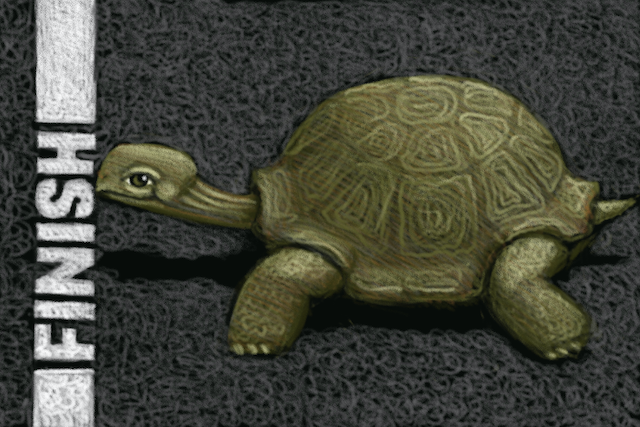
    “Tortoise was over the line. After that, Hare always reminded himself, ‘Don’t brag about your lightning pace, for Slow and Steady won the race!‘“ ~The Tortoise and the Hare (Aesop’s Fables)

    I was sitting in an introduction to calligraphy workshop when a fellow student asked the instructor, “What do I need to become a professional Calligrapher, what would it take?”

    We were all on the edge of our seats with that one. It was as if we were about to learn the secret ingredient to Grandma’s cookies.

    The answer, to our surprise, was pen and paper.

    “The materials are no different than that of a novice calligrapher,” the instructor explained.

    The distinction between a novice and professional calligrapher is not in the tools they use, but rather in the professional’s commitment to practice, their pace, and the time they took to learn and do something.

    The same goes for any professional at their craft.

    I recalled a time when I was on a cruise ship and saw all these tourists with huge camera lenses and gadgets for their cameras. I was incredibly impressed and at times intimidated with their gear as I would hold up my own iPhone to snap a quick picture.

    After a while of being on board, you get to know one another well. I realized that despite their top tier lens, basically all of their cameras were set in auto mode.

    What good is such an advanced lens when you don’t know how to use it?

    They had gone from zero to one hundred with no practice, no skills acquired, just fancier devices.

    This lesson on the professional calligrapher has always intrigued me.

    When we look up to the expert, we assume that increasing the quality of materials or having access to nicer resources is what makes them great. This assumption overlooks the time it would have taken them to learn something new and to achieve their goal.

    Instead, we want to cut corners and are looking for the shortcut. We want to make progress as soon as possible, perhaps because we feel behind in life and think we need to hurry to get ahead, or because we think we’ll be happier when we reach our goal.

    Cutting corners is not a strategy that necessarily benefits us. It’s a way for us to be more useful and readily available to others, get more things done, and exhibit productivity.

    Our concern for positive feedback and acceptance by others keeps us from taking the time to experience something thoroughly for ourselves, just because we enjoy it or are curious about it.

    Just because.

    This past year I have been working with my sister to brainstorm new career opportunities. My current goal is to become an independent filmmaker.

    Similar to the observations shared above, I found myself quickly approaching the mindset of the calligraphy student: What would it take, what would I need to make the best movies, to be a great filmmaker?

    I too, wanted the shortcut. The direct route to achieving my goal. Is there a certain camera lens I need to have, light kit, microphone, or skill that would lead me right to success?

    After deep dives into blogs about filmmakers and watching online video subscriptions about filmmaking, it occurred to me that I had all that I needed to accomplish my goal.

    There was no shortcut to filmmaking.

    It was just going to take time.

    Time for me to learn more about the tools that I already had.

    Time to pick up my camera and practice shooting interviews.

    Time to use a pen and paper to write down script ideas.

    Time to make bad videos so that the next time I could make a better video.

    Time for repeated effort, continual practice, and eventually, improvement.

    It’s easy to get caught wasting time looking for a solution instead of taking time. In the end, we lose energy and motivation looking for the right tools or answers.

    We do things with the intention of going fast rather than far. We fixate on the end result and rob ourselves of the fun we’d have and excitement we’d feel if we let ourselves enjoy the journey.

    Instead, I’ve learned that I stand with the tortoise, not the hare, “Slow and steady [wins the race].”

    Go far. Reach farther. Take the time to become your best self.

  • Tired of Waiting? How to Thrive When Your Life Feels On Hold

    Tired of Waiting? How to Thrive When Your Life Feels On Hold

    “What you get by achieving your goals is not as important as what you become by achieving your goals.” ~Johann Wolfang von Goethe

    Silence. Not a word.

    Another day is over. The news you were waiting for didn’t arrive.

    Everyone else around you keeps moving. They know where they’re going.

    You don’t. You watch the days go by and think of all the things you could have done. You feel like you’re wasting your time.

    It seems pretty pointless. You’re not where you want to be.

    Sometimes we have to wait. You left one job, but the next one is not yet here. You want to go back to the soccer field, but your injury is not yet healed. You’re stuck in a city you just want to leave behind. Or you just simply don’t know what to do next.

    In May, my husband and I moved across the world from Germany, my home for over twenty-five years, to Canada, his home country. We had already applied for permanent residence for me months before we came.

    Give it a few weeks and it will arrive, we thought. Then I could start looking for a job. Start my career. Move forward.

    Weeks became months. August came and I was still hopeful. I checked the mailbox every day. Maybe today we would hear something. But still nothing.

    The heat of summer started to fade and I became more anxious. I was expecting to hear the big news any day, but the leaves turned colorful and pumpkins popped up in the stores and I still hadn’t received my permit.

    Over the course of a summer and a fall, I was watching my friends moving forward. Applying for new jobs, preparing for interviews, getting promoted. Friends from Germany I graduated with were starting their careers. Some of them started a family.

    I was waiting. And the longer the waiting continued, the more anxious I got. As a twenty-seven-year-old graduate, I felt like I had no time to waste.

    Even more, I was ready to work. Apply what I’ve learned. Improve my skillset. Learn new things. Contribute to a cause. Be part of something. Instead, I had to wait. I felt slowed down. Left behind.

    But as fall came, something in me started to change slowly. I started to come to terms with my circumstances. My situation hadn‘t changed; I had. I realized that there were five things that, with the help of my husband and family, helped me turn this waiting period around.

    1. Stop feeling sorry for yourself.

    This first point is crucial.

    Some mornings you might not even want to get out of bed. What for? Even if you do, you feel no motivation to get anything started or done. What’s the point?

    It might seem like life has hit the pause button, but life is still happening. And it is still up to you what you do with your circumstances.

    So focus on what you can do. Live. Right now. Every day. Don’t make this all about the wait. Make it about you. Then there is really no reason to feel sorry at all.

    2. Watch your mouth.

    Words are powerful, even if they aren’t said out loud. The way you think and talk about your situation will determine how you feel about it.

    In the evening, when my husband asked me what I did that day, I quite often said, “Nothing, really.” Of course I had done a lot of things every day. What I really meant was: “I did a lot of things, but they don’t count.” They didn’t count in my head because it wasn’t what I wanted to do. It’s not what I though I should be doing.

    Silly, I know. And my husband would call me on it, which eventually changed my language. And that eventually changed my perspective on things.

    Share your crappy feelings with people. Be honest with them. But make sure these are people who help you. Who challenge you. Who don’t let you sit in it.

    Guard your thoughts when you are alone. Don’t allow yourself to sit in your negative feelings. Put a visual reminder on your desk. A quote maybe. Write it on your bathroom mirror. Have a copy of it in your wallet.

    You might not be where you want to be in the long run, but that’s life. It takes time. As long as you are on the right path, every step counts. And if you don’t know where your path is going, you were just given the perfect opportunity to find out!

    3. Don’t make excuses.

    It’s easy to find reasons not to do things. Especially when you’re waiting. Because what you really want is just around the corner. The present is just a weird in-between-space.

    Wrong. Now is the time to try new things. To step out of your comfort zone. To discover new passions and gifts.

    In the past months, I taught myself more about cameras and video editing, I took a guest blogging course, I started to take on a few creative projects around the house, I connected to new people in the city, and I explored my new home.

    Some of it might help my career. Some of it was purely for enjoyment. But everything I did helped me to learn—what I enjoy, what I am good at, how I want to live my life.

    So pick one thing you want to do. A creative project. A class. Your own book. Start it. Commit to it. Don’t be scared that it’s going to take you a lot of time. Let it take you out of your comfort zone. You don’t have to know yet where it’s going to take you.

    4. Don’t compare.

    So you’ve tried all of the above. You’ve done good work. You feel great.

    But then you start comparing yourself to the people around you. Friends, family, coworkers.

    Of course, you pick the ones who aren’t in a similar situation. Those who know exactly what they want. Those who just did the big move out of the city. Those who just got a job.

    Don’t. I know it’s hard, because it feels like it’s being rubbed in your face: you’re not there yet. And the whole cycle of feeling sorry for yourself, negative words, and cheap excuses starts again.

    Be happy for these people. Remember that one day, it’s going to be you. It’s just going to take a few extra steps. That’s fine. Because until then, there are plenty of opportunities and lots of life to live.

    One thing that helps me is to stay away from certain people and groups on social media. I don’t blame people for posting about all the awesome things that happen in their lives. I just know my weak spot. I know I instantly compare myself. So I unfollowed a bunch of people to avoid it, for my own sake.

    5. Keep moving.

    You know that exercising keeps you healthy. It makes you strong and helps you stay in shape. But it also improves your mood and your sleep. It reduces stress and anxiety. It helps your brain to function better.

    You, of all people, want a functioning brain. For all the reasons listed above. That’s why you need to move your physical body in this period of waiting.

    Find the way to workout that works best for you. I used to run a lot, so I bought myself a new pair of runners. When I am overwhelmed with my situation, I put them on and run it off.

    It can be as simple or fancy as you like—just do it. Sign up for a gym class. Join a soccer team. Go for long walks. Do yoga with the help of some YouTube videos.

    Of course, this point will look differently for you if you’re waiting is caused by a physical injury. You’re doctor and physiotherapist have probably told you already what exercises and how much of it will help your body to recover.

    In any case, commit to exercising. Make time for it. Stick with it.

    You Can Do It

    Waiting sucks. Especially when there is no end in sight and you’ve done everything you can.

    But changing the way you approach this waiting period can make all the difference.

    Imagine achieving a goal taking one step every single day.

    Imagine learning a new skillset that will help you when you can finally take the next step.

    Imagine discovering a new passion that will determine the way your life is going.

    Start by trying one of the steps above tomorrow morning when you get out of bed.

    Try a different step every day. Keep those that work and lose those that don’t.

    You can make this period of waiting in your life a personal success!

  • Working on Impatience and Appreciating Its Gifts

    Working on Impatience and Appreciating Its Gifts

    Man Running

    The real voyage of discovery consists not in seeking new landscapes, but in having new eyes.” ~Marcel Proust  

    It’s taken me a while, but I have finally learned to appreciate aspects of my own impatience.

    For a long time I did not like this quality about myself. I am still working on becoming more patient, because impatience and I go way back.

    I was impatient to get out of high school, so I fast tracked that whole experience.

    I was impatient to get working, so I started working when I was fourteen.

    I was impatient to finish university, so I rushed through it, while working up to thirty-five hours a week, not stopping to enjoy myself or have fun.

    My daughter was impatient to be born, so she came early, and so did my son.

    I wanted to move up the corporate ladder fast, so I sprinted and pushed and worked all kinds of crazy hours that come with being in the world of technology consulting for a global fortune 500 organization.

    And then I got sick.

    My body got tired of me pushing, and shoving, and not pausing even for a second to pay attention to its cries for help. Illness forced me to stop everything and pare my life down to the basics.

    I got diagnosed with some fancy labels like chronic fatigue syndrome, depression, fibromyalgia, and eventually an even fancier label, PTSD.

    Even getting dressed and making my kids meals felt like climbing Mount Everest.

    I let shame take over for a little while, and I hid from the world, the career I had worked so hard to build, my family, and even my kids; hiding in bed while they were at school and haphazardly pulling myself together before they came home.

    After a few months, my own innate personality started to come through and my impatience reared its head out of the fatigue, depression, and piles of laundry.

    I wanted my life back. I was not going to write off my future in my early thirties, and be resigned to my couch and bed, while my children were waiting for their tired mother to wake up and play.

    I got myself into therapy. I wanted no part of taking drugs. It was a personal choice that to this day, I don’t regret. It’s not for everyone. It felt right for me.

    I worked with therapists, healers, and naturopathic/homeopathic doctors; I tried Chinese medicine, acupuncture, all kinds of massage and bodywork and energy treatments, and spent thousands of dollars on nutritional supplements and testing.

    I worked with shamans and took trips to silent retreats, meditated, wrote, drew and doodled in my journal, danced to 5Rhythms, moved with hula hoops and even travelled to the Amazon looking for answers.

    The thing is, during much this time, I felt a huge amount of shame for my impatience. My healer/teacher/therapist and every other practitioner would smile with understanding for my impatience to get healthy and feel better.

    They would urge me to be patient and encourage me to honor the timing of my own body.

    They were right. I knew this, too. But the rational part of me wasn’t always the one in charge.

    I often felt like time was running out. I had a life to get back to, and it was passing me by every day that I lacked the energy and the mental clarity to fully live it. The body aches and pains and other physical discomforts didn’t make it any easier either.

    Eventually, the wiser part of me got it.

    Our body does have its own wisdom. It does speak, and we need to pause to listen in order to learn the language that each of our own bodies uses to speak to us. And this is not something that would have typically been taught to us while we were in school.

    While it’s wise to work on our impatience, we can simultaneously appreciate its gifts.

    The biggest gift I received by working with my impatience was perseverance. I didn’t give up. I continued to search for answers to my health conditions. I was obsessed with wanting to know the answers to my many questions. Why did I get sick? What was the root cause? Why did my body start to shut down on me?

    Impatience gave me the drive to keep going, even when it felt like I wasn’t making much progress.

    And impatience gave me hope. Each time I felt like I was taking one step forward, to be brought back ten, I would explore new healing options and get excited about the possibility of it working.

    I used to beat myself up for being impatient with myself, for how long it was all taking, and for finding it difficult to sit and meditate. I wished so many times that I could be more Zen-like and graceful in the way I met my health challenges.

    Many times sitting across therapists and healers and other wise people I had hired to be on my healing team, I would feel like that squirmy little kid in class. You know, the one who sat constantly moving in their seat, waving their hands about the air, hardly able to contain themselves because they had so much to say.

    I was that kid in an adult’s body. I wanted my healing team to know everything I was doing. I wanted them to know everything that I knew, had tried, and discovered so that that there would be no wasting time. All they had to do was tell me what I needed to do next, and I would get on it.

    Seven years later, I’m now better. I don’t identify myself through those same labels I was once diagnosed with. I have learned to tune in and listen to my body, and navigate my inner world and some dark alleys that I never knew existed.

    Through this process, I have transformed my wounds into wisdom, discovered my life’s purpose, and continue to use the insights to course correct, and live my life making conscious choices as best I can.

    I am grateful for the role that impatience played in my journey from illness to wellness. I am enjoying my second chance at life with my children, and doing my best to be a present mother. I am teaching my children these same tools of awareness and self-regulation by the way that I meet life, them, and myself.

    Though I could have done without the restlessness, I truly believe that without the persistence that resulted from my impatience, I might still be lying on a couch in my living room, napping.

    So, here’s my invitation to you: If you are like me and have been beating yourself up over your impatience, take some time to review how your impatience has helped you in your life.

    How has your impatience been a friend or a blessing?

    How has it allowed you not to give up when you desperately wanted to?

    How did it help you to not take ambiguity or “no” for an answer, and propel you to find your own truth?

    You might be surprised and grateful at what you discover!

    Man running via Shutterstock

  • When You’re Anxious to Finish: Being Patient with Your Passions

    When You’re Anxious to Finish: Being Patient with Your Passions

    Man and Mountain

    “Patience is passion tamed.”~Lyman Abbott

    It was 2:13am. My skin stuck to the bed sheets as I realized I was lying awake, listening to my belabored heartbeat. This was the first physical anxiety attack I had ever experienced—one that I hope won’t be repeated. And it happened only two nights ago.

    Apparently, the past two years have been more intense than I realized. It’s quite obvious, really, when you see that I’ve failed to write much, for Tiny Buddha or my own blog, in that time.

    I wish I could say that I’ve been too busy accomplishing goals, or have taken the years to learn new skills, but I’m afraid all these symptoms stem from a rather incurable demon. I’m writing, of course, about impatience and its power to delay.

    Impatience is invisible in that it can easily be misinterpreted as ambition, which creates an even greater problem.

    Where, on one hand, I may be more driven to take on more projects, on the other, I am led to a mess wherein very little gets done. Sure, I may have many things that I am passionate about, but this zeal is what in turn creates a false ambition, an impatience to do simply much more than I can handle.

    But what is impatience; or rather, what is patience?

    I’ve always liked the idea that the sense of urgency was passion in action—that it was a good practice to urge myself to write an essay, hustle in freelance video editing, or go off and create my own indie game in an attempt to join a new dimension of storytelling.

    So patience, then, isn’t a matter of doing less but rather the mastery of juggling, right?

    Well, after trying to calm myself in a physical fit of impatience boiled over, I’ve begun to think otherwise.

    Lately, I’ve been listening a lot to Alan Watts’ recorded lectures from his teaching years while based out of San Francisco.

    He spoke a great deal about eastern spirituality, Buddhism, contemporary mysticism, and all those curious, philosophical nonsensities that usually weird out those unfamiliar with the subject matter.

    But what really strikes me is his take on controlled anarchy—the biological organism in which the parts harmoniously create the sum with no boss in charge.

    For instance, in sculpting, it is often understood that the artist imposes his will upon the clay, thus the art of making a sculpture is simply the mastery of manipulation. But, as Watts was found to point out, the most beautiful art comes from the chaos of life itself.

    In fact, there was one such occasion documented publicly in the form of a sculpting contest that Watts mentioned in several of his lectures.

    The contest didn’t award the first prize to the sculpture that was most masterfully willed out of the clay by its creator. First place went to a young woman who took the clay, smashed it on the floor, and kicked it around until she realized what it was “trying to be,” afterward, simply carving out the pieces that she thought weren’t supposed to be there.

    This, in turn, created a wonderfully random, and thus beautiful, piece of modern art. So it is with the rest of life; after all, did you plan on growing your beautiful eyes, or did it just happen?

    Passion, then, is the artistic beast within us all, vying to get into the world in sheer, ferocious eagerness. Patience is the way to let it out calmly and in great mastery.

    If you draw, do you draw the whole drawing at once? If you sing, do you sing all the notes in one breath? And if you dance, do you perform all the steps in one beat?

    Of course not. You let it out one bit at a time.

    So how can one be a patient master of their zealous passions? When faced with impatience, there is only one thing to do: allow it.

    If we remain patient with impatience, we’ll find ourselves in that calm space where amazingly creative things can happen, just like that young woman who sculpted her clay into what it “wanted to be.”

    Ralph Steadman isn’t able to create his popularized depictions of grotesque or bizarre ink drawings when he’s so adamantly trying to come up with his next piece. It is only after he splatters ink for some time that he realizes what is coming forth from the blots, and then he applies the finishing touches.

    This is the greatest level of mastery to reach in our lives, this art of patience. I know more and more each day that I will achieve my goals in due time, and that to push myself may not always be the best way to remain productively creative.

    Pushing yourself can be hard on both the mind and body and will only lead to the opposite effect of urgent production—anxiety-ridden self-destruction.

    I like to relate patience to the stability of a mountain. A mountain does not strain itself to keep from crumbling to the ground; it just happens that it does not fall and thus makes a mountain.

    We are like mountains. Our hearts beat, our cells fade and regrow, and our minds create tides of thoughts and hopes and dreams. But, like a mountain, we happen all at once without our conscious minds telling us to act.

    I mean, is it you who tells your heart, “Beat, beat, beat, or else we’ll die!” Of course not. It just happens. And so it is when you find yourself trying to beat impatience out of your mind that you’ll only grow more impatient.

    Thus, be like mountains, not like your conscious and incessant flow of thoughts and anxieties. Let them go. And before you take another step toward anything, just breathe and let your next action happen as naturally as your breath.

    As I said earlier, impatience is invisible in its cleverness to disguise and deceive, but this is only because we believe we can impose our wills directly upon the world. That’s a stressful way to attempt to work toward our goals.

    If we keep the goal in the back of our mind and focus on the step in front of us, the rest will flow like a river.

    Mastery, then, is the effortless patience that pulls passion into the world naturally like rain falling from a thundercloud. All we need to do is stop fighting ourselves and let it happen.

    Photo by Moyan Brenn

  • 4 Ways to Embrace Slow Change When You’re Feeling Impatient

    4 Ways to Embrace Slow Change When You’re Feeling Impatient

    Time

    “Change is not a process for the impatient.” ~Barbara Reinhold

    I love it when change happens quickly. Sometimes things just click, and everything shifts all at once.

    When I met the man who’d become my husband, we were married only thirteen months later, and in those thirteen months we both transformed to our very cores.

    The problem is that those thirteen months aren’t the entire story. They cut off the three years of intense personal work I did before I met him, all the while wishing to be in a healthy relationship.

    Without those three years of work (and the years of work he did before meeting me), we couldn’t have moved that fast from a healthy place. We would have been living a fantasy.

    I’ve done that before in relationships—pretended that I was changing faster than I was. Eventually the bubble would burst, and we’d need to see where we really were.

    Real change usually takes a long time.

    So how do we deal with this? How can we embrace three (or one, or five, or thirteen) years of working on a change without caving in to our impatience?

    1. Find ways to get the qualities you’re wanting right now.

    Some of the qualities I wanted out of my changed relationship pattern were love, companionship, and adventure.

    There are plenty of ways to connect to those qualities without actually being in a relationship. I went on adventures with my roommates, talked things over companionably with my best friend, and learned to accept love from myself and those around me.

    Not only does this help you feel better in the moment, it also helps you begin the inner changes that lead to outer change.

    (Sneaky benefit: sometimes we only think we want something, and that’s why it hasn’t happened yet for us. When we connect to the qualities behind the change we’d like to make, we get what we’re really wanting, whether it goes according to plan or not.)

    2. Trick yourself back to the present moment.

    When my “internal committee” is throwing a small fit about how long something seems to be taking, I call its bluff.

    So you think it’ll take me ten years to get to the place where I can have the kind of relationship I’m wanting?

    Well in five years, would I rather be five years closer to that desire or not? In eleven years? In two months?

    Usually even my most stuck-in-the-mud resistance answers “yes” to all those questions. So then I bring us back to the present.

    Since I know I want to move forward on this no matter how long it takes, what’s one action I can do now to embrace the change I’m making, slow as it may be?

    (Sneaky benefit: though you’re focusing on the future, this gets you back into cultivating the qualities you’d like in the present moment, which is the only place you really live anyway.)

    3. Make friends with your resistance.

    If you could wave a magic wand, right this moment, and have the change you’re wanting, would you feel 100% satisfied with it?

    Hopefully at least part of you says “no,” because that means you have information on where to work.

    If a small part of you thinks that a relationship sounds rather terrifying, then you can ask it what needs to change so you can feel safe.

    Maybe you need to learn better boundaries. Maybe you need to choose better partners. Maybe you need to feel more comfortable receiving love from yourself first.

    Repeat this often enough, and you’ll have connected with all the parts of you that need to change.

    (Sneaky benefit: this helps you make a change from a place of wholeness and alignment, instead of running roughshod over parts of yourself to get what other parts of you want.)

    4. Let it be hard.

    Positivity is a wonderful thing, but forced positivity puts you in resistance to what’s really going on in you.

    So take ten or fifteen minutes to let it be hard.

    Write a rant in your notebook.

    Ask a friend for a hug.

    Listen to a sad song and cry a bit.

    When you free up the energy trapped in the sadness (or anger, or fear—whatever you feel), you may find it easier to embrace change with grace.

    (Sneaky benefit: this is also a backdoor to wholeness. While wallowing in negativity is usually counterproductive, giving yourself time to grieve helps you heal.)

    How about you?

    What changes are you working toward that you really wish would just happen already? What helps you deal with your impatience?

    Photo by Hartwig HKD