Tag: illness

  • How Illness Can Be Lonely and What to Do About It

    How Illness Can Be Lonely and What to Do About It

    “I wish I could show you, when you are lonely or in darkness, the astonishing light of your own being.” ~ Hafiz of Shiraz

    When we think of illness, we don’t usually equate it with loneliness; however, there seems to be a huge connection between the two conditions.

    The fact is, when dealing with health challenges, we are most connected to our bodies: we are one with ourselves. Even when we have thoughtful and caring loved ones in our inner circles, these individuals can never truly understand what we’re experiencing on a physical, psychological, and spiritual level.

    Illness is lonely, but loneliness is not just about being alone; it is a state of mind. Being lonely is about feeling disconnected from those around you, whether from an interpersonal or universal standpoint. Those who are lonely feel empty and drained.

    For years, I’ve pondered the connection between loneliness and illness. My musings began in 2001 at the age of forty-seven with my first bout of cancer.

    While raising three teenagers, and after having a routine mammogram, I learned that I had an early-stage form of breast cancer called DCIS. I was given the option to receive radiation, which would result in a severely deformed breast, or to have a mastectomy. I chose the latter. I thought it would be better living without a breast than being grossly deformed.

    The shock of the diagnosis magnified my already complicated feelings about being an only child. My loneliness grew deeper because my surgery was the week of 9/11. While the country was mourning the horrific terrorist events, I mourned the loss of my breast. The presence of both internal and external mourning magnified my already intense feelings of loneliness.

    I chose the best surgeons in the country, and my post-op recovery went extremely well; however, I struggled emotionally. No matter how many hugs my husband gave me, telling me how beautiful I was, I couldn’t shake the idea that part of my womanhood had been removed—the part of me that nourished my three amazing children.

    In spite of all the love around me, I felt a deep sense of loneliness that I was unable to adequately describe or shake. What helped me most was tapping into my lifelong journaling practice. My journal had always been my confidant and best friend, and its role became more vital during this time.

    Fast-forward to the present. I’m thinking about a good friend’s experience with loneliness as she navigates her health challenge (she has stage 3 lung cancer). If you met her, you’d think, I want to be this woman—she has it all: a wonderfully devoted husband; many friends; a successful interior-design business; and what appears to be a full, deeply spiritual life.

    Working primarily in an upscale California community, she brings magic and joy into the homes of some of America’s most beautiful estates. Because she has such a magnetic personality, many people turn to her for love and support, but sometimes when life shifts in ways beyond our control, we can no longer offer that type of support, and we can only try to help ourselves stay afloat.

    We all know how life can shift from one day to the next. What happened to my friend over the course of two years was horrific.

    In the early-morning hours of January 2018, she lost her beautiful home in the Montecito mudslide disaster. The following year, she watched her mother’s slow death from lung cancer. After being knocked down by those two events, she picked herself up and continued with her design projects.

    Just when she thought there could be no more horrible news, she was asked to deal with one more life challenge—a cancer battle.

    It all began at the end of her workday, when she came home and told her husband that she felt weird but couldn’t identify why. They decided to pay a visit to the local emergency room where an EKG was done. The doctors found that the lower part of her heart wasn’t working.

    The end result was that she was told she needed a pacemaker, but in preparation, she had a chest X-ray, which showed a large mass on one of her lungs. The first priority was to manage her heart issue, and then deal with the lung mass, which surgical intervention showed to be malignant. This was followed by chemotherapy and radiation.

    Under normal circumstances, this story is terrifying, but in this particular case, the terror was magnified by her mother’s recent passing from the same disease and being in the midst of a pandemic. My friend’s own health status triggered memories of her mom’s last months of life, and her slow deterioration in hospice care.

    Like myself and others who have navigated a cancer journey, my friend contemplates the fragility of her life—but as she does so, a deep sense of loneliness and sadness often overwhelms her.

    It’s been said that there is a “cancer personality.” Those who are generous, loving, and have a tendency to keep their emotions locked inside are more prone to the disease. My friend asked me if I had been scared when I received my breast-cancer diagnosis. I told her there was fear, but my overwhelming feelings were those of loneliness.

    “Having cancer was the loneliest experience of my life,” I told her.

    “Oh, thank you for telling me that,” she said. “I was feeling that myself, and I wondered if it was normal. It brings me relief to hear that you felt the same way.”

    Learning of my friend’s health challenges, I was once again reminded of how lonely illness can be.

    I thought back to the day of my breast-cancer diagnosis. The news was given to me on a speakerphone in the office my husband and I shared, as we sat side by side. He hugged me close as I glanced at the black-and-white photos of my three children on the wall, wondering how their lives would change if they lost their mother.

    I was glad that my husband listened attentively to the doctor’s words, as I was alone in my thoughts—thoughts that I couldn’t express except in puddles of tears. A deep sense of sadness permeated my being. Knowing that something cancerous is growing inside your body is daunting.

    No matter how many hugs my husband and kids gave me, I was unable to shake my profound sense of being alone. Even as I write this article, I feel alone. I never wanted to join cancer groups, which might have helped dissipate my feelings of loneliness. I felt that absorbing other people’s narratives could be exhausting. As an empath, it would drain me, and I needed space for my own healing.

    The fact is, that even without having to deal with illness, we’re living during very lonely times. Social media and video calls have now taken the place of direct human interaction, and in many ways, loneliness has become an even more prevalent epidemic, even for those not battling cancer.

    Whether dealing with health challenges or the isolation associated with being quarantined as a result of the pandemic, loneliness is a serious mental-health concern. Studies have shown that loneliness can decrease your lifespan by 26%, make you more prone to depression, result in decreased immune-system function, and cause stress to the cardiovascular system.

    According to Mayra Mendez, a psychologist in Santa Monica, California, the most helpful thing to know about loneliness is that it isn’t something that happens to you; it’s something you can control. She says that it’s important to find new and creative ways to deal with loneliness and to connect with others by whatever means available to you.

    Ways to Deal with Loneliness 

    • Video chat with friends or loved ones, who may feel lonely too, but might feel too scared to admit it.
    • Write a letter to someone you care about, opening up about what you’re going through, sharing your feelings, and asking them what’s going in their lives.
    • Take up a new hobby so you can meet likeminded people. It’s much easier to form a deep bond when we connect over shared passions.
    • Take an online course so you can interact with people with similar interests.
    • Learn a new language so you can connect with even more people.
    • Play digital word games with new friends. We don’t always need to have deep conversations to ease our loneliness. Sometimes it helps just to do something fun with someone else.
    • Make friends with a book.

    Let’s never forget: We’re born alone and we die alone. But there’s a lot we can do in between to nurture our souls.
  • What Helps Me When I Feel Down About My Chronic Illness

    What Helps Me When I Feel Down About My Chronic Illness

    “Faith is taking the first step even when you don’t see the whole staircase.” ~Martin Luther King Jr.

    A few months back, before the pandemic upended life for all of us, I went through one of those times when I could do nothing but sit at home and rest for my health’s sake.

    I’d recently had another one of my surgeries; I was born with a genetic condition called vascular malformation, which grew and spread quite rapidly on my left cheek and into the mouth during my childhood. It’s the reason I’ve been paying visits to operation theaters for all of my life.

    I had my first successful operation, which was also the toughest time of my life, almost twelve years ago. Yet my visits to the hospital don’t seem to end for one complication or another.

    I’d always had faith in my early years that it was only a matter of a couple of years, that by the time I grew up I wouldn’t have to put up with any of the pains and discomforts and interruptions to life goals, that I’d finally be able to lead a normal life after my not-so-normal childhood.

    But now it doesn’t seem to be the case; my hopes are running out after two decades of trying to keep them up.

    It’s bad enough to live with the multiple scars on my body and my face for the rest of my life, without having to end up in the intensive care unit now and again.

    All I can think of right now is how I can’t give up, because I’ve always tried so hard to live according to my needs and wants. I can’t lose hope after everything  I’ve done and achieved for myself, from picking up my low self-esteem as a kid and making friends to getting my college degree.

    So now I need reasons to keep the spark alive in me.

    It’s said that health is wealth, and without it life seems to be pointless. I know there are many others out there struggling with various health issues, which may have led them to not being able to function at their best.

    Living with a chronic illness is undoubtedly hard, but it is possible to be happy in spite of its difficulties.

    These are some of the things I remind myself of whenever I feel particularly low.

    1. You weren’t a mistake.

    It’s so tempting to think that being born with a genetic disease implies you weren’t meant to live, that you were a mistake on behalf of nature.

    But really, our ancestors survived for almost three million years from the smallest to the largest of dangers. They made it through the heat, frost, starvation, threats from all kinds of animals, from lions and wolves to mosquitoes and bacteria; from earthquakes and hurricanes to the two world wars. And much of it was way before the advancement of technology and science.

    But they made it, all the way to you.

    You would be too good to be a coincidence, don’t you think?

    The human body (and the human mind) is stronger than what you might think. We don’t even fully understand the complex processes that take place inside us, yet if we needed to we could manage to inhabit and survive in every part of the planet, from Antarctica to the Atacama Desert to the Amazon Rainforest.

    Have faith that your body would heal and adapt itself to the world in the best possible way. It’s all about the time.

    2. Don’t compare your life with other people’s lives.

    It can be depressing to watch other people get on with their lives while you may not be able to do the things you want to do.

    But comparing yourself to others makes no sense; they are different people who had and still have different circumstances than you. Comparing is a total disrespect to your situation and to who you really are as a person.

    Here’s when loving yourself as you are in the present comes into play.

    You may not feel very productive or of much use to the world, but that’s all in your head. You are enough as you are.

    And sometimes the way to give meaning to the world is to help yourself first. You are setting an example to others by continuing to live life to the fullest.

    Allow yourself to rest when the need arises, because it is exactly what you deserve at the moment.

    3. Know that life is a gift, and be grateful.

    I’ve found that fiction can provide insights on practically anything under the sun, which is why I love to read. One of the books that really moved me was Paulo Coelho’s Veronica Decides to Die , which tells the story of a woman who survives a suicide attempt and ultimately learns that every moment of her existence is a choice between living and dying. I think it perfectly encapsulates the idea of each day being a gift.

    I know that being grateful for what you have is a clichéd idea, but it doesn’t make it any less true.

    During the times at the hospital, I wasn’t able to take care of my basic needs, so I started to appreciate the little things that I was able to do and experience. I was grateful to be able to eat an egg for breakfast, and to walk around by myself and listen to music on my laptop. I’ve many more reasons to be grateful for right now that I’ve come home.

    I wholeheartedly believe that life’s simplest pleasures are the greatest, as Henry David Thoreau says, “That man is rich whose pleasures are the cheapest.

    4. Don’t let the disease define who you really are.

    I’ve always felt singled out from the rest because of the apparentness of the scar on my face and the disease. It’s hard to try to be normal when everyone knows at first glance that you’re different.

    But I never let that get in my way of how I wanted to live my life because I know that I am so much more than my illness.

    You are an individual with a personality, with your own likes and dislikes, your own quirks and interests and opinions about the world.

    Earlier in my childhood days I was only an academic achiever, but now I can describe myself as a multi-lingual learner, an avid book reader, and a musician.

    But it’s not just about the things you can do. It’s about who you really are.

    Sharing our thoughts and feelings is sharing the most important parts of ourselves, so I’ll continually do my best to express myself authentically.

    Don’t allow people to put you in a box, especially a box that is labeled as “handicapped,” “ill,” or “diseased.” Remember that you are so much more than that and you can give your life any meaning you want.

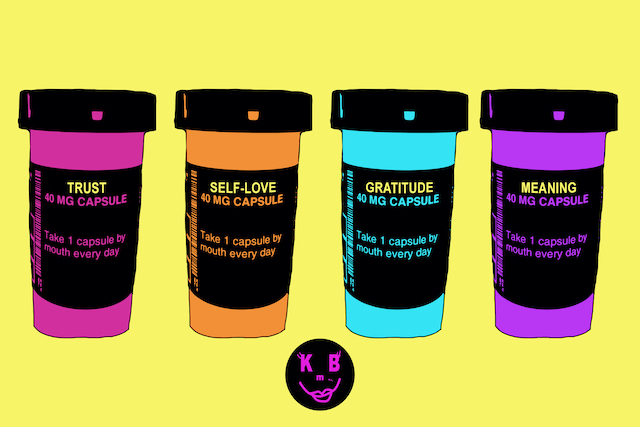
    Custom artwork by Kelly Benini

  • My Cat Had Cancer and Taught Me How to Cope with Illness

    My Cat Had Cancer and Taught Me How to Cope with Illness

    “A cat purring on your lap is more healing than any drug in the world, as the vibrations you are receiving are of pure love and contentment.” ~St. Francis of Assisi

    We all know what it is like to be sick. At some point in our lives we get the flu or a bad cold, but we know the course—get lots of rest and before you know it you are as good as new. But for some of us, we live with chronic illness.

    Chronic illness brings with it day-to-day symptoms, the ones you cannot get away from. Coping with chronic illness is really tough.

    You wonder if you will ever get well, grieve the things you used to do or want to do but can’t, stress about how to maintain employment, and feel invisible to those who don’t know what it is like to be sick.

    Autoimmune illnesses affect 50 million people in the United States and includes over 100 illnesses (aarda.org). I have an autoimmune disease—Crohn’s disease. It is a chronic inflammatory bowel disease.

    Crohn’s disease has many symptoms, which fluctuate day-to-day, and like all autoimmune diseases has remissions and relapses. I don’t know when I wake up if I am going to have a good day or a really bad day.

    Some days it is overwhelming, but others I feel supported and hopeful that I will get better.

    When my twenty-year-old cat Yochabel was diagnosed with bladder cancer, now two of us in the same home suffered with a chronic condition. As we faced our health challenges together, something remarkable happened.

    She became a mirror of myself. I thought I was coping, but she challenged my current perceptions of illness. I had room for improvement as Yochabel, my dear cat companion, offered me lessons for coping.

    Obviously, I didn’t have feline bladder cancer, but her condition, similar to my own, was chronic, and unpredictable. Similarly, treatment direction was unclear and despite seeing diverse specialists, opinions were confusing and conflicting.

    Whether it is cancer, autoimmune disease, or another illness, there are common themes among them. I think of illness as painful, uncomfortable, disorienting, stressful, frustrating, and even depressing from time to time.

    But to my surprise, Yochabel introduced me to a positive aspect of illness. Illness brought irreplaceable gifts to both our lives, one of which is gratitude.

    Notice and Appreciate the Small Things in Life

    When we know our time is limited with those we love, suddenly our perspective shifts. Instead of focusing on what we don’t have, we focus on what we have. Each day Yochabel was physically able to walk to her litter box I was grateful.

    First thing in the morning, I ran into the room where she was sleeping, and when I saw her big beautiful green eyes wide open and heard her purring, I felt gratitude. I noticed that while I was able to appreciate these things in Yochabel, I couldn’t in myself.

    My body, just like hers, was giving me many moments to be grateful for. Despite living with Crohn’s disease for decades, my body gifted me with the ability to walk to see Yochabel, the senses to see and hear her, and a heart that filled with love when I thought of her.

    My body gave me life—a life that I could make the most of because it was my choice regardless of illness.

    Being Present: One Step, One Moment at a Time

    Throughout the ups and downs of adjusting to the bladder cancer, I noticed the stark contrast between Yochabel’s responses and my own. I wanted the answers to be clear and results from treatment immediate. I was impatient and outwardly frustrated.

    Meanwhile, Yochabel’s life was consumed with frequent trips to her litter box. Back and forth each morning I watched her squat to urinate, return to her bed, and start the process all over again. Her pacing made me anxious and angry.

    I asked myself again and again why is this happening to her? She didn’t deserve it.

    I watched her take one step at a time, as though each trek to the litter box was a new one. I, on the other hand, accumulated her sufferings, each trek to the litter box being “stacked” on top of the prior ones as I angrily said, “Here we go again!”

    Meanwhile she was calm and present in each step.

    I wondered how does she do it?

    Then I concluded, it was truly about being in the moment—taking one symptom at a time. The more we accumulate and stack symptoms, the harder it is to cope. One symptom at a time is more manageable.

    I wondered if I could handle my symptoms one at a time.

    It is almost as if she knew this was a process that her body had to unfold in its own time.

    As I watched her presence and approach to a very annoying constellation of symptoms, I realized how much energy I expel trying to rush healing, obtain immediate answers, and get to the end of treatment. This negative response steals energy away from my healing in the form of stress.

    Stress doesn’t help healing, it makes it worse. It was a major difference: Yochabel seemed to manage stress much better than I do.

    It is All About Perception—We Are What We Think

    One side effect of bladder cancer is bleeding. Despite my knowing this can be a common symptom of cancer, my perception of blood is “scary,” and painful.

    In fact, it causes me to freak out!

    Yochabel didn’t perceive blood as alarming. Therefore, every time she urinated blood, while I panicked, Yochabel remained present and calm until my nerves and actions alarmed her.

    To my amazement, even while bleeding, she still purred and sought my companionship and meals.

    I wondered if I could be this calm as my body did strange things; it would certainly be useful.

    It was all about my perceptions.

    Joy and Illness Can Coexist

    The most perplexing to me was Yochabel’s ability to show a joy and zest for life despite what I perceived as uncomfortable—cancer.

    While bleeding, urgently urinating, and dealing with her own lifestyle changes she was upbeat, kind, patient, and obviously joyful.

    I couldn’t think of a day in my life where I exuded outward or inward joy while in a Crohn’s flare. Not to mention, I was irritable towards those around me when I was suffering.

    Yochabel, staying in the moment, never allowed her illness to displace her joy or relationship with me.

    She was always kind and full of gratitude.

    Pet Companions Help Us Heal

    Living with chronic illness inspires me to continue developing and refining what my body and mind need to heal.

    Through the years I have explored many approaches for healing Crohn’s disease and strengthening my immune system.

    I tried physical interventions: diet, routine blood work, and taking vitamins and supplements and emotional interventions: seeing a licensed mental health therapist and addressing the impact of childhood trauma and stress on my health.

    These were all effective in their own ways, but sometimes healing can be simpler than we think.

    Our pet companions are critical assets to our healing.

    Not only do they provide us unconditional love and support, but they are some of our greatest teachers. In the presence of a pet companion, there is no such thing as invisible illness.

    They see us for who we really are and their wisdom and intuition is something all humans can benefit from.

    Hold on to the Gifts in Front of You

    Illness is life changing for caretakers and patients.

    However, the greatest lesson I learned from Yochabel is that some of the difficulty is of my own creation.

    Rushing the human body beyond its natural ability to heal is counterproductive, anger and frustration toward loved ones and oneself is damaging, negative perceptions create stress and confusion.

    Just because illness is present in our lives does not mean we have to surrender to it. We still have our joy, quality time with loved ones, ability to make decisions moment to moment, and hope that things can get better.

    While Yochabel had the cancer, I seemed to be the victim and the “sicker” of the two of us.

    Why?

    Because she didn’t let go of any of these gifts.

    Her focus was holding on to them moment by moment and when I do the same, I can cope much more easily.

    *You can read more about Yochabel’s wisdom, and her end-of-life story, here.

  • How to Love Yourself Through Cancer or Any Other Terrifying Diagnosis

    How to Love Yourself Through Cancer or Any Other Terrifying Diagnosis

    “If you want to see the sunshine, you have to weather the storm.” ~Frank Lane

    One minute your life is just humming along, and out of nowhere you’re hit with a devastating diagnosis. Cancer.

    Believe me, I know what it’s like to get the news you have cancer and to live with the trauma that follows, because I’m not only a licensed psychotherapist, I’ve been treated for both breast cancer and leukemia.

    I know how that diagnosis changes everything. I know how the world around you can still look the same, but suddenly you feel like a stranger in your own life.

    You have trouble getting up in the morning. You have trouble getting to sleep. When you finally get to sleep you’re jolted awake by nightmares. Or maybe you sleep all the time. You can’t eat, or you can’t stop eating.

    You’re drinking too much. You’re smoking too much. You’re terrified, exhausted, and have no idea how you’re going to get through the next few hours, let alone the days, or weeks ahead.

    When I was going through chemo for breast cancer, I read all the books about surviving cancer I could get my hands on. I talked to my oncologist and to other women going through the same thing, trying to find the way to “do cancer right.”

    I worried myself sick that I would get things wrong, until a friend said, “You know, everybody does things differently. Just find what works for you, and do that.” Those words changed everything for me.

    I realized there wasn’t “a right way” to do cancer. There was just the way that worked best for me.

    I believe it’s the same for you. No matter what kind of diagnosis you’re facing, it’s up to you to find what works for you and do that.

    To get you through those tough first days, I’m offering you some thoughts and techniques that worked for me. I hope some of them will work for you, too.

    Be Gentle With Yourself

    When you’re going through a tough time, you may not have the time or energy keep up your usual self-care routine. So, why not let the big things go and start looking for little things you can do instead?

    If you can’t get to the gym, go out for a ten-minute walk at lunch. If you don’t have time to cook a nutritious dinner, add a salad or vegetable to your take-out order.

    Instead of trying to check things off your to-do list, think of ways to make life easier for yourself. If you don’t have time to do something yourself, hire someone, or ask for help.

    Focus on what’s best for you, and that means speaking up for yourself. If you don’t have the time or energy to do something, say “no,” and don’t feel guilty about it.

    Find the Joy

    Be sure to do something you love every day, even if it’s just for a few minutes: sit on a beach, gaze at the stars, read a book, go for a walk, watch a funny You Tube video or TV show. Smile when you can and laugh as often as possible, because laughter connects you with the world in a way that eases anxiety and heals the heart.

    Affirm Courage, Love, and Safety

    What you say to yourself matters. And when you’re going through a tough time, positive self-talk can make a real difference in how you think and feel.

    When I was struggling to find even one positive thought, I found it really helpful to focus on powerful affirmations instead. So, if you find yourself spiraling downward into the depths of negativity, try the following process to break that cycle.

    Healing Affirmations

    Begin by saying your name out loud. Then remind yourself that you’re safe and secure in the moment. Let that feeling soak all the way in to your belly and your bones.

    Once you feel safe, affirm:

    “I have the spirit, will, and courage to meet any challenge ahead.”

    “I can handle anything, one step at a time.”

    “I am always surrounded and protected by light and love.”

    “I speak to myself with loving kindness. I treat myself with loving kindness. I care for myself with loving kindness.”

    “I am always moving in a positive direction toward a positive future.”

    “I am safe.”

    End by promising you will always treasure yourself and honor your beautiful spirit. Affirm courage, love, and safety.

    Nourish Yourself

    Experts recommend eating well, and eliminating sugary and processed foods, alcohol, and caffeine when you’re under stress.

    But maybe you’re having trouble eating anything at all. Or maybe you’re living on chicken noodle soup, pretzels, and chocolate doughnuts.

    Please, give yourself a break. When you’re going through a traumatic experience it’s no time to be following a strict diet or to beat yourself for not eating a balanced diet. Instead, focus on making healthy food choices when you can, and letting go of judgment when you can’t.

    If you find you’re having trouble eating, choose foods you can tolerate and enjoy smaller portions more often through the day.

    If you’re over eating, try eating fruits and vegetables first. Commit to eating only when you’re sitting down. Focus on eating more slowly.

    But if you’ve tried everything you can think of and are still struggling with food, please let your health care provider know what ‘s going on. They’re there to give you support and help in all aspects of your health care.

    Rest

    A good night’s sleep is an important part of healing your body, mind, and spirit, but if you’re struggling to get enough sleep there are a number of things you can do.

    Try going to bed an hour earlier each night. The extra time in bed can give your body some needed rest.

    Once you’re in bed, do your best to keep your focus off your troubles. Relive happy memories, or imagine yourself vacationing in a place where you can relax and enjoy.

    If you haven’t fallen asleep after twenty minutes, get up and do something calming. Write in your journal, do a crossword puzzle, or sip a cup of herbal tea.

    Finally, if you aren’t able to get enough sleep at night, take a nap during the day. Make it a non-negotiable part of your daily schedule. If time is an issue, try scheduling all your activities and responsibilities before lunch, leaving your afternoon for napping or resting.

    Seek Support

    It’s important not to go through this alone. And asking for help is a sign of strength and courage, not weakness.

    When things get rough, call a friend or a family member and ask for support and help.

    If you’re completely overwhelmed and don’t know where to turn, consider getting some professional help. Talking to a mental health provider can give you new insight, hope, and bring you peace.

    Finally, you may also want to consider working with a support group. There’s great power in knowing you’re not the only one suffering this kind of challenge. There are people who are in the same boat and know exactly how you feel.  They may be able to offer comfort and advice in the days ahead.

    Give

    Giving is another powerful way to connect with the people around you. It reminds you of the gifts you still have, and that you’re not the only one going through a tough time.

    There are lots of ways to lend a hand. Offer to drive a neighbor to a medical appointment. Walk the dogs at your local animal shelter. Write a check to your favorite charity or drop a few coins in the donation can as you pass by. Send a card or text to a friend to help them through the day.

    If you’d like to make a longer term commitment, volunteer at your local library, food bank, or senior center.

    And if you think you don’t have any energy or time or left to give, give a compliment. Share a smile or a kind word. You never know how that one small gift could change a life.

    Give Yourself a Healing Hug

    Hugging is a way to give yourself comfort and peace in the middle of any storm. Acupressure is a powerful way to bring ease to both body and spirit.

    I combine both techniques in what I call a healing hug, and highly recommend it to ease fear and panic that can be a part of these tough days.

    Begin by crossing your arms over your chest. There are two important acupressure points located in the soft tissue just under your collarbones called the “letting go” points.

    Chances are that by crossing your arms, your fingertips have landed on those “letting go” points. Take a moment and feel around until you find the spots, about two inches above your armpit crease and an inch inward.

    Once you’re found the points, pull your arms close around you in a comforting, self-hug, and gently massage those “letting go” points with your fingertips. Continue to breathe, noticing on each exhale how the tension and fear flow down your spine and out of your body.

    No matter how difficult or scary your diagnosis, treating yourself with love and kindness will make the journey through the those first tough days easier, and give you a head start on enjoying the sunshine waiting for you on the other side.

  • Healing Chronic Pain Is an Inside Job

    Healing Chronic Pain Is an Inside Job

    “Time is not a cure for chronic pain, but it can be crucial for improvement. It takes time to change, to recover, and to make progress.” ~Mel Pohl

    Let’s face it, living with any kind of physical pain is a challenge. I understand that completely. In the fall of 2007, I contracted an extremely painful and debilitating condition, Thoracic Outlet Syndrome, a structural collapse that compresses the muscles, nerves, and arteries that run between the collarbones and first ribs.

    Yet, as most of us do, I believed my condition would, naturally, clear up soon and the pain would leave. That’s what happens most of the time for most of our physical ailments. Pain arises because of an illness or injury and disappears as we heal over the following days or weeks. We might lay low for a while, take some medications to ease the discomfort, and then we’re back into the swing of things. No problem.

    Except when it doesn’t work that way.

    What happens when pain becomes a fixture in our lives and no amount of medication or treatment or therapy can eradicate it? What do we do then?

    Our usual response is to fight. We put on our battle armor and spend every day in an effort to overcome pain so it won’t take over any more of our lives. We search for the right therapies and the right medications, trying one approach after another, with the attitude of defeating a mortal enemy.

    If nothing works, we eventually exhaust ourselves. We wake up one morning with our anti-pain armor in a heap on the floor and find we have no more reserves to fight, so we leave it there. We just don’t have the energy to go into battle anymore.

    So, we swing to the other end of the spectrum, deciding that the best thing to do now is to ignore the pain we’re living with. This is just the way it is right now, we say to ourselves. These are the cards I’ve been dealt and I’m going to have to live with the situation. We put on our best face and try to function despite the pain, doing our best to ignore its insistent cries for attention.

    We may even decide the doctor is right if s/he tells us that the reason we’re still in pain isn’t because our condition won’t heal, but because our brain is misfiring. Okay then, I’ll put the blame on my brain and pretend the pain doesn’t exist, we say.

    But the pain stays and stays and stays.

    Neither of these extremes usually works very well for chronic pain. Fighting pain is exhausting. It creates stress and tension not conducive to healing. Fighting causes us to tighten and contract in the body, also not great for healing. Acquiescing, on the other hand, can lead to feelings of helplessness and hopelessness over time. If pain isn’t improving, one day we might find ourselves looking up from the bottom of a dark well, filled with despair.

    Are these really our only choices? Isn’t there a middle path that might offer something less fatiguing than constant battle and less hopeless than acquiescence or denial?

    What do we do? What can we do?

    I spent years swinging back and forth between the two poles, finally settling into a kind of stoic silence until one day I couldn’t stand it anymore. I just couldn’t face a life sentence of living in unremitting pain. I decided there had to be a different way to live, to find more ease and grace even in the midst of pain.

    So, I decided to turn my belief about what pain is and how I was dealing with it on its head. I changed the way I perceived pain and the way I responded to it. I found ways to shift my relationship with pain into a more positive, constructive one and, after many years of having no perceptible change, began to finally experience some relief.

    Here are three important ways I shifted my relationship with pain and thereby began to experience more healing in my body.

    Making Friends with Pain

    It helped me a great deal to understand that pain is not an enemy but a signal and a message that tells us that the body is trying to heal. Pain is a voice from within that announces that something is out of harmony and is trying to put itself right. Instead of experiencing pain as torture, I began to understand that it was a natural communication from my body. In a way, it was me talking to me. A part of me was hurting and asking for attention.

    Since fighting pain only seemed to make things worse, I asked myself, what if I imagined that pain wasn’t an adversary, but had a positive purpose? What if pain wasn’t trying to put me through hell, but was simply trying to get my attention? How could I make friends with it instead of opposing it?

    I began to ask pain what it needed, what it was asking for, what I could give it and do for it to help my body heal. I understood that it was asking me to slow down, both on the outside and on the inside. Pain needed me to be with it just as it was, to stop pushing against it, and to listen to it.

    What I learned from pain was that, instead of offering it my anger, denial, or hate, it required a very different kind of attention. The pain, the signal from my body, was asking for a different approach to healing, a softer approach.

    I understood it to be asking for the kind of compassion and understanding you would offer a small child who is hurting. I found that when I turned a more loving ear toward it in an effort to listen to it, respect it, and offer it kindness, my whole body relaxed, my breathing shifted, my stress lifted, and my pain began to decrease.

    Finding Positive Ways to Express Pain

    I began to journal about living with pain, which helped me see it differently. I wrote about my emotional responses to living with pain. I wrote about the loss and the loneliness, the shame and the frustration. Then I read what I wrote out loud to pain, and to myself. We both listened. Something shifted. We both relaxed. Pain started to move.

    I then went a step further and found someone I could trust to hear my pain story. I asked them to please not offer any advice, to not try and fix me, but just to listen with an open heart and mind. I told them about the sadness and the terrors, the loneliness and the shame. I told them things I had never told anyone because I was simply trying to hold it all together from one day to the next.

    Having someone simply witness me in my pain without asking me to be any different, but allowing me to be in the pain I was in and really seeing it and acknowledging it was hugely healing. And pain relaxed a little more.

    Allowing Pain the Time it Needs

    I also discovered that pain was asking for time. Healing simply wasn’t going to be rushed. My body didn’t respond well to being hurried or pushed, and healing could not be approached as another goal to be achieved. Pain kept its own timetable.

    Allowing pain to take the time it would take rather than trying to hurry it out of my body allowed for a healthier emotional and physiological response that was far more conducive to healing. My body became more relaxed around the pain and I began to release stress, tension, and contraction. I breathed more freely, moved more slowly, approached everything in a more relaxed manner, and stopped obsessing as much about my healing.

    I stopped pushing against the pain and pushing against the situation and began to trust the healing process. Paradoxically, when I allowed pain all the time it needed to heal, it began to release. When I demanded that it leave immediately, it dug in its heels, but when I related to it soothingly and with patience and love, I felt relief more rapidly.

    I have found over my years of living with chronic pain, that these approaches are fundamental to creating more ease and grace on a daily basis, to releasing stress and tension in the body, and to relieving long term pain. None of them are guarantees of becoming pain free overnight, but all can offer relief, hope, and positive shifts almost immediately and, as those of us who have been living with pain for a long time know, any movement toward relieving pain is cause for major celebration.

    I’ve gained valuable insights from my journey with pain as well. I’ve learned to find a place deep within myself, a clear place at my core that is resilient and eternal, a place I can draw on for strength and comfort in any situation. I’ve learned how to be kinder to myself and to others. I’ve learned how to find new appreciation and satisfaction in simple things and to celebrate the small joys in life.

    Pain, then, has become something of a spiritual mentor over time. It has, in the end, taught me how to live more deeply, more authentically, and more wisely. Living with pain has not only helped me understand what really matters most to me in life, but how much I matter to myself.

  • Why I Stopped Trying to Fix Myself and How I Healed by Doing Nothing

    Why I Stopped Trying to Fix Myself and How I Healed by Doing Nothing

    “Everything in the universe is within you.” ~Rumi

    When I was twenty-three, I lost my job through chronic illness. I thought my life had ended, and I spent the next few years an anxious, panicky mess—often hysterical. Eventually, I took off to scour the globe for well-being techniques, and searched far and wide for the meaning of life and how to become well again.

    If you’re chronically ill, like I was, whether physically or emotionally, you’ve probably experienced the same misunderstanding, the same crazy-making “well, you look okay to me” comments, the same isolation, depression, and frustration that I felt.

    You’ve probably been on a bit of a quest for self-recovery. And so, you’ve probably also felt the same exasperation when trying to figure out which self-help theories actually work. It can be overwhelming, right? I thought so, too, but I came to find it was actually really simple!

    Searching the Globe for Self-Help Techniques

    So many people are full of advice: “Try CBT/ tai chi/ astrology/ vitamins/ rest more/ exercise more/ zap yourself with electricity/ eat better/ stop being lazy (always helpful!)/ do affirmations/ yoga/ meditation/ wear purple socks…” Okay, so no one ever actually recommended trying purple socks, but there were so many weird and wonderful recommendations that I found myself lost, which might explain why I went away to find myself!

    I traveled far and wide with my illness, training in every holistic therapy there was (which I loved; I’m curious, and well-being is my passion). But I was always searching for a ‘cure’ for my brokenness. I connected with yoga, meditation, and mindfulness on my journey, and I heard the very familiar Rumi quote: “Everything in the universe is within you.” This served only to confuse me even more as I struggled to analyze what it meant!

    In Bali, though, I felt I had found home in yoga, meditation, and mindfulness. I felt connected to myself. I felt like I understood that all I needed was within. My anxiety had gone, my panic had gone—and my chronic illness had gone, too! Then, I came home to the UK, and it immediately returned.

    I was disheartened. I still lived yoga and mindfulness—I loved it and I taught it at home—but the joy had gone from what I had once thought of as the answer. So, how was I absolutely okay in Bali and not at home? Was I a fraud? What was going on? There was so much thinking…

    What I Learned About Being Human

    It wasn’t until a year later that I discovered why, when I heard something differently. A colleague introduced me to a mentor who shared some profound insights about how the world really works.

    She explained the basic underlying reality of humanity: that underneath all of our thinking about “how to be happier” is a healthy wholeness and perfection that is already innate—without having to do anything. You see, the reason that I had felt any anxiety or panic at all was because I had just forgotten the truth of what it is to be human.

    The Power of Thought: All You Need Really Is Within

    Our human reality operates entirely through thought in the moment. Everything we feel is a result of our thinking. If we feel anxious, it’s because we are experiencing anxious thinking. If we feel happy, it’s because we are experiencing happy thinking. Our entire reality, therefore, really does come from within! It is an inside-out world.

    When we were born, we were perfect and whole, and not anxious. Then, when we gained the beautiful power of thought, we learned that the external comfort blanket was super comforting, because “it made us feel better,” right? Wrong. The blanket is an object, with no capacity to make us feel anything. One hundred percent of the comforted feeling came from our own thinking about the blanket. It’s the same with all of life.

    So, when I was in Bali, I thought I was okay because I was enjoying yoga and meditation, which I loved with all my heart. Thinking that the external could impact me, I felt 100% whole. I returned from Bali and my thinking about the external changed; it felt like I wasn’t happy, because I thought that I needed to be back in Bali. But the thinking came from me: the happiness or unhappiness was all dependent on my thinking in each moment.

    I didn’t remember this, so I attributed my happiness to the external. But it wasn’t, because we are always living in the feeling of our thinking in any moment. Everything comes from within.

    The Innate Wisdom Under Our Thinking

    The funny thing is that as much as this seemed profound to me when I heard it, it was also as if I already knew. It is innate wisdom that we just forget to tap into as we bustle through what feels a hectic pace of life.

    As I began to remember this wisdom, I found that I would start to notice my thinking; I’d become an observer of it, almost in a mindful, meditative kind of way, but I no longer needed to sit and meditate to be happy.

    New insights would come up as I stayed in the conversation about life, and more and more would drop away: the absolute reliance on meditation and affirmations in particular (though the joy returned for meditation when I realized there was less pressure to love it and just followed it because it was in my heart).

    Because under my thinking—under your thinking—is an innate wholeness that is always accessible to you in any moment, if you just see that your reality is entirely experienced through thought in each moment.

    Analysis Paralysis

    We spend hours of our lives analyzing how to be happy, how to stop being negative, how to meditate, how to be less attached, how to be more empowered, how to be more creative, how to be more whole. Don’t get me wrong, this can be interesting, if (like me) you have your own small self-help library! But it’s more important to drop out of your head and into your heart—like I did in Bali, and like I did when I allowed my thinking to just flow and stopped analyzing it.

    I still love yoga and meditation—I teach both and connect with them—but it’s to follow my heart, and I don’t need it. I’ve observed with clients, though, that sometimes it’s easy to misunderstand these concepts and get wrapped up in over-complication, analysis paralysis, denying true feelings, and forcing, trying to be ‘positive.’ This is why I ditched affirmations completely.

    Don’t Miss the Point: Clarity Through Trusting and Flowing, Not Forcing

    Some people miss the truthful essence of this beautiful wisdom. I’m a believer that we often try and force happiness and positivity through techniques like affirmations—and even in some meditation practices that suggest people need to “let go of thinking.”

    We can’t let go of thinking; it’s part of being human. And affirmations serve only to suppress our true feelings, which is dangerous. When we allow our thoughts to just flow through us instead, dancing with them through life, we create space where we would once have analyzed how to solve them; and it’s in this space where clarity can arise and we can see the truth.

    The truth is, we humans are a vessel of energy, and, I believe, part of something greater that has a plan for us—and through this human life, we are blessed with the amazingly abundant, creative power of thought. All we really need to do is let go and flow.

    All we really need to do is allow the feelings that arise from our thinking, conscious of the fact that our reality is constructed through thought. We just have to observe what comes up, embracing pleasant feelings and allowing the darkness without paying it much attention. Like an uninvited guest, it will eventually pass through, without you needing to do anything to get rid of it.

    These days, I laugh at the thoughts that come up and watch them with curiosity, marvelling at the creative capacity of beautiful brain, and knowing that underneath all of my thinking is the real truth: that I am entirely whole, perfect, and complete. Just like you. And you know what? I’ve not been anxious, panicked, or chronically ill ever since I remembered this truth of being a human living life through thought.

    I’m not suggesting that our illnesses are “all in our head” and that we can think (or stop thinking) our way to health. Everyone is different, and there are many different causes for the illnesses we experience, chronic or otherwise. But for me, everything changed when I allowed my thoughts to just flow.

  • Coping with Your Partner’s Life-Altering Medical Condition

    Coping with Your Partner’s Life-Altering Medical Condition

    “We don’t know what’s causing it,” I say to friends for what feels like the hundredth time. My boyfriend has been unable to walk or stand without pain for two years. And no doctors can seem to figure out why.

    We were in our early twenties and had only been dating for a few months before his leg issue started. What ensued was a harsh transition from a highly active couple hiking mountains on the weekends, to a sedentary couple that needed to take an Uber to a coffee shop just a few blocks away.

    Our identities as individuals and as a couple were forced to adapt as we struggled to balance our budding relationship and the crippling reality of being unable to walk, bike, run, swim, or do any other form of physical activity together. But this wasn’t the only issue; other areas of our relationship struggled as well.

    Our conversations became strained, our intimacy more limited. We had become much less carefree as we battled to adapt to our new constraints. My partner now seemed to lack the confidence and assuredness he once had, and my plans about how the relationship would grow suddenly had a huge wrench in them with no timeline for when things would get better.

    Along the way I’ve shared our journey with others, and it turns out there are a surprising number of people with similar stories. Their partner was happy and thriving when they met, then they unexpectedly developed a debilitating medical condition that changed everything. I’ve heard examples of several friends whose partners have unexplained chronic pain, nausea, headaches, heart conditions, and more.

    While these are personal anecdotes from my own small circle, I know we are not alone. There are millions of active Reddit threads and support groups in community forums by desperate partners reaching out the internet to answer “When will the person I fall in love with be back?”—“What is going on?!”

    Every situation and relationship is different, and many have been enduring the struggle for much longer than the two years I have been, with much more life-threatening conditions. Hats off to you! However, I have learned a thing or two over the course of my journey that have helped me turn a corner in my relationship even though the issue is still going on.

    Here are my top six tips for coping with a partner’s life-altering medical condition. In other words, here are things I keep telling myself in order to get through one of the hardest things I have ever experienced.

    1. Stop planning for the day they get better.

    In the first few months of our journey, I would create timelines in my head for when it seemed “reasonable” he would be better (“In three months it should be better, right?”… five months… a year, etc.). But those timelines were based purely in blind faith despite not even knowing what the problem was. I would set myself up for disappointment again and again while there was still no progress.

    After enough failed treatments and milestones (birthdays, holidays) that passed when he still wasn’t better, I realized I needed to be open to the harsh reality that today’s medical system is not perfect: it’s slow and often trial-and-error, especially if the doctors aren’t sure what the issue is. There is no time he “should” be better.

    Releasing myself from these expectations, and the pain they created, allowed me to stay more level-headed and focus on the things we can control and enjoy in our relationship.

    2. Do your own research.

    Google everything, study the anatomy of the body, familiarize yourself with Western vs. Eastern medical treatments, take a minute to focus on a dense, peer-reviewed medical journal, educate yourself. This will help with #1, as you will know what is going on, why it’s complex, and why it’s taking so long to figure it out. Knowledge will give you peace of mind.

    You will be able to meaningfully contribute to conversations with your partner as they navigate their appointments and decisions. As a result, you will feel more involved in the journey rather than victimized by it. It’s something you are doing together, and you are empowered to help each other since you are both experts in all the possibilities of what the issue may be.

    3. Seek out others in your situation.

    For the first year or so, I felt entirely alone on the journey. It felt like a secret struggle between my partner and me that my friends and family didn’t understand, or they assumed it was probably better by the next time they asked about it. Finding friends who were going through something similar was instantly comforting.

    With them, I can speak more freely about the emotional toll it is taking on the relationship, swap stories of failed doctor’s appointments, and discuss the next thing we are trying. Hearing about someone else’s unique story has helped provide perspective and get outside of my own head on my relationship.

    If you don’t have any friends going through the same thing, I found a couple people online here and here. Seeing them struggle with their own medical journeys inspired me to stay strong and keep going.

    4. Grow the parts of the relationship that you still can.

    As much as it seems like your partner’s issue is taking up all the space in the relationship, remember there are still other aspects of the relationship that are ready and willing to grow. Try your hardest to not talk about the medical issue all the time. Set up a regular check-in cadence on how you and your partner are feeling about the situation, and spend time outside of that enjoying life together.

    Find new activities to do together, new hobbies to be into together, new conversations you may not have gotten into otherwise. Don’t be ashamed if the activities you do with your partner aren’t exactly what you thought you’d be doing or what your friends are doing with their partners. Cherish your special relationship with one another.

    5. Own your choice to stay in the relationship.

    You may struggle with whether or not you should stay. If you are still in your relationship despite the way the medical issue has changed it, you have likely developed a rationale for why it makes sense to stay, such as “It’ll get better soon so I just need to stick it out,” or “I don’t believe in leaving when there are hard times,” or “We have kids who need us.”

    While those things may be true to you, they represent more about your personal belief system than anything else. This is how you choose to look at the issue, and, in turn, why you choose to stay. In reality, you are not obligated to stay. You do it because you want to do it. This self-awareness will free you from feeling stuck, or like you “have” to be there. It will help you to focus on why you are staying and validate that choice.

    6. Be proud of yourself.

    This is tough! Pat yourself on the back for what you can do and the little wins you have along the way. You and your partner are both learning together, and you should be proud of yourselves individually and as a couple. While these situations can create friction that drives you apart, it’s actually not you two versus each other—it’s you two versus the problem. Stick together and lean on each other. You’re doing a great job.

  • Why Cancer Was the Beginning of My Life, Not the End

    Why Cancer Was the Beginning of My Life, Not the End

    “It is health that is real wealth and not pieces of gold and silver.” ~Mahatma Gandhi

    Cancer.

    I’ll never forget the moment the words fell from my doctor’s mouth. In one fell swoop, the “perfect” persona that I’d spent thirty-plus years carefully constructing received what would ultimately become a fatal blow. Following that fateful day of demarcation, my life would never again be the same.

    But let me back up a bit.

    By the time I’d arrived at my early thirties, I was cloaked in all the trappings of outward success: a lucrative career in the high-paced, high-stress world of high-end commercial real estate; a swanky West L.A. apartment filled with pretty things and a closet full of designer clothes; and a perfect size-two body that I’d finally learned how to punish and deprive myself into maintaining.

    At that time, I was what I would now refer to as an expert in applying “Band-Aids.” Desperate to avoid confronting anything uncomfortable—whether in the realm of my body, mind, or emotions—I numbed myself with a creative array of distraction techniques.

    High-carb, sugary desserts were my go-to for suppressing painful feelings—and, soon after, toxic processed foods, diet pills, and eventually drugs became my go-to for managing the resulting weight gain.

    When work became too stressful, I’d buy yet another new outfit, round up my crew of girls, and throw back a few cocktails to drown out my day while rocking the dance floor late into the night.

    If I could hide the not-so-pretty painful stuff behind some slim fit designer jeans, a fresh highlight, and a smile, I thought, all would be a-okay. That I had no energy, got sick all the time, and generally felt like crap most of the time seemed acceptable, even normal.

    I had a collection of Band-Aids to mask those symptoms, too.

    A few weeks after I heard the c-word fall from the mouth of my doctor, I found myself staring up at a bright white light as the doctor cut an incision down the bridge of my nose.

    I felt nothing, but I knew in that moment that my life would never be the same.

    I just didn’t realize at the time how it was going to change. The significance of surgery on my face did not escape me.

    This was not on my ankle, but instead front and center where everyone would see it. My bangs were not going to hide this scar. Nothing could hide this outward reflection of my inner disconnect.

    The truth was there was no more hiding from anything. I knew my body was speaking to me at a whole new level. This was my wakeup call; it was time for the Band-Aids to come off.

    Wake Up!

    My body had finally captured my undivided attention, and I had questions: Why was this happening to me when I was so young? What was I doing wrong? How could I make sure this wouldn’t happen again?

    I had been worrying for so long about outer appearances that I had completely forgotten about my inner being. In an attempt to right my wrongs and heal my body, I started researching foods and other natural remedies to effect a deeper healing for all of the little ailments I’d been masking for years.

    I emptied out my freezer of all its frozen dinners and snacks, started eating whole foods, and began taking a few key supplements. In the beginning, these changes were no picnic; I had embarrassing gas, a rumbly tummy, extremely smelly armpits to the point that I had to get rid of all my shirts, and worse skin outbreaks than when I was a teen.

    But even though I felt utterly terrible, I was equally hopeful at the same time.

    It turns out that when I stopped applying Band-Aids that only concealed deeper imbalances, my body became free to heal and excrete all the physical toxins along with the toxic thoughts and emotions that I had been holding onto for decades.

    It was quite the experience.

    Think of a long-term smoker. While they are still smoking they may have only a small hacking cough, but once they quit, they will start coughing deeply all of the time. This is because once the exterior assault has ended, the body is actually able to start clearing out the damage and repairing tissue from years of daily abuse.

    That was me—the girl that had metaphorically just quit smoking and was now hacking up a lung in more ways that I care to admit. It was a heartbreaking, difficult, beautiful, painful, and everything in between.

    I bow at the feet of the human body. When I gave mine half a chance and a little support, it became a healing machine.

    I Am Awake!

    Changes started happening in my body. I began to have more energy. The detoxification became easier.

    My body felt better and the tinge of depression that I thought was just part of my personality began to fade and make way for a much more joyful existence. It was crazy how good it felt to actually feel good. But the thing I never expected when I started to heal my body is how much of my inner truth would fly up in my face.

    The voice of my inner truth became so darn loud that it pushed me right out of the type “A” designer life I had created and into one that was much more hippy-esque, loving, and accepting.

    I started to see life in new ways, I began to dislike things that I thought that I loved, and at times I barely recognized myself. Of course, this didn’t happen overnight, but it happened pretty quickly, and I knew that I could never go back to the self-punishing way of life that I had been living. Things had changed because I had changed from the inside out.

    In the ten years since c-a-n-c-e-r provided a catalyst for my own awakening, I have realized three powerful gifts that I received from this seemingly tragic experience.

    1. The truth heals.

    We human beings do a lot of crazy things so we don’t have to feel uncomfortable emotions or to run from ugly thoughts.

    We elude ourselves so we don’t have to admit that our relationship sucks, or we feel so painfully insecure that we need liquid courage to go out at night. We tell ourselves stories so we don’t have to face the deepest truths that lie under the surface, and yet those hidden truths are exactly how we heal.

    Cancer gave me the biggest opportunity in my life.

    It woke me up to deeper truths that I had been running from most of my life: Running from the pain of my parents’ divorce when I was ten years old, running from the twenty pounds I gained as a result of eating my feelings, running from the sadness of being a “bigger” girl, and never feeling good enough at anything even if I excelled at it.

    My overachieving size-two designer life was never going to fix these hurts of the past. You can’t run fast enough to escape the truth.

    It is always there whether you choose to acknowledge it and no matter how many Band-Aids you apply in an attempt to escape the inescapable.

    The running, the avoiding, the lying to myself had finally manifested as an illness, and it was going to kill me either literally, figuratively, or both. And I don’t know which one is worse, actually dying or just feeling dead inside. I am glad I never had to find out.

    2. Listen to the whispers of your soul.

    I never would have thought twice about the way I was eating, taking care of myself, or the way I was living my life until illness rattled my cage.

    It caused me to pay attention, to seek new learning and to evaluate my life.

    Sometimes we all need a wake up call. No one wants it to be a diagnosis, but I have come to realize that I had been given so many mini wake up calls, but I refused to listen.

    I was always catching colds and flus, but kept living on fast food and frozen yogurt. I continued my upward climb in a career that gave me anxiety and stressed me out to the point of not sleeping well and having chronic stomachaches. I was having pre-cancerous lesions burned off my legs and arms every time I visited the dermatologist, but I paid no attention, made no adjustments, asked no questions.

    My diagnosis had been building under the surface for years, quietly gaining momentum, and I ignored it all.

    I now know that it always works best to get the lesson at the point of a whisper, but for some of us we just don’t listen until our door gets kicked in. At least that was my experience and now, I have learned to get quiet.

    To listen early on and to make little adjustments as need be. To sense the subtleties, create the space for peace and quiet, and to live in a way that honors health.

    3. Build an authentic life.

    I knew deep down inside I was living a life that was not really reflective of who I was—or of who I was becoming. I knew it.

    I wouldn’t have admitted it, but I knew it.

    Occasionally, I would get these little whispers from my soul that I should make some changes, but my ego won out time and time again until I was diagnosed and I began to reset, re-evaluate, and reconnect to myself, to the true me.

    The person I was before I built this persona. To the little girl inside of me who just wanted to be loved and accepted.

    I found my way back to her and started to build a better life. One that actually felt good inside. It is never too late to discover who you really are, to continually seek to understand yourself better and allow yourself to evolve.

    You are always being supported to return home to you and live an authentic life.

    I have come to realize that we are all here to evolve, and every realization—even those that come about on the heels of illness, loss, or upheaval—is designed to support us in discovering and reclaiming more of our truth and getting used to owning it and expressing it.

    It takes courage. Oh boy, does it take courage.

    Life has its way of pulling you in all kinds of directions, but when you get quiet, when you connect to your soul, you know, you simply know, and all you have to do is muster up the courage to follow that knowing, one step at a time.

    And if you follow it, you will find the pot of gold at the end of the rainbow—or better yet, know that you are it.

    It turns out, the word cancer was not the end of my life; it was the beginning, a gateway to a higher way of living that I may never have found, or even thought to look for, otherwise.

    It was a soul whisper that became loud enough to command my attention, and, as soul whispers always do, it led me right to the perfect place.

    While it was impossible ten years ago to fathom all the ways I would evolve and expand, or the many insights that would open up along the way as my body healed, I now see that this entire experience lead me to a truth—a truth that is so powerful, it heals all.

    When we are willing to listen, illness can be our greatest teacher.

  • What to Do When Someone You Love Is Sick and Struggling

    What to Do When Someone You Love Is Sick and Struggling

    “Love is not what you say. Love is what you do.” ~Unknown

    As a graduate student in public health, I spent my days talking about illness and death. Normal lunchtime conversations among students covered topics like: how to define a case of multiple sclerosis, the most effective strategy to stop HIV transmission among injection drug users, and the probability you’d be alive in five years after a breast cancer diagnosis.

    None of this talk about illness remotely prepared me for the experience of illness. I was blissfully naive when I started dating a man named Evan with a cough that wouldn’t go away.

    Over the course of a year, Evan got progressively worse in a series of fits and starts. He was in and out of the hospital and died toward the end of 2012. I was heartbroken and devastated. But within a few years, I healed and was back to participating in normal life.

    Then, I started getting dizzy spells and severe face pain. A few months later, a very large yet benign tumor was removed from one of my sinuses. I spent months confined to my apartment waiting for my sinuses to heal and the pain to subside.

    Through these experiences, I’ve seen how a lot of our well-intentioned responses to illness don’t have the intended impact. Here are the top eight lessons I’ve learned a lot about how to be a terrific support as a family member or friend.

    1. Do what is needed, not what you think you should do.

    At the lowest points in Evan’s illness, I had a hard time eating. I barely slept. I was always bracing for what would happen next.

    Evan spent twenty-one nights in the hospital over the course of eleven months. I didn’t spend any.

    Not because I didn’t want to. Because he asked me to leave. Because he wanted me to get enough rest so that he could count on me coming back.

    So that I’d be safe to drive and bring him outside food. So that he could trust me to research the doctor’s recommendations and help him communicate his choices.

    Because he could tell how scared I was, and my fear was making him feel anxious.

    Many of us have dreams of being the valiant caregiver who selflessly never leaves the hospital bedside for a moment. If that’s how you think it will go down, I want to tell you something: that may not be what your loved one needs from you.

    Leaving their side can feel awful. You may feel crushing guilt from not being able to do enough. Friends or family may question your commitment. And when things are really bad, there’s the gnawing fear that you’ll miss out on the moments when you were truly needed.

    But if going home to sleep, taking a walk, or spending an hour crying on your friend’s shoulder is going to make the difference between you being a guilt-laden, anxious wreck and your best self, that is what your loved one needs from you. Serious illness is a marathon. Don’t mistake it for a sprint.

    2. If your loved one wants to talk to you about death, listen.

    For most of the time that Evan was ill, we thought that he had a lung disease that was treatable. It was only in the last two weeks of his life, the day after they sedated him and put him on a ventilator, that we found out that he was terminal. A rare form of lung cancer.

    A month before his death, when he was still at home, Evan had talked to me about what he wanted me to do if he didn’t make it. I cut him off after one sentence.

    Of course I would do what he asked, but I told him that this wasn’t something we needed to talk about. He was going to get healthy!

    This conversation is my biggest regret.

    Evan didn’t think I deserved a boyfriend who was sick. He tried to break up with me twice so I could go find a “normal” boyfriend. I wasn’t having it.

    On that night, I wish I had acknowledged how scary things were for him. I wish I had let him know that whatever happened, I had no regrets about the time we spent together. Because I never got another chance.

    Don’t miss an opportunity to hear what your loved one wishes for you, because you think you’ll be able to do it later. Later, may never come.

    3. Every so often, check in on the support person.

    After Evan died I met up with my friends Derek and Tatiana who had been on their own journey through illness. They were engaged, and Tatiana had been in treatment for breast cancer during the same time that my boyfriend was ill. Derek had been taking care of her. When we met up we laughed about all the well-meaning people who emailed us “cures.”

    Derek and I agreed that one difficulty was how friends and family were so focused on how the patients were progressing that us caregivers often felt invisible and unappreciated. Everyone wanted to know how the patient was doing, what treatment we were trying, and if it was working. But few asked me and Derek how we were doing.

    It’s natural for people to be curious about what’s happening with the illness and the patient. But illness impacts all the people close to the patient, too. Caretakers shift our work schedules so we can be there at the important doctor appointments. We file the bureaucratic hospital paperwork. We learn the ins and outs of insurance companies.

    Being a support person is stressful and scary, yet caregivers often feel conflicted about asking for help themselves. They don’t want to draw attention or resources away from the patient. As a friend, regularly checking in on what you can do to help the support person can help them be a more reliable support.

    4. Don’t hide the fact that you’re unhappy for months.

    When your loved one is sick, you may decide that you want to put off a difficult conversation with them. I know, because I’ve been both the support person who has put off the conversation and the sick person who wasn’t told something.

    When I was sick, I wasn’t able to be the kind of friend that I was when I was healthy. I was grumpy. I wasn’t as quick to pick up on nonverbal cues. My thinking was muddled and foggy.

    During this time, I had a close friend who got tired of sick Lori. When I reached out to her, she would delay our get together, chalking things up to a busy work schedule. Eventually she would agree to meet up and then not enjoy the time we spent together.

    Months later, when I was feeling better I asked her if something was wrong. To her credit, she fessed up that she hadn’t been feeling satisfied by our friendship for months. She hadn’t said anything because she was worried I wouldn’t be able to take it. We are no longer friends.

    If you’re feeling unhappy about a relationship with a person who is sick, don’t bottle it up and hope it will go away. If you’re just showing up out of a sense of duty, you won’t have much staying power. And that day when you disappear with no chance of returning is more than a disappointment for your sick loved one. It’s a crisis.

    5. Understand that “cheering up” a sick person may backfire.

    The surgeon who took it out my tumor warned me that it would be months before I was pain-free and back to normal life. I shared this information with my family.

    Nevertheless, about two weeks after the surgery my mom started asking me if I was pain-free every time she texted me. Three weeks after surgery, she sent me pictures of her trip to Disneyworld with the rest of my family. We’re at the Magic Kingdom!!! There’s a new Under the Sea ride!!! Hopefully, you are out of pain by now!!!

    I’m sure that my mom’s intention was to try and cheer me up. To remind me that there were fun things to look forward to in life.

    Instead, those texts and photos broke my heart. They showed me that my mom was not ready to accept the seriousness of my situation.

    I was at the beginning of six weeks of excruciating pain and no effective medication to counter it. I spent a few hours each day screaming into a pillow and questioning whether life was worth this much pain. After those texts, I stopped asking my mom for emotional support, because I no longer believed she could give it.

    If your loved one is really sick, be sensitive. Acknowledge how tough things are before you gush about your magical vacation, your budding romance, or the wild dance party you went to last night. And if your loved one tells you they’re not in the mood for happy stories right now, honor their wishes.

    6. Realize that your chicken soup may not be wanted or helpful.

    Healing often means special diets. After my surgery I was on a paleo diet with a Chinese medicine twist. Every few weeks the Chinese medicine recommendations would shift as my body’s needs shifted.

    It was exhausting to keep track of what I was supposed to eat and what I wasn’t. But I couldn’t deny that the diet was helping. I was feeling better.

    So every time someone offered to make food for me I felt anxious. My dietary rules were complex and varying, and for a while I was in so much pain that I was communicating with a whiteboard, which made it hard to communicate the myriad ways you could mess up.

    There is nothing worse than receiving food that a kind person has made for you that you can’t eat. Even though you tried to tell them how they had to read the ingredients list on everything. Even rotisserie chicken. Because that “seasoning” contains gluten that you’re not supposed to eat.

    If you do make food for someone on a restricted diet, know that you are not just making food. You are making medicine. And your care and attention to detail needs to be the same as if you were preparing to give someone medicine.

    7. Be prepared for plans to change.

    Every year, my friend Charlotte invites a group of us out to dinner for her birthday. When she invited me in 2015, I told her it would be a long shot for me to go, but I wanted to try. Her birthday came two months after my surgery.

    I was in bad shape. I was having pain episodes that had me crying into a pillow a few times a day. I was also on a restricted diet and trying to limit my physical activity so I wouldn’t spark new pain episodes.

    Charlotte is one of my closest friends, and she did everything she could to make it work. She chose a restaurant that had food I could eat. She called ahead and asked about stairs and elevators. She figured out which of the options had the shortest possible distance between where she could drop me off and the front door.

    And I still couldn’t go. The pain was too bad and I was too tired. I didn’t want her birthday to be spent watching someone cry in pain at her table. Thankfully, Charlotte was understanding.

    If your loved one is sick, the fact that they need to change plans in no way reflects how much they care about you. They are not in control of what happens. Trust that they are doing their best. Don’t take it personally.

    8. Take all of these guidelines with a grain of salt.

    The one certain rule is that there are no certain rules. Depending on the circumstances and the people involved, all of these things could change. Some people may want you to distract them from the circumstances or the pain by pretending that everything is like it used to be. Or they may appreciate you holding your tongue.

    If you aren’t sure that what you are doing is feeling good to the sick person, ask them. Let them know that it’s okay to tell you the truth. You want to care for them and if there’s anything that you can do differently to take better care of them, you want to know what it is.

    Have you been ill? What did you find most supportive? Least supportive?

    Have you been a caregiver? What are you most proud of? What do you wish you had done differently?

  • Healing Is a Journey, Not a Destination (and You’re Not Broken)

    Healing Is a Journey, Not a Destination (and You’re Not Broken)

    Man on a Journey

    “Healing requires from us to stop struggling, but to enjoy life more and endure it less.” ~Darina Stoyanova

    At the age of twenty-seven I was diagnosed with interstitial cystitis, chronic inflammation of the bladder that causes UTI like symptoms. I am now twenty-nine and still experiencing symptoms, but I have improved greatly.

    I have spent that time searching for the answers to this medical enigma, for which doctors claim there is no cure. At first my research led me on a path of frustration and hopelessness, until I realized that my mindset was what was holding me back from healing.

    I then decided to change my expectation of healing from “I must be cured to be happy” to “I am enjoying my healing journey and look for happiness in any moment I can.”

    As a fellow chronic condition sufferer, I understand how overwhelming that statement can be. It is difficult to accept that we are in pain. However, just making that mindset a part of your routine will help open your mind to finding healing modalities that will work for you and help take the pressure off.

    Feeling like you need to find a cure is a lot of pressure to put on one person dealing with a chronic illness, and most people who develop these illnesses usually are characterized as perfectionists. I know I am.

    But what we don’t realize is that pressure is an obstacle to our healing. Acceptance is what will help us move forward in our healing journey.

    I will share with you what I have learned about healing through my countless hours exploring the Internet and personal experience. Here are five things I have taken away from my search:

    Be mindful of what you put in your body.

    I believe chronic illnesses are created when a perfect storm occurs in our bodies. When you pair emotional upset with a breach in your body’s immunity, you are vulnerable to that final straw that causes your body to go into attack mode.

    For me, I believe it was when I started a new birth control pill. With a history of chronic back pain, overuse of antibiotics, bad diet, unbelievable stress levels, and hormonal imbalances, the new birth control pill was the final straw that caused my body to attack my bladder and cause a vicious cycle that would lead me on my healing journey.

    There was a time when my life was consumed with searching the Internet for the magical answers to healing. It gave me a sense of control during a time when I felt like a helpless victim to my IC.

    But I realized this led to feeling completely overwhelmed by the large amount of contradictory information I found. For every article that said being paleo was the way to combat chronic illnesses, I found two more saying vegan was the only way.

    Everyone is different, and it is important to find the foods that work best for you, not to try to eat foods that fit into a box of a specific diet.

    I also find that when you start off being extremely restrictive with your diet it sets you up for failure. Starting slowly when introducing new ways of eating is the key to success. Don’t listen to every hot new diet trend, cleanse, or superfood out on the market no matter what kind of amazing results they boast.

    For me, plant-based diets free of processed foods and sugar make the most sense. Any other restrictions with food you decide to make should be based on your body. Use your common sense, and question doctors and healers about the pills and herbs they recommend. Not everyone has our best interests at heart or is well informed.

    You are not broken.

    When we deal with chronic illness we tend to blame ourselves, and it leaves us feeling broken and searching for a way to fix ourselves. We think if we could just handle the stress better or deal with our unresolved feelings, we would not have the illness to begin with.

    I have spent years reading self-help books hoping to find the secret to happiness. While self-help books often provide useful coping techniques and good advice, it infers that we need to be fixed in order to be happy. That is a belief that I feel to be limiting and self-sabotaging.

    Practicing self-acceptance of all parts of our self, including our health ailments, is more productive for our healing journey.

    That is not to say that we cannot try things to improve our self or change negative habits or thought patterns. But the more we try to hide or banish parts of yourself that you do not like, the more they will rear their ugly heads. You do not need to be healed of your chronic illness in order to deserve love and acceptance.

    Be your own advocate.

    Unfortunately, we can no longer take the word of every doctor when it comes to our health, medications, and foods we put into our bodies. It is important to educate yourself the best you can before deciding to take a new medication or try a new treatment.

    Weigh the pros and cons and make the best choice you can. Take the time to find a doctor who is best fit for your healing journey.

    Don’t let others make you feel like your illness is your fault.

    Chronic illnesses for which it’s difficult to identify the cause can be difficult for people to accept because the thought of having an illness that we cannot predict or fix is scary, even if you do not have the illness yourself.

    This causes people to just blame the sufferer because they are frustrated themselves that their loved ones are not getting better.

    No one understands your battle better than you. Do not take it personally when someone makes an ignorant comment.

    Those comments come from a place of fear inside themselves. It is still important to take accountability for your health and make the best choices possible, but sometimes we develop illness even when we are doing our best.

    Some of the answers to healing are already inside you.

    Everyone has some sort of healing power inside them. Do not underestimate your body’s ability to heal given the right circumstances. It may be only one piece of your puzzle, but it’s there.

    Society teaches us that all we have to do is take a pill and we’ll feel better. This way of thinking takes the power away from us and keeps us in the victim role.

    Medications and herbs can be helpful and an important key to your healing, but they are not the be-all and end-all. The mental component to healing is just as important as whatever we choose to put inside our bodies to promote healing.

    Let go of what doesn’t serve you. Meditating, yoga, and practicing gratitude will help you connect to your inner self and prepare your mind and body for healing.

    Your healing journey may be different from mine, and some of this information you may not agree with. You may also not be in a place where you are willing to change. That is fine. I am still learning new things about what is best for my health every day.

    Honor where you are now and know that every day is a new opportunity to take care of you one small step at a time. Happy healing!

    Man on a journey image via Shutterstock

  • How a Major Crisis Can Sometimes Be a Blessing in Disguise

    How a Major Crisis Can Sometimes Be a Blessing in Disguise

    “Pain can change you, but that doesn’t mean it has to be a bad change. Take that pain and turn it into wisdom.” ~Unknown

    Ten years ago my life changed in a dramatic way. What I experienced in 2004 seemed like a major disaster at first, but it turns out that sometimes what seems like the worst life experience can actually be one of our biggest blessings.

    In 2004, I was in graduate school, working toward a PhD in history. When I graduated from college in 2001, I wanted to be a professor. Well, that’s what I thought I wanted, but the truth was I was scared to “grow up” and get a real job, and graduate school seemed like a less scary option.

    When I got to grad school in the fall of 2001, I immediately felt like a fish out of water. While in college, I thrived and loved learning about history and doing primary source research. Graduate school was different.

    I remember feeling out of place in classes where everyone read books written by other historians and argued about what they thought of the book instead of diving right into research.

    In addition, I didn’t click with my advisor; we couldn’t communicate with each other, and that frustrated me. I was also a teaching assistant and realized that most of my students couldn’t care less about studying history. I quickly became disillusioned and unhappy.

    When I would talk to my family about how unhappy I was, my parents kept saying, “Well, what do you want to do?” I had no answer to that question. I just knew in my heart that this was not it, but I was too scared to face the unknown.

    Fast forward three years to 2004 when I was planning to have elective surgery that summer only to discover through the pre-op blood work that something was majorly wrong with me.

    After several weeks of tests and a long hospital stay, I finally had a diagnosis (which turned out to be a misdiagnosis, but that’s another story). I was told that I had Chronic Mylogeous Leukemia (CML). The diagnosis terrified me.

    While I was very deeply shaken by this, I attempted to continue with my graduate school program, only to feel more and more dissatisfied with what I was doing.

    Then, in September of 2005, my best friend from college passed away suddenly. Her death rocked me to the core and was the final wake-up call that I needed to change my life.

    After several months of grief and deep depression, I came to realize that life is way too short to be so incredibly miserable.

    Since I didn’t know how long my life would last because of this medical diagnosis, and because I was well aware that twenty-five year olds do just die, it was time to make some major changes. Even though I didn’t know my path forward, I knew to my very core that the one I was on was not for me.

    It took a major health crisis and the death of my friend to get me to admit that it was okay to not know what my next step was, but I needed to give up the path that was so clearly not mine.

    I got a job because I needed health insurance, and I started to work on healing my body, mind, and spirit. I spent hours each week going to therapy and exploring other healing modalities.

    It was through this healing process that I came to realize in a relatively short time what I did want to do. I was sitting in a biofeedback session and I had a moment where I actually saw myself in the practitioner’s chair, doing what she was doing.

    The lightning bolt of inspiration hit and I knew my next path was becoming clear.

    I went back to school, this time pursuing a master’s in psychology. I knew that what I had gone through was a wake-up call and a very statement of what my purpose in life was.

    I knew that I hadn’t gone to hell and back to just work for someone else in a job that didn’t feel deeply meaningful and fulfilling to me.

    I knew, to my very core, that I was here to help others along the healing path.

    If you had told me in 2005 that I would say that what I went through in those two years was on many levels some of the best things that ever happened to me, I would have looked at you like you had two heads.

    But ten years later, I know deep in my heart that without those huge wake-up calls, I might still be pursuing a path that isn’t truly mine because I was too scared to take a big leap.

    If you are currently going through a tough time, allow yourself to feel and express your feelings and, as you do so, practice self-compassion.

    It is okay to feel sadness, anger, frustration, grief, fear, and a whole host of other emotions. By allowing yourself to feel those feelings and letting them move through you, without being self-critical in the process, you allow the energy to shift instead of getting stuck and bottled up.

    Spend some time reflecting on whether there’s some kind of hidden opportunity in what you are experiencing.

    For example, if you have been laid off, perhaps you are being given the opportunity to find more meaningful work. Getting sick can be the opportunity to take a break, rest, and to heal yourself on deeper levels. A breakdown can be the chance to heal pain from your past that hasn’t been fully resolved.

    Lastly, remember that you are not your tough time. For me, not identifying as a “cancer patient” was crucial because if I identified that way, then my whole life was seen through that filter. Don’t attach to any labels that don’t feel right to you.

    Sometimes an experience that seems incredibly horrible can actually have hidden gifts inside it. Just be patient with the path you are on, take it one day at a time, and know that sometime in the future, you will likely gain incredible insight on the gifts of what you are going through.

  • Body Betrayal: How to Cope with Chronic Pain and Illness

    Body Betrayal: How to Cope with Chronic Pain and Illness

    “As long as you make an identity for yourself out of pain, you cannot be free of it.” ~Eckhart Tolle

    Up until fairly recently, I often felt betrayed by my body. It was always breaking down, leaving me frustrated and bitter.

    No one else seemed to have as many problems.

    I’ve had Juvenile Rheumatoid Arthritis, an inflamed gall bladder riddled with stones that ended in surgery. Chronic migraines, chronic hives, Chronic Fatigue Syndrome.

    Whenever I get sick, it never seems to be something trivial. A cold becomes bronchitis. Hayfever leads to a sinus infection.

    One year after holidaying in Thailand, my partner returned home fit as a fiddle, whereas I got scabies, salmonella poisoning, and acute facet lock (or rye neck, which I did in my sleep!).

    Gah!

    The thing is, I’ve done a lot of healing over the years. I’ve consulted with counselors, acupuncturists, physios, osteos, hypnotherapists, and more. In a lot of ways, I’ve become more in tune and aware of my body and healthier than ever. I feel like I’ve grown as a person, have more resilience, and am able to celebrate the positive side of life.

    So when I found myself trying to heal my chronic lower back pain, I was disapointed to hear the old “poor me, why me?” tape start running again. One day I was lying down, feeling very sorry for myself when something occurred to me:

    What was the lesson that I hadn’t learned yet? What was my body trying to tell me?

    So I asked it.

    Yep, I said, “Excuse me body, I feel really betrayed by you. You always seem to be sick, sad, or sore. What are you trying to tell me?”

    And here was my body’s soft, small answer.

    “I’m not trying to betray you. But I have needs too. I try to let you know but you’re too busy hanging out with your mind. When you two get together, you get lost and sometimes I have to scream at you for you to hear me.”

    Woah. For me, this was an epiphany.

    I had an immense insight with images flashing in my mind from my past. (more…)

  • 5 Powerful Things to Do for Yourself When You’re Sick

    5 Powerful Things to Do for Yourself When You’re Sick

    “Your body is precious. It is our vehicle for awakening. Treat it with care.” ~Buddha

    Getting sick is rarely, if ever fun for anyone, but we all get sick. You can cheat on your taxes, but you can’t cheat on sickness.

    When we get sick, we all have a choice of how to work with illness. We can choose to be miserable or we can choose to learn about ourselves and grow from the experience. Since I have had such a hard time with the latter, I’ve investigated 5 ways to practice with illness.

    1. Reflect on the benefit of health.

    Often illness brings into focus what we wish we could be doing when we feel healthy.

    Once, back when I was a pack-a-day smoker, I got food poisoning, and I remember the smell or thought of cigarettes made me feel so much worse. At that time I vowed not to smoke anymore. I felt the frailty of my body and I didn’t want to live a life that hurt my body. I saw how much I needed my body, how bad it felt to not be able to rely on it.

    Unfortunately as soon as I felt better I forgot what I knew when I was really sick. Being sick gives us the chance to reflect on the value of health and what you want to do with your life energy when you do feel better. People who are in hospitals only have time to sit around and watch TV; is that what you want to do with your free time?

    We only have so many hours and days of health. How can we use each hour of our lives to benefit the people we love the most? (more…)

  • Being Sick Doesn’t Mean You’re Wrong: Enabling Real Healing

    Being Sick Doesn’t Mean You’re Wrong: Enabling Real Healing

    “You must love in such a way that the person you love feels free.” ~Thich Nhat Hanh

    A lot of people I know who have had chronic illness, including myself, have had a hard time letting go of the feeling of “wrongness” that arises with it, in the mind.

    I sometimes wonder where this comes from. When I look at our culture I get a feeling for where we get these messages. It doesn’t, generally, seem to emmanate non-judgmental compassion!

    In our age of consumerism, photoshopped bodies, and a million-ways-to-look-young-and-feel-great-forever, the body’s propensity to get ill is generally seen as some kind of mistake. This may not be the spoken message, but it’s there in the subtext.

    We are encouraged to believe that we can (and should) control our material universe, including our bodies, to be exactly the way we want.

    When attached to, these beliefs and ideals can lead to misery.

    If you’re sick, for example.

    Why?

    Because when it is taken as an absolute truth, we start to feel an uncomfortable stirring in the heart. A quake in the depths of ego. It usually goes something like this:

    “I’m creating these conditions. It’s my fault. I must be wrong because of this.”

    And if feeling like crap physically wasn’t enough, the ego-mind and the energy body join in on the party. Cue depression, self-hate, and often, a worsening of symptoms.

    With a bit of perspective, it’s easy to see that this is not wisdom. This is self-harm. From the inside though, it can feel absolutely real, especially when we’ve got some teaching or another to back it up. The voice of some guru in our head whispering, “It’s your fault. You just don’t want to be healthy enough.”

    Hmmm…

    Luckily, in deep teachings, and in the presence of beautiful people, you never find this sort of thing.

    What do you find?

    You find real compassion. (more…)

  • How Pain Teaches Us to Live Fully

    How Pain Teaches Us to Live Fully

    “The secret of joy is the mastery of pain.” ~Anais Nin

    There have been times when I’ve experienced pain when all I wanted was for its cessation.

    I’m not sure whether I’m “unique” in my experience of pain or in how many times in my life I’ve had to deal with physical pain. While I don’t consider myself “cursed” by it, I’ve endured enough of it to become somewhat of an “expert” on its presence and its effects.

    Besides the normal cuts and scrapes that we all experience, I’ve had the (un?)fortunate luck of having had—at separate times in my life—back surgery, shoulder reconstruction, ankle reconstruction, a crushed finger, and a neck injury that has resulted in lifelong and chronic pain.

    Good fortune? Perhaps. Read on.

    When I’ve been in the acute phase of these experiences, there has been one priority for me, getting rid of the pain. And, who wouldn’t feel the same? After all, we’re hardwired to resist pain. It’s in our reptilian brain and in our neurological makeup to avoid it.

    Do we ever elect to have the excruciating experience for the exquisite outcome? Maybe.

    My most recent experience with acute pain came after an ankle reconstruction that I electively chose to have due to ongoing problems. It was during the post-operative period that I experienced some of the worst pain that I can remember.

    Immediately after the surgery, I was given some strong narcotics to deal with the discomfort. Little had I expected that “discomfort” would be an understatement, what I experienced was excruciating pain.

    It’s interesting to note that the root of the word excruciate is < L excruciatus, pp. of excruciare < ex-, intens. + cruciare, to torture, crucify < crux, cross. So it may literally mean “a pain like the pain of crucifixion.” Yikes!

    I’d never thought of my pain as being a crucifixion, but following this surgery I felt like pain was more a punishment than a gift. It wasn’t until I was talking with a friend and I described the pain as being “exquisite” that I began to realize that maybe there was a gift within the experience and that I needed to examine what I had endured.  (more…)

  • Letting Go When It’s Time to Dream a New Dream

    Letting Go When It’s Time to Dream a New Dream

    “We must be willing to let go of the life we have planned, so as to accept the life that is waiting for us.” ~Joseph Campbell

    Growing up in a family of medical professionals, I received an abundance of opportunities with the understanding that my “job” was school. There was immense pressure to bring home straight A’s. I internalized this pressure and spent hours in my room memorizing texts and studying for classes.

    In my mind medicine was the only acceptable career for me. Family, friends, and teachers routinely asked if I wanted to go to medical school, and my grandmother would smile when she saw me studying and say, “Study hard and you’ll be a doctor, just like your father.”

    I felt that everyone was expecting big things from me, and I wasn’t sure what those things were, how to make them happen, or if I even wanted them.

    In the fall of 2007, I was beginning my undergraduate career as a biopsychology and pre-med major at the local university when I became sick with a progressive neurodegenerative disease. I put life on hold as I bounced from doctor to doctor and underwent test after test, which produced few answers.

    In a period of three years, I lost my balance, my mobility, my hearing, and much of my independence.

    The grieving process that accompanied these losses was intense and surreal. I was convinced that finally having a diagnosis would make it easier, but I discovered that labeling an experience does not change its reality.

    Medical science had nothing to offer me, in terms of treatment or a cure for my form of mitochondrial disease, but I found myself moving through grief with a false sense of fluidity and a feigned sense of humor.

    I thought that if I pretended things were okay, I would not have to face the seriousness of my illness or the underlying grief. (more…)

  • The Intimacy of Loss: Being Together in this Fleeting Moment

    The Intimacy of Loss: Being Together in this Fleeting Moment

    “We must embrace pain and burn it as fuel for our journey.” ~Kenji Miyazawa

    I love my wife, so it stung the other day when she said, “Hmm … You’re going to have trouble letting me go, aren’t you?”

    She’s not walking out on me. You see, she has multiple sclerosis (MS), and she’s referring to the day she can’t walk any more. She’s convinced herself that she can’t handle the guilt of ruining my life, and expects me to leave when she says so.

    I knew Caroline had MS when I married her. I also knew I loved her.

    And I knew from experience what it was to live in a loveless marriage, hoping against hope that if you work hard enough at it, things will turn around. Of course, there is an element of work in marriage, but it’s got to start with chemistry.

    I fell in love because of our chemistry. Yes, physical chemistry—she’s a real beauty—but I’m not talking about that, either.

    We care about the same things, like honesty and depth and clear insight. And we don’t give a damn about the same things, like having loads of money or achieving great, big visible success.

    Still, we live well, eat well and enjoy fine wines. However, Caroline’s turning into a bit of a homebody as her legs grow less reliable. Her car’s being fitted for a hand-operated brake. She had a bit of a scare recently, so it’s time.

    They say you don’t die from MS, you live with it. Well, they can say what they like. Those are words; we live with the reality.

    Most of the time Caroline’s full of life, charged up by her work as a personal life coach and filled with the satisfaction of seeing eye-popping changes in her clients’ lives. Still, MS is a chronic, degenerative illness. She’s gone through all the scary attacks of temporary blindness, vertigo, and electrical storms in her body, weakness, profound fatigue and inexplicable pain.

    She avoids medications. They’re no cure and the side effects suck. Her mood is usually good, amazing actually. She has a bright outlook on life, and is a great wife and mother.

    When I say she inspires the hell out of me, I’m not just being polite. Being with her has changed my life. (more…)