Tag: hurt
-
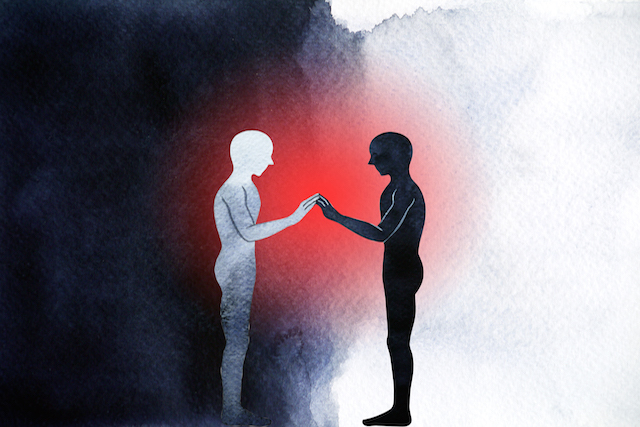
The People Who Hurt Us Are Vehicles for Our Growth
“You only see in others what you have in yourself.” ~Annette Noontil
I now recognize, after observing painful patterns repeat many times, how things that trigger me are just lessons I need to learn that are often delivered through other people. The more painful the experience, the more I can see (in retrospect) I learned from it.
Every now and then, when I find myself getting sucked into thoughts about the rightness or wrongness of a situation and how much pain it’s causing me, I take a step backward. I can see that people are just the mechanism to my growth, and painful experiences are just big Wrong Way signs redirecting me to my best life.
In his book Scattered Minds, Dr. Gabor Maté wrote, “It is well recognized now that people will form relationships with others exactly at the same level of psychological development and self-acceptance as their own… What we might call the law of equal development holds true even if the people themselves buy into the mythology that one of them is more emotionally mature than the other.”
I love this insight from Dr Maté, especially when he goes on to give a typical example of a married couple with one spouse that appears to be functioning in the world more successfully than the other. When the relationship is examined more closely it can usually be seen that both people have a lot of maturing to do in order to be able to function healthily as individuals rather than in a codependent state.
It’s no coincidence that we form relationships with people who trigger us. We are drawn to people who are, in some way, a match to our own issues, and they both challenge us and help us heal and grow.
As a homeopathic practitioner recently observed, about two differing constitutions often drawn to one another: “One is in their head and has to learn to connect from their heart, the other is in their heart and has to learn to connect from their head.”
But all this holds true whether it’s an intimate relationship or a more distant one; if someone triggers you (positively or negatively) they have something to teach. Michael Kerr puts it simply as “People gravitate toward their emotional mirror images.”
“People tend to sort themselves out by levels of emotional development for many purposes, not just marriage, “ writes Stanley Greenspan, “because those functioning at different levels are practically speaking different languages…. People widely separated developmentally in fact have very little to talk about.”
It can be tough to look at people I have, at one time, literally despised and consider that we were emotional mirror images—for example, a jealous colleague who went out of her way to discredit me on a number of occasions. This doesn’t mean that I am a bully because someone bullied me (although it could mean that for someone else); it means that we both had an equal emotional stake in the same interaction.
In retrospect, I can see that my former colleague triggered pain from my childhood relationship with my mother.
My colleague’s modus operandi was an unfiltered lashing out at anything that stood in her way. Her unprofessional conduct went unchecked and unmanaged because she had been promoted for the short-term results she’d achieved.
Her behavior reflected the unfiltered (tongue) lashing I often received from my mum when she was feeling highly anxious.
As a child, I learned to stay out of trouble by anticipating her emotions and striving for perfection in my behavior so that I received no criticism (which was usually unfounded and always delivered in a way that felt crushing and unfair).
Not that I was ever passive, but when I wanted something I would go after it from a point of defense, justifying myself rationally rather than having healthy boundaries around my own needs and desires.
To be criticized publicly by a colleague was, therefore, not something that felt safe to me. My attempts at repairing the relationship privately were unsuccessful, and it was not until I stood up in a meeting and told her pointedly that I would not allow her (nor anyone else) to bully me that I garnered her respect.
This experience allowed me to see how much hurt I’d been harboring from my childhood, and to put energy into healing that old wound rather than perpetuating any more situations that echoed it.
With the benefit of hindsight and my own years of parenting, I can now see I wasn’t responsible for my mum’s anxiety; rather it was an amplification of her own anxiety as a child in reaction to the culture and environment she grew up in, and the way her behavior was managed.
While it’s easier for me these days to detach myself from issues that trigger me emotionally, note that I do still get triggered. That, I believe, will never change because there is no surer way to know what we do want without first experiencing what we don’t want. It is just best not to get stuck feeling sorry for ourselves.
I’ll admit it’s sometimes hard to see a way through the emotions of the moment, especially when it relates to an ongoing situation. When I’m triggered, it’s still through other people whom I would dearly love to validate my view, just as they would no doubt love me to validate theirs, so there is a lot to work on.
The beauty, though, is that I mostly choose to do it from a point of intrigue and willingness to learn and grow rather than feeling powerless and at the mercy of others.
Again, note I said mostly. Old habits die hard, and there are still many times where I’ll find myself turning to confidants to rant about something. For this reason I choose to confide in people who gently prompt me back to the observer’s chair, and the broader view.
And when similar situations keep arising, I know that life is presenting an important lesson for me. It’s not always immediately obvious what the real lesson is and how I can overcome my struggle, but experience has taught me that things become clear when they are ready to; my job is to cope as best as I can with my frustrations rather than make myself miserable.
And since the lessons are most often delivered through others, I try not to vilify them for their part. I know that in the future I will be thanking them—even if only inwardly—for the role they played in my ongoing growth and journey through life.
So what are you currently triggered by, and who is the focus of your frustrations? Think about past situations where you’ve felt similarly. When was the first time you can recall feeling this way? Try to see the pattern, and what it might be telling you.
Rather than living through the pain as a helpless victim, try to see the lessons you’ve come to learn. In whatever way the lesson is being played out, the true lesson will be some version of learning to love yourself more; it always is.
Can you imagine a world full of people who are seeking their power through self-love rather than trying to take from others? Now that is a world I’d like to live in.
-

How to Free Yourself from Your Spiritual Drama
“You have no friends. You have no enemies. You only have teachers.” ~Ancient Proverb
My very wise aunt, a talented psychotherapist and one of my spiritual teachers, has told me many times that the people, places, and things that trigger us are just “props in our spiritual drama.”
This phrase has stuck with me for years because it’s catchy and it rings so true to me. If we are struggling, it’s not a matter of the external force, it’s about what it provokes in us.
We don’t heal by trying to change others. We heal through breaking cycles; through knowing and honoring ourselves by creating healthy boundaries, processing the past, and living presently to make different choices.
We don’t grow by staying in the same circumstances and hoping they will be different, or by leaving one set of circumstances only to repeat the same patterns with new people and places. We grow by stepping out of our inner default programming and into discomfort, and by consciously shifting away from the patterns we know and choosing different environments and dynamics.
The people, places, and things that come into our lives are there for our spiritual journey, learning, and evolution. We can use these ‘props’ for good, we can use them to stay stuck, or we can use them to spiral down. As adults, the choice is ours.
The props in our spiritual drama are what trigger us the most. They may be people, situations, or even certain qualities we notice in strangers.
My most challenging relationship is with my father, and while I could get stuck in that hardship story, I believe that he was placed in that role to assist me in the lessons I needed to learn while growing up and into young adulthood.
The guy that I just dated, who I fell hard and quick for, was a prop in my relationship practice and process in continuing to clearly define what I want in a partner and what healthy boundaries I need to set.
When I feel pain in my heart and want to stand up for the child who is being yelled at by a stressed mother on the subway, it shows me my own emotional hurt and the ways I haven’t expressed my truth about how my young inner child was treated poorly.
When I feel anger when confronted with economic inequality, inconsideration/lack of caring, and other injustices in this world, it teaches me that I am not doing enough to feel satisfied and proud of the ways in which I contribute positively to society.
Anything that I have not made peace with, found forgiveness around, or worked out within me yet continues to be a prop that encourages my spiritual growth.
As I’ve contemplated the props in my spiritual drama, I trust they are there to assist me on my path.
Challenging people and situations can be very difficult to live with and through, but I believe they serve an important purpose. If we are conscious and choose to move toward growth, freedom, and love, we can take this adversity and turn it into empowerment so we are more capable of being our best selves.
Two main points have stuck out to me as I try to evolve through my spiritual drama.
1. Situations repeat themselves until we learn the lessons.
The lesson is ours to be learned, so if we don’t learn it the first or the tenth time, the pattern will continue in a vicious cycle until we finally get the message and choose a different way.
Sometimes if we examine where or by whom we are triggered, the lesson is clear right away. Other times we need some guidance because we recognize something doesn’t feel right, yet we can’t get out of our own way enough to see it clearly.
Friends, mentors, and family members we have healthy relationships with can be great at helping us understand our cycles and patterns so we can break free. Other times, we need to go within.
When confronted with a low point, we have the opportunity to acknowledge what isn’t working and figure out in what direction our gut wisdom is guiding us.
Personally, I had a habit of choosing men who were very passionate about their career or a serious hobby, and they would prioritize this passion over me, which led me to feeling hurt and uncared about.
When I held up the mirror to examine myself deeply, I was able to see that as long as I wasn’t prioritizing myself and showing up to fully love for myself, I would attract partners who would partially reject me in the same way.
A second layer of this was that I was subconsciously living vicariously through my partners’ aliveness and passion because I was missing that in my own life. Once I developed my own passions and started doing work I love, the need to feel this joy vicariously faded away and I started desiring partners who are more balanced and can have multiple priorities.
The change may be uncomfortable, but usually quite rewarding in the end. And the discomfort we feel moving into the unknown is better than the despair we feel when repeating the same pattern over and over and staying miserable in the ‘known.’
2. Our triggers can help us discover unmet needs, and meet them.
Oftentimes we feel triggered by certain people, qualities, or situations because they represent ways we feel consciously or subconsciously uncared for, attacked, neglected, and rejected.
For example, let’s say your boss gives you some constructive feedback regarding your work, and you feel like it’s a personal attack or a criticism instead of feedback intended to support you to help you succeed.
In this scenario, instead of feeling attacked or rejected by your boss, you could ask yourself why you’re feeling such intense emotion. Is it because you’re hypercritical of yourself? Or do you feel shamed for not getting praise or approval because that’s a pattern you were taught growing up? In this instance, the trigger might teach you that you need your own approval.
The more we can meet our own needs and lovingly re-parent ourselves, the more these triggers will fall away. So the inquiry becomes the key to moving through this spiritual drama.
We need to ask why to understand our triggers more deeply, shift the immediate emotional response to curiosity, and eventually release the trigger by clearing past baggage and learning the lesson to show up for ourselves differently.
Whenever, I’m feeling particularly triggered by a person or behavior, I take a few minutes to sit quietly, go within, and ask myself what it’s about and what I need to do to take care of myself.
Maybe my inner child needs some reassurance that she is safe and loved.
Maybe my body needs some relaxation because my nervous system is over-stimulated or stressed.
Maybe I need to play, dance, and move energy through my body because I’ve been too much in do/go/on mode.
Once I take care of my own needs, I’m not focused on the other, the prop, the trigger anymore. I am peaceful and present.
This realization has served as a helpful reminder as I’ve moved through my life and felt the range of emotions that have come up. It’s never all about the other person; on some level, it’s about me. It serves me well to keep the focus on myself, what’s going on for me when the triggers come up, and what I can learn and process so that those triggers no longer live inside my body, mind, and soul.
As we own and clear what is within us, the props in our spiritual drama fall away and we become lighter and can live more peacefully.
May this serve you and may you be free.
-
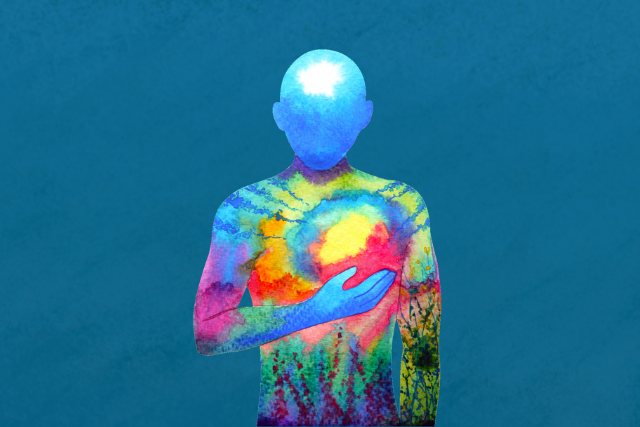
How I’m Healing the Vulnerable, Rejected Kid Inside Me
“In case no one told you today: You’re beautiful. You’re loved. You’re needed. You’re alive for a reason. You’re stronger than you think. You’re going to get through this. I’m glad you’re alive. Don’t give up.” ~Unknown
I was fourteen years old and it was a holiday of firsts: my first holiday away from my family with my school and my first holiday abroad, where I had my first real crush.
For the two weeks I was away, I was caught up in a flirtation with a boy from one of the other schools. I had to pinch myself when he said yes after I’d struck up the courage to ask if he would meet me at the disco on the last night.
The disco was everything I wanted it to be; we laughed, we danced, and I had my first kiss. If there is such thing as cloud nine, that’s where I woke the next morning. Still in a romantic haze (well, as romantic as a fourteen-year-old can get), I went to wave off the boy I’d begun to think of as my “Prince Charming” for what would be our last goodbye.
But the fairy tale romance didn’t work out the way it had played out in my fourteen-year-old imagination. As I walked up expecting an embrace, he didn’t even want to make eye contact, then he turned his back on me.
I’ll never forget the feeling of rejection. It was like my whole being was blocked off and cast aside.
Still hoping for that dream goodbye, I waited until he got on the bus, thinking maybe I had been mistaken. That’s when it happened: surrounded by his friends, looking through the window, he was pointing at me, pretending to stick his fingers down his throat, implying being sick, and making gestures about my weight.
“Prince Charming” had actually led me on as a bet, as a joke to his friends. I was the joke. I don’t know how, but somewhere inside I had the strength to keep my tears in, probably because I didn’t want to deal with the humiliation of what had just happened in front of everyone (including my friends).
Twenty-one years on, and for as long as I can remember, when I recall the experience I feel the exact pain—the feeling of rejection and not feeling good enough—as I did at that very moment.
That, right there, was the beginning of my low self-esteem, which later manifested into an eating disorder, anxiety, and being in toxic and abusive relationships. I accepted physical, emotional, and sexual abuse because I didn’t want to feel the feeling of rejection again.
It was only recently, when I retold the story to my therapist, that I realized what a life-defining moment it had actually been, and recognized the narrative I had given myself.
As I began recalling the experience, I started “When I was fat, ugly, and spotty I had this experience… No wonder he didn’t like me.” There it was: that one life-defining moment had played out a narrative that all my being wasn’t good enough. As a result, I sought acceptance and approval from others, and accepted their opinions of me as my truth.
As I’ve started to process not only what happened but also the huge impact it’s had on my life, these are the things I have learned and what has helped me to begin to heal:
1. We are good enough, and what really matters is how we feel about ourselves.
At first I found it difficult, but I had to start believing that I was lovable, good enough, and that the only opinion of me that really mattered was my own. As I began practicing telling myself “I love you,” my whole body would tense, and I’d feel wrong for saying it. As I kept practicing, I slowly began to realize that I could love myself. I even had a small ceremony sealing my commitment to myself!
Having struggled with self-love for nearly thirty years, I found it easy to slip into seeking approval from others at times. On the days I felt weak I looked at my commitment ring as a reminder of my love and acceptance for myself. On these days I gave myself the permission to feel whatever emotion I needed to feel.
I’ve learned that we are each the one person we are guaranteed to wake up with for the rest of our lives, so we need to make ourselves our main priority. Instead of putting others on a pedestal and seeking their approval, we need to instead change our hierarchy of love so that we’re sitting at the top.
We deserve love, but that love needs to begin within us.
2. What would your present self like to say to the hurt person from long ago?
As I sat with the pain of my fourteen-year-old self, I had an overwhelming urge to hold myself tight, providing a force field of safety where no one could hurt me.
As the tears began to flow, I told myself how beautiful I was compared to the boy who had ridiculed me; any person who feels the need to humiliate a person for a joke is not deserving of my love or respect.
As I stayed with the moment I felt every emotion I could feel—sadness, fear, anger, and then, just as the feelings flooded through me, the weight of the emotions I had held for so many years began to dissolve.
Talking to our vulnerable self may seem a bit weird at first, I get it, but it’s worked for me. By going back in our minds and being there for our vulnerable younger self, it’s like having a superhero swoop in to protect us, only even more empowering because we are the superhero, minus the spandex and cape.
No matter what has happened in our pasts, we have the opportunity to give ourselves the wisdom and words of hope we wish we had heard at the time. If it’s difficult to do this, think about what you would say to a best friend if they had a similar experience. We’re often much more compassionate toward our friends, so try to see yourself in that same loving light.
3. Where has the need for validation from others come from?
Having committed to love and accept myself, I knew I owed it to myself to go deeper to work out why I had relied so much on others for approval.
My reflections led me to think of my upbringing, growing up with parents affected by alcoholism. Following violent outbursts I felt I was to blame for what had happened; I felt that I deserved the abuse. In fear of further violent outbursts I began people-pleasing and seeking approval from others in order to feel safe. At my core I felt unlovable.
I then realized that when the fourteen-year-old boy had ridiculed me it had only reinforced how I had felt inside, and made me further believe that I was unlovable. I was then able to look at how I had acted and behaved from then onward, reinforcing those core beliefs.
I realized I had accepted poor behavior and abuse from others because I felt I “deserved it.” I also engaged in self-sabotaging behaviors in the form of an eating disorder and drinking to excess.
Delving deep inside may not be an easy task, and it may be something that we put off, or don’t do at all. We may be connecting to a part of ourselves that we may have kept hidden for years, even decades, for fear of being rejected. But, when we have the ability to do this important work, we are finally giving that vulnerable part of ourselves a voice and an opportunity to say what it needs to heal and finally get its needs met.
4. Nourish, nourish, nourish.
For close to three decades I had hidden that vulnerable part of myself and turned to my eating disorder for comfort, believing that others would reject me for being fat and ugly if I let it go. I now know I need to connect to the part of myself that has been abandoned for so long. I need to nourish it, and give it the love it has deserved all this time.
While hard at first, when I’ve eaten, I’ve reminded myself how the food will nourish me. When I’ve exercised, I’ve remembered how the exercise is nourishing my body. When I’ve sat in meditation, I’ve reflected on how good it has felt to nourish my soul.
These small acts of kindness have already had a positive impact. I haven’t found the need to emotionally eat or purge. I have more motivation, as I’m doing things from a compassionate place of self-love. I am also finally able to look in the mirror and utter the words “I am enough” and “I love myself” (and mean it).
—
No matter what happened to us in the past, we have the opportunity to rewrite our narrative for our future. We have the opportunity to love and accept ourselves as a whole, including the vulnerable parts that we may have hidden as a way of self-preservation.
With each day we begin to meet our own physical, emotional, and spiritual needs the layers of self-loathing will be replaced with self-love and acceptance.
Be kind to yourself. xx
-
How I Learned to Trust Others by Learning to Trust Myself
“You may be deceived if you trust too much, but you will live in torment if you don’t trust enough.” ~Frank Crane
I’ve had trust issues for as long as I can remember, but didn’t realize it until after my divorce.
Divorce can be a traumatic experience, and in this case, it made me begin to take stock of my life. I began to reflect on my failed romantic relationships and why this was a repeat pattern for me.
I realized then that I never let people in for fear they will let me down, belittle or make me feel small, or otherwise diminish me in some way. I keep people at a distance, and this impacts my ability to have close, connected relationships.
I used to think I had trust issues because I grew up in a family where things were not “psychologically safe.” But I’ve come to realize there’s more to it than that.
Have you ever struggled with trust issues thinking they were caused by something outside yourself? That trust was a matter of what other people did, how they treated you, or how they disappointed you? Maybe it’s time to consider that perhaps your trust issues are more about you than other people.
While I may have some wounds from not receiving the emotional nurturing I needed when growing up, I have trust issues not because I distrust others, but because I don’t trust myself. What?!
This was a surprising revelation. But, it helped me realize what I needed to do in order to truly trust other people—that was begin by trusting myself.
You may have trust issues as well if:
- You view people with suspicion about their motives
- You don’t share your true feelings
- You assume the worst intentions by others
- You make every interaction all about you—how could they do this to me?!
- You doubt your own capabilities and decisions
What happens when we are operating on a “non-trust” level? We keep ourselves closed off from all the opportunities available to us.
Let me tell you a story about how this has played out in my life. One day I was out walking along a beautiful beach with a girlfriend. She said, “Wow—these guys around us are really checking you out.”
“Really?” I asked.
“That’s your problem!” she said. “You are oblivious.”
And she was right. I was completely disengaged from the world around me because I didn’t trust it. I wasn’t open to people’s smiles, or their overtures, or even their kindness. I was basically checked out, and I rarely noticed when others made attempts at engagement.
There have been many occasions when a person was about to open a door for me, but I was so busy being independent that I opened ir myself without even noticing their attempted act of kindness. This left me living a life that was mostly isolating and solo.
Humans are social creatures, and we need human connection to feel alive and complete. When we cut ourselves off from this life-giving force because we are suspicious and don’t trust others, we harm ourselves more than any act of untrustworthiness we could experience.
Yes, people will sometimes disappoint us, and yes, people will occasionally do malicious things. But, in the end, we have to get over this. We need to move on from continuously licking our wounds so we can heal them and start living fully again.
As children we were naturally trusting, sharing our toys, our thoughts, and our hearts with abandon. It’s not until we were trained to distrust the world and “not talk to strangers” that we began to lose our innocence and belief in the inherent goodness of humanity.
Or, we didn’t receive strong nurturing as kids, and this caused a wound that never seemed to heal properly. While it can be good to have a healthy dose of skepticism so as not to become victims—and we need to teach our kids to stay away from strangers to keep them safe—it is not healthy to remain closed off and shut down from the world.
We must learn to trust despite knowing we may get hurt. It is only by opening our hearts that we can have flourishing relationships, see the opportunities around us, and begin to live a more fulfilled life.
What happens when people let you down? You accept that they are imperfect beings and move on. What happens when you let yourself down? You do the same thing. This is where I think I got hung up. I didn’t trust myself, and this actually made it impossible to trust other people.
We often project our feelings and beliefs onto others without consciously realizing we’re doing it. If we don’t trust ourselves to do the right things, we might project that onto other people and assume they too will let us down. If we don’t believe in our own inherent goodness, we likely won’t believe in anyone else’s.
I had a hard time trusting myself because I never accepted myself as a flawed and imperfect being. I could never get over my own disappointment when I let myself down. What are some ways I let myself down?
- Letting myself remain in an abusive relationship
- Lying about my drinking addiction and hiding it from my family and friends
- Not following through on a job opportunity I was too afraid I might get rejected
- Not having the confidence to follow my dreams
- Acting in ways that were counter to my moral values
We can lose trust in ourselves in many ways, but then we can also build that trust back up.
For me, I built my trust by realizing I wasn’t living up to my greatest self. I began to make conscious choices to change that. I got help for my drinking problem. I found the courage to take baby steps toward my ambitions, and each time I did, I built on that success. I focused on developing my personal strengths and growing as a person. Most of all, I strived to do the best I could in any given situation.
Did I fail sometimes? Did I still let myself down? Of course, I’m imperfect. And this is okay. I found that if I was doing my best I could allow the occasional stumble without beating myself up or deciding that I couldn’t trust myself at all. And I could do the same for other people. If they occasionally disappointed me, I could recognize that this is what it means to be human.
I realized I didn’t have to see things as black and white—that people, myself included, are either trustworthy or not. Because life is all about shades of gray. Sometimes people will let us down, but that doesn’t mean they always will.
Even if people make mistakes, and even if we occasionally need to cut ties with people who continually hurt us, we can trust that most people have good intentions. And if we set the intention to always do our best, we can trust that we generally will, even if we falter at times.
The way to resolve trust issues is to learn to trust yourself. When you believe that you are always doing your best, you’ll be able to extend this same belief to others. This will help you go out into the world and be open to people and experiences with curiosity and a pure heart, without bitter preconceptions.
When we live a life full of integrity and trustworthiness to our deepest self, we can better learn to accept others’ mistakes and flaws, even if they hurt us. We can also learn to trust that despite what others may do, or how they might disappoint us, we will be able to get through it, our faith in humanity in tact.
This will help us embrace life more fully and flourish in our widest and fullest potential—to spread our wings and fly.
-

This Weekend I Fell Apart, and That’s Okay
“Look for something positive each day, even if some days you have to look a little harder.” ~Unknown
This weekend I hurt more than I have in a very long time.
It all started on Friday, when my boyfriend and I headed out to spend the weekend with friends—two couples, both with babies in tow.
I’ve been trying, unsuccessfully, to get pregnant since the start of the year, yet I didn’t anticipate that it would be emotionally taxing for me to be around two little families. I was just excited to see our friends, who live in the Bay Area, hours away from our home near LA.
A little backstory: I’m less than three weeks away from my thirty-ninth birthday, which means I’m now in the category of “high-risk pregnancy,” if I’m even able to get pregnant at all.
My boyfriend and I first discussed having a baby five years ago, but we kept pushing it off because our families live on opposite coasts, and neither of us was able to agree to live on the other’s coast full-time for the long term.
We finally decided, at the beginning of this year, that I would be the one to visit my family—as often as I feel I need to, with our kid(s), for the foreseeable future—and we’d commit to staying in LA, which makes sense since we’re working toward a career in film.
But biology doesn’t just fall in line because you finally get over your fears and decide to make a compromise. We’re both open to the idea of adoption, but there are other personal issues—that my fiercely private boyfriend would not want disclosed—that have complicated matters.
So there I was on Friday with our friends and their adorable babies—one actually a toddler, since he recently turned two.
We toasted our get-together around 5:00 with our first glass of wine, and the wine continued flowing throughout dinner. After, we all moved to the deck to partake in an at-home wine tasting.
The ladies and I discussed my road to pregnancy, and though I was discouraged, for the most part I was fine—until I wasn’t.
Having lost track of the amount of wine I was drinking, I eventually hit that emotional place I remember from my younger years, when alcohol eventually led to histrionics and tears. It is literally a depressant, after all, and generally not great to imbibe when you’re already feeling fragile.
I don’t remember all the details of that night, but I know I cried about my fears about not being able to have a family (which, as I mentioned, is an issue complicated by many factors).
I woke up at 4:00 in the morning and picked a fight with my boyfriend about our relationship. Then I woke at 8:00 with two things: a hangover and a shame-over. I was absolutely mortified.
I’d gotten drunk, turned a fun night with friends into something heavy and emotional, and had caused my boyfriend a lot of pain and embarrassment. It gave me a little comfort to realize everyone had drunk too much. But I still felt deeply ashamed of having lost control.
Ironically, I received an email that morning that I’d been waiting on for almost a month. My film mentor had just read the second draft of my first feature screenplay, and she said she was blown away by the massive improvement from the first draft.
I had never in my life simultaneously felt immense pride and deep shame, but I did right then.
Fortunately, the friend I cried to was extremely kind and empathetic. And no one judged me or put me down, as good friends never do.
But that day was pretty rough for me, physically and emotionally. And the next day, it got worse.
That night I noticed that a few people had commented on a meme I’d shared on Friday, using clipart with a hyper-sexualized female silhouette. They mentioned that it was demeaning to women to use what essentially appeared to be Barbie to represent the female form. One person called it “offensive.”
Though there were only a few critical comments, juxtaposed against 12,000 shares, I immediately realized I agreed with them. As someone who once struggled with an eating disorder, I’d like to represent women as more than a busty, high-ponytailed caricature.
This didn’t fully or accurately represent my values or the message I’d like to convey. And I didn’t like the idea of young girls seeing it and concluding, as I may have as an adolescent, that this was what a woman is supposed to look like, even if some women actually look like this. So I decided to take it down.
With a mind still foggy I decided to write something on Facebook, as I wanted the community to know I felt I’d made an error in judgment. I didn’t want to just delete it. I want to make it clear I don’t agree with a society that puts pressure on women to be femme bots and suggests that our sexuality is our most valuable contribution.
I mentioned in my post that some people had pointed out that the image was offensive, and I agreed that it was triggering—and the backlash was swift and harsh.
In retrospect, I don’t think I accurately communicated why I decided to remove this image, since I didn’t address the cultural issue of how women are portrayed in the media and the fact that I’d like to be part of the solution, not the problem. But I’m not sure it would have mattered if I did, since I’d used the word “offensive.”
I forgot that people often get offended by other people getting offended.
Over the next day, hundreds of comments came in, many attacking me on a personal level.
People called me spineless for catering to “snowflakes.” People said they lost respect for me and questioned my aptitude for even doing the work I do, since I clearly have no sense of conviction or belief in my own decisions. Even more alarming, many people mocked the idea of being “triggered,” and essentially belittled anyone with emotional or mental health issues.
I felt misunderstood, judged, and condescended.
I hid or deleted many of the worst comments and resisted the urge to defend myself, deciding instead to leave one clarifying comment a couple hours in. But I’m not going to lie; this affected me deeply.
While on the one hand, I reminded myself that my power was in my response, and publicly, I only responded in one calm, clear comment, I also obsessively monitored the feed.
By this time my boyfriend and I were at his parents’ house in Nevada, where we planned to stay for a few days, and I wasn’t even close to present. I didn’t want to delete this new post, since I believed I’d done the right thing, but it pained me to see so much vitriol in a space that I hold sacred.
Then came another blow: I’d noticed a while back that since the start of the year, someone had been sharing every single challenge from my book Tiny Buddha’s 365 Tiny Love Challenges on Facebook. Though this person tagged my page, none of the posts included the book’s title or a link—and some people actually assumed she was writing these posts or getting them from my Facebook page.
I’d emailed my publisher a few weeks back to ask their thoughts on this, and they told me they could send an email asking her to stop. At the time, this seemed warranted.
Her Facebook friends didn’t see it that way. After she posted the letter from my publisher’s legal department, tagging my page, once again, the comments turned nasty.
F— you, Tiny Buddha.
You suck, Tiny Buddha.
More like “Greedy Buddha.”
Unbelievable! She should thank you for the free marketing!
For a while, I felt completely numb. And I knew I was doing the “wrong” things by obsessively monitoring my phone and letting these comments get to me.
I knew it wasn’t serving me to dwell in my self-righteousness and how wrong I believed it was for this woman, who enjoyed my work enough to share it, to like comments that attacked me on a personal level. But I did it anyways.
I was angry with the people who were angry. I was triggered by the people who were triggered.
And then something occurred to me: This whole weekend was an opportunity. It was a chance to practice some of the lessons that are much easier to practice when everything is going well.
This weekend was a chance to remember that:
I need compassion most when I think I deserve it the least.
Initially, I beat myself up over several things this weekend: drinking to excess, exploding emotionally, hurting my boyfriend, choosing clipart that I wished I hadn’t chosen, letting my publisher speak for me instead of reaching out to the woman personally, and obsessing over the various challenges I was facing instead of being present.
I told myself I shouldn’t have made any of those mistakes. I should have been beyond this. I was a fraud.
Then I realized something: I was being as mean to myself as the people online. And not a single blow of self-flagellation was helping me move on. In fact, each self-judgmental thought cemented me further into the hole. Because telling myself I was sucking at life made it awfully hard to find the strength to do better.
Every time I criticized myself, I weakened myself, and a weakened person is far less equipped to reframe difficult circumstances and respond wisely.
The only way out was to cut myself some slack. I needed to stop fighting with myself and let go, as if melting into a hug from someone who had finally forgiven me. I needed my own love and compassion.
So I drank too much and cried. I was hurting. It’s been a long journey toward starting a family, and it’s been hard. It’s okay to hurt.
So I made mistakes in my work—who hasn’t? I owned them and publicly admitted them. What matters isn’t the fact that I messed up but that I acknowledged it and committed to doing better.
I don’t have to be perfect. Sometimes I will make mistakes, some public, and sometimes I’ll make many that compound. The only way to stop the cycle is to stop obsessing about having done things wrong. The only way to move into the future is to fully accept the past. Once I did this, I felt freer and better able to be present.
The approval that matters most is my own.
It bothered me that people believed I removed the image because I needed approval from the “complainers,” as opposed to having made a decision based on my own beliefs and values.
But ironically, once the flood of negative comments came in, I did start feeling a need for approval. I wanted people to understand and honor my positive intentions.
It took me a day, but I was finally able to accept that some people were simply committed to judging me, and this wasn’t something to change; it was something to accept.
It didn’t matter if some people derided me or questioned me if I felt in my heart I’d done the right thing.
I eventually deleted the second post because I wanted to put an end to the negativity. There’s far too much of that on Facebook already. But I’m proud I waited and resisted the urge to remove all criticism immediately. For a recovering approval addict, allowing a public character assassination requires immense strength. And I give myself a lot of credit for that.
It’s rarely personal.
Intellectually, I knew this when people were insulting me in both places on Facebook.
I knew that the people who were angry with me for catering to “snowflakes” were really projecting their feelings about what they perceive to be an oversensitive culture. It wasn’t just about this one image. It was about every time someone’s ever said they were offended and their complex feelings about what that means to them.
I also knew that the people defending the woman who’d been sharing my book online were acting from a place of allegiance to their friend. They were more pro-her than anti-me. Many didn’t even have all the information—they didn’t realize she’d been sharing from a book. So really, I couldn’t take that personally either.
This wasn’t immediately comforting to me because the attacks were so public, but when I was able to fully absorb this, it did give me some peace.
Not everyone will see my side, and that’s okay.
I believe one of our deepest desires is to feel understood—to know that other people get where we’re coming from and that they may even have done the same thing if they were in our shoes.
I didn’t feel that way when people judged me personally based on the letter from my publisher’s legal department.
I left a few comments on that post, trying my best to respond from a place of calm, but I know there are some people who will forever think I am greedy and soulless because I didn’t want my book’s content republished online.
I’ve decided that this is okay. Not everyone has to get me, understand me, support me, be considerate of me, or treat me kindly—so long as I do those things for myself.
Pain can be useful if you share it to help someone else.
I decided to share this post for two reasons:
First, I thought it would be cathartic for me. I felt ashamed for a lot of this weekend, and I wanted to be able to reframe this experience in a way that felt empowering. As I said when I first launched this site, when we recycle our pain into something useful for others, we’re able to turn shame into pride.
And that brings me to the second reason: I thought it might be helpful for someone else to realize that even someone who runs a site like Tiny Buddha can fall into so many self-destructive traps.
If you’ve ever drank too much and fallen apart emotionally, know that you’re not alone.
If you’ve ever obsessed over comments online and allowed something as trivial as a Facebook feud to get the better of you, know that you’re not alone.
If you’ve ever failed to apply what you know and regressed to the least evolved version of yourself, know that you’re not alone.
And know that all of these things are okay. They don’t mean anything about you as a person. They don’t define you. And they certainly don’t have to dictate the future.
This is what I needed to hear this weekend when I was despondent and numb, so today it’s my gift to you. I hope someone benefits from something in my experience, but I suppose no matter what, someone has—me.
-
The Most Compassionate Words and How They Heal
“Love and compassion are necessities, not luxuries. Without them, humanity cannot survive.” ~Dalai Lama.
It wasn’t until my mother died that I was able to feel her love and have that mother-daughter relationship that I’d been craving all my life. It was not until she died that I was able to learn, and truly feel, compassion—for her and for me.
I’ve always known that compassion for others is a nice thing. We all know that. But it wasn’t until I truly felt it that I was able to create a deep sense of healing.
My mum and I always had a strange relationship. Abused as a child and never able to reclaim her power, she was a tormented soul, and she was unable to be the mother she wanted to be. I was empathetic with this; I took it on and was unable to be the daughter I could be. It was like there was a wall between us, and we were unable to connect as a regular mother and daughter.
I remembered all the times when her promises fell through. I remembered all the times when she yelled at me as a kid. I remembered all the times when she’d manipulate me in a big custody battle. I remembered some good times too, of course, but they were fleeting, and they passed all too quickly.
I remembered when she told me she only had six months to live; she’d been struggling with self-inflicted cancers from having drank and smoked all her life in order to cope with the heavy weight on her shoulders.
I remembered visiting her in palliative care and her seeming hopeful that she would be out of there soon, reunited with her dog.
I remembered seeing her two weeks later, on her final night, and wondering what she was thinking, wondering what she was feeling with that final breath, knowing that relief was finally coming her way.
The waves of grief hit me harder and harder, until, over a year later, I found myself crying for almost forty-eight hours straight.
I felt for her never being able to live the life she could have lived. I felt for her trauma. There wasn’t much sadness of my own. I didn’t miss having a mother who was never present. All my feelings were for her.
There were no words. The sadness I felt for her and what sadness I felt for myself had merged into a convoluted mess. My body was unable to process it all.
One day, as I was remembering a difficult time, I decided to tune into myself as a child. All I really wanted was to be understood and acknowledged. So, addressing the child version of me, at that point in time, I said to her: I see you. I hear you. I feel you.
And oh, the relief I felt!
I repeated that phrase to myself as a child over and over until I felt my body soften.
I see you. I hear you. I feel you.
I felt okay. I was safe. I was seen. I was heard. I was understood. I could finally let go and breathe.
But I realized, at that point in time, my mum also need to be seen, heard, and understood.
So I gave to her what I gave to myself.
I said to her: I see you. I hear you. I feel you.
I repeated it over and over and over again until I felt her soften, let go, and finally be able to breathe. We both felt lighter and freer than we’d ever felt before. The sadness, the heaviness, the darkness—it simply melted away.
I knew I was onto a good thing here, so I revisited various points in time, including my mum’s childhood when she was scared and traumatized, and including during her final days when she knew she was dying. I said to myself, and I said to my mum, this chant of compassion, which I found myself extending to the following:
I see you.
I hear you.
I feel you.
I honor you.
I love you.
Thank you.As I said each phrase, I meant each word with every cell of my body. I truly felt it.
It was important to me to give love and to thank her and myself in those various points in time for the opportunity to expand my capacity for love and compassion.
I found that when I am in a state of ever-expanding love and compassion, I am able to truly feel free. And for that, I am truly thankful.
Extending our capacity for love and compassion toward ourselves, and those who have hurt us, also expands our capacity for love and compassion toward everyone and everything. I truly believe that if everyone were to proactively expand their capacity for love and compassion, the world would not only be a better place, but it would be the perfect place.
I have found uses for this beyond grief, beyond our own healing, and beyond healing for other people. I have even found using this chant of compassion helpful in dealing with guilt from anything and everything—for people suffering road rage, for the cruelly treated caged animals in this world, for the injustices of our governments, even for the murderers, rapists, and terrorists, for they too are suffering deep within.
I am now of the belief that the purpose of all hurt is to teach us love and compassion. For if we cannot grow from this, then there was no purpose for it. And if we can all grow from it, then humanity as a whole grows from it.
I know I am particularly fortunate in my white middle class upbringing, and I know it may seem very easy for me to say that compassion makes the world go round, but I’ve also known great mental torment and grief. I have felt it with every cell of my body. And I know that this one simple practice has helped me to soften, and to free myself from the dissonance between my heart and my mind.
If you are feeling loss, grief, hurt, or heartache, I encourage you to try this chant of compassion for yourself. Mean every word of it. Feel every word as you say it. Repeat it over and over, as often as you need, until you feel your body soften:
I see you.
I hear you.
I feel you.
I honor you.
I love you.
Thank you.Say it to yourself as you are feeling now. Say it to yourself in the past. Say it to people who are hurting you. Say it to people who have hurt you in the past.
Feel yourself soften. Feel them soften. Allow yourself to expand your capacity for love and compassion. Give yourself this gift to set yourself free.
-
The Problem with Forgiveness and What I Now Do Instead
“Change is the end result of all true learning.” ~Leo Buscaglia
I cringe writing this. I have eaten so much humble pie that my pants don’t fit. This was a really hard lesson to learn.
I had a forgiveness problem.
When I was a kid, I learned to say sorry when I messed up and forgive other people when they did. With three sisters all two years apart, I got plenty of practice in as a kid (we all did).
It was a pretty standard routine:
1. Someone would mess up—say something horrible, lose something, break something, or hit someone.
2. The other person would get upset or mad and possibly cry.
3. We’d both take a little bit of time, and one or both of us would admit to doing something bad and apologize.
4. We’d forgive each other.
5. We’d get on with it.
We got pretty good at this routine. Our fights didn’t last very long—maybe a day or two at the most. We didn’t hold grudges, and we weren’t punished for long periods of time.
My parents made it safe to tell the truth.
“Are you the one who backed into the garage door?” “Did you break that pot?” “Did you put your sister down the washing chute?”
These were scary questions sometimes, but not too scary.
It was safe to be honest. In fact, our parents made it pretty clear that lying was by far the more abhorrent option and always thanked us when we told the truth. There was punishment but also forgiveness and love. When you have the bouncy bag of forgiveness to fall back on, telling the truth is far easier.
So I kept this with me as I grew up. When people were hurtful or insulting or inconsiderate, I didn’t take it too personally and didn’t hold grudges. I tried to see it from their perspective; I just assumed whatever they did had nothing to do with me or they had things going on in their life. Or I assumed they were trying their best at the time.
I thought of myself as quite a forgiving person. I may even have been proud of it. It felt like a talent. I thought it made me empathetic and easy to get along with, powerful, and free.
I bounced fairly easily and got good at saying sorry when I messed up. I also expected other people to be as good as me at forgiveness too—and if they weren’t, I would shake it off as their issue: “That poor person clearly has issues,” I would think. It made me feel bigger than the other person for being able to turn the other cheek. (Why are the alarm bells so clear in hindsight?)
I was good at forgiving myself too. And I messed up a lot—not only with other people but also for myself. I would tell myself, “It’s okay, let’s try again. You’re doing okay. Everyone messes up.”
This was particularly useful in not bashing myself up about food. When it came to eating, I often didn’t treat myself with the most respect.
If you have an eating disorder, often you want to get better… tomorrow. Every time you mess up, you promise yourself (meaning it too) that next time you will do better. But also, it doesn’t matter too much when you don’t do better, because you will try again the next day. Always the next day. Never in the moments that it counted.
I got good at moving on pretty quickly. Moving on, but not up.
Self-righteous people are so unattractive. And I crashed and burned. The universe knocked me flat on my ass; it chewed me up and spat me out in itty-bitty pieces.
I found myself standing in front of a judge in court and acknowledging that I had pinched an ex-boyfriend, who had taken out an apprehended violence order.
Bad breakups are bad by definition; this one was traumatizing. But beyond that, being in court was a pretty shocking experience. It took a long time and a lot of work to sit with the reality of what was happening; it felt like being in a zombie movie. Or The Truman Show.
It was incredibly surreal. A pinch and I was in court? I had always thought of myself as a nice, honest, upstanding person—pretty empathetic and chilled out. I had always had healthy relationships and breakups previously.
How the hell did I end up there?
Many reasons, but one was I had a forgiveness problem.
I had forgiven that guy so many times for bad behavior and had compromised myself so often in doing so—always trying to demonstrate the love that he didn’t seem to see, until I felt so downtrodden and disrespected that I snapped and pinched him.
When I was sitting there in the spew, I read something by John Demartini in The Breakthrough Experience: “Anything you feel guilty about, you repeat; and anything you forgive, you keep attracting to your life. Forgiveness is a self-righteous illusion that makes someone bad or wrong and then presumes to judge and pardon. Apology is judging yourself, and both are guaranteed to perpetuate whatever you judge.”
I sat there and looked around at my life, at the chunks of spew. Oh, I thought.
Forgiveness—expected and given willy-nilly—if it is too easy, that can mean you can miss the lesson.
It can mean you don’t make the change.
You don’t up your game, you don’t alter the gear, you don’t recognize the necessity for more effort, more time, more learning, changed behavior—either from yourself or someone else. You go back to doing the same thing over and over again, staying stuck in the same habit, the same place. You don’t grow; you stagnate. You continue unhelpful habits.
If someone hurts you or you hurt them, and it changes nothing about either of you or your relationship, you or they are likely to be hurt again. Pain can help to figure out what went wrong, what boundary was crossed.
Easy forgiveness can sometimes mean you put yourself back in the way of the bus that just mowed you down, making yourself vulnerable to disrespect from yourself and others—bullies, people who take advantage of you.
It can mean you compromise yourself over and over and over again, until you are trodden all over by people who don’t really mind. Not really.
These people might see you hurt and feel guilty and want you to make them feel better about it by letting them off the hook.
Easy forgiveness also means you didn’t have to try anything new. Never mind that sometimes you need to go to the new or scary or hard to fulfill your potential.
Forgiveness is sometimes the easy way out.
I had a forgiveness problem.
I wasn’t vigilant. I allowed—and created—crappy friendships, crappy behavior, and crappy relationships.
And not only did I allow crappy relationships with other people, but also with myself.
I wanted to eat better but didn’t.
I wanted to get better at hobbies—dance, fitness, plaiting my hair—but needed to set aside space in the day to practice.
I wanted to be respected but had to start respecting myself, do things I respected, and stop putting up with disrespect—from friends, boyfriends, and myself.
I wanted to get better grades, but I needed to read and respond to the critical feedback and put the time or effort into figuring out what went wrong.
I wanted to create but needed to sit down and plan, dream, and put the effort in.
I wanted to be my best self, to do something great—write something or make something or have a great idea—but it was always off in the future, sometime when I had the inspiration, time, money, and energy. When I had the right body, the right friends, the right hair, the right income, and the right environment… THEN I would be that girl.
My forgiveness problem left me stuck. It allowed me to stay on my ass. It made me vulnerable to my own laziness and fears, and manipulation, disrespect, and emotional abuse—from others and myself.
It meant I allowed—perpetuated, even—poor behavior, my own and others’. I pimped out my time to hobbies and other people’s dreams and to people who didn’t inspire, appreciate, or treat me as well as I treated them. It meant I didn’t have to inspire, appreciate, or treat myself well.
I was susceptible to a narcissistic relationship that left me half the person I had been before, tiring on my friends and family, distracted from what I wanted in life, with a fairly broken sense of trust, truth, and my own abilities, and a Section 10 on my record.
I was caught in a puddle of spew with so much anger at the injustice, and incredulity that forgiveness was not going to cut it anyway.
But holding onto guilt, anger, fear, betrayal, and hurt is horrible. It feels horrible. Especially the big kind—the big hurts, the big betrayals that course through your body. What do you do about those?
What’s the alternative when someone treats you poorly? Revenge? Hatred?
And what about when you yourself mess up? When you’re not feeling good enough? Years of self-flagellation? People who can’t let things go, who take offense at every single little thing, or who punish themselves and others over and over and over seem angry, bitter, cruel, and paranoid. It seems like an unpleasant way to go through life.
John DeMartini suggests gratitude for the lessons learned and inspired action are better alternatives than forgiveness.
That was really hard to swallow at first. We are supposed to be grateful to people who hurt us? Even the really, really, really, really, really, really horrible, insane, unfair, and cruel ones who really hurt us and messed with our body, mind, and life? What about women who are bashed? Sexually assaulted? What if someone kills your son? Are you supposed to be grateful for that too?
Yes, he says. See the opportunity. Say thank you for the lessons/blessings and take inspired action to make a change or take advantage of a situation.
So, there in my pool of spew, I tried to sit and look for the lessons, the blessings, and start taking inspired action.
Once I did, life started getting a bit better. I learned about domestic violence and what emotional abuse looked like—the patterns of communication, the dynamic, the ego involved.
I spent more time on schoolwork and with friends who had a value system more similar to my own. I meditated. I did yoga. I tried to sit with pain and hurt. I started listening to the pain rather than dismissing it out of hand. And I started to take a real look at myself and how I appeared in the world.
I started spending my time focusing on working, writing, dancing, journaling, and reading. I spent more care on my hair, skin, clothes, environment, makeup, and food. I put up better boundaries. Made my time precious. I practiced spending time and effort on activities, hobbies, and work that put me on the path to my goals—goals that I perhaps hadn’t thought about well enough before. Enjoying your own company is a great antidote to feeling the compulsive need to forgive people.
Is forgiveness still part of the answer? Maybe. Maybe I was doing it wrong; maybe what I was doing was not forgiveness at all—it was just ego in forgiveness’ clothing. It was too easy. No one had to realize their mistakes or make changes, especially not me.
Maybe also, there’s a balance (my mother insists forgiveness is required for long-term relationships). Maybe it’s about not sweating the small stuff, but also not using forgiveness to minimize other people’s bad behavior, or your own, so that you feel like a bigger person.
Maybe it’s just that we are looking in the wrong place when we reach for or dole out forgiveness willy-nilly as if it’s an antidote for hurt. Maybe that’s like reaching for chocolate when you’re starving.
Maybe action, change, new behaviors, or boundaries practiced over time can be healthier options for healing.
Maybe sometimes those are what you actually need in order to let go of bitterness, soothe pain and betrayal, let go of judgment (it’s so heavy!), and feel less like a victim. So that at some point, you turn around and realize the hurt has gone and has ceded to something wiser, stronger, clearer, lighter, and more helpful.
-

Why Anger Isn’t “Bad” and How I Learned to Hear Its Hidden Message
“Bitterness is like cancer. It eats upon the host. But anger is like fire. It burns it all clean.” ~Maya Angelou
I’ve always had a complex relationship with anger.
When I was young, I used to think I was somehow above anger. I would brag to people that I never got mad. Sure, I’d admit, I hated some people, but at least I wasn’t angry.
When I began therapy in my mid-twenties to deal with persistent depression and panic attacks, I started to see the feebleness of that particular story. I did get angry, it turned out, quite frequently, and I found that things went much better when I allowed myself to feel it.
I began to learn that my anger often contained useful information about me and what I wanted.
It alerted me to the fact that one of my boundaries had been crossed, or that there was something I wanted to speak up about. It let me know when I felt hurt. I saw how my closest relationships could allow for anger without falling apart, and I began to accept it as a normal part of the human condition, perhaps even a helpful one.
Still, as I perused self-help books and blogs and learned from spiritual teachers, I read about the dangers of anger over and over again.
It’s the enemy of nonviolence, Gandhi said. The Dalai Lama once asserted that it’s the main destroyer of a peaceful mind. Even the Buddha is quoted as saying that holding on to anger is like grasping a hot coal with the intent of throwing it at someone else; you are the one who gets burned.
So I asked myself: Was it better to try to quell anger or embrace it?
A Life-Changing Distinction
I muddled through as best I could, hedging my bets and working to accept anger without amplifying its flames, until I began going to a local meditation class where the emphasis was on moving energy.
The meditation is based on a blend of Buddhist and Taoist practices. In addition to developing mindfulness, we’re encouraged to notice the energy within us—whether emotional or spiritual—and let it move through us. We do this by noticing the physical sensations of the energy and then following their lead, either by making noise, moving our bodies, or simply observing with nonjudgmental awareness and presence.
One day a fellow participant asked the teacher how to handle the large amount of angry energy she was feeling.
“Move the energy of the anger,” my teacher said. “It’s not good or bad; it’s just what wants to happen. When you make space for the energy and allow it to move through you, it transforms you. Just don’t get caught up in its story.”
I’d never heard anybody separate the story of anger from its energy before, but the distinction helped me a lot.
I realized that when I feel the first flush of anger, I often come up with a story: Things shouldn’t be this way. He shouldn’t have done that. It’s her fault I’m feeling bad.
Stories are about assigning blame, making people right or wrong, and moving into better than/worse than. They’re not so helpful. I realized that it’s anger’s story, not its energy, that “burns” us.
Anger’s energy is neutral. It doesn’t seek to blame or make anybody right or wrong. When I feel anger in my body, I feel a burning sensation, a warmth, and a flow of intense energy. That’s it. It actually reconnects me to the strength in my core and reminds me that I’m powerful, capable, and alive.
Hearing a Hidden Message
It was while moving the energy of anger that I first heard its hidden message.
Someone—a Very Important Person in my life—accused me of treating him poorly and having less-than-stellar intentions. I don’t remember his exact words, but I do recall that they implied I had been deliberately inconsiderate, selfish, and hurtful.
I was outraged and began to tell a story. Why couldn’t he see my good intentions? It wasn’t fair; I was doing my best. He was being unreasonable, hurtful, and cruel.
Fortunately, I knew enough to leave the conversation as soon as I realized I was triggered and go somewhere where I could move the energy. As I was feeling the burning heat of the anger, I realized that I was making the same movement over and over with my arms; pushing them out and away from my chest, I looked like I was trying to shove something away from myself.
Suddenly it occurred to me: What I was trying to push away were the judgments, accusations, and negative opinions of my Very Important Person. It was almost like I was trying to set a physical boundary so that they wouldn’t penetrate my own being or take root in how I viewed myself.
That’s when I realized that the energy of anger was trying to prevent me from internalizing my loved one’s criticism.
An Inexhaustible Well of Strength
As I kept pushing the negative opinions away from myself mentally and physically, I began to feel a sense of strength. I realized that I had a choice: I don’t have to take on anybody else’s judgments. I can choose to hold my own truth, one that sees the goodness in myself and everyone else, and I can act based on what feels right to me.
Along with the sense of strength came a sense of immensity. It was like all the criticism and accusations had felt so huge and crushing just moments earlier because I had forgotten how big I was. Once I stood up to my full height, they seemed more like mosquitoes biting at my ankles.
Feeling my own power and size again, I realized that I was free to say what I needed to say, no matter how difficult, without fear of how he responded. His thoughts and feelings couldn’t hurt me, after all. For someone like me with codependent tendencies who often cares too much about the opinions and expectations of others, this was pretty revolutionary.
And then the most amazing thing happened. The anger burned itself right out.
I believe this is because when I’m connected with my own power, I can advocate for and take care of myself. When I see clearly who I really am, nothing can threaten my sense of myself as a good person. Others have no real power over me.
As a result, there’s no need for the anger, no need to either defend or attack, and no need to make my loved one wrong. After all, he’s really only trying to take care of himself in the best way he knows how, and no matter what he does, I have options in terms of how I choose to respond.
All of this allowed me to go back to my Very Important Person, apologize for where I had been unskillful, express compassion for his suffering without taking responsibility for it, and let him know how the way he had communicated affected me. I was able to make a request about how he communicates with me when he’s upset.
Afterward, we both understood each other better, and though it didn’t resolve the issue then and there, it did lay a foundation for finding resolution in the future.
The Great Gift of Anger
Anger is a perfect example of something that’s both/and, not either/or. It can be incredibly destructive if we pay too much attention to its story, and it’s also a healing and transformative force.
It arises from a misunderstanding—that what I want and need is at the mercy of others—and it also contains within it the key to breaking free from that misconception.
Anger arises when I forget that I already have everything I need within me (and by now I’m aware enough to recognize that this happens on a daily basis). I now see it as a fiercely loving force. It wants me to reconnect to my strength and size. It wants me to transform. It wants me to take back the power that is mine to treat myself with love and respect.
It does its job by persisting until I am reminded of who I really am. I do mine by letting go of my small story long enough to hear its higher message.
-
License to Hurt: What We Really Need When We’re in Pain
“We’ll light the candle together when she’s ready. For now I’ll trust the darkness for us both.” ~Terri St. Cloud
Over breakfast one morning recently, Jeff and I started reminiscing about past years, and something was said that brought back a painful memory for me. My boss at the time had been unimaginably small-minded. He had hung me out to dry. “I still can’t understand why he did that,” I said.
Jeff looked at me levelly. “You need to get over it, Jan,” he said. “It was years ago.”
Wise advice, without question. The only problem was that I didn’t want it just then.
Why is it that we are so seldom allowed a few moments just to hurt? After a serious heartbreak like the death of a loved one, sure, we’re given all the leeway we need. But the run-of-the-mill slights and small, persistent sorrows are treated as something we should quickly move past, even when they’re deeply painful.
Jeff, poor guy, was just trying to help. I couldn’t fault him. I knew I was being a bit ridiculous. But what I longed for was someone to acknowledge my outrage, let me sit with it, live into it for a few moments—and then gently remind me that it’s time to get over it.
A few hours later, after I’d licked my wounds and was feeling better, I began to wonder: Might I also be failing to honor the sorrows of others?
Everything I’ve learned in the past eight years, since the death of our son, has pointed me to the same lesson: The most important thing we can give each other in times of pain is compassion, a simple, “Oh, I bet that’s really hard.” We should offer that before—or instead of—advice on how to cope.
Even worse are the times when we immediately turn the conversation to ourselves: “I know just what you mean. I’m going through something like that too.”
I catch myself doing this way too often. My intent is to signal to the person that we’re partners in pain and can support each other. But the comment shifts the focus away from my companion’s heartache to mine.
Or we may inadvertently belittle our friend’s sorrow with stories of how we’ve overcome the same challenge.
Recently I overheard a conversation between two elderly women. One was talking about how emotionally wrenching she was finding it to give up her home and move to a retirement facility.
“Oh, you won’t miss it a bit once you get settled,” the other woman said.
She had already been through the experience and knew without question what lay ahead. I wanted to break in and hug the first woman. When we are in pain, the last thing we need is someone who knows without question what lies ahead.
Many of us find it deeply uncomfortable to be in the presence of suffering. And no wonder. We live in a culture where we’re taught from childhood to hide our hurts, to buck up and get over them. We don’t want to display them, and we don’t want to see them in others. Yet unspoken pain is all around us.
I’m talking here about a way of caring for each other that hews a fine line, because I in no way want to encourage my friends and loved ones to wallow in their sorrow. I want to honor it for what it is but never give it the power to rule my life.
It’s true that others may be able to benefit from what I’ve learned—but not immediately after suffering the same kind of hurt. And it’s entirely up to them whether or not they want to learn from me.
To show love for another in sorrow asks more of us than empathetic gestures. It asks us to try and understand exactly what the other is feeling, and even to risk getting a taste of that pain.
At a retreat in Maui in 2001, Ram Dass drew a clear distinction between empathy and compassion.
“Compassion for somebody else is that you are one with them and you hurt with them. That compassion comes out of the oneness of your heart, the oneness with all beings . . . ” He continued, “It’s not just empathy. It’s not one person feels empathy for another person. It’s got to be one person.”
How will I ever reach the point where I can feel as one with someone who’s hurting? In this I’m like a child learning to walk; I can only stumble and try again.
I’ve lived most of my life cultivating the image of myself as a strong, independent woman who doesn’t need anyone’s help. Reid’s death showed me how wrong I was. My task now, I think, is to be present for others who are hurting, because I know what suffering means. This knowledge is a bittersweet gift that’s been given to me by life. I’m trying as hard as I can to use it.
I do not always succeed.
This is what I know for certain: I can’t tell others how to heal. All I can do is sit with them—and when they’re ready, help them light a candle to find their way out of the dark. Doing this kindly, without giving voice to how I think they should move forward, is a practice I will struggle to follow the rest of my life.
One last thing: A few weeks ago, when I had another setback with work, my dear Jeff came to me and enveloped me in a hug. He held me close, hurting with me. And only then, after several minutes, did he remind me that it wasn’t all that important—that in fact I had plenty of reasons to let it go.
I responded by giving him the biggest, longest kiss I’ve given him in years.
Photo by mhx
-

How I Forgave What I Couldn’t Forget
“Forgiving someone doesn’t mean that their behavior was ‘OK.’ What it does mean is that we’re ready to move on. To release the heavy weight. To shape our own life, on our terms, without any unnecessary burdens. Forgiveness is pure freedom—and forgiveness is a choice.” ~Dr. Suzanne Gelb
I remember the feeling of blood rushing through my veins, my head pounding, and my heart beating faster. Every time I remembered what happened, I either cried or felt a wave of depression. This guy was someone who’d hurt me in a way that I never thought would happen. His deeds affected my family and me for years afterward.
It was a complicated mess that he created, but he still managed to overtake the business we’d worked nearly twenty-five years to build. He took from us the ability to get back hundreds of thousands of dollars, some of which we’d been loaned against our home. He stole all this in a highly manipulative way.
We met this man, a realtor, at my husband John’s parents’ auction. Since the house didn’t sell then, he was able to talk John’s parents into listing their house for sale with his small real estate company.
Through this time we got to know him and his girlfriend, and shared a few visits with them. We went to their wedding, and he came to John’s dad’s funeral. Soon he and John started talking about how they could work on a big project together, since it involved investing, and more people would mean less money for each to put in.
John, being a builder, would both invest and work on the construction of dozens of homes. Both the realtor and John would stand to make a good profit.
The realtor never showed us the paperwork between the developer and the former owner, but he told us that the bank needed four lots as collateral for a loan for the land. We took a loan against our house for the lots, and also borrowed from John’s mom. It was an opportunity of a lifetime. What could go wrong?
We were excited because this meant continuous work for quite a while, and John’s business stood to make a million or more within two to three years. Finally, we got the break we needed to make the business bigger.
After investing much time and money, we began to worry about why the homes weren’t selling, and why the realtor always put off paying John.
We decided to take a drive to the development. Maybe the realtor needed to hire new salespeople who could get something sold.
While there, I looked at the table full of information on the choices of homes to build, the specs, and the info about the builder. I was shocked to see that the realtor had a new building company named on all the literature we’d provided. It was a building company the realtor had started himself.
When we left the open house, John called our realtor friend. It wasn’t a pleasant conversation! We knew there was trouble, but we didn’t know to what extent.
Our contract with the developer stipulated that we had to have sold a certain number of homes within a certain amount of time, or he had the right to hire a different builder. So the realtor just didn’t sell any homes for John to build because the realtor wanted to be the builder and the realtor in the development! We were asked to sign a release form so that our contract would be over.
Sadly, our meetings with lawyers didn’t help us. The realtor had his assets in his wife’s name, so there was no money to get if we sued him. There were no houses sold. We thought we deserved at least a piece of future homes sold, but the developer’s and realtor’s lawyers simply said no.
Our only option was to go to court. Our attorney estimated it would cost $30,000. and we would probably win. The downside was that the realtor could appeal the ruling. Then it would cost us another $30,000 to try to win again!
If you remember, we’d borrowed against our house to invest in the lots, and we had no extra money because the realtor hadn’t paid John for a few months. We also had no work because John knew he would be devoting his time to this development. There was only one thing we could do: We signed the release and decided to move on.
We could report him to the district attorney’s office. Hopefully, they would be able to prosecute him for the criminal acts he was doing. But there would be no money back for us, at least not for a long time.
Since we had no work and a huge mortgage, which, amazingly, this realtor had found for us so we could buy the lots, we fell behind on our house payments. Thankfully, within a year John had found enough work to pay the mortgage, but if we fell behind again, our home would move directly into foreclosure.
Looking back, we thought we were friends with the perpetrator. When we realized what he’d done and how he’d manipulated us to push us out of the project so he could benefit, we were furious!
How does a person move ahead in their life when every day they experience something that is a direct result of something the perpetrator did?
Even today, if I ran into him in public, I would avoid talking to him or even being in the same room. I wanted to forget what he did, but I realized that was impossible.
I had the thought of hurting him back, physically, which was a thought I never had before. It scared me. But I knew it wouldn’t be worth the consequences.
My husband also mentioned some unsavory ways of getting him back. But he also knew he couldn’t do that. I could understand how violence occurs in situations where the person who’s hurt can’t get the perpetrator out of their mind. It’s tough to forget! Am I right?
John worked hard for three years with the hopes that an engineer we hired would be able to subdivide our land and sell a piece to lower our mortgage payment. We didn’t lose hope but pushed ahead. We weren’t quitters and we loved where we lived, so we did everything possible to keep our home.
At the end of those three years, John was diagnosed with stage 3 throat cancer. He would be incapable of working for a year because of the intense treatment. I was not able to earn enough money to pay the mortgage.
We had to move from our beloved home that we’d built and lived in for eighteen years. It was on thirty-two acres and held the memories of the time we spent there with our four children. We’d worked hard and put everything we had into the property.
It was devastating to lose everything in our fifties! It was a big move backward, and I was overwhelmed at the thought of John being sick and leaving the home without his help.
When you realize that you will never forget what someone did to you, you realize how enormous the job is going to be to forgive.
There were many days that I had to push away the angry thoughts and tears. I had to work and be emotionally available for my kids. But somehow, eventually, I began to think of things in a different light.
The struggle to give up hating someone for the pain they put you through is very intense. It is a battle deep within our very soul and minds.
I had no answers for all the questions haunting me in my mind. Why was this guy so careless about negatively affecting the life of a whole family? How could he spend the energy it took to manipulate us to where he needed us to be so that he could pounce and move in for the steal? How could he sleep at night?
Some people’s answer to forgiveness is that you just have to do it! We don’t want to live in hate purposely, but forgiveness takes time. If you deny the real feelings you have in order to forgive, just because it’s the right thing to do, your buried feelings could cause your emotions to backfire and come out differently later on.
I moved ahead in my life, but not without feeling the pain and working through the emotions.
Somehow I had to figure out how to move on. After all, everyone told me that I just needed to do it! Impossible? Could I forgive him and still dislike him?
I struggled but somehow realized how to forgive. I had the thought one day that people don’t always understand the massiveness of influence and hurt they bring upon people. Plus, certain mental disorders cause people to not care about others. Only months or years of therapy can help this kind of illness.
Even when we think someone doesn’t deserve mercy, could it be that they do? When I started thinking about why this man would deserve mercy, some of the following ideas came to mind.
Maybe his family treated him badly when he was a child.
Maybe he was taught how to scam people as part of his upbringing or influence from others.
Maybe this person witnessed other adults thinking of themselves first, and he was just doing what seemed natural for him.
Was he desperate for money?
Did greed overtake him?
Could he be mentally ill?
Maybe he had never seen a single ray of true love and emotional well-being in his life. How sad is that?
All these things are the sign of someone who is lost and not able to enjoy real peace in life. Did anyone ever genuinely care for him? Imagine what he has missed out on in his existence. Is he in bondage from adverse actions of those around him?
We have no way of knowing why a person does what they choose to do. However, I believe there is a reason.
I eventually realized, if I could let go of hating this person and what he did to me, by remembering the possible misery of his life, I’d be free from the very bondage that he was also in!
It’s a vicious cycle, and I had the option to break it or continue in misery.
I realized that I couldn’t live with myself, or love myself, as a person who couldn’t love others. And the kind of love for others may only seem like a tolerance at first, but it eventually goes deeper.
I needed to open my eyes to the “why” of this person’s actions. If it was hate, jealousy, or selfishness, then I needed to be sad for that person who was unable to overcome those toxic feelings. That sadness for him is what enabled me to forgive and move on.
However, forgiveness doesn’t mean I will never have negative thoughts or memories of him. I would have to remember why I wouldn’t remain angry toward him. I didn’t have to like him, spend time with him, tell him, or think of him. I needed to replace the bad memories in my mind with new plans and experiences for my future. It was a new way to live, and I had to accept it to get through it.
I credit my husband for explaining it this way. When I would bring the situation up, he would say, “I’m finished with that, and I’ve moved on. That is in the past.” In other words, don’t let yourself keep repeating the experience in your mind over and over.
Did you ever see loved ones of murder victims, for example, tell the murderer, “I forgive you?” I always wondered why in the world would they do that? But I think I get it now.
We have to ask ourselves: Are we going to give this person the power to ruin our joy?
We see the violence of unforgiveness all over our world today. When people hold on to the resentment, they get angrier until they eventually act out in some way. It can be deadly.
We can hold on to the smallest things that family members and friends do and allow it to ruin the relationship. Maybe the person didn’t understand why they offended you. Maybe they were struggling with something you didn’t know about and were unable to be a better friend. Is it worth it? On our deathbed will we regret it?
I don’t know about you, but I would like to be the person that says, “Hey, I’m not perfect, either. I forgive you.”
So forgiveness is possible. The secret? Try to realize the sad state of mind that person was in when they hurt you.
We are empowered when we are aware of the emotions that can get out of control and make us miserable. The emotions themselves are not wrong. When you feel something, it is real, and it should be acknowledged. But you need to let the anger go.
I know I’m healthier, both physically and mentally, since I’ve learned to forgive this person and have moved on.
My wish for you is that you take the time to work through your emotions and develop the ability to forgive others. We will always benefit when we let go of anger and embrace forgiveness. If enough people do this, our world will be a better place to live.
-

Overcoming Self-Sabotage: How to Stop Attracting Pain
“Life will bring you pain all by itself. Your responsibility is to create joy.” ~Milton Erickson
Sometimes, there comes a point in our lives when we need to let go of something painful, whether its guilt or a toxic relationship, but it’s equally difficult to let go and hard to live without. So we get uncomfortably stuck in the middle of two realities: where we are and where we want to be.
But do we really want to let go of the pain? Or is letting go so scary and unfamiliar that we’d rather hold onto it?
I’ve always been inclined to obsess about things, fixating on what I couldn’t have, even though this has hurt me, and I’ve also put myself in many self-destructive situations. For a long time, letting go of bad things that happened and toxic relationships was difficult for me, for a few reasons:
1. I had allowed myself to become used to pain, after dealing with my fair share of hurtful situations, and I was scared of change.
2. People with a similar proclivity for darkness appealed to me because I connected with them. And although our connection felt like I was filling a huge void in the beginning, the same thing that connected us ultimately drove us part. Unfortunately, because I wasn’t practicing self-compassion at the time, my compassion for others going through darkness was also limited.
3. Because of my comfort with pain, I considered crumbs of happiness to be “enough.” I was intimidated by people who asked for “more” in their lives.
As an adult, I take full responsibility over my choices, but I know a lot of these things go back to my childhood. Although my parents did their best, they often shamed, invalidated, and criticized me whenever I experienced negative emotions.
This isn’t entirely uncommon, as many parents unintentionally repeat the same hurtful behavior their parents inflicted onto them.
Over time, like many others in this situation, I began to internalize this shame.
I began to believe something was wrong with me, simply because I was intense and my family didn’t have the capacity or interest to teach me how to navigate my strong feelings. So I began to distrust my emotions and to hate myself to the core.
This carried into my adulthood, where I found it difficult to believe that I was enough and that I deserved more than pain out of life.
Recently, for the first time in my life, I found myself forced to deal with my self-defeating tendencies head-on in a situation that really challenged my letting go skills.
I was in a relationship where I was deeply, head-over-heels in love with a man who I thought was my soul mate. He was everything a person would want—intelligent, deeply sensitive, compassionate, and handsome.
The problem was, he was sinking further and further into drug addiction the longer we stayed together. I guess he didn’t feel he deserved love either, and the warmer we were with each other, the more he had to punish himself for it.
Eventually I had to choose: Do I save him or save myself? In an ideal world, both would have happened and we would have gone riding off into the sunset together. But this was the real world, and the effects of his addictions and refusal to help himself were making me severely anxious, depressed, and physically sick to my stomach.
When we feel like we’re caught in the cycle of endless pain that we attract and we don’t know how to get out, we are faced with a spiritual emergency. We can fall into a deep depression, or we can choose be gentle with ourselves and try to heal from it.
If you’ve struggled with this as well, here are some things you can do to break your pattern.
1. Reconsider your relationships with people who frequently self-sabotage.
Challenge yourself to examine who you surround yourself with. Would you say most of your friends self-sabotage, as well? And more importantly, do they do it in a way that triggers your behavior? For instance, if you go out with a friend who tends to drink themselves into oblivion, are you then put in compromising situations where you are also likely to make questionable decisions?
If so, the solution wouldn’t necessarily be to cut these people off, for they are obviously hurting and still capable of growth themselves. Sometimes you need to move on, but if you think the relationship is worth saving, you can practice compassion while also setting boundaries so you don’t enable them or set yourself up for failure.
In my personal life, I’ve had to set boundaries with my godmother. She and I were always very close when I was growing up, as I spent almost every weekend with her exploring museums, restaurants, and antique shops in Los Angeles.
She was always a bit self-deprecating, but it was more of a quirk than a real problem. A decade later, when she was in her mid-fifties, she fell into a really deep depression and stopped going to work.
She clearly needed help, and so my mother and I did everything in our power to help her. Despite our efforts, a year went by and my godmother was still in self-destruct mode; she refused to leave her house, work, take her medication, or go to therapy.
Because I was spending so much time investing her recovery and she still wasn’t getting better, I began to feel extremely guilty and depressed, which then triggered me to get hospitalized.
So despite the fact that I love her dearly and was very sad that she had given up on life, I can only visit her every couple weeks now and instead of every day. I’ve communicated to her that although I love her, I need to focus on healing myself before saving anyone else.
2. Re-examine your worldview.
If you find yourself perpetually self-sabotaging, this is a great opportunity to examine your belief system. You may have values or thoughts that fuel your hurtful habits.
For instance, some of us may hold the belief that life is meaningless. Some of us believe we deserve pain. Whatever the reason for these beliefs, it’s important we recognize them and take small steps to challenge them.
In 2012, I went to spend the summer at a yoga retreat in Hawaii. The program promoted wellness and self-care through daily yoga classes, sharing meals together, practicing transparency, and more. I felt a strong sense of resistance to all of this because I perceived that living a life dedicated to inner peace and self-exploration was too self-indulgent.
I obviously didn’t use the opportunity to connect with the people there that were trying to heal. Although at the time the experience wasn’t particularly impactful to me, it did challenge my thinking and over time I came to see self-love as necessary and not just self-indulgent.
3. Pinpoint the habits that lead to your behavior.
Self-destructive behavior manifests itself in the smallest of ways, such as dismissing compliments or turning down opportunities you don’t think you deserve. The sooner you become aware of how you are slowly eroding any chance of happiness in your life, the sooner you can reverse it.
Habits that I had to learn to let go included choosing emotionally unavailable partners, indulging my eating disorders, cutting, moving around from job to job, and putting off pursuing my passions.
When trying to change a habit, the best approach may be trying to make small steps toward change so you don’t become discouraged. Change can be difficult for all of us, and that includes changing deeply rooted old habits.
4. Choose to accept more love in your life.
This may be the hardest thing to do, especially if you feel you’re unworthy. But remember that by continuously choosing destructive situations, you’ll never have the opportunity to expand your worth. And so you’ll have to risk a bit of a new experience so you don’t get stuck in this cycle of self-loathing and self-destruction.
Since you can’t control the love you receive from the other people, the best place to start is with self-love. Things like saving money, working out, and indulging in your hobbies are all acts of self-love.
You will eventually begin to experience more happiness because of the positive opportunities you’ve allowed yourself to experience, and then it will feel a bit more natural to open yourself up to more to others.
5. Find an outlet for the uncomfortable feelings that may come up for you.
It was around college that I began to suspect that I was extremely self-destructive. I couldn’t for the life of me figure out why I perpetually put myself in situations that were harmful to my well-being, while others around me seemed to be content making better choices for themselves.
I knew a part of me wanted happiness, love, and success, so why was my behavior the complete opposite?
I would skip class, hang out with people who did drugs, pursue men who didn’t respect me, judge people that were nice as “boring,” and seek chaos. I was desperately unhappy, but my fear made it difficult to really commit to changing.
What helped me personally was converting my inner turmoil into art. This allowed me to validate what I was feeling and also provided a creative medium to communicate my inner experience with others, thus freeing me from my loneliness.
It was only after completing a few writing projects that I was proud of that I began to build more self-worth. (I actually wrote a poem about self-harm, if you’re interested in checking it out.)
—
Although self-destructive behavior may always be an inclination for you, there are always things you can do to challenge yourself so that you have a shot at creating more positive experiences in your life. What works for you when it comes to overcoming behavior that sabotages your happiness?
-
Break the Cycle: How to Stop Hurting Others When You Were Mistreated
“What’s broken can be mended. What hurts can be healed. And no matter how dark it gets, the sun is going to rise again.” ~Unknown
I grew up with difficult and hurtful parents who spoke critically, with the intent to demean.
Each word of sarcasm, each thinly veiled joke or put-down undercut my self-esteem. Each knocked me down a rung in life and kept me from my potential.
Rampant comparisons to other Indian kids succeeding academically, attacks of my mediocre performance at school, and harsh language were my mother’s weapons of choice.
When someone attacks your self-esteem repeatedly, you feel beat down. It feels like you were meant to fly, but your own family is making you drown.
Then, your natural tendency might be to do to others what someone has done to you.
My tendencies were to judge and compare others in my mind, to taunt and verbally attack them. It was fitting then, I guess, that my career path led me to becoming a lawyer, now an ex-lawyer.
As I got into the habits of sabotaging and hurting others, I never thought much about it. I just assumed that because my parents had talked to me harshly and treated me badly, I had the license to do the same to others.
Others could handle the pain because I had. Others could endure a verbal lashing because I had. Others could handle emotional abuse because I had.
You, too, might have grown up in a household that wounded you deeply. You might have never been able to leave the shadow of the pain and suffering you experienced. And you might have learned to treat people as others once treated you.
I’ve come to believe that just because others hurt us, that doesn’t mean we have to continue the cycle of abuse.
You don’t have to fall into your natural, default behaviors. You can change. You can choose different actions and make different decisions. You can break the cycle of negativity, criticism, and abuse.
Here are six steps to heal the pain you felt and end the cycle of hurt.
1. Work on forgiving those who hurt you.
This may be much more easily said than done, but forgiveness is the key to healing. If you can’t forgive today, at least set the intention to forgive. It doesn’t matter how tragic or traumatic your past was; you must forgive for yourself. You’ll feel like a heavy weight has been lifted from your shoulders. You will be able to breathe much more easily.
It helps to put your abuser’s behavior in perspective so you can see their actions in a different light.
Try to understand what influenced their behaviors and characteristics. For example, with my parents, they were likely raised in a similar way. Also, culturally, parents in Asia tend to be direct and hold you to high standards because they want you to succeed in life. Their intentions may have been ultimately good, but the way they went about parenting was misguided.
Look at them through a lens of gratefulness. What could you appreciate about them, in spite of the pain they caused? Is there anything you can appreciate about the pain? I owe my sense of compassion, which is the foundation of my work, to my parents. Because of how I was hurt growing up, I now do work that reduces suffering and helps people find peace.
Look at them through a perspective of love. If you saw them through a loving prism, how would you explain their actions and behavior?
2. Work on your own healing.
Instead of burning in anger and hatred, focus on what you need for your emotional and mental health.
Assess the damage they’ve caused, look at the impact their behavior has had on your life, and determine what you must heal.
Visit a counselor if necessary. Find coping mechanisms. Write about your hurt. Open yourself to a spiritual practice. Seek the tools that can help you heal your emotional wounds.
Cultivate love for yourself. Speak to yourself gently. Let go of your high demands and expectations of yourself. Notice if how you treat yourself is similar to how the people who hurt you in the past treated you.
3. Look for alternative role models.
Watch your behavior and notice what you do when others hurt or anger you. How do you react when others push your buttons?
If you don’t know how to respond or react differently from the people who raised you, look for alternative role models. Seek people with positive and emotionally healthy ways of responding to personal situations.
Study them. Take notes. Notice how they handle trying circumstances. Model their behavior in your own interpersonal relationships.4. Learn positive and empowering behavior.
If you were taught destructive and dysfunctional ways of being and speaking, opt for alternative ways. Hold back on hurtful words, convey your needs with softer language, and respect other people’s boundaries. Practice listening intently instead of responding rashly to what others say to you.
Recently, someone told me that I couldn’t park my car in a particular part of a lot and had to park much further back and walk. The area I had parked in was for the vendors of the event I was attending.
My first reaction was to fight back, use the parking lot rules against them, ask for the manager, and make a big scene about how unjust it was for me to have to move my car a couple blocks away where there was clearly space right there.
Then I noticed the person was wearing a volunteer badge and had an overwhelmed expression on his face. I opted not to do what my defacto behavior was and instead chose understanding. I tried to see that he was doing the best he could and was just looking out for the vendors, who were critical to a successful event.
Even if this person was wrong and even if it was unfair, I could still make his day a little less stressful and more pleasant. I could avoid arguing, making a scene, or verbally attacking someone who was trying their best to serve others.
5. Focus on your reactions instead of the behavior of others.
You can’t control others’ reactions, but you can learn to notice, change, and improve your own.
Look for triggers and other behavior that provokes you. Notice your immediate reaction when people treat you badly, disrespect you, or lash out against you.
Instead of immediately engaging with this behavior, withdraw, reflect, analyze, and take a thoughtful next step.
This is what I had to do when I was talking to a woman I had recently met, who was not a fan of the type of writing I do.
I found her remarks dismissive and non-supportive, and felt like lashing out. I wanted to attack her in some way or put down some part of her life that she valued, but after several days and after much calming down, I focused on my reaction. I let the anger simmer, re-evaluated her simple preference for fiction writing, and came to the conclusion that different people have different reading preferences.
I was still hurt and told her so without demeaning or attacking her in return. I was able to communicate that I was hurt, which she apologized for, without hurting her. A win!
6. Spread your light.
Remind yourself that even if you grew up with challenging people and the darkness of human behavior, you get to choose how you treat others and show up in the world.
You can operate by the default of hurting others—or, worse, seek revenge—and mimic the harmful and negative habits you witnessed growing up, or you can actively take different steps and make different choices.
You can bring yourself out of the darkness of bad behavior, cruelty, abuse, and negligent child rearing. You can go out in the world choosing love and spreading your light of compassion and understanding.
You can be the conduit who transforms pain into healing, not only for yourself but for everyone around you. You can show others who are hurting that forgiveness, understanding, love, and compassion are possible even after you’ve been hurt. And in doing so, you can help make the world a less hurtful place.
-
You Never Know How Much Time You Have, So Forgive While You Can
“Forgiveness is to set a prisoner free and discover the prisoner was you.” ~Corrie ten Boom
I sat next to my stepmother Elaine in her hospital room. I was thirteen. We’d met six years prior as she took a stepmother’s role and had a strained relationship and didn’t speak to each other for parts of it.
Elaine was facing terminal brain cancer. So far she had kept herself together and composed, remaining strong on the outside. I was trying my hardest to do the same for her.
It had all started back when I was seven and my dad took me to a carnival. My parents were still together at the time. It was there I first met Elaine and her son, four years my junior.
Her son and I played a many carnival games together and we bonded quickly. Even as we grew more competitive, I found myself continually distracted by Elaine’s close presence and her friendliness with my dad. All I saw was that she was taking my dad away.
A year later, my father sat me down and told me he was leaving for a little while. This immediately caused an internal alarm to sound. A little while?
They didn’t really expect me to believe that, did they? He must’ve thought I wouldn’t understand. But deep down I knew this was only going to mean one thing: divorce.
I even told my best friend about it. “My parents are fighting a lot. I think they’re getting a divorce.”
“My parents fight too. It’s fine,” she said. But I thought to myself that it wasn’t the same, that everything wasn’t fine.
Elaine was a strong, independent businesswoman who thrived in her sales occupation and went for runs religiously every morning at five o’clock. She placed a lot of importance on eating right and an overall healthy lifestyle. The mere fact she would be the one of all people to end up with terminal cancer shocked everyone.
The cancer started in her stomach but soon afterward it rapidly began to metastasize and spread to her brain. It became brain cancer, something she strived to fight against. She still wound up staying in the hospital, defying her strong will and intent to get better.
Although I visited her in the hospital many times, we never grew as close as I felt we should have. It’s one of my greatest regrets.
I resented the fact that Elaine took my dad away from my mom. Or at least, that was my perception of what happened. As the resentment grew within me, so did the void between me and Elaine.
During the course of Elaine’s relationship with my father, I fell under the impression that she was trying to buy my affection with material things. She took me to the mall more than once to buy clothes, jewelry, and other items for me—but why? On the inside, I refused to allow myself be bought.
Then one Christmas, she wrote a poem about our relationship and how it really wasn’t where she hoped it would be. Upon reading this, I kept my head down and didn’t respond. She also presented me with a number of certificates one day each month to go places and do things.
Such gifts included the spa, Barnes and Noble, the mall, various other stores, and more. These acts of generosity were overwhelming me, and not in a good way. I was beginning to feel like being bought was entirely unforgivable.
One day, in a blaze of frustration, I asked Elaine if she knew my mother cried at night because of her. Elaine burst into tears. With my words, I’d stopped her in tracks in the middle of the many acts of generosity, but I felt it had to be said.
These events had fractured our relationship even further.
From that point on things didn’t improve much, until one day when I’d been running around outside of our lake house in the woods and became lost. I wandered for hours, growing more hopeless by the moment, until I heard something in the distance. It was a bell, and by some miracle it seemed to be ringing for me!
Immediately, I began sprinting in the direction of the sound. To my amazement it was Elaine. She’d rung the bell in an effort to guide me back.
I ran into her outstretched arms and collapsed into them while crying. “Everything’s okay now,” she said, holding me tighter than ever before.
In this moment, something drastic happened. All of the previous animosity I had been holding onto began to melt away. She finally had me; she’d won.
At first I felt defeated at the fact that I’d finally given in and accepted Elaine’s genuineness of her care for me. But these feelings would soon turn to regret when she first spoke to us of the cancer. As the word spread, people from all corners of life gave her gifts in wake of her diagnosis.
I was amazed at the outpouring of generosity for Elaine. I gained more respect for her. She didn’t hesitate to pass many of the gifts on to myself and her son.
One day, toward the end, I’d been reading one of Elaine’s books. It was about Corrie Ten Boom, a former holocaust survivor of World War II who forgave a former and repented Nazi concentration camp guard who approached her after listening to her speak. I was moved by her astounding compassion and I closed the book, in tears.
I knew that I had to try and find that same forgiveness in myself.
At the hospital, Elaine was deteriorating. As she’d become greatly overheated, I suggested that we pat her down with a wet washcloth. Without hesitation, she said, “I want Sarah to do it.”
Something happened when I ran the washcloth across her forehead and body. I forgave her. In doing this, I’d become her servant and given her all the attention I had to give.
During this experience, I learned that forgiving someone is easiest when they are in their humblest, most vulnerable state of being. When someone is on their deathbed, it doesn’t so much matter anymore what they’ve done or didn’t do during their lifetime. Their sins seem to dissipate or almost wash clean away.
Soon after Elaine was moved to a hospice for care and I was set to attend a formal dance at my school. She was very excited and couldn’t wait to see me in my dress, which surprised me pleasantly. I entered her room in grand fashion, twirling from side to side in my blue gown with a matching blue rose in my hair.
Before I departed for the dance, she gave me a long hug. Thinking the embrace had ended, I tried to pull back out of it, but she wasn’t letting go. She lingered and stared at me, which caught me off guard.
At the time I had no real idea what was happening and what it all meant, but this was goodbye. She must’ve been sure of this on the inside but refused to let on to that. And in that moment she protected us from that knowledge and in a reassuring way said, “I think I’m getting better.”
We left shortly afterward. Not long after that, Elaine passed.
Later, I thought back to the conversation I had with Elaine in the hospital, when we were stuck in an awkward silence and both looking in opposite directions.
I told her that I had been going through a hard time and I was feeling depressed. She said that she had struggled with multiple bouts of depression in her own life.
This surprised me more than anything. “But you’re such a strong businesswoman and mom!” I said. She smiled and didn’t respond.
She always held it together, staying strong in the face of adversity, and I was surprised to learn that even she struggled. In learning this, we had the chance to both share our stories and gain some common ground, giving us compassion for one another.
In Elaine’s absence, I remembered what Corrie Ten Boom taught me about forgiveness: you can do it without feeling it. The faith in forgiveness comes first. Act in goodness and the feeling will come.
“Forgiveness is an act of the will, and the will can function regardless of the temperature of the heart.” Corrie Ten Boom’s famous words have never left me.
Even when I didn’t know which visit to Elaine’s hospice would be the last, when I couldn’t change my circumstances, I changed myself. In forgiving her, I forgave myself. And although I didn’t get the chance to say goodbye the way I wanted to, I felt there was peace and understanding between us.
Forgiving myself was a harder, longer journey than forgiving Elaine. After she passed, I still regretted how much I resisted her. Her gifts now meant so much more.
She had been seeking appreciation, and I had been withholding it from her. Life found a way to pull it from me through grief and time.
She had been in my life for so long, yet I was only just beginning to realize the worth she sometimes lacked, the struggle she had with our strained relationship, and the persona she put on to make sure everyone knew she was okay.
She wasn’t always okay. I never saw her vulnerability until the end, just a hardened exterior that only fate could unravel and reveal.
She wasn’t my mother; she could never take that role. She wasn’t my stepmom really because she didn’t marry my dad. But she never gave up on me.
Now when I think back to the poem that she read to me, I reflect on the lines
“I was writing my list to bring Christmas joy…
And I couldn’t think of anything to buy you but a boy;
Since that was not practical and not really right;
I thought I’d be more creative and shed some light;
Like on our relationship that’s not quite there;
But my heart still tells me I care.”I know now to live in the moment, appreciate the time I have with people, and in my heart try to forgive even when it’s hard. People still alive need me here and now, even though I want to turn back time. I can’t live in the past.
Self-forgiveness is hard. It’s harder than forgiving those that hurt you. Imagine if they were on their last days, though. What would you say to them?
Say that to them now. Learn from the mistakes of the past, don’t live in them. I had no idea there was a time limit to knowing Elaine, but there is a time limit on us all.
We don’t feel this limit. We don’t realize how quickly time passes us by. Any day could be an unwarranted goodbye.
We can’t control the outcome. I couldn’t stop the cancer, but I could stand up to it. I could make a difference in her life however limited in time we were.
I wish now that I had let her in. I would have had a best friend. I should have shown her my feelings and given myself the chance to be reconciled with her.
Even though I will never have that chance again, I served her at the end of her life. I believe we should all be serving each other.
I was lucky.
I didn’t learn this lesson too late even though I was running out of time.
It is never too late to love someone, to forgive, to mend—until you run out of time. Even if it’s not reciprocated, you can respect another’s choice by leading in love yourself. Elaine never gave up on me.
So I’m not giving up on you. You too can do this. You can live again once you forgive.
It doesn’t mean everything will change, but the most important thing will be: You will be set right, set apart, and make a difference in someone’s life. Maybe even more than in your own.
The world is a broken one, but there is beauty in the brokenness. It takes bravery to see it, to act on it, to respect it. Things aren’t perfect, but through forgiveness you can make the world just a little bit better.
You need only allow yourself to.
-

An Open Letter To My Bullies: Thank You For Making Me Strong
“The heart is like a garden: it can grow compassion or fear, resentment or love. What seeds will you plant there?” ~Jack Kornfield
Dear Bullies,
To be honest, I didn’t think I would ever write you a letter. As far as I was concerned, the amount of suffering I went through during my school years was enough to make me bitter.
I didn’t forgive you, and I most certainly wasn’t about to forget.
I remember those years like it was yesterday—the cruel name calling; the scrutinizing of how I looked, what I said, and what I did; the public humiliation and cornering on the bus rides home.
Wrong face. Wrong size. Wrong skin color. Wrong personality.
No matter how hard I tried to understand it all, it felt like the world was telling me that I didn’t belong, and I never would.
I remember the hours spent locked in my room crying after school, while my mother paced around the house anxiously. Back then I didn’t know how to communicate to her how I was feeling, and she felt at a loss how to help. I felt paralyzed and confused.
In the schoolyard I was the good girl who never spoke badly of anyone, the quiet student who worked hard and who hated getting into trouble.
I remember the laughter, my cheeks burning as I walked from class to class, wishing that the earth would just swallow me up.
Dear bullies, I really remember that laughter.
I remember the times you refused to sit next to me, “that thing” in the class photos, deeming me too ugly to sit next to, unworthy of sharing your personal space.
I felt crushed that day.
Or the times you used pens and sharp objects to write cruel nicknames over all of my school books and stationery while I was home sick.
And yet every time my family moved to a new city to follow my father’s job, I always held hope that somehow this next new school would be different, I would be different.
I would be finally accepted.
But that day never seemed to come, and it wasn’t long before flip top cell phones without color, instant messenger, and social media websites arrived, sending messages that made my insides squirm.
You were my so called “friends.” You were strangers who found an easy target in a girl who was too afraid to use her voice.
I remember it all.
When I finally escaped school in my teenage years, I thought I was free. Instead, a suffocating depression and crippling anxiety knocked heavily on my door, as I withdrew from the world, convinced that “you” would be everywhere.
I hastily took your critical voices and directed it inward. You became my internal radio station, one that I couldn’t quite figure out how to change or even switch off.
But this is not where my story ends.
By being forced to go within, I began to slowly gather puzzle pieces out of a dark and challenging place.
I explored every nook and corner, searching for long lost parts of me, parts that hadn’t been seen in quite some time.
I learned how to face myself without fear, but rather with a growing sense of maturity that helped me to look beyond my pain and start to become aware of yours.
You see, we humans are merely a reflection of one another.
For you to project words so broken and so laced with anger, you had to have been battling your very own storms within.
Genuinely happy people don’t pull others down, and for that, you have taught me the art of compassion.
You have taught me how to connect fully with others from all walks of life; I look around me, and I see beyond the superficial, the carefully put up walls, and I see something else:
I see that behind every face, behind every pair of eyes filled with experiences, there is a story to be told, if we just took more time to stop and listen.
And even though some of your stories are now forever linked with mine, they’re now the gritty, rough drafts that add to the chapters rather than take away from it.
Because, you see, despite the hurt, you truly did contribute to the biggest gift of all:
The gift of learning to genuinely love and accept the child that I was and the woman I am becoming.
And for that, I only have a few words for you:
Thank you for making me strong.
Kind regards,
Rachel