Tag: hurt

  • Being Grateful for the Peaceful Coexistence of Joy and Pain

    Being Grateful for the Peaceful Coexistence of Joy and Pain

    “It’s a gift to exist, and with existence comes suffering. There’s no escaping that, but if you are grateful for your life, then you must be grateful for all of it.” ~Stephen Colbert

    Life is not a war; you do not conquer it, nor do you overcome it. You simply accept that suffering is an inevitable and necessary rite of passage on our paths throughout life.

    No one is immune to pain; it is only dished out at different levels, and our own internal experience is incomparable. We share similar human experiences—that is the tie that binds us all together—but we cannot compare one’s suffering to the next because we are all individuals.

    We exist in a world filled with duality—light and darkness, good and bad, right and wrong as well as joy and suffering. One cannot survive without the other, so to embrace both wholly and have gratitude for their existence is essential to move forward beyond our hard times to a place of peace.

    The darkness will always be there, but to what degree we allow it to exist is up to us. We decide if it defines us, we decide if it controls our emotions, and we decide whether we peacefully cohabitate with it.

    For years I felt that I had been given an unfair shake in life. I watched and held together the people I love the most when they were broken in pieces on the floor. I gently picked them up and held them together until they healed, often sacrificing myself in the process.

    Some of my life’s challenges have resolved themselves completely, but some struggles will last a lifetime.

    My youngest son was diagnosed with autism at three and a half years old. I am incredibly grateful for his existence. I wouldn’t be who I am without him. The lifelong advocacy, care, and responsibility make you an especially hardy breed of mother.

    I struggled with tremendous guilt for so long when feeling burdened by his diagnosis and the impact it had on our family. Many parents of special needs kids suffer burnout, marriage failures, and depression at a much higher rate than other parents. It has been a constant fight for his education and social services, which created the warrior in me, but the right to exist in a world that doesn’t appreciate diversity shattered my heart.

    I struggled for so long trying to be less resentful and more positive. As much as possible, I fought to keep at bay the deep depression and PTSD I carried silently on my shoulders for years. I kept it hidden, as I never wanted my innocent son to sense my sadness that life wasn’t what I had expected and over how unfair it was to him and to our family.

    One morning, I stumbled upon Anderson Cooper’s podcast. Stephen Colbert was a guest, and Cooper discussed the lasting impact the death of Cooper’s father and brother had had on him at a young age. Cooper went on to ask Colbert about something he had previously said:

    “It’s a gift to exist, and with existence comes suffering. There’s no escaping that, but if you are grateful for your life, then you must be grateful for all of it.”

    As the interview progressed, Cooper started to cry, as this conversation resonated with him deeply. I replayed this conversation many times over and cried even more. It was very apparent that it had moved Cooper emotionally and gave light to a subject that had daunted him (and me) for many years.

    How do we come to be at peace with both the hardships in life, especially when they are continuous, and the better times?

    The interaction between these two men was profound, and it inspired me to embrace my pain as a gift.

    It’s an anointment and a difficult, precious task we must all embrace wholeheartedly. Life becomes far more peaceful when we find a way to be grateful for both the hard moments and the joy in our lives.

    To exist is to live in both realities, and there’s something to be gained from both, so we need to honor and respect both equally. One cannot exist without the other. We would never know love if we never experienced grief; they are intrinsically intertwined.

    It was a significant moment for me when I realized this; and it unravelled years of trying to compartmentalize my darker emotions away from my family and the world.

    Seeing my pain as a gift enabled me to fully embrace it. It wasn’t about suppressing my emotions or pretending the hard things don’t hurt; it was about allowing them to hurt with a new sense of perspective—recognizing that pain serves a purpose, and it means I’m alive.

    I started to realize that I did not have to feel guilty for being overwhelmed some days. That it’s okay to cry and there is no shame in feeling defeated because acknowledging the hard times is just as important as celebrating the triumphs.

    I felt the strength to push past those heavy emotions because of the good in my life. The moments when my son laughs, smiles, or hugs me are so incredibly uplifting. Those times would not feel so sweet if not for the days when I feel physically depleted and mentally lost.

    I’ve also learned to appreciate the many gifts his diagnosis has given me. I would not be the person I am today without suffering to create this unstoppable warrior, leader, mother, and human rights activist that is driven by purpose.

    It has made me an incredibly strong person mentally, as we have overcome so many obstacles as a family. I’ve learned to always forge forward and never go back; that life is many problems that just need solving.

    Nowadays, I don’t have to hide my struggles but embrace them and accept them as a part of the grand scheme of life. Recognizing my pain allowed me to release it instead of burying it in a dark, inaccessible place only to grow by the day.

    The greatest gift I bestowed on myself was realizing that I needed to look at life through a different lens by challenging my current beliefs system. My known coping mechanism, tucking heavy emotions neatly away in the back of my mind, wasn’t working. I was slowly coming apart, and I needed to redirect.

    Listening to the conversation between Colbert and Cooper was the catalyst for change inside me. And with that came rebirth. I started to slowly open up about my struggles and connect with other parents, not as an advocate ready to tackle the next fight but as a person struggling in my daily life with a child with disabilities.

    I felt more authentic in that I didn’t have to hide my grief; it was okay to not be this impenetrable positive fortress 24/7. I felt more connected to other parents in our shared pain, challenges, and celebrating our children’s achievements. Expressing all of it, not just the parts I wanted to project out to the world, helped me to live in my truth.

    There is a particular sense of freedom in accepting that our hardships are necessary parts of our beautiful existence. Our pain strengthens us and, collectively, we are bonded by it. I am now at peace with all life has given me, and I am grateful for every moment.

  • How I Found Forgiveness and Compassion When I Felt Hurt and Betrayed

    How I Found Forgiveness and Compassion When I Felt Hurt and Betrayed

    “I can bear any pain as long as it has meaning.” ~Haruki Murakami

    I’ve always felt like someone on the outside. Despite having these feelings I’ve been relatively successful at playing the game of life, and have survived through school, university, and the workplace—although, at times, working so hard to ’survive’ has impacted my emotional well-being.

    I have been lucky enough to have healthy and supportive relationships with a few loved ones who have accepted me as I am (quirks and all). To anyone else I’ve come across, I suspect I’ve been perceived as inexplicably normal and inoffensive.

    Like many of us who have suffered with our mental health, I’ve always been curious to learn more about who I am beyond the surface level experiences of life. Spirituality is a big umbrella, and in my quest for truth I explored various modalities. I eventually found a home within a small yoga community.

    I find many of us seekers feel deeply and have a tendency to overcomplicate things that just are. In my mind this style of yoga worked; quite simply, I followed the practices and life felt a little bit easier, I felt more acceptable as I was, and I believe it made me a better human being to people around me.

    The deeper I went into the practice, the more I began to observe its pitfalls. As is common in many spiritual lineages, it’s quite often not the methods and the teachings that are fallible, but how humans interpret and relate to them.

    In my particular lineage, the leader was found to have physically and sexually assaulted students over a period spanning decades. Those who were brave enough to come forward were silenced, and it took many years before the evidence became so undeniable that the community (by and large) finally acknowledged the truth.

    The revelation and realization that the leader was fallible caused significant pain to many during this time, and is sadly an experience not unique in spiritual sanghas.

    At this time some conversations were had regarding the student-teacher dynamic, and the propensity for abuse in our lineage, but no cohesive and collective safeguards were established or defined. Small fringe communities developed during this time in an apparent greater commitment to change; however, it was by no means the status quo.

    The leader, at this point, had left his body, and it appeared as if many felt it was this man alone who was the problem, and therefore the problem was no more.

    I loved the practice, and I felt my knowledge of the history of the lineage equipped me with an awareness of the propensity for harmful power dynamics to occur. I was fortunate in the early years of my journey to have teachers whose only objective appeared to be to support students by sharing what they knew.

    For the first time ever, I didn’t feel like I was an outsider—I felt acceptable as I was. Sadly, however, due to a teacher relocating, I joined a new community with a new teacher, and this is where my story of pain begins.

    My new teacher must have been suffering. The specifics around my experience are not relevant for this article, but I understand now I was bullied, belittled, and manipulated. Maybe it was a misunderstanding? Maybe I asked too many questions? Maybe I was too direct? Maybe I wasn’t obsequious enough? I went over and over in my head to try to understand, why me?

    I still loved the practice and wanted to be welcomed like everyone else. Throughout my experience I remained respectful to the teacher, but it was a confusing time. Eventually, I can only assume, the teacher got bored with playing with me and played her final card, banning and ostracizing me from the group. I was also labelled to the community as abusive and an aggressor.

    And, oh boy, did that bring up a cycle of emotions. Written down on paper like this they are just words, but I can promise you they felt intense and consuming and relentless. I felt…

    -Humiliation: I have been misrepresented. I can’t show my face ever again. People don’t believe me that I did nothing wrong.
    -Shame: Why am I the person who has been ostracized? There really must be something really wrong with me.
    -Rage: How dare someone cause me this much hurt? How dare they claim to be a spiritual leader?
    -Resentment: No one else in the community has stood up for me; none of them can be good people to let this happen.
    -Grief: I have lost a practice I really loved. My heart is broken.
    -Depression: My path gave me purpose, now what?

    Subsequently, my life unraveled, and I can honestly say the period following was the darkest of my life. Family, friends, and my therapist allowed me space to explore and accept my pain.

    We all experience the world through our own lens, and I appreciate I may have personal defects that clouded my experience of the situation. However, I do see now that I was wronged. No teacher will perfectly match my personal disposition, and that’s okay. However, they should offer a safe and inclusive space for spiritual discovery. I wasn’t given that, and that wasn’t good enough. 

    So many times, well-being supporters would tell me, “You need to move on, forgive, forget, find another yoga space.” I understood but I didn’t know how to go about that.

    At the time, a good friend was going through recovery from alcoholism and working the twelve steps. She told me that she was praying every day for people who had harmed her.

    “How can you do that?” I remember asking her. “I couldn’t wish well for those who have harmed me.” My friend told me that, to begin with, she didn’t believe what she was saying, but that over time she began to feel compassion and forgiveness toward those people.

    So that’s what I did. I made a commitment to myself to start practicing daily forgiveness meditations.

    To begin with, I worked on forgiving the teacher. I learned more about this teacher’s past and learned about a significant life event that I believe may have caused great pain. We all have shadow sides, and I spent time reflecting on the occasions where I may have hurt people to project my own suffering. With time, I was able to see and accept that her actions towards me came from a place of hurt.

    I also spent time reflecting on the positive things the teacher gave me. I acknowledged how she’d held virtual space for our community through covid lockdowns, which undoubtedly helped many of us during those isolating times. I appreciated how she had introduced me to several authors whose words I continue to find great richness in, and whose books I have since recommended to others. The teacher also helped me to advance my physical asana practice, through encouraging me to find possibility in movement which felt impossible.

    It didn’t happen overnight, but I was gradually able to find space in my heart for compassion toward this teacher. However, I wasn’t fully healed.

    I began to understand that there lay deeper hurt and anger directed at other community members, some of whom were aware of this abuse and either denied it or chose to do nothing, believing it had nothing to do with them.

    It was through those interactions that I began to understand the pain of victim denial and gaslighting. I felt angered by the lack of collective action by the community to hold harmful teachers accountable, and to enforce better safeguards to ensure greater student safety. I knew there were others who, like me, had been hurt, and that broke my heart.

    So that’s what my current practice is focused on—healing and forgiving institutional betrayal.

    I am lucky to have joined a new community that feels much kinder. It has taken time, but I am now able to separate my feelings toward yoga from the hurt I felt from individuals in the yoga community.

    I recognize now that many of those who silenced me when I tried to speak up about my teacher were just ignorant; they weren’t cruel. There is still pain, but with time I can see how this experience is a gift; it has taught me how to find forgiveness and reminded me of the importance of compassion toward all beings.

  • We Are Both Darkness and Light: How to Reconcile Them and Grow

    We Are Both Darkness and Light: How to Reconcile Them and Grow

    “We have to bear our own toxicity. Only by facing our own shadows can we eventually become more light. Yes, you are kind. But youre also cruel. You are thoughtful. But youre also selfish. You are both light and shadow. I want authenticity. I want real. I claim both my light and my shadow.” ~Kerry Mangis

    Many of us can recall the painful moments that have shaped us. As we grow older, we become intimately aware of all the ways we were hurt, wronged, or betrayed. I think it’s a natural impulse, to number these moments and process them in order to heal.

    I reflected on this when on my way to the California River Delta—a peaceful marsh-land setting located between the Bay Area and Sacramento that I often sought refuge in.

    The night before I’d watched an episode of Thirteen Reasons Why that had dealt with the theme of the contradictory elements that live inside each of us. How difficult it is to arrive at a clean summary of good or bad once you’re made privy to all a person has been through, every feeling they’ve experienced or thought that’s run through their mind.

    My own list of hurts floats in and out of my mind, activating more on some days than on others. When I’m doing well emotionally, it largely fades to the background. When stress is higher and sleep has failed to restore me, it’s likelier to make an appearance.

    Here’s a little glimpse into how it reads:

    It started for you at the age of five, when you learned that the girl you’d considered your best friend  wasn’t as attached to you as you were to her. 

    In sixth grade your core group told you, seemingly out of the blue one day, that you could no longer sit with them. You didnt know why. You only knew that for whatever reason, people you’d trusted didn’t want you around anymore. Traits and mannerisms you hadn’t previously questioned were suddenly suspect now, and subject to intense self-scrutiny.

    The way you talked. Your interests. The sound of your voice. You just didn’t know. It could have been any of these. Or maybe all of them.

    Regardless of what that thing was, the message that resonated loudest of all was “Not good enough. Not worth keeping around.”

    A year later, self-esteem beaten down, you forged a friendship with a girl who showered you with positive attention one day and shoved you so hard you’d bleed (“jokingly” though) the next. This girl told you that you were selfish in order to get you to pay for things and comply to her wants.

    She rolled her eyes and called you “Dr. Phil” when you told her this hurt your feelings. Whenever you spoke up for yourself, it would lead to a fight. You’d sense this was toxic, years before learning what that word even means, but you’d also blame yourself, thinking maybe this was just what you deserved, or was the best you could do. Especially when there was no one else to turn to.

    Years later, dating hurt your heart too many times to count. You let down your guard and began to trust, only to realize you made a choice that wasn’t smart. Rinse and repeat.

    Your feelings were dismissed more times than you can count—sometimes because you were too afraid to be upfront about them; other times, even when you were. You felt like the carpet had been pulled out from under you, over and over and over again like a sinister movie on repeat.

    **

    I realized that day, as I drove to the California River Delta, that this narrative I’d carried for years wasn’t altogether wrong. Acknowledging those moments is an act of self-compassion. Once we validate what we went through, we can then begin to heal it.

    It was just that this narrative was incomplete. What I had yet to incorporate into my story was the harm that I too had left in my wake—and the way both of these, input and output, fed each other in a repeating cycle.

    And so, as I looked out at the blue-grey water after parking my car, my brain began expanding its narrative.

    You carried those childhood scars with you. They slept, only to activate. When they did, you saw from your vantage point and yours only, blinded to others’.

    You said hurtful things when at your breaking point, lashing out at friends and the people you dated. Consumed by your own issues, you sometimes failed to fully be there or show up for others in their time of need.

    You attached yourself to people and relationships, putting unconscious pressure and expectations onto them without their consent.

    You stayed with women you claimed had let you down, hoping they’d change, or trying to change them. You refused to accept the present moment on its own terms, instead insisting on seeing it for how you wanted it to be.

    Small acts of inconsideration built over the years, even when you weren’t blatantly mistreating someone or behaving in an overtly harmful way.

    My mind had briefly ventured to these uncomfortable places before—but that day, with only itself and the bucolic scenery to contend with, it stayed there for longer than its customary five or ten minutes.

    As I looked out at the water, I considered what attitudes, beliefs, and cognitive-road blocks often stop us from going here.

    How might we learn to move through (rather than away from) thoughts or memories of our mistakes when they surface? I wondered. Because taking accountability benefits not just the harmed person, but our own souls too.

    **

    I was able to see that shame is a big contributor. Brené Brown has said that when held back by this all-encompassing emotion, we cease to grow. So long as we remain stuck in its slog, we’re ironically more likely to repeat the very mistakes that pulled us down there to begin with.

    The character Bojack Horseman (from the Netflix show)—who hurts his friends, strings a good woman along, and even commits sexual assault—is one example of a person (er, horse) undoubtedly stuck in this cycle. He doesn’t see how his own conception of himself as irrevocably damaged largely contributes to the continuation of his harmful behaviors. If you’re just bad and there’s nothing you can do about it, then harming others is inevitable—so why even try to change?

    And so Bojack keeps drinking. He keeps hurting people. He keeps making the same mistakes. He himself continues to suffer. By shrouding himself in the shame robe, he self-protects—both from the hard work of change and from the extreme discomfort of examining the insecurities that underly his destructive actions.

    Those with trauma in our pasts developed coping mechanisms in response to what happened to us, often many years before fully understanding and contextualizing our pain. These defenses resulted in some level of collateral damage on the people around us.

    Some of us thought there was just something wrong with us. Or that these behaviors stemmed from character flaws we’d have to learn how to hide. We didn’t recognize them as signs pointing us toward what needed to be healed.

    Nor did we understand that rather than stay stuck in guilt and shame, we could allow it to guide us. That, when a fork in the road presented itself, we could let the sting of remembering direct us onto the kinder path.

    Black-and-white thinking also keeps us away from full acknowledgement of the past. We may think that if we’ve done bad things, it must mean we’re bad people. But it’s entirely within our control to learn from our past actions and become better every day.

    It took some wonderful people years of fumbling missteps to arrive at who they are today. If we were all judged solely by the single worst thing we’d done, many of us would be on our own right now.

    Sometimes we don’t acknowledge the past because it doesn’t line up with our image of ourselves as good people. Even though merely envisioning oneself as a loyal person or good friend doesn’t guarantee we’ll never act in ways that are hurtful.

    **

    Owning up to our role in past events doesn’t mean we’re forgoing self-compassion. I’ve found I can hold myself accountable and learn healthier replacements for destructive defenses while also maintaining compassion for what my younger self went through, and the struggles she didn’t yet understand.

    I wasn’t taught emotional regulation back when I was in school. Nor how to process my experiences. It’s hard to practice what you haven’t been taught. I remind myself, though, that I now have the tools to teach myself. That I can be that person to heal the hurting younger self who still lives somewhere inside me.

    Rather than allow the shame swamp of my past to ensnare me, I can seek to understand the unmet needs and unprocessed pain that prompted my negative behavior.

    We can extract the debris that led to insensitive actions until eventually we come upon that better and kinder self. The one who exists inside all of us.

    In my own journey, confronting regret hasn’t come without pain—but it has motivated change. Reminders compel me to be better now, to the people in my life currently. They also compel me to be a much better friend to myself.

    I’ve realized that acknowledging what was done to me is just one side of the coin when it comes to full healing and self-actualization. The other side is self-awareness and honesty. Looking not just at what’s most convenient, but also at our impact on others.

    That day on the dock, I gathered a few stones—each representing a person I’d harmed in some way. I held each one in my hands. I wished each person well and imagined filling them with a protective circle of love.

    And then I sent each stone on its way. Watched it fly through the air and land in the water with a small and almost imperceptible splash.

    Each of us is capable of so much better than the worst thing we’ve ever done. Yet much of how we strip those mistakes of their long-lasting power is by owning up to them—while at the same time, forgiving ourselves.

  • When People Are Mean and Refuse to Admit It or Apologize

    When People Are Mean and Refuse to Admit It or Apologize

    “Life becomes easier when you learn to accept an apology you never got.” ~Robert Brault

    I’ve always tried to distance myself from people who are rude, overly aggressive, and mean. But sometimes we become tied to people who might not have our best interests at heart.

    One summer I became involved with a coworker who was at a bad spot in his life. I thought I could help him through this tough time, but just like a swimmer drowning in a pool, he grabbed on and ended up drowning me when I reached out and tried to save him.

    After several months of verbal and psychological abuse, I finally realized that the situation was out of my control. That night, after I got up to get a glass of water, he followed me into the kitchen and started yelling at me to get back into his room.

    I did as I was told but I was not happy about it. He noticed my shift in mood and asked what was wrong. But when I told him it was because of how he’d treated me, he was surprised—a surprise which soon turned into a second wave of intense anger.

    He could not understand that his actions had directly impacted me, and it seemed ridiculous to him that I would feel anything at all. When I started to cry, he was confused and started pawing at me to try to roll me on my back. It felt like I was being attacked by a bear who wasn’t quite sure if I was edible or not.

    When I finally ended things, I told him I was not okay. That his behavior toward me was unacceptable. That I was very hurt by the hateful way he had treated me. That I could not and did not want be involved with him because he did not respect me as a person.

    But this didn’t make sense to him. He told me that he didn’t have anything against me and that I should choose to feel differently. That I couldn’t possibly feel hurt because he didn’t feel hurt. He felt pretty good about things, and I should have felt that way too.

    He couldn’t recognize that his actions were causing me pain, even when I directly laid it out in front of him.

    I even used examples from his life of things that had hurt him and then tried to make the comparison that the same things that hurt him also hurt me.

    I told him that I needed a lot of time, a lot of space, and a lot of compassion if we wanted to set things right and be on friendly terms at work. That he had to be nice to me and recognize that it would take a long time for me to feel okay. He agreed, and I thought we understood each other.

    The next time I saw him was a few weeks later at a work party. He sat next to me on the couch, pulled out his laptop, and started to show me the weather forecast for the next ten days. I politely evaded and tried to end the conversation as soon as possible. I was not ready, and I did not want our first conversation as ‘friends’ to be a lecture on meteorology.

    Shortly after that he started sending me hateful messages on Facebook, threatening that if I couldn’t get over it, I might as well find somewhere else to work. I tried to explain to him I was not ready, and that sending me hate mails was not getting me any closer to being ready. But he just responded with more hate.

    After several weeks of silence and a trip out of the state for me, we restarted the conversation and we were actually able to address some of the issues. I reiterated again what I needed: compassion, patience, understanding, and kindness (and a face-to-face apology would be great too).

    He agreed, and I finally had faith that things would get better. But these things never happened.

    He never apologized, and shortly after our series of talks he returned to the mindset that I deserved to be treated that way, and that I was the one at fault.

    The disrespectful behavior returned and, exhausted, I decided it would be easiest to just avoid him. After a few months of tactful evasion, I found somewhere else to work.

    I could spend a lifetime showing him the evidence, bringing up witnesses who had seen what was going on, and explaining to him why it is not okay to treat people that way. I could bring in a professional psychologist, our manager, our coworkers, and our friends to verify that I was 100% entitled to an apology and deserved respect at work.

    But would I ever convince him? Probably not.

    People only change if they want to change. You cannot force someone to respect you. You cannot force someone to admit they were wrong or apologize. Only they have the power to shift their perspective. And sometimes, it’s just not going to happen.

    I finally realized that sometimes, people are just mean. And there is absolutely nothing you can do about it.

    I made the mistake of thinking that I could change him with compassion, patience, and understanding. But he did not want to change, so instead, I ended up breaking myself against his rock-hard resolve.

    When someone is proactively threatening you and your happiness, seriously ask yourself: Is the juice worth the squeeze? Does this person respect me? Do they genuinely feel compassion for me? Do they want me to be happy? Or are they a drowning swimmer pushing me under just so they can breathe a little easier?

    I don’t like to quit a project that I’ve started. But I learned that if this ‘project’ is an unhealthy or toxic relationship that is causing me damage, sometimes the best choice is to just walk away.

    If you think you might be in a toxic or unhealthy relationship, seriously ask yourself: Is this good for me? Is this making me happy? Is this making me feel validated as a person? If the answer is no, end it. The best choice for you is the best choice of all.

  • How to Deal With Low Moods: A 4-Step Plan to Help You Feel Better

    How to Deal With Low Moods: A 4-Step Plan to Help You Feel Better

    “And some days life is just hard. And some days are just rough. And some days you just gotta cry before you move forward. And all of that is okay.” ~Unknown

    I have always struggled with low moods. I guess that considering that I spent close to twenty years of my life inactive and depressed, this could be seen as progress. But that still didn’t feel good enough.

    I wanted to feel more balanced, light, and happy, and I wanted to achieve it in natural ways without having to take any kind of medication since that hadn’t worked for me in the past.

    So I began to research. I asked around. I read books. I watched videos. I became a psychotherapist.

    Most people can’t tell you how you shift out of low or bad moods. Sit with it, they say.

    And sure, that is a huge help because, up until that point, I would beat myself up over being in a low mood, which just made things worse.

    So ditching that beating-myself-up habit did help a lot.

    But here’s how I went further with it.

    During my studies and my experiences as a psychotherapist, I realized that everything has a cause. It might look random, but it never is. So there had to be a reason for my low moods. It was time for a lot of self-observation and self-exploration.

    Funnily enough, my work with my clients helped me uncover what I was looking for. It is, after all, always so much easier to see it in other people than it is to find it in yourself.

    I discovered that my moods were primarily linked to two things.

    The first one was needs, or more accurately, unmet needs.

    The second one was feelings, unexpressed feelings.

    Before my healing journey, there was no way for me to change my mood in any way because I wasn’t aware of my needs, and all I ever did was suppress and inhibit my feelings.

    Both of these things logically result in low moods.

    So why didn’t I meet my needs or feel my feelings? These simply weren’t things I had been taught how to do. In fact, suppressing my feelings was encouraged. No, it was demanded.

    If I didn’t, I would get punished. I would get hit. And a child learns very quickly how to keep themselves safe, so that’s what I did.

    I remember this one time I got bullied really badly. As I walked into the family home, I collapsed on the floor and cried. This was not something I had ever done before. It was a rare occasion. I had a proper breakdown.

    My mother looked at me in disgust, stepped over me, and carried on with cleaning the house.

    I don’t exactly remember how long I lay there, but it must have been a long time because she repeatedly stepped over me and ignored me in my pain.

    So that’s what I learned to do to myself.

    Whatever was going on, I ignored it.

    I never stopped to ask myself what I needed or how I felt. I didn’t give myself any reassurance or encouragement. I didn’t help myself in any way, so my only go-to point was depression or a low mood.

    On the inside, I kept my loudly screaming needs and feelings locked up in a tiny little jar just waiting to explode. I had to keep my moods low to keep the pressure down. I had to be quiet to make sure I didn’t accidentally unlock the biggest scream the world had ever heard.

    Today, I realize that my low moods were symptoms of me ignoring myself, not feeling my feelings, and not meeting my needs.

    I didn’t know how to honor my feelings and needs then, but I learned how during my work and healing journey.

    When a low mood visits me today, I don’t step over myself. I don’t repeat the patterns of the past. I don’t repeat the lack of kindness and warmth. Instead, I do these four things:

    1. I dig deep instead of surrendering to my low mood.

    I no longer just leave myself in it. I don’t just tolerate it.

    I notice it, stay with it, and love myself too much to not do anything about it.

    Instead, I get curious.

    2. I accept instead of fighting my low mood.

    There’s no point in putting yourself down when you’re already feeling low.

    You’re not doing anything wrong when you feel bad.

    It’s just a sign that you need to check in with yourself and figure out what’s going on for you so that you can take care of yourself in a healthy and loving way.

    So that’s what I do.

    3. I ask, “What’s going on for me?

    Sometimes it’s obvious what’s impacting my mood. It could be a bad night’s sleep, an argument, or a cold.

    Sometimes it’s harder to figure out what’s going on, but then it’s important that I stay with it and don’t just shrug it off.

    In my experience, mood management has a lot to do with emotional self-care.

    I ask myself:

    • What feelings might I be suppressing?
    • In what ways might I be inhibiting or censoring myself?
    • Am I staying in the wrong kinds of relationships for me?
    • Do I forget to set boundaries?
    • Am I not having enough fun or variety?
    • Do I need to stretch myself more and grow?

    Learning how to meet my needs and feel my feelings were the two most important aspects of my healing journey. So much started to make sense once I knew what to do about my feelings or needs.

    My moods weren’t just random anymore. They made sense. And if they didn’t, I knew that I hadn’t found all of the puzzle pieces yet.

    4. I have compassion for myself.

    It’s wonderful to be a human. It’s also hard.

    We have feelings and moods and needs and relationships and dreams and fears and so much else going on.

    It’s not simple, and it’s not easy.

    We have to give ourselves some credit for all the great things that we achieve and do.

    But most of all, we have to appreciate who we are and how we are.

    We want to improve things. We want to feel better and be better for ourselves and for others. That alone needs to be celebrated!

    The not giving up. The striving to grow. The commitment to healing. All of that needs to be acknowledged.

    And all of you deserves compassion. Low mood or not.

  • No One Was Coming to Save Me: The Insignificance I Felt as a Kid

    No One Was Coming to Save Me: The Insignificance I Felt as a Kid

    Never make the mistake of thinking you are alone—or inconsequential.” ~ Rebecca McKinsey

    I can still remember it as vividly as if it happened yesterday.

    Our kitchen was small. Only enough room for a few people, and there were four of us kids scrounging to get our hands on the rest of the leftovers. It wasn’t a fight, but I can say with certainty that there was an underlying assumption that whoever got their hands on it first was able to claim it, so there was competition.

    I grabbed my spoon first and then went to the fridge to get my food when my dad grabbed the spoon out of hand.

    “Dad! Give it back!” I said in my most rude teenage voice.

    Not a second passed and his hand met my cheek with a blow that knocked me to the floor. There must have been a loud noise as I flopped to the floor, hitting the dishwasher, because my mom, who was doing laundry, came running inside to see what was going on.

    I lay there helpless on the floor, not struggling but also not fighting.

    I looked up at my mom, who looked back at me, then at my dad. She gave a sigh of disapproval, turned the corner, and walked away.

    Still on the floor, I looked up at my brother who was eating at the bar that faced where I was lying. He looked at me chewing his food, continued to eat, and said nothing.

    This was the first time I remember feeling alone. It was a reminder that hit me like a ton of bricks that nobody was coming to save me… nobody. 

    Of course, this reality check didn’t come without consequences. It most certainly left a hole in my heart and closed off parts of me that later became nearly impossible to break. But I survived. I just learned to survive without the parts of me that were open to love and compassion.

    While the trauma of getting hit by a parent has repercussions, I believe it was the ignoring of suffering that had more catastrophic consequences for me.

    Having both parents fail me at the same moment and then looking up to see my brother carrying on with his life as if nothing was out of the ordinary was complete devastation for me.

    In that moment, it was a reminder of my worth, and it was a reminder of my insignificance within my family. 

    And that became my voice for a large part of my life.

    It’s funny, though, because I never remember feeling alone as a kid, and it’s probably just because I never understood what that even looked like. It took years of trying hard to sit with my feelings to understand that what I was feeling was insignificance. Years.

    Not having the vocabulary around my feelings made normalizing them so difficult. Now I can look at what I was feeling with confidence and not give it more weight than it deserves. I can label it, feel it, look at it objectively, and move on without taking it personally.

    Today I realize that feeling lonely, unseen, and insignificant was simply a product of emotionally immature parents, not a reflection of who I was. But as a kid, I internalized it as a problem with myself because I couldn’t properly label it and assign meaning to it. Instead, I made what I was feeling a part of my character, and thus I subconsciously became a magnet for all the things that would validate that “character flaw” in myself.

    I dated people who treated me like crap and sought out mean guys. I had friends who were hurtful. And all the while I felt like I had a problem that made me unlovable.

    And I’m not gonna lie, I’m a lot of “too-much-ness” for a lot of people, but emotionally mature people cannot just handle me, they can love me too. Because while I am a lot, I’m also full of a lot of love too.

    I tell this story because I realized that naming our feelings is foundational to learning to communicate without projecting blame onto others. This isn’t just true for children going through a difficult time. This is true for many of us adults who just never learned the vocabulary around what certain feelings even look like.

    When we own our feelings, we’re less likely to blame other people for causing them because we understand where they originated and know it’s our responsibility to work through them.

    My feelings of insignificance will probably never go away when it comes to my relationship with my family. Mother’s Day was difficult for me this year because it brought back those same feelings of loneliness (and a bit of sadness), but they no longer hold the same weight. I now can see my feelings at face value without judging myself and my character as a result.

    Instead, I know that…

    I am not insignificant, and I am worthy of love. And that is why I have created a life full of love and meaning in my own family.

    My “too-much-ness” is only “too much” for those that don’t have the ability to see the beauty in me. And that is why I surround myself with only those who see me through a lens of love.

    There is value in learning what our feelings are, defining them, recognizing what they look like, and realizing how they can run us ragged if left unchecked. If you do one thing this year, learn about your feelings so they no longer can control you.

  • Dear Everyone Who Tells Me I Should Reconcile with My Parents

    Dear Everyone Who Tells Me I Should Reconcile with My Parents

    “You are allowed to terminate your relationship with toxic family members. You are allowed to walk away from people who hurt you. You don’t owe anyone an explanation for taking care of yourself.” ~Unknown

    You might think I’m a monster because I don’t have a relationship with my parents. I don’t spend holidays with them; I don’t call them and reminisce; they don’t know pertinent details about my life, my friends, my family, my work, or even the person I have become. Do these facts shock you?

    It is possible that you have only known loving, supportive parents. Parents who were open to discussing and negotiating your relationship, respecting your boundaries, and truly being a part of your life. That’s probably why you can’t understand how I don’t feel the same way about my parents.

    When you learn that I don’t have a relationship with my parents your instinct is to deny my reality. You try to tell me that my parents love me unconditionally, that my mother still cares about me, and that my parents acted out of love for me. You assert that I should try and reconcile with my family, and tell me over and over that I will regret it if I don’t.

    I don’t agree that they love me unconditionally, that they still care about me, that their actions are based on good intentions, or that they abused me in order to make me a better person. I am sorry if this upsets you or challenges your understanding of what a family looks like.

    You become aggressive telling me that I should try harder, that I should adapt and be accommodating and compassionate toward my parents. You tell me that I should forgive them for the things I claim they have done to me and tell me over and over that forgiveness will lead to peace and healing.

    But you don’t get it; I have already healed by not having them in my life, by accepting my painful reality.

    You think that I should call my parents and have a reasonable conversation that would magically lead to a Hollywood ending filled with apologies, validation, love, and reconciliation. You believe that if I do this, I will have the family I have always wanted, and our relationship will be stronger, healthier, and more supportive.

    I need to stop you and be firm. Your lack of understanding about my situation is re-traumatizing me. I cannot contact my parents and reconcile with them. Do you think I didn’t try to have the conversations that you’re suggesting? Don’t you realize that I tried so hard to adapt, to do what they wanted, to apologize and accommodate my parents, yet nothing ever changed? I was never enough!

    Each interaction affirmed how much they despised me, how little they thought of me, and how reluctant they were to listen to me, get to know me more, or even to take the time to understand where I am coming from. Over and over, I tried harder and harder, my heart breaking each time. The picture of the perfect family shattering off the wall and the reality of my family becoming clearer and clearer.

    These were not parents who loved me unconditionally the way parents should love their child. These were parents that might love me if I was better at school, did more for them around the house, and accomplished something they could brag about to elevate their own social position.

    These were not parents who could be bothered to get to know the person I had become, because they believed they knew the flawed, evil monster they had conjured up in their minds. Yet I was not the evil monster; I was an adult child desperate to have a healthy relationship with my parents. I was a teenager who made a few mistakes, and finally I was an adult who saw and understood the family dynamics clearly and accurately.

    Cutting contact with my parents was one of the hardest choices I have ever had to make in my life. Contrary to what you may think, I did not wake up one morning and decide that I did not want to have a family anymore. Rather, I woke up one morning and realized that if I didn’t end the relationship, I would continue to get hurt by my parents for the rest of my life.

    Cutting contact with my parents, formally known as estrangement, allowed me to accept the reality of my situation and build a life that led to self-validation and healing.

    This path has been painful, and there are times when I question whether I did the right thing. However, there are also times when I realize how much better my life is without my parents’ lack of compassion, respect for my boundaries, or willingness to work with me to have a healthy relationship.

    Each time you cling to the Hollywood notion of reconciliation, you traumatize me. I know that I can’t have a relationship with my parents because this relationship will never be healthy. Yet each time you suggest I reconcile you cause me to question myself.

    Questioning myself is something I have grown good at over the years because society does not affirm my choice as socially acceptable, nor does it condone the reasons I chose to cut contact in the first place.

    Questioning myself and my own self-worth is something my parents helped me to become very good at over the years. You see, I couldn’t be doing what was best for me because to them, I was wrong, I was a bad person, and I never remembered situations and events accurately.

    Maybe you don’t mean to cause me to question myself, but each time you bring up reconciliation and the notion that the relationship with my family could be fixed it takes me back into that space. I’m forced to remind myself of all the reasons why I had to cut contact. I’m forced to relive the painful conversations and the intense, overwhelming longing for apologies, validation, and love I know I will never get from my parents.

    Before you tell me I need to see things differently and that most relationships can be fixed, I’m going to stop you. I’m going to remind you that it is hard for people to change. It is much easier for people to say that they have changed in order to save face or absolve themselves of any feelings of guilt and anguish.

    People don’t change for others; they change for themselves because they realize that there are benefits to adjusting their behavior. An uncaring, disconnected parent is not likely to change for a child they never really could love.

    I know that my choices make you feel uncomfortable. I took your family picture and I broke it into a million pieces, pieces that can never be put back together. I challenged your notions of the loving, supportive, forgiving family because that is not my reality, although for your sake, I am glad if that is yours.

    Don’t tell me that time can heal all wounds or that time fixes relationships. Time has taught me that I made the right choice.

    Incredible longing still washes over me when I see some of you interacting with your parents. You have support, love, and mentorship from your family that I will never know. Instead, I will look through the window at the seemingly perfect family, at your family, longing to know what it feels like to be loved and supported the way that you are.

    I will always feel the pain of not having that picture as my own. Part of me will always question why I was not worthy enough to have it in the first place. A piece of my heart will ache with pangs of longing, longing I have learned and accepted is a natural part of life when you don’t have parents who are loving and supportive.

    Don’t downplay my pain or deny my lived experiences. Don’t tell me that how I feel now will not be the same way I feel six months or six years from now. I don’t mean to be harsh, but you have not lived my life or walked in my shoes, and I am relieved for you.

    Don’t remind me that my siblings have a great relationship with my parents, so therefore, I might be able to improve my relationship with them.

    Let me remind you that in families like mine, not all children are treated the same way

    Some children are the golden children, showered with love and support, while others are the neglected children who are barely noticed yet continue to maintain contact in the hopes that one day the relationship will improve. Other children within the toxic family system are scapegoats. Scapegoats are not really loved, and are blamed for things beyond their control.

    In adulthood, some children in these families choose to deny the reality of the dysfunction because society teaches us that everyone needs a family. They choose to hang on and stay in touch with uncaring parents because the alternative choice is so stigmatizing and painful.

    Stop! Don’t remind me of the way my mother acted when you were over at my house growing up. Don’t tell me that she treated you well over the years and was very interested/invested in your life. Please don’t tell me she asks about me every time she sees you or that she has no idea why I cut contact with her.

    I don’t want to hear about how kind my father was. I don’t want to relive backyard barbecues where my parents acted kind and hospitable. You see, they acted.

    Toxic parents can often be kind, compassionate, and caring to everyone else except for their own children. Behind closed doors, when you and the rest of the world were not watching, they were very different people.

    You may have seen them treating me with kindness or pretending that they cared. This was all an act. I don’t want to show you who they really were behind closed doors because I doubt that you will believe me. I know this makes it harder to understand my perspective, but I don’t want to live in the pain of the past. I want to dwell in the present and look to the future with an open heart and an optimistic mind.

    Let me reiterate this: the choice not to have family is both stigmatizing and painful. The pain and stigma flow from not being understood. From assumptions that there must be something wrong with me for cutting contact, that I must be inherently bad or have done something catastrophic to deserve to be cast out of the family.

    Let me shatter that picture again. The only thing I did wrong is challenge your understanding of a loving supportive family.

    Let me ask you something: If your friend criticized and judged everything you did and did not accept you as a person, would you stay friends with that person?

    What if I told you that after interactions with that friend you were anxious, your entire body hurt, you felt like you did something wrong, you couldn’t sleep, and you questioned your judgment? You replayed the interaction over and over in your head each time, remembering more of the abusive comments, the judgmental actions, and the dismissive words you had endured during your visit.

    Could you really stay friends with that person? No, you couldn’t. So why are you encouraging me to reconcile and stay in contact with my parents given that this is how they make me feel? Is it so hard for you to grasp that an unhealthy relationship can occur between family members?

    Hold on tight to your family picture, but don’t ask me to repair mine. Instead, understand and accept my shattered picture.

    Don’t ask me to cut myself with the shards of glass through forgiveness, reconciliation, and false hopes of unconditional love and acceptance. I’m sorry if what I’ve said makes you feel uncomfortable. Society makes me feel uncomfortable each time I am asked to deny my reality, pick up a piece of glass, and expose my family wound that you could easily help me heal by accepting it.

  • Why Other People’s Comments Hurt Us and How to Let Them Go

    Why Other People’s Comments Hurt Us and How to Let Them Go

    “It’s not the events of our lives that shape us, but our beliefs as to what those events mean.” ~Tony Robbins

    Sticks and stones may break my bones, but words will never hurt me.

    Wow. That one takes me waaay back. All the way to the elementary school playground. A place where I attempted to use it as a shield. As juvenile as this saying is, I would search for comfort in its words for years to come.

    In the end, it doesn’t matter how old we get. It’s good to feel a part of something, to be understood, and to be accepted, and it hurts when we feel we’re not good enough to belong.

    Whether it’s due to the words of a schoolyard bully (with a flat-chested joke), a passing remark from a stranger (“your arms are hairy”), or an observation by a loved one (“you’re too shy), we begin to transform into a guarded version of ourselves.

    Daily interactions with others thicken our skin a bit, allowing some words to roll off our backs. But the ones that stick around change our inner landscape.

    For many of us, the physical pain we suffer come from accidents, adventures, or clumsiness. They are unpredictable events that originate from nowhere in particular. They don’t feel personal.

    Words, on the other hand, always stem from people. And they almost always feel personal. For a species that thrives on connection, acceptance, and love, words are a primary source of information about where we stand within our tribe.

    With words, we define ourselves, find our people, and take a stand. Words reinforce who we are. Words inspire. Words make us giants. With words, we feel pain, loneliness, or betrayal. Words cut us down. Words keep us small. Words plant seeds of doubt. Words deflate.

    Words are powerful. Choose them wisely.

    When it comes to delivering a message, how we say things matters.

    Words can be positive, negative, or neutral. Imagine how using the very same word creates different outcomes.

    “Quiet!”

    Spoken at a surprise birthday party, this gets everyone excited. The guest of honor is coming!

    Spoken to a questioning child, this makes her feel small, unimportant, hurt.

    Even an adult can suffer at this word. Imagine a man watching a football game. His wife runs in to share an exciting piece of news. He shouts “quiet,” and just like that she feels diminished and robbed of joy.

    Words are powerful. But is all the power reserved for the speaker?

    When it comes to receiving a message, we can feel powerless. Just as a spider’s web catches much more than dinner, our minds become cluttered with a lot of word debris. I have spent years unpacking my pain and my past, and the ickier parts are born from comments, passing phrases, and direct attacks.

    So, here’s my question: Why do some things go in one ear and out the other, while others have a way of following us around? Why do some words so profoundly affect us that we give up our joy and opt not to dance, sing, or speak?

    Here’s my revelation. Those who know me have heard me say it before: What we believe matters.

    It seems that words can become seeds planted in my brain. The ones that stick around begin to grow into something messy that tangle with my very being.

    After a lot (and I mean a lot) of soul searching, I have found my common denominator—two actually. My hurt is born from the truth or from my fear of what might be the truth. The pain is my feelings of lack that get amplified.

    Whew. That’s a bitter pill to swallow. None of us want to believe that we think we’re not smart, beautiful, fun, cool, lovable, or funny. But I’ll say it again. Almost all the remarks that have hurt me are ones I thought were true. Or ones I feared might be true. That’s it.

    When our truth is revealed or challenged it is painful. Our truth is often a part of us that we cannot or feel we cannot change. Whether it’s our laugh, our bodies, or our dreams, we are exposed.

    What do we do with this? The only thing we can—accept ourselves. Just. The. Way. We. Are.

    This doesn’t mean we cannot continue to grow and evolve as humans. It means that we are always being and becoming.

    Most of us go out into the world as ourselves and slowly withdraw into our shells as we feel less and less safe to be who we are. We become a watered-down version of our colorful selves to avoid vulnerability.

    But I’m here to challenge the idea that vulnerability has to be painful. Uncomfortable, yes, but maybe not painful. Our best defense is knowing and embracing who we really are so that when someone questions our character or motive it is either true or not true—and if it is true, being okay with that.

    If I find myself ruminating on a comment, it’s an opportunity, a chance for me to know myself better.

    Now, when a word stings, I approach the discomfort differently. I ask myself: Why am I hurt? Is this true? Is this something I can change? Do I want it to be true? If it is me, can I do more than accept it—can I love this part of me?

    I used to think my problem was that I wasn’t enough ‘this’ or needed to be more of ‘that.’ I used to think that if I could just take the best parts of other people and become those things, I would feel secure, confident, and untouchable.

    But it was exhausting, and I would inevitably fall short of my goal. My life was like a house of cards, ready to crash at any moment. Living in fear is draining. I also began to feel like I couldn’t make any forward progress. It was like treading water when I could be swimming.
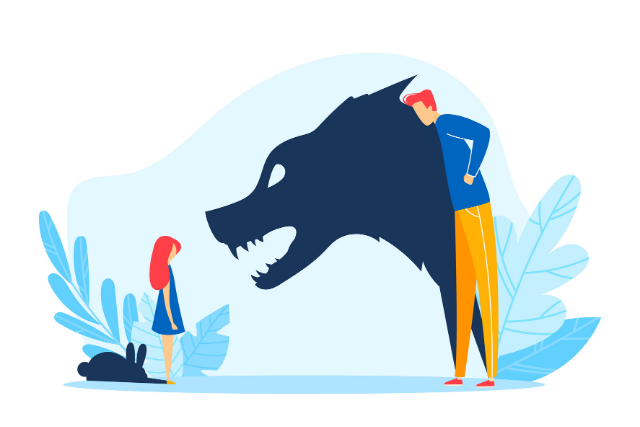
    It wasn’t until I took a break and developed faith in myself that I found my full energy, optimism, and confidence return. Because in the end, we can never be great at being anything but ourselves. There is no trying anymore, only being. And the knowing that I don’t need to be all things. Just myself. Regardless of what other people have to say about that.

    And you know what? The strangest things have begun to happen. I have found new strengths, new joys, and new opportunities. When I let go of mimicking others’ successes, I have found more of my own. The kind that I’m not afraid to lose. The kind that doesn’t make me feel like a fraud.

    Sharing my voice has gone from scary and nerve-wracking to a way to create connection and joy. The transition feels like nothing short of miraculous. If you would’ve told me all this several years ago, I would never have believed that I could achieve this kind of peace and confidence. But I have come to believe in believing. And I highly recommend it.

  • You’re Bent, Not Broken: A Mindset Shift That Can Change Your Life

    You’re Bent, Not Broken: A Mindset Shift That Can Change Your Life

    Bent but never broken; down but never out.” ~Annetta Ribken

    I lived for a long time thinking I was broken beyond repair.

    Let me rephrase: I thought I was unloved, unworthy, scarred, and broken. What a package, right?

    It started young, never feeling like I was good enough for anything I did. Being the youngest of the typical modern recomposed family in the eighties, I never knew on which foot to dance and always thought I needed to bend left and right to be seen and loved.

    I carried this baggage under my badge of anxiety, feeling like no one and nothing could ever make me happy, that no one could love the real me, that nothing could ever make me feel worthy.

    It reached a point as I was entering my forties when all I wanted to do was disappear. I wanted to not be who I was. I wanted to die.

    I thought that was my only solution.

    I believed the world would be better without me.

    What I didn’t understand then is that by thinking I was broken, unworthy, unloved, and all the other awful things I told myself daily, I was pouring salt into old wounds that had no chance to mend until I stopped the self-loathing.

    The more I told myself I was broken, the more I was breaking my soul. The more I told myself I was unloved, the less I loved others and opened myself up to love. The more I told myself I was unworthy, the more I interpreted others’ words to mean the same.

    I didn’t know what I could do. I didn’t know how to get out of the storm I was stuck in. I didn’t know what could help me live in the moment and stop hurting from the past or getting scared of the future.

    How do you get out of hurting so much you want to die?

    For me: writing.

    It was the only thing I could do.

    I was losing friends left and right, closing up like an oyster, hurting myself and others with my words and actions—but my pen and paper were my salvation.

    I bled tears and words until the day I could take a step back.

    The pain, the feeling of being broken and unworthy was still here; I could barely look at myself in a mirror, even less love anyone properly. But as I was playing with my pencil not finding words for a poem I needed to write to survive, I kept pushing into a crack it had. And I pushed my nails into it, and I played with it, and picked at it and some more not really thinking what I was doing, desperately trying to find words, until the pencil broke in two.

    No, let me take responsibility—until I broke the pencil in two.

    I looked at the two pieces in my hand.

    I had played with that pencil’s crack until I broke it.

    My fingers kind of hurt, but I smiled.

    This wasn’t me. This couldn’t be me. I really didn’t want this to become me.

    I wasn’t two parts of one entity.

    I was still one.

    And if I was still one, I wasn’t broken, I was just scarred. I was just bent.

    From that moment on, everything shifted.

    I wasn’t broken, just bent. I could learn to love myself again.

    It became like a mantra I repeated daily.

    And if I wasn’t broken, just bent, then maybe I wasn’t unlovable but loved by the wrong people. And maybe I wasn’t unworthy but only surrounded by people who didn’t recognize my worth, or maybe I was blind to my awesomeness.

    And if I wasn’t broken, if I stopped playing with my wounds, then maybe the healed scars could tell a story. And if I could tell my story and help others in any way, maybe, just maybe my pain and hardship and years of anxiety and depression could become more than a feeling of brokenness.

    So maybe I wasn’t broken. Maybe I was indeed just bent.

    It was hard to say it out loud, it was hard to explain, but the moment I shifted my mindset, I felt a relief.

    I knew then I could rise from the traumas I’d gone through. Even the smallest ones.

    I could give myself a second chance at life by healing and sharing my story.

    I wasn’t broken; I was made to break the shell of my past and show that if I could do it, you could too.

    Because here is my biggest secret: I am no one, and I am everyone.

    My story is the same story as most of yours. I didn’t deal with my traumas, and they caught up. I thought I had dealt with the past by putting a bandage on it when I really needed an open soul surgery.

    I thought I could wear a mask and be loved for who I thought people wanted me to be, but this made me feel unloved to the core.

    I thought I was broken when I was only bent by circumstances I needed to untangle. I thought I was unworthy but I was capable of creating art with my scars and shining a light on the most common depression story ever to tell others they weren’t alone and could get out of it too.

    So don’t tell yourself that you are broken.

    Don’t think you need an extraordinary story to help others find their light.

    Don’t believe you are no one, because we are all no one, and we are everyone.

    I’m not a life coach, I’m not selling classes, I’m not even trying to save your soul. I’m just like you, trying to find a light of love and joy. And together, we are healing, and we have a story to write. A story about the power of choosing to see yourself as someone with strength, value, and purpose.

    Change your mindset today. See yourself as just bent, and don’t try to straighten yourself up.

    Allow yourself to be bent, and let the shift happen.

    Broken is irreparable.

    Bent is not.

    It’s not a big difference, but it might change your life.

  • 5 Important Life Skills I Learned in Grief After My Husband Died

    5 Important Life Skills I Learned in Grief After My Husband Died

    “Sit with it. Sit with it. Sit with it. Sit with it. Even though you want to run. Even when it’s heavy and difficult. Even though you’re not quite sure of the way through. Healing happens by feeling.” ~Dr. Rebecca Ray

    When my husband died from terminal brain cancer in 2014, I learned all about deep grief. The kind of grief that plunges you into a valley of pain so vast it takes years to claw your way out. In the beginning, I didn’t want to deal with grief because the pain was too intense. So, I dodged grief and circled around the pit of despair, trying to outrun or outwit it.

    My biggest grief fault was imagining an end. In my naiveté I figured I’d reach a point where I could wash my hands of it and claim, “Whew, I’m done!” But that’s not how grief and living with monumental loss works.

    Grief doesn’t like to be ignored. The hardest lesson for any griever is learning that grief never goes away. You just figure out how to make room for it.

    A few years after my husband died, I kept seeing the quote “what you resist persists.” It was like grief sending me a message to stop running and pay attention.

    This message reached me at a critical time because I was exhausted from avoiding the pain, so I decided to let myself feel the sadness and see what happened instead. I stopped asking, why me? and started asking, what am I supposed to learn from this? Instead of evading grief, which was too grueling anyway, I let grief teach me what I needed to know.

    Much to my surprise, amid the discomfort and sorrow and suffering, I learned a whole new way of living.

    I didn’t realize I was morphing into a new, more self-actualized me because it’s hard to see the changes happening in real time. You can’t possibly appreciate your progress until you look back at how far you’ve come.

    With the benefit of hindsight, I can see how grief’s guidance taught me the following important life skills I never would have learned without it.

    How to Accept My Feelings

    Prior to my husband’s death, I didn’t have time to feel my feelings. I kept busy with distractions, and whenever a tsunami of emotion surrounded me, I shut down.

    The mistake I used to make was thinking my emotions meant something about me as a person. I convinced myself that sadness meant I was weak, and I couldn’t possibly be healing if I still cried over my husband’s death years later. I thought, I must be an angry person because I get angry so often, or something must be wrong with me because I feel overly judgmental sometimes.

    Because grief brings with it a whole slew of emotions, it forced me to get better at feeling everything. With practice, I started naming my emotions, and I uncovered what I was feeling and why. Instead of labeling my feelings as good or bad, I accepted them as nothing more than the brief emotional surges they are.

    I took a deep dive into all the self-help guides I could find to determine that every emotion has its place. We feel things so we can process what’s happening in our lives, learn from it, and eventually express its meaning. None of my feelings were better or worse than the others. None of them meant anything about my healing or how well I coped.

    I learned I’m not an angry person, I’m just a person who occasionally feels anger. I’m not a judgmental person, I just feel judgmental sometimes. And sadness doesn’t mean I’m weak. It means I’m a human being experiencing a human emotion.

    It took me a while to believe that my feelings were nothing more than blips on the radar screen of my human existence. If it weren’t for grief, I might not have uncovered the secret to accepting all my feelings –they mean nothing about me as a person.

    If I’m being honest, I still get angry way more than I want to. But I don’t keep busy with distractions anymore. I feel my feelings when they come up, let them pass through and thank them for giving me an opportunity to understand myself on a deeper level.

    How to Be More Vulnerable

    In the past, I rarely admitted when I made mistake, when someone hurt me, or when I was afraid. As far back as I can remember, people viewed me as strong, brave, and determined because that’s what I portrayed. Few people ever saw the anxious, disappointed, or terrified side of me.

    So, it was no surprise after my husband died, when card after card poured in with the same sentiment: “I’m so sorry for your loss. But I know how strong you are. If anyone can get through this devastation, you can.”

    It comforted people to think I was “strong” enough to endure my loss. As if “strong” people grieved less than their more fragile counterparts. But their condolences were of little comfort to me after I learned a very basic principle of grief; it doesn’t discriminate. It tests the mettle of everyone’s soul.

    Grief forced me to expose myself emotionally. I had to show my vulnerable side because fear took over and I didn’t know how to conceal it anymore. It seeped out of my pores

    The upside of exposing my vulnerability was building deeper, more authentic relationships. I never knew how much people craved to see the real me until I noticed a favorable shift in my personal connections after I admitted my fear, shame, and regret. When I was honest about the intense stress of grief and the toll it took on me, others trusted me with their innermost secrets too.

    I much prefer letting others in now. I never want to go back to keeping people at arm’s length and pretending to be someone I’m not. I did a grave disservice to myself by appearing so aloof for so long. Before my husband died, I got away with it. After he died, there was nowhere left to hide.

    I’m not afraid of being afraid anymore. I can readily admit now when I’m scared. I also admit that I cry and break down and throw an occasional temper tantrum when life gets to be too much.

    If it wasn’t for grief, I would’ve never known the benefit of letting others see the real me.

    How to Ask for Help

    As a person who avoided feelings and shunned vulnerability, I never knew how to ask for help. Not that I didn’t need help. I just hated asking because I assumed people would say yes when they secretly wanted to say no.

    I didn’t want to be a burden on anyone.

    After my husband died, I needed help with lawn maintenance, household repairs and childcare, among other things. I realized quickly I couldn’t do it all on my own and it took everything I had in me to ask for help because it was such a foreign concept.

    One of the biggest things I learned on my grief journey is that healing requires honesty. And honesty requires practice. When people said, “let me know what you need” I understood what they really meant was, “I have no idea what to do! I feel so helpless and I’m begging you to please just tell me what you need, and I’ll do it!” People aren’t mind-readers, so I practiced being as honest and explicit as I could.

    It took me a while to get good at asking for help. But I appreciate how wonderful it is for the person on the receiving end to get specific instructions. People want to help and now I let them.

    My healing heart and relationships have vastly improved by implementing this one simple change.

    How to Settle in with Uncertainty

    I used to think I controlled the universe—until my husband died. Control is an illusion, and that truth smacked me upside the head the day his doctor diagnosed him with terminal cancer.

    I’ve never liked uncertainty. I’m not a spontaneous person. My world works better when I know what’s going on and no one has any surprises up his or her sleeve. But after my husband’s diagnosis, we lived each day with uncertainty because we knew for sure he would die from his disease—we just didn’t know when.

    The twelve months between his diagnosis and death were pure torture. However, we settled in with uncertainty anyway because we had no choice. Instead of focusing on the when of the future, we made the most of the present.

    After he died, I learned that grief and uncertainty go hand in hand. When you’re grieving, you don’t know what emotional wave will hit you from day to day. You go through life without the security of knowing what will happen next because something terrible already happened and it could happen again. And you can’t control it. This is both a blessing and a curse.

    The curse is the uncertainty, of course, but the blessing is you get to take the responsibility of the world off your shoulders. You surrender because you understand you were never in charge, anyway.

    Now, I welcome the peace of surrender and not knowing. I discovered it’s easier to live in the moment instead of focusing on things outside of my control. Talk about lifting an enormous burden! I ride the emotional waves as they come and remind myself to stop forcing things and just let them be.

    Whenever the control urge starts to churn and makes me think I have a chance to influence an outcome, I imagine my husband tapping me on the shoulder and whispering, “remember how we used to surrender? Please do that with me until this feeling passes.”

    How to Allow Others to Have Their Own Feelings

    When I got better at feeling my feelings, allowing vulnerability, and settling in with uncertainty, I also learned one of the most important life skills—how to let other people have their own feelings, too.

    Because I know I’m not in charge and I don’t control the Universe, I know I can’t control what other people think or feel either. If grief has taught me anything, it’s that everyone has their own way of doing things and thinking about things and expressing their feelings about things. And none of it means anything about me.

    I used to get upset when someone else was upset or get offended if someone else offended me. I tried to fix people and things to make everyone happy because I thought it was my responsibility to help others live in harmony.

    Death put the kibosh on that distorted way of living.

    I no longer had the time or inclination to teach everyone how to live in harmony because my world was one breath away from potential collapse. I had to concentrate on myself. When I focused on getting my mind right, making peace with grief, and learning how to handle my feelings, I understood it was an inside job. No one else could do it for me. And I couldn’t or shouldn’t try to do that for anyone else. Everyone comes from their own level of understanding about themselves and the world.

    It took me a long time to understand this because it took me a long time to understand me.

    Now I don’t pretend to know what or how or why someone else should think or feel a certain way. When other people tell me how they feel, I believe them.

    It’s not my job to try and change someone else’s feelings any more than it’s their job to try and change mine.

    The Way It Is Today

    I don’t wish my monumental loss on anyone, but looking back now, I see how my crooked, confusing, and soul-crushing path taught me essential life skills I wouldn’t have learned otherwise.

    Even though I’ve had my fair share of hard days and months and years, I became a more compassionate and considerate person with grief’s guidance. I changed my worldview because pain changed me. And these days, I surrender to what is instead of trying to change circumstances outside of me.

    It’s only after spending time with your pain that you develop an understanding of its purpose. I never thought I’d find an upside to grief because I thought grief was all about death. But I found out that grief teaches you about more than just death and surviving loss.

    It teaches you how to live.

  • How a Highly Sensitive Person Can Get Over a Breakup And Move On

    How a Highly Sensitive Person Can Get Over a Breakup And Move On

    “A shoutout to everyone who is trying right now… Trying to do the right thing. Trying to stay open. Trying to keep going. Trying to hold on. Trying to let go. Trying to find their flow. Trying to stay afloat. Trying to meet each new day. Trying to find their balance. Trying to love themselves. Trying new things and new ways. I see you. I’m there too. We’re in this together.” ~S.C. Lourie

    Breakups are devastating, and the pain is real. But if you’re a highly sensitive person (HSP), it can take an extreme toll on your system because HSPs feel everything twice as deeply.

    For the HSP, the pain of a breakup can be completely overwhelming and trigger a heightened emotional state.

    When a relationship ends, it can make you feel insignificant. Regardless of who initiated the ending, you experience a tremendous impact in your life that can drive you into despair, confusion, and rage. Not only do you feel emotionally affected, but you may feel as if you are physically wounded as well.

    My whole world came crashing down when my partner went radio silent. He refused to answer my texts and avoided any form of contact. I felt lost and confused, not knowing what to do or where to turn. Each day felt harder than the day before.

    I knew for months that things were not going well, but I was clinging on to hope that the situation would somehow improve. When my partner left without a word, I knew that was the end. I did not get any closure, not that I require it because I realized it would not make me feel even the least bit better even if I did.

    I’ve heard stories from fellow HSPs who took a long time to get over a breakup, and I didn’t want that same experience for myself. But the pain of dragging my broken heart around and the intense emotional stress were not getting any easier on me.

    A day felt like a month, and I wasn’t sure I could survive until the end of the month because the experience was so devastating. I wanted to get over to the other side quickly and get on with my life.

    These are the steps that helped me recover within a shorter time than I feared it would it take.

    1. Forcing Myself to Get Out

    When the realization that we’d never be together again hit my brain multiple times a day, I lost functionality. My entire system broke down. I could not think clearly or act normally. All I wanted to do was vegetate and cry, which only made the situation worse.

    To reset my brain, I tried to get out of the house as often as I could. My body and brain would fight me. I was already exhausted and feeling hopeless. It took a tremendous amount of willpower to drag myself out of bed. The moment I succeeded, I realized it wasn’t half as bad as I thought it would be. I just had to win the mind game.

    I engaged in simple activities such as dropping in for a cup of coffee at the local café, taking a drive to nowhere, sitting alone watching children play in the park, or just enjoying the sunset. Beauty has a way of distracting us from our thoughts and soothing our nervous system. It drew my mind temporarily away from the problem and provided relief at the moment.

    2. Affirming My Self Worth

    Whenever my mind started reminding me it was over, I blamed myself. I imagined there was something I could have done differently. Or that it was my fault it had happened. I beat myself up and placed the entire burden on my shoulders.

    Knowing there was nothing I could do to reverse the situation, I attempted to tell myself a different story, even though I did not believe it in the beginning. I assured myself I was worthy of love, that I deserved to have someone love me as I was, and I required no validation from others to feel good about myself. I made those affirmations out loud so I could hear myself speak.

    In the beginning, it was a struggle. I would sneer, criticize, or ridicule myself every time I said an affirmation because I did not believe my own words. I persisted between tears and disbelief. Thankfully, it got better over time. Gradually I stopped criticizing myself and what remained were purely affirmations. As I continued to hear myself speak, I gained my own acceptance.

    3. Practicing Self-Compassion

    Research suggests that practicing self-compassion can help us become better adjusted and significantly improve our mental health. But it doesn’t come easily to HSPs.

    We tend to have unlimited compassion for everyone else but struggle to offer the same compassion to ourselves. We often judge ourselves as weak when we’re struggling with emotional pain. But that’s when we need self-compassion the most.

    As I gradually came to terms with reality, I indulged in more positive self-talk. I spoke to myself as I would my best friend. I told myself that I was the main character in my story, and I needed to heal. Despite what was going on, I assured myself I could feel better and rise above the situation.

    I focused on myself, telling myself that I would get out of this episode just fine. I convinced myself that soon, the pain would go away, and the awful feelings would end. Again, in the beginning, there were no significant changes. I persisted and gradually experienced mental clarity that showed me I was on the right path.

    4. Dealing With Relapse

    As I began to heal, I noticed the gap between the time I crumbled and the time I could hold up became further apart. It was not uncommon for me to break down multiple times throughout the day. Sometimes, I managed to get by without crying for an entire day. To me, that was a breakthrough because it showed a marked improvement.

    Some days I unexpectedly suffered a relapse after a period that I thought was an improvement. That took me completely by surprise. Gradually, I accepted that I was still in the process of healing, and that it was normal for my brain to revert to the lingering memory.

    When that happened, I revisited what I practiced earlier—getting out, affirming my self-worth, and practicing self-compassion. Self-talk was a crucial part of my healing process.

    I had to listen to my own words long enough to believe they were true. I had to avoid giving in to the mental chatter about my role in the breakup and my worth.

    We generally act on what we believe about ourselves. If we believe we deserve to hurt, we don’t do the things we need to do to heal.

    Moving On With My Life

    In slightly less than two months, I woke up with no brain fog and was able to go through an entire day without breaking down. I was able to resume my normal activities and focus on the day ahead.

    For me, the whole healing process was a battle of willpower. Some days were tranquil, although most days were difficult. Typically, it was one step forward and two steps backward. Whenever I struggled, I reminded myself that I wanted to heal and feel better. That generally got me on my feet and out of the house.

    A breakup can have a huge impact on a highly sensitive person, since we are more susceptible to stress and extreme anxiety. Although healing takes time and often we have to allow nature to run its course, there is no need to prolong the pain longer than necessary.

    Once you decide you are ready to receive healing and do everything you need to accommodate the process, you can come out of the episode faster and move on with your life.

  • When a Mother Fails to Love: What’s Helped Me Move On

    When a Mother Fails to Love: What’s Helped Me Move On

    “You keep meeting the same person in different bodies until you learn the lesson.” ~Brandon Tarot

    Like most girls in junior high school, I tried out for all the cheerleading squads every time tryouts came around—basketball, football, even wrestling. And like 95% of the girls, I never made the squad.

    My kicks weren’t high enough, my splits weren’t split enough, my arms weren’t board-straight enough, I couldn’t jump high enough—and, let’s be real here: I wasn’t pretty enough and I wasn’t popular enough. After all, we are talking about junior high school.

    But eventually, the one tryout came around that I had half a chance at: the pom-pom squad. Even at thirteen years old, I knew I could dance. Pom pom was the group of ten to twelve girls that performed choreographed routines to music at half-time during basketball games, and rarely during the period breaks at hockey games, on ice (I grew up in North Dakota, where hockey was a big deal).

    To try out for pom pom, you usually got together with two or three of your best girlfriends who also wanted to make the team, picked a song you all liked, and tried to choreograph a dance routine to that song.

    Picking the right song was crucial: it had to be a popular song that everyone would immediately recognize (Top 40, currently getting radio play time was best!), and it had to have the right rock-and-roll beat that was not too slow so that it would be boring to dance to, yet not too fast so that we would have a hard time making spins, kicks, or coordinated moves in time with the beat.

    So it came to pass: Eighth grade, tryout date was announced, and teams signed up to compete. It turned out to be myself and my friends Diane and Becky who agreed we were going to go for it that year.

    We had no experience whatsoever in coming up with a dance routine; all we had ever done was watch the previous year’s dance team do their thing, and we figured we might be able to copy a few moves from them. This was 1970, and I believe we chose an Elton John song that was getting a lot of airtime that year.

    We pulled my bright orange record player out to my back concrete patio and set it up, where we played that song over and over as we practiced sequences of turns, kicks, fancy footwork, arm movements, and hip action.

    This patio was right off the back door leading from our kitchen, and in retrospect I’m sure hearing that song play endlessly must have driven my mother insane, because even after my friends left for the day, I continued to practice, practice, practice.

    Finally, the day of tryouts arrived! It was long and nerve-wracking, as we had to watch everyone else’s performance until our turn came around.

    We watched as their nerves got the better of them—as the plastered smiles froze and then faded completely, their eyes widening like deer in the headlights. We saw them forget their steps; turn in opposite directions; one girl ran off before her routine was even over. A few routines went smoothly, and you could hear the collective sigh of relief from those of us still waiting, but the disastrous ones unnerved us completely.

    I actually have no memory whatsoever of how our routine went. I remember our names being called, scampering up onto the gym floor, hearing the scratching of the needle on the record, and shaking like a leaf until the music started. Then I remember sitting down and the polite applause afterward. That’s it.

    We watched as the final teams competed, and waited for the judges to make their picks. This was the worst part of all. The gym was full of girls who all wanted a shot, and they would hear in front of everyone whether they would get that shot or not.

    It was already getting late and the judges seemed to be taking a long time. This event had taken place on a school night, so by now it was past 9:30 p.m.

    One by one, they started to call the girls’ names who had made it onto the dance team. When they eventually said “Gail …” and hesitated on the last name, I knew it was me they were referring to! (I had a Polish last name that always seemed to get massacred.)

    I leapt to my feet and ran out onto the gym floor in complete shock—OH MY GOD OH MY GOD!! My girlfriends pounded me on the back on my way out to the floor and shrieked and clapped for me. Finally, the ONE thing I knew I was good at, and I got my chance to be a part of this group. I was over-the-top euphoric!

    I lived a little more than a mile from my junior high school and had to walk back home that night. Well, I practically ran all the way home; I was so excited and couldn’t wait to tell my mom that I had made the pom pom team! I burst into the back door about 10:30 p.m.

    I yelled out, “Mom!”

    She stormed through the living room and into the kitchen, furious and screaming at me, “Where the HELL have you been??”

    Taken aback, I said, “You know I was at pom pom tryouts. I made it!”

    She said, “I don’t give a damn. You know your curfew is 10 o’clock. What the hell have you been doing this whole time?”

    Dumbfounded, I tried again. “Ma, you know where I was. It went late. It wasn’t my fault. Ma, didn’t you hear me? I made the squad.”

    “I don’t care about that. Next time you call if you’re going to be late.” Then she turned around and went to bed.

    I was stunned. If she had slapped me in the face, it wouldn’t have hurt worse. Literally the only thing I’d ever competed for, and they had said “Yes, Gail, you have talent, and we want you on our team,” and my own mother didn’t give a damn.

    If I ever needed a message that in her mind, my accomplishments meant nothing, she delivered it loud and clear that night. Unfortunately, it left a scar so deep that it remained with me for rest of my life, as the same message continued to be delivered, over and over.

    That night I could not get to sleep. Waves of excitement kept washing over me as I couldn’t believe my good fortune in being picked for this elite team. I remember literal chills going through my body; I simply could not relax. Then I would remember my mom’s reaction and a feeling of incredulity would take over.

    How could someone do that to their own daughter? How could someone do that to anyone who had such great news to tell—be such a horrible wet blanket?

    I never forgave her for how she treated me that night. At the end of that school year, the teacher/advisor who was the head of the pom pom squad thought it would be nice to host a mother-daughter night. The girls would choreograph a special routine, showing the mothers what they had learned all year long, and the teachers would prepare a special buffet for the mothers. This would take place after school one night. I didn’t even tell my mom about it.

    The day arrived, and I just told my mom I had a performance after school and would be home late. When I got home several hours later, she tore into me, furious. One of the other mothers had called her up, offering her a ride to the mother-daughter night. Of course this caught my mom off-guard because she didn’t know anything about it, and it embarrassed her as well. She declined the ride, seeing as she wasn’t ready to go out.

    Obviously, I got yelled at again because of the embarrassing phone call. But this time I didn’t care. I just tossed my head and said, “I didn’t tell you about it because I knew you wouldn’t want to go anyway.” And I walked away.

    The following year, as I was transitioning into high school, I tried out again for the high school pom pom squad. That year, I was the only one from my entire junior high school who made the team. For all three years of high school, I continued to try out and make the team. My senior year, I was the only senior on the squad.

    All this is to say that I was good at what I did. And for the four years I was performing with these girls, my mother never came once to watch me dance.

    I think her ugly dismissal of my winning a spot on the team, and my response by keeping her away from the mother-daughter night, created a gulf between us that never got repaired. The battle lines between us were already drawn, but that incident firmly entrenched them for many decades to come.

    When the most important people in my life essentially told me that I didn’t matter, that my accomplishments didn’t matter, two things resulted: I stopped “putting my pearls before swine,” and I started to seek validation from the wrong people and in the wrong places.

    By pearls before swine, I mean this: I protected my heart by not including her in the big celebratory events of my life. I felt that because of her lack of support, she didn’t deserve to be there and wouldn’t really appreciate what I’d accomplished anyway.

    We started to live a tit-for-tat existence. One day I came home from high school to find out that she’d given away my dog—she left a note for me on the kitchen table. The explosive fight we had when she came home that evening was epic, as was the silent treatment around the house that lasted for weeks afterward.

    She tried to prevent me from attending college, telling me I’d only be wasting money and was only going there to “chase boys” anyway. Four years later when I earned my B.S. degree, I purposely didn’t walk the graduation ceremony to spite her, thus robbing her of her day in the sun. “Why should she get any credit for that,” I thought? Several years later when I earned my M.S. degree, I didn’t invite her to that ceremony either, which I did participate in.

    The most far-reaching decision I made, as early as high school, was that I would never have children. I was the youngest of seven in my family and the only one who never had kids. I was so afraid I would turn out to be a mother just like her, and I didn’t want to inflict that kind of misery on any child.

    Where was my father in all of this? When I was in junior high school, my father had an operation for a brain tumor and its removal was successful. But a few days later he had a stroke that left him paralyzed on his right side and unable to speak. He remained in this state, wheelchair-bound, for the rest of his life.

    This was our alcoholic father who was unfaithful to my mother and physically abusive to her and to his seven children. Our mother, being the righteous Catholic martyr that she was, insisted it was her duty to now care for him at home. I am convinced it was this intensive caregiving for a man she did not love and who had been horrible to her that turned her into the bitter woman who was doing battle with me.

    It took decades of hindsight and therapy for me to see and understand this, but in the thick of our day-to-day dogfights, all I saw was a woman who would do everything in her power to hold me back. If she couldn’t be happy, no one was going to be happy.

    I’ve had three failed marriages, the final one lasting only nine months. My therapist helped me to see that I chose the same personality type each time: three overachievers, three brilliant and talented individuals, three bright and shiny objects. And by doing that, I was seeking my own validation—they reflected well on me, and surely they must see the same qualities in me.

    What I didn’t realize was that in these types of partnerships with high-achieving individuals, there is only room for one successful person, and that person would not be me. Megalomaniacs do not share the spotlight.

    Finally, in my sixties now, I understand that aloneness does not mean loneliness. I am more content and fulfilled than I’ve ever been in my life, as I pursue as many passions and dreams as the remaining years will allow. To finally achieve self-acceptance and self-esteem through rigorous study and therapy has been the greatest gift imaginable.

    It all started with understanding that my mother’s mistreatment had nothing to do with me. She let her pain shape her life. I won’t do the same. And I won’t spend my time seeking validation from anyone else, as I once did with my mother and three husbands. It’s natural to want approval from other people, but all that really matters is that we approve of ourselves.

  • What I Really Mean When I Say I’m Fine (Spoiler: I’m Not)

    What I Really Mean When I Say I’m Fine (Spoiler: I’m Not)

    “Tears are words that need to be written.” ~Paulo Coelho

    It was lovely to see you today. I haven’t seen you in such a long time. So much has happened since the last time we saw each other.

    You asked me how I was. I politely replied, “I’m fine” and forced a smile that I hoped would be believable. It must have worked. You smiled back and said, “I’m so glad to hear that. You look great.”

    But I’m not really fine. I haven’t been fine for a very long time, and I wonder if I will ever know what “fine” actually feels like again.

    Some days are good, some not so good. I’m doing my best to stay optimistic and to keep faith that tomorrow will be better. Sometimes it is, sometimes it’s worse. I’m never prepared for either outcome.

    I’m doing my best to pretend I’m fine.

    The mask I wear hides my pain very well. I’ve been wearing it for so long now that no one can see through it anymore. It’s my new face, and it smiles on demand.

    Some days I wish I didn’t have to pretend to smile. I long for the day when it will come naturally, sincerely, and genuinely.

    When I say I’m fine this is what I really mean…

    I’m sad. I’m really having a hard time right now. I wish I could tell you. I’d like to think that you might even care. And maybe you do truly care. But I don’t want to tell you. I don’t want to bother or burden anyone with my troubles.

    My troubles are big and ugly. I can’t burden you with them. You are facing demons of your own. You don’t need to be exposed to mine. That would be so selfish of me. To think that your demons are not as important or debilitating as mine.

    So I just tell you I’m fine. I’m protecting you when I say I’m fine. Because I’m afraid my pain is just more toxicity.

    I want to tell you my troubles. I want you to take them away. I wish someone could fix everything that hurts, though I no one else can do that for me. Still, I wonder, does anyone have all the answers to these questions that are pounding in my head and causing me grief and anxiety?

    Anyone?

    There’s a tightness in my chest that won’t go away. There’s a darkness in the pit of my stomach that makes me nauseous. My shoulders feel weighted and my arms long for human touch. A body to wrap around tightly to comfort me and ensure me that everything will be okay.

    My troubles have completely consumed my life.

    Inside, I’m crying all the time. My soul is crushed, and my heart is full of holes that I’m desperately trying to patch up as best I can.

    I’m full of anxiety inside, and no matter how hard I try to find peace, it eludes me. I feel there are a million demons inside of me, and I don’t know which one needs my attention the most.

    So I ignore them all. It’s too much for me to bear most days.

    When I say I’m fine I really wish you could hear my inner voice screaming, “I’m not fine, and I need help. Please stay and talk to me, comfort me, help make this overwhelming pain stop.” I want to say this to you. But I open my mouth, and “I’m fine” comes out instead.

    I’m not really fine. I’m not sure how to handle today, and I fear what tomorrow may bring. It’s constant anxiety. I wish it would go away if only for a day.

    I want to be fine, honest I do.

    One day I would love to sincerely tell you how fine I am. That all my anxieties, worries, and fears are gone, or at least less overpowering. That I walk with a skip in my step and a song in my heart. I want to feel that. I may have felt this once before a long time ago, but I don’t really remember it.

    Every day I’m doing my best to smile and make the day better. I’m thinking positively, I’m taking big deep breaths when I need to. I’m reading inspirational blogs and quotes. I’m even listening to guided meditations.

    Today I went shopping and bought myself something nice. I know, a temporary fix. But it worked.

    It all works. For the moment. And then the moment is gone, and it all comes flooding back. All the turmoil, the anguish, the anxiety, the pain. I breathe deeply again. And I’m okay for a few more minutes.
    But for now, I’m doing my best. I know that everything in life is temporary. The good, the bad. Even life. It’s all temporary. If I can just get through today, I’ll be fine.

    I’m doing my best to see the bright side. I can see it some days. But it doesn’t take away the turmoil brewing inside of me. It only masks it with a Band-Aid. A temporary fix.

    Everything is just a temporary fix until I finally become brave enough to get to the bottom of my demons. I need to face them one at a time. I need to bring them to the surface, dust them off, address them, heal from them, and then let them go.

    This I know. But it’s such a daunting task. Just thinking about doing that is overwhelming and causes me a great deal of anxiety. I know it’s up to me to be able to say, “I’m fine” and really mean it.

    One day I will. When I feel strong enough to do so. Until then, I may say I’m fine when I’m really not. But I will try to find the courage to say, “Actually, I’m sad,” even though I know you don’t have a magic wand to take all my troubles away.

    Maybe just opening up and letting you support me will help. Maybe if I stop painting a smile on my face and telling you “I’m fine, really I am,” one day soon I will be.

  • If You Want Closure After a Breakup: 6 Things You Need to Know

    If You Want Closure After a Breakup: 6 Things You Need to Know

    “We eventually learn that emotional closure is our own action.” ~David Deida

    When my last relationship ended, I didn’t really understand why. After eight years together and still feeling love for each other, my partner walked away saying he didn’t feel able to commit.

    He didn’t want to work on the relationship because he felt that nothing would change for him. So, I had no choice but to let it end and do everything I could to pick myself up from deep grief, intensified by great confusion.

    Now, over a year later, I still cannot give you a definitive reason as to why we broke up. I do still think about the breakup and occasionally it can bring up emotion, even now.

    But these days, instead of that burning need to understand and make sense of it, I have a more distanced curiosity when I think about the reasons we ended. I think this might be that elusive state we call “closure.”

    This reflection led me to explore what closure means: why we strive for it and why it feels so hopeless when we think we can’t reach it. Do we ever truly have it and where does it come from?

    What is Closure?

    When we say we want “closure” at the end of a relationship, what do we actually want?

    I have discovered that when people talk to me about needing closure, what they generally tend to mean is that they want answers and understanding about why things ended the way they did.

    Heartbroken people often believe that they will get the closure they so desperately desire, if only they could make sense of why. They expect that this knowledge will help them stop the overthinking and relieve them of their painful emotions.

    I used to believe this too, but experience from my previous crushing divorce taught me it doesn’t work like that. Closure must come from within because if you look to your ex or anywhere else to find it, you will be left frustrated and helpless and you will prolong your healing process.

    So, let’s look at some truths about closure that explain why it has to be an inside job:

    1. Your ex’s responses will lead to more questions.

    At the point of my breakup, my ex and I had a couple of conversations that involved me doing a lot of asking why, but not getting many answers. He couldn’t really explain; he told me “It’s not you, it’s me,” and when someone gives you that as their reason, there is nowhere you can go with it.

    For the person leaving it probably feels like the best way to end it. But for the person left, it’s deeply unsatisfying, and our natural tendency is to desperately ask more questions: “What’s wrong?” “Can I help you with whatever you’re going through?” “Can we fix it somehow?” “Can we at least work on it?”

    It’s important to know that when we are still in love with someone, nothing they can say will us give closure. The answers will never feel enough, they will only lead to more questions and more longing.

    2. “One last meeting” extends the pain.

    If there is still communication after a breakup it’s tempting to ask for one last face-to-face, to help you understand and gain the closure you seek. But for all of the reasons above, this will not help.

    A meet-up is often an excuse to get in touch because the ending feels too painfully final. Sometimes there’s a veiled hope that by seeing them for “one last talk” they may rethink or have doubts about leaving.

    Nobody is ever wrong for seeking closure this way, but before deciding to meet, check whether you are really hoping for reconciliation. Consider how your pain might be prolonged if you don’t get it.

    3. Your closure can’t come from their truth.

    You cannot rely on the words of the person who broke your heart for your own closure. Not because they are being deliberately dishonest (except for specific cases when they are), but because there is never just one truth at the time of the breakup.

    The answers you receive from your ex may bring you a little bit of understanding or peace at first. But if you depend on them for your closure, and then the reality shifts, it can set you back and bring even more pain.

    I allowed myself to feel deeply reassured by my ex’s assertion that he left because he needed to be by himself. So, when he told me two months later that he was dating again, it left me utterly devastated because I had allowed my peace of mind to come from his words and not my own healing. I had believed “It’s not you, it’s me,” then felt the gut punch that it actually was me.

    However, as I started to move through the healing process, my growth allowed me to shift my perspective on the meaning I gave to this revelation. I learned to reframe the deep feelings of rejection to create my own, more empowering, understanding of why we ended.

    You cannot cling to reassurance from someone else’s truth or explanations, because they will not hold lasting meaning for you. Your closure will only have a strong foundation if it comes from your own truth.

    4. Moving on should not be conditional.

    You disempower yourself when you believe that you can only get closure via your ex-partner. In doing so, you are effectively allowing them to say whether it is okay to move on.

    If you require an apology, changed behavior, an explanation, empathy, forgiveness, or anything else from them before you can move forward, what happens if those things never come? Are you okay with potentially spending years waiting for someone else to fix your pain?

    Whatever your ex-partner tells or withholds from you, however they acted back then, whatever their current situation or future behavior, is far less relevant than your response to any of these things.

    Your ability to gain closure is unconditionally within your control, and it becomes far easier when you stop focusing on your ex.

    5. Closure is not passive—what you do counts.

    We have a common understanding that “time heals a broken heart.”

    While it’s true that the intensity of grief emotions can lesson over time, what really makes a difference to your speed of moving on, is how willing you are to do the inner work to change and grow.

    As you gain closure, you’ll notice you are no longer so emotionally triggered by the same external situations. However, this doesn’t happen because anything out there is different; it’s because you are different.

    When you learn to heal an internal wound, shift your perspective, and change your responses to events, you gain peace from the inside. This is not dictated by time; it’s up to you how soon you want to make these changes.

    6. Closure is not a one-time event.

    There is a misconception that closure is something we finally “get.” The word itself implies that it’s a conclusion to everything related to the breakup. Because of this belief, we find ourselves constantly wondering when we will “have it.”

    Instead, if we see it as a process rather than a one-time event, it takes the pressure and expectation away from reaching this end goal. Creating closure is a continual journey of self-awareness, learning, and checking-in on our progress. We don’t just wake up one morning with a clean slate for a new life.

    Reframing closure this way also relieves us of judgment about how we should feel. It’s common to regard new emotional triggers, after a period of good progress, as unwelcome. They are negatively seen as a sign of a setback, but they are just highlighting where we still need a little more healing.

    Allow Yourself Achievable Closure

    The way we view closure matters. Compare the statement “I’m gaining closure every day” with “I don’t have closure yet.” You know straight away which feels kinder, more healing, less self-judging.

    I recently asked people what closure looked like to them, and I found that most believed that it is something you reach when you no longer think about or have emotions around your breakup.

    I wonder how realistic this thinking is. Perhaps it’s healthier and more attainable to claim we have closure, not when our thoughts and feelings have completely gone, but when they no longer have power over us.

    In my experience, becoming at peace with your breakup ultimately comes from healing through growth, and choosing to focus on what is within your control. This is the kind of closure that doesn’t come from an ex-partner, a rebound relationship, or any other external source. When you gain closure this way, it cannot be taken away from you.

  • Why Forgiving Is the Last Step in The Process and What Comes First

    Why Forgiving Is the Last Step in The Process and What Comes First

    “True forgiveness comes when you realize there is something totally radiant inside you, that nobody could ever touch” ~Eckhart Tolle

    I grew up in an emotionally abusive household.

    My father was a man who diligently provided for us, but he left me with scars and shattered self-esteem.

    My mother cooked me my favorite foods and let me sleep in her bed when I was scared, but she attacked my insecurities when I frustrated her. My friends played nasty pranks, but she wiped my tears as we both tried to survive my religious, cult-like school together.

    As a kid, I didn’t have the tools and mental maturity to deal with these complicated emotions. Everything was black and white. I couldn’t understand that people were a big, beautiful, and sometimes toxic mess of gray. After a year-long depression, I discovered the Internet, and I wanted to start healing.

    All the articles suggested forgiving, and I’m glad I ignored that specific piece of advice, because it’s much more complicated than that.

    I decided to focus on healing instead, and a crazy spiral started. There were a lot of extremes, a lot of tears, and a lot of perfectionism. But there were also love and joy, friends, and moments of incredible peace.

    Six years and one day later, I woke up and realized I didn’t obsess about my parents anymore. I could see them as people and forgive them for their cruel actions. I could set boundaries without getting subsumed by a tunnel of rage, and after a nasty fight, I could calm down and let go of any hard feelings.

    How on earth did I manage this?

    Accept the pain.

    Trauma runs deep. There are lasting effects, and we’d be fools to not acknowledge them. Even mental health professionals admit that the goal of recovery isn’t to remove the side effects, but to live in the present without being completely overwhelmed by the past and future.

    And for quite a lot of us, it hurts.

    It hurts for the teenage girl who spent her high school years struggling with depression and eating disorders because her family criticized her weight.

    It hurts for the boy who battled anxiety all his life, and his existing condition was only exacerbated by terrifying bullies and an unstable home environment.

    It hurts for me, a girl who lost years of her childhood to anxiety and fear, and never felt safe around her father.

    For a long time, I kept searching for a path where I could back-pedal. Hold up, let’s forget about the trauma and depression, can I just be a normal kid? Visit friends and insult their slime collection, and laugh about memes, and cry and fall in love? Can my diary be filled with boy-crushes and silly things, instead of obsessive questions begging me, why are you so lazy? Why are you so sad, and depressed, and ugly—

    And that brings me to my next point.

    Don’t get trapped in your abuser’s patterns, and don’t give your power to them.

    At first, I tried to fix myself. I filled pages with goals among goals. Get slimmer thighs. Talk less. Stop forgetting stuff. Stop fidgeting. Stop being lazy. Stop being yourself. Stop. Stop. Stop.

    I was a kid. Your entire world, your survival, depends on two very flawed human beings feeding and clothing and raising you. I thought that maybe if I were better, they’d treat me better.

    But eventually, I stumbled upon an article about abuse. There was this checklist activity, and I checked off twenty bullet points. “Congrats! You’re a survivor…”

    I’m not the problem, I thought, staring at the screen. They’re the problem.

    So, I went down a new road. Instead of trying to fix me, I tried to fix them , and when I inevitably failed, I was angry about the awful way they treated me

    My parents used this rage as another bullet in their gun.

    “Have you ever seen such a rude child?” “F*cking insane” “I’m just trying to speak nicely, stop yelling!”

    And they kept shooting at my heart, every time I said stop.

    “Stop commenting about my ugly skin and my weight. Stop saying I’m a failure, that I’ll never succeed in life. Stop rolling your eyes at me every time I make a mistake, or I forget something.”

    Stop, stop, stop.

    But they wouldn’t stop. Trying to fix them was worse than trying to fix me. Why? Because you can’t find closure from other people. You can’t control their actions.

    After the hundredth argument, I was sitting next to my bed. And then it hit me. They would never look me in the eyes and say, “I’m sorry, I’ll try to change.” Every time I tried to talk about my vulnerabilities, they would rip the wounds open and rub salt and lime into the blood. I would never get the closure I needed from them.

    I sat there for a long time. The tears dried on my face. And then I opened my journal, and wrote, “Dear Diary, I’m so tired…”

    Love yourself during the journey.

    I kept postponing my happiness. I kept waiting for two flawed people, who mentally, emotionally, and sometimes physically abused me, to change so I could finally move on. As a result, I never really tried to heal by myself.

    When I opened that journal, I still operated from the belief “I wasn’t good enough” and I needed to be “better.”

    I tried to have the perfect body. I was terrified to eat carbs and treat myself to a nice meal. I tried to be the perfect artist. At one point I loathed all the writing I’d ever made and threw away entire notebooks.

    It took me a long time to realize, there is no “better.” Are there milestones and visible signs of growth? Absolutely. For as long as I’m a human, I’ll struggle. So, I better start loving the imperfect soul I was given or die in the pursuit of “better.”

    This is why I encourage you to start taking care of yourself. Take the pressure of perfection off your shoulders.

    As an abuse victim, I tried to smash myself into a shape without insecurities so I’d never feel sadness, never cry while sitting on the ceramic toilet ever again.

    The journey is long. I’m still walking it. But every day, there are small opportunities to practice self-love and give yourself rest.

    These days, when I make a mistake, I still berate myself, but there’s a new voice, saying, “Don’t call yourself an idiot.”

    It tells me to go outside and get some fresh air when my brain’s being overloaded by my parents’ screaming voices and the TV fuzz. It tells me, “Things are going to be okay” when I’m recovering from a panic attack. It gives me strength when I want to do nothing more than give up.

    There are loads of ways to build a compassionate inner voice. Journaling, saying kind words to yourself in the mirror, complimenting your work before you attack it for its flaws. It’ll take time. It did for me. But slowly, the critical editor quieted, and I felt better about myself.

    Find an identity outside of your pain.

    This is intricately linked to healing. When I forgave my parents, I hadn’t made the conscious choice to forgive. I had made the conscious choice to heal.

    I wrote short stories, painted my first portrait and just delighted in mixing the colors, and I read blogs and books and laughed. Every day, I woke up and just tried. Sometimes I failed and fell into my spiteful patterns. And other times, I succeeded, and caught the cruel thought in my head, and dismissed it.

    I fed stray cats in my neighborhood. I watched Good Omens and read more Terry Prachett books. I took walks and I improved myself, not from a place of inadequacy, but from a place of kindness and self-love.

    I journaled these experiences, and as I read my previous entries, I realized three things.

    1. I’m not just a survivor.

    2. I’m an artist, a sister, a writer. I’m the girl who plucks dandelions from the grass near the lake and throws shells into the water. I’m the person who keeps my cat from eating plastic wrappers, and who helps my brother with his homework and comforts him when he’s crying. I’m the person who doodles millions of feathers, and faces, and earrings in the margins of her history homework.

    3. The abuse has affected me. It is a part of my life. It bleeds into my work and the themes I communicate.

    My talents and intelligence, they weren’t diminished by the mental abuse. I’m still a radiant person worthy of love and appreciation. These should be obvious concepts, but recognizing these things lifted a load off my shoulders—a load of resentment. And it comforted the deep fear I was never going to be healed. That I was always going to be a little broken, a little empty.

    But when I wrote down all of these experiences, I realized there were vast expanses of my soul my parents could never taint. There’s still pain. I think there’s always going to be pain; it’s a simple fact of life. But now I can comfort myself. I can feel those emotions and move on, without attaching the label “broken.”

    Forgive because you need the space.

    There are still scars. There are always going to be scars. There are always going to be hard emotions and terrible situations, because life is a series of peaks and valleys.

    I forgave them because I didn’t want to keep lugging them around, like a suitcase of rotting garbage. But it was the last step of a long, long process, where I repeatedly had to revisit my trauma, accept hard lessons, and integrate them into my sense of self.

    If I had tried to forgive right from the beginning, it would’ve been a stupid move. I would have constantly justified their sh*ity behavior, since “everyone has flaws, you should forgive and forget so you can maintain a relationship.” And I would’ve never discovered the power of my grief and my rage.

    If I had tried to forgive them during the middle, it would’ve been a false emotion. I would’ve clogged my headspace with my abusers, trying to forgive them for the horrendous things they’d done to me, when I should’ve been devoting that energy to healing.

    Right now, after I did the hard work of healing and gaining distance from my pain, I can forgive them. And when I say I forgive them, I mean I no longer obsess over them. I do get angry. But it’s me setting boundaries and protecting myself instead of my wounded soul lashing out. I may cry during a particularly bad attack of self-doubt, but I no longer waste energy trying to blame them.

    Sometimes, I want to hate them uncontrollably again. My father robbed me of my self-confidence, when he should’ve been building me up. I have this subtle, resigned voice that’s convinced I’ll never amount to anything, and it’s a permanent part of my psyche.

    But forgiveness has opened so much space. Space to process anxiety and tears. Space to fill with love and memories of friends. Space to just exist. And going back to my old ways, where I tried to get them to change, get them to realize how much they hurt me, it feels like putting a noose back on my neck.

    So that’s how I forgave. By healing. By loving myself. By learning how to handle my hard emotions and finding an identity outside my pain.

    Don’t rush yourself to forgive. Society says it’s the right thing to do, be the bigger person. But let me tell you that’s bullsh*t. If you’re just out of an abusive relationship, your version of forgiveness might be constantly excusing their toxic behavior and sacrificing your needs. Heal first. Make art, take baby steps to build healthy relationships, and above all, give yourself time.

    And when it’s the right time, forgiveness will come.

  • Feel Hurt in Your Relationship? How to Get Your Needs Met and Feel Closer

    Feel Hurt in Your Relationship? How to Get Your Needs Met and Feel Closer

    “The less you open your heart to others, the more your heart suffers.” ~Deepak Chopra

    I used to handle hurtful situations in relationships the same way. I’d get angry, shut down, get irritated, or just give my partner the silent treatment. This just led to more of what I didn’t want—separation, loneliness, and frustration.

    So one day I made up my mind. I was going to change my approach and try something different. Cause we’ve all heard that famous saying from Albert Einstein: “The definition of insanity is doing the same thing over and over again and expecting different results.”

    I was tired of not getting the level of intimacy in my relationships that I longed for. I was tired of feeling alone, frustrated, and separated from my partner, especially during the moments when I felt most hurt.

    It all turned around in one single moment.
    People think that change happens incrementally over time, but in my experience it’s often a defining moment in time where you make a new decision that changes everything.

    Turning Separation into Intimacy

    Let me take you back to this moment… I was upset, lying in bed next to my partner. Earlier that evening we had attended a birthday party, and my partner’s ex was there. Truth to be told, it made me jealous.

    Looking back, I had no real reason to be jealous, but that’s the innate nature of jealousy—it’s never rational, it’s emotional. On instinct, I handled the situation as I always did when I felt jealous, inferior, or threatened. I shut down, got irritated and cold, and gave him the silent treatment.
    “What’s the matter?” my boyfriend asked for probably the hundredth time that evening. (Have you ever been in a situation where your partner asks you the same question over and over again, and you repeat the same answer over and over again, secretly wishing that he’d read your mind?)

    “It’s nothing,” I replied with a cold tone, and turned my back on him. That’s where I started to ask myself what was really going on. What I realized was this: At the core, I was not really angry, upset, or irritated. I was hurt and afraid. I felt exposed and rejected.

    So I made a new choice there and then. I told him what the situation was really about: me not feeling pretty enough, not lovable enough, scared that he would choose someone else and leave me. And believe me, it was extremely scary to be vulnerable and expose myself in that way. I was way outside of my comfort zone, but it was truly worth it.

    When I dared to communicate honestly from my heart, I received what I needed: love, connection, and confirmation. This shift that I made during the conflict changed everything and made us, as a couple, closer than ever before. It opened up the door to a new level of communication and intimacy.

    Today, instead of pointing fingers at each other, we always try to take responsibility for our own thoughts, actions, and emotions. To stay honest and vulnerable, even when the stormy weather of negative emotions desperately tries to separate us and impose conflict.

    Assuming you’re in a healthy relationship with someone who would never intentionally hurt you, you too can turn conflict into deeper intimacy and not only feel closer to your partner, but also better meet your needs. Here’s the process that I follow to turn hurtful situations into intimacy:

    1. Stop and notice your emotions.

    The first step is to become aware of your emotions. Just stop and catch yourself when you feel hurt, angry, disappointed, jealous, irritated, lonely, etc. Don’t beat yourself up for having those emotions. To become aware of them is the first vital step in the process.

    For me, it was feelings of jealousy, irritation, anger, and separation that came over me.

    2. Ask yourself what story you’re telling yourself about the situation.

    What thoughts and beliefs do you have? It’s often very helpful to write down your story. The story in your head generates the emotions in your body, and it’s therefore crucial to become aware of your specific story.

    In my case, the story was the following: “My boyfriend still has feelings for his ex. He’s mean and doesn’t respect me. I don’t want to be close to him. I want to punish him and make him suffer. Also, I knew it; I can’t trust people, they always leave and hurt me.”

    3. Scrutinize your story.

    The stories that we play in our minds are often influenced by past memories and experiences. And they tend to trigger strong emotions, which makes us blindfolded; we aren’t capable of acting or thinking rationally.

    So, what we need to do is to scrutinize and question our story. Is this really true? Do I know for sure that this is the way it is? What are guesses, assumptions, and projections, and what are the actual facts?

    In my case, I had very few facts. My boyfriend had not left me, nor had he said or done anything that implied that he had feelings for his ex. When I scrutinized my negative and destructive story, I realized that there was little evidence to support it.

    4. Identify the root cause.

    Ask yourself what it’s really about. What are you not willing to see or feel that needs to be seen or felt?

    In my case, the root cause was me not feeling pretty enough, not lovable enough, and scared that he would choose someone else and leave me.

    This can be a tough one, but give yourself some love and credit for being brave enough to acknowledge your shadow. It’s key to be kind toward yourself, because this stage requires vulnerability. Trust me, the reward of doing so is immense!

    5. Reveal your true needs.

    When you know the root cause, ask yourself: “What is the underlying need that is not being met right now?” Is it to be loved? To feel connection? To feel special and significant? To feel safe? To tell what your heart is experiencing?

    Also, separate the needs that stem from fear and the needs that stem from love.

    Instinctively, I would have answered that I needed space and some time alone to think and reflect. That may sound rational and sound, but that was only my ego trying to avoid facing the real issue and pain. That only increased the distance and separation between me and my partner. To help you navigate this and to find the real, underlying need, ask yourself, “Is this need based on love or fear?”

    For me, the underlying needs were love and connection. I needed to feel my boyfriend’s love and presence. What I desperately longed for was a hug from him. A sincere hug that made me feel safe and seen. A loving hug that ultimately made me feel loved, significant. and special.

    6. Dare to be vulnerable with the other person.

    “Vulnerability is not winning or losing; it’s having the courage to show up and be seen when we have no control over the outcome. Vulnerability is not weakness; it’s our greatest measure of courage.” ~Brené Brown

    If this is a person that you truly want in your life, that you like a lot or love, then you have to take the risk of being vulnerable. You have to open up and tell the other person what you really feel. But really take time and contemplate this one. Not everyone deserves your vulnerable communication.

    I know that this can be very scary. The first time I did it, I stumbled on my words and I wasn’t able to look my partner in the eye. That’s how scared I was. But I did it anyway. And the reward was huge.

    So take a deep breath and speak your truth, tell the other person how you’re experiencing the situation right now, and dare to express your real underlying need(s).

    7. Take responsibility and own your thoughts and feelings.

    See the situation as an opportunity to acknowledge what you need to work on in life. See it as an opportunity to get closer to yourself and other people. Most importantly, don’t expect others to fix you.

    On my side, I realized that I have a hard time loving myself. But that was not my partner’s problem to fix. At the end of the day, I had to find a way to love myself, with or without his love.

    Next time you are in a situation where you feel hurt, stop and reflect. Use the steps outlined above to move from separation to intimacy with the people you love.

    And remember to be loving and kind to yourself while you do it. No one is perfect, and you show courage by even wanting to look at the situation from a new angle. So stay curious and compassionate toward yourself and others. You got this!

  • The Day I Found Out from the Internet my Estranged Father Had Died

    The Day I Found Out from the Internet my Estranged Father Had Died

    “The scars you can’t see are the hardest to heal.” ~Astrid Alauda

    On a lazy Sunday morning as I lounged in bed, I picked up my phone, scrolled through my news feed on Facebook, and decided to Google my parents’ names.

    I am estranged from my parents, and I have not had much of a relationship with them in over fifteen years; however, there’s a part of me that will always care about them.

    I Googled my mother’s name first and found the usual articles about her dance classes, and her name on church and community bulletin boards. From what I was able to find, it appeared she was doing well.

    Then I went on to Google my father’s name. The first item I came across was an obituary posted on the website of a business that provides cremation and burial services. However, there was no actual obituary, only a few pictures of a much younger man and a profile of a much older man.

    Was this my dad’s obituary? It couldn’t be, could it? In shock, I convinced myself that it wasn’t his obituary, but I could not shake the nagging feeling that it was.

    For the last month I had a feeling that something was off, that something terrible had happened or was going to happen. At the time I attributed these feelings to work stress and the global pandemic.

    When I learned of the death of one of my mentors, who had been like a father to me, I attributed these feelings to this experience. Could I have been wrong?

    Later that morning I decided to search for my dad’s name in the obituary section of the online local paper. His name came up instantly, and much to my horror, this was how I learned about his death.

    Shock washed over me as I read the obituary. He had been dead for a month when I began having those intense, unsettling feelings of foreboding, as if something terrible had happened. It all made sense.

    My full name, which I had legally changed several years ago, was mentioned in the obituary under his surviving relatives, which quickly turned my feelings of shock into rage. Did my family think that I didn’t care about him? Did they think that I didn’t have a right to know about his death?

    I reached out to members of my estranged support group only to learn that many others had found out about a parent’s passing in the same manner.

    Years earlier I had feared that I might find out about one of my parents passing through Google; however, I had dismissed the fear and forced myself to believe that someone in my family would tell me if one of my parents had passed.

    In the days and weeks that followed I continued to Google my dad’s name. As I read tributes written by friends and other family members, I was hit with the realization that I did not know the person they were describing.

    He was described as a “simple religious man who was a welcoming neighbor, a devoted friend, family man, and an excellent father.” To me, however, he was none of those things, and as I continued to read the tributes, sadness and anger washed over me, and I was forced to reflect on the painful relationship that I’d had with him.

    In kindergarten I remember him telling me over and over, “You are as dumb as a post.” Later, after a visit to see his father, he repeated his father’s hurtful words, “You’re a wild hair, and you’re going to come to a sad end.”

    He continued to repeat these words on a regular basis throughout our relationship. Every mistake I made was met with harsh judgements, such as “You will never be good at that, you were just wasting your time, you were never going to amount to anything.”

    When I failed, he rubbed my failures in my face, and to this day failure is one of my greatest fears despite becoming a somewhat successful professional and academic.

    Time and time again, he told me:

    “It would be much easier to care about you if you did well with your studies.”

    “You’re illiterate, you’re a delinquent, you’re a dunce, and you are an embarrassment.”

    “You are never going to amount anything; you are going to end up working a minimum-wage job with angry, stupid people.”

    “You are fat, you are lazy, you are unfocused, and you are wasting your time with that stupid piano; you will never amount anything with that hammering.”

    After I broke up with my first serious boyfriend, my father told me, “What do you expect? A person like you is naturally going to have problems with their relationships, I fully expect you to have serious problems in your marriage as well.”

    When I was preparing to move away to go to university, he told me, “When you flunk out, don’t expect to come back here, just find a minimum-wage job and support yourself.”

    It’s taken me years to realize that comments like these are verbal abuse!

    Verbal abuse can be disguised in the form of a parent insulting a child to do better, to push themselves to be more, to lose weight, or enter a particular field. It can be disguised as caring or wanting to push someone to be a better version of themselves. Regardless of the parent’s motive, insults and put-downs are, in fact, verbal abuse, and no number of justifications can change this.

    Verbal abuse can have devastating effects on a child’s life, and these effects can be felt well into adulthood.

    Throughout my childhood and into my teens, my parents’ abusive comments caused me to believe that no one would want me and that I was not good enough for anyone. This limiting belief inhibited my ability to form friendships. As a result, I spent much of my childhood and my teens alone, playing the piano or spending time with my pets.

    The friendships that I did form were often one-sided because I made it very easy for people to take advantage of me, because I believed that I had to give and give in order to be worthy of the friendship.

    I also feared failure more than anything else and became very anxious in any environment where I might fail. This inhibited me from trying new things, and I only engaged in activities I knew I was good at.

    It was not until my mid-teens that I met a mentor who not only saw my work but loved me and nurtured me as if I was his own daughter. For the very first time in my life, I had an adult to support me apart from my grandmother and my grandfather, who believed in me and reminded me every day of my value and my abilities.

    “You are good, you are smart and highly intelligent, you’re capable of doing anything you set your sights on,” he would tell me. At first, I did not believe him, but in time I slowly began to see myself through his eyes.

    He talked to me the way a loving parent would have. When I failed, he didn’t make fun of me; instead, he encouraged me to reflect on what I’d learned from the experience and how I could do better in the future.

    He instilled in me the foundation of shaky self-confidence that enabled me to have the courage to apply to university. Without this relationship, I would likely not be where I am today because I would not have had the courage to break free from the verbally abusive narrative my parents had taught me to believe, or to challenge this narrative.

    As I was reading attributes about my father in tributes from people who knew him, I was filled with a sense of longing. Had my dad been the man who was described in those tributes we could have had a healthy relationship, and I would not have had to make the painful decision to cut him out of my life.

    At the same time, these tributes forced me to accept that we are many things to different people. To some people we are a wonderful friend, a kind neighbor, and a loving parent, but to others we are a rude jerk, a self-centered person, and verbally abusive or neglectful parent. Each one of us has the right to remember the dead as they experienced them and honor their memory as we see fit.
    Years after cutting my parents out of my life I silently forgave them for the hurt they had caused me, and I worked to let go of the pain from the past. However, at times, I found myself fantasizing about what a healthy adult relationship could look like with my father.

    I imagined mutually respectful philosophical discussions, long walks, trips to far off places, and most importantly, being seen not as an unlovable failure, but as a successful adult worthy of love and acceptance.

    My last conversation with my father before my grandmother had passed away was positive, which only fueled these fantasies. Yet in these fits of fantasy, I was forced to accept my father for who he was and acknowledge the painful fact that some people are just not capable being who we need them to be.

    We can choose to plead for a relationship that will never be, or for the person to be something they are not, or we can choose to accept them as they are and accept ourselves in spite of their abuse. But this means we must let go and accept that the future holds time we can never have together.

  • Healing From the Painful Cycle of Loss and Abandonment

    Healing From the Painful Cycle of Loss and Abandonment

    “You have not been abandoned. You are never alone, except by your own choice.” ~Jonathan Lockwood Huie

    Loss is never an easy experience. However, it is a part of life, so we need to accept it and find ways to cope with it in order to keep moving forward.

    Whether someone dies or chooses to end a relationship, loss hurts and can leave us feeling abandoned and potentially leave deep wounds and scars.

    I recently read something that suggested abandonment is a type of trauma, and it can cause symptoms similar to PTSD when the abandonment issues from our past are triggered in the present. When those emotions are triggered, we go into fight-or-flight mode.
    I experienced a great deal of loss early in my life, and it created issues around abandonment, trust, and insecurity. Although most of the loss was through the passing of loved ones, I also experienced abandonment as a child and young adult from people close to me, who were alive and well and a significant part of my life.

    It began when I was only seven and my mom discovered she had a brain tumor. She passed away when I was ten. My dad was never honest with me about how seriously ill she was and the fact that most likely she was going to die. I was always told that mommy was going to be okay.

    Even though I know now that he was trying to protect me, it was the start of many repeating patterns in my life. Patterns of loss, abandonment, and deception.

    Was anyone ever going to be honest with me? Was anyone ever going to genuinely love me and stick around?

    I lost many other family members between the ages of ten and twenty-four, culminating with my dad. Our relationship had become strained over the years after my mom passed, mainly because his new wife, who he’d brought into our lives shortly after my mom’s death, seemed to have little compassion for a young girl who had lost her mother.

    She and her daughter became the new priorities in my dad’s life. I felt abandoned at a young age by the one man who I believed would be there for me after losing my mom.

    As I progressed into my teenage years and early twenties, I was looking for love and security anywhere I could find it. When I did find it, I tried to hold on way too tightly, so tightly that I often lost what I had.
    After my teenage years, I continued looking for love, for security, and for someone who would be open and honest with me; someone I could trust 100%. I wanted someone who would put me first. I was looking for someone who would finally prove to me that I was lovable and worth fighting and sticking around for.

    Over and over again, I looked outside of myself instead of learning how to find the love and security I so desperately wanted within myself.

    I have been in various relationships since the age of sixteen, starting with a seven-year relationship that felt like another huge loss when it ended. Not only did I lose him, but also his family, which had become a surrogate for my own. There were a few short-term relationships after that, and then I got married at twenty-seven after dating someone for two years. We separated five years ago, officially divorced three years ago, and after that I went into another relationship.

    All the loss and deception I experienced early on in life have created various fears, fears I now know I’ve created. A fear of being alone (which is why I’ve gone from relationship to relationship), a fear of not being enough, a fear that someone is going to leave me again in some way, a fear that people are not going to be honest with me.

    We all have our own experiences in life and our own stories. The important thing is what we do with them. Do we take them and learn from them, or do we take any gut-wrenching experiences we’ve been through and play the victim, wanting others to feel sorry for us?

    I will admit, I did play the victim for many years, and I wanted anyone and everyone to feel sorry for me. Many people told me that I was a strong person despite everything I had been through, but it took me many years to see that for myself. At one point when I was younger, I did see it, but then it got buried for quite a long time; however, I am now slowly finding it once again.

    I’ve been taking a deeper look at my life and the things I’ve been through, specifically when it comes to love and relationships.

    I’ve come to realize that I have attracted the same type of man many times. I believe this is based on the initial abandonment by my father, who couldn’t seem to be emotionally available for a young girl who had lost her mother and instead dove right into something new in order to not have to truly face it himself.

    When I look at some of the most serious relationships I’ve had in my life to date, I see they were all with men who were emotionally unavailable. Men who lacked empathy and compassion and who didn’t know how to be there when I was truly struggling. Much like my father.

    I realize that I’ve had this belief that if I could convince just one emotionally unavailable man to change, truly care, and be there for me—to heal the wounds of this little girl—then somehow it would make up for the hurt I experienced as a young child who felt alone and hurt and deceived for so many years.

    I thought that if I could just change one man, this would take away all the pain I had in my life for all these years. The pain that was like a knife in my heart that someone just kept twisting and turning, leaving an open wound that could never heal.

    There were times when I did things that didn’t feel right to me, just so the man I was with would love me and stay. I was not being authentic to myself, just so I wouldn’t be abandoned and alone.

    I was not learning the lessons I needed to learn, so what do you think the universe kept providing? Men who were emotionally unavailable or deceptive. Men who I could not fully trust, men who had no empathy, men who left me feeling unsafe and insecure, men who I changed who I was for.

    Finally, my eyes are starting to open. I see now that until I heal these wounds within me, on my own, I won’t find satisfaction in any relationship. I need to discover my path to healing, to being whole and complete, in order to have the relationship I truly want.

    So that is exactly what I am currently working on. Healing those childhood scars, learning to love myself, realizing that I am enough and that I deserve so much more than I’ve experienced up until now. 

    I know that I deserve honesty and respect, care and compassion, and a man who makes me a priority in his life. I just turned fifty last year, and although part of me wishes I could have figured things out a long time ago, I believe everything happens when it is meant to, and I am okay with that.

    We all learn the lessons we need to learn at different paces. It may be a long road, or it may be a short one. It may be easy, or it may be hard.

    One thing I can assure you of based on my own personal experience: the universe will continue to provide the opportunity to learn the lessons you need to learn until you finally come to that moment of clarity. A moment where it all becomes crystal clear, like a lake on a still, quiet day. A day when you have an awakening and can finally begin to move forward.

    And then, you will move on to your next lesson, because in life there will always be something to learn. If we aren’t learning, we aren’t growing.

    So, if you’ve been struggling with something that seems to be repeating itself in your life, take a look at what you’ve been through and see if you can find a cycle or a pattern there. Think back to where this pattern first began, most likely in your childhood.

    Try to step outside the emotions of your current situation and see the deeper work you need to do to truly heal so you can create change in your life. That might mean healing from early abandonment, like me, so you stop choosing people who will reject you. Or it may mean recognizing your worth as a person so you stop sabotaging yourself. Whatever your pattern, there’s one constant: you. The first step is to acknowledge that self-awareness is truly key!

    Then dig down and find your strength; it’s in there! Make a decision that you are going to learn your lessons, break that pattern, and find true happiness in your life. We all deserve that!

  • How to Get Through Hard Times Without Hurting People We Love

    How to Get Through Hard Times Without Hurting People We Love

    “If your compassion does not include yourself, it is incomplete.” ~Buddha

    Just the other day, I had one of those moments with my husband, and not the kind of moment they write about in romance novels.

    The world has been so different these last several months, and so many are feeling the effects of months of struggle, uncertainty, frustration, and limitations.

    I consider myself to be someone who works to see the positive, finds the silver living in situations, and believes in the best of people, and that things can and will always get better. But lately, that has been more of a struggle.

    My husband is amazing, and incredible in so many ways, but he is always the more likely to see the bottom falling out, expect bad things, and struggle with restrictions and limitations being placed on him.

    So, after trying really hard, and I mean really, really hard to stay positive, my better half kept dipping into the dumps, and I finally hit my wall.

    After sitting at lunch and realizing, I really don’t want to spend the rest of this day like this, I gave him an out from this tension and clear animosity growing with each passing minute. I told him to go see his friends, take time away from me, and try and let go of his frustration at least a little, even for a moment (in the hopes that it would also let me release some of mine).

    And then I walked out, somewhat dramatically, like they do in the movies, when you don’t even bother to look back. More like a huff.

    My first thought was that he is driving me crazy, which he has done consistently for almost thirty years, all while acknowledging that the last few months have been awful.

    I felt like I was fuming, and then came back to the question of “Why is it so hard right now? Why is he being like this? Why am I so bothered by him being like this? Why can’t we just figure it out and be gracious?”

    The plain and simple answer is, right now, things just kind of suck. Sugarcoating it seems to downplay the effects of what so many are experiencing, and it minimizes the struggle, which is quite real.

    Right now, we are experiencing a pandemic, which has shifted the entire world and its way of being, in a way few of us have ever known. We have seen economies struggling to keep up. Lives are being lost.  Quarantines have been put in place.

    There is no normal for so many, but somehow, we are still supposed to “act normal.”

    It’s a struggle and coping well can feel like a nearly impossible task, leaving people feeling like they are failing personally, during a time when they are already hurting in other ways. Family members are feeling impatient with one another. Couples are bickering more. People are quick to lose their temper and even quicker to feel anxious, sad, or angry at their lack of control right now.

    People are frustrated, they are scared. Times are uncertain, and there is a sense of gloom and doom that continues to hang over so many.

    There is a sense of powerlessness, and so many people continue to describe the feeling of being “stuck.”  Plans can’t really be made. Vacations can’t be had. Life as normal still ceases to exist, and no one can really say if, or when, things will gain some sense of consistency.

    We need to recognize how stressful that can be, not only for our mental well-being but also in our daily lives, as we interact with the ones we love most.

    So, for myself, after the dramatic exit and a few minutes of driving in the car, the more logical part of myself gained control for a moment.

    I realized that amid situations that feel chaotic, we all need a little chaos coping checklist,or maybe now it could be aCOVID coping checklist,” to help endure these stressful times that we are all working hard to get through, day by day. Here is mine.

    1. Stop. And breathe.

    Never underestimate the power you give yourself when you just stop and breathe. Allow yourself to pause and be deliberate with your breath. Take a few slow breaths to reconnect to yourself rather than just the heat of the moment. Let your breath fill you, guide you, and calm you.

    2. Acknowledge your emotions.

    Don’t deny yourself the right to feel angry, sad, or frustrated. And don’t deny your partner, friend, family, or colleague that right either. And definitely do not judge your emotion as not being worthy or valid. Our emotions are understandable given the current state of affairs, and they often clue us in to what we need, so listen to them, and honor them.

    3. Just because you love them, you don’t always have to like them.

    Remember you can love someone unconditionally and still feel angry with them, hurt by them, or want time or space apart from them.

    Couples together forever still have disagreements. Parents get frustrated by their children. Friends can rub each other the wrong way.

    We are human beings, prone to error and able to become easily overwhelmed at times. It is okay to not like the ones you love every moment of the day. Allowing yourself to remember that may help you focus on the love more, and the dislike less.

    4. Give yourself (and others) a break.

    Physically and mentally. Take a moment (or as many as you can and need) to remove yourself from a situation.

    Maybe you need to take a walk by yourself or go into another room and get lost in some music. Let yourself find a quiet spot and read something calming or inspiring, or go have that glass of wine and watch the rom-com or action movie you wanted to watch. Just take a break, you deserve it.

    5. Accept that it is okay to not be okay right now.

    Even if you are that person who always sees the rainbow after the storm, or the bright side to a situation, you may not feel able to do that right now. And that’s okay.

    Naturally, if even the cheerful ones in the room are feeling gloomy, the ones who are more likely to see the storm may feel they are drowning in it. Remind them too that it’s okay, and offer any support you can, if you are able. Someday, hopefully soon enough, we will all find our way back to okay.

    6. Give yourself and those you love the gift of compassion.

    No one out there is perfect, and we should never strive for perfection. Instead, strive to be better than you were before. If yesterday was hard, see what you can learn from it. Remind yourself that you are doing the best you can. If you need to forgive someone for snapping at you, or forgive yourself for being harsh, give that gift.

    Lighten the load you are carrying by replacing it with more compassion. Maybe right now isn’t the time for high unreachable expectations, but rather gentle exercises in kindness and consideration, for others, but especially for yourself.

    These are tough times. Maybe the best thing we can do for ourselves and the people we love is be understand that these “moments” will happen.

    Having these difficult moments with our loved ones, like I had myself, doesn’t mean you are somehow not the amazing person you are striving to be, or for that matter, that they aren’t either. It doesn’t mean you are somehow failing right now if you feel angry, scared, or worried. It means you’re human.

    7. Even in the midst of chaos, seek to find gratitude.

    During adversity and times when you feel unable to find your balance, gratitude can be a tool for comfort. It can remind you that even when you feel frustrated, doubtful, and stressed, you will find your blessings if you look for them.

    Maybe it’s that you have a family, even if they get on your nerves. Maybe you are grateful for that roof over your head that you so desperately long to escape from for a while. Maybe you are blessed to have a job where you can work from home, even if you would rather be at work.

    Gratitude can help ease your anxiety, and when the anxious feelings leave you feeling adrift in a storm, your ability to find blessings and feel grateful can ground you, and leave you feeling abundant, even during adversity.

    The truth is, everyone is doing the best they can right now. Using a mental checklist for the times that leave us overwhelmed gives us a chance for structure amidst chaos. And using a checklist like this, shared and read by many, can remind everyone that the struggle is real, but we are all in this together.

    As for me, the very next day—after going through this whole checklist—the frustration lessened, the fuming went away, and I started looking for my silver lining again.

    I will try and follow this checklist as often as needed and be as gentle with my loved ones as I can, but also with myself so that my compassion is complete.

  • When You Feel Bad About Feeling Sad and Anxious

    When You Feel Bad About Feeling Sad and Anxious

    “You don’t have to be brave all of the time. You are not damaged or defeated. Have patience. Give yourself permission to grieve, to cry, and to heal. Allow a bit of compassion, you’re doing the best you can. We all are.” ~Unknown

    Growing up, I received the message that everything had to look a certain way. It was only okay to feel positive emotions, and any expression of unruly emotions was totally unacceptable.

    It wasn’t that anyone directly said this to me. I wasn’t given a written set of rules to follow. I wasn’t given any speeches or trainings about how to present myself in public. But the message came across.

    It was relayed to me in phrases like “Don’t cry, you’re fine,” “Relax, people are watching,” “Just ignore them,” and “Don’t let things bother you.” It was conveyed to me through subtle criticisms of my reactions, which in my mind translated to “You aren’t good enough if you feel bad.”

    In many ways, I was raised to feel uncomfortable with my emotions. I came to believe that negative emotions were a defect within me rather than a natural and essential part of my being. It wasn’t anything my parents did deliberately to try and hurt me. In fact, they were probably trying to avoid seeing me in pain. They were simply following what most people and parents do.

    We advise others to avoid their pain and upset feelings. To snap back into shape, even after immense tragedy. 

    We hear things like “Your cousin died? Well, he’s in heaven now.” “You had to put your dog to sleep? Well, he’s just crossed the rainbow bridge; and anyway, you can always get another dog.”

    People don’t advise you to sit with uncomfortable emotions. They don’t tell you it’s okay to feel sad, hurt, or scared.

    As a young and impressionable little person, I internalized my parents’ messages and fought against every “negative” emotion I had. That is, until the feelings I was trying so hard to avoid took over my body and manifested themselves as a series of seemingly unexplainable health issues and panic attacks.

    As I got older, I became so anxious that I couldn’t hide it anymore. Once I reached the point of being uncontrollably uncomfortable, I set out on a journey of self-exploration.

    I came to realize that my only choice was to examine what I was feeling and explore what those feelings could tell me about myself. For the first time in my life, I decided to figure out what my emotions were really about. I decided to find out why I was so damn anxious.

    Many of us are embarrassed and ashamed of our own feelings and thoughts. 

    We think our unfavorable emotions make us weak, and we worry that other people would think less of us if they knew how bad we actually felt. If we allow dominant ideas about tough emotions to take over our own thoughts, we can wind up feeling shame for the rest of our lives.

    When we’re emotional, we can feel completely powerless, like we’re never going to gain any kind of control over our thoughts, bodies, or surroundings. It can feel so uncomfortable to be upset that we choose to numb ourselves rather than risk feeling any pain.

    For so many years, I had it all wrong. But once it clicked, everything changed.

    The point of being alive isn’t to numb our feelings; we’re always going to feel something, and sadness is always going to try expressing itself in our lives. That’s a fact of life. We can try to avoid it all we want, but the more we distance ourselves from this reality, the more control it gains over us. 

    Freedom comes when we can feel our tough emotions expressing themselves, but no longer let them rule our lives. 

    The more we try to avoid our true nature, the more whatever we don’t want to feel shows up with a vengeance.

    The more I tried to rid myself of worry, sadness, negative thoughts, and panic attacks, the more they seemed to persist. The more they persisted, the more reactive I got to feeling anxiety. And the more reactive I became, the more power anxiety had over my life.

    When we try to get rid of anything in life, we create resistance; and the more we resist something, the more it shows up. Famous psychologist Carl Jung stated that “what you resist not only persists, but will grow in size.” So, the goal here isn’t to get rid of anxiety, panic attacks, or sadness, it’s to work on our intolerance of those feelings. It’s to learn how to manage ourselves through the discomfort of it all.

    We don’t gain comfort, self-compassion, and calm by resisting or wishing things were different; we reach true calm by letting it be okay when we’re sad and anxious, and then letting it go.

    The more you fight it, the more it will show up; the more you let it be, the less power it will have over you.

    This is, of course, easier said than done. It’s a natural instinct to try banishing anything that feels uncomfortable. However, by continuously practicing deep acceptance for what is, we put ourselves in the best position to change it, or even achieve freedom from it, so that we can move past it.

    Here’s what I did to pull myself back from numbing myself and stumble into my new world with tolerance of my emotions:

    1. Know that it’s okay to be anxious and upset.

    Without a doubt, the most important thing to remember is that it’s okay to feel overwhelmed and stressed out. It’s okay to feel lost and unsure. It’s alright to have no idea how you’re going to hold it together sometimes. We put so much pressure on ourselves to be happy all the time. It’s okay to acknowledge when times are tough. It’s alright to feel anxious, even if it’s uncomfortable.

    2. Become an observer of your life.

    Instead of judging and getting angry with myself for feeling a certain way, I decided to be an observer of my emotions and environment. I chose to slow down and watch. I remind myself that when we’re busy judging ourselves for the way we feel, we aren’t honoring ourselves.

    Our emotions are involuntary; we have no control over them. However, what we do have control over is how we decide to respond to those emotions. When we accept our emotions as they come, take ownership of them, and avoid taking them out on the people we love, we train ourselves to manage our emotions from within.

    3. Decide who you want to be.

    I’ve found that it’s much easier to be happy, nice, and upbeat when your life is going well. It’s a lot harder to hold onto yourself when stress and anxiety are high. Knowing this, I work at trying to stay true to who I am, even in unfortunate situations. Even if I’m feeling agitated or upset, I know I can choose to respond in ways that allow me to shine through. Just because I’m not feeling so great, doesn’t mean I need to take it out on anyone I care about.

    4. Know it’s okay to feel strong emotions.

    During hard times our emotions can feel more intense. We may lose hope or be more reactive. Even though it’s totally fine to maintain an optimistic perspective of life, it’s also important to allow ourselves to process and feel the full spectrum of emotions.

    5. Remember that even negative emotions have a place in our lives.

    Sadness, anger, frustration, boredom, anxiety etc. all have a place in our lives. The key is not to avoid or numb these emotions, but to experience them and learn to manage them effectively so they don’t run our lives.

    Unfortunately, many of us don’t know how to manage our negative feelings—in part, because we’ve been taught to repress them. As children, many of us are told not to cry, which leads us to believe that crying is bad.

    As adults, when we experience emotions like depression or anxiety, our natural impulse is usually to mask those feelings. We may have an inner voice telling us to forget about it; we may even turn to drugs, food restriction, or binge eating to distract us from our emotions.

    As human beings, we’re simply incapable of numbing a select set of emotions. So, when we numb sadness, we also numb happiness, joy, and other positive emotions. What’s worse is that as we struggle with our own negative emotions, we may create even more suffering. It’s hard work to deny something we’re truly feeling. It takes energy; it wears us down. So rather than try to ignore our feelings, it better serves us to work on observing them.

    It’s alright to admit that you’re hurting or struggling. We all go through hard times. And maybe we can find a bit of comfort in remembering that we aren’t alone. But first, we must accept what’s happening. Then we can decide how we want to best deal with it.