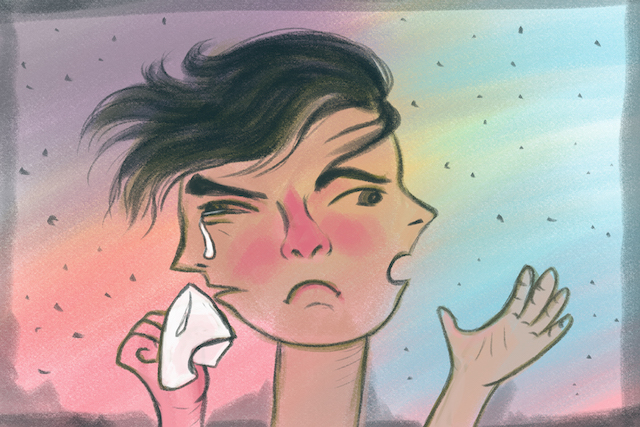
Tag: honesty

  • The Hardest Person to Be Honest with Is Yourself

    The Hardest Person to Be Honest with Is Yourself

    “You cannot heal what you refuse to confront.” ~Yasmin Mogahed

    At sixteen, I walked out of my mother’s house with track marks and a half-packed bag. No big fight. No slammed door. Just the silent resignation of someone who couldn’t look his mother in the eye anymore. I wasn’t leaving home—I was bailing on it. On everything.

    I didn’t know the word “addiction.” Well, I knew it; I just didn’t understand it. I didn’t know that the flu I kept getting was withdrawal. I thought I was just weak. A loser. A burnout who couldn’t even use the right way.

    Over the next few years, I would burn through twenty-two treatment centers and detoxes. Not metaphorically. I mean actual beds, actual paperwork, actual roommates, each one thinking they’d seen someone like me before. I gave every counselor the same script:

    I’m ready this time. I just need a reset.

    I’d be out within days. Sometimes hours.

    I wasn’t ready. I wasn’t even close.

    The Real Lie

    You’d think the biggest lie I told was to my family. Or the judges. Or to all those people who loved me even when I gave them nothing back.

    But the worst lies? They were internal.

    I told myself:

    “This is just a phase.”

    “I can stop if I want.”

    “I’m only hurting myself.”

    I convinced myself that survival was the goal. Not growth. Not connection. Just survive the day, or at least numb it out enough that it passed quietly.

    That internal voice doesn’t yell. It whispers. It’s slick. And when you’re lonely, exhausted, and chemically dependent, it becomes your best friend. Your only friend.

    A Moment I Can’t Forget

    One night in my early twenties, I found myself strapped to a hospital bed in Delaware after a suicide attempt that didn’t go as planned. I came to with tubes in my arms, the taste of iron in my mouth, and the sterile white ceiling staring back at me like it knew something I didn’t.

    There was no grand awakening. No movie-scene moment with tears and violins. Just silence, and this strange, unfamiliar feeling: I’m still here.

    Something cracked open that night—not in a way anyone else could see, but in the quiet back room of my own awareness. A voice I’d been ignoring for years—maybe my whole life—started whispering a little louder.

    I didn’t listen to it right away. I moved to Florida not long after, trying to outrun the damage and the shame. Spent nearly a decade bouncing through treatment centers, sober houses, friends’ couches—living on repeat. That voice showed up now and then, like a static signal in the background. But I was still too busy numbing out to really hear it.

    And then one day, years later, something changed. I finally stopped trying to shut it up. I sat still long enough to let it speak.

    The first thing it said wasn’t poetic or profound. It was blunt. Look around. So I did.

    And what I saw hit me like a slow-building wave:

    I was in Arizona. Thousands of miles from my family.

    I had a daughter, two years old, living in another state—barely part of my life.

    I missed everyone. I missed myself. And I was scared.

    That voice didn’t accuse or condemn. It just kept going:

    You’re allowed to want more. You can change. Start now.

    Where I Finally Stopped Running

    I got sober in Arizona on September 26, 2010. But the real work, the soul-level renovation, started in the days and weeks that followed.

    There was no lightning bolt, no sudden surge of motivation. Just a quiet commitment to stop lying to myself.

    Healing came in moments that felt ordinary:

    Brushing my teeth in a sober living house and actually looking in the mirror. Making it to a job on time. Letting someone ask how I was—and answering without deflection.

    I learned that sobriety wasn’t just about quitting substances. It was about telling the truth. Especially to myself.

    I stopped performing. I stopped pretending I was fine. I let myself want better, and then, I started doing the boring, uncomfortable, necessary things that actually create change.

    Arizona, the place I’d originally come to because of a fling, became the ground where I finally planted roots. The place where I learned how to show up—not just for others, but for me.

    What I Know Now (That I Wish I Knew Then)

    We don’t change because someone tells us we should. We change because something inside us starts to believe, however faintly, that we’re capable of more.

    The catch is: You have to stop bullshitting yourself first.

    That means:

    Calling out the voice in your head that wants to keep you small.

    Sitting in discomfort without escaping.

    Letting people in, even when it feels like exposure.

    You don’t have to have it all figured out. Most people don’t. But you do need to get honest about where you’re at, and what that place is costing you.

    Sometimes rock bottom isn’t a single event. It’s the accumulation of tiny self-abandonments that pile up until there’s barely any of you left.

    For Anyone in the Thick of It

    If you’re reading this in the middle of your own mess, I won’t throw platitudes at you. Life isn’t a Hallmark movie, and recovery isn’t a montage.

    But here’s what I can offer:

    You’re not broken. You’re buried.

    There’s still a version of you under the pain, the denial, the self-sabotage. And that version doesn’t need to be created from scratch; it just needs to be remembered.

    You don’t need a plan. You need a moment. One honest, gut-level moment where you stop running. That’s enough to start.

    And yes, it’ll be uncomfortable. But growth always is.

  • Vulnerability Is Powerful But Not Always Safe

    Vulnerability Is Powerful But Not Always Safe

    “Vulnerability is not oversharing. It’s sharing with people who have earned the right to hear our story.” ~Brené Brown

    Earlier this year, I found myself in a place I never imagined: locked in a psychiatric emergency room, wearing a paper wristband, surrounded by strangers in visible distress. I wasn’t suicidal. I hadn’t harmed anyone. I’d simply told the truth—and it led me there.

    What happened began, in a way, with writing.

    I’m in my seventies, and I’ve lived a full life as a filmmaker, teacher, father, and now a caregiver for my ninety-six-year-old mother. But as I’ve gotten older, I’ve also felt something slipping. A quiet sense that I’m no longer seen. Not with cruelty—just absence. Like the world turned the page and forgot to bring me along.

    One day in therapy, I said aloud what I’d been afraid to name: “I feel like the world’s done with me.”

    My therapist listened kindly. “Why don’t you write about it?” she said.

    So I did.

    I began an essay about age, invisibility, and meaning—what it feels like to move through a culture that doesn’t always value its elders. I called it The Decline of the Elders, and it became one of the hardest things I’ve ever written.

    Each sentence pulled something raw out of me. I wasn’t just writing; I was reliving. My mind circled through memories I hadn’t fully processed, doubts I hadn’t admitted, losses I hadn’t grieved. I’d get up, pace, sit down again, write, delete, rewrite. It was as if I were opening an old wound that had never really healed. The pain was real—and so was the urgency to understand it.

    Then came the eye injection—a regular treatment for macular degeneration. This time, it didn’t go well. My eye throbbed, burned, and wouldn’t stop watering. Eventually, both eyes blurred. Still, I sat there trying to write, blinking through physical and emotional pain, trying to finish what I had started.

    Everything hurt—my vision, my body, my sense of purpose. I didn’t want to die, but I didn’t know how to live with what I was feeling.

    So I called 911.

    “This isn’t an emergency,” I told the dispatcher. “I just need to talk to someone. A hotline or counselor—anything.”

    She connected me to the Suicide & Crisis Lifeline—a lifeline for people in imminent danger of harming themselves. If you are suicidal, please call. It can save your life. My mistake was using it for something it’s not designed for.

     I spoke with a kind young man and told him the truth: I was in therapy. I was writing something painful. I was overwhelmed but safe. I just needed a voice on the other end. Someone to hear me.

    Then came the knock at the door.

    Three police officers. Calm. Polite. But firm.

    “I’m okay,” I said. “I’m not a danger. I just needed someone to talk to.”

    That didn’t matter. Protocol had been triggered.

    They escorted me to the squad car and drove me to the psychiatric ER. I felt powerless and embarrassed, unsure how a simple call had escalated so quickly.

    They took me to the psychiatric ER at LA County General.

    No beds. Just recliner chairs lined up in a dim, humming room. I was searched. My belongings were taken. I was assigned a chair and handed a bean burrito. They offered medication if I needed it. One thin blanket. A buzzing TV that never turned off.

    I didn’t want sedation. I didn’t want a distraction. I just sat with it—all of it.

    And around me, others sat too: a man curled into himself, shaking; a young woman staring blankly into space; someone muttering unintelligibly to no one at all. Real pain. Raw pain. People who seemed completely lost in it.

    That’s when the shame hit me.

    I didn’t belong here, I thought. I wasn’t like them. I had a home. A therapist. A sense of self, however fractured. I hadn’t tried to hurt anyone. I’d just asked to be heard. And yet there I was—taking up space, resources, attention—while others clearly needed it more.

    But that too was a kind of false separation. Who was I to say I didn’t belong? I’d called in desperation. I’d lost perspective. My crisis may have looked different, but it was real.

    Eventually, a nurse came to interview me. I told her everything—the writing, the injection, the spiral I’d been caught in. She listened. And sometime after midnight, they let me go.

    My wife picked me up. Quiet. Unsure. I didn’t blame her. I barely knew what had just happened myself.

    Later that night, I sat again in the chair where it had all started. My eyes ached less. But I was stunned. And strangely clear.

    The experience hadn’t destroyed me. It had initiated me.

    I also realized how naïve I’d been. I hadn’t researched alternatives. I hadn’t explored my real options. I’d reached for the most visible solution out of emotional exhaustion. That desperation wasn’t weakness—it was a symptom of a deeper need I hadn’t fully acknowledged.

    And I learned something I’ll never forget:

    Vulnerability is powerful, but it’s not always safe.

    I used to think that honesty was always the best path. That if I opened up, someone would meet me there with compassion. And often that’s true. But not always. Systems aren’t built for subtlety. Institutions can’t always distinguish between emotional honesty and risk.

    And not every person is a safe place for our truth. Some people repeatedly minimize our pain or dismiss our feelings. We might long for their validation, but protecting ourselves means recognizing when someone isn’t willing or able to give it.

    Since then, I’ve kept writing. I’ve kept feeling. But I’ve also learned to be more discerning.

    Now I ask myself:

    • Is this the right moment for this truth?
    • Is this person or space able to hold it?
    • Am I seeking connection—or rescue?

    There’s no shame in needing help. But there is wisdom in learning how to ask for it, and who to ask.

    I still believe in truth. I still believe in tenderness. But I also believe in learning how to protect what’s sacred inside us.

    So if you’re someone who feels deeply—who writes, reflects, or breaks open in unexpected ways—this is what I want you to know:

    You are not weak. You are not broken. But you are tender. And tenderness needs care, not containment—care from people you can trust to honor it.

    Give your truth a place where it can be held, not punished. And if that place doesn’t yet exist, build it—starting with one safe person, one honest conversation, one page in your journal. Word by word. Breath by breath.

    Because your pain is real. Your voice matters.

    And when shared with care, your truth can still light the way.

  • Why I Learned to Stay Quiet to Be “Good”

    Why I Learned to Stay Quiet to Be “Good”

     “Your silence will not protect you.” ~Audre Lorde

    When I was little, I learned that being “good” meant being quiet.

    Not just with my voice, but with my needs. My emotions. Even the space I took up.

    I don’t remember anyone sitting me down and saying, “Don’t speak unless spoken to.” But I felt it—in the flinches when I was too loud, the tension when I cried, the subtle praise when I stayed calm, agreeable, small. I felt it in the way adults sighed with relief when I didn’t make a fuss. I felt it in the way I stopped asking for what I wanted.

    Goodness, to me, became about not rocking the boat.

    I remember once being told, “You’re such a good girl—you never complain.” And I carried that like a medal. I remember crying in my room instead of speaking up at dinner. Saying “I’m fine” even when my chest hurt with unsaid words. I didn’t want to cause trouble. I wanted to be easy to love.

    So I smiled through discomfort. Nodded when I wanted to say no. Bit my tongue when I had something true to say. I became pleasant, adaptable, well-liked.

    And utterly disconnected from myself.

    The Body Keeps the Quiet

    For a long time, I thought this was just a personality trait. I told myself I was just easygoing. Sensitive. A peacemaker.

    But the truth is, I had internalized a nervous system survival strategy: fawning. A subtle, often invisible adaptation where safety is sought not through flight or fight but through appeasement. Becoming who others want you to be. Saying what they want to hear.

    In my body, this looked like:

    • Holding my breath in tense conversations
    • Smiling when I felt anxious
    • Swallowing words that rose in my throat
    • Feeling exhausted after social interactions, not knowing why

    It wasn’t just social anxiety or shyness. It was a deeply ingrained survival pattern—one that shaped everything from how I moved in the world to how I related to others.

    I didn’t yet have the language for what was happening. But I could feel the cost.

    The silence I carried started to ache—not just emotionally, but physically.

    My jaw clenched. My shoulders rounded forward.  My chest felt like a locked room. I felt foggy in conversations, distant in relationships, unsure of where I began and ended.

    It turns out, when you chronically silence yourself to stay safe, your body starts whispering what your voice can’t say.

    The First Time I Said “No”

    It wasn’t a dramatic moment. There was no shouting or storming out.

    It was a quiet dinner with someone I didn’t feel fully safe around. They asked for something that crossed a line. And for the first time in my adult life, instead of automatically saying yes, I paused.

    I heard the old script start to run: Be nice. Don’t upset them. Just say yes, it’s easier.

    But something in me—a wiser, quieter part—held steady.

    I took a breath. I said, “No, I’m not okay with that.”

    And even though my body trembled, I didn’t crumble. Nothing catastrophic happened. I went home and cried—not from fear, but from relief.

    It was one of the first moments I realized I could choose myself. Even when it felt unnatural. Even when I wasn’t sure what would happen next.

    That one moment changed something in me. Not overnight. But it planted a seed.

    Reclaiming My Voice, One Breath at a Time

    Reclaiming my voice hasn’t been a big, bold revolution. It’s been a slow unfolding.

    It looks like:

    • Taking a few seconds before I respond, even if silence feels uncomfortable
    • Letting myself speak with emotion, not filtering everything to sound “reasonable”
    • Naming what I need, even if my voice shakes
    • Resting after interactions that leave me drained—honoring the impact
    • Journaling the things I wanted to say, even if I never say them out loud

    Some days I still go quiet. I still feel the old fear that speaking truth will cause rupture, rejection, or harm. Sometimes I still rehearse what I want to say five times before I say it once.

    But I’ve learned that every time I listen to myself, even if just with a hand on my heart, I’m creating safety from the inside out.

    And slowly, my body began to shift. I stood a little taller. My breath came a little easier. I started to feel more here—more like myself, not just a reflection of who I thought I needed to be.

    What Helped Me Begin

    Sometimes, what rises first isn’t courage but grief. Grief for all the moments we didn’t speak, for the versions of ourselves that held it all inside. I had to learn to meet that grief gently, not as failure, but as evidence of how hard I was trying to stay safe.

    This journey didn’t begin with confidence—it began with compassion.

    Noticing the times I silenced myself with curiosity instead of shame.

    Asking: What did I fear might happen if I spoke? What used to happen?

    Placing a hand on my chest and saying gently, “You’re not bad for being quiet. You were trying to stay safe.”

    And then, when I felt ready, experimenting with small expansions:

    • Leaving a voice note for a friend instead of texting
    • Telling someone “I need a moment to think” instead of rushing an answer
    • Saying “I actually disagree” in a conversation where I normally would’ve nodded along

    None of these were big leaps. But each one taught my nervous system a new truth: it’s safe to have a voice.

    If You’ve Been Quiet Too

    If you’re reading this and recognizing your own silence, I want you to know:

    You’re not bad for going quiet. You were wise. Your nervous system was doing its best to keep you safe.

    And if you’re beginning to feel the tug to speak—to take up a little more space, to say “no” or “I don’t know” or “I need a moment”—you can trust that too.

    You don’t need to become loud or forceful. Reclaiming voice doesn’t mean overpowering anyone else. It just means including yourself. Honoring your truth. Letting your body exhale.

    You are allowed to be heard. You are allowed to pause. You are allowed to unfold, one breath at a time.

    Your voice is not a threat. It’s a bridge—back to yourself. Your silence once kept you safe. But now, your truth might set you free.

  • The Truth About Why I’ve Ghosted People (and What I’ve Learned)

    The Truth About Why I’ve Ghosted People (and What I’ve Learned)

    “Ghosting is cruel because it denies a person the chance to process, to ask questions, or to get closure. It’s emotional abandonment, masquerading as protection.” ~Dr. Jennice Vilhauer

    I never set out to ghost anyone.

    In fact, I used to hate ghosting with the burning fury of a thousand unread dating app notifications. I told myself I’d never be that person—the one who disappears mid-conversation, fails to reply after a good date (or sends a very bland thank you message), or silently vanishes like a breadcrumb trail to nowhere.

    And yet… here I am. Writing a post about how I’ve ghosted people.

    Not because I’m proud of it. Not because I think it’s defensible. But because I’ve come to understand why I’ve done it—and what that says about dating culture, emotional patterns, and my own very human flaws.

    So, if you’ve ever been ghosted and wondered what was going through the other person’s head—or if you’ve ghosted and don’t quite understand your own behavior—this is for you.

    Because behind every silence is a story.

    A Pattern Primed by the Past

    Let’s start with this: I didn’t begin my dating journey with cynicism. I started like many people— hopeful, curious, wide-eyed.

    But after a few rounds of being ghosted myself, misled, or strung along by people who said all the right things but meant none of them, my hope began to erode. Slowly, subtly, like a stone smoothed down by constant friction.

    Over time, the pattern looked like this:

    • Match with someone promising.
    • Exchange funny, thoughtful messages.
    • Maybe go on a date or two.
    • Then, suddenly… nothing. Silence. A flatline.

    It wasn’t always dramatic. Sometimes the conversations just faded. Other times, it was abrupt. I’d be mid-conversation and—boom—gone. No explanation, no closure. Just another digital ghost in the machine.

    And while I knew intellectually that this was “part of online dating,” it still landed. It primed me to expect disappointment. To approach each new match not with optimism, but with quiet dread.

    Eventually, I started thinking:

    What’s the point? They’ll probably flake anyway.

    Ghosting as a Defense Mechanism

    So, where does my ghosting come in?

    At first, it was subtle. Maybe I’d take a little longer to reply. Or I’d go silent on someone who seemed nice but who I didn’t feel an immediate spark with.

    I’d tell myself:

    • “I don’t owe them anything.”
    • “They probably don’t care.”
    • “It’s better to fade than force it.”

    But the truth is, my ghosting wasn’t about them. It was about me.

    It was a reflection of my fear of disappointing someone, my lack of emotional bandwidth to explain myself, and my protective instinct kicking in when I sensed something familiar—and not in a good way.

    I had been ghosted so many times that I began to preemptively disengage before anyone could do it to me.

    If you leave first, at least you’re not the one being left.

    It’s a faulty logic, but when you’ve been conditioned by repeated negative experiences, you start to default to protection over connection. And ghosting—silent and sudden—is the ultimate form of emotional self-preservation.

    Cynicism in the Profile Scroll

    Online dating is like a mental rollercoaster of judgments, hope, disappointment, and the occasional serotonin spike when someone has a dog and knows how to use punctuation.

    But over time, I noticed something about how I was engaging with profiles:

    I wasn’t curious—I was critical. I wasn’t open—I was braced for disappointment. I’d read bios looking for reasons to notengage, rather than to connect.

    Somewhere along the line, dating apps stopped being exciting and started feeling like a parade of micro-rejections—even when I was the one doing the rejecting.

    I became a dating cynic in a world that rewards detachment. I looked at profiles and thought:

    “This guy probably lives with his ex and/or is married.”

    “He looks like a player and lacks authenticity—even though I was going on very little evidence.”

    “He’ll definitely tell me he’s ‘not looking for anything serious’ but still want attention and the accompanying ego boost.”

    And even if someone seemed genuinely kind, I’d think: What’s the catch?

    That mindset doesn’t just hurt others. It corrodes your ability to be present, vulnerable, or sincere.

    Ghosting as Avoidance, Not Malice

    Here’s what I’ve realized through self-reflection and a few too many red wines while watching reruns of “Love at First Sight”: ghosting is not about cruelty. It’s about avoidance.

    Ghosting feels easier than:

    • Crafting a rejection message
    • Sitting in the discomfort of someone else’s disappointment
    • Risking an awkward reply, or worse, an argument

    It’s quick. It’s clean. It’s also emotionally lazy.

    But when your emotional reserves are running low—especially from repeated rejection, indifference, or burnout—ghosting can feel like the only viable exit strategy.

    That doesn’t make it right. But it makes it understandable.

    And often, people ghost not because they don’t care but because they’re overwhelmed by the possibility of caring and not knowing what to do with it.

    The Cycle of Ghosting

    When ghosting becomes the norm, we all lose. It creates a culture where:

    • We dehumanize the people we talk to.
    • We second-guess our self-worth.
    • We become afraid of emotional exposure.
    • We settle into half-hearted connections because we don’t expect real ones to last.

    It breeds mutual distrust, and that, ironically, makes ghosting more likely.

    I started to see it like a self-perpetuating loop:

    Get ghosted → become jaded → ghost others → deepen the culture of avoidance.

    And yet, I also realized something else: If I wanted to break the loop, someone had to go first.

    What I’ve Learned (That Might Help You Too)

    Here’s what’s shifted for me over time:

    1. Avoidance doesn’t spare feelings. It just delays discomfort.

    Telling someone you’re not feeling a connection is awkward. But not telling them leaves them confused, maybe even hurt. And it leaves you carrying emotional clutter.

    2. Emotional boundaries are not the same as emotional withdrawal.

    It’s okay to not continue a conversation. It’s okay to end things after a date. But doing so with clarity and kindness (even a single line) is far more respectful than silence.

    3. Ghosting devalues human connection, even in small ways.

    When you ghost someone, you’re subtly reinforcing the idea that people are disposable. And in doing so, you chip away at your own sense of connection.

    4. Cynicism protects, but it also prevents.

    Expecting the worst can be a shield, but it also blocks the good. Staying open, curious, and kind—even after heartbreak—is the bravest thing you can do.

    What I Try to Do Now

    These days, I approach online dating differently. Not perfectly. But more intentionally.

    If I’m not interested, I’ll say something like:

    “Thanks for the chat. I don’t think this is a match, but I wish you well!”

    Simple. Kind. Closure. Done.

    And if I’m feeling overwhelmed and don’t have the bandwidth to connect, I pause. I take a break. I don’t keep conversations going just for the dopamine or out of obligation.

    Because being honest and respectful, even online, feels a lot better than the lingering guilt of another message left unanswered.

    Final Thoughts: Honesty and Authenticity Over Evasion, Always

    Ghosting may be common, but it’s not benign. And while I’ve done it (more than once), I’ve also learned that it’s often a reflection of internal burnout, fear, or cynicism—not cruelty.

    But we can do better. We can date better.

    Not by being perfect, but by being aware. By choosing clarity over comfort. By remembering that every profile we swipe on is a real person with hopes, fears, and a heart that deserves kindness. Ultimately, we are looking for love, appreciation and a sense of connection.

    So, to everyone I’ve ghosted, I’m sorry. Not just for the silence, but for assuming you wouldn’t care. For using detachment as protection. For forgetting the humanity behind the screen.

    And to anyone struggling with the messy world of online dating: you’re not alone. And you’re not broken. You’re just trying to find something real in a world that often rewards pretending and external validation.

    Keep showing up. Keep being honest. Keep being you.

    Even when it’s awkward.

    Even when it’s scary.

    Especially then.

  • What Migraines Have Taught Me About Being Vulnerable

    What Migraines Have Taught Me About Being Vulnerable

    “Vulnerability is the core, the heart, the center, of meaningful human experiences.” ~Brené Brown, Daring Greatly

    Migraines. I’ve had them since I was five years old. Sometimes they’re bad, sometimes they’re really bad. But I have them.

    When I was five, I had electrodes placed on my skull to do an EEG. I didn’t understand the name, so I called it a “sleepy EG” since they put me to sleep to do it.

    Back then, I didn’t realize how chronic pain could interfere with my daily life. I just knew that I was getting my sleepy EG.

    It was also during my childhood that my personality started to form, as it does with everyone. I was a shy and introverted child, and I quickly learned the societal ropes of not expressing your struggles. I learned to say, “I’m fine,” when someone asked how I was, even if I really wasn’t.

    I saw vulnerability as something to be avoided. However, as I got older and my migraines got more intense, my worlds of chronic pain and vulnerability ultimately converged.

    As many with chronic pain would tell you about living with their conditions, my life has become a delicate dance between preventing/treating my migraines and enjoying my life. But the migraines’ frequency and severity have not made it easy.

    When I was six, I got a migraine the morning of my dance recital. It was a Disney-themed recital, and I was supposed to wear a Minnie Mouse costume. I developed a throbbing pain in my head that debilitated me for a couple of hours.

    The recital was in the evening, and I didn’t know if I would be able to go on to perform that night. I got incredibly anxious that I wouldn’t be able to perform that night while wearing my Minnie Mouse costume. I feared I would let my whole dance class down.

    After lying down in the dark for a couple of hours, the migraine dissipated, and I was able to perform. But it was then that I became acquainted with the anxiety around my migraines and letting others down. It was both out of this anxiety and a fear of showing my feelings that I didn’t let anyone at my dance studio know that this was a struggle for me.

    In my early twenties, I got a migraine that stands out as a turning point in my migraine and, frankly, my life journey. It was the Minnie Mouse costume scenario on a much larger, more disastrous scale.

    I was doing a year-long internship at a theater company. It was a prestigious and selective internship, and I’d moved across the country for it.

    I was qualified, but I was stressed about being new to the professional world, and stress is a trigger for my migraines. I was working at plenty of events that went late at night, and I hadn’t mastered adjusting my sleep schedule around those.

    The combination of lack of sleep and stress was not good, and I got sick a lot with colds, the flu, and, of course, migraines.

    During this internship, the theater company held a fancy gala at the Ritz-Carlton. I was working the event, running around setting up and checking donors in. I’d been in charge of another event the night before, and I was feeling exhausted and depleted.

    About two hours before the gala, I saw the dreaded spots of light that usually fill my vision and precede a migraine. But I was working, an early-career professional, and I felt I couldn’t really do or say anything about it.

    The event started, and guests poured in. The migraine set in, but I plastered on my event smile, the one that makes my cheeks hurt when I’ve been doing it for hours. Things were going okay, until I got nauseous and felt like I was going to be sick.

    I tried to make my way to the bathroom, but it was all the way across the event hall. There were also a bunch of people in the room that I had to push past.

    Suddenly, I couldn’t control the urge to vomit anymore. Right there, in the ballroom of the Ritz-Carlton, crammed in between a bunch of fancy partygoers, I vomited.

    It got all over my dress and on the floor. I’ve been told it hit other people, although I wasn’t conscious of that at the time.

    What happened next was a blur of events that included me going into the bathroom to vomit more, crying in a hotel room, and my coworkers and boss coming to check in on me. I felt humiliated.

    After years of avoiding vulnerability, this experience forced me to be vulnerable, both physically and emotionally. I couldn’t control the physical vomit that came out of my mouth in the middle of the gala, and I was too depleted to hide my embarrassment and sadness over the event for the rest of that day.

    We’re taught not to show such vulnerability to others, especially not coworkers. But it had happened. After that event, how could I go back to work the following week and face everyone?

    I returned to work the following Monday, and it was in facing the situation that I learned even more about vulnerability. I didn’t appreciate it at the time, but what I learned would affect how I approach situations and relationships in my life moving forward.

    Since everyone at work had either seen my embarrassing moment or heard about it, one of the few options I had was to simply be honest about the experience.

    It actually felt kind of refreshing to be open about my migraines and my embarrassment over them. I feel like we all spend so much time trying to convince everyone else that we’re fine when we’re not. It was a relief to be open and honest with others about real life.

    Here are some examples of vulnerable things I said to coworkers about my migraine experience.

    “I was really scared. I felt like my migraine would never go away.”

    “When I was nauseous, I tried to go to the bathroom, but it was all the way across the hall. I felt so helpless.”

    “I didn’t want to let everyone down by admitting I had a migraine.”

    Being vulnerable enabled me to connect with my coworkers, and we were able to relate to one another about the very human experiences of embarrassment, pain, helplessness, and anxiety. A couple of coworkers shared stories about migraines or other embarrassing situations in their lives.

    Yes, these were my coworkers, and I saw them that way. But I suddenly also felt as if I could see them as simply human.

    Vulnerability isn’t for every situation. Sometimes it isn’t safe or appropriate. Nowadays, I don’t talk to my coworkers about every life situation, and I only mention migraines if they somehow come up in conversation.

    But this experience with chronic pain gave me a little taste of what opening up to others would feel like and the good that it could do. It encouraged me to be open about migraines and other struggles in my life with family and friends. Some of the best, most fulfilling relationships of my life have come from being vulnerable with others.

    Life is just plain unpredictable. You can plan and prepare all you want, but sometimes things happen. And when they do, being vulnerable can help you glean something positive from unfortunate situations and form strong relationships.

    Although I’ve learned from my migraines, I want to be clear that I’d still rather not have them. They have caused me to have a lot of pain and limitations. I don’t agree with the phrase “everything happens for a reason” for every situation in life.

    But the reality is that I do have migraines, so I might as well look for the silver lining and take what I can from it.

    And it is true that I never would have learned so much about vulnerability if I hadn’t vomited from a migraine at the Ritz-Carlton.

  • The Ultimate Guide to Better Boundaries

    The Ultimate Guide to Better Boundaries

    “Boundaries are the distance at which I can love you and me simultaneously.” ~Prentis Hemphill

    I was talking with a friend about some aspect of a challenging relationship (I don’t even remember what it was now), and she lovingly informed me that I needed better boundaries. I nodded in understanding, but later I realized that I didn’t really know what that meant. Like, what do better boundaries actually look like? And how does one go about developing them?

    It’s all fine and dandy to know that “No” is a complete sentence, but how does that apply to a coworker just needing a quick hand (even though I’m already swamped)? Or a friend needing help with a minor crisis (but I’m not feeling so great)? Or a parent needing medical attention (when I’m really not qualified and still trying to get on my own two feet)? Or a new beau asking very reasonably to be accepted as they are (while my core needs aren’t getting met)?

    I didn’t have the answers then, so I just filed that recommendation away, pending further intel. I had already moved halfway across the country to get some distance from both of my (divorced) parents, but I would eventually develop a more diverse toolkit of relational skills.

    Flash-forward a year or two, and I was participating in some structured activities with a group of people who practiced “Authentic Relating” when I encountered what I later realized were healthy boundaries—for the first time in my life.

    These beautiful souls would occasionally turn down an invitation (to an activity as part of the event or perhaps for something after) in the most disarming way I’d ever experienced: They would deliver a no without disconnecting. It was pleasant and friendly without being apologetic or abrasive. It was truthful, and it was immediately clear that it wasn’t personal. It felt surprisingly good, like honesty and mutual respect.

    I realized that I felt safe to be upfront about my nos with them too, trusting that they would appreciate my authenticity (delivered responsibly) and not have their feelings hurt or try to twist my arm in their favor.

    It also dawned on me that if these folks were so comfortable saying no, I could trust the sincerity of their yeses and not fall into my usual pattern of asking “Are you sure?”, worried that they were just being nice and would end up resenting me later. Wow! How freeing is that?!

    Then I was confronted with my own question: What had I been doing all my life, trying to be “nice”? I was thoroughly inspired to enhance the quality of safety and trust in my own relationships. This opening led me to deeper and deeper insights about the nature and nuances of boundaries.

    One of the next revelations on my journey was that our boundaries are essentially our resource limits, and then I found myself confronted by the whole “abundance vs. scarcity” thing. As a recovering people-pleaser, I already wanted to be able to say yes to everything, and having to say no to things felt even scarier with the story that a no could mean limiting myself and putting blocks between me and my dreams. I was supposed to be abundant, damn it, not limited!

    As it turns out, there is a substantial difference between the mindset of abundance or scarcity and the reality of abundance and scarcity in the world.

    There is certainly an abundance of life on this planet, but each one is fleeting. I may have the potential for financial abundance, but at any given moment, the amount of money I have is finite. One of the most fixed resources of all is time. There are only twenty-four hours in each day; in some cases, that might feel abundant, and in others, it might feel scarce.

    Then I noticed that some of the most precious resources on earth, such as gold and diamonds, are valued in large part precisely because of their scarcity. Suddenly, my limited resources became precious to me. My time, money, energy, attention, and care were suddenly like jewels, and I was their honored steward.

    The “oxygen mask rule” was now clearer to me: If we’re not good to ourselves, we’re no good to anyone else.

    When we let our resources become depleted, we have nothing left for the people and causes we care most about; often, we even do them harm when we act out from the survival mode that being under-resourced triggers. In many cases, we end up blaming others for over-taking when we were the ones who were over-giving. (Resentment is almost always the byproduct of a failed boundary.)

    Sometimes, we’ll even get preemptively resentful over being put in the position of having to say no—“How could you even ask me that?!” This happens because we’re holding onto misplaced responsibility for other people’s emotions. We completely lose sight of the option to simply say, “No, thank you.” “Nah, I’m good.” “Nope.” “Sorry, I can’t make it. Maybe next time!” “I can’t help you with that, but I might know someone who can.” “I’ve gotta go now. I love you, and I’ll call you tomorrow.”

    But what if we don’t even know what our limits are?

    What I came to discover next was just how deeply seated my fawning behavior was. There’s talk of “being a yes” to some things and “being a no” to others. It gets tricky, though, for those of us who grew up carrying the misplaced responsibility for other people’s emotional states so that we could feel safe, as this tends to develop a reflexive yes.

    In the moment of a request (or even a perceived need), we are a yes, but it’s to the person—their acceptance of us and their ease. This yes arises before we even hear or process the request because we have an external orientation that makes other people’s acceptance of us (rather than our own) our source of security.

    We are so quick to say yes to them because we just want to relieve them of their burden and avoid the terror of making them wait for us to consider whether we’re a yes to their actual request. Of course, this is all subconscious and so habitual that we’re not even aware that it’s driving us. It’s hard to notice if you’re a no to a request when you’re already a yes to the requester.

    Once we become aware of this pattern, though, we start getting acquainted with our own limits, often for the first time, and then we start to realize how much power we’ve been abdicating.

    On our quest to right the wrongs, most of us encounter the unfortunately prevalent notion that we have to sacrifice our compassion in order to become empowered. After letting our boundaries be trampled for so long, once we find our no, we start to wield it like a sword with the faulty assumption that our only options for boundaries are “flimsy fences” or “spiked walls,”

    Yet, spiked walls are no healthier than flimsy fences. Both of these dysfunctional boundary styles lack the key ingredient of appropriate responsibility. When I finally took full ownership of my limits, there was no one to blame when they were exceeded but myself, and there was no need to be rude about them because they were in my power to care for.

    Then I remembered a piece from my dog training years that was about following a no with a yes, and I combined it with the connected rejections I learned from the “authentic relaters” for a way to ease my fawning response while still being boundaried.

    I started telling people, “I’m not available for that, but I am available for this.” A true no, followed by a true yes.

    >> “I’m sorry, Barb; I can’t help you with that project right now. If you still need help tomorrow, I’ll have some time after lunch.”

    >> “No, I can’t help you move today, Sam, but I might be able to help you unpack this weekend.”

    >> “I’m not sure what those symptoms mean, Mom. Here’s an emergency nurse hotline—please give them a call.”

    >> “You’re right, John. I do want to accept you as you are, so if my requests are outside of your capacity, then this is not going to be a healthy relationship for me, which means it won’t be good for either of us. I really appreciate you, though, and I’d like to stay friends if you’re open to that.”

    These are “selective gates,” and there is no quick fix to getting there. We have to devote time and attention to the uncomfortable transition of rooting our security within ourselves so we have the foundation of self-love and self-acceptance to brave the fear of rejection that is always at risk when speaking our truth.

    Selective gates are not only communicated through not-that-but-this. In our closest relationships, we can offer information about our limits and the consequences of them being exceeded as gifts for our loved ones to understand and support us better.

    It’s important to understand that boundaries are not the same thing as needs. Because they are simply our limits, there’s nothing to request and only self-care to be applied.

    As my foundation got stronger, I stopped asking for others to make adjustments and started simply informing them about what comes up for me under certain circumstances and what I needed to do as a result.

    This model looks like: “When [X] happens, I feel [Y], and so to care for myself, I will [do Z].”

    >> “When it’s early, my brain is not fully online, and I can get grumpy if prodded. You’re welcome to make contact and I will listen without responding, but if you ask me stuff before I’m fully awake, I’ll just grunt.”

    >> “When we’re on our trip, if we want to do different things, rather than one of us getting disgruntled, I’ll just go my own way and meet back up with you after.”

    >> “When I receive harsh criticism, I feel shame, and so to care for myself, I’ll remove myself from the conversation.”

    I call this boundary style “selective gates” because we get to choose how people can have access to us, and they get to know the rules. And since these are defined by behaviors instead of whole people, folks have the option to use the gate or be on their way.

    (Hot tip: These only work if you actually follow through on your end—and be consistent. Also, be prepared to restate your boundaries a few times. Feel free to have a limit there too, but I’d allow two or three repeats for the learning curve.)

    In other cases, we might be a yes to a request, but it needs to be qualified. Here, we need to communicate our boundaries in a more proactive way, and it can be really simple—no lengthy explanations required. The winning strategy with these boils down to explicit clarity, with minimal room left for assumptions, misinterpretations, or “psychic” games.

    Instead of an open-ended yes that is likely to leave us trampled, we can state our conditions outright.

    >> “Sure, I’ve got five minutes.”

    >> “No worries, just let me know by Wednesday.”

    >> “I can do one of those things.”

    Again, consistency is key. We’ve got to stick to our stated limits, or our words will lose their value.

    Boundaries are a service! Others can be bummed by our nos or our conditions, but if they’re a counterpart in a quality relationship with us, they’ll also appreciate our honesty and self-care, for that is how we’re able to show up to the relationship resourced and how trust is built. Conversely, this insight can also help us accept a disappointing no from someone else and truly respect their boundary at the same time.

    Love is unconditional, relationships are not; that’s what boundaries are for.

    Having a big heart is not the problem. Please don’t wall yours off—just mend your fences and install gates. There’s no need to sacrifice your compassion in order to become empowered. Empower your compassion so it’s big enough for yourself as well as others.

    What has worked wonders for me is a regular practice of study, self-reflection, embodiment, interactions, and support. I call it my “peaceful power practice,” and it involves a lot of reading and educational programs, little inspographics that I create and keep on my phone as touchstone reminders, frequently journaling and reviewing my entries, habitual introspection, regular chakra meditations, mindfulness in my connections with fellow humans (especially when triggers are involved), and a core network of trusted people.

    Developing better boundaries has been a challenging road, but it continues to be a deeply rewarding one.
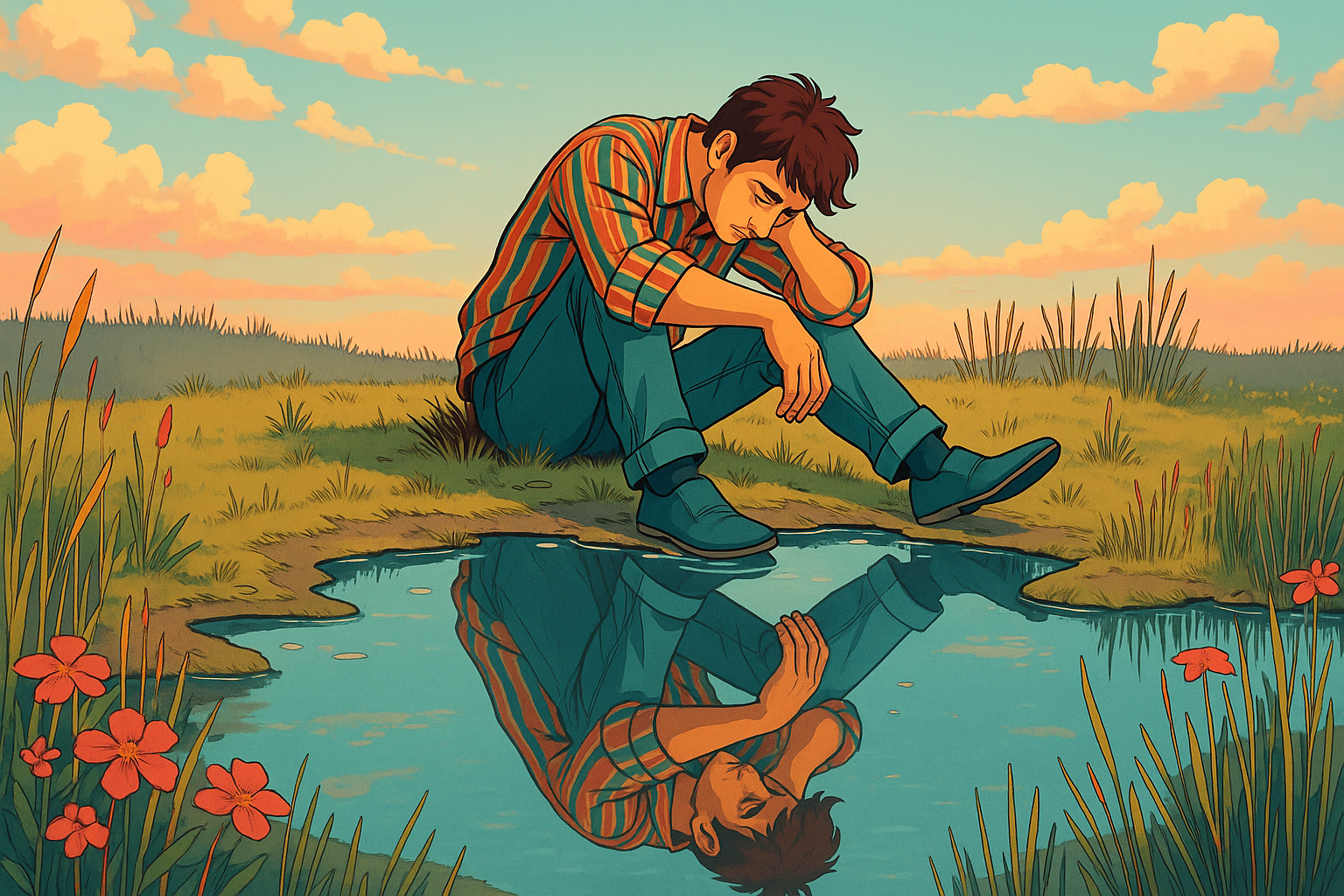
  • How Boundaries Help You Stay True to Yourself (And Two Practices to Try Today)

    How Boundaries Help You Stay True to Yourself (And Two Practices to Try Today)

    “The more you value yourself, the healthier your boundaries are.” ~Lorraine Nilon

    I want to talk about the direct correlation between boundaries and self-love. Because when we truly love ourselves and have a healthy self-worth and self-concept, setting boundaries becomes a natural extension of that.

    Without boundaries, we either become walled off and protect ourselves from others, which creates a sense of deep isolation and loneliness, or we become enmeshed with others. We often find ourselves living on their side of the street, working overtime to manage, fix, caretake, or be needed by them, all while neglecting ourselves and our personal well-being and needs.

    As children, we were often rewarded for being relational, compliant, quiet, agreeable, easy, and invisible. The underlying message was that we didn’t deserve to have ownership of ourselves.

    As long as we did what the big people said, we were in their good graces, but if we crossed that line, then we were in trouble. Because that hurt and brought up so much shame for us, the alternative was to disconnect from our authentic selves. We became people who played a part merely to gain acceptance and approval, but at the detriment of our own needs and desires.

    I personally have been on both sides of the coin. I was boundary-less for much of my life, giving and giving to others, unable to stand up for myself and my own personal needs.  

    A great example of this was when my husband and I went on vacation many years ago. We had a great time, but upon returning home I experienced an almost debilitating sadness and anxiety.

    I remember being uncomfortable in my own body to the point of wanting to crawl right out of my skin. As I sat with the uncomfortable sadness, I realized that it was deep grief.

    While I was on vacation, I felt free. I felt an ease about what I wanted to do each day and how I wanted to spend my time. In my regular ‘not on vacation’ life, I felt stifled and obligated to everyone.

    I realized I was living someone else’s life. I had built a life that others looked at and thought, “Wow, she’s got it all,” but it wasn’t the life that felt true to me. The grief I met that day came from meeting the realization of how I lived for everyone but me.

    I had checked all the ‘right’ boxes of what my parents wanted and what society expected of a good girl, but I was miserable.

    After this experience, it still took me a while to get a handle on my overpleasing and appeasing. Eventually, after having fried adrenal glands twice from my constant over-giving, over-serving, and endless worry of what others thought of me, I flipped the pendulum to the other extreme and began to build a wall. I was tired of everyone taking advantage of me and asking me for my energy.

    “No” became my personal mantra—until I woke up one day realizing how incredibly isolated and alone I felt. I had protected myself to the point of shutting everyone out.

    We are hardwired for connection, for community, for a group of people in which we feel we belong. Our nervous systems operate beautifully when we feel safe with others and are able to experience a dance of co-regulation.

    We want to move toward healthy boundaries, which are flexible, fluid, and give us the chance to shift and change. Healthy boundaries aren’t completely loose and open, but they aren’t to the other extreme of being closed off and guarded. 

    Boundaries and attachment style go hand in hand. Our earliest attachment was with our mothers, or primary caregivers.

    If we had a mother who met us in our time of need with compassion, a friendly face, and consistency, we built what is called a secure attachment.

    If we didn’t have this experience and our mother was unfriendly, shut down, cold, inconsistent, and not able to attune to our feelings and emotions as children, we created something called an insecure attachment. As adults with this deep well of insecurity, there is a good chance we are looking to have another adult meet our needs or fill this hole in our soul.

    My own mother controlled the emotional climate in the home. Just a tightening of her jaw and a furrow of her brows, and I was instantly walking on eggshells. Being raised in such an emotionally shut down and rigid home, I carried the belief with me that I was responsible for everyone else’s feelings, and if someone else was upset, I believed it was my fault.

    I wasted hours, days, and weeks worrying if someone was upset with me or disliked me. I had a huge gaping hole in my soul, and I strived to fill it by using other people’s validation and acceptance.

    It took me decades to learn how to be kind to myself and give my inner child what she needed, which was validation, acceptance, and a ‘kindful’ witness.  (I once heard the term kindful from one of my mentors, and it really stuck—it simply refers to being kind to myself.)

    Developing healthy boundaries requires us to learn that no other person can provide the inner safety and security that we need. Our healing work requires that we learn to reparent ourselves and provide ourselves the internal safety that we need and long for.

    This work isn’t necessarily easy; it takes time to learn how to nurture ourselves and build a rock-solid sense of authenticity and integrity. However, the irony is that when we learn to meet our own needs and recognize that we can create our own internal safety, we build the exact foundation required for better intimate relationships and friendships.

    The best thing we can do is learn to stay with ourselves and be true to who we really are. 

    Your needs, your preferences, your wishes, and your desires are what make you YOU! I know you’ve maybe heard that a million times, but maybe a million and one is what it takes. Really let that sink in. If any relationship requires that you abandon yourself to keep the peace, it’s not a healthy relationship.

    As we begin to build a healthier version of ourselves and recognize our value, we begin to not be so tolerable of those who mistreated us or diminished our worth. Being in our energy is a privilege, not a right. (You might want to repeat that to yourself on the daily.)

    When we believe this, over time, we draw in healthier individuals who respect us because they too respect themselves. As we shed the false self that we once created to gain approval and stay safe, we give ourselves the opportunity to explore what our hearts actually need and desire.

    It’s possible that the people in your life who were always used to you being easy, going with the flow, and not ruffling any feathers will find your newfound boundaries a bit of an inconvenience. I just experienced this situation recently. A friend begged for the old version of me that just wasn’t available to her whims and needs any longer. She loved me when I could be in a one-way friendship for her, but I couldn’t do it anymore.

    My new rule is two-sided relationships are the only relationships for me.

    What I love most about boundary work is that it is so incredibly honest. Because boundaries are grounded in our values and our needs, we are showing people the real and authentic us. 

    We are saying, “This is what I need; this is what I desire—are you able to meet me in this?” Sometimes they can and sometimes they can’t, but the bottom line is that boundaries give us the opportunity to create relationships based on pure honesty and truth.

    Having healthy boundaries requires you to be healthy, whole, and anchored to your truth. It requires you to step up and express this truth to create relationships and a life that you love.

    There are two exercises I want to leave you with to begin working on your boundaries. While these exercises seem simple, they are incredibly potent. One of my favorite current sayings is a little + often = a lot.

    When these practices are worked over and over, they become embodied. We no longer have to think about them so much, as they start to become second nature.

    1. No more auto-yesing.

    From now on, when anyone asks you anything, your immediate response is that you need to give yourself a minimum of twenty-four hours before you respond.

    This exercise is important because it gives you an opportunity to pause and check in with your body.

    If we are accustomed to having codependency, good girl/boy, or people-pleasing patterns, our immediate response is always YES, 150% of the time. This exercise stops that pattern and gives you the pause you need to ascertain what feels expansive and good to you.

    2. Spend some time journaling on the following questions:

    • In what ways/areas/relationships am I giving my power away?
    • What am I tolerating that doesn’t feel good to me any longer?
    • In what ways was I rewarded for not having boundaries as a child?
    • In which current situations/relationships do I have an opportunity to start building my boundary muscle?

    These two exercises are powerhouse tools to help you discover and implement new choices and responses.

    And lastly, if you feel like you are bumping up against a wall when it comes to your boundaries, the only way out is through. Yes, it feels clunky. No, you won’t always get your newfound boundaries ‘right’ (hello, good child), but with practice and support, you’ll make it to the other side.

    Join me where life is so free and expansive, you can’t even imagine.

  • Learning to Speak Up When You Were Taught That Your Feelings Don’t Matter

    Learning to Speak Up When You Were Taught That Your Feelings Don’t Matter

    A proper grown-up communicates clearly and assertively.”

    This is something I have heard many people say.

    By that definition, I wouldn’t have classed as a proper grown-up for most of my life.

    There was a time when I couldn’t even ask someone for a glass of water. I know that might seem crazy to some people, and for a long time I did feel crazy for it.

    Why couldn’t I do the things others did without even thinking about it? Why couldn’t I just say what I needed to say? Why couldn’t I just be normal?

    Those questions would just feed into the shame spiral I was trapped in at that time in my life.

    But the question I should have been asking myself was not how I could overcome being so damaged and flawed, but how my struggles made sense based on how I was brought up.

    Because based on that I was perfect and my behaviors made perfect sense.

    I was the child that was taught to be seen and not heard.

    I was the child whose feelings made others angry and violent.

    I was the child whose anger got her shamed and rejected by the person she needed the most.

    I was the child that got hit again and again until she didn’t cry anymore.

    I was the child whose needs inconvenienced those who were in charge of taking care of her.

    I was the child whose wants were called selfish, attention-seeking, or ridiculous.

    I was the child who was made wrong for everything she felt, wanted, or needed.

    I was the child who was called a monster for being who she was—a child.

    I was the child that grew up feeling unwanted, alone, and entirely repulsive.

    So why would that child ever speak? Why would that child ever share anything about herself? She wouldnt, would she? It all makes sense. I made sense. It was a way of living. A way of surviving.

    I had been taught that I didn’t matter. That what I wanted or needed and how I felt was something so abhorrent it needed to be hidden at any cost. And I did it to avoid getting hurt, shamed, and rejected. Even when I was with different people. Even when I was an adult.

    That pattern ran my life. I just couldn’t get myself to say the things I wanted and needed to say. It felt too scary. It felt too dangerous. It was too shame-inducing.

    So if you struggle to express yourself and feel embarrassed about that, I get it. I did too. But I need you to know this: It’s not your fault. It was never your fault.

    And yes, life is harder when you didn’t get to be who you were growing up. When the only way you could protect yourself was by being less of you. When you could never grow into yourself because that would have gotten you hurt. When you couldn’t learn to love yourself because that was the biggest risk of all.

    But today, that risk only lives on within you. In your conditioning. And thats where the inner healing work comes in.

    For me, that meant getting professional support to help me learn how to safely connect to myself and my truth, and how to banish the critical, demanding, and demeaning internal voice that told me my feelings, needs, and wants were wrong.

    It meant learning to regulate my nervous system so that I could get past my fear and be honest about what worked for me and what didn’t. This was a major turning point in my relationships because I started to represent myself more openly and assertively, which meant that my relationships either improved dramatically or I found out that the other people didn’t really care about me and how I felt.

    It also meant opening up emotionally and learning to understand what my feelings were trying to tell me. Since I’d learned to avoid and suppress my emotions growing up, I knew it would be challenging to truly get to know myself.

    I had the great opportunity of reparenting myself—giving myself the love, affection, and attention I didn’t receive as a kid.

    And that’s what ultimately allowed me to finally feel safe enough to express myself.

    The relationship I had with myself started to become like a safe haven instead of a battleground, and my life has never been the same since.

    Everything on the outside started to align with what was going on inside of me. The safer I became for myself, the safer the people in my life became, which allowed us to develop deeper, more meaningful and intimate relationships.

    So I know that that kind of change is possible. Even if it doesn’t feel like it right now. I know that it is possible because today I am the most authentic and expressed version of myself I have ever been.

    Just look at everything I am sharing here with you. That’s a far cry from asking for a glass of water.

    Today I no longer choke on the words that I was always meant to speak. I speak them.

    Today I no longer hold back my feelings. I feel them. I share them. Freely.

    Today I no longer deny my needs and play down my desires. I own them. I meet them. I fulfil them.

    Today I own who I am and I don’t feel held back by toxic shame in the ways that I once did.

    Back then I would have never thought this was possible for me.

    I hope that in sharing my story and my transformation you will follow the spark of desire in you that wants you to express yourself. To share your thoughts and desires. To express what its like to be you. To finally get to meet more of you and eventually all of you.

    That’s what you need to listen to. Not the voice of fear or shame. Not your conditioning. Not anything or anyone that reinforces your inhibitions or trauma.

    You were born to be fully expressed. That was your birthright. That is the world’s gift.

    Just because the people who raised you didn’t understand you as the unique miracle that you are, that doesn’t mean that you have to deprive the world, and yourself, of experiencing you. More of you. All of you.

    It’s never too late to open your heart and share yourself in ways that feel healing, liberating, empowering, and loving to you.

  • How to Let People in So You Can Feel Seen, Heard, and Supported

    How to Let People in So You Can Feel Seen, Heard, and Supported

    “We are hard-wired to connect with others, it’s what gives purpose and meaning to our lives, and without it there is suffering.” ~Brené Brown

    In relationships, I have always felt more comfortable being on the sidelines rather than center stage. I liked playing the supporting role to many people’s leading roles. I am good at it; it’s the career I chose for myself as a life coach. However, personally, constantly staying in the role of supporter created resentment.

    I felt unseen and unheard, and many of my relationships began to feel one-sided—with me listening and holding space for them and then feeling there was no room for me to have a turn. It felt like I could not connect with others, and that left me feeling deeply alone.

    At first, I believed that others were to blame. If they didn’t take up so much space and time, it would be easier for me to open up. As time passed, I realized this was an excuse. It was an excuse that gave me permission to stay quiet. Because staying quiet was easier than sharing whatever was heavy on my heart.

    It was painful to constantly stay silent or to question if I should share or not. It felt like I had created brick walls to protect myself, and it began to feel impossible to start sharing more of my personal experiences, thoughts, and realizations.

    I would think, “They won’t get it anyway. What’s the point?” Or “What they’re experiencing is so much harder.” Or “I will just end up hurt by sharing more.”

    At times when I felt the loneliest, I began to wonder, what was I protecting myself from, and why had it gotten so difficult to speak to my closest and trusted people? I felt like I was walking around like a knight covered in steel armor, but there was no one shooting arrows at me; and on the inside, I felt like a volcano was slowly brewing.

    I knew where parts of these habits stemmed from. I am highly sensitive and guard my heart because I feel things so deeply. In the past, there were times when I shared and people either didn’t listen because they weren’t fully present or they didn’t understand where I was coming from, and this hurt.

    Also, I knew that I was a people-pleaser and wanted others to feel good and happy even if it meant that I didn’t. And I’m naturally an observer and introvert, so it came easily to stay quiet.

    Part of my healing came from this basic knowledge. This is the unique way that I am built, and it is not bad or wrong. However, I had to address the brewing storm inside, and that meant having the courage to share and to cry and to be angry—to be seen in front of people I love and trust.

    A friend of mine has consistently modeled what it means to open up by communicating her thoughts, fears, and feelings with me, even if they are vulnerable. Over time she became someone with whom I felt comfortable testing the waters of sharing my own pain.

    I felt a huge sense of relief when I opened my heart to her and shared that I was struggling to feel good enough in my relationships and roles—and I was met with the simple yet powerful impact of thoughtful listening. Not only did she accept me with my messy emotions, I felt more safe, authentic, and comfortable being me.

    Opening up to others is still a practice for me, but each time I do it I find that others are more loving and capable than I imagined, and that my taking a step toward vulnerability leads to the connection I deeply desire.

    I have realized that opening up has less to do with others accepting or understanding me and more to do with me accepting the vulnerable parts of myself.

    I know now that I deserve to be listened to and supported, even if it is messy and more emotional than logical. The only way to do that is to communicate and share what’s going on in my heart with a reliable or committed partner/friend.

    I believe most of us avoid opening up at all costs because we’re afraid of being judged and rejected.

    In any relationship there is a chance that you are going to get hurt. Whether it is intentional or unintentional, whether you guard your heart or not, the possibility is there. The question is, is the sense of connection worth it for you? This is a question that requires discernment.

    Not all relationships require equal sharing. This is the part that you get to choose. Who do you want to talk to, and who is able to hold space for you? What parts are you willing to vulnerably share, and, as Brené Brown asks, “Who has earned a seat at your table?”

    If, like me, you tend to be guarded and not trust the people you are closest to, take a moment to slow down and acknowledge the part of you that wants to be seen and heard.

    Let yourself know that, though safety and security cannot be promised from another, you can promise them to yourself. You can assure yourself that whether other people understand and support you or not, you will maintain a safe space within yourself by validating your own thoughts and feelings.

    Also, remind yourself that even if sharing was painful for you in the past—if people didn’t offer you their full attention, empathy, or understanding—the future can be different. All people are different, and there are many who care and want to be there. You just have to give them a chance.

    Having the courage to be seen in a vulnerable place isn’t easy; however, it is necessary if you long for connection and authenticity.

  • Everything I’m So, So Sorry About (and Why I Think Apologies Are Hard)

    Everything I’m So, So Sorry About (and Why I Think Apologies Are Hard)

    “There’s the way that light shows in darkness, and it is extremely beautiful. And I think it essentializes the experience of being human, to see light in darkness.” ~Emil Ferris

    I was leading a yoga training in a small village in Greece near the Aegean Sea. One of the trainees was practicing a mindfulness workshop she designed. She led us through a guided meditation based on a beautiful Hawaiian practice for reconciliation and forgiveness called Ho’oponopono. As we sat in the yoga space, she repeated over and over:

    I love you.
    Please forgive me.
    I’m sorry.
    Thank you.

    There was something about how she slowly said, “I’m so, so sorry” that at one point I felt my heart break open, and tears flowed from its depths.

    I have a wellspring of personal and societal hurts tucked in the back of my heartspace that I am so, so sorry about.

    I’m sorry that children and animals are abused for no reason except the amusement or the sickness of adults.

    I’m sorry that women and children are molested and raped by men whose brains can’t process compassion, and that their need for power is so destructive that they can justify their actions.

    I’m sorry that people aren’t given equal access to food, education, and healthcare because of the color of their skin or biases.

    I’m sorry for the learned bias that keep us from treating everyone equally.

    I’m sorry that children don’t tell adults they have been bullied and base their self-worth on their shame about how their peers treated them.

    I’m sorry for daughters whose mothers try to keep them small.

    I’m sorry for the boys who’ve been told that they can’t cry.

    I’m sorry that saying sorry is sometimes too vulnerable.

    I’m sorry for any time I have ever said or done something that was hurtful because I was trying to make myself look good.

    I’m so, so sorry

    The Vulnerability of Being Sorry

    Saying I’m sorry is a vulnerable place. We have to admit that we were not perfect. We have to disclose that we made mistakes.

    Sometimes I’ve raced around my brain desperately looking for some way to justify my actions so that I didn’t have to apologize because it felt too vulnerable. But sometimes, even in a relationship where I wanted to be vulnerable and close to someone, I have defaulted to not apologizing—sometimes out of habit.

    During the pandemic, I came down with COVID-19 and had to call the people I’d been around and tell them. It was hard. One of my friends was very upset with me. It was during the holidays, and after spending a lot of time alone, she had plans for New Year’s Eve.

    I didn’t blame her for being mad. The isolation was driving us all crazy. I was sorry. Apologizing and listening to her anger was uncomfortable. Her friendship was more valuable than the temporary discomfort of her processing her disappointment. I was grateful that I had the courage to be present.

    If we want a relationship to grow, we—the one who erred—need to own the mistake and the apology, no matter how uncomfortable it feels. Without the apology, it’s one more brick in the barrier to growing closer in a relationship.

    We all know people that never say I’m sorry—it just feels too exposed. Alternatively, more worrisome, is that they feel beyond reproach.

    Cindy Frantz, a professor of psychology and environmental studies at Oberlin College and Conservatory, said that when we do something wrong and skirt responsibility by not admitting our wrongdoing, the interaction feels incomplete.

    I know from experience that waiting for an apology can cause a relationship to feel like it is hanging in midair, waiting to get grounded.

    She also warned, “Don’t apologize as a way to shut down the conversation and wipe the slate clean. That’s a shortcut that won’t work.”

    When It Isn’t Safe to Say I’m Sorry

    Some people will use our apology against us—so we keep ourselves safe by not apologizing. Self-preservation might be the best choice when dealing with someone with mental health and abusive issues. It can take a toll on how we feel about ourselves though.

    In the eighties, I was in a twelve-step program for my eating disorder. I wasn’t able to fully complete the fifth step by making amends to my parents for all the extra food I ate to fuel my bulimia. It just didn’t feel safe. Now that I’m in my sixties I could do it, but my parents are deceased.

    I found some comfort in apologizing “in spirit.” I’m still in the process of fully letting go of the conversation that I wish I could have had.

    Over-Apologizing

    I was in a coffee house, writing this article, when I overheard a conversation. A man asked a woman if he could reach across her to get a chess board from a shelf that was next to her. She said yes and then said, “I’m sorry.” His friend said to her, “Why are you apologizing? He’s the one inconveniencing you.”

    Like this woman, I can be very free with my apologies.

    Saying things like “I’m sorry to bother you” instead of “Do you have a minute to talk?” can be a sign of our sense of self-worth or the habits we developed when we weren’t confident.

    Findings show that women report offering more apologies than men, even though there is no evidence that women create more offenses than men.

    For women, over-apologizing can be just a matter of learned language. But when we hear ourselves apologize for taking up space when someone else bumps into us, or apologize for being late rather than thanking people for waiting for us, or apologize just for saying no when someone crosses our boundaries, this can be a sign of self-worth challenges.

    If we listen to ourselves apologize repeatedly, we literally talk ourselves into low self-worth.

    What a Sincere Apology Feels Like

    I can offer a sincere apology when I know the mistakes I make are just a part of being human. I truly don’t want to hurt others. I don’t want them to be suffering from my words or actions.

    I can offer a sincere apology when I forgive myself for not being perfect. I seek to learn from my mistakes and apply insights to my future responses and actions. I refrain from using my mistakes to bring up all my past mistakes and emotionally beat myself up.

    Psychotherapist Sara Kubric says that a genuine apology is more than a statement. It has to be sincere, vulnerable, and intentional. She offers an apology recipe that could look something like:

    1. Taking responsibility for making a mistake
    2. Acknowledging that we have hurt someone
    3. Validating their feelings
    4. Expressing remorse
    5. Being explicit about our desire to make amends

    Apology as a Test of Confidence

    When I sincerely apologize, I know that I am confident. No one is beyond making mistakes. I know that my spiritual growth depends on my ability to be vulnerable.

    I continue to learn new ways of communicating that don’t involve over-apologizing for taking up space or being a normal human being. I know that there are pain, challenges, and injustices in the world that I can’t control, and I can be sorry, sad, and discouraged when they happen. This is the way I can live consciously and compassionately in this, my community.

  • All the Things I Didn’t Tell the Men I Dated Because I Was Afraid

    All the Things I Didn’t Tell the Men I Dated Because I Was Afraid

    I’ve recently been reflecting on my relationship history and how often I did things I wasn’t comfortable with instead of speaking up.

    It would be easy to solely blame the men I’ve been with, but I’ve recognized I played a role by remaining silent instead of communicating my wants and needs and telling them when they were pushing my limits.

    I have played a role in my own disrespect by swallowing my truth and showing a smile when I really felt uncomfortable.

    I realize that everyone’s experiences are different, but if you can relate to what I wrote, perhaps you might appreciate these reminders I wrote for myself.

    Tell him that he hurt you.

    Tell him that when he rolled over on top of you and penetrated you that you were not ready.

    Tell him you froze. So thrown off by the quickness of his moves that you were in shock.

    Tell him it felt like you were not present in your body.

    Tell him that even though you kissed him and laid in the bed with him with your bodies close, you were not ready.

    Tell him you were afraid to tell him these things.

    Tell him that you have silenced your feelings for most of your life and were afraid to speak your truth.

    Tell him you thought that he was the key that unlocked the door to your happiness.

    Tell him you knew that if you kept having sex with him, he would keep coming around.

    Tell him that you learned and that he taught you what it was you needed.

    Tell him that you love him.

    Tell that you understand that he could not see past his own desires.

    Tell him you know the pain inflicted was not intentional; it was unconsciously embedded by society and personal desire.

    Tell him that you are healing.

    Tell him to get consent.

    Tell him to take his time with a woman.

    Tell him that you thought he was the one, that you felt it to your bone.

    Tell him you were wrong.

    Tell him that you used him without conscious awareness because he felt like home—familiar but, like the home you grew up in, not happy or safe.

    Tell him you are whole.

    Tell him you found your own key to happiness and that it resides in your heart.

    Tell him that you forgive him.

    Tell him that you forgive yourself.

    Tell him thank you for all the warnings about the reality of your relationship, like blocking your number and ignoring you at times.

    Tell him that you chose to ignore how emotionally unavailable he was because you too have trouble looking past your own desires—in your case, the desire to feel wanted to validate your worth.

    Tell him that you wanted to do things differently, but old patterns are not easy to break.

    So often we avoid conversations that are difficult. We avoid feeling the pain or simply the discomfort of honesty.

    I believe that if we start having these uncomfortable conversations we can heal. If we acknowledge what role we played in the situation and acknowledge another viewpoint besides our own. If we stop blaming and start speaking our truths, how much progress could we make?

    I have pushed down my truth my whole life. As these truths are coming up and out my goal is not to blame.

    My goal is to have a conversation so perhaps we can all understand each other a little better.

    My goal is to learn what role I played in these events and how to do better.

    My goal is to be comfortable being uncomfortable. Because what I know now is that you can only silence your truth for so long; there is only so much space to push things down. It will come out. Why wait until it makes you sick?

  • Why Trauma Doesn’t Always Make Us Stronger (and What Does)

    Why Trauma Doesn’t Always Make Us Stronger (and What Does)

    “Literally every person is messed up, so pick your favorite train wreck and roll with it.” ~Hannah Marbach

    You’ve probably heard this before: “What doesn’t kill you makes you stronger.” A beautiful saying, based on what Nietzsche wrote in one of his books (Twilight of the Idols). It always makes me feel like life can’t go anywhere but up. Forward and up.

    According to Nietzsche, suffering can be taken as an opportunity to build strength. No matter the pain, sickness, or trauma you experience, you will come out stronger for itas long as you take the opportunity to grow.

    But what if you fail to seize that opportunity? What if suffering and emotional trauma don’t result in strength but instead make us weaker?

    I lost my dad to suicide a bit over twenty years ago. His disease and death left their marks on me. Even now, on some days, I feel insecure, not good enough, weak. This usually happens when I’ve been way too stressed.

    On those days, I forget that all I need to do is relax. To deal with that insecurity, I activate my survival mechanisms—and subsequently stress out even more. I keep people out and worry frantically about all sorts of things.

    Workwise, it makes me stick to ‘safe’ jobs, like working for clients I don’t really enjoy working for (I’m a content writer).

    I’d much rather be doing something truly creative, something that comes from my heart. Like writing this article or writing another book. Or reaching out to people to collaborate on projects.

    That’s scary, though! So when I’m stressed out, I put all of that to the side and choose safety.

    Self-Protection or Self-Destruction?

    Doesn’t that mean that trauma then stops us from growing?

    Because if you look at it, if you look at how most of us adults react after suffering trauma in our childhood, what do you notice?

    It makes us more protective. It strengthens our survival mode. Our walls. It stops us from living fully because to live fully means to live fearlessly.

    And I don’t mean without fear; I mean “fearless” as in not being controlled by fear. Because fears are always there. Fears are part of existence.

    When you experience trauma, especially in your younger years, it’s more likely that you will develop a sensitive stress system and become a self-protective adult.

    Eric Kandel, Nobel Prize winner for Physiology, has researched this topic by watching slugs react after getting their tails slapped. He found that they retreat faster if the first slap is the strongest, even when the slaps after that are softer.

    If the first slap is gentle, though, they retreat less quickly. So the trauma of the initial, stronger slap makes the slugs react more violently to neutral stimuli (the softer slaps).

    Humans show similar hypersensitivity. Childhood trauma can make you react more violently to certain situations as an adult. You can have difficulty dealing with rejection, worry about what others think of you, and might be less likely to trust others—or yourself.

    You can do all the work, read all the self-growth and self-help books, and do all the inner child therapy in the world to mend the cracks in the vase that houses your soul.

    But you will forever have this hurt little you inside that enters the stage when you least expect it. It stops you from being your unique, vulnerable self, without you realizing it.

    Your self-defense mechanisms have become so strong that you can’t see how they’re digging your own grave. A grave for your ambitions, your dreams, your expressions, your creativity, your youniqueness.

    Embracing Your Trauma

    It doesn’t have to be this way. Not if we realize that it’s not the cracks that make us vulnerable. It’s not the trauma.

    It’s our desire to be crack-free, trauma-free, that does. We tend to ignore the cracks, not wanting to see—nor show—these imperfect parts of our pretty little vase.

    And then one day, something bad happens again and it all falls apart. You pick up the pieces and try to glue them together with transparent glue so other people won’t notice it’s broken.

    But it’s no use. The original strength of your vase, your soul’s home, is gone. It will forever remain sensitive and in need of protection.

    What if you would do the opposite? What if, instead of using glue that you hope nobody notices, you use gold?

    A beautiful, eye-catching gold that not only gives your vase incredible strength but also makes the cracks the most beautiful and unique part of the whole structure.

    This is called kintsugi: the Japanese art of repairing broken pottery with gold. It teaches us to celebrate flaws and imperfections instead of hiding them. The broken parts are what make the pottery more valuable!

    This perspective doesn’t only free us from the constrictions we place upon ourselves: of always wanting to be perfect, avoiding anything that causes fear, and never being our true selves. It also helps us to connect with others as they see they’re not the only ones who are broken.

    Maybe, for us to truly shine and live a colorful, connected life, we need to embrace our trauma, our cracks. I know it’s hard. And it may take a long time before you reach that point and feel able to let go of the pain, the broken bits, the story.

    But when you do, you’ll see that what remains shines brighter than ever before.

    You’ll be able to use your story and help others deal with theirs.

    That’s when trauma can actually make all of us stronger.

  • How Not Setting Boundaries Serves Our Primal Need for Acceptance

    How Not Setting Boundaries Serves Our Primal Need for Acceptance

    “When we fail to set boundaries and hold people accountable, we feel used and mistreated.” ~Brené Brown

    I used to believe that others didn’t have healthy boundaries. They didn’t know where to draw the line, and I was the victim of overbearing people. People that would always cross the invisible line.

    When people crossed that line, it left me feeling uncomfortable, exhausted, and resentful. It felt wrong in my gut, but I never knew how to communicate it or change it until later in life. Lack of boundaries seeped into every part of my life, personal, professional, and everything in between.

    For example, an ex-boyfriend assumed it was okay to borrow my car. I wanted to be nice and easygoing, so I let it slide until I found myself walking home in the middle of the day from a long work shift. The same ex-boyfriend also moved in with me during a difficult life transition for him, and I thought being supportive meant letting him stay.

    I struggled with staying up late to talk a friend through her troubles night after night, even though I knew I needed to rest and felt depleted. In many cases, she wasn’t listening and was unaware of how long we had been speaking. I wanted to be helpful and caring and thought that it was the right thing to do.

    I also felt afraid to speak up with friends on subjects I was passionate about and would keep quiet when a friend said something that I didn’t agree with because I didn’t want to rock the boat or receive her judgment of my different opinion.

    In work situations, not setting boundaries meant I made myself overly available and overly responsible.

    I had a boss that would call me during off hours to complete a task he wasn’t able to do during the day. My instinct was to ignore, yet the people-pleaser in me wanted to be a “good” employee. I also went above and beyond finding my own replacements when I left jobs so that the transition would be smooth, and my co-workers wouldn’t have to bear any extra weight with my leaving.

    I’d continuously find myself offering and accepting situations that left me stressed out and resentful and would wonder why other people didn’t notice.

    I blamed others until I realized that it wasn’t anyone else’s job to guess what I was thinking or feeling. It wasn’t their responsibility to change to suit me; it was my responsibility to change to suit myself—my truest self, the part of me that felt confident enough to be honest, communicate, and trust that it was okay to do what was best for me.

    My problem with boundaries wasn’t that other people kept crossing the invisible line. It was that the line was invisible. I needed to start setting boundaries with myself. That meant recognizing that I struggled with setting boundaries because I felt safe and secure when I over-gave. I felt loved and worthy.

    After realizing why I struggled with boundaries and empowering myself to learn more about my unhealthy pattern of people-pleasing, setting boundaries became about facing my fears around others’ approval or disapproval.

    Being able to say no to people I loved or jobs I cared about might come at a cost to me. Would they ultimately love and accept me even if I didn’t meet their needs, or would they abandon me?

    In most cases, the communication or conversation wasn’t so dire; however, the fear I felt was big. After years of habitually putting others first and pleasing, I had to have the courage to disappoint others and even lose relationships that no longer fit.

    Thankfully, when I faced my fear of speaking up and potentially being abandoned, I was mostly met with unconditional love and support. In fact, most of the judgment came from myself and not from others. The pain I felt wasn’t about them, it was about me.

    To overcome my fear, I spent time journaling and listening to my heart. I spent time getting to know myself and accepting myself. I realized it was safe to be myself and that the relationship that mattered most was the relationship with myself. When I started to love and accept myself, I no longer searched for love acceptance through approval of others.

    I had to reach a point when honesty with myself and honoring my deepest desires became non-negotiable. Continuously going above and beyond for others left me angry and lonely. I wasn’t able to be authentic, so even if I was accepted by others, it was impossible for me to feel good.

    If you struggle with setting boundaries, speaking up for yourself, or saying no, begin by asking yourself why. What part of you desires to put others first? What are you truly afraid of? And are you willing to face your fears in order to meet your needs and create more reciprocal relationships?

    In order to communicate our needs to others we need to be clear with what they are first. That means taking the time to understand what is most important to you and what helps you feel your best.

    If, like me, you’re afraid of being abandoned, you can overcome your fear of rejection by understanding where it stems from and taking the time to nurture and soothe it. Then taking initiative and getting clear with what you want (and don’t want) won’t be a problem any longer.

  • Why People-Pleasers Lie and What We Gain When We Share Our Truth

    Why People-Pleasers Lie and What We Gain When We Share Our Truth

    “You’re a liar. People-pleasers are liars,” a friend said to me. I felt like I was punched in the gut. “You say yes when you mean no. You say it’s okay when it’s not okay.” My friend challenged me, “In your gentle way, begin to be more honest.”

    I believed the lie that pleasing people would make my relationships better. It didn’t.

    I decided to take my friend’s challenge to tell the truth. People didn’t have a relationship with me; they had a relationship with another version of someone else. They didn’t know me.

    People-pleasing was safe; it was how I hid and protected myself so I could belong. Besides wanting to belong, pleasing-people is a bargain for love. If I kept people happy, I believed I would be loved. If I took care of others, I believed I would be loved.

    Showing up differently in relationships is like learning a new dance. You may feel clumsy and awkward at first, but the old dance, while comfortable, is unhealthy. The old dance creates overwhelm, frustration, and resentment.

    I am now a recovering people-pleaser. My journey started when I faced the truth that I was a liar. The first step in change begins with self-awareness. Once you are aware, you can learn new dance steps. The new dance looked like saying no, tolerating less, and telling my truth.

    As I told the truth, here’s what I noticed in my relationships:

    First, I experienced true intimacy.

    As I was more engaged in being honest, others began to know me, not a fake version of me.

    In his book, Seven Levels of Intimacy, Matthew Kelly describes intimacy as “In-to-me-see.” I started saying things I’d never felt comfortable saying before—like “I see things differently” and “that doesn’t work for me.” Secret-keeping was killing my soul, so I also started opening up about the pain and brokenness I felt regarding my former spouse’s addiction and how I’d protected him at a cost to myself.

    When we share more of who we are with others, then we are known and loved, which is a powerful need in humans. I was not broken as a people-pleaser but broken open. I allowed myself to receive the love of others as I allowed them to see me. As a result, I experienced intimacy in a new way.

    Secondly, when we stop lying to others and ourselves, it builds trust.

    It is hard to love someone when you don’t trust them. Trust is the foundation of all relationships. When we are real, others trust our words and actions, and we become more trustworthy. We are no longer chameleons, adapting and saying what others want to hear when interacting with us, and trust grows.

    Lastly, when we pay attention to being more real, we are more fully engaged in our relationships.

    We are wired for connection. When we are engaged in bringing a greater depth to our relationships, the investment pays off. It’s like we are making a deposit in the relationship when we allow others to “see us,” and they in turn feel closer to us. As I began to share more in my relationships, it helped others to open up. One friend said, “Keep sharing; it helps us too!”

    Being more honest in our relationships is a dance worth learning. It improves intimacy, trust, and closeness in our relationships. After all, the alternative is being called a liar!

  • My Dad Died From Depression: This Is How I Coped with His Suicide

    My Dad Died From Depression: This Is How I Coped with His Suicide

    “Grief is really just love. It’s all the love you want to give, but cannot. All that unspent love gathers up in the corners of your eyes, the lump in your throat, and in that hollow part of your chest. Grief is just love with no place to go.” ~Jamie Anderson

    When I was seventeen, my dad died from depression. This is now almost twenty-two years ago.

    The first fifteen years after his death, however, I’d say he died from a disease—which is true, I just didn’t want to say it was a psychological disease. Cancer, people probably assumed.

    I didn’t want to know anything about his “disease.” I ran away from anything that even remotely smelled like mental health issues.

    Instead, I placed him on a pedestal. He was my fallen angel that would stay with me my whole life. It wasn’t his fault he left me. It was the disease’s fault.

    The Great Wall of Jessica

    But no, my dad died by suicide. He chose to leave this life behind. He chose to leave me behind. At least, that’s what I felt whenever the anger took over.

    And boy, was I angry. Sometimes, I’d take a towel, wrap it up in my hands, and just towel-whip the shit out of everything in my room.

    But how can you be angry with a man who is a victim himself? You can’t. So I got angry at the world instead and built a wall ten stories high. I don’t think I let anyone truly inside, even the people closest to me.

    How could I? I didn’t even know what “inside” was. For a long time, my inside was just a deep, dark hole.

    Sure, I was still Jessica. A girl that loved rainbows and glitter. A girl that just wanted to feel joyful.

    And I was. Whenever I was out in nature. I didn’t realize it at the time, but whenever I was on the beach, in a forest, or even in a park, I’d be content and calm.

    Whenever I was inside between four walls, however, I felt restless, lonely, and agitated. This lasted for a very long time. I’d say for about twenty years—which, according to some therapists, is a pretty “normal” timespan for some people to really make peace with the traumatic death of a parent.

    But during that time, alcohol and partying were my only coping mechanisms. I partied my bum off for a few years. I’d drink all night until I puked, and then continue drinking. Couldn’t remember half of the time how I got home or what happened that night.

    Hello Darkness, My Old Friend

    Unfortunately, all that alcohol came with a price. I had the world’s worst hangovers—not only physically but also mentally. At twenty-one, hungover and alone at home, I had my first panic attack. Many more followed, and I developed a panic disorder.

    I became afraid of being afraid. I didn’t tell anyone, because I was scared they would think I was crazy.

    Those periods of anxiety never lasted longer than a few months. But they were usually followed by a sort of winter depression. In my worst moments, I felt like the one and only person that understood me was gone. I felt like nobody loved me, not as much as my dad did. And I did think about death myself. Not that I actually wanted to die, but at times, it seemed like a nice “break” from all the pain.

    Acceptance and Spiritual Healing

    Finally, in my mid-twenties, I went to see a therapist. She helped me tremendously and made me realize that the panic attacks were nothing more than a physical reaction to stress. Yet, it wasn’t until I did a yoga teacher training a few years later that I finally learned how to stop those panic attacks for good.

    Wanting to know more about the mechanisms of the body and mind, I dove into mental and physical well-being, and started researching and writing about mental health.

    I understand now that self-love, or at least self-acceptance, and a solid self-esteem are crucial for our mental health. And I know that people with mental health issues find it so, so hard to ask for help. Their lack of self-love makes them think they are a burden.

    I understand that, at that moment, my dad didn’t see any other solution for his suffering than stepping out of this life. It did not mean that he didn’t love me or my family.

    The pain from losing my dad actually opened the door for me to spiritual healing. It brought me to where I am now. It taught me to live life to the fullest.

    It taught me to follow my heart because life is too precious to be stuck anywhere and feel like crap. And it made me want to help others by sharing my story.

    I have accepted myself as I am now. I know that I’m enough. I’ve learned what stability feels like, and how to stay relaxed, even though my body is wired to stress out about the smallest things due to childhood trauma.

    Let’s Share Our Demons and Kill Them Together

    But honestly, the pain from losing him will stay with me for the rest of my life. And sometimes it’s as present as it was twenty years ago. I don’t feel like covering that up with some positive, “unicorny” endnote.

    I feel like being raw, honest, and open instead. Depression and suicide f@cking suck. What I do want to do, however, is to help open up the conversation about this topic. I want to make it normal to talk about our mental health, as normal as it is to talk about our physical health.

    There are way too many people living in the dark, due to stigmatization and fear. Life is cruel sometimes. And every single human on this planet has to deal with shit. It would be so good if we could be real about it and share our stories so other people can relate and find solace.

    I do hope that my story helps in some way.

  • 3 Painful Consequences to Overgiving and People-Pleasing

    3 Painful Consequences to Overgiving and People-Pleasing

    People-pleasing, overhelping, overgiving—we can give it lots of different names, but the consequences of putting yourself last all the time are generally the same.

    You may have been raised to see giving and helping as virtuous things. And hear me say, they are. I believe wholeheartedly that it’s a beautiful thing to serve, support, and help others. However, people-pleasers don’t always know when to draw the line; they give and give almost as if they have an endless supply of time, energy, and resources.

    Surprisingly, people-pleasing is often about control. It’s rooted in your need to try and boost your own self-esteem, avoid conflict, and manipulate the environment into what you need it to be to feel at ease.

    But I can assure you, there are vast and detrimental consequences to working so hard to please and appease others. I know firsthand. My overgiving, overhelping ways were rooted in my deep need to be seen, supported, and cared for. I’ve experienced fried adrenal glands not once, but twice from pushing so hard to say yes to everything but me.

    Let me share with you some of the costs of overgiving and people-pleasing now.

    Deep Resentment

    The more you try to please those around you, the less time you have for yourself and the things you need and desire, which then leads to feeling resentful.

    If your needs aren’t being met by those around you (because, let’s face it, most people-pleasers aren’t being honest and telling our people what we need), it can cause deep hurt and anger.

    It’s not other people’s job to read our minds. It’s our job to speak our truth and be honest, but often, we fail to do so. So when they don’t intuit or “just know” our needs, we start becoming resentful toward them too. “Arghhh, how can they be so uncaring?”

    Anger then takes hold. Resentment is what happens when we stuff or suppress that anger (common for the people-pleaser—remember, we need to keep the harmony at all costs, so speaking on behalf of our anger is major a taboo!).

    And once resentment kicks in, that’s when the illness of bitterness seeps in and festers. Resentment is what leads to long marriages and relationships of contempt, rolling eyes, and “staying together for the kids.” It leaks out as criticism, defensiveness, and snarky side comments. It explodes in the kitchen at a random comment (that actually isn’t random—it simply pressed on the already existing wound).

    Loss of Identity

    People-pleasers spend a great deal of time editing themselves—so much so that they lose sight of who they really are.

    When you’re always trying to please other people, you often hide yourself or morph into behaving like other people to get what you want. You’re a master chameleon, an expert at being anyone… other than you.

    This was my ammo 100%. I didn’t know who I was because I had spent decades trying to be what I thought others wanted me to be. It was the only way I knew how to keep myself safe. I had spent years feeling like I was unlikable, didn’t fit in, or that I wasn’t smart enough. So I simply bought into the notion that I had to go along to get along.

    This led me straight down a path to never understanding what I enjoyed, liked, disliked, or needed because I rarely made any choices for myself. I didn’t put aside time for myself and explore new things because I had no idea what those things might be. So I just didn’t. I continued in my pattern of pleasing and appeasing to my own detriment.

    Loss of Intimacy/Loss of Relationships

    For a typical people-pleaser, their relationships often look one-sided.

    Let me guess, you’re the one that:

    • Plans outings
    • Is the listening ear
    • Is the shoulder to cry on
    • Everyone calls when they need something
    • Is always “holding space for others”

    This makes you feel needed, wanted, valued, and important. But when you stop to think about it, you realize you’re not getting the same in return.

    It’s not hard to see how this leads to short-lived relationships following a set pattern:

    Joy and fun at first, then you start to feel exhausted, then resentment creeps in, followed by mild confrontation and the inevitable parting of the ways. (And I know because this is a pattern I followed more times than I care to confess).

    There came a point where I had to get honest about the depth of my friendships. Yes, many were fun. But they lacked the support and intimacy that I longed for. No one ever asked about me and what I had going on. No one ever held space for my hurts and frustrations in life. I often felt emptier when I came home from spending an evening together than I did when I left.

    Fear kept me in those relationships long past their expiration dates. I didn’t walk away sooner because I was too scared to be alone.

    I noticed that I held back from being honest and sharing myself with them. I didn’t think I could be intimate or vulnerable, so at some point, the relationship simply expired. Just like a carton of yogurt that gets pushed to the back of the refrigerator, it saw its final date.

    As I was growing and healing, I began to see that the people I had chosen to be in relationships with were no longer healthy for me. My soul was healing, and I was learning to align with relationships that felt honest and authentic.

    Speaking your truth and asking for what you need doesn’t make you a selfish person. It makes you a real person with real needs, and real relationships are only formed when we are willing to be… you guessed it, real.

    It’s okay to want to help and support people. I’m not telling anyone to be a jerk and to never lend a helping hand. However, you need to know where to draw the line; you need to find a balance of helping them and you.

    We all matter. We all have needs that matter. And the only way to get our needs met is to be honest about them—and to set healthy boundaries that honor them.

    Boundaries are not about saying no all the time and demanding things of other people. Boundaries are about knowing where the line is for you and communicating that line in a way that is firm and compassionate so you can flourish and thrive.

    When set correctly, boundaries give both people a choice as to what happens next in the relationship. It’s okay sometimes to walk away. But it’s also okay to stay in the relationship and practice honesty and intimacy if that feels right. When you start to become familiar with boundary-setting, your intuition will guide your next steps.

    Trust yourself. I know from being a recovering people-pleaser that this step alone can be so challenging, as we don’t really know who we are, so how do we trust ourselves? But that small, still voice within has always been there, guiding and leading. The difference is, now you’re listening.

  • How Overthinking Ruined my Relationships and How I Overcame It

    How Overthinking Ruined my Relationships and How I Overcame It

    “Overthinking ruins you. It ruins the situation. And it twists things around. It makes you worry. Plus, it just makes everything worse than it actually is.” ~Karen Salmansohn

    I grew up with parents who believed a kid shouldn’t have friends and should be indoors always. Because of that, I never had real friends in my childhood, except those I met in school and church.

    Since my early teenage years, loneliness has been my forte, and I have learned to pay too much attention to details. When people talk, I look at them, how they react, their facial expressions, etc. I try to draw out details from the tiniest cues and put a lot of thought in them.

    Conversations, of course, are meant to be enjoyed; however, for me, that isn’t the case. During a discussion, I think of a million ways it could go wrong. I wonder what I’ll say next after I get a reply. And a slight change in a listener’s facial expressions makes me think I’m bothering them—they dislike me, I’m boring, I need to stop talking.

    Having real friends has been difficult for me. I find it challenging to maintain a friendship for long. When I meet with someone for the first time and we both “connect,” I start fantasizing about how we might become everyday gist mates, lifetime buddies, and even in a romantic relationship (for ladies).

    Sometimes, I get tired and want to stop overthinking, but it always seems impossible. The tiniest of details always want to be thought of and processed. And instead of taking action on what I think, I continue thinking about it.

    So many opportunities have slipped through my fingers, making me not confident enough to take action. Except this one time I wanted to enroll in a writing competition. I tried every possible way to discourage myself from applying. I reminded myself of harsh critics and writing rejections I’ve faced in the past, but I never gave in to the voice. I tried to shut it up and applied for the competition—and I won.

    I don’t think I’ll ever fully stop overthinking. I’ve accepted it as a part of me I have to live with, but I’ve also made great progress in getting past it.

    If overthinking has affected your confidence and held you back as well, perhaps some of my techniques will help.

    1. Acknowledge that you’re overthinking.

    When overthinking starts ruining your mood or stops you from taking action, acknowledge it. Don’t beat yourself up or hate yourself for it.

    If you’re anxious to do something because you’ve been obsessing about it, acknowledge that you’re afraid. When we acknowledge something, our brain has a way of providing solutions for us.

    In fact, I started making real progress when I accepted myself as a big overthinker and this helped me love and accept myself instead of hating myself.

    2. Declutter your mind regularly.

    Decluttering your brain is the key to having a settled mind. You could speak to someone—it helps—or write down every thought running through your mind (my favorite technique to calm my mind).

    If, for instance, someone offends you and you can’t get it off your mind, talk to them about it. If you’re obsessing about an interaction with someone you can’t talk to, journal about it. The goal is always to take action whenever possible instead of ruminating on things that are bothering or worrying you.

    3. Don’t expect too much from people.

    The truth is, people will disappoint you. And this will hurt you even more when you place high hopes on them.

    To be on the safer side, don’t place so many expectations on people. People change; things happen, and people go back on their words.

    If you expect that people will disappoint you sometimes, you’ll be less likely to overthink things when they do. Instead of wondering why it happened and if you did anything to contribute to the situation, or if you should have done something differently, you’ll simply accept that people often don’t keep their promises, and you don’t need to take it personally.

    4. Work on developing self-confidence.

    Most times, overthinking is caused by a lack of self-confidence.

    There were times when I found it hard to connect with people. I believed I was a boring conversationalist, so whenever I was talking with someone, I’d always try hard to prove my belief wrong—sometimes unnaturally—to keep a pointless conversation going when I could end it.

    If you aren’t confident in what you bring to the table, you will always overthink your way into believing it’s always your fault if a conversation or something doesn’t go as expected. So instead of telling yourself that you’re lacking in some way, work on believing in your worth, and this will help you question yourself less in difficult situations.

    5. Know when to take a break.

    During a stressful day, it’s normal to have a lot running through your mind.

    Whenever you start worrying about mistakes you’ve made with other people or find the thoughts in your head feel overwhelming, take a break. Take nap, take a walk, practice deep breathing, or do an activity you enjoy to help you get out of your head.

    6. Resist the urge to impress people.

    Most overthinkers have a strong urge to impress and please other people. When in a conversation, they may carefully pick their words, and then obsess about whether they’ve said anything stupid or wrong.

    That said, a friendship based on trying to impress or please another person will be one-sided and may not last.

    People don’t want to feel like they’re being worshipped in a friendship. They want to know the real you—both the exciting and boring parts of you—so it turns them off when you make a conversation about them alone.

    When talking with people, say what you mean in the way you want to say it and trust that the right people won’t pick apart everything you say and will actually appreciate you for being you.

    7. Accept that you can’t be friends with everyone.

    Even as you try to make friends, you should know that not everyone will like you.

    You may try hard to make someone acknowledge you and be friends, but you won’t click with everyone, and you don’t have to overthink it.

    You aren’t meant for everyone, so if someone disrespects or ignores you, it isn’t your fault. You have to find people who like you and let go of the ones who don’t.

    8. Enjoy the moment and try not to think about tomorrow.

    In all you do, make sure you’re present in it. You can’t be in two places at the same time. In the same way, you can’t expect to enjoy the present if you worry too much about the past and future.

    Make it a rule to always be in the moment, focusing on the people right in front of you. If you let yourself be fully in the moment with them, you’ll worry a lot less about what they’re thinking of you (and about everything else, for that matter).

    Ever since I started practicing all I mentioned above, I’ve been happier in life than ever before. Making friends with people and holding conversations has become much easier for me.

    I failed many times when trying to rewire my brain, but I never gave in. I made the end goal, to make good friends and enjoy life as much as possible, my mantra. Now I overthink a lot less and connect with people more, and I believe you can do it, too!

  • How Boys Learn to Repress Their Feelings and How We Can Do Better as Men

    How Boys Learn to Repress Their Feelings and How We Can Do Better as Men

    “Shoutout to all the men going through a lot, with no one to turn to, because this world wrongly taught our males to mask their emotions and that strong means silent.” ~Alex Myles

    He is close to tears. He is not physically hurt. No ankle has been twisted, no knee has been scraped, nobody needs their asthma inhaler.

    The other boys are making fun of his size.

    Most of the time he pretends it doesn’t bother him. But I’m the coach, and it’s pretty hard to miss.

    I have watched him smile and try to shake it off. Sometimes he will parry with a comment of his own—something about them that they’re sensitive of…

    I know this thing that they are doing. I call this “emotional arm punching.” It’s a rite of passage boys use to desensitize themselves to emotions, just like when they punch each other repeatedly in the bicep and try not to show how much it hurts

    For about two months out of the year I am entrusted with seeing some of the real feelings these kids have. The reason why I get to see them is because they haven’t yet been taught not to allow themselves to feel them. They haven’t been taught that emotions are a weakness. But I can tell you this, it is definitely beginning, and this emotional arm punching, especially with boys, is the sign of it.

    This term I’ve coined—emotional arm punching—you see it all the time on playgrounds, middle and high school sports, probably even in the Boy Scouts. Maybe you remember it from when you were younger? It’s the tiny emotional jabs you take at your friends about things that you know they’re sensitive about that hurt their feelings.

    I know this well from my own experience. I was called stupid and berated by my coaches because, try as I might, I could never remember the plays.

    The other players would use the coach’s opinion of my play to deflect the attention from their own failings by coming after me relentlessly for my inability to remember plays, or, even worse, if I let down my guard and told my teammates how the coach’s remarks made me feel.

    Ultimately, I found myself deflecting my emotional hurt, hurling my own insults or digs back on my teammates about their performance.

    Now, if you asked most people, they would say this is a rite of passage in our society. You’re learning how to “be a man.” You’re learning to not let emotions affect you.

    Unfortunately, I can tell you this firsthand: it doesn’t teach kids not to have emotions. What it teaches them is to not tell or show anybody what they are feeling and to repress their emotions, just like I learned to do.

    With no one to help me actually work through my feelings, I found myself stuffing down my embarrassment and shame until those emotions became a roaring anger. That anger would ultimately become disproportionately intense. However, with no place to go, it would erupt from me when I least expected it—often on my friends or my mom.

    Kids are being called short, fat, ugly, or any unacceptable thing that their friends (or even those who aren’t their friends) say about them—under the flag of jest of course.

    What is the result? You get a bunch of kids that start to learn that they are not supposed to react. They pretend emotions don’t bother them. But in reality? They hurt doubly worse because they can’t get any support or acknowledgment for what they’re feeling.

    Why does this matter? Because those circles you see on the sports fields, in the schools, or even the Boy Scouts, you’re going to see when you’re grown up and go to the holiday party, bowling team, or men’s club. It’s the same people.

    They grew up and their emotions are so repressed that they come out in much more unhealthy or even lethal ways. Think excessive drinking, angry outbursts, isolation, domestic violence.

    Adults who learned to repress their emotions as children end up resorting to finding ways to numb those emotions that are seeping out because they didn’t learn the tools to process them.

    And then there’s blame!

    Blame is when our ‘uncomfortable emotions’ cup runneth over inside of us. When we give emotions like fear, anxiety, and anger a nice, comfortable home outside of us by spilling them all over someone else in the form of blame.

    in her Ted Talk, The Power of Vulnerability, internationally renowned speaker, storyteller, and researcher Brené Brown said that blame is described in research as a way to discharge pain and discomfort.

    Blame is acting out your anger instead of dealing with your emotions and the problem that’s in front of you. I had this a lot!  Eventually, however, I recognized the pain my actions and outburst of anger caused my friends and loved ones ultimately silenced me and, for a long time, kept me from making real connections in my life.

    If we want men to be more aware of and able to identify how they feel so that they have choices instead of reactions—choice of the challenges they will pursue in their lives, the relationships they will create, the work that will satisfy them, and the kind of father they want to be—we’re going about it all wrong.

    One of the best tools I’ve learned when dealing with my feelings is what I call “emotionally testifying.”  This starts with developing a practice of becoming familiar with all of your emotions, not just the ones that we as men find socially acceptable.

    Recognize what your emotions feel like in your body. Then, have the courage to express them to trusted friends and family, describing how you are feeling and why you think you’re feeling that way.

    This familiarity with uncomfortable emotions allows you to start to trust yourself with expressing them. They’re not foreign to you, or something to be afraid or ashamed of.

    As you become confident at identifying and expressing your emotions with people you trust, you’ll be able to respond differently when you later find yourself with a group of other guys, and that emotional arm punching begins.

    Instead of perpetuating this socially accepted, but emotionally unhealthy norm, you will have the skills to express how you feel about what’s being said in a way that is authentic to you without harming anyone else.

    I believe it is more masculine to identify and understand your emotions and to acknowledge and accept when you hurt someone else’s feelings. Just because somebody said something to you that hurt you doesn’t give you the right to go off and put those hard feelings out on someone else. That is not a sign of strength.

    Strength is knowing how you really want to feel and interacting with your friends from a place of honesty and empathy.

    If you want to learn to trust yourself and your emotions, tell your friends how you feel. If they give you a hard time, you will recover and be healthier for it. And you never know, they might follow your lead and give you an emotionally honest response back. Either way, it’ll save a lot of emotional bruising.

  • Why I’d Rather Be Vulnerable with People Than Pretend I’m Perfect

    Why I’d Rather Be Vulnerable with People Than Pretend I’m Perfect

    “Give up being perfect, for being authentic. Give up the need to be perfect, for the opportunity to be authentic. Be who you are. Love who you are. Others will too.” ~Hal Elrod

    I’m not perfect. Not that this would come as any kind of surprise to anyone who knows me. But I often feel pushed in the direction of trying to represent myself as someone who has it all together. Especially because of the nature of my work as a coach and facilitator. What about you? Do you ever feel like you’re putting on a show for others?

    The more I find myself trying to represent a perfectly put-together person, the less confident I feel in who I am because I know I am being inauthentic. It’s a big part of what took me off social media a few years ago.

    I don’t like that social media has the ability to mold what you think about yourself by way of comparison and encourage posturing. It’s a slippery slope, as we’re hardwired to yearn for love and connection as part of our survival. For me, it didn’t feel like the kinda place I wanted my love and connection to come from.

    Having the ability to talk about our flaws, what’s going wrong in our lives and where we’re getting stuck, is a huge part of human evolution that we often forget about. If we don’t have an environment to talk about our vulnerabilities, the wounds never get a chance to heal.

    Before getting into therapy, my life was a bloody mess because I pretended like these wounds didn’t exist.

    I don’t remember a period in my life without depression. Even as a teen it followed me around like a shadow.

    I believed the world would be better without me. I felt worthless—like I shouldn’t even have a seat at the table with other humans. I should have been in an alley eating scraps of food with sewer rats. No matter what I did or how hard I tried, the shadow mocked me for dreaming of a better future. My unwillingness to unpack those thoughts meant the infection spread to all areas of my life.

    I grew up in the nineties, when no one was talking about mental health. You struggled in silence.

    I battled demons in high school. I only lasted till eleventh grade before dropping out. I couldn’t stand the thought of spending another day being somewhere that made my life hell—but really, hell was inside me.

    The voice inside my head was (and still is at times) vicious. Every day it was like the Vikings raided and settled into my thoughts to destroy my existence. Those thoughts have left scars that would look like battle wounds of lobbed-off arms if you could see them.

    The voice inside my head was a reminder that I sure as hell would never do anything my parents would be proud of. It was easier to do nothing so that nothing was expected of me. I didn’t feel stupid if I didn’t try, so it made my reality an easier pill to swallow.

    I did graduate and made my way to university, but my life became increasingly dysfunctional. My love for being black-out drunk on Sailor Jerry rum became the perfect way to cope with a chaotic mind I didn’t understand.

    This comes back to not treating open wounds. Everything I resisted continue to persist.

    I had next to no insight into what I was going through because I wasn’t willing to share that I was struggling.

    At the time, my problems took on the weight of the world because I didn’t let people stand by my side to support me. I burned through relationships like a brushfire. I had no idea how to be in an open and communicative relationship because I barely had a relationship with myself.

    Once the wounds became visible through therapy, I could stop the infection from poisoning my ability to think and function. Vulnerability saved my life. I have no doubt that if I didn’t get that support, I would not be here today.

    We forget that our survival depends on being vulnerable. Author Brad Stulberg talks about this in his book, The Practice of Groundedness. He writes, “Our ancestors who survived weren’t those who were the strongest by traditional measures, but those who were most effectively able to share their weaknesses with one another and work together to overcome them.”

    If I didn’t share what I’ve been through, would you still be reading this? Probably not. It would be just another fluff piece on embracing your vulnerability.

    Without openness, there is no love and connection.

    Without openness, you and I wouldn’t be sharing this moment.

    Without openness, you and I can’t heal and grow together.

    The idea of being vulnerable scares the sh*t out of most of us. No one wants to be perceived as weak or admit they have flaws. We’re afraid that the lions of the world will sense our weaknesses and pick us off one by one.
    Except I’ve never actually been mauled by a wild animal when I’ve asked for help, or taken responsibility for a mistake. It’s actually had the opposite effect. Through my writing and vulnerability, I’ve connected with people on every continent of earth.
    It becomes impossible for me to pretend my vulnerabilities are mine alone if people from all over the world have said I’ve captured what they’re struggling with.

    This idea is backed up by research from The University of Mannheim, in Germany, that Stulberg references in his book.

    He writes, “They repeatedly found that the individual doing the sharing felt that their vulnerability would be perceived as weak, as a negative. But the person on the other end of the conversation, the listener, felt the exact opposite: the more vulnerable the sharer was, the more courageous they perceived him or her to be. The listener viewed vulnerability as an unambiguously positive trait.”

    And I think this is why a lot of us continue to feel stuck. We’re so damn wrapped up in worrying about what others will think of us when we open up that we miss the chance to connect.

    When we feel we need to be perfect, it becomes impossible to grow because we’re not being honest with ourselves about how we’re struggling and what would help. My life couldn’t move forward if I refused to see the reality that partying, substance abuse, and pleasure chasing was an attempt to escape depression.

    When you choose the illusion of perfection over vulnerability, you become a stunted version of who you’re capable of becoming.

    The first place you get to take the armor off is when you’re staring at the reflection you see in the mirror.

    Are you willing to be vulnerable with the person staring back at you?

    Are you willing to admit that life is not going the way you want it to?

    Are you willing to put aside judgment so you can get the help and support you need?

    We all want changes, but are we willing to make the choices that give us that change?

    These questions have the potential to shake the core of your foundation free from all the bullsh*t that accumulates over the years. It’s bloody liberating to let go of stories that no longer serve you—stories about who you need to be and what you need to do or have in order to be happy and loved.

    I didn’t need to achieve a promotion or drive a sports car to receive love from my parents. I didn’t have to do anything to show the world that I mattered. I needed to ground myself in vulnerability, rather than an image of perfection, so I could show up as my authentic self and make a difference for other people by being the real, imperfect me.

    Pretending to be somebody you’re not is exhausting work. Not to mention it does the complete opposite of what you want it to do. If vulnerability gives you the power to connect, lead, and grow, that means the inverse is also true. A lack of vulnerability means you end up feeling disconnected, a fraud, forever stuck with a fragile version of what you’re capable of because your ego is afraid of getting hurt.

    Putting a name to what you’re facing puts the power back in your hands. So recognize that you too may be pretending to be perfect to avoid admitting you’re struggling and feeling vulnerable. That single choice to embrace vulnerability could be the most important decision you ever make in your life. And it just may give you the confidence to know you can face anything and rise above it.