Tag: home

  • Finding Home: The Magic of Feeling Seen and Heard

    Finding Home: The Magic of Feeling Seen and Heard

    “The ache for home lives in all of us. The safe place to go where we can go as we are and not be questioned.” ~Maya Angelou

    In 2019, I found myself in a psychiatric institution sitting across from a psychologist who was grilling me about why I was there. She seemed angry.

    I told her how heartbroken I was that no one “believed” the physical symptoms I was dealing with, caused by chronic illness and benzodiazepine withdrawal. I told her how my nervous system had been hijacked, and I could not control the terror I felt daily. I told her how everyone just assumed I was crazy and making it all up, and that even with a doctor’s diagnosis, I found myself in this terror alone each day.

    She wore glasses and a blue suit, and I rambled, overexplaining to her the debilitating effects of withdrawal, derealization, extreme sensitivities, and depersonalization.

    I talked about the emotional issues I had from trauma, and how I knew that what had occurred in the last ten years was more than that. I was getting sicker and sicker, and doctors could not explain it until very recently when they found that I had chronic inflammatory reactions from an overreactive immune system and was also in withdrawal from benzodiazepines.

    I only took one pill a day and began having symptoms each day at around the same time. I told her how completely invalidated I felt and alone in my search for what was hurting my brain and body. She looked down and said, “That is really hard to believe.”

    Clearly, the “danger” that brought me there did not cease while sitting across from her; it intensified. I knew gaslighting well, and the shame that went with it.

    “I want to call my doctor, and I want you to speak with him,” I said, and then decided to stop talking. It became clear that this was not a place to be helped or heard, just a place to try to tolerate for a bit.

    That night I lay in my bed, envisioning somewhere warm, where people sat by the beach strumming guitars, drinking fruit juices, talking, listening, and connecting with each other. The sun shone, the blue ocean waves crashed on the shore, and the birds sang. I wore a beach dress and flowers in my hair, and everyone around me in this community loved me.

    The emotions I felt with this visualization were love, joy, and a feeling of being home with people who acknowledged me, wanted me around, and believed me. It helped to calm my highly activated body.  The home found in these visuals was what I sobbed for each day and used to soothe my nervous system.

    I remember sobbing on my mother’s floor, begging her to take me “to the beach” when in a wave of withdrawal. Helpless, she grabbed me, helping me up, and said she didn’t understand nor know how to help.

    It was true that I was already dysregulated before withdrawal. Disconnected since childhood from a stable home inside, I searched on the outside for this anchor. I suffered anxiety and bouts of depression along with other trauma-related dysregulation.

    The ache for home began long before taking my first benzodiazepine, and safety was a feeling I could not always access alone.

    It is also true that benzodiazepines exacerbated this tenfold and, together with the dysregulation, caused a whole host of chronic issues as well as perpetuated them. Unfortunately, my new doctor wearing blue did not believe me, nor did she believe the doctor I was working with on the outside who had called her.

    The next morning in my cold, sterile, blue and white room, I woke up to find a girl sleeping in the bed next to me. There was a guard sitting in our room. I showered and went to breakfast.

    There was a table of “regulars” who had been there for some time. They joked and talked loudly. I knew I was not welcome at this table. So I found a spot at a table where heads were down, and the energy was of middle schoolers on their first day of class, thinking of the right words to say, and the right “kids” to say it to.

    I turned to a girl next to me and introduced myself. She was short and thin with delicate features and black tight curls. Just like that, her story came gushing out. She didn’t feel heard by her ultra-religious parents as they got ready to move to a town she didn’t want to go, sending her to a school she didn’t want to attend.

    She sat next to another young woman, who often got up and danced around the room, fluttering about and sharing memories and a picture of her beautiful mother, who had passed when she was young. She was highly successful working in tech. She told me how much she “liked me already” and that when we got out, we should go dancing together.

    Across from me was a social worker, mid-thirties, who laughed about the irony of his job. He said he “freaked out” after being robbed during a one-night stand and was taken in. And he worried about his employer finding out.

    Another older man told us about how he was in and out of these hospitals intentionally. He came from a wealthy family and was not in contact with them any longer, and it was here that he felt safe. He didn’t know how to function on the outside, and each time he was released he found a way to return. He told us which hospitals had the best food, and which were the kindest.

    After some time, my roommate showed up. Her guard sat her at a desk alone and hovered over her.

    At my table, we talked, laughed, shared extra juices, and rested in the knowledge that we all understood each other—immediately. In my hospital gown, I felt the warmth of the sun, heard the ocean waves crash, and sipped my fruit juice as we shared stories, talking, listening, and  connecting.

    For the first time in a very long time, I felt connected and acknowledged.

    In the next couple of days, we consulted with each other before signing up for groups to be together, ate each meal at the same table, graduated to being able to wear tights under our gowns, shared socks, had an “intervention” for our older friend who couldn’t stay on the outside more than a few weeks, finally got to talk to my roommate who told us the reason she was monitored, and watched her expression evolve from pain and anger to peace and lightness.

    After dinner, there was free time. We spent it all together in the lounge, and an older woman talked of the days when she danced salsa and showed us some steps. We took turns making phone calls and seeing our doctors. We all had negative feelings toward the therapist in blue (as well as much of the staff, who were unnecessarily harsh), and I requested someone else. It was denied.

    We learned how to act in front of the nurses, who were all too happy to write down anything they perceived as “problem behavior” and held these “behaviors” as reason to keep us longer. At night, Katie (my roommate) and I whispered about how we expected a much gentler place, and how fortunate we were to have each other to go through our time here.

    Each day we spent our free time together, acted on our best behavior in groups so that we would all get out, and planned a reunion. We laughed and relished in how quickly we had bonded, how much we had in common and to share with each other, and how this could not be a coincidence.

    We all agreed that, somehow, we were placed here together for a reason, as it was exactly what each one of us needed—to be heard and to be seen.

    One by one, we were released, exchanged numbers, and promised to reunite. Of course I looked forward to going home, but I knew that I had spent the last week with the home I had been searching for, one of unconditional acceptance.

    I left resting in the knowledge that a group of people had acknowledged me, accepted me, and believed me.

    This was the beginning of my healing. It was in these moments that my body and brain could rest, and clarity began.

    I found in this unlikely place the home I had been searching for, amongst strangers who quickly became family. I also found a feeling of safety I could not find within myself, and soon after it began to grow inside of me.

    I think that’s the goal for all of us. Sometimes it just takes a while to find people who will see, hear, and accept us, but they’re out there. And they’re probably waiting to feel seen and heard too—by people just like us.
  • How to Feel at Home Wherever You Are

    How to Feel at Home Wherever You Are

    At Home

    “Every day is a journey, and the journey itself is home.” ~Basho

    For over three years, I’ve been living out of a suitcase and traveling around the world doing a combination of volunteering, housesitting, and couch surfing.

    This journey started after I decided to drastically change my life. In the span of a week, I filed for divorce, quit my high-paying job in New York, left my PhD program at an Ivy League school, sold all my stuff, and flew to South America.

    After spending six months volunteering in Brazil, I began to realize that, while I was born and raised in New York, it never really felt like home.

    While I always knew I struggled with many aspects of the external environment, it was how I felt internally when I returned from South America that really made me realize how misunderstood and unhappy I was when I was there.

    So flying to South America turned out to be the first stop on a long quest to find a new home. Since then, I’ve driven to over thirty states in the US and have been welcomed into so many homes, I’ve lost count. I’ve viewed each of these experiences as an opportunity to learn how other people have created a sense of home for themselves.

    Here are five ways I’ve learned to develop a sense of home, and how you can too:

    1. Seek safety.

    Feeling safe is a basic human need and part of the foundation that allows us to relax and open up to the world around us. Feeling safe isn’t just a sense of physical well-being; it’s a sense of emotional and psychological well-being, as well.

    Many things can make a space feel unsafe, everything from unsettled relationships, to unfamiliar surroundings, to unsanitary living conditions. Growing up, there was a great deal of unspoken tension in the house, and when I got married, I never felt emotionally safe with my now ex-husband.

    As I’ve moved around over the last few years, I’ve confirmed that if we don’t feel safe, it’s impossible to feel at home. As a result, there have been places I thought I’d stay for weeks that I ended up leaving after a few hours, and there are places I thought I’d spend one night and ended up staying several months.

    Anyone or anything that disrupts your sense of safety will become an obstacle on your quest to feeling at home. Eliminate these obstacles by either moving on from unsettling situations or by developing healthy boundaries that help to maintain your safe space.

    2. Connect with people.

    While a physical space (home, apartment, condo) can provide a degree of structure and external stability, it’s the people we surround ourselves with that truly make or break a home. We all need a community of people in which we feel understood and supported.

    When I was living on Long Island, it appeared that I had a huge network of people surrounding me. But as I’ve traveled and found communities of like-minded individuals, I’ve realized just how misunderstood and disconnected I felt growing up. Once I experienced what it feels like to be embraced and accepted by those around me, it became impossible to settle for anything less.

    Connecting with others takes effort and time. Talk to those around you and really listen to what they’re saying. Notice how you feel when you’re with them; when you’re around those that feel like home, you’ll know. Keep searching until you find the community of people that feels right for you.

    3. Explore and try new things.

    It’s easy to take for granted everything that our environment has to offer. But chances are there is a great deal more going on than we realize. If we can learn to view life as though we are on an adventure, we’ll feel more inspired to explore that which is right in front of us.

    When I arrive at a new city, I have zero expectations about what I want to see or do; instead, I speak to the people in the community and ask them for advice. This is how I ended up on a river float in Missoula, Montana; learned salsa dancing in Boulder, Colorado; and explored artwork in a tiny park on the outskirts of St. Louis, Missouri.

    Bring a sense of enthusiasm into everything you do, as though you’re a child seeing everything for the first time. Be curious, ask questions, and learn details; every place and every person has a story. Be fearless and go out and explore; this exploration will help you build the deeper connection to the world around you that is needed to feel at home.

    4. Spend some time alone.

    Developing a sense of home is as much an internal discovery as it is an external one. Being present and aware of our feelings and intuitions will help guide us toward making the necessary changes needed to feel at home.

    Even though I’m moving around to different places, I still make time for myself every day. I wake up and do a yoga practice, go on long walks by myself, meditate, journal and spend long drives in silence as a way to clear my mind.

    Take some time alone each day and use this time to check in with your emotions. Inquire about how the people and environment make you feel. Journey within as much as you journey outward and ask yourself what you can do to make the space you’re in feel more like home.

    5. Slow down.

    It can be tempting to rush in and out of new environments, frantically trying to explore and connect. But to truly develop a sense of home, we must slow down long enough to really experience the people and places we find ourselves in; this same concept applies to environments that we’ve been living in our entire lives.

    There have been several moments over the past few years where I’ve found myself caught up in needing to see and do everything that every city has to offer. Not only is this impossible, but it’s also exhausting. Focusing on quality over quantity, in both my connections with others and in my experiences, has been far more powerful in creating a sense of home than having a laundry list of mediocre ones.

    Become an active participant in the world around you rather than sitting on the sidelines and observing life as it passes you by. Take the necessary time to fully process each and every experience and each and every person you meet along the way.

    Take one step today toward exploring your sense of home wherever you go.

    There are plenty of ways in which you can explore the world around you, but remember that you must also look inside yourself and let your gut be your guide.

    Home is where you feel safe, connected, understood, and loved. The more present and engaged you are with both yourself and the world around you, the easier it will be to feel at home anywhere.

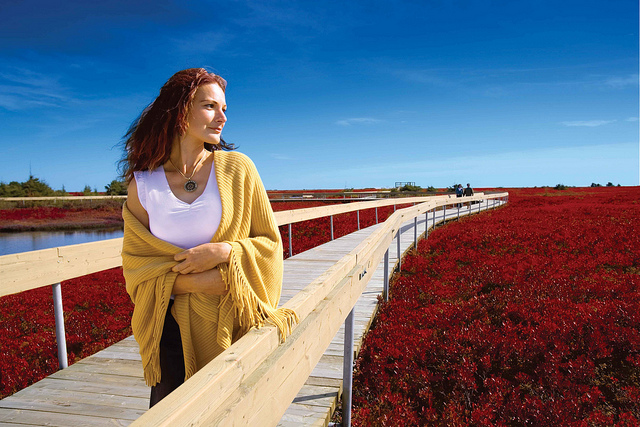
    Photo by satemkemet

  • Finding What We’re Missing: Our Lives Are Already Complete

    Finding What We’re Missing: Our Lives Are Already Complete

    Searching

    “Each day is a journey, and the journey itself is home.” ~Basho

    What does family mean? Is it the people whose genes you share? Is it the people that you grew up with? Is it the people who love you unconditionally in spite of your faults and flaws?

    Family for me has been an evolving idea. I was adopted from Seoul, Korea when I was four months old. After a few months in an orphanage, family started off simply as the people I grew up with.

    Raised in South Central Pennsylvania with a Caucasian family in an area where diversity was lacking, to say the least, I remember receiving looks from some people when my older sister introduced me as her baby sister. They would tilt their heads to the side and say, “Are you sure?”

    Adding insult to injury, my adopted mother passed away when I was thirteen after years of complicated health issues. She was the most vocal about how much she loved me, wanted me, and protected me when she caught anyone directing their fearful insecurities my way.

    Losing her was one of the most difficult experiences I’ve ever had to deal with. Losing my best friend after a cliff diving accident in college was the next. The two people who embodied family and home for me were gone.

    I spent many years angry, bitter, and confused as to why my biological family gave me away only for me to land in a family where I would experience a death nearly every other year from the time I was five years old, along with many other traumas and heartbreaks. (more…)

  • Keeping Our Hearts Open at Work and at Home

    Keeping Our Hearts Open at Work and at Home

    “A person’s world is only as big as their heart.” ~Tanya A. Moore

    I had a great boss. He was a creative spirit, just like me. He gave me total autonomy and creative license, and honestly, I did the best work of my career under his leadership.

    I can remember coming to him with outlandish ideas—never-been-done-before ideas—and he would listen, and then we’d spend hours brainstorming on how to bring them to life. When we brought them to life, we always shared in their success.

    We had a special relationship, and I felt like we could talk about anything.

    And then all of a sudden we stopped talking.

    The business climate changed dramatically. We were in the midst of a severe economic recession. Our industry was hit very hard. We had no time to talk. 

    The recession was a metaphor for all the relationships in my life. Lack, anxiety and shortfalls, disengagement.

    There was no time for questions, no room for ideas. It was too painful to go deep. There was just enough time and energy to stay afloat on the surface.

    I never even realized I closed off my heart. And then something awakened me to this reality.

    I was on a business trip in the mountains of Utah during early summer.

    My then estranged boss and I had a full day of meetings, and our two hosts invited us to take a ride on the chairlift before dinner. Somehow, our two hosts got pulled away to another meeting, so it was just the two of us—me and my boss—for the chairlift ride.

    There we were, two people on a four-person lift sitting as far apart as possible, in total silence, looking out into the distance.

    It was a beautiful evening, and there were many young couples snuggled in warm blankets, riding the chairlifts opposite us.

    They began to heckle me. “Why don’t you sit closer. He won’t bite you!” “Why are you sitting so far apart?” (more…)

  • Balancing Home and Work: When Life Is in the Distractions

    Balancing Home and Work: When Life Is in the Distractions

    “It is not hard to make decisions when you know what your values are.” -Unknown

    My son has chickenpox.

    It started a few days ago and today is his third day at home.

    As a work at home mom who is her own boss, I’m fortunate that I can be at home with my son instead of having to ask my employer for time off work.

    I have been working from home for the past five years with three young children, and it was only just a few weeks ago that my youngest child started school full-time.

    I felt that I had reached some sort of milestone, having all three children at school full-time now. But I must say, I was also looking forward to having uninterrupted time at home.

    Ever since I was laid off five years ago, I have been struggling to find a good balance with spending time on my home business and raising three children.

    Now with my youngest finally off at school, it felt as though I had finally crossed that threshold where I was reclaiming my time back.

    Not to become a lady of leisure. Not to go to the gym. Not to go shopping in search of retail therapy.

    But I finally felt as though I had the time, free from the demands of children, to spend on my own business.  I had finally reached that point that I was always trying to get to: being able to work non-stop and to gain the momentum that would hopefully let me move forward in my business.

    On discovering that my son had chickenpox a few days ago, I knew I’d have to keep him at home for the rest of this week. It would—temporarily—be a return back to juggling work and childcare for a few days.

    Today trying to snatch snippets of time to myself to work, I was reminded only too well how I’d really struggled, especially when the three of my children were at home during the long, long summer break. I would barely sit down at my computer only to have to go and break up a fight or find something or help them with something within thirty minutes.

    After lunch today I told my four-year-old son that I had to go upstairs to work for a while and could he please watch Mickey Mouse Clubhouse for a little while until I got back.

    My four-year-old son then said, “I wish I was you Mommy and you were me.” (more…)