Tag: hobby

  • How to Reclaim Your Joy After the Pandemic: 3 Things That Helped Me

    How to Reclaim Your Joy After the Pandemic: 3 Things That Helped Me

    DISCLAIMER: Though vaccines have allowed many of us to return to more normal activities, the pandemic isn’t over, and it’s still crucial that we all follow the evolving CDC guidelines to keep both ourselves and others safe.

    “Perfect happiness is a beautiful sunset, the giggle of a grandchild, the first snowfall. It’s the little things that make happy moments, not the grand events. Joy comes in sips, not gulps.” ~Sharon Draper

    It was a rainy, late Sunday afternoon. The sun was already going down, and it was getting dark outside.

    “How are you?”

    “Oh, good. Nothing special. It’s quiet,” my mom responded when I called her a couple of months ago.

    “It’s quiet” had been her response for the past two years, possibly before that. My mom is retired. Since the pandemic, her life became even more “quiet” than before—fewer friends, fewer activities, less fun.

    I’m not retired, but I work from home, and the same happened to me. To some degree, I let it happen.

    I got used to not seeing people, not laughing, and not dancing. I got used to being alone, and it became more comfortable to stay home on Saturdays than going out for social activities. Was I developing a mild form of social anxiety? Maybe.

    Two things were for certain: my social skills had atrophied, and I had forgotten how to have fun. What was joy like?

    “I feel like this must be what it’s like for the elderly; when no one visits them and they don’t have many friends and activities, they sort of start dying inside.”

    “That’s how I feel right now,” my mom responded.

    Have you experienced that too at some point? Not feeling like doing anything and seeing people because you forgot how to connect with them and what you even enjoy doing?

    “I think it’s a slippery slope. We should do something about it. We should make an effort to break the pattern and start socializing and doing activities again before we die inside,” I told my mom.

    After hanging up the phone, I reflected upon what I had just said. I knew that “shoulds” wouldn’t make the situation better; I had to be proactive and do something about it. I took out a pen and a notebook and started writing an action plan.

    Here are the three things I wrote down that day that have most helped me to reclaim a sense of joy in my life.

    1. Do one thing on your list of “joys.”

    A piece of advice that was very helpful came from a friend who lost his partner to cancer a couple of years ago, just a few months after she was diagnosed.

    It was a shock to him. They had projects together, like buying a campervan, traveling around North America, and building a house off-grid. Suddenly, those plans were gone, and my friend had to learn to live alone again while coping with grief.

    One thing that helped him get out of depression and slowly regain his spark for life was to make a list of things that made him happy (even just a little). Every day for the next three months, he did as many things on his list as he could.

    I took that advice and created my list of fifteen “little joys.”

    They’re not complicated. They include things like watching the sunset, reading a book while drinking a mocha latte in the morning, walking in nature, wearing my favorite outfit, dancing to progressive trance music in my living room, and watching funny dog videos.

    Every day, I picked at least three things on my list to do that day; if I could do more, great! But I did at least three. Over a few days, this simple practice started making me feel happier.

    Of course, you’ll first have to create your own list of “joys,” but once you have it, it’s a wonderful tool to bring more joy into your daily life.

    2. Do one thing to trigger the “helper’s high.”

    Another thing that significantly impacted my mood and energy was to do one act of kindness every day.

    I had read articles about the science of altruism and happiness, and I knew that helping or being kind to others makes us happy. There’s even a specific term for it: the “helper’s high.”

    I began asking myself every morning, “What’s one act of kindness I will do today?”

    Since I don’t always feel creative first thing in the morning, I made a list of fifteen acts of kindness ideas that I could choose from. Like my list of “joys,” they aren’t complicated. They include writing a nice comment on someone’s Tik Tok video, posting an uplifting quote on Facebook, and complimenting someone.

    Just doing this one thing, intentionally, every day made me feel more alive. But in case you don’t feel inspired to do one act of kindness a day, here’s another idea.

    Another thing I started doing recently, which I learned from Tim Ferriss’s book Tools of Titans, is a ten-second loving-kindness exercise created by Chade-Meng Tan, the man behind the popular mindfulness-based emotional intelligence course for employees at Google called Search Inside Yourself.

    The exercise is very simple: A few times a day, randomly choose two people you see and secretly wish for each of them to be happy. You don’t have to do or say anything—just think, “I wish you to be happy,” with a sincere intention from your heart.

    I find both the ten-second loving-kindness exercise and doing one act of kindness a day therapeutic. They take our focus away from our problems and increase our sense of connection to others, even when the act of kindness is anonymous, and we don’t physically interact with the person.

    3. Do one thing every day to nurture your social circle.

    It took me some time to realize that my mental health was being affected by a sense of isolation. I’m an introvert and enjoy my own company. It wasn’t obvious that my desire to eat more ice cream than usual and my lack of motivation to get out of bed in the morning had something to do with spending too much time alone.

    Some weeks during the height of the pandemic, I talked to no one except my clients on Zoom and the cashier at the grocery store. And the more time I spent alone, the less I wanted to see people. The idea of socializing began to feel daunting, and I chose to stay home (alone) more and more often.

    But it was killing me inside. I had to break the solitude pattern before the hole I was digging and putting myself in became too deep.

    I started small but did something every day to revive my social life.

    One day, I commented on an acquaintance’s Facebook post. Another day, I messaged a friend on Messenger. The following week, that friend suggested we go for lunch, and I went.

    Friendships must be nurtured to grow stronger and thrive; otherwise, they atrophy.

    So, perhaps you can ask yourself every day, “What’s one thing I can do today to nurture and expand my social circle?”

    Start small.

    I did a few other things to bring more joy into my life in the past few months as well, like taking on a new hobby (learning to play the djembe) and attending social events every other week. But the three actions I mentioned in this article are the ones that made the most significant difference in my well-being in the long run.

    What do you do to feel alive and inspired? Share with us in the comments so we can all benefit from each other’s wisdom.
  • A Natural Approach to Mental Health: How to Reduce Anxiety Through Gardening

    A Natural Approach to Mental Health: How to Reduce Anxiety Through Gardening

    “When the world feels like an emotional roller coaster, steady yourself with simple rituals. Do the dishes. Fold the laundry. Water the plants. Simplicity attracts wisdom.” ~Unknown

    I’ve suffered from anxiety since my childhood, but it was only seven years ago that I was formally diagnosed.

    My symptoms began to get worse after my long-term relationship ended and I felt like my world had collapsed around me.

    I was suffering from extreme fatigue, having trouble concentrating, not sleeping well, and I was constantly worrying.

    Over the next couple of years my mental health continued to deteriorate, and I had trouble finding the energy or motivation to get through the day.

    Eventually, I quit my high-stress government job and moved back to my hometown to live with my elderly mother.

    I was unemployed for the first time in my life, and I struggled to find a reason to get out of bed in the mornings.

    I was prescribed medication for my anxiety, but I suffered from weight gain and other side effects from the treatment.

    After seeing no improvement from the medication, I decided to try healing myself naturally.

    I sought advice from a variety of different practitioners including a naturopath, herbalist, and kinesiologist, which helped a bit, but I was still worrying excessively, having negative thoughts and occasional panic attacks.

    I’d read about the benefits of gardening for mental health, so one day I decided to tackle the overgrown mess in the corner of my mom’s backyard.

    At first the task seemed overwhelming, but I spent about fifteen to twenty minutes each day digging up weeds, and after a week it was looking like a proper garden again.

    I wasn’t an experienced gardener, so I did some research to find out which vegetables were the easiest to grow.

    I settled on lettuce, tomatoes, cucumbers, and zucchinis and I bought the seedlings from my local nursery.

    As well as the plants, I also installed a small bird bath so I could watch the birds while I was out in the garden.

    I really enjoyed watching the birds splashing around, so my next project was to make a bird feeder so I could attract more birds to the yard.

    Healing was a gradual process, and it took a few months before I noticed that my symptoms were improving.

    I was feeling calmer and more centered, and I wasn’t worrying about every little thing.

    The garden is now my sanctuary and the place where I feel the most peaceful.

    Gardening has many physical and mental health benefits including:

    Mindfulness

    When I’m out in the garden my mind is fully focused on the task at hand, so I’m not stressing about things from the past or what’s going on in my life at the time.

    I make an effort to appreciate and admire the beauty of the plants, and it’s really satisfying to watch them grow from tiny seedlings into mature plants.

    As well as vegetables, I’m now also growing herbs and a variety of different flowers, which are great for attracting bees and butterflies to the garden.

    Strength

    When my anxiety was at its worst, I had no energy or motivation to exercise. Even just doing the bare minimum tasks like showering and cooking left me drained.

    As I started spending more and more time in the garden, I noticed that my energy was improving and my body was getting stronger from all the bending, weeding, and digging I was doing.

    Sunshine

    Being out in the beautiful sunshine lifts my mood and it’s a great source of vitamin D, which can help to reduce the symptoms of anxiety and depression, while also boosting the immune system.

    Nutrition

    Being able to harvest beautiful fresh herbs and vegetables from my garden inspired me to try new, healthier recipes so I was eating better than I had in years.

    The crisp lettuce and juicy tomatoes straight from the garden were so much more flavorful than anything I’d tasted from the grocery store, and I’m sure they were much more nutritious as well.

    If you have the space in your backyard to create a little garden, I’d definitely recommend giving it a try.

    What if you don’t have a garden?

    Try container gardening.

    There are many different vegetables that can be grown in containers including radishes, peppers, lettuce, spinach, and other salad greens.

    Get some indoor plants.

    Indoor plants are great for bringing a touch of nature indoors, and there are lots of compact plants that are ideal for apartments like succulents, air plants, or African violets.

    If you have more space, you could try a peace lily, rubber plant, or prayer plant.

    Create a windowsill garden.

    If you have a nice, sunny windowsill you could start a small herb garden with parsley, chives, and thyme.

    Herbs are fast growing, easy to care for and great for adding flavor to your meals.

    Join a community garden.

    Community gardens are popping up all over the place in cities around the country, and they’re great for meeting likeminded people who can share their gardening experience with you.

    Spend time in nature.

    If you’re not a green thumb you can still get the benefits of plants by getting out in nature.

    Try going for a hike if you have trails nearby, take a walk around your local park, visit a botanical garden or read a book underneath a tree.

    Next time you feel stressed or anxious, try surrounding yourself with plants and see if it helps you to feel calmer.

    Whether it’s caring for a small house plant, creating a garden of your own, or simply spending more time in nature, your mental health will benefit from having plants around you.

    I hope this has inspired you to give gardening a try!

  • Create a Little Bit of Bliss Every Day

    Create a Little Bit of Bliss Every Day

    “Follow your bliss and let the magic of life happen.” ~Janelle Jalbert

    Is there something you always wanted to do as a child, and for whatever reason didn’t do? Is there something that you have wanted to do for years? Perhaps it is something that didn’t seem practical. Maybe you felt you wouldn’t be very good at it or you didn’t have the time or the money.

    You can ignore the urging, submerge it, and choose not to follow through on it. But it will show up again and again, and sometimes in the oddest places. For me it was in the toy aisle at a local department store.

    Here’s what happened.

    My husband and I walked into a popular department store, looking for the toy and game shelves. We wanted a board game we could play with our young grandchildren. I assume there was some kind of bland elevator music playing, but I didn’t notice it until it changed to an upbeat dance tune.

    The beat caught my attention, and my feet, seemingly of their own accord, started to move to the rhythm. A minute later they started to tap dance.

    As a child I wanted to learn to tap dance, but for some reason I never expressed that desire. Perhaps I was afraid of looking big and heavy in a dance costume, or feeling awkward on my feet. Whatever the reason, I never told my mother, I never took lessons.

    The desire to tap dance stayed with me, most times submerged beneath school, friends and family. As a teenager I learned one tap step from a friend, Shuffle Off to Buffalo, and enjoyed shuffling and tapping just for fun.

    That’s as far as I went with it. There was always too much else to do. Besides, what would I do with it even if I learned how to tap dance?

    Fast forward through fifty years and there I was in the toy aisle, tapping and shuffling my feet. My husband, tolerant man that he is, just smiled at me. But my feet surprised me that day.

    I’d love to be the kind of person who can just break out in song and dance and not worry about what other people think of me. I’m not. For me to dance in the aisles of a department store is unusual.

    Add to that the fact that I’m a sixty-four-year-old grandmother with an arthritic knee and ankle. I danced anyway and laughed at myself.

    Back home again I went to the kitchen to prepare dinner. My husband sat at the counter reading a magazine. He said something to me and I looked over at him. The words “Take a Chance—Dance” headlined the page I saw in his hand in bold letters.

    Okay, I thought, perhaps my feet and the Universe are telling me something.

    “Bliss is doing that which fulfills you. Action that touches you deeply and fully. Bliss is active. Bliss is…following your dreams, desires, or heart.” ~Angie Karan

    The next day I searched out a how-to tap dance video on my computer. I was delighted to discover a number of them specifically designed for absolute beginners.

    I chose one, set the computer up where I could see it on the dining room table, and learned the first basic steps of tap dancing, shuffling and tapping around my dining room floor in my sandals.

    My inner child was ecstatic. I smiled and laughed, stamped, shuffled, and tapped.

    My husband walked in, no doubt wondering what all the stomping was about. “I’m learning how to tap dance!” I beamed. He smiled, shook his head, and left the room. I kept at it.

    The emotional lift I felt from just those few minutes learning dance steps stayed with me all day. I smiled whenever I thought of it.

    Our bliss may come in small packages. It may look like a subtle urging that has been with you since you were a child.

    It may not be your life purpose, or even life changing. It may simply be something that allows you to express the childlike happiness that is within you. Something that many adults have forgotten is there.

    I have no idea what learning to tap dance is going to do for me, or where it will take me. I do know that it is time for me to allow the desire that has been within me for years to express.

    These longings stay with us for a reason. It is our soul talking to us through the language of our desires.

    Why does my soul want me to tap dance? I don’t know. I do know that it’s fun and good exercise, and that’s enough for now.

    What is your soul telling you? Let’s find out with a simple exercise.

    Gather paper and pen and give yourself a few minutes of quiet time.

    At the top of your paper write, “When I was a child, I loved to…”

    Complete the sentence with a list of the things you loved to do as a child.

    Now write, “When I was a child, I always wanted to…”

    Complete the sentence with the things you wanted to do as a child but didn’t or weren’t able to do.

    How many of these activities are part of your life today?

    If your favorite thing to do as a child was to create models of rockets with plastic blocks, how are you expressing your love of creative construction in your life today?

    What if you always wanted to go horseback riding as a child but only got to go once, and that love of horses is still with you? Could you sign up for horseback riding lessons today?

    Perhaps you tell yourself you don’t have time or money for pursuits that are just for fun. Perhaps you tell yourself that you’ll get to that later. But if not now, then when?

    Life zips by us while we are busy doing, doing, doing. Allow yourself to enjoy the journey. Listen to the urgings you feel inside. Don’t wait for some time in the future when you’ll have more time, money, or more accomplished. Do what you can to live a little bit of your bliss each day.

    Now, if you’ll just excuse me, I have to Shuffle Off to Buffalo.

  • How a Hobby Can Boost Your Motivation and Change Your Life

    How a Hobby Can Boost Your Motivation and Change Your Life

    If you want to be happy, be.” ~Leo Tolstoy

    We’ve all hit a low motivational point in our lives at one time or another. I am completely aware of that feeling of having nothing to fight for. In those reoccurring periods of despondency, I couldn’t find a reason to get myself out of bed.

    It’s funny that I got the life-changing question at a job interview. It was a stressful situation, and the hiring manager made it even more overwhelming when he looked at me straight in the eyes and asked: “What motivates you in life?”

    I can’t remember what I answered, but I do remember the devastation I felt from the true answer I found in me: “Nothing, nothing motivates me.”

    That was the turning point. Lots and lots of meditations later, I realized where all that frustration was coming from: I didn’t have a single thing that made me happy.

    Why was I so incomplete? I couldn’t get a job that made me feel useful, and all my friendships were superficial. I’ll spare you from the details of my reasoning process. I didn’t read, I didn’t write, I wasn’t trying to learn anything, I didn’t have a special someone in my life, and I didn’t have a hobby.

    A HOBBY! The sole thought of it made me burst in laughter. I’d never had a hobby. I basically had nothing to lose, so I decided I would give this idea a try. Picking a hobby was all I needed to do, and that’s how I ended up making endless reading lists.

    I found different reasons why I needed a hobby:

    It helps people express their creativity.

    I had an office job at the moment, and I was a total slave of routine. I needed that ‘escape’ activity that left me alone with my thoughts.

    I was already meditating every day, but I couldn’t call that a hobby… it was more like a responsibility for me. And, to be honest, it was making me even more miserable: I knew I needed a and I knew I didn’t have the courage to leave my job. A hobby like gardening, jewelry making, painting, knitting, or anything else related to creating would allow me to keep touch with the inner artist.

    That special activity clarifies the mind.

    It doesn’t matter what hobby I would pick. My options included reading, yoga, piano playing, running, or walking—all these activities have a meditative effect on the thoughts. The entire awareness is focused on the thing we are doing, and we can shut out every negative thought that was present before. In a way, when the hobby merges action and awareness, it becomes meditation in motion.

    Most hobbies have a social aspect.

    They give us the opportunity to interact with people who share our interests, so we develop connections that are not shallow at all. Let me tell you a secret: I have great communication with the people I met through Goodreads. We can Skype for hours and we never run out of topics. All discussions related to the activity I picked made me feel appreciated as part of something greater. That leads me to the next point:

    The hobby is a confidence-booster.

    When I realized I was good at something (other than my boring job), I started valuing myself as a person much more than before. In a way, I individualized myself in a non-egocentric way. When I opened the first page of War and Peace, I was hopelessly intimidated. When I finished it, I felt like my life was changed. Not because I read such an overwhelming book, but because I gained new perspectives through it. There is one word that conveys such an accomplishment: growth.

    Stress? No more!

    Trust me; I know how hard life gets sometimes. I’m the master of loss and heartache, but I realize that stress is an inseparable part of our existence. When people are immersed in a hobby, though, they find a simple relief. It’s like getting in a safe zone where stress has no access. When I return to my daily activities after a reading session, they no longer seem that problematic.

    When I was choosing my hobby, I knew it had to challenge me. I needed to pick something I always liked, but this activity was not supposed to be easy to conquer.

    Reading came as the natural response to my quest. It’s an activity that progressively gets more challenging, and it allows me to keep discovering new dimensions of the world that surrounds us. From Huxley to Orwell to Eco, I want to read everything! That’s what makes this hobby so motivating: the more progress I make, the greater challenges I need to face.

    From this point, I understand why I laughed at my realization that I needed a hobby: It was a subconscious reaction initiated by my fear of change and failure. I could find millions of excuses:

    I don’t have enough time for this.

    I’ll never make it through Tolstoy.

    I’m too busy looking for an actual job.

    I’m not smart enough to face Proust.

    At the end of the day, excuses don’t matter. I realized I needed to take action to make my life better, and that’s exactly what I did.

    Everything started with a reading list, which kept getting more and more extensive. Things didn’t stop with listing books I’ve read, though. This hobby helped me make friends, it made me a more confident person, and it eventually led me to inner harmony.

    From Hobby to Realization

    I don’t usually tell people how I met my partner. Mostly because I’m afraid the story is too much of a cliché. But, now is the right moment to share it: We met at a bookstore, buying the same book. Ironically enough, it was Never Let Me Go by Kazuo Ishiguro.

    He asked if he could add me as a friend on Goodreads, so we could share impressions. After the first 100 pages, I wrote an impression: I can literally feel my stomach dropping. I’m already crushed. He responded, and we had an arrangement for a coffee within hours. Everything was so spontaneous that I’m still surprised how I showed zero anxiety on the first ‘date’. We were madly in love from the first moment we met.

    This brings us to the lesson:

    • Passivity, inertia, excuses… we don’t need that stuff in our lives. What we need is an activity that makes our mind focused on something other than stress. A hobby.
    • I won’t lie: a hobby takes commitment. It’s not something you do in your free time; it’s something you make free time for. The first thing I did was an action plan. After I took the first step, nothing could stop me.
    • The hobby gives us a chance to open up to the world. Meet new people, see new places, learn new things, and become braver. We just need to grab that opportunity and stay spontaneous.

    When things get hopeless, I remind myself there’s a new reading challenge in front of me. The hobby is not a distraction; it’s a reminder that regardless of the struggles in our lives, we always have a spark that can brighten our days.

    With progressive steps and daily emergence in the hobby of choice, we can transfer that enthusiasm to every other activity we undertake. Suddenly, we will start feeling complete.

  • Learning is a Series of Steps: 7 Tips to Master a New Skill

    Learning is a Series of Steps: 7 Tips to Master a New Skill

    Learning

    “The excitement of learning separates youth from old age. As long as you’re learning, you’re not old.” ~Rosalyn S. Yalow

    A few weeks ago, at the age of thirty-something, I started the process of learning to drive.

    To be completely honest, it has been a daunting experience, especially for an overachiever like me.

    Most of the tasks I undertake I find relatively easy, but not driving.

    Seeing as I’m an introspective kind of person, I‘ve been curious to identify what it is that I’ve been struggling with these past few weeks. The answer is an obvious one: fear.

    Fear of the unknown. Fear of losing control. Fear of being responsible for my conduct on unknown roads in an unchartered territory.

    In theory, I know that I have nothing to fear. I know that everything we have ever learned is learned through a series of steps—and driving is no different.

    If you’re an experienced driver, you may be reading this wondering what all the fuss is about, but there is a lot to learn when you set out.

    What I’ve learned is that these things take time.

    There have been lessons where I’ve come out swearing I’ll never get in a car again, and then lessons where I’ve felt surprisingly in control and at ease with everything.

    Regardless, I know that if I follow the steps, I will eventually get there.

    If you’re learning a new skill, breaking a new habit, or simply trying to change yourself for the better, it won’t happen overnight, but it will happen if you commit. (more…)

  • Giveaway and Interview: The Practicing Mind by Thomas M. Sterner

    Giveaway and Interview: The Practicing Mind by Thomas M. Sterner

    Note: The winners for this giveaway have already been chosen. Subscribe to Tiny Buddha for free daily or weekly emails and to learn about future giveaways!

    The Winners:

    Have you ever feared you’ll never excel at a skill or reach a goal you set? Have you ever judged yourself or your efforts as “not good enough,” creating a sense of paralysis? Or how about this: Have you ever felt so eager to excel that the process became stressful and unsatisfying?

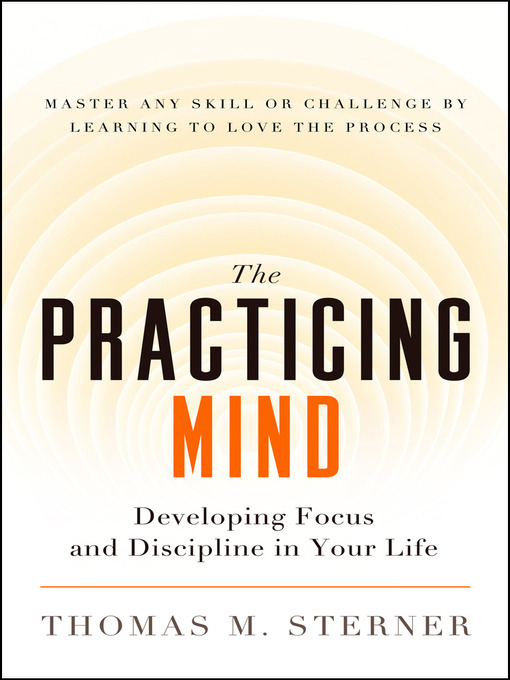
    In his book The Practicing Mind: Developing Focus and Discipline in Your Life, Thomas M. Sterner explores how to “master any skill or challenge by learning to love the process,” as the cover reads.

    Sterner has mastered quite a few challenges; he’s a concert piano technician, an accomplished musician, a pilot, and a golfer—and he’s learned how to practice each skill with a focus on the present.

    Sharing personal anecdotes, insights, and lessons, Sterner teaches us how to simplify and concentrate on the task at hand; break goals into smaller, more manageable steps; and slow down so that we can give our full attention to each step along the way.

    I highly recommend The Practicing Mind to anyone who wants to find more joy in the process of working toward their goals, and in doing so increase their effectiveness.

    The Giveaway

    To enter to win 1 of 2 free copies of The Practicing Mind:

    • Leave a comment below
    • Tweet: RT @tinybuddha Book GIVEAWAY & Interview: The Practicing Mind http://bit.ly/R5EnKh

    If you don’t have a Twitter account, you can still enter by completing the first step. You can enter until midnight PST on Sunday, August 12th. (more…)