Tag: hobbies

  • The Simple Lifestyle Changes That Healed My Mind and Body

    The Simple Lifestyle Changes That Healed My Mind and Body

    “If you don’t give your mind and body a break, you’ll break. Stop pushing yourself through pain and exhaustion and take care of your needs.” ~Lori Deschene 

    When I collapsed that evening while fishing, I was fortunate not to land head-first into the water.

    It was April 2018, a few weeks before my fiftieth birthday, and after work, I decided to walk to the local pond and spend the remaining hours of light fishing.

    After a short time, though, I started to feel hot, a little lightheaded, and dizzy, and then the lights went out. I only blacked out for a second, but it was long enough to fall to the ground, and it scared the living you-know-what out of me.

    The next several months involved working with doctors who ran a number of tests to see what might have caused the event. With no one issue found that would explain the collapse, my primary doctor started asking about my lifestyle habits.

    She asked me to describe a typical week.

    I told her I got up early Monday through Friday, got to work by 8 a.m., and got home around 7 p.m. Except on nights when I went to visit my mom at the nursing home; then I got home around 9 p.m. unless she was in the hospital again, and then it was later. I’m her healthcare power of attorney, so when she goes to the hospital, I’m always there, too.

    On Saturdays, I’d wake up early, do the weekly chores, and run as many errands as possible by dinner time. Then, I’d eat, watch a few hours of TV, and go to bed.

    On Sundays, I’d get up early to finish any chores and errands, then spend the afternoon visiting my mom at the nursing home again, have dinner with her, and I would usually get back around 7 p.m., followed by a few hours of TV while doing some last-minute laundry, and then go to bed.

    She asked me how often I took vacations.

    My answer surprised me because I had never considered it before, but over the past five (or so) years, I have taken no vacations. All of my vacation and personal time accrued at work was either used up for doctor and hospital visits with my mom or because I was sick myself.

    She asked me about my hobbies and what I do for fun.

    I said I liked to go fishing for an hour or so when time permitted, but other than that, I really didn’t have anything else in my life. To be honest, this was a pretty humbling and embarrassing admission.

    She asked about my eating and exercise habits.

    My answer again surprised me: I did literally zero exercise, and I mainly ate based on cravings and convenience, which generally included high amounts of sugar and fat. Not to mention, I drink coffee all day at work and at home.

    She was polite in her delivery, but her message was stern as she explained the problem and resolution.

    Her assessment of the collapse I experienced had less to do with that one incident and more to do with a lifestyle that was more than my current mental and physical capacities could handle.

    Through years of neglect, she continued, my overall mental and physical health had declined. Those faculties needed to be built back up, which would require willpower on my part and time so nature could run its course to heal what was broken.

    She started listing all my problems, which included being overweight, having high blood pressure and terrible blood work, and feeling stressed out and tired all the time.

    I needed to start a daily regimen that included eating nutritiously and doing daily exercise. That did not surprise me.

    What surprised me was when she said I needed to fit more personal time for hobbies and activities into my week and more quiet time and rest into my days because both help our minds and bodies heal in different but essential ways.

    I nodded in agreement, and for the first few days, I did precisely that, but then the train flew off the tracks.

    Life happened, as it has a tendency to do, and I regressed back to my prior unhealthy ways. Instead of following my doctor’s advice, my routine started to center again around work, my mom, and doing chores.

    I felt tired, drained, and unhealthy all the time, but I stubbornly pushed myself through each day, somehow thinking (or maybe just wishing) that tomorrow would be better.

    Fast-forward about a year and a half, and COVID hit, and like everyone else, it added stress to my already overstressed life.

    My mind and body didn’t respond well.

    That’s when I started to have anxiety issues, and the associated panic attacks were so severe they landed me in the hospital several times over the next few months. These attacks became so repetitive that I started to have trouble leaving my home to go to work. Eventually, I even had difficulties going to the grocery store.

    I couldn’t believe I was so scared of the attacks that I couldn’t even leave home to get groceries.

    This was a low point for me. In fact, the lowest.

    During this time, my doctor told me point-blank that I needed to either get a handle on my lifestyle or start taking some medications for all this.

    As a related backstory, she knew I didn’t want to take medication. I’ve had depression most of my adult life (which, of course, added to all this) and, at one point, took medication to get it under control. I worked for a few years on managing that and was so happy when I was able to stop taking medication for it that I vowed I’d never take meds again (or at least it was going to be as a last resort).

    She stressed to me again how this was probably all fixable with some time and drastic lifestyle changes. I needed to stop doing so much each day, get more downtime, learn to be mindful of what my mind and body needed, and then be sure to provide those things so I could start to recover and get my health back.

    So I started to prioritize my health and wellness.

    First, I slowed down and started working fewer hours while focusing on maintaining productivity. I mostly accomplished this by not micromanaging people as much as I used to and spending less time on distractions like socializing by the water cooler.

    I started to prioritize my health by eating clean foods and exercising daily.

    I became a student of mindfulness, listening to what my body and mind needed and providing it daily. I tried my best to become a positive thinker, focusing on my own path, and stopped paying attention to others.

    My life became more about me, and I was stingy with my time.

    I pursued what made me happy, cutting out what didn’t. I reduced the time I spent using social media, reading, and watching the news and instead used that space for quiet time. I learned to use breathing exercises and simple stretching techniques to nurture a positive mindset.

    Instead of rushing around multitasking and trying to see how much I could get done, I focused on what needed to be done, ignored the rest, and only did one thing at a time.

    I now took breaks in between tasks.

    Most importantly, I started with small, realistic lifestyle changes and made only one or two new changes each day moving forward. This approach helped me maintain consistency while also improving and progressing in the following days, weeks, months, and years.

    In October 2020, I was more than seventy pounds overweight, I had high blood pressure and poor blood work, and I had trouble leaving my home to get groceries for fear of anxiety-induced panic attacks.

    In February 2022, I had lost seventy-five pounds, my blood work was perfect, my blood pressure and anxiety were gone, and leaving home was no longer a problem.

    I healed (and then some).

    At that time, I sold everything that didn’t fit into my (really nice) backpack. Now, I am slowly traveling Asia full-time as a digital nomad, starting a new career as a freelance writer.

    I share this journey with you for three reasons.

    First, as the quote at the beginning of the article suggests, if you don’t take care of your mind and body, the collective ‘you’ will eventually break. We are all wonderfully different, so how that plays out will vary, but minor issues left unchecked now can turn into more significant problems that are more difficult to fix later on.

    Second, if that does happen, don’t freak out. Just visit your doctor to get the professional help you need. Chances are, you just need to make lifestyle changes to turn things around. Our mind and body have amazing healing capabilities; we just need to get in tune with what they need and provide that daily.

    Third, there was a surprising life lesson in all this for me: When you learn to be mindful of providing your mind and body with what they need, you nurture an amazingly rewarding lifestyle.

    That’s because the process involves prioritizing what you need and what is important to you and choosing not to be concerned with everything else because they are distractions. This provides ample room for rest, quiet time, and everything else that replenishes and nourishes essential elements in your life instead of depleting and depriving you of them.

    What remains is a life filled with only the things you value and need, which, I must say, is pretty awesome.

    So don’t wait until things build up and hit you like a ton of bricks at once.

    Be mindful and pay attention to the signs that you are not feeling well along your way, mentally or physically, and then slow down to address those issues before moving on.
  • You’re Never Too Old To Feel Inspired, Excited, and Alive

    You’re Never Too Old To Feel Inspired, Excited, and Alive

    “I do not want to get to the end of my life and find that I just lived the length of it. I want to have lived the width of it as well.” ~Diane Ackerman 

    I’m in the business of watching people take risks. I observe them tackling challenges, fear, and discomfort, and sometimes, “making firsts” in their life.

    I observe a lot as a flight attendant, and sometimes wonder if my official title should rather be “Human Observer,” or “Social Experimenter.” It feels more accurate, or at least it’s the part that I typically enjoy the most. I’m also what’s called a “Death Doula” and hospice volunteer, both of which I consider to be more of a passion rather than a kind of “job” or “position.”

    I not only enjoy observing and assisting people through their living process, but also through their dying process. That includes everything in between. My interest in humans isn’t just with the young (who the media unfortunately tells us are the only “relevant ones”), but I rather have a special spot in my heart for the old and the dying.

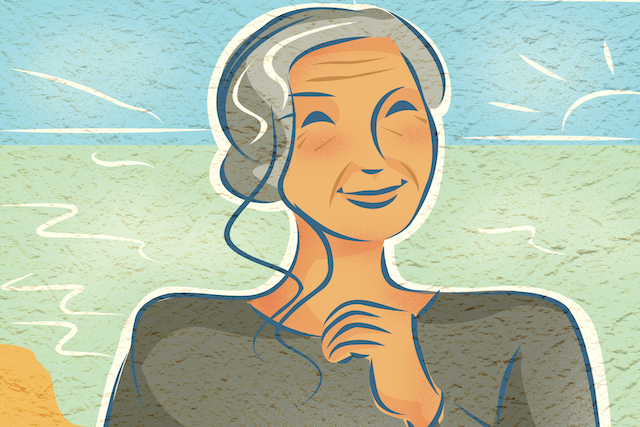
    I experienced a rather benign interaction a couple of weeks ago, walking to my gate in the Salt Lake City Airport at the beginning of my work trip. As I was passing the TSA security area, a hunched elderly woman, slightly ahead of me, dropped all of her belongings. Her belongings included a small rollaboard and a large tote purse. Her bags were ripping at the seams with the items I’m sure she diligently chose ahead of time.

    My husband, who also happens to be a “Human Observer” with the same Human Observing company, was walking with me. The timing aligned perfectly—she dropped her bags, resulting in several items spilling out, and we, following right behind her, were ready to help pick up the pieces.

    It was just the interaction I needed at that time.

    As with any job, position, or career, it’s easy to feel “burnt out,” rundown, or simply uninspired, given the right circumstances. No matter how exciting your job or life may seem to other people, it’s your “normal,” but likewise, it’s your individual responsibility to keep that flame of inspiration burning.

    A similar idea can be true for what may seem like a “boring” life or “boring” job: it may be your ultimate passion and inspiration. Either way, life and circumstances ebb and flow. Sometimes you just need to get out of your own head and stop thinking about the same day-in, day-out rudimentary topics of your life.

    At the time, I had been feeling fairly lackluster. I’d been working more than normal and had barely had time to myself to contemplate and be introspective (which I desperately need on a regular basis), let alone time to even be home. This interaction changed things for me in that moment and has stuck with me since.

    It was clear that she was traveling solo. I helped pick up her dropped rollaboard luggage as my husband started helping with her tote bag. I noticed that some of the items that dropped from her bags were French language and culture-related books. She was disorganized, no rhyme or reason for any items’ place, and you could tell she used every inch of space possible.

    “I’m going to Paris for a month, and I’ve never traveled before! This is everything I’m bringing!” She exclaimed, her smiling face closely looking up at me. I’ll never forget her look—that wrinkled, rough face with a peeling nose, disheveled short hair, and haphazardly put-together outfit. She was ecstatic, and it almost seemed as if she had been waiting to tell someone—anyone—about what adventures she was about to embark upon.

    As my husband worked on putting some items back in order, quietly talking to himself (“these will just fall out again if we don’t put them here”), I told her how excited I was for her and how amazing it is that she is doing this—going for it. Her excitement radiated onto me, and I couldn’t help but feel absolutely elated for her.

    We exchanged some additional niceties, and we helped her find her departure gate. For the next several minutes after parting ways, I had the biggest, dumbest smile stuck on my face.

    I would have loved to have been a fly on the wall (plane “wall” or otherwise) throughout her journey—to see her sense of wonder and curiosity with everyone and everything she was to encounter. I think about her now, conscious of the fact that she’s exactly halfway into her journey.

    This entire interaction then made me wonder, “What was it in her life that served as the catalyst for this decision of hers?” What made her decide, “Yep, this is the time. I’m just going to go for it. What have I got to lose?” She didn’t look like your stereotypical “adventurer.” She wasn’t trying to be anyone but herself.

    In a modern world where the young, adventurous ones are on Tik Tok, YouTube, or Instagram, it was refreshing to see a normal, mature person just going for it. I see and experience examples of this kind of thing on a regular basis, but I guess I just wish that perhaps someone from a younger generation who may be insecure about the direction of their life could experience these things with me.

    As much as I’ve experienced those who are brave and taking up hobbies or doing things that inspire them, I’ve also seen the opposite: those who are afraid of the new. It seems as if people get settled in their ways and end up saying to themselves, “Welp, this is it. This is my life now.”

    But why do we do that? It seems so counterintuitive to how life should be: full of exploration and wonder. I don’t think this is a particularly new or modern concept. I don’t think it’s because of social media that more mature folks aren’t taking risks or taking up hobbies they genuinely enjoy.

    This is not to say that I think everyone should get on a plane and go to Paris. Traveling isn’t inspiring for everyone. For some, perhaps the exhaustion or the stress outweigh any benefit. To each their own. Perhaps your version of exploring curiosity or wonder is creating a garden, deciding to read more, finally getting into stand-up comedy, going outside more, or digging into that sourdough bread kit.

    Deciding to lead a life full of exploration and wonder doesn’t need to fit a particular theme. It’s getting out there (or staying in there) and doing what inspires you. It’s doing it for you—no one else. And sometimes it may take a catalyst against your will to make something happen.

    I can’t assume that it was something perceived as “negative” that happened to our Parisian friend that made her, for the first time ever, embark on a month-long trip across the world. But I find it fun to explore the possibilities.

    Many may also say they have a fear of “failure,” but what are we defining as “failure?” Does “failure” even exist if you’re actively enjoying yourself and not doing it for anyone else? You’re never too old to find inspiration—whether it be through a hobby, an activity, or through others. Our lives and deaths are constantly in cycle. That cycle is always in motion. You’ve got to keep moving.

    I think Ms. Paris, who I admire so, knew this. We didn’t need to have this particular conversation for me to know that.

  • Living a Meaningful Life: What Will Your Loved Ones Find When You Die?

    Living a Meaningful Life: What Will Your Loved Ones Find When You Die?

    “At the end of life, at the end of YOUR life, what essence emerges? What have you filled the world with? In remembering you, what words will others choose?” ~Amy Rosenthal

    Most people believe sorting through a loved one’s belongings after death provides closure. For me, it provided an existential crisis.

    After glancing at the angry sky in my father’s driveway for what seemed like hours, I mustered up the courage to crack open the door to the kitchen. The eerie silence stopped me in my tracks. Wasn’t he cooking up a storm in this cluttered kitchen just a few days ago?

    I started with the mounds of clothes and cuddled them gently before pitching them. The sweet aroma of his fiery cologne still lingered. The air smelled just like him.

    My father’s belongings served as physical reminders of how he spent his time on Earth. Some of my favorites included:

    A weathered yellow newspaper clipping of his parents. Cherished family photos, with him grinning ear to ear. A collection of homemade cookbooks. Framed quotes such as Mi casa es su casa. A prestigious Pottery Barn leather chair, distressed by puppy claw marks. Nostalgic t-shirts from the early 90’s.

    Chipped and heavily-used Williams-Sonoma platters. An entertainment center that mimicked a NASA operation center, with 70’s CDs left in the queue. Invitations to neighborhood block parties. An embroidered apron which read “World’s Best Grill Master” paired with still fresh barbeque sauce stains.

    Homemade recipe cards with quirky quotes like “It’s good because it’s cooked on wood.” An entire closet of camping gear. Leftover birthday celebration goodies. Glazed pottery from local North Carolinian artists. Entertaining sports memorabilia on full display. And a tender card from me:

    Dear Dad,

    You’re the best dad ever! I hope you have a birthday filled with tasty BBQ, blaring seventies music, and a pepperoncini pepper to start the day off right. Thank you for being there for me. You are my hero. I can’t wait to celebrate with you this weekend!

    My father collected items that brought him joy, and, clearly shared them with others.

    While you may not know him, or think you have anything to do with him, you do.

    You will be him one day. We will all be him one day. At some point, someone will rummage through our drawers. Scary, isn’t it?

    Weeks later after organizing his possessions, I returned to my lavish apartment with cloudy judgment. As soon as I arrived, I dropped my luggage near the door and waltzed into my closet. The items that once made me proud, made me nauseous. If someone rummaged through my keepsakes, they would find:

    A closet full of color-coordinated designer brand clothes. Scratched CDs listing my favorite nineties bands. An entire drawer filled with vibrant, unused makeup. A high-end collection of David Yurman rings, necklaces, and bracelets. Wrinkled Nordstrom receipts. An assortment of gently used designer handbags. And, pictures of fair-weather friends scattered throughout.

    Do you know what they all had in common? Me.

    ME! ME! ME!

    Comparing my life to my father’s led to a life-changing decision. Should I continue to splurge on meaningless items or start completely over?

    After a moment of contemplation, my life mirrored a blank slate. Products related to “keeping up with the Jones’s” were no longer my jam. Instead, my money was reserved for incredible moments that produced long-term joy and warm memories.

    My new spending habits derived from the following financial values:

    • Seek experiences that make me feel alive.
    • Purchase life-changing products.
    • Invest in creative hobbies that I’m proud of.
    • Provide others with joyous moments.
    • Initiate celebratory activities.
    • Make financial decisions out of love.

    With a little trial and error, I traded in frivolous shoulder bags for top-rated camping gear. Saturday shopping days transformed into baking Sundays. And most importantly, I went from feeling not enough to experiencing fulfillment.

    Twelve years later, I’m happy to share that I continue to evaluate my purchases using a “Will this make a good memory?” lens. In retrospect, mending my financial habits was one of the best decisions I’ve ever made.

    Why? I’m no longer impressed by status. I prefer art, learning, and the outdoors over any invitation to shopping. In return, my life is filled with purpose, meaning, and long-term satisfaction.

    What I know for sure is that most commodities on their own overpromise and underdeliver, unless we intentionally create an evocative memory with them. Materialistic purchases provide us with fleeting moments of happiness. On the contrary, curating beautiful moments with others delivers long-term joy.

    While you won’t find many luxurious products in my house now, you will find:

    A four-person picnic backpack for sunny days at a park. Bird feeders galore. A fine assortment of tea to share with others. Homemade bath bombs for birthdays. Color-coordinated self-improvement books. Aromatic sea salt exfoliants that replicate a spa experience. Cheery holiday decorations.

    An assortment of various vision boards and bucket lists. Seasonal candles galore. A bathroom drawer filled with citrus soaps, shampoo, and lotions for overnight guests. A collection of homemade scrapbooks featuring beloveds.

    An emerald green trekking hiking backpack for outdoorsy adventures. Crinkled Aquarium tickets. Handwritten family cookbooks. Seeds for a blooming garden. Hygge and cozy themed library nooks. A bright blue hybrid bike, for nomadic quests. A closet full of board games. And my most prized possession of all, a sentimental card from my darling father, John:

    Happy Graduation, Britti!

    I am proud of who you are and proud to be your dad. I like how you hold your head high. You are becoming a beautiful young woman and fun to be around. You have taught me things. You are so important to me. I treasure our time together and will always be here for you! It’s not always easy, but, you have a lot of love around you. I hope that life keeps blessing you. Keep spreading your wings and following your dreams!

    Love, Dad

    The real question is, when someone organizes your belongings, what will they find?

  • How to Reclaim Your Joy After the Pandemic: 3 Things That Helped Me

    How to Reclaim Your Joy After the Pandemic: 3 Things That Helped Me

    DISCLAIMER: Though vaccines have allowed many of us to return to more normal activities, the pandemic isn’t over, and it’s still crucial that we all follow the evolving CDC guidelines to keep both ourselves and others safe.

    “Perfect happiness is a beautiful sunset, the giggle of a grandchild, the first snowfall. It’s the little things that make happy moments, not the grand events. Joy comes in sips, not gulps.” ~Sharon Draper

    It was a rainy, late Sunday afternoon. The sun was already going down, and it was getting dark outside.

    “How are you?”

    “Oh, good. Nothing special. It’s quiet,” my mom responded when I called her a couple of months ago.

    “It’s quiet” had been her response for the past two years, possibly before that. My mom is retired. Since the pandemic, her life became even more “quiet” than before—fewer friends, fewer activities, less fun.

    I’m not retired, but I work from home, and the same happened to me. To some degree, I let it happen.

    I got used to not seeing people, not laughing, and not dancing. I got used to being alone, and it became more comfortable to stay home on Saturdays than going out for social activities. Was I developing a mild form of social anxiety? Maybe.

    Two things were for certain: my social skills had atrophied, and I had forgotten how to have fun. What was joy like?

    “I feel like this must be what it’s like for the elderly; when no one visits them and they don’t have many friends and activities, they sort of start dying inside.”

    “That’s how I feel right now,” my mom responded.

    Have you experienced that too at some point? Not feeling like doing anything and seeing people because you forgot how to connect with them and what you even enjoy doing?

    “I think it’s a slippery slope. We should do something about it. We should make an effort to break the pattern and start socializing and doing activities again before we die inside,” I told my mom.

    After hanging up the phone, I reflected upon what I had just said. I knew that “shoulds” wouldn’t make the situation better; I had to be proactive and do something about it. I took out a pen and a notebook and started writing an action plan.

    Here are the three things I wrote down that day that have most helped me to reclaim a sense of joy in my life.

    1. Do one thing on your list of “joys.”

    A piece of advice that was very helpful came from a friend who lost his partner to cancer a couple of years ago, just a few months after she was diagnosed.

    It was a shock to him. They had projects together, like buying a campervan, traveling around North America, and building a house off-grid. Suddenly, those plans were gone, and my friend had to learn to live alone again while coping with grief.

    One thing that helped him get out of depression and slowly regain his spark for life was to make a list of things that made him happy (even just a little). Every day for the next three months, he did as many things on his list as he could.

    I took that advice and created my list of fifteen “little joys.”

    They’re not complicated. They include things like watching the sunset, reading a book while drinking a mocha latte in the morning, walking in nature, wearing my favorite outfit, dancing to progressive trance music in my living room, and watching funny dog videos.

    Every day, I picked at least three things on my list to do that day; if I could do more, great! But I did at least three. Over a few days, this simple practice started making me feel happier.

    Of course, you’ll first have to create your own list of “joys,” but once you have it, it’s a wonderful tool to bring more joy into your daily life.

    2. Do one thing to trigger the “helper’s high.”

    Another thing that significantly impacted my mood and energy was to do one act of kindness every day.

    I had read articles about the science of altruism and happiness, and I knew that helping or being kind to others makes us happy. There’s even a specific term for it: the “helper’s high.”

    I began asking myself every morning, “What’s one act of kindness I will do today?”

    Since I don’t always feel creative first thing in the morning, I made a list of fifteen acts of kindness ideas that I could choose from. Like my list of “joys,” they aren’t complicated. They include writing a nice comment on someone’s Tik Tok video, posting an uplifting quote on Facebook, and complimenting someone.

    Just doing this one thing, intentionally, every day made me feel more alive. But in case you don’t feel inspired to do one act of kindness a day, here’s another idea.

    Another thing I started doing recently, which I learned from Tim Ferriss’s book Tools of Titans, is a ten-second loving-kindness exercise created by Chade-Meng Tan, the man behind the popular mindfulness-based emotional intelligence course for employees at Google called Search Inside Yourself.

    The exercise is very simple: A few times a day, randomly choose two people you see and secretly wish for each of them to be happy. You don’t have to do or say anything—just think, “I wish you to be happy,” with a sincere intention from your heart.

    I find both the ten-second loving-kindness exercise and doing one act of kindness a day therapeutic. They take our focus away from our problems and increase our sense of connection to others, even when the act of kindness is anonymous, and we don’t physically interact with the person.

    3. Do one thing every day to nurture your social circle.

    It took me some time to realize that my mental health was being affected by a sense of isolation. I’m an introvert and enjoy my own company. It wasn’t obvious that my desire to eat more ice cream than usual and my lack of motivation to get out of bed in the morning had something to do with spending too much time alone.

    Some weeks during the height of the pandemic, I talked to no one except my clients on Zoom and the cashier at the grocery store. And the more time I spent alone, the less I wanted to see people. The idea of socializing began to feel daunting, and I chose to stay home (alone) more and more often.

    But it was killing me inside. I had to break the solitude pattern before the hole I was digging and putting myself in became too deep.

    I started small but did something every day to revive my social life.

    One day, I commented on an acquaintance’s Facebook post. Another day, I messaged a friend on Messenger. The following week, that friend suggested we go for lunch, and I went.

    Friendships must be nurtured to grow stronger and thrive; otherwise, they atrophy.

    So, perhaps you can ask yourself every day, “What’s one thing I can do today to nurture and expand my social circle?”

    Start small.

    I did a few other things to bring more joy into my life in the past few months as well, like taking on a new hobby (learning to play the djembe) and attending social events every other week. But the three actions I mentioned in this article are the ones that made the most significant difference in my well-being in the long run.

    What do you do to feel alive and inspired? Share with us in the comments so we can all benefit from each other’s wisdom.

  • A Natural Approach to Mental Health: How to Reduce Anxiety Through Gardening

    A Natural Approach to Mental Health: How to Reduce Anxiety Through Gardening

    “When the world feels like an emotional roller coaster, steady yourself with simple rituals. Do the dishes. Fold the laundry. Water the plants. Simplicity attracts wisdom.” ~Unknown

    I’ve suffered from anxiety since my childhood, but it was only seven years ago that I was formally diagnosed.

    My symptoms began to get worse after my long-term relationship ended and I felt like my world had collapsed around me.

    I was suffering from extreme fatigue, having trouble concentrating, not sleeping well, and I was constantly worrying.

    Over the next couple of years my mental health continued to deteriorate, and I had trouble finding the energy or motivation to get through the day.

    Eventually, I quit my high-stress government job and moved back to my hometown to live with my elderly mother.

    I was unemployed for the first time in my life, and I struggled to find a reason to get out of bed in the mornings.

    I was prescribed medication for my anxiety, but I suffered from weight gain and other side effects from the treatment.

    After seeing no improvement from the medication, I decided to try healing myself naturally.

    I sought advice from a variety of different practitioners including a naturopath, herbalist, and kinesiologist, which helped a bit, but I was still worrying excessively, having negative thoughts and occasional panic attacks.

    I’d read about the benefits of gardening for mental health, so one day I decided to tackle the overgrown mess in the corner of my mom’s backyard.

    At first the task seemed overwhelming, but I spent about fifteen to twenty minutes each day digging up weeds, and after a week it was looking like a proper garden again.

    I wasn’t an experienced gardener, so I did some research to find out which vegetables were the easiest to grow.

    I settled on lettuce, tomatoes, cucumbers, and zucchinis and I bought the seedlings from my local nursery.

    As well as the plants, I also installed a small bird bath so I could watch the birds while I was out in the garden.

    I really enjoyed watching the birds splashing around, so my next project was to make a bird feeder so I could attract more birds to the yard.

    Healing was a gradual process, and it took a few months before I noticed that my symptoms were improving.

    I was feeling calmer and more centered, and I wasn’t worrying about every little thing.

    The garden is now my sanctuary and the place where I feel the most peaceful.

    Gardening has many physical and mental health benefits including:

    Mindfulness

    When I’m out in the garden my mind is fully focused on the task at hand, so I’m not stressing about things from the past or what’s going on in my life at the time.

    I make an effort to appreciate and admire the beauty of the plants, and it’s really satisfying to watch them grow from tiny seedlings into mature plants.

    As well as vegetables, I’m now also growing herbs and a variety of different flowers, which are great for attracting bees and butterflies to the garden.

    Strength

    When my anxiety was at its worst, I had no energy or motivation to exercise. Even just doing the bare minimum tasks like showering and cooking left me drained.

    As I started spending more and more time in the garden, I noticed that my energy was improving and my body was getting stronger from all the bending, weeding, and digging I was doing.

    Sunshine

    Being out in the beautiful sunshine lifts my mood and it’s a great source of vitamin D, which can help to reduce the symptoms of anxiety and depression, while also boosting the immune system.

    Nutrition

    Being able to harvest beautiful fresh herbs and vegetables from my garden inspired me to try new, healthier recipes so I was eating better than I had in years.

    The crisp lettuce and juicy tomatoes straight from the garden were so much more flavorful than anything I’d tasted from the grocery store, and I’m sure they were much more nutritious as well.

    If you have the space in your backyard to create a little garden, I’d definitely recommend giving it a try.

    What if you don’t have a garden?

    Try container gardening.

    There are many different vegetables that can be grown in containers including radishes, peppers, lettuce, spinach, and other salad greens.

    Get some indoor plants.

    Indoor plants are great for bringing a touch of nature indoors, and there are lots of compact plants that are ideal for apartments like succulents, air plants, or African violets.

    If you have more space, you could try a peace lily, rubber plant, or prayer plant.

    Create a windowsill garden.

    If you have a nice, sunny windowsill you could start a small herb garden with parsley, chives, and thyme.

    Herbs are fast growing, easy to care for and great for adding flavor to your meals.

    Join a community garden.

    Community gardens are popping up all over the place in cities around the country, and they’re great for meeting likeminded people who can share their gardening experience with you.

    Spend time in nature.

    If you’re not a green thumb you can still get the benefits of plants by getting out in nature.

    Try going for a hike if you have trails nearby, take a walk around your local park, visit a botanical garden or read a book underneath a tree.

    Next time you feel stressed or anxious, try surrounding yourself with plants and see if it helps you to feel calmer.

    Whether it’s caring for a small house plant, creating a garden of your own, or simply spending more time in nature, your mental health will benefit from having plants around you.

    I hope this has inspired you to give gardening a try!

  • How to Create Happiness Outside of a Relationship and Enjoy More of Your Life

    How to Create Happiness Outside of a Relationship and Enjoy More of Your Life

    “Remember, being happy doesn’t mean you have it all. It simply means you’re thankful for all you have.” ~Unknown

    For many years I was single. But I wasn’t just a regular single, I was a miserable one.

    Rather than enjoying a time in my life when I didn’t have to care about anyone else but myself and using it to devote my full attention to my purpose and passions, I chose to ride the “woe is me” train.

    I would complain about being single daily and covet other women’s “luck” in dating. I would blame every guy I dated for “just not being ready,” or somehow else at fault.

    I didn’t realize I was the common denominator in all my failed relationship attempts.

    I was the one who chose to spend time with these men and ignore the big red flags that would crystalize themselves early on.

    Instead of taking time to patiently vet and reject men that were not good for me, I allowed my desperation to entertain any man that would show interest.

    My inability to find happiness outside of a relationship was ultimately what kept me single.

    The saying you attract what you are” was true in my case. I was miserable single, so I kept attracting miserable relationships. 

    I continued down the same path until I decided that something needed to change.

    I realized that I had outsourced the job of making me happy to the many men that I dated.

    Their presence, their commitment, and their interest in me would determine how happy I was. Unfortunately, due to my questionable taste in romantic partners, that would often mean not so happy. So, I decided it was time to change that.

    That is when things started to shift, and I called in the life and love that I wanted. Here is what I did to find happiness outside of a relationship:

    Dealing with the Absence of a Relationship

    One thing I have learned is that in the absence of a romantic relationship I had to find fulfilling activities that made me happy.

    When you are single you have a lot of time. Time to think about everything you feel is missing.

    I would spend my evenings watching romantic movies on Hallmark wishing my life were like the plotline of the movie.

    And more often than not, all it did was make me more miserable. So, I decided to utilize that free time in the evening in a better way.

    I came up with a beautiful nighttime routine that included coloring, listening to music, and reading a book on spirituality or personal growth.

    I would fill the void with activities that filled me up.

    Same for the morning times. Instead of lying in bed and scrolling through Instagram until all I saw were couples and babies, I started running.

    Not only did I get into the best shape of my life because of it, but I also discovered a new passion for running and working out that quickly turned into a hobby I’m now passionate about.

    By dealing with the absence of a relationship head-on I found activities that made me happy.

    Dealing with the Sadness of Singleness

    The second thing I did to find happiness outside of a relationship was learn to deal with the sadness that singleness often brings with it.

    It’s no secret that being single can suck.

    No matter how often single people are made to believe that being single is a blessing, it can be hard to see it when that blessing seems to last forever.

    What I have learned is that rather than avoiding, suppressing, and denying the sadness, I had to learn to embrace it.

    I needed to allow the ebbs and flows to pan out accordingly. By deeply feeling the sadness and despair, I also enabled myself to feel the joy and excitement that followed after.

    Reminding yourself that no emotion lasts forever, and that you will eventually overcome it, is the light at the end of the tunnel that keeps you going.

    Therefore, you must make it a habit to tune into your inner well-being daily. Here are three ways I do it:

    1. Start your mornings with a meditation practice that centers you and puts you in tune with how you are really feeling.

    2. Start journaling your thoughts to better understand your fears and worries. You can commit a few minutes in the morning or evening to it.

    3. Commit to a daily gratitude exercise. Multiple times throughout the day, stop what you are doing and simply list three to five things you are grateful for. They can be as simple things as your home, furniture, or the body parts that serve you well.

    There are many different habits that you can choose from. The only thing that matters is that you create a safe space and routine that allows you to feel your emotions without judging them.

    This will help you deal with the sadness of singleness.

    Dealing with the Uncertainty of Dating

    The last thing I had to learn in order to find happiness outside of a relationship was how to navigate through the dating space without feeling burned out or discouraged.

    Dating nowadays feels like you are entering the twilight zone. With many different terms and stages describing the act of dating, many people are not sure what they are doing anymore.

    Are you dating, hanging out, hooking up, or maybe just “chilling”?

    If you don’t know, chances are you are stressed by the uncertainty. And that feeling of anxiety sucks.

    It’s a constant ride on a roller coaster of emotions controlled by the other person.

    So, how can you learn to deal with the uncertainty that dating oftentimes brings with it?

    The first step is to increase your self-esteem and remind yourself that your relationship status does not determine your worth.

    When a romantic relationship does not progress the way you want, you may feel discouraged and disappointed. These feelings are valid and should be honored; however, you have to remember that they are only feelings. That means they will pass.

    Instead, use affirmations to build yourself up daily and celebrate all your minor successes, the positive impact you have on the people around you, and how far you’ve come as a person. This will help you remember all the great qualities you bring to a relationship and will be a blessing to the person you are with in the future.

    The second step is to focus on the fun.

    In a world of billions of people, it may take some time to find the one person you would like to spend the rest of your life with, who happens to want the same.

    Uncertainty is part of the dating process. Rather than shying away from it, try to focus on the fun of dating. Meet people without any expectations and instead decide to just have a good time and enjoy their company.

    By doing that, you will naturally feel less anxious, because you are not trying to control your date’s experience, only your own.

    Because of today’s societal pressure to be boo’d up by a certain age, it can often feel depressing when you are not in a committed relationship. Which then leads to unhappiness.

    However, by taking matters into your own hands and deciding to create happiness for yourself, you allow yourself to experience life and live in the present moment.

  • Want More Joy in Life? Prioritize Things You Enjoy Doing

    Want More Joy in Life? Prioritize Things You Enjoy Doing

    “I don’t believe people are looking for the meaning of life as much as they are looking for the experience of being alive.” ~Joseph Campbell

    Because I am self-employed, I often find that my work is my life. There is no off switch when the day is over. Some days I get so caught up in the busyness that I completely forget myself.

    While my work is immensely meaningful and enjoyable, I believe it’s important to have other activities outside of work that bring us joy so we can live even fuller lives.

    When I get too caught up in my work of helping others, I forget the other things that are important to me. This makes me feel that I lack the balance of a multifaceted life.

    One day I realized that I was so caught up in helping other people that I completely forgot to help myself. As an introvert, it’s important to recharge my batteries by pursuing activities that recharge the soul.

    So I sat down with a pen and paper and did what most busy people do: I wrote a list.

    This was a list with a difference.

    I wrote down every single activity I enjoy. I wrote down every single activity I hadn’t tried but wanted to. And I wrote down every single place I wanted to visit.

    This was the beginning of actively creating joy in life. You can make of life what you will. Personally, I choose happiness.

    In positive psychology, a method for finding happiness and joy is being in a state of flow. You already know this feeling. It’s when you are completely tied up in what you are doing and you lose track of time because you are so engaged and stimulated in your activity.

    Often, activities that put us in a state of flow are creative—things like painting, playing music, cooking, sewing, reading, writing, and doing arts and crafts.

    Other activities that often put us in this flow state are physical. This could be gardening, hiking, bike riding, yoga, golf, and any other physical activities we enjoy.

    For ultimate happiness and health, I believe it’s important to pursue both creative and physical activities. Stimulating your mind and body leads to greater intelligence and a heightened state of awareness.

    Some might say to get into a state of flow you need to get a hobby. I think perhaps this is true. When was the last time you heard someone say they have a hobby?

    Hobbies seem to be something of the past. Today we are so busy. We get so caught up in work, family, relationships, pleasing other people, and technology that we forget to do the things we enjoy for ourselves.

    This is where my list came into play. It ended up being a multi-page list of every hobby I ever had, every activity I enjoy, and every activity I wanted to try. I then made it a priority to do at least one “happiness activity” every week.

    Taking time out of our regular day-to-day work and finding new ways to enjoy life is essential to our happiness and well-being.

    If your life is very busy, do not be fooled into thinking you have no time for hobbies. Everyone has fifteen minutes available, even if it cuts into your sleep or email time.

    Although fifteen minutes may not feel like enough time to get into a state of flow, it is enough time to feel joy and happiness. With a bit of practice, you might find you get into such a state of flow that fifteen minutes turns into an hour. Over time, you may find that these pursuits of happiness overtake the importance of busyness.

    If you think you have no hobbies now, the best way to find out what you enjoy is to remind yourself what you enjoyed as a child. Did you previously enjoy baking? Or drawing, or playing music, or playing football?

    Write yourself a list of every activity you ever enjoyed and every activity you’d like to try but haven’t yet. Pick one thing that you previously enjoyed immensely, and set yourself an appointment to give it a go again. When you are ready, set an appointment for one new activity you have never tried before.

    Your life could be transformed by this one simple act: making it a priority to do the things you enjoy.

    Ideally, you want to set time for this daily. I completely understand that this is difficult to do. At a bare minimum, you want to schedule it in weekly.

    Personally, I like to set aside one day every week to go for a hike. But sometimes if I don’t have time for that, I like to pick up my flute and improvise. If I only have a spare fifteen minutes to do this, I find the time just flies by, and it only feels like five minutes.

    Doing something like this is so good for my soul. I find that if I don’t schedule flow time, then I feel tired and overwhelmed with life. It is so important to me that I actually write it down in my diary and stick to it like any other important appointment.

    We can all experience more joy in our lives. We just need to consciously choose to create it.