Tag: hide

  • How I Stopped Hiding Myself for Love and Approval

    How I Stopped Hiding Myself for Love and Approval

    TRIGGER WARNING: This post includes a brief mention of childhood physical abuse and may be triggering to some readers.

     “The person who tries to keep everyone happy often ends up feeling the loneliest.” ~Unknown

    It’s Christmas morning. I’m seven years old. I sit on the hardwood floor with my sisters, in my nightgown surrounded by crumpled wrapping paper. I grab the next present to open. I tear off the paper. It’s a ballerina costume with a pink leotard, tutu, and pale pink tights.

    As soon as I thank my adoptive parents, I leave the room with my new gift, keeping it hidden behind me. I get upstairs to my bedroom and stand in front of the mirror, rushing to get it out of the package and put it on, struggling to get the different fabrics to cooperate.

    When I finally get it on my body, I run back downstairs with a big smile, excited to surprise everyone and maybe even earn some laughs. My heart races with excitement. I enter the living room. My adoptive parents look at me. I scan their faces for smiles. The smiles don’t come.

    “What the hell did you do! You ain’t supposed to put it on yet!” Mom yells.

    My heart’s beating loud. Why are they angry? I can’t understand the mean words my parents hurl at me. Dad gets up from his chair and attacks me. When he’s done, my face is hot and my hair disheveled. I hang my head and go back upstairs to my bedroom to change out of the costume. I look in the mirror at myself. ‘I’m so stupid.’ I think. I will never misread them again.

    I was taken from my birthmother at ten months old and placed with foster parents who abused me, and despite this being common knowledge, they were allowed to adopt me.

    Adoptees, even without abuse from adoptive parents, become experts at adapting. We know our family arrangement came to be because our birth parents weren’t up for the task of holding onto us; the reason doesn’t matter because children can only point inward. Beneath the surface, many adoptees carry an unconscious belief that sounds something like this:

    “I am bad and unlovable. That is why I was not worth keeping the first time. If I can become whoever my adoptive parents want me to be, I will prevent being abandoned again.”

    So, adoptees learn to bend and shift, careful not to incite disappointment or anger from their adoptive parents. For example, I didn’t dream of being a dancer as a child. I’d never taken a ballet class or even expressed an interest in it. So when I opened that costume on Christmas morning, I saw it as a clue. My eagerness to be a show pony in a ballet costume was an instinctual reaction because it meant earning a higher approval rating from my scary adoptive parents. But obviously, I read it all wrong.

    This life-saving skill of adaptation permeates any relationship that poses a risk for leaving adoptees with a broken heart. It can become so pervasive that by the time adoptees enter adulthood, they’ve had little to no experience exploring their own needs, wants, or desires—because they’ve spent their entire lives becoming who the person in front of them wanted them to be.

    My husband and I gave our daughter a “yes day” a couple of years ago, where she created a list of fun things to do, and within specific parameters, we had to say “yes.” This involved her choosing our outfits for the day, a trip to Dave and Busters, a silly string fight, designing specialty chocolates at the Goo Goo Cluster shop downtown, and a candy buffet for dinner. My husband and I delighted in her joy that day.

    Later, when my daughter asked, “Mom, what would you want to do if you had a ‘yes day?’”

    I felt a burning in my chest, realizing I couldn’t answer her. And when an idea did come, like seeing a concert or dining at a specific restaurant, I knew I’d feel guilty for asking the rest of my family to join me because it wasn’t their thing. My inability to tell my child what I like was a powerful teaching moment, and a call for change.

    I began therapy in my early thirties, intent on resolving the thick layers of trauma and loss that created this barrier between the me that operated out of fear of abandonment, and my true self. Traditional talk therapy with a therapist specializing in trauma, EMDR, EEG neurofeedback, and accelerated resolution therapy slowly chipped away at that barrier. With every victory, I learn more about myself and feel more at ease in the world.

    Resolving trauma is dissolving shame. For me, shame has kept me from knowing myself and focusing solely on the happiness of the people around me for fear of being left or in danger if I fail.

    Loneliness is a consequence of being a chameleon who doesn’t know who she is. How can I expect genuine connection if I’m not allowing people to accept the real me? As a shame-filled person, I chose relationships with people who mirrored my low self-worth back to me. How can I expect genuine connection in relationships like that?

    Authentic relationships are a natural consequence of dissolving shame. Being seen, loved, and accepted for our true selves is the antidote to loneliness.

    For anyone out there who bends and shifts to maintain connection with the people they care about, ask yourself, “If I had a yes day, how would I spend it? Do the people in my life care enough about me to come along and delight in my joy?”

    If that question feels uncomfortable—if the people who come to mind would groan, flake, or dismiss it—I see you. I’ve been there. But healing begins with allowing yourself to imagine something different. Imagine being surrounded by people who celebrate and cherish the real you. Imagine what it would feel like to be loved that way.

    Because that kind of love is possible, and you deserve it.
  • Healing from Shame: How to Stop Feeling Like You’re Fundamentally Wrong

    Healing from Shame: How to Stop Feeling Like You’re Fundamentally Wrong

    “If you put shame in a petri dish, it needs three ingredients to grow exponentially: secrecy, silence, and judgment. If you put the same amount of shame in the petri dish and douse it with empathy, it can’t survive.” ~Brené Brown

    There is a special type of shame that activates within me when I am around some family members. It’s the kind of shame where I am back in my childhood body, feeling utterly wicked for being such a disaster of a human. A terrible child that is worthless, stupid, and perhaps, if I am honest, more than a touch disgusting.

    The feeling of shame in my body feels a bit like I am drowning and being pulverized from the inside at the same time. I have a deep, awful nausea too, like a literal sickness about who I am.

    In an effort to save myself from drowning in shame, I might try to ingratiate myself to the person I am talking to. Make myself sound more palatable, more decent, less dreadful. Or maybe become argumentative to try to kill the feeling in my body by drowning out the voice that seems to be activating the sensation.

    These experiences became like shame vortexes in my life. The place where my true spirit, whatever self-love or esteem I had, went to get pulverized in a pit of torment. A reminder of what a truly dreadful and disgusting person I really was.

    Families are such incredible quagmires of emotional activation. Generations of repressed emotions—of blame, shame, guilt, resentment, rage, frustration, etc.—constantly simmering, occasionally boiling up, being thrown at each other, activating more emotion.

    And yet family are often the people we yearn to receive acceptance and unconditional love from the most. But they’re often the people who find it the hardest to give it to each other.

    My journey with shame has been lengthy because, for a long time, I didn’t know how to work with it. For many years I felt like I was bumping into shame in every corner of my life. And there were many corners.

    In my work, I struggled to be seen, to be what I wanted, to do what I wanted.

    In my relationships, I struggled to relax because I was ashamed about being a pudgy woman who wasn’t wild, free, and fascinating.

    In my friendships, I was often the helpful, problem-solving friend—because to be the messy, chaotic human that I was would jeopardize who I thought my friends wanted me to be.

    In my parenting, it was overwhelming. I wasn’t a calm, healthy-eating, active, patient goddess. I was impatient and distracted, and I dreaded having to play with my kids.

    I was terrified of being rejected, resentful of feeling used by people, and scared of going nowhere in my life because perfectionism gripped me so tightly that I struggled to get started on anything.

    I see now that underpinning all of this was shame. Shame that I was getting life wrong on a number of levels, and really, I just wasn’t trying hard enough. But when I tried harder, it never worked. I would lose energy, fall apart, and then I’d want to hide alone in a room, where no one could see me.

    I didn’t even realize that it was shame. I thought I was just self-conscious, a bit shy, needing to get my act together. I was a perfectionist. I had high standards. I wanted to get things right.

    But now that I know more about emotions, I can see I was drenched in shame. Utterly drenched around this basic concept that I was doing it all wrong, and it was all my fault.

    Shame is in that desire to be invisible, to disappear, to remain unseen.

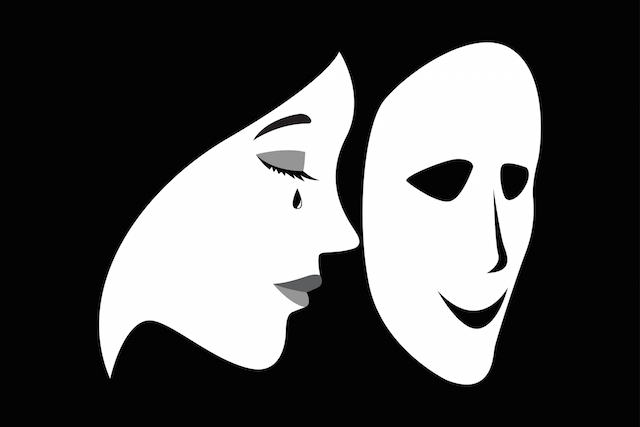
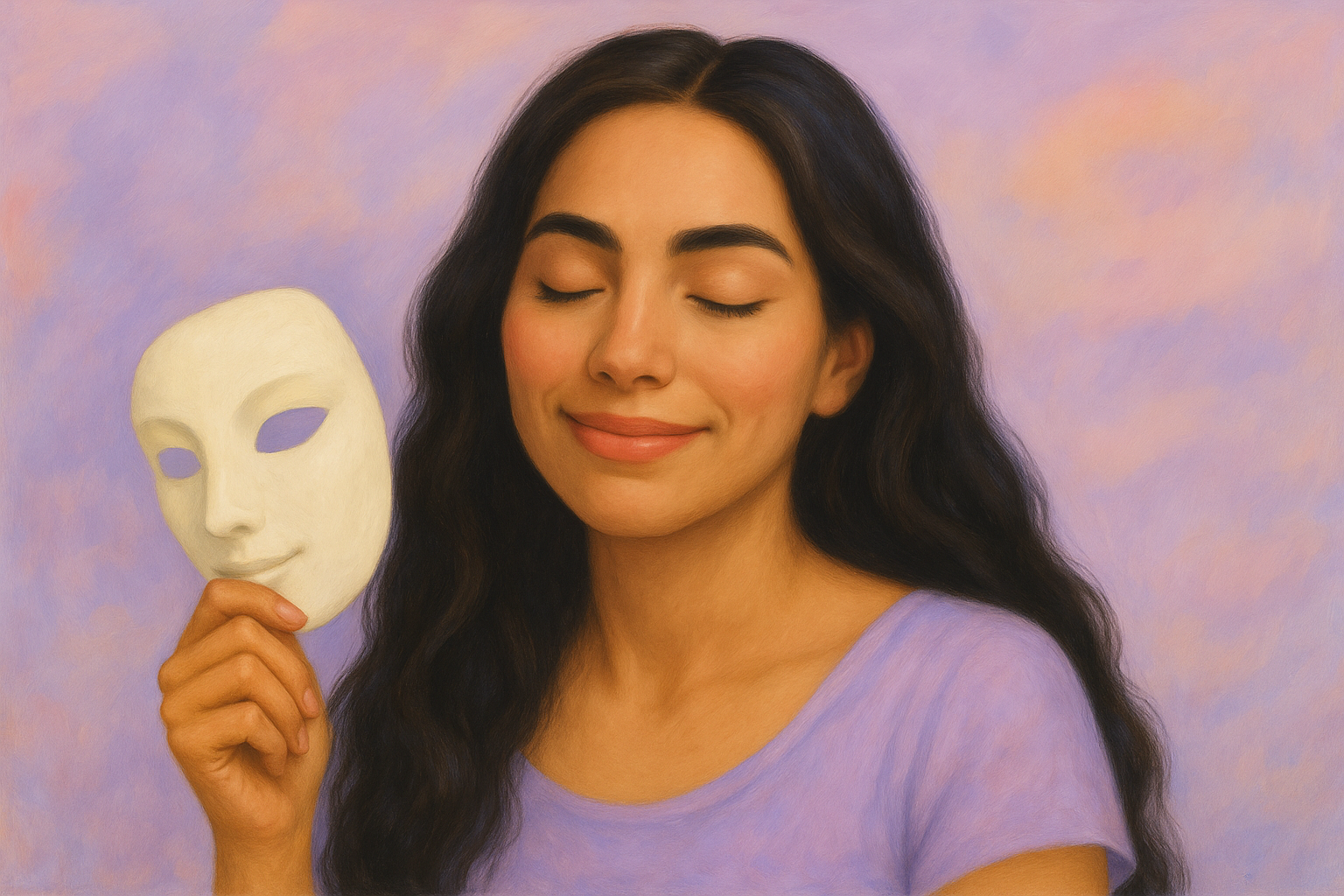
    Shame is in that desire to hide. To not be looked at. Because being looked at means people might see who we are underneath the veneer. The mask we put on.

    Shame often breeds when it becomes unsafe to be who we are, usually as little children, or when things are happening around us that we don’t understand, that don’t feel normal. When we feel we have to hide who we are or who our families are. When our parents don’t feel comfortable being who they are, there we see shame.

    The thing about shame is that we don’t realize how much of it there is around us. As Brené Brown says, it thrives in secrecy and judgment. Most people aren’t walking around saying, “Hey, look at my shame! Come see the deep, dark crevices of my soul that feel so wrong and awful.”

    Many people aren’t aware that shame is even present for them, as it hides underneath other emotions like anger, fear, or sadness.

    But even though it is hiding, even if we can’t see it, it can control our life like gravity controls us on this earth. We don’t think about gravity, but its powerful force keeps us rooted to the ground. Shame can act in a similar way, its force dictating our actions and behaviors, pulling us in directions that work for shame, but not for the authentic, free-spirited people that we yearn to be.

    Shame serves shame, and only shame. Shame doesn’t care about your desire for authenticity and for being calm, zen, peaceful, joyful, and in love with life. That sounds deeply scary and awful to shame.

    Shame wants us to stay small, to stay hidden, and to be inauthentic. That sounds way safer.

    It doesn’t want us to leap up and say, “Look at me! Look at me as an individual, doing things that are new and wonderful!”

    It doesn’t want us to be free and happy and full of love and light.

    It wants to keep us safe by reminding us how terribly awful we really are.

    Shame is at the root of so many things that plague us—a lack of intimacy in our relationships, an inability to go for what we want in life and have relaxed, authentic friendships, and a sense of stuckness in work.

    It can come out as a sense of persistently feeling rejected, drowning in deep wells of inadequacy, lashing out in anger as a way to hide the shame response, or hiding behind crippling shyness or social anxiety.

    Shame is your worst nightmare talking to you all the time about the ever-present list of limitations in your life.

    Shame is your worst critic analyzing your performance in all things.

    The reason shame feels so horrendous is that it’s not like guilt, which induces feelings about what we’ve done wrong. Shame is so much more pervasive than that. Shame is a feeling that we ourselves are wrong.

    To experience shame is a tremendously reducing experience

    How do we get rid of shame? Well, it’s not something that is quick to shift. It’s a process, and it takes time and emotional safety.

    Emotional safety is an awareness in our bodies, brains, and nervous systems that it is safe to have an emotion. Many of us don’t have emotional safety, so we run, hide, suppress, ignore, and distract ourselves or try to propel ourselves in any way away from an emotion. Many of us learned at a young age that certain emotions are not safe, and shame is usually one of them.

    But to work with shame, to reduce its presence in our bodies and our lives, we need to bring it to the light. We need to expose it to love, acceptance, and empathy. Bit by bit, little by little.

    One effective way to do that is to share little bits of our shame with our most trusted and loved people. Once the shame comes out, it’s out! We are free of it.

    We talk about our shame only with people we feel utterly safe with. We don’t talk to people we don’t feel safe with. Not the stranger on the bus, the friend who gossips to everyone, or your blind date.

    You only give people access to your shame if they have shown you that they are completely responsible with your trust; if you can tell them things and they won’t blame or judge you (which is a re-shaming experience). They come with empathy, acceptance, and love.

    They are honored that you would share your deepest secrets with them. They are prepared for the responsibility that that entails.

    And if we don’t have a person like that in our life? Sometimes when we have so much shame it can be hard to form these types of intimate, vulnerable, and trusting relationships. Shame wants to keep us apart, and separate. That’s how it keeps us alive and safe, by never showing anyone who we really are. Because probably once, long ago, we learned that being ourselves wasn’t safe. And so we chose a safer path—to hide.

    So while we work on shame, we can start this journey with ourselves. Talk to ourselves about what we find when we think about our shame. Have tender, generous, and loving conversations with ourselves. Write or record remembrances.

    And we do this when we know we can be empathic with ourselves.

    Because we all know those conversations when we are down in the depths of shame and we talk to ourselves and make it so much worse—we add more shame, more judgment, more guilt.

    “Why did I do that? Why did I sleep with that guy / not show up for work / send that client brief in late? I know why—because I am such a loser. I always do stupid stuff like this. Always.”

    That’s not an empathetic conversation.

    Shame breeds in conversations like that.

    Shame needs this:

    “Why did I do that! I can’t believe it! Oh wow, now that I think about it, I am feeling ashamed that I slept with that guy / didn’t show up for work / was late with that client brief. And this shame really hurts. So you know what, shame? I am going to stay with you, give you some love, some support, some tenderness, because wow, shame. That’s so painful.”

    We can’t de-shame ourselves by constantly re-shaming ourselves.

    We can’t remove shame by improving either. By doing more things, becoming better incarnations of the humans we are. We can only remove shame with empathy, love, acceptance, and connection.

    That is a pill we have to be willing to swallow. That we are worthy of empathy, love, connection, and acceptance.

    We have to start ignoring what the shame is telling us.

    Shame’s advice is that we should just spend the rest of our lives trying to become better humans. But let’s be honest, we’ve followed that advice our whole lives, and look where it’s gotten us—deeper in the shame well.

    So how about instead of castigating ourselves on a constant basis, we try to interrupt our shame spirals with a bit of love and empathy instead?

    How about we decide that maybe it’s just a feeling, and not an indication of a deep flaw in who we are as humans? How about we try out not whipping ourselves for every small transgression.

    Taking a step toward loving ourselves means working with the vicious, judgmental, potent force of shame.

    But it’s work that can be done. It’s completely possible, and I know because I have drained a ton of shame from my body these past few years.

    We need to not abandon ourselves when we are in shame. We need to take a little tiny bit at a time, just a touch, and bring it out into the light. Share with someone, with ourselves, become familiar with it, look at it, feel it, touch it—and hear it.

    We need to bring love and support to our shame. Bring acceptance and understanding.

    That is what our shame is yearning for, and when we shift our way of seeing it, we can start to shift the power it has over our lives.

  • Why I’ve Stopped Hiding My Struggles

    Why I’ve Stopped Hiding My Struggles

    “The moment that you feel, just possibly, you are walking down the street naked, exposing too much of your heart and your mind, and what exists on the inside, showing too much of yourself… that is the moment you might be starting to get it right.” ~Neil Gaiman

    The road seemed to go on forever.

    Although it was only about 8:30 a.m., the summer sun was already blazing in the sky, shining down with such intensity I felt like an ant under a merciless magnifying glass.

    Seven miles into an eight-mile run and growing more and more tired with each step, I faced the final stretch along a tarmac path bustling with fellow runners, dog walkers, cyclists, and the occasional rollerblader.

    “Not… far… to… go,” I repeated to myself, as I trudged along with all the grace of a baby elephant. As faster and leaner runners passed me, I noticed my mind was slipping into self-comparison mode, but then I pulled myself back to the present moment.

    As I became more present, I observed.

    I observed the slight twinge in my left shin and the sound of birdsong from nearby bushes. To my surprise, I observed another more interesting phenomenon, an old pattern I thought I had beaten.

    As I passed other people walking, running, cycling, and blading in the opposite direction, I noticed my demeanor changed. I went from running like a baby elephant to galloping like a gazelle, from looking like the newbie runner I am to pretending to be a seasoned professional athlete.

    In the brief moments my path crossed with strangers, I hid my struggle.

    My posture improved and the grimace on my face turned into a confident smile.

    But why?

    Why did I feel the need to hide my struggle and present a more “I have it all together” version of myself?

    I pondered this question for a few days after this intriguing observation. Why do any of us feel the need to appear more together than we are?

    The answer I came up with is this…

    We hide our struggles because we’ve learned that showing signs of struggle or weakness is a bad thing.

    However, I believe this couldn’t be further from the truth.

    In our early lives, we were more than willing to show signs of struggle. When we were tired, upset, or frustrated, we communicated exactly how we felt (through cries and tantrums). A little bit older, when confused in the classroom, we were more likely to put our hands up and ask for help.

    We knew at a young age that struggling was a part of life, and a sign we were soon going to learn something new.

    Sadly, as we became older, it became more and more unacceptable to struggle and fail. Teachers and parents became less sympathetic and patient as their expectations increased. We began striving for perfection, which, of course, is unattainable.

    To wash away the false idea that showing signs of struggle is a bad thing, we need to remember these three important truths.

    1. Struggling is normal.

    It seems so darn obvious, but when I’m hiding my struggles, I’m denying the truth that struggling is normal. I’m buying into stories like “I should know better,” “I shouldn’t feel like this,” and “I should look like I have it all together.”

    The bottom line is, we’re human, meaning we’re all imperfect and we all struggle. No one has it all together. No one has a perfect life. And no one feels happy, confident, and positive all the time.

    Rather than feel ashamed and hide our struggles, we need to recognize that struggles are human and appreciate ourselves for doing our best in any given moment.

    2. Unless we show we’re struggling, we’re unable to receive help.

    Whenever I pretend I’m not struggling, the door to receive help is closed.

    In my early twenties, I went through a hard time. Facing financial struggles, daily anxiety, and dwindling confidence, I felt like I’d fallen down a deep, dark hole. I’d wake each day feeling helpless. But for almost two years, I lived a lie, in complete denial about my life situation. To the outside world, all was well.

    Eventually, it got too much and I had to get real. It started with a simple phone conversation with a lady from a debt agency. In two minutes, I felt like a huge burden had been lifted from my shoulders. This was the start of admitting I was struggling and getting some help.

    No matter what our struggles are, right now there are people who can (and want to) help. No one could help me unless I helped myself first, and it started with getting real.

    3. Showing we’re struggling gives others permission to show they’re struggling too.

    The moment we take off the masks and make ourselves vulnerable, we give others permission to do the same.

    After tackling my financial struggles, I began to open up about my anxiety. I remember being sat in a pub with a close friend of mine when I decided to share with him how I’d been struggling with an anxious mind.

    His response shocked me: “That’s exactly how I’ve been feeling.” For years, we’d both been struggling with the same thing but had never once spoken about how we’d felt. How sad.

    When we share our struggles with those around us, we give them permission to voice theirs, if they wish to share. We may never know just how life-changing that permission may be to someone. They may feel alone, overwhelmed, or even at the end of their rope, and we could change it all by giving them an opportunity to receive our understanding and support.

    Now when I lace up my running shoes, I leave the mask at home. And if I’m struggling at work, in my relationships, or in any other area of my life, I let other people in.

    I no longer pretend to be fine when I’m not because when I’ve been honest in the past, only good has happened.

  • It’s Okay to Have Feelings, So Stop Saying “I’m Fine” When You’re Not

    It’s Okay to Have Feelings, So Stop Saying “I’m Fine” When You’re Not

    I’d rather be honest and authentic and disappoint some people than exhaust myself trying to keep up the façade of perfection.” ~Crystal Paine

    So many people walk around each day masking their true feelings because they are considered the “strong one” or “the upbeat, bubbly one,” or, since they give so much of themselves supporting others, they’re not seen as having any emotions other than happy. If you’ve ever felt like you had to hold it together all the time to keep up a façade for others, there’s freedom in letting people know that you have feelings too.

    Keeping it together has always been my thing. You know the phrase “never let ’em see you sweat”? Well, even in my worst moments, I would keep it all in place and poised for the public, but I’d be secretly dying on the inside because of the pain or challenges I was going through.

    It can catch some people off guard to see you be real, revealing that you don’t have it all together, and at times their responses can leave you wounded. I know that feeling all too well.

    A few months back, I attended an event to support a colleague, and I bumped into someone I knew well. He asked me how I was doing, and I responded honestly with, “I’m hanging in there, but I’m fine.”

    He immediately made a face and seemed disturbed by my response. He said, “Woooooah, you gotta change that. You sound too defeated, and that’s not what I want to hear from you.”

    He went on to say, “What you said makes me want to back away from you and go the opposite direction. It’s too much for me. You must always answer with a positive response.” He then went on to provide ways for me to respond in the near future.    

    What this person didn’t know was, I was feeling down and discouraged because I felt I wasn’t as far as I should be in my life and business.

    I had poured all of myself into doing things to get the business running consistently; however, whenever I looked at all the effort I put in and saw things not happening as quickly as I thought they should, I felt as if I’d failed. So, it was a tough time as I sorted through those different emotions.

    At first, I felt lousy about my response, because with me being considered the “upbeat, strong one,” always smiling and helping others to feel better, there is an assumption of how I should be at all times. I thought I had somehow let that person down by revealing my true feelings in that moment. I also felt embarrassed because I’d exposed a small part of myself and felt like I was rejected and told how I should sound.

    But after I thought about it, I realized I was fine with my response because it was a genuine answer. I am on a path of making true connections with others, and I no longer want to “act” and pretend to be fine when I’m not.

    While this person didn’t have any ill intent and actually thought he was being helpful in telling me how I should respond, it clearly made it uncomfortable for me to open up to him the next time around.

    It made me think about why some people try to force others to hide behind a mask. Why do people expect you to always be “on”?

    This was a moment for someone to find out what was truly going on with me, to find out why I seemed so down, and to make a true connection, instead of offering me another mask to wear in his presence.

    This led me to wonder, when we ask people, “How are you doing?” are we really open to an honest response, or are we looking to hear the template response we so often hear, “I’m fine”?

    I also thought about how many people wear a mask every day or keep a façade to avoid showing their humanity and potentially making others feel uncomfortable. The people we interact with every day are carrying worries, concerns, and emotional pain within, and we cannot ask them to put on a fake smiley face and tell them to be on their way. These people need someone to truly see them.

    If you sometimes hide your true feelings behind a mask, here are a few ways to begin opening up.

    Practice honestly connecting with people, even if you start small.

    As psychotherapist Barton Goldsmith wrote, “When you open your mouth, you’re also opening your heart. And knowing that someone truly hears what you are feeling and understands you is soothing to the soul.”

    If you’re not accustomed to opening your heart to people, start small by sharing one thing you’re thinking or feeling but may be tempted to keep inside. Opening up to others will allow you the space to be yourself, and from there you’ll clearly see who’s willing to receive what you have to say with an open heart. You’ll also begin to forge deeper relationships through your honest connections.

    Also, be the person who allows others the space to just be and offer support and guidance as needed. Ask about their lives, and let them know you’re happy to be a nonjudgmental ear. Giving people room to share pieces of themselves lets them know you’re there for them and they can be honest with you.

    Allow yourself space to feel.

    Many times when we avoid sharing our feelings with others, it’s because we haven’t given ourselves space to identify and process our emotions. We try to cover them up or engage in activities to mask the pain, but they don’t go away when we do this. Left unprocessed, our feelings tend to leak out in other ways. For example, we may overreact in unrelated situations.

    Give yourself permission to feel whatever you feel, without judgment, and learn to recognize when you’re lying to yourself, telling yourself you’re “fine” when you’re not. The first step to being honest with others is being honest with yourself.

    Be kind to yourself.

    We tend to beat ourselves up when we do not respond, act, speak, or think how others believe we should. This can put pressure on us to shift to meet everyone else’s needs without truly acknowledging our own.

    Get in the habit of checking in with yourself and meeting your emotional needs, whether that means processing your feelings in a journal or practicing self-care. The more you respect your truth and your needs, the better you’ll be able to communicate them to others.

    It’s a heavy burden to hide behind a façade or wear a mask. Allow yourself to experience the freedom of being authentic in each moment and making genuine connections with people who can receive your feelings.

    There’s power in putting down your superhero cape, being vulnerable, and sharing your truth. You don’t have to hide, pretend, or feel bad about not always being the “strong one.” You’re not weak, you’re human, and you never have to apologize for that.

  • No Matter What You Tell Yourself, There Is Nothing Wrong with You

    No Matter What You Tell Yourself, There Is Nothing Wrong with You

    “I wish I’d had the courage to live a life true to myself, not the life others expected of me.” ~Bronnie Ware from Top Five Regrets of the Dying.

    I wish I could remember the exact moment I mis-learned that being myself wasn’t going to cut it.

    It happened early. Maybe kindergarten. I didn’t do it consciously, but at some undetectable moment, I put my real self in a box and created someone else. This new me was so much better—always happy, very accommodating, super quick and witty, and an expert at everything.

    This new me was almost impossible to maintain. She required constant observations, self-sacrifices, and living in fear of being found out. But I knew she was necessary. The real me was not an option.

    Why? Because something was wrong with me. Even in elementary school, I had come to an unfortunate conclusion: Everyone is better than me. I can never let anyone see that.

    There was evidence. I had the only divorced parents in a conservative suburb. I had stringy hair that never congealed into the halo formation I desired no matter how much spray I applied. (It was the eighties!) I didn’t own any brand names. And, worst of all, my father was gay.

    My dad never told me he was gay. He just was gay one day when I was ten. The problem was, he left my mom for a man when I was three. That left seven years of deception in between.

    I went to gay parades with him because he “had some gay friends.” I slept over at the house he shared with his “roommate.” So when my mom finally sat me down to tell me the truth, I was shocked. And betrayed. They’d both been putting on a show for seven years. Why?

    My ten-year-old brain assumed they must have hidden it because it was supposed to be hidden. In a time before Ellen or even an inkling of gay marriage talk, I figured this was a secret so shameful that nobody should know about it.

    I wasn’t against my father or against homosexuality. I was against being different. Flawed. Weird. I was surely the only girl in elementary school who had seen assless chaps at a street fair. I wish I had owned it and flaunted a rainbow flag backpack, but I couldn’t then. I was too obsessed with being ‘the same.’

    I decided not to tell anyone. Not my friends. Not my teachers. No one.

    But a story has all the power when the only place it’s allowed to live is inside you.

    Keeping up a constant lie is exhausting. The anxiety alone about being found out can overtake your body. It controls the way you speak, the way you breathe, what you choose to share with friends. The latter kept all my friends at an arm’s distance. I craved so badly to feel closer to them. Connected. But connection was too scary.

    Six years after I found out about my father’s true self, he fell into one of his many deep depressions and took his own life.

    I had just gotten my driver’s license. His phone was off the hook, and I drove against my mom’s rules to see him. His apartment was a den of depression and his 6’5” body thinner than I’d ever seen. I gave him a hug, and when I drove away, I had no idea it would be our very last hug.

    At sixteen, there were few conclusions for me to make besides: See! Something is seriously wrong with me. My dad didn’t even want to stay to see me grow up.

    Outwardly, I pretended it was no big deal. I cried alone in my room, in my car, places where nobody could see. I wanted to rewind it all. I wanted to change everything. I wanted to go to sleep for years and wake up a happy adult with it all figured out.

    I jumped further into people pleasing. That guy needs a date to something? Let’s go. My teacher is handing out extra credit? I’ll do double. Smile. Smile. SMILE! I got my grade point average to 4.5 and was crowned homecoming queen. (Kids, take notes! You too can become homecoming queen if you simply accommodate every single person who is not you.)

    I went to college far away to get away from myself, but my self followed. My fear. My pretense. My anxiety followed. And as I compared my family to an even broader spectrum of strangers, it got worse.

    The only time I would talk about my personal life was when I was drunk and making jokes. Once a salesman told me to buy a present for my father. I laughed and said, “My father is in the ground!” Then I walked out of the store laughing as if it was the funniest thing I’d ever said.

    Years after college, I met a girl in a writing class. She was the tiniest person I’d ever met and had a voice to match. It happened that our leases ended at the same time, and we had a frank conversation about becoming roommates.

    “I am a loner,” I told her.

    “Me too. We can close our doors and we’ll know that it’s not a good time. Let’s do it.”

    We moved into a two-bedroom apartment in Los Angeles, and one month after combining our silverware, this girl washed the dishes I’d left in the sink. I didn’t get it. She wasn’t my mom. She didn’t have to. I could not grasp the concept of someone else actually wanting to do something for me without being forced or wanting something in return.

    She also insisted on driving me to the airport or paying for dinner or seeing if I needed anything from the store. She simply wanted the best for me. She was offering me the connection I’d craved, and I didn’t know how to handle it.

    We would lie on the carpet at night and stare at the popcorn ceiling. I tried to be vague when she asked me about my life. I was used to short answers, accustomed to my motto: Get done with the talking fast so the group can move on to someone better. But she wouldn’t let me off the hook.

    She reached for me. She held my hand. I’d never experienced such intimacy with a friend. I recoiled at first, but she persisted. It’s like she knew the terror inside my head—the terror to be close, to be discovered, to be guilty. She knew, and she was guiding me through.

    And so I told her my truth. I let it out. And she told me hers. And we cried and we laughed and we didn’t stop until our lives made a pile on the living room floor. She didn’t hate me. She didn’t abandon me. She didn’t tell me I was weird or different or wrong. She just held me and said it was all okay.

    At twenty-eight, she was my first real friend. At twenty-eight, I finally grieved openly for my father.

    This first friend of mine began to unravel the mask I had spent years sewing. She pulled the first thread, and then I began to write, which untied me even more. I posted an essay about my father on my blog and was met with solidarity and hugs. And love.

    Being real felt suffocating at first. I had to get used to awkward pauses when I’d say the word ‘suicide.’ I had to learn to relax and not be on constant alert during conversations in order to say the wittiest response first. I had to admit when I was wrong or didn’t know. I had to be willing to show others my imperfection.

    I’m still working on it all. Every day. But since I came clean, my world is completely different. I drink less alcohol because I don’t need to hide from my own terror-filled brain. I have a set of friends with whom I can share every tiny detail about myself. I feel fulfilled. I feel honest. I sleep well.

    And most of all, my story has lost its power. Once I began saying it out loud, I realized that every single person has felt shame at some point. No one thinks she or her family is perfect. But it takes sharing to find that out.

    I felt such a relief from letting go of my secret that it became my mission to spread the word.

    I started a show in Hollywood called Taboo Tales. I help people take their secrets and make them into emotional comedy pieces they tell on stage to a big crowd of strangers. It’s a mini version of what I’ve experienced over the last seven years. People get to tell their story, feel a relief from letting go, and then find immediate solidarity from the audience.

    Brene Brown says, “When we deny the story, it defines us. When we own the story, we can write a brave new ending.”

    It is the absolute truth. I have seen it firsthand countless times on stage. And I experience brave new endings every day. I have an entirely new life after learning to become vulnerable. To tell it all. To own what’s made me who I am. To be proud of my cool, gay, leather-wearing dad!

    Sure, I’m still working on figuring out who I am after faking it for so long. But I know for sure I’m doing my best. And I’m not following in my father’s footsteps. He let his shame simmer inside of him until it was too much. Not me. Vulnerability saved my life.

    If you’d like to taste some vulnerability, you can start with a tool I use in my Taboo Tales workshops. Set a five-minute timer and write a list of all the things you would never share with anyone else. The timer makes you keep going, and you’ll be surprised at what comes up.

    Take one of those things on your list—the scariest one— and write about it. You can burn everything later, but just getting the story out from inside where it festers is a necessary step. See where that takes you. Maybe read what you wrote to one person if you can.

    If not, start with small truths. Post an honest picture on social media instead of something posed and perfect. Let someone see your messy house or car when you may have made an excuse in the past. Respond with anything other than ‘fine’ when someone asks you how you’re doing. And something I really value in my own life: tell the truth when it’s time to break plans.

    “I’m really too depressed to hang out today” is actually what a good friend would want to hear instead of “I can’t make it.” Your honesty could open that friendship up to new and more intimate conversations.

    Friends are really important in your path to vulnerability. Could you tell any of those items on your list to a friend or two? If you feel like they would all judge you, maybe you could use a new, cozier friend. They’re out there, I promise.

    And one last tip: participate less in gossip. One thing that keeps us holding ourselves back is the fear of being judged. So I challenge you to not be a part of judging on the other side either. Once you begin letting go of your own judgments against others, the idea of being judged yourself becomes less scary.

    Tips or no tips, the goal is to tell your story, whether it’s big and taboo or not. Start small and work up to letting it out in whatever ways you can. Hey, if you want to start below, let’s make this comment section a judgment-free space where everyone’s allowed to share whatever it is they can. That can happen on the Internet, right?

  • 10 Ways We Hide from the World & Why We Need to Be Seen

    10 Ways We Hide from the World & Why We Need to Be Seen

    Man with Bag on Head

    “Don’t hide yourself. Stand up, keep your head high, and show them what you got!” ~Joe Mari Fadrigalan

    Sometime in high school I started to disappear. If I think back to the source of my disappearance, it was probably in sixth grade, the year all of my girlfriends ostracized me from sleepovers, parties, and general friendliness.

    I was resilient, made some new friends, and forgave the old, but I kind of stopped trusting people. And when you don’t trust people, you can’t be yourself around them. So I decided to disappear.

    I remember becoming ghost-like. I remember it being a choice. A conscious choice.

    I decided to slouch in my desk and cover my eyes. I decided to silence my voice when an opinion was provoked. I decided to avoid eye contact. I decided to skip parties, stop making efforts with people who made no efforts with me, and hold my breath until graduation day.

    And this is what I learned: people let you disappear.

    I don’t think I expected to be saved, but no one crawled into my hole, grabbed my hand, and pulled me out.

    If you want to disappear, you will. You’ll meet someone five or six times and they will never seem to remember meeting you. You’ll walk down streets and people will bump right into you. You’ll be looked through and talked over.

    The world does not carve out a space for the voiceless. They do not roll out a red carpet and invite the invisible to parade through.

    This is the great lesson of life: you get what you ask for. If you want to disappear, you got it. If you want to be seen and heard, you can have that too.

    Disappearing is much easier, I have to say. It doesn’t take much energy to shut up and fade away. What’s much more challenging is acknowledging to yourself that you’re worthy of being here and facing the pain that’s required of being seen.

    Here are some of the ways we hide:

    1. We don’t give our opinion because it’s different from what other people are saying.

    2. We avoid eye contact or look away once initial eye contact is made.

    3. We speak very softly and timidly.

    4. We slouch and hunch over in an effort to shrink ourselves down.

    5. We wait for other people to initiate.

    6. In conversation we don’t offer up anything about our lives, our feelings, our interests, our thoughts.

    7. We decline invitations to parties, to dinners, to coffee, to anything new.

    8. We tell ourselves stories about people so we don’t have to like them and, inevitably, let them in.

    9. We don’t tell the truth to others.

    10. We don’t tell the truth to ourselves.

    I was waiting to live. Waiting to feel okay in my skin. Waiting to find people I could trust and open up. Waiting to live the life I wanted for myself.

    This was a dangerous lesson in my life. It taught me that it was okay to hide, that it was okay to shrink myself down to a barely audible whisper. Hiding became a habitual coping mechanism.

    When I moved to LA in my late twenties, I realized that no one knew me. I had some amazing people in my life who lived all over the country, but this was my new home—and no one knew me.

    Around this time I began to heal myself through mentorship and breathwork.

    I learned to value myself, to recognize my inherent worth, and I became more open. I took risks: I maintained eye contact with strangers, I smiled, I gave out information about myself without it being requested of me, I asked people out for coffee, I had presence, I was vibrating at a higher frequency.

    And guess what started to happen? People were seeing me. At cafes people looked me in the eye, and we made small talk, sometimes real talk. Neighbors learned my name. People remembered me.

    We all need to be seen. It’s part of what makes us human. When we don’t allow ourselves to be seen, we diminish our importance in this world. We undervalue ourselves. We hold ourselves back from greatness. We stifle our contributions. And it just plain doesn’t feel good.

    A life of joy is one in which we feel comfortable showing who we really are to the world. It means accepting the fact that we’re going to stumble over our words sometimes, be misunderstood sometimes, and even be disliked sometimes.

    But even in those moments we will still love ourselves first. We will allow the pain of others to be their pain and not our own. We will do our best to continue to give love to those who need it most, even when the remnants of their rejections sting.

    When we shrink ourselves down we diminish our light. We literally become invisible. People look right through us, walk around us, and forget our existence because we have allowed ourselves to disappear.

    There is light that vibrates through each of us. When we love ourselves we are illuminated, and we can’t help but be seen. People flock to light. 

    Hiding in a dark shell of a body is not a life. It’s a holding room. It’s the place where you’re choosing to find safe harbor until the storm passes. But the more you hide, the more difficult it is to come out. Everything feels like a violent storm.

    We avoid our own lives and, in doing so, relinquish our right to living a truly happy one.

    There are some really uncomfortable things we have to encounter in this life. We are all wounded. The only way to get to the other side of any pain is to walk through it.

    Sometimes you have to walk really slowly, and sometimes you have to sit in the pain and feel it deeply.

    Sometimes you have to let yourself be humiliated, heartbroken, and defeated in order to walk through the other side resilient, lighter, and wiser.

    The only way to shed the burden of our pain is to face into it and feel the love buried deep beneath. And we need you to walk through the fire. Because the truth is that we need to see you as much as you need to be seen.

    If you’re hiding right now, please come out. We’re all here, waiting to meet you.

    Man with bag on head image via Shutterstock

  • We Are All the Same, So There’s No Reason to Hide

    We Are All the Same, So There’s No Reason to Hide

    Woman in a Mask

    “One of the most calming and powerful actions you can do to intervene in a stormy world is to stand up and show your soul. Struggling souls catch light from other souls who are fully lit and willing to show it.” ~Dr. Clarissa Pinkola Estés

    It’s taken a long time for me to be comfortable with being completely myself.

    Most people who meet me now see a strong and confident woman. Yet, underneath that confidence there is still a little girl in me that is scared. I’ve accepted that she is always going to be a part of me; however, I have learned to take responsibility for her care instead of giving that to other people.

    When I meet new people, I suspect either they are relieved to talk to someone who is transparent and real, or they are uncomfortable with my directness.

    I imagine it’s not always a matter of instant like or dislike on their end, but sometimes it feels that way to me. Either way, I’ve had to learn to not let others’ reactions influence how I show up in the world.

    I spent a good part of my life as a chameleon, changing myself to try to fit in and be accepted.

    Being the youngest of four in my family meant I was left out, teased, picked on, and blamed by my older siblings. As a result, I turned out to be a geeky kid in junior high and high school, lacking any confidence or sense of self-worth.

    I walked with a funny lurch, had a bit of a speech impediment, and tried so hard to be liked that I achieved the opposite. In high school the kids all called me a dog and barked when I walked down the hall. I was the brunt of the jokes for every classroom clown.

    The late 1970’s in the heart of Southeast Texas was not a good time or place for a pre-teen to question her sexual orientation. My science teacher, who had become a friend, no longer wanted me in her class when she suspected I had a crush on her.

    The vice-principal of the school said I was sicker than I thought I was and needed professional help.

    My chemistry teacher told the group of popular girls if they didn’t stop talking he was going to make Shannon sit with them.

    We all know kids are cruel, but in Bryan-College Station, meanness wasn’t limited to by age.

    I’d make out with boys in the hallways or back of the school bus trying to prove I wasn’t gay. I started seeing a psychologist. I put up with the cruelty of my teachers and students because there was nowhere to escape.

    If people look closely they can still see glimpses of the young girl who kept her head down and slumped her shoulders trying not to be seen. She is still with me today. Defeated without any outs, however, she had only one choice if she wanted to live. And that was to stand up for herself.

    Because it’s difficult for me to do this, I can sometimes come across kind of loud, directive, or bossy. Early on I learned to put on a good show and convinced myself that self-confidence is the key to success. Years of trying so hard not to care whether people liked me eventually integrated into a strong persona.

    Underneath it, however, still lived that little girl in me desperate for love and approval. For most my life she’s been in control. Like a puppet master, she’s pulled the strings behind my mask, seeking out someone or something to be her salvation. She was great at staying well hidden but in control.

    All she ever wanted was an end to her suffering. All her searching and orchestrating was always been about finding a way to stop the pain. She didn’t know the strings she pulled were putting me right back into the frying pan. How could she know that by latching onto other people she’d end up more hurt?

    It took a lot of personal development, self-help, spiritual woo woo reading, seminars, retreats, workshops, relationships, therapists, self-analysis, journaling, crying, screaming, pleading, praying, rationalizing, and running for me to finally understand: Latching onto anything will only bring more suffering.

    When we keep parts of ourselves locked away and behind a mask, we only give them more power and control.

    Finding my authentic voice has meant holding myself with compassion and learning to accept all of who I am.

    Letting go of my need to be perfect and my self-judgment isn’t something I’ve been able to do once and be done with. It’s something I have to do over and over again.

    I can let down my mask and be real because I believe at our core we are all the same.

    I believe we all want love and approval. I also believe that it is only by giving that to ourselves that we can give it to each other.

    Woman hiding behind mask image via Shutterstock

  • We Are All People Who Need People

    We Are All People Who Need People

    Man Behind Curtain

    “But first be a person who needs people. People who need people are the luckiest people in the world.” ~Bob Merrill, lyricist, Barbra Streisand, artist

    Act 1: Babs and Me

    Barbra Streisand and I could be twins.

    For starters, we were born on the same day.

    Sure, she got here a couple of decades earlier, but except the part where she’s a rich, famous, writer-director-actress married to James Brolin, and oh, that singing thing, we could have been separated at birth.

    We both have blue eyes and chemically enhanced blonde hair. We speak the same language; in Brooklyn or Philly, you say, tuh-may-duh, I say tuh-may-duh.

    Our cultural heritages are similarly steeped in neuroses and commandments, thus our identical self-confidence issues. A small sampling of the insecurities we share:

    • We are overly concerned with our appearances (but complain about getting dressed and combing our hair.)
    • We have stage fright and always will.
    • We suffer from PTCSD (post-traumatic-childhood self-worth disorder).
    • We only remember our bad reviews.
    • We photograph better from the left, we believe.
    • We want people to like us, mostly so they don’t hate us.
    • We prefer dark rooms filled with people we don’t know to small rooms of people we are supposed to.
    • We worry about money, me a little more than she.
    • We are people who need people.

    “People” was Babs’s first Top 10 hit. When my mom sang along with the “Funny Girl” in the sixties, I thought “People” was a love song. You too?

    Lyricist Bob Merrill’s original hook was “one very special person,” because “Funny Girl” is the story of how singer Fanny Brice found the half that made her whole in gambler Nick Arnestein.

    Lucky her.

    Except, there are two kinds of luck, as Nick learns, and Fanny ends up hungry and thirsty again.

    So Merrill put the kibosh on only lovers being very special in favor of, first, an emotional connection with people. Plural. The new focus reflected a key plotline in the movie: the need for people to be vulnerable enough to ask for help and have more than one person to ask.

    Barbra gave us a glimpse of Fanny’s vulnerability when she sang “People.”

    The audience connected to Fanny when she performed because they saw a real person with self-doubt and sorrows, despite her success. Fanny needed the audience to give her the confidence to come back after she lost everything.

    At the time, Barbra told reporters she too connected with the audience by being authentic. Thus, putting on a show made her vulnerable, to her emotions and to criticism, the worst of which came from herself. Her constant internal refrain was:

    “What if they don’t like me?”

    That’s it, isn’t it? The real feeling deep in our souls? What if they don’t like you?

    And we aren’t acting more like children than children.

    We crave inclusion so much that admitting we want a connection with another person—not even a lover, a fellow human—is as frightening as a death threat. Grown-up pride can’t hide the need to belong.

    So we hid, Babs and me. From the world, for years, for the same reasons, on fraternal twin timelines.

    I went underground a little later than Barbra. At thirty-three, I walked away from public office after seven successful years because I couldn’t live in the spotlight. Despite building playgrounds and guarding the treasury to the acclaim of voters and editorial cartoonists, I drew the curtains on 10,000 constituents.

    Fast-forward to forty and still single, my remaining confidence was shredded like a New York Times review. “One of these things is not like the others, one of these things does not belong” was my hit song. The words are forever imprinted in my brain.

    Stage fright seized Barbra’s confidence at twenty-five, when she forgot the words to a song, in front of 135,000 “voters,” under a literal death threat. Spotlight size is relative, though, so it was essentially the same situation as mine, and so Babs walked away from public performance too.

    What’s more, by her early forties, the great and powerful Ms. Streisand shared my Sadie envy. We had similar spinsterly reactions: we blamed ourselves and then spent years and thousands trying to fix ourselves.

    Working from home aided and abetted my self-imposed isolation for seven years. Barbra tightly controlled, well, everything, for twenty-seven years.

    Lucky her.

    While hiding from paying customers, Barbra used her talent to make the world a better place in performances for protecting the environment and civil rights. I try to make the world a better place by protecting animals and writing about single life. I hope I’m talented.

    We were happy during that time, B & me. Fear was barely an impediment. Life was a Greta Garbo bio-pic. We were content cocooning. Searching deep in our souls, we discovered we were already whole.

    Then we remembered we need people.

    Act 2: Babs and Me, Reprise.

    And people needed us.

    Were we ready for our comebacks? Seems so.

    Barbra hit the trail partly because her calendar was open: two films were serendipitously postponed. She also wanted to secure her financial future. Lucky her, she required only two performances to be set for life.

    A secure financial future is on my trail too, though right now I need two jobs to be set for the year. That said, I’m just about the age when Babs went public again. Give me another twenty years to achieve international fame and fortune.

    Time and money are powerful incentives, but as Barbra declared, “Opening your heart is the goal of the quest.” Ultimately, what brought us both back was the need for connection, with people.

    Despite stage fright and a black hole of confidence, we needed to belong, where we belong.

    So what did we do?

    Like twins, we did the same thing. Babs went back on tour. I went back East.

    While I moved home to Philadelphia, Barbra brought her home to the stage. The set for her first comeback concert looked like a living room, albeit Louis XIV’s living room.

    On her seven-month tour, Barbra had family on hand. On my return, I stayed with my sister for seven months. Needing people and living with them entail completely different kinds of vulnerability. And restraint.

    Barbra managed any word-related worries with Teleprompters. I prompted myself to exchange kind words with neighbors and to meet new friends—no worries.

    Babs had something to do with her hands, and visual aids. Me too—a puppy.

    She told stories, which is my real talent. Amusing anecdotes are mood-stabilizers for me.

    Speaking of drugs, we are both honest about it. Barbra and I benefitted from advances in psychopharmacology. A beta blocker here, an SSRI there, and we can face our mutual under-abundance of confidence.

    Medicine aside, maturity helped. By fifty, we understood that some losses are forever; some things cannot be changed. We realized we are each, first, a person who needs people, and that’s okay.

    Gambling with our vulnerability continues to pay confidence dividends.

    Barbra is able to do public shows whenever she wishes. She re-connects with her audience; she belongs on stage. Going solo in a duo society gives me the confidence to connect with people and to show up, for myself and my friends. This is where I belong.

    Barbra still retreats, hiding in Malibu, with James Brolin. I still hide at home, in Philadelphia, with yet another puppy.

    What’s really funny, girls and boys, is how many of us think hiding behind the curtain or in our bedrooms is riskier than opening night or opening a door. We might feel safe but we won’t ever feel secure without emotional connections. Poets, playwrights, and psychiatrists agree: people really do need people to survive.

    Maybe you have stage fright, and all the world is a stage. Maybe you are shy, or ‘new around here.’ Maybe you made a bad bet at work or love and lost your confidence.

    Take it from Fanny, Babs, and me, be vulnerable. Maybe for the first time, let yourself be a person who needs people and your luck will change.

    Are you ready for your Act 2?

    Man behind curtain image via Shutterstock