Tag: hero

  • Love Doesn’t Mean Being a Hero or Being Saved

    Love Doesn’t Mean Being a Hero or Being Saved

    Most of us grow up believing that one day a handsome prince or beautiful princess will come our way and lead us into a life of “happily ever after.” No one knows what’s going to happen, but we’re certain it will be magical. We spend our childhoods desperate to grow up so that our lives can finally start when we meet “the one.”

    The one who will make us happy. The one who will take all our cares away. The one who will love us, and only us, forever and ever.

    Finally, we will be wanted and desired. We will be happy and feel great. Now our lives truly begin.

    Only it doesn’t quite work out like that. I found out the hard way.

    The Reality of Relationships

    Relationships work well when two people take responsibility for taking care of themselves and their partner. Together they create a great life. They discuss what each of them wants to do and make plans on how they can make it happen. They support each other in achieving their couple goals as well as their individual goals.

    No one expects the other person to make anything happen for them while they do nothing.

    A healthy relationship requires two individuals who both give their best efforts to being the best and most loving version of themselves. This requires action with a sense of purpose and agency.

    The Notion of Romanticized Love

    The notion of love we grew up with is unhealthy. It portrays one partner—usually the female—as the victim that needs rescuing, while the other partner—usually the male—is the hero that saves the victim from tragedy or from herself.

    This model serves no one. It is an outdated fairy tale that instills unhealthy beliefs in us that don’t match the realities of human relationships.

    I grew up believing that I was lacking and had to wait for someone to give me worth and purpose. I believed that I had to earn someone’s love and that then, they would take care of me and provide me with a good life.

    At no point did I ask myself what kind of life I wanted. In my mind, this was up to whoever was going to choose me. I took a completely passive position in life. I didn’t need to have visions or make plans because why would I, if my life was going to be provided by someone else?

    Now, it might sound ridiculous to put it all like that, but it’s true, and not just for me. I see it over and over again in my private practice as a psychotherapist.

    We may say that we are fully functioning individuals who don’t want to be rescued, but this is not what is happening within the adult relationships we are actually experiencing.

    The Problem with Romanticized Love

    Countless men and women come to me feeling disappointed, sad, and angry. They played out the roles they were given perfectly, and it did not lead to “happily ever after.”

    Instead, there is relationship conflict, high drama, and painful disconnection. Eventually, there is nothing left but disappointment, bitterness, resentment, and hopelessness.

    “What is wrong with me?” or “What is wrong with my partner?” they ask, but I can’t answer those questions because it’s not the people that are at fault; it’s the roles they unconsciously play.

    Many of us do well when we’re single, but once we enter a relationship, we naturally drop into the roles of our unconscious relationship blueprint: the way we believe relationships work. And for most people this consists of either the role of the helpless victim or that of the enduring hero.

    Sadly, both roles are highly disempowering, disrespectful and, in essence, unloving. This means that a healthy relationship is impossible.

    The Unloving Roles of Romanticized Love

    When I saw myself as someone who had to wait for someone else to make my life worthwhile, I didn’t realize that I was disempowering myself. I didn’t realize that I believed something that was untrue. I never questioned it. I just acted it out, by waiting.

    I was miserable and far from able to create a happy and healthy life for myself. What can you learn from sitting around and waiting? I didn’t engage in life. I didn’t seek out opportunities and experiences that would have taught me new skills.

    I stopped myself from learning, developing, and growing by sitting around and waiting, because what if I was busy doing something else while “the one” came looking for me? Then I would have messed it all up! It just didn’t seem worth the risk.

    But also, I didn’t really have any ideas of my own. I followed my career plans, but apart from that there was not much going on in my life.

    Believing myself to be a person who would find her worth and happiness in someone else utterly disempowered me. I did not see it then, but I can see it now as clear as day.

    I also never realized just how much my expectations burdened my partners and how these expectations ultimately ended the relationships I had with them.

    The Fallen Hero

    I believe that my past partners wanted to be my hero. I believe they tried.

    I know I wanted to be good for them and earn their love. I know I tried.

    But life just doesn’t work that way. Relationships don’t. Love certainly doesn’t.

    But we don’t know what we don’t know. And I didn’t know that 1. I wasn’t incomplete or broken, and not in need of fixing and 2. no person can gain their worth or happiness by saving or fixing another person. I’m pretty sure you didn’t know it then either.

    We got the rules of love all wrong, and the roles we play made it impossible for us to connect and relate to our partners in healthy ways.

    You would not believe how many fallen heroes I see in my practice. The majority of them are men, but the victim and hero roles are not gender-specific. They depend on the dynamic each couple creates, and some couples take turns in being the victim and each other’s hero.

    When I sit with a fallen hero, I sense utter deflation. They have tried everything they can possibly think of. They have taken responsibility for things that weren’t their responsibility to start with. Very often, they neglected themselves in an attempt to make their partner happy, to stop them from complaining, to please them in whichever way they possibly could think of.

    They are exhausted. They feel utterly drained by all of their attempts to be the hero not only their partner wishes they were but also who they wish they were. They’re disappointed in themselves and they feel like a failure, while also secretly—and sometimes not so secretly—seething with resentment toward their “difficult-to-please” partner.

    I relate well to these clients because I have also taken on this role in some of my relationships. I have tried to be the best person I could possibly be for someone else.

    The person who tries to fix all of their problems. The person who will go above and beyond to help them get what they want. The person who won’t say no and who is friendly to everyone. The person who is available at any time and will do anything—whether they feel like it or not, whether it’s a reasonable request or not, whether it’s good for them or not.

    Because the thing with heroes is that their sense of worth comes from making others happy.

    And so often it actually seems to work, which is why we keep trying. But it’s a self-perpetuating problem that eventually eats you alive. It consumes you so much you completely neglect yourself. You become a slave to the hero conditioning. You become cocooned within your role while all your dreams and wishes and desires silently suffocate.

    And that is just sad and unloving.

    No man or woman should have that pressure put on them. No one should ever accept that burden. There is no room for these kinds of unrealistic expectations in healthy relationships.

    Our romantic partners are not our saviors.

    They are not meant to fix us.

    And after all, we don’t need fixing because we are not broken!

    But we will play these roles because that’s what we think love means. We play them until we know not to, until we understand that they can never work and that they will only ever lead to two things: losing ourselves and losing our relationships.

    Letting Go of Relationship-Hostile Beliefs

    It’s not our fault that we play these roles. These roles are incorporated in our relationship blueprint, which consists of mostly unconscious beliefs about relationship roles and rules. Roles and rules we observed as children. Roles and rules that have also been culturally reinforced for decades.

    But awareness and understanding spell an end to these unconscious beliefs and patterns. It doesn’t matter which roles we assumed or which dynamics we co-created. We do not victimize ourselves to anything anymore, not even our unconscious conditioning.

    Instead, we let go of what no longer serves us and learn new, healthy, and loving ways of connecting and relating to our partner.

    Change happens when we see how what we have been doing makes no sense.

    If I am not broken, then why would I want someone to fix me? How could they even do that?

    If I don’t need to earn my self-worth, then why I am people-pleasing? Why am I doing things for others they are perfectly capable of doing themselves?

    If I want a healthy relationship, then why am I doing things that are disempowering and disrespectful? How can I expect to create something healthy when the input is unhealthy?

    What we believe about love, relationships, and our roles in relationships is what makes us miserable and costs us our relationships.

    We need to find those beliefs within ourselves and realize that they are not and never have been true. At the very least, they are not helpful and keep us from getting the one thing we really want: a healthy and loving relationship.

    And so, if the problem lies within us, then so does the solution.
  • How to Be Your Own Hero When Faced With a Hopeless Challenge

    How to Be Your Own Hero When Faced With a Hopeless Challenge

    Superhero

    “You are very powerful, provided you know how powerful you are.” ~Yogi Bhajan

    Can you remember a time when you felt completely helpless?

    I do. It was the day my daughter was diagnosed with a serious digestive illness. The doctor told us in the hospital chapel, and he acted like it was a death sentence. His one and only solution was to hand us sets of harsh prescriptions.

    I was in shock, and I knew deep down that something just didn’t add up. Her symptoms hadn’t even been that severe, although she had lost a significant amount of weight. What was happening to my little girl?

    I turned to some of the most highly respected specialists, hoping to stumble upon one who was willing and able to think outside the prescription pad. Instead, the best any of them could do was offer a pill of a different color.

    At that point, doctors seemed more like villains than the heroes I was hoping for. So, I took matters into my own hands.

    The journey was long, and we had many ups and downs. With every step forward, we had to take a step back. I became concerned that my daughter would never lead a normal life, but we kept going and never gave up.

    Then, something amazing happened. After four long years, we finally found the missing piece of her complicated health puzzle. Not only did our persistence and determination pay off, but my daughter got her life back! Her digestive system had healed, and the future was bright once again.

    It was a true miracle.

    After that experience, I realized that I could overcome almost any obstacle, as long as I set my mind to it. Now I know that no matter how unbearable or hopeless a situation may initially seem, I have the power to do something about it.

    You do, too.

    Here’s how to unleash your inner superhero, if and when you’re faced with a serious challenge of your own.

    1. Act like a sea star, not a wounded bird.

    While a wounded bird usually can’t heal on its own, a sea star regenerates its own limbs. It doesn’t have to wait for another sea star, or a human, to come to the rescue.

    Doctors backed me into a corner when they implied there was no alternative to their short sighted, one-size-fits-all solution. One even accused me of being a bad mom. That’s when I knew that I had to empower myself to help my daughter as best I could.

    The bottom line:

    You don’t always need someone or something else to help you overcome your obstacle. Yes, outside help can be beneficial. But you have the power within you to seek and potentially find solutions to your problem. First, you must acknowledge that you have tremendous power within. Then, and only then, can you take steps to unleash it.

    2. Remember: the world is your oyster.

    Did you know that oysters form pearls as a way to protect themselves from foreign substances, such as sand? Well, you could say that you have “pearls of wisdom” that give you the power to protect yourself and your loved ones.

    It all starts with trusting your gut instincts. If I had ignored mine early on, then I would have missed an important clue that doctors’ advice could be more harmful than helpful to my daughter. And I would not have given myself a chance to connect the many dots that ultimately set her health free.

    The bottom line:

    Listen to your inner voice. Not only is it there to protect you, but it can guide you toward people, places, information, and ideas that can transform your life.

    3. Dive deep into the research.

    Just think about how many expert opinions, and stories of real and imaginary people who have walked in similar shoes, are available in books and online resources. But the best ones are not always easy to find.

    I can’t tell you how many books and articles I’ve read ever since my daughter was diagnosed. Some were helpful; others were not. But there was one book that truly changed, and quite possibly even saved, my daughter’s life. And countless others as well.

    The bottom line:

    To become your own hero, go above and beyond surface level information. Reading the right book or article can not only relieve stress, but also provide you with valuable guidance that you probably won’t find anywhere else.

    4. Avoid becoming overwhelmed.

    On the other hand, so much information is available these days that exposing yourself to too much of it can actually work against you. Confusion can lead to indecision, which can easily prevent you from moving forward.

    I caught myself going down the rabbit hole many times during those four years. Eventually, I learned to nip it in the bud, using simple stress-reduction techniques. I would practice deep breathing, go for a walk, listen to music, cook, or write. The time away allowed me to see things with a fresh perspective.

    The bottom line:

    Stress relief is crucial during challenging times, and especially when negative thinking patterns set in. Try different techniques, and set aside time for them every day, even if it’s only for a few minutes. The mental break will do you good, so don’t feel guilty taking it.

    5. Learn from your mistakes. (We all make them!)

    While every decision and action may seem like a monumental task, in reality, you will likely go through a lot of trial and error before you find a complete solution. Be patient with yourself.

    During our four-year journey, I made decisions based upon the limited information I had at the time. Nothing was ever clear-cut. I moved forward, knowing I’d make mistakes. And in the end, those mistakes allowed me to connect important dots and make the necessary adjustments.

    The bottom line:

    Do not strive for perfection. Learn from mistakes and move on. Fully immerse yourself in the journey, without allowing fear to paralyze you along the way.

    6. Don’t be afraid to ask for help.

    Sometimes, life can get so challenging that we isolate ourselves. And while a certain amount of alone time can be transformative, you should find a source of emotional support as well.

    This was a tough one for me since most of my friends and family members just didn’t understand what I was going through, and seeing my daughter experience the same thing at such an awkward age was heartbreaking. But I got a lot of support from a handful of people, including some forward-thinking health care providers. I couldn’t have gotten through those four years without their help.

    The bottom line:

    Do what you need to do on your own, but don’t be afraid to ask for personal and/or professional support. Seek out people who lift you up, rather than pull you down.

    7. Make gratitude a daily habit.

    When you stop and think about everything you have to be thankful for, the situation seems a lot less bleak. A little gratitude can go a long way. And true hero power cannot be unleashed without it!

    It was my gratitude for having been blessed with such a wonderful family that fueled my every action during our four-year journey. I was reminded of it every day, when I looked at my two beautiful children. At times, I felt like a lion protecting her cub. Love motivated me from the core of my soul, each and every day.

    The bottom line:

    Every day, count on one hand five good things that are happening in your life. May they remind you of the five arms of a sea star. Jot them down in a journal, so you can revisit them anytime.

    Do you believe you can become your own hero?

    It’s not as hard as you might think.

    And you don’t have to risk your life to do so.

    Looking back on my experience with my daughter, it wasn’t any one grand, heroic gesture that turned her life around. It was small, consistent actions taken by both of us that ultimately got us where we needed to go.

    It was our faith in a positive outcome, even when the path was unclear.

    So, if and when life ever throws you a hopeless challenge, know that you can face it head on and make it through to the other side.

    All you have to do is have faith in yourself, and make the decision to try.

    Because no matter how difficult a situation may be and how helpless you may initially feel, there’s always hope. Even if you’ve hit rock bottom and have lost all faith in many of the people around you, the one person you can always count on is you.

    As a true American hero, Theodore Roosevelt once said, “Believe you can, and you’re halfway there.”

    If you believe in yourself, there’s nothing you can’t do!

    Superhero image via Shutterstock

  • Help Bring Tiny Buddha Productions to Life

    Help Bring Tiny Buddha Productions to Life

    Tiny Buddha Productions

    When I was a little girl, I could watch movies for hours on end.

    I would lie underneath my blanket fort and get lost in The Neverending Story, The Princess Bride, and The Goonies—movies that bring the hero on a fantastic adventure far beyond the restrictive world they know.

    My life felt small and limited, and not always bright or easy. Movies gave me an escape from that, and a sense of freedom within the expansiveness of my imagination.

    As I got older, I gravitated toward mysteries and psychological thrillers—such as Identity, Memento, and Black Swan—movies that bring you deep into the psyche of complex minds, tempting you to try to understand what compels some people to do what they do.

    I consumed these movies voraciously, addicted to the heart-pumping, adrenaline-racing journey into madness. I was always looking to pierce the sheen of formality that prevents most of us from disclosing the darkest parts of ourselves. Shining a light on the darkness somehow gave me peace.

    And I’ve always been a sucker for inspirational films. Watching George Bailey grapple with his fears and finally grasp his worth, seeing Andy Dufresne hold onto hope against seemingly insurmountable odds and fight his way to freedom, following Will Hunting as he heals from childhood abuse and embraces his full potential—these journeys awakened something powerful within me, a part of me that wanted to believe that I too could triumph, despite my struggles and my demons.

    Through it all, I’ve maintained a passion for the hero’s journey, modeling my life after Forrest Gump—moving from one distinct chapter to the next, trying to hold onto my innocence, my goodness, and my belief in the goodness of people.

    In college, I thought I would one day be a storyteller. While studying acting and writing, I envisioned penning and starring in my own plays or movies. And I was slated to spend my final semester in Los Angeles, where I’d intern for a network or studio.

    As often happens, though, life had other plans.

    After struggling for a decade with depression and bulimia, I spent my senior year in and out of hospitals. And I received my diploma months after my class graduated, since I was in a long-term residential treatment center when my peers were donning their caps and gowns.

    I lost my confidence somewhere in or around that journey through crisis.

    I don’t think it was missing opportunities for involvement in college, or missing out on the type of friendships you form when you’re not completely consumed by self-destruction, or missing my graduation.

    No, I think it was in the several years that followed, when I was no longer slowly dying but too afraid to really live. When I tried tons of different career paths because I was too scared to do the things I really wanted to do. When I convinced myself I wasn’t good enough to succeed in theater or film.

    I don’t regret those years, though. Those years of shame and hiding led me directly to this site, where many of us have healed and grown together. And I am so grateful for, and proud of, what Tiny Buddha has become.

    But now, seven years after immersing myself in the world of self-help—after spending all of my adolescence and twenties traveling a path of recovery—I am ready to do what I’ve always wanted to do.

    I want to create films that inspire people to see life through a new, more empowering lens.

    I want to create characters that touch us, inspire us, reveal parts of ourselves we didn’t know were there, and help us better understand each other.

    And I want to do it with you, if you want to work with me.

    I am back in Los Angeles after spending three years away, and I am now in the beginning stages of creating Tiny Buddha Productions, in partnership with my fiancé, and fellow screenwriter, Ehren Prudhel.

    Our goal is to start with a series of inspiring short films, and to eventually write and produce our own feature film for theatrical release, possibly crowdfunded.

    We both bring a unique set of skills and experience to the table—along with the reach, and hopefully the support, of the Tiny Buddha community.

    I have a deep passion for this dream. And to be honest, I’m a little scared of what I don’t know. But if the past has taught me anything, it’s that there’s nothing wrong with being at the beginning of a journey.

    The opening image is just as important as the final one. It’s the promise of what’s to come. It’s where the magic starts. And I am ready to begin.

    Want to join me? Read more here and fill out the form if you’d like to get involved. Have any advice, feedback, helpful resources, or contacts to share? Email me here.

    This is an entirely self-funded venture at this point, so I can’t promise it will be lucrative—at least not at first. But I can promise it will be an adventure, that there’s limitless potential, and that I’m fully invested in taking this as far as it can go.

    Thank you for reading, for being part of this community, and for joining me on this journey!

    Update: Our first film is now live! I hope you’ll enjoy it as much as we enjoyed making it!

  • Love Challenge #117: If Your Life Were a Movie, What Would the Title Be?

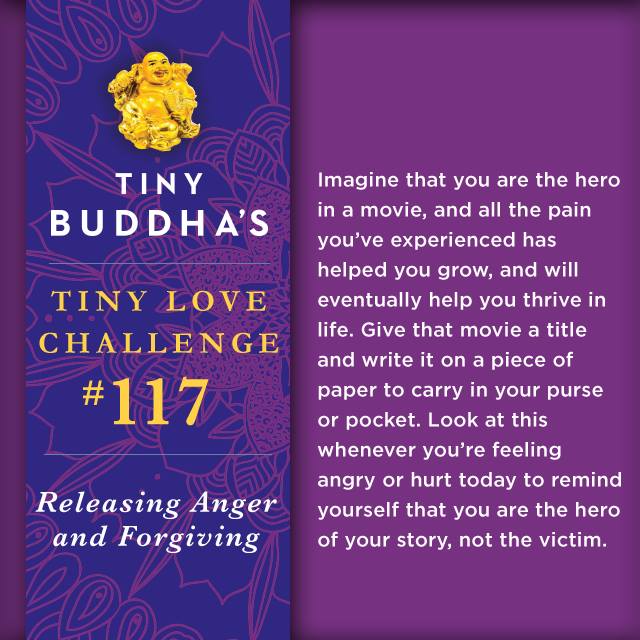
    Love Challenge #117: If Your Life Were a Movie, What Would the Title Be?

    Hero of Your Story

    If your life were a movie, and you were the hero, not the victim, what would the title be?

    (This challenge comes from the upcoming book Tiny Buddha’s 365 Tiny Love Challenges. Pre-order before October 6th and get $300+ in free bonus gifts!)

  • Inspiring Video: Real Life Hero

    Inspiring Video: Real Life Hero

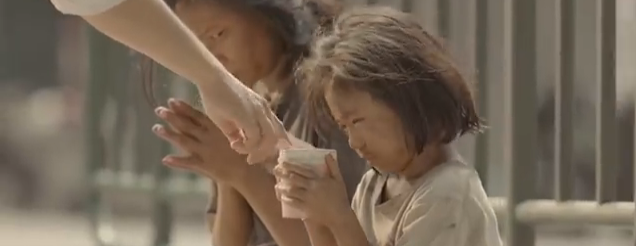
    Want to be a hero and make a difference in the world? It’s a lot easier to do than you think.

    (Yes, this is a Thai insurance commercial–but one well worth watching!)

  • The Man in the Red Bandana: The Inspiring Story of a 9/11 Hero

    The Man in the Red Bandana: The Inspiring Story of a 9/11 Hero

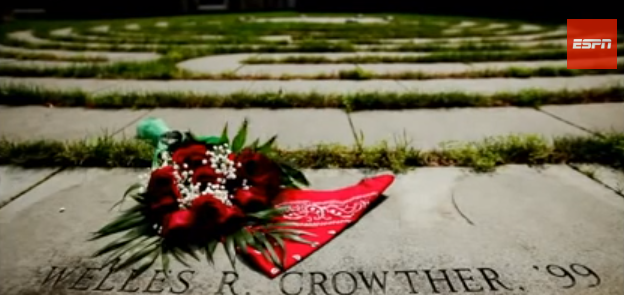
    You likely saw “Never forget” in various places today, on 9/11. When you remember, remember Welles Crowther. Strength. Honor. Courage. That’s everything he was. He was a true hero.

  • Be the Hero of Your Story: Make Your Life Count

    Be the Hero of Your Story: Make Your Life Count

    Seize the Moment

    Bad things do happen; how I respond to them defines my character and the quality of my life. I can choose to sit in perpetual sadness, immobilized by the gravity of my loss, or I can choose to rise from the pain and treasure the most precious gift I have—life itself.” ~Walter Anderson

    Flying. I love flying.

    No, I’m not some sick person who likes getting strip-searched by TSA, or waiting several hours to board a flight that should have arrived at my destination already. I hate that part, but I love the part when the plane takes off, and I especially love the part right before the plane touches down.

    Maybe its because I’ve inhaled so much recirculated air, or maybe its because I’m jet lagged and in some overly tired, trance-like state, but I love the initial descent.

    During the initial descent the destination becomes clear when you look outside the window. Oh, I love the window seat. Every time without fail, I gaze outside and look at the lights of the houses and buildings as the plane flies by.

    Every time a very similar thought comes to my mind: Inside each house there is a person or a family, people experiencing highs and lows, people laughing and crying, people living and people dying.

    For some reason this obvious thought is comforting to me. Maybe it’s because it’s proof that although we are all infinitesimal in the grand scheme of things, we are all sharing in a collective human experience.

    I think there is meaning in life, which made this plane ride ultimately more difficult than any other, because I was returning home to bury my twenty-seven-year-old brother.

    A day after the burial, my father and I met up with some of his close friends to collect my brother’s personal belongings and view the site “where it happened.”

    I remember that day so clearly. It was bright and warm for the chilled wintertime in northern California. It wasn’t the type of day you’d expect for death; it was as if the weather didn’t care.

    People asked me why it was so important that I know how it happened. 

    I tried to explain that I just wanted some answers, but a common response was that “knowing” wouldn’t bring him back. Obvious, true, and painful, but I’ve always had a need to know, and I was determined to try and make sense of it and uncover what had happened.

    At the site, I went over all of the possibilities in my head as if I were the investigator. Maybe he’d tried to answer his cell phone? Maybe he’d fallen asleep? Maybe the truck had malfunctioned? Maybe? Maybe? Maybe?

    I needed to know what had caused the one-ton truck to blow over a power pole and crash forty feet across a water-filled ditch into a dirt embankment, causing the truck to fold like an accordion.

    Maybe I needed to know because I have an image in my head of my brother lying helpless in the mangled cabin of that truck, waiting, hoping for someone to come out there and help him.

    According to the traffic and police reports, it was almost two hours until someone arrived on scene because he was commuting in the country. In fact, if he hadn’t hit a power pole, and someone hadn’t been unable to watch their midnight TV programming, it may have even been longer till someone got out to the site.

    The police report said that my brother was pronounced dead at the time of arrival, but still, my thoughts turn to those unaccounted-for two hours.

    Fate. Is there a single force that determines our lives? Maybe there is a higher power that has a plan for all of us? Maybe we have the ability to determine our own destiny? Maybe? Maybe? Maybe?

    I don’t find comfort in answers that rely upon faith. I come from the school of doubt. I am not out to discredit anyone’s religion or philosophies on life; on the contrary, I think all can be good if they help each person live a meaningful and responsible life, but there are simply more questions than answers, and I don’t want to base my life on theory.

    I am not a pessimistic person—you can ask anyone who knows me—but I instantly discredit everything, even my own ideas. It seems there is some sort of circular logic paradox, where for every idea, there is another idea that counters it. Life is one big paradox.

    “Life sucks, and then you….”

    I’m sorry for the cliché, but this is important. We’ve all heard this phrase before, and we know how it ends: “…and then you die.”

    But if you are reading this, you are not dead yet. And if you have felt the way I’ve felt, life does suck.

    No sense trying to sugar coat it: sometimes, it just plain sucks. I’m here to tell you that that’s okay. In fact, it’s good that life sometimes sucks—and you’re not dead yet.

    I recall the last time I saw my brother alive. Fortunately, I made the decision to take additional time off of work for Thanksgiving instead of Christmas, and got a few additional days with him.

    On my Thanksgiving trip back home, we did a lot of our regular activities: We BSed about good times in the past, drank and sang karaoke at our favorite Irish Pub, singing till our throats got sore and then singing some more, and we spent time with our family and friends.

    However, this trip home, and this time spent with my brother, was different from any other time.

    My brother spent most of his adult life with a large chip on his shoulder. I suppose a lot of people have such chips weighing them down because “life sucks.” This was his attitude.

    Not all the time, of course. He had some great times, some amazing moments; I know this because we had them together. But the chip was always there, sometimes just below the surface.

    On this last trip home, something was different. We still went out drinking at karaoke, but this time he put me in the cab. This time he picked up the bill. This time his chip had some real passion behind it.

    He told me definite plans he had for the future. He had started to seriously date. He had even picked a vocation that he was happy about; he was going to be an electrician, saying to me, “I like working with my hands.”

    Make no mistakes about it: my brother had started taking responsibility for his life.

    “Life sucks, and then you die” is an incomplete sentence. It’s the wrong side of the paradox to take because meaning in life comes from what we each do. Life just is, and we are all unique artists with the ability to create our own masterpiece. If positive and negative are two sides of a coin, we don’t have to flip it and leave it to chance.

    I have often asked myself, if I died right now, how would I feel about my life? The retrospective questions seem to supply the fullest answers.

    Maybe you have done this before, or maybe this is the first time you have dared to ask such a question. Everyone’s answer may be different, and the way they feel about it may be different.

    Regardless, it can be empowering. Life is all we know for certain we have. Say what you will about religious belief and potential other planes of existence. The now is here; living it fully is about believing and having faith in ourselves.

    What I saw in my brother that day, for the first time, was a slight shift in attitude that had moved him into action. He’d started to be the hero of his own life story.

    Tragic as the brevity of his life is, the real tragedy would have been never making the change. My brother Justin is my inspiration, a source of newfound strength, and a reminder that it is never too late to start a new journey.

    During the initial descent, the destination becomes clear when you look out the window. Flying overhead I see the shimmering lights of human experience and I have perspective; when I land, it is up to me to decide what to do.

    Photo here

  • 8 Easy Ways To Spread Happiness Around You

    8 Easy Ways To Spread Happiness Around You

    Happy Days

    “All the flowers of all the tomorrows are in the seeds of today.” ~Proverb

    For as long as I can remember, I’ve wanted to contribute to the world somehow. I’ve always dreamed of starting a charity organization. I bet that, just like me, you walk around with some sort of wish in your heart to change the world in some way, but you might not do anything about it. How come?

    My excuses were time, money, fears, and not knowing how to go about it. I’m guessing you have similar hindrances.

    Until recently I held on to the limiting belief that someday, one perfect day, when I’m done being busy with pursuing my masters degree, working my current part-time job in a call center, and raising two small kids under five, I’ll follow my heart and contribute to this world. Someday.

    It’s a myth!

    Through my job in a call center, I witness lots of tragedies that happen to people, and they’ve been wakeup calls for me.

    I’ve understood something life-changing: all I really have is today. And I better make it count.

    So I made a conscious decision, a choice, to throw all my fears away and start spreading happiness.

    I thought, I might not be able to start a charity now, but I can take a tiny step and start as a volunteer in some existing organization. So I joined hospital clown project, where I do the small, practical stuff for them.

    I also decided to spread happiness around my inner circle—my husband, my two kids, my family, friends, and colleagues, with small things. (more…)

  • How to Convince Your Brain to Change Your Habits and Your Life

    How to Convince Your Brain to Change Your Habits and Your Life

    To get something you never had, you have to do something you never did.” ~Unknown

    Heroes inspire us all. They are strong, smart, and powerful. They manage to win against all odds. They will keep going no matter what.

    They may feel fear but fear does not get them. And just when you thought that they were done, it was over, and that there was no way they could overturn the situation, they rise back out of the blue, strike, and win!

    Then they cross the finish line. Glory awaits them. From now on everyone will remember them for the great people they were.

    Oh, the path of glory.

    We get addicted to this path. We want to be heroes so badly. And we fight, we do our best, we give our all, yet many of us are failing.

    I didn’t recognize the reason behind our shortcomings until I realized that there are actually two types of heroes: the glory-focused type and the down-to-earth type.

    Let’s take exercise and healthy eating as an example.

    Many people decide to live healthier, especially in January with New Year’s Resolutions.

    They believe that this time they will make it happen! Glory awaits them! And they march. Full-speed. They do very well—at least in the first few weeks.

    Then they slowly start running out of steam. They cannot hold on to their diets as they did, and they skip more and more workouts. A large percentage of them will have quit by the second week of February.

    No glory for the quitters, only blame and guilt. They didn’t try hard enough. They gave up too easily. They were lazy. Or, they just did not want to change badly enough. (more…)