Tag: Help

  • Tragedy Can Help Us Find Our Life’s Purpose

    Tragedy Can Help Us Find Our Life’s Purpose

    Alive

    “Sometimes in tragedy we find our life’s purpose. The eye sheds a tear to find its focus.” ~Robert Brault

    Just over two decades ago, I happened to be planted in the Midwest. Chicago. The southside to be exact. A location once recognized as a haven for successful black people handling their business while their kids frolicked throughout the streets, making up secret handshakes, basking in the sun and enjoying their youth.

    And then, as the years progressed, things began to change; our haven was becoming less safe.

    As if a nebulous cloud began to form over our neighborhood with a torrential rainstorm of bullets impending, some parents forced their children to stay inside as the lightening and thundering began to rain down.

    The unfortunate news is that some children of varying generations were left out in the storm, with many, many lives lost due to senseless violence. And I wondered, “Why me?” Why do I deserve such shelter while so many of my brothers, sisters, aunts, and uncles must brave the storm and suffer?

    “Why was I so blessed?”

    You see, I may not have grown up with the riches of the world, but I was indeed wealthy—inundated with support, guidance, education, and love. I was recognized as “one who would make it out,” and indeed I did, but not without the scars, physically and emotionally, to show for it.

    As I journeyed forward, attending a top twenty university, my erudite persona led many of my classmates to believe that my younger years were a cake walk—that I must have come from a rich, wealthy and white neighborhood. But in fact, I was born amongst my own, tender brown, beautiful skin.

    But still, my peers did not believe me. I was in a battle. Lest did I know, it was much with myself.

    So I began to fear and hate where I was from so much that I often cried to my mother, screaming that I did not want to return home during the summer months. But I had to anyway. So I did—in mental steel shackles—going straight from work to the gym to home everyday in fear, feeding the hunger of my hatred even more.

    I was such a frustrated young man who had the world in the palm of his hands, but who had not yet recognized its power.

    It wasn’t until I began traversing that palm that I realized there was a much bigger world out there and that many more people had gone through far more than me, and interestingly enough, still had enough umph to persist and fight on.

    So I decided to give it a shot. Try it out. Test it out and venture to places, near and far away, discovering more of the world while discovery myself. As I did, the pain of Chicago traveled with me. A few years ago, right after I moved to the Dominican Republic, I received this email on January 7, 2010 from my mother:

    Hey babe. Some sad news, Cody was killed on Sunday right down the street. He was with Marlon in a car and a guy walked up and shot them both, but Cody died on Monday with 14 gunshot wounds. So sad. I love you.

    And then later again that year, a few days after I followed my dreams of moving to Los Angeles, I received a phone call from my mother stating these words:

    Marlon was killed just up the block from our house. He was with some people and someone came up and shot him in the neck and back. Be Careful. Love you.

    Out of all the people in my life that had passed on, why were these two more significant?

    Sure, we did not stay in the best of contact past high school, but we shared something much stronger—something much more powerful: childhood dreams. 

    As we played football and baseball in the abandoned lot directly across the street from my house, we dreamed of growing up to become the likes of Randy Moss and Derek Jeter. We had huge dreams—dreams that we knew would one day come true.

    But after I lost both of them, the dream deflated and the big question: “why me—why am I so freakishly blessed?” returned, until I was asked an even greater question: “Why not you, Alex?”

    Instead of counting your blessings and asking why you are so blessed, why don’t you live a life focused more on sharing those blessings?’

    “Sometimes in tragedy we find our life’s purpose. The eye sheds a tear to find its focus.”

    I cried a lot and it was not until others helped me meditate upon it and realize that all the bad and unfortunate events in my life could be leveraged as lessons to help me, instead of destroy me. And indeed, they did, but it took time—years.

    The shedding of those tears did in fact help me find my life’s purpose while understanding life’s purpose, which is to teach us, to expand us, to challenge us, to grow us—to evolve us to show us that nothing is permanent in life, and to be grateful for this year, this day, this moment.

    Gratitude, once taken into practice, can change your life.

    And now, I can honestly look back with a better understanding of my past while holding gratitude for what was and what is. I choose to trust the struggle moving forward, because the more I go through and learn, the more I can help others.

    And the same goes for you. You have the power to help others.

    We are not only here to share our stories of heroism, happiness, and jubilance, but also to share our stories of hurt, pain, and sadness to be an extra shoulder to cry on and to show others that there is someone out there that not only knows their pain, but also feels it.

    So today, I ask you: what lessons have you learned from the hardest times of your life and what would you say to the person who is going through something similar right now?

    Because I guarantee there are some individuals reading your comments that could really use the love and encouragement.

    This article is dedicated to Cody, Marlon, to the children of Chicago (of all generations) and to the world.

    Photo by Leland Francisco
  • You Have the Power to Change Someone’s Day for the Better

    You Have the Power to Change Someone’s Day for the Better

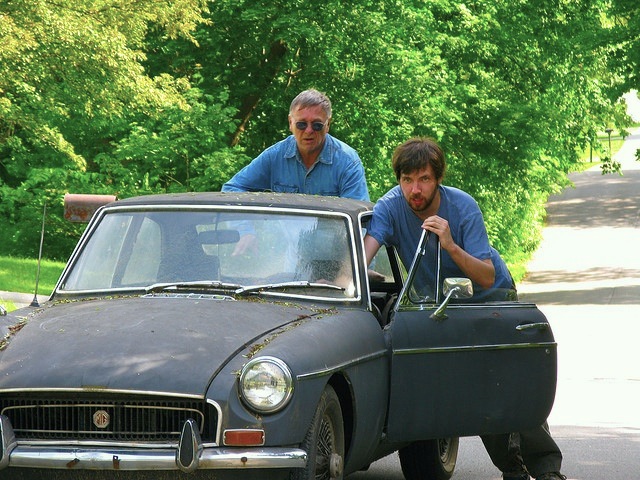
    Pushing Car

    “It is one of the most beautiful compensations of life that no man can sincerely try to help another without helping himself.” ~Ralph Waldo Emerson

    It’s a feeling of dread. Maybe you’ve experienced it before.

    You’re driving down the highway and suddenly something goes wrong. You’re stepping on the gas pedal but nothing is happening.

    All the little lights on the dashboard come on and you notice one particular gauge you’ve been meaning to address sooner.

    The needle is just past the E. You’re out of gas. 

    It’s a helpless feeling. Desperation flashes through your mind as the wheels begin to slow. Other cars start passing you as you attempt to merge over to the emergency lane to get out of the way, the whole time hoping you can coast just a little farther, ever closer to the oasis of fuel at the next exit.

    Maybe that isn’t how it felt for you or perhaps you’ve never been through this little peril. But that’s how it felt when I ran out of gas recently.

    I was four or five miles from home, cruising down a long hill on the interstate when I realized my car wasn’t responding to my foot’s orders. 

    Fortunately, I was able to get over and coast all the way to the next exit and even up the ramp.  My mind raced, wondering how far I was going to have to push the car, and worse, if it would be uphill.

    When my vehicle’s momentum finally slowed to a stop, I was relieved to see the gas station only a few hundred yards away and that I’d only have to overcome a slight incline to get there.

    So, I got out and started pushing. As I grunted and heaved I was unpleasantly surprised at how heavy my little car was on a relatively flat stretch of road. But I pressed on, inching my way towards the plastic gas station sign that signaled my salvation. 

    My muscles strained against the heavy burden, legs and arms burning from the exertion. I thought about the times I’d seen other people who were out of gas. I always felt bad for them, maybe even a little embarrassed for them.

    Now I felt the shame I’d always imagined those people felt.

    More than a few times, I’d actually stopped and helped them push their vehicles to the nearest station. While I lumbered forward, one particular instance popped into my head from several years before.

    I was in Austin, Texas for a convention. A friend and I had been hopping around to different bars (like any good convention-goers) when, from the sidewalk, we saw a guy pushing a monstrosity of a car. It was a big convertible from the 1970s. 

    I don’t recall what make or model the behemoth was. All I know is that it was the heaviest object I’ve ever tried to move in my life.

    Still, my friend and I started pushing with the guy. He hadn’t seen us at first and was surprised that his task had been suddenly lightened. He smiled back at my buddy and I as we kept pounding our feet across the pavement, one foot in front of the other.

    “Just steer,” I told him as we kept easing the car towards a section of the road that began to slope downhill. “Once you get to where it starts slanting down you’ll be fine,” I said. 

    After several exhausting minutes, we reached the crest in the road and the car began to coast on its own. The driver thanked us and offered us money, which we declined. He waved back to us as he hopped in and guided the wheeled boat to the station.

    We went on about the rest of our night and didn’t give the event much thought. In fact, I hadn’t thought about it in years.

    Now here I was, in the same predicament, out of gas and trying to reach a little section of the road up ahead where it started to slope downward, the whole time trying to steer and push, a difficult pair to manage at once.

    Suddenly, the car felt like it was half its weight. I first looked down to see if I’d reached some kind of a little down slope or something. Then I heard a guy’s voice from behind me. 

    “Thought you could use a little help.”

    I turned around to see a total stranger, in his mid-thirties, pushing hard against the back end of my car. I smiled broadly. “Thanks man!” I shouted over the passing traffic.

    He had parked his truck just off the exit, probably as soon as he had seen my plight. He hadn’t hesitated or thought about helping me for more than a second. His instant thought had been to help.

    “You should be okay once we get to that little down slope up ahead,” he commented. 

    Inside, I laughed, remembering how I’d said those exact words to the guy in Austin a few years before.

    A minute or so later, we reached the downhill section of road and my car began coast itself towards its haven. “I think you’re good,” he yelled and waved.

    I thanked the man again and hopped in my car, steering it into the station on nothing but gravity’s sweet momentum.

    I don’t know much about karma, but I do know this: life presents us with opportunities, little moments where we can make the world a better place with a simple action.

    That stranger made my day better by lending a hand. He lightened my load and thus, lifted my spirits.

    Had he not helped, I may have become annoyed at the situation and more easily bothered the rest of the day, even irritable. I could have returned home less happy and let those feelings pass from me to the people around me, making their day worse.

    You have an extraordinary power to change someone’s day for better or worse, and you have no idea how far reaching that impact will be. 

    Another thing I took away from the gas incident is that good deeds never seem to go un-repaid.  It is an indelible truth that I’ve noticed time and again. Call it karma or mitzvah or comeuppance, it all works the same way.

    I kept smiling as I filled up my tank. I felt grateful that a random stranger had helped me. It gave me a good feeling inside, a sense that everything would be okay, no matter what.

    I started to replace the gas cap when I heard a familiar sound on the other side of the pump. A police officer in an old, beat-up pickup truck was trying in vain to get the engine to turn over.

    “Battery dead?” I asked. “If you need a jump, I have some jumper cables in the trunk,” I offered.  The man’s frustration visibly eased a little.

    “Thanks man,” he replied.  “I’d appreciate that.”

    “No problem,” I said as I reached in the trunk and grabbed the cables. “It’s always good to help someone out.”

    Photo Geoffrey Callaway

  • Helping Others Helps Us All: We’re All in This Together

    Helping Others Helps Us All: We’re All in This Together

    breaching

    “Pain is not a sign of weakness, but bearing it alone is a choice to grow weak.” ~Lori Deschene

    I, like many of you I’m guessing, am a wanderer. A student of the soul. At times it can be a bewildering path. Most days I give thanks for the adventure. Many others I wish for clarity and certainty.

    But though I am a wanderer, I am not aimless: I have a path as deep and true as any other. I simply have no map to guide me, only my intuition, and the myriad teachers that cross my path: people, places, books, ideas, synchronicities.

    I have learned to trust my inner senses. When I am on my path, my life feels good and right; off it, I am aware that I am scrambling through the undergrowth and finding my way at the edge of cliffs.

    For a long while I wondered what this path actually was. What was it that defined some actions as “right” for my soul direction, and others “wrong”? Especially when many of them seemed to appear synchronistically, out of the blue, and were counterintuitive.

    The idea of a “path,” or what Lao Tzu calls “the Way,” works for me.

    It’s as though there is a channel through life that is “right” for each of us to take. An invisible highway of least resistance in the midst of white noise, which resonates at the same frequency that we do and seems to draw us forward, exerting some sort of magnetic pull.

    When we are on it everything makes sense, we find flow better, we feel right in ourselves, we have a sense of something larger than our own small ambitions guiding us.

    I have begun to see that the path, this invisible pull to our souls, is in fact our own personal way to wholeness: our own unique healing prescription.

    Our path, I have learned, takes us through the experiences, thoughts, and meetings that will heal every aspect of our selves, even, and especially, those that are hidden from our conscious awareness.

    The words “whole” and “heal” come from the same root. To reach wholeness, we must heal from the wounds and distorted vision that life and our perceptions have wrought on us.

    Therefore, each healing path must be unique, as each of our woundings is unique. And yet they each share many similarities, because in the end we are all humans and our stories cross over.

    This is the part that many of us miss. We are so focused on “finding me,” on healing ourselves, that we walk on our individual paths looking down at our feet. We forget the fellow travellers around us. And this is where our ability to fully heal is lost, because we cannot do it alone.

    The emphasis in Western medicine, the self-help and personal development movements is very much on the individual. “You’re the most important thing in your life” messages have trumped the greater truth, which is that we are tribal creatures and herding mammals.

    We are only as strong as our weakest members. The fate of us all lies in all our hands.

    If you see a group of migrating birds, a shoal of fish, or a herd of wildebeest, there is a constant communication going on between them. They move as one, navigating canyons and predators.

    They listen for the calls of others, and they listen to the instinct within. Both guide and steer them. Both have equal weight. But the overriding aim is to find the path and stay on it together, to find the safe way, the yielding way together—to get through together.

    One day last week, feeling frustrated at myself and the seemingly disparate roles that I could not quite reconcile, I had a realization of immense clarity; I could not let go of any of them because they were all actually different facets of the same thing: healing.

    The internal guidance system that leads my work as a writer, teacher, editor, and artist; my roles as mother, daughter, partner, and friend, are all one big journey of healing myself, and sharing that process with others for their own healing.

    My instinct to heal and to help others heal are equally strong driving forces that determine my whole life.

    This is what I love about all of my heroes: their dedication to healing, and their willingness to reflect on their pain and share what they have learned.

    Then I zoomed out and saw it from a much larger perspective—that this is some human instinct, a basic herd instinctthe need to help to heal the herd, to keep us all together, all moving in the same direction. 

    Like the race that an African tribe does, the aim of which is not who wins or runs longest or fastest, but that everyone finishes together.

    Sue Monk Kidd reflects on this herd healing in her beautiful book, Dance of the Dissident Daughter.

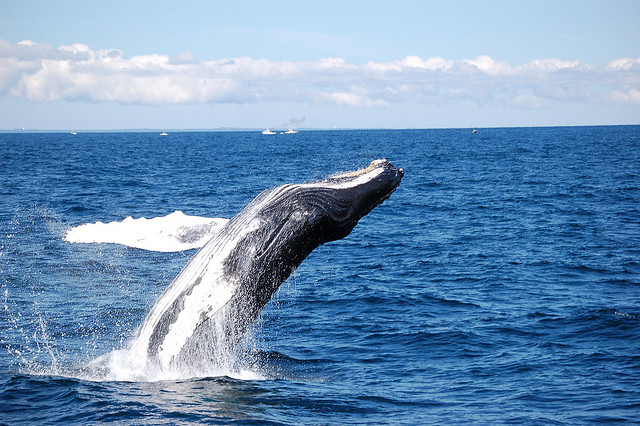
    She recalls watching a nature program about whales and seeing these behemoths throwing themselves out of the water and crashing down on their backs.

    The narrator shared that naturalists believe that breaching, as it is called, might be their way of communicating when the seas get rough. A spectacular way of creating strong vibrations in the water, marking their route so that the others in their group would not get lost.

    She reflects on how women do this too, an example that I feel applies to all humans:

    “Women must have the whale’s instinct. When we set out on a woman’s journey we are often swimming in a high and unruly sea, and we seem to know that the important thing is to swim together—to send out our vibrations, our stories, so that no one gets lost.”

    So here we are, the waters are rising on this precious Earth of ours, the storm waves crashing. Many of our global population are tired, have lost our bearings. But the instinct is strong. Many of us who are aware of the need for healing are calling out, breaching: “This way, this way!” we call.

    We share our stories, show our healing, so that others might find their way onto the path of healing too. So that person by person, community by community, country by country we might find a better way to live. So that we can find healing for our whole herd, and a path, a way through.

    Sometimes I doubt myself. I wonder why I do my work. But now I know. I do it for me just as much as I do it for you.

    I speak or paint or write or dance with One Billion Rising, because I am adding my vibration, which is the most basic thing I can give. Because I yearn to the depths of my soul to be healed. To be free from suffering. To see those I love and those I don’t know free from suffering too.

    So I ask you, every time you feel the instinct rise, like a whale breaching in the center of your soul, with the urge to reach out and share words of love, gratitude, kindness, forgiveness, appreciation, hope, and healing, do it.

    Every time you feel the desire to give a stroke, kiss, hug, gift, or smile, but you think it makes no difference, or that you don’t have time, do it.

    It matters. More than you could ever know.

    In fact, it’s really the only thing that does.

    Photo by Nesbitt Photo

  • 10 Simple Ways to Make the World a Better Place

    10 Simple Ways to Make the World a Better Place

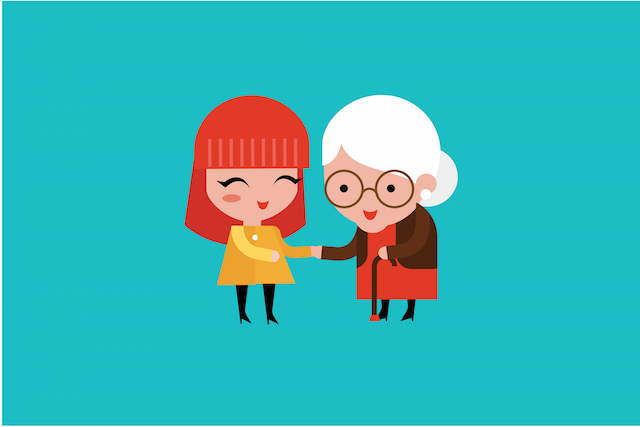
    young volunteer woman caring for elderly woman

    “As one person I cannot change the world, but I can change the world of one person.” ~Paul Shane Spear

    I have always wanted to change the world.

    I remember being four years old, sitting glued to the television on Sunday mornings, not watching cartoons, but utterly captivated by World Vision. I cried about the injustices in the world, and begged my mother to let me sponsor Maria, the girl with the large, sad eyes who was around my age.

    My mom patiently tried to explain to me that we couldn’t afford to send her money. I couldn’t understand, since we seemed to live in luxury compared to Maria.

    Having been raised in a middle-class community of about 800 people in rural Newfoundland, I had never seen a stark divide between the rich and the poor. We all seemed to be the same to my four-year-old eyes.

    My heart broke for Maria, and all of the other children on the show. I vowed to myself that someday, I was going to help people like her.

    Throughout my childhood, I told everyone that I wanted to change the world. Many didn’t take me seriously. They’d say, “One person can’t change anything.”

    Still, I knew I wanted to make a positive difference by helping people, animals, and the environment.

    I started volunteering in elementary school, and became a vegetarian at the age of 13.

    People asked, “Why bother? You know, that cow isn’t going to come back to life because you aren’t going to eat it.” And they very often said, “It won’t make a difference.”

    I tried to explain that every action counted, and that we all had to make small efforts or nothing would ever change.

    As time went on, people around me began to criticize less, and many friends and family members decided to try some of the things I was advocating.

    Each time I did something to make a positive impact, it left me wanting to do more.

    You may think that you need to be a world leader or a billionaire in order to make a difference.

    I always believed that being a good person is about the small things. It’s about how you treat other people, not how many people you have power over.

    If you’d like to make the world a better place, but aren’t sure how to fit it into your busy life, these ideas may help:

    1. Volunteer.

    Volunteering doesn’t have to consume all of your free time. You can volunteer as few hours as you would like! You can find an organization within your community, or you can even volunteer online, through websites that will allow you to help for even a few minutes at a time.

    2. Donate blood.

    This can be one of the most satisfying ways to make a difference. You can literally save a life with just an hour of your time.

    3. Donate used clothing.

    There are so many places and ways you can donate your used clothing. Some organizations even offer pick up services, Donate them to a homeless shelter, or an organization that sells them to raise funds.

    4. Foster an animal.

    This can be such a rewarding experience. If you’re able to part with the foster animals, they leave a hole in your heart, but fostering your next pet helps fill it, and you will be making a difference in the lives of so many animals in need.

    5. Spread the word about various causes in your community.

    See an interesting fundraiser that an organization is hosting? Share it on Facebook! See an animal that’s up for adoption? Share it. There are so many ways you can help an organization with just the click of a mouse.

    6. Donate something you made to an organization that can use it.

    I make jewelry, hats, scarves, and other crafty things in my free time. I’ve donated many hats and scarves to homeless shelters, and donate jewelry to a cat rescue organization for them to sell or auction to raise funds. You have talents—use them!

    7. Join a bone marrow registry.

    It’s incredibly easy to sign up to donate bone marrow, and you never know when you could save a life.

    8. Spread some kindness.

    Small acts of kindness can go a long way in making the world a better place. Think about a time when someone did something unexpected for you that brightened your day. Weren’t you a nicer person for the rest of the day because of that?

    I’m willing to bet that anyone who receives an act of kindness passes it on in some way, even if it’s just by being in a better mood, and therefore treating the people around them with more kindness than usual.

    Send someone a kind message. Give a small gift. Make something for someone. Tell someone how much they mean to you. There are so many ways to brighten someone’s day.

    9. Change your diet.

    Many people will argue with the validity of this strategy to improve the world; however, what you buy reflects what you value.

    If you don’t want to become a vegetarian, try having one meat-free day per week. If you don’t want to reduce your meat consumption, how about buying some free range meat or eggs? Or, buy organic food products. There are many ways you can change your diet to reflect your values.

    10. Make your purchases support your values.

    Every purchase you make supports something. You can either support a large business that exploits people, animals, and the environment, or you can buy items that are local, organic, or fair-trade. It’s hard to change this all at once, especially if you’re used to shopping for bargains, but try changing just a few of your purchases to make them better reflect the things you value.

    These are just a handful of the thousands of ways you can make the world a better place! Just remember that every single thing you do makes a difference. Don’t ever let anyone—yourself included—discourage you from trying to be a better person and help others.

    Photo by Dave Bezaire & Susi Havens-Bezaire

  • Introducing Tiny Buddha’s Community Forums!

    Introducing Tiny Buddha’s Community Forums!

    Tiny Buddha 2

    After much time and planning with Joshua Denney of Think Web Strategy, I’m thrilled to announce that Tiny Buddha now has a new responsive design and community forums!

    The new design enables for a better reading experience on mobile devices, and also gives you access to forum-related information right on the homepage.

    Why Join The Tiny Buddha Community Forums?

    The forums are a place to connect with the community, to share ideas, and to give and receive support. You’ll find topics related to:

    • Art
    • Crafts
    • Emotional Mastery
    • Fun
    • Health & Fitness
    • Parenting
    • Purpose
    • Relationships
    • Spirituality
    • Tough Times
    • Work

    Since site authors officially started using the forums two days ago, there are already quite a few conversations going on over there. I hope you’ll set up a free account to join one or start your own!

    To Set a Free Account on the Tiny Buddha Forums

    1. Click on the “Join the Forums” link at the top right-hand corner of the site.

    2. On the register page, enter a username, your name, your email address, and your password, and then hit “complete sign up.”

    3. You will receive a confirmation email to verify your account. Once you’ve done that…

    4. Login at http://www.tinybuddha.com/login

    Once you’re logged in, you can use the forum link in the main menu, at the top of the site, or check out on some of the popular forum conversations listed on the new homepage.

    Since this is a new site feature, there may be some bugs. If you notice any issues, please let us know in the technical support section, here: http://dev.tinybuddha.com/forum/site-feedback-support/technical-support/

    Thank you for being part of the Tiny Buddha community! 🙂

  • Getting Back Up After You Fall & Healing from Depression

    Getting Back Up After You Fall & Healing from Depression

    “The problem is not that there are problems. The problem is expecting otherwise and thinking that having problems is a problem.” ~Theodore Rubin

    Growing up I was a thoughtful and happy kid—carefree, easy going, not afraid to make mistakes and take on challenges.

    Just before I turned thirteen, my parents moved our family halfway across the world where we knew no one.

    I adjusted well, made friends, and felt content and successful in my pursuit of whatever I decided was worth pursuing. I was strong and confident. I worked hard, laughed easily and often, and felt as if I had the good life all figured out.

    Then shortly after I turned twenty-five a severe depressive episode hit me like a ton of bricks. Looking back, I can see how it came about, how several traumatic events stacked upon themselves until I finally collapsed under their weight, but at the time I felt annihilated, ploughed over, and destroyed virtually overnight.

    I spent the next nine months steeped in profound physical, emotional, and mental anguish.

    The shame was the worst part.

    Despite years of evidence to the contrary, when I couldn’t get myself off the couch for months, when I couldn’t enjoy any activity, and when I couldn’t smile genuinely at anyone or anything, I truly thought that this was my actual self, my real personality—that I was boring, unmotivated, useless, a loser, an anomaly; that I was weak, and that all of this was my fault.

    Essentially, depression lies to you—about everything. And when you are used to trusting your thoughts and being self assured and confident, it takes a long time to realize that the torrent of negativity in your brain may not be an accurate representation of reality.

    It’s hard not to trust your thoughts and it’s hard to sit and mull over what is true and what isn’t, but it’s an important exercise, even you only do it in small doses at first.

    There is a light in you that never goes out. (more…)

  • The World Is a Kinder Place When You’re Kind

    The World Is a Kinder Place When You’re Kind

    Friends

    “Don’t wait for people to be friendly. Show them how.” ~Unknown

    Sometimes I stop to think about how in the world I ended up where I have. I started off with very little, and somehow along the way I have ended up generally happy and on my own two feet.

    My adolescence up to my early twenties had its share of dark days. Whether or not we are lucky enough to have a small handful of people that stick by us no matter what, more often than not we can find ourselves feeling incredibly lonely.

    For a long time through my rough days, I held a sort of grudge against the rest of the world. I had convinced myself that everyone was only looking out for themselves, and I had lost faith in the idea that people were mostly good.

    Where was that feeling of community? Or helping out your neighbors? What about equality and accepting others’ differences?

    The world felt large, dark, and lonely. I felt very let down.

    What I didn’t realize at the time was that as much as those close to me have influenced my growth and my life, those I consider strangers have made just as strong an impact. By closing out the rest of the world, I was really hindering my growth and happiness. Let me explain.

    I had an accident a few years back, and unfortunately, I was far from home and by myself when the incident occurred.

    Many strangers witnessed the accident and casually passed by. Two people who could have just as easily done the same, leaving the accident for someone else to take care of, chose to step in and come to my aide.

    They had no obligation to help, and in fact, had places to be. Instead, they stopped to help me, waited until the paramedics arrived, helped to contact someone I knew, and confirmed that I would be okay.

    I was shocked that people who didn’t even know my name were spending so much time taking precautions to ensure my safety.

    My world was jolted—and I kind of liked it. (more…)

  • How We Appreciate Life More When We Stop Making Assumptions

    How We Appreciate Life More When We Stop Making Assumptions

    “Joy is what happens to us when we allow ourselves to recognize how good things really are.” ~Marianne Williamson

    Our 12th floor apartment overlooks Cape Town’s city bowl and harbor. The view is such that even on overcast days I’m drawn to the window each morning to breathe it in.

    There’s a sense of being both a part of the world and entirely removed from it when you’re that high up.

    It’s how I move through my life too; I’m either immersed in it or off on my own. This contrary nature is not without its challenges, especially when I’m called upon to be one thing when I’m clearly feeling another.

    It’s precisely these moments, however, where if I lean forward in spite of my reluctance, that growth occurs.

    That’s what happened to me the other morning. I was at the window enjoying the view when I noticed a man lying on the narrow concrete island that separates the two lanes of the busy road below.

    His appearance led me to believe he was down on his luck, most likely homeless. I watched as he tried to pull himself into a sitting position. After a few attempts, he eventually gave up and just lay down on his back.

    Cape Town has its share of street people, a lot of them with obvious substance abuse issues. As a result, whenever I see someone lying on the ground, I immediately assume they’re passed out from drinking too much.

    Watching this man below, I figured him for a drunk too. It’s not a judgment call; alcoholism is an illness like any other. I’m simply pointing out how quick I was to pigeonhole him, and from 12 stories up no less.

    Ordinarily, I would simply have gone on with my day, but something compelled me to call the city’s emergency number and ask them to send help. I’m not sure why.

    Maybe it was because the man was lying precariously close to a drop that would land him squarely in the face of oncoming traffic if he fell. I don’t know—all I can say is that, in this instance anyway, I couldn’t ignore the fact that a fellow human being needed help. (more…)

  • Your Happiness Can Make a Difference in the World

    Your Happiness Can Make a Difference in the World

    “Don’t worry about what the world needs. Ask what makes you come alive and do that, because what the world needs is people who have come alive.” ~Howard Thurman

    When I was eight years old I saw a news report on a war. A wounded woman was crying on a stretcher, and soldiers were carrying guns running around her. Up until that point I had thought war was like dragons or knights in armor. It was fictional or happened a long, long time ago. I couldn’t believe it was real.

    At that realization, my experience of life changed. It felt like it was no longer okay to just be; I had to do something. There was something wrong with the world, and I had to do something to fix it.

    This stayed with me into adulthood and, while it gave me a sense of purpose, it also gave me a constant feeling of hopelessness. The problems seemed huge and insurmountable, and everything I did seemed so inconsequential.

    Coming Alive

    I have learned that one of the best indicators of a good path is feeling good, and hopelessness wasn’t feeling good. I felt burned out and unsure of myself. I didn’t feel alive.

    I felt this battle in me. I wanted to be free to make my choices based on inspiration rather than fear, but how can I feel that everything is okay when children are starving, water is poisoned, and we are killing each other and the planet? Clearly that is not okay, right?

    I didn’t want to rise up out of the realities of our world and pretend for the sake of my peace of mind that this wasn’t happening. I wanted to be present and meet our world’s problems, as well as my fear and pain, with compassion, and then to make a choice that feels good—because the last thing the world needs is another hopeless human.

    What brought me to life was allowing myself to feel connected to the rest of the world. Letting myself feel the suffering without trying to fix it and letting myself feel the joy and love without feeling guilty. (more…)

  • 6 Ways to Deepen Your Compassion to Help People Who Are Hurting

    6 Ways to Deepen Your Compassion to Help People Who Are Hurting

    “Love and compassion are necessities, not luxuries. Without them, humanity cannot survive.” ~Dalai Lama

    I thought I understood compassion. Having spent ten years of my life training to be a psychiatrist, I knew how to define it, describe it, and think about it. I thought I got it.

    A few years ago, my brother was diagnosed with a serious mental illness. Being the mental health professional of the family, I took a long break to be with him as he navigated the initial stages of treatment.

    This experience taught me that compassion is more than being nice to someone for a few minutes or hours.

    True compassion is hard work, but it’s worthwhile. As Ralph Waldo Emerson wrote, “It is one of the most beautiful compensations of life that no man can sincerely try to help another without helping himself.”

    In trying to help him, I too was changed for the better.

    Among the many things I tried as part of the process, some worked. Here are the top six that have stood the test of time.

    1. Listen.

    Often while listening to someone, we are formulating replies in our mind, waiting for a lull in the conversation so we can interject. Try instead to just listen. Suspend all judgment and give the person your undivided attention.

    There is powerful healing in sharing your darkest secrets and having another person truly hear it and still love you. (more…)

  • 5 Simple Ways to Help Make Someone’s Life Better

    5 Simple Ways to Help Make Someone’s Life Better

    “We choose our destiny in the way we treat others.” ~Wit 

    Growing up as a high-level swimmer, I used to be a very self-centered individual. Just about everything in my life revolved around becoming the best swimmer I could be.

    I spent countless hours training, getting ready for workouts, and visualizing my future success. Helping others wasn’t on my radar. The idea of contribution was still foreign to me.

    Fortunately, I was passionate about swimming and I had a purpose to my life, so I was happy.

    But eventually my swimming career ended, and all of a sudden I started feeling a profound lack of fulfillment in my life.

    I did what most college students do to fill the void: I turned to alcohol and constant partying. I was having fun, sure, but deep down I knew something was missing.

    I started diving into Buddhist philosophy, and the concepts of compassion, contribution, and oneness started making their way into my consciousness.

    When I graduated college, I landed a “prestigious” corporate job, and although I was making good money, something was still missing.

    I had this lingering feeling that my work wasn’t truly serving others and didn’t have a real impact on the world.

    I quickly realized that this job wasn’t my dharma, so against everyone’s advice I just said, “Screw it” and I quit.

    After a few months of confusion about what to do next, I decided to move to the other side of the world. I packed up my bags and relocated to Perth, Australia.

    My intention? Discover my true self and my life’s purpose.

    As I started going further down the rabbit hole of personal development and spirituality, I realized that the best way to achieve happiness and success is through helping others in meaningful ways.  

    As Gandhi said, “The best way to find yourself is in the service to others.”

    I decided it was time to start contributing on a bigger scale, and to share all this wonderful wisdom I was discovering through a blog. Eventually, I decided to “go pro” and become a Peak Performance Coach. (more…)

  • Asking for Help instead of Bearing Pain Alone

    Asking for Help instead of Bearing Pain Alone

    “Pain is not a sign of weakness, but bearing it alone is a choice to grow weak.” ~Lori Deschene

    When given the chance, I would much rather bear pain on my own, thank you very much. It’s incredibly difficult for me to be vulnerable and ask for help. To share my pain with someone else.

    I think partly it’s from my upbringing—living in the U.S., self-sufficiency is valued. We so often praise the individual who has done extraordinary things and see it as a sign of strength that they accomplished all of it on their own.

    I can understand that; it’s led to a lot of independence and innovation. However, I’m also noticing a shift in understanding, of how no one is an island, we are all interconnected, and everything we do affects others.

    It’s easy to want to hole up and hunker down when the going gets tough, to “grin and bear it” and keep others in the dark. Being human means I’ve had my share of pain, but I’m also coming to value sharing my pain with others.

    I’ve come to believe we are not meant to bear pain on our own.

    A few years ago while adjusting the volume on my cellphone, I tripped down the stairs. (Note to self, pay more attention when walking down the stairs.)

    My ankle swelled up to the size of a grapefruit, and I had ugly purple and black bruises to boot. I tore some ligaments and had a suspected fracture. Needless to say, I would not be running any marathons in the immediate future.

    It was painful not only on a physical level but also an emotional one. Being basically bed-ridden brought up all the issues I normally didn’t have to face—one of those being humility.

    I couldn’t walk, I couldn’t do laundry because that required going down stairs, I couldn’t grocery shop, I couldn’t do anything but lie in my bed with my ankle propped on what seemed to be a thousand pillows.

    As someone who prides herself on being independent, this was excruciating. The very last thing I ever wanted to do was ask for help, and there I was, needing it in a very big way.

    I’m not an expert on this topic (if such an expert exists!), so the only thing I can do is share with you my own experience. (more…)

  • Simple Ways to Give Back and Help Others Starting Today

    Simple Ways to Give Back and Help Others Starting Today

    Volunteering

    “We make a living by what we get, but we make a life by what we give.” ~Winston Churchill

    Thirty-plus years ago, when I was applying to college, one of my friends used to say regularly, “We’ve gotta get involved with more extra-currics.”

    He was talking about extracurricular activities. His (and our) interest was to build our “resumes” to enhance our attractiveness to college admissions officers.

    Today, kids are building their resumes at younger and younger ages, and that’s a good thing. Even if their parents have an eye on enhanced college applications, there is a huge benefit to involving young people in community service. For those kids, adult involvement in community service will come naturally.

    For me, community service came later in life.

    When I was starting my career, I remember hoping to one day be wealthy so that I could donate huge amounts to charitable organizations. Fortunately, rather than waiting for “someday” to come, I learned how much of a difference I could make by donating time and energy to good causes and people in need.

    I’ve gotten involved in many activities in my community, and it has been an extremely enjoyable and fulfilling experience.

    There are many benefits that come from giving of yourself.

    One of my daughters, just before she graduated from high school, was asked to answer an essay question: “What advice you give to an incoming high school freshman?”

    Among other things, she suggested that they get involved in clubs, teams, and community service activities, and among the benefits she listed was the opportunity to meet and interact with people who you would otherwise not get to know.

    The same thing applies to volunteering. You can also use volunteering time to spend more time with your family and friends if you arrange to volunteer together. (more…)

  • Choose to Be Kind and Change the World

    Choose to Be Kind and Change the World

    “Be kind, for everyone you meet is fighting a hard battle.” ~Plato

    While volunteering my carpentry skills for Fundacion Uaguitupu on the outskirts of Panama City, Panama, I made a difference by assisting Kuna Indian communities in the renovation of their homes and churches. There was an abundance of necessary repairs, but unfortunately, funding could not keep pace with the work to be done.

    After three months of doing what I could with the resources available, I had done little worthy of the evening news, yet a small patch of the world had become a better place because I had been there. Sadly, in many parts of the world it doesn’t take much to be considered an improvement.

    I am forever amazed at the capacity of those who live difficult lives to treat others with kindness and compassion. I was welcomed into many homes, treated with great respect, and graciously thanked for my time in the community.

    It is humbling to think that I have so much to give, when the truth is I have so much more to learn.

    One of the most important things I’ve learned is that each and every one of us can change the world!

    Too many of us believe we have no power to make a difference. I have entertained the thought many times.

    Making a difference often takes time, and our kindness may not grow roots until long after we’ve fertilized the flower beds. Focus on the act of giving, rather than the results of your actions. Detach from outcome, and you’ll be free to make a difference in ways you never imagined.

    You don’t have to eradicate world hunger. Simply do something good everyday.

    It’s not results that soothe our souls; it’s actions. In a difficult world, kindness has amazing power.

    Every day people endure stressful jobs, demanding relationships, and backbreaking responsibility. Every day people battle life threatening disease, face uncertain futures, and struggle to survive.

    Each moment of our lives, someone, somewhere, is in need of kindness.

    What you do for others energizes the universe. What you do for the universe energizes you.

    Go slowly. Breathe, smile, and be present. Seek opportunities to make a difference, embrace the moments, and be grateful for every choice you make. (more…)

  • How to Ask for Help from People You Respect

    How to Ask for Help from People You Respect

    I’m in the middle of self-publishing my first book. Ever since college, I dreamed of publishing my work and now I’m enjoying the reality of going for it.

    For weeks, I’ve gathered testimonials. As you may know, they are powerful tools, especially when the people providing them are recognizable to the target reader.

    My challenge: how do I get testimonials from all these people I respect? Well, I’ll tell you what I did and how I failed before I understood what worked best.

    Asking

    The first answer to how one gets help is “by asking.” Yes, some people miss that part by never trying.

    Why is that? Why do we hold back from asking?

    For me, there’s a lot of fear that comes up when I’m about to ask for help.

    • What if they say “no” to my request?
    • What if they ignore my request?
    • What if they see my request as a waste of time?

    And those are just my conscious thoughts. There’s a good chance my subconscious replaced the words “my request” in the statements above with “me.”

    • What if they say “no” to me?
    • What if they ignore me?
    • What if they see me as a waste of time?

    Sort of slaps the ego a bit harder—makes sense why we wouldn’t want to see it that way. Feels more painful, huh? (more…)

  • How to Help Someone Feel Loved and Understood

    How to Help Someone Feel Loved and Understood

    “The most basic of all human needs is the need to understand and be understood. The best way to understand people is to listen to them.”  ~Ralph Nichols

    Did you know that one in ten U.S adults suffer from depression? (This is according to the Centers for Disease Control & Prevention.) How do I know? I was one of them. Starting in 2008, I suffered from depression for more than a year.

    Many factors contributed to my depression. Of course loneliness and lack of social support were the obvious factors, but the major contributor was that I didn’t feel understood. It was a transition year for me, as I had left my corporate job to find more meaningful work that was aligned with my core values.

    With the time off, I started feeling and sensing how much past pain and resentments I had stored inside my heart. It was like the quieter I got, the more I heard how much of what was inside me. I felt a huge void, as if I was a failure in more than one aspect of my life.

    During my depression, I felt like my family members and friends did not understand me and lacked the time, patience, or skills to listen effectively. I felt suffocated, isolated, and invisible. 

    The universe has a weird way of working things out in life; things appear or show up for a reason. What appeared for me was a powerful listener. Though this person was a complete stranger to me, I felt connected from the very first day.

    When they listened so patiently and intently to my words and feelings, both expressed and unexpressed, it felt so incredible that I didn’t want to stop sharing. I emptied my entire heart, all my fears, disappointments, and pain. I released all of it.

    It was a pure, non-judgmental, patient, and empathetic space where I got to express and feel understood and validated. I didn’t get any solutions, advice, or answers. Instead, I got thought provoking questions, like “What does your soul really want?” “What makes you happy?” “What are you grateful for?” and “How can you forgive?”

    It was this powerful listening that provided immeasurable healing. It was the first time in my life I actually felt like I had been heard, really understood—like what I had to say made sense. I felt important and visible again.  (more…)

  • How to Help Someone Who Won’t Help Themselves

    How to Help Someone Who Won’t Help Themselves

    “We work on ourselves in order to help others, but also we help others in order to work on ourselves.” ~Pema Chodron

    Recently I got into a hypothetical conversation with someone who very quickly turned hostile and accusatory. Let’s call her Jane. My first instinct was to get defensive, but then I realized this subject was quite raw for Jane, and there was likely something going on below the surface.

    Usually when people are combative seemingly without cause, there’s some underlying pain fueling it.

    As we got to the root of things, I learned that Jane was holding onto anger toward someone she once loved, and she felt a strong, driving need to convince people that this other person was wrong.

    Since she acknowledged that she’d been feeling depressed, lonely, and helpless, I felt obligated to at least try to help her see things from a different perspective. But that ultimately proved futile.

    She was committed to being angry and hurt, and all she wanted from me was validation that she was justified.

    I kept thinking back to how I felt at eighteen years old, reliving scenes of adolescent abuse that I refused to let go of well into my twenties. I spent years stewing in anger because I felt like a victim, and any threat to that comforting sense of righteousness only made me angrier.

    Remembering how badly and unnecessarily I hurt myself, it felt imperative that I help her let go. I wanted to help her get out of her own way. I wanted her to do what I had failed to do for far too long.

    Seeing that stubborn, bitter commitment to pain reminded me of how angry I was with myself when I realized I’d hurt myself far worse than anyone else—and how ashamed I felt when I realized I enjoyed being a victim, receiving pity, attention, and (what felt like) love.

    Suddenly I recognized that I wasn’t just trying to help Jane; I was also judging my former self. (more…)

  • 10 Tips to Advise Wisely: How to Give Advice That Actually Helps

    10 Tips to Advise Wisely: How to Give Advice That Actually Helps

    Two Friends

    “If you propose to speak, always ask yourself, is it true, is it necessary, is it kind.” ~Buddha

    Nothing appears to be going right. The worst part? No one gets it, even though they might claim to.

    Even though you know this is all temporary—it always is—you feel the need to ask other people what you should do. If they say what you want to hear, you’re relieved. But it doesn’t usually work that way. In fact, oftentimes you’re more frustrated than you were before once they put their two cents in.

    We’ve all been there before.

    Think back real hard—what in particular helped or irked you about advice people gave you? Did they say you should have done something differently (which wasn’t very useful after the fact)?

    Did they tell you to stop feeling sorry for yourself because other people have bigger problems? Did they offer some platitudes or cliche advice that sounded impossible to follow?

    When friends have problems that seem incurable and never-ending, you can sense that hopelessness. And you want to fix it, which always seems so simple when you’re sitting on the outside. (more…)

  • 5 Ways to Make a Big Difference in Someone’s Day

    5 Ways to Make a Big Difference in Someone’s Day

    Holding Hands

    “Act as if what you do makes a difference. It does.” ~William James

    There’s this saying I used to love that doesn’t resonate with me anymore:

    “Go big or go home.”

    I understand the allure of doing big things.

    Life seems more meaningful when you’re pursuing a passion that could feasibly improve life for masses of people; and at the end of the day, most of us want to create a legacy—something that lives on beyond our own ripple-in-the-ocean life spans.

    I’m not arguing the benefits of going big if that’s what you want to do, especially since I have a few big plans of my own. But there are a couple of implications here I would like to debunk:

    If you’re playing small, you’re not playing smart.

    Wrong. Determine what makes you happy and gives you a sense of purpose, and then live it, whether that means finding a cure for cancer or finding your son’s favorite toy for the fifteenth time in a day.

    Play by your own rules, no one else’s. (more…)