Tag: Help

  • Share Your Privilege: Your Story Could Change Someone’s Life

    Share Your Privilege: Your Story Could Change Someone’s Life

    Helping Hand

    “What separates privilege from entitlement is gratitude.” ~Brené Brown

    I think most of us can reflect vividly on the turning point that brought us toward where we are today.

    Often during these transitional periods, major life events push us to pursue the peace of mind we have always dreamed of having.

    For me, this journey started my sophomore year in college. My father had just passed away from suicide, and subsequently I was diagnosed with major depression for the second time in my college career.

    It wasn’t the most pleasant diagnosis to receive, but I was relieved that I now had a name for the physical and emotional turmoil I was enduring. I was deeply depressed and I knew I needed to look beyond myself for healing.

    Determined not to let my sadness restrain me, I reached for help through therapy, self-care, and spiritual rituals.

    I immersed myself in daily affirmations and habits to keep myself motivated. Initially, each action felt cumbersome and forced, but gradually I witnessed the awakening of something beautiful.

    At the time I did not know that these changes marked the beginning of a love affair with myself.

    Almost a year later, I attended spiritual ceremonies during my study abroad in Brazil. After six months of enchantment and spiritual awakening, I left feeling profoundly moved and in love with the woman I had become.

    When I moved back home, I faced the new transition of getting acclimated to my life in the states again. Oddly enough, when speaking about my spiritual encounters to others, I felt isolated and misunderstood.

    It was as if I was a different person forced to adapt to an environment that had not changed since I left.

    I had come back a new woman ready to take the world by storm, only to be greeted by the lethargic energy of loved ones stuck in a rut. It was as if time had stood still, and many of my family members and friends appeared to be in the same place they were when I left.

    My experience of being in another country and meeting new people allowed me to see things in ways that others couldn’t. It allowed for me to make strides toward dealing with my own personal demons.

    It was hard to admit at the time, but the honest truth was that my healing experience was a product of my privilege.

    The privilege of being a single woman in her twenties with the free time and expendable income to “find myself,” while my counterparts remained at home and dealt with more practical matters.

    I wanted to know how I could share my spiritual awakening without condescending people or isolating myself from them. With a lot of trial and error, I began to shift my perspective.

    If you’ve also been privileged enough to change your life for the better, and you’d like to leverage your experiences to help others, you may find these practices useful, as well.

    Be aware.

    First, I had to acknowledge the impact of my privilege. Not everyone has the ability to embark on costly and time-consuming endeavors for the sake of their well-being. I had to realize that this was an indulgence that many people may never be able to experience due to myriad personal and socio-economic factors.

    Avoid defensiveness.

    I had to learn to stop being defensive. When others called me out on my privilege, I often responded with “I paid my dues.” or “I worked hard to get here.”

    All of these statements may very well have been true, but let’s not deny the fact that life is not always fair. Many people work hard but will never experience the freedoms that others enjoy.

    When people check you for being privileged, acknowledge that they are speaking from their perspective. Listen to their truth and learn to take criticism with grace.

    Let go of pity.

    I sometimes refer to it as “escapist guilt.” It’s a feeling that may overwhelm people who are able to participate in endeavors that most of their counterparts can’t experience.

    While it is fundamental to be aware of the privilege you hold, it is important that you do not use this as an opportunity to feel sorry for others. Let go of pity and replace it with compassion. Pitying someone involves seeing their condition or circumstance as separate from yourself. By practicing compassion, you are able to play an active role in their lives.

    Ask yourself, how can I use my experiences as a tool to impact others in a positive way?

    Be humble.

    Humility better enables you to help others with your story. Humility is what bonds us; it allows us to impact others in a profoundly humane way. Humility is not about silencing or hiding personal achievement. Be proud of who you are and where you have been, but always be gracious.

    Acknowledge that none of us is superior to anyone else. Live a life of inclusion and recognize that everyone is in a different part of this journey called life.

    You simply do not have all the answers, so recognize all interactions as a two way street, where both parties can learn from another.

    When you share your experiences with the utmost humility and gratitude, this will resonate with people and they will naturally gravitate toward your light.

    Lastly, recognize that your experiences were not just for you.

    The best things in life are shared. Take others along the journey with you by inspiring them and helping them tackle their own goals. Your story may encourage others to travel, to face a fear, or to just be themselves.

    Sharing is our greatest privilege, and our stories are the greatest gifts we can bestow upon each other.

    Helping hand image via Shutterstock
  • Would You Help a Freezing Child?

    Would You Help a Freezing Child?

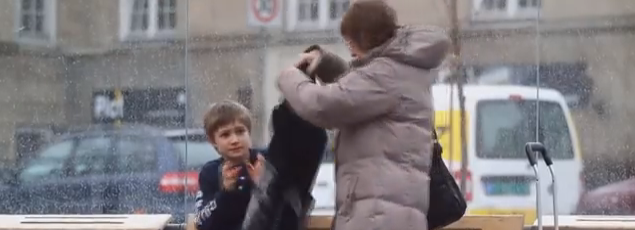
    Do you believe people care and look out for others? These people certainly did. They unknowingly participated in a social experiment to see who would stop to help a freezing child. If you’re anything like me, this will warm your heart.

  • How to Set Strong Boundaries and Overcome The Need to Say “Yes”

    How to Set Strong Boundaries and Overcome The Need to Say “Yes”

    “We must never forget that it is through our actions, words, and thoughts that we have a choice.” ~Sogyal Rinpoche

    Just a few short years ago, I would have relished in being called a “yes person.”

    I loved that label. I thought it made me approachable, helpful, and charitable, and I loved being “top of mind” for so many people and wonderful opportunities.

    Big project at work? I was there. A shoulder to cry on? You bet. A shopping buddy? Sure, I’m available! An exercise partner, a counselor, an interior designer, a cook, a cleaner, a proofreader, a tour guide—I was the go-to girl for anything and everything.

    And for a very long time, I said a big, resounding “yes, please!” to all of it.

    Yes to the design work, yes to the extra projects, yes to the friends who needed me. I was an advice-giver, a support network, a teacher, a healer.

    But during the throes of helping what seemed like a million different people, my “yes person” mentality started to drain me—and rapidly at that.

    Sure enough, I was helping everyone but myself.

    It was only when I started to read spiritual texts and personal development websites that I began to realize how exhausted I actually was. And worse, that it was most likely my need to say “yes” all the time (a trait I had previously cherished), that was burning me out.

    Here I was saying “yes” to every offer, invitation, and request under the sun, yet I’d wind up sick, alone, and hacking my lungs out more often than I’d like to admit.

    I knew I had to overcome my incessant need to say “yes” all the time and start prioritizing self-care, so I went about setting strong boundaries for myself to start restoring my energy.

    Below are the steps I took to set my strong boundaries and overcome my need to say “yes” all the time.

    1. Speak up.

    I knew I had to start small, so I gradually began to let people know how depleted I was feeling.

    As it turned out, people weren’t annoyed at me for talking about how tired I was; in fact, they supported me and encouraged me to take time out and rest. It gave me the confidence I needed to start saying “no” once in a while. It wasn’t a sign of weakness that I was speaking out; it was a sign of strength.

    Another good reason to start speaking up about your fatigue, particularly if you’re a “yes” person, is to pre-emptively ward off peoples’ requests. When I authentically talked about how tired or busy I was, I found that people didn’t call on me as much as they used to, because they were already aware of how I burnt out I was feeling.

    2. Make self-care non-negotiable.

    You know that big meeting at work you literally can’t miss? Or the way you lock in the weekly screening of your favorite TV show? Make your self-care routine as rigid as that—make it non-negotiable.

    When you start making self-care a priority (and enact strong boundaries around your routine), you’re able to fill your cup more fully, and work on being as healthy and happy as possible.

    Here are some examples from my self-care routine:

    •  I schedule a massage once a month, and I make sure I budget for it in advance, too.
    • I turn off all technology by 9:30pm. Not only do I sleep better for it, but also I find that I’m reading more books instead of just mindlessly scrolling on yet another social media site.
    • I now only check my email twice a day; I find I’m less overwhelmed from implementing this practice and am no longer a slave to my inbox.
    • I move my body every day. Whether it’s a work out at the gym, a few stretches in my hotel room, or a long walk if I’m on the road, moving my body every day is an essential part of my self-care routine and helps keep my energy levels high.
    • I eat vegetables at every meal—a green smoothie or juice with breakfast, a big salad at lunch, and a huge serving of vegetables at dinner. Vegetables (in particular, green vegetables) are my must-have staple item. They keep my head clear and my body energized.
    • I forgo my morning routine if necessary. Some days, a full-on morning routine calls me, but when I genuinely need to sleep in and recover, I surrender and give myself permission to do so. It’s about knowing the difference between “laziness” and genuine “rest.” One feels icky (laziness) and one feels like relief (rest).

    After enacting these strong boundaries around my self-care and energy use, my health started to return to its optimum state. It was only then that I was able to start saying “yes” again—but this time, only to projects and people that really lit me up.

    3. Hold strong when others test your boundaries.

    Even now after having rock-solid boundaries for years, others test them. I have to consciously remind myself to hold strong.

    When others test your boundaries, choose to think of it as your chance to prove to the universe that you can keep your own promises.

    For example, if you’re the kind of person who needs sunshine but you work in an office where nobody takes their lunch break, stick to your guns.

    If people shake their heads every time you head out to get your Vitamin D hit, stick to your boundaries and hold your ground—explain to your boss why you need to get out of the office or even draw their attention to the working hours policy in your area. Better yet, use your work to prove that your productivity is higher due to your lunch breaks!

    When you use strategies to help you say “no,” sticking to your boundaries when others test them makes the whole process a lot easier.

    4. Learn how to say “no.”

    Perhaps the hardest lesson when you’re setting strong boundaries is learning how to say “no.” After all, when you’ve been a “yes person” your whole life, it can be very difficult to turn that habit around, but it’s important to master if you want to have strong boundaries.

    Here are some strategies to help you say no:

    • Practice saying it in a mirror.
    • Have some polite, pre-scripted text messages and emails on hand so you you’re not stuck trying to find the words to say “no.”
    • Try saying “not right now” instead of a flat out “no.” (Often, the request will disappear!)
    • Let your friends and family know that you need some space (pre-empt the need for them to call on you).

    Saying no can be difficult—by nature, we humans want to be helpful and kind—but ultimately, you need to be helpful and kind to yourself, first and foremost. And saying “no” does get easier with practice, I promise.

  • 6 Surprising Tips for Overcoming Exhaustion

    6 Surprising Tips for Overcoming Exhaustion

    Sleeping Man

    “We are so used to working that not working is the new hard work.” ~Mokokoma Mokhonoana

    You know that feeling just as something bad is happening that you can’t control, when your stomach does a backflip, lurches up into your throat, and then drops into your toes?

    I experienced it one day snapping back to full consciousness as my car glided off the left shoulder of the freeway and spun in a full 360-degree circle on the gravel.

    I’d logged a very busy week at work, been to a music group practice, done some freelance editing, and gone for a few runs in preparation for a marathon. Now I was headed to a weekend event with my spiritual community.

    There I was, zipping down the freeway in the fast lane on a crisp and sunny fall morning. I felt drowsy, so I flipped on the car radio to keep myself alert.

    In retrospect, I should have also sung along at the top of my lungs. Or, you know, pulled off the road to rest. But I didn’t want to be late for the start of the gathering.

    The last thing I remember thinking was “There aren’t any cars close by. I’ll just close my eyes for a second or two.”

    Superhero Syndrome

    Ever been so exhausted you can’t think straight?

    Do any of these sound familiar?

    • “There’s too much to do—I can’t afford to stop and rest.”
    • “I can’t ask for help—I’m the only one who will make sure this gets done right.
    • “I have to finish this. [Person or group] is depending on me.”

    Thoughts like these have become frighteningly common. We think we need to do it all, so we push ourselves way past our limits. I call this “Superhero Syndrome.”

    And it’s not just unhealthy. It’s downright dangerous.

    Excessive fatigue is epidemic in our society. According to a 2011 National Sleep Foundation poll, close to half of Americans between thirteen and sixty-four say they rarely or never get a good night’s sleep during the work week.

    Exhaustion can lead to all sorts of problems, from impaired performance, poor immune system function, and increased risk of obesity to stroke, diabetes, and heart disease.

    Not to mention car accidents.

    The first step in avoiding exhaustion—as with most problems—is self-awareness. You need to check in with yourself regularly to see if you’re overdoing it.

    The second step is figuring out what to do about it if you are.

    The standard advice is true: If you’re overtired, stop what you’re doing and rest or sleep.

    Draw firm boundaries around your time and energy by learning to say no to people, things—and sometimes yourself.

    Practice good sleep hygiene and try to get a full night’s sleep every night.

    But there are times when, despite our best intentions, we don’t—or can’t—do these things. What then?

    6 Surprising Tips for Overcoming Exhaustion

    1. Ditch the traditional nightly sleep cycle.

    If a straight eight hours doesn’t do it for you, consider this: some researchers suspect we’re not wired for it anyway. They say that prehistoric humans slept for about four hours, woke up for a while, and went back to sleep again until dawn.

    Others have noted different sleep patterns across cultures, from the midday siesta to countries where multiple naps are the norm.

    Experiment and see if changing up your sleep periods makes a difference.

    2. Do the opposite of whatever you’ve been doing.

    If you’ve been pushing yourself physically, it’s no surprise that you should stop and rest or take a nap, or go to bed early.

    But if you’ve been pushing yourself mentally, go do something physical. Take a walk, do some stretching, or run an errand. Bodily movement will clear your head, get your blood flowing, and help bring you back into balance.

    3. Hit that snooze alarm without guilt.

    I’ve used a trick to psych myself out for years. I work backward from the time I want to wake up, factor in two snooze alarm periods, and set my clock for that earlier time.

    The result? I get a brief but lovely time in which to feel a little bit decadent. “I wish I didn’t have to get up now. Oh, wait—I don’t have to!”

    4. Pretend you’ve just woken up.

    Another mental trick—as you’re going to bed at night, tell yourself it’s morning.

    Imagine what it would feel like to go through an entire day, starting right now. Think about all that physical and mental effort. You can even do (just a few!) jumping jacks or deep stretches to give your muscles a brief sense of fatigue.

    How many times have you said to yourself, “I just wish I could go back to sleep for another eight hours”?

    Now go “back” to sleep for another eight hours.

    5. Ask for help.

    You’d think this tip wouldn’t qualify as “surprising,” yet sadly, for many of us, it does.

    When you suffer from Superhero Syndrome, you’re usually under the impression that everything on your to-do list has to be done by you.

    Granted, you may not be in the position to hire a personal staff to assist you. But that doesn’t mean you can’t ask for some help when you need it.

    As a fellow Superhero Syndrome sufferer, I know this is scary. But experience has shown me that when people value and care about you, they’re usually very happy to help. They won’t see you as weak or needy, but as someone who is strong enough to advocate for your own needs.

    Asking your spouse or partner to handle the kids for a while so you can take a break does not mean you don’t love your kids. It means you love them enough to want to give them your best, fully rested self.

    Requesting backup at work does not mean you’ll be seen as incompetent. It means you care about producing the best results possible, and that you’re secure enough to let others assist you with that.

    So go ahead and ask for support. You may very well be surprised by the result.

    6. Make a to-do list for tomorrow.

    Before bed, take five minutes to think about the next day and make some notes for yourself.

    For small tasks like calling the doctor, getting gas for the car, or picking up ingredients for dinner, writing them down or entering them into whatever device you use to track things reassures your mind, and you’ll be able to release them for the night.

    For longer-range projects, choose one small thing you can do to move them forward tomorrow.

    The idea here is that by making note of something in a place you know you’ll see it frees up your mind to relax into truly restful sleep.

    Don’t Try to Be a Superhero

    I was extremely lucky that day I fell asleep and drove off the road. A few passing drivers gave me very shocked looks as they whizzed by, but I didn’t crash into any of them. I recovered quickly enough to nudge my car back onto the road (and drive to the next exit, where I pulled over and sat there shaking for a while.)

    The most enduring result of that day has been that I now realize when I’m too tired to be safe or effective. On good days, I notice sooner and take steps to reverse the trend.

    If you’re suffering from Superhero Syndrome and trying to do too much, don’t push yourself to (or worse, past) the point of exhaustion. You may not be as lucky as I was.

    Also, just plain old “being happier and more rested” is nice, too.

    Sleeping man image via Shutterstock

  • Why Walking Away Is Sometimes the Most Compassionate Choice

    Why Walking Away Is Sometimes the Most Compassionate Choice

    “Compassion is not a relationship between the healer and the wounded. It’s a relationship between equals.” ~Pema Chodron

    In May 2012, I was appointed guardian and conservator of my father, and my brother was appointed co-guardian. Our father was declared mentally incompetent by the county court.

    My father was, and is, an alcoholic. When I was growing up, he was an abusive alcoholic. He gave out wounds like gifts. He used words to cut us open, and then he threatened us with salt.

    I lived in hypervigilance, and I learned that being alone, quiet, and invisible was the safest state of being. I was like a bottle—filled up with the wounds my father gave me as his bottles emptied.  

    And then I spilled.

    In therapy, I learned how to heal. I learned how to give myself gifts that were actually gifts, how to love, how to grow, and how to move on.

    Then, my father deteriorated. He was over sixty-five, and had been an alcoholic most of his life. He threatened to kill me, my brother, and my boyfriend.

    He was having flashbacks from Vietnam. He was being abused by strangers who gave him alcohol and drugs and took his money.

    He was hospitalized several times. He threatened to shoot himself. He started answering his door with a loaded gun. He left half-eaten roast beef sandwiches on my brother’s doorstep.

    We exhausted our avenues before petitioning the court to declare him incompetent. Deciding to petition to become the legal guardian of a man who mistreated me, in order to protect him, was the hardest decision I’ve ever made.

    I was trying to practice compassion, to treat him the opposite of how he treated me. I felt sorry for him.

    He was an unhappy man, and instead of going to therapy or AA or changing, he drank. He threw his unhappiness at others. He built walls and imprisoned himself behind them. And he lost everything, even his mind.

    It was hard not to feel sorry for a man who lost so much. In order to save what was left of his life, I went to court with my brother. Out of compassion. And out of hope that maybe something was left, and he could find, if not happiness, then peace.

    If I could do this, I thought, if I could protect him and guard him from harm, then I am showing compassion.

    I was wrong.

    When we were in court, my aunt, my father’s sister, publicly denounced me and used my childhood abuse against me to prove that I was mentally unstable and unfit to care for my father. She lied about my relationship with my father, about my intentions to provide care, and about my student debt.

    A woman who I had not seen in almost ten years, and who was never a close member of my family, proceeded to tell the court about child abuse that she never bothered to stop, in order to claim that I was irreparably damaged from it.

    It was my nightmare made real.

    I spent the next two years struggling to wake up. My father, whose brain was atrophied from drinking, became abusive again.

    As he recovered rudimentary levels of functioning, he also lost his ability to “save face,” and in addition to abusing my brother and myself, he abused the staff at his nursing home and his fellow retirees.

    He was threatened with expulsion on more than one occasion. Under the constant stress and constant abuse, I withered. I tried to stick with it, even though I felt my patience, my calm, my self-confidence, and my happiness eroding.

    I wanted to try to help my father because he was my father. Because it was sad. Because he was sad. Because he was an addict. Because he made such terrible choices. Because I was trying to show compassion. But I had stopped showing compassion to myself.

    When my mother was hospitalized with a brain aneurysm three weeks after having surgery for pancreatic cancer, I was petrified. I spent a month with her in the ICU while she was mostly unconscious, and at some point during that month, I began to realize that I couldn’t take care of everyone.

    I watched her monitor beep and squiggle, and there was nothing that anyone, not me, not the nurses, not the neurosurgeons, could do but wait until they could operate.

    As each day gathered together, I collected them into a gradual epiphany: I couldn’t take care of everyone. I most certainly couldn’t take care of anyone if I wasn’t already taking care of myself. And taking care of myself meant giving myself compassion.

    When I volunteered to become my father’s guardian and conservator, I wanted to prove that I was healed enough to offer him compassion. I had wanted to stop being a person who was wounded, and who received help, and instead become a person who was healed and helping others.

    But these two roles are not distinct. And sometimes they can be filled by the same person. It is possible to be both wounded and healing and healer and giver and receiver, all at the same time.

    Compassion to the detriment of oneself is not compassionate. Compassion needs to begin with yourself. Compassion doesn’t prove anything, or judge anyone, or lift anyone.

    Compassion is loving-kindness, a recognition that we are all the same, that we are beings trying to be, however we are. And that includes yourself.

    I decided to be compassionate to myself, and I quit being my father’s guardian and conservator. My brother quit as well. My father now has a professional guardian tending to his needs, providing for his well-being, and handling his assets. And now I can tend to my own needs, and well-being, and assets.

    Sometimes, despite our best intentions, our compassion toward others falls flat. In an unhealthy relationship, we may need to walk away and extend our kindheartedness, our helping, and most importantly, our compassion, to ourselves.

  • You’re Not Bad; You’re Crying Out for Help

    You’re Not Bad; You’re Crying Out for Help

    Help

    “A kind gesture can reach a wound that only compassion can heal.” ~Steve Maraboli

    My fourth grade teacher was named Mrs. King, and she was a no-nonsense, fairly stern presence who enforced the rules and kept us kids in line. I was a timid kid who wouldn’t have dared to break rules anyway, and I assumed that Mrs. King didn’t like any of us, especially not me.

    The only time we left Mrs. King’s classroom was to have our hour a week of “Music,” which meant trouping off to a downstairs room that contained a piano and a slightly manic woman who played us old folk songs to sing along with, like “Waltzing Matilda” and “Sixteen Tons.”

    One day in music class I transformed into a bad kid. Instead of quietly following the rules, I made cat noises during the songs. I poked other girls in the ribs. I loudly whispered forbidden things, like “Linda is a peepee head.”

    I don’t remember even wondering why this transformation had happened to me. It just happened.

    As we trouped back upstairs I felt defiant, but when I heard several of my classmates telling Mrs. King about my behavior, I began to deflate. “Ann was bad in music class,” one of them said. “She was meowing in the songs,” added another.

    “Ann,” said Mrs. King, “please come with me.”

    I was struck dumb with terror. Now I was going to discover what happened to bad kids. I didn’t know what it would be, but I was sure I wasn’t going to like it. Shaking, I followed Mrs. King out into the hall, and into the tiny teacher’s lounge. We sat down.

    “Ann,” she said. I didn’t dare look at her. My heart was pounding. What was she going to say about my misbehavior? What was my punishment going to be?

    The silence stretched on, and I realized she was waiting for me to look at her. I dared to peek at Mrs. King’s face, and I was astonished. I had never seen such compassion.

    She said, “I know your dog died…”

    It was true. A few weeks before, out on a walk with my beloved dog Trixie, I had let her off the leash, and she had been hit by a car when running across a street to rejoin me. My parents had quickly bought me another pet.

    There were no models in my family for allowing feelings to emerge. I remember being mystified when I saw my brother briefly weep for Trixie—and he hadn’t even been there when she was killed. I hadn’t been aware of feeling anything at all.

    In the teacher’s lounge with Mrs. King, under her kind gaze, my eyes filled up with tears. I nodded. Yes, my dog had died.

    “Maybe you would like to write a story about your dog. I know you like to write. Maybe you could give it a different ending if you want.”

    I did write that story, but even before I began, the shift had already happened. I had my self back. It was okay to feel sadness and shock.

    There was room in the world for my feelings, because someone with compassion had seen them.

    Having feelings in response to events is normal. When we can share those feelings with caring family and friends, it allows the feelings to go through a natural cycle of change.

    Understandings surface: “Oh, now I see what bothered me so much.” Our circle of support strengthens. After a while we feel refreshed, stronger, ready to go on.

    Many people, though, grow up, as I did, in a family and a culture where feelings are not welcome. Feelings are embarrassing, or they show we are weak, or they are something we “just don’t do” and nobody talks about.

    In some kinds of families, feelings are actually dangerous. “Stop crying or I’ll give you something to cry about.”

    When we repress and deny our feelings, we cut off a natural process of healing and self-understanding. When that avenue is closed, what is left to us is “acting out”—being “bad,” being depressed, addictive behavior of all kinds.

    Many of us deaden our feelings with unhealthy food, drugs and alcohol, video games, overwork. At some level we feel deeply out of balance, but we suppress that too.

    This can lead to a feeling of being inwardly at war, trying to stop whatever it is, feeling ashamed, yet finding ourselves still doing what we don’t want to do.

    What can change this is a process of bringing compassionate understanding to our warring parts, a process I call Inner Relationship Focusing.

    First, slow down. Pause and make contact with your body.

    Use this kind of language to describe the inner war: “Something in me wants to eat potato chips, and something in me says that that is disgusting.”

    Then say hello to each of the parts you have identified. “Hello, I know you are there.” (Notice how that already shifts how all this feels.)

    Next, assume, as Mrs. King did with me, that there is some life-serving reason why each part is behaving as it is.

    Lastly, ask each one: “What might you be wanting to help me with?” Wait for the answer to come from inside. When an answer comes, let it know you hear it. Don’t try to make it change. Change comes when something you feel is deeply heard with compassion.

    I am so grateful for all the ways that compassion shows up in my life. I have learned that every part of me is trying to save my life. And in bringing compassionate inner listening to my warring parts, I have healed from writer’s block, addictions, and social anxiety, to name just a few.

    And I never cease being grateful to Mrs. King, who showed me that day long ago that someone can look past outer “bad” behavior to the worthwhile person inside. A deep bow to you, Mrs. King.

    Helping hand image via Shutterstock
  • 5 Things That Make Summer Awesome (And a Great Cause)

    5 Things That Make Summer Awesome (And a Great Cause)

    Summertime is awesome, just like the adorable Kid President says, but not for everyone. More than twenty-one million kids receive free or reduced-price lunch when they’re in school. During the summer, the vast majority of them have no or limited access to food.

    Soul Pancake teamed up with ConAgra Foods to raise awareness for child hunger. For every view, like, or share of this cute little video, they’ll donate the equivalent of one meal to Feeding America.

    To learn about more ways to fight hunger in your own community, visit ChildHungerEndsHere.com.

  • Why It’s Okay to Be Self-Centered Sometimes

    Why It’s Okay to Be Self-Centered Sometimes

    Me Time

    “We cannot live only for ourselves. A thousand fibers connect us with our fellow men.”  ~Herman Melville

    I grew up with a faith that encouraged personal sacrifice for others. Putting myself before others or desiring what they lacked was sinful. So there I was, during my teenage years, trying to be a saint, completely unselfish when thinking or interacting with others.

    I must admit that I was always in the equation.

    If I gave advice to others, I did it for them but also for the good feeling of improving their lives. If I helped someone else solve their math problems, I did it for that person, but also because I enjoyed the new perspectives gained through teaching, and so on.

    Guilty Self-Centered

    I realized that whenever I was about to help others, I anticipated the benefit I was about to receive, whether it was a good feeling, some sort of recognition, more consideration, or leadership experience. And I wanted that repressed benefit.

    But at that time, being centered on me, even slightly, was not good. That was sinful.

    So I kept trying to remove my desire to receive before I was about to give. I felt guilty, hiding my self-interests.

    I wanted to care for others, but I was hardly innocently others-centered.

    Something was missing.

    I knew deeply in my heart that things should not be that way, that desiring gains for myself was a good thing. I felt this was a legitimate need.

    Helping myself and helping others appeared to not be mutually exclusive.

    The Dangers of Being Solely Others-Centered

    The mother who stays up late at night is not purely baby-centered; she has love and affection needs she is fulfilling for herself.

    This post can’t be purely centered on you because if you don’t give me feedback (positive or negative), I won’t be able to improve my weak points or bring more of what you liked it. If I get these gains for me, you get more of my writing. The improvement of the teacher improves the student, and vice versa.

    Many parents killed their children and themselves when they didn’t secure their own oxygen mask first in flight emergencies. That’s why the aviation authorities recommend, “If you travel with someone who needs assistance, secure your own mask first, before assisting the other.”

    An act of self-interest is actually the condition of being able to care for others.

    You can’t help others from a weak condition. Your “weakest you” weakens others. Your “strongest you” strengthen others.

    We can’t sacrifice ourselves in the name of others because in doing so, we hurt ourselves and them.

    When I realized that my well-being was linked to the well-being of others, that caring about myself was caring about others, I felt liberated and more capable of helping others.

    I think this is conscious selfishness.

    If your choices help only others but not you, then you are doing us all a disservice, since you are helping us from an underdeveloped state of being. The more you weaken physically, financially, emotionally, the less you can care for others in these areas.

    Being Self-Centered at Times Helps Others

    The more you help yourself get stronger, the more you can help the weakest.

    The more you help yourself get happier, the more you can help the saddest.

    The more you help yourself get relaxed, the more you can help the most stressed.

    The more you help yourself get wealthier, the more you can help the poorest.

    And if you become far stronger/happier/healthier/wealthier than the average, then the more people you will be able to help in the world.

    Find the ways your strength would help others. Reading a math book could make you wiser for your children; going to the movie theater could relax you so you will bring higher vibes to your home.

    You can’t help others from a weakest position. An ill person can’t help us to be healthier; a hungry person can’t feed others.

    Be at peace with yourself when you are well-intentioned selfish.

    You might be thinking: Should I do things for myself only when that helps others? Does all this mean that I can’t do things just for myself anymore?

    I enjoy eating ice cream without remotely being aware how my pleasure helps others. I keep doing what feels good for my senses and my being.

    Maybe doing things for ourselves feels so good because at the end, even if we don’t perceive it, our happiness helps others.

    Let’s celebrate that each one of us is so important for all of us. We are one!

    Photo by Kyle Garrity

  • 3 Ways to Be Kind and Make Someone’s Day

    3 Ways to Be Kind and Make Someone’s Day

    Smiling Together

    “The smallest act of kindness is worth more than the grandest intention.” ~Oscar Wilde

    It’s the small, everyday things that can make or break a day for us.

    While we celebrate the role models who inspire thousands (in person or on Facebook!), for most of us everyday moments—a stranger jostling us in the shops, a driver cutting us up at a light, someone pushing in front of us in line at the post office—can upset us out of all proportion.

    But the flip side is that we can also be disproportionately pleased by the small actions of a stranger.

    On a bad day recently, rushing down the road in Chiang Mai, Thailand, late for an appointment, I dropped my bag and things spilled all over the road. I looked at my possessions spread out in the dust beneath me and held back tears.

    As I stood there, a Thai woman, tending a food cart at the side of the road, walked over and carefully helped me pick everything up. Then she smiled at me, patted my hand, and walked back to her stall.

    This small act of kindness from a stranger reminded me to be kind to myself, and I took a breath before continuing with my day, lighter in heart and mind.

    Be that stranger. Here are three small acts of kindness you can carry out today.

    Offer your help.

    Last year I met someone who challenged himself to offer his help to one person every day.

    One day, I was really ill, in a foreign country, alone. I had no way of getting to the shops. He offered his help and brought me groceries. It was a small thing for him. But I was hugely grateful, and it made a real impact on me, this almost-stranger providing practical help.

    Now I try and offer my help more often.

    At first I used to think no one would be interested in my help, or they’d be suspicious, or dozens of other reasons that stopped me from offering. But even when people don’t need it, they appreciate being offered help.

    I offered someone help with something they were carrying yesterday, and while he turned me down, we exchanged a joke and a few words, and both of us went on our way happier.

    And when people do need the help, you’ll be amazed at the long-lasting impact it can have.

    Be of service. Offer assistance.

    Say thank you.

    You might say thank you 100 times a day. It’s a politeness, a courtesy. But how many times do you actually mean it? How many times are you still engaged in the conversation when you say it, and not turning away toward the next thing?

    I have a friend who doesn’t just write the usual “To Sarah, Happy Birthday, Love Mary,” on birthday cards but instead takes the time to write a more heartfelt message. She includes some of the things she appreciates her friend for doing for her that year.

    Getting a card from her doesn’t feel like a formality, it feels like a true connection. And her cards are the ones I remember.

    Today, say thank you like you mean it. Catch the other person’s eye and say it firmly. “Thank you. I really appreciate your help.” It could be to the girl who serves you your caramel macchiato in Starbucks, or your dad for helping you out by putting that shelf up for you.

    Or, if it feels too personal or intimate to say it face-to-face, write a letter or a card to a friend thanking them for something specific they contributed to the friendship last year—their joy, their lightness of touch, the great presents they always buy you, their sense of humor.

    Be grateful, and share that gratitude with the other person.

    Compliment someone.

    We judge others in our head all the time, just as we judge ourselves all the time. I hate that dress she’s wearing. I look fat in that mirror. I can’t believe she just said that. That nail  polish is awful. He really can’t do that yoga pose… It’s a constant narrative.

    But we also think positive things in the same way: I love that skirt. I wish my hair was that color. Those shoes are great. He does a great downward dog; I wish I was that confident.

    In my last job, particularly when I was feeling negative (and knew it might leak out), I used to push myself to articulate the compliments I usually just said in my head. Sometimes the person I was complimenting was a little taken aback, but they were always pleased.

    Put your focus on the positive by expressing it. Tell someone what you like, admire, and appreciate. Share the love.

    These actions might seem small, but not only do they make others’ lives better, they are also directly nourishing for you. Being kind is good is not only good for your heart, it’s good for your health.

  • Hang Up the Superhero Cape: We Don’t Have to Do It All Alone

    Hang Up the Superhero Cape: We Don’t Have to Do It All Alone

    Superhero

    “When we can no longer change a situation, we are challenged to change ourselves.” ~Viktor Frankl

    In the spring of 2008 when my son was only seven months old, I received a text message from his stay-at-home dad while I was at work. The text read, “He’s in the crib.” I did not respond because those five words said everything I needed to know.

    My son’s father had left us, and worse, he had left my son alone in his crib. I was at work fifteen miles away. 

    Adrenaline is an interesting thing. I don’t remember many details about that day except the text and the number of red lights I drove through to get to my son. Four.

    No one is ever prepared for events like these at any time in their life. Trauma, loss, and adapting to change are hard for all of us and for the people around us, as well.

    I come from a family culture that encourages “being strong,” which translates roughly into not asking for or needing help and continuing on with life as if all is well—at least on the outside.

    In fact, I have spent most of my adult years cultivating a life of self-sufficiency and independence, and I approached this experience no differently. I went into action mode and didn’t allow myself too much time to think about or feel the emotional impact of what had happened.

    I did not miss a single day of work through all of this. I just woke up, did what I needed to do, and went to bed. Every day.

    When my son went through a superhero phase, I wore the outfits too. It fed the image I had of myself as able to take on anything life wanted to throw at me. And I could even do it in white vinyl boots.

    Self-sufficiency worked well for me in the past as a single person, but not as a single parent.

    Facing this new life that involved another person (my son), using my old coping skills, slowly caught up with me in the form of health issues, depression, and problems with relating well with others in almost every area of my life.

    It become clear to me that something had to change. But I was not ready to let go of the idea that I could handle everything. If anything, I thought what I needed was more money, a different home, or maybe a different job.

    On some deeper level I knew that I had to internally change, but I convinced myself that to do so was impossible with my current life situation. I had to be strong.

    Instead of starting up the face of what I perceived as an impassable mountain, I clung to the hope that something external would change and I could do life the way that I had always done it.

    I did not or could not see that holding on to my old way of relating to the world was requiring far more energy and resulting in far more pain. I was not living self-sufficiently. I was still in survival mode, which is never a viable long-term solution.

    But then, as often happens to the most stubborn of us, I hit bottom. I was ill, alone, and worried about my son’s future, with or without me.

    That was when I finally embraced the possibility that I could completely let go of and live my life without ground under my feet. This would require me giving up my current self-image. And I had no idea what the outcome would be.

    What I learned was that by making these internal shifts, my life would improve without anything (or anyone) changing around me.

    Hang up the superhero cape.

    I became willing to let go of the idea that I could (or should) do everything, be everything, and handle everything on my own.

    Notice that I said, “Became willing.” I hung up my superhero cape and relinquished the badass title. But the cape is in the closet and I admittedly peek at it now and again. I just don’t let myself put it on unless it’s Halloween.

    Engage in a daily mindfulness practice.

    I went back to a consistent yoga and daily meditation practice.

    When I stopped the constant activity and started paying attention to what was going on inside of me, I began to notice how quickly things come and go if we let them be. Happy, sad, joyful, anxious—here now and then gone.

    This daily practice has helped me learn to stay in the moment and not take my thoughts very seriously. So, when the urge to put on the superhero cape returns, I gently say, “thinking.”

    Practice gratitude.

    I began to accept my life the way it is rather than hoping it would one day change. By practicing mindfulness I spend less time in my head planning how I would like things to be one day.

    When I wake up in the morning, before I get out of bed, I say thank you and smile. I do the same when I go to bed. It is such a small act but with such profound results. Try it.

    Give freely and receive freely.

    The giving part is pretty easy for me. But asking for and receiving help is still an ongoing challenge.

    Staying in the moment helps identify the feelings that arise that try to convince me that asking for help is a sign of weakness and that receiving help makes me a burden.

    The truth is that giving and receiving help are two of the greatest gifts we can give to ourselves and to others. When we drop the superhero cape and receive from others, we are allowing them an opportunity to be of service, feel good about themselves, and to improve their karma!

    Don’t take life personally.

    It takes a lot of useless energy to determine why things happen. I could spend hours replaying the events of my life with different endings, wondering what I could have done differently or trying to determine who is to blame.

    The truth is, no matter how much we try to exert control, we will all face challenges and we will all experience suffering at some point in our lives. No one is exempt from pain. No one.

    In fact, taking some time to recognize the extent to which people suffer is a useful exercise that helped me develop acceptance of my own situation and allowed me to develop compassion—for myself, for my son’s father, and for others.

    It’s a spiritual work-out.

    Many people have great ideas to help you in this process but few talk about how hard it can be. It can be hard, but not as demanding as being a superhero.

    It also feels, at times, very confusing to travel a great distance in how I respond to the world only to find myself completely lose it—I mean really get hooked back into the old ways one day with a partner or at work or in traffic.

    Don’t get too caught up in an end result. If thoughts come up about what a waste of time all of your efforts to date have been, just notice them and gently say “thinking.” You might need to say, “thinking” a few dozen times. This is good. It is all good.

    Breathe.

    Probably the single most important thing you can do to change your life for the better without changing a thing around you. Take a deep breath.

    Let it be.

    Photo by Zach Dischner

  • Encourage, Don’t Criticize; Help Instead of Trying to Fix

    Encourage, Don’t Criticize; Help Instead of Trying to Fix

    “You must love in such a way that the person you love feels free.” ~Thich Nhat Hahn

    When you think you’re an evolved and conscious woman and your partner tells you in no unclear terms that you’re “hard to be with,” it does a number on you.

    Those words landed like a well-aimed boulder, smashing the immaculate vision I’d created of evolving myself: an exemplary girlfriend who was “doing the work” to grow, to become generously loving, spiritually awake, and to wholeheartedly support and encourage her beautiful partner to open to his fullest potential.

    We met under messy circumstances. Both just weeks out of intense breakups and deeply embroiled in “processing” our respective experiences, I had a laundry list of emotional baggage to shed, patterns to break, and new nonnegotiable standards for anything and anyone I’d allow into my intimate space.

    I pinned the badges of Emotional Consciousness and the Evolved Feminine on my heart. I journaled, meditated, and prayed to the Goddesses: Quan Yin. Kali. Durga. Sati.

    And as I learned, dove deeper, sailed higher, I held fiercely to his hand. I wanted to do this together. I begged him: join me. Rise. Dig. Excavate your stagnant places.

    It’s the only way forward.

    I believed it. And I think, to a certain end, so did he.

    Then encouragement, collaborative growth, and tough love turned to jagged criticism. Instead of holding one another in our struggles, we sat on opposing sides of some false fence. I saw only his flaws and I believed I needed him to fix them.

    I saw his potential. He was brilliant, deeply spiritual, an intuitive outdoorsman and incredible teacher. He had promise, gifts to bring to the world. I wanted him to reach for it—without fear.

    And when he didn’t, when he paused to rest, when he stumbled, I saw failure. I saw an unwillingness to try. I saw a man gripped by fear, clinging to safety.

    I used those words.

    Why couldn’t he just work as hard as me?

    It’s easy to say this now. To see where my ardent desires for his evolution—to shed the excess weight and step into his highest self—so quickly became toxic. How it clouded my vision of who he was, in the moment, without the changes I thought necessary.

    Wrapped up in my own work and redefining of what it meant for me to rise, I transposed my journey onto his.

    All I saw was his shining potential, his shadowed present, and the moments he wasn’t up to the challenge. When the stones the universe hurled at his foundation bested him.

    And I ignored the brilliant light already standing in front of me, showing up in his wholeness, wounds and all. So he learned to try and hide it, for fear that I would criticize the tenderest parts I saw to be flawed.

    Nobody is perfect.

    The funny part is that I’m a coach and a yoga teacher. I write about every angle of perfectionism, I preach about loving your tender and dark parts, I read endlessly about the divinity of this eternal growing process.

    Stretching is uncomfortable. Peeling off the layers hurts. It’s a messy, messy adventure, this evolution. Blah blah blah. My brain knew all that. But that’s different from living it—and dammit if I wasn’t a full-on hypocrite.

    So… nobody is perfect. Right?

    His imperfections became my teachers. And as I crumbled, defeated in my epic pursuit of New Age Girlfriend Perfection, he taught me what it is to hold someone you love to their highest potential, with grace, love, and honor.

    Your journey is not their journey. It seems straightforward, but it requires a humble and gracious heart to resist imposing your own standards of evolution on another.

    Just because you’re in love with transcendental meditation and it has blown your ego to pieces doesn’t mean your partner will find it moving in the least. And while you’re deeply questioning the meaning of “self,” the qualities of nonattachment, or the truth of your suffering, your partner might be doing battle with self-acceptance. Or body image. Or what it means to be masculine.

    And that’s all perfect.

    See the potential. Celebrate the present. That’s where I went wrong; I missed the second step. And he gently, kindly told me that he wasn’t feeling seen. Really seen—in his work, in his accomplishments, in the steps he’d already taken.

    Spend more time celebrating the positive elements of how far your partner has already come—and then encourage them to keep going, because you see such beautiful potential and brightness within.

    Let go of perfect. You know from your own excavations that the work never ends. There is always growth, always evolving, always new spiritual/emotional/soulful expanses to be explored.

    When we think “highest self,” it sometimes feels like an end point—a “point a to point b” kind of goal. It’s not, and living from that mentality makes the experience of evolution feel hurried and time-sensitive.

    As Osho says so simply, “Slowly, slowly.” Let that be your mantra, and honor each slow step your partner takes. Even more so, honor the pauses. The deep breaths. They’re part of the work, too.

    It is not yours to push. You’re not his life coach. You’re not her personal trainer. You’re not Mom. Position yourself on the same team—encouraging, supporting, celebrating, yes. Demanding? No. That creates a power dynamic that eventually becomes toxic and corrodes the integrity of your relationship.

    When you find yourself becoming the teacher, check your motivations and rephrase. How can you encourage with tenderness and love?

    Your love will become freedom. You have this one role in your partner’s evolution: to hold the space, to fill it with love and safety and, simultaneously, the encouragement to expand—and your love will become their freedom.

    Freedom to be exactly where they are on the path and to take the journey that is right at that moment and in that time. Freedom to fall. To screw up. And to try again, with unflinching faith in their own potential.

    And that freedom, ultimately, is the only path to the highest self.

  • You Can Make a Difference: Just Open Your Eyes

    You Can Make a Difference: Just Open Your Eyes

    See the World

    “Act as if what you do makes a difference. It does.” ~William James

    My mind wasn’t able to percieve the reality around me. It had been ten days since I’d woken up with a feeling of constant energy flowing through my whole body.

    It was so intense that I didn’t want to let it go. But I wasn’t ready for it. It was way too much for my unprepared body and mind. I didn’t even know what it was back then.

    Everything had happened so fast. I was on the way to Chicago with my friends after seeming to check out mentally. They wanted to help me by bringing me to a clinic, but the fear was stronger.

    Suddenly it grabbed me and made me jump out of the car. I started running in the opposite direction. Then I saw the fast moving vehicle coming…

    The highway was dark and cold. My body was lying down on the pavement and I was looking at it from above. My friends were crying around it, and I left the world.

    In the next moment I had reached my final destination, the place of pure love, bliss, and unity with all that exists. The place that we can not even explain with our limited-by-the-physical-reality minds. The place where we are all one.

    Then I felt a mighty force that drew me back.

    There was a light in the tunnel, with thousands of small episodes of my previous life on the walls. Tiny memories of who I was before leaving the world of forms as we know it.

    It was so beautiful. Then I got back into my physical body and opened my eyes. The pain was incredible, yet somehow distant. I was in a fast moving ambulance on the way to Springfield, Illinois.

    “What am I doing back here?” was my first conscious thought.

    I had no memories at all. I was all wiped out, like a brand new hard drive that just came out of the factory. I learned that some of my forehead was missing and my right knee was smashed.

    Doctors told my parents and my friends that I wouldn’t make it. I disagreed. I love this beautiful life too much to leave it.

    Four hours with a great team of surgeons followed, and another trip back to this unexplainable place beyond the perception of our minds. And again, there was this force that needed to send me back to Earth, as I didn’t really want to leave.

    A huge smile on my face. My first titanium peace was on. “Yeah! I’ll be like Ironman,” were my words before going in for surgery. I will never forget the look on the surgeon’s face after he heard that.

    It was quite funny not to know what to do with the spoon the nurse gave me for my first meal after the operation. She showed me how to hold it. Everything was so delicious.

    Miracles occurred. The doctors couldn’t believe I was so happy and smiling so widely.

    Then my parents came and the doctors let me go after a few consultations with the psychiatric department. My mind was clear like never before. This was one of my gifts, along with the energy that was, and still is, inside of me.

    I was passing twenty miles a day on my bike two weeks after the accident, doing hundreds of pushups and pull-ups afterwards. The energy inside my body was so incredibly powerful that I simply had to use it.

    My memories were coming back slowly. With every passing day I was putting more and more of them together—and I’m still remembering today.

    I received more than seventy thousand dollars worth of bills in the mail. Still, there was a smile on my face. I knew my only choice was bankruptcy, but I didn’t let it get me down—I was starting over.

    I’ve learned that even when things seem impossible, there is always a way. When there is a will, there is a way. We just need to let go of the fears that keep us stuck. Fear doesn’t serve us. It limits us and prevents us from reaching our full potential. 

    My heart is still filled with gratitude for all those men and women who took care of my body.

    I sent them my blessings, and then I left. Bye bye US. It was a pleasure. I bought a one-way ticket back to Eastern Europe. Welcome to Bulgaria, the country where I was born. It was almost five years since I had last seen it last. Family and friends met me at the airport with smiles and warm hugs.

    Years of meditation and self-observation followed. I had to find out what exactly happened. And I did.

    I was dwelling on my doubts and losing faith in myself. I wasn’t feeling unity with the people and the world around me. I was crying and giving up sometimes, but rising up again and continuing forward.

    You will most probably feel the same at times.

    We’re all on own unique path to self-realization. It’s a process. But if you keep walking, no matter how slow it appears sometimes, you will reach your destination. Then you can choose your next one and keep going toward it again, far stronger than you were before.

    There was struggling. There was irritation. There was love. There was compassion. There was pain. There were tears. There was laughter. There was pride. There was fear. There was courage. And sometimes it wasn’t so clear.

    It was a snowy Sunday when I went to my first self-development workshop. At the end I had the chance to share part of my story. It was the most satisfying feeling of all. Then everything started falling into place. I knew what I needed to do.

    One morning I started writing. And I wrote and wrote and wrote, day and night. My first book was on the way. It came out one year later.

    In the meantime, I spent hours preparing to be a speaker. Nothing happens without putting in time and effort. There is no shortcut to achieving your goals. You need to work on your skills and develop them as best as you can. And keep doing it after. Every day.

    Workshops followed lectures and speeches. Two blogs in two different languages. A second book, too. Great people, places, and moments of love, abundance, and gratitude.

    But most of all there was belief, a belief in my self. There was a knowing—that I have something unique to share with the world around me.

    And you have too. Yes, I’m talking to you. Don’t look behind your back. I really mean you.

    You are simply amazing. Right here, right now. You have some extraordinary experience you can share with us too. Please do. We all need it.

    We all need you to reach inside yourself, remember your deepest dreams and desires, and share your passion, as life is meant to be shared.

    Many times I thought about how insignificant I am. Have you done the same? It’s a lie that we’ve been told many times. It’s time for it to go away. You don’t need it anymore.

    You are great and you have something important to share. Remember? It comes back slowly, I know. I’ve been there. It takes time to break the program and wipe the slate clean of all the negative beliefs. But it’s worth it, every single moment.

    Are you ready? To see things differently? Just open your eyes.

    Photo by Rareclass

  • Change Your Life by Turning Shame into Courage

    Change Your Life by Turning Shame into Courage

    “I learned that courage was not the absence of fear, but the triumph over it.” ~Nelson Mandela

    Shame. A word that conjures up all kinds of emotions while equally keeping you silent.

    Some have even said that shame should be classified as a deadly disease because of how it deeply affects the soul.

    Then, there are researchers like Brené Brown who study it.

    It wasn’t until I started working with my first speaking coach that I realized it was actually shame that had kept me “hiding out” and playing small earlier in life.  

    Which is typical of women who have experienced shame. Isolation becomes your friend.

    I had met my coach at a networking event for women in business. She was warm and caring. I shared that it was overcoming the loss of my son to suicide that actually brought me to coaching.

    I told her of my goals of sharing my message through public speaking and advocacy to bring awareness, not only to suicide prevention, but also issues affecting women.

    Except, like most people, I had always had a fear of public speaking. Even to get up and say my name used to make my palms sweaty.

    So why did the thought of standing up in front of the room and speaking bring on major heart palpitations? After all, I love meeting new people, chatting it up, hearing their stories and learning about their lives. There had to be more to the story!

    During our first session, I told her that I thought most of my fears were from a childhood trauma I had experienced. After hearing my story, she said, “You have an element of shame that surrounds your life. You have a fear of judgment.”

    I was worried what people would think of me that didn’t even know me, or anything about me.

    It finally made sense to me.

    It all stemmed from being sexually abused as a young kid. The humiliation, embarrassment, and fear of anyone finding out was still affecting my life.

    Only now, I knew how important it was to share my story, because it could change a life or save a life.

    My life mission was now bigger than my fear.

    On my journey to healing, I read many books. Books on losing a loved one, books on overcoming trauma, books on healing your life, and books on getting healthy.

    I watched Oprah and listened to her inspiring guests.

    One day, something clicked.

    Everything that I had either read or listened to that inspired me to take action and move out of my darkness involved one thing: stories!

    It was not the technical stuff or the how-to overcome (fill in the blank). It was the stories being shared that I could relate to that helped me change my life.

    It was the people who were not afraid to share. They did not let any shame, stigma, or fear stop them because they knew their story might help someone.

    When you go through a trauma or loss, you can easily feel isolated, like you are the only one. But when you are courageous enough to share your story, you soon find out that you are not alone.

    There are people out there in dire need of someone to talk to, that they can relate to, that will understand them.

    Sharing your story empowers others who are feeling isolated to begin their own journey of healing and move forward, to create their own movement, big or small.

    It’s like a snowball effect. You inspire one person, who inspires another person, who inspires another.

    When you are finally courageous enough to share your story, it is a process. Shame will no longer leave you feeling small and powerless.

    You will feel the need to get out there, share your story, and make a difference in the world.

    Now, when I feel fear creeping in, I remind myself that it is not about me; it is about the person who is going to hear my story, feel inspired to change their own life, and create their own movement of change, one small step at a time.

    Photo by Jonatas Cunha

  • Your Loving Presence Is Enough: Helping Someone Who’s Hurting

    Your Loving Presence Is Enough: Helping Someone Who’s Hurting

    Hugging

    “Wisdom is nothing more than healed pain.” ~Robert Gary Lee

    As the only child of a single parent, my family of two was small and our relationship could be intense.

    My southern belle mom, with her stories and easy laugh, her quick wit, and her love of all things literary was the mom who all my high school friends adored and loved—the one who my teenage friends could talk to when they were too angry or irritated with their own mother.

    I loved her too, but I also worried about her. A lot. Because I knew a secret about her that no one else did: she was an alcoholic. Not a big, scary, yelling, hitting alcoholic, but a quiet, light dimming, slow fade alcoholic. 

    My mom loved me, she provided for me, but her own grief and story about her past could take over her brain and take her far away, down into her beer bottle, along with her ever present cigarettes.

    When she told me during my senior year of college that she was entering outpatient chemical dependency treatment, that heavy weight of worry felt lifted from my shoulders. I hoped that this would give her a chance at a happier life.

    As my mom healed, I did too, and got more of my own life in action. I went to graduate school and moved across the country and back. I started a relationship with the man who would become my husband. I got my first real professional job.

    So when the pain in her leg was diagnosed as cancer—terminal stage 4 Lung Cancer, spread to her bone, with a prognosis of six months to live—it was a huge blow.

    Through six months of treatments that left her tired and nauseated, she persevered. But then another blow, though not the one I anticipated: leaving a doctor’s appointment, she had a stroke and fell down unconscious in the parking lot.

    The drive from my house to the hospital where she was taken was one of the longest four hours of my life, not knowing what awaited me at the end.

    After three hard weeks of physical therapy, my mom returned home. But she wasn’t the same. The parts of my mom that I and others most valued and relied upon—her humor, empathy, and listening ear—were gone, stripped away by the stroke like a cheap veneer, never to return. 

    And while she wasn’t drinking or smoking any more, my worry returned, not knowing when the proverbial other shoe would drop. Was she really able to live alone in a two-story house? Was I being a bad daughter by not moving back to my hometown to care for her?

    On top of the worry, the impact of the stroke was a bitter pill to swallow. While others marveled at her longevity with such an advanced cancer diagnosis, I felt guilty and angry: the whole situation felt like a rip-off. My mom was still alive, but it was hardly much of a life, in my opinion.

    I wondered why she was still alive, when she was barely able to enjoy the life she was leading. 

    Before her stroke, I’d clung to some romantic notion that her illness might give her opportunity to finally make sense of the hardships she’d endured through much of her life.

    I cared for her the best I could from afar, knowing that it was less than ideal, and I continued to craft my own independent life, as well. Over the next eight years, I married my boyfriend, got promoted at work, and got pregnant with my first child.

    Throughout my pregnancy, my mom had more troubles—a heart attack and increased breathing problems. The day we brought our newborn son home from the hospital, my mom called saying she was in the hospital with shortness of breath.

    Instead of relishing the first sweet days of my son’s life, my first days of parenthood were flooded with the same familiar worry, guilt, and anxiety.

    My mom spent the next three weeks bouncing between home, hospital, and residential hospice.

    She clearly was in denial about what was happening to her: as the survivor she was, she saw it as just another difficulty to overcome, anticipating another victory in her long triumph over cancer. She struggled and resisted what was happening to her.

    This time, she couldn’t outrun it: I held and stroked her sweet hand as she took her last breaths, and nursed my baby five minutes later.

    In the ten years since my mom’s death, I’ve realized the person who needed to learn and transform from her illness and death wasn’t her: it was me.

    My worry, judgment, guilt, fear, and anxiety couldn’t fix the past, cure her cancer, or protect us from the future. Those emotional states and feelings only could inflict more pain, distance, and suffering.

    Throughout my mom’s life, including illness and death, all I could do was be with her and love her, as best I could, from moment to moment. Our loving presence with each other was often the most useful medicine for either of us during the hardest times.

    Because no matter how much we might wish otherwise, there will always be some difficult times in life. It’s pretty much a guaranteed part of the deal with being a human.

    So when you or someone you love is hurting or suffering, rather than trying to outrun any difficult feelings, such guilt, worry, judgment, fear, or anxiety, see if you can stop and find a grounding place within yourself, such as the regular rhythm of your breath.

    See if you can even briefly be present to the hurt or suffering, as unpleasant as it may be, without needing to change it.

    In first witnessing and just simply being present to our own or others’ difficulties, rather than automatically trying to change or fix the situation, we are of great service and can create deep healing in ourselves and others.

    Through being with the situation, as it is, we can also better discern what our next best actions should be.

    Instead of getting caught up and carried away by intense emotions, disappointments, grief, anxiety, or any other difficulty, being with the experience as it is and doing as best we can in that moment is often the quickest and least painful way through challenging times.

    Regardless of what difficulty your loved ones face, trust that your loving presence is all that is required. And know it is completely enough.

    Photo by David Goehring

  • Why It’s Not Selfish to Ask Someone You Love for Help

    Why It’s Not Selfish to Ask Someone You Love for Help

    Two People

    “Learn to appreciate what you have before time makes you appreciate what you had.” ~Unknown

    I’m a woman in midlife who thought she was set after a long successful career and the promise of financial security. I supported my own way through most of my life, fending for myself and then my two children, even during a 15-year marriage that ended badly and another that never really began.

    For a number of reasons my plans for an early and secure retirement ended a few years ago. The long story is for another time; the short story is health, burnout, spiritual growth, reorganization…life.

    A few months later, my oldest daughter announced she was engaged. I wanted to do for her what I always had been able to—give her what she wants—but I was no longer able to. 

    Now the wedding is only weeks away and the final plans and payments are being secured. More than we expected of course, despite her diligent attention to adhering to a modest budget.

    “You don’t have to, but I was just wondering…if you can…can you send more money? If you can’t, it’s okay. We will spend our own money,” she requested by e-mail reluctantly.

    On the one hand, I wanted to just say, “Yes, of course,” no questions asked; on the other, I thought it was a perfect opportunity to draw boundaries and to not do more than I was able.

    But on the hand that holds my heart, she was my little girl about to get married, and I didn’t know how to say no. 

    But how could I say yes, with mounting medical bills, another year of tuition for my other daughter, and having found myself unemployed and unable to work for more than two years? 

    I had never done this before, but in a quizzical moment that felt something like an inspiration, I decided to call my parents.

    My parents struggled financially for most of their life, but in their senior years they found themselves able to live fairly comfortably on their fixed incomes, with some money in the bank.

    I had never asked them for help before, and at 54 years old—having taken care of my own needs without help my whole life—it felt like some sort of failure on my part to make this choice.

    But for the sake of my daughter, I had to.

    My Dad picked up the phone, as I had hoped he would, and my Mom was out, as I hoped she would be. Daddy’s little girl and all. A much easier appeal.

    At first I felt so bad having to ask my Dad for money. I didn’t ask for much, but for a man who never was able to give much, not much is a lot.  

    I cried, and he tried to soothe me, hardly able to stand his little girl crying. Only now his “little girl” is 54 and he’s 80.

    He’s starting to break down. Little things, I can tell. But still, we are father and daughter, you know?

    He didn’t hesitate. He said he wished he could have done more. He said, “You are my flesh and blood.”

    Then soon after, I stopped feeling bad. I think I actually started to believe I made him feel good. He got to be a hero today.  

    It’s still such a small gesture, but such a large one.

    After I got off the phone I saw it all differently. There was indeed some goodness that came from my shame of not working and not making my own money right now—a chance to let him shine, to help. In a small way but a big way at the same time.

    Suddenly, I felt glad that I’d asked, and that I hadn’t let my ego need to show up as strong and infallible outweigh my daughter’s need, my need, and my Dad’s (and Mom’s) willingness and ability to become a hero for our family.

    I’m glad he got to do it. I’m thinking he needed to, in a way. Something for him to leave of himself before he goes.

    This whole experience made me realize something else, which was even more profound. I’ve had my parents around for so long that I’ve been lulled into believing they always will be.

    I’m lucky and grateful to be this age and to still have my parents—both of them to call on, and even more so for them to be there for me.

    I have not given much thought to what it would be like to no longer have them, but this exchange gave me the opportunity to realize that I’m really going to miss them when they do pass on.

    It will be strange and empty and weird when there physical presence is no more. In their own way, they have always been there, no matter what.

    I think my Dad got to be a hero today. And my daughter gets to have the wedding she wants.  And in some indirect way, I got to give each of these to both of them.

    Give someone you love this chance if it comes up. Don’t view it as weak or vulnerable to allow someone to step into their light and glory, and to give of themselves in a way that makes them feel good.

    Photo by Thejas

  • Emotionally Overloaded: Are You Taking on Too Much of Other People’s Pain?

    Emotionally Overloaded: Are You Taking on Too Much of Other People’s Pain?

    “All the art of living lies in a fine mingling of letting go and holding on.” ~Havelock Ellis

    I would have done anything for my friends, until one of them nearly broke my heart and spirit. He was my best friend. We felt like platonic soul mates.

    We had a standing lunch date every week, called each other terms of endearment, cried together, laughed together—the standard best friend things.

    Then, tragedy struck him. Over and over.

    His long-time partner left him. Then he lost his executive-level job. Next, he had a string of major medical issues that put him in the hospital.

    He needed ongoing weekly treatments to stay alive. His restricted schedule and constant pain made him unable to find work. He ran out of money.

    One day he cried all through our lunch, and then asked for a loan so he could pay his bills that month. I gave him more than he asked for and plenty of time to pay it back.

    He needed an organ transplant ASAP, so I got tested to be a living donor.

    I listened and was there even when my mood and physical energy were drained because of his tears and constant complaints about his life being “a mess.” How could I not be there? He was going through hell.

    But so was I. But I felt like my problems were nothing compared to his, and he needed me because he had very few other true friends and a completely estranged family. We were best friends. It was my job to keep him company and to try to help him in any way possible.

    And then, one day he never confirmed our lunch like usual. He never showed up at all, and would not return my calls and texts. I got ahold of his other friends and family, and the following two weeks were possibly the worst of my life.

    He had turned to drugs to cope with the pain. It turns out he had been putting on an act in a lot of ways. The money I loaned him was probably to buy meth. I felt betrayed, confused, but mostly scared and panicked. I couldn’t lose him.

    I did everything in my power over those two weeks to help him. I got in touch with his family and landlord.

    My phone was constantly buzzing with calls and texts, alerting me to his increasingly bizarre behavior—passing out in his hallway, urinating off the fire escape, casing the hotel next to his apartment for money and food, throwing all of his possessions into the dumpster and putting items out on the sidewalk to be taken away.

    He was trying to end his life. Numerous calls to police and wellness checks resulted in no benefit; he would appear of “sound health and mind.”

    He was smart, and had been involuntarily committed to the psych ward months earlier after a friend thought he was a danger to himself. He knew the right answers to give, and blamed his physical condition on his disease.

    He’s an adult, I was told. No one could force him to get help. But I kept trying every trick in the book to make him see the light and keep fighting for his life.

    Then, he cut me out. He stopped communicating entirely. I received a cashier’s check, no note, in the mail for the remainder of the loan. After years of almost daily contact, he was gone.

    And then, he died.

    The stages of grief hit me hard and fast. But one emotion hit me hardest of all: guilt. I felt I had missed something that would have saved him, like I had not done enough. But mostly I felt guilty because part of me felt relieved I could finally stop worrying about him. I could refocus on myself and healthier friendships.

    I had begun dreading many of our lunch dates. Would he be “a mess” again, crying in public, full of pessimism, unable to hope for a better tomorrow? I started taking on these emotions. Friends pointed out to me that my mood plummeted after time spent with him.

    Being his friend had simply become way too heavy a burden than I was able to carry. He was beyond help, because he chose not to help himself. He taught me three valuable lessons that have transformed the way I approach relationships.

    1. Trying your best to help someone is more than enough.

    Make a genuine but practical, self-caring effort. Sometimes you can’t do anything to help.

    2. If you start suffering ongoing, negative consequences from a relationship, it’s time to reassess.

    Maybe you need to be open about how the relationship is affecting you. Maybe you need to step back a bit and treat the relationship more casually. Or maybe you need to walk away.

    3. Everyone’s struggles are valid and important—especially your own.

    Don’t think that your issues aren’t serious or worthy of your attention just because someone you care about it going through “bigger” things. You can’t take care of anyone else if you don’t take care of yourself.

    If you have someone in your life who needs help, it’s okay to help carry part of their load temporarily, but you need to unload if it starts weighing you down too much. A best friend is their own best friend first.

  • Why Empathy Can Sometimes Help More Than Advice

    Why Empathy Can Sometimes Help More Than Advice

    Hug

    “I have just three things to teach simplicity patience compassion these three are your greatest treasures.” ~Lao Tzu

    I have two teenagers. Anyone with children knows these years can bring their challenges. One minute they behave like a four year old and the next they are as mature as an adult. These fluctuations can pose difficult times.

    One day, after a particularly emotional and tough interaction with my son, I called my mother for advice. She had by all accounts raised three successful sons.

    After a long and detailed discussion of what had happened, she said, “Oh honey, I’m so sorry. It’s so hard.”

    That was it, not a single word of advice—just some empathy. I pictured her on her old fashioned phone with the rotary dial and the wires just making a simple statement. I was frustrated. I wanted advice; I wanted some magical activity or action plan that I could use to make it better.

    In my opinion this interaction with my mom was useless.

    Feeling frustrated, I called a very dear friend who has two teenage children and whose mother is a PHD psychiatrist. With children the same age, we had been sharing child-rearing stories for many years.

    I figured with that level of education his mother must have some advice. I gave him a short synopsis of the story and asked if he thought his mother could provide some any advice. “Oh yeah…” he responded, in a way that I knew there was a story to follow.

    He told me that a couple of weeks earlier he had been working on a project in London that required working sixteen hour days. Exhausted from both the hard work and plane ride home, he landed in the US after a long flight home.

    When he landed he turned on his phone and saw an email from his mother. Delighted to hear from her, since he had not corresponded with in a while, he read the email immediately.

    The email was very a long description of her concern for him. While the email was articulate and detailed, it was full of detailed changes of he “should” make for both his children and his family.

    He interpreted the message from his mom as criticism that he was not doing what he should, and his own mother was telling him he needed to change. Before deleting the email he responded to his mother, “Please don’t send any more emails like this.” 

    Even as he retold the story I could hear how much the email had hurt his feelings.

    My dear friend is thoughtful, articulate, kind, hardworking, good looking, and brilliant. My own wife often says that she wishes I were more like him. In short, he’s a great dad and a wonderful husband.

    Advice Is Not Always What We Need

    After hearing this story, I realized there wasn’t anything my mother could say that was going to help me in my situation with my son. Advice from her about what I “should” do differently was going to feel like criticism or be impossible to act on.

    I had created my own problems and could create my own solutions like most of us can. Often times we simply lack the confidence or the self-respect to make the necessary changes.

    Even though I did not know it at the time my mother’s simple empathy and acknowledgement of the difficult situation was the thing I needed.

    I wanted a magical solution, but it didn’t exist. Her empathy and acknowledgement of the challenge was all I needed. Like most advice, we seldom know we need it when we receive it. If it’s truly useful we absorb it and use it without thinking about it.

    Today when I have problems with my teenagers, I hear her voice telling me, “Oh honey. It’s so hard.” Sometimes it is, and that’s okay.

    How to Remember

    Remember, when someone calls for personal advice the most valuable thing we can do is acknowledge the situation without judgment and remind them that we care deeply. My mother does it with a Bostonian’s paucity of words. Most of us need to say more.

    In an effort to remind myself of this lesson, I have created a simple picture of the old fashion telephone my mother used until very recently. I post the picture in my workspace where I receive the majority of my calls.

    It’s there to remind me that most people do not want the instructions on “what to” or “how to” fix their problems, but rather to be reminded we care, are willing to listen and understand that sometimes life’s problems are not easy to solve.

    Photo by Anant Rohankar

  • What Seems Obvious to You Could Help Someone Else

    What Seems Obvious to You Could Help Someone Else

    Friends

    “We are not what we know but what we are willing to learn.~Mary Catherine Bateson

    Despite being a professional blogger, I am not particularly adept at technology.

    I don’t have a data plan on my phone. I don’t have an iTunes account. I have no idea how people do that thing where they connect their computer to the TV. What is this witchery?!

    But because of my age and my profession, people frequently assume that I’m a computer genius. They are sadly mistaken. One day, my significantly-more-tech-savvy BFF was looking over my shoulder as I checked email. She glanced at my screen and said off-handedly:

    “You know you can just click on that little arrow to read the next email, right? You don’t have to keep going back to your inbox.”

    Whhhhaaaaat?! My email-reading life = changed. Productivity = upped. With an afterthought of a comment, my friend significantly improved my work life.

    And I’m sure she nearly didn’t tell me because she thought her suggestion was too obvious.

    We’re all guilty of this, right? Discounting our knowledge because it has become so ingrained in our everyday life that we assume everybody else knows that thing or has that skill set.

    Or we worry that we’ll offend someone by telling them something that seems so incredibly, painfully obvious.

    But here’s the thing: what’s obvious to you is helpful to me. What’s old news to me might be fresh and mind-blowing to you.

    And really, we can apply this to just about every arena of life.

    It’s obvious (to me) that my friend is amazing/intelligent/double-take good looking. But after a series of terrible dates, maybe she needs reminding.

    It’s obvious (to me) that I should @mention people on Twitter when I write about them on my blog. But maybe my clients don’t know that.

    It’s obvious (to me) that when I travel, I should use packing cubes and Airbnb.com. But if you’re not an experienced traveler, you probably have no idea that your suitcase could be revolutionized by some zippered cubes.

    It’s obvious (to me) that I should buy my favorite jeans and tank tops in pairs when they go on sale. But if you’ve never experienced the wonder of Old Navy Rock Star jeans, maybe you don’t know.

    It’s obvious (to me) that I should end blog posts with questions to engage my readers and create a sense of community. You haven’t been blogging for five years? It’s not your fault you don’t know.

    For ages, I didn’t share these obvious insights with anyone. It seemed insulting to state what (to me) seemed readily apparent! 

    But after the fateful day of Email Management Epiphanies I’ve changed my tune.

    If you phrase it correctly, you won’t offend anybody, even if you’re telling them something they already know.

    Here are a few phrases you can use to point out (what you believe to be) obvious:

    “You already know about _________, right?”

    “I’m sure this is old news to you, but ___________”

    “You probably already know this but I always like to err on the side of providing too much information.”

    “Have you tried_______________?”

    And even if these things are obvious? Maybe your friend just needs reminding. Or maybe your comment will be the gentle push they need to make see things differently.

    “You already know about that website that coordinates ads for blogs, right?”
    Yes. And I’ve been putting off signing up and dealing with HTML editing. But I should really join.

    “I’m sure this is old news to you but Hipmunk.com is a great airfare search website.”
    Yup. I was sort of confused by the interface but if you think it’s good, I’ll give it another try.

    “Have you tried giving up coffee?”
    Ugh. No. But I know I need to and I know it’ll help me sleep better.

    And you know what? There are certain obvious things that can never, ever be  said too frequently.

    Things like:

    “You’re so insanely clever.”
    “Gosh, you’re good at that!”
    “You throw great parties!”
    “You really have a gift for this.”
    “That color looks great on you!”
    “You’re so good at handling tough situations.”

    Just because you think a solution is obvious, doesn’t mean it is. Just because you think someone’s talents are self-evident, doesn’t mean they are. Just because you think a best-practice is common sense, doesn’t mean it is.

    So go ahead. State the obvious. We’ll all be grateful.

  • The Dangers of Staying Quiet: Learning to Ask For Help

    The Dangers of Staying Quiet: Learning to Ask For Help

    Covered Lips

    “The greatest mistake you can make in life is to be continually fearing you will make one.” ~Elbert Hubbard

    My right leg lay twisted, broken and disconnected. As I regained awareness, I could hear a primal scream.

    It took a while to register that it was coming from me.

    At the time, I was supposedly living my dream, but in truth I was drowning in my loneliness. So I had stood almost directly behind a horse I knew was prone to kicking and pulled her tail.

    She wasn’t malicious; if she was, I would be dead now, as I had lain under her until I was found. But I had invaded her space and she told me she didn’t like it.

    That was fifteen years, three long operations, and one titanium rod ago.

    I had been riding since I was four, and at the time I was twenty-two and competing professionally. I had trained with Olympic medallists and I had supposedly landed this great opportunity and I was on my way.

    It all looked right and perfect. The truth was that I was miserable and felt completely out of my depth. I knew no one where I lived. I was isolated yet expected to succeed—to deliver without any support.

    The more time went on, the more I hid the truth of my situation and how I felt from everyone who loved me, denying myself, because I didn’t know how to say I had made a mistake. I was struggling and desperately needed help.

    I had realized I’d made a mistake by accepting this job. I didn’t trust the owner for whom I was working and I couldn’t do everything I was expected to do alone, but I didn’t want my friends and family to think I had failed.

    It took me ten years to admit to myself that I was ashamed for having caused my accident.

    I chose to sacrifice myself and put my body in danger so that I could make the situation end—to somehow be rescued and for things to change.

    I was ashamed that I had caused drama in my life and trauma to myself as a way of getting what I needed. I got change, but the consequences were more dramatic than I could have imagined.

    Not only did I lose my job, but I also ended my professional riding career for good.

    I ended my dream of competing at the Olympics, which I had been striving, training, and working for my whole life. I lost my house and my friends, who I had left when I moved away to the new job. For a year, I totally lost my independence, and it would take several years until I was fully physically recovered.

    I would live the rest of my life with physical scars to remind me, and internal scars that would haunt me for years.

    It has been my greatest lesson in life to find a voice and not just speak, but to speak up and tell the truth about how I feel. To be true to myself and take care of what I need and want, and demonstrate to myself that I matter, by telling other people what is important to me.

    We are taught in school that if we don’t understand something and need help, to put our hand up and ask. It sounds so simple, but why do so many of us see this as a weakness and instead believe we must struggle and suffer in silence?

    My suffering in silence eventually led me to dramatic and potentially life-endangering measures.

    When I lay on the floor waiting for the paramedics, before someone had covered my leg, I stared at it broken like a china doll.

    I was lucky that I had been wearing calf-length leather riding chaps and it was to them that I owe the fact I didn’t lose my leg; it managed to keep everything together enough to be saved.

    My physical healing was relatively easy, with some time, patience, and loving care. Although I did eventually get up and ride again, even compete, even though I was told I never would, the psychological damage stripped me of my trust in myself, something that would last for years.

    I came to fear that I might self-sabotage again, betraying myself, and that there would be dire consequences if I took any risks.

    So I quit trying.

    For a long time my life was small and riddled with fear, which kept me prisoner—physically safe but, ironically, once again deeply lonely.

    It has taken an immense amount of courage to change this, and sometimes I would start to feel better, only to end up back in my cell.

    I had to stop waiting to be rescued by someone—anyone—who might telepathically know how I felt without me actually saying.

    I laugh now, because I have been taught by life that real love means being encouraged to be the biggest, most confident, strongest version of myself, to be able to stand up for myself and tell the truth, even if it might hurt someone else’s feelings.

    It is not my destiny to be self-sacrificing for fear of disappointing someone or hurting other people, but instead my responsibility to protect, love, and honor my well-being and happiness.

    My mistakes, actions, or consequences no longer need to be catastrophic, as long as I speak up and be honest early on, ask for help, talk to others, ask for someone to listen to me or even sometimes just give me a shoulder to cry on or a hug.

    A plaster always needs to be ripped off quickly to minimize the pain—and sometimes speaking the truth must be done in the same way.

    Because I didn’t do this, the pain, grief, shame, and trauma of that time in my life got stuck in my body and festered, eventually becoming too painful to hide from. Strangely, though, it actually helped me find the strength I needed to face how I had let myself down.

    I had chosen to be the victim, rather than speak up.

    I finally chose instead to let the tears fall, to wash away the pain, and I started speaking the truth. It wasn’t pretty, but I wanted to find a way to forgive myself and finally let go of the past.

    A few years on, I still sometimes struggle a little to speak up straight away when I am cross, in pain, and upset, but the truth always finds a way to bubble to the surface.

    Something in me won’t let me be quiet any more.

    With practice, I have learned to quieten the inner voice that tells me to ignore my feelings and keep pretending that everything is fine and dandy.

    Instead, I have to practice speaking with emotional clarity to say what I need, even if I have to shout it, write it, or repeat it over and over again to be heard.

    I have learned the simple truth that mistakes only happen when we are confused, don’t understand what is being communicated to us or expected of us, and when we don’t ask for help to make sense of something we don’t understand.

    So, the next time you find yourself in that state of fear, confused about which way to turn, don’t stay quiet, don’t suffer in silence!

    Remember our school lesson and put your hand up, either metaphorically or physically, and ask for help from anyone, whether in prayer or from another person.

    Be honest, keep asking, and don’t give up until you find what you need.

    You might not always find the answer straight away, but by talking about it, asking, and listening, it will come.

    Photo by Mitya Ku