Tag: heartbreak

  • Stop Talking So You Can Start Feeling

    Stop Talking So You Can Start Feeling

    “Don’t hide from your feelings. Press into them. Learn from them. Grow from them.” ~Unknown

    There have been times in my life when you could look at my cell phone call log and see back-to-back conversations for hours. I am blessed to have a large support system of loving friends and family, and there have been many times when that has saved me from facing my pain.

    If you know anything about attachments styles or are one of millions who suffer from anxiety, you will relate when I tell you that I spent most of my life incredibly anxious. Most of my anxiety had to do with me dealing with people: going to parties where I didn’t know people, knowing someone was unhappy with me, feeling like my needs weren’t being met in relationships, etc.

    I work with many sensitive people and, in more recent years, I have come to accept that I, too, am very sensitive. We are affected by words, punctuation, tone, and demeanor. We know that words say a lot and words combined with punctuation say even more and that we communicate in more ways than is accepted as normal.

    If I had to cancel on a friend and she responded, “That’s fine,” I would start to get worried that she was mad at me. The response that would have appeased my anxiety would have looked more like this: “I totally understand! Look forward to seeing you another time!”

    For many years I thought I had found the perfect solution to this situation: talk to my wise friends who would make me feel better. Client who was not thrilled with me? Ex-boyfriend who posted something insensitive on social media? Friend who was giving me attitude? I picked up the phone for that.

    Because my community of friends was fairly vast, I was able to avoid overusing anyone (though my mom might tell you otherwise). I’d hurriedly vent my frustrations and wait to receive the compassion and wisdom from my loved ones.

    I had the process down: feel hurt, pick up the phone, vent, talk about the problem a lot, hang up, and then call someone else if the wound hadn’t been totally clogged.

    Analytical processing can be useful at times, but more often than not we use it as a crutch so we don’t have to feel our pain. Talking about how I was feeling made me feel productive, but it prevented me from really feeling what was under the anxiety.

    Anxiety was showing me that there were some much bigger feelings underneath the surface that needed my attention, but they would be very uncomfortable to move through.

    A couple years ago I went through an incredibly devastating breakup. I lost everything that mattered: my will for life, a few pounds I didn’t have to spare, and myself. Once the natural grieving process had commenced, I realized nothing had changed. I was not getting better, so I panicked and began my calling sprees again.

    One morning, with tears pouring from my eyes and a deep hole in my chest, I called my mom and asked her to please fly across the country to stay with me. She was heartbroken, but wise enough to know that what I really needed was to get to the place inside myself that wanted to live. She knew she would leave, and I would not be any better off.

    I hung up the phone with her that day and realized I had been using other people to avoid feeling. These feelings were so deep and dark that they felt terrifying to face, but only I could face what was living within me.

    The next time the pain surfaced, instead of picking up the phone, I turned inward. I lay down to do breathwork and faced the painful emotions and fears that were keeping me stuck. Through this long and grueling process I began to transform.

    I didn’t move on from this breakup like I had other times. In fact, this wasn’t even about the breakup—it was a reckoning with my soul. I used this opportunity to really get to know myself. I learned about the human condition, and I came out a different person with more wisdom and compassion.

    I realized that every time I felt a twinge of pain from someone’s words or actions, I had an opportunity to investigate what that meant to me. My habit was to talk it through with people, but the talking always kept me out of really feeling and getting to know the wound it pointed to.

    Through healing, I was able to accept and love the parts of myself that were wounded when others responded to me in ways that triggered pain. I was able to feel it, see where it was coming from, and love myself through it.

    When I stopped talking about my “problems” so much and started to heal the unprocessed emotions causing them, they diminished. I’m able to let things slide off me more easily. When I am triggered, I can look inward to feel where it’s coming from and honor myself through it.

    Instead of running from my pain by picking up the phone, I have found the strength to face my own demons so they no longer control me. Now there is more space in my relationships for interesting and uplifting conversations.

    If you’re struggling with chronic anxiety and spend a lot of time talking about your problems, you can use this breathwork meditation to learn how to heal yourself. This is a practice you can use continuously and also in the moments you feel yourself wanting to avoid your pain by talking about it.

    How To Breathe

    This is a specific two-part inhale that moves stuck emotion from the lower chakras into the heart. Most of our repressed emotions are stored in this energetic center in our bodies. You’re going to be breathing in and out of the mouth, which connects you more deeply to your body and your emotions.

    Most of us have years, if not lifetimes, of unprocessed emotions. This breathwork technique is designed to open up the energetic channels of your body and help the emotions release.

    You’ll first breathe into your low belly, then you’ll take a second inhale into your heart, and you’ll exhale. This inhale and exhale are all done through the mouth. This will connect you to your body and help the energy flow. You do not need to force your exhale. Let it naturally fall out of your body like a sigh of relief.

    1. Get in a quiet space where you won’t be disturbed.
    2. Lay somewhere comfortable on your back.
    3. Put on a playlist with three of your favorite songs.
    4. Close your eyes (you can use an eye mask if you have one) and breathe as per the instructions above to the first two songs. This might feel like work, but just stick with it and focus on the breath. Feel your belly and chest rise. Feel the breath move in and out of the body.
    5. Pay attention to what your body is experiencing. After a few minutes you might feel your body tingling. That’s normal.
    6. If you feel tightness or tension place your awareness there and breathe into it. There is probably some emotion that wants to release.
    7. Once the third song begins release the breath and begin to breathe in and out of the nose. Let your body vibrate here for as long as you like.

    Oftentimes people feel immediate relief after a breathwork practice, but it can also stir up some uncomfortable, deep emotions. This is a meditation you can work with daily to continue the healing process.

    Many of us live in cultures that promote fast payoffs. Healing is a long-term game. If you’re willing to put in the work and be patient, you will begin to notice yourself changing. Sometimes you’ll notice it after one session and sometimes after several. Pay close attention and be very gentle with yourself post session, no matter how you’re feeling.
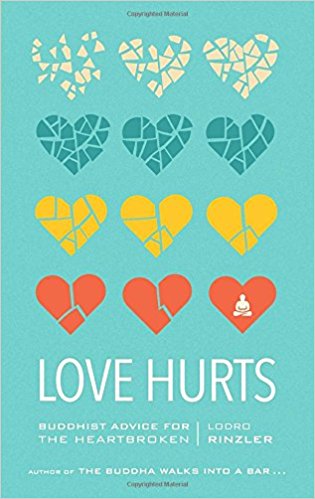
  • Love Hurts: Buddhist Advice for the Heartbroken – Interview and Book Giveaway

    Love Hurts: Buddhist Advice for the Heartbroken – Interview and Book Giveaway

    Note – The winners for this giveaway have been chosen. They are:

    • Jennifer Moore Hardesty
    • Margie Lynn
    • Dr. Mac
    • Ryan
    • RB
    • Justme
    • Rogério Cardoso
    • Fernanda Garza
    • Benjamin E. Nichols
    • Terri Cross

    When you’re dealing with heartbreak, it can feel like the pain will never go away.

    You may know, intellectually, that everything heals with time, but in that moment, when you’re suffering, it’s hard to hold onto hope.

    Like all humans, I’ve experienced my fair share of loss, and I’ve felt scared, depressed, alone, betrayed, rejected, regretful, and angry—with other people, with myself, and with the world.

    Losing someone or something that has become a part of your identity can feel like losing a limb, and how do you go on when you’ve lost a part of yourself?

    I’ve learned that there isn’t a one-size-fits-all answer to that question. There’s no magic solution that helps us grow, let go, and move on. There are, however, lots of things we can do to help ourselves when struggling with the many nuanced emotions that come up when we’re grieving a painful loss.

    Tiny Buddha contributor Lodro Rinzler has tackled these varied challenges in his new book, Love Hurts: Buddhist Advice for the Heartbroken. 

    This “short and compact first-aid kit for a broken heart” offers simple, practical wisdom to help you take good care of yourself and work through your pain. 

    With chapters that offer advice based on what you’re feeling, Love Hurts may just what you need to get through your hardest days and find a light at the end of the tunnel.

    I’m grateful that Lodro took the time to answer some questions about his book, and also that he’s provided ten free copies for Tiny Buddha readers.

    The Giveaway

    To enter to win one of ten free copies of Love Hurts: Buddhist Advice for the Heartbroken:

    • Leave a comment below (you don’t need to write anything specific—“count me in” is sufficient)
    • For an extra entry, share this interview on one of your social media pages and post a second comment with the link

    You can enter until midnight PST on Sunday, March 19th.

    The Interview 

    1. Tell us a little bit about yourself and what inspired you to write this book.

    I’m a meditation teacher and author. I grew up in the Shambhala Buddhist tradition, started meditating at the age of six, and have been teaching meditation for the last sixteen years under the guidance of my teacher, Sakyong Mipham Rinpoche. I’ve written six books on the topic and co-founded the network of meditation studios known as MNDFL.

    On an outer level, I wrote this book because I work with a lot of people who are suffering from heartbreak and I wanted to talk to them directly, knowing that I couldn’t sit down and have tea with everyone.

    On an inner level, for a man in his thirties I have known a lot of heartbreak. Yes, the romantic kind, but also from too many people who have died, many around my age, and from every day reading the news and my heart breaking anew, seeing how many people are perpetuating horror and terror on others due to discrimination.

    On a secret level I wrote this because I needed to understand how heartbreak works, and writing is how I process information. That’s why I birthed this book.

    2. Your book isn’t just for people who are healing from a breakup or divorce; you define heartbreak in much broader terms. Who is this book for?

    It’s for humans. We all experience heartbreak. It might be personal, such as a breakup, sure, but it might also stem from job loss, the death of a loved one, or just not feeling like we’re living up to our potential. It might also be more societal, in reaction to hatred playing across the news.

    It’s odd because in some sense, I’m constantly rooting against my own book; I don’t want people to need a book on heartbreak—I want them to feel happy—but so many of us are experiencing heartbreak right now so I’m glad it’s available as a resource.

    3. I love how you sectioned the book based on what readers may be feeling or experiencing. What made you decide to write the book this way?

    When you’re heartbroken, you can’t sit down and read a ten-step plan for healing; heartbreak is messier than that.

    It’s this simple term that encapsulates so many strong emotions, including anger, despair, frustration, loneliness, and more. The underlying emotions of heartbreak—despite what caused it—are all too similar, so I knew I could address those, even though I could never dream of all the scenarios that might spark heartbreak.

    In that sense it’s a bit like a choose-your-own adventure book, where you can read about whatever you’re dealing with on that particular day.

    4. The section heading that most jumped out at me reads “If you feel like you have no right to be heartbroken.” Why do you think some of us feel this way, and why is this not true?

    So many of us feel ashamed of our heartbreak. When I would meet with people to hear their heartbreak stories, people were so shy at first. They would come in and think they would be talking to me about their last big relationship.

    I would ask the question, “What is your experience of heartbreak” and the flood gates would open. They would then start talking about their dead cat, or their high school sweetheart from decades before, and at some point note that they felt totally confused as to why they were heartbroken about this thing that was ages ago or, based on societal standards, “not a big deal” but it was their honest experience.

    Whatever breaks your heart, breaks your heart. It’s quite simple. The last thing we need to do when we feel heartbroken is judge ourselves for feeling that way.

    5. What, in your experience, are the most important things we can do to take care of ourselves when dealing with heartbreak?

    Even the simplest of self-care acts make a big difference when we’re struck down by heartbreak. I recommend:

    • getting more sleep than you think you need
    • eating well, or at least eating (we often forget to when we’re depressed)
    • meditating
    • exercising in whatever way makes sense to you

    6. How does meditation help us cope with our losses and heal?

    There are many types of meditation out there. To get going, I often recommend mindfulness, where we are bringing our full mind to one thing such as the breath.

    There have been a lot of studies done in recent years about this form of meditation. It’s proven what the Buddhists have known for 2600 years: Doing it for even short periods every day increases focus and resilience and leads to a better memory and reduced stress.

    While I appreciate science backing up the practicality of meditation, here’s what it has done for me:

    It has helped me show up fully for every aspect of my life.

    It has helped me wake up to where I get stuck and shut down my heart.

    It has helped me be more present with simple activity in my daily schedule.

    It has helped me get to know, befriend, and ultimately love myself.

    Having established that foundation of love inwardly, I have been able to be kinder, more compassionate, and loving toward others. When I am with friends or on a date with my spouse, I am there, fully. When I am in a painful situation, going through a break up or holding my father’s hand as he died, I am there, fully. It has allowed me to be present with the wide variety of pleasures and pains that life brings.

    Meditation has been an incredible gift to me, particularly when it comes to showing up for my own and others’ heartbreak.

    I’ve discovered that the main way to move through heartbreak is to look directly at it and not flinch. To stay with our discomfort is the best way to move through our discomfort. For me, the best way to learn to stay with all the difficult emotions that come up around heartbreak is meditation.

    7. What do you think is the biggest mistakes most of us make when healing from heartbreak?

    Whenever I would meet with people about this topic, I would ask them how they take care of themselves in the midst of heartbreak. Indubitably, every single person would answer by saying, “Well, the thing I do that I know I shouldn’t is…” and then they would fill in the blank. “I over-eat sweet foods.” “I reach for a bottle of alcohol.” “I go online and find someone to hook up with.”

    When strong emotions come up, we don’t necessarily want to look at them; we want to run away from them and act out in a similarly harmful and habitual way. When you feel like that, I recommend taking a breath, coming back into your body, and seeing if you can stay with the energy of the emotion itself, as opposed to the storylines around it.

    8. What has helped you let go of anger and forgive after being hurt or rejected?

    In my own experience, one thing that helps me when I am suffering is simply to be heard, to be witnessed. When we sit one-on-one in the presence of each other we experience one another in a very human and honest way.

    Sometimes the best way to see ourselves through our heartbreak is to be with our heartbreak, and being with other people who can hold the space for that really helps.

    9. What is the main message you hope people take from this book?

    That you will heal. It may take more time than you would want it to take—and that’s the nature of heartbreak—but even the seemingly devastating emotions that come with this experience are impermanent and that is extremely good news. Because when you do heal, you will love again.

    You can learn more about Love Hurts: Buddhist Advice for the Heartbroken on Amazon here.

    FTC Disclosure: I receive complimentary books for reviews and interviews on tinybuddha.com, but I am not compensated for writing or obligated to write anything specific. I am an Amazon affiliate, meaning I earn a percentage of all books purchased through the links I provide on this site. 

  • To Fully Heal Your Broken Heart, Make Sure You Do This

    To Fully Heal Your Broken Heart, Make Sure You Do This

    Broken heart

    “Grief is healthy and it is healing.” ~Richard Moss

    When I was a little girl there was this belief floating around in my head that there was only one person. One person who was my soulmate. One person who could love me. I think the belief was formed by some concoction of Disney movies, religion, and American culture.

    What’s worse than this belief is that I somehow found myself afraid that I wouldn’t even have one person. I was afraid I would be alone. Forever.

    I don’t know when I adopted the belief that I wasn’t enough, that I might not find someone, that I was unlovable. My mom did her best to reassure me, but it didn’t quite do the trick.

    Self-love is the work we have to do ourselves. No one else can give us that gift, no matter how young we happen to be. 

    Into my third decade of life I did the deep work that led me to discover what it actually meant to love myself. My life transformed in so many incredible ways, and then I no longer worried about whether there was someone out there who would love me. I knew I was lovable, and by more than one person.

    At some later point I met a man. I liked him, but there were some red flags. He was a bit flaky, and he lacked the ability to communicate maturely. I was about to walk away, and then suddenly everything changed. The red flags turned green, and we pranced off into the moonlight.

    That red lack-of-communication flag never really turned green. Nothing had actually changed. He just hid who he really was until he felt suffocated and invisible. After almost a year of living like this he left me with no warning.

    For a long time I felt so much pain that my entire being melted into sorrow. I fell into a deep depression and reached out to a spiritual teacher who wrote me this:

    Please do not indulge any thought that attacks yourself or even your ex-boyfriend. Grief is healthy and it is healing.

    I wrote back to this teacher that I wasn’t indulging in negative thoughts, that the pain was so overwhelming that I felt no anger, just the deepest sadness I’d ever felt.

    I spent a lot of time in bed feeling my pain, crying, and thinking. This was a man who I was building a life with. This was a man I opened my whole heart to. This man showed me love and support like I’d never experienced before. And then he swiftly took it all away. As I lay in bed for days with a churning mind the stories began to surface in whispers:

    See, I am unlovable. He didn’t think I was worth loving.  I’m not enough.

    And the stories grew louder.

    “Please do not indulge any thought that attacks yourself.”

    The stories we tell ourselves that deny the essence of who we are may be so deeply rooted that we’re unconscious of their presence. I was attacking myself. Each time I allowed these beliefs to hold an ounce of truth I was attacking myself.

    So I worked on loving myself instead. I worked on seeing the truth of who I was in each moment. The truth I found was this: I am worth loving. I am enough. I am lovable. I am beautiful. I am whole. All of this is true right now, in every single moment I am living. 

    A few months into my grief, the anger began to surface, and I started to vilify him. I was tired of feeling the pain, so my mind created stories about him to make me feel better. I told myself he was incapable of loving me, that he couldn’t allow me to be fully me. I thought about how he was a selfish person for treating me the way he did.

    Please do not indulge any thought that attacks yourself or even your ex-boyfriend.”

    My teacher was right. Those stories didn’t do my ex justice. They didn’t honor the time we shared together. And they didn’t actually serve me. They were a weak tool to help me avoid my pain.

    The truth is simply that he wasn’t my person anymore. And that didn’t make him wrong. It didn’t make him bad. I didn’t have to turn him into a villain to heal my wounds. I didn’t have to diminish my pain or justify his actions. I could simply allow for the pain and allow for the healing.

    Grief is healthy and it is healing.”

    That breakup took me down, down, down. It made me forget who I am so I could find myself again. It was the greatest gift I have been given in a very long time, and it took me many months to recognize the gift at all.

    Grief is healthy and it is healing. I didn’t need to make up stories to ease my pain because the more I hid from it the more it had a hold on me. Instead, I chose to let the pain wash over me. I allowed it to teach me. That’s how grief can become a gift.

    We don’t need to hold on to old lovers, torturing ourselves with “what-ifs” that don’t serve us.

    We don’t need to condemn ourselves for being imperfect, for being too much, for not doing all the right things.

    And we don’t need to denigrate the people we have loved because they hurt us.

    I have never been more confident that I will have an incredible partner in life one day. You can too. But first you have to let go of that story, whether you’ve adopted it as a child or created it to feel less pain as an adult. Stop shrinking yourself down because you won’t let go.

    Allow for the grief so you can begin to truly heal. Through healing you will grow more fully into yourself, and from that place you will discover the truth. Release the burdens of storytelling. You don’t actually need them. You are strong enough to heal on your own.

  • Moving from Heartbreak to Happiness: How to Work Through the Pain

    Moving from Heartbreak to Happiness: How to Work Through the Pain

    Lonely Man

    “Pain makes you stronger. Fear makes you braver. Heartbreak makes you wiser.” ~Unknown

    There I was, sitting in my lounge room, waiting for my girlfriend to return home.

    We had just bought our first house together and had been living there for a week. It was a chaotic time, balancing moving, work, study commitments, and an obscene amount of renovations. However, the heartfelt joy of settling into our own place overshadowed the chaos.

    Our new home held the dreams of a future life together. The thought of raising a family there filled my heart to the brim.

    It was an exciting time in my life, and I felt I was exactly where I was meant to be. I had the house, the girl, and the ring ready to propose with. Life was good.

    When she arrived home, she was visibly upset. Clueless as to why, I comforted her and asked her what was wrong. Then came the heartbreaking words I never wanted to hear: “I can’t do this anymore.”

    There was no warning, no hint of anything being wrong with our relationship.

    As I sat there, overcome with so many emotions and questions, I tried to comprehend what had just happened. I desperately did everything I could to convince her not to throw away what we had.

    Yet, the more I talked to her, the more I began to not recognize her. Her assertiveness and aggression grew, and the girl I thought I knew concluded with “I no longer love you.”

    With that, our once inseparable connection dwindled to nonexistence. Devastatingly, I lost all hope when she moved into another relationship shortly after leaving me.

    If rock bottom was a destination, the heartbreak of losing the relationship and her moving on to someone else seamlessly had sent me there. Not only was I left mourning the loss of love, but I was living with the fact that someone else had taken my place in her heart.

    I had to give up the house, along with my dreams of spending our lives together. Even losing her family after they had embraced me as one of their own cut me more deeply than I could express.

    All day, every day, I kept picturing her everywhere—even in my sleep, as I dreamed of her constantly.

    What was wrong with me? I asked myself over and over again. I wondered, how could someone say they love you and show so much affection for so long, but within an instant turn into a stranger? The relentless analyzing of our time together seemed to never end.

    I could see my family and friends were doing everything they could for me, but I couldn’t connect with them, or myself. I constantly felt my heart was being crushed and I thought I was losing my mind, as I would endure a year’s worth of emotions each day.

    However, after countless breakdowns, grieving, crying enough tears to fill the Amazon River, and spiralling into depression, I came to realize that some of the greatest answers in life come from the questions we never ask.

    These are the answers I found to help reclaim my life back from heartbreak.

    The first answer came through forgiveness. Forgiving your heartbreaker is a personal decision. You don’t have to do it face-to-face, nor do you have to condone them for their actions. I found my forgiveness had to happen continually; “forgive over and over again” became my mantra.

    One thing that helped me forgive was empathizing with my ex’s decision to leave me. Although this shattered my heart, I came to accept, forgive, and understand her choice, because she wasn’t happy; and that’s something I can understand, because I too would leave a relationship if I were no longer happy.

    In the end, she decided what was best for her path in life, and it was up to me how her decision affected my life.

    I could either be bitter and angry because she abandoned me, or I could choose to forgive and see her off with love.

    It was by far the hardest thing I’ve done. However, choosing love through forgiveness was an essential step to take on my healing journey.

    Another step in the right direction for me was writing down everything I was grateful for every morning and night—simple gifts in everyday life, such as the warm sun on my skin, a fresh breeze, or even a smile from a stranger (it’s amazing what a smile from someone does to you).

    Taking the time to recognize all the little blessings each day offered completely changed my outlook.

    If you feel you are struggling to find gratitude in your life, place your hand over your heart. Can you feel its beat? That alone is the most powerful gift you can be grateful for.

    Practicing these lessons has allowed my personal development to grow further than I thought possible.

    I still have moments where I break down, cry, and feel as though I’ve been swallowed in a sea of sadness, anxiety, and stress. Nevertheless, I have learned to be watchful when these moments start to overwhelm me. I begin to focus on my breath and mindfully engage with the present moment by acknowledging my senses and focusing on what I can see, hear, and feel.

    Once I have bought myself to the present, I recognize and accept my thoughts and feelings with complete self-love. I do not judge or discourage myself for having them. Instead, I embrace and grow through each thought or feeling while it is with me, knowing it shall eventually pass.

    Everything passes eventually. The present is all we truly have, and the only permanency in life is impermanence.

    When you’re dealing with heartbreak, happiness can feel another world away. However, continue to read, write, create, surround yourself with loved ones, seek professional help, and allow yourself to do the things you enjoy. These are the steps that will help you get through this.

    Furthermore, be brave and open up to new ventures. Engaging with people on deeper levels, daily meditation, writing, and finding yoga were some of the greatest gifts my heartbreak welcomed into my life.

    So say yes to happiness, to love, to a positive mindset, and continually affirm that you have the strength to handle whatever comes your way. Acknowledging that things are constantly getting better will be a huge turning point in your healing.

    While the pain may sit with you as you adjust to this new phase in life, remember, you are growing in these times, and every experience in life offers you a gift. Even heartbreak.

    A bad chapter in your story doesn’t mean it’s the end, either. It’s just part of your journey. And everyone’s journey is different, so don’t feel you must rush through your grieving and heal as fast as possible; instead, welcome in all that comes with it. You may be hurt, but you are reading this and taking the steps to gain strength so you can move forward in life.

    After all, moving forward is all we can do. How would you do driving a car constantly looking in the rear-view mirror? Don’t allow your past to cause a crash in your present. Continue to look forward and see the world in each moment as it continually comes toward you.

    When you are ready, you will open your heart and love again. Even though you may feel your heartbreaker took that love away, they didn’t! They simply helped bring it out of you by reflecting the love you feel eternally within yourself. The beauty of this is that you can feel that love all the time through self-love. No one has the power to take that away.

    The more love you give yourself and others, the more you’ll receive in return.

    Embrace this time and let your life become full of beauty and love as you move onward from heartbreak to happiness.

    Lonely man image via Shutterstock

  • Coping with Loss and Heartbreak: How to Get Through the Pain

    Coping with Loss and Heartbreak: How to Get Through the Pain

    Broken Heart

    The unendurable is the beginning of the curve of joy.” ~Djuna Barnes

    November, 2014. A story you’ve heard a million times. The person I believed with all my heart to be “the one” ceased to feel the same way about me.

    My heart and soul shattered, I had no desire to live, the whole works.

    Having your heart broken, especially by someone you truly loved is, from my perspective, the worst kind of pain there is. It makes you lose all sense of self, reality, purpose, and faith. To me, it felt like my soul was being severed into teeny tiny pieces.

    When we’re in that much pain, it seems like it’s going to be a forever deal. We forget that it’s all temporary.

    To make matters worse, we feel we’re all alone in it—we are rushed to “just move on already” when we can barely find enough energy to open our eyes.

    So keep in mind that there is no shame about the situation that is most painful to you and how long you’re taking to process it.

    You could be facing your darkest hour brought by the death of your pet fish. Or by the fact you didn’t get that dream job.

    Whatever the situation is, do not compare or believe your pain is less legitimate than others: your journey here is your own, and it is just as sacred as that of someone you perceive to have “more legitimate“ reasons to be in pain.

    Also, take your time getting through it. It’s your story. Your shoes. Your life.

    I’d like to remind everyone out there going through a hard time that pain is in fact the greatest catalyst for growth.

    You can’t see that when you’re smack in the middle of it; in fact, you might even say, as I did, “No growth is worth this much pain.” But when you come out on the other side, my friends, it’s like you’re seeing in color for the first time in your life.

    So keep going! You’ll be happier than you ever were once you’ve transcended it, I promise you.

    Here are five of the many lessons I learned throughout this year that I believe can help anyone, at any point, with any struggle, to reach out into all the happiness and bliss that life can offer.

    1. Gratitude

    While I was in that place of suffering, gratitude seemed like a dark humor joke from the skies. How can you possibly find something to be grateful for when you feel you’ve been stripped of every shred of happiness or love and there’s nothing left but pain?

    That feeling kept me in limbo for a while. I kept reading and reading about recovering from a severe heartbreak and every single one of the texts I read were emphatic about gratitude. So at one point I thought “there has to be a reason for this.”

    Finally, I picked up a pen and piece of paper and told myself to write ten things I was grateful for.

    It was hard at first. Only a few things came to mind, like family and a roof over my head. But I kept on trying, day after day.

    By the end of the first week, ten things were too little.

    You begin to see everything as a blessing.

    Now, with a year’s worth of practice, at the end of each day, looking back at things to be grateful for on that one day feels actually overwhelming at times—there’s just so much to be thankful for.

    I feel important to share that what made me click was the realization that gratitude isn’t about exercizing it as a virtue because you should. It’s about the wonderful state of being you put yourself in deliberately. Ultimately, gratitude is about being happy.

    2. Beliefs, beliefs, beliefs

    Next, I was smacked in head with the premise that you create your own reality. Accepting responsibility for your pain is awful, to say the least—until you realize how empowering it actually is.

    What it comes down to is that what you truly believe about yourself and the world is, in fact, what you’re going to experience in your life.

    If you believe that the universe conspires against you, surely enough, that’s what you’re going to get. Every time something goes wrong in your life, you’re going to read it as if you’re powerless and the universe is after your bottom in particular.

    The silver lining is: beliefs are changeable. Wouldn’t it be amazing if you chose instead to believe that the universe conspires in your favor?

    A great technique I picked up from Tiny Buddha itself is: find a belief that you’re holding on to that you feel is doing more harm than good, and work on it.

    Let’s say, for instance, you feel unlovable. Take a piece of paper and write down the opposite of this, e.g. “I am lovable.” Then actively look for evidence that this is true, day by day.

    Every time you felt loved during the day, write it down. If someone was kind to you, if you received a compliment or a warm touch, or were praised in any way, write it down.

    Little by little, you’re going to convince yourself of this, and then proceed to see it more and more in your experience.

    3. You are complete.

    We tend to attach certain situations, people, and experiences to certain feelings. This makes us think that in order to feel complete we need to reach out for these people, situations, and experiences, which obviously causes us more harm than good.

    Take me, for instance. I attached the love that I felt for my ex partner to that person in particular. One meant the other. And it was the most beautiful feeling. So when they were no longer there, I felt I was left with a huge hole in my soul.

    But I came to realize that love I felt had been inside me the whole time. What they did was bring it to surface.

    Which is to say: you can’t feel anything that isn’t within you already—you are a complete being. No one, and no circumstance, puts feelings inside of you.

    It’s easier to let go once you realize that, much like a piano, all of your feelings are already within you in potential. What your reality does is play the notes that bring them into your awareness.

    The beauty is: you can play that piano yourself.

    Find your music.

    It’s the best you’ll ever hear.

    4. Disidentification

    I can’t stress enough how important it is to disidentify with your pain or struggle. We feel it’s so entrenched in us that it’s like an arm or a leg. So I want to be very clear: you are not your pain.

    In my experience, heartbreak felt like it would be forever a part of me. That there was nothing I could do about it because it was so profound and painful that standing for even a minute looking at it made my heart go physically nuts (which was quite scary).

    The moment I learned, and I mean actually understood, that pain serves you immensely by pointing straight at parts of yourself you need to heal, and is not part of your now-being, everything changed.

    So, imagine your pain as a separate entity from you. Imagine seeing your pain in front of you, talking to it, hugging it. Dress it festively according to the occasion, hang out with it, draw it, make a Play-Doh version of it. Be creative and let loose.

    It’s going to become a second nature to you to actually love your pain.

    5. Integration, integration, integration

    This came as a consequence of the latter lesson. By loving your pain, you integrate it. You don’t reject it or try to run from pain; you accept it.

    What happens next is that you expand. And that is the best thing ever. Trust me.

    Everything becomes that much full of life, of passion, of color.

    It’s so important to understand this. Every time you integrate an aspect of your pain, you’re going to feel more joyful, more awake, more excited.

    So don’t run from your shadows. Instead, invite them over for a cup of tea and have a nice, honest, accepting chat.

    These five lessons helped me form a new understanding of life—I went from dreading each and every day to feeling excited and passionate for every new morning. I hope they can help you find your way there as well.

    Be gentle with yourself and hang in there—it’s worth it!

    Broken heart image via Shutterstock

  • 4 Things to Remember When Your Relationship Falls Apart

    4 Things to Remember When Your Relationship Falls Apart

    Lonely

    “At some point you have to realize that some people can stay in your heart, but not in your life.” ~Unknown

    I was filled with excitement and nerves as I stood waiting to meet him for the first time in Paddington station.

    It was one of the wettest days I’d seen in London, and the rain dripped steadily from the peaked hood of my blue rain jacket. Zipped up to my chin and the hood pulled tight over my head, only my eyes peered out, searching for him amongst the crowds and falling rain.

    Months later, he told me that he’d fallen in love with me the moment he saw me, those big eyes staring out at him from beneath my hood.

    We’d been introduced on Facebook via a mutual friend after I’d commented on how cute he was. He lived in California. I lived in London. He’d quit his job to travel for a year and was passing through the city. He asked if I wanted to meet.

    I said yes.

    But in the same moment that he fell in love with me at the station, my excitement faded away. What I’d hoped to feel when we finally met just wasn’t there.

    Over the next few months, from wherever he traveled, he pursued me with a persistence I’d never known.

    At first, I was annoyed. I wished he’d leave me be.

    But as the weeks and months went by, things started to change. He wanted to know everything about me. He was interested. Interested in a way no one else had been before. He took time to get to know me. And I started to get to know him too.

    I realized that I’d judged him too soon.

    When he returned to California, we spent the next few months talking online almost every day. With every question he asked, I started to love him a little bit more.

    Eventually, we talked about meeting again, this time in California, to see where this all might lead.

    And so three months ago I boarded a plane at London Heathrow to meet this man who I’d begun to love.

    We spent the next three months on one long adventure. It was filled with road trips, hiking, forest trails, gentle kisses, holding hands, the wind in our hair, the sun on our cheeks and the smell of California all around us.

    We argued, too.

    But it was perfect.

    And yet when those three months came to a close, we both acknowledged the unhappy reality that we were two people traveling in two very different life directions. We both felt that continuing our journey together would mean neither of us would ever quite be truly content.

    And so my grieving began. A sort of grieving I’ve not experienced before. Because here was a man I loved. And yet I also knew that we weren’t meant to be.

    The last few weeks have been filled with a great deal of sadness, confusion, and questioning, as well as gratitude and happiness for the time we spent together.

    I don’t think there’s a person amongst us who has escaped heartbreak in this thing we call life. And so amongst all this, I wanted to share a few thoughts on love and life. It’s helped me to write this down. I hope it might help you too.

    Leave nothing on the table.

    In our final week together, we watched a film called Miracle, the true story of Herb Brooks (Russell), the player-turned-coach who led the 1980 U.S. Olympic hockey team to victory over the seemingly invincible Russian squad.

    There’s a moment in the film when Herb turns to his wife and says:

    “The important thing is that those twenty boys know that in twenty years they didn’t leave anything on the table. They played their hearts out. That’s the important thing.”

    And that is the important thing.

    I could have said no to this experience. I could have told myself about all the ways in which it could end in disaster and heartbreak. I could have stayed in London.

    But then where would we be?

    Two people who left everything on the table. Two people who refused to play their hearts out.

    And while these endings bring pain, I never want to live my life not playing my heart out. I don’t think anyone should live that way. Not in business. Not in love. Not in life.

    So keep opening up.

    Keep playing your heart out.

    Leave nothing on the table.

    You are lovable.

    Right now, one of the things I’m really having to fight is the stories my mind is trying to create. Stories like:

    • You’re not lovable.
    • You’ll be alone forever.

    In times of pain and vulnerability, the brain searches for stories to make sense of what’s happened. Oftentimes, we come up with stories that aren’t based in truth. But our brain doesn’t know that. It only knows that it’s now got a way to make sense of what’s happened.

    Those stories get locked in and then they impact the way we behave in every similar situation in the future.

    So I’m reminding myself every second of every day that this love story not working out doesn’t mean there’s something wrong with me.

    So I want to remind you too. There’s nothing wrong with you. You’re lovable. You’re loved.

    Permanence is an illusion.

    I spent some time reflecting on why I feel so sad. To be sure, this is grief, of a sort, and my sadness is legitimate and welcome.

    But as I look at what’s behind my sadness, I see stories of clinging.

    Clinging to a person who was never mine to begin with.

    Clinging to stories of the future, which will now never come to be.

    I remind myself, now, of the law of impermanence.

    That all things come and go.

    That all things, both pleasure and pain, pass.

    That there is nothing in this world that will remain as it is in this moment.

    And I remind myself, too, that just because something no longer is, doesn’t mean it never was.

    Look for the good things. 

    It’s easy for me to seek out only the bad in all of this. It’s easy to focus on the sadness and the pain and the reasons why it didn’t work out.

    But I once read a story about a mother who told her son, every day before he went to school, “Look for the good things.” 

    And now, even though his mother is gone, he remembers, always, to look for the good things.

     I loved this story and it’s what I’m trying to do now.

    I think it’s important to acknowledge pain and sadness. They need their time and space. But amongst all that sadness, don’t forget to look for the good things too. They’re there. I promise.

    Lonely image via Shutterstock

  • 5 Ways a Creative Practice Can Help You Through Grief

    5 Ways a Creative Practice Can Help You Through Grief

    “The discipline of creation, be it to paint, compose, write, is an effort toward wholeness.” ~Madeleine L’engle.

    Heartbreak, sadness, and loss are uniting experiences across humanity—all of us are likely to experience grief in some form.

    In grief, it can be common to feel lost, demotivated, depressed, and also, to experience a loss of self-esteem; it’s difficult to feel good about yourself when you’re processing all of the emotions that go along with grieving.

    Developing a regular creative practice can be a helpful, healing way through loss. I used a creative practice to help find my way through a time of immense sadness and change—a divorce.

    When my relationship ended after sixteen years, there wasn’t a single aspect of my life that remained the same: my family, friendships, the way I parented, where I lived, my work and financial situation—every aspect of my life changed dramatically.

    It was a huge time of change that I termed “reinvention,” and I rebuilt my life from the ground up.

    I grieved the loss of a family, of the amount of time I had with my son, and the fact he was now a child of a split family. I grieved the possibility I would never have more children, and the picture I had for my future life.

    In my experience, grief is something you work through over a period of years. As the old adage says, it takes time. As humans, we experience grief in many forms, so while causes of grief and individual experiences differ between people, I think there are lessons and experiences that we can share.

    I have completed several Photography 365 projects over the last six years since my divorce. These have been the foundation for creativity and gratitude practices that are now the cornerstones of my life.

    Whether you are a creative person trying to maintain your creativity or someone who is looking for a tool to help you through grief, developing a regular creative practice will be helpful.

    When you’re grieving, it can feel as if everything in your life has changed, and often it has. Creativity can be a solid, comforting, and familiar friend—a pillar of self-support.

    A creative practice is any creative activity you undertake on a regular (preferably daily) basis. Ways of utilizing and growing your creativity are virtually limitless—from cooking, to coloring, car-restoration, and on to calligraphy.

    The key is to find an accessible, achievable activity that works for you, that you can commit to adding into your life. (If you’re grieving, consider leaving that larger-than-life art installation for now, and focus on something you can work on in your pajamas if need be!)

    Make no mistake, establishing a creative practice takes effort, commitment, and discipline, just like many of the most worthwhile things in life. But it will reward you, again and again.

    Creativity has the ability to become a cornerstone of your life, as well as a pathway through grief, and a stimulant of huge growth.

    Creativity shares a trait with grief that is not commonly acknowledged: They can both be tools for growth. Typically, grief throws down challenges you wonder whether you have the strength to bear, but which, over time, you can learn to live with, heal from, and even thrive because of.

    Creativity, in a gentler fashion, can do the same. It will undoubtedly stretch and challenge you, but can be gentler than grief, because you can actually enjoy it! Choose an activity you love, are curious about, or have always wanted to try, and surrender to the healing power of creativity.

    Here are some key ways that creativity and a daily creative practice helped me, and can help you.

    Creativity challenges us to look for (and find) the beauty in every day.

    The world can look grey through grief. The shine disappears from everything and you feel as though you’re looking at the world through an ever-present veil.

    My creative practice—a Photography 365 Project where I took a photograph of my life every day for a year—helped (and forced!) me to look for something beautiful in life, every single day.

    Some days this was a struggle, but if I took a poor-quality, boring picture, it made me feel worse to look at it, and I realized I felt much better when I took a great picture. So I kept looking for beautiful pictures to take, one day at a time.

    Creativity provides a focus and something to look forward to.

    I completed my photography 365 projects with a group of like-minded women from all over the world. We shared our pictures online, became a part of each other’s daily lives, and helped motivate and support each other. We brainstormed, counseled, shared ideas, and held space.

    I cannot emphasize how critical a group of like-minded souls will be to helping you complete a sustained creative project. I not only looked forward to discovering what my photo of the day would be, but I looked forward to seeing what everyone else found as well.

    A cheerleading squad in the form of an online community, a virtual or real class, or a group to join can be enormously helpful as you develop your creative habit.

    Seeing something beautiful in every day makes us grateful for the good in our lives.

    Looking for the photo of the day became a daily, all-day search. I became far more aware of all that was around me: I chased the light, examined people’s faces, noticed nature, and raised my eyes to the horizon. I became an observer of the beauty of life, which helped me on the days I felt too sad, overwhelmed, or exhausted to be my beautiful self.

    The irony was, that by capturing the beauty in photographs, I became part of it, and as I recorded it I had it to look back on as proof. Proof that life was still good—that there were good moments in every day.

    As I worked through my 365 Project, it inspired me to begin another 365 Project, where the subject was consciousness.

    As I found my feet through grief, I bought a tiny red diary where I recorded one forward step toward my dreams (no matter how small) every day. I also wrote down what I was grateful for in each day, and the good things that had happened.

    (Note: the size of the diary was important in this project for me. I didn’t want to feel overwhelmed by 365 large blank pages, so I deliberately bought the tiniest diary I could find. Just a small space to fill each day, with one forward step. It helped).

    Creativity provides a daily outlet for feelings and emotions.

    It’s important to be honest with yourself and others about how you’re feeling, particularly in grief. A creative practice provides you with a forum in which you can check in with your feelings.

    You turn up to the page, the canvas, or the camera. You breathe, and then you feel. Your inner dialogue becomes the window through which you make or create. You can feel, process, and then let your emotions go when you express them creatively.

    The beauty of this is that the process is two-way. I made art to express my feelings, and I took photographs that depicted sadness, vulnerability, love, emptiness, loneliness, hope, and many other feelings. But in the main, I wanted to make beautiful art—art that lifted me up. So I made art to express my feelings, but I also felt better because I made beautiful art.

    Creativity is a portal into joy. No matter your age, stage, ability, or creative outlet, creativity gives you a place to simply be, to turn up, and either feel all there is to feel, or lose yourself entirely in the creative process.

    Chances are, you’ll do both. And while you do, creativity will be working its magic in your life—slowly but surely stepping you toward greater joy. When you’re grieving, these can feel like small steps, and it does take time. But if you persist, if you can open your heart to allow creativity in, you will succeed.

    Creativity can improve your self-esteem.

    Creating through grief can be difficult, because creativity is linked to self-esteem (creativity and self-esteem both sit in the sacral chakra). When we’re heartbroken, self-esteem can suffer.

    As a highly creative person, I was often frustrated by my grief, because it made creating so difficult. The effort required to push through the sadness, exhaustion, overwhelm, and all that was going on as I rebuilt my life made completing the big projects in my head seem almost impossible.

    And yet, by breaking my creativity down into tiny daily tasks, creativity became manageable, and I accomplished a long-held goal: I documented my daily life in photographs for an extended period of time, creating a body of work for a solo exhibition.

    Ultimately, how I chose to respond to my divorce led to me stepping fully into my creative purpose and life as an artist. Creativity helped me heal, and what I clung to in a difficult time has been reinforced as my greatest strength.

    We do not always choose what happens to us in life, but we do choose how we respond. Creativity is an invaluable component of our lives, whether we’re in grief or not; and its powerful healing properties are transformational.

  • How to Hold a Broken Heart (So You Can Get Through It)

    How to Hold a Broken Heart (So You Can Get Through It)

    Broken Heart

    “Sometimes this broken heart gives birth to anxiety and panic, sometimes to anger, resentment, and blame. But under the hardness of that armor there is the tenderness of genuine sadness …This continual ache of the heart is a blessing that when accepted fully can be shared with all.” ~Pema Chodron

    I remember a few years ago when I was going through a bad break-up. It wasn’t the longest relationship of my life or even the deepest. But it had so much potential and it ended in the most cursory of ways.

    Already a few drinks deep, I FaceTimed a friend who lives in D.C. and we had a long-distance whiskey together. As I teared up I asked him a favor, prefacing it as such: “I’m guessing it’s the case. I know this sounds dramatic. But I need you to tell me that I’ll find ‘the one’ and settle down at some point.”

    He looked at me, paused, and said something I’ve never forgotten. He said, “You will love again. That I know. Whether it’s one person for a long relationship or many people with shorter ones, I know you will fall in love again.”

    As a long-time Buddhist practitioner, I have studied and experienced the heart’s amazing resilience and ability to rebound and offer love, again and again. Yet my friend’s words hit me in a new way.

    I began to realize that the ability to love is innate. We love love. We all want to love, and while there are times when we feel devastated by loss, the heart ultimately heals and once more shines forth, hoping to connect anew.

    And maybe that means we love one person for the rest of our days, or many, but the heart’s ability to love is not something I have ever questioned since. That said, when you’re broken-hearted, it’s hard to contact your ability to love unconditionally.

    Now, if you’re like me when you go through a major break-up you have a particular set of things you do to distract yourself from that pain.

    You might hole up and binge-watch a television show. You might drink a lot, either at home or hole yourself up at a local bar with a handful of supportive friends. You might attempt to rebound quickly, filling your time with endless dates or casual sex.

    Whatever your form of distraction may be, you might have found what I found: these distractions are temporary and when your show ends/you sober up/you wake up next to someone you don’t really like your pain is there bigger and badder than ever.

    In my experience, big emotions like heartbreak aren’t meant to be avoided; they’re meant to be felt. It’s a bit like standing at the edge of the ocean and having a giant wave come crashing down on you. You can kick and fight and pull against it, but it will only drag you further out to sea.

    Instead, you can look at it and dive headfirst coming out the other end, perhaps even feeling refreshed. The same goes for heartbreak. The more you kick and fight against it, the more you will get dragged into the very depths of that misery. The only way is through. You have to let the emotion roll over you like that wave.

    The main practice I recommend is one I do for heartbreak moments both big and small. I place my hand on my heart, drop the story line around the underlying emotion, and rest with the feeling of the emotion itself.

    Instead of getting lost in the mental maze of “Why did she do that?” “How can I get her back?” or “What did I do wrong?” I acknowledge those thoughts then bring my focus back to the emotion that exists right beneath their surface.

    As Pema Chodron says at the beginning of this piece, I let myself go past the anxiety and panic and touch the genuine heart of sadness that exists underneath. From that place of vulnerability and authenticity, I find the energy to once more connect with others from a place of wholeness and love.

    Years after that emotional talk with my friend, when I went through a similar break-up, I knew that the best way to see myself through to the other side of my broken heart was to take the time to rest.

    I would notice the pain of missing that person and the sinking feeling that occurred in my body. When that would happen I would lie down and breathe into it. I wouldn’t entertain the story lines that came up. Quite the opposite—I would return to the sinking feeling.

    And then, as if I had said some magic spell, the sinking feeling would lift and I could go about my day once more. I could connect with others, offering my vulnerable and tender self authentically. By diving into the heart of what I felt, I ended up feeling liberated. Today, I love again. Tomorrow, I hope to do the same.

    Broken heart image via Shutterstock

  • Finding Strength and Moving On from Heartbreak

    Finding Strength and Moving On from Heartbreak

    Broken Heart

    “Sometimes things fall apart so that better things can fall together.” ~Marilyn Monroe

    Whether we’re processing disappointment or a tragedy, heartache can seem irrevocable, as if our entire existence has been nuked into bleak devastation.

    While it can be hard to consider the possibility that these barren circumstances could be necessary, or fruitful, heartbreak can show us a great inner strength that exists in unsuspecting, subtle ways.

    I was never the kind of person who was convinced that consuming, true love was real. (You know, the kind that Celine Dion sings about.) Yet, that is exactly where I found myself when I met a man who had a set of traits that I had only dreamed of.

    And when it abruptly ended, with no explanation, I was devastated and bewildered. Now on the other side, these are the things I would have said to the girl laying on the pitch-black bathroom floor when she was drowning in questions about faith and forgiveness.

    Every activity is an act of strength when you’re struggling.

    Every time you get out of bed, go to a yoga class, or just do the dishes is a strong initiative of willpower because you’re pushing forward with your life, household, and health. You may still feel depressed, but it’s in these small measures that you’re seeding something wholesome for your present and future.

    Be proud you took a risk.

    While the destination may not be the oasis you’d envisioned, you have to remember why you set out on the journey.

    You took a chance by opening up to someone or attempting a new endeavor. It takes a great deal of courage to venture into an exploration of the precarious unknown, and you have to give yourself praise for making an effort.

    Move with the emotion.

    Sorrow can feel like a suffocating place of confinement. Yet trying to power through and forcing yourself to get over what you’re feeling is an act of denial. Our sentiments are a part of us and they can’t be amputated on command. Honor this part of yourself and try to progress with it in tow.

    Accept your choices.

    We can incessantly pick at the “should haves” and “would haves,” but your inner GPS chose a route based on the information you had at the time. You couldn’t have done anything different. When you can fully embrace this, it is an act of forgiveness to yourself, because you stop questioning your capabilities. Everything you did was as it was supposed to be.

    Stay present.

    The monkey mind wants to pick at the past and guess about the future. It takes work, but when you can fully focus on the details of the present moment, the questions and concerns will subside. You can do this by taking notice of your senses in your immediate surroundings—the taste, smell, touch, and of course your breath.

    Just like any fitness routine, it takes practice. Don’t be bothered by the number of times you have to re-center your thoughts; just keep doing it.

    Look for beauty.

    Whether you go to a museum, a botanical garden, or just enjoy a sunset, seek out the aesthetic that you find pleasing. Doing so will allow you to reconnect with a part of your true self. It can also be a soothing reminder that there are other amazing things in life beyond your distressed situation.

    Ask for company.

    Some cultures teach us to shoulder our own burdens. And as such, you may want to lock yourself away in isolation because you may not want to reveal your state of affairs or you don’t want to trouble anyone else. But if you’re really feeling lonely, reach out to family member or a friend.

    You probably feel fragile in this vulnerable condition, but showing up with an affliction allows others to know you on a more genuine level, and it also may reveal a greater depth of their own. Even when you feel broken, other relationships can form and even grow.

    Getting through heartache can be incredibly difficult. Give yourself what you need to let your healing unfold day by day, without judgment for the method or self-care that you choose.

    You can’t predict how long the process will take, but there will come a time when the pain and anguish will diminish. You’ll get there…

    Broken heart image via Shutterstock

  • 9 Ways to Release Your Limiting Beliefs So You Can Find Love Again

    9 Ways to Release Your Limiting Beliefs So You Can Find Love Again

    “The less you open your heart to others, the more your heart suffers.” ~Deepak Chopra

    The end of my marriage was a life-shattering event that rocked my world and made me question my existence.

    My breakup led to a full existential, spiritual, and personal crisis.

    After putting the pieces back together, I feel like I’m ready to love again.

    It took me a long time to feel open to another relationship because I was stuck in the past, replaying the story of my former relationship over and over again in my mind.

    I also held a set of disempowering and limiting beliefs that prevented from moving on.

    Some of the sabotaging thoughts that I had to confront included:

    I’m broken.

    I thought a severe heartbreak led to a permanently broken heart. The wounds were so deep and heartbreak so heavy that my ability to love someone else was broken forever.

    No one will ever love me again.

    After my last breakup, I thought I was done. I felt rejected by one person but it felt like that one person represented all women and I wouldn’t find someone else. Ever.

    I have nothing to offer.

    I believed my heart muscle was used up and my capacity to love was depleted. I felt like there was nothing I could give to anyone else because I had given everything I had.

    There must be something wrong with me.

    I believed the harsh comments my ex made about my character, shortcomings, and behavior made me an unworthy person. There must have been something wrong with me because she knew me so well. I’m no innocent bystander here; I said my share of hurtful words and am sorry for them.

    I’ll find the same kind of person again.

    I believed a future relationship would bring more of the same struggle and pain. I’d continue to attract someone like my ex or find myself attracted to someone like that again. Once again, we’d have the same kind of fights and challenges.

    There’s no one out there for me.

    After my last relationship, I came up with a mental checklist of values and traits I wanted in a future partner. I believed the exact person I was looking for likely didn’t exist, and that meant there was no one out there for me.

    I’m a failure.

    I had failed in picking the right partner before and failed in the relationship. And I had failed in a few other things as well. In fact, my beliefs caused me to believe that I was a failure in all parts of my life. And as a failure, I wouldn’t be able to meet anyone new. Who wants to be with a failure?

    Love is too painful.

    After my painful, soul-crushing breakup, I would have preferred to walk through a lion and tiger-filled African safari than get into another relationship. I wanted to play it safe and not take a risk on love again.

    It’s dangerous to be vulnerable.

    In my last relationship I’d put myself out there, revealed almost everything about myself, and placed my heart in another person’s hand. I’d been as vulnerable and open as I could be with my previous partner. But now, after heartbreak, I didn’t want to be open or vulnerable again. I wanted to build large walls to protect my heart so I wouldn’t have to bare my soul again.

    As you can see, I dealt with a full can of worms of negative thoughts and disempowering beliefs.

    If you have similar beliefs because of a breakup, you know that it’s virtually impossible to meet new people and start over again in your love life.

    Here are nine ways to set aside your limiting beliefs and open your heart to a new relationship.

    1. Recognize your limiting beliefs and know that they stem from your past experiences.

    You only believe these things now because of what happened in the past. Beliefs are based on your subjective experience; they can be changed or seen through a different lens.

    2. Remind yourself that the past doesn’t equal the future.

    What happened once can be seen as a teaching experience so you’ll know what to avoid in the future. You are wiser now; your past doesn’t have to repeat itself. You can grow from failure and disappointment.

    3. Challenge every limiting belief you have about relationships.

    When you think a disempowering thought, like “all relationships lead to pain” or “I’ll never find love again,” challenge it. Come up with reasons why those thoughts are not facts.

    If you look around you at friends and family, you’ll find strong relationships that work. Relationships that are filled with commitment, love, kindness, and mutual respect.

    You’ve also likely experienced positive and love-filled relationships in your life. Remind yourself of what’s possible in a loving and wholesome relationship.

    4. Spend less time focusing on your heartbreak and the negative beliefs you’ve developed because of your past.

    Focus more on yourself. Take care of your health by eating better and exercising more. Be more compassionate toward yourself by taking more time off and getting more sleep. Commit to becoming the best version of yourself by working on your confidence, overcoming your fears, and following your dreams.

    Do work that brings you joy, surround yourself with supportive people, and create a zone of positivity around you.

    5. Strive to live more in the present moment by letting go of thoughts about the past.

    When thoughts and feelings about the relationship come up, don’t cling to them. Acknowledge that your mind is pulling you back to the past and wants to drag you through a cycle of pain and sadness.

    Simply acknowledging what your mind is doing will help you be more conscious of its tricky ways. Watch those thoughts pass by like clouds passing in the sky.

    It will help to focus on the task at hand. If you find your mind drifting back to the relationship, just come back to what you were doing before your past popped up.

    6. Look for love all around you.

    What you focus on tends to show up in your life.

    If you look at pain and struggle in the world, you will see more of that. If you search for heartache and loss, you will find that.

    If you keep focused on doing work you love, spending time with people you love, and engaging in activities you love, you will be in a much better place to invite romance into your life.

    7. Become more loving and kind to yourself.

    Become the kind of person you desire to have a relationship with. Work on the qualities that prevent you from being the kind of person you’re capable of.

    In order to become more loving, I had to let go of the ego, anger, and resentment that clouded my life.

    I had to take stock of my life and reflect upon the way I showed up in my relationship. I also had to take responsibility for my shortcomings .

    I realized that I had to reign in my anger, check my controlling behavior, and wash my ego with more love and compassion.

    8. Cultivate more positive views of love.

    Try affirmations, meditations, journaling, and other practices to help you shift your beliefs about love. Interpret events that happen to you through a new framework of love—not the old framework of heartbreak.

    When someone calls you or wants to take you out for dinner, think in terms of the possibilities of a new relationship, not all the things that can go wrong.

    Instead of thinking “here we go again” with new circumstances in your life, remind yourself that you have the opportunity to show up more wisely and with a more open heart.

    9. Find the courage to be open to love again.

    Take small steps to trusting someone, sharing with someone, and opening your heart to someone new. If you’re overwhelmed by the gravity of a new relationship, take it slow and build trust in that person over time.

    I’ve come to learn that relationships can be our greatest spiritual assignments. Even if the worst happens, you’ll be growing and learning as a person.

    A broken heart can lead to an open heart. And an open heart is fertile ground for a stronger and deeper love.

    It’s not too late to set aside your resistance to love and your limiting views of relationships to find the person who’s just right for you.

    Do you have lingering negative beliefs about love? Please share them in the comments below and let me know what you’re doing to work through them.

  • Broken Hearts Can Lead to Awakened Souls

    Broken Hearts Can Lead to Awakened Souls

    “For a seed to achieve its greatest expression, it must come completely undone. The shell cracks, its insides come out and everything changes. To someone who doesn’t understand growth, it would look like complete destruction.” ~Cynthia Occelli

    There are no two ways about it.

    Heartbreak squeezes you as though you were an orange, crushes you as though it were a tractor, and cuts sharply as a razor blade.

    Breaking up with my former wife was the most crushing event in my life. It made me see myself as a failure, hide in embarrassment, and cry myself to sleep for months.

    There are so many things I’d rather do than experience a broken heart again—like, oh, I don’t know, take a safari through the Serengeti alone and have hungry lions eat me alive, or take a plunge into the shark tank at Sea World and discover just how friendly those creatures really are.

    When you’re in a long-term relationship, or married to that person for years, heartbreak can be life breaking. The world you know ends.

    Through heartbreak, you come to see yourself as rejected, dejected, failed, and damaged.

    You question the meaning of life and, if bruised badly enough, even wonder why you’re alive.

    Would it seem too nuts for me to say that the pain of heartbreak led me to believe that being buried alive would have been more peaceful? Settling into a coffin would have been more pleasurable than facing the world every day?

    These were the thoughts that occupied my mind for a couple years of my life.

    I’m glad to say I survived this experience and didn’t do any of these drastic things.

    I survived the end of a love gone wrong. I survived the shattered pieces of a broken heart that scattered around me. I survived the accompanying disillusionment, sadness, sorrow, and pain.

    I lived to tell about it.

    What life lessons can I give you other than the simple message that you can do it too?

    Simply this: Your heart might be broken and closed, but this experience can lead to a soul awakening; through it, you can form a deeper connection with your highest self and find a greater sense of peace and clarity. Here’s how.

    1. Assess the damage.

    At some point, you’ll have to go from being the person who is broken and lost to being an observer surveying the wreckage.

    What do you miss about that person? What did you lose? What shared dreams have vanished from your life?

    When the pain has stopped or when you decide that you can’t keep living with a heavy heart, you’ll have to see where you are so that you can rebuild your life from the ground up.

    Acknowledge the loss. See where you are emotionally, psychologically, mentally, financially, and spiritually.

    It doesn’t matter how bad of a place you’re in. Stopping to look around you, to reflect and acknowledge where your heartbreak has brought you, is a start.

    2. Let love flood in.

    Your love for someone has shattered to pieces. Every edge of your heart cuts; every corner twinges with pain and nothing seems to fit back together.

    While you may see that your heart is shattered, know that now there is space for light to enter.

    Where is the light?

    The light is the love already within you.

    The light is subdued and hidden. It seems distant. You had completely forgotten about it.

    The good news is that you can access the light again by cultivating your love of yourself.

    Wherever you see emptiness, let the light come in. Imagine sunlight filling the void.

    When you notice craters of loneliness, let the light in. Imagine love filling the void.

    When you see ice blocks of pain, let the light’s heat melt them. Imagine love melting the void.

    What we’re talking about here is love that’s already within you—unleashing, releasing, and recapturing it. We’re not talking about love for anyone or anything else.

    I’m asking you to tap into the love already there.

    Cultivating this love requires that you mend your heart.

    It requires that you slow down and take care of yourself. It requires long walks, meditation, and room to breathe.

    It requires healthier eating, rekindled friendships, and self-care.

    Learn that you are enough as you are. No one can fulfill you or complete you as much as you can fulfill and complete yourself.

    3. Let your ego wash away.

    Your bruised ego desires plenty of attention and wants to be deeply embraced. It wants to grab a hold of your life and turn you into a victim. Our egos don’t like to feel ashamed, vulnerable, or lonely.

    Becoming aware of the ego helps release its strong grip on your life.

    Gently notice the ego’s hunger and its to desire to encompass your life. Watch it become enraged, hurt, bitter, and vengeful.

    Examine if your love for your ex was based on true love, or a need to feel complete, a need for companionship, or a desire to feel good about yourself.

    Were you in your past relationship to fulfill your ego’s needs, or your heart’s desires?

    One is selfish and centered on you; the other is generous and centered on giving.

    The point is not to be hard on yourself; it’s to be honest with yourself so you can show yourself compassion.

    The ego comes from a place of lack and not having had enough love.

    You can water the ego with the love it desires. Treating yourself better, being mindful of your thoughts, and being kinder with the words you use toward yourself will help release the role of the ego in your life.

    4. Sit with your soul.

    I never connected with my soul during the course of my relationship.

    I was too busy nit-picking, disagreeing, and getting even with my ex. I was caught up in games, ego, and anger.

    I never tapped into my soul to guide the way.

    If I had, I would have come from a place of love for her and for myself. I would have showed up every day with compassion and understanding.

    The soul is an internal all-knowing sacred space that holds your highest truth, your most divine self, and an abundance of love.

    This space is your true nature, your essence, your clarity.

    Walks in nature, a meditative silence, a silent cathedral, a closed-eye prayer—all allow the senses to quiet themselves so that you can tap into your soul.

    Connect with this quiet, wise, all-knowing, expansive, light-filled space daily.

    Go forward in the world from this space of love and clarity. Learn to listen, love, and live from this sacred space.

    5. Let your soul guide you.

    Live your life from the source of internal power that comes from the soul.

    Listen to the strong command of your soul’s voice—your intuitive feelings and the wise internal whispers that come from a place of love and quiet strength.

    Hear the ego’s voice arise and acknowledge it. Thank the ego for looking out for you, then release it from its duties.

    Pledge to live your life from this soul-centered state of peace, awareness, and compassion.

    Embrace your soul. Feel it. Listen to it. Let it guide you.

    It’s time to gently sweep the broken pieces of your heart aside.

    Bow to your broken heart in gratitude, for if it hadn’t shattered so loudly and violently, you would never started on this path to your soul awakening.

  • Breaking Free from the Pain of Heartbreak

    Breaking Free from the Pain of Heartbreak

    Heartbreak

    “Never be ashamed of a scar. It simply means you were stronger than whatever tried to hurt you.” ~Unknown

    Heartbreak. I have never felt anything as torturous.

    It’s been just over a year since my first real heartbreak, and finally, after more pain and tears than I can describe, I have started to move on.

    The loss of a love you believed to be true can leave you feeling shattered. No matter how independent you believed you were, and how many positive things everyone else believes about you, you may feel like the better half of everything you know has disappeared.

    This is what I felt. In the first few weeks after the breakup I could barely get out of bed. I would spend my time sobbing and convincing myself that the pain would never go away. How could it?

    How could I have been so wrong about something I believed in with every inch of my soul? How could I continue living after I had found the person I was meant to spend the rest of my life with—and lost him?

    I used to think of myself as a confident, outgoing person, but one single loss and I had not a shred of self-esteem left. And the thought of being around people and acting happy made me crawl back into bed and cry.

    It hasn’t been pretty. Breakups and any form of significant loss deprive us of the sanity and rationality we would previously have been proud of.

    Here are some things I had to learn about how to move past the abyss.

    The First Few Weeks After Loss

    Cry. Be sad. Feel the pain.

    The best advice I got at this time—the only advice that actually helped, in fact—was that breakups suck, and there’s nothing you can do but give the wound time to heal.

    At this point in time you are not expected to believe your best friend who is saying that everything is going to be okay, or your cousin who thinks it’s for the best. Eventually, these loving intentions will be priceless, but for now, just accept the pain.

    That Ray of Light & Hope When Your Heart Hurts Just a Little Less

    Eventually, the pain will start subsiding. You will realize that your puppy did something goofy and laugh, or that there is a particularly lovely flower in your garden, or that your morning coffee actually tastes good.

    Look out for these moments, as they will make you whole again over time.

    When you realize that you can actually feel something other than pain again, even if for just a few seconds, try to become more observant. Start looking out for the beauty around you. There is beauty.

    One of the positive sides of having your heart shattered into a million pieces is that as it comes together again, you can gain a new perspective on life.

    Take a minute to observe the beauty in the simplest things around you, which you may have previously taken for granted, and you’ll be surprised at how much you’ve been missing out on. I sure was.

    At this time your friends will start expecting you to get better and become the social bestie they miss. Don’t push yourself. It is okay to want to stay home and watch a movie instead of going out. You are the only one who knows what’s best for you.

    Starting to Move (Crawl) On

    At some point, something deep down inside of you will say it’s time to start moving on. Now it gets challenging! At this point, you should start to push yourself.

    Be honest, and once you know it’s time, go for it. You don’t need to spend the night out partying—start slowly. Accept an invitation for a meal or a coffee date with a friend. If possible, make your own way there so that you’ll know that you can leave if you feel uncomfortable.

    This step is crucial, but you won’t feel like doing it. My therapist (to whom I am forever grateful) practically had to supervise me as I made my first plans with a friend. It’s hard, but once you know it’s time, please push through.

    It’s okay to go to the bathroom and cry in between the starter and the main course, and again between the main course and desert if you need to. Eventually, you’ll only need one break. And with time, you’ll start enjoying yourself again—as long as you take the first painful steps!

    Months On—Should I Be Healed?

    For me, the healing process took quite a while. About nine months in, I moved to a different country. My life was practically turned upside down, and every day was a new adventure with amazing new people.

    I even met a guy who I had a short-lived, casual relationship with. Although there was nothing real involved, it was a huge pace forward considering that a few months earlier, the thought of being with anyone else literally made me sick to my stomach.

    In spite of all this, I couldn’t stop thinking of my ex. We talked almost every day, and he was still a huge part of my life. I realized I was holding myself back and that I would never truly move on if I kept talking to him, so I stopped.

    I still didn’t completely move on. Over the Christmas break I found out he was seeing someone else, and it felt like we were breaking up all over again. These feelings were amplified by the thought that I should have moved on by then. I was beating myself up for going back to that dark place, even though I thought I was healed.

    Finally Breaking Free

    Moving on from things that bring me down has become a much easier process, so within a couple of weeks I was feeling better. This time I also realized that I no longer had any interest in my ex.

    Finally, I was free from the rollercoaster that had ruled my life for the past year.

    If you’re at the stage when you feel you should have moved on by now, don’t make things worse for yourself by worrying about it. You will move on eventually. You can help yourself to get to that point but you can’t force it.

    I was at a party yesterday, and for the very first time since my ex, I met a guy I actually liked. That kind of liking that makes you feel like you’re in high school again.

    We smiled at each other across the room and blushed as we met. Nothing came of it, and I doubt I’ll ever see him again, but I’ve spent the day feeling grateful. I survived the darkest period of my life so far, and now my heart is smiling again!

    What are you going to do today to survive and flourish?

    Heartbreak image via Shutterstock

  • You’re Going to Be Okay

    You’re Going to Be Okay

    Man on a Bench

    “The mind is everything. What you think, you become.” ~Buddha

    “I will be okay,” I repeated to myself. “Deep breaths. You’re okay. Focus on the breath. I am going to be okay…”

    I was on a small plane flying over the Rocky Mountains of Colorado on a hot summer afternoon—a notoriously turbulent time to fly.

    I’m not afraid of flying. I do it a lot and it’s not something that makes me nervous, although the mantra could work perfectly well if I was. It does, for some reason, make me incredibly motion sick at times—scanning seatback pockets for white bags, sweaty forehead, trembling, white-faced…sick.

    I was flying alone, and thankfully there was no one in the other seat next to me. (The plane was only three seats wide, with the aisle offset in the middle.)

    I was glad to have personal space to sweat it out, bump by bump, mantra by mantra, coaching myself through, without having to tend to anyone else’s experience or reaction to my sickness.

    I knew I would be perfectly fine, ultimately. Like those times with a bad case of the stomach bug, the body’s reaction can be scary, or super uncomfortable at the very least. The severity feels primal, and one generally goes someplace deep inside and gets through.

    In this case, my mantra and the self-talk served as an anchor, a ray of hope, a deeply present champion who needed nothing from me. It was simply there, relaying meditative principles to my experience moment by moment.

    A few years later, I was going through the grieving process of saying goodbye to a relationship, riding waves of feeling sad, hurt, and alone, sometimes with gut wrenching strength. I wanted to reach out to him; I wanted to hear words I felt I needed to feel better, tell him how I wanted it to be, and then have that actually happen.

    I wanted control.

    It was done, and I hadn’t anticipated the ending script. My head and heart spun from hurt and unfulfilled dreams. So I began telling my story to friends and family, trying to help process the emotions, events, and logic.

    Sometimes it helped, others times it just hurt.

    As the emotions buffeted up and down like airplane turbulence, I always felt alone in the moments when the crescendo peaked then pressed me down into an unsteady whoosh.

    How was I happily engaged living life in the present one moment, then longing for connection, what had been, and feeling hurt, rejected, or confused the next?

    And how could I support myself better without just craving what had been or wanting another version of the story? I needed a mantra for those moments.

    A mantra is sometimes referred to as an “instrument for the mind.” The roots of man (mind) and tra (instrument) come from Sanskrit and can help us utilize the power of the mind to enter a place of healthy silence.

    In this space we can gain distance, perspective, and awareness from the stories that we tell ourselves about our lives and get wrapped up in.

    I think of mantras like yoga and church. (Go with me for a moment!)

    One can attend, soaking in the principles, morals, and lifestyle, and walk out the door not to return to that headspace until the next entrance to the building. Or, one can walk out the door taking the values into daily practice, and upon return, simply enrich the soul and fundamentals nourished from previous visits.

    I vote for integration and transference in all we do.

    On the plane, my mind would get caught up in a story such as, “How long is this going to last?!”and upon realization, I would come back to my mantra.

    Integrating mindfulness into more turbulent emotional times challenged my personal integration edge; after telling stories, feeling the emotions, and sometimes just trying to push them away, I walked back into the building.

    If I choose to stay attuned, present in my life, and committed to growth, I can honor the ups and downs and have the power to provide myself what I need.

    I am there. I can always be there—the constant, ever present voice in my life.

    It’s not that I don’t have good friends, loved ones, or a strong support system. I do. Most of the time they are probably best as the cherry on top, supplement, or supercharge to my own inner knowing.

    Imagine, what if you were always there for yourself, providing just what you needed, allowing your friends, family, and significant others to delightfully enrich your life?

    Coaching myself through living is more complicated than moments of seeing black spots, with sweat dripping off my face, sick as a dog on an airplane. But I believe I can—we can—learn and always become better supports for ourselves.

    At the very least we can be willing to search, learn, and try when we do not know.

    And in the end, for me, the mantra from the plane works, for heartache and quite a lot of other things. “I will be okay. Deep breaths. You’re okay. Focus on the breath. You are going to be okay.”

    Your mantra may sound different. My hope for you is to remember the instrument of your mind in times of smooth passage or turbulent flight, then sing, whisper, or chant yourself a perfect melody for the moment.

    Man on a bench image via Shutterstock

  • 6 Mindful Ways to Calm Your Mind and Heal Your Heart

    6 Mindful Ways to Calm Your Mind and Heal Your Heart

    “We do not heal the past by dwelling there; we heal the past by living fully in the present.” –Marianne Williamson

    As the last moments of my thirties are fading away, I’m preparing for the dawn of a new age, the age at which life is said to begin.

    I’m like a butterfly preparing to break free from her chrysalis into the light, ready to spread her wings and feel what it is to be free—a freedom that has been born from six long months of deep introspection.

    The catalyst for this journey of introspection was the breaking of my heart. Such a wonderful thing to experience at this stage in life, as without breaking it completely, it would never have opened.

    It was hardened from many old wounds, scars from a turbulent past. It was shattered with such astounding glory that it felt as though I would remain forever broken. Forever disconnected from myself and the wonder that lives inside each and every one of us.

    As I watched the pieces of my hardened heart crumble to dust, I found something buried deep within. A consciousness that I had never before felt or experienced, and yet felt very familiar. I stood in this new found consciousness and witnessed the feelings, the pain, the fear.

    I witnessed them with great clarity as though I had been awakened for the first time. Thirty-nine years had passed since my birth and yet I stood in the wake of my heartache feeling like I had been awoken from the deepest life-long sleep.

    Within a few days of this awakening, I found myself walking through the doors of a yoga studio that I had not visited before. Something about the ambiance made me feel like I had come home.

    I paid for the next available class—Energize Yoga. This was a Kundalini yoga class, a style I had never tried before. The class involved a lot of breathing with rhythmic movement.

    We all lay on our backs with legs and arms raised in the air. We were instructed to shake our legs and arms from side to side to the beat of some loud dance music which was getting faster and faster. All the while we had to breathe out forcefully; this was difficult and made no sense to me.

    After five minutes of this nonsense, the music stopped. We were instructed to put our legs and arms down and to laugh as hard as we could. It was easy to laugh, as what we had been doing seemed a little crazy; however, I was not prepared for the laughter and what it would bring.

    The energy that spilled out of my body as my laugh got deeper was like the pulse of electricity straight from a socket, almost causing my core muscles to spasm. I laughed a loud bubbly laugh which came all the way from the very core of my being.

    I left the studio with a monthly pass and a renewed enthusiasm for life. My heart was still broken, my senses still in shock, but the clarity of vision in my newly awakened state made it feel like I was watching the chaos as an observer rather than being consumed by it.

    I could still feel panicked waves of desperation pulse through my body. Depressed at what had passed and anxious at what was yet to come, I could see clearly that there was fear deeply rooted in my soul.

    The pain, the fear, the anxiety, it made me want to climb out of my own skin. To seek refuge in some external place as though my body were just an avatar. As I witnessed all these feelings and emotions wash over me in waves, I felt something was profoundly different.

    I’d dealt with previous heartbreaks by suppressing the painful feelings or distracting myself with work, parties, and avoidance of time alone. This time was different. Instead of suppressing the feelings or distracting myself, I allowed myself to just be.

    I still felt afraid. Afraid of living, afraid of dying, afraid of my pain, afraid of my emotions. On a cold morning in February, I decided to symbolically challenge my fears. I had a fear of height and of open water.

    I traveled back to Ireland, and with the guidance and encouragement of two dear friends, I jumped from a pier into the icy cold waters of Carlingford bay. As I emerged from the icy cold waters, I again felt very alive.

    I proved to myself that no fear is greater than the strength within. I knew then that I would be okay, maybe even better than okay. My life would never be the same again.

    When my heart broke, I woke up and found myself. In losing a love that meant everything to me, I found that everything I need is within me and always has been.

    I stopped looking outwardly for approval. I dove into myself. I dug up all that I had buried, every skeleton in my closet. I looked face-on at the parts of myself that I didn’t like. I opened every wound I had ever allowed myself to carry.

    I walked myself through every negative memory and imagined I were back there in that day/time when the memory was my reality. For each and every situation I observed through my new found consciousness, I could clearly see my part.

    I accepted responsibility for my part in all of these situations. I sat with every emotion that came my way, not judging or criticizing, just observing and allowing it to just be.

    I cried when I needed to cry, laughed when I felt like laughing and felt more peaceful with each passing day.

    I began meditation in April and found that it brought a calmness and sense of peace that was new to my experience. Epiphany after epiphany came to me as I learned about myself and my layers.

    I continued to do yoga and meditation while working through the rainbow of emotions that made up my day. The flip-flopping between my past and my future slowed as I found myself becoming more present and living in the moment.

    The more at peace I have become, the more I want to share what I have learned, as I believe everyone deserves to feel this peace.

    1. Start with your breath.

    A great way to become conscious when your mind starts to wander is to focus on your breath.

    You can practice yogic pranayama exercises with the guidance of a good teacher but more basic than that, just stop and breathe! Deep calming breaths are proven to calm an anxious mind and have a positive impact on depression.

    2. Observe your thoughts.

    The mind is constantly full of thoughts. Attaching to negative thoughts creates suffering. Remember that just because you think something doesn’t mean that it’s true. Byron Katie’s four questions can be a helpful tool when dealing with negative thoughts.

    3. Remember that you are not your emotions.

    Regardless if how high or low you feel, the roller-coaster of emotions you feel is not you. You are much more than that.

    Try to stop when you feel overwhelmed by emotion. Observe how your body feels. Are your shoulders tense? Is your breathing shallow? Come back to your breath. Breathe into the parts of the body where you feel the physical expression of the emotion.

    4. Stay in your present reality.

    The more present and mindful you can be, the less you will suffer. A good practice for mindfulness is to do regular things differently. Hold your toothbrush in the alternate hand. Drive a different route to work. Switch your knife with your fork. You get the idea!

    When you stress over the past or worry about the future, stop! Breathe and come back to the present. Remember always that this too shall pass.

    5. Validate yourself.

    Don’t look to others for validation. Everything you need is inside you. Forgive yourself for your wrongdoings. Give yourself all the love you need. If you have difficulty with this, treat yourself as you would your dearest friend.

    I was my own worst critic and harshest judge until I began to practice self-validation and self-love.

    6. Be patient and persistent.

    Healing your heart won’t happen overnight. We are creatures of habit; negative habits take time to break. Rewriting of neural pathways takes time. Your body and mind need time to adjust when you make changes.

    When you feel like you have taken a step backwards, just breathe and reconnect with yourself. The duality that exists between the heart and the mind can be bridged once you remain conscious and aware. Persistence will keep you on the right track.

    As I write this, I feel excited for the life ahead—ready for the highs and the lows, and willing to greet each situation from a conscious state in the present moment.

    I am opening my heart to the world, a heart that has come back together from the dust, void of past scars. Ready to live, ready to love, ready to breathe!

  • How to Heal from Heartbreak and Allow Love into Your Life

    How to Heal from Heartbreak and Allow Love into Your Life

    Open Up to Love

    “Love is what we were born with. Fear is what we learned here.” ~Marianne Williamson

    Love terrifies me.

    After having loved, courted, and married the love of my life, things went sour. Over the course of a few years, our marriage crumbled and our relationship came to a sudden halt.

    When you’ve only been with one person, loved that person to the core, and believed that person to be your soul mate, you take the breakup unusually hard.

    Yes, tears. Yes, sorrow. Yes, seclusion. Yes, withdrawal. Yes, not wanting to get out of bed.

    I experienced every symptom of heartbreak to its bitter end. The breakup was like a tsunami in my calm life.

    Over these last couple years of healing, I’ve found it difficult to let down the walls protecting my heart and find the courage to trust someone new.

    I’ve had to actively take steps to overcome my fears of love.

    Here are six ways to remove the protective walls around your heart and permit love to bloom in your life.

    1. Make peace with the past.

    In order to move on from heartbreak, you have to be willing to let go of all that has happened. Yes, you shared a lot together. Yes, it all meant something. And yes, it was supposed to have lasted a lifetime.

    But things don’t always work out the way you want them to. You simply cannot control all the circumstances that unfold in your life.

    People make mistakes. Your ex may not have been mature yet, not fully conscious or developed as a person, or they didn’t know who they were at the time. They may not have had enough life experiences or enough emotional maturity.

    You cannot hold onto grudges, inequities, and resentment toward them because of what happened in the past. As difficult as you may find it, you have to let go and forgive.

    There are a couple of ways to do this: first, take responsibility for your part in the relationship; and second, try to empathize with your ex. Try to consider where they might have been at that point in their life, understand their shortcomings, and extend compassion toward them.

    To heal, go through the grieving process and try to let go of the past. Don’t let this movie continue to play in your mind like a scary horror flick. Imagine this relationship as a film you’ve already seen and don’t allow it to replay repeatedly in your mind, scarring you for life.

    Also, be grateful for the good times you shared and the lessons of the past relationship.

    2. Nurture and show yourself compassion.

    After you let go of the resentment and heartache, take care of yourself.

    It’s easy to beat yourself up and blame yourself for your shortcomings, faults, and your role in the breakup.

    You’re not perfect. But think about how much you’re growing and learning about yourself. No one else in the world other than this past intimate life partner could have helped you grow so much.

    Be grateful for the insights about yourself you’ve gained. Treat yourself in a healthy and positive way.

    Eat better. Get back to exercising. Go back to those yoga classes and meditation practices. Read books on healing and growth. Sleep more. Relax more. Allow for more downtime in your life.

    Treat yourself as well as you would treat someone you cared a great deal about.

    3. Share your pains and sorrow.

    A big mistake I made during my healing was isolating myself from everyone I knew. I was embarrassed and in pain.

    I’ve since found out that not sharing with others was a heavy and toxic behavior. Keeping it all in was too much to bear.

    I initially started seeing a counselor, then started sharing my experiences with acquaintances and colleagues at work. Over time, I eventually shared my pain with friends and family.

    The sooner you share with others, the easier you’ll find your journey back to healing.

    You’ll also find yourself being much more vulnerable than ever before. This can be scary, but you’ll soon find that all the falsities and insecurities about yourself will fall away.

    In the process of becoming vulnerable, you’ll start getting to your core, your real self. You’ll find that it’s in this honest place that your true power lies.

    People want to be there for you during this difficult time. Make space for them to do it.

    4. Seek love in other parts of your life.

    Even if you’re not ready for a romantic relationship right now, allow love to come in from other parts of your life.

    Spend more time with friends and people you genuinely care about and love.

    Pursue those hobbies that make your heart sing, and do those activities that make you feel good.

    Try to infuse as much of your day with love. Eliminate activities, people, and tasks that constrict your soul.

    Schedule loving and feel-good activities into your calendar. You’ll start noticing how your internal positive vibrations will spill over to external positive circumstances.

    The more love you cultivate in your life, the more love you’ll see around you.

    5. Sit with the beliefs that scare you.

    The way to deal with your fears of dating and loving again is to confront all the many negative beliefs that will pop up in your mind. There will be many of them.

    The opposite sex is no good. People will only hurt you. You were not made for love. You are unlovable. You don’t have the ability to love. You’re broken. Your past made you this way.

    If these misguided beliefs come up, acknowledge them and sit with them.

    Ask yourself if these beliefs are real or a result of past negative experiences. Do your beliefs apply to everyone? Have others been able to find love and compatible relationships?

    Are your beliefs based on truth or your deepest fears?

    Question your beliefs. Challenge them. Or simply sit with them and allow questions about these false beliefs to come up.

    By sitting with your fear-based beliefs and considering alternative ones, you’ll realize that your fears will have less power over you over time.

    If sitting is too passive of an exercise for you, test your beliefs with friends who have had positive experiences with love and relationships. Permit them to help you shift your beliefs and perspectives on love.

    6. Continue practicing small acts of courage in opening your heart.

    To love again and open up again is a challenge after a heart-crushing breakup. When your heart has been ripped out and your broken relationship feels like shattered glass, it’s hard to trust again.

    It’s hard to believe again. It’s hard to open up yourself again.

    It can’t be done overnight but it can be done through small steps and over time.

    It can start by saying “hello” to the next person who greets you.

    It can mean returning a smile.

    It can mean saying “yes” to coffee and not filling up your mind with dozens of reasons why coffee with this person is a bad idea.

    It can mean saying “yes” to a blind date.

    And it means saying “yes” to someone who wants to introduce you to someone who they think is a great match for you.

    Take tiny steps of saying “yes” when your heart screams “no.”

    You might believe that no amount of pleasure or happiness is worth the pain and suffering you’ve endured. You can’t afford the emotional, psychological, and mental games another ruined relationship is going to bring your way.

    I get it. I’ve been there and wallowed in that place for a long time. Ultimately, I realized we have only two choices: be a prisoner of our heartbreak or break free and chose to re-write our story on love.

    Love is possible if you make a choice to do the work to open up your heart again. You’ve come a long way. You’re more knowledgeable about yourself, smarter about relationships, more savvy about love, and better able to handle changes.

    Your heart can break open into a satisfying and fulfilling relationship. Past darkness can open up to the most brilliant light.

    Open your heart to the possibilities of new beginnings and more joy.

    Man at heart window image via Shutterstock

  • Healing from Heartbreak: How to Lessen the Pain

    Healing from Heartbreak: How to Lessen the Pain

    Couple Back to Back

    To get over the past, you first have to accept that the past is over. No matter how many times you revisit it, analyze it, regret it, or sweat it…it’s over.” ~Mandy Hale

    Heartbreak. It’s a hard thing to go through. And the pain—it’s real, isn’t it? Like tangible pain. Almost as if that person, throughout the time we were with them, emblazoned our hearts with tiny little hooks and, one by one, they’re being wrenched out. Sounds dramatic, but that’s how it felt to me!

    This recent breakup has been the most significant in my life so far. I thought I was going to spend the rest of my life with this person. The harsh reality of that no longer being the case can be a lot to deal with.

    But you know time is a healer, right? As a tip, don’t ever say that to anyone who is going through heartbreak! While it’s true, it’s hugely unhelpful.

    Taking myself back to that place, I wanted to know how much time? Were we talking days, weeks, months, years? Relying on time isn’t good enough and it’s different for everyone. I wanted to feel better, even just a tiny bit better, right then.

    I thought I would share a few of the things I did in these first and very raw stages of heartbreak to lessen the pain a little. I really hope they might help you if you’re going through this right now.

    Wallow.

    Allow yourself some time to cry and hibernate at home if this is what you are drawn to do. For the first day or two, don’t worry about what you think you should do or what people tell you to do. You have to do what you need to do.

    Reach out to someone.

    You may have spent a few days on your own, so you need to step out of your own thoughts and spend time with someone who is close to you and who you trust. My own thoughts were my own worst enemy in that time of heartbreak.

    You might want to talk about the situation, which is good, but try not to vent so much that you conjure up more anger (and don’t spend time with someone who will encourage this either).

    I made this error at first, which resulted in more wasted mascara and feeling like I’d taken three steps back. So then I just let go and spent time with my mum and a couple of female friends who really looked after me, who I felt completely at ease with and didn’t have to put on a front for. It can be a real comfort to be around a nurturing person.

    Delete your ex from your social media accounts.

    The first thing I did was remove him from my Facebook friend list. Seems silly, but that in itself was a wrench. But I knew that having the temptation to look at what he was doing, who he was with, and then making assumptions about what was going on in his life would only exacerbate the pain and do nothing to heal the heartbreak.

    I also think that if the relationship ended particularly badly and there isn’t any valid reason to maintain contact (and really be honest with yourself on that one), delete their number so you won’t be tempted to text them. You will notice that after each day of no contact you will start to feel a little better.

    Do something new that you don’t associate with your ex.

    Reclaim your life as an individual. Often, what makes heartbreak so sad is that you feel a huge void. So start to create new memories to mark this new chapter, as it’s a great way to speed up the process of moving on.

    It can be anything, but make it something for you. Join a dance class, a course, or a sports group maybe—something that ideally involves other people too, as fresh social interactions and making friends is a great way to begin to get over heartbreak.

    Commit to not looking at old photos, letters, or texts or listening to songs that remind you of your ex for one month.

    I took off any songs on my iTunes that reminded me of him because I knew that hearing them so soon would have me feeling really low. I still actually haven’t put them back on. Eventually, these things may form fond memories but right now, dwelling on them will make the sadness and pain even more intense.

    By setting an initial time frame of one month, you can be comforted by knowing you’re not saying goodbye to them forever (you might decide you want to later down the line but you can think about that then). You’re just choosing to not put yourself though more pain by engaging with them right now.

    Laugh!

    Watch a funny film (a personal favourite of mine is Grown Ups), go and see some comedy, or go out with your close friends with the sole aim of having fun.

    I recommend that you don’t go overboard on alcohol, as that only seems to heighten any emotion I’m feeling at the time, and I don’t always make the best decisions in light of that. But that is personal to everyone.

    The aim is to go out and do whatever you think will make you laugh or at the very least smile, and be around people who make you feel good, lift you up, and show you that things will get better.

    Laughing is brilliant for an immediate shift in feeling, so do anything you can to laugh as much as possible!

    Learn and let go.

    If you’ve spent some time doing all the above, you’ll hopefully feel a little better and have a renewed sense of hope and perspective. You might even be ready to embrace this new chapter.

    This reminds me of that film 500 Days Of Summer, where the main character Tom starts sketching skylines on his wall. He’s broken through that initial pain of heartbreak and is spurred to channel the emotion in the direction of his passion for architecture.

    Think about all the things you want to do and achieve. Consider how you can use this experience as a way to move forward. What new habits would you like to introduce into your life, what kind of experiences do you want to have, what kinds of people would you like to meet?

    It’s still going to be tough, for a while, but that’s okay. Heartbreak is a crippling thing to go through but it’s also an amazing trigger for unleashing raw emotion and creativity that can be channeled in a positive way.

    It’s put me on a path of self-discovery, and although I have felt vulnerable, it’s forced me to look at things about myself that the relationship was perhaps concealing.

    Also, try your very best to let go of any anger, as it only makes you cling on tighter to that painful emotion. Forgiveness really is the key to moving on.

    Heartbreak is awful, there’s no doubt about it. All of these ideas are really just suggestions of things that have helped make my own journey that little bit easier.

    There’s no quick fix, but the more you start to gently push yourself in new directions every day, the more clarity you will start to get on the situation.

    I don’t think there can be any definitive conclusion on how to cope with heartbreak. Just that with every small step you take forwards, each time you look back, it won’t be quite so painful.

    Couple back to back image via Shutterstock

  • How to Heal a Broken Heart and Wounded Spirit

    How to Heal a Broken Heart and Wounded Spirit

    “We do not heal the past by dwelling there; we heal the past by living fully in the present.” ~Marianne Williamson

    My life fell apart on a warm August evening a few years ago. It had been a full summer: family visits, plans for a cross-country move, barbecues, and plenty of travel. We were happy, my husband and I.

    Or so I thought.

    On that August night, my husband came home to our cozy New York apartment, sat down, and told me, behind a smother of hands and hunched shoulders, that he’s in love with another woman. Well, not so much in those words—they actually came much later—but to save you a longer story, we’ll keep it at that.

    What was clear was that he would not leave her despite the ten years we’d spent together, despite the love he still felt for me, despite the mistake he knew he was making.

    And so, this man whom I loved with unbridled completeness, ran a sledgehammer through my life.

    As it happens, the reverberations of that blow rippled out, unceremoniously taking down other pillars I had come to rely on for my sense of stability and well-being.

    A week after my husband’s declaration, my spiritual home, the yoga studio I practiced and taught at nearly every day for years, closed with twenty-four-hour notice.

    A week later, I was downsized out of another job. .

    I shuffled through my days. At times I’d get a surge of energy and suit up with determination to do something about my situation. Other times I’d sink into an unmoving bump on the couch.

    After weeks of treading water and binging on my stories of “poor me,” I realized that, despite my best efforts, life just kept coming at me. No matter how much I resisted and whimpered, the sun rose, birds sang, and babies still made me laugh.

    I realized that I had a choice: I could keep shutting it out and wallow in misery, or I could open up and receive it.

    I decided to open, ever so slowly, almost against my will. I started with small things: feeling the comforting weight of blankets piled on top of me as I vegged out on the couch, tasting the bitter sweetness of chocolate chip cookies, seeing the texture and hue of the landscape I stared out into.

    In doing this, I discovered that what was breathing nourishment back into my soul and calling me forward into living again was none other than my senses.

    Without doing anything dramatic, without making lofty resolutions or steeling my willpower, I began to heal. I softened. I even laughed. I relearned joy and ease and the thrill of taking risks.

    Could it be so simple? Could it be so obvious?

    Yes, and yes.

    In opening, despite the pain and miserable facts of my life, a new awareness took hold: our senses are portals to the soul.

    They are our inborn pleasure centers, receiving and transmitting sensory data—pleasure and pain—directly to the soul, where it is translated into information for the soul to use, to learn from, and to grow from.

    Like a salve on a wound, senses can nourish and calm an achy soul and administer cooling bandages to a broken heart.

    The senses tell us, in every single darn moment: Yes, we’re alive (and what a gift!). And, yes, there is pleasure and joy and beauty and so much room to expand into. They tell us, yes, this journey, this life, is worth it.

    All we have to do is open up to what is, even just a tiny bit. The rest will take care of itself.

    Opening, we see the beauty of the leaves in the sunlight.

    Opening, we hear the wind chimes.

    Opening, we feel a friend’s hand on our shoulder.

    We take in the pleasure and the desire of our soul is quelled. We are set at ease. We have space now to rest, and heal.

    So, I made the decision to nurture my senses and give my soul what it desired, even if it meant that my senses brought in pain, or ugly sounds, or smelly feet.

    Because I learned that when my body aches from too many hours at the computer, I can still look to the blue sky and take cool drinks of water.

    Because when I’m wracked with disappointment or the sting of failure, I can still feel warm water on my skin.

    Because when I’m overwhelmed and wrung out from demands and deadlines, I can still breathe in the smell of a hearty stew and hear the kind words of friend.

    For every pain, there is a pleasure. And I suspect that we are capable of pleasures far beyond the reaches of any pain.

    It all starts with one simple move: opening to what is. Opening our sense portals to the deluge of pleasure that surrounds us, and filling our souls with the fullness of ease and nourishment beyond our imagination. This is the space we bathe in that heals wounded souls and broken hearts.

  • 7 Ways to Cope With the Grief of Heartbreak

    7 Ways to Cope With the Grief of Heartbreak

    “Getting over a painful experience is much like crossing monkey bars. You have to let go at some point in order to move forward.” ~C.S. Lewis

    Shock. That was the first feeling. Shock and disbelief.

    This isn’t really happening. Denial.

    Look into her eyes. Slow realization. I’m not dreaming. Fear.

    Wave upon wave of torrential sadness. Messy.

    We’d been in a long-distance relationship, and as far as I was aware, everything was inutterably perfect. I was as happy as I’d ever been; I was in love.

    For months, I’d been planning to travel across the country to see her. We talked about it endlessly, fantasized about its possibilities, gazed longingly upon the shimmering sapphire-memories we were sure to make.

    It was as if we were already nostalgic for what we imagined would occur, for what we were certain would be one of the best times of our lives.

    I waited and waited, and finally, the day came. Brimming with excitement and anticipation, I boarded a plane and flew over 1,200 miles.

    Everything seemed to go wonderfully until the third day of my visit. I remember it clearly, how she looked at me with those caring eyes—irises the color of melted caramel—and told me something wasn’t right. She couldn’t explain it, but she didn’t feel the same way anymore.

    Blindsided. I could hardly fathom the truth—that our gleaming vision had been fool’s gold, our immaculate castle a house of cards.

    Perhaps I overlooked something obvious, some subtle-yet-pronounced signal. I don’t know. To this day, I’m still not entirely sure why she ended it.

    What I do know, though, is how it felt. I had invested so much of myself into ideas of a future with her that it was like a piece of my identity had been amputatedThe sunlit future I’d treasured had been blacked out before my eyes in a proverbial nuclear holocaust.

    I felt purposeless, stamped out, alone.

    Thinking back now, it strikes me that all people probably experience heartbreak in relatively the same way. Maybe some feel more anger, while others feel more depression, but in general, a sudden loss is like a tsunami of confusion, regret, and sorrow.

    It’s something I wouldn’t wish upon anyone, but if you live long enough, it’s unavoidable. Chalk it up to this peculiar circus we call the human experience—sometimes gravy, sometimes gauntlet.

    I firmly believe that pain is necessary for growth, but that knowledge doesn’t always make it any less crummy when you’re neck-deep in swamp muck. You mostly just press on, search for hope, and let Father Time do as that old adage says: heal the wounds.

    And amazingly, after a while, things do improve. Eventually, you’ll be surprised to notice that you went all day without thinking about it, that you’re enjoying yourself again, that you’re no longer wallowing, that you let go. 

    But in the early stages of the healing process, day-to-day life feels about like staggering seven miles through three feet of elephant ordure.

    If you’re in that place right now, I’m writing this post for you. You’re stronger than you know. Keep going. Things will be better.

    7 Ways to Cope With the Grief of Heartbreak

    In my experience, there isn’t any magical antidote for that immediate, pressing sensation of grief, but these simple steps will make it all a bit easier to swallow.

    1. Know you’re not alone.

    When my girlfriend dumped me, I turned to the Internet to read about breakups. What I found were countless stories of people who had suffered precisely what I had. Reading those stories was therapeutic because I no longer felt so helpless or worthless.

    I felt connected to the billions of other people who’d felt equally awful. I gained respect for my ancestors and my contemporaries, for the strength of the human race. I started to have faith that I too could find the resilience to survive and reconstruct my world.

    2. Take it one day at a time.

    Or, heck, one breath at a time. One moment at a time. When I was down and defeated, I couldn’t imagine how in the world I was going to survive, let alone do all the work that I knew was coming.

    Thinking about the future was entirely overwhelming. I couldn’t do it. Instead, I just concentrated on single days.

    The present was painful, but I stayed there. I stayed with the pain as it ebbed and flowed through the days. And the days crept by, each one a small victory.

    3. Reach out.

    Internet stories can be wonderful, but it’s your loved ones who will be a godsend in times of grief. Don’t hesitate to contact your friends and family immediately when something tragic has occurred. This is why we’re here—for supporting one another, or as Ram Dass says, “walking each other home.”

    I remember calling my mom, dad, and several of my friends shortly after my breakup. They couldn’t make the pain go away, but they listened and said what they could.

    I knew I was cared for. I knew they were concerned. Feeling that love reminded me that I wasn’t worthless. I was still the same me.

    4. Create.

    After she told me the bad news, I felt an eruption of emotion that was unlike anything I’ve ever felt. There was just so much of it. I needed to let it out somehow, so I wrote.

    Writing was a rock, something that had been there before and was still there, something I could turn to. I wrote poetry and letters and stories. Translating the experience into art was a type of catharsis.

    It was a way to channel the energies, to release them, to cleanse myself. Whether it’s painting, singing, dancing, drawing, or sculpting, perhaps you will find solace in an art form as well.

    5. Find comfort in music.

    After the split, I remember sitting in an airport, listening to “Hailie’s Song” by Eminem, crying quietly to myself as oblivious people walked by. Sure, that’s a sad image, but it also felt good to let it out. It was part of my healing process.

    Music was another constant, something that wouldn’t let me down. I think I probably listened to every sad song I’d ever heard. It wasn’t a way to feel sorry for myself (okay, maybe a little) as much as another means of knowing I wasn’t alone.

    It was a way of feeling more poignantly the pain in the songs and lyrics of others, a way of empathizing with them and knowing they understood how I felt too.

    6. Maintain your normal routine.

    This was perhaps the hardest thing to do after what happened—return to my routine. Honestly, I felt like locking myself in a dark room with ten pounds of ice cream and sucking my thumb for the next few months. It didn’t seem possible to return to my day-to-day life.

    But I did, and after a while, I realized that it was my routine that was renewing my sense of purpose. Actually doingthings took my mind off of the hole in my chest and reminded me of my value.

    7. Believe.

    It takes a certain measure of faith to fall into a black hole of pain, grope around aimlessly for a while, and eventually emerge. My situation felt devoid of anything positive. It seemed like there was nothing to hang my hat on.

    But somewhere, deep within me, I managed to find the courage to believe that things would be better again. I believed that life would not forsake me.

    I believed I could weather the storm, and after a few months, the horizon didn’t look so bleak anymore. I began to leave the past where it was meant to be—behind me—and to find satisfaction in the present.

    Reflecting on Now and Then

    I think about her some days. I read the letters she wrote to me; sometimes a song reminds me of her, and sometimes, for no good reason at all, that face I knew so well inexplicably materializes in my mind’s eye.

    I still feel the slightest pangs of sadness, a sort of vague wistfulness for a future that never was with a person who was so dear to me. I imagine her out there somewhere, living out her sunrise-to-sunsets, and I wonder if she remembers me too.

    But then I smile, because I’m okay. I experienced the bliss of unconditional love, and it brings me joy to remember it. I’d never take it back, not for anything.

    I’m at peace now, with her and with what happened, with myself and with this moment.

    I hope she is too. I hope she’s happy and without fear, smiling that beautiful smile.

  • Be Gentle with Yourself When Dealing with Heartbreak

    Be Gentle with Yourself When Dealing with Heartbreak

    “Relationships are like glass. Sometimes it’s better to leave them broken than try to hurt yourself putting it back together.” ~Unknown

    I’m sitting in the nail salon near my apartment, perusing Vogue and making small talk with the woman who is cradling my hand and filing my nails. We’re catching up on our lives; I tell her I’ve been in Phoenix for the month. She nods and, in broken English, inquires about him.

    I’d like to say my subsequent tears are a rarity, but lately, they seem to have a mind of their own.

    I sit across from my best friend and shake my head, unable to squeak out a sound over the lump in my throat. I well up while crossing the street, while waiting in line, and now, in a mortifying turn of events, at the nail salon while this lovely woman across from me pats my hand in a show of support she does not have the words to express.

    We had been together for four years (four and a half, if you count early, long-distance courtship). We’d both been married before; he wasn’t looking for anything serious. Truthfully, neither was I. I had a thriving business in the fashion industry, a son in high school, and a mother who lived with us back in Phoenix. A relationship with a man in NYC seemed inconvenient, if not impossible.

    For anyone who has ever felt the free-fall of love, “inconvenient” and “impossible” suddenly become obstacles you are willing to leap over like an Olympic athlete.

    You throw caution to the wind. You are like Wonder Woman, flying into the chasm of love in your invisible jet; armed with a lasso and bracelet cuffs. What could possibly go wrong? (more…)

  • How to Deal with a Break Up

    How to Deal with a Break Up

    “No feeling is final.” ~Rainer Maria Rilke

    I met him the last semester of college and was instantly attracted to him.  I was definitely attracted to him physically, but it was the way he sat in class with such quiet confidence and mystery that made me long to know him.

    I practically drooled all over my desk whenever he spoke, but couldn’t even bring myself to say, “Hello.”  One night out, I saw him standing by the bar. I told my friend that I had a crush on him and she promptly gave me two choices: Go speak to him or, she would embarrass me. Needless to say, I chose the first option.

    I don’t remember what was said when I approached him, and in the grand scheme of things I guess it’s irrelevant. We spent the entire evening together. He taught me how to tie a tie, he told me about his closeted love for Vanilla Ice, and we shared the most romantic evening I had ever experienced.

    His affinity for Vanilla Ice notwithstanding, I fell in love with him that night.

    We graduated only a few short months later and moved away from each other, but maintained a friendship over the years. We got together whenever time and space would allow.

    Recently, I took a chance and revealed that I had romantic feelings for him. In a fairy tale-like manner, he flew across the country, and we made the decision to start dating. Everything was great—until it wasn’t, and we broke up.

    Although the decision to end the relationship had been mutual, over the following months, I cycled through many feelings and emotions. One day I would tell my friends that I was “so over him,” and the next day I’d find myself flat on my back, sobbing uncontrollably, wondering where we went wrong.

    Even today, I can’t say that I have fully gotten over the relationship, but there are a few things that have been helpful to me in the process. (more…)