Tag: heart

  • Why I Ignored Morgan Freeman’s Advice on How to Live My Best Life

    Why I Ignored Morgan Freeman’s Advice on How to Live My Best Life

    “Don’t be pushed around by the fears in your mind. Be led by the dreams in your heart.” ~Roy T. Bennett

    When I was a college senior, God, or the voice of God (aka Morgan Freeman) came to my campus to give a talk. At the end of the talk, I beelined toward the mic set up in the aisle of the auditorium, excited to ask my question and for him to share his wisdom with me.

    “Hi, thanks so much for being with us today! As a college senior trying to figure out what to do next, I was wondering if you have words of advice for me and other people in my shoes?”

    “Follow your heart.”

    I’d be lying if I said that I wasn’t disappointed by his answer. “Follow your heart” sounded trite, and I felt like my next-door neighbor could’ve told me that. There was definitely a feeling of, “Tell me something I don’t know.” I was expecting a lot more, especially from a man who has played God!

    That was almost a decade ago. Now, with hindsight, I can see that those three words were packed with complexities, and though a seemingly simple ask, people have trouble following through. Why is that?

    Based on my experiences and what I’ve witnessed in others around me, the main reason is as follows: Despite knowing what it is that we truly want, we let our fears get in the way. Whenever fear crops up, our mind, which is evolutionarily designed to protect us from any form of perceived danger, kicks into high gear, drowns out the inner voice that stems from our heart and rationalizes going down a different path instead.

    For most of us, we abandon our dreams and end up following a path of “certainty”—one that usually comes with some sort of financial stability.

    Case in point: When I was a college senior, what I really wanted to do was apply to law school so that I could become a public interest lawyer.

    I had taken (and enjoyed) several law classes and interned at the Legal Aid Society, helping clients fight eviction cases against their landlords. I found the work to be incredibly meaningful and wanted to continue doing it. However, as a first-generation low-income college student, I didn’t know how to reconcile the cost of law school with a public interest lawyer salary, in addition to the expectation that I was going to come out and make “good” money because I went to a “good” school.

    This is when my brain kicked in and convinced me to go into consulting instead. I rationalized this decision by telling myself that consulting would expose me to different industries and enable me to learn, and that after two years, if I wanted to, I could still apply to law school. (In case you were wondering, I ended up hating consulting and never applied to law school, though for several years, I wondered what life would’ve been like had I went down that path.)

    Having gone through this experience and reflecting on Morgan Freeman’s response to my question, I’d like to share some steps that you can take to make it easier for you to follow your heart:

    1. Determine your values and live your life accordingly.

    When you know what your values are, any time you make a decision, you’ll know it’s the right one if it aligns with your values. Take a moment to reflect on the following questions:

    What are three to five values that are important to you? You can find a list of core values here.

    How can you incorporate your values into your day-to-day life?

    For example: One of my core values is personal growth. There have been times when I’ve been scared to take on new opportunities (e.g.: pursue a consulting gig in Zimbabwe). In those situations, in deciding what to do, my guiding question was, “Which decision will allow me to grow?”

    I said yes to Zimbabwe, despite the fears of traveling solo and staying for an extended period of time in a developing country with which I had zero familiarity. However, in choosing to take on the opportunity, I discovered how I had hyped up the fears in my mind and my experience in Zimbabwe instilled in me the courage to buy a one-way ticket to India a few years later.

    2. Do the things that make you happy.

    This seems like a no-brainer; however, it’s actually very easy for us to skip out on the things that bring us joy because other things in life get in the way (working too much, taking care of other people around us, etc.)

    When you actively carve out the time to do the things that make you happy, you are then able to access a different state of mind where new ideas and ways of thinking (that are authentic to you) will pop up because in your happy state, you’re not bogged down by your day-to-day anxieties and worries that stem from the mind.

    Some of the things that make me happy include taking long walks, handwriting letters, and playing with dogs. When I do these things, I’m not only happier, I also get flashes of inspiration for work. New ideas come to me when I let myself do the things that I enjoy—this phenomenon is akin to having shower thoughts.

    3. Pursue your interests and take it step-by-step.

    Maybe you’re considering taking that writing class? Perhaps you’re not sure because you don’t consider yourself a writer and are worried that everyone else in the class will be better than you. Ignore the voice of judgment and follow your intuition—sign up for that class!

    It’s easy to feel discouraged when we look at other people around us who are fifty steps ahead of us at the thing that we’re interested in pursuing and think, “Why bother?” However, the reality is that everyone starts somewhere. If you don’t start today, time will pass anyway and a year from now, you’ll be exactly where you are today if you don’t try.

    The more steps you take toward what speaks to you, the more likely they’ll add up and lay the path for you to follow your calling.

    As an example, in 2017, I rediscovered yoga, something I had first tried several years ago, but didn’t enjoy. Slowly, I built up my yoga practice—I was going to yoga classes, which then turned into yoga retreats and festivals. Before long, I had a strong desire to go to India to complete Yoga Teacher Training (YTT).

    I had no idea what would result from YTT—I wasn’t even sure if I wanted to be a yoga instructor. However, I knew that, at the very least, I wanted to complete YTT for myself because that’s how much I valued yoga! Through the process of YTT, I discovered that I do, in fact, want to teach yoga to others.

    “Follow your heart” is a short and simple phrase, yet it may seem like a tall order for many. May these three steps help guide you to pursue the dreams in your heart.
  • Deep Down You Know When It’s Time to Let Go

    Deep Down You Know When It’s Time to Let Go

    “Holding on is believing that there’s only a past; letting go is knowing that there’s a future.” ~Daphne Rose Kingma

    One of the most challenging things in life is knowing when to let go—when to let go of a job, a relationship, a belief, a repeating thought, a situation… fill in the blank.

    Most of us have defaulted to safety, which often means procrastinating and generally feeling stuck. While there’s nothing wrong with safety—it is, after all, one of our basic needs—we must learn to discern what is truly safe and what is safe for the sake of comfort and conformity, the latter of which ultimately leaves us feeling depleted.

    “Safe” is a subjective term. What feels safe to you may not feel safe to me. For most of us, the unknown feels unsafe, yet as you may have heard, the magic happens when we surrender to the unknown. Chances are, if we are seeking more, longing for more, yet feel paralyzed to move because we feel “safe,” we are probably stuck.

    I recently experienced one of the most challenging transitions of my life when I let go of a long-term relationship. It didn’t happen overnight. It all began with a nudge and a deep knowing that I felt stuck, yet all the outer signs evidenced a “good” relationship, and my mind wouldn’t let go of the idea that there was nothing “wrong” with it.

    By societal standards, I shouldn’t have been complaining or contemplating, but I believe we all really want one thing: to thrive and experience change when it’s necessary for our evolution and joy.

    Resistance and fear will try to tell us a whole lot of stories about why we should be grateful and stay put, but if there is an inkling, a nudge, a quiet inner voice that keeps nagging and telling us it’s time to go, then it’s time to release and move on. Even though letting go may not immediately make any logical sense, listening to that voice can bring new, fulfilling experiences.

    This phase in my life has taught me that life is all about flow and movement, and that living, truly living, means that we are constantly changing and evolving. Living means being called to practice detachment to make room for new energy.

    I also learned that when we don’t listen to that inner voice that says it’s time to let go, and sometimes screams it loud from our heart and gut, life will conspire to make us move, whether we want to or not.

    If we wait long enough and dismiss our deep truth, life will make sure that truth comes out one way or another. Events and circumstances will happen that will cause us to move, and sometimes cause us to move at a rate that we did not expect or plan.

    The biggest lesson for me was, do not wait for life to force you; check in daily and connect to the deep truth that overrides logic and analysis and simply nudges you along.

    This isn’t easy when the voice of fear is loud and untamed.

    Letting go is part of the human experience, but there are ways to minimize the impact of transition if we are mindful. Here are some actions I took and lessons and insights I learned during this transition that helped me embrace letting go. These can apply to any situation that requires letting go.

    I took inventory of all the gifts from my relationship and sat in gratitude.

    I reflected on how I could have shown up differently and more authentically.

    I took responsibility for what I had contributed to the situation.

    I promised myself that I would never betray my inner voice.

    I embraced alone time often.

    I constantly asked myself, “What do I need in this moment?”

    I allowed myself to mourn and grieve whenever those feelings arose.

    I allowed myself to have hard days and was extra gentle with myself during those moments.

    I asked myself what part of me needed to heal so that I could hear my inner voice and override the fear-based thoughts that keep me stuck.

    I indulged in a self-care routine and opted for activities that felt nourishing.

    I kept a daily promise to myself, no matter how small it was.

    I surrounded myself with people I love and with whom I feel safe.

    I traveled and welcomed the energy of newness and curiosity,

    I hugged myself a lot—it is so nourishing!

    I got comfortable with patience and surrender—two great lessons that I needed to learn.

    I embraced the unknown.

    I learned that you can love that job, that person, that circumstance, and still feel a deep urge to move on.

    We are all worthy of feeling fulfilled and nourished; that is the point of life

    Sometimes, we just grow apart from that person, thing, or circumstance. It’s that simple, don’t fight it.

    It is never about blame or shame; it is always about experience and experiencing life right where you are and where you are nudged to go.

    It’s okay to say goodbye and still feel love and gratitude.

    Nothing is ever wasted. Every experience has a meaning in your life.

    Everything has a season—sometimes the season lasts a minute, sometimes it lasts years, but eventually there is a new season on the horizon.

    Here is the thing, if we don’t listen to the voice that is asking us to let go, then we will never know what beautiful blessings await us on the other side—in the unknown. Our minds cannot possibly conceive what lies ahead.

    I had to make room for new love and new energy, two elements I longed for daily. I had no idea what my life would look like, but I was pleasantly surprised to find that with newness comes great curiosity and joy.

    If resentment, wonder, curiosity, longing, stuckness, and boredom seem to keep circling in your mind, it’s time to take inventory and ask yourself a very hard question: Is it time to let go?

    Even if you don’t feel any “negative” feelings but feel a nudge, a knowing pushing you forward, listen and listen with your heart.

  • The Lost Art of Silence: Get Quiet and You’ll Know What You Need to Do

    The Lost Art of Silence: Get Quiet and You’ll Know What You Need to Do

    “Silence isn’t empty. It’s full of answers.” ~Unknown

    Last week I was visiting the Scandinave, a Scandinavian-style bath spa, with my mom when it struck me how rare true silence has become. By true silence, I mean silence in the form of not speaking, but also silence in the form of reflection, pause, a capacity to become still, a capacity to just be and not do.

    The art of silence was lost. Even at these baths, where the goal was to disconnect and enjoy the stillness of nature, there was constant chatter among groups with voices audible across the pool. It didn’t matter that signs were posted around the area, encouraging silence:

    Honor Silence.
    Speak Quietly.
    Absolute Silence.

    As a society, we have forgotten how to become quiet, how to become still. We are always on the move, always busy, always doing. We’ve forgotten how to just be.

    This lack of silence pervades our lives. It’s in the moments filled with meaningless small talk about the weather to avoid simply sitting in silence. It’s in the moments on the subway, filling our ears with music, busying our minds with our phones, to avoid simply sitting in silence.

    As a yoga teacher and practitioner, I have seen it showing up in the form of teachers filling classes with an endless stream of cueing. I have seen it showing up during savasana, the final resting pose, which gets cut short to avoid the anxiety of watching students fidget in the uncomfortable silence.

    To me, this is a tragedy.

    Silence creates space in our lives. It allows us to pause between moments, to process and reflect, to see beyond the surface into the depths of our lives. When we cut out silence, we cheat ourselves out of the fullness that life has to offer. Only in the silence can we truly hear the whispers coming from within us, urging us towards our highest potential.

    Silence breeds deep connection, not only to ourselves but to the world around us. The energy of a silent room filled with people is almost palpable. In silence, we are all powerfully connected to our higher selves, to the universe, and to each other.

    For one moment at the spa, I felt this. Sitting in absolute silence in the sauna, silence brought a group of strangers together. We were all present, sharing the same moment, connecting with the world and not with our phones. It gave us space to turn inward, to take stock of our internal landscape, to let go of what no longer served us, and to renegotiate who and how we wanted to be in the world.

    Without silence, we keep moving forward, not really knowing where we are or where we want to go.

    I came away from that day of silence and quietude with a new awareness of what was happening in my life. In those moments of silence, I could hear my inner voice growing louder. Where it was once only a whisper, easy enough to ignore, it suddenly became deafening.

    After a day of silence, I had no other option but to face it. I went home that day and had a hard conversation. Potentially one of the hardest I’ve ever had.

    I realized that I hadn’t been honoring myself in my relationship because I had been afraid of losing something that I loved. My partner and I weren’t on the same page with what the relationship meant to us and what we wanted from it. Unintentionally, I lost pieces of myself to the relationship—by being the one to compromise, by being the one to follow, by being the one to give in. In this way, I put my relationship with myself last.

    I stopped cultivating things I loved that were separate from him in order for us to spend time together. I didn’t go out of my way to make my own plans on the weekend.

    In the silence, I heard my inner voice becoming louder and clearer. I couldn’t go on feeling this way or being this way. The silence gave me the space to hear what my heart was saying and the strength to listen. Something had to change.

    I had to stop sacrificing my own needs and desires just to please someone else. I had to start standing up for myself and making it clear that what I wanted mattered too. I had to start making my own plans and doing things just for myself, and not always waiting to see if he had other plans in mind. I needed to be me, wholeheartedly me, first.

    It was scary to have that conversation, to feel like I might lose it all, by voicing what was in my heart. I was scared of what would happen if I stopped going along with it, if I started putting myself first. But I couldn’t avoid the conversation anymore. The silence roared.
    Perhaps that is why we avoid silence—because once you hear the voice in your heart calling out, you can’t ignore it. You can’t go on denying what’s in your heart once you create the space to hear it out. And that can be scary.

    Usually the voice within wants you to do the hard thing. The voice doesn’t want you to settle. It doesn’t want you to give up. It wants you to live to your highest potential. It wants you to climb mountains. It wants you to dream big and live big. And living that way isn’t always the easy thing. It’s not always the comfortable thing.

    Leaning into silence might seem scary. It might even be painful at first because your mind and body will fight it. But I urge you not to run from the silence any longer. Embrace it. Allow it to create space in your life, because it will transform your life. Ultimately, the silence pushed me farther into the life I dream of, into a life of passion, of meaning, of giving myself my best shot.

    Here are some ways you can rediscover the lost art of silence:

    1. Start small.

    The more time you spend in silence, the more powerfully it will impact your life, but diving straight into a ten-day silent retreat might not be the best approach. In fact, it might have the opposite effect.

    Instead, slowly introduce small pockets of silence into your day-to-day life. If you drive on your daily commute, try turning off the radio. If you take public transit, take out the headphones and put away the phone. Feel this silence and notice what’s happening around you and within you.

    2. Set aside time for meditation.

    Block out a specific time in your day or week for a meditation practice. Perhaps it is first thing in the morning, or before you go to bed at night. Set a timer for five or ten minutes, sit or lie down with your eyes closed, and simply breathe. Watch your breath move in and out of your body.

    3. Use mantras.

    While at the baths, I used mantras to move into the silence. My mantra of the day was “Life flows through me with ease.”

    In the silence, I heard myself fighting against the ebbs and flows of life—holding on to expectations, worrying about how things might turn out, resisting where things were going.

    Sometimes our minds see silence as an opportunity to berate us with thoughts, thoughts about not being good enough, about missing out, about being in a hurry, about not having enough time. Our minds will be particularly active if we aren’t used to the silence. Your mind will fight the silence. A mantra can help you to quiet the mind and settle into the silence.

    4. Use movement, such as yoga.

    If our minds are particularly active and we have a hard time just sitting in silence, we can start with gentle, mindful movement to ease ourselves into it.

    If we aren’t used to sitting in silence, our bodies can get very antsy. Silence can make us anxious. By using movement, we can soothe our nervous system and our minds, making it easier to ease into a state of being.

    When I first got to the baths, I used a few neck and shoulder stretches to relax my body for stillness. This focus on the body in turn helped ease my mind into the silence.

    Embrace the lost art of silence. Your highest self will thank you.

  • Sensitivity Is a Gift: How to Thrive with a Bleeding Heart

    Sensitivity Is a Gift: How to Thrive with a Bleeding Heart

    “You are not a mess. You are a feeling person in a messy world.” ~Glennon Doyle Melton

    I can recall crying myself to sleep at night when I was a little girl. Not a loud bawl, more of a soft weep.

    My mom would tuck me in goodnight and as soon as she turned the lights on her way out, I would be left with a feeling of fear and sadness. Not because I was afraid of the dark, but because I was afraid of my dark.

    The thoughts that entered my mind that kept me from falling into a peaceful slumber as an elementary school kid were rife with pain and suffering.

    Mom would say, “Think good thoughts, honey.” But I didn’t. I couldn’t. I was too affected by all the suffering I saw.

    I cried for all the injustice in the world.

    I cried for all the pain I couldn’t necessarily see but could sense in others.

    I cried for the kids getting bullied at my school.

    I cried for myself getting teased at school.

    I cried because people died and I didn’t get why they had to.

    Somewhere along the way I received the message that it wasn’t okay to cry, or feel anything other than fine. That it was somehow bad to feel emotion. That to be a good little girl, I had to conceal and go along.

    The only problem was, I had a lot of feelings. All the time I had them, intensely strong ones.

    The world is not set up to honor sensitive people. When we see someone crying, we also usually see someone rush to their side and say “Oh, don’t cry.”

    My question is, why?

    Why can’t we cry? What is so bad about crying?

    I want to scream from the rooftops:

    I reserve the right to be sad if I’m sad.

    I reserve the right to be mad if I’m mad.

    And I reserve the right to cry if I feel like crying. It’s my life and I’ll cry if I want to.

    Crying is a sign of life, by the way. It means you are alive. It’s the first thing we want to hear when a new baby is born—their cry. It is one of the most natural human reflexes we have.

    But growing up as sensitive or empathetic, we learn that we are oversensitive, too much, too emotional, cry babies, wimps, too fragile, over-reactors. So what is given to us as a gift—our sensitive nature—is often squashed, repressed, and stifled.

    And when we don’t know how to use our superpower sensitivities for good, the weight of the world’s suffering will most definitely crush us. My sensitivity felt like a wicked curse for a long time, before I learned how to treasure it like the blessing it is.

    Some things I have learned:

    Honor your sensitive nature.

    Do this by affirming yourself and realizing that this is how you were made. Make the best of it and turn it from a commonly perceived negative trait to your biggest asset.

    Maximize the strength of being highly sensitive by making sure you have a creative outlet. It is essential to have a place for it all to go. Whatever it is for you, go there as much as you can to release the myriad of emotions from any given day. Find it, do it, love it, and let it rejuvenate you.

    Find your fellow heart-bleeders.

    It can be alienating to feel like you’re the only one feeling so deeply. But there are so many of us out there, I assure you. There’s even a book called If You Feel Too Much.

    Kindle up friendships with these people and create your tribe. There is such strength and power in connecting with like minds. You will know who they are by the way you feel around them—they see and accept and love your depth of feeling, they do not shame you for it or tell you to change your nature.

    Reserve the right to cry.

    Crying is a release and a ritual of mine. I love when a good, hard cry sneaks up on me in yoga. It’s just so healing. My emotions can overwhelm me, from unbearable grief to overstimulating joy. I cry to help release that energy overflow; otherwise, my heart might explode. I am moved to tears on a regular basis and let them come and go as they please, even welcome them now.

    You do not have to be the suffering-holder and pain-keeper.

    Just because you are acutely aware of the pain and emotional nuances of those around you doesn’t mean you need to take it on and make it your own. In fact, you really can’t. It’ll bring you down with them.

    There is a beautiful word in the English language known as boundaries. Compassion is also a beautiful word. Boundaries and compassion can, in fact, co-exist. The way to be compassionate and have boundaries at the same time is to show your love and caring for others without taking responsibility for their pain and problems by trying to fix them.

    Being born extra-sensitive is a gift, so long as we choose to see it that way. It was my fatal flaw until I learned what to do with it. When we can learn to work with it, rather than against it, we can undoubtedly make it our greatest strength and the source of all the magic and richness in this life.

  • A Broken Heart Is an Open Heart

    A Broken Heart Is an Open Heart

    Light in Heart

    “A broken heart is not the same as sadness. Sadness occurs when the heart is stone cold and lifeless. On the contrary, there is an unbelievable amount of vitality in a broken heart.” ~Elizabeth Lesser

    “I love you but I’m not in love with you” was the line my first boyfriend used when he broke up with me. I was twenty-two.

    We were only together six months but I cried over him for a solid year, thinking a few parallel thoughts: “If I were thinner and prettier he would’ve been in love with me,“ “How could he not be in love with me, I’m HILARIOUS,” and “I’m never doing this love thing again. It hurts way too much.”

    Even letting myself fall in love was a big deal. I’d always kept people at a distance—friends and family included—because I didn’t want to be that vulnerable and I didn’t want to feel that much.

    Letting people in meant they might see things they didn’t like or see the things about me that I didn’t like. Being that open left way too much up to chance. I much preferred to control the situation.

    And so, when I let myself fall in love for the first time, I did it with strong boundaries drawn. I monitored the nice things I did for him to make sure I wasn’t going overboard. I checked in with myself frequently to make sure I wasn’t “losing myself” and was careful not to give him “too many” compliments.

    At the time, I thought my approach was very mature. I wasn’t going to be one of those girls who loses her mind and goes gaga for some undeserving dude.

    I would let myself love him, just not too much.

    Looking back now, I was in full-blown defensive mode driven by a deep need to protect my heart from any harm. I’m a mighty deep feeler and, like most humans, quite a sensitive soul, so loving someone just felt like way too much feeling for my delicate system to handle.

    A few years later I met my now ex-husband. He was kind and generous and, as my grandmother said, “He felt like an old shoe.” And so again, I let myself fall in love. A logical, rational, “we make sense together” kind of love.

    I was better with the compliments and did my best to love him through the little things. A home cooked meal, a hug and kiss every night when he walked in the door, a risotto tartlet from the farmer’s market to show I was thinking about him.

    And yet, I didn’t let him in in. I chose him because he was safe to love. I chose him because he would never ask for my whole heart, for my fullest capacity to love. He had no need to see the deeper, darker parts of me that were desperately seeking light, and I had zero interest in showing him.

    At the time, I really thought I loved him as much as I could. And I did, for the time and place we shared together. I loved him more than I had ever loved anyone, which felt enormous and vulnerable.

    I’d often have this recurring nightmare where something would happen to him and I’d be left all alone, bereft and broken. I was terrified by the dream, scared out of my mind not by the thought of losing him but by having to feel bereft and broken.

    And then one day, he left. And my heart, for the first time in my life, broke open and all I could do was feel.

    In the weeks and months following our separation, my heartbreak brought me face to face with more pain and more love than I had ever known.

    At times I thought I might break under the strain of their combined weight.

    While shedding horizontal tears that ricocheted off my glasses and ran down my face, as I watched my marriage and home crumble before me, I was able to muster more love for myself and for my pain than I ever could have, for either of us, during our marriage.

    When he left, the wall around my heart came tumbling down. The ice melted off the inner chambers of my soul. The doors to my ability to love swung open, inviting me to feel into those tender places so long ignored.

    It is true. I did not love my ex-husband to my fullest capacity because up until my heart broke open, I could not love myself to such capacity. 

    I was too busy protecting myself from my pain, my needs, his pain, his needs that I walked right past the love that is possible between two people when they open their hearts to one another.

    Know this: A broken heart is an open heart.
    It is in the breaking, when our hearts are peeled back on themselves, that our truths have passage to come in and out.

    If we’re lucky, our hearts will break over and over again to reveal new ways of being, of thinking, and of loving.

    Each break allows our hearts to heal bigger than the time before.

    Yes, there is pain every time we’re cracked open. Immeasurable pain. And with each break, each sting of pain, our hearts are able to expand and strengthen our capacity to love.

    Sunset heart image via Shutterstock

  • 6 Mindful Ways to Calm Your Mind and Heal Your Heart

    6 Mindful Ways to Calm Your Mind and Heal Your Heart

    “We do not heal the past by dwelling there; we heal the past by living fully in the present.” –Marianne Williamson

    As the last moments of my thirties are fading away, I’m preparing for the dawn of a new age, the age at which life is said to begin.

    I’m like a butterfly preparing to break free from her chrysalis into the light, ready to spread her wings and feel what it is to be free—a freedom that has been born from six long months of deep introspection.

    The catalyst for this journey of introspection was the breaking of my heart. Such a wonderful thing to experience at this stage in life, as without breaking it completely, it would never have opened.

    It was hardened from many old wounds, scars from a turbulent past. It was shattered with such astounding glory that it felt as though I would remain forever broken. Forever disconnected from myself and the wonder that lives inside each and every one of us.

    As I watched the pieces of my hardened heart crumble to dust, I found something buried deep within. A consciousness that I had never before felt or experienced, and yet felt very familiar. I stood in this new found consciousness and witnessed the feelings, the pain, the fear.

    I witnessed them with great clarity as though I had been awakened for the first time. Thirty-nine years had passed since my birth and yet I stood in the wake of my heartache feeling like I had been awoken from the deepest life-long sleep.

    Within a few days of this awakening, I found myself walking through the doors of a yoga studio that I had not visited before. Something about the ambiance made me feel like I had come home.

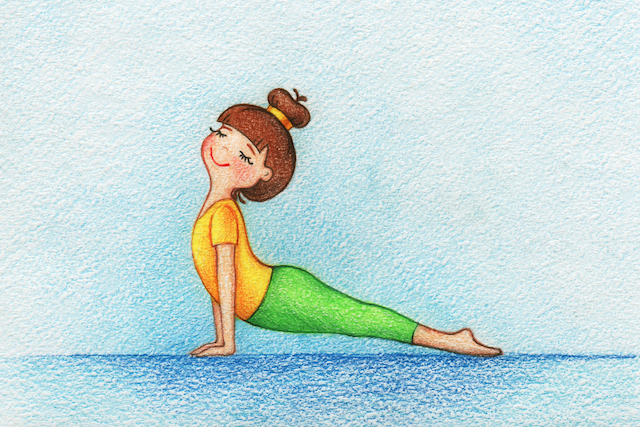
    I paid for the next available class—Energize Yoga. This was a Kundalini yoga class, a style I had never tried before. The class involved a lot of breathing with rhythmic movement.

    We all lay on our backs with legs and arms raised in the air. We were instructed to shake our legs and arms from side to side to the beat of some loud dance music which was getting faster and faster. All the while we had to breathe out forcefully; this was difficult and made no sense to me.

    After five minutes of this nonsense, the music stopped. We were instructed to put our legs and arms down and to laugh as hard as we could. It was easy to laugh, as what we had been doing seemed a little crazy; however, I was not prepared for the laughter and what it would bring.

    The energy that spilled out of my body as my laugh got deeper was like the pulse of electricity straight from a socket, almost causing my core muscles to spasm. I laughed a loud bubbly laugh which came all the way from the very core of my being.

    I left the studio with a monthly pass and a renewed enthusiasm for life. My heart was still broken, my senses still in shock, but the clarity of vision in my newly awakened state made it feel like I was watching the chaos as an observer rather than being consumed by it.

    I could still feel panicked waves of desperation pulse through my body. Depressed at what had passed and anxious at what was yet to come, I could see clearly that there was fear deeply rooted in my soul.

    The pain, the fear, the anxiety, it made me want to climb out of my own skin. To seek refuge in some external place as though my body were just an avatar. As I witnessed all these feelings and emotions wash over me in waves, I felt something was profoundly different.

    I’d dealt with previous heartbreaks by suppressing the painful feelings or distracting myself with work, parties, and avoidance of time alone. This time was different. Instead of suppressing the feelings or distracting myself, I allowed myself to just be.

    I still felt afraid. Afraid of living, afraid of dying, afraid of my pain, afraid of my emotions. On a cold morning in February, I decided to symbolically challenge my fears. I had a fear of height and of open water.

    I traveled back to Ireland, and with the guidance and encouragement of two dear friends, I jumped from a pier into the icy cold waters of Carlingford bay. As I emerged from the icy cold waters, I again felt very alive.

    I proved to myself that no fear is greater than the strength within. I knew then that I would be okay, maybe even better than okay. My life would never be the same again.

    When my heart broke, I woke up and found myself. In losing a love that meant everything to me, I found that everything I need is within me and always has been.

    I stopped looking outwardly for approval. I dove into myself. I dug up all that I had buried, every skeleton in my closet. I looked face-on at the parts of myself that I didn’t like. I opened every wound I had ever allowed myself to carry.

    I walked myself through every negative memory and imagined I were back there in that day/time when the memory was my reality. For each and every situation I observed through my new found consciousness, I could clearly see my part.
    I accepted responsibility for my part in all of these situations. I sat with every emotion that came my way, not judging or criticizing, just observing and allowing it to just be.

    I cried when I needed to cry, laughed when I felt like laughing and felt more peaceful with each passing day.

    I began meditation in April and found that it brought a calmness and sense of peace that was new to my experience. Epiphany after epiphany came to me as I learned about myself and my layers.

    I continued to do yoga and meditation while working through the rainbow of emotions that made up my day. The flip-flopping between my past and my future slowed as I found myself becoming more present and living in the moment.
    The more at peace I have become, the more I want to share what I have learned, as I believe everyone deserves to feel this peace.

    1. Start with your breath.

    A great way to become conscious when your mind starts to wander is to focus on your breath.

    You can practice yogic pranayama exercises with the guidance of a good teacher but more basic than that, just stop and breathe! Deep calming breaths are proven to calm an anxious mind and have a positive impact on depression.

    2. Observe your thoughts.

    The mind is constantly full of thoughts. Attaching to negative thoughts creates suffering. Remember that just because you think something doesn’t mean that it’s true. Byron Katie’s four questions can be a helpful tool when dealing with negative thoughts.

    3. Remember that you are not your emotions.

    Regardless if how high or low you feel, the roller-coaster of emotions you feel is not you. You are much more than that.

    Try to stop when you feel overwhelmed by emotion. Observe how your body feels. Are your shoulders tense? Is your breathing shallow? Come back to your breath. Breathe into the parts of the body where you feel the physical expression of the emotion.

    4. Stay in your present reality.

    The more present and mindful you can be, the less you will suffer. A good practice for mindfulness is to do regular things differently. Hold your toothbrush in the alternate hand. Drive a different route to work. Switch your knife with your fork. You get the idea!

    When you stress over the past or worry about the future, stop! Breathe and come back to the present. Remember always that this too shall pass.

    5. Validate yourself.

    Don’t look to others for validation. Everything you need is inside you. Forgive yourself for your wrongdoings. Give yourself all the love you need. If you have difficulty with this, treat yourself as you would your dearest friend.

    I was my own worst critic and harshest judge until I began to practice self-validation and self-love.

    6. Be patient and persistent.

    Healing your heart won’t happen overnight. We are creatures of habit; negative habits take time to break. Rewriting of neural pathways takes time. Your body and mind need time to adjust when you make changes.

    When you feel like you have taken a step backwards, just breathe and reconnect with yourself. The duality that exists between the heart and the mind can be bridged once you remain conscious and aware. Persistence will keep you on the right track.

    As I write this, I feel excited for the life ahead—ready for the highs and the lows, and willing to greet each situation from a conscious state in the present moment.

    I am opening my heart to the world, a heart that has come back together from the dust, void of past scars. Ready to live, ready to love, ready to breathe!