Tag: healthy
-
Why Dieting Never Works: 4 Reasons to Stop
“Your body is precious. It is your vehicle for awakening. Treat it with care.” ~Buddha
Diets are extremely seductive.
We get lured in by the promises they make:
The temptation of a smaller jeans size.
The possibility of having a beach-ready body.
The idea that everything would be better if you just weighed ten (or fifteen, or twenty…) pounds less.
When you’ve overloaded yourself with sweets and feel horrible about your body, it’s easy to get sucked into attempting a diet as a quick-fix to your weight issues.
In my own life, I struggled with gaining and losing the same sixty pounds for about twelve years. I would start over on Monday, swear off sweets and dessert, and then be knee-deep in a gallon of ice cream by Friday.
If there was a diet out there, I tried it. Cleanses, detoxes, Paleo, South Beach, Atkins, The Zone Diet, Weight Watchers, and even diet pills.
Even though I was continually seduced by the promise of weight loss, I never kept it off. I would inevitably end up failing miserably, but would still be seduced by the promise of “well, next time, I’ll really stick with it!”
So when you’re seduced by the promise of weight loss and tempted to start another diet, let me save you weeks of frustration and tears with what I learned in my twelve years of dieting.
Here’s why another diet is never the answer:
Diets fail 100% of the time.
Diets fail because there is an “on” and an “off.” If you go “on” something, at some point in time you have to go “off” of it. Yes, you may lose weight initially. You may drop a size or two from not eating carbs. But in six months, a year, or five years, has the weight come back?
No one can sustain the “I’m eating only fruits, vegetables, and chicken” diet forever. When you rigidly restrict what you eat, eventually you’ll get to a point where you give in. This inevitably leads to a slippery downhill slope of overeating and then “starting over” the next day.
Diets are never successful long term. Failure is built into the very nature of a diet. When you start a food plan, something will come up where you’ll desperately want something not on your diet. And then you feel like a failure because you broke the diet.
Diets always measure “success” in days, weeks, or months, because the reality is, it never lasts long term.
Diets set you up to crave even more sweets.
When you tell a toddler he can’t have the green crayon, what does he immediately want? The green crayon. He throws a temper tantrum if you won’t give him the green crayon. After a while, you get so sick of him screaming about the crayon that you give it to him so he’ll stop his tantrum.
And so it is with dieting. You tell yourself you can’t have cake, cookies, bread, or chocolate, so what do you think about all day long? The cakes, cookies, bread, and chocolate. You’re consumed with it, you dream about it, and you fantasize about ways you can eat one a piece of cake without having it “count.”
Your forbidden foods seem to be consuming your thoughts and soon, you’re so sick of fighting an internal battle and thinking about cakes and cookies 24/7 that you give in so all of the fighting stops.
The nature of something being forbidden means you’re much more likely to want, need, and crave it.
Diets take you further and further away from learning to listen to your body.
Diets work in direct opposition to intuitive eating. They’re based on strict rules and foods you can’t eat. There isn’t room to check in with your body, allow your needs/wants to arise, and nourish your body accordingly.
“Success” is based on adhering to a system that’s prescribed. If there are rules you have to abide by, you can bet that the diet does not encourage listening to your body. Instead of learning how to tap into your body’s own intuition, you only eat what’s on the list of “acceptable” foods.
Lasting weight loss requires that you are in touch with your body, that you understand what it needs and wants, and that you pay enough attention to yourself that you are aware of how/why you use food. And when you diet, it takes you farther away from listening to your own body’s wisdom.
Diets create a sense of separation from yourself.
Because diets operate on strict rules and guidelines, it creates a sense of separation from your body. Your body becomes this “thing” you’re fighting against. You wage war on it, you deprive it, and you punish it.
The sense of separation grows as you work against your body, attempting to punish it into a place of weight loss.
A diet is essentially a battle with yourself, and the more you diet, the more the distance you create between you and your body. The way back to hearing your body’s messages is through listening, honoring, and nourishing yourself (which dieting will never do for you!)
Remember that dieting never brings about the results you truly want. Lasting change begins with awareness, love, and self-compassion as you start to understand your food patterns and behaviors.
-
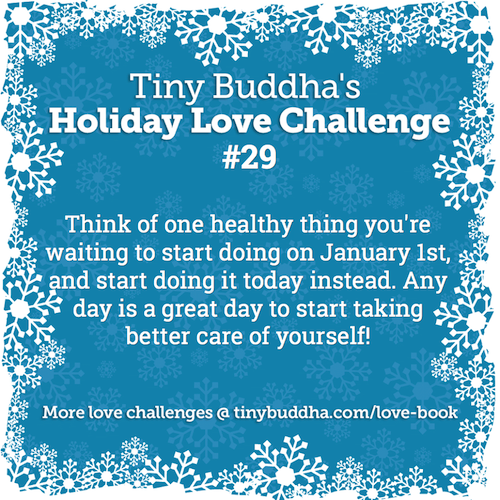
Holiday Love Challenge #29: Start Your Healthy Habit Now
Want more ideas to strengthen your relationships? Get Tiny Buddha’s 365 Tiny Love Challenges.
-

5 Simple Practices for a Healthier, Happier Life
“To ensure good health: eat lightly, breathe deeply, live moderately, cultivate cheerfulness, and maintain an interest in life.” ~William Londen
Who doesn’t want to be healthier and happier?
Too often we focus on one and not the other and wonder why we achieve neither. We neglect to realize that health and happiness often go hand in hand.
I spent my teens trying to lose weight because I thought being skinny was the key to happiness.
I spent my twenties ignoring my health, abusing my body, and looking for happiness in superficial relationships and my status at work. And I got sick.
In my thirties, I searched for inner harmony through spiritual practices, but I hid my emotions by overeating.
Finally in my forties, I’ve realized that health and happiness aren’t so complicated, but they don’t come from one aspect of our lives. Not from your dream job, your ideal weight, or even the perfect relationship.
Each of these fulfills one aspect—physical, mental, emotional, or spiritual. Neglect one and you create a void. And fixate on another, like your physical health, and you’ll end up imbalanced too.
Obsessing over weight loss, I neglected my emotional and spiritual voids that caused overeating. When I was consumed with my status at work, I neglected my physical health. Now, I pay attention to all sides with a few simple lifestyle choices.
You can achieve a healthier and happier life without feeling overwhelmed. The following five steps will help you along your path.
1. Eat lightly.
So you’re thinking, what does it mean to eat lightly? It sounds terrible and impossible, right?
I used to think so. Until I tried.
Learning that yoga has a philosophy of eating, based on how foods impact our minds, changed my life.
Sattvic foods cultivate mental clarity, luminosity, and lightness of spirit. Tamasic foods and overeating create a dull, heavy mind. And rajasic foods make us agitated, hyperactive, and anxious.
Sattvic foods include seasonal fruits and vegetables, whole grains, and ethically sourced animal products. Eat these, and you won’t feel heavy or dull. Minimize processed, stale, and old food that is tamasic and leave you feeling lethargic and muddled. Use rajasic foods with caution—when you need a perk, have a coffee, a bit of sweet, or spice.
And eat mindfully by digging a little deeper. Are you really hungry? Are you filling an emotional void? Or maybe just procrastinating? Eat before you’re hungry, and you’ll never know when you’re full.
Learn to eat lightly for mental clarity and physical health, and you’ll feel better than you thought possible.
2. Breathe deeply.
The breath is your gateway to a calm, clear mind.
Deep breathing creates physical and mental space, strengthens your immune system, and decreases inflammation. I’ve witnessed hundreds of yoga students experience diminished pain, better sleep, and less anxiety thanks to simple breathing exercises.
A veteran student refused his cortisone injections because the deep breathing and simple chair yoga helped him more. His case worker reported, “I was seriously blown away because he’s been a constant challenge due to his pain. He’s one of those cases where you wonder how to help such a severe case of chronic pain…and then there was yoga!”
Experience the benefits of deep breathing for yourself with the following simple practices:
- Lie on your back with bent knees and your feet planted on the floor, hip-width apart. Put a heavy book on your abdomen between the bottom of your rib cage and your belly button. Inhale, and raise the book toward the ceiling. As you exhale, relax your abdomen. Repeat this twenty times.
- Sit upright on the floor or in a chair.Place your hands on the sides of your ribs, and move your ribs into your hands. Keep the area between your ribs relaxed. Imagine that your lungs inflate like balloons as you inhale, and then deflate as you exhale. Now exhale for double the count of your inhale. If you inhale for four, exhale for eight.
Practice a few times a week, and create a relaxed, deep pattern of breathing and a calmer mind.
3. Live moderately.
Can you distinguish the difference between needs and desires? We need basics such as food, shelter, and transportation. But we desire expensive clothes and fancy cars.
Satisfying desires doesn’t make you happy, and more possessions create more work. Because the more books, clothes, gadgets, and cars that you have, the more you have to worry about. People in your life bring you more love than possessions.
Recently, I felt like I was drowning in my clutter. I delved through all my clothes. If I hadn’t worn something in a year and also didn’t love wearing it, goodbye. I gave clothes to friends, and the rest went to Goodwill. Same process with books. Releasing possessions decluttered my mind and home.
Each day you’re presented with a myriad of choices. Do you eat out or cook at home? Do you buy the new style of yoga pants?
Find the sweet spot where you have enough to satisfy your basic needs but you’re not over-consuming to satisfy desires. Your body needs nutritious, non-fancy food. Sure, it’s a treat to dine with friends at your favorite restaurant sometimes. But dining out frequently isn’t a need; it’s a desire.
Your body needs some daily movement for health. But does it need an extreme workout? And is this something you’ll maintain?
Moderation might not be as sexy as extremes, but it’s better for your long-term health.
4. Cultivate cheerfulness.
“Between stimulus and response, there is a space. In that space is our power to choose our response. In our response lies our growth and our freedom.” ~Viktor E. Frankl
Frankl was imprisoned in the WWII concentration camps of Nazi Germany where most of his family perished. In the midst of his suffering, he realized that his captors couldn’t take away his power of self-awareness. He could decide within himself how his experience would affect him.
Frankl spent his time rewriting his last psychology book in his head and on scraps of paper. Through his mental, emotional, and moral disciplines, he slowly gained his own internal freedom from his captors. He lived to become famous for his work on our power of choice based on self-awareness.
The process of cultivating cheerfulness through self-awareness is a key to happiness. Self-awareness is finding your permanent self beyond your emotions, fears, thoughts, and physical body.
You’re born with inner joy. For many reasons, you lose this state as you mature. You can’t necessarily change what happens to you, but you can change how you respond. Your power lies in your response to your own thoughts and external negativities.
Do you believe your critical thoughts? Learn to notice them, examine their truth, and challenge rather than believe them.
For example, like you, I juggle lots of responsibilities. Yesterday, I realized I hadn’t organized a fundraiser, so my first thought was, “You’re behind. Why are you so forgetful and selfish?” Then I examined the thought, “Well, I took care of my son all afternoon, and I had no time to do anything else. Mommy duty wasn’t selfish.”
See the choice? My final response was self-compassion, different from my initial judgmental thought.
Allow yourself space to respond rather than react. Over time, you’ll develop the power to separate your true self from your thoughts and emotions. And then you’ll feel happier.
5. Maintain an interest in life.
Keep your mind and spirit healthy by pursuing your passions. What makes you happiest and peaks your interest? Is it supporting a cause, supporting your family, your profession, or time in nature? Get clear on what’s important, and make it a priority.
And being a lifelong student will keep your brain healthy. Our minds are like muscles, and the more we use them, the stronger they get. People who learn more tend to be healthier and happier.
One of the miracles of the Internet is the wealth of information at our fingertips for little or no cost. Over the years, I’ve taken food photography, writing, marketing, and habit-changing courses.
Think about the things you’ve always wanted to know more about, create a list, and look for courses and books. Many universities such as Harvard, Stanford, and MIT offer free online courses. Or if you go the non-traditional route, you can find incredible Internet courses on meditation, writing, marketing, psychology, and design all at your fingertips.
Keep your life interesting by following your passions, even as hobbies, and you’ll feel happier.
The Power of Simplicity
Feeling healthier and happier isn’t as complicated or elusive as you think.
Eating vegetables and fruits doesn’t seem sexy, but when you eat well, you’ll feel great and glow from the inside out.
Simple breathing exercises might not seem as heroic as acrobatic yoga postures, but they’re a more direct route to your inner happiness.
Buying less is certainly not always appealing, but less chaos and clutter certainly will promote clarity.
So stop procrastinating and doubting, and take the first step!
You won’t believe how far these simple steps will take you toward your health and happiness.
Happy woman image via Shutterstock
-

7 Small Changes that Can Increase Your Happiness Overnight
“Happiness is not something ready-made. It comes from your own actions.” ~Dalai Lama
I used to be constantly depressed.
After dropping out of college, I worked three jobs a day to help make ends meet. At the same time, my classmates were graduating from college and getting much higher paying, cushier jobs.
I lived in a tiny apartment that had cockroach problems. I constantly complained and could not find the motivation to do anything. I thought about giving up. It was only when I started making these small changes that I started to feel happier.
1. Embrace religion and/or spirituality.
Religion and spirituality have been shown to help people daily, providing hope, stamina, and faith in something bigger than themselves. It’s a largely recognized practice throughout all cultures, promoting positive ways of being, humanity, love, and morality.
Practicing religion is good for the soul and makes you more aware of those things that are beyond you.
Recognize that the universe is large, and you are a small, but key player in it. Feel significant that you are a part of such a large and wonderful system. Take time each day to pray and focus on the bigger picture, whatever that may be for you.
When I started practicing Buddhism, I found myself better able to put things in perspective. Rather than be bogged down by the immediate circumstances and the heat of the moment, I learned to first take a step back. This helped me get through many days where I would otherwise feel depressed.
2. Socialize.
Humans are social beings, so it’s important to unwind and spend time with friends. Friends provide a social network for group enjoyment, whether it’s through sharing a meal, watching a movie, or playing games. The opportunities are endless. Plus, they are your support system during tough times.
Friends are not the only means of socializing. Volunteering provides a social outlet with a humanitarian benefit. It’s a good idea to give time helping those causes that are important to you.
Are you an animal lover? Spend time at a shelter or cuddle up with kittens at Cat Haven. You’re a people person? Find a local charity that allows you to feed the homeless or help a child learn to read. If you love politics, volunteer for a candidate you believe in.
When I first started feeling depressed, I became very reclusive and would shun any interaction with those around me. I gradually realized that that was only making things worse.
Now, regardless of how busy I am, I make time to meet with my best friends at least once a week. I invariably felt happier and more relaxed after those meetings.
3. Work positively.
Your job takes up much of your day, so find ways to enjoy it. Be creative.
Bring headphones to work and listen to music while you’re being productive, which will improve your work performance. Bring flowers or simple green plants to your desk and decorate your workspace, personalizing it to you. Take small walk breaks to stretch your legs and clear your mind. Don’t forget to hydrate. It’s important for the thinking process.
Find ways to use your own set of personal skills to improve a role within your company. Your boss will be grateful. Focus on how your work enhances the lives of others or contributes to the growth of the economy in some way. Changing these small things can help you work more positively.
When presented challenging tasks at work, I used to complain a lot. My happiness and work satisfaction improved significantly when I turned this habit on its head. Instead of avoiding challenges, I looked forward to them; I now see them as a way to help me learn and grow.
4. Stay healthy and fit.
Surround yourself with nature. City living oftentimes leads to a lack of greenery, and we can forget that we all need a bit of nature and occasional distance from the fast-paced, often polluted lives we lead. Drive to a nearby park and take a walk. Find a local hiking trail or nearby lake.
Next, be active and have some fun while doing it. You should enjoy moving your body. This can take the form of dance or recreational sport. Maybe you like running alone, so you have time to for self-reflection and deep thinking. Oftentimes you come up with your best ideas when you are outside moving.
Just find what it is you love, and do that. If it’s something you enjoy, it will be easier to create the habit.
Yoga is an essential part of my daily routine. Every morning, upon waking up, I practice for thirty minutes. This daily practice is something that I have total control over. Regardless of how uncertain and stressful the day can be, I can always take solace in the fact that I still have control over this important part of my day.
5. Maintain a healthy mind.
Staying positive can be difficult some days. We all have troubling times in our lives, but there are many ways to cope with these issues that will not affect your sleep, allowing your body the rest it needs to revitalize and heal itself.
First, write your worries down each night, as if to write them away. Tell yourself these are to be resolved during your waking hours, and you will reflect on them at that time and only then. This permits yourself sleep and offers time for your body to relax, renew and restore.
Secondly, reflect on what you’re grateful for each day by writing an A-Z gratitude journal before bed. This means that you start with the beginning of the alphabet and write one word that you’re grateful for that day that begins with A, and go all the way down the list to Z.
Don’t stress it if you get stumped. This is simply an easy exercise to remind you of what you are grateful for in your life. I do this every day; it never fails to remind me of how fortunate I am in spite of everything I had gone through.
Thirdly, meditate; practice deep breathing and mindfulness and accept the things that “are.” It’s a simple concept, but can be a more difficult practice. It will get easier with practice.
6. Cherish your home.
Your home should reflect the people that live in it. Someone should be able to walk into your house and feel like it couldn’t be a home for anyone else but you. It should reflect your personality and emanate positive vibes.
It should be inviting and filled with love. It should reflect the wonderful life that you live, enhancing your hobbies and ideals that are important to you. Fill it with positivity, nature, and your personality.
I take time at least once a month to do a mini house project, which can range from buying some plants for the house to repainting a part of the ceiling.
7. Get to know yourself.
Everyone is great at something, whether it’s writing, creating websites, drawing, or something else. Find your personal gift and develop that skill. Give time to that skill, and recognize this is part of who you are. Enjoy and embrace it.
Trying something new once in a while can help you discover interesting hidden talents. I didn’t know I was good at social dancing until I randomly decided to go for a class with a friend one day.
In addition, don’t just focus on doing the things you’re good at. Do the things that you love as well, whether it’s reading, relaxing, traveling, or playing sports. Make sure you carve out some time for those activities you enjoy.
Thirdly, it’s vital to spend some time in solitude each day so that you can reflect and grow. This is something that’s important for everyone, even for those that are married and have families. You have to be whole and happy before you can help take care of your extended family and those around you.
Be kind to yourself. Happy living!
Smiling sun via Shutterstock
-

7 Vital Choices for Happy Relationships
“Being deeply loved by someone gives you strength, while loving someone deeply gives you courage.” ~Lao Tzu
A little over a decade ago I thought I was going to marry my college sweetheart and become a young bride, which made it all the more devastating when happily ever after didn’t pan out. When we broke up, I felt literally like I lost a limb, complete with phantom sensations of his hand in mine.
It didn’t take long for a dark guilt to bubble up—a constant festering reminder of all the mistakes I’d made. I was highly unstable and insecure back then, and most of my relationships revolved around holding me up.
In the ruins of that romance, I didn’t know what scared me more—that someone else might hurt me again, or that I might hurt them enough first to deserve it.
I simultaneously felt an aching need to fill in the hole where he’d been and an overwhelming sense of nausea at the thought of being with someone else. (more…)
-
Consumed by Food? 6 Lessons on Overcoming Disordered Eating
“The struggle you’re in today is developing the strength you need for tomorrow. Don’t give up.” ~Robert Tew
For a good twelve years of my life, I was obsessively consumed with food.
I had this unhealthy relationship with my body and my eating. I simultaneously loathed myself and desperately desired to be skinnier, while also compulsively binging until I couldn’t move.
For months I would restrict. I’d eat some fruit for breakfast, green peppers, and ranch dressing for lunch and a few bites of whatever was in my fridge for dinner. I was also hooked on diet pills and exercised until I worked off every single calorie I had eaten (which was not much).
And then, because no one could ever sustain a diet of 800 calories (if that!), I ended up binging. I’d find myself in this compulsive frenzy, stuffing my face with bowls of ice cream, cookies slathered in icing, leftover brownies, and candy.
This was followed by fits of depression, a deep loathing of my body, and promises to start again on Monday.
I lost and gained the same sixty pounds over and over and over again. It was an exhausting and miserable way to live.
When I began getting help, I thought I would never get to the end.
My recovery consisted of lots of tears, endless pages of journaling, voraciously reading through self-help books, a mentor who guided me through the process (and kept me afloat when I wanted to give up), yoga, meditation, and lots of lessons learned along the way.
It took years to get to the place I am today, where I don’t think about what I’m eating 24/7, I’m not consumed with being a size two, and I can relax into a life filled with freedom and ease.
But every hardship, struggle, and tear was worth the fight because I’m a different person now. I’m the authentic, happier version of that girl I used to be. My life is full; my heart is happy (most of the time). And the lessons I learned on my journey still impact how I live today:
Here are the top lessons I learned from my crazy, all-over-the-place eating.
1. Comparing yourself to others only sets you back.
When you gauge your own progress, your own body, and your own successes against others, it leaves you in an endless game that you’ll never be able to win. Trying to keep up with other people leaves you hopeless and discouraged. Others’ lives are depicted through snapshots; you never get the whole picture.
Your journey is about focusing on your own milestones and progress. You can never compare your insides, struggles, and hardships with someone else’s, because you never know what is going on deep within them.
There is a depth to everyone that we aren’t aware of. Each of us has our own battles, struggles, and insecurities. Focusing only on you frees up the energy it takes to create deeper healing.
2. Your relationship to food mirrors your relationship to your life.
Your relationship to food reflects your relationship to everything in your life: your family, your friends, yourself, and your mental/emotional state. What you are doing with your body/food is a projection of what you are doing in your mind/spirit.
Exploring your relationship with food takes you deeper into your relationship with everything else in your life.
The need for control and certainty is reflected in rigid, inflexible food rules. Fear of loneliness and emptiness is seen in eating for comfort and escape. Hurrying through life, always wanting to be in the next place and achieve the next goal, is reflected in rushing through meals. When we are aware of these connections, we can begin to change.
When we change our relationship to food, we change the way we live. When we abuse our body, we abuse ourselves. And when we respect and honor our body, we respect and honor ourselves.
3. You will never be done.
Dealing with food issues isn’t something you can just ignore, put aside, or avoid. Healing disordered eating means dealing with it every day, multiple times a day, for the rest of your life.
This is actually good news! You will constantly be refining what works for you, what foods give you energy, how emotions contribute to eating, what way of eating fits into your lifestyle, and what truly serves you.
When you fall back into old habits, when you find yourself wanting to overeat and restrict, you’ll know it’s a signal to go deeper (see #2).
4. Perfectionism derails progress.
Striving to be a perfect eater, have the perfect body, and be a perfect person is stifling and exhausting. When you’re yearning to achieve this unattainable goal, it only sets you up for failure.
We need to soften our expectations, relax into our imperfect selves, and realize that no one is meant to be perfect in any area of life. In a “perfect” world, everything is stagnant. There is no growth and no evolution. It is only through mistakes, trial and error, and experimentation that we learn and grow.
When you allow yourself to make mistakes—whether it’s messing up your food plan, getting into a fight with a family member, or realizing your work isn’t satisfying—this is how you learn, incorporate feedback, and chart a new course.
5. You are really, truly good enough—just as you are.
I always thought that I had to lose more weight, be thinner, and have a flatter stomach in order to be accepted by others, and that I needed their acceptance to be happy. But the irony is that when you truly believe you are innately acceptable, just as you are, your healing begins to deepen and you’re able to nurture a happiness that isn’t dependent on what other people think.
6. Disordered eating is your soul desperately crying out for help.
Our biggest obstacles often turn into our biggest lessons. A screwed up relationship with food forces you to go deeper into yourself to really heal. It gently nudges you to explore the depths within you that you didn’t know were there, to heal all limiting beliefs, emotions, thoughts, and habits, and uncover who you really are.
This journey is an act of pure, unfiltered courage. It exposes you raw and leaves you vulnerable. And as you realize this truth, you realize this is a gift. This is a chance to go deeper, live more honestly, and be more authentic. And isn’t that what living really is all about?
-
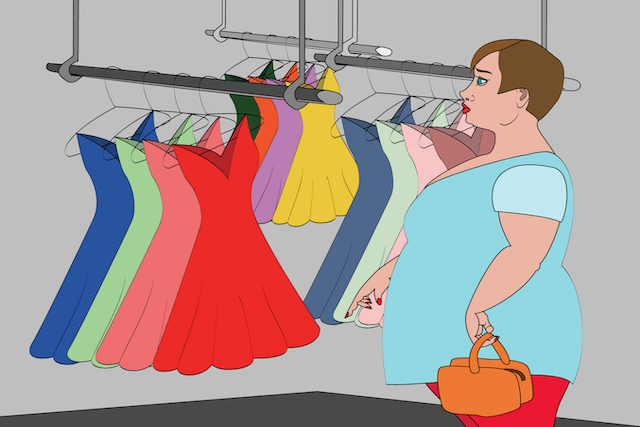
3 Things You Need to Stop Telling Yourself If You Want to Lose Weight
“Stop hating yourself for everything you aren’t. Start loving yourself for everything that you are.” ~Unknown
Picture it: You’re out with friends having dinner, then one of them says, “I shouldn’t be eating this. I skipped the gym today.”
Another one replies, “I’m so bad. I’ve been eating out of control all week. I just can’t stop.”
And another one says, “I’m going to have to eat salad for the next couple days to make up for this.”
Does this type of conversation sound familiar to you?
It’s all too familiar to me. I used to be the leader in these conversations, until one day, in the middle of claiming myself the fattest, I actually heard the words coming out of my mouth. And then I listened to everyone else talking negatively about their bodies as if we were competing to see who is the most guilty for eating.
I get it. You want to lose weight. Heck, I want to lose weight. That’s not the problem.
The problem is how we treat ourselves when we decide we need to lose weight. If you’re anything like I used to be, you can be very nasty to yourself in the name of “motivating” yourself to lose weight.
Rather than giving you three tips on losing weight through diet and exercise—because I know you know what to do; you just don’t want to do it all the time—I’m going to share with you the three statements that are getting in your way of losing weight and loving yourself.
1. There is something wrong with me.
I always said this to myself when I could not stop reaching for sweets, even though my stomach was full or I knew I only wanted it because I was bored. There had to be something wrong with me since I didn’t have the willpower to just stop myself.
Are you wondering what’s wrong with you?
Nothing! Stop bad mouthing yourself when you are not able to work out or don’t possess enough fortitude to adhere to your restrictive diet plan.
In case you haven’t noticed, berating yourself never has and never will work to motivate you on your weight loss goals. And as the saying goes, “If you do what you’ve always done you’ll always get what you already got.”
Instead of trash talking yourself to “motivate” you to lose weight, how about you take it easier on yourself?
Yes, you had a donut for breakfast instead of your wheatgrass smoothie or you didn’t get to the gym today. So what?
I now realize that when I “slip up” I can always start anew right where I am, and so can you. Because no matter how much you punish yourself, you can’t feel badly enough to change what happened in the past.
And let’s face it, it hasn’t worked so far, so what do you think is going to change if you continue to do that?
2. I need to wait until I lose the weight.
For a long time, I was waiting to buy new clothes until the scale reached a certain number. My life was on hold until I felt I deserved or earned the right to do all the things I wanted to do.
I recently chose to just accept the weight I am and I bought clothes that make me look and feel good. I was tired of shoving myself into clothes that didn’t fit or waiting to lose weight to fit back into them.
I know I was not alone in this thinking either. Friends, family members, and strangers say this to me all the time, that they are going to do something amazing but they have to lose weight first. Or they will be happy after they lose the weight.
Stop waiting! You don’t know how long it’ll take you to lose the weight, and keep it off. What if it takes you months or years? You don’t deserve to wait that long for nice things. That’s not what life is about.
Instead of waiting that long, celebrate the little wins along the way to encourage yourself to keep going. Take out the good dishes and eat on them, buy a new outfit and feel great in it now, go out on a date, LIVE!
3. They are so beautiful. I’ll never look like that.
While looking at Facebook and Instagram, it’s so easy for me to see celebrities or even strangers and wish I had the body they have.
I’m sure you find yourself comparing your body, and that’s not always a problem. The problem occurs when you start using someone else’s body as a standard for how your body should look. That’s not fair and is actually an insult to your body.
You don’t have the same physique as they do. You can’t make your body look like theirs if that’s not how your body frame is set up.
If you are comparing yourself to someone who has an hourglass figure and you have more of a pear shape, there is just no way you are going to have the shape they have. You are just setting yourself up for a huge disappointment.
My celebrity standard was Beyonce. I wanted to have the flat stomach and curves in all the right places, but after a few months, I realized I don’t have the desire or dedication to do all the work it takes to look like that. That’s part of her job, and it’s certainly not my job to look like her.
Eventually, I realized that what I really wanted was to tone up what I already had. That is more attainable. And now, I compare myself to how I was a few months ago and celebrate the small and steady progress I am making.
If you still want to compare, then start with where you are right now and compare your eating now to how it was before you started eating healthier.
Don’t go back to ten/twenty years ago and ogle and get upset because you weren’t able to stay that size. You and your body have changed. It happens. Set a new barometer and watch your progress from now until you get to where you want to be.
Berating yourself, waiting to do nice things for yourself, and comparing yourself are not what you want to do when you want to lose weight and feel better about yourself.
Focusing on what you like about yourself, treating yourself to something special every now and then, and giving up comparisons is the way to a healthier and happier you.
-
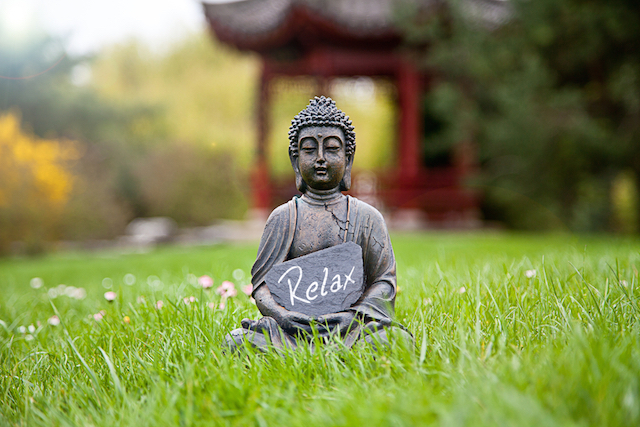
3 Ways to Slow Down and Take Better Care of Yourself
“Your body is precious. It is your vehicle for awakening. Treat it with care.” ~Buddha
It’s interesting how easily we forget to appreciate the simple day-to-day luxuries that we are granted with our body.
We assume that as we exhale, there will always be an inhalation to follow.
We assume that when we lay our head down on our pillow at night, our heart will beat, our blood will flow, and we will open our eyes in the morning.
We go on day after day, running around with a mile-long to-do list without taking a moment to check in with our body to acknowledge how it’s feeling today.
Oftentimes, our health and well-being end up last on that list of priorities.
We pretend we are superhuman, existing on caffeine from Starbucks in place of adequate sleep and snacks from the vending machine in place of meals.
Maybe (hopefully) you haven’t gotten to this extreme yet, but a lot of us are. And I bet you can relate to this lack of self-care and preservation at least on some level.
Sorry to burst all of our bubbles, but this style of living is not sustainable (nor is it healthy, but you already knew that). We can’t go on like this, ignoring our health and well-being forever, as hard as we may try.
When we go-go-go without giving our body the nourishment and care that it needs to thrive, our body begins to give us the sign that it needs attention.
Hey, take care of me.
Hey, I need rest.
Hey, let’s slow down.
Ahem, I’m serious. I’m really exhausted, foggy, and need some downtime.
It’s starts out as fatigue, but then we don’t listen. So it gets a little louder, and then louder, until eventually we have no other option but to slow down and rest. Think sickness, or worse, dis-ease.
I’ve been on this kick lately, talking and thinking a lot about how we measure ourselves up against these standards that are set so high, not even a super hero could measure up.
We strive for perfection in the eyes of our peers at the expense of our health and true happiness.
For what? What are we trying to prove? We believe that once we hit that pinnacle of success then we can relax, be happy, be good enough, and will have made it.
But the reality is that the only finish line is death, and those things that we think are going to finally prove that we are important aren’t. It’s human nature to want more. And chasing validation to prove our worthiness is the biggest “silent killer” of all.
There is nothing we need to prove to anyone. We are worthy now. Who we are and where we are right now is enough.
This moment, right here, is where our pot of gold is. We just have to give ourselves permission to see it as so.
And without our health, how could we ever experience these beautiful things that make life so meaningful?
It’s often last on our list of priorities, and yet, when you stop and think about it, our health is the most important of all.
Our body is our vehicle. It is what allows us to experience life. It’s our five senses, our ability to laugh and feel joy, to embrace our loved ones, to share an intimate connection, to sing, to dance, and play.
There would be no such thing as life without this body. Yet, often we treat it so poorly.
For years I would treat my body worse than any enemy. I would talk to it with disrespect and hatred. I would say things about my body that I would never in a million years say about a loved one.
I would deprive it of food, and then binge out of comfort, sometimes on food, other times on alcohol.
I would go periods without much sleep and not much movement and exercise, and then during other periods of my life I would exercise for hours in hopes of changing the way my body looked because in my eyes, it wasn’t good enough.
It’s hard for me to think back to the abuse I put my body through. This body that has always been there for me, supporting me through it all.
This body that today is so vibrant, so alive, so beautiful—to think of how hard I was on it. It just goes to show you how amazing this miracle of a machine the human body truly is. It can recover and rebuild from so much.
If you can relate and you aren’t sure how to start treating your body the way it deserves to be treated, I am here to help (and as you can see, I speak from experience).
Here are three steps to upping your self-care game so you can treat your precious body like the gift that it is.
1. Nourish it.
I love the word nourishment as it applies to all things related to well-being, healing, and self-care. Nourish your body in every way you can—with nutrient-rich, tasty food, movement, and even mentally, with supportive, loving thoughts.
ACTION STEP
Take an inventory of all of these areas (food, movement, thoughts/self-talk). In what ways can you step up your game and choose options that are more nourishing to your body and spirit?
Make those adjustments and pay attention to the difference in how you feel. Continue to refine and adjust until your life as a whole is filled with experiences and things that fill you up and energize you rather than exhaust you.
2. Calendar it.
The key to making time for self-care is treating it like any other VIP appointment. Things like workouts, cooking yourself a nourishing, tasty meal, exercise, massage, time with friends, romantic evenings with your partner, and fun with the kids are all important “fill-you-up” type activities.
Prioritize your priorities by carving out the time in your schedule for the things that matter to you most.
ACTION STEP
Pull out your calendar and take a look at where you spend the majority of your time. Now think about this for a moment: What are your top three priorities?
Evaluate whether or not the things you spend the majority of your time doing match up with what’s most important to you.
Make adjustments as necessary to block out time for self-care and the other things that are most important to you in life.
You may need to bow out of some commitments or hand off some responsibilities that are not important for you yourself to be taking care of, in order to create this space in your schedule for the things that do matter most.
3. Start single-tasking.
We multitask a lot, which you probably don’t know is tough on the body. For example, it’s hard for your body to prepare for and focus on the process of eating and digestion when you are trying to do it while driving, reading, or doing any of the other things we try to do while eating.
Create an environment of ease and relaxation for your body as often as possible, especially while eating.
I know in this day and age that might seem impossible, but it’s not. The key is in stripping away some of those responsibilities and “trying to measure up” type things we do in order to create more time for being present.
ACTION STEP
Multitask less, be present in the moment more. Life is so much more enjoyable when you are engaged and present versus on your phone texting, Facebooking, or talking to somebody that is not even present with you, all of the time.
So often I look around while I’m at a restaurant and I see tables upon tables of people sitting there across from each other, but rather than connecting, talking, and being present with each other, they are both looking down typing on their phones.
It’s so confusing to me. Why do we even get together in person if the person we’re with isn’t actually who we want to be connecting with?
Put down your phone, look somebody in the eye, and have a moment together. Trust me, it’s way more rewarding than whatever communicating you are doing on your phone. Text later, engage in this moment more.
—
The more you practice taking really good care of your body, the more it will reward you with good health, tons of clarity, energy, and the ability to experience all the good that life has to offer for years to come!
Treat your precious body with love and kindness. This is your body—yours—and it’s the only one you’ve got.
Buddha statue image via Shutterstock
-

How to Stop Weighing Yourself Down with Emotional Junk Food
“Everything in the universe is within you. Ask all from yourself.” ~Rumi
I want to feel better. Who doesn’t? Yoga makes me feel better most of the time, but if I am being totally honest, I don’t always choose the healthy option. In fact, sometimes I pick the worst thing for me.
For me, a plate of BBQ wings really hits the spot. That is, until a few hours later when the salt and protein load kicks in and I feel terrible. Again.
While I may oscillate between healthy and unhealthy choices for my body, I know how to get fit through gyms, diet programs, and physicians.
But what about my steady diet of junk food thoughts? How do I stop consuming them and focus on a healthier emotional diet?
Junk Food Thoughts
Everyone knows about the negative effects of an unhealthy lifestyle, but no one teaches us about the negative health effects of our thoughts.
Worry, stress, anxiety, guilt, shame, and fear are the potato chips, processed foods, and chocolate cake of our emotional life. As satisfying as they may feel in the moment, their negative effects are just as toxic.
And, like we have particular food cravings, we have particular thought cravings.
My First Emotional Cleanse
I built a healthcare company and sold it to a Fortune 500 eleven years later. In 2006, I made the decision to change my career and pursue a path toward my passions.
As I attempted to discover my true desires, I came face to face with my emotional junk food and its effects. I felt terrible, I felt weighed down, and I could not figure out why.
Like my craving for a plate of BBQ wings, I craved certain thoughts when I faced the decision to leave my job:
I cannot leave.
I have to keep my job.
What am I going to do all day?
I am going to be so bored.
I went from $15,000 a year to an executive salary and stock options. Who leaves that?
My parents will never understand or support this decision.
There is something else out there for me.
What if I am wrong and this decision destroys everything I have worked for?The thoughts that I was unaware of were as toxic as the foods I know to avoid. A thought—a single sentence—stood in the way of the life I desired.
How to Stop Consuming Unhealthy Thoughts
Tune into your thoughts.
You cannot stop the negative effects of these thoughts without awareness of their existence. What are your go-to junk food thoughts? What do you tell yourself when you consider changing a relationship, a job, or any other important area of your life?
What is the exact language? Just like you may love a certain brand of chocolate or a certain type of potato chip, you will have exact language for your emotional craving.
Accept their destructive effects on your health.
One sentence can stand between you and your goals. A sentence—a set of words—becomes a belief. This belief will drive your actions. As simple as this is in concept, in practice, changing a few words can change your life. If you change the belief, you can change your actions.
In my case, removing one sentence, “I can’t leave my job,” changed my life.
Trade in your junk food thoughts for nutritious thoughts.
What nutritious foods do you like? Kale? Salads? Smoothies? Veggies and hummus? Likewise, what nutritional thoughts do you like?
Replace junk food thoughts with nutritional thoughts and free yourself to pursue your dreams.
Some examples of nutritional thoughts:
Are you avoidant?
Today, I will step forward.
I believe in my abilities.
I am ready.
I will take one action a day until I complete my goal.Are you angry with someone?
Today, I will have compassion.
Anger is poison.
When others hurt me, they are in pain and I have tapped into my pain.
I don’t personalize other people’s pain.Are you holding on to resentments?
Today, I will let go.
Resentments have no value.
Letting go does not mean I accept this person into my life.
I am not a victim.Are you always behind and do your lists have lists?
Today, I choose me.
I will schedule one thing for myself today: a massage, a manicure, a workout, or a quiet room with a book.
This is my life.
I drive the choices I make with my time, even if it does not feel like it.—
I wanted to leave my job and step into a career that was more aligned with my passion. One day, I discovered my problem was not the mundane details involved in changing jobs. It was the deep craving for my destructive thoughts.
This time I reached for a healthier option:
It is my right to follow my passions
I am going to write, even if it is not perfect.
I trust that my path will become clear, even if it is not obvious now.With these simple sentences, I changed my career and found the passion in my life that I really craved.
I still struggle to make healthy choices, but now I understand that I have to forego my favorite BBQ wings and resist my favorite junk food thoughts.
Jumping woman image via Shutterstock
-
How to Listen to Your Body (and Become Happy Again)

“Keeping your body healthy is an expression of gratitude to the whole cosmos—the trees, the clouds, everything.” ~Thich Nhat Hanh
It’s embarrassing, isn’t it?
You don’t want to make a fuss about tiny health annoyances.
But you feel lethargic for no apparent reason. You get constipated, especially when you travel. You have difficulty sleeping. And your hormones are all over the place. You hold onto that niggly five or ten pounds like your life depends on it.
Sound familiar? I’ve been there too.
I was working at a dream job and living on the French Riveria. I was paid a lot of money to help Fortune 500 Companies with their IT strategies.
I worked in cities like Paris, Dublin, London, and Manchester during the week, staying in luxury hotels and flying to my home in Nice on weekends. We partied like rock stars on the beaches, and in exclusive clubs and glamorous villas. At twenty-nine, I was a management-level executive on the cusp of becoming a partner.
Meanwhile, my body wasn’t happy. I was chronically tired. I slept poorly. And despite daily exercise and yoga, I couldn’t figure out my weight gain.
I tried the radical Master Cleanse—drinking lemon juice and maple syrup for a week. But the extra weight would creep back.
My hormones went crazy. When I stopped birth control pills, my menstrual cycles stopped. I wasn’t sure if that was the reason for my blotchy skin and depression. And the worst part was my mood. I wasn’t happy, despite all the glitzy outside trappings.
The One Thing Most People Never Learn To Do
Then I did something most people never learn to do: I listened.
I felt great after practicing yoga. I took a baby step: I practiced more yoga and eventually attended teacher training sessions. Fast-forward a couple years….
I quit my job, packed my belongings, and moved to a yoga retreat center in Thailand. The move felt natural and organic.
I lived simply in a tiny bungalow and taught yoga retreats to tourists. And my health improved. I was sleeping well. My periods eventually returned. I felt better and better, and my sparkle returned too.
The first and most important step is to stop and listen. Your body and mind are intimately connected. Listen to your body and you’ll learn a ton. Start with tiny steps and you’ll reach your pot of gold quicker than you’d expect.
You can do this.
You’d think doing so would be impossible, but it’s not. I’ll tell you how.
But first, let’s look at three core principles that could save you.
Don’t Make This Monumental Mistake
Most people ignore their small but annoying health issues. Nothing about your health is inconsequential. Everything matters. Your digestion. Your ability to lose belly fat. Your bowel movements.
You’re not alone if you want to run screaming and bury your head in the sand. How about changing your mindset?
Rather than categorizing what is wrong with you, notice how your body throws you clues. For example, you aren’t going to the bathroom every day. Usually for a very simple reason—lack of dietary fiber. Try adding an apple and ground flax to your breakfast and see what happens.
The Alarming Truth About Stress
It can make or break your healthiest intentions. When we perceive danger, stress is our body’s natural response.
For cave people, stress came when a lion was about to pounce; we needed to run like lightning.
Under stress, we optimize our resources for survival and shutdown non-essential functions. Translation? Your digestion grinds to a halt, your sex hormones (estrogen, progesterone, and testosterone) convert to cortisol, and your blood sugar skyrockets.
This is okay now and then. Are you in a state of constant, low-grade stress? Imagine the havoc and inner turmoil.
A few condition-linked stresses include IBS, constipation, weight gain, insomnia, high blood sugar, and hormone irregularities—for women, missed or absent periods, severe PMS, and fertility issues. And these are just the tip of the iceberg.
Your body and mind are like the matrix.
The Western approach to medicine is to examine each problem separately, so you end up with a different specialist for each malady.
In Eastern medicines, your body is a united whole rather than a constellation of unrelated parts. Your insomnia may be the result of high stress. Or your constipation and weight gain may be due to a complete absence of fiber in your diet.
Now let’s talk about what you need to do.
But first, I must introduce you to your personal, world-class health advocate. And it’s not your doctor, your chiropractor, or even your yoga teacher.
It’s you.
1. What silence can teach you about listening.
Set aside time to listen to your own deepest wishes. I searched for answers outside of myself, looking for rigid rules and diets. I used food to shut off my thoughts. It was hard, but I gradually let my truths surface. I know you can do it too. Decide on a time, and set aside ten minutes each day. Breathe deeply and listen.
How are you feeling physically, mentally, and emotionally?
Have a journal nearby to jot down any thoughts. Notice what pops into your head. Bring yourself back to your breath if you start to get lost in thoughts.
2. What would happen if you followed your passions right now?
You can do this right now in tiny steps. Make time to do the things you love.
How do you most want to spend each day? Write a list of your priorities and brainstorm easy solutions.
Exercise: wake up twenty minutes earlier. Do a series of sit-ups, push-ups, leg lifts, squats, etc.
Time with your children: say no to superfluous activities—committees, boards, etc.
More creative time: schedule your time on weekends for writing, painting, or whatever you love.
Treat it like a priority appointment.
When I worked at a corporate job, I’d wake early to practice yoga at home before work. I didn’t miss the sleep, and I was much more productive and happier during the day. I couldn’t control the rest of the day, but I relished my sacred morning ritual.
3. Say goodbye to your job if it makes you unhappy.
Right now, maybe you need it to support your family. No problem. Make sure you limit your working hours. Make the rest count.
Turn off your TV and put away your iPhone. Spend engaged time with your family. Thinking about work takes you away from important leisure activities.
Your people will always be important—your children, parents, siblings, friends, and your tribe. Don’t sweat the little things. Cultures with high longevity emphasize personal relationships, support networks, and family. The elders are the big shots, not the richest in the village.
4. How to glow from the inside out.
We are genetically wired to thrive on a whole-foods diet. A rule of thumb: the more processed the food, the less you should eat.
Most of the diets that actually work—paleo, low-carb, and vegan—all have whole foods at their base. They vary in content, but all encourage vegetables, fruits, and good-quality protein sources.
Return to those niggly health issues. Take an honest look at your diet. What could you do better? What things would you be willing to change?
I used to systematically overeat healthy foods. My diet was great, but I used foods, even healthy ones, to quell my inner unhappiness. I hated my job. I felt lonely and isolated.
Start with one change per month. Not more. Drink a glass of water with your meals and skip sugary drinks.Or eat a salad with your lunch or dinner.
5. Here’s a little-known secret about your mind.
How do you feel after eating a plate of fried foods? Or a big meal in a restaurant followed by dessert? I feel fuzzy and sluggish.
What about after eating a bowl of candy? Like a space cadet? Sugar spikes our blood sugar and makes concentration impossible.
Want to keep your mind clear and alert? Choose fresh vegetables and fruits, high-quality animal products, legumes like lentils and beans, healthy fats from nuts and seeds, and high-quality cold-pressed oils.
Why Most People Fail Miserably
Simply put, they don’t prioritize their own health. Don’t fall down that rabbit hole.
Your job is not to put everyone else’s health above your own.
Your job is not to make excuses about what you should be doing but aren’t.
Your job is to be your most enthusiastic health advocate. You must fight tooth and nail to make stellar choices for your health.
Your good intentions are worthless if you never take action. I’ve been there too. I’ve ignored my body. It was a mistake.
Start making tiny changes, like having oatmeal and an apple for breakfast. Notice how much better you feel. You’ll be chomping at the bit to do more.
Living well makes you feel better and happier. But it requires a little courage and determination.
Start with one tiny step in the right direction. Take five minutes now and decide what your first step is.
You know you deserve a healthier life.
And more happiness.
-

4 Simple Questions That Can Revamp a Sensitive Soul’s Health
“Quality questions create a quality life.” ~Tony Robbins
Have you ever wondered, maybe even worried, “Why is it easier for others to take care of their health? Why do they have more willpower? Less struggle?”
And, “What am I doing wrong?”
I used to ask myself all this, and more. It was confusing; I tried to eat healthy and exercise, but my body argued back. Weight issues. Fatigue. Chronic pain. Injury after injury.
The answer seemed obvious.
Try harder.
But doing so made the issues worse, or another problem started. Or both.
The doctors all said my symptoms didn’t make sense. I wondered: is it in my head? They told me to stress less. I worried: is anxiety making me worse? They said they couldn’t help. I panicked: am I unfixable?
Sensitivity Isn’t a Disorder (and You Don’t Need to Fix It)
The diagnosis was an over-reactive nervous system, which led me to the term Highly Sensitive People. Dr. Elaine Aron, a psychotherapist and researcher, estimates 15-20% of people are highly sensitive.
This simple trait means our nervous systems process stimuli intensely.
We think a lot. We feel deeply (physically and emotionally). We’re easily overstimulated.
Sound familiar?
Thoughts are stimuli that affect our highly tuned nervous systems. The more negative, the more we suffer; the more positive, the more we thrive (even compared to others).
Questions are a potent type of thought. They trigger our brains to search for answers, discover evidence, and create links and stories, long after we turn our conscious minds to something else.
The problem was simple.
I was asking lousy questions.
And the solution became obvious. Ask good questions.
It worked. I’ve bounced back from burnout with more health and happiness than in my twenties and thirties. I learned to ask the following four questions every day.
1. Am I focused on the vitality I want or the discomfort I don’t want?
It sounds easy: focus positively on the health you want.
But being highly sensitive means you’re hardwired to ponder issues from all different angles. It’s a gift of cautiousness—your early warning system. And it means you end up obsessing over things you’re trying to ignore.
Your mind is powerful. If you stay focused on soreness in your body, you sensitize your nervous system into noticing more pain. If you worry about getting injured, you subconsciously set yourself up for injury.
When you focus on problems (or the gap between your current health and the health you want), you create tension. Physical and emotional. Which makes you feel rotten, intensifies the health issue, and even creates new issues.
But focusing on well-being sends a powerful message to your brain and body to shift you toward better health. While helping you relax into enjoying more of life, right now (even if your health isn’t perfect).
Tip: If you catch yourself preoccupied with what you don’t want, stop. Appreciate your gift of considering different perspectives. Then re-focus on the vitality you want.
2. Am I whizzing through healthy habits or delving into their worth?
Being sensitive means you mull over decisions and are quick to second-guess yourself. But it’s easy to get entangled in the rush of life and leap from one health habit to the next.
Sinking your teeth into why you want better health helps you commit to healthy habits. You understand their worth.
But it’s not enough to know that a habit is worthwhile just because it makes you energized, healthier, and fitter. You need to dig deeper into your why to discover what that gives you that’s even more important.
Perhaps being fitter brings more ease and flow or enables you to connect more with family and friends.
Some of my deepest whys are comfort, blending, and connection. For example, I’ve learned to avoid strict diets that compartmentalize allowed and not allowed (and lead me to binge on junk). Instead, to allow any foods but plan ahead my wholesome and comforting meals. To blend healthy snacks into my day. To mindfully connect with tastes and textures.
Uncovering your deepest why helps you discover which specific habits spur you on from within. Even when the going gets tough (as it will).
Not only will your self-care work better, but you’ll also notice less whizzing and more sticking.
Tip: Slow down and tap into the qualities that are meaningful to you and your health. Then choose the habits to support those qualities.
3. Am I analyzing my health or tuning in to my body’s wisdom?
High sensitivity means you feel deeply. It’s tempting to stay stuck in your head, to hide from the intensity of your emotions and your sharp awareness of subtleties.
Doing so numbs you from your body’s wisdom.
You begin to worry about your health—analyzing problems and searching endlessly for solutions. Discomfort becomes a foe to avoid. A problem to fear. An assault to stop or dull (rather than a healthy message).
When I hurt my back, for example, the pain lasted months longer than the injury took to physically heal. The therapists prescribed gentle exercises. The more I tried, the more the pain intensified or spread to other areas. It didn’t make sense.
But tuning in to my body, I could feel the tension of trying too hard, too often. Of stiffening constantly, in fear of the possibility of pain. Of overprotecting and overcompensating. I learned to relax and soften to allow myself, more and more, to move naturally. In doing so, my body came into balance and the pain disappeared.
When you tune in to how you’re feeling, the physical sensations become a compass for tweaking your self-care. For correcting course. You hear your body whispering, “This, not that. Ease up; push harder.”
You re-ignite your instinctual knowing. You build your intuition muscles. You make healthy choices that reflect who you are.
Tip: Think about an aspect of your health or self-care, and then notice how it triggers sensations in your body. Where and what do you feel? Is it a sense of lightness or heaviness? Openness or constriction? Feel into which thoughts and habits support you.
4. Am I under healthy pressure or beating myself up?
We all need a certain amount of oomph to improve our health and stay healthy. But it’s easy to slither from self-motivation into self-judgment. Being highly sensitive means you’re your own biggest critic.
We see others breeze through long hours at work followed by intense cardio at the gym, fueled with crappy diets and little sleep. We’re tempted to follow suit. But when our sensitive bodies fizzle out or overreact, we’re left confused and deflated.
“I’m lazy. I hate my body. I’m never going to get there.”
Your nervous system responds to self-talk as though it’s the hard truth. Often, it’s not.
It’s simple to pinpoint whether you’re feeling healthy or unhealthy pressure. Ask, “Does this [feeling or self-talk] make me want to act in a different way that’ll honestly make me feel better?”
If the answer is no, let it go. It’s unhealthy. It’s not serving you.
If the answer is yes, choose an action that feels good to take. And appreciate yourself for getting a handle on the pressure and not burying it.
Tip: Be gentle and curious about your self-talk. Check if it’s helping you. Then, act accordingly. Treat yourself with the same loving compassion you’re so good at giving others.
Answer Back With Your Super Power
You’re blessed with an inquisitive mind and a highly tuned inner guidance—gifts to help you make wise choices in your health when you slow down and pay attention.
Use your heightened awareness to detect your self-talk, emotions, and feelings.
Deliberately ask empowering questions and get curious about your answers. Without judgment.
Treat yourself with kindness, no matter what choices you make (and keep going in your self-care).
No, this isn’t a one-fix wonder. You’ll correct course every day of your life. But well-being comes from sculpting a supportive partnership between your mind and body.
Ask positive questions. Tune in to the answers. Take heart-felt action. You can’t help but make healthier self-care choices from that better-feeling place.
So what are you asking for?
Now it’s your turn. Do you consider yourself highly sensitive? If so, tell us a question that’s made a powerful positive difference in your life?
Jumping woman image via Shutterstock
-

4 Toxic Habits That Can Control Our Lives and Keep Us Unhappy
“We first make our habits, then our habits make us.” ~Charles C. Noble
Until recently, I firmly believed that a classic set of toxic habits consisted of nail biting, smoking cigarettes, and abusing alcohol and drugs.
I completely forgot that there are some behavior patterns that can do equally bad damage to our vital and creative energy, claiming control over our lives and holding us back.
Ignorance is bliss, someone once said. I overstayed my welcome in that state of mind more than once. I thought my bad habits were actually making my life easier, and following the path to personal growth always seemed so cumbersome.
Eventually, my desire to improve became stronger than my fear of getting out of my comfort zone. I realized that the patterns of my behavior were too destructive and the feeling of comfort and familiarity was just an illusion.
So I decided to look long and hard at everything that had to be changed. The first step would be to break a set of toxic habits and take back control.
1. A thirst for approval.
I spent a large part of my life doing things in the hope of getting others’ approval.
I did things I didn’t want to do and not things I felt passionate about. I would sit and learn math to fulfill my parents’ dream of me becoming an economist, while all I wanted to do was to paint, write, and read books about nature, biology, and psychology.
I even stopped writing, which I feel is my purpose, because certain people saw it as a hobby. In chasing their approval, I completely gave up control of my life.
But the ugliest truth is that I valued their opinion of me more than my own. No matter how great I did, no matter how much positive feedback I received, it never seemed to be enough.
When we make approval-seeking a habit, we lose touch with who we are and what we really want, meaning we’ll never be able to truly approve of ourselves.
2. Sit. Wait. Hope.
I used to sit and wait and hope that somehow a complicated situation would magically resolve itself. I thought that if I waited long enough, I would suddenly understand my purpose, write a book in one sitting, and my body would get in shape without doing anything.
I would spend countless hours sitting and procrastinating, believing that “good things come to those who wait,” whereas, in reality, “better things come to those who work hard for it and have patience to wait for the results.”
There is a huge difference between procrastinating and mindfully waiting for something good to happen. When you work toward a goal and you have patience to see it through, you mindfully wait for the fruits of your work to bring you closer to your goal. And there sure isn’t anything mindful about aimlessly procrastinating and not doing anything productive.
I finally understood that waiting and hoping for something good to happen in my life would never bring me any satisfaction. Notice that the word “satisfaction” ends with “action.”
Action is that formula that brings us happiness, as we need to take action to see results.
3. Super competitive-comparative mode.
From childhood, it was somehow wired in my mind that I had to prove that I was better than everyone else in whatever I did. This state of constant competitiveness and stress about being taken over by someone else kept me going for years.
I cared so much about being better, stronger, and about reaching excellence before everyone else that I completely forgot how to breathe normally, how to connect with people, and how not to alienate everyone.
I didn’t have many friends back then. And it’s really lonely up there on the top when you have no one to share even the smallest of your achievements.
Excessive competitiveness brought out the aggressive, rootless, and a little bit obsessive-compulsive part of me.
When I saw my true colors, I simply didn’t like that person in the mirror. I decided mindfully to release the desire to be better than everyone (which isn’t even possible) and only compare myself with myself of all the yesterdays.
After all, it’s not about being better than everyone in this world (that’s a lot of competition); it’s about being better than ourselves compared to who we were before and reflecting on our progress from that point.
4. Relying too much on other people.
When I wasn’t feeling like doing something, I would pass it over to someone else. And then I would rely on that person to do things for me instead of learning how to solve challenges myself.
I relied completely on other people when I moved to London from Saint-Petersburg. I was hiding behind my fear of having to meet new people, learn new culture, and speak a different language.
My partner was extremely supportive, but even he would get annoyed with me sometimes when I would be afraid to go to a shop, call my bank, or try to plan a weekend getaway. He kept insisting that I took more responsibility, because this was the only way to learn how to solve problems.
I didn’t see that the more others did things I didn’t feel like doing, the more opportunities for growth I missed.
When you look at a sequoia tree up close, it is so enormous, you feel like an ant before it. But when you step back and see it from a mountaintop, it looks like a tiny match from a matchbox.
The same goes to our daily challenges in life. Up close, they seem so formidable and unsolvable, but that’s only true if we refuse to try.
And no matter how many challenges we pass on to someone else, life will always have more in store. After all, we receive one lesson that repeats itself until we learn it. And the fastest way to learn it is to tackle it head on. Then, and only then we are ready to move on.
—
We all have unhealthy habits. Identifying them and working to eliminate them can dramatically improve the quality of our life. It may take time to introduce changes, but if you do it mindfully and focus on the benefits, you’ll feel less resistance and a readiness to change for the better.
-

Conscious Choices We Need to Make to Attract Healthy Relationships
“When you have a choice to make and don’t make it, that is in itself a choice.” ~William James
I have been single for most of my life; sometimes it would seem by choice, and sometimes not. In that time, I have learned and experienced a lot. Some of the things I had thought I wanted changed, and some of the things I thought I didn’t want have become things I do.
Over the years I have tried various forms of meeting people, including the “bar method,” online dating, and approaching random strangers in public places. It’s not that I was desperate to find someone; I just find dating interesting and meeting new people thrilling. Nothing is really off limits these days, and no one really knows a concrete method for meeting “the right one.”
While I don’t think there’s any “right” way to meet people, I can say this about relationships: our consciousness is everything.
It is so complex and profound that science can’t even measure it. Think about that. The one thing we use to experience and create every aspect of our lives is not remotely understood or measured.
As someone who has been exploring his own conscious potential for years now, I am simply blown away by what we as humans are actually capable of, and I am learning more every day—not by reading, or hearing from others, but by experiencing.
Our thoughts influence our emotions, and our emotions affect the health of our body. If everything is connected and influenced internally by how we think and feel, why is it such a stretch to think the “outside” world—the world made up of the same atoms we are each made up of—isn’t just as influenced by these thoughts and feelings?
This is not about The Secret or simply attracting what you want. It is about consciousness, free will, and choices in this life.
In my experience with dating, I have learned that:
1. Like attracts like.
As human beings, we are here to learn. We attract people with the consciousness that closely matches ours at a given time, but most importantly, people that will bring about the greatest lesson—mainly because both need to learn the same one, though sometimes in opposite ways.
Simply put, the more you work on bettering yourself and raising your consciousness level, the more likely you are to attract someone who is healthier, and healthier for you.
If you are living out of your inauthentic self, you are going to attract someone who mirrors that. We have all been there.
Understanding this concept and applying it to your life really helps you make sense of relationships and move forward positively, if you choose to. Once I realized there were lessons to be learned from the people around me, I could find them, learn them, and let those people go when it was time to move on.
2. Understand who you really are.
To get to this place of clarity and understanding, you need to recognize which of your regular choices contribute to what you decided you don’t want.
When you understand who you really are behind all of the fears, addictions, and ego, you begin to understand what you really want and need in your life. When you understand this, you can put yourself in situations with people who closely align with your real interests and level of consciousness. It might sound like common sense, but it isn’t.
For example: Drinking heavily or doing drugs aren’t healthy or genuine soul interests. So trying to meet people while drinking to excess at bars is not likely to lead to a healthy relationship.
As soon as I stopped putting myself in situations that contributed to an addiction process and started spending more time doing the things that were healthier for me, I found I began losing touch with certain people and meeting new, healthier ones.
Put yourself in more situations with people who like the same healthy things you like, and that make you a better person, not less of one.
3. Decide what you really want.
If you have commitment issues, then that probably means you bounce back and forth between wanting love and fearing it. If you—the consciously empowered, self-authoritative, and free human being—won’t decide what you really want, how can you expect to attain it?
I found that no matter what I tried, when I wasn’t sure what I actually wanted, my results were confusing and disappointing. It’s not just about where or how you meet; it’s about knowing yourself and what you really want and then making the conscious choice to open up to it.
When you make this choice, firmly and consciously, your subconscious can stop resisting. It is important to affirm the intention of what you do want, not what you don’t want.
Soon after I decided firmly and consciously that I wanted something real, something long-term, and as soon as I began healing my “unworthiness,” I opened myself up to a new relationship that reflected this new-found consciousness, but only after years of confusion about what I wanted and deserved.
I recommend getting a journal and writing your goals. It not only puts that energy out there and sets your intention, it also helps you understand what you really do and don’t want in your life at that moment.
4. Know you are worthy, and love yourself.
Do whatever you need to do to heal negative energy, emotions, and thoughts that are holding you back from moving on and loving yourself for who you really are—not who someone made you think you are.
Before you can have a healthy relationship, you have to first remove old stuck energy from situations where people have treated you poorly or led you to feel unworthy of self-love, happiness, or respect.
Unfortunately, you cannot think, rationalize, or talk these blocks away. There are many ways to heal: meditation, energetic healing, therapy, and so on. Do whatever resonates best for you. Sometimes a simple daily affirmation, like “I am worthy of love, I am worthy of a healthy relationship” is enough to spark a healing journey within.
If you don’t feel worthy, then find the source of that feeling. If you spend some time and do some hard “me work,” you will uncover the people and situations tied to those emotions and thoughts holding you back.
We have all heard the saying, and it is true: you have to love yourself before someone else can. The only way to do this is to clear other people’s voices from your mind and emotions.
I, like many, have spent years dealing with worth issues: I felt unworthy of love, success, happiness, and so on. If you struggle with the same thing, consciously choose to work through it.
Working on these issues frees us to attract healthy, loving relationships—and know that we deserve them.
Photo by Christopher Michel
-
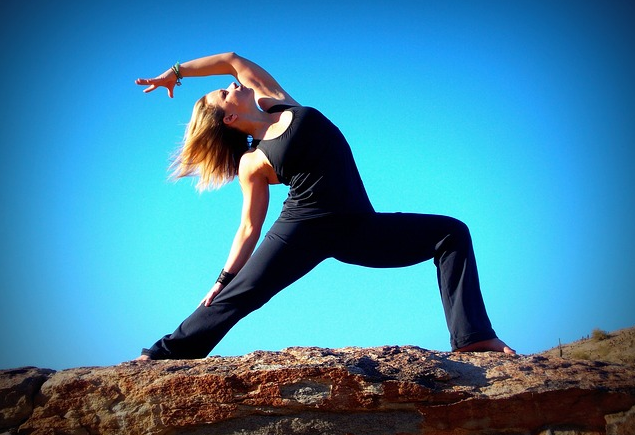
Why It Doesn’t Pay to Put Wealth Above Health (and 3 Tips to Get Fit)
“Man surprised me most about humanity. Because he sacrifices his health in order to make money. Then he sacrifices money to recuperate his health. And then he is so anxious about the future that he does not enjoy the present; the result being that he does not live in the present or the future; he lives as if he is never going to die, and then dies having never really lived.” ~The Dalai Lama
It was three in the morning. The mean, destructive words that someone had said to me back in high school were replaying in my mind like a broken record.
“You’re fat! Why are you swimming with your shirt on? Stop eating so much!”
As I heard each word in the back of my mind, I felt the passion begin to burn within me to help those who were overweight and suffering from self-worth issues, like I once was.
At eighteen years old, I decided to open up my own fitness business. I had a burning desire to help others because I knew was it was like to feel worthless inside, to hate looking at yourself in the mirror, and to not be able to take your shirt off in front of people because you were embarrassed of your body.
The desire was so intense that it had me getting up every morning at 3:00am to study, research, and work on my business.
I was working at the gym, building my business from 5.30am to 9.30pm, five days a week. Other health coaches kept telling me, “Matt, you need to settle down; you’re going to get burned out!”
But I thought I was Superman at the time, replying with comments like, “You just don’t want this as bad as I do!”
Time went by, and at a young age I thought I had everything. I was doing what I love, I was getting massive results for my health coaching clients, and I was earning high amounts of money. Business was great! But even though I felt I had everything, there was still one thing missing.
I was constantly getting sick and taking time off of work. I was sleeping four hours a night. I was getting sleep paralysis. I wasn’t making time to prepare my meals or train myself anymore, and my energy was deteriorating so much that I had my own little bed in the staff room so I could take naps in between coaching clients.
Day in and day out I was struggling, until one day, I walked into my parents’ bathroom and gazed over at the mirror. Tears started running down my face.
I slowly crouched down to the ground with both hands on my head. I was shocked at seeing how my own personal standards had dropped so much, to the point where I had gained back most of the body fat I’d once had.
I suddenly realized that the thing I was missing was my health.
The sadness quickly turned into anger burning within me. I used the anger as fuel to make a decision that was about to change my life.
I was sick and tired of being sick and tired. I hated that I wasn’t able to be productive throughout the day because I had no energy to do anything. And I was fed up with not being congruent with what I was teaching my clients.
I ran down into my basement and grabbed a small notebook. I wrote down everything I was committed to changing and the reasons why I must change it now.
I made a decision that from that day forward, I wasn’t going to value contribution, success, or wealth higher than my health and body.
I was going to value health above everything and treat my body like a temple.
I began cleansing my body with fresh vegetables juices, I started exercising again five days a week, I became vegan, and I began riding to work instead of driving. I started doing little things that mattered and was going to produce more health, energy, and vibrancy.
I learned a lot of things during this chapter of my life that may be useful to you:
1. Value health above everything.
When you value building wealth above your health, you will face massive challenges, either in the short term or in the long term. But when you value health above everything else, the results you create in that area will translate to all other areas of your life.
You will feel more spiritually connected, you will feel more confident with yourself, you will produce more throughout your day, and you will have pure energy to spend time and be playful with those who matter most.
2. Schedule, schedule, schedule!
If you don’t take the time to schedule, it’s mostly like not going to happen. That was true for me.
It might be helpful for you to take time on a Friday or Saturday to schedule when you will prepare your meals for the week, when you will eat, and when you will exercise, meditate, or do yoga.
3. Find an accountability partner or coach.
Although I didn’t have a health coach, I learned the importance of connecting with someone with higher standards than you in the area you’re trying to improve. I actually had an accountability phone call on a Monday morning, where a friend and I would exchange our goals for the week.
Our goals ranged from running half an hour five days a week to having a green vegetable juice and salad every day. We attached consequences to not following through by making a commitment to each other that we would do 100 squat thrusts if we didn’t accomplish those goals we set out. Ouch!
Jim Rohn once said, “Take care of your body. It’s the only place we have to live in.” My only hope is that you take his advice and the lessons I’ve learned and start applying them to your life.
Have you ever valued work above your health? If so, what has it cost you?
Photo by Jesslef
-
How to Maintain Healthy Habits and Stop Sabotaging Yourself
“You, yourself, as much as anybody in the entire universe, deserve your love and affection.” ~Buddha
About two years go, I felt horrible about myself and where I was in my life: single, struggling to lose weight, miserable in my job (and no clue what to do about it), and unfulfilled in general.
I kept trying to bully myself in order to be the person I wanted to be and have the things I wanted to have.
I kept saying to myself, “I can’t believe you said/ate/did that. There’s something wrong with you” and giving myself strict rules to follow, only to break them with the same self-sabotaging behavior sometimes minutes later.
I thought the only way to get myself where I wanted to go was to strong-arm myself there. But that only made me rebel against myself more. I waffled between overindulging and being stingy with myself emotionally, physically, and financially.
One day I came across a picture of myself at five years old. I looked at that sweet little girl and realized no parent would allow someone to treat her the way I was treating myself—or allow her to do the things I was letting myself get away with.
I looked at how I was living and saw how broken my relationship was with myself.
I was permitting myself to do things no sane parent would allow their child to do while simultaneously yelling at myself for “being bad,” which any parent or child knows is the most ineffective form of motivation or cause for behavior change.
This caused me to wonder: why do we allow ourselves to have the unhealthy habits we don’t allow in children? Why do we find it easier to make rules for ourselves than it is to follow them?
I finally learned how to heal this relationship with myself and begin “parenting” myself in a healthy way.
By honing your self-parenting skills and doing this out of love and affection, you’ll be able to overcome these self-sabotaging behaviors and stop the self-bashing, creating a loving relationship with yourself that supports you to achieve your desires.
1. Identify your behaviors and habits.
Take a moment. Listen to the ways you speak to yourself, the way you feed yourself, your hygiene and sleep habits. Which of your habits and behaviors would you not allow your (inner) child to do?
Here were a few of mine:
- Speaking meanly to myself
- Thinking mean thoughts about others
- Eating candy before healthy food
- Staying up late when I’m tired
- Having bad table manners—eating while staring at a computer screen or watching TV
Often, the mean thoughts and the behavior are tied together. We identify these habits and behaviors as “self-sabotage” and then mentally beat ourselves up for it.
If you catch yourself in the vicious cycle of doing something that deep down you know you shouldn’t and then mentally berating yourself for it, it’s indicator that something big is going on below the surface.
2. Identify the repercussions of the behavior.
You’ll probably notice that these behaviors and habits take you away from attaining the things you deeply desire, like having a body you love, a job that fulfills you, and a great relationship.
In every moment, we are taking action that either moves us toward or away from the person we want to be and the life we want to have. The very behaviors you keep permitting yourself to do are the ones that are keeping you from what you want most.
Get clear on how the actions you’re taking and the thoughts you’re thinking are in direct conflict with your happiness.
3. Understand why you developed these habits.
Look closely and see if the behavior or thought pattern originated as a way to take care of you in some way. It might be counter-intuitive or irrational, but that doesn’t matter.
For example, one of my self-sabotaging habits was eating chocolate at ten in the morning. I thought it was just about the sugar rush, but the overwhelming need to eat it every day pointed to something deeper.
When I really looked at it, I saw that by mid-morning, the realization that I had a full day ahead of me, doing work I didn’t want to do in a place I didn’t want to be in, made my heart sink with sadness.
I reached for the chocolate for a jolt of pleasure, a way to escape the reality.
The intention was positive; I was trying to take care of myself by giving myself comfort and some joy. Unfortunately, it wasn’t the healthiest way to give myself those things, and it came with the undesired effects of weight gain and sugar crashes and deepened a cycle of self-bashing.
As adults, we know the consequences of engaging in a particular thought or pattern, but often do it anyway. The motivation is always moving away from pain or increasing pleasure.
It can be hedonistic—many unhealthy behaviors feel good in the short-term (the sugar rush, the comfort, the satisfaction) but have long-term detrimental effects. It can also be rebellious—there’s a thrill to “breaking the rules.”
Identifying where you get pleasure in engaging in self-sabotage can be immensely helpful in overcoming it.
Realize that there is no self-sabotage, only self-preservation. Acknowledge that this action was a way to keep you safe, happy, and loved in some way, even if it was misguided or currently no longer serves you.
This was an unconscious way of parenting yourself, and now that you recognize it, you can begin to consciously parent yourself in a way that supports the person you want to be now.
4. Create “house rules.”
Parents make rules because they can see the consequences that the child doesn’t have the perspective for yet.
Looking back at my childhood, there were a lot of things that were non-negotiable that ultimately created healthy habits.
One example is that we sat down as a family for dinner, every night. I never thought there was another way, and subsequently the habit of sitting down to dinner was ingrained.
Think back at your childhood and the “house rules” that guided your behavior. Would it be helpful to reintroduce some of them into your life? Should you adopt some of the “house rules” you have for your children?
If you have a particularly hard habit to break that you know is detrimental to your well-being, consider making it a “house rule.” When something is non-negotiable it removes the inner dialogue where we bargain with ourselves and makes it a lot easier to stick with it.
Be sure to create your “rules” out of loving affection, not meanness or to punish yourself. Add a “because.” Even as kids, “because I told you to” was not a valid excuse.
So look back at what you identified as the repercussions of your behavior to inform why the rule is in place and the desires you want to move toward.
For example, one of my “house rules” became not eating candy before lunch. Whenever a chocolate craving hit, I told myself, “You don’t eat chocolate before lunch because it will make you feel icky and makes you feel bad about your body. Have chamomile tea instead.”
5. Hone your self-parenting skills.
Look back at your relationship with your parents and your children and identify the parenting techniques that worked the best for you. I’ll bet it was a mix of being strong and consistent in enforcing the “rules” while also being kind, patient, and understanding.
Use the good techniques you identified to make sure you stick to your rules. In addition to making them non-negotiable and adding a “because,” be sure to reward yourself when you’ve resisted temptation and followed your own rules.
Be infinitely patient with yourself, as you would be with a child. If you slip up once, instead of throwing everything out the window, have a conversation with yourself.
Understand why you did what you did. What did you need in that moment? Figure out how to give it to yourself and reinforce why it is so important to follow the “rules.”
What are your new “house rules”? How can you parent yourself in a way that is supportive and nurturing?
-

What to Do When You Find It Hard to Do What’s Good for You
“If you correct your mind, the rest of your life will fall into place.” ~Lao Tzu
I know how you feel.
You know you shouldn’t eat that cookie, but it’s as if there’s something from deep within that compels you to move your arm forward, pick it up, and consume it in one, grandiosely guilty gesture.
You find yourself performing entire series of behaviors—like reaching into your pocket, picking out the pack, getting the cigarette, and lighting it—without even realizing what you’ve done until you’ve got the thing in your mouth.
You promise yourself you won’t complain, judge, or gossip, and there you are giggling about that thing she’s wearing or rolling your eyes at the person in front of you in line who’s taking ages to pick out her coupons.
You wake up in the morning with the full intent to exercise, feeling faint pangs of guilt with each passing hour on the clock, each hour with its own special excuse. “Too early” becomes “Too hungry” becomes “Too full” becomes “Too late.”
You mean to meditate, you really do, but you spend the whole time bothering about all the items on your to-do list and getting chest-clenching reminders of all the things you’ve forgotten. In the end, relaxing stresses you out even more.
What is going on? Why is it so difficult to just do what’s good for you? Why does it seem so easy for other people? Are some people biologically equipped to be emotionally and physically healthy? Are their lives just easier and more stress-free than yours?
It’s much too easy to say that people who do what’s good for them are different from you somehow. However, it’s even easier to reply to such claims with “You can do it!” or any endless refrain of motivational and inspirational slogans.
We’ve all heard that we can do it if we set ourselves to it, so all the motivational tapes make us feel even worse when we, as if possessed by demons, reach out and pay for the very fries that we spend hours regretting.
That’s because motivation isn’t the answer. Neither is willpower. I found this out the hard way.
Once upon a time, I tried to quit smoking. I failed. I thought I’d failed because I hadn’t picked a proper replacement behavior and because it wasn’t the right time.
In reality, smoking was the least of my problems. I was extremely close to a mental breakdown. I didn’t see it that way, but I knew something was wrong.
The same way that you can become obese over ten years by eating just a little bit extra at every meal, I became just a little bit more mentally ill every day. It was barely noticeable because it was so gradual. I was acclimatizing to my misery as I was plunging into it.
Have you ever been drawing or writing something and suddenly made a mistake? It just makes it worse when you try to cover it up, but you can’t seem to stop. You just keep making it worse and worse the more you try to fix it.
Well, that was my relationship with my body, my mind, and my life.
As the pressure began to build, I kept ignoring obvious signs of my distress. I remember rubbing at my face, thinking that the dark circles around my eyes were from smudged eyeliner. Except they didn’t rub off.
I remember getting nightmares night after night. I remember when I started eating meat again, after abstaining for nine years. I remember when I stopped exercising and started smoking double the amount. I remember when I started drinking every day.
I felt, more and more, like I didn’t really care much about my body, like it could rot for all I cared.
It wasn’t until I became suicidal and started hearing voices that I started to panic a little. Obviously, something was wrong.
So, I decided to quit smoking. Obviously it was the smoking.
Genius, right?
The first time I tried, it failed. Within about twenty-four hours of stopping, all of my mental symptoms worsened tenfold. I was a wreck. I reached back for a cigarette.
I waited a few weeks and tried again.
Within two weeks I had a mental breakdown, which I must say was one of the most amazing things that had ever happened to me. It was a beautiful moment between me and myself.
Suddenly, all that had been extremely complicated and confusing became simple and easy. I faced a choice: change or die.
Choosing to change meant getting on my knees. It meant surrendering to a higher power I couldn’t define or see, and trusting that, even though I wasn’t in control anymore, something would carry me through and help me heal.
There, I found peace.
And yet, my journey after the breakdown was extremely rocky.
I would fluctuate between peace and distress. For a while, I would be happy, peaceful, and joyful. I would treat my body like a temple and feel this intense, building urge to just take care of it, to give it nourishing care and tenderness.
Then I would crash. I would reach back for old vices and the same old insecurities.
After a few months of fluctuating, I crashed again. This time, I ended up in the hospital with meningitis. I knew the moment I got admitted that it wasn’t a coincidence. I knew I’d done it to myself.
Staying in the hospital was sort of like going to prison.
I was being punished for the way I’d been treating myself. I was being punished by my own body, by my own self.
I remember reading that, if you were to go to bed as a non-smoker and wake up the next morning with all the symptoms of having smoked for ten years, you’d rush yourself to the emergency room. You’d think something was horribly wrong.
The only reason that people smoke for ten years without much worry is because the consequences come on so gradually.
For ten years, I’d ignored the effects of my self-hating, self-destructive thoughts the same way that I’d ignored the effects of smoking cigarettes. I couldn’t ignore them anymore.
Lying in that hospital bed, in excruciating pain because the doctors refused to give me narcotics considering my “history,” I realized that the reason I kept hurting myself was because I believed I deserved it.
I was always telling myself that I wasn’t good enough. I was always judging my body. I was always comparing myself to others and deeming myself unworthy.
After I broke down, I started being more loving to myself but, soon enough, the old habits returned.
Lying alone in that hospital bed, I learned my lesson. I realized that self-love was not an option. If you don’t love yourself, you’ll destroy yourself and do what’s bad for you. There’s no middle ground.
After I got released, I got to work. I read some books, made some plans, and, more importantly, embraced myself.
I quit smoking, re-embraced vegetarianism, started exercising again, and opened my first blog. I decided to pursue my dreams at any cost and to take care of myself, because I deserve it.
It’s not that I’ve discovered some magical willpower formula that’s helped me combat cravings for cigarettes. I just haven’t craved them.
It’s not that I force myself not to eat meat. I just don’t want it.
Doing yoga, writing a book, starting a business—these weren’t hard. They were meaningful and enjoyable. It was destroying myself and ignoring the effects of it that was hard.
In the end, I’ve realized that a craving is never just a craving. A craving is a signal that something’s missing. An urge to restart old, destructive habits is always, always a sign.
If you can’t seem to do what’s good for you, then maybe you don’t think you deserve what’s good. If you feel compelled to hurt yourself, maybe you think you deserve to be hurt.
At the end of the day, I realized that I didn’t need to quit smoking. I needed to quit hating myself.
I didn’t need to start exercising. I needed to start respecting my body.
I didn’t need to stop drinking. I needed to stop numbing my emotions.
I didn’t need to watch my calories. I needed to watch my thoughts.
Inside each of us, there’s a state of mind where being good to ourselves, others, and the planet is effortless. Don’t try to do good or be good. Just find that state of mind, and it’s all downhill from there.
Editor’s Note: Vironika has generously offered to give away two copies of her new book The Love Mindset: An Unconventional Guide to Healing and Happiness. To enter to win a copy, leave a comment below. You can enter until midnight PST on Monday, January 6th.
-
How Do You Motivate Yourself: With Love or Fear?
“The heart is like a garden: it can grow compassion or fear, resentment or love. What seeds will you plant there?” ~ Jack Kornfield
My whole life has been a story of discipline. I started exercising and eating healthier in eighth grade. I planned out my studies meticulously so I would finish school assignments exactly on time. I always arrived five minutes early for any appointment or meeting. Disciplined.
When I began my yoga studies in earnest at the age of twenty-two, I applied the same disciplined nature to my yoga practice. I had extensive practice plans and had scheduled in all the parts I should be doing: pranayama and meditation at dawn, asana practice after work with standing poses on Monday, hip openers on Tuesday, etc.
People would comment about how disciplined I was. I just smiled, knowingly, because I knew what I was doing was “good” and they could learn something from my organized way of living. Yep, a little self-righteousness, too!
Then one day, about fifteen years ago, while I was contemplating the yogic term tapas (self-discipline), I had an awakening: my discipline, everything, all that I did (including exercise, eating well, rigidity around how I used my time), came from fear, not love.
It wasn’t focused on all the wonderful benefits I received through discipline but what I would lose if I didn’t do it.
If I didn’t exercise, I wouldn’t have my exercise high all day. If I didn’t eat perfectly, I would gain weight. If I didn’t do my practice, I would lose my state of consciousness.
So much fear! I knew I wanted it to change. I didn’t want this level of fear in my life, especially around my spiritual life whose very essence was love.
I was planting seeds with my practice, as Jack Kornfield’s quote said: “The heart is like a garden: it can grow compassion or fear, resentment or love. What seeds will you plant there?”
I wanted to be planting seeds of love.
While choosing to make a change in our life because we are afraid of something at least gets us going (quitting smoking because of the fear of dying, working on being on time at work because of the fear of being fired, beginning meditation after a heart attack), we ultimately want to shift from fear to love, from what we don’t want to what we do want.
Focusing on what we don’t want simply continues to plant fear in our hearts. Focusing on what we do want, and that we deserve what we want, plants seed of compassion and love.
So, what did I do? I quit everything. I quit my entire practice—including eating well, exercising, being rigid with my schedule—and entered into a study of discipline. Two discoveries would forever change my perspective.
The first reflection came from the word tapas, itself. Roughly translated, it means “inner fire” and refers to the inner fire to know ourselves, the desire; and we learn about ourselves through our yoga practice, our study of life, and everything we do for ourselves.
I like to also think of it as the inner fire to feel good, to be doing what we really want to be doing, to love our life.
We can use this “inner fire” to inspire us to be disciplined with whatever we want to do, to continue our actions even when we feel resistance. (You know, the preference to sleep in rather than get up to exercise, to eat junk food rather than prepare something healthy, to grab for a cigarette rather than not.)
The desire drives us to want to learn more and is stronger than the resistance when we stroke it. And we stroke it by focusing on what we want, getting excited about what our action will help us feel.
The second transformational nugget was the word “discipline” itself. The word comes from the Latin root “disciplina” and means “instruction given, teaching, learning, knowledge.” Think in terms of a disciple learning at the foot of a master.
Again, our discipline to do our own practice helps us to learn about ourselves, it is a teacher for us, our master, so to speak.
Knowing I wanted my practice to be based on love, not fear, to be planting seeds of love from it, I continued to hold myself back from practicing.
The fear bubbled to the surface. I feared I would lose “everything” for quite some time. But then, a deeper desire began to percolate up. A curiosity about a certain pose and how it would feel, a curiosity about a breath, a new meditation I felt a niggling to try.
I felt an inner excitement to get to my mat, and I finally did.
Self-discipline is tricky for many of us. In my work, I rarely come upon anyone who says that what they do for themselves is deeply satisfying and they feel they do enough. Most of us feel we need to do more, we aren’t disciplined enough.
The judgment itself comes from fear. Let me say that another way, if you are judging yourself for not having enough self-discipline, you are basing your practice on fear.
So how do you change the focus?
Instead, return to why you do what you do. Why do you do yoga, exercise, eat well, or do anything else you feel you would like to be more disciplined around? What brought you to it in the first place? Sometimes along the way, we lose site of our deeper purpose.
Bring your attention back to that deeper purpose. Put your love into it.
While I wish I could say the fear was eradicated for me, never to return, I must admit it does return. I can say that when it surfaces I now have new tools to handle it. I am better able to see it for what it is and return to the state of love quickly.
Ironically, I realize that my fear-based discipline did teach me something about myself and led me to a life with more love.
-
How to Convince Your Brain to Change Your Habits and Your Life
“To get something you never had, you have to do something you never did.” ~Unknown
Heroes inspire us all. They are strong, smart, and powerful. They manage to win against all odds. They will keep going no matter what.
They may feel fear but fear does not get them. And just when you thought that they were done, it was over, and that there was no way they could overturn the situation, they rise back out of the blue, strike, and win!
Then they cross the finish line. Glory awaits them. From now on everyone will remember them for the great people they were.
Oh, the path of glory.
We get addicted to this path. We want to be heroes so badly. And we fight, we do our best, we give our all, yet many of us are failing.
I didn’t recognize the reason behind our shortcomings until I realized that there are actually two types of heroes: the glory-focused type and the down-to-earth type.
Let’s take exercise and healthy eating as an example.
Many people decide to live healthier, especially in January with New Year’s Resolutions.
They believe that this time they will make it happen! Glory awaits them! And they march. Full-speed. They do very well—at least in the first few weeks.
Then they slowly start running out of steam. They cannot hold on to their diets as they did, and they skip more and more workouts. A large percentage of them will have quit by the second week of February.
No glory for the quitters, only blame and guilt. They didn’t try hard enough. They gave up too easily. They were lazy. Or, they just did not want to change badly enough. (more…)