Tag: healthy

  • Stressed and Anxious? Here’s How to Stay Emotionally Healthy

    Stressed and Anxious? Here’s How to Stay Emotionally Healthy

    EDITOR’S NOTE: You can find a number of helpful coronavirus resources and all related Tiny Buddha articles here.

    “Health is not just about what you’re eating. It’s also about what you’re thinking and saying.”

    A virus is spreading across the globe. Schools are shut down. People are out of work. Grocery stores are empty.

    Weddings, graduations, vacations, a day in court—canceled.

    This is the ultimate test in emotional resilience.

    Uncertainty is one of the main reasons we stress, along with a lack of control, and right now we’ve got it in truckloads. I’ve spent the last decade building my mental and emotional resilience to stress and adversity, and yet fighting off the anxiety is still a challenge.

    I’m putting all the tools in my toolbox to good use.

    And they are working. So I want to share these tools with you.

    1. Talk to someone, but limit the bitching.

    It can be cathartic to share with others the fear, panic, and challenges we’re experiencing. It makes us feel not alone. It validates our feelings and makes us feel connected. So talk to someone about what is stressing you out right now.

    But set a time limit to focus on the negative. Maybe ten or twenty minutes each to share. Then it’s time to change the conversation.

    Here are some cues:

    • What is going right?
    • What are you proud of yourself for?
    • What are you grateful for?
    • What are you looking forward to?
    • Despite the hardships, how are you coping?
    • How can you encourage and praise your friend?

    When we only focus on the negative, we forget what is going well and then all we can see is the bad.

    I also find it incredibly helpful to notice how differently my body feels when I’m complaining, angry, and blaming than it does when I’m grateful and optimistic. One feels tight, hot, and heavy. The other feels lighter, looser, and freer.

    And as I listen to my husband, mother, or friends share their pain with me, I always make it a point when they are done to change the conversation and ask them what’s going good. I can hear the tone in their voice change as they bring their thoughts to the positive.

    2. Be generous.

    This doesn’t need to be a gift of money!

    It can be a roll of toilet paper. It can be an hour Facetiming your grandmother who is held up in her nursing home with no visitors right now. It can be offering to pick up and drop off groceries for a neighbor or making them a plate of enchiladas.

    I have a three-month-old and am blessed with an ample supply of breastmilk, so donating some of my freezer stash costs me nothing, but can mean so much for a needy mother and child right now.

    Generosity can even come in the form of well wishes or prayers for others dealing with difficult times.

    Giving is scientifically proven to be good for your emotional health.

    It activates regions of the brain “associated with pleasure, social connection, and trust, creating a ‘warm glow’ effect. It releases endorphins in the brain, producing the positive feeling known as the ‘helper’s high.’”

    Giving has been linked to the release of oxytocin, a hormone that induces feelings of warmth, euphoria, and connection to others.

    It’s been shown to decrease stress, which not only feels better, but lowers your blood pressure and other health problems caused by stress.

    What can you give right now?

    3. Take a mental break.

    It’s so easy to get stuck in mental go-mode all our waking hours. Especially since our brains crave being busy or entertained.

    Even when we rest, we flip through Facebook, watch TV, or daydream.

    These past few weeks I haven’t been making the time to take my mental breaks. I usually meditate daily, but with a baby who doesn’t yet have an eating and sleeping schedule, plus with all the extra stresses right now, I’ve not given my mind a break!

    So I could feel the anxiety creeping in. It started in the body. I felt the tension in my muscles. My jaw was tight. Breathing was shallow. And I was irritable!

    I know it’s time for a mental break when something as simple as my husband leaving another towel on the banister makes me want to file for divorce. (Or end up on an episode of Dateline!)

    So I put my husband on baby duty, ran on the treadmill trying to focus on my breath and not my to-do list, took a shower, and brought my attention to the warm water instead of worry over how I will get clients. Then I meditated for fifteen minutes zoning in on my breath every time my thoughts turned to worry over daycare and the coronavirus.

    I felt like I’d washed my brain. The tension was gone, my mind was clear, and I no longer wanted to strangle my husband.

    From our anxious place, we catastrophize as we spin out in our negativity bias. All we can see is the negative.

    We need these mental breaks to create space from these ruminating thoughts. We need to hit the reset button.

    A mental break is taking anywhere from thirty seconds to thirty minutes to consciously turn our attention inward, away from outside influence, as well as our flow of thoughts.

    We can’t stop the flow of thoughts, but we can notice when they’ve taken our attention, and purposefully redirect that attention to something in the present moment like the breath, a mantra or sound, or a visualization.

    Here are a few ways to take that mental break:

    • Breathwork
    • Meditation
    • Time in nature
    • Walking, exercise, or dancing
    • Practicing mindfulness
    • Listening to music

    Simple mental break breathing:

    • Start with a re-calibrating big, big inhale, hold it, and breathe out all the way.
    • Now breathe in slowly to the count of four, then hold for a second.
    • When you hold, hear the silence between the breaths.
    • Then breathe out to the count of four and hold for a second at the bottom.
    • When you hold, feel your mind clearing as you listen for the space between inhale and exhale.
    • Repeat until you feel relaxed.

    4. Allow all the feels.

    This stress and anxiety feel terrible. And it can be hard to muster up the strength and will to try out some of the items on this list to make yourself feel better.

    That’s okay.

    But what tends to happen is we want to run from the discomfort, try to suppress it with distraction like TV or social media, or numb it with wine, food, or drugs.

    It’s normal to want to avoid pain. We’re naturally geared to avoid it. However, when we block this pain from flowing, when we don’t allow ourselves to feel our emotions, they get stuck.

    Emotions are energy in motion. If you stop they, they just bottle up. They don’t disappear.

    Try this exercise to allow your emotions to flow:

    • Take a moment to close your eyes and sit in a quiet space or block out distraction as best you can.
    • Take a deep breath in and slowly breathe out.
    • Notice the physical feelings of stress. Where are you holding it in your body? What does it feel like?
    • On your next exhale, release as much tension as you can.
    • Repeat:
      • “I am allowing these feelings to be present.”
      • “I let these feelings flow through me.”
      • “These feelings are causing me no harm.”
    • Now scan your body starting from your head, jaw and neck. Shoulders and hips. Down your legs and feet. Release any tension you find along the way.

    Once you’ve allowed these feelings to exist and flow, the following tool is a fantastic next step toward emotional health.

    5. Express gratitude.

    We humans have a natural negativity bias. It’s a mechanism in place designed with the intention of keeping us safe.

    Being on the lookout for danger, in theory, might be a better tactic to keep us alive than ignoring any signs of danger for the sake of focusing on pleasantries. Like being on alert for a mountain lion instead of enjoying a bed of flowers.

    But 99% of the time, or more, our lives are not in imminent danger. Yet the negativity bias remains.

    As it turns out, much like generosity, gratitude is also scientifically proven to be good for our emotional health.

    It’s shown that people who express gratitude are more optimistic and feel better about their lives. Surprisingly, they also exercise more and have fewer visits to physicians than those who focus on sources of aggravation.

    In some studies, it’s also shown people immediately exhibiting a huge increase in happiness scores, as well as improved relationships.

    Here are some ways to express gratitude:

    • Write a thank-you note or email
    • Thank someone mentally
    • Try a gratitude journal
    • Pray or meditate on something you are grateful for

    6. Ask for help if you need it.

    I am so proud of our communities coming together, staying home, helping each other out. If there is something you need, there are whole groups of people ready and willing to help a stranger out. I see it all day on my Facebook feed, people offering up formula or diapers, services to drop off food, or offering homeschooling tools and advice.

    Thankfully, this pandemic has come during a time of advanced technological capabilities, allowing us all to connect digitally.

    Doctors, teachers and coaches are now available online. From the comfort of your socially distant home, you can find help right at your fingertips.

    Ask. It doesn’t make you look weak. You aren’t impositioning anyone. People inherently like to be helpful.

    Especially if you need help dealing with the anxiety of our current situation. We don’t make good decisions coming from a place of fear. Now more than ever it is essential to have emotional resiliency to get through this tough time and come out the other end whole and ready to move forward.

    We’ll get through this. Together, even though we’re physically apart. Wishing you much love, luck, and light on your journey.
  • If You Hate Your Body and Think You Need to Fix It…

    If You Hate Your Body and Think You Need to Fix It…

    “That girl was fat, and I hate her.”

    One of my clients said this the other day—about herself. Well, her little girl self. And my heart broke.

    One of the very first things I do with clients is encourage them to practice self-compassion and kindness—just extending themselves the same basic human compassion and kindness that they would anyone else.

    Very much the opposite of what most people who struggle with weight and food are used to. After all, when it comes to our weight and food, we’re programmed with messages like “You just have to want it more, be motivated, build your willpower muscle, try harder, work harder, be better…”

    Perhaps to some, it may sound easy or silly, and it’s hard to understand what the hell kindness and compassion have to do with weight and food struggles when we’re so programmed to believe the opposite.

    Just extending yourself some basic human kindness and compassion really does end up being one of the most important things to do when you’ve struggled with weight and food for a long time. It’s also the hardest, and some struggle more than others with this simple concept.

    Personally, I struggled hard with it when I first started trying.

    I hated myself. I hated and was ashamed of every single thing about me, and didn’t think I deserved any kindness or compassion. But I knew that if I ever wanted to change the way I felt about myself, I had to figure out how to find some.

    So, I started picturing a little girl version of myself when I felt like I needed kindness and compassion. If I couldn’t give it to myself, I’d pull up a mental image of her and direct it that way.

    It worked, and it’s a trick I’ve also been using with clients since.

    But the other day, this woman (like many others) said, “Little girl me was fat… and… I… hate her. How am I supposed to give it to her when I hate her too?”

    It broke my heart, but it didn’t surprise me, and as I think about it, it makes me angry. It makes me angry because this beautiful lady wasn’t born hating herself for a little belly roll. She learned to from our stupidly broken society and has carried that belief around with her every single day since.

    From the time we’re old enough to make any kind of sense out of the world around us, we’re taught that fat is the enemy.

    Mothers have been taking their kids to Weight Watchers meetings with them to get publicly shamed for the number on a scale since they were seven or eight. We’ve been warned “Better not eat that, you don’t want to get fat, do you?” as though it was a fate worse than death, while simultaneously being taught that food fixes everything.

    “What’s wrong honey, you’re sad? Here, have a cookie.”

    “Sore throat? Here, have some ice cream.”

    We’ve watched as weight loss, at any cost, has been rewarded. Those who lose it are treated like royalty—showered with praise, attention, and acceptance, while we watch those who gain get whispered about behind their backs for “letting themselves go.” Or worse, they get openly teased and made fun of to their face—often even by friends and family who supposedly love them and claim to do it out of love and concern.

    Our society has programmed us to believe that fat is the enemy and thin people are somehow better than those who are bigger, through millions of micro (and macro) aggressions over the course of our entire lives.

    And here’s what’s happened as a result:

    Tens of millions of people (big and small) are wasting literally their entire lives desperately trying to “fix” their “fat” problem so they feel more acceptable to the current narrative that size and shape determine human worth.

    And when they put on a pound, they hate themselves.

    It’s all so unbelievably toxic, damaging, and counterproductive, and it fuels the exact “problem” our population is obsessed with trying to “fix.” Because the individuals behind the war we’ve waged on fat, go through their entire life hating and rejecting themselves.

    The stories they tell themselves about themselves end up looking a whole lot like this:

    I’m worthless and unlovable if I’m not skinny.
    I’m a failure if I gain weight.
    I’m useless and stupid.
    I ate bad, so I’m bad.
    I’m such an idiot because I let myself go.
    I’m disgusting and don’t deserve to feel good or be treated well (by myself or others).

    You may be thinking, “Good, how else are they going to get motivated to get their shit together and lose the weight!” You may even follow that thought with the typical “I’m just worried about their health” tripe. (If you still believe that weight loss obsessions are in the “best interest” of public health, pop over here and read this piece).

    Think about those words for a moment and consider how they make you feel. Now think about the impact of hearing them running through your head on autoplay, both consciously and unconsciously, tens of thousands of times a day, every single day, for years or even decades.

    We believe the things we tell ourselves. And if we’re telling ourselves that we’re worthless and unlovable and failures because of extra body fat, we believe those things to be true of who we are at our core, what we’re worth, and more importantly, what we deserve in life.

    And we treat ourselves accordingly.

    That woman I spoke of a minute ago? Like tens of millions of us, she struggles to feel anything but hatred for a little girl who she thought was fat. The little girl who doesn’t even physically exist anymore but is built into the fabric of who she is now and how she feels about herself because she carried those stories, feelings, and beliefs into adulthood.

    So did I. And I’d be willing to bet, so have you. Because we all do.

    So, she doesn’t prioritize herself. She does everything for everyone else, while ignoring what her mind and body need until she has no physical or emotional energy left to do anything. And then, when she can’t seem to muster the energy or willpower to force herself into following someone else’s stupid food rules to “fix” her “weight problem,” she hates and berates herself even more, and the cycle just keeps feeding off itself literally forever.

    No one in the history of mankind has ever thought, “I’m such a worthless failure, I think I’ll do something really nurturing and kind for myself and my body today.”

    That’s not how those stories work. That’s not how the shame they create works because we treat ourselves how we believe we deserve to be treated.

    When we associate our happiness and worth with our weight, weight gain makes us feel less worthy. The less worthy we feel, the less health-promoting behaviors we engage in.

    We don’t move our bodies (unless we decide to “lose weight”) because we don’t prioritize their health. We only care about the things we think we have to do as punishment for weight gain and to “whip them back into shape.” Corporal punishment is literally built right into the way we talk about it. But because we’re treating it as punishment, we can’t stick to it.

    We eat and overeat things that make us feel like garbage (and gain weight) on autopilot, as habit, as punishment, as reward, to numb and soothe, to celebrate, to mourn whether our bodies need or want those things—who cares what our bodies want, anyway, right? We’ve spent decades hating, berating, and learning to not trust those.

    That’s why stories matter. That’s what they have to do with weight. That’s why the entire weight loss industry has become such a friggen joke.

    We have got to stop demonizing and prioritizing weight. We have to.

    Instead, we have to shower ourselves with kindness and compassion. If we hate ourselves too much to consider that, we have to shower a younger version of ourselves with it (just keep going to the youngest version you need to, in order to find a version of you feel compassion for). 

    Kindness and compassion are so heavily built into this process because we cannot change self-punishing behaviors until we stop believing we deserve to be punished.

    If you want to change your weight, health, or the relationship you have with your body or food, you have to change the way you feel about yourself, and you cannot do that while berating yourself with stories of being worthless because of what you ate or what the scale says.

    It’ll just never happen.

    We have to stop rejecting parts of ourselves, since rejection writes those stories in the first place, and start working with the way our brains are wired (changing the thoughts and stories that create the beliefs that drive self-destructive habits and behaviors). And we have to tune into our thoughts and the wisdom of our own bodies with kindness and compassion.

    When we stop focusing on weight and weight loss and instead focus on shedding the stories (and beliefs that cause self-destructive choices), then, and only then, are we able to forever shed physical, and more importantly emotional weight they may have created. It eventually just becomes an effortless side effect.

  • The Truth About Body-Positive Activists on Social Media

    The Truth About Body-Positive Activists on Social Media

    “The most difficult times for many of us are the ones we give ourselves.” ~Pema Chodron

    I’m on my phone, posting a photo of myself on Instagram. It’s a vulnerable shot—I’m holding my bare belly.

    I type in the caption “Accepting my body isn’t easy, but it’s worth it.”

    I mean this, but I also have voices in my head telling me to delete the picture because I’m gross, not good enough, and a phony.

    I get half a dozen comments supporting me, mostly emoji hearts. One comment reads, “I wish I had your confidence.” I feel weird reading it because my feelings are mixed. I don’t necessarily think of myself as confident all the time.

    In fact, my reality is that I’m struggling with body image more than I’m swimming in acceptance. I think about how this person is comparing their backstage to my highlight-reel. 

    We do that—we look at ourselves as “not enough” and think that others have it all together.

    We’re our harshest critics, and we hyper-focus on aspects of ourselves and bash them. We think that behind closed doors we are monsters. But when we focus all of our attention on that behind-the-scenes person, we’re not taking into consideration how human others are, too.

    The truth of the matter is that things aren’t always as they appear on social media. Yes, I realize I’m calling myself out, but I think it’s important for people to know that even people who seem wildly body-positive struggle, too. I mean, body acceptance is damn hard.

    I didn’t get to this point overnight, finding relative peace with myself. It’s been a long time of hating myself and wishing I was different. Even with finding some peace, I’m not “cured.” I don’t have a magic dose of body love all of a sudden.

    In fact, body acceptance doesn’t have to be self-love at all. It’s commencing on a simpler level. How about I just try to find acceptance in myself to think that this is how my body is at this moment? This is where we are, here in this body. It’s simple, but not easy.  

    It’s important to note that body acceptance is a moment-to-moment thing rather than a state of being in which you exist. It’s something that has to be fought for but is sometimes settled on.

    My background is that I’ve had eating disorders over the years, I’ve dieted like it was going to save me from body image issues, and I’ve had long periods where I weighed myself every day. I’ve also counted Cheez-Its out of the box, vowing to eat only the serving size. I’ve suffered in not accepting my body and instead succumbing to diet culture.

    At points, I thought I had it under control. I had dieted just right. I had even lost some weight. Inevitably, though, the self-disgust seeped in. I fell off the wagon over and over again, binging, particularly on sweets and foods high in carbs—the very foods I was depriving myself of.

    I’d say, “screw it” and I’d devour pizza with friends. I’d eat alone with a carton of ice cream or a box of cookies. Binging was inevitable after deprivation. While the high was fun during, it led to being sick and hating myself even more.

    In a fit of despair, I’d vow to “get back on the wagon” the next day.

    I’d tell myself I was definitely going to do better next time, but next time never permanently came. I may have been able to string together a few days of what I saw as “good” eating, but never lasting change.

    I got to a point where I felt defeated.

    Diet exhaustion looked like no longer finding joy in foods. It felt like a rock in my stomach. It sounded like sighs from having to make what felt like complicated food choices over and over again every day. 

    I couldn’t count my Cheeze-Its anymore. The scale was haunting and owning me. I feared social gatherings with friends, sometimes even avoided them. The next diet be it Keto or Whole 30 just sounded like another opportunity to fail.

    I got tired of chasing my tail. Diet culture wasn’t working for me anymore.

    What was the alternative? My ears started to perk up when I saw body-positive content on my social media feed. There were promises of body freedom and breaking the cycle of binging. I couldn’t believe it, but I thought about trying it for myself.

    The only thing was that I was terrified of trying it this way. The path of body acceptance sounded like giving up to me. It was far from it, though.

    I don’t remember if I googled body positivity, ran into it on social media, or some combination. I remember the despair I felt in searching for it. Thoughts passed through my mind like “could this work?” or “could this be real?” For so long all I had known was war with my body.

    While I was terrified, the positive effects of body acceptance began to flood my world in the best way possible. 

    I found influencers like Lauren Marie Fleming, Megan Jayne Crabbe, and Jes Baker. These women showed me that you could be happy and free in any body type. They started to break down those ideas I had about fatness and even what constitutes health.

    I started my journey. I downloaded all the podcasts I could on the topic: Food Psych and Love, Food were my favorites and top-ranking in the podcast charts. I filled my arms with books like Health at Every Size by Linda Bacon and Shrill by Lindy West. I religiously followed Instagram influencers like Virgie Tovar and Tess Holiday.
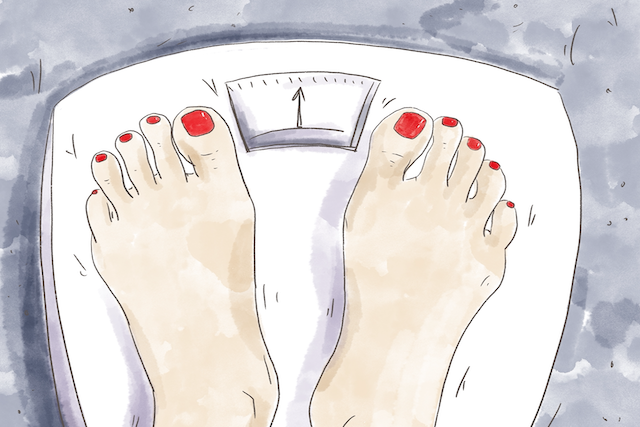
    Their messages were essentially the same:

    • Your size doesn’t determine your worth.
    • People can take actions to be healthy at any size.
    • Food isn’t to be defined as “good” and “bad.”
    • Dieting doesn’t work, and long-term weight loss from dieting is not sustainable.
    • All bodies are good bodies.
    • You can listen to and trust your body.

    These are just a small handful of the variety of beautiful messages I got from these amazing body-positive activists. They brought me hope.

    I also compared myself to them.

    I imagined their lives being perfect. I believed they had totally overcome diet culture and were floating above the clouds in body acceptance land. I thought that in order for me to experience freedom, I had to completely rid myself of negative thoughts.

    My backstage looked more like some body-accepting thoughts mixed in with a whole lot of self-loathing. Even today, I look down at my belly in disgust some moments. I guess the difference is that I have tools and messages to turn my thinking around these days.

    Some horrible thoughts that actually go through my mind are:

    • You’re only worthwhile if you’re thin.
    • No one’s ever going to love you.
    • You’re a failure and pathetic.
    • You ate terribly today.
    • Tomorrow I’ll eat “better.”

    I’m not immune from these thoughts just because I strive for body acceptance. In fact, these thoughts infiltrate my thinking regularly.

    It’s not a matter of having negative thoughts or not, it’s what I do with them.

    What I do with them these days is breathe through them. I turn them around and don’t let them control my life. In turning them around, I tell myself things like:

    • You’re worthwhile at every size.
    • You’re incredibly lovable.
    • The only thing that’s failed is diet culture’s promises.
    • You were feeding your body the best you could.
    • There’s no hope in a diet tomorrow.

    I want others to remember this when they think that myself or any other body-positive person on social media has it all together. I have to remind myself, too, when I go to compare my insides to another person’s outsides.

    We’re all just trying to figure it out, perhaps fumbling in the process. Those of us who are lucky enough to be working toward body acceptance know that this journey isn’t perfect. Changes aren’t going to happen overnight. Even the changes that do happen aren’t totally polished. 

    Just as others don’t know all that’s going on inside of us, we don’t know what’s going on inside of another person. They could be struggling just as we are. Attempts to mind-read only bring pain.

    What if that person you’re admiring is thinking the same self-deprecating thoughts as you are about themselves? What if they’re not happy with the way they’re eating and their relationship with their body isn’t nourishing?

    You can’t compare what’s going on inside of you to what’s going on outside for another person. All you can do is work to have the best relationship with yourself as possible.

    Acceptance is difficult and a process. In no way am I saying that it’s easy breezy. We wouldn’t all struggle so hard with accepting ourselves if it was easy.

    By recognizing that the person in the picture is just a human being, we see that we can have acceptance for ourselves, too. So, stop measuring yourself up to someone else. You’re your own person, flawed and beautiful. You deserve your own acceptance.

  • 5 Things I Wish I Knew Before Trying to Lose Weight

    5 Things I Wish I Knew Before Trying to Lose Weight

    “You yourself, as much as anybody in the entire universe, deserve your love and affection.” ~Buddha

    I struggled to maintain a healthy weight for a large part of my life.

    Had I known these five things before my weight-loss journey, I would have had a much easier time shedding the pounds and would have realized that weight loss isn’t a magic fix-all solution to my issues.

    If you’re trying to lose weight, perhaps some of my lessons will be helpful to you.

    Here we go…

    1. This has to be for you, not someone else.

    Growing up as a closeted gay child, I was taught that homosexuality is a sin and anyone who likes members of the same sex is unworthy of love and affection.

    This caused me to develop an internalized belief that I was not good enough, which led me to seek external validation from others as the source my self-esteem.

    Being gay was a very heavy secret I carried, and as a result I became very heavy myself.

    Afraid to be seen, I used weight gain to hide myself from the rest of the world.

    After coming out, I thought if I had the hottest boyfriend then I would finally feel good about myself.

    I lost thirty pounds, transformed my body, and achieved my goal of dating a hot guy. My self-esteem was through the roof… until he broke up with me and I never saw him again (whomp, whomp). I had failed to achieve my goal, and I felt terrible about myself.

    Now I see the issue started when I attached my fitness goal and my self-esteem to something outside myself that I could not control—a guy wanting to date me.

    The reality is, a new body or a new boyfriend was never going to solve my problems. I had to ‘work out’ my inner self before I could feel good about my outer self.

    It’s like having an old, scratched-up cell phone that is super slow, so you put a brand new case on it and suddenly it’s nice and shiny again! However, the original issues are still there, and the phone is still damaged below the surface.

    Like the phone with the new case, I was still that same little boy inside desperately seeking validation from others.

    What I needed was to accept myself and to stop looking to others to validate my self-worth.

    Through meditation and coaching I’ve come to see that feelings of worthiness come from within. I choose to lead a healthy lifestyle for the sake of my own health and well-being, and I recognize that I have inherent value on my own, regardless of my appearance or what other people think.

    Nowadays I set goals that are within the realm of my own power and are not dependant on validation from others like: “I want to lose weight to be healthy and live a long life” instead of “I want to lose weight to have a guy ask me out.”

    Remember: You’re a whole, complete, capable person regardless of how you look. Just because you want to improve for tomorrow doesn’t mean you can’t feel good about yourself today.

    No one has the ability to make you feel a certain way about yourself; only you have that power! When you set goals within the limits of your own power, you will be unstoppable.

    2. You may lose friends, and that’s awesome!

    Let me explain: When I first set out to transform my body, most of my friends were very supportive… until they weren’t.

    A lot of my friends weren’t into health and fitness. As I got closer to my goals, they would say things like, “Who do you think you are? Acting all better than us with your salad and healthy lifestyle!”

    Sometimes it’s the people who know you best who hold you back from changing the most. They met you when you were a certain way, and they want you to stay that way.

    If you surround yourself with people who aren’t used to success, they may become fearful and threatened because you are reflecting back to them something that intimidates them. Not everyone is going to be happy for you.

    In letting go, you create space for other likeminded people who can support you on your path. Having help from people who have been in my shoes helps keep me motivated and allows me to learn from the experience of others. This saves a lot of time and effort and makes the journey more enjoyable.

    You can find supportive people by making friends with people at the gym, joining a running group from meetup.com, or joining a meditation studio. You can even consider working with a trainer or coach if you need a little extra help.

    3. Our self-talk can make or break our progress.

    I used to look in the mirror and focus all of my energy on my flaws. I would tell myself, “I want to lose weight so I’m not gross and disgusting.”

    Every time I thought about my goal I reinforced the identity of someone who is “gross and disgusting.” This negative self-talk was not helpful for my self-confidence, and it often led to binge eating. Not something you want to do when trying to lose weight!

    In order to create lasting change, I had to cut out the negative self-talk by connecting with a positive intention for my goal. So I shifted my intention toward living a healthy life and aging gracefully.

    I stopped putting my attention on the things I disliked about myself, which depressed me, and instead focused on the positive goals I was working toward, which energized me.

    After I changed my view of myself I was finally able to lose the weight—and enjoy the process.

    4. Patience is everything.

    Patience is more than just waiting, it’s the ability to put in the work required to achieve your goals and keep a positive attitude throughout the process.

    After I set out to lose weight, for the first three weeks I felt like nothing was happening and I was wasting my time. The funny thing is, this is when all the work started to pay off. By week four, I could finally see noticeable changes on the scale and I was moving in the right direction.

    It’s the small, seemingly insignificant choices we make every day that add up to something extraordinary. If you don’t have the patience to wait for these things to happen, you won’t make progress on your goals.

    Remember, a journey of a thousand miles is nothing but a series of single steps. Take things one step at a time, and you’ll go far!

    5. To reach any goal, you need to define success, create an action plan, and fall in love with the process.

    I’ve often felt overwhelmed by all the conflicting health and fitness information available. I didn’t know which plan was right for me, so I would try a new one every week and never see any changes.

    The truth is, the best plan for me is the one I stick to and have fun with.

    It’s important to fall in love with the process. Fitness is a lifelong journey, and if you don’t enjoy the process you’ll give up.

    If you’re feeling confused about which plan is best for you, try picking one that sounds fun and stick with it for eight weeks. If you haven’t seen any progress, try something new.

    Also, be sure to define what success looks like for you—whether that means hitting a certain number on the scale or being able to hike a specific number of miles—so you have a clear direction of where you are headed.

    When I set out to lose thirty pounds I had a defined goal in mind. This allowed me to focus my energy and weed out distractions. It also gave me motivation, purpose, and a clear vision for my future.

    Lastly, track your progress as you go, since this will keep you focused and motivated. I resisted doing this for a long time, but it’s made a world of difference. It’s like using a road map. When you see how far you’ve come, it’s a lot easier to stay committed to reaching your destination. Apps like MyFitness pal are great for tracking fitness goals.

    Ultimately, every fitness journey is about more than losing weight and changing your physical appearance. The most successful transformations are those that begin with self-love and require ‘working out’ your inner being as well as your physical being.

    Losing weight was merely a side effect of my bigger goal to lead a healthy lifestyle, and my fitness goals have grown to focus more on the health of my mind, body, and spirit, rather than solely my physical appearance.

    Because I find it hard to prioritize my own needs, I created a daily self-care routine and I devote a minimum of one hour every morning to my health and well-being. Self-care is the secret to my weight loss success because weight naturally falls off when you make healthy lifestyle choices and take care of your body.

    And finally, remember the power of intention! It’s not what you do but why you do it that will enable you to succeed.

    I wish you the best of luck on your journey, and am sending you all my love!

  • How Body-Obsession Made Me Sick and How I Got Better

    How Body-Obsession Made Me Sick and How I Got Better

    “You are not a mistake. You are not a problem to be solved. But you won’t discover this until you are willing to stop banging your head against the wall of shaming and caging and fearing yourself.” ~Geneen Roth

    I’ve spent so much time on the dieting hamster wheel that I am almost too ashamed to admit it. Throughout my teen years I went from one crash diet to the next. When this proved more than unfruitful and disappointing, I changed strategies.

    The next twelve years I spent searching for the “right lifestyle” for me, which would allow me to shrink to an acceptable size, be happy and healthy, and make peace with my body.

    You can probably guess that I never found such a lifestyle. And I’m sure that it doesn’t exist for me. I’m still making peace with my body, but now I know this is internal work. No diet or size can bring me to this place.

    How This All Began

    I first became aware that I was fat when I was four. We had this kindergarten recital, and regrettably, my costume didn’t fit, so I was the only one with a different dress. It was horrible. It didn’t help that my mother was very disappointed in me.

    Years later, I started dieting at the ripe age of ten.

    In my teenage years my focus was mainly on losing as much weight as possible, as quickly as possible. It was exhilarating to get praise from my mother and grandmothers. They were so happy that I was taking charge of my weight and that I could show such restraint and will power.

    I sometimes went months on almost nothing eaten. Eventually, I’d start to get dizzy and nauseous, and I’d get severe stomach aches. I was hospitalized multiple times for gastritis. But no one made the connection between my eating and these conditions.

    When the pains were severe, I knew I needed to get back to eating more regularly, and then the weight would return. You wouldn’t believe the disappointment this elicited in the ones closest to me. If only I could eat like a normal person, but not be fat.

    I was told hundreds upon hundreds of times that if I didn’t find a way to lose the weight, I’d be lonely, no one would like me, I’d have trouble finding a boyfriend, and I’d have almost no chance of getting married. This was so heartbreaking. And I believed every word of it.

    It became a major focus of my life to get my body in order, so I could be a ‘real’ girl.

    When I turned twenty, I learned that my weight was all my fault. That I wasn’t doing enough. That I just wanted results, without doing the work. And that “there’s no permanent result without permanent effort.” So, I decided to find the sustainable lifestyle change that would lead me to my thin and better self. This was just another wild goose chase.

    No matter what I did, the pattern was the same: I would lose ten to thirty-five pounds in about six months. And then—even if I doubled my efforts in terms of eating less and training more—I would start gaining weight and return to close to where I started.

    Even though it was soul crushing, I didn’t give up. Not even for a day.

    I was convinced that I just didn’t know enough, or hadn’t found the right diet for me, the right exercise, or the right combination. Or that maybe I was just doing things wrong, for some reason.

    I hired trainers, dieticians, the whole shebang. It didn’t help.

    This lasted more than ten years and took a lot of money that could have been spent better.

    I was convinced that I was missing something. Obviously, the professionals knew what they were doing, and there was something wrong with me.

    How Things Got Even Worse

    When I got married, even though my husband and I were planning to wait a couple of years before having children, the pressure to prepare for pregnancy was on.

    I went into crazy researcher mode and read every book on the best diet for pregnancy and ensuring healthy offspring.

    It was 2016 and keto was in (as it still is now). I was convinced that keto was the way to go.

    This was a turning point for me. First, because I was so determined to succeed at this point, and second, because keto is one of the most restrictive diets in existence.

    I became super obsessed, and for two years. I couldn’t see that things were going wrong. Very wrong.

    There were both physical and psychological signs. I just didn’t have the mental capacity to notice them. And regrettably, there wasn’t anyone around to point out that something was amiss. My environment was, and still is to some extent, more conducive to disordered eating behavior than to recovery.

    On the physical side:

    • My nails were brittle.
    • My hair was falling out.
    • My heart rate was slow.
    • I lost the ability to sweat, despite the vigorous exercise I did.
    • I was often tired.
    • I was getting dizzy a lot.
    • I was shivering cold all the time.

    On the psychological side:

    • I was irritable.
    • I felt I needed to deserve my food, so I exercised compulsively, at least two hours and up to five hours a day.
    • I had forgotten how hunger feels. I was eating on a schedule, and that was that. Not feeling hunger was even reassuring.
    • But despite the latter, when I got to the bakery or the supermarket, I felt intense cravings. My stomach was tight, but I would start salivating strongly. And I would think about food for the rest of the day, weighing the pros and cons of ice cream and my rights to a little pleasure and indulgence in life. My solution was to order just the ‘right’ food online and go out as little as possible.
    • I started avoiding my friends and family and any outings with food. I couldn’t risk eating anything if it wasn’t prepared by me.
    • On the other hand, I was keeping some sense of normalcy, while cooking normal food and desserts for my husband. I don’t know why, but the pleasure of cooking was somehow enough, and I didn’t get cravings from this.
    • I was also obsessed with food and thinking about what to cook for myself and my husband, and what great things we had eaten, but I could never have again.

    It was a torturous time. And even though my focus was on being my healthiest self, I had never been sicker in my life. I was suffering deeply.

    How I Got Better

    I can’t tell you I had a sudden realization about the errors of my ways. As I said, my whole environment supports the dieting mentality, and I had much more support in my dieting efforts than I do now in recovery. But still, I am managing.

    I started seeing a therapist because I was lashing out at my husband, and I wanted to control my emotions better. By digging deeper into the issues underlying my anger I found a deep sense of inadequacy and not being enough. In the process of unravelling, I was able to make the connection that my problems with food stem from the same place, and I started working on them.

    There are a few things that helped me most.

    The first is meditation. Meditating has made a huge difference in my life because it’s enabled me to distance myself from my thoughts, and stop believing everything I think. This was huge.

    It was important for me to observe this nasty, critical voice and to realize that it’s not mine. It sounded more like my mother. To distance myself from the voice and the emotionally charged image of my mother, I started seeing it like a mean, old witch. By associating a funny image with this chatter in my head, I was able to acknowledge it was there but go about my life, without engaging too much with it.

    This has helped me treat myself much more kindly. And by being kinder to myself I started to accept myself more. I am human and not perfect. In some situations, I still start berating myself. But I catch myself quickly and don’t fall into the rabbit hole.

    Second, I reached out for support from some trusted friends and started to go out more and observe other people. To my surprise, most people were not on the brink of death just because they ate pizza a couple times a month or because they enjoyed a drink or two.

    Also, I started reading more books written by fat activists, and they have been of great help. They are full of humor, compassion, love, and understanding. They have helped me feel less alone, and I’ve benefitted immensely from their recommendation to normalize your view of your body by looking at images of other fat people.

    For me, seeing other women of my size and finding them gorgeous and beautiful helped me accept myself more. Taking more pictures of myself, and getting used to how I look, was also huge for me. Because it’s very different from looking in the mirror. In the mirror you can look at just certain parts of your body and not pay attention to others. In a photo, you don’t have much choice.

    This can be really hard at first. But it gets so much better.

    Also, I found new ways to move my body and enjoy myself, and rekindled my passions for types of exercise I used to enjoy. This has made it so much easier for me to appreciate my wonderful body. I feel grateful for all I am able to do, every single day.

    Choosing what to eat is still a battle sometimes. The disordered voices in my head are not abolished, as I said. But now, I can choose not to pay attention to them or believe them.

    So now, when I am debating between pizza and fish with salad, I do a couple of things differently than before.

    First, I ask myself what do I really want, and why. If I see that I am leaning toward the fish, but only because it’s “better for me,” I remember the sad person I was before. I remember how bad I felt when my life was ruled by rules. And then I clear the rules from my head and imagine what will taste better for me in this moment. And choose that option.

    Of course, I don’t always eat pizza. I strive for balance and make healthy choices on the whole. The point is I don’t constantly deprive myself.

    What helps me not fall into my old patterns is remembering the way I feel now. I know that despite being heavier, I haven’t felt happier and freer in my life. Not having that constant anxiety is my motivation.

    It’s very hard, but I couldn’t be happier that I am going through this journey. I am connecting to myself, my body, and my wishes in a way I was never able to before. And I feel this is the most valuable experience.
    I hope that if you’re battling with the same demons, you’ll win. I am rooting for you. And yes, it is possible.

  • How to Get in Shape When You Feel Lazy and Unmotivated

    How to Get in Shape When You Feel Lazy and Unmotivated

    “Motivation is what gets you started. Habit is what keeps you going.” ~Jin Ryun

    Can I be brutally honest with you for a moment?

    I was the “fat kid” growing up, and I’ve struggled to find the motivation to lose weight and lead a healthy lifestyle my whole life.

    I first realized I was fat when the teacher asked for a volunteer to play Santa in the third grade Christmas play, and Aaron Valadez loudly blurted out, “Tim would be perfect for the role since he’s already got the belly!”

    I literally died right there. Mortified.

    This was the first time in memory when I turned to food to numb my pain and embarrassment. Congratulations to me, I had discovered the emotional rollercoaster known as binging! A rollercoaster which I would struggle to get off of for my entire life…

    I can pinpoint the exact moment when I told myself enough is enough.

    I was devastated after a recent breakup and was feeling lonely, lost, and depressed.

    These were very uncomfortable emotions. And what do I we when I feel uncomfortable emotions? I eat them, of course!

    Luckily I had a box of cinnamon buns ready for the occasion. I became powerless to stop myself, as the rush of the binge and my inner saboteur had taken hold. In a moment of sheer ecstasy and gluttonous pleasure I ate eight cinnamon buns in one sitting.

    And then….

    The rush was over. The sweet taste provided a fleeting moment of relief.

    Now all that remained was an empty box, an empty apartment, and an empty heart.

    Oh god, what had I done??!!

    I shouldn’t be surprised, I had spent the last three weeks repeating this cycle every night before bed.

    But today as I was cleaning up the crumbs, I decided I’d clean up my act too!

    Tomorrow will be different! I finally had found the motivation to stop the binging, stop the bad habits, and stop treating myself like I was worthless.

    Tomorrow, I thought, will be the day I start a healthy diet, start a daily exercise routine, and start treating myself right!

    But tomorrow never came.

    The next day I was back at it again with the sweets. A moment of relief from the pain of loneliness was far sweeter than anything the gym or a healthy lifestyle had to offer.

    Like a moth to a flame I was powerless to resist the sweet temptation, and I didn’t give a damn about my reputation!

    Only after the damage was done and the sweets gone did I feel motivated to clean up my act. Motivation was never there in the moments I needed it most. Where had my motivation gone and how could I get it back!?

    I’ve discovered that motivation was the last thing I needed. I never found the motivation to stop, and it’s the best thing that’s ever happened to me. Motivation is trash.

    Why is Motivation Trash?

    I know we all think motivation is what drives action, but in many cases it’s the other way around—actions create motivation.

    Have you ever felt like you didn’t want to go to the gym, but then once you put on your gym shoes and walked out the door you felt super motivated and ready to go? That’s an example of motivation coming after the action.

    Motivation should never be the sole force driving your actions because it is a temporary emotion. Just like you can’t feel sad or angry all the time, you can’t feel motivated all the time.

    Motivation was not going to save me from my cycle of binging and self-sabotage. My problem was I knew exactly what I needed to do (lose weight), but I didn’t know how or why I wanted to do it.

    I needed to connect to the intention, or the why, behind my goals before I could determine how to follow through on them. It’s not what you do; it’s why you do it that will ultimately drive you to succeed.

    I also needed something that required very little willpower or motivation; what I needed was a habit. 

    The Power of Habit and Intention

    Habits are at the center of everything we do; most waking hours are spent executing one habit after another without even thinking about it.

    What do you do when you wake up? Get out of bed, make the bed, make coffee, drive to work?

    These are all examples of habits that are essential for our daily lives to run smoothly. Because they are so engrained in our brain there is very little thought or resistance that occurs when executing our daily routine.

    In my case, I knew I needed to create a habit to replace my binging and to get off the couch. I wanted to create a habit of a daily fitness routine and get back to the gym.

    Before I could create a habit that would stick, I first had to connect with the intention behind it. A powerful intention is something bigger than just yourself, and is connected to a higher purpose that will have a positive impact on the world.

    A habit infused with a powerful intention is what carries me through to get those workouts in even when I’m not feeling motivated to go.

    How Intentions Can Give or Take Away Your Power

    Intentions are so important because a poorly developed intention can actually drain your energy.

    For instance, when I was stuck in the binge cycle my intention was: I want to lose weight because I don’t want to be a disgusting loser fat slob.

    Surprise, surprise, this intention sucks! The issue is two fold:

    The first problem is that it is not connected to a higher purpose. It’s all about ME ME ME!

    Second, it’s framed in a negative way that reinforces the belief that I am a disgusting fat slob.

    A negative intention like this destroys my self-confidence and willpower and actually makes me more likely to binge again.

    How to Set a Powerful Intention  

    I knew I needed a more powerful intention to carry me through when temptation rears its ugly head!

    My new intention is simple—I want to get in shape to have a healthy life and age gracefully, and I want to inspire others to do the same.

    Notice how this intention is connected to a higher purpose, something greater than just myself—inspiring others.

    With this new intention, it became clear how laying on the couch eating cinnamon buns hurts not just me but those around me as well. This new intention gave me the energy I needed to follow through on my goals and build the right habits into my daily life when motivation was nowhere to be found.

    If you want to create a powerful intention, think about how to connect your goals to something bigger than yourself; this could be having the energy to take care of your family, to help your local community, to save the planet, or anything you want it to be.

    There can be multiple intentions behind a habit; try to find the intention you connect with most and focus on that.

    How Do You Stick to a Habit?

    I found the best way to stick to a habit is first to understand what a habit really is.

    Every habit consists of three parts: cue, routine, and reward.

    Cues are triggers for habits to begin. For instance, my alarm in the morning is the cue that triggers my morning habit, and the routine kicks in. Having a routine is the best because it takes the motivation and decision making out of the process. No longer is energy wasted on the internal debate thinking about if or when I’m going to the gym. There’s no need to make a decision; I just follow the process.

    After the alarm cue I get out of bed, put on my gym clothes, drink a huge glass of water, and then start walking to the gym. When I arrive at the gym I (usually) feel energized and ready to face the workout ahead.

    The most resistance I find to starting a new habit is in this first stage. Remember Newton’s first law of motion? Things in motion tend to stay in motion? Well this law also applies to habits!

    Once you get started, you build momentum and it becomes easier to follow through.

    The Three-Minute Rule

    To encounter the least mental resistance to starting a new habit, the goal is to have the shortest cue time possible. A cue time of three minutes or less is my golden rule. This leaves very little time for willpower to falter.

    Don’t want to exercise? Make putting on your workout clothes the cue that starts your routine. Once your clothes are on and you are in motion you’ll be well on your way to getting that workout in!

    Start Small

    The real secret to creating a new habit is to start out small in the beginning.

    When I wanted to start working out, I told myself I would go to the gym and only exercise for five minutes. After that I would leave. I didn’t plan to exercise; I only planned to show up. I wasn’t worried about the benefits of exercise; I was focused on building the habit.

    I recognized if I didn’t have the habit in place there was no point trying to stick to a routine. Build the habit first and let the rest come naturally.

    The truth is, even today when I don’t want to work out, at the very least I’ll go to the gym for five minutes. Even if all I can manage to do is breathe, that’s okay because I’m keeping my momentum going and my habit intact.

    Of course I almost always stay for more than five minutes; this is a psychological trick I use to get my ass to the gym even when I’m not motivated.

    Importance of Routine

    The second stage of a habit is the routine. This is the actual going to the gym and working out part. Once the cue is complete and the habit solidified in your daily life you can pretty much run on autopilot here.

    Just think of all the times you’ve been driving home from work and arrived in your driveway only to realize you didn’t remember driving home at all. That is an example of a routine that runs on autopilot. Similarly this idea of autopilot can also apply to your workouts once it becomes a habit.

    Reward Reinforces the Habit

    The last stage of any habit is the reward stage. In the case of exercise, the reward for me is feeling energized and focused, and getting the rush of feel good endorphins that follow a good workout.

    Brain activity spikes in the reward stage, and the link between cue and reward is reinforced. This is what makes habits so hard to break. Every time we complete a habit, it gets reinforced in the brain by the reward.

    This means every time I go to the gym it becomes easier to come back because I reinforce the link between the cue and the reward in my brain. Resistance to the workout decreases, and executing my habit of daily exercise becomes easier and easier.

    Pro Tip: Writing out a habit with pen and paper has been shown to dramatically increase follow through.

    Try writing out this sentence (with pen and paper):

    “I’m going to go to exercise on [DAY] at [Time of Day] at [Location]”

     By doing this, not only do you increase your chances of exercising, you also turn your time and space into a cue to commence your new habit. Getting started is the hardest part, so the more cues you have, the greater your chances for success.

    How Working Out Changed My Life

    After I replaced my unhealthy habit of binging with the healthy habit of working out, some rather unexpected benefits occurred in my life. I quit smoking, lost weight, and started making healthy diet choices.

    A healthy diet increased my mental energy and willpower, making it much easier to handle the stress of life. Now, instead of opening a box of cinnamon buns when I’m stressed, I’ll open up my gym bag and head out the door. I now treat myself with the respect I deserve. And it all started by stepping foot in the gym for five minutes a day.

    If you want to make fitness part of your daily life, stop relying on motivation this instant!

    Get connected to the intention behind your goals and make it about something bigger than just yourself.

    Once you have your intention, write down with pen and paper the time and place of your workout to increase your chances for success.

    Create a habit of going to the gym or hiking or practicing yoga or doing whatever exercise you enjoy—the shorter the cue time to begin your fitness routine the more likely you are to follow through.

    Start small and commit to exercising at least five minutes a day. Build the habit before worrying about the actual workouts.

    After you have a habit of exercising, experiment to find a workout plan you find fun and can follow consistently.

    And remember, things in motion stay in motion! Meaning even if you feel like being lazy and sitting on the couch, it’s very likely once you actually get started you will find the motivation for an amazing workout. Remember motivation often comes after the action and not before. Just get started already!!!

    I’m not special. I struggle with my weight and self-image every single day. I have to constantly battle debilitating neurotic thoughts telling me I’m not good and I should just give up. These are some of the tips I used to pick myself up out of a depression and get in shape when I wasn’t feeling motivated. With these tips I know you can do the same!

  • When You Keep Giving Up on New Habits That Are Good for You

    When You Keep Giving Up on New Habits That Are Good for You

    “If you have a bad day, remember that tomorrow is a wonderful gift and a new chance to try again.” ~Bryant McGill

    As I crawled back into bed after hitting the snooze button, my eyes heavy with sleep, I told myself, “You gave up once more” and rolled over back to sleep, annoyed with myself.

    Two months earlier, inspired by the book The Miracle Morning, by Hal Erold, I had taken the habit of getting up early (around 5am) every day to meditate for fifteen minutes, write for thirty minutes, and exercise for thirty minutes.

    When I started the new habit, it felt amazing. I was so proud of myself—I was doing it! On top of the satisfaction of achieving goals that I had set for myself, I really felt the benefit of being productive before everyone wakes up. It had a positive knock on effect on the rest of my life; I was upbeat, motivated, and I was going to work with a spring in my step.

    Then, about two months in, normal life happened: I had been to bed later the previous nights—drinks with colleagues, watching a movie—and tiredness, coupled with maybe the weariness of the new habits, quickly took over. That morning, I did not jump out of bed and I was longing to roll over instead of starting my “miracle morning.”

    If you are a human being like me, I am sure you are very familiar with taking up new habits, only to give them up two or three weeks or months later. The most notorious one is New Year’s resolutions. Who hasn’t promised themselves they’d go to the gym three times a week, they’d stop eating junk food, or they’d stop drinking alcohol altogether?

    We take up new habits, only to let them die away after few weeks.

    Have you noticed how different the feeling is between when you start and when you give up?

    When we start on January 1st, we cannot imagine there will be one more day in our life when we will not jump out of bed to go to the gym. We wonder, “How could I ever not have the motivation? It’s so exciting! And how did I not do it before?”

    Yet somehow, it happens and procrastination becomes the new habit. With procrastination comes guilt, and low self-esteem starts creeping in.

    There’s indeed a very negative effect on your life if there’s constantly a little voice in your head reminding you that you have failed this or that. My aim here is to help you feel good about yourself, even with the fallibility of being human and not being able to sustain new habits.

    You don’t have to beat yourself up for giving up new healthy habits. You’re not the only one out there; we’re all doing it (or not doing it).

    I used to be very annoyed with myself when I stopped a new routine, as it gave the feeling that my goal had not been achieved. However, unless you are in a life-threatening situation and seriously need to change your lifestyle, I think that we need to take a different perspective on things.

    Yes it could be better, but you cannot deny that you have, for whatever small amount of time it happened, spent your life doing something else that was better for yourself.

    Have you given up smoking, only to start again three months later? Think of it this way: for three months, your body was healthier and you’ve probably earned back few minutes of your life. Would it not be better stopping smoking for three months every year rather than not at all? If I told you now that your target is to stop smoking for three months, every year, would that not make it easier to handle?

    There are few ways that we can make these new habits easier to handle. I think we should focus more on the fact that even if we haven’t sustained it, we’ve done something good for ourselves. Here are three main elements you should consider:

    1. Set a limit in time for your new habit.

    If you suspect you will sooner or later give up on it anyway, why not set the end date when you start? This may sound simple, but the big difference is that you are in control of when you stop. This will also make it easier to digest, and you might be more likely to sustain the habit longer than if you hadn’t set yourself an end date.

    I’ve tried the experiment myself. On June 7th, I started a new healthy habit: wake up early, meditate, write, read news. I was of course excited about this new habit, but I thought I’d end up giving up anyway, as I had with all other healthy habits outside of my comfort zone.

    Then I had this idea: What if I tell myself that it’s labeled “summer healthy habits” and that I only have to sustain it until August 7th? Would that not make it easier? You can reduce it to one week if you tend to give up after few days.

    2. Reflect on what you have learned or gained, even if the habit has stopped.

    Stopping doesn’t mean you haven’t done anything productive. For three months, you did something different, and surely your brain or body benefited from it.

    You should also not only consider the direct effects of this new habit, but the fact that you have learned something different and probably raised your self-awareness. Let’s say you decided to stop drinking alcohol altogether. Even if the new habit only lasts a month, you will have learned something about yourself.

    I recently decided to test not drinking any alcohol at all on Friday nights with the colleagues at the pub. Surprisingly, I was as upbeat and enthusiastic as the night wore on, same as when I was drinking on a typical Friday night.

    This was a revelation to me! When I thought that my enthusiasm was related to my alcohol intake, it actually wasn’t; I was “drunk with social interaction.” This is exactly my point: I only did this two Fridays in a row, but I learned something about myself that I can take away for the future.

    3. Step back and reconsider.

    Working at intervals is a healthy process in a lot of disciplines. As a runner, it’s scientifically proven that I’ll be better off alternating fast and slow intervals during a run, and alternating workouts and rest over the course of a training plan, rather than always running at the same pace or running without ever recovering.

    It’s the same for the learning process: When you study for your final exam, it’s well known that taking breaks or moving on to another activity for a while is beneficial for the brain.

    We could even take a broader perspective: Living a healthy life is all about balance. Why not alternate the healthy new habits? Some examples: Stop eating bread for one month, then go back to your usual levels of consumption. Go without alcohol on Friday nights for one month, then stop. Life is also about experimenting different things.

    As I am writing this article today, I’m at the start of a new habit streak. I’ve decided that I will take thirty minutes every day before breakfast to write on my blog. Disruptions in my routine (for example, holidays) are often the breaking point of my new habits, so I’ve decided that I will only keep this new habit for a couple months, until my next planned trip.

    Thinking about stopping this habit that I enjoy so much (mind you, it’s day two!) makes me sad, but after all if I want to keep it going, I can. But at least if I do stop on my planned end date, I won’t feel guilty and unaccomplished, because that was part of the plan. I will feel that I have achieved my goal, even if the habit only lasted a month. Then hopefully I can be excited to take it up again when I come back home.

    It’s great that you are trying to change your life for the better, but it should not have the consequence of making you feel bad about yourself for not sustaining it. If it does, it will create stress and be counterproductive.

    Take small steps toward a healthier lifestyle, enjoy the process, and take time to reflect on what you have learned about yourself. That’s the best way for your body and your mind to benefit from the change.

  • Healing Chronic Pain Is an Inside Job

    Healing Chronic Pain Is an Inside Job

    “Time is not a cure for chronic pain, but it can be crucial for improvement. It takes time to change, to recover, and to make progress.” ~Mel Pohl

    Let’s face it, living with any kind of physical pain is a challenge. I understand that completely. In the fall of 2007, I contracted an extremely painful and debilitating condition, Thoracic Outlet Syndrome, a structural collapse that compresses the muscles, nerves, and arteries that run between the collarbones and first ribs.

    Yet, as most of us do, I believed my condition would, naturally, clear up soon and the pain would leave. That’s what happens most of the time for most of our physical ailments. Pain arises because of an illness or injury and disappears as we heal over the following days or weeks. We might lay low for a while, take some medications to ease the discomfort, and then we’re back into the swing of things. No problem.

    Except when it doesn’t work that way.

    What happens when pain becomes a fixture in our lives and no amount of medication or treatment or therapy can eradicate it? What do we do then?

    Our usual response is to fight. We put on our battle armor and spend every day in an effort to overcome pain so it won’t take over any more of our lives. We search for the right therapies and the right medications, trying one approach after another, with the attitude of defeating a mortal enemy.

    If nothing works, we eventually exhaust ourselves. We wake up one morning with our anti-pain armor in a heap on the floor and find we have no more reserves to fight, so we leave it there. We just don’t have the energy to go into battle anymore.

    So, we swing to the other end of the spectrum, deciding that the best thing to do now is to ignore the pain we’re living with. This is just the way it is right now, we say to ourselves. These are the cards I’ve been dealt and I’m going to have to live with the situation. We put on our best face and try to function despite the pain, doing our best to ignore its insistent cries for attention.

    We may even decide the doctor is right if s/he tells us that the reason we’re still in pain isn’t because our condition won’t heal, but because our brain is misfiring. Okay then, I’ll put the blame on my brain and pretend the pain doesn’t exist, we say.

    But the pain stays and stays and stays.

    Neither of these extremes usually works very well for chronic pain. Fighting pain is exhausting. It creates stress and tension not conducive to healing. Fighting causes us to tighten and contract in the body, also not great for healing. Acquiescing, on the other hand, can lead to feelings of helplessness and hopelessness over time. If pain isn’t improving, one day we might find ourselves looking up from the bottom of a dark well, filled with despair.

    Are these really our only choices? Isn’t there a middle path that might offer something less fatiguing than constant battle and less hopeless than acquiescence or denial?

    What do we do? What can we do?

    I spent years swinging back and forth between the two poles, finally settling into a kind of stoic silence until one day I couldn’t stand it anymore. I just couldn’t face a life sentence of living in unremitting pain. I decided there had to be a different way to live, to find more ease and grace even in the midst of pain.

    So, I decided to turn my belief about what pain is and how I was dealing with it on its head. I changed the way I perceived pain and the way I responded to it. I found ways to shift my relationship with pain into a more positive, constructive one and, after many years of having no perceptible change, began to finally experience some relief.

    Here are three important ways I shifted my relationship with pain and thereby began to experience more healing in my body.

    Making Friends with Pain

    It helped me a great deal to understand that pain is not an enemy but a signal and a message that tells us that the body is trying to heal. Pain is a voice from within that announces that something is out of harmony and is trying to put itself right. Instead of experiencing pain as torture, I began to understand that it was a natural communication from my body. In a way, it was me talking to me. A part of me was hurting and asking for attention.

    Since fighting pain only seemed to make things worse, I asked myself, what if I imagined that pain wasn’t an adversary, but had a positive purpose? What if pain wasn’t trying to put me through hell, but was simply trying to get my attention? How could I make friends with it instead of opposing it?

    I began to ask pain what it needed, what it was asking for, what I could give it and do for it to help my body heal. I understood that it was asking me to slow down, both on the outside and on the inside. Pain needed me to be with it just as it was, to stop pushing against it, and to listen to it.

    What I learned from pain was that, instead of offering it my anger, denial, or hate, it required a very different kind of attention. The pain, the signal from my body, was asking for a different approach to healing, a softer approach.

    I understood it to be asking for the kind of compassion and understanding you would offer a small child who is hurting. I found that when I turned a more loving ear toward it in an effort to listen to it, respect it, and offer it kindness, my whole body relaxed, my breathing shifted, my stress lifted, and my pain began to decrease.

    Finding Positive Ways to Express Pain

    I began to journal about living with pain, which helped me see it differently. I wrote about my emotional responses to living with pain. I wrote about the loss and the loneliness, the shame and the frustration. Then I read what I wrote out loud to pain, and to myself. We both listened. Something shifted. We both relaxed. Pain started to move.

    I then went a step further and found someone I could trust to hear my pain story. I asked them to please not offer any advice, to not try and fix me, but just to listen with an open heart and mind. I told them about the sadness and the terrors, the loneliness and the shame. I told them things I had never told anyone because I was simply trying to hold it all together from one day to the next.

    Having someone simply witness me in my pain without asking me to be any different, but allowing me to be in the pain I was in and really seeing it and acknowledging it was hugely healing. And pain relaxed a little more.

    Allowing Pain the Time it Needs

    I also discovered that pain was asking for time. Healing simply wasn’t going to be rushed. My body didn’t respond well to being hurried or pushed, and healing could not be approached as another goal to be achieved. Pain kept its own timetable.

    Allowing pain to take the time it would take rather than trying to hurry it out of my body allowed for a healthier emotional and physiological response that was far more conducive to healing. My body became more relaxed around the pain and I began to release stress, tension, and contraction. I breathed more freely, moved more slowly, approached everything in a more relaxed manner, and stopped obsessing as much about my healing.

    I stopped pushing against the pain and pushing against the situation and began to trust the healing process. Paradoxically, when I allowed pain all the time it needed to heal, it began to release. When I demanded that it leave immediately, it dug in its heels, but when I related to it soothingly and with patience and love, I felt relief more rapidly.

    I have found over my years of living with chronic pain, that these approaches are fundamental to creating more ease and grace on a daily basis, to releasing stress and tension in the body, and to relieving long term pain. None of them are guarantees of becoming pain free overnight, but all can offer relief, hope, and positive shifts almost immediately and, as those of us who have been living with pain for a long time know, any movement toward relieving pain is cause for major celebration.

    I’ve gained valuable insights from my journey with pain as well. I’ve learned to find a place deep within myself, a clear place at my core that is resilient and eternal, a place I can draw on for strength and comfort in any situation. I’ve learned how to be kinder to myself and to others. I’ve learned how to find new appreciation and satisfaction in simple things and to celebrate the small joys in life.

    Pain, then, has become something of a spiritual mentor over time. It has, in the end, taught me how to live more deeply, more authentically, and more wisely. Living with pain has not only helped me understand what really matters most to me in life, but how much I matter to myself.

  • 6 Powerful Steps to Stop Binge Eating for Good

    6 Powerful Steps to Stop Binge Eating for Good

    “As long as you are breathing, there is more right with you than wrong with you, no matter how ill or how despairing you may be feeling in a given moment.” ~Jon Kabat-Zinn

    Binge eating is hard. For me, winter time has always been hardest.

    The winter of 2011 was particularly bad. It was then that I sat, hands clasped around my knees, thinking about how best to kill myself.

    Hopeless only scratches the surface of what I was feeling—that same feeling I’d had on-and-off for fifteen years. I was twenty-three. I’d spent half my life in darkness.

    I went over the mathematics: Depression + Eating Disorder = Agonizing Existence.

    I was finally ready to admit I needed help. So as I sat there, I vowed to put an end to my suffering. I told myself “I’m going to give this one final push. I’ll put all of my energy into stopping this continual depression, and these cycles of binge eating and starving myself. If it still doesn’t work, I’ll just kill myself.”

    It really was that simple.

    By the end of 2011, I didn’t want to kill myself anymore. A few years later, I’d stopped binge eating completely. These days, I’ve never been happier. I don’t get depressed anymore. I am healthy, mentally and physically, and I try to live every day in gratitude, happiness, and well-being.

    That’s how I know you can do this too, and why today I’m sharing with you six powerful steps that I found essential to my journey.
    1. Realize there’s nothing wrong with you.

    I know it feels like you’re a disgusting, terrible person for binge eating. I know you don’t understand what’s going on, or what happened to your “willpower.” I know you’re starting to feel insane.

    But listen up: there is nothing wrong with you.

    Binge eating isn’t about food; it’s about emotions. People deal with their emotions in all kinds of ways. If you’re at the end of your tether, you might do drugs, you might drink, you might get really angry with the people you love, you might have anxiety attacks, and/or you might binge eat.

    This isn’t a judgment call. Binge eating is just what you’re doing to try to deal with difficult emotions in the best way you know how right now. That doesn’t mean you’re broken, that doesn’t mean you’re going to “be like this forever,” and it doesn’t mean you can’t learn how to cope in different and more productive ways.

    It’s completely natural and normal to want to feel better. So although it’s not ideal to binge, know that it is human, and it is okay.

    2. Reattach your head to your body.

    Up until I was twenty-three, I didn’t even know I had a body.

    I will never forget this: one day, I was walking up a hill to my office (I was doing a Ph.D. at the time) and suddenly I just felt terrible. Then I was frustrated that I had been feeling okay, and suddenly everything had become unbearable.

    I’d just learnt about mindfulness, so I did what is known as a body scan (where you “scan” each part of your body with your mind, and notice whatever is present, without judgment).

    You know what I realized? I was just really hot from walking up the hill.

    I took my coat off and felt instantly better.

    This moment was huge for me. I’d spent so long in my head that I didn’t even realize I had a body–that it too had needs—and that I needed to listen.

    As well as allowing you to get back in touch with physical sensations in your body (like temperature, and gentle, non-scary sensations of hunger), mindfulness increases your control over your emotions (more precisely, it increases activation of the medial prefrontal cortex, and decreases activation of structures like the amygdala that trigger our emotional responses.

    That’s good news if you’re binge eating. Maybe right now there’s a disconnect between your mind and your body, but by using mindfulness to gain more control over your emotional responses, you’ll start to learn to decide whether to listen to those calls to eat emotionally, or not.

    Action step: Start doing the body scan once a day. If you can’t manage thirty minutes, start with two minutes every day. Then build it up to five minutes, then ten. Start slowly and build it up over time. This is about practice, not perfection.

    3. Shift your self-worth.

    I’ve always been athletic, but while at University, I decided to “get in the best shape of my life.” I trained excessively: high intensity intervals, multiple times a day. I became obsessed with what I ate. I weighed myself multiple times a day, checked how my belly looked in the mirror every opportunity I could. I called myself fat at every single opportunity, and always felt incredibly self-conscious everywhere I’d go.

    In reality, I was a skeleton, but all I saw was fat, fat, fat.

    When my obsessive exercising and restrictive eating turned into binge eating, I didn’t know what to do. I was so ashamed of myself for my actions and what I was doing to my body after “all that progress I’d made.”

    All of my self-worth was in how I looked, and how thin I was. It felt like binge eating was against everything I stood for.

    I decided I needed to be stronger, both mentally and physically, so I joined a gym and began to train for strength. Binge eating made me feel completely out of control, but by showing up to train no matter how I felt, I started to realize that I actually did have control—that I could still act in the way I wanted to, even if I didn’t feel like it.

    I realized that I always had a choice.

    It’s important to say at this point that strength training has been a helpful part of my recovery, but you don’t need to go to the gym to stop binge eating. In fact, exercise can be unhelpful for many people, especially if you aren’t listening to your body when it needs to rest and recover.

    Indeed, while my commitment to strength training boosted my self-worth in the short term (and helped me stop binge eating), I eventually recognized I was too focused on my performance. I never quite felt like I was achieving, doing, or being enough.

    I now know that we are all so much more than how we look, how much we weigh, and how well we perform, so I recommend a diversified approach to building your self-worth. Instead of tying it to your body, focus on a variety of things, like being a good friend and relative, acting with integrity and honesty, and taking care of yourself enough so you can give back to others.

    So many people who binge eat are overachievers and perfectionists, but when you’re in this deep, it’s a sign that you need to diversify your identity away from perfection, dieting, exercising to extremes, and working too much.

    Instead, I recommend trying to figure out what you truly value in your life, then focusing on the process of becoming the person you ideally want to be. 

    Action step: Take a few moments to ask yourself: What do you value in your life? I don’t know about you, but when I’m lying on my deathbed, I don’t want the only thing people can say about me to be:

    “Well, at least she had a six pack.”

    No. I want to be so much more than just a body to the people in my life, and to myself. I want to be kind and strong, encouraging and inspirational. I want to love.

    Do you value being a good friend, parent, sibling, artist? Do you value your well-being? Could you start practicing gratitude for the things you have in your life, including your body? Could you practice just sitting, breathing, and being human?

    4. Find the diamonds in the turd. 

    Right now you’re focused on all the times you binge, all the times you have these strong urges to eat, and all the other things that you are doing “wrong.” But, I guarantee you are doing so many things right.

    I call these the diamonds in the turd.

    For example:

    Maybe there are only actually two to three hours each evening where there’s a strong urge to binge. Right now you’re focused on that time, but think about it: for twenty-one hours of the day, you don’t want to binge. That’s great! It’s also powerful information, because recognizing when you’re most prone to a binge is going to help you stop.

    Maybe you notice that you feel more prone to binge after you’ve had a bad night’s sleep, or when you’re stressed, anxious, or worried. Is it possible to get more sleep? Can you plan to get more time in for your wellbeing in general?

    Maybe you notice the urge to binge is stronger after you’ve looked in the mirror and insulted how you look, or when you scroll through Instagram and see athletes, models, and random happy people that you want to look like. Can you limit your time on social media, or only follow people that actually help you? Can you be kinder to yourself in the mirror?

    By starting to notice your own behavior—by becoming a detective about it, rather than judgmental critic—you’ll see there are plenty of things you’re doing right. This means you can begin to focus more time on the actions that are helpful (like taking better care of yourself through sleep, and taking time out just for you), and limit the unhelpful things (like social media, diet blogs, and your negative, hurtful self-talk).

    If you’re not sure where to even start, try making a tally chart of the number of times you catch yourself thinking about food today. This will make you more aware of your thoughts, which means you’re more likely to be able to catch yourself and say:

    • “Okay, I’m thinking about food. Does this mean I need something else right now?”
    • Or maybe just “Okay, I hear this thought, but it isn’t helpful right now. Let’s focus on something else.

    It will also make you aware of how often your food thoughts aren’t occurring:

    Okay, so today I caught myself fantasizing about food 37 times, but 50,000 thoughts go through my mind every day! So I’m not thinking about food ALL of the time. So when am I not thinking about food? Can I do more of that?”

    Action step: Find your diamonds in the turd:

    • What’s different about the times where I’m not binge eating / don’t want to binge eat?
    • Where am I when I do, and don’t, want to binge?
    • What activities am I doing?
    • Is there some way I can do more of the things that help, and less of the things that don’t?

    5. Stop restricting.

    There are many scientific studies showing a strong correlation between diets and binge eating. (Here’s a summary of just one of those studies.)

    If you’re finding it difficult to stop binge eating, one of the best things you can do right now is to stop restricting yourself. That means giving yourself permission to eat any food, at any time. It means not starving yourself the day after a binge, or doing excessive amounts of exercise because you “slipped up.”

    When I suggest this to people, there’s normally a lot of hesitation. I totally understand. You’ve been dieting and restricting your intake for so long that it’s scary to try something different. But binge eating isn’t serving you any more, and if you don’t eat enough, or eat what you’re really craving, then you will simply never be satisfied.

    Instead, satisfaction can be increased (both physically and psychologically) by bringing awareness to your tongue. How does your tongue feel in your mouth? How does the food feel, and taste, on your tongue?

    A lot of people talk about mindful eating, and this will definitely help, but only as long as it doesn’t feel restrictive. If “eating only when you’re hungry” feels too restrictive right now, then it’s totally fine to eat when you’re not hungry. If “eating mindfully” feels too restrictive, it’s okay to not do that for a while.

    When you’re ready, you can begin to introduce one mindful bite a day, then one mindful bite per meal.

    Action step: Try to stop restricting foods. If you binge, try to do it as mindfully as possible (giving yourself full permission to do so). When you’re ready, you can introduce mindful eating into some of your meals.

    6. If you do binge, follow these three steps.

    Trust me, you’re going to “slip up” on this road, but that’s okay. You’re in the process of learning the skills you need to cope in a more productive and healthier way. That takes time.

    These three steps will help you if you binge eat:

    Step 1: Forgive yourself immediately. (That was a tough moment, and you didn’t behave in the ideal way. That’s okay, you’re human, and you’re learning. Think of what you’d say to a friend going through the same thing, then say that to yourself.)

    Step 2: Try to become curious about what happened. Try to pinpoint what caused it. Was it a particularly stressful day? Were thoughts whizzing around in your head? What could you do to increase your self-care the next time that happens?

    Step 3: Wait until you’re next hungry, then try to eat a “normal” meal (just some basic veggies, protein, carbs, and fats). Don’t try to overthink it, and don’t try to restrict.

    The great thing about this is you will always get hungry again. And when you are, it’s another opportunity to practice listening to your body’s natural hunger signals.

    Finally, no matter what happens, just remember: as long as you’re breathing, there is more right with you than wrong with you.

    Illustration by Kellie Warren. Find her on Instagram @kellistrator.

  • How and Why I Stopped Binge Drinking

    How and Why I Stopped Binge Drinking

    “Good habits are hard to form and easy to live with. Bad habits are easy to form and hard to live with. Pay attention. Be aware. If we don’t consciously form good ones, we will unconsciously form bad ones.” ~Mark Matteson

    I am an extreme person. I have always done things at 100%. I worked my hardest in high school in order to attend the best college so that I could attend the best graduate program so that I could get the best job earning the most money. I not only went to these institutions, I did very well at them.

    I was also very into powerlifting and bodybuilding—two sports that take extreme amounts of dedication, determination, discipline, and desire.

    This fiend-like mentality was fueled by my desire to please my parents. I lived for my parents, always pushing myself to meet or exceed their expectations. I was a people pleaser.

    My negative cycle started when I was quite young. I remember being in middle school and beginning to be concerned about my weight and body image. This was probably spurred by prior memories of being picked on as early as grade school.

    In middle school, the perfect storm for pain began to emerge. I realized that I could do something about my weight, so I started to lift weights and run—a lot. What I also did a lot of was eating compulsively. This was exacerbated by a rough divorce between my parents, not to mention that late middle to early high school is a time of trial and tribulation for anyone.

    Through high school, I would work out like a soldier, restrict my calories, and then binge. Sometimes I would eat until I could not move. This often happened at night, so I could not sleep either. Then I wouldn’t eat for a day or two to overcompensate.

    Heading off to college marked another morphing of this cycle. I was getting serious about competitive powerlifting and bodybuilding. I became meticulous about what I ate. I would weigh every single piece of food on a scale and then track the macronutrients (amount of fats, carbs, and proteins in grams) in an excel spreadsheet. I even became the president of the weightlifting club.

    I remember not having more than a sampler of beer on my twenty-first birthday because I didn’t want to go over my macros. It went on like this all through college.

    During my early months at college, I was so dedicated to weightlifting that I would go to parties and not drink. I can remember people getting uncomfortable around me because of this. At this point in my life, I did not understand that this was their insecurity to deal with. So I let it make me feel awkward and eventually began drinking more and more often.

    At first, I had it under control. I wouldn’t drink during the week, or for two weeks before any major exams. But when I drank, I drank a lot.

    My pattern continued through most of graduate school. There were a few times when I didn’t drink for a month or two, but usually, it was an every weekend thing. The binge eating and binge exercising continued through this time as well. I would either go for a very long bike ride and then eat everything in sight, or do the opposite.

    I consider a time early in graduate school as the beginning of my “spiritual awakening.” I had times of intense consciousness and presence. There were also very harsh periods of loneliness and depression. The cycle of getting anxious, getting depressed, and uncorking continued until graduation.

    After a short hiatus, I took a job at a startup company near where I attended graduate school. At first, the old pattern returned similarly. Once things got stressful, my cycle morphed.

    There started to be times of excessive drinking during the week. After a long day of twelve to fourteen hours with a team consisting of my boss and myself, how else was I to escape?

    I would also binge eat and then fast afterward since I didn’t have the time to do extended bike rides. This was just another way to eat everything in sight and then compensate to prevent weight gain.

    During this time in my life, my mindfulness practice was nearly non-existent. There were long periods of anger and frustration. This all continued until I realized that this job was a dead end, got fed up, and quit.

    While unemployed, I drank heavily on the weekends, which often led me to sleep most of every Monday away. I continued drinking my weekends away after I found a new job and then added a couple weeknights of drinking. Eventually, I was drinking almost every day and was still binge drinking on the weekends. Something had to give.

    Reasons for the Cycle

    My mind has always been fertile, with lots of thoughts, ideas, and emotions, which can be very overwhelming at times.

    Additionally, I had never dealt with personal issues or traumas that I had experienced, such as my lack of self-love, low self-esteem, or the anger and resentment that I had toward others who had what I thought that I did not. When those emotions came up, I would spend long periods of time not truly in the present moment.

    By overusing caffeine, I limited my creativity and capacity to think. I was often out of the moment and caught up in a chaotic mental chatter. I would get a boost of productivity with the first cup or two of coffee, and then it was a downward slide after that. I would often end up at the point of paralyzing myself with anxiety about deadlines and things that I could not control.

    Alcohol came in to dull this stress that had built up all week. This also suppressed any emotions that I had been feeling, including social anxiety.

    Drinking created countless problems. I often slipped into a sporadic, impulsive, and undisciplined lifestyle. I noticed my short-term memory was fading. I tended toward binge eating, especially while drinking or hungover. I stayed up late, throwing off my schedule. Massive schedule swings left me tired, unproductive, and uncreative. Alcohol also limits real human connection, leaving new relationships superficial.

    I genuinely feared approaching women in a social setting since I’d been rejected many times before. I feared embarrassment or the awkward moments. So instead of showing them the deep, rich, and intellectual me, they had to experience the alcohol-induced, animal side of my brain and all things that go with that. I am embarrassed to write this, but that is what alcohol does when consumed in excess.

    I also justified my behavior by only drinking on the weekends. I recognized some time ago that binging every weekend was taking me until Wednesday to feel normal again and that something might be wrong with that. But it was not until recently that I became driven to do something about it.

    This cycle that I speak of comes in an infinite number of varieties. My cycle revolves around alcohol and food. The root is a lack of self-love and general discontent with my mental construct of reality. A cycle can show up as any addiction.

    For me, going through such a perpetual cycle came from many things. I had to surface those and realize them with extreme presence and awareness. Mindfulness is a healthy way to deal with the stress and anxiety; alcohol is not.

    Ending the Cycle

    I got to a point where I thought enough was enough. I had big goals, and this type of lifestyle was not supporting those goals. So I decided to stop, cold turkey, or so I thought.

    I ended up quitting for about a month. I reduced my caffeine intake and didn’t drink at all. My energy went up, and I was feeling very balanced and grounded. This new pattern did not last long.

    I ended up slipping back into the cycle. This made me realize that this would be tougher than it may have seemed. This setback reinforced how poorly I feel and how much money I waste when I am in that cycle. It was a stark reminder how easy it is to create embarrassing situations while intoxicated.

    I now focus on the fact that we must have infinite patience with ourselves. There is no need for negative, self-defeating self-talk.

    I have recently been blessed with an opportunity to rebuild my life in a different place with a new career path. I have taken that opportunity and am currently designing my life to include people who are dedicated to living a healthy lifestyle and have an objective of helping others.

    I have again stopped drinking with the dedicated intention of not drinking for this month and not binging for the indefinite future. By writing this, I am now held responsible for my actions.

    I know it will be an arduous journey to reform my life and habits, but it is less about never drinking or binging again and more about trending toward a life of more balance and less binge.

    Reasons for Quitting

    The intriguing part is that I am not stopping this substance abuse for me. I am ending it because I found a purpose that is larger than me. I have devoted myself to this, and I need to have a fully functional, focused, dedicated, and creative mind to carry out these things.

    I have knowledge and wisdom inside of me that is very useful to others. I can translate it into a modern cultural and societal context in such a way that will be able to get through to and help many people. The rough draft of my first book is complete with many more to come!

    I know that my thoughts become negative a couple of days after a binge drinking session. I know that I am not fully present and conscious during the drinking or when I’m hungover. When I am intoxicated, I act in ways and do things that my sober self would never do.

    After a week or two of not drinking, I have noticeably more energy and a clearer mind. I realized that I must take charge of my own life and not let others influence me. To get to this point, I had to get fed up with poisoning my body and my mind.

    Alcohol is also a complacency tool. It has been given to the masses as a legal substance to numb their thoughts and emotions. It is a destructive way for humans to be able to cope with things that they falsely believe they cannot control.

    I must also always keep at the forefront of my mind that I have an alcoholic father and a mother who struggles.

    I now focus on mindfulness and gratitude. I have since realized that we are all are extraordinary and unique beings who possess a gift that we must give. Because of specific experiences that we have had, we all have more or less of certain qualities. To be angry or resentful when we do not have these characteristics is unrealistic.

    I want to be healthy, and this requires a holistic approach. We can have fit bodies and weak minds, or vice versa. To be truly healthy and happy, we must approach health from the perspective of mind, body, and soul.

    All of these components need nourishment. If we fail to nourish one part, then like a plant, it will wither. Knowing how to be healthy is one thing; doing something about it is entirely different.

    Personal Takeaways

    • It is a personal choice to take positive action.
    • I realized that when people get awkward that you don’t drink, it is their stuff, not yours.
    • Allowing such an unhealthy, addictive cycle shows little to no self-love.
    • Health is a holistic thing (physical, mental, and spiritual).
    • We must keep company who support us in our goals. Choose your company wisely.
    • Alcohol is a complacency tool. It kills consciousness and creativity.
    • This cycle I speak of comes in an infinite number of varieties.
    • We are not alone. Many other people are trying to escape their reality as well.
    • To cease such a cycle, we must devote ourselves to a larger purpose.

    Conclusion

    In the end, we are all human. This means that we are fundamentally flawed. We are also creatures of habit. It is easy for us to do something over and over if we feel we’ve gained some type of reward for doing it. This means that it is not uncommon for these habits to be negative, self-defeating, or unhealthy.

    One thing that we as humans can do is to shine the light of consciousness upon these cycles that may not benefit us. The shadows of darkness cannot live in the presence of this light. I am not suggesting that shining and holding this awareness is easy. I personally still struggle with this. It is difficult. Life is difficult. With practice, like with weight training, we can become strong, and we can change these patterns.

    We can identify our damaging cycles. We can share them with friends and family with no embarrassment or shame. We can choose to focus on what our higher purpose in life is, as we all have one. This will allow us to replace these negative, downward cycles with positive, upward ones that will benefit us and all of the people around us.

  • How I Got Stronger and Healthier After Giving Up Animal Products (A Vegan Q&A)

    How I Got Stronger and Healthier After Giving Up Animal Products (A Vegan Q&A)

    “Your body is precious. It is your vehicle for awakening. Treat it with care.” ~Buddha

    Not that long ago, I ate meat every single day. Every. Single. Day. For breakfast, I used to have fried eggs with feta or cottage cheese and turkey ham. My lunch consisted of minced beef or chicken with veggies. My dinner was then either leftovers from lunch or more meat/fried eggs/sometimes fish with veggies and cheese.

    I followed an intense workout routine, went to the gym five to six times per week to lift weights, and on top of that did another two cardio sessions per week in a beautiful park close to my apartment.

    The best I could do for my health, according to my personal trainer, was to stick to a high-protein, low-carb diet with lots of animal protein and avoid refined sugar. That also meant to drink one or two whey shakes per day.

    For some people, this might sound exhausting or even brutal. At the time, though, I loved my fitness lifestyle and was proud to be as lean as I was.

    For two years, this was my life, until I was offered a job abroad, which I accepted totally thrilled. This new opportunity was so exciting and full of possibilities! Sadly, I had to reduce my workouts and started to lapse when it came to my diet, meaning I ate significantly more carbs than before.

    I worked non-stop around the clock. Soon, I started to get sick more often. Despite a job change, things got worse.

    There was always something wrong with my body, either infections or injuries, which prevented me then from working out. The lack of exercise in turn led to feeling weaker. On top of that, I had to deal with a very toxic work environment, constant stress, internal gossip, difficult clients, and a lack of professional structure to only name a few unpleasant job-related factors.

    Whenever I was feeling slightly better, I used to fall ill again. I started to gain weight and lost muscle mass. It was like a vicious circle with no way out.

    The biggest support came from my boyfriend, who was there to take care of me. He was and still is my emotional rock. I don’t know what I would have done without him.

    Once you move abroad, your social circle shrinks considerably (at least mine did), thus making it hard to not feel lonely at times. Most of my closest friends who are my social support system live either in my home country or in other parts of the world making it difficult to connect.

    This state of mental and physical exhaustion lasted for a year and a half until I found the courage to walk away and quit my job. Once I had done that, I’d gotten rid of one of my biggest stress factors. Finally, I had time to focus on taking care of my health, body, and mind again.

    As a documentary lover, I started watching food and health related documentaries. They all had one strong message in common: the promotion of a plant-based diet. According to those documentaries, following a whole-food, plant-based diet solves a lot of environmental and, to my surprise, health issues. I was intrigued!

    I had a couple of friends following a plant-based diet already, so the idea wasn’t entirely new to me. A few weeks before quitting my job, I had suffered another internal infection and, therefore, reduced my meat intake to only once a month, following the advice of my gastroenterologist.

    Questions started popping up in my mind: What if I could get rid of all infections by cutting out animal products completely? What if my body could recover from all the diseases?

    I made my boyfriend watch those documentaries as well. He was shocked about the impact of animal products on our health. It took us a split second to decide that we were more than ready to give the plant-based diet a go!

    The change was easier than expected; there was not a lot we had to get rid of in our kitchen and not a lot of new ingredients to buy either. Cooking and preparing healthy dishes has always been one of our favorite hobbies, and having things like quinoa or amaranth in our kitchen has been normal.

    I quit drinking milk in 2013 and have loved almond milk since then, (Did you know that humans are the only animal species drinking milk from another animal, though this hormonal drink is only intended for baby calves to grow?)

    The only dairy products left in our fridge were five cups of Greek yogurt, a piece of butter, and a variety of cheese. Together with our last organic eggs, everything found a new home in a friend’s kitchen.

    Since the change, I feel so much better. It turned out that my new lifestyle wasn’t as complicated and hard to follow as I first imagined it would be. (I have to admit, having a special someone by your side doing the exact same thing makes it a whole lot easier.)

    The infections in my body have decreased, and I don’t get sick as easy and often as before. Finally, I’m able to go to the gym to work out again. Not as intense as I used to, but on a regular basis.

    I’ve consumed a high amount of animal products in the past, which is kind of the norm in our society. However, triggered by the lack of exercise and paired with a high stress level, it’s likely, that among other things, my high-animal-protein diet led to the many infections, a high level of inflammation, and a variety of illnesses I was struggling with.

    The change to a plant-based diet isn’t a magic bullet, but it plays a big part when it comes to living a healthy life, in my opinion.

    Sure, there are more things to consider like surrounding yourself with loving and compassionate people, regular exercise, being kind to yourself and others, and practicing gratitude, forgiveness, and mindfulness. Having said that, it would go beyond the scope of my post to delve into those topics.

    There’s this cliché and certain image that comes to everyone’s mind as soon as you mention the word “vegan.” Unfortunately, it’s often seen as being difficult or just plain weird. 

    That’s why one thing has been very important to me right from the start: I don’t want to be defined by the diet I follow. What does that mean? I simply don’t broadcast it and especially don’t use it to strike up a conversation. What I choose to eat and what not is not that big of a deal. Even some of my friends still haven’t noticed yet.

    However, when the subject comes up, the questions from friends, family, and sometimes complete strangers are often similar. Some people are really interested in my choice; others judge me for it. That’s the reason I felt compelled to write an honest Q&A, including the challenges I face in my everyday life and the personal benefits of my food choice.

    Being vegan and following a healthy whole-food, plant-based diet shouldn’t come with a stigma in our society. Let’s encourage an open, respectful, and honest conversation instead.

    Honest Q&A

    Why did you change to a vegan diet?

    Mostly because of health issues I was facing. I wanted to know if my health would improve with a plant-based diet. The high amount of animal products that our society consumes increases the likelihood of getting type 2 diabetes, cancer, strokes and heart attacks. All those diseases run in my family.

    What did you have to change in your everyday life?

    Not much, since I ate veggies and fruits lately most of the time anyway. I don’t cook with regular cheese or eggs anymore, which was the most difficult part in the beginning, because I truly was a cheese-aholic. There’s a scientific explanation for that, though. Long story short: Cheese triggers the same receptors in our brains as heroin, which is why I never met someone who doesn’t like cheese. Our society is simply addicted to it.

    Ok… what documentary did you watch?

    The first documentary I watched was Cowspiracy, followed by Food Matters and What the Health? The most comprehensive and objective one, in my opinion, is Forks over Knives. If you’re interested in the topic, I recommend to watch that one first. All documentaries are available on Netflix.

    Will you never eat meat again?

    I’m not entirely sure about that. Right now, being on a plant-based diet is definitely the right thing for me. However, a certain diet doesn’t mean that you have to be abstinent or else you’ll relapse and you have to start from zero again. Everybody should decide that individually since diets are such a personal topic.

    But you’re so limited now! What do you eat? There’s nothing left!

    At first glance, it might seem that way, especially if you’re used to eat only animal products. But there’s so much variety in all kind of different cuisines. So here’s what I eat:

    • Fruits
    • Vegetables
    • Whole-food options

    This Vegan Food Pyramid breaks it down nicely.

    My usual breakfast consists of:

    • Oatmeal with berries, banana, and almond milk
    • Or smashed avocado on dark bread

    For lunch I often have:

    • Stir-fried veggies with brown rice or quinoa
    • Sometimes I order veggie pad thai without any egg
    • Veggie sushi with brown rice (there are many different options at our local sushi stores)
    • A yummy salad with steamed vegetables, nuts, avocado, and pomegranate seeds

    For dinner, I love to make for example:

    • Zoodles (zucchini noodles)
    • Whole-wheat pasta with tomato sauce or pesto
    • Pineapple curry with dhal
    • Guacamole with sweet potato fries
    • A fresh tomato soup

    I currently live in the Middle East, so I also indulge in the local cuisine e.g.:

    • Hummus, one of my favorite dips made of cooked, mashed chickpeas, tahini, and olive oil
    • Falafel, deep-fried balls made of ground chickpeas
    • Baba ghanoush, a dip made of grilled eggplants and diced vegetables
    • Moutabal, another grilled eggplant based dip mixed with tahini
    • Loubieh bil zeit, green beans in olive oil with ripe cooked tomatoes and garlic cloves
    • Mouhammara, a spicy paste-like dip consisting of mashed hot peppers, olive oil, and ground walnuts
    • Alayet banadoura, super yummy sautéed tomatoes stewed with garlic, pine seeds, and olive oil

    There’s a ton of plant-based desserts as well that can be made at home easily. If I ever need a sugar fix, I get a piece of 90% dark chocolate, which also is vegan.

    But what about proteins? You need meat to cover that!

    Yep, I get that a lot. While this is wrong, it’s a strong belief in our society. But here’s a thought experiment: Where do the animals that we eat get their protein from? They eat plants; it’s as simple as that. High protein plant sources for example are lentils or edamame.

    You can’t eat pizza anymore. Or burgers. Don’t you crave those sometimes?

    I do crave pizza and burgers. And I eat them. The funny thing is that I don’t crave the meat or the cheese, but the comforting experience eating with my hands.

    There are vegan pizza ordering options or great recipes for easy plant-based pizza dough and vegan cheese. Same thing with burgers: There often are vegan patties available when ordering in. It’s also easy to make them at home e.g. crispy quinoa patties. And yes, they’re really yummy!

    Isn’t a plant-based diet expensive?

    Surprisingly, it’s not. The most expensive things we used to get at the supermarket were meat and eggs followed by cheese. Now we save up to 30% when we do our grocery shopping.

    I’m sure you’re not getting all your vitamins and nutrients without animal products.

    I hear this often, but it’s not true. A plant-based diet provides a ton of vitamins and minerals. I only take one supplement, which is Vitamin B12. Not only vegetarians and vegans suffer from Vitamin B12 deficiency, though, but also people consuming meat. Apart from that, I don’t lack anything.

    Sometimes, I read that you have to get Vitamin D supplements as well. Vitamin D however is produced by our own body as soon as our skin gets exposed to the sun and not by eating animal products. Other people believe they need to drink milk in order to get their calcium intake for a healthy bone structure.

    Surprisingly, studies confirm that a higher calcium intake leads to weaker bones and a higher amount of bone fractures. If you’re interested in those findings, please read here for further information.

    Don’t you miss anything?

    Surprisingly, not as much as I thought I would.

    What do you miss most?

    One of my favorite drinks was Baileys on ice, which I don’t drink anymore. Sometimes I miss that. And chocolate ice-cream.

    Are you now also a hippie-kumbaya-singing activist who only showers once a week and chains herself to train tracks?

    Okay, I made that one up. But unfortunately that’s the image a lot of people have once you mention being “vegan.” Let’s change that together!

    So you don’t eat fish?

    No, I also don’t eat fish or seafood anymore. But I do eat sushi stuffed with vegetables and avocado.

    Challenges I Face in Everyday Life

    Restricted choice of dishes in restaurants. Some restaurants only offer food options with animal products, and every dish contains at least butter or cheese. I only noticed that once I started studying the menu more intensively, and was really in disbelief.

    The wait staff gets often confused as soon as you mention “plant-based” or “vegan.” So I usually avoid it whenever I can and order instead the vegetarian option “without [insert animal product].”

    Depending on the country you live in, there’s a limited availability of some products. I’ve never seen the vegan Ben & Jerry’s ice-cream, for example, or any vegan cheese options in the U.A.E. In my home country Germany, however, there are even vegan supermarket chains.

    Few coffee shops offer milk substitutes like almond and coconut milk. Okay, this is kind of a first-world problem, but I need to get my daily coffee fix. Some coffee shops offer soy milk as the only milk alternative, but I don’t like the taste of it. Also the many controversial studies regarding soy simulating estrogen in our bodies confuse me, so I try to avoid larger amounts like a cup full of soy milk.

    Endless discussions with so-called friends or acquaintances who feel entitled to judge my food choices. It saddens me.

    Encounters with people who offer their unsolicited advice on how veganism is bad for my health (without having a nutritional background or an interest for healthy diets in general).

    I never try to educate people without them asking me first, but rather respect the choices everybody makes. Sadly, I rarely come upon the same behavior. However, if someone is genuinely interested in my choice, I’m happy to tell them about it and share my experience. I strongly believe in the saying ‘live and let live’.

    Noticeable Benefits of My Whole-Food and Plant-Based Diet:

    I sleep like a baby.

    My digestion improved significantly.

    My life got simpler. I always read the ingredients table on the food packaging in the past. Most of the time, I was worried about the origin of animal products. Did that hen live in a tiny cage in the midst of her feces? What did she eat and where did she lay her eggs? Does “organic” really mean organic? What about antibiotics? Is that really grass-fed beef?

    Since I cut out animal products, I only have to worry about the origin of fruits and veggies. Most of what we buy has organically grown in the U.A.E. or has been imported from Asia. I don’t like the thought of fruits or vegetables being flown around the globe, often only ripening on the plane, so we humans can indulge in whatever is not in season at the moment (or never) in the country we live in.

    My skin got a lot better.

    I feel healthier and more energized.

    I cook and bake more and love it.

    Some people claim that going vegan helps with weight loss. I’d say it depends from which weight and lifestyle you’re starting. I didn’t lose any weight, but my weight and body composition are also considered normal. Still, my goal is to fit into my jeans and tight dresses from my lean past with more ease, thus to reduce body fat. The journey is the destination.

    We spend less money on grocery shopping.

    I believe, that my choice reduces animal cruelty and environmental pollution.

    My action alone might not make much of a difference, but the actions of a lot of people do.

    Have you ever struggled with your health? What was your approach toward getting better?

  • The Healing Power of Self-Care in a World of Chronic Stress and Anxiety

    The Healing Power of Self-Care in a World of Chronic Stress and Anxiety

    “The journey of a thousand miles begins with one step.” ~Lao Tzu

    I’ve always lived with a low hum of anxiety in the background, and lately it’s been harder to keep a lid on it.

    There are a lot of things to be anxious about these days. We live in a complex and stressful world and anxiety is very common, affecting upwards of 20% of the population. Some experience manageable levels; for others, anxiety and chronic stress can be debilitating and self-destructing.

    Truth is, we have good reasons to be stressed out. We work too much; we don’t take enough time off; we’re constantly plugged in and “on” yet are more disconnected than ever before; many of us struggle financially; our healthcare, education, and political systems don’t support us. We truly face many challenges and struggles every day.

    So how do we help ourselves ride the inevitable storms that come our way? How do we handle daily ups and downs without getting swept up by emotions and reactions?

    We’ve always understood that we need to make our health and well-being a priority. Replenish first and replenish often.

    But we have to take care of ourselves on a physical, emotional, and mental level. Body, mind, and soul.

    In a World of Anxiety and Chronic Stress, Self-Care Matters

    Let’s first define self-care.

    Self-care is an active and conscious choice to engage in activities that nourish us and help us maintain an optimal level of overall health. It basically means making healthy lifestyle choices and implementing stress management strategies.

    Self-care is not a new concept. We’ve known for a long time that eating well, exercising, maintaining good sleep habits, and eliminating smoking and drinking are all critical in maintaining good health.

    What’s new is the holistic approach to self-care that goes beyond taking care of your physical well-being. It’s looking at mental health, emotional health, social engagement, spiritual well-being, and of course, physical care as a basis for it all.

    That is the kind of holistic approach we all need to take when thinking about effective and all-encompassing self-care.

    Unfortunately, Americans are hardly practicing any self-care.

    • One in four Americans has a mental health disorder, of which one in seventeen have a severe mental illness. Many of these disorders go untreated.
    • Eighty-one percent of Americans do not exercise enough.
    • More than one-third of Americans are obese.

    So what’s the problem? Well, it’s complicated. Lack of money, lack of time, lack of resources, lack of awareness… It seems overwhelming, I know (pun not intended).

    But we don’t have to completely overhaul our lifestyle in one day, not even one year, to make a substantial difference. Remember, a journey of thousand miles starts with a single step.

    We just have to take that one step forward right now.

    Can you adopt one healthy habit today? Or perhaps, you can eliminate one unhealthy habit from now on? Can you give yourself a gift of a single healthy activity you can commit to doing on a daily or weekly basis?

    My Self-Care Journey

    When I first decided to take charge over my health, I didn’t know where to start.

    I was overwhelmed by the sheer number of things I needed to address: I didn’t sleep well, I worked too much, I suffered from chronic pain and depression, I was highly self-critical, I wasn’t exercising, I knew there was childhood pain that I had to deal with, I was overwhelmed trying to raise three little boys, and I was constantly anxious.

    I was miserable.

    I was unhappy, but I felt too disempowered to “fix” my life—there were just too many problems to tackle, too much to work on. At the same time, I knew I couldn’t continue to live like this.

    Something had to change.

    So I started small, with what at that time seemed like a doable practice…

    In 2011, I committed to daily gratitude journaling at bedtime.

    I simply wrote three good things that I was grateful for that day. It was something I could do in just few minutes, and it made me feel good.

    As I developed the habit of gratitude, my list grew longer and more detailed. In the end, gratitude journaling helped me curb my naturally negative outlook on life, added more optimism and perspective, and helped me sleep better.

    In 2012, I committed to eliminating yelling, complaining, and criticizing.

    This was the next step in curbing my negativity and promoting a more positive mindset. While this wasn’t easy to do and I stumbled a lot initially, over time my attitude changed dramatically, improving all of my relationships in ways I couldn’t imagine (including the one I had with myself, since there was now less fuel for self-blame and feeling guilty).

    In 2013, I committed to making art every day.

    This has been my passion that I’ve neglected for years but craved immensely.

    Doing something for myself just because I enjoyed it was an act of self-love. It brought creativity and play into my life, taught me that mistakes are not such a big deal, gave me a voice that I’ve lost as a busy mother, allowed for self-expression, improved my self-esteem, and in the end was truly healing. (Art is therapy!)

    In 2014, I committed to mindfulness and healing my emotional wounds.

    The pain of the past was still there, and it would pop every now and then, showing up as anger, depression, and fear. I decided to finally tackle it with journaling and mindfulness.

    Ever since I started my gratitude practice, I realized journaling was helpful in making sense of feelings and events, processing my emotions, gaining perspective, and simply letting things go by pouring them out on paper. (Yes, I’m old school!)

    Mindfulness helped me through my emotional healing journey by recognizing, allowing, and accepting my internal experience with presence and compassion.

    Journaling helped me integrate and process my past and present events and feeling, and ultimately became my top self-therapy tool.

    Dealing with suppressed emotional pain was extremely hard, but in the end self-empowering. It freed me from reactivity and emotional high jacking, led to more inner-peace, and accelerated my healing journey of self-love and self-acceptance.

    In 2015, I committed to daily meditation and journaling practice since both were so instrumental and transformational in managing my emotions and well-being.

    I wanted to be more present to life and build a solid foundation for my future.

    Meditation and journaling further deepened my self-awareness; helped me to slow down and recognize negative patterns I needed to work on; taught me how to respond instead of react to life; allowed me to process my present pain and experiences and gain clarity and perspective; eased my anxiety; and improved my attention, empathy, and listening skills.

    In 2016, I committed to weekly yoga.

    I’d tried yoga before and didn’t like it at all. But now I was a changed woman and I craved to reconnect with my body and align my body-mind with my spirit. I also needed to move my body, and yoga offered a relaxing way to do just that.

    It taught me to listen to and respect my body, and ultimately take care of it better (which led to better sleep habits, drinking more water, eating cleaner food, and limiting processed and toxic stuff). It helped with pain and inflammation, flexibility, and body-mind-soul integration. Yoga makes me feel good, whole, and peaceful. I am home.

    A lot has changed in those last six years. I’m proud of the progress I’ve made and continue to make daily. Yes, it was hard at the beginning. Creating new habits can be hard, so it’s important to go slow and not get discouraged if you slip up. Pick one goal and commit to it with all your heart.

    Some self-care activities will come easily; I love doodling, walking my dog, listening to relaxing music at bedtime, journaling, reading, taking long baths, hiking, and taking bike rides with kiddos.

    Some habits will be hard to put into practice. For me, as a victim of childhood abuse and neglect, meditation was really hard. So I started with only two minutes a day, lying down. Today I can sit for twenty to thirty minutes with ease.

    There are still days when I don’t feel like going to my yoga class, but I will myself out the door, no matter what. I know it’s good for my mind and my body.

    You will have to push yourself often, but stick with it. You’ll literally wire those new habits into your brain, and it will get easier. The payoff is worth all the work.

    I’m not the same person I used to be. I’m better, healthier, and more peaceful and present.

    I’m dealing with instead of running away from my anxiety. I’m managing instead of suppressing. And there’s much more inner peace, balance, love, and acceptance in my life.

    I’ve killed my inner critic (for the most part), and I’m more in tune with my mind, my body, and my heart than ever before. My relationships have improved, and I like my life, even though it’s still hard sometimes. There are still many challenges I have to deal with, but I feel more empowered and in charge than ever before.

    You Have to Find Your Own Path 

    Your self-care plan may look completely different from mine. It might mean spending more time in nature, taking up running, or ending a toxic relationship. It may mean quarterly juicing, getting a monthly massage, or knitting. It may be developing a new hobby or quitting smoking.

    The beautiful thing is that you are in charge. You and only you know what’s most nourishing for you right now, and what you need to be doing to feel healthy and balanced. You get to decide how to nurture and care for yourself best!

    Don’t put off self-care for later. Later will never come. We have to make time now for what’s important, and self-care needs to be your priority. You are worth it!

  • 8 Ridiculously Easy Ways to Get (or Stay) in Shape

    8 Ridiculously Easy Ways to Get (or Stay) in Shape

    “The secret of living well and longer is: eat half, walk double, laugh triple, and love without measure.” ~Tibetan Proverb

    For a lot of my life, my weight was a source of great stress.

    Growing up, I was the frequently taunted chubby kid in class. Unlike my sister, who always chose strawberry-flavored everything, I leaned toward chocolate and spent way too much time sitting in front of a TV.

    I had a potbelly (which made me look like a pregnant eight-year-old) that only slightly deflated when a growth spurt shot me up to the towering height of 5’1½”.

    In my adolescence, teens, and early twenties, I struggled with bulimia—a misguided attempt to reclaim my self-esteem through thinness and control the only thing I felt I could control, my weight.

    In the years since I recovered, I’ve learned to value my body, not just for how it looks but also for what it does for me, and to take good care of it.

    When we take care of our bodies, we feel stronger, more energized, and more capable. We breathe and sleep better. We decrease our risk of developing certain diseases, increase our life span, and improve our mood and focus.

    We also open ourselves up to a world of possibilities. When you’re fit, you’re free to weigh your options based on what excites you, not based on your physical limitations.

    Rock climbing sound interesting? You can give it a try and see! Considering a dance class? Why not! Dreaming of doing a marathon or walking tours through your favorite European cities? Sure, you can handle it!

    There’s little more liberating than knowing that you can do what you want to do—that you have the strength, energy, and stamina to experience something that may blow your hair back and make you feel exhilarated and alive.

    That’s what being fit does for us. And that’s why I now do my best to move every day, and also to eat a mostly healthy diet.

    Since this is a popular month for implementing a new exercise plan, I thought it would be the perfect time to share some of my own fitness practices. Perhaps one or more of these will help you get moving and get (or stay) in shape.

    1. Get your 10,000 steps without leaving your living room.

    I first learned about the benefits of walking 10,000 daily steps—the default goal for Fitbit users—back when I worked in mobile marketing. As part of a promotion for pedometers, a team of us covered the country on foot over a three-month period.

    Prior to that time, it had never occurred to me that walking was a viable way to stay fit and healthy (or that it could be fun and exciting). It just seemed too low impact to count as exercise—but count it does!

    Not only does walking improve our overall health and decrease our risk of heart disease, it can also boost our mood and energy and reduce stress, since it has a meditative quality.

    While I prefer to walk outside, since I find it calming to be in nature and enjoy seeing the houses in my neighborhood, there are days when I just can’t make it happen. On those occasions, I find short bursts of time throughout my day to walk in place.

    Most often I’ll do this while working on my laptop or watching a show, if it’s the end of the night and I’m unlikely to do anything else. Is it the best workout in the world? No. But it’s something, and something is always better than nothing. That leads me to my next suggestion…

    2. Give yourself permission to do an incredibly short workout.

    If you’re an all-or-nothing person, like me, you may feel like it’s not worth going to the gym unless you’re going to do a full workout, whatever that looks like for you.

    For me, that would include at least thirty minutes on an elliptical, weights, crunches, and a couple of leg machines. But there are some days when I don’t have the time or energy to do all of those things.

    Recently I’ve been telling myself it’s okay to do fifteen minutes on the elliptical and crunches, and call it a day. Oftentimes I end up doing more than that, but giving myself permission to do the bare minimum helps get me out the door.

    3. Pair exercises with daily activities.

    I know this might seem like an odd recommendation from someone who promotes mindfulness, but I have found it very effective to multitask certain activities that I do daily. For example, I usually do squats while drying my hair.

    This ensures I do multiple reps, since I have several minutes to work with, and also decreases the likelihood that I’ll forget to do my squats, since I’ve linked them to an activity I do every day, without fail.

    Some other ideas to consider:

    • Before putting your Swiffer or broom back, use it as an oblique bar and do a set or two of ab twists.
    • Before cooking, use cans, bottles, bags of rice, or other food items as weights; hold one in each hand and lift your arms out to the side twenty-five times.
    • If you have stairs in your home, every time you need to go up, come down and go back up again, doubling your steps climbed.
    • Do leg lifts or squats while brushing your teeth.

    4. Look into a standing desk.

    Whether you work from home, like I do, or do any kind of computer work in the evening, a standing desk ensures you spend less time sitting. And as they say, sitting is the new smoking. No, I didn’t make that up. “They” really do say it!

    We’re spending far more time sitting than ever before, between driving, working in offices, and binge watching Netflix at night; and it’s increasing our risk of developing a host of different illnesses, such as cancer, heart disease, and Type 2 diabetes.

    If you can’t afford to buy a standing desk, you can easily make your own by piling a bunch of boxes on your dining room table and placing your laptop on top.

    I use this same set up when exercising on a portable elliptical machine—a small piece of equipment that cost me about $100, takes up very little space, and offers a nice alternative to walking in place.

    5. Trade your office chair for a stability ball.

    You may or may not be able to do this at work, but at the very least, you can consider this a viable alternative to a standing desk at home.

    Sitting on exercise ball ensures you keep your spine long, since that’s crucial for balancing, and it also tones your core. Experts recommend using a stability ball in place of a chair for twenty to thirty minute increments, since sitting on a ball puts increased load on your lower spine.

    If you’re anything like me, you may also prefer using a stability ball for crunches to lying on the ground. You work more core muscles balancing on a ball, and it’s a lot easier on your spine, since it’s soft.

    6. Combine exercise and stress relief.

    When I first found yoga in my mid-twenties, I quickly got hooked. After every class I left feeling dramatically calmer, less anxious, and more at peace with myself. And the benefits of class bled into my daily life. When situations arose that would ordinarily cause me stress, I was able to cope with far less internal drama. When your workout simultaneously eases your mental anguish, it’s pretty easy to make it a habit.

    If you think yoga could be a good fit for you, there are tons of different options to meet your individual needs, from hot yoga (far more intense) to restorative yoga (a much gentler practice). You can practice at a studio, in a gym that offers classes, or even find some videos on YouTube to try at home.

    Whether you do a ninety-minute class or a ten-minute video, you’ll see benefits, and will likely get hooked!

    7. Give up the good parking spots.

    I always enjoy integrating easy exercise into my daily life, whether that means taking the stairs instead of the escalator or walking instead of driving.

    When I’m going somewhere specific, it doesn’t feel like a chore—just a way to get from A to B. And I generally enjoy walking outside, since there’s always something around me that catches my interest.

    One easy way to get a little extra exercise is to leave a little early, wherever you’re going, and park a fifteen-minute walk away. This ensures a total of a half-hour of walking. And the best part, you can’t bail on the second half—at least not if you want to get home!

    8. Plank your way to a tighter core.

    I loathe crunches with a passion. As I mentioned, I mind them less with a stability ball, but I don’t have one at home, since my space is limited. So on days when I don’t go to the gym, I plank to tone my core.

    I started by holding the plank for just fifteen seconds, and then every couple of days increased the time by five seconds until I eventually got up to two minutes.

    My stomach isn’t back to what it was before I had fibroid surgery several years back (and it may never be), but the combination of planks, oblique twists, and crunches has dramatically tightened my core.

    I’m a big fan of mixing up my exercise routine, allowing myself lots of options—from hiking, to biking at the beach, to doing yoga or cardio at the gym, to moving in my own home—and I think that’s been the key to my consistency.

    When you give yourself choices to meet your varied moods and needs, you’re far more likely to move regularly. And at the end of the day, that’s all that really matters: that you do something, every day, to get your blood pumping.

    When you do this, you’re far more likely to feel strong in mind and body, good in your skin, and capable of doing whatever you want to do.

  • 4 Things You Need to Know to Have a Strong, Healthy Relationship

    4 Things You Need to Know to Have a Strong, Healthy Relationship

    Senior couple walking on the beach

    “To love is nothing. To be loved is something. But to love and be loved, that’s everything.“ ~T. Tolis

    Relationships are not always easy. If you lack the tools to engage properly with a partner and cannot show up in a healthy way, you will find your relationship is ten times harder and most likely prone to failure.

    I wish I had known these things when I first started dating, as it would have made my life much easier.

    If you want to have a healthy relationship, you must know the following:

    1. How to communicate effectively

    My first love and I were together for four years, and our relationship failed because we could not communicate. I didn’t know how to express myself effectively, and I blamed him for all our problems. I never stopped to think about my part in everything and how I was failing to meet his needs.

    One of the major obstacles couples face, if not the major obstacle, is the ability to communicate properly. I don’t mean talk. I mean communicate. What we often fail to realize is that we talk at each other rather than listening and hearing and trying to understand. Anyone can talk, but not everyone can communicate.

    Communicating means you understand are able to express your needs in a way that can be understood by your partner, and that you try your hardest to understand them and their needs.

    Next time you are with your partner and they are talking, try listening. Sit and listen, and do not try to think of the next thing you are going to say or how you are going to contradict what they are saying. When people feel heard they will be more open to listening to what you have to say.

    If you cannot understand or refuse to try to understand what your partner needs because you are too focused on getting your point across and making sure you are understood, then you are talking and not communicating.

    Do you and your partner talk at each other? Do you always feel the need to be right and win the argument? Even if you win the argument you could lose something much more valuable. Although you may be winning the battle, you will be losing the war.

    It is a known fact that men and women communicate differently. The sooner we all accept this the easier it will be to stop being so frustrated and learn to understand each other.

    Throughout history men and women have had to adapt differently, hence a difference in communication styles.

    Studies have shown that women are able to use both sides of their brains at the same time while men can only use one side at a time. Men are protectors and providers, and their mode of communication is silent problem solving, whereas women are nurturers and we have learned to cope through talking and sharing of experiences.

    There is so much that can be said on this topic, as it’s one of the main reasons relationships fail. Learning how to communicate with your partner will not only serve your relationship, but it will serve you in the workplace and in all human interactions.

    One of my favorite sayings is “Seek first to understand, then to be understood.”

    A couple of great resources for anyone who wants to learn how to communicate within a couple are John Gray’s books Men are from Mars, Woman are from Venus and Couple Skills.

    2. Your love language

    In 1995 Gary Chapman, PhD wrote a book asserting that there are five love languages. He insisted that if you and your partner speak different languages, there will be constant dissatisfaction and unhappiness in your relationship.

    If you are lucky enough to meet someone that has the same love language as you, then great! But, if you do not know your own language and it differs from your partner, how can they know how to make you happy, and vice versa?

    On the other hand, if you don’t know your partner’s love language, how can you make them happy? If theirs is touch and you don’t really like close physical contact, then you may not ever be a match.

    The Five Languages Are:

    Touch

    Some people feel love by being touched. If touch is your love language, you require pats on the back, holding hands, cuddling, and having someone in close proximity to you.

    Receiving Gifts

    Others feel loved by receiving gifts, and not necessarily Tiffany diamonds. Gifts can be flowers or simple tokens of affection, something that shows the person took the time to think about you and pick out or make a gift that you value.

    Quality Time

    If you want someone to give you their undivided attention (even if for short periods), then your love language is quality time. You crave for someone to listen to you, uninterrupted. No T.V. No Phone. You enjoy sharing activities together, and the very act of someone’s company and one-on-one interaction makes you happy.

    Acts of Service

    If you like it when your partner helps around the house because you are super busy, or washes your car or throws in a load of laundry, then Acts of Service is your love language.

    Words of Affirmation

    Everyone needs words of affirmation to some extent, but if you need to hear someone say, “I love you because you are so special” or something that affirms who you are, and if you are highly affected by insults, then words of affirmation is your love language.

    My last boyfriend’s love language was physical touch. Mine is quality time. I always tried to be there for him physically, whether it was holding his hand while he was driving, coming up behind him and giving him a hug while he was shaving, lying next to him, on the couch or even rubbing the back of his neck.

    The problem came in when I told him what my love language was and he had no desire to meet it. If your partner doesn’t care about loving you in a way that you need to be loved, not in the way they need to be loved, you are probably doomed.

    For more information and a test of your love language, you can go to: 5lovelanguages.com.

    3. Your attachment style

    There are three types of attachment. Attachment styles are thought to form from childhood based on parent-child interactions, and as we grow older they can seriously impact our relationships.

    There are studies that explain how the difference in attachment comes about including those performed by American psychologist Harry Harlow.

    One of his studies took baby monkeys away from the mothers soon after birth and placed them with “wire” or “cloth” mothers who gave them nourishment (they were able to feed from a bottle hanging on the side of the cage), but no physical touch, and therefore no nurturing.

    Some were given nourishment from the wire mother, and others were fed from the cloth mother. The study revealed that even if the wire mother was the only source of nourishment, they would cling more often to the cloth mother, which led to the theory that the need for closeness and affection is more than just nourishment or warmth.

    When these baby monkeys became adults, they exhibited strange behavioral patterns, including rocking back and forth. They also had completely abnormal sexual behaviors and misdirected aggression. They often would ignore their own babies until the point where the babies died.

    If you take these theories and apply them to humans, the secure individual would be the monkey that was raised by its normal mother and was given food, cuddling, and warmth. Their needs were met in all ways, and they developed into normal functioning monkeys.

    However, those monkeys that were taken away from the mothers and given only basic nourishment exhibited odd behaviors and were maladapted. By this theory, those of us who had parents who were present physically, but not emotionally, develop one of two attachment styles.

    Of course these styles can run on a continuum, so you can be more of one type than the other. The good news is these behavior patterns can be changed with time and effort and insight.

    Secure

    Secure individuals attached normally. They do not fear isolation or being away from their partner. They are not jealous or insecure. They are able to reason with their partner when differences arise and feel secure in their relationships.

    Over half of the population is considered secure in their attachment style (55-65%), and they will be less likely to be on the dating scene because they do not have emotional and internal conflict when dealing with others.

    Anxious

    Anxious individuals are insecure and distrustful of others. They live in a preoccupied state of push/pull and constantly seek validation from others. They are super sensitive to rejection and can become possessive or clingy causing their partner to push them away thereby reinforcing their distrust.

    Anxious individuals usually had parents who were inconsistent in their attention, behaviors, and affection, which is why they are anxious when a partner retreats, as it leads them to feelings of abandonment and fear.

    Avoidant

    Avoidant individuals do not seek closeness with others. They are emotionally distant with partners and often create a false persona to deal with the world. They are able to shut down their emotions quickly and will be quite ambivalent if you decide to leave them.

    Avoidant individuals usually had parents who were non-responsive, dismissive, and rejecting. They make up approximately 20-30% of the population.

    Unfortunately for the anxious type (as I am), they are often drawn to the avoidant. In general there will be more avoidants in the dating sphere because of their inability to attach, which means they cycle through relationships quickly and are back on the dating scene more than other types.

    I once dated an extremely avoidant man. It was exhausting even dating him. But, of course I loved him, and so I bent over backward to make it work. I constantly sought assurance. He constantly refused to give it.

    What this relationship taught me was how to calm my anxiousness internally. Since I knew he would never do it, I had to find a way to stop the crazy thoughts in my head, and eventually I did.

    There are also ways to learn to cope in a healthier manner if you are dating someone who is anxious or avoidant. A great resource is Attached, by Amir Levine and Rachel Heller.

    4. Your personality type

    Psychologists Myers and Briggs assert that there are sixteen personality types, which encompass all of human kind. However, some types are more prevalent than others.

    Knowing which personality type you have helps you to understand yourself and your partner. There are too many types to list here, but I can guarantee if you take the test and read the results, they will be spot on.

    Some personality types are a better fit than others, so why not add another tool to your arsenal? For example, studies have shown that extraverted women paired with introverted men are not a good match, and that partners who both share sensing or intuiting will be a better match.

    I’m an INFJ, which is the rarest of all personality types. Because of my intuition, I generally need another N (intuition) type, and I would not do well with an S (sensing) type. Generally, I prefer extraverted partners because I like a little balance to my introverted tendencies.

    Here is a free version.

    I believe that these four things are essential to having a happier, healthier relationship, and knowing them will help you understand yourself and your partner.

    If you don’t have a partner, knowing these tidbits of information will help you choose the right partner, not just any partner. The more you know about yourself and what your needs are, the better equipped you are to seek out a good match.

    Just remember that even if you don’t find your perfect match the first time, it could be because that person is in your life to teach you something, and let that be okay.

  • Yo-Yo Dieting: How to Free Yourself From the Struggle

    Yo-Yo Dieting: How to Free Yourself From the Struggle

    “Your body is a temple, but only if you treat it as one.” ~Astrid Alauda

    Have you ever guiltily reached for second helpings of a tempting dish or dessert while justifying it with something along the lines of, “It’s okay, I’m going on a diet/detox after this”?

    Or, do you ever find yourself eating really healthy one week, then the minute you cave in and eat something unhealthy, your eating habits suddenly take a turn for the worst?

    Are you really hard on yourself when you don’t feel comfortable in clothes you want to wear and suddenly regret all the unhealthy food choices you’ve made the past few months?

    I’ve experienced all of these scenarios. I used to yo-yo diet for years, and I would cycle through super healthy or restrictive eating plans one week, to eat-whatever-you-like the next week.

    I was always fighting to be a particular weight or to look a certain way. My eating habits were inconsistent, and so were my weight, my energy levels, and the way I felt about my body.

    After years of unhealthy eating habits (that may have appeared healthy on the outside), my body didn’t take it so well anymore. I got to a stage where I would feel sick after most meals and suffered stomach cramps due to a digestive disorder.

    It was frustrating and a daily inconvenience, however it was irritating enough for me to stop and do something about it.

    After years of not looking after my body, the messages became louder and clearer until I made the choice to pay attention and listen to my body.

    I started to re-educate myself about my health from a more holistic perspective. I moved away from using food as a way to control how my body looked and moved toward using food as a way to heal my body of illness.

    By embracing mindfulness with my eating I began to notice which foods my body rejected and which foods fueled my body.

    I also noticed how my eating habits affected my mindset and how I feel much more confident about my body now that I look after it and eat well.

    I redefined what healthy means for me and it no longer means choosing fat-free options or tiny portion sizes.

    On reflection, these are the steps I took to redefine my health and finally be free of yo-yo dieting and controlling eating behavior.

    1. Make it your diet, not a diet.

    The word diet simply refers to the food that a living being eats day-to-day. (Like, the diet of a koala consists of eucalyptus leaves.) However, in modern times, the word diet is more commonly associated with a temporary eating plan that has an end goal of losing weight.

    But, what happens after the weight is lost? Do you go back to eating take-out and chocolate and whatever you can get your hands on? Being healthy is not a temporary thing that is to be attained in the future; it is a way of life that is to experienced now.

    View your health as a permanent thing in your life and see it as something in the present rather than in the future.

    2. Tune into your highest level of motivation.

    For many people the initial incentive to diet is to be thinner; however, this motivation is not always enough when more important things take priority in life, such as passing exams, building a career, and raising children.

    When I developed digestive problems, my motivation shifted and accelerated because attention was now drawn to one of my highest values: my health. I realized that striving to be healthy just so I could be thin was not helping me in the long run if my body was suffering.

    To be truly committed to creating a healthy lifestyle, you need to be driven by something of high value to you, across all areas of your life, such as your health and vitality (what keeps you alive and thriving so you have the energy to play with your kids, excel in your career, travel the world, or do whatever it is that makes you happiest).

    Use this to remind yourself why you need to be healthy to live a fulfilling life now; don’t wait till you’re burnt out and sick to value your health.

    3. Change your beliefs about healthy eating.

    When I started changing my perspective on health, I also realized some of my old beliefs about health were not helping me—i.e.: being healthy means only eat foods with fat-free labels; eat just under daily calorie requirements; never eat avocados, nuts, or any foods naturally high in fat.

    I had to let go of beliefs that held me back and create new ones that brought me toward a lifestyle where I felt energy and vitality to do the things I loved. My new beliefs include: eat whole foods as much as possible, make healthy snacks using nuts and seeds for energy boosts throughout the day, and listen to my body to judge food intake rather than counting calories.

    If you find your current beliefs for optimal health are a little skewed or unattainable, it is time to re-educate and recreate your beliefs about health. Then, visualize yourself living as your healthiest self, and draw on this daily to remind yourself of what is most important to you.

    4. Discover what’s holding you back.

    When we continue with unhealthy habits, even ones we want to change, we become stuck in it, because staying there is fulfilling a need (albeit it in an unhealthy way). Usually, we don’t know what that need is until we look within and be completely honest with ourselves.

    For me, this need was self-acceptance. I was striving to create a perfect body idolized and accepted by society, but the person I really wanted acceptance from was myself. 

    Dieting fulfilled that need because when I lost weight I would like my body; however, when I gained weight I’d dislike myself. Once I started to accept my natural body type and embrace the body I have rather than change it to look like a photoshopped celebrity, I began feeling good about my body all the time, regardless of how much I weighed or what I ate that day.

    Once you dig deeper and understand your why, you can work toward meeting your need for something like self-acceptance in a healthier way too.

    To do this, start with the behavior you see on the surface (such as restricting calories), and ask yourself why you do this. Get your answer and then ask yourself why or what is the purpose of this? Keep asking why until you get to the core of the issue.

    5. Listen to your body.

    Once you have tuned in to what motivates you and what holds you back, you have also tuned into the values that are unique to you. These values have been shaped by who you are and what you need to function as your best self. Therefore, it doesn’t make sense for you to follow a healthy lifestyle carved out by someone else; however, it does help to gain advice and inspiration from other people’s experiences.

    You need to listen to your body and make your food choices intuitively. The easiest way to start this is to keep a food diary. Record what you eat and how you feel after each meal so that you can choose to eat more of the foods that make you feel good and less of the foods that don’t make you feel so good.

    6. Implement your new perspective of health.

    The last step is to take action. In my opinion, the best way to do this is by taking baby steps. Set achievable goals so that you can comfortably introduce healthier behavior into your lifestyle.

    If you decide you’re going to give up all processed food, refined sugars, and gluten, and you’re going to start tomorrow, there’s a good chance you will be overwhelmed and disappointed and quickly return to old ways.

    You need to be realistic and set goals you can start now, that are achievable in a specific time frame. Be honest with your self. Ask, “Is this something I can do in that space of time, and do I believe the outcome will create the healthier lifestyle I envision?” If not, then re-adjust so it does.

    Accept what works for you and move away from what doesn’t. When you work from within you will naturally take action that feels best for you.

    Once you follow these steps and mindfully create a healthier lifestyle that is unique to you, being healthy will become a part of who you are, and not just something you strive for. This is what happened to me.

    I am now very passionate about my health and I love cooking and preparing healthy foods. I have learned how to listen to my body and honor and respect what I need to be at my optimal health. I now have a healthy relationship with food and diets are something of my past.

  • Stop Pushing Yourself So Hard: 8 Ways to De-Stress Your Mind and Body

    Stop Pushing Yourself So Hard: 8 Ways to De-Stress Your Mind and Body

    Peaceful Woman

    “Self-care is not selfish or self-indulgent. We cannot nurture others from a dry well. We need to take care of our own needs first, and then we can give from our surplus, our abundance.” ~Jennifer Louden

    I have always been really driven. I readily admit that I am an overachiever, and I have the capacity to burn the candle at both ends.

    Following my dreams and creating what I imagine is my destiny takes work, real work, so I can easily spend way too many hours a day striving to bring my visions into reality.

    I am hardwired to push myself naturally. I am quite certain it is a gene that I have inherited from my dad. I don’t seem to have an off switch, and that fuels me to fit as much as I possibly can into twenty-four hours.

    Two years ago my off switch was shut down for me without my consent.

    My world and my body were shaken and shattered into a million pieces in what seemed like a heartbeat.

    Back then, I lived in a beautiful two-story home. One morning, as I headed out for my morning run, I fell down my steep internal staircase. One minute I was standing on the top step, and then the next minute I was lying at the bottom.

    I suffered all sorts of injuries. Some of those injuries healed quickly, and some will stay with me for the rest of my life. But on the flip side, my fall from grace has reminded me to slow down, smell the roses, and practice self-care every single day.

    I often look back and ask myself, was my fall perhaps the Universe’s way of nudging me, or rather throwing me, into a place where I had no choice but to nurture and heal myself?

    Being forced to completely stop gave me the opportunity to re-evaluate my entire life. I had always taken care of myself, but when I look back, I recognize it was only on the surface. I had never stopped for long enough to prioritize wellness on every level.

    Though it can be challenging to find time to practice self-care, we all need to nurture ourselves—emotionally, physically, spiritually, and mentally.

    In retrospect, I’m grateful for my accident, as it taught me to really take care of myself. If you too are pushing yourself too hard—and rushing through life as a result—I highly recommend you (slowly) take the following steps.

    1. Take ownership.

    I learned that I must take personal responsibility for my wellness. We all need to do this.

    I don’t mean just taking a break when we are exhausted, rundown, or overwhelmed, or when we hit rock bottom—or in my case, the bottom of the staircase! We need to form and maintain healthy habits that enable us to thrive. No one else can do this for us.

    2. Commit.

    In order to maintain optimum good health on every level, I have had to accept that it requires a degree of commitment and discipline. It is often when we lose something so precious, like the ability to move or to walk unaided, that we really appreciate what so many take for granted.

    Do some trial and error to identify the self-care practices that help you function at your best—meditation, short walks, getting out in nature; anything that helps you recharge physically, emotionally, mentally, or spiritually. Then schedule these activities into your day.

    It might help to start with five or ten-minute activities so it doesn’t feel too overwhelming. The important thing is that you do something each day, no matter how small.

    3. Practice mindfulness.

    Mindfulness forms the foundation of self-care, because we’re only able to identify our needs when we’re present in our bodies. I wasn’t mindful on the day of my accident, and that’s why I didn’t realize I needed to slow down.

    Mindfulness also nourishes our spirit by rooting us in the present moment. By practicing mindfulness, we become engaged with our surroundings.

    The best way I know how to practice mindfulness is through meditation. Meditation has given me a sense of calm, peace, and balance. It supports my emotional well-being and my overall health. What’s not to love about that?

    4. Take breaks for deep breathing.

    I now take regular mini breathing breaks throughout my day. Breathing is the connection between mind, body, and spirit. Taking a few deep breaths over the course of the day and deeply inhaling and exhaling energizes me.

    When I breathe in now, I fill myself with gratitude for my life.

    When I breathe out, I let go of all the unnecessary demands that I place on myself.

    Schedule a few times throughout your day when you can close your eyes and take a few deep, cleansing breaths. It’s a simple practice that you can do anywhere, at any time, yet it can profoundly affect your state of mind, creating peace, calm, and clarity.

    5. Nourish your spirit.

    We often think of self-care as diet and exercise, but it’s equally important to nurture our spirit. For me, this involves getting outside and enjoying nature—a leisurely walk at sunrise or sunset, a swim in the ocean, or even just stepping outside into the fresh air and stopping to acknowledge how truly miraculous the world is. It is the simplest of acts that now fill my spirit with light.

    6. Beware the “busy life.”

    We seem to wear busyness like a badge of honor nowadays. Often, being busy just creates the illusion of being successful, but how successful can we really be when we’re stressed, exhausted, physically and mentally depleted, and missing out on opportunities for joy in our daily life?

    We may have responsibilities and obligations, but we all have the power to scale back. It might not be easy, but it’s possible. I don’t know about you, but I refuse to use being too busy as an excuse for living a beautiful life.

    7. Keep it simple.

    It is often only when we finally slow down that we’re able to recognize all the chaos that can fill our world. Keeping life simple is now a priority.

    I have removed blockages, obstacles, and any hurdles that may trip me up and stop me from moving forward. I can see clearly now and I am open to accepting more love, laughter, joy, and happiness into my world.

    Recognize all the unnecessary hurdles you’ve placed on your own path. Where can you simplify or scale back? Where are you creating unnecessary stress or drama in your life? What would you need to let go of or do differently to create a simpler life, with more time for yourself?

    8. Recognize and eliminate energy drains.

    When you are exhausted from a challenging situation, and your energy is depleted, it is vital that you learn to manage and replenish your energy—mind, body, and spirit—so that you can recover quickly.

    While I was recovering from my injuries, I had time to evaluate who and what drained my energy. I have learned to manage my energy daily, like I would manage my finances. I no longer invest my time and energy into anything that does not give me a positive return.

    What drains your energy? What habits, activities, or relationships aren’t healthy for you? What, if eliminated, would provide a huge sense of relief?

    I received a huge gift after the fall—the kind of gift that can only be received when you are ready and open to acknowledging that there is actually always a gift in even the most challenging of circumstances.

    My gift was a huge reminder that life is precious and should never be taken for granted.

    I am worthy of self-love and self-care every day. We all are. For every positive choice we make, we support our mind, body, and spirit. Self-care fuels us with the strength and energy we need to achieve all of our dreams.

    Peaceful woman image via Shutterstock

  • Create an Extraordinary Life: 5 Questions to Ask Yourself Daily

    Create an Extraordinary Life: 5 Questions to Ask Yourself Daily

    Woman thinking

    “We have one precious life: do something extraordinary today, even if it’s tiny. A pebble starts the avalanche.” ~K.A. Laity

    Do you have a vision of a life you want to lead?

    Doing work that you enjoy, being happy, healthy, and having great relationships?

    You probably have your own idea of what an extraordinary life means. But how often do you feel that you are living that life?

    Life is bound within the confines of our schedules, our money, and our limited resources.

    There are many things that you want to do, or want to be, but most of the time you tend to go with the flow, putting things off for later. Either because you are too busy, or because you feel that you lack the means to do so.

    What if that’s not true?

    What if you are mistaken about the limitations you think you face? What if you can do much more—starting today?

    What if, by just asking yourself a few questions every day, you could become happier, healthier, and much more successful?

    For me, an extraordinary life is not about being in a permanent vacation in Vegas or having millions in the bank. My vision is not of any particular destination, but a journey. It’s a life where I am content with what I have yet strive for more. A balance of the present and the future.
    Last year was one of the best years of my life. And I could make it so because I was able to look past what I had assumed to be major limitations that were holding me back.

    A Dream on the Backburner

    Since I was ten years old, I wanted to visit Scotland.

    Filled with breathtaking natural beauty, fascinating legends, rich history, incredible medieval architecture, wonderful people, and divine food, Scotland is one of the most enchanting places on Earth.

    I had glimpses of it all my life through travel shows, books, and movies –Braveheart, The Water Horse, the legend of the Loch Ness monster, R.L. Stevenson’s stories, and more.

    For me, this was not just about a vacation. This was connected to the very core of my identity—to my sense of freedom and adventure; to my love for art, beauty, and a desire to live a life of meaning.

    The trouble was that I was running a startup business and I was always either too busy or had too little money to spend on personal matters.

    My wife and I had this grand vision of a luxury trip to Scotland, when we would have enough time and money. We really didn’t want to go on a regular trip because we wanted it to be ‘extraordinary.’
    One day all that changed. But not in the way I had expected.

    A Simple Bit of Wisdom

    I came across a bit of simple but powerful wisdom by bestselling author Marshall Goldsmith. He spoke about asking ourselves daily questions about things that really matter to us:

    Did I do my best to (be or do something) today?

    The question might seem simple, but it has a very powerful impact. It will make you examine your life and your perceived limitations. It will prompt you to take personal responsibility for your life.

    I became intrigued and began to ask myself one particular question that he recommended:

    Did I do my best to be happy today?’

    Asking this question made me more cognizant of taking responsibility for my own happiness. Initially, it prompted me to practice gratitude every day. But then came a big revelation.
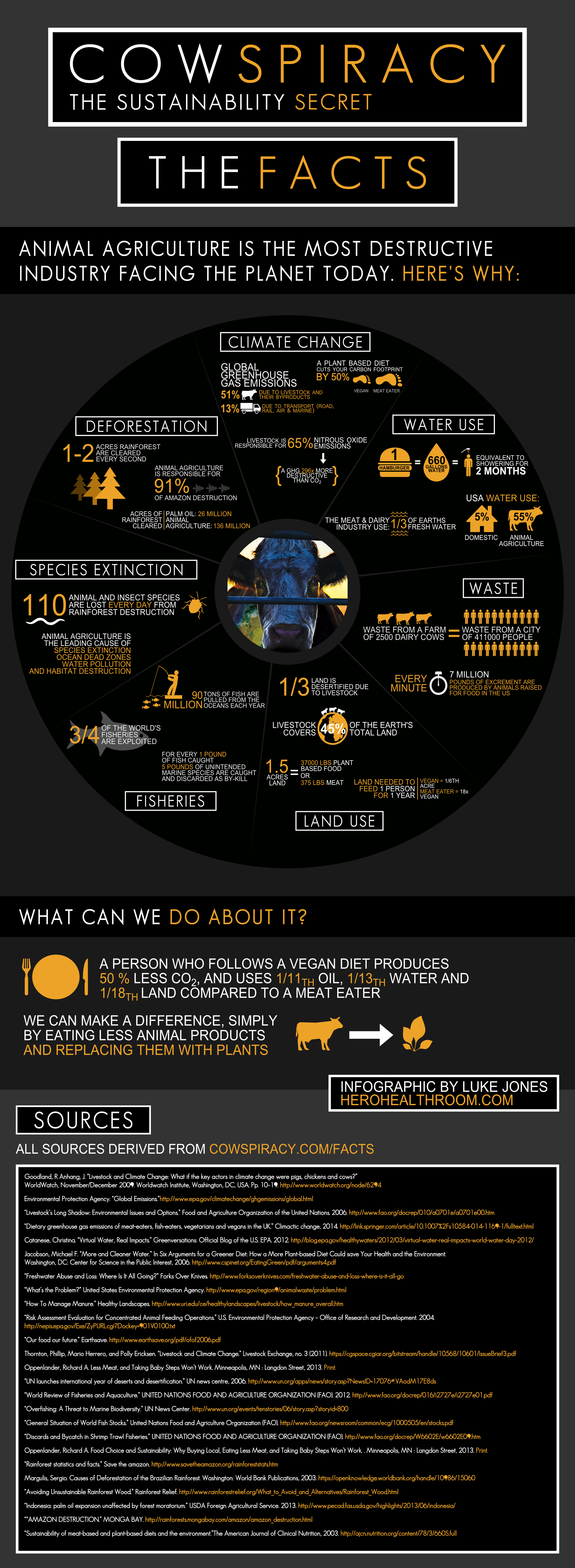
    A Revelation

    Over a couple of weeks, I began to think more deeply about my life. I really began to wonder, what would make me more fulfilled right now? And the same answer kept repeating itself: I had to go to Scotland.

    And then, I thought, why not? Why am I putting off something that means so much to me?

    My wife and I were planning a trip for the next year, but many ‘next years’ had elapsed without us taking action.

    Over the next few days, we did some serious research and realized that it wouldn’t really be as expensive as we had thought. Besides, there are ways to save, like staying in AirBnB instead of a hotel.

    Soon after, we were standing in the medieval city of Edinburgh!

    Nothing can prepare you for the magic when you actually land in that mesmerizing city. Traveling through the Highlands, visiting castles, and taking a boat ride on the legendary Loch Ness was far more beautiful than I had ever expected.

    And it all began by asking a simple question every day. Honestly, if I hadn’t asked that daily question, we would have put off our trip again for ‘next year.’

    The Power of the Question

    A meaningful question has the power to prompt you to take a close look at your life and your actions. It directs you to take responsibility for your success and happiness. So what other questions can you ask that have the power to change your life?

    I will share four more daily questions that you can ask yourself about different areas of your life. Each of these questions has the power to transform your life. But first…

    A Word of Caution

    Don’t expect an earth shattering revelation when you ask any of these questions for the first time. You will only realize the profound power of these questions once you begin asking them for at least a few days. But over time, these questions can truly make your life extraordinary.

    Ready? Let’s begin.

    Here are four more daily questions for living an extraordinary life.

    Improving your Career

    Are you less than satisfied with your job?

    Most of us are, or have been. Few of us feel completely fulfilled at work.

    However, what’s also true is that few of us consider themselves to be responsible for their happiness at work.

    Ask yourself, “Did I do my best to enjoy my work today?”

    Asking this will prompt you to make a sincere effort to enjoy your work.

    The moment you take this responsibility, it will become easier for you to connect with people, resolve conflicts, take more initiative, and lend a helping hand to a colleague.

    Over time, taking personal responsibility will drive better results, reduce your stress, and bring you more recognition and success.

    Improving Health and Fitness

    Do you tend to ignore your health because you are too busy? Do you make fitness resolutions without ever sticking to them?

    Ask, “Did I do my best to stay healthy?”

    This question will provide you with the energy to persevere.

    Eating better, going for a run every day, or even changing simple habits like taking the stairs instead of the lift takes time and effort to build.

    It is important to do your health habit a little every day till it becomes second nature.

    By asking this daily question you will remind yourself to take the small steps toward everyday health—eat a fruit, skip the rope, or sit down to meditate for a few minutes

    It will also give you the assurance that you can succeed despite your lack of time or inconsistency in the past.

    You realize that all you need is some extra effort and perseverance. Let the question be your inspiration every day.

    Improving Relationships

    Do you often find yourself involved in a disagreement or a conflict?

    Conflicts are one of the biggest sources of stress. How much easier would your life be if you had a way to resolve conflicts quickly, or even better, prevent them from occurring in the first place?

    Ask, “Did I do my best to understand people?”

    Most conflicts happen because people fail to understand each other. Because we fail to see the other person’s viewpoint, or appreciate their interests. Before you can truly make the other person understand you, you must understand him or her. Why not take the first step yourself?

    Designing your Life’s Purpose

    Do you ever feel a lack of clear purpose? Or that there is a special purpose to your life, but you don’t know what it is?

    There have been times when I have felt the same. It’s not unusual to question the direction your life is taking.

    But have you considered that you don’t really have to discover a special purpose in life?

    What if you can design your purpose every single day? What if your life has multiple purposes, the same way we have multiple roles in life—a spouse, a parent, a friend, an employee, a citizen, a human being.

    What if you just strived to be a person who attempts to do the best in one or more of these roles – everyday?

    Ask yourself, “Did I do my best to find meaning in my life today?”

    Out of all the above questions, this is probably the most powerful of all. Take the responsibility of finding meaning in your life every day. I believe that meaning already exists; we just don’t recognize it. Well, now you can—every day.

    It’s All Up to You

    I believe that life is a gift. Life itself is extraordinary.

    All of us will not find equal success in relationships, work, finances, or health. However, we can choose to do the best with the limited means that we have. We can choose to make a sincere effort to live life to the fullest every single day.

    These are just a few daily questions that can take you in the direction of creating an extraordinary life.

    What areas of your life do you want to focus on? What daily questions will you ask yourself?

    Woman thinking image via Shutterstock

  • 5 Lessons on Living a Long, Healthy Life, from a 90-Year-Old

    5 Lessons on Living a Long, Healthy Life, from a 90-Year-Old

    Happy Old Woman

    “In the end, long life is the reward, strength, and beauty.” ~Grace Paley

    In September 2014, my grandmother turned ninety years old. She lives in Rio de Janeiro, Brazil. It is where she has lived her entire life, and while my parents could have brought her to live with them in the US a long time ago, she has always preferred to live independently in her hometown.

    I went to Rio to celebrate my grandmother’s ninetieth birthday. Although I was born there, I had not been back for over twenty-five years. I learned a lot about my country of birth, my hometown, and my relatives on that trip, but the most important things that I learned were from my grandmother.

    She is healthier, more active, and more independent than most seventy-year-olds. By simply observing her, I learned some key lessons about what it takes to have a very healthy and long life. Here are the five keys to her longevity.

    The Importance of Being Physically Active

    When you imagine someone in their nineties, you probably imagine a person who has difficulty moving because of body aches, stiff joints, muscle loss, and a lack of stamina. You may imagine someone who needs a cane or walker to get around and can’t walk long distances without needing to stop for a break.

    My grandmother is definitely not that person. She is very active every day. She cleans her apartment, cooks her meals, and does her laundry. She also goes to the market, the bank, the post office, and anywhere else she needs to go on foot.

    Because she lives in a big city and almost everything she needs is within walking distance, my grandmother is able to walk to most places.

    She doesn’t walk because she thinks it’s good for her. No doctor has ever told her that she needs to be more active. She is active because it’s how she has always lived her life.

    My grandmother is twice my age, but she moves more on a daily basis than I do. I have to make a conscious effort to perform as much physical daily activity as she does. My grandmother doesn’t have to go to a gym to work out; her daily life is all the work out she needs.

    The Importance of Living Independently

    Although she has many relatives who live close by (her younger sister lives in the same building), my grandmother has lived on her own for over thirty years. She manages her finances, makes all her own decisions, and doesn’t need to rely on anyone to provide for her basic day-to-day needs.

    She takes care of everything herself every day. As a result, she has been able to remain confident in her abilities and her judgment.

    My grandmother doesn’t feel like the world is moving too fast for her to keep up. She knows how to use modern technology, stays current on world events and local politics, and has no problem speaking her mind. She knows that she is vital and doesn’t need anyone to tell her what to do or how to do it.

    Nothing intimidates her.

    The Importance of Mental Wellness

    For as long as I can remember, my grandmother has loved to crochet. Both my mother and I have boxes of table runners, bedspreads, and countless doilies that she has created for us over the decades.

    There is plenty of anecdotal information as well as scientific research showing that crafts such as crocheting and knitting are good for your brain.

    Some of the ways that crochet has been shown to improve brain wellness are by:

    • increasing mindfulness
    • requiring problem-solving
    • improving hand-eye coordination
    • encouraging creativity
    • improving ability to focus

    If you think about it, the act of crocheting is very similar to the practice of meditation. Crochet is relaxing and repetitive, requiring focus without any stress. In fact, for my grandmother it has always been a stress-reducer and (without her even realizing it) a way for her to be fully present.

    The Importance of Close Relationships

    Although my grandmother lives alone, she has many relatives who also live in Rio. Her younger sister lives in a different apartment in the same building and they spend several hours every day together. The sisters are extremely close, but they both benefit from the independence they are afforded by having their own homes.

    My grandmother is also a big part of the lives of her relatives who live abroad. She speaks to and Facetimes with my mother almost daily. She also remains in close touch with her grandchildren and her great-grandson through letters, phone calls, and video chats.

    My grandmother may live alone, but she is never lonely. She chooses when to spend time with others and how much time she wants to spend them. She has worked a balance between being involved and remaining independent that works out perfectly for her.

    She knows how important she is to all those around her. She knows she is still appreciated which provides a great boost to her emotional well being.

    The Importance of Feeling Useful to Others

    My grandmother doesn’t just live close by to her younger sister; she is also her unofficial caretaker. My great-aunt lost her sight several years ago and can no longer do a lot of things for herself.

    My grandmother knows that her sister truly needs her. She does all the cooking for her and they share daily meals. She also helps her by running errands and performing other daily tasks that have become much too challenging for her.

    One of the most powerful books I have ever read is Viktor Frankl’s Man’s Search for Meaning. In his book, Frankl states that finding a meaning that gives us something to live for is our best source of happiness and longevity.

    My grandmother is a perfect example of Frankl’s statement. Although she and her sister bicker sometimes (as all sisters do), when I see them together I know that they have an unbreakable bond. And I know that my grandmother benefits just as much from that bond as her sister does.

    These are the five keys to a long and healthy life that I have learned from my grandmother. If you want to live as long and happy a life as she has, be sure to find ways to stay physically active, maintain your independence as much as possible, enjoy activities that will keep your mind sharp, nurture your close relationships, and find a way to provide and care for others.

    Do you have any longevity lessons that you have learned?

    Happy old woman image via Shutterstock