Tag: health

  • 7 Things Everyone Should Learn Before They Die

    7 Things Everyone Should Learn Before They Die

    Woman reading book

    “I would rather die of passion than of boredom.” ~Vincent Van Gogh

    I attended an interesting event a few nights ago. It featured ten speakers who spoke for ten minutes each on ten things you should know before you die.

    The speakers included TV and film stars, CEOs, cover-shooting photojournalists, traveling journalists covering natural disasters, and HIV survivors. As you can imagine, there was a wide spectrum of perspectives shared.

    Here are a few of the lessons that stuck out for me. A lot of these can profoundly change your mindset, how you view the world, and how you choose to react to things. You just need to take a step back and put things into perspective, which leads us into our first one.

    1. Maintain perspective.

    A journalist told a story of how he traveled to Haiti after the devastating earthquake that hit them a few years back. In the capital of Port-au-Prince many of the homes had fallen apart, and people who already had nothing were now living in small plots of land in public squares in the city.

    The separations between each family’s plot were drawn in by hand, with tents and tarps set up overhead.
    In one particular plot was for a seven-year-old girl and a one-year-old boy.

    The speaker spoke a bit of Creole French and asked the people in neighboring tents which family these children were with. They replied, “That is the family.”

    The seven-year-old girl and one-year-old boy’s parents and older siblings had been killed. She was now responsible for this baby.

    This is where the notion of perspective comes in. The next time you’re upset at traffic, or someone is taking too long in the checkout line, or someone hasn’t texted you back quickly enough, take a step back and ask yourself, in the grand scheme of things, is this really worth being upset about?

    The book Unbroken drove this point home for me. Reading what this man went through quickly made me realize, if I were privileged to be born into a first world country (Canada) in the current peaceful time, I have absolutely nothing to complain about. A reminder to myself the next time Netflix is slow to load something…

    2. Take care of your health.

    Health is the gateway to happiness. If you are not living with your fullest energy and vibrancy, how can you expect to get the most from life?

    This was the main message from a middle-aged woman and entrepreneur who broke the status quo and went her own way in life, much to the dismay of her parents. She dropped out of school and traveled the world, falling into a few rough crowds on the journey and eventually settling in Toronto.

    There, she visited a local fresh juice place that ended up changing her life. She fell in love with how the juices made her feel and the energy they gave her, and ended up opening her own juice place called “Juice for Life” (which her Jewish parents hilariously thought was called “Jews for Life” at first). She’s now the founder and CEO of Fresh Restaurants chain in Toronto.

    Anyone who knows me knows health is massively important to me as well. I always pose the question: Is it not a bit crazy to think that people will spend more money on their car, their fashion, and accessories than they would on their body?

    Ask anyone with a serious illness what would they rather have; they all would give up everything they own to get healthy and undo the damage that was done.

    3. Be true to yourself and your calling.

    If you are living and doing something that doesn’t align with you, how can you ever be truly happy and enlightened?

    This was the main message from the founder of Yuk Yuk’s comedy club, a popular spot in Toronto.

    You can imagine the reaction he got from his friends and family when he told them he wanted to enter the comedy business. This was his passion, however, and he knew from experience that if he was doing something different, he would rarely be at peace or be inspired.

    When you find something that aligns and resonates with you, you will know it from the energy it gives you.

    The Vincent Van Gogh quotes sums the message here up quite nicely: Would you rather die of passion or of boredom?

    4. Don’t be afraid to stand out.

    When you go your own way and make your own path, you alone write your legacy.

    This was the motto of a female photojournalist who spoke to us. She joined the world of journalism in the sixties and seventies, when it was completely dominated by men. She was different from what was considered the norm and despite ridicule, sexist remarks, and being seen as lower, she used it to her advantage.

    Being shorter than the male photographers, she was always in front of the pack, allowing her to capture some of the closest, most personal photos. She became one of the first females to have their photos published on the cover of multiple well know magazines, and went on to be the prime journalist covering Terry Fox’s run across Canada.

    It is your inherent right to challenge the status quo. Never be afraid to forge your own destiny due to the thoughts of others. People may laugh at you because you are different. You could pack up and quit here, or you could feel sorry for them because they are all the same.

    As well, never be afraid to challenge why things are the way they are. After all, this is the very question that has forged almost all innovation mankind has ever done.

    5. Don’t play the victim.

    As I mentioned earlier, one of the speakers was a girl born with HIV. She was abandoned by her parents and adopted by a supporting family with nine other adopted children.

    Her new family took her in with love and put her through school like a normal child. But when the other children’s parents found out she had HIV, it was no longer normal. They refused to invite her over to birthday parties and sleepovers and forbade their children from being friends with her.

    She could have closed up and felt angry at the world, but instead she took a position of power and action. Now in her late teens, she has spoken globally, on major TV networks and YouTube, to educate the world on HIV and how ridiculous it is to “ban” your kids from socializing with someone who has it.

    Many people constantly place blame on everything and everyone and make themselves a victim. Why did this happen to me? Why can’t I make more money? Why am I stuck at this job?

    The world doesn’t owe you anything; you were not born a victim. Yet when you look around how many people do you find complaining about their situation but not taking any action or effort to improve it?

    The world gives you so much to work with if you work with it and put in the effort.

    6. Re-direct your energy.

    An actress told her story of failed audition after failed audition while witnessing other people’s success. She knew she could have gotten caught in the negative energy of envy and blame—upset that others were getting roles, getting paid more, or traveling more.

    She didn’t go this way, though; she knew envy can be channeled into focus and motivation.

    The lesson in here is quite simple. Instead of wasting energy being angry, envious, or jealous of those with more success, redirect that energy and ask, “What can I learn from this person to improve my own life?”

    As a result of doing this, she re-auditioned for a part she hadn’t received and was so motivated she ended up blowing them away and getting the role on the spot.

    7. Give your attention.

    One of the speakers began his talk with a severe stutter. The energetic crowd grew quiet, not knowing how to react. He then switched to a more fluent voice and told the audience he suffered with this stutter for the first twenty years of his life.

    When he was a young teen, he worked at one of Vidal Sassoon’s salons, doing odd behind the scenes jobs where he didn’t need to speak, like sweeping and tidying up after customers. Most people didn’t give him the time of day or would mock his difficulty in speaking.

    One day it was announced that Vidal Sassoon himself, the CEO, was coming to visit their Salon. Vidal made a point to meet with everyone, from the highest manager to the ones attending to the cut hair on the floor.

    When he approached the young boy, he asked what his name was. The boy tried to respond but was too nervous, and his stutter was so severe that he just could not get his name out. Vidal smiled, crouched down in front of him, and said “It’s okay, son, I have all the time in the world.”

    The greatest gift you can give someone is your attention. Never allow yourself to get in the mindset that people are “below you,” because even the smallest conversation can make someone’s day. People will forget many things, but they will always remember how others made them feel.

    Imagine a world where everyone learned the lessons above from a young age. It’s possible, but starts with each of us.

    Woman reading image via Shutterstock

  • How Obsessing About Your Body Gets in the Way of What Matters

    How Obsessing About Your Body Gets in the Way of What Matters

    Woman Exercising

    “Focus on what you want your life to look like—not just your body.” ~Sarah Failla

    Growing up I never had much concern for the shape or size of my body. Perhaps once in a while the idea of losing weight or beginning an exercise routine crossed my mind, but it was always fleeting and I was quickly back to gossiping with my best friend or writing a note to my boyfriend.

    Once I entered college I gained some weight, what with the unlimited access to Peanut Butter Cap’n Crunch (something that never, ever crossed the threshold of my childhood home) and no fewer than five local pizza joints that delivered to the dorms.

    Still, though, I didn’t spend much time worrying about my health or what was going on with my body.

    In my last year or two at school, I began going to the gym along with my roommates, and by the time graduation rolled around I decided I should try to go on a diet and lose the weight I’d gained in the last few years.

    My attempt at slimming down worked, as a combination of restricting calories and increasing exercise will do, and soon I was off on my next set of adventures, which included working at a ski lodge in Vermont, traveling cross country, living for a summer in Montana, and traveling around the southern US, often living in a tent.

    During that time thoughts about my body didn’t occupy much space in my mind, though at times there was a fear of weight gain. For the most part, though, I was living my life and enjoying my travels.

    A few years down the line, though, things had taken a turn. I was uncertain about the future of both my romantic relationship and my career, and focusing on the health, size, and shape of my body became a very time-consuming diversion.

    I began waking at 5:30 most mornings in order to fit in a workout, sometimes completing another when I got home from work. I began feeling a bit uncertain and afraid around certain foods, and felt the need to cut back on the amount I ate. I felt consumed with losing weight and changing the shape of my body.

    Though many praised me for what they assumed was my healthy lifestyle, I was increasingly miserable. It didn’t matter that I was losing weight, I still thought my body looked wrong.

    I spent more and more of my time, energy, and attention thinking about my body. I was never, ever in the present moment with myself. I felt paralyzed when it came to many life decisions.

    When I look back now, I see clearly what was going on. I see that I was afraid, and that obsessing about the way my body looked gave me an outlet, gave me something else to focus on. I was trying to avoid my fear.

    I wanted to do something big and bold and amazing with my life, but I was afraid I never would. I was unsatisfied in my relationship, but afraid of being alone. I wanted to do and be so much more, but the thought of change and fear of failure were too much.

    Focusing on the food I put on my mouth, the size on the tag in my jeans, and the number on the scale made it possible to avoiding facing up to my deepest uncertainties.

    Eventually, with much time spent in self-reflection, coaching, and counseling, I was able to move past my body woes. I was able to stop letting worries about my body stand in the way of taking big, important steps toward living a life I could be proud of and present in.

    Today my life and focus is very different. I am very happily married, a mother, and a business owner. I am proud of myself for getting here.

    I can’t wish away the years I spent dieting and overly worrying about my physical appearance, because doing so actually helped me cope with things I wasn’t yet ready to face. I wouldn’t have wanted to live that way long term, but at the time it provided me with a valuable escape.

    The experience also gave me something I never expected: the ability to help others struggling with the same thing. For that, I am so thankful, because I have found a passion I didn’t know existed, one that wouldn’t even exist, had I not been through all of that.

    If you find that you are putting excessive energy into worrying about your weight, size, or other aspects of your body, to the point where you are unable to live life in such a way that is satisfying to you, here are my suggestions for getting back to a place of balance:

    Acknowledge that your worries have gotten out of hand.

    Sometimes just realizing that something bigger is going on can be the key to getting back to a centered place.

    Realize they’re just thoughts, and you can, with practice, make them kinder or even ignore them.

    Just because the thought “I’m need to lose weight” crosses your mind doesn’t mean you need to believe it. You can shift it to “I would prefer to focus on what I like about my body” or even let the thought float by and not attach to it.

    Learn to value, appreciate, and respect your body for what it is.

    Your body does amazing things no matter what your size, shape, or weight. For instance, if you can see these words, it means your eyes work, and finding more positive things about your body is easy once you get started thinking about it.

    Practice something that brings you to the present moment.

    Being in the present helps you remove yourself from too much worry about your body and focus on what matters most to you. Maybe meditation isn’t your thing, but perhaps stretching, practicing yoga, journaling, praying, or even watching the leaves sway in the breeze will work for you.

    Check in to see what you’re trying to avoid.

    As I said, I used my body focus as a way to avoid what I was afraid of, so if you’re doing the same, try taking a peak at what’s scaring you in small, incremental sessions. You don’t have to solve everything right now, just begin to open your awareness.

    Get professional help if necessary.

    Food and body image issues are no joke, and if you’re suffering in a way that is negatively impacting your life, seek counseling from someone who is trained to provide the help you need.

    To be clear, there is nothing wrong with making an effort to eat healthfully and move your body in a way that feels good to you, it really all comes down to the energy behind your actions.

    If you are choosing to exercise because it makes you feel strong and alive or helps you shake off the stresses of the day, that is very different from choosing to exercise because you are full of fear about your life or what would happen if you gained weight.

    The same goes for your eating habits. If you are filling your body with healthy, whole foods because you enjoy them and love preparing them, that is very different from forcing yourself to eat a certain way because you are afraid of what will happen to your body if you do not.

    Your body is a gift, and it deserves the best care. However, if your focus on it starts to get out of hand and prevents you from existing and inhabiting your life, or consumes your thoughts, it’s time to take a step back and shift your focus to what truly matters to you.

    Woman exercising image via Shutterstock
  • 3 Things You Need to Stop Telling Yourself If You Want to Lose Weight

    3 Things You Need to Stop Telling Yourself If You Want to Lose Weight

    “Stop hating yourself for everything you aren’t. Start loving yourself for everything that you are.” ~Unknown

    Picture it: You’re out with friends having dinner, then one of them says, “I shouldn’t be eating this. I skipped the gym today.”

    Another one replies, “I’m so bad. I’ve been eating out of control all week. I just can’t stop.”

    And another one says, “I’m going to have to eat salad for the next couple days to make up for this.”

    Does this type of conversation sound familiar to you?

    It’s all too familiar to me. I used to be the leader in these conversations, until one day, in the middle of claiming myself the fattest, I actually heard the words coming out of my mouth. And then I listened to everyone else talking negatively about their bodies as if we were competing to see who is the most guilty for eating.

    I get it. You want to lose weight. Heck, I want to lose weight. That’s not the problem.

    The problem is how we treat ourselves when we decide we need to lose weight. If you’re anything like I used to be, you can be very nasty to yourself in the name of “motivating” yourself to lose weight.

    Rather than giving you three tips on losing weight through diet and exercise—because I know you know what to do; you just don’t want to do it all the time—I’m going to share with you the three statements that are getting in your way of losing weight and loving yourself.

    1. There is something wrong with me.

    I always said this to myself when I could not stop reaching for sweets, even though my stomach was full or I knew I only wanted it because I was bored. There had to be something wrong with me since I didn’t have the willpower to just stop myself.

    Are you wondering what’s wrong with you?

    Nothing! Stop bad mouthing yourself when you are not able to work out or don’t possess enough fortitude to adhere to your restrictive diet plan.

    In case you haven’t noticed, berating yourself never has and never will work to motivate you on your weight loss goals. And as the saying goes, “If you do what you’ve always done you’ll always get what you already got.”

    Instead of trash talking yourself to “motivate” you to lose weight, how about you take it easier on yourself?

    Yes, you had a donut for breakfast instead of your wheatgrass smoothie or you didn’t get to the gym today. So what?

    I now realize that when I “slip up” I can always start anew right where I am, and so can you. Because no matter how much you punish yourself, you can’t feel badly enough to change what happened in the past.

    And let’s face it, it hasn’t worked so far, so what do you think is going to change if you continue to do that?

    2. I need to wait until I lose the weight.

    For a long time, I was waiting to buy new clothes until the scale reached a certain number. My life was on hold until I felt I deserved or earned the right to do all the things I wanted to do.

    I recently chose to just accept the weight I am and I bought clothes that make me look and feel good. I was tired of shoving myself into clothes that didn’t fit or waiting to lose weight to fit back into them.

    I know I was not alone in this thinking either. Friends, family members, and strangers say this to me all the time, that they are going to do something amazing but they have to lose weight first. Or they will be happy after they lose the weight.

    Stop waiting! You don’t know how long it’ll take you to lose the weight, and keep it off. What if it takes you months or years? You don’t deserve to wait that long for nice things. That’s not what life is about.

    Instead of waiting that long, celebrate the little wins along the way to encourage yourself to keep going. Take out the good dishes and eat on them, buy a new outfit and feel great in it now, go out on a date, LIVE!

    3. They are so beautiful. I’ll never look like that.

    While looking at Facebook and Instagram, it’s so easy for me to see celebrities or even strangers and wish I had the body they have.

    I’m sure you find yourself comparing your body, and that’s not always a problem. The problem occurs when you start using someone else’s body as a standard for how your body should look. That’s not fair and is actually an insult to your body.

    You don’t have the same physique as they do. You can’t make your body look like theirs if that’s not how your body frame is set up.

    If you are comparing yourself to someone who has an hourglass figure and you have more of a pear shape, there is just no way you are going to have the shape they have. You are just setting yourself up for a huge disappointment.

    My celebrity standard was Beyonce. I wanted to have the flat stomach and curves in all the right places, but after a few months, I realized I don’t have the desire or dedication to do all the work it takes to look like that. That’s part of her job, and it’s certainly not my job to look like her.

    Eventually, I realized that what I really wanted was to tone up what I already had. That is more attainable. And now, I compare myself to how I was a few months ago and celebrate the small and steady progress I am making.

    If you still want to compare, then start with where you are right now and compare your eating now to how it was before you started eating healthier.

    Don’t go back to ten/twenty years ago and ogle and get upset because you weren’t able to stay that size. You and your body have changed. It happens. Set a new barometer and watch your progress from now until you get to where you want to be.

    Berating yourself, waiting to do nice things for yourself, and comparing yourself are not what you want to do when you want to lose weight and feel better about yourself.

    Focusing on what you like about yourself, treating yourself to something special every now and then, and giving up comparisons is the way to a healthier and happier you.

  • 3 Ways to Slow Down and Take Better Care of Yourself

    3 Ways to Slow Down and Take Better Care of Yourself

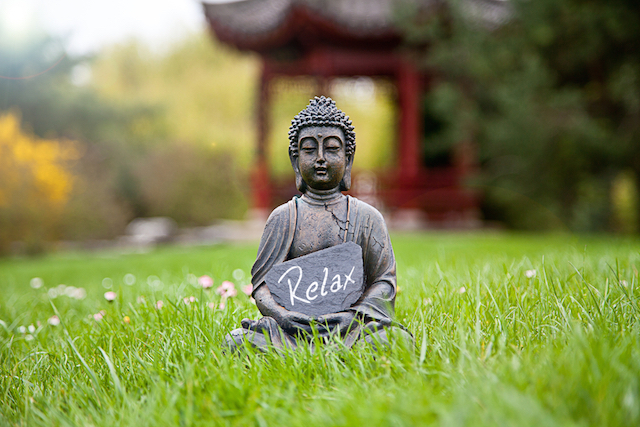
    Buddha

    “Your body is precious. It is your vehicle for awakening. Treat it with care.” ~Buddha

    It’s interesting how easily we forget to appreciate the simple day-to-day luxuries that we are granted with our body.

    We assume that as we exhale, there will always be an inhalation to follow.

    We assume that when we lay our head down on our pillow at night, our heart will beat, our blood will flow, and we will open our eyes in the morning.

    We go on day after day, running around with a mile-long to-do list without taking a moment to check in with our body to acknowledge how it’s feeling today.

    Oftentimes, our health and well-being end up last on that list of priorities.

    We pretend we are superhuman, existing on caffeine from Starbucks in place of adequate sleep and snacks from the vending machine in place of meals.

    Maybe (hopefully) you haven’t gotten to this extreme yet, but a lot of us are. And I bet you can relate to this lack of self-care and preservation at least on some level.

    Sorry to burst all of our bubbles, but this style of living is not sustainable (nor is it healthy, but you already knew that). We can’t go on like this, ignoring our health and well-being forever, as hard as we may try.

    When we go-go-go without giving our body the nourishment and care that it needs to thrive, our body begins to give us the sign that it needs attention.

    Hey, take care of me.

    Hey, I need rest.

    Hey, let’s slow down.

    Ahem, I’m serious. I’m really exhausted, foggy, and need some downtime.

    It’s starts out as fatigue, but then we don’t listen. So it gets a little louder, and then louder, until eventually we have no other option but to slow down and rest. Think sickness, or worse, dis-ease.

    I’ve been on this kick lately, talking and thinking a lot about how we measure ourselves up against these standards that are set so high, not even a super hero could measure up.

    We strive for perfection in the eyes of our peers at the expense of our health and true happiness.

    For what? What are we trying to prove? We believe that once we hit that pinnacle of success then we can relax, be happy, be good enough, and will have made it.

    But the reality is that the only finish line is death, and those things that we think are going to finally prove that we are important aren’t. It’s human nature to want more. And chasing validation to prove our worthiness is the biggest “silent killer” of all.

    There is nothing we need to prove to anyone. We are worthy now. Who we are and where we are right now is enough.

    This moment, right here, is where our pot of gold is. We just have to give ourselves permission to see it as so.

    And without our health, how could we ever experience these beautiful things that make life so meaningful?

    It’s often last on our list of priorities, and yet, when you stop and think about it, our health is the most important of all.

    Our body is our vehicle. It is what allows us to experience life. It’s our five senses, our ability to laugh and feel joy, to embrace our loved ones, to share an intimate connection, to sing, to dance, and play.

    There would be no such thing as life without this body. Yet, often we treat it so poorly.

    For years I would treat my body worse than any enemy. I would talk to it with disrespect and hatred. I would say things about my body that I would never in a million years say about a loved one.

    I would deprive it of food, and then binge out of comfort, sometimes on food, other times on alcohol.

    I would go periods without much sleep and not much movement and exercise, and then during other periods of my life I would exercise for hours in hopes of changing the way my body looked because in my eyes, it wasn’t good enough.

    It’s hard for me to think back to the abuse I put my body through. This body that has always been there for me, supporting me through it all.

    This body that today is so vibrant, so alive, so beautiful—to think of how hard I was on it. It just goes to show you how amazing this miracle of a machine the human body truly is. It can recover and rebuild from so much.

    If you can relate and you aren’t sure how to start treating your body the way it deserves to be treated, I am here to help (and as you can see, I speak from experience).

    Here are three steps to upping your self-care game so you can treat your precious body like the gift that it is.

    1. Nourish it.

    I love the word nourishment as it applies to all things related to well-being, healing, and self-care. Nourish your body in every way you can—with nutrient-rich, tasty food, movement, and even mentally, with supportive, loving thoughts.

    ACTION STEP

    Take an inventory of all of these areas (food, movement, thoughts/self-talk). In what ways can you step up your game and choose options that are more nourishing to your body and spirit?

    Make those adjustments and pay attention to the difference in how you feel. Continue to refine and adjust until your life as a whole is filled with experiences and things that fill you up and energize you rather than exhaust you.

    2. Calendar it.

    The key to making time for self-care is treating it like any other VIP appointment. Things like workouts, cooking yourself a nourishing, tasty meal, exercise, massage, time with friends, romantic evenings with your partner, and fun with the kids are all important “fill-you-up” type activities.

    Prioritize your priorities by carving out the time in your schedule for the things that matter to you most.

    ACTION STEP

    Pull out your calendar and take a look at where you spend the majority of your time. Now think about this for a moment: What are your top three priorities?

    Evaluate whether or not the things you spend the majority of your time doing match up with what’s most important to you.

    Make adjustments as necessary to block out time for self-care and the other things that are most important to you in life.

    You may need to bow out of some commitments or hand off some responsibilities that are not important for you yourself to be taking care of, in order to create this space in your schedule for the things that do matter most.

    3. Start single-tasking.

    We multitask a lot, which you probably don’t know is tough on the body. For example, it’s hard for your body to prepare for and focus on the process of eating and digestion when you are trying to do it while driving, reading, or doing any of the other things we try to do while eating.

    Create an environment of ease and relaxation for your body as often as possible, especially while eating.

    I know in this day and age that might seem impossible, but it’s not. The key is in stripping away some of those responsibilities and “trying to measure up” type things we do in order to create more time for being present.

    ACTION STEP

    Multitask less, be present in the moment more. Life is so much more enjoyable when you are engaged and present versus on your phone texting, Facebooking, or talking to somebody that is not even present with you, all of the time.

    So often I look around while I’m at a restaurant and I see tables upon tables of people sitting there across from each other, but rather than connecting, talking, and being present with each other, they are both looking down typing on their phones.

    It’s so confusing to me. Why do we even get together in person if the person we’re with isn’t actually who we want to be connecting with?

    Put down your phone, look somebody in the eye, and have a moment together. Trust me, it’s way more rewarding than whatever communicating you are doing on your phone. Text later, engage in this moment more.

    The more you practice taking really good care of your body, the more it will reward you with good health, tons of clarity, energy, and the ability to experience all the good that life has to offer for years to come!

    Treat your precious body with love and kindness. This is your body—yours—and it’s the only one you’ve got.

    Buddha statue image via Shutterstock
  • Enter to Win $500 at Thrive Market (A New Online Health Food Store)

    Enter to Win $500 at Thrive Market (A New Online Health Food Store)

    Thrive_FB_Banner

    Have you ever noticed that unhealthy food is a lot cheaper and easier to get than healthy food? You can zip through a drive thru and get an entire meal off the dollar menu without losing more than five minutes or five bucks.

    Because I was busy and on a budget, I formerly ate a steady diet of processed, packaged food, which did very little for my energy level.

    I didn’t realize at the time how poorly I was meeting my nutritional needs, or how I was poisoning my body with artificial ingredients and chemicals, but I knew I frequently felt sick.

    Still, I didn’t love the idea of stocking up at “Whole Paycheck,” as my friends called a well-known health food store.

    Since I now know that I can only function well if I eat well, I was thrilled to discover Thrive Market, a recently launched online store that sells health food at wholesale prices everyone can afford.

    About Thrive Market

    Thrive Market’s merchandising team works directly with brands to purchase natural, healthy foods and products at wholesale prices—which are 25−50% lower than the products sell for in physical stores.

    They don’t sell generic products you won’t recognize. They sell the same products you’d find at your local health food store, only cheaper.

    You can stock up on everything you need, including GMO-free food, snacks, vitamins, supplements, personal care products, cleaning supplies, beauty products, kitchen staples, pantry essentials, baby food and products, and more.

    Thrive Market doesn’t earn money by marking up prices; instead, they charge a low annual fee of $59.95 (less than $5 per month). I was pleased to see that I saved more than this on my first order.

    Since they offer a free one-month membership, you can give it a try yourself—at no cost—and see if your savings are equally substantial. And if, like me, you spend over $49, the shipping is free.

    For every paid membership, Thrive Market donates a membership to a low-income family, supporting their mission to make healthy food accessible to all.

    Equally notable, they make all packaging, boxes, and inserts using recyclable paper.

    I don’t promote a lot of products on Tiny Buddha because I would never recommend anything I didn’t personally utilize and enjoy. But I feel good about shopping at Thrive Market, and I’m excited to partner with them for an exclusive giveaway for Tiny Buddha readers.

    The Giveaway

    From now through Sunday, April 12th, you can enter to win $500 at Thrive Market by entering your email address here. Fifteen second-place winners will receive a free annual membership.

    After entering, you’ll receive a confirmation email offering you 15% off your first order. You’ll also see an option to share the giveaway on Facebook for an extra entry.

    I hope you enjoy shopping at Thrive Market as much as I have!

  • How to Listen to Your Body (and Become Happy Again)

    How to Listen to Your Body (and Become Happy Again)

    “Keeping your body healthy is an expression of gratitude to the whole cosmos—the trees, the clouds, everything.” ~Thich Nhat Hanh

    It’s embarrassing, isn’t it?

    You don’t want to make a fuss about tiny health annoyances.

    But you feel lethargic for no apparent reason. You get constipated, especially when you travel. You have difficulty sleeping.  And your hormones are all over the place.  You hold onto that niggly five or ten pounds like your life depends on it.

    Sound familiar? I’ve been there too.

    I was working at a dream job and living on the French Riveria. I was paid a lot of money to help Fortune 500 Companies with their IT strategies.

    I worked in cities like Paris, Dublin, London, and Manchester during the week, staying in luxury hotels and flying to my home in Nice on weekends. We partied like rock stars on the beaches, and in exclusive clubs and glamorous villas. At twenty-nine, I was a management-level executive on the cusp of becoming a partner.

    Meanwhile, my body wasnt happy. I was chronically tired. I slept poorly. And despite daily exercise and yoga, I couldnt figure out my weight gain.  

    I tried the radical Master Cleanse—drinking lemon juice and maple syrup for a week. But the extra weight would creep back.

    My hormones went crazy. When I stopped birth control pills, my menstrual cycles stopped. I wasn’t sure if that was the reason for my blotchy skin and depression. And the worst part was my mood. I wasn’t happy, despite all the glitzy outside trappings.

    The One Thing Most People Never Learn To Do

    Then I did something most people never learn to do: I listened.

    I felt great after practicing yoga. I took a baby step: I practiced more yoga and eventually attended teacher training sessions. Fast-forward a couple years….

    I quit my job, packed my belongings, and moved to a yoga retreat center in Thailand. The move felt natural and organic.

    I lived simply in a tiny bungalow and taught yoga retreats to tourists. And my health improved. I was sleeping well. My periods eventually returned. I felt better and better, and my sparkle returned too.

    The first and most important step is to stop and listen. Your body and mind are intimately connected. Listen to your body and you’ll learn a ton. Start with tiny steps and you’ll reach your pot of gold quicker than you’d expect.

    You can do this.

    You’d think doing so would be impossible, but it’s not. I’ll tell you how.

    But first, let’s look at three core principles that could save you.

    Don’t Make This Monumental Mistake

    Most people ignore their small but annoying health issues. Nothing about your health is inconsequential. Everything matters. Your digestion. Your ability to lose belly fat. Your bowel movements.

    You’re not alone if you want to run screaming and bury your head in the sand. How about changing your mindset?

    Rather than categorizing what is wrong with you, notice how your body throws you clues. For example, you aren’t going to the bathroom every day. Usually for a very simple reason—lack of dietary fiber. Try adding an apple and ground flax to your breakfast and see what happens.

    The Alarming Truth About Stress

    It can make or break your healthiest intentions. When we perceive danger, stress is our body’s natural response.

    For cave people, stress came when a lion was about to pounce; we needed to run like lightning.

    Under stress, we optimize our resources for survival and shutdown non-essential functions. Translation? Your digestion grinds to a halt, your sex hormones (estrogen, progesterone, and testosterone) convert to cortisol, and your blood sugar skyrockets.

    This is okay now and then. Are you in a state of constant, low-grade stress? Imagine the havoc and inner turmoil.

    A few condition-linked stresses include IBS, constipation, weight gain, insomnia, high blood sugar, and hormone irregularities—for women, missed or absent periods, severe PMS, and fertility issues. And these are just the tip of the iceberg.

    Your body and mind are like the matrix.

    The Western approach to medicine is to examine each problem separately, so you end up with a different specialist for each malady.

    In Eastern medicines, your body is a united whole rather than a constellation of unrelated parts. Your insomnia may be the result of high stress. Or your constipation and weight gain may be due to a complete absence of fiber in your diet.

    Now let’s talk about what you need to do.

    But first, I must introduce you to your personal, world-class health advocate. And it’s not your doctor, your chiropractor, or even your yoga teacher.

    It’s you.

    1. What silence can teach you about listening.

    Set aside time to listen to your own deepest wishes. I searched for answers outside of myself, looking for rigid rules and diets. I used food to shut off my thoughts. It was hard, but I gradually let my truths surface. I know you can do it too. Decide on a time, and set aside ten minutes each day. Breathe deeply and listen.

    How are you feeling physically, mentally, and emotionally?

    Have a journal nearby to jot down any thoughts. Notice what pops into your head. Bring yourself back to your breath if you start to get lost in thoughts.

    2. What would happen if you followed your passions right now?

    You can do this right now in tiny steps. Make time to do the things you love.

    How do you most want to spend each day? Write a list of your priorities and brainstorm easy solutions.

    Exercise: wake up twenty minutes earlier. Do a series of sit-ups, push-ups, leg lifts, squats, etc.

    Time with your children: say no to superfluous activities—committees, boards, etc.

    More creative time: schedule your time on weekends for writing, painting, or whatever you love.

    Treat it like a priority appointment.

    When I worked at a corporate job, I’d wake early to practice yoga at home before work. I didn’t miss the sleep, and I was much more productive and happier during the day. I couldn’t control the rest of the day, but I relished my sacred morning ritual.

    3. Say goodbye to your job if it makes you unhappy.

    Right now, maybe you need it to support your family. No problem. Make sure you limit your working hours. Make the rest count.

    Turn off your TV and put away your iPhone. Spend engaged time with your family. Thinking about work takes you away from important leisure activities.

    Your people will always be important—your children, parents, siblings, friends, and your tribe. Don’t sweat the little things. Cultures with high longevity emphasize personal relationships, support networks, and family. The elders are the big shots, not the richest in the village.

    4. How to glow from the inside out.

    We are genetically wired to thrive on a whole-foods diet. A rule of thumb: the more processed the food, the less you should eat.

    Most of the diets that actually work—paleo, low-carb, and vegan—all have whole foods at their base. They vary in content, but all encourage vegetables, fruits, and good-quality protein sources.

    Return to those niggly health issues. Take an honest look at your diet. What could you do better? What things would you be willing to change?

    I used to systematically overeat healthy foods. My diet was great, but I used foods, even healthy ones, to quell my inner unhappiness. I hated my job. I felt lonely and isolated.

    Start with one change per month. Not more. Drink a glass of water with your meals and skip sugary drinks.Or eat a salad with your lunch or dinner.

    5. Here’s a little-known secret about your mind.

    How do you feel after eating a plate of fried foods? Or a big meal in a restaurant followed by dessert? I feel fuzzy and sluggish.

    What about after eating a bowl of candy? Like a space cadet? Sugar spikes our blood sugar and makes concentration impossible.

    Want to keep your mind clear and alert? Choose fresh vegetables and fruits, high-quality animal products, legumes like lentils and beans, healthy fats from nuts and seeds, and high-quality cold-pressed oils.

    Why Most People Fail Miserably

    Simply put, they don’t prioritize their own health. Don’t fall down that rabbit hole.

    Your job is not to put everyone else’s health above your own.

    Your job is not to make excuses about what you should be doing but aren’t.

    Your job is to be your most enthusiastic health advocate. You must fight tooth and nail to make stellar choices for your health.

    Your good intentions are worthless if you never take action. I’ve been there too. I’ve ignored my body. It was a mistake.

    Start making tiny changes, like having oatmeal and an apple for breakfast. Notice how much better you feel. You’ll be chomping at the bit to do more.

    Living well makes you feel better and happier. But it requires a little courage and determination.

    Start with one tiny step in the right direction. Take five minutes now and decide what your first step is.

    You know you deserve a healthier life.

    And more happiness.

  • 4 Simple Questions That Can Revamp a Sensitive Soul’s Health

    4 Simple Questions That Can Revamp a Sensitive Soul’s Health

    Jumping Woman

    “Quality questions create a quality life.” ~Tony Robbins

    Have you ever wondered, maybe even worried, “Why is it easier for others to take care of their health? Why do they have more willpower? Less struggle?”

    And, “What am I doing wrong?”

    I used to ask myself all this, and more. It was confusing; I tried to eat healthy and exercise, but my body argued back. Weight issues. Fatigue. Chronic pain. Injury after injury.

    The answer seemed obvious.

    Try harder.

    But doing so made the issues worse, or another problem started. Or both.

    The doctors all said my symptoms didn’t make sense. I wondered: is it in my head? They told me to stress less. I worried: is anxiety making me worse? They said they couldn’t help. I panicked: am I unfixable?

    Sensitivity Isn’t a Disorder (and You Don’t Need to Fix It)

    The diagnosis was an over-reactive nervous system, which led me to the term Highly Sensitive People. Dr. Elaine Aron, a psychotherapist and researcher, estimates 15-20% of people are highly sensitive.

    This simple trait means our nervous systems process stimuli intensely.

    We think a lot. We feel deeply (physically and emotionally). We’re easily overstimulated.

    Sound familiar?

    Thoughts are stimuli that affect our highly tuned nervous systems. The more negative, the more we suffer; the more positive, the more we thrive (even compared to others).

    Questions are a potent type of thought. They trigger our brains to search for answers, discover evidence, and create links and stories, long after we turn our conscious minds to something else.

    The problem was simple.

    I was asking lousy questions.

    And the solution became obvious. Ask good questions.

    It worked. I’ve bounced back from burnout with more health and happiness than in my twenties and thirties. I learned to ask the following four questions every day.

    1. Am I focused on the vitality I want or the discomfort I don’t want?

    It sounds easy: focus positively on the health you want.

    But being highly sensitive means you’re hardwired to ponder issues from all different angles. It’s a gift of cautiousness—your early warning system. And it means you end up obsessing over things you’re trying to ignore.

    Your mind is powerful. If you stay focused on soreness in your body, you sensitize your nervous system into noticing more pain. If you worry about getting injured, you subconsciously set yourself up for injury.

    When you focus on problems (or the gap between your current health and the health you want), you create tension. Physical and emotional. Which makes you feel rotten, intensifies the health issue, and even creates new issues.

    But focusing on well-being sends a powerful message to your brain and body to shift you toward better health. While helping you relax into enjoying more of life, right now (even if your health isn’t perfect).

    Tip: If you catch yourself preoccupied with what you don’t want, stop. Appreciate your gift of considering different perspectives. Then re-focus on the vitality you want.

    2. Am I whizzing through healthy habits or delving into their worth?

    Being sensitive means you mull over decisions and are quick to second-guess yourself. But it’s easy to get entangled in the rush of life and leap from one health habit to the next.

    Sinking your teeth into why you want better health helps you commit to healthy habits. You understand their worth.

    But it’s not enough to know that a habit is worthwhile just because it makes you energized, healthier, and fitter. You need to dig deeper into your why to discover what that gives you that’s even more important.

    Perhaps being fitter brings more ease and flow or enables you to connect more with family and friends.

    Some of my deepest whys are comfort, blending, and connection. For example, I’ve learned to avoid strict diets that compartmentalize allowed and not allowed (and lead me to binge on junk). Instead, to allow any foods but plan ahead my wholesome and comforting meals. To blend healthy snacks into my day. To mindfully connect with tastes and textures.

    Uncovering your deepest why helps you discover which specific habits spur you on from within. Even when the going gets tough (as it will).

    Not only will your self-care work better, but you’ll also notice less whizzing and more sticking.

    Tip: Slow down and tap into the qualities that are meaningful to you and your health. Then choose the habits to support those qualities.

    3. Am I analyzing my health or tuning in to my body’s wisdom?

    High sensitivity means you feel deeply. It’s tempting to stay stuck in your head, to hide from the intensity of your emotions and your sharp awareness of subtleties.

    Doing so numbs you from your body’s wisdom.

    You begin to worry about your health—analyzing problems and searching endlessly for solutions. Discomfort becomes a foe to avoid. A problem to fear. An assault to stop or dull (rather than a healthy message).

    When I hurt my back, for example, the pain lasted months longer than the injury took to physically heal. The therapists prescribed gentle exercises. The more I tried, the more the pain intensified or spread to other areas. It didn’t make sense.

    But tuning in to my body, I could feel the tension of trying too hard, too often. Of stiffening constantly, in fear of the possibility of pain. Of overprotecting and overcompensating. I learned to relax and soften to allow myself, more and more, to move naturally. In doing so, my body came into balance and the pain disappeared.

    When you tune in to how you’re feeling, the physical sensations become a compass for tweaking your self-care. For correcting course. You hear your body whispering, “This, not that. Ease up; push harder.”

    You re-ignite your instinctual knowing. You build your intuition muscles. You make healthy choices that reflect who you are.

    Tip: Think about an aspect of your health or self-care, and then notice how it triggers sensations in your body. Where and what do you feel? Is it a sense of lightness or heaviness? Openness or constriction? Feel into which thoughts and habits support you.

    4. Am I under healthy pressure or beating myself up?

    We all need a certain amount of oomph to improve our health and stay healthy. But it’s easy to slither from self-motivation into self-judgment. Being highly sensitive means you’re your own biggest critic.

    We see others breeze through long hours at work followed by intense cardio at the gym, fueled with crappy diets and little sleep. We’re tempted to follow suit. But when our sensitive bodies fizzle out or overreact, we’re left confused and deflated.

    “I’m lazy. I hate my body. I’m never going to get there.”

    Your nervous system responds to self-talk as though it’s the hard truth. Often, it’s not.

    It’s simple to pinpoint whether you’re feeling healthy or unhealthy pressure. Ask, “Does this [feeling or self-talk] make me want to act in a different way that’ll honestly make me feel better?”

    If the answer is no, let it go. It’s unhealthy. It’s not serving you.

    If the answer is yes, choose an action that feels good to take. And appreciate yourself for getting a handle on the pressure and not burying it.

    Tip: Be gentle and curious about your self-talk. Check if it’s helping you. Then, act accordingly. Treat yourself with the same loving compassion you’re so good at giving others.

    Answer Back With Your Super Power

    You’re blessed with an inquisitive mind and a highly tuned inner guidance—gifts to help you make wise choices in your health when you slow down and pay attention.

    Use your heightened awareness to detect your self-talk, emotions, and feelings.

    Deliberately ask empowering questions and get curious about your answers. Without judgment.

    Treat yourself with kindness, no matter what choices you make (and keep going in your self-care).

    No, this isn’t a one-fix wonder. You’ll correct course every day of your life. But well-being comes from sculpting a supportive partnership between your mind and body.

    Ask positive questions. Tune in to the answers. Take heart-felt action. You can’t help but make healthier self-care choices from that better-feeling place.

    So what are you asking for?

    Now it’s your turn. Do you consider yourself highly sensitive? If so, tell us a question that’s made a powerful positive difference in your life?

    Jumping woman image via Shutterstock
  • Why It Doesn’t Pay to Put Wealth Above Health (and 3 Tips to Get Fit)

    Why It Doesn’t Pay to Put Wealth Above Health (and 3 Tips to Get Fit)

    Warrior Pose

    “Man surprised me most about humanity. Because he sacrifices his health in order to make money. Then he sacrifices money to recuperate his health. And then he is so anxious about the future that he does not enjoy the present; the result being that he does not live in the present or the future; he lives as if he is never going to die, and then dies having never really lived.” ~The Dalai Lama

    It was three in the morning. The mean, destructive words that someone had said to me back in high school were replaying in my mind like a broken record.

    “You’re fat! Why are you swimming with your shirt on? Stop eating so much!”

    As I heard each word in the back of my mind, I felt the passion begin to burn within me to help those who were overweight and suffering from self-worth issues, like I once was.

    At eighteen years old, I decided to open up my own fitness business. I had a burning desire to help others because I knew was it was like to feel worthless inside, to hate looking at yourself in the mirror, and to not be able to take your shirt off in front of people because you were embarrassed of your body.

    The desire was so intense that it had me getting up every morning at 3:00am to study, research, and work on my business.

    I was working at the gym, building my business from 5.30am to 9.30pm, five days a week. Other health coaches kept telling me, “Matt, you need to settle down; you’re going to get burned out!”

    But I thought I was Superman at the time, replying with comments like, “You just don’t want this as bad as I do!”

    Time went by, and at a young age I thought I had everything. I was doing what I love, I was getting massive results for my health coaching clients, and I was earning high amounts of money. Business was great! But even though I felt I had everything, there was still one thing missing.

    I was constantly getting sick and taking time off of work. I was sleeping four hours a night. I was getting sleep paralysis. I wasn’t making time to prepare my meals or train myself anymore, and my energy was deteriorating so much that I had my own little bed in the staff room so I could take naps in between coaching clients.

    Day in and day out I was struggling, until one day, I walked into my parents’ bathroom and gazed over at the mirror. Tears started running down my face.

    I slowly crouched down to the ground with both hands on my head. I was shocked at seeing how my own personal standards had dropped so much, to the point where I had gained back most of the body fat I’d once had.

    I suddenly realized that the thing I was missing was my health.

    The sadness quickly turned into anger burning within me. I used the anger as fuel to make a decision that was about to change my life.

    I was sick and tired of being sick and tired. I hated that I wasn’t able to be productive throughout the day because I had no energy to do anything. And I was fed up with not being congruent with what I was teaching my clients.

    I ran down into my basement and grabbed a small notebook. I wrote down everything I was committed to changing and the reasons why I must change it now.

    I made a decision that from that day forward, I wasn’t going to value contribution, success, or wealth higher than my health and body.

    I was going to value health above everything and treat my body like a temple.

    I began cleansing my body with fresh vegetables juices, I started exercising again five days a week, I became vegan, and I began riding to work instead of driving. I started doing little things that mattered and was going to produce more health, energy, and vibrancy.

    I learned a lot of things during this chapter of my life that may be useful to you:

    1. Value health above everything.

    When you value building wealth above your health, you will face massive challenges, either in the short term or in the long term. But when you value health above everything else, the results you create in that area will translate to all other areas of your life.

    You will feel more spiritually connected, you will feel more confident with yourself, you will produce more throughout your day, and you will have pure energy to spend time and be playful with those who matter most.

    2. Schedule, schedule, schedule!

    If you don’t take the time to schedule, it’s mostly like not going to happen. That was true for me.

    It might be helpful for you to take time on a Friday or Saturday to schedule when you will prepare your meals for the week, when you will eat, and when you will exercise, meditate, or do yoga.

    3. Find an accountability partner or coach.

    Although I didn’t have a health coach, I learned the importance of connecting with someone with higher standards than you in the area you’re trying to improve. I actually had an accountability phone call on a Monday morning, where a friend and I would exchange our goals for the week.

    Our goals ranged from running half an hour five days a week to having a green vegetable juice and salad every day. We attached consequences to not following through by making a commitment to each other that we would do 100 squat thrusts if we didn’t accomplish those goals we set out. Ouch!

    Jim Rohn once said, “Take care of your body. It’s the only place we have to live in.” My only hope is that you take his advice and the lessons I’ve learned and start applying them to your life.

    Have you ever valued work above your health? If so, what has it cost you?

    Photo by Jesslef

  • Forming Healthy Habits: 3 Tiny Choices That Create Huge Change

    Forming Healthy Habits: 3 Tiny Choices That Create Huge Change

    Im Free

    “It is better to make many small steps in the right direction than to make a great leap forward only to stumble backward.” ~Proverb

    Seven years ago I was a sedentary, over-caffeinated, unmindful, somewhat neurotic meat-eater with a bit of a drinking problem. My meals came out of boxes with chemical compounds for ingredients and had little in the way of anything that grew outside or came from a field.

    I made excuses for not exercising, but in reality I was so insecure that I didn’t think I was strong enough to be athletic. I was afraid of making an utter fool of myself. And I was afraid that if I sat still long enough to look inward, I would loathe myself more than I already did.

    Today I am a mostly vegetarian running nut. I’m always training and gaining strength for the next race. For the most part my meals are fresh and made from scratch, containing less animal meat and more leaves.

    I still indulge in coffee and Coke, but find comfort and clarity in tea and a glass of water. I meditate regularly for my spiritual practice. Mindfulness is a part of my everyday life, and wine is no longer a stress-reliever.

    There are countless Cinderella stories like these out there, stories of couch potato turned to vegan Ironman, stories of people who turned terrible habits into wholesome ones. People who lost weight, kicked an addiction, stared their fears in the face, and made their lives better.

    But for people who are still in the Couch Potato Stage, these changes feel astronomical. You may as well ask them to leap across the Grand Canyon and land on the other side on both feet. 

    So how does a person go from being a lump to a marathoner?

    I did something quite simple that anybody who wants to change their life can do without stumbling and feeling like a failure.

    Each day, I made one small decision to make a healthier choice.

    Each choice was manageable. Rather than making grandiose plans to alter my diet and routine in massive ways, I made one small choice every day to make my life healthier.

    This slow change began seven years ago, when a small idea was planted in my mind and began to grow.

    Food.

    I realized that my diet depended heavily on processed food. I needed a Chemistry degree to understand what I was putting into my body. By watching an ex-boyfriend in the kitchen, I learned how to cook.

    Then every Sunday evening, I cooked a nice meal for myself, nothing too fancy. I became curious about different recipes and new foods. I soon found sanctuary in chopping vegetables, the aroma of fresh herbs, and gently simmering a sauce.

    I felt a sense of accomplishment in creating a nutritious and tasty meal, and before long I was cooking for myself three to four times a week.

    At lunch I chose to eat a piece of fruit and to drink water instead of a soda. At restaurants I chose salad instead of French fries and a veggie burger instead of a hamburger. When I got tired at work, I turned to water instead of coffee.

    I was still eating meat, but I was eating a lot less of it, and fruit was a regular snack.

    You don’t need to completely change your diet. You just need to start with one healthy choice.  Every small choice adds up.

    Exercise.

    After changing my diet, it took another three years to change my level of activity. I was going through major stress at work and in my personal life. I felt I needed intense physical activity that burned off pent up energy. I didn’t want to spend a lot of money on fancy equipment, so I started running.

    For a long time I wanted to try running, but I was afraid that I would look stupid. One day I thought to myself, screw it—everyone feels stupid on their first run.

    On a quiet Sunday morning, I went on my first jog/walk. I felt so amazing that I bought a decent pair of running shoes. I haven’t stopped running since.

    That single choice to simply try exercise has lead me to three half marathons, a marathon, and a relay race. Running has helped me face myself in ways that I never imagined and find strength I didn’t think I had.

    You don’t need to run a marathon today, or even a mile. You simply can make the choice to do something, no matter how small, to be physically active.

    Meditation.

    Around the time I started running, I also tried meditation. I heard accounts of the benefits of meditations, such as reduced stress and clarity of mind, but I was afraid of finding what was hidden deep inside of me.

    I chose to simply try it. I sat for periods of ten minutes a few times a week. After trying that for a couple weeks, I felt like I needed guidance. So I searched for meditation services in my community. My first time sitting meditation at the Zen center, the silence and stillness of meditation brought me ease. I kept going back.

    I now use mindfulness and meditation as a regular part of my spiritual practice. It takes a lot of work to see my fears as they truly are.

    I’ve worked through jackal voices that tell me I’m not good enough. When I sit meditations, the stillness shows me that those are just voices and that they’re trying to protect me from life’s disappointments. And what keeps me going is the awareness that I don’t have to have all the answers right now.

    You don’t need to meditate for hours at a time. All you have to do is sit in silence for a few moments each day to be more peaceful and present.

    Seven years since I chose not to eat something out of a box, I live my life each day making choices that don’t feel like sacrifices. Eating vegetables doesn’t feel like I’m denying myself potato chips. It feels as if I’m eating something that I enjoy. Going for a run doesn’t feel like I’m torturing myself for thirty minutes. It’s a choice that makes me feel invigorated.

    Each moment, you have an opportunity to make a choice. You can choose the same harmful habits that you always choose. Or you can choose a better habit that treats your body the way it deserves to be treated.

    Today, I am still making changes and am a constant work in progress. A year ago my drinking habit changed from two to three drinks per day to two to three drinks per month.

    Recognizing that this was a destructive habit, I reached a place where I was ready to let go of my dependence.

    I came home from a visit with my family (the side that doesn’t drink), and I was already on a five-day hiatus from drinking alcohol. Five days became six and then seven. I still struggle with those urges, but then I ask myself, what choice do I want to make?

    Photo by Tomás Fano

  • How to Convince Your Brain to Change Your Habits and Your Life

    How to Convince Your Brain to Change Your Habits and Your Life

    To get something you never had, you have to do something you never did.” ~Unknown

    Heroes inspire us all. They are strong, smart, and powerful. They manage to win against all odds. They will keep going no matter what.

    They may feel fear but fear does not get them. And just when you thought that they were done, it was over, and that there was no way they could overturn the situation, they rise back out of the blue, strike, and win!

    Then they cross the finish line. Glory awaits them. From now on everyone will remember them for the great people they were.

    Oh, the path of glory.

    We get addicted to this path. We want to be heroes so badly. And we fight, we do our best, we give our all, yet many of us are failing.

    I didn’t recognize the reason behind our shortcomings until I realized that there are actually two types of heroes: the glory-focused type and the down-to-earth type.

    Let’s take exercise and healthy eating as an example.

    Many people decide to live healthier, especially in January with New Year’s Resolutions.

    They believe that this time they will make it happen! Glory awaits them! And they march. Full-speed. They do very well—at least in the first few weeks.

    Then they slowly start running out of steam. They cannot hold on to their diets as they did, and they skip more and more workouts. A large percentage of them will have quit by the second week of February.

    No glory for the quitters, only blame and guilt. They didn’t try hard enough. They gave up too easily. They were lazy. Or, they just did not want to change badly enough. (more…)

  • Why Be Healthy in the Present When the Future’s Uncertain?

    Why Be Healthy in the Present When the Future’s Uncertain?

    Running

    “The future is completely open, and we are writing it moment to moment.” ~Pema Chodron

    The idea of an open future can be thrilling. What lies before us often feels as though it’s just waiting to be written by a mix of our personal willpower and luck.

    Lately, however, the reality of uncertainty has been frightening me. The lack of anything certain to grab onto has destabilized me in a way it never has before.

    You see, as we move around the calendar year, the day darkening quickly and the temperatures dropping, I am circling back to what was a season of tremendous loss for me last year.

    In a matter of months, I lost four people who were important to me, three of them so suddenly that there was no opportunity to plan, to re-focus my vision of the future without them and grasp onto it.

    These losses, one by one, transformed the meaning of uncertainty from thrilling possibility to a cold, frightening truth.

    For a long while, my only response to this new understanding of uncertainty was fear. I was paralyzed with fear.

    I inevitably started questioning the point of investing in such an ephemeral future:

    Why plug along with my professional life in that goal-oriented, forward-thinking style of mine? Why save money or, conversely, why buy anything?

    And, of extreme importance to a health-conscious person like me, why make so many investments in my health? Why plug along on an exercise machine or chug bottles of expensive green juice or eat raw or sweat or stretch or spend the better portion of my salary on kale and sprouted bread?

    Weren’t these activities just my efforts at grasping, at giving myself the illusion of control over an uncontrollable world?

    By awakening to uncertainty in such a jarring way, I was living both in fear and with a newfound interest in fatalistic indulgence:

    Coffee after dinner? Sure!

    Chips and salsa and ice cream for lunch? You only live once—why not!

    Push-ups? What’s the point if it could end tomorrow. (more…)

  • Body Betrayal: How to Cope with Chronic Pain and Illness

    Body Betrayal: How to Cope with Chronic Pain and Illness

    “As long as you make an identity for yourself out of pain, you cannot be free of it.” ~Eckhart Tolle

    Up until fairly recently, I often felt betrayed by my body. It was always breaking down, leaving me frustrated and bitter.

    No one else seemed to have as many problems.

    I’ve had Juvenile Rheumatoid Arthritis, an inflamed gall bladder riddled with stones that ended in surgery. Chronic migraines, chronic hives, Chronic Fatigue Syndrome.

    Whenever I get sick, it never seems to be something trivial. A cold becomes bronchitis. Hayfever leads to a sinus infection.

    One year after holidaying in Thailand, my partner returned home fit as a fiddle, whereas I got scabies, salmonella poisoning, and acute facet lock (or rye neck, which I did in my sleep!).
    Gah!

    The thing is, I’ve done a lot of healing over the years. I’ve consulted with counselors, acupuncturists, physios, osteos, hypnotherapists, and more. In a lot of ways, I’ve become more in tune and aware of my body and healthier than ever. I feel like I’ve grown as a person, have more resilience, and am able to celebrate the positive side of life.

    So when I found myself trying to heal my chronic lower back pain, I was disapointed to hear the old “poor me, why me?” tape start running again. One day I was lying down, feeling very sorry for myself when something occurred to me:
    What was the lesson that I hadn’t learned yet? What was my body trying to tell me?

    So I asked it.

    Yep, I said, “Excuse me body, I feel really betrayed by you. You always seem to be sick, sad, or sore. What are you trying to tell me?”

    And here was my body’s soft, small answer.

    “I’m not trying to betray you. But I have needs too. I try to let you know but you’re too busy hanging out with your mind. When you two get together, you get lost and sometimes I have to scream at you for you to hear me.”

    Woah. For me, this was an epiphany.

    I had an immense insight with images flashing in my mind from my past. (more…)

  • 5 Powerful Things to Do for Yourself When You’re Sick

    5 Powerful Things to Do for Yourself When You’re Sick

    “Your body is precious. It is our vehicle for awakening. Treat it with care.” ~Buddha

    Getting sick is rarely, if ever fun for anyone, but we all get sick. You can cheat on your taxes, but you can’t cheat on sickness.

    When we get sick, we all have a choice of how to work with illness. We can choose to be miserable or we can choose to learn about ourselves and grow from the experience. Since I have had such a hard time with the latter, I’ve investigated 5 ways to practice with illness.

    1. Reflect on the benefit of health.

    Often illness brings into focus what we wish we could be doing when we feel healthy.

    Once, back when I was a pack-a-day smoker, I got food poisoning, and I remember the smell or thought of cigarettes made me feel so much worse. At that time I vowed not to smoke anymore. I felt the frailty of my body and I didn’t want to live a life that hurt my body. I saw how much I needed my body, how bad it felt to not be able to rely on it.

    Unfortunately as soon as I felt better I forgot what I knew when I was really sick. Being sick gives us the chance to reflect on the value of health and what you want to do with your life energy when you do feel better. People who are in hospitals only have time to sit around and watch TV; is that what you want to do with your free time?

    We only have so many hours and days of health. How can we use each hour of our lives to benefit the people we love the most? (more…)

  • Being Sick Doesn’t Mean You’re Wrong: Enabling Real Healing

    Being Sick Doesn’t Mean You’re Wrong: Enabling Real Healing

    “You must love in such a way that the person you love feels free.” ~Thich Nhat Hanh

    A lot of people I know who have had chronic illness, including myself, have had a hard time letting go of the feeling of “wrongness” that arises with it, in the mind.

    I sometimes wonder where this comes from. When I look at our culture I get a feeling for where we get these messages. It doesn’t, generally, seem to emmanate non-judgmental compassion!

    In our age of consumerism, photoshopped bodies, and a million-ways-to-look-young-and-feel-great-forever, the body’s propensity to get ill is generally seen as some kind of mistake. This may not be the spoken message, but it’s there in the subtext.

    We are encouraged to believe that we can (and should) control our material universe, including our bodies, to be exactly the way we want.

    When attached to, these beliefs and ideals can lead to misery.

    If you’re sick, for example.

    Why?

    Because when it is taken as an absolute truth, we start to feel an uncomfortable stirring in the heart. A quake in the depths of ego. It usually goes something like this:

    “I’m creating these conditions. It’s my fault. I must be wrong because of this.”

    And if feeling like crap physically wasn’t enough, the ego-mind and the energy body join in on the party. Cue depression, self-hate, and often, a worsening of symptoms.

    With a bit of perspective, it’s easy to see that this is not wisdom. This is self-harm. From the inside though, it can feel absolutely real, especially when we’ve got some teaching or another to back it up. The voice of some guru in our head whispering, “It’s your fault. You just don’t want to be healthy enough.”

    Hmmm…

    Luckily, in deep teachings, and in the presence of beautiful people, you never find this sort of thing.

    What do you find?

    You find real compassion. (more…)

  • There is No End Worse Than the End of Hope

    There is No End Worse Than the End of Hope

    “Kites rise highest against the wind, not with it.” ~Winston Churchill

    We all fall down. And you’ve probably heard that getting back up is the key to moving forward.

    But what do you do when disaster strikes? When a loved one is so injured, so debilitated, that hope seems to have vanished? What then?

    This is a true story. It may be hard to believe and beyond what you may think is possible, but it actually happened.

    It took place nearly thirty years ago.

    Disaster

    I picked up the blue referral sheet in the physical therapy office at Brackenridge Hospital in Austin, Texas one morning, like I always did.

    Scribbled on the top of the page was a patient’s name and a room number in the Intensive Care Unit along with instructions: “Physical therapy – range of motion twice daily.” I was supposed to manually move the patient’s limbs and joints to maintain mobility.

    As I walked into the room, I noticed that the patient was a young woman in her early twenties. I assumed that the people seated at her beside were her mother and father. The only sounds in the room were the pulsations of the ventilator, the intermittent beep from the IVs.

    The young woman, I learned later from her medical file, had been strangled and left for dead. She suffered from anoxic encephalopathy—severe loss of oxygen to the brain.

    She had few signs of life. Eyes shut. Body rigid. Non-responsive to touch. The family wanted my opinion and all I could say was that I would do everything I could to help. (more…)

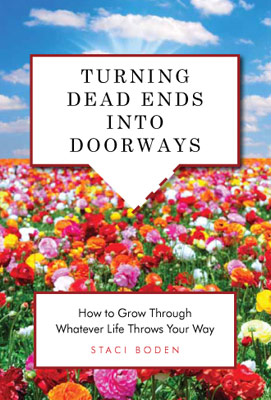
  • Giveaway and Interview: Turning Dead Ends into Doorways by Staci Boden

    Giveaway and Interview: Turning Dead Ends into Doorways by Staci Boden

    Editor’s Note:

    The winners for this giveaway have already been chosen:

    Subscribe to Tiny Buddha for free emails once weekly or on weekdays and to learn about future giveaways!

    Especially when we’re going through challenging times, it can feel tempting to try to control the future—but this doesn’t change that much lies beyond our control. Try as we may to avoid the unknown, the future remains uncertain.

    How do we navigate change knowing that nothing is guaranteed? How can we develop inner strength to grow, heal, and evolve?

    Healer practitioner Staci Boden answers these questions in her new book, Turning Dead Ends into Doorways: How to Grow Through Whatever Life Throws Your Way.

    From the book flap:

    “With compassionate honesty and a practical sense of humor, healing practitioner Staci Boden shows her readers how to navigate change without clinging to false notions that if they just do this or think that they can determine what happens next. How to let go of false expectations and still make excellent choices. How to grow and heal no matter what life throws their way.”

    I’m grateful that Staci has offered two free copies of Turning Dead Ends into Doorways for Tiny Buddha readers!

    The Giveaway

    To enter to win one of two free copies of Turning Dead Ends into Doorways by Staci Boden:

    • Leave a comment on this post. (If you’re reading in your inbox, click here to do that.)
    • Tweet: RT @tinybuddha GIVEAWAY: Turning Dead Ends into Doorways http://bit.ly/SBYrFX comment and RT to enter!

    You can enter until midnight PST on Monday, November 5th. If you don’t have a Twitter account, you can still participate by completing only the first step. (more…)

  • Forming A Healthy Habit Starts from Within

    Forming A Healthy Habit Starts from Within

    “The outer conditions of a person’s life will always be found to reflect their inner beliefs.” ~James Allen

    I recently participated in a 21-day online fitness support group. I needed some external motivation to help re-establish a daily habit of fitness activity. My lazy butt was so reluctant to start this! Nevertheless, by the last day of the challenge, I was enthusiastically back into the habit.

    We all know it takes three weeks of daily repetition to form a habit, so my success may not surprise you. What surprised me was why I ultimately met my goal.

    It turned out that nothing about my success was about the physical aspects of daily exercise!

    When I retired a few years ago, somehow that translated into retiring from regular fitness activity. Retirement meant I could rejoice in not having to do anything. No expectations. No shoulds. Just do what I want to do, every minute of every day.

    We’re constantly told we “should” exercise—30 minutes daily, or 3x/week, or 10,000 steps a day, or blahblahblah.

    Yes, but I also have a lifetime resolution to eliminate “shoulds.” My attitude toward exercise had become resistance-based because of all the “should” advice. I’d given myself permission to avoid it. Hey, I’m in charge of my own body, right?

    But now, a few years later, my body has begun to show the deterioration symptoms of being ruled by my retired, lazy butt. I needed to put a stop to that. I decided I “should” exercise.

    Gradually, this 21-day fitness commitment reminded me that my lazy butt is a mental state, not a state of butt!

    First, I realized how easily I’ve been letting anything—whatever—thwart my exercise plans. Any excuse was a good one. Grocery shopping to do? Well then, I certainly can’t fit in that aqua-fit class! Rain? Yay, I don’t have to go for that walk! (more…)

  • Battling with Your Body: 4 Simple Tips for Overall Well-Being

    Battling with Your Body: 4 Simple Tips for Overall Well-Being

    “Your body is precious. It is our vehicle for awakening. Treat it with care.” ~Buddha

    I believe there are four key aspects to our existence:  mental, physical, spiritual and emotional.  The mind is a fairly straightforward concept, and many people can identify with a spiritual component of life.

    Yet there is one other aspect of life that I believe is essential to a full and healthy journey on this planet—the emotional element of living. And that emotional state seems to be inextricably tied to the physical.

    I have always struggled with the physical. I’ve had a love-hate relationship with my body since I was cognizant of my existence. As a chubby kid, I felt different and defective. I sought relief in my grandmother’s frozen cool whip in the extra freezer located in our garage.

    I gulped down chalky pink Pepto-Bismol when I wasn’t even sick. Why? Because it was sweet.

    I couldn’t handle the monkey bars. The ball always hit me in the face. I was always last to finish running around the field at recess.  As I matured, I grew out of the chubbiness but I was never satisfied with my body.

    I spent the summer of my 11th year frantically emulating a 1984-era Richard Simmons in his 7-Minute Abs video and simultaneously saving enough money to buy a McChicken sandwich, fries, and a hot fudge sundae at McDonalds.

    Disconnected from my body, I grew into a young woman and ignored my physical existence as best I could; becoming what author Geneen Roth calls a “walking head” with that insufferable body attached. 

    I alternated between trying to eat “right,” permitting myself to eat “bad,” and feeling bad about eating bad.  If I ate a salad for lunch, I might have a half-gallon of ice cream for dinner. Alcohol eventually contributed to my lack of self-care, adding extra calories and acting as yet another way to escape my body.

    Fast forward through my twenties: After several attempts at Weight Watchers, a failed relationship, a bout with antidepressants, and a nervous breakdown, I managed to lose over 40 pounds with Weight Watchers. Down to the size I wore when I graduated from high school, I was sure my life would get better.

    It didn’t. It got worse. So I dyed my hair blond. I drank more wine.

    Then I stopped drinking. I stopped smoking cigarettes. I fully embraced sobriety, found a higher power, and earned two master’s degrees. I lost even more weight. Now my life should be perfect, right? 

    Wrong. I still can’t live comfortably in my body. And I’m soothing my discontented soul and body with food. Now it’s ice cream (or more specifically, Ben and Jerry’s Half Baked Frozen Yogurt, which has only 3 grams of fat per serving, compared to Peanut Butter Cup ice cream which has 25 grams of fat, so it isn’t that bad).  (more…)

  • Realizing You Have Everything You Need

    Realizing You Have Everything You Need

    “He who has health, has hope; and he who has hope has everything.” ~Thomas Carlyle

    I grew up in a small town, Maysville, Kentucky, where I led the perfect, sheltered life. After graduating from high school, I pursued higher education at a local community college, and from there transferred to The University of Kentucky in Lexington.

    I had an interest in art, music, and media, pursuing a double major in journalism and communications. I dreamed about either working behind the scenes of a television studio, or becoming a certified systems engineer and working for my father’s employer.

    Then a week and one day after graduating from college, fate stepped in.

    Back home in Maysville, my loving parents thought it would be wise for me to live with my father, who lived in Cincinnati during the week, and work with his company in Information Technology. With my education I could quickly rise up the ranks to management.

    Driving back to Lexington, I felt a certain peace come over me, feeling happy with my decision. After my journey, I decided to nap on my couch to relax and prepare for my interviews and this next big adventure.

    I started to get a headache that was like none other I’d had before. The pain became excruciating, like an intense sinus headache, but in the back of my head. I got up and ran to the bathroom, got sick, and passed out. My brother who shared the apartment with me came home, found me, and called 911.

    An ambulance rushed to my apartment, picked me up, and drove me to the hospital. I was in a coma for three days.

    What happened was something called an Arterio-Venous Malformation. In laymen terms, a blood vessel ruptured in my brain, destroying the life I once knew.

    Doctors predicted that I would never be able to drive or be independent, and that I would probably never be able to walk again. I was in for the biggest challenge of my life.

    What happens after a storm? It’s time to rebuild. I had to rebuild my life.

    Three months after my accident, I was released to try to live a normal life. I couldn’t really talk. I didn’t have a job. Doctors recommended that I not pursue work in the field that I chose in college, Broadcast Journalism, to keep my stress levels down.

    There was a lot I couldn’t do, but I could focus on my fitness.  (more…)

  • 10 Places to Find Hope When Life Knocks You Down

    10 Places to Find Hope When Life Knocks You Down

    “He who has health has hope, and he who has hope has everything.” ~Proverb

    In the spring of 2006, I was training for the MS 150, a cycling event to raise funds for the National Multiple Sclerosis Society. I was hopeful that I could contribute to MS research and support. Someone close to me has MS and I wanted to help.

    About a month into my spin classes and outdoor training, I started to feel bad. I was tired, weak, and having some balance issues.

    I never got to participate in the ride. In fact, shortly after the event date, I had my own MS diagnosis. My most debilitating symptom was vertigo. I couldn’t walk a straight line, let alone ride a bike.

    I was shocked by my diagnosis. I was sad and I was scared, but I was hopeful. Right from the start I was hopeful that I would regain my health, and help others with MS. Just having hope wasn’t enough, but at the same time it was everything.

    When something happens that threatens to leave you hopeless, remember that you are strong. You are resilient and you can take the necessary steps to protect hope and encourage change.

    Without hope, there is no next step. Without hope, there is no possibility of happiness. I choose hope. (more…)