Tag: health

  • How a Creative Hobby Can Boost Your Mental Health

    How a Creative Hobby Can Boost Your Mental Health

    “The world always seems brighter when you’ve just made something that wasn’t there before.” ~Neil Gaiman

    A few years ago I wrote an article about my personal experience with bulimia. The piece was published by several different media channels, and some time afterward I was interviewed by CNN.

    It was the first time I had publicly and explicitly spoken about that particular part of my journey. But the desire to acknowledge and address the emotional effects of my experience had been present for some time.

    Prior to writing the article, I hadn’t felt ready to lay myself bare in such a direct way. However, I instinctively knew that I needed a means of self-expression that would allow me to speak of what I’d been through without being quite so specific.

    That’s where creativity came in.

    I began using photography as a way of expressing everything I was still too vulnerable to verbalize. It was a beautiful revelation for me to realize that I could share my thoughts and feelings in an abstract way. I could pour my pain into the creation of something new. This was a crucial step in my recovery.

    I’d begun binging and purging as a way to avoid my feelings after the breakdown of my marriage. I had fallen out of love with my husband, and I was carrying a tremendous amount of guilt inside me, constantly feeling as though I’d failed my family and friends by not being able to make my relationship work. I hated myself for walking away from my marriage, for daring to want more.

    I was also dealing with intense pressure at work and financial stress, all of which had left me feeling as though everything was out of control.

    Bulimia had given me the illusion of control, but it was also a way of punishing myself for not being able to stay in a relationship that everyone else expected me to be content with.

    Mental health issues are often accompanied by feelings of shame and guilt. We tell ourselves that we should be able to handle everything, that we shouldn’t be placing a burden on our loved ones. It’s a self-destructive cycle that has the potential to send us spiraling.

    Although creativity doesn’t act as a magic wand, it does give us an opportunity to take a breath and gain a greater understanding of what’s going on internally. We can use creativity as a means of translating ourselves to ourselves.

    Photography became a lifeline for me. I could capture texture and shadow, play around with light and motion. I could convey some of the darkness that was still haunting me, but instead of succumbing to my feelings, I was able to build something from them.

    I also began to use poetry and creative writing as tools to help me channel my emotions. The personal value of this was enormous. In creativity I had a friend, a means of telling my own story in my own way, and a source of strength and support that I could rely upon to be there for me.

    Here’s how a creative hobby can help us cope with mental health issues:

    1. Creativity reminds us that we have the ability to effect change, and it also helps us be more present.

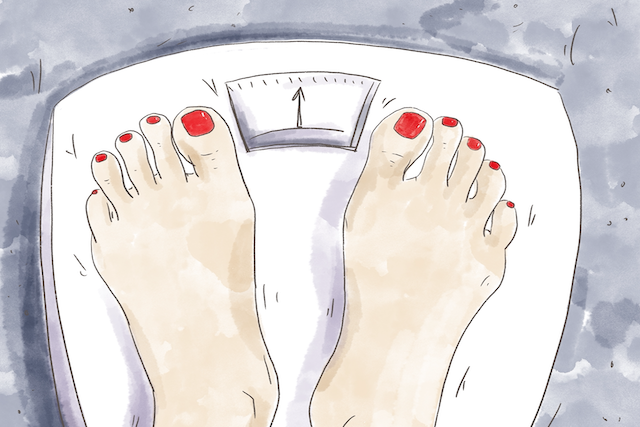
    When we are experiencing mental health challenges, it can be easy to fixate on the fear that there won’t be any light at the end of the tunnel. When I was dealing with bulimia, I would obsessively weigh myself every morning and every night. If I were away from home or in a place where I didn’t have access to a bathroom scale, I would feel a sense of rising panic. I couldn’t imagine a time when I would be free of the need to control my weight.

    Immersing ourselves in creativity can help us believe in our ability to heal, grow, and change because we are actively participating in the production of something new.

    Whether it’s baking, gardening, painting, dancing, sculpting, or any other creative pursuit, we are taking an idea and breathing life into it.

    This not only helps to keep our focus on the present moment, thus alleviating future fears, but it also gives us the additional benefit of shaping and impacting an outcome through our efforts.

    When we create, we are combining imagination and resourcefulness. We are envisaging an end result and then taking action to make it happen. This adds to our personal skill set and emboldens us to have the same courage in other areas of our life.

    Whenever I’m revisited by old demons that threaten to topple me, I create something. Anything. The act of creating helps me to re-center and focus on my abilities, rather than obsess about my perceived shortcomings. It also helps me step outside myself, shift my perspective on my challenges, and remember what’s truly important.

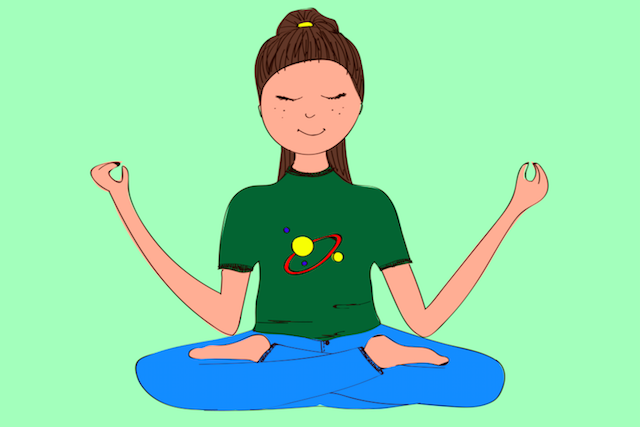
    I recently herniated a disc in my back and was unable to practice yoga with as much ease as usual. As I lay on my mat at home one morning, feeling frustrated at my body for failing me, I began to slip into some old self-talk about not being good enough.

    But then I noticed the pattern that the sunlight was projecting on the wall beside me. I took my phone and snapped a photo. As the light shifted again once more, I was reminded that nothing is static and everything is always changing. My energy automatically lifted.

    Creativity teaches me about trust and impermanence and also expands my sense of awareness. The simple act of witnessing and photographing the moving light was enough for me to remember that each day is full of beauty. I don’t want to miss any of it by wasting my energy on criticizing my body.

    2. Creativity enables us to process some of what we’re feeling without the intensity of putting ourselves under a microscope, and it can also help us meet our needs.

    We’re not always ready to closely examine every experience. We’re not always comfortable talking things through, or wading into the depths of our pain or trauma. But we need to work through these feelings, or else they’ll lie beneath the surface, limiting and controlling us.

    Creativity can offer us a safe space in which we’re able to release some of our emotional weight without over-analyzing. We eliminate the scrutiny but still receive the benefit of self-connection.

    When we’re able to connect with what we’re really feeling—whether it’s anger or regret or disappointment—and then channel that into a creative project, we are less likely to engage in behaviors that are numbing or harmful. Which means we actually work through the feelings instead of just distracting ourselves from them.

    Creativity can also be a compass. It’s a way of identifying an inner need and then permitting ourselves to meet that need.

    Perhaps you are craving more vibrancy or flavor in your life. Being creative might mean choosing bright, bold fabrics to make a clothing item, or being experimental in the kitchen with new cuisine.

    And just as creating something from nothing can help us believe in our ability to create change in other areas of our lives, meeting some of our needs through creativity can empower us to meet other needs—the need for self-care or boundaries, for example.

    When we’re struggling with mental health issues, it’s easy to minimize or neglect our needs, but this only prolongs our healing. Creativity helps us trust our intuition and follow our instincts. It isn’t necessarily a substitute for therapy, but it can play a pivotal role in helping us build confidence and resilience, enabling us to both work through how we’re feeling and take good care of ourselves.

    3. Creativity enables us to connect with others and build community.

    Common mental health issues such as depression or anxiety can lead to social withdrawal and isolation, increasing feelings of loneliness and heightening the body’s stress responses.

    Creativity is a wonderful way to connect with others. Social media platforms provide us with ways to share our creativity and spark conversation with people who have similar interests. When I first began blogging online, I was amazed at how quickly I was able to become part of a supportive community, many of whom I’ve since met in person.

    Most libraries or community centers offer group arts and crafts classes. These are fantastic opportunities to establish local connections and circle with others. I recently attended a free creative sculpture workshop at the New York Public Library. I had no previous experience, and my creation was far from perfect—none of that mattered. It felt amazing to come together with other people and make something.

    We are all creative beings. Experimenting with different mediums can be a wonderful way to find out what sparks joy and brings comfort. You don’t have to be an expert. Remember, perfection is not the goal; you’re simply making your world a little brighter.

    My journey with creativity has given me more than I could ever have anticipated. It may not always change external circumstances, but inwardly there’s a shift every single time. An easier breath. A blank canvas and a fresh start. A reminder that I can begin again and again, as many times as necessary. And sometimes that’s all we need to be okay.
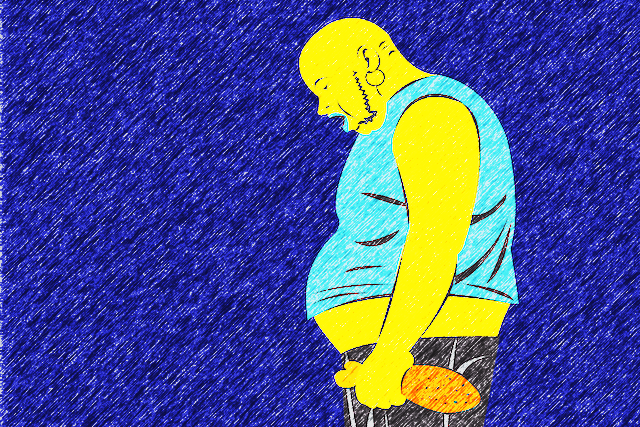
  • 5 Things I Wish I Knew Before Trying to Lose Weight

    5 Things I Wish I Knew Before Trying to Lose Weight

    “You yourself, as much as anybody in the entire universe, deserve your love and affection.” ~Buddha

    I struggled to maintain a healthy weight for a large part of my life.

    Had I known these five things before my weight-loss journey, I would have had a much easier time shedding the pounds and would have realized that weight loss isn’t a magic fix-all solution to my issues.

    If you’re trying to lose weight, perhaps some of my lessons will be helpful to you.

    Here we go…

    1. This has to be for you, not someone else.

    Growing up as a closeted gay child, I was taught that homosexuality is a sin and anyone who likes members of the same sex is unworthy of love and affection.

    This caused me to develop an internalized belief that I was not good enough, which led me to seek external validation from others as the source my self-esteem.

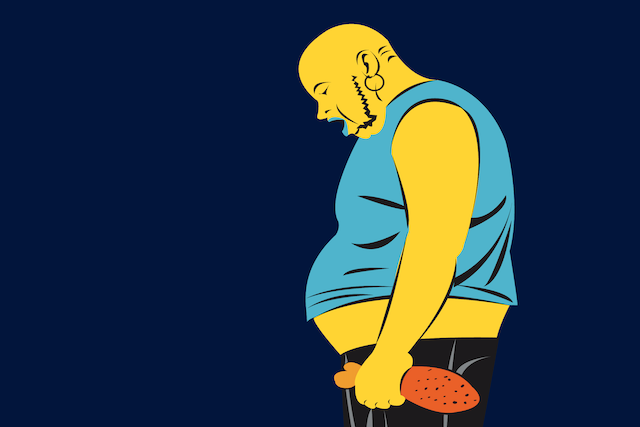
    Being gay was a very heavy secret I carried, and as a result I became very heavy myself.

    Afraid to be seen, I used weight gain to hide myself from the rest of the world.

    After coming out, I thought if I had the hottest boyfriend then I would finally feel good about myself.

    I lost thirty pounds, transformed my body, and achieved my goal of dating a hot guy. My self-esteem was through the roof… until he broke up with me and I never saw him again (whomp, whomp). I had failed to achieve my goal, and I felt terrible about myself.

    Now I see the issue started when I attached my fitness goal and my self-esteem to something outside myself that I could not control—a guy wanting to date me.

    The reality is, a new body or a new boyfriend was never going to solve my problems. I had to ‘work out’ my inner self before I could feel good about my outer self.

    It’s like having an old, scratched-up cell phone that is super slow, so you put a brand new case on it and suddenly it’s nice and shiny again! However, the original issues are still there, and the phone is still damaged below the surface.

    Like the phone with the new case, I was still that same little boy inside desperately seeking validation from others.

    What I needed was to accept myself and to stop looking to others to validate my self-worth.

    Through meditation and coaching I’ve come to see that feelings of worthiness come from within. I choose to lead a healthy lifestyle for the sake of my own health and well-being, and I recognize that I have inherent value on my own, regardless of my appearance or what other people think.

    Nowadays I set goals that are within the realm of my own power and are not dependant on validation from others like: “I want to lose weight to be healthy and live a long life” instead of “I want to lose weight to have a guy ask me out.”

    Remember: You’re a whole, complete, capable person regardless of how you look. Just because you want to improve for tomorrow doesn’t mean you can’t feel good about yourself today.

    No one has the ability to make you feel a certain way about yourself; only you have that power! When you set goals within the limits of your own power, you will be unstoppable.

    2. You may lose friends, and that’s awesome!

    Let me explain: When I first set out to transform my body, most of my friends were very supportive… until they weren’t.

    A lot of my friends weren’t into health and fitness. As I got closer to my goals, they would say things like, “Who do you think you are? Acting all better than us with your salad and healthy lifestyle!”

    Sometimes it’s the people who know you best who hold you back from changing the most. They met you when you were a certain way, and they want you to stay that way.

    If you surround yourself with people who aren’t used to success, they may become fearful and threatened because you are reflecting back to them something that intimidates them. Not everyone is going to be happy for you.

    In letting go, you create space for other likeminded people who can support you on your path. Having help from people who have been in my shoes helps keep me motivated and allows me to learn from the experience of others. This saves a lot of time and effort and makes the journey more enjoyable.

    You can find supportive people by making friends with people at the gym, joining a running group from meetup.com, or joining a meditation studio. You can even consider working with a trainer or coach if you need a little extra help.

    3. Our self-talk can make or break our progress.

    I used to look in the mirror and focus all of my energy on my flaws. I would tell myself, “I want to lose weight so I’m not gross and disgusting.”

    Every time I thought about my goal I reinforced the identity of someone who is “gross and disgusting.” This negative self-talk was not helpful for my self-confidence, and it often led to binge eating. Not something you want to do when trying to lose weight!

    In order to create lasting change, I had to cut out the negative self-talk by connecting with a positive intention for my goal. So I shifted my intention toward living a healthy life and aging gracefully.

    I stopped putting my attention on the things I disliked about myself, which depressed me, and instead focused on the positive goals I was working toward, which energized me.

    After I changed my view of myself I was finally able to lose the weight—and enjoy the process.

    4. Patience is everything.

    Patience is more than just waiting, it’s the ability to put in the work required to achieve your goals and keep a positive attitude throughout the process.

    After I set out to lose weight, for the first three weeks I felt like nothing was happening and I was wasting my time. The funny thing is, this is when all the work started to pay off. By week four, I could finally see noticeable changes on the scale and I was moving in the right direction.

    It’s the small, seemingly insignificant choices we make every day that add up to something extraordinary. If you don’t have the patience to wait for these things to happen, you won’t make progress on your goals.

    Remember, a journey of a thousand miles is nothing but a series of single steps. Take things one step at a time, and you’ll go far!

    5. To reach any goal, you need to define success, create an action plan, and fall in love with the process.

    I’ve often felt overwhelmed by all the conflicting health and fitness information available. I didn’t know which plan was right for me, so I would try a new one every week and never see any changes.

    The truth is, the best plan for me is the one I stick to and have fun with.

    It’s important to fall in love with the process. Fitness is a lifelong journey, and if you don’t enjoy the process you’ll give up.

    If you’re feeling confused about which plan is best for you, try picking one that sounds fun and stick with it for eight weeks. If you haven’t seen any progress, try something new.

    Also, be sure to define what success looks like for you—whether that means hitting a certain number on the scale or being able to hike a specific number of miles—so you have a clear direction of where you are headed.

    When I set out to lose thirty pounds I had a defined goal in mind. This allowed me to focus my energy and weed out distractions. It also gave me motivation, purpose, and a clear vision for my future.

    Lastly, track your progress as you go, since this will keep you focused and motivated. I resisted doing this for a long time, but it’s made a world of difference. It’s like using a road map. When you see how far you’ve come, it’s a lot easier to stay committed to reaching your destination. Apps like MyFitness pal are great for tracking fitness goals.

    Ultimately, every fitness journey is about more than losing weight and changing your physical appearance. The most successful transformations are those that begin with self-love and require ‘working out’ your inner being as well as your physical being.

    Losing weight was merely a side effect of my bigger goal to lead a healthy lifestyle, and my fitness goals have grown to focus more on the health of my mind, body, and spirit, rather than solely my physical appearance.

    Because I find it hard to prioritize my own needs, I created a daily self-care routine and I devote a minimum of one hour every morning to my health and well-being. Self-care is the secret to my weight loss success because weight naturally falls off when you make healthy lifestyle choices and take care of your body.

    And finally, remember the power of intention! It’s not what you do but why you do it that will enable you to succeed.

    I wish you the best of luck on your journey, and am sending you all my love!

  • 5 Signs You Don’t Know What Your Body Needs

    5 Signs You Don’t Know What Your Body Needs

    “The body is a multilingual being. It speaks through its color and its temperature, the flush of recognition, the glow of love, the ash of pain, the heat of arousal, the coldness of nonconviction. It speaks through its constant tiny dance, sometimes swaying, sometimes a-jitter, sometimes trembling. It speaks through the leaping of the heart, the falling of the spirit, the pit at the center, and rising hope.” ~Clarissa Pinkola Estés, Women Who Run With the Wolves

    We read about all these things we “should” be doing for self-care, so we add them to our to-do list and rarely, if ever, cross them off.

    Most of us have such busy schedules, we move on fast-forward without getting any closer to the end of our list. We end up running on autopilot to the point that we ignore most of what our body tries to tell us it needs in order to look and feel our best.

    Just getting through our to-do list each day can take a toll on our body and mind. But what’s becoming more apparent is that not slowing down, not listening to our body, can be detrimental to our health—and our looks!

    At some point, I realized that I was on autopilot so often that it felt physically impossible to fit healthy eating into my routine. I tried so hard to eat the “right” foods and would always end up binging on pizza or some other junk food when I thought no one was looking. I felt so much shame and distress from trying so hard, and yet nothing changed.

    What I didn’t realize is that my body had been sending me signals all along to lead me in the right direction, but I was completely clueless. Autopilot had taken over my life, and not to mention, my body’s energy, luster, and shape. Not cool.

    So how do you know if you’re running on autopilot and are disconnected from what your body needs to function and look its best? Read these signs and see if they sound familiar.

    Sign #1: You don’t know if you have any food allergies or sensitivities.

    Do you ever wonder if you’re one of the millions of people with a gluten sensitivity or a dairy intolerance? If it turns out that you are, your body has tried to tell you multiple times.

    Common symptoms of gluten sensitivities are bloating, frequent headaches, constipation, diarrhea, skin issues, sluggishness, and so much more. Common symptoms of lactose intolerance are congestion, bloating, abdominal pain, acne, and migraines. If you’ve ever experienced any of these, your body is trying to tell you something.

    I started birth control as a teenager, since it was the only thing I knew that actually worked to keep my acne under control. At times it was so bad, my mom let me skip school to avoid embarrassment.

    When I became an adult, I tried many times to get off of it but each time I did, my skin broke out again. Adult acne felt even worse. It wasn’t until I limited wheat and dairy that I was able to get off birth control and my skin finally cleared up for good.

    Contrary to what we tend to believe, symptoms like these aren’t normal! It’s your body’s way of telling you a serious change is needed. Seriously.

    Sign #2: You frequently aren’t sure if you’re actually hungry or not.

    How often do you find yourself staring blankly into your pantry wondering if you’re truly hungry or if you’re just bored?

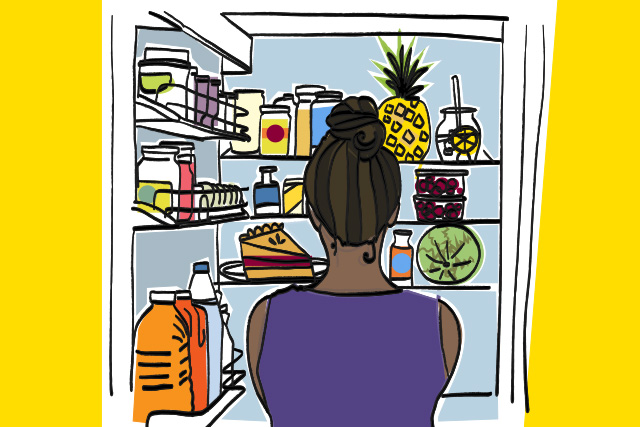
    In the past, I’d go to my fridge, open it up and give it a good hard stare, close it, and then walk away—only to find myself doing it again minutes later. Was I hungry? Was I craving something? I had no clue if my own body was hungry or not! I felt so frustrated and annoyed with myself for doing this time and time again.

    It sounds counterintuitive, but many of us don’t have an appetite the majority of the day simply because we just don’t eat enough food. Our body ends up holding onto every morsel we feed it for dear life.

    It’s a genuine a survival instinct. If your body doesn’t know if it’s going to get enough at its next meal, it sends mixed signals. But when your body is getting enough nutrients, you won’t have to question whether you’re hungry or not.

    Sign #3: You swear to have zero willpower when it comes to processed food.

    Does it seem like no matter how hard to try to eat healthy, you always end up choosing the food you know you’ll regret?

    Whenever I’d go through one of my clean eating phases, I’d inevitably be the girl hiding in the corner stuffing her face with the muffin she never liked to begin with. I’d be so angry with myself for not having more self-control and then feel so ashamed. I’d repeat silently to myself over and over, “What’s wrong with you? Why do you keep doing this?”

    A lack of willpower is our body’s way of telling you it needs specific nutrients (hello chocolate! magnesium needed), nostalgia (let’s recreate an old memory), or even yearnings (how alive will I feel if I eat this).

    If you pay attention to what your body is feeling physically during these moments, you may notice your throat constricting or heaviness in your belly. I argue that there’s no such thing as willpower. Your body needs something and it’s not necessarily food related.

    Sign #4: You have no idea why you’re so tired and craving junk food every afternoon like clockwork.

    Do you feel sluggish at 2:00 to 3:00 pm on a daily basis? And then find yourself reaching for the first extra sweet or salty thing you can get your hands on?

    When my afternoon slump came, all I knew is that I was so dang tired… and craving carbs and sugar like a fiend! Enter vending machine with salty chips and sweet candy bars to the rescue. I’d feel so lethargic and just awful. This vicious cycle had me exhausted and ultimately is what made realize I had to do something. I had to make a change.

    Your body’s ravenous afternoon cravings are a message. They’re screaming at you, “I need nutrients! I need fuel!” Chances are, you haven’t fed it what it needs throughout the day and your body’s only way to get through to you is to intensify your cravings.

    Sign #5: You feel extreme emotions without rhyme or reason.

    Do you ever have days where you feel like you want to scream or cry for absolutely no reason at all?

    Formerly, I sometimes experienced this during a TV show or movie. The characters would say or do something that wasn’t particularly scary or exciting, but it triggered something and I felt an urge to start bawling. It was really unnerving to realize I could cry my heart out for no apparent reason at all.

    Our nature is to take the easy route—to push any heightened emotions aside and go on with our day. (We always have so much to do, right?!) But emotions need to be felt. Otherwise, they can manifest by coming out at unexpected moments or even physically in our bodies through hair loss, skin rashes, weight gain/loss, etc.

    Your body is a magical and wise teacher. Every ache, pain, symptom, and craving is a gift in its own way.

    Think of how many chronic illnesses that are diet related. Here are some to name a few: diabetes, heart disease, cancer, dental health, osteoporosis, asthma … The negative symptoms you’re experiencing today are your body’s way of doing what it can to help you prevent a disease from manifesting in your body tomorrow.

    My mom found out she has breast cancer a couple years ago. Since then, she’s completely transformed her diet and lifestyle, and from what we can tell, the cancer has regressed.

    She’s always struggled with extreme allergies and health issues. I can’t help but wonder, what if she had listened to her body and made these changes before the cancer progressed? How much less scared and stressed would our family be? (Now she’s feeling better than she did before her diagnosis!)

    I’m not suggesting that anyone who has cancer is to blame for their diagnosis, or that dietary and lifestyle changes alone will cure it, but simply that our diet affects our health in more ways than we know.

    I learned through her story and now I’m doing the best I can to take note of every little ache, pain, flush, color, craving, and emotion of my body… before I end up with the kind of life-changing hardship that’s far more than just gaining a few pounds or adult acne.

    If your body is experiencing a persisting symptom, it’s telling you something. Listen.

    If you’re feeling an extreme emotion, your body has something it needs to feel. Let it.

    If any of these signs resonate with you, try this: Put one hand on your belly, the other on your heart and say this aloud, “Dear body, I’m sorry for not listening and not making you the priority. I really do want the best for you. I love you. I’m listening.”

    Slow down and be mindful of the signs your body is sending. And instead of adding more things to your to-do list, you’ll gradually feel more confident about what your body needs to move naturally in a positive, healthier direction.

  • 6 Powerful Steps to Stop Binge Eating for Good

    6 Powerful Steps to Stop Binge Eating for Good

    “As long as you are breathing, there is more right with you than wrong with you, no matter how ill or how despairing you may be feeling in a given moment.” ~Jon Kabat-Zinn

    Binge eating is hard. For me, winter time has always been hardest.

    The winter of 2011 was particularly bad. It was then that I sat, hands clasped around my knees, thinking about how best to kill myself.

    Hopeless only scratches the surface of what I was feeling—that same feeling I’d had on-and-off for fifteen years. I was twenty-three. I’d spent half my life in darkness.

    I went over the mathematics: Depression + Eating Disorder = Agonizing Existence.

    I was finally ready to admit I needed help. So as I sat there, I vowed to put an end to my suffering. I told myself “I’m going to give this one final push. I’ll put all of my energy into stopping this continual depression, and these cycles of binge eating and starving myself. If it still doesn’t work, I’ll just kill myself.”

    It really was that simple.

    By the end of 2011, I didn’t want to kill myself anymore. A few years later, I’d stopped binge eating completely. These days, I’ve never been happier. I don’t get depressed anymore. I am healthy, mentally and physically, and I try to live every day in gratitude, happiness, and well-being.

    That’s how I know you can do this too, and why today I’m sharing with you six powerful steps that I found essential to my journey.

    1. Realize there’s nothing wrong with you.

    I know it feels like you’re a disgusting, terrible person for binge eating. I know you don’t understand what’s going on, or what happened to your “willpower.” I know you’re starting to feel insane.

    But listen up: there is nothing wrong with you.

    Binge eating isn’t about food; it’s about emotions. People deal with their emotions in all kinds of ways. If you’re at the end of your tether, you might do drugs, you might drink, you might get really angry with the people you love, you might have anxiety attacks, and/or you might binge eat.

    This isn’t a judgment call. Binge eating is just what you’re doing to try to deal with difficult emotions in the best way you know how right now. That doesn’t mean you’re broken, that doesn’t mean you’re going to “be like this forever,” and it doesn’t mean you can’t learn how to cope in different and more productive ways.

    It’s completely natural and normal to want to feel better. So although it’s not ideal to binge, know that it is human, and it is okay.

    2. Reattach your head to your body.

    Up until I was twenty-three, I didn’t even know I had a body.

    I will never forget this: one day, I was walking up a hill to my office (I was doing a Ph.D. at the time) and suddenly I just felt terrible. Then I was frustrated that I had been feeling okay, and suddenly everything had become unbearable.

    I’d just learnt about mindfulness, so I did what is known as a body scan (where you “scan” each part of your body with your mind, and notice whatever is present, without judgment).

    You know what I realized? I was just really hot from walking up the hill.

    I took my coat off and felt instantly better.

    This moment was huge for me. I’d spent so long in my head that I didn’t even realize I had a body–that it too had needs—and that I needed to listen.

    As well as allowing you to get back in touch with physical sensations in your body (like temperature, and gentle, non-scary sensations of hunger), mindfulness increases your control over your emotions (more precisely, it increases activation of the medial prefrontal cortex, and decreases activation of structures like the amygdala that trigger our emotional responses.

    That’s good news if you’re binge eating. Maybe right now there’s a disconnect between your mind and your body, but by using mindfulness to gain more control over your emotional responses, you’ll start to learn to decide whether to listen to those calls to eat emotionally, or not.

    Action step: Start doing the body scan once a day. If you can’t manage thirty minutes, start with two minutes every day. Then build it up to five minutes, then ten. Start slowly and build it up over time. This is about practice, not perfection.

    3. Shift your self-worth.

    I’ve always been athletic, but while at University, I decided to “get in the best shape of my life.” I trained excessively: high intensity intervals, multiple times a day. I became obsessed with what I ate. I weighed myself multiple times a day, checked how my belly looked in the mirror every opportunity I could. I called myself fat at every single opportunity, and always felt incredibly self-conscious everywhere I’d go.

    In reality, I was a skeleton, but all I saw was fat, fat, fat.

    When my obsessive exercising and restrictive eating turned into binge eating, I didn’t know what to do. I was so ashamed of myself for my actions and what I was doing to my body after “all that progress I’d made.”

    All of my self-worth was in how I looked, and how thin I was. It felt like binge eating was against everything I stood for.

    I decided I needed to be stronger, both mentally and physically, so I joined a gym and began to train for strength. Binge eating made me feel completely out of control, but by showing up to train no matter how I felt, I started to realize that I actually did have control—that I could still act in the way I wanted to, even if I didn’t feel like it.

    I realized that I always had a choice.

    It’s important to say at this point that strength training has been a helpful part of my recovery, but you don’t need to go to the gym to stop binge eating. In fact, exercise can be unhelpful for many people, especially if you aren’t listening to your body when it needs to rest and recover.

    Indeed, while my commitment to strength training boosted my self-worth in the short term (and helped me stop binge eating), I eventually recognized I was too focused on my performance. I never quite felt like I was achieving, doing, or being enough.

    I now know that we are all so much more than how we look, how much we weigh, and how well we perform, so I recommend a diversified approach to building your self-worth. Instead of tying it to your body, focus on a variety of things, like being a good friend and relative, acting with integrity and honesty, and taking care of yourself enough so you can give back to others.

    So many people who binge eat are overachievers and perfectionists, but when you’re in this deep, it’s a sign that you need to diversify your identity away from perfection, dieting, exercising to extremes, and working too much.

    Instead, I recommend trying to figure out what you truly value in your life, then focusing on the process of becoming the person you ideally want to be. 

    Action step: Take a few moments to ask yourself: What do you value in your life? I don’t know about you, but when I’m lying on my deathbed, I don’t want the only thing people can say about me to be:

    “Well, at least she had a six pack.”

    No. I want to be so much more than just a body to the people in my life, and to myself. I want to be kind and strong, encouraging and inspirational. I want to love.

    Do you value being a good friend, parent, sibling, artist? Do you value your well-being? Could you start practicing gratitude for the things you have in your life, including your body? Could you practice just sitting, breathing, and being human?

    4. Find the diamonds in the turd. 

    Right now you’re focused on all the times you binge, all the times you have these strong urges to eat, and all the other things that you are doing “wrong.” But, I guarantee you are doing so many things right.

    I call these the diamonds in the turd.

    For example:

    Maybe there are only actually two to three hours each evening where there’s a strong urge to binge. Right now you’re focused on that time, but think about it: for twenty-one hours of the day, you don’t want to binge. That’s great! It’s also powerful information, because recognizing when you’re most prone to a binge is going to help you stop.

    Maybe you notice that you feel more prone to binge after you’ve had a bad night’s sleep, or when you’re stressed, anxious, or worried. Is it possible to get more sleep? Can you plan to get more time in for your wellbeing in general?

    Maybe you notice the urge to binge is stronger after you’ve looked in the mirror and insulted how you look, or when you scroll through Instagram and see athletes, models, and random happy people that you want to look like. Can you limit your time on social media, or only follow people that actually help you? Can you be kinder to yourself in the mirror?

    By starting to notice your own behavior—by becoming a detective about it, rather than judgmental critic—you’ll see there are plenty of things you’re doing right. This means you can begin to focus more time on the actions that are helpful (like taking better care of yourself through sleep, and taking time out just for you), and limit the unhelpful things (like social media, diet blogs, and your negative, hurtful self-talk).

    If you’re not sure where to even start, try making a tally chart of the number of times you catch yourself thinking about food today. This will make you more aware of your thoughts, which means you’re more likely to be able to catch yourself and say:

    • “Okay, I’m thinking about food. Does this mean I need something else right now?”
    • Or maybe just “Okay, I hear this thought, but it isn’t helpful right now. Let’s focus on something else.

    It will also make you aware of how often your food thoughts aren’t occurring:

    Okay, so today I caught myself fantasizing about food 37 times, but 50,000 thoughts go through my mind every day! So I’m not thinking about food ALL of the time. So when am I not thinking about food? Can I do more of that?”

    Action step: Find your diamonds in the turd:

    • What’s different about the times where I’m not binge eating / don’t want to binge eat?
    • Where am I when I do, and don’t, want to binge?
    • What activities am I doing?
    • Is there some way I can do more of the things that help, and less of the things that don’t?

    5. Stop restricting.

    There are many scientific studies showing a strong correlation between diets and binge eating. (Here’s a summary of just one of those studies.)

    If you’re finding it difficult to stop binge eating, one of the best things you can do right now is to stop restricting yourself. That means giving yourself permission to eat any food, at any time. It means not starving yourself the day after a binge, or doing excessive amounts of exercise because you “slipped up.”

    When I suggest this to people, there’s normally a lot of hesitation. I totally understand. You’ve been dieting and restricting your intake for so long that it’s scary to try something different. But binge eating isn’t serving you any more, and if you don’t eat enough, or eat what you’re really craving, then you will simply never be satisfied.

    Instead, satisfaction can be increased (both physically and psychologically) by bringing awareness to your tongue. How does your tongue feel in your mouth? How does the food feel, and taste, on your tongue?

    A lot of people talk about mindful eating, and this will definitely help, but only as long as it doesn’t feel restrictive. If “eating only when you’re hungry” feels too restrictive right now, then it’s totally fine to eat when you’re not hungry. If “eating mindfully” feels too restrictive, it’s okay to not do that for a while.

    When you’re ready, you can begin to introduce one mindful bite a day, then one mindful bite per meal.

    Action step: Try to stop restricting foods. If you binge, try to do it as mindfully as possible (giving yourself full permission to do so). When you’re ready, you can introduce mindful eating into some of your meals.

    6. If you do binge, follow these three steps.

    Trust me, you’re going to “slip up” on this road, but that’s okay. You’re in the process of learning the skills you need to cope in a more productive and healthier way. That takes time.

    These three steps will help you if you binge eat:

    Step 1: Forgive yourself immediately. (That was a tough moment, and you didn’t behave in the ideal way. That’s okay, you’re human, and you’re learning. Think of what you’d say to a friend going through the same thing, then say that to yourself.)

    Step 2: Try to become curious about what happened. Try to pinpoint what caused it. Was it a particularly stressful day? Were thoughts whizzing around in your head? What could you do to increase your self-care the next time that happens?

    Step 3: Wait until you’re next hungry, then try to eat a “normal” meal (just some basic veggies, protein, carbs, and fats). Don’t try to overthink it, and don’t try to restrict.

    The great thing about this is you will always get hungry again. And when you are, it’s another opportunity to practice listening to your body’s natural hunger signals.

    Finally, no matter what happens, just remember: as long as you’re breathing, there is more right with you than wrong with you.

    Illustration by Kellie Warren. Find her on Instagram @kellistrator.

  • Embracing Impermanence: Lessons from Living with a Chronic Illness

    Embracing Impermanence: Lessons from Living with a Chronic Illness

    “Nothing is permanent in this world, not even our troubles.” ~Charlie Chaplin

    At thirteen, I was diagnosed with chronic fatigue syndrome. At first, I patiently waited for my doctor to give me medicine. When he didn’t, I patiently waited (for several years) for someone to find the cure.

    As the years went on I wasn’t getting any better. Though I went to more doctors than I could count, none had any new advice for me, and the medical community wasn’t any closer to figuring out how to heal this illness.

    Life was unpredictable. I didn’t know what I’d be able to do each day, let alone in the future. Some days I could lead a relatively normal life, going to class and hanging out with friends—as long as we didn’t do anything too active. Some days I could barely get out of bed to go to the bathroom.

    I had always been ambitious growing up. I loved playing sports, I wanted to be a writer, I wanted to travel the world. As I got into my early twenties, I started questioning if I’d be able to achieve any of these goals when my health was so unpredictable.

    I had managed to finish high school and attend university. But attending classes and trying to write essays with brain fog was a challenge for which my grades would suffer. When I was twenty-one I had a big crash. I couldn’t attend any classes or do any work. I couldn’t do my laundry or cook dinner. All I could do was survive.

    I hadn’t sought help from a doctor in many years; they had been so disappointing when I was younger. But now I knew I needed help. I found a holistic health center where I saw an occupational therapist, a nutritionist, a counselor, and a doctor. It’s also where I got my first taste of yoga and meditation.

    Yoga and meditation helped me embrace the unpredictableness of my health.

    Before beginning my yoga practice, I was searching for assurance. I wanted a doctor to know what to do. I wanted a medication that would make my symptoms go away. I wanted to know that I could get well and stay well. I wanted an assurance that didn’t exist in reality. Waiting for this assurance had held me back from seeking a partial recovery or recovery on my own.

    As my yoga and meditation practice advanced I became better tuned to my body and learned what energized me and what made me feel worse. But the most important concept I learned from my studies was impermanence. Sure, my energetic days didn’t last as long as I hoped. But my fatigued days didn’t last as long as I had feared.

    I began to ride this impermanence like the waves I ride when floating in the sea (which was all I could manage to do when I was very ill, despite swimming competitively when growing up).

    When I first became ill, most of the advice I was given was to “try to push through.”

    Doctors told me to “drink a coca cola at lunch” if I felt tired. They told me that I needed to do everything I could to finish my school assignments and get to classes so I didn’t get left behind. But all of this pushing was exhausting. Like trying to swim against the current, it didn’t serve me to try to do what my body would not allow at the times when I was feeling very ill.

    As anyone with a chronic illness can tell you, good days come with fear. I used to try to do everything I possibly could on the days I was feeling well because I didn’t know when I’d get a chance to catch up on everything I needed to do (including laundry and school papers but also fun things like getting coffee with a friend).

    Every time I got better, I waited to get worse again. Yet I came to realize that I didn’t apply this logic when I was feeling my worst. When I was feeling terrible I wasn’t waiting for it to get better; I was in bed feeling sorry for myself and fearing it would get worse.

    When I began to see the fallacy in this way of thinking, things started changing for me. When I had a bad day, I allowed myself to rest without wallowing. It was frustrating if I had a looming deadline or social event I wanted to go to that I couldn’t meet. But setting those boundaries for myself was invaluable.

    I didn’t need to ‘push through it’ because I’d get another chance. I could take that course again, or reschedule with my friend. This state of being bedridden was not forever. But it was a time for me to rest, to practice meditation or a gentle yoga session. A time for me to read books that brought me joy, a time to search inward for peace, acceptance, and joy.

    Understanding that the only thing that’s permanent is change helped me to accept my illness. It helped me end fatalistic thoughts like “I’ll never be able to achieve my dreams,” which seemed reasonable at the time but weren’t helpful to my recovery, or to achieving those dreams.

    Learning how to ride this impermanence has helped me achieve more than I thought was possible. I was able to graduate university, work full time, travel around the world, and even take part in triathlons!

    When going through a hard time, it’s easy to feel defeated. It’s easy to feel like there’s no hope, and that our lives are irrevocably changed. But by embracing that change, by knowing that our lives will always change and that nothing will last forever, we can better overcome adversity.

    If you’re going through a hard time right now, I encourage you to use this time to listen to your body and what it needs. As you start to do this, you’ll start to notice that things change from day to day. One day you might have a searing pain in your head. The next it may be a dull throb. The next, only a faint whisper of the pain before coming back to a searing pain again.

    Instead of feeling downtrodden that pain has returned, embrace that it has changed. That this state of pain—whether it is emotional or physical—is not a permanent state.

    Embracing impermanence has shifted every area of my life. I’m a freelance writer, which means I don’t have a set salary. Some months can go well and others…not so much. But I don’t get stuck in the bad months because I know it will change again. I still have bad health days, but I know the healthy energetic days far outweigh the bad, and I’m able to take the bad days as they come.

    For those of us who are chronically ill, it’s easy to feel like healthy people feel great every day. They don’t. They have bad days as well. But dwelling on the number of bad days or bad feelings won’t make them go away any faster, just as trying to cram everything you can into a good day won’t make the good day last any longer.

    As you become in tune with the rhythms of your body and better attuned to the way your body changes, you’ll learn how to better nourish yourself. Watch as you move between pain and no pain, fatigue and energy and enjoy the time of much-needed rest as much as those of activity.

    If you’ve also struggled with a chronic illness, it might help to:

    Keep a journal and record how you feel each day. Review this journal at the end of each week so you can see how much change you face even in just a week.

    Start a daily mindfulness practice. This can be yoga and meditation, but it can also be another mindful activity such as walking or taking a hot bath. Anything that helps you tune into your body and mind and assess the rhythms of your thoughts, pain, and energy levels. This will help you keep an accurate journal, and see how things can change even from breath to breath.

    Commit to eliminating fatalistic thinkingthoughts that contain information you could not possibly know. Thoughts like “I’ll always be in pain” or “I’ll never get better” when you have no idea what the future holds are examples of fatalistic thinking.

    Write down those thoughts in a diary and then write the truth next to them. For example, “I’m in pain right now,” or “I don’t feel well today.” None of us can tell the future; don’t let your mind trick you into thinking that it can.

    And lastly, take rest when you need rest, and find a moment of joy in every day.

  • How and Why I Stopped Binge Drinking

    How and Why I Stopped Binge Drinking

    “Good habits are hard to form and easy to live with. Bad habits are easy to form and hard to live with. Pay attention. Be aware. If we don’t consciously form good ones, we will unconsciously form bad ones.” ~Mark Matteson

    I am an extreme person. I have always done things at 100%. I worked my hardest in high school in order to attend the best college so that I could attend the best graduate program so that I could get the best job earning the most money. I not only went to these institutions, I did very well at them.

    I was also very into powerlifting and bodybuilding—two sports that take extreme amounts of dedication, determination, discipline, and desire.

    This fiend-like mentality was fueled by my desire to please my parents. I lived for my parents, always pushing myself to meet or exceed their expectations. I was a people pleaser.

    My negative cycle started when I was quite young. I remember being in middle school and beginning to be concerned about my weight and body image. This was probably spurred by prior memories of being picked on as early as grade school.

    In middle school, the perfect storm for pain began to emerge. I realized that I could do something about my weight, so I started to lift weights and run—a lot. What I also did a lot of was eating compulsively. This was exacerbated by a rough divorce between my parents, not to mention that late middle to early high school is a time of trial and tribulation for anyone.

    Through high school, I would work out like a soldier, restrict my calories, and then binge. Sometimes I would eat until I could not move. This often happened at night, so I could not sleep either. Then I wouldn’t eat for a day or two to overcompensate.

    Heading off to college marked another morphing of this cycle. I was getting serious about competitive powerlifting and bodybuilding. I became meticulous about what I ate. I would weigh every single piece of food on a scale and then track the macronutrients (amount of fats, carbs, and proteins in grams) in an excel spreadsheet. I even became the president of the weightlifting club.

    I remember not having more than a sampler of beer on my twenty-first birthday because I didn’t want to go over my macros. It went on like this all through college.

    During my early months at college, I was so dedicated to weightlifting that I would go to parties and not drink. I can remember people getting uncomfortable around me because of this. At this point in my life, I did not understand that this was their insecurity to deal with. So I let it make me feel awkward and eventually began drinking more and more often.

    At first, I had it under control. I wouldn’t drink during the week, or for two weeks before any major exams. But when I drank, I drank a lot.

    My pattern continued through most of graduate school. There were a few times when I didn’t drink for a month or two, but usually, it was an every weekend thing. The binge eating and binge exercising continued through this time as well. I would either go for a very long bike ride and then eat everything in sight, or do the opposite.

    I consider a time early in graduate school as the beginning of my “spiritual awakening.” I had times of intense consciousness and presence. There were also very harsh periods of loneliness and depression. The cycle of getting anxious, getting depressed, and uncorking continued until graduation.

    After a short hiatus, I took a job at a startup company near where I attended graduate school. At first, the old pattern returned similarly. Once things got stressful, my cycle morphed.

    There started to be times of excessive drinking during the week. After a long day of twelve to fourteen hours with a team consisting of my boss and myself, how else was I to escape?

    I would also binge eat and then fast afterward since I didn’t have the time to do extended bike rides. This was just another way to eat everything in sight and then compensate to prevent weight gain.

    During this time in my life, my mindfulness practice was nearly non-existent. There were long periods of anger and frustration. This all continued until I realized that this job was a dead end, got fed up, and quit.

    While unemployed, I drank heavily on the weekends, which often led me to sleep most of every Monday away. I continued drinking my weekends away after I found a new job and then added a couple weeknights of drinking. Eventually, I was drinking almost every day and was still binge drinking on the weekends. Something had to give.

    Reasons for the Cycle

    My mind has always been fertile, with lots of thoughts, ideas, and emotions, which can be very overwhelming at times.

    Additionally, I had never dealt with personal issues or traumas that I had experienced, such as my lack of self-love, low self-esteem, or the anger and resentment that I had toward others who had what I thought that I did not. When those emotions came up, I would spend long periods of time not truly in the present moment.

    By overusing caffeine, I limited my creativity and capacity to think. I was often out of the moment and caught up in a chaotic mental chatter. I would get a boost of productivity with the first cup or two of coffee, and then it was a downward slide after that. I would often end up at the point of paralyzing myself with anxiety about deadlines and things that I could not control.

    Alcohol came in to dull this stress that had built up all week. This also suppressed any emotions that I had been feeling, including social anxiety.

    Drinking created countless problems. I often slipped into a sporadic, impulsive, and undisciplined lifestyle. I noticed my short-term memory was fading. I tended toward binge eating, especially while drinking or hungover. I stayed up late, throwing off my schedule. Massive schedule swings left me tired, unproductive, and uncreative. Alcohol also limits real human connection, leaving new relationships superficial.

    I genuinely feared approaching women in a social setting since I’d been rejected many times before. I feared embarrassment or the awkward moments. So instead of showing them the deep, rich, and intellectual me, they had to experience the alcohol-induced, animal side of my brain and all things that go with that. I am embarrassed to write this, but that is what alcohol does when consumed in excess.

    I also justified my behavior by only drinking on the weekends. I recognized some time ago that binging every weekend was taking me until Wednesday to feel normal again and that something might be wrong with that. But it was not until recently that I became driven to do something about it.

    This cycle that I speak of comes in an infinite number of varieties. My cycle revolves around alcohol and food. The root is a lack of self-love and general discontent with my mental construct of reality. A cycle can show up as any addiction.

    For me, going through such a perpetual cycle came from many things. I had to surface those and realize them with extreme presence and awareness. Mindfulness is a healthy way to deal with the stress and anxiety; alcohol is not.

    Ending the Cycle

    I got to a point where I thought enough was enough. I had big goals, and this type of lifestyle was not supporting those goals. So I decided to stop, cold turkey, or so I thought.

    I ended up quitting for about a month. I reduced my caffeine intake and didn’t drink at all. My energy went up, and I was feeling very balanced and grounded. This new pattern did not last long.

    I ended up slipping back into the cycle. This made me realize that this would be tougher than it may have seemed. This setback reinforced how poorly I feel and how much money I waste when I am in that cycle. It was a stark reminder how easy it is to create embarrassing situations while intoxicated.

    I now focus on the fact that we must have infinite patience with ourselves. There is no need for negative, self-defeating self-talk.

    I have recently been blessed with an opportunity to rebuild my life in a different place with a new career path. I have taken that opportunity and am currently designing my life to include people who are dedicated to living a healthy lifestyle and have an objective of helping others.

    I have again stopped drinking with the dedicated intention of not drinking for this month and not binging for the indefinite future. By writing this, I am now held responsible for my actions.

    I know it will be an arduous journey to reform my life and habits, but it is less about never drinking or binging again and more about trending toward a life of more balance and less binge.

    Reasons for Quitting

    The intriguing part is that I am not stopping this substance abuse for me. I am ending it because I found a purpose that is larger than me. I have devoted myself to this, and I need to have a fully functional, focused, dedicated, and creative mind to carry out these things.

    I have knowledge and wisdom inside of me that is very useful to others. I can translate it into a modern cultural and societal context in such a way that will be able to get through to and help many people. The rough draft of my first book is complete with many more to come!

    I know that my thoughts become negative a couple of days after a binge drinking session. I know that I am not fully present and conscious during the drinking or when I’m hungover. When I am intoxicated, I act in ways and do things that my sober self would never do.

    After a week or two of not drinking, I have noticeably more energy and a clearer mind. I realized that I must take charge of my own life and not let others influence me. To get to this point, I had to get fed up with poisoning my body and my mind.

    Alcohol is also a complacency tool. It has been given to the masses as a legal substance to numb their thoughts and emotions. It is a destructive way for humans to be able to cope with things that they falsely believe they cannot control.

    I must also always keep at the forefront of my mind that I have an alcoholic father and a mother who struggles.

    I now focus on mindfulness and gratitude. I have since realized that we are all are extraordinary and unique beings who possess a gift that we must give. Because of specific experiences that we have had, we all have more or less of certain qualities. To be angry or resentful when we do not have these characteristics is unrealistic.

    I want to be healthy, and this requires a holistic approach. We can have fit bodies and weak minds, or vice versa. To be truly healthy and happy, we must approach health from the perspective of mind, body, and soul.

    All of these components need nourishment. If we fail to nourish one part, then like a plant, it will wither. Knowing how to be healthy is one thing; doing something about it is entirely different.

    Personal Takeaways

    • It is a personal choice to take positive action.
    • I realized that when people get awkward that you don’t drink, it is their stuff, not yours.
    • Allowing such an unhealthy, addictive cycle shows little to no self-love.
    • Health is a holistic thing (physical, mental, and spiritual).
    • We must keep company who support us in our goals. Choose your company wisely.
    • Alcohol is a complacency tool. It kills consciousness and creativity.
    • This cycle I speak of comes in an infinite number of varieties.
    • We are not alone. Many other people are trying to escape their reality as well.
    • To cease such a cycle, we must devote ourselves to a larger purpose.

    Conclusion

    In the end, we are all human. This means that we are fundamentally flawed. We are also creatures of habit. It is easy for us to do something over and over if we feel we’ve gained some type of reward for doing it. This means that it is not uncommon for these habits to be negative, self-defeating, or unhealthy.

    One thing that we as humans can do is to shine the light of consciousness upon these cycles that may not benefit us. The shadows of darkness cannot live in the presence of this light. I am not suggesting that shining and holding this awareness is easy. I personally still struggle with this. It is difficult. Life is difficult. With practice, like with weight training, we can become strong, and we can change these patterns.

    We can identify our damaging cycles. We can share them with friends and family with no embarrassment or shame. We can choose to focus on what our higher purpose in life is, as we all have one. This will allow us to replace these negative, downward cycles with positive, upward ones that will benefit us and all of the people around us.

  • Why Cancer Was the Beginning of My Life, Not the End

    Why Cancer Was the Beginning of My Life, Not the End

    “It is health that is real wealth and not pieces of gold and silver.” ~Mahatma Gandhi

    Cancer.

    I’ll never forget the moment the words fell from my doctor’s mouth. In one fell swoop, the “perfect” persona that I’d spent thirty-plus years carefully constructing received what would ultimately become a fatal blow. Following that fateful day of demarcation, my life would never again be the same.

    But let me back up a bit.

    By the time I’d arrived at my early thirties, I was cloaked in all the trappings of outward success: a lucrative career in the high-paced, high-stress world of high-end commercial real estate; a swanky West L.A. apartment filled with pretty things and a closet full of designer clothes; and a perfect size-two body that I’d finally learned how to punish and deprive myself into maintaining.

    At that time, I was what I would now refer to as an expert in applying “Band-Aids.” Desperate to avoid confronting anything uncomfortable—whether in the realm of my body, mind, or emotions—I numbed myself with a creative array of distraction techniques.

    High-carb, sugary desserts were my go-to for suppressing painful feelings—and, soon after, toxic processed foods, diet pills, and eventually drugs became my go-to for managing the resulting weight gain.

    When work became too stressful, I’d buy yet another new outfit, round up my crew of girls, and throw back a few cocktails to drown out my day while rocking the dance floor late into the night.

    If I could hide the not-so-pretty painful stuff behind some slim fit designer jeans, a fresh highlight, and a smile, I thought, all would be a-okay. That I had no energy, got sick all the time, and generally felt like crap most of the time seemed acceptable, even normal.
    I had a collection of Band-Aids to mask those symptoms, too.

    A few weeks after I heard the c-word fall from the mouth of my doctor, I found myself staring up at a bright white light as the doctor cut an incision down the bridge of my nose.

    I felt nothing, but I knew in that moment that my life would never be the same.

    I just didn’t realize at the time how it was going to change. The significance of surgery on my face did not escape me.

    This was not on my ankle, but instead front and center where everyone would see it. My bangs were not going to hide this scar. Nothing could hide this outward reflection of my inner disconnect.

    The truth was there was no more hiding from anything. I knew my body was speaking to me at a whole new level. This was my wakeup call; it was time for the Band-Aids to come off.

    Wake Up!

    My body had finally captured my undivided attention, and I had questions: Why was this happening to me when I was so young? What was I doing wrong? How could I make sure this wouldn’t happen again?

    I had been worrying for so long about outer appearances that I had completely forgotten about my inner being. In an attempt to right my wrongs and heal my body, I started researching foods and other natural remedies to effect a deeper healing for all of the little ailments I’d been masking for years.

    I emptied out my freezer of all its frozen dinners and snacks, started eating whole foods, and began taking a few key supplements. In the beginning, these changes were no picnic; I had embarrassing gas, a rumbly tummy, extremely smelly armpits to the point that I had to get rid of all my shirts, and worse skin outbreaks than when I was a teen.

    But even though I felt utterly terrible, I was equally hopeful at the same time.

    It turns out that when I stopped applying Band-Aids that only concealed deeper imbalances, my body became free to heal and excrete all the physical toxins along with the toxic thoughts and emotions that I had been holding onto for decades.

    It was quite the experience.

    Think of a long-term smoker. While they are still smoking they may have only a small hacking cough, but once they quit, they will start coughing deeply all of the time. This is because once the exterior assault has ended, the body is actually able to start clearing out the damage and repairing tissue from years of daily abuse.

    That was me—the girl that had metaphorically just quit smoking and was now hacking up a lung in more ways that I care to admit. It was a heartbreaking, difficult, beautiful, painful, and everything in between.

    I bow at the feet of the human body. When I gave mine half a chance and a little support, it became a healing machine.

    I Am Awake!

    Changes started happening in my body. I began to have more energy. The detoxification became easier.

    My body felt better and the tinge of depression that I thought was just part of my personality began to fade and make way for a much more joyful existence. It was crazy how good it felt to actually feel good. But the thing I never expected when I started to heal my body is how much of my inner truth would fly up in my face.

    The voice of my inner truth became so darn loud that it pushed me right out of the type “A” designer life I had created and into one that was much more hippy-esque, loving, and accepting.

    I started to see life in new ways, I began to dislike things that I thought that I loved, and at times I barely recognized myself. Of course, this didn’t happen overnight, but it happened pretty quickly, and I knew that I could never go back to the self-punishing way of life that I had been living. Things had changed because I had changed from the inside out.

    In the ten years since c-a-n-c-e-r provided a catalyst for my own awakening, I have realized three powerful gifts that I received from this seemingly tragic experience.

    1. The truth heals.

    We human beings do a lot of crazy things so we don’t have to feel uncomfortable emotions or to run from ugly thoughts.

    We elude ourselves so we don’t have to admit that our relationship sucks, or we feel so painfully insecure that we need liquid courage to go out at night. We tell ourselves stories so we don’t have to face the deepest truths that lie under the surface, and yet those hidden truths are exactly how we heal.

    Cancer gave me the biggest opportunity in my life.

    It woke me up to deeper truths that I had been running from most of my life: Running from the pain of my parents’ divorce when I was ten years old, running from the twenty pounds I gained as a result of eating my feelings, running from the sadness of being a “bigger” girl, and never feeling good enough at anything even if I excelled at it.

    My overachieving size-two designer life was never going to fix these hurts of the past. You can’t run fast enough to escape the truth.

    It is always there whether you choose to acknowledge it and no matter how many Band-Aids you apply in an attempt to escape the inescapable.

    The running, the avoiding, the lying to myself had finally manifested as an illness, and it was going to kill me either literally, figuratively, or both. And I don’t know which one is worse, actually dying or just feeling dead inside. I am glad I never had to find out.

    2. Listen to the whispers of your soul.

    I never would have thought twice about the way I was eating, taking care of myself, or the way I was living my life until illness rattled my cage.

    It caused me to pay attention, to seek new learning and to evaluate my life.

    Sometimes we all need a wake up call. No one wants it to be a diagnosis, but I have come to realize that I had been given so many mini wake up calls, but I refused to listen.

    I was always catching colds and flus, but kept living on fast food and frozen yogurt. I continued my upward climb in a career that gave me anxiety and stressed me out to the point of not sleeping well and having chronic stomachaches. I was having pre-cancerous lesions burned off my legs and arms every time I visited the dermatologist, but I paid no attention, made no adjustments, asked no questions.

    My diagnosis had been building under the surface for years, quietly gaining momentum, and I ignored it all.

    I now know that it always works best to get the lesson at the point of a whisper, but for some of us we just don’t listen until our door gets kicked in. At least that was my experience and now, I have learned to get quiet.

    To listen early on and to make little adjustments as need be. To sense the subtleties, create the space for peace and quiet, and to live in a way that honors health.

    3. Build an authentic life.

    I knew deep down inside I was living a life that was not really reflective of who I was—or of who I was becoming. I knew it.

    I wouldn’t have admitted it, but I knew it.

    Occasionally, I would get these little whispers from my soul that I should make some changes, but my ego won out time and time again until I was diagnosed and I began to reset, re-evaluate, and reconnect to myself, to the true me.

    The person I was before I built this persona. To the little girl inside of me who just wanted to be loved and accepted.

    I found my way back to her and started to build a better life. One that actually felt good inside. It is never too late to discover who you really are, to continually seek to understand yourself better and allow yourself to evolve.

    You are always being supported to return home to you and live an authentic life.

    I have come to realize that we are all here to evolve, and every realization—even those that come about on the heels of illness, loss, or upheaval—is designed to support us in discovering and reclaiming more of our truth and getting used to owning it and expressing it.

    It takes courage. Oh boy, does it take courage.

    Life has its way of pulling you in all kinds of directions, but when you get quiet, when you connect to your soul, you know, you simply know, and all you have to do is muster up the courage to follow that knowing, one step at a time.

    And if you follow it, you will find the pot of gold at the end of the rainbow—or better yet, know that you are it.

    It turns out, the word cancer was not the end of my life; it was the beginning, a gateway to a higher way of living that I may never have found, or even thought to look for, otherwise.

    It was a soul whisper that became loud enough to command my attention, and, as soul whispers always do, it led me right to the perfect place.

    While it was impossible ten years ago to fathom all the ways I would evolve and expand, or the many insights that would open up along the way as my body healed, I now see that this entire experience lead me to a truth—a truth that is so powerful, it heals all.

    When we are willing to listen, illness can be our greatest teacher.

  • Rethinking What Really Matters: The Four Most Important Things in Life

    Rethinking What Really Matters: The Four Most Important Things in Life

    “Life is short. Focus on what matters and let go of what doesn’t.” ~Unknown

    Our most precious commodities are not our smartphones, 3D TVs, brand new cars, or even our big and impressive houses.

    Our most precious commodities can’t be found at the bank. They can’t be ordered online. The truth is, they are on a very short list.

    Amongst our most precious commodities are our purpose, time, health, and our relationships.

    How I Came to This Conclusion

    Several years ago I realized I was accumulating more in my life. More things that didn’t really matter to me or speak to me on a spiritual level. More commitments I wasn’t really passionate about keeping. This was all leaving me feeling a little flat and unfulfilled. It felt like something was missing, but I wasn’t sure what that something was.

    A period of fairly deep reflection followed. I then started to take some action based on this reflection. Amongst other things, that action has meant:

    • I have made good on long-term dreams to write creatively
    • I have realized I value freedom and flexibility over the ability to just earn more, and I now seek out ways of living accordingly.
    • I have accumulated fewer material possessions but enjoyed more (travel and holidays, events, life experiences).
    • I have concerned myself a whole lot less with the need to keep up with others (a toxic and empty competition if ever there was one).
    • I have set up my own micro-business so I have more control over what work and clients I say yes and no to.
    • I have met and married a partner in travel and adventure.
    • I have embraced aspects of simplicity, 80/20, and other powerful concepts into my life.

    The upshot of these and other changes has been that the quality of my life has improved significantly. I certainly don’t have everything figured out (spoiler: no one does!), but my compass in life is much more in tune with somewhere I actually want to get to now.

    Alongside this period of internal reflection, I started to question lots about life.

    I started to weigh what I thought I wanted with what I actually wanted. I started to question what I was really seeking. Whether I was on a path that would get me there. Whether I had people in my life that could support me emotionally along the way. I started to question what it was to be successful and fully explore my own definition of it, not just follow a second-hand version.
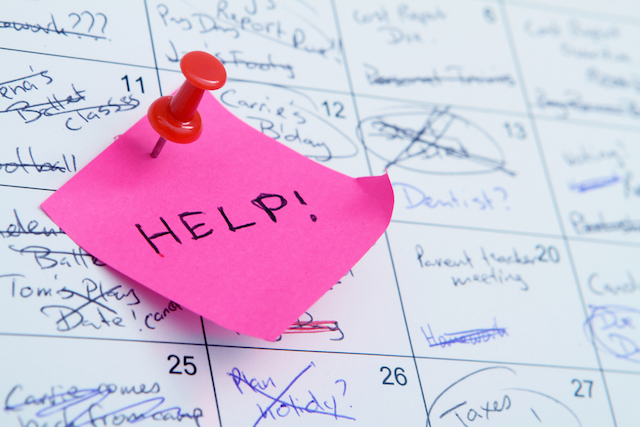
    I also started to question whether what I thought was important in life was really important at all. I reframed my life and came to the conclusion that there are several areas, commodities if you will, that are vitally important to how we feel, that need careful attention.

    This is what led me to the realization that our purpose, time, health, and relationships are amongst our most precious commodities. Such a simple and obvious realization, you may protest. Well, if that’s the case, how is it that we let these suffer so frequently?

    Purpose

    Purpose is our why. It drives our actions. It fuels our passion. It encompasses our work, our relationships, and our approach to living our lives. It wraps around everything we do. It means living our lives in an intentional way. It gives our lives a sharper focus.
    Our why is what keeps us going when life gets tough.

    Our why gives life extra meaning and richness.

    If we’ve lost our way and are struggling with our why, we can ask ourselves several related questions:

    • Where am I’m trying to get to?
    • What lights me up and gets me excited?
    • What’s my reason for getting up in the mornings?
    • What do I want more of in my life?
    • What do I want less of in my life?

    The answers to these questions can be revealing and can lead us back to the core of what really matters most to us. Listen to these answers and use them as a guiding light. Revisit them often

    Time

    We all have the same number of hours in our day. Why do some of us run around, constantly stressed, complaining we “don’t have time,” while others seem to approach life in a relaxed and happy state but still get plenty done?

    Though we all have responsibilities and obligations, this often comes down to choices.

    Many of us make poor exchanges on our time on a daily basis. Each time we say yes to something, we are effectively saying no to something else. The problem is, we often say yes to too much. This is where a balance starts to tip.

    Instead of feeling in control of our calendar, our time is all accounted for. We rush from this commitment to that, never really feeling like we’re truly present at any of them. We squeeze evermore into our days but feel we have less and less time to do the things we really want to do, or see the people we want to see. We have less space left for ourselves.

    Time is a finite resource; once spent, it’s gone. We can’t get time back, but we can be selective and intentional with the time we have.

    We can take control by saying yes to less and appreciating the white space in our diary. We can protect our precious time for the activities and people that give our lives the most meaning and joy.

    Of course, reclaiming your time isn’t always this simple. Some of us are working several demanding jobs in order to pay the most basic of bills. Maybe we are bringing up a young family, caring for aging parents, or perhaps looking after a loved one who has physical or mental health challenges.

    Finding time for anything in these scenarios can be especially tough. Even if we do have time, we feel a heavy sense of guilt if we spend it doing something for ourselves, because it seems selfish. Besides, exhaustion can hit us right when we have these small windows of time, and sleep or the TV may beckon.

    If we’re limited in this way, a good start is to find small pockets of time to invest in our passion projects, our hobbies, and ourselves. Five minutes here, half an hour there can add up over a period of time.

    Though we may be caregivers or breadwinners for others, we need to remember to care for ourselves along the way. We can do this without neglecting our responsibilities. In fact, the more we can look after our own well-being, the better equipped we are to be of service to others.

    Another step that we can take is to try to change our situation. Maybe we can work closer to home or look to simplify and reduce our bills, and perhaps even work a little less. In the case of loved ones with challenges, maybe we haven’t exhausted our options in terms of additional help (from friends, family, or care groups).

    These are all tough and very real challenges some of us face, and I will not make light of them here. All any of us can do is look to make the very best of our situations and be grateful for what we have instead of focusing on what we don’t have. Sometimes we need a little outside support from others to help us along. Where there is a will, there can be a way.

    Health

    So many of us take our health for granted until we have a reason not to.

    We neglect exercise and then wonder why our bodies complain when we need to climb a flight of stairs. We neglect our diet and then wonder when all this extra weight crept up on us. We neglect our mental health and then wonder why we’re always stressed.

    We can be kinder on ourselves. We can add regular movement to our lives. Walking, the gym, bodyweight exercises, yoga—it all counts and can all be mixed up. Our bodies are made to move, not sit humped over laptops or in front of TVs all day. Embrace the ability to move.

    Eating healthily can also be simple and enjoyable. We can base most of what we eat on plants (fruits and vegetables). If we eat meat, we can treat it like a side dish and ensure most of the rest of our plates are filled with a rainbow of vegetables. No foods need be off limits, and we can still make space for the odd discretion. Healthy eating can and should be delicious eating, and should never feel like drudgery.

    Being outside more, eating well, and making time to decompress can all help our mental health and general feelings of well-being. We can be gentler with ourselves by ensuring we make time to reset occasionally.

    Regular check-ups with our doctors can help pick up the early signs of anything nasty, but we can also do our best to make the most of what we have by trying our best to look after ourselves.

    Relationships

    Our modern obsession with being busy leads many of us to feel we don’t have enough time in our days. This is a particularly sorry state of affairs when it means we “don’t have time” for our relationships.

    The truth is, all this busyness just might be something we have had a hand in creating. This may not be welcome news, but it does mean we can also step back from it and live another way.

    Our friends, family, and loved ones are what really add spark to our lives. We need to make the time to foster these relationships. Being busy is fine, if we’re busy with the things and people that mean the most to us.

    Our relationships are our bedrock, our foundation. We need to nurture them with the love and attention they really deserve.

    Purpose, time, health, and loved ones. These are truly the things that make us richer and make life more complete. Let’s treat them accordingly.

  • 8 Ridiculously Easy Ways to Get (or Stay) in Shape

    8 Ridiculously Easy Ways to Get (or Stay) in Shape

    “The secret of living well and longer is: eat half, walk double, laugh triple, and love without measure.” ~Tibetan Proverb

    For a lot of my life, my weight was a source of great stress.

    Growing up, I was the frequently taunted chubby kid in class. Unlike my sister, who always chose strawberry-flavored everything, I leaned toward chocolate and spent way too much time sitting in front of a TV.

    I had a potbelly (which made me look like a pregnant eight-year-old) that only slightly deflated when a growth spurt shot me up to the towering height of 5’1½”.

    In my adolescence, teens, and early twenties, I struggled with bulimia—a misguided attempt to reclaim my self-esteem through thinness and control the only thing I felt I could control, my weight.

    In the years since I recovered, I’ve learned to value my body, not just for how it looks but also for what it does for me, and to take good care of it.

    When we take care of our bodies, we feel stronger, more energized, and more capable. We breathe and sleep better. We decrease our risk of developing certain diseases, increase our life span, and improve our mood and focus.

    We also open ourselves up to a world of possibilities. When you’re fit, you’re free to weigh your options based on what excites you, not based on your physical limitations.

    Rock climbing sound interesting? You can give it a try and see! Considering a dance class? Why not! Dreaming of doing a marathon or walking tours through your favorite European cities? Sure, you can handle it!

    There’s little more liberating than knowing that you can do what you want to do—that you have the strength, energy, and stamina to experience something that may blow your hair back and make you feel exhilarated and alive.

    That’s what being fit does for us. And that’s why I now do my best to move every day, and also to eat a mostly healthy diet.

    Since this is a popular month for implementing a new exercise plan, I thought it would be the perfect time to share some of my own fitness practices. Perhaps one or more of these will help you get moving and get (or stay) in shape.

    1. Get your 10,000 steps without leaving your living room.

    I first learned about the benefits of walking 10,000 daily steps—the default goal for Fitbit users—back when I worked in mobile marketing. As part of a promotion for pedometers, a team of us covered the country on foot over a three-month period.

    Prior to that time, it had never occurred to me that walking was a viable way to stay fit and healthy (or that it could be fun and exciting). It just seemed too low impact to count as exercise—but count it does!

    Not only does walking improve our overall health and decrease our risk of heart disease, it can also boost our mood and energy and reduce stress, since it has a meditative quality.

    While I prefer to walk outside, since I find it calming to be in nature and enjoy seeing the houses in my neighborhood, there are days when I just can’t make it happen. On those occasions, I find short bursts of time throughout my day to walk in place.

    Most often I’ll do this while working on my laptop or watching a show, if it’s the end of the night and I’m unlikely to do anything else. Is it the best workout in the world? No. But it’s something, and something is always better than nothing. That leads me to my next suggestion…

    2. Give yourself permission to do an incredibly short workout.

    If you’re an all-or-nothing person, like me, you may feel like it’s not worth going to the gym unless you’re going to do a full workout, whatever that looks like for you.

    For me, that would include at least thirty minutes on an elliptical, weights, crunches, and a couple of leg machines. But there are some days when I don’t have the time or energy to do all of those things.

    Recently I’ve been telling myself it’s okay to do fifteen minutes on the elliptical and crunches, and call it a day. Oftentimes I end up doing more than that, but giving myself permission to do the bare minimum helps get me out the door.

    3. Pair exercises with daily activities.

    I know this might seem like an odd recommendation from someone who promotes mindfulness, but I have found it very effective to multitask certain activities that I do daily. For example, I usually do squats while drying my hair.

    This ensures I do multiple reps, since I have several minutes to work with, and also decreases the likelihood that I’ll forget to do my squats, since I’ve linked them to an activity I do every day, without fail.

    Some other ideas to consider:

    • Before putting your Swiffer or broom back, use it as an oblique bar and do a set or two of ab twists.
    • Before cooking, use cans, bottles, bags of rice, or other food items as weights; hold one in each hand and lift your arms out to the side twenty-five times.
    • If you have stairs in your home, every time you need to go up, come down and go back up again, doubling your steps climbed.
    • Do leg lifts or squats while brushing your teeth.

    4. Look into a standing desk.

    Whether you work from home, like I do, or do any kind of computer work in the evening, a standing desk ensures you spend less time sitting. And as they say, sitting is the new smoking. No, I didn’t make that up. “They” really do say it!

    We’re spending far more time sitting than ever before, between driving, working in offices, and binge watching Netflix at night; and it’s increasing our risk of developing a host of different illnesses, such as cancer, heart disease, and Type 2 diabetes.

    If you can’t afford to buy a standing desk, you can easily make your own by piling a bunch of boxes on your dining room table and placing your laptop on top.

    I use this same set up when exercising on a portable elliptical machine—a small piece of equipment that cost me about $100, takes up very little space, and offers a nice alternative to walking in place.

    5. Trade your office chair for a stability ball.

    You may or may not be able to do this at work, but at the very least, you can consider this a viable alternative to a standing desk at home.

    Sitting on exercise ball ensures you keep your spine long, since that’s crucial for balancing, and it also tones your core. Experts recommend using a stability ball in place of a chair for twenty to thirty minute increments, since sitting on a ball puts increased load on your lower spine.

    If you’re anything like me, you may also prefer using a stability ball for crunches to lying on the ground. You work more core muscles balancing on a ball, and it’s a lot easier on your spine, since it’s soft.

    6. Combine exercise and stress relief.

    When I first found yoga in my mid-twenties, I quickly got hooked. After every class I left feeling dramatically calmer, less anxious, and more at peace with myself. And the benefits of class bled into my daily life. When situations arose that would ordinarily cause me stress, I was able to cope with far less internal drama. When your workout simultaneously eases your mental anguish, it’s pretty easy to make it a habit.

    If you think yoga could be a good fit for you, there are tons of different options to meet your individual needs, from hot yoga (far more intense) to restorative yoga (a much gentler practice). You can practice at a studio, in a gym that offers classes, or even find some videos on YouTube to try at home.

    Whether you do a ninety-minute class or a ten-minute video, you’ll see benefits, and will likely get hooked!

    7. Give up the good parking spots.

    I always enjoy integrating easy exercise into my daily life, whether that means taking the stairs instead of the escalator or walking instead of driving.

    When I’m going somewhere specific, it doesn’t feel like a chore—just a way to get from A to B. And I generally enjoy walking outside, since there’s always something around me that catches my interest.

    One easy way to get a little extra exercise is to leave a little early, wherever you’re going, and park a fifteen-minute walk away. This ensures a total of a half-hour of walking. And the best part, you can’t bail on the second half—at least not if you want to get home!

    8. Plank your way to a tighter core.

    I loathe crunches with a passion. As I mentioned, I mind them less with a stability ball, but I don’t have one at home, since my space is limited. So on days when I don’t go to the gym, I plank to tone my core.

    I started by holding the plank for just fifteen seconds, and then every couple of days increased the time by five seconds until I eventually got up to two minutes.

    My stomach isn’t back to what it was before I had fibroid surgery several years back (and it may never be), but the combination of planks, oblique twists, and crunches has dramatically tightened my core.

    I’m a big fan of mixing up my exercise routine, allowing myself lots of options—from hiking, to biking at the beach, to doing yoga or cardio at the gym, to moving in my own home—and I think that’s been the key to my consistency.

    When you give yourself choices to meet your varied moods and needs, you’re far more likely to move regularly. And at the end of the day, that’s all that really matters: that you do something, every day, to get your blood pumping.

    When you do this, you’re far more likely to feel strong in mind and body, good in your skin, and capable of doing whatever you want to do.

  • 4 Tips for Raising Happy, Emotionally Healthy Children

    4 Tips for Raising Happy, Emotionally Healthy Children

    Mother and daughter

    “Emotional intelligence begins to develop in the earliest years. All the small exchanges children have with their parents, teachers, and with each other carry emotional messages.” ~Daniel Goleman

    I consider myself an expert on the emotional needs of children. Mostly because I was one.

    No one goes into parenthood anticipating the ways they will psychologically damage their children. At least I don’t think they do. I hope not. It’s far more likely that most go into parenthood wanting the best for their children, hoping to do more for them than their own parents were able to do.

    So, why is it that so many come out of childhood scathed in some way? My parents fed me and sheltered me. I learned how to take care of myself physically and to manage the tasks of adulthood. I was responsible and productive. Yet, I was far from happy and fulfilled.

    I did not come out of childhood feeling good about myself. I had no idea how to identify how I was feeling, let alone express it in ways that were not destructive in some way. I did not learn what a healthy relationship looked like, with myself or others.

    Technologically and economically speaking, we have made tremendous strides in the last 100 years. It is actually pretty phenomenal if you take a minute to look at history.

    World Wars, the Korean and Vietnam Wars took up resources and energy in the early to mid part of the 20th century, and everyone had to step up and out of their comfort zones to keep things going, within the family and within our country. There was tremendous change on a national level.

    The earlier part of those 100 years were often about survival for families. Putting food on the table and a roof over their heads was a priority. Everyone doing their part in managing household responsibilities was paramount. Disposable income and disposable time were luxuries.

    For the most part, that has all changed.

    Huge technological and economical advancement only left psychological and emotional growth lagging sorely behind.

    Does anyone find it strange that we spend twelve years or more in an education system, which is supposed to prepare us for life, but no one teaches us how to navigate our own emotional world?

    We take classes for everything from learning to draw to playing an instrument to getting a medical degree or becoming an accountant to learning karate and gymnastics or learning to cook, yet we get little to no education on our psychological and emotional health.

    We are completely caught up in and focused on our physical health, unaware that our emotional health or lack thereof plays out in our bodies every minute of every day. Why does mental health have a stigma and physical health does not? They are completely intertwined.

    If we were healthier emotionally, we would be healthier physically.

    I think most of us would agree that the world often looks like it is going crazy. People are dumping their pain all over others, rarely being accountable for themselves or recognizing there is another alternative. I know. I’ve been there. I’ve been dumped on and I’ve been the dumper.

    All you have to do is turn on the television or look at a video game or watch the news—murder, mayhem and politics, addiction, domestic violence, divorce and child abuse, bullying by parents at their children’s sporting events, and adults having sexual relationships with children—to know that adults are still trying to figure out how to navigate their own feelings and emotions.

    How then are we to teach our children how to be emotionally healthy when we live in a world that is so emotionally unhealthy?

    Emotionally healthy people do not need to oppress others. Emotionally healthy people do not hate others for their differences. They are more likely to see their similarities. Emotionally healthy people never think they are better than anyone else, for any reason.

    Emotionally healthy people know how to express themselves in life-giving ways, and are rarely in abusive relationships or having affairs. They aren’t lying, cheating, or abusing drugs or people. They are generally happy people.

    Becoming an emotionally healthy person is an ongoing journey and needs at least as much, if not more, attention as we give to our physical health.

    Reproduction often gets less thought and planning than a vacation. Raising children to be healthy, happy, productive, and loving adults becomes on-the-job-training at its worst, since mistakes can be life altering.

    So how do we help our children become the happy, healthy, productive, and loving adults most parents want them to be?

    First, Stop Denying Your Feelings

    We are born open and perceptive. Kids pick up on all kinds of things that adults seem to miss. Most kids are naturally intuitive and inquisitive. Their environment will either nurture that experience or hinder it.

    What kids need is someone helping them to identify and articulate what they are experiencing. Feelings and emotions have a purpose. They communicate information to us that is necessary for the successful navigation of life. Unfortunately, there is often little tolerance of them, unless they are happy and joyful.

    If we aren’t being truthful about our own feelings and emotions, how can we teach our children to be truthful about theirs? The feelings we have are not the problem, what we do with them might be.

    Parents often erroneously think they have to protect their children from their own emotions and feelings. It goes something like this:

    You, the parent, are feeling sad. Your child says, “Are you sad, Mommy/Daddy?” Mommy/Daddy says, “No, honey, Mommy’s/Daddy’s not sad….”

    Your child is now confused. S/he knew what sad looked like and felt like, but they are now doubting themselves, because of course, they trust you know better. They also take in an unspoken message that says, “We don’t talk about our painful feelings and/or some feelings are not okay to express.”

    Acknowledging when your kids are right will nurture your child’s natural intuitiveness and emotional intelligence. That will go a long way in contributing to their mental health, like exercise for the body contributes to physical health.

    I am not suggesting we dump our feelings on our kids (like we more often do with anger). I am suggesting we be more honest about our feelings. Reassuring them that we can handle our own feelings will relieve them of responsibility for how we feel, as well as communicate that they, too, can have and learn to tolerate their more difficult feelings.

    They will learn from what we do.

    If we blame our children for how we feel (“You make me angry” versus “I feel angry when you…”), we will leave them with a lifetime of taking on responsibility for the feelings of others, while also learning to hold others responsible for how they feel. That has contributed to a large population of narcissistic people blaming everyone else for how they feel, unable to have any accountability.

    When that happens, we give the power we have to make ourselves happy away to those who can’t.

    It’s okay to express our feelings to our children in age appropriate ways. It is also okay to ask them how they handle things when they feel sad or angry or scared.

    It is important to normalize all feelings, without giving free reign for how they are expressed.

    Second, Stop Judging Feelings as Good or Bad

    Have you ever had anyone tell you, “You shouldn’t feel that way”? Or have you ever told yourself that? I don’t know about you, but I don’t usually choose my feelings. They seem to choose me.

    If we accept how we feel, no matter how horrible it might seem, we can begin to learn from and transform those feelings.

    Then, of course, we can stop judging our children’s feelings. This will allow them to bring their own feelings into the light, without shame. Only then can they learn from and transform their own feelings. Only then can those feelings move on.

    What is not expressed and articulated will be acted out.

    We see this in the schools every day. We see this on the news every day.

    We need to stop judging the way our kids feel. All feelings are a part of the human experience.

    Telling them “that isn’t nice” doesn’t resolve the issue. Asking them why they feel that way and allowing them to express their feelings does. They need our guidance and perspective to help them acknowledge and understand their feelings.

    I usually felt like the outsider as a kid. I did not know how to “fit in.” I took in a message that the way I was or who I was, was not acceptable. So I felt bad about myself.

    When I could finally acknowledge how I felt and express it in a safe and open environment, those feelings began to change. Not because the environment changed, but rather because my perspective on it did. My perspective on myself changed within the context of a helping relationship.

    Parents are the first helping relationship.

    We all have feelings and thoughts of which we are ashamed. This is normal. Judging feelings as bad, all the while pushing them down, will give them permission to control us.

    Facing them honestly gives us the control.

    And don’t we all want our children to be able to manage their feelings and express them appropriately? Wouldn’t we all be happier?

    Third, Avoid Telling Your Kids What You Think They Should Think

    If you want to know what is going on in your kids’ heads, you have to ask questions. Get curious—curious about how they view what is going on in their school or in the world or in your home.

    When you don’t push your own views onto your children, but rather listen to them with interest and unconditional acceptance, they will learn to accept themselves and see their own views as valuable.

    You will also be better able to head off crisis and give the guidance you think is needed if you actually know what or how they are thinking. Parents are always the involved guides and coaches that move between being an overseer to taking a more active role, depending on the age and needs of the child.

    Remember, they are not you, nor are they an extension of you. They are their own person, with their own thoughts, feelings, perspectives, and ideas. Be curious about who your kids are. Notice their strengths. Nurture them.

    Be aware of their weaknesses and work with them patiently. We all have them.

    I remember having a conversation with my parents as an adult. I was raised with fear, as the means of keeping us children in line. My parents had no idea I was drinking in high school, let alone how often I drove home in blackouts. I have felt very fortunate I did not kill myself or someone else.

    Kids will not tell you what they are thinking or feeling unless you create an environment in which they feel safe enough to do so. That means being able to tolerate the things that might make you uncomfortable.

    Dropping the gauntlet won’t necessarily stop the unwanted behavior. Understanding why the behavior exists and what is not being expressed just might.

    Fourth, and Most importantly, How Are You Dealing With Your Own Feelings?

    If we have not resolved our own emotional issues or have little understanding of their very existence, then we will be unable to assist our children manage theirs.

    None of us will have things completely resolved, since that is what life seems to be all about. It is the journey.

    But if we are afraid of our own feelings and emotions, then we will avoid those of our children. It’s never easy to watch children suffer. Yet we can’t get through life without it happening. The better prepared we are to deal with our own feelings, the better we will deal with theirs.

    The better we can navigate our own emotional world, the better we will help our child navigate theirs.

    It’s not about being perfect. It’s about showing up and being able to go there.

    It can be helpful to look back on your own childhood to gain understanding into how you learned or did not learn to deal with your feelings and emotions. It will have everything to do with how you raise your own kids.

    What was acceptable and what was not? How did your family of origin process feelings?

    There is no shame in it. It is never too late to go back and heal what we helped to break. Acknowledging our own inadequacies can be freeing. We live in a culture that demands perfection, where perfection does not exist.

    We do not know, what we do not know. There is always room to learn. Haven’t your children been the greatest teacher? Don’t they challenge you beyond what you think you can do?

    Don’t they deserve to grow into the healthy, happy, productive, loving adults you want them to be?

    Of course they do. The hard part is we have to be that first.

  • Yo-Yo Dieting: How to Free Yourself From the Struggle

    Yo-Yo Dieting: How to Free Yourself From the Struggle

    “Your body is a temple, but only if you treat it as one.” ~Astrid Alauda

    Have you ever guiltily reached for second helpings of a tempting dish or dessert while justifying it with something along the lines of, “It’s okay, I’m going on a diet/detox after this”?

    Or, do you ever find yourself eating really healthy one week, then the minute you cave in and eat something unhealthy, your eating habits suddenly take a turn for the worst?

    Are you really hard on yourself when you don’t feel comfortable in clothes you want to wear and suddenly regret all the unhealthy food choices you’ve made the past few months?

    I’ve experienced all of these scenarios. I used to yo-yo diet for years, and I would cycle through super healthy or restrictive eating plans one week, to eat-whatever-you-like the next week.

    I was always fighting to be a particular weight or to look a certain way. My eating habits were inconsistent, and so were my weight, my energy levels, and the way I felt about my body.

    After years of unhealthy eating habits (that may have appeared healthy on the outside), my body didn’t take it so well anymore. I got to a stage where I would feel sick after most meals and suffered stomach cramps due to a digestive disorder.

    It was frustrating and a daily inconvenience, however it was irritating enough for me to stop and do something about it.

    After years of not looking after my body, the messages became louder and clearer until I made the choice to pay attention and listen to my body.

    I started to re-educate myself about my health from a more holistic perspective. I moved away from using food as a way to control how my body looked and moved toward using food as a way to heal my body of illness.

    By embracing mindfulness with my eating I began to notice which foods my body rejected and which foods fueled my body.

    I also noticed how my eating habits affected my mindset and how I feel much more confident about my body now that I look after it and eat well.

    I redefined what healthy means for me and it no longer means choosing fat-free options or tiny portion sizes.

    On reflection, these are the steps I took to redefine my health and finally be free of yo-yo dieting and controlling eating behavior.

    1. Make it your diet, not a diet.

    The word diet simply refers to the food that a living being eats day-to-day. (Like, the diet of a koala consists of eucalyptus leaves.) However, in modern times, the word diet is more commonly associated with a temporary eating plan that has an end goal of losing weight.

    But, what happens after the weight is lost? Do you go back to eating take-out and chocolate and whatever you can get your hands on? Being healthy is not a temporary thing that is to be attained in the future; it is a way of life that is to experienced now.

    View your health as a permanent thing in your life and see it as something in the present rather than in the future.

    2. Tune into your highest level of motivation.

    For many people the initial incentive to diet is to be thinner; however, this motivation is not always enough when more important things take priority in life, such as passing exams, building a career, and raising children.

    When I developed digestive problems, my motivation shifted and accelerated because attention was now drawn to one of my highest values: my health. I realized that striving to be healthy just so I could be thin was not helping me in the long run if my body was suffering.

    To be truly committed to creating a healthy lifestyle, you need to be driven by something of high value to you, across all areas of your life, such as your health and vitality (what keeps you alive and thriving so you have the energy to play with your kids, excel in your career, travel the world, or do whatever it is that makes you happiest).

    Use this to remind yourself why you need to be healthy to live a fulfilling life now; don’t wait till you’re burnt out and sick to value your health.

    3. Change your beliefs about healthy eating.

    When I started changing my perspective on health, I also realized some of my old beliefs about health were not helping me—i.e.: being healthy means only eat foods with fat-free labels; eat just under daily calorie requirements; never eat avocados, nuts, or any foods naturally high in fat.

    I had to let go of beliefs that held me back and create new ones that brought me toward a lifestyle where I felt energy and vitality to do the things I loved. My new beliefs include: eat whole foods as much as possible, make healthy snacks using nuts and seeds for energy boosts throughout the day, and listen to my body to judge food intake rather than counting calories.

    If you find your current beliefs for optimal health are a little skewed or unattainable, it is time to re-educate and recreate your beliefs about health. Then, visualize yourself living as your healthiest self, and draw on this daily to remind yourself of what is most important to you.

    4. Discover what’s holding you back.

    When we continue with unhealthy habits, even ones we want to change, we become stuck in it, because staying there is fulfilling a need (albeit it in an unhealthy way). Usually, we don’t know what that need is until we look within and be completely honest with ourselves.

    For me, this need was self-acceptance. I was striving to create a perfect body idolized and accepted by society, but the person I really wanted acceptance from was myself. 

    Dieting fulfilled that need because when I lost weight I would like my body; however, when I gained weight I’d dislike myself. Once I started to accept my natural body type and embrace the body I have rather than change it to look like a photoshopped celebrity, I began feeling good about my body all the time, regardless of how much I weighed or what I ate that day.

    Once you dig deeper and understand your why, you can work toward meeting your need for something like self-acceptance in a healthier way too.

    To do this, start with the behavior you see on the surface (such as restricting calories), and ask yourself why you do this. Get your answer and then ask yourself why or what is the purpose of this? Keep asking why until you get to the core of the issue.

    5. Listen to your body.

    Once you have tuned in to what motivates you and what holds you back, you have also tuned into the values that are unique to you. These values have been shaped by who you are and what you need to function as your best self. Therefore, it doesn’t make sense for you to follow a healthy lifestyle carved out by someone else; however, it does help to gain advice and inspiration from other people’s experiences.

    You need to listen to your body and make your food choices intuitively. The easiest way to start this is to keep a food diary. Record what you eat and how you feel after each meal so that you can choose to eat more of the foods that make you feel good and less of the foods that don’t make you feel so good.

    6. Implement your new perspective of health.

    The last step is to take action. In my opinion, the best way to do this is by taking baby steps. Set achievable goals so that you can comfortably introduce healthier behavior into your lifestyle.

    If you decide you’re going to give up all processed food, refined sugars, and gluten, and you’re going to start tomorrow, there’s a good chance you will be overwhelmed and disappointed and quickly return to old ways.

    You need to be realistic and set goals you can start now, that are achievable in a specific time frame. Be honest with your self. Ask, “Is this something I can do in that space of time, and do I believe the outcome will create the healthier lifestyle I envision?” If not, then re-adjust so it does.

    Accept what works for you and move away from what doesn’t. When you work from within you will naturally take action that feels best for you.

    Once you follow these steps and mindfully create a healthier lifestyle that is unique to you, being healthy will become a part of who you are, and not just something you strive for. This is what happened to me.

    I am now very passionate about my health and I love cooking and preparing healthy foods. I have learned how to listen to my body and honor and respect what I need to be at my optimal health. I now have a healthy relationship with food and diets are something of my past.

  • How to Transform Your Body by Coming from Love Instead of Fear

    How to Transform Your Body by Coming from Love Instead of Fear

    “Fear is the opposite of everything you are, and so has an effect of opposition to your mental and physical health.” ~Neale Donald Walsch

    My initial foray into health and fitness started from a deep place of fear.

    I feared my weight and my appearance, always wondering what new trend I’d encounter in a magazine or on social media that would point out the latest way I was inadequate.

    I feared the big health scares that we’re told could kill us at any moment if we aren’t careful. Diabetes. High blood pressure. Cancer.

    Many of us have all been on some part of this same path. But when we let fear sit in the driver’s seat, it actually pushes us in the opposite direction of true health and happiness. We’re driven to make exercise or diet choices that never seem to satisfy, and the body we see in the mirror never seems to be what we want.

    And so like many of us, I hopped from one exercise plan to another. I jumped from one eat-this-but-not-that diet to another. Meanwhile, I never arrived at a place of feeling healthy, whole, and happy.

    This feeling I was seeking—this thing I was trying to get out of my body and my physical pursuits—was a teaching moment for me.

    As each so-called “healthy” lifestyle change led to dead ends, and as I saw friends struggle with weight despite their strongest efforts, I slowly realized that our health is only as good as our mindset.

    See, fear is completely unsustainable as a motivation for our health journey. We don’t like to dwell on all the ways our mortal bodies are threatened. Information alone isn’t heart knowledge, which is why so many of us intellectually know we shouldn’t smoke or eat so much fried food, but maybe we eat French fries for lunch anyway.

    Fear of our own bodies doesn’t work either. Our unhappiness might make us go on a diet, but for every action there’s an equal and opposite reaction, so we inevitably get off of that diet. Then we feel the pang of guilt and more fear, and the fear-driven cycle repeats itself.

    To break this cycle, we have to talk about not just our gym habits or our eating habits or our favorite green juice, but also our mind habits.

    If we change our minds, we change our bodies. The body is the physical incarnation or manifestation of our internal beliefs and thoughts. While so-called “body problems,” like extra weight where we don’t want it, may bubble to the surface on the body level, the answer isn’t solely on the body level but also on the level of our mindset.

    My health path switched lanes dramatically when A Course in Miracles reminded me that nothing real could be threatened.

    The book teaches that our real, inner self is already whole, perfect, and securely loved. That’s real, but we’ve bought into the illusions that Hollywood, magazines, social media, and the world sells to us.

    When we accept that we’re already whole and that this truth cannot be threatened, we can finally release the fear we feel when we perceive a threat to our body. Body image threats—“I’m less if I don’t weigh less” or “I lack if I don’t have more muscles”—lose all of their power and dissolve the moment we hug this truth close to our hearts.

    To paraphrase it in non-religious psychological and philosophical terms, everything that we see around us is simply our minds’ projection—our world, our “reality,” reflecting back to us our own internal beliefs and mindsets.

    This is true when it comes to the types of careers we chase, or the types of friendships we create, or how we relate to money or sex or love. It’s especially true for how we perceive what we see in the mirror and how we care for our body.

    If fear is an unsustainable motivator for weight loss or staying healthy, and if fear actually makes us make unhealthy choices, then we must return to a core place of love.

    We must release the illusion and accept that our real self is whole. Similar to how darkness is just an absence of light, the fear we’re feeling is not an actual thing, but rather an absence of love for our true selves.

    Approach exercise, diet, and physical health with a love-focused mindset, and suddenly we change how we treat our bodies and we begin to see the physical results we’re looking for.

    Remember, when we get healthy on the mind level, the body manifests this new mindset through our subconscious choices.

    There are a few ways that we can each start to center our diet, weight loss, and fitness on a spirit of love instead of a spirit of fear:

    1. Remember who you really are.

    In A Course of Miracles, we’re told that we’re already whole, divine, and full of light, but we’ve just forgotten that and need to be reminded of it.

    Unfortunately, so much of the messaging that we’ve internalized tells us we need a certain waistline or a specific number of abs to be good, whole, and lovable.

    Begin to remember who you really are, and remember that your real you is not threatened. You are divine, and therefore you’re wholly love, wholly lovable, and wholly loving—no matter your physical appearance!

    2. Identify and let go of your triggers.

    So many of our dietary choices are driven by subconscious, fear-based emotions like anxiety and stress. For example, researchers have found that stress—which is really fear of a situation that we can’t control—causes us to crave unhealthy, sugary snacks.

    Fear also causes our body to release cortisol, a hormone that boosts appetite and makes us store extra abdominal fat.

    Every diet we’ve ever tried and failed at focused solely on the physical symptoms, like stopping late-night snacking. But remember, a problem like late-night munchies isn’t just on the body level but on the mind level.

    Take a step back and observe the situation for any underlying triggers—a problem in the office, or maybe a toxic friend—that may be provoking fear.

    Self-care is having the courage to heal by identifying and creating boundaries between you and any toxic situations present, carving out time to relax and de-stress, and saying no whenever appropriate.

    3. Build an abundance mentality.

    It’s time to exercise your mindset muscle just like you exercise your physical muscles. As a certified personal trainer, I have reviewed dozens of psychological studies that show how positive self-talk and a positive mindset motivate us to stick to our health goals. It’s one of the big differences between people who stick to their New Year resolutions and those of us who don’t.

    In our health journey, an abundance mentality means we choose to exercise and bless our physical bodies because we want to add more positivity to our already abundant lives, not because we’re trying to fill some sort of inner emptiness.

    For me, when I walk into the gym with a mindset of abundant success (“I love myself, so I want to sweat a little”) instead of a lack mentality (“I can’t believe I ate that, I need to burn it off now”), it changes everything about my workout endurance and the physical results I see.

    4. Drop the fear-based language.

    When I talk to people, they often refer to their diet struggle. Or they see health as a battle between their mind and their body. “No pain, no gain,” is something athletes yell at themselves as they complete one last mile or one last burpee.

    Struggles, battles, and pain are no way to refer to the physical temple within which our divine love lives. All it does is reinforce the false idea of separation between our spiritual and physical manifestations.

    Your body is not something you need to battle and beat into submission. As we drop fear-based language, we empower ourselves and the people around us to view each of our bodies with more love.

    5. Create love-based diet, exercise, and wellness goals.

    The health stool has three legs: Our internal mindset, scientific research on proven exercise and diet techniques, and actual action. Research may say, “Do XYZ to get stronger,” and we take action. But the mindset aspect is a game changer.

    An action done in fear has a different outcome than the same action done in love. As a personal trainer, I know that it’s our thoughts and beliefs systems that actually transform our bodies.

    For example, every summer, people tell me they want to look ripped or toned for the pool season and that they’re worried about abs or love handles. This is a fear-based wellness goal.

    A love-based wellness goal might look like this: “I want to be more flexible so I can play with my grandchildren.” Or, “I want stronger legs so I can go hiking more.” Goals built around love connect us to positive, abundant life experiences.

    Instead of eating or not eating something because we’re terrified or our body, we can replace this fear with love. If we love our body, because it houses our divine nature, how does that change what we do?

    Love looks like a little bit of sweat at the right time, enough sleep every night, and nourishing, yummy meals that make you feel good.

    The more we stay connected to love instead of fear, the more we’ll see this same love reflecting back to us when we look in the mirror and when we glance down at the bathroom scale.

    Ask yourself right now, “If I am whole, healed, and loved, what changes would I make to feel more of that love in my own body today?”

  • Stop Pushing Yourself So Hard: 8 Ways to De-Stress Your Mind and Body

    Stop Pushing Yourself So Hard: 8 Ways to De-Stress Your Mind and Body

    Peaceful Woman

    “Self-care is not selfish or self-indulgent. We cannot nurture others from a dry well. We need to take care of our own needs first, and then we can give from our surplus, our abundance.” ~Jennifer Louden

    I have always been really driven. I readily admit that I am an overachiever, and I have the capacity to burn the candle at both ends.

    Following my dreams and creating what I imagine is my destiny takes work, real work, so I can easily spend way too many hours a day striving to bring my visions into reality.

    I am hardwired to push myself naturally. I am quite certain it is a gene that I have inherited from my dad. I don’t seem to have an off switch, and that fuels me to fit as much as I possibly can into twenty-four hours.

    Two years ago my off switch was shut down for me without my consent.

    My world and my body were shaken and shattered into a million pieces in what seemed like a heartbeat.

    Back then, I lived in a beautiful two-story home. One morning, as I headed out for my morning run, I fell down my steep internal staircase. One minute I was standing on the top step, and then the next minute I was lying at the bottom.

    I suffered all sorts of injuries. Some of those injuries healed quickly, and some will stay with me for the rest of my life. But on the flip side, my fall from grace has reminded me to slow down, smell the roses, and practice self-care every single day.

    I often look back and ask myself, was my fall perhaps the Universe’s way of nudging me, or rather throwing me, into a place where I had no choice but to nurture and heal myself?

    Being forced to completely stop gave me the opportunity to re-evaluate my entire life. I had always taken care of myself, but when I look back, I recognize it was only on the surface. I had never stopped for long enough to prioritize wellness on every level.

    Though it can be challenging to find time to practice self-care, we all need to nurture ourselves—emotionally, physically, spiritually, and mentally.

    In retrospect, I’m grateful for my accident, as it taught me to really take care of myself. If you too are pushing yourself too hard—and rushing through life as a result—I highly recommend you (slowly) take the following steps.

    1. Take ownership.

    I learned that I must take personal responsibility for my wellness. We all need to do this.

    I don’t mean just taking a break when we are exhausted, rundown, or overwhelmed, or when we hit rock bottom—or in my case, the bottom of the staircase! We need to form and maintain healthy habits that enable us to thrive. No one else can do this for us.

    2. Commit.

    In order to maintain optimum good health on every level, I have had to accept that it requires a degree of commitment and discipline. It is often when we lose something so precious, like the ability to move or to walk unaided, that we really appreciate what so many take for granted.

    Do some trial and error to identify the self-care practices that help you function at your best—meditation, short walks, getting out in nature; anything that helps you recharge physically, emotionally, mentally, or spiritually. Then schedule these activities into your day.

    It might help to start with five or ten-minute activities so it doesn’t feel too overwhelming. The important thing is that you do something each day, no matter how small.

    3. Practice mindfulness.

    Mindfulness forms the foundation of self-care, because we’re only able to identify our needs when we’re present in our bodies. I wasn’t mindful on the day of my accident, and that’s why I didn’t realize I needed to slow down.

    Mindfulness also nourishes our spirit by rooting us in the present moment. By practicing mindfulness, we become engaged with our surroundings.

    The best way I know how to practice mindfulness is through meditation. Meditation has given me a sense of calm, peace, and balance. It supports my emotional well-being and my overall health. What’s not to love about that?

    4. Take breaks for deep breathing.

    I now take regular mini breathing breaks throughout my day. Breathing is the connection between mind, body, and spirit. Taking a few deep breaths over the course of the day and deeply inhaling and exhaling energizes me.

    When I breathe in now, I fill myself with gratitude for my life.

    When I breathe out, I let go of all the unnecessary demands that I place on myself.

    Schedule a few times throughout your day when you can close your eyes and take a few deep, cleansing breaths. It’s a simple practice that you can do anywhere, at any time, yet it can profoundly affect your state of mind, creating peace, calm, and clarity.

    5. Nourish your spirit.

    We often think of self-care as diet and exercise, but it’s equally important to nurture our spirit. For me, this involves getting outside and enjoying nature—a leisurely walk at sunrise or sunset, a swim in the ocean, or even just stepping outside into the fresh air and stopping to acknowledge how truly miraculous the world is. It is the simplest of acts that now fill my spirit with light.

    6. Beware the “busy life.”

    We seem to wear busyness like a badge of honor nowadays. Often, being busy just creates the illusion of being successful, but how successful can we really be when we’re stressed, exhausted, physically and mentally depleted, and missing out on opportunities for joy in our daily life?

    We may have responsibilities and obligations, but we all have the power to scale back. It might not be easy, but it’s possible. I don’t know about you, but I refuse to use being too busy as an excuse for living a beautiful life.

    7. Keep it simple.

    It is often only when we finally slow down that we’re able to recognize all the chaos that can fill our world. Keeping life simple is now a priority.

    I have removed blockages, obstacles, and any hurdles that may trip me up and stop me from moving forward. I can see clearly now and I am open to accepting more love, laughter, joy, and happiness into my world.

    Recognize all the unnecessary hurdles you’ve placed on your own path. Where can you simplify or scale back? Where are you creating unnecessary stress or drama in your life? What would you need to let go of or do differently to create a simpler life, with more time for yourself?

    8. Recognize and eliminate energy drains.

    When you are exhausted from a challenging situation, and your energy is depleted, it is vital that you learn to manage and replenish your energy—mind, body, and spirit—so that you can recover quickly.

    While I was recovering from my injuries, I had time to evaluate who and what drained my energy. I have learned to manage my energy daily, like I would manage my finances. I no longer invest my time and energy into anything that does not give me a positive return.

    What drains your energy? What habits, activities, or relationships aren’t healthy for you? What, if eliminated, would provide a huge sense of relief?

    I received a huge gift after the fall—the kind of gift that can only be received when you are ready and open to acknowledging that there is actually always a gift in even the most challenging of circumstances.

    My gift was a huge reminder that life is precious and should never be taken for granted.

    I am worthy of self-love and self-care every day. We all are. For every positive choice we make, we support our mind, body, and spirit. Self-care fuels us with the strength and energy we need to achieve all of our dreams.

    Peaceful woman image via Shutterstock

  • How to Change Your Life Without Doing Anything Big or Scary

    How to Change Your Life Without Doing Anything Big or Scary

    Victory

    “Your life does not get better by chance, it gets better by change.” ~Jim Rohn

    We’re human.

    Every single one of us participates in behavior that we know has a negative or adverse effect on our well-being.

    We also know that at some point we are going to have to stop these negative behaviors, because ultimately, they create bigger problems for us. However, most of us choose to wait until something breaks before we decide to take any action toward fixing a problem.

    I waited to change my diet.

    I waited until things got really bad and I was forced to react drastically in order to change my outcome.

    Difficult?

    Ummm, that would be an understatement. Let’s just say the list of what I had to give up was so extensive, it was easier to tell people what I could eat rather than what I could no longer eat.

    It was an extremely difficult transition, and I’m not going that route ever again. No ma’am.

    Everything you do to improve any area of your life, no matter how small, matters.

    Why?

    Because change is a process, and it’s an undeniable fact that a lot of tiny successes add up to bigger ones. If you make small steps consistently over time, it is impossible for your momentum to not shift in your favor.

    Consistency is key.

    If you add a marble to a glass every day, just one marble, eventually it’s going to fill up, right?

    It’s exactly the same with change, but somehow, somewhere, we got it in our mind that change was an all-or-nothing proposal.

    This mindset has left many of us completely paralyzed and incapable of instituting new behavior, because we only see the end result. Then fear paralyzes us because the process involved in getting to our end goal just feels like too much work.

    I tell people all the time to “chunk it out.” I don’t care what it is, just chunk the task out into smaller, doable, reasonable bites, and eventually you will feel the shift in momentum and make the final push toward achieving any goal.

    As I age, I know if I want to have a good quality of life, there are more changes in my future. There is no getting around it.

    Instead of waiting for things to break (as I have previously done), I’m taking an easier route. I’m going to be proactive rather than reactive. I’m taking my own advice and chunking it all out now, before another problem presents itself. I got the wake-up call.

    Here’s what I know for sure.

    I want to be strong going into the second half on my life.

    I do not want to wither away and die o-l-d. In order to reach that goal, I need to take consistent action toward changing my overall heath and integrate some new behaviors into my weekly routine.

    In the last four months I have started activity in three areas that I am certain will help me achieve my long-term goal of overall better health. Hopefully, my actions will inspire you to make small changes in whatever area of your life you’d like to improve.

    Meditation

    Our culture has us running around with our hair on fire trying to be overachievers.

    I have known for a long time that meditation would be a gateway to a lot of good things in my life, but my biggest draw for meditation was stress-reduction. Somehow I convinced myself I couldn’t do it because I didn’t have an extra forty-five minutes a day to sit and learn to quiet my mind.

    I have no idea why I thought it would take that much time, but it doesn’t much matter. I used this excuse to talk myself right out of participating because it would require time I didn’t have. If I were completely honest, I’d admit I just didn’t want to do the work.

    As my stress level grew, so did my awareness that I needed to take action.

    I took my own advice and chunked it out. I searched “guided five-minute meditation” videos on YouTube. Five minutes a day, twice a week. That’s where I started.

    Then I bumped it up to seven minutes…then ten…then fifteen.

    There are thousands of guided meditations on YouTube. You’ll never run out of options. I found a variety of lengths that suit me and I integrate them as I can.

    Now I’m going to hour-long meditations outside my home once or twice a month, and I love them.

    It took me months to get up to where I’m at now, and I’m still not doing it daily, but I am patting myself on the back for what I am doing instead of beating myself up for still not taking action.

    The whole point is to create the habit in a way that is doable, not overwhelming, and I’m very hopeful.

    Cardio Exercise

    The bane of my existence has always been routine exercise. I have probably joined the gym eight times in my life, and actually showed up and worked out maybe twenty times in total. The thought of getting on a machine to exercise makes me want to throw up, no joke.

    Run? Not unless someone is chasing me.

    Walk? Routinely, not so much. Every now and then yes, but I have to have a destination. My brain can’t embrace walking for walking sake. I keep trying, but have great difficulty in maintaining it as a routine practice.

    So what’s a gal to do?

    I decided to try cycling.

    I bought an inexpensive beach cruiser to test the water, installed big baskets on the rear, and now I do a vast majority of weekly errands on my bike. Cardio exercise, sunshine, and vitamin D, along with an opportunity to easily stop and chat with people during my ride, make this a huge win.

    I love the idea of having a task or a destination. It totally changes my perception of the activity in my head. I’m no longer exercising, I’m getting stuff done.

    I live two miles from the heart of a beautiful coastal city of about 60,000 people. We’re not small, but we’re not large either. The downtown area is speckled with lots of mom-and-pop operations, as well as places I regularly visit like my bank, the post office, the library, coffee shops, museums, and my local food co-op.

    As I ride my bike to and from any errands or meetings here’s what I’ve discovered…

    Endorphins.

    Serotonin.

    I had completely forgotten all about them. They make me feel really good. My brain has made that new association and is inspired.

    Winning!

    Yoga

    The healthiest older folks I know practice yoga. The benefits for the mind and body are life-changing. I have known for a long time that I would benefit greatly from yoga, but in my mind this fell into the “gym” mentality I had about exercise, and I was hesitant to grab this bull by the horns and take action.

    What’s a gal to do?

    Chunk it out.

    I didn’t sign up for a six-month package at a yoga studio. Nope. Once again, I turned to YouTube and decided what kind of time commitment I was up for (fifteen minutes), and got cracking.

    I started with targeted shoulder/back/relaxation stretching for newbies. I did this once a week for several weeks. Once a week.

    Then I expanded a little bit to a twenty-three-minute sitting yoga video for the same targeted area. I did this once a week for several more weeks.

    The next step was attending free classes that were held at the community center at my local food co-op. I found one that I liked and went a few times. Then found another. Now I go twice a week every week and will continue to so.

    As expected, these changes have had an incredibly positive impact on my day-to-day life.

    Mostly, I’m proud of myself for finally taking action, and I love the sense of satisfaction I have from doing so.

    Self-empowerment through change is inspiring!

    When we prove to ourselves that we can successfully institute a new behavior, it encourages us to move toward more.

    In my opinion, zero to hero is not a recipe for success.

    Chunk it out.

    Make it doable.

    Proactive behavior has had a snowball effect in my life. The more positive changes I see and feel, the more I want to experience.

    Still winning!

    Winner pose image via Shutterstock

  • We’re Only Guaranteed Today, So Stop Waiting for Tomorrow

    We’re Only Guaranteed Today, So Stop Waiting for Tomorrow

    Woman Running

    “If your forever was ending tomorrow, would this be how you’d want to have spent it? Listen, the truth is, nothing is guaranteed. You know that more than anybody. So don’t be afraid. Be alive.” ~Sarah Dessen

    Sometimes it takes a traumatic experience to make us face our fears and start living the life we truly desire.

    I spent many years letting fear hold me back from pursuing my dreams. I was afraid that I would not be good enough, strong enough, or smart enough to accomplish the big goals I had for myself. I didn’t think I was special and I definitely didn’t think I deserved to be successful.

    The day that all changed was the day my father nearly died of a heart attack. I didn’t know it at the time and I never imagined anything good would come from that experience, but to say that day dramatically changed my life would be an understatement.

    That day, we were told my father had about a 1% chance of living and if he did, he would likely have brain damage.

    The weeks that followed led my family and me on an emotional roller coaster. My dad slowly improved, but his memory was lacking. It was devastating to us when he couldn’t remember the Disney vacation we just went on or that he had a seven-month-old grandson.

    By some miracle, my father made a full recovery and is back to his old self. It was impossible to imagine that he could ever recover from the state he was in on that very first day in the hospital. Seeing the transformation in my father over those few weeks truly opened my eyes to what is possible in this life. 

    I did a lot of thinking in those few weeks while my dad was recovering. I decided I needed to stop letting fear get the best of me and start taking action toward my goals each day.

    In just eight months after my father’s heart attack, I have traveled solo (which was completely outside of my comfort zone), enrolled in a health coaching course, enrolled back in college to finally finish my bachelor’s degree, quit my job, and started my health coaching business.

    I’m now the happiest I’ve ever been. I get to spend more time with my kids and I get to do things that truly make happy each day. I am helping people transform their lives by prioritizing their health. I have less stress and anxiety and way more energy than I’ve ever had before.

    The experience of almost losing my father taught me valuable lessons that have helped me transform my life, and I hope that by sharing them they will inspire you to do the same.

    Cherish Your Loved Ones

    At the end of the day, if I had nothing else in my life but the people I loved most, I would be content and happy. Your loved ones are there for you during the good and the bad times. They are often your cheerleaders and support system, and their love is unconditional.

    Prior to my father’s heart attack, I often let work and my busy life get in the way of prioritizing time for those that mattered most. It was common for me to go weeks without speaking to my sister, months without seeing my best friend, and I even lost touch with some of my closest friends.

    When I was told that I may possibly lose my father, all I could think about was that I hadn’t seen him in a few weeks and that I would give anything to talk to him again.

    It’s so important to cherish your loved ones and make the time for them because when they are no longer around you will wish you had one more moment to spend with them.

    Too often, we get busy in life and forget about the importance of staying connected to those we love most. Call your mom, visit your friend, and make the most of the short time you have on this planet before it’s too late.

    Prioritize Your Health  

    If you want to live a long and healthy life, you must start prioritizing your health. I truly believe anything you want in life is possible as long as you have your health.

    I’ve been health conscious for many years now, but it wasn’t until my father nearly died from a heart attack, a disease that is highly preventable through a healthy diet and lifestyle, that I actually experienced what can happen if you don’t take care of your health and body.

    This made me realize that I needed to share my knowledge and passion for health with as many people as possible to hopefully prevent someone from going through a similar situation as my father.

    It’s time to stop with all of the excuses of why it’s too hard or there’s not enough time to eat healthy or exercise. Trust me, nothing else will matter if you get sick or pass away tomorrow because you didn’t make an effort to be as healthy as possible today.

    Stop Taking Everything So Seriously  

    Too often we get caught up focusing on all of the little problems and challenges we face on a daily basis. We stress and worry about things that we have no control over. We obsess over our flaws or mistakes and waste time trying to fix them.

    For years, I’ve worried and stressed over the little things in life. I stressed over the little mistakes I made at work, not being the “perfect” parent, or not being thin enough. I was a people pleaser, extremely self-conscious, and avoided any uncomfortable situations. My feelings were easily hurt and I simply took everything way too seriously.

    The truth is, when you are faced with life or death, these so-called issues do not seem to matter at all. You will not care if you missed that deadline or what that stranger thinks of you. These challenges and insecurities are a part of life, but do not need to take over your life.

    Life is Too Short

    The harsh reality is that before you know it your life will be over. We are only ever guaranteed today, so stop waiting for tomorrow.

    If you want to quit your job, make a plan and do it. If you want to find your soul mate, then put yourself out there and find him/her. It took my father’s near-death experience to wake me up and realize that I needed to make a change in my life. Don’t wait for a tragedy to happen before you get your act together.

    You Are Enough

    I let fear and self-doubt hold me back for years, and I know I’m not alone. We all struggle with fear, self-doubt, and shame and we allow it to take over our lives. Successful and happy people are the ones who experience these feelings, but follow their desires anyway.

    Whether you believe it or not, you are enough and you deserve to be happy. It has taken me a while to come to terms with this and I still work at it every day, but I now know that I am enough… and so are you.

    Woman running image via Shutterstock

  • The Dangers of Being Too Busy and How to Restore Your Health and Sanity

    The Dangers of Being Too Busy and How to Restore Your Health and Sanity

    Busy Schedule

    “Take care of your body. It’s the only place you have to live.” ~Jim Rohn

    Busy doesn’t adequately describe my life over the past few years. Let’s say it was a hurricane of a schedule, with extra storms and a tsunami thrown in. Looking back from my current safe vantage point, I’m not sure how I survived.

    The Stress Of A Busy Schedule

    In 2011 I was working full time for the civil service and working part time trying to start up my own business. Early in the year I had my son, who turned out to be a non-sleeper and a constant crier.

    After nine months of sleeplessness, stress, and upset I went back to the civil service ‘part time’ three days a week, but the reality was I had the same workload, only now I had to sort out childcare and stay awake all night to deal with my son too.

    Over the course of three years we also moved three times. You know how they say moving is the most stressful experience? It is—especially with two jobs and a toddler.

    On top of all this stress I kept getting ill. At my check-up I was told my blood pressure was too high. I couldn’t shift a permanent backache, cold, and headache.

    I cried literally all the time, boosting the crying human total to two in one house. My son outdid me, though, because you’ve got to get on. Being a new mum is hard, but I told myself “Get a grip,” every day.

    The Wake Up Call

    Then my aunt suddenly died at the young age of fifty-nine.

    She was always busy moving, rescuing horses, and looking fabulous. She complained to her doctor about headaches and he sent her away with a “stress” diagnosis. The following week she was taken to the emergency department and she died of cancer a few months later.

    It was a mighty wake-up call for me. Work, stress, and demands had taken the fun out of life—it was miserable.

    Life is too short, so I made a vow to sort myself out. I was ungrateful for my life, too busy to appreciate anything except tea and Kit Kats. I was a horrible person to be around, if anyone actually saw me.

    How I Dealt with the Nightmare Years

    I ate rubbish.

    I don’t eat much meat or dairy, but I ate a lot of processed foods to save time. My son had lovingly prepared home-cooked foods, but me? I ate standing up in the kitchen—usually jam on toast.

    I didn’t exercise.

    I didn’t have time to exercise. If my son was asleep it was time to work on the business, or cook something, or even clean.

    I found time for friends instead of me.

    I sent round robin emails and Facebook updates to stay in touch because I didn’t have time for individual chats, but I went on nights out even when I was too tired to stand up. I felt my social obligations were important. I was still the joker and laughed at anything going, but by god, it was exhausting. 

    I lost touch with my hubby. 

    We argued all the time, trying to outdo each other in the “I’m more exhausted than you” Tiredness Olympics. I won because I fell out of bed one night and didn’t wake up. He didn’t notice.

    I didn’t enjoy my son.

    I feel robbed of his early years, not just because he was a nightmare baby, but because I didn’t have time to appreciate him.

    I cried a lot. 

    I cried every day, usually in the bath at midnight after I fell asleep and dropped my phone in the water.

    So what do you think of my coping strategy? It’s pretty pathetic looking back. Many of us do this in the belief that we’re soldiering on, but in fact we’re destroying our health.

    How I Made it Better

    After discussions with my husband we decided to make some cutbacks so I could give up my civil service job. The thought of us both commuting and juggling a school run with a traffic jam was the deal breaker. I was to concentrate on my home business instead.

    I realize I was fortunate to be able to drop my job and focus on my son and my business, and that not everyone can do that. But I believe everyone can start restoring their health and their sanity by making these choices and lifestyle changes.

    Sleep and more sleep. 

    Skip that TV program and go to bed.

    I started getting ready for bed at 10:00. By the time I was asleep it was 11ish, but this was a lot better than my midnight to 1:00am routine.

    When my son woke in the night, instead of putting him back in his own bed (with an hour of fighting), I just let him in with us. It’s quite cosy, and he’s more relaxed.

    Getting kicked every now and then is worth it in my opinion. A new Korean study has shown we increase our odds of diabetes, stroke, and heart disease if we get less than six hours a night—so damn the parenting magazines.

    I went to the doctor.

    It’s easy to dismiss small symptoms when you don’t have the time to stop.

    When I finally got to the doctor, who went thirty minutes over my allotted ten minute appointment, I left with appointments for a physiotherapist, an ultrasound, and the contraception nurse; a prescription for psoriasis treatment; and instructions to buy a steam inhaler and some iron tablets.

    It turned out that I had a large ovarian cyst, anaemia, sciatica, chronic nasal infections, a bad time on the implant contraceptive, and violent psoriasis all dragging me down—and I was exhausted. The doctor thought I had post-natal depression, but in hindsight I think I was simply tired out.

    Talk about a mess! That’s what can build up when you ignore your health. The solution?

    Exercise.

    Fresh air and walking are tonics like no other. I started walking and talking with my son. I soon realized he was bright and had a real grasp of emotion and how people felt. He told me I was always cross, but he wanted to make me happy (cue crying).

    He’s now at school, so we walk there and back every day to talk about his day and the worries he might have. His behavior is startlingly better and he sleeps well too.

    After drop-off I walk to the supermarket or wherever, just for the exercise. I’ve lost fourteen pounds and my backache is pretty much gone.

    Put the mobile down.

    It’s easy to constantly look at Facebook, Twitter, personal emails, and even work emails when you should be resting.

    Keeping work and home life separate is harder than ever, but it’s more important than ever. Talk to your family, watch mindless TV, or read a book. I stopped reading email or Facebook after 6:00pm and immediately felt more relaxed.

    Drink water, not wine.

    Dehydration is a problem for many people, but they don’t realize it. Your body doesn’t function well without water. A new study claims that millions of us visit the doctor with tiredness symptoms when we’re simply dehydrated.

    I didn’t drink much water in the dark days because it didn’t give me a boost and I resented all the peeing time. As a result, my skin was dull and grey, and yes, I was exhausted.

    I got a pet.

    My rescue cat was the best present ever. He kept me calm with purring, sleepiness, and soft fur. Dave lent me a furry ear and didn’t mind when I complained or cried it out.

    Mindfulness.

    From the outside all was calm, organized, and clean. On the inside I was fire fighting with sugar, caffeine palpitations, and a bad attitude. So I took up mindfulness—the act of present-time-awareness.

    According to The NHS, “Mindfulness, sometimes also called ‘present-centredness,’ can help us enjoy the world more and understand ourselves better.” They aren’t wrong!

    It’s okay to say you need some alone time, or to leave the house messy. I didn’t want people to think badly of me back then, so I put myself under pressure to be an actual Wonder Woman. I found out there’s a reason she’s fictional.

    I stopped eating sugar.

    Processed stuff was my main diet, and it’s horrible for our health.

    I was never fond of meat and dairy, but I was filling up on caffeine and sugar. I upped our family intake of fruit and vegetables, bought soya milk, and caffeine-free teabags to use in every other cup. Bye-bye constipation and headaches.

    No smoking.

    I wasn’t a smoker, but a busy stressful schedule can cause people to start or to smoke more. Goodness knows I was looking for a prop. The effects of smoking on health are devastating—heart disease, cancer, asthma, and susceptibly to colds are just a few. There are no pros.

    Feeling Human

    It’s taken almost a year to feel human again. My dietary changes, exercise, and water intake helped almost immediately, but it took a little longer for the health problems to clear up.

    Now I find myself looking back and wondering how on earth I allowed my busy schedule to harm my health so badly, not to mention my family life and friendships.

    Nothing is more important than your health and well-being, because without it you have no life. Is that overtime really worth it? Can that email wait? Those illness symptoms certainly can’t.

    When we’re on a busy schedule, fitting in some self-care and relaxation time just feels like another chore. However, it’s one that could save your health, life, and relationship. Make it your number one priority—before it’s too late.

    Busy schedule image via Shutterstock