Source: Steven Aitchison


“And the day came when the risk to remain tight in a bud was more painful than the risk it took to blossom.” ~Anais Nin
Do you remember a time when you wanted to crawl under the bed and stay forever?
Perhaps you’d been dealing with chronic pain and anxiety, had recently experienced divorce or the loss of a loved one, maybe even lost a job or two. I had experienced all of these things in just a few short years, and, judging by the loud knocking as I hid, was about to have my car repossessed, too.
I called my dad and told him I was a bit depressed. “Don’t be,” he counseled.
“Don’t be?” I repeated. “Oh, okay, I’m fine then.”
“Yep, like that.”
This way of dealing with the painful feelings, of ignoring and burying them as we force ourselves ever onward, is often expected of us.
It’s natural—scary things happen to us in life. We fall down unexpectedly, we fight, we fail, we are betrayed, abandoned, overwhelmed by loss. The subconscious starts enfolding us in protective layers when we need them so that we can move forward with life.
But what happens when we don’t let go once the need has passed?
Believe it or not, emotions, especially those that needed to be dealt with long ago, can become toxic little bombs tucked secretly inside our muscles, our organs, running through our blood. According to Caroline Myss, “Our biography becomes our biology.”
These emotional layers can build up as extra weight, angry outbursts that seem to come from nowhere, aches and pains, unhealthy habits, an itchy feeling that something isn’t right, depression, anxiety, perhaps even disease.
At first, my layers were mostly hidden from the world. The evidence of a tumultuous childhood showed up only when I was pushed too far by something little but snapped with the resentment of a hundred years, the times when I backed down easily instead of standing my ground, the nights when I had that extra drink to ease social anxiety. Let’s call this the invisible, sneaky layer of plastic wrap.
Then came the thicker materials: burlap, leather, drywall, the hair shirt, the ironclad ball and chain around the ankle. Leather made me look tougher as I moved to Texas to hide from my parents’ divorce. But moving did not help and neither did the armor.
My steps through life grew heavier, depressed. My body grew heavier, too. I jokingly called it my “layer of pizza” resulting from a car accident at age twenty-three: chronic back pain and herniated discs with no relief in sight. The chocolate was a great listener; the cheesy bread totally got it.
When my dad passed away suddenly, just hours after we’d been laughing on the phone together, my anxiety was so high, my wall built up so tall, that I could not leave the house without medication.
I coped with Netflix marathons, hiding from the world and hoping that life would just gently go away, leave me alone, let me pretend to be a character in someone else’s story.
To the world, I looked unscathed, but the layer of pain remained ever-present. If I had to add another layer, I felt I would never move again.
I heard an urgent whisper, “Let go, let go, let go…”
Desperate, I decided to try “that crazy yoga stuff.” And that’s when I learned how to acknowledge the layers, let the tears melt them away, and send them on their happy way to help those who needed them more.
A layer or two of “pizza,” the medication, the unexplained and unidentifiable sadness, started disappearing. Lighter, I discovered a little more self, a gleam of joy, a dream or two remembered.
I will not lie to you—the rainbows and unicorns come after the hard work. First, you must face the emotion that was so terrible, you instead let the layer of scales and fangs grow in. But when that unicorn comes galloping down the rainbow to gently peel the scales away forever, well, that’s worth it, my friend.
There is no telling how many times we need to go through this process. Once we’ve sorted through and let go of all the “stuff,” life is still happening, constantly changing no matter how tightly we are gripping. We must always re-evaluate: What am I clinging to? What layers are holding me back?
What emotions or habits might be holding you back? Without the pressure of forcing yourself to give anything up immediately, simply allow yourself to imagine what your life could look like if you did let go of negativity. How does your ideal self look and feel while realizing your wildest goals?
For me, journaling was really tough at first. Sometimes I would just make lists to get ideas flowing. Some of my entries started, “Today sucked. I feel bad.” Oooh, award winning. But as the words flowed, the emotions would sneak out, begging to be named: “but yesterday, my boss said…and it reminded me of dad and I miss him…” OH. There it is.
When I first meditated, I set a three-minute timer at my desk at work during my lunch break. Now it has grown into my favorite twenty minutes of the day. The small action of stopping to check in with yourself, even for a moment or two, can be a very powerful key into learning more and letting go.
Whether it’s a local yoga class, massages, regular exercise like running, a Reiki treatment, a day at the spa, or even a virtual course on chakras, intuition, or any type of self-healing, setting aside time for self-care melts the layers by adding a little more love and self-respect, leaving less room for the doubt and worry. Combine a few of those in the same week and see how you feel!
My favorite go-to practice is taking a bath with essential oils, candles, and soothing music when I need to re-charge. If I’m short on time, a simple ten-minute foot soak in the tub, with salts and some lavender, works just as well.
I know, it’s unthinkable. What if we miss everything? As if the expectations of others weighed with our own grief weren’t enough to navigate, now social media adds a new layer of hurt, comparison, and confusion. Just when you think you’re over it, you can be “blocked” or stalked or publicly assailed. It’s even more in our face, so to speak.
When I had a hurtful disagreement with a friend, I decided to take a month away from Facebook to heal. It really helped. I also step away when I notice I’m starting to compare my life with the glossy “this is who I want you to see me as” photos of others. And guess what? I still have friends when I return every time, in addition to a fresh perspective and better feelings about myself.
Real friends will still be there. It can even be as simple as a time limit. You can do it.
You can choose self-study through gorgeous spiritual books, like Peace is Every Step by Thich Nhat Hanh, The Four Agreements by Don Miguel Ruiz, or Way of the Peaceful Warrior by Dan Millman.
Choose books that lift your spirit and open your mind, especially those that instruct on letting go and being present. This was a game-changer for me; I could feel layers just floating away from the soothing advice of those who’ve been there, too.
When you laugh until you cry, no doubt a layer is disappearing. Releasing emotions doesn’t always have to be hard work. Play can offer the relief we need, too. So can dancing in your living room to Enrique Iglesias or to your guilty pleasure, flail like no one’s watching jam.
—
So why bother with peeling back the layers?
Our layers have layers, born of layers that were layered over layers. This work is like unwrapping a mummy, and as you go deeper, you learn things you never could have imagined. You may even see some scary stuff you weren’t expecting. Better out than in, though, right?
And guess what’s hiding underneath? The truest, most lovely version of yourself waiting to blossom and shine.
Shedding layers image via Shutterstock
“For a seed to achieve its greatest expression, it must come completely undone. The shell cracks, its insides come out and everything changes. To someone who doesn’t understand growth, it would look like complete destruction.” ~Cynthia Occelli
The whole time I was growing up, I was told, incessantly, that I was “too sensitive.” These words, when I first heard them, came from the mouth of the person I vowed I would never become.
And yet, as I grew up, these words didn’t stay within the darkness of my childhood home. They began to roll out of the mouths of kids on the playground, boyfriends, classmates, friends.
“Wow, you’re really touchy.”
“You’re so emotional.”
“You’re turning really red. Are you, like, really offended right now? You should take a chill pill.”
“You can’t take a joke.”
Often, my reaction was to a joke—an insulting one. I’ve never liked insult humor, and yet it’s followed me throughout my life. It was (and still is) there in my Eastern European origins, and it was there every step of the way when I came to Canada as an immigrant.
They were right. I just couldn’t take a joke.
Each time this would happen, I would own it. Yes, I was too sensitive. It was my fault. I had to try to hide it better. I came up with all these tactics to hide my volatile emotions, but they failed.
Even if I didn’t cry, I’d turn red. Even if I didn’t turn red, my lips would quiver and my body would tense up. Someone would never fail to point it out.
“Wow, you get really red—like a tomato!”
“Hey, lighten up. You take things so seriously.”
I left the toxic environment of my childhood when I was seventeen years old, having counted down the days until I could be free. An old journal of mine from around then says, “I’m so glad I’m over the past.” I thought changing locations was the end of the story.
I had focused so much on getting free that, when I got to that freedom, I didn’t know what to do. Slowly, I developed serious mental health issues that grew from not healing. I became more than just sensitive. I became what my ex called “crazy.”
After my first relationship—which quickly turned into mutual emotional abuse—dissolved, something broke inside of me. I became cold, distant, intolerant. I began to make comments about other people being too sensitive when they reacted, because I no longer did.
And you know something? It felt good. It felt so good to, for once, not be the one that felt ashamed of my emotions. I felt powerful. I felt like everything would be okay.
I became everything I had fought so long and so hard against: loveless, distant, cynical. I became the bully I once feared. I began my journey to become the abuser I vowed to leave in my childhood memories.
Thankfully, I had a breakdown. I say thankfully, because those weeks of unbearable pain were nothing compared to a lifetime I could have lived as yet another abuser recreating her past.
As I allowed myself to feel again, I felt a flood of regret and guilt for the people I’d hurt. I felt terrible about shaming those emotions in others that I’d had shamed in me. I used this feeling to forgive the people who had hurt me, realizing that their actions were by-products of abuse in their pasts as well.
I had escaped hurting myself and hurting others by healing the pain of the past, which was only possible by feeling the pain of the past. And I realize now that this was what I was trying to do all those times I would overreact—heal. I was trying to heal.
When we get ignored or put down, it hurts. It leaves a wound. And then, when we’re in a safer situation, that wound tries to heal.
Each time I reacted emotionally to a situation that didn’t seem appropriate, my wound was trying to heal.
Each time I would react to a joke with pain, my wounds were trying to heal.
Each time I’d get this rush of anger or anxiety or self-hatred, triggered by some little thing someone did that reminded me of the abuse of the past, my wounds were trying to heal.
But what did the world say?
When I needed someone to hold me while I cried about being insulted and pushed down after being triggered by something little and silly, people would say, “You’re too sensitive.”
When I needed someone, anyone, to just look at what was happening in my life and listen to me, having no communication skills and able only to start drama, people would say, “You’re doing it for attention.”
I came so close to killing myself before I had a breakdown. If I had, wouldn’t they have said, “We didn’t see it coming”?
Abuse has been rampant in my family for generations. In my work, I see every day how rampant emotional abuse is in our society.
Abuse makes people “sensitive.” I put this in quotation marks because there’s a difference between perceiving a person’s sensitivity as a characteristic and perceiving that person as having gaping wounds, which are sensitive because they’re healing.
And our cultural tendency to push down the healing process in those who have been abused is the most silent killer of them all.
As human beings, we need to connect, to love, to belong. We need to feel like we are accepted and respected for who we are. And how many of us had those needs shattered at a young age? If not by our parents, by a group of peers. If not by a group of peers, by a partner.
As soon as we get hurt, we start to heal. This goes for paper cuts as much as it goes for emotions. We can allow that healing, or we can block it.
Those who appear outwardly sensitive and touchy are actually doing something incredibly brave. They are choosing to stay with their emotions, which are pathways to healing, instead of shutting down and joining the abuse statistics.
So next time you hear someone being called too sensitive, know this: there are only so many times a person’s healing process can be repressed before they can’t take it anymore. And the way a person breaks out is either through ending their life or ending their emotional life by becoming abusive themselves.
This is happening everywhere, and we can all do our part to stop it.
Jon Briere said, “If we could somehow end child abuse and neglect, the eight hundred pages of DSM […] would be shrunk to a pamphlet in two generations.”
We can all do our part in this, and the way we can start is by understanding the connection between emotional release and healing, by allowing people to experience emotions in front of us without judging or backing down, and by allowing ourselves to experience those emotions, to heal, and to find people who will allow us to do so.
Like this, we can build a better world together. But we can’t do it alone. We need you. We need all of us.
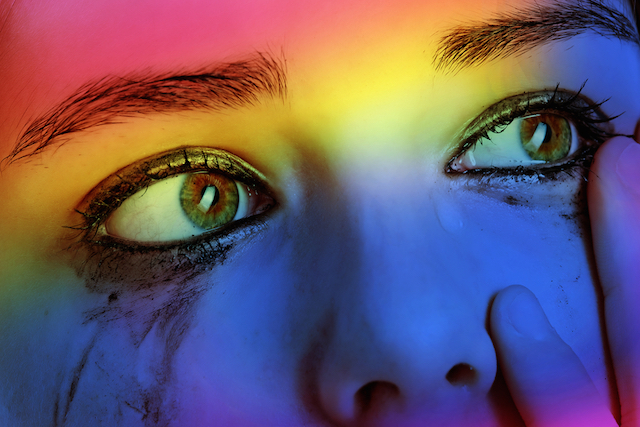
Crying eyes image via Shutterstock

“To ease another’s heartache is to forget one’s own.” ~Abraham Lincoln
A feral cat tempered my most recent bout with depression. I wasn’t seriously depressed, nothing like the debilitating times in my past, but I had a fairly strong case of the blues.
It was just before Thanksgiving, that time of year when people across America break bread with family and friends, and I was feeling sorry for myself.
I missed the gatherings we used to have when I was married. My ex-husband and I both loved to cook and every year we put together a gourmet feast for a group of family and friends.
This year I would be alone.
I live on the high desert and winters are harsh. Outside a sixty mile an hour wind was howling and a blanket of snow covered the ground. It didn’t help my mood.
When I opened the door to let my dog out to pee, I heard a high-pitched mewling. From the frozen hillside a scrawny white and black cat came crawling out of the sage. Its fur was matted and its ribs showed.
When I moved toward it, it retreated with a hiss. My own calico eats well, so I borrowed some of her Fancy Feast, a cup of dry food, and a bowl of water and set it outside.
Before long the cat was a regular visitor, but what was more gratifying is within a week it had filled out, and while its tail was still matted, its fur began to look glossier.
The cat, however, showed no appreciation. It continued to spit and growl when I brought its food out, and I have no doubt it would have taken off a finger if it could.
As the days went by I found myself looking out the window for the cat. I stuffed some blankets under the shed, although it rarely slept there. Once it ate, it moved back out into the desert.
I also found my depression lifting. I shared Thanksgiving dinner with a small group of new friends and when I returned home, the cat, with its usual ill-tempered snarl, was under the shed.
I brought out its food and told it, “You could come inside if you’d just chill out.” It pulled its ears back and hissed.
Small things can change our mood and they often have one thing in common—helping someone or something else. As soon as we step outside our own problems and feel compassion for someone who has it worse than we do, we begin to appreciate the life that’s in front of us.
It was impossible to not feel moved for this tiny creature that had survived in such a harsh environment. At night it seemed coyotes crawled out from every bush and burrow, yet it eluded them.
When it snowed I worried about it, but the following day its tracks would be in the snow and I’d find it hiding under the shed.
There are many ways we can be of service in the world. Even small acts of compassion can go a long ways. I think it’s more effective than donating money.
Of course, everyone needs money and it’s great to contribute to something we believe in, but money is service at a distance. It doesn’t alleviate the heart the way genuine human kindness does.
When we hand over a plate of hot food at a soup kitchen or save an abused animal, we’re connecting with another living being. We’re touching hands or fur, sharing a smile or a word.
Even if you’re shy and don’t like to be in groups there are many low-key, private ways to help lift someone’s spirit or ease an animal’s suffering:
1. Do you like to cook? Bake some extra pies and donate them to a homeless shelter.
2. Become a virtual mentor for a teen through a site like icouldbe.org.
3. Volunteer at a local school. Many schools are short staffed and welcome community involvement.
4. Knit or crochet afghans or scarves and take them to your local senior center.
5. Offer to babysit for a friend. You serve the adult, who could use a night out, and being around kids is often uplifting.
6. Volunteer to shop for a sick neighbor.
7. Volunteer for a crisis hotline.
8. Offer to take an elderly person shopping, to the movies or just for a drive.
9. Volunteer to read to children at your library’s story hour.
10. Put together a hygiene kit for a homeless person that includes toothbrush, toothpaste, deodorant, soap, etc.
11. If you pass a panhandler, take them out for a hot meal. Listen to their story.
12. Volunteer at your local animal shelter. If you’re able, adopt a shelter dog or cat. If you can’t make a long-term commitment, you might consider becoming a temporary foster parent for a shelter animal until they find a permanent home.
13. Send a card to a hospitalized kid through a site like cardsforhospitalizedkids.com or to someone in the military through a site like amillionthanks.org.
14. Rake, shovel or clean for an elderly neighbor.
15. Donate blood. You never know when your blood will save someone’s life.
16. Color (alone or with your child) and donate the picture to Color A Smile.
17. Do you have a special talent? Offer to do a free one-day workshop at a low-income community center or battered women’s shelter.
18. Offer to teach someone to read.
19. Donate your used books or clothing to a shelter.
20. Do small acts of service throughout the day—hold the door for people, let someone go in front of you at the grocery store if they have fewer items. Smile.
—
Once you begin to think of ways to help, the possibilities are endless. You are giving to the world, and as a result you’ll find yourself thinking less of your own problems and your heart softening.
When we approach life with an attitude of service we develop empathy. It’s no longer about us, but about what someone else needs.
As for the cat, when you feed something, a responsibility goes with it. For the past several weeks I’ve tried to trap it to take into our local feral cat clinic where they will spay or neuter and vaccinate it. So far it’s eluded me, even managing to twice steal the food without setting the trap.
There’s a lesson in this as well. Service is not the same as saving.
We can help ease another’s suffering, but we’re not responsible for saving them. We need to accept that sometimes our service isn’t wanted or appreciated and if necessary, we need to step back and let them go.
Some people don’t want to be saved. Some cats don’t want to be caught.
It doesn’t matter. Being of service isn’t about accolades or praise. It’s about healing the world and us by taking tiny steps to make the planet a better, more compassionate place for all the creatures that share it.
Woman and kitten image via Shutterstock
“To heal a wound, you need to stop touching it.” ~Unknown
I’ve always been an overachiever. In sixth grade, I spent weeks memorizing over five pages of the poem “Horatius at the Bridge” for extra credit, even though I already had an A in the class.
When I started therapy in my mid-twenties to deal with depression and panic attacks, I turned my overachieving tactics to self-improvement. I spent hours journaling, going to meetings, talking to mentors, reading books, and beating myself up when I fell into old habits.
I always worried: Was I doing it right? Was I making enough progress? Would I feel better, find enlightenment, or be a better person in the end?
That’s when I began to notice a pattern that surprised me.
I found that when I first had an insight, discovered a tool, or began a new practice, I got very excited. It worked wonders for me and I could feel a sense of growth and expansion.
I’d begin to try harder to generate more insights and discover more tools. But as I redoubled my efforts and worked harder at healing, I’d begin to feel anxious, self-critical, and depleted. The harder I tried, the less enlightened I felt.
At some point I’d give up. I’d let go of trying to become the next Buddha and accept the fact that I was just going to be neurotic and flawed the rest of my life.
And that’s when the insights and growth would start again. That’s when I would suddenly experience the most healing and notice the biggest changes in my life.
Why was this? I wondered.
And then one day it hit me: When we get injured, our body knows what to do and mends itself automatically—we don’t have to try. We’re designed to self-heal physiologically. It occurred to me then that perhaps we’re designed to self-heal mentally, emotionally, and spiritually as well.
Once I recognized our capacity to self-heal, I began to see evidence of it everywhere. Here are three common ways I’ve seen it work:
One of the things I’ve learned through years of struggling with depression is that no matter how miserable, confused, and hopeless I feel, clarity always returns at some point and I know exactly what to do.
For instance, a few months ago I was feeling depressed for a few days and couldn’t for the life of me figure out why.
Then suddenly one night I woke up and it was clear: I was trying to do too much. I was overcommitted. I was doing too much to please other people.
What I really needed was space for rest and relaxation. I cut back on a couple of commitments and took some time to rejuvenate. The depression lifted and things started to go a lot better for me.
I get off-track a lot, but the wisdom is in there, and it always comes out when I allow space for it to emerge.
Growing up, I struggled with my sister because when we fought, she would judge or blame me. I didn’t know how not to internalize that criticism and feel unworthy because of it.
Then, years later, I fell in love with a man who did the same thing. He helped me realize that when he got angry and blamed me, he was actually feeling vulnerable or hurt himself. I learned how to use his judgment to help me connect to compassion and love—for him and myself—rather than guilt and shame.
I didn’t consciously seek someone out who reminded me of my sister, but something within me drew me toward him, allowing me to work out a new way of dealing with blame.
I was shocked when I learned that a runny nose and fever are more than mere byproducts of having a cold; they’re actually the body’s way of healing itself by flushing or burning out those mischievous germs.
Similarly, our pain and neuroses are often our spirit’s way of getting our attention and guiding us so we can heal.
Case in point: several years ago I began to have trouble sleeping. Falling asleep became more difficult and before long I was sleeping only three to six hours a night, if at all. I was exhausted, cranky, and miserable much of the time.
It took a long time, but eventually I noticed patterns in what kept me from sleeping. Some nights I would lie in bed wide awake until I finally allowed myself to feel an emotional response (i.e.: fear, anger, disappointment, etc.) that I was pushing away or avoiding. Once I felt the feeling, sleep came quite easily.
Other times I couldn’t sleep because I was being particularly hard on myself that day. I struggle with a very active inner critic and high expectations for myself, and on these nights sleep wouldn’t come until I dropped my critic’s attack and directed some compassion and love towards myself.
I had tried ignoring the problem, powering through, or finding quick fixes, but they didn’t work. The insomnia forced me to address what was at the heart of the issue. Far from being an unlucky curse, the pain of not sleeping actually helped me to take the next step on my path to healing and wholeness.
The reason so many of us spend so much time in pain and misery (myself included) lies in the difference between our egos and our true selves.
Our true selves—who we are beneath the fears, the defense mechanisms, and the limiting beliefs—are wise, whole, and deeply connected to the larger world.
Our egos, on the other hand, feel separate and alone and rigidly hold onto a particular set of habits and identities in an effort to feel okay in the world. We all have access to both.
When I’m trying to grow and develop, I’m often caught in ego. I want something—peace, enlightenment, the respect of my peers, or an image of myself as an evolved person. I feel like I need to change something about myself in order to be worthy or good enough.
When I’m coming from ego, I obsess. I strive. I effort. I compare myself to others and become convinced that I’m the least enlightened creature on the planet.
All this striving and comparing is the mud that gums up the works of my self-healing process. That’s why it sometimes takes so long to work: I get in the way.
To allow my self-healing process to unfold with its full power, all I need to do is relax.
When I stop trying so hard, I reconnect with my true self. I have access to the fundamental wisdom and strength we all share. When I trust my inner workings to do their thing and simply observe what’s happening without trying to change it, my ego relaxes and healing happens naturally.
To that end, I’ve found a few questions that help me heal and grow with less interference:
Where am I striving with the intention of fixing myself or becoming more perfect? What would I do if I were to fully accept that I’m good enough as I am and that I’m exactly where I should be?
What would nourish and nurture me right now? What would help me relax and feel safe enough to let go of old patterns?
What is my inner wisdom trying to tell me right now? And if I’m not sure, how could I create enough space in my head and my life to hear what it has to say?
We don’t always receive satisfying answers right away. That’s okay—in my experience, if we keep asking the question long enough, eventually we’ll get more clarity. It just may take a little longer than we expected.
The process of relaxing into the process of change isn’t an easy one; knowing that I’m self-healing doesn’t mean my ego never gets stirred up or I don’t fall back into striving and obsessing. In fact, I believe that getting in our own way is an inevitable and enlightening part of the process, and I like to think that my inner wisdom is strong enough that it can handle whatever my inner foolishness throws at it.
At some point I always become aware that I’m efforting again, and that’s when I can chuckle, pat my ego on the head, and remind it that it doesn’t need to try so hard. I can return to the questions, listen for answers, and then pray for the willingness to let go once again.
Relax image via Shutterstock

“Don’t let the darkness from your past block the light of joy in your present. What happened is done. Stop giving time to things which no longer exist, when there is so much joy to be found here and now.” ~Karen Salmansohn
If you are lucky enough to spend time in mindful communities you will hear the phrase “letting go” used frequently. The practice of letting go is used to support our acceptance of the way things are, and I believe it’s a cornerstone of creating a happy, full life.
But what happens when you’re being asked to let go of something that is deeply emotionally charged or something that directly relates to how you identify yourself?
When we have a deep emotional attachment to an event or circumstance in our life and we’re being asked to let it go, it can often feel like we’re being asked to move on and forget about the past, person, or event that we’re deeply connected to.
In 2010 my oldest son passed away unexpectedly. At that time I had been a practicing yogi for almost ten years and had navigated what I thought were significant opportunities for practicing detachment and letting go.
For example, during my divorce from my son’s father I let go of my long held dream of having a happy marriage, white picket fence, kids, and a dog (though I did get the kids and the dog).
Following my divorce, when my middle son, at the young age of fourteen, had to be sent away to a drug treatment facility, I let go of the typical teenage dreams of homecomings, proms, varsity sports, and so on; after all, I wasn’t sure he would live to see those years. Not only did Daniel live through those years, he has since become a vibrant soul, who never needed all those typical experiences to thrive.
So when my oldest son passed away while home on leave from the army I felt I had a head start in the letting go department, and therefore, I would find my way to healing more quickly. Not true.
Some attachments are so deeply woven into the fiber of our beings they seem almost impossible to let go.
Fortunately (but not really), we live in a culture that allows 365 days to ‘let go’ of the death of a loved one.
After Brandon died everyone was patient, loving, kind, and willing to support me going through the first year. However, on day 366 our culture seems to think it’s time to get over it, let go, and move on.
Even with my prior experience of letting go, it took me almost three years to really figure out what it means to let go when what you’re letting go of is an essential piece of your heart, soul, and identity.
Below I have identified three action steps you can take to use your practice of letting go to deepen your personal growth and attract joy and happiness in your life.
As a bereaved parent I struggled for a long time with believing that I had ‘the right’ to be happy. I struggled with reconciling happy moments in my life (with friends or my other children) with the deep grief I felt for losing Brandon.
Once I learned that life isn’t making a choice between the two emotions, but rather learning to balance and integrate them both into each situation, I was able to let go of my belief that I couldn’t be happy and begin to hold both feelings.
Another way we set ourselves up for struggling with letting go is defining our happiness in terms of if-then.
If I get the raise at work, lose ten pounds, meet my soul mate, then I’ll be happy. Those events may change certain qualities about your life, but the achievement alone doesn’t bring happiness.
When you find yourself if-then thinking, bring your focus back to the present and appreciate what is already wonderful in your world.
As we grow up we often become attached to how we think our life should be, and we create beliefs about universal truths.
Perhaps you believed you should get a college degree, get married, have two kids, and live in the burbs. But instead you are struggling to make ends meet, don’t have a significant other, and live in your parents’ basement.
Staying fixated on how you think your life should be focuses your attention of lack rather than abundance, and on wishful thinking instead of reality.
Recognizing should-be thinking is a powerful way to shift our thoughts toward appreciation for what we do have, enabling us to come from a place of gratitude. Gratitude is a key element to joyful living.
It’s harder to let go of should-be thinking when our thoughts involve universal truths. I believed, and it’s a commonly accepted truth, that children will outlive their parents. But no one ever guaranteed me that Brandon would outlive me. The universe did not break a sacred promise with me when Brandon died.
The reality is, and I know it’s hard to hear and harder to accept, how things should be are exactly how they are right now. (I know, I don’t always like it either)
Do you remember how you felt when you were twelve and your first boy/girlfriend broke your heart? It felt like a wound that would never heal! But it did, and you learned so much about love, life, and your own capacity to be resilient.
Unfortunately, we often experience other events in our lives that feel much bigger than that and leave us with a void that feels insurmountable. Perhaps it’s abuse, or the abandonment by a parent. These types of events leave us with wounds that are carved deep into our souls and can be much more challenging to overcome than your seventh grade love.
The human spirit has the capacity to overcome almost anything. When we let go of the thought that we can’t heal from something that has deeply wounded us, we open ourselves up to the growth potential this event holds.
It might take a lot of time, help from professionals, and deep soulful work on our part. But healing from these types of wounds can be the most transformative and powerful things we do in our lives.
Letting go of an ideal, thought, or experience is not some laisse-faire, woo-woo thing.
Letting go often takes work on our part and requires us to do some introspection about what’s true and what we’re actually attached to. Neither is letting go the same as moving on without doing the work or simply forgetting about an important life-changing event or experience.
Another important aspect to recognize about letting go is that it’s not the same as forgiving someone who has wronged you. Forgiveness is an important aspect of wholehearted living, and it’s separate from letting go of attachments that keep you from becoming the incredible individual the world needs you to be.
Begin the practice of letting by noticing the small ways in which you let attachment create unhappiness in your life. For example, what do you do when you’re really looking forward to your morning cup of joe and realize you’re out of coffee? Or when a friend cancels a date that you’ve been looking forward to?
Learning to let go of the things that are not serving you will free up energy and resources and you will begin to reap the benefits of a grateful, joyful life.
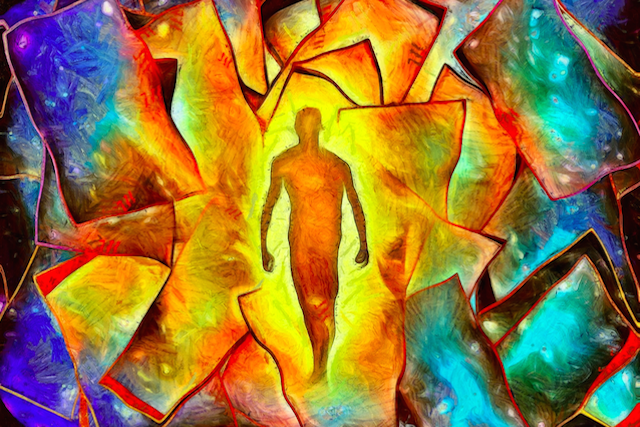
Woman walking on the beach image via Shutterstock
“Healing requires from us to stop struggling, but to enjoy life more and endure it less.” ~Darina Stoyanova
At the age of twenty-seven I was diagnosed with interstitial cystitis, chronic inflammation of the bladder that causes UTI like symptoms. I am now twenty-nine and still experiencing symptoms, but I have improved greatly.
I have spent that time searching for the answers to this medical enigma, for which doctors claim there is no cure. At first my research led me on a path of frustration and hopelessness, until I realized that my mindset was what was holding me back from healing.
I then decided to change my expectation of healing from “I must be cured to be happy” to “I am enjoying my healing journey and look for happiness in any moment I can.”
As a fellow chronic condition sufferer, I understand how overwhelming that statement can be. It is difficult to accept that we are in pain. However, just making that mindset a part of your routine will help open your mind to finding healing modalities that will work for you and help take the pressure off.
Feeling like you need to find a cure is a lot of pressure to put on one person dealing with a chronic illness, and most people who develop these illnesses usually are characterized as perfectionists. I know I am.
But what we don’t realize is that pressure is an obstacle to our healing. Acceptance is what will help us move forward in our healing journey.
I will share with you what I have learned about healing through my countless hours exploring the Internet and personal experience. Here are five things I have taken away from my search:
I believe chronic illnesses are created when a perfect storm occurs in our bodies. When you pair emotional upset with a breach in your body’s immunity, you are vulnerable to that final straw that causes your body to go into attack mode.
For me, I believe it was when I started a new birth control pill. With a history of chronic back pain, overuse of antibiotics, bad diet, unbelievable stress levels, and hormonal imbalances, the new birth control pill was the final straw that caused my body to attack my bladder and cause a vicious cycle that would lead me on my healing journey.
There was a time when my life was consumed with searching the Internet for the magical answers to healing. It gave me a sense of control during a time when I felt like a helpless victim to my IC.
But I realized this led to feeling completely overwhelmed by the large amount of contradictory information I found. For every article that said being paleo was the way to combat chronic illnesses, I found two more saying vegan was the only way.
Everyone is different, and it is important to find the foods that work best for you, not to try to eat foods that fit into a box of a specific diet.
I also find that when you start off being extremely restrictive with your diet it sets you up for failure. Starting slowly when introducing new ways of eating is the key to success. Don’t listen to every hot new diet trend, cleanse, or superfood out on the market no matter what kind of amazing results they boast.
For me, plant-based diets free of processed foods and sugar make the most sense. Any other restrictions with food you decide to make should be based on your body. Use your common sense, and question doctors and healers about the pills and herbs they recommend. Not everyone has our best interests at heart or is well informed.
When we deal with chronic illness we tend to blame ourselves, and it leaves us feeling broken and searching for a way to fix ourselves. We think if we could just handle the stress better or deal with our unresolved feelings, we would not have the illness to begin with.
I have spent years reading self-help books hoping to find the secret to happiness. While self-help books often provide useful coping techniques and good advice, it infers that we need to be fixed in order to be happy. That is a belief that I feel to be limiting and self-sabotaging.
Practicing self-acceptance of all parts of our self, including our health ailments, is more productive for our healing journey.
That is not to say that we cannot try things to improve our self or change negative habits or thought patterns. But the more we try to hide or banish parts of yourself that you do not like, the more they will rear their ugly heads. You do not need to be healed of your chronic illness in order to deserve love and acceptance.
Unfortunately, we can no longer take the word of every doctor when it comes to our health, medications, and foods we put into our bodies. It is important to educate yourself the best you can before deciding to take a new medication or try a new treatment.
Weigh the pros and cons and make the best choice you can. Take the time to find a doctor who is best fit for your healing journey.
Chronic illnesses for which it’s difficult to identify the cause can be difficult for people to accept because the thought of having an illness that we cannot predict or fix is scary, even if you do not have the illness yourself.
This causes people to just blame the sufferer because they are frustrated themselves that their loved ones are not getting better.
No one understands your battle better than you. Do not take it personally when someone makes an ignorant comment.
Those comments come from a place of fear inside themselves. It is still important to take accountability for your health and make the best choices possible, but sometimes we develop illness even when we are doing our best.
Everyone has some sort of healing power inside them. Do not underestimate your body’s ability to heal given the right circumstances. It may be only one piece of your puzzle, but it’s there.
Society teaches us that all we have to do is take a pill and we’ll feel better. This way of thinking takes the power away from us and keeps us in the victim role.
Medications and herbs can be helpful and an important key to your healing, but they are not the be-all and end-all. The mental component to healing is just as important as whatever we choose to put inside our bodies to promote healing.
Let go of what doesn’t serve you. Meditating, yoga, and practicing gratitude will help you connect to your inner self and prepare your mind and body for healing.
—
Your healing journey may be different from mine, and some of this information you may not agree with. You may also not be in a place where you are willing to change. That is fine. I am still learning new things about what is best for my health every day.
Honor where you are now and know that every day is a new opportunity to take care of you one small step at a time. Happy healing!
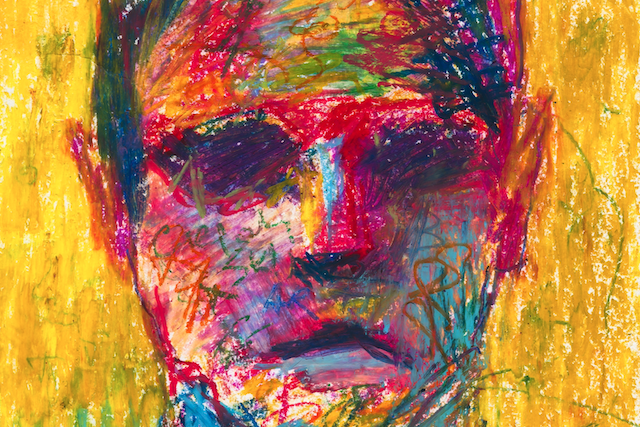
Man on a journey image via Shutterstock
“Two roads diverged in a wood and I took the one less traveled by, and that has made all the difference.” ~Robert Frost
When I was a child my friends and I often played a game called “Going on a Bear Hunt.” Each of the verses told of a different challenge, but offered the same advice—that you must go through it. One of the verses went like this:
“We’re goin’ on a bear hunt. We’re going to catch a big one. I’m not scared. What a beautiful day! Uh-uh! A cave! A narrow gloomy cave. We can’t go over it. We can’t go under it. We’ve got to go through it!”
I had forgotten the concept of this game that we played as kids until much later in life, when I developed stress, anxiety, and depression due to Complex Post Traumatic Stress Disorder (C-PTSD).
My C-PTSD resulted from a youth of constant bullying—which is now seen as a form of child abuse—and this song came back to me in my lessons to recover.
By the time my anxiety and depression took full hold of me, I had spent five years trying to help others suffering with the long-term effects of bullying, but I had not yet confronted my own demons.
It was much like the concept of “physician, heal thyself”—I was helping others without helping myself first.
I found myself in a constant state of anxiety, and then depression set in. I could no longer sleep, focus, or even find a moment of enjoyment in life. For me, it might have been over.
But I made an important decision that so many don’t make: While I felt completely alone and lost, thinking I was crazy, I contacted trusted mentors. They led me to mental health specialists who knew how to put me on the path to recovery.
It was not quick, as it would take two years to feel “back to normal,” or at least was the new normal for me.
In my sessions with mental health specialists and in the many books I read about the issues I was having, there was one common theme: In order to get better, you have to face and go through your problems, not avoid them, as many people who have suffered from child abuse do.
We all believe that we can bury or forget these things that happened to us as children, but in truth they are always with us. We must find a way to accept that which we cannot change and move forward without the past haunting us forever.
I found that to begin the healing process, you have to first let go of the pain of the past. You cannot heal without this crucial first step. Here’s what helped me “go through it” so I could let go and heal.
You can’t go over your problem, you can’t go around your problem; you will need to go through it. This means that you will have to face and in many cases relive the issues that you have suppressed for so long.
For me, it was having to deal with the low self-esteem I had developed from my C-PTSD and relive all of these events again. Yes, it was painful, but far less painful than a lifetime of burying my feelings would be.
I went the professional route, and I found “talk therapy” to be the most helpful part of my healing process. At first it hurt terribly to dredge up these stories, and I would cry as I relived the hurt. But after a while of telling it, it became just a story.
You might also find it helpful to see a psychologist or therapist, or it might be sufficient to lean on a friend or relevant. The important thing is that you share all the details you’ve buried inside so you’re no longer hiding them in shame.
I learned that, while people can be cruel, others can be loving and supportive—like my family and true friends. As I’ve opened up to them, they’ve shown me sympathy and empathy. I wouldn’t have chosen to be bullied, but I appreciate that the difficult times in life allow us to see how much others care.
It is easy to forget the good parts of your life when you are going through a difficult time. Remember that there is both good and bad in your story, and you too may feel differently about the pain you’ve endured.
It helped me to find a lesson in this painful period in my life—something that I could use to help myself and others going forward.
I learned that many people hurt others when they’re hurting. They’re dealing with their own pain and they take it out on others through displaced aggression.
Understanding this can help me be compassionate to others, so I can be there for the people who are hurting as my loved ones have been there for me.
Previously, I saw my life as one big journey with a beginning (birth), middle (mid-life), and end (death). But then I changed my thinking to see my life as many little journeys.
By doing this and allowing this one period of time to be just one journey that had a conclusion, I was able to let it go and put it behind me.
I found as I wrote out each of my mini-journeys that I had so many good ones, but each had an ending. It’s like the saying “this too shall pass.” You’ll note that it neither says that what will pass is good or bad, just that it will pass.
—
So this was the beginning of my hunt for me again. With the above in mind, I was able to take the next steps in recovery, to truly work toward self-acceptance.
I know many people that don’t confront their past and continue to try to go around or over their problems. They cannot, and they end up frustrated with the world and those around them. But it doesn’t have to be this way.
My wife gave me a quote in a frame to keep at my desk at work. It shares a simple thought:
“Yesterday is history. Tomorrow a mystery. Today is a gift. That’s why they call it the present.” ~ Eleanor Roosevelt
I go to bed now thankful for the day I had and wake up thankful for the day ahead. Each day I go on a bear hunt and each daily challenge I deal with, I go through it, grateful for the opportunity to try another day.
“In the midst of conscious suffering, there is already the transmutation. The fire of suffering becomes the light of consciousness.” ~Eckhart Tolle
I still remember the first day I met her.
I was running a bodywork clinic from home at the time, and she came to me one day for a treatment. Let’s call her Miranda.
Miranda had something about her that I noticed immediately, a palpable sense of peace and clarity that shone through her eyes and radiated out from her very core.
She seemed to be the most spiritually grounded person I had ever come across. I conveyed these impressions to her and asked if she had some sort of spiritual practice.
Indeed she did; in fact, she was what I would call a hardcore meditator.
For more than twenty years she had seated herself on her meditation cushion for three hours every morning from 4:00 to 7:00. I was incredibly impressed with her commitment to her practice, seeing as I had dabbled on and off in meditation for some years, but found it hard to commit to a regular habit.
After chatting about her practice for a while, I asked her to share the biggest benefit that regular meditation brought into her life. I saw a hint of sadness appear in her eyes as she proceeded to tell me her tragic story.
A few years earlier, her daughter, who was about eleven at the time, was diagnosed with a type of leukemia.
The prognosis was not good, and as a last resort, her doctors wanted to try an aggressive treatment that on the one hand could save her life, or on the other, could potentially result in severe side effects, perhaps even death.
It was up to Miranda and her husband to make the agonizing decision to go ahead with the treatment or not. Her daughter had been raised within a very healthy lifestyle, with mostly organic food and little exposure to chemicals, so Miranda felt worried about exposing her daughter to this intense therapy.
Eventually, Miranda and her husband came to the difficult conclusion that without the treatment she may die anyway, and so decided to go ahead with it. Sadly, her daughter did pass away after the treatment.
Miranda and her husband were overcome with unspeakable grief, but also a sense of guilt at having chosen a treatment that ultimately proved too much for her daughter’s body to bear.
Of course, it was no one’s fault that she passed, just a sad consequence, but nevertheless they were both riddled with guilt.
For some people, this kind of deep emotional trauma has the potential to destroy their lives forever.
Some people break in this kind of crisis never to feel whole again. And while Miranda spent most of her days after her daughter’s death consumed with pain and loss, she had the fortitude to continue with her daily meditation practice.
In those hours of stillness, she let herself surrender.
She surrendered to her pain, she embraced her grief and guilt fully, riding the waves of her deep emotions until her consciousness was able to drop even deeper, to that still, silent place within that is ever-present, but often obscured by the constant river of thoughts and feelings.
Those three hours of peace were Miranda’s lifeline and path to healing. They kept her sane, and they kept her strong for the rest of the family.
Of course, Miranda will always experience a sense of loss and sadness after losing her precious daughter, so please don’t think I am implying that meditation takes away the emotional pain in our lives or helps us to escape our feelings or problems. It doesn’t. But it does help us to get in contact with that part of ourselves that is beyond them.
Our lives are a series of changing experiences and external conditions that we deem “good” or “bad.” In order to avoid being at the mercy of this seeming chaos, it is essential that we understand the transient nature of our existence. As the Buddha famously said, “All of life is suffering.”
In other words, all things we hold dear will eventually disappear.
We look for happiness in our loved ones, our jobs, our possessions, our health and well-being, and our material wealth, but the great truth is that each of these things can and will be taken away from us eventually. Nothing is permanent in our world of form.
For this reason many of the great spiritual seekers that walked the Earth searched for what is real, or permanent, in our existence.
They discovered that beyond form, there is an awareness that we all possess that is spacious, calm, and still, and central to our true nature.
When we learn to access and live from this place within us, we are not so easily thrown around by the changing external conditions of our lives. We are able to meet life’s challenges with a sense of grace rather than resistance.
Miranda’s story and her palpable sense of peace left a lasting impression on me. I too wanted to search for the eternal, ever-present stillness that lies beneath the petty thoughts, feelings, and dramas of my conscious mind.
Thanks to her inspiring dedication, I made meditation a regular part of my life also. While I know that loss and emotional pain is as much a part of my human life as joy and happiness is, I have within me now an anchor at the center of my being that keeps me steady throughout life’s rough waters.
Man meditating image via Shutterstock

“Only to the extent that we expose ourselves over and over to annihilation can that which is indestructible be found in us.” ~Pema Chodron
I was nineteen weeks pregnant when my husband and I went for a routine ultrasound. We were to confirm that our child’s anatomy was as it should be, and we were to discover our child’s sex.
We were choosing names in the waiting room. We ran into the receptionist at the fertility clinic and exchanged hugs. We had graduated from the clinic. The tuition was expensive and the education detailed and grueling. But we were a success story.
As the technician began the ultrasound she got really quiet. I knew something was wrong.
I have tried to write about what followed. I really have. But I still can’t. What you need to know is this: three days later, on August 2, 2013, our son Zachary was stillborn.
I remember standing in the hall of the hospital waiting outside the Quiet Room to see him. Sobbing in a way I didn’t know I could sob. I remember a nurse putting her hand on my back and me saying to her through my sobs, in shock, “Life is so hard, isn’t it?”
“Oh yes,” she replied. That nurse was the first person to mirror to me that I was not insane. Life really was this bad sometimes.
This wasn’t the first loss of my life, although it was the most consciously heart breaking (I mean that literally: heart-breaking.)
Zachary’s death sat on top of a list of other losses: divorce, financial loss, job loss, loss of safety and security, loss of basic well-being. And eight months later I lost another child after just ten weeks.
This second loss almost ended me. I breathed pain. Once in a while I would come up for air, flailing my arms around and gasping, but before I knew it I would be pulled under again. I just couldn’t make anything stick. Nothing was moving forward.
I felt like everyone was passing me by—growing in their careers, becoming parents. One woman I know had three babies in the time I lost two.
I couldn’t stop the feelings of unfairness. Even writing this today I can feel the shame and unworthiness flooding back. Every time I thought I was gaining ground something would happen—something small like the grocery store being out of cilantro—and I would fall right back into despair.
This lasted for months. Don’t let anyone kid you—life can be painful. Devastatingly so. Life can take what you love from you and ask you for a response. There is nothing easy about it. Life can ask everything of us.
Throughout this time I insisted on trying to recover. I went for walks. I saw friends. We bought a cottage. I worked. I even tried to stop trying. None of this felt right. It felt against the grain. And it was. But I kept acting as if there was hope.
I kept making plans. I kept trying to put my pain into words.
It became clear that I had no control over my grief. It was going to take the time it took. I had to surrender to it and trust that one day something might look beautiful again.
Surrender wasn’t something that happened all at once. Sometimes I would think, “I’ve given in now,” only to wake up fighting again the next morning. But layer by layer, revelation by revelation, I finally allowed myself to have lost my son. To recognize that there was nothing I could do to get him back. And nothing I could do to ensure I had another child.
I didn’t like it. It didn’t feel good. But I existed, breathed, lived with that truth.
And then, all in one week, three friends held me up. They said, in effect, “I am not going anywhere and you are going to make it through this.” And they said, “I can bear this pain with you.”
I could say I was lucky to have these three people in my life. And I am. But these friendships were co-created. Over many months of talking to each other about our lives. And I had to be vulnerable to them and show them my pain so they could see it and respond.
How did I make it through the nightmare of losing my child? By refusing to give up expressing the pain that I was feeling.
It is a paradox, I realize. I had to keep working hard at showing myself in order to give up. But surrender is not a moment—it is a working through, with a context. It is a moment of grace surrounded on either side by days of showing up.
Here is what I learned from going to hell and back. This is my personal list of thoughts and reflections and I hope something here will resonate for someone else who is going through hell.
This is the time to give yourself the environment you need to mourn and heal. Anxiety makes the body tense. Have a steam/sauna, massage, or cranial sacral therapy. As your mental state allows, find a restorative yoga class or practice meditation. Perhaps try therapy or dance or running.
Follow your intuition and invest time and money in the care of you.
You won’t get anywhere with affirmations when you are in the throes of grief. Respect that part of you that doesn’t want to go on. Listen to it for a little while. Give it some space.
Make plans. Self-care activities, lunch/coffee/dinner with friends old and new. Go for a walk even when you don’t feel like it. Do things you enjoy; find a new computer game, take a course.
Don’t overbook yourself but make sure you are engaging with life in some way outside of your work. It is through this engagement that something new can arise.
Tell people what is happening for you. This can be difficult when you are obliterated by life, because our culture expects us to put on a positive face. You will be surprised at how many people in the world can identify with pain.
Answer questions honestly rather than hiding things. Sometimes when people ask me if I have children I say, “not living.” It lets them in to my life in a deep way and often builds our connection.
When I was able to share my feelings with the people I love, they listened. They responded with love and with commitment to be there with me through this. I received great gifts from my loved ones because I let them see my pain.
What if you feel that no one loves you?
Not in every relationship. Not in every moment. But love is always possible.
My job is to keep my heart soft. To keep feeling through what life throws at me and what life takes away. Because eventually joy will come round.
Love is the act of keeping your heart open no matter what comes. Love is the care for yourself and the world to keep it open despite fear, rage, grief, humiliation. To keep living.
That is what I have learned from my son. That is what I have learned from life. Love is possible. We need each other. And we can always love.
Heart in hands image via Shutterstock

TRIGGER WARNING: This post deals with an account of sexual abuse and may be triggering to some people.
“Scars tell us where we’ve been. They don’t have to dictate where we’re going.” ~David Rossi, Criminal Minds
When I was in my mid-fifties, I ordered cable television for the first time in my life.
My husband and I had raised our two sons mostly without TV, but now they were grown and on their own. My husband and I were divorced, and I had moved to a secluded place on the high desert to pursue a writing career.
My Internet service offered a cable option, so I figured what the hell.
One evening, while clicking through the dizzying number of channels, I landed on the series Criminal Minds. Before I knew it, I was hooked.
For several months, I became consumed with this fictional team of FBI profilers as they tracked down murderers and rapists, probing the very darkest corners of the human mind.
Sometimes I broke down sobbing. Other times I felt consumed with rage. Usually, these episodes included a young boy or girl who had been raped, molested, or brutalized at the hands of someone, often someone they knew and trusted.
These weren’t exactly buried memories coming to the surface. My paternal grandfather raped and molested me from an age so young I can’t remember not being abused.
I was one of the lucky ones though. My grandfather dropped dead of a heart attack when I was seven years old.
What I didn’t realize even after years of therapy and journaling is how profoundly that early experience affected my life.
I had taken writing workshops for women survivors of sexual abuse and had been in and out of therapy. For the most part, though, I pushed it to the back of my mind and didn’t talk about it, determined to not let my past define who I became.
At times I even became scornful of adult survivors of childhood abuse. When do you just become an adult and not a victim? I would respond. When do you move on?
Like I had.
And, yet, I kept people at a distance. I had severe night terrors. Some years they were more frequent than others.
My husband and I had loud, angry arguments. Once I hurled a jar of salsa at his pickup truck. I was barely able to suppress a rage that seemed to simmer just below the surface.
But I was also practically incapable of standing up for myself and frequently felt overwhelmed and stressed out by life. This wasn’t the way I wanted to live. I was on a quest to find happiness and joy, but at the time it seemed like some highly unattainable goal.
However, I did consciously work on my issues. Then, when I was forty-five, I moved to China to teach English, and in a small Taoist temple next to the Nandu River on Hainan Island I began to meditate.
Slowly, my inner self began to change. And in response, so did my outer world.
My husband and I parted ways, and I built a successful freelance writing career. I met a widower and decided to give love another chance. One day I realized I was truly enjoying the journey and was no longer grasping at some elusive sense of happiness. I was happy.
Then I ordered cable.
Every day as I watched rerun after rerun of Criminal Minds, clear, vivid images began to surface. Strange as it sounds, I believe meditation prepared me to take a lesson from that TV show.
I could no longer diminish what had happened. Sometimes the fragments were so clear I could see the shoes and socks I was wearing as I followed my grandfather, like a sheep to the slaughter, out to the shed behind the farmhouse in Ohio.
I saw my grandmother watching from the kitchen window and realized she knew exactly what was going on, yet did nothing to protect me.
And I remembered inside the shed. The horseshoe—for good luck—nailed over the door. The windows looked so high, but I loved the way the light poured in through the glass and how the dust motes floated in the air. I felt like I was one of them, light and free, high above my body, circling in the clear, clean sunlight.
At times it felt like scenes that had happened fifty years ago had taken place yesterday.
But I also felt a sense of peace in owning it. I had always remembered my abuse like I was watching a movie. Distant and far away.
Now I felt it in my body. My cells remembered the fear and revulsion.
Criminal Minds also helped me put words besides “grandpa” and “maybe not that bad” to what had happened. Now I could finally name it for what it really was.
Grandpa became rapist. Pedophile. He became a man who should have been locked up for what he did to me and no doubt to many other girls during his lifetime. I may have been his last victim, but I’m sure I wasn’t his first.
And Criminal Minds finally brought home to me what my own parents had never been able to give me: as a girl child, I should have been worth protecting.
If I had been a boy I should have been worth protecting as well because both boys and girls can be victims of molest, and both men and women can be perpetrators.
Gender, class, race, religion, or economics mean nothing when it comes to the levels of cruelty humans are able to inflict on one another.
Fortunately, the same can also be said for kindness.
You too were worth protecting, and you too have the power to heal. It’s a lifetime journey, but it’s worth it.
These are some of the things that have helped me over the years. May they help you too.
If you’ve been abused or molested, and particularly if it happened at a young age, trust will not come naturally to you. Chances are you have poor boundaries and may open up to the wrong people while pushing away those who can help.
There’s no pat answer on how to develop trust, but do look for help among those who have experience with abuse.
My healing began on the floor of a living room in Santa Cruz, California with ten other women pouring our experiences into journals and then reading them aloud to each other.
Most important of all, trust yourself, your intuition, and your memories.
For most victims of assault, our bodies have become our enemies. Desires that should be normal and beautiful have been twisted into something sick and ugly, and often we blame ourselves.
Many victims of rape and molestation develop eating disorders. Maybe you use weight as a barrier against the world, or maybe you’re anorexic as a way to feel some control over your life.
If you practice good nutrition and exercise even if you don’t really believe you deserve it, you’ll become stronger and eventually your mind will catch up and accept that you are very much worth taking care of.
Disassociation is a common defense mechanism for children who are being abused. We go somewhere else.
I became a dust fairy dancing in the sunlight. Maybe you retreated into fantasy or simply blanked out.
If your memories of the event are sketchy, this may be why. The downside of disassociation is we feel fragmented, but the truth is, it may have saved your life. With help you can bring those disassociated selves together into one stunningly creative individual.
Be proud of the courage and imagination it took you to survive.
The journey toward wholeness is an exciting and gratifying path to follow. Finding a calm center to move out from will keep you safe as you travel through your past traumas.
Woman standing in the sun image via Shutterstock

“Blessed are the cracked for they shall let in the light.” ~Groucho Marx
In 2008, after ten years of marriage, my former husband and I decided to divorce.
It came as a shock to those who knew us. We were living what most would consider the American dream: two healthy children, beautiful home, great friends, strong careers, two incomes—the works.
Though my ex-husband and I got along well, the marriage was missing an intimate, heartfelt connection.
Loneliness and longing grew with each passing year until I could no longer ignore them. I knew the kind of intimacy for which I yearned was not possible in my marriage, so I asked for a divorce.
Because my ex-husband and I led mostly separate lives, I assumed the transition through divorce would be fairly smooth. Boy, was I in for a rude awakening!
Divorce, like most significant losses, takes the safe and familiar contour of our lives and blows it to smithereens, leaving us vulnerable and unprotected until the new shape forms. It is easy to underestimate the comfort we draw from what is known; I sure did.
Shortly after the separation, much like a Ficus tree seems to all but die when moved from its familiar spot, I went into a state of shock.
It was as if my nerve endings were relocated outside my skin, perturbed at even the slightest agitation. Once-routine tasks, like getting out of bed or going to the grocery store, seemed barely doable.
I spent the days toggling between two modes: “about to cry” and “full-on blubbering.”
I told myself it was not okay to feel the pain because it was a consequence of my own choices. My emotional suitcases were so heavy with fear, shame, and self-doubt, I thought these feelings defined me.
One night, the struggle reached a crescendo. Sadness and dread filled my entire body, from the inside out, until I was heaving with sobs and howling like a trapped animal. I was convinced the pain would either not stop or that it would kill me. I secretly wished for the latter.
It was in this moment I realized that some pain is, quite literally, unsoothable: there is no one, no place, and nothing in that moment that can make it better.
The only way out of unsoothable pain is to go straight through it. Even with this awareness, however, I still wanted to run.
At first, I tried to numb the pain with limerence. The new relationship went about like any would go between two wounded people lacking awareness; like a train wreck. What’s more, I convinced myself I needed that train wreck to work to prove I wasn’t a failure.
When we tell ourselves that we need something, we inadvertently look for it in places we are guaranteed not find it.
This is life’s clever way of showing us, again and again, what needs our own loving attention. If I kept numbing the pain of loss with romantic love, I would keep choosing unsustainable relationships.
At the base of every true heart connection is acceptance. We cannot offer acceptance to others until we can accept ourselves, wrenched heart and all.
Three years and two failed relationships later, I decided it was time to stop trying to soothe the unsoothable, to face grief, and to build a solid life on my own.
I eschewed romantic relationships for well over a year, devoting that time to friendships and long-neglected passions, like skiing and music. I felt lonely and frequently got scared, but fear was outmatched by a deeply held conviction to stay the course.
Though I once hoped it would, I am happy to report unsoothable pain did not kill me. In fact, the willingness to push through its contractions has increased my confidence to handle life’s loss and uncertainty. The same can be true for anyone willing to face his/her own darkness.
If you are experiencing unsoothable pain, you may be tempted to reach for something or someone to numb yourself.
Avoidance is a way of inviting into your life more of the very thing you are attempting to banish; resistance is futile. Your feelings are intense because something important is happening, so keep going!
Sometimes unsoothable pain presents itself as fear, telling us the struggle won’t end.
Sometimes it assumes the voice of self-doubt, convincing us we can’t do it.
Sometimes pain is accompanied by shame, which cajoles us into believing there is something fundamentally wrong with us because we are hurting.
Fear, self-doubt, and shame are the normal, temporary emotional byproducts of significant change. Do not believe their stories; they are untrue. Unsoothable pain is the threshold over which we must cross to access more love and more light within ourselves.
While masking its symptoms won’t cure the disease, taking good emotional, spiritual, and physical care of yourself goes a long way. Here are a few things to consider:
It may feel like you are dying when you pause for a bit, but I encourage you to do it anyway. When we slow down and sit with hard feelings, we are taking a brave step toward showing ourselves that we are stronger than pain.
During the darkest times, the idea of getting through an entire day felt like a lot, so I broke the day into small chunks to make it more manageable. My goal list looked like “Shower and put on makeup” or “Make it to lunch time.”
When I reached each milestone, I would sometimes say, out loud and in my goofiest cheerleader voice, “Woot! You made it to bedtime! Another day is history!” (Sidebar: always laugh at yourself—the alternative is too unpleasant to consider).
It may feel silly to celebrate events that seem otherwise unremarkable but, when your nerves are inside out, even the simplest of tasks can feel like a big deal.
Make a short list of the people in your life you feel safe falling apart with and let yourself fall apart with them.
There is nothing shameful about unsoothable pain—it is our vulnerability that allows us to create meaningful bonds with other humans. Sometimes a supportive comment or gesture from a trusted friend can be the encouragement you need to keep going.
You don’t have to qualify for the Boston Marathon, but please do move your body at least once per day.
Whether your preferred movement is yoga, walking, running, dancing, hiking, or biking, remember that emotions are physical events—we can literally move through them sometimes. If this idea seems like too much, start with your mailbox and work your way out from there (see #2).
Keeping health and safety in mind, figure out two or three small things you can do that are outside of your comfort zone.
I wanted to reconnect with my musical side, so I joined a group of singers and songwriters. It wasn’t easy (I cried in the car all the way to the first gathering), but it eventually got easier and the strangers in that group eventually became friends.
We are more likely to advocate for people we like so, when you are in pain, speak to yourself as if you are a valued friend. It is when we are hurting that we are most deserving of tenderness. Gently remind yourself that you are doing your best to take care of you.
Building a new life shape takes time, so give it the time it deserves. Acting hastily merely increases your chances of having to start over later.
Building a friendlier relationship with discomfort can eventually diminish its strength and frequency.
In the meantime, it may help to remember that unsoothable pain is often the sign of a well-lived life—it proves you were courageous enough to risk, to love, and to be affected by loss. After all, it is when the shapes of our lives are wide open that the most light can get in.
Man walking into the light image via Shutterstock
“Life is a process of becoming. A combination of states we have to go through. Where people fail is that they wish to elect a state and remain in it. This is a kind of death.” ~Anais Nin
Meaningful relationships are crucial to our happiness. We need the human bond to feel connected and joyful, and we enjoy life much more when we share it with people we love.
There are times, however, when we are forcefully separated from our loved ones. Coping with loss can be one of the most difficult things we ever have to do. Everyone copes with grief differently, and some of us never do.
When we lose someone we love, it distorts our universe and our peace, and nothing seems right. There is a future that will never exist and a past that we want to go back to, and we feel like we can’t be further from the present moment and reality.
For a long time, whenever I thought of a friend that I lost last August, I saw all of the vanished possibilities, all of the things he wouldn’t experience and I couldn’t share with him.
I lost my wedding’s best man, my childhood partner in crime, at a very young age from a medical condition that nobody knew about. It happened in such a snap that nobody could believe it.
I used to walk the beach and burst into tears because he could never come and walk it with me again.
I kept thinking about all of the future events that would never happen, and I couldn’t find peace and acceptance.
I asked questions like “why?” and “how?” and didn’t receive any answers.
One day while I was sitting in my garden, playing with my dogs, and wishing that my friend could be there to enjoy the day with me, the answer that I was waiting for came to me:
He was not gone; he had just changed.
He was there—in the garden, in the air, in the wind, in the sunshine, in the leaves of the trees, in my heart.
I finally realized that what I was trying to cope with was not a loss but a change.
We tend to resist change as strongly as we can, trying to stay in our current state of comfort and security because change is hard.
But life is a constant change—sometimes severe, like the loss of someone we love; sometimes wanted, like a new home; and sometimes surprising, like moving to another country and discovering that you love it.
Our loved ones change, life changes, and we have to change too.
Nothing is actually lost in the universe. Everything is energy and energy is never lost. My friend might not be a part of the material world anymore, he might not be a person in the sense of a human being, but he is a part of the world somehow. I don’t know how, but I know he is.
I believe that the people we think we lose transform into something else and move on to the next stage of life. They are still here, but not in the same way as before.
They are in everything we have learned from them, in their creations, in their children, in our hearts and memories. I know my friend is still here when I hear his voice telling me how to do something or where to look for something I can’t find.
Knowing that my friend is not gone but rather changed into something I don’t understand makes it easier to accept reality. It gives me peace of mind.
I can finally accept that he has moved on, and I need to do the same.
When we lose someone we love, everything changes.
This is not a change that we have anticipated or wanted. We may wonder if we will ever be the same, if we will go back to our old self. We can’t and we won’t. After such a traumatic change we have only one way to cope: change ourselves too.
Nothing can bring them back. Nothing can “undo” anything that happens in life. We have to move forward. Without accepting the change, we make it much harder to do so. We can’t find peace because we feel that something is broken or wrong, but it isn’t; it is just different.
If you lost someone, know that they are not gone; they, too, are different.
For a long time, I resisted the fact that I would need to change my plans and my visions.
But eventually, I had to do it. Now, instead of dreaming about how my future kids will one day meet their parents’ best man and learn so much from him, I dream about telling them stories about a friend that changed my life.

“People have a hard time letting go of their suffering. Out of a fear of the unknown, they prefer suffering that is familiar.” ~Thich Nhat Hanh
I’ve called it my “Epiphany Bubble,” and it might be hard to believe, but it’s my true experience.
I stood on the lawn of our city’s hospital. The sun was shining down on our group of grieving parents. My belly was big with my third child, but my heart was still heavy with grief from my second.
Jonathan. I’ve never personally known anyone whose entire life was surrounded by compassion and love, like every minute of his twelve-and-a-half hours in my arms.
Although the summer of 2000 was a long, painful journey through terminal pregnancy, Jonathan had blessed my life in countless ways. I just hadn’t yet understood that.
Our hospital had this gathering a couple times a year. Parents who grieved babies would come, enjoy some cookies and punch, and chat with other moms and dads who were coping with loss.
At the end, we always did the same thing—write our baby’s name along with dates of birth and death on a white balloon.
As I wrote “Jonathan 9-21-2000 – 9-22-2000” on my balloon, I smiled a little just at the joy of writing his name. I gave my belly a gentle touch and said a little prayer for my next little boy.
Then I looked to my left. There were three women standing together, quite distraught in tears, comforting one another. I, of course, knew why they were crying, but I was curious.
I was curious about the dates. When I looked at their balloons, I saw dates reflecting years prior. Six, seven, eight years earlier. My heart sank. I wondered, “Do I have to be in that much pain years from now? Does this heartbreak never end?”
And that’s when it happened—my epiphany bubble. I suddenly felt as though I was in my own space, and that the world had ceased to spin. Everything outside of my bubble was blurry, and everyone seemed frozen, when I realized…
I stood for a few moments more, and the bubble vanished. But its effect on me did not. Something now stirred within me—a determination to really heal, let go, and be genuinely happy again.
At home I began to wonder about choosing how to feel about life and how to perceive all that I experience on my journey. I started to seek within.
Through journaling, praying, and meditating, I felt a shift. I sensed guidance. I glimpsed a bit of inner peace.
Some of my wonderings were a bit surprising, but I gave space to let them unfold. Rather than judge, I allowed them to come to me without logic. I also resisted the teachings from my childhood, which would have stopped them from showing me a new way to perceive Jonathan’s life.
I wondered, maybe Jonathan is a guardian angel. Perhaps he will protect and look after his big sister, Sydra, and his little brother who has yet to take his first breath.
I smiled a bit at imagining my sweet Jonathan, from some other place of being, guiding and loving his siblings.
I wondered, perhaps Jonathan was meant to leave this life at a very young age, and perhaps this could have happened in a variety of ways.
Would I choose for his life to be very short, spent in my arms, and surrounded by love and compassion? Or, would I choose to have more time with him, but risk something worse—have him be a child who I’ve heard horrifying stories about, children who are abducted and hurt?
I felt a bit of trust at realizing that I don’t know how it all works. Life, death, and all the days between and following are a mystery, really. Maybe his life was exactly how it was meant to be, or perhaps it might have been more tragic.
I wondered, could it be that Jonathan was my son for this short time to teach me?
I reflected on the months we spent together—when I learned he was terminal, my decision to carry him, the long nights, the quiet moments, the countless tears and prayers, the painful delivery, and the hours I had him in my arms looking into his beautiful eyes three times.
I relaxed a bit realizing all I had learned. I was a strong woman, someone who was willing to give all I had to another, a woman who remained hopeful and optimistic amidst a very difficult time. I was a woman who sent prayers and love to other pregnant women, asking that they not suffer as I was.
I wondered, could Jonathan’s life have served purpose beyond me, our family, and my understanding?
I thought about all the people who had surrounded Jonathan with love and compassion before and during his life. I recalled the many people who came to his memorial service, each saying how deeply he had touched their heart.
My trust deepened. I knew Jonathan’s life, however brief, served purpose. He was a blessing, a sweet, little blessing, to many people, and I was the lucky woman who was honored to be his mom.
Grief is nothing to be rushed. Throughout this time, I was gentle and patient with myself, honoring all my emotions, not pushing through them or stuffing them in the secret places of my heart. By doing so, I was better able to deeply heal.
Grief is also nothing to cling to simply because it’s familiar. Although the journey had many twists and turns, and I needed to allow it to show its way, it is worth the inner work to let go and find peace.
It is not just grief where we have choice. With all our life experiences—every emotion from anger to joy, from love to fear—we can choose.
Allowing our heart and mind to wonder, taking time to feel it all without judgment, and seeking within for the path of letting go, this is the way to embrace all of life and peacefully enjoy the now.
Peaceful woman image via Shutterstock
“If you cannot forgive and forget, pick one.” ~Robert Brault
I used to hate my parents.
I despised them. I blamed them for most of my issues.
I couldn’t do what I wanted to do in life because they would disapprove of it. I couldn’t be a cop or firefighter because those professions didn’t make enough money. I could only study a major that would be beneficial in getting me a job and not one that they thought was pointless, such as psychology or sociology.
I hated my dad for never being there when I was a child. I hated him for always getting angry with me and yelling at me and making me go to my room to cry by myself.
I hated my mom for not sticking up for me. I hated her for not sticking up for herself when my dad would yell at her. I loathed her for her laziness and blamed her for my own because she didn’t teach me to work hard on a task and to persevere through the tough times.
For a few years I felt this intense dislike of them and never told them. My anger kept building and building, and you know who had to live with it and deal with it? I did.
I smiled happily toward them and the outside world, but inside I was dying a slow death.
Dwelling in anger and hate is like drinking a poison that slowly destroys your insides and kills you. There’s a reason why the Jedis in Star Wars say that anger and hate lead you to the dark side.
The reason is because it will eventually cause you to lash out and cause damage to the people around you.
And that’s what happened to me. My façade of happiness crashed down upon me after a few rough weeks during my junior year of college. I had a meltdown and attempted suicide.
Most people will not act as extremely as I did, but that doesn’t mean their pain is any less than mine. I see others who carry lifelong anger and hatred toward their parents because of their childhoods.
It’s a burden they carry with them, and they cope with it different ways, whether it’s through addiction, working too much, or something else that slowly erodes their insides because they fail to address the anger and hatred there.
I struggled immensely after my suicide attempt. That first year, though, was when I started to realize something that would change my life for the better.
Anger and hatred mainly affect the person holding them because they are the one who destroys their life and relationship because of it. You don’t forgive for others’ sake; you forgive for your own.
When I realized this, I started on the long journey that is forgiveness.
I wish I could say it is like the movies, but it isn’t, at least not in my experience.
I have found that forgiveness takes a continual effort over weeks, sometimes months. It’s something you have to consciously do every time your anger arises.
Your anger and hatred fade away over time as you consciously reframe your thoughts and feelings to ones of forgiveness.
I started by first writing in my journal about what my parents didn’t give me when I was a child. I don’t mean things; I mean love, affection, and guidance.
I then started to give myself those things.
And then I learned how to see things from my parents’ angle and have compassion toward them.
I realized that their parents didn’t give them all that they needed. I saw that they were just trying their best and they were human like me, which meant that they had flaws and made mistakes.
I saw that they were every bit as lost as most of us are at times, because life has no guidebook.
I saw the little child within them.
As I started to forgive them, I became warmer toward them and appreciated them more. I started to say “I love you” to them, and surprisingly my dad started to say it back. He had never really said it to me before.
I eventually had a semi-movie moment with my father after months of working on myself. I told him that I hated him for the longest time, that I know he was just trying his best, and that I forgave him for his mistakes. I told him I understood that I was an adult now and was responsible for my future and myself.
My relationship with him changed dramatically after that moment.
It isn’t super intimate but it’s better than it ever was. My father has said “I love you” to me without me saying it first. We smile at each other and have made each other laugh.
I have become close with my mother after forgiving her. I trust her and confide in her about the struggles I go through. I am so grateful to have her in my life.
I love them both very deeply and none of this would have happened if I didn’t learn to forgive.
Learn to forgive others if not for their sake, for yours.
I have learned that as I change for the better, so do all of the relationships in my life.
“We do not heal the past by dwelling there; we heal the past by living fully in the present.” –Marianne Williamson
As the last moments of my thirties are fading away, I’m preparing for the dawn of a new age, the age at which life is said to begin.
I’m like a butterfly preparing to break free from her chrysalis into the light, ready to spread her wings and feel what it is to be free—a freedom that has been born from six long months of deep introspection.
The catalyst for this journey of introspection was the breaking of my heart. Such a wonderful thing to experience at this stage in life, as without breaking it completely, it would never have opened.
It was hardened from many old wounds, scars from a turbulent past. It was shattered with such astounding glory that it felt as though I would remain forever broken. Forever disconnected from myself and the wonder that lives inside each and every one of us.
As I watched the pieces of my hardened heart crumble to dust, I found something buried deep within. A consciousness that I had never before felt or experienced, and yet felt very familiar. I stood in this new found consciousness and witnessed the feelings, the pain, the fear.
I witnessed them with great clarity as though I had been awakened for the first time. Thirty-nine years had passed since my birth and yet I stood in the wake of my heartache feeling like I had been awoken from the deepest life-long sleep.
Within a few days of this awakening, I found myself walking through the doors of a yoga studio that I had not visited before. Something about the ambiance made me feel like I had come home.
I paid for the next available class—Energize Yoga. This was a Kundalini yoga class, a style I had never tried before. The class involved a lot of breathing with rhythmic movement.
We all lay on our backs with legs and arms raised in the air. We were instructed to shake our legs and arms from side to side to the beat of some loud dance music which was getting faster and faster. All the while we had to breathe out forcefully; this was difficult and made no sense to me.
After five minutes of this nonsense, the music stopped. We were instructed to put our legs and arms down and to laugh as hard as we could. It was easy to laugh, as what we had been doing seemed a little crazy; however, I was not prepared for the laughter and what it would bring.
The energy that spilled out of my body as my laugh got deeper was like the pulse of electricity straight from a socket, almost causing my core muscles to spasm. I laughed a loud bubbly laugh which came all the way from the very core of my being.
I left the studio with a monthly pass and a renewed enthusiasm for life. My heart was still broken, my senses still in shock, but the clarity of vision in my newly awakened state made it feel like I was watching the chaos as an observer rather than being consumed by it.
I could still feel panicked waves of desperation pulse through my body. Depressed at what had passed and anxious at what was yet to come, I could see clearly that there was fear deeply rooted in my soul.
The pain, the fear, the anxiety, it made me want to climb out of my own skin. To seek refuge in some external place as though my body were just an avatar. As I witnessed all these feelings and emotions wash over me in waves, I felt something was profoundly different.
I’d dealt with previous heartbreaks by suppressing the painful feelings or distracting myself with work, parties, and avoidance of time alone. This time was different. Instead of suppressing the feelings or distracting myself, I allowed myself to just be.
I still felt afraid. Afraid of living, afraid of dying, afraid of my pain, afraid of my emotions. On a cold morning in February, I decided to symbolically challenge my fears. I had a fear of height and of open water.
I traveled back to Ireland, and with the guidance and encouragement of two dear friends, I jumped from a pier into the icy cold waters of Carlingford bay. As I emerged from the icy cold waters, I again felt very alive.
I proved to myself that no fear is greater than the strength within. I knew then that I would be okay, maybe even better than okay. My life would never be the same again.
When my heart broke, I woke up and found myself. In losing a love that meant everything to me, I found that everything I need is within me and always has been.
I stopped looking outwardly for approval. I dove into myself. I dug up all that I had buried, every skeleton in my closet. I looked face-on at the parts of myself that I didn’t like. I opened every wound I had ever allowed myself to carry.
I walked myself through every negative memory and imagined I were back there in that day/time when the memory was my reality. For each and every situation I observed through my new found consciousness, I could clearly see my part.
I accepted responsibility for my part in all of these situations. I sat with every emotion that came my way, not judging or criticizing, just observing and allowing it to just be.
I cried when I needed to cry, laughed when I felt like laughing and felt more peaceful with each passing day.
I began meditation in April and found that it brought a calmness and sense of peace that was new to my experience. Epiphany after epiphany came to me as I learned about myself and my layers.
I continued to do yoga and meditation while working through the rainbow of emotions that made up my day. The flip-flopping between my past and my future slowed as I found myself becoming more present and living in the moment.
The more at peace I have become, the more I want to share what I have learned, as I believe everyone deserves to feel this peace.
A great way to become conscious when your mind starts to wander is to focus on your breath.
You can practice yogic pranayama exercises with the guidance of a good teacher but more basic than that, just stop and breathe! Deep calming breaths are proven to calm an anxious mind and have a positive impact on depression.
The mind is constantly full of thoughts. Attaching to negative thoughts creates suffering. Remember that just because you think something doesn’t mean that it’s true. Byron Katie’s four questions can be a helpful tool when dealing with negative thoughts.
Regardless if how high or low you feel, the roller-coaster of emotions you feel is not you. You are much more than that.
Try to stop when you feel overwhelmed by emotion. Observe how your body feels. Are your shoulders tense? Is your breathing shallow? Come back to your breath. Breathe into the parts of the body where you feel the physical expression of the emotion.
The more present and mindful you can be, the less you will suffer. A good practice for mindfulness is to do regular things differently. Hold your toothbrush in the alternate hand. Drive a different route to work. Switch your knife with your fork. You get the idea!
When you stress over the past or worry about the future, stop! Breathe and come back to the present. Remember always that this too shall pass.
Don’t look to others for validation. Everything you need is inside you. Forgive yourself for your wrongdoings. Give yourself all the love you need. If you have difficulty with this, treat yourself as you would your dearest friend.
I was my own worst critic and harshest judge until I began to practice self-validation and self-love.
Healing your heart won’t happen overnight. We are creatures of habit; negative habits take time to break. Rewriting of neural pathways takes time. Your body and mind need time to adjust when you make changes.
When you feel like you have taken a step backwards, just breathe and reconnect with yourself. The duality that exists between the heart and the mind can be bridged once you remain conscious and aware. Persistence will keep you on the right track.
As I write this, I feel excited for the life ahead—ready for the highs and the lows, and willing to greet each situation from a conscious state in the present moment.
I am opening my heart to the world, a heart that has come back together from the dust, void of past scars. Ready to live, ready to love, ready to breathe!

“Stop beating yourself up. You are a work in progress, which means you get there a little at a time, not all at once.” ~Unknown
Often these days, I would like nothing more than to move forward. If I could only figure out which way was forward, I would definitely start heading in that direction. If you couldn’t already tell, I’m going through a break-up, the most major break-up of my life so far.
Again, I’m often disappointed that if I were to check a box to describe my “relationship status” it would most likely be “It’s complicated.”
Truthfully, it’s not as complicated as I make it; however, at times it has me spun around to the point that I don’t know my direction. Pain and confusion are part of daily life.
Recently, after a tearful conversation with my ever-supportive sister, I was looking forward to sitting down on my cushion and experiencing the sadness and pain I was feeling.
I had spent a day intently focused at work, and, when my mind wandered, holding back tears. I was looking forward to letting those tears flow. I was ready to let these emotions live and to acknowledge and accept them, to live with them.
I thanked my sister for everything, hung up the phone, walked to my cushion, and sat. I set the timer. I pulled my head up high. I collapsed, crying. I pulled myself up again. I collapsed again, bawling.
Merely the thought of pulling my chest up again was exhausting. All day I had looked forward to a moment when I could let these emotions be, and now I felt too weak to experience them in the manner I thought I should.
Experiencing the discomfort, however, did not seem to be my current problem.
These emotions had something to teach me, and I wanted to learn. If I could just sit in meditation with the pain I was experiencing, I could begin to understand the lessons—or so I thought. I thought the lessons would tell me what to do and how to move forward.
I wanted to be strong and stable. I wanted to sit with my head high and feel the pain. I wanted to not be a pile of howling self-pity on my bedroom floor. Sitting on the cushion, I realized I might not have an option.
It was undeniable. At this moment I might just be a weeping mass on my bedroom floor. A word came to mind: overwhelm. I was overwhelmed.
So I reset my timer. Five minutes. For five minutes I could cry my heart out. Then, I decided, I’ll get up, cook dinner, eat dinner, drink a cup of coffee, and read a novel, and then I’ll come back to the cushion.
The new plan went much better. Only, I wept for about thirty seconds, and then I lay there breathing deeply. The timer went off and I got up.
I remembered Pema Chodron’s advice about lightening up, which is exactly what I needed to do. She said, splash water on your face, go jogging, do anything different. I put on Donna Summers instead of the cathartic break-up music I’ve been playing recently.
I danced while I cooked dinner. I had my dinner, my coffee, my reading. I sat on my cushion. I experienced the feelings that had now transitioned into numbness.
The gratitude I have for that experience, for being able to recognize my needs and provide them for myself, to simply give myself a positive, healthy break, is immense.
I gave myself the space I needed. I had hoped to sit on the cushion and get that space, but I found it shaking to “Bad Girls” instead.
It’s not uncommon to want ourselves or our situation to be different. It is the desire to be a better person that pushes us to grow, change, and actually become better people. However, personal growth is often a slow and painful process.
The expectation to be something we are not, whether temporarily or permanently, is a form of aggression toward our selves.
The best thing we can do is nurture ourselves and our circumstances just as they are. Listen to yourself and do not try to force yourself or your situation to be something it is not.
When you give yourself a break, you create space. Allowing things to be, just as they are, without judgment or expectation, gives you room to breathe. And that is good for clarity. You may find things start to get better, if you let them.
My situation remains “complicated,” and I still experience confusion. However, the confusion has slowly begun to dissipate. I am more willing to rest in that confusion, to accept complicated.
The truth is, I am moving forward, day by day, no matter what my choices. There is nothing disappointing about complication; it’s a sign of growth and transition. It’s hard to see sometimes, but the joy of living is in the unknown.
Letting myself be weak gave me strength. Letting myself be confused gave me clarity. Letting my life be complicated simplified it. Letting myself off the hook gave me a really pleasant evening when I needed it most.
Girl meditating image via Shutterstock