Tag: heal

  • Emotionally Imbalanced? How Qigong Can Help You Heal Your Mind and Body

    Emotionally Imbalanced? How Qigong Can Help You Heal Your Mind and Body

    “In order to move on, you must understand why you felt what you did and why you no longer need to feel it.” ~Mitch Albom

    The marble tile felt cold and hard against the side of my body as I lay sobbing and shaking on the floor. Some part of my mind nudged me to get to the couch, but I couldn’t. What did it matter?

    Tears kept flowing as my moans of “Why? Why? Why?” echoed through the room. Despite the discomfort, I curled into a tighter fetal position on the floor, continuing to sob and whimper. Every once in a while, I would cough and gag, a familiar side effect of crying so hard.

    After ten minutes, I had the clarity and energy to get up. I wiped my tears, blew my nose, and took several deep breaths, each one shaky and ragged.

    This moment mirrored dozens of other similar moments over the past two years. The severity had lessened, perhaps due to therapy or simply the passing of time. However, I never knew the deep sorrow would hit again and bring me down, literally.

    Most people experience this type of loss at some point. Mine resulted from a dearly loved and close family member telling me they never wanted to talk to me again and wanted me out of their life, in words much harsher and more hurtful.

    Deeply rooted feelings of insecurity from a childhood filled with physical and emotional abuse rose to the surface (that’s a story for another time), compounding my feelings of wretchedness, unworthiness, and loss.

    As I mentioned above, time and an incredible estrangement therapist had begun to heal some of the pain. I gravitated to therapy because I have my master’s and part of my PhD in Psychology. My clients found relief and recovery with me through cognitive behavioral, narrative, and art therapy methods. I did feel better talking with my skilled and experienced therapist.

    However, I continually felt unstable. Imagine having to walk on a balance beam all the time. You get used to it and feel more competent, but you never have the same stability as walking on solid ground. I knew I had to get my emotions on firm footing.

    I had used Traditional Chinese Medicine (TCM) as my primary healthcare model for eight years. I know the acupuncture and herbs eased some of the extreme sadness. However, after this bout of waterworks and wailing, I realized I needed to learn more about what TCM says about the emotions. So I began to research, and my life changed forever.

    According to TCM, imbalanced emotions cause disease and mental health problems. Each organ relates to a pair of emotions, and when they are healthy you let go of the imbalanced emotions and retain a balanced state.

    • Lungs: Imbalanced = loss, grief, and sorrow; Balanced = dignity, integrity, and courage
    • Kidneys: Imbalanced = fear, loneliness; Balanced = self-confidence and inner strength
    • Liver: Imbalanced = anger, frustration, impatience; Balanced = kindness and compassion
    • Heart: Imbalanced = nervousness, excessive joy, and anxiety; Balanced = joy, contentment, and tranquility
    • Spleen: Imbalanced = overthinking, obsessiveness, and worry; Balanced = trust and openness

    I felt a significant shift in how I viewed emotions. Clarity arose about how my state of mind harmed or healed my body and vice versa.

    The good news from my research was that people can skillfully balance their feelings.

    One of the most powerful tools to do so is qigong.

    Two Chinese characters comprise qigong: qi 气and gong 功. You can roughly translate qi to mean energy or life force. It’s more complicated than that, but that imagery works for this discussion. Gong means work or skill. Therefore, qigong means developing skill in working with energy.

    Qigong originated from primitive people’s efforts to nurture their health. In fact, in 1957, when archaeologists excavated graves from over 5,000 years ago, they found a colored ceramic basin painted with a figure doing various qigong movements.

    Qigong in ancient China was also called tuna (adjustment of breathing), daoyin (moving the body and breathing), zuochan (sitting in meditation), or neigong (internal exercise). These translations emphasize the importance of breathing and using the mind when doing qigong exercises.

    A nice description of qigong for today is the skill of physical and mental training that weaves together the functions of the body, breathing, and the mind. When you integrate these three elements, you adjust the yin and yang balance in your body to prevent and reverse physical and mental disease.

    The key to remember is that, just as with any other skill, you need to practice.

    Living in Shanghai, China at the time of my exploration, I joined qigong classes at the parks near my home. At the time I wasn’t immersed in the theory, just the movements. This level of practice brought a sense of relief. I didn’t feel on the verge of falling off the balance beam at any given moment.

    Nevertheless, the shaky foundation persisted. So, I dove deeper into medical qigong theory and completed my qigong teacher certification to broaden my insights. During these studies, the healing power of sounds, colors, finger mudras, and walking patterns emerged as tools for balancing the emotions.

    For example, as you read above, my sorrow and sadness related to my lungs. The lungs tie to the metal element, the season of fall, the color white, and the emotional healing sound “ssss.” The annual respiratory illnesses each autumn, the anniversary of the estrangement, finally made sense.

    Another medical qigong concept I found affirmed that the initial willingness to cry served a purpose.

    To illustrate, my study of qigong taught me that feeling and expressing emotions helps clear stagnant energy so the body can rebalance. For instance, there is an expression of long-term physical ailments being caused by “unshed tears.” Puffiness under the eyes is one symptom of this sub-health condition. Crying as needed serves as an important role in healing, and I had definitely done plenty of crying.

    Having said that, lingering in this state slows recovery. Qigong exercises help focus the mind and release the imbalanced aspects of emotions from the body. Through qigong, the stagnant energy returns to the earth for recycling, and you live in a balanced state.

    Perhaps the most efficacious tool for qigong practice is nature.

    Qigong practitioners learn how to gather qi from plants, water, soil, sand, canyons, mountains, oceans, rivers, etc., as well as how to use this qi for regeneration and repair. You might have seen the plethora of new “forest bathing” books in bookstores. This healing modality stems from the same ancient roots as qigong and demonstrates the effectiveness of nature to heal.

    You focus on the present moment, fully immersed in the sensations surrounding you and your breath.

    As I’ve practiced and applied the curative tools of qigong, my literal and figurate feet are planted on the ground. Instead of balancing precariously on a thin beam of wood, I experience the ebbs and flows of life like a tree. My roots run deep into the earth creating a solid foundation, and my trunk serves as a stable core. From this position of solidity, my branches and leaves blow with the wind, experiencing the world. The tree remains stable and strong yet lives and enjoys life.

    Whether extreme happiness (the birth of my grandson) or broken heartedness (my continued estrangement) come my way, I use the tools and mindset of qigong to rebalance. I learn the lessons each emotion teaches me and come back to center, rooted in nature and the present moment.

    I no longer crumple to the floor. Now, when the subtle energy shifts that occur when thinking of my estrangement surface, they nudge me instead of assailing me.

    The greatest gift from this experience is the opportunity to teach others about qigong for emotional healing.

    Your body wants to partner with you to heal and balance your emotions. Whether with me or other skilled qigong practitioners, you now have another tool to add to your toolbox of emotional well-being.
  • How My Trauma Led Me to the Sex Industry and What’s Helping Me Heal

    How My Trauma Led Me to the Sex Industry and What’s Helping Me Heal

    “The wound is the place where the Light enters you.” ~Rumi

    The hardest battle I’ve fought is an ongoing one. It’s an all-consuming shadow of dread that never leaves, only resting long enough for me to catch my breath.

    I know what it feels like to be depressed. I know the feeling of pain and hopelessness so well it almost feels like home.

    I remember being around eleven years old and thinking, wow, this all seems so meaningless. I had become awakened by my consciousness and overwhelmed by emptiness. I knew then that there was more to life than what I was perceiving. These moments were brief but continuous.

    I grew up in an unstable family and took turns living with each and every family member. Everything was temporary and nothing made sense. As I grew older, my depression grew stronger. I did not experience love or security, and I felt like a burden to everyone around me. Each day I was disgusted with myself for still existing.

    How It All Began

    I was drawn to the sex industry because I was part of the wrong crowd, and by the time I hit my early twenties I had completely lost all will to live. I had no desire to even try to function in society as a “normal person” should. It was a place where I could indulge my self-hatred by abusing drugs, alcohol, and my body.

    The pain I carried with me was heavy and overwhelming. I wanted to be around people who I could relate to. People who had also given up on life. Although we had no direction, we had a sense of belonging and a feeling of home, which was something we craved. Our pain had brought us together, and that was all that mattered.

    We were bound by our trauma and our secrets. It was a place where it was acceptable to be angry at the world. It was my home, and these were my people.

    There is a great myth that women enjoy being sex workers. The pay is incredible, the hours are short, and sometimes it’s just one big party. I can’t speak for others, but from my experience I can tell you it is nothing like Pretty Woman. There is no one coming to save you.

    No little girl ever dreamed of growing up to be a sex worker. Most women working as escorts were victims of some form of sexual abuse as a child, including myself.

    I know you’re probably wondering why I would do something so extreme and thinking that surely I had other options. My depression was paralyzing, so this seemed like the ideal option for me. I was the ideal candidate. I couldn’t get the help I needed, and keeping a job or getting out of bed was almost impossible.

    I believed for so long that I was lazy; I was useless and good for nothing else. Gosh, I could hardly pull off being a decent prostitute!

    We don’t do this because we love sex or for that matter even like it; we do this because we feel trapped financially, or we’re desperate to survive our addictions and mental state.

    And sometimes we’re so consumed by our desperation that we’re oblivious to the dangers of being raped, attacked, or even murdered—and the worst part is that we don’t even care. We have been brainwashed to believe that no one cares.

    How I Changed My Mindset and Found My Purpose

    When I felt alone and had no one to call, I began to write and uncover my creative spirit. Writing was no longer just a form of cheap therapy but a way home to myself. It was a safe space that wasn’t invaded. It was a space where I could process the thoughts and emotions that had consumed me.

    I wrote about how ashamed, unworthy, and unlovable I felt. I thought no one would love me after the dark life I’d lived. And worse, I thought I deserved to be treated badly after everything I’d done.

    I wrote about feeling abandoned, alone, and rejected and desperately wanting to be normal and live a normal life.

    I could no longer continue to run from myself or sit back and watch as my life fell apart. I had hit rock bottom, and my suicide attempts had been endless. Something had to change, and that was my mind.

    I began reading books and listening to podcasts about who I wanted to be, as well as anything self-help related.

    I stopped abusing substances and started to see a little more clearly. It was the hardest thing I’d ever done, especially without any professional help, but I did it.

    I learned that I’d made the choices I’d made based on how I viewed myself, so that had to change.

    I forced myself into a healthy routine and began meditating and practicing gratitude to start reprogramming my brain.

    I also forced myself to cry, which I’d hardly ever done because I’d been so numb.

    I removed everything from my life that was doing me harm and didn’t serve the future I was trying to create.

    I started taking better care of my body by getting more sleep, eating better, exercising, and even pampering myself.

    I learned to be grateful for my experiences and I gave myself permission to heal.

    After doing all these things consistently for a while, I started experiencing little bits of joy, and that was what kept me going. I now listen to my body and observe my mind. When negative thoughts pop up, I send them away.

    I stopped fighting the world and running from my trauma, took a deep breath, and realized that the world wasn’t out to get me. It was me all along; I was my own worst enemy. I had to accept that I deserved to be alive and embrace being human, in all its beauty and ugliness combined.

    I know that it won’t be completely smooth sailing from here, but I know now that, despite everything, I am worthy.

    Being in such a dark industry I’ve always had to fight. Fight for my voice to be heard, fight for my safety, fight to survive, and fight to be seen as a human being. I no longer need to fight; I can just be.
    I now believe that my suffering was my spiritual teacher, and these experiences happened for a reason—so I could help others somehow, even if just one person.

    The real cure to trauma is courage, and the opposite of depression is expression.

    So here I am, brave enough to not only own up to my past but tell my story. By doing so I let the light in, the light that I can now share with you.

  • The Childhood Wounds We All Carry and How to Heal Our Pain

    The Childhood Wounds We All Carry and How to Heal Our Pain

    “As traumatized children, we always dreamed that someone would come and save us. We never dreamed that it would, in fact, be ourselves as adults.” ~Alice Little

    Like most people, I used to run away from my pain.

    I did it in lots of different and creative ways.

    I would starve myself and only focus on what I could and couldn’t eat based on calories.

    I would make bad choices for myself and then struggle with the consequences, not realizing that I had made any choice at all. It all just seemed like bad luck. Really bad luck.

    Or I would stay in unhealthy relationships of any kind and endure the stress that was causing. Again, I didn’t see what I was contributing or how I was not only keeping my pain going but actually adding to it.
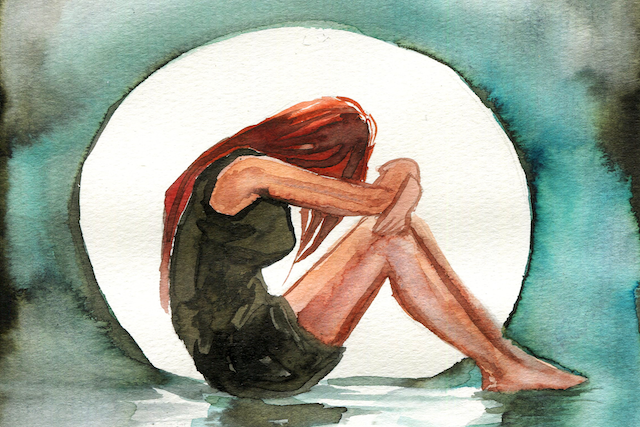
    These are just a few examples of the many ways I ran away from my pain. The real pain. The one below it all. The one that started it all. The core wound.

    The wound of unworthiness and unlovability.

    The wound that stems from my childhood.

    And my parents’ childhoods.

    And their parents’ childhoods.

    But this is not a piece on how it all got started or who is to blame.

    No. This is about me wanting to share how I got rid of my pain.

    Because discovering how to do that changed my life in ways I never thought possible.

    It is something I would love for you to experience too because life can be beautiful no matter what has happened in the past. I don’t want you to miss out on this opportunity. Especially because I know it is possible for you too.

    Hands on the table, I am a psychotherapist and I have been for almost ten years. I also train and supervise other psychotherapists, so I should know what I’m talking about.

    But, let me fill you in on this: There are plenty of professionals who haven’t done ‘the work’ on themselves. I know, I’ve met them.

    And I have met hundreds of people who don’t have any qualifications, but they have done the work on themselves. I know, I’ve felt them.

    Doing the work, in the shortest possible summary, is all about facing your pain. It’s when you stop—or when you’re forced to stop, which is so often the case—and you’re done with running away from it.

    It’s when you finally give up.

    Sounds like a bad thing, right? But it isn’t.

    To heal, you have to see the pain.

    We all think we see it or feel it or know it, but we don’t.

    We know what it feels like to run away from it and the pain and stress that causes. The constant anxiety, the pressure, the breathlessness, the numbness. That’s what we know.

    But that’s not the pain, not the pain of the core wound. Those are the symptoms of not dealing with the wound, of not healing it because you’re too afraid to even look.

    It’s fear that stops us from healing.

    It’s not the process of healing itself that scares us; it’s what we imagine healing means. And it usually is nothing like we imagine it to be!

    Healing just means facing the pain.

    Let me try to make it more practical:

    Do you remember a time when you were very little, maybe three or five, or maybe a little older?

    Do you remember, in your body, how it felt to be misunderstood? How to want something and then not get it? How to be punished for something you didn’t do? How to be shouted at for no reason at all just because someone else was stressed out and couldn’t control themselves?

    Do you remember how that felt?

    I do.

    That’s the origin. All those little incidents when we were too young to understand what was going on, but we made it mean something negative about ourselves.

    Because what was reflected back to us by the world, by the people we loved the most, was that something was wrong with us, that in some way we were flawed, wrong, or bad.

    Our brains were too young to take a different perspective, to defend ourselves from unfair judgments and punishments, and so we took it all in.

    And believing something horrible about yourself that isn’t true hurts. Believing that you’re not good enough hurts. Believing that you’re unlovable hurts.

    It also scares us, and so we no longer feel safe.

    Safe to be ourselves. Safe to love. Safe to be loved.

    We start to hide from ourselves and our pain. We start to hide our truth and inhibit the great humans that we actually are.

    Because in those moments, those moments of misunderstanding, we receive the wrong message—that we are not worthy of being heard, trusted, held, or loved.

    We are pushed away, through being ignored, threatened, or punished.

    And then we start doing that to ourselves.

    We want or need something—just like we needed it then when it was inconvenient to a parent who shouted at us and invalidated what we wanted or needed—and we deny it or minimize it.

    We want to say “enough” and set a boundary with someone—just like we wanted to when we were little but were told we didn’t know what was good for us—but we don’t do it.

    We want to choose what we like or are excited by—just like we tried to when we were young but were told we were being stupid, childish, or silly—but then go for the boring, reasonable option instead.

    We carry the pain on.

    We don’t stop to ask ourselves whether that’s actually what we should be doing.
    We try to avoid re-experiencing the pain from our childhood by treating ourselves in exactly the same ways as we were treated back then.

    We don’t realize that we’re keeping that usually unconscious pattern going.

    The most obvious example I can give you from my life is that I didn’t grow up surrounded by emotionally available adults. So obviously I didn’t become one either. I wasn’t emotionally available to myself, and I didn’t choose emotionally available partners in my relationships.

    As a result, I got to relive my childhood experiences over and over again while not understanding why I kept feeling so depressed, unloved, and worthless.

    I kept the pain going by being closed off to how I was feeling and by choosing partners who would shame, reject, or ignore me and my feelings the same way my parents had.

    But I broke that cycle.

    I broke it when I faced my pain.

    I broke it when I stayed within myself when I felt something, no matter what it was.

    When I felt disappointed that I didn’t get the grade I wanted on an important university assignment, I stayed with that disappointment.

    I didn’t talk myself out of it. I didn’t talk down to myself and tell myself what a useless waste of space I was. I didn’t pity myself or blame my lecturer. I didn’t numb myself by binge-watching Netflix and eating chocolate.

    No, I stayed with the disappointment.

    It was like I was sitting opposite my disappointed three-year-old self, and I stayed with her.

    I didn’t shout, mock her, invalidate her, leave her, or make her wrong for feeling how she was feeling.

    I stayed with her. I saw her disappointment. I saw her pain. I knew what she was making it mean and I stayed with her.

    I didn’t push her away. I didn’t push the pain away.

    And guess what happened?

    It started to speak to me! And it made sense!

    It wasn’t scary or weird or awkward or crazy! It made complete sense.

    And it needed me to hear it, to understand it, and to parent it.

    Just like I parent my children.

    “Of course, you feel disappointed. You have put so much work into this, and you didn’t get the result you wanted. I get it. I’m here to listen to you. I want to understand you.”

    Do you know what that does? It calms you down. Truly.

    It calms you down. It’s such a relief!

    Finally, someone wants to listen! Finally, someone doesn’t turn away from me like I am the biggest threat they have ever encountered. Finally, someone looks at me with understanding and compassion.

    This is what I do with all of my feelings.

    If there is jealousy, I am there for it. I’m not shaming it, not judging it—I’m just here to listen, to soothe, to understand, and to act on it if it feels like that’s what it needs.

    So I turn toward the pain, the feeling; I try to understand what it’s all about and see if there is anything it needs from me, something more practical.

    Does my disappointment need me to ask my lecturer for feedback to improve my work for the next assessment?

    Does my jealousy need me to remind myself how worthy and lovable I am? Or does it need me to choose something beautiful for me to wear because I’ve not really paid that much attention to my appearance recently? Or does it need to speak to my partner because he’s much friendlier with other women than he is with me?

    A lot of the time the pain tries to alert us to doing something we need to do for ourselves.

    By not facing the pain, by not tending to it, we can’t know what it is that it needs us to do—and it’s always something that’s good for us.

    And so we go without what we want and need, and the pain only grows bigger and louder like the tantruming toddler that is only trying to express herself in an attempt to be heard, held, soothed, and taken care of by their parent.

    It’s time to stop doing that to ourselves.

    I did many years ago, and I feel like a different person. The way I live my life is different. The way I feel about myself is different. I no longer go without what I want and need.

    That can’t happen as long as you use up all your energy to run away from the pain.

    The pain is your invitation to do the healing work. It invites you to stay and listen, to find out what’s really going on below all distractions and symptoms.

    What is the feeling that needs to be felt?

    What is the pain that needs to be witnessed and understood?

    And what does it need you to do for it so the core wound can finally heal?

    You have the power to heal it. You are the only one you need to heal it. But you have got to stay and learn to be there for it, learn to be there for yourself.

    That’s it.

    Unlike other people, you don’t walk away. You don’t say no to yourself. You don’t go against yourself and make yourself wrong.

    You stay. You feel it. You give it what it needs.

    And that’s when it heals.

  • How I Healed from the Trauma of My Father’s Abandonment

    How I Healed from the Trauma of My Father’s Abandonment

    “When another person makes you suffer, it is because he suffers deeply within himself, and his suffering is spilling over. He does not need punishment; he needs help. That’s the message he is sending.” ~Thich Nhat Hanh

    When I was fifteen years old, my dad abandoned my mother, younger sister, and me after a bankruptcy. My mother sat me down at the kitchen table to show me our financial situation scribbled on a yellow legal pad.

    Dad left us with six months of unpaid rent. The landlord threatened us with eviction until mom made a deal to pay extra rent every month to pay off the balance. He agreed to let us live there under those terms.

    Dad’s abandonment included disappearing with everything we had of any value. He took our music, art, records—everything that made the place a home. He even took the blender.

    My mother’s secretarial job covered our housing, car payment, and other bills, but we would run out of money the last week of the month. I would need to find a way to make up the difference.

    My father’s larger-than-life personality made him the center of our universe. With no education, training, or experience, he produced movies, invented a tripod, opened a furniture store, and made a training video for golfers.

    Every few months, a new business occupied his passion. The three of us were lightless planets revolving around his flaming sun. After he left, the absence of his gravity left us spinning.

    My little sister and I walked the neighborhood looking for babysitting, house cleaning, lawn mowing, and car washing jobs. Nobody has money to pay kids to do odd jobs in poor communities. We each picked up one babysitting job for one night—nothing regular.

    One day I answered an ad for a telephone solicitor job a mile and a half from our home. If I made seven sales in two four-hour shifts, they would hire me for a salary plus commission job. At fifteen, I looked thirteen but said I was sixteen.

    I made my seventh sale and felt victorious. We were going to be okay. Instead, the manager told me that one of my sales canceled, so I would not get the job. I had worked from 5 p.m. to 9 p.m. for two days and didn’t get paid a dime. (I would later learn that the company owners stood trial for profiting from unpaid underage labor).

    I walked home crying in the dark. A man in a black car pulled over and offered me a ride. He looked me up and down with a glazed-eyed hunger. I ran across the street and the rest of the way home. The walls of my interior crumbled. I felt my first awareness of the impermanence of all things. I had become a refugee in my hometown.

    Our family of three survived the poverty of financial limits. We made it out. However, the deprivation of abandonment cut more deeply.

    Abandonment, at any age, leaves one gobsmacked by the cold awareness that someone you love no longer cares if you’re dead or alive. You’ve been rendered irrelevant to someone who once benefited from your loving affection. You feel discarded like yesterday’s trash.

    You’re never the same person once you know that someone you love can walk away and not look back. You have eaten from the tree of the knowledge of good and evil. It is a knowing that lives in your bones forever. The poverty of an abandoned heart is hard to shake.

    Therapists talk about “fear of abandonment” as if it were a form of phobic anxiety, like arachnophobia, the irrational fear of spiders. My mother, sister, and I were not left with a fear of abandonment. We were left abandoned.

    When someone is shot with a gun and survives, we don’t tell them they have a “fear of guns.” We call it trauma. The pain lives in the wound. The scars tangible.

    Abandonment by someone we love is relational injury, like being shot to pieces but with no visible scars. Neuropsychologists found that losing someone we love activates pain receptors in the brain. It physically hurts. We suffer symptoms akin to opiate withdrawal.

    Like opiate recovery, eventually, the pain subsides. New experiences offer us hope for relational healing. We learn to love again. Like a soothing balm over a burn wound, love can ease that pain. The nerve endings calm down. Happiness reappears.

    Relational trauma changes the brain. We can experience a thinning in two parts of the brain. One part processes self-awareness (the prefrontal cortex), and the other helps us process and cope with our emotions (the medial temporal lobe). These changes can make us prone to anxiety and depression.

    Both of my parents were abandoned by their fathers as toddlers. My father displayed extreme polarities of emotion, manic bursts of enterprising energy, followed by depressed inactivity. My mother periodically experienced depression, followed by long periods of recovery.

    Trauma changes us on a cellular level and can linger like a ghost memory for generations. The ghosts of intergenerational suffering haunt many families. If you endure, suffering leads to wisdom. Wisdom leads to the alleviation of suffering.

    From suffering we gain: The wisdom of resourcefulness. The confident armor of a survivor. The cellular knowledge that security is an illusion. The ability to bring our own peace to the potluck. The instinct to protect our precious hearts. 

    I had to attempt new things after each failure on my road to healing. Children are naturally self-centered and feel responsible for the bad things that happen to them. The child believes “If I feel bad, I am bad.” With maturity, we learn to differentiate between what our parents bear responsibility for and our own adult responsibilities. I began to recognize that my father’s decision to leave us had nothing to do with us. He chose to abandon responsibility for his family due to his own failures and weaknesses, not ours.

    As I matured emotionally, it became clear that if I wanted a better life I had to make better choices. After several relationships with men who feared commitment and didn’t love me, I made the healthy decision to no longer find that type of man attractive.

    Necessity made me a seeker of opportunity. I sought out tools to help me cope. Here’s what I found helpful:

    • Meditation: At sixteen, I learned how to meditate. I believe that saved me from clinical depression and crippling anxiety. Meditation can repair the damage to the brain stemming from trauma. It provides the experience of non-judging, calm awareness.
    • Friendships: Friendships opened new worlds to me. Friends acted as lateral mentors and taught me how to play guitar, drive, write a resume, and apply to college.
    • Love: Finding loving relationships helped heal the sting of worthlessness. Watching other loving couples served as models for what was possible.
    • Meaning and purpose: Volunteer work, a life of service as a psychotherapist, raising a family, and commitment to a purpose beyond personal ambition increased my happiness and resilience.
    • Compassion: My parents had children at a very young age. They, too, suffered abandonment and loss. I feel compassion for my father’s loss and for what he lost in leaving us. Compassion heals.
    • Gratitude: I’m grateful for my small family and what we built from the rubble. My sister and I raised healthy children who feel secure, having never endured poverty of resources, or abandonment. We broke the transgenerational pattern.

    Today, when our family gathers, I watch our two grandsons play with their pups in the grassy garden. Their father, our oldest, watches the toddlers with alert protectiveness. My husband gives the boys horsey rides on his back to squeals of delight. Our daughter-in-law prepares a lovely meal with fresh produce from their abundant garden. Our other son performs a funny dance eliciting giggles from his nephews. Our daughter and her husband join in an improvised comedy routine to keep the fun going. We savor the meal as the sun slowly sets.

    Love wins.

  • How I’m Healing from Codependency After Growing Up with an Alcoholic Parent

    How I’m Healing from Codependency After Growing Up with an Alcoholic Parent

    “The only person you can now or ever change is yourself. The only person that it is your business to control is yourself.” ~Melody Beattie

    In 2019, I decided to leave my marriage and start over. Although my relationship with my ex-husband brought deep pain and many months of suffering, I felt content with my decision.

    In a short time, I began to feel great. I developed a healthy routine, exercised regularly, began meditating every day, spent time in nature, maintained healthy and deep connections with people, and tried to focus on the positive.

    For a few months, it seemed to be working. Until I met a man and got emotionally involved with him. I realized then I’d really been living in denial.

    The moment I began dating or seeing someone more intimately, my life felt unmanageable. Suddenly, I would abandon my daily routine and spend days preoccupied with what this person was doing or why it would take them thirteen minutes to respond to my message. I’d become obsessed and wonder, “What’s wrong with me?”

    I was quick to throw a tantrum to create more drama and fights. In some twisted and weird way, it felt exciting. I had something to resolve and take care of. I was feeding off the extreme lows and highs with people I dated.

    As an adult child of an alcoholic, I didn’t understand what it meant to be addicted to excitement, as stated in the famous laundry list. Now I do.

    My need to control the other person, the fear of abandonment, my obsession over people’s feelings, and my desire to fix their problems while ignoring mine brought an unbearable pain I couldn’t ignore anymore.

    It all broke down this year. I met someone who once again triggered my codependency and challenged my trauma wounds. Shortly after we started talking, I began to feel crazy again. Constant anxiety, fear of loss, desire to control and manipulate situations, were coming to the surface until the relationship ended. Another failed attempt to be in a relationship.

    What followed was intolerable emotional pain. I never felt so lost in my entire life. I couldn’t function properly, I couldn’t eat, I couldn’t work, and I was paralyzed by desperation, hopelessness, and loneliness.

    Meanwhile, somewhere between my pain and inability to see my worth, I broke through. 

    For the very first time, I was forced to feel my emotions. Although it felt brutal at times, I was at least feeling. The pain cracked me open in my core and didn’t allow me to numb anymore. Anger, worthlessness, guilt, shame, fear of loss, the pain of believing I am hard to love—it all came pouring out full force.

    Who would have ever thought that a broken heart, or at least what I perceived as a broken heart, would uncover my codependency and lead to emotional healing and more authenticity?

    For the next couple of months, I would come home, lie on the floor in the middle of my bedroom in a fetal position, and brace myself for the emotional outburst that was about to come. I was processing and releasing my emotions, and there was no coming back.

    I would breathe heavily and cry uncontrollably for days and weeks to come. I would cry at work, at the store while picking avocados, when I was falling asleep, or watching a TikTok video. It didn’t matter. For the first time in my life, I was feeling my feelings and didn’t push them away.

    Honestly, I wasn’t quite sure what was happening. I had no logical explanation for this emotional rollercoaster until I talked to one of my good friends, Gaia. She mentioned a book she was reading, Codependent No More, and suggested I check it out.

    I never considered myself codependent. By definition, I was the opposite of it. I had my apartment, paid my bills, lived on my own, worked while building my business, and took care of myself.

    However, I decided to give it a shot and read it. What followed was epiphany after epiphany and a few A-ha moments. I began to understand why I felt crazy when entering any intimate relationship or a possibility of one. I began to see how the pain from my codependency allowed me to open up.

    As I was sitting in my studio apartment while contemplating everything I’d learned and now understood about codependency, I knew that this was about to significantly transform my life if I did the work and didn’t stop.

    Living with a person with chemical dependency shapes you into a control freak with unhealthy survival mechanisms. Codependency is one of them. The only way to change is to be willing to face the truth and commit to deep inner healing. 

    So, the question was, “What is the next best step I can take right now to heal and recover?”

    At first, I needed to take personal inventory and be honest with myself. Who am I? What are my toxic traits, and when does my codependency step in? When do I manipulate people? Am I trying to fix people’s problems to increase my value and prove my worth? How can I stop doing that and rely on myself for approval and validation?

    I remember the day when my mum called and let me know that our dog, Aida, had suddenly passed away. Shortly before her call, I’d had one of my emotional relapses and picked a fight with a person I was seeing at that time. I then used this disturbing news and my sadness as a tool to manipulate the other person. The victim façade I put on made them forget about my toxic behavior and feel sorry for me instead. What can I say? Manipulation at its best.

    Honestly, it was not easy, admitting to myself that I manipulated people, that I was emotionally dependent on them and wanted to control them. This was not the type of resume I would want to show around, but at least it was real.

    I was standing in my authenticity, and it felt incredible.

    Once I became aware of my behavior, it was time to forgive.

    The tricky part about growth and healing is that once you become aware of your shortcomings and trauma sabotaging techniques, it is easy to move from practical awareness to self-judgment. 

    So, I needed to forgive, forgive, and forgive some more. Therefore, I incorporate forgiveness into my meditation practice. I didn’t understand how utterly guilty I felt until I sat down to practice forgiveness through meditation for the first time.

    After I closed my eyes and said out loud, “I forgive myself,” I had to pause the recording. My emotions came pouring out. It felt as if I had been holding my breath and finally exhaled after many years of keeping things inside. The guilt and shame came washing over me, and I began to release them.

    I finally gave myself a break and instead of harsh judgment and criticism, I offered myself acceptance and empathy.

    One of the most common patterns of codependent people is that we constantly feel guilty and not enough, and we limit ourselves from anything good or loving since we don’t believe we deserve it. The only way through this madness is to use compassion and understanding toward what we have done or who we believe we are. It’s about empathizing with our past, becoming aware about what happened to us and the impact it had.

    No one is born to manipulate and control. It’s not who we are. It’s who we become as a survival mechanism. We adopt these toxic traits until we are brave enough to look in the mirror, admit to our mistakes, and break our patterns. And the only way is through self-forgiveness.

    I started to work the 12-step program for codependents. I also learned that recovering from codependency is a journey, not a destination. Healing codependency is about self-control, constant self-care, practicing detachment, surrendering, and developing a healthy relationship with power.

    As I learned from Melody Beattie, an author of numerous books on codependency, recovery is the only way to stop the pain.

    Growing up in a household with chemically dependent people or in a home that doesn’t provide safety and proper nurturing, you may develop an unhealthy relationship with power as a coping mechanism. You may believe that if you can control and predict everything and fix people’s problems, you’ll be fine. You’ll be in control. You’ll be loved and enough.

    But the only thing you can fully manage is yourself. Any time you try to control things or people, you’ll experience pain when they don’t meet your expectations. As you may already know, people do what they want, and many situations don’t play out the way we envision. 

    One of the biggest lessons I’ve learned this year is to find my power by looking into a mirror. Stopping the pain is about practicing detachment, letting go, working on my recovery to overcome the fear of loss and abandonment, and giving myself as much love as I possibly can.

    The need to control often results in desperation that brings suffering, while practicing detachment and caring for yourself brings peace and allows healing.

    Today, I say with confidence, “I am codependent.”

    I am aware that to live healthier, I must stay truthful to my recovery. Sometimes I win, and sometimes I fail. Over time, there will be fewer losses and more wins. It comes with practice. I am mindful of the emotional and mental relapse that comes with the process. I know that I will fall into my old patterns and then struggle to get back on track.

    However, I know I have the power to make different choices. When things seem to fall apart on the outside, it’s time to go inside, feel, process, and forgive. That’s my new way of life. Although it challenges and triggers wounds I need to heal, it gives me hope to believe those good things can happen for me too.

  • Why “Find Your Purpose” is Bad Advice and What to Do Instead

    Why “Find Your Purpose” is Bad Advice and What to Do Instead

    “The meaning of life is to find your gift. The purpose of life is to give it away.” ~Pablo Picasso

    I was fifty-two when I found my purpose. I wasn’t even looking. It literally just smacked me upside the head. That’s a funny thing about life. It throws things your way, and you either grab them and run with them or you turn a blind eye and walk on by.

    I used to turn a blind eye. I don’t anymore. These days I’m taking in all that life tosses my way. The good, the bad, and the ugly.

    How My Purpose Found Me

    I had just left an abusive relationship and declared bankruptcy. You could say my life was a complete mess. I had also just hit rock bottom and was starting the grueling climb out. It was frustrating and exhausting.

    During my healing and self-discovery journey I did something that changed the entire course of my life. I started volunteering at a homeless shelter.

    I’ll be honest with you, I did that for two reasons. One was selfish. The other, humanitarian (and sincere).

    I desperately needed to take my mind off all my problems, and I figured the only way to do that was to surround myself with people whose problems were way bigger than mine. And it worked. But something else happened.

    I fell in love with the homeless people I met and found a deep sense of purpose. Phew! I sure didn’t see that coming.

    I then made it my mission to do more of that. Help people, all people, even animals. I just wanted to help everyone and everything anyway I could, as often as I could.

    I had found my purpose, and that was to do my part to make the world a better place.

    I Never Understood the Meaning of “Find Your Purpose”

    I honestly thought that phrase was overrated and overused.

    It seems to suggest purpose is something outside ourselves that we miraculously stumble upon someday. “Oh, did you hear? Mary found her purpose today.”

    And it also creates a lot of stress and pressure to hurry up and figure it out. “I’m still looking for my purpose, and I’m frustrated that I’m having such a hard time with this.”

    I couldn’t understand why everyone was desperately seeking their purpose. I was just trying to navigate life the best way I knew how in order to have inner peace and be happy, while others were searching for this holy grail.

    I questioned myself. Should I be looking for this too? Do I need to find it before I die? Will my life be incomplete if I don’t? Will I die with regret then?

    I was confused. What’s the big deal about finding your purpose? It was starting to freak me out.

    My Aha Moment

    After my first night at the homeless shelter, I knew without a shadow of a doubt that I wanted to do that for the rest of my life. Just give and serve and make people happy. I wanted to turn frowns upside down and get hugs and make people’s lives better, any way I could.

    Did I finally discover my purpose without even realizing it? Was this what everyone was talking about?

    I assumed it was. I assumed that this was it! I’d found my purpose and now my life was complete. Or was it?

    I was puzzled by something.

    Isn’t This Everyone’s Purpose?

    I couldn’t understand why me serving homeless people and helping humans and critters in any way I could was some special purpose.

    Shouldn’t we all be doing that? As humans sharing the same planet in the galaxy, shouldn’t we all be doing our part to help other human beings (and critters)?

    It’s more than that, though. It’s so much bigger than that. It’s about finding joy and peace in knowing you did your part to make the world a better place.

    That’s what the definition of purpose should be.

    Stop Looking for Your Purpose

    Maybe we should just ditch the word purpose and replace it with something that doesn’t sound so foreboding. Maybe instead of saying, “I’m trying to find my purpose in life” we should try saying, “I’m doing my part to make the world a better place.”

    It just has a nicer ring to it.

    There’s so much anger, hurt, hatred, and frustration in the world today. The world needs more love. People need more love. When we see things and people through the eyes of love and compassion something magical happens.

    We understand, we don’t judge, we feel for each other, and it brings us all one step closer to having inner peace and joy.

    So how can you make the world a better place?

    What special gift, talent, or skill do you have that you can offer the world?

    It doesn’t have to be what you do for a living, though that’s clearly the ideal, since we spend so much time at our jobs. Maybe it starts as something you do on the side and grows over time. Or maybe it doesn’t, but maybe having something that fills you up will help make your 9-5 more tolerable.

    The important thing is that you find some way to help people that leverages your unique passions and interests. Then even if you don’t love your job, you’ll feel a sense of meaning, and you’ll feel good about yourself and the difference you’re making.

    Maybe you love animals and can volunteer at a shelter.

    Maybe you make people feel good about themselves by simply sharing kind words to strangers.

    Or maybe you’re passionate about  knitting or sewing or singing and you can find ways to use those talents to brighten other people’s lives. I mean, the possibilities are endless.

    We need to do more things that spread joy, hope, and love to the people around us, even if it’s something small. Sometimes it’s the smallest acts that have the biggest impact.

    If you’re stressing about the fact that you are getting older and haven’t found your purpose yet, stop. It’s overrated. Instead, find ways to serve and in turn, inspire others to serve.

    It’s not about finding your purpose. It’s about living your life to the fullest and knowing at the end of the day that you did your very best to make someone else’s day brighter and better. It’s about doing that every day until you die. That’s a life well-lived. And if you want to call that your purpose, so be it.

  • If You Want Closure After a Breakup: 6 Things You Need to Know

    If You Want Closure After a Breakup: 6 Things You Need to Know

    “We eventually learn that emotional closure is our own action.” ~David Deida

    When my last relationship ended, I didn’t really understand why. After eight years together and still feeling love for each other, my partner walked away saying he didn’t feel able to commit.

    He didn’t want to work on the relationship because he felt that nothing would change for him. So, I had no choice but to let it end and do everything I could to pick myself up from deep grief, intensified by great confusion.

    Now, over a year later, I still cannot give you a definitive reason as to why we broke up. I do still think about the breakup and occasionally it can bring up emotion, even now.

    But these days, instead of that burning need to understand and make sense of it, I have a more distanced curiosity when I think about the reasons we ended. I think this might be that elusive state we call “closure.”

    This reflection led me to explore what closure means: why we strive for it and why it feels so hopeless when we think we can’t reach it. Do we ever truly have it and where does it come from?

    What is Closure?

    When we say we want “closure” at the end of a relationship, what do we actually want?

    I have discovered that when people talk to me about needing closure, what they generally tend to mean is that they want answers and understanding about why things ended the way they did.

    Heartbroken people often believe that they will get the closure they so desperately desire, if only they could make sense of why. They expect that this knowledge will help them stop the overthinking and relieve them of their painful emotions.

    I used to believe this too, but experience from my previous crushing divorce taught me it doesn’t work like that. Closure must come from within because if you look to your ex or anywhere else to find it, you will be left frustrated and helpless and you will prolong your healing process.

    So, let’s look at some truths about closure that explain why it has to be an inside job:

    1. Your ex’s responses will lead to more questions.

    At the point of my breakup, my ex and I had a couple of conversations that involved me doing a lot of asking why, but not getting many answers. He couldn’t really explain; he told me “It’s not you, it’s me,” and when someone gives you that as their reason, there is nowhere you can go with it.

    For the person leaving it probably feels like the best way to end it. But for the person left, it’s deeply unsatisfying, and our natural tendency is to desperately ask more questions: “What’s wrong?” “Can I help you with whatever you’re going through?” “Can we fix it somehow?” “Can we at least work on it?”

    It’s important to know that when we are still in love with someone, nothing they can say will us give closure. The answers will never feel enough, they will only lead to more questions and more longing.

    2. “One last meeting” extends the pain.

    If there is still communication after a breakup it’s tempting to ask for one last face-to-face, to help you understand and gain the closure you seek. But for all of the reasons above, this will not help.

    A meet-up is often an excuse to get in touch because the ending feels too painfully final. Sometimes there’s a veiled hope that by seeing them for “one last talk” they may rethink or have doubts about leaving.

    Nobody is ever wrong for seeking closure this way, but before deciding to meet, check whether you are really hoping for reconciliation. Consider how your pain might be prolonged if you don’t get it.

    3. Your closure can’t come from their truth.

    You cannot rely on the words of the person who broke your heart for your own closure. Not because they are being deliberately dishonest (except for specific cases when they are), but because there is never just one truth at the time of the breakup.

    The answers you receive from your ex may bring you a little bit of understanding or peace at first. But if you depend on them for your closure, and then the reality shifts, it can set you back and bring even more pain.

    I allowed myself to feel deeply reassured by my ex’s assertion that he left because he needed to be by himself. So, when he told me two months later that he was dating again, it left me utterly devastated because I had allowed my peace of mind to come from his words and not my own healing. I had believed “It’s not you, it’s me,” then felt the gut punch that it actually was me.

    However, as I started to move through the healing process, my growth allowed me to shift my perspective on the meaning I gave to this revelation. I learned to reframe the deep feelings of rejection to create my own, more empowering, understanding of why we ended.

    You cannot cling to reassurance from someone else’s truth or explanations, because they will not hold lasting meaning for you. Your closure will only have a strong foundation if it comes from your own truth.

    4. Moving on should not be conditional.

    You disempower yourself when you believe that you can only get closure via your ex-partner. In doing so, you are effectively allowing them to say whether it is okay to move on.

    If you require an apology, changed behavior, an explanation, empathy, forgiveness, or anything else from them before you can move forward, what happens if those things never come? Are you okay with potentially spending years waiting for someone else to fix your pain?

    Whatever your ex-partner tells or withholds from you, however they acted back then, whatever their current situation or future behavior, is far less relevant than your response to any of these things.

    Your ability to gain closure is unconditionally within your control, and it becomes far easier when you stop focusing on your ex.

    5. Closure is not passive—what you do counts.

    We have a common understanding that “time heals a broken heart.”

    While it’s true that the intensity of grief emotions can lesson over time, what really makes a difference to your speed of moving on, is how willing you are to do the inner work to change and grow.

    As you gain closure, you’ll notice you are no longer so emotionally triggered by the same external situations. However, this doesn’t happen because anything out there is different; it’s because you are different.

    When you learn to heal an internal wound, shift your perspective, and change your responses to events, you gain peace from the inside. This is not dictated by time; it’s up to you how soon you want to make these changes.

    6. Closure is not a one-time event.

    There is a misconception that closure is something we finally “get.” The word itself implies that it’s a conclusion to everything related to the breakup. Because of this belief, we find ourselves constantly wondering when we will “have it.”

    Instead, if we see it as a process rather than a one-time event, it takes the pressure and expectation away from reaching this end goal. Creating closure is a continual journey of self-awareness, learning, and checking-in on our progress. We don’t just wake up one morning with a clean slate for a new life.

    Reframing closure this way also relieves us of judgment about how we should feel. It’s common to regard new emotional triggers, after a period of good progress, as unwelcome. They are negatively seen as a sign of a setback, but they are just highlighting where we still need a little more healing.

    Allow Yourself Achievable Closure

    The way we view closure matters. Compare the statement “I’m gaining closure every day” with “I don’t have closure yet.” You know straight away which feels kinder, more healing, less self-judging.

    I recently asked people what closure looked like to them, and I found that most believed that it is something you reach when you no longer think about or have emotions around your breakup.

    I wonder how realistic this thinking is. Perhaps it’s healthier and more attainable to claim we have closure, not when our thoughts and feelings have completely gone, but when they no longer have power over us.

    In my experience, becoming at peace with your breakup ultimately comes from healing through growth, and choosing to focus on what is within your control. This is the kind of closure that doesn’t come from an ex-partner, a rebound relationship, or any other external source. When you gain closure this way, it cannot be taken away from you.

  • How I Overcame My Debilitating Gut Issues by Digesting My Emotions

    How I Overcame My Debilitating Gut Issues by Digesting My Emotions

    “I do not fix problems. I fix my thinking. Then problems fix themselves.” ~Louise Hay

    Here’s my secret: In order to fully heal over a decade of debilitating digestive disorders, I had to stop trying to heal. Instead, I had to do nothing. What, do nothing? Yes, that’s exactly right—I had to let go of the search for the perfect cure. Let me explain.

    I developed chronic gut problems at age fourteen—such a precious age! After being dismissed by doctors (“It’s all in your head; it’s a girl problem”), overprescribed antibiotics for years on end, or just given hopelessly ambiguous, catch-all diagnoses like IBS, gastroparesis, candida, h. pylori, and leaky gut (as any sufferer of gut problems can relate to!), I became my own wellness warrior.

    For twelve years, I was on a crusade to find the “right” answer: the right elimination diet, the right supplements, the right doctor, the right healer, the right yoga poses, the right amount of water for my body weight, the right breathing techniques, the right blogger, the right retreat, the right fix that would heal my gut once and for all.

    In truth, I was stuck in a healing loop, and healing became my identity. Sound familiar? I let myself believe that I could never be truly healed, so that I would always be chasing the next popular protocol or promise—paradoxically, it was almost easier that way. “Healing,” which is one of the most profound inner transformations we can undergo, had become a completely disembodied, intellectual exercise.

    I have to be gentle with myself. My quest was not deliberate self-sabotage. You see, I was desperate to get better.

    To not be afraid that any given food, no matter how “healthy,” could set off a land mine of symptoms. To not keep living small so that I could be close to a bathroom and heating pad at a moment’s notice. To stop being defined by my “stomach problems,” and start living fully, or living at all. Until the gut problems led to a cascade of other health problems, and I had to wake up.

    In my healing loop, I was cut off from my inner voice, from my inner guidance, my compass. No wonder I couldn’t get off the loop to a place of true equanimity, balance, and wholeness, in all areas of my life.

    I had no access to my gut intuition.

    Now, I can’t say for sure what came first: suppression of this intuition, which led to gut issues, or the onset of my gut issues themselves, which led to further suppression of my intuition.

    Either way, indigestion, in any form, is literally the inability to let go of the past, of experiences and events that are transient, but that we choose to let define us. Our guts are where our will, personal power, and courage reside. Or, when imbalanced or compromised, our guts are where fear, inaction, and indecision take hold.

    We know this on the same instinctual level that leads us to say, “She’s got guts; trust your gut; I have a bad gut feeling about him; be more gutsy!” But what if we actually listened and trusted our guts? What does that even mean?

    Similarly, we’ve all heard about the mighty microbiome—how we are basically superorganisms composed of trillions of gut bacteria that support everything from immunity to serotonin production. But how does this information translate into the beautiful unification of mind, heart, and belly that leads to quantum healing?

    Sure, we know to take probiotics and eat fermented foods to feed our good gut bugs, but how often do we hear about the metaphysical roots of gut problems—fear, dread, anxiety—and how to weed them out?

    Beginning to Digest My Emotions

    Eventually, when I was twenty-six, I became so depleted from outsourcing my healing powers to “experts,” that the only wounded healer I was left with was myself. Sicker than ever, I realized that no elimination diet would ever work, because there was something else eating away at me.

    What was I not digesting? After twelve years of gut problems, I began to ask myself this question. A wonderful massage therapist told me to start talking to my belly, to ask her what she needed.

    Every day, I lay down with my hands resting on my stomach, and I simply said, “I am willing to feel what is ready to be felt. I am ready to digest my emotions.” That’s all I did. I lay there and waited for my emotions to arise.

    My belly was so tightly contracted, so afraid of herself, that at first, nothing came up at all. I felt completely detached from my entire digestive tract. After all, I’d been beating her up for years, admonishing her for making me sick, feeling completely helpless and victimized in the face of symptoms.

    So I just kept my hands on my belly and trusted. I spoke to her softly. “I am well. What I need to heal is already within. I am willing to feel what is ready to be felt.”

    Little by little, tears came. I imagined the pain was dissolving as black smoke and floating out of my body. Days passed, then weeks. My belly began to give in. I began to digest. And when I did, my whole body shook with the emotion I was most afraid of, fear itself.

    Fear—of failure, of success, of my power, of my weaknesses, of not being enough, of being too much, of the future, of the past, of what was not and what would never be.

    I was holding a lifetime of fear in my stomach, and my stomach was contracting around it, protecting that fear like my life depended on it. My life did depend on it—as a defense mechanism from the vulnerability and open-hearted living that lies beyond fear.

    That fear was slowly depleting me of my life force, of my ability to assimilate anything positive, from nutrients to joy.

    At first, facing a fear so elemental and ingrained can literally seem like dying. And a death of sorts is taking place.

    A deeply somatic, cellular release is underway. All the body needs is support to let the process unfold. S/he needs love, rest, and compassion. S/he needs to know she is safe—and s/he will do the rest.

    It was in that space of not trying to heal, of doing nothing, where healing really began. Because ‘nothing’ is where the little voice of gut intuition can take form. That little voice, what I call the Inner Wise Woman (or Man), can emerge—first quiet, wounded, and confused, and then a little more resilient each day.

    Begin to recognize that voice. Listen to its timbre, its intonations. Learn to trust it. S/he is never wrong. And beyond that voice is where true healing, and true living, begins.

    How to Practice Emotional Digestion

    How do you digest fear? How do you sit with a belly full of fearful thoughts long enough to witness and dissolve them?

    This is the process of emotional digestion that healed my gut after twelve years of incessant pain and discomfort. It is a powerful practice of learning to trust yourself and your intuition, and, if done regularly, will transform much more than just physical pain.

    1. Listen

    Each symptom is a sign, a messenger, of an inner imbalance at play. You have to get quiet enough to listen to the messages.

    Lie on your back in a comfortable position where you can fully relax and release. Place your hands on your belly. Don’t do anything—don’t think about the pain, or what could be causing it, or how to fix it.

    Just breathe and be. Trust that the information you need will surface at the perfect moment, when the body is ready to impart his or her wisdom.

    After you have brought your mind-body into a state of peace and coherence, send your body a signal of safety by repeating an affirmation:

    “I am well. I am whole. I love you and I’m listening.”

    You may lie here for half an hour, or for hours. You may be ready to tune in after a few minutes, or you may need to repeat this practice every day.

    Know that wherever you are is perfect, and everything you need to heal is already within. All you have to do is listen.

    2. Ask

    Once you have become comfortable with the practice of simply listening to your body, you are ready to ask him or her what s/he needs. Tell your belly (or whichever part of your GI tract is in pain), either aloud or in your head:

    I am fully ready and willing to feel what needs to be felt.

    And just see what comes up. Breathe into the answer.

    It may be a resounding voice in your head, or a wellspring of emotion, or a very subtle shift in perception. The more you practice, the more refined your intuition will become. Once feelings have begun to arise, ask your belly:

    What messages are you sending me through these symptoms?

    What feelings can I release from my gut, so I can receive what I need in this moment?

    What information do I need to know to heal?

    Meditate on the answers. Again, depending on the duration of your symptoms, this process may take months or years for answers to fully reveal themselves.

    Don’t worry. Everything is unfolding in perfect time.

    3. Shift

    You have listened to your body’s innate wisdom and asked for answers. Now it is time to shift this knowledge into deep healing. You are literally transmuting the pain so you can make space for more beauty, grace, health, harmony, and peace in your life.

    If you have been storing fear in your belly, call upon courage and belief.

    If you have been storing scarcity mindset and inaction, call upon abundance and willingness.

    If you have been storing low self-worth, call upon gratitude and peace.

    There are many ways to shift a physical manifestation of a metaphysical imbalance—both somatic and emotional. Here are some potent and practical ideas.

    Write through whatever answers arose in your emotional digestion, meditation, and self-inquiry practices. Ask your belly to write what s/he really needs to you/through you. Then, do not judge the words—just let them flow. You may be surprised what comes up.

    Repeat a positive, present-tense statement daily for a month. For indigestion, author and healer Louise Hay suggests the following: “I digest and assimilate all new experiences peacefully and joyously.”

    Move the energy through you. Dancing, shaking, and yoga are among the many powerful ways to literally shift your energy by moving it out of your body, and calling in more refreshing, open, and higher vibrations.

    Try energy healing. Sometimes, the support of an intuitive energy healer, reiki practitioner, or bodyworker is fundamental to releasing stored psychospiritual blockages from the body.

    Once you have listened, asked, and shifted the energy of fear, pain, indecision, lack of will, or whatever arises from your gut, you make space for a radical, new capacity: your intuition. Your inner knowing. Your Inner Wise Woman or Man.

    Next time pain arises, instead of trying to heal, ask your intuition: What does my body need to heal?

    And listen as s/he tells you the perfect medicine for your unique body vessel.

  • Why Forgiving Is the Last Step in The Process and What Comes First

    Why Forgiving Is the Last Step in The Process and What Comes First

    “True forgiveness comes when you realize there is something totally radiant inside you, that nobody could ever touch” ~Eckhart Tolle

    I grew up in an emotionally abusive household.

    My father was a man who diligently provided for us, but he left me with scars and shattered self-esteem.

    My mother cooked me my favorite foods and let me sleep in her bed when I was scared, but she attacked my insecurities when I frustrated her. My friends played nasty pranks, but she wiped my tears as we both tried to survive my religious, cult-like school together.

    As a kid, I didn’t have the tools and mental maturity to deal with these complicated emotions. Everything was black and white. I couldn’t understand that people were a big, beautiful, and sometimes toxic mess of gray. After a year-long depression, I discovered the Internet, and I wanted to start healing.

    All the articles suggested forgiving, and I’m glad I ignored that specific piece of advice, because it’s much more complicated than that.

    I decided to focus on healing instead, and a crazy spiral started. There were a lot of extremes, a lot of tears, and a lot of perfectionism. But there were also love and joy, friends, and moments of incredible peace.

    Six years and one day later, I woke up and realized I didn’t obsess about my parents anymore. I could see them as people and forgive them for their cruel actions. I could set boundaries without getting subsumed by a tunnel of rage, and after a nasty fight, I could calm down and let go of any hard feelings.

    How on earth did I manage this?

    Accept the pain.

    Trauma runs deep. There are lasting effects, and we’d be fools to not acknowledge them. Even mental health professionals admit that the goal of recovery isn’t to remove the side effects, but to live in the present without being completely overwhelmed by the past and future.

    And for quite a lot of us, it hurts.

    It hurts for the teenage girl who spent her high school years struggling with depression and eating disorders because her family criticized her weight.

    It hurts for the boy who battled anxiety all his life, and his existing condition was only exacerbated by terrifying bullies and an unstable home environment.

    It hurts for me, a girl who lost years of her childhood to anxiety and fear, and never felt safe around her father.

    For a long time, I kept searching for a path where I could back-pedal. Hold up, let’s forget about the trauma and depression, can I just be a normal kid? Visit friends and insult their slime collection, and laugh about memes, and cry and fall in love? Can my diary be filled with boy-crushes and silly things, instead of obsessive questions begging me, why are you so lazy? Why are you so sad, and depressed, and ugly—

    And that brings me to my next point.

    Don’t get trapped in your abuser’s patterns, and don’t give your power to them.

    At first, I tried to fix myself. I filled pages with goals among goals. Get slimmer thighs. Talk less. Stop forgetting stuff. Stop fidgeting. Stop being lazy. Stop being yourself. Stop. Stop. Stop.

    I was a kid. Your entire world, your survival, depends on two very flawed human beings feeding and clothing and raising you. I thought that maybe if I were better, they’d treat me better.

    But eventually, I stumbled upon an article about abuse. There was this checklist activity, and I checked off twenty bullet points. “Congrats! You’re a survivor…”

    I’m not the problem, I thought, staring at the screen. They’re the problem.

    So, I went down a new road. Instead of trying to fix me, I tried to fix them , and when I inevitably failed, I was angry about the awful way they treated me

    My parents used this rage as another bullet in their gun.

    “Have you ever seen such a rude child?” “F*cking insane” “I’m just trying to speak nicely, stop yelling!”

    And they kept shooting at my heart, every time I said stop.

    “Stop commenting about my ugly skin and my weight. Stop saying I’m a failure, that I’ll never succeed in life. Stop rolling your eyes at me every time I make a mistake, or I forget something.”

    Stop, stop, stop.

    But they wouldn’t stop. Trying to fix them was worse than trying to fix me. Why? Because you can’t find closure from other people. You can’t control their actions.

    After the hundredth argument, I was sitting next to my bed. And then it hit me. They would never look me in the eyes and say, “I’m sorry, I’ll try to change.” Every time I tried to talk about my vulnerabilities, they would rip the wounds open and rub salt and lime into the blood. I would never get the closure I needed from them.

    I sat there for a long time. The tears dried on my face. And then I opened my journal, and wrote, “Dear Diary, I’m so tired…”

    Love yourself during the journey.

    I kept postponing my happiness. I kept waiting for two flawed people, who mentally, emotionally, and sometimes physically abused me, to change so I could finally move on. As a result, I never really tried to heal by myself.

    When I opened that journal, I still operated from the belief “I wasn’t good enough” and I needed to be “better.”

    I tried to have the perfect body. I was terrified to eat carbs and treat myself to a nice meal. I tried to be the perfect artist. At one point I loathed all the writing I’d ever made and threw away entire notebooks.

    It took me a long time to realize, there is no “better.” Are there milestones and visible signs of growth? Absolutely. For as long as I’m a human, I’ll struggle. So, I better start loving the imperfect soul I was given or die in the pursuit of “better.”

    This is why I encourage you to start taking care of yourself. Take the pressure of perfection off your shoulders.

    As an abuse victim, I tried to smash myself into a shape without insecurities so I’d never feel sadness, never cry while sitting on the ceramic toilet ever again.

    The journey is long. I’m still walking it. But every day, there are small opportunities to practice self-love and give yourself rest.

    These days, when I make a mistake, I still berate myself, but there’s a new voice, saying, “Don’t call yourself an idiot.”

    It tells me to go outside and get some fresh air when my brain’s being overloaded by my parents’ screaming voices and the TV fuzz. It tells me, “Things are going to be okay” when I’m recovering from a panic attack. It gives me strength when I want to do nothing more than give up.

    There are loads of ways to build a compassionate inner voice. Journaling, saying kind words to yourself in the mirror, complimenting your work before you attack it for its flaws. It’ll take time. It did for me. But slowly, the critical editor quieted, and I felt better about myself.

    Find an identity outside of your pain.

    This is intricately linked to healing. When I forgave my parents, I hadn’t made the conscious choice to forgive. I had made the conscious choice to heal.

    I wrote short stories, painted my first portrait and just delighted in mixing the colors, and I read blogs and books and laughed. Every day, I woke up and just tried. Sometimes I failed and fell into my spiteful patterns. And other times, I succeeded, and caught the cruel thought in my head, and dismissed it.

    I fed stray cats in my neighborhood. I watched Good Omens and read more Terry Prachett books. I took walks and I improved myself, not from a place of inadequacy, but from a place of kindness and self-love.

    I journaled these experiences, and as I read my previous entries, I realized three things.

    1. I’m not just a survivor.

    2. I’m an artist, a sister, a writer. I’m the girl who plucks dandelions from the grass near the lake and throws shells into the water. I’m the person who keeps my cat from eating plastic wrappers, and who helps my brother with his homework and comforts him when he’s crying. I’m the person who doodles millions of feathers, and faces, and earrings in the margins of her history homework.

    3. The abuse has affected me. It is a part of my life. It bleeds into my work and the themes I communicate.

    My talents and intelligence, they weren’t diminished by the mental abuse. I’m still a radiant person worthy of love and appreciation. These should be obvious concepts, but recognizing these things lifted a load off my shoulders—a load of resentment. And it comforted the deep fear I was never going to be healed. That I was always going to be a little broken, a little empty.

    But when I wrote down all of these experiences, I realized there were vast expanses of my soul my parents could never taint. There’s still pain. I think there’s always going to be pain; it’s a simple fact of life. But now I can comfort myself. I can feel those emotions and move on, without attaching the label “broken.”

    Forgive because you need the space.

    There are still scars. There are always going to be scars. There are always going to be hard emotions and terrible situations, because life is a series of peaks and valleys.

    I forgave them because I didn’t want to keep lugging them around, like a suitcase of rotting garbage. But it was the last step of a long, long process, where I repeatedly had to revisit my trauma, accept hard lessons, and integrate them into my sense of self.

    If I had tried to forgive right from the beginning, it would’ve been a stupid move. I would have constantly justified their sh*ity behavior, since “everyone has flaws, you should forgive and forget so you can maintain a relationship.” And I would’ve never discovered the power of my grief and my rage.

    If I had tried to forgive them during the middle, it would’ve been a false emotion. I would’ve clogged my headspace with my abusers, trying to forgive them for the horrendous things they’d done to me, when I should’ve been devoting that energy to healing.

    Right now, after I did the hard work of healing and gaining distance from my pain, I can forgive them. And when I say I forgive them, I mean I no longer obsess over them. I do get angry. But it’s me setting boundaries and protecting myself instead of my wounded soul lashing out. I may cry during a particularly bad attack of self-doubt, but I no longer waste energy trying to blame them.

    Sometimes, I want to hate them uncontrollably again. My father robbed me of my self-confidence, when he should’ve been building me up. I have this subtle, resigned voice that’s convinced I’ll never amount to anything, and it’s a permanent part of my psyche.

    But forgiveness has opened so much space. Space to process anxiety and tears. Space to fill with love and memories of friends. Space to just exist. And going back to my old ways, where I tried to get them to change, get them to realize how much they hurt me, it feels like putting a noose back on my neck.

    So that’s how I forgave. By healing. By loving myself. By learning how to handle my hard emotions and finding an identity outside my pain.

    Don’t rush yourself to forgive. Society says it’s the right thing to do, be the bigger person. But let me tell you that’s bullsh*t. If you’re just out of an abusive relationship, your version of forgiveness might be constantly excusing their toxic behavior and sacrificing your needs. Heal first. Make art, take baby steps to build healthy relationships, and above all, give yourself time.

    And when it’s the right time, forgiveness will come.

  • How a Cancer Misdiagnosis Helped Me Face and Heal from Health Anxiety

    How a Cancer Misdiagnosis Helped Me Face and Heal from Health Anxiety

    “Trust yourself. You’ve survived a lot, and you’ll survive whatever is coming.” ~Robert Tew

    “I have bad news. I am sorry. You have cancer.”

    Sitting in the cold, clinical doctor’s office on a snowy, cloudy January day in Chicago, I was six months postpartum with my daughter, and I felt like I had woken up in a nightmare.

    My husband had gone to work that day when I was supposed to have my stitches removed after the laparoscopic surgery to remove a large cyst, so I was alone with my daughter.

    When Dr. Foley entered the room, I took one look at his face and knew something was wrong.

    “Are you sure,” I asked? My daughter was munching away on her Sophie Giraffe in her stroller next to me.

    “Yes, I am sure. I am so sorry.”

    I started to cry. The first thing I said was “I knew I didn’t deserve a good life.”

    “What did you say?”

    “Nothing, it doesn’t matter now.”

    He told me it was stage 1 ovarian cancer. That I would be okay. He told me I might need chemo and to have my ovaries removed, and I may not be able to have any more children. He then referred me to a gynecological specialist. I waited to see her for three weeks.

    My mom flew out to help me. My husband accompanied me to my appointment with the gynecologic oncologist. The office was bleak. The women in the sitting room showed me my future.

    When it was my turn for the appointment, the nurse came in with the doctor. They were pleasant and made chit chat. I could not tolerate their light-heartedness for very long as they asked me about my daughter and being a new parent. Finally, I said, “Can you tell me about my cancer please?!”

    They looked at me astonished and said, “You don’t have cancer! Didn’t Doctor Foley tell you? He called us and said, ‘I have a disaster here!’ We told him it was not a disaster. What you have is a borderline mucinous cyst, which is common for women your age.”

    I don’t think I have ever experienced more relief or gratitude than I felt then, not even after my children were born. What could be more profound than feeling like you were handed a death sentence and then be given a “get out of jail free card?”

    I went home and felt like I had been given a second chance at life. I opened the windows, I cleaned the house, I smiled again. However, that sweetness lasted only a short time before I began to ruminate and worry again.

    The relief never lasted because there was always another disaster around the corner.

    For the years following, I stayed diligent. I saw cancer everywhere. I felt lumps, I felt bumps, I saw weird looking dots on my body, rashes, twitches that would have me flying into a panic. I avoided school outings because I thought a mom had cancer (turns out she has alopecia!) To this day I still get high blood pressure in the doctor’s office even if I am just going in to have a splinter removed.

    I was living a traumatized person’s reality. On the surface, I was functioning, but underneath I was filled with pain and weariness. This diagnosis was one more trauma to now pile onto a lifetime of traumatic experiences.

    Before I got pregnant, I had made two visits to the emergency room because I thought I was experiencing a heart attack. I routinely felt like I could not swallow and that I was choking even when I had nothing in my mouth. I often felt like I could not breathe or get enough air.

    I had lots of visits to the doctor’s office, a heart ultrasound, tests for asthma, bloodwork, etc. They told me it was anxiety, but I could not believe that my mind would cause such strong symptoms.

    Recently, I spent some time doing a form of EMDR on myself, going into the feeling of terror that I feel with health anxiety. It brought up an old memory of me driving with my dad at about ten years old.

    He was drunk driving with my sister and me on the highway.

    I remember yelling at him, “Dad if you don’t stop driving this way I am going to drive!” I remember that moment like it was yesterday. I remembered that feeling of complete helplessness and being out of control.

    “Aha,” I thought to myself. That’s the first time I felt that feeling.”

    Of course, it makes sense I have health anxiety and that I obsess and try to avoid or control it.

    We all have formulated parts of ourselves that at one time served an important purpose—to keep us safe. My protector identity understands how overwhelmed I was and has worked my whole life to keep that feeling at bay. Health anxiety can be a manifestation of trauma.

    Healing took time and intention. It also happened not in a therapy chair but in a dance studio. It was in this space where I first slowed down and was able to feel safe in my body.

    I started salsa dancing and just doing the warm-up of a dancer. Moving each part of the body with intention and curiosity, helped me get acquainted with my body’s unique inner sensations so they felt more familiar and less scary.

    I also tend to have a more obsessive type brain, and finding a way to channel my anxiety into healthy challenges that I can control has been crucial in getting less reactive to health scares. That means dancing more as well as starting a business.

    My brain needs things to latch onto, and both of these give me what health anxiety was giving me (a place to channel overall anxiety) but in a way that feels healthier and within my control.

    Finally, working on my nervous system and getting into a parasympathetic state has been incredibly healing. When you are trained to be hypervigilant, relaxing feels scary! I have found doing practices like restorative or yin yoga help me feel deeper into my body within my window of tolerance.

    Slowly, with time and consistency, my life and outlook for my future started to change. The change was so profound that people saw me and asked what I was doing differently. I started to fully investigate the power of the body to influence the mind. It was at thirty-six years old I started to feel joy for the first time that I could remember.

    I saw recently on Facebook an acquaintance from high school, his wife, young and beautiful with two small children, died of colon cancer. I felt so much sadness and anger at the unfairness of this. I felt compassion. I see it as growth that I did not start researching statistics or going into a health fear spiral.

    Five years ago, I asked my sister what she felt when she heard the tragic news, and she told me she feels compassion.

    I said to her, “Is that what normal people feel?” I saw every tragedy as a warning to get more vigilant, more hardened in my body and my mind, and as a chance to numb out to not feel the range of human emotions.

    Some days, I do feel anxiety at the uncertainty of the world, and health anxiety can still pop up for me. Part of the healing process is changing the way we relate to something that we cannot change and finding healthy tools to help us a cope.

    If you struggle with health anxiety, like I did—obsessing over every ache, pain, or even minor discomfort, worrying about the potential for a serious diagnosis that could irreparably change your life—it might interfere with your ability to function from day to day.

    Maybe you spend hours googling your symptoms and diagnosing yourself, and regularly find yourself in doctor’s offices for the relief of hearing you’re okay—which is likely short-lived. On the flip side, your health anxiety may prevent you from taking good care of yourself, if you skip necessary medical appointments to avoid confirming your worst fears.

    The irony is you might end up creating a self-fulfilling prophecy. Excessive worry can create physical symptoms, like changes in heart rate and blood pressure, tightening in your chest, and difficulty breathing, which can further convince you that you have a terrible disease—and potentially cause health issues down the line.

    Maybe you’ve experienced trauma that made you feel helpless, like me, and that’s why you fear the unknown and being out of control. Maybe you lost someone you love to a serious illness, and you’re afraid it could also happen to you, if you’re not diligent. Or maybe you have a health condition, and you’re afraid of it advancing into something even more dangerous. Whatever the cause, it is possible to heal.

    The first step is recognizing the stories you’re creating in your head and how worry is interfering with your ability to enjoy the people and things you love.

    The next step is accepting that you need help—and then finding the courage to seek it.

    Perhaps, like me, you’ll find it beneficial to try EMDR to help you work through old traumas; and you may want to adopt a practice that calms your nervous system and gets you out of your head and into your body, like yoga or tai chi.

    Or you might need the guidance of a therapist who can help you learn to challenge your fear-based thoughts and beliefs, reduce the coping behaviors that only increase your anxiety, and sit with the discomfort of uncertainty when it arises instead of creating even more anxiety.

    In the end, that’s what it all comes down to: learning to accept that “bad” things may happen in life, but we can’t prevent them by staying hypervigilant and avoiding all activities that could potentially put us at risk. We may feel safer when we do these things, but we’re really just living half-alive in our attempts to protect our lives.

    I do not know the outcome of much of life. What will happen to me, my children, the people I love, the world? In moments of joy, I often feel a twinge of grief. I can now hold both at the same time. I understand sadness and grief in a new way, not something to be afraid of, to numb out or push away, but simply a feeling to let move through me so I can fully experience the range of human life.

  • Where My Depression Really Came From and What Helped Me Heal

    Where My Depression Really Came From and What Helped Me Heal

    “How you do one thing is how you do everything.” ~Unknown

    One afternoon, during a particularly low slump, I was getting out of the shower. Quickly reaching for something on the sink, I knocked an old glass off the counter, shattering it onto the floor.

    In most cases, one might experience stress, frustration, or sadness upon accidentally breaking an object that belongs to them. They might feel agitation on top of their already poor mood. But in the moment the glass shattered, I felt instant relief.

    It was an old item I’d gotten at a thrift store, and the image on the glass was all but worn off. In the back of my mind, I’d wanted to get rid of the whole glass set, and the shattering of one of its pieces served as a firm confirmation it was time to let go.

    In that unexpected moment of relief, I realized I was holding on to the glasses out of some strange obligation and a fear that I wouldn’t have the money to replace things if I gave them away.

    I marveled at this interesting aspect of my consciousness I had not noticed before, wondering, “What else am I doing this with? How many things in my life are subtle burdens that I tolerate out of some vague sense of obligation? Does it really make me a “good person” to tolerate so much, to hold on to so much unwanted baggage from the past?

    Suddenly, I remembered something I had recently learned from one of my mentors about depression: We must stop clinging to people, places, and things that no longer deliver the joy they once did. Even more importantly, release things that never delivered joy, even when we thought they would.

    This sacred practice is all too underrated. We must cut the dead weight in our lives, even if it is unnerving. Whether it is a negative relationship, a job in which you are disrespected, a habit that is draining your health, or even some unwanted items in your home that are taking up too much space.

    It is our stubborn unwillingness, our fear of letting go, that keeps us in low spirits, day after day. In these instances, we are waiting for the impossible. We are waiting for things to miraculously improve without us having to do anything different.

    Even though I was in a bad mood, I thanked the glass and the sudden shattering for its lesson. The humbling realization was that I was a clinger—someone who stuck with people, places, and things long after they’d proven they were not right for me.

    As the saying goes, “How you do one thing is how you do everything.” The glasses that I didn’t really want any more were a small symbol of how I was an energetic hoarder. I kept things until life forcefully yanked them out of my hands.

    Often, I clung to subpar situations out of fear. I was afraid of being left alone, with nothing, so I’d gotten myself into the habit of anxiously settling. And as we all know, settling is no way to live a satisfying, dignified life.

    When we settle, the parts of us that aspire to grow are denied respect. We subconsciously tell ourselves it is not worth it—we are not worth it.

    My habit of settling had gotten me into more binds than I could count—low-paying jobs, incompatible relationships, boring days, and restless nights wondering what I was supposed to be doing. Why weren’t things better?

    The simple answer was, I didn’t choose anything better. I didn’t know how.

    When we don’t know ourselves, we don’t know what we want and need. And when we doubt our worth or our ability to make things happen, we hold ourselves back from what would make us happy. This is where depression breeds, along with burnout, stress, and apathy.

    So how can this painful spiral be prevented? And if you already find yourself in this predicament, how can you climb out of the hole?

    1. Assess everything in your life.

    What just isn’t working, no matter how hard you try, in work, your relationships, your habits? These are the areas where you need to make a decision. Either let something go or make a change that is significant enough to transform how you feel about the situation.

    2. Find the hope.

    Hopelessness is a huge aspect of lingering depression. The problem is, people often try to talk themselves into being hopeful about something that actually isn’t going to work (e.g.: a relationship that was meant to end). Instead of clinging, let go and seek out new things that feel truly hopeful instead.

    It’s not always easy to let go, especially when it pertains to relationships, and particularly when you’re not hopeful there’s anything better out there for you. Start by asking yourself, “Why do I believe this is the best I can do, or what I deserve?” And then, “What would I need to believe in order to let go of this thing that isn’t good for me and open myself up to something better?”

    3. Change anything.

    When we are stuck in a rut, it usually means things have been the same way for too long. Routine and consistency can be a poison or a cure, depending on the situation. If you’re feeling stuck, look for how doing the same thing every day isn’t working. Sometimes, making any random change is enough to shake you out of that rut.

    This could mean taking a new route to work or doing something creative when you usually binge watch Netflix. Sometimes little changes can give us a surprising level of new insight and self-understanding.

    4. Lastly, admit to what you really want.

    If you won’t risk being hopeful and taking action toward what you really want, you will default to a life of tragic safety. You will shy away from the truth, clinging to all the things that don’t really resonate with you. Ironically, you have to be willing to risk loss to in order to acquire valuable things in life.

    So start by being brave enough to admit what you really want in all aspects of your life, and perhaps more importantly, what you need. What would make you feel fulfilled and excited about life again?

    We often think of depression as a vengeful disease that robs us of our joy and vitality. But when we begin to look at our lives with more honesty, we can see depression for what it really is: a messenger.

    I like to think of depression as the first phase of enlightenment—a reckoning we must endure to come out the other side with clarity. When we stop pushing negative feelings away, we can discover why they exist and what steps will resolve them.

    For me, this meant letting go of how I thought my life should be and embracing how it was. Rather than lamenting about the past or obsessing about the future, I started taking practical steps to improve the present. This included cleaning up my diet, giving up a job that no longer worked for me, and digging into attachment styles to learn how to improve my relationships. The more action I took, the more hopeful and empowered I felt.

    The road to happiness isn’t nearly as direct as we would like it to be, but this gives us the opportunity to access what we truly wanted all along: self-understanding, self-acceptance, and self-empowerment. Depression isn’t a problem, but a road-sign. The question is, will we ignore it, or let ourselves be guided?

  • How I Finally Healed When I Stopped Believing a Diagnosis of Incurable

    How I Finally Healed When I Stopped Believing a Diagnosis of Incurable

    “The quieter you become, the more you are able to hear.” ~Rumi

    The quarantine has felt oddly familiar. That’s because I spent thirteen years largely homebound with a mysterious, viral-like illness. It even started with a cold on a flight back from Asia in 2005.

    My nose was an open faucet, and my head felt like the cumulus clouds outside my window. When I returned to San Diego, I was so weak and exhausted, I could hardly get out of bed. My brain and body were on fire.

    I couldn’t focus or recall names of coworkers. Although I’d previously been able to fall asleep in action movies and moving vehicles, I suddenly had severe insomnia. I existed in a perpetual state of tired and wired.

    I tried desperately to return to my profession as a broadcast journalist. But what good is a reporter who can’t show up for the evening news? Eventually, I lost a career and life I loved and retreated into my house.

    Well before the word quarantine splashed across TV screens, I began to live inside my four walls. I left merely for trips to the grocery store, if that.

    Doctors diagnosed me with chronic fatigue syndrome. Untreatable, incurable, hopeless. Labs showed high titers of Epstein-Barr and other obscure viruses.

    Specialists homed in on faulty mitochondria or bad genetics. They had ancillary diagnoses, too: fibromyalgia, post-viral syndrome, leaky gut syndrome, candida overgrowth, adrenal fatigue, interstitial cystitis. Etcetera.

    They stacked up like weights on my shoulders. I collapsed into an unrecognizable me.

    At thirty-five, in the prime of my career with hopes of having my own family, I was deflated. My scant strength went into researching remedies, fighting health insurance denials, and trying to save my house from foreclosure.

    My life as a TV news reporter went into an endless commercial break. Then, dead air. I was stuck in this morass for years, trying everything from anti-viral IVs to energy healers.

    I saw the best specialists in CFS/ME. Plus, Tibetan and Chinese doctors, shamans, and therapists. I rewrote the traumas and tried to flush them out with enemas.

    Nothing moved the needle on my symptoms much—not diets, supplements, or medications. Some made it worse.

    After more than a decade of dashed hopes—and finally, a pipe-smoking healer who charged $200 to tell me about her cat—I let go of hopes that someone else could fix me and turned to simple and small reliefs. It’s not that I gave up on healing. I stopped frequenting sterile doctor’s offices and smoky dens.

    That freed up long afternoons to watch ravens and snails, read poetry, and write my own poems. I’d sink into the words of Rumi, Rilke, or Eckhart Tolle. I’d meditate, chant Sanskrit, take short walks, and stretch into restorative yoga poses.

    I luxuriated in simplicity and slowness as if there were nothing better on earth. I looked for what was given rather than what was taken away. A still and contented mind replaced my busy and accomplished life.

    There was an intrinsic connection with the living world. From this messy, real, surrendered state, something magical happened: I recovered.

    Through an online writing class, I met a woman who healed from CFS. Kathy told me her story and heard my story. She explained how she did it, and I had an instantaneous remission.

    I went from being bed-bound to running around the block. Many times!

    How could words make my symptoms disappear on the spot? Kathy told me about the little-known but groundbreaking work of Dr. John Sarno. The late physician from New York University Medical Center helped tens of thousands of patients recover from chronic pain, fatigue, headaches, and other stress-related conditions by teaching them the origin of their symptoms: the way the brain is processing stress due to overwhelming emotions.

    I’d heard the only truth that made sense about my symptoms. They were physical manifestations of tension and trauma, not so different from PTSD.

    I felt them in my body, but the cause was in my brain. This explained why the sensations moved around, came and went, and shifted in intensity. Tissue damage doesn’t act that way.

    If you’re walking on a broken leg, it doesn’t suddenly stop hurting. If you have a tumor, it won’t wax and wane.

    My nervous system was trying to warn me of danger. It had become stuck in fight, flight, or freeze mode. Like a broken record with a deep rut, my brain had learned patterns of pain and fatigue.

    But brains are neuroplastic. I could rewire mine to feel well again! Hope filled me like spoonfuls of medicine.

    Over the next year, I retrained my brain with gusto. It had associated so many things with harm: foods doctors told me not to eat, activities they warned me not to do, anything that reminded me of the initial trauma and all the dominoes to fall in its wake.

    I started feeling my body sensations with curiosity, while reminding myself I was safe. I spoke to my brain as one would a frightened child, with kindness and confidence.

    “I know you’re creating these symptoms, but they are not dangerous. There’s nothing wrong with my body. I am not sick. I am resilient and strong!”

    It may sound woo woo, but imaging shows self-affirmation activates the more logical prefrontal cortex over the reactive amygdala. You could say I became the adult in the room rather than the skittish kid or the catastrophizing parent.

    Next, I began challenging my triggers, doing things that brought on symptoms, which is to say almost everything. I took baby steps back into the world, with indifference to the fatigue, pain, and brain fog. Slowly but surely, they subsided.

    It was working! I was retraining my very own brain.

    I also started feeling my emotions, instead of my lifetime habit of repressing them. I mourned the loss of my career, child-rearing years, ability to climb a mountain or feel okay in my body.

    After years of being frozen, I started thawing. That brought tears, along with sadness, shame, and anger. I wrote angry letters (and didn’t send them). I started telling myself it was okay to feel whatever I feel (and pausing long enough for that to arise).

    It took thirteen years before I understood that healing does not happen in a disempowered state. We must take back our power. We must believe in our resilience, despite evidence to the contrary.

    We must connect with the part of us that is already well and keep our attention trained on that. It could be our little toe, the energy inside our body, or a connection with something divine. We must not listen to those who tell us we are sick and broken beyond repair.

    When someone says there is no cure, we conclude that they do not have the answer for us and move on. We do not listen to those who make us feel scared or small. We seek that which makes us courageous and hopeful.

    As we gain confidence in our self and our inner wisdom, we start to feel safe and empowered. This works wonders for our nervous system, which works wonders for every other system in our body.

    Modern medicine offers life-saving therapy for acute conditions, such as infections, tumors, blood disorders, and illnesses with tissue damage that can be repaired. My beloved mom is alive twenty-three years after battling an advanced case of ovarian cancer, thanks to medicine derived from the Pacific yew tree.

    But allopathy has little success with stress-related symptoms, such as chronic back pain, pelvic pain, fibromyalgia, and irritable bowel syndrome. Dr. Sarno said that’s because it doesn’t yet recognize them as physical manifestations of emotional stress.

    There is little scientific evidence to show that viruses cause chronic fatigue syndrome. I relied on doctors armed with small-scale studies and their own best guess. Of course, I would have been thrilled if their treatments worked.

    But then, I wouldn’t have discovered the joy of healing, which I now see as a skill for life. It’s a self-written prescription for a more authentic and empowered experience.

    DISCLAIMER: This post represents one person’s experiences and beliefs, and one route to healing. It is not intended to diagnose, treat, or cure any condition or disease. Please consult a professional if this doesn’t speak to your personal experience.

  • 7 Things You Need to Know If You’re Going Through a Painful Breakup

    7 Things You Need to Know If You’re Going Through a Painful Breakup

    Last year my uncle died shortly after someone I love went through a pretty traumatic breakup. I love all my family, but I wasn’t really close to my uncle and didn’t know him all that well, so I was more grieving for my mother and aunt than myself.

    As I bore witness to the deep pain around me, I started thinking about the expectations we often hold of people when grieving a breakup, as opposed to grieving a death. We often expect them to feel sad for a while and then just get over it. Because the person didn’t die, after all.

    I would never compare the loss of someone’s life to the loss of a relationship, but I wonder, do we even have to? Can’t we just honor both types of losses as difficult in their own way and respect that healing takes time for each?

    I know from personal experience that breakups can evoke all kinds of complicated emotions.

    They can trigger the pain of past traumas—times when people we trusted betrayed, neglected, or abandoned us.

    They can conjure up deep feelings of shame and unworthiness, particularly if we blame ourselves for everything that went wrong.

    They can ignite all our fears about being alone and what we believe that means about us and for us—maybe that we’ll never be happy because we’re unlovable, and no one will ever want us.

    And they can force us to face parts of ourselves we’d rather avoid, pieces of a puzzle we’ve tried to complete with other people’s love, affection, and approval.

    Then there’s the pain of accepting someone’s cruelty, if they weren’t emotionally mature enough to end things well, taking responsibility for their part and offering some sense of closure.

    None of this is easy to get past. And there’s no set timeline for healing.

    The truth of the matter is, it takes as long as it takes. That doesn’t mean there’s nothing we can do to help ourselves heal and move forward. It’s just means that even if we do all the “right” things, the pain may still linger, and that’s okay.

    It’s also totally understandable—in general, and especially now, when we’re far more limited in our options for getting out in the world, doing things we love, and engaging with other people. All things that help when you’re trying to empower and focus on yourself.

    If you’re feeling the pain of heartbreak right now, I hope you know you deserve a ton of credit for doing your best to get through this, especially during this crazy, surreal time. I hope you’re kind to yourself as you navigate the emotional landmine that is healing. And I hope the following pieces of advice, from Tiny Buddha contributors, help ease your pain, even if only a little:

    1. It’s okay if you’re not over it yet.

    “Healing takes time. Give yourself grace because it is the loving thing to do.

    Would you keep asking your best friend why she isn’t over her heartbreak yet? No! That would be unloving, she needs grace. Feeling impatient with your progress or beating yourself up? GRACE. Just cried for hours on the couch even though you’ve had two amazing weeks? GRACE. Behaved in a way that you later felt bad about? Those are old habits arising, my friend—GRACE.”

    ~Lauren Bolos, from How to Come Out Stronger After Heartbreak

    2. You won’t feel this way forever.

    “There is, in fact, a light in the end of the depression tunnel. But the only way to get to that light is to walk through it. There is no way of getting around the process, and the earlier you begin the journey of mourning and healing, the sooner you will reach peace.

    The journey is long, but there is no race and no competition. It’s a journey with yourself. There will be days when you will feel stronger than ever and some days will bring you back to your knees.

    Just remember: The rollercoaster is the journey. So even when you are down, feeling as if you’ve made no progress, remember that progress is being made every day you choose to be alive.

    Progress is being made every day you choose to not call the one who left you.

    Progress is being made every day you choose to take another breath.

    You are alive. You are strong. You will survive.”

    ~Brisa Pinho, from Grieving a Loss That Feels Like a Death

    3. You deserve a lot of credit.

    “Take credit for the good that came out of this relationship. No, it wasn’t all perfect, and there are some things you can take responsibility for in your past relationship, but what can you take credit for?

    If you blame yourself for all the bad things, don’t you also have to take some credit for the good things that happened?

    What positives came out of this relationship?

    How did you grow as a person in your past relationship?

    How did you mature and become a better version of yourself?”

    ~Vishnu, from How to Stop Punishing Yourself for Your Breakup

    4. Your ex wasn’t perfect.

    “Remember the bad as well as the good. Brain scientists suggest nearly 20% of us suffer from ‘complicated grief,’ a persistent sense of longing for someone we lost with romanticized memories of the relationship. Scientists also suggest this is a biological occurrence—that the longing can have an addictive quality to it, actually rooted in our brain chemistry.

    As a result, we tend to remember everything with reverie, as if it was all sunshine and roses. If your ex broke up with you, it may be even more tempting to imagine she or he was perfect, and you weren’t. In all reality, you both have strengths and weaknesses and you both made mistakes.

    Remember them now… it’s easier to let go of a human than a hero.”

    ~Lori Deschene (me!), from How to Let of a Past Relationship: 10 Steps to Move on Peacefully

    5. No relationship is a failure.

    “Our society seems to put a lot of pressure on the idea that things will last forever. But the truth is, everything is impermanent.

    After a recent breakup, I found myself feeling as though I had failed the relationship. Then I stepped outside of my conditioned thinking and discovered that love and failure do not reside together. For when you have loved, you have succeeded, every time.

    It was Wayne Dyer that introduced me to the rather practical concept that ‘not every relationship is meant to last forever.’ What a big burden off my back! Of all the souls hanging out on this planet, it seems to make sense that we might have more than one soul mate floating around.

    Relationships can be our greatest teachers; it is often through them that we discover the most about ourselves. In relationships, we are provided with an opportunity to look into a mirror, revealing what we need to work on as individuals in order to be the best version of ourselves.

    Each relationship will run its course, some a few weeks, months, years, or even a lifetime. This is the unknown that we all leap into.”

    ~Erin Coriell, from How to Love More and Hurt Less in Relationships

    6. If you change your perspective, it will be easier to heal.

    “Whatever story you’re telling yourself about the relationship, you need to retell it. You may be holding onto the sad and tragic version. You were left behind as the victim, as your ex was the heartbreaker who didn’t give the relationship a chance.

    Shift the story to the one that is the most empowering for you. How about a story of how you both gave it your best? You fought, you loved, you laughed, and you cried. You tried over and over when things didn’t seem to work. You fought, forgave, broke up, got back together, and finally called it off for good.

    You both gave it your all, but it didn’t work out. It wasn’t for lack of trying. It was you coming to the conclusion that you were different people, both good people, who were incompatible for each other. You both helped each other grow and become better versions of yourself.

    The more you can flip your perspective on your ex and the relationship, the easier it will be to move on.”

    ~Vishnu (from How to Move on When Your Ex Already Has)

    7. Sometimes you have to make your own closure.

    “Closure is something everyone would like. We would like validation and understanding.

    We can accept that someone doesn’t want to be with us. We can accept that the relationship has changed or that they want something else. What we can’t accept is our partner’s inability to communicate that fact effectively and tell us what went wrong.

    Unfortunately, sometimes your partner does not have this same need, or they may have the same need but they’re better at hiding it and pretending they don’t. They would rather just push you, and their feelings, away.

    In my experience, people can’t always be honest with you because they can’t be honest with themselves. It isn’t about you. We always want it to be about us and our flaws and failures, but it isn’t.

    Many people don’t know how to deal with the emotions that come with a breakup, so they prefer to avoid their feelings altogether, and this is the most likely reason they won’t talk to you. It has nothing to do with you or the relationship or something you did wrong or that you weren’t enough.”

    ~Carrie Burns (from How to Move on When Your Ex Won’t Speak to You)

    I suspect that last one is something many people need to hear. You may have played a role in your breakup, but if your ex hasn’t treated you with empathy and respect, it’s not your fault. No one deserves to be ignored. No one deserves to be treated like they don’t matter. And just because someone treats you that way, it doesn’t mean it’s true.

    I know when I was in the depths of heartbreak I needed a reminder that, regardless of the mistakes I’d made or how my ex saw me, I was still a good person who was worthy of love and healing. You are too. So love yourself and give yourself the time and empathy you need to heal.

    You are strong, you are doing the best you can, and you can and will get through this!

  • He Broke My Heart But Taught Me These 5 Things About Love

    He Broke My Heart But Taught Me These 5 Things About Love

    “Sometimes the only closure you need is the understanding that you deserve better.” ~Trent Shelton 

    I’ll never forget the day we met.

    It was a classic San Francisco day. The sky was a perfect cerulean blue. The sun sparkled brightly.

    I ventured from my apartment in the Haight to Duboce Park to enjoy the Saturday. Dogs chased balls in the dog park. Friends congregated on the little hill. They giggled, listened to music, and ate picnic food. Kites flew high in the breeze. Adults tossed Frisbees in their t-shirts and bare feet.

    And I sat, bundled up in my scarf, zippered fall jacket, warm wool socks, and cable-knit sweater.

    This was summer in San Francisco. I had recently moved to the city at the end of May from the east coast with steamy eighty-degree weather, and now in July I sat on a hill and shivered. The famous saying fit perfectly, “The coldest winter I ever spent was the summer I spent in San Francisco.”

    I decided to venture to a nearby café, a French café called Café du Soleil (The Café of the Sun) and warm up with a hot beverage. I loved their outdoor seating.

    When I arrived, the café was packed. Every seat in the patio and the whole place was taken, except for one free stool at the bar next to a tall, handsome man.

    I sat down next to him with my hot chocolate and commented on how crowded the café was. He smiled and agreed, no longer interested in his salad or his glass of white wine. He was interested in me instead. His eyes sparkled.

    Fireworks!

    He was an artist, a photographer. He was a creative like me. Recently, he purchased his first house in Oakland, which included a lovely garden and was close to his work at a fine Japanese restaurant. Our conversation flowed easily, but from the moment I met him, I noticed a dark cloud over his head.

    “Are you married?” I asked.

    He jiggled his left fingers to show an empty hand.

    “No. No ring,” he said.

    “Kids?” I asked.

    “No,” he said, “but I would like some.”

    Our eyes locked. He sighed.

    “But… I’ll never have kids,” he said.

    I pressed my lips.

    “Oh, I think you’ll have kids one day,” I said in a lulling voice, looking sweetly into his eyes.

    He melted.  He really saw me. His eyes were full of adoration, love, and awe.

    We started dating immediately. It was fun and easy. He came to see me perform in Berkeley and I visited him in Oakland (in Fruitvale where he lived), where it was warmer and sunnier. He cooked me meals at his home with fresh fish and vegetables from his garden.

    Hummingbirds danced in the air when we were together. We drove to romantic rendezvous, danced, and he introduced me to the important people in his life: his best friend and his boss.

    The more time we spent together the sunnier and brighter he became, the happier we both were.

    Later, he admitted that he actually made most of his money selling drugs, followed by bartending, and that photography was only a hobby, not a profession. Also, he confessed that he had an alcohol and drug addiction. This was the reason his previous relationship ended even though they were both in love.

    I became sober before I moved to California. I overlooked the red flags because of our remarkable chemistry. Since I didn’t drink, he only drank one glass of wine with me at dinner and didn’t seem to want another. Because I didn’t do drugs, he never did drugs around me and he never talked about missing them.

    Everything was going perfectly, or so I thought. We never fought. Then Malik took his annual vacation to an event called Burning Man in Nevada while I stayed in San Francisco looking for a new apartment. Burning Man was very popular among the San Francisco locals and I was intrigued, but my sublet was up and I had to find a new place fast.

    Described as the “biggest party on earth” or “the only place where you can truly be yourself without judgment,” Burning Man was where people could party all day and night, dress up in outrageous costumes, see fantastic art and performances, and be completely uninhibited.

    When Malik returned from Burning Man, the storm cloud over his head reconvened above him and overshadowed him. He was jittery and paranoid. In fact, I didn’t recognize him; he became distorted and ugly. His eyes were glassy and darted back and forth like Gollum in The Hobbit. Hunched over, he tapped his fingers incessantly.

    “Everything happened too fast,” he blurted. “I told you, I don’t want to fall. I just wanted to have fun. I didn’t want to fall. I can’t sustain a relationship longer than two years. You want more than that. You should have kids. You’re getting older. You’d be a great mother. You need to have kids while you still can. You deserve that. You’re beautiful. There are plenty of handsome men in San Francisco. Why would you pick me? Pick one of them!”

    “Malik… we are having fun. I won’t let you fall. Let’s glide. Why are you talking about marriage and kids?”

    “You want more. I know it. I see it.”

    “We’ve never talked about the future.”

    “It’s not going to work. It’s over.”

    “Why are you breaking up with me? It makes no sense. Things were good before you left. We never fought. You were only gone a week. You mentioned having fun with a girl. Did you meet someone else?”

    His jaw hung open; his eyes bugged, and he took a large melodramatic step backward and gasped. He was shocked by my directness and accusation. But perhaps he was also stunned by my keen intuition.

    Sure enough, over the magical week, he met a beautiful redhead from Arizona, a single mother, who was interested in doing drugs with him in the desert, to escape her demons.

    They had so much fun together, isolated in a made-up city, laughing in the temptress of the sweltering heat. They experimented with Molly on the floor of his tent and “died together.”  Like Romeo and Juliet.

    I was devastated. Malik was no longer the person I thought he was. I had envisioned a life together. I had imagined traveling the world together.

    He told me he didn’t want me to text him any longer, and I didn’t. But the pain seared inside of me. and I held on for hope that he would see his faults and come back to me. How would he maintain a long-distance relationship with someone he did drugs with in the desert for a week? It made no sense. But that was how much he valued drugs over me.

    I never felt closure. I never felt that I was able to express all of my feelings. I wondered if I had been more vulnerable with him, if he knew how much I cared, if he would have had second thoughts and returned to me. He never came back. He never texted. It took me a long time to let him go. He was a big love for me.

    Looking back today (years later), I learned:

    1. Trust a soulmate connection.

    I felt it deep in my heart. I had met a soulmate. There was no denying it. Even though it didn’t work out, he opened my heart to love.

    2. See the red flags.

    I didn’t understand it at the time, but now I know that you can’t help anyone get over drug addiction. They have to want it for themselves.

    3. Don’t cling to love.

    Don’t cling in a relationship and don’t cling once it’s over for it to return. This was a hard lesson for me because when I love, I love hard.

    I have learned if you love someone and they cannot commit, do not hold on. If you love someone and they don’t want to be in a relationship with you, don’t think that in time, they will come to their senses and see how great you were and regret it and come back apologetically. People sometimes move on fast. Set them free. Holding on only hurts you. Allow yourself some peace too.

    4. Value honesty.

    A relationship without honesty is not a deep relationship. One shouldn’t have to drag it out of someone that they are dating someone else or that they have a drug addiction.

    5. Be with someone who has the same vision of the future.

    If you don’t have the same vision of the future, it’s not going to work. It shouldn’t be assumed that you know their wishes or that you have the same vision. It must be communicated.

    Meeting Malik opened my heart. Even though our time together was brief, it changed me forever. After overcoming the grief of losing a soulmate, it taught me not to settle, that I deserve better, and to trust that I will experience an even greater love next time.

  • Healing from the Conflicting Loss of a Difficult Parent

    Healing from the Conflicting Loss of a Difficult Parent

    “Deep grief sometimes is almost like a specific location, a coordinate on a map of time. When you are standing in that forest of sorrow, you cannot imagine that you could ever find your way to a better place. But if someone can assure you that they themselves have stood in that same place, and now have moved on, sometimes this will bring hope.” ~Elizabeth Gilbert, Eat, Pray, Love

    I had a tumultuous and interesting relationship with my father. He was a strong, proud man in his spirit as well as in his physical appearance. In my younger years, I knew my father as the final disciplinarian, the breadwinner, and the patriarch of the family. Even at a young age, I felt disconnected from him and did not agree with his harsh parenting choices.

    While I do not want to speak too much ill of my deceased father, to put it lightly, he was not always the most sensitive individual regarding other people’s emotions or thoughts.

    Perhaps it was my father’s past filled with deep hurt from abuse and alcoholism in childhood. Maybe it was the manipulation techniques he learned being a psychologist to control people. Either way, abuse, particularly emotional abuse, ran rampant in my home.

    During my senior year of high school, he was diagnosed with a serious, life-changing illness. When his job laid him off due to his failing health, his decline became even steeper. My father, the man who was the epitome of control and strength in my family, lost control of all bodily functions and became very frail and fragile.

    Tasks considered elementary or simple became very hard due to his disease. Activities such as unbuttoning buttons, writing a letter, or eating became very difficult. He started to have severe, deep hallucinations, and his weight started to drop rapidly. These are just a few of the many symptoms his disease caused.

    The year before he died, I took a gap year between high school and college to help my mom take care of him. Due to this, I experienced his journey through sickness and death very closely. That year was the “year from hell.”

    Not only was I helping taking care of a dying parent, but we had an enormous bedbug infestation in our home, as well as a flood that wiped out our entire downstairs. It was one of those years that brought me to my knees. My mother, being the only person who went through the experience with me, often wonders how we got through that year alive and/or sane. It was that bad.

    I saw things that truly broke my heart and diminished my spirit. I picked up my bleeding father when he fell. I witnessed his severe hallucinations. One night, he got a scary look in his eye and screamed that there were people with guns in the house that were going to kill us. I hid in my room with the door locked, afraid of him.

    My most painful memory was seeing him right before his death when he was going in between consciousness and unconsciousness. I have never seen anything like that before. The memory still haunts me.

    When he died during my freshman year of college, I thought I would be fine. I had spent a year watching him decline, so I could just move on, life as normal, right? The grief would not hit me. I had already worked through all of that. BOY, I was in for a wild ride.

    I had spent the last year going through an incredibly difficult experience and because of what I had been through, my maturity was way beyond the normal eighteen-to-twenty-year-old. I struggled to fit into a party school college environment. The things college kids cared about at this point seemed so trivial to me. I was busy thinking about the impermanence of life and funeral plans; my friends were thinking about rush week.

    I fell into the deepest depression of my life. I was in so much pain that I felt the only way out was to not be present on this earth. I would pray that when I went to sleep, whatever existed “up there” would take me and I would never wake up. Getting through the day felt like running a triathlon. The only time I felt solace was when I was asleep.

    So how did I get here? How did I go from being the most depressed I have ever experienced to sitting here at a coffee shop peacefully typing away?

    I want to share some of the most important tools that helped me through my grief journey and helped me through my depression. While they all may not work for you, I am hoping that at least one of them will help you find peace. Most importantly I want to stress, over and over again, you are not alone. There is a light to the end of the tunnel, as cliché as it sounds.

    Be gentle with yourself.

    When I was working through deep trauma and grief, I was surprised how my body reacted. I did not realize that while I was processing what had happened on a surface level, my subconscious was processing the experience as well. Due to this, I was incredibly tired and emotional all the time. I needed so much sleep and time to decompress.

    Giving my body and mind the time I needed to process what I had been through was incredibly important. Working through difficult experiences mentally and emotionally is not a sprint. It takes time. Being gentle with myself and not rushing my healing journey was very helpful in the long run.

    Find a skilled mental health professional ASAP.

    My partner recently asked me what was the best thing that has happened to me in the past ten years. I told them it was my mom getting me a skilled and powerful therapist at sixteen.

    I know there is therapy shaming that goes on in a lot of circles. I have witnessed people who are in the mental health field who refuse to get therapy. While they believe in mental health for other people, they believe they do not need anyone to help them even though they are struggling deeply.

    Speaking as someone who has spent her entire life researching mental health and intends to make it my livelihood, let me just say this once and for all: Everyone, no matter how healthy or “woke” you are, can benefit from seeing a skilled mental health professional.

    Being able to share your problems with a trusted individual, who is educated and trained to handle trauma and difficult situations, is incredibly healing. Therapists will give you techniques and tools to move through your difficult situations and will be a non-judgmental place to hold space for you when processing painful life circumstances.

    That being said, I often tell my friends that finding a therapist is like finding the perfect sweater. Not everyone is going to fit. People have different techniques, energy, and listening styles. Let yourself explore and what is best for you and do not be discouraged if it takes a few people to find a positive fit.

    Share your story.

    The power of sharing your story is profound. The opportunity to claim something that has happened to you and express it to people who will hold space for you is an incredibly healing and cathartic process. When I was able to express what I was feeling, I felt like those feelings did not have power over me anymore. I felt liberated.

    As a caveat, I learned that it was important to carefully consider whom I chose to share my story with. I chose people who I was confident had earned the right to hear my story. So if I knew that Aunt Sally was going to brush my story aside or tell me that my feelings weren’t valid, I didn’t share my story with her. She had not earned the right to be a witness my experience.

    My life journey and experiences are beautiful and valuable. It is an honor for me to share them.

    Depending on your environment and support group, you may want to get creative with who you choose. I know that not everyone has a group of supportive friends or family members. If you fall into this category, I strongly suggest you look for other avenues such as grief support groups, national helplines, group counseling, talking with a mentor, and/or reaching out to a counselor. No matter your situation, you are never alone. There are people out there trained and ready to help.

    Gratitude, gratitude, gratitude.

    When I was in my deepest pit of grief and depression, feeling gratitude seemed impossible. I truly felt there was nothing to be thankful for in my life. My friend recommended that I start writing down ten things I was grateful for everyday when she heard how much I was struggling.

    I did not write down huge things. I wrote about the little joys in life. No matter how sucky things were, there was something that made my life easier every day. Sometimes it was the fuzzy blanket that was draped over me to keep me warm. Or the trashy T.V. show I was binging that made me laugh. Or even though I declined, the invitation that my friend sent to ask if I wanted to get coffee with her.

    The other thing I started making myself to do in the morning was writing the three things I was looking forward to each day. When I was at my deepest point of depression, sometimes the things were incredibly small. However, writing down what I was looking forward to pushed me forward even when I felt overwhelmed. This may seem like a small thing; however, practicing gratitude daily is still one of my most helpful tools to stabilize my mood.

    Be open to receiving alternative forms of help.

    I have always been resistant to taking anxiety/depression medication. This was due to some uneducated biases in my past that I have worked through at this point in my life. However, processing my father’s death and the grief that followed while at college was incredibly painful. I remember being so depressed in the mornings, I would stare at my dorm room ceiling and pray that I would just die. Getting myself out of bed was even harder.

    My therapist suggested I get on depression medication, but I was resistant. Finally, one day my mother said to me, “Angela if your best friend was in this much pain and medication may help her, would you shame her into not taking it?”

    “Of course not,” I thought. “I would absolutely encourage her to take it. Who knows, maybe it could help?” Once I said those words, I knew what I had to do.

    I went to a psychiatrist and he set me with a low dosage of depression medication to make me feel comfortable. You know what? It tremendously helped. In fact, if I hadn’t taken this medication, I do not know if I would be writing this article for you today.

    I write this not to try to push anyone to take a certain kind of medication or to try certain forms of healing. However, I do encourage people to try new ways of healing from your experience. If you have gone through an extraordinary painful experience, sometimes it is going to take more intense measures to get back to a new normal.

    Find a sense of community.

    If this experience, or even 2020, has taught me anything it is that we are not meant to live these human lives alone. It is incredibly important when we are going through difficult times to surround ourselves with people and environments we can lean on and that can support us.

    For me it meant dragging myself to a grief support group every Wednesday, even though I was drowning in homework and had so many things going on in my life.

    It meant pushing myself to go out with my friends who loved me, even when I didn’t really feel like it or felt too sluggish.

    Community for me was making me go to the Unitarian Universalist Church on Sunday. Sure, I did not know anyone and I sat alone; however, I felt deep comfort in a room where people were just focused on spreading love.

    If I needed alone time, I by all means took it. However, making intentional time to spend time with people who made me feel comforted and loved was incredibly important.

    Remember that this is a season, and your pain will lessen over time.

    I remember when I was at my worst point with depression, I truly did not believe it was going to get better. I was in such a dark place that I literally could not even fathom that I would feel like myself again. People would tell me I would be happy again and I would roll my eyes. They didn’t understand how much pain I was experiencing.

    The pain was telling me there was no way I would get through this experience. I would feel this unhappy forever. I was permanently changed. I felt like I had dropped down so low into the pits of it, that there was no way out. I felt helpless, stuck, and alone.

    However, fast forward four years to now, I want to say that those people who told me it was going to get better were absolutely correct.

    Sometimes when working through deep depression or deep trauma the brain can play little mind games with you and tell you things will never get better. I promise with all I have and all I am that at some point you will see the light again. You will be so glad you stuck through the pain and appeared on the other side.

    A Note on Grieving a Toxic Person in Your Life

    Sometimes when we experience the death of a toxic or abusive person in our lives, we have mixed emotions. This is something that is not talked about, and something I really struggled with in my healing journey.

    Let me be clear, I did not want my father to die, and I did not want him to feel pain. I would never wish that on anyone. However, he did cause a tremendous amount of pain in my life, and this, in turn, has caused sometimes conflicting emotions for me when processing his death.

    Sometimes when I miss him, the memory of him slapping me across the face would pop up in my mind. Or when he would emotionally manipulate me over and over again to get what he wanted, and I would finally concede exhausted from the games. It is still hard for me to process and talk about these experiences.

    I want to stress that if you have a similar experience of someone dying who was a painful person in your life and you feel mixed emotions, you are not alone. You are not a bad person. Or evil. Or sick. You have received trauma from an abuser, and it is natural to be angry with them, whether they are dead or alive.

    The emotions and feelings you are processing are valid, and most importantly, they are okay. I am not going to sit here and pretend that I have all of this figured out. To be honest, the complex grief stuff, I am still working through. However, what I can do is hold witness to your feelings and remind you that whatever you are feeling is not strange or a reason to be ashamed.

    With closing this article, I want to express that all these suggestions above, I still implement them into my life even though I am not depressed or feel much grief anymore. The things I learned to help me through the journey of grief, trauma, and depression help me be a happier individual now.

    Maybe I had to go through that experience to learn that, or maybe I would have figured it out eventually without it. One will never know. However, I do know that I have never felt more liberated in my life, and I am truly thankful for those painful years. They led me to my beautiful life today.

  • How Marijuana Was Great for My Anxiety and Why I Stopped Using It

    How Marijuana Was Great for My Anxiety and Why I Stopped Using It

    “When solving problems, dig at the root instead of just hacking at the leaves.” ~Anthony J. D’Angelo

    This is an account of my experience using marijuana as a device to help my anxiety, why I’m glad I had it, and why I no longer need it.

    This story isn’t an advocation for or against smoking pot. It’s a story to shed some insight into how and why it helped certain ailments and my journey to lasting change without it.

    How Smoking Pot Helped My Anxiety

    For most of my life I was a closet anxiety sufferer.

    That’s mostly because I didn’t have a label for how I felt until I was thirty.

    My anxiety brought insomnia, tension headaches, stomach problems, and social anxiety in addition to the swirl of bees that lived in my chest.

    One symptom that drove me nuts was incessant queasiness. In my twenties I dated a guy who smoked pot, so I gave it a try to see if it would help my stomach. And it helped. A lot.

    Then I noticed it helped me fall asleep.

    It helped with my ADD by letting me focus on my work when I was coding (nerd alert!) or doing something creative.

    It helped my social anxiety by loosening my worry and fear over other people’s judgments.

    When I felt anxious, upset, sad, or angry, it dulled the negative emotions down and helped take the edge off, which sometimes was enough to give me the space to get some perspective.

    It eased my tension headaches.

    It gave me something to do on boring days.

    It made doing chores less laborious.

    I came to rely on it. If we were running low, I would start to get anxious. If I ran out, I would have anxiety attacks. I felt like I needed it to get through the day.

    I went from occasionally smoking to smoking morning, noon, and night (and in the middle of the night when I couldn’t get back to sleep).

    I told myself that this was perfectly acceptable. It was my medicine. I needed it. It was a way of life. That it wasn’t like I was smoking cigarettes, so it was totally fine.

    Pot helped.

    But only in the moment.

    Why Smoking Pot Didn’t Really Help My Anxiety

    What pot didn’t do for me was fix my anxiety. It didn’t make it go away; it just eased it a bit temporarily. It wasn’t helping me get to the root of my problem, and that’s why I needed to keep going back to it.

    It was helping the symptoms of anxiety, not the cause.

    Anxiety caused stomach problems and tension headaches. Pot helped with that.

    Anxiety made my mind jump all over the place when I tried to sleep or focus. Pot helped slow the erratic surge of thoughts.

    Anxiety made me nervous around other people. Pot took the edge off.

    I didn’t like how any negative emotions felt in my body, so I jumped to numb the feeling in the quickest and easiest way I knew how. Smoking pot.

    It became such a habit that the idea of not having this crutch at my immediate disposal caused me stress.

    Day after day, year after year, the anxiety was still there. So I kept needing my crutch.

    That is, until I decided I wanted to walk on my own. I reached the realization that I wanted to solve this problem, not manage it.

    That meant I needed to get to the bottom of it.

    Why Did I Have Anxiety in the First Place?

    I didn’t know I had anxiety for most of my life. It was just how I felt. I figured some people were either lucky that they were happy and carefree, or they were faking it.

    It just didn’t seem like it was in the cards for me. I felt like this was just how I was born.

    I grew up in a “suck it up” kind of family, so we didn’t talk about our emotions. I never really saw my parents showing me a healthy way to share feelings, so I didn’t have something to model after.

    What I did see were people being made fun of for being emotionally vulnerable. I thought it was weak to show people that you are hurting.

    But through a lot of inner work, I was able to start breaking down what was causing my anxiety.

    My social anxiety and fear of being found out as a fraud at work (aka imposter syndrome) stemmed from a long-held belief of not being good enough.

    Doing some reflection on my past, the “suck it up” environment I grew up in led to being made fun of a lot as the youngest kid. I internalized this and turned it into a belief that I held onto for decades.

    This limiting belief came out as fear. Fear of disappointing others. Fear of failure. Fear of not being liked. Fear of making a wrong decision.

    This accounted for a lot of my anxieties.

    The stress response—aka the fight or flight response—has two sides. Flight = fear. Fight = anger. So I held a lot of anger too. I was so quick to anger and judgment. And I held onto it for a long time whether it was being cut off in traffic, or when my mother left when I was fourteen.

    Anger is a defense mechanism. It’s triggered when you feel threatened in some way. And I always felt threatened.

    Years of anxiety will plague the body. Constantly triggering one’s stress response wreaks havoc on the immune system, digestive system, your heart, mind and whole body.

    So that explained all my symptoms.

    Smoking pot helped the symptoms. It didn’t help me overcome my long-held belief that I wasn’t good enough.

    How I Overcame Anxiety Once and for All

    What I really needed was to change my relationship with my thoughts. To do that, I first had to learn the important lesson that you are not your thoughts.

    This is a core concept in meditation, which is one of the biggest tools that helped me relate differently to my thoughts.

    When I first came across this concept, I didn’t get it. “If I’m not my thoughts, then what am I?” I came to learn that thoughts are just ideas, just sentences floating through the brain like clouds in the sky. They come. They go. They change shape.

    I, me, myself—that is who gets to choose which thoughts to hold onto, which ones to believe. There is a me beyond the thoughts.

    Once this idea started to ring true, that’s when change began. When I was fearful of what other people thought of me, I needed to dive into why.

    Instead of allowing these fearful thoughts to run through my head on autopilot, believing the things they said to be true, I was able to stop, step back, and challenge them.

    So instead of catastrophizing every situation, I could take the time to ask and honestly answer questions like “What’s the worst that could happen?” And to that, I could follow up with “How will I cope with that worst-case scenario if it actually happened?”

    I learned I was much more capable of dealing with adversity than I had ever given myself credit for.

    Stopping Wasn’t Easy

    Marijuana may not be chemically addicting like many drugs. But it can be very psychologically and habitually addicting.

    Years of anxiety meant that I’d developed a lot of unconscious triggers to feeling anxious. That meant sometimes the symptoms of anxiety would come up without me knowing exactly why.

    Anytime I felt a little queasy, or even too full. Seeing smoke or even hearing the word. Getting home from work. Feeling any amount of stress or afflictive emotions. Boredom. Going to any social gathering. Celebrations.

    Whenever I was triggered physically—like feeling my heart racing or tightness in my chest—I would freak out and jump to ease the discomfort as quickly as possible.

    Part of my work to overcome anxiety was paradoxically to allow myself to feel it without fighting it.

    Just like the Buddhist story of the two arrows. Getting hit with an arrow hurts, of course. But in life, things happen and sometimes hurt.

    Lamenting it, saying how this should never have happened, wallowing in how much I hate that this happened and how much I want it to end—that’s like getting hit with a second arrow.

    Fighting against reality causes unnecessary suffering. Like trying to pull your fingers out of a Chinese finger trap—you get stuck even more. I found that peacefully recognizing the discomfort, saying hello, allowing it to pass through was all much more effective than taking a hit off my bowl.

    And over time, these feelings of anxiety from unknown sources became less and less, and getting through them became easier and easier.

    I’m glad I had pot as a device to help with my anxiety for the time that I had it. It gave me relief. It let me experience moments of peace. For me it was a stepping-stone on a journey I didn’t realize I was on.

    But once I recognized that my anxiety wasn’t improving, that I needed to put in some work to take my life to the next level, that’s when I knew it was time to take the leap into the unknown without my crutch.

    I stumbled for a hot minute, then got up on my own two feet. I now look back at my life in phases—the “old” me and the “new” me.

    The “old” me would have been a nervous wreck to admit any of this story to the world. She would have written it while high. She would have freaked out when she ran out of her stash.

    The “new” me writes this with the confidence that I know my message will land with some people, while others may not like it or even care to read this far, but I don’t worry about what people think anymore. I’ve tackled my “not good enough” inner bully. She still makes a peep here or there, but I now know how to listen without judgement and then go about my day.

    For full transparency and honesty, I still dabble occasionally from time to time. But not because I need it and not because I’m anxious and running away from my feelings, rather, it’s like enjoying a nice glass of wine.

  • How to Be Your Own Best Friend When You’re Grieving

    How to Be Your Own Best Friend When You’re Grieving

    “This is a moment of suffering. Suffering is part of life. May I be kind to myself in this moment. May I give myself the compassion I need.” ~Kristen Neff

    Your best friend just lost her husband and her mother within five days of one another. Her husband was terminally ill. Her mother was eighty-six. You don’t know how she is going to get through this. You know that she was assuming that after her husband died, she would console herself by spending time with her mother. But that is not how it is going to work out.

    Your best friend is grieving. Doesn’t she deserve your compassion? And by the way, by best friend I mean you. You are grieving, and you need to treat yourself with compassion. How do I know? Because in November of 2014, my mother died and then five days later my husband died. I had no idea how I was going to make it through the day, let alone a month, or a year, or beyond.

    I quickly learned that I needed to be my own best friend, to wrap myself in self-compassion.

    Understand your limitations, while gently pushing beyond them.

    Being self-compassionate includes being self-aware and empathetic.

    For example, during the first two months after Mom and Ed died, I would reach a certain point in my day where I was just done, mentally and physically done for the day. The problem was that, initially, this was at about 4 p.m. At 4 p.m., I felt like I could not do one more thing. I also knew that it was far too early to go to bed.

    When I felt like I could not do one more thing, I would pick just one more thing to do and then, after I completed it, I allowed myself to be done for the day. Next, I would meditate. At first, I could only meditate for a few minutes, and it was a major sob fest. But that is okay, I needed those tears.

    Include the people in your life who will help you regain your strength. And stay away from those who drain your energy.

    Being self-compassionate includes minimizing the amount of time you spend with people who drain your energy. This is a great rule for us to follow at all times, but now it is even more important. You are running on empty both physically and emotionally, and you need take care of yourself first. Remember put your own oxygen mask on first!

    Trust your intuition. A friend who I had fallen out of touch with learned that I was navigating the death of my mother and my husband. The good news for me is that she had forgotten my address. I say that because she began bombarding me with messages about how she needed to come be with me. I needed someone to come take care of me, and I could not be by myself.

    In the past, I had watched her method of taking care of others, and while she meant well and had a heart of gold, she was loud, and she was overbearing. Her way to take care of someone was to take over every aspect of their life. As an introvert, all I wanted was quiet. I could not imagine having someone in the house with me, telling me what was best for me.

    Tell your inner critic to be quiet.

    You would think that during a time such as this, your inner critic would just be quiet. But that’s not what inner critics do, is it? Your inner critic might be telling you things like:

    “You should stop crying so much.”

    “Why aren’t you crying more? What’s wrong with you?”

    “You should be able to concentrate on your work.”

    “You should be more productive.”

    “You should, you should, you should…”

    There is no such thing as should, there is only what is. Pay close attention to what you are feeling.

    Don’t use self-compassion as an excuse for self-destruction.

    Being self-compassionate is not a free pass to being self-destructive. It does not mean that it is okay to eat a pint of ice cream every day or to drink a pint of vodka every day. Keep an eye out for self-destructive behaviors.

    You still have responsibilities, and you will handle those responsibilities. This is the time to really sort through the difference between what are nice things to do and what are required things for you to do. Paying your rent or your mortgage, let’s call that required. Going to an event because someone said it would be good for you, let’s call that optional.

    Being self-compassionate does not mean you never do anything difficult. The day comes when you need to go back to work, or interact with the public, or attend social functions. Be aware of your limitations.

    Keep an eye on yourself.

    You are going to have days where all you want to do is stay under the covers. This is normal. Allow yourself a day to mope. However, do not allow yourself to spend seven days a week under the covers.

    Most days you want to get out of bed at a normal time and get dressed. Groom yourself, whether you are leaving the house or not. Eat healthy meals. Resume your exercise routine. Keep in touch with the right people, the people who do not drain your energy.

    If you are having severe difficulties getting up and getting dressed and handling day-to-day living, then get help. Seek out grief support groups and counseling. Ask trusted friends for help. Nobody said you had to go through this alone.

    Allow grief to be a part of your life. 

    I found that I was able to return to instructing and also to attending classes within a week. On my way to teaching, I would cry in the car all the way to class. When I was in front of the class, I was able to concentrate on my students and, for that short period of time, I was able to forget about my sadness.

    Once I left the classroom and got back in my car, I would cry all the way home. I learned to keep a good supply of tissues and eye makeup with me at all times. And I learned not to judge myself for needing to cry.

    About two months after, I was scheduled to travel to teach a corporate class across the country. I went, because I thought it might be good for me to leave the house and because I believed that I could be sad anywhere.

    I was right; in some ways it was good for me, and it was true, I could be sad anywhere. Living my life was not about denying the grief, it was about supporting myself in a way that I could get back to the business of living, and, for me, the business of living included making room for grieving. 

    Don’t impose an end date on your grief.

    Even while I was teaching others how to plan and schedule and meet deadlines, I began to realize that there is no specific timeline for grief. There is no magic date on which your sadness expires. As you move forward your days will be different. Your grief will change from a sharp stabbing pain, to a dull ache. Do not let anyone tell you when you should ‘get over it.’ Everyone’s path is different.

    Please be your own best friend.

    You are the one who knows yourself the best. Be kind. Do not use your own self-talk to say things that you would not say to others. Your best friend is grieving, and he or she above all others deserves your compassion.

  • How to Survive a Breakup with an Addict and Heal Your Heart

    How to Survive a Breakup with an Addict and Heal Your Heart

    “The positive cannot exist without the negative.” ~Alan Watts

    My heart was empty. It had never felt that empty before. Sometimes I felt a gap gnawing at my chest making everything around me feel like half of a whole. I felt like a piece of me had died.

    I painted my childhood bedroom grey that summer, picking out the color carefully after taping paint samples on the wall and pondering them for hours.

    The old color gave me a headache; it glowed neon green and looked dirty now from years of feet on the walls. Hidden above the moldings, I found pencil drawings from when I was younger. Quotes and such that had meaning to me at one time, but now the point was lost.

    These distractions were welcomed. They shifted my eyes from all the stuff I’d crammed in my parents’ dining room: a pile of boxes, a desk, a lamp, and some pictures that I had framed from old magazines I found at flea markets with him. This was all that was left of that life that I ended abruptly one night in April.

    He was passed out drunk on the living room floor and I was alone. I had been for a while. So why was I waiting, hoping he’d wake up and be with me? Hoping to see a glimpse of that person that wasn’t consumed by the addiction.

    That person was gone and that part of me, gone with it. I made extra noise packing my bag that night so that I would wake him. Tired and groggy, he got up and stood near the stove, squinting at me. Then crossing his arms, he turned away to stare out the window.

    He was angry that I woke him. Never wake a sleeping drunk. They won’t care (even if they really do care). I don’t know why I woke him. I wanted to sling my bag over my shoulder and slam the door behind me, and I wanted him to see me do it. He threw his hands up at me—“Just go.” And he went back to the floor. Don’t wake a drunk and expect them to care.

    The tears came out heavy as soon as my car door closed. I’m surprised I could drive through it. After eight years I was back at my parents’ house. Even if I knew deep down this was the best decision for me, it felt like defeat.

    I had trouble doing even the smallest of tasks. I moped around in my bathrobe smoking cigarettes and lying on the brown leather couch for hours. Skipping meals and flipping through meaningless TV channels. It affected my work as well. I started taking more days off and I couldn’t focus. I had a plan to move forward, but the pain had rendered me paralyzed.

    The thing about losing your best friend is that your best friend is not there to help you through it.

    After I left, pieces of his old self started to appear to me in sober mid-day conversations. He didn’t ask me to come back, he knew I wouldn’t. And I knew not to be tempted by this side of him while the alcoholic still lurked around his mind.

    The transformation into addict was so quick. Around year four we were both drowning in this addiction and consumed by it. Sometimes I wonder how it had even started. It was as though I woke up suddenly from a nightmare. I knew something had to change.

    He had alcoholism in his family and had avoided it for years, and still it had come to this. I quit drinking around our sixth year. After two years of sober vs. drunk rivalry, he finally told me the truth. He would never quit.

    It was like being stabbed in the chest; I couldn’t breathe.

    After you leave alcohol behind, you realize how meaningless it is. In my eyes, he was choosing a stupid bottle over me. My self-esteem started to plummet rapidly.

    I felt for a long time I was a broken person incapable of being fixed. But no one is broken forever. We are all capable of healing and moving forward into better phases of our lives.

    This will be the hardest decision you ever half to make, to stay or go. When you are in love and have invested your time in someone, when you start to contemplate a different life, your emotions will be like a cruel game of tug of war.

    You will start by downplaying how bad the problem is. If you are covering or lying to your family and friends for the addict, then there is a problem. I isolated myself for years just because I was embarrassed to admit how bad it had actually gotten.

    I can’t tell you how many times I told my family my partner was just too tired or sick to come when in reality he was drunk or hungover. I wasn’t ready to face the reality that I needed to make a change. It took me a long time before I made the decision for myself.

    You will feel guilty and you will be tempted to go back. You are leaving the person you love alone in the most vulnerable stage of their life. But you have to understand that you are not responsible for what they do with their life. You are not doing anything for them by staying with them while they choose to do this to themselves.

    In many cases, people make the best decisions when they are at their lowest. The only thing you have to do is to make good choices for yourself. You should never feel guilty about removing yourself from a situation that is harming you.

    You will feel anger. It’s been hiding underneath that unconditional love for a while, and it will surface. It is completely natural to feel angry. You hear all these stories about addicts who quit for love, who quit to save the relationship. But this is not always the case.

    Just because this doesn’t happen to you doesn’t mean there is something wrong with you. To a person looking from the outside into the addiction it’s frustrating, because it seems like such a simple solution that benefits both sides—all they have to do is quit. But to someone that is in the addiction it’s so much more than that.

    It’s as though the addict is blind, and he or she is the only one who can decide whether to see again. Quitting is a scary decision and it will be one of the hardest things they will ever do. The honest truth is it has nothing to do with you. You can beg and plead with them, but it’s still up to the addict to get help to release himself from the addiction. You are just an unfortunate casualty.

    Through all the pain I felt from the breakup there was not any part of me that regretted the decision I made for myself. All of my experiences have made me who I am, and I have learned to love that person more than I ever thought possible.

    Here are four tips on how to heal and become the best version of yourself.

    1. Take the time you need to heal and get past the relationship.

    I think a lot of people have expectations on how long it takes to grieve a relationship, but we all heal at our own pace. I often felt that my healing process was taking too long, but every step was necessary for me to become the person I am today.

    I don’t care if it takes you years, as long as you realize that you will get over this.

    Take time every day to meditate and allow yourself to feel anything you want, without guilt. These thoughts and feelings do not define you, these are things you can experience and then let go.

    Express your concerns and fears to the people you are close to, who will listen to you. Talk to yourself, even out loud. Sometimes talking it out can help you work through your inner struggles and make sense of it all.

    Be kind to yourself. Some days it may feel like you are not making any progress, but you are. Even if the healing is slow, you are moving forward with each day.

    Listen to your needs and question your fears. Take the time to invest in you. Take the love you have and pour it back into yourself and your life. You will start to see your mind set changing as you allow yourself to be your true self.

    2. Forgive them and create closure for yourself.

    Everyone deserves forgiveness, and holding onto anger is only hurting yourself. This anger you feel toward the person, and the addiction that is consuming them, will make relationships harder in the future.

    I learned this the hard way and carried a lot of resentment into potential new relationships. I also pushed a lot of people away because I was scared to open up. I had put so much of myself into my past relationship and I wasn’t sure if I could go through the heartache again.

    Assuming that every new relationship would be like the last one was ruining anything that was potentially positive.

    If you want to eventually find a healthy new relationship, it’s important to work through your feelings from your old relationship.

    One thing that really helped me was telling my ex-partner how I felt. When I realized this, I was halfway across the world, but I knew I had to do something. So I wrote him a letter. There was something really freeing about writing everything I felt to him, and then hearing his response helped me heal on a different level.

    Sometimes I think we are afraid to tell people how we actually feel, but it can be necessary for our growth. Be kind and be honest and let go of the outcome. You may get the response you’re hoping for, but it’s possible you won’t, and that’s okay. Even if your ex doesn’t give you closure, it is important to create closure for yourself.

    3. Let go.

    I believed for years that my ex would be in my life for the rest of my life. I had this idea in my head about the happy ending we would have. The addiction felt like a roadblock that I couldn’t tear down. I was frustrated that I couldn’t control it. I didn’t realize I was spending my energy trying to remove a roadblock from the wrong path.

    We spend a lot of time and energy trying to control things when in fact it is impossible. We have this idea of how we would like things to be, but sometimes that is not the best path for us. Learning to let go of things I wanted to control freed me from the anxiety I was feeling and lifted a big burden from my shoulders.

    Learning to let go takes time. We are wired to control and plan everything in our lives. For me, meditation, traveling, and writing helped.

    By traveling, I was able to face my fears and get out of my comfort zone. Traveling put me in situations that I could not control. It helped me learn to trust the flow of life, knowing that there would be good things and bad things, and no matter what happened I would make it through.

    Mediation helped even when I was still struggling in my relationship. It brought me to a world beyond the stress and helped root me when I felt my world was spinning in all directions. It helped me to understand that releasing control was the key to peace. It meant that I no longer was tied to worry about what was going to happen, or what happened in the past, and helped me focus on the present.

    Writing has always been an outlet for me. When I write my worries and fears out, they seem to transfer from me to the page. Sometimes reading back after I’ve written them, the problems don’t seem so big anymore and I can take a step back and see more solutions.

    Everyone has a different outlet that helps them let go. You just need to find what works for you. Whatever your outlet is, make sure you are passionate about it and you will you watch your worries fade away.

    4. Follow your dreams.

    It’s time to get excited about life! There’s a good chance that you put your personal growth on hold while in this relationship. Go back and find yourself again.

    About a month after the relationship I realized I was so focused on the negative aspects of the breakup that I wasn’t seeing the potential path in front of me. Realizing that there may be something better out there for me was important for moving forward.

    Separate yourself from the path that you had with your ex-partner and focus on the new path in front of you. Don’t worry too much about finding another relationship. Focus on finding purpose and passion, and love will find you.

    Be someone who is hopeful and excited about the future. Remember, your experiences have made you strong and capable of creating endless possibilities for yourself and the future.