Tag: hate

  • We Cannot Conquer Hate with More Hate (Only with Love)

    We Cannot Conquer Hate with More Hate (Only with Love)

    “Darkness cannot drive out darkness; only light can do that. Hate cannot drive out hate; only love can do that.” ~Martin Luther King, Jr.

    I suspect that most people are victims of hate. Wars happen because of hate. Your mental, emotional, and even physical balance is lost because of hate. Hate destroys joy and happiness.

    Think about the last time you felt intense emotions of hate—for another person, for a group of people, or even for yourself. Just thinking about it will make you feel not so nice. Now, as you think about those feelings of hate, simply observe yourself.

    Observe your mind, your thoughts, your body, your breath; observe how you feel in your gut. You will notice how they all go out of balance.

    If someone were to do an experiment with you while you were feeling these emotions of hate, and plug up various monitors to you, they would observe how your blood pressure, your heart rate, your physical body, and your neurons were all going out of balance.

    But we don’t need to do any of that because we can feel it. We don’t need scientific experiments to prove that hate affects every part of us.

    And anything that affects us individually affects the whole world. Because the world is made of many more people like us. You and I aren’t different at all; we are both the same.

    And whatever you see in the external world is a manifestation of our collective inner state. Whenever wars happen, they reflect the inner hate and anger within people. But can hate be destroyed with more hate?

    Imagine a can of fuel has spilled and caught fire, and this fire threatens to burn an entire forest. Can you put this fire out by pouring more of the same fuel?

    If you pour more of the same fuel, what will happen? The fire will keep becoming bigger and bigger until it consumes everything in its path.

    What you need to do is find some other material. In the forest you can take some soil and use it to put out the fire. If there is a group of friends and they all take the soil and pour it over the fire, the fire will be put out faster.

    The same applies to hate. Hate can’t be destroyed with more hate.

    The only way to end wars or make peace with people who’ve hurt us or who hold opposing worldviews is to recognize that we are fundamentally all the same, and we need to work together for mutual growth and progress. The only way to resolve conflict is to become aware of our higher nature.

    I’ll share an example from my own life.

    My grandparents were very wealthy. They came from a region called Sindh, and for thousands of years my ancestors have been traders and travelers.

    Maybe you’ve heard of the Indus Valley civilization.

    They used to travel in caravans across the world to trade spices, dry fruits, gems, carpets, and handicrafts.

    They had huge mansions, horses, gold, precious gems, and lots of material wealth. But one fine day, India was partitioned by the British into two countries—India and Pakistan.

    Sindh, where they were living, became a part of Pakistan, and they were forced to leave everything and come to this side of India. They had to make a decision between continuing to practice their faith or holding onto their material wealth. They decided to continue practicing their faith.

    When they came to India, with nothing, they were labeled as refugees. They had to live in camps where over 200 people shared a single toilet.

    But even then, they understood the power of words and petitioned the government not to call them refugees but “displaced people.”

    They were not looking for a handout or ‘refuge.’ They did not want people to feel sorry for them or treat them as victims.

    Growing up, they made sure they didn’t teach us to hate anyone. They didn’t ask us to hate the British nor did they ask us to hate the people of Pakistan. Instead, they taught us to focus on learning and growing ourselves.

    They taught us to be loving, to be compassionate, and to move ahead. This changed our perspective on so many things.

    In fact, they taught us that the whole world was ours. We are not restricted by geography. They taught us to laugh and live life with gratitude every moment.

    Today when I look back, I feel blessed and lucky that they didn’t teach me to hate. If they had, I would be stuck in a cycle of hate instead of moving ahead.

    We all have energy; what matters is where we focus and use it.

    Right now, set the intention to replace your hate with love, whether it’s hatred for someone else or for yourself.

    Empathy, understanding, and forgiveness have immense power. The moment you try to understand or forgive you are no longer caught in the clutches of hate. Maybe someone wronged you, maybe you felt hurt at that moment, but that moment is gone. And there’s a good chance they didn’t mean to hurt you; they were just hurting inside and didn’t realize what they were doing.

    The same is true for you. Instead of blaming or berating yourself for your mistakes and shortcomings, recognize that you’ve always done the best you could given your background, conditioning, and coping skills.

    Self-hatred won’t change the things you’ve done in the past; it will just make you more likely to do things you’ll feel bad about. And hatred toward other people won’t change how they are; if anything, hateful words and actions will just inflame them more—but with understanding and kindness, we actually have a chance of learning and growing together.

    Hate is like a chain; it binds you. The moment you forgive, you are cutting those chains to the past. You are free.

    The moment you forgive, you create a chance for love to grow. Send love to everyone. Because love has the power to win any battle, even the one within.

    And if this is hard for you, be kind to yourself. Allow yourself time to heal. Sometimes allowing yourself to be where you are is the most loving thing you can do for yourself. And that love for yourself can eventually expand to include love for the people who’ve hurt you (which doesn’t have to mean condoning their actions or allowing them to hurt you again).

    One beautiful exercise is to consider everyone a part of yourself. Will you hate your left hand just because you love your right hand more? They are both part of you. Yes, sometimes your left hand might get hurt, but you won’t hate it.

    You will, in fact, take better care of it. You will be more loving and attentive.

    Similarly, if you look at everyone as a part of this single existence, it will be easier to look at them with love.

    Everyone has an inner light, though sometimes you have to look a little harder to find it. It all starts with love.

    Before I go, I want you to think of the most loving experience you have ever had. When did you feel immense love? This beautiful feeling of love that transcends all boundaries. Love that transcends all barriers.

    Close your eyes and feel this love.

    Then, when you feel it, observe yourself and notice how everything feels balanced and in a state of bliss.

    Mentally, you will feel creative. Physically, you will feel this beautiful energy. And emotionally, you will feel nourished. That’s what love does to you.

    The best glimpse into your own inner spirituality is through love.

    The world needs a lot more love, and each one of us has the potential to create a more loving world by starting with ourselves.

    That’s how we truly end hate—within ourselves and in the world: with love.
  • Hate Your Life? 4 Ways to Boost Your Happiness

    Hate Your Life? 4 Ways to Boost Your Happiness

    “Hope is being able to see that there is light despite all of the darkness.” ~Desmond Tutu

    I hate my life. Does this statement ring true to you at all? Do you feel like you’re at rock bottom? The good news is, it might not be as bad as you fear.

    I spent a lot of time feeling afraid of everything.

    I had an emotional collapse, and it made life suddenly seem terrifying. What had happened? Had the town I was living in changed? Had my country suddenly become different?

    No, I had changed the filter through which I saw the world, from one of hope and joy to one of fear and hopelessness.

    My biggest problem wasn’t that I was feeling terrible, but that I had unconsciously bought into the idea that the problem was ‘out there,’ or that perhaps I had lost my mind. It frightened me to experience that level of darkness, where everything looked gloomy and hopeless.

    When We Believe Our Self-Talk and Perceptions of Our Terrible Life

    What had really happened was that, after a series of bad experiences, I got very sad and then a whole lot sadder. I didn’t realize that, after the initial painful problems, I was continuing to create a lot of my upset with my thinking processes.

    I was seeing—through my perception filter—only the darker parts of life. Everything felt greyer somehow. It got gradually worse and I became more and more entrenched in the grip of it.

    Had the bad situations caused it? Perhaps, but the real problem was that they had caused me to change my filter to grey, and I was stuck there. The more I saw the world this way, the more I expected it. The more I unconsciously expected it, the more evidence my senses found for me to confirm my fears.

    Therapists and books, in trying to help me get past my sense of pain and suffering, took me back to the time when the collapse happened, and even back to my childhood.

    I established what the original problem was and ‘worked through it.’ I agree with the necessity to work through old wounds and baggage to a degree, and it is sometimes crucial for mental wellness. However, for me, it was re-traumatizing and mostly just dug up old things I’d already accepted. I found myself back at square one over and over again. Far from recovering, I was in a circle of regression.

    What kept me going back over it was simple: The bad situations I had experienced were long over, and I had done the forgiveness and grieving, but I was still feeling bad. The only reason I could find was that I needed to do more healing work on the past. However, now that I look back, it seems what was really keeping it alive was my own belief that the problem was still there.

    The Wake-Up Call

    Here was a major truth bomb for me: While I’d certainly had experiences that were traumatizing when they happened, I was the one who was now perpetuating my pain. I had a habit of hating my life.

    Did that mean it was my fault? No, I was just doing what we all do. I had practiced feeling terrible every day, and after a month or so it had become habit. I was a professional fearful person.

    Yes, maybe the original upset or difficulties in my life were bad, but they were no longer happening. I kept them alive two ways: 1. Through learned habitual behavior and 2. By constantly picking over them to find out why I still felt bad.

    Don’t Put a Happy Face Sticker Over It

    There’s a lot of talk now of toxic positivity and concerns about putting a happy face sticker over problems. I do get that people sometimes do this. It is irresponsible to run away from a real-life problem, but I do not believe that most people who talk about toxic positivity are really warning about that.

    I believe that many people who talk about toxic positivity are actually stuck with their filter on grey, and they are arguing for their own limitations.

    There is an increased stigma around the idea of “love and light.” It’s become an almost contemptible topic. I agree that it’s ridiculous to think that “love and light” is the answer to everything. But if you feel stuck in old stuff and find that you feel less than happy about your life, I challenge you to give it a try before disregarding it as naïve or evasive.

    Please remember that even some apparently very wise spiritual and transformational helpers or gurus are still themselves very much stuck in their egos. They still want to be the hero battling their pain and discussing their survival. Just because someone is well-known and well-loved does not make them any less human. Just because they claim to know better, does not mean that they do.

    Positivity gets a bad rap in certain places on the internet, but please remember this idea that we don’t have to dwell in the difficulties is age old and has been supported by mystics and gurus since the beginning of time.

    As the old Buddhist saying states, “Pain is inevitable; suffering is optional.” I get that there is a time and a place for facing pain—dealing with circumstances and processing grief is incredibly important. But we do not need to suffer beyond the original pain.

    How to feel the Pain Without Getting Caught in Suffering

    Yes, you’ll encounter difficulties, and sometimes they will be terrible, awful, and shocking. However, once you’ve done the initial processing and the grieving process is well under way, there is a lot to be said for introducing a happy face sticker! Not to go over the wound, but to go alongside it. We don’t need to dwell in toxic positivity or negativity.

    What do I mean by initial processing of difficulties in life? It will be different for everyone and it depends on the circumstances, but what I really mean is this: Allow yourself a reasonable time to feel the feelings and then make efforts to move forward with your life!

    No one would expect you to be happy the day after you witnessed some horrible crime or after the death of a loved one. This is ridiculous and what is really meant by toxic positivity—the notion that you should be happy all of the time regardless of your circumstances.

    But there comes a time when we have to choose to shift our perspective and find reasons to smile, because it only happens if we make it happen.

    Put a Happy Face Sticker Next to it and Start Hanging Out There

    If you really hate your life, you may have gotten to the stage where you have started to believe it will never get better. Take it from someone who knows, this isn’t true. You are awake and breathing now, so there is still hope to turn everything around. I did. I am no more special than you, I have no special skills. If I can, so can you.

    If you are clinically ill, get help, that is a given. If you are unsure, reach out to a medical professional and get assistance and their opinion. This is a must!

    Once you are sure that you do not need medical intervention, be a risk taker and try the much maligned “positive thinking and action” methodology below.

    What I suggest below is what I did, and it worked for me. It has worked for clients. Does this mean it will work for you? No, not necessarily, and perhaps you will do it slightly differently. But hopefully you will be able to understand the essence of what I’m suggesting and give it a try.

    You have nothing to lose and everything to gain.

    4 Ways to be Happier (The Not-So-Magic Formula)

    Firstly, suspend the idea of not wanting to buy into “toxic positivity” and try this twenty-minute morning routine for a couple of weeks. I have never had anyone report that it made them feel worse.

    Exercise as soon as you get out of bed.

    Okay, go to the bathroom first! After that, take two to ten minutes to do some stretches, weights, or aerobic exercises. Put on some music and then get started.

    I do fifteen minutes every morning with two little weights and a resistance band. I do five minutes on my legs with the resistance band, five minutes on my core on the floor or with the weights, and five minutes with the weights on my arms. My body looks better, and it gets my good-feeling chemicals pumping.

    Make a few sheets of goals, quotes, or a vision board.

    Put them up in the area where you will be doing your exercises, and read or look at them as you move to get into an empowered mindset. You can include pictures, quotes, or ideas.

    I have thirteen sheets and a load of sticky notes. I don’t read everything perfectly every day, but I read most of it every day as I work on my arms. I have mainly quotes from my favorite transformational authors, as I’m not a massive fan of setting specific goals, but whatever you choose is up to you.

    Gratitude journal.

    Take one minute and list three things you are grateful for. This is a minimum requirement. If you have time, consider writing intentions for the day or listing the ways in which you feel the universe has helped you lately.

    Even if you feel that there are twenty things that you could complain about, if there is one good thing, write about that.

    A great addition to these exercises is to look back over previous days and notice how much you have to be grateful for or how many of your intentions you have met. If you think you haven’t met any of your intentions, remember that isn’t true! If you are writing your gratitude journal on more than one day, you are showing up for you and keeping it up somewhat. A huge number of people will not even get so far.

    Be compassionate with yourself and grateful that you have shown some dedication to yourself, however small that effort may seem at first.

    Listen to something motivational and upbeat every morning.

    I do this while I am getting dressed or doing my to-do list. I watch something that talks about empowerment, what we can achieve, what is right with me and the world rather than what is wrong.

    Is it to stick my head in the sand or deny that there’s anything wrong in the world? No, it’s so that I am pumped and empowered to actually take on the task of living life.

    There is so much free content out there on social media that you can access. Do a social media search and start finding material that uplifts you and gets you thinking positively and with purpose every day.

    No one gets excited about facing pain or the destruction stretched out in front of them. So, even when there are difficult things to face, it’s crucial that we can somewhat reframe it so that we can see it as a positive challenge rather than solely a painful experience.

    When we do this, it is not to be irresponsible or to avoid the reality, but rather to give ourselves the best chance of being able to embrace what we need to do with enthusiasm and a good energy. This way we are more use to ourselves, the people around us, and the world

    Takeaway: Summary of the Plan to Shift Out of the Pain

    You don’t like your life… Okay, no need to panic.

    Take a moment to check if you might need medical assistance. If you’re not sure, reach out to a health professional. Once you’ve done this and are sure you don’t have a clinical reason for feeling so bad about life, ask yourself if you are expecting yourself to feel better before you’ve had a reasonable time to grieve or recover from a recent event.

    If something bad has happened, you will need time to feel it and process it. The world does seem to encourage us to always feel great, and this isn’t realistic. Our minds naturally want a simple solution and to get away from processing a painful experience, but it only prolongs it in the long run. Make sure you are not rushing a sensible grieving process.

    Equally, if you hate your life today, check in with yourself and ask yourself if you are perhaps just having a bad couple of days. No one feels happy all of the time, and it is unhealthy to expect yourself to do so.

    Once you’ve checked for a medical reason and that you don’t have a temporary and reasonable explanation for why you feel so bad, consider trying the ideas above and seeing what a positive start to your day might do for you.

    Do it for a month and see what changes.

    Perhaps starting your day with movement, motivation, and gratitude will not work, but I’d be surprised if it didn’t! Will it solve all of your problems? No, of course not. But hopefully, it will give you a boost of positivity and a sense of hope and show you that you can make changes that can help you to feel better about your life.

    Once you see that small changes can make a big difference, you will get excited about all the other things you can change and improve in your life. It takes you out of reverse gear and into first. It may seem small, but it’s a start, and a very positive one at that!

  • If You Hate Your Body and Think You Need to Fix It…

    If You Hate Your Body and Think You Need to Fix It…

    “That girl was fat, and I hate her.”

    One of my clients said this the other day—about herself. Well, her little girl self. And my heart broke.

    One of the very first things I do with clients is encourage them to practice self-compassion and kindness—just extending themselves the same basic human compassion and kindness that they would anyone else.

    Very much the opposite of what most people who struggle with weight and food are used to. After all, when it comes to our weight and food, we’re programmed with messages like “You just have to want it more, be motivated, build your willpower muscle, try harder, work harder, be better…”

    Perhaps to some, it may sound easy or silly, and it’s hard to understand what the hell kindness and compassion have to do with weight and food struggles when we’re so programmed to believe the opposite.

    Just extending yourself some basic human kindness and compassion really does end up being one of the most important things to do when you’ve struggled with weight and food for a long time. It’s also the hardest, and some struggle more than others with this simple concept.

    Personally, I struggled hard with it when I first started trying.

    I hated myself. I hated and was ashamed of every single thing about me, and didn’t think I deserved any kindness or compassion. But I knew that if I ever wanted to change the way I felt about myself, I had to figure out how to find some.

    So, I started picturing a little girl version of myself when I felt like I needed kindness and compassion. If I couldn’t give it to myself, I’d pull up a mental image of her and direct it that way.

    It worked, and it’s a trick I’ve also been using with clients since.

    But the other day, this woman (like many others) said, “Little girl me was fat… and… I… hate her. How am I supposed to give it to her when I hate her too?”

    It broke my heart, but it didn’t surprise me, and as I think about it, it makes me angry. It makes me angry because this beautiful lady wasn’t born hating herself for a little belly roll. She learned to from our stupidly broken society and has carried that belief around with her every single day since.

    From the time we’re old enough to make any kind of sense out of the world around us, we’re taught that fat is the enemy.

    Mothers have been taking their kids to Weight Watchers meetings with them to get publicly shamed for the number on a scale since they were seven or eight. We’ve been warned “Better not eat that, you don’t want to get fat, do you?” as though it was a fate worse than death, while simultaneously being taught that food fixes everything.

    “What’s wrong honey, you’re sad? Here, have a cookie.”

    “Sore throat? Here, have some ice cream.”

    We’ve watched as weight loss, at any cost, has been rewarded. Those who lose it are treated like royalty—showered with praise, attention, and acceptance, while we watch those who gain get whispered about behind their backs for “letting themselves go.” Or worse, they get openly teased and made fun of to their face—often even by friends and family who supposedly love them and claim to do it out of love and concern.

    Our society has programmed us to believe that fat is the enemy and thin people are somehow better than those who are bigger, through millions of micro (and macro) aggressions over the course of our entire lives.

    And here’s what’s happened as a result:

    Tens of millions of people (big and small) are wasting literally their entire lives desperately trying to “fix” their “fat” problem so they feel more acceptable to the current narrative that size and shape determine human worth.

    And when they put on a pound, they hate themselves.

    It’s all so unbelievably toxic, damaging, and counterproductive, and it fuels the exact “problem” our population is obsessed with trying to “fix.” Because the individuals behind the war we’ve waged on fat, go through their entire life hating and rejecting themselves.

    The stories they tell themselves about themselves end up looking a whole lot like this:

    I’m worthless and unlovable if I’m not skinny.
    I’m a failure if I gain weight.
    I’m useless and stupid.
    I ate bad, so I’m bad.
    I’m such an idiot because I let myself go.
    I’m disgusting and don’t deserve to feel good or be treated well (by myself or others).

    You may be thinking, “Good, how else are they going to get motivated to get their shit together and lose the weight!” You may even follow that thought with the typical “I’m just worried about their health” tripe. (If you still believe that weight loss obsessions are in the “best interest” of public health, pop over here and read this piece).

    Think about those words for a moment and consider how they make you feel. Now think about the impact of hearing them running through your head on autoplay, both consciously and unconsciously, tens of thousands of times a day, every single day, for years or even decades.

    We believe the things we tell ourselves. And if we’re telling ourselves that we’re worthless and unlovable and failures because of extra body fat, we believe those things to be true of who we are at our core, what we’re worth, and more importantly, what we deserve in life.

    And we treat ourselves accordingly.

    That woman I spoke of a minute ago? Like tens of millions of us, she struggles to feel anything but hatred for a little girl who she thought was fat. The little girl who doesn’t even physically exist anymore but is built into the fabric of who she is now and how she feels about herself because she carried those stories, feelings, and beliefs into adulthood.

    So did I. And I’d be willing to bet, so have you. Because we all do.

    So, she doesn’t prioritize herself. She does everything for everyone else, while ignoring what her mind and body need until she has no physical or emotional energy left to do anything. And then, when she can’t seem to muster the energy or willpower to force herself into following someone else’s stupid food rules to “fix” her “weight problem,” she hates and berates herself even more, and the cycle just keeps feeding off itself literally forever.

    No one in the history of mankind has ever thought, “I’m such a worthless failure, I think I’ll do something really nurturing and kind for myself and my body today.”

    That’s not how those stories work. That’s not how the shame they create works because we treat ourselves how we believe we deserve to be treated.

    When we associate our happiness and worth with our weight, weight gain makes us feel less worthy. The less worthy we feel, the less health-promoting behaviors we engage in.

    We don’t move our bodies (unless we decide to “lose weight”) because we don’t prioritize their health. We only care about the things we think we have to do as punishment for weight gain and to “whip them back into shape.” Corporal punishment is literally built right into the way we talk about it. But because we’re treating it as punishment, we can’t stick to it.

    We eat and overeat things that make us feel like garbage (and gain weight) on autopilot, as habit, as punishment, as reward, to numb and soothe, to celebrate, to mourn whether our bodies need or want those things—who cares what our bodies want, anyway, right? We’ve spent decades hating, berating, and learning to not trust those.

    That’s why stories matter. That’s what they have to do with weight. That’s why the entire weight loss industry has become such a friggen joke.

    We have got to stop demonizing and prioritizing weight. We have to.

    Instead, we have to shower ourselves with kindness and compassion. If we hate ourselves too much to consider that, we have to shower a younger version of ourselves with it (just keep going to the youngest version you need to, in order to find a version of you feel compassion for). 

    Kindness and compassion are so heavily built into this process because we cannot change self-punishing behaviors until we stop believing we deserve to be punished.

    If you want to change your weight, health, or the relationship you have with your body or food, you have to change the way you feel about yourself, and you cannot do that while berating yourself with stories of being worthless because of what you ate or what the scale says.

    It’ll just never happen.

    We have to stop rejecting parts of ourselves, since rejection writes those stories in the first place, and start working with the way our brains are wired (changing the thoughts and stories that create the beliefs that drive self-destructive habits and behaviors). And we have to tune into our thoughts and the wisdom of our own bodies with kindness and compassion.

    When we stop focusing on weight and weight loss and instead focus on shedding the stories (and beliefs that cause self-destructive choices), then, and only then, are we able to forever shed physical, and more importantly emotional weight they may have created. It eventually just becomes an effortless side effect.

  • Dealing with Online Hate: What to Do When People Are Mean

    Dealing with Online Hate: What to Do When People Are Mean

    “The less you respond to negative people, the more peaceful your life will become.” ~Unknown

    I work for a website that creates videos on lifestyle, fashion, food, travel, fitness, and more.

    Our channel has a massive following from all walks of life, and we receive a lot of love but also a bit of hate. Even though many people are involved in the production of a video (directors, videographers, editors), the comments, feedback, and of course the hate is usually directed at the face you see on camera, and that is the anchor—AKA me!

    When I started out as an anchor, I had already been modelling for a couple of years and felt comfortable in front of a camera. When videos came along, I took it up as a challenge, as an opportunity to test myself and see what I could do.

    Luckily for me, I really started to enjoy it. My initial videos garnered a huge response and some crossed hundreds of thousands of views. I was slightly intimidated but on a high as well because of how well they seemed to be doing.

    But slowly, as I grew into my role as an anchor, I realized that there was a whole other side to being in the public eye that I never knew about.

    For me, being on camera meant putting forth a good performance and getting appreciation or criticism on it. I believe that each one of us has the capability to deal with constructive criticism; we all want to grow, we all want to improve, don’t we? The problem starts when the criticism loses its perspective and becomes destructive and downright hurtful.

    One fine day, after the release of my latest video, I sat at home scrolling through the comments section and came across a really mean comment. It stung me. And I couldn’t help myself. I went down the rabbit hole of reading all my videos’ comments and found tons of negative ones. It was one of the lowest moments of my life.

    And oh, people are creative! The comments weren’t simply restricted to whether or not I was doing a good job as an anchor. They covered everything from shaming my body to even threats of physical harm. It close to shattered me to see all these mean things written about me by total strangers.

    Now, I know that we don’t all have to face the same amount of hate that people in media do. But in today’s age of social media, each one of us has dealt with some negativity on our Instagram, Facebook, or Twitter. And as someone who has dealt with a lot of it, I feel strongly about this!

    Below are a few things I did to deal with this trolling that really helped me out. I hope a few of these pointers can help you deal with hate when it comes at you!

    1. Know your haters.

    The kind of comments a person posts on social media speaks a lot about the person him/herself. What you need to realize is that a person who’s incessantly trolling you is probably at a very sad and unhappy place in their own life.

    Would a person who’s living a fulfilled life hide behind the screen of anonymity and spend their time being mean to some random person on the internet?

    Internet trollers are in most cases people who are leading unfulfilled, sad lives who want to vent out their frustration by blasting random strangers. Do you really need to take the opinions of such people seriously?

    2. Distinguish between constructive and destructive criticism.

    Let’s get real, no one likes criticism. But do we need it in some doses? Yes, we do! Not just on the internet but also in your personal life, taking criticism and working on your flaws is the best way to grow. The trick is to recognize whether the criticism is constructive or destructive.

    For example, a comment telling me to work on my accent and pronunciation is constructive for me, because I know it will help me improve my diction.

    On the other hand, a comment posted with the sole aim of body shaming me doesn’t need to be taken seriously. I can chalk it up to an unhappy person nit picking someone else to avoid acknowledging and addressing the things they don’t like about themselves and their own life.

    3. Joke about it.

    A trick that I learnt pretty soon into my breakdown was to stop taking things too seriously! I have a couple of close friends with whom I sit and read all the negative comments written about me and have a good laugh! (If you need a little help finding the funny in the mean, Google “celebrities read mean tweets.” When you don’t take the hate personally, you can’t help but laugh at some of it!)

    4. Weed out negativity.

    If at any point you feel that a person is getting too much for you to handle just weed them out. It’s very easy to do this on the internet, you simply block them from all possible platforms, and VOILA! Bye-bye negativity!

    This might be slightly more difficult when dealing with people who are in your life on a day-to-day basis. But if a person regularly tries to pull you down, it’s not worth keeping them in your life anyway.

    5. Open up.

    Talk to your community and you’ll realize that everyone is dealing with hate in some form or other. What helped me the most is watching funny YouTube videos, where YouTubers answer back to hateful comments on their videos. Superwoman is one of my favorite YouTubers, and her video answering back to her haters was a savior for me.

    Not only does this put a humorous spin on the situation, it reminds you that everyone is facing this in today’s world, which makes it easier to deal with, because you realize it truly isn’t personal, no matter how personal it seems.

    Irrespective of how you choose to deal with the hate that is thrown your way, never be afraid to be absolutely and unabashedly yourself. Some will love it, some will hate it, but you don’t have to let their opinions get you down!

  • What If We Listened and Opened Our Minds Instead of Shouting and Judging?

    What If We Listened and Opened Our Minds Instead of Shouting and Judging?

    “If you can laugh with somebody and relate to somebody, it becomes harder to dehumanize them. I think that most of what we are constantly bombarded with in terms of media leads you to a creation of ‘the Other’ and a dehumanization of ‘the Other,’ and it’s very much an us-versus-them conversation.” ~Jehane Noujaim

    People are really hard to hate up close.

    In today’s acrimonious political climate, whole groups of people seem to be pitted against one another based on various political, ideological, class, geographic and racial classifications. And yet, spend a day with “the other” and it’s difficult to resist the gravitational forces of our shared humanity that make those walls come a’ tumbling down.

    New York State, like many others, has a wonderful tradition of civilian run elections. Each polling precinct is manned by four election inspectors—two Democrats and two Republicans.

    From 5:30am to 9:00pm—other than the two thirty-minute breaks to which each inspector is entitled—these four individuals spend every moment together sharing responsibility over the most minute of tasks, from opening packets of ballots to recording the serial number of the dozen or so seals on various documents and pieces of equipment.

    Once the polls are closed, vote tallies recorded and everything securely stowed, usually round 9:30pm, everyone goes home. It’s a long day.

    For these sixteen hours of work, all inspectors are earn $225, or around $14 per hour—not bad, but well below the earning potential of most of the inspectors. Many of the inspectors are “old-timers” who have been doing this three or four times a year (in addition to the big November elections, there are primary elections and other local referendums) for many years.

    Last year, sort of in between jobs and living in the United States for the first time in many years, I decided to become an election inspector.

    Far removed from America’s increasingly bitter political divide, I was a little bit apprehensive about what to expect or how this was all going to work so harmoniously. After all, the America I left after graduating from college was one in which people from all segments of our political spectrum—which compared to other countries’ is surprisingly narrow—could have a discussion without being branded white supremacists, snowflakes, fascists, or traitors.

    Once upon a time in the quaint old days less than twenty years ago, political talk was sometimes pleasant and not always so insufferable and divisive.

    Like all others, my polling station had three other inspectors. One of the other inspectors turned out to be the father of a girl I’d grown up with from our Hebrew school days but had not seen in nearly twenty years, once a close family friend.

    Another was a retired school administrator, an Irish guy who had grown up in the Bronx and slowly migrated ten miles or so north to Westchester County over the course of his life.

    Finally, there was an African American lady who had been born, raised, and was still living in Mount Vernon, a nearby city perhaps most notable as the sometime home of Malcolm X.

    As the hours passed and different members of the team shared the various responsibilities and each took his or her break time, everyone found themselves getting to know the others one by one.

    With the one guy whose daughter I used to know, reconnecting was fun, and nothing seemed to have changed other than that we were all older.

    The Irish guy shared my love and knowledge of the local waterways (I’m a sailor and he’s a diver). He was a Republican who didn’t vote for and viscerally disliked President Trump; he was more of a John McCain or Nelson Rockefeller kind of guy who felt Trump was an abomination to his lifelong political affiliation.

    The African-American lady was a Democrat who, judging by her apparent age, may very well have remembered or even met Malcolm X during the tumultuous Civil Rights Era, didn’t like Trump either but also didn’t understand the current white supremacy scare. She remembered a lot worse racial tension and fear in her lifetime and thought that all the recent talk was based in reality but overblown.

    During the slow portions of those sixteen hours, even when politics came up, nobody raised their voices nor found anything to get angry about. Politics was sprinkled around more immediately pressing topics like family, local community developments, and lunch.

    And, where there were disagreements, after talking it all out with the copious amount of time that we had on our hands, it became clear that there was a strong foundation of shared values—respect for individual freedoms, belief in racial equality, etc.—on top of which the (relatively minor) disagreements were built. There was much more in common than there was different.

    You would never know it from reading the headlines, but this observation is actually reflective of society at large, as political science studies and public opinion polls over the years have consistently shown a clustering of public sentiment on most major issues toward the center.

    And yet, the loudest and most extreme voices seem to be the one that dominate the debate. Controversies erupt over smaller and smaller issues, such as symbols of past oppression as actual oppression becomes less prevalent.

    It’s not that today’s issues are trivial—you would certainly be concerned if you were a gender non-conforming person being forced into using a bathroom based on your biological sex or an African American who had to pass by a statue of Jefferson Davis every day on your way to work—but that the final 10% of every issue, namely the public policy prescription for how to “solve” it, is nowadays typically built on top of an agreement over 90% of the multiple facets and relevant fundamental questions involved.

    Only the most extreme fringe elements of society support institutionalized discrimination, secession from the nation, limitation of basic rights, etc. In most instances, the disagreement is over the “how to get there” as opposed to the “where we are going” or “who we are.”

    More importantly, whatever people’s political beliefs, it is exceedingly rare to find people today who are consciously bigoted. He might think men are men and women are women like in the good old days, but faced with an actual person—maybe his son or nephew—undergoing a struggle with gender, those fixed opinions usually soften.

    She might not get her sister-in-law’s “churchiness” but nevertheless appreciate the values it seems to instill.

    These prejudices are borne from ignorance and isolation, not hate.

    Moreover, even among people affiliated with bigoted or extreme views or organizations, it is my firm belief that what is at work is more an unfortunate facet of group psychology: it is easy to hate a distant group, a faceless enemy, or a caricature of a supposed threat.

    It is even easier when riled up by a group of like-minded people, an all-too-common phenomenon as America self-segregates by class, culture, and geography.

    And, to pour gasoline on top of this whole incendiary situation, it is still easier when these types of conflicts sell papers and generate clicks, especially within marginalized communities suffering economic or cultural dislocation.

    Not surprisingly, the most extreme and bigoted views are typically found in relatively homogenous and often economically distressed communities far away from many of the problems or “bad guys” they fear. When people get together, hate becomes difficult to maintain, and it is difficult not to relate with one another on some level.

    I wonder how fixed all of these angry opinions would be if we all at least once spent sixteen hours at a polling station or had to live and work in ideologically integrated communities or even share a meal with “the other.”

    I wonder how long it would take the narrative of this hopelessly divided nation to unravel before the truth that we all share so much more than what divides us.

    Perhaps there is a small duty we should take on each and every day from now on.

    If you’re reading this, you probably already accept the most basic spiritual truism that we are all part of something greater, and the goal of nirvana or heaven or whatever you choose to call it is the oneness without separation from all life.

    Why not endeavor to keep that in mind the next time you are in a heated political argument or shouting at the television? After all, the concept of oneness isn’t meant to be merely a comforting idea but a way to live, a view of a better earth.

    Even better, why not go out of your way to break down the daunting barriers that divide us? Reach out and engage or listen to someone outside of the type of person who would normally be inclined to agree with your point of view.

    And, your engagement need not be about politics. Maybe it would be even better to focus on something that’s shared. You’ll probably find the “daunting barrier” is more like a “thin veneer.”

    There is also gratitude, an indispensable daily practice in a spiritually oriented life. Once again, the issues involved in politics today are not trivial—injustice is alive and well in this world, and so much needs fixing. However, can we not each day take a moment and realize how far we have come?

    For example, white supremacists were able to muster a few hundred people to march on Charlottesville, VA in the largest such rally in decades. Have we forgotten that less than a century ago the majority of America—not a fringe group—shared most of their uglier points of view?

    Likewise, while poverty in America remains a stubborn problem, can we not be thankful that we are indisputably living in an age of unprecedented prosperity among humankind?

    The point of this gratitude is not to engender complacency. There is simply too much at stake. However, if we can find space for gratitude, perhaps even the most strident voice of the most passionate advocate of whatever policy could be softened. The angry activist could become the happy warrior.

    And that’s one of the major ironies of today’s politics, that with such an air of negativity, even the most just cause will repel fair-minded people. Gratitude can help us to stop shouting and start listening and speaking with one another with respect and love.

    This is how spirituality and consciousness, which are as a genre of writing or literary interest so often completely divorced from current affairs, can help heal our poisonous political atmosphere.

    After all, spirituality isn’t about escaping the world and self-soothing by occupying a peaceful place in the clouds; it’s about gaining the strength to thrive in a challenging world and even doing the hard work to make it better.

    As I found, after sitting in an overtly political setting for sixteen hours with three other apparently very different people who disagreed on a lot of topics, the work isn’t always so hard. It can even be fun.

  • Accept and Value Yourself: 11 Ways to Embrace Who You Are

    Accept and Value Yourself: 11 Ways to Embrace Who You Are

    “You’re imperfect, and you’re wired for struggle, but you are worthy of love and belonging.” ~Brené Brown

    I can’t remember exactly what it was my friend was trying to convince me I could do, but I had an argument to counter every bit of encouragement. There was no shortage to the ways I believed I wasn’t good enough.

    She was trying to help me see myself the way she saw me—as someone smart, capable, and full of potential. I wasn’t buying it.

    I’d been pretending for so long to be a better person than I really believed myself to be. I thought any positive thing another person said about me was just an indication that she was fooled by my illusion. If she could see who I really was, she’d change her mind about me.

    I was tired of trying to convince her that I wasn’t actually as good as I’d been pretending to be. In desperation I finally asked the question I thought would end the conversation. Tears streamed down my face and the muscles in my chest squeezed so tightly that I could hardly choke out the words, “Do you have any idea how much I hate myself?”

    “Yes,” she said, “I do.”

    I was taken aback. I guess I’d expected my revelation to shock her. Apparently I hadn’t been hiding my self-loathing as well as I’d thought.

    Part of me was relieved to know that maybe someone did actually see how much I was hurting. At the same time, I was terrified to discover that anyone could see more of me than I chose to reveal. I didn’t trust that she, or anyone else, could ever really understand.

    Looking back, I think she did understand more than I originally gave her credit for. She may not have known exactly what I was feeling, but she knew what it was to hate oneself. She’d hated herself too.

    While I was filled with self-loathing, my life was focused on keeping others from seeing who I really was. I didn’t like myself and couldn’t see how it was possible for anyone else to like me either. I hid while pretending to be someone I hoped was more loveable.

    I chased after accomplishments to prove to myself and to others that I was worthy of love, but it was never enough. I couldn’t do or be all the things I thought were expected of me. There was always something more to prove.

    For years I thought life would always be that way, but recently I was surprised to realize that I don’t hate myself anymore. Of course, there are still plenty of things about myself I wish were different, but my self-loathing is being replaced by acceptance.

    I didn’t set out specifically to learn how to stop hating myself—I didn’t think that was possible. Instead, I was searching for direction in terms of a career. I was wondering how to make friends.

    I read books and articles, listened to podcasts, and even worked with a life coach with the hope of making myself better. There wasn’t a particular experience or single idea that made the difference. What I found is an array of small practices and simple concepts that are helping me learn to embrace who I am.

    The shift has been gradual enough that I didn’t notice how much I’d changed until I relived the memory of that old conversation. I’m no longer paralyzed by the belief that no matter what I do I’ll never be worthy of love. I’m slowly learning to trust and value myself for who I am, even as I acknowledge that there’s always room for growth.
    1. Allowing myself to be a work in progress

    I’ve put a lot of pressure on myself to always know what I’m doing and never make mistakes. I’ve missed opportunities to try something new because I was so afraid of looking silly. I’ve given up on things I want to do because I couldn’t do them as well as I thought I should.

    Being a beginner is just plain uncomfortable, but we all have to start somewhere. I’m learning that my value doesn’t come from getting everything right the first time. Instead, it’s the mistakes and failures and trying again that help me learn and grow.

    I can be proud of myself for being willing to practice again and again. It’s the baby steps, tiny changes, and consistent willingness to try again that develop the qualities I hope to embody.

    2. Being curious about who I am

    For much of my life, I defined myself by the ways I didn’t measure up to the person I thought others expected me to be. I didn’t know who I was—only who I was not.

    I’ve started shifting my questions. Instead of wondering why I don’t care about what’s supposed to matter to me, I’m discovering what does matter to me. Instead of looking to others for clues about what I should think, I’m asking myself what I actually think.

    I’m learning that being different from someone else doesn’t necessarily mean one of us is wrong. Recognizing that there’s more than one right way to be is freeing me to start exploring my own strengths, personality, values, and preferences.

    3. Letting go of what I can’t control

    I’ve fallen into the trap of believing that if I could just do and say all the right things, then people would like me. I’ve made it my responsibility to try to make sure the people around me are always happy. That’s a lot of pressure.

    The thing is, I can’t control what others think of me or how they experience life. I can only be responsible for my own actions and intentions. I’m learning to focus more of my time and energy on living in a way that reflects my personal values instead of trying to control other people’s perceptions.

    4. Doing things that scare me

    A lot of things scare me. I’ve let my fear hold me back from many things I want to do. I’ve hated myself for being a coward.

    I’m learning that bravery isn’t the absence of fear. Courage isn’t something a person either has or doesn’t. Fear doesn’t just go away if we wait long enough.

    I’d always wanted to waterski, but was afraid of looking silly or getting hurt. I did take a few tumbles while I was learning. To be honest, I still get nervous every time I get behind a boat, but now I’m also anticipating the fun of skimming across the water.

    I want to have deep friendships, but inviting an acquaintance to get together for coffee or introducing myself to someone I admire online feels vulnerable. What if she doesn’t like me? What if I say the wrong thing? The thing is, I don’t always click with everyone I talk to, but through taking the risk to reach out I’ve met some wonderful friends.

    Every time I do something that scares me, I build trust that I’m capable of doing more than I previously believed possible and that a failure isn’t the end. I’m learning to work with my fear instead of letting it define me.

    5. Chatting with my inner critic

    My inner critic can be incessant and quite mean. For the longest time I believed everything she said about me and accepted the way she talked to me.

    Then I started paying attention to what I was actually saying about myself. What if some of the awful things I believed about myself weren’t actually true? How might my life be different if I talked to myself with encouragement instead of criticism?

    One of my favorite ways to question the critical thoughts inside my head and translate them into more helpful language is to write out a dialogue with my inner critic in my journal. In these back and forth conversations, I can uncover what my inner critic is trying to accomplish by being so mean.

    As counterintuitive as it seems, often she’s actually trying to protect me. She tells me I’m awkward and annoying in hopes that I’ll be careful to only say things that are sure to win approval…or even better, that I’ll stay home where there’s no risk of being rejected. She tries to discourage me from sharing my writing anywhere it might be criticized by warning me I’ll never measure up to all the other amazing writers out there.

    When I take the time to understand the motivations beyond my inner critic’s harsh words, I can decide for myself which risks I’m willing to take instead of just believing I’m not good enough. I can also start shifting how I talk to myself by asking her to rephrase her concerns in a kinder way.

    6. Asking myself what I think

    I have a tendency to try to figure out what other people think before deciding what I’ll do or think or say. I’ve made a lot of decisions based on what I believe other people think I should do. When those decisions aren’t a good fit for me, I’m quick to assume it’s an indication that there’s something wrong with me.

    I’m learning that I can consider other people’s opinions without denying my own. Disagreeing doesn’t have to mean I’m wrong. When I take the time to ask myself what I think, I get to know myself better, reinforce my trust in my own value, and choose a life that’s right for me.

    7. Feeling all my emotions

    I used to think certain emotions were wrong to feel. I didn’t believe I had a right to feel angry or sad or hurt. There was always someone who had it worse than me.

    I tried to suppress my feelings, but they’d get stuck inside and lash out in unexpected ways. I hated myself for not being able to control how I felt.

    But there is no quota on feelings. Feeling my emotions doesn’t take away from anyone else’s experience. On the contrary, it increases my compassion for others.

    How I feel doesn’t make me good or bad, but it does give me information about what’s going on inside me. I’m getting curious about what is behind the emotions I’m feeling instead of criticizing myself for feeling them. It’s not my job to control how I feel, it’s my job to choose my response to those feelings.

    8. Making space for fun and joy

    I used to feel guilty when I took time for anything fun. I didn’t think I deserved it. Hard work and sacrifice were the only truly noble uses of time.

    These days I intentionally make space in my schedule to do the things I really enjoy—sewing, experimenting with art supplies, walking in nature. Not only does having fun energize me, it also reminds me that I’m worthy of care. I’m learning so much about myself and how I can create more beauty and connection in this world.

    9. Sharing vulnerably with another person

    Self-hatred prompted me to hide from others. I tried to only show a version of myself that I thought would be accepted. I was terrified I’d be rejected and alone if people knew the truth about me.

    It’s hard to let another person see my fears, disappointments, and hopes. I don’t want anyone to know I make mistakes. It’s painful enough to hate myself—I couldn’t bear the thought of other people hating me too.

    But it’s actually when I’m willing to share my vulnerable parts with another person that I’m reminded I’m not alone. We all have struggles. I can choose to hide mine or give another person an opportunity to support me.

    10. Asking others how they see me

    I have a tendency to assume I know what others think of me…and I tend to assume it’s bad. Making these assumptions keeps me from knowing the truth about how others actually see me. It also denies the support and encouragement they try to give me.

    One of the scariest exercises I’ve done is asking people close to me to share what our relationship means to them, what they see as my strengths, and what qualities they like about me. It feels so presumptuous to ask another person to say something nice about me. What if they think I’m arrogant? What if they can’t think of anything positive to say?

    And yet, in taking that risk, I get a glimpse of myself from another perspective. Sometimes I get stuck filtering my view of myself through all the ways I believe I’m not good enough. I need someone else to point out the parts of myself I just can’t see.

    11. Compiling evidence

    I still often default to focusing on the ways I don’t measure up. Sometimes I need a reminder of the best parts of who I am. I’m continually working to develop a habit of noticing the qualities I value instead of just looking for things to criticize.

    I journal most days and I reserve the last three lines of the page for a set of small lists. I look back over the previous day and list what I am grateful for, evidence that I am loved, and ways that I am good enough. Each day these lists help me practice looking for my worth instead of just all the ways I fall short.

    When I’m feeling low, it’s hard to remember the good things about myself. I keep a small notebook where I record compliments and positive comments others make about me, as well as the things I’m learning to value about myself. I turn back to this notebook when my opinion of myself could use a boost.

    We don’t have to wallow in self-hatred, but leaping straight to self-love can feel impossible. Instead, we can make small shifts and adopt simple practices to help us learn to accept and value who we are right now, even as we continue to change and grow.

    Will you join me? Choose one idea or practice to try this week. Remember, you’re allowed to be a work in progress!

    I’d love to hear how it goes. What are your biggest obstacles to self-acceptance? What has helped you learn to appreciate who you are instead of beating yourself up for something you’re not? Let me know in the comments!

  • Imagine a World Without Hate

    Imagine a World Without Hate

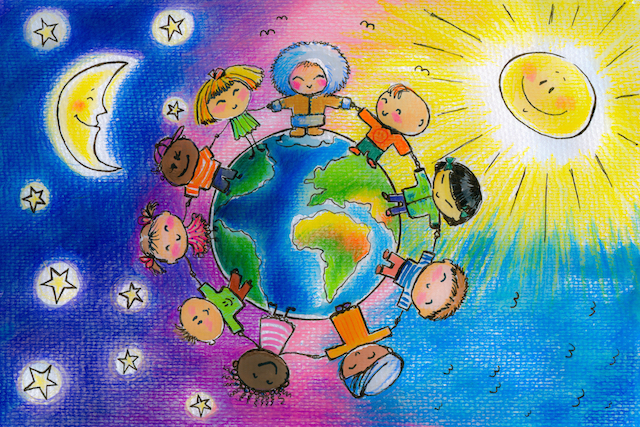
    Imagine a world without bigotry. Imagine a world where inspiring individuals like Martin Luther King Jr., Anne Frank, and Harvey Milk, all victims of hate crimes, lived on to contribute even more to society.

  • 7 Things to Remember When You Think You’re Not Good Enough

    7 Things to Remember When You Think You’re Not Good Enough

    “We can’t hate ourselves into a version of ourselves we can love.” ~Lori Deschene

    Sometimes I am really terrible to myself, and I relentlessly compare myself to other people, no matter how many times I read or hear about how good enough or lovable I am.

    On an almost daily basis, I meticulously look for evidence that I am a nobody, that I don’t deserve to be loved, or that I’m not living up to my full potential.

    There is generally a lot of pressure to “stack up” in our culture. We feel as if there is something wrong with us if, for example, we’re still single by a certain age, don’t make a certain amount of money, don’t have a large social circle, or don’t look and act a certain way in the presence of others. The list could truly go on forever.

    Sometimes in the midst of all the pressure, I seem to totally forget all the wonderful, unique things about myself.

    I get stuck in my head and allow my inner critic to completely tear apart my self-esteem until I hate myself too much to do anything except eat ice cream, watch daytime television, and sleep.

    The other day, while I was beating myself up over something I can’t even recall at the moment, I read a comment from one of my blog readers telling me that one of my posts literally got them through the night. Literally. And if that one simple word was used in the intended context, this person was basically telling me that one of my posts saved their life.

    I get comments like these on a pretty regular basis, and they always open my eyes to just how much I matter, regardless of my inner critic’s vehement objections.

    Such comments also open my eyes to all the things we beat ourselves up over that don’t matter—like whether or not we look like a Victoria’s Secret model in our bathing suit, or whether or not we should stop smiling if we’re not whitening our teeth, or whether or not the hole in our lucky shirt is worth bursting into tears over.

    Lately I’ve been trying harder to catch myself when I feel a non-serving, self-depreciating thought coming on. And I may let these thoughts slip at times, but that’s okay because I’m only human.

    While my self-love journey is ongoing, here are a few things I try to remember when I’m tempted to be mean to myself:

    1. The people you compare yourself to compare themselves to other people too.

    We all compare ourselves to other people, and I can assure you that the people who seem to have it all do not.

    When you look at other people through a lens of compassion and understanding rather than judgment and jealousy, you are better able to see them for what they are—human beings. They are beautifully imperfect human beings going through the same universal challenges that we all go through.   

    2. Your mind can be a very convincing liar.

    I saw a quote once that read, “Don’t believe everything you think.” That quote completely altered the way I react when a cruel or discouraging thought goes through my mind. Thoughts are just thoughts, and it’s unhealthy and exhausting to give so much power to the negative ones.     

    3. There is more right with you than wrong with you.

    This powerful reminder is inspired by one of my favorite quotes from Jon Kabat-Zinn: “Until you stop breathing, there’s more right with you than wrong with you.”

    As someone who sometimes tends to zoom in on all my perceived flaws, it helps to remember that there are lots of things I like about myself too—like the fact that I’m alive and breathing and able to pave new paths whenever I choose.

    4. You need love the most when you feel you deserve it the least.

    This was a recent epiphany of mine, although I’m sure it’s been said many times before.

    I find that it is most difficult to accept love and understanding from others when I’m in a state of anger, shame, anxiety, or depression. But adopting the above truth really shifted my perspective and made me realize that love is actually the greatest gift I can receive during such times.  

    5. You have to fully accept and make peace with the “now” before you can reach and feel satisfied with the “later.”

    One thing I’ve learned about making changes and reaching for the next rung on the ladder is that you cannot feel fully satisfied with where you’re going until you can accept, acknowledge, and appreciate where you are.

    Embrace and make peace with where you are, and your journey toward something new will feel much more peaceful, rewarding, and satisfying.

    6. Focus on progress rather than perfection and on how far you’ve come rather than how far you have left to go.

    One of the biggest causes of self-loathing is the hell-bent need to “get it right.” We strive for perfection and success, and when we fall short, we feel less than and worthless. What we don’t seem to realize is that working toward our goals and being willing to put ourselves out there are accomplishments within themselves, regardless of how many times we fail.

    Instead of berating yourself for messing up and stumbling backward, give yourself a pat on the back for trying, making progress, and coming as far as you have.     

    7. You can’t hate your way into loving yourself.

    Telling yourself what a failure you are won’t make you any more successful. Telling yourself you’re not living up to your full potential won’t help you reach a higher potential. Telling yourself you’re worthless and unlovable won’t make you feel any more worthy or lovable.

    I know it sounds almost annoyingly simple, but the only way to achieve self-love is to love yourself—regardless of who you are and where you stand, and even if you know you want to change.

    You are enough just as you are. And self-love will be a little bit easier every time you remind yourself of that.

  • Learning to Love Your Body: 4 Steps to Self-Care

    Learning to Love Your Body: 4 Steps to Self-Care

    Yoga on the Beach

    “Your body is precious. It is our vehicle for awakening. Treat it with care.” ~Buddha

    My life has been one big hate-fest of my body.

    I don’t know when or how it developed, but I have been comparing my body to others’ for as long as I can remember. I was never happy, never good enough. There was always work to be done, goals to achieve.

    Not only was I constantly on the latest diet that most likely was extremely bad for me, but I was also mentally beating myself up every step of the way.

    The self-talk was brutal and relentless. “Why can’t I just lose weight?” “Why am I so fat?”

    The negativity didn’t stop there. I hated others too. Women with “perfect” bodies were a major source of jealousy and envy for me.

    The few times that I achieved some sort of ideal, I found myself uncomfortable with my appearance. I projected my hatred and jealousy of others onto myself, and just kept falling down the negativity rabbit hole.

    Achievements felt shallow, undeserved, and were always short-lived and followed by a period of self-sabotage.

    Finally, after a difficult divorce, left as a single mother raising three young children alone, some sort of light bulb went off in my head. No one else was going to take care of me. I was sick of the misery and mental anguish.

    I realized more than ever that I needed to take care of myself so that I could have the energy to get through my demanding life. Something had to give, and what I was doing was not working.

    I began by simply realizing that I didn’t feel good physically with the way that I was eating. I noticed a daily sugar crash that was leaving me depressed and with no energy. I decided to start there and started eating more whole foods and less sugar.

    Taking a new attitude toward my diet increased my awareness of how good health affected me, and that choice built upon itself daily.

    I researched what else I could do to develop better health, and began to properly care for myself. In turn, my life became more manageable, I felt happier, and I was a better mom and person. As a nice bonus I actually lost 30 pounds and became an athlete.

    If you’re tired of the self-hate game and ready to begin taking care of yourself, you may want to try the steps that I followed. (more…)

  • When You Feel Angry More Often Than Not

    When You Feel Angry More Often Than Not

    “If you correct your mind, the rest of your life will fall into place.” ~Lao Tzu

    I spent a lot of time in my life being angry. At one point I hated everything and almost everyone. I had a saying for a while: “God, I hate people.” I hated the people driving in front of me on the way to the store, then in the parking lot of the store, then inside the store.

    I hated my job. I used to love my job. It’s what I chose to do, what I went to school for. But then I started to hate it—the patients, the nurses, everything about it.

    I can’t recall when the precise moment was that it began, this disgust of the world around me. I do know what I was disgusted by: the mindless selfishness of others. I was in total frustration of the way everyone seemed to be wearing blinders to the world around them.

    I was so tired of the judgment and condemnation of others toward those different from them, whether it was race or religion, size, or shape (or that of their bank accounts). The arrogance with which they treated each other, the unfriendly way they regarded each other in public situations, the way I felt I was treated for so many years by people I encountered every day—at my job, within my family, out in public—by unsmiling faces of unhappy people trudging through their miserable lives.

    Misunderstanding can cause a lot of contention.

    I hated the way I was talked down to by other staff at work like I was less significant than them because they didn’t understand what my job title was (Registered Diagnostic Imaging Technologist, or X-Ray Tech), or that I was as educated as they were, or sometimes more so.

    I hated the treatment I received from ungrateful patients who thought they deserved more than I could give. I was called names, screamed at, bled on, vomited on, defecated on, and had the occasional arm reared back in the threat of being hit. This while having to touch, move, and position these people and equipment, all while seeing and smelling the human condition besides.

    Then, I would go home at seven in the morning, get a whopping six hours of sleep, if I was lucky, get up, go about my wifely and motherly duties of house-managing, dinner, and grocery shopping, where I was almost sure to be treated with righteous indignation by a disgruntled cashier who also hated her job (I would sometimes tell them to try my job and then complain), get a shower, relax for maybe an hour or so, and do it all over again, five nights a week. (more…)