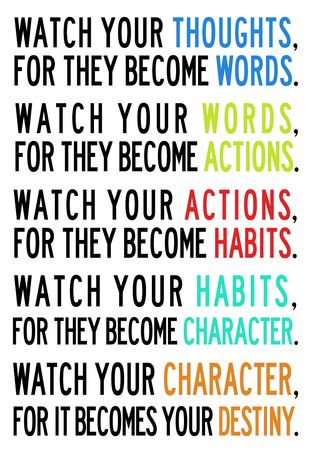
Tag: habits

  • How 10 Minutes of Daily Meditation Can Calm Your Mind and Relax Your Body

    How 10 Minutes of Daily Meditation Can Calm Your Mind and Relax Your Body

    “Peace. It does not mean to be in a place where there is no noise, trouble or hard work. It means to be in the midst of these things and still be calm in your heart.” ~Unknown

    I began the morning with a meditation. After taking my dog out and brewing the coffee, I sat in my sunny living room, my little dog Frankie nestled beside me. I perched cross-legged, a blue pillow on my lap for warmth. I closed my eyes and began to focus on my breath.

    When ten minutes passed, I raised my hands in appreciation. “Thank you for this day. Thank you for my family and for our health. Give me strength, wisdom, and love.” Then I extended my hands forward, “So that I may give strength, wisdom, and love.” Finally, I stretched both arms out sideways, wiggling my fingers in my peripheral vision, a reminder to be fully aware. This is how I start every day.

    It wasn’t always this way. My older brother Marc tried to get me to meditate when I was fourteen. Although he was a patient teacher, I didn’t understand the point of the exercise.

    “Let’s sit together. Close your eyes and concentrate on your breath.”

    “Why do I have to do this?

    “Just sit, Lise. It’s good for you to learn. We will do it together.”

    “OK, but why?”

    Marc tried, but I resisted. I stopped meditating as soon as he went back to college.

    Years later, as part of my psychology training, I took classes which touted meditation as a stress-reducing technique. During the classes, there were demonstrations which I always enjoyed. I sat back, breathed deeply, and felt a deep flow of relaxation inside me. But, back home, I had no follow-through. Once the classes were over, so was my meditation.

    My breakthrough into daily meditation happened in 2020, one of the few good things that arose from that dreadful year. I was home, virtually every minute of my life. I didn’t have to dash from of the house, brave traffic, and arrive at the office by 9:00. Mornings stretched more languidly. It was easier to find those ten minutes to breathe every morning.

    Now I sit every day. I scan through my body, noting points of tension, areas of pain and pressure. Simple awareness of the tension shifts any pain, and my body settles.

    My mind, free from my constant to-do lists, drifts along, as if floating on the waves of a gentle sea. I hear the sounds of the house around me, the heater outside, working mightily to warm our home; Frankie the dog beside me, sighing. My stomach muscles unclench. I notice thoughts drifting in. I don’t attend to them. The thoughts fade away. Peace.

    Of course, that’s when meditation goes well. Sometimes every minute slogs on. My scalps itches. “I forgot to return that phone call,” I think, and my body tenses into high alert. “Oh no, I have to write that woman back!” My throat tightens. “What if that editor doesn’t like my submission?” My stomach jams into a knot. I cannot let these thoughts go. “I suck at meditation. Why can’t I just breathe? When will these ten minutes be over?”

    Sometimes meditation goes like this. It isn’t always peaceful, and it doesn’t always feel good. The key, I’m told, is to keep at it. Like any skill, the more we practice, the better we get at it. It is no accident that we say one “practices meditation.” I didn’t get decent at writing in one year either.

    If you are like the fourteen-year-old me, you might be asking, why meditate at all? There are so many benefits I don’t even know where to begin; here is a partial list. Meditation…

    • Soothes anxiety: When you learn to focus the mind, your thoughts don’t spin off into anxious “what-ifs,” spiraling into anxious ruminations.
    • Calms anger: Focusing on breathing calms the mind, stopping our internal tirades over people who have wronged us.
    • Improves the immune system: The body is not designed to be in a constant “fight or flight” mode. When we are tense, our immune system works poorly. When we relax, our immune system resumes its work.
    • Lowers blood pressure: Meditation is a proven technique for improving hypertension.
    • Manages emotional reactivity: This is a big one. It is easy for me, sensitive soul that I am, to feel hurt and wounded by other people. Meditation allows me to detach from the provocations of the moment, and to tap into inner peace. Once I have calmed myself, I find freedom from reacting emotionally. I can bring more thoughtfulness and wisdom to my relationships.

    Happily, the benefits of meditation extend past the ten minutes into the whole day.

    Now that I practice regularly, I notice when my shoulders leap to attention. With mindfulness, I can lower those shoulders down.

    I notice when my stomach tenses up, and I can breathe that tension away.

    I notice when my mind anxiously swirls around my to-do list and I can tell my mind to relax.

    The awareness that comes from a regular ten-minute mediation follows me throughout my day, helping me stay calmer and more serene.

    A while ago, I was getting ready for a radio interview, as part of my recent book promotion. I had an hour to spare, and I thought I’d make a quick phone call to an insurance company.

    This “quick” phone call dragged into an infuriating forty minutes. I was on hold, listening to inane music, on some incessant torture loop. Finally, the customer service rep came on, but we had with a terrible connection. I could barely hear her, as she was undoubtedly on another continent, and I couldn’t understand her either.

    After a brief exchange, which I barely fathomed, she declared she couldn’t help me. I got off the phone in disgust.

    “I’m so aggravated! I just wasted an hour on the phone with this stupid company and now I have an interview in fifteen minutes. What a colossal waste of time! I have this radio interview and I am so upset I can barely think!”

    My husband gazed at me. “Why don’t you do your meditation thing?”

    I glared at him. I really just wanted to righteously complain. But my husband was right; I was a wreck.

    I sat in my bedroom and closed my eyes, focusing on my breath. Immediately I sensed my body’s distress. My heart rate was elevated. I breathed rapidly. My shoulders were raised and my stomach was in spasm.

    “My god,” I thought. “My body is completely dysregulated, all from one stupid phone call.”

    Quietly, I focused. I felt my muscles relaxing and my heart rate slowing. I ended the meditation, feeling like a different woman, and started the interview with a smile on my face.

    That is the power of a regular ten-minute meditation practice.

    Let’s be clear. Everyone, no matter how busy, has ten minutes to spare. You can do this, and build yourself a calmer, more peaceful life, in a healthier body.

    One final tip: it is best to find a regular time of day for your meditation practice. Do your breathing every morning, or every bedtime, or every evening after work. Otherwise, you will keep putting it off until later. If you are like me, you might even put it off for forty years.

  • The Surprising Strategy I Used to Stop Bingeing (and Why It Worked)

    The Surprising Strategy I Used to Stop Bingeing (and Why It Worked)

    “Sometimes the thing you’re most afraid of doing, is the very thing that will set you free.” ~Robert Tew

    I recovered from binge eating and bulimia by giving myself permission to binge. Sounds crazy, doesn’t it?

    My decades-long weight and food war started in my teens, immediately after reading my first diet book, about Atkins, to be exact. I spent the following two decades trying to lose weight (only to keep gaining) and struggling with food.

    By my early thirties, I’d finally managed to lose weight, but it hadn’t end the war, it had just started a new one. The war to try to keep the weight off and transform my body even further.

    Thus began the decade of my “fitness journey.” I became an award-winning personal trainer and nutrition wellness coach and even a nationally qualified, champion figure athlete.

    The weight and food war continued through it all.

    I was introduced to clean eating by a trainer I hired before I became one myself. Four days into my first attempt at clean eating, I was bulimic—bingeing out of control then starving myself and over-exercising to try to compensate. Within eight months, I was officially diagnosed.

    Bingeing to the point of feeling like I may die in my sleep became common, and I realized I had two choices: potentially eat myself to death or heal. I chose the latter.

    I sensed that understanding what was driving those behaviors was the key to learning to change it all, so I decided to get busy learning just that.

    And I recognized that meant I had to stop obsessing over (and hating myself for) my food choices. They were not the problem; they were the symptom of whatever was going on in me that was driving those behaviors.

    So I gave myself full permission to eat whatever I wanted, whenever I wanted.

    I even gave myself permission to binge as much as I wanted.

    And I slowly started bingeing less and less. Now it’s been years since I have—the drive is just completely gone.

    I know permission to binge sounds crazy, but has trying to force yourself not to binge or eat “bad things” been working? Is trying to judge, control, criticize, restrict, and shame your way to “eating right” and/or health and happiness working?

    If so, carry on. But if what you’ve been doing hasn’t been working, stay with me while I explain two reasons why permission is so vital, and the helpful versus unhelpful way to practice it.

    Why Is Permission So Vital?

    Permission to eat whatever we want helps reverse two of the biggest reasons we eat self-destructively: restrictions and self-punishment.

    Food restriction (the rules around what we think we should or shouldn’t be eating) caused my cravings, overeating, and even bingeing.

    Science has shown that food scarcity/restriction activates a millennia’s old survival instinct in our brains that triggers cravings, compulsions, and even food obsessions until we “cave.”

    Self-punishment contributes to bingeing because we treat ourselves how we believe we deserve to be treated.

    We’ve been taught that certain foods are good and create “good” bodies, and that certain foods are bad and create “bad” ones. We’re taught that we are what we eat, and to judge weight gain or eating “bad” things as failure, that we are good or bad depending on what we eat and what size we are.

    We punish ourselves by trying to restrict even more, or we go in the other direction and overeat the things we keep telling ourselves we’re not supposed to have, which fuels the cycle.

    How can you want to make nurturing or nourishing choices for yourself when you’re hating, judging, shaming, and criticizing yourself? You can’t.

    That thought, “Oh well, you already screwed up, you may as well eat the rest and start again tomorrow”—that all or nothing thinking, the bingeing, the self-sabotaging—it’s being driven in large part by those two things: restriction and self-punishment.

    Full permission, even to binge, helps start to shift both.

    It stops the feelings of scarcity around certain foods (so they lose their allure), and it helps improve the relationship you have with yourself (so you’re no longer judging and berating yourself for eating “bad things”).

    Now, you may be thinking, but Roni, eating whatever I want got me into this mess. I can’t be trusted to just eat whatever I want.

    Here’s where the biggest lie of all has steered us in such a toxic direction: the idea that our natural compulsion is to “be bad” and eat all that bad stuff is bull.

    We’re not born into bodies that naturally want to eat in ways that make them feel like garbage. We’re not even born into bodies that are “too lazy to exercise.” I call bull on all that too.

    We’re born into bodies that know how to eat and naturally want to move. We’re born into bodies that want to feel good and are actively working to try to keep us healthy 24/7.

    But we’re actively taught to ignore or disconnect from them, and we get so good at ignoring and disconnecting from our bodies’ natural cues that we can’t even hear them anymore.

    We learn patterns of thinking and behaving that get programmed into our brains and end up driving our choices, rather than the natural instincts we were born with.

    It’s not your natural instinct to chow down on a whole bag of potato chips just because they’re there. Nor is it your natural instinct to ignore your body’s cry for some movement. Those are learned behaviors.

    By the time we get to adulthood, the ways we eat, think, and live just become learned patterns of behavior—that can be changed when you stop trying to follow other people’s rules and start understanding how you got where you are.

    When you spend your life stuck in that “on track” versus “off track” cycle you’re completely disconnected from yourself, your body, and what you actually want and need.

    The two things that are driving you and your choices when you live in that place are either:

    1) learned patterns of thoughts and behaviors from old programming (when you’re “off track”)

    or

    2) fear and other people’s rules about what you think you should be doing (when you’re “on track”)

    Neither have anything to do with you—with what you, at your core, actually need or want.

    By giving yourself full permission to eat what you want, when you want (yes, even permission to binge) you’re given space to reconnect with yourself and what’s best for you.

    What You Think Permission Is Vs. What It Actually Is

    There are two ways to do this whole permission thing: the way you think you’re doing it when you’re “off track” and the helpful way.

    Typically, when we “fall off track” or binge, we start “allowing ourselves” all the foods we can’t have when we’re on track, but the whole time we keep telling ourselves it’s okay because when we get back on track, we won’t have it anymore. Then we feel bad and guilty the whole time.

    That’s not permission, it’s a clear example of the food restriction/self-punishment cycle that fuels feeling out of control around food/overeating or bingeing.

    How? It’s restrictive and punishing. We know at some point we won’t be “allowed” to have it anymore—ya know, when we start “being good”—and since we’re already “being bad” we may as well just eat all of it, then we end up not feeling great.

    That’s a food restriction/punishment fueled diet mindset that perpetuates those old patterns.

    True permission means losing all the food rules and judgments. I know it sounds scary and wrong, but it really is key to learning to want to eat in ways that serve you and hearing your body when it tells you what makes you feel your best.

    Begin noticing the things you’re saying to yourself around your food choices and start noticing how the foods you’re eating make you feel after you eat them.

    Do you feel energetic and good when you eat that thing, or do you feel bloaty, lethargic, and sick? How do you want to feel?

    If you’re eating lots of things that are making you feel the latter, just notice that, get curious about why, and most importantly, extend yourself compassion and kindness.

    The next time you’re about to eat something that you know makes you feel terrible, remember how it made you feel last time and ask yourself, do you really want to feel that way right now?

    If you think, I don’t care, ask why? Why do you not care about treating yourself and your body well? Don’t you want to feel good? If you keep hearing, I don’t care, that’s a sign more digging is likely required, but permission is still where you start.

    Notice how often through the day you judge yourself for eating something you think you shouldn’t. How does that judgment affect the choices you make next?

    Remind yourself that what you eat doesn’t determine your worth, and you’re an adult. You’re allowed to eat whatever you want.

    Giving myself permission to eat whatever I wanted, even to binge, was the first step toward a binge-free life because it helped me learn to change the biggest reasons I was bingeing in the first place: destructive thoughts, habits, and behaviors that were caused by food restriction and self-punishment.

    It’s how you start learning to end the food war, to trust yourself and your body, to stop feeling out of control around food, and to start making choices that make you feel your best, because you deserve to feel your best.

  • How to Stop Procrastinating When Things Feel Hard or Scary

    How to Stop Procrastinating When Things Feel Hard or Scary

    “You’ve been criticizing yourself for years and it hasn’t worked. Try approving of yourself and see what happens.” ~Louise L. Hay

    I dreamed of starting my own business for years. Ten years, exactly.

    While there are a few reasons it took so long to take the plunge, procrastination is at the top of the list.

    It’s hard work to change careers, uncomfortable to leave a steady paycheck, and nerve-wracking to think of failure.

    Even after spending months and years learning, studying, and getting certified, when it was no longer a matter of having the skills, the uncertainty of success was enough for me to keep kicking the can down the road to start marketing myself.

    I was afraid of failing. I was afraid of not being perfect. I was afraid that people would think I was a joke. And I was afraid that I wasn’t going to be capable of all the work it entailed.

    So I dragged my feet and kept passing my work off to “Future Me.”

    I did this for everything, though.

    “Tomorrow Sandy” can do the dishes. She’ll take care of scheduling that doctor’s appointment. Oh, and sign her up for that tough conversation I need to have with my mom too.

    At one point I recognized that I often procrastinated because I needed everything to be perfect.

    • I wouldn’t work on a craft project or cook a new recipe unless I knew it would come out flawless.
    • Or I would keep tweaking projects at work up to the last second and beyond, at the sacrifice of getting more work done.
    • Or I would agonize over every text and email I sent, often opting not to send any message unless I knew exactly what to say.

    But, as you can see, I’ve come a long way from that version of me.

    I’ve since started my own business (and I’m loving it!), and I’ve pulled my best tools together on paper for how to stop procrastinating—even though I actually procrastinated on writing this post (ironic, I know!).

    Today, I didn’t let my fear of “good enough” hold me back from sharing actual, helpful advice and mindset shifts to get moving and stop staying stuck.

    Because when we’re stuck, we start telling ourselves stories. So that’s where we’ll start, with this story we tell ourselves about why we procrastinate.

    What We Think Procrastination Is

    We have this misconception that procrastination is laziness.

    But procrastination is an active process. You choose to do something else instead of the task that you know you should be doing.

    In contrast, laziness is not caring. It’s apathy, inactivity, and an unwillingness to act. It’s an “I could, I just don’t wanna” kind of attitude.

    But when you’re procrastinating, you feel even more stressed because you do care about getting the task done. You’re just avoiding stress and having difficulty with motivation.

    Because that is why we procrastinate.

    What Procrastination Really Is and Why We Do It

    Procrastination is a stress-avoidance technique. It is an active process to temporarily avoid discomfort.

    We subconsciously are saying, “Present Me is not willing to experience this discomfort, so I will pass it on to Future Me.”

    (We do this as though we’re asking a stranger to do the work for us. Researchers have seen on fMRI that when we think about our future selves, it lights up the same part of the brain as when we think about strangers.)

    The really cool news is that by working toward overcoming your procrastination habit, you’re building your overall resilience to distress.

    That is how I define resilience: a willingness to experience discomfort.

    Examples of Procrastination

    Procrastination is tricky. Sometimes it’s obvious that we’re doing it. Sometimes we don’t quite realize it (like when I had to water the plants right then and there instead of writing this blog post).

    So here are some examples:

    • Scrolling through Instagram instead of getting started on important tasks
    • Putting off work assignments until the last minute
    • Wanting to start a new positive habit (dieting, exercising, or saving money), but repeatedly delaying it while telling yourself that “I’ll start soon
    • Wanting to start a business but wasting time in “research mode” instead of taking action
    • Doing an easy, less important task that “needs to be done” before getting started
    • Waiting until you’re “in the mood” to do the task

    5 Steps to Stop Procrastinating

    Now that we know what it is and why we do it, let’s look at how to stop.

    1. Motivate yourself with kindness instead of criticism.

    What really holds us back from moving forward is the language we use when talking to ourselves.

    Thoughts like:

    • I don’t want to.
    • It will be hard.
    • I don’t know how to do it.
    • It might not come out as good as I want it to.
    • I’ll probably fail.
    • This will be so boring.

    This is what we think that drives us to procrastinate. I mean, really, when you read those thoughts, they just feel so demotivating, right?

    This negative self-talk has a good intent. It is trying to save us from discomfort.

    Unfortunately, it’s achieving the opposite because it adds to the stress by making us feel bad.

    If you speak to yourself with kindness, just as you would a friend, it will feel so much more motivating.

    So think about what you would say to that friend. It might sound like:

    • I get it, it will be uncomfortable, but you’ll be done soon and then you can relax.
    • Once you get started, it will be easier.
    • You can do it!!
    • If it doesn’t come out perfect, at least you’ll have practiced more.
    • If you fail, you’ll have learned so much.

    2. Create a pattern interrupter.

    That negative self-talk has simply become part of your procrastination habit.

    Because that is what procrastination becomes—a habit—and habits are comprised of a cue, a routine, and a reward.

    • The cue is thinking about a task that needs to be done.
    • The routine is to speak that negative self-talk that leads to procrastination.
    • The reward is less stress. (Not no stress, because avoiding the task is still somewhat stressful because we know it eventually needs to be done.)

    In order to break the habit and create a new one, you need to introduce a pattern interrupter.

    Mel Robbins has a great one she calls the 5 Second Rule. When you think “I should do this,” before the negative self-talk starts in, count backwards, “5-4-3-2-1-GO” and move.

    I find this helpful when I’m having a hard time getting out of bed in the morning.

    If I’m having trouble getting motivated to do something difficult like write a post about procrastination, my pattern interrupter is “I can do hard things.” Not only am I interrupting the pattern, I’m motivating myself positively as well.

    If I’m having trouble doing a boring and tedious task like my taxes, I use something like “I’m willing to be uncomfortable now so that Future Me can be at peace.”

    3. Break down the task.

    One of the big drivers of procrastination is overwhelm. Overwhelm happens when we’re looking at a project in full scope, either not knowing where to start or feeling like all the work involved will be too much.

    If the next task at hand is too big, or if you don’t know where to start, your first task really is to either 1) make a list, or 2) figure out the smallest thing you can do first.

    The whole house is a mess? I bet you know where that one sock goes!

    Another example, I had social anxiety and going to the gym was overwhelming to me.

    So I broke it down into:

    • I just need to put gym clothes in my car, that’s it.
    • I just need to drive to the gym. I can turn around if I want once I get there.
    • I just need to walk in the door. I can always leave.
    • I just need to get changed in the locker room I can do that.

    Honestly, I never turned around and went home. Because once I’d taken the small, easy step, the next small easy step was doable.

    Which leads me to the next step…

    4. Just commit to five minutes.

    Studies show that if we commit to five minutes only, 80% of us are likely to continue with the task.

    Five minutes is nothing. You can do anything for five minutes.

    There is an 80% chance you’ll continue working once you put in those five minutes, but even if you don’t, you’re still five minutes closer to your goal.

    And, you’ve taken one more step to breaking the old habit of not starting.

    It’s a big win-win!

    5. Reward yourself or make the task more enjoyable.

    Another problem with looking at a big task in scope instead of the next five minutes is that the reward is too far away or not satisfying enough.

    When you’re trying to lose weight, twenty pounds is weeks and months away.

    Or, when you’re putting off your taxes, if you aren’t expecting a return then the reward is “not going to jail.”

    So bringing in more rewards sooner will fast track creating the new habit of getting started.

    But also, making the task itself more pleasant will make it a less monotonous task.

    • To write this post, I put on my softest bathrobe and grabbed my baby’s tub from when he was an infant to make an Epsom salt foot bath under my desk while I write.
    • I’ll be starting my taxes in the next few weeks, and I already plan to have a glass of wine and super fancy cheese and crackers while I sit down to do them.
    • I save listening to super nostalgic nineties music for when I’m exercising just so that it makes that time extra special and fun.

    What Would Open Up for You If You Stopped Procrastinating?

    We spend so much more time avoiding the discomfort of a task than we do stepping into what it will be like once the task is complete.

    If you were to stop procrastinating, what would open up in your life?

    • Would you start your business because you’re no longer afraid of experiencing any discomfort if you “fail”?
    • Would you simply enjoy life more if you weren’t in a perpetual state of stress because there is a list of things you’re putting off?
    • Would you finally lose weight or get in shape and feel good once you push through being able to get started?

    The Bottom Line

    Procrastination is an active process to temporarily avoid discomfort (it is not laziness!)

    By overcoming your procrastination habit, you are building your emotional resilience.

    Notice the negative, demotivating self-talk and motivate yourself with kindness over criticism.

    Create a pattern interrupter before the negative self-talk starts weighing you down.

    Commit to just five minutes and you’ll either keep going to do more, or you’ll at least be five minutes closer to done.

    Reward yourself or make the task more enjoyable so there is less discomfort to avoid.

  • 14 Daily Happiness Habits to Adopt Right Now

    14 Daily Happiness Habits to Adopt Right Now

    “The biggest lie we’re told is ‘Be with someone who makes you happy.’ The truth is, happiness is something you create on your own. Be with someone who adds to it.” ~Unknown

    That’s what we all strive for, right?

    Happiness, I mean.

    I used to think that happiness was about my external world. If things were going well for me (in my career, social life, relationships, etc.), then I was happy. If things weren’t going well, which things often weren’t in one area or another, I felt frustrated, angry, or defeated.

    Later, I realized that long-term happiness isn’t about external events. It starts from within and most importantly, it’s a skill to be learned and developed.

    To live your best life, you need to realize that happiness doesn’t happen to you—it happens because of you. That doesn’t mean if you do all the right things you’ll feel happy all the time. No one feels happy all the time. It just means your choices influence how you feel, and if you make healthy choices you’ll likely feel good more often than not.

    To help you create a happier life, I’ve put together fourteen habits you can adopt right now. Read them, ponder them, and let them move in with you. Use this list to start building habits that will help you cultivate happiness, no matter your current situation.

    1. Look for the silver lining.

    It’s said that every cloud has a silver lining. Sometimes they’re hard to find, but in my experience, they’re always there.

    When one of my friends passed away a few years ago, I had a hard time finding the silver lining. Life just seemed unfair and brutal.

    After a few months I decided to channel all that frustration, anger, and sadness into making a life change. So I quit my job and went traveling for a year. What happened to her made me realize that life can be short, and I wanted to make the most out of mine. That was the silver lining for me.

    2. Water your own grass.

    It’s so easy to compare ourselves these days. Just by turning on the TV, opening social media, or by having a conversation we can fall into the trap of comparison. That’s not how we build a happy life. We do that by watering our own grass, not by looking to our neighbors’.

    So, acknowledge what other people have and use that as inspiration to get to where you want to go. Keep your eyes on your lane and build, create, and nurture what you want more of.

    3. Move the phone away from the bedroom.

    For many people, the last thing they see before falling asleep is their phone. It’s also probably the first thing they see when they wake up. (Confession: I’m guilty as charged when it comes to this.)

    By checking your phone first thing in the morning you allow other people, apps, and email notifications to dictate how you feel. You start the day being reactive instead of deciding for yourself what to focus on.

    Get yourself an alarm that isn’t your phone (or at least put it on airplane mood). Then create a short bedtime and morning routine that makes you feel good. I like to spend a few minutes visualizing, meditating, or appreciating to set my attention straight.

    4. Setup feel-good reminders on your phone.

    Oh, this is something you have to do right now! Go to your phone calendar and set up one or two daily reminders to yourself. At 9am every morning I get the notification “I’m enough” to remind myself that no matter how I’m struggling or what other people think or say, I am enough!

    At 1pm another affirmation pops up saying “I deserve the best and I always get it.” This one always makes my heart smile because it reinforces my worth and compels me to consider how my present circumstances might actually be in my best interest.

    Treat your future self nicely by setting up at least one feel-good- daily reminder. It will help you to change course during the day, if needed.

    5. Go for a walk in nature.

    I’ve quite recently realized the power of connecting with nature. This is a place to reconnect and ground yourself.

    Fun fact: Nature is said to have a natural frequency pulsation of 7.83 hertz on average (the so-called Schumann resonance).

    This frequency (7.83 hertz) is supposedly also the brain’s average alpha frequency. The alpha state is where we feel relaxed and calm. Pretty epic, right? So, make it a daily habit to walk in nature and tune yourself into a happier and more relaxed version of yourself.

    6. Take 100% responsibility.

    This is always a game changer for me. I often avoid responsibility at first (much easier to turn to blame, criticism, or excuses, right?) But you can’t change a situation if you don’t first take 100% responsibility for it.

    Look at any area in your life that you’re not fully satisfied with (your finances, health, career, love, social life, etc.). Then decide to take full responsibility for changing it. It might be true that someone else is to blame for a situation, but the only way you can change things is by taking responsibility for what’s within your control.

    7. Stop complaining.

    Oh, it’s so easy to complain.  To look at what isn’t working or what other people are doing wrong and to criticize and condemn. But that doesn’t solve any problems.

    If you don’t like something, change it. If you’re unable to change it, your only option is to change your attitude about it. Next time you feel like complaining, ask yourself what you can be grateful for in this situation. For example, if a bus driver is rude to you on the way to work, you can choose to focus and give thanks to the fact that you are able to ride the bus to work.

    8. Communicate confidence through your body.

    Our body reflects how we feel. If you are nervous and anxious, you can be sure that your body is mirroring that. You might flicker with your gaze, speak quietly, or hold a posture that signals insecurity.

    The positive thing is that this mirroring also happens the other way around. So start communicating to your mind by using your body. Stand up tall and straight, look other people into the eyes, and speak up. Tell your mind, by using your body, that you’re safe, appreciated, and comfortable where you are.

    9. Spend time on what matters.

    If we want a happy life, we have to fill it with happy moments. This means spending time on things that matter and with people that matter.

    What do you love doing? What brings you joy and happiness? Which people do you feel great being around? Make sure to carve out time every day for what brings you joy.

    10. Spend less time on social media.

    Oh, social media! Just by opening our phone, we can step into the lives of thousands of people.

    Social media can be great in many ways. It can help us to get inspired, connect with people across the world, and share special moments. But it can also lead to feelings of lack, inadequacy, and exclusion.

    Be conscious of your mood before engaging in social media. Ask yourself: Am I in a place where I can use it to my benefit? Or am I in a place where it can trigger me negatively? In short, make sure you control your social media experience, not the other way around.

    11. Give yourself space during the day.

    It’s so easy to get caught up in the busy-ness of life. To focus on efficiency, productivity and getting shit done. But not making space for yourself during the day will not only create a sense of stress and urgency, it will also stifle your creativity, intuition, and ability to reflect.

    So, if possible, be smart about how you set up your day. Give yourself more time than needed to complete a task. Allow it to take an hour and a half instead of an hour. For me, not rushing through tasks has resulted in greater clarity, satisfaction, and (to my surprise!) productivity.

    12. Become a master at shifting perspective.

    This is my go-to, every day! Whenever I feel bad about a situation, I know there’s another, more beneficial perspective available. For example, if I have a hard time falling asleep, I can either focus on me losing sleep (oh, the horror!) or on the fact that I can handle a night with less sleep and that it’s not a big deal. (And yeah, that’s usually when I fall asleep).

    In short, look at any challenging situation and try to find a better-feeling perspective. For example, did you get into conflict with someone? Then this might result in you understanding each other better next time. Do whatever you can to scout out the learnings, upsides, and positive aspects of any difficult situation.

    13. Give the gift of allowing someone to help you.

    When was the last time you asked someone for help? We tend to believe we have to be strong and independent all the time. But the truth is we’re not wired for independence—we’re wired for collaboration.

    In general, people like helping other people. So, why not give someone the gift of allowing them to help you? Ask for their input, advice, or help to move forward. Not only will this add value for you both, you’ll also get closer by helping one another.

    14. Turn contrast into clarity.

    In life, we experience contrast and difficult situations on a daily basis. Here is the good news: Negative experiences are clues to what you want. A strict and rigid work schedule might tell you that you want more flexibility. Exercise that feels boring or overwhelming might tell you that it’s time to scout a new and fun workout routine.

    Contrasts show us what we don’t like. Your job is to acknowledge the dislike and then to turn your head in the other direction. Ask yourself: What do I want instead? How can I make that happen?

    Small Daily Steps Toward a Happier Life

    It’s easy to get overwhelmed when it comes to making changes. So, set yourself up for success by taking action on one of the points I mentioned above. Choose one that makes you excited and once you’ve mastered it, move on to the next point.

    Don’t leave your happiness in the hands of chance and external circumstances. Instead, take charge and cultivate happiness from the inside out.

    Take small steps to develop habits of happiness and you’ll contribute to making this world a better place.

  • 12 Habits to Adopt to Make This Your Best Year Yet

    12 Habits to Adopt to Make This Your Best Year Yet

    Many of us head into the New Year with big goals and ambitions. We think about everything that seems to be lacking in our lives and imagine ourselves far happier and more fulfilled on the other side of massive change.

    There’s no denying that certain accomplishments can amp up our life satisfaction, but I’ve found that our daily habits are the biggest contributor to our happiness.

    You can have a job that excites you, the best body of your life, and the perfect partner for you, but none of it will fully satisfy you if you don’t also prioritize the daily habits that nurture your overall well-being.

    If you want to feel good about yourself and your life, you need to regularly do the things that make you feel peaceful, joyful, and alive.

    With this in mind, I recently asked twelve Tiny Buddha contributors (all involved in our upcoming Best You, Best Life Bundle Sale) to share one habit worth adopting in the New Year. Here’s what they had to say:

     1. Start the day with positive intentions.

    “The moment I wake up, I do not move. I hold still for several minutes. I contemplate qualities I would like to offer for the day.

    Then I silently repeat the following affirmations:

    I offer this day peace.
    I offer this day joy.
    I offer this day enthusiasm.
    I offer this day kindness…
    (or whatever qualities I would like to offer on that day).

    And I keep going until I feel I am done.

    Some days are harder than others, especially if I wake up very early, still tired, with the prospect of a long day ahead.

    However, this simple, pithy practice sets the right tone. It fills me with gratitude and it firmly places me on the right track.

    From that point on, my day goes well, and everything aligns in the best and highest way possible, even if/as and when challenges arise.”

    ~Personal Growth Teacher Julie Hoyle (juliehoyle.org)

     2. Practice mindfulness.

     “For someone seeking a change in their life—to stop doing something destructive, to start doing something healthier, to become more confident, to step into the version of themselves they know they really are—the single best habit to cultivate is mindfulness.

    Mindfulness is the skill of paying attention on purpose to the present moment without judgment. This is the first step to change. It helps you recognize when you are doing the thing you want to change. It helps you understand when you are stuck. It helps you realize what you are really feeling and thinking.

    It gives you the starting point of your map. You can recognize what is really happening—’Oh look, I jumped to the worst-case scenario again. That made me feel afraid and uncomfortable. So that’s why I am looking for an excuse not to go to the party.’

    From here you are able to step outside those emotions of fear and discomfort and look at the situation objectively. From here, you can create change. You can challenge your thinking. You can reframe the situation. You can remind yourself of where you want to go. You can make a plan.

    We so easily live on autopilot. That’s not because we are lazy. It’s simply the more efficient way for our brains to operate.

    Create a habit, and you don’t have to think about what to do the next time that situation comes up. That frees up energy for your brain to do other things. But efficiency does not equal excellence. This autopilot way of living leads us to not notice what is really going on. Without mindful awareness, we get stuck in our feelings, we ruminate like a broken record, we keep making the same unhealthy choices over and over again.

    It’s a very simple skill—to be aware. But there hasn’t been a strong biological or evolutionary need to cultivate this skill in order to survive which is why most of us do not have this skill naturally. We need to work on it. We need to repeat it over and over until it becomes a habit. But it is so worthwhile.

    It’s actually a very subtle shift in your thinking, yet incredibly profound. Like standing under a waterfall, then taking one small step back out of the water and seeing the waterfall in front of you. Small step, big difference.”

    ~Stress and Anxiety Coach Sandra Wozniki (stressandanxietycoach.com)

    3. Adopt a meditation practice.

    “You know that feeling when you’ve been away from home for a while and then you finally walk in the door? It feels good, right? It’s hard to put into words, but something in your heart opens.

    Home is a place where we can open because we feel safe, warm, and held. It’s a place where we know we can always come back to, no matter how long we’ve been away. There’s a feeling of belonging.

    For me, meditation is like this. A returning home. As my mind begins to quiet, there’s an increasing sense of stillness that comes forward, and my heart responds. Stillness brings a sense of peace, clarity, stability, and a deep sense of connection and being held.

    As we move through this life, we all crave that feeling of home. A foundation. A sense of belonging somewhere.

    We often create a sense of home in the world, in a physical location, to recreate what’s fundamentally accessed through our heart.

    Returning to stillness is a returning home at its most essential level.

    In a world where we’re constantly bombarded by distractions, stimulation, dramas and conflict, it’s easy to forget what home feels like. Add to this a busy, emotionally reactive, and self-judging mind, and it’s easy to forget that a sense of home, peace, and warmth actually exists inside us.

    It does!

    Stillness is always there, in the background of our awareness, ready and waiting to support us, but our mind is usually too busy to notice it. And when there’s drama, turbulence or overwhelm in our life, stillness offers a very stable place to rest. But if we don’t train ourselves to know stillness, then when the drama and turbulence comes, stillness will be hard to find.

    Meditation helps us remember and build our relationship to stillness by getting us out of our head and into our heart. The more we visit stillness through meditation the more it permeates us, which means it’s more available for us in everyday life.

    So, when we’re in a stressful situation it’s a matter of letting stillness hold you.

    Does this mean it will work every time? Not necessarily. But with consistent practice you’ll change your relationship to the things that trigger and drain you, because you’ve chosen to cultivate a different, more important relationship. A relationship to stillness.

    And your heart is the bridge.”

    ~Meditation and Mindfulness Instructor Ben Fizell (peacekeeperproject.com)

    4. Use mantras as affirmations.

    “I’m a big fan of using mantras as affirmations. Sometimes life can feel as though it’s spinning out of control, and our minds can conjure up daunting scenarios that increase our stress levels and add to anxiety. A simple mantra can be super effective in helping to cut through the noise and bring us back to a single focal point.

    One of my favorite go-to mantras is ‘I am safe. I am loved. I am good enough.’ I say this at least three times, further affirming the words with each repetition.

    I recommend creating your own mantra using words that feel grounding for you. Keep it short—a sentence or two is plenty. Using affirming words (especially out loud) can create a healthy and empowering habit of self-awareness and self-care.”

    ~Author and Artist Skylar Liberty Rose (skylarlibertyrose.com)

    5. Play in nature.

    “How you play in nature is up to you. It might mean sitting in your yard, on a balcony, or even next to an open window and allowing yourself to revel in a tree’s stillness or a bird’s melody.

    It might mean adventuring to a new neck of the woods, or ambling down a familiar path while taking the time notice all the little things we usually miss in our hurry or preoccupation: the soft, green moss; the startling blue tail of a lizard half-hidden under a rock; or the curious expression of a wren that’s watching you from the bush next to the trail.

    Not only does playing in nature reduce stress and anxiety and improve overall health, but it can also help us find our way, both literally and figuratively.

    It’s like Rumi says: ‘Everyone has been made for some particular work, and the desire for that work has been put in every heart.’

    We have so few chances in our everyday life to practice following our hearts, however, that most of us have forgotten how to do it. Wandering freely under the open sky, following our curiosity and desire, we learn how to let go of trying to arrive somewhere and discover the joy of simply taking the next step on our own unique path.

    When I began to reconnect with the natural world, I couldn’t help but rediscover my own human nature: my true self, that is; the gifts I have to give the world and where I fit into the ecosystem of life.

    Walking through the woods, I began to realize that just like every other living being on this planet, I have an important contribution to make; that when my mind finally grows quiet, I can hear a soft voice of wisdom telling me what that might be; and that if I listen to that voice, I too can—to borrow Mary Oliver’s phrase—take my place in the family of things.”

    ~Certified Integral Coach Meredith Walters (meredithwalters.com)

    6. Try habit stacking.

     “I highly recommend a self-care practice I call ‘habit stacking.’ This is taking several small habits and putting them all together in one time slot, i.e. first thing when you wake up.

    For instance, you might begin by doing a short meditation, which would lead to drinking a quart of water, followed by ten minutes of stretches, and then maybe preparing a green drink. Habits are motivated by triggers, so each activity stimulates the desire in your body for the next one.

    Do these regularly at the same time for a few weeks, and they will become engrained. Your habit stacks can work at any time, day or night, depending on when you want to create your own self-care zone.”

    ~Author and Speaker Suzanne Falter (suzannefalter.com)

    7. Connect with your body daily.

    “One habit worth adopting in the New Year is to start taking a few minutes every day to connect with your body. Pay attention to how it feels, to how you feel. Consider how you want to feel and what you can do to bridge the gap between the two if there is any.

    This is super powerful because we get so caught up in obsessive thoughts about all the things we think we’re ‘supposed’ to be doing for our bodies (and usually end up not doing) that we never stop to just connect with and listen to what it actually needs.

    This also works for mental health. If you wake up feeling down, angry, stressed, overwhelmed, (etc.), ask yourself, what does my head/heart/soul need today? Often, you’ll notice that you really just need a break. Give yourself that. Or maybe you need to find something that feeds your soul and gets you feeling passionate about something in life.

    Too often we end up going through the motions of life living in survival mode simply because we’re so busy staying busy that we don’t stop long enough to figure out what we need to feel vibrant, joyful, and fulfilled.

    If you struggle with healthy eating, take this one step farther by applying it to food. Take a second before you eat to ask yourself, how is it going to make me feel if I eat this? Do I want to feel that way? Why? This is a super powerful tool because it provides space between an auto-pilot impulse and the action that follows, to make a conscious choice based on what’s best for your body in that moment.

    The other reason it’s super powerful is because it helps you to start noticing if/when you’re purposely punishing yourself with food.

    If you go through those few quick questions and decide to purposefully eat something knowing it’s going to make you sick or to continue eating when you’re already full and know that eating more will make you sick, (and you don’t care), you’re punishing yourself with food. Beginning to recognize when that’s happening is the first step to learning how to change it.”

    ~Cognitive Behavior Coach Roni Davis (ronidavis.com)

    8. Practice breathwork.

    “One habit that I think could benefit many people is to incorporate some form of breathwork into their routine. That could be simple mindfulness meditation, box breathing, or some of the more advanced pranayama work in yoga—whatever works for you. From my experience, just a few minutes a day can have a profound impact on stress levels and your quality of life.

    Whether you’re looking to be a stronger athlete, to support your mental health, to be a more present partner or friend, or be more productive at work, I can’t really think of any areas in life that aren’t improved by adopting a regular breathwork practice.”

    ~Movement Coach Luke Jones (heromovement.net)

    9. Be selective about the news sources you tune into.

    “It’s admirable to want to stay informed about current affairs, especially in an election year, but carefully choose news sources you trust and even then, limit your exposure. There’s no value in feeling indignant for half your day, having arguments on social media that you can never win, or getting angry over events or with people you have no control over. All that achieves is that you hand over your personal power to others who are more than happy to take it.”

    ~Certified Life Coach and NLP Master Practitioner Tim Brownson (adaringadventure.com)

    10. Add gratitude to your “sorry’s.”

    “I don’t just say, ‘I’m sorry.’ I also say, ‘Thank you.’ For example, instead of only saying, ‘I’m sorry I was late,’ I also say, ‘Thank you for waiting for me.’ And instead of merely saying, ‘I’m sorry I was sort of out of it the other day,’ I also say, ‘Thank you for being there for me both during good times—and my not so good times.’

    This subtle shift helps me to feel better about my human glitches. Plus, it also winds up improving my relationships—because I’m sharing my appreciation with people, and gratitude is a good heart connector.”

    ~Bestselling Author and Award-Winning Designer Karen Salmansohn (notsalmon.com)

    11. Talk to strangers.

    “One habit worth adopting in 2020 is talking to strangers. This is a habit I started picking up in 2010, and it has been the best change I’ve ever made in my life.

    Our relationships are probably the second most important determinant of our well-being, trailing only behind our health. All relationships and interactions—including the ones with strangers—play a massive impact on how much you enjoy each moment.

    By talking to strangers, you’ll improve your social skills, get better at connecting with people, and you’ll learn how to enjoy any moment with random people. When you’re able to go to a book club, a bar, or a work conference by yourself and have a good time, your life improves drastically.”

    ~Blogger Rob Riker (thesocialwinner.com)

    12. Get more and better sleep.

    “I have come to learn that the quality of our sleep dictates almost everything in our lives! It has an effect on our mental state, our physical health, our attitudes toward things, our relationships, and ultimately our success in each area of life.

    Sleep has taken a back seat in the world of healthy living with exercise and nutrition being in the spotlight. But all the evidence points to sleep being the foundation of our overall health.

    Science has shown that if we sleep poorly, we eat poorly and exercise poorly too. If we sleep well, we make better decisions, choose better foods, can exercise more effectively, and we can ultimately live a more rewarding, impact, and successful life. It has a domino effect.”

    ~Life and Performance Coach Brendan Baker (startofhappiness.com)

    Do you already practice any of these habits? And are there any habits you’d add to the list?
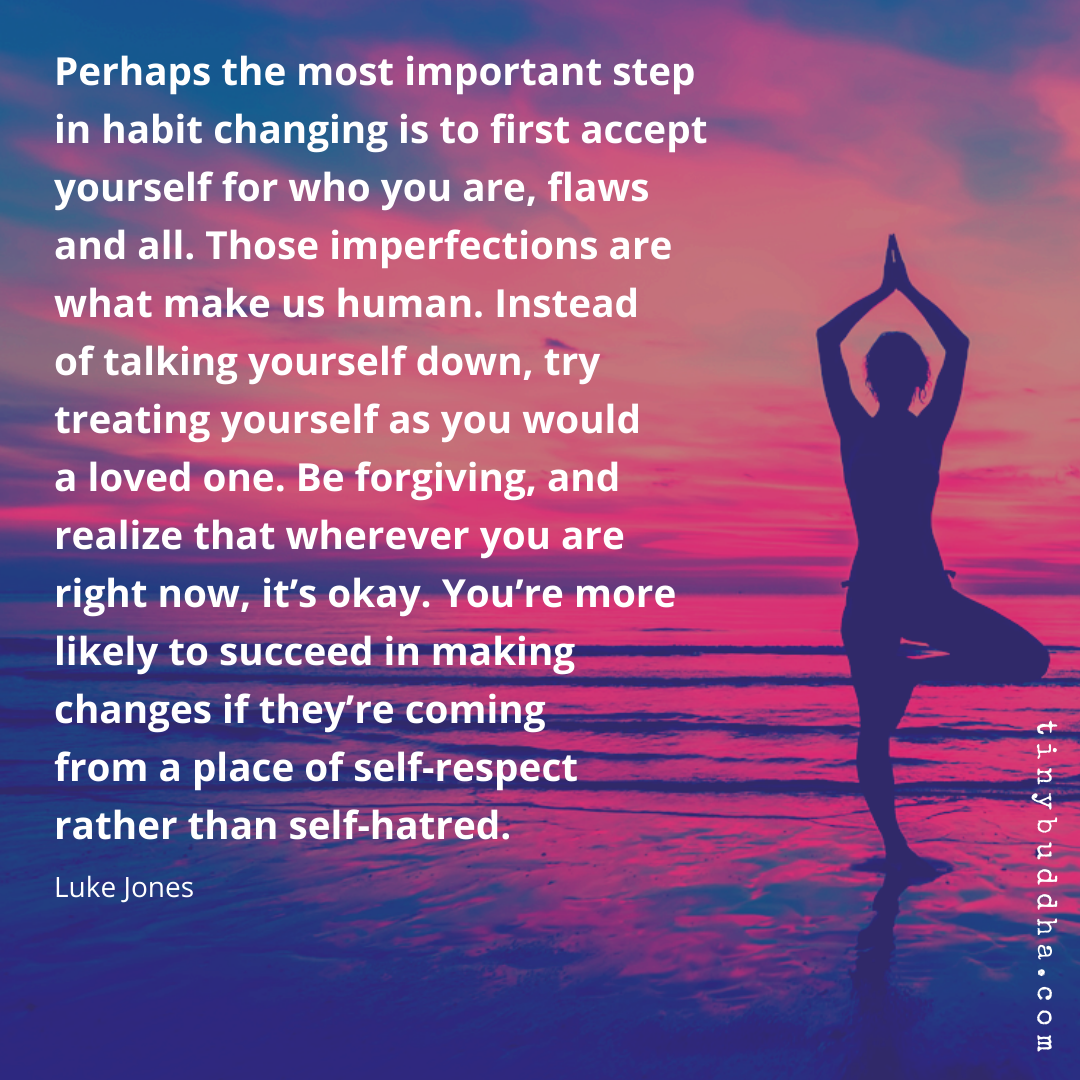
  • The Most Important Step in Habit Changing

    The Most Important Step in Habit Changing

    From Tiny Buddha contributor Luke Jones, also part of our special New Year’s offering. Look for it after the New Year!

  • How to Break Painful Relationship Patterns

    How to Break Painful Relationship Patterns

    “Until you heal your past, your life patterns and relationships will continue to be the same; it’s just the faces that change.” ~Unknown

    First of all: honey, you are not broken. We are all works in process. There is nothing inherently wrong with you. We all end up in a loop here and there. Sometimes it’s because we haven’t healed pain from the past. And sometimes it’s because we’ve healed our pain but still hold on to past habits. When we do this, past habits will promote the replaying of past events and, therefore, the pain will return.

    This happens at a psychological and practical level. The type of beliefs we have about reality will shape the way we perceive it, react to it, and interpret it. This is a neurological reality that has been proven scientifically: the brain creates concepts and finds ways to validate them.

    This is the way prejudice is built, but is also the way you expect sweetness and tartness out of an apple.

    The moment you read the word “apple,” you already started generating the necessary enzymes to digest one and enjoy its flavor. You already started reacting to something that isn’t even here, based on the concepts (beliefs) the brain (mind) has constructed on it according to previous experiences.

    This is one of the many ways science has validated that “life is an illusion.” This is great news. It means we can choose, in a way, what kind of illusion to believe in and, consequently, co-create in our lives.

    Past experiences—especially our childhood experiences—inevitably shape this concept-system in the brain. They create what we refer to as a value system in the mind. These, in turn, determine our thinking habits. The thinking habits will define how we speak and act.

    In other words, the way we perceive apples will determine how we react to them or even the idea of them.

    If you believe that you should expect sweetness out of apples, you will seek apples that provide sweetness, and you will react by preparing to enjoy the sweetness, which will allow you to do so at a higher level than if your body didn’t salivate and prep your taste buds for it. By expecting sweetness, you get to experience it with heightened senses when you get it.

    This idea also applies to unpleasant concepts. This is also a neurological reality and was designed as a survival mechanism.

    Go get your ears pierced and you will see what I mean. When you get ears pierced the first one is barely perceivable. However, the next one hurts quite a bit. Why? Because the brain was expecting pain; therefore, it reacted to the second experience with a concept of pain.

    You think, “This will hurt,” and, therefore, you experience more pain. The tool is still the same. The pressure did not change. Reality is the same as with the first one; however, your brain constructs a concept of pain, so that’s what you get.

    Your earlobes will heal within six weeks. But when you expect unpleasantness out of other life experiences, that’s what you will repeatedly get. In order to produce change, we must let go of a value system that constructs realities of pain and difficulty. This truth is evident in relationship dynamics as well.

    The Loop: What We Think About Relationships Defines How We Experience Them

    I want to make a disclosure about what you are about to read: taking responsibility for your thinking habits and how those affect what you expect from relationships does not mean that anything is your “fault.” It also should not be used to justify abuse.

    Abuse is not justifiable. However, as a survivor of abuse, I can say from experience that it’s actually empowering to realize how much is in my power. I can change how I think, how I talk, how I perceive situations, and how I react to them. I can co-create my relationships.

    I happened to grow up in a culture of fear. I grew up thinking work had to be hard, people had to be in a bad mood when they got home, marriages are meant to be hard, and you should not expect the best, ever; you needed to expect the worst.

    I was married for almost eight years and got divorced a year ago. Since then, I’ve found myself making similar mistakes in the way I seek partners, and all of my relationships have ended up leaving me drained and resentful. But why? I was doing what I thought was supposed to be done: I was being of service in a relationship where one person needed to be saved and I could be their savior.

    There are so many memes out there with the phrase “You saved me” phrase on them. It’s supposed to be romantic! Well, that did not go so well for me. It bred unhealthy and unbalanced relationships, and an environment of codependence that led to pain for both people.

    So I went on a quest for my own healing and discovered why I was constantly trying to save the people I date (more on this later). Finally, I was ready to get out there again. But this time, there was no saving involved. Because I was ready for a healthy relationship. I was at peace.

    I went on a first date with a wonderful man I’d met on a dating app. Before leaving, I called a friend to share how excited I was. She suggested that I calm down, keep “low expectations,” and keep my guard up. I decided not to follow that advice. It comes from a place of good intentions, but it’s really a chain of fear.

    On a vibrational level, to act that way would not allow me to attract my highest good. On a practical level, it would set me up to not look for the best in this person, which would produce a reality where I would be unable to see it even if it hit me in the face.

    I went in there with the same attitude I approach everything currently: at peace. No negative or positive expectations. Just being in the present moment.

    I ended up having the best date of my entire life and building a deep connection with my now-partner.

    We cheat ourselves out of wonder if we tiptoe around in life afraid to get hurt. We must be strong and self-confident to allow ourselves to expect goodness. I did not get here right away. It does take practice to make progress. But it really doesn’t have to be considered an “impossible” in our brains.

    How to Hijack Your Way Out of the Loop and Start Flowing Upward!

    These are some of the things that helped me heal and rewire my brain before I finally downloaded the dating app, posted a cute picture of myself, and hoped only for the best.

    1. Observe your thoughts. What are they based on? Which beliefs no longer serve you?

    A tool that helped me greatly in this step was John Bradshaw’s book Home Coming: Reclaiming and Championing Your Inner Child, which includes exercises to heal past experiences. This releases the brain to freely create new constructs and prevents us from staying on a loop.

    I was having trouble as an adult voicing my needs. I would be terrified and would be physically unable to communicate what I needed.

    During my work with myself I discovered that when I was four years old, I was so terrified of being physically and emotionally abused by my caregivers that when I was hungry, I would not dare voice that need. I have memories of hiding in a cabinet eating raw rice from a bag in order to feed myself without being a “bad girl” and bothering my caregivers.

    I recognized then that this was why I fell into a pattern of focusing on my partners’ needs and trying to save them: I was expecting that it would be painful if I voiced what I needed.

    So, I recognized the source of the problem, now what?
    2. Release the vibrational memory of emotional baggage.

    Once you recognize the roots it will be time to release their emotional baggage. That way you won’t be triggered by old stuff in your new relationship. In other words, you won’t fall into the same old patterns because you’re driven by emotions from the past.

    There are many ways to release emotional baggage, including meditation, Emotional Freedom Technique (EFT) tapping, Mental Emotional Release (MER) therapy, and journaling. Explore, experiment, and find what works for you.

    I went to an Emotional Release Body Balance therapy specialist. It’s the best investment I’d ever made in my life.

    I also engaged in regular cleansing rituals with sage at home.

    Finally, I used release affirmations and prayers daily. One that especially worked for me was a Unity prayer that states: “I release from me all energies that are contrary to what I am creating for myself. I cut them off and release them to the Universe to transform into beneficial forms of energy. I now fill myself with love, peace, and perfect health.”

    Okay, I am no longer controlled by emotions from my painful past, what’s next?
    3. Learn new skills.

    This is the ongoing step. It requires our willingness to learn new skills. New thoughts. New ways of communicating, new brain constructs about relationships, and new ways of having faith in ourselves and others. In my case, this meant learn to voice my needs instead of stifling myself in fear.

    To accomplish this, I attended virtual classes. I enrolled in a communication workshop and practiced those skills. It was just like learning how to read: practice, review, assess, practice again. You will need support here. Someone to practice with. I do so with my best friend. We exchange notes and debrief with one another.

    The skills you need to learn will depend on what you ascertained about your beliefs and expectations and what pattern you fell into as a result of them. It doesn’t matter if you attend classes, read books, practice with friends, or join a support group. What matters is that you do something to learn and strengthen the skills that will help you break your pattern.

    But… why?!

    Now, why go through all this? Baby, ‘cause you are worth it! Plus, there is no magical soul mate in the Universe who will heal your low self-worth concepts and create positive expectations of healthy relationships in your brain.

    You either do the work you need to complete on yourself before you get out there, or you will be stuck in an ongoing loop of pain, with a list of exes that turn out the be the same dog with a different collar, calling them “toxic” instead of owning your own need for growth.

    I’m rooting for you. I bless your journey. The best is already within you. What you want in a partner is out there looking for you as well. May you find each other at the right time and may you have the skills to enjoy your union. Ashe!*

    *Ashe is a West African philosophical concept through which the Yoruba of Nigeria conceive the power to make things happen and produce change.

  • How I Lost 30 Pounds by Meditating (and All the Things I Gained)

    How I Lost 30 Pounds by Meditating (and All the Things I Gained)

    “Clear your mind. Your heart is trying to tell you something.” ~Unknown

    I recently lost thirty-plus pounds without trying or intending to. I remember excitedly sharing this news on social media one day, after stepping on a scale in my hotel room and being shocked. I don’t own a scale, so between the time when I had last weighed myself and this day, I’d lost over thirty pounds without being conscious of it.

    After my public announcement, people from all directions contacted me asking me questions. Everyone wanted to know how I did it and what could they do to lose weight too. My heart could feel the longing and pleading in their voices. I wanted to help, but what a precarious situation to find myself in! Weight loss has many layers to it, and it is completely individual to each person.

    Many were hoping to hear about what pill they could take, or a new diet-of-the-day to adopt, or hoping for a secret exercise program that they hadn’t yet tried. What was the next Beach Body, ketosis, paleo, juice cleanse, gluten-free, South Beach diet, Crossfit fad—that was actually going to work this time?

    My answer to this riddle was surprising to all and too unbelievable for most of my friends. But there was a handful that said they would consider giving it a try.

    I lost the weight because I’d started meditating. That is the concrete foundation of it all. Many felt baffled by my answer, but it was because of my meditation practice that I naturally made lifestyle changes that led me to lose extra weight I wasn’t even aware I was carrying around.

    I was in grad school at the time, and for homework my professor assigned (prescribed!) meditation. I secretly rolled my eyes when she did this and thought to myself, “I’ll blow this one off.”

    About a month later, at our next teacher/student review, she told me that she could tell I wasn’t doing the meditation homework. She followed her accusation up with, “I understand if you think you don’t need this. But how are you going to lead someone down this road who does need it if you haven’t walked this road yourself?”

    I was shook! How could she possibly tell I wasn’t doing the meditation homework? And the way she just called me out on it? Shamed. As an “A” student, I felt humiliated that she could tell I blew off the assignment. The fact that she knew I wasn’t meditating was enough to get me to do it.

    Right there, humbled down, I began.

    For twenty minutes a day, we were to clear our heads and focus on only our breath. It was excruciating! It was so much harder than I thought it was going to be, which is humorous considering the reason I blew it off in the beginning was because I thought I already knew how to do it.

    I couldn’t even sit still at first. I would wiggle all around. I’d give up and then start again. Over and over. For what seemed like forever I would get angry and think about how this wasn’t working, and I didn’t think I could do it, and maybe meditation was for better people than me. Finally, after struggling daily but keeping at it, a little over two weeks later, a shift happened.

    It was like when you are learning how to snowboard and every day it’s hard, and frustrating, and you spend most of your time falling down, but then with giant relief, you have that moment where you finally link your turns and suddenly you just get it. Everything clicks, and you feel like you are floating on a cloud. Or like the first time you learn how to ride your bike. Or, when you are surfing and struggling and getting beat up by the waves, and then finally you catch your first wave, and suddenly you’re gliding.

    It felt like that. It was a connection. It felt good!

    After that experience, when I tapped into a feeling of complete ease, peace, and surrender, I felt like I finally understood how powerful meditation can be if you keep at it. And then it became easier for me to tap into that feeling each time I practiced. Gradually, it got easier for me to maintain that feeling for longer amounts of time during the meditation.

    Eventually, I was able to maintain that feeling outside of the meditation. And this is when my life really began to change.

    This deeper connection to myself felt really good. This new sense of being gave me a fresh perspective, a renewed reverence for myself, which propelled me to make some changes in my lifestyle. It didn’t seem too difficult because it felt like the next natural step to take. I felt called to live in a new way.

    When you meditate, you grow your self-love muscle. It grows your self-respect. Self-respect means to honor and care for yourself. This new feeling and self-awareness motivates you to make different choices and do healthier activities with your mind, body and soul.

    Meditation trains you to listen to the voice inside of you that is always looking out for your highest good. When we get really good at listening to that voice, we are led to treat ourselves and others with greater care. It is not to be underestimated how life-changing this can be.

    The voice inside of me told me that I needed to start going to bed by 10pm. It urged me to stop eating certain foods. It told me to get my booty moving and do daily exercise outdoors. It nudged me to stop drinking alcohol.

    These were some of the changes I was called to make to take care of myself better, and as a natural byproduct I lost thirty-plus pounds in a matter of months. I watched my body morph into a body so fit that I couldn’t even recognize myself in pictures. All without consciously trying to lose weight. Meditation simply led me to love myself better, and my dream body was the result.

    I don’t know what habits you personally need to change for you to get a healthier, fitter body. But I do know the tool that will get you there. We all have different habits that keep us from our best self, but meditation will give you the clarity to weed out whatever it is that you need to change.

    Meditation clears away our head chatter—everything that vies for our attention and keeps us from being our best selves. Our heart, the voice of love, will always be in a battle with the mind, the voice of our ego. Meditation helps us quiet the ego so the heart can talk.

    When we approach weight loss as something we need to fight, obsessing over calories and punishing our bodies in workouts, it’s an uphill battle that’s difficult to win. An unhappy journey doesn’t lead to a happy destination. This method is exhausting. It doesn’t feel good, and it doesn’t make us feel good about ourselves.

    You don’t have any more time to waste struggling against yourself, disliking yourself, or being unhappy with yourself. It’s time to try a new approach. It’s time to love yourself into better health.

    When we choose to love ourselves more, we have a greater desire to treat ourselves better.

    When I check in with myself before I eat, and ask myself what is the nicest food I can give to my body right now, I make different choices. Before, mostly all of my food choices were emotionally based.

    Most of us don’t eat consciously; we eat emotionally, trying to stuff down feelings from the past or the present.

    When we allow our emotions to rule us in this way, we are ignoring our guidance system—our intuition, our inner wisdom—about what our body needs to function at its best.

    Self-betrayal is when we disregard what’s best for us, which only leads us to more unhappiness and triggered eating. This is a painful cycle to be in, and it comes with a cost. The emotional weight that we carry manifests itself as physical weight. This sets a foundation for stagnancy and disease.

    Meditation stabilizes emotions. It lifts you up out of old patterns of thinking. It can set you free. Free your mind and the rest will follow.

    It also helps you develop self-awareness so you’re less apt to unconsciously reach for comfort food when you’re feeling something uncomfortable. Instead, you’ll be able to ask yourself what inside you needs to be comforted. Then you’ll be able to confront your emotion instead of trying to stuff it down.

    Craving comfort is really a call for love. Craving sweets is a call for more sweetness in your life. Rather than eating for your sadness, you’ll be able to see this craving as an opportunity to give yourself what you are really craving—love.

    Then, over time, as you allow meditation to soothe your mind, your need for comfort dissipates. It helps you recognize that love doesn’t come from outside you; it comes from within you. When you understand this, you will no longer crave it. Love is an unlimited resource located inside you.

    If you’re interested in sustainable weight loss, meditation is your key, though it’s not a quick fix. Nothing worthwhile is. A daily meditation practice will naturally lead you toward some lifestyle changes that will unburden you and lighten your load—mentally, emotionally, and physically. It will take some practice before you get the hang of it, but stick with it. Remember, it took a while for me to get it too. If I can do it, anybody can.

    Now I know how my teacher could tell that I wasn’t doing the meditation homework. So much changes in you when you start meditating daily. I wasn’t connected to my inner guidance, and to those who are connected, it’s obvious when others are not.

    I was living, eating, speaking, and acting unconsciously. I was led by my feelings instead of being grounded in love. So much of the world operates this way, hence why we see so much chaos, drama, and disease.

    Looking back on this now, it astonishes me because I had no problem with the way I had been living, and I had no previous intention to change. I am so thankful I had a teacher who led me to meditation and held me accountable long enough for me to experience the benefits.

    Only you can know what is best for you, and your inner guidance—your heart, your intuition—knows the way. Meditation will help you hear that voice. Don’t delay—begin your best life today!

  • The Secret To A Happy Life Is Hidden In Your Daily Habits

    The Secret To A Happy Life Is Hidden In Your Daily Habits

    “The key to being happy is knowing you have the power to choose what to accept and what to let go.” ~Dodinsky

    It hit me as I cruised along at full speed on a busy motorway on my way to a friend’s house.

    Shaking like a leaf, I pulled myself out of the car and stood by the side of the road. I desperately gulped in the fresh air, a frantic attempt at calming myself down.

    This was the ninth day in a row I’d experienced a wave of panic so intense, it felt like I was about to die. It was utterly unbearable.

    I’d been worrying about all the work I had left to do on my Master’s dissertation and berating myself for taking a day off to spend time with friends when I should have been working. All of a sudden, my throat closed up, my chest tightened, and my hands shook so much that I was convinced I would lose control of the car.

    This was the final straw.

    I’d been waiting for a magic solution, a miraculous savior, a quick fix that would snap me out of my near-constant state of worry. I’d been waiting for the universe to wave its wand and finally grant me a normal life. It wasn’t happening.

    I wasn’t willing to face up to the work I needed to do in order to stop indulging in my bleak hypothetical predictions about the future. And more importantly, I didn’t even know what the work was. But that day, I made the decision to find the key to a happy life and to start putting in some serious elbow grease.

    I just couldn’t live like that any longer.

    That was three years ago.

    What You Practice, You Get Good At

    The problem is, for a very long time, I practiced worrying. About everything.

    I worried about what people thought about me. I worried about what might happen to my health. I worried about whether I would have the career I wanted.

    I also practiced managing this worry, and the myriad of unpleasant emotions that accompanied it, with food, alcohol, and sex. I used substances (and other people’s bodies) to make myself feel good, to take my mind somewhere else, and to give myself a moment to relax.

    But underneath, the worry was still there; these “fixes” just masked it. Instead of paying attention to what was actually going on in my head and realizing that my thoughts were creating a reality that didn’t actually exist, I practiced covering up my desperation, hoping that this fix would be the one that actually worked.

    I was constantly feeding habits that gave me short-term satisfaction or relief, that I knew were ultimately destructive. And I know I’m not the only one.

    Many of us spend our days acting mostly out of habit—the foods we eat for breakfast, the route we take to work, even the thoughts we entertain. These become the actions we practice, over and over again.

    And what we practice, we get good at.

    What Do You Practice?

    Here’s a little something to reflect on: What habits are currently running your life? What thoughts do you think every single day? And are these serving you, or not?

    We might not think of habits as a practice, but that’s exactly what they are. Each and every day, we’re practicing being the type of people we want to be, whether we realize it or not.

    My anxiety, despite being a very real (and often terrifying) experience for me, was a habit. I was practicing being the type of person who was constantly stressed out and worried about everything. Nowadays, however, I practice being the type of person who recognizes these thoughts, knows her limits, takes care of herself, and makes a different choice each time her old pal worry comes out to play.

    Think about it:

    • How many times a day do we complain about things not being the way we want them to be?
    • How many times a day do we disengage from connection with others and allow ourselves to be distracted by technology?
    • How many times a day do we worry about things that haven’t even happened yet?

    The answer is likely: a lot.

    We’re experts at this stuff. After all, the key to mastering any skill is repetition; if we repeat a specific action enough, eventually we’ll gain fluency and competency at it.

    This is why the true secret to happiness lies in our daily habits rather than in the “magic fixes” we often think will make us happy.

    Daily Practices for a Happier Life

    So what if we became conscious of the habits that are running our lives and switched them on their head?

    What if we started practicing things we actually wanted to get better at? And what if, instead of making it some huge, life-changing mission, we simply set the intention to live this way, making small steps toward it wherever we could?

    Remember: What we practice, we get good at.

    With this in mind, here are a few suggestions for habits we could start practicing daily in order to live a happier life:

    • Kindness
    • Compassion
    • Generosity
    • Acceptance
    • Non-judgment
    • Presence
    • Listening
    • Forgiveness
    • Relaxation

    The way these look in our lives will be different for everyone, but the intention behind them is the same—to notice our destructive habits and to make a different choice.

    Personally, I’ve found three super effective ways to start bringing new practices into our lives.

    1. Notice your autopilot.

    We have to recognize our habitual autopilot mode in order to do something about it.

    Becoming aware of the way we live our daily life—the choices we make, the people we surround ourselves with, and the stories we tell ourselves—helps us to remember who we really are and what we really want. It also helps us make more conscious decisions about how we act so that we choose our response rather than react out of habit.

    The best way to do this is to first make a list of all the times you already know you tend to slip into autopilot.

    For example, you might recognize that you frequently spend your lunch break scrolling through Facebook, and then you feel bad about yourself after comparing yourself to other people. Or, you might notice you regularly worry about worst-case scenarios when you’re lying in bed at night.

    Once you’re aware of what you’re doing, you can commit to making a different choice the next time you’re in that situation, practicing a habit that doesn’t serve you.

    I have to be honest here. This takes time.

    In the beginning, it was difficult for me to recognize when my “worry” head was on because it felt so natural to me. But once I started paying more attention to my habitual thoughts and behaviors, I found it much easier to switch the script in those moments and instead practice some deep breathing to relax myself.

    Action step: Take a moment to think about the times you already know your habitual autopilot-self takes over. What could you do to in those moments to break that pattern, re-engage with the world, and make a different choice?

    Remember: What we practice, we get good at.

    2. Focus on your physical sensations.

    Another great way to practice new habits is to focus on how they make us feel in our bodies. I like to think of this in terms of openness (expansion) and tightness (contraction). I usually feel pretty open and soft in my heart space when I practice kindness, for example, and tight and tense in my belly when I practice being rude.

    Our sense of expansion or contraction in our body can act as an “mindful shortcut,” giving us an easy way to determine what might be going on in our heads.

    If we focus on how we physically feel in our bodies and the sensations our habits bring up for us, we can really start to distinguish between the ones that currently serve us and the ones that definitely don’t. Since our physical sensations often directly relate to our emotional experience, it’ll also provide us with a little motivation to continue practicing the things that make us feel expanded.

    The issue most of us run into here is that we mostly walk around feeling completely out of touch with our bodies. In fact, it wasn’t until I really started to dive deep into yoga that I realized my body was constantly giving me important signals—and I was totally ignoring them.

    The best way to begin observing your body is to sit in stillness and just notice your bodily experience, even if you start with just a few moments a day. The more you “check in” with your body, the more you’ll be able to tune in to what it’s trying to tell you.

    When I started paying attention to my body, I noticed how different thoughts affected me in completely different ways. My worry made my body feel tight, tense, and achy, for example, whereas calm thoughts made my body feel soft, relaxed, and open. This helped draw my attention to my worrisome thoughts and choose to focus on my breathing in the present moment instead of on my “faux” reality.

    Action step: Start your day by asking yourself one of these questions:

    • “How do I want to feel today?”
    • “What do I want to practice today?”
    • “How do I want to live today?”

    Then check in with yourself regularly throughout the day (setting up a reminder on your phone helps!) to observe how your body’s feeling. Pay particular attention to your heart, solar plexus, and belly areas. Is there a sense of expansion or contraction? Does this align with how you want to feel? What are you currently practicing? And does this align with what you want to practice?

    Remember: What we practice, we get good at.

    3. Set an intention.

    We can also practice new habits by simply affirming to ourselves that it’s our intention to practice them.

    Intentions are perfect because they’re designed to be a guideline rather than a goal. With goals, it’s far too easy to beat ourselves up if we don’t reach them, but with an intention, we can just start over again.

    If we set an intention to be kind, or compassionate, or generous in the morning, we’re also far more likely to jump at opportunities to practice this as we move through our day. It helps us make decisions that are more aligned with the people we want to be, since our intention will still be fresh in our mind.

    For example, I’ve recently been setting an intention to practice forgiveness. I realized that I’d been holding on to so much resentment, anger, and blame toward myself (and others) about my anxiety. I felt so much rage about my past—the years I’d spent constantly trying to please other people at the expense of my own needs; my first boyfriend’s extremely controlling behavior, which left me feeling utterly weak; and the pressure I’d felt growing up to be “perfect.”

    So every morning I listen to a forgiveness meditation, which includes repeating to myself, “I see and feel the pain you’ve caused me, and it’s my intention to forgive you.” Then, as I’m about to go into my day, I remind myself that it’s my intention to continue to practice forgiveness.

    Have I forgiven everyone (or myself) yet? No. But that’s beside the point.

    The point is that every single day, I’m practicing.

    Action step: Decide on at least one new habit you’d like to start practicing. How can you set this intention for yourself each day? How can you remind yourself of this intention when you go off track?

    Remember: What we practice, we get good at.

  • How 5 Simple Habits Made Me Love My Life More

    How 5 Simple Habits Made Me Love My Life More

    “Good habits are worth being fanatical about.” ~John Irving

    Your habits are directly related to the quality of your life. Good habits lead to joy and fulfillment in your life, while not-so-good habits leave you yearning for your life to be different.

    I think I always knew that, I just wished I took it to heart sooner. Better late than never, right?

    Gretchen Rubin, author of Better Than Before: What I Learned About Making and Breaking Habits, says that “Habits are the invisible architecture of our daily life. We repeat about 40% of our behavior almost daily, so our habits shape our existence, and our future. If we change our habits, we change our lives.”

    I’ve spent far too much time in my life languishing in worries and regrets, wondering why life had to be so hard. I looked for outside sources to come in and save me. No rescuer ever came, at least not one that made a permanent difference.

    I’d always wind up on the same boat: wondering why others seemed so content with the lives they were leading while I continued to have a burning desire for something different—something I really couldn’t even name, though I tried in vain to do so.

    I set big goals and made big plans that I was certain would make all the difference for me. Usually, my big goals and big plans wouldn’t live beyond the next new moon. Even when they did, though, the things that I thought would make me happy didn’t. The things that I thought would bring me peace only annoyed me for their utter lack of peace-creating properties.

    By profession, I’m a strategist. I look at all the many things that contribute to situations being a certain way and explore ways to move the situation toward where I want it to be. Turns out, sometimes you don’t have to overhaul anything; sometimes, small, simple tweaks can make a big difference.

    As the saying goes, it takes large sails to move a large ship, but the captain need only make a small adjustment to the rudder to change the direction. The other part of the saying is there’s no point in adjusting the rudder if the ship is not moving; you won’t go anywhere.

    Your daily habits are the small rudders that can help you move your life in the direction you wish. Choosing good habits day after day is the movement required to experience the positive life changes you’re seeking.

    I like to think of myself as an intelligent person, but what I neglected to see in my own life is that the smallest tweaks done day in and day out have the power to move the mountains I want moved. When my eyes opened to the power of small changes practiced daily, miracles began to unfold in my life.

    Below are some of the simple daily habits I’ve worked to incorporate into my life that are making such a huge difference for me.

    1. Meditation

    Yeah, yeah, I know. Everyone says meditate, but did you ever consider that maybe all those meditation-lovers are offering an you an insider’s tip (pun intended) that in fact is actually priceless?

    I have an overactive mind, as many people do. It loves to tell me about all its worries and warn me of threats that in reality aren’t all that threatening—nothing more than a mouse posing as a monster most of the time.

    My mind loves to relive situations and conversations over and over and over; it’s so tiring! I’ve found that the antidote to my endless chattering mind is daily meditation.

    I don’t do anything complicated. I just sit in a relaxing position, tune into serene instrumental music on Spotify, and focus on my breath. Anytime I notice that my mind is wandering (as it always does), I return my focus to my breath. In times of silence answers seem to arrive to incredibly insightful questions I didn’t even know I should ask.

    2. Kind, loving self-talk

    In the past, my inner dialogue wasn’t all that friendly. In fact, I was my own worst enemy, a relentless bully whose malicious words would leave me disheartened and unable to face the world with any sense of self-worth or confidence.

    I didn’t come by this demeaning self-talk accidentally. Its roots go back to my childhood.

    I grew up in a Roman Catholic home with seven children (another sibling died before I was born) and two overworked, exhausted parents who were flat broke all the time.

    My father struggled with alcohol addiction and mental illness. This, along with my mother’s enabling patterns plus her own low self-esteem and depression issues, defined how the house was run.

    The focus of the entire household was on managing life around dad’s issues.

    Growing up, it seemed to me that nothing I ever did was good enough for my dad, though I tried so very hard to please him. I craved his love and positive attention. He either ignored me or criticized me, and when he criticized me he often did so in the most brutal tone.

    I took to adopting that brutal tone in my inner dialogue and kept up the cruel inner monologues for years and years. I rationalized that I was just keeping my standards high, because who wouldn’t want to have high standards, right? A father would only criticize his daughter to help her improve, right?

    So I kept criticizing myself; it never occurred to me that dad lashed out at me because his whole life seemed like a mess, so by God, the one thing he would have control over was his children.

    There I was as an adult, using unrelenting, vicious self-criticism as a way to be perfect so I could get the love and attention I sorely wanted from the people in my life. It was a strategy that was never going to work; it had to go.

    After examining my bitter, demeaning inner voice, I realized that I would never treat another human being this way, so why was I permitting this type of untenable talk go on inside me? I deserve better—we all do!

    Now when those critical thoughts come up I’m patient with myself without buying into the scolding voice that’s offering up the hypercritical self-assessments.

    I look at the scared girl behind those ugly comments and extend my deepest love to her. You see, while I refuse to allow my inner critic to talk to me in vile ways anymore, I also recognize the only reason I ever talked to myself that way was out of a deep need for belonging and protection. There was a call for love behind those ugly words, and now I simply acknowledge that deep desire for self-love without chastising the hurting girl who was trying to get my attention in the only way she knew how.

    3. Follow the five-second rule

    I love Mel Robbins, and the day I learned about her five-second rule was a very important day in my life. (And I’m not talking whether it’s still safe to eat food that’s only had five seconds of contact on the floor—that’s a whole different discussion!)

    In a nutshell, here is Mel Robbins’ five-second rule, in Mel’s words: The moment you have an instinct to act on a goal you must count five-four-three-two-one and physically move or your brain will stop you.”

    So, you’re not a “morning person” but you have a goal of getting up earlier in the morning? Then the moment your alarm clock goes off, count five-four-three-two-one and jump out of bed. No more hitting the snooze alarm.

    Yes, in the moment of those early morning hours, of course you’d rather stay in that warm comfy bed—who wouldn’t? But staying in bed doesn’t align with your bigger goals, and getting up does. If you move within five seconds, you’ll move toward your bigger goals. If you don’t move and allow your clever mind to talk you into staying in bed for “just a bit more,” you’re sunk.

    If you want to change your life by getting up earlier so you can write that blog you want to write (a-hem, what I’m doing now) or do that exercise you know your body needs, then make those goals your priority over an extra thirty minutes of sleep and use the five-second rule to help you get your body out of bed.

    Adopting the five-second rule is one of the best habits I’ve ever taken up. For the sake of full transparency, I admit I’m not always successful at sticking to the rule, but the more I try, the more I succeed.

    “If your habits don’t line up with your dream, then you need to either change your habits or change your dream.” ~John Maxwell

    4. Feed my mind

    I’ve always considered myself to be a learner, though in actuality I get lazy about learning. It’s hard to improve your life if you’re never giving your brain any new information. Feeding my mind on a regular basis has become a top priority for me.

    My “feeding my mind” goal looks something like this: one retreat a year, one book a month (that I can either read or listen via audio), one podcast a week, and one smart article on something I want to learn about each and every day. I’ve found that starting the process builds momentum; I often crush my minimum goals!

    Feeding my mind in healthy ways also means giving up some unhealthy habits. I’m extremely careful about how much news I watch nowadays. While I don’t want to keep my head in the sand, I find it’s important to limit the number of negative messages I allow into my mind, and news channels are notorious for going over the same disturbing stories again and again. I make time in my days for my extra reading and personal growth activities by getting up earlier and limiting my Netflix and HBO time.

    I’ve also modified my budget so I can afford the audiobooks and retreats I want to buy. My clothing and dining out budget is about half of what it used to be, and it’s a trade-off I’m happy to make.

    The habit of feeding my mind is opening up whole new worlds for me. I can’t tell you how often I’ve read about something and the perfect opportunity comes up for using what I’ve learned in both my professional and personal life. Louis Pasteur said, “Fortune favors the prepared mind,” and I couldn’t agree more!

    5. Do something outside my comfort zone at least once a week

    If I were a more ambitious soul, I might put a “once a day” rule on this habit, but for now once a week works nicely for me. The habit of doing the same things the same way every day is life draining, while the habit of stretching outside your comfort zone regularly is life expanding. I’d rather see my life expand rather than to contract and shrivel, thank you very much.

    Today, I regularly practice being brave—allowing myself to be seen, allowing myself to be vulnerable and unskilled at new things. I don’t tiptoe outside my comfort zone anymore; I’m even willing to take huge leaps.

    I quit a job that I’d been in for twenty-two years without having the next job lined up. I moved 2000 miles from family and friends to live in a beautiful part of the world where I’ve always dreamed of living.

    I now work in freelance, consulting, and coaching roles, which means my income fluctuates a lot. I’m not always certain how much money I’ll earn each month; I could have never tolerated that degree of uncertainty before.

    It’s surprising how much your life can transform in miraculous ways once you’re willing to not be perfect in your own little world but instead actively choose to be imperfect in a world that might judge you. When you take risks that might leave you flat on your back, they also might enable you to soar.

    I’ve found that bravery is rewarded, maybe not always in the moment, but always in time. I encourage you to be brave; it’ll change your life!

  • When You Keep Giving Up on New Habits That Are Good for You

    When You Keep Giving Up on New Habits That Are Good for You

    “If you have a bad day, remember that tomorrow is a wonderful gift and a new chance to try again.” ~Bryant McGill

    As I crawled back into bed after hitting the snooze button, my eyes heavy with sleep, I told myself, “You gave up once more” and rolled over back to sleep, annoyed with myself.

    Two months earlier, inspired by the book The Miracle Morning, by Hal Erold, I had taken the habit of getting up early (around 5am) every day to meditate for fifteen minutes, write for thirty minutes, and exercise for thirty minutes.

    When I started the new habit, it felt amazing. I was so proud of myself—I was doing it! On top of the satisfaction of achieving goals that I had set for myself, I really felt the benefit of being productive before everyone wakes up. It had a positive knock on effect on the rest of my life; I was upbeat, motivated, and I was going to work with a spring in my step.

    Then, about two months in, normal life happened: I had been to bed later the previous nights—drinks with colleagues, watching a movie—and tiredness, coupled with maybe the weariness of the new habits, quickly took over. That morning, I did not jump out of bed and I was longing to roll over instead of starting my “miracle morning.”

    If you are a human being like me, I am sure you are very familiar with taking up new habits, only to give them up two or three weeks or months later. The most notorious one is New Year’s resolutions. Who hasn’t promised themselves they’d go to the gym three times a week, they’d stop eating junk food, or they’d stop drinking alcohol altogether?

    We take up new habits, only to let them die away after few weeks.

    Have you noticed how different the feeling is between when you start and when you give up?

    When we start on January 1st, we cannot imagine there will be one more day in our life when we will not jump out of bed to go to the gym. We wonder, “How could I ever not have the motivation? It’s so exciting! And how did I not do it before?”

    Yet somehow, it happens and procrastination becomes the new habit. With procrastination comes guilt, and low self-esteem starts creeping in.

    There’s indeed a very negative effect on your life if there’s constantly a little voice in your head reminding you that you have failed this or that. My aim here is to help you feel good about yourself, even with the fallibility of being human and not being able to sustain new habits.

    You don’t have to beat yourself up for giving up new healthy habits. You’re not the only one out there; we’re all doing it (or not doing it).

    I used to be very annoyed with myself when I stopped a new routine, as it gave the feeling that my goal had not been achieved. However, unless you are in a life-threatening situation and seriously need to change your lifestyle, I think that we need to take a different perspective on things.

    Yes it could be better, but you cannot deny that you have, for whatever small amount of time it happened, spent your life doing something else that was better for yourself.

    Have you given up smoking, only to start again three months later? Think of it this way: for three months, your body was healthier and you’ve probably earned back few minutes of your life. Would it not be better stopping smoking for three months every year rather than not at all? If I told you now that your target is to stop smoking for three months, every year, would that not make it easier to handle?

    There are few ways that we can make these new habits easier to handle. I think we should focus more on the fact that even if we haven’t sustained it, we’ve done something good for ourselves. Here are three main elements you should consider:

    1. Set a limit in time for your new habit.

    If you suspect you will sooner or later give up on it anyway, why not set the end date when you start? This may sound simple, but the big difference is that you are in control of when you stop. This will also make it easier to digest, and you might be more likely to sustain the habit longer than if you hadn’t set yourself an end date.

    I’ve tried the experiment myself. On June 7th, I started a new healthy habit: wake up early, meditate, write, read news. I was of course excited about this new habit, but I thought I’d end up giving up anyway, as I had with all other healthy habits outside of my comfort zone.

    Then I had this idea: What if I tell myself that it’s labeled “summer healthy habits” and that I only have to sustain it until August 7th? Would that not make it easier? You can reduce it to one week if you tend to give up after few days.

    2. Reflect on what you have learned or gained, even if the habit has stopped.

    Stopping doesn’t mean you haven’t done anything productive. For three months, you did something different, and surely your brain or body benefited from it.

    You should also not only consider the direct effects of this new habit, but the fact that you have learned something different and probably raised your self-awareness. Let’s say you decided to stop drinking alcohol altogether. Even if the new habit only lasts a month, you will have learned something about yourself.

    I recently decided to test not drinking any alcohol at all on Friday nights with the colleagues at the pub. Surprisingly, I was as upbeat and enthusiastic as the night wore on, same as when I was drinking on a typical Friday night.

    This was a revelation to me! When I thought that my enthusiasm was related to my alcohol intake, it actually wasn’t; I was “drunk with social interaction.” This is exactly my point: I only did this two Fridays in a row, but I learned something about myself that I can take away for the future.

    3. Step back and reconsider.

    Working at intervals is a healthy process in a lot of disciplines. As a runner, it’s scientifically proven that I’ll be better off alternating fast and slow intervals during a run, and alternating workouts and rest over the course of a training plan, rather than always running at the same pace or running without ever recovering.

    It’s the same for the learning process: When you study for your final exam, it’s well known that taking breaks or moving on to another activity for a while is beneficial for the brain.

    We could even take a broader perspective: Living a healthy life is all about balance. Why not alternate the healthy new habits? Some examples: Stop eating bread for one month, then go back to your usual levels of consumption. Go without alcohol on Friday nights for one month, then stop. Life is also about experimenting different things.

    As I am writing this article today, I’m at the start of a new habit streak. I’ve decided that I will take thirty minutes every day before breakfast to write on my blog. Disruptions in my routine (for example, holidays) are often the breaking point of my new habits, so I’ve decided that I will only keep this new habit for a couple months, until my next planned trip.

    Thinking about stopping this habit that I enjoy so much (mind you, it’s day two!) makes me sad, but after all if I want to keep it going, I can. But at least if I do stop on my planned end date, I won’t feel guilty and unaccomplished, because that was part of the plan. I will feel that I have achieved my goal, even if the habit only lasted a month. Then hopefully I can be excited to take it up again when I come back home.

    It’s great that you are trying to change your life for the better, but it should not have the consequence of making you feel bad about yourself for not sustaining it. If it does, it will create stress and be counterproductive.

    Take small steps toward a healthier lifestyle, enjoy the process, and take time to reflect on what you have learned about yourself. That’s the best way for your body and your mind to benefit from the change.

  • How Micro Habits Can Help You Reach Big Goals

    How Micro Habits Can Help You Reach Big Goals

    “A journey of a thousand miles begins with a single step.” ~Lao Tzu

    Many of us have big, grand goals for our lives.

    These goals can be tied to our work, or maybe starting a family, or ideals for a new home with that family, or travel to an exotic location we’ve long dreamed about, or pretty much anything else. Oftentimes these goals can seem a very long way from where we are presently in our lives. In fact, sometimes they can seem so far away that they appear to be totally out of reach.

    As a consequence, too many of us give up even trying to make these things happen. And that’s a real shame, because sometimes all that is required to make them so is putting one foot in front of the other in their general direction.

    The Pressure of Big Steps and Overnight Success

    Part of the reason we give up is that we put ourselves under pressure to make things happen quickly. We try to make grand, sweeping changes in our lives and expect overnight change. If this doesn’t happen, we can quickly become discouraged and quit. We lose sight of any and all progress we may be making toward our goals.

    Perhaps we try to uproot and change all our habits at once, and it doesn’t happen. These habits may have been part of us for a very long time, yet we expect to change them swiftly.

    This cycle can repeat again and again. It can be really disheartening. We try so hard but get nowhere fast.

    What I’ve found, in making significant positive changes stick in my own life, is that often the small steps and habits that underpin them do not get enough attention. In fact, I believe there is an untapped magic in these seemingly small habits. They can support even the largest of goals.

    From a Writer Who Didn’t Write to One Who Writes Lots

    While writing doesn’t pay all my bills, I am most definitely a writer. I think a part of me always has been on some level. It’s something I am incredibly passionate about. It’s something I spend much time and energy on.

    I meet lots of writers and want-to-be writers in my travels who talk of writing their first book or starting their own blogs. Truth be told, I think most of us think there’s a book in us that we will write someday.

    When I dig a little deeper, it never ceases to amaze me how many of these same people haven’t yet developed a regular writing habit. It’s like wanting to run a marathon with their only preparation being walking 800 yards to the shops on a daily basis. The odds of it happening are slim, very slim.

    That’s a shame, as writing a first book, or starting a blog, is a pretty amazing milestone for anyone who has a passion for the written word and sharing their ideas.

    I shouldn’t be surprised this is the case, though. You see, I was one of these people for too many years. I promised to write more than I actually wrote. I thought about the books I was going to write without writing a word. I thought about ideas for articles without committing a single word to the page.

    Thankfully, this has changed in the last several years. In fact, it’s changed to the tune of seven books and counting and hundreds of articles written for my own blog and other blogs. I’ve even been lucky enough to share several articles here with the wonderful Tiny Buddha community (thank you, Lori!).  My words have now been read across the planet in many countries. My books have been purchased from most corners of the world.

    I share this not to brag but to let you know that I have skin in this writing game, and any ideas that follow have been hard won and tested. Most importantly, none of this would have been possible if I had continued to stay in the self-imposed blocks I had put myself in.

    Breaking the Big Goal Down into Smaller Steps (Write One Line)

    When I was starting my writing journey, almost everything I read in terms of advice for the writer included some form of “write so many (500, 1000, etc.) words a day.” Well, this never really worked well for me. I tried it, and I failed regularly.

    With full-time commitments elsewhere (an unrelated job, friends, hobbies, a relationship), the pressure of trying to hit a certain word count just did not fit for me. So, after many failed attempts to force it, I finally gave myself permission to try another route. I broke this down into an even tinier habit. I decided to commit to writing just one line a day.

    Some days that one line turned into many pages of ideas, sometimes it was just one line. That’s okay; the habit and practice proved to be the important part of this process. It was something that worked for me, and I could stick with. It was something that pulled me out of my writing inertia and got me moving in a positive direction.

    Why This Works

    If we make the entry point low enough, we avoid the excuses not to do something. However, if we also make the entry point meaningful, we ingrain a habit that supports regular practical steps to get to done.

    Five hundred words a day may be a more meaningful target for other writers, and it’s a target that is often shared by writers of note. Some writers commit to “two crappy pages a day.” Personally, I like to make the point of entry even lower at one line.

    What I’ve found is that, more often than not, one line turns into many, and just getting started creates momentum. It also allows me to be liberal with how I use my time. I don’t feel pressure to have one big writing block per day; I can find time for multiple opportunities to write instead (a little and often approach sprinkled through the day). For those of us that also have external responsibilities and unrelated jobs, this approach can be especially useful.

    One line is also a low enough entry point that I don’t feel bad if I miss a day completely. And sometimes I do have days where I won’t write a word. Not the trendy advice of the day perhaps, but it works just fine for me. I feel no guilt about missing a day but often find I’m twice as productive the day after a day missed and will get lots of ideas down.

    A seemingly small habit has been the catalyst for much positive change in terms of my writing.

    How We Can Apply This to Other Goals

    My example includes my writing because this is something I’m passionate about. Writing may not be your thing, but the good news is, it doesn’t have to be. This approach travels and works for all sorts of goals. I know because I utilize it regularly for lots of personal goals.

    What I’ve also found is that what appears to be a small habit change and new behavior can start to have a compound effect. We create positive momentum. We set ourselves up for success.

    Tiny steps in the direction of a goal are still steps in that direction. There is a real magic to be found in linking steps together consistently. Big goals are fine as a guiding star, but they need to be supported with smaller steps. Developing these tiny, positive habits can support even the largest of goals. Wishful thinking will not.

    Want to write a book? Get started by developing a regular writing habit. Maybe try my example of one line a day to get that done or try something else that will work for you.

    Want to run a marathon? Commit to packing your kit for the morning as one micro habit. Then link this with other micro habits that support your goal, like committing to increasing your mileage gradually week by week. Don’t expect to run that marathon tomorrow unless you’ve already put lots of work in to get there.

    Whatever your goal is, develop a regular practice to help get you closer to it. Set up simple habits that support this happening and that keep you accountable, while still being achievable. Commit to this, and amazing things can happen.

    Micro Habits—Simple, Not Easy

    This micro habit approach is incredibly simple, and that’s exactly where the power of it is. There are no tricks, hacks, or ninja secrets to concern ourselves with. No sales copy or complex points of entry to worry about. We can set our own rules or have no rules. It’s so simple it can, and will, work for us if we commit to it.

    Simple doesn’t mean easy; this approach still takes work. And that’s a good thing, as our goals will be all the sweeter if we’ve applied ourselves along the way.

    The larger the goal, the longer this process may take and the more habits we may need to stack together. We can, however, commit to embracing the process and journey for its own end, rather than being focused purely on the destination (the where we want to get to).

    Give the micro habits approach a try in earnest. You may be surprised by where it takes you.

  • Freeing Yourself from Problems and Habits by Seeing That You’re Already Free

    Freeing Yourself from Problems and Habits by Seeing That You’re Already Free

    “Letting go gives us freedom, and freedom is the only condition for happiness. If, in our heart, we still cling to anything—anger, anxiety, or possessions—we cannot be free.” ~Thich Nhat Hanh

    Imagine there is a river running through you.

    Your entire experience of life flows through you, down that river. Everything you think, feel, and do passes through, powered by the current of the river.

    Your emotions, your opinions, your sense of identity … your habits, diagnoses, and choices … they aren’t still or solid, sitting somewhere. They are brought to life, felt, and then they drift away. They are in constant motion, naturally replaced with a revolving stream of new experience.

    You aren’t responsible for what flows down the river.

    The particular thoughts and feelings that show up aren’t yours. You didn’t put them there and, in most cases, you didn’t choose them. They are simply part of the flow of life.

    Your thoughts and feelings don’t come from the world outside the river; they can’t. What flows down the river is born of the river. What that means, in human terms (since this is a metaphor for how human life works, after all) is that what you feel originates within you. Life out there—your relationships, job, body, health, or any circumstance at all—cannot create or dictate your experience. Your experience begins and ends within you.

    You (what you call me) are not the contents of the river. You are what remains when all has passed through. The contents of the river are in perpetual flux. You are what never changes.

    It’s an incredible design! Can you get a feel for who you are? For the fleeting and safe nature of your experience?

    You are awareness of life itself. The things you witness don’t stick. This means there is nothing to avoid, fear, change, or chase away. The current takes care of that for you, endlessly updating your experience in each and every moment.

    If this is an accurate metaphor for human life, why do we feel so stuck at times? Why does our experience look so repetitive, and why do our issues appear to linger and weigh us down?

    It’s simple: we misunderstand the design.

    No one told you life worked this way, so you identify with and latch onto what flows down the river. You say things like I had this thought. I don’t like this feeling. I should be different. I can’t believe I did/said/thought/felt that.

    It’s happening within you, after all.

    You, like all people, miss the fact that your experience isn’t you. It isn’t serious. It’s life taking temporary form, expressing itself through you. Then flowing downstream making way for new and different temporary expressions.

    Your well-being and your essential nature are ultimately unaffected by what washes over you. But when you don’t realize that, you innocently get in the way of the natural flow. We all do.

    When what’s flowing through you looks personal and stable, of course you try to fix or change it. You jump in the river that is flowing and recycling perfectly on its own. You stand in the flow with your bucket, scooping up water that was trying to flow downstream. You carry that bucket around, showing everyone proof of your problems.

    “See!” you say. “It’s right here in my bucket!” You replay what you did yesterday and fixate on fears and worries about what will happen tomorrow. When it looks like life out there can hurt us, or like what flows through us can hurt us, we’re filled with anxiety about what might show up next. Then we wonder why change feels so hard.

    “There must be a problem with me,” we conclude. We’re broken. There is a problem in our design. 

    But make no mistake—you and the design of life are perfect. The only problem is your innocent misunderstanding of the source of your experience. The innocent misunderstanding (shared with virtually everyone on earth) of how the river operates.

    Seeing through these misunderstandings changes everything. When people catch a glimpse of the resilient, health-affirming design of life, they uncover the wellbeing that has always been there.

    It no longer makes sense to say that you “have” a habit, trait, or issue. You experience thoughts, feelings, and behaviors but they don’t have to linger or leave a mark. They aren’t personal.

    When I was caught up in bulimia several years ago, binging and purging, I was furiously treading water in that river. ‘Furiously’ because that looked like the only way to survive.

    Everything looked important, personal, and meaningful. What I ate, when I ate, how life appeared within and around me.

    I was trying to keep from drowning in my own anxieties and destructive habits. Flailing about, trying to force change in my thoughts, feelings, and behaviors was all I knew to do.

    I didn’t realize that life as I knew it was being created within me, moment to moment. Life wasn’t happening to me. I wasn’t feeling the effects of my past or my weight or some mental flaw I possessed.

    I didn’t realize it was possible to watch the river from its banks. That my experience didn’t brand me with diagnoses and labels that meant something deep or stable about me.

    Labels and diagnoses describe some of the thoughts and behaviors we experience at a particular point in time, from particular states of mind. They describe the contents of any given bucket of water taken from the river.

    “This one is murky.” “This one is clear.” Those are labels that describe the water in a bucket in one given moment. They don’t describe water, or the river, as a whole. They are a snapshot.

    “Obsessed about food today,” “Felt peaceful and wise,” “Felt scared and hopeless.”  Those are natural, impersonal, human snapshots of experience that we innocently take way too seriously. We label ourselves with what’s moving through us, but if it’s moving through, how much sense do those labels really make?

    Fresh, new water is always coming. We simply need to look upstream rather than downstream to see that there is nothing to fix.

    As I explored this river and how human experience really works, I noticed one day that life felt lighter. I was no longer carrying buckets around.

    I became naturally less tangled in the flow of life. The past—whether it’s five years or five seconds ago—does not exist. It’s amazing how much easier life flows when you aren’t taking stock of the past or preparing for the future. When you aren’t trying to control or change what shows up.

    There is enormous hope for everyone—our incredible design ensures it. Anything that burdens you can wash away to reveal the health and well-being that is within you right now.

    **While many are able to heal solely through understanding their design, for others, this may only be part of the process, and they may benefit from other forms of professional help. All healing journeys are unique. What’s important is that you find and do what’s best for you.

  • Leave the Past in the Past: What Matters Most Is Who You Are Now

    Leave the Past in the Past: What Matters Most Is Who You Are Now

    “Focus on what matters and let go of what doesn’t.” ~Unknown

    When I was in rehab for alcohol addiction, one of the most difficult things for any of us to overcome was the fact that we thought we were beyond redemption.

    Why? Because during the depths of our addiction, we had done some things we weren’t too proud of. Unhealthy behaviors that included drinking while driving, calling in sick when we weren’t because we were too hung over to go to work, or neglecting our children for the lure of spending the evening with a bottle of wine instead. None of this sounds like anything you could feel good about it, does it?

    The biggest thing I had to learn through this was that who I am now is what matters most.

    My unhealthy past behaviors don’t make me the person I am now. And the first step in becoming the person you are now—the one where your kindness can shine, your love for your children takes center stage, your choices with others are healthy, your self-abuse is nonexistent (or, at least dormant)—is to leave the past where it is.

    Instead, focus on the future and building the person you want to become. If you are struggling with being stuck in a place where you don’t feel like you’re being your best person, where you might be berating yourself for your behaviors you aren’t proud of, where you might not know how to turn your life into something that more positively reflects the better parts of you, then read on!

    “It doesn’t matter where you are coming from. All that matters is where you are going.” ~Brian Tracy

    First, we need to understand a very fundamental thing: the past does not define us. Often, we believe that the past does define us and, therefore, there is no escaping it. This is simply not true.

    We are the ones that decide whether or not the past holds us hostage. Your past may have shaped you, but it does not define who you are now. What defines you is what you do now, your actions now, and what you have become since the past you left behind.

    The second thing in becoming the person you are now is to stop doing the behaviors you don’t like, those ones that make you feel like shit about yourself. You know the ones. But, changing bad habits or unhealthy behaviors doesn’t happen overnight.

    I couldn’t change everything I disliked about myself all in one night. It was a process. You need to learn that things take time and this is just part of the journey. And, most importantly, that this is okay.

    “Every positive change in your life begins with a clear, unequivocal decision that you are either going to do something or stop doing something.” ~Unknown

    It starts with first changing your behaviors one at a time. If you could slow down just a little and ask a simple question “Will this make me feel lousy about myself if I do it?” and the voice said yes, you might be able to pause long enough to say to I don’t want to do things anymore that make me feel lousy about myself.

    You could then decide I am going to choose to not commit this behavior this time. And, that is precisely what it is—a conscious decision to thwart one unhealthy behavior at a time from coming to fruition and sending you down that ugly road of self-loathing and condemnation.

    “We cannot become what we want to be by remaining what we are.” ~Max de Pree

    If you ask yourself the opposite question “Will I feel good about myself if I do this?” sometimes it is even easier to follow through on the action.

    It was a long road for me to turn my life around from where I was, but I did it. I started by building better and more positive behaviors one at a time, until I started to have more of those than the unhealthy ones. And slowly, but steadily, I built myself into a different person—one I could be proud of and one I liked being.

    For example, if I asked myself, “Will I feel good if I go into work despite being hung over and at least show up?” And the answer was yes, then I did it.

    “Will I feel good if I don’t drink tonight and instead hang out with my children?” And the answer was yes and I did it, I actually did feel better about myself!

    The more actions you can collect that make you feel good about yourself, the further along you get to leaving actions behind that you don’t feel good about. It’s a process of collecting more “I feel good about myself” actions than “I feel bad about myself” actions. This is what you need to do.

    Even more importantly, each time you do an “I good about myself” action, you need to give yourself some credit for it. This is important, even if you slip up and commit an “I feel bad about myself” action the very next minute.

    If you don’t give yourself encouragement for the small victories, then you’re doomed to not have the courage to keep going. So self-reward, recognition, and credit are all very important things to give yourself.

    Every small act in the right direction needs to be recognized as something good and valuable, so give yourself a pat on the back, a verbal good job, a kudos, or a gold star sticker. It doesn’t matter what, as long as it is some kind of recognition that works for you.

    Make sure to give yourself recognition in whatever way makes you feel good about it. These will add up over time until you begin to start feeling good about yourself in general, at least a little bit, then more, then finally much more.

    “No matter how hard the past, you can always begin again.” ~Buddha

    What about the moments when you fail, or commit the “I feel lousy about myself action?”

    You must forgive yourself these, practice some self-compassion, and let it go. Just say to yourself, “I messed up, I forgive myself, I will try again.” Otherwise, you will stay stuck in the “I feel lousy about myself” behavior by beating yourself up for it, making yourself feel bad, and then dangerously looking for a way out of that bad feeling by committing some other unhealthy behavior.

    For example, here’s what usually happened to me. I’d feel bad about drinking, so I’d drink so I could forget about this horrible feeling I couldn’t stand being in.

    Guess what always happened in that scenario? It became a vicious cycle and a whirlpool that just kept sucking me down further and further. And that is exactly, what it is like—a whirlpool.

    Your job is to stay out of the whirlpool, by focusing on doing actions that you feel good about, building your self-confidence that you are a good person, acknowledging your accomplishments, and creating a sense of strength for yourself that you can continue to build on this foundation.

    “Each morning we are born again. What we do today is what matters most.” ~Buddha

    So, when you commit an unhealthy behavior, forgive your wounded self. This does not mean you accept it as okay or that you shouldn’t take accountability for your actions. It simply means you don’t demean yourself over it, or punish yourself for it, or otherwise stay stuck in it. You forgive, move on, and try to focus more on doing actions that make you feel good about yourself.

    By focusing on actions that make you feel good about yourself, you begin to build up a new sense of self. Because, this is exactly what you are doing. You are building a new you. You are creating a new version of you—a stronger version, a version you are proud of, a version that reflects your true values and true self.

  • How to Identify Your Emotional Triggers and What to Do About Them

    How to Identify Your Emotional Triggers and What to Do About Them

    “Awareness is the birthplace of possibility. Everything you want to do, everything you want to be, starts here.” ~Deepak Chopra

    Ever wonder why some people respond in the same destructive way over and over even though they keep getting the same bad results?

    Many of us can relate to having unhealthy coping mechanisms and responses to things like stress, fear, or other agitating emotional states. Often, we are unaware of the subconscious processes going on and we may, for example, instinctively reach for an alcoholic beverage at the end of a long, hard day, never realizing we are setting ourselves for an addictive pattern that may one day claim our health, or possibly our life.

    I know this was certainly my situation. But, I was unable or unconscious of how to get out of this pattern of behavior—until I learned to identify my emotional triggers and re-route my unhealthy habitual responses.

    Addiction or other self-destructive behaviors or habits are learned responses to environmental and emotional triggers. You can un-learn these responses and create new ones, thus building a healthier way of engaging with the world, your emotional landscape, and your family and friends.  

    An example of one of my triggers is when someone downplays something I’ve achieved. One day I was talking to my husband about an accomplishment at work. His response? “Anyone could’ve done that.”

    I felt dismissed and belittled, as if what I had accomplished didn’t mean anything and had no value. Any time I felt dismissed in this way, I used to lash out in angry ways. Or worse, I’d get myself a large glass of wine and then another, and another.

    Was this a healthy or productive response? No. Did it resolve anything in a useful way? No. Was I in a position of power acting this way? No. In fact, I was allowing other forces and factors to control my behavior.

    It wasn’t until I realized where this emotional trigger came from that I began to recognize my actions for what they were: a reaction rather than a calm and poised response.

    I realized that I grew up with a perfectionist mother who would often criticize me if she didn’t feel like I was living up to her high standards. This often left me feeling devalued as a person, or “less than.” So, whenever I felt devalued, I lashed out in anger.

    I suppose this is a natural defense mechanism. But it was harmful to me in many ways because I never really acknowledged my pain, nor did I ever address it in a healthy way. Instead, I would often turn this anger inward upon myself and, in order to numb the pain, drink it down.

    This was an ongoing cycle for years and how I dealt with any kind of emotional pain: anger or sadness turned into inward hatred, and I drank to dull the pain.

    When we don’t recognize our triggers and our unhealthy reactions to them, it can lead us down a long, tortuous path.

    Part of my recovering from a debilitating substance abuse problem involved understanding how triggers work and also learning healthier ways of responding to them. This is why now when I feel dismissed or rejected, I give voice to those emotions. I open my mouth and say, “You know, that hurt my feelings because…”

    I have found that by giving my pain a voice, I no longer have to turn it inward upon myself and suppress it with alcohol. This helps keep me sober to this day.

    Let’s go over a few other emotional trigger examples:

    • A person who felt ignored and dismissed growing up might start yelling whenever they feel they aren’t being heard.
    • A person who had emotionally unavailable parents (or partners) may get insecure whenever someone isn’t there for them.
    • A person who felt controlled in the past might get angry when they think they’re being told what to do.
    • A person who felt helpless for years might panic when they’re in a situation over which they have no control.

    Do any of these emotional triggers resonate with you? Ask yourself, “How do I handle it when this occurs?” Many of us turn to food, alcohol, or other substances to dull our pain when faced with unresolved anger or other emotions.

    A trigger is simply a stimulus that evokes upsetting feelings, which may lead to problematic behaviors. We all have triggers, and we all have unhealthy ways in which we deal with them. But, we have the power to stop our automatic responses and re-route. The challenge is learning to identify our triggers and then recognizing them when they are happening.

    “Between stimulus and response there is a space. In that space is our power to choose our response. In our response lies our growth and our freedom.” ~Viktor E. Frankl

    Often, our triggers are experiences, situations, or stressors that unconsciously remind us of past traumas or emotional upsets. They “re-trigger” traumas in the form of overwhelming feelings of sadness, anxiety, or panic.

    The brain forms an association between the trigger and your response to it, so that every time that thing happens again, you do the same behavioral response to it. This is because what fires together, wires together.

    This means when neurons fire in the brain, they wire together the situation, emotions, and responses that caused that firing of the neurons in the first place. Sensory memory can also be extremely powerful, and sensory experiences associated with a traumatic event may be linked in the memory, causing an emotional reaction even before a person realizes why he or she is upset.

    Habit formation also plays a strong role in triggering. People tend to do the same things in the same way. For example, a person who smokes might always smoke while he or she is driving; therefore, driving could trigger an urge to smoke, often without the smoker’s conscious thought.

    Because our responses to triggers usually occur at the subconscious level, and we are completely unaware of the firing and wiring we have created, we are doomed to repeat self-destructive behaviors until we identify our triggers.

    Once we know our triggers and begin to recognize them when they happen, we can see them for what they are—over-reactions to a perceived threat. Then, we can learn to respond in ways that are more life affirming, useful, and healthy for us.

    There are two different types of reactions to triggers:

    Emotional

    We get stuck in negative emotions such as anger, sadness, or anxiety and react in extremely emotional ways—getting violent, yelling and screaming, withdrawing completely, etc.

    Physical

    We crave certain substances (food, sugar, alcohol, drugs, etc.) This happens because the emotional pain triggers our habitual way of indulging in some kind of physical activity that we are using to suppress the emotion or dull the pain.

    When it comes to physical reactions, it helps me to create space by doing something else, for example, taking a walk.

    For emotional reactions, it helps me to clearly communicate my feelings. Mostly I had to learn to understand my emotions, acknowledge them, and then give them a voice.

    Instead of unconsciously reacting to a trigger/stimulus, you can learn to consciously respond to them by doing what I call The Trigger and Response Exercise.

    Start by taking a sheet a paper and creating three columns. Title them: Trigger, Current Reaction, and New Response.

    In the Trigger column, write each one of your triggers. You can think of these as things that “push your buttons.”

    In the Current Reaction column, list how you normally react when this button is pushed.

    In the New Response column, write what you could do as a conscious response instead of your normal knee-jerk reaction.

    Below are a few examples:

    Example 1

    Trigger: When I feel that my spouse dismisses my comments or feelings about something

    Current Reaction: I get angry and yell at him.

    New Response: I’ll tell him my feelings were hurt.

    Example 2

    Trigger: When I feel insecure about my body

    Current Reaction: I eat a bag of cookies.

    New Response: I’ll go for a walk around the block.

    Example 3

    Trigger: When I get overwhelmed and stressed

    Current Reaction: I binge drink.

    New Response: I’ll practice deep breathing.

    Now that you’ve written your list of triggers and changed how you’ll respond, you’ve got to learn to make these responses your habitual way of being.

    Keep this list handy and use it as a guide. You can add new ways to manage your triggers as they come to you.

    Don’t get discouraged if you falter, as it takes time to learn new ways of being. Just keep practicing them, until over time, they become your new habits. In this way, you are powerful in that you consciously own and choose how you respond to people, situations, and circumstances. You aren’t blindly reacting anymore.

    Life is full of triggers, know this. But, also know you have the choice and the power to respond to those triggers in ways that are healthy and achieve better outcomes. In this way, you transform your life for good.

  • How to Break the Bad Habits That Hold You Back in Life

    How to Break the Bad Habits That Hold You Back in Life

    “You’ll never change your life until you change something you do daily. The secret of your success if found in your daily routine.” ~John C. Maxwell

    We all have bad habits. The problem is that many of our habits are so deeply ingrained that we don’t even notice them anymore. If we do, we make excuses to hang onto them.

    If you’ve tried to change your habits to no avail, maybe it’s time to try something different. The steps below will help you succeed.

    1. Become aware of the status quo.

    Does this sound familiar? You set your mind to do something good for yourself. Maybe you tell yourself that you’re going to make better use of your time or lose weight. You’re excited and committed. You set a goal, and you plod ahead.

    A few days go by, and you’re doing great. Then something happens to make you fall off the wagon. You feel like a failure. Your goal seems impossible. You go back to your old ways.

    This cycle happens over and over again.

    Your first mistake is setting a goal without becoming fully aware of your current situation.

    You have to define the problem before you can even contemplate a solution.

    Instead of jumping straight to change, start by noticing what is going on now. Do this for a week.

    Some questions you can answer during your observation include:

    • How do you feel when you’re engaging in your bad habit?
    • How do you feel when you’re not doing it?
    • Do you typically do anything before or after the bad habit?
    • Is there a behavior or emotion that brings on the bad habit?
    • Why do you want to break this habit?

    It’s not enough to simply read these questions, nodding and telling yourself that you’re going to make an effort to think about them over the next week.

    The best way to approach this exercise differently is to take notes. Write in a journal every night, or keep track of the answers to these questions every day on your smartphone. Call a friend to let them know what you observed every day.

    The best part of this step is that you can’t fail. You’re not trying to meet a goal; you’re just observing.

    The current bad habit I’m trying to fight with is watching too much TV.

    I’m telling myself that after work I need to do X, Y, and Z, but I end up watching new episodes of my favorite TV series, then a movie on Netflix. Bam! All evening is gone, and I didn’t do anything productive. From time to time, it’s great to have a free evening and just do nothing, but it shouldn’t be most evenings during the week.

    2. Use visualization.

    Goals are great. You can’t get to where you’re going if you have no idea what your destination is. However, a goal needs to be more than words on paper to be meaningful.

    Many people never achieve their goals because they don’t have a clear picture of what they’ll do when they succeed.

    Someone who is trying to break the habit of spending frivolously may have trouble staying away from shopping because they don’t have a specific plan for what they’ll do with the money they save. That person may not have visualized the rewarding feeling of saving money in the first place, so the rewarding feeling of shopping wins out.

    Instead of just setting a verbal goal, feel the outcome with every part of your being. Visualize what your life will be like when you break the habit. What will your daily routine look like? Will there be different people in your life once the habit is broken?

    In addition to visualizing the logistics, try to access the emotions you’ll feel when the habit is broken. Will you feel excited, calm, or balanced? Sit with those emotions for some time every day. Conjure them up so that you begin to adopt the motivation for change throughout your body and mind.

    What do I see for myself? Working more on my website, changing my job, going to the gym, spending more time with my family and close friends, and feeling more fulfilled and happier with my life.

    3. Recognize when you’re making excuses.

    Everyone makes excuses, including me.

    • I still have time. I’ll start doing it tomorrow.
    • I did enough this week. It can wait few more days to be done.
    • I don’t have time to do it today (because I wasted it playing games).

    The most common excuses in the book? “I can’t” or “I don’t want to.”

    What you really mean is, “I don’t do that now, so it seems too hard to change.”

    Change is hard, especially when you haven’t yet been rewarded. Change means work.

    This takes us back to steps 1 and 2. If you are aware of what you’re doing and what’s not working, you can get a better sense of what will work.

    Step 1: You notice that you’re starving at work every day at 11:00, and because you’re so busy, you gorge on sweets as soon as you get a chance and feel awful after that.

    Step 2: You visualize yourself wearing your favorite suit comfortably all day long once you lose weight and having consistent energy throughout the day to come up with novel ideas at work. This leads to a promotion.

    Going through step 1 and two allows you to push past your excuses every time they flood your brain. You know what you want to change and how you’ll feel once you’ve made the change. Now it’s just a matter of challenging the voices that tell you not to do it.

    I see myself as a consultant in one of the best companies in the world, traveling around the globe for different projects, solving issues for my clients, improving their solutions. I know that I cannot achieve it sitting in front of the TV watching next episode of Breaking Bad.

    4. Be consistent.

    Research shows that you have a better chance of breaking a bad habit if you’re consistent. If you tell yourself that you’ll go to the gym on Monday mornings, Tuesday evenings, and Friday afternoons, you’re more likely to lose momentum than if you go every day.

    Although it may not be realistic to do something every day for the rest of your life, it helps to set it up this way while you’re breaking a habit.

    Maybe you want to stop eating sugar. If you let yourself have a little treat every night, this habit can easily expand into eating a larger treat every night, and before you know it, your sugar cravings are triggered at breakfast, lunch, and dinner.

    Make the change small enough that you can do it every single day. Although researchers say that the length of time necessary to change a habit differs from person to person, it averages from twenty-one to sixty-six days.

    If you can make a small change every day for that long, you can begin to play around with flexibility after you feel like the bad habit has been broken.

    I don’t watch as many movies as I watched in the past, and in the last couple of weeks I’ve made tremendous progress regarding my future and prospective job. From time to time I allow myself a lazy evening in front of the TV, but I don’t fault myself for that since I’ve broken the habit and now do this in moderation.

    5. Have a plan.

    Just like you can’t reach your destination if you don’t know what it is, you’ll have more trouble if you don’t have a map to show you how to get there.

    If you can’t find a program that’s already out there to help you break your bad habit, make your own plan. Write it down.

    When you leave room for guessing or experimentation, you’re less likely to succeed.

    When you’re creating a plan, if you set guidelines for what happens when you cheat, want to take a break, or fall off the wagon, you won’t have to speculate about how you’ll get back on the path to your goals. A plan can help you kick start the healthy habit when you’ve gotten off track.

    Going back to step 1, if you know what typically sets you off toward failure, you can work that into your plan too.

    If you’re trying to quit smoking, but you know that you always want a cigarette after you eat dinner, make specific plans for what you are going to do during and after dinner instead. Maybe you’ll eat in a different location to break the association. Come up with several options for rewarding things to do after dinner to keep you distracted and occupied. Think of a treat that you can give yourself every time you follow that plan, like a candlelight soak in a sumptuous bubble bath.

    The great thing about having a plan is that you know where to start again if you do veer off the path. You know you start again because you’ve started before. Every time you hit an obstacle, you may have to start over, but at least that starting point will become more and more familiar.

    When you’re breaking a bad habit, remember not to see every step away from the plan as a failure. The way we learn is by making mistakes.

    Imagine what happens when a musician learns a new piece of music. That musician doesn’t just pick up the sheet music and play through it flawlessly; she goes through a few measures, makes a mistake, and then goes back to the beginning.

    With time, she’ll continue to play a few more measures. As she does this, she’ll solidify the earlier behavior until the entire piece of music is embedded in her cognitive and muscle memory.

    The same process applies to breaking a bad habit. The bumps in the road are part of the process and will only make your eventual success sweeter.

    What bad habit are you going to bust by using these steps? I told you mine. Now it’s your turn!

  • How to Stick with New Habits When It’s Hard

    How to Stick with New Habits When It’s Hard

    “Your net worth to the world is usually determined by what remains after your bad habits are subtracted from your good ones.” ~Benjamin Franklin

    You probably agree with that statement.

    But, for you (and everyone else) the problem is that good habits are hard to form and bad habits are easy to keep.

    It is certainly true for me. Like most of us, I meant to start exercising for about six years after I started my career.

    But it never happened. I’d do it for two or three weeks here and there, but nothing that ever stuck.

    Then, all of a sudden, it did.

    And it did because something changed for me. I had a son that was old enough to mimic me who I wanted to be able to keep up with for the next twenty years.

    That scared me straight essentially.

    In a number of areas in my life, including fitness, I realized he was going to base a significant portion of his view of how to live life and what habits were important off of what he watched me do.

    So I stopped acting like I was going start exercising and actually did it.

    To create my new habit, I used a combination of the techniques below.

    You can use them to firm up your new habit and get your good habit quotient up.

    1. How “meaning well” guarantees failure.

    We’ve all told ourselves that, even if we didn’t do what meant to, at least we meant well.

    “I meant well” is a pretty good way to make sure your habit won’t stick. It is making your intentions the ultimate measure.

    The problem is, you don’t actually have to do anything to have good intentions. So you won’t.

    Deciding that what you value is results rather than intentions is critical to you actually forming your new habit.

    When you shift your value from intentions to results, you will stop just talking about starting the habit or trying to figure out the perfect way to do it, and just start doing it because that is the only way to get the results you want.

    You will figure it out along the way, and when you do, you will be much closer to the result you want.

    2. Mondays aren’t special; start your new habit today.

    Start whatever habit you are trying to create the day you decide to create it.

    No need to wait for the next Monday (or the next day you get a solid eight hours of sleep or when a magical fairy whispers in your ear that you should start today).

    Starting now will make creating your habit easier.

    Delay will have two consequences you want to avoid: a) you lose the days between when you decided to start and when you actually did, which you could have used to practice your new habit and b) instead, you will have spent those days practicing exactly what you are seeking to avoid, not doing the habit.

    So start now, and use those precious days to practice the result you actually want.

    3. Why torture yourself?

    Starting a new habit is hard and keeping it is harder. But if you know why you are doing it, it makes it much easier to stick to.

    Using the example from my life, when the reason I was trying to work out was because it was something I was “supposed to do,” and I wanted to lose the extra pounds because my clothes fit tighter than I liked, it didn’t work.

    But it finally clicked when my “why” became to keep up with my high-energy son now, to be fit enough to keep moving and playing well into old age, and to be a good example for him.

    Now, if for some reason I have to skip a workout, it bothers me instead of giving me a sense of relief. It’s been quite a change.

    For you to make the change, you also have to have an actual goal that you care about, that is yours, not what everyone says you should do.

    Then creating the habit will be about the why, not the habit. The habit that is just a means to the end you want.

    So if you miss a day, you aren’t just missing a day of your habit, you are missing an opportunity to get to your goal. That’s much harder to skip.

    4. The how is irrelevant; talk to yourself about the why.

    This is a huge one. How we talk to ourselves about the new habit will almost completely determine whether it sticks.

    Do we talk about the habit as just the habit, or in terms of why we want the habit in the first place?

    Here’s what I mean, using my fitness example…

    Back when I couldn’t make it stick, my self-talk fairly often went like this:

    “I’m tired; I need another hour of sleep (despite having watched three hours of Netflix prior to deciding to go to bed the night before), so I’ll skip the workout today. It’s no big deal, I’ll get it tomorrow.”

    I’d have this conversation a few mornings in a row, and eventually I didn’t even go through the trouble of having it; working out out just wasn’t an option anymore.

    But then it changed. On those mornings when I hadn’t gotten a good night’s sleep, I started talking to myself in terms of my “why,” not my “how” (the actual habit).

    That went like this: “Do I want to exchange this chance to be a good example and a more active father for an hour of sleep?” I never said yes.

    When you are asking yourself whether today is the day that you skip whatever your habit is, frame it around the result you are seeking, not the action you are taking to get the result.

    You are much less likely to bail because doing so will be essentially deciding you no longer want that result.

    5. Decide once, and never decide again.

    Every time you are faced with whether you will stick to your new habit, you are faced with an opportunity to quit.

    So make it easy on yourself; decide once at the beginning that whatever your habit is, that is what you do now, and then don’t ever reconsider the question.

    I leaned heavily on this one when starting to workout regularly.

    I didn’t decide I would workout today.

    I decided I would get fit and stay fit, and I decided that working out three days a week (MWF) was how I would do it.

    Not working out stopped being an option. I didn’t have to face whether I would workout every day, I had already answered that question when I decided I would get fit, so I stopped asking it.

    I definitely have to remind myself of it every once in awhile, particularly on nights where I don’t get near the sleep I would like.

    But I still, for the most part, never ask the question. I just get up and go.

    Decide once and be done with it.

    Declare that you are the person that does your habit because you want to reach your goal, then act in accordance with that declaration.

    6. Do your work early.

    Put yourself in a position where you are committed before you have to commit. Do something so that you will have to actively undue it to avoid performing the habit.

    To continue my workout example, the night before I am going to workout, I put my gym bag together, get out my workout clothes and shoes, and put them in a pile in my living room.

    Now, for me to not go workout, I will have to put those clothes back up. I have to actively do something to not workout. So, instead, I put on the clothes and go workout.

    Find something you can do that commits you to performing your new habit before you actually have to perform the habit, and, since you already have to do something, you will likely just do the habit instead of undoing the thing you did.

    Now What?

    Take one or more of the six methods and apply them to that habit you can’t seem to get to stick.

    Do it today.

    You will be pleasantly surprised at how much easier it will be to actually stick to it this time.

    But, before you do that, I’d love to hear what has helped you create and keep new habits, either one of the six above or something else. Please leave a comment below and let me know!