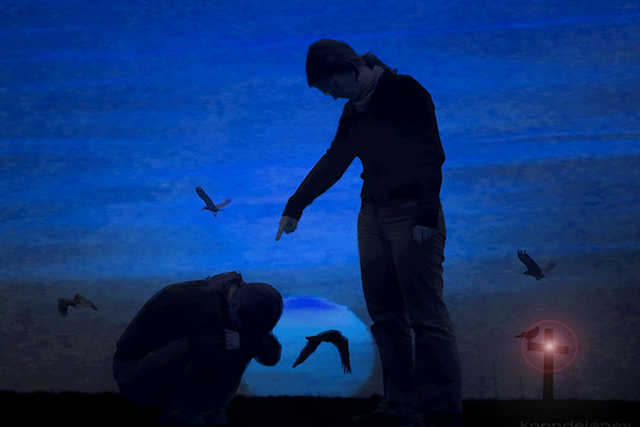
Tag: guilt

  • How to Let Go of Guilt and Regret and Forgive Yourself

    How to Let Go of Guilt and Regret and Forgive Yourself

    “Forgiveness does not change the past, but it does enlarge the future.” ~Paul Boes

    In October of 2010 I was engaged after only three weeks of dating. I was scared to tell my family, but I was terrified to tell my father. My parents divorced when I was five, and I couldn’t spend weekends at Dad’s because he lived thousands of miles away. I saved him for last and decided to take the cowardly way out by emailing him.

    It was not the best decision I’ve ever made. Not only did it infuriate and hurt him, it ended up producing a phone call that would alter my life forever. It was a call filled with horrible words that left me in tears and him hanging up on me. I’ve managed to erase most of the words from my head but not how devastating they felt.

    Six months later we were married in a private ceremony on a beach in Jamaica. After we got back I was still bothered by the fight I had with my father, but I tried to push it to the back of my mind.

    Shortly after, my father began reaching out to me through emails and voicemail. He wanted to meet my new husband and see me. Through email, things became pleasant and we made plans to come visit him in Florida that August.

    My father left another voicemail saying he was still waiting for me to call back and tell him about my trip, yet something was stopping me. Fear, dread, anxiety, and many other emotions made me freeze at the thought of picking up the phone and calling him.

    What if this phone call turns out like the last? Every day I came up with a new excuse and told myself I would call the next day. This was until I ran out of days.

    Two months later my oldest brother called me at work to tell me Dad had passed away that morning. He had been sick for some time, but because of our strained relationship and the strained relationship he had with most of my other siblings, I had no idea how sick. I do remember the first thought that went through my head. I can’t call him back….ever.

    After my father’s death I fell into a foggy depression. For a long time I was unable to focus at work, I isolated myself from all of my friends, and tried to avoid anything that required being social or productive. I was holding myself back from living and slowly dying myself.

    My husband, who was my savior and biggest support system, helped pushed me toward the road to self-forgiveness by asking me this question: “Why can you forgive your father for being absent most of your life, yet you can’t forgive yourself for not calling him back? I don’t get it.” I didn’t either.

    It was time to let go of the guilt, and from then on as I began my days with sadness, I searched for different ways to get rid of it.

    Reach out to others who can help you understand.

    When I was feeling upset, I would ask my mom questions about my dad. I learned more about him in the short time after his death than I knew during his whole life. Her stories helped explain to me why he was the way he was, and in return it helped me realize why I was the way I was. His tendency to avoid confrontation and taking the easy way out made me realize I was my father’s daughter.

    Whether it’s a family member, a friend, or even a therapist, reaching out to someone may lead to answers that help you better understand yourself and your situation.

    Channel your present guilt and regret into something else.

    I didn’t risk calling my father, so I took another risk. For many years it had been my personal and professional dream to write and publish a children’s picture book. I started asking around if anyone knew of someone who could illustrate my story.

    When I asked my mother, she replied, “Your father. He was so good at drawing. He was so good at painting too.” Over time she showed me some of the ceramic pieces he painted years ago.

    Right then I felt even more determined to find an illustrator and self publish my story. Most importantly, it made me feel closer to him. Learning about his hidden talent was like a push from him to go through with my dream.

    What has been your life long dream? There’s no better time than the now to start going after it. The journey you take and the energy you put into it are worth the rewards.

    Change your environment.

    I started to surround myself with those who showed me that life is limitless, children. I took up a nanny job and started to spend more time with my nieces. There’s nothing like the excitement and positive outlook of a child to show you there is more to life than the bad things you experience. You cry over something, you pick yourself up, and start to play again.

    It was hard to let sadness consume me after spending the day with constantly laughing and eager to explore children. They reminded me to enjoy the little things I’d taken for granted. They reminded me the future will be okay.

    Migrate to positive people in your life or new ones you meet. A different perspective on life may help change yours as well.

    Stopped dwelling on the what ifs and focus on the positive results.

    I still hear his last voicemail in my head to this day. “Steph, I’m waiting for you to call me back and tell me about your trip.” No, I never called him back and our last conversation will always be a fight. But that fight sparked a reconciliation. It sparked effort on his part, effort I had been waiting for, for a very long time.

    You can’t go and change the past, so there’s no point in obsessing over it. Even if it takes you months to figure it out, search for the positive that resulted from your negative situation.

    Believe that you deserve to be forgiven.

    I still haven’t 100% forgiven myself, but I’m getting there. I consider myself lucky because on the days that aren’t so good and I can‘t call him back…ever, I get comfort from my biggest support system. It is the support system whom my father wanted to meet and get to know, my husband.

    When I remember the progress my father and I were making, it helps put me at ease and I can breath a little easier. It also helps me to hope and work for great things in the future. I deserve my own forgiveness and I know my father believes I do as well.

    Believe you deserve to be forgiven. We are not perfect but we are still worthy of happiness. Once you can accept that, self-forgiveness will follow and enlarge a future filled with greatness. The world is your canvas, but if you continue to let guilt hold you back, it will forever remain blank. Pick yourself up and start to play again.

  • 16 Things to Let Go to Live a Truly Happy Life

    16 Things to Let Go to Live a Truly Happy Life

    “Happiness is not something you postpone for the future; it is something you design for the present.” ~Jim Rohn

    Sometimes I feel like I’ve spent the better part of my life chasing after happiness. It always seemed like happiness stayed just a tad bit out of my grasp—somewhere in the future that I could always see, but not quite touch.

    For instance, when I was a kid, I believed I’d be happy if I got an admission into a good college. In college, I believed that I’d be happy if I got a good job. When I got a job, I believed that I’d be happy if I got a promotion and a raise. And on and on it went.

    Every time I reached a goal, it seemed like the next goal was where true happiness lay.

    Sadly, this affected my personal life as well. I thought, “When I find a great guy, I’ll be happy. Wait, to be truly happy, we need to first get married. Being married is great, but we need to have kids to find real joy. Gosh, our baby needs to grow up a little so we can really enjoy being with her…” And so on.

    For more than thirty-five years, I chased happiness on this path, not realizing what a futile chase it was.

    And then, about two years back, I was abruptly jolted out of it.

    One evening, on a day that had started out like any other, I found myself at the hospital with my three-year-old daughter in tow, waiting outside the emergency room that my husband lay in.

    After a week at the hospital, my husband came out okay. However, it fundamentally changed the way I look at life.

    For the first time I saw the futility of our chase. I still believe that goals are important and we should strive to achieve them. But now, I see them more as mile markers in life’s journey, not having much to do with happiness.

    Happiness, it turns out, is not something we go after. It’s something already within us. We just need to clear up some clutter to find it.

    The two years that followed have been an amazing journey of slowly letting go of some of that clutter in the quest to find the true happiness within. It’s still a work-in-progress, but here are the things I’ve been striving to let go.

    1. Let go of trying to control everything.

    The only thing that we can truly control is our own attitude and reactions. Once we accept that, we can find happiness right where we are, irrespective of how things turn out. This was perhaps the hardest but the most necessary part of the transformation for me.

    2. Let go of trying to please everyone.

    Every time we pretend to be someone, it takes us away from our true selves, and from our place of happiness. It was hard at first to stop trying to please others. Eventually I realized how liberating it was to dare to be myself!

    3. Let go of the sense of entitlement.

    I often found myself asking “Why me?” It was hard to replace that with “Why not?” After all, everyone gets their share of joys and sorrows; why should I somehow be above it and deserve only the joys?

    4. Let go of resentment.

    Unless we walk in the shoes of the other, we really don’t know the reason for their behavior. Carrying resentment only hurts us and delays any repair. I cannot tell you how amazing it’s been to let go of some of the resentment I didn’t even know I’d been carrying for years!

    5. Let go of guilt.

    On the flip side, if we are the ones who made a mistake, it is time to forgive ourselves and make amends. “I’m sorry. How can I fix it?” can go a long way in starting the healing process.

    6. Let go of pride.

    Neither apology nor forgiveness is possible without letting go of pride. Nor is there room for authentic connection where pride resides. Let it go.

    7. Let go of perfectionism.

    If I had a dime for every opportunity I squandered in the quest for perfection, I’d be rich! But no one can be perfect all the time. That’s what makes us humans. We are quirky. We have flaws. We are beautiful just the way we are.

    8. Let go of negativity.

    In any given situation we have a choice—look at what’s good and be grateful, or look at what’s wrong and complain. Deliberately adopting the attitude of gratitude literally changed the course of my life.

    9. Let go of draining, unhealthy relationships.

    We are the average of the people we hang out with, and if they are frequently negative, it becomes hard for us to maintain an attitude of gratitude. It’s been a tough call to distance myself from people in my life who were bringing me down, but it was necessary to move on.

    10. Let go of the busyness.

    Somewhere along the way, many of us have bought into the notion that the busier we are and the more we achieve, the happier we will be. After thirty-five years, I’ve come to realize that busyness does not equal happiness.

    11. Let go of the attachment to money.

    Money is definitely good to have, but once our basic needs and savings goals are met, it’s time to evaluate the tradeoff of earning more and more. Letting go of the need for money just for the sake of it has been a very hard but fulfilling experience for me.

    12. Let go of the fear of failure.

    Everybody who tries anything worthwhile fails at some point or the other. Failure does not mean we are broken. It simply means we are courageous to dare! Easier said than done, but I’m trying.

    13. Let go of the fear of abandonment.

    Fundamentally, we all crave for connection. But when fear of abandonment starts to rule our lives we make very irrational choices. I try to trust that what is meant to be will happen. And no matter how things turn out, we’ll come out of it okay.

    14. Let go of comparison.

    We usually only get to see the highlights reel of other’s lives. Comparing my behind-the-scenes to that has only made me unhappy in the past. It’s time for change.

    15. Let go of expectations.

    In the end, the core of all my issues was that I expected things to be a certain way. I expected what a good spouse or a friend ought to act like. I expected my daughter to behave a certain way. I expected how situations should turn out. Heck, I even had fixed expectations of what happiness was! Letting go of expectations has helped everything else start to fall in place.

    16. Let go of yesterday and tomorrow.

    And finally, how can we find true happiness if we are saddled down by the baggage of the past or fear of the future? Once I learned to let go of some of the above, I started to focus deliberately on today and now. Suddenly, music and beauty emerged from what was previously mundane. Is there a better way to find true happiness?

    Letting go of something that is ingrained in our minds for years is hard. In my experience, even when I do manage to let go of something some of the time, at other times, it comes right back. In the end, it’s the journey that matters, right?

    So, what will you let go of today?

  • How to Know What You’re Really Feeling So You Can Feel Better

    How to Know What You’re Really Feeling So You Can Feel Better

    Thinking Woman

    “The more you hide your feelings, the more they show. The more you deny your feelings, the more they grow.” ~Unknown

    Throughout my life, I thought of myself as someone who felt too much. I was very gregarious and could easily be consumed by moments of joy and celebration. But when I was alone, I could be overtaken by angry, self-destructive voices that would dominate my mind.

    By senior year of high school, I was spending many hours of the day crying, and had taken to pinching and punching myself until I was black and blue.

    I felt I needed to gain more control over my emotional state, be more rational, have more perspective. Those were the kinds of things I was looking for when I first called my therapist, Marc Bregman, who invented a unique method of Archetypal Dreamwork.

    Instead of learning how to manage my feelings, though, Marc taught me something totally different: how to feel them at all.

    Normally, it’s taken for granted that we feel our feelings and know how we feel. We even believe we know how others are feeling. And yet, we can accept that how we actually feel in any given moment is often extremely complex, confusing, and difficult to communicate.

    In fact, I would contend that we are usually in an avoidance reaction to our feelings rather than truly feeling them.

    Why? Namely because feeling our feelings means allowing states of experience that are truly difficult: pain, fear, despair, or vulnerability. So we cling to our assumptions about our feelings and often confuse these ideas with how we truly feel.

    We can spend our whole life cycling on this level of feeling, never letting ourselves be conscious of what is driving our emotional states underneath.

    Yet, just as matter cannot be created or destroyed, the energy carried by these deeper feeling states do not leave our psyche simply because we want to deny they are there.

    Instead, they fuel the myriad of negative behaviors that we are often trying to fix—totally numbing out, projecting our feelings onto others, blaming others for our feelings, or engaging in compulsive and self-destructive behaviors.

    Furthermore, by keeping our deepest pains at bay, we also lose access to the sweetest and most joyful aspects of our hearts. 

    More than where you are from, how much money you have, what your family is like, or what knowledge you’ve gained, I believe that it is what you feel, what stirs you, what you love and what causes you pain that makes you you.

    I believe that every human is connected to an eternal, infinite source, and it is our deepest feelings that connect us to this source. Through seeking the deepest parts of our hearts, we can learn what it means to manifest our true selves into the world.

    To begin the journey of feeling of your feelings, try these steps:

    Be open, be humble, and allow.

    We often rely on our mind to interpret our inner feelings. Understand that our ideas about our feelings aren’t usually the whole story. Be curious and ask, what could be underneath this current emotional state?

    Center your emotional experience in your body.

    At the core, your feeling state is a physical experience happening in your body. Bringing your attention to where in your body you’re experiencing a feeling is a great way to deepen your visceral experience of it.

    Don’t think about it too much.

    It’s easy to get tangled trying to figure out what we feel by weighing various judgments, ideas, and experiences to determine what we should be feeling. What you feel doesn’t need any supporting evidence. It just is. Let it be.

    Pay attention to your dreams.

    Dreams, on a fundamental level, are felt experiences. They can be a tremendous help in mapping out your internal emotional landscape, especially the places we’d rather avoid. Try writing down your dreams and feeling into them rather than interpreting them. You may be surprised by what you uncover.

    When I began following these steps, I had a number of dreams that showed me immersed in guilt for things, like being late to a meeting. By closing my eyes and concentrating on the image in the dream, I was able to attach the word guilt to a sinking, constricting feeling in my stomach.

    This allowed me to become more aware of when I was feeling guilt in waking life. I didn’t realize it, but it was almost all the time. When I brought curiosity to those moments of guilt and understood there was probably a deeper feeling underneath, I began to feel fear, and eventually, desire.

    In the past, being late to meet someone was my worst nightmare. The idea that someone might be agitated by something I did was excruciating.

    I realized that all of this pressure I put on myself to please others was really driven by the deeper fear I had of truly being myself, regardless of what others thought of me. Once I was able to feel this fear, the guilt did not have as strong of a hold. 

    When I let myself feel how scary it would be to not be concerned with what others thought of me, I also began to feel how much I wanted this for myself. I’ve learned that feelings of desire, excitement, and exhilaration are often intertwined with feelings of fear.

    Perhaps it sounds counterintuitive, but it is that same combination of feelings that prompts us to ride life-threatening rollercoasters or write soul-bearing love letters to the ones who have stolen our hearts.

    We fear what we desire because we know how vulnerable we’d be if we actually got it. But until we let ourselves access the fear, we don’t have the opportunity to be courageous.

    Now when I feel guilt come up I don’t get stuck there for hours but am instead able to access my fear much more quickly. I can let the fear run through my body and let it take the time it needs to transform into feelings of excitement or desire.

    Through letting myself feel these things, it’s become much easier for me to decide what I want to do. Instead of making decisions based on what I think others may or may not like, I’m able to choose the things that scare me, and thus exhilarate me.

    This is just a single example of a myriad of surface feelings I have learned to relate to deeper feelings within me. While I am very far from living out these lessons all the time, just knowing what these deeper states feel like has made a tremendous difference in my life.

    I wake up everyday with curiosity as to what aspects of my felt experienced could be revealed next, and gratitude at the amazing journey that is exploring my inner self.

    And it can all start with a simple exploration—what does it truly feel like to be you, in your body, in this place, right now?

    Photo by Clay Junell

  • Letting Go of the Guilt That Keeps You Chained to the Past

    Letting Go of the Guilt That Keeps You Chained to the Past

    “Letting go gives us freedom, and freedom is the only condition for happiness. If, in our heart, we still cling to anything—anger, guilt, or possessions—we cannot be free.”  ~Thich Nhat Hanh

    One night after my nine-year-old son had just gone to bed, he asked me if I would lay with him, as he was scared. I was getting ready for a busy week and was tired, so I replied, “No, you’re fine. Go to sleep.”

    When he died the following afternoon after being hit by a car, I remembered what he’d asked me. The guilt that followed me from that day on was overwhelming.

    Guilt is an emotion that we have all experienced. It can come in many forms, from simply cheating on a diet or from making a dreadful choice that affects our lives forever.

    The guilt I felt after my son died burdened me for several years. Every anniversary, I would go over and over what I hadn’t done during those last few days before his death.

    I would remember every conversation, every request. The guilt beat me up, it made me replay my mistakes, and it wasted enormous amounts of my energy, re-enacting how I could have done something differently. It made me feel bad even when I didn’t feel bad!

    I think one of the reasons it was so hard to give up and let go of my guilt was because I felt the need to punish myself after his death for all the things I hadn’t done in his life.

    I would pretend that if I had made different choices, I could have changed that day.

    People would remind me of all the things I had done for my son and the wonderful life and love he was given, but it wasn’t enough for me. I constantly questioned why I hadn’t done more.

    After a few years, I realized that guilt was consuming me and in order for me to move on, I needed to find a way to let go and forgive myself.

    I was weighed down because I was living a life consumed by the past. Guilt did not allow me to be fully present with my family, or to see all the good that I had in my life then and now.

    I had to face that I was never going to change the past, but I could change the way I remembered my precious time with my son. Once I did, I could free myself from being the victim of my story.

    Guilt was a pointless burden on top of my grief. I needed to accept the decisions that I had made and let go.

    With guidance from a reiki practitioner, I learned how to become still, empty my mind of my negative thoughts, and finally give myself permission to stop carrying this burden.

    Here are some of the ways I learned to let go of my guilt and forgive myself. If you’re also clinging to guilt and living in the past, these may help you, too.

    Stillness

    In our busy world it can be difficult to find time for stillness, and sometimes it’s easier to avoid it, since it can bring up painful emotions. But it’s only in facing the emotions that we can work through them and let them go.

    Through practicing meditation and yoga, I found that breathing deeply and slowly helped me release the stress in my body and mind.

    It allowed me observe, accept, and release my guilt, and it also helped me focus and create new, positive beliefs and thoughts.

    Over time, stillness can help us learn to identify the beliefs and thoughts that lead to guilt so we can let them go to feel lighter and less attached to stories about the past.

    Journaling

    Not long after our son died, I began to write in a journal. It really helped me to express my feelings and understand why I felt how I did.

    Start by writing down your overwhelming thoughts and feelings. Allow yourself to express everything. Be still and take time to read it back.

    Now ask yourself some questions, like: Do I need to hold onto to these thoughts and feelings anymore? How would changing these thoughts or feelings make a difference in my life? How is guilt holding me back?

    Answer honestly and begin to see where you can change the thoughts and beliefs you have about your situation.

    Then start writing down some new goals, affirmations, and thoughts you can have instead, and make time each day to practice them. Our journals can help us release, learn, and keep track of our progress and our goals for the future.

    Visualization/Forgiveness

    Sitting in a calm, quiet place, visualize the person you feel guilty about and ask them for forgiveness. Now, see them forgiving you, see yourself and the other person covered in light, and see yourself no longer burdened by your guilt.

    For a long time I didn’t believe I deserved forgiveness, and you may feel the same.

    Forgiveness means letting go and releasing the heaviness and the old story we have told ourselves. Forgiveness allows us see the truth and release the past.

    It’s hard to forgive yourself and accept that you deserve it, but holding onto your guilt only creates pain. Seek help from a trained practitioner if you feel you cannot do it on your own.

    Time and practice will always be your healer, so be patient and never give up.

    Realize that no one is perfect—and also that our guilt often has more to do with ourselves than those who we feel we have harmed. Guilt is often a self-created reminder of all the things we wish we had done differently for ourselves.

    In realizing that it’s in large part about us, it’s a lot easier to let it go.

    I no longer allow guilt to have power in my life, and in doing so, I can experience the fullness of life and the precious time I have with everyone I love. No matter what you feel guilty about, you deserve that too.

  • How the Word “Should” Can be Harmful and 3 Empowering Alternatives

    How the Word “Should” Can be Harmful and 3 Empowering Alternatives

    “To wish you were someone else is to waste the person you are.” ~Sven Goran Eriksson

    How many times a day do you use the word “should” in reference to yourself or other people? I don’t know about you, but I used to use it a lot.

    The word “should” has become a fixture in our everyday dialogue. We use it in conversation with others, as a way of motivating ourselves or keeping ourselves in check, and to express a myriad of feelings, including frustration, guilt, and regret.

    As I’ve become more interested in my internal dialogue and how it affects the way I feel about myself, show up in the world, and live my life, I’ve started to realize just how insidious the word “should” can be.

    Although I used to “should” myself about a variety of things, many times each day, I realized that telling myself I should be doing more or being more wasn’t actually helping me do more or be more, and it left me feeling like I wasn’t enough as I was.

    Equally, I realized that when I told other people they should or shouldn’t do something, I wasn’t respecting their ability to make the best decisions for themselves. That didn’t fit with my personal philosophy (that people are free to do what they want as long as they’re not harming others), and I knew I wasn’t being the best friend or partner while I was using “should”-based vocabulary.

    Since I had these realizations, I’ve been on a quest to replace my “should” with alternative vocabulary that is healthier and more accepting—both of myself and of other people. The longer I’m on this quest, the more I realize the damage the word “should” does to our self-relationship and our relationships with others. Here is what I’ve discovered so far:

    Two Major Problems with Using the Word “Should”

    When we use the word “should,” we’re not accepting reality. We’re talking about things that we wish were so, but aren’t (or vice versa). Whenever I used the word “should” when talking to myself, it was motivated by a lack of self-acceptance rather than encouragement.

    As Dr. Shad Helmstetter explains in his book What to Say When You Talk to Yourself, when we tell ourselves that we “should” be doing something, we’re implicitly reinforcing the idea that we’re not doing it.

    If we say to ourselves “I should really meditate more often,” the unspoken follow-up to that sentence is “…but I don’t.

    Equally, if we say, “I should really be exercising this morning,” the unspoken ending to that sentence is “…but I’m not.”

    In the long-term, when we tell ourselves or other people that we should or they should be doing something (as well-meaning as we might be), we’re reinforcing the negative, and the fact that we or they are not doing it.

    Alternatives to “Should”

    I won’t pretend that removing the word “should” from my vocabulary has been easy, or that I’ve arrived and currently inhabit a “should”-free existence. I used to use the word “should” a lot and, in truth, I think it’s something I’ll have to keep an eye on for the rest of my life.

    For now, however, I’ve found some alternatives helpful in overcoming my habit of “should”-ing myself and other people.

    1. Focus on the benefits.

    Instead of telling myself I “should” be doing more of something, I try to focus on why I want to do that particular thing.

    Instead of saying “I should do more yoga,” I remind myself of why I want to do this: “I feel great when I do yoga a few times each week,” “I enjoy feeling myself relax and stretch out when I do yoga,” or “I feel a greater sense of self-connection when I make time to connect my body and my breathing in yoga.”

    2. Focus on how the activity fits with your values.

    One of the biggest things I used to “should” myself about was being on time. I struggled to turn up on time for work, appointments, meeting up with friends, and pretty much anything that was due to start at a set time. It was a constant battle with myself and, of course, telling myself “You should be on time” or “You shouldn’t be late” did nothing to change my tardiness.

    Instead, I started reframing this from the perspective of my values. I started telling myself “It’s really important to me to be on time,” or “I want to live with integrity and do what I say I’m going to do, when I say I’m going to do it.”

    3. Focus on accepting and exploring reality.

    I used to think that I shouldn’t feel angry or jealous. I had heard they were “unhealthy” feelings to experience and had the belief that there was something wrong with me for feeling that way. No matter how much I told myself that I shouldn’t feel these things, however, they didn’t go away.

    Now, I focus on accepting my experience. Instead of telling myself “I shouldn’t be feeling/thinking _____,” I take a step back and say, “Okay, I’m feeling/thinking _____. I wonder why that’s happening now?”

    Removing the word “should” from your vocabulary will take time, patience, and practice. But it is possible, and it comes with great rewards. Replacing “should” with more helpful dialogue will lead to a kinder relationship with yourself, and better relationships with the people around you too.

    Photo by Hartwig HKD

  • When You’re Hard on Yourself: Replace Guilt with Self-Compassion

    When You’re Hard on Yourself: Replace Guilt with Self-Compassion

    “Be gentle with yourself if you wish to be gentle with others.” ~Lama Yeshe

    “Guilty,” admits an offender. “Guilty,” proclaims a jury. Things are pretty black and white in trial verdicts and courtroom pleas (although there are still plea bargains and hung juries, mitigating circumstances and appeals).

    Life is rarely as cut-and-dried as the criminal justice system.

    I’ve experienced guilt in different shades of grey—in rational and many irrational ways that bear no real relation to the “crime” at hand, or to any crime at all.

    I’ve experienced guilt simply for how I think, how I feel, not for anything I’ve actually done or failed to do. Shame, really.

    And I’ve suffered guilt like a chronic disease, believing that I could never be “good enough” unless I somehow felt guilty, because of course I could always do/be better. (You see the strange logic, don’t you?)

    I’ve been far from gentle with myself.

    Guilt is a signal that you are striving to be better, and unless you’re doing that, you’re not good enough, or at least not acknowledging all the ways you aren’t perfect. Apparently! There’s always room for improvement, and guilt is the electric prod to remind you, lest you ever get self-satisfied.

    I’ve been unpacking, or should I say undressing, the anatomy of guilt lately. In true Irish Catholic tradition, I feel guilty for that!

    This ingrained religious belief came down my family line, passed on subconsciously most of the time, at other times with sharp criticism.

    I reckon the whole confession tradition encourages you to look for all the things you’ve done wrong rather than celebrate what you’ve done right. The doctrine reinforces all the ways you are fallible and unworthy rather than focusing on how you are simply human and born “good enough.”

    I was good at school, but that, in itself, didn’t make me good (which is just fine). Sure, I was praised for my grades, but I had a sense that it was never enough, even though my parents didn’t pressure me to achieve and correctly taught me that grades aren’t everything.

    Yet somehow there was almost too much pride in any kind of achievement, too much selfishness in any kind of ambition—guilt even made being good feel bad!

    It wasn’t so much about being a do-gooder, as only being allowed a very small quota of acceptable selfishness before guilt kicked in. As it should (or so I thought)!

    I heard the “love they neighbor” bit loudly, but forgot to listen to the “as you would love yourself”—the irony being that you can only love your neighbor based on how much you love yourself.

    Guilt can be fuel to change, to make amends, and that’s fine. Sometimes we need a guilty conscience to remind us that our thoughtless actions can have negative impacts, even if unintended. Remorse must surely come after criminal acts, or there is no room for rehabilitation.

    But when I find myself feeling guilty for feeling (not acting) selfish, I’m stuck in that shame spin cycle, going round and round.

    This was how I felt during our long struggle for children—infertile, guilty as charged. How irrational is that?

    I realize that I suffered a guilt complex along with the depression that descended in the mire of many cycles of IVF.

    Now as a parent of two beautiful adopted children, I’m trying not to pass on the guilt gene.

    And I have some tips on reframing guilt in your life.

    1. Only allow guilt as insight.

    This is the only positive version of remorse. If you’ve genuinely done something wrong, focus on the lesson and the alternative ways you’d act in the future as your “contrition” and motivator to change.

    2. Apologize, and then let it go.

    If you’ve done something that has hurt someone, apologize if you can and then let it go. Accept the gift of forgiveness graciously rather than beating yourself up. And if someone won’t forgive you, accept that your genuine expression of sorrow and regret is enough.

    3. Apply the logic test.

    Most guilt is illogical but it still feels the same way as “useful” guilt. Guilt does not equate to wrongdoing any more than joy equates to a new possession. If it doesn’t make sense (apply the objective test of a judge), then the verdict is “not guilty.”

    4. See guilt as a symptom of fear, more than a sign of caring.

    Often feeling guilty is a symptom of our fear of change—especially when we put off doing something for ourselves.

    You can make excuses that you’d feel bad (guilty) taking time out from looking after others to pursue a passion, when in fact you’re simply scared of chasing your dream. Of course, it’s good to care for others; just don’t use guilt as an excuse to care for yourself.

    5. Be compassionate.

    Start with being gentle with yourself and you’ll learn to be gentle to others. Be gentle with others and you’ll learn to be gentle to yourself.

    Being compassionate means you are “being good,” which should leave you with few (logical) reasons to feel guilty. Being self-compassionate means you’ll find fewer (logical) reasons to hold onto any remaining guilt.

    Guilt isn’t real; it’s only an emotional response, and often an irrational one.

    Compassion, on the other hand, is tangible and felt by others, played out in thoughtful actions, spoken in kind words, expressed in good deeds and in forgiveness.

    Guilt can’t exist where there is compassion, because compassion is understanding and non-judgmental.

    Guilt may have its place in courtrooms, but my verdict is the real answer lies in compassion and gentleness—starting with yourself.

  • 3 Often Overlooked Causes of Anxiety (And What to Do About Them)

    3 Often Overlooked Causes of Anxiety (And What to Do About Them)

    “Peace cannot be kept by force. It can only be achieved by understanding.” ~ Albert Einstein

    An anxious mind is a hard burden to bear. In fact, if you suffer from an anxious mind it can truly feel like a curse.

    The racing thoughts. The daily tirade of “what ifs.” The relentless voice of your inner critic constantly nagging you and deriding your every move.

    And the worst part is that the mental chatter feels uncontrollable. Truly, there were times when I struggled in vain to quiet my mind.

    It was like there was some hub or center in my brain that had gone haywire, flipped into overdrive, and couldn’t be switched off.

    I used to despair a lot over my unquiet mind. Even the great spiritual masters struggled to achieve mastery over their minds, so how could I?

    I read a lot about mindfulness and tried some mental mastery techniques like the Sedona Method and Emotional Freedom Technique. I meditated. These techniques helped, but the results would only last for a short time; the underlying issues driving my anxiety persisted and whatever peace I got would be short-lived.

    I eventually realized that if I was to quiet my chatterbox mind I would have to stop trying to control my mind and focus instead on letting my anxiety teach me what it wanted to teach me.

    I started keeping a dream journal (I had many of the typical anxiety dreams). I also started to get real with myself, sitting still with my anxious thoughts whenever they occurred and letting myself be receptive to what they were trying to show me.

    I went from trying to control and resist my anxious thoughts to the deeper place of understanding their underlying message and inherent wisdom. Here’s what I discovered.

    An anxious mind can be caused by:

    1. Unresolved relationship issues

    It turns out an anxious mind can be caused by unresolved issues in our interpersonal relationships. The anger, jealousy, regret, or unspoken feelings (positive or negative) that we harbor toward people lives on in our subconscious minds, undermining our inner peace. This is true even when we are not around those people or consciously focusing on them.

    For me, I had spent many years silently harboring anger toward my mother and father for perceived failures as parents. I was also holding on to an infatuation with a former flame that I hadn’t seen in years, and was still mentally “tuned into” negative relationship dynamics from as far back as my high school years.

    As I began to face up to these unresolved relational issues, releasing people from my heart’s tribunal, my anxiety decreased to a surprising extent. I literally felt like I could breathe easier.

    2. Unexpressed gifts or desires

    Anxious thoughts can be the result of unexpressed gifts, especially if the thoughts center around your career or how you spend your free time. In this way, anxiety is a manifestation of inner guidance.

    There is some gift or higher aspect of who you are that wants and needs to be expressed, but that has been denied expression because of fear.

    Psychologists have figured out that human beings have an inherent drive for self-actualization—to fulfill our individual potential. When there are obstructions to self-actualization, anxiety takes root.

    In ancient times, prophets often spoke of the urge to prophesy as being like a “fire shut up in their bones.”

    Anxiety is like this―a bottled-up feeling of having something inside of you that you long to express. The gift, desire, or calling within that longs for expression is bigger than you; it is tied up with your purpose for existing, which is why it feels so painful when it is suppressed.

    For me, my anxiety was telling me that I had a gift for using words and expressing myself through writing that I wasn’t cultivating enough. I also had leadership abilities and a yearning for spiritual development that I was ignoring.

    It could be latent artistic gifts, the secret desire to adopt a child, or a pull toward motivational speaking. Whatever it is, learning to express it will work wonders for your anxiety.

    3. Guilt

    Guilt is the emotional and cognitive state we experience when we feel we have done something wrong. We may have violated our own moral code or expectations, or those of others, or we may simply think that we have done something wrong even when we haven’t.

    Whatever the case, we feel judged (or we judge ourselves harshly and unforgivingly) for our actions, thoughts, or simply for being who we are.

    And because it’s so hard to express guilt (it’s not like anger where you can punch some pillows), guilt is often an internalized emotion, commonly referred to as a “bothered conscience.” Guilt sinks deep into our subconscious and manifests as anxious thoughts―it’s like our inner critic on heroin.

    At one time I harbored a lot of guilt over old friendships I had broken off. I had broken off those friendships because they were limiting my growth yet I still felt like I had violated my own standards of what it meant to be a good friend, hence the guilt.

    I walked around for years with a lot of anxiety because my guilt-tripped inner critic was always telling me that I hadn’t been a good friend in the past and never would be.

    I would feel guilty if I was anything less than the perfect, always-available, always-upbeat friend, and the fear that I wasn’t a good friend made me anxious about forming new friendships. I was always worried that I was doomed to mess up my friendships.

    It was only by examining my guilt more closely that I came to understand that my standards of being a good friend were irrational; after all, people change, it’s okay to move on, and you don’t have to be a perfect person to be a good friend.

    So our guilt is often irrational or out of proportion with what’s really at stake. And even if you feel your guilt is justified, remember everyone makes mistakes.

    You deserve self-compassion. So embrace it and put your anxious mind at ease!

  • How the Need to Be Right Can Lead to Guilt and Regret

    How the Need to Be Right Can Lead to Guilt and Regret

    Sitting Together

    “The obstacles of your past can become the gateways that lead to new beginnings.” ~Ralph Blum

    I think we all have this issue: guilt, followed by its sister, regret.

    I didn’t realize how dark a blemish it was on my heart until I fully felt the anguish of my mother’s death. I never quite realized my full potential, courage, or strength until her passing.

    Her greatest sacrifice, leaving this earth, proved to be my greatest motivation to search myself for the answer of whom I was and why; it was the major catalyst in my life for change.

    Sometimes the best things for you are the hardest.

    Admitting the darkness you’re carrying inside is one of the hardest things to do. Convincing yourself that you have been wrong and need to change can be even harder.

    Forgiving yourself because you are human, and loving yourself enough to know you deserve more, and deserve to give others more, is the hardest task of them all.

    I was an embittered person almost my whole life. I could hold a grudge with the best of them. I felt I had a lot to be resentful for, and truthfully, much of it was not unwarranted. But with my inability to never let go of things, I was miserable, making everyone else around me miserable, as well.

    This went far beyond just being angry. I felt I was being terribly misunderstood and never heard. I also felt the constant need to have to defend myself and my views with a strong argument.

    I had a very strained relationship with my mother starting when I was 14. I was at that age when I thought my parents knew nothing and I was smarter than they were.

    I can now fully understand why I felt that way, beyond just normal teenage rebellion. I was projecting a lot of my older siblings’ perceived unpleasant experiences with my parents onto my own, and letting that determine my relationship with them.

    There was a lot of friction between them, and I somehow felt that if I didn’t share their same resentment I was somehow betraying them.

    Because of this, I went through my youth and into my adulthood expecting my mom to give more than she could and blaming her, instead of blaming myself for not having enough compassion and never taking the time to understand that she was a person, too.

    I seemed to always be aggravated at everything she did.

    I held onto the need to be right, never letting up and always needing to argue. I grew into this person who could never listen with a compassionate heart and lived with resentment instead of love, kindness, and forgiveness.

    I was very hard-hearted instead of soft and pliable and forgiving.

    We would have bouts of calm when we got along great, then something would shift in her mood or mine and it would turn volatile. I see now that, because we were so much alike, it caused much of that friction. This went on for our whole relationship, up until just a couple of years before she died.

    I’m not saying she was without her faults, too. But now that she’s gone, and since I am much older, I can see everything so much clearer. That’s where the guilt comes in.

    We had been working on our relationship, though we didn’t acknowledge that openly, and we were really making headway. You see, I couldn’t even hug her, hadn’t done since I was a kid. But I was getting closer to her and hugging her more because I knew she needed it, and so did I.

    My great wall was crumbling.

    We had always done things together for years, not that that stopped the bickering. But that was all but over for a long while. Not long enough, though. And this is where the regret comes in.

    I wasted so much time being angry and self-righteous that I missed out on having a better relationship with my mother.

    If I had only known then what I have learned in the last few years and especially since her death, I could have saved myself the burden of that guilt and regret.

    There are so many moments each day where I will have a memory of us together and I will feel shame for the way I reacted to a situation. In my mind I can change the outcome to something that I should have done to handle the situation better.

    When she would be difficult, and she could be at times, why did I have to make it worse? Why couldn’t I have just stayed calm and had compassion for her feelings instead of getting overwhelmed and lashing out?

    I was incapable of doing that at the time because it’s hard to do when you are totally unconscious. You act before you think, lash out before you embrace.

    Oh, how I wish I had known this calm before it was too late! I think about the agony I could be saving myself now, and I am filled with remorse. But it doesn’t have to be that way. You can save yourself from the pain that I am trying to overcome.

    All it takes is a step in the right direction.

    It is so important to put your prideful ego aside and try the softer way. Ask yourself these three questions:

    1. Will it destroy me to “give in,” take the barriers down, and not have to be right all of the time? 

    When you “give in” it is not to lie down and be trampled on, but to slow down and reflect on what’s most important. The egotistical need to be right is what will ultimately destroy you. It leaves no room for compromise or compassion for another’s feelings, and will cause you more damage in the long run.

    2. Is it worth it to be right, making the argument more important than making someone else happy?

    When you constantly reinforce to the people in your life that you value your own opinions more than their feelings, it can cause a lot of hurt. Why not take the higher road and save the moment by saving your voice?

    3. Will my actions now cause me pain and regret later? 

    My biggest lesson learned was that, if I had only known then what I know now, I could have prevented so much grief.

    I wish I had had more generosity in my heart at that time. I wish I knew how to pause and let myself have that moment to feel the clarity that I needed to make a better choice in how I handled the situation at hand.

    I know that, when she did things that I considered unforgivable, it’s because she didn’t know any better and was only doing the best she knew how at that time, as was I.

    I am so grateful that I have learned these lessons now so that I can have the opportunity to live this way from here on out. I’m a big believer in things happening for a reason, and though I don’t quite know how to justify this one, I thank my mother every day for her sacrifice in that in losing her, I gained the greatest insight.

    I just wished I’d learned these lessons sooner.

    Photo by Kevin Krejci

  • How Taking Quiet Time for Yourself Helps People Around You

    How Taking Quiet Time for Yourself Helps People Around You

    sitting

    “I wish I could show you, when you are lonely or in darkness, the astonishing light of your own being.” ~Hafiz of of Shiraz

    “What I wouldn’t give for a few moments of silence.”

    “I really should start meditating.”

    “I know it’s important to take breaks, but I just don’t have time.”

    We’ve all heard (or made) comments like these at some point. Implicit in these statements is the idea that resting in stillness is beneficial…for the individual.

    But what if such a practice of peace is more than that? What if it’s beneficial for others in your family, your community, in every life you touch?

    When I worked as a live-in caregiver for adults with intellectual disabilities at L’Arche, I often rose early to help my housemates with their morning routines. (L’Arche is a non-profit that creates homes wherein people with and without intellectual disabilities share life together in community.)

    I came to live there after college, and it was a wonderful challenge for an introvert like me to live and work with fourteen housemates for two years.

    When I wasn’t assigned to help my housemates with their morning routines, however, I had a ritual of my own. I’d pad down the staircase in slippers, my journal in hand. I’d assemble some breakfast, and then sit down in a living room chair that faced the house’s front windows.

    Morning light would warm my skin and my spirit too. I’d sip my coffee and stare silently, content to take it all in.

    My housemates would move through their routines around me; my morning oasis was, after all, right in the midst of a fourteen-person household. I would greet them with a smile, then duck my head and keep silent. (more…)

  • Learn to Forgive Yourself Even When You’ve Hurt Someone Else

    Learn to Forgive Yourself Even When You’ve Hurt Someone Else

    “Be gentle first with yourself if you wish to be gentle with others.” ~Lama Yeshe

    Think back to the last time somebody apologized to you about something. Did you forgive them? There is a very good chance that you did.

    Now think back to the last time you harmed someone else. Have you forgiven yourself? Probably not.

    We all make mistakes. Oftentimes, through our actions, somebody gets hurt.

    During this past year, I served as a liaison between my fraternity and a seventeen-year-old cancer patient in a local hospital through the Adopt-a-Family program. This patient, Josh Goldstein, passed away around the beginning of March.

    My responsibility as liaison was to have a regular communication with Josh. I failed in this responsibility.

    In the month after Josh died, I was overcome by shame. My belief that I was a fundamentally good person was shattered. How could I be so neglectful? Why did I not spend more time with him?

    This feeling climaxed during “Family Hour” of Rutgers University Dance Marathon (a thirty-two-hour, student-run event that raised over $442,000 for families that have children with cancer and blood disorders). I was standing in the rafters, listening to a speech by the mother of one of the families that we had helped.

    I couldn’t bear to hear her thank us for all the wonderful things she said we had done when I felt, deep down, that I was a bad person!

    I literally could not touch my friends who had been standing next to me because I might have contaminated them with the disease that was my poor character.

    This terrible feeling continued, and tears began to stream down my face. Flashing before my eyes, I saw all the opportunities I had to visit Josh in the hospital but had chosen not to.

    Then my memory came to our fraternity meeting where Josh’s death had been announced. His last wish had been that we would not forget him after he passed. I pictured Josh saying this over and over again.

    And then a strange thing happened: I realized that not only was I not going to forget Josh, but that I would never make the same mistake again.

    In an instant, I had forgiven myself, letting go of the pain and accepting that I could still be a good person even if I made a serious mistake. (more…)

  • Mindful Indulging: Having What You Want Without Guilt

    Mindful Indulging: Having What You Want Without Guilt

    Donuts and Berries

    “You only lose what you cling to.” ~Buddha

    I used to cling to my identity as a person who didn’t eat donuts. To me, donuts represent all that is tempting and yet forbidden. Any self-respecting natural health doctor is not supposed to like donuts, right?

    This image I held of myself almost cost me one of the important realizations of my life.

    Twenty years ago I was in the midst of my training to become an Ayurvedic health practitioner.  I held tightly and proudly to my dietary restrictions like a fundamentalist’s religion.

    This ancient medical system of India dictated that since I was out of balance with too much phlegm, I was to avoid all wheat, dairy, fried foods and sugar. So donuts were definitely a no-no.

    On my path to learn Ayurveda, I also began studying the Sanskrit language in which the original medical books were written. I found myself at a Yoga ashram in San Francisco, to attend a Sanskrit class, or so I thought.

    What I promptly came face to face with was a 65-year old Indian saint in neon orange robes and dark, wrap-around glasses asking me “Who are you?”

    As is traditional in an ashram, after our meditation and Sanskrit lesson, we all gathered around “Guruji” as he blessed the food that had been brought to be passed around and shared. A plate of glazed donut pieces came my way. I politely refused.

    Looking back, I can’t even believe I did that. Not to mention I absolutely love glazed donuts. (more…)

  • Compassionate Boundaries: Saying No Without Guilt

    Compassionate Boundaries: Saying No Without Guilt

    “Some people think it’s holding that makes one strong–sometimes it’s letting go.” ~Unknown

    Today I’ve been thinking about fences, I guess as a metaphor for boundaries in life. There are many different kinds of fences, but that they all have the same purpose: creating a boundary.

    Whether it’s a sweet white picket fence with roses or the electrified chain fencing at a federal prison, what it signifies is a line drawn in the sand. This is either a starting place or a stopping point, depending on your point of view.

    Creating boundaries has always been a challenge for me. Until now, maybe still, I have needed to use anger to build my fences, to re-enforce my boundaries.

    I recently became so angry with a family member that the anger seemed totally disproportionate to the deed. But I felt invaded, used, taken advantage of. I accused, I shouted, I slammed out the door. Nothing like being really, really mad to build a very solid fence.

    But the effect on my body was like hauling the heavy cement blocks into place and then pounding them into their position. It took a huge toll, not to even begin to mention the effect this had on my emotions and on my spirit.

    After my “anger fence” was firmly in place, I was exhausted; muscles rigid with residual fury, unable to even appreciate the fence so firmly planted. Yes, I had created a very defined boundary, but at what great cost, both to myself and to my family? (more…)

  • Accepting Blame and Asking for Forgiveness

    Accepting Blame and Asking for Forgiveness

    Screen shot 2013-01-13 at 11.31.46 PM

    “Never ruin an apology with an excuse.” ~Kimberly Howard

    As a kid I was quite often “långsur.” Långsur is a Swedish expression for being grumpy for a long time. Every time someone was mean to me, I sulked for hours, even days. This became quite tedious at times, especially since as soon as I became happy again, some new event triggered me to sulk again.

    You get the picture.

    I simply had such a hard time forgiving people.

    It went the other way too. I found it hard to admit that something was my fault. At least out loud. Inside, I blamed myself, but I could not get the “I’m sorry” across my lips.

    As I grew older, I realized no one liked Miss Grumpy and those long days of sulking had to be shortened a wee bit if I wanted to keep some friends, but to be honest, forgiving was still hard. Also, even though I was happy on the surface, many days I was still “långsur” on the inside.

    Guess who suffered the most from this?

    It was not until I had kids that I really got out of this extremely negative mindset.

    All of a sudden, I didn’t have time to sulk. Diapers were to be changed, bottles heated; and sleep—that wonderful thing we all take for granted BK (before kids)—was to be enjoyed, or rather desperately grasped at when there was a moment.

    Not only did I no longer have time to sulk, I also realized that for us parents to mentally survive, we had to be able to communicate quickly, honestly, and rationally. We had to make decisions without hesitations. We made mistakes all the time, but we survived them.

    At this stage, a baby’s life depended on my behavior. It was not just me anymore.

    It was at this time that I realized that you can actually get mad and stop being mad in matter of minutes, as long as you set your mind to it. It was up to me to decide how I wanted to feel inside.

    And, if I did wrong toward another person, there was a liberating sensation in saying I’m sorry and moving on. No dwelling. (more…)