Tag: guilt

  • Two Reasons We Sabotage Our Joy and Success and How to Stop

    Two Reasons We Sabotage Our Joy and Success and How to Stop

    “The wound is the place where the Light enters you.” ~Rumi

    Have you ever held yourself back from going after what you truly want, or from enjoying what you have, because of a lingering fear that it might be taken away from you, or because you felt guilty for having more than others?

    For years, I found myself unintentionally sabotaging moments of pure joy and personal success without being able to embrace them fully.

    For example, when my son was born, a rush of panic would flood me every time I even imagined the possibility of losing him, and I felt guilty even having a family knowing that my friend was struggling with infertility due to her health issues.

    Also, the money that flowed into my life always seemed to vanish as if I was in a rush to get rid of it, feeling torn between my gratitude for what I’d earned and the unease of knowing that others were barely getting by.

    No matter how hard I tried, I couldn’t shake the constant sense of dread that lingered. One moment, I’d feel exhilarated and at peace, only to be hit with a wave of fear and guilt, as if my mind was plagued by relentless, unsettling static.

    It felt like an endless cycle of scarcity. A pattern of having and sabotaging. But it was something deeper that made me question my beliefs of my own worthiness.

    It took years of reading, researching, and learning to realize that this feeling wasn’t just a behavior—it was a belief that traced back to my childhood.

    I grew up in a dynamic, happy family that traveled often, cared for me, and always made me feel safe and loved. But when the war came and everything changed in an instant, my life of safety and my carefree days turned into a desperate fight for survival.

    That abrupt shift of losing freedom and the life I had before that moment left a deep mark on my young mind. It taught me that nothing is guaranteed and that having too much joy was dangerous and it could vanish in a flash.

    Later on, this belief seeped into every corner of my adult life. When I built a vibrant career, guilt kept creeping in because I knew there were others who were struggling. Even in moments of personal growth and healing, the weight of this belief made me feel as if I was betraying all the suffering and destruction I had witnessed as a child.

    It was exhausting, and for the longest time, I had no idea why I felt this way. But holding onto this belief didn’t help anyone. It certainly didn’t help me. And especially not those still fighting for survival. It kept me small and limited, trapped in a cycle of guilt and fear.

    While this mindset once served as a form of protection, I had to accept that loss is an inevitable part of life—and that fearing it only kept me from truly living.

    As I started my healing journey and helped other souls find their path to healing, I began learning about the subconscious mind and how early childhood experiences, cultural conditioning, and unresolved emotions shape us.

    When I allowed myself to acknowledge the origin of this belief without judgment, I knew I had started the healing process. I gave myself permission to grieve for the child I was and for everything I had missed experiencing as a twelve-year-old girl.

    Then I started working on how I see the world and how I, just like everyone else, am responsible for the energy I send out into the world. I started to see my joy, success, happiness, and achievements as gifts and opportunities, not things I had stolen from others.

    I reframed my story and embraced an affirmation that I still use nowadays—The more I thrive, the more I can give back. This whole new perspective shifted my energy from guilt to gratitude and inspired action.

    I changed my inner narrative through energy healing and the deep soul alignment my being was craving. I am worthy of happiness, just like everyone else, and I deserve abundance in every aspect of my life.

    Over time, these words became my truth, which I now believe deep in my core.

    It’s no surprise that, of all the emotions I worked on during the process, guilt was the hardest one to let go, because I couldn’t give up thinking and feeling what other people who were going through the same struggles felt. But when I decided to channel my abundance into acts of service, I realized I could help others without sacrificing my own joy.

    Limiting beliefs can be tricky because you may not even realize you have them. And even if you’re aware of some, they might not be the ones you actually need to work on. The root cause isn’t always easy to spot, but there are steps you can take to get there.

    1. Start by identifying areas of your life where you face challenges.

    Write down the belief you feel is contributing to your struggles. Putting it all in writing can give you the clarity you need to move forward.

    2. Explore the origin of this belief.

    Did you hear it from someone? Was it an event in your life that started it? Understanding where this belief might have started can help you detach from it.

    3. Challenge limiting beliefs with empowering truths.

    For example, you could replace “I’m not worthy of success because others are struggling” with “My success empowers others. By thriving, I create more opportunities to help and inspire.”

    Find examples from your own life when this was true and write them down. As you shift your perspective, you’ll begin to see things in a new light—one that is healthier and more uplifting.

    While affirmations can be a powerful tool, please note that they may not be sufficient if you’re dealing with deep-rooted patterns of fear, doubt, or trauma. Simply repeating the words may not be enough if you struggle to truly believe them.

    To more effectively heal these limiting beliefs and rewire the brain, a more holistic approach is often needed—one that integrates mind, body, and energy healing. This can include guided meditation to access subconscious patterns, breathwork to release stored emotions, somatic practices to reconnect with the body, and inner child work to address the root cause of past wounds.

    By combining these methods, you allow healing to happen on multiple levels, creating deeper and lasting transformation.

    4. Create a daily practice where you meditate and visualize yourself thriving to reinforce your new narrative.

    Meditation helps quiet the mind and clear energetic blockages, while visualization allows you to embody the feelings of your new reality.

    To fully integrate this shift, take aligned action each day that supports your growth. Set boundaries by saying no to commitments and situations that no longer serve you, speak your truth by expressing your needs, and engage in new experiences by exploring new places. Celebrate small wins by acknowledging and appreciating every step you take toward becoming the person you are meant to be.

    It might also help to find a guide or a coach who can help you navigate the deeper layers of limiting beliefs. You might realize that an outside perspective is what you need to break free.

    If you find it hard to let go of your conditioning, be patient with yourself. It’s not easy to get out of your own way, even when your soul is feeling a strong pull and an immense desire to break free and to awaken to a life filled with meaning, light, and purpose.

    But if you keep at it, you can let go of the limiting beliefs that hold you back. Then, when you believe that you are worthy of receiving and fully experiencing all of life’s blessings, you’ll be able to embrace each gift with gratitude while you have it, knowing that both gain and loss are natural parts of our journey.

    And remember, embracing joy and success is also a gift to everyone around us. When we honor our worth and embrace our light, we align with a higher vibration that radiates into the world.
  • How to Stop Living in Perpetual Guilt and Forgive Yourself

    How to Stop Living in Perpetual Guilt and Forgive Yourself

    “I have learned that the person I have to ask for forgiveness from the most is myself. You must love yourself. You have to forgive yourself every day. Whenever you remember a shortcoming, a flaw, you have to tell yourself, ‘That’s just fine.’ You have to forgive yourself so much until you don’t even see those things anymore. Because that’s what love is like.” ~C. JoyBell C.

    Have you ever wondered why, despite doing your best to heal and grow, you can’t seem to shake off the feeling of inadequacy and only see minimal results for all your efforts?

    Maybe, like myself, you don’t know you live with a very subtle yet perpetual feeling of guilt.

    The first time I became familiar with this chronic guilt was when I learned about self-awareness. At the beginning of my healing journey, I knew that to change anything, I must first be aware that it is there.

    Although this sounds good in theory and might work when we look at it from a logical standpoint, often it doesn’t apply when we are in the arena, going through the imperfections of the healing process.

    In his book Breaking the Habit of Being Yourself, Joe Dispenza explains how our bodies become addicted to certain chemicals we release based on the thoughts we think and the emotions we feel.

    If you are used to feeling guilt, your mind will unconsciously look for it in everything you do, so the body gets the hit.

    Going back to self-awareness, let me ask you this:

    What do you do when you discover a pattern you want to change or a toxic habit you want to heal—for example, that you people-please? Do you reach for understanding and compassion or judge yourself, feeling like you “should” act differently?

    Exactly.

    It’s almost like we think if we are harsh enough with ourselves, we will do better next time, soldier up, and get it “right.” While in the process, we are crushing our souls, unconsciously sabotaging our healing, and feeling smaller each day.

    As I dove deeper into exploring my guilt, sometimes the things I judged myself for blew my mind. I judged myself for how I felt, and once I observed it, I judged myself for judging myself for how I felt. Or I would use guilt to unconsciously validate the belief that I am not enough.

    Even when I made healthy decisions, like distancing myself from people who weren’t good for me, I would judge myself for bailing out and not staying around and trying harder. There was always a reason to feel guilty.

    It took me a long time to discover these patterns, and I still spot them today. It was and still is a part of my self-talk, although not as often as it used to be. However, while developing a more loving approach to my guilt, I realized that only a healthy dose of love, compassion, and understanding could heal me.

    We may find it challenging to spot chronic guilt since its presence is very subtle. If guilting and judging ourselves is our way of life, we may think, “This is how I always feel. It’s normal.”

    But it isn’t. We weren’t meant to swim in the waters of inadequacy or not-enoughness. If you think, “But what if I let the guilt go and relax, and then don’t feel the drive to do more, heal more, grow more?”

    Although guilt may seem like a fuel that pushes us forward, from my experience, it keeps our healing at bay. It takes away the feeling of being alive, motivated, inspired, and courageous. It makes us shrink and brings uncertainty and self-doubt.

    I remember a time when I started to have digestive issues right after I left my marriage and began the process of a divorce. The hardest things for me to overcome were the anger and guilt I felt for the things I’d allowed, although I wasn’t aware of this at that time. All I knew was that I was pissed. This, of course, made my digestive issues even worse.

    During this time, I began learning more about the connection between my gut and my mental and emotional health and how my anxiety, sadness, and stress affect the health of my physical body.

    One day, as I spoke to a friend on the phone, I broke down crying, knowing that I was responsible for how I physically felt.

    After I calmed down, we sat in silence for a few moments after she said, “Maybe it’s time you forgive yourself for it.”

    Her words immediately touched my heart, and I knew that I had to come back to the basics of my healing, which so often lay in forgiving myself. Since then, I’ve approached my digestive flare-ups and healing with an attitude of forgiveness. This has allowed me to ease into the moment and has helped me look at the whole situation with more love and understanding toward myself.

    I’ve realized that living with the attitude of forgiveness isn’t a one-time event but a mindset. And from everything I understand about this sacred and soulful practice, these are four steps I always follow.

    1. Get curious. 

    When you observe a behavior about yourself that you don’t like or experience what I call a healing relapse (the time when you act in old, unhealthy ways), instead of immediately reaching for judgment, get curious.

    Healing relapses are real, and they happen to all of us. You will take one step forward and two steps back. Eventually, it will be two steps forward and only one step back. At some point, you may move back to your old ways. You say yes when you want to say no and don’t reinforce your boundary, then feel a sense of resentment. It’s okay. Give yourself permission to be imperfect.

    A simple affirmation I use to remind myself to live a judgment-free life is, “Although I see myself going back to judgment, people-pleasing, seeking validation, etc., I choose to stop here, stay away from judgment, and get curious instead. It’s okay to make mistakes as I heal.”

    2. Ask yourself challenging but healing questions. 

    When you notice judgment or guilt and get curious instead of resentful or judgmental, turn inward and try to understand. Explore deeper aspects of your self-talk and see where you are still choosing guilt over kindness and compassion.

    Here are three common questions I ask myself:

    “How can I better understand the part of me that I want to judge?”

    “If receiving forgiveness is difficult for me, what wounds or pains do I need to attend to more to open my heart to healing?”

    “How can I see this moment of judgment as an opportunity for growth? What can I learn from it?”

    3. Use meditation as your self-forgiveness tool.  

    Meditation has been my number one tool in healing my wounds. I’ve used it for self-forgiveness, inner child, self-love, and more.

    A few years back, I was part of a weekly coaching group. Each month, we worked through different subjects, and at that time, the topic of the month was forgiveness. The person leading the group invited us to meditate together. I got comfortable in my seat and closed my eyes. We started with a series of breathing exercises to get grounded and relaxed. Then he asked us to repeat after him. The first thing he said was, “I forgive myself.”

    The moment I mentally uttered these words, I broke down crying while feeling an immense release. It’s like a giant burden fell off my chest. This was my first practice of self-forgiveness, and it made me realize how much guilt and judgment I carried around on a constant basis.

    Since then, using self-forgiveness meditation has become one of my favorite tools to work through my guilt.

    4. Heal negative self-talk with self-compassion. 

    As I mentioned earlier, living with the attitude of forgiveness is a way of life, not a one-time event.

    At first, you may find yourself going back and forth between judgment and understanding. This is a part of the process, so don’t feel discouraged. Instead, every time you notice that you are judging yourself, pause. You can also say “pause” to yourself mentally or out loud. This will interrupt the thought pattern of judgment that’s taking place.

    Then, attune to your negative self-talk and don’t resent it. You can use this compassionate statement, “I know you,” referring to your mind, “are here to protect me by offering thoughts that are known and familiar and feel safe. However, I choose to approach myself differently moving forward. I am worthy of compassion and forgiveness and choose to treat myself kindly.”

    Healing from guilt isn’t a quick fix but rather a process of changing the core of the relationship you have with yourself.

    Be patient while navigating this journey, and when you notice yourself going back to your old ways, just take a deep breath and declare with all your heart: I am worthy of a guilt-free life, and this time, I choose forgiveness.

  • The Importance of Setting Strong, Healthy Boundaries

    The Importance of Setting Strong, Healthy Boundaries

    “If you love yourself, it doesn’t matter if other people don’t like you because you don’t need their approval to feel good about yourself.” ~Lori Deschene

    I spent my whole life trying to please other people. I would put myself through stress and discomfort to fit in with what they wanted or needed. I would rarely feel confident enough to communicate what I wanted because when I did, I would be met with frustration or anger, and I’d often come away feeling stupid.

    When I was growing up, I would feel my emotions very strongly, so a lot of the time I would receive comments like “you’re too emotional” or “just relax.” I now realize that people made these types of comments to make me feel like I was wrong for feeling sad, stressed, or uncomfortable when others weren’t respecting my boundaries.

    At the time, I didn’t understand this happened because I wasn’t enforcing my own boundaries strongly enough, because all I wanted to do was please others. So when I felt strong emotions, I would just assume I was wrong for feeling them.

    This eventually led to me losing most of my confidence and keeping myself “small.” I felt I wasn’t deserving of being seen or heard. I had learned that by trying to communicate my boundaries, I would frustrate other people and be made to feel I was being unreasonable.

    If I wanted certain people in my life, I had to adapt to what would make them happy. Of course, this would just result in me becoming more and more unhappy, leading to unhealthy relationships anyway.

    It wasn’t until I had my son that I realized how unnecessary it was to not enforce my own boundaries. Even for a while after he was born, I would bend over backwards to fit in with others, even if it meant messing up my son’s schedule. I became stressed, unhappy, and anxious a lot of the time.

    I realized one day how this was becoming too much for me because I made a decision to stay home with my son for the day (which, at the time, I felt very selfish for doing!), and it felt so incredibly peaceful.

    Before this, I would often think my son wasn’t a happy baby, but quickly understood it was because I wasn’t putting our needs first and was instead always racing around and going out of my way to meet other people’s needs.

    As soon as I started saying “no” to things I didn’t really want to do or didn’t feel I had time for and began communicating what situations would suit me and my son, we were both so much happier and more relaxed!

    However, since doing this, my relationships with several people have changed. I’m no longer as close with certain friends, and I’ve had to deal with hurt responses from family members. The guilt I’ve felt was almost too much to bear at times. But I am no longer willing to cause myself sadness and stress just to make others happy.

    The result? Some of my previously close relationships are no longer as close, and that has been tough to digest. You start prioritizing yourself more and spend less time accommodating others, and they eventually stop speaking to you… ouch!

    However, other relationships have become stronger, happier, and healthier! I’ve even made several new close friends. I also want to mention one previously close relationship because I now spend less time with this person, but I feel our relationship is much stronger. I’ve learned I need to protect my own energy when around them, as they have quite a negative view on life at times.

    Since it was someone close to me, I didn’t want to lose them. So I had to find a way to adapt the relationship to suit my boundaries.

    I don’t think all boundaries need to be communicated, especially if the person is likely to be offended or not understand. Instead, I was able to keep things positive by changing the dynamic. So I would arrange coffee meets with this person occasionally and subtly shift from going over to their house regularly, as this would result in more time and energy being taken from me.

    One thing I noticed that made me realize I wasn’t setting healthy boundaries was that I felt anxious about going into social situations and family events—even events in my honor. One year, someone else decided what we would be doing for MY birthday, and I didn’t have the confidence to speak up to explain I didn’t want to do what they had chosen.

    I also felt upset if I tried to communicate my preferences, but someone got frustrated or implied that I was being unreasonable. I would often question if certain people even liked me and would exhaust myself trying to make them happy so they would accept me.

    Setting boundaries can be really difficult for some of us, but it doesn’t mean we can’t do it. It can also be scary because it can mean not having such a close relationship with certain people, or maybe even losing them completely.

    But the question we need to ask ourselves is this: If relationships change or we lose people in the process of creating strong boundaries, were they even meant for us? Our happiness is just as important as the next person’s. As long as we aren’t acting in a way to hurt others, our boundaries are valid and acceptable. It isn’t up to us to make other people happy. We are all responsible for our own happiness. We can both create it and change it.

  • 4 Types of Regret and How to Leverage Them for a More Fulfilling Life

    4 Types of Regret and How to Leverage Them for a More Fulfilling Life

    “Regret is not dangerous or abnormal, a deviation from the steady path to happiness. It is healthy and universal, an integral part of being human. Regret is also valuable. It clarifies. It instructs. Done right, it needn’t drag us down; it can lift us up.” ~Daniel H. Pink

    It happened when I reached midlife.

    I’d experienced regret before, but this was different.

    In my forties, I struggled with several deep-seated regrets all at the same time.

    And I didn’t handle it well.

    If only I hadn’t chosen to fall into unhealthy habits that were hard to break, like smoking cigarettes and drinking too much alcohol.

    If only I’d worked to understand myself and develop my identity earlier in life.

    If only I’d gone after that degree in psychology I’d really wanted.

    If only I’d taken charge of my own financial wellness rather than abdicating it to my husband.

    Because I didn’t know better, I wallowed in these regrets, revisiting past mistakes and ramping up my self-criticism.

    So many might-have-beens and what-ifs.

    Heartbreak and grief ensued.

    It’s safe to say I was well and truly stuck there for a while.

    Thankfully, working with a therapist helped me safely face my feelings and reframe my regret as an opportunity for growth rather than a threat.

    Over time, I learned to practice self-compassion and what my therapist called Neutralize the Negative – Promote the Positive.

    I learned I could extract lessons from regret, use them to keep growing into the best version of myself, and create a more fulfilling life.

    I learned that regret could be a positive force for good.

    As the poet and wise woman Maya Angelou used to say, “Do the best you can until you know better. Then, when you know better, do better.”

    Fast forward to 2022, when one of my favorite authors, Daniel H. Pink, published his remarkable book The Power of Regret: How Looking Backward Moves Us Forward.

    Pink’s research, poignant stories, and practical takeaways had me thinking, “This is a guide for living better. I wish I’d understood all this back then.”

    Understanding Regret

    Unlike sadness or disappointment, regret is a unique emotion because it stems from our agency. It’s not something imposed upon us; rather, it arises from choices we made or opportunities we missed.

    Intrigued by this powerful emotion, Pink embarked on a qualitative research journey, inviting people from all walks of life to share their regrets.

    The response was overwhelming, with tens of thousands of stories pouring in. Through this process, Pink compiled, classified, and analyzed the regrets, unearthing valuable insights that can help us navigate life’s complexities.

    One of the key findings was that regrets of inaction outnumber regrets of action by a ratio of two to on, and this tendency increases as people grow older.

    Action regrets, such as marrying the wrong person, can often be tempered by finding solace in other aspects of life. For example, someone who feels they married the wrong person might say, “At least I have these wonderful kids.” However, regrets of inaction lack this silver lining.

    Pink identified four main types of regrets that tend to cluster together. He calls them deep structure regrets. They all reveal a human need and yield a lesson.

    Foundation Regrets

    Foundation regrets emerge from neglecting to lay the groundwork for a stable and fulfilling life, like failing to save money for retirement or neglecting one’s physical well-being.

    I now understand that most of my regrets, including those I shared above, fall under this category. Foundation regrets sound like this: If only I’d done the work.

    The Human Need: Stability—a basic infrastructure of educational, financial, and physical well-being.

    The Lesson: Think ahead. Do the work. Start now. Build your skills and connections.

    Boldness Regrets 

    As we grow older, the regrets that haunt us revolve around the missed opportunities we let slip away rather than the risks we took. The chances we didn’t seize, whether starting our own business, pursuing a genuine love, or exploring the world, weigh heavily on our hearts.

    Boldness regrets sound like this: If only I’d taken that risk.

    The Human Need: To grow as a person.

    The Lesson: Start that business. Ask him out. Take that trip.

    Moral Regrets

    Moral regrets arise from actions that go against our sense of kindness and decency, such as bullying, infidelity, or disloyalty. They sound like this: If only I’d done the right thing.

    The Human Need: To be good.

    The Lesson: When in doubt, do the right thing.

    Connection Regrets

    Connection regrets center around missed opportunities to maintain relationships, often due to the fear of awkwardness. They sound like this: If only I’d reached out.

    The Human Need: Love and meaningful connections.

    The Lesson: If a relationship you care about has come undone, push past the awkwardness, and reach out.

    Doing Regret Right

    So how do we approach regret in a way that enhances our lives? How do we do it right? Pink suggests a three-part strategy: looking inward, looking outward, and moving forward.

    Looking inward involves reframing how we think about our regrets and practicing self-compassion. We often judge ourselves harshly, but treating ourselves with kindness and understanding can lead to healing and growth.

    Looking outward means sharing our regrets with others. We unburden ourselves and gain perspective by opening up and expressing our emotions. Talking or writing about our regrets can help us make sense of them.

    Moving forward requires extracting lessons from our regrets. It’s essential to create distance and gain perspective. Pink offers practical exercises like speaking to ourselves in the third person, imagining conversations with our future selves, or considering what advice we would give our best friend in a similar situation.

    In addition, Pink encourages us to “optimize” regret rather than trying to minimize it. He suggests creating a “failure résumé” to reflect on and learn from past missteps.

    He also recommends combining our New Year’s resolutions with our regrets from the previous year, turning regret into a catalyst for self-improvement.

    In a culture that promotes relentless positivity and a “no regrets” philosophy, I’ve learned that negative emotions have their place in a fulfilling life. I know better now, and I couldn’t agree more with Dan: “If we know what we truly regret, we know what we truly value. Regret—that maddening, perplexing, and undeniably real emotion—points the way to a life well lived.”

  • How I Learned to Let Go of Attachment to Things I Want

    How I Learned to Let Go of Attachment to Things I Want

    “The happiness we seek cannot be found through grasping, trying to hold on to things. It cannot be found through getting serious and uptight about wanting things to go in the direction we think will bring happiness.” ~Pema Chodron

    When I was a kid, my parents used to take me and my younger brother  fishing during the summer with some family friends. Sitting in the backseat of the car as we drove through the countryside, I had no worries about the future. It was a time of innocence.

    On this particular trip, which stands out in my memory, I would try fishing for the first time. I thought attaching a worm onto a hook was gross, but I was excited to do something adults do. Little did I know that I would learn a few important life lessons on this trip.

    When we arrived at the fishing dock, my dad offered me a small fishing rod, one that was suitable for a small child. I was thrilled. While the adults busied themselves, I ran off with my fishing rod, looking for a spot to catch a fish.

    Moments later, I had my fishing line down an eye-shaped hole that opened up between two boards on the dock. It was perfect: a small hole for a small child to catch a small fish. I crouched beside the hole and peered into the shadowy water beneath the dock.

    Nothing happened for some time. Suddenly, I felt a tug on the line, jolting me alert. I had caught something. I was ecstatic! I drew my line up and saw that I had caught a small fish. Unfortunately, the hole in the dock was even smaller. Yet, I didn’t want to lose my catch.

    I called out to the adults for help. One by one, the grownups around me gathered to help get this small fish through a slightly smaller hole. I implored the adults to try harder as they struggled. As we all tried to pull the fish through the hole, it thrashed in defiance with all its might.

    After some time, we managed to force the fish through the hole. However, we all looked down on the fish before our feet, its outer flesh scarred, now barely alive. A sense of sadness and regret came over me. I realized that I had done something terribly wrong. 

    “It’s no good now. We can’t keep it,” said one of the adults flatly. We threw the fish back into the water in its mutilated state. The crowd dispersed as if nothing of significance had happened. I was left alone, dazed by the experience. I didn’t feel like fishing anymore.

    The memory of the fish has stayed with me through the years. What torment had I put the fish and everyone else through that day? I thought the fish belonged to me, and I refused to let go of what I thought was mine. Of course, I was only a child—I didn’t know any better. Yet, I’m left with this sense of guilt.

    What do we own in life? If we acquire something, whether through our efforts or by chance, do we truly own it? Is it ours to keep? How do we know when it is appropriate to relax our single-mindedness?

    That day, the fish taught me about letting go. When I’m caught in the trap of attachment, other people fall away, and all that remains is me, my concerns, and my one object of desire. When that happens, I contract into a smaller version of myself that fails to see the larger picture.

    The fish also taught me the lesson of harmlessness. If my actions, no matter how justified I believe they are to be, are causing others harm, then it would be wise to stop. What do I truly value, and what are other ways that I can get what I really need?

    Reflecting more deeply, I see that my younger self wanted to hold onto a sense of achievement in that scenario. And if I could keep that sense of achievement, I would gain self-esteem. By having self-esteem, I would experience a kind of love for myself. It wasn’t really about the fish at all. 

    Since that event, the fish has revisited me in many different forms. Sometimes it appears as a person, sometimes a project or job, and other times an identity.

    Recently, I felt close to losing a business opportunity I had worked hard to secure. While I experienced deep disappointment, I managed to step back and make peace with the potential loss. I reminded myself that I was enough, and that my work doesn’t define who I am—even if what I do provides me with a sense of meaning and purpose.

    In life, success and failure are two sides of the same coin. In order to know success, we must also know failure. In order to know failure, we must also know success.

    I now know that whether I fail or succeed, I can still find my self-esteem intact. My self-esteem stems partly from knowing I will inevitably grow from both success and failure. Practicing letting go allows me to continue moving toward growth and wholeness.

    There is one more lesson that I learned from this fishing trip, and that’s the lesson of forgiveness. In writing this reflection, I forgive myself for the harm I’ve done in the past out of ignorance. I free myself of the guilt I’ve been carrying and choose to lead a more conscious life.

    It’s incredible how a tiny fish can give a small child such big lessons; ones that he can only fully integrate as an adult.

  • How I’ve Navigated My Grief and Guilt Since Losing My Narcissistic Father

    How I’ve Navigated My Grief and Guilt Since Losing My Narcissistic Father

    “One of the greatest awakenings comes when you realize that not everybody changes.  Some people never change.  And thats their journey.  Its not yours to try and fix it for them.” ~Unknown

    In 2021 my father died. Cancer of… so many things.

    Most of the events during that time are a blur, but the emotions that came with them are vivid and unrelenting.

    I was the first in my family to find out.

    My mother and sister had gone on an off-grid week-long getaway up the West Coast of South Africa, where there’s nothing but sand, shore, and shrubs.

    I was living in China (where I continue to live today), and we were under Covid lockdown.

    He called me on WhatsApp (which was rare) from the Middle East, where he lived with his new wife. Asian and half his age.

    The cliche of the aging white man in a full-blown-late-midlife crisis. Gaudy bling and all.

    He looked gaunt and ashen-faced. That’s what people look like when they’re delivering bad news. He dropped the bomb.

    “I have cancer.”

    What I am about to admit haunts me to this day: I cared about him in the way one human cares for the well-being of any other human. But at the time, I never cared at the level that a son should care for a father. I had built a fortress around myself that protected me from him over the years.

    He’d never really been a parent to me. He wasn’t estranged physically, but emotionally, he’d never been there.

    He was emotionally absent. He always had been.

    I was the weird gay kid with piercings, tattoos, and performance art pieces.

    He was a military man. The rugby-watching, beer-drinking, logically minded man’s man.

    We were polar opposites—opposite sides of completely different currencies.

    I sat with the bomb that had just been delivered so hastily into my arms and ears. Information that I didn’t know what to do with. It felt empty. I didn’t know how to feel or how to respond. 

    Six years earlier, in 2015, I had flown back to South Africa to sit with my mother on her sofa for two weeks while she grappled with the complexity of the emotions of being recently divorced after forty-something years of marriage.

    My mother and I always had been close. She had spent her life dedicated to a narcissistic man who had cheated on her more than once, who was absent a lot of the time during our childhood because of his job in the Navy, and from whom she had shielded my sister and me.

    He had hurt her again. And I hated him for it.

    She had been devoted to him. Committed to their marriage. Gave him the freedom to work abroad while she kept the home fires burning. She’d faithfully maintained those home fires for over a decade already. She had planned their whole future together since she was sixteen years old and pregnant with my sister, who’s five years old than me.

    And this is how he repaid her.

    He’d taken it all away from her and left her alone in the house they’d built together before I was born.  Haunted by the shadows of future plans abandoned in the corners.

    She descended into a spiral of anxiety and depression, resulting in two weeks of inpatient care at a recovery clinic with a dual diagnosis of depression and addiction (alcoholism) that wasn’t entirely her fault.

    He caused that.

    I remember lying in bed when I was about six or seven years old; I was meant to be asleep, the room in deep blue darkness. Hearing my father in the living room say, “That boy has the brains of a gnat.”

    I assume I hadn’t grasped some primary math homework or forgotten to tidy something away. Things that I was prone to. Things that annoyed him to the point of frustrated outbursts and anger.

    “Ssh! He can hear you,” my mother replied. I still hear the remorseful tone of her voice.

    He was logical and mechanical. I am not.

    I don’t remember my crime that day, but I still suffer the penalty of negative self-talk, a lack of confidence, and a fear of being considered “less than” by others.

    It’s one of my earliest memories.

    And there, in 2021, I sat with the news of his diagnosis. I didn’t know what to feel.

    Guilty for not having the emotional response I knew I was meant to be having?

    Shouldn’t I be crying? Shouldn’t I be distraught?

    How do other people react to this kind of news?

    I’ve always been a highly sensitive person. It’s my superpower. The power of extreme empathy. But there I sat, empty.

    I felt trapped.

    I was in China in 2021, and we were under Covid lockdown. There were zero flights.

    I was emotionally and physically trapped.

    Gradually, more feelings started surfacing.

    At first, I felt compassion for a fellow human facing something utterly devastating.

    Then I started to feel fear for my mom, who had held onto the idea that maybe, one day, they’d get back together.

    I was terrified about how she would take this news when she returned from her holiday.

    Within a few weeks, a “family” Facebook group was set up—cousins, uncles, people I’d never met before, myself, my sister, and my mother.

    And the “other woman” and her kids from previous relationships, none of whom we’d ever met.

    Phrases like “no matter how far apart we are, family always sticks together” were pinging in the group chat.

    I didn’t know how to absorb those sentiments.

    Family always sticks together? Didn’t you tear our family apart? Where were you when I was lying in a hospital bed in 2011 with a massive abdominal tumor?  Family always sticks together? What a convenient idea in your hour of need.  

    More guilt. How could I be so jaded?

    A month later, in January 2021, he passed away.

    It happened so quickly, and for that, I am grateful. No human should ever suffer if there is no hope of survival.

    That’s when the floodgates of emotions opened.

    I cried for weeks.

    I cried for the misery and suffering he caused my family, my mother’s despair, and my sister’s loss. I shed tears for my grandfather, who had lost two of his three sons and wife. I wept for my uncle, who had lost another brother.

    I cried for the future my mom had planned but would never have.

    And I cried for the father I never had and the hope of a relationship that would never be.

    I sobbed from the guilt of not crying for him.

    Then I got angry. Really, really angry.

    I got angry with him for never being the father I needed. I got mad for the hurt he caused my mom. I blamed him for never accepting me for me. I was angry with him because I was the child, and he was the adult.

    Being accepted by him was never my responsibility.

    In the weeks and months that followed, the wounds got deeper. My mother’s drinking got worse, to the point of (a very emotional and ugly) intervention.

    We found out that my father had left his military pension (to the tune of millions) to his new, younger wife of less than a year and her four children from different men. 

    While I want to take the moral high ground and tell you it’s not about the money—it’s solely about the final message of not caring for his biological children in life or death—I’d be lying.

    My sister and I have been struggling financially for years, and that extra monthly money would’ve offered us peace of mind, good medical insurance, or just a sense that he did care about our well-being after all.

    But there’s no use ruminating on it.

    Accept the things you cannot change.

    It’s been two years since he passed away.

    I’ve bounced between grief, anger, and acceptance, like that little white ball rocketing chaotically around a pinball machine, piercing my emotions with soul-blinding lights and sound.

    The word “dad” never meant anything to me. To me, it was a verb, not a noun. It never translated into the tangible world.

    My mother once said, “Now I know you were a child who needed more hugs.”

    She hugged me often.

    But I also needed his hugs.

    I’ve found a way to accept that he would never have been the father I needed. I will never have a relationship with my father. Even if he were still alive, he would never have been capable of loving us the way we needed him to.

    You cannot give what you don’t have.

    He was a narcissist. Confirmed by a therapist in the weeks and months after their sudden divorce.

    He was never going to change. He didn’t know how to.

    Using NLP (neuro-linguistic programming) techniques, I’ve been able to reframe the childhood memories I have about my father.

    That fateful night all those years ago, lying in bed, hearing those words that have undermined my confidence and self-worth for thirty-four years: “That boy has the brains of a gnat.”

    Through visualization and mental imagery, I’ve found a pathway to healing.

    Through NLP, I became the observer in the room of that memory. I could give that little boy lying in bed, his head under the sheets, the comfort, protection, and acceptance he needed.

    I wrapped golden wings around that little boy and protected him.

    I became my own guardian angel.

    During the same session, my NLP coach gently encouraged me to look into the living room where my father sat that night.

    What I saw in my mind’s eye took my breath away.

    I saw a broken and withered man. His legs were drawn up close to his chest. I saw the pain inside him. I saw a man who didn’t know how to love or be loved.

    I saw a man who was scared, confused, and deprived.

    In that moment of being the observer, the guardian angel in the next room, a brilliant light forcefully rushed from me and coiled around him. A luminous cord of golden energy.

    I don’t know if the surge of energy wrapped around him was to heal or restrain him. Frankly, it doesn’t matter. It was pure love, compassion, and light. And it was coming from me: I was my own Guardian Angel.

    At that moment, all the past yearning for his love, acceptance, and approval dissipated. I didn’t need it from him; I needed to give it to him—filled with empathy and compassion. I needed to release him from the anger, hurt, and pain he had caused.

    I needed to do it for myself, but I also needed to do it for him.

    I’ve accepted him for who he was.

    It took a lot of journaling, visualization, mindfulness and meditation, listening to Buddhist teachings (Thich Nhat Hanh in particular), and sitting with the emotions.

    It took the desire to heal myself and him—to be happy and whole again.

    He was painfully human. But aren’t we all?

    He was a narcissist. He drank too much, cheated on his wife, never took the time to have any meaningful connection with his kids, and loved Sudoku.

    He caused my mother pain that still haunts her to this day.

    She still dreams about him.

    I like to think that if he had one more chance to reach out from The Great Beyond, he might say something along the lines of what Teresa Shanti once said:

    “To my children,  I’m sorry for the unhealed parts of me that in turn hurt you.  It was never my lack of love for you.  Only a lack of love for myself.”

    He was a deeply flawed man—but he was my father.

  • How I Learned That My Pain is Valid and Worthy of My Own Empathy and Love

    How I Learned That My Pain is Valid and Worthy of My Own Empathy and Love

    “Sit with it. Sit with it. Sit with it. Sit with it. Even though you want to run. Even when it’s heavy and difficult. Even though you’re not quite sure of the way through. Healing happens by feeling.” ~Dr. Rebecca Ray

    It’s July 2022 and I’m in the middle of a red tent at Shambala Music Festival in British Columbia.

    I sit elbow to elbow, knee to knee, heart to heart with a group of women who I am meeting for the first time.

    It’s hot and we’re sweaty.

    A teacher is leading a healing womb meditation, and she prompts us to identify a person that has caused us pain, so that we can release that person and the power they wield over us.

    I am coming up short, thinking…

    “No one has caused me any real pain.”

    “I don’t have any real trauma.”

    “The pain I have experienced isn’t bad enough.”

    So I directed my healing energy to two friends who I believed were in need of more healing than me.

    I instantly realized what I was doing. I was defining my friends by their perceived abundance of pain and trauma and defining myself by my supposed lack of pain and trauma.

    I knew in that moment that this was probably not fair to my friends or to me, but this way of thinking had been familiar to me throughout my thirty-two years of living.

    Over and over again, I have found myself feeling guilty for the fact that I don’t think I have any “real” trauma.

    I come from a stable home with parents who love and support me. Growing up, I had everything I needed and most things I wanted. I have a big brother who is one of the best men (best humans) I know. I grew up in a middle-class part of Maryland. I have white skin in America. I can see, hear, and move my body.

    I used to constantly wonder how the challenges I have experienced could possibly stack up against those of my friends. She who experienced the deepest sexual trauma at a young age; or she who had an alcoholic father who was physically and emotionally abusive; or she who is regularly profiled when she walks home to her apartment because of the color of her skin.

    Or how my challenges could stack up against students I’ve mentored…like a ten-year-old boy from Syria whose legs are decorated with shrapnel scars; or a fifteen-year-old boy from Eritrea who was a child soldier; or a sixteen-year-old young woman who is the caretaker for her sick mother and five younger brothers and sisters.

    Luckily for me, and for you, I have detached from my struggle story that my pain is not enough. I have learned quite a few things and shifted away from this unhealthy way of thinking about pain and trauma.

    First, I have learned, and will continue to re-learn, that there is no competition for who has suffered the most. Trauma and pain are not a comparison game. 

    All experiences, emotions, and feelings are valid. And we all get to practice empathy for and awareness of the experiences and heartache of others, and of ourselves.

    I have also learned that people are not defined by their trauma. 

    And I am deeply sorry to the people in my life who I have ever defined in this way.

    My final learning is that the things I have experienced are valid and enough to warrant my own empathy, healing, and love. 

    Like…

    The countless times having sex with a previous partner, even though I didn’t want to, because it was just easier to go along with it. Which resulted in a period of my life where I really didn’t like sex. I told myself, it’s not that big of a deal, it’s just sex.

    The pressure from a friend to mess around with her boyfriend while she watched. Even though I said, “I don’t want to.”  I told myself I was just being a prude. This should be fun. What’s wrong with me?

    The grabs and gropes on the street, in the club, at the bar. I told myself this just came with the territory of being a woman.

    The unwanted touch and advance from a friend. I told myself I’ll just forget this and move on.

    The shame of one-night stands, even though I knew he, whoever he was, felt not shame but something more akin to glory. I told myself it was my fault for having a one-night stand. I brought this shame upon myself

    All of these experiences, and more, have been buried deep within me for years and I had barely been aware of them, until recently, as I have embarked on a very intentional journey of self-excavation.

    For me, this journey has included meditation, prayer, journaling, somatic healing, and experiences like the one in the red tent.

    I embarked on this journey thinking I would unpack a few insecurities and move on with my life with relative ease.

    But what has actually happened is that I have uncovered so many hidden treasures in myself.

    These treasures are sometimes in the form of past pain. Other times they take the form of nuggets of ideas that I buried long ago for a rainy day. And yet other times, they are in the form of things that I used to love as a child but forgot about as I grew up and was told by the world what I was supposed to love and who I was supposed to be.

    And now I get to excavate even further to see what each of these treasures is here to teach me. For the ones I shared above, there is a clear theme of sexuality, and that theme has led me to deep dive into this space with myself. This looks like self-pleasure, dancing naked in the mirror, loving every part of my body, and speaking my desires out loud to my partner.

    This journey has plunged me into the depths of my own darkness. And in that plunge, I have been reminded of my own strength—of my ability to bask in the darkness, all while knowing I will be okay.

    I also get to remind myself that I am enough. My pain is valid. I am worthy of taking up space.

    Guess what. The same goes for you, love.

  • How I Changed My Perspective When I Was Too Angry to Be Grateful

    How I Changed My Perspective When I Was Too Angry to Be Grateful

    This is not your usual piece about gratitude.

    I am sure you’re familiar with all the benefits of having a regular gratitude practice.

    Chances are you, as a reader of this blog, have a gratitude routine of yours. I was one of you. I have been regularly gratitude journaling for over a year now. I have experienced all the promised benefits of it myself.

    Gratitude journaling has helped me reduce my stress, get better sleep, and feel more energized. It improved my mental well-being so much that I even started a social media page to encourage others to practice gratitude.

    However, one day, things changed. Expressing appreciation for what I had started making me feel bad, selfish, and guilty.

    What happened? On the sixth of February, my home country was hit by two immense earthquakes. A region where millions reside was completely destroyed. Thousands of buildings collapsed. Hundreds of thousands of people were trapped under the remains. Cities were wiped out. In the entire country, life just stopped.

    Shortly after, my social media feeds were flooded with despair. People who could not get in touch with their families… People who tweeted their locations under the remains of their collapsed houses, begging for rescue… People who lost their homes, families, and friends.

    I was heartbroken. I felt helpless and useless in the face of this tragedy.

    A few days later, like any other day, I sat down to write in my gratitude journal. I couldn’t do it. You would think that after seeing all the unfortunate people who lost everything they had, I would have had even more to be thankful for. After all, I was so lucky just to be alive. But no, I couldn’t do it. Instead, I got stuck with guilt.

    Today I feel grateful guilty for being in my safe home.
    Today I feel grateful guilty for having a warm meal.
    Today I feel grateful guilty for hugging my loved ones.

    It has been almost two months since the earthquake. I couldn’t get myself back into gratitude journaling. Then it hit me. Underneath my grief, there was another emotion: anger.

    Because you know what? This disaster wasn’t just a completely unexpected incident. The scientists had been warning the authorities about this earthquake for years. The geologist said it was inevitable. The civil engineers said the strength of the buildings was too low. The city planners said the right infrastructures in case of such a disaster were not in place.

    Over so many years, we all heard them repeatedly warning the authorities, but nothing was fixed. I was very angry with the broken system that did not care.

    I couldn’t let go of my guilt because I was afraid that if I did, I would let go of my anger with it. I don’t want to let go of my anger. I want to hold onto it so that I keep fighting for a change, a better system that cares about its people.

    I know it’s not just me or this one earthquake disaster. Many people all around the world suffer from the actions of governments. People who live under war, oppressive regimes, or corrupt states would very well understand the anger I feel.

    Rage toward an authority, a government, or a broken system is not the same as being angry with another individual. The rage gets bigger in scale to the number of lives affected. And maybe the worst part is that this type of rage is harder to let go of because history shows that such rage fuels the actions for change in broken systems.

    So I wonder: Is it possible to transform the rage that is harming me inside into something else without losing the desire to fight for change?

    And again, I find my answer in the path I know the best—gratitude. But this time, instead of being thankful for the things I have, I’m thankful for the things I can provide.

    Today, I am grateful for having a safe home because I can accommodate someone who lost theirs.
    Today, I am grateful for having a job because I can afford to donate meals to people in need.
    Today, I am grateful for having my arms because I can hug someone who lost their loved ones.
    Today, I am grateful for accepting all my feelings and having the wisdom to transform them.

  • A Gentle Reminder to Anyone Who’s Struggling This Holiday Season

    A Gentle Reminder to Anyone Who’s Struggling This Holiday Season

    “It’s okay to want to be alone. It’s okay to take time for yourself.” ~Kate Allan

    It’s the holiday season, the most wonderful time of the year, they say, but it’s not for all of us. For those of us coping with the loss of a loved one, family estrangement, loneliness, financial difficulties, or health struggles, the holidays can be one of the hardest times of the year.

    For some of us the holidays can feel as if we have been cast out in the cold. As if we are forced to look through a window of a happy, loving family.

    Many of us are filled with feelings of longing for things that can never be, such as more time with a loved one we have lost or a supportive family. We find ourselves swept into memories of holidays past or lost in fantasies about what the holidays would be like if we had a different life.

    We find ourselves feeling pressured to hide our problems, bake a dozen cookies, put on a happy smile and an ugly Christmas sweater, and attend that office holiday party. There, we smile and engage in exhausting small talk, and do our best to avoid the subject of what we are doing for the holidays.

    These events can leave us feeling totally depleted. We buy obligatory gifts for our friends or coworkers, and we spend hours trying to figure out what they might like. After the gift is purchased, we second guess ourselves and worry that we missed the mark.

    Some of us might host parties and obsess over making our tree look absolutely perfect in a desperate effort to please others and give people the impression that everything is fine.

    Society has filled our heads with unrealistic notions about perfect gifts, immaculate homes decorated with lavish matching decorations, endless resources to spend, and happy times spent with family. Some of us find ourselves exhausted and stressed trying to live up to social pressures or expectations of others.

    Over the years, as I have struggled with various losses in my life or felt cast aside by family members, I have learned that the most important thing we can do over the holidays is take care of ourselves.

    As an altruistic person who goes out of the way to please everyone, taking care of myself does not come easily to me. In the past I felt guilty for putting my own needs first, but over the years I’ve learned that our own needs are just as important as everyone else’s. If we sacrifice ourselves to please others, it can not only be harmful to ourselves but those around us as well.

    If you are struggling this holiday season, take time to reflect on how you would like to spend the holidays. Remember, you don’t have to buy the perfect gift for everyone, put up a tree, decorate the entire house, spend hours baking cookies, or even attend that family gathering.

    If you are worried that a friend will be disappointed that you are not attending an event, you can suggest that you meet up for coffee when you’re feeling up to it.

    In the past I worried that a friend would judge me for not attending a holiday event. However, over the years I have learned that true friends are empathetic and do not judge us for needing to take time for ourselves.

    The most important thing you can do if you are struggling during the holiday season is pay attention to your own needs and do what you feel is best for you.

    If you feel like curling up on the couch with Netflix or a good book and a pet instead of going to a party or a family gathering, give yourself permission. It can sometimes be better for our health and well-being to decline an invitation and rest.

    If you are someone who is used to keeping busy, the holidays can become more difficult because our workplaces are often closed or slower than other times of the year.

    In order to cope, I create a to-do list filled with new recipes I want to cook or bake, household cleaning that would be helpful to do, movies/shows I want to watch, places I want to go to see Christmas lights, and other things I have wanted to do. I also buy myself something that I have always wanted but don’t necessarily need as a form of self-love and self-affirmation.

    I also engage in volunteer work because when I am helping others I feel less alone and have less time to ruminate about the past or events that are outside of my control.

    I have discarded holiday traditions that did not bring me joy. I don’t go to church or make desserts with dried fruit or decorate my tree with handmade ornaments that are unsafe for my pets. I try not to buy material gifts for all of my friends. Instead, I treat friends to events such as concerts, art gallery exhibits, or museum shows we can enjoy together.

    I have held onto a few traditions that have made me happy. A childhood friend used to buy me a hallmark ornament as a gift, and now I buy one for myself. I donate to a charity, and I buy a gift for a for a child in need.

    I have also started to create my own traditions such as making my favorite cake and taking a break from digital communication. Each day I take time to feel grateful for the things that I have and the people and pets that help to make my life magical.

    I don’t force myself to do anything I am not feeling up for, and I do not spend time with people I do not feel comfortable being around. Once I started doing this, the holidays stopped being draining, exhausting, and socially challenging and started to become relaxing and peaceful.

    When I find myself feeling down, I remind myself that all situations are temporary, and the future could look very different. There may be other holiday seasons when I feel upbeat, excited, and eager to spend time with people who love me. But for now, I need to love myself, and that means doing what’s best for me.

    The best thing that any of us can do this holiday season is be kind to ourselves and take care of ourselves like we would our closest friend. This is the best holiday gift we can give ourselves.

  • 4 Things I Needed to Accept to Let Go and Heal After Trauma

    4 Things I Needed to Accept to Let Go and Heal After Trauma

    TRIGGER WARNING: This post references sexual abuse and may be triggered to some people.

    The truth is, unless you let go, unless you forgive yourself, unless you forgive the situation, unless you realize that the situation is over, you cannot move forward.” ~Steve Maraboli

    My family immigrated to the U.S. from India when I was sixteen. Being Indian, my traditional family expected me to have an arranged marriage.

    At twenty-two, as a graduate music student, I fell in love with an American man. When my family found out about our secret relationship, they took me back to India and put me under house arrest. For a year.

    That year of imprisonment and isolation was severely traumatizing. I shut down from my acute distress and pain. I dissociated from myself, my truth, my power, my body, my heart, and my sexuality.

    Two years after they let me out, I escaped to the US but was emotionally imprisoned by my past. I lived dissociated, afraid, and ashamed for eighteen years. Eventually, I broke free from an abusive marriage and my family.

    Since then, I have been on a path of healing and empowerment.

    Beginning my healing journey was like walking through a long, dark tunnel. I was and felt like a victim but was determined to heal.

    To heal from dissociation, I needed to feel again. I felt the bottomless grief, loss, and heartbreak of all that I didn’t get to experience and enjoy.

    I faced and began to address my childhood history of sexual abuse.

    I set boundaries with my family. I started therapy and studied psychology. I learned my mother is a narcissist and my father an enabler.

    Coming from a traditional patriarchal, colonial culture, I had grown up with codes of obedience, sacrifice, and duty. I questioned and challenged my deep internalized beliefs of who I am, what I can do, and what is possible for me as a person of color.

    I learned about my rights. Growing up in India, I had a very different understanding of my rights than those born in Western countries.

    Therapy helped me reconnect with my body, with my needs, wants, and desires. I learned to identify and feel my sensations and emotions. I learned to discern who and what was safe and what wasn’t safe.

    I learned to listen to and trust myself and become more embodied through my dance practice. This allowed me to dance out my rage, shame, grief, and everything I had disconnected from and suppressed. I came alive and opened to pleasure and passion.

    I’ve struggled with low self-worth, people-pleasing, caretaking, perfectionism, fear, shame, guilt, and codependency. One of my most painful realizations was that my inner critic had become as severe as those who abused me. I continue to practice being kind and gentle to myself, loving myself and my inner child and encouraging my artistic self.

    In relationships, it has been hard for me to discern whom to trust and not trust. I had an emotionally abusive marriage and have given my power away in relationships. In romantic relationships, I projected my goodness and integrity and supported my partners’ dreams instead of my own.

    I have finally learned that I can choose myself and honor my needs, wants, desires, dreams, and goals. I continue to shed other people’s projections that I internalized. I am realizing that I am worthy of and can have, dream, aspire for, and achieve what white women can. And finally, I believe in my goodness, of others, and of life.

    Having emerged from the long, dark tunnel of healing, every day is a triumph for my freedom and a priceless gift. Every day I have the opportunity to be true to myself, face a fear, shift a perspective, and love, encourage, and enjoy myself.

    Acceptance

    There are so many steps and milestones on the journey of healing. Of the five stages of grief, acceptance is the final one.

    Acceptance is a choice and a practice. Acceptance is letting go, forgiving yourself and others, and honoring, claiming, and loving every twist and turn of your journey. Acceptance is treasuring all you have learned from your experience no matter how painful it was and how meaningless it seemed.

    Here are some things I have learned to accept.

    Accept the deep impact of trauma

    Coming from a family and culture that valued perfectionism and purity, I wasn’t aware of and wanted to gloss over and hide my trauma, shadow, and coping behaviors. Because I could live a life that seemed relatively high-functioning, I was ashamed to admit and address my childhood sexual trauma to myself for years. I was afraid and ashamed to share my trauma with others because I didn’t want to be seen as broken, damaged, or crazy.

    Once I acknowledged and faced my sexual trauma, I began my healing journey. Healing and acceptance mean seeing, claiming, and loving each and every part of ourselves, however broken or ashamed we feel. As we do that, we liberate ourselves from believing we needed to fit into other people’s ideas to be loved and accepted.

    When we don’t admit and accept our traumas, we can cycle through life alive but not living, succeeding but not fulfilled, and live according to programs we’ve inherited but not from our truths. As a result, joy, pleasure, passion, and true power escape us.

    Accepting that I didn’t get to have the life and dreams I expected

    As a victim, I was stuck in grief, loss, anger, denial, disillusionment, blame, and resentment. Life seemed unfair.

    These feelings are natural after trauma, especially extended severe trauma. But despite years of therapy and healing, I continued to cycle and swim in them and didn’t know how to not have those feelings.

    I was fighting to accept what I had lost. I kept ruminating on who I might have been and what my life would have been like had it not been interrupted or derailed. It was how my subconscious mind tried to control and “correct” the past to have the outcome I desired and stay connected to my past dreams.

    I was tightly holding on to what I had lost—to who I was then and my dreams. I was terrified that if I let go of what was most precious, I would be left with nothing.

    But the reverse happened. When I decided to let go of my past dreams, regrets, and lost opportunities, I stepped into the river of life anew, afresh, and in the now. I opened to who I am now and what is possible now.

    We don’t let go of trauma because, on a deep level, we believe we will condone what happened, and forget or lose what was so precious.

    Not letting go keeps us stuck like a monkey clutching peanuts in a narrow-mouthed jar. We don’t want to let go of what we had then for fear that we will be left with nothing at all. It keeps us stuck in blame and resentment. It keeps us from joy, pleasure, and possibility.

    But to live and breathe and come alive again, we need to unclench our past. By no means is this forgetting, or condoning, but allowing, receiving, and welcoming new, fresh beginnings, possibilities, and life.

    Accepting the character, mental illness, and wounds of my abusers

    Though my family had been brutal, my inner child wanted to believe in their goodness. I couldn’t accept that people I loved, who were supposed to love, care for, and protect me, could treat me that way.

    I was in a trauma bond and in denial. I had to come to terms with and accept that my mother is a narcissist and my father an enabler. And that the rest of my family only looked the other way.

    I had to let go of my illusion of my family, see through the fog of gaslighting, and accept the truth of who they are.

    Acceptance is learning to see our abusers with clear eyes beyond our expectations, illusions, and stories of what we needed and desired from them, and who we want them to be.

    No matter what was done to or happened to me, I am responsible for my life.

    Staying stuck in a cycle of blame, resentment, and anger told me I wasn’t taking responsibility for myself.

    After severe trauma, it’s painful and challenging to look at ourselves and realize that we played a part in it. Trauma is something that happens to us, but we are the ones who make conclusions about ourselves, others, and life because of it. My beliefs and perspectives about myself, especially about my self-worth, self-esteem, body, and sexuality, drastically changed after the trauma.

    I had to take responsibility for creating my beliefs. I needed to accept every time I didn’t choose, value, and honor myself and my gifts. I realized that just as I had adopted others’ projections of myself, creating a negative self-perception, I could shift to regard myself in a positive light.

    Accepting my part in my trauma set me free from blame and resentment. And it set me free from the power my abusers had over me and my connection to them.

    Acknowledge what I don’t have control over

    My inner child and I wanted to believe in the goodness, love, and protectiveness of my family and partners. But I have no control over who my parents, family, and culture are, or their mental health, values, and behaviors. I had no control over my culture’s beliefs and attitudes toward women and sexuality.

    Because of deep shame from childhood abuse, I felt bad at my core and had a low sense of self-worth. Subconsciously, I tried to control how I was seen. I lived a life acceptable to my family and culture and followed what the world defined as successful, believing it would make me feel good about myself and be accepted and loved.

    But my happiness, freedom, and success lie in my own truth. I learned to honor and follow that. I learned to mother and father myself. I learned about mental illness and mental health and reached out for support from therapists and friends.

    As I let go of trying to please others, pursuing my own needs, talents, and interests, I found myself, my joy, and my purpose.

    Forgive myself

    Looking back, I see so many roads I could have taken but didn’t. I see many ways I could have taken help but didn’t. I was filled with regret for past choices and decisions. I was angry with and judged myself.

    We can be our own harshest critics. I needed to forgive myself.

    I learned to see and be compassionate with my inner child and younger self, steeped as she was in family binds and cultural beliefs. I learned to hold her with tenderness and love for all the ways she didn’t know how to protect and choose herself. And for all she wanted but didn’t know how to reach for and have, for what she wanted to say and do but couldn’t or didn’t.

    As I held my younger selves with understanding, compassion, and love, and forgave them, they began to trust me and offer their gifts, which allowed me to open to joy, innocence, freedom, and play again.

  • Why I Had to Stop Judging Myself to Start Healing from Childhood Trauma

    Why I Had to Stop Judging Myself to Start Healing from Childhood Trauma

    “I now see how owning our story and loving ourselves through that process is the bravest thing that we will ever do.” ~Brené Brown

    A few years ago, when I began recovering from childhood trauma, the first thing I learned was that I needed to master the skill of self-awareness.

    However, becoming aware came with some pretty hard truths about who I was, what I did, and how I acted because of what had happened to me.

    Although I eventually found the courage to face some challenging experiences from my past, I wasn’t ready to forgive and accept myself.

    When I acknowledged the impact of my past trauma and abuse on my current life, I immediately started blaming myself. It was difficult to accept that I pleased people to gain validation and stayed in toxic relationships since I didn’t feel worthy or lovable. Therefore, I went straight for what I knew and was accustomed to—judgment, guilt, and shame.

    As Bessel van der Kolk explained in his book The Body Keeps the Score:

    “While we all want to move beyond trauma, the part of our brain that is devoted to ensuring our survival (deep below our rational brain) is not very good at denial. Long after a traumatic experience is over, it may be reactivated at the slightest hint of danger and mobilize disturbed brain circuits and secrete massive amounts of stress hormones. This precipitates unpleasant emotions, intense physical sensations, and impulsive and aggressive actions. These posttraumatic reactions feel incomprehensible and overwhelming. Feeling out of control, survivors of trauma often begin to fear that they are damaged to the core and beyond redemption.”

    Although self-awareness is the first step toward nurturing change in our lives, many of us reach for judgment when faced with uncomfortable truths about ourselves and our past experiences. Ironically, the lack of self-acceptance blocks us from healing and moving past what happened to us.

    Is it possible we sabotage our healing by being overly hard on ourselves?

    For example, victims of sexual assault are often held hostage by the shame they carry around. Since speaking about the assault is terrifying, they remain silent while secretly taking responsibility for the abuse.

    If guilt and shame are predominating emotions we carry inside, how can we move toward successful recovery and accept our wounded inner child?

    We do it by letting go of judgment for what happened to us and, instead of taking responsibility for the harm we experienced, we become responsible for our recovery.

    I remember when I was about seven years old, my father got angry because my brother and I were playing around the house and making noise. He slammed our bedroom door so hard that the glass shattered. As he was moving toward me with his face red and furious, I urinated.

    Any time I looked back at this experience, I felt an overwhelming sense of shame and promised myself that I would never get weak and scared of anyone.

    As I got older, I adopted a survival mechanism of being a toughie. I would put on the mask of a strong woman while suffocating on the inside since I felt fragile, weak, easily offended, and anxious.

    However, I couldn’t stand facing my weaknesses.

    Anytime I felt sad, vulnerable, or emotional, I would judge myself harshly. In a sense, I became my biggest internal abuser.

    After I got divorced, I was haunted by self-judgment and felt worthless because of what I allowed while being married. Disrespect, pain, neglect, and lies. How can a worthy person allow such things? I couldn’t stop judging myself.

    Eventually, I began working on my guilt through writing and daily forgiveness meditations. Although I started to understand the importance of acceptance and forgiveness in my healing and recovery, I was only scratching the surface.

    The real challenge arose when I confronted who I was because of what happened to me. My focus started to shift from blame to self-responsibility. Although it was a healthy step forward, it was a long and intimidating process. Since I was deeply absorbed in my victim mentality and filled with shame and judgment, accepting myself seemed like a dream I would never reach.

    It was difficult to admit that I had stayed in a toxic relationship by choice, manipulated people with my tears, and created chaos and drama in my closest relationships to gain attention and feel loved. However, the discomfort I felt was a sign that I was on the right track. If I was willing to keep my ego at bay, I could achieve progress.

    Here’s how I overcame self-judgment and began healing my childhood wounds.

    1. I began to open up and speak the truth.

    At first, I had to face how disgusted I felt with myself. Once I began talking about what happened to me while finding the space of refuge with my therapist, coach, and close friends, judgment began subsiding and acceptance took over.

    My favorite piece of advice from Brené Brown is to share our story with people who deserve to hear it. Whether you speak to a therapist, a coach, a support group, or a very close friend or a family member, make sure this person has earned the right to hear your deepest and most vulnerable feelings and memories.

    Speaking our truth in the space of acceptance is one of the most beautiful ways to heal and process traumatic memories and experiences. A safe space and deep connections are fundamental when healing ourselves, especially if we get hurt within interpersonal relationships.

    2. I acknowledged what happened to me.

    The breakthrough during my recovery happened after I read a book by Oprah Winfrey and Dr. Bruce Perry titled What Happened to You? Suddenly, so much of my behavior started to make sense.

    I wasn’t the sick, disgusting, heartless human being I considered myself to be. I was a wounded adult who didn’t address her traumatic experiences from her childhood while acting from a place of survival and fear.

    When we begin healing ourselves and find the causes behind our (often) unconscious and self-sabotaging behaviors, we become more understanding of who we are and move away from judgment. There is a power in asking, “What happened to me?” instead of “What is wrong with me?”

    Understanding yourself from an open and compassionate place allows you to reach for the love and acceptance your inner child craves. I don’t believe that we are broken or need to be fixed. We are worthy and whole souls whose purpose is to find our way back to ourselves and reconnect with who we are at our core.

    3. I learned to silence my inner critic.

    Learning to recognize the little mean voice inside my head was challenging. My thoughts of judgment were so subtle that they passed by me without awareness.

    The easiest time to spot critical thoughts was when I was meditating. Even during meditation, I judged myself: “Sit up, make sure you focus on your breath. Oh, come on, Silvia, do it better. You aren’t good at meditating. Your mind just wandered again!”

    Since we have about 60 000 thoughts in a day, I decided to focus on my feelings. By observing my emotional state, I became better at identifying what I was thinking and was able to step in to change it .

    I remember one particular night when I was feeling very depressed and hopeless. I asked myself, “What am I thinking that’s making me feel this way?” The answer I observed was, “No one will ever truly love you.” It was the first time I decided not to believe these thoughts. I sat down and made a list of people who showed me love, care, and compassion.

    If you often judge yourself, you may need some practice  and loving patience. However, if you are working on your healing, understanding and accepting yourself is a way of telling your inner child, “I love you, I am here for you, and there is nothing wrong with you.”

    Once I discovered the positive effects of self-acceptance on my recovery, I realized that being overly hard on myself had nothing to do with healing but everything to do with the trauma I’d experienced.

    Today I understand that the little voice inside my head giving me all the reasons to stay stuck in survival mode is my inner child screaming, “Someone please love me.” And I am ready to do just that.

  • The Truth About Mr. S.: The Sexual Predator from My High School Band

    The Truth About Mr. S.: The Sexual Predator from My High School Band

    TRIGGER WARNING: This post deals with accounts of sexual harassment and assault and may be triggering to some people.

    “There can be a deep loneliness that comes from not having a family that has your back. I hope you can find supportive people who show up for you.” ~Laura Mohai

    I feel and have felt extreme sadness, anger, isolation, and fear over several sexual harassments and assaults in my life.

    The first time I was sexually assaulted I was seven. I was at a friend’s birthday pool party. My friend’s dad put his hand down my swimsuit and grabbed my undeveloped chest, then said that once “these” grow, I’d be irresistible and a hot f*ck. I was seven.

    After that, my stepfather bought the first pair of “sexy” underwear I ever had, when I was ten, and made me model them for him, among other things.

    From these early formative experiences, I wanted to hide from the world.
    My mom was cruel and never protected me. She knew my stepdad would leer after me and that I hid in my closet. She just sneered and told me that I wasn’t special or that pretty. As a result, I learned from a young age that I didn’t matter, that I wasn’t going to be protected, and that I wasn’t special. This backward thinking allowed me to be prey to other men, one of whom was a teacher.

    I was sexually harassed and assaulted numerous times by a “valued” community member. Mr. S was my band director during my junior and senior years of high school. His behavior with me during my years as a student was completely inappropriate. He should be in jail. Yes, jail. I am certain I am not the only female who experienced his advances.

    Mr. S, as the students called him, preyed on the fact that I was very naïve and beaten down, came from a single-parent household, didn’t have much of a relationship with my father, and wanted to be a professional musician.

    My senior year of high school, I had early release but didn’t have a car. My mom worked, so I often had to stay very late after school to wait to be picked up. I would go to the band hall to practice during early release. Every single day, Mr. S would hide my clarinet somewhere so I’d have to come and ask him where it was. It was his way of making sure he got to see me, to control and harass me.

    He would leave lengthy typed “love” letters and lifesavers in my case every day. I was appalled. I told him to please stop. I never reciprocated and did not want this kind of attention. I just wanted to practice my clarinet, and he knew this, but preferred to toy with me.

    Before he would “allow” me to take my clarinet from him and go practice, he would make me sit with him in his office. He would pull his chair up to me and sniff my hair, telling me to never change my use of Finesse shampoo, as he associated me with that “lovely” smell.

    He would ask me if I read his love letters, and then he’d pester me as to why I never replied or reciprocated. I was very shy and didn’t say anything. I was scared. I felt ashamed, though I didn’t do anything wrong. I was embarrassed and knew many kids noticed that he gave me “special” attention, and I hated it.

    He controlled when I could leave his office. He knew I had no transportation of my own, so if I tried to leave to go to a practice room or to the library, he would tell me that I couldn’t because I still had lots of time to be with him.

    He would sometimes help me with my music, as it appeared that I was just in his office for that purpose. It wasn’t. He was obsessed with me. I am now closing in on middle age, and until last night, I had never told anyone that he used to come to my Spanish class and pull me out to take me places. How this was allowed, I will never know.

    Mr. S would tell my Spanish teacher that I had Drum Major duties, and that it was urgent, and then she would allow him to whisk me away. I hated it.

    He would often take me to Lake Lewisville, where he and his wife owned a sailboat. He would make me get in the boat, and then he would tell me how he wanted to sail the world with me. Again, I was silent. I was afraid.

    He would force me to sit leg-to-leg with him and would kiss my cheek, putting his arm around me. I would sit there like a statue, then I would try to pull away, but he would forcefully pull me back and tell me that it was mean to deny his advances and affection.

    Typing this now makes me want to vomit. It’s repugnant. The woman I have grown to be would never allow this behavior. However, I was sixteen and had no guidance and not much self-esteem.

    Looking back, I cannot understand how a man who had a wife and three daughters could be so disgusting, cross so many boundaries, and be so creepy.

    The time he crossed the line in the most extreme way was when he pulled me to him, held me next to his body, and forced a mouth-to-mouth kiss on me, while pressing his hard-on into my stomach, in San Antonio at All State. I was terrified, and pulled myself away from him, ran back to the hotel, and cried the entire night.

    I wanted someone to rescue me from his nastiness. “Can’t everyone tell he’s a creep and I’m miserable?” I would think to myself.

    You are probably thinking, “Why didn’t you tell someone?” I was afraid. He brainwashed me into thinking that if I told anyone, he wouldn’t write any recommendation letters for me and no one would believe me (I know this is not true now). And he would remind me that I didn’t want to stress out my mom, who already worked a lot. He guilt-tripped me and shamed me.

    It wasn’t until college that I eventually told someone, a childhood friend who attended the same school I went to. I showed him the letters Mr. S had written and told him about it. My friend was livid and then threw all the letters away. (I now wish I had kept the disgusting letters so that I could have them published.)

    Mr. S would call me at college and tell me he missed me. I told him to never call me again, but he continued until I stopped picking up the phone.

    Mr. S was a child predator who never should have taught children. He tried to Facebook friend me several years ago. I immediately shut that down. The gall, the nerve. No shame, no conscience. I am tired of being silent. I will not spare his peace to keep this quiet any longer. I can only imagine how many other teenagers and young girls were forced to be at the mercy of his sickness. I will be silent no more.

    The above abuses and others caused my judgment to be clouded and for me to take routes that weren’t always best for me. For example, I turned down a full scholarship from Baylor University to attend Eastman because I was terrified of my stepfather and Mr. S. I wanted to get as far away as possible from them. I jeopardized my financial future by taking out loans to pay for flights and college in order to escape Texas.

    I have beat myself up too many times over some of my poor decisions and my methods of survival. I won’t continue to vilify myself for finding ways, good or bad, to try to be and feel safe. I did the best I could, and I can now see that I am proud of myself for surviving. As a child and as a young adult, I should have been protected, cherished, loved, and guided, but I received none of those necessities.

    To those who have experienced abuse, who were not protected, who were not valued or cherished, you should have been. You matter. Find your truth. Abusers gaslight to disorient you. You are smart, you are brave, and you can proceed with life.

    I give myself kindness and love now. You deserve that too. You should have had those things before, but now you must give them to yourself. Be your own biggest cheerleader and know you are not alone.

  • Why I Never Let Anyone Support Me Until the Day I Almost Died

    Why I Never Let Anyone Support Me Until the Day I Almost Died

    “Why don’t you get up and make the coffee, while I stay in my sleeping bag and plan our ascent route?” I half-heartedly ask my climbing partner Hank.

    He just looks at me with that unassuming, “give-me-a-break Val Jon” look of his. It’s three o’clock in the morning, cold, dark, and damp, and neither of us wants to leave the comfort of our tent. But we’re committed to this climb, so we don our parkas and gloves and confront the bitter cold.

    In silence, Hank and I gather up our gear and join the rest of our climb team assembled at base camp, which is located at eleven thousand feet.

    Thirty-three climbers in all have come together for this extraordinary ice climb to the summit of Mount Shasta in Northern California. During our team meeting, we decide to make our ascent via “Avalanche Gulch,” a treacherous glacier route up a steep icy slope. This particular route is shorter than others, but it’s also notorious for its deep crevasses and unstable blue fractures, so one wrong move could mean sudden death.

    Ice climbing requires crampons for the boots and ice axes for leverage and braking. Ropes, carabiners, and belays are reserved for near-vertical climbs, which we may or may not need for this particular ascent route.

    For those unfamiliar with ice climbing, braking is used when a climber loses their footing on steep slopes. It’s done by grabbing the ax with both hands, flipping onto one’s side, and plunging the sharp metal tong into the ice.

    A firmly planted ax serves as an anchor and stabilizes the fallen climber’s position until they can regain their footing. Everyone on the team has practiced the braking procedure many times over along with other vital safety and life-saving protocols.

    As the full moon casts a bluish glow over the ice, we begin our ascent to the summit. At about twelve thousand feet, we come upon a massive fissure running horizontally across the steep glacier face. We traverse around its left edge and cross back about thirty feet above it. Climbing to the slope’s center, we zig-zag our way up to gain altitude and distance from the crevasse.

    Traversing around crevasses is a treacherous activity. If one climber slips, the entire group could be pulled into the abyss. For this reason, we are untethered and climbing independently. We are, however, organized into small teams of six to provide each other support if needed.

    All goes well as we gain altitude above the crevasse, until one fateful moment when the crampon on my left boot suddenly pops loose and I lose my footing.

    Tumbling headfirst downhill, I instinctively grab my ice ax with both hands and prepare to stop. Landing hard on my back, however, my ax bounces loose from my hands and I slide uncontrollably down the steep slope towards the crevasse.

    In a moment of frozen terror, my life flashes before my eyes and I am going to die! Then suddenly my flailing body slams into something solid, knocking the wind out of me.

    Stunned and disoriented on my back with my head pointed downhill, I’m unable to get a bearing on how close to the edge I’ve come and how close to death I am.

    Looking up, I see a blur of movement and shifting dark images. Clearing the snow and ice off my glacier glasses, I realize Hank and my fellow climbers have formed a human net, catching me just a few yards before I careened over the edge of the crevasse!

    I’m in shock, numb, and completely speechless. I’m also totally embarrassed and feeling extremely vulnerable. I’ve spent years being a strong and independent man, priding myself on not needing the help of anyone. Needing help always seemed like a sign of weakness to me, so this emergency situation is deeply disturbing.

    “We’ve got you, VJ! Hold on buddy, we’re not gonna let you fall!” I fidget around trying to stand myself up and respond, “Thanks guys, I can take it from here.” “Lay still, you’re pushing us back towards the edge!” Hank barks at me. “No, really, I’m okay guys, I’ve got this.” There was no way I was going to be the weakest link in this chain! This time, however, a number of my team members replied, “No you don’t have it VJ, you need to stop right now or you’re going to kill us all!”

    That message got in. The reality of killing my fellow climbers so I can stay in control is just too much for me to bear. The humbling realization shatters my macho control mechanism and I suddenly relax into letting them help me.

    As they reattach my gear, stand me up and reassure me with pats on the back, I realize it’s nearly impossible for anyone to support me. Experiencing them caring for me this way is both wonderful and wrenching.

    My chest tightens and tears come to my eyes as I realize how many times in my life I’ve not let others help or support me. I would always say, “No problem, I can do it myself.” I didn’t want to burden anyone or put anyone out.

    The deeper truth, however, is that if I let someone support me, I would be obligated to them in the future. The result might be that they could then somehow control me the way my father controlled me as a child.

    Looking into the caring faces of my fellow climbers, I suddenly see superimposed images of my mother, sister, and little brother, my friends, and exes who I’ve shunned and alienated with my stubborn macho independence

    I reflect on the pain and frustration that not being able to help me must have caused all these people in my life. So many opportunities I have had to accept the support of those who love and care for me, but no, I have to be strong and independent.

    How selfish and arrogant of me to rob them of the opportunity to contribute to my life! And how easy it would be for me to slide into humiliation over this display of narcissism.

    Standing here among those who just risked their lives to save mine, I realize I have a choice; I can dramatize my humiliation and hide behind my rugged individualism, or I can humbly open myself to their care and support.

    I choose to set humiliation aside and open with humility, and as I do, a wave of emotion fills me. For the first time in my life, as far back as I can remember, I’m able to see that accepting help from others is not a sign of weakness, it’s an act of humility.

    I also realize that rather than being a burden to people when I’m in need, it allows them to feel useful and to make a difference by offering their support and care. There’s no doubt that my fellow climbers are ecstatic about having just saved my life; I can see the joy and exhilaration on their faces.

    Still surrounded by a human net of care, I thank each member of my team for saving my life, and I apologize for placing them in additional danger. Each one of them nods in recognition, and nearly everyone assures me that having the chance to help save my life was far more important to them than blaming me for being a bit heedless.

    As I allow myself to be vulnerable and let their care in, my defensive armor melts, then drops away. We resume our ascent, and tears fill my glacier glasses as I reflect on the experience of my life being saved by this remarkable group of friends.

    How strange and new this is for me. I don’t need to see out of my glasses because I have the full support of those behind me as well as those in front to help me along if I need it.

    I’ve always been the one to give support to others, but now I can receive support as well. I breathe into this new awareness and suddenly have a profound realization that has remained with me for years.

    As I exhale, it’s synonymous with the movement of giving support, and as I inhale, it’s synonymous with the movement of receiving support. Engaging in both inhaling and exhaling doesn’t mean I’m weak, it means I’m human.

    Without further incident, we all ascend to the 14,179-foot summit of Mt. Shasta where a crystalline blue sky embraces the curve of the earth. The summit perch looks like a small crater and is no more than about twenty feet in diameter. Its outer rim is composed of a ring of rocky crags with one high point that signifies the very pinnacle of the mountain.

    Shining, sunburned faces grinning from ear to ear sit together in a blissful exchange of laughter and tears.

    After celebrating our joint accomplishment, we begin the ritual of reading and signing the register book stowed atop most climbable mountains in the world. The one at the summit of Mt. Shasta is contained inside a green metal canister under the Western crag.
    Each member of the team, like those before us, takes the opportunity with the book. After finishing, Hank hands it to me. As the last to see the register, I flip through its yellowed pages and my eyes fall on a passage written by a climber on October 23rd, 1972. I’ll never forget the inscription:

    “Father, I dedicate this climb to you. I’m standing at the top of Mount Shasta today because of the love, support, and encouragement you gave me as I was growing up. It’s because of your commitment and love that I was able to make it to the summit today. And although you lost your legs in the Korean War and have never been able to stand beside me. Father, I want you to know that today I stand on the top of this mountain for both of us. I love you with all my heart and all my soul, your son John.”

    How beautiful this dedication is! I take in the grandeur of the Earth’s curve from this high summit, close the book, and clutch it firmly to my chest. A wave of inspiration fills me, and I feel deep abiding compassion for all the world’s fathers, sons, mothers, and daughters . . . and I am challenged to act upon the humility that was moving so deeply within me.

    You see, up until this very moment I’ve coveted a deep wound in my psyche. As a boy, I was violently abused by my father, and as a result, I cut myself off from him in my early twenties vowing to never speak with him again.

    But now I am faced with a choice . . . should I maintain my position and continue to empower all the reasons why I should not reach out to him? Or should I humble myself and take a chance by reconnecting after all these years? It is here, within these deeply challenging life choices, that we both test the authenticity of our inspirations and discover what we are truly devoted to.

    I made my choice, and not only did I resurrect my relationship with my father, I affirmed that there is nothing more important to me than living with an open heart and honoring the humility I was gifted with high atop the summit of humility.

  • A Guide to Saying No Without Guilt: 7 Steps for People-Pleasers

    A Guide to Saying No Without Guilt: 7 Steps for People-Pleasers

    “You can be a good person with a kind heart and still say no.” ~Unknown

    Why is it so hard to say no? The uncomfortable buildup of emotion I felt while contemplating dropping the ‘n’ word used to have me rushing around town, home, and work for the people I loved in a heartbeat.

    I remember one day I was on the cusp of complete overwhelm with the responsibility of being a mother, wife, sister, daughter, friend, and business owner. Hanging up the phone with a potential new client who was keen to work with me, I was wired. I had jumped the gun and said yes, when I knew all too well that this was a bad idea.

    I jumped in my car to go pick up my kids from school, slightly perplexed at what had just unfolded in that thirty-minute conversation. It went from me asking questions to see if we were a good fit, to things being turned around when the potential client questioned my ability, to being locked in to meet in person a week later.

    Yet, something didn’t feel right. Still, the thought of landing them as a client was exciting, as it brought in a sizeable paycheck. And it gave me a sense of purpose knowing that I could help them, especially since they’d had bad luck in the past. My past track record of helping people is pretty expansive; I will do just about anything for anyone if I can.

    Sending over the invoice and contract with my two kids running around me wildly meant that a fifteen-minute task required an hour. Finally hitting send made my stomach drop. I questioned “How did this all happen?”

    Reality hit when one of my kids fell to the floor with a flood of tears—I now needed to get back to my day-to-day tasks.

    My life was busy, and I was desperate to get to my yin yoga class. My hubby was running late from work, the kids’ dinner was on the go, while my mate was on speaker phone.

    I shared with her how this new client wanted me to drive an hour for our sessions at no extra charge, and that somehow, I had agreed. I felt totally taken advantage of and my alarm bells were going off, but I wanted the extra income.

    She asked me, “How would you feel if you didn’t say yes?”

    I replied simply, “Bad, because I know I can help them.”

    Resting my head on my pillow that night, my mind whirled with thoughts about “what if?”. Is it too late to change my mind? What if they’re amazing people and I’m just scared because I felt a little resistance? I don’t really want to have to drive. Why did I agree to that? It’s my whole day out the window.

    The day before our meeting, I noticed that the invoice and contract still had not been paid or signed.

    Then my kids’ school decided they were throwing a last-minute sports day, which I really didn’t want to miss. My heart was loud and clear. My daughter won. I decided to call it. These people had not paid or signed, and it was twenty-four hours until their meeting.

    I emailed them to cancel our meeting and suggested they find someone else for the job. It took me a good hour to write that short, to-the-point email, and it took me another hour to hit send because I felt so guilty for letting them down. I wished I had just said no at the beginning. Instead, I took a week to stew.

    Within five minutes, our phone rang. I had forgotten that they had our number, which I never give out, but they’d insisted that we speak that way. I was completely caught off guard as a woman’s voice started questioning why I would do this at such late notice.

    Considering her tone, I felt under attack.

    I explained about the unpaid invoice and unsigned contract and then shared how I wanted to be there for my daughter’s unexpected sports day. She grilled me for ten minutes. The only thing I could say was “I apologize,” which I had to repeat over and over until she abruptly hung up the phone.

    Rattled, I sobbed while my body slowly stopped shaking. I realized that I had just asserted my boundaries by prioritizing my family first. Still, I felt guilty about what I had just done. But I also felt guilty for not wanting to say no in the first place.

    When we continually say yes to things we don’t really want, we are saying no to ourselves. We are confirming that other people matter more than we do.

    This is why it’s so important to embrace saying no and practice it with grace instead of guilt. If I had done that from the beginning, I would have saved myself—and my client—a lot of stress.

    Here’s how I now practice saying no without guilt, and how you can do it too.

    7 Practices to Embrace Saying No Without the Guilt

    1. Resist the urge to justify or overexplain yourself.

    The fear of saying no is just one part of the puzzle. The second is that we often feel we need a legitimate reason to say no, like we have to prove that our no is completely justifiable. Otherwise, of course we would help, right?

    Wrong. Overly explaining or justifying why we are saying no reinforces our need to please others—as if we need them to confirm that our reasoning is valid. That we’re still good people even if we can’t do what they’re requesting. A simple “no, I can’t” is actually enough, so get straight to the point.

    Try: Thanks, but I’ll have to pass. Or: I can’t today. Or simply: No, thank you.

    2. Give yourself more time to respond.

    Not all situations are created equally, but if you can buy yourself some extra time to respond it might save you from jumping right in with a big ole yes to save the day.

    Now this doesn’t mean giving yourself permission to ghost someone with an “I’ll see” or “I’m not sure” and then leaving them hanging. What you’re trying to do here is stop yourself from reacting impulsively so you have time to make an informed decision. Give yourself a little time to think it through and realize, for example, that staying at work for an extra couple of hours and missing your weekly yoga class is not worth the overtime in your pocket.

    Try: Can I let you know in {insert timeframe of choice}? Or: I’ll put some thought into it and get back to you.

    3. Refer them.

    The need to please often leaves us wanting to do all the things for everyone. We might not have the exact right skill but will throw ourselves into a task to help someone out.

    Over the years I’ve learned that I can only work with my skill set, and if I can’t do something, that doesn’t mean I’m letting someone else down. This simple way to say no is honestly my lifesaver. It doesn’t mean I’m palming off a task but redirecting where to find the right person for the job. I no longer need to be a jack of all trades

    If you’re broken down on the highway, you call roadside assistance; if you need your bathroom sorted, you call a plumber. Everyone has a skill set unique to them, so let’s all honor that.

    Try: Unfortunately, I can’t; however, you could try {insert person for them to contact}. Or: I know someone who would be perfect for this.

    4. Know your limitations.

    This is drawing a line in the sand according to our boundaries, and it requires us to learn more about who we are and what we value so we can understand our priorities around time, finances, relationships, home, family, and even our environment. Respecting our priorities means saying no when we realize we are not honoring our values. Each time we let one of our values drop, we are devaluing ourselves.

    These limitations can be simple, like not going out because you’ve got a big meeting the next day and want to be well-rested. Here, the importance of work outweighs socialization.

    Try: Unfortunately, I don’t have time for that today. Or: I’d like to help, but I can’t manage that at the moment.

    Negotiating solutions that work for both parties will help curb the pattern of always saying yes first. Here we already understand our limitations, so now it’s about supporting others in a way that feels good for us instead of just caving into what we’ve been asked.

    For example, perhaps a friend needs your help doing something on Saturday, but you have a full day planned out with your family. Instead of saying yes in a heartbeat and moving your family day, you could suggest that you can help on Sunday instead. Think of this as offering what you can do instead of what you can’t.

    Try: I can’t help you with that, but I can do *this* for you instead.

    6. Be persistent.

    If you’re anything like me, I bet the people around you think you’re superhuman. It’s almost like they expect you to help because you have never said no before.

    Here is an opportunity to get a little uncomfortable and stand your ground by practicing persistence with that one person who won’t take no for an answer, or keeps going and going until you break. It will bring up a lot of mixed feelings, especially if the other person doesn’t listen and  throws all kinds of accusations and emotional tidings your way.

    Reinforcing your response over and over again until they get it takes courage, and it might be tempting to start offering excuses if they keep it up. But hold on in there.

    Them: “Can you help me get to work?”

    You: “Unfortunately, I can’t.”

    Them: “You can pick me up whatever time suits you?”

    You: “I can’t today.”

    Them: “What if I give you gas money?”

    You: “Unfortunately, I still can’t.”

    Try: Holding your ground. Eventually they’ll get the message.

    7. Write yourself a permission slip.

    It’s okay to honor ourselves and respect our priorities. And if this is the permission slip you need today, then here it is: There is absolutely no need to do all things for everyone around you. It’s okay to say no. You are not responsible for anyone else but yourself. Remember that. It’s okay to turn down your best friend for a Friday night dinner when you’re exhausted. Or decline a work opportunity when there’s something you’d rather do. Or say no to anything when it’s not in your best interest.

    Try: I’m honored you’ve asked, but I can’t. Or: Thank you so much for thinking of me, but not today.

    Saying no was challenging at first, but it became easier with practice. I no longer feel like I have to be the one to save the day all the time—and this has saved my sanity.

    Do you find it hard to say no? And how are you tackling it?

  • Feeling Weighed Down by Regret? What Helps Me Let Go

    Feeling Weighed Down by Regret? What Helps Me Let Go

    “Be kind to past versions of yourself that didn’t know the things you know now.” ~Unknown

    When I taught yoga classes in jails in Colorado and New Jersey, I would end class with the Metta Meditation:

    May we all feel forgiveness.

    May we all feel happiness.

    May we all feel loved.

    May all our sufferings be healed.

    May we feel at peace.

    The women, all clothed in light gray sweatpants, would be in a relaxed yoga posture, usually lying on their yoga mat with their legs up the wall. The fluorescent lights would be full blast, as they always are in a jail or prison. Some women would feel comfortable closing their eyes. Some wouldn’t.

    With quiet meditative music playing, I led the meditation with the gentlest voice that I could, taking into consideration that the noise outside the room would be loud. Often, we could hear the incessant dribbling of basketballs in the men’s gym. Someone in the complex might be yelling, and we all would have to work past it.

    As I spoke that first line, “May I feel forgiveness,” their tears would start, steady streams rolling down their faces. When we would talk afterward, they said that the most challenging part of the practice was forgiving themselves.

    If these inmates had been allowed to dress as they wanted, they would have seemed like any other group of yoga students.

    I couldn’t tell who had murdered someone—because their life felt so desperate; or who had too many DWIs—because their addictions (the ones that they used to cover up abuse and trauma) were out of control; or who got a restraining order against an abuser, and then violated it herself—because she was sure he would be loving this time.

    Now that they were incarcerated, their parents and children were also suffering the consequences.

    Choices That Become Regrets

    We can all understand that our personal choices have sometimes created challenges for others. Some of us were just lucky that we weren’t incarcerated for our decisions.

    We have all made decisions that we wish we could reverse. We have said things that we want to take back. We neglected something important, sacred, and cherished, and there were consequences. We might have been too naive or too absorbed in principle or perfection, and there were emotional casualties.

    These regrets lurk in the backs of our minds. They are like dark shadows stalking our heart space, with ropes binding our self-acceptance, keeping us from flying high. We might still be feeling the repercussions of choices made twenty, thirty, forty years ago. And even today, the shame and guilt impact our decision-making.

    The mistakes I made that affected my children are the most challenging to process. The abuse in my second marriage was harmful to my children, my community, and me. The fallout took years to unwind.

    When life seemed back to normal, I had time to see my part in the trauma—mainly the red flags that I ignored when I was dating him. Ignoring what went on in his first marriage and the comments that he said, that made me feel uncomfortable, but I didn’t respond to, are my hindsight, my ball and chain, dragging on my self-worth. Time was healing, but I could also be triggered by even little mistakes. Even if I said something wrong in a conversation, like we all do, I could be pulled down the slippery slope to a pile of unresolved remorse.

    I have come to enough resolve not to think about those stories most of the time. I’m not sure that I will ever find total peace with some of them. I know that they still have the power to sabotage my peace of mind.

    I know that it is worth the effort to come to some resolution of our regrets, even if we have to keep chipping away at them over time.

    Processing Regrets Consciously

    One way that I have processed regret is to write out the story. Dump it all out of my head—including the hard stuff. If possible, I write out what I would do or say differently the next time. I find that there is healing in knowing that I have learned from my past mistakes.

    Writing the story out can also give me a clear picture of what amends I need to make.

    Is there someone to say I’m sorry to? Do I need to muster the courage to have a heartfelt dialogue with the other player in the story? Or if I have already said I’m sorry, do I need to forgive myself? Do I need to consciously let the story go now? Do I need to remind myself that it doesn’t do me any good to dwell on the story?

    I also take my regrets to my meditation practice.

    One of my most potent times of processing regret happened when I was sitting on the garden roof of our stone home, early one morning in the spring. I was feeling heavy. The weight of the abuse in my second marriage, and the resulting divorce, was pulling me down once again.

    Listening to the birds singing to each other, I felt a sudden inspiration to recite the Metta Meditation—the one that had brought tears to the inmates’ eyes in those faraway jails.

    “May we all feel forgiveness,” I began. This time, the wonderment of my surroundings combined with the ancient familiar words to give me a feeling of release and freedom I hadn’t felt before. The sound of birdsong let me know that I could let go of another piece of my remorse over what I could have done differently. My tears welled up. My heart relaxed.

    Accepting that I might not see complete harmony with my regrets is, itself, part of letting them go. I have heard this from other clients.

    A common challenge for women in the second half of life is not feeling close to their children. Marcia, the mother of five adult children, regrets how hard she was on her oldest daughter. Her attempts to repair the relationship haven’t had the results she wanted. Accepting that this estrangement might or might not be temporary is challenging. She has assured her daughter that she wishes to be closer, and that is the peace that she can find each day.

    We also might need to find a resolution with someone who has already passed. I came to peace with my mother, twelve years after she died, using the Metta Meditation. That completely surprised me and freed up my heart more than I ever thought possible.

    Becoming Whole

    Every regret, memory of shame, and overwhelming guilt are part of who we are. When we are driven by them, we might make choices that aren’t in our best interest. We might believe that we don’t merit good things or that we deserve to be relentlessly punished. If we fuel our regrets by reiterating them, we reinforce our shame and increase the emotional charge. Our spirit will continue to be fragmented, tethered to the past, and we will feel incomplete.

    If we can process our regrets with tenderness and compassion, we can use these hard memories as a part of our wisdom bank.

    Wholehearted living is accepting ourselves with all the mistakes that we have made. Wholehearted living is compassion for all the times in our life when we made mistakes. It is understanding that we are not alone—every single adult has regrets. When we live wholeheartedly, we can have healthier relationships and make wiser decisions in all our endeavors.

  • 5 Things to Do When You’re Tired of Pretending to Be Happy

    5 Things to Do When You’re Tired of Pretending to Be Happy

    “Happiness is like being cool, the harder you try, the less it is going to happen. So stop trying. Start living.” ~Mark Manson

    I am a lucky person. In this crazy pandemic, my entire family and I have made it through in one piece. My husband has been out of work for half of a year and my son’s school has been closed. But I still have a job that can support my family.

    I am grateful.

    Every day after dealing with crazy deadlines and pressure at work, I go home and see my son’s sweet, cute face.

    I am happy. Or at least, I should be happy. At least, around him so that he can see and feel it. So he will grow up to be a happy person too.

    But sometimes, I’m tired. I’m tired of trying or pretending to feel happy when the weight of the whole world is on my shoulders, and I have to push every single second in my life to make it.

    Sometimes when I wake up so early that it is still dark out to go to work, I feel lonely and depressed. Sometimes when making my coffee, I cry a little while drinking it.

    That’s when I feel the burden of feeling happy.

    It is ridiculous that feeling happy becomes a burden. But it does. And all day long we’re bombarded with ideas to be happier and reminders that other people already are.

    How often do you surf the internet or scroll down on your Facebook, TikTok, or whatever app and see all of the so-called tips and tricks for a better body, a better salary… a better life?

    These kinds of life hacks are like ten a penny. Some are golden, some are stupid. And most of the time, people just make them up.

    Even though we might already know many of them, if not all, if we don’t go through them, what do we feel?

    We feel uncomfortable. Like we should watch them so we can learn more, so we can do more. So we can be better. And happier.

    How about when you are sitting on your couch, watching TV while eating chocolate, and a commercial comes on for a new workout or diet program. Immediately, you feel guilty as hell.

    Or how about when you scroll through your high school friends’ social media pages, and they seem to “have it all.” They talk about their healthy lifestyle, their new business, all the travel they’re doing, and you just feel like a complete loser.

    The fear of missing out is the real deal. So is the invisible competition between you and everyone else.

    We are always afraid.

    Especially when the whole world is going one way and we are going the other. But we don’t have to be happy all the time. And we don’t need beat ourselves up for feeling down.

    If you’re also feeling the burden of happiness, these ideas might help. (More tips and tricks, I know—but hopefully these ones won’t leave you feeling bad or guilty!)

    5 Simple Tricks to Let Go of the Burden of Feeling Happy

    1. Stop setting unreasonable goals and holding ridiculously high standards for yourself.

    We often think we have to be doing things all the time so we can be there for other people and we can achieve and attain the things we think we need to be happy.

    Here’s the harsh truth…

    We are not some damn robots that are wired to be superheroes and rescue the world. We don’t have superpowers or special magic that can get things done in a snap of our fingers.

    There are some days when we feel like we can do it all, but there are other days when we get lazy and tired.

    And it is completely okay to say “f*ck it” for a day or two.

    We don’t have to “save the day” all the time, it is okay to be saved too.

    So stop setting unrealistic goals and holding yourself to crazy high standards. It’s okay to want to accomplish things, but when you lay down those SMART goals and create your daily to-do lists, remember to give yourself some space to breathe too.

    2. Rethink your daily to-do list.

    Not the one you use to remind yourself of the important things. I am talking about the to-do list that requires you to jump from one thing to the next without any time to relax or drink some coffee. There is no point keeping a list of things that you know you won’t be able to complete. But we do it because we think we should happily go, go, go—be it all, do it all, and do it with a smile.

    Call me crazy, but there are days I am so busy that I don’t have time to go to the restroom. And I don’t drink any water on those days.

    So if your boss is crazy enough to ask you at the end of the day to submit a report the next morning, tell them you need more time.

    Don’t say, “Whatever you need!” Ask yourself what you need instead, especially on days when you’re not feeling your best.

    3. Be honest with your true emotions

    I am always envious as hell when I see some of my high school friends’ Facebook pages. When they seem to have it all figured out, but I am still trying, and struggling, and trying again.

    I used to brush away those feelings, telling myself to focus on what I have. But the feelings were still there. They don’t go away. And you know what happens with buried feelings.

    I now comfortably and publicly admit my emotions. I get jealous of people. I get sad. I get scared before speaking at every meeting. I say it out loud and I feel better.

    Some days I go to meetings and I tell everyone that I am nervous. And surprisingly, those meetings often go well.

    If you don’t know how to be honest about your true emotions, I highly recommend journaling. It helps to gradually open up your mind and lower your defense system.

    4. Come back to your core.

    Sometimes we are so lost in finding happiness that we forget what it really means—to us personally.

    Think about it, why do you do what you do? Is it just about money and responsibility, or is it also about taking care of your loved ones and feeling like you’re making a difference?

    Answer those questions, and when you’re aware that you are going against your core, lovingly turn back. No judgment. Remind yourself that it’s okay if you don’t feel happy in your daily grind because there’s a greater purpose behind everything you do.

    5. Do not compare.

    Remember, you are yourself. You are doing the best you can at the moment. No one has gone through what you’ve gone through, no one has done what you’ve done, so no one will fully understand.

    And the good thing is, you don’t need anyone to understand because you don’t need their approval.

    Same thing to others. You don’t know what they’ve been through. So do not secretly wish to switch your life with theirs.

    And remember you don’t have to be the best at everything you do. If you are not a super mom, it’s fine. I’m not mother of the year, but my son is completely cool with it. He still needs to hug my blanket and smell my scent to take naps when I’m not home.

    It can be so unfashionable to admit that you don’t always feel complete, content, happy, and at peace. But it’s okay if you don’t.

    You are not a robot with wired emotions. You get scared, freaked out, worried, jealous, anxious, or whatever. And you are still an awesome you.

  • 3 Reasons Why It’s Hard to Set Boundaries and What to Do About It

    3 Reasons Why It’s Hard to Set Boundaries and What to Do About It

    “Care what other people think, and you will forever be their prisoner.” ~Lao Tzu

    I love this quote because it is such truth. But I also recognize the difficulty and the uncomfortable feelings that arise when working toward living this quote.

    There’s a reason why it feels so hard to set healthy boundaries, and that is what this article is going to show you.

    Discovery #1: Understanding our hard wiring

    Our minds were not created to care about healthy boundaries. Say what? Let me explain.

    From the beginning of time, we humans were hard wired for connection. We are not solitary creatures; we are similar to herd animals. Back in the caveman days, we needed a hive or a pack because we were more powerful when we were together. If we didn’t lean on our tribe, we were eaten by a saber tooth tiger.

    We were built to care about others, to rely on others, to let others watch out for our safety and for us to watch out for them too. Staying in our herd, our hive, our pack, our tribe is how we stayed safe. And it worked!

    Our tribe was important to us back then for our survival. If your pack wasn’t happy with you, you were outta there. Your tribe is what kept you alive, and so the human brain learned, “Oh, we must keep people happy with us and then we get to live.”

    If you struggle with people-pleasing, I hope you will understand that we come by our people-pleasing instincts naturally. They are quite literally part of our survival set up. It is part of being human. It is perfectly normal to have the urge to people-please.

    Wanting to serve and please others is a perfectly good and often wonderful thing. The problem with people-pleasing in today’s world is when we don’t have good boundaries to go with it.

    Our brain today says, “Let’s do whatever keeps the tribe happy. Let’s do whatever we need to, to be part of the gang.” Most of the time that looks like acquiescing, going along to get along, and doing whatever we can to “not upset the apple cart.”

    As children we gain information from all types of sources around us—our traumas, personality, health status, our race, ethnicity, gender, family of origin, our class, economic status, and more! Each one of these alone comes with a handbag of rules that instruct us how to behave, act, what to think and what to say in order to please our tribe. Our poor mind has to put all of these pieces together somehow in a way that makes sense and keeps us alive.

    Discovery #2: The Rulebook

    In essence, our sweet mind creates a sort of rule book in terms of what will keep us safe. We start to notice from the time we are small that if our people are not happy with us, we do not feel safe. We start to notice this in our bodies, our feelings, the look on someone’s face, the tone, what is not being said, the iciness of the room.

    When we are children, we are 100% dependent on our caregivers. They are quite literally everything to us. Remember the tribe, the pack, the hive that I talked about earlier? Well, to our little toddler minds, they are our first tribe.

    It is our caregivers’ job to mirror to us who we are in the world. And hopefully with healthy caregivers, we are shown that we are loved, cherished, worthy, important. This is what creates our self-esteem. This is what relays the message to us that we matter.
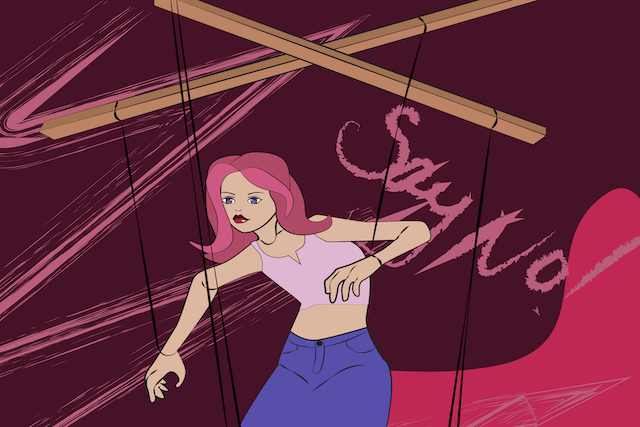
    This gets written into the rule book or the rolodex file of our little child brain.

    However, many folks did not grow up this way. Those of us who may have grown up with caregivers who were harsh, unloving, absent, unpredictable, neglectful, and even abusive, their little, sweet mind recorded a whole different set of rules into the rulebook of life.

    It may sound something like I am not loveable, I don’t matter, I’m a nuisance, I am a bother, I should never take up space. It might sound like I’m loved as long as I’m good, or performing, or agreeable.

    (Please note, much of the time our parents did the best they could with the skills and tools that they had in their awareness. However, to our innocent, little, childlike selves, it simply wasn’t the message that we needed. The message was misconstrued, and we wound up feeling as though we somehow did not matter).

    Often this gets passed down generation after generation.

    So now are you starting to understand that the mind’s idea of boundaries is to do whatever it needs to do to keep you alive?

    Perhaps when you were little, if you were constantly told to be quiet, that you were too loud, too much, or to simply go away, then the mind created a belief that came into agreement with this. A rule was filed away that it was better to not disrespect your elders and continue to be loud or to take up space.

    The problem is that of course this is nonsense (you were just being a sweet and normal child), but you never questioned the rule. You questioned Santa Claus, the Easter Bunny, and the Tooth Fairy. Yet, you never stopped or questioned your rules or beliefs about yourself. You wrote those things in the rule book as absolute truth.

    Your mind doesn’t care that you are older now and that the situation is different now. To the mind, a rule is a rule. And remember what happened to humans who questioned the rules in the past? They didn’t survive!

    Let me tell you a little bit about my own rulebook…

    Several years ago, I was deeply terrified of what other people thought of me. Growing up in a small town, it was written in my rulebook that all eyes were on you. Boundaries were one of my biggest struggles because it meant breaking free of the people-pleasing pattern in order to speak my truth.

    Having struggled with codependent patterns and low self-esteem, I didn’t even know what my truth was, what my needs and values were, or what mattered to me.

    What I did know was that I needed people to like me, to not talk ill of me and to think of me in a certain way—nice, kind, giving, good.

    I couldn’t excuse myself from a phone conversation.

    I couldn’t end playdates at the time I needed to even if my kids were throwing a full-blown temper tantrum.

    I couldn’t remove myself from a conversation that made me uncomfortable because of the topic.

    I laughed at jokes that, deep down, I found offensive.

    I agreed with others’ opinions because I either didn’t know my opinion or if I did, I didn’t feel confident sharing it.

    I talked incessantly because silence felt unbearable.

    I couldn’t even be on time, because I was rushing from one activity to the next, just trying to show face and that I was doing my part to be the nice girl and make everyone around me feel good.

    Speaking my truth was so uncomfortable that many years ago I actually had a seven-hour coffee date.  I didn’t want a seven-hour coffee date. The idea was come over for a couple hours, chit chat a bit, and move on with our day.

    However, this woman arrived promptly right after the kiddos left on the school bus in the morning and was still there when they got home on said school bus at 3:30pm.

    I can recall the massive headache I felt because I wanted so badly to ask her leave and tell her I had things to do, but I couldn’t.

    I remember that I never invited her back again, even though she was a great gal in many ways. I was clueless in how to handle these situations, so my answer was to cut the relationship off and move forward by avoiding her.

    At the time I was a young mom with a husband who worked long hours, and I often felt lonely. I wanted so badly to connect with other women and be a part of a community, and I thought the way to connection was through self-abandoning any of my needs so that I could focus on appeasing what other people in my life needed.

    This was all written in my rulebook. All of this worrying about what others thought and not wanting to upset anyone caused me severe stress, anxiety, and overwhelm.

    I was trying to function on fried adrenals and walking on eggshells. I was unhappy, and it showed up in my relationship with my partner, my kids, and mostly, the relationship I had with myself. But there was something always driving me to keep pleasing, keep appeasing, and that leads me to our next discovery.

    Discovery #3: But why do I always feel so guilty?

    Why do we feel so darn guilty when we try to set a boundary? Well, anytime we step outside the rulebook, the mind pushes a great big, huge alarm bell.

    Remember, our mind thinks that this is a rule created for our safety. I share this because hopefully you can start to relax and realize that there is absolutely nothing wrong with you. The mind simply is perceiving danger.

    From there we may experience bodily reactions—our palms get sweaty, we have a million butterflies in our stomach, our temperature rises, our throat constricts.

    Our brain’s one and only job is to keep us alive, so it often uses guilt to get us to acquiesce and once again, go along to get along.

    How many times have you been invited to a baby shower or a barbecue on a Saturday and absolutely dreaded it? You’ve worked fifty hours this week, you coached soccer two nights, ran the carpool this week, and are utterly exhausted. You know you need a day to get caught up, sleep in, and take a little time to yourself. But there it is—guilt lurking around the corner, “What will Aunt Betty think if you don’t show your face at Cousin Amy’s shower?”

    That guilt pushes on you, making you feel as if you are doing something wrong. So, what do you do? You RSVP that you will gladly be there. Oh, and you will also make and bring the punch.

    Pretty effective strategy to get you to follow the rules, right?

    This is why boundaries feel so challenging. Because they are not part of our original hardwiring.

    So where do we start if we want to set healthy boundaries?

    1. Understand that boundaries are first and foremost an internal job.

    Yes, we create parameters and limits with institutions and people. But ultimately, before we can ever do that, we have to start on the inside.

    When we aren’t taught how to properly do the internal work, our boundaries come off as rigid walls and we are left isolated and lonely. I have been that person because I didn’t understand what boundaries were, how to set them, and I certainly wasn’t going to entertain any sort of an uncomfortable conversation that looked like any type of repair or reconciliation work. I was left alone and miserable.

    Boundary work starts by addressing our own issues. And as the inner work is done and healing occurs, it organically flows into changed outer behaviors, habits, and choices. We can be empowered to have loving and compassionate conversations that build bridges of connection rather than walls of isolation.

    2. You have to realize that boundaries are in fact healthy.

    If you don’t believe this then it will be hard to lean into them. Make the agreement right now, or work toward believing, that setting boundaries is healthy for you to do.

    3. You have to know your needs.

    Do you know your needs? Have you ever thought about them? Many people don’t, so if you haven’t, know that it’s not uncommon.

    Start by thinking of what a “good” parent would do for their child. What needs do they help their child remember to meet? I.E., even if the child does not want to go to bed, they help them to calm down and go to sleep. Start by making a list of the needs a good parent will help a child to meet.
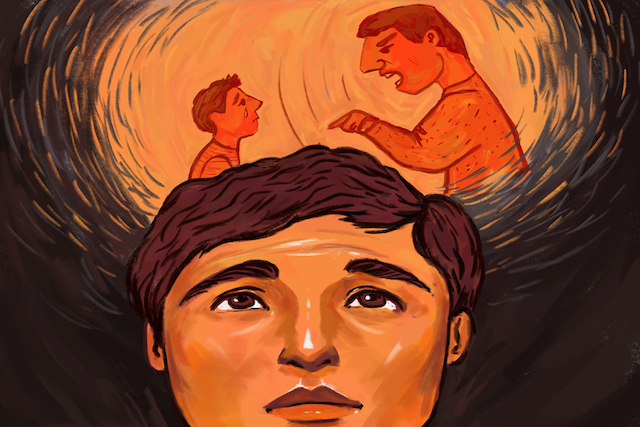
    When you’re done with that list, circle the needs that you are not meeting for yourself (or inconsistently meeting).

    For each circled need, respond to the following questions:

    • How do I respond to this need?
    • What gets in the way of responsiveness or consistency?
    • How do I respond to other people when they have this need?
    • How would my life improve if I responded to this need?

    For each need, create an intention that you will honor by setting boundaries if necessary. Focus on one intention a week to get a need met more fully and consistently. I know you want to do more, but remember, your mind will fight you because it wants you simply to stay safe and alive. It will douse you with that guilt working you toward acquiescing and shape shifting, so let’s just focus on nailing one for now. Keeping it simple is key!

    Write out your intentions weekly by finishing the sentence stem:

    My intentions are:

    If you’re working to build up the strength to bring more integrity to your relationships and set healthy boundaries, please understand that you don’t have to go it alone. Be consistent and trust that your hard work in your boundary journey will pay off.

  • Why I Blamed Myself for My Ex’s Suicide (and Why It’s Not My Fault)

    Why I Blamed Myself for My Ex’s Suicide (and Why It’s Not My Fault)

    “No amount of guilt can change the past and no amount of worrying can change the future.” ~Umar Ibn Al Khattab

    I don’t remember the exact day the message came through. It was from my son, Julian, and he needed to talk to me. It sounded pretty serious. He never really needs to talk to me.

    His father was found dead earlier that week. He’d hung himself.

    While this news hardly affected Julian at all, it hit me like a ton of bricks, and I cried.
    Our Marriage

    We met in a taxi thirty-three years ago. He was the driver, I was a drunk passenger. He was super handsome and flirty. He brought me home, and we exchanged numbers and instantly began a relationship.

    Within six months of dating, I found out I was pregnant. Since I didn’t want to be an unwed mother, we were married within a month and began our lives. We both had good jobs. I worked at a bank, he was an HVAC technician. Life was pretty good in the beginning.

    Then his job took us to a different city. We moved and for the first time in my life, I was alone with no friends and no family. I was twenty-six years old. Our marriage was okay, and we got along well.

    About six months after we moved to this new city, he started coming home later and later from work, some nights not until 2am. He always told me he had to work late. I believed him. He was on call a lot. I was home alone a lot.

    A few months later I made the decision to return to our hometown. He was to find a job there, which wouldn’t be hard. I didn’t want to be alone in this big city anymore, and I was just about to give birth. I wanted my family around.

    Life After Our Move

    We stayed at my parents’ house when we returned, and within a month had found our own apartment.

    He found a job almost instantly, and I delivered Julian two days after we got home. Life was going well.

    About a year into our lives with the baby, things started to get bad. He was out “working late” an awful lot. He would come home around two or three in the morning, smelling of alcohol. By the time Julian was eighteen months I had had enough and asked him to leave. This wasn’t the life I wanted for my son.

    He moved out and for the next six months, my life was a living hell. He would come over drunk at night, force sex on me, threaten to take my baby away from me, threaten to kill us both. He threatened me almost daily. Many nights I’d stay at a friend’s house just to feel safe. Many times the police were called.

    He finally moved out of province, and it was years before we heard from him again.

    The Divorce Agreement

    The day had come to file for divorce and put this whole marriage nightmare behind me. I filed for sole custody with no visitation allowed to him. He was unstable, dangerous, and violent, and I was not taking any chances with my son. The fact that he lived far enough away was my saving grace.

    Also stated in the divorce agreement was no child support payments. I wanted to completely cut all ties with this man. So I did just that.

    Twelve Years Later

    It may have been longer, maybe thirteen or fourteen years later, we received a package from him via his brother. It was sent to Julian. A picture of himself and a silver chain with a St. Christopher pendant.

    It meant nothing to Julian. He didn’t even know who this person was. I questioned his gesture. Was he trying to make amends? Was he trying to prove that maybe he’d changed and he wanted to start a relationship with his son?

    I never got the answer to any of those questions. He never reached out again after that.

    When my son moved away to university, he lived only a couple of hours away from his father. He made an attempt through his uncle to maybe meet up with his dad, but his dad wasn’t interested and declined the offer.

    And life simply carried on.

    Every now and then, throughout the years, Julian’s uncle would update us on what his father was doing and how he was doing. It seemed alcohol and depression were major parts of his life.

    I couldn’t help but feel responsible for this.

    Was he depressed because I took his only child away from him? Was this my fault? Whenever we got another update, I just felt guilty. Did I do this to him?

    The Call

    When I got the call, I was in complete shock. I had no idea his depression was that bad. How would I have known? Were there other factors that played a part in his suicide? Or was it just years of anguish knowing he had a son who was never a part of his life… because of me?

    Could this have been prevented if his son had been a part of his life? Did I do this??

    I cried for a week. I had never felt so much sorrow, and guilt. SO much guilt. Was I responsible for someone’s suicide?

    Dealing with My Grief and Guilt

    It took me a while to wrap my head around his suicide. It also took me a while to convince myself I was not responsible for it, nor should I feel guilty about it. I didn’t talk to anyone about this. No one would understand my feelings, and they were hard to explain.

    I realized, though, that he had been battling demons that had nothing to do with me. I made the best choice for my son, and that was the most important thing to me.

    He had made his choices as well. And I had nothing to do with them. Me not allowing him any visitation to his son was a result of his actions and choices. He chose his behavior. Not me. I chose to not have his behavior damage my child.

    I had to talk myself through that. It’s not your fault, Iva. He could have chosen to change his life, improve his life, reach out to his son more often, anything. And he chose not to.

    It’s not your fault, Iva.

    There is a tiny part of me inside that wishes things would have been different. If only he got help for his depression and alcoholism. If only he could have been a part of Julian’s life. If only he could have tried to help himself.

    I’m sorry his life ended so tragically. I’ll always feel sorry for that. But I won’t feel guilty about it anymore.

    It’s Not Our Fault

    It’s so easy to take responsibility for a loved one’s suicide, especially when you set a hard boundary for your own well-being. “If only I had done this or done that” or “if only I would have not done that,” but the reality is, it’s not our fault.

    We are not in control of how people think, act, react, or live their lives. We can only control our own lives. What people do with their own life is out of our hands. We can offer them tools and help, but it’s up to them to accept it and/or use it.

    If they don’t, that’s not our fault either. It’s easy to think that we should have/could have done more, but we did as much as we could. The rest was up to them.

  • How I’ve Released the Heavy Weight of My Persistent Guilt

    How I’ve Released the Heavy Weight of My Persistent Guilt

    “No amount of guilt can change the past and no amount of worry can change the future.” ~Umar

    Every emotion is felt by the body in a different way.

    Pain can be sharp and biting, with a desire to lash out. Anxiety can also be sharp and biting, but with a desire to lash within. Sadness can feel like your body turning into stone, making every step seem impossible.

    We all feel these emotions at times, but holding onto them is what causes damage. We must learn to shed them, as any “negative” emotion, if held on for too long, can release toxins that destroy our bodies over time.

    Often, emotions like anger and anxiety and even sadness are symptoms of a more destructive emotion that destroys the human spirit. Robs us of our joy. And is unquestionably the heaviest of all emotional sensations we feel.

    That emotion is guilt. An emotion I carried around for so many years that was the root cause of many other destructive emotions I felt.

    Before I went on this journey within, I was always vacillating between feeling anger and anxiety. After I started clearing my mind, I spent several months letting go of both emotions, only to determine both were manifestations of the guilt I was carrying around inside.

    Once I realized that, my focus changed to defeating guilt. My first step there: understanding what guilt is.

    Sure, I knew what guilt felt like. After all, I had carried around different forms of guilt all of my life. But I didn’t really understand what guilt was.

    So, I began to dig. I knew what caused guilt: doing something wrong. But why did doing something wrong make me feel guilty?

    To figure that out, I started analyzing the feelings around the guilt, which is really a persistent feeling of “I should’ve …” or “I shouldn’t have…”

    For example, I should’ve been nicer to the customer service rep. I shouldn’t have made fun of that person behind their back. I should’ve remembered that person’s birthday.

    Additionally, I realized guilt stayed with me far longer than other emotions. Anger, for instance, came and went. But guilt persisted.

    That’s when it clicked, and I understood what guilt really is: denial. Persistent denial. And that meant the antidote to guilt was obvious: acceptance.

    I realized that to solve guilt, I had to accept what had happened. It’s that simple.

    I’ll give an example to illustrate my point.

    A couple of years ago, an older man I’m friends with got into a motorcycle accident and suffered a severe neck injury. After a week in the hospital and then several weeks recovering at home, he was able to walk again, and he had me and several other people over to his home for dinner to celebrate.

    Our friend was wearing a neck brace and was taking painkillers, which made him a bit woozy. After dinner, we were sitting around his coffee table, and he stood up and walked over to get a bowl of chips. My feet were in his path, I was talking with someone else, and he tripped over them.

    Thankfully, a person was alert and caught him before he fell. Otherwise, he would’ve seriously injured himself. Maybe even died.

    Thank God he was okay. But I felt incredible guilt about tripping him, which I carried for several years. In my mind, all I wanted was to redo that moment and move my feet out of his path. I kept replaying in my head what I should’ve done.

    To move past this, I had to accept what had happened, without self-judgment: I didn’t mean to hurt him. I just wasn’t paying attention. So I tripped him. And nearly killed him.

    That’s what happened; nothing I can do about it.

    It’s therapeutic, in this moment, to write that out. It’s full acceptance of what actually happened. And it also makes the lesson of the situation obvious—I need to be more aware of my surroundings.

    Now, the truth is, I’ve done far worse things than accidentally trip a man. But still, the process is the same.

    That’s one form of guilt, which is usually brought on by a horrible outcome. There’s also another form of guilt I needed to shed, which was far more common and persistent.

    This guilt revolved around my relationships with other people.

    What do I mean by this?

    Here’s one example. Previously, when I hung out with people socially, I almost always had a headache afterward.

    This headache, I later realized, was caused by guilt.

    See, when I would hang out with people socially, I’d really want them to have a good time. I’d put pressure on myself to be “on” and to keep them entertained the whole night.

    After the night would end, I’d beat myself up for all the perceived mistakes I made. Wish I would’ve said this or said that, done this or done that. I’d literally feel guilty about not being entertaining enough.

    To remove this guilt, I needed to come clean with myself and accept the truth. Yes, I wasn’t entertaining every minute of the night. Maybe the people did have a bad time. So what?

    Perhaps they’d never hang out with me again, sure. But, honestly, the bigger issue was why was I putting so much pressure on myself in the first place. I’m not responsible for them having a good time; I’m only responsible for myself having a good time. And this pressure was robbing me of that.

    That realization helped me shed my guilt in social situations.

    Beyond feelings of guilt from hanging out with people generally, there were specific people in my life I felt guilty around.

    Often, I saw people I cared about who were struggling with some demon. Rather than accept them and the situation they were in, I was constantly wishing they would magically rid themselves of all impurities and never be sad again, and thought it was my job to help them with this.

    This created guilt, because I wasn’t accepting who they actually were and the situation they were in. I was always wishing for it to change. This put them on the defensive and made it hard for me to help in a meaningful way.

    The second thing I began to realize is, yes, they were struggling. But then again, wasn’t I struggling too?

    It was ironic, really. Here I was, feeling guilty about other people’s struggles. And yet, I had my own struggles in front of me that I wasn’t addressing

    It reminds me of these conversations I have with this couple I’m close with. I’ll talk to the husband one-on-one, and he’ll list the things he wishes his wife should work on, and how he feels bad for her. Then I’ll talk to the wife one-on-one, and she’ll list the things her husband should work on, and how she feels bad for him.

    They both feel bad about something they have no control over while ignoring their own issues, which they have complete control over. I always laugh to myself when they start doing this.

    And yet, I was doing the exact same thing.

    The realization: I needed to stop trying to save other people because I can’t. They will do what they do, and all I can do is accept them for who they are.

    Instead, I realized I needed to focus on what I actually have control over, which is “saving” myself.

    As I continued on this journey, I began to see how much guilt I was carrying around in my mind. Which is to say, how much mind space I was dedicating to rethinking what I should’ve said or done in various situations from my past.

    This, I’m now realizing, is complete madness. I cannot change the past. I must accept it.

    I admit, accepting my full past can be painful at times. There are some dark things I’d rather not address. But it’s far better than wasting my life trying to redo something that already happened.

    The good news? By accepting the difficult parts of my past, I’m able to quickly glean insights from those mistakes. And that’s further helped me remove attachments and clear my mind.

    The point: Guilt is just denial. The reason it’s so heavy is because our denial prevents us from processing the reality of the situation in a meaningful way.

    To process reality, we must first accept it, which sheds the guilt. And then, as we process what happened, we can learn from it and move forward.

  • Who Are You Protecting? Why Telling Your Story Is Powerful

    Who Are You Protecting? Why Telling Your Story Is Powerful

    “There is no greater agony than bearing an untold story inside you.” ~Maya Angelou

    Throughout my childhood experiences I did what every child does and rejected parts of myself. It makes sense because kids depend on adults for survival, so I was in no position to reject my parents. But as an adult I feel it is now my job to reclaim those parts of myself.

    While I had two parents that loved me and what I’d describe as a normal childhood, nonetheless I became hyper-attuned to others, over-sensitive to criticism, and a perfectionist, particularly under stress. It led to all sorts of pain within relationships and, upon becoming parent, I could see I needed to address some things. I had little sense of self and had to learn about having and holding healthy boundaries.

    I have been fortunate not to have been directly subjected to any of the more readily recognized trauma (sometimes known as big-T trauma), like addiction, violence, or sexual abuse. But my childhood was dominated by the kind of trauma that descends from the big stuff.

    The aspects of my dysfunctional persona I mention above come under the heading of developmental trauma. I think it’s important to expose these aspects of who we become in the world as they have been getting perpetuated subtly throughout families all over the world for generations and they prohibit our collective growth.

    Yet, for all the personal experiences I have shared, one I have never spoken of until recently is probably the one that shaped me more than anything else. Simply put, I had a mother who did not cope well when looking after us kids on her own. I learned to think ten steps ahead and project into the future in order to avoid any major meltdown. It drove perfectionist behavior in me, and I learned to choose my words carefully.

    Why have I never spoken about it? I suspect this is multifaceted and ranges from things like not wanting to air dirty laundry, so to speak, to knowing that both my parents (like most parents) did the best they could with what they knew and the resources they had available to them at the time. Yet these were my experiences, for better or worse they shaped me, and if I tell my story it might help someone else.

    To be more specific, mum used to often drop into this hyper tense state when she was alone with my brother and me; something I now readily recognize as a trauma state. She would say she was “up to high doh” (an old Scots expression) with our behavior, then snap at us, scream and yell, and chunter on afterward for a period of time somewhere else in the house.

    When she would yell at me or chunter afterward, I now know it was most likely a deflection of her own pain. As my bedroom was above the kitchen I could hear the aggressive slights about me “being a bitch” or a “slut” or “a selfish cow” even though I was only a child.

    When my father got home she would immediately approach him using a baby voice, another thing I could hear from my bedroom, conveying just how stressed she was (we kids usually being at fault). In the evenings Mum would then sit in front of the TV sucking her thumb, which I suspect were signs that she was likely regressing into her child self.

    Watching this cycle, at the time, made me feel disgust and anger on top of the fear I already felt in being under her watch each day. My nervous system was under constant alert not knowing what aspect of her would show up.

    Everything was our fault because we had broken the rules. With hindsight, and far more knowledge of children’s development, I now know we were just going through the normal growth and development cycles that kids go through rather than being bad kids.

    Because it was probably a dissociative state that emerged when my mother was in flight-or-fight mode, it is possible (especially since Mum never did any meditation or therapy around this) that she had no clear memory of acting like that, or the frequency with which it occurred. I expect she was too identified with the thoughts of how bad we were and how bad it made her feel.

    Dr. Gabor Maté’s words ring true: “It is often not our children’s behavior, but our inability to tolerate their negative responses that creates difficulties. The only thing the parent needs to gain control over is our own anxiety and lack of self-control.”

    My mother was not able to do that, and nor are most people to be fair. It is far easier to blame people or circumstances than take a good hard look at ourselves and have a willingness to explore the hidden depths that we are held hostage to.

    All this was unspoken with my mum. It is like it never happened, as if my brother and I somehow lived in a parallel universe.

    Likely looking after young kids on her own was overwhelming and activated the trauma stored within her, perhaps in response to her own father’s violence and/or possibly the disgust at my grandmother’s passivity about it, or her own guilt in not doing something more (even although she was incredibly young at the time and couldn’t possibly have intervened).

    However, when she was diagnosed with cancer my mum did say, “You know how I like to stick my head in the ground” when I tried to share with her the metaphysical possibilities related to the disease. Since my mother was most often too open with her opinions and usually gave us direct answers to questions we asked, sticking her head in the proverbial sand wasn’t something I immediately associated with her.

    But now in retrospect I wonder whether, on some level, she may have been acknowledging her dissociative behavior when bringing us up, and the effects it may have had on us kids. Certainly it wasn’t something she ever directly acknowledged.

    Though she did not readily share details during her life, she was simply what I would have called very dark on her father and her eldest brother. Just before she died I discovered her father was an abusive alcoholic. I also knew her eldest brother, a half sibling, abandoned the family as his father before him had abandoned him.

    My mum, like a lot of people, never saw any value in revisiting those childhood experiences; she couldn’t fathom why anyone would partake in coaching never mind counseling, perhaps because she felt herself adequate enough and externalized her feelings. She certainly did not believe she was in any way held hostage to her experiences, which is what most of us would like to believe I expect.

    As a result, I felt very alone and invalidated. My parents had each other, whereas my brother and I were left to deal with our emotions alone. Certainly it often felt our needs were not important (which was the predominant theme of the “do as I say and do not argue/we know best” approach to childrearing that had gone on for centuries).

    While, like anyone, I could express many more things in my childhood that have stuck with me, experiencing my mother’s own trauma when we were alone with her, which was for significant amounts of our early life, elicited a feeling of constantly being on edge.

    As I grew I spoke up more, unwilling to accept the emotional load being put on me, which resulted in a lot of raging arguments in my teenage years.

    No one except my brother would have much of an appreciation for this, because around others my mother was quite different. In fact, around others, especially my father, she would have felt safer and, therefore, calmer. This Jekyll and Hyde behavior obviously made it very difficult for me to bond with a mum who, for all that I knew loved me, because my internal shields were well and truly up.

    While I did not have the words for any of this back then, having caught myself descending into this chuntering state with both my partner and our own kids at times was a red flag for me. I knew I had to address my own reactions to break the cycle.

    All that said, I feel blessed with my experiences because they helped shape me and to relate to others’ struggles and other dysfunctional behavior. I feel strongly that I have come into this life to shine a light on this more insidious type of trauma, one that lives in all of us in various guises, and help break the chain of pain that is occurring in pretty much every home across the planet. So in this sense, um was the perfect mother for me.

    I also recognize that this was but one facet of my mum, one I have come to see with compassion, and she had many more that were far more positive. As a grandparent she was generous and loving, as a friend she was insightful and loyal, and as my parent she was all those things too; I always knew I was wanted and loved, it just did not always feel that way, especially when she was “up to high doh.”

    It seems to me that through shame, guilt, and pain very few of us talk about our experiences, not realizing the person next to us is living their own twisted version of the same. The systemic issues we face in society today are all fed by the ongoing cycles of trauma within us and can only be solved by bringing them into the light. 

    We don’t all have to share our stories publicly. Even just opening up to a trusted friend or therapist can help us understand what we experienced, chip away at our shame, and break the cycle of pain so we don’t unknowingly repeat the same patterns.

    So who are you protecting? What trauma shaped you? Is it time to tell your own story? Maybe sharing is the key to your healing, or helping heal someone else.