
Tag: guard

  • Trust Restored: Why I’m Letting Go of Preconceived Ideas About People

    Trust Restored: Why I’m Letting Go of Preconceived Ideas About People

    “The problems around us are only compounding. We will need to rediscover our trust in other people, to restore some of our lost faith—all that’s been shaken out of us in recent years. None of it gets done alone. Little of it will happen if we isolate inside our pockets of sameness, communing only with others who share our exact views, talking more than we listen.” ~Michelle Obama

    I’m up at the American River, one of my favorite summertime spots. I have a ritual of floating down it, then hiking back up the hill to my clothes. I love how the swift current knows exactly where it’s going, making any paddling unnecessary. I love how you can just lie back and let it take you as you look up at the cloudless blue sky.

    As I float, the sun beats down on my skin, but the river’s coolness counteracts its scorch. Small groups of Canadian geese speckle the shore. The air is still, its quiet punctured only by the occasional train sounding in the distance.

    Once I’ve reached the bottom, I set out back towards my towel—walking along a series of dirt paths consisting of small hills. They’re quick and steep like bunny slopes, coated with golden dust that glints beneath the sunlight.

    While walking them I notice two men picking fruit from a tree in the distance. Feeling exposed in my half-clothed state, I immediately tense up. I realize that having no shoes means I’ll be unable to walk quickly past.

    Bracing myself for discomfort, I continue walking. As the distance between us narrows, I wait for them to whistle, or to jokingly ask  if I need help finding my clothes—or create discomfort in whatever other way, be it through words or stares (as I’d become accustomed to men doing).

    I walk past, armor on, shield up—raising it a little more when one of the men begins to speak.

    His words are, “Hello,” followed by,  “You’ve got some tough feet!”

    They contain no sexualizing, nor any subtle attempt at intimidation. And in response to this comment— the kind one human would make to another, his equal—I find myself reacting with human thoughts in return:

    Yes—this terrain IS pretty rugged. I guess my feet ARE pretty strong. Thank you, Sir.

    **

    I think about how, in Whistling Vivaldi, a black man whistles classical music when crossing paths with white strangers on the street. He does this in hopes of quelling their fear and discomfort that are born from prejudice. Implying benevolent intentions and sophistication, his whistling preemptively wards off prejudicial treatment.

    Perhaps this man’s comment was the (gender) equivalent to this example—an attempt at polite conversation to keep from coming across as threatening.

    Or maybe he’d briefly entertained the same thoughts that often precede the sorts of comments I’d anticipated. Maybe in the past he would have converted those thoughts into unwitting weapon words, then launched them my way. Maybe, though, because our society is growing and learning and its people are evolving, he decided that day not to.

    Either way, I felt relief that the men did not behave in the way I’d predicted.

    It got me thinking about preconceived ideas. How we often develop templates, then apply them to the individuals we regularly interact with. How few encounters encourage us to challenge or expand these templates, because much of our lives are structured around familiarity. And how it’s easy to take one look at a person and file them away into a specified bin inside our minds, perhaps unaware we’re even doing it.

    How often do we go into an encounter with our mind already made up—both about the person and about what they could possibly have to say? Their words pass through a filter in our head, confirming what we already know or believe to be true.

    Sometimes our expectations turn out to be accurate. Other times they do primarily because we expect this of them, therefore never open our minds to the possibility that we might be proven wrong.

    People act in ways that contradict our initial views of them, but we don’t see it when we’re not looking for it.

    When I was a Lyft driver, I drove many passengers I was sure I’d have nothing in common with. One was a seemingly straight-laced white man who worked for a tech company. I thought we’d have little to talk about, but an hour later we were eating In ‘N Out and discussing everything from our country’s quick fix approach to handling emotions to how his brother’s coming out changed their relationship to finding a balance between impactful work and a job that pays the bills.

    So often we decide a person is a certain way. Our mind closes. Thereafter we do, indeed, fail to connect. But not on account of differences, but the fact that no connection is possible when the heart and mind are closed.

    **

    No shift in thinking takes place in a single instance. The fact that those two men at the river pleasantly surprised me, for instance, doesn’t erase the overall pattern. Many more such encounters would be necessary for a true paradigm shift.

    But it’s a start. And from now on when I have the bandwidth, I want to give people the opportunity to act in ways that contradict my preconceived notions of them.

    I don’t want to get to that point anymore where I stop seeing others as individuals. Where I’m blinded to what we have in common because I’m seeing only what they represent; the harm done by the larger group they belong to; the political implications of their behavior.

    For instance, several years ago a young man had approached me while I was reading at a bar—and I completely ignored him. At that time I was so fed up with men, so annoyed with their repeated intrusions on my dates with women, and so frustrated that it was them who approached me in public (never women), that I just kept staring down at my book. I didn’t say anything back. In the moment it felt empowering.

    When I thought about the incident years later, though, I regretted my behavior. The guy hadn’t even been aggressive in the way he’d approached me. He’d been earnest, apprehensive, even shy—the way I imagine I can also be at times when I approach women. He didn’t represent All Men; he was his own person, doing something in that moment that might have made him nervous, or pushed him out of his comfort zone.

    I’m not saying it was my job to ease those feelings, or that I owed him this. It’s more that I realized that now I would have genuinely wanted to. Wanted to have at least said hi. Wanted to have at least politely told him I wasn’t up for conversation. Wanted to, maybe not have smiled, but at least treated him more like a human than an implied enemy.

    I want to take my frustrations with patriarchy and heteronormativity up with the concepts themselves—and with individual humans only when they are truly practicing it.

    I’d like to believe that polarized positions aren’t set in stone. That they can evolve and expand with time. That we won’t be doomed to perpetual gripping of shields while walking this planet.

    This isn’t our climate right now—but I hope and wonder if one day we’ll at least start inching closer.
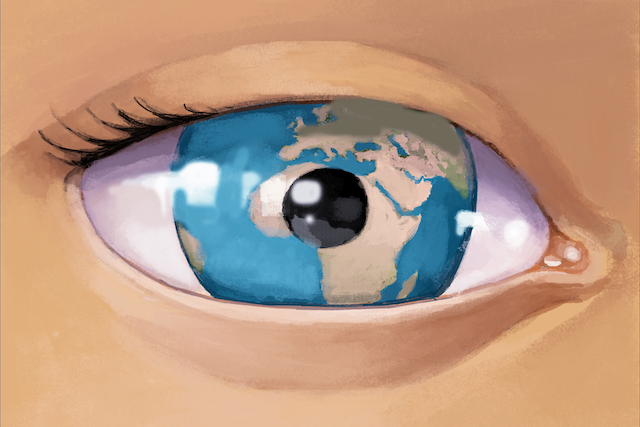
  • The World Is Not My Enemy – Why I’m Trying to Let My Guard Down

    The World Is Not My Enemy – Why I’m Trying to Let My Guard Down

    “Vulnerability is the core, the heart, the centre of meaningful human experiences” ~Brené Brown

    From a young age I learned that the world is not a safe place—that there are bullies out there that want to harm me and that I have to watch my back. I developed defense mechanisms in order to protect myself, or perhaps those mechanisms had been there all along, programmed into my psychology by millions of years of evolution.

    Maybe these mechanisms served me in certain situations as they did my ancestors; telling me when to fight and when to run away. But as I got older, I began to see how these mechanisms would often kick into gear when I didn’t want or need them to. Sometimes I would fight when there was no need to fight. Other times I would be afraid and hide when I wasn’t really in danger. Sometimes, I still do.

    This isn’t just my story; it is the story of all of us. Just pay attention to how people behave on the roads—especially when they’re stuck in traffic—or how they behave in comment threads on social media. Pay attention to how people behave in work situations, especially when their skills, capabilities, or ideas are being questioned. We walk around with psychological armor, and we use a lot of energy trying to prevent even the slightest kink in that armor.

    Some of us are also armed and will go off like an automatic rifle at the slightest touch of the trigger, leaving bullet-ridden relationships in our trail.

    Although these defense mechanisms are meant to protect us, they also cut us off from each other. Basically, most interactions are just egos interacting with other egos. Moments of real connection between people don’t happen every day, because that would require us to put down our armor and be vulnerable. But a couple of days ago, I had one such a moment…

    My kids stay with me over the weekends, and I usually pick them up at a golf course where their mom works and my oldest son plays golf. Before I can gain access, the guard at the gate has to scan the license disc of my car.

    As if 2020 wasn’t crazy enough, this year has already thrown a couple of curve balls my way. This particular Friday was just one of those days; I had a lot on my mind, and I wasn’t paying attention. So, while the guard was scanning my license disc, I took my foot off the break for just a second and rolled my car over his unsuspecting foot… crunch…

    Needless to say, he wasn’t happy. I felt like an idiot and could immediately feel my defenses going up—not just because of his reaction but because I’m programmed to get defensive, and this affects how I interpret situations, even when the other person hasn’t done anything wrong.

    “Why was his foot under my wheel?” I thought. “It was only an accident. I have a lot on my mind, okay.” At the same time, I realized that I had messed up, so I apologized profusely and drove off to pick up my kids.

    When I left, I felt compelled to stop at the gate and ask him if he was okay and whether he needed a doctor. He was limping a bit, but he said that he was okay. I gave him my business card anyway and told him to call me if he needed medical attention.

    Great, I thought as I drove away, this is the last thing I need, another potential bill to worry about. And what if he tries to take advantage me? What if he tries to sue me or something? Now I have made myself vulnerable to attack by giving him my details. But fortunately for me, the next few days came and went without any calls from a doctor’s billing department, or a lawyer.

    The next Friday I once again found myself at the gate to the golf course to pick up my kids, and I had to face the guy whose foot I potentially crushed. But I was relieved to see that he was no longer limping.

    I asked him how he was doing, and he assured me that he was okay. I expressed that I was really happy to hear that and before I could drive off, he stopped me. He told me that most people would have gotten defensive and just left it, and as you’ll remember, I almost did. But then he said that I came back and showed him support, which meant a lot to him, so he wanted to thank me.

    I was a bit surprised to be honest, because the last thing I expected was a thank you. But I felt good about this interaction. Not only was I happy that his foot was okay, but I was happy that we could part ways with good vibes between us. I appreciate how cool he was about it.

    An incident that could easily have turned ugly turned out pretty good. Somehow, we had both managed to drop our armor, and this allowed us to show compassion for one another. It was beautiful.

    The honest truth is that I still struggle with this all the time. I would be lying if I said that I have this stuff fully figured out and that I never get defensive or go on the attack. I am still learning, and what this incident taught me is that the world is not my enemy. Sometimes we can be vulnerable and drop our defenses. And most of the time, people will love us for it.

    Seeing the world as something we have to defend ourselves against or hide from cuts us off from those around us. But when we allow ourselves to be vulnerable and authentic, we allow for greater connection. This takes courage and sometimes we do get hurt. But when we start treating the world like a friendlier place, somehow, it starts feeling like one.

  • How I Stopped Feeling Unworthy of Love (And Finally Learned to Receive It)

    How I Stopped Feeling Unworthy of Love (And Finally Learned to Receive It)

    “I hope you find love, but more importantly, I hope you’re strong enough to walk away from what love isn’t.” ~Tiffany Tomiko

    When I was in my early thirties, I briefly dated someone right after my divorce.

    It was one of those fast and furious things that had no label and left me wondering if I made most of it up in my head.

    It wasn’t the first time and it wouldn’t be the last. How many times had I ended up feeling rejected and abandoned? I was trying so hard to impress a partner, but no matter what I did, I only seemed to push them away.

    Tearfully, I shared my pain with a spiritual advisor and psychic and asked for her guidance.

    She suggested I consider the joy that might come out of pleasurable and easeful partnerships. She asked me, “Briana, why don’t you shift your energy and focus to that aim?”

    But it wasn’t so easy. I was attached and hung up on this guy. Why didn’t he love me like I loved him?

    Another thought popped into my head, which I hadn’t realized was there before.

    Before I could voice it out loud, she said, “Oooohhhh, Briana. I can hear you already. You think if you’re not in pain, then your art and other creative works won’t be any good.”

    I burst out into another round of sobs.

    Because it was true. I did think that way.

    I thought I performed at my best when I was at my most miserable, and if you took away my misery, I would not only be common, but worse yet… mediocre. I would truly be the bad artist I always thought I was.

    Every aspect of creative expression would become cliched, trite, and uninteresting. There wouldn’t be anything special about me.

    And so I would become unlovable.

    The drama proved my worth, one way or the other; the drama of performing well enough to earn love. 

    It wasn’t until four years after that conversation that I finally stopped clinging to my pain.

    Because I realized that pain didn’t make something (love) more authentic—it just made it more difficult.

    Maybe you know where I’m coming from. Maybe you feel that you, too, need to “chase” a relationship and suffer for it to really matter. For you to really matter.

    That’s just not true. There is a far better way to build relationships, and that’s what I would previously have called “boring” and “too easy,” but actually is about respecting your own, authentic self and opening up to love.

    Here’s what I’ve learned about letting go of feeling unworthy of love and finally learning how to receive it.

    1. Take off your mask.

    Like me, you might believe that to attract a lover and be worthy of love, you have to pretend to be a perfect partner, through things like making them feel wanted and desired, looking beautiful, and being funny, witty, smart, and interesting all the time.

    All of these tactics might very well appeal to a potential partner. Certainly, it might make them interested enough to get to know you better, and maybe even date you for a while.

    But none of that means it will soften their heart and make them fall into a soul-shaking relationship with you.

    In fact, while I used to think that I needed to pretend that I was something I wasn’t so that I’d be worthy of love, I just kept deterring the other person.

    Why?

    Because while the glitz and glamour are appealing, it also, on a deeper level, left me completely unavailable.

    In the same way, you are pushing away a partner by performing all the time.

    You see, your partner is going to feel as if they have to perform just as well, and while that may be exciting in the beginning, unless the mask comes off, it also gets exhausting very quickly.

    A loving partner will be less concerned about how many degrees you hold or how much you make at your job and more concerned that you’re passionate about what you’re doing.

    A loving partner doesn’t care how many facts you can recite. They may enjoy your company if you’re a great conversationalist, but that won’t necessarily make them feel something for you.

    The way to a partner’s heart is to make them feel safe enough to explore and experience their own authentic self.

    You do that by feeling safe enough to express yourself—without someone else’s permission.

    Because if you don’t communicate that you’re comfortable in your own skin, this partner won’t feel comfortable or safe opening up to you, either.

    And if a person can’t open up to you, warts and all, they can’t fall in love with you. It’s as simple as that.

    When you put on a performance instead of taking off your mask, you unconsciously communicate a fantasy of reality, because that feels safer than vulnerability. And then you energetically and non-verbally tell your partner that you can’t handle their vulnerability, either.

    And isn’t it freeing? You, in all your vulnerability, are the person they want and need in order to be their own, true self.

    2. Get in touch with your own feelings.

    What many of us do when we feel unworthy of love is numb our emotions and pretend we feel something other than we actually do.

    But a loving partner wants to know you’re angry when you’re angry and why you’re angry.

    Guess what happens if you’re acting one way, while feeling something else? That’s right, drama.

    If they think you’re angry, but they are not sure, because you’re trying hard to plaster a smile on your face, say, “I’m fine,” and stuff it down, you’re not really fooling anyone, just confusing them.

    Your energy and your verbal expressions are going to contradict one another, and that is the seed of dramatic conflict.

    And this type of drama is so annoying because you are effectively keeping a partner at bay, and refusing to connect with them, for fear that they wouldn’t like the “real” you.

    But because they can’t access “the real” you, there’s no real glue holding them there, and they wind up leaving you anyway.

    So show them what you feel, while letting go of the fear that they will reject you for doing so. By reconnecting with your emotions, you show up as your authentic self and make it safe for them to love you.

    3. Be open to meeting someone with the same level of consciousness.

    Around the end of August last year, I started dating someone. He wasn’t originally what I would have imagined for myself, but he turned out to be exactly what I need.

    Right from the get-go, things went really well; we talked for hours on end, and I felt an instant connection.

    There were butterflies, yes, but not the kind of gut-twisting, obsessive sensations I have had in the past, which usually means I should run.

    This was more like, “Ah, you fit nicely… and kinda feel like home. What took you so long?”

    He shows up with fresh flowers, texts me “good morning,” and sees the humor in situations like that time my cat got jealous and bit him when he tried to kiss me.

    While before, I would have instantly dismissed this type of relationship as being too easy (and the lack of drama would have shown me that it wasn’t real love), I now see it for what it is:

    A relationship in which partners join together from a place of inspiration, as opposed to a fear-based need to be filled up with the other.

    This is a partner who already has a higher level of consciousness and is looking for purposeful building. There’s no drama, there’s no chasing, and there are no games or acts.

    This is the key to feeling worthy of and receiving love—finding a partner who is open to the same. The criterion for attracting such a partner, however, is that you are ready to meet them.

    I wasn’t ready four years ago. It took me that long to go from believing that relationships had to be a rollercoaster of emotions to opening up to a loving partnership.

    Ultimately, it’s about you finding your authentic self and realizing that this version of you (the real version) is so worthy of love and should be loved. That’s the premise for a relationship that, instead of being soul-sucking and anxiety-ridden, is the perfect space for self-growth and joy.

  • Drop the Mask: How to Slowly Lower Your Guard and Change Your Life

    Drop the Mask: How to Slowly Lower Your Guard and Change Your Life

    Man with Mask

    “The less you open your heart to others, the more your heart suffers.” ~Deepak Chopra

    The root of my inability to be open stems from my childhood. (I guess much of who we are comes from childhood, right?)

    I remember around the time I was eight years old going to a party at my aunt’s house. Even though I don’t remember the details of the party, I do remember what happened after.

    We got home that night and my dad asked me, ”Don’t you think you should be a little more reserved or have a little mystery to you?”

    I was thinking, “Huh?” What did I say or express at this party that made him say that?

    I’m sure I needed to hear that, because who knows what the heck I was saying. And I do believe having some boundaries is important.

    But I was a little expressive girl sharing my insides and sharing what I saw and experienced. I don’t believe we should share everything with everybody and “emotionally vomit” on people, but for some reason, that moment really defined me.

    I looked up to my father, and since I grew up without a mother, I looked to him for guidance.

    But now as an adult, I realize that my father was a private, closed person himself. So he was projecting that onto me.

    As I got older, I continued little by little closing parts of me off.

    People used to always tell me, “Lisa, you are such a great listener.” And yes, that is one of my best qualities, and I truly do enjoy people and want to see and hear them. But I rarely give people the chance to see me and hear me.

    If someone I don’t know very deeply asks me a question, I usually think before answering and feel uncomfortable talking about myself. Even if there is an opening or opportunity to share one of my experiences in a social setting, sometimes I choose not to.

    Why? Some guesses I have are:

    • I didn’t want to give up the illusion of having it all together.
    • I didn’t want to be seen as weak or needy.
    • I didn’t want to be vulnerable.

    And I’m an extrovert! I have always made friends easily and have always had friends. But recently, I took a look at my adult friendships, and I discovered that I only have a handful of friends that I would consider deep and extremely connected and meaningful, where I can totally be myself and feel comfortable completely trusting them with everything.

    Yes, I know many people say they don’t need a lot of deep relationships and only need a few. But is that BS we tell ourselves? Is that really true?

    Why can’t every relationship we have be as deep and connected? Aren’t most of us mirrors of each other and struggling for the same things?

    The reality is that I don’t want distance between me and anyone in my life. What I really crave is closeness to others and my community and many real connections.

    Being more open at the same time I feel vulnerable is like learning a second language for me.

    I know I will never be the person to spill my guts and be expressive the way others can be, and I’m okay with that.

    But I know it’s possible to open up your blinds for all people to see while remaining authentic.

    Here are a few strategies that have worked for me that may also work for you.

    1. Determine what masks you wear and why you truly are guarded.

    Did you have a bad experience as a child? When you open up, do people receive it negatively? Do you have certain insecurities that hold you back? Are you an introvert and really have a different process for connecting with people?

    Asking yourself these questions will help you get to the root of your insecurities. Just like doctors don’t treat illnesses before they understand the cause of your symptoms, you can’t change yourself without knowing why you are the way you are.

    Take some time—whether it’s just a half hour or a full weekend—to self-reflect. Consider writing down your feelings if you think it will help. Use this time to learn more about yourself and figure out why you’re guarded.

    2. Notice when you become closed, shutdown or guarded.

    Now that you know why you’re guarded, it’s time to become attentive to it.

    A few months ago, I went to a conference and had the opportunity to meet all kinds of amazing people. When the part came toward the end of the first day to “network” and talk and meet people, I ended up going to get a drink with someone I already knew because it was easier and I didn’t have to meet anyone new.

    But what made this time different was that I noticed and became aware of it in the moment. I completely shifted my mindset while I was there, and I can’t say I regret it.

    I met the most amazing people. We got past surface and business talk quickly, and I still keep up with many of them.

    You may find similar experiences equally rewarding. If you can’t work up the courage to take action yet, that’s okay. At this point, it’s about becoming aware of yourself.

    3. Let go of control.

    It sounds counterintuitive. How can you take off your masks if you aren’t in control? Let me explain.

    I’m reading this book called Courage: The Joy of Living Dangerously by Osho. In it, Osho says:

    “If you understand, insecurity is an intrinsic part of life—and good that it is so, because it makes life a freedom, it makes life a continuous surprise. One never knows what is going to happen.

    It keeps you continuously in wonder. Don’t call it uncertainty—call it WONDER. Don’t call it insecurity—call it FREEDOM.”

    It takes courage to dig into who you really are and share that with other people, to completely cut yourself open to others. But it means you have to let go of being in any kind of control and trying to predict the outcome of what happens.

    When you’re in control, fear consumes you, and you follow it. Be courageous and let the situation control itself. Then your fears and masks will subside on their own.

    4. Be unattached to the possible outcomes when sharing your thoughts and feelings.

    It’s one thing to let go of control. It’s another to become unattached to the outcomes.

    It’s tough, I know, but when fears of what might happen next are holding you back, you have to stop worrying about the outcomes.

    It’s not about what people think of you. It’s not about whether they judge you because you are stating a truth and being yourself.

    It’s about your own personal growth. The only outcome that matters is the strength you gain from opening up. Remind yourself of that and all other possible outcomes will worry you less.

    Share yourself and your voice and let go.

    5. Take action in small steps until you become more comfortable.

    The tips above simply won’t happen overnight. You aren’t expected to let your guard down immediately and magically become willing to share your feelings and your voice. It’s going to take time.

    That’s where baby steps can help you.

    Instead of throwing yourself head-on into sharing your feelings or conversing with strangers, start out small:

    • Attend a social event, such as a party or conference, but bring a friend along for support. Make it a point to pitch in a comment or a strong opinion and talk to someone you don’t know.
    • Make it a habit to write in a journal every day for two weeks. Then, read excerpts to someone close to you so you can practice sharing the deeper things that you are thinking about.
    • Join a group where sharing is part of the platform, such as a business mastermind or hobby associated group.

    As you get more comfortable in these situations, take bigger steps:

    • Strike up a one-on-one conversation with a stranger. If this scares you, you can minimize some of your fears by talking to someone you know you’ll never see again. That way, the possible outcomes won’t scare you as much.
    • Share your story with a group of people. Talking with a supportive group of people or to your spiritual leader is a good place to start because these are safe environments where people won’t judge you.
    • Write about your experience and share it online—even if you publish it anonymously or under a pseudonym.
    • Write an article for a community like Tiny Buddha about an experience you want to share.

    Lowering your guard and being completely vulnerable in a meaningful way is incredibly difficult for people like me. But when you have a desire to change and you look inside yourself for courage, becoming the person you want to be is far less frightening.

    Man with mask image via Shutterstock