Tag: growth

  • Your Biggest Fear Carries Your Greatest Opportunity for Growth

    Your Biggest Fear Carries Your Greatest Opportunity for Growth

    Fear

    “Your largest fear carries your greatest growth.” ~Unknown

    I was twenty when I met him. A naive apprentice of love, I plunged into romance with no fear and I was left speechless.

    It was all so new and thrilling, all I had ever dreamed about and more. It’s hard to describe how strong our bond grew in such a short time. We knew we had met our perfect match; we knew we would spend the rest of our lives together.

    But one day it all suddenly became too good to be true: he confessed he had cheated on me.

    My world stopped cold.

    He admitted everything, from how they did it in our bed to how they said goodbye in the morning. But the most damaging secret was that I knew her.

    The details of heartbreak are trivial compared to what was left of me in the long run. Over the course of one year, I had effortlessly spiraled down into a pit of misery and self-destruction. I was caught in a state of severe mental suffering that I could see no exit from.

    I became grimly obsessed with the girl. I spent hours looking at her pictures, listening to her voice in videos, stalking her on social media, thinking about her, thinking about how I could hurt her so she could feel the pain I felt. So things would be fair.

    I re-opened my wounds over and over again just to feed the conviction that she was better than me, prettier than me, more intelligent than me.

    I was once a fearless jet setter, confident in my power as a woman, strong and intimidated by no one. But now, the thought of this girl I had only ever met once reduced me into a self-pitying, vulnerable little person.

    I couldn’t go anywhere without looking for her around me. I even looked for her in other countries while traveling.

    Maybe if I ran into her she would apologize. Maybe I could tell her how I really felt. There was not one day that passed that she wasn’t in my thoughts. I wondered if she ever thought about me. I wondered if she cared.

    It’s been a year and I thought I would have healed in this time, but until recently the effects of this sickening hysteria were still taking their toll on every aspect of my life—my friendships, my work, my family, my social life, my physical health (I developed a tumor in my gallbladder with no explanation from doctors other than “it could be stress related”).

    Everything revolved around her. Everything reminded me of her. I was sick and haunted and I didn’t understand why… until I finally saw her.

    It was at a friend’s concert. Everything seemed normal until someone grabbed my arm and told me, “We’re leaving. She’s here.” I didn’t need to be told who they meant by “she.”

    I’d had nightmares about this for months and this night my nightmare became reality. My heart dropped and I felt like every ounce of blood in my body was drained.

    I stood up and went to the bathroom to gather my emotions for a minute. I told myself I would come out when I was ready, but I wasn’t ready. I wasn’t ready for anything.

    I stepped out and walked toward her thinking, “I have no clue what I’m doing.” Little did I know, I was facing my biggest fear head-on with all of the strength I could muster.

    I introduced myself to her again, and with two steps backward she told me she didn’t want to talk about anything.

    This was when all of the delusional images I’d created of her in my mind crumbled into the truth: She was more scared of me than I was of her.

    I told her I didn’t want to ruin her night but I just wanted to talk to her human to human.

    We somehow managed to talk it out while I noticed how afraid and insecure she really was. She never really admitted her faults, but I told her that she’s a good person inside and that we all make mistakes.

    I thanked her for unknowingly teaching me a lesson in life and then ended it all with something I still can’t believe I had the courage to do: a hug.

    I walked back home trying to make sense of what had just happened and to my surprise I felt an immense sense of bliss, like my heart had just grown bigger in my chest.

    I walked on knowing I had just left my heaviest weight behind, knowing I was finally on my way to where I want to go, knowing I had just won one of my hardest battles, knowing it was all over. I felt as light as a feather.

    So I am calling out to all of us who ever felt stuck in the past or terrified of the future. Here are some lessons I learned from this experience that might help you in your battle against fear.

    1. Take responsibility for your feelings.

    We live our lives thinking others cause our discomfort and unhappiness. Whether someone hurt you or had a big impact on your life, blaming this person for your emotions is irrational.

    You are the writer of your own story; you get to choose how it’s going to end and nobody else. Taking responsibility for feelings like anger, sadness, or jealousy is hard, but the truth is no one else can control what you think or feel.

    2. You are not the only one.

    Just like you are hurting, so is the person who hurt you; it’s just that you may never know how they really feel.

    They are human, just like you, and they feel, just like you. They might not be feeling the same thing at the same time, but guaranteed they, too, may feel lost and insecure. Try to understand that we all go through the same things only at different times.

    3. Deal with the present moment.

    You might dislike the way a certain person or situation makes you feel and you can try to distance yourself from that place in time, but you can’t distance yourself from your own feelings. They’re inside of you, and they come with you wherever you go.

    It’s important that you look at the present moment and create a healthy output for unwanted emotions (i.e.: dancing, painting, writing, singing). Ignoring your emotions will not make them go away, and when emotions build up they can eventually lead us to do things we aren’t proud of.

    4. Trust fear.

    Have you ever heard the quote “fear is a pointer to your next adventure”? Fear only exists within the mind; it does not exist in the world outside of us. It’s an imaginary barrier we create for ourselves, a barrier that usually appears right before something great is ready to take place in our lives.

    When we make the choice to confront our fears there is a reward waiting on the other side. Trust this feeling even when it may seem counterintuitive, because where there is fear there is a hidden treasure.

    Let fear show you the way.

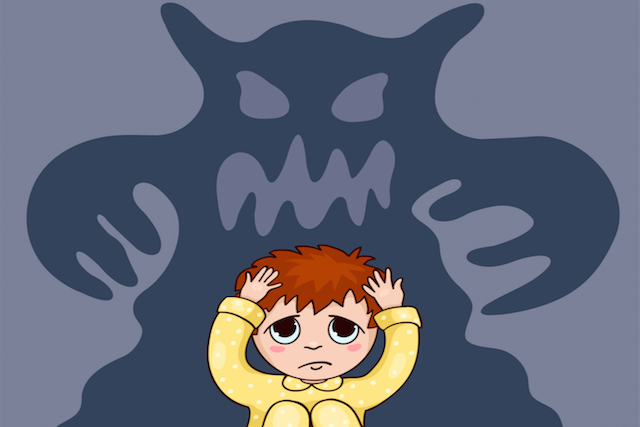
    Fear image via Shutterstock

  • Bounce Back and Thrive: The Secret to Turning Adversity into Opportunity

    Bounce Back and Thrive: The Secret to Turning Adversity into Opportunity

    Man with Arms Up

    “Sweet are the uses of adversity which, like the toad, ugly and venomous, wears yet a precious jewel in his head.” ~William Shakespeare                                                                        

    It’s hard for me to write about this. I suppose it stems from being a mutt of Italian and Irish ancestry, two cultures famous for intense pride and keeping personal things “in the family.”

    I wonder if my parents ever loved each other.

    By the time I was eight years old, it was clear they did not get along. I never witnessed them getting along, or even being affectionate toward one another. But I always felt loved.

    My parents told my younger brother and me that they loved us every day, most days multiple times. We never struggled for anything.

    My father had sold his garage door business years earlier, but that money seemed to be drying up. We lived in a 3,000 square foot house that my father had built six years prior. Six years later, it was in foreclosure.

    I’m sure the pressure was tough on them. My mother was not herself either. She was acting erratically. Inconsistent.

    One minute she was playful and full of life, the other she was angry and depressed. We soon found out that she was battling bipolar disorder, and she was forced to spend time in the hospital for evaluation and recovery.

    Shortly thereafter, my parents officially separated, we lost the house, and my brother and I split time between my grandparents’ house (where my dad was crashing) and the apartment where my mom was placed after her treatment.

    Memories of the apartment are vivid. Maybe it was because of the impact it had on me, or maybe it was because, at eight years old, I was beginning to have a strong sense for my environment. Maybe it was both.

    The house was daunting from the street. It was big and blue with white trim. It looked like an old New England colonial that was turned into an apartment building. At the time, it had about eight or nine units.

    Our unit was one room, about 400 square feet, with one bed. When my brother and I stayed with Mom, we didn’t have enough room for all of us to sleep on the bed. I would volunteer to sleep on the floor, so that my mom and Jesse could get a comfortable night sleep.

    There was no kitchen in any of the units. The kitchen was downstairs on the first floor, in a common area, of which all the tenants would share. At dinnertime, it would become crowded, noisy, and often overwhelming for our family…and I am willing to guess most of the other families, too.

    I remember, at eight years old, thinking to myself, “This can’t be all we deserve. There must be something more to our lives than this.”

    It was an intense time, and it would turn out to be one of the key moments of impact in my life. A moment in time that would serve as a reminder, and beacon, for the person I strive to become every day.

    I don’t share this story to gain pity. Nor do I share it as something to compare to your life, and the situations you’ve encountered. I share it to demonstrate how this moment in time is one of a series of moments that I choose to use to my advantage. Without it, I would argue that I would be less full as a human being.

    My adversity is my advantage. The story I tell myself about the adversity I face is that advantage.

    Why? Perspective and practice.

    Think about the first time you tried to hit a baseball. You didn’t know what to expect. You hadn’t developed any muscle memory. No hand/eye coordination. The first pitch you tried to hit was most likely a miss. You failed.

    However, there was something that came along with that miss. You began to get perspective. You tried out skills that you never used before, like self-awareness. Did you swing too late? How about rotating your hips?

    Next time, you made an adjustment. You may have failed again, but each time you did, you were gaining experience that, with the right mental skillset and approach, would better prepare you for the next pitch.

    The same approach applies to adversity. I was able to get early “at bats” with adversity.

    Those early “at bats” were failures, but I was beginning to develop the right mindset to deal with the next pitch. We never become perfect at this, but what you must control is taking advantage of as many “at bats” with adversity as it reveals itself.

    Why Adversity is Critical To Growth

    “In this world nothing can be said to be certain, except death and taxes.” ~Benjamin Franklin

    Benjamin Franklin was wrong. There is one other certainty: adversity.

    We all face adversity in our lives. Adversity does not just show itself in dramatic ways, like cancer and car accidents. It also shows itself each day, in small ways, through highway traffic or arguments with our significant others.

    Each adversity moment is a learning moment in its own right. We miss countless opportunities to grow because we don’t know how to appreciate and identify these moments.

    Call it what you want: adversity, failure, struggle, obstacles, or barriers. Many of us are taught, at a young age, to avoid these things. Why? Because they are hard. Because our parents, and people who care about us, are hardwired to protect us from harm.

    However, by avoiding these situations we are being harmed in other ways.

    A multiyear study, published in the Journal of Personality and Social Psychology, surveyed 2,400 subjects who experienced negative life events.

    These events included serious illness, violence, natural disasters, and other major moments. The study found that “those who experienced negative life events reported better mental and overall well-being than those who did not.” This is significant.

    There is also a downside to adversity. Without the right supports or mental skillsets, adversity can cause stress, affecting decision-making and physical health.

    Dr. Nadine Harris, founder of the Center for Youth Wellness in San Francisco, found that adults who were exposed to high levels of stress as children had higher rates of cancer, heart disease, emphysema, and significantly higher suicide rates.

    We can control our response to adverse situations. We can turn them into opportunities. We just need the right set of principles to turn adversity into opportunity.

    Building a Growth Mindset

    Mindset is the cornerstone—the keystone habit—to using adversity to your advantage. Mindset allows you the mental flexibility to find the seeds of growth within the (badly packaged) fruit.

    Mindset is the first step—and the most important one—in getting everything right. Your mind sets you up for action. The right mindset is the infrastructure for sustainable growth through adversity. Without it, we are approaching struggle like a house of cards: Success can happen, but over time, it won’t last.

    One can find the best case for mindset in Carol Dweck’s research. Dweck, a professor of psychology at Stanford University, had a simple question: Why did some kids crash and burn in response to failure when others embraced it and thrived?

    Her evidence suggested that students who responded negatively to failure believed they just weren’t meant to succeed at the challenge. Students who responded positively believed that the failure was a learning moment: an opportunity to understand what caused the failure and how to improve for the next try.

    Consequently, it was the beliefs that the students held about their intelligence that informed how well they actually did—more so than their intelligence alone. Some students felt that their intelligence was a fixed constant. Others rightfully believed that their intelligence had room to grow.

    What Dweck carefully clarified was that there were two distinct mindsets that set students apart—a fixed mindset and a growth mindset—and the research was conclusive: A growth mindset was seminal in facilitating personal growth, while a fixed mindset hindered potential.

    The students with a fixed mindset didn’t believe they could do better. Each failure was devastating and demoralizing. And for learners, this becomes a problem.

    On the other hand, a growth mindset actively encourages students to enjoy challenges and seek improvement.

    This research reveals an amazing opportunity for us as human beings. In the face of failure, challenge, and adversity, a growth mindset gives us the ability to build and act on resilience. We can build mental strength to break through walls in pursuit of what excites us.

    How to Take Action

    Right now, you may be saying to yourself, “Sounds great Nick, but I don’t know the first thing about how to apply this in my life.”

    I understand. Application is often the most important, but most difficult aspect to skill development.

    Let’s focus on the power of “small wins,” thanks to Charles Duhigg in the The Power of Habit. This theory can help us reduce overwhelm and improve our confidence one step at a time. Here is one action step you could take today to start building or strengthening your growth mindset:

    Finding Your Fixed Mindset “Voice”

    What does a fixed mindset thought sound like? Thoughts such as “What if I fail?”, “I’ll be a failure,” and “It’s not my fault; it’s someone else’s” are fixed mindset questions and statements.

    The goal is to achieve consistency. With time, you’ll be able to develop the ability to catch yourself during a fixed mindset thought, reset, and apply a growth mindset perspective. Here is an exercise to identify your fixed mindset voice: record yourself for a day.

    This may sound extreme. However, think about if you were trying to improve your finances. Your accountant or financial advisor would tell you to record your expenses over the course of a day, week, or even a month.

    By performing this exercise, you are providing an unbiased record of all activities—some that you would remember anecdotally and others you wouldn’t believe you spent money on. Doing this inventory with your self-talk provides a sometimes scary but accurate look at how you respond to events during a day in the life.

    Steps:

    • Every hour, put together a minute-long recording of the events of that hour and your feelings. NOTE: For iPhone users, you can use the “voice memo” app on the device. For Android users, you can download Smart Voice Recorder right from the Google Play store. Here is the link.
    • Work to be honest with yourself. Some hours may not include anything exceptional, but building the habit consists of doing the task consistently.
    • When you have a moment at the end of the day or in the morning, listen to your recordings. Try to identify fixed mind-set and growth mind-set “voices.”
    • Then, ask yourself, “How can I improve this reaction?”
    • Write it down.

    Even if you do this exercise for a day, the goal is to start to develop an awareness of what your “voice” is. This provides us the opportunity to revise this inner voice with growth mindset thoughts, which then turn into positive actions.

    Over time, you’ll hone this muscle, which becomes the foundation of approaching adversity when it shows itself.

    No one’s perfect. I still struggle every day with applying the right principles. I try to remind myself that each day, and each step in our journey, is a chance to get a little better.

    Best of luck with the next step in your journey!

    Man with arms up image via Shutterstock
  • Share Your Privilege: Your Story Could Change Someone’s Life

    Share Your Privilege: Your Story Could Change Someone’s Life

    Helping Hand

    “What separates privilege from entitlement is gratitude.” ~Brené Brown

    I think most of us can reflect vividly on the turning point that brought us toward where we are today.

    Often during these transitional periods, major life events push us to pursue the peace of mind we have always dreamed of having.

    For me, this journey started my sophomore year in college. My father had just passed away from suicide, and subsequently I was diagnosed with major depression for the second time in my college career.

    It wasn’t the most pleasant diagnosis to receive, but I was relieved that I now had a name for the physical and emotional turmoil I was enduring. I was deeply depressed and I knew I needed to look beyond myself for healing.

    Determined not to let my sadness restrain me, I reached for help through therapy, self-care, and spiritual rituals.

    I immersed myself in daily affirmations and habits to keep myself motivated. Initially, each action felt cumbersome and forced, but gradually I witnessed the awakening of something beautiful.

    At the time I did not know that these changes marked the beginning of a love affair with myself.

    Almost a year later, I attended spiritual ceremonies during my study abroad in Brazil. After six months of enchantment and spiritual awakening, I left feeling profoundly moved and in love with the woman I had become.

    When I moved back home, I faced the new transition of getting acclimated to my life in the states again. Oddly enough, when speaking about my spiritual encounters to others, I felt isolated and misunderstood.

    It was as if I was a different person forced to adapt to an environment that had not changed since I left.

    I had come back a new woman ready to take the world by storm, only to be greeted by the lethargic energy of loved ones stuck in a rut. It was as if time had stood still, and many of my family members and friends appeared to be in the same place they were when I left.

    My experience of being in another country and meeting new people allowed me to see things in ways that others couldn’t. It allowed for me to make strides toward dealing with my own personal demons.

    It was hard to admit at the time, but the honest truth was that my healing experience was a product of my privilege.

    The privilege of being a single woman in her twenties with the free time and expendable income to “find myself,” while my counterparts remained at home and dealt with more practical matters.

    I wanted to know how I could share my spiritual awakening without condescending people or isolating myself from them. With a lot of trial and error, I began to shift my perspective.

    If you’ve also been privileged enough to change your life for the better, and you’d like to leverage your experiences to help others, you may find these practices useful, as well.

    Be aware.

    First, I had to acknowledge the impact of my privilege. Not everyone has the ability to embark on costly and time-consuming endeavors for the sake of their well-being. I had to realize that this was an indulgence that many people may never be able to experience due to myriad personal and socio-economic factors.

    Avoid defensiveness.

    I had to learn to stop being defensive. When others called me out on my privilege, I often responded with “I paid my dues.” or “I worked hard to get here.”

    All of these statements may very well have been true, but let’s not deny the fact that life is not always fair. Many people work hard but will never experience the freedoms that others enjoy.

    When people check you for being privileged, acknowledge that they are speaking from their perspective. Listen to their truth and learn to take criticism with grace.

    Let go of pity.

    I sometimes refer to it as “escapist guilt.” It’s a feeling that may overwhelm people who are able to participate in endeavors that most of their counterparts can’t experience.

    While it is fundamental to be aware of the privilege you hold, it is important that you do not use this as an opportunity to feel sorry for others. Let go of pity and replace it with compassion. Pitying someone involves seeing their condition or circumstance as separate from yourself. By practicing compassion, you are able to play an active role in their lives.

    Ask yourself, how can I use my experiences as a tool to impact others in a positive way?

    Be humble.

    Humility better enables you to help others with your story. Humility is what bonds us; it allows us to impact others in a profoundly humane way. Humility is not about silencing or hiding personal achievement. Be proud of who you are and where you have been, but always be gracious.

    Acknowledge that none of us is superior to anyone else. Live a life of inclusion and recognize that everyone is in a different part of this journey called life.

    You simply do not have all the answers, so recognize all interactions as a two way street, where both parties can learn from another.

    When you share your experiences with the utmost humility and gratitude, this will resonate with people and they will naturally gravitate toward your light.

    Lastly, recognize that your experiences were not just for you.

    The best things in life are shared. Take others along the journey with you by inspiring them and helping them tackle their own goals. Your story may encourage others to travel, to face a fear, or to just be themselves.

    Sharing is our greatest privilege, and our stories are the greatest gifts we can bestow upon each other.

    Helping hand image via Shutterstock
  • Why Accepting That You’re Not the Best Is the Key to Getting Better

    Why Accepting That You’re Not the Best Is the Key to Getting Better

    Medal

    “In fear, we expect; with love, we accept.” ~Kenny Werner

    It’s easy to let our ego and fear get in the way of our own success. I’m not talking about the aspects of ego that create a desire to “win” over others, which plague some more than others; I’m talking about the more inherent aspects of our inward facing ego that plague us all.

    When I was in high school I played a lot of piano. For Christmas one year, my dad (a professional musician) gave me a book called Effortless Mastery.

    It was a book that, among other things, taught one how to practice. The author spoke about the importance of learning how to practice in order to improve one’s skill. Sounds like common sense, right? Well, sort of.

    You see, most people don’t really like to practice much of anything.

    When I was a kid I learned a few really impressive songs on piano. My favorite was “Swanee River” in a boogie-woogie style. I practiced it and practiced it until my fingers could dance around like little people on the keys.

    Once I had learned that song, I played it over and over and over again. I used to tell myself I was “practicing,” but really I just enjoyed sounding good, so I would play it repeatedly, never really improving. I had been playing piano for over ten years, but I had never really learned to practice.

    Practicing is intentionally sounding bad in order to get better, and what I was doing was performing for myself. Quite a bit of life can be spent performing for oneself, which can act as a real barrier to knowledge, the kind of knowledge that requires vulnerability to acquire.

    If all you ever do is perform, then you’re not really learning and growing. If you’re afraid of practicing because you might sound bad or fail, then you will never really master anything.

    If you’re not willing to accept being anything but the best, then you will never gain knowledge and develop the skills that come from learning from others who are better than you.

    I’ve spent over ten years thinking about that book and reflecting on it in different ways, and I’ve finally learned how to put my thirst for knowledge ahead of fears.

    My interests and hobbies have come a long way from when I was a kid. Back then, I took up anything and everything that I was good at. It’s not to say that I didn’t genuinely love the activities I was doing, because I really did, but I wanted to do things that offered me the opportunity to be the best.

    My first foray into the realm of activities that I wasn’t naturally gifted in was triathlon. After high school I took up the sport. I had been running all my life. While swimming came very naturally to me, cycling did not.

    I began to sort of thrive in the zone of discomfort that I lived in throughout my years cycling. I would ride with people who were so much better than me and they would push me harder and harder every week.

    I remember at one point, I had a game going with my cycling buddies where when we reached a hill, they would keep cycling to the top and then back down again, repeating this until I reached the top.

    I began to grow a little less uncomfortable knowing that I wasn’t the best at this sport. So much so that I was able to laugh at myself as one by one competitors would pass me on the bike leg of the race, after I had come out on top in the swim.

    If you were to look at my life today, you would find a person who participates in a range of activities (in my personal life, my career, and academically), from ones where I excel to those at which I am less than mediocre.

    My husband has helped me along on this journey, because he doesn’t have a competitive bone in his body, so I’ve learned to derive enjoyment from things other than winning and to be less afraid of losing.

    I’ve taken up things like crafting. I love it and I’m really quite terrible at it. I mean, I can do simple projects, but give me a glue gun and materials and watch out, because I’m bound to mess something up.

    I really love rock climbing. I’m middle of the road (and that might be a stretch) within the group of people I climb with. And I recently finished a research project for a degree I was working on and I took up interpretive research, a paradigm that I was completely lost in.

    I have learned to take absolute pride in not being the best. As much as I love being a mentor, I’ve discovered that I really love being a student too! I love the vulnerability that is present and how real it feels when I openly acknowledge my weaknesses and areas for improvement.

    I’m perfectly okay knowing that I’m not the best, and I’m even more okay knowing that in certain activities, I never will be.

    In activities where performing counts (like my career), I’ve learned that it’s okay (even desirable) to make mistakes.

    I declare freely when there’s something that I don’t know. Ask me at an interview what my greatest weakness or area for improvement is, and you won’t get a cliché answer that I’m too attached to my work—you’ll get the real deal.

    In this territory of discomfort, failure, and ‘sounding bad,’ I have found what it really means to have a willingness to learn.

    I accept what I don’t know and learn what I can. I practice many things every day (from communication in my relationships to skills in my career), and as a result, I learn and grow every day.

    Here’s how you too can overcome your fears, embrace failure, and learn every day:

    1. Try something new that interests you but doesn’t come naturally to you.

    I think most people have at least one activity that they might like to try but don’t out of fear of being bad at it.

    Maybe it’s singing, maybe it’s drawing, maybe it’s public speaking. Pick an activity that you’re not good at and try it out for a while. Embrace the discomfort and insecurity that you’ll experience being less than the best, and have fun with it!

    2. Ask more questions.

    When you ask questions, you display vulnerability; you’re acknowledging that there is something that you don’t know that others do.

    Asking questions doesn’t always come easily for people who derive their confidence from a sense of success. Don’t be afraid to ask questions, and ask lots of them. People appreciate sincere questions and the opportunity to teach.

    3. Lift others up.

    Take some time to tell those around you how great they are, and celebrate in their successes.

    Have a friend that you run with who runs faster? Tell them. Have a coworker who has organizational skills that you could learn from? Tell them. Have a significant other who communicates better than you do? Tell them.

    Communication is the gateway to learning. When you tell someone about a skill or trait of theirs that you appreciate and could learn from, it empowers them and gives them the confidence to own that skill/trait. The more they own it, the more you can learn from them.

    4. Don’t beat yourself up.

    When you’re used to being good at everything you do, it’s going to feel very awkward to be less than the best. Don’t allow negative self-talk.

    I often catch myself jokingly saying, “I just suck at this” during my weekly rock climbing sessions, but all that’s doing is re-focusing on a win/lose attitude. Instead, speak kindly to yourself, and focus on how much your improving and what you can do rather than what you can’t.

    5. Think about the fun you’re having.

    Reflect on things that you do in your life and why you enjoy them. Acknowledge the aspects of your life where you derive pleasure out of perfectionism and those where you derive pleasure from other sources.

    Those other sources will be the key to finding more enjoyment out of new experiences and activities that don’t involve your ego.

    6. Be enthusiastic about failure.

    Don’t just accept failure as part of life; welcome it in with open arms! Sometimes the only way to learn is through complete and utter failure. It’s what you do with the failure that counts.

    Next time you’re working on something in your life (maybe a work project, maybe a relationship), acknowledge when what you’re doing goes belly up and think objectively about what went wrong. Don’t look at failure as an extension of you; see it as the only journey that leads to true success.

    As the great Winston Churchill once said, “Success is the ability to jump from one failure to the next with enthusiasm.”

    Medal image via Shutterstock

  • How to Intentionally Embrace Change in the New Year

    How to Intentionally Embrace Change in the New Year

    Woman and Sunset

    “Change is inevitable. Growth is intentional.” ~Glenda Cloud

    What do you do when you come to the end of a calendar year as it approaches the start of another one? Do you get caught up in the festive season hype and then, as you roll into the new year, find it all a bit anticlimactic? Or, are you a bit like me and prefer to keep it a quieter, reflective time?

    We know that calendar time is really artificial, for true time is simply an infinite and continuous cycle of day and night, seasons, birth and death, and change.

    When I used to trek the mountains of the Himalayas, I loved the prayer wheels at the Tibetan temples. I would happily spend hours walking around the Boudhanath, spinning the prayer wheels with my hand, engrossed in a meditative state.

    It always reminded me of how change turns the wheel of time and life. Without change, life is static, stale, and limited. Without change, there isn’t growth. Like everything in nature, a flower doesn’t remain forever regardless of how beautiful it is.

    So, each year when the calendar slips into its last pages, as people rush around in a frenzy of spending, I prefer to retreat into a silent space of reflection. I write my gratitude list for the year gone and set my intentions for the year to come.

    In doing so, I get a deep sense of the energy for the coming year, then prepare my mind, body, and soul to flow with it. This has become my ritual every New Year’s Eve.

    Babies grow into children, children into adults, adults now have children of their own, and the mature become aged. New lives are born as we say goodbye to those who have passed on. Relationships end, new ones begin; some people fall in love and others out of love.

    Every year we are bestowed more gifts and joys, while also confronted with more challenges and turbulences.

    One particular year was especially tumultuous for me. Usually when I write in my Gratitude Book on New Year’s Eve, my pen won’t stop moving and I end up with pages of blessings that I’m grateful for.

    However, that one particular New Year’s Eve, I just sat there, stared at the blank page, and thought. “Wow, how do I begin?”

    Then, without thinking, my heart immediately whispered, “I am grateful for making it through this year.” And then it flowed again, “I am grateful for making through this year a wiser, more evolved and compassionate soul.”

    That was the year I nearly killed someone (random unintentional freak accident, of course), thought I had lawn-mowed my pet tortoise, saw a friend suffer through severe burns in a freak accident, ended a relationship that I thought was true love, had conflicts with my children, experienced extensive damages to my home and car from a major thunderstorm in my city, and the list went on.

    Globally, wars and riots ran rife, topped by natural disasters, like earthquakes, and human caused disasters, like major oil spills into pristine oceans. It was a year of chaos, so sitting down to reflect and journal into my Gratitude Book was most interesting.

    As the saying goes, through chaos emerges a new order.Through chaos, I saw that I have indeed grown, expanded, and matured. Through adversities, I’d learned to trust more in my true and higher reality.

    Through challenges, I’d come to turn inward and listen to the wisdom and voice of my higher self.

    Over time, change continued to sweep through, and the world shifted into renewal and recovery. So the pages of my Gratitude Book continued to fill.

    Now that I’ve come to the end of another year, again I bear gratitude. At the start of this year I’d sensed a very strong wind of change blowing through and knew I had to be ready for restructuring. Sure enough, everything regrouped itself in my life.

    Transition wasn’t easy. It was tiring, and it required trust in stepping into the unknown. It summoned my courage in welcoming the new and acceptance in letting go of what was. My kids changed, one moved out of home, another fell in love, and another stepped into a newfound life path.

    I’m grateful as I celebrate their independence, growth, and expansion into their own world, as much as I miss them. My home and divorce settlement came to a final closure. Our family home was sold and I moved into a small rental home that I love.

    My work changed, evolved, and restructured as I stepped into a new role. Overall, it was simply a year of change and transitions.

    So, in line with embarking into a new year, here are some suggestions for setting your purest intentions for moving forward into the sea of change. Incidentally, they are contained in the acronym CHANGE.

    Choice

    At every point in time, and especially when confronted with imminent change, you have a choice of whether to embrace or to resist.

    Embracing change requires courage and trust because it’s always unnerving to step outside your comfort zone. But when you trust and embrace, change can bring you excitement, growth, and infinite new possibilities.

    Happiness

    Step into the New Year with the intention of choosing happiness for yourself and those around you.

    Happiness is a choice that comes from within. Regardless of your external circumstances, your perception determines your emotions.

    Choose to look on the bright side of everything; for example, ask yourself, “What can I learn from this?” Or, count your blessings with heart filled gratitude, and happiness will abound.

    Anchor

    Continue to anchor in your higher reality and wisdom, for there’s more to you than just this physical and transient existence.

    This brief life, with all its ups and downs, is merely a myriad of experiences for the growth of your soul. Staying anchored, you will ride and surf the storms and waves of life with skill and ease.

    New

    Time and change involve flow and movement. Along with these are borne new experiences, people, places, and ideas. Be open to receiving and bringing forth the new and nourishing, and let go of the old if they no longer serve you.

    Growth

    When you flow with the movement of time and change, and embrace the new while anchoring and trusting in the greater you, growth is the natural result. Like the sun enables a plant to sprout from a seed, the happiness that you soak in and project will allow you to grow and thrive.

    Emergence

    Out of that strength and solidly grounded foundation, new creations will emerge.

    You will find yourself forging new fulfilling friendships, relationships, successes, and joys. New ideas will emerge into manifestations. Imagination and dreams will become a reality. A new phase will continue and take you forward with the flow.

    What are your intentions for this New Year ahead? May you flow with the energies of change and embrace this wondrous gift of life, along with its mystery and excitement, into the unknown.

    Woman and sunset image via Shutterstock
  • Rethinking Mistakes and Recognizing the Good in “Bad” Choices

    Rethinking Mistakes and Recognizing the Good in “Bad” Choices

    Thinking Woman

    “Sometimes the wrong choices bring us to the right places.” ~Unknown

    For most of my life, I’ve seen the world in black and white, and I’ve felt constricted and pained as a result.

    When I was a young girl, I believed there were good people and bad people, and I believed I was bad.

    When I was an adolescent, I believed there was good food and bad food, and because everything tasty fell into the latter category, I channeled the shame from feeling bad into bulimia.

    And when I grew into adulthood, I believed there were good decisions and bad decisions, which may sound like a healthy belief system, but this created extreme anxiety about the potential to make the “wrong” choice.

    When you see life as a giant chess game, with the possibility of winning or losing, it’s easy to get caught up in your head, analyzing, strategizing, and putting all your energy into coming out victorious.

    Back then, I thought for sure that if I made a misstep, I’d end up unhappy and unfulfilled, not to mention unworthy and unlovable—because there was a right path and a wrong path, and it was disgraceful to not know the difference.

    One pointed toward success and bliss (which I desperately wanted to follow), and one led to certain doom.

    With this in mind, I thought long and hard before moving to Spokane, Washington, at twenty-two. To live with a stranger I’d met on the Internet. And had only known for two months and met in person once.

    Okay, so I didn’t really think long and hard. But I felt in my gut, when we first connected, that this was the right choice for me.

    In fact, I felt certain, something I rarely felt about anything (except my innate bad-ness).

    He told me we were soul mates, which was exactly what I wanted to hear, especially after spending six months bouncing from hospital to hospital, trying find the worth and substance locked somewhere within my cage of bones.

    It made sense to me that, if I had a soul mate, he wouldn’t live right next door.

    Disney may tell us it’s a small world, but it’s not; and I thought for sure there was something big awaiting me 3,000 miles from my hometown near Boston.

    People told me I was making a mistake when I shared the details of my plan.

    Some said I was too fragile to move out of my parents’ house, even if I’d planned to move close to home.

    Some said I was a fool to think this man was my soul mate, or that I had one at all.

    Some said I’d one day regret this choice and that they’d have to say “I told you so.”

    But I felt absolutely confident in my decision—until he came to Massachusetts, two weeks before I was scheduled to move, to meet me for the first time.

    I knew right then it was wrong, somewhere in my gut. I didn’t feel even the slightest spark, but my “soul mate” and I had already planned a new life together. Before we’d even met.

    And I didn’t want to admit I’d made the wrong choice—not to him, who I was sure would be devastated, and not to the others, who I feared would be smug and self-righteous.

    So I moved across the country anyway, thinking that maybe I’d feel differently after getting to know him better.

    If you’ve ever seen a movie, you know exactly how things didn’t pan out. Since life isn’t a romantic comedy, I didn’t eventually realize he was my soul mate and fall madly in love.

    Instead, our individual demons battled with each other, we fought for the better part of six months, and we eventually broke each other’s spirits, broke down, and then broke up.

    You could say, after reading this, that I had made the wrong choice—especially knowing that I knew, the day I met him, that he wasn’t the man for me.

    You could say I’d chosen a bad path, running away from home in a misguided attempt to outrun who I had been.

    These are things I assumed I’d think if I ever decided it was time to leave.

    And yet I didn’t think these things at all. In fact, this was the very first time I broadened my vision to see not just shades of grey, but a whole rainbow of vibrant colors.

    Yes, I’d made an impulsive choice, largely driven by fear and fantasy. Yes, I’d acted against my instincts. And yet I knew, beyond a shadow of a doubt, that it had not been the “wrong” choice.

    Because right then, I realized that, despite things not working out as I planned, I’d learned and grown through the experience, and it had served a purpose, even if not the one I originally envisioned.

    Our demons colliding was a blessing, not a curse, because it forced us both to more closely examine how our issues affected our relationships—mine being toxic shame and destructive tendencies, and his being his business, and not for public consumption.

    Moving so far away was valuable, not shameful, because it taught me the difference between running away from what I didn’t want and running toward what I did—a lesson I struggled to apply for many more years, but, nonetheless, now understood.

    And acting against my instinct was a good thing, not a bad thing, because it taught me to listen to my intuition in the future, even if I might disappoint someone else—a lesson I may never have fully embraced without having had this experience.

    That’s the thing about “wrong” choices; they usually teach us things we need to know to make the right choices for ourselves going forward, things we can only learn in this way.

    Notice that I wrote “the right choices for ourselves”—not the “right choices.” Because the thing is, there are no right choices.

    There isn’t one single way that we should live our lives, or else we’ll be unhappy. There isn’t one path that will lead us to success, bliss, and fulfillment.

    There isn’t a straight ladder we’re meant to climb, hitting milestone after milestone until we emerge at the top, victorious, with the view to show for it.

    There’s just a long, winding road of possibilities, each with lessons contained within it—lessons that can help us heal the broken parts of ourselves and find beautiful pieces we never knew existed. Pieces we couldn’t know existed until we made choices and saw how we felt.

    If there’s one thing I’ve learned since that very first move, over a decade ago, it’s that life never offers any guarantees. And it can also be incredibly ironic.

    Sometimes the people who seem to make all the right choices are the least happy with the people they’re being and the lives they’re leading.

    We could spend our whole lives looking for external validation that we’re following a path that’s “good”—living in a narrow, black-and-white world, feeling terrified of making mistakes.

    Or, we could commit to finding something good in every step along the way, knowing that the only real mistake is the choice not to grow.

    I don’t know if this is right for everyone. But I know this is right for me.

    On this Technicolor journey of unknown destination, I am not good nor bad, not right nor wrong, but most importantly, not restricted. In this world of infinite possibility, at all turns, I am free.

    Thinking woman image via Shutterstock

  • How Painful Relationships Can Be The Best Teachers

    How Painful Relationships Can Be The Best Teachers

    “Sometimes the wrong choices bring us to the right places.” ~Unknown

    “This is it,” I thought. I finally found the man I had been waiting for.

    Of course, it had taken me thirty-nine years and a painful divorce from my husband of ten years. But that was all worth it, I told myself, because it had led me to the man who seemed to see, understand, and love me the way I had always hoped someone would.

    Things were blissful in beginning. We made breakfasts together, took romantic vacations to exotic locations, we fantasized about buying vacation houses. Our developing story read like a fairy tale.

    But this fairy tale did not have a happy ending. The once-sweet Prince Charming eventually became cold, distant, and abusive—a man in constant pursuit of new “shiny objects” to distract him from the remnants of his troubled past.

    I was that shiny object…until I wasn’t shiny anymore.

    The clock struck midnight, and I was left with a broken heart.
    There was a firestorm of mixed emotions after the breakup: betrayal, rage, sadness, and disappointment. I wanted someone to wake me up and tell me it was all just a bad dream. I wanted Prince Charming to return so I could feel those loving feelings again!

    I spent countless hours mentally rehashing the details of the story, torturing myself, trying to see precisely why things went wrong.

    This fruitless nonsense only made me angrier and sadder. Then, one day, amidst the noise of the fruitless nonsense, I heard a gentler voice inside me whisper, “Be patient. The most painful relationships can be the best teachers.”

    After I heard that voice, I began to let myself consider that, just maybe, this heinous experience was serving a benevolent purpose I had yet to discover. And that’s when the learning began.

    I recognized that I had been so willing to make someone else the focal point of my life because, deep down, outside of a romantic relationship, I had no idea who I was, let alone how to love myself.

    I had spent so much time after the breakup focusing on my ex-boyfriend’s shortcomings because I was not ready to see that, in some ways, I was just like him.

    I spent the majority of my adult life bouncing from one relationship to another because I told myself that “happiness” was just around the corner; all I needed was the right partner.

    The pursuit of Mr. Right kept me at a safe distance from pain I spent a lifetime avoiding: the acrimonious divorce of my parents at age thirteen and subsequent abandonment by a mother, who left an emotionally unavailable father to raise my sister and me.

    It turns out that betrayal, rage, sadness, and disappointment were actually remnants of my own past; feelings I thought romantic love would magically erase.

    The harder we work to escape unwanted parts of ourselves, the greater the likelihood we will choose relationships that help us find these unwanted parts.

    I thought a relationship with Prince Charming meant I would never have to feel the pain of grief, but what I really needed was to learn how to welcome grief. The feelings associated with grief are our body’s way of inviting us to honor and grow from loss.

    When I decided to stop running away from my feelings, it didn’t take long to discover that avoiding psychic pain is like running in front of an avalanche: When we stop running, all of the once-forbidden feelings cascade over us with such a great force, it can feel as if we will be crushed by their weight.

    At first, it felt like I was dying. I cried with such intensity and regularity that I began to refer to these daily crying spells as “taking out the trash.” The only problem was, there was so much trash that I feared this chore would never be finished.

    I attended weekly therapy sessions, furiously wrote in my journal, and confided in trustworthy friends.

    Through this, I slowly (and I mean slowly) started to see that the life I once thought of as empty was actually quite full. I had my health, two healthy children, a successful therapy practice, the ability to play and sing music, and a village of supportive friends.

    I was so busy searching for happiness outside of myself that I couldn’t see that the makings of happiness were already there, waiting for my own recognition.

    Looking back, what initially felt like a death was actually a rebirth. All of my feelings, even the ones I feared were too destructive, deserve to be acknowledged and felt.

    When we welcome our feelings into awareness, we are taking the first brave step toward accepting all of who we are. This acceptance is the beginning of unconditional self-love.

    Working through grief eventually yielded a life of creativity and abundance that my once fearful heart never knew was possible!

    Bonds with old friends became stronger, I started writing more, and I began to discover activities and interests, both new and old, that brought me joy. Eighteen months after the breakup, I noticed I wasn’t just surviving each day any more; I was actually living a pretty decent life—by myself.

    None of this would have been possible had it not been for the blistering heartache of betrayal and loss.

    So, if you are in the shadowy aftermath of loss and it feels as if you are dying, perhaps you are really in the process of being reborn. It is your own inner wisdom that has led you to where you are, so trust it.

    Though you may feel awful now, remember this is how you feel, it is not who you are. Feelings are temporary energy states that, when given permission to exist, like the weather, move in and out of our conscious field.

    There is no point in fighting your feelings because they will only scream louder until you hear them. Why make them work that hard?

    As you progress through your own journey, gently remind yourself that everything you seek, you already have. You may feel broken right now, and that’s okay. It is important to remember that all of the pieces are there, waiting to be put back together in the form of a stronger, wiser you.

    You might stumble along the path, and that is also okay. Life isn’t like the Olympics—we don’t have to perfect the routine or stick the landing—we just have to keep showing up, trying our best every day to travel our own path at our own pace.

    So, I invite you to ask yourself, “How could this pain be an invitation to grow?” If you are patient and listen closely, the answer will find you. It might be slow and subtle at first, but it will come.

  • How to Turn Pain into Strength and Wisdom

    How to Turn Pain into Strength and Wisdom

    River Man

    “The pain you feel today will be the strength you feel tomorrow.” ~Unknown

    Some would say that when it rains, it pours—a fitting statement for the events that have recently taken place in my life.

    In mid-September my life took an unexpected turn. My wife, to whom I had been married for only four months (having been together for six years prior), had been acting strangely toward me.

    She was suffering from fits of depression that would range from her sobbing on the couch to sitting by the fireplace, drinking heavily while listening to songs that would make your heart break into pieces.

    I did everything I could to try and get her through this depression—date nights, random events—but nothing seemed to work.

    Meanwhile, life wasn’t through drizzling on me.

    My grandmother was diagnosed with stage 4 heart failure and her time was short. This was going to be the first time that I would experience death in my family, so I was distraught over facing such a strenuous reality.

    To fear death is natural in human beings. It’s the only certainty that we face. “Challenging” would be an understatement to describe the hurricane that was bellowing in me.

    When my grandmother passed in early October, it was strange. I was extremely sad and yet happy to see she was no longer suffering. Then I felt guilty for feeling happy at all for her death.

    Having no control over my emotions was exhausting. I was at my weakest and I needed my wife to help me through it. Unfortunately, she was taking solitude in the comfort of another man.

    I caught her late at night talking to a coworker about how she longed for him, how she couldn’t stop thinking about him. She was surrounded by a graveyard of empty beer bottles and even more cigarette butts. I waited up all night for her to wake up from blacking out to explain her actions.

    When she woke and I confronted her, she yelled, “I’m bored with my marriage!” which floored me. Immediately, she begged and pleaded for me not to leave and promised that this would never happen again.

    I gave her several chances to prove that she would change her actions. Finally, at Christmas, after I moved out and all her chances expired, she admitted to sleeping with the coworker. It was over. Two weeks later I filed for divorce.

    With the final divorce hearing approaching, my grandfather (husband to my late grandmother) also passed away. For some reason, this news didn’t have the same impact on me as when my grandmother passed.

    Was it because I’d loved her more? Was it because I’d become heartless? Was it because of my impending divorce? Or was it because I had become so numb from everything that I finally reached a breaking point and collapsed emotionally? The answer to them all was no.

    It dawned on me as if waking from a dream. Learning to manage my emotions in the proper way, by allowing myself to embrace reality, gave me a strength that will define me for the future. I was becoming a new, empowered being.

    The rain had been thoroughly pounding me on the head. But now, I have learned, the rain was treating me like a flower, preparing me to bloom.

    I have become more adaptive to the painful emotions due to all of my experiences. That doesn’t mean I’m invulnerable to them—far from it, actually. It simply means that the knowledge I have now will allow me to face future challenges wisely.

    When life keeps giving you its toughest blows, it will help to:

    Fully experience your emotions.

    The largest mistake people make is masking their emotions. This is counterproductive and will lead to health problems in the future.

    When each emotion comes, feel it. Your body will tell you when it’s enough. Cry, scream, and cry again. Let it out and submit to the beginning of a process that will take time to complete. To feel is to be human, embrace it!

    Challenge your perspective.

    Life isn’t always going to be on a downward spiral. When it is, you can find ways to focus on the positive instead of the negative. Perspective plays a key role in acceptance. Here is what I used to help:

    In regards to my grandfather’s death, I told myself: He was a WWII vet and lived a full life for over nine decades; he wasn’t able to take care of himself and quality of life was lacking; and he was finally together with my grandmother again.

    In regards to my dissolving marriage, I told myself: I deserve better than how I was treated; there was nothing more I could do; and I was being dragged down to dangerous depths, and now I was free.

    Surround yourself with the right influences.

    During these times you’ll find out, like I did, that there are some people you can count on and some you can’t. Take this opportunity to weed out those in your life that may be holding you back.

    For those who have family and friends to lean on, use them. If you don’t have anyone to lean on, reach out to a therapist. I have a great therapist and family. I cherish them. If that doesn’t work, focus on building new positive relationships. I’ve made several new friends lately that have been a breath of fresh air in my life.

    Stay (or become) active and avoid negative coping mechanisms.

    It’s useless to focus all your energy on events that you no longer have control over. Instead of wasting time in this way, get active in your everyday life. See how you feel after a week of jogging for ten minutes a day. Jogging not your thing? Find something else. Get interested in an activity that gives you a spark.

    Meanwhile, if you are dealing with depression, sadness, or anger, stay away from alcohol and substances, which will only magnify your pain. You are not “drowning” your sorrows. Instead, you are providing them with fuel.

    Accept and forgive.

    Holding onto hatred and resentment only poisons you. It keeps you forever trapped in the past, focusing on an element that you’re letting define who you are today. Learn to let go.

    This is easier said than done, of course, and it’s not something that will happen overnight, either. The only way to truly learn to let go is let time heal. You’ll know when you get there.

    Accepting that life will eventually knock you hard on your rear is a stepping stone to growth. Constantly trying to avoid hardship and pain will only prove detrimental to you.

    Despite all the pain I experienced in a six-month timeframe, I now see this beautiful world we live in through an exciting new lens.

    Each experience, each moment that you have is precious and dear. I challenge you to make the best out of even the worst circumstances. Like me, you may be amazed at the power, wisdom, and strength you gain after maintaining a positive drive.

    Photo by Hartwig HKD

  • Saying Goodbye to One Adventure Is Saying Hello to Another

    Saying Goodbye to One Adventure Is Saying Hello to Another

    Dawn of a New Day

    “If you’re brave enough to say goodbye, life will reward you with a new hello.” ~Paulo Coelho

    When I was born, the nurse lifted me from the bed, placed me on a cold metal operating table, and prepped my umbilical cord to be severed. As my parents put it, I “screamed bloody murder” when she attended to me, then grabbed ahold of the index finger of her latex glove and pulled it clean off.

    “You just wouldn’t let go,” my dad recalls, chuckling.

    That often-told family tale has risen to consciousness many times during the last few months, especially when I’ve found myself overwhelmed, fearful, and grief-stricken at the task of saying goodbye.

    Goodbye to my first love, each of my beloved college friends, my wonderful university and creative writing program, to the Pacific Northwest, and more importantly to a time of my life that had a big role in bearing me into the woman I am today.

    Goodbye, because I picked up and moved to Berkeley, CA to explore, to live, to find new joy. As the move became more real, every “so long” brought with it the coldness of surgical steel at my back, a wet cry, an unwavering grip on those places and people I love.

    The thing about letting go is that it’s unnatural to most and must be learned with great patience and persistence.

    Perhaps it’s difficult because we need attachment to survive—babies need their mothers and the rest of the “village” to thrive physically and emotionally, to adjust to life beyond the womb.

    But letting go is worth learning, because it means risk, and with risk comes growth.

    I crave growth. I crave new experience. I crave adventure. And as much as I loved Bellingham, it wasn’t supplying me with the tools to be happy.

    I want to be a well-known writer, I want to see the world, I want to learn new stories and sing songs with strangers. I just couldn’t do that in a small, bayside city of people I know well. But the inevitability (even predictability) of this goodbye couldn’t make it any easier.

    Intentionally letting go is not any less excruciating than doing so subconsciously, and I would be remiss if I told you so. It requires we savor not only sweet beginnings, but also bitter endings. It requires we face fear and grief in the face, rather than burying them deep.

    The day I left Bellingham, I sat in the middle of the floor of my empty apartment bawling. Whereas we are taught to stay strong, to hold tears in, to look forward with no impulse to go back, I allowed myself a moment to be achingly present in the memories and attachment I have to that place.

    I remembered drinking wine on floor with my roommates until the wee hours; writing story after story on my bedroom carpet; lying in bed and talking most the night with the first boy I’ve ever really loved.

    Okay, so maybe I’m a sap. Or perhaps even a masochist. But I’ve found that if you give fear and grief the time of day, gratefulness and joy greet you on the other side.

    Endings just want to be acknowledged, just want you to pause and remember how beautiful life can be. In that way, how you deal with endings can become a litmus test for how mindfully you are living.

    So, I challenge you to see change not with dread, but as a chance to remember how beautiful your life has been, is, and will continue to be. And whenever you say “so long,” keep an eye out for that new hello. It will come.

    I know it’s true as I sit in a sunny Berkeley coffee shop writing, musing on the courage it took to get me here and watching a little boy in denim overalls holding tight to the hand of his “Papa!” To all this new adventure, joy and love, I say hello, hello, hello.

    Photo by nevena kukoljac

  • How to Redefine Yourself by Letting Go of the Past

    How to Redefine Yourself by Letting Go of the Past

    Freedom

    “You may not control all the events that happen to you, but you can decide not to be reduced by them.” ~Maya Angelou

    When I was eight years old, my mom had her first mental breakdown. The illusion of a typical suburban family shattered as the household descended into chaos. When the counselors and child protective services stepped in, I knew: I was undeniably different.

    When you’re a child, family life is the classroom through which you learn how the world works. Once my mom was hospitalized, I realized how very different my lessons were.

    Mortified, I retreated into a world of my own, one in which I wouldn’t have to try to formulate responses to questions I couldn’t possibly know the answers to.

    As the years passed, family life grew more chaotic. Addiction and mental illness sunk their teeth deep into the flesh of my family, wrenching apart the bonds that held us together.

    By the time I graduated high school, I felt like my family life had completely imploded and my sense of self imploded with it.

    I moved out of my parents’ home as soon as I was able to and quickly set to work creating a “normal” life. I bought a car, then a house, and earned my degree. I spent more than six years in an unhealthy relationship for the sake of stability.

    I can’t pinpoint the moment I realized that I was acting out a story that did not belong to me.

    I had buttressed myself with stability and material comforts not because they were the things I truly wanted, but because they were the things that I could hold as evidence that I had survived my tumultuous past and developed into a responsible adult.

    I didn’t know it at the time, but I was driven by shame. I was ashamed of my family and I was ashamed of myself. In a culture where addiction and mental illness are stigmatized, I couldn’t bear the fact that those two illnesses, in some ways, shaped the framework through which I viewed the world.

    So I hid myself behind the story I had created of who I was. The narrative I shaped began with a girl who was victimized, then broken. Eventually, I began to identify as a survivor, but for many years, I didn’t realize that I was much more than that.

    Shame is insidious. It disguises itself as a desire to be a better person, a commitment to moving on. Meanwhile, it burrows deep into your soul and makes a home there until the day that you break open and expose it to the light.

    It was heart-wrenching to uncover the truth. I had labeled myself a survivor because I was unwilling to acknowledge the pain that I carried within me. I defined myself by my experiences, and so created a life where every action was driven by my past.

    I had to let go of the lies I told myself in order to become my most authentic self.

    All of my past experiences have certainly contributed to my perception of life, but I know now that those experiences do not have to shape my present.

    I can acknowledge the pain of past experiences while still choosing to experience the present from a place of joy. That choice was made simple by taking just one step: I let go of the labels I had given myself.

    I could choose to live life as any number of things: a victim of abuse, an adult child of an addict, a survivor; or I could choose to live my life free of labels: a person who has lived a wide variety of experiences and is open to all of the new experiences that life has to offer.

    I found so much freedom in becoming myself.

    I no longer make decisions out of fear. Rather than analyze every situation through a framework created by years of dysfunctional relationships, I trust my instincts. I take care to notice the stories I tell myself and I consciously choose whether or not to believe them.

    Take a moment to listen to your own narrative. How do you define yourself? Write down a short description of who you are and where you come from. Then, take an honest look at your narrative and decide if that is the person you want to be.

    We are all poised to create the lives we want, but we must first uncover and discard the beliefs that no longer serve us. Let go of your labels and greet each day open to the possibilities of who you might be. Your potential is limitless.

    Photo by Jesus Solana

  • How to Use Comparisons for Growth Instead of Feeling Inferior

    How to Use Comparisons for Growth Instead of Feeling Inferior

    Two Dancing Girls

    “The heart is like a garden: it can grow compassion or fear, resentment or love. What seeds will you plant there?” ~Jack Kornfield

    Comparison is something we all struggle with at one point or another. Although it’s something that conventional self-help wisdom urges us to avoid, it’s also a way of gauging where we fit in the world.

    Usually, when we engage in comparison, we do so from an ego-based perspective and find ourselves (or others) lacking. This approach doesn’t benefit anyone involved, but, until recently, this was my predominant experience of comparison.

    I also had the belief that healthy people don’t compare themselves to other people, so I would judge myself harshly when I noticed I was doing so.

    So I struggled, first to stop comparing myself to other people, then, as I shifted my focus to self-acceptance and self-kindness, to accept the fact that this is something I do and that judging myself for this doesn’t help.

    Are you focusing on the facts, or the meanings you attach to the facts?

    Through my experiences, I’ve realized that it’s not so much the comparison itself that is unhelpful, but how I approach it. The act of comparison isn’t the problem; it’s the meaning we attach to what we find.

    When I notice that I’m comparing myself to other people, I have a choice: do I use this comparison as a tool for positive change, or a tool for self-destruction?

    Comparison as a Tool for Growth and Inspiration

    This question came up recently when I was talking with a couple of friends about how things were going in our respective businesses. One of them shared that she had just had her best month yet and earned more than ever before. In that moment, I was simultaneously happy for her and deeply envious.

    I had been working really hard and, although I felt good about how things were going, I compared how much I was earning to how much she was earning and found myself falling seriously short.

    On an intellectual level, I rationalized that money wasn’t everything, but on an emotional level I entered a comparison-based downward spiral. I started questioning what I was doing wrong, feeling self-doubt, and digging myself into a pit that left me with a general sense that I wasn’t “enough.”

    I recognized that this wasn’t serving me and spoke to my coach about the experience. When I explained that I couldn’t even imagine making that much and that I was wondering how she had done that herself, he asked, “Did you ask her?”

    As soon as he asked the question, it seemed like such an obvious thing to do. But I hadn’t—because I had felt ashamed. In that moment, my ego-based comparison had robbed me of the opportunity to learn, to be inspired, and to grow.

    And that, I’ve realized, is the choice we face. When we compare ourselves to others, it’s usually because they have something, are doing something, or being something that we want to have, do, or be.

    When we notice that, and notice that uncomfortable feeling of envy arising, we have a decision to make: We can beat ourselves up over the gap between where we are and where they are, or we can ask ourselves: “What is this comparison telling me about what I’m wanting/needing right now?” and “What can I learn from this person to get myself closer to where I want to be?”

    One of these options is based on ego gratification and external validation; the other is based on self-compassion and a desire to live the best life we can.

    Making this choice isn’t necessarily easy to do in the moment, but it is possible.

    Viewing comparison as an opportunity is an act of self-kindness. It lifts the burden of “not enough” and provides a chance for growth and connection—especially if the person you’re comparing yourself to is someone you can reach out to and ask, “Hey, I’d love to be able to do that; do you have any advice to share?”

    Perhaps one day I will realize that I no longer compare myself to other people. In the meantime, however, I’m learning to accept that this is something I do and finding ways to use is as a force for positive change.

    How do you deal with comparison in your life?

    Photo by Christian Haugen

  • How Our Addiction to Struggle Holds Us Back

    How Our Addiction to Struggle Holds Us Back

    Held Back

    “Happiness is the absence of striving for happiness.” ~Chuang Tzu

    Do you feel, on some level, that your life is hard work? That you need to struggle in order to improve things in your world? Do you feel that you even need to struggle to reach a desired goal, to overcome adversity before achieving something worthy?

    Our addiction to struggle is an impediment to us feeling the joy of quiet and the now, the place from which subtle and natural development can occur.

    This addiction to struggling—the addiction to striving, always trying to achieve—used to hold me back from experiencing the whole of life.

    My awareness dawned slowly. Once an over-achieving lawyer working sixty-hour weeks (and then ducking off to volunteer my time for another cause), I am now much more relaxed, and able to give from a place of increased abundance and energy. But hey, it’s taken time, and it’s still a work in progress.

    I’ve dabbled in meditation for years and had a daily practice for three years. But it’s not just all about the cushion—getting out and having fun, dancing, enjoying life is what helped me see that I was actually trapped in a pattern of thinking that I had to work hard and reach (and overcome) a crisis point to be successful.

    The more I meditate, the more present I am, even off the cushion. I can even catch the moment at which I start being run by my own subconscious beliefs that life involves struggle.

    Some mornings, in the liminal state between sleeping and waking, I can catch an almost imperceptible shift, where my mind switches from the ease of a sweet dream to a battle with consciousness and being awake.

    Oh really, do I have to get up now?

    (And the deeper revelation: how subtly and consistently I struggle with reality itself.)

    The point at which I am able to accept my current reality is the point at which I surrender to that experience.

    Funnily enough, this is usually the point at which life becomes easier. Not because I have won a battle against my mind, but because I have allowed myself to stop resisting what just is.

    I get up. I go about my day. No big deal; in fact, I enjoy it.

    So, how is this addiction to struggle holding us back? After all, I’ll be the first to put my hand up to say how much I’ve learned from those with the strength of character, creativity, and resilience to overcome the most trying of times. Survivors inspire us and bring us hope when we can only see darkness.

    Yet, it seems that overcoming adversity has become the primary narrative arc in some corners of the spirituality and personal development online worlds.

    Our relationship with mind and ego are often phrased in ‘battle’ terms, and having a gruelling experience has become the necessary precondition to success.

    This is so subtle. But this preoccupation with overcoming struggle holds us back in many ways. It conceals other paths to growth. It even may cause us to devalue presence and surrender.

    Overcoming struggle is only one way to grow and to learn.

    Some of my most significant advancements in my thinking and changes in my life have been the result of product of gentle, consistent effort. In this way, old holding patterns have dissolved quite naturally.

    My decision not to drink alcohol is one example. Upon finding out that I’m a teetotaller, people often assume that my self-destruction precipitated a crisis with booze, followed by hard-won sobriety.

    Of course, I celebrate those who have overcome alcoholism, but I don’t have a victory-over-struggle story with alcohol. Once upon a time, I enjoyed a drink. Years of enjoyable meditation changed my brain, and I now happily don’t drink alcohol because I don’t feel a desire to drink. (And as it turns out, the benefits are innumerable!)

    Accepting that it’s possible to be ripe when you are ripe, that you may not be following a familiar path of overcoming adversity, doesn’t make a riveting story in the manner to which we’ve become accustomed.

    Perhaps we can track the predominance of the struggle trope back to the popularity of the hero’s journey: the tale of the swashbuckling hero confronting and triumphing over symbolic dragons and ogres on the transformational journey.

    To be clear: the hero’s journey is, of course, inspirational. We all have periods of darkness. We all love to win our battles. We all love to be inspired by others who can lead the way.

    My point is that only some journeys are punctuated by ordeals. On other paths, there is no dragon. There may just be a path to walk—even a playground in which to frolic!

    Moreover, we definitely do not need to manufacture a challenging transformation if there was no such ordeal. Our experience is not less worthy or true as a result.

    Noticing my own addiction to struggle has been humbling and revealing. Releasing my own tendency to slip into struggle means that I am more present. (And I have more fun!)

    Our addiction to struggle can lead us to devalue the gentle and humble evolution that can accompany development without drama. It can lead us to miss the happiness that can be found in the here and now, regardless of the circumstances.

    My question for you is: where in your life are you struggling? How are you playing out this subconscious script yourself?

    And what would your life be like if you were able to notice and celebrate your consistent and gentle evolution?

    Would this, in fact, be a quiet liberation?

    Photo by Daniel Lee

  • How Relationship Issues Can Lead to Growth (and Why It’s a Daily Process)

    How Relationship Issues Can Lead to Growth (and Why It’s a Daily Process)

    “When something bad happens you have three choices. You can let it define you, let it destroy you, or you can let it strengthen you.” ~Unknown

    Relationships are tough. Even more difficult is maintaining healthy boundaries within a relationship.

    My head hurts and I feel like I’m going to throw up. Let me explain. I’m in a loving, healthy relationship with a beautiful woman, and I’m proud to call her my partner.

    Great, so why do I feel like I want to throw up? Well, because last night was a tough night for us, for me, and today I have an emotional hangover.

    Here’s the breakdown. She was going to her girlfriend’s house for dinner and girl time. Great. I was home cooking myself dinner and doing a little reading and television viewing. Great again.

    I sent her a text at 9:40 asking if she was having a good time. No response. Okay, no worries. An hour and a half later, worries—a head full of them.

    Is she okay? Why no reply? Did I do something wrong?

    She always replies to my texts. Always. So why not now?

    Good question.

    A healthy response would’ve been to tell myself she’s having a great time and will call when she’s on her way home. I didn’t have a healthy response.

    I leaked. Leaked all over the place. Leaked as in my boundaries were nowhere to be found, and hence what should have been kept in my head instead leaked all over our relationship.

    I texted a pissy good night text saying I was going to bed and hoped she was having fun. Tough to tell tone via text, but anyone could have seen that I was pissy. 

    A leak = poor containment. I wasn’t containing.

    She replied!

    She said she was having a blast and that I was entitled to be upset. Not good enough. By now I was shaking.

    Containment breach! Containment breach! We have leak in the dam.

    I couldn’t stop. I texted her saying her behavior was anything but normal. That she always texted me back.

    This didn’t help. Stop Zach! I couldn’t.

    The scared, wounded little kid had his hands on the steering wheel. He was in charge, not me.

    I called her. Told her how she had hurt me, that her lack of communication triggered my abandonment issues.

    I blamed her for my own stuff. Great boyfriend I am. Actually, I am a good boyfriend; I just had a tough night.

    My lack of containment led to my leaking all over the place, all over her. Bad boundaries, it happens to the best of us.

    Here’s the growth. Yes growth. There’s growth all over this and I’m thankful for the opportunity.

    Today I can own my part, which was assuming, taking things personally, lack of containment, and blaming. My breach of containment led to all of this. There’s growth because I can see my part, learn, and make amends.

    There’s growth because although I have an emotional hangover, I know in my heart that the relationship is not over. In years past I would have shut down and never recovered from something like this. Not the case today.

    As my therapist told me (yes, I texted him about this), we have to make mistakes to learn and grow.

    Sometimes containment means holding back our own crazy and being the functional adult who can move beyond it. Other times we leak looking for the other person to be responsible for us. It’s about practice and progress, not perfection.

    Relationships are tough, but I’d rather say relationships are rewarding if we’re willing to look at our part and do the work. It’s a daily practice. And not just with a significant other.

    I’m talking about relationships in all areas of our lives: work relationships, sibling relationships., relationships with our parents—all of this and so much more. The biggest for me is relationship with self. I wasn’t taught growing up how to like and love myself.

    I was taught that everything is my fault and that I don’t matter. Makes having a loving relationship with myself tough work. It’s a daily practice, as mentioned.

    If daily is what’s needed, then daily it is. Some days are better than others but still daily, nonetheless.

    I call it re-parenting.

    I call it love.

  • Realizing You’re Enough Instead of Trying to Fix Yourself

    Realizing You’re Enough Instead of Trying to Fix Yourself

    You Are Good Enough

    “If you concentrate on what you don’t have, you will never, ever have enough.” ~Oprah Winfrey

    Seven years ago I discovered a world of healing, energy, and spirituality. It came at a particularly hard time in my life. Everything that could go wrong seemed to have.

    First, I picked up a bug while travelling, which left me unable to hold down food for over eight weeks, and doctors told me there was nothing more they could do.

    Then, there were secondary infections, which I learned I might have to live with for life.

    I was being bullied at work and then walked away from my friends. Both of these experiences were extremely stressful and a great source of pain. Then, two weeks after moving to a new country to start afresh, one of my best friends died suddenly.

    The first twenty-five carefree years of my life exploded in my face, and confusion set in.

    In a desperate quest to find answers, happiness, and peace again I went searching, and what an awesome world I found!

    It started with discovering kinesiology and developed into a learning of healing foods, chakras, and energy healing. Yoga and meditation followed, along with personal development seminars and stacks of self-development books.

    And all for a good reason—each of these disciplines was quite literally changing my life.

    One by one, they helped me unravel subconscious layers from the past and release old stagnant energy, emotions, and beliefs that were no longer needed.

    For example, if I felt angry and frustrated from work, I would pop in for a kinesiology session and walk away upbeat and happy. If I got upset after an argument with my husband, I’d run off to heal the part of me that was causing this to arise, and skip home loving and free.

    To say these quick fixes became addictive would be an understatement.

    Then, over the last year I kept getting the same lines repeated to me over and over again. Healers telling me my work with them “was done,” my kinesiologist telling me I’d “got it” a while ago now, and friends reflecting left, right, and center that “I’m there.”

    The problem was that I could not see it. Surely there is no final destination, and besides, there were still so many things to fix. I didn’t feel “there.”

    My addiction to fixing myself had kicked in. Even though I know we are all human and will never be perfect, I felt the need to keep on clearing as much of the imperfect away until I got “there.”

    But “there” was not coming, at least not in my eyes, and frustration started building. I believe this addiction formed due to a deeply hidden belief that I was not fundamentally good enough.

    I thought that if I healed enough, sooner or later I would be “fixed.” I would be good enough—but I was missing the truth, the truth that we are always good enough exactly as we are.

    We will all encounter lessons as we walk through life and, of course, healing can help us move through these, but fundamentally, we are always already good enough. This part I was slow to grasp.

    Along this journey I had walked away from a career in advertising to follow my passion for nutrition, leveraging all I had learned to become a coach. What I didn’t see coming was the second cousin to “healing” and the old pattern formed under the guise of “business development.”

    All of a sudden I would never be a success unless I had mastered a zillion courses on marketing, sales, coaching, webinars, and list building.

    No matter what I did I couldn’t hold on to the money I was making—so I looped back into the healing world looking for answers to my money blocks.

    Then came the clincher: My income dramatically increased—and, you guessed it, I still spent every cent each month on the next skill I needed to learn or block I needed to clear.

    At the same time I noticed I was getting angry with healers and “experts,” as they repeatedly told me what I already knew.

    Something wasn’t adding up any longer. Luckily, the person I turned to for advice supported me to process the most amazing realization for myself:

    I discovered that I had been through an intense period of learning, that over the last seven years I had been absorbing “universe lessons.”

    It was time to step out of the Universe-ity classroom and start truly living all that I had learned. And with so much knowledge under my belt, it was also time to pass it on to others.

    It’s not that we will ever stop learning—it’s just that we have to start using the tools in our everyday lives, as opposed to conducting an ongoing search to fix ourselves.

    Through my journey, I have learned that it is common for us to get these lessons in the spiritual realm, but not bring them to life in the physical world.

    At some stage along the path I had started focusing on what was still “broken” instead of how amazing things had become.

    I was so blinded by this thought pattern that I was unable to receive the joy and pleasure already surrounding me.

    By shifting from the energy of “not enough yet” to realizing I already am, I’ve found the peace to step forward and apply all that I’ve learned, and inspire others to do the same.

    I now know that I am already so much more than “enough,” and it’s now time to graduate from Universe-ity!

    So I invite you to check in on your own motive for healing. Are you desperately trying to fix a part of you that you deem wrong, shameful, or bad? Or, can you accept that you are already perfect exactly as you are now, shadow and all, even if you still have room to grow?

    Are you ready to relax and let your journey unfold exactly as it is supposed to?

    Photo here

  • Embracing Change and Living with Passion: Awaken your Phoenix Spirit

    Embracing Change and Living with Passion: Awaken your Phoenix Spirit

    Triple Phoenix

    “All the wonders you seek are within yourself.” ~Sir Thomas Browne

    As history claims, the phoenix began as a common bird that’s nest caught on fire by the hand of a god-like figure. As the fire started to consume the bird, instead of suffering, she decided to dance in the flames.

    Eventually, the fire reduced the bird to ashes. However, this was not the end of that wise bird, for she knew her ending was only the beginning—the beginning of something greater than what she ever thought possible, a resurrection.

    The seemingly done-for bird emerged, more powerful and more beautiful than ever. The phoenix represents a rebirth. A rebirth of the body, mind, and soul, that unleashes itself when the spirit is set free from its self-inflicted shackles.

    I can relate to this story. For a long time I wondered if this fire burning inside me would find its way out and lead me to fulfill my own potential.

    With much struggle and countless nights awake, thinking about who I was and what it was that I really wanted to do, I went to University and obtained a business degree. I did this not because I really liked business but because I took the safe route, thinking that this degree would be my best chance of getting a job with a good pay.

    Although I received great grades, I was uninspired and lost, and afterward went from job to job and bad relationship to bad relationship, trying to find my way in all the wrong places.

    After a devastating breakup I realized that I needed some serious self-work. I asked myself: Why was I continuously looking on the outside for acceptance and fulfillment?

    Feeling at my lowest point, I decided I would finally work on what was inside and take a completely different path in order to find myself. I began a yoga teacher training course with a real Indian guru—an 88-year-old man who looked 60 and healthier than I was—who completely changed my outlook and my life.

    Skeptical at first by his humble, simplistic studio and easy yoga positions, I pushed on and stayed dedicated. Through practice, I could finally see through all my negative thoughts and constant worries about the past and the future, and just be—be in the present moment.

    I was freed of my own mind, and emerged as a more confident, self-loving, and less worrisome person. I was closer than ever to finding the real me, my own inner phoenix, my spirit.

    I redirected my thoughts, let go of people and career paths that did not serve my spirit, and embraced these choices as opportunities for growth. I saw it all as a new beginning to put me back on my true path.

    Now, instead of seeking answers and acceptance from the outside, I am true to myself and let my own inner voice guide me throughout my life.

    I learned that the fulfillment I desperately sought began with passion, regardless of what the passion is.

    I realized that my passions always lay in helping others and in the arts, especially music. I decided to join a choir, and to get involved in the community by volunteering at my local YMCA.

    I also found a job in a creative arts company and started teaching yoga, along with doing some interior design on the side.

    I am now in various shows with the choir around my city, am in more shape because of yoga and my free gym membership at the Y, and have a healthier and happier work-life balance.

    You can do something with what you enjoy doing, and it will eventually lead you to a place you never dreamed of. We all owe it to ourselves to put to use our gifts, because that’s why we have them!

    Let me tell you a secret about the phoenix: she’s in all of us.

    She’s there, just waiting to be unleashed. That fiery feeling inside of us, wanting to change our lives, feeling as though something is missing, this is the pre-condition of a radical change that is naturally starting to occur in your life.

    It is the passion within you waiting to be expressed, and ultimately the ending of the old you. Of course, one of the scariest things in life is change, but to embrace change is to embrace life.

    To be true to the feeling inside you, urging you to take another road if you are going down the wrong one is to be true to yourself.

    How do you act upon this inner change burning inside you? The answer is simpler than you think. Start by more frequently pursuing things that make you happy.

    As you move forward, you might start hearing those negative voices inside your head. That is normal and can be helped! Take a yoga class, or simply spend some quiet time alone listening to some soothing music to help clear your mind, and pray.

    Pay no mind to others’ opinions, or what others believe to be the right path for you. You can always start small. Sometimes just being a part of what you love can be enough.

    I have always wanted to be a singer, and just being able to sing for people within a group fulfills my need.

    I always have a need to make a difference in the world, and in my way I am doing so by volunteering for only three hours a week for a cause that I believe in, which to me is payment to my soul.

    Eventually doing these things that I loved uplifted me and set me back on my path.

    No one can know what truly makes you happy and alive except you. Eventually, your happiness will be enough to make anyone who doubted your choices come around—and your joy will be contagious to them, as well.

    Whether it be cooking, decorating, being with animals, or playing music, find a way to awaken that spark within you, and that glow will continue to grow.

    Through that growth you will start to awaken the phoenix within you, inspire others to do the same, and become stronger and more self-fulfilled than ever.

    Photo by Cameron Russell

  • Patience Is a Virtue but Don’t Wait to Be Happy

    Patience Is a Virtue but Don’t Wait to Be Happy

    Happy

    “Don’t be afraid of death; be afraid of an unlived life. You don’t have to live forever; you just have to live.” ~Natalie Babbitt

    And don’t wait to say what you need to say. And don’t wait to live the life you want to live.

    Yesterday we lost a dear friend to cancer. Ken was sixty-eight. Five months ago he and I hung out on the beach drinking out of coconuts with a straw. We were at a personal growth retreat that my husband and I conduct every winter in Mexico.

    He was the happiest I had ever seen him and he knew he only had months to live.

    Ken spoke of how he always assumed he would live to be a ripe old age. His father did. His father lived into his nineties. But a year ago Ken found out that he had a brain tumor and less than a year to live.

    Ken was the one who pointed the way for my husband and I to find our life purpose and our own happiness. He recognized a perfect fit for us with an old wise couple—who then became our mentors, who would teach us how to be happy by helping others learn to love themselves.

    Growing Ourselves

    Poignantly enough, I also lost my father two weeks ago. His death was a blessing. He was suffering from severe dementia. Ours was a complicated relationship; we had a sweet and sour life together. He was my first best friend until I was eleven and then my worst.

    Who I have become is partially due to my relationship with him. Through his early example and encouragement I became courageous and kind to all beings and because of his abuse, I became deeper and chose to live a more conscious life.

    Because of him I learned to speak up against abuse, regardless of the sacrifice (years of disconnect with my family) and learned how to heal myself. And likely because of him, I ended up devoting my life to helping others to heal themselves and find wholeness.

    I regret and sadden myself that my dad never stepped up to do any personal work in his own life. But this was his life to do the way he wanted, consciously or unconsciously. And I relieve myself in that I had nothing more I needed to say to him, and I feel complete.

    Ken’s relationship with his kids was also not easy. But the difference between Ken and my dad was that Ken continued to work on himself, to grow, to consciously try to heal his relationships with his adult children.

    Finding Happiness

    On the beach that day last winter Ken was finally happy because for a week he stopped striving to make something happen.

    He finally took residence in his body, really soaked up the lovely environment we were in, and began to feel his life rather than analyze it. And he began to really love himself and let in the love from the group he was with that week on the beach.

    He shared with my husband, afterward, that during that week he had done the work he needed to do before dying and so he could say he was ready to return home to die. He was fully awake and enjoying each present moment. He died consciously and with no regrets.

    Life is full of surprises and many of us are unlikely to live as long as we thought we would. What if we were to become really conscious of our impermanence now, without needing an impending death sentence to wake ourselves up?

    What if we begin to say what we need to say to those we care about (they may not live as long as we think they will either)? What if we express the unexpressed appreciation or heal the wounds we’ve carried around with us—wounds given and wounds received?

    Right now is the best time, regardless of our age, to do the personal work we need to do, work that will ultimately bring us to a place of self-acceptance and self-love. Fortunately, Ken found grace six months before he died. But let’s not wait that long!

    What if we started right now? What if we didn’t wait to start living the lives we really want to live. What if we didn’t wait to be happy?

    If we do that, we can feel satiated and feel ready to die when we arrive at our ending.

    How lovely would that be?

    Photo by Nattu

  • The Gains in Our Losses: Growing Through the Pain

    The Gains in Our Losses: Growing Through the Pain

    Loss

    “In this world of change, nothing which comes stays, and nothing which goes is lost.”  ~ Anne Sophie Swetchine

    I’ve always been a “cat guy.” This was long before my Buddhist friends told me stories of how cats are true earthly masters, here on earth to show us the way. Or, to demonstrate the meditative perfection of the feline purr. Or, how the life of a cat is seen in some traditions as reward for good karma.

    When I lived in rural Nova Scotia, the house was blessed with two cats named Midge and Mooch—tabby mixes, who would come and go as they pleased, and were kind enough, if not overly affectionate.

    I kept asking for a cat of my own, and my folks eventually buckled. For my seventh birthday, I received a black and white kitten with golden eyes and a salmon-pink nose. He took to me instantly. Love at first meow.  

    My parents kept pushing me to name him, but whenever I asked what he wanted to be called, he’d just scamper off. Cats are coy like that.

    A few weeks later, my dad pulled out a Canadian road atlas and told me to point to the first town that caught my eye. And that’s how we finally settled on a name: Kitchener.  

    I’d call for him, and he’d come without too much argument, so I guess the name wasn’t that offensive, all things considered.

    For a lonely kid who lived in the middle of Granville Ferry—population 820—this was as close to friendship as I was likely to get. And it was more than enough.  

    A week after school let out for the summer, I was playing across the road on a rope swing attached to the neighbor’s big elm tree. Kitchener would follow me sometimes, climbing up the trunk and perching above as I swung. I’d lean back to scan the sky, comforted by the blurred canopy of branches, and the tiny black and white face nestled within.

    I heard my mom yell that dinner was in 20 minutes. It was a Sunday, so that meant pizza night; homemade dough, tomato paste, cheap chunks of pepperoni, and cheddar cheese were manna from heaven for a seven year old. I leapt off the dangling wooden plank and ran across the road.

    I didn’t hear Kitchener yowl behind me. I didn’t hear the hooded jogger, approaching in the looming dusk, shout an urgent warning. I didn’t hear the engine of the ‘68 Chevy growling down the highway, its elderly American passengers ripe with thoughts of seaside picnics and historic lighthouses. The only thing I heard was screaming. Mine.  

    Screaming through the pain, and blood, and terrifying confusion. Strobing in and out of consciousness, I remember my dad suddenly appearing over me, pale and distraught, and tearing off his flannel overcoat. For some reason, he started beating my leg with it.

    I screamed again—howled, actually. He rolled me over, and almost fainted.

    I’d find out later that my shoe and pant-leg were on fire; I had slid across the road so fast after the impact that they ignited. It didn’t help that I flew face-first. Or, that I had a compound fracture.  

    I can’t imagine how my father felt when he flipped me over and saw the sticky crimson mask, and the shattered fibula and tibia tent-poling through my jeans and flesh. His only child—adopted, no less—the source of all this horror.

    The rest of the injury tale is for another day. Suffice to say, I was hospitalized, hammered and stitched, physio’ed, and sent home with a cast up to my hip. But I wasn’t sad.

    Even with the permanent loss of 100% mobility, and the fact that we had just installed an aboveground pool. (Yup, the Simpsons copied my life. I’m assured the royalty check is in the mail.)

    I wasn’t sad because I had my kitty to come home to. Kitchener would be there for me no matter what, because that’s how best friends roll. 

    Except that he wasn’t. I’d call from my army cot in the living room, louder with each passing day, but only Midge and Mooch would come sniffing. I asked my parents to look for him back in the garden and across the road. They’d just wring their hands and promise to try.

    You see, I’d been in the Halifax Sick Kids’ Hospital for nearly a week. My folks would make the 150-mile trek every day, bringing hopeful smiles, get-well cards from neighbors, and portable cribbage and chessboards to play on. They’d sneak in cake and popsicles, help the nurse with my bedpan, and keep me from picking the scabs off my face.

    But what they didn’t do—what they failed to tell me—was that Kitchener was dead.

    They found him on the side of the road one morning, on the way to visit me. In the same spot where I was hit. He was less than a year old. Almost seven in human years. The same age as me.

    They buried him on the back acreage, near the edge of the vegetable garden. Beside the old colonial graveyard where I used to lay on stone slabs from the 1700’s and see faces in the clouds. Where Kitchener would stalk mice and bees, while making sure I didn’t get too lost in heavy, lonesome thoughts.

    My dad put me in a small utility trailer attached to the riding mower, and took me out to see the grave. It was just a small mound of dirt, crowned by hollyhocks, bluebells, and long grass. I don’t think I cried then. I only remember not looking at that mound of dirt again until months later, when I was able to hobble there by myself.

    I was seven years old when my cat died. I’ve tasted death since. Other pets. Family members.  Good friends. Lovers. But Kitchener was my first. And when my young, broken self stared down at the tiny grave months later, a calm washed over me as the tears began to flow.

    It was like a contract had been fulfilled. A life for a life. A great love. A tragic loss. And, a profound lesson.

    During our brief time together, Kitchener brought the fuzziness of my existence into focus. Up until then, I had felt distant from life. Removed. Like I’d never truly be understood, so therefore I wasn’t meant to be a part of the world around me.

    But his presence snapped a fearful, self-absorbed child out of his shell. His touch made that boy feel more connected to another living being than he had ever dreamed of feeling. His purr filled that young, damaged heart with such complete joy that the thought of ever losing it wasn’t ever a consideration. 

    I’ve learned that not all attachments are bad, even when they hurt (especially so)—unlike our expectations, our whims and desires, our material goods, or our fair-weather friendships. The real bonds—the ones we form on the deepest, most meaningful, most vulnerable levels—they touch us, and change us, and the truth of them endures.

    My little friend and I will always be together. Always. Frolicking in sunbeams in the infinite moment. But he could only teach me this by breaking my heart in death.

    My first guru had four feet. I guess my Buddhist friends were right after all.

    Sometimes we gain through loss. We just need to be willing to see the lesson and let ourselves grow through the pain.

    Photo by Lel4nd

  • 13 Ways to Change When Life Changes Around You

    13 Ways to Change When Life Changes Around You

    Man in Tunnel

    “We must always change, renew, rejuvenate ourselves; otherwise we harden.” ~Johann Von Goethe

    When my first love died suddenly, my life changed dramatically and permanently. Barely twenty-two at the time, I had no coping skills and no support system. I couldn’t anticipate how deep sorrow would render me completely devastated and heartbroken.

    As a result, I engaged in extremely self-destructive behavior. I believed I was going “with the flow,” but in truth I did so many reckless things that I’m surprised I survived. I didn’t know how to deal with my anguish in any other way.

    Because life was obviously unpredictable, I decided to stop making plans. I didn’t know what it meant to be responsible for my choices or how to be emotionally healthy. Many years were spent in a foggy haze of grief, depression, and anger.

    Slowly, over time, I turned my life around. I engaged in therapy, recovery work, and spiritual exploration. I studied everything I could on personal growth. I learned to identify and express my feelings appropriately.

    Ultimately, I decided to make plans again, with the intimate knowledge that things could always change in the blink of an eye.

    Of course, there will always be events that are out of my control, but at the same time, I can choose my reaction. Now, I actively seek ways to maintain my peace of mind and serenity.

    I’ve learned to accept that change is a part of life and a process that cannot be avoided. Some changes are easier to accept than others, but the decisions about how to cope with those changes are mine.

    To change is to transform, alter, modify or shift; these are behaviors that I’ve integrated into my life in order to survive emotionally.

    Growth requires action. Think of a seed. The potential to grow is there, but nothing happens until that seed is planted and watered.

    My desire to grow arose from recognizing the difference between where I was and where I wanted to be. Internal changes came from an aspiration within for things to be different and a desire to cultivate new behaviors. I chose to transform the dark and tangled garden of my life.

    Internal change requires a distinct set of skills. These skills are not difficult to learn but do require a shift in thinking and behavior.

    Here are thirteen suggestions for managing the ebb and flow of changes around you.

    1. Recognize that change is part of the fabric of our lives.

    Just as the seasons change, so do we. Some changes we can choose, others we do not.

    2. Clear your mind.

    Develop awareness of the changes that occur around you. Notice the natural changes that take place in every day life.

    3. Establish a quality of purpose, a goal, or some objective to be reached.

    Start small. Practice making minor changes in order to build confidence.

    4. Imagine the elation of manifesting your intentions.

    Visualize what you want to create in as much detail as possible, then release it. Allow change to flow naturally without force.

    5. Trust your intuition.

    There is a deep well of inner wisdom within you. This innate sense of wisdom will guide you.

    6. Identify your fears about change, whether it is the fear of failure or the fear of success.

    Perhaps it’s the fear of not doing anything or the fear of doing something new that prevents you from changing. In any case, you deserve to be successful.

    7. Remember that change requires courage.

    It is the ability to act in spite of feeling insecure or uncertain. Ask for support and allow yourself to receive it.

    8. Take a loving and gentle approach.

    Don’t beat yourself up if you don’t succeed instantly. Change requires consistency and persistent action.

    9. Be curious.

    Try experimenting with new foods, listening to new music, varying your route to work, or shopping at a different store. Question whether or not you are acting out of habit and investigate new behaviors.

    10. Expect to feel uncomfortable with what’s unfamiliar.

    Anticipate resistance. Give yourself permission to feel weird.

    11. Consider healing activities that will enhance your senses of sight, sound, smell, taste, and touch.

    Make a list of things you like to do to relax. Take a walk, write in your journal, or drink a cup of tea.

    12. Listen to your self-talk.

    The words you say to yourself need to come from your heart, where wisdom and compassion live. Say all the things you want and need to hear.

    13. Create incentives and rewards for changing.

    Evaluate what motivates you. Generate enthusiasm by celebrating along the way.

    You will discover that you have strength you don’t know you possess until you need it. Cultivate your skills so that when you do need to cope with a major change, you will be able to stay as emotionally healthy as possible. You’ll be relieved that you created good habits for managing change.

    May joy fill your days.

    May you be happy.

    Photo by sax m

  • 5 Ways to Thrive When Life Feels Chaotic and Uncertain

    5 Ways to Thrive When Life Feels Chaotic and Uncertain

    Standing in the Storm

    “All great changes are preceded by chaos.” ~Deepak Chopra

    A personal tempest blew through the doors and windows of my life, and I am forever changed. Think major upheaval in every area of your life. Conjure Dorothy Gale, Robinson Crusoe, Job, yeah them.

    In the process, I’ve learned that the disorienting storms of life are not just about survival but of learning to thrive. It is not in spite of daunting circumstances that we grow but because of them.

    For three years, painful and unexpected events descended all at once. My long-term marriage, often filled with anger, hurt, mistrust, and not surprisingly, a lack of intimacy, was imploding. My teenage son, who had been very ill, was hospitalized.

    In the midst of this, my three children and I moved from our family home of twenty years to a new town. When things seemed to quiet down, my eldest daughter was diagnosed with a chronic and life-altering disease. Oh yes, and I was restarting a career.

    Chaos. The utter confusion left in in its wake caused me to stop and reevaluate many of my assumptions about myself and life.

    What made this period even more difficult to endure was a sense of abandonment by some whom I thought would always be there, yet perhaps through a sense of helplessness or their own fears could not. Maybe they thought I was contagious. I started to wonder about that myself.

    The irony of all of this was, through the lens of the outside world, my life had been seemingly idyllic before. Or had it?

    I began to see that my tendency to avoid chaos at all costs lead me right into the belly of it. As humans, we desire harmony and seek order, in our surroundings, our relationships, and in our daily routines. We all crave certainty.

    I found the paradox is that when you cling to the illusion of safety, you chain your ability to change.

    I also discovered several anchors that kept me grounded in the midst of feeling uprooted. In fact, they never failed me.

    Here is what I’ve learned that “worked’ consistently:

    1. Surrender.

    This is a difficult concept to grasp on an emotional level. This is because we are hard wired, evolutionarily, to fight or to flee when experiencing turmoil. This response served us very well when we were being chased by saber tooth tigers. Unfortunately, it creates more conflict internally.

    It takes courage to allow strong uncomfortable feelings, whether grief, anger, or loneliness, to just be instead of trying to force them away. But acceptance brings relief.

    2. Meditate.

    Someone once told me to meditate as if my life depended on it. I do, because it does. Desperation does wonders. My more formal practice consists of twenty minutes in the morning and twenty minutes in the early evening, sitting quietly and focusing on my breathing. If my mind is especially active on any given day, I use my “mantra” (the word joy) as I breathe.

    Throughout the day, I strive to practice mindfulness, which simply means to bring my full presence to all that I do. Conscious attention to each activity and interaction brings a calm to my mind and heart. It brings me back to myself.

    Another meditation technique I found to be extremely helpful during a sea change of hard times is the meditative practice called tonglen.

    Our pain can feel such a heavy burden at times. Tonglen helps by easing the sometimes intense sense of our own suffering by powerfully connecting us with the struggles of others.

    Instead of primarily focusing on our own set of difficulties, we purposefully visualize and take on the suffering of others on the in-breath and release happiness for them on the out breath.

    It may sound counterintuitive, but I found it relieved me of my own sense of isolation and gave me the gift of perspective. It also helps me to develop greater compassion for myself and others.

    3. Observe nature.

    When a storm is coming, they hunker down. They prepare the best they can. Birds’ nests and beavers’ dams are fortified. Food is foraged. They don’t foolishly (read: egotistically) try to soldier on.

    They wait it out. They trust the process.

    When our own personal storms occur, we simply do what we need to do to protect ourselves. For me, that means to stop rushing around accomplishing “one more thing.” I take safety in the shelter of my own home, having stores of healthy and comfort food on hand, books and magazines for fun and for personal growth to read, and the perennial elixir, bath salts, to recharge.

    I do not have to fully understand in the moment why or how the storm came to be or if there is a lesson to be learned from it. I simply have to get out of harm’s way. We can analyze to no avail now knowledge that will come effortlessly to us in retrospect.

    4. Lean on others.

    We all know that family and friends are often a precious salve during times of crisis, change, or loss. Reach out. Stay connected. And realize that if you can’t immediately find someone to give you the kind of support you need, there are those to help you see the situation with new eyes.

    People came into my life during this period, serendipitously so, who were engaging, loving, and continue to help me expand and grow. The universe opens up a host of unexpected resources when you risk being vulnerable.

    5. Keep the insights.

    Some amazing realizations emerge during these times of struggle. We learn what’s truly important and to let the rest go.

    Cliché as it may sound, my health and well-being and those that I love are paramount, and I treat them as such. It’s very difficult to be happy or effect positive changes in the world if you are in some state of dis-ease.

    I’ve discovered the vitality of finding moments and experiences in life’s everyday activities that lift my spirit and make me smile. My morning cup of coffee, the soft fur on my old dog’s face, the bright pink rose bush against the white picket fence out my study window, all perfect in their simple abundance.

    As I practiced healthy behaviors like meditation, exercising, eating well, and other avenues available on the road of loving self-care, I began to heal and see situations improving.

    I also discovered that in order to cultivate this deeper, more meaningful life, I found I must maintain these practices. When things are going well, I tend to relax my vigilance. Some of the old behaviors of mismanaging stress creep in. Complacency has been a stubborn roadblock on the journey.

    There is where change can be my friend. It doesn’t allow me to be complacent. If change is accepted in this spirit, it can be a catalyst for greatness. Buddhist nun Pema Chodron affirms that “to be fully alive, fully human, and completely awake is to be continually thrown out of the nest.” In fact, it is the only way to learn how to fly.

    Looking back on my life before all the chaos, I realized I was chasing status in my work and even my family life, and choosing security (an illusion at best) over listening to my heart.

    Now I listen without jumping to conclusions or searching for quick fix solutions. I enjoy strong and vibrant relationships with my children, knowing I don’t ultimately control outcomes. I am currently in a partnership where we encourage each other to grow and risk and be vulnerable.

    My work is now more like a calling than a job, providing me with rare and wonderful opportunities to engage with people about their own personal journeys and how they make meaning in their life.

    I am amazed by the profound ways my life has “taken off,” unimagined by me, still in mid-flight.

    Photo by Eddi van W

  • How Death Teaches Us to Live Fully: 7 Enlightening Lessons

    How Death Teaches Us to Live Fully: 7 Enlightening Lessons

    “We meet but briefly in life, if we touch each other with stardust, that is everything.”  ~Unknown

    We had baked chicken and mashed potatoes with gravy that evening. It was the kind of hearty meal that warms you up on a damp March night.

    As I said goodnight, I couldn’t have imagined that in just a few hours I would return to my parents’ house and everything would be changed forever.

    But so it goes. Nothing in life is permanent.

    I’ll never forget that phone call. I felt everything drain out of me and then it seemed as though everything stopped. My mind couldn’t seem to absorb that my father had died.

    I kept saying, “But we just had dinner.” “He was getting better.” And,  “Everything was okay”

    When I arrived back at my parents’ house, it was surreal.

    The quiet conversation and enjoyable meal we’d enjoyed only a few hours ago had been replaced by a chaotic, confusing scene.

    I remember flashing lights, lots of people running around, the sad scared faces of those I loved, and tears, lots of tears.

    I was a wreck at the funeral and not sure if I could speak, but as I stood at the podium, a strange peaceful feeling come over me. A sort of clarity and profound realization. A deep connection to life that I’d never felt before.

    Nothing helps you understand the fleeting beauty of life more than death. Nothing helps you understand what is important in life more than death.

    And most important are the people in our lives. The connection, the bond, the love, the nurturing, the stories, and the memories that we share.

    These are the great gifts of life, and death teaches us to grab hold of them, because we know they won’t last forever.

    I thought I knew life but I didn’t, until that day.

    Enlightening lessons death can teach you about life:

    1. The power of love

    A few months after my father died, I found myself stuck. I was angry that he died and angry that I couldn’t do more to help him. With the loving support of the people in my life, I was able to move past the anger and start to focus on the time we had together.

    The power of love saw me through those dark days.

    If you’re struggling after the death of a loved one, reach out for support and pay homage to your loss by letting your love shine. Although they are no longer with us, our loved ones live on in our hearts, our minds, and our dreams.

    Love is universal and transcendent; it knows no boundaries and reaches far beyond the physicality of this world.

    2. The power of impermanence

    Have you ever experienced a loss and felt like you were losing control? You desperately try to pull in the reigns, but you can’t.

    We all like to have a sense of control, and a certain degree is important in terms of our survival. If we don’t organize our lives, follow rules, and work within the structure of society, we’ll find ourselves in a state of chaos.

    When someone dies, you realize that life is not permanent and that nothing will last forever no matter how much control you try to exert. This is actually what makes it so profound.

    Life is like a rainbow. The light and rain form its beauty, and then it fades. The gold is the shared journey and the profound expression of our lives.

    3. The power of acceptance 

    The grieving process is difficult.

    I remember being in denial and saying things like, “I can’t believe it’s true.” I spent a lot of time being mad at the world and myself.

    I bargained by thinking, “If only I’d done this” and “I should have done that.” The void of depression took the form of, “I am so sad; I’ll never get past this.”

    And finally, I accepted that he was gone and I needed to move forward.

    During this process I resisted the reality of my loss. The stages of grief gave me time to come to grips and handle what had happened.

    Ultimately, the resistance melted and I was able to lean into life again. You can’t move forward without acceptance. 

    4. The power of transformation 

    Loss and struggle hold the seeds of transformation. I don’t think anybody wants to experience pain. I know I sure don’t.

    But as I have experienced loss and struggle in my life, I have noticed a pattern: I get stronger, and the seeds of that struggle result in growth.

    Life is a continual process of struggle, transformation, and growth. Although it may not always seem obvious, if you look at growth you can always trace it back to the struggle that preceded it.

    You may be hurting now but something good is on the horizon.

    5. The power of awareness

    It is possible to go through long periods of life without ever expanding our consciousness.

    Prior to my father’s death, my conscious awareness was limited. I was in a safe, secure bubble, casually going about my life.

    I didn’t question life and I didn’t question the choices I made. I was not fully aware; I was not on purpose. I did not have a sense that my time was limited, nor did I get that life was a gift.

    Death can initiate the process of expanding your awareness, because it challenges you to question your view of life itself and what you do with yours.

    6. The power of presence

    So much of life is consumed by the struggle to survive and compete.

    I spend most of my time trying to cover my family’s basic needs, striving to succeed, and wading through the bombardment of materialism.

    When I find myself getting distracted by the “stuff” in my life, I try to take a step back and focus on the warmer, more soulful parts of me that make me feel alive and present. I take time to get away from the noise and distractions, and focus on spending time with the people in my life.

    The paradox of death is that it points to what it means to be alive. Aliveness has to do with experience, connection, and full expression. What makes your feel alive and present? 

    7. The power of connection

    Have you ever stepped outside your ego and connected to something bigger than you?

    When you’re on purpose or following your calling, you are guided internally, and yet you are also connecting to something beyond you.

    This is the experience I think most of us would like to have, but we get stuck in our ego-based thinking.

    Life events like death humble us and open us up to the possibility of waking up and stepping outside our ego. This gives us a chance to connect to something bigger than ourselves and do what is truly important.

    Death is powerfully enlightening, but you don’t have to wait for someone to die to change the way you live.

    Each day you have an opportunity to create a life with purpose and meaning. Commit to being fully alive and expressing your highest self.

    Life is brief. Use it to spread a little stardust.