Tag: growth

  • How I Claimed My Right to Belong While Dealing with Imposter Syndrome

    How I Claimed My Right to Belong While Dealing with Imposter Syndrome

    TRIGGER WARNING: This post briefly references sexual abuse.

    “Never hold yourself back from trying something new just because you’re afraid you won’t be good enough. You’ll never get the opportunity to do your best work if you’re not willing to first do your worst and then let yourself learn and grow.” ~Lori Deschene

    The year 2022 was the hardest of my life. And I survived a brain tumor before that.

    My thirtieth year started off innocently enough. I was living with my then-boyfriend in Long Beach and had a nice ring on my finger. The relationship had developed quickly, but it seemed like kismet. Unfortunately, we broke up around June. And that’s when the madness began.

    I believe it to be the extreme heat of the summer that somehow wrought this buried pain from underneath my pores to come up. Except the pain didn’t evaporate. It stayed stagnant, and I felt suffocated.

    There were excruciating memories of being sexually abused as a child. Feelings of intense helplessness came along. I had nightmares every night, and worse, a feeling of horrendous shame when I woke up. All of this made me suicidal.

    Before I knew it, every two weeks I was being hospitalized for powerful bouts of depression, PTSD, and the most severe anxiety that riddled my bones.

    This intense, almost trance-like experience of going in and out of hospitals seemed like the only way to cope with life. I felt broken, beyond repair. I gained a lot of weight and shaved my head and then regretted it. My self-esteem plummeted.

    I felt like I didn’t belong to society anymore. I’d had superficial thoughts like this before, growing up in the punk scene, but the experience of constantly being in and out of mental hospitals was beyond being “fringe.” I felt extremely alienated.

    With many hospitalizations in 2022, I was losing myself. Conservatorship was now on the table. I was terrified and angry at the circumstances fate had bestowed upon me.

    In my final hospitalization in December, I suffered tortuously. I was taken off most of the benzos I was on, and I was withdrawing terribly, alone in a room at the psych ward. My hands and feet were constantly glazed in a cold sweat.

    I was so on-edge that every sound outside my door jerked my head up. The girl next door would sob super loud, in real “boo-hoos,” and do so for hours on end. It eroded me. I would scream at her to stop, but she would then cry louder.

    If there was a hell on earth, this was it. I told myself, with gritted teeth, staring out the window, that this would be my last time in a psych ward. No matter how miserable I was, I would just cope with it. I didn’t want to deal with this anymore.

    So I made a commitment to myself to really try to get better. Hope was hatched by that intense amount of pain. I knew I had a long journey ahead to heal, but that there was no other way but up.

    After that final hospitalization, I joined a residential program that helped me form new habits. There was a sense of healing and community there. I felt a mentorship connection with one of the workers, who was a recovered drug addict.

    I was glad I was finally doing a little better. I realized I shouldn’t have gone to the hospital so much and perhaps should have plugged into one of the residential places first.

    This year has been easier as a result of sticking to treatment and addressing some of the issues that were plaguing me. I now have better coping mechanisms to deal with symptoms of PTSD, as well as some better grounding techniques.

    As a result, I’ve been able to go back to work, despite still dealing with intense anxiety. For the first time in a while, I feel hopeful for my life. But I can’t help but getting hit with a barrage of thoughts before I go to work.

    This whole thing I’m going through is commonly known as “imposter syndrome.” Basically, it feels like I don’t belong where I’m going in order to make the quality of my life better. I feel like a fake or a phony, afraid my coworkers will understand who I really am—someone who has struggled with PTSD and depression.

    As a result, some days are more difficult than others when it comes to showing up at work. I’ll have mini panic attacks in the restroom. There’s an overwhelming feeling of surrealness.

    Although I’m glad to have gotten out of the merry-go-round of doom, putting on a happy face and attempting to appear as a healthy, well-adjusted person is too much sometimes.

    And I know it’s not just in my situation that people experience imposter syndrome. Some people that were once extremely overweight feel out of place once they’ve lost their extra pounds. Others who are the minority in race or gender where they work can also feel like they don’t belong.

    I’ve come to realize this is a universal experience, the feeling of “not belonging.” It’s also a syndrome of lack of self-worth. I try to tackle this in baby steps every day.

    Here are some things I try to live by to feel more secure where I’m trying to thrive.

    I ask myself, “Why NOT me?”

    There’s a Buddhist quote that suggests, when you’re suffering, instead of asking, “Why me?”, you’re supposed to humble yourself by asking, “Why NOT me?” But I think this is also relevant to feelings of belonging.

    When you feel like you don’t belong, ask yourself, “Why NOT me?” Why wouldn’t you deserve to belong, when everyone else does, despite their varied challenges? This sort of thinking levels the playing field.

    I remind myself of my worth.

    I could spend hours thinking about why I’m not adequate or deserving. But I try to think about why I do have a right to be there. I deserve to get a paycheck like everyone else. I deserve to work, no matter what I’ve been through, and to value the sense of belonging offered through my coworkers.

    I try to power through my inner resistance.

    Many days this is more difficult than others, but I know if my greater goal is improving my life and feeling like I belong to society again, its worth challenging all the mental resistance I feel. I also know that my feelings will change over time if I keep pushing through them.

    Cherish the times of connection.

    There are times at work where I feel really connected to my coworkers, even though I doubt we have the same psychiatric history. I try to savor those times of connection because they keep me going. Since we are social beings, it is important to us to feel connected.

    Take comfort in knowing this will fade.

    Already, having just worked a few weeks at this job, my feelings of imposter syndrome are starting to fade. If I had known this would happen in the beginning, I wouldn’t have put so much anxiety on myself. If you’re going through this too in any capacity, just remember that the feelings are only temporary and will pass as you find your footing.

    Make peace with your past.

    Everyone has a past, some that may feel more shameful than others. But don’t conflate that with your right to belong and be a contributing member of society. Sure, some things are harder to rebound from than others, but that doesn’t mean that you can’t get past them. And that doesn’t mean you need to be defined or limited by your past challenges.

    Validate your feelings of struggle.

    Although it would be nice to just use denial to move forward, that’s not possible since you know the truth. You know what you’ve been through and how it’s affected you. I validate my experience in the struggle by going to support groups after work. That way I’m not gaslighting myself, pretending I’m fine. It’s just about knowing there’s a time and place for that unheard, marginalized part of yourself.

    We all put on a brave face to be accepted, but we all deserve to belong, regardless of how we’ve struggled.

    Don’t let your struggles define you. Instead, validate the fact that they have given you the strength to get where you are now.

  • How I’m Overcoming Perfectionism and Why I’m No Longer Scared to Fail

    How I’m Overcoming Perfectionism and Why I’m No Longer Scared to Fail

    “Perfectionism is a self-destructive belief system. It’s a way of thinking that says: ‘If I look perfect, live perfect, and work perfect, I can avoid or minimize criticism and blame.’” ~Brené Brown

    I struggled with trying new things in my past. I learned growing up that failure was bad. I used to be a gifted child, slightly ahead of my peers. As I got older, everything went downhill.

    Whenever I tried out a new activity, I would quit if I wasn’t instantly perfect at it. If there was the slightest imperfection, I would get extremely frustrated and upset. I would obsess over the same mistakes in my past over and over.

    This made me procrastinate and avoid trying new things, fearing failure. I would simply tell my friends “I’m not interested” when they tried to get me to grow outside my comfort zone.

    I tried out various passion projects, solely focused on the results. Sketching was a fun hobby of mine, but I was slowly losing steam. “All the drawings I’m doing aren’t good enough! Argh!”

    I attempted public speaking competitions. “I didn’t get any prize? This is such a waste.”

    And even stopped having an interest in sports when I was dominated in a match by my friends.

    I didn’t know it at that time, but this was a clear case of unhealthy perfectionism.

    Growing up, I thought I was good at everything. I embodied this identity with pride. But when I did something that contradicted this identity, like failing at something, I did everything I could to not feel that pain again. Even if it meant I didn’t pursue my passions and feared failure my whole life.

    Now that I’ve grown internally more, I’ve realized that perfectionism is really about control—trying to control how people see you. Perfectionism is, at its core, about earning approval and acceptance.

    “Perfectionism isn’t striving to be our best or working towards excellence. Healthy striving is internally driven, perfectionism is externally driven with a simple, all-consuming question: ‘What will people think of me?’” ~Brené Brown

    Studies show that perfectionism actually hampers the path to success and leads to anxiety and depression. Achieving mastery is fueled by curiosity and viewing failures as opportunities for learning. Perfectionism kills curiosity.

    When I was struggling to reach my own high standards, I learned that it’s better to move on and figure out how to thoughtfully bridge the gap between where I was and where I wanted to be over time, rather than spinning my wheels and being stuck in place in an effort to get everything perfect today.

    Curing my unhealthy perfectionism and letting in authenticity, I believe, mainly came down to grace.

    I gave myself the acceptance and grace to be where I was that day, and to enjoy the process rather than the result. I allowed myself to make mistakes, be curious, and experiment. This was a major turning point in my life. I didn’t want to live with fear anymore, so I vowed to live authentically and be free.

    I stopped putting pressure on myself and let my childlike curiosity out. I became adventurous and started trying new things. Every time I did something outside my comfort zone (and a little scary), I wanted to jump with excitement. I felt truly alive and present.

    This is what it means to be successful—growing from failures and enjoying the journey instead of trying to do everything perfectly.

    I practiced mindfulness, self-love, and gratitude to further improve my mental state. I realized that I badly craved approval from the outside world, even though I used to deny it and have this “I don’t care what others think of me” attitude. I used to be wary of how others would judge me, so I focused on developing my relationship with myself and loving myself exactly as I was.

    But of course, the change wasn’t immediate, and it took me some time to fully cure my perfectionism. I started slowly changing my thought patterns by speaking kindly to myself, as if I was my younger self. I imagined myself as a young child who just needed love and acceptance. I forgave myself when I made mistakes, let go of the past, and moved on.

    I encouraged myself to keep improving and I continued to work on my passion projects—showing up every day. Now, it has led me here, where I can share my guidance and love with those who need it. I am more fulfilled and happier than ever.

    And I now know that failing doesn’t mean I’m a failure. It means I’m someone who’s brave enough to try new things, and that’s the identity I now embody with pride.

  • Looking Back: The Silver Linings of the Pandemic and Why I’m Grateful

    Looking Back: The Silver Linings of the Pandemic and Why I’m Grateful

    “You gotta look for the good in the bad, the happy in the sad, the gain in your pain, and what makes you grateful, not hateful.” ~Karen Salmansohn

    The 2010 decade was difficult for me. Hardly a year went by without someone close to me passing away.

    When the tragic decade started, I was in the midst of my residency training and free time was a luxury I did not have. When I graduated and became an attending physician, I was too busy caring for patients on my own to take a break.

    In 2018, my world was shattered when one of my best friends died unexpectedly. The sudden shock of it left me feeling helpless. To counter my feeling of despair, I worked even harder to take care of patients in need.

    Shortly afterward, my father-in-law was diagnosed with a recurrence of his cancer. Over the next year, my husband and I spent whatever free time we had flying across the country to see him. We watched as he slowly deteriorated until he took his last breath in 2019.

    Instead of slowing down, I kept on. It seemed like the more I needed a mental health break to grieve, the harder I worked to suppress my grief.

    When the world stopped due to COVID-19, I too was forced to take a pause. With the whole world quarantined, I finally had the time to heal my broken heart.

    With more time at home, my husband and I found ourselves taking more walks, cooking more meals, and openly talking about our feelings. We visited with family over FaceTime and Zoom and shared stories about those who were now gone.

    We found joy in the small things: a sunrise, a bird’s song, and even just a cup of tea. With the past vastly different from what we were living through and the future feeling so uncertain, we were finally living in the present.

    Though the pandemic brought with it so much suffering and sadness, I found unexpected gratitude in the midst of it:

    Gratitude for the time that we had with our lost loved ones before COVID-19.

    Gratitude for the extra time to spend with one another now.

    Gratitude for the technology that allowed us to stay connected with our family and friends.

    Gratitude for the reminder that life is fragile and that “taking it slow” is sometimes necessary.

    Gratitude for the chance to take a step back and reflect on the important things in life.

    Surprisingly, I realized that I felt gratitude for COVID-19.

    It’s been the darkest of times. I’m devastated by all the lives lost and all the other losses people have experienced. The course of humanity has changed, and likely not for the better.

    But I’ve found solace in the silver linings that have emerged from the pandemic—things that will stay with me long after the virus has passed. I am far more grateful today than I have ever been and with it comes a sense of peace and a newfound strength to carry on.

    My father-in-law, for instance, died peacefully at home surrounded by his loved ones. For a year, we were able to join him at his medical appointments and also create new memories. We arranged for a family trip to Mexico so he could enjoy warmth in the wintertime with his sons and brothers.

    These otherwise normal events would not have been possible during the beginning of the pandemic. If he had passed away a year later, we wouldn’t have been able to say goodbye the way we did. I’m grateful for the quality time we had.

    During the pandemic, I finally grieved my best friend’s death. Instead of keeping myself busy to distract from it as I had done before, I now had time to truly process and feel his loss through the five stages of grief. I think about him at least once a day but instead of feeling sorrow, I’m usually thinking about how he would guide me through this new normal.

    While the pandemic is not something to celebrate, it has certainly opened my mind. I never would have thought that something so awful could bring about so much healing and hope.

    COVID-19 made it very clear that life is too short to worry about the little things. Life is too precious not to enjoy every moment, especially with our loved ones. When we choose to be grateful for all that we have, we open ourselves up to more joy, peace, and connection.

    While we may not be able to control our circumstances, we can control how we react to them. We can choose kindness, understanding, and empathy for ourselves and others.

    Did someone just cut me off in traffic? It’s okay, maybe they’re rushing to the hospital to see a loved one. I hope they make it there safely!

    Is the Wifi connection poor again? No worries, I can use this time to read a book.

    Did I make the wrong decision? It’s okay, I’ll learn from it and make a better choice next time.

    Reframing our thoughts to focus on the good, no matter how small, can have a powerful effect on our mood and outlook. Things that would otherwise be frustrating or upsetting are suddenly not so bad.

    For all of us, COVID-19 has taken away so much. But if we can find a way to look for the positive and cultivate gratitude then we can find happiness amid hardship. We can come out of this stronger, kinder, and more connected to the people and things that matter most.

    I’ve developed several good habits during the pandemic. I now journal every day writing about all the things that made me happy. Whenever I spend time with friends and family, I give them my undivided attention. I enjoy my work—I treat my patients as I would my family and consider it a privilege to be part of their care. I’ve also been taking more time for self-care and nurturing my creative pursuits.

    The world has changed and so have I. I am grateful for the life lessons and growth.

  • 9 Things I Would Tell My Younger Self to Help Her Change Her Life

    9 Things I Would Tell My Younger Self to Help Her Change Her Life

    “You are one decision away from a completely different life.” ~Mel Robbins

    At twenty-six years old, I lost my dad to suicide. I was heartbroken and so angry.

    My dad was not the best. Ever since I was little, he would criticize everything I did. I was never good enough for him, and I was a place he discharged his anger through emotional insults.

    It never stopped, and I was always on high alert around him. Right until the moment he took his life.

    He could also be loving, kind, funny, and warm, but my nervous system could never relax around him. He was a Jekyll and Hyde. I never knew what behavior would set him off.

    Then all of a sudden, he was gone.

    I was angry because he had caused me a lot of pain growing up, and now he had left me.

    I was angry that I loved this man so much and felt such deep pain without him. It made no sense to me. Surely my life should be better now that his constant abuse was over.

    But it was just the beginning of my emotional breakdown. Children love their parents unconditionally, no matter how we are treated. But if our parents project their pain on to us, we end up not loving ourselves.

    Now that the abuse had stopped, it was time to deal with all the emotional wounds he’d inflicted over the years.

    But I resisted this and got stuck. I struggled in romantic relationships, unconsciously dating versions of my dad.

    I was full of self-hate. He may have died, but his criticism was very much alive in my head! And I was the one now persecuting myself for everything.

    I may have loved him, but I had no love for myself, as he had taught me that I wasn’t worth that.

    I felt powerless and in so much pain. I numbed this pain with the tools he had given me—wine, TV, food, and caretaking others. I had the busiest diary so I would never have to feel.

    I had no idea how to stop feeling so awful and like I was doomed for life because of this childhood trauma I had suffered. I was in denial that I had even experienced childhood trauma.

    The man who had caused me the pain had gone, so why did I feel the same, if not worse?

    I would lie in bed at night with this huge ache, longing to be loved by someone but looking for it in all the wrong places.

    I felt trapped in my emotions and like there was no way out.

    I sit in my front room now, over fifteen years later, in a life I didn’t think was possible, in a home that feels safe and peaceful. No longer abusing myself. Doing a job that I love and married to the most amazing man.

    I feel like life is a gift and there is no dream I cannot make a reality. That pain that kept me awake at night is no longer there but replaced with love for myself, and even for my dad.

    If I could go back in time, I would tell myself these nine things to get me moving forward to the life I’ve since created. If you also grew up with an abusive parent, my list may help you too.

    1. It was not your fault.

    We put our parents on a pedestal as children because we have no choice. We need them to survive. When my dad persecuted me for not being quiet enough or not pleasing him, I translated that as “I am not good enough” and that everything was my fault.

    We often take all the blame when our parents mistreat us. But what were their stories? How did they grow up? Did someone teach them how to balance their emotions?

    I see now that my dad was struggling. He was grieving the loss of his parents and a difficult childhood. He was not given any tools to manage his emotions. He was shown how to lash out and project them. He was shown how to drink to numb them out.

    He would come home from a job he felt he had to do, feeling tired and stressed, and blame others to help himself calm down.

    Realizing this helped me let myself off the hook. It has also helped me forgive him, which has brought me peace. I started to understand him and his traumas. He was repeating a pattern of survival that his parents had taught him.

    This is generational trauma, and it wasn’t his fault. But it was his responsibility to keep his children safe, which he didn’t fulfill because he had no idea he was traumatizing them!

    2. Reparent the wounded child within.

    The versions of me that still hurt and felt this ache to be loved still lived within me, many years later. The seven-year-old who was shouted at for being too loud, the thirteen-year-old who didn’t study enough, and the twenty-five-year-old that wasn’t there for my dad. All these parts of me had unmet needs and were in pain.

    We can’t change the past, but we can go back in time in our imagination and be the parent we needed.

    I have imagined taking baby-me out of the house where I was born to live with adult me. Telling my parents to get some therapy and sort themselves out before they can have the baby back.

    I’ve imagined holding her and telling her how special she is. Over time, this helped that deeper pain to heal.

    3. Work on self-love.

    I was always seeking love and validation outside of myself.

    I was never taught or shown that self-love and self-care are necessities. You have to be able to fill up your own cup in order to love others.

    I would tell my younger self to take a step back from pleasing others and finding a man. I would tell her to focus on giving herself the love she longed for.

    For example, speaking to myself with love and kindness, having quality alone time, buying myself gifts—these were all things I longed for from a man, but I needed to start doing them for myself.

    I needed to spend time every day giving myself love and listening to my needs, not ignoring them. Do I need rest? Water? A healthy meal? To just breathe? To be in nature to calm my anxiety?

    Learning to listen to my own needs and fulfill them took time. It felt unnatural. It was a new behavior I had to repeat every day, and then soon enough it became second nature.

    4. Get to know your shadow.

    We all have parts of us that are dysfunctional and behaviors that are not serving us.

    For me, it was emotional eating, drinking wine, pursuing emotionally unavailable men, and caretaking my family. The last two made me miserable.

    But I blamed the men and my family for being needy. I didn’t take responsibility for my own behavior.

    I felt powerless over how others treated me. I was trapped in this victim state, and then I would numb with food and booze.

    Getting to know my shadow and recognizing my toxic behaviors were the first two steps to change.

    When a man didn’t treat me well, I stopped trying to prove my worth and changed my behavior to move away from the relationship.

    When it hurt, I learned how to love myself instead of chasing someone else’s love.

    Ask yourself: What am I doing that hurts me? Then work on a step-by-step plan to change the behavior. Baby steps are key in this process, as you can get overwhelmed by trying to do too much at once.

    5. Get support.

    It takes time and work to change toxic behavior and heal. I would give my younger self permission to get help when I was struggling with a change. For example, giving up toxic relationships and booze was a real challenge for me. Finding people who had already been through the transformation I was seeking was so valuable.

    Sometimes this would mean listening to a podcast or reading a book, blogs like this one, or posts on social media, and other times it would be investing in working with someone who had already done the work.

    When you work with someone who’s already made the change you’re seeking, they can outline the steps they took, which saves time and energy and makes you feel less alone.

    6. Get in your body.

    I once was a floating head and very disconnected from my body. It didn’t feel safe to feel fear, so I had to be that way to survive my life!

    I would tell my younger self to slow down and notice how her body feels. That it was safe to do that now.

    For example, certain relationships made my heart race out of fear. This was a sign that they weren’t good for me.

    I would also tell her to find ways to bring the body back into balance by discharging the stress and fear.

    For example, breathwork techniques, movement, and Emotional Freedom Technique (EFT) tapping all help us process our emotions rather than running away from them.

    7. It’s safe to speak your truth.

    I have always been incredibly loyal in relationships. Growing up with a dad who was awful meant I had few boundaries and expectations in relationships. This was the only way I could have some form of a relationship with my dad.

    I would let my younger self know it is okay to step back or walk away from relationships that don’t feel good or safe, even family.

    I would let her know that she can always express her truth in relationships and explain when a boundary has been crossed, but that also it’s okay to walk away. Especially in relationships that feel unsafe and abusive.

    8. Celebrate all your progress.

    A journey of healing and transformation takes time! It’s a marathon, not a sprint. It’s so important to celebrate the smallest of wins daily. For example, “I meditated every day this week,” or “I said no to an invite so I could take care of myself when I used to say yes all the time.” Change starts small and grows big.

    At the beginning especially it is so important to track everything because it feels like such a mountain to climb. It will motivate you to carry on. Seeing the little changes shows your efforts are paying off.

    Younger me didn’t have a family that celebrated small wins and growth. They focused on my imperfections and were highly critical. By celebrating myself, I help that little girl feel enough!

    9. Set intentions and dream big.

    Each month, set little goals to improve your life and keep you moving forward. This could be for your personal growth, relationships, physical health, emotional health, money, love, or work.

    Make the goal super small, for example, “In January, I will not text my ex.”

    You may want to set an intention to take better care of yourself. Break this down into daily tasks to repeat for the month. And if you don’t know what you need to work on, maybe your task for the month is to read a book to help you find out.

    With intention you can create the life you dream of. But often we don’t know what our dreams are. Get still and explore what would bring you happiness.

    I think of younger-me who looked out of her bedroom window wishing for a safe home.  I think of that little girl and the life she deserves. A full, fulfilling life, just like I’d want for my own child. This has helped me to dream bigger to create a life that is not only safe but also makes me happy.

    You too deserve an amazing life! Not a life stuck in patterns of surviving and playing it small, but one where you heal and thrive. Your parents treated you the way they did not because you were not enough but because they were wounded. You were always enough, and now you have the power to take daily steps to change your reality so it is not longer tainted by trauma.

    I have the most incredible life now, and it has and continues to be a journey of healing. I wish I would have done these things sooner, but it’s never too late to take the first steps on a new path! There is hope, and I believe in you.

  • How I Stopped Worrying About Running Out of Time to Achieve My Goals

    How I Stopped Worrying About Running Out of Time to Achieve My Goals

    “The only thing that is ultimately real about your journey is the step that you are taking at this moment. That’s all there ever is.” ~Alan Watts

    One thing that is promised to each one of us in life is death. No one will avoid dying or feeling the pain of losing others. From a young age I remember being aware of this fact, and it scared me.

    As I got older, I began to feel a sense of pressure that I was running out of time and loss was imminent. The thought of losing my loved ones and the uncertainty of what may happen worried me. I wanted to avoid the feelings of loss and limitation, so I unconsciously began to move faster.

    There was a deep fear that if things didn’t happen fast, they would not happen at all and that I wouldn’t have enough time.

    Faster became better, and I started the hamster race of working hard to achieve my dreams. Whether that was finishing school, starting a career, being in a healthy relationship, starting a family, being fit… even my spiritual journey became a race to happiness that only existed in the future!

    I realized later in life that this mindset was born out of fear—the fear of loss, the fear of the unknown—and protection from these fears was a quick accomplishment. It created an immense amount of stress and suffering because all goals and dreams take time to build.

    I believed sooner was better, and if it wasn’t fast then it wasn’t happening at all. I began to find reasons for why it wasn’t happening—that I was not good enough, life was unfair and hard, and it was not possible for me. Each time I repeated these limiting beliefs, I took one step away from my dreams and developed more anxiety.

    This led to a cycle of starting, quitting, and then searching for something different. I would garner the courage to start something new only to fall flat on my face when it didn’t happen. The cycle of shame would repeat, impacting my mental health and my ability to move forward.

    I wanted to see proof that I was achieving my goals and searched for tangible evidence to feel good while simultaneously ignoring all the wonderful things that were right before my eyes. Like living near the ocean, spending time with my loved ones, talking walks along the coast, having meaningful conversations with friends, and enjoying moments of quiet with my favorite cup of coffee. These mean so much to me now.
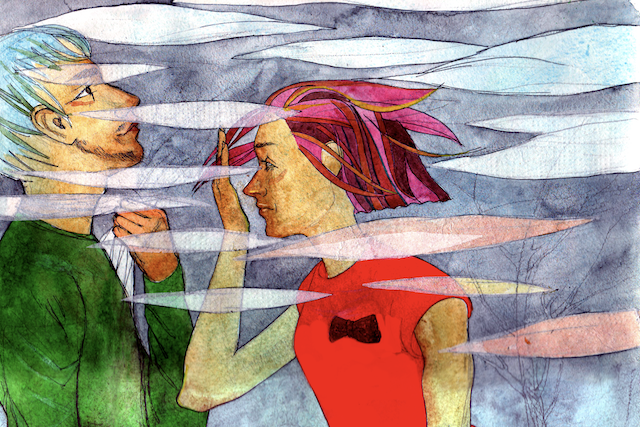
    I wanted the degree, the paycheck, the happy photo of me surrounded by friends, rather than the silence of uncertainty and the impatience I felt in the present. My fear of time took away the only real time that existed, the now.
    When I slowed down and paused, I realized that I had experienced so much growth and expansion in all the years I’d thought I was wasting time. Every roadblock had challenged me to change. In fact, my anxiety, fear, and disappointment around my slow progress led me inward to heal my relationship with time.

    Though many of my dreams did come true, I was only able to recognize them when I slowed down and let go of the “when.”

    I was able to achieve this by practicing meditation, breathwork, and awareness. With time and consistency, the present moment became filled with color, and its beauty swept me away from the ticking time bomb of the future. I began to enjoy each step of my journey, whether it was the beginning or end.

    With the gift of hindsight, I can see that it is not about the “when” but about the “what.” What I’m doing right now in the present. The number of negative and limiting beliefs I placed upon myself and the shame I felt were due to an emphasis on always “thinking forward,” and a lack of being with myself in the present.

    The truth is when we let go of our misconceptions of time and follow our dreams patiently, we see that time is not against us; the process is a necessary part of our journey.

    The time it takes to reach our goals is not empty; it is filled with learning and unlearning so that we find ourselves. In the end it is not the achievement that leads to freedom, but the wisdom that comes from living life.

    If we make the present moment our friend rather than our foe, we can experience and appreciate our present journey rather than focusing on our arrival.

  • 3 Key Benefits to Forgiving and Why I Thanked My Imperfect Parents

    3 Key Benefits to Forgiving and Why I Thanked My Imperfect Parents

    TRIGGER WARNING: This post mentions physical abuse and may be triggered to some people.

    “Forgiveness is not always easy. At times, it feels more painful than the wound we suffered, to forgive the one that inflicted it. And yet, there is no peace without forgiveness.” ~Marianne Williamson

    The subject of forgiveness comes up often in conversation, but I find that when it comes to the details of what that truly entails, what that process feels like is not actually talked about.

    Over the years, I’ve heard the following statements most often from people when the subject of forgiving someone came up in discussions:

    1. “What they’ve done is just wrong! I can never forgive them for that.”

    2. “They haven’t earned my forgiveness. There’s no reason for me to forgive them.”

    3. “Oh, I already forgave them and let it go. I haven’t told them because we aren’t talking. Why should I be the one to reach out first?”

    In 2006, I attended a long weekend workshop with the late Dr. Lee Gibson, where he gifted us one of his brilliant Leeisms: “Forgiveness is erasing a debt you think someone owes you. That’s why forgiveness can feel like it’s costing you something.”

    I was blown away.

    Yes! I was beginning to understand why it was so hard for me to forgive my parents. I was stuck in the very same mentality of “Why should I?”, “They were clearly wrong!”, and “They haven’t earned it!”

    Late one night when I was nineteen, I was assaulted by my father, who lost his temper and self-control. I thought I was going to die that night, because it certainly felt like he was trying to kill me. My younger brother eventually pulled him off me and kept him away long enough for us all to calm down.

    I was terrified and didn’t sleep for three nights. I also told myself this was the last time I was going to allow this to happen. I started packing that night and moved out in three days. My parents and I didn’t have a relationship for the next ten years, as my mother stood by my father’s side.

    During Lee’s workshop, with a mere group of six attendees that long weekend, we dove into the subject of family dysfunctions and forgiveness. It immediately hit a pain point for me, right in the core.

    I fought with him for about forty minutes (I was told later by someone in the same class) in what felt to me like ten minutes—I was passionately immersed in that moment to prove my point and how wronged I was that time. I was at a standstill.

    I asked him what about fairness and justice, and why must I be the bigger person here when they are the parents? Lee calmly asked, “How does it feel for you to be the bigger person? Is that okay?” Well, I thought, I suppose it is, but why must I always be that person?

    Then he proposed an even more outlandish concept—thanking the people who had wronged us for all the things they’d done right.

    I was stirred up a little more, but for some reason was curious to hear more. I needed to understand why he thought it was a good idea, and how exactly it would help me be at peace.

    To be honest, I don’t remember all the deep wisdom he had shared as to why. All I remember is that it would create a shift within us if we were open and brave enough to try it, and he encouraged us to share our experience with him afterward.

    No way, I thought. Never. Not gonna happen. Forgiveness is one thing, but thanking them was way beyond what I was willing to consider.

    I was still stewing about all this a week after the workshop. But my adventurous heart wanted to know what it would feel like if I set aside all that my parents had done wrong and thanked them for all the things they had done right.

    I started making a list of some of the things I thought they did right, such as struggling through the hardships of being first-generation immigrants and working day and night to put food on the table and a roof over our heads.

    After much thought, with a racing heart and trembling voice, I did the unthinkable—I called my parents one night, out of the blue, to conduct this “social experiment.” I went down my list and thanked them for all the things they did right without mentioning anything that they’d done wrong. They reacted surprisingly well and acknowledged there was a lot they could have done better.

    I’ll admit, I tried not to have any expectations, but a part of me was hoping they’d apologize for what they’d done wrong, and they didn’t. I felt surprisingly okay about that after we hung up.

    I felt proud of myself for having done that. I felt bigger. I felt more grown up. I felt more empowered to be the bigger person. That was my first taste of offering compassion and gratitude from a place of empowerment rather than martyrdom.

    I definitely experienced a shift.

    It probably took another five years for me to fully understand and let go of the night of the assault and all the things I thought they could’ve done better. In hindsight, giving thanks was the first step to feeling more of an adult and less of a helpless child in their presence. Being able to give my own parents a pat on the back put me at the same level.

    I no longer feel the need to be hopeful that they will treat me a certain way, give me the attention I felt I needed, or make up for what they’d done wrong. I felt more in a position to see them as they are—other human beings also dealing with their own suffering.

    As each year goes by, I continue to get to know my parents as human beings and not just as my parents.

    I have gradually taken them out of the parental role, as I no longer need them to be, and treat them like any other adult. I have established boundaries with them and began to respect their boundaries too, once I got to know their limitations. And I disengage whenever I feel like our interactions start to redirect toward an unhealthy dynamic.

    I understood very well that, as an adult, it was my choice whether to have a relationship with my parents or not. And if I chose to, I would also be playing a part in what kind of relationship we would have. I wanted to have a good relationship with them, and the only way to do that was to forgive.

    At some point in my life, I realized forgiveness is truly for my own benefit. Here’s why:

    Good closure

    The best closure is always amicable. How many relationships have left us feeling abandoned, confused, heartbroken, and questioning our self-worth? We were often not given a choice in those types of endings. But what if we could actively choose a better way to end a relationship with someone? (Or, like with my parents, begin a new relationship with them.)

    While this is a two-way street, we have control over our side. This allows each of us to move on to better future relationships and the next chapter of our lives, without guilt or attachment. A bond with another formed by anger, guilt, or bitterness is an energetic constraint to our own heart and soul.

    Personal growth and transformation

    Whenever we hold onto the victim mentality, we keep ourselves small. When we refuse to forgive, we hold onto the fact that we have been wronged and that we are the victim in that scenario. It’s hard to grow beyond that mindset when we hold onto what hurts us and continue to hold that over those we feel have wronged us.

    It may not feel like it right now (I know I certainly struggled with it for a long time), but the first step to feeling empowered is recognizing that we are in the position to forgive, and that is big. Much like extending gratitude, extending forgiveness comes from a higher place. A place where we have the knowledge that we are in a leadership position to forgive and break through the cage we have built for ourselves.

    Soul freedom

    In a way, we’re helping their hearts and souls to move on. We’re here on earth for a short period of time. As cliché as it sounds, the only things that we’ll think of in our last hours are how much we gave, loved, and lived, and what will haunt us is how much we didn’t.

    I want to make sure I am free of such torment. And if I could free others of such torment in the process, then it would truly be a win-win, on a soul level.

    Forgiveness not only frees us from being permanently tied to those we feel have wronged us; it also releases them from a debt we feel they owe us—a karmic tie I do not wish to adhere to. Only then will we all feel a deep sigh of relief with a freedom to move on to whatever awaits our souls next.

    I sent my father a care package last year with a card attached, letting him know that I wish him happiness and health and he is loved and he is forgiven. And now I am at peace.

    **I am not suggesting anyone else should thank their abuser. I personally found this helpful and healing, but everyone needs to make their own choice based on what’s best for them.

  • I Worry I’ll Never Change – Here’s Why I Still Accept Myself

    I Worry I’ll Never Change – Here’s Why I Still Accept Myself

    “Our journey is not about changing into the person we want to become. It’s about letting go of all we are not.” ~Nikki van Schyndel, Becoming Wild

    I recently went on personal retreat to once again try to heal my wounds, see my patterns, and find my purpose. I loaded my car with journals from the last two decades and a book of poetry dating back to 1980. I packed my cooler full of nourishing food, but then added a six pack of beer and an expensive bottle of wine—completely unaware that I was about to sabotage my personal growth by continuing to numb my pain.

    I had decided to use my retreat time to review my journal writings, pull out any wisdom I wanted to keep, and release the rest in a burning ceremony. On my first day, I labeled each journal with the year it was written and organized them all chronologically. This task felt arduous yet satisfying when I sat back and looked at the twenty-five volumes all laid out neatly in order.

    I spent the next three days re-reading each and every one. Re-living the emotional angst of problems in this relationship, then the next … and the next. Teasing out the patterns of insecurity, sabotage, and grieving. Re-visiting the same themes and my same desire and commitment, after the ending of each relationship, to be this person who stopped drinking in excess, meditated daily, ate healthy foods, and took good care of her body.

    Over and over, I had glimpses of this centered, calm, wise woman who I’d like to think is the real me. Yet over and over, I’d jumped into another relationship, lost myself, and repeated the pattern. Pages and pages full of the same story, only with different characters and at different times. As I read each journal, I tore out pages to burn, cut out sections to keep, and drank to numb the pain.

    On the fourth day I finished organizing the scraps of paper I wanted to keep and sat back with immense satisfaction. By early afternoon I had my fire going and drank my first beer of the day as I burned … and burned … and burned. Words turning into ashes. I stayed emotionally distant, cut off from my feelings, not making much of a ceremony of it after all.

    Feeling restless, I downed the last of my beer and pulled on my hiking boots. The trail outside my cabin began with a steep decline, winding along the side of the mountain and deep into the woods. As I walked, I kept thinking, “I haven’t changed. I’m still the same. What will it take to change? Why can’t I be that person I say I want to be? My life is one big loop.”

    I thought maybe the answer was that I just needed to be more self-disciplined. However, I immediately noticed the word “discipline” repelled me. If there is one thing I know about myself, I am not one to obey rules or codes of behavior—and I already punish myself enough. So, no, self-discipline wasn’t the answer. It was clear that I had spent a lifetime trying that approach and beating myself up for not succeeding. I kept on walking.

    At some point I questioned if maybe this was what life was really all about: the striving to be someone we are not. By that time, I was walking back uphill and had to stop frequently to catch my breath.

    Standing alone in the woods with my heart beating hard, staring blankly at the trees, I wondered if maybe the answer was just to embrace who I am. It’s pretty clear, after reading over my life for twenty years, I haven’t been able to change.

    My mind continued to whirl: But I’m not able to accept those parts of myself that drink too much or can’t stay focused. I don’t want to be that person who is overweight. I really do want to meditate. I stopped again, looking down the mountainside from which I had come. Apparently embracing myself wasn’t quite the answer either.

    By the time I had returned to my cabin, I no longer wanted to drink. I reflected again on the common thread throughout the years and suddenly saw the essence of myself that is timeless.

    It was there in my poetry from over forty years ago, in the heartbreak when I sabotaged yet another relationship, and in the yearning to be different.

    In a flash of insight, I recognized—contrary to the self-criticism that had been running through my head—the unchanged me was not a bad self. She is someone who wants to do better, who wants to be better, who recognizes the impermanence of time and seeks to grow.

    As I saw her, I knew this was the me I could totally embrace. I briefly thought about starting a new journal with this great insight, then laughed because I knew, if I did, I’d be reading it in twenty years, shaking my head, and saying “nothing has changed.” Then I would beat myself up for not being who I thought I wanted to be, and the cycle would just continue.

    In this recognition, I knew that those parts of me I so strongly criticized weren’t going to go away. And while I couldn’t embrace them, I could accept them with greater compassion and love.

    I saw the truth that even if I don’t meditate daily, exercise, eat healthy all the time, and have a full and balanced life, the part of me that strives to do those things is always there. She was in every page where I said I wanted to make those choices, and she’s been with me all along. She is the one I need to accept and embrace; it’s not who I want to be, it’s who I am.

    The review of my life helped me understand it’s a process. That timeless part of me may come and go, just like I have my moments of awakening to my wisdom and then forgetting it all. Sometimes the me who struggles to make healthy choices is going to hijack my life. I can accept that is a part of being human. It’s not self-discipline I need, it’s self-acceptance of my duality. Both my wise woman and my saboteur.

    I am a wise and powerful woman. I am a kind, sensitive, and caring soul. I love deeply. I care deeply. I feel deeply. I don’t need to escape from who I am; I simply need to remember. Ultimately, what really needs to change is that I need to nurture self-compassion and self-acceptance at the deepest level.

    My last day at the cabin, I awoke to sunshine and blue skies. I felt good and strong. I spent part of the day shopping in the craft stores of the nearby village, and before I knew it, I was halfway to the liquor store. I kept trying to convince myself it was okay, but recognizing I wanted to make a different choice, I managed to turn around before it was too late.

    I chose a waterfall hike and scrambled past the tourists, up to the top of the falls. The rocks were a slippery slope, but the irony of that and the potential of me drinking didn’t quite register until later. When I reached the top, I sat a moment to meditate. As I closed my eyes, I embraced this timeless essence and felt so much peace and gratitude for her presence.

    My inner saboteur tried to take over again when I got back to my car. Sitting in the parking lot, I asked myself, “What do you hope to accomplish by getting a drink?” Then, I laughed at the quick and witty answer, “A hangover.” I drove back to my cabin, made myself a healthy meal, and drank a glass of water.

    I understand now this journey is a day-by-day, moment-by-moment reclaiming of who I am. I also understand the part of me that has been in control when I’ve forgotten my essence isn’t going to disappear overnight.

    However, I no longer fool myself into thinking anything is wrong with me. I recognize and embrace my commitment to growing in wisdom, strength, and joy. And I embrace all of who I am, while having compassion for the parts of me that struggle.

  • Mindful Forgiveness: 4 Steps to Unlock the Healing Power of Your Mind

    Mindful Forgiveness: 4 Steps to Unlock the Healing Power of Your Mind

    “The truth is, unless you let go, unless you forgive yourself, unless you forgive the situation, unless you realize that the situation is over, you cannot move forward.” ~Steve Maraboli

    The key to healing is learning to let go of negative thoughts and feelings. Mindfulness will allow you to be aware of your thoughts and feelings; forgiveness will help in letting them go.

    Simple as it is in theory, putting it into practice may be harder.

    Mindfulness, being aware of your thoughts and feelings in the present moment, is not that difficult. But the trick is to do it amidst the chaos of our modern way of living.

    Forgiveness is even harder. Our mind sees the events of the past as lessons that are beneficial for our survival and wants to hold on to painful and irritating memories.

    But in the modern world, we rarely need this primal safety mechanism, and the grudges we hold hurt us more than they do good.

    What’s worse, the things we have done, or others have done to us, often make us angry. Anger can be a severely damaging mental condition; not only damaging to our minds but also to our bodies.

    However, taking the time to consciously combine mindfulness with forgiveness will open the way to profound emotional and physical healing, and will eventually lead to a joyful and healthy life.

    Being mindful of your thoughts and feelings will allow you to confront them instead of repressing them. Once confronted, the events that cause those thoughts and feelings can be examined and forgiven.

    I learned this the hard way, but now I want to share what I know so that you can skip the painful part.

    Pain is Often a Prompt to Grow

    Just a few years ago, I thought I had life figured out. I had done everything ‘right,’ succeeded in achieving my goals, and therefore, I expected to be happy.

    After years of rigorous studying, I landed a job at a corporate bank. It was everything I had ever dreamed of. I could finally afford a fancy car. I was surrounded by amazing people. I went to parties, traveled, and had fun. Life was (supposed to be) pretty sweet.

    As fun as it was, it was not healthy in any way. My health started to deteriorate quickly. I gained over thirty pounds, started to have pains in my back and legs, and was always tired.

    What’s worse is that no matter what I did, I could not be happy. I was constantly irritated or anxious and had no idea what was causing these feelings.

    Then one day a realization hit me: I was completely miserable.

    Why was I not feeling any joy in life? I could not understand what the matter was. There was no reason for me to feel how I did. I was doing everything that I had learned was supposed to bring me happiness, yet I still wasn’t happy.

    So there I was: a young man in my mid-thirties, gaining weight, feeling miserable, and losing my mental and physical health in the process.

    I had no idea how to deal with any of this. How was I supposed to deal with my anxious and angry mind when I had never learned to deal with my emotions, let alone express them in a healthy way? The only solution for me was to not confront my feelings at all.

    Before long, I developed a heart arrhythmia, which felt really uncomfortable, especially when trying to sleep. My pulse rate went up to 120 bpm and did not come down no matter how I tried to relax. Sometimes it felt like my heart would stop beating for brief periods of time.

    So I went to a hospital, but the doctor who examined me told me that he couldn’t determine the cause. Physically I was fine, and my EKG was perfect. Like taken from the pages of an anatomy textbook.

    This was, of course, very puzzling. How could my heart seem to be healthy when I was clearly suffering from arrhythmias?

    Lying there in the hospital bed, I had time to think deeply about life. And after some pondering, the answer became obvious.

    Illness Is Created First in the Mind

    My condition was psychosomatic. I understood that my inability to deal with my emotions was piling up negative thoughts and beliefs in my mind, which caused my body to react in a negative way. I had refused to be mindful of my thoughts and feelings, thus being unable to let go of them.

    Only when I was forced to stop and listen to how I truly felt could I find this answer. It was a hard and mandatory lesson in mindfulness, one that still sticks with me today.

    So I decided to confront my negative thoughts and emotions. The process was simple: Stop and take a deep breath. Be still and focus on breathing in and out slowly. Then tune in to how I feel. What are these feelings? Why am I feeling them? What are they trying to tell me?

    I noticed that under the surface, my most dominant feeling was anger.

    I was angry with myself. Why was I not able to deal with my emotions? Why hadn’t I listened to how I felt and tried to repress my emotions instead? Why did I let the situation get so bad?

    I was angry with my parents and teachers. Why didn’t they show me how to express emotions in a healthy way? All I was ever told was “crying is weakness,” and “being angry is not okay; go to your room until you calm down.” Sometimes it was not even okay to show love or affection. So I learned to repress my emotions.

    I was also angry with society. I felt that the only thing I had ever heard about how to be happy was wrong. I did not find happiness by achieving goals or getting material wealth, as is so often taught by society (and everyone else around us for that matter). I had the education, the career, the money, the car, and so on. Yet I was miserable.

    But I knew that it was not necessary to be angry with myself or others. I was only doing what I had learned was right. Likewise, what others had taught me about life, feelings, and happiness was what they had learned themselves. They did not know any better, and their intentions were good.

    So I decided to start forgiving. I used mindfulness meditation to connect to my thoughts and feelings.

    And when I was deeply immersed in my mindfulness meditation and focused on a feeling, often a memory popped into my mind. It was something that someone had said or done that had made me feel angry or afraid.

    I then “healed the memory” through an exercise where I forgave the people involved.

    And wouldn’t you know it, when I started to forgive the things that I or others had done in the past, I healed almost instantly.

    I got rid of all the pain in my mind and body, and there was no sign of arrhythmia anymore. I almost couldn’t believe it. With this simple combination of mindfully identifying thoughts and feelings, then forgiving the people that caused them, I healed my body in two days.

    Two days. That’s all it took to heal over ten years of neglect.

    I also found my mental well-being improving by leaps and bounds. I felt peaceful and happy. I started to see the joy in everyday moments, which I hadn’t for years. I realized that the opportunity to feel joyful was always there, but I’d been so occupied with the past and the future that I was unable to see it.

    The 4 Levels of Forgiveness

    This is what I did, and you can try this too.

    1. Forgive yourself for what you did to yourself.
    2. Forgive yourself for what you did to someone else.
    3. Forgive others for what they did to you.
    4. Forgive others for everything they have done.

    Start with level one and work your way through the levels. With this exercise, you will start to feel better in a matter of days.

    For levels one and two, forgiving yourself, try this simple exercise:

    Think about something you regret. Stand in front of a mirror, look yourself in the eyes, and say, “I forgive you. You did the best you could at the moment. You didn’t know any better.” Repeat this in your mind, or even better, say it out loud. Do it at least five times. After you are done, close your eyes and take a deep breath. Relax.

    This might be the hardest one of the exercises. For some reason, we tend to hold a grudge against our past selves. But it doesn’t do any good to be unforgiving. For a long time, I was guilty of thinking, “I’ll never forgive myself for what I did!” But as I started to do this exercise just once a day, I quickly started to feel like a weight was being lifted off my shoulders.

    For levels three and four, forgiving others, try this quick meditation:

    Close your eyes and relax. Breathe in and out slowly three times. Think about a memory that’s bothering you. Imagine the situation as vividly as possible and pay close attention to the person that’s the cause of your negative feeling.

    Then, imagine the scene you are in starts to fill with bright, warm light. Like the midday sun on a beautiful summer day. Imagine yourself approaching the person that’s causing the suffering and saying to them, “I forgive you. You did the best you could at the moment. You didn’t know any better.” Then imagine giving them a warm, loving, forgiving hug.

    If you feel like you need help with this, you can imagine anyone you want, even multiple people, there with you to give their support. If you so choose, you may even bring to the scene a higher power to help you.

    Done! Open your eyes and take a deep breath. Relax. You may already feel a little lighter, but don’t worry if this takes several tries. It may not be instantaneous or easy, but it’s definitely worth it.

    Everyone Is Doing Their Best (Including You)

    Forgive yourself for not knowing any better at the time. Forgive others for acting the only way they knew how. You acted the way you had learned, and so did everyone else. Please don’t blame yourself and try to forgive others for their behavior. By holding on to fear, anger, or hate, you will ultimately hurt yourself.

    Forgiveness will give you peace of mind. It will allow you to live mindfully and enjoy the moment, which you now understand as a perfect opportunity to express who you are. You will be able to let go of the past and stop worrying about the future, and your life will start to fill with peace and joy.

  • Addiction Is Messy, But These Things Help Me Stay Clean

    Addiction Is Messy, But These Things Help Me Stay Clean

    “Staying sober really was the most important thing in my life now and had given me direction when I thought I had none.” ~Bradley Cooper

    I remember that exact feeling of shame that washed over me when I was filling Yeti water bottles with 100 proof vodka instead of water. Then I chugged it, all while knowing it was the worst idea. Yet, I couldn’t stop.

    Addiction is messy.

    My social outings were with the wealthiest in the town, always with plenty of other alcoholics in my midst. I surrounded myself with people who drank like me because why on earth would I want to associate with someone who doesn’t drink? It looked like I was living the life when, in reality, I was dead inside.

    The truth is, sometimes your soul has to die before you decide to actually be alive. My soul died, but my body continued living, and I wore a shield, defending myself from people. I wanted them to see the person I was projecting; the person I wanted to be.  

    I wanted to be all of the things that I was showing them, but I was truly depressed, anxious, troubled, and lost.

    My addiction started with a boy. I was addicted to him, to love, to the idea of love, and eventually, to his drugs. He became my dealer, my controller, my manipulator, and my life.

    He introduced me to hard drugs, and I immediately latched on. He completely stripped me of any sort of normal life.

    But I would do anything for him. The occasional use turned into daily use.

    At the time, I was in college, and I was still managing to do well. However, he got a job offer in another city thousands of miles away. He said if I didn’t come with him, we were done.

    I went into a depression I had never known before. I remember sleeping for days in my parents’ basement. The thought of being apart from this boy completely broke me.

    So I moved with him. My messy addiction was getting worse.

    It wasn’t long before he found someone in our new city who knew a dealer. I got excited knowing there was something else to try, so I dove right in. These drugs led to complete destruction. 

    I was now failing school. Me, a straight-A honor student. My mom came out to visit for my twenty-first birthday. She could tell something was off, but I had been lying for so long.

    I wasn’t ready to tell anyone.

    I knew I was only in the relationship because he got me drugs. I was scared to leave because he was my first love, and I didn’t know anything else. My life was a mess.

    I dropped out of college, claiming an “emotional breakdown.” I didn’t have a job. I had no idea what I was doing with myself.

    I was completely lost.

    A few months after my birthday, I called my mom and told her I needed to come home. Of course, the next morning I regretted it, but it was too late. My parents were on their way to get me.

    My soul finally completely died because of the mess I was in.

    I broke up with the boy.

    I quit drugs cold turkey. Looking back, I have no idea how I did this; I don’t remember withdrawals or cravings. I was determined to start cleaning up my life, but addiction is messy, cunning, baffling, and powerful. So I replaced drugs with alcohol.

    I always drank to get drunk. I felt that I had missed out on college life, and I needed to make up for it. I had been controlled for too long; I was finally free.

    I did what I thought was normal for someone in her early twenties. I drank every day, starting at 5 p.m. That’s what adults do, right?

    I didn’t think I had a problem until I realized how much more alcohol I needed compared to my friends. Every time we went out, they were completely hammered, and I barely had a buzz. I started bringing my own shooters in my purse so that I could have extra on hand.

    I would pour vodka into mini shampoo bottles so that it wasn’t evident that it was alcohol. I’d buy 100 proof to get the job done quicker.

    I thought it was fun. It was my secret, and I liked hiding it. It was like a game.

    When people saw me drink three glasses of wine, they had no idea about the water bottles filled with vodka that I had chugged earlier. I’d gauge how much I was drinking by counting the number of gulps I took or by seeing how many shampoo bottles were empty.

    I hid how much I was drinking very well. I was a functioning alcoholic. I had a great husband, amazing friends, and a stable job. 

    In my mind, there was no way I was an alcoholic because I had all of these things.

    There were several incidents that should have been the end, but I was never ready. It took years of looking at myself in the mirror, thinking, Ellen, this has to stop. You can’t continue drinking like this. So, I would try drinking a different way.

    Only wine during the week.  Vodka on weekends. Svedka instead of 100 proof Smirnoff.

    Anything.

    The only thing that stayed consistent was that I never allowed anyone to see how much I was truly drinking. I knew it deep down in my dead soul that I would either die drinking or that I would have to admit out loud that I had a problem.

    The day finally came, the day I had been putting off for years because I was so scared. My last drink.

    I learned later that my last day drinking was one of my “yets.” The things that make you convince yourself that you are not an alcoholic. “I haven’t gotten a DUI… yet.” Or “I haven’t lost my job… yet.” Mine was “I’ve never brought alcohol into work… yet.”

    My last drink was really a continuation of several days of drinking. I had finished everything that was hidden in the closet by 6 a.m. before heading to work.

    I took my lunch break early (like 9:15 early) and drove to the first liquor store. It didn’t open until 10:00. I thought to myself “only an alcoholic would be caught waiting for a liquor store to open; I can’t do that.”

    So I went to another one nearby. Yes! It was open!

    I went in and got my usual. The cashier rang me up and said, “Why are you here so early today?” I was so embarrassed.

    Little did he know I needed this to calm my shakes, feel better, and make it through the morning.

    I had basically woken up still drunk and was just continuing the drunk in order to feel okay. I was completely wasted by lunch.

    I knew I would be fired if anyone noticed. I had to get out of the building.

    I called my husband. I knew he’d be upset, but I have the most supportive and compassionate husband. He picked me up from work.

    He was scared, confused, and completely sad. Why was I wasted at work on a Thursday by noon? On the drive home before passing out, I finally knew that something needed to change.

    I knew that I was the only person who could make that change. I didn’t want to live this way anymore.

    For me. The only way getting sober works is when you realize you have to do it for yourself.  No one else can do it for you.

    And that was it. I started my journey in recovery that day.

    My sober life is amazing. Yes, I still have regular life problems, but everything is so much more manageable without the haze. I can do things now that I never did before, and everything makes a little more sense.

    I’m back to being Ellen.

    I have amazing things in my life that keep me clean and sober. Addiction is messy, but we do recover. First and foremost, I have a strong program of recovery.

    It wasn’t until I went to a rehab center that I learned that people in this world could teach me how to live a sober life and develop healthy coping mechanisms. I know how to soothe myself without substances and how to navigate this world without numbing myself.

    I work a recovery program that includes meetings, steps, and constant interaction with like-minded people. I have mostly sober friends and have cultivated lifelong relationships that matter.

    Secondly, I was able to get pregnant and start a family once sober; I have twins! I believe that the Universe had all of this lined up for me. I could never have done any of these things in any different order.

    Finally, I have good relationships with loved ones and peers. I am not lying to them every day, hurting them, and treating them terribly. I know I am loved, and I am not alone.

    Everything is perfectly in place the way it is supposed to be according to my journey. And now I can actually see that clearly.

    Addiction is messy, but it made me who I am today. Without this mess, I would not have this life. Now that I am clean, my soul has been brought back to life.

  • “Old” Isn’t a Bad Word: The Beauty of Aging (Gracefully or Not)

    “Old” Isn’t a Bad Word: The Beauty of Aging (Gracefully or Not)

    “Mrs. Miniver suddenly understood why she was enjoying the forties so much better than she had enjoyed the thirties: it was the difference between August and October, between the heaviness of late summer and the sparkle of early autumn, between the ending of an old phase and the beginning of a fresh one.” ~Jan Struther, Mrs. Miniver

    As an adolescent, I was always keen on looking and acting older than my age.

    As the youngest amongst three, I always felt that my siblings held more power and their grown up lives seemed more glamorous to me. They would prance off to college or to high school, carrying their own bags and packing their own lunches, while I had to wait for my mother to drop me off, holding her hand as we crossed the street!

    Naturally, I looked forward to my birthday each year, waiting for a sense of “grownup”ness to take me over even as I got giddy at the thought of opening gifts. Yet, over the past few years, my birthday gifts have come wrapped in a vague fear, that of becoming invisible.

    In a society that values youth to the point of insanity, reaching that terrible “middle age” seems like a ticket to the circus of Forget-Me Land!

    As I journal and reflect my way through all this, I wonder why this is a big deal at all. In fact, in many families across nature, growing older is a good sign. It’s a symbol of status and respect.

    Take the example of the silverback gorilla: all that gray hair on their back gives them the authority to make decisions for the group! Wolf leaders, elephant mothers, and older dolphins are all instances where nature favors age.

    Why, then, are humans obsessed with youth? From creams that remove wrinkles to references like “well-maintained” (as if we were a car!), we are told repeatedly that being younger is somehow better.

    Personally, growing older has taught me a few things, and I wish I could go back in time and share them with my younger self. However, that’s not possible unless we invent a time machine, so I’ll list them here and you can take what you will.

    To begin with, don’t obsess over beauty. Or rather, what society tells you beauty is.

    All through my growing up years, I pursued being beautiful even at the cost of my true talents. I underplayed my reading habit, and I acted meek so men would perceive me as “more beautiful.” I have no idea where I received these ideas, but they were debilitating. I wanted to be beautiful so I would be chosen by men, but I never stopped to ask myself: Which man?

    It is sad that I desperately wanted to be chosen by someone even as I rejected myself, day in and out. After battling toxic relationships and severe blows to my self-esteem, I realized that the pursuit of beauty has been absolutely useless.

    What really helped me during difficult times was my sheer bullheadedness and foolish optimism. Surprisingly, being myself, with gray hair, crooked teeth, and a few extra pounds, is easy to do and has also earned me some beautiful friendships, with men and women alike.

    Secondly, age is really just a number.

    My dog doesn’t know how old she is, so she is free to act as she pleases. She jumps on beds, goes crazy over sweets, and gets jealous. She runs if she wants and as much as her body allows. It’s easy for her to do all this and more because she doesn’t have that limiting belief called “age.”

    Ellen Langer, a Harvard psychologist, conducted an unusual experiment where elderly subjects were asked to live like it was twenty years earlier, in a simulated environment. The men who underwent the experiment supposedly showed improvement in memory, cognition, and much more.

    Even if the experiment seems outlandish to you, there’s an important takeaway: How you perceive your age makes a huge difference in how you approach it. So why not approach it with positivity?

    A few months ago, I read a very powerful quote, and it made a huge impression on me: Do not regret growing older; it’s a privilege denied to many.

    How true! My mind immediately goes to my own father, who passed away before he fulfilled many of his dreams. I am sure he would have welcomed many more years with open arms, warts and all.

    For a patient with a terminal illness, each day growing older can only be a blessing, even when the body feels frail. We don’t have to wait for something like this to feel grateful for our age. We have that opportunity each day and in each moment.

    You don’t have to ‘maintain’ yourself.

    You don’t have to look younger.

    You can be thin, overweight, or anything in between or beyond.

    Don’t hold yourself back from things you love just because you feel older/younger.

    Don’t feel the pressure to age gracefully or anything else that society tells you to do. You have the freedom to age messily if you like. Heck, it’s your life, and it’s in chaos that order is born!

    Maybe you don’t have a head full of black hair, but so what? You probably sucked your thumb at six, but you don’t do that anymore, do you? It’s the same thing.

    Nostalgia is only helpful if it uplifts you. If it’s taking you on a downward spiral of “how I wish I was that age again!”, then it’s high time you closed that album of old photos. New sunrises and sunsets await you. Make yourself some frothy cold coffee and move on!

    There’s nothing that you need to tick off by a certain age. We all have our own trajectories and our own truths to learn. Take inspiration from plants and animals. They don’t strive; they just are and their lives pan out beautifully! Be courageous enough to own your messy self and your messy life.

  • Dear Parent of an Estranged Adult: What Might Repair Your Relationship

    Dear Parent of an Estranged Adult: What Might Repair Your Relationship

    Dear estranged parent,

    I know it’s not easy to feel cut off from your child when you still feel love and maybe even remorse. I know you might feel confused about why your adult child is so upset, and you might even feel angry and wrongly accused.
    Perhaps there’s some truth to that. I don’t know why your child cut ties with you, but I can share a little of my own experience and then offer some tips that might help, regardless of your unique situation.

    So why did your son or daughter cut you out of their life?

    I can’t speak to the specifics of your situation, but I can offer you some insights from my own experience and I can talk about common themes expressed by my community of estranged adults.

    Before I go any further, I need to remind you that everyone remembers and experiences the same events differently. For example, you might remember the fun family trip to Disneyland where everyone was together and had a good time, but your son or daughter might remember getting yelled at or you and your spouse fighting.

    I’m not trying to invalidate your feelings but simply to remind you to be open to the possibility that your child may remember or may have experienced events differently.

    I tried to have a relationship with my parents for many years before I made the hard decision to cut them out of my life. I would seek validation for my academic accomplishments, but all they would notice were the mistakes I’d made, and they would repeatedly highlight them.

    I’m not saying I was perfect, but a little love and affirmation would have gone a long way. Each rejection left me feeling hurt. I questioned my self-worth and became depressed. Still, I tried to maintain a relationship with them, despite the fact that it took a toll on my health.

    I showed an interest in my mother’s life, and every time I came back to visit, I did my best to be helpful around the house and attend to their needs in any way I could.

    My parents would criticize me repeatedly, even in front of friends and family members, and I was left feeling smeared and demeaned. All of my actions were met with judgmental negativity.

    If I tried something new, my father would list all the reasons why he thought I was going to fail, while my mother would take sadistic joy in my failures. My parents never wanted anyone to see the good in me or even to allow me to see the good or the potential within myself. I was always a failure in their eyes—a common theme among estranged adults.

    My parents also repeatedly failed to respect my boundaries and at times would list off reasons why I could not have the ones I had set. They often guilted me for having boundaries or even basic needs.

    My parents never admitted the hurt they caused me. They never admitted the years of abuse and neglect. It was always somehow my fault. They were also unwilling to listen or allow me to have a productive conversation about my feelings. Again, I’m not saying I’m perfect, but I didn’t deserve to be treated in the manner I was during my formative years.

    Each time I would invite them to come visit me or take an interest in my life they gave me a list of reasons why they couldn’t come or why I was not good enough for them to bother caring.

    Each interaction cut me deeper, causing me to get depressed and shut down.

    When I got engaged, my father listed all the reasons why he thought my relationship would fail, and my mother expressed frustration at the thought of having to help me plan a wedding. I couldn’t force them to care, and the tremendous emotional effort I was making was taking a toll on me. I felt I had no choice but to accept that the relationship I so desperately wanted would never be and let go.

    For me, this was the right decision because it freed me from the bondage of hope that one day I might be good enough and it allowed me to live a meaningful and happy life.

    I must reiterate that there is a reason your son and daughter has cut you out of their life because no one would make this decision lightly.

    If you care about rebuilding a healthy relationship with your estranged child, these are some steps that you can take.

    Realize that people remember events differently and be open to seeing their perspective.

    Sometimes we remember things so differently that we’re inclined to deny the other person’s reality. Please don’t do this, as it will only create walls and cause them to recoil and pull away.

    If your child says they did not like it that you pushed them into doing sports and only cared about them winning games, don’t shut the conversation down by saying “You were good at sports.” If your child says that you always criticized them about their weight, don’t tell them that you were trying to help them lead a healthier lifestyle.

    Listen and try to understand their point of view. Simply allowing them space to share how they experienced their childhood can help them feel heard and respected.

    If it helps, keep communications in writing to start.

    Oftentimes, it’s hard to really hear what someone is saying when you feel attacked, accused, and emotional. If conversations are upsetting both parties, try communicating by e-mail so that you can read and reread what they have to say in order to digest the message being communicated. Try your best to understand their experiences and empathize with them whenever you can, and odds are they’ll be more willing to do the same for you.

    Avoid being critical.

    You may not agree with your child’s lifestyle or their actions, but repeatedly criticizing and voicing your disapproval will only cause them to pull away. Don’t call them names or make reference to their past failures. Work on being supportive and providing them with validation whenever possible.

    This might be hard to do if you feel they’re being critical of you. Criticism tends to shut people down—on both sides. But replacing criticism with validation can help heal old wounds.

    Be self-reflective.

    It can be hard for anyone to take a critical look at themselves and examine their actions in order to admit that they’ve harmed someone. This can be a painful process that forces you to see yourself in a new light. Sometimes, as painful as it is, it has to be done.

    This doesn’t mean that you are inherently bad. Most people parent as they were parented and repeat harmful patterns without realizing it.

    It takes tremendous courage to examine yourself and admit that you caused pain. Remember you don’t need to do this alone. Seeing a trained counselor or psychologist can help you understand yourself better.

    Take responsibility for your actions.

    Many estranged adults, myself included, never felt we got the apology we longed for. If you have wronged your adult child, even if you feel you were a good parent on the whole, own up to your mistakes and apologize. This simple act will go a long way toward rebuilding the relationship.

    Respect boundaries.

    It can be tough to honor a firm boundary when you feel an urget need to talk things out. But you can’t force someone to hear you until they’re ready. If your son or daughter has said that they don’t want to see you for the next month, don’t show up at their door. This will only leave them feeling intimidated and disrespected and cause them to pull away.

    Be willing to change your behavior.

    If your son or daughter has described behaviors of yours that bother them, make a conscious effort to change. Show them that you are capable of taking their constructive criticism and applying it. Listing off ways that you think you have changed isn’t enough. Your actions need to speak for themselves.

    This is, of course, a two-way street. Adult children are also capable of doing things that upset their parents. And in a perfect world, they’d hear you and make changes too, if necessary. But you can’t control their behavior—only your own.

    Understand that distance isn’t always permanent.

    Sometimes we need to take a break from family and friends in order to heal from childhood trauma and focus on our own health and well-being. This is a natural part of the healing process. If you have been asked to give your son or daughter space, honor their request.

    Never use guilt.

    As harsh as this might sound, your adult child doesn’t owe you anything. By inflicting guilt on them—telling them they should have a relationship with you because you’ve done and sacrificed so much—you invalidate their feelings and exert power and control that could cause them to pull away even further. It’s far better to create a new relationship from a foundation of mutual understanding than try to force one on a foundation of guilt and shame.

    Don’t try to buy them back.

    If your child asks you not to send gifts or give them money, don’t. You might think the gifts are a way to repair the relationship, but this never works and only breeds resentment. Estranged children can also see gifts as a means of exerting power and controlling, forcing us to feel obligated to have a relationship we do not feel comfortable having. Relationships can never be bought.

    Offer to go to therapy.

    This can feel intimidating at times, but your willingness to go will send a strong message that you’re open to rebuilding a healthy relationship. Many times it can be easier to talk about sensitive subjects in front of a trained neutral third party that can help us work through our emotions and misunderstandings. If your child declines your invitation to go to therapy, see a therapist on your own.

    Allow for growth and change.

    Some of the healthiest relationships we will ever have grow and change as we do. Don’t expect your child to like the same things or act the same way as they did before; this is simply not realistic. You must adapt and grow as they do and be open to the fact that the relationship may change.

    If all else fails, work on accepting the situation.

    Not every story has a happy Hollywood ending. Sometimes all we can do is accept the choices other people have made, let go, learn from the experience, and move on with our lives. If your child insists that they cannot have a relationship with you, respect their choices, as painful as this may be. Don’t contact them repeatedly. Remember that nothing in life can be forced, not even relationships.

    I’m not saying that parents are solely responsible for healing broken relationships with their children. We have to do our part too, but often we’ve tried for years only to feel invalidated, disrespected, and rejected.

    Had my own parents done any of these things it might have been possible to reconcile with them and work together to heal.

  • When You’re Ready for Change: You Need to Believe in Your Future Self

    When You’re Ready for Change: You Need to Believe in Your Future Self

    “Growth is uncomfortable because you’ve never been here before. You’ve never seen this version of you. So give yourself a little grace and breathe through it.” ~Kristin Lohr

    I was kinda sorta showing up.

    To the outside world, it looked like I was doing all of the things. I was smiling. I was talking about exercise and eating well. I was posting happy, positive vibe quotes, but I wasn’t really showing up for myself.

    I had experienced a miscarriage at thirteen weeks. This was supposed to be the safe zone. I had told family and friends. My husband and I even had names ready to go. This was baby number four, so I thought I was a pro.

    I was in a toxic work environment, but I kept going. Even after my miscarriage, I felt I had to be back there quickly so others didn’t need to deal with my responsibilities.

    After experiencing this loss, I spent quite a long time kinda sorta being serious about my well-being. But let’s be honest, I pretended for years. I was hearing “Take care of YOU!” on repeat. It was well intentioned, but I had absolutely no clue how to do that. Nobody told me how to take care of myself.

    I knew all of the shoulds and suppose-tos. But I was overwhelmed by those concepts as I added them all to my to-do list. I knew I should eat healthy and move my body, but what was I going to do about these negative thoughts of not being good enough floating through my brain every single day? The guilt was overflowing, but I just smiled.

    I took on more responsibility and wore so many different hats that it looked like I was able to do it all. In reality, I was so stressed that it was coming out physically through an annoying eye tick.

    I made an excuse of being tired when people noticed it. I defended that excuse because I needed to believe it. I wasn’t sleeping well. I was eating junk in between the occasional healthy meals kick. I was moving, but not on a regular basis. I continued to smile, make excuses, and pretend all was good.

    One morning, I realized that I couldn’t keep doing this. I opened my eyes and accepted that I was only kinda sorta showing up for myself and that I couldn’t keep sustaining this lifestyle without causing irreversible damage to those I loved and to myself. So I said the scariest words: “No, sorry. I can’t.”

    Admittedly, I only whispered these words to myself at first. Then something powerful happened: I started to say them out loud to other people.

    First, it was only to my inner circle, and then it started spilling out everywhere. I was talking about taking my power back. I was talking about an exit strategy from my toxic work environment. I was talking about how my miscarriage did, in fact, hit me hard. It rocked me to my core.

    I was open about my feelings. I was letting myself experience all of my emotions. I was shifting. I was becoming a new woman—a similar version to the happy and healthy woman I once was. I was emotional. It was scary. It was worth it. It took a lot of work and guidance. It’s still evolving. In many ways, I expect to always be growing and shifting.

    I told myself: Believe in your future self. That sounds like it should be easy to do, but it’s tough for most people. Chances are you are afraid of change. We all are. And it might be hard on your ego to admit you need to do something different.

    As humans, we want to be right. We don’t want to admit a choice we made was the wrong one. We may have second thoughts and see lots of red flags going up all over the place, but we still hate to admit we made the wrong decision. So we stick with what we’re doing even if it feels wrong.

    I have a little secret to tell you: The most successful people are the ones who push through the fear of change and do it anyway—even if it’s hard on their pride. It can be done. It will be messy in the middle, but you’ll get through it. When self-doubt creeps in, you need to follow two steps to make a change.

    1. A mindset shift

    You absolutely must believe that you can and will be successful to become successful. No matter what the goal is, you must believe in yourself and see the success as a real possibility.

    For example, if you want to move your muscles more through exercise, start your morning off with the mantra of “I am making my health a priority. I will move my muscles today.” Start acting like someone who exercises. Make decisions like a person who moves on a regular basis. Schedule it in. Talk about it.

    If you want to be happier and healthier, use these I am statements to help get you there: “I am enough.” “I am worthy of happiness every day!” Many people say they want to feel happier but don’t believe they deserve it, so they end up sabotaging themselves. Say those statements out loud. Write them down. Get to the root of any traumas or past conditioning that prevent you from believing them.

    Once you shift your mindset, your choices and path will align with the new you. You will reach your goals, or at least make progress toward them. You may experience imposter syndrome along the way. Keep going. That is a part of the mindset shift process. Talk back. If you believe you can do the things you want to do, you will.

    2. A strategy

    The second part of your success journey is the roadmap to move you forward. You cannot just wish and hope for things to happen. You must do the work.

    If you’ve shifted your mindset, now you need to travel the miles to get where you want to go. How do you do this? Set realistic goals. Make a plan. Follow the plan and stay consistent. You’ll need guidance along the way. Surround yourself with people who are doing what you’d like to do. Listen to the advice of those who have traveled this road before you. Ask for help to stay accountable.

    Do not assume that this will be an easy path to travel. Most things worth having require a good bit of work. Expect roadblocks and push past them.

    Know that not everyone in your current circle will be ready for you to shift. Change is scary on a personal level. When others change around you, it’s frightening if you aren’t shifting alongside them. In some cases, your change will create positive ripple effects for those closest to you, but it will happen for them once the timing is correct.

    Your future self is waiting to meet you—you just need to get moving. The path will not be all sunshine and rainbows, but you can travel it. You can make a change, even a great big one.

    Once you are on the other side, you’ll wonder why it took you so long to get there. You’ll be happier. You’ll be healthier. Other people will ask you how you did it! Take that first step and keep going. I promise you it’s better on the other side.

  • Confessions of an Extrovert: Why I Now Love My Alone Time

    Confessions of an Extrovert: Why I Now Love My Alone Time

    “Allow yourself to grow and change. Your future self is waiting.” -Unknown

    Not to be dramatic, but I really mean it when I say that solitude changed my life. I am an extrovert who loves humans, socializing, and learning from people and experiences. I’ve always enjoyed being around others, and don’t get me wrong, I still thrive this way. But when I got Covid in 2021, life completely changed, and it’s not the only way I thrive now.
    Before Covid, I’d been living my life in a way that wasn’t serving me. I was partying a lot, not eating well, and living in chaos, with very little rest. I constantly had my schedule booked, leaving no time for self-care. I felt like I was living life for others, ignoring what I needed.

    I made mistakes, like blowing off my priorities because I was in a terrible headspace, and I continued living an unhealthy lifestyle until I finally had a talk with myself and realized this wasn’t right for me (then Covid came along, and sh*t got serious).

    I didn’t immediately enjoy quarantining and being stuck at home, away from friends and family, but before I got sick, I knew change was coming. And though I felt a lot of resistance, I also felt that a new version of myself was on the way.

    While I’m usually not one to fight change, there was so much going on at once, and it was a lot. I also learned that I was one of the people who suffered from panic attacks and anxiety as a side effect of Covid. The aftermath was worse than having the virus itself.

    This lasted almost a year. I felt so bad for myself; I couldn’t believe that this is what life had come to for me. I was even losing my hair. Some days I’d wonder if this dark tunnel would ever come to an end and show me light. Things felt very heavy, but I also had some of the most beautiful things going on at the same time, like living in the city with my now fiancé, so it was all very confusing.

    I began to lose sleep, which was unusual for me. My inner world felt like chaos. There were lots of tears and weekly therapy sessions (which also changed my life). Therapy and journaling became my safe spaces to release and understand myself.

    Throughout the year of that inner chaos, what did I learn? Surrender. I was trying to maintain full control of my life and keeping busy while actively avoiding working through suppressed emotions from times when younger Naila would over-extend for others, and completely forget to take care of herself. I didn’t want to listen because I was afraid. And that’s human nature, to fear the unknown.

    So, here’s a reminder that the Universe forces you to slow down and redirect when you’re not listening. This also means it may hurt more since we didn’t consciously welcome the change.

    Over time, I have gone through so many phases and such inner growth. I began working with my wonderful therapist and quit a job that was not working out for me as expected (which hurt). I’ve lost people and my relationships changed, thankfully most of them for the better.

    As soon as I let go of control and put in the hard work, things got better, and I saw results—even if they were just small victories. I was starting to see that light I’d been waiting for. My body felt lighter as I began to release dead weight from my body and I began to feel like myself again, but this time, better than ever.

    I chose watering myself over destructive behaviors. Instead of focusing on the anxiety attacks and trying to force myself back to sleep at night, I meditated. I chose solitude over socializing. This was the peak of my growth. 

    Sometimes, we get lost in the chaos of this busy world. We get sucked into conversations and company we don’t actually enjoy. Society tells us to be productive 24/7. Our worth is based off money, accomplishments, and what social media sees. Conversations are about what we are instead of who we are.

    Long before this journey, I was used to overbooking my schedule, always very busy. I would work two jobs, scheduling anything I could in between and going to school at the same time. I enjoyed it then.

    Solitude and self-reflection taught me what I truly care about: genuine connections, giving and receiving love, nurturing myself just as I do others, and living, not just surviving.

    My higher self told me that the world’s expectations are not my own, and that it’s okay to choose a different path than I once wanted (or society told me I wanted). As I’ve learned in therapy, I am my own worst critic, so my new path is all about letting life unfold naturally, without constantly criticizing myself for where I thought I’d be in life, especially in my career.

    I began to reflect on my life, my inner child, and current self. Most importantly, I began to heal from things I’d stored away from childhood pains and days long ago during an abusive relationship. I let go of self-sabotaging behaviors and decided to finally listen and release, then the inner turmoil started to calm.

    Because I was spending much more time alone, I learned a lot about myself. Solitude helps us build trust with ourselves and teaches us about our true desires. We begin to tolerate less and prioritize differently. I value very different things now than I once did. I’m getting to know my true self, and that’s something no one can teach you or prepare you for. 

    I also want to emphasize that solitude is possible while you’re in a healthy relationship.

    Throughout my dark days, I had my now-fiancé supporting me through it all while letting me heal and grow. Him supporting my solitude made me that much more successful on my journey. When someone around you offers love, respect, and support, it makes it easier. Their company becomes a bonus and not a burden. Previous Naila didn’t think this was possible, and I’m grateful things panned out differently.

    Overall, I have learned that the “dark” times were actually just lessons and periods that catapulted my growth and healing. The tough times are temporary, and there is strength and clarity in solitude. As of today, I cherish my solitude; it’s a vital part of my being. I also learned that there is light at the end of the dark tunnel. Yes, even when it’s long and scary.

    In this new chapter of my life, rest is high on my priority list, not overworking and overbooking. I am much pickier about who/what I surround myself with, much more productive, and still growing and ever-changing.

    My life is much more peaceful and calm, and my boundary-setting skills are much stronger. These are lessons I couldn’t learn as an unbalanced extrovert. I’m a better version of myself now.
    So, if you’re an extrovert who forgets to prioritize yourself, someone who’s going through a dark tunnel, or someone who avoids change, this post is for you. Instead of being afraid of solitude and change, learn to accept them and watch how they transform your life for the better.

    As my dad once told me, change is the only constant in life, so get comfortable with the uncomfortable.

    I believe in you. ♥

  • Dealing with a Big Disappointment: How to Soften the Blow and Move On

    Dealing with a Big Disappointment: How to Soften the Blow and Move On

    “New beginnings are often disguised as painful endings.” ~Lao Tzu

    In the middle of a storm, it is difficult to see any way out. But on the other side, we usually can recognize a silver lining—something we gained from the experience that enhanced our lives in some way.

    When my husband unexpectedly died and left me a single mother to three young children, I could not conceptualize anything good coming out of it.

    Yet, years later, I am here to tell you that the gutting, heart-wrenching experience taught me invaluable lessons that have helped me to not just survive but actually thrive, finding more happiness when I never thought I would again. Although I wish that experience never happened, I also would never trade the person I am today. Life is funny in that way.

    There have been many setbacks and impending feelings of disappointment. Losing loved ones, the end of relationships, professional rejections and mishaps, parenting flops, general life blunders. All of it.

    Each time I survive a setback, I learn something new and I get better. I become wiser when I seek to understand the lesson and reflect on the experience. I realize that these moments of disappointment have a lot to offer me in personal growth.

    However, in order to get to this place, you must take care of your disappointment. It helps to study human nature and the common responses during these emotions, so you can recognize the pitfalls and be proactive about responding to your disappointment in a nurturing, positive way.

    Most recently, when a relationship ended, I knew immediately that I had to make sure my disappointment didn’t turn into something bigger and darker. I learned from previous experiences what not to do.

    Disappointment—what happens when your expectations are not aligned with reality—can be emotionally and physically painful. But when it turns into devastation, it becomes destructive and crushing, potentially putting you in danger.

    Disappointment is a little hole you can jump over or fill in with some effort. Devastation is a deep trench that is difficult to escape and will require monumental effort. The trick is to take care of it before it becomes insurmountable.

    After my husband passed away, it felt like my wings had been clipped. In a second, I lost my best friend, partner, colleague, and source of unfaltering support. I suddenly found myself having to stand on my own two feet with nobody to root me on, and I felt unconfident and unworthy.

    It took me a while to consider dating. When I did meet someone, I had high hopes for that first relationship. I wanted so badly to experience the security of a stable relationship with a committed partner, the kind I had with my husband. I overlooked the fact that not everyone shared those expectations.

    Unfortunately, this person wasn’t the right one. It was disappointing to feel like I’d wasted my time on someone with whom the stars did not align. I was not prepared to deal with the letdown.

    I felt wronged by the universe for being in a predicament that I thought shouldn’t have happened in the first place. If only my husband hadn’t passed away, I wouldn’t be in this ridiculous, embarrassing situation of trying to re-enter the dating field as a single mother in the early years of her middle age.

    I spiraled into self-pity, wondering why me and why not other people. It was triggering to see others in relationships and wonder why they didn’t have to suffer the way I felt our family had. It can feel isolating and lonely when nobody in your social circles is in the same boat.

    That’s the thing about disappointment. We take it so personally. In reality, everyone has their own share of it; we just aren’t privy to seeing all of the ways it manifests in other people’s lives. We have tunnel vision with the realities we spin in our minds.

    That relationship riddled me with self-doubt, which felt embarrassing because I knew I had already experienced more serious loss than that. Still, I wanted to dissect all of the details and ruminate over what happened, what could have happened, and what might have happened.

    I let it linger too long instead of severing ties when I should have. I let the experience reinforce negative thoughts, like the ones where I told myself that I would never find anyone, that I wasn’t good enough, or that I didn’t deserve another chapter.

    This was a classic case of me not taking care of my disappointment. I let my expectations go wild and I took the disappointment as a crushing blow to my ego. I internalized the pain and let it grow, feeding it irrational thoughts and reactions to perpetuate the negative emotions.

    There is a better approach.

    Disappointment is inevitable and natural, but there are ways we can soften the blow to help ourselves heal and move through the feelings instead of getting stuck in them. When we learn to not hold on so tight and let go, seek joy, and imagine the road ahead, we help ourselves dilute the disappointment until it no longer hurts us.

    Letting Go

    First and foremost, learn to accept what you can control and what you can not. This is paramount to taking care of your disappointment. Holding on to a reality that does not exist only makes your wounds fester.

    I keep a journal, and it serves as an outlet for me to dump my thoughts into. I can go back to previous entries, and it is usually then that I make connections and realize that the grass was not always greener. I did this recently with a breakup, and I read, in my own words, about the red flags that I didn’t heed, which helped give me perspective as I processed what happened.

    When we feel disappointed, our levels of neurotransmitters (serotonin, dopamine) go down. We experience emotional and sometimes physical pain as a result. The first night after my most recent breakup, my chest felt heavy, making it difficult to breathe as I struggled to fall asleep that night.

    Even though I knew on an intellectual level that it was absolutely for the best, I couldn’t get over the feeling that I had done something wrong and, even worse, that I had wasted my time again. I find myself defaulting to toxic habits: lashing out, looking for ways to hold on, giving the situation too much benefit of the doubt, and trying to rescue something that was not there anymore. In a disappointed state, we tend to fall into irrational thinking and unsavory reactions in an effort to make the pain stop.

    We have to learn to wrap our minds around the impermanence of disappointment—it won’t hurt this bad forever—and let it go, instead of desperately digging in our heels. At this stage, there’s nothing more important than acknowledging how you feel, but then moving on and adjusting your expectations.

    Find Varied Sources of Joy

    The old adage “don’t put all of your eggs in one basket” applies here. The person that got away, the job you lost, or whatever happened to cause your disappointment was not the only source of your joy. Or at least it shouldn’t have been. You are a person with many interests, and you are going to find your dopamine and serotonin elsewhere.

    If you don’t have any hobbies, now is the time to explore and perhaps learn something new. This will help redirect your attention away from the disappointment and also make you feel good. It’s always a good idea to fill your happiness bucket, and now is the perfect time.

    Some questions to consider:

    • What did you used to do in the past that made you happy?
    • What have you always wanted to do?
    • What can you do now that you couldn’t do before?

    For me, I decided I wanted to finish some projects I had kept on the backburner when I was busy in a relationship, and I decided to learn pickleball to meet new people and go back to pilates, which I had stopped pre-pandemic and never resumed.

    Conceptualize the Road Ahead

    Disappointment is not the end of your road. You are not stuck in a dead end. You simply encountered a bump in the road and there is a way out.

    First, figure out what you want in your life in terms of priorities and values. I spend a lot of time doing this, but when I encounter disappointment, I still find myself swerving off the path and bombarding myself with negative thoughts. I have to consciously separate the disappointment from my identity, and keep reminding myself that I am not what I lost.

    I remind myself of the goals I have, ones that still exist even in the face of loss. Sometimes we need to adjust these goals and find other plans or even go in new directions, but you are still a person with aspirations, hopes, and dreams that belong to you. Disappointment doesn’t get to take that away from you.

    It helps me to create lists of the small action steps I need to take to achieve these goals. I call them “bite-size” actions. Teeny, tiny steps.

    For example, I made a “glow” list after my most recent breakup, with all of the things I wanted to do to enhance and better my life. It included tasks as small as getting my nails done and as big as setting up an investment account. Check items off your list and build your grit and perseverance as you prove to yourself how strong you are.

    Also, embrace an abundance mindset. There are more fish in the ocean. There will be job opportunities you can’t even conceptualize right now. Trust they are out there and be open to these possibilities. Seek them out.

    When I get a writing rejection, I try to reframe it as a learning opportunity, trusting that there will be more opportunities to submit my work and I will get better with practice. You don’t get one shot and you’re done. There are an infinite amount of opportunities still waiting for you to explore.

    Bottom line: Disappointment is an opportunity to grow your emotional resilience. It’s a chance to get stronger and intentional about your life, evolving into a better version of who you were yesterday.

    One way to approach your disappointment is to remember seven-year-old you. How would you talk to that child? What advice would you tell seven-year-old you?

    Treating yourself with compassion and patience, while firmly steering yourself back into a positive direction, will help you overcome the many forms of disappointment you will inevitably encounter.

    I’m human, so disappointment still stings even with all of the work I have done. But utilizing these tools have helped me navigate through negative feelings, enabling me to heal more quickly and move on toward new sources of joy.

    I like this quote by Peter Marshall. He said, “When we long for life without difficulties, remind us that oaks grow strong in contrary winds and diamonds are made under pressure.”

    Never forget that you are a diamond, nothing less.

  • When You Strongly Disagree with Someone: How to Find Common Ground

    When You Strongly Disagree with Someone: How to Find Common Ground

    “The truth you believe and cling to makes you unavailable to hear anything new.” ~Pema Chodron

    I was recently having dinner with a group of friends, and I casually mentioned that I’ve been making more effort in my life to help prevent climate change.

    Across the table, someone looked straight at me and said, “You know human-induced climate change isn’t real, right?”

    I was shocked because I’ve known this person for years, and we’ve always agreed on important topics in the past. I immediately shot back with, “Umm, yes it is!” and proceeded to tell him exactly why he was so wrong.

    I’ll spare you the gory details, but let’s just say the rest of the conversation didn’t go well. It gradually got more and more heated until we were the only two people talking (read: yelling) at each other across the table.

    In the end, someone shut the argument down by saying, “You’ll just have to agree to disagree.” We both took the hint, retreated into our corners, and glared at each other for the rest of the evening.

    A few days later, I was relating the incident to another friend. In all honesty, I was looking for an ally who would help stoke my righteous indignation. But instead of nodding and agreeing with me, she said, “It sounds a lot like you were trying to force your beliefs on him and got mad when he wouldn’t back down.”

    This comment stuck with me, and over time I was forced to admit she was correct. I was so caught up in being right that I had refused to accept anyone could believe differently. Even worse, emotion had completely taken over, and I’d made no effort to find common ground or try and see things from a different perspective.

    In hindsight, I’ve realized I was missing the larger truth that we all believe we are seeing the world as it should be. Our entrenched beliefs become part of our identity because they help us make sense of the chaotic world we live in. And when someone holds a radically different view to our own, it shakes the foundation of our own beliefs and makes us feel off balance and insecure.

    But the good news is, no matter how differently you see the world from someone else, there’s always a way to find some common ground. Here are six tips I’ve learned to help have productive, respectful conversations and open your mind to different perspectives.

    1. Focus on the outcome.

    When you get bogged down arguing about specifics, take the argument up as many levels as you need until you find common ground.

    For example, in the case of climate change, we could have both easily agreed that the environment is important and we want to leave the world a better place for our kids. We just have different views on how to get there. This is a great way to reset the conversation because you’re focused on discussing the outcome rather than winning the argument.

    2. Understand their perspective.

    Learning the underlying reason why someone believes something can help you see a different side of the issue. It might not change your mind, but it will help you treat the other person with more empathy and give you fresh ideas to discuss.

    For example, someone’s refusal to accept climate change might be caused by concern about the negative effects it will have on their life. Maybe transitioning to renewable energy means they will lose their job or be forced to change their lifestyle in ways they don’t want to accept.

    If you can understand these underlying concerns, you’ll be much more likely to find common ground and have a productive discussion.

    3. Separate emotion from logic.

    A stressful argument can hijack the prefrontal cortex—the part of the brain responsible for critical thinking and decision-making. When this happens, you go into “fight or flight” mode and become more likely to react emotionally, think less creatively, and say things without thinking them through.

    The next time you find yourself getting angry or defensive in an argument, take a step back and try to de-escalate your emotions by acknowledging them. Once you’re feeling more logical and calm, you can start to look for common ground again.

    4. Practice active listening.

    Active listening is a communication technique that involves hearing, paraphrasing, and responding to what the other person is saying. It’s an essential skill for finding common ground because it shows that you’re genuinely interested in understanding their perspective.

    The next time you’re in an argument, try repeating back what the other person has said in different words to make sure you’ve understood them correctly. Then, add your perspective to what they’ve said. For example, “I can see why you feel that way, but I also think…”

    5. Be mindful of your own biases.

    We all have biases—it’s part of being human. We want to win arguments, be right, and be liked, so it’s easy to fall into the trap of only listening to information that supports our point of view.

    In this case, I was forced to admit that I haven’t actually read any of the climate change research myself. My beliefs are almost entirely based on existing in a bubble with other like-minded people who reinforce those beliefs.

    Exposing yourself to different perspectives—even if you don’t agree with them—can help you think more critically about your own beliefs. It might even help you find common ground where you thought there was none.

    6. Remember that differing views are important.

    If everyone agreed on everything, the world would be a pretty boring place. But even more importantly, differing ideas help to push society forward. They challenge us to think critically about our own beliefs and come up with new solutions to problems.

    So the next time you find yourself in an argument with someone, try to see it as an opportunity to learn and grow rather than a chance to prove your point. You might just be surprised at how much common ground you can find.

  • How I Stopped Feeling Sorry for Myself and Shifted from Victim to Survivor

    How I Stopped Feeling Sorry for Myself and Shifted from Victim to Survivor

    “When we deny our stories, they define us. When we own our stories, we get to write a brave new ending.” ~Brené Brown

    There was a time when I felt really sorry for myself. I had good reason to be. My life had been grim. There had been so much tragedy in my life from a young age. I had lost all my grandparents young, lived in a home with alcoholism and domestic abuse, and to top it all off, my dad killed himself.

    I could write you a long list of how life did me wrong. I threw myself a pity party daily in my thirties, with a load of food and wine. The story I was telling myself was that all this bad stuff had happened and I was unlucky in life and love. I told myself my life was doomed.

    I believed if there was a God, he must have hated me because everybody around me had a perfect-looking life compared to me.

    I felt like I was the only person who felt like this and couldn’t see any goodness in my life. I kept telling myself I was destined to be lonely and unfulfilled in my work life because I was just not good enough.

    I took care of others in my family to give myself purpose, but inside I loathed it. It made me bitter and resentful. I didn’t do these things because I wanted to. I did them because I felt like I had to.

    I thought this was who I was meant to be—the side act in everyone else’s story.

    My peers were moving on with their lives, getting married, having babies, and buying houses. I was stuck in my pity party, in the sadness of the past, unable to move on. I felt like I did as a child—powerless, out of control of my life, and sad.

    For as long as I could remember I felt anxiety and sadness. I would distract myself from these uncomfortable feelings with other people, TV, busyness, food, and later in life, alcohol.

    I was a victim in childhood and then I continued to live as a victim into my thirties, blaming everyone else and God for my poor start in life. I blamed myself as well. If only I was enough, then my life would better.

    There came a time when I couldn’t carry on the way I had been and had to take responsibility for my own life. My own story. It was time to get out of my own way. I was hitting rock bottom, and the time had come to either fight for my own happiness or follow the road my dad had taken.

    My life felt pointless, but I finally listened to a voice within me that told me there was a way forward and got out of my own way.

    This was the start of my spiritual and healing journey.

    It all started with a simple internet search on how to feel better—mind, body, and soul.

    Amongst the tips I found was the suggestion to practice daily gratitude. I started by writing down everything I had in that moment.

    For a long time, I focused on all I didn’t have rather than what I did. But I had so much—great friendships, travel, love, a well-paid job, a nice home, and so much more. I ignored all the good stuff and it robbed me of what I did have. The present moment. But now my eyes were opening to all the light in my life.

    I began to see and appreciate sunsets and sunrises. I looked for the good everywhere. Even in the darkness. I was searching for the light in every day. The more I looked the more I found.

    I practiced gratitude when I found new information and practices. Podcasts, books, teachers, healers, therapy, and so much more. The more I said thank you, the more good things I found.

    The story I was telling myself was changing.

    Then I added meditation and mindfulness to my daily routine and began hearing my intuition more.

    Before all I could hear was my fear, but this inner whisper was getting louder. Ideas would pop into my head like “I just don’t love myself,” and then I would see a quote from Louise Hay that resonated on social media. One led me to her book You Can Heal Your Life. I implemented the strategies in her book and then more tiny steps occurred to me in the quiet.

    I said thank you every single time. I felt more supported by myself and the universe and less like a victim in my story.

    The better I felt on the inside, the more opportunities I noticed.  I saw a job I liked advertised and rather than letting fear stop me, I listened to my intuition, which guided me “to just try.”

    In the past I would have ignored it and thought “I wish.” This time I just went for it. Just like that I left a toxic work environment for a job more aligned with my values, offering more money.

    I attracted better relationships and in time found love. After searching for more ways to feel good on the inside and change the way I saw my life and my world, I incorporated daily affirmations and walks in nature.

    My reality kept changing as I changed within.  

    Have you ever noticed how your body feels when you say, “My life is crap”? Your body contracts and you can almost feel the fear rising. But when you tell yourself, “There’s a lot of good in my life,” your body almost expands, and you can breathe.

    Our words have a profound impact on us. Changing that narrative we tell ourselves changes everything.

    The new information that I discovered through my personal quest helped me to understand my past. I found people like Gabor Maté who explained concepts such as intergenerational trauma and addiction. This information helped me change the story I told myself around my childhood. It helped me understand my trauma.

    I remember knowing from my intuition that my relationship with my dad needed my attention. Then I saw an advertisement for a new book, Father Therapy, by Doreen Virtue, which led me to inner child work. This helped me heal my younger self.

    As I continued my quest to heal and feel better, I found new healing modalities like breathwork, EFT (emotional freedom tapping technique), and eye movement techniques.

    I said thank you again and again and again.

    All those years I spent as a victim to my story kept me stuck and unable to move forward. But now I was ready to change and expressing gratitude for the process. More was always finding its way to me. I now had so many tools that I never knew existed in the depths of my pity party.

    It was not easy. I cried. Fear took over some days and I couldn’t access my intuition. But I would just start my quest again the next day, journaling to connect with myself and see what had happened the day before. What my feelings were and what I needed.

    I showed myself love and compassion for my bad days and celebrated the good ones. No longer was I a victim of childhood abuse but a powerful survivor.

    Yes, bad things happened to me. But they are not who I am; they are just part of my story. That story is what led me here, to this place where I’m now writing to you. I hope to inspire you and show you that it is possible to change your story, whatever it is; that there is so much guidance and support available to you when you are ready to find it. You really will see it everywhere when you start paying attention.

    You too will see you also have an inner voice guiding you and access to everything you need to heal. When you start recognizing all the tools available to you, you’ll feel less alone and supported on your journey.

    I no longer feel bitter about my experiences in my childhood, but proud. They made me who I am and have allowed me to help many others on their journey to heal from their past.

    I have found forgiveness, love, and compassion for the people that hurt me, like my dad, which helps me feel happier. I didn’t have to forgive him. He did awful things, but I understand now they came from his trauma. This has given me great inner peace.

    It takes courage and time to transform on the inside and become a trauma cycle breaker in your family. This means that your children will have a different experience. How amazing is that? What a great gift to give them.

    The information, tips, guidance, and light are waiting for you to discover them. You just need to take the first step and decide to become the hero of your story and find your own heart’s happiness.