Tag: grieving

  • The Grief No One Talks About: How to Heal After Losing a Soulmate Pet

    The Grief No One Talks About: How to Heal After Losing a Soulmate Pet

    “Until one has loved an animal, a part of one’s soul remains unawakened.” ~Anatole France

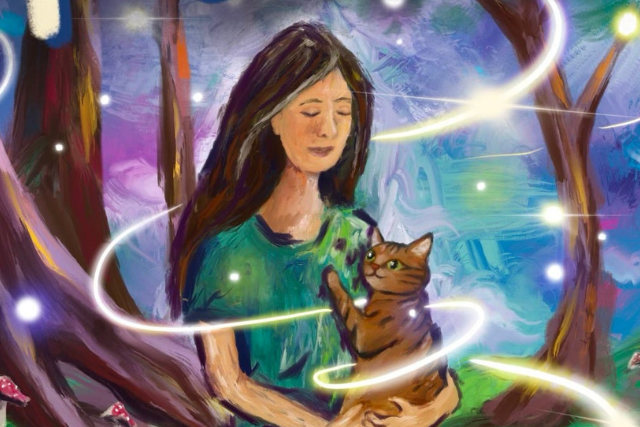
    When my cat Squiggles died, I didn’t just “lose a pet.” I lost a part of my identity, my greatest source of comfort, and my sense of home.

    Squiggles was the one constant in my life through every milestone, every heartbreak, every version of myself I grew into over the course of two decades. I had her since the moment she was born, and for almost twenty-two years, Squiggles was my constant companion, my emotional support, my soul-kitty.

    But no matter how much I prepared myself, nothing could soften the blow of saying goodbye and being forced to live without her.

    As a therapist, I tried to apply all of the coping mechanisms I’ve learned over the years. But the human in me wanted to reject them all. I was just too deep in my grief.

    So I turned inward. And over the past two years, I’ve been learning how to live with the loss of my soul-kitty. Not get over it. Or try to forget. But live with it.

    Here are five things that helped me cope with life without her.

    1. I validated the pain of my grief.

    I knew the loss of Squiggles was going to be devastating one day, but knowing it didn’t make it easier. What it did do was help me validate just how deeply it hurt.

    I didn’t try to hide how sad I felt. I cried every day for weeks. I canceled plans. I moved slowly. And instead of shaming myself for how awful I felt, I tended to the pain.

    Even though many people out there might think, “She was just a pet,” to me, she was everything.

    There’s a term for this kind of mourning: disenfranchised grief. It’s when your grief isn’t recognized by society in the same way a human loss might be. That doesn’t mean the grief is less real. It just means others may not understand how impactful the loss is.

    The bond I had with Squiggles was deeper than many human relationships. I’ve heard countless people say the death of their pet hurt more than the death of a relative. I believe them. I felt it.

    So I reminded myself daily: This was one of the most significant relationships in my life. I’m allowed to be this heartbroken.

    2. I tried to find balance.

    As a therapist, I’m well-versed in the idea that “the only way out is through.” But when you’re in the middle of overwhelming grief, feeling your feelings can quickly turn into drowning in them.

    So I did it in small doses. I yearned for her. I cried. I talked to her. I allowed myself to remember.

    And I also gave myself permission to take breaks from my grief when I could.

    In the early weeks, I couldn’t imagine feeling anything other than sorrow. But slowly, I started allowing myself to step back from the pain. I gave myself a night out with friends. I practiced guitar. I gardened. I let myself laugh without feeling guilty about it.

    And here’s the truth of taking breaks: It does not mean you’re moving on. It means you’re doing the best you can to survive.

    Joy and grief can live side by side. One doesn’t cancel out the other.

    3. I stopped saying “should.”

    Grief doesn’t follow logic. Or timelines. Or “shoulds.

    And yet, they still popped up:

    “I should be feeling better by now.”

    “I should get rid of her things.”

    “I should be grateful I had her for so long.”

    At some point, I realized those “shoulds” were self-judgments in disguise. So I started replacing “should” with “could,” or “would like.” Sometimes I just asked, “Who says?”

    Who says I have to move on quickly?

    Who says keeping a box of her things means I’m stuck?

    Who says I’m grieving “too much”?

    Grief is a unique experience for everyone. No one knows how long the acute pain will last. For me, it has been about two years. My grief isn’t as all-consuming, yet I still have days where it hits me like a wave.

    And now, two years later, I cherish those moments when the grief hits. Because it connects me back to Squiggles.

    4. I connected with others who understood.

    One of the most painful things about losing a pet is how isolating it feels. That one being who knows you in and out is no longer there. It feels incredibly lonely.

    Friends didn’t always know what to say. People who had never had a close bond with a pet didn’t understand why I was so shattered.

    Talking to people helped, but only if they really got it. The people who had been through their own soul-pet losses were the ones who I felt most comfortable with. And it helped.

    Eventually, I created an online community where pet lovers could gather after losing a pet. A soft place to land where you don’t have to explain why you’re still crying six months later, or why it hurts more than you expected. People just get it.

    This community has become a huge part of my healing. And I continue to witness the power of connection every time someone shares their story, their pet’s name, or even just their pain.

    5. I used creativity and art to express how I felt.

    In the beginning, the only way I knew how to stay connected to Squiggles was through my sadness. But as time went on, that love started to move through me in different ways.

    I started gardening. Being in nature and witnessing seeds bloom into flowers reminded me of the circle of life and the connectedness of all beings.

    When I really missed Squiggles and didn’t know what to do with myself, I’d express my emotions through poetry. Or draw every detail of her little face, the patterns in her fur, the way her paws tucked under her body. I looked through old photos and let my emotions guide me.

    These small creative acts didn’t fix the grief. But they gave it somewhere to go. They gave me a way to keep loving her and helped me bring new forms of beauty into my life, even in her absence.

    If you’ve lost a soulmate pet, please know that you’re allowed to take all the time in the world that you need to grieve. Our pets are members of our family and a huge part of who we are. The grief you experience is simply the love you have for them, just in a new form now.
  • The Child I Lost and the Inner Child I’m Now Learning to Love

    The Child I Lost and the Inner Child I’m Now Learning to Love

    “Our sorrows and wounds are healed only when we touch them with compassion.” ~Jack Kornfield

    Her absence lingers in the stillness of early mornings, in the moments between tasks, in the hush of evening when the day exhales. I’ve gotten good at moving. At staying busy. At producing. But sometimes, especially lately, the quiet catches me—and I fall in.

    Grief doesn’t always roar. Sometimes it’s a whisper, one you barely hear until it’s grown into a wind that bends your bones.

    It’s been nearly three years since my daughter passed. People told me time would help. That the firsts—first holidays, first birthday without her—would be the hardest. And maybe that was true.

    But what no one prepared me for was how her absence would echo into the years that followed. How grief would evolve, shape-shift, and sometimes grow heavier—not lighter—with time. How her loss would uncover older wounds. Ones that predate her birth. Wounds that go back to a little girl who never quite felt safe enough to just be.

    I’d like to say I’ve spent the past few years healing. Meditating. Journaling. Growing. And I did—sort of. Inconsistently. Mostly as a checkmark, doing what a healthy, mindful person is supposed to do, but without much feeling. I went through the motions, hoping healing would somehow catch up.

    What I found instead was a voice I hadn’t truly listened to in years—my inner child, angry and waiting. While this year’s whirlwind pace pulled me further away, the truth is, I began losing touch with her long before.

    She waited, quietly at first. But ignored long enough, she began to stir. Her protest wasn’t loud. It was physical—tight shoulders, shallow breath, scattered thoughts, restless sleep. A kind of anxious disconnection I kept trying to “fix” by doing more.

    I filled my days with obligations and outward-focused energy, thinking productivity might shield me from the ache.

    But the ache never left.

    It just got smarter—showing up in my body, in my distracted mind, in the invisible wall between me and the world.

    Until the day I finally stopped. I don’t know if I was too tired to keep running or if my grief finally had its way with me. But I paused long enough to pull a card from my self-healing oracle deck. It read:

    “Hear and know me.”

    I stared at the words and wept.

    This was her. The little girl in me. The one who had waited through years of striving and performing and perfecting. The one who wasn’t sure she was lovable unless she earned it. The one who held not just my pain but my joy, too. My tenderness. My creativity. My curiosity.

    She never left. She just waited—watching, hurting, hoping I’d remember.

    For so long, I thought healing meant fixing. Erasing. Becoming “better” so I wouldn’t have to feel the ache anymore.

    But she reminded me that healing is less about removing pain and more about returning to myself.

    I’m still learning how to be with her. I don’t always know what she needs. But I’m listening now.

    Sometimes, she just wants to color or lie on the grass. Sometimes she wants to cry. Sometimes she wants pancakes for dinner. And sometimes, she wants nothing more than to be told she’s safe. That I see her. That I won’t leave again.

    These small, ordinary acts feel like re-parenting. I’m learning how to mother myself, even as I continue grieving my daughter. It’s a strange thing—to give the care I long to give her, to the parts of me that were once just as small, just as tender, just as in need.

    I’ve spoken so much about the loss of my daughter. The space she once filled echoes every day. But what also lingers is her way of being—her authenticity. She was always exactly who she was in each moment. No apologies. No shrinking.

    In my own journey of trying to fit in, of not wanting to be different, I let go of parts of myself just to be accepted.

    She, on the other hand, stood out—fearlessly. The world called her special needs. I just called her Lily.

    Her authenticity reminded me of something I had lost in myself. And now, authenticity is what my inner child has been waiting for—for so, so long.

    Sometimes I wonder if the universe gave me Lily not just to teach her but to be taught by her. Maybe our children don’t just inherit from us—we inherit from them, too.

    Her gift, her legacy, wasn’t just love. It was truth. The kind of truth that comes from living as you are.

    Maybe her lesson for me is the one I’m just now beginning to accept: that being fully myself is the most sacred way I can honor her.

    It’s not easy. The adult in me wants a checklist, a result, a clean timeline. But she reminds me: healing isn’t a destination. It’s a relationship.

    It’s a relationship with the past—yes—but also with the present moment. With the part of me that still flinches under pressure. With the softness I once thought I had to abandon in order to survive.

    I’m learning that my softness was never the problem. It was the silence that followed when no one responded to it.

    She is the key. The key to my own heart.

    It doesn’t always come in waves.

    Sometimes it’s a flicker, a breath, a quiet knowing that I’m still here—and that they are, too.

    My daughter, in the memories that move like wind through my life. And my inner child, in the softness I’m learning to reclaim. In the space where grief and love hold hands, we all meet.

    Maybe that’s the lesson she’s been shouting all along: that we can’t truly love others if we abandon ourselves. That within our own hearts—tender, bruised, still beating—lies the key to beginning again.

    We can’t mother our lost children the way we once did.

    But maybe, in their absence, we can begin to mother the small, forgotten parts of ourselves—with the same love, the same patience, the same fierce devotion.

    Maybe that’s how we honor them—not by moving on, but by moving inward.

  • I Lost My Father—and the Illusion of My Mother

    I Lost My Father—and the Illusion of My Mother

    “Sometimes letting things go is an act of far greater power than defending or hanging on.” ~Eckhart Tolle

    In July 2023, my father died in a tragic accident. We were devastated—my sisters, my mother, and I. Or so I thought.

    What followed in the months after his death forced me to confront the truth of my mother’s emotional disconnection, a truth I had sensed but never fully allowed myself to see. In losing my father, I also lost the illusion of the mother I thought I had.

    A Sudden Exit

    By September, just two months after my father’s death, my mother packed up and left the home we had just helped her settle into. She moved from Florida to Alabama to be with a man she had secretly loved for years—her high school crush. A man she had long referred to as her “co-author.” I will call him Roy.

    He had been a nightly fixture in her life for a while. She would stay on the phone with him late into the evening, even while my dad slept in the next room. She always claimed it didn’t bother my father. But looking back, I wonder if he just swallowed the discomfort, like so many other things.

    Let’s take a step back. In 2022, my sister and I bought a home for our parents to retire in comfortably. We thought we were giving them a safe and loving space to grow old together. But before my father even passed away, my mother had already planned her escape. The house we bought wasn’t her sanctuary. It was a stopover.

    She didn’t ask us for help moving. She didn’t even warn us. She bought new luggage, made quiet arrangements, and disappeared. We were suddenly bombarded with text messages filled with excitement: stories of her “new life,” her “adventures,” and her rediscovered love. She glowed with freedom while the rest of us were still gasping for air.

    A New Life, A New Name

    By January—six months after my father died—she was married to Roy. She changed her last name. She discarded decades of shared identity with my father like she was shedding an old coat. She left behind his ashes. She left the framed photos that we had prepared for his memorial. It was as if he had never existed.

    But it wasn’t just him she left behind. She also abandoned her daughters. Her grandchildren. Her great-grandchildren. A family many would cherish, tossed aside like clutter.

    Her new story was one of long-suffering redemption. She recast herself as the woman who had endured a marriage with a difficult man and had finally, after decades, found joy. The truth? She had slowly detached from the rest of us for years—investing more time in writing projects and Facebook groups aligned with Roy’s interests, and less in her own family.

    Her new husband had also just lost his spouse, only days after my dad died. The narrative practically wrote itself: two grieving souls who found each other through fate. But those of us watching from the outside knew the foundation had been laid long before the funerals.

    The Pain of Rewriting the Past

    Eventually, my sisters and I had to step away. We had asked for space to grieve our father—kindly, repeatedly. But every boundary was met with denial, deflection, or emotional manipulation. There was no recognition of our pain, only excitement about her “next chapter.”

    Sometimes I wrestle with the urge to correct her version of events. In her telling, she’s the eternal victim: a woman finally liberated, only to be judged by ungrateful daughters who refused to be happy for her. But I’ve learned that arguing with someone’s internal mythology rarely leads to healing. It only deepens the divide.

    So, I let go. Not of the truth, but of the need for her to see it.

    I grieved deeply—not only for my father, but for the mother I thought I had. I began to wonder: Had she ever wanted children? Had she ever truly been emotionally available? Was it all performative?

    Those are hard questions to ask. But once I allowed myself to see her clearly—not as the mother I hoped she was, but as the woman she actually is—I began to feel something surprising: relief. And eventually, acceptance. Accepting that a parent is incapable of giving you the love you needed is one of the hardest emotional tasks we face. But it’s also one of the most liberating.

    Breaking the Cycle

    There were red flags in childhood. My mom wasn’t nurturing. She often complained of pain, stayed stuck on the couch, irritable and disconnected from the rest of the family. I walked on eggshells around her. I can’t recall warm, playful memories. That emotional void quietly shaped me in ways I didn’t fully understand until recently.

    I developed an attachment style that drew me to avoidant relationships, repeating old patterns. I didn’t know how to ask for what I needed because I had never learned to recognize my needs in the first place.

    Through therapy, reflection, and support, I began to break the cycle. But it required giving up the fantasy. It required grieving not just the loss of my parents, but the loss of the childhood I wished I had. This is not a story of blaming parents, but rather one of gaining a deeper understanding of my mother to better understand myself.

    I want to be clear: I have compassion for my mother. She grew up with mental illness in her home. She wasn’t nurtured either. She didn’t learn how to attune, connect, or show up. She may have done the best she could with what she had.

    But compassion doesn’t mean ignoring harm. I can hold both truths: her pain was real, and so is the pain she inflicted.

    The Freedom of Letting Go

    I’ve stopped hoping for an apology. I’ve stopped trying to explain myself. And I’ve stopped trying to earn her love.

    Instead, I’m investing in the relationships that nourish me. I’m giving myself the emotional safety I never had. I’m allowing myself to feel it all—the grief, the clarity, the compassion, the peace. Letting go of a parent doesn’t make you cold-hearted. It means you’ve decided to stop betraying yourself.

    Because here’s the truth I’ve come to accept: we can love our parents and still recognize that the relationship isn’t healthy. We can give grace for their pain without sacrificing our own healing. And in some cases, we can—and must—walk away.

    There is freedom in seeing our parents as they really are—not as idealized figures, but as complex, flawed humans. When we hold onto illusions, we gaslight ourselves. We call ourselves too sensitive or too needy when in reality, we’re responding to unmet needs that have been there all along.

    To me, that doesn’t mean sitting in resentment about what you didn’t get from your parents; it means figuring out how to provide that for yourself as an adult. If we don’t examine those early wounds, we carry them forward. We struggle to trust. We tolerate toxic dynamics. We confuse love with emotional labor.

    Understanding where it all began leads to healthy change. We can choose different relationships. We can choose ourselves.

    And that, I’ve learned, is where healing begins.

  • Rebuilding Myself After Divorce: How I Found Healing and Hope

    Rebuilding Myself After Divorce: How I Found Healing and Hope

    “The wound is the place where the Light enters you.” ~Rumi

    I never imagined I’d be here at forty-nine—divorced, disoriented, and drowning in an identity crisis. I had met him just before my sixteenth birthday. He was all I knew. We built an entire life together—nearly three decades of marriage, raising children, shared memories, traditions, routines. And then, one day, it all collapsed with five haunting words: “I need some space, Heather.”

    At first, I thought it was a phase. But the space became silence, the silence became separation, and soon after, I was signing divorce papers. The man I had built my entire adult life around was gone—and I was left looking in the mirror, asking, who am I without him?

    I wasn’t just grieving a relationship. I was grieving myself. The version of me that had given everything. The version that bent and adapted and compromised for the sake of “us.” And underneath the heartbreak was a heavy cocktail of blame and resentment—toward him, toward myself, and honestly, toward time.

    I blamed him for blindsiding me, for giving up, for not fighting for us. I resented him for having the freedom to walk away while I was left holding the pieces of a shattered dream. But deeper down, I blamed myself for not seeing the signs. For ignoring the subtle shifts. For losing myself in the process of trying to keep a marriage alive that had slowly stopped breathing.

    The truth is our marriage ended because we grew apart. I had started evolving—becoming more spiritual, more curious, more self-aware. He didn’t come with me. And after years of unspoken tension, emotional distance, and mismatched values, we were no longer on the same path. Still, even with that understanding, it didn’t make the grief easier.

    For months, I was in survival mode—smiling through social events, working, taking care of my responsibilities. Outwardly composed. But inside? I was crumbling. The nights were the hardest. That’s when the questions haunted me:

    What did I do wrong? Why wasn’t I enough? Will anyone ever love me again?

    Then, one quiet afternoon—nothing particularly special about it—I sat in my bedroom, surrounded by silence, sunlight pouring through the window, and I just… stopped. I was exhausted from my own thoughts. There was no dramatic trigger—just an overwhelming stillness that finally gave space for a new question to enter:

    What if this isn’t the end? What if this is the beginning of coming home to myself?

    That was the moment everything shifted. I decided I was no longer going to be the woman waiting to be rescued. I was going to become the woman who rescued herself.

    Heartbreak lives in the body. And mine was screaming.  Tight shoulders, restless sleep, a dull ache in my chest that never left. I had spent so long disassociating from my body—ignoring its cries while tending to everyone else’s needs.

    But healing demanded presence. So, I began walking the dogs daily—feeling my feet on the earth, breathing deeply again. I returned to gentle movement through Pilates. I swapped comfort food for nourishing meals that made me feel alive. Each small act of care was a message to myself: You matter. You’re worth tending to.

    The most toxic place I lived in wasn’t my house post-divorce—it was my own mind. The narrative was cruel: You failed. You’re too old. You’re fat. You’re unlovable. You’ll always be alone.

    But I started catching those thoughts and asking, Would I say this to my daughter or my best friend? Of course not. So why was I saying them to myself?

    I started journaling affirmations: I am enough. I am healing. I am lovable. I am whole. Slowly, my inner critic softened. I began rewriting my story—not as the woman who was left, but as the woman who rose

    The next chapter was the most magical—and the most confronting. When your life revolves around someone else for nearly thirty years, you forget who you are outside of that. I began to remember.

    I remembered I love writing.

    I remembered how healing it is to dance barefoot to music I adore.

    I remembered my curiosity, my dreams, my longing for meaning.

    I began meditating each morning, journaling. and going on solo nature walks. I talked to my guides, my angels. I cried. I created sacred space just for me.

    And slowly… the woman I was before him, and the woman I was becoming after him, started to meet. And they liked each other.

    Healing isn’t a straight line. Some days you feel fierce. Other days, fragile. But both are part of the process.

    Even now—with a wonderful new man in my life—grief still visits me from time to time. Milestones like our children’s weddings or the births of our grandchildren have stirred old emotions I thought I’d already processed. Moments where the “what was” collides with the “what is.”

    But now, instead of meeting that sadness with shame or self-judgment, I greet it with compassion. It’s okay to hold joy in one hand and grief in the other. That’s what healing really looks like.

    If you’re in the middle of your own heartbreak, here’s what I’ve learned that might help:

    Care for your body: Movement, nourishment, rest. Your nervous system needs it.

    Challenge your inner critic: Speak to yourself with the love you gave so freely to others.

    Rediscover your essence: You are more than someone’s partner. You are a soul, a fire, a force.

    Let go with love: Blame binds you to the past. Forgiveness sets you free.

    You are not broken. You are rebuilding. Every tear, every setback, every breakthrough is sculpting a more radiant, wiser version of you.

  • Healing Through Grief: How I Found Myself in the Metaphors of Loss and Love

    Healing Through Grief: How I Found Myself in the Metaphors of Loss and Love

    “When the soul wishes to experience something, she throws an image of the experience out before her and enters into her own image.” ~Meister Eckhart

    For most of my life, something in me felt off—misaligned, too much, not enough. I moved through the world trying to fix a thing I couldn’t name.

    Then, a beautiful chapter emerged where I no longer questioned myself. I met my husband—and through his love, I experienced the life-changing magic of being seen. His presence felt like sunlight. I softened. I bloomed. For the first time, I felt safe.

    Losing him to young-onset colorectal cancer was like watching that sunlight disappear. With his last breath, the safety I had finally found evaporated. And in the long, aching months that followed, I began to reflect on all the environments I’d moved through—childhood, adolescence, adulthood, relationships—as gardens. And myself as a plant, either nurtured or wilting depending on the conditions and my individual constitution.

    His absence clarified the kind of care I had—and hadn’t—known.

    I was never defective. I am a being with specific needs for thriving—just the right light, language, and nourishment required for blooming.

    When I look back, I can see that while my basic needs—shelter and food—were met, I didn’t understand what it meant to feel emotionally safe or deeply seen. I cycled through endless loops of What’s wrong with me?—never realizing I wasn’t broken. I was just trying. Surviving.

    Presence. Attunement. Emotional safety.

    These aren’t things you can name as missing when you’ve never known them. Not because anyone was overtly cruel but because no one had ever been taught to ask, What kind of care does this particular being require?

    Humans don’t come with cue cards. No tags that say, “partial sun, low stimulation, daily emotional attunement.” We enter this world as mysteries.

    My mom carries a sixth sense with her plants. As if she can smell it, she knows when they need water or tending without even looking at them. She is attuned to her garden in ways I only experienced years later with my husband.

    After he died, I longed for the kind of care we cultivated together—the way he could sense what I was feeling without looking at my face. The way my heart used to sing when he looked at me. The way he listened.

    My relationship with my mother has been tenuous at best in adulthood. But after my husband passed, I saw her try—in the ways she knew how. Fixing. Filling space. Masking the pain with doing. On our occasional phone calls, she’d talk about her plants: who was dry, who needed new soil, who was ready for a bigger pot. No performance. No expectation. Just attention.

    I recognized in those moments that she couldn’t offer me the kind of gaze she gave her plants—and for the first time, I understood why. Her care was real. She’d just never encountered a plant like me before.

    Before I met my husband, I’d already been living in survival mode for years—self-medicating in the wake of emotional upheaval and familial crisis, eroding what little trust I had in myself. His love opened something in me I hadn’t known was possible: safety. And after he died, I had to learn what safety meant in my body at this stage of my journey.

    Most of us are raised in environments shaped by inherited urgency, unexamined patterns, and a generational lack of curiosity. There is no fault here, but there is consequence.

    The body, in its wisdom, keeps score. It holds unmet needs and unspoken truths like a second skin.

    And it’s often when we encounter a metaphor—one that mirrors our inner experience—that something in us exhales.

    That metaphor becomes a form of attunement. Not a solution, but a shift. A felt sense that maybe nothing is wrong—only unrecognized. It doesn’t fix the past, but through meaning-making, the body is able to rest. To breathe.

    We speak of regulation like it’s a technique. Breathe like this. Move like that. But often, the truest form of regulation is recognition.

    Something outside of us that echoes what lives within. A melody in our favorite song. A story. A metaphor that reminds us: You are not alone in this shape.

    And in that moment, the body softens. The charge lifts. We are seen.

    This is why metaphor matters. Not just as art, but as medicine. As orientation. As survival.

    When we are mirrored—by a song, a painting, a stretch of sky that looks exactly how grief feels—we are granted a kind of coherence. Our experience, once scattered or silenced, is gathered into form. And form is something we can hold.

    Often, it’s not the literal circumstances that make us feel safe. It’s the resonance. The reassurance that someone, somewhere, has known a similar ache.

    Even if the path is different, the terrain feels familiar. And that familiarity becomes a nervous system offering—a tether back to self when the ground feels too far away.

    The metaphors that make us human are often subtle. Soldiers of our intuition: they arrive as gut feelings, patterns, images, or melodies we keep returning to. The ocean. The desert. A cracked shell. A single tree that blooms late every season.

    They take root in us slowly. And then one day, without even realizing it, we see ourselves reflected back in the world—and a sense of belonging begins to ripple through our internal landscape.

    Viktor Frankl once wrote that “those who have a why to live can bear almost any how.” He understood what trauma researchers like Bessel van der Kolk and Gabor Maté have continued to illuminate: that suffering, when given meaning, becomes bearable.

    Not erased or justified but metabolized. Held. Breathed into.

    Meaning doesn’t change what happened. It changes how what happened lives in us.

    This is where metaphor becomes more than language. It becomes a vessel—for pain to move through. A frame sturdy enough to hold the unnamable.

    Frankl found this truth in a concentration camp. Van der Kolk found it in bodies that refused to forget. Maté found it in the tender ache beneath addiction and illness.

    I found it in my mom’s garden.

    And I keep finding it—in metaphors that arrive like lifelines when I don’t know how to explain what I’m feeling.

    These metaphors don’t heal the wound, but they give it form. And form allows grief to become something we can live beside, something we can integrate instead of suppressing.

    Metaphor isn’t something we create in isolation. It’s something we receive—through dreams, through symbols, through the quiet choreography of the natural world.

    A bird showing up at your window. Song lyrics that name exactly what you needed to hear. The shape of a tree that mirrors your own posture in grief.

    These aren’t just coincidences. They are collaborations. The world, whispering back: I see you. I’m in this with you. In that echo, we find compassion—for the pain, for the path, for ourselves.

    We like to think of ourselves as the authors of our stories, but more often, we’re co-writing them with something larger. With the landscape. With our ancestors. With the energy of what’s unresolved and aching to be tended.

    Metaphors arrive from this conversation—between the inner and outer, the seen and unseen. They root us in the relational fabric of existence.

    This is what it means to be human. Not just to feel, but to recognize. To witness ourselves mirrored in a leaf, a line of poetry, a stranger’s eyes. To belong—not because we fit a mold, but because something in the world has shaped itself to meet us exactly where we are.

    Perhaps the more honest question isn’t “What’s wrong with me?”

    It’s “What shaped me?”
    “What conditions was I sprouted within?”
    “And what have I learned about the kind of soil, sunlight, and care that allow me to bloom?”

    What symbols found me along the way?

    We are beings of pattern and story.

    Metaphor is how the soul speaks back.

    And meaning is the thread that carries us home.

  • Grief Has No Rules: Love, Loss, and Letting Go

    Grief Has No Rules: Love, Loss, and Letting Go

    “Grief never ends … But it changes. It’s a passage, not a place to stay. Grief is not a sign of weakness, nor a lack of faith. It is the price of love.” ~Unknown

    “Thank you for letting me know.” The moment I hung up the phone, the tears came. I was confused and caught off guard. Why was I crying over the death of my ex-husband?

    We’d separated six years ago. I had a new partner and hadn’t thought much about him in over three years. So why did his death hit me so hard?

    Big Girls Don’t Cry

    Growing up in Ireland, emotions weren’t something we talked about. Tears were for small children, not grown women. When I was upset, I’d hear the same phrase, “Big girls don’t cry.” It wasn’t meant to hurt me, but it stayed with me.

    I learned to swallow my feelings. Anger, sadness, fear—those were things you kept private. I thought strength meant holding it all in. But as I grew older, that kind of strength felt heavy.

    When my ex-husband died, all of it came rushing back. The sadness, the confusion, the guilt. And then the shame. Why couldn’t I just be stronger? Why couldn’t I pull myself together like I was supposed to?

    Grief and Guilt Collide

    I felt like I was failing. Crying didn’t just feel wrong—it felt like a betrayal. A betrayal of my upbringing, of the image I had of myself, and even of my current relationship. I couldn’t stop thinking: What if my partner saw me like this? Would he understand? Would he think I still loved my ex?

    The guilt weighed on me. But so did the fear. I wanted to go to the funeral, but I was terrified. What would his family think if I showed up? Would they see my tears and think I didn’t deserve to grieve? Would they think I was pretending?

    I wanted to hide. I wanted to run away from the emotions I wasn’t supposed to have. But this time, something inside me told me to stay.

    Reaching Out for Support

    I couldn’t carry it alone anymore. The grief, the guilt, the fear—it was all too much. For the first time in my life, I did something I’d always avoided. I reached out.

    I called my mum.

    At first, I hesitated. My instinct was to keep it together, to pretend I was fine. But the moment she picked up, the words spilled out. I told her everything. How lost I felt. How ashamed I was for crying. How afraid I was of what people would think if they saw me like this.

    She didn’t say much at first. She just listened.

    The Power of One Simple Truth

    Then, when I finally stopped talking, she said something simple. “It’s okay to feel this, you know. You loved him once. That doesn’t just go away.”

    Her words broke something open in me. I cried harder than I had in years, but for the first time, I didn’t feel alone in it. She stayed on the phone while I let it all out. She didn’t try to fix it or tell me to stop. She just stayed.

    That moment was a turning point. I started to see that grief wasn’t something to fight against or hide from. It was something I had to let myself feel. And asking for support didn’t make me weak. If anything, it gave me strength.

    Leaning on my mum helped me find my footing. I wasn’t over the loss—not even close—but I felt less trapped by it. For the first time, I could breathe again.

    Facing My Fears at The Funeral

    I arrived early at the church with my friend, my stomach in knots. The air felt heavy, like it knew I didn’t belong here—or at least, that’s what my mind kept telling me.

    A car pulled in beside us, and my heart sank. It was his sister. Without thinking, I slumped down in the seat, silently pleading for the ground to swallow me whole. What am I doing here? I wasn’t sure I could face their grief. I wasn’t sure I could face my own.

    But I’d come this far, and I couldn’t back out now.

    Finding Unexpected Comfort

    Dragging my feet, I walked toward the church door. Each step felt heavier than the last. I caught a glimpse of his brother standing near the entrance, and panic bubbled up in my chest. I almost turned and ran.

    My friend, sensing my hesitation, gently squeezed my elbow. It was a small gesture, but it steadied me. I kept walking.

    Then I saw her—his sister—standing at the church door. Her eyes locked with mine. There was no way out now. I braced myself, expecting a cold stare, a sharp word, maybe even outright anger.

    Instead, she stepped forward. And then, before I could react, she wrapped her arms around me. The hug was warm and full of love. It broke down every wall I’d built up in my mind.

    Finding Solace in Shared Memories

    Inside, the service was simple and poignant. The priest spoke softly, and memories of our life together floated through my mind—some good, some hard, all real. As the coffin was carried out of the church, I felt the tears welling up again.

    My friend placed an arm around my waist and gave me a little squeeze. For a moment, I considered pulling away, trying to summon that old stiff upper lip. Pretending I was fine. But I didn’t. I let the tears fall.

    After the service, the family invited me for a drink. It was an Irish funeral, after all. I hesitated, unsure if I belonged in their circle of mourning, but their warmth melted my fear. As we shared stories about him—some that made us laugh, others that brought tears to our eyes—I realized something profound. We had all loved this man in our own ways, and in that moment, our shared grief united us.

    Carrying the Sadness, Embracing the Joy

    Leaving the funeral, I felt a strange mix of emotions. The heaviness of loss was still there, but so was something else—a sense of lightness, even relief.

    The family’s kindness had reminded me of something I’d forgotten in my guilt and fear. I wasn’t just grieving a person; I was grieving a chapter of my life. My ex and I had shared 18 years together. Those years mattered. They shaped me into who I am today.

    A Beautiful Realization About Love

    At first, I struggled to reconcile those feelings with the love I have for my current partner. I worried that my grief might hurt him or make him feel less important. But over time, I realized something beautiful: love isn’t a competition. There’s space for both past and present love in my heart.

    I still feel sad when I think about my ex. Some days, it sneaks up on me—a song he used to love, a random memory, or even a quiet moment when the world feels still. But I’ve learned that sadness doesn’t mean I’m stuck or broken. It’s just a part of healing, a reminder of the love we shared and the lessons we learned together.

    Lessons Learned Through Grief

    • Grief Has No Rules: It’s okay to mourn someone even if your relationship wasn’t perfect or ended long ago. Grief is deeply personal and unpredictable.
    • Emotions Are Strength, Not Weakness: Feeling your emotions doesn’t make you weak—it makes you human. Suppressing them only makes the weight heavier.
    • Ask for Support: You don’t have to carry grief alone. Lean on those who care for you and let them help lighten your burden.
    • Grief and Growth Can Coexist: Mourning someone is also an opportunity to reflect on what that relationship taught you and how it shaped you.
    • Healing Takes Time: There’s no timeline for healing. Be patient and gentle with yourself as you navigate the journey.

    Grief isn’t something we “get over.” It’s something we carry with us, but over time, it becomes lighter. We make space for it, and in doing so, we make space for love, connection, and joy again.

    If you’ve experienced grief, know that you’re not alone. Share your story in the comments below or reach out to someone who can support you. Sometimes, simply being heard can be the first step toward healing.

  • Because I Lost My Mom: 6 Gifts I Now Appreciate

    Because I Lost My Mom: 6 Gifts I Now Appreciate

    “The only thing you sometimes have control over is perspective. You don’t have control over your situation. But you have a choice about how you view it.” ~Chris Pine

    I had a happy, carefree childhood up until a point. I remember lots of giggles, hugs, and playfulness. One summer, as we were sitting in my grandmother’s yard enjoying her homemade cake, my mum’s right hand started trembling.

    My worried grandmother encouraged her to eat, but her hand continued to tremble. I remember her troubled look. She must have sensed something was wrong.

    Just three months later, she was gone. Acute leukemia meant that on Monday she received the results of a worrying blood test, on Wednesday she was admitted to the hospital, and by Friday she had died. I was only ten years old.

    My aunt broke the news to us that Friday afternoon by saying, “Your mum has gone to the sky.”

    If I were to explain what the news of her passing felt like, I would say it was like being hit by lightning. I’ve read that in cases of sudden death, children can stay stuck in some sort of confusing reality: They hear what happened and react to the news, but they don’t quite comprehend it. Somehow, deep inside, they don’t really believe it.

    In my case, and for years following my mum’s death, I thought that she had gone to the sky, but that she would come back. It was just a trip, or a bad joke.

    She would most definitely come back.

    As you might be guessing, I did not get much support in dealing with my grief. On the contrary, the message I got was that life should go on. That a page had turned, but the preceding pages weren’t worth reading.

    This is also how all the adults around me acted. So, even though lightning had struck me, I simply stood up and continued to walk, despite all the invisible damage it had done.

    The wake-up call to locate that damage and try to repair it came years later when I started experiencing health issues that my doctors said were linked to chronic stress. That’s when I finally decided to face my grief. My young adult body was giving me a clear sign: There were too many unprocessed emotions, desperately needing to find a way out.

    Once I allowed myself to finally feel that my heart had been shattered in a million pieces, I started putting those pieces together and redefining who I was.

    If my life were a book, grief would be the longest chapter. When I meet someone for the first time, I almost feel like saying, “Hi, I’m Annie, and my mum suddenly died when I was ten.” That’s how much it defines who I am.

    Negatively, you might think.

    Indeed, her absence still causes tremendous pain. I never felt this more than when I had my own children a few years ago. Becoming a mother does not mean that you stop being a daughter who needs her mother. You also become a mother who would like her children to have a grandmother.

    My mother is not there to spoil my daughters, and they will never get to know her. There is no one I can ask to find out how I was as a baby. She isn’t there to listen to my worries or fears while I navigate parenthood.

    I still get a ping in my heart when I see ten-year-old girls with their mums, seeing myself in them and re-living the immensity of such a loss. And as I am approaching the age she was when she died, I’m terrified that I will share the same fate and that my girls will grow up without me.

    Nevertheless—and I know this might sound contradictory, but aren’t grief and life full of contradictions?—in many ways, her absence has also been a gift.

    Thanks to her:

    I fully embrace the idea “live every day as if it is your last” because I know that there is a very real possibility that this day might indeed be my very last. While you might think this means living life with fear, quite the opposite is true. It means living life full of appreciation, gratitude, and love for this body that is still functioning, for the people around me, and for life itself.

    I choose to be truly present with my children and close ones and cherish deep relationships because I want to make the time we spend together count. If the memories we are creating are shorter for whatever reason, let them be powerful.

    I have a job that gives me a deep sense of purpose and meaning because anything else would make me feel like I am wasting precious time that I don’t necessarily have. I’m honored to be making a difference in other people’s lives by helping them think differently about their lives and helping them through their own grief. I make it my goal to share my gifts with the world while I live on this planet.

    I am (relatively) comfortable with the challenges that life throws at me. When you survive after the tragedy of losing a parent, you don’t sweat the small stuff as much. I still find myself getting upset by little things like anyone else, but I’m able to quickly change my perspective and realize that many of the things that upset us are not as important as we first think.

    I know that I cannot control life because life is utterly uncontrollable. In fact, I was a control freak for years, trying to make sure nothing tragic would ever happen to me or my loved ones again, until I realized that this was a reaction to my mum’s passing. I now know this isn’t a way to live life, and that is liberating.

    I take care of my health to feel good in my body, not because I want to live until I’m 100, but because I want to live well. I don’t want my days to be filled with the common ailments that people usually accept, such as headaches, brain fog, or digestive issues. I can only enjoy life fully if my body is allowing me to do so.

    If you have experienced early loss but cannot possibly imagine feeling anything positive about it, there is nothing wrong with you. I am sharing my story to perhaps inspire you or even give you comfort.

    Perhaps all you can do right now is stay open to the possibility that at some point in your life, you might be able to see things in a similar way. Ultimately, the path of grief is entirely unique.

    Would I wish early loss on anyone? Never.

    Has grief made me happier? Perhaps.

    Has it made me wiser? Definitely.

    Just as a friend once told me, “You can’t appreciate light without the shadows.”

  • How to Honor Our Grief While Rebuilding Our Lives

    How to Honor Our Grief While Rebuilding Our Lives

    “Grief is not something that ever goes away. You just learn to accommodate it so you can move forward in your life and over time it gets less intense, at least most of the time.” ~David Baxter

    Grief is a natural response to loss. Loss can mean the death of a loved one, the end of a relationship, the loss of a job or home, or a response to trauma, abuse, or betrayal. Grief shows itself differently in different people. But the common denominator is that grief goes deep, and grieving is painful.

    Around six years ago, my life was turned upside down and would never be the same again.

    I was raised in a cult from the age of nine. I was a child of domestic violence and divorce. My father abandoned the family, and we subsequently suffered abuse from my mother’s partners.

    By age seventeen, I met a young man, and we began dating. In line with the strict moral code I was raised with, we were married by the time I was nineteen.

    We had two children, and I struggled to be the perfect wife, mother, and cult member, as I suffered from severe anxiety, coupled with feelings of self-loathing and mistrust of others.

    My husband was selfish and narcissistic, which led to me carrying the weight of the family almost alone. Yet, I battled on, wanting my children to grow up with both parents, feeling safe and in a strong, supportive community.

    Eventually, things came to a head, and I just couldn’t do it anymore. After twenty years of marriage, I separated from my husband and was subsequently excommunicated by the cult. This meant that I was completely cut off from my mother, my community, and childhood friends—basically everything and everyone I knew and loved.

    Outside of the cult, I had no one and nothing.

    Almost overnight, I had lost my whole identity and support network along with beliefs that I had held on to for the whole of my life.

    A few months after the excommunication, a close family member who was only twenty-seven took his own life. I was devastated and still reeling from the other losses that were still so raw.

    Despite all of this, I was determined to rebuild a life for myself and my children. I educated myself, got a better job, made new friends, had relationships, and eventually met a good man who would go on to support and love me with all my struggles.

    I was all about ‘moving on’ and building the life I wanted! But every now and then, I would get so very sad.

    I was receiving counseling specific to my situation, which was helping, I had a good life, and those things that hurt me were in the past. I was doing all the ‘right’ things, so why was I getting so sad to the point that I wanted to push everything and everyone away and be alone?

    I would feel like I had accomplished nothing and would be plagued with guilt and shame and regret. It would make me feel vulnerable and unsafe, and I couldn’t understand why.

    Then, after another tearful and anxious weekend, I decided to try to focus on myself, meditate, journal, and do some yoga—all the things that usually helped at least ease the symptoms.

    It was during my meditation session that it occurred to me: I am still grieving. I am grieving the loss of a childhood, the loss of my community, of my beliefs, of my family and friends. I am grieving the loss of my parents and of my beautiful nephew. I am grieving what I imagined my life would be and what I imagined my children’s lives would be.

    I realized that grief doesn’t have a time limit; it doesn’t get ‘done.’ It’s not something we get through and tick off at the end.

    My grief wasn’t just going to go away over time or with lots of positive thinking.

    When we suffer loss, it hits us throughout our lives. And that’s okay. It’s uncomfortable and it’s sad, but it’s okay. It’s sometimes so painful that it is overwhelming or debilitating. We can allow ourselves to feel that sadness. We can grieve. We can allow ourselves a little space to honor that loss.

    I write this because so many of us have suffered loss in our lives, and we so want to move on, do better, be better, and heal, and we can. But we also have to remember that the loss we felt was real, that grief is not a linear process, and that it’s okay if years later, we are still sad and grieving the loss. We have not gone back to the beginning. We’re not starting again or getting nowhere.

    We cannot force ourselves to ‘get over it.’ We can, however, make room for that grief and still live a rewarding life. By honoring our grief, we can allow place for the loss but see that we can have a future and continue to work toward that.

    I know I will never ‘get over’ the effects that abuse, abandonment, betrayal, and loss have had on me. I know I will always miss and feel sad about the loss of my nephew. I know I will always return to the grief because those things cannot be erased from my memory and because those things were my life and mattered to me.

    But I can allow myself to grieve those losses without guilt or shame. I can soothe myself and take care of myself during those times when I am feeling fragile instead of beating myself up and berating myself for feeling that way and for not ‘being strong.’

    When I do this, I come back feeling comforted and validated, and I can move on for a while to crafting the life I want to live. I can appreciate the friendships and relationships I have formed. I can explore new beliefs. I can entertain hope.

    When I honor my grief, I honor the people I have loved and lost; I honor the beliefs I held and the hopes I had; I honor my hurt; and I honor that they were part of me and my journey and, in some ways, always will be. But I also allow myself to accept that I can honor my grief and still have a good life. I can rebuild. I can be happy.

  • The Truth About Grieving: There Are No Rules for Healing

    The Truth About Grieving: There Are No Rules for Healing

    Here’s what I know about grief: There is no measuring stick.

    The loss of a mother, father, sister, brother (or all of the above), the loss of a husband, wife, lover, boyfriend, girlfriend, or life partner, the loss of a best friend, dear friend, or close friend, the loss of a mentor, teacher, guider, inspirer… Who’s to measure? Who’s to say how profoundly those losses may or may not break our hearts?

    There are no rules.

    The loss of a happy, loving relationship may be far easier to survive than the loss of a troubled one.

    A lover may feel overwhelmed by sadness years after a husband remarries and starts a family.

    A close friend may feel as much loss and sorrow as a best friend.

    When a person dies, they may have 10, 100, 1,000 friends, or even more grieving them. When Judy Garland died, so many people in the gay community grieved her loss that it was a contributor to the Stonewall riots and the beginning of the gay rights movement.

    At first, when you lose someone, friends, distant and otherwise, shower you with messages and cards saying things like “This, too, shall pass” and “You are strong; you will get through this.” The Jewish religion gives you a week to “sit shiva.” You cover the mirrors. (Who wants to look at such a sad face anyway?!) You wear slippers. People bring you casseroles. You are expected to spend an entire week crying.

    Two, maybe three weeks later, no one asks, “How are you feeling?” No more cards come in the mail. No more “May her memory be a blessing” messages on Facebook. Some friends avoid you for months, saying they “want to give you time to mourn.”

    The overwhelming message feels like, “Times up! Move on! Cheer up!”

    No one seems comfortable around grief.

    Two weeks after I lost my mother, my girlfriend at the time decided to break up with me. She said she loved me (is that love?), but she loved the happy, fun, cheerful Rossi she met, not this sad, brooding, blonde mess.

    I love NOT being with her anymore.

    As much as people like to set limits, there is no time limit on grief.

    I lost my mother, Harriet, thirty-three years ago. A Jewish mother’s love can be suffocating, yes, but also like a vast ocean of endless warmth. I wish I could swim in that ocean one more time.

    “Get over it; she was just a friend.”Just?

    I still mourn the loss of my mentor and friend Catherine Hopper, who passed away five decades ago. I was only eight years old when Catherine died. I can still smell the powder foundation she slapped on her face with abandon.

    Some people feel they are in a grief competition. They downplay your grief by talking up their own (far superior) grief. What is this, the Grief Olympics? What is the medal, a lifetime supply of tissues?

    2022 was my death year. I may always think of it that way. I lost my dear friend Kathryn, my best friend since childhood, Suzy, my friend and co-worker BB, and my sister, Yaya. I thought I was done with death after 2022, but I lost my brother, Mendel, on Halloween the following year.

    I’d like to say that I took the time to mourn each loss and move on before the next came, but it felt more like standing in the ocean getting toppled by a wave. Each time I came up for air, I was toppled by another.

    Most people assumed I would have the hardest time losing my sister and brother. I had more trouble losing Suzy. She was the person I most likely would have been talking to about losing my sister and my brother. She’d known them both since we were children.

    At fifty-nine years old, I found myself to be the last surviving member of my family. My mother used to call herself “The Last of the Mohicans.” At the age of forty-six, she was the last surviving member of her family. Yet another thing my mother and I have in common. This is not a baton I want to carry.

    For eighteen years, BB was the person I could lean on professionally. If I were inclined to call in sick (something I rarely do), it would be okay because BB would be there. I think of our van rides to events together like the rings in a tree. I can trace where I was in my life and in our friendship by the depth of our van chats. Our first rides together, we talked about lemons, limes, and rosemary focaccia. Our last rides together, we talked about heartbreak and love.

    My relationship with my brother, Mendel, was problematic and troubled, riddled with the hypocrisy that often accompanies extreme religion. In some ways, his loss has been the hardest. I mourn the brother I never had as much as the brother I did have.

    I watched a movie on a JetBlue flight in which the main character was crying. His son asked him why he was crying, and he said, “Because I used to be a brother.” He had lost not only his siblings but also his identity as a brother.

    I started crying too, much to the discomfort of the frazzled woman sitting next to me. I used to be a sister. I used to be a daughter.

    In all the many words meant to support and comfort me these last few years, the ones that made me feel the most loved were when my partner, Lyla, decided weeks and months later to start each morning by saying, “Good morning, Honey. I love you. How is your heart?”

    All had gone quiet, but not my morning messages: How is your heart?

    These days, when friends have traumatic losses, I offer love, but more importantly, I check in with them a month or months later when society has revoked their permission to keep feeling sad and ask, “How is your heart?”

    Life is hard. We like to say otherwise, because only Debbie Downers walk around saying things like “Life is hard.” But let’s face it: LIFE IS HARD.

    We hope to have a life filled with love. Aren’t the best things in life about love? But the price of love is loss.

    I like inside pockets, always have. Secret little places to tuck a pair of keys, a tissue, a lipstick, and a $20 bill.

    My heart has inside pockets. I carry my mother there. She wanted to take my whole heart over, but I asked her to make room for Yaya, Mendel, Suzy, Kathryn, BB, and Catherine Hopper and her powdery foundation, too.

    Folks talk a lot about the five stages of grief. I tell those five stages to screw off! No two people are alike. No two losses are alike. My grief is like no other grief.

    My sister, Yaya, maintained a childlike abandon all of her life. She loved to put an “S” in front of words that started with “N.” It was one of the adorable Yayaisms I miss the most.

    In the face of profound loss, I hear her voice. “S’NOT SNICE.”

    In some ways, Yaya was the smartest person I knew.

    That’s right, Yaya. S’not S’nice.

  • How I’m Navigating My Grief Since Losing My Father

    How I’m Navigating My Grief Since Losing My Father

    “Grief is the price we pay for love.” ~Queen Elizabeth II

    Losing a loved one is never easy, and when that loved one is a parent, the pain can feel insurmountable.

    Last August, I faced one of the most challenging moments of my life: My father, my rock and my confidant, passed away after a brave battle with cancer.

    As immigrants, my father and I shared a bond that was uniquely deep; we relied on each other for support, trust, and guidance in a new world. His wisdom shaped my life, and his strength inspired me daily. This is my story of grief, healing, and the steps I’ve taken to navigate this profound loss.

    Allow Natural Time to Grieve

    Grief is not a linear process; it ebbs and flows, demanding to be felt in its own time.

    My father spent his final days in palliative care, with my mother and me by his side. Watching him in pain, seeing the strongest person I knew slipping away, was heartbreaking. In that final week, I cried more than I had in my entire adulthood.

    His passing brought a mixture of relief—knowing he was no longer suffering—and numbness. In the weeks and months that followed, I allowed myself to feel everything: the disbelief, the anger, the guilt, and the remorse. Each emotion came naturally, and I let them flow. It’s essential to embrace these feelings rather than suppress them, as they are a crucial part of the healing process.

    Prioritizing Self-Care

    Throughout my life, I’ve been the caretaker, always ensuring everyone else was okay. This journey made me realize that I couldn’t continue to pour from an empty cup.

    I slowed down, took time off, and focused on self-care. I rediscovered activities that nourished my body, mind, and soul. Journaling became a therapeutic outlet, and practicing gratitude shifted my perspective. I indulged in spa days, kickboxing, and dancing, drank plenty of water, and tried meditation.

    Staying connected with nature, reading for pleasure, exploring Greek and Roman mythology, and making new friends brought joy and a sense of renewal. Learning a new language also became a way to stimulate my mind and create new memories.

    Seeking Help

    Reaching out for help can be daunting, but it’s an essential part of healing.

    I signed up for a digital health program that offered coaching and connected with friends who had experienced similar losses. While I haven’t yet felt ready to talk to a therapist, it’s something I plan to pursue in the near future. Supporting my mother, who is also navigating her grief, has taught me the power of vulnerability and the importance of accepting help from others.

    Keeping Busy

    Staying busy became a way to channel my energy and emotions positively. I engaged new clients, took new courses, moved to a new city, formed new professional and personal relationships, and even started a new business.

    Challenging myself professionally and personally helped me step out of my comfort zone while being gentle with myself. Understanding the finite nature of life has made me let go of societal expectations and focus on creating meaningful relationships and pursuing goals that truly resonate with me.

    Grateful for the Journey Together

    Above all, I am profoundly grateful for the journey I shared with my father. Not all families are as close as ours, and the bond we had was a true gift.

    My father’s resilience, strength, and street smarts have left an indelible mark on my life. He taught me to be cautious yet strong, resilient yet empathetic. His legacy lives on in the lessons he imparted and the love he gave.

    Grief is a complex, multifaceted experience, but it is also a testament to the depth of our love and humanity. As I continue on my healing journey, I carry my father’s wisdom and strength with me, knowing that he is always a part of me.

  • How to Comfort the Grieving Without Saying “Sorry for Your Loss”

    How to Comfort the Grieving Without Saying “Sorry for Your Loss”

    “Words have the power to both destroy and heal. When words are both true and kind, they can change our world.” ~Buddha

    “I’m sorry for your loss” is a perfectly acceptable response…if I’ve told you I’ve lost my phone. In that instance, I can appreciate the sentiment, empathy, and authenticity of the phrase. It’s my loss and my loss alone. I know you can put yourself in my shoes and internalize what it would feel like to be without this critical device and, as such, the words carry weight.

    When I tell you my parents are dead, though? Maybe not so much. That’s because they’re monumental deaths that are not easily relatable for most. See, my dad passed away from ALS when I was fourteen. My mom then accelerated her unhealthy relationship with food and passed away due to complications from morbid obesity when I was twenty-seven. I’m an only child.

    Approach me with this filler phrase when this has been revealed, and my knee-jerk reaction will be a rushed “uh huh, thanks. Anyway…” I don’t mean to be brusque (well, I guess I do). I know you’re doing your best. You know you have to say something in response to this info. and, chances are, everything you think of in those few milliseconds after this revelation seems to fall short.

    So the autopilot, reflexive, out-of-office reply surfaces to the top.

    Here’s why it’s problematic.

    Only ‘My Loss,’ Really?

    Not to play a game of semantics, but the first issue I take with this filler phrase is that it conveys these deaths are only my loss. Yes, I know you’re speaking directly to me and not my parents’ siblings, friends, co-workers, or grandchildren. But these—either individually or collectively—are not singular losses.

    My grandmother lost the ability to outlive her children.

    My dad’s friends lost their weekly poker buddy.

    My mom’s co-workers lost the office’s “voice of reason.”

    My daughter lost the privilege to ever know her grandparents.

    The world lost whatever future contributions these two would have made to it.

    My point is, there are many people who lost something on those two separate days—and those losses have continued along with their absence.

    Alienation, Party of One

    Placing this loss directly on me—or on anyone, for that matter—also creates a separation between us. Yes, it might have been a loss in my life, not in yours, but you’ve now squarely bifurcated us.

    I am the bereaved; you are the condoler.

    The last thing someone mentioning a death needs (IMO) is to be constantly reminded that we’re different from the rest of you. That the black cloud is over our heads, not yours.

    Grief and loss and death, not to mention the sadness and depression that can go along with them, is isolating enough. Please don’t magnify that even more by placing us on opposite sides of the fence.

    Comfort, Camaraderie

    The biggest problem I have with the loss apology is that it really doesn’t offer anything. No source of comfort. No relatability. No words of advice that you can turn to when you’re struggling.

    It’s a “break glass in case of emergency” phrase for those who don’t know what to say. For me, it’s words I bob and weave to get away from like a dodgeball torpedoed at my head.

    I don’t mean to sound ungrateful, I really don’t. I know you’re doing the best you can. I simply hope to provide a little cause for pause if this is your go-to condolence.

    Plus, consider yourself lucky. If hearing about these sorts of losses and deaths makes you uncomfortable to the point that your brain turns to mush, it might be because you haven’t experienced this kind of grief yourself. That’s something to be happy about. And trust me when I say, I’m happy for you. I really am!

    Okay, now that we know why this phrase can rub the aggrieved the wrong way, what can we say instead?

    Rephrase the Loss Apology

    Tweak your sentiments slightly, and suddenly you’ve got a phrase that feels authentic and relatable, at least to me.

    I’m perfectly happy with:

    “I’m sorry you had to…

    • go through that.
    • experience that.
    • deal with such early losses.
    • encounter these tragedies so early on.
    • figure out how to navigate life on your own without your parents.

    You get the point. Any iteration of this phrase works for me for two reasons. First, because it acknowledges my personal experience, versus framing the deaths as my loss and my loss alone. Second, because, although you may not be able to relate, a sense of empathy and authenticity comes through by recognizing that these palpable losses had palpable effects.

    Share a Memory

    The absolute best condolence I ever received came from a young man I had never met. We were at my mom’s funeral when he came up to introduce himself. He was the son of one of her co-workers, though her name wasn’t familiar. His presence was a little quizzical to me, as his eyes were red, his nose was runny, yet I had no idea who he was.

    He told me he’d gotten to talking to her when he’d visit his mom in the office. Apparently, they developed a rapport over time. So much so that she was the first person he decided to come out to. He told me how she received this news with love, support, and a welcomed ambivalence that let him know it was okay to be himself. That nothing was different with this added piece of information.

    I have tears in my eyes as I write this. To this day, that short encounter has been the best gift any single human has ever given me regarding my mom. It brought comfort. It let me know she touched others (and kept treasured things to herself). It showed the magnitude of her loss outside of myself.

    When you lose a parent to (food) addiction the way I did, it’s very easy to vilify them. They should’ve known better. Done better. Been better.

    Then I think of that story and, at least in that instance, she’s a goddamn hero in my eyes. And not for how she received the news—though she seemed to handle that well—but for being such a source of support and comfort to this young man that he chose her, of all people, to come out to.

    Wow. I can’t say I’ve ever left an impact like that on someone. That is admirable, and the encounter is something I’ll treasure always.

    I do want to add a slight caveat to sharing stories about the deceased, though. It’s all about right place, right time. Had I been going into a meeting, about to speak to a crowd, or been ready to engage in anything that involved my full attention and right mind, this would not have been the time to share something that might have made me crumble.

    This strategy requires you to read the room a little, but it can be the best condolence you can bestow if the timing is right.

    The Leading Statement

    As the above example shows, your statement doesn’t even need to involve an apology. After all, you didn’t kill them, right? If you did, totally apologize. Hopefully from behind bars.

    Anyway, I love the leading statement strategy because it gives the aggrieved options.

    “That must have been so hard for you.”

    “I’m sure that was a difficult thing to experience so young.”

    These open-ended statements give us choices. We can simply acknowledge them, usher an appreciative thank you, and steer the conversation in another direction if we don’t feel like deep diving into grief.

    Or we can use them as a jumping off point and say, “It was really hard, I think the most difficult thing was…” Now we’re in a conversation. An exchange. Two people on the same side discussing an experience. It’s not me on one side receiving an apology about a “singular” loss and you on the other, nervously scratching at your neck and wincing, wondering what happens next.

    And, in case you’re wondering, yes, I am absolutely guilty of wielding this phrase myself. I’ve never appreciated hearing it or saying it, but I’ve really started to internalize how hollow these words are recently, since discussing my parents’ deaths more publicly.

    So let’s all strive to do better. I know we can. If we shift our thinking more toward what may benefit the aggrieved—versus allowing the first obligatory phrase we can think of to pop out of our mouths—these encounters will be a lot less uncomfortable.

    And, if all else fails, show us a picture of your dog. They always bring comfort, relatability, and connection. Hey, they don’t call them emotional support animals for nothing…

  • Children’s Movies are Obsessed with Death, but Don’t Show Healthy Grief

    Children’s Movies are Obsessed with Death, but Don’t Show Healthy Grief

    “Grief is really just love. It’s all the love you want to give, but cannot. All that unspent love gathers up in the corners of your eyes, the lump in your throat, and in that hollow part of your chest. Grief is just love with no place to go.” ~Jamie Anderson

    I knew my son was watching me. We were inhaling fistfuls of popcorn while Frozen 2 played on the screen above. (Spoiler alert…)

    Anna has just realized her sister, Elsa, is dead, frozen solid at the bottom of a river. Anna must carry on life without her.

    My son turned his body and looked directly at me, ignoring the film. He knew what was coming. I began to weep. This is what he expected. He patted my arm with his little hand, which was buttery from popcorn and sticky from sour gummy worms.

    Anna’s body slumps over, and her broken voice begins a haunting song of grief: You’ve gone to a place I cannot find. This grief has a gravity. It pulls me down.

    I’m frozen, too, within memories of the death of my brother Dave by suicide just months earlier. Cartoon Anna and I together mourned our lost siblings. 

    My young son comforted me while I cried. As I think about it, it is such a twisted scene. Can’t we just go to the movies, eat a bunch of crappy food, have a couple of laughs, and call it a night?

    None of us intended for me to have a grief spiral in an animated film with a talking snowman and a plot line featuring a guy who is enmeshed with his reindeer. But the film is all about grief.

    It is about one daughter’s quest to heal intergenerational trauma and right the wrongs of the past. It is about another daughter trying to learn the stories of her lost parents, and in so doing, she enters a space that is unsafe and threatens her life, too.

    I guess it is completely predictable that this story would remind me so much of my own family.

    Six months before Dave killed himself, our dad had died of esophageal cancer. My son certainly saw my tears coming. He’s nine now. He knows that he has a mother who lives in grief. He knows that his mother has a wound where her brother and father once were and that the wound gets reopened from time to time. He’s seen me cry more than I ever imagined he would.

    Have you ever thought about how many children’s films feature the death of a parent or sibling? Here are the ones that come to mind off the top of my head: The Lion King, Frozen, Big Hero 6, The Land Before Time, Finding Nemo, How to Train Your Dragon 2, Bambi, Abominable, Vivo, Batman, the entire Star Wars franchise. This year’s Lightyear. You get the picture.

    Death is so pervasive in children’s films that a team of Canadian researchers looked at the prevalence of death in this genre and concluded that two-thirds of kids’ movies depicted the death of an important character while only half of films for adults did.

    The researchers also found that the main characters in children’s films were two and a half times more likely to die, and three times more likely to be murdered than the main characters in films marketed to adults.

    So, if my kids watched a movie a week, they’d see thirty-four deaths a year—usually the death of a parent or close family member. What is up with that?

    It is an easy plot device. What better way to thrust a character into a scenario in which they heroically redeem a terrible tragedy by going on a journey, taking back the throne, restoring the family name, and so on? The point of the movie becomes the main character rising again in the face of loss. It is the quintessential hero’s journey.

    I don’t have issues with kids being exposed to death. I’ve had lots of open conversations about it with my kids. When children’s films show children thriving after terrible events, there may be some psychological benefit to that, by helping kids know that there is indeed life after death.

    But I am worried about how the pervasiveness of these stories is shaping our expectations about grief.

    It’s an important conversation to have, especially when more than one million Americans have so far died from COVID. The impact on children has been immense. From April 1, 2020 to June 30, 2021, data in Pediatrics estimated more than 140,000 children under age 18 in the U.S. lost a parent, custodial grandparent, or grandparent caregiver.

    Children see death over and over, but there is very little treatment of grief in popular culture. In most instances, a film shows the hero standing with head bowed beside an open grave. The audience may observe a tear or a nod toward a period of sadness, but the character is back in action within sixty seconds, fighting the dragon, building the robot, or saving the world. 

    The other alternative is that prolonged grief drives one to become a villain. If loss is not quickly translated into action, it seems to fester into vengeance and evil. I’m thinking of the Kingpin from Spiderman, Dr. Callaghan from Big Hero 6, Anakin Skywalker (a.k.a. Darth Vader) from Star Wars, Magneto from X-Men, among others.

    These films are telling a story about grief that is a disservice to us all. Our society counts on a bereaved person bouncing back to action almost immediately. And if they don’t, in a prompt, timely manner, the suspicion is that the grief has ruined them.

    These films help craft a society that has no model for the emotion of loss. For the slowness of it. For the darkness of it. Especially in the lives of children.

    During the season of my loved ones’ deaths, my children were twelve, eight, and eight. They were tender and sweet. And young. But also, old enough.

    There was a lot of talk about cancer at our house. The kids knew the science. They shared a house with my dad while he went through his first round of chemo. They knew it was miserable.

    Early on I let them know that this cancer would probably cause Grandpa to die. I explained the size and location of the various tumors. I let them know that our time with him would probably be two or three years.

    I believe in being honest with children in a way they can understand. I didn’t want them to be afraid that Grandpa would die. I wanted to let them in on the secret that Grandpa was going to die. No need to keep anyone in suspense.

    I was with my dad when he died in California. My children were at home in Minnesota. A few minutes after he died, I called them on the phone. My husband, Rob, sat with them, and I told them one by one. I talked to them while Rob held them.

    When my brother died, Rob and I both sat with the children. We told the youngest and the oldest together. They were once again tender and fearful. Surprised. Wide eyed. We held them.

    They didn’t say much. Uncharacteristically, they didn’t ask any questions. They knew that Uncle Dave was mysteriously sick.

    My brother’s death was much more difficult to talk about with my children. They knew that he struggled with alcohol. They knew the word addiction. They knew that he had been in and out of the hospital. The problem with suicide is that there’s no good way to make the logic work for children.

    I can just imagine the torrent of questions: How much sadness is too much sadness? How much pain is too much pain? When the cat dies? When my best friend is mad at me? What makes your heart hurt so much that dying is the logical step? When does one reach that point?

    Psychologically speaking, talking with my children about Dave’s death was so hard because it threatened to dismantle their basic assumptions about the goodness, safety, and predictability of the world.

    In my conversation with my children, I didn’t want their sense of goodness, justice, and safety to be shattered. The world is no longer a predictable, good place when someone kind and loving experiences such darkness and ultimately a horrible, self-inflicted death.

    The world is no longer meaningful when there is no simple, rational explanation for how such a thing happened. The self may no longer be worthy of happiness and joy if someone like Uncle Dave could not find happiness and joy.

    Everything in me is organized against my children understanding this logic. I didn’t want it to enter their minds or their hearts.

    But it has. It will. They will come to know the full story of their soft-spoken uncle with the beautiful blue eyes. They will remember him on our couch and in the park and in the kitchen and at the lake. They will know the truth about him and how he was lost.

    And there is no way around the reality of suicide, the reality that the truth is beyond the careful, thoughtful, simple explanations of their mother. I can’t make it neat or easily digestible for them. It is too messy.

    My children have been up close and personal with grief these past years. They’ve held human ashes in their hands. They anticipate that I will cry during a movie scene in which a character loses a sibling. They know all about cancer. They’ve attended memorials

    It isn’t what I would have chosen for them—to be in a movie theater, comforting Mommy because the cartoon reminds her of her dead brother. That isn’t what I ever pictured when

    I first held their tiny baby bodies in my arms and my heart swore to protect them with every cell in my body. Sometimes I apologize to them in whispers: “I’m sorry that our lives have unfolded like this.”

    There is a way to use the deaths of children’s movies to facilitate conversations about grief and loss.

    A 2021 study in Cognitive Development found that animated films may provide the opportunity for parent-child conversations about death, because parents often watch these films with their children. However, according to researchers, few parents take advantage of this opportunity to talk about death with their children. I encourage parents to take advantage of these teachable moments.

    For my children, who have seen grief up close, my only hope is that they are learning about the reality of grief. They are seeing a more realistic picture than Disney will show them. They’re seeing me go to work, make pancakes, drive the carpool, laugh with my friends. They are seeing me live. And they’re seeing me cry.

    They are also seeing that the duration of grief is not five minutes of screen time but that it is years.

    When they came into my world, I didn’t anticipate that grief would be such a prominent lesson in their childhood. But after watching Dave implode, alongside the loss of our dad, perhaps grief, real grief, is a more essential lesson that I anticipated.

    Perhaps watching me slog through it will help my children navigate out of their own darkness one day. Disney is introducing them to death. It’s my job to show them the reality of grief.

  • My Dad Died From Depression: This Is How I Coped with His Suicide

    My Dad Died From Depression: This Is How I Coped with His Suicide

    “Grief is really just love. It’s all the love you want to give, but cannot. All that unspent love gathers up in the corners of your eyes, the lump in your throat, and in that hollow part of your chest. Grief is just love with no place to go.” ~Jamie Anderson

    When I was seventeen, my dad died from depression. This is now almost twenty-two years ago.

    The first fifteen years after his death, however, I’d say he died from a disease—which is true, I just didn’t want to say it was a psychological disease. Cancer, people probably assumed.

    I didn’t want to know anything about his “disease.” I ran away from anything that even remotely smelled like mental health issues.

    Instead, I placed him on a pedestal. He was my fallen angel that would stay with me my whole life. It wasn’t his fault he left me. It was the disease’s fault.

    The Great Wall of Jessica

    But no, my dad died by suicide. He chose to leave this life behind. He chose to leave me behind. At least, that’s what I felt whenever the anger took over.

    And boy, was I angry. Sometimes, I’d take a towel, wrap it up in my hands, and just towel-whip the shit out of everything in my room.

    But how can you be angry with a man who is a victim himself? You can’t. So I got angry at the world instead and built a wall ten stories high. I don’t think I let anyone truly inside, even the people closest to me.

    How could I? I didn’t even know what “inside” was. For a long time, my inside was just a deep, dark hole.

    Sure, I was still Jessica. A girl that loved rainbows and glitter. A girl that just wanted to feel joyful.

    And I was. Whenever I was out in nature. I didn’t realize it at the time, but whenever I was on the beach, in a forest, or even in a park, I’d be content and calm.

    Whenever I was inside between four walls, however, I felt restless, lonely, and agitated. This lasted for a very long time. I’d say for about twenty years—which, according to some therapists, is a pretty “normal” timespan for some people to really make peace with the traumatic death of a parent.

    But during that time, alcohol and partying were my only coping mechanisms. I partied my bum off for a few years. I’d drink all night until I puked, and then continue drinking. Couldn’t remember half of the time how I got home or what happened that night.

    Hello Darkness, My Old Friend

    Unfortunately, all that alcohol came with a price. I had the world’s worst hangovers—not only physically but also mentally. At twenty-one, hungover and alone at home, I had my first panic attack. Many more followed, and I developed a panic disorder.

    I became afraid of being afraid. I didn’t tell anyone, because I was scared they would think I was crazy.

    Those periods of anxiety never lasted longer than a few months. But they were usually followed by a sort of winter depression. In my worst moments, I felt like the one and only person that understood me was gone. I felt like nobody loved me, not as much as my dad did. And I did think about death myself. Not that I actually wanted to die, but at times, it seemed like a nice “break” from all the pain.

    Acceptance and Spiritual Healing

    Finally, in my mid-twenties, I went to see a therapist. She helped me tremendously and made me realize that the panic attacks were nothing more than a physical reaction to stress. Yet, it wasn’t until I did a yoga teacher training a few years later that I finally learned how to stop those panic attacks for good.

    Wanting to know more about the mechanisms of the body and mind, I dove into mental and physical well-being, and started researching and writing about mental health.

    I understand now that self-love, or at least self-acceptance, and a solid self-esteem are crucial for our mental health. And I know that people with mental health issues find it so, so hard to ask for help. Their lack of self-love makes them think they are a burden.

    I understand that, at that moment, my dad didn’t see any other solution for his suffering than stepping out of this life. It did not mean that he didn’t love me or my family.

    The pain from losing my dad actually opened the door for me to spiritual healing. It brought me to where I am now. It taught me to live life to the fullest.

    It taught me to follow my heart because life is too precious to be stuck anywhere and feel like crap. And it made me want to help others by sharing my story.

    I have accepted myself as I am now. I know that I’m enough. I’ve learned what stability feels like, and how to stay relaxed, even though my body is wired to stress out about the smallest things due to childhood trauma.
    Let’s Share Our Demons and Kill Them Together

    But honestly, the pain from losing him will stay with me for the rest of my life. And sometimes it’s as present as it was twenty years ago. I don’t feel like covering that up with some positive, “unicorny” endnote.

    I feel like being raw, honest, and open instead. Depression and suicide f@cking suck. What I do want to do, however, is to help open up the conversation about this topic. I want to make it normal to talk about our mental health, as normal as it is to talk about our physical health.

    There are way too many people living in the dark, due to stigmatization and fear. Life is cruel sometimes. And every single human on this planet has to deal with shit. It would be so good if we could be real about it and share our stories so other people can relate and find solace.

    I do hope that my story helps in some way.

  • Living a Meaningful Life: What Will Your Loved Ones Find When You Die?

    Living a Meaningful Life: What Will Your Loved Ones Find When You Die?

    “At the end of life, at the end of YOUR life, what essence emerges? What have you filled the world with? In remembering you, what words will others choose?” ~Amy Rosenthal

    Most people believe sorting through a loved one’s belongings after death provides closure. For me, it provided an existential crisis.

    After glancing at the angry sky in my father’s driveway for what seemed like hours, I mustered up the courage to crack open the door to the kitchen. The eerie silence stopped me in my tracks. Wasn’t he cooking up a storm in this cluttered kitchen just a few days ago?

    I started with the mounds of clothes and cuddled them gently before pitching them. The sweet aroma of his fiery cologne still lingered. The air smelled just like him.

    My father’s belongings served as physical reminders of how he spent his time on Earth. Some of my favorites included:

    A weathered yellow newspaper clipping of his parents. Cherished family photos, with him grinning ear to ear. A collection of homemade cookbooks. Framed quotes such as Mi casa es su casa. A prestigious Pottery Barn leather chair, distressed by puppy claw marks. Nostalgic t-shirts from the early 90’s.

    Chipped and heavily-used Williams-Sonoma platters. An entertainment center that mimicked a NASA operation center, with 70’s CDs left in the queue. Invitations to neighborhood block parties. An embroidered apron which read “World’s Best Grill Master” paired with still fresh barbeque sauce stains.

    Homemade recipe cards with quirky quotes like “It’s good because it’s cooked on wood.” An entire closet of camping gear. Leftover birthday celebration goodies. Glazed pottery from local North Carolinian artists. Entertaining sports memorabilia on full display. And a tender card from me:

    Dear Dad,

    You’re the best dad ever! I hope you have a birthday filled with tasty BBQ, blaring seventies music, and a pepperoncini pepper to start the day off right. Thank you for being there for me. You are my hero. I can’t wait to celebrate with you this weekend!

    My father collected items that brought him joy, and, clearly shared them with others.

    While you may not know him, or think you have anything to do with him, you do.

    You will be him one day. We will all be him one day. At some point, someone will rummage through our drawers. Scary, isn’t it?

    Weeks later after organizing his possessions, I returned to my lavish apartment with cloudy judgment. As soon as I arrived, I dropped my luggage near the door and waltzed into my closet. The items that once made me proud, made me nauseous. If someone rummaged through my keepsakes, they would find:

    A closet full of color-coordinated designer brand clothes. Scratched CDs listing my favorite nineties bands. An entire drawer filled with vibrant, unused makeup. A high-end collection of David Yurman rings, necklaces, and bracelets. Wrinkled Nordstrom receipts. An assortment of gently used designer handbags. And, pictures of fair-weather friends scattered throughout.

    Do you know what they all had in common? Me.

    ME! ME! ME!

    Comparing my life to my father’s led to a life-changing decision. Should I continue to splurge on meaningless items or start completely over?

    After a moment of contemplation, my life mirrored a blank slate. Products related to “keeping up with the Jones’s” were no longer my jam. Instead, my money was reserved for incredible moments that produced long-term joy and warm memories.

    My new spending habits derived from the following financial values:

    • Seek experiences that make me feel alive.
    • Purchase life-changing products.
    • Invest in creative hobbies that I’m proud of.
    • Provide others with joyous moments.
    • Initiate celebratory activities.
    • Make financial decisions out of love.

    With a little trial and error, I traded in frivolous shoulder bags for top-rated camping gear. Saturday shopping days transformed into baking Sundays. And most importantly, I went from feeling not enough to experiencing fulfillment.

    Twelve years later, I’m happy to share that I continue to evaluate my purchases using a “Will this make a good memory?” lens. In retrospect, mending my financial habits was one of the best decisions I’ve ever made.

    Why? I’m no longer impressed by status. I prefer art, learning, and the outdoors over any invitation to shopping. In return, my life is filled with purpose, meaning, and long-term satisfaction.

    What I know for sure is that most commodities on their own overpromise and underdeliver, unless we intentionally create an evocative memory with them. Materialistic purchases provide us with fleeting moments of happiness. On the contrary, curating beautiful moments with others delivers long-term joy.

    While you won’t find many luxurious products in my house now, you will find:

    A four-person picnic backpack for sunny days at a park. Bird feeders galore. A fine assortment of tea to share with others. Homemade bath bombs for birthdays. Color-coordinated self-improvement books. Aromatic sea salt exfoliants that replicate a spa experience. Cheery holiday decorations.

    An assortment of various vision boards and bucket lists. Seasonal candles galore. A bathroom drawer filled with citrus soaps, shampoo, and lotions for overnight guests. A collection of homemade scrapbooks featuring beloveds.

    An emerald green trekking hiking backpack for outdoorsy adventures. Crinkled Aquarium tickets. Handwritten family cookbooks. Seeds for a blooming garden. Hygge and cozy themed library nooks. A bright blue hybrid bike, for nomadic quests. A closet full of board games. And my most prized possession of all, a sentimental card from my darling father, John:

    Happy Graduation, Britti!

    I am proud of who you are and proud to be your dad. I like how you hold your head high. You are becoming a beautiful young woman and fun to be around. You have taught me things. You are so important to me. I treasure our time together and will always be here for you! It’s not always easy, but, you have a lot of love around you. I hope that life keeps blessing you. Keep spreading your wings and following your dreams!

    Love, Dad

    The real question is, when someone organizes your belongings, what will they find?

  • 5 Important Life Skills I Learned in Grief After My Husband Died

    5 Important Life Skills I Learned in Grief After My Husband Died

    “Sit with it. Sit with it. Sit with it. Sit with it. Even though you want to run. Even when it’s heavy and difficult. Even though you’re not quite sure of the way through. Healing happens by feeling.” ~Dr. Rebecca Ray

    When my husband died from terminal brain cancer in 2014, I learned all about deep grief. The kind of grief that plunges you into a valley of pain so vast it takes years to claw your way out. In the beginning, I didn’t want to deal with grief because the pain was too intense. So, I dodged grief and circled around the pit of despair, trying to outrun or outwit it.

    My biggest grief fault was imagining an end. In my naiveté I figured I’d reach a point where I could wash my hands of it and claim, “Whew, I’m done!” But that’s not how grief and living with monumental loss works.

    Grief doesn’t like to be ignored. The hardest lesson for any griever is learning that grief never goes away. You just figure out how to make room for it.

    A few years after my husband died, I kept seeing the quote “what you resist persists.” It was like grief sending me a message to stop running and pay attention.

    This message reached me at a critical time because I was exhausted from avoiding the pain, so I decided to let myself feel the sadness and see what happened instead. I stopped asking, why me? and started asking, what am I supposed to learn from this? Instead of evading grief, which was too grueling anyway, I let grief teach me what I needed to know.
    Much to my surprise, amid the discomfort and sorrow and suffering, I learned a whole new way of living.

    I didn’t realize I was morphing into a new, more self-actualized me because it’s hard to see the changes happening in real time. You can’t possibly appreciate your progress until you look back at how far you’ve come.

    With the benefit of hindsight, I can see how grief’s guidance taught me the following important life skills I never would have learned without it.

    How to Accept My Feelings

    Prior to my husband’s death, I didn’t have time to feel my feelings. I kept busy with distractions, and whenever a tsunami of emotion surrounded me, I shut down.

    The mistake I used to make was thinking my emotions meant something about me as a person. I convinced myself that sadness meant I was weak, and I couldn’t possibly be healing if I still cried over my husband’s death years later. I thought, I must be an angry person because I get angry so often, or something must be wrong with me because I feel overly judgmental sometimes.

    Because grief brings with it a whole slew of emotions, it forced me to get better at feeling everything. With practice, I started naming my emotions, and I uncovered what I was feeling and why. Instead of labeling my feelings as good or bad, I accepted them as nothing more than the brief emotional surges they are.

    I took a deep dive into all the self-help guides I could find to determine that every emotion has its place. We feel things so we can process what’s happening in our lives, learn from it, and eventually express its meaning. None of my feelings were better or worse than the others. None of them meant anything about my healing or how well I coped.

    I learned I’m not an angry person, I’m just a person who occasionally feels anger. I’m not a judgmental person, I just feel judgmental sometimes. And sadness doesn’t mean I’m weak. It means I’m a human being experiencing a human emotion.

    It took me a while to believe that my feelings were nothing more than blips on the radar screen of my human existence. If it weren’t for grief, I might not have uncovered the secret to accepting all my feelings –they mean nothing about me as a person.

    If I’m being honest, I still get angry way more than I want to. But I don’t keep busy with distractions anymore. I feel my feelings when they come up, let them pass through and thank them for giving me an opportunity to understand myself on a deeper level.

    How to Be More Vulnerable

    In the past, I rarely admitted when I made mistake, when someone hurt me, or when I was afraid. As far back as I can remember, people viewed me as strong, brave, and determined because that’s what I portrayed. Few people ever saw the anxious, disappointed, or terrified side of me.

    So, it was no surprise after my husband died, when card after card poured in with the same sentiment: “I’m so sorry for your loss. But I know how strong you are. If anyone can get through this devastation, you can.”

    It comforted people to think I was “strong” enough to endure my loss. As if “strong” people grieved less than their more fragile counterparts. But their condolences were of little comfort to me after I learned a very basic principle of grief; it doesn’t discriminate. It tests the mettle of everyone’s soul.

    Grief forced me to expose myself emotionally. I had to show my vulnerable side because fear took over and I didn’t know how to conceal it anymore. It seeped out of my pores

    The upside of exposing my vulnerability was building deeper, more authentic relationships. I never knew how much people craved to see the real me until I noticed a favorable shift in my personal connections after I admitted my fear, shame, and regret. When I was honest about the intense stress of grief and the toll it took on me, others trusted me with their innermost secrets too.

    I much prefer letting others in now. I never want to go back to keeping people at arm’s length and pretending to be someone I’m not. I did a grave disservice to myself by appearing so aloof for so long. Before my husband died, I got away with it. After he died, there was nowhere left to hide.

    I’m not afraid of being afraid anymore. I can readily admit now when I’m scared. I also admit that I cry and break down and throw an occasional temper tantrum when life gets to be too much.

    If it wasn’t for grief, I would’ve never known the benefit of letting others see the real me.

    How to Ask for Help

    As a person who avoided feelings and shunned vulnerability, I never knew how to ask for help. Not that I didn’t need help. I just hated asking because I assumed people would say yes when they secretly wanted to say no.

    I didn’t want to be a burden on anyone.

    After my husband died, I needed help with lawn maintenance, household repairs and childcare, among other things. I realized quickly I couldn’t do it all on my own and it took everything I had in me to ask for help because it was such a foreign concept.

    One of the biggest things I learned on my grief journey is that healing requires honesty. And honesty requires practice. When people said, “let me know what you need” I understood what they really meant was, “I have no idea what to do! I feel so helpless and I’m begging you to please just tell me what you need, and I’ll do it!” People aren’t mind-readers, so I practiced being as honest and explicit as I could.

    It took me a while to get good at asking for help. But I appreciate how wonderful it is for the person on the receiving end to get specific instructions. People want to help and now I let them.

    My healing heart and relationships have vastly improved by implementing this one simple change.

    How to Settle in with Uncertainty

    I used to think I controlled the universe—until my husband died. Control is an illusion, and that truth smacked me upside the head the day his doctor diagnosed him with terminal cancer.

    I’ve never liked uncertainty. I’m not a spontaneous person. My world works better when I know what’s going on and no one has any surprises up his or her sleeve. But after my husband’s diagnosis, we lived each day with uncertainty because we knew for sure he would die from his disease—we just didn’t know when.

    The twelve months between his diagnosis and death were pure torture. However, we settled in with uncertainty anyway because we had no choice. Instead of focusing on the when of the future, we made the most of the present.

    After he died, I learned that grief and uncertainty go hand in hand. When you’re grieving, you don’t know what emotional wave will hit you from day to day. You go through life without the security of knowing what will happen next because something terrible already happened and it could happen again. And you can’t control it. This is both a blessing and a curse.

    The curse is the uncertainty, of course, but the blessing is you get to take the responsibility of the world off your shoulders. You surrender because you understand you were never in charge, anyway.

    Now, I welcome the peace of surrender and not knowing. I discovered it’s easier to live in the moment instead of focusing on things outside of my control. Talk about lifting an enormous burden! I ride the emotional waves as they come and remind myself to stop forcing things and just let them be.

    Whenever the control urge starts to churn and makes me think I have a chance to influence an outcome, I imagine my husband tapping me on the shoulder and whispering, “remember how we used to surrender? Please do that with me until this feeling passes.”

    How to Allow Others to Have Their Own Feelings

    When I got better at feeling my feelings, allowing vulnerability, and settling in with uncertainty, I also learned one of the most important life skills—how to let other people have their own feelings, too.

    Because I know I’m not in charge and I don’t control the Universe, I know I can’t control what other people think or feel either. If grief has taught me anything, it’s that everyone has their own way of doing things and thinking about things and expressing their feelings about things. And none of it means anything about me.

    I used to get upset when someone else was upset or get offended if someone else offended me. I tried to fix people and things to make everyone happy because I thought it was my responsibility to help others live in harmony.

    Death put the kibosh on that distorted way of living.

    I no longer had the time or inclination to teach everyone how to live in harmony because my world was one breath away from potential collapse. I had to concentrate on myself. When I focused on getting my mind right, making peace with grief, and learning how to handle my feelings, I understood it was an inside job. No one else could do it for me. And I couldn’t or shouldn’t try to do that for anyone else. Everyone comes from their own level of understanding about themselves and the world.

    It took me a long time to understand this because it took me a long time to understand me.

    Now I don’t pretend to know what or how or why someone else should think or feel a certain way. When other people tell me how they feel, I believe them.

    It’s not my job to try and change someone else’s feelings any more than it’s their job to try and change mine.

    The Way It Is Today

    I don’t wish my monumental loss on anyone, but looking back now, I see how my crooked, confusing, and soul-crushing path taught me essential life skills I wouldn’t have learned otherwise.

    Even though I’ve had my fair share of hard days and months and years, I became a more compassionate and considerate person with grief’s guidance. I changed my worldview because pain changed me. And these days, I surrender to what is instead of trying to change circumstances outside of me.

    It’s only after spending time with your pain that you develop an understanding of its purpose. I never thought I’d find an upside to grief because I thought grief was all about death. But I found out that grief teaches you about more than just death and surviving loss.

    It teaches you how to live.

  • 4 Powerful Lessons I’ve Learned from Grief Since My Mom Died Suddenly

    4 Powerful Lessons I’ve Learned from Grief Since My Mom Died Suddenly

    “Losing my mother at such an early age is the scar of my soul. But I feel like it ultimately made me into the person I am today. I understand the journey of life. I had to go through what I did to be here.” ~Mariska Hargitay

    At 6:07 pm on July 18, 2020, I was sitting on the couch with my boyfriend. It was a Saturday night, and I had canceled plans with my friends because I had a migraine. I had eaten dinner already, and I was in my pajamas, watching TV. My phone rang—my dad. “I’ll call him back later,” I said, flipping the phone over on the couch and returning my attention to the television.

    Three minutes later, I received a text from my dad to my sister and me.

    “Girls, I do not want to alarm you, but I am at the emergency room in Asheville. Your mother and I were riding our bikes, and she was hit by a car. An ambulance came very quickly, and they have her right now. I am doing some paperwork at the front desk, so I don’t know her condition. I will keep you posted. Love.”

    I read it to my boyfriend, concerned. I worried she had broken an arm or perhaps even a leg. My mother had never broken a bone before. I answered my father’s Facetime. I could see the hospital waiting room behind him. Crowded. I looked back at his face. My stomach tied itself into knots, and my migraine pounded.

    “God almighty, shit.” My dad’s refrain.

    I looked at my sister’s face. I stared at her, a tiny square on my phone. As my dad described what had happened, my eyes bore into my twin’s, as if I could make everything okay if I just looked at her hard enough.

    My dad told the story, occasionally stopping to speak to doctors or the hospital chaplain, Jim, who remained close by. That was the first sign to me that something was very wrong. All those people in the waiting room, and the chaplain was only speaking to Dad.

    I’ve heard this story thousands of times by now. I know every detail by heart. So I’ll tell it in my words, not his.

    Around 3:32 pm, Jane and John Beach left their cabin in Saluda, North Carolina, with their mountain bikes hitched to the back of their twenty-one-year-old Toyota Four Runner. They drove to Pisgah National Forest near Asheville, where they planned to go on a bike ride before stopping by their favorite brewery for dinner.

    At 5:21 pm, Jane and John were finishing their ride. They took a right on Brevard Road. John went first. And Jane followed.

    At 5:22 pm, twenty-five-year-old Hannah was driving down the road. If Jane had turned right seconds later, at 5:23 pm, Hannah would have sped right past. Instead, Jane was hit from behind by Hannah’s tan Buik Sentry.

    John heard the impact, skidded to halt, and threw his bike across the road. Sprinting to his wife, who was now lying in the street. Her bike was destroyed. Her helmet split in two. At the same moment, Hannah, with blood on her hood and a cracked windshield, drove away as quickly as she came.

    At Mission Hospital, Jane was intubated and treated with attention and care. At 7:18 pm, I learned over FaceTime that my mother had died. My father was crying.

    “God almighty, shit.”

    He continued to repeat.

    That day, the moment my mom died, I joined a community of hundreds of thousands of others who were grieving. If you’re reading this article, you’re probably part of my community, or maybe you love someone who is.

    During the months after my mother’s death, I would lie in bed at night and think about everyone I was connected to, everyone else who was lying in bed, unable to sleep because they were thinking of someone they loved and lost.

    Since then, I’ve learned a lot about grief through articles, books, podcasts, and speaking to other people who were going through similar experiences. I wanted to understand grief because I wanted to know how to recover from it. But what I learned along the way is that grief is not something you heal from. When you lose someone, you carry that around with you forever, and it becomes a part of you.

    Grief can actually mold itself into something beautiful that reminds you of your strength and your capacity to love and be loved so fiercely that it hurts.

    Dumbledore said it best when he said, “To have been loved so deeply, even though the person who loved us is gone, will give us some protection forever.”

    If we can learn how to live in harmony with grief, it can teach us so much and help us grow. Here are four powerful lessons I’ve learned from my grief.

    Lesson 1: Love yourself harder.

    After my mom died, I was a mess. Not only was I in physical pain, but I felt as if all of the mental health struggles I’ve wrestled with for most of my life (anxiety and hypochondria, to name a few) were bubbling back up to the surface and threatening a takeover.

    Grieving can bring up old wounds and make other emotions seem unbelievable overwhelming. That’s why self-love and self-compassion are essential to ease the suffering that comes with grief.

    Self-compassion isn’t an easy thing to learn, but a good way to begin is by making a list of things that comfort you and making time for those things. Put in an effort toward just showing yourself some love.

    Grief taught me the importance of nurturing myself. I like to take baths, curl up with a good book, and take long walks. I’ve found that these moments of stillness and calm help me get through the moments of chaos and sadness and fear and frustration.

    Lesson 2: Fully feel your emotions.

    Grief often stimulates an overwhelming range of different emotions. People who are grieving feel their emotions very strongly, whether it’s sadness, joy, fear, or relief. Even a year and a half after my mom’s death, my emotions still hit me like bricks, and sometimes I really don’t see them coming.

    It’s natural to try and avoid the more uncomfortable emotions, like anxiety or fear, but that just makes them stronger. Instead, try sitting with your emotion. Fully feel it, and allow it to exist without any avoidance.

    Mindfulness, or grounding yourself in the present moment, can really help when you find yourself pushing an emotion away because it’s too painful. Try sitting quietly in an empty room. Imagine your emotion sitting beside you. Remember, you are not your emotion. It doesn’t have to control you. You don’t have to push it away out of fear.

    Another thing that’s important to remember is this: it’s okay to feel things. It’s okay to feel sad or angry or frustrated. Don’t push away any feelings because you think they’re “wrong” or “not helpful.” When you’ve gone through the trauma of losing someone, all feelings are valid. Let emotions live freely and recognize that you’re going to have good days and bad days.

    Lesson 3: Rituals and reminders can be therapeutic.

    When my mom died, I struggled to think of her without feeling pain. I hid everything that reminded me of her and took down all of my photos. Remembering her felt like staring directly at the sun. But eventually, I started to take comfort in reminders. I wanted to talk about her and see her face.

    Now, I wear her wedding ring every day and think of her often when I look at it. I drink earl grey tea and remember the days we used to spend sipping hot drinks in the Barnes and Noble coffee shop. I wear her favorite sweatshirt and think about the day she got it when she wasn’t much older than I am now, and she was pregnant with me and my sister.

    Staying connected with your loved ones after they’re gone can be tremendously comforting. There are many rituals that can help you accomplish that feeling. Here are a few of my favorite ideas:

    • Read their favorite book
    • Sit in a spot they loved in the house
    • Talk to their childhood best friend and ask to hear stories about them
    • Look at old photos
    • Listen to the music they loved
    • Plant a tree or flowers in their memory
    • Donate to a charity your loved one supported

    Lesson 4: Find people who understand you.

    Talking to other women who have lost their moms in their twenties has been an essential part of my healing process. I’ve met so many strong women who have overcome loss and trauma and used their grief to become better versions of themselves.

    One of my most meaningful connections formed through an organization called The Dinner Party. A few weeks after my mom died, I signed up without thinking that I would really get anything out of it. A few weeks later, I got an email saying that I had a new “buddy”—a girl only a few years older than me who had lost her mom in a biking accident just one month before I lost mine. A year and a half later, we still facetime regularly and are a big part of each other’s lives.

    Talking to someone who shares such a huge life experience with you is a relief, and it feels great to be able to express your full range of emotions to someone who understands because they are feeling all of those things too. From how to support our newly single dads to how to bring up your dead mom to a new friend, we’ve talked through so many things that are meaningful and important to me. We’re close friends, and she has been a great joy to come out of this difficult tragedy.

    Losing my mom has undoubtedly been the most difficult experience of my life, but I’ve learned to love my grief throughout my journey. It has made me stronger and more compassionate, and I know myself and my purpose better now than I ever would have without my grief. I would trade it all to have my mom back, but I know she would be proud of me if she were here right now.

  • The Grief We Can’t Run from and Why We Should Embrace It

    The Grief We Can’t Run from and Why We Should Embrace It

    “I will not say: do not weep; for not all tears are an evil.” ~J.R.R. Tolkien, The Return of the King

    Grief creeps up on you when you least expect it. It reminds you of the person you have lost when you’re out for coffee with friends, watching people hug their loved ones goodbye at the airport, and when you’re at home thinking about people you should call to check-in on.

    Even when you think that enough time has passed for you to be over it, grief pulls at your heartstrings. You think about all the ways that life has changed, and your heart longs to have one last conversation with the person you have lost, one last hug, and one last shared memory.

    A wise person once told me that when you love someone the hurt never really goes away. It grows as we do and changes over time becoming a little bit easier to live with each year.

    Grief is not something we can run from. I know this now from trying to run, hoping I would never have to feel the pain I was carrying deep within my heart.

    In November of 2020 I lost my godfather, a person I loved and cared for deeply. I also learned about my estranged father’s death when I googled his name. The reality that my estranged family had not had to decency to tell me of his death stung. I also lost people I had known and were connected to in my community.

    The news of these deaths hit me with an initial shock—they did not seem real. For a day after discovering the news of each loss I found myself walking around in a blur, unable to eat or sleep. The next day I was able to force myself to function again. It was as if the people I had lost were not really gone.

    When friends and family learned of the losses I had faced they reached out to me and offered support. I assured them that although I was sad, I was fine. Growing up in an unsupportive family I did not know how to accept their support, as it felt foreign to me. So, to avoid talking about my feelings and facing my pain, I turned the conversation back to them and asked about their work and/or their children. Slowly, people stopped asking how I was doing or how I was feeling because on the surface I seemed more than fine.

    I was functional in my professional roles, writing articles, engaging in research, mentoring students, collaborating with colleagues, and making progress in my PhD program. I appeared like myself during online work and social events. I continued to support my friends and neighbors as if nothing had changed. Silently, I was fighting a battle that even I knew nothing about.

    Each day I would force myself out of bed and tackle a lengthy to-do list comprised of personal and professional work and obligations. In the evenings I would force myself to work or engage in physical activity so that I did not have time to feel. In the initial darkest moments, I convinced myself that if I kept going, kept moving forward, I would not have to feel the pain I carried in my heart. 

    I became more productive than normal. I wrote more academic and non-academic articles, I volunteered and provided support to online communities, and I readily volunteered to edit colleagues’ work. In the few moments of downtime I gave myself each day I would either sit blankly staring at my computer or find myself crying. I couldn’t feel sad, I did not have time to feel sad, I needed to keep going I told myself.

    The pandemic made it easier to live in denial about my losses and pain because normal rituals associated with death, like funeral services, had either been postponed or restricted to a select number of individuals. Perhaps if these rituals had been in place, I would have been forced to address my grief in a healthier manner.

    I continued to run from my pain by adding accolades to my resume and taking on as many projects as I could find. Spring blurred into summer, and I found myself becoming irritated by the slightest annoyance. Sleepless nights and reoccurring nightmares became normal. I had less patience for my students, and I struggled to be there for the people who needed me.

    I found my mind becoming slower, and by the end of June I was struggling to function. Yet, because I knew what was expected of me and did not want my friends or family to worry, I hid it.

    As pandemic restrictions began to ease, and other people’s lives began to return to normal, I became painfully aware that my life could not. I saw my friends hugging their fathers in pictures on social media. Friends recounted seeing family for the first time in over a year and shared pictures of them hugging their loved ones. People in my life began to look forward to the future with a sense of hopeful anticipation. Work began to talk of resuming in-person activities.

    I could no longer use the pandemic to hide from my grief, and I became paralyzed by it. I had to feel the pain. I had no choice. I couldn’t function, I couldn’t sleep, and I could barely feel anything except for the lump in my throat and the ominous weight in my chest.

    My godfather, my biggest cheerleader and the person who made me feel safe, was gone. It felt as though anything I did or accomplished didn’t matter the same way anymore. I longed for conversations with him I would never be able to have. The passing of time made me aware of the changes that had taken place in my life and how much I had changed without him.

    Throughout July I found myself crying constantly, but I was compassionate with myself. I no longer felt I had to propel myself forward with a sense of rigid productivity. Instead, I focused on slowing down and feeling everything. I asked work for extensions on projects, which I had previously felt ashamed to do. Other obligations I either postponed or cancelled.

    I found myself questioning my own life’s purpose. Had I truly been focusing on the things that mattered? What mattered to me now that the people I cared about most were gone? How could I create a fulfilling life for myself?

    There were days I didn’t get out of bed from the weight of my grief. Yet there were also days when I began to feel again—feelings of sadness, peace, joy, and even happiness that I had been repressing for months.

    I allowed myself to cry when I needed to or excuse myself from a social event when I was feeling triggered. When feelings of longing washed over me, I accepted them and acknowledged that a part of me would always miss the people I had lost. Within the intense moments of pain and loss I found comfort in the happy memories, the conversations, and the life we had shared.

    Slowly, the nightmares disappeared, and I began to sleep better again. Although I was sad, I also began to experience moments of happiness and feel hopeful again.

    The grief I had tried so desperately to run from became a strange source of comfort. Grief reminded me that the people I had lost had loved me, and the fabric of their lives had intertwined with mine in order to allow me to be the person I am today.

    The questions that plagued me, about what mattered to me, gradually evolved into answers that became action plans toward a more fulfilling life. In running toward grief and embracing it I made myself whole again and discovered a life I never would have otherwise known.

    We instinctively want to avoid our grief because the pain can feel unbearable, but our grief is a sign we’ve loved and been loved, and a reminder to use the limited time we have to become all that we can be.

  • Learning to Honor My Grief When the World Has Become Desensitized to Loss

    Learning to Honor My Grief When the World Has Become Desensitized to Loss

    “The answer to the pain of grief is not how to get yourself out of it, but how to support yourself inside it.” ~Unknown 

    Since losing my husband Matt over eight months ago to cancer at the age of just thirty-nine, I have noticed so many changes happening within me, and one of those changes is a fierce sense of protectiveness that I have over my grief.

    We are living in a unique time in history. The world has turned upside down due to the coronavirus pandemic, and at the time of writing this the UK had just passed 100,000 Covid-related deaths with many more not involving Covid.

    That is an obscene amount of grieving people, and when I also consider the fact that not all loss is related to death, I suspect that everyone in the country is experiencing grief on some level right now.

    But I worry that this universal loss has become so entrenched within our daily lives that it is now considered the norm to be traumatized.

    The news of more deaths no longer seems to shock us. We’ve become detached from each other in order to survive and preserve ourselves, and this is being reinforced daily with messages of staying home and socially distancing.

    Our human need for closeness and connection has become secondary to the very real threat to life we are facing, and so we willingly obey to these new rules—we wear masks and keep away from each other, we retreat, and we don’t complain about the psychological wounds we are facing as a result of this because the alternative is even worse.

    There is a collective sense of numbness, which is a well-known coping mechanism for extreme levels of stress, and I cannot help but tune into this from my own fear response.

    I also feel numb sometimes, and I can certainly see the rationale for adopting this defense mechanism, but this is why my grief feels like a gift to me now: I am thankful that I can connect with and embrace my feelings of pain and anguish. This is my healing; this is me moving through life as I know I was intended to do.

    We weren’t made to deny or repress our emotions, we were made to learn and grow through them, because emotions are energy and energy needs to move. When I refuse to allow my emotions space to be present within me, they become trapped inside. 

    I know this because it has happened to me before. Grief is strange, it is the most painful and intense experience I have ever had, and yet it is also recognizable to me. I know that I have felt it before but in a different form and at a different time.

    Deep down I also have an inner knowing that I am meant to feel it. In the past, I was scared of the enormity and intensity of my emotions, and so was everyone I was close to. They would recoil when I expressed them, so I would repress them instead and do everything I could to push them down.

    The result? Years of suffering with anxiety, depression, and unexplained physical illness and ailments, which I now understand to be a manifestation of my trapped trauma.

    Bessel Van der Kolk defines trauma as “not being seen or known.” To be truly seen is to risk vulnerability, but we are continuously shamed for being truly vulnerable in our society, a society which rewards busyness and productivity above our human needs.

    Unfortunately, this mutual denial can prevent us from healing. In our culture there is a lack of tolerance for the emotional vulnerability that traumatized people experience. Little time is allotted for the working through of emotional events. We are routinely pressured into adjusting too quickly in the aftermath of an overwhelming situation.

    So, we have a problem. At a time when more of us than ever need to embrace vulnerability to avoid retraumatizing ourselves with a lack of connection to others, we are simultaneously battling with a sense of internalized capitalism. Which do we choose? Authenticity or attachment?

    I believe that we need both, but I also believe that it must start with authenticity, and here’s why.

    My grief feels sacred to me, like it’s the last bit of my love for Matt that I have left, and for that reason I refuse to let it pass me by without really experiencing and cherishing it.

    I recognize that the authentic, broken me is just as important as the joyful, whole me, and that I cannot expect to experience one without the other.

    I do not wish to drift into a false identity where I am always “okay” or “fine” or “not too bad” when anybody asks because really that is all I am permitted to say in those moments. I cannot speak the truth because the truth is unspeakable. There is an unspoken rule that we must never expose our pain in too much depth, we must keep it contained within a quick text message or a five-minute chat in order to help keep up the illusion that we have time for compassion within our culture.

    But we all know that’s not the truth if you live as we are subliminally told to live—with a full-time, demanding, and challenging career and a mortgage to pay, with a family to look after and a social life to uphold, with a strict routine that includes time for exercise, meal planning, and keeping your appearance aligned with what is currently deemed socially attractive, and with just enough spare time to mindlessly consume the latest Netflix drama.

    It really leaves little to no time or the emotional energy it would take to fully witness another person’s pain. So, we turn away from it instead, because we know that if we dare to look a grieving person in the eye, we can locate the universal phenomenon of grief within ourselves and find some affinity to it. And that throws up all sorts of questions that go against our busy lifestyles we are grappling to keep hold of.

    When I have too many superficial exchanges, however well-meaning they are, I end up feeling more disconnected and lonelier than if I hadn’t had an exchange at all, so I choose solitude instead. 

    Some pain cannot be spoken of, it can only be felt, and for me, that can only happen when I have the space and time to intentionally tune into the feelings, without having to cognitively bypass them at every opportunity. However, without a witness to my pain, I never truly feel seen or known either.

    The more time that passes, the harder it is to bring Matt up in the brief conversations I am still able to have or to express my true feelings.

    I’m aware that with time my grief becomes less relevant as more and more people are experiencing their own losses. But I have barely even begun to process Matt’s death. He died during the pandemic, and I am still living in that same pandemic eight months on. I have been locked away for my own safety and for the safety of others, so the true effects of my loss and the trauma attached to it won’t be fully felt until the threat has lifted.

    My brain has been wired for survival for almost a year now—what must the effects be of that?

    I am afraid that the rawness of my pain has a time limit to it, and if I do not fit into the cultural narrative of grief, then I will be rejected, and it’s that fear of rejection that continues to pull me away from sitting with my pain. I have become hypersensitive to other people’s reactions, and I can sense when my pain is too raw and uncomfortable for them, so I avoid the loudest and most consuming part of me to enter the conversation in order to make them more comfortable

    But… I’ve noticed a pattern happening when I prioritize others’ comfort over my authenticity.

    I begin to suffer. I experience emotions like fear, anger, and guilt, and these pull me away from the pure-ness that is my grief. Pain and suffering are not the same thing. Pain is a necessary component to healing and growth, but suffering is a bypassing of the raw pain underneath.

    I believe that the key to healing is to embrace the sorrow of loss throughout life. Loss happens continuously, but we often forget to experience it because we glorify the illusion of always being strong, mentally healthy, and resilient. 

    Fear is a block to healing. It activates our survival brain and keeps us there. Never feeling safe enough to process our emotions, we continue to suffer instead.

    Alice Miller, the renowned swiss psychologist, coined the phrase “enlightened witness” to refer to somebody who is able to recognize and hold your pain, and this becomes a cycle. Once you have had your authentic pain validated and witnessed, this frees up space for you to become an enlightened witness to another.

    That is why I believe there are so many people needlessly suffering right now. We are all afraid to confront the human condition of pain because we are afraid to lose our attachments to others, so we mask it and avoid it and deny it at any cost.

    I am terrified of losing my attachments to others too. I am terrified of ending up alone, and I am terrified of never being loved again. But I am more terrified of having to sacrifice my true self in order to gain that love.

    So, I vow not to put my grief on hold, and I welcome you to join me. However deep the pain becomes, I encourage you to sit with it and honor it as being a true reflection of the magnificent intensity of being human.

  • The Day I Found Out from the Internet my Estranged Father Had Died

    The Day I Found Out from the Internet my Estranged Father Had Died

    “The scars you can’t see are the hardest to heal.” ~Astrid Alauda

    On a lazy Sunday morning as I lounged in bed, I picked up my phone, scrolled through my news feed on Facebook, and decided to Google my parents’ names.

    I am estranged from my parents, and I have not had much of a relationship with them in over fifteen years; however, there’s a part of me that will always care about them.

    I Googled my mother’s name first and found the usual articles about her dance classes, and her name on church and community bulletin boards. From what I was able to find, it appeared she was doing well.

    Then I went on to Google my father’s name. The first item I came across was an obituary posted on the website of a business that provides cremation and burial services. However, there was no actual obituary, only a few pictures of a much younger man and a profile of a much older man.

    Was this my dad’s obituary? It couldn’t be, could it? In shock, I convinced myself that it wasn’t his obituary, but I could not shake the nagging feeling that it was.

    For the last month I had a feeling that something was off, that something terrible had happened or was going to happen. At the time I attributed these feelings to work stress and the global pandemic.

    When I learned of the death of one of my mentors, who had been like a father to me, I attributed these feelings to this experience. Could I have been wrong?

    Later that morning I decided to search for my dad’s name in the obituary section of the online local paper. His name came up instantly, and much to my horror, this was how I learned about his death.

    Shock washed over me as I read the obituary. He had been dead for a month when I began having those intense, unsettling feelings of foreboding, as if something terrible had happened. It all made sense.

    My full name, which I had legally changed several years ago, was mentioned in the obituary under his surviving relatives, which quickly turned my feelings of shock into rage. Did my family think that I didn’t care about him? Did they think that I didn’t have a right to know about his death?

    I reached out to members of my estranged support group only to learn that many others had found out about a parent’s passing in the same manner.

    Years earlier I had feared that I might find out about one of my parents passing through Google; however, I had dismissed the fear and forced myself to believe that someone in my family would tell me if one of my parents had passed.

    In the days and weeks that followed I continued to Google my dad’s name. As I read tributes written by friends and other family members, I was hit with the realization that I did not know the person they were describing.

    He was described as a “simple religious man who was a welcoming neighbor, a devoted friend, family man, and an excellent father.” To me, however, he was none of those things, and as I continued to read the tributes, sadness and anger washed over me, and I was forced to reflect on the painful relationship that I’d had with him.

    In kindergarten I remember him telling me over and over, “You are as dumb as a post.” Later, after a visit to see his father, he repeated his father’s hurtful words, “You’re a wild hair, and you’re going to come to a sad end.”

    He continued to repeat these words on a regular basis throughout our relationship. Every mistake I made was met with harsh judgements, such as “You will never be good at that, you were just wasting your time, you were never going to amount to anything.”

    When I failed, he rubbed my failures in my face, and to this day failure is one of my greatest fears despite becoming a somewhat successful professional and academic.

    Time and time again, he told me:

    “It would be much easier to care about you if you did well with your studies.”

    “You’re illiterate, you’re a delinquent, you’re a dunce, and you are an embarrassment.”

    “You are never going to amount anything; you are going to end up working a minimum-wage job with angry, stupid people.”

    “You are fat, you are lazy, you are unfocused, and you are wasting your time with that stupid piano; you will never amount anything with that hammering.”

    After I broke up with my first serious boyfriend, my father told me, “What do you expect? A person like you is naturally going to have problems with their relationships, I fully expect you to have serious problems in your marriage as well.”

    When I was preparing to move away to go to university, he told me, “When you flunk out, don’t expect to come back here, just find a minimum-wage job and support yourself.”

    It’s taken me years to realize that comments like these are verbal abuse!

    Verbal abuse can be disguised in the form of a parent insulting a child to do better, to push themselves to be more, to lose weight, or enter a particular field. It can be disguised as caring or wanting to push someone to be a better version of themselves. Regardless of the parent’s motive, insults and put-downs are, in fact, verbal abuse, and no number of justifications can change this.

    Verbal abuse can have devastating effects on a child’s life, and these effects can be felt well into adulthood.

    Throughout my childhood and into my teens, my parents’ abusive comments caused me to believe that no one would want me and that I was not good enough for anyone. This limiting belief inhibited my ability to form friendships. As a result, I spent much of my childhood and my teens alone, playing the piano or spending time with my pets.

    The friendships that I did form were often one-sided because I made it very easy for people to take advantage of me, because I believed that I had to give and give in order to be worthy of the friendship.

    I also feared failure more than anything else and became very anxious in any environment where I might fail. This inhibited me from trying new things, and I only engaged in activities I knew I was good at.

    It was not until my mid-teens that I met a mentor who not only saw my work but loved me and nurtured me as if I was his own daughter. For the very first time in my life, I had an adult to support me apart from my grandmother and my grandfather, who believed in me and reminded me every day of my value and my abilities.

    “You are good, you are smart and highly intelligent, you’re capable of doing anything you set your sights on,” he would tell me. At first, I did not believe him, but in time I slowly began to see myself through his eyes.

    He talked to me the way a loving parent would have. When I failed, he didn’t make fun of me; instead, he encouraged me to reflect on what I’d learned from the experience and how I could do better in the future.

    He instilled in me the foundation of shaky self-confidence that enabled me to have the courage to apply to university. Without this relationship, I would likely not be where I am today because I would not have had the courage to break free from the verbally abusive narrative my parents had taught me to believe, or to challenge this narrative.

    As I was reading attributes about my father in tributes from people who knew him, I was filled with a sense of longing. Had my dad been the man who was described in those tributes we could have had a healthy relationship, and I would not have had to make the painful decision to cut him out of my life.

    At the same time, these tributes forced me to accept that we are many things to different people. To some people we are a wonderful friend, a kind neighbor, and a loving parent, but to others we are a rude jerk, a self-centered person, and verbally abusive or neglectful parent. Each one of us has the right to remember the dead as they experienced them and honor their memory as we see fit.

    Years after cutting my parents out of my life I silently forgave them for the hurt they had caused me, and I worked to let go of the pain from the past. However, at times, I found myself fantasizing about what a healthy adult relationship could look like with my father.

    I imagined mutually respectful philosophical discussions, long walks, trips to far off places, and most importantly, being seen not as an unlovable failure, but as a successful adult worthy of love and acceptance.

    My last conversation with my father before my grandmother had passed away was positive, which only fueled these fantasies. Yet in these fits of fantasy, I was forced to accept my father for who he was and acknowledge the painful fact that some people are just not capable being who we need them to be.

    We can choose to plead for a relationship that will never be, or for the person to be something they are not, or we can choose to accept them as they are and accept ourselves in spite of their abuse. But this means we must let go and accept that the future holds time we can never have together.