Tag: grieve

  • From Pain to Peace: How to Grieve and Release Unmet Expectations

    From Pain to Peace: How to Grieve and Release Unmet Expectations

    “The wound is the place where the Light enters you.” ~Rumi

    Before 2011, I had heard many spiritual teachers talk about “accepting what is.” It sounded nice in theory, like good mental information to chew on. But it didn’t feel embodied. I understood it intellectually, but I wasn’t living it.

    Then I attended a weekend intensive with a teacher I deeply respected, and something in the way he explained it hit deeper. It wasn’t just talk. The essence of his words turned a spiritual idea into something I could start to live.

    In that talk, he shared a story about a father whose son had become paraplegic. The father was devastated because he had so many expectations—that his son would go to college, graduate, get married, and have children. But those dreams died the day of the accident.

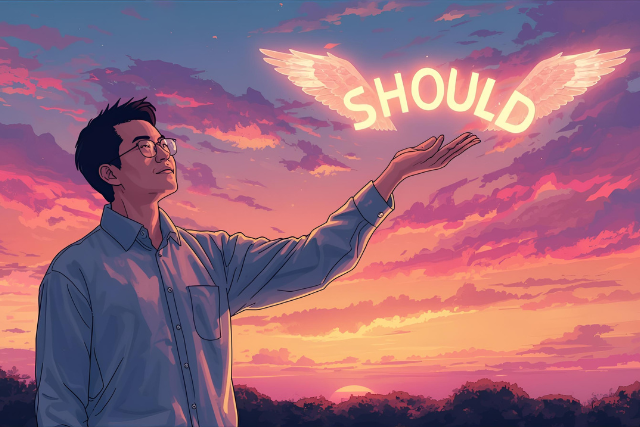
    The father was still living in a mental loop: “I should be going to his graduation.” “I should be at his wedding.” He couldn’t let go of the life he thought his son was supposed to have.

    The teacher explained that the father needed to grieve his expectations, not just in his mind, but in his body. That hit me hard. It was like an athlete expecting to win a championship and then getting injured. They’re stuck in that same mental trap: “I should have had that career,” and they suffer for years because life handed them a different card.

    That story cracked something open in me.

    The Weight of ‘Shoulds’ on the Body

    I’m someone who tends to be idealistic. I had high expectations for myself, others, and how life was supposed to go. And when people didn’t live up to those ideals, whether in business, relationships, or everyday interactions, it really hurt. I believed people should be honest, ethical, and truthful. They shouldn’t lie; they shouldn’t manipulate. I had a long list of “shoulds” and “shouldn’ts” that governed how I expected life to go.

    When life didn’t meet those expectations, I felt disappointed, angry, even hateful at times. My body held the tension. I had chronic stress, emotional pain, and health challenges. For six months, I was even coughing up blood, and doctors couldn’t find anything wrong. Looking back, I see now that I was holding on so tightly to my expectations that my body was breaking under the pressure.

    This is what that teacher was pointing to: that to truly accept what is, we have to grieve our expectations on a body level. It’s not enough to tell yourself affirmations like “just accept it” until you’re blue in the face. You have to feel where your body says, “No.”

    That means noticing: does your body feel heavy? Is your heart tight or tense? If there’s anything other than lightness or peace, then there’s something you haven’t grieved or released.

    By staying present with those sensations, without trying to fix or change them, you start to feel shifts. The signs of release are subtle but real: yawning, tears, vibrations, or a sense of energetic movement. It’s like something in your nervous system finally says, “Okay, I can let go now.”

    Letting Go Became the Practice

    After that retreat, I spent the whole summer sitting with these “should” beliefs. Every day, I made time to observe my thoughts and emotions. I noticed how often I was clinging to ideas like “I should have done this” or “they shouldn’t act that way.” It was uncomfortable at first. I didn’t realize how much I had been carrying around.

    I committed three to four months to this work. Being self-employed gave me the space to dive deep, and I felt it was necessary to do my own inner work before I could help others with theirs. I probably put in hundreds, maybe thousands, of hours during that time.

    Through that commitment, I released huge chunks of subconscious programming I didn’t even know were there. I realized I had inherited a lot of my “should” thinking from my upbringing. My mother also had strong expectations; when things didn’t go her way, she’d have intense emotional reactions. I had absorbed that pattern without realizing it.

    At the end of those few months, I felt like I had begun the real journey of embodying spiritual growth. Not just reading about it. Living it. Accepting what is became something I could feel in my bones, not just think about.

    But that was just the beginning.

    Acceptance Happens in Layers

    Over the next ten years, I noticed a pattern: about every six months to a year, a similar trigger would arise. Same emotion, same resistance, but less intense. The duration of my suffering shrank, too. What used to upset me for weeks now only remained for a few days, then a few hours.

    I came to understand that accepting “what is” happens in layers, like peeling an onion. At first, I released the more obvious emotional charges held in the heart or gut. But as time went on, I discovered deeper, more subtle conditioning stored in the nervous system, bones, tailbone, even in my skin and sense organs.

    The body doesn’t release it all at once—maybe because doing so would overwhelm the system. With each layer that releases, it feels like the body grants permission to go deeper.

    To find and clear these deeper layers, I learned muscle testing from the Yuen Method of Chinese Energetics that helps uncover subconscious resistances. Muscle testing was quite a powerful experience, teaching me to intuitively talk to the body to find and release unconscious ancestral conditioning and forgotten traumas that are decades-old or generational programs located in different body areas.

    My Personal “Should”: Loved Ones Should See My Good Intentions

    For example, I used to hate it when my father made negative assumptions about my good intentions or deeds. Instead of appreciating my efforts, he would criticize them, leaving me with the feeling that no matter how hard I tried, it was never good enough for him.

    This took me many years to work through, and each year, with each trigger, I discovered so much conditioning. I would have emotional meltdowns; my body would be tense and angry, just like my mom, because that’s how she is. From working on these triggers over the years, he can hardly get a reaction out of me anymore.

    I was essentially reacting in a hardwired way. When my father made negative assumptions about my mom, she would often respond with emotional meltdowns and angry outbursts. I realized I had inherited the same pattern.

    Over the years, each time my father pushed a button, I had to do continuous work on the different layers of conditioned reactions in specific areas of the body. His button-pushing became a gift: it constantly revealed more hidden layers of emotional reactivity.

    These days, if he makes negative assumptions, it might still bother me a little, but it’s nothing like the angry, hateful emotional reactions I used to have. If my body still reacts slightly, it’s giving me feedback, making me aware that there is still unconscious conditioning that needs to be released.

    If you do this work, over time, you will notice your loved ones may still push the same buttons and sometimes even say unkind words or behave in ways that used to deeply hurt you. But your triggers and reactivity can be significantly reduced.

    You won’t take their words or actions as personally anymore. Instead, there’s a growing sense of love and acceptance—for yourself, the situation, and your loved ones, regardless of what they do. Doing this work feels like moving closer to unconditional love, or at least as close as we can get.

    The Ongoing Unfolding of Acceptance

    This process taught me that accepting what is isn’t a one-time breakthrough. It’s a slow unwinding of everything we were taught to expect, demand, or resist. It’s a return to what’s actually here, moment by moment, breath by breath.

    Even now, I still get triggered. But I’m better at meeting those moments with curiosity instead of judgment. I know the signs in my body. I can feel when something hasn’t been grieved yet.

    If you’re like me, if you have a long list of “shoulds” about yourself, about others, about life, maybe it’s time to sit with them. To feel where they land in your body. To grieve the life you thought was supposed to happen.

    Because healing doesn’t come from controlling life. It comes from letting go of the fight against it. It comes from feeling into what is, with an open heart and a patient presence.
  • Living a Meaningful Life: What Will Your Loved Ones Find When You Die?

    Living a Meaningful Life: What Will Your Loved Ones Find When You Die?

    “At the end of life, at the end of YOUR life, what essence emerges? What have you filled the world with? In remembering you, what words will others choose?” ~Amy Rosenthal

    Most people believe sorting through a loved one’s belongings after death provides closure. For me, it provided an existential crisis.

    After glancing at the angry sky in my father’s driveway for what seemed like hours, I mustered up the courage to crack open the door to the kitchen. The eerie silence stopped me in my tracks. Wasn’t he cooking up a storm in this cluttered kitchen just a few days ago?

    I started with the mounds of clothes and cuddled them gently before pitching them. The sweet aroma of his fiery cologne still lingered. The air smelled just like him.

    My father’s belongings served as physical reminders of how he spent his time on Earth. Some of my favorites included:

    A weathered yellow newspaper clipping of his parents. Cherished family photos, with him grinning ear to ear. A collection of homemade cookbooks. Framed quotes such as Mi casa es su casa. A prestigious Pottery Barn leather chair, distressed by puppy claw marks. Nostalgic t-shirts from the early 90’s.

    Chipped and heavily-used Williams-Sonoma platters. An entertainment center that mimicked a NASA operation center, with 70’s CDs left in the queue. Invitations to neighborhood block parties. An embroidered apron which read “World’s Best Grill Master” paired with still fresh barbeque sauce stains.

    Homemade recipe cards with quirky quotes like “It’s good because it’s cooked on wood.” An entire closet of camping gear. Leftover birthday celebration goodies. Glazed pottery from local North Carolinian artists. Entertaining sports memorabilia on full display. And a tender card from me:

    Dear Dad,

    You’re the best dad ever! I hope you have a birthday filled with tasty BBQ, blaring seventies music, and a pepperoncini pepper to start the day off right. Thank you for being there for me. You are my hero. I can’t wait to celebrate with you this weekend!

    My father collected items that brought him joy, and, clearly shared them with others.

    While you may not know him, or think you have anything to do with him, you do.

    You will be him one day. We will all be him one day. At some point, someone will rummage through our drawers. Scary, isn’t it?

    Weeks later after organizing his possessions, I returned to my lavish apartment with cloudy judgment. As soon as I arrived, I dropped my luggage near the door and waltzed into my closet. The items that once made me proud, made me nauseous. If someone rummaged through my keepsakes, they would find:

    A closet full of color-coordinated designer brand clothes. Scratched CDs listing my favorite nineties bands. An entire drawer filled with vibrant, unused makeup. A high-end collection of David Yurman rings, necklaces, and bracelets. Wrinkled Nordstrom receipts. An assortment of gently used designer handbags. And, pictures of fair-weather friends scattered throughout.

    Do you know what they all had in common? Me.

    ME! ME! ME!

    Comparing my life to my father’s led to a life-changing decision. Should I continue to splurge on meaningless items or start completely over?

    After a moment of contemplation, my life mirrored a blank slate. Products related to “keeping up with the Jones’s” were no longer my jam. Instead, my money was reserved for incredible moments that produced long-term joy and warm memories.

    My new spending habits derived from the following financial values:

    • Seek experiences that make me feel alive.
    • Purchase life-changing products.
    • Invest in creative hobbies that I’m proud of.
    • Provide others with joyous moments.
    • Initiate celebratory activities.
    • Make financial decisions out of love.

    With a little trial and error, I traded in frivolous shoulder bags for top-rated camping gear. Saturday shopping days transformed into baking Sundays. And most importantly, I went from feeling not enough to experiencing fulfillment.

    Twelve years later, I’m happy to share that I continue to evaluate my purchases using a “Will this make a good memory?” lens. In retrospect, mending my financial habits was one of the best decisions I’ve ever made.

    Why? I’m no longer impressed by status. I prefer art, learning, and the outdoors over any invitation to shopping. In return, my life is filled with purpose, meaning, and long-term satisfaction.

    What I know for sure is that most commodities on their own overpromise and underdeliver, unless we intentionally create an evocative memory with them. Materialistic purchases provide us with fleeting moments of happiness. On the contrary, curating beautiful moments with others delivers long-term joy.

    While you won’t find many luxurious products in my house now, you will find:

    A four-person picnic backpack for sunny days at a park. Bird feeders galore. A fine assortment of tea to share with others. Homemade bath bombs for birthdays. Color-coordinated self-improvement books. Aromatic sea salt exfoliants that replicate a spa experience. Cheery holiday decorations.

    An assortment of various vision boards and bucket lists. Seasonal candles galore. A bathroom drawer filled with citrus soaps, shampoo, and lotions for overnight guests. A collection of homemade scrapbooks featuring beloveds.

    An emerald green trekking hiking backpack for outdoorsy adventures. Crinkled Aquarium tickets. Handwritten family cookbooks. Seeds for a blooming garden. Hygge and cozy themed library nooks. A bright blue hybrid bike, for nomadic quests. A closet full of board games. And my most prized possession of all, a sentimental card from my darling father, John:

    Happy Graduation, Britti!

    I am proud of who you are and proud to be your dad. I like how you hold your head high. You are becoming a beautiful young woman and fun to be around. You have taught me things. You are so important to me. I treasure our time together and will always be here for you! It’s not always easy, but, you have a lot of love around you. I hope that life keeps blessing you. Keep spreading your wings and following your dreams!

    Love, Dad

    The real question is, when someone organizes your belongings, what will they find?

  • When People We Love Die: How to Honor Their Legacies and Lessons

    When People We Love Die: How to Honor Their Legacies and Lessons

    “The song is ended, but the melody lingers on.” ~Irving Berlin

    I never went for any of my grandparent’s funerals as a young child, and honestly, I was secretly glad that I didn’t. I was too young to comprehend what death felt like, and I don’t think I had the strength in me to do so. So, when I heard about their deaths, I told myself stories that they had gone on an extended vacation and were having loads of fun, and hence we couldn’t see them.

    This story played in my mind all through the years, and that’s what kept me moving on. But deep inside, I knew I had an intense fear of death and couldn’t stare at it in its face.

    But recently I had to face it when I went to a funeral for a colleague who was like a mentor to me. His sudden and untimely death was like a punch to the gut.

    After his funeral, we went into lockdown, and it felt like the whole world had gone into mourning. It felt as though his death made life come to a standstill. That’s the kind of impression DM had on me. My head went reeling into a state of shock, and I couldn’t tell quite what had just happened and why.

    You see, DM was a magnanimous personality. He was full of life, compassionate, caring, planned, organized, and all of sixty.

    He was radiating with good health, till one fateful day in September he suddenly suffered a stroke. But he fought like a tiger and was soon on the mend. I could picture him coming back to work at least at some level shortly. The stroke took him by surprise as well, for he was quite health conscious and very mindful of his eating habits, etc.

    I always thought I would see DM enjoying retired life, spending it golfing, running charity events, enjoying a good karaoke, singing, entertaining, and spending time with the people he loved. Amidst all his fun, I thought he would still be part of the business as a wise sage. But my dreams were shattered when in January, he suffered some further complications.

    I didn’t think much of it, because had fought like a tiger before and I was sure he would do it again. But it seemed that fate had other plans and took him from us on the 11th of March.

    I could not quite comprehend how or why that happened. It was death rearing its ugly head once again. This time no story could tell me otherwise. I saw no escape because DM and I worked together, and I would miss his presence at work. No amount of storytelling could keep me from facing the truth. He had died, and there was nothing that I could do about it. I had to face this truth.

    I couldn’t bear the thought of being back in the office. The idea repulsed me. I was not sure I would be able to cope. But I had to because we were going into lockdown, and I had to wrap up to start working from home. Every time I went to the office I could still feel his presence there. My stomach would churn.

    I found it challenging to come to terms with his death. How would I get over it?

    I had met DM at a time in my life when I was feeling my lowest. My husband was abroad then, and my kids were small.

    I remember the interview. It was a mortgage admin job, and I was overqualified for it. But the work timings and the flexibility that the position offered fit into my grand scheme of things. And the fact that it is was in mortgages, something that I have been doing for many years pulled me toward the job.  At the interview, something told me that it was going to the best decision of my life.

    We worked together for two years, and during that time, I realized that we were similar in many ways.  DM was quiet, private, friendly, and concerned. Probably because our birthdays were just a day apart, we understood each other even without talking.

    A year later, when he and my husband decided to partner together, I was quite happy because DM was not only trustworthy, but he was also a veteran in his field, was honest and had a brilliant reputation.

    When he passed away, I grieved silently. I kept listening to the song “Memories” by Maroon 5, and something about the lyrics made feel that the singer had written the song for him.

    As I got dragged back into the mundane life I, realized that there were two things that I couldn’t come to terms with about DM’s passing.

    The first was, that to me, DM represented values like honesty, courage, resilience, hard work, kindness, compassion. I always thought that those values were timeless, immortal, and invincible. But with DM’s death, I felt those values got cremated with him. I grieved for those values because I too hold on them very dearly.

    The second reason I grieved was because I felt that life didn’t allow him to sit back relax and have fun, not have a care in the world, and spend time doing the things he loved.

    But as I pondered and reflected more on what it meant, I realized in his passing, in many ways, he handed those values to me as a legacy to carry forward so that I can use it in my life.

    I realized that his death also taught me not to wait for retirement or the future to live my life doing the things I love and want to do. Life is way too precarious, short, and precious for that. We will never know when our time will come, so we must use our time on earth well doing the things we love.

    With that, I realized the person we love or respect never leaves us. They always remain with us in spirit, through memories, in the legacies, lessons, and values they leave behind, just like DM did for me.

    What legacy has your loved one left for you? They must have indeed left something behind. They leave it so that you can carry forward the excellent work they started. It takes time, patience, and courage to see that, and it might be hard when you’re deeply enmeshed in grief. Feel everything you need to feel first, then ask yourself:

    What was important to them? What values did they uphold? What did you admire about how they lived, and how can you embody this in your own life? What can you learn from their choices—the ones they made and the ones they didn’t?

    Jamie Anderson wrote that grief is just love with nowhere to go. So when you’re ready, put all that love into honoring the message they’d want to leave behind.

    As I reflect on what my grandparents would have wanted to leave me, I realize it was to live my best life possible. I am ready to carry their torch ahead! What about you?