Tag: Gratitude

  • How to Get Life to Finally Start Going Your Way

    How to Get Life to Finally Start Going Your Way

    Excited Man

    “Whatever the present moment contains, accept it as if you had chosen it. Always work with it, not against it. Make it your friend and ally, not your enemy.” ~Eckhart Tolle

    Have you ever had a big financial expense knock you down?

    I had one of those situations hit me many years ago. I had just gone through a tough breakup, was experiencing regrets about my career choice, and was also struggling to get on my feet financially.

    I was feeling beat down and decided to try to lift myself up by getting my finances in better shape. I was able to cut some expenses and, over the next few months, was able to tuck away some extra money in a savings account.

    I was starting to feel a little giddy about my newfound ability to save.

    Then, my car broke down.

    No! I can’t afford a major expense right now. Why can’t I catch a break?

    I stood up on shaky legs, and that mean old universe kicked me right back down again, like I belonged there or something.

    I started evaluating my options.

    Could I fix my car myself? No.

    Did I have a friend or family member that could help me fix it? No.

    Could I leave the car broken? Yes, but this was not a great option given the distance I lived from work.

    It looked like my best option was to pay a repair shop to fix it for me. I was sad and disappointed, as I saw my savings account balance plummet back down to almost nothing after paying for the repair.

    I was struggling to get enthusiastic about continuing with my savings plan after the setback. Why bother?

    Then, I happened to see a reference to a quote attributed to Albert Einstein, “The most important decision we make is whether we live in a friendly or hostile universe.”

    The universe sure seemed hostile to me at the time. The quote sparked my curiosity. Can we really make a decision about what type of universe we live in?

    What if the universe wasn’t being mean but was being friendly?

    I decided to test out this new way of thinking.

    Instead of acting like everything was happening to hurt me, I shifted my attitude. What if this situation was happening for my benefit?

    I started digging around in my mind, looking for any thoughts about what could be of benefit to me in the situation.

    I was grateful that my car was working again and that I could travel to my job. I was grateful for the job, which was allowing me to pay for my living expenses. I was grateful that I had developed the ability to save.

    I didn’t have to let this one financial setback define my future.

    All of these new thoughts helped me go from thinking that the situation was unfair to something more empowering.

    I now knew, without a doubt, from experience, that it was a good idea to save for a rainy day. This created a burning desire in me to keep saving for future unexpected expenses.

    I resolved to overcome the situation with my depleted savings and try again.

    I started all over with my savings plan. This time was a little different because I also stopped entertaining tempting thoughts about spending my emergency savings on something unnecessary like a wild shopping spree or an expensive trip.

    Looking back, I notice how my view of the situation changed even though the situation itself didn’t change. No one arrived on the scene to rescue me. I still needed to drain my savings account to pay for the car repair.

    What changed was my attitude about the situation.

    Thinking about the universe being friendly helped me stop beating myself up and start treating myself like a friend with my thoughts.       

    The next time you feel like things are happening against you in your life, try the following:

    1. Make friends with the situation.

    My initial negative thoughts about my car repair situation were only serving to cause me to suffer.

    Shifting my attitude and searching for more positive thoughts changed the meaning of the situation.

    Instead of feeling stuck and hopeless, I started seeing opportunities to improve my situation that were within my control. This allowed me to become more optimistic about the permanence of the current situation and also about my future.

    2. Explore gratitude.

    Is there anything about the experience that you can be grateful for?

    Exploring gratitude made me more aware of the things that were beneficial in my life that I was taking for granted. Appreciating what I had in my life helped me to feel more positive about my circumstances.

    3. Look for the lesson.

    When difficult things happen, look for the lesson you are learning and how you might be growing from the experience.

    It has been many years since my experience with my car and savings account, and I realize now that I may have needed that little kick from the universe to help me grow and learn about the benefits of having funds set aside for emergencies.

    One of the best lessons to learn is that it is possible to choose your attitude and shift your thoughts to a more positive track.

    While it may not always be easy, if you treat the universe like it is your friend, you may just find that the universe mirrors your friendship right back to you.

    Happy man image via Shutterstock

  • We Can Be Happy Despite Pain from Our Past

    We Can Be Happy Despite Pain from Our Past

    Grateful

    “Think of all the beauty that is still left in and around you and be happy.” ~Anne Frank

    At first glance, the happiest person I’ve ever met appeared to be a simple man. There didn’t seem to be anything particularly sophisticated or spiritual about him.

    Srulik was five-feet tall, with a big round belly and a wide smile permanently plastered on his face. He enjoyed the small things in life: a good joke, a familiar television show, a wholesome meal. He radiated such joy, and was so unassuming in his demeanor that one would assume he was blessed with an equally simple and joyful life.

    Many years ago, when I was only ten years old, I remember coming home one day particularly distraught.

    My class had just learned about the Nazi Holocaust. At the sink, my mother was washing dishes. I started telling her about what I’d learned in school, when she gently cut me off and, in a matter-of-fact kind of way, said, “Oh, your grandfather is a survivor. You should talk to him about it.”

    “Wait, which one?” I asked.

    “Grandpa Srulik,” she answered as she continued scrubbing a pot.

    I was flabbergasted. What? Him of all people? How could that be? He is always so happy. It just didn’t make any sense.

    I was only a child, and yet I could feel that something out of the ordinary was happening here.

    Later I learned that, indeed, volumes of psychological research confirms that a difficult past leads to a difficult future.

    No need to go as far as the Holocaust. Common problems we suffer in times of peace and plenty, such as bullying and poor attachment to our parents, can have serious psychological consequences, preventing us from enjoying our lives many years after the problems go away.

    Veterans often suffer from severe post-traumatic stress, and Holocaust survivors in particular are known to suffer from a wide array of emotional problems after the unspeakable horrors that they suffered. Who would expect anything else?

    And yet, there was my grandfather, happy as ever—smiling, telling jokes, and laughing his heart out. I had to know what enabled him to survive so wholly.

    “How do you manage to stay so happy?” I said during one of our conversations.

    “You need to learn to be happy from any success,” he told me. “Any success at all. When some misfortune happens, we need to view it with humor and think of it as temporary. Think of something else.”

    “I view everything with optimism, it’s very important,” he added later.

    His secrets boiled down to gratitude, the power of positive thinking, and optimism. I must admit, I have heard it all before. But, suddenly I saw it in a whole new way. Can things such as gratitude and optimism help us overcome even the most tragic of traumas? How powerful are these principles?

    When Grandpa Srulik was ten years old, the Nazis came into the Polish town of Nowosiolki, and gathered up his family—the only Jewish family in town.

    With the entire town watching, a Nazi pushed Srulik’s father against the brick wall of his house. Then, the Nazi grabbed hold of his mother and pushed her hard against the wall. Next, he did the same to his brother.

    Realizing that he was next, Srulik picked up his heals and ran as fast as he could through the thick crowd surrounding his house. Behind the river across from his house, he suddenly realized that he was alone. He had escaped the Nazis. He decided to hide in the bushed until morning before returning home.

    The next morning, Srulik overheard three women doing laundry in the river. This is when he learned that, the previous night, his mother, father, and brother were shot dead into a hole in the ground. Devastated, utterly alone, and on the run from a powerful enemy, he tearfully mourned their loss.

    Yet through this pain, he never lost hope. He shared with me that even in that terrible moment, he believed with all of his heart that he would find a way through this challenge, monumental as it was.

    But, things got worse before they got better. Several weeks later, Srulik was discovered and imprisoned in a Nazi ghetto.

    There, he saw Nazis throwing live infants against walls and witnessed the murder of thousands of innocent people every day. He nearly died from starvation and disease, and narrowly escaped the Nazis’ bullets on numerous occasions.

    Against all odds, optimism carried Srulik through this unimaginable horror. Every day, he told himself that the Nazis would be defeated and he would be free.

    Through the years he spent running and hiding from the Nazis, Srulik never forgot to be grateful for the small rays of light that lit his path.

    He recalled with delight the wonderful homemade pickles that a young Polish woman gave with him when he had nothing. He never forgot the kindness of a German cook, who, instead of reporting him to the authorities, shared his delicious soup.

    Srulik held onto his positive attitude for years after the war. He was grateful for all the kind people he had met along the way, the orphanage that took him in, and the opportunities he had to earn an education.

    Until his last day, Grandpa was able to find something positive in every situation. “Even good weather counts,” he taught me.

    Despite an incredibly difficult past, Srulik grew up to be a joyful, contagiously positive man. Having had the most difficult past of anyone I’d ever known, my grandpa was, and still is, without a shred of doubt, the happiest person I’ve ever met.

    If gratitude, positive thinking, and optimism helped him lead a happy life, then imagine what these principles can do for the rest of us. Surely, there is hope for all of us, no matter what lies in our past.

    Man with raised hands image via Shutterstock 

  • 10 Ways to Make the World a Nicer Place

    10 Ways to Make the World a Nicer Place

    Kind Kid

    “There are two primary choices in life: to accept conditions as they exist, or accept responsibility for changing them.” ~Denis Waitley  

    I was spending some time with my nephews not too long ago. This is one of my favorite things to do because we have a lot of fun together. They’re silly and loving and inquisitive, and it’s easy to make them laugh.

    Spending time with them reminds me that fun and laughter should be a part of my everyday life, and also makes me feel like a kid again.

    When we were together that day, I asked them what they want to be when they grow up. My five-year-old nephew said, “I want to be a police so I can make the world a nicer place for everyone.”

    I thought that was just about the sweetest and cutest thing he could possibly say, even though the thought of him becoming a police officer made me nervous. Why couldn’t he choose something safer?

    Over the next few days, I couldn’t get that conversation out of my head because I realized that I don’t want him, as a five-year-old, taking on the responsibility of making the world a nicer place.

    I want him to be focused on having fun and making friends and learning new things in school. I don’t think any child should have to worry about that.

    I started thinking about the actions I could take to make the world a nicer place so that he can experience that right now. Many of us are already doing things that have a positive impact on the world, but we don’t always recognize or acknowledge them.

    We can all make a difference by doing these simple actions more frequently and accepting the responsibility for a nicer world as our own.

    1. Smile at others.

    Smiling makes others feel good when they see us doing it and it makes us feel good, too. It allows us to feel connected to other people, and this improves all of our moods. When I smile at people in the store and I get smiles in return, I notice that I get an immediate mood boost.

    2. Make eye contact with people.

    Many times we look at the ground or our phones instead of acknowledging the people around us. We avoid talking to people in line with us at the grocery store, and we act like we don’t see other people when we pass by them on the street. When we make eye contact instead of ignoring people, we make them feel seen and worthy of our attention—something we all want and appreciate.

    3. Take care of our environment.

    We all want to live in a clean and beautiful environment. The first step is to recycle and take care of our resources instead of being wasteful. Doing this ensures we leave our children a world they can take pride in and enjoy comfortably.

    4. Compliment other people.

    It’s important that we tell others how they make a difference in our lives and that we see all the amazing things they do. We can make a tremendous difference in their lives by sharing our gratitude instead of just thinking about it. I make an effort to compliment others about their work and let them know how important they are to me because I know that everyone wants to know that they matter.

    5. Be positive.

    Everyone benefits when we stop complaining and find the positive instead of focusing on the negative. We can make life easier for ourselves, and the people around us, if we stop worrying about the worst-case scenarios and try to make the best of our situations. When we cultivate a positive mindset, we not only feel more positive, we’re also more likely to create more positive circumstances.

    6. Help others.

    We often help others expecting something in return, but this can lead to disappointment and resentment. The alternative is to help others, especially those who are struggling, simply because we want to live in a world where people look out for each other.

    7. Be kinder to ourselves.

    Forgiving ourselves for any mistakes we make is much kinder than always mentally beating ourselves up, and being kind to ourselves is crucial if we want the world to be a nicer place. When we’re kind and caring to ourselves, we’re more open to kindness from others and more likely to treat others well.

    8. Stay mindful in the present moment.

    If we stop dwelling on things that have happened in the past and worrying about what might happen in the future, we’ll be able to experience all of the wonderful things that are happening in the present. When my mind wanders, I bring myself back to the now with three deep breaths. Mindfulness is a powerful way to increase our happiness, and that can have a massive ripple effect on the world around us.

    9. Express gratitude daily.

    Acknowledging all of the amazing things that we have happened to us puts us in a positive mindset, and it also provides us with the opportunity to thank others for all they’ve done. I practice gratitude daily by recording at least three things that I’m grateful for at the end of the night, and I’ve noticed it makes a tremendous difference in my mood and my relationships.

    10. Have fun!

    A lot of times we make situations out to be more much more serious than they need to be and we forget to actually let go and have fun. Let’s make sure that enjoying life is a priority so that we can actually take advantage of living in a nicer world!

    Photo by Juhan Sonin

  • Why We Don’t Need to Try So Hard to Be Happy

    Why We Don’t Need to Try So Hard to Be Happy

    Smiling

    “Happiness is the absence of striving for happiness.” ~Chuang-Tse

    Everywhere we turn these days we seem to be bombarded by it.

    TV commercials try to lure you into buying their products on the promise they will give you it. Magazines scream it from the front pages via sultry images and sexy block titles. Gossip magazines practically have a mission statement that fame will guarantee it. Corporations equate money with it.

    So what exactly is it? What’s this one common denominator that seems to be a worldwide obsession? Happiness!

    There are thousands upon thousands of articles, seminars, webinars, TV shows, and more that try to teach us how to achieve it. How to be a happier you. How to make your family happy. And, not forgetting our furry friends: How to make your pet happier.

    It’s as if happiness is some salient commodity that will come to us if we just. Try. Hard. Enough.

    We are repeatedly told that it’s floating around out there in the world and that it can be ours. Just look at the model on the front cover of that magazine practically flaunting it with her beaming pearly white smile. Even Pharrell is in on the game and wants us to be HAPPY (and maybe do a little happy jig).

    I don’t know about you, but I’ve been seeing these types of juicy promises for years and, quite literally, bought right into them. Sure, if I just [insert the blank] enough, I will be happy. Surely this begs the question, have we pushed happiness over the cognitive horizon?

    Think about it, the purpose of all these happiness-promisers, when you scratch behind the surface, is more likely the pursuit of profit rather than the pursuit of happiness. There’s usually a reason they keep touting the wonders of this magic commodity—it sells!

    People love to read about quick fixes, how-to’s, and how not-to’s and willingly part with their hard earned cash to learn these supposed secrets. Spoiler alert…there are no secrets!
    If we choose to believe that what we as a collective species yearn for is just out of our grasp then will we keep hunting forever. Perhaps we need to take a fresh look at what happiness actually is and whether it really is attainable by following steps one, two, or three.

    Is it even designed to be a constant state of being? Who really walks around all day with a huge grin plastered on their face without the aid of narcotic substances or a seriously deranged mindset?

    The first mistake is believing that happiness is outside of us, and something that needs to be attained. It’s not. It’s a state of being, an emotion that can pass through us when we least expect it, usually when we aren’t paying it any attention.

    It can creep up silently sometimes for just a few minutes at a time before it skulks away from whence it came. As humans, we have a myriad of emotions, and as women, add a few hundred more on top of that.

    In just one day we can feel a sense of love, pain, loss, betrayal, jealousy, anger, or laughter. I don’t think that as humans we are designed to have one singular constant emotion; we are complicated creatures.

    So why don’t you see the media touting other less fun emotions? Why don’t we see articles titled “20 Ways to Feel Sadder,” “How to Cultivate More Rage in Your Life,” or “How Not to Ugly Cry”? No one would buy it! So why should we buy into the idea that we should be happy all the time?

    Some of my happiest moments have been unexpected. I find it’s usually when my brain is engaged in the flow of another activity I really enjoy that I feel a sudden sense of complete happiness.

    Another happiness inducer for me is being out in nature. That makes me feel really happy.

    There is no one-size-fits-all happiness inducer. It can vary from hanging out with your kids or your pets to a simple walk on the beach to cooking a family meal.

    My point is that it is not something that you have to work toward in the future, for it is not obtained through external effort. It is within us and we carry the possibility of it within us at all times whether we realize it or not.

    Once we understand that happiness is not something that we can buy, sell, trade, or exchange, we don’t need to worry so much when we have a bad day.

    However, do pay attention when it’s a great day, a positive day. Be thankful for it and acknowledge it. That way, when the smiley face pops up again (and it will, for nothing accelerates the good stuff in life like gratitude does) you are aware of it, again and again.

    It can even be a feeling that you start to look forward to, like a best friend popping over for a cup of tea and a chat. Understand and accept that the feeling is temporary but will return. After all, if you’re best friend popped over and announced she was going to be staying a while, like the rest-of-your-life-awhile you might not be so happy about that.

    If we didn’t have the sad, cry-on-your-way-home days, how could we learn to really appreciate the fun, exciting days?

    So, stop reaching, searching, and trying to buy your slice of happiness, as it’s not something that is out of your reach.

    Know that, and next time you’re standing in line at the grocery store, don’t reach for the magazine promising you the Disney fairy tale happy ending. It doesn’t exist—it’s a fairy tale!

    Instead, smile at the cashier and wish her a lovely day. You will make her day a little happier and in doing so, maybe some of that magic will rub off on you.

    Photo by ferobanjo

  • When Things Go Right: Dealing with Success with Humility

    When Things Go Right: Dealing with Success with Humility

    Jumping for Joy

    “We cannot live only for ourselves. A thousand fibers connect us with our fellow men.” ~Herman Melville

    Recently I experienced a triumph in my career. The details are not important and frankly, many people might even consider it a trivial accomplishment, but it was important to me.

    Usually when things go our way there are two ways someone might react: humility or boasting. I decided to try something completely different.

    Boasting isn’t really part of who I am. Raised to be humble, take praise with many grains of salt, I play down accomplishments. But, this course never seems to get me anywhere.

    Humility leads to self-doubt and self-deprivation. It also gets in the way of future success.

    In the past when I’ve experienced success I told no one, because that might be bragging. What happens then is no one knows of my accomplishments; therefore, I lack credibility, which undermines future efforts. Being too humble is self-sabotage.

    It minimizes my accomplishments in my own eyes. When I say things like, “Gee, it was nothing,” or “Anybody can do that,” what I’m really telling myself is I’ve accomplished nothing.

    So instead, I sit back and watch the loud girl or guy tell everyone how they saved the day or how much their boss loved their report or how smart their dog is, while I sit quietly buying the hoopla and then thinking how mediocre I am.

    This time, however, I had no space in my mind for either humility or boasting. Instead, I was filled with gratitude. And gratitude allowed me to sing praises, not for my own awesomeness alone, but for everyone who assisted in helping me reach my goal.

    From my husband to casual acquaintances, I told each person the part they played in helping me realize this success. I’m not kidding, and I didn’t just do this in my head.

    I told my yoga instructor how her guidance helped me relax in my body so my mind could do its work. I thanked my Facebook friends for giving me small entertaining distractions to lighten my days. I thanked the members of my meditation group for helping me find strength to put myself out there.

    I gave thanks with sincerity, and not just to let people know I’d achieved my goal, but to help others too. I publicly gave recognition to the company that had shown appreciation for my work, besides helping promote their business would ultimately promote my work.

    As I doled out this gratitude, I did lose one thing. I lost the feeling of being alone in my awesomeness. Me, myself, and I! I did it! Instead I felt I was part of a bigger community.

    My small achievement strengthened my connection in the world. Things really had gone right. Even if for one small blip in the history of the world. At that moment, all the people connected to me and I got it right.

    These feelings of love and gratitude paid off like no amount of humility or self-back-patting ever could. Gratitude encouraged me to keep working and keep reaching for accomplishments.

    No One Gets There Alone

    Sometimes we might think accomplishments come only from our effort and hard work. “If you want something done right, you gotta do it yourself.” But the truth is, none of us ever reaches any accomplishment without others.

    You might be inspired by the encouragement of others, or by the poor actions of others. Good or bad, like it or not someone helped you.

    Start being grateful and you’ll feel like you’re running downhill laughing with freedom.

    1. Thank yourself.

    You deserve it. You really do.

    Don’t knock yourself down by minimizing your accomplishments, no matter how small. Doing so constricts your soul with underlying disbelief or inferiority.

    2. Thank the person/entity who recognized your work.

    Outside of yourself, those who appreciate your work are the first you should thank. Without their light being spotlighted onto you, there would be no accomplishment.

    3. Thank all the supporting players.

    When we think of the ways others support us, our hearts open to love. We become encouraged to offer equal support to others.

    You might be grateful for the mechanic who keeps your car in working condition, which allows you to get to work. The barista who makes your morning coffee supports you by helping start your day.

    Being grateful for everyone who assisted your success is true humility.

    Photo by Rama V

  • More Is Not Always Better: Being Grateful for What Is

    More Is Not Always Better: Being Grateful for What Is

    Gratitude

    “It is not joy that makes us grateful. It is gratitude that makes us joyful.” ~David Rast

    Every New Years Eve I make a list of resolutions that I never keep up with and it just makes me feel guilty every time I don’t. Lose ten pounds, get more involved, go to the gym, develop better relationships.

    Every year I aspire to be more, do more, get more, never living within the present moment.

    My stress to do more comes into play in every aspect of my life. The stress of joining more clubs comes from the competitive environment of school. I am in constant stream of uncertainty. How do I find the balance, solitude, and the calmness in life? 

    I traveled to Puerto Rico with my family for last Christmas. I found that I had been thinking about the semester that lied ahead and what I was going to do to rise above my peers, although I was already involved in four different student organizations and was doing great in school.

    As I sat on the beach, in paradise, on New Year’s Eve, I couldn’t help it. I was starting to form the list I had visited and revisited year after year.

    This was the first time I had spent New Year’s with my family in a while. 

    We enjoyed a fancy dinner of steak and wine and fine desserts, the conversation poured openly as the four of us enjoyed each other’s company. I had missed these times as I was away at college and these moments became few and far between.

    We decided to skip the fancy party the resort provided and went back to our room instead. We watched from our balcony all of the guests in fancy dresses, possibly pretending to have more fun then they actually were having.

    They snapped pictures for Facebook and Instagram, showing everyone at home what they were missing. I asked myself, “What is this all about?” 

    As the thought danced around my head, there came the countdown until the New Year. Ten… nine… eight… I looked around at my family and everything I needed was right there.

    Seven… six… five… I didn’t need to add more to my resume, I didn’t have to join more clubs, I didn’t need to stress about what the future may hold.

    Four… three… two… It finally hit me all I needed was one One thing on my list: to be grateful. 

    Fireworks started to go off over the water. As I looked around at my family and we wished each other a Happy New Year, colors collided and clashed in the sky, the crackles and booming shaking my light heart.

    We are told about appreciating the moment and being truly grateful, I have read countless books about it; however, I never fully grasped it until this very moment. It authenticated what it really meant.

    I was overcome with a sense of comfort and gratitude for everything I had been given in the past year. I had overcome a rough time and I had not allowed myself congratulations for that.

    I had not been able to see clearly all of the things I had been blessed with, like my wonderful family, my great friends I had made at school and the friendships I had kept from home, and especially my health, which had not been the greatest the previous year.

    That is when I made this promise to myself.

    As I watched the fireworks and looked at the loving faces around me, I remembered that in one the books that had changed my life the past summer, it was suggested to practice gratitude every day.

    Make a jar and put one thing you are grateful for in it every night before you go to sleep. That is what I did when I got home; I painted my gratitude jar, along with one for each member of my family.

    Every night I scribble down something I am most grateful for. Sometimes I am grateful for time spent with family, other times I am grateful for my extra ten minutes of sleep in the morning, and sometimes I am grateful for a night out with friends.

    We have so much to be grateful for and so much to honor within ourselves. We just need to take the time to do so.

    Photo by Yoga4Love

  • 60 Things to Be Grateful For In Life

    60 Things to Be Grateful For In Life

    “We often take for granted the very things that most deserve our gratitude.” ~Cynthia Ozick

    How often do you pause to appreciate what you have in life?

    When I was young, I took things for granted. I believe many other kids did so, as well. After all, we were young and we didn’t know what life could be like on the other side.

    One thing we took for granted was education. In my country, it’s compulsory for all kids to go to school, so it was a given. We never thought about how lucky we were to be educated.

    We also took our teachers for granted. We never thought about how lucky we were to have teachers who cared for our growth so much, and poured their heart and soul into their lessons.

    Then slowly as I grew up, I began to appreciate things around me more. As I saw more and more of the world out there, I realized all the things I’d been given are not rights, but privileges.

    I realized that being literate is a not a right, but a gift. I realized there is a lot of war and violence in the world, and I’m lucky to live in a country where it’s safe and peaceful. I realized there are people out there who don’t have their five senses, and to have mine is a gift. (more…)

  • How Gratitude Can Calm Your Nerves and Make You More Effective

    How Gratitude Can Calm Your Nerves and Make You More Effective

    Calm

    “Gratitude is not only the greatest of virtues, but the parent of all others.” ~Cicero

    Being grateful or practicing gratitude has many benefits, including improving our health, relationships, careers, sleep, and self-esteem, to name just a few.

    In recent years, these benefits have been confirmed in scientific studies showing how the brain is “rewired” by continuous grateful thoughts.

    However, I recently discovered (and experienced) another significant, and I believe mainly overlooked, benefit of being grateful—in the somewhat unusual setting of a major seniors championship tennis tournament I played in Palm Springs this past January. I learned that:

    Practicing Gratitude Calms the Nerves and Mind

    As an avid tennis player, I had struggled to play up to my ability in tournament match play. I was constantly over-thinking, too cautious, and too tight during matches.

    Before playing in the tournament I read about a mental strategy recommended by sports psychologist Jeff Greenwald in his insightful book The Best Tennis of Your Life:

    Play with gratitude.

    Feeling there was nothing to lose, I decided to give it a try. Before my first match, I thought to myself how grateful I was that:

    I was able to play without injuries.

    I could play in such a magnificent setting at the historical Palm Springs Tennis Club. 

    I could afford to take time off from work and treat myself to so much fun.

    I repeated these blessings throughout the match, was calm and focused, and won.

    My next match was against a player that had soundly defeated me the year before. I repeated the above blessings and added one more:

    I am grateful to have the opportunity to play the same person again to see if my game has improved.

    I played the best tennis of my life and won in two sets—and again was calm and focused throughout.

    Hmm, I’m now thinking there must be something to this “being grateful reduces-the nerves-and-calms-the-mind” thing. Next match: I played another (and seeded) player who also had soundly beat me the year before.

    I again won in two sets.

    I’m now in the semi-finals against the #1 seeded player, a former national champion. I’m not only grateful for this, but I have been playing at a whole new level and having the tennis time of my life.

    I lost in two hard fought sets, but not because I was nervous or uptight. To the contrary, I played extremely well. I lost because I played a more highly skilled and experienced player who, incidentally, shared with me after the match that he was grateful that he could still play so well in his seventies! (I think he was more grateful than me!)

    Upon reflection, it occurred to me that what applies to sports and performance, probably applies equally to most life arenas. Which is to say:

    There is a powerful synergy between being grateful and calmness and serenity.

    I soon had the opportunity to prove this to myself again, but in an entirely different setting—a courtroom. In April, I was in traffic court for a trial to fight a ticket that I felt I had wrongly received.

    While waiting in court, I was nervous as heck as I repeatedly went over in my mind what I would say, what the officer would likely say, and how the judge might rule.

    Then an amazing thing happened. I reminded myself to be grateful—yes, grateful. Specifically, I was grateful that I had the opportunity to be heard and present my case, something I was clearly unable to do at the time the officer issued the citation.

    I was also grateful that I lived in a country where I could seek justice without a lot of constraints. With those thoughts, my nerves immediately subsided and I became very calm and grounded.

    A short while later, my ticket was dismissed!

    The Non-Science of Why Gratitude Leads to Greater Calmness and Serenity

    I have no doubt that being grateful stimulates the brain’s neurons and in effect re-wires the brain to produce a more happier state of being. I believe, however, there are more basic reasons why gratitude bestows upon us a more calm and serene state of mind. For example, being grateful:

    • Redirects our focus from what is troubling or worrying us to what lifts our spirit. We shift from negative to positive thinking, and energy.
    • Provides us with a true perspective of what’s at stake (including “how important is it?”)
    • Reduces our anxiety creating fears.

    Test the Gratitude/Calmness Dynamic

    I encourage you to see if the gratitude/calmness dynamic works for you as it does for me. For example, consider trying it when:

    • You have to give an important talk or presentation
    • You have a job interview
    • You have to take an important test
    • You have to perform or go on stage
    • You have writer’s block
    • You keep procrastinating in completing an important task

    Bottom line, there is no shortage of opportunities where you can test this powerful dynamic!

    Please write and let me and others know how it worked for you. Were you less tense? More grounded? What was the final outcome?

    Photo by Giuseppe Chirico

  • 3 Keys to Feeling Happy, No Matter What Happens

    3 Keys to Feeling Happy, No Matter What Happens

    Smiling Flower

    “Look at what you’ve got and make the best of it. It is better to light a candle than to curse the darkness.” ~Proverb.

    The year 2013 was the happiest of my life.

    Not because it was the most perfect or problem free year. In reality it was as messy, sad, and as difficult as any previous year.

    In October I looked at the last correspondence between my biological father and me for the first time since his suicide years before. I felt as devastated as the day he died. Healing is a much longer journey than I’d imagined.

    Around March my psychologist noted that I was codependent on my blissfully independent husband and in serious need of my own identity.

    In August I traveled to the U.S. for the first time in three years, and people I love rejected me.

    From April to November I hated the stress, demands, and despair of my job and wanted to quit. Every single day.

    That’s not all.

    Extended family ignored requests to help me write a memoir about my biological father and grandmother. I gained weight, broke my toe, and couldn’t get rid of an itchy rash. Not a single piece of my writing got published and my blog went days without a visitor.

    The miracle of 2013 is that I broke free of the notion that happiness is an if/then proposition.

    If…I get the job, if he loves me, if I stop feeling anxious, if my health gets better (insert your own if here)…

    …then I will be happy.

    Happiness is not when everything turns out exactly how we want or plan.

    Happiness is a full-hearted, unreserved embrace of life—exactly as it is.

    I identified three keys to making happiness a more enduring state—not just a flickering emotion dependent on other people and results.

    Here is how I do it.

    1. Gratitude

    In 2013 I started keeping track of my gratitude. Each day I write between five to eight unique events I am grateful for. I don’t repeat anything from the previous day.

    If you grew up in an abundant environment and learned to be grateful because of it, awesome. I did not.

    Learning was a slow process for me. After twenty-one days I was not a more positive or grateful person. A hundred days in, it had completely changed my life.

    Gratitude does not come naturally to me, but it’s the surest path to happiness, I promise.

    Even when work sucks and people disappoint me or I let myself down, I make an effort to see all the spaces, places, and people for which or whom I am grateful.

    With time, I have begun to recognize my gratitude not just at the end of the day, but when things actually occur.

    2. Self-Compassion

    I accompany homeless adults on the arduous journey of trying to reenter the work market. Recently, one participant (in a drunken rage) broke the leg of the chair and threatened to attack another person.

    My team took care of the immediate danger, and the next day it was left to me to conduct the reflection.

    The conversation lasted less than five minutes. He justified his actions and I couldn’t muster up the courage to challenge him.

    “Is this your first time?” our new social worker asked with concern.

    “No, more like my hundredth,” I replied.

    Not my best work. I felt like a failure.

    One year ago I would have replayed the scene in my head over and over and called myself every name in the book. I’m the manager, what example am I setting, my team thinks I am a loser, the participant thinks I am a joke, etc.

    It’s hard to be happy, in any circumstance, when you are your own worst critic.

    Being kind to myself is a huge challenge—and a fundamental element in my pursuit of living an authentic and happy life.

    Recognizing that self-compassion is not weakness or going to make me a lazy, unmotivated slob has greatly increased my willingness to be nicer to myself.

    The truth is, the kinder I am to myself, the more willing I am to get up from each failure and try again.

    Writing not published? Try somewhere else.

    Friend not responding? Give it some time.

    Husband really mad at me? That is okay, it happens to everyone and we will work it out.

    How do you treat yourself when you fail? Make sure it’s with a hug.

    3. Passion

    After I recovered from the shock of the therapist’s statement that I had no clearly formed sense of self, I knew she was right.

    What now? How do I discover who I am?

    I asked myself, what do I love to do?

    I didn’t ask myself how I will make the most money or become famous or what I am the best at. I asked myself what I love and then acted upon the response without reservation.

    The answer was writing.

    I can’t identify independent clauses, I have never read Dostoevsky, I will probably never be able to make a living from writing, and it is what I love to do.

    This was the motivation to start taking online writing classes, reading books, and starting a daily writing practice.

    Better yet, by investing in one interest, several others had room to grow.

    In 2013 I took a photography class, began sketching, created desserts with no refined sugar, and started a blog—all of which I do while maintaining my full-time job.

    If no one reads what I write or looks at what I create, that’s okay.

    What matters is that I showed up for me.

    If someone asks you who are you, what are your hobbies, what you would do if money weren’t an issue and you don’t have an answer, don’t worry—I didn’t either.

    Simply start with what you love.

    Don’t judge, don’t censure, don’t over think. What do you love?

    Start. Today.

    You will experience sadness and loss and suffering in life. There is no guarantee or protection against pain. But if you practice gratitude and self-compassion and invest in your identity, you will create a default state of happiness that will support all the difficulties and failures along the way.

    Take a deep breath, get in touch with who you are, and find something you appreciate about your life, exactly as it is. There you have it.

    Happiness is within your reach right now, no matter what is happening in your life.

    Photo by geralt

  • 5 Tips to Accept Your Imperfections, No Matter How Different You Feel

    5 Tips to Accept Your Imperfections, No Matter How Different You Feel

    Cheerful Girl

    “I follow four dictates: face it, accept it, deal with it, then let it go.” ~Sheng Yen

    Growing up different isn’t easy for anyone.

    I was born normal, happy, and healthy. I had five fingers and five toes. I reached all my developmental milestones and showed promise as a vivacious, energetic child. It all changed when I was ten months old.

    I became violently ill with bacterial meningitis. I battled the infection with a strength I was naturally graced with at birth. One week into my hospital stay, I was finally able to lift my head; two weeks later, I was back home.

    I was lucky to escape with my life from the meningitis. When it’s not fatal, it can result in long-term complications, such as low IQ, cognitive impairment, loss of limbs, and learning difficulties, to name a few.

    I came away with profound hearing loss. Not quite deaf, but enough loss to have it impact on my daily functioning.

    At seven years of age, I got my first pair of hearing aids. It opened my world to a whole new experience. I could hear a lot more and I have this vivid memory of hearing a leaf scatter across the pavement for the first time. I couldn’t for the life of me figure out what that noise was.

    It brought challenges along with it too.

    I was known as the kid with “the things in her ears.” I was bullied for being different. I hung out with the boys playing football and cricket because the girls didn’t want a bar of me.

    It left me emotionally dead. I was really good at burying all the pain inside and trudging along every day.

    I became a master robot—a mechanical human being incapable of trusting and feeling. It was my survival mechanism doing its best to avoid accepting who I really am.

    Entering the real world after school became a shock. Out of my comfort zone, I had to enter a world of large groups, noisy parties where I couldn’t hear what anyone was saying, large lecture rooms, and meeting new people. I had to suddenly be more than okay with my hearing loss.

    I had to be okay with being a little different.

    It was the biggest lesson of my life—my own perceived fears are far more powerful than anything else.

    I perceived people would treat me different or look at me differently if I told them I had hearing loss. By believing this, I practically encouraged them to treat me differently without realizing it.

    So there I was, in my late teens, brewing with years of buried emotions and a confronting new reality of accepting who I am. So what did I do? Partied hard of course. The emotions came out in a flurry of binge drinking and hangovers worthy of a death bed.

    It took me three years to finally wake up. Three years to finally realize that I must accept every part of me in order to live the life I want. Negative emotions continue to build up when we cannot accept ourselves for who we really are, and burying our emotions is no different to avoiding our true self.

    Accepting who we are is a beautiful, bone-achingly hard thing to do. It’s about being vulnerable, consciously opening our eyes to our flaws, and seeing them in a whole new light. It hurts at first, but it’s a pain worth a thousand lifetimes.

    By changing our perception to see our flaws as neutral traits that are both good and bad, we change how we choose to react to things. It will ultimately change our life for the better.

    I’ve learned to see the benefits of my hearing loss. I’m a world-class lip reader who can probably “hear” better than you in loud settings. I’m more visually aware and observant than most, which has been incredibly handy in understanding human behavior.

    I had to face my hearing loss through accepting it as a genuine, unique part of me. I am absolutely in love with my life, despite all its challenges and pitfalls, and I have no doubt that if I didn’t have this unique part of me, I would be in a very, very different place.

    If I could give you five tips to help you accept who you are, they would be this:

    1. See your perceived flaws in a whole new light.

    Nothing is ever completely good or completely bad. In fact, everything is in perfect, harmonious balance. Find the benefit of that one thing you have trouble accepting, and change your perception to see that it’s not so bad having it after all.

    2. Practice gratitude daily.

    We all have so much to be grateful for. Gratitude helps to cultivate a positive mindset, which will help you to accept yourself for who you really are.

    Create a daily gratitude journal and list three things for which you are grateful. Do this in the morning to start your day on a positive note.

    3. Recognize that you are not your thoughts.

    We get so lost in the story that goes through our minds. Our egoistic mind is, in fact, our greatest storyteller. And too often, we believe everything it tells us.

    Learn to recognize that thoughts are created by an egoistic, survival-focused mind. It sees the threat in everything. Start to separate yourself by asking your mind this: “Does this thought serve me and my purpose? Does this thought actually help me?”

    4. Be vulnerable with others.

    You will be pleasantly surprised to know that you are not alone in this big, beautiful world. Someone out there has gone through your tribulations and trials, and they will understand what you are going through.

    We can feel so alone with our ego at times, so sharing with others can help us to see the light at the end of the tunnel. It also helps us to change our perception, as others can guide us to a different angle.

    5. Look after yourself.

    Eat a nourishing diet, move regularly, rest often, and be mindful. We, too often, underestimate how the mind and body work both ways. By looking after your body, you are creating a sacred environment for your true being. It makes acceptance a lot easier when you look after the house your soul resides in.

    It wasn’t until I started applying these five tips that I finally began the arduous process of accepting every little part of me, including that ever so tough one of my hearing loss. Every day, I accept myself a little more.

    I just want you to remember this: you are imperfectly perfect, just the way you are.

    Photo by g-imagination

  • Dealing with Depression: 10 Ways to Feel Positive and Peaceful

    Dealing with Depression: 10 Ways to Feel Positive and Peaceful

    “Once you choose hope, anything is possible.” ~Christopher Reeve

    I have suffered from depression since I was a teenager. My experiences have also caused severe post-traumatic stress disorder.

    My father has been abandoning me for my whole life. As a teenager, I went to live with him because my relationship with my mother was so difficult. He sexually abused me for the year that I lived with him.

    At the age of seventeen, I sought solace by turning to what I thought was God. For the next twenty-eight years I held a set of beliefs that were angry and judgmental and made me feel cut off from others, including my family and those in my own church.

    Because of my experiences with my father and the church, I had a hard time living in the moment and enjoying life. I lived with low self-esteem and had trouble establishing healthy boundaries in relationships, which caused me to continue to create painful interactions with others.

    When I was forty-five years old, I sought relief from my depression and loneliness through self-help books. I quickly found my way to author and publisher Louise Hay and began my journey of enlightenment and healing.

    Over the last couple of years, through therapy and continued reading, I have discovered some tools to help me feel more positive, peaceful, and joyful. I notice when I use them consistently, I recover faster from periods of depression. Perhaps they will help you, too, when you are feeling depressed.

    1. Focus on self-love.

    Some ways to do that are: be patient and compassionate with yourself, release perfectionist standards, remind yourself of all your wonderful qualities and talents, and give yourself praise and encouragement.

    Doing a self-love meditation is especially comforting and uplifting for me. I talk to myself like I would to someone else that I want to express love to. It feels amazing to give myself what I want and need.

    2. Listen to your inner child, without resistance.

    Allow her to feel and express what she is going through and grieve when she needs to. Let him know that you are always there to listen and to love him.

    When my inner child feels angry, I validate and soothe her. I let her know that she deserves to have relationships that feel good and have healthy boundaries within them.

    3. Notice how you feel in your body when you are upset.

    As you observe your unpleasant sensations, name them. For instance, I feel heaviness in my chest, I feel like crying, my arms are warm, my head feels like it’s going to explode, my stomach hurts, my muscles are tight.

    As you simply allow your sensations to be, you will notice that they start to dissipate on their own. Try it. You will be amazed.

    When I do this exercise, I may also notice the thoughts that are causing the troubling sensations. I have learned that in spite of my unpleasant sensations, I can still hold a positive thought or belief and when I do, I feel better.

    So, I may say something like this to myself, “In spite of all of these unpleasant sensations, I know that things can work out the way that I want them to.”

    4. Ask someone else for what you need.

    One day I was feeling very disconnected from others, so I called a friend of mine and asked if she had time to come by and give me a hug. She said she loves hugs and she came over for a short visit to give me one, which gave me the sense of connection that I needed and wanted to feel.

    Here are some examples of things you might ask for: a massage, a favor, someone to listen to you or to help you problem-solve, or a date with your partner or a friend or family member.

    Something I do on a regular basis is ask the Universe for a gift. I always get what is perfect for me at that time. Sometimes a wonderful new thought fills my mind and lifts me up or I receive guidance on an important issue, and other times I receive an unexpected monetary gift or an interaction with someone that makes me feel loved or appreciated.

    5. Participate in enjoyable activities to help you get out of your head and into the present moment.

    Some things you can do are: meditate, spend time with (or call) a friend or family member, read, do a hobby that you love, listen to music, take a hot bath, watch your favorite television show or a movie, or treat yourself to something you have been wanting.

    Spending time in nature helps me to ground myself in the present moment. It gives me an inexplicable peace and joy that surprises and rejuvenates me. I love going to the lake or for a walk or sitting on my porch, which has a beautiful view of the most wonderful trees.

    6. Focus on the thought “All things are possible.”

    You don’t have to know how you will receive your desires and you don’t have to figure anything out. Just rest, knowing that the possibilities will unfold.

    I specifically remind myself that it is possible for me to: feel well physically and emotionally, be fulfilled and prosperous, and have love, joy, and peace in my life. When I do this, I sometimes get excited as I anticipate the changes and miracles to come.

    7. Use a visualization to release your painful thoughts.

    In your mind’s eye, place negative thoughts on leaves and watch them gently float away downstream, or place the troubling words on cars of a freight train and watch them zoom away.

    When I do these exercises, I place distance between myself and what is bothering me, and I feel lighter.

    8. Practice gratitude for the good times.

    Notice when you are not depressed and take the time to be fully present in those moments and appreciate them. Notice how it feels in your body to not be depressed.

    Now that I am more aware of when I am feeling good, when depression hits, I know that I am not always depressed. I acknowledge that this too shall pass.

    9. Be productive.

    Sometimes what you need to get out of the pit of depression is to be productive. You may get depressed because you are not getting important things done, or you may be depressed and therefore not get important things done. In both of these cases, productivity may make you feel good about yourself and lift your mood significantly.

    When I feel depressed, I don’t feel like doing anything. So, I tell myself, “In spite of how I feel in my body and these upsetting thoughts, I am going to wash my dishes (or any other activity) anyway.” Once I get one thing done, I feel a sense of accomplishment and am usually motivated to get other things done.

    10. Let love in.

    Surround yourself with positive and loving people and healthy relationships. I remind myself that I deserve to have relationships that feel good and nourishing to me. I may give myself space in certain relationships and release others that are not working for me.

    I remember that people do love me, even if they don’t show it the way that I want. I know they are doing the best they can, and if they don’t love themselves, then they are not going to know how to love me. I forgive them for the ways they have hurt me or let me down, and that gives me some peace.

    I consistently practice using my tools when I feel depressed and I know that the saying “practice makes perfect” is not true. My human self will never be perfect, and that is okay.

    Not all of my tools will work every time to help me move through depression. Sometimes I use just one tool and other times, I use additional ones. I listen to myself so I will know each time what I need. And you can do the same.

    *This post represents one person’s personal experience and advice. If you’re struggling with depression and nothing seems to help, you may want to contact a professional. 

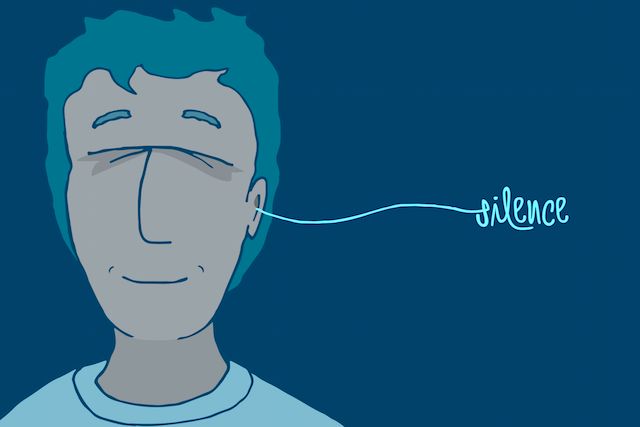
  • 20 Ways Sitting in Silence Can Completely Transform Your Life

    20 Ways Sitting in Silence Can Completely Transform Your Life

    “Silence is a source of great strength.” ~Lao Tzu

    For over two years I spent one out of every four weeks in silence. At the time I was living at a Zen Monastery and every month we would have a week-long silent retreat.

    During this retreat we sat meditation in silence, ate in silence, worked in silence, and only communicated through hand gestures and written notes.

    At first living like this was hard, but over time I learned to grow to appreciate silence. By the time I left I learned that silence was my friend and teacher.

    What did silence teach me?

    1. Satisfaction

    I used to think I needed to watch TV every night. But at monastery I went without and discovered I didn’t need it.

    Silence taught me to be happy with less. Pick something that’s weighing you down and let it go. Your life will thank you.

    2. Expression

    When you can only talk by writing a note, you only say what’s important. Before the monastery I talked a lot but said little.

    Silence taught me that a few simple words well spoken have more power than hours of chatter. Think of one simple thing you can say that would help someone feel better and say it.

    3. Appreciation

    Being able to speak makes life easy, but when I couldn’t talk I learned how much I relied on others.

    Silence taught me to appreciate the value of relating to others. The next time you see your friends or family, try to really listen. Deep listening expresses deep appreciation.

    4. Attention

    Several times at my first retreat I thought my phone was vibrating. But then I would remember I didn’t have my phone. It showed me how my phone divided my attention.

    Silence taught me how important it is to let go of distractions. The next time you are with someone you care about, try turning off your phone and putting it away. It will make paying attention easier.

    5. Thoughts

    I once sat a retreat next door to a construction project. What amazed me was how easily my thoughts drowned out the noise. I realized if my thoughts were this loud, I’d better make them as wise as possible.

    Silence taught me the importance of shaping my thinking. Take time each day to notice your thoughts and let go of thoughts that don’t serve you.

    6. Nature

    Because I sat retreat in every season, I know that the sound of wind in fall is different than it is in winter.

    Silence taught me to notice nature. Take a short walk outside in silence and you’ll discover the wisdom and peace that nature has to offer.

    7. Body

    During retreat I noticed that whenever I got lost in thought, I lost track of my body. And when I focused on my body, my thoughts would calm down.

    Silence taught me to be in my body. Close your eyes and ask, “What sensations do I feel in my hand?” Learning to feel your body can calm your troubled mind.

    8. Overstimulation

    Whenever I went into town after retreat, the world seemed so loud and fast. I came to realize how much our senses have to process most of the time.

    Silence taught me the importance of reducing the stimulation. Enjoy some quiet time everyday. The less you see and hear, the more settled your mind can become.

    9. Sound

    People would come to the monastery and remark how quiet it was. But living at the monastery I knew all the noises, from frogs, to owls, to the sound of sandals on the sidewalk.

    Silence taught me that the world is a rich texture of sounds. Sit in front of your house and close your eyes. You’ll be amazed at what you hear if you listen long enough.

    10. Humanity

    During retreat I was surrounded by imperfect people who were doing their best. Some were happy, some were sad, but all were wonderfully human.

    Silence taught me that people display great beauty. Find a good spot to people watch with an open heart. What you see may inspire you.

    11. Space

    For a long time anytime something difficult came up, I would just distract myself. But retreat taught me that if I avoided something it would never go away.

    Silence taught me that space helps me face hard times. The next time you face something difficult, pause and honor whatever’s arising.

    12. Love

    I used to think love was this big thing. But in retreat I found that I felt love for so many things.

    Silence taught me that love can be simple. Think of someone you haven’t said I love you to recently and tell them.

    13. Courage

    I used to think courage was about facing danger, but during retreat I realized that real courage is about facing yourself.

    Silence taught me the courage it takes to be still. When we stop moving everything we’re running from catches up. The next time you are afraid, stop and wait for it to pass. There is immense courage inside your heart.

    14. Perseverance

    Every retreat reminded me that speaking is easy, but staying quiet is hard.

    Silence isn’t flashy, but it has an immense power to endure. The next time someone doubts you, instead of disagreeing, silently vow not to give up. Action speaks volumes.

    15. Faith

    I often ask for reassurance or feedback. But living in silence meant I had to trust my instincts.

    Silence taught me to have faith in myself. The next time you begin to feel anxious, sit in silence and see if you can find the space of deep faith that lives in your heart.

    16. Honesty

    I used to lie so I wouldn’t have to explain myself. But when I couldn’t talk I began to notice this impulse and how much it degraded my integrity.

    Silence taught me the importance of telling the truth. Notice times where you tell little lies and try telling the truth instead. It isn’t always easy but it’s the first step to trusting ourselves and others. 

    17. Gratitude

    During retreat I didn’t have a lot of comforts. It helped me see how much I took for granted and how much I had to be grateful for.

    At the end of every day sit in silence and ask yourself what am I grateful for. You’ll be amazed at the blessings you discover.

    18. Simplicity

    I used to love drama and conflict. But at retreat I found I was happier when I kept it simple.

    Silence taught me that simplicity and joy are close companions. Pick one space in your home you could simplify. Keep it simple for one month and enjoy the ease it offers your life.

    19. Connection

    I used to think I had to talk in order to feel connected. I realized during retreat that I can feel connected just by being near people I care about.

    Silence taught me that words can get in the way. Do something in silence with someone you love. It will be awkward at first but eventually you will see what it means just to be in someone’s presence.

    20. Truth

    I studied philosophy in college and I thought I could read about truth. But retreat taught me that truth is found in silence.

    Silence has taught me a deeper truth than words ever could. Sit in silence once a week and feel the truth in your heart. It’s there whether you can express it in words or not.

  • A Simple Way to Make the World a Little Better Every Day

    A Simple Way to Make the World a Little Better Every Day

    Giving

    “Too often we underestimate the power of a touch, a smile, a kind word, a listening ear, an honest compliment, or the smallest act of caring, all of which have the potential to turn a life around.” ~Leo Buscaglia

    When I was seventeen years old, I decided to make a change.

    Instead of keeping my opinions to myself, I was going to start sharing them.

    Every time I had a kind thought about someone, I was going to tell them. And anytime I heard a compliment about someone who wasn’t in the room, I would let them know.

    If I loved someone’s outfit in the grocery store, I was going to say so. When my sister did something brave, I would tell her. When I felt a rush of affection for my best friend, I’d voice it. And when someone called a colleague brilliant, I would shoot them a note.

    This was something new for me. For whatever reason, I usually kept my nice thoughts to myself. I wasn’t in the habit of doling out compliments.

    And, yet, when I got a random compliment, it changed the shape of my entire day, sometimes my entire week.

    And so, at seventeen, I decided to change.

    It sounds like a pretty simple change to make in your day-to-day life, but even simple changes can be hard. Because so much of what we do is habit. If we’ve been keeping our thoughts to ourselves for twenty or thirty or even just seventeen years, it can be tough to start speaking up.

    But when you do make a commitment to make a small change like that, it can have a massive ripple effect. It can change your relationships. It can change your perspective. It can change the course of a life.

    And boy did it.

    The first time I complimented a stranger, he fell in love with me. Other times, I earned smiles, thoughtful pauses, and quiet, sincere thank-yous.

    But the most powerful change I saw was in the ripple effect that my decision had on those around me. In particular: on two girls that I met on my trip to Costa Rica later that year.

    It was a volunteer trip for teenagers and I was what they called a MAG Leader—a sort of camp counselor who roomed with and took responsibility for the wellbeing of five girls.

    Two of my five girls did not get along. They barely spoke, and when they did it was to antagonize the other. One girl made physical threats. Both did a lot of talking behind each other’s backs—until I introduced my compliment commitment to the group.

    I sat the girls in a circle and handed out index cards. Each index card had one of our names written on the front. And I told the girls that we were going to take a few minutes to pass around these cards.

    On each card, they should write one thing they really admired about the person whose name was on the card. One sincere compliment.

    Afterward, each girl got the card with her name on it.

    At the end of the few minutes we spent with these index cards, the two teenaged enemies were shocked to discover that the other person had something really insightful to put on their card. One girl commented on the strength and confidence of the other. The second girl admired the poise of the first.

    Suddenly and without meaning to, these girls respected each other. Suddenly, they each had something positive to say about the other.

    They never became best friends. But the bad-mouthing and the threats and the antagonism just melted away. A grudging respect and even courtesy took their place.

    This is when I really understood the power of compliments. The power of saying the kind things we think.

    It doesn’t take that much effort. You don’t have to manufacture a compliment for every person that passes by. But by simply voicing the nice thoughts that go through all our heads on a daily basis—“I love your sweater,” “What a beautiful smile,” “You’re so brave,” “I’m so glad we’re friends”—we can make the world just a little bit better every day.

    Photo by Kate Ter Haar

  • Happiness Doesn’t Make Us Grateful; Gratitude Makes Us Happy

    Happiness Doesn’t Make Us Grateful; Gratitude Makes Us Happy

    Thankful

    “In daily life we must see that it is not happiness that makes us grateful, but gratefulness that makes us happy.” ~Brother David Steindl-Rast

    A few years ago, my life was chaotic. I drank too much, slept too little, and always went with the flow. I didn’t look out for myself emotionally and physically. I burned the candle at both ends and eventually wore myself out.

    I often felt depressed. After my parents’ divorce when I was 18, I lost the closeness I used to feel with my family. My entire focus was on what I didn’t have anymore.

    I was in a never ending loop of feeling depressed, turning to alcohol, disappointing the people closest to me, then feeling more depressed. I had envisioned that I would grow up and my parents would still be a part of my life, but instead I felt like everyone was going their separate ways.

    My dreams of my parents being there for my future wedding were dashed. Celebratory events in my life would never include both of my parents. I was frustrated. It was draining and costly to my soul.

    I wasn’t aware of it then, but I also carried around so many regrets and resentment from childhood. When I was 7 years old, a stranger abused me during a field trip with my ballet troupe.

    The shame and confusion I felt from this experience followed me like a dark cloud. I regretted being too scared to tell anyone. I think in some ways I resented the fact that no one was able to help me.

    When my parents divorced I felt abandoned and it brought back a lot of those terrible feelings. It was like I was slowly imploding. I thought about the past and talked about the past while completely missing the present.

    After years of letting this build up inside me, it finally hit a breaking point. The hurt I was causing myself and family had boiled over. Something had to change.

    I was diagnosed with breast cancer in 2011. The world as I knew it came crashing down.  When you’re told you have a life-threatening illness it’s interesting how quickly everything else falls to the side. Time stands still and the past disappears. All you have is now.

    Being thrust into the present I no longer had time for resentments or any negativity at all. I needed all of my energy to fight for my life. Everything I carried with me for so long seemed insignificant to the battle I was about to face.

    Treatment for cancer can have a way of de-humanizing you, at least at first. It strips you down to your basic core self. I felt like a child most of the time. I was completely dependent on my doctors.

    It was like I was scrambling around in the dark, reaching for a hand to pull me out. I was vulnerable and had zero control over the outcome.

    I think sometimes in life we walk around with the illusion we’re in control. To some degree we are, but when faced with an illness you can very quickly be brought to your knees.

    We have a tendency to take life for granted. We just assume we’ll wake up everyday and be healthy. I got so comfortable with the day to day of my life that I forgot what a gift it actually is. It took almost losing that gift for me to finally open my eyes.

    Toward the end of treatment I felt reborn. All of the negative feelings I had about my parents’ divorce faded away. I was finally able to just let it go. My spirit felt calm. I felt optimistic about life again. My spirituality was soaring at heights I had never experienced before.

    Through sickness I found myself. I discovered who I really am and what I’m really about.  I was flooded with forgiveness toward my parents and I was ready to ask for forgiveness for all my crazy behavior.

    During the course of cancer treatment I was able to mend and rebuild my relationship with my parents. I now have happiness that I only dreamed of before. I realize now how much time I wasted being unhappy and I’ll never do it again.

    I wake up every morning grateful to have another day, to have another chance at this wonderful experience called life.

    I make it a priority to eat well and exercise. I rarely drink. I have a disciplined sleep schedule. I go to great lengths to take care of myself on an emotional level, everyday. My body really held up for me during treatment and now I’m paying it forward!

    Recovery from cancer has not always been an easy road. I won’t pretend there aren’t any bumps. My new outlook on life doesn’t allow me to wallow in it; instead, I count all my blessings and keep pushing forward.

    I feel like I turned the most negative experience of my life into a positive experience by taking the lessons I learned while sick and really making the necessary changes in my life. I’m thankful to be given a second chance.

    And, the life I had envisioned for myself? This is what I figured out. I don’t have to hang on so tight for something that isn’t working.

    By letting go of the one that wasn’t working, I naturally created a new vision. This is one of the most freeing things I have ever done for myself. My new vision is attainable, my new vision is already happening. I’m living it now.

    Instead of focusing on what isn’t working in your life, give some love and attention to the things that are. Take a mental inventory each morning of all the things to be grateful for.

    You will soon notice the negative way of thinking will begin to shift and you’ll be able to experience the happiness that is waiting for you.

    Photo by Zaiq Ali

  • Love What’s Right Before You Instead of Hating What’s Missing

    Love What’s Right Before You Instead of Hating What’s Missing

    Friends Jumping

    “I have learned that to be with those I like is enough.” ~Walt Whitman

    I take stuff for granted. I suspect you take stuff for granted.

    It’s almost as if it can’t be helped. When things—family, friends, health, amenities, or money—occupy a place in our lives for years, we naturally begin to view them as commonplace; we assume they’ll forever be, just as they’ve always been.

    Yet this mindset—this “Oh, of course that’s there; that’s always been there” perspective—often seems to prevent us from realizing how much it would mean to us if that something wasn’t there anymore.

    Hello, Asia

    In August of 2013, I moved to Busan, South Korea to teach English for a year to a bunch of elementary school kids (lovable rascals, these kids). Three months later, I can tell you that this experience has been everything I imagined and about 10,000 things I didn’t.

    For a while it was similar to what I’d envisioned—like freefalling through some sort of mythical dreamscape. Everything new and interesting, bright and foreign, so much happening, so much to learn, so much to take in. It was experiential overload, at once intimidating and blissful.

    After a few weeks, though, the feelings of novelty and adventure began to wane slightly; a discord had been created.

    My romanticized visions of my new home were coming into conflict with a feeling I’m sure most of you know very well—the slog of routine, the all-too-familiar, the grind. 

    What happens is this: you begin to get used to the new country; it loses a certain sparkle. You start to notice its flaws, its funny odors, its unsexy idiosyncrasies. You realize that a full-time job in a foreign land is still a full-time job, except 95% of the people around you don’t speak your language.

    You realize, “Wow, I’m going to be gone for a while—a whole year! And I’m going to see exactly zero people I know. Nada. None. For 12 months. Oh.” In terms of culture shock, you’re experiencing the end of what’s known as “The Honeymoon Phase.”

    I had read about these things. I thought I understood that they were going to happen. I thought I knew how long a year was. I thought I knew what I was getting myself into.

    I didn’t. Not really, at least. Turns out it was near-impossible to know what an enormous decision it was to move to a foreign country until I was two months in and questioning what in God’s name I was doing here.

    Lonely? Me?

    As someone who usually enjoys solitude, I’ve been surprised at how lonely I’ve felt at times. You discover a special kind of alienation when you’re in a city of five million people and can’t communicate with anyone. It’s easy to dissociate yourself from your surroundings.

    You start talking to yourself. You feel like you don’t exist. You end up shouting to the music in your headphones (“People will know that I’m here!!”) while walking down the sidewalk as you’re drenched head-to-toe and getting wetter by the second because, as you just found out, there are typhoons here. (Okay, maybe that was just me).

    It’s during those periods that you realize you’d trade your big toe for a few days at home with the people you’ve known for years. To do nothing but laugh a few hours away with those irreplaceable personalities whom you know about as well as your own reflection.

    “Man, that’d be heaven,” you think.

    Sure, you can “connect” with loved ones via Facebook, Twitter, Snapchat, Gmail, and a trillion other online mediums. You can even indulge in a pretty convincing illusion of face-to-face conversation with Skype or a Google Hangout.

    But as you do, it becomes clear that these substitutes can never duplicate a sizable bear-hug, or an eye-contact-followed-by-uproarious-laughter moment, or the glorious interplay of energies when you’re actually in the same room with people.

    While living in Korea, I’ve realized what an invaluable gift I sacrificed to come abroad—namely, being a car ride away from most all of my favorite people in the world.

    Before coming here, I’d known that I loved my family and friends endlessly—that they meant everything to me—but I don’t think I quite realized the extent to which being near them and being able to see them were vital to my well-being (and sanity).

    I feel I’ve gained a renewed appreciation for those precious people who’ve been there for years and will continue to be.

    When I do return home, I’ll love them just the same as before, but I’ll truly cherish the time I get to spend with them. I’ll try to remember what it was like without them.

    Gratitude is Slippery

    Simply imagine for a few moments what it would be like if all of the people you loved were just gone, so far away that you couldn’t see them. It’s likely difficult to put yourself in my situation, but my hope is that you can sense it—how you would miss the familiar comfort of just being with them, of just sharing a space or a smile.

    One wouldn’t think that the good things in our lives need to disappear in order for us to understand their worth, yet so often this is the case.

    It seems a bit of a paradox, that what is nearest our hearts can be hardest to see. I humbly submit to you that we ought to be attentive to what lies just below our oblivious noses, lest we recognize the value of things only after they’ve left us.

    I’d be a fool (more so than I already am) if I didn’t understand that this don’t-take-things-for-granted spiel applies to me right this moment.

    In a few years, I’ll look back on my time in Korea and know what an incredible opportunity I was given and how much was here to love.

    If I overlook the wonders that surround me in this place and constantly pine for my home, I’ll set myself up to feel only a sort of wistful gratitude later on, when all that remains of my time abroad are patchwork memories.

    So while I now grasp more fully what I left behind to come to this country, I’m focusing on remembering that I came here for what I couldn’t find at home—a different environment, new friends, fresh perspectives. And those things are all around, plain to be seen, so long as I’m not looking through them, at what isn’t here.

    I’m reminded of a sentence Vonnegut once wrote: “A purpose of human life, no matter who is controlling it, is to love whoever is around to be loved.” I like the whoever especially, but I’d also add whatever, wherever, whichever. 

    In the end, it seems, loving what’s right before us does far more good than hating what’s missing.

    I’m not always keen at seeing what’s near to be loved (so it goes), but here’s to looking a bit closer. Here’s to noticing the important things, before they’re no longer there to be noticed.

    Photo by Antoine Gady

  • 9 Insights on Dealing with Change, Challenges, and Pain

    9 Insights on Dealing with Change, Challenges, and Pain

    Rainy Day

    “The only way to make sense out of change is to plunge into it, move with it, and join the dance.” ~Alan Watts

    This year has been one of unprecedented change for me. From January to March, I traveled to Mozambique, Africa to do volunteer work. I did not speak the language; I did not understand the culture. I was immersed in a completely strange world for two months.

    In April, we put our house up for sale. The prospect of uprooting and moving is destabilizing, and one of life’s biggest stressors.

    Then in May my marriage failed, and I separated from my wife. We had been together for almost nine years. I became well acquainted with pain beyond anything I had ever known.

    In June I decided to attack my lifelong dream of singing in a rock band—mid-life crisis or perhaps an awakening of sorts.

    In August my son left home for university. It was a very exciting and emotional time for all of us, the end of one chapter and the beginning of another.

    And in September my last remaining grandparent, my grandmother, died at the age of ninety-seven. She was an incredible woman who saw so much change, and packed a whole lot of life into her years.

    Over the last nine months, amidst all the turbulence, challenges, and pain, a few insights gradually occurred to me:

    1. Nothing is permanent.

    Yet we are programmed for the opposite. We want life to feel safe and secure, and permanence gives us the illusion that it is.

    The reality is that nothing is permanent, and the only thing we know we can count on is change. The more we push for permanence in life, against the current, the more disappointed we become when we find it is not achievable to the extent we think it should be. But if we can accept the fluidity of life, everything changes.

    2. Time heals.

    Why is it that life can look hopeful one day, and so very dark the next? Very little of my actual situation has changed from one day to the next. But my perception of it can change minute by minute based on how I am feeling in that moment—tired or rested, peaceful or angry, whole or damaged.

    I am learning not to overreact in the moment, or make important decisions when I am feeling down.

    3. Practice gratitude.

    In the midst of turbulence, I have a strong tendency to dwell on the negative. And then everything looks dark and it snowballs.

    But there are always things to be grateful for in life—my friends, my health, my relationships, my next meal. I often think back to my time in Mozambique and remember the crippling poverty that most people live with there every day. And yet they are, by and large, a happy people.

    We can make a huge difference in our state of mind by focusing more on what we do have, how lucky we are, and counting our blessings.

    4. Be gentle with yourself.

    I am my own worst critic, focusing on my perceived failings and inadequacies. All this does, I have found, is reinforce the bad. And by reinforcing it, that is the reality I create for myself. So I am slowly learning to cut myself some slack, and perhaps even like who I am. What a concept!

    There is a direct correlation between how we treat ourselves and how we are with others out in the world. This is how we can learn to love.

    5. Be here now.

    I have a lifelong tendency to look back or forward—anything but being present. Guilt and shame look back, worry and anxiety look ahead. In either case, it is wasted energy.

    If I feel that I need to do something to set things right, then I should simply do it, then let it go and not allow these feelings to linger. For me, engaging in activities that force me to stay present helps: skiing, surfing, singing.

    6. Give up control.

    We can plan all we want, but there are much bigger forces at work out there. And the bigger plan for us may not coincide with what we think should happen or the planned timetable we have in our head.

    I will have faith that the universe wants to help me. My job is to see it, step out of the way, and let it work its magic.

    7. Be yourself.

    I have been a people pleaser for most of my life. There all kinds of expectations out there about what I should do, how I should do it, who I should be, and how I should fit in. And it is impossible for me to keep up, to satisfy everyone else. Far easier for me to finally learn just to be me, and to be comfortable with who that is.

    We can provide ourselves with a great deal of peace by learning to be ourselves and letting the chips fall where they may.

    8. Eat. Sleep. Exercise.

    This may seem basic, but when my life is in turmoil, I find that these can be the first to go out the window. I skip meals, or eat badly. My sleep suffers and when I am not rested, my whole perspective changes for the worse. That’s usually when I make bad decisions. I feel lethargic and tend to want to skip exercise.

    But these three are all connected, and they are some of the few things we actually can control to some degree. And when we force ourselves to practice good self-care, we feel better, stronger, and life seems brighter.

    9. Don’t fight the pain.

    It’s taken me a long time to learn this one. And I have a history of doing or using anything I can to not feel the pain. I know this doesn’t work because when I mask the pain, it never leaves. It just gets stronger, and comes out in other ways.

    Pain needs to be acknowledged. When we let ourselves feel it, it loses its grip and passes through us much more quickly.

    I have certainly not mastered any of these, but underpinning it all is a sense of heightened awareness about the feelings I have, and I’m beginning to recognize where these feelings come from. This is the first step in learning, accepting, and rolling with the changes that life offers up.

    Photo by Ben K. Adams

  • 10 Ways to Start Living and Loving Life Now

    10 Ways to Start Living and Loving Life Now

    Hands in the Air

    “I never want to arrive. I love the ride.” ~Coco J. Ginger

    This is what life should be, a wonderful journey of living and loving each moment.

    I was born in India to a loving, caring family. My mother and my grandparents gave me the world. They kept me hidden from the truths of life and, therefore, life was sweet, as I felt like the most loved child in the world. Now after 38 years of existing (not living) I reflect on where everything went wrong. Why have I felt so lost, broken, and regretful?

    I came from a successful business family. My father started his business at a young age and worked to make it a success.

    He involved his brothers so they’d have direction and goals in life. One day they went on a business trip to South of India from the North, and that was the last time my mother saw the love of her life.

    My father died of food poisoning at the age of 28. My father’s brothers threw my mother out of the property while she was pregnant with me, at the age of 25. One minute she had the world, and the next minute her world turned upside down.

    My mother was fortunate to have her parents to take care of her and support her during this traumatic time. Six months later, I arrived.

    My mother found a purpose to live, and her only focus in life was to give me the world. I always did well in school with studies and sports. My mother’s hard work, love, and dedication were paying off until the next phase in life.

    When I was 11 my mother and I moved to UK so I could further my education and be a success.

    The journey for both of us suddenly got tougher. My mother is highly educated, but due to lack of support and confidence the only jobs she was able to find were working in restaurants, cleaning dishes and cutting vegetables.

    It used to hurt me to see my mother work so hard, and I felt helpless that I could not do anything. I never saw my mother feel anger toward people and life, which I could never understand. She just got on with life, and her only focus was providing for and taking care of me.

    Schooling in the UK was tough because I didn’t have any friends and was seen as an outcast because I came from India. I was laughed at every time I opened my mouth because of my accent.

    I made a decision to keep quiet and stay hidden so the world would not see me. Anytime I had to face an issue, I ran to my mother and she took care of everything.

    I was growing up living a life of regret as I was indecisive, lacked confidence, and had no direction or goals. The only thing I wanted to do was to feel good from within and be happy.

    Even when it came to getting married I was not sure of the choice I was making. I married someone because her relatives sold me a story of how she was going to bring love into my family and take care of my mother when she’s old.

    My wife was exactly the opposite of the picture that was painted to me. She was abusive, aggressive, and made our lives hell. But I was never strong enough to make a decision to get out of this mess, as there was a child involved.

    Every time I thought about walking out of my marriage I felt guilty, thinking I may ruin my daughter’s life. My mother and I felt like prisoners in our own home, where we were shouted and dictated to for many years.

    After three and half years, one day my wife decided to walk out of our lives.

    Initially, it was a shock. But then I started seeing this as a blessing, as my mother seemed comfortable in the house, my daughter seemed happy, and I was able to sleep at nights without being verbally abused.

    This was the turning point in my life. I realized I needed to be tough. I needed to learn to make decisions by myself. I wanted to start living and loving life. 

    I realized as amazing as my mother is, I did not want to become a mirror image of her. I wanted to be strong and stand up for myself. Being passive and dismissive is not something I wanted to be.

    I now know what it means to live and love life. To me, it’s not traveling from one country to another and never facing reality. It’s about dealing with reality and holding the belief that no matter what happens, I can deal it.

    My living and loving life journey has just started. The lessons I’ve learned are:

    1. Let go of perfection.

    If each day you are running toward perfection, you are running toward failure. Instead, just try your best and feel good about it.

    2. Deal with it. 

    Don’t ignore it because it’s tough to deal with. Deal with the issue first, as the issues you find difficult are the most empowering when conquered.

    3. Realize that everything stems from your thinking. 

    Your thinking generates emotions. Emotions generate actions. Think positive and live positive.

    4. Do something fun each day. 

    Do something every day that will energize you, whether it’s dancing to music with no care in the world, running in the rain, or seeing friends and having a blast. Whatever it is, just do something that makes you feel alive.

    5. Don’t procrastinate.

    If you feel it, just go with it. The more you procrastinate, the more you are digging a hole of confusion.

    6. Make a list of things you want to achieve that will make you feel happy and alive.

    For me, the first thing was to share my story on Tiny Buddha. For years, I’ve read amazing stories from people who have inspired me, and I always wanted to share mine, but could not find anything positive to write. That has changed now, and here I am.

    7. Build a network of like-minded positive people.

    We are who we spend most of our time with. If we have a network of positive friends, that will help us to live with positivity.

    8. Just breathe.

    When things seem tough or confusing, take a few seconds out. Close your eyes, take a few deep breaths, and remember the powerful you who can deal with anything.

    9. Repeatedly ask yourself, “What is the worst that could happen?

    Put things in perspective when you’re paralyzing yourself with fear, and then you will realize you can handle whatever is coming.

    10. Be grateful.

    Stop thinking about what you don’t have. Instead, be grateful for what you have.

    This time will never come again, so live it and love it.

    Photo by Katelyn Fay

  • When You Don’t Feel Good Enough for Someone Else

    When You Don’t Feel Good Enough for Someone Else

    DSC_0008

    “Your outlook on life is a direct reflection of how much you like yourself.” ~Lululemon

    I recently started going through what has been the most difficult situation I have ever had to bare in my life: the end of my twelve-year relationship.

    I have gotten to know the darkest and most hidden places inside me, and pain so deep that I did not know we as a species were capable of feeling it.

    It has been through this process and my will to endure, survive, and overcome that I have had to dig deep to find meaning and answers.

    I went through a long period of negativity and was unable to find reasons to come out of my misery.

    I became obsessed with the idea of having what I desired more than anything in the world, and nothing else in my life was worth living, or even good enough, if I couldn’t share it my life with the man I loved.

    Little by little, I started finding joy in little things. I smiled to every stranger I passed by and created deep eye contact whenever I said “thank you” to someone. I began eating again (I pretty much had stopped).

    I achieved this by accepting what was happening instead of desiring things to be different. I wanted to stop hurting and knew that the only way was to be fully present and to stop obsessing over things I couldn’t control.

    It was only because I moved from my place, took a few steps to the side, and changed my perspective that I was able to understand what was happening and where it was all coming from. This understanding gave me peace.

    Having perspective helped me see that everything that happens is a reaction to something else. Symptoms are only that; they are not the cause itself. Being able to focus on motives instead of responses gave me awareness.

    Then it wasn’t so much about the final process itself but more about what I can do now with what I have this instant.

    I began a very intimate process of gratitude. I started thanking the universe for absolutely everything that was happening in my life and even went back to my earliest memories. I started acknowledging every small moment of joy that I was fortunate enough to savor.

    When I stopped trying to ignore my deep feeling of emptiness and anxiety and started paying attention to why I felt it, I was able to wake up in the morning without feeling what I called “the black hole.”

    I realized that my body was trying to tell me something: relying on someone else for happiness, well-being, and joy was wrong. These were all things that I needed to provide for myself. It became very clear once I put it into action; the emptiness started dissipating.

    Through my great effort I got to a day when I could again breathe calmly and deeply without having that sense of suffocation that had paralyzed me for the last five months.

    I am happy to share with you a few things that I engage in daily that I consider to have saved my life.

    Practice daily gratitude.

    I express my appreciation every night for everything that goes on during the day. I thank the people who offer me support, the people who love me, the people with whom I am lucky enough to be able to talk to or share some insight, even the people that represent a challenge.

    Gratitude helps us cherish what we have right now and see life as a truly amazing gift.

    Let people know you care about them.

    If I care for someone, I immediately tell that person. I don’t hold back.

    When I open up to people, it creates a mirror effect and people open up to me. Even people who find it challenging to express their emotions give love back to me, through words and actions.

    Giving love and then receiving it helps me feel less alone and a lot more appreciated.

    Appreciating all this loving and kindness helped me rid my attachment to the one person I wanted to give me love.

    Write love letters to yourself.

    Listing virtues that I am happy to have and reflecting on the things I’m not proud of helped me love and accept myself that much more, and build confidence and strength.

    For example, I’m happy to have a clear view on what I’m willing to accept into my life and what I’m not. I’m happy to know that I’m a good listener, that I’m responsible, and that I am capable of taking care of myself.

    I’m not too proud of my lack of patience, my intolerance, or my need to control—but I accept myself, flaws and all.

    Writing things down in this way engraves them and makes them more present and real, and not so intangible and unclear.

    Get to know yourself.

    I spent more time alone than I had ever before in my life. I went to the movies on my own, I ate dinner at places my ex and I went on a regular basis, and walked everywhere. Being alone with my thoughts helped me understand what I needed to do to gain peace.

    That was remembering that I am who I am by myself, and not who I am in response to someone else.

    This translated in me falling in love with who I really am instead of the recurring thoughts and fears of not being good enough for someone else.

    Through being alone I got to understand my values and my worth. This reinforced to me that we don’t need someone else to be complete; we only need ourselves.

    This helped me shift my perspective, to know that I am good enough, and there is no need to convince or prove to other people that I am worth their love.

    Once you start feeling love for yourself and are able to see the world as a truly magnificent, beautiful, and sacred place, you will notice how it gives back. If you pay enough attention, you can see how you are receiving gifts, constantly.

    The key is in thanking and being grateful for being alive and for the fortune of what we already have.

    Photo here

  • Increasing Self-Esteem and Happiness: 8 Steps to a Fulfilled Life

    Increasing Self-Esteem and Happiness: 8 Steps to a Fulfilled Life

    man-with-arms-raised

    “All that we are is the result of what we have thought. The mind is everything. What we think we become.” ~Buddha

    A few nights ago I did a search on Google Ad Words to compare the words “self-esteem” and “happy.” I discovered that over fifty-five million people search for the word “happy” every month, whereas just 800,000+ people search for “self-esteem.”

    Okay, I get it; we just want to be happy. But in order to be happy we need the foundation first, and the key ingredient is a healthy self-esteem. Once we increase our self-esteem, happiness comes with it.

    Creating a healthy sense of self-esteem might mean tons of work for some of us. It all starts with disciplining our thoughts.

    When I was in my twenties I was as far away from understanding this as you can imagine being. I used to think I was the ugliest person on the planet. I went through two terrible depressions, and I even contemplated suicide.

    All of this happened because I lacked gratitude for being alive, and I struggled with self-acceptance, discipline, and forgiveness. I had trouble forgiving myself because I would be too tough on myself whenever I made a mistake, and I had trouble forgiving others because I used to take things too personally, when in reality what other people say is a reflection of them, not me.

    Growing up I didn’t develop confidence in my ability to create change. I was allowing things to happen to me instead of making things happen for me.

    The last time I was depressed was twelve years ago. I could have died after taking a whole box of sleeping pills. After that I finally realized how ungrateful and selfish I had been by only focusing on myself.

    I decided to take 100% responsibility for my life because the idea of dying was scarier than the idea of living. If I was going to live, I decided I will do it in the best possible way.

    And I did. In the process I laid a strong foundation for high self-esteem and ultimately became much happier.

    Now, I love my life, I’m extremely grateful, and I continually learn how to keep improving as a human being while also teaching what I learn.

    Being the woman I am today doesn’t mean I never get sad, or that I never have problems.

    Being happy with who you have become, being grateful for the opportunity to live and for all you’ve experienced so far, being open to teaching and helping others helps you to deal better with challenges that life puts into your journey.

    Life is a cycle. Sometimes everything is great and sometimes everything falls apart in a matter of seconds. But we can choose to see each experience as something that will help us grow and become wiser.

    My conclusion after years of self-growth work is that a high self-esteem equals a high level of happiness, which leads to a fulfilled life. The keys?

    1. Understand why you need to change your thoughts and habits.

    It takes discipline to direct your thoughts to love, to increase your good habits, and to look after your body and soul every day.

    One way to increase your discipline is to write down the “why’s.” Ask yourself, why it is important to improve the quality of your thoughts?

    How would you feel having more loving thoughts? How would you feel if most of your thoughts were self-hating? Can this be a compelling reason? How would your life change if you treated your mind as sacred? How would life be if you treated it with respect?

    I used to have very low self-discipline, but step by step I kept improving it because I found compelling reasons to do so. Find your “why’s” and start with the first step. Today.

    2. Enlist support.

    Ask your family and friends for support, join a community, or seek professional help as you work toward increasing your self-esteem. Alone we won’t get anywhere.

    3. Use affirmations and mantras.

    Choose a mantra that will guide you through this process and repeat it three times a day (thirty times each time). One of my favorite mantras is “Every day I am better in every area of my life.”

    4. Filter your inner circle.

    We can’t always avoid negative people; they’re everywhere. But you can choose to surround yourself with people who support you and encourage you to be a better human being, while you also do the same for them; and you can create some distance in relationships where this isn’t the case.

    Trust that by creating some distance, you will make space for more healthy relationships. Give yourself the opportunity to be surrounded by great souls. You won’t be alone, I promise.

    5. Practice gratitude for yourself.

    Every day is a new life. It’s not that hard to be grateful when everything is okay. The tough part comes when you need to continue being grateful during hard times.

    When I’m feeling down, I thank my body for being able to breathe, I thank my eyes for being able to see, I thank my hands for being able to create, and I thank my values for leading me toward positive experiences.

    Write down everything you are grateful for and read it every morning or any time you’re feeling low.

    By practicing gratitude for parts of yourself you may otherwise not think to acknowledge, you will value more who you are, and this will help you to create a higher sense of self-love.

    6. Be present.

    By learning to not worry so much about the past and the future, you can start focusing on the moment, seeing each day as a new opportunity to do your best.

    By being in the present you will have more confidence because you’ll know that whatever negative experience you had in the past does not have to repeat itself. You will feel empowered to create a compelling future regardless of what’s happened before, which will strengthen your sense of self-worth.

    7. Help others.

    When you’re feeling helpless, go out and help someone else. Perhaps you can join a non-profit to volunteer your skills.

    This will allow you to see other realities, which will help you appreciate how fortunate you really are. It will also make you more confident because you will feel you can add great value to others in need.

    8. Trust in something bigger than yourself.

    We are not alone; we are all connected. Whenever I find myself trusting only my own strengths, I get insecure. But if I have done all that I could in a particular situation and then I also trust that the universe is supporting me, insecurities go away and miracles happen.

    Get out there, do the best you can, and allow the universe to give you a hand.

    I’d love to know what your challenges with self-esteem and happiness are! Will you take these important steps? What else would you add to this list?

  • Bounce Back from Unexpected Challenges Stronger and Happier

    Bounce Back from Unexpected Challenges Stronger and Happier

    Jumping

    “True happiness means forging a strong spirit that is undefeated, no matter how trying our circumstances.” -Daisaku Ikeda

    Let’s face it, whether big or small, stressful or simple, we all face challenges every day, some easier to deal with than others. Unfortunately, life doesn’t come equipped with an instruction manual to handle these challenges.

    No matter how much we try to plan in advance, calculate our every move, or predict what the future will bring, we can never prepare enough for the unexpected.

    The past eight months of my life have been filled with more twists and turns than the most popular roller coaster at Six Flags. As a control freak, I was suddenly forced to surrender to circumstance, forced to take a back seat and reflect on what my life was becoming.

    Sometimes it takes physical pain to get to the root of a deeper wound that you are unconsciously inflicting on yourself.

    Ever since the age of three, my heart and soul has thrived on dance. For me, the ability to connect emotionally with others through movement is something that is indescribably fulfilling.

    In May of 2012 I graduated college with my B.F.A in Dance. It marked the closing of four of the most demanding, stimulating, and downright remarkable years of my life. I grew emotionally, physically, and spiritually, molding into my adult self through incredible and trying experiences. I was healthy, in shape, and injury free.

    After graduation, I set my sights high upon New York City, anxious to jumpstart my dance career. I moved in August and set out with a willing heart, determined to make my dreams come true. My approach was frantic, maybe even fanatical.

    I needed a job, I needed to succeed, and I needed to prove myself.

    That’s when life threw a curve ball that stopped me dead in my tracks.

    I was taking a dance class before an audition when… twist, slip, fall, crack… In a blur I was in the ER clutching a broken leg, flooded with fear, anger, and distress. 

    After the initial shock of what happened, it started to sink in that I would be out of dance for a while. Realizing this setback after just arriving to NYC was heartbreaking. In that moment, all I could think about was “Why me?”

    I worked so hard and pushed so much to get to the top of my game, but in a way that was harming my body, physically and emotionally. I had let the competitive nature of the dance and theater scene get the better of me.

    Suddenly, I found myself away from my NYC apartment and newfound life and back home with my parents, trying to heal. As a young dancer whose body is her career, having life abruptly stop was devastating.

    Four months later I was able to return to the city to start again. Slowly progressing, I felt as if everything would heal. Then, another wrench in the plan: a follow up with the doctor revealing the fracture was not healing.

    Just when things were looking up, they felt as if they were sinking down again. I would need surgery, screws to set the broken bone back into place, and another five months of recovery.

    We all face setbacks at some point along life’s journey, and learning to bounce back is what really gives our spirit strength.

    Sometimes accidents happen for very good reasons. In my case, the universe was trying to tell me to slow down, that I have my whole life ahead of me to work and dance and love. Rome wasn’t built in a day.

    Yoga played a huge role in my recovery process, enabling me to overcome the overwhelming sense of failure and depression that came with my injury.

    Unable to do the physical asanas, I discovered the benefits of meditation, learning how to calm my frantic mind, and practicing acceptance toward the cards I had been dealt.

    In college, I started practicing yoga as a way to cross train and escape my hectic class schedule. Since then, the practice has become an anchor for me, its emotional and mental benefits saving me from self-destructive thought patterns and allowing me the chance to release away from, and be at peace with, the pressures of the real world.

    Before my injury, I started working a desk job at Pure Yoga in Manhattan to continue practicing yoga and to further my teaching skills. It was fate getting the job at Pure, as I landed myself right in the middle of an amazing community of loving, caring, and truly remarkable people. 

    Throughout my injury and recovery my friends at Pure have kept my spirits lifted, encouraging me to keep moving forward.

    When I returned to work, yoga was there alongside my friends to help me build back strength. It is so important to have a support system. When things get tough, your friends and family can hold you up—and you shouldn’t be afraid to let them.

    My setback produced another positive, as it led me to complete a 100-hour teaching certification in yoga therapeutics. I quickly became more involved with how important a role yoga plays in healing the body, mind, and spirit.

    Still getting my strength back, I have learned:

    1. Letting go brings abundance.

    Sometimes letting go is the absolute hardest thing to do. But when we hold on too tight, we leave no room for the light to get through.

    It’s like catching a feather: you have to hold out your hand and allow the feather to fall into your reach. You can’t catch a feather by frantically flailing and grasping for it. Once you loosen your grip on a perceived outcome, things start to unfold organically.

    Learning not to force things opens up the possibility for the brilliant and the extraordinary to happen.

    2. Believing in love will lift your soul.

    Believe that there are people in your life who love and believe in you. Believe that you are love, and that your soul has a limitless capacity to give and receive love.

    How does the simple act of believing make you feel? Worthy. Infinite. Content. Express compassion and gentility toward yourself, and to others, and you will open up to the possibilities life has to offer.

    3. Gratitude will ignite a light in the darkest of places. 

    When I first came out of my leg cast, the simple act of being able to put weight on my own two feet made me realize how grateful I am for my health, and how much we all tend to take it for granted.

    Be grateful for running to catch the subway in the pouring rain, because you can feel that rain on your skin and you can feel your feet as they pound the pavement. Experiencing gratitude in simplicity changes everything.

    Each day our yoga is to embody positivity, in every situation. Let go of what does not serve you to let abundance in. Believe in your strength to overcome. Be grateful.

    And don’t forget to breathe.

    Photo by Zach Dischner