Tag: Gratitude

  • Tiny Buddha’s Gratitude Journal Giveaway

    Tiny Buddha’s Gratitude Journal Giveaway

    UPDATE: The winners for this giveaway have been chosen. They are:

    • Keri Olson
    • Your Computer
    • Kelly Hawkins
    • Jadice-Teal N Momz
    • Maryrose

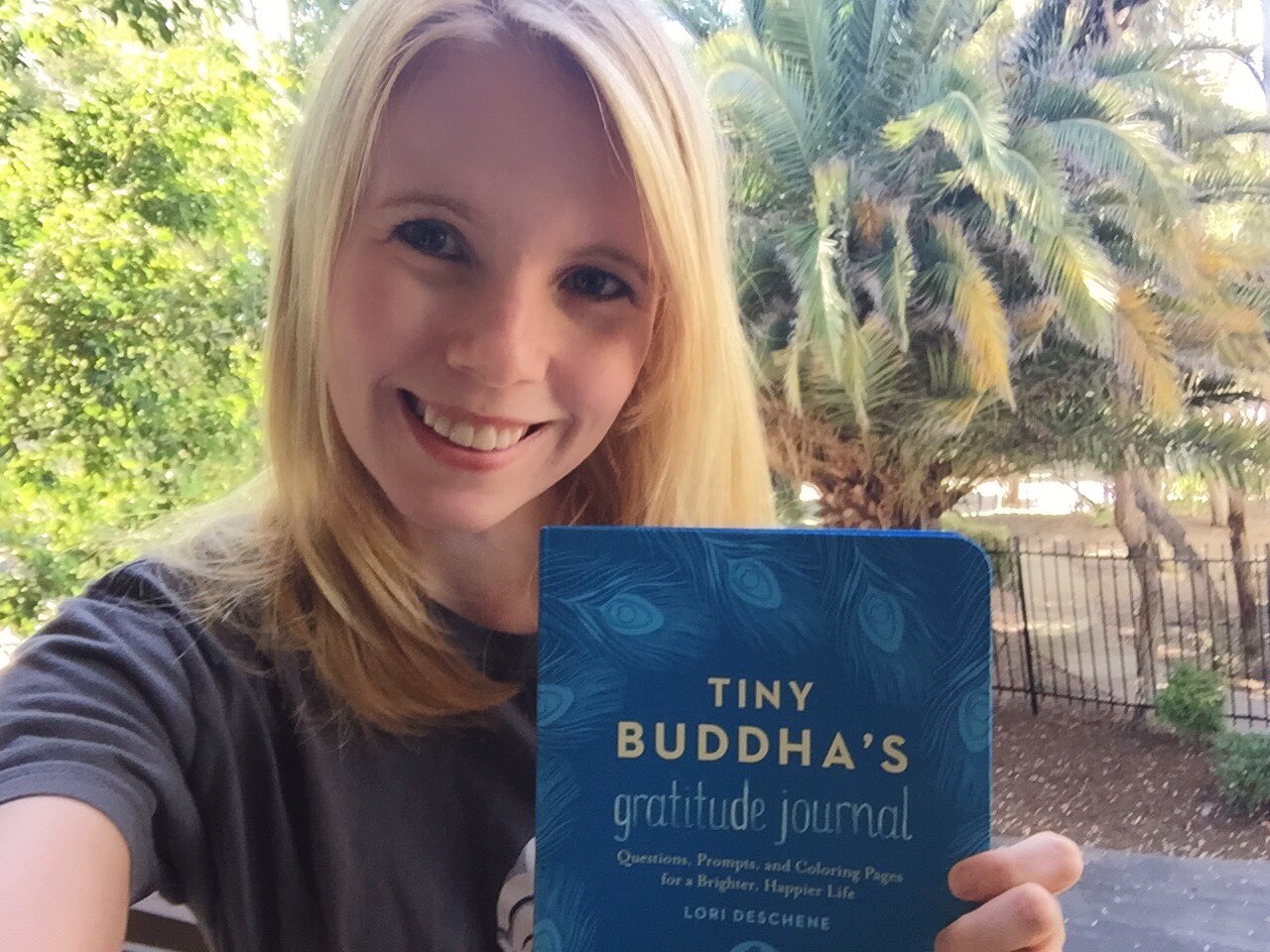
    Hi friends! Last week I launched Tiny Buddha’s Gratitude Journal, after sharing some of the book’s fifteen coloring pages over the past several weeks. I’ve received some wonderful feedback so far, and I’m thrilled to know that so many of you are finding the book fun and helpful!

    Along with today’s coloring page, I’m running a giveaway, offering five free copies. If you’ve already purchased one for yourself, you may want to enter the giveaway for a chance to gift one to a friend.

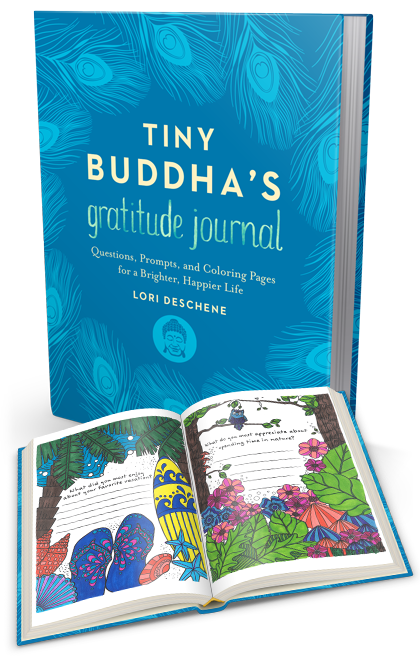
    About the Journal

    Including questions and prompts pertaining to both your past and present, the journal will help you see your life through a new, more positive lens.

    The book also includes fifteen coloring pages, depicting awesome things we often take for granted, like nature and music.

    With space for written reflection, these pages provide all the benefits of coloring—including mindfulness and stress relief—and also guide you to recognize the beauty in the ordinary.

    Whether you’ve been gratitude journaling for years or you’re just giving it a try for the first time, Tiny Buddha’s Gratitude Journal will help you access a state of inner peace, contentment, and joy.

    The Giveaway

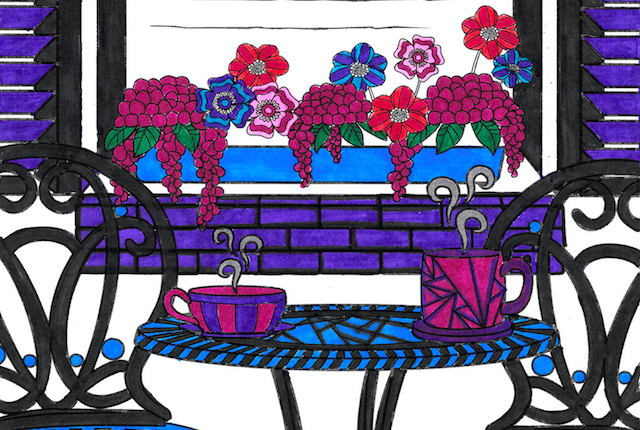
    • To enter to win one of five free copies, leave a comment below answering the question in the coloring page above.
    • For a second entry, share this post on one of your social media pages and include the link in a second comment.

    You can enter until midnight, PST, on Monday, June 26th.

    If you’ve already received your copy, I would appreciate if you’d leave a review on Amazon here. It doesn’t need to be long—even a tiny review can make a big difference!

    And if you’ve already colored a page or two, I’d love to see it! Please share it on social media using the hashtag #tinybuddhagratitude

    Thanks so much, everyone. I am grateful for you!

  • 9 Things Grateful People Believe About Life

    9 Things Grateful People Believe About Life

    *This post was originally published at the end of 2015. Since this was around the time I decided to create my newly launched gratitude journal, it seemed fitting to share it again today!

    “Gratitude unlocks the fullness of life. It turns what we have into enough, and more.” ~Melody Beattie

    My title was a little misleading, at least based on my personal beliefs.

    I don’t believe the world fits neatly into some massive yin yang with grateful people on one side and ungrateful people on the other; but rather, we all go through times when we feel high and low degrees of gratitude, and that’s only human nature.

    It’s okay to feel angry, despondent, and disappointed. It’s okay to wish things were different—that we were healthier, or happier, or generally less lost in the world.

    There’s nothing evolved about ignoring reality or repressing our emotions. But there’s a difference between embracing our feelings and stewing in them.

    It might not be possible to be feel grateful all the time, but it is possible to be grateful more often than not.

    The opposite was true for me for years, but I’ve shifted my ratio of grateful to ungrateful moments by adopting and reinforcing the following beliefs.

    1. Everyone has something to teach or offer me.

    That person who cut you off in traffic—she’s likely not a selfish jerk, but rather someone who’s having a stressful day and rushing. Annoying, yes, but thankfully this is an opportunity to practice patience.

    That person who broke your heart—he’s likely not a sadistic bastard who took pleasure in your pain, but rather someone who was human and hurting, just like you, and did the best he could. Distressing, yes, but thankfully this taught you a great deal about yourself and what a healthy relationship entails.

    This mindset was difficult for me to adopt. For a long time I felt convinced that some people were beyond understanding. And, I thought, like Miley Cyrus, some of them came into my life like a wrecking ball and provided absolutely no value.

    I now see that I’ve learned something from every broken heart, broken hope, and broken promise. It’s all helped me become a stronger, wiser, more compassionate person, and the same is true for anyone who chooses to see it that way.

    2. There’s something valuable in every challenge.

    Just like every person can offer us something valuable, every challenge can contain an opportunity as well.

    To be clear, I don’t think we need to see everything as a blessing in disguise. In her book Bright-Sided, author Barbara Ehrenreich shared her resentment for the implication she should see her cancer as a gift. I understand why she felt that way.

    This goes back to what I wrote in the beginning—there’s nothing worthwhile about pretending we’re not shocked, saddened, and disappointed by the hardships that come our way. It doesn’t benefit anyone to ignore our natural feelings in the face of trauma and tragedy.

    But it is possible to acknowledge that, while some things just plain suck, good things can come from them.

    When my grandmother passed away several years back, we all wished we had more time with her. But that began a new tradition for my extended family. Once a week, on the day when my mother previously took my grandmother out to dinner, my aunt, uncle, cousins, parents, and siblings get together for “family night.”

    It was a tradition born from tragedy, but one that’s brought everyone closer.

    On the other side of loss there’s an opportunity for gain, if we’re willing to seek or create it.

    3. Even if I don’t have what I want, I’m fortunate to have what I need.

    Very few people have everything they want. True, some may have a lot more than others, but the vast majority of us have hopes that have yet to be fulfilled.

    We have dreams and goals and ambitions. We want things and experiences and opportunities. We want to be a little richer, for life to feel a little fuller, and to generally get the sense that we’re moving forward, not backward.

    Still, amid all the ups and downs and highs and lows, many of us have everything we need, or at least most of it. We have somewhere to live, food to eat, people to turn to, and the ability to pursue whatever it is we’d like to achieve in life.

    Those things are not givens. Many people—and you may be one of them—do not have their basic needs met.

    I didn’t always appreciate this, because it didn’t seem to make my challenges any easier. But if I didn’t have those needs met, my challenges would certainly be harder.

    4. The “little things” are the big things.

    If you keep a gratitude journal, you’ve likely recognized just how many touching, fortunate, or fun little things happen every day.

    Recently I’ve listed the following in my gratitude journal:

    • My new adult coloring books, which provide stress-relief and joy
    • Getting to see the Christmas tree lighting at The Grove with my fiancé and an old friend (it happened before Thanksgiving—which annoys some people, I know, but not me!)
    • Realizing the new season of Arrow started, and there were five episodes to watch
    • Taking a hot bath with a mindless (okay, trashy) magazine
    • Getting a cheap but awesome burrito for lunch
    • Anticipating a fun family visit for Thanksgiving
    • The smell of meatballs cooking in my parents’ kitchen

    It’s not every day we get a new job, marry the love our life, or bring a child or passion project into the world. Most smiles in life stem from little things, appreciated.

    5. I don’t have to have it all or do it all to be happy.

    In the US especially, many of us hold the belief that we need to do it all, have it all, and be it all. We can’t miss out. We can’t fall short. We have to keep up, and keep accumulating.

    Sure, it’s nice to cross an experience off our life to-do list, and we all love when we’re able to provide ourselves with something that’s caught our eye.

    But grateful people realize that happiness comes from accepting and appreciating what is—and knowing that even if we never have or do more, we can live a full and fabulous life.

    This doesn’t mean we need to forsake all our goals and desires and grow stagnant. Though I love the movie It’s a Wonderful Life, as I wrote previously, I don’t believe we need to sacrifice all our wants and dreams to be good people.

    I do believe, however, there’s something to be said for putting in the effort, surrendering to the outcome, and recognizing that whatever happens, life can be beautiful.

    6. Everyone’s blessings are different, and that’s okay.

    When you’re caught up in that race to do more and be more, it’s all too easy to look around at who seems to be “ahead” and feel resentful. Grateful people realize that life isn’t a competition, and there’s no such thing as “behind.”

    We’re all different people; we all have different talents, interests, priorities, and values; and we’re all on our own path.

    What’s meaningful to me might not be meaningful to you. What’s valuable to me might not be valuable to you.

    You might feel blessed to have four healthy kids. I feel blessed to be getting a fish tank soon. You might feel blessed to have just bought a new home in the country. I feel blessed to live in a vibrant apartment community in a city.

    And you may have things I wish I had (I actually wouldn’t mind a healthy kid or two), but there may be things I have that you want. And that’s totally okay.

    We’re all fortunate in our own way, for different reasons. All that really matters is that we recognize, focus on, and appreciate our own.

    7. Things can, and will, change.

    Every now and then, I look deeply at someone I love and remind myself that they won’t always be here. And I won’t be either.

    It sounds morbid, I know, and it sometimes chokes me up to think about it. But recognizing that nothing and no one will be around forever makes it so much easier to focus on the good things and appreciate what we have.

    And this doesn’t just apply to people. It’s not a given that any of us will do the same job until we retire, or that we’ll make the same salary, or that we’ll have the health we have now to enjoy the same hobbies.

    Try as we may to insure things won’t change—with contracts and policies and commitments—things can, and will, change. Nothing nurtures a grateful heart like recognizing this, and acting like it.

    8. It could always be worse.

    Yes, it’s a cliché, and not something we want to hear when we’re going through a hard time.

    I recently found an anonymous quote that reads, “Saying someone can’t be sad because someone else may have it worse is like saying someone can’t be happy because someone else may have it better.”

    Knowing that it could be worse does not have to mean denying our feelings. But it does put things in perspective and make it easier to move through them.

    After losing both of his legs, my grandfather could have been bitter. Clearly, many people had it “better” than him—they could walk. But he still had his sense of humor, his values, and the people he loved, and that was all he needed.

    9. Life itself is a gift.

    We live in a world full of teachers—both people and experiences—that enable us to learn, grow, and continually evolve into the people we want to be.

    We have many, if not all, of our basic needs met, providing a foundation that allows us to comfortably enjoy life’s abundant simple pleasures.

    We may not have it all, or the same things other people have, but we each have countless things, people, and opportunities to appreciate and enjoy.

    This moment will never come again, and there’s no guarantee the moments that follow will look anything like this. Knowing this somehow makes the present more precious—even if things aren’t perfect.

    And that brings us to this final belief: life itself is a gift.

    It isn’t always easy, or happy, but it’s one hell of a ride—and it wouldn’t be without the bumps and turns. At least, that’s what I believe, and because of this, I’m grateful.

    What do you believe?

  • Tiny Buddha’s Gratitude Journal Launches Today – Last Day for 3 Free Gifts

    Tiny Buddha’s Gratitude Journal Launches Today – Last Day for 3 Free Gifts

    Today’s the day! I’m thrilled to announce that Tiny Buddha’s Gratitude Journal is now available for purchase, and if you order today, you can still get the three free bonus gifts.

    I decided to create this gratitude journal/coloring book, with the help of the talented illustrator Rose Hwang, because gratitude and coloring have both greatly enhanced my life.

    Coloring is not just for kids. It’s calming, creative, and meditative, and best of all, it’s easily accessible. You don’t need fancy equipment or an art class, just some markers or colored pencils and a little time and space to get lost in the colors.

    As for gratitude journaling, it traditionally involves jotting down a few things you appreciated throughout your day, and I’ve done that for years.

    I’ve taken a few moments in the morning or night to appreciate the small things (that I slept well, the sun was out, or someone hugged me when I needed it) and the bigger things (that my relatives are healthy, that I’m currently in good physical and mental shape, and I have a comfortable apartment in an area I enjoy).

    It’s amazing how much you can come up with when you consciously choose to look for everything that’s going right, and how much it can boost your mood.

    I’ve taken this concept and given it more structure with Tiny Buddha’s Gratitude Journal. Each page includes a question or prompt to help you focus on a specific area of your life, including your past, your relationships, your work, your passions, and more.

    The coloring pages depict common things we enjoy but may take for granted—such as nature and music—and space to reflect on what you appreciate about that thing.

    If you use this journal regularly, I believe you’ll feel better about life, more optimistic, and less stressed and anxious.

    It will help you shift your focus from everything you think should be happening to everything that’s already wonderful in your world. And armed with a new sense of presence and satisfaction, you’ll be more effective in creating positive change for the future.

    Order your copy of Tiny Buddha’s Gratitude Journal now and receive the following three free gifts:

    • Tiny Buddha’s Handbook for Peace and Happiness (an eBook not currently available for purchase)
    • Gratitude Discovery, a Guided Meditation Experience from One Live Mind
    • Three printable, colorable thank-you cards

    Get your copy here:

     Amazon B&N Booksamillion.com Indie Bound

    To claim the free bonus items, forward your purchase confirmation email to bookbonus@tinybuddha.com.

    Whether you’ve been gratitude journaling for years or you’re just giving it a try for the first time, Tiny Buddha’s Gratitude Journal will help you access a state of inner peace, contentment, and joy.

    I hope you enjoy it as much as I enjoyed creating it!

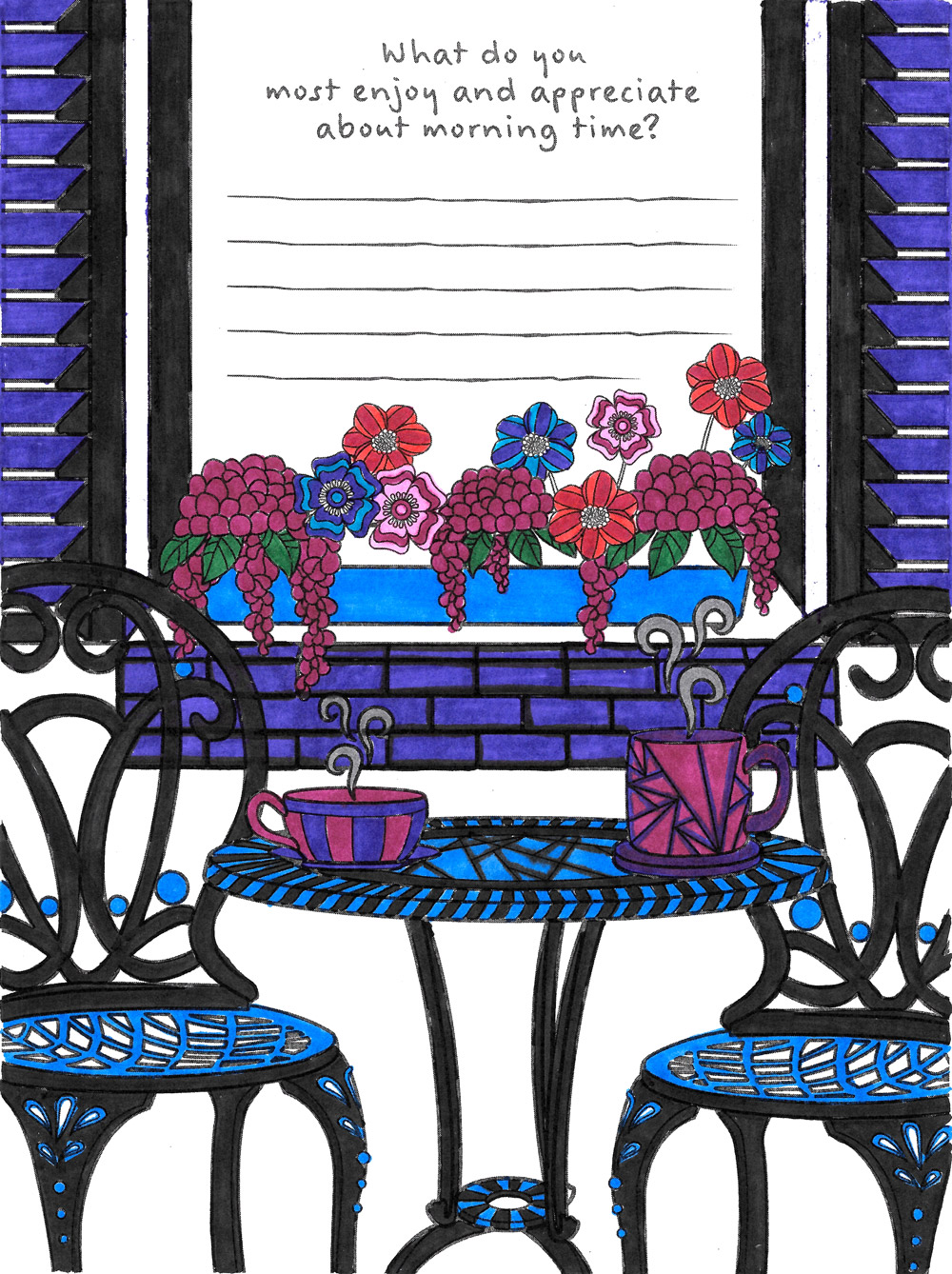
  • Morning Coloring Page from Tiny Buddha’s Gratitude Journal

    Morning Coloring Page from Tiny Buddha’s Gratitude Journal

    Hi everyone! This is my seventh week sharing coloring pages from the soon-to-be-released Tiny Buddha’s Gratitude Journal (available for pre-order now). Previously, I shared:

    How would you answer the question in the middle?

    Now that I get up much earlier than I used to, I appreciate that morning is my time for myself. On most mornings I meditate, sometimes while it’s still dark outside, and it’s usually feels quiet and peaceful around me.

    I also appreciate that morning always brings a sense of promise. It’s a new day, full of possibilities. A new chance to be who I want to be and do what I want to do.

    If you haven’t already, pre-order your copy of Tiny Buddha’s Gratitude Journal here, then forward your purchase confirmation email to bookbonus@tinybuddha.com to receive three free bonus gifts! These gifts are only available until June 13th, the official launch date.

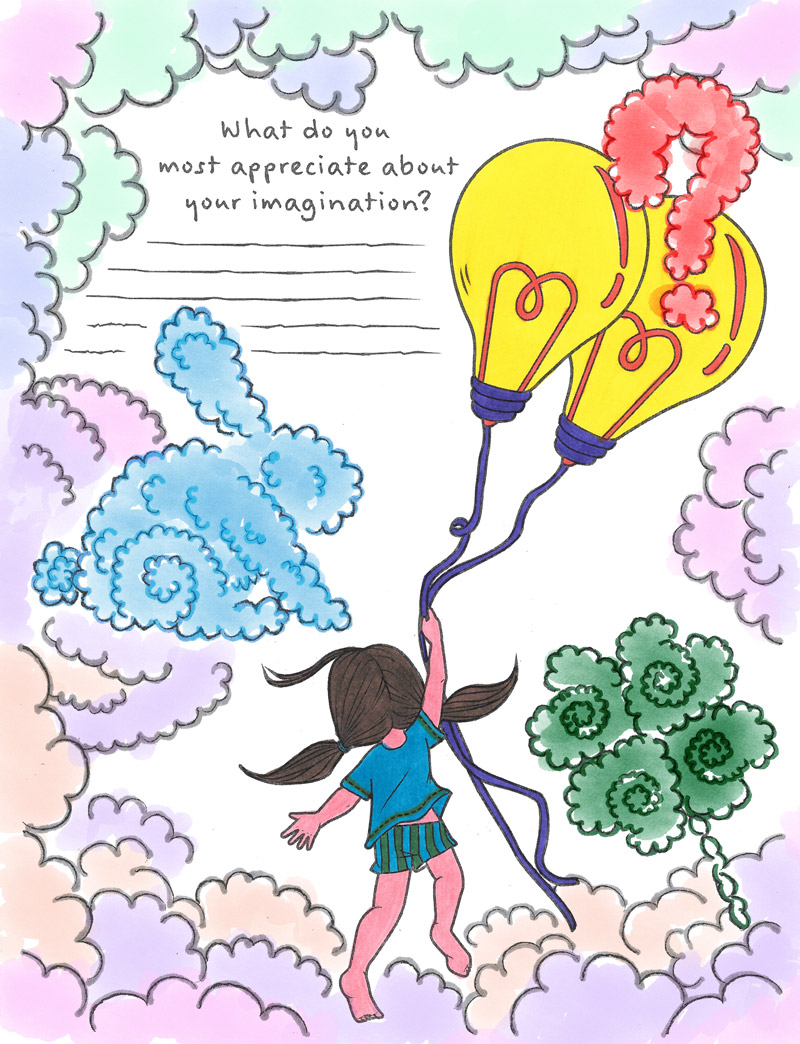
  • Imagination Coloring Page from Tiny Buddha’s Gratitude Journal

    Imagination Coloring Page from Tiny Buddha’s Gratitude Journal

    Hi everyone! This is my sixth week sharing coloring pages from the soon-to-be-released Tiny Buddha’s Gratitude Journal (available for pre-order now). Previously, I shared:

    How would you answer the question in the middle?

    I appreciate that my imagination allows me to visualize possibilities for the future, envision what it was like for those who lived in the past, imagine how it feels to walk in someone else’s shoes, and create things that hopefully touch others as much as the process of creating touches me.

    At the present time, I appreciate how my imagination is enabling me to write my first feature film. It’s been a long time coming, as I made excuses for years to avoid doing something new and hard, that I wasn’t sure I could excel at. But I’ve now embraced the process of imagining, writing, reimagining, and rewriting. And regardless of what comes of this, I feel grateful for the deeply fulfilling journey I’m taking with these characters who live on my page.

    If you haven’t already, pre-order your copy of Tiny Buddha’s Gratitude Journal here, then forward your purchase confirmation email to bookbonus@tinybuddha.com to receive three free bonus gifts!

  • Your Favorite Animal Coloring Page from Tiny Buddha’s Gratitude Journal

    Your Favorite Animal Coloring Page from Tiny Buddha’s Gratitude Journal

    Hi everyone! This is my fourth week sharing coloring pages from the soon-to-be-released Tiny Buddha’s Gratitude Journal (available for pre-order now). Previously, I shared:

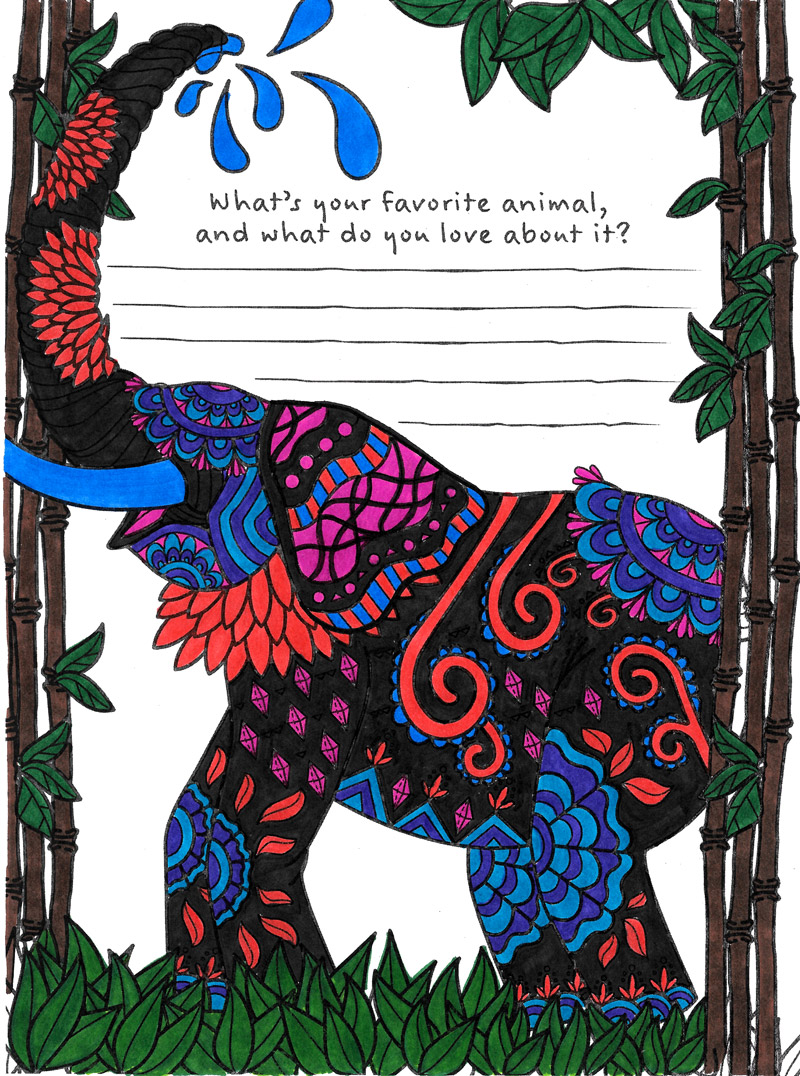
    I have a hard time answering this one because I’m a huge animal lover—literally. I’m mostly drawn to large animals, including lions and tigers and bears (Oh my!)

    These aren’t the pets that will greet you at the door or curl up in your lap. You can’t take them on a plane for emotional support or dress them like little humans. They’re commanding, formidable, and not just a little dangerous.

    Something about being around beautiful, massive predators, without human consciousness, pulls me out of my own tiny mind and fills me with presence and awe.

    What’s your favorite animal, and why?

    If you haven’t already, pre-order your copy of Tiny Buddha’s Gratitude Journal here, and you’ll instantly receive three free bonus gifts.

  • Technology Coloring Page from Tiny Buddha’s Gratitude Journal

    Technology Coloring Page from Tiny Buddha’s Gratitude Journal

    Hi everyone! This is my third week sharing coloring pages from the soon-to-be-released Tiny Buddha’s Gratitude Journal (available for pre-order now). Previously, I shared the nature coloring page and the vacation coloring page.

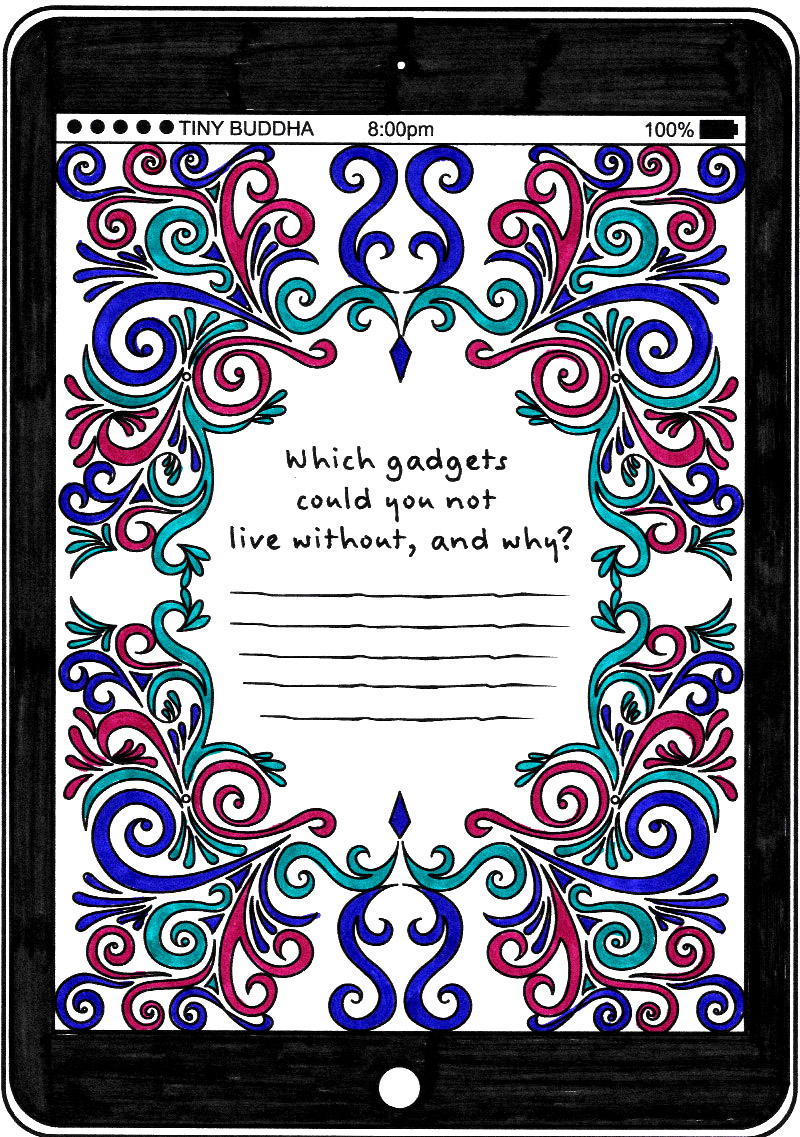
    This one’s a no-brainer for me. Though I could live without it (did it for over twenty-five years!), I’m most grateful for my iPhone—which I use most frequently to manage Tiny Buddha’s social media pages and my inboxes on the go, read eBooks, track my steps, and listen to music and guided meditations.

    If you had told me in high school I’d one day own one device that would replace my computer, my alarm clock, my camera, my pedometer, and everything on my book shelf, I would have asked what you were on (and if you had any left).

    Though I was a late iPhone adopter, using a flip phone for an embarrassingly long amount of time, I’ve had one for quite a while now, yet it still blows my mind how much it simplifies my life.

    I’ve had to work at being mindful with technology, as it’s pretty tempting to mindlessly surf when I’m bored, agitated, or feeling anything I’d rather avoid. But even this is a gift, in a way, as every time I check my iPhone, I have a reminder to check in with myself.

    What’s your favorite gadget, and why?

    If you haven’t already, pre-order your copy of Tiny Buddha’s Gratitude Journal here, and you’ll instantly receive three free bonus gifts.

  • Vacation Coloring Page from Tiny Buddha’s Gratitude Journal

    Vacation Coloring Page from Tiny Buddha’s Gratitude Journal

    Last week I shared the nature coloring page from Tiny Buddha’s Gratitude Journal, which launches in June and is now available for pre-order. I’m having a blast coloring my way through the book, and I’m excited to share a second page with you now!

    How would you answer the question in the middle? (If you’re reading this in your inbox, click here to comment on the site.)

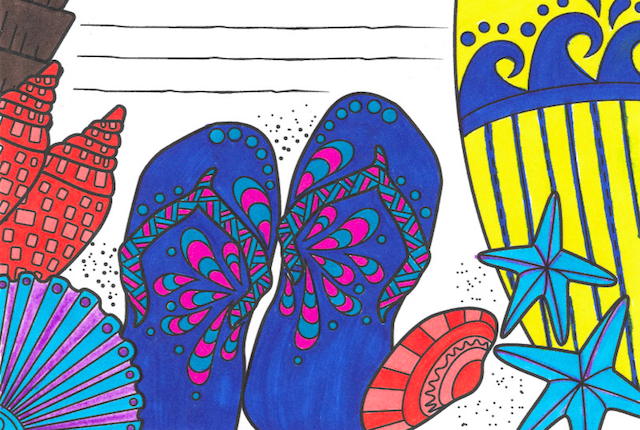
    My favorite vacation happened four years ago, when I went to Italy with my boyfriend and our families. Though it may be hard to believe given my fair skin and light hair, I’m actually 50% Italian, so it’s always been a dream of mine to see Rome with my family.

    It was the first time we’d ever traveled overseas together, and my siblings’ first time leaving the country, so that made it even more magical.

    But that wasn’t what I most appreciated about this trip. I come from one of those families that spends a lot of time close to home, crammed together in a kitchen too small to fit us, endlessly entertained by each other’s company. And yet I have an insatiable explorer inside me, who never tires of discovering new places, people, and ways of being.

    Dining al fresco on a cobblestone street with my siblings and parents to my left, my boyfriend and his parents across from me, and the Coliseum mere miles away, I felt whole. For that brief week, family and adventure overlapped, and I’ve never felt more happy or complete.

    Stay tuned for another page next Wednesday. Getting my markers out now!

    If you haven’t already, pre-order your copy of Tiny Buddha’s Gratitude Journal here, and you’ll instantly receive three free bonus gifts.

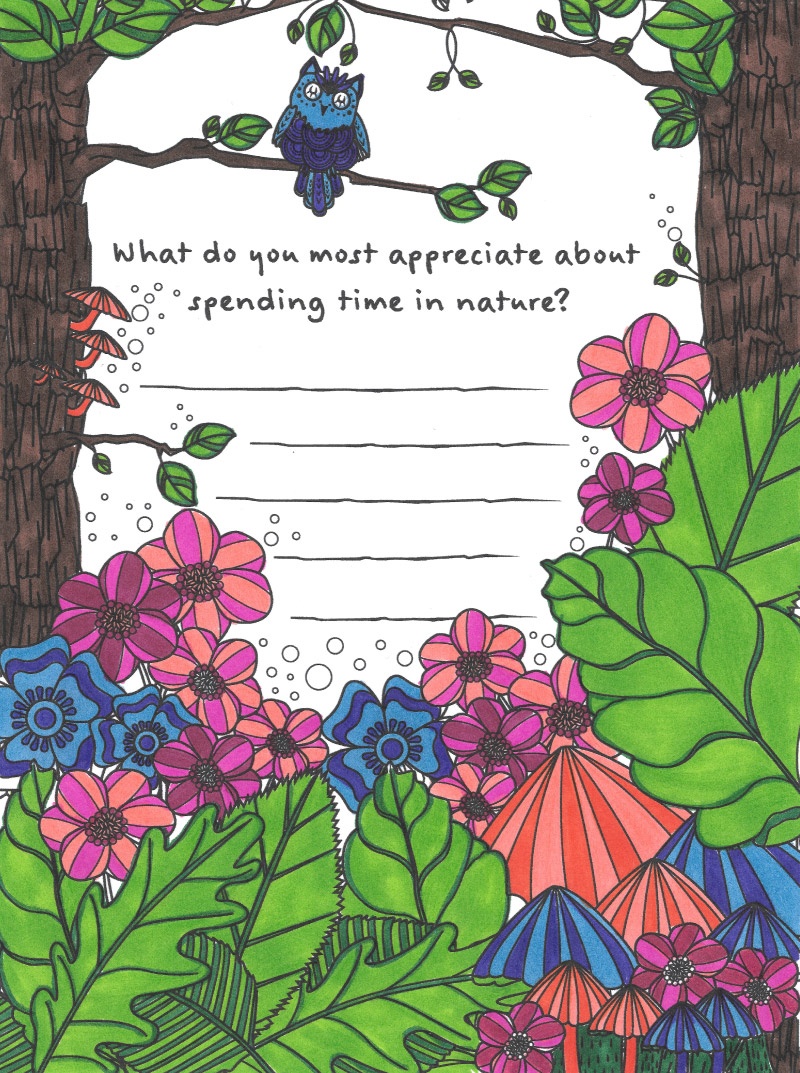
  • Nature Coloring Page from Tiny Buddha’s Gratitude Journal

    Nature Coloring Page from Tiny Buddha’s Gratitude Journal

    Hi friends! I’ve decided to share the fifteen coloring pages from Tiny Buddha’s Gratitude Journal (colored by yours truly), one every week for the next fifteen. I’m a huge fan of coloring because it’s fun and relaxing, and also serves as an excellent practice for mindfulness and stress relief.

    How would you answer the question in the middle? (If you’re reading this in your inbox, click here to comment on the site.)

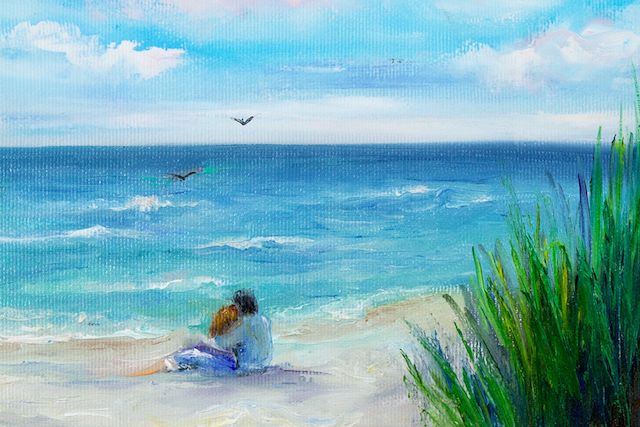
    What I most appreciate is how calm and grounded I feel whenever I’m in nature, particularly when I’m on the beach. Something about the rhythmic sound of the waves crashing softens the voice in my head and brings me fully into the present moment.

    If you haven’t already, pre-order your copy of Tiny Buddha’s Gratitude Journal here, and you’ll instantly receive three free bonus gifts!

  • The 4 Happiness Archetypes and How to Get Out of the Rat Race

    The 4 Happiness Archetypes and How to Get Out of the Rat Race

    “When you dance, your purpose is not to get to a certain place on the floor. It’s to enjoy each step along the way.” ~Wayne Dyer

    One day, I was complaining about not having enough days off to escape work and treat myself to a vacation. I was feeling stressed and tired. I can recall my stepfather looking into my eyes with a deep sense of peace and compassion.

    “I hear you,” he said. “I know you work hard. Sometimes, I imagine myself jumping out of bed and going for a walk, whenever I want to.”

    His words came like thunder. It was a wake-up call to remind me how blessed I was and how much I was taking it for granted, as if nothing was ever enough. And there he was, my stepfather, trapped in a wheelchair by a severe form of multiple sclerosis, dreaming of a nice walk in nature. That day, he was my teacher.

    For too many years, I spent a lot of my precious time complaining. I thought I never had enough time, money, or love.

    Many of us get stuck in the habit of projecting our happiness into an imaginary future instead of living in the only reality that is, the present moment. We often think thoughts like:

    The day I get married, I will be happy.

    The day I can afford a bigger house, I will be happy.

    The day I make x amount of money, I will be happy.

    Looking back on my life, I came to realize that I didn’t know how to be happy. I continuously kept myself busy, always running somewhere so I could achieve more or better. Turning my happiness into a project and waiting for “the big things” to happen so I could finally feel joyful and satisfied.

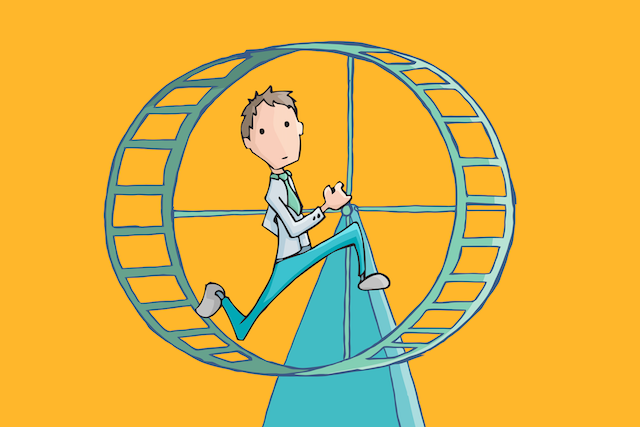
    I didn’t know it at the time, but I was a rat racer. Here’s what I mean by that:

    In his book Happier, Tal Ben-Shahar (a Harvard professor, leading researcher, and author) defines four different happiness archetypes:

    Nihilism

    Nihilists have lost their joy in life, both present and future. They find no pleasure in their work or private life and expect no future benefits or rewards. They’ve given up and resigned to their fate.

    Hedonism

    Hedonists live for the moment and give little or no thought to future consequences and plans. Because they feel unchallenged by future goals or a purpose, they are often unfulfilled.

    Rat Racing

    The rat race archetype often sacrifices current pleasures and benefits in anticipation of some future rewards. This is likely the most familiar archetype to many of us (continuously setting new goals, never pleased, always busy).

    It doesn’t mean that setting clear goals for the future is a bad practice. We all need a purpose and a clear vision. If we don’t even know what we want, how could we ever get that? The problem occurs when we attach our happiness to future outcomes without being able to see and appreciate what’s already good in our lives.

    Rat racing is all about hunting for happiness, chasing an illusion, and never feeling content. The more we achieve, the more we want: another house, another car, another job, or more money.

    Happiness 

    True happiness comes from keeping a healthy balance between the present and the future. It’s when we are capable of enjoying both the journey and the destination, focusing on today’s gifts, as well as our dreams, goals, and desires.

    “Happiness is not about making it to the peak of the mountain nor is it about climbing aimlessly around the mountain; happiness is the experience of climbing toward the peak.” ~Tal Ben-Shahar

    The day I shifted my perception from stressed to blessed, everything changed. Here’s what I have learned and what worked well for me:

    1. Happiness is a verb. 

    Research has shown that happiness is 50% connected to our genes, only 10% attributed to life circumstances, and 40 perfect correlated with our thoughts and behaviors. That’s why happiness is not a noun; it’s a verb. For those of us who are mentally healthy, it’s an attitude, a continuous inside job.

    Many people are afraid to be happy, since they could lose it one day, and they let their worries ruin their joy.

    I cultivate optimism and trust the flow of life. I shift my focus from what could go wrong to what could go right. Whatever I fear, it hasn’t happened yet. I embrace my future with the genuine curiosity of a child, and I choose to believe that something wonderful is waiting around the corner—that we live in a supportive Universe where everything unfolds perfectly, and things happen for my highest good.

    If I see life with negativity, fearing that bad things could happen to me, my actions will likely attract the very things I’m trying to avoid. I’ve stopped letting my mind play with me and stress me with unnecessary fears, worries, and concerns about things that haven’t happen yet.

    I nourish my mind with healthy thoughts, like this one:

    “Life loves me. All is well in my world, and I am safe.” ~Louise Hay

    2. I sweeten my life, every day.

    I have seen that many beautiful moments and small pleasures come at a low cost or even for free.

    If I don’t have time for my hobbies, I make it. I read a good book or watch a fun movie that brings me the joy and laughter.

    I gather with non-judgmental people who love me just the way I am. The mere act of having a good conversation over a cup of coffee charges me with a high dose of positive energy.

    I go for nice walks in the park and connect with nature.

    I play with my dog.

    I sometimes light a candle or some nice smelling incense. (Jasmine is my favorite.) It stimulates my creativity and makes me feel good.

    I’ve stopped waiting for the VIP moments of the year (like my birthday) to embellish my house with fresh flowers.

    I have created the habit of drinking water from a wine glass with a slice of lemon in it.

    I enjoy my morning coffee from a beautiful cup with a red heart on it, to remind myself that love is all around.

    I use the beautiful bed sheets and the nice towels instead of saving them for the guests, just because I’m worth it.

    “Yesterday is history; tomorrow is a mystery. Today is a gift; that’s why we call it present.” ~Unknown

    3. I grow dreams, not regrets.

    The need for stability and security (including on a financial level) is a basic human need. No wonder we start rat racing if we don’t have enough money! But what is “enough”? Isn’t that a subjective qualifier, based on our individual needs and expectations?

    I have met many wealthy people who were unhappy because their ego always wanted to get more or better. It’s like when we think, “Okay, I’ve got this house now, but when I can move my family into a bigger one, I will finally be happy.”

    Another reason we project happiness into the future pertains to limiting (often culturally inherited) beliefs around money that keep us stuck in a survival mode.

    Take my example: Years ago, I used to work in China. I lived in a beautiful compound in downtown Shanghai, all paid for by my company, and I was single, with no loans, debt, or financial commitments. It all looked wonderful, but deep inside, I was so unhappy!

    I knew I always wanted to travel the world and meet people from different cultures. I had enough money to afford that, and still, I was so afraid of spending! Even today I am thankful to the good friend who insisted on me following her on a trip, because that’s how I finally managed to break that wall.

    You see, I was raised in an Eastern-European middle-class family. As a child, I often saw my parents saving money for the “black days” of their pension years (the time when one would not earn a salary and could potentially “start starving.”) As a result, I followed the same behavior once I started to make my own money.

    So here’s what I’ve learned: I won’t spend my precious younger years saving everything for my retirement. Saving money is a form of self-care, and something I currently do. However, I know I won’t die with my savings account, and I won’t look back on my life with regrets once I’m older. I invest in myself and in my learning, and I spend part of my money on experiences, making sure I gather more precious memories than material things.

    “You will never regret what you do in life. You will only regret what you don’t do.” ~Wayne Dyer

    4. I do what I love and love what I do. 

    We spend the majority of our lives at work. So if we’re not happy with our jobs, we’re not happy with most of life—another reason some of us start rat racing and hoping for something different.

    Too many people live their precious lives in survival mode, like robots. Frustrated or drained on Monday mornings and looking forward to the weekends so that they can feel alive. When we’re happy with our work, there’s nothing wrong with Monday mornings.

    If you find yourself stuck in a job you don’t like, know that you always have a choice to step outside your comfort zone and work toward something new. It may not be easy to change careers, especially if you have limited education and people depending on you. But it’s possible to do something you believe in, something that brings you genuine joy and fulfillment.

    The key is to work toward that something new while also cultivating joy in your daily life so you don’t fall into the trap of waiting for the future to be happy; and also, to remind yourself that no matter what happens, even if your circumstances are never ideal, you can still be happy.

    “The most important two days in your life are the day you were born and the day you find out why.” ~Mark Twain

    5. I stay away from perfection.

    To me, being a rat racer felt exhausting. I didn’t know how to have fun and relax. I was too busy trying to be perfect and do everything perfectly. It was tiring, and it made me feel like I was never good enough or worthy of the best things life had to offer.

    Even when I transitioned into the job of my dreams, I was still unhappy. I kept thinking:

    “The day I get to make that much money a month, I will be happy.”

    “The day I know everything about this job, I will be happy.”

    You see, even people who love what they do can be rat racers, if they are struggling with the need for perfection.

    Today, I aim for progress instead of perfection, and I enjoy each step of my professional journey, celebrating every new lesson and every kind of achievement, no matter how big or small.

    “If you look for perfection, you’ll never feel content.” ~Lev Tolstoi

    6. I mind my own journey. 

    Another thing that keeps us trapped in rat racing is the behavior of comparing ourselves to others—the money we’re making, the status at work, the house we live in, and so on.

    I now know everyone is on their own journey, and each time I dedicate moments of my life comparing, I find myself in someone else’s territory, not mine. It’s like trying to live in their story and life experience instead of my own.

    I’ve come to understand that when I shift my focus and attention from other people to myself, I suddenly have more time and energy to create good things in my own life. So many people complain about not having enough time for themselves. If you want more time for yourself, mind your own business and see what happens.

    “Comparing yourself to others is an act of violence against your authentic self.” ~ Iyanla Vanzant

    7. I am grateful.

    In the past, I rarely said thank you or counted my blessings. Today, I practice gratitude as a morning ritual. I focus on what I have, rather than on what’s missing.

    I make sure I start every day being thankful for my health; for having a loving family, a wonderful life partner, and a great job I love; for the creativity flow that helps me write such posts and the opportunity to share my insights and experiences with the world; and for the air I breathe and the sun that caresses my face.

    If the only prayer you ever say is Thank you, that will be enough.” ~Eckhart Tolle

    I might not always get what I want, but I know I always get what I need. I see every day as a fresh start, a new opportunity for me to taste more of this juicy experience called living. Life is a precious gift and I intend to spend as much of it happy as possible.

    And now, I would like to hear from you. What is your happiness archetype? What makes you truly happy?

  • How Losing My Father Helped Me Become A Happier (and Better) Person

    How Losing My Father Helped Me Become A Happier (and Better) Person

    “In every loss there is a gain, as in every gain there is a loss, and with each ending comes a new beginning.” ~Buddhist Proverb

    Four years ago, on a typically cold and overcast day in upstate NY, I found myself scurrying around preparing for a two-week trip to Kenya and Tanzania, which left the next day.

    My father, a strong and soft-spoken sixty-two year old, had aspired to experience the great plains and animals of east Africa since childhood, and was deeply proud that he was able to pay for me to accompany him on his bucket-list adventure.

    Though I had been looking forward to the trip for months, I felt stressed, as I hadn’t yet packed and was struggling to ensure that everything was in place at work and at my new home before venturing off to seek adventure.

    After tying up loose ends with my boss and direct reports, I hurried home to double-check that my new sump pump was working before finally turning my attention to packing. At this point I was rushing, as I was trying to beat traffic en route to my uncle’s house, where I was staying in preparation for an early flight.

    I packed as fast and as thoroughly as I could and, as I finished, received a phone call from my girlfriend (now wife).

    “Babe… have you talked to your mom? I think something’s wrong.”

    Kerrin informed me that she had received two vague texts indicating something happened, though she wasn’t able to get a hold of my mother to get details. I thought nothing of it, but decided to check-in with my parents just to be sure.

    I tried calling my father, who always picked-up his phone, and got his voicemail twice before trying my mother, whose line was busy. On my third try, I got through and asked her what was going on.

    “Honey, there’s no easy way to say this. Your father just died.”

    She explained that he had passed out in the shower, that she had found him in a pool of blood, and that neither she, nor a team of paramedics, were able to resuscitate him. We later found out it was a heart attack.

    That night, after shedding many tears and conversing with a few family members, something profound happened: I experienced a deep feeling of gratitude for having had such a great father, a feeling that trumped my grief in a way I never could have imagined.     

    In the days to come, I found myself dealing with powerful emotions in highly constructive ways (a personal first). I also focused on celebrating my father’s fabulous life rather than cursing his untimely death, as my family hosted two wakes, a funeral, and two separate receptions that were surprisingly celebratory in nature.

    Though everyone was grieving the sudden loss of a healthy and happy family man, the ceremonies were peppered with a sense of gratitude and hopefulness that were inspiring.

    As strange as it sounds, no singular experience in my life has shaped or informed my ever-optimistic outlook more than my father dying. The experience completely reoriented my worldview and helped me appreciate the importance of gratitude, mindfulness, and my own emotional capacity at deeper levels.

    Interestingly enough, it also set me on a path toward balancing some of my worst tendencies—particularly impatience, self-doubt, and the need to always be “right”—and endowed me with more gratitude, more present-moment awareness, and a more Zen-like appreciation for life’s ups and downs.

    Here are a few takeaways from my loss and resulting growth, which have helped me become a happier, all around better human being. Perhaps something from my experience will help you become happier too.

    Mindfulness: More Than Just Meditation

    I still remember how busy I felt that day, and how insignificant each detail of my work, home, and packed suitcase came to be minutes later when I learned my father had passed.

    Like many, I’ve long struggled with managing my own inner-dialogue and negative self-talk, and would all too often let those negative scripts run unchecked.

    Going through the loss of my father forced me to live in the moment for the weeks and months to come, as it required me to be strong, supportive, and empathetic for the hundreds of people who were shocked and mourning the loss of Big Ed.

    Although I still don’t meditate as much as I could (something I’m working on), I’ve found that being more mindful has helped me stay sharper in meetings, more time consciousness, and even more focused and effective in my work.

    More importantly, though, it’s helped me feel happier. So many of us rush through our days, stressing out about getting everything done. But it’s impossible to be happy when we’re not fully present because you have to live in the moment to enjoy it.

    To cultivate a greater sense of mindfulness, all I did was start paying attention to my thoughts, feelings, and bodily sensations. I eventually added meditative practices to reinforce my present-state focus.

    I’ve also taken the time to integrate a minimum of one mindfulness practice into my daily routine. Sometimes, it’s as simple as repeating a single word or phrase while working out, or actively listening to a podcast on my drive home; redirecting my focus to the author’s voice every time my mind wanders.

    This simple trick has helped me become more aware and accepting of my thoughts, feelings, and emotional triggers, and less reactionary. It’s also helped me become less hurried and more conscious of the activities I say “yes” to, while cultivating a deeper appreciation for life’s little moments.

    Never Stop Growing: Your Abilities Are Not Fixed  

    Right before my father died, I had hit a wall both professionally and personally. At the time, I was managing a team of eight people on two separate job sites—a great gig given my field and age.

    My staff and I had worked really hard the previous two years to build out our programs, services, and resources, though I started to feel our efforts weren’t being replicated elsewhere in the organization. I felt slightly resentful, and had a hard time selling my staff on working hard and continually improving, as our efforts seemed to go unnoticed and underappreciated.

    On a personal level, I felt that I was running myself ragged. In addition to our busy work schedules, my wife and I were fostering dogs, volunteering in different capacities, and regularly commuting between upstate NY and Long Island to attend family functions.

    Despite how busy I was, I stopped growing personally and professionally, and found myself becoming more quick-tempered and close-minded. I was angry, frustrated, and depressed at work, and unknowingly developed a fixed mindset—thinking that my intelligence, abilities, and even station in life were stagnant rather than fluid.

    When my father died, every good deed I’d ever done, and then some, were repaid in the form of countless hugs, flower arrangements, meals, warm messages, and unexpected visits from people I hadn’t talked to in years. The support was incredible. It helped me detach me from my own self-pity, get out of my own head, and resolve to live a fuller and happier life.

    I began challenging and bettering myself in every aspect of my life. I started eating healthier, drinking less, and working out with a new vigor. I also resolved to be a more emotionally available friend and romantic partner, and completely changed my attitude on the job, knowing that my staff and I could improve.

    Six months later, Kerrin and I eloped in Hawaii and I received an offer from one of the best college’s in the country—direct bi-products of my new attitude and outlook.

    I’ve learned that no matter what is happening in life, we always have room to grow. And I’ve learned to ask those around me how I can get better—as an employee, a husband, father, and friend. This practice has helped make me become more self-aware and humble, while strengthening relationships with those closest to me.

    Gratitude: Practice May Not Make Perfect, But It Does a Lot of Good

    While I certainly wouldn’t characterize myself as “ungrateful” prior to my father’s death, the experience of losing him reinforced the importance of appreciating what you have while you have it.

    The night he died, I was hit with a wave of emotions and the deep sense of loss you’d expect from a surprise death. The feeling of immense gratitude came shortly thereafter, though, and helped carry me through the challenges of the weeks and months ahead, while putting me on a trajectory toward cultivating a deeper appreciation for everything positive in my life.

    Since then, I’ve made gratitude a daily practice. Every day, I find and name a few specific things or memories I’m thankful for.

    I’ve found that practicing gratitude during challenging times has helped me build my resiliency because no matter what happens, I can find things to take solace in. I now see happiness as something I control rather than a byproduct of life circumstances.

    Regardless of what’s going on in life, we can always name a few things we’re grateful for. If starting a gratitude journal is too blasé for you, do what my wife and I did and start your own “Jar of Awesome.”

    Every few days, write down one or two specific memories that you’re grateful for and place them in the jar. In just a few weeks, the jar will be filled. When you’re feeling down, pull out a few memories, read through them, and see how you feel. I’d be surprised if it didn’t help you reframe whatever setback you’re experiencing.

    Comfort with Your Own Emotions

    I used to be really uncomfortable with my emotions, and had a really hard time showing vulnerability. Going through the experience of having my best friends, former neighbors, and family members watch me cry in a semi-public setting humbled me, and set me on a path to being more aware of and comfortable with my own emotional range.

    What I realize now is that there’s strength in showing vulnerability. I’ve also learned that mindfully acknowledging and embracing my emotions has made me a much happier person.

    Four years removed from that experience, I default to hugs over handshakes, warm smiles to cautious head nods, and vulnerability to apprehension. In doing so, I’ve forged deeper bonds with friends and family members and have created more meaningful relationships with many of my colleagues.

    I still think about my father every day. As much as I miss him, though, I’m deeply grateful for the time I had with him, and appreciative of the personal growth I’ve experienced as a byproduct of his death. I like the current day version of myself better than any previous iteration, and have him to thank for it.

  • It Could Always Be Worse: The Power of Gratitude and Perspective

    It Could Always Be Worse: The Power of Gratitude and Perspective

    “When you arise in the morning, think of what a precious privilege it is to be alive—to breathe, to think, to enjoy, to love.” ~Marcus Aurelius

    So, yesterday wasn’t the best day. I backed up into my husband’s car in the dark, on my way to a meeting. I didn’t see it in the mirrors. It was dark. (Did I mention that?) Well, it left a healthy size dent in the front, and needless to say, the tension began.

    I felt bad. I honestly didn’t see it. Whenever I put my car into reverse, the mirrors automatically adjust and seem to point down, which makes it difficult to see out of them. Then, I have to look on this little screen when I back up, and in the dark, it’s hard to distinguish obstacles in the way. I just can’t get used to it.

    So I tried. I put the car in reverse, slowly backed up, and then… crunch. I heard it. Ouch.

    Afraid of the destruction I had caused, I reluctantly opened the door, looked back, and assessed the damage. Instantly, I knew he wouldn’t be happy.

    I imagined steam pouring out of his ears after I gently broke the news to him.

    Throughout the rest of the evening, a giant rift began forming between us. Worries about finding money for the deductible, battling higher insurance rates, and paying for repairs spiraled into distress. We went to bed without speaking, which sent me into a fit of self-pity accompanied by tears of guilt and sorrow.

    How much worse can things get? First the septic problems, then the furnace, then the electric problem, now the car. Wow, when it rains, it pours. Why can’t things just be easy for us for once? Is that too much to ask?

    Our thoughts are powerful things. They can instantly set off a chain reaction of overflowing, overwhelming emotions.

    And then this morning, I learned of a friend—a dear woman, wife, and mother in our community—whose young adult child had just passed away in a car accident.

    Rapidly, all my worries about denting the car seemed ridiculous.

    Perspective came rushing back to me in a moment’s notice, bringing me back to reality.

    I had been there. I had been that mom whose child died. I had made that dreaded phone call, as I lay helpless in our mangled and demolished car.

    It has been eight years now since she was flown from the accident scene to the trauma center, and I, transported in an ambulance, was rushed to a local hospital. The last day we had hugged, talked, and touched each other. Sometimes, it seems just like yesterday.

    My eyes welled up with tears, as I knew exactly how this newly bereaved mother was feeling. I swallowed that forming lump in my throat as memories of the accident with my children came surging back, bringing me back to that life-altering day.

    After a few moments, I caught myself holding my breath as I abruptly stopped in my tracks to say a prayer for her and her family.

    To be told your beloved child has died is the worst pain. It’s a paralyzing and debilitating state that leaves you feeling like you are suffocating, making you scream in terror and disbelief.

    And this can last for months, even years, as you desperately try to wake up from such a horrifying dream.

    My heart is heavy. It’s not fair, this arduous, frightening journey that was forced upon this mother this snowy winter morning.

    Today it was her child, tomorrow it will be someone else’s father, mother, brother, sister, son, or daughter.

    It knows no discrimination. No one is exempt. Loss. Grief. They will find us at some point in our lives when we least expect it, pulling us into an abyss of heartbreak and despair. And then what?

    My point: Among the daily stress, tension, and challenges of life, stop and search for gratitude. What a gift it is to even be alive.

    For that car that is broken, give thanks that you have a car to fix.

    For that necessary and expensive home repair, give thanks and realize what a gift it is to even have a home.

    For that taxing job, give thanks that it pays the bills.

    For that exhausting child, give thanks for their strong personality and recall how wonderful it was the day they were born.

    Find perspective. Embrace it. Look with eyes of wonder and hope for tomorrow.

    Take time to enjoy the rainbow of colors in that sunset; appreciate being able to hear those birds singing or see the wildlife out your window. Smile with joy when you’re able to build that snowman with your child.

    Unfortunately, many of us are clouded in our judgment until we experience a rock bottom tragedy. Our daily challenges can be upsetting, but we’re fortunate to not be standing where someone else is standing right now. Someone who is grieving, for they have lost a part of themselves and are struggling with a gaping hole deep in their soul. An unforgettable void that can never be filled, nor replaced.

    So try it with me.

    Stop what you’re doing. Take a step back and try to imagine walking in someone else’s shoes. Someone you may know who has suffered the loss of a loved one. While you may not understand, acknowledge their loss and the road of profound sorrow they must now travel. It’s not easy.

    Inhale deeply, absorb some sunshine, and remember, there are many others who would be incredibly thankful to be where you are today. Despite it all, you are blessed.

    Let us all find perspective when facing struggles that are minuscule in the grand scheme of things and recognize the gifts we have been given. Let’s not take this beautiful life for granted.

  • When Life Feels Hard and Unfair: 4 Lessons That Helped Me Cope

    When Life Feels Hard and Unfair: 4 Lessons That Helped Me Cope

    “Acceptance of what has happened is the first step to overcoming the consequences of any misfortune.” ~William James

    Two years ago, I gave birth to my second daughter via a planned C-section at thirty-seven weeks.

    My first daughter had been born via emergency C-section after seventeen hours of unmedicated labor. I had very much wanted a natural, intervention-free birth. Due to a number of issues, the surgery was so complicated that I was told it would be dangerous to ever go into labor, much less have a natural birth ever again.

    Of course, this was devastating for me.

    Still, I went into surgery on the morning of my daughter’s birth with hope and excitement. My second pregnancy had been extremely difficult and I was glad for it to be over. I was still heartbroken that I would never get the chance for a natural delivery, but at the same time there was a piece of me that was a bit relieved the decision had been taken away from me.

    My second C-section proved to be even more complicated than my first. The surgery went at a snail’s pace as the doctors tried to navigate the extensive scar tissue created by my first C-section. The spinal anesthesia made me unable to feel myself breathing even though I was breathing just fine, and I panicked and repeatedly questioned whether I was suffocating and going to die.

    Still, pictures of me and my daughter in the recovery room right after the birth show me smiling in a highly medicated but contented glow.

    It was a few minutes after those pictures were taken that the nurse noticed there was something wrong with my newborn’s breathing. It was labored and staggered. The medical team decided that they would take her to the NICU (neonatal intensive care unit) to make sure everything was okay.

    In my post-surgical stupor, I didn’t think much of it. I figured they would observe her for a few hours, and she would be back in my arms by the time I made it out of recovery.

    I was wrong.

    My daughter spent the next ten days in the NICU with a diagnosis of pulmonary hypertension secondary to transient tachypnea. She was kept alive by various tubes and machines, and I got a crash course in C-PAPs, oxygen monitor readings, and feeding tubes.

    I wasn’t allowed to hold her for the first five days because her situation was so precarious and unstable.

    I knew it was extremely serious when her NICU roommate, a baby born three months early, was wheeled to another room because my daughter was going into crisis every time someone turned on a light or spoke too closely to her.

    It killed me to watch her covered in tubes and machines, unable to hold her, much less breastfeed her. I stood by, helplessly pumping milk every three hours and putting her life in the hands of the NICU nurses, who were clearly angels sent directly from heaven.

    I struggled with massive guilt that my body had failed me in my first childbirth experience, leading to the mandatory early C-section and all of its complications for my second daughter. I also felt guilty every time I left the NICU to spend time with my older daughter and every time I left my older daughter to go to the NICU.

    I was angry. Angry that this happened. Angry with myself for not appreciating how much worse it could have been when I was surrounded by parents and babies who would be spending months, not days, within the NICU’s walls.

    Despite the severity of her condition, my daughter’s story was one of mighty strength and resilience, and she left the NICU with no lasting complications—a major blessing for any NICU baby.

    My story was one of lessons learned: how to forgive myself, how to let go of what I want to be and embrace what is, how to truly live in the moment, and how to practice unconditional gratitude. Most of all, I discovered new depths to the meaning of the word love.

    Though it took me spending ten days with my daughter in the NICU to learn these lessons, they are universal and certainly don’t require a crisis to integrate them into even the most mundane aspects of our lives.

    I share them with you in the hopes that if you’re dealing with pain in your life, you will bring to it the knowledge that while the pain may be unavoidable, the suffering is always optional.

    Here’s what ten days in the NICU taught me:

    Focus on the present.

    For several days, my daughter’s condition seemed to get progressively worse before it got better.

    This made it very easy for me to get lost in a never-ending maze of what ifs, each more terrifying than the next.

    And yet, when I forced myself to focus on the moment, somehow things were always manageable.

    Yes, she was hooked up to a lot of scary and unpleasant machines, but she was surrounded by a nest of soft blankets, and for all she knew, she was still in the womb.

    Yes, she turned blue when she cried, but the nurses and doctors always got things stable quickly, and with no drama. They knew what they were doing, and I knew I could trust them.

    I learned quickly that the future was a place where the worst loomed both possible and probable. The present was a place where my daughter was safe, loved, and receiving some of the best care the world had to offer.

    If you find yourself in the middle of a crisis, you probably feel like you’re trapped in a whirlwind that’s pulling you in so many different directions, you’re having a hard time figuring out which way is up.

    Instead of picturing yourself as powerless against the chaos of the situation, try thinking of yourself as the eye of a storm. While chaos may reign around you, the present moment is always manageable.

    Remember that while the future seems scary with all its unknowns and possibilities, the future also doesn’t exist yet. All we have is this moment. And in this moment, there can be peace.

    Gratitude is always an option.

    When you’re in a place like the NICU, it’s not difficult to embrace gratitude. Everywhere I looked were babies and their families in situations far more dire than ours. I met parents who would be in the NICU for months, who had years or possibly lifetimes of lasting effects of premature birth and other complications to deal with.

    And then there were the parents whose baby would never get home, whose entire life would take place within the NICU walls.

    Gratitude helped me process my guilt and anger. It’s impossible to be angry and grateful at the same time, and so I would spend hours sitting next to my daughter, writing lists of all the things to be grateful for in this situation and imagining that my positive energy was surrounding her and helping her heal.

    When you feel like you’re drowning in guilt and anger, take your sense of internal power back by sitting down somewhere quiet and making a list of every positive aspect and every reason to be grateful for the situation that you can find.

    You may find that it’s hard to get started, but once you do, I guarantee you’ll find a sense of peace that no one and no situation can take away.

    Wanting life to be fair is a major block to peace.

    I have never suffered from the delusion that life is fair, but even as an adult, I have occasionally suffered from the delusion that it should be.

    My daughter’s time in the NICU freed me of that childish fantasy.

    I quickly realized that as long as I believe the universe is doing something unfair to me, I am giving away my power. And when I give away my power, it’s not the universe that’s being unfair to me, it’s me that’s being unfair to myself.

    I couldn’t change the fact that I was a mom with a baby in the NICU. What I could change was the kind of mom I was going to be for my daughter when she needed my presence and my peace, and not my indignation and my anger at the world.

    Was I going to be a mom who fell apart when something happened that I felt was unfair? Or was I going to be a mom who felt her feelings but didn’t allow them to determine her ability to be her best self in any given moment?

    The choice was always mine.

    As easy as it would be to feel powerless and therefore become powerless, I knew that this time the stakes were too high to do that. My daughter needed me, and I needed me to be the best version of myself.

    Fairness is a fluid thing, and I came to realize that I had the power to stack the “fairness” greatly in my daughter’s favor by letting go of “unfair” and empowering myself with thoughts of love and gratitude.

    If you feel that something unfair has happened to you, ask yourself these questions: Do I want to use my limited energy resisting reality, causing myself pain in the process? How could I use that energy in a more constructive way?

    You may be surprised at what you come up with.

    We can’t always see the whole picture.

    As painful as it was to watch my daughter struggle physically and not be able to hold her or comfort her in any real way, I had to admit to myself that I couldn’t say for sure this experience wasn’t intentional from the perspective of her soul.

    Who was I to say that her soul didn’t pick a body that needed intensive care for the first ten days of its life on purpose because it had a larger plan that I had no capacity to understand?

    The truth, I realized, was that I couldn’t possibly understand how the universe works and why seemingly bad things happen to innocent people. I could say for sure that all of the difficult, challenging, and painful experiences in my life—this one included—had ultimately made me a stronger, wiser, and more peaceful person.

    So how could I see my daughter’s experience as all bad?

    If you’re struggling, consider the possibility that you don’t have all the information needed to make an accurate judgment of the situation. Realize that there might be more to it than meets the eye. This doesn’t require you to hold the same spiritual beliefs I hold; it just means considering that sometimes life’s hardest struggles end up being blessings in disguise.

    If you’re like me, doing this will help you to look at the situation with less interpretation and indignation, and less inflamed thinking and aversion. In other words, it will give you more peace, and with peace comes your ability to be present with the ones you love.

    Sometimes you have to let go of what you wanted so you can focus on doing what’s needed—and so the pain can let go of you.

    I wanted to love my newborn my way: by holding her in my arms, cuddling and kissing her, and feeding her from my breast.

    These were not the ways that she was able to receive love in her first days of life, and so I needed to let go of my desires and focus on the ways I could love her given the present circumstances: by pumping milk for her to receive through a feeding tube, touching her arm with my finger, praying for her, and giving her unconditional loving energy.

    Loving my daughter without boundaries, without my own preconceived notions of what that love should look like, required keeping my heart open at the exact moment I wanted to close it. I wanted to prepare for the worst, to problem-solve and plan. I wanted to control the situation in any way I possibly could.

    But I also realized that doing this would cause me to dissolve in a puddle of fear; to close myself off to the opportunities that existed right in front of me, in that moment, to love my daughter.

    And so, for her sake, I learned to surrender in order to keep my heart open and keep her surrounded by the presence of love.

    If you find yourself clinging to how you wanted things to be, ask yourself if this is limiting your ability to do what’s needed. Your current situation might not be what you wanted, but it’s more likely to improve if you accept what is, show up fully, and do what you need to do to be your best self regardless.

    As I write this today, my daughter’s second birthday, I share with you the lessons I believe she came into this world knowing: that love, truth, peace, and inner happiness are always available to us no matter what happens in our lives.

    What have the painful or traumatic events in your life taught you?

  • How Gratitude Shifts Your Perspective When Things Go Wrong

    How Gratitude Shifts Your Perspective When Things Go Wrong

    “Gratitude turns what we have into enough, and more. It turns denial into acceptance, chaos into order, confusion into clarity…it makes sense of our past, brings peace for today, and creates a vision for tomorrow.” ~Melody Beattie

    Yesterday, while praying in the Ganges River, my purse got stolen.

    Standing in The Holy River Ganges, praying up to my neck in her healing waters, the outside world felt as if it had stopped.

    The feeling of happiness to be back in Rishikesh was so strong it bordered on invincible. Instant immersion into the healing waters of Maa Ganga was the only thing on my mind.

    I had casually left my bag on the beach before going in the river. Since I had never had any problems here in previous trips, my guard was down.

    India, a magnified mind mirror, reflects back exactly what I think about at lightening speed. It also has a knack of teaching me exactly what I need to learn.

    Upon getting out of the river, I didn’t notice my purse was missing, because it had been piled under clothes and nothing seemed amiss.

    Sitting on the beach, absorbing the feelings of my post prayer bliss, a dodgy Indian man approached, asking me if the beach was safe.

    “That’s weird,” I thought. “Why is he asking me if the beach is safe?”

    My internal alarm bell started ringing and I took it as a sign to check my belongings. Sure enough, my purse was gone.

    Now what? Here is the real test. How do I respond?

    Well, first, I went after the dodgy guy, assuming he was the thief, and told him to give me back my purse. He denied up and down that he knew anything about it.

    After badgering him for a while to return the purse, I realized it was a lost cause.

    Now what?

    Searching the rocky beach, hoping maybe he had stashed it, seemed like a good idea, but there was no luck on that front either.

    Two other western girls, who were sitting farther down the beach, kindly helped me to look for it after hearing my story.

    No luck.

    Feeling as though I had exhausted all possible options at the scene of the crime, the next logical step was to return to my room, call the bank, and cancel my ATM card.

    In the purse was $100 worth of Indian Rupees, my ATM card, and both room keys. Amazingly, the rest of my cash and passport were still safe in my room.

    Listening to the little inner voice that told me to leave them there, just prior to the beach excursion, was proving to be a massive blessing.

    I had switched out the padlock on my room door with a lock I had brought, thinking it would be more secure, and both sets of keys were in my stolen purse.

    Upon hearing the lost key predicament, the Ashram manager, without blinking an eye, set out to help break into my room.

    It wasn’t an easy mission.

    It took him about an hour of trying to saw through the un-sawable lock, until finally he decided to saw through the hardware on the door, which worked. I was able to enter my room, while the manager quickly ran to the market to buy new hardware for the door.

    Meanwhile, I called my bank and cancelled my ATM card. The bank people were absolutely lovely, empathetic, and helpful.

    My neighbor in the Ashram offered to make me a cup of tea, and the neighbors on the other side offered us some of their beautiful meal they had just cooked.

    In the midst of my vulnerability, I felt supported on all sides!

    Immediately, I began searching for the lesson in my purse getting stolen.

    Acceptance, gratitude, humility, and letting go were the words that came.

    Instead of focusing on what I had done wrong and beating myself up about it, I chose to focus on what was actually good:

    • I still had my phone and money I had left in my room.
    • I had a spare ATM card and credit card in the room.
    • I still had my passport.
    • Coincidentally, I had run into a friend the day before who remembered he owed me money, and it was the exact amount I just lost.
    • My neighbors were generous and kind.
    • The Ashram manager was lovely and helpful and didn’t bat an eye at destroying the door hardware.
    • The bank people were helpful.
    • The kind girls at the beach helped me search for my purse.
    • I had everything I needed!

    After making this gratitude list, I realized how much I truly have, how blessed my life is, how many kind and generous people are in the world, and how I am always provided for.

    Sometimes the lowest times are what make us stronger.

    Coming to India always shakes me out of my comfort zone, and this was no exception. I am still absorbing the lessons, and they are powerful ones:

    • This experience has made me want to give more.
    • It has made me realize I only need to take with me what I need.
    • I felt the vulnerability of having nothing for a short period of time, and that made me want to help others.
    • It showed me my inner progress: I didn’t panic. I didn’t beat myself up. I don’t feel like a victim and am not blaming the person who stole my purse.
    • It snapped me back into respect—respect for all that I have and respect that there are people that have a lot less. It reminded me to treat all people as equal regardless of their financial status.
    • It reminded me to give others not only what I can monetarily, but also acknowledge the presence in others, by giving them my full attention.
    • It also reminded me that have a choice where I focus my thinking and attention; I can choose to accept the things I can’t change, and have the courage to change the things I can.

    What happened, happened. Now I have a choice to learn the lessons and receive the gold out of the situation.

    Today I went back to the same beach to do my prayers in the river. This time I didn’t take anything with me except my change of clothes, bringing only bare essentials. Keeping a close watch on my bag, I didn’t let yesterday’s event tarnish my heartfelt love for this place.

    Feeling blessed, grateful, and humbled to be in Mother India again, I feel love for the people here, and especially the ones who have nothing.

    The Power of Gratitude is Astonishing

    It’s amazing how gratitude can shift your perspective when things go wrong. The next time you face a challenging situation, hit your internal pause button, breathe, and survey the situation. Don’t panic.

    Ask yourself, what can I do right now? What is the number one priority?

    Accept that what has happened, happened. Don’t beat yourself up for what you didn’t do. Drop resistance and fighting what is and instead focus on what you can do now.

    Focus on what’s good in the situation. Ask yourself, what are the lessons to be learned from this? And make a gratitude list as fast as possible.

    Talk about the good that came from the event rather than constantly repeating a negative story to others. Integrate the lessons, let it go, and move on.

  • 5 Simple but Powerful Practices for a Happier, More Present Life

    5 Simple but Powerful Practices for a Happier, More Present Life

    “There is nothing else than now. There is neither yesterday, certainly, nor is there any tomorrow. How old must you be before you know that?” ~Ernest Hemingway

    It was a Wednesday afternoon, just like any other. I’d spent the last three hours bent over my laptop at a coffee shop, trying to nail down the revisions to a research report that was already three days late.

    I’d been distracted all afternoon, checking my e-mail every five minutes for news about a proposal I’d submitted a few weeks earlier. When I’d found nothing to satisfy me in my inbox, I’d stumble over to Facebook, paging through memes about the world’s impending doom that seemed custom designed to me to make me feel as gloomy as possible.

    Finally I called it quits and drove home in a funk. I walked into the kitchen, where my wife Lisa was cutting vegetables for dinner. She looked up when I walked in. “How are you doing?” she asked, reading my face.

    I thought about that for a moment. I knew I had a happy life. There were a million things to be thankful for: a supportive relationship, fantastic kids, good health, and the fortune to live in a beautiful corner of a free country.

    But I didn’t feel any of that just now. I felt just a vague cloud of irritation and impatience and stress.

    “I’m feeling sort of blue,” I confessed. “I’m trying to make my company work and I don’t know if I’m going to get this project and the world is stressing me out.”

    I looked up at Lisa, expecting her to offer me a word of encouragement or a reassuring smile. But her face did not show sympathy. It showed irritation.

    “I’m tired of hearing about all the things in your life you aren’t satisfied with,” she said.

    “What are you talking about?” I said. “I’m just feeling kind of blue. I’ll feel better when I get some more work and finish my book and maybe get to travel more, that’s all. Those are all normal, human frustrations. Then I’ll be perfectly happy.”

    She raised her eyebrows skeptically. “You haven’t been happy since I met you.”

    “I have too!” I listed a bunch of happy moments from our ten years together: our wedding day, our honeymoon trip to Spain, my fortieth birthday party. Of course I’d been happy. And I had every reason to feel blue right now. Lisa obviously didn’t know a thing about me.

    “Fine,” she said. “If you say so.We pretty much left it at that, and went on to our evening routine, eating dinner and washing dishes and reading bedtime stories.

    But as I tucked the girls into bed that night, something about the conversation stuck with me. I knew she was by my side. I knew she supported me in whatever I did. And I knew, too, that she knew me pretty well. So why was she so wrong about me this time?

    Two weeks later we flew with our two girls up to northern Idaho for our annual trip to visit Lisa’s family. We would spend the first two nights camping in a pine grove behind her dad’s log house, within view of Lake Coeur d’Alene. We set up our tent in the dappled afternoon sun, ready to spend a week as far as we could get from phones and computers and commuter traffic.

    The next morning we walked down to the lake, arms full of beach towels and sunscreen. I held the girls’ hands as we walked over the slick rocks to a small stretch of sand beyond, and they darted into the lake, laughing and splashing.

    The scene seemed picture-perfect. But I still felt that strange cloud, that feeling of not-quite-rightness. I was removed from the day-to-day stresses of work, but something was still off.

    Maybe Lisa was right. If I wasn’t happy at work, and I wasn’t happy here, then where was I happy?

    And then, in a flash of recognition, I saw what was in my way.

    I was afraid.

    I was afraid of being present in this moment, and only this moment.

    When I was working, I was afraid to just be there, focusing on the task at hand, satisfied with wherever I was in the long process of building a career.

    And now that I was on vacation, I was afraid to be here. I was afraid to stop worrying about work for a moment. If I truly allowed myself to acknowledge that all there was to life was to be found right here, right now, then what if that moment did not stand up to the hype? What if all I found here was emptiness, meaninglessness?

    But when I looked right into that monster of fear, something surprising happened. It disappeared.

    When I allowed myself to truly be in the moment, I saw that it wasn’t empty, but full. Full of the smell of sunscreen and seaweed and pine trees. Full of the sound of gulls squawking in the sky overhead, the rumble of a dump truck on the dirt road in the distance, the shrieks of kids’ laughter floating above it all like a melody line in a symphony.

    It seemed too simple. It was a cliché I’d read a million times in mindfulness magazines and self-help books. Be Here Now. It made sense, but somehow had always remained at an intellectual level.

    The “future,” I saw, will never really arrive. I will always be waiting for something, for some answer, some sign that what I’m doing is good enough and that I’m good enough. Ten years from now, I may be on the New York Times bestseller list and enjoying my vacations to Maui with Oprah, but I’ll still be waiting for the future.

    In truth, I’d been dissociating from the present my whole life. It was a bad habit that probably began as a way of trying to avoid the trials of an often difficult childhood, and was only reinforced when I tried to evade the darkness of the depression I felt in my early twenties. Those hard times were far in the past, but I was still holding on to the patterns they helped create.

    Lisa had been right after all. She knew me more than I gave her credit for. I had a happy life, I realized, but I needed to own it, to reach out and grab it by simply being here.

    I stood for a moment watching the scene as the brisk lake water lapped at my toes. Then I held my breath and dove under, straight into the present.

    Tips For Being Present

    Changing a lifetime’s mental habits is an ongoing process, not a one-time quick fix. Our brains are built to reinforce behavior that feels safe and comfortable, even when that behavior hurts us more than helps us. Here are some tips that I’ve found helpful in the ongoing quest to live in the moment.

    1. Look inward for reinforcement, not outward.

    When you feel stress or anxiety, resist the urge to look for external reinforcement. External reinforcement is the sugar high of emotions; it comes in a quick blast and then fades, and then you need another hit. All those seemingly harmless behaviors—checking e-mail, reading news blurbs—are ways of leaving the present. They are ways of trying to get external reinforcement that this moment is okay.

    The present lives in us, not outside of us. We do not have control over the outside world, but we do have control over what is inside of us. When you feel the need for reassurance, remind yourself that all the resources you need to be present and at peace are inside you. Remember that they have always been there, and they will always be there.

    2. Control your information stream.

    Put your news consumption on a diet. Put your phone away. Regulate your use of external information for emotional support, especially from social media. Facebook, Twitter and the rest can be wonderful ways to connect with friends. But overuse them and they begin to make you feel disconnected instead.

    3. Write down your goals—and then throw them away.

    Goal setting is a great way to prioritize what’s important to you. Just remember that goals are about the future. Once you’ve identified them, let them float away into the future, where they belong. The real rewards are not in attaining your final goals, but in working towards them. And that only happens in the present.

    4. Embrace gratitude.

    At regular intervals take a few moments out of your day and list five things you feel grateful for. Gratitude is an amazing weapon against anxiety, and it is a powerful way of reminding ourselves of the power and value of the present.

    A great way to immerse yourself in gratitude is to perform acts that help other people. Volunteering and acts of kindness help us focus on others, rather than ourselves, and are an amazingly effective tool for living presently.

    5. Practice mindfulness.

    Develop a simple, repeatable mindfulness habit. If meditation is your thing, spend fifteen minutes each morning in quiet contemplation, simply being present. The core of my contemplative process is running. It’s my way of burning out the noise and anxiety of the future and the past (which do not exist) and bringing my awareness back to the present. Experiment and figure out what works best for you, and then make it a habit.

    We sometimes get so detached from the present moment that it seems like foreign territory, and lowering our defenses to allow it in can seem scary. When we let go of the future and allow ourselves to be in the now, we are actually committing an act of bravery. Diving in may be hard, but it’s the only way to find the true richness of life.

  • A Little Appreciation Can Go a Long Way in Your Relationships

    A Little Appreciation Can Go a Long Way in Your Relationships

    Couple on the beach

    “There is more hunger for love and appreciation in this world than bread.” ~Mother Teresa

    I’ve been in a relationship with my boyfriend for over four years. We’ve had our fair share of great times and not so pretty moments, but this summer our relationship was put to the test.

    During that time, I went through some major transitions with my career and personal development, all things that needed to happen for me to be the best version of myself.

    Those months were filled with long hours of working and being alone, solely focusing on creating the future I wanted. I was in deep, chasing my dreams, and wouldn’t let anything get in my way.

    As time went on, I noticed that my partner was slowly slipping away.

    It wasn’t that he wasn’t coming home or was nowhere to be found. He was responding to the fact that I had lost focus on him.

    I was failing my partner in the following ways:

    • I didn’t say thank you for all the little things he did for me.
    • I didn’t ask him how his day was. Instead, I was eager to share how my day went.
    • When I faced an obstacle with my goals, I would be rude and short with him.
    • Instead of greeting him with a smile when he arrived home, I treated him as if he was a burden getting in the way of the work I needed to do.
    • Rather than planning and spending time with him, I would work late into the evening.
    • Lastly, I wasn’t present with him. When I did spend time with him, all I did was think about work.

    My actions and behaviors were so self-centered that I stopping thinking about how he was doing, how his day went, and what he needed support with.

    The end result: he withdrew.

    At first I thought he was no longer interested in me, but I eventually came to realize that I wasn’t even close to meeting his needs. And what he needed was simple: appreciation.

    He had hinted at it several times in his own way, but I’d had blinders on.

    After months of neglect, my boyfriend and I sat at our kitchen table making small talk and slowly tiptoeing into the conversation of what was and wasn’t working in our relationship.

    He said, “All I ever want is for you to appreciate me. I don’t need you to cook for me or get all dressed up or buy me things. All I want is to be appreciated.”

    His honest and vulnerable declaration brought me to tears. I realized then that I had been causing my partner significant pain and suffering for no reason.

    So, with my heart on the table, my eyes swollen from crying, and a common ground of love to move forward on, I told him this: “From now on, I will appreciate you—the big, the small, the silly, and imperfect. I will appreciate it all. I may not be perfect in my practice of appreciation, but I am committed to it, so much so that I have added it to my morning routine.”

    Much like the gratitude journal I write in every morning, I now have a journal dedicated solely to all the things I value about my partner.

    Every morning I set aside time to think of three things I appreciate about him. I do this even when I’m not feeling up for it. I take my time and feel every emotion that comes up as I write down my list of three items.

    I also make an effort so show my appreciation in action. My partner’s love language is “acts of service,” meaning actions speak louder than words. He feels loved when I do things for him coupled with expressing my feelings for him, so I now strive to show him that I love him with acts that require planning and thoughtfulness.

    The Value of Appreciation

    I never thought that simply reminding myself how much I appreciate my partner would cause a ripple effect in how I interact with him, but it has.

    Since starting my appreciation practice…

    I easily forgive his mistakes, such as forgetting to do something I ask him to do to support me, or not being sensitive enough and open to my feelings when I feel overwhelmed. I’ve grown to love his mistakes because they remind me of what it is to be imperfect. After all, I’m not perfect, and I can’t expect him to be either.

    I appreciate his faults and quirks. Like hitting the snooze button when he needs to get out of bed. And forgetting to eat throughout the day because he’s too busy teaching college students. And running behind schedule most of the time. We all have faults. His reminds me all over again why I fell in love with him. In all reality, we complement each other nicely.

    I appreciate his smile and his one of a kind laugh.

    In recognizing all that my partner does for me and my future, I feel a love so powerful that just thinking about it brings me to tears.

    My partner feels appreciated and cared for. He is more eager to engage with me, and more willing to be open and expressive with me. And he talks about the future more than ever.

    What Happens When You Don’t Appreciate the People in Your Life

    When you don’t appreciate others, your relationships suffer in the following ways.

    • The other person feels unimportant and may withdraw from you.
    • When your partner feels unappreciated, any talks of the future will be met with resistance. Would you want to build a future with someone who doesn’t appreciate you?
    • Animosity may build up in the relationship, on both sides.
    • The person feeling unappreciated may find other places, things, or people to seek appreciation from.
    • Being unappreciated can lead to unnecessary arguments and resentment.
    • Lack of appreciation may completely ruin and end the relationship.

    How to Start Appreciating the People in Your Life

    If you’ve recognized that you could make a little more effort appreciating the people in your life, dedicate a notebook solely for this purpose. Start your day by jotting down three things you value about this person. At the end of thirty days, give them your notes of appreciation. Rinse and repeat.

    But appreciation doesn’t just live within the mind. Sure, it’s wonderful to think about all the things you value about someone, but when you don’t vocalize or show your appreciation, it means nothing.

    You can start appreciating others in your life by:

    • Leaving them notes thanking them for who they are and what you appreciate about them.
    • Saying thank you and acknowledging the little things they do every day.
    • Giving specific examples of what they have done and how that has enhanced your own life.
    • Appreciating their flaws and quirks. The little imperfections are what make people unique. They may feel insecure about them. Let them know how you appreciate their imperfections, and why.
    • Giving someone a hug when they help you out or put a smile on your face.
    • Doing something unexpected; brighten their day by buying them a cup of coffee, or stopping by to let them know that you love them and appreciate them for being in your life.

    Like Tony Robbins said, “Trade your expectations for appreciation and your whole world changes in an instant.”

    Appreciation strengthens the bonds you have with others, no matter the relationship. It replaces a mindset of not having enough with being grateful for everything you have. And most of all, it creates space to be thankful for the little things in life.

  • 12 Powerful Gratitude Practices That Will Make You a Lot Happier

    12 Powerful Gratitude Practices That Will Make You a Lot Happier

    “Piglet noticed that even though he had a Very Small Heart, it could hold a rather large amount of Gratitude.” ~A. A. Milne

    Gratitude didn’t always come naturally to me. If there had been a championship for complaining, for a long time, I would have been a serious contender.

    For years I felt entitled to everything, including the kindness of others. This didn’t make me very happy, since it was always easy to find something or someone to complain about. The more critical I grew, the less appealing life seemed and the worse I got on with others.

    The weather seemed awful, supermarket queues too slow, bosses too unappreciative, children too rowdy and messy, winters too cold, summers too hot, health too unsatisfactory, work too stressful, prices too high, quality too low, TV too boring, politicians too self-serving, traffic too slow, drivers too inconsiderate, and so on.

    If I had continued living like that, I might have ended up complaining that water was too wet and the sky too blue.

    Fortunately, I came across countless research studies about gratitude. How it reduced anxiety, depression, emotional exhaustion, and even suicidal thoughts, while boosting happiness and satisfaction with life. How it lowered blood pressure, boosted immunity, and encouraged healthy habits while improving sleep.

    Research even suggested that gratitude improved the quality of romance and marriage! Now that seemed like an irresistible offer.

    I started collecting practical tips for living in a more grateful way, and started trying them out. Warning: these ways of practicing gratitude could seriously damage your unhappiness!

    1. Tell your partner exactly how a recent episode made you love them even more.

    Be very specific and detailed. For example, “I love that you thought about what I would really like for our anniversary, and that you made all the bookings because you know it takes me ages to pick a hotel.”

    It doesn’t have to be in connection with an annual event, such as an anniversary. It could be something as small as the way they hug you to cheer you up when they see that you’ve had a hard day. But tell them exactly what it is you loved about that, and why.

    This detailed expression of gratitude signals your responsiveness to your partner. It tends to make them more responsive too. Romance thrives on mutual responsiveness.

    2. If your relationship is going through a rough patch, imagine the disappearance of your partner.

    This is counter-intuitive, but it makes you more grateful for all that is good in the relationship. People who suddenly lost their partner often tell of how relatively insignificant their petty disagreements now seem. They often say they would give anything to have their loved one back.

    If I even think about trying this, it immediately makes me way more grateful for my partner. It makes me realize how lucky I am.

    3. Look beyond a gift.

    Think consciously about the trouble that somebody took to bring something good into your life, often at some inconvenience and cost to themselves.

    We enjoy watching Grand Slam tennis tournaments on TV. We thought that we might one day get to watch a tournament in person, but tickets for the main courts sell out rapidly. Then our son surprised us with tickets for prime seats at a Grand Slam event.

    It was totally unexpected. We were so touched that he went to all the trouble and expense. The tennis and setting were magnificent, and the awareness of his love even better.

    4. Relish each good moment more consciously.

    Have you noticed, really consciously noticed, the many patterns that bubbles make in a warm bath? Or the bizarre shapes of white clouds in a blue sky? Or the quirky way that an eggshell starts to crack when you strike it? Or the comforting feel of your pillow when you go to bed after a long, hard day?

    Wonderful little delights await us, moment by moment. But we need to notice them consciously. Then gratitude starts flowing through each moment of life.

    I fill a pan with water every morning, to boil some eggs. I love watching the bubbles in the water as they dance for me. It helps to set the tone for my day.

    5. Shout for joy when something really good happens to you.

    I used to be an expert in misery.

    Did I gain admission to medical school? Keep it quiet, I don’t do happiness.

    Was I graduating and did my parents want to celebrate? Don’t bother coming, Mum and Dad, it’s just another day.

    What was I thinking? If I could go back and shake myself hard, I would.

    “Shout for joy!” I would urge my younger self. “Get up, put on your favorite song, jump around and dance like a wild child!”

    Whatever you celebrate becomes more real to your mind. And you become more grateful for it.

    6. Fast forward.

    When we got married, the photographer made us pose endlessly. We were relieved when it was over. In our relief, we leaned in for a kiss.

    The experienced photographer immediately clicked it.

    I remember thinking, “That photo’s going to make us so happy when we’re old.”

    That peek into the future made me feel even luckier in the moment.

    Use every opportunity to create memories that will delight you for years. You’ll feel grateful in the moment, and grateful again that you can look forward to good memories.

    7. Tell someone else when you’re particularly taken by something.

    We get to see some spectacular sunsets in the summer. I just have to go to our picture window and look out over rooftops. It’s as if a great artist has splashed colors across the sky.

    “Wow!” I’ll call out, spontaneously. “Come and look at this! Isn’t it stunning?”

    Sharing the appreciation with someone else makes you more grateful.

    8. Introduce a guest to your favorite places, people, music, food etc.

    There’s a reason why you love some things so much. Somebody else might not yet appreciate those delights. In opening their eyes, you open your own eyes again and become more grateful.

    I love it when visitors stay with us, partly because I get to show them around some favorite spots. There’s one place where a man-made canal crosses high over a river with an old mill, and green hillsides with sheep climb steeply skyward. I could spend hours there, just soaking it all in.

    Sometimes my guests will even notice details that I missed. Their delight multiplies my own.

    9. Build a bank of gratitude.

    Life won’t necessarily go your way forever. If adversity strikes, it can be difficult to recall a time when you were grateful.

    Build a bank of gratitude by storing notes, pictures, and other documents about what you were thankful for.

    Mine includes lots of pictures of sunsets, family, travels, and nature, and notes regarding some kindness shown to me, little improvements in my health and fitness, and things I achieved. I even store some notes about difficult times that made me wiser and stronger, and about unhelpful people whose behavior inadvertently helped me in some way.

    If you like to write on paper, you can choose a beautiful notebook and write in it each day. It shouldn’t be too difficult to find a few things you’re grateful for. If you get stuck, you can express thanks for being spared some undesirable things (life in a war zone, for example, or a disabling illness.)

    If you prefer to write on pieces of paper, you could collect these papers in a big gratitude jar. It will delight you more than a jar of sweets delights a little child.

    If life ever gets on top of you and your mind is filled with complaints, you can visit your bank of gratitude to regain a sense of perspective. Gratitude and joy need never be too far away.

    10. Invite someone to be your gratitude buddy.

    If your partner is a naturally grateful person, you don’t have to look far. You can encourage and coach one another in living more gratefully.

    Even then, you might like to invite a trusted confidante to join you in the conscious practice of gratitude. You can make a pact to practice one or more of these tips at least once a day, and encourage each other when you slip. Sharing your practice in this way helps to make gratitude a habit and a new way of living.

    I’m fortunate to have a naturally grateful partner, but I do enjoy sharing my gratitude practices with others. Then I have to live up to what I proclaim.

    11. Be aware of how gratitude feels in your body.

    When you regularly practice gratitude, you start to feel a kind of joy in your body. It’s like a homecoming, as if you’re relaxing into a warm bath after shivering outside in the freezing winter of complaints.

    Be conscious of how your limbs, your hands, your feet, your neck, your body, your face and your gut feel when you’re expressing gratitude. Take a couple of minutes to meditate on the sensations. Enjoy the glow of gratitude and add it to your list of things you’re grateful for.

    12. Widen your net of gratitude to include more people.

    Did you have a favorite teacher? What was it you loved about them? What effect did they have on your life?

    One of my big regrets in life is that my first music teacher died before I could properly thank him. He taught me a wonderful approach to musical composition. I use what he taught me almost every day, and music-making brings me so much joy in life.

    Think of all the people who contributed to your life. Thank them, one by one. Write to them, phone them, email them, visit them, do anything that works, but be sure to thank them.

    Be as detailed and as specific as you can. Show them how much you understand their good intentions and effort. Let them know exactly what their contribution means in your life.

    That will make them glow. And it will make you glow.

    Express gratitude to people at every opportunity. It strengthens the bonds of goodwill and connection on which we humans thrive. It allows us to be part of something bigger than ourselves, and to attempt good and important things as we join others in working for meaningful causes.

    Of course, gratitude is not always appropriate. Sometimes there are very good reasons for dissatisfaction and complaint, such as in abusive relationships. Even there, a habitually grateful person can sometimes more easily find solutions because they are more warmly connected to people who can help out.

    I like these simple practices because they’re relatively easy to do, yet they bring huge benefits. They’ve opened the door to a much more joyful way of living for me. I now experience much warmer relationships with my loved ones and others.

    We know from neuroscience that what we do habitually can change even our brains. I used to be a champion complainer. Now I’m steadily improving at practicing gratitude.

    If these practices work for me, a complainer by instinct, then they can work for anyone.

    I’d love to hear what gratitude practices you’ve found useful. Let’s add to the list of practices and spread the joy. Thanks for the privilege of writing for you.

  • Gratitude: The Antidote for Painful Feelings and Fuel for Happiness

    Gratitude: The Antidote for Painful Feelings and Fuel for Happiness

    “The struggle ends when the gratitude begins.” ~Neale Donald Walsch

    The longer I travel on my journey, the more I realize that gratitude is the universal antidote to painful feelings. In fact, it’s the quickest route I know to happiness, which makes it a good idea to be grateful all day long.

    However, when we are in a low mood or something knocks us off course, it can be easy to forget just how many amazing things there are in our lives to be grateful for, even just in one single day. It’s as if a setback erases our memories of all the good things and it feels like nothing has ever gone right for us.

    Like so many things in life, it takes daily practice to develop gratitude. As a wise anonymous person said, “Gratitude is not the result of things that happen to us; it is an attitude we cultivate by practice.” So just how can we practice being thankful and bring more of this into our lives?

    For me, my gratitude diary is the single most effective tool to date in my self-development.

    It’s not a chore, but a practice that is essential to my well-being, combined with meditation to relax and focus on the present moment. I want to share with you just how I approach this, in the hope that it might support and inspire you too.

    A few mornings ago, I woke up very early feeling low, worried, and anxious, and didn’t want to get out of bed. I had suffered a lack of sleep from worrying, and nothing seemed worthwhile.

    I was full of fear and doubt about the less conventional path I had chosen for my life. Shouldn’t I be following the nine-to-five work routine like everyone else?! What did I think I was doing trying to follow my dreams?!

    I had been used to a fixed structure or routine in my life, like a safety net or comfort zone (not that it had been that comfortable, which was part of the reason I chose something else!) Suddenly, I felt vulnerable without it and panicky. What was going to happen to me? My inner critic was working overtime, and I was momentarily in the grip of my fears.

    Luckily, I have established a daily routine of writing in my gratitude diary and doing twenty minutes of meditation first thing every morning for over a year now. I do it without fail, even when I can’t be bothered or it seems pointless. Even when my heart is not in it.

    It’s an important ritual that resets my day on a positive note from the very beginning. In the words of Buddha, “Every morning we are born again. What we do today is what matters most.”

    Within a few seconds of putting pen to paper, I am reminded of why I do it. Gratitude is a lifesaver. I can’t help but smile as the process of writing helps me remember just how many things I have experienced, even just in the past day, that I am grateful for.

    It’s not so much the words on the page, but the process of recalling the memories and writing them down.

    This also makes me feel, again, the enjoyable emotions that I felt at the time I experienced these things, so it reinforces the positive feelings and sets up a sort of loop of gratitude and of happiness.

    In the words of another anonymous speaker of wisdom, “When you smile about the life you live, you end up living a life worth smiling about.”

    So, here are my tips for how to establish and maintain an effective daily gratitude practice:

    Pick a time of day that suits you.

    The morning is without a doubt the best time for me to write my diary. It sets me up for the day. Not only do I have the chance to review all the wonderful experiences of the day before, but this programs my mind, right at the beginning of my day, to look for things to be thankful for in everything I do.

    I also know people who write such a diary in the evening so that they go to bed having reviewed and appreciated everything in that day.

    Try different times of day to see what works best for you as an individual rather than subscribe to how other people approach this.

    Fake it till you make it.

    Write things down even when it feels insincere. If you are feeling low, it is a great opportunity for this practice to help lift you mood. You would be surprised how quickly your mood can change for the better, even from the time you start writing to when you have finished.

    If you can’t think of anything to be grateful for, start with what seem like small things: the fact that you are alive today, you have a roof over your head, you have food in your belly, you have your breath—not only does it brings you oxygen, but it gives you access to calmness and the present moment. The list goes on, and writing one thing leads to another, until you realize just how much there really is.

    Do it every day.

    Make this part of your daily routine. Even if your mood doesn’t change immediately, persist with the practice. To me, it seems that, like meditation, it has a cumulative effect. So, even if you don’t notice the difference in your mood over the first few days or weeks, don’t give up. It builds a reserve of gratitude in you that will eventually affect every moment of your life.

    I know this might sound too good to be true, but this practice really does start to seep into every aspect of your life.

    Set aside the time to do this as a gift to yourself.

    It is easy to say that we don’t have time to do things. However, using that excuse means we often cheat ourselves out of practices that would really benefit our well-being.

    My diary writing takes me ten minutes before I get out of bed in the morning. I keep my diary next to my bed, and it’s the first thing I do after opening my eyes. To wake up to gratitude is the best way to start my day. Along with twenty minutes of meditation, once I am fully awake and feeling positive from my diary writing, my whole pre-breakfast routine takes me just thirty minutes.

    (Actually, sometimes I go for a run too, if I feel like it—another great way to start my morning.) I avoid the urge to check emails or social media. This is my sacred time that is set aside each morning for me. It’s a way of starting the day as I mean to go on, by taking care of myself.

    Try a format that works for you.

    I love writing, so that is a format that suits me. However, if that doesn’t work for you, try something else. What about drawing? A video diary is another option, or an audio version.

    Another option is to write something you are grateful for on a piece of paper and put it into a jar. After a year, you can open it—maybe on New Year’s Eve—and read all the wonderful things you were thankful for that year. Again, don’t be swayed by the way other people are doing it. If you don’t enjoy the process then you won’t keep up the practice. Do what appeals to you.

    Don’t put unnecessary pressure on yourself.

    If you set a target of two pages of gratitude diary every day, you are unlikely to keep the practice up for long. Set yourself a goal that is easily achievable and doesn’t feel like a chore.

    My commitment to myself (as part of a longer list of self-care promises) was to write just three things a day. Anyone can write just three things. You will be surprised, though, how easily three things can turn into a lot more.

    Because I know I only need to write three items, I am relaxed and not pressured. This means that I invariably end up writing a whole page, maybe more, just because I want to and because the gratitude flows easily. You would be surprised, once you get started, just how many things there are to be grateful for.

    Actively choose gratitude.

    Your mind is a powerful and adaptable tool. If you program it to be a certain way, including with the language you use to yourself, then it will learn to be that way. If you program it to look for and celebrate things to be grateful for, then it will learn to do that for you. As Buddha is quoted as saying, “The mind is everything. What you think, you become.”

    It’s our choice and it’s a simple question really: Do I want to spend the day being miserable, or do I want to choose to do something about it and shift my attitude? As Wayne Dyer said, “Be miserable. Or motivate yourself. Whatever has to be done, it’s always your choice.”

    See things to be grateful for in every occasion.

    If you can even identify and be grateful for the opportunities that come to you as a result of seemingly bad occurrences, then you are a master of gratitude and well on your way to a happy life! The ultimate example of this is perhaps famous Haiku poet, Basho, when he wrote;

    “Since my house burnt down,

    I now own a better view

    Of the rising moon.”

    Mine is just one approach to keeping a gratitude diary; maybe you do yours differently. Or maybe you have another gratitude practice that works for you. I would love to hear what you do to focus on an attitude of gratitude.

  • 30 Trillion Reasons to Be Grateful: An Ode to the Awesome Human Body

    30 Trillion Reasons to Be Grateful: An Ode to the Awesome Human Body

    neon-body

    “What spirit is so empty and blind, that it cannot recognize the fact that the foot is more noble than the shoe, and skin more beautiful than the garment with which it is clothed?” ~Michelangelo

    “Stop hunching! Stand up straight!” This is what I heard as a young child.

    A running commentary on my appearance continued throughout my childhood. It was well intended, but not entirely helpful.

    I grew self-conscious. If you’ve ever decided you’re too tall or too short or too fat or too thin, or that some parts of your body look unsatisfactory, you’ll understand.

    Then I went to medical school. For a couple of years we studied the normal structure and functions of the body.

    Over the next few years we studied tens of clinical subjects, peered down microscopes, learned about drugs and surgery, and examined thousands of patients. We were learning to diagnose and treat.

    Studying the human body was a revelation. The more detailed our study grew, the more awesome the body seemed.

    Most people take their bodies for granted. Only when a leg is broken or amputated, for example, do we start appreciating how amazing a normal leg is.

    We often use the word “awesome” for food or music or other delightful stuff. However, your body truly puts the awe into “awesome.”

    Think of a dazzling galaxy in space, or the most sophisticated machine you can imagine. Your body is even more awe-inspiring than either of those. And it constantly self-heals!

    I think the human body deserves a love letter. I’m grateful for all these parts of me, and more:

    1. Brain

    It allowed me, as a little baby, to take a tangled jumble of strange syllables and assemble them into a language. It keeps my body going whether I’m asleep or awake. It will allow me to recall a childhood friend’s face vividly, even when I’m old and beautifully wrinkled.

    Miraculously, it enables mere atoms and molecules to form opinions, have subjective experiences, make choices, fall in love, and forgive. I’ve fallen in love with many inanimate objects, from pianos to favorite chairs to gadgets to majestic mountains, but they’re unable to fall in love.

    My brain helps me to separate fact from fiction, to solve problems, to enthuse, to grieve, to empathize, to create fanciful things such as new musical compositions, and to keep learning throughout my life.

    Even when I’m asleep, it’s busy filing away memories, giving me vivid dreams, solving problems, and restoring me for the next day. It constantly heals and reforms itself, responding to my choices and habits.

    It allows me to keep defining myself in new ways, coping with setbacks, escaping from the prison of past mistakes, focusing on the present, finding meaning and purpose, and greeting the future with hope and optimism.

    I thank my brain by looking after my heart and blood vessels, which supply it with blood. I use a seatbelt when driving and a helmet when riding a bike to avoid damaging my brain. I also try to focus calmly on doing the next small step that is important and good in my life instead of anxiously trying to control whatever is unpredictable.

    2. Heart

    It started beating when I was less than six weeks in my mother’s womb. It will keep beating, lub-dup, lub-dup, lub-dup, for as long as it can. I fall asleep, wake up, feel happy, feel sad, succeed at some things, fail at other things, sometimes agree with people and sometimes disagree.

    Through everything, my heart keeps pumping life-giving blood to my toes, brain, fingertips, and every part of my body. It responds to every situation, from the extreme stress of battle or danger, to the calm glow of relaxed affection, or the complete rest of deep sleep.

    I can mistreat it easily, by eating or drinking sugary stuff or processed snacks, and neglecting my need for dietary fiber or physical activity. It still keeps working tirelessly. It will keep going until it’s forced to stop.

    Not even the most faithful dog can match my heart for devoted service. If I could see it, and it could hear me, I’d fall to my knees and thank my heart, probably with tears of gratitude streaming down my face.

    Meanwhile, I thank my heart by making time for nourishing meals, and by being physically active.

    3. Lungs and diaphragm

    They work non-stop to expel waste air and refuel my body with oxygen.

    Even if I mistreated them, by inhaling polluted air, or smoking stuff, or accumulating way too much body fat, they would keep doing their best. Only if I persistently sabotaged them with unhelpful habits would they start struggling.

    I thank them by consciously breathing deeply, several times a day, and by walking or cycling in nature, where the air is rich in negative ions.

    4. Cranial nerves

    These are the nerves that connect my eyes, ears, face, mouth, digestive system, voice, and internal organs to my brain. They allow me to hear, read, and sing Handel’s “Messiah,” to smell and taste delicious cuisine, to smile, to tell my loved ones how precious they are to me, to speak words of comfort and healing, to keep all my internal organs working day and night, and to use my breathing to calm myself when I’m upset.

    Without them, I would face significant challenges.

    I thank my cranial nerves by not subjecting them to overly loud sounds, by not looking directly at the sun, and by looking after my general health.

    5. Immune system

    This is my sophisticated defense system that recognizes and remembers every micro-enemy. It protects me against infections, cancers, foreign objects, toxins, and more.

    There was once no effective treatment for the human immune-deficiency virus (HIV). In those days, people infected by HIV would die.

    Without my immune system, microbes would invade me as easily as they invade a corpse, and cancers would flourish. I’m grateful for my immune system, despite the small risk of it getting confused and attacking me.

    I thank my immune system by staying calm, optimistic, and motivated despite the setbacks of life. When I focus fully on doing the next little step that is important and good in my life, I can more easily stay calm, optimistic and motivated.

    6. Liver

    This is the world’s most sophisticated “detox” machine and factory. It works quietly, removing harmful molecules or transforming them into harmless ones, and making molecules that are crucial for my survival.

    If I drink too much alcohol or take toxic drugs, my liver dies a bit. It keeps doing its best despite abuse, and even regenerates itself partly.

    I thank it by limiting my alcohol intake to no more than a small glass of red wine in a day, and avoiding drugs that my doctor considers unnecessary.

    7. Kidneys

    These are my body’s balancing stations. They extract unhelpful or excess molecules from my blood and expel them in my urine. However, they retain useful molecules in my blood.

    Without my kidneys, I would die. My blood pressure, blood acidity, salt levels, protein levels, and waste levels would be out of control. To survive, I would need a dialysis machine or a replacement kidney from a donor.

    I thank my kidneys by trying to prevent diabetes. I do this by eating nourishing meals instead of grazing on sugary and processed snacks, and by exercising regularly.

    I also make sure that any urinary infections are promptly treated, before the problem ascends to my kidneys.

    8. Muscles

    They enable me to breathe, move, keep a good posture, speak, sing, and achieve many things that I take for granted.

    If they grew too weak, I might start falling over and become confined to a wheelchair. Professor Stephen Hawking has a condition affecting the nerves that activate his muscles. He still makes spectacular contributions to the world. I hope to use my fully functional muscles to keep contributing to others.

    I show my gratitude to my muscles by doing exercises that strengthen them, by stretching them regularly, and by using a work chair that is kind to my lower back and neck. When my muscles get sore, I stretch them and allow them time to rest and recover.

    9. Circulatory system

    These blood vessels carry good stuff to every part of my body. They carry unwanted stuff, like carbon dioxide, to where it can be passed out of my body.

    If my blood vessels get blocked, parts of me will eventually die of starvation. Even my heart relies on these blood vessels to supply it with blood.

    I thank my blood vessels by avoiding smoking, by eating nourishing meals instead of sugary or processed snacks, by avoiding sitting continuously for long periods, and by exercising regularly.

    10. Endocrine glands

    These provide me with tiny, but indispensable, amounts of hormones. The hormones fine-tune the way I function and make me a sexual being.

    If my glands malfunctioned, my body would lapse into various illnesses.

    I thank my endocrine glands by eating nourishing meals, calming myself when distressed, and remaining physically active.

    11. Bones and joints

    These allow me to stand, move, and fulfil my chosen purposes. Without them, I’d be an immobile blob of jelly. My brain, heart, and lungs would have no protection. I’d soon bleed to death from internal or external wounds, because I’d lack the clot-forming platelets that my bones manufacture.

    My bones are also a factory for blood cells and some hormones. They help keep my mineral levels steady.

    I thank my bones and joints by walking and doing strengthening exercises for my muscles, and eating nourishing meals. I keep my weight within healthy limits to spare the cartilage in my knee joints. I always use a seatbelt in a car, and minimize the need to speed.

    12. Digestive system

    This is the astonishing system which takes what I eat and drink and turns part of it into me. Its associated glands produce enzymes that break the food and drink into smaller molecules. These small molecules pass through the wall of my digestive system into my blood.

    Whether I’m asleep or awake, my digestive system works to supply my body with nutrients, while moving waste along to where it can be expelled.

    There’s a huge variety of ingredients I can ingest. Some of them are harmless, some are healthy, and some are downright harmful. My digestive system copes with them all as best it can. It also hosts trillions of useful microbes.

    I thank my digestive system by avoiding polluted or toxic food and drink, by creating pleasant meal-times, and by eating healthy-sized portions of nourishing meals.

    13. Skin

    This is my amazing built-in, self-repairing raincoat and blanket, which responds to a lover’s touch as no other fabric can. It helps keep my body at just the right temperature, while keeping my insides in and the weather out.

    I thank my skin by protecting it from over-exposure to the sun’s ultra-violet rays. I keep it clean, but without using excessively hot water, which would wash away its natural oils. If it gets broken, I disinfect the wound quickly and seal it with a layer of petroleum jelly.

    14. Peripheral nerves

    These are the command system for my muscles, the nerve supply for my skin, and my protective warning system. Without them, I could accidentally hold my hand in a fire and not know it. I could be bitten by insects, or devoured by rats, and still feel nothing.

    Thanks to my peripheral nerves, my hand springs back automatically if I accidentally touch a candle flame or hot kettle. I have no choice in the matter. My nerves carry the pain to my spinal cord and then instantaneously carry the command back to my muscles: jump away from the source of pain!

    Once, a famous hand surgeon asked medical students to volunteer for a peripheral nerve to be anesthetized. Within hours, all the volunteers found wounds and blisters on their skin. They didn’t know how the wounds happened, since they were temporarily deprived of pain in the affected skin.

    I thank my peripheral nerves by eating nourishing meals instead of sugary or processed snacks, and by exercising regularly. I also avoid smoking and limit my alcohol intake to a small glass of red wine a day.

    15. Reproductive system

    This is the magical part of me that prompted and allowed me to seek a loving partner in life and make babies. I look at our grown children and marvel that half of each child originated in me.

    Imagine if you had a machine that would follow all the instructions of a super-delicious but complicated and fiddly recipe. You know, the kind of recipe that involves pre-cooking some ingredients, then adding others at the right time, then adding a dash of this followed by straining it all and keeping it at just the right temperature for a precise number of minutes. Well, your reproductive system does far more complex things for you.

    Your body self-regulates all the hormonal and other changes required for two half-cells to be formed, in a man and woman respectively. These can eventually come together and be nurtured until a baby is born—ready to be cherished, and apparently determined to keep its parents awake all night.

    I thank my reproductive system by avoiding infections, loving my partner, and making the time and space to be playful together.

    That just skims the surface of a few things we know about the human body. Each of the points could be expanded into several large libraries. The thirty trillion inter-related cells of the human body will keep scientific researchers busy for centuries to come.

    You and I are awesome, in the best sense of the word.

    Whenever you begin to criticize your body, pause to remember that your body is even more awesome than a galaxy. If you find the Milky Way awe-inspiring, then remember that your body is even more awe-inspiring.

    The more grateful I become for my body, the greater grows my respect for others. I will bow to an Olympic athlete, but also to the most impoverished or disabled or aged person you can imagine. Because our bodies are awesome temples, regardless of our appearance.

    Respect your body and tend it with love.

    I’ve signed up for organ donation after I die. These organs that have served me so well can continue their amazing service, but to others who need them. On my deathbed, I’ll be willing a message to my beloved organs: “Thank you, my faithful friends. Thirty trillion times over, thank you.”
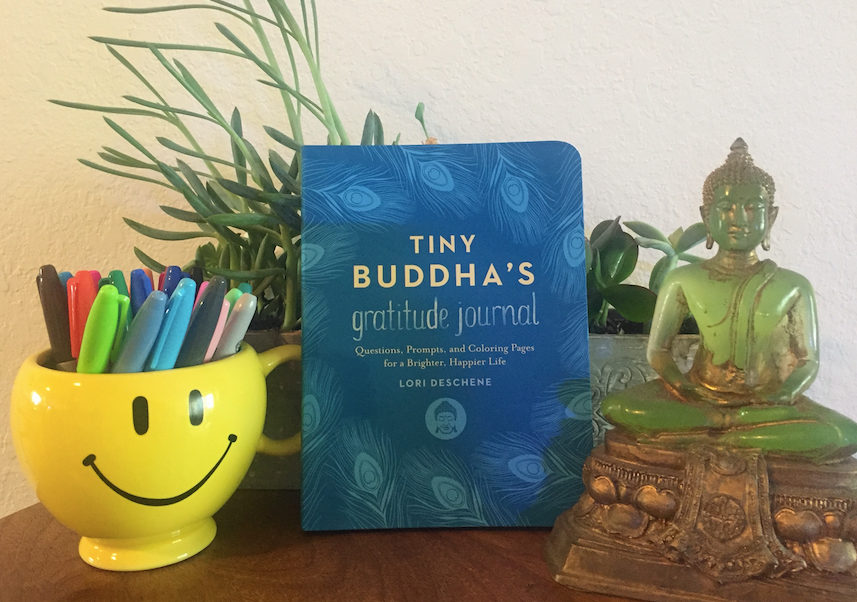
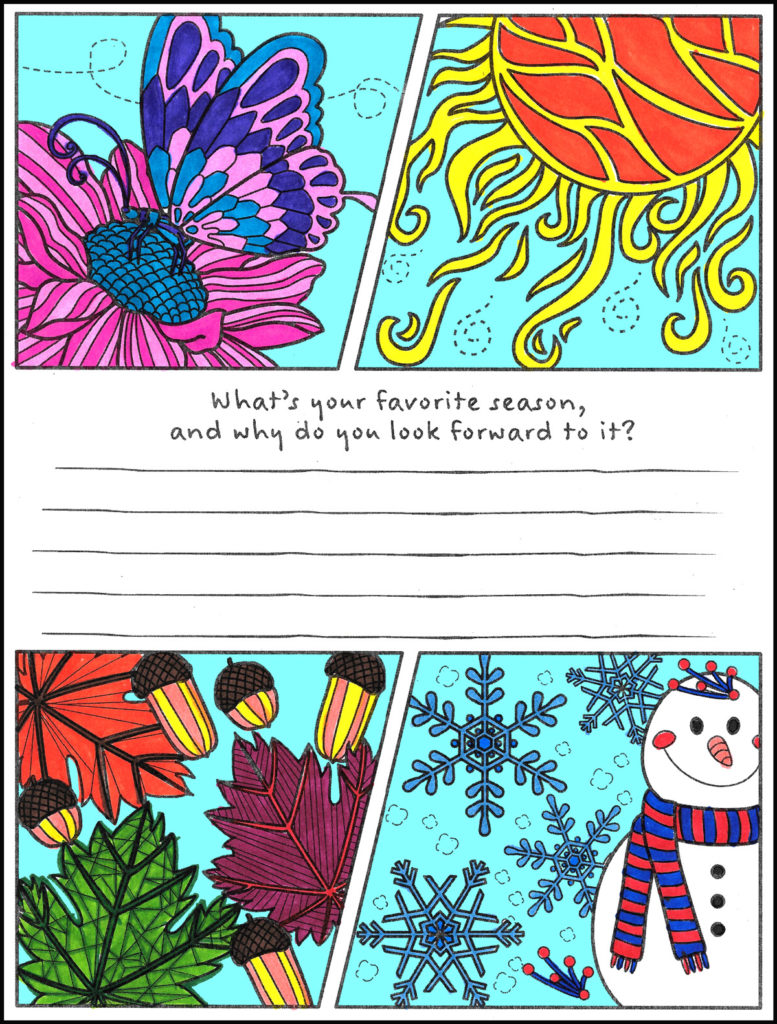
  • 10 Creative Ways to Express Gratitude

    10 Creative Ways to Express Gratitude

    Thank you

    “Feeling gratitude and not expressing it is like wrapping a present and not giving it.” ~William Arthur Ward

    It’s probably no surprise to you that gratitude is one of the most effective ways to increase your own happiness—and the happiness of others. But did you know that practicing gratitude can also make you healthier, less stressed, and more optimistic? Plus, it’s even been shown to have positive effects on your career and relationships.

    Gratitude is clearly a worthwhile practice, and there are tons of wonderful resources online (even here on Tiny Buddha!) filled with insights, inspiration, and ideas for practicing thankfulness.

    Whether it’s writing in a gratitude journal, sending out a thankful note, or saying “thank you” to people you love, there are countless ways to express appreciation and thankfulness.

    Embracing gratitude might not be so difficult when things are going well, but over the past few years I’ve discovered just how powerful gratitude can be when going through a difficult time.

    After a lifetime of perfectly good health, last autumn I was unexpectedly faced with the challenge of having four surgeries. As someone who battles with extreme anxiety when it comes to anything medical (especially needles!), the prospect of surgery terrified me.

    During this difficult time, I was so fortunate to have friends, family members, and even strangers treat me with kindness, love, and compassion—something that I know wasn’t always easy, given my panicky state of mind!

    One of the ways I coped with my anxiety was transferring my attention from my apprehension to appreciation. Every time I found myself dwelling on my fears, I asked myself: What can I be thankful for? Who can I thank today?

    While I won’t deny that four surgeries (and tons of bed rest!) was an unpleasant experience, it did give me the opportunity to have a life-changing revelation: expressing gratitude can be a transformative experience.

    The more I focused on being thankful (and expressing that gratitude), the less time I had to ruminate on my worries.

    Being thankful not only helped me to better cope with my worries, but expressing my appreciation to others helped me to strengthen my relationships with my friends, family members, and even my surgeon!

    Whether you’re in the midst of one of life’s highs or one of it’s lows, you have a great deal to gain from taking your appreciation and sharing it with the world. Here are some of my favorite ideas for doing just that:

    1. Like every post on friends’ social media feeds

    Pressing a button to like a post might seem like a small thing, but in our digital age, this tiny act can be a great—and easy!—way to express gratitude.

    Silly as it might sound, those little notifications can mean a lot to some people and, unless you actively disagree with what’s being conveyed in the post, why not show your appreciation for the person who shared it by giving it a thumbs-up or a heart?

    2. Forgive someone who has hurt you

    Forgiveness might not sound directly connected to gratitude, but when you forgive someone who has hurt you (with or without an apology), what you’re essentially doing is expressing gratitude for the experience and for the opportunity to experience compassion for someone else.

    Forgiveness, mind you, does not condone the wrongdoing. It merely offers you a chance to free yourself from resentment and anger, which is a way to love yourself.

    3. Connect two friends who might like each other

    Friendships are one of life’s greatest gifts, and what better way to express gratitude for them than to help create more positive relationships?

    If you think two friends might hit it off (either romantically or platonically), introduce them to one another. This is a great way to not only express your gratitude for friendship in general, but also to show these two people that you love and value them.

    4. Donate clothing to your local homeless shelter

    How many articles of clothing to you have that you don’t actually wear? If you sort through your closet and drawers, you’ll probably find tons of items you no longer need to keep.

    Choosing to donate these items to those in need is not only a kind thing to do, but also a way of express gratitude for the time you were able to wear those clothes, for those who made the clothes, and for the opportunity to pass them along to someone in need.

    5. Make and share a list of someone’s good traits

    Do you ever have those moments when you look at a friend or loved one and think about how amazing they are? Don’t keep those thoughts to yourself!

    Every time you notice something wonderful about someone else, write it down. When you have a nice little list gathered, share it with him or her to express how thankful you are for his or her wonderful traits.

    6. Share your positive reviews with others

    More often than not, when people take time to speak to a manager at a shop or restaurant or write an online review, it’s because they’ve had a bad experience and want to vent about it. But imagine what it would be like if people shared every positive they had with a product or service!

    The next time someone is helpful or you enjoy a product, tell others about your experience. Leaving positive reviews and telling managers about positive employees is a fantastic way to express gratefulness.

    7. Put your phone away when you’re with people

    One of the absolute best ways to express your gratitude for others is by doing your best to be fully present in their presence.

    This is not always easy (especially with all of the digital distractions!), but try your hardest to put your phone away when you’re interacting with others. Doing so will allow you to be more appreciative of the experiences you have with them.

    8. Write a handwritten letter (not just a note!)

    You’re hopefully no stranger to the thank you note. A handwritten thank-you is one of the most impactful ways to express gratitude in an era when most people simply jot off an email or a text. But when was the last time you wrote a letter to express you gratitude?

    Break out that loose leaf paper, a pen, and take some time write a full-page letter to a loved one, expressing your gratitude for everything they’ve done for you.

    9. Pick up and throw away litter when you see it

    Big picture gratitude is something that’s often ignored when thankfulness is discussed, but if you’re not spending time appreciating, and caring for, the world around you, you’re missing out on a great gratitude opportunity.

    One simple and effective way to express appreciation for the world is to pick up and dispose of litter whenever you see it. It’s a small act, but if we all did it, the world would be a much better (and cleaner!) place.

    10. Teach someone about something new

    We all have unique skills and talents. Whether it’s something small (like mastering Snapchat) or big (like fully comprehending how quantum physics works), we all have knowledge we can share with others.

    Sharing what we know allows us not only to show appreciation for others (after all, we value them enough to teach them something), but it also is a chance for us to be grateful for our personal knowledge and skills (and for the ways we were able to learn them).

    Whether you choose to express gratitude using one of these creative gratitude tips or all ten, it’s my hope that they’ve inspired you in some way to think outside the box when it comes to showing appreciation for the people and experiences in your life.

    Gratitude is one of the greatest ways to make your world a happier place, and the more you practice it, the more things you’ll find to be grateful for.

    Editor’s Note: Dani has generously offered to give two sets of her two new books, Gratitude and Living in the Moment, to Tiny Buddha readers. To enter to win a free set, leave a comment below sharing something you’re grateful for. For an extra entry, share this post on one of your social media pages and include the link in your comment. You can enter until midnight, PST, on Friday, September 16th.

    Update: The winners for this giveaway are marleyposh and Siege Htrowsdloh.