Tag: Gratitude

  • The Unexpected Therapy I Found on My Phone

    The Unexpected Therapy I Found on My Phone

    “Sometimes you will never know the value of a moment until it becomes a memory.” ~Dr. Seuss

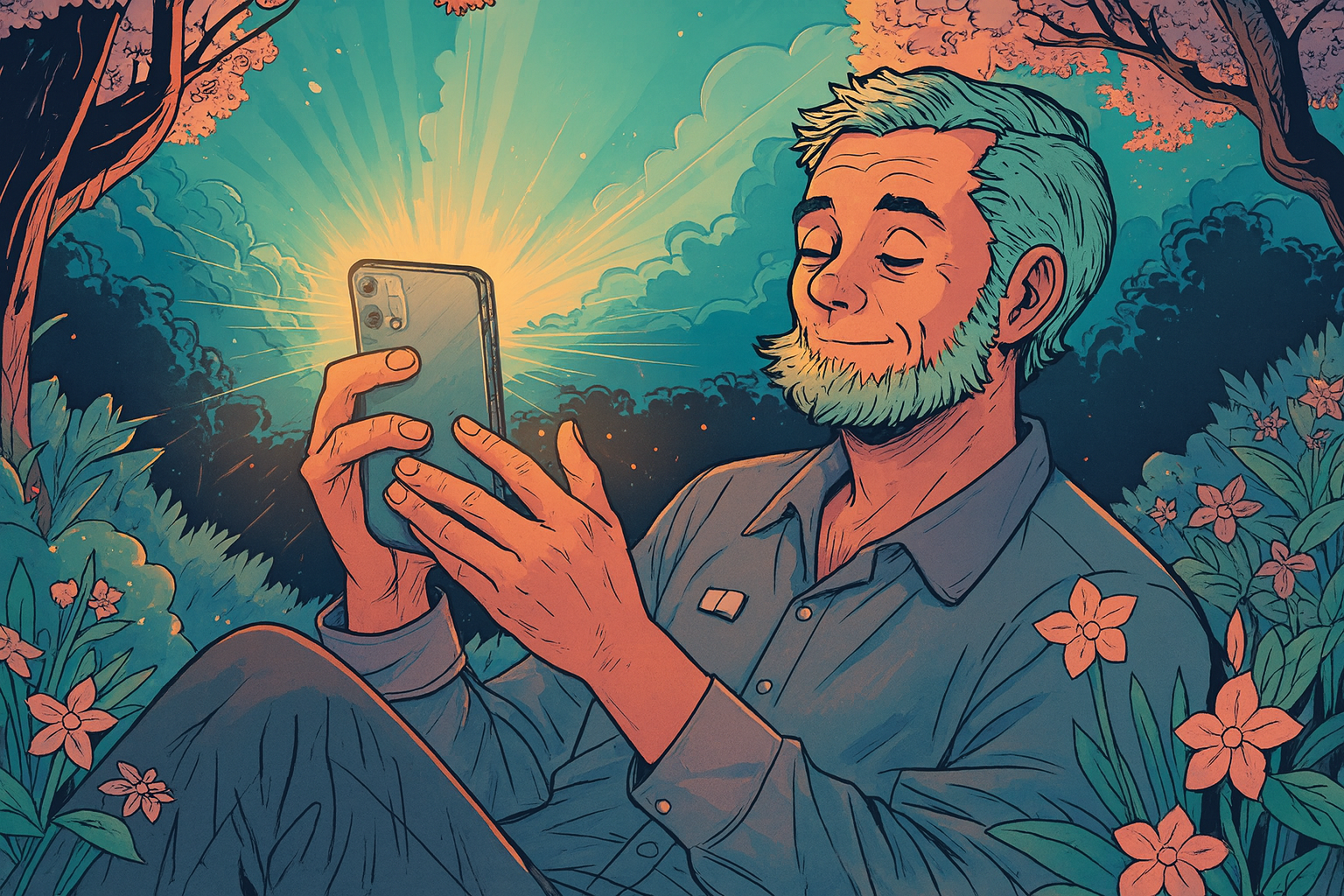
    The notification pops up on my phone: “Jason, we made a new memory reel for you.” I pause whatever I’m doing, probably something stressful involving deadlines or dishes, and feel that familiar flutter of excitement. What chapter of my life has Google decided to surprise me with today?

    I tap the notification, and suddenly I’m watching years of Father’s Day adventures unfold. It started accidentally—one Father’s Day trip to the Buffalo Zoo that somehow became our tradition. Instead of buying me something I didn’t really need, we chose experiences. Year after year, we’d visit a new aquarium or zoo.

    There’s my son at age three at the Erie Zoo, barely tall enough to see over the penguin exhibit barrier. The same kid at five at the Baltimore Aquarium, tentative but overjoyed as he touched a stingray for the first time. Then six at the Philadelphia Zoo, taking in the fact that there is a tube system where some of the big cats can walk overhead.

    Buffalo, Erie, Philadelphia, Baltimore, Charleston. We’d mapped Father’s Days across the Eastern Seaboard without ever planning it. So much time has passed since we started. My son has grown taller, lost teeth, found his voice. I’ve gotten balder, maybe a little softer around the edges. But there we are, year after year, choosing moments over things.

    We tell ourselves to create experiences instead of accumulating stuff, but just how important that choice is never really hits until you play it back. Here was the proof: a memory bank I didn’t even realize we were building, one Father’s Day adventure at a time.

    The emotions hit in waves. Pure joy at his excitement over feeding the stingrays, happy sadness watching his younger self discover jellyfish for the first time, overwhelming gratitude for every single trip we took. This ninety-second reel has become medicine for whatever current stress I’m carrying.

    And that’s when it hits me. My phone accidentally became my therapist.

    When Technology Gets It Right

    I never intended for Google Photos to become part of my self-care practice. Like most people, my wife and I take hundreds of photos without much thought, letting them pile up in digital storage. The idea of actually organizing or regularly looking through them feels overwhelming. Iƒt feels like thousands of images scattered across years of living.

    But then technology stepped in with an unexpected gift. These automated memory reels started appearing, curating my own life back to me in perfectly sized emotional portions. Not the entire overwhelming archive, just a gentle serving of “Remember this?”

    At first, I was skeptical. Another way for a tech company to keep me glued to my screen when I routinely looked for ways to escape. But as these memory notifications became part of my routine, I realized something profound was happening. Google’s algorithm had accidentally created something I never knew I needed: regular reminders of how blessed my life has been.

    The beauty is in the surprise element. I’m not seeking out specific photos when I’m feeling down. That can sometimes backfire, making me feel more nostalgic or sad. Instead, these curated moments arrive when I least expect them, like getting a text from an old friend who you haven’t heard from it a while.

    The Science of Digital Reminiscence

    Research shows that positive reminiscence (deliberately recalling happy memories) can significantly improve mood and reduce stress. When we engage with positive memories, our brains release dopamine and activate the same neural pathways associated with the original experience. We literally get to relive moments of joy.

    Visual memories are particularly powerful. Studies in cognitive psychology reveal that images trigger stronger emotional responses and more vivid recall than other types of memory cues. When we see a photo from a happy time, we don’t just remember the moment. We can almost feel ourselves back there.

    Nostalgia, once thought to be a purely melancholy emotion, is now understood to be a powerful mood regulator. Research from the University of Southampton shows that nostalgic reflection increases feelings of social connectedness, boosts self-esteem, and provides a sense of meaning and continuity in our lives.

    But what makes these digital memory reels especially effective is that they’re unexpected and brief. Unlike deliberately scrolling through old photos (which can sometimes lead to rumination or sadness), these automated highlights arrive as pleasant surprises and end before we get overwhelmed.

    The timing is often perfect too. These notifications tend to pop up during mundane moments, like waiting in line, taking a work break, sitting in traffic. Exactly when we need a little perspective on what really matters.

    The Emotional Range of Remembering

    Not every memory reel hits the same way. Some make me laugh out loud, like the diversity of my son’s increasingly elaborate Halloween costumes or the series of failed attempts to get a decent group photo at our destination wedding. Others bring that “happy sadness” I’ve come to appreciate… seeing my grandmother in photos from a few years back, her smile bright even when her health was declining.

    Then there are the reels that just make me feel deeply grateful. The random afternoon when we decided to try goat yoga. The collection of action shots over the years: chasing my son around the house in a homemade superhero costume, his skateboarding phase, catching up with friends we haven’t seen in some time. These aren’t momentous occasions, just evidence of a life filled with small adventures and genuine connection.

    What strikes me most is how these photos capture joy I might have forgotten. In the daily grind of parenting, working, and managing life, it’s easy to remember the stress and overlook the sweetness. But here’s photographic proof: we’ve actually had a lot of fun together.

    The reels remind me that while life hasn’t been all butterflies and rainbows, the good has consistently outweighed the tough times. The visual evidence is overwhelming. We’ve been blessed, again and again, in ways both big and small.

    Embracing Digital Self-Care

    I’ve learned to treat these memory notifications as legitimate self-care appointments. When that notification pops up, I pause whatever I’m doing and give it my full attention. No multitasking, no rushing through. I let myself feel whatever comes up. The giggles, the happy sadness, the overwhelming gratitude.

    Sometimes the timing feels almost magical. The day my social anxiety took over because I had to present during three different meetings, a reel appeared featuring peaceful moments from the trip my wife and I took to Newport, Rhode Island (mostly so I could try a lobster roll). When I was worried about whether I was doing enough as a parent, I was served a compilation of my son’s biggest smiles over the years.

    It’s become a form of mindfulness I never planned. These brief interruptions that pull me out of current anxiety and remind me of the bigger picture. They’re proof that I’ve been present for beautiful moments, that I’ve prioritized what matters, that love has been the consistent thread running through our ordinary days.

    The Memory Bank We Don’t Realize We’re Building

    Those Father’s Day zoo trips felt routine at the time. Just something we did because that’s what families do on special days. I wasn’t thinking about creating lasting memories or building traditions. I was just trying to make sure my son had a good day.

    But now I see what we were doing, and that was making deposits in a memory bank that would pay dividends years later. Every photo was evidence of intention, of showing up, of choosing joy even when life felt overwhelming.

    The beauty of these digital memory reels is that they reveal patterns we might not see in real time. They show us that we’ve been more intentional than we realized, more present than we felt, more blessed than our current mood might suggest.

    The Gift of Automated Gratitude

    In a world where technology often leaves us feeling more anxious and disconnected, these memory reels offer something different: automated gratitude practice. They’re gentle reminders to pause and appreciate not just where we are, but where we’ve been.

    They don’t require apps to download or habits to build. They just arrive, like grace, when we need them most.

    So, the next time you get one of those memory notifications, pause. Let yourself be surprised by your own joy. Look at the evidence of love in your life. The big moments and especially the small ones. Notice how much good has happened, even during life’s inevitable challenges.

    Your phone is holding more than photos. It’s holding proof of how blessed your life has been.

    And sometimes, that’s exactly the reminder we need to keep building that memory bank, one ordinary, beautiful day at a time.
  • How I Got Free from the Trap of Resentment

    How I Got Free from the Trap of Resentment

    “Jerry, there is some bad in the best of people and some good in the worst of people. Look for the good!” ~George Chaky, my grandfather

    I was seven when he said that to me. It would later become a guiding principle in my life.

    My grandfather was twenty-one when he came to the US with his older brother, Andrew. Shortly afterward, he married Maria, my grandmother, and they had five children. William, the second youngest, died at the age of seven from an illness.

    One year later they lost all of their savings during the Great Depression of 1929 when many banks closed. Two years afterward, my grandmother died from a stroke at the age of thirty-six.

    As I grew older and learned about the many hardships my grandfather and family of origin had endured, his encouragement to look for the good in people would have a profound impact on me. It fueled a keen interest in trying to understand why people acted the way they did. In retrospect, it also had a lot to do with my becoming a therapist and author.

    Easier Said Than Done

    As a professional, I am able to objectively listen to my therapy clients’ stories with compassion and without judgment. However, in my personal life, I’ve often struggled to see the good in certain people, especially some elementary school teachers who physically and emotionally abused me and male peers who made fun of my small size.

    In my youth I often felt humiliated, but not ashamed. I knew that for them to treat me that way, there must have been something wrong with them. But it still hurt.

    I struggled with anger and resentment for many years. In my youth, I was taught that anger was a negative emotion. When I expressed it, certain teachers and my parents punished me. So, I stuffed the anger.

    I Didn’t Know What I Didn’t Know

    When I was twelve, I made a conscious decision to build walls to protect myself from being emotionally hurt. At the time, it was the best that I could do. Walls can give one a sense of safety, but walls also trap the pain inside and make it harder to trust and truly connect with others.

    About that same time, I made a vow to myself that I frequently revisited: “When I get the hell out of this house and I am fortunate to have my own family, I will never talk to them the way my parents talked to each other and my sister and me.” I knew how I didn’t want to express my emotions, but I didn’t know how to do so in a positive and healthy manner.

    Stuffing emotions is like squeezing a long, slender balloon and having the air, or anger, bulge in another place. In my late twenties, individual and couples counseling slowly helped me begin to recognize how much anger and resentment I had been carrying inside. They would occasionally leak out in the tone of my voice, often with those I wasn’t angry with, and a few times the anger came out in a frightening eruption.

    “Resentment is the poison we pour for others that we drink ourselves.” ~Anonymous

    I heard that phrase at a self-help group for families of alcoholics. After the meeting, I approached the person who shared it and said to her, “I never heard that before.” She smiled and replied, “I’ve shared that a number of times at meetings where you were present.” I responded, “I don’t doubt that, but I never heard it until tonight!”

    The word “resentment” comes from the Latin re, meaning “again,” and sentire, meaning “to feel.” When we hold onto resentment, we continue to “feel again” or “re-feel” painful emotions. It’s like picking at a scab until it bleeds, reopening a wound.

    Nowhere have I ever read that we should like being treated or spoken to unfairly. However, when we hold on to resentment, self-righteous indignation, or other uncomfortable emotions, it ties us to the past.

    Holding onto resentment and grudges can also increase feelings of helplessness. Waiting for or expecting others to change gives them power over my thoughts and feelings. Many of those who I have held long-standing resentment for have died and yet can still have a hold on me.

    When we let go of resentment, it frees us from much of the pain and discomfort. As author John E. Southard said, “The only people with whom you should try to get even with are those who have helped you.”

    I’ve continued to learn how to set healthier and clearer boundaries without building walls. I’ve learned that I don’t have to accept unacceptable behavior from anyone, and I don’t have to go to every argument I am invited to, even if the argument is only inside my head.

    Still, for a long time, despite making significant progress, periodically the anger and resentment would come flooding back. And the thought of forgiving certain people stuck in my craw.

    When people would try to excuse others’ behavior with statements like “They were doing the best they knew how,” I’d say or think, “But they should never have become teachers” or “My sister and I had to grow up emotionally on our own!”

    Forgiving Frees the Forgiver

    For a long time now, I have started my day with the Serenity Prayer: (God) Grant me serenity to accept the things I cannot change, courage to change the things I can, and the wisdom to know the difference. It has helped me try to focus on today and what I can control—how I think, feel, and act. Sometimes I get stuck, and all I can say is, “Help me let go of this anger.”

    “When we forgive, we heal. When we let go, we grow.” ~Dalai Lama

    I frequently hear the voices of many people who have helped, supported, and nourished me. I hear my wife’s late sister, MaryEllen, a Venerini nun, saying, “Jerry, the nuns treated you that way because that was the way they were probably treated by their superiors.” She validated my pain and planted another seed that slowly grew.

    I’ve also heard that “hurt people hurt people.” At times, I would still lash out at innocent people when I was hurting. I desperately wanted to break this generational cycle. I’ve learned that I don’t have to wait for other people to change in order to feel better.

    I am learning that everyone has a story, and I can practice forgiveness without excusing what they did or said.

    Forgiving is not forgetting. Forgiving liberates me from the burden of resentment, helping me focus on connecting with supportive people and continuing to heal. Letting go of resentment cuts the ties that bind me to the past hurts. It helps me be present today where I can direct my time and energy toward living in the present instead of replaying old pain.

    For the past year I have made a conscious effort to start each day by asking my Higher Power, whom I choose to call God, “Help me be grateful, kind, and compassionate to myself and others today and remember that everyone has their own struggles.” This has become one of the biggest turning points in my travels through life.

    You Can’t Pour from an Empty Cup

    I have learned that taking care of myself is one of the most effective ways to stop resentment from building up. When I neglect one or more of my needs over time, I’m quicker to snap, less patient, and more likely to take things personally. Who benefits from my self-neglect? Not me, and certainly not my spouse, children, coworkers, or others. When I am H.A.L.T. (hungry, angry, lonely or tired) or S.O.S. (stressed out severely), I usually don’t like being around me either.

    Self-compassion also weakens resentment’s hold, making it easier to be compassionate with others. Remembering that we’re all works in progress helps me treat myself and others more gently.

    I often think about my grandfather’s words, “Look for the good.” Self-care and self-compassion help me to see the good in myself as well as in others. I can dislike someone’s actions or tone of voice and also recognize they’re not really about me.

    I actually have a Q-tip (representing “quit taking it personally”) taped on my desk to remind me that someone else’s actions or words are likely the result of their own struggles. It helps me to “catch myself,” and instead of taking things personally, I try to remember that everyone has a story.

    Gratitude Puts Everything in Perspective

    There are days when I am faced with great or even overwhelming challenges, when it would be easy to default to anger—with other people or with life itself. On those days, I might notice a beautiful sunrise or feel touched by the love and kindness of others. Practicing gratefulness helps me to see life as both difficult and good. It is like an emotional and spiritual savings account, building reserves that help me to be more resilient during the rough patches in life, even when I feel wronged.

    Specifically focusing on what I am grateful for each day also helps me heal and gives me periods of serenity. It empowers me to try to approach my interactions with others in a warm and caring manner while respecting my and their personal boundaries, which keeps small misunderstandings from growing into resentment.

    Gratefulness and compassion toward myself and others take practice. It’s not a one-and-done thing. It’s like learning any new skill—the more I practice, the more it becomes a positive habit and feels more like second nature.

    Without repeated practice, old, undesirable thoughts and patterns can come back. When I neglect self-care, I am most vulnerable to quickly regress.

    I also need to be vigilant when things seem to be going well within and around me. I can become overly confident, trying to coast along and slack off from practicing gratitude and compassion.

    I have been unlearning many things that no longer work for me. I have unlearned “Practice makes perfect,” replacing it with “Practice makes progress, and I will do my best to continue to learn, grow, and be grateful, one day at a time.”

    I don’t always get it right, but every time I choose compassion, understanding, or gratitude over resentment, I am more at peace and more connected to everyone around me.

  • Why You’re Not Happy (Even If Life Looks Fine)

    Why You’re Not Happy (Even If Life Looks Fine)

    Do you sometimes see people running around enjoying life and wonder what you’re missing? Sometimes I used to think I must be a horrible person. I had so many things going for me, and I still couldn’t be happy. I would ask myself, is there something wrong with me? Am I a narcissist?

    Then sometimes I would decide I was just going to be happy. I would fake it until I made it and just accept that’s who I was. But it wouldn’t take long for me to feel overwhelmingly depressed.

    I had a little dark hole that would constantly pull at me, and I didn’t have the energy to keep ignoring it. My attempts to do so just made it scream louder, and then I really was in a mess. This, of course, made me feel worse because it would remind me that I must be crazy.

    As I worked through my healing journey, I discovered there are three key reasons why we can’t just muscle up and be happy. We need to work through these three obstacles to move from just surviving and having moments of happiness to thriving and living a life full of joy and inspiration. To living a life where we love who we are and what we are doing and have hope for the future.

    Life is never perfect, but it sure is a lot more enjoyable and fun when we love, enjoy, and fully experience the present moments we are in.

    So what are these obstacles? And what strategies can you use to work through them?

    1. Validate Past Experiences

    When you don’t fully validate and process painful past experiences, the energy of those experiences gets trapped and contained within your body.

    It takes consistent and continual emotional energy to keep the walls around those experiences high and the energy within contained. The energy and emotion inside are deep and strong, and to keep these feelings away from our consciousness. we can’t allow ourselves to experience any deep or strong feelings, even the good ones.

    Allowing yourself to pull down these walls and grieve all the deep and strong feelings inside will free your emotional energy to feel deep and strong happy feelings too.

    For me, this meant feeling and processing the sexual abuse I endured as a child.

    For years I convinced myself that I was fine and that it happens to almost everyone. I tried to minimize my experience and leave it in the past. The walls I had built to keep all the grief and pain of those experiences out of my conscious daily awareness drained me and prevented me from feeling life in real time. I was guarded, with very shallow access to my feelings.

    No one wants to go back and work through the pain of the past, but I discovered that doing grief work with my therapist allowed me to truly let go of the pain and thrive in the present.

    2. Let Go of the Need for Control

    When you’ve been hurt in the past, it is normal to want to curate a life where you can’t get hurt again. We create a sense of safety by ensuring our life is as predictable as possible. Any time someone in our circle acts in a way that is outside our control, we ensure they “get back in line” so we feel safe.

    For example, if your partner doesn’t immediately return your text, you might get upset and lash out about how disrespectful he is being. If your kids don’t seem to be as concerned about their grades as you think they should be, you might panic and shame them, saying they will be stuck working in fast food restaurants for the rest of their lives. We want everyone to act as we think they “should,” so our world feels nice and safe and predictable.

    Zoom out and look at this scenario… Could it be any more boring? No wonder it’s impossible to feel true joy and happiness. Joy and happiness come from the ability to be spontaneous, light, free, and unpredictable.

    I think a lot of people mistake feeling safe for feeling happy. Being in a constant search for safety keeps us in survival mode. Knowing you are safe with yourself no matter what allows you to move out of survival and into a higher consciousness that brings joy, pleasure… and happiness.

    It is true that many of us have very real pain from the past, and it is perfectly normal to want to protect ourselves from feeling that pain again by attempting to curate a life we can fully control. This is an unconscious decision we make out of self-protection.

    Choose to make the conscious decision to let go of control. Trust that you now have all the resources within yourself to feel safe, no matter what happens. Releasing the need to control will bring you the ability to feel joy, pleasure, and fun again.

    This one was difficult for me and took a long time to integrate. Because of my abusive childhood experiences, I overcompensated for my feelings of worthlessness and lack of safety with a drive for success and perfectionism to try to control how others perceived me.

    If my co-worker wasn’t pulling her weight, I would stay late and work weekends to ensure the work was done, and done well. If my husband wouldn’t spend time with me or plan dates, I would plan dates and put all the reservations in his name so it looked like he was investing in me and our relationship. If my kids were not interested in wearing outfits that I thought would make our family look perfect, I would bribe them with candy so we could look good and put together as a family.

    I thought that making myself and my family look like we had it together meant that we did, and we would therefore be happy. Man, this couldn’t be further from the truth, and it actually drove not just myself but everyone in the family system in the opposite direction.

    No one likes to be manipulated, and even if we can’t exactly identify that’s what is happening, we feel it. Honestly, I had a bit of an identity crisis as I let go of how I wanted life to look and embraced living and feeling life in real time. What I can say is that since I’ve let go of control, life has been full of more peace and joy than I knew possible.
    3. Look for Happiness

    What we look for, we will find. There is a reason we constantly hear people talk about gratitude. When we look for things we’re grateful for, things we enjoy or love, we create more of those things in our lives. We begin to see how much joy and happiness we already have.

    We so often completely overlook the goodness that’s all around us because we are preconditioned to see and experience all the things that are going wrong.

    This third step is caused by not working through the first two. When we haven’t validated our past painful experiences, we look for validation in all our current painful experiences.

    It’s like those experiences keep haunting us until we take the time to turn around and look at them. They cloud our ability to see the happiness we already have all around us. We can’t experience the innocence and joy in our children. Nor can we accept the love and connection our friends want to offer us or appreciate all the amazing things we are doing well at work.

    When we are stuck in the need for control, we look for all future outcomes that will help us to stay safe instead of looking for all the joy and pleasure that is already in our life. We don’t have enough bandwidth to do both, at least not all at once; so, for example, if we spend all our time subconsciously looking for ways someone else might hurt or abandon us, then we don’t have the energy left to look for joy and pleasure in our relationships.

    One day I had to make a choice. I decided I had had enough of being tired, frustrated, and miserable. I knew it would take a while for my circumstances to change, but that didn’t mean I had to stay stuck and feel isolated, frustrated, and lonely.

    I made the hard choice to look for happiness. At first, I would journal things I found happiness in, and over time it became more subconscious than conscious. It also helped to talk about it with a good friend, as we both challenged each other in looking for happiness.

    Sometimes I still struggle. If I haven’t been taking care of myself, this one is the first to slip. I start to slide back into an old pattern of looking for how life is screwing me over. I know that I’m better able to keep my mindset in happiness when I engage in self-care as often as possible.

    If enough is enough and you are ready to move on from feeling like you are just surviving life, implement the following three strategies to overcome the obstacles to joy.

    First, start journaling or processing your feelings about past experiences. It could be a good idea to do this step with a professional, depending on what you have been through.

    Next, start identifying how much control you have over your life and the people around you and see where you can loosen up the reins a little.

    I can almost hear you saying back to me, “But everything will fall apart if I let go!” Let it fall apart. You don’t want a partner and kids who live only to make you satisfied and “happy.” Let life get a little messy. They (and you) will be so much happier if they just get to be themselves, make mistakes, and develop connections out of genuine love and respect… not out of fear of failure or mistakes.

    This last one is pretty simple: start looking for joy. Get curious when you find it hard or upsetting to look for joy. Often, turning things around is simply a choice. Change your subconscious conditioning from looking for what is going wrong to looking for what is going right.

    These three steps will help you attract the people and experiences that will bring you everything you are looking for.

    Before you know it, your past pain will be a distant memory that doesn’t impact your day-to-day life. Instead, you will feel a sense of freedom and joy because you’ll be able to live life in the moment rather than in your head trying to predict outcomes, and because you’ll have reset your pre-conditioning to look for the good in life everywhere you go.

    This is what it takes to be one of “those people” who just seem happy and full of life. Which strategy will you try first?

  • 4 Reasons to Appreciate Hard Times and How to Cultivate Gratitude

    4 Reasons to Appreciate Hard Times and How to Cultivate Gratitude

    “Thank you for all the challenges that built my character. Thank you for all the hard times that made me appreciate the good times.” ~Unknown

    Gratitude is often associated with joy, blessings, and moments that bring us happiness. But what about the times when life feels hard? Can we still find gratitude in the pain and struggles that challenge us?

    A good friend went through a difficult experience this year, and she taught me that the answer is yes. Her story left a profound impact on me.

    Last month, my friend finished her final round of chemotherapy, and as we sat together, she surprised me by saying, “I’m grateful for this experience.” She explained how cancer, as grueling as it was, gave her a new perspective on life. She now cherished every moment, every connection, and every small joy in a way she never had before.

    It wasn’t about the illness itself but the lessons it brought her: resilience, appreciation for the present, and a sense of gratitude for simply being alive.

    Her words stayed with me after that conversation. Gratitude for chemo? Gratitude for suffering? At first, it felt impossible to reconcile. But as I reflected on her journey, I began to think about my hard moments and wondered if I, too, could feel grateful for them. To my surprise, the answer was yes.

    Reflecting on My Journey

    I immediately thought about my struggles with an eating disorder in my younger years. At the time, it felt like I was trapped in a cycle of shame, self-criticism, and unattainable standards. My worth was tied to my weight and how I looked in the mirror. It was a dark period, one I wouldn’t wish on anyone. And yet, as I look back now, I realize how much I’ve learned and grown because of it.

    That painful journey taught me self-love and self-acceptance.

    I began to understand that my value extended far beyond my physical appearance.

    I healed my relationship with food, learning to nourish my body out of care instead of control.

    The process wasn’t easy—it involved patience and a willingness to confront the deepest parts of myself. But coming out on the other side, I felt stronger, more compassionate, and more connected to my true self. And for that, I am deeply grateful.

    Finding Gratitude in the Hard Lessons

    My friend’s journey with chemo and my struggles with an eating disorder are vastly different, but they share a common thread: both experiences brought profound growth and perspective. Life’s hardest lessons often carry hidden gifts.

    Here are a few reasons why I believe gratitude for life’s challenges is possible:

    1. They teach us resilience.

    Hard moments push us to our limits, but they also show us how strong we can be.

    Overcoming a challenge, no matter how big or small, builds a sense of resilience that stays with us. We learn to trust ourselves, knowing that we faced adversity before and can do it again.

    2. They shift our perspective.

    When life feels easy, it’s tempting to take things for granted. Struggles remind us to appreciate what we have—the people who love us, the simple joys, or even the privilege of good health. Gratitude for these things often grows after we’ve faced hardship.

    3. They help us grow.

    Painful experiences force us to confront parts of ourselves we might otherwise avoid.

    Whether it’s learning self-acceptance, setting boundaries, or discovering what truly matters, the lessons from life’s challenges are the ones that shape us.

    4. They deepen our empathy.

    Walking through a difficult season gives us a unique perspective and compassion for others who are struggling too. Gratitude for our hard lessons can open the door to supporting others with greater understanding, compassion, and empathy.

    Gratitude Doesn’t Mean Denying Pain

    It’s important to note that being grateful for hard lessons doesn’t mean denying or downplaying the pain or pretending everything is fine. Gratitude and pain can coexist. You can acknowledge the difficulty of what you’ve been through while still finding value in the lesson of the experience. It’s not about minimizing suffering but about honoring the strength and wisdom that came from it.

    How to Cultivate Gratitude for Life’s Challenges

    If you’re struggling to feel grateful for a difficult experience, know that it’s okay. Gratitude often comes with time and reflection. The healing process is long and hard, but gratitude can make it easier. Here are a few ways to begin cultivating it.

    1. Reflect on what you’ve learned.

    Take some time to think about how you’ve grown from the experience. What strengths or insights have you gained? How has it shaped who you are today?

    2. Focus on the present moment.

    Challenges often remind us to live in the present. Journaling, breathing, coloring, being in nature, or meditating can help the process. Focus on the small joys in your day—like a kind word from a friend, a good song on the radio, or the warmth of the sun—can help you cultivate gratitude.

    3. Share your story.

    Talking about your journey with someone you trust can be incredibly healing.

    Sharing what you’ve been through and how you’ve grown can help you see the value in your experience.

    4. Practice self-compassion.

    Be kind to yourself as you reflect on difficult times. Gratitude doesn’t mean you have to feel happy about what happened—it simply means recognizing the good that came from it.

    Gratitude as a Way Forward

    As strange as it sounds, I am now grateful for the hard lessons of my life. They have taught me resilience, self-love, and the importance of living authentically. My friend’s gratitude for her journey reminded me that even in the darkest moments, there is light, there is a lesson to be learned, and there is spiritual growth.

    Life’s challenges will always come, but with gratitude, we can face them with a sense of hope and purpose. So, here’s to finding gratitude—even for the hard lessons. They might just be the ones that change us for the better.

  • How Gratitude and Mindfulness Gave Me My Life Back

    How Gratitude and Mindfulness Gave Me My Life Back

    “Train your mind and heart to see the good in everything. There is always something to be grateful for.” ~Unknown

    I used to rush through life, constantly ticking off to-dos, feeling like I was always chasing something just beyond my reach. My days were a blur of deadlines, errands, and commitments. And yet, in the quiet moments—when I finally lay my head on the pillow at night—there was this heaviness, this emptiness I couldn’t shake.

    I kept telling myself that once I finished the next big project, once I achieved the next goal, I’d feel better. But that “better” feeling never came.

    Then one afternoon, something changed. I was sitting in my car after an exhausting day at work, staring blankly at the traffic in front of me. The world was loud and chaotic, and I felt disconnected from it all. I couldn’t even remember what I’d eaten for lunch or if I’d really been present during the meeting I’d spent hours preparing for. I was just… existing. Going through the motions.

    It wasn’t a big event that shifted things for me. There was no grand revelation or life-altering moment. It was something as simple as the song playing on the radio. It was a song I’d heard countless times before, but in that moment, it hit differently.

    The lyrics spoke about pausing, about breathing in life, about seeing the beauty in the ordinary. For the first time in what felt like forever, I noticed the warmth of the sunlight streaming through my car window. I noticed the steady rhythm of my breath and how it calmed the rising tide of anxiety in my chest.

    It was as though my mind had cleared a little, just enough for me to catch a glimpse of what I’d been missing. That fleeting moment was my “ah ha” moment, the one where I realized I had been living my life on autopilot, never truly appreciating the present. I had been running, running so fast I forgot to feel the ground beneath my feet.

    I didn’t know it then, but that was the start of a deep transformation for me. The next morning, I decided to try something different. Instead of reaching for my phone the second I woke up, I lay there in bed, just breathing, just being. I looked around my room, feeling the softness of the sheets and hearing the gentle hum of the world outside. It was a small shift, but it felt monumental.

    Over time, I started practicing gratitude. I kept a small notebook by my bedside, and each night, I wrote down three things I was grateful for. At first, it felt like a forced exercise, like I was trying to convince myself to be positive. But slowly, the practice became more natural. I found myself appreciating the little things—the crispness of the morning air, the smile of a stranger, the sound of rain tapping against the window. These were moments I had once glossed over, but now they felt like treasures.

    Mindfulness was the next piece of the puzzle. It wasn’t about meditating for hours or trying to reach some enlightened state. It was simply about being present. Whether I was walking, eating, or just sitting quietly, I learned to focus on the now instead of worrying about the past or the future. I started savoring my morning breakfast, not gulping it down as I rushed out the door. I noticed the colors of the sky, the shapes of the clouds, and the sensation of the cool breeze on my skin.

    My relationships began to shift, too. I was more present with the people I loved, truly listening when they spoke instead of planning my response or getting distracted by my thoughts. I laughed more freely, connected more deeply, and most importantly, I started showing up for myself, fully and completely.

    I kept returning to the realization that life was happening right in front of me, and I was missing it. As the weeks passed, my new habits of practicing gratitude and mindfulness began to weave themselves into the fabric of my daily routine. Each day felt a little lighter, a little more grounded, and I found myself noticing things I had taken for granted before.

    I used to think gratitude was reserved for the big things: promotions, holidays, or achieving something significant. But as I began to explore the deeper meaning of it, I realized how wrong I had been.

    Gratitude, I discovered, lives in the tiniest moments, in the details we often overlook. It’s in the way my morning drink warms my hands on a chilly day, in the way my cats greet me with excitement as though we’ve been apart for weeks, even though it’s only been a few hours.

    One morning, after weeks of practicing this new mindset, I stood by my window and watched the sun slowly rise. I’d seen hundreds of sunrises in my lifetime, but that morning, it felt different. The sky was painted with shades of pink and gold, and the air was cool and crisp against my skin. I closed my eyes and took a deep breath, feeling the moment settle into me. For the first time in a long time, I felt truly alive. Present. Connected.

    That was when I realized something profound: gratitude isn’t just a practice. It’s a way of living. It’s a lens through which I now view the world. And through that lens, everything feels more vibrant, more meaningful. The more I gave thanks for the little things, the more little things there were to be thankful for. It was as though my life, which had once seemed dull and routine, was now sparkling with possibility.

    One of the biggest shifts I noticed was how my perspective on challenges changed.

    Life didn’t suddenly stop throwing difficulties my way. There were still tough days, stressful deadlines, and moments when things didn’t go as planned. But now, instead of getting swept up in frustration or self-pity, I found myself pausing, breathing, and asking, “What can I learn from this?” or “What is this teaching me?” It wasn’t always easy, but each time I reframed a problem, it felt like I was reclaiming a bit of my peace.

    One particularly difficult day stands out. It was one of those mornings where everything seemed to go wrong from the start. My alarm didn’t go off, I spilled my water all over me on the way to work, and by lunchtime, I had already faced a series of minor disasters that left me feeling frazzled and defeated.

    Old me would’ve spiraled into a cycle of frustration and negativity, but something stopped me in my tracks. I took a step back, quite literally. I walked outside, feeling the sun on my face, and I asked myself, “What can I be grateful for right now?”

    At first, it felt forced. My mind resisted the question, but I persisted. I took a deep breath and let the fresh air fill my lungs. I looked around and noticed the vibrant green of the trees, the sound of birds singing, and the simple fact that I had made it through half the day. It wasn’t perfect, but it was enough. And in that moment, I felt my tension start to ease. I was reminded that no matter how hectic life gets, there’s always something to appreciate if I just take the time to notice.

    This new mindset didn’t just affect my relationship with myself; it transformed the way I interacted with others. I became more patient, more understanding, and more present. I used to be quick to judge or assume the worst in situations, but now I find myself pausing and reflecting. I’ve learned that everyone has their own struggles, their own battles, and sometimes a little bit of kindness and empathy can go a long way. Gratitude has made me softer, more compassionate, and more open-hearted.

    Mindfulness, too, became a constant companion. It’s funny how something as simple as paying attention can completely shift your experience.

    I started noticing how often I was caught up in my thoughts, lost in worries about the future or regrets about the past. Mindfulness brought me back to the present, to the here and now. It helped me realize that the present moment is all we ever truly have, and it’s enough. More than enough, actually.

    I started integrating mindfulness into everything I did. Washing dishes became a meditative act, feeling the warmth of the water and hearing the gentle clink of plates. Walking became an opportunity to notice the world around me, the feel of the ground beneath my feet and the sounds of life buzzing around me. Even mundane tasks, like folding laundry, turned into opportunities to be present, to engage fully with whatever I was doing.

    One of the most beautiful things that came from this journey was a sense of peace I hadn’t felt in years. I used to think peace was something external, something I could only find once my circumstances were perfect. But now, I understand that peace is something I can cultivate within myself, no matter what’s going on around me. It’s in the moments when I choose to pause, to breathe, and to connect with the present. It’s in the gratitude I feel for simply being alive, for the opportunity to experience life in all its messiness and beauty.

    Looking back, I can hardly recognize the person I used to be. That version of me was always chasing, always striving, always looking for happiness somewhere out there. But now I know better. Happiness isn’t something to be found. It’s something to be created, moment by moment, through gratitude and mindfulness.

    And that’s the greatest gift I’ve given myself—the ability to be fully alive in my life, to embrace each day, not as something to be conquered or endured, but as a series of moments to be savored. It’s not always easy, and there are days when I fall back into old patterns, but now I have the tools to bring myself back and reconnect with what truly matters.

    It hasn’t been a perfect journey. I still have days when I get swept up in the busyness of life, when I forget to pause, when I feel that familiar sense of overwhelm creeping in. But now, I have the tools to ground myself. I have gratitude. I have mindfulness. And I have the awareness that, no matter what’s going on around me, I can always find a moment of peace within.

    Gratitude and mindfulness didn’t just change my life; they gave me my life back. And for that, I will always be grateful.

  • How One Simple Change Transformed My Life

    How One Simple Change Transformed My Life

    “It’s the small habits. How you spend your mornings. How you talk to yourself. What you read and what you watch. Who you share your energy with. Who has access to you. That will change your life.” ~Michael Tonge

    It was a Tuesday morning like any other. The alarm clock mercilessly blared, abruptly ending my peaceful slumber. Groggy and disoriented, I dragged myself out of bed, my mind already racing with the countless tasks that awaited me.

    I wearily stumbled down the stairs, desperately yearning for the comfort of my morning coffee. But as the aroma filled the air, I knew that a storm was brewing within our household.

    As always, time was slipping away faster than I could catch it. I hurriedly prepared breakfast, threw lunches together, and rushed to get my kids and myself ready.

    Amidst the frenzy, there was always someone in tears, usually one of my children, overwhelmed by the chaos and the sense of urgency. I lamented the lack of time and the never-ending pressure to keep up with the demands of daily life.

    Surrounded by the mayhem, a tiny voice within me whispered, “What if there was another way?” Determined to find a solution, I started to explore the possibility of reclaiming mornings for myself before the chaos ensued.

    It was a daunting thought, knowing that I would have to sacrifice precious moments of sleep, but I had convinced myself that it was worth a try.

    And so, the next morning, my alarm rang a bit earlier than usual. As I stumbled into the kitchen, I brewed a fresh cup of coffee and settled back into the comfort of my bed in an upright position.

    Sipping thoughtfully, I allowed myself the luxury of simply being present in the moment. It was in this newfound stillness that I experienced something truly remarkable—a sense of calm and clarity that had eluded me for far too long.

    As I sipped on my coffee, I began to reflect on all the things I was grateful for—my loving family, good health, and the opportunities that each new day brought.

    This practice of gratitude shifted my focus from the rushed chaos to the abundance of blessings that surrounded me. It reminded me that even amidst the challenges, there were reasons to be grateful and find joy in the simple moments.

    Moreover, this intentional time allowed me to set clear intentions for the day ahead. I identified and visualized my goals, both big and small.

    By setting my intentions, I found that my actions aligned with my aspirations, propelling me toward personal growth and a greater sense of purpose. This simple act of mindfulness in the morning became a powerful catalyst for positive change in my life.

    As the days turned into weeks, I gradually introduced other self-care practices into my morning ritual. I made space for meditation, journaling, stretches, and deep breaths, nourishing my body and mind before diving into the demands of the day.

    These small acts of self-care not only set a tone of self-love and respect but also allowed me to approach challenges with resilience and grace.

    By prioritizing my well-being in the morning, I found that I not only had more energy and patience to support others throughout the day, but I also felt more prepared and focused.

    Taking this time for myself allowed me to tackle tasks with a clear mind and a sense of direction, eliminating the feeling of overwhelm. It helped me feel awake and ready to embrace the day ahead.

    Rushing through my mornings without pause was no longer an option. Instead, I established a new habit that filled me with anticipation for the day ahead, creating a sense of excitement to wake up each morning.

    This shift in mindset transformed my experience from one of feeling drained and overwhelmed to becoming a source of calm and stability, both for myself and for my family, helping us weather the inevitable storms of daily life together.

    Through my journey, I realized that a morning ritual is not merely a checklist of tasks to be completed. It is an opportunity to set the tone for the day, to consciously choose how we show up in the world.

    Mornings can often be a battleground of chaos and stress, leaving us feeling overwhelmed and drained before the day has even begun.

    For many years, I found myself trapped in this cycle, rushing through my morning routine and sacrificing my own well-being for the sake of everyone else’s. It was only when I discovered the transformative power of a morning ritual that my life took an unexpected turn towards balance, clarity, and personal growth.

    By dedicating time for self-reflection and self-care in the morning, we build a solid foundation upon which the rest of our day can flourish.

    It is important to recognize that everyone’s morning ritual will be unique, tailored to their individual needs and preferences.

    The key lies in finding practices that cultivate balance, clarity, and a sense of purpose. Whether it’s meditation, journaling, exercise, or simply taking a quiet moment to enjoy a cup of coffee, the magic unfolds when we carve out space for ourselves amidst the chaos.

    If you’re thinking about starting a morning ritual, here are some tips to help you get started.

    Begin by setting your alarm just a few minutes earlier each day, and use this time to do activities that bring you joy and peace. You can expand your routine gradually as you find what works for you.

    Creating a sacred space in your home can help you escape from distractions and noise. Designate a quiet corner and fill it with items that inspire and uplift you, making it a perfect environment for self-reflection and relaxation.

    Incorporating mindfulness practices like meditation, gratitude journaling, or deep breathing exercises into your morning routine can help foster a sense of calm and set a positive tone for the day. It can be as simple as sitting quietly with your thoughts for a few minutes.

    Make self-care a priority by engaging in activities that nourish your body and mind, such as stretching, yoga, or enjoying a nutritious breakfast. Starting your day with self-care can set the stage for a day filled with vitality and positivity.

    Finally, finding support in your journey can be incredibly helpful. Consider partnering up with an accountability partner or joining a morning ritual group to stay motivated and inspired. Sharing experiences and insights with like-minded individuals can enhance the transformative power of your morning practice.

    The power of a morning ritual lies in its ability to transform our lives from the inside out. By carving out time for self-care and reflection, we set the stage for a day brimming with balance, clarity, and personal growth.

    My journey toward reclaiming my mornings taught me invaluable lessons about the importance of prioritizing self-care, cultivating mindfulness, and honoring my own well-being.

    As you embark on your own morning ritual, remember that it is a fluid and evolving process. Be patient with yourself as you experiment with different activities and observe what resonates with your soul.

    Embrace the calm and the stillness, and allow the transformative power of a morning ritual to guide you toward a life filled with purpose, clarity, and joy.

  • How to Tend to the Garden Within and Help Create a More Peaceful World

    How to Tend to the Garden Within and Help Create a More Peaceful World

    “Until we transform ourselves, we are like mobs of angry people screaming for peace. In order to move the world, we must be able to stand still in it.” ~Yongey Mingyur Rinpoche

    It only happens about every ten years or so. The primal scream. It gets unleashed when things feel like too much.

    But it happened recently, to the dismay of my husband who was enjoying a rare moment of quiet in the house. I had just dropped our son off to basketball practice. The soup I’d picked up for dinner spilled in the car, and the lid to the boiling emotional pot that I had been diligently managing for months burst off.

    It had been a hell of a semester with unrelenting stress from a job that required more than I was willing to give. I exploded from the strain of responding lovingly to the confusion of a moody teenager managing peer pressures and media overload. And from the pain of caring deeply for our hurting, warring, grieving, angry, divisive, stubborn world.

    The impotence I felt was crushing. The complicated layers wound me into knots. Until I came undone.

    I sat for a while with the echoes of the scream in my ears, relieved to finally acknowledge that not all was well. And in the days to follow, as I meditated and re-centered and cared myself back into balance, I recognized that not all was lost either.

    My mindfulness practice has held me steady over the years, allowing me regular contact with my heart. I have learned to look inward, getting to know the pain, the uncertainty, the non-answers. I have become comfortable with letting the breath unknot the blockages of unprocessed emotions.

    I never know when they will break free or come out sideways. But as I have returned to the breath an infinite number of times, I have learned to trust that I can let whatever needs to arise speak.

    Sometimes it’s sadness. Sometimes it’s hopefulness. But other times, I have to let despair and grief step into the light.

    They say that what we resist persists. Our emotions have wisdom. Denying them now feels unkind.

    I’ve noticed over time that even while the pain inside can be confusing and disorienting, something continues to grow stronger, steadier within me. Something grows lighter. If I let it.

    I don’t limit my practice to one thing. Mindfulness meditation is my root teacher, my guide in this inward journey. But these times call for reinforcements, spirit allies, friends, prayers, and kindness.

    I lean on the wisdom of shamans, mystics, and sages who instruct us to dream the world into being. I know well that the power of our minds can both create the world we want to live in and destroy it. I recently added courageous dreaming to my list of reinforcements.

    The implications for my choices are not small as I watch my son navigate the shaky world he lives in. Checking the news. Asking hard questions.

    I tell him with confidence that there is beauty and good and joy. Even on dark days. In our world. And I believe that deeply because I see it. In my heart and in the heart of so many others. The ones who have learned how to sit still in the midst of it all.

    I navigate these times by tending to my inner garden. I know that when I nurture my inner world, I can be of wiser service to the world around me. I try to model this to my son who is too much in the throes of growing up to understand much of this directly, but I trust that the seeds are being planted.

    I am dreaming the world into being in my small but mighty sphere of influence. And I am accompanied by countless others—friends, teachers, fellow wisdom seekers—who are similarly invested in caring for the garden within so that they can be the caregivers, healers, and magic makers that our world needs. This, I believe, is the way of change.

    The pathway is simple but not easy. Mindfulness takes diligence and practice. But it can be the foundation for the steadiness, calm, and compassion required of us in these times.

    This is how we can get started.

    Develop a foundation for steadiness.

    To begin, allocate ten minutes a day where you won’t be interrupted. Start with an awareness of breath practice. Sit comfortably and notice the in and out breath without trying to make anything happen.

    When your mind wanders (which it will) bring it back to the breath, again and again. Be gentle with yourself and don’t expect radical change. Stick with the practice, gradually lengthening the time that you sit to develop concentration, trust, and stability.

    Strengthen your heart connection.

    Building on your awareness of breath practice, you can place your attention on your heart space. Breathe in and out of your heart noticing what arises when you pay attention. Is there aching, longing, tension, or joy?

    You may put your hand on your heart as you listen, staying open without judging. Whatever you notice, consider sending kindness to your heart. Continue breathing through your heart space, thanking your heart for protecting you and supporting you.

    Get curious about your emotions.

    It feels counterintuitive to lean into what makes us uncomfortable. Yet leaning into our emotions can be our gateway to freedom. This practice is called tending and befriending.

    Sitting quietly in meditation, you can notice what arises with kind curiosity. The emotion might arise from within the body; the belly, chest, and heart are the most common places where emotions are felt. Or you might just sense something in the background—anxiety, fear, anticipation.

    Give the emotion a neutral name, see if you can let it expand or contract as it needs to, and send it loving-kindness. We don’t need to sit long with the emotion. Just long enough to get to know it, open up space for it, and send it compassion.

    Instill gratitude.  

    My son noticed a butterfly the other day. We were taking a walk and he just stopped in his tracks. He wanted to capture its beauty in a picture.

    We talked about the transformation that butterflies go through in their lifetimes, and it reminded me of the profound and often overlooked beauty of nature. When we pay attention, these simple moments can be intensely healing. The more we touch into gratitude, the more we find ease.

    Gratitude is an antidote to anxiety, worry, and negativity. We can formally instill gratitude by committing to a daily practice of remembering or writing down three good things from the day. Then we soak those things into our body, savoring them, and holding them with loving intention.

    Envision the world you want to live in. 

    When we are deliberate about connecting with our breath, body, emotions, and heart, and receiving gratitude, we can more easily sense being part of a loving, compassionate world. We don’t only envision this world, but we live out all that we hope it entails. As Zen Master Thich Nhat Hanh said: “If we want peace, we have to be peace. Peace is a practice and not a hope.”

    We are at an inflection point in our world. A time of great change. We can decide first how we want to be. The rest will follow.

    May you practice with an open mind, heart, and spirit.

  • How Replacing Worry with Gratitude Turned My Whole Life Around

    How Replacing Worry with Gratitude Turned My Whole Life Around

    “When I started counting my blessings, my whole life turned around.” ~Willie Nelson

    You know you’re not living the life of your dreams when you’re doing mundane things like brushing your teeth, doing laundry, getting dressed, or preparing a meal, and your constant thoughts are “Oh, we need more toothpaste or laundry detergent, but we can’t get either right now. Money’s too tight.” Or “We should get more milk and lettuce, but we have to put that money toward our utility bill so our lights don’t get turned off.”

    This train of thought started to be the norm for me rather than just the occasional meanderings. And, to many people, thinking about all the things they can’t do because there’s not enough money is normal. For me, it started to feel really bad and unsettling.

    I knew my mind was capable of anything, including change, and I’d proven it many times over the years on little things. But on big things like money, I just didn’t know how to get out of my fear-based, anxiety-ridden thought patterns and change my thinking. I knew I had to find a way because I didn’t like staying in those bad, unsettling feelings.

    So I wrote a bunch of affirmations and recited them throughout the day whenever I started thinking fearful thoughts. At times, that meant I was reciting my affirmations all day long to shake off the fear.

    In addition to this, I listened to hypnosis audios one or two times every day. I also spent time listening to YouTube videos and free online webinars, all focused on rewiring the brain and changing your mindset.

    All of this felt good, and I noticed profound shifts in who I was becoming and how I was showing up in world. However, I still stayed stuck around the topic of money and attracting the kind of money I want into my life. Frankly, I felt completely at a loss on how to get unstuck. 

    Then one day, a check showed up in my mailbox. This was so unexpected but something I’d been hoping for with all my heart. I honestly don’t remember the amount, but I do remember feeling happy, grateful, and a deep desire to express all of this out loud.

    I started by clapping my hands and blurting out my sincere thanks for the money that had been delivered that day. From there, I moved onto appreciation for a bunch of little things that were helping to make my life work on a daily basis. I did that for about five minutes and felt A-MAZ-ING.

    The next day, I was still feeling some residual happiness from the day before. Basking in this lingering joy, I got quiet and focused all my attention on all the things I was grateful for in that moment.

    Once I had that sentiment locked in, I spent several minutes vocally reciting all that I was thankful for. This act of verbal gratitude brought me immense joy. Once again, I felt amazing!

    As the days rolled by, I continued this daily practice. I also began adding a new ritual of expressing one minute of gratitude every time I happened to see my birthday numbers pop up on my phone clock. As soon as I see those numbers, I begin clapping my hands like I’m applauding and simultaneously speaking out loud, as fast as I can, all that I am grateful for in that moment.

    Then I began making my morning self-care routine a more conscious time. As I brushed my teeth, I read a series of affirmations that were all about appreciation and thankfulness. This practice allowed me to start my day with a positive and grateful mindset.
    The time spent styling my hair was now an opportunity to anchor myself in the present moment. I focused on the heat of the dryer on my scalp, the comb running through my hair, the products worked into each section of hair, and the scents from each of them. This mindfulness turned an ordinary task into a grounding experience.

    Gradually, my morning self-care routine became a series of mindful moments, each one tied together by my conscious presence. Living in the moment lets me fully embrace life as it happens. By focusing on the present, I can find happiness, gratitude, and peace in everyday experiences.

    This reduction in stress had a profound impact on my sleep quality. It felt as though a heavy weight had been lifted off my shoulders, allowing me to rest more peacefully and wake up refreshed.

    Then, answers that had been eluding me started flooding in. My mind became very clear and focused. This heightened clarity made prioritizing my work simple and straightforward, and I was finally able to make progress on my dream of starting an online business. The fog that had previously clouded my mind seemed to disappear altogether after I started replacing worry with gratitude.

    Finally, I noticed a shift in my emotional state. I no longer felt like I was stuck in an unending rut. Procrastination, which had once been a major obstacle, became a thing of the past. I began to love myself more and developed a profound sense of gratitude for the people in my life.

    Embracing a gratitude practice was a game-changer for me, and it can be for you too. The key is to carve out rituals that resonate with your individual sensibilities and fit effortlessly into your daily routine. The rituals that I’ve shared with you in this piece are simply examples of how I managed to incorporate gratitude into my own life, but the possibilities for you to integrate gratitude into your daily life are endless.

    The ritual you create should be uniquely yours and serve to connect you with the present moment and all the joy it holds. Perhaps you might find solace in nature and use your daily walks as an opportunity to express appreciation. Or you may find that journaling your thoughts and thankfulness each night is more aligned with your style.

    For some, it could be as simple as maintaining a gratitude jar, where you jot down one thing you’re grateful for each day and drop it in. Alternatively, you might prefer a more active approach, like dedicating a few moments of your daily workout to appreciate your body’s strength and capabilities. Remember, these are just springboards—feel free to dive deep into your creativity and craft a ritual that resonates with your unique rhythm of life.

    Just keep this in mind: the goal is to cultivate a sense of thankfulness that becomes a part of your everyday life. By being true to yourself and getting creative with your own daily rituals, you have the ability to change your outlook, alter your mindset and, ultimately, escape from any pattern that has you feeling stuck.

    Trust in your own power to make a change and let a spirit of gratitude guide you toward the life you’ve always wanted and definitely deserve.

  • Being Grateful for the Peaceful Coexistence of Joy and Pain

    Being Grateful for the Peaceful Coexistence of Joy and Pain

    “It’s a gift to exist, and with existence comes suffering. There’s no escaping that, but if you are grateful for your life, then you must be grateful for all of it.” ~Stephen Colbert

    Life is not a war; you do not conquer it, nor do you overcome it. You simply accept that suffering is an inevitable and necessary rite of passage on our paths throughout life.

    No one is immune to pain; it is only dished out at different levels, and our own internal experience is incomparable. We share similar human experiences—that is the tie that binds us all together—but we cannot compare one’s suffering to the next because we are all individuals.

    We exist in a world filled with duality—light and darkness, good and bad, right and wrong as well as joy and suffering. One cannot survive without the other, so to embrace both wholly and have gratitude for their existence is essential to move forward beyond our hard times to a place of peace.

    The darkness will always be there, but to what degree we allow it to exist is up to us. We decide if it defines us, we decide if it controls our emotions, and we decide whether we peacefully cohabitate with it.

    For years I felt that I had been given an unfair shake in life. I watched and held together the people I love the most when they were broken in pieces on the floor. I gently picked them up and held them together until they healed, often sacrificing myself in the process.

    Some of my life’s challenges have resolved themselves completely, but some struggles will last a lifetime.

    My youngest son was diagnosed with autism at three and a half years old. I am incredibly grateful for his existence. I wouldn’t be who I am without him. The lifelong advocacy, care, and responsibility make you an especially hardy breed of mother.
    I struggled with tremendous guilt for so long when feeling burdened by his diagnosis and the impact it had on our family. Many parents of special needs kids suffer burnout, marriage failures, and depression at a much higher rate than other parents. It has been a constant fight for his education and social services, which created the warrior in me, but the right to exist in a world that doesn’t appreciate diversity shattered my heart.

    I struggled for so long trying to be less resentful and more positive. As much as possible, I fought to keep at bay the deep depression and PTSD I carried silently on my shoulders for years. I kept it hidden, as I never wanted my innocent son to sense my sadness that life wasn’t what I had expected and over how unfair it was to him and to our family.

    One morning, I stumbled upon Anderson Cooper’s podcast. Stephen Colbert was a guest, and Cooper discussed the lasting impact the death of Cooper’s father and brother had had on him at a young age. Cooper went on to ask Colbert about something he had previously said:

    “It’s a gift to exist, and with existence comes suffering. There’s no escaping that, but if you are grateful for your life, then you must be grateful for all of it.”

    As the interview progressed, Cooper started to cry, as this conversation resonated with him deeply. I replayed this conversation many times over and cried even more. It was very apparent that it had moved Cooper emotionally and gave light to a subject that had daunted him (and me) for many years.

    How do we come to be at peace with both the hardships in life, especially when they are continuous, and the better times?

    The interaction between these two men was profound, and it inspired me to embrace my pain as a gift.

    It’s an anointment and a difficult, precious task we must all embrace wholeheartedly. Life becomes far more peaceful when we find a way to be grateful for both the hard moments and the joy in our lives.

    To exist is to live in both realities, and there’s something to be gained from both, so we need to honor and respect both equally. One cannot exist without the other. We would never know love if we never experienced grief; they are intrinsically intertwined.

    It was a significant moment for me when I realized this; and it unravelled years of trying to compartmentalize my darker emotions away from my family and the world.

    Seeing my pain as a gift enabled me to fully embrace it. It wasn’t about suppressing my emotions or pretending the hard things don’t hurt; it was about allowing them to hurt with a new sense of perspective—recognizing that pain serves a purpose, and it means I’m alive.

    I started to realize that I did not have to feel guilty for being overwhelmed some days. That it’s okay to cry and there is no shame in feeling defeated because acknowledging the hard times is just as important as celebrating the triumphs.

    I felt the strength to push past those heavy emotions because of the good in my life. The moments when my son laughs, smiles, or hugs me are so incredibly uplifting. Those times would not feel so sweet if not for the days when I feel physically depleted and mentally lost.

    I’ve also learned to appreciate the many gifts his diagnosis has given me. I would not be the person I am today without suffering to create this unstoppable warrior, leader, mother, and human rights activist that is driven by purpose.

    It has made me an incredibly strong person mentally, as we have overcome so many obstacles as a family. I’ve learned to always forge forward and never go back; that life is many problems that just need solving.

    Nowadays, I don’t have to hide my struggles but embrace them and accept them as a part of the grand scheme of life. Recognizing my pain allowed me to release it instead of burying it in a dark, inaccessible place only to grow by the day.

    The greatest gift I bestowed on myself was realizing that I needed to look at life through a different lens by challenging my current beliefs system. My known coping mechanism, tucking heavy emotions neatly away in the back of my mind, wasn’t working. I was slowly coming apart, and I needed to redirect.

    Listening to the conversation between Colbert and Cooper was the catalyst for change inside me. And with that came rebirth. I started to slowly open up about my struggles and connect with other parents, not as an advocate ready to tackle the next fight but as a person struggling in my daily life with a child with disabilities.

    I felt more authentic in that I didn’t have to hide my grief; it was okay to not be this impenetrable positive fortress 24/7. I felt more connected to other parents in our shared pain, challenges, and celebrating our children’s achievements. Expressing all of it, not just the parts I wanted to project out to the world, helped me to live in my truth.

    There is a particular sense of freedom in accepting that our hardships are necessary parts of our beautiful existence. Our pain strengthens us and, collectively, we are bonded by it. I am now at peace with all life has given me, and I am grateful for every moment.

  • Giveaway: Win a 2024 Day-to-Day Calendar, Gratitude Journal, and More!

    Giveaway: Win a 2024 Day-to-Day Calendar, Gratitude Journal, and More!

    UPDATE: The winners for this giveaway have been chosen. The winners, chosen at random, are:

    Please send your mailing address to me at email@tinybuddha.com so I can mail you your books and calendars!

    Hi friends! To celebrate the holiday season, I’m running a special giveaway today. Two people (US only) will win a bundle including Tiny Buddha’s 2024 Day-to-Cay Calendar, Tiny Buddha’s Gratitude Journal, and Tiny Buddha’s Guide to Loving Yourself.

    Uplifting and healing, this calendar offers daily reflections from me, Tiny Buddha contributors, and other authors whose quotes have inspired and encouraged me.

    Featuring colorful, patterned tear-off pages, the calendar is printed on FSC certified paper with soy-based ink. Topics include happiness, love, relationships, change, meaning, mindfulness, self-care, letting go, and more.

    Here’s what Amazon reviewers had to say about this year’s calendar:

    “I discovered the Tiny Buddha site a couple years ago and loved it, so I decided to get the calendar and I’m so glad I did. The quotes/advice are short and sweet but so incredibly profound. I hang my favorites on the bulletin board above my desk.” ~Elizabeth

    “Absolutely love these daily tidbits that always remind me of what’s really important in life and how to deal with stress and life’s difficult situations. I bought one for myself last year and two this year so I can share with my sister.” ~LV 

    Tiny Buddha’s Gratitude Journal includes thought-provoking questions and prompts to help you recognize and celebrate all the good things in your life, as well as fifteen coloring pages depicting awesome things we often take for granted.

    Here’s what some Amazon reviewers had to say:

    “This is the best little gratitude journal. The prompts are easy and thoughtful. I absolutely love the little coloring pages as well. Highly recommend.” ~Trisha Coonce

    “I use the Tiny Buddha Gratitude Journal on a bi-daily basis to perk up my spirits. When I am stressed or irritated, this is my go-to for a spot of happiness. I really appreciate purchasing the book.” ~Unnamed reviewer

    Tiny Buddha’s Guide to Loving Yourself is a collection of stories, tips, and insights to help you silence your inner critic, stop judging yourself, and start treating yourself with kindness and care.

    If you focus on your flaws, fixate on fixing yourself, or have a hard time believing in your worth, Tiny Buddha’s Guide to Loving Yourself can help you learn to value, honor, and care for yourself.

    Here’s what Amazon reviewers had to say about this one:

    “I love this little book. It is an incredible read and helped me have so much more compassion for myself and a broader perspective for my life. I’ve read it multiple times and each time I glean something new. I’ve bought this book for a lot of friends and family as well. Highly recommend!” ~CM

    “Hands down the best self help book I have ever read. Bought this as a gift for my honey, who has been struggling lately. Turns out its the book that I didn’t even know I needed. This book is helping me understand a lot about myself and why I act the way that I do. If you’re struggling with yourself, do yourself a favor and buy this book.” ~Samantha

    How to Enter the Giveaway

    Join the Tiny Buddha list, if you’re not already a subscriber. You can subscribe for daily emails (Monday – Friday), a weekly digest of blog posts on Fridays, or just occasional emails about freebies and special offers.

    Leave a comment on this post sharing one thing you’re grateful or one thing you love about yourself (or both!).

    You can enter until midnight PST on Sunday, December 3rd. I will update this post with the winners’ names sometime on Monday. Please check back on Tuesday to see if you’ve won so you can email me your mailing address.

    If you’d like to grab any of these resources for yourself or for a holiday gift now, you can find the calendar here, the Gratitude Journal here, and the Guide to Loving Yourself here.

    Happy Thursday, friends!

  • One Thing We Need to Survive Crisis, Loss, and Trauma

    One Thing We Need to Survive Crisis, Loss, and Trauma

    “What man actually needs is not a tensionless state but rather the striving and struggling for a worthwhile goal, a freely chosen task.” ~Viktor Frankl

    A couple of years ago, I was sitting in my little mountain cottage, writing away on a new novel. It was a cold and dark February afternoon. So, first, I felt pleasantly surprised when I saw something bright lighting up behind me: I thought it was the sun coming out. But when I turned around, I noticed that my porch was on fire!

    Before I knew what was happening, I was standing out in the snow in my slippers, looking back at the entrance and facade completely engulfed by flames.

    It was like a near-death experience. My mind quickly took an inventory of all the things that were inside the cottage now burning down—pretty much all of my personal belongings. However, in that moment, I realized that nothing else mattered but the manuscript I’d been working on.

    Hours later, after the fire-brigade had left and I took one last look at the charcoaled ruins of what used to be my home, I finally got into the car with Marius, my border collie. (The car key survived by nothing short of a miracle.)

    I was on my way to my mother’s house, nearly 100 miles away, where I would, or so I thought, crash, cry, get drunk, whatever. Any sort of self-care—bathing in chocolate or drugs, massive allowance for self-pity— seemed justified under these circumstances.

    Luckily, it occurred to me that some meditation and self-hypnosis may be a good idea also. And as I tried, I immediately received some deeper intuition about what to do.

    A voice of inner wisdom (or Higher Self, if you want to call it, that has access to cosmic intelligence) gave me some rules to follow in order to remain in a high state of mind, despite the misfortune that had happened.

    These were the rules given to me:

    • Do not, under any circumstances, drink alcohol.
    • Eat a vegan, fresh fruits and vegetables-based diet. Cut all sugar. Your system is under shock and won’t be able to eliminate the toxins without further damage.
    • Go to the gym every day and work out for an hour, vigorously. That will flush out the stress hormones and make you stronger.
    • For now, forget about the house. Live as simply as you can and concentrate on the project that carries the highest energy and greatest hope for the future; i.e., writing your novel. Make it your highest priority, give it regular time and attention, and protect the space in which it is happening.

    For sure, these were words of tough love. Wouldn’t it be, in moments of a great crisis, loss, or trauma, only natural to seek comfort and distraction? However, I’ll remain forever grateful to have received this different kind of inspiration at the right time. Otherwise, it would have been too easy to fall into a dark pit of self-pity, victimhood, and destructive patterns.

    In Andersen’s fairy tale The Little Match Girl, the orphaned child is trying to make a livelihood by selling matches on the street. It’s winter and she’s suffering from the freezing cold, so eventually gives in to the temptation to light one of those matches to warm her hands.

    In the moment of ignition, she feels like being back in her late grandmother’s living room, cozy with a fireplace, roast dinner, and a luminous Christmas tree. Her short-term escape, however, has a price. She gets addicted to lighting the matches; eventually, she wastes all her merchandise and dies. So can we, if we give in to temporary temptations of relief, live up all our resources, and slowly waste away.

    There is, however, a high path out of a crisis. Etymologically, the word crisis goes back to the Ancient Greek κρίσις, which means decision. In moments of great danger, loss, or threat, we are forced to focus our attention and see what really matters

    To me, it was in the moment when I stood there out in the snow, watching my house burn, that I realized what was the most important thing. Even before that, I took writing seriously, but only in the crisis did I learn to prioritize my soul’s calling against all odds.

    The essential question of decision that arises from the crisis is:

    Do we let our lives be determined by the trauma of the past, or do we have a future vision strong enough to pull us forward?

    Once I was at a conference on consciousness where a very interesting idea was brought forward.

    Many of us have heard of entropy: the tendency of closed physical systems to move forward in time, toward increased levels of chaos. (For example, an ice cube being heated up to liquid water (increased entropy as molecules are freer to move) and then brought to a boil (as the molecules in the vapor move around even more randomly.)

    It is, however, less often discussed that—following from the mathematical equations—there also must be a counterforce to it.

    This counterforce is called syntropy. Being the symmetrical law, it moves backward in time toward increased levels of harmony.

    It has been suggested that if entropy governs physical (non-living) systems, syntropy must be true for consciousness (life), which hence, in some strange and mysterious way, must be (retro-) caused by the future.

    Although intriguing, first, this sounded very much like science-fiction to me…

    However, when I began to think about it deeper, I realized how much practical truth there was in this. Psychologically, the future indeed can have a tremendous harmonizing and organizing effect on our present lives.

    Think, for instance, of an athlete who spends several hours a day swimming up and down the pool. When you ask them why they do that, they say because they are training for the Olympics. The Olympics is in the future, but it causes the swimmer in the present to follow an organized and structured training regime instead of just fooling around all day long.

    The life-saving effect of having a worthwhile future goal has been documented ever since the early days of psychology.

    World famous psychotherapist Viktor Frankl observed his fellow sufferers while incarcerated in Nazi concentration camps. Later, he taught that those who had a purpose to keep on living (e.g., a study or manuscript to complete or a relationship to rekindle) were also the ones most likely to survive even under those horrendous circumstances.

    Having worked for years with battered women, I made similar observations. In hypnotherapy we have a set of techniques under the umbrella of future life progressions, which gives the subconscious mind a chance to explore alternative futures. In one exercise, the women were asked to just imagine that overnight a miracle happened, and they were now waking up in their best possible future.

    Shockingly, the individuals most resistant to change were the ones who could not imagine any future day different from their current reality. As it turned out, even more important than healing the trauma of their past, was to teach their brains to imagine a new future

    If we want to take the high path out of a crisis, we must learn that—to imagine our future in the best possible way. It begins by focusing not on the trauma, the pain, and the past, but on the single thing that feels most valuable and worthwhile to pursue in our lives. Once we have found that, our worthwhile goal will serve as a light tower for us to safely sail into the future, no matter how obscure our present circumstances are.

    And what is my most worthwhile goal, you may ask. Ultimately, as Viktor Frankl also said, that is not something we must ask, rather realize that in life it is we who are being asked: “In a word, each man is questioned by life; and he can only answer to life by answering for his own life; to life he can only respond by being responsible.”

    What will your best response be?

  • How I Changed My Perspective When I Was Too Angry to Be Grateful

    How I Changed My Perspective When I Was Too Angry to Be Grateful

    This is not your usual piece about gratitude.

    I am sure you’re familiar with all the benefits of having a regular gratitude practice.

    Chances are you, as a reader of this blog, have a gratitude routine of yours. I was one of you. I have been regularly gratitude journaling for over a year now. I have experienced all the promised benefits of it myself.

    Gratitude journaling has helped me reduce my stress, get better sleep, and feel more energized. It improved my mental well-being so much that I even started a social media page to encourage others to practice gratitude.

    However, one day, things changed. Expressing appreciation for what I had started making me feel bad, selfish, and guilty.

    What happened? On the sixth of February, my home country was hit by two immense earthquakes. A region where millions reside was completely destroyed. Thousands of buildings collapsed. Hundreds of thousands of people were trapped under the remains. Cities were wiped out. In the entire country, life just stopped.

    Shortly after, my social media feeds were flooded with despair. People who could not get in touch with their families… People who tweeted their locations under the remains of their collapsed houses, begging for rescue… People who lost their homes, families, and friends.

    I was heartbroken. I felt helpless and useless in the face of this tragedy.

    A few days later, like any other day, I sat down to write in my gratitude journal. I couldn’t do it. You would think that after seeing all the unfortunate people who lost everything they had, I would have had even more to be thankful for. After all, I was so lucky just to be alive. But no, I couldn’t do it. Instead, I got stuck with guilt.

    Today I feel grateful guilty for being in my safe home.
    Today I feel grateful guilty for having a warm meal.
    Today I feel grateful guilty for hugging my loved ones.

    It has been almost two months since the earthquake. I couldn’t get myself back into gratitude journaling. Then it hit me. Underneath my grief, there was another emotion: anger.

    Because you know what? This disaster wasn’t just a completely unexpected incident. The scientists had been warning the authorities about this earthquake for years. The geologist said it was inevitable. The civil engineers said the strength of the buildings was too low. The city planners said the right infrastructures in case of such a disaster were not in place.

    Over so many years, we all heard them repeatedly warning the authorities, but nothing was fixed. I was very angry with the broken system that did not care.

    I couldn’t let go of my guilt because I was afraid that if I did, I would let go of my anger with it. I don’t want to let go of my anger. I want to hold onto it so that I keep fighting for a change, a better system that cares about its people.

    I know it’s not just me or this one earthquake disaster. Many people all around the world suffer from the actions of governments. People who live under war, oppressive regimes, or corrupt states would very well understand the anger I feel.

    Rage toward an authority, a government, or a broken system is not the same as being angry with another individual. The rage gets bigger in scale to the number of lives affected. And maybe the worst part is that this type of rage is harder to let go of because history shows that such rage fuels the actions for change in broken systems.

    So I wonder: Is it possible to transform the rage that is harming me inside into something else without losing the desire to fight for change?

    And again, I find my answer in the path I know the best—gratitude. But this time, instead of being thankful for the things I have, I’m thankful for the things I can provide.

    Today, I am grateful for having a safe home because I can accommodate someone who lost theirs.
    Today, I am grateful for having a job because I can afford to donate meals to people in need.
    Today, I am grateful for having my arms because I can hug someone who lost their loved ones.
    Today, I am grateful for accepting all my feelings and having the wisdom to transform them.

  • How I Found Hope in my Father’s Terminal Cancer

    How I Found Hope in my Father’s Terminal Cancer

    “Without realizing it, the individual composes his life according to the laws of beauty, even in times of greatest distress.” ~Milan Kundera

    When my father received a terminal cancer diagnosis, I went through a wave of different emotions. Fear, anger, sadness. It opened a completely new dictionary that I had not had access to before. A realm of experiences, thoughts, and emotions that lie at the very bedrock of human life was suddenly revealed to me.

    After the initial horror and dread at hearing the news had subsided, I was surprised to find a new sense of meaning and connection in the world around me.

    In part, dealing with this news has been profoundly lonely. But the truth is, cancer is a human experience, and it’s been overwhelming and humbling to walk into a reality shared by so many people across the world.

    I was immediately confronted with how much I had avoided other people’s experiences because cancer frightened me.

    Our minds are fickle when confronted with terminal illness. It can be difficult to untangle the horror and pain we associate with cancer from someone’s very rich and dignified life despite it. 

    We see cancer as a deviation from what human life is supposed to offer. A part of this can be found in the values we hold in our culture and our idealization of productivity as proof of our worthiness, with pleasure as the ultimate symbol of success. In this fast-paced, luxury-crazed world, there’s no room for hurt, pain, and mortality.

    On a personal level, I understand that it can be difficult to avoid thinking of cancer as an evil intruder that steals away the ones we love, that disrupts any chance at a good life with its debilitating symptoms and treatments. Cancer is a frightening reminder of limitations and loss.

    I was greatly affected by my expectations of cancer, in that when I found out about my father’s terminal diagnosis, I instantly began grieving a person who was still very much alive. As if life with cancer wasn’t really a life at all.

    After all, terminal means there is no cure. It means that if left untreated, it kills you. It also means that treatment won’t keep you alive forever. You will die of it, unless you die of something else in the meantime, which is likely, considering the risk of infection and complication associated with the aggressive treatment and a deteriorating immune system. It’s a death sentence.

    My first reaction to the news was that my parents had to make the most of the time they had left together. They have always been ardent travelers, and as far back as I can remember, talked excitedly about the trips they were going to take when they were older.

    I instinctively felt existential dread on their behalf and encouraged them to take out their bucket list and start packing their suitcases, to start traveling while they still had the chance.

    Now I see how misplaced my reaction was. To my parents, the whole appeal of traveling vanished when it was motivated by the ticking clock of imminent death. In telling them to go travel, all they heard was “you’re going to die, and you haven’t gotten to the end of your bucket list!”

    It turns out, life is so much more than the collection of ideas we have about what we’re going to do and where we’re going to go. Life is not about getting through a list. Sometimes only the gravest of situations can show us what is sacred in our lives. 

    By living through a pandemic and then receiving a cancer diagnosis, my father’s life came to a bit of a standstill. But despite my original anxiety on his behalf, it wasn’t really the sad ordeal I thought it would be.

    On the contrary. My father woke up from a life of constant traveling and planning for the future, only to find that he loves the life he is already living in the present moment.

    The abundance of life is not out there on a beach in Spain, it’s in the first home he ever owned, next to the forest he loves, where on a wind-still day you can hear the ocean; it’s drinking coffee in the garden with his wife, and reading books in the company of a devoted, purring cat; it’s using the fine china for breakfast and playing board games on rainy evenings.

    I’m sure that my father has moments of fear about his disease and about death, but for the most part, he’s just dealing with the existential and human need of wanting to be treated with dignity, of being more than a disease he happens to have, being more than a symbol of a death that comes to us all eventually anyway.

    Cancer brings with it a whole new world of thoughts and feelings; a lot of it is heavy, a lot of it is fear and pain, but there is also dignity, humility, connection, love, and acceptance. It demands new ideas about life and death, about people, about where we come from and who we are. 

    I cannot imagine anything more human and more dignified than that.

    As I led with, I have gone through a wave of emotions since I found out that one of my favorite people in the world has terminal cancer. It has in no way been easy, but life doesn’t always have to be easy to be good. I have journeyed somewhere deep and unfamiliar and found something there that I never expected to find—hope.

    Hope doesn’t always mean the promise of a better future or of finding a cure to our physical and psychological ailments. Hope is knowing that we are flawed, that we suffer, that we are finite. It dictates that every moment is sacred, and every life has dignity.

    Before we die, we live. The cause of our deaths will be any number of things. Cancer could be one of the reasons we die. We might have cancer and die of something else. That’s not what defines us. And we must make sure not to define each other by it either.

    When someone looks at you and utters the word “terminal,” you might be surprised to find hope. Hope, it turns out, wears many hats. Personally, I found it in the insurmountable evidence of human dignity.

  • Growing Old Gratefully: How to See Each Year as a Gift

    Growing Old Gratefully: How to See Each Year as a Gift

    Growing old gratefully. Yes, you read that right. Gratefully. Why on earth would I be grateful for getting older, less youthful, and more wrinkly with every passing year?? I hear you cry. Let me tell you why I’m trying hard to do just that.

    One bright Saturday afternoon some years back, while chatting with my uncle, he reminded me that my fortieth birthday was fast approaching. I rolled my eyes and said, “Yes, Uncle, thanks for the reminder.”

    He looked at me for a minute and then said, “You know, you should be grateful for every year of life you get. Some people don’t get to see their fortieth birthday.” That remark was quite sobering, and I felt humbled.

    That conversation made me think. Why do we have such a fear about getting older? Why the almost shameful stigma attached to it?

    Apart from the obvious slowing down, loss of vitality, and general “nearer to deathness,” I realized that much of our fear of aging is set in vanity. We equate youth with beauty, desirability, and happiness. We attach the opposite traits to old age; in fact, we fear that as we get older, we become almost obsolete.

    In a society that worships beauty and vitality, it’s little wonder that we are all panic-buying anti-aging serums, trying anti-aging diets, following anti-aging fitness regimes, and generally trying our utmost to stave off any sign that we are getting older.

    The problem with all of this is, well, we age. It’s a fact of life and it will happen whether you fight it or just allow it. This leads me to wonder… what if I just stop fighting and fearing the inevitable?

    Does that mean I will retire myself to Dr. Scholl’s sandals and elasticated waists? Never!! But what if I just accepted, embraced, or even, dare I say it, was grateful to still be here, enjoying life on our beautiful planet? I mean, really, who—apart from greedy, capitalist, big business—benefits from our aging phobia anyway?

    It’s funny that we use the word anti-aging too. We use that word for things that are considered unacceptable in society like anti-bullying or anti-social, as if we had any control over getting older. Using that small, four-lettered word subtly feeds us the message that aging is not only unwanted, it’s down right unacceptable. How ridiculous!!

    I propose that we change our own narrative. That we embrace aging as a privilege not granted to everyone. To see it as a gift.

    In Japanese culture, the mindset is quite different. Japanese conceptions of aging are rooted in Buddhist, Confucian, and Taoist philosophical traditions that characterize aging as maturity. Old age is thus understood as a socially valuable part of life, even a time of “spring” or “rebirth” after a busy period of working and raising children” (Karasawa et al., 2011).

    That really appeals to me. See each year as it is—a celebration that we are still here, still enjoying life, still with our loved ones, still with a future, in another phase of our beautiful existence with new and exciting opportunities still ahead.

    I believe that grateful and positive aging is all about the mindset, which is true of so many things that affect our attitudes.

    If we cultivate a mindset where we grow older with a grateful heart, living each day to its fullest in our natural bodies and our natural skin, happy that we still get to watch the sunset and feel the warm embrace of those we love and are still a living breathing part of our wonderful universe; then I believe we stand a chance of drowning out the negative messages put out into society that getting older is something to be ashamed of. That we should go and find a rock to crawl under until we die unless we can claw back some semblance of youth, or at least die trying.

    I propose that with a healthy mindset towards growing older, we give ourselves the right to grow old gratefully.

  • How I Started Appreciating My Life Instead of Wanting to End It

    How I Started Appreciating My Life Instead of Wanting to End It

    “When I started counting my blessings, my whole life turned around.” ~Willie Nelson

    Few things have the power to totally transform one’s life as gratitude. Gratitude is the wellspring of happiness and the foundation of love. It is also the anchor of true faith and genuine humility. Without gratitude, the toxic stew of bitterness, jealousy, and regret boils over inside each of us.

    I would know. As a teenager and as a young man, I lived life without gratitude and experienced the terrible pain of doing so.

    Outwardly, I appeared to be a friendly, happy, and gracious person. I could make any person laugh and I was loyal to my friends through thick and thin. However, beneath the surface an intense fire raged within me.

    Despite receiving boundless love and attention from my wonderful family, I was inwardly resentful about my adoption as a child. For many years, three bitter questions ran on repeat in my mind:

    • Why did my birth mother give me up for adoption when I was only months old?
    • Why did I try so desperately hard to win acceptance from others when it was clear that I just didn’t fit in anywhere?
    • Why did I have to experience the pain and confusion of not truly belonging?

    As I allowed these questions to dominate my thoughts, I began to experience a range of negative and unpleasant emotions as a result. Among the worst of these feelings was that I came to see myself as a victim of circumstance. Of course, as I would later realize, this couldn’t have been further from the truth. Far from being a victim of circumstance, I was a blessed recipient of grace. But at the time I couldn’t see that.

    Eventually, my sense of resentment at being adopted contributed to destructive behaviors like heavy drinking.

    Throughout the entirety of my early adulthood, I filled my desperate need for belonging with endless partying and a hedonistic lifestyle. During those years, I found myself in many unhealthy romantic relationships with women, partook in too many destructive nights of drinking to count, and frequently got into brushes with police.

    During that difficult time in my life, I also seriously contemplated suicide. I even got to the point where I meticulously planned how I would carry it out: through overdosing on pills and alcohol. And I even purchased both the bottle of booze and pills for the act.

    Had it not been for the last-second torturous thoughts of inflicting such an emotional toll on my family, I am quite certain that I would have followed through on taking my own life. 

    On into adulthood, my own refusal to put in the long hours on myself and address my adoption led me in a downward spiral. I was fired from several full-time teaching jobs, continued to battle with alcohol abuse, frequently lashed out in fits of anger at others, and I restlessly moved from one place or another every year or two believing that a change in location would somehow translate into my finally finding a semblance of inner peace.

    For the better part of my twenties and early thirties, my mind’s demons continued to get the best of me. This cycle of discontent persisted until a dramatic turning point happened in my life. While on a trip to Maui, Hawaii, with family, I experienced an unforgettable moment of healing while hiking in the transcendent beauty of that mystical island.

    On the third or fourth day of the trip, I found myself wandering alone on a little trail that unexpectedly led to the edge of a breathtaking cliff overlooking the crystal blue ocean. While standing there, I felt so overwhelmed with joy that I instantly tore off all my clothes and let out a great big primal yell! For the first time since childhood, I felt undulating waves of peace wash over me.

    Today, when I reflect on what I truly felt in that moment, I recognize it was gratitude. I felt pure gratitude to be alive. And I felt pure gratitude to finally know that I was a part of something infinitely greater than my mind could ever comprehend. While standing there in awe of the Earth’s glorious wonder, I also experienced overflowing feelings of gratitude for my adoption.

    Suddenly, everything about my adoption made perfect sense.

    It was my destiny to be adopted into the family I was. It was also an incomprehensibly high and selfless act of love for my birth mother to give me up for adoption, knowing that I would have more doors opened to me in America. And of course, it was also an incomprehensibly high and selfless act of love for my adoptive mother to endure horrific physical abuse and an exhausting legal battle just to get me out of Greece.

    In that moment, I feel like I was catapulted into a higher realm of consciousness, where the boundary dissolved between who it was that thought they were the knower and the subject they thought was being known. In that moment, there was no me. There was no birth mother. There was no adoptive mother and father. We were all just one perfect expression of love.

    The point of this somewhat long-winded story is that no spiritual breakthrough for me would have even been possible without the power of gratitude. For it was at the root of that profound glimpse of reality I experienced in that indescribably perfect moment. Since that life-altering day, I have tried to make gratitude the cornerstone of the inner walk that I do on myself.

    Each evening just before going to bed I make it a point to write down at least two things that I was grateful for from that day. The idea of starting a gratitude journal may sound cliché to some, but it has helped me navigate life with more gratitude. Since starting the journal, I also feel like I am starting to have greater appreciation for those blessings that I used to take for granted, like good health and access to clean water, air, and food.

    From my own experience with the adoption, I have come to believe that one of the greatest benefits from starting a gratitude journal is that it helps pull us out of our own egoic way of thinking that sees ourselves as victims of circumstance.

    When we consciously set out to cultivate gratitude in our day-to-day lives, we come to see the ample opportunities for personal growth that emerge out of our trying life experiences.

    Now, whenever I hear someone complain that they are a victim of this or that circumstance, I listen quietly with an open heart to their predicament. But when they finish telling their story and ask me for my thoughts and advice, I reply with the following questions:

    But what are you grateful for? And what are the lessons that you learned through your adversity?

    Gratitude profoundly transforms our relationship with suffering. When we acknowledge the feelings of gratitude within us, we come to re-perceive even the worst events in our lives as grist for the mill.

    It is not at all necessary for you to travel to some faraway paradise like Hawaii to cultivate gratitude. We all have the innate capacity to experience this same profound sense of gratitude where we are now in this moment.