Tag: grateful

  • The Secret to Happiness: 5 Tips to Feel More Grateful and Blissful

    The Secret to Happiness: 5 Tips to Feel More Grateful and Blissful

    “The secret of happiness is to count your blessings while others are adding up their troubles.” ~William Penn 

    Did you know that gratitude has been scientifically proven to strengthen your immune system and make you happier and more optimistic, as well as less lonely and isolated? It’s true, and although science has just recently caught up to this fact, the Buddhists have known it for years.

    On a recent trip to Bhutan, my husband and I climbed to the Bumdra monastery and camped at 11,500 feet. The air was pure and clean, and the views were spectacular. And yet when the sun went down, all I could focus on were my frozen hands and feet.

    As we huddled around the fire, I just wanted to climb into my sleeping bag and warm myself. The temperatures had dropped just below freezing, and any joy I might have felt was overshadowed by my chattering teeth.

    Our guide, on the other hand, seemed impervious to the cold. He was wearing a Gho, a traditional knee-length robe that ties at the waist—and yet here I was, bundled in my down coat, freezing.

    I asked him if he was cold, and he replied that he was grateful to be able to camp at this sacred site.

    I kept questioning him, as I couldn’t really believe his answer. I truly couldn’t understand how he could ignore this bone-chilling cold. Didn’t he want a warmer jacket; didn’t he need a heater?

    His reply humbled me: “Rather than focusing on what I don’t have, I focus on what I do—I am lucky to have a fire, I am lucky to have this job, I am lucky to have a tent, and I am lucky to have your company.”

    I realized that he had just shared a very important secret to happiness. Focusing on our blessings allow us to celebrate the present moment and keep our attention on the good instead of the bad.

    Human nature is to want what we don’t have and to dwell on the negatives—instead of celebrating what we do have and focusing on what’s going well.

    My husband and I had planned this trip for months and had spent hours hiking up the mountain. And yet during the hike I had complained about being hot, and now here I was complaining about the cold. But as I listened to our guide share his contagious sense of gratitude, my attitude shifted, and I started to focus on my blessings.

    I began to enjoy the incredible darkness and stillness of the night sky. I began to really focus on the stars, which cannot really be enjoyed living in a city that obscures the light. I began to really listen to this wise man and enjoy his stories.

    Here’s the thing: being grateful has the power to block out negative emotions. You can’t really pay attention to what’s missing or what’s not going well if you only let your mind pay attention to what is.

    As I began to enjoy the peacefulness of the night with my husband, my attitude changed, the cold faded, and I was suddenly filled with joy and gratitude for this incredible experience.

    Weather changes, possessions come and go, and experiences—both good and bad–all come to an end. But our attitude of gratitude allows us to be fully present in every moment and to enjoy every last one.

    Here are a few simple things to try to start feeling a little more blissful on a regular basis:

    1. Keep a gratitude journal.

    Make gratitude a daily habit. Every day, jot down ten great things that happened to you or that you are grateful for. Keeping your focus on the positive will really make a difference.

    2. Practice present moment awareness.

    The habit of being fully present and not wishing for something in the future or the past—but just being grateful for what is—can really shift your perspective. Catch yourself when that moment escapes you, and gently remind yourself to come back.

    3. Think bigger than yourself.

    Become involved in a cause that is important to you. As you become aware of other people who are less fortunate than you, you will start to feel a deeper appreciation for what you do have.

    4. Share the love with your family and friends.

    Cultivate appreciation for others and let them know regularly that you are grateful for them and for what they do for you—whether it be helping around the house or always inviting you out for a fun dinner date. Focusing on the positive will make people want to keep doing it!

    5. Replace complaints with gratitude.

    When you find yourself focusing on what you believe you’re lacking—I wish my car were nicer, my house were bigger, I had more money—replace it with thoughts of what you are thankful for.

    What are you grateful for today?

  • 8 Lessons About Living Fully from a Journey of 500 Miles

    8 Lessons About Living Fully from a Journey of 500 Miles

    Walking

    “The journey is the reward.” ~Proverb

    I should start by clarifying that even though there’s a lot of walking involved in this story, I’m not a walker, or particularly sporty. So what was I thinking going on a 500-mile pilgrimage you may (rightly) ask? I wasn’t. I was feeling it. In my gut.

    You know those butterflies that wreck havoc in your tummy when you have an exciting idea? Well, I had about a thousand of those. Butterflies, not ideas. I only had one idea, and I didn’t even think that one through.

    El Camino de Santiago. St James Way. A long walk, an ancient pilgrimage. Alone. Five weeks and 550 miles from France across Spain to the end of the world. A whole lotta walking! Yeah, why not? Piece of cake, right? Wrong.

    On August 6, 2012 I took my first step into the unknown, armed with nothing but a light backpack, three pairs of socks, a couple of T-shirts, a sleeping bag, and an arsenal of Band-Aids. I walked away from the world and left my old self behind.

    “Yeah, but why?” is the most common reaction I get from people, often accompanied by a confused and suspicious look.

    Well, truth is, I needed to get away.

    “But couldn’t you have gone to Fiji and lie on the beach for five weeks or something?”

    I have to admit, that one always gets me thinking.

    But even knowing how painful, exhausting, and scary walking 30 kilometers every day for over a month with 10 kilograms on my back can be, I wouldn’t change it for the world—or the beaches of Fiji.

    The journey changed my life, both inside and out. I walked it off! I walked it all off. As I got further away form the “real” world—penetrating forests, walking through sleepy villages, hiking up mountains and down deserted valleys—I got closer to my internal world.

    As I detached myself from possessions, got rid of masks, demolished walls, dissolved judgments, and released resentments, I became more open, honest, free, loving, balanced, and, of course, happy.

    I connected with people at an authentic level that I had never experienced before, making lasting friendships in mere hours.

    I started following my instinct and inner voice, not only the yellow arrows pointing west.

    I started being open, believing in myself, listening to my body, and ultimately I realized that all I needed to be happy was right there, inside of me.

    Yep, I was a walking cliché and I loved every painful minute of it.

    This realization came to me the moment I arrived at Santiago de Compostela and stood in front of the cathedral that, a month earlier, had seemed impossible to reach. I had made it!

    And contrary to popular belief, I didn’t want to yell about my accomplishment to the top of my lungs. I didn’t care if anyone knew; I had done it for me. 

    As I sat on the stony square looking up at this magnificent milestone in my life, I was struck by silence, tears rolling down my smiling face, and I let go—of the burden of the past and expectations of the future.

    A year has now passed since I returned, forever changed, and not one day goes by without me having thought about that journey.

    Every day I try to remember the lessons learned. But it isn’t easy, and that is why this article is as much for you as it is for me.

    Let us remember to:

    1. Be present every step of the way.

    The past is over and the future will come, whether you worry about it or not. Make a conscious effort to live in your present. I find meditation of great help. Walking was meditation for me, as it was being in contact with nature, taking in the colors, smells, and textures.

    2. Trust yourself.

    Listen to your gut. Mine told me to walk, that I could do it despite all evidence to the contrary. Yoga and fostering my creativity have been very helpful to block out the outside noises that drown my inner voice.

    3. Be grateful.

    Practice appreciation everyday. At the end of a long day’s walk, that shower would be the best shower I’d ever had. Make sure you appreciate that shower at the end of a long day’s work by thinking of nothing but the touch of the warm, relaxing water. Writing down three happy moments every day also helps!

    4. Open your mind.

    Possibilities are everywhere, but you’ll only see them if you’re open to them. Remember: “Whether you think you can or you can’t, you’re probably right.” Henry Ford. I found the true meaning of synchronicity during the walk, where the “way” or “universe” provided exactly what everyone needed at the exact right time. It’s all around us, if we pay attention.

    5. Let go.

    Of fear, negative thoughts, resentment, the past, limitations. Anything that holds you back, let it go. Dance around like crazy to loud music, have a good cry once in a while, speak your truth, let it out and let it go! While walking, I sang, laughed, cried, laughed until I cried, danced, skipped, limped, ran, fell, got back up, carried someone, and let someone carry me. Sometimes all in one day. That’s living.

    6. Slow down.

    There’s something about walking, about slowing down from 70 miles to hour to 3 miles per hour, that made me realize there’s so much we miss in our daily lives because we’re always in a rush to arrive at our destination or tick the next thing off our to-do list.

    At any given moment of the day, stopping to look (really look) at a flower, or the shape of a cloud, or the way a ray of sunshine hits the trees can make me smile and bring me back to the present. One small minute, stop and take a deep breath, observe the world moving around you while you stand still. It can change your perspective.

    7. Detach from the result.

    Be passionate about the journey, not only about the destination. Do things you enjoy for the sake of them, not only to get something in return. When you’re passionate about what you do regardless of your gain, chances are, you’ll gain a lot more than you expected.

    8. Accept and love yourself.

    You don’t need anyone else’s acceptance but your own. Whatever other people think of you is their problem. What you think of yourself is yours.

    Try this:

    Sit, eyes closed, and open your arms as wide as they can go, as if trying to hug the universe. Hold it for a minute, feeling the freedom, thinking of receiving love with open arms and giving out the best of you. Say that you love and accept yourself. Close your arms tight and give yourself a big, loving hug for a minute.

    Smile! I dare you not to.

    Photo by Moyan Brenn

  • Why It’s Not Selfish to Ask Someone You Love for Help

    Why It’s Not Selfish to Ask Someone You Love for Help

    Two People

    “Learn to appreciate what you have before time makes you appreciate what you had.” ~Unknown

    I’m a woman in midlife who thought she was set after a long successful career and the promise of financial security. I supported my own way through most of my life, fending for myself and then my two children, even during a 15-year marriage that ended badly and another that never really began.

    For a number of reasons my plans for an early and secure retirement ended a few years ago. The long story is for another time; the short story is health, burnout, spiritual growth, reorganization…life.

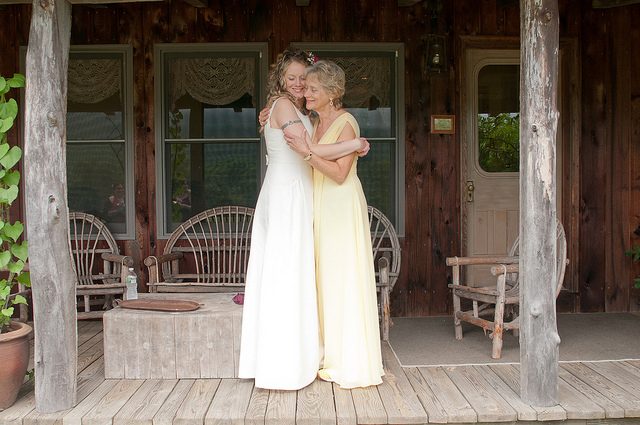
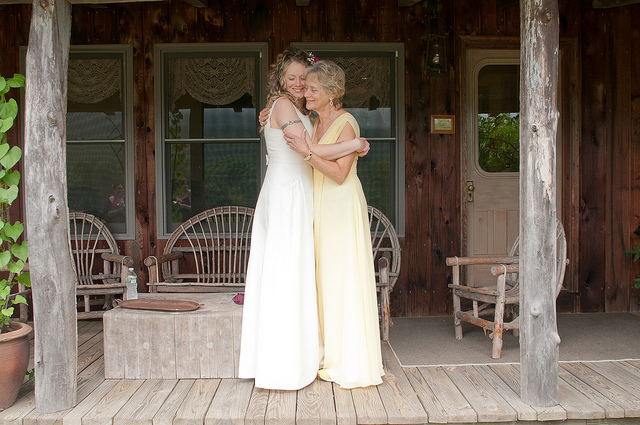
    A few months later, my oldest daughter announced she was engaged. I wanted to do for her what I always had been able to—give her what she wants—but I was no longer able to. 

    Now the wedding is only weeks away and the final plans and payments are being secured. More than we expected of course, despite her diligent attention to adhering to a modest budget.

    “You don’t have to, but I was just wondering…if you can…can you send more money? If you can’t, it’s okay. We will spend our own money,” she requested by e-mail reluctantly.
    On the one hand, I wanted to just say, “Yes, of course,” no questions asked; on the other, I thought it was a perfect opportunity to draw boundaries and to not do more than I was able.

    But on the hand that holds my heart, she was my little girl about to get married, and I didn’t know how to say no. 

    But how could I say yes, with mounting medical bills, another year of tuition for my other daughter, and having found myself unemployed and unable to work for more than two years? 

    I had never done this before, but in a quizzical moment that felt something like an inspiration, I decided to call my parents.

    My parents struggled financially for most of their life, but in their senior years they found themselves able to live fairly comfortably on their fixed incomes, with some money in the bank.

    I had never asked them for help before, and at 54 years old—having taken care of my own needs without help my whole life—it felt like some sort of failure on my part to make this choice.

    But for the sake of my daughter, I had to.

    My Dad picked up the phone, as I had hoped he would, and my Mom was out, as I hoped she would be. Daddy’s little girl and all. A much easier appeal.

    At first I felt so bad having to ask my Dad for money. I didn’t ask for much, but for a man who never was able to give much, not much is a lot.  

    I cried, and he tried to soothe me, hardly able to stand his little girl crying. Only now his “little girl” is 54 and he’s 80.

    He’s starting to break down. Little things, I can tell. But still, we are father and daughter, you know?

    He didn’t hesitate. He said he wished he could have done more. He said, “You are my flesh and blood.”

    Then soon after, I stopped feeling bad. I think I actually started to believe I made him feel good. He got to be a hero today.  

    It’s still such a small gesture, but such a large one.

    After I got off the phone I saw it all differently. There was indeed some goodness that came from my shame of not working and not making my own money right now—a chance to let him shine, to help. In a small way but a big way at the same time.

    Suddenly, I felt glad that I’d asked, and that I hadn’t let my ego need to show up as strong and infallible outweigh my daughter’s need, my need, and my Dad’s (and Mom’s) willingness and ability to become a hero for our family.

    I’m glad he got to do it. I’m thinking he needed to, in a way. Something for him to leave of himself before he goes.

    This whole experience made me realize something else, which was even more profound. I’ve had my parents around for so long that I’ve been lulled into believing they always will be.

    I’m lucky and grateful to be this age and to still have my parents—both of them to call on, and even more so for them to be there for me.

    I have not given much thought to what it would be like to no longer have them, but this exchange gave me the opportunity to realize that I’m really going to miss them when they do pass on.

    It will be strange and empty and weird when there physical presence is no more. In their own way, they have always been there, no matter what.

    I think my Dad got to be a hero today. And my daughter gets to have the wedding she wants.  And in some indirect way, I got to give each of these to both of them.

    Give someone you love this chance if it comes up. Don’t view it as weak or vulnerable to allow someone to step into their light and glory, and to give of themselves in a way that makes them feel good.

    Photo by Thejas

  • A Surefire Way to Improve Your Life: 7 Reasons and 5 Ways to Be Mindful

    A Surefire Way to Improve Your Life: 7 Reasons and 5 Ways to Be Mindful

    “People usually consider walking on water or in thin air a miracle. But I think the real miracle is not to walk either on water or in thin air, but to walk on earth. Every day we are engaged in a miracle which we don’t even recognize: a blue sky, white clouds, green leaves, the black, curious eyes of a child—our own two eyes. All is a miracle.” ~Thich Nhat Hanh

    I remember it clearly, the day it all began to click. People talk about epiphanies that changed their lives in an instant, and mine was no different. Problem was, this change turned into a ten-year journey of slow and sometimes painful self-discovery.

    I was standing outside with my wife and a friend. I don’t recall what we were talking about, but I do recall listening to my friend before he blurted, “I hate when you do that, Josh!”

    I was confused, so I asked, “Do what?”

    He replied, “You stopped listening and now you’re thinking about the next thing you’re going to say.”

    My confusion turned to embarrassment. “No!  I don’t do that—do I?” I looked at my wife—she nodded in agreement.

    That moment changed my life. It was like hearing a starting pistol go off on a project that would eventually take me down a rocky path of self-reflection over the next decade, but it was a feeling I never wanted to experience again.

    I’m not referring to the feeling of shame and embarrassment or being “caught,” but the feeling of knowing that my lack of awareness was the cause of others’ suffering.

    I desired to be a better husband, father, and friend, so I began studying mindfulness, which led me to conduct doctoral research on how mindful presence affects our everyday interactions.

    What I discovered was a set of seven principles we can all expect from becoming fully immersed in the present moment:

    1. Mindful presence creates a heightened awareness of what we do in the moment…

    …including thoughts as they arise, our actions taken as a result of those thoughts, and the impact of those thoughts and actions on others.

    2. Mindful presence is the catalyst for self-reflection.

    Simply put, the more present we are, the more we compare that moment to previous interactions, facilitating greater change for the better.

    3. Mindful presence nurtures unconditional acceptance, particularly in our close relationships.

    As things happen and we maintain presence, we are more likely to accept them without judgment.

    4. Mindful presence evokes interaction.

    As we immerse ourselves into the moment, others notice. As they notice our presence, it creates gravity, drawing us closer together. As we become present, we see others inviting us into interaction, because people want to be around others who are willing to invest time.

    5. The more aware we are of the greatness of others, the more likely we will feel pride for those we care about.

    As we feel that pride, we outwardly express it and others notice.  This encourages others to strive further through the very initiative we nurtured through our presence.

    6. In moments of mindful presence, we are more likely to experience savoring the moment as we marvel in wonder at the simplest beauty.

    Heightened appreciation adds color, depth, and richness to everyday experiences.

    7. The self-reflection referred to in #2 above results in a greater capacity for gratitude.

    As we reflect, we savor, and as we savor, we become thankful.

    Wonderful, right?  If I was reading this list, I know I would feel drawn toward acting more mindfully, but the next question is, how do we get there?

    Here are five ways mindfulness can be practiced and refined. I encourage you to try them all on a regular, rotating basis:

    1. One of the simplest methods is to walk with no destination in mind.

    This could be done at a trip to the store, around your neighborhood, or even at your local mall. Let go of all thought of a schedule or an agenda, and simply allow yourself to go wherever your mood takes you. Surrender yourself to the flow.

    Interestingly enough, driving reduces the angle of your field of vision by up to 75%, depending on speed. Walking allows you to see more of your surroundings, so take it in, but remind yourself as you walk: there is nowhere more important for you to be than right here, right now.

    2. Eat your food and consume your drink as if they were your last. 

    Sure, dinner might have been a cheap frozen dinner, but how would you eat that same meal if you knew it might be your last? Would you slow yourself down and savor it more? What would this do for your appreciation of what you consume.

    Another way of eating involves not taking a single bite or drink until you have silently thanked each and every individual responsible, from the farmer who cultivated the tealeaf, to the trucker who shipped it, to the grocer who placed it on the shelf.

    Once you ponder all the hands that work to provide you that opportunity, you begin to develop more appreciation for even the simplest of things.

    3. Next time you’re stopped at a red light, take the time to breathe deeply, filling your lungs and emptying them completely.

    Count how many of these you can do during a stoplight. As you breathe, look around and notice what is around you. What are others doing? What are their stories?

    You’ll be surprised at how much easier it becomes to accept a green light that just turned red.  No longer will you feel rage at being hindered, but you may even begin to anticipate your next opportunity to stop and reflect.

    4. Next time your phone rings, resist the urge to answer.

    Let it ring a couple of times as you collect your thoughts and prepare to answer. Think about the person calling. What do they look like? What frame of mind are they in? Even if this is an employee in Sri Lanka calling to collect a debt, what is life like for that person? How many irate Americans have they talked to before you? 

    5. Finally, before bed, take fifteen minutes to sit in silent darkness.

    Take note of everything you experience, from the sound of a fan to the sensation of your backside against whatever you are sitting on. Breathe slowly and deeply, allowing yourself to let go and simply be. You’ll be amazed at how well you sleep after this!

    Each of these trainings is designed to cultivate the act of being intentionally focused on the events of the moment as they unfold and to accept them without judgment.

    Becoming mindfully present is a miracle, but an attainable one, and one we can all experience, each and every day, surrounded by the ones we love.

  • Knowing Better and Doing Better: How Are You Fortunate?

    Knowing Better and Doing Better: How Are You Fortunate?

    Enjoying the Day

    “Give thanks for a little and you will find a lot.” ~Hausa Proverb

    Gratitude, the level of gratitude that one has, varies greatly by person. You have those that are grateful for every single thing in their lives, and those that know what the word means on paper yet never practice it in their own lives.

    Then you have so many others (like myself), I call them the “in-betweeners.” We are grateful for so much but often forget this because life takes over, or so many other things are going on at once that you barely have five minutes to yourself to even drink a glass of water, let alone practice gratitude.

    And so you continue on in your day and life with thoughts and good intentions to give back more to those who are unfortunate or volunteer more—and then it doesn’t happen.

    I can vouch for this; I did this all the time. I meant well and really did want to help others, yet life takes over.

    As I ate my lunch at my desk, mindlessly reading a celebrity gossip blog, I came across something in passing. This one blogger in particular was rallying all of her followers to support her for an event she was taking part in that would help support homeless youth.

    As I read further, I came to see that this event was a sleep out, where she would sleep on the street and experience homelessness firsthand. I’m not sure why exactly, but I promised that if that event ever came to New York City I would do the same—and it did.

    With a day of hesitation that was filled with thoughts of me leaving my children overnight and questioning if I really wanted to do this, I signed up—fast, before I could change my mind.

    And so there I was, rallying my family, friends, and coworkers to help me reach the $1,000 minimum in two short weeks. I never realized how many people would actually support me; I exceeded the minimum by $200.

    Fast forward to the night of the event: I had two sick children at home and felt guilty for leaving them, but still, I walked into this event on my own without knowing a soul there.

    The organization had a schedule for the evening prior to the sleep out, when we got to meet some of the kids that we were helping that night. I met some of the most amazing kids that I have ever encountered.

    These people have endured and survived so much. Listening to their stories and having them sit directly across from me was life changing. I now had a face to associate with homeless youth and, in some instances, their homeless children.

    I heard stories of sleeping near a hospital for fear of giving birth on the streets, finding their own mother dead at the age of 16, and leaving adoptive parents that abused them and suffering a stroke at the age of 18, due to stress.

    The life experiences of these kids cannot compare to so many of us, and yet I felt so connected and privileged to be able to help them in any way.

    After our meetings, we retreated to the sidewalk that we would be sleeping on, which emulated what so many face nightly. We got our cardboard boxes, sleeping bag, and trash bag for insulation and laid down to sleep.

    And that is when it happened—my “aha” moment. As I laid there among strangers who were all doing this for the same cause, it hit me: I am more than fortunate! I have healthy children, a loving husband, a warm bed that is ours, a refrigerator that, thankfully, is filled with food, a home—the list goes on and on.

    These are things that I have almost have come to expect, yet they are not owed to any of us.

    My entire perspective changed. How dare I complain about not having those shoes I saw at some store or that the grocery store didn’t have the one item I needed or whatever thing it is that annoyed me and wasted my time.

    I see things differently, because from this experience I am different now. I am more mindfully grateful for everything, and in turn I have seen the beauty in so much that I have missed before.

    I am a new person on the inside. I am grateful and more determined to make the time I am given much more meaningful. Now that I know better, I need to do better.

    This event was just the start for me. I am actively looking for new and inventive ways to give back.

    Look around and be grateful for the smallest things. Once you become more mindful of it, your world starts to change.

    Photo by Hartwig HKD

  • A 6-Step Daily Ritual to Create the Future and Enjoy the Present

    A 6-Step Daily Ritual to Create the Future and Enjoy the Present

    Happy

    “What you do today is important, because you are exchanging a day of your life for it.” ~Unknown

    I have always loved to-do lists. It gives me joy to plan my day in advance. Lists give me an overview, focus, and I simply love crossing things off.

    Things changed when I became self-employed. My to-do list behavior turned from a supportive tool into an instrument of self-imposed pressure.

    I felt that being self-employed meant that I had to work very hard to make things happen. The lists became longer and longer, at least fifteen big items per day.

    As a result, it became nearly impossible to finish all the tasks on my list in one day. And as a result of that, I was not happy with my daily progress.

    Even doing half the things on my list was not good enough. All I could think of were the things I had not managed to do.

    My focus shifted from the positive to the negative, from where I was to where I desperately wanted to be. I was not in the now. I was always one impossible to-do list away from being happy with where I was.

    I felt grumpy, did not want to speak frankly of how things were really going, and was constantly putting myself under pressure. I felt that I had to prove myself. Prove to the world that I could be successful.

    So I tried a bunch of different things.

    Among them, I tried living without to-do lists altogether and just going with the flow. I know people who are able to do that and I really admire them.

    This did not work out for me. Instead, I shifted the to-do lists from paper into my head, which is a much messier place. So rather than just coping with an impossible list, I was also trying to memorize all the items. Not a good idea.

    Then I tried working with weekly to-do lists because this would allow me to spread things out and give me more freedom to allocate tasks, according to how my day was going and how I felt.

    Doing this eased things up a bit, but the lists just became even longer so I was still feeling that sense of pressure. I hardly granted myself time off, and all my focus was in the future.

    I never got out of bed motivated to do the things on my list, because the sheer bulk brought me down. I was actually stressed before the day had even started.

    I did not realize that the one who had to believe in myself was me, not everybody else. My to-do list was full of things that I felt I had to have in order to be successful: A running blog, a great website, a list of followers, paying clients.

    This was a reflection of my forward focus, the notion that “things will be great in the mysterious land of tomorrow.” It all came from a sense of not being good enough now.

    I was dedicating my focus to a place I was not even ready for yet. I was confusing growth and improvement with what it looks like when you are successful, and I was not doing the work that mattered: the internal work.

    Once I started doing the internal work I realized that the best way to get forward is to be happy in the now.

    So, I developed my own little ritual. I now do this consistently and make it a point not to check my phone or turn on my computer before doing this morning ritual.

    It has changed the way I perceive work. I am more excited and in tune with myself, moving at a comfortable pace.

    Here it is. Maybe it serves you too:

    1. Be grateful.

    I start my day by giving thanks to where I am now, for all the wonderful things that have happened that transported me to this beautiful time and place called the present.

    2. Take your time.

    I make myself a big pot of tea, sit down in my favorite spot, and snuggle up with my dog. I just give myself time to greet the day, to breathe, and to feel.

    3. Connect with your vision.

    Before, thinking about the future meant thinking about all the things I do not yet have or do. Connecting with my vision is different.

    It means envisioning a world much bigger than myself. My vision guides what I do today. If today is a step, my vision is the direction in which I take that step.

    4. Choose a theme.

    Each day, I choose a theme that feels right. It reflects how I want to feel and what I want to accomplish. It can be anything, long or short, specific or general. “Today is all about…”

    5. Find your three priorities.

    Research shows that you can only do three to five meaningful things per day. I feel comfortable picking three and leaving enough space for magic to happen.

    6. Assign celebrations.

    Since I tend to gloss over my accomplishments after five happy minutes and move on to the next thing to do, I now assign a celebration to each of my three priorities. A celebration can be anything you love, big or small. It can be a walk in nature, a drink with a friend, a manicure, or reading a chapter in an inspiring book.

    I hope this ritual inspires you. If you try it out and like it, I’d love to hear how it goes!

    Photo by IchSapphire

  • 7 Powerful Spiritual Truths: Turn Challenges into a Reawakening

    7 Powerful Spiritual Truths: Turn Challenges into a Reawakening

    Awakening

    “Everything that happens to you is a reflection of what you believe about yourself. We cannot outperform our level of self-esteem. We cannot draw to ourselves more than we think we are worth.” ~Iyanla Vanzant 

    Have you ever had an experience that took you to emotional rock bottom? One that left you drained, broken, and totally numb? Your life shattered, and you scrambling to pick up the pieces and put them back together?

    It might sound like a cliché, but sometimes it really is darkest just before dawn. Rock bottom can be a great place to start to rebuild yourself. Sometimes, it is the only place, as I once experienced.

    My Spiritual Re-awakening

    He had just broken up with me. We weren’t together for long—a few months at most—but it was still one of the most painful things I ever experienced.

    I knew that my pain wasn’t because the relationship was over; it stemmed from a lack of self-worth.

    I didn’t know how to have a healthy relationship with myself, let alone another person. The pain of trying to have close relationships without having the skills to successfully navigate them had caught up to me with a vengeance—vengeance that had brought me to my knees.

    And so began my spiritual re-awakening and the re-emergence of these hidden truths: (more…)

  • The Blessings in Disguise We Don’t Realize We’ve Received

    The Blessings in Disguise We Don’t Realize We’ve Received

    Looking

    “The unthankful heart discovers no mercies; but the thankful heart will find, in every hour, some heavenly blessings” ~Henry Ward Beecher

    I’m a calm person by nature, but like everybody else, there are a few things that get my blood, at the very least, simmering. One of them used to be inconveniences.

    Our daily lives are filled with delays, missed opportunities, setbacks, and outright nuisances. It happens to us all.

    Missing a bus and being late for work. Being locked out of the house for four hours when you have an urgent exam to prepare for, with all your notes on the other side of the door. Having your new, shiny Blackberry slip out of your pocket on the bus and only realizing half an hour after stepping off.

    Yes, these have specifically happened to me. And there’s plenty more where they came from too.

    They may not seem like the end of the world, because of course, they aren’t. But at the time, they always feel like a big deal and they always happen at the worst possible time. Right on cue, I suppose.

    A few years ago while in my second year at university in my home city, London, I experienced a small inconvenience that made me change my outlook altogether. That academic year, I had taken up a language class, but rather than being at my usual campus in London Bridge, it was at the Strand.

    I would take the Underground to my evening Arabic class at the Strand campus every Thursday. I took the same route from London Bridge every week. And on my journey home, I would go via the renowned Victoria train station every week at exactly the same time. (more…)

  • How to Find Happiness Through Gratitude When Life Gets Hard

    How to Find Happiness Through Gratitude When Life Gets Hard

    “In daily life we must see that it is not happiness that makes us grateful, but gratefulness that makes us happy.” ~Brother David Steindl-Rast

    In the summer of 1993, my father was diagnosed with a malignant brain tumor.

    He was only fifty-eight. Still just a kid.

    This was a devastating development, to say the least. Things had already been challenging for my family for several years before this blow.

    Dad had lost his corporate banking job in Boston—quite unjustly, in our view—kicking off a nearly three-year-long bout of unemployment.

    This was not an easy time for our family, but we pulled together in the ways we were able and never gave up hope.

    No matter how tough things became (moving three times in three years, for instance), I was always exceedingly grateful that my parents were who they were: devoted to each other and their three kids (I am the eldest), honest, loyal, sensible, and smart.

    I was also grateful that they were crazy supportive of our dreams, no matter how big they happen to be.

    In 1987, I moved to New York at age eighteen to start my modeling career with a major agency. This was in lieu of college, I might add.

    “Aren’t your parents worried?” my friends would ask, slightly marveling.

    “No, they know how important this is to me,” I responded.

    I’m sure they were concerned, but they never let it show.

    In addition, they were willing to go to the mat for us, for our educations, our comfort, and domestic stability.

    There may have been cracks in the castle walls at times, but never its foundation. (more…)

  • How We Appreciate Life More When We Stop Making Assumptions

    How We Appreciate Life More When We Stop Making Assumptions

    “Joy is what happens to us when we allow ourselves to recognize how good things really are.” ~Marianne Williamson

    Our 12th floor apartment overlooks Cape Town’s city bowl and harbor. The view is such that even on overcast days I’m drawn to the window each morning to breathe it in.

    There’s a sense of being both a part of the world and entirely removed from it when you’re that high up.

    It’s how I move through my life too; I’m either immersed in it or off on my own. This contrary nature is not without its challenges, especially when I’m called upon to be one thing when I’m clearly feeling another.

    It’s precisely these moments, however, where if I lean forward in spite of my reluctance, that growth occurs.

    That’s what happened to me the other morning. I was at the window enjoying the view when I noticed a man lying on the narrow concrete island that separates the two lanes of the busy road below.

    His appearance led me to believe he was down on his luck, most likely homeless. I watched as he tried to pull himself into a sitting position. After a few attempts, he eventually gave up and just lay down on his back.

    Cape Town has its share of street people, a lot of them with obvious substance abuse issues. As a result, whenever I see someone lying on the ground, I immediately assume they’re passed out from drinking too much.

    Watching this man below, I figured him for a drunk too. It’s not a judgment call; alcoholism is an illness like any other. I’m simply pointing out how quick I was to pigeonhole him, and from 12 stories up no less.

    Ordinarily, I would simply have gone on with my day, but something compelled me to call the city’s emergency number and ask them to send help. I’m not sure why.

    Maybe it was because the man was lying precariously close to a drop that would land him squarely in the face of oncoming traffic if he fell. I don’t know—all I can say is that, in this instance anyway, I couldn’t ignore the fact that a fellow human being needed help. (more…)

  • Being Grateful for the Imperfect Present

    Being Grateful for the Imperfect Present

    “If you concentrate on what you don’t have, you will never, ever have enough.” ~Oprah Winfrey

    I live in an old house.

    It is 212 years old this year, to be exact.

    We’ve added onto it over the years so it presents itself as more youthful than its age. The old bones remain, though, as well as many of the quirks. Those “quirks” give it character, right? It’s much like my emerging crow’s feet give my face character.

    That’s the positive spin on crow’s feet, at least.

    We have uneven floors, to the point where most of our furniture is shimmed, and shimmed-like-crazy. Without it, our mantle would tip to such a degree that it would seem that we are on the sinking Titanic.

    When our kids were young, they could sit on a wee scooter, lift their legs, and coast backward through two rooms. (Insta-fun!)

    We have asymmetrical moldings and strange gaps. When we first moved into our home, I was attempting to fill a gap in the wood on the stairs with caulk; it shot straight through the stair and into the basement.

    I think I unloaded about half the tube before it started to fill. Probably should have just gone with a new piece of wood.

    We joke that ours is the “House That Caulk Built.”

    We have different varieties of wood for floors, and those floors creak to the point that, when our cat walks upstairs, it sounds like a human instead. There are gaps around the doors because nothing is level, and the rooms don’t have overhead lights in most cases (save for the kitchen, dining room. and bathrooms). Floor lamps and table lamps illuminate our indoor world.

    But the kitchen. The kitchen. The heart of the home.

    It is the size of most people’s walk-in closets. There is a lack of counter space, not enough outlets (I mentioned that already, didn’t I?) and it’s just too small, small, small.

    The unfortunate thing is that I love to cook. I spend the majority of my days in the kitchen and go there for play (so to speak), as well.  (more…)

  • Moving on from a Mistake: 5 Tips to Relieve Your Pain

    Moving on from a Mistake: 5 Tips to Relieve Your Pain

    “The greatest mistake you can make in life is to be continually fearing you will make one.” ~Elbert Hubbard

    We all make mistakes, but sometimes it’s hard to remember that when we’re in the midst of them. We try to avoid them at all costs because the pain and price can be high.

    It can cost us our jobs, our reputations, or our driving records.

    In their election ads, political candidates often focus on their opponents’ negative aspects in order to make us vote for them instead. It’s almost as if we’re voting for the person least likely to mess up.

    My boyfriend and I used to make jokes about the negative ads because we know they’re ridiculous; we know that they are half-truths and lies.

    We’re always going to make mistakes, so I think the most important thing is to focus on our intentions and moral compasses. We can try to do our best, but we will never be perfect.

    Just think about watching a gymnast slip off the balance beam at the Olympics. It’s so painful to watch! We know that she’s trained her entire life, hours upon hours every day to get there—and now she’s messed up!

    We wonder to ourselves, how will she ever get over that mistake? Will it plague her thoughts for the rest of her life? It almost makes us glad we’re not in her shoes.

    No matter how hard we practice, we will occasionally trip up. And we have to accept that.

    We have to somehow pick up the pieces after that painful reminder of our humanity and fallibility. We have to piece together our egos and deal with a varying array of emotions.

    And the emotions can vary greatly when our egos have been bruised. We can be mad at ourselves for making the mistake. We can feel upset with others because they judge us.

    We all want to be accepted and loved, and mistakes can make us feel unlovable and flawed. We forget that everyone’s been there before and will be there again.

    I’ve made many mistakes in my life. One time, I got into a wreck because I turned at an intersection too soon. The sun blinded me at sunset and I wasn’t wearing heavy-duty sunglasses.

    As a result, another car sideswiped me. I sat there crying, upset at what had just happened. How was I going to tell my parents? What were they going to say to me?

    Although no one was physically hurt, the pain lingered in my heart. I blamed myself and carried around that weight for weeks. My car was totaled and I had to drive my parents’ car to and from work each day.

    I felt like a failure. My insurance rates went up. My driving record was tarnished.

    I was scared to drive. But then I reminded myself of a few things that helped me get some perspective. (more…)

  • The Zen of Writing: 7 Lessons About Living Wisely

    The Zen of Writing: 7 Lessons About Living Wisely

    “Logic will take you from A to B. Imagination will take you everywhere.” ~Albert Einstein

    I feel grateful to be a writer not only because I love to write, but also because writing has been one of my greatest spiritual teachers. Challenges I face as a writer teach me important life lessons, just as life teaches me lessons I can apply to my writing.

    Here are seven spiritual lessons I’ve learned—some the hard way—that can apply to writing and to life in general.

    1. Be mindful.

    Showing up—really showing up with all your attention—is the first and most important step to writing well. The same might be said of living well—that is, living deeply and fully. Before all else, it’s a matter of showing up and being in the moment.

    You can’t expect to write well if you interrupt your writing process to surf the Internet or if your mind wanders to any number of things—usually thoughts that have to do with the past or the future, not the present.

    Just as you can’t expect to write well unless you bring your attention to the task at hand—the one sentence you’re writing—you can’t expect to be fully alive if your mind wanders away from the present moment.

    When you’re folding laundry, when you’re reading to your child, when you’re walking the dog, when you’re writing a sentence, that should be the only thing that matters.

    2. Take things one day at a time.

    You can’t write a novel in one day. You put in one day of mindful work, then another, then another, and the result—sometimes years later—might be a novel.

    While it’s useful to keep long-term goals in mind, getting too far ahead of yourself can stifle you in the present. I used to keep “to do” lists that included things I wouldn’t need to do for weeks and months, until I realized that I was much more peaceful—and productive—when my “to do” list was limited to just one day—the day I was living. (more…)

  • Feeling Gratitude for All the People We Sleep With

    Feeling Gratitude for All the People We Sleep With

    “We are all connected in ways we cannot even begin to fathom. Our lives unfold through each other and within each other.” ~David Rhodes

    I can’t help myself—I love sleeping with people.

    The more the better!

    There’s nothing like crawling between the sheets with a lot of people. Female. Male. An armload of ethnicities. It’s all good!

    Hey, don’t look at me like I should be ashamed of myself, because I’m not!

    Besides, I know you do it, too.  And you probably love it just as much as I do.

    You think you know what I’m talking about, but I guarantee you’re wrong. (Quick lesson: assumptions are not good!)

    See, what I’m talking about is the thousands (yes, thousands) of people it takes to create the beds we sleep in.

    There are the people who extract the iron ore from the earth and…

    …the people who ship the ore to…

    …the mill workers who separate the iron from the slag and then make the angle iron for the bed frame.

    There are the people who grow the cotton that will eventually be made into sheets and pillowcases.

    There are the people who make dyes, who in turn rely on…

    …the people who create the proper chemicals with petroleum or coal which, of course, is the fruit of…

    …the labor of people who drill for oil or mine for coal.

    There are the loggers who cut the trees that will become headboards and footboards…

    I could go on and on and on!

    And all those people represent only a few of the bed’s components! (more…)

  • How to Turn Pain to Joy: 11 Tips for a Powerful Gratitude Journal

    How to Turn Pain to Joy: 11 Tips for a Powerful Gratitude Journal

    “Give thanks for a little and you will find a lot” ~Hausa Proverb

    In my early, dark days of first acquiring a disability, I didn’t feel I had an awful lot to be thankful for.

    It was like I had spent my whole life getting to the point where I had a thriving holistic therapy practice I loved, an amazing social life with great friends, and my beautiful dog, who I would regularly take into the country for long walks and my adrenaline pumping exercise routine.

    Life was perfect. I had so much to be grateful for, but then it was suddenly snatched away.

    I was left with constant pain, immobility, and three children who I felt I couldn’t care for properly. So what did I have to be grateful for, right?

    Well, I was alive, yes. Some people may say that’s enough, but they are probably either people not dealing with chronic pain on a daily basis or those with a far more positive mindset than I had at that time.

    I thought back to all the advice I had given to my therapy clients over the years on healing emotional pain and moving forward, but even though I knew it worked from the positive feedback I’d received, I couldn’t apply it to myself.

    The problem was that I was very good at talking it, but, as I had always felt good about my life, I had never actually had to put it into practice.

    The previous ten years had been the best I had ever experienced, and I was naturally appreciative of all I had. After my accident, appreciativeness soon turned to hurt, anger, self-pity, and eventually self-loathing.

    I caused myself more pain by resisting the enforced lifestyle change and couldn’t see a purpose in anything. It was at this point I knew I had to make a change.

    I looked at the handout sheets I had previously given to clients (practical tips for living a positive life), and since I love writing, gratitude journaling seemed to be an obvious starting point.

    That night I sat with my journal, intending to start with three things I was grateful for that day. Just three. Piece of cake, right? After an hour, I gently closed the cover on the tear-stained, still blank first page and cried myself to sleep, mentally adding “failure at journaling” to all my other perceived shortcomings. (more…)

  • Shifting Suffering into Gratitude: Go Upside Down

    Shifting Suffering into Gratitude: Go Upside Down

    “Instead of complaining that the rose bush is full of thorns, be happy the thorn bush has roses.” ~Proverb

    They sound so cliché, sayings like, “There’s always a silver lining” or “Look on the bright side” or “there’s a positive to every negative.” Whenever struggle or suffering showed up in my life, those key expressions seemed to flow out of the mouths of family and friends.

    That’s not to say they aren’t helpful. Sure, it helps a little to hear my best friend say, “It’s going to be ok,” when I spilled water all over my computer and lost everything—everything! Or my Mom consoles me with, “There is always next time,” when another job interview did not pan out.

    And hey, I’ll admit, I—as a social worker, yoga instructor, friend, daughter, sister, and partner—have used these cliché phrases to encourage others when they’re in a place of sadness and hopelessness. These go-to phrases become the ticket to help a friend, a family member, or a loved one out of a bind.

    But sometimes, those comforting sayings just fall short. The pain, stress, and agony of whatever situation just feel too big for those words.

    Recently, I found myself swimming in a pool of suffering. In the midst of a painful break-up, I was not only ending a loving and supportive relationship but leaving a comfortable and friendly community as well.

    For the past 10 months, my boyfriend and I have been living and working in Costa Rica. And as my contract teaching English ended, planning the next chapter in our lives began.

    Unfortunately, “following your heart” doesn’t guarantee your boyfriend’s heart is going in the same direction.

    Where was the silver lining now? What positive could possibly be around the corner from the negative of losing someone I love? How was everything going to be “ok” since my employment was up and I didn’t have a job secured? Where was the bright side? I couldn’t help but wonder. And stress. And wonder some more.

    Not until I prepared to teach a yoga class did I find some inspiration. (more…)

  • Appreciate or Change the Game Instead of Blaming It

    Appreciate or Change the Game Instead of Blaming It

    “Have respect for yourself, and patience and compassion. With these, you can handle anything.” ~Jack Kornfield

    Imagine these three scenarios:

    Scenario 1: You wake up in the middle of the night and your baby is crying. You feel annoyed that you have to wake up in the middle of your sleep.

    Scenario 2: Your goal is to finish your first marathon, so you have to practice consistently. However, you don’t feel like exercising today. It’s raining and you’d like to watch television instead.

    Scenario 3: You hate your job. You snap at your boss and you procrastinate on the work you are supposed to do.

    What do these scenarios have in common? If you haven’t figured it out yet, then keep reading.

    It’s About You, Not About Them

    These three seemingly different scenarios have one thing in common: You are blaming the game even though you made a decision to play it.

    In many of these situations, we jump in without really knowing what we are dealing with.

    When we jump into situations with wrong expectations, it creates wrong attitudes. We expect things to follow a certain path, but the reality is different. And when the reality and our attitudes collide, it’s natural that we feel frustration.

    For instance, a new world opened to me and my wife when we had our first baby. Although we had prepared for this a bit, the reality was completely different.

    In the beginning, our son was constantly waking up in the middle of the night and his sleeping patterns were quite irregular. This led us as parents to be very tired in the beginning.

    At the same time, we knew that this was part of the reality when you have a baby. Sure, it wasn’t nice to feel tired all day because of the lack of sleep in the night, but we also understood that the start could be challenging until things smoothed out.

    You Are Not a Victim—Far from It!

    All this inner resistance leads to a “victim” mentality. When you find yourself in a situation that you don’t like, you feel like you have been mistreated.

    If you feel like this, then understand that you can change it by taking responsibility for your actions. (more…)

  • 4 Powerful Lessons from a Life Well Lived

    4 Powerful Lessons from a Life Well Lived

    Lori and Grammy

    “We must each lead a way of life with self-awareness and compassion, to do as much as we can. Then, whatever happens we will have no regrets.” ~Dalai Lama

    This year on June 4th, one of my greatest heroes passed away.

    I’d been planning to travel back to Massachusetts mid-month for my sister’s bridal shower, but I learned at the end of May that my grandmother was in the hospital.

    I knew she’d been in rehab since she’d fractured her hip, but I didn’t know she’d gained 30 pounds of water weight and her kidneys would soon fail her.

    After my family told me it didn’t look good, I came home on the red eye on the 2nd, hoping to hear her voice one last time. She was too medicated to speak when I arrived, but I was able to sit with her and more than a dozen of my family members for all of June 3rd.

    There were so many of us there, unwilling to leave her side, that the hospital staff opened the adjoining room, where we set up a table with cold cuts and sub rolls for lunch.

    It was exactly what she would have wanted, and a testament to the legacy she left behind: Her huge, loving family stayed there, together, offering her the love and strength she’d given us for years.

    My mother asked me to write and deliver her eulogy—which was both a challenge and an honor. She’d touched so many people’s lives, including mine, and in that moment no words seemed sufficient.

    I feared I wouldn’t do her justice, but I knew that if she were still around she’d be proud of me, no matter what I wrote.

    I am who I am in large part because of my Grammy, Jeanne Santoro (and her late husband Henry “Grandpa Joe” Santoro, to whom I dedicated my book).

    So now I’d like to share with you some of the lessons that have stuck with me the most. Grammy, you taught me that…. (more…)

  • A Reason to Be Grateful for Our Most Difficult, Painful Experiences

    A Reason to Be Grateful for Our Most Difficult, Painful Experiences

    “Gratitude makes sense of our past, brings peace for today, and creates a vision for tomorrow.” ~Melody Beattie

    I’ve never had a problem with forgiveness.

    In high school my mother and I would argue endlessly. Her lectures and my rebellion both had no end. While it was true that my mother had her faults, my independence caused me to be less than willing to follow her direction.

    At one point we were arguing, as we usually did, which meant hours of crying and lecturing. As I pointed out to her yet another of her faults, she said something that I have never forgotten:

    “At least I didn’t tell you that you were worthless.”

    She was right. That’s what her mother had drilled into her head again and again, making sure she understood that she had little value to the world. A lesson that I suspect she still believes or at least struggles with.

    At some point in her life, perhaps while she was pregnant with me, or maybe before, she determined that this was one legacy she would not pass on. She would never tell me that I had no value, and indeed she never did.

    While it may seem like nothing, to struggle against your upbringing, to stop a cycle of emotional abuse, is a phenomenal act of strength.

    I didn’t know what I hadn’t received.

    Up until that point I hadn’t even thought about the fact that this horrible thing hadn’t happened to me. I only thought about the things I didn’t like—the treatment that was dysfunctional. (more…)

  • Now is the Time to Appreciate the People Who Have Helped You

    Now is the Time to Appreciate the People Who Have Helped You

    “No duty is more urgent than that of returning thanks.” -James Allen

    Recently, my mom told me that my beloved piano teacher had passed on. She had reached a high age and died peacefully in her sleep. This news, delivered to me via Facebook, hit me harder than I could have prepared myself for.

    Sitting there in front of my computer, I remembered the circumstances of my meeting her. Originally, it was because my sister wanted to learn how to play piano.

    It was by pure chance that I decided to go with her for her first lesson and I instantly fell in love with the teacher. She was the same age as my grandma, which was great because back then younger people terrified me. We hit it off right away.

    I must have been around thirteen years old back then and I was in a really dark place of my young life. My eating disorder, which I had developed at the age of about ten, was starting to get more serious.

    I lost weight rapidly and my exercising got out of hand. I was a shadow of myself and I was terribly insecure and weary of life.

    Spending one hour a week with this unusually large, brilliant lady was like my sanctuary. When I closed the door of her tiny piano room, I knew I was in a safe place.

    She listened to me when no one else did. If I showed you my piano skills today, you’d agree with me that we probably talked more than we practiced playing. Being with her was like the counseling I desperately needed.

    I treasured each and every moment with her. I was more open to her about my anorexia, about my problems with the family, and my terrifying fear of my brother than I had ever been with somebody else. I trusted her. No matter how caught up I was in my illness, I never skipped a lesson.

    Then, I went to the US and our ways separated. Over the years, I would hear frequent updates of how she was doing and I would send her the occasional letter.

    When driving by her house, I would make a mental note to schedule some time for a visit sometime in the future. I never did.

    My piano teacher had often told me that she had seen the vulnerability in my eyes and my posture when we first met. She saw that I was a broken soul and she knew that she was there to guide me and to help me through some of the hardest years of my life. (more…)