Tag: grateful
-
4 Reasons to Appreciate Hard Times and How to Cultivate Gratitude
“Thank you for all the challenges that built my character. Thank you for all the hard times that made me appreciate the good times.” ~Unknown
Gratitude is often associated with joy, blessings, and moments that bring us happiness. But what about the times when life feels hard? Can we still find gratitude in the pain and struggles that challenge us?
A good friend went through a difficult experience this year, and she taught me that the answer is yes. Her story left a profound impact on me.
Last month, my friend finished her final round of chemotherapy, and as we sat together, she surprised me by saying, “I’m grateful for this experience.” She explained how cancer, as grueling as it was, gave her a new perspective on life. She now cherished every moment, every connection, and every small joy in a way she never had before.
It wasn’t about the illness itself but the lessons it brought her: resilience, appreciation for the present, and a sense of gratitude for simply being alive.
Her words stayed with me after that conversation. Gratitude for chemo? Gratitude for suffering? At first, it felt impossible to reconcile. But as I reflected on her journey, I began to think about my hard moments and wondered if I, too, could feel grateful for them. To my surprise, the answer was yes.
Reflecting on My Journey
I immediately thought about my struggles with an eating disorder in my younger years. At the time, it felt like I was trapped in a cycle of shame, self-criticism, and unattainable standards. My worth was tied to my weight and how I looked in the mirror. It was a dark period, one I wouldn’t wish on anyone. And yet, as I look back now, I realize how much I’ve learned and grown because of it.
That painful journey taught me self-love and self-acceptance.
I began to understand that my value extended far beyond my physical appearance.
I healed my relationship with food, learning to nourish my body out of care instead of control.
The process wasn’t easy—it involved patience and a willingness to confront the deepest parts of myself. But coming out on the other side, I felt stronger, more compassionate, and more connected to my true self. And for that, I am deeply grateful.
Finding Gratitude in the Hard Lessons
My friend’s journey with chemo and my struggles with an eating disorder are vastly different, but they share a common thread: both experiences brought profound growth and perspective. Life’s hardest lessons often carry hidden gifts.
Here are a few reasons why I believe gratitude for life’s challenges is possible:
1. They teach us resilience.
Hard moments push us to our limits, but they also show us how strong we can be.
Overcoming a challenge, no matter how big or small, builds a sense of resilience that stays with us. We learn to trust ourselves, knowing that we faced adversity before and can do it again.
2. They shift our perspective.
When life feels easy, it’s tempting to take things for granted. Struggles remind us to appreciate what we have—the people who love us, the simple joys, or even the privilege of good health. Gratitude for these things often grows after we’ve faced hardship.
3. They help us grow.
Painful experiences force us to confront parts of ourselves we might otherwise avoid.
Whether it’s learning self-acceptance, setting boundaries, or discovering what truly matters, the lessons from life’s challenges are the ones that shape us.
4. They deepen our empathy.
Walking through a difficult season gives us a unique perspective and compassion for others who are struggling too. Gratitude for our hard lessons can open the door to supporting others with greater understanding, compassion, and empathy.
Gratitude Doesn’t Mean Denying Pain
It’s important to note that being grateful for hard lessons doesn’t mean denying or downplaying the pain or pretending everything is fine. Gratitude and pain can coexist. You can acknowledge the difficulty of what you’ve been through while still finding value in the lesson of the experience. It’s not about minimizing suffering but about honoring the strength and wisdom that came from it.
How to Cultivate Gratitude for Life’s Challenges
If you’re struggling to feel grateful for a difficult experience, know that it’s okay. Gratitude often comes with time and reflection. The healing process is long and hard, but gratitude can make it easier. Here are a few ways to begin cultivating it.
1. Reflect on what you’ve learned.
Take some time to think about how you’ve grown from the experience. What strengths or insights have you gained? How has it shaped who you are today?
2. Focus on the present moment.
Challenges often remind us to live in the present. Journaling, breathing, coloring, being in nature, or meditating can help the process. Focus on the small joys in your day—like a kind word from a friend, a good song on the radio, or the warmth of the sun—can help you cultivate gratitude.
3. Share your story.
Talking about your journey with someone you trust can be incredibly healing.
Sharing what you’ve been through and how you’ve grown can help you see the value in your experience.
4. Practice self-compassion.
Be kind to yourself as you reflect on difficult times. Gratitude doesn’t mean you have to feel happy about what happened—it simply means recognizing the good that came from it.
Gratitude as a Way Forward
As strange as it sounds, I am now grateful for the hard lessons of my life. They have taught me resilience, self-love, and the importance of living authentically. My friend’s gratitude for her journey reminded me that even in the darkest moments, there is light, there is a lesson to be learned, and there is spiritual growth.
Life’s challenges will always come, but with gratitude, we can face them with a sense of hope and purpose. So, here’s to finding gratitude—even for the hard lessons. They might just be the ones that change us for the better.
-
How Gratitude and Mindfulness Gave Me My Life Back
“Train your mind and heart to see the good in everything. There is always something to be grateful for.” ~Unknown
I used to rush through life, constantly ticking off to-dos, feeling like I was always chasing something just beyond my reach. My days were a blur of deadlines, errands, and commitments. And yet, in the quiet moments—when I finally lay my head on the pillow at night—there was this heaviness, this emptiness I couldn’t shake.
I kept telling myself that once I finished the next big project, once I achieved the next goal, I’d feel better. But that “better” feeling never came.
Then one afternoon, something changed. I was sitting in my car after an exhausting day at work, staring blankly at the traffic in front of me. The world was loud and chaotic, and I felt disconnected from it all. I couldn’t even remember what I’d eaten for lunch or if I’d really been present during the meeting I’d spent hours preparing for. I was just… existing. Going through the motions.
It wasn’t a big event that shifted things for me. There was no grand revelation or life-altering moment. It was something as simple as the song playing on the radio. It was a song I’d heard countless times before, but in that moment, it hit differently.
The lyrics spoke about pausing, about breathing in life, about seeing the beauty in the ordinary. For the first time in what felt like forever, I noticed the warmth of the sunlight streaming through my car window. I noticed the steady rhythm of my breath and how it calmed the rising tide of anxiety in my chest.
It was as though my mind had cleared a little, just enough for me to catch a glimpse of what I’d been missing. That fleeting moment was my “ah ha” moment, the one where I realized I had been living my life on autopilot, never truly appreciating the present. I had been running, running so fast I forgot to feel the ground beneath my feet.
I didn’t know it then, but that was the start of a deep transformation for me. The next morning, I decided to try something different. Instead of reaching for my phone the second I woke up, I lay there in bed, just breathing, just being. I looked around my room, feeling the softness of the sheets and hearing the gentle hum of the world outside. It was a small shift, but it felt monumental.
Over time, I started practicing gratitude. I kept a small notebook by my bedside, and each night, I wrote down three things I was grateful for. At first, it felt like a forced exercise, like I was trying to convince myself to be positive. But slowly, the practice became more natural. I found myself appreciating the little things—the crispness of the morning air, the smile of a stranger, the sound of rain tapping against the window. These were moments I had once glossed over, but now they felt like treasures.
Mindfulness was the next piece of the puzzle. It wasn’t about meditating for hours or trying to reach some enlightened state. It was simply about being present. Whether I was walking, eating, or just sitting quietly, I learned to focus on the now instead of worrying about the past or the future. I started savoring my morning breakfast, not gulping it down as I rushed out the door. I noticed the colors of the sky, the shapes of the clouds, and the sensation of the cool breeze on my skin.
My relationships began to shift, too. I was more present with the people I loved, truly listening when they spoke instead of planning my response or getting distracted by my thoughts. I laughed more freely, connected more deeply, and most importantly, I started showing up for myself, fully and completely.
I kept returning to the realization that life was happening right in front of me, and I was missing it. As the weeks passed, my new habits of practicing gratitude and mindfulness began to weave themselves into the fabric of my daily routine. Each day felt a little lighter, a little more grounded, and I found myself noticing things I had taken for granted before.
I used to think gratitude was reserved for the big things: promotions, holidays, or achieving something significant. But as I began to explore the deeper meaning of it, I realized how wrong I had been.
Gratitude, I discovered, lives in the tiniest moments, in the details we often overlook. It’s in the way my morning drink warms my hands on a chilly day, in the way my cats greet me with excitement as though we’ve been apart for weeks, even though it’s only been a few hours.
One morning, after weeks of practicing this new mindset, I stood by my window and watched the sun slowly rise. I’d seen hundreds of sunrises in my lifetime, but that morning, it felt different. The sky was painted with shades of pink and gold, and the air was cool and crisp against my skin. I closed my eyes and took a deep breath, feeling the moment settle into me. For the first time in a long time, I felt truly alive. Present. Connected.
That was when I realized something profound: gratitude isn’t just a practice. It’s a way of living. It’s a lens through which I now view the world. And through that lens, everything feels more vibrant, more meaningful. The more I gave thanks for the little things, the more little things there were to be thankful for. It was as though my life, which had once seemed dull and routine, was now sparkling with possibility.
One of the biggest shifts I noticed was how my perspective on challenges changed.
Life didn’t suddenly stop throwing difficulties my way. There were still tough days, stressful deadlines, and moments when things didn’t go as planned. But now, instead of getting swept up in frustration or self-pity, I found myself pausing, breathing, and asking, “What can I learn from this?” or “What is this teaching me?” It wasn’t always easy, but each time I reframed a problem, it felt like I was reclaiming a bit of my peace.
One particularly difficult day stands out. It was one of those mornings where everything seemed to go wrong from the start. My alarm didn’t go off, I spilled my water all over me on the way to work, and by lunchtime, I had already faced a series of minor disasters that left me feeling frazzled and defeated.
Old me would’ve spiraled into a cycle of frustration and negativity, but something stopped me in my tracks. I took a step back, quite literally. I walked outside, feeling the sun on my face, and I asked myself, “What can I be grateful for right now?”
At first, it felt forced. My mind resisted the question, but I persisted. I took a deep breath and let the fresh air fill my lungs. I looked around and noticed the vibrant green of the trees, the sound of birds singing, and the simple fact that I had made it through half the day. It wasn’t perfect, but it was enough. And in that moment, I felt my tension start to ease. I was reminded that no matter how hectic life gets, there’s always something to appreciate if I just take the time to notice.
This new mindset didn’t just affect my relationship with myself; it transformed the way I interacted with others. I became more patient, more understanding, and more present. I used to be quick to judge or assume the worst in situations, but now I find myself pausing and reflecting. I’ve learned that everyone has their own struggles, their own battles, and sometimes a little bit of kindness and empathy can go a long way. Gratitude has made me softer, more compassionate, and more open-hearted.
Mindfulness, too, became a constant companion. It’s funny how something as simple as paying attention can completely shift your experience.
I started noticing how often I was caught up in my thoughts, lost in worries about the future or regrets about the past. Mindfulness brought me back to the present, to the here and now. It helped me realize that the present moment is all we ever truly have, and it’s enough. More than enough, actually.
I started integrating mindfulness into everything I did. Washing dishes became a meditative act, feeling the warmth of the water and hearing the gentle clink of plates. Walking became an opportunity to notice the world around me, the feel of the ground beneath my feet and the sounds of life buzzing around me. Even mundane tasks, like folding laundry, turned into opportunities to be present, to engage fully with whatever I was doing.
One of the most beautiful things that came from this journey was a sense of peace I hadn’t felt in years. I used to think peace was something external, something I could only find once my circumstances were perfect. But now, I understand that peace is something I can cultivate within myself, no matter what’s going on around me. It’s in the moments when I choose to pause, to breathe, and to connect with the present. It’s in the gratitude I feel for simply being alive, for the opportunity to experience life in all its messiness and beauty.
Looking back, I can hardly recognize the person I used to be. That version of me was always chasing, always striving, always looking for happiness somewhere out there. But now I know better. Happiness isn’t something to be found. It’s something to be created, moment by moment, through gratitude and mindfulness.
And that’s the greatest gift I’ve given myself—the ability to be fully alive in my life, to embrace each day, not as something to be conquered or endured, but as a series of moments to be savored. It’s not always easy, and there are days when I fall back into old patterns, but now I have the tools to bring myself back and reconnect with what truly matters.
It hasn’t been a perfect journey. I still have days when I get swept up in the busyness of life, when I forget to pause, when I feel that familiar sense of overwhelm creeping in. But now, I have the tools to ground myself. I have gratitude. I have mindfulness. And I have the awareness that, no matter what’s going on around me, I can always find a moment of peace within.
Gratitude and mindfulness didn’t just change my life; they gave me my life back. And for that, I will always be grateful.
-
How Replacing Worry with Gratitude Turned My Whole Life Around
“When I started counting my blessings, my whole life turned around.” ~Willie Nelson
You know you’re not living the life of your dreams when you’re doing mundane things like brushing your teeth, doing laundry, getting dressed, or preparing a meal, and your constant thoughts are “Oh, we need more toothpaste or laundry detergent, but we can’t get either right now. Money’s too tight.” Or “We should get more milk and lettuce, but we have to put that money toward our utility bill so our lights don’t get turned off.”
This train of thought started to be the norm for me rather than just the occasional meanderings. And, to many people, thinking about all the things they can’t do because there’s not enough money is normal. For me, it started to feel really bad and unsettling.
I knew my mind was capable of anything, including change, and I’d proven it many times over the years on little things. But on big things like money, I just didn’t know how to get out of my fear-based, anxiety-ridden thought patterns and change my thinking. I knew I had to find a way because I didn’t like staying in those bad, unsettling feelings.
So I wrote a bunch of affirmations and recited them throughout the day whenever I started thinking fearful thoughts. At times, that meant I was reciting my affirmations all day long to shake off the fear.
In addition to this, I listened to hypnosis audios one or two times every day. I also spent time listening to YouTube videos and free online webinars, all focused on rewiring the brain and changing your mindset.
All of this felt good, and I noticed profound shifts in who I was becoming and how I was showing up in world. However, I still stayed stuck around the topic of money and attracting the kind of money I want into my life. Frankly, I felt completely at a loss on how to get unstuck.
Then one day, a check showed up in my mailbox. This was so unexpected but something I’d been hoping for with all my heart. I honestly don’t remember the amount, but I do remember feeling happy, grateful, and a deep desire to express all of this out loud.
I started by clapping my hands and blurting out my sincere thanks for the money that had been delivered that day. From there, I moved onto appreciation for a bunch of little things that were helping to make my life work on a daily basis. I did that for about five minutes and felt A-MAZ-ING.
The next day, I was still feeling some residual happiness from the day before. Basking in this lingering joy, I got quiet and focused all my attention on all the things I was grateful for in that moment.
Once I had that sentiment locked in, I spent several minutes vocally reciting all that I was thankful for. This act of verbal gratitude brought me immense joy. Once again, I felt amazing!
As the days rolled by, I continued this daily practice. I also began adding a new ritual of expressing one minute of gratitude every time I happened to see my birthday numbers pop up on my phone clock. As soon as I see those numbers, I begin clapping my hands like I’m applauding and simultaneously speaking out loud, as fast as I can, all that I am grateful for in that moment.
Then I began making my morning self-care routine a more conscious time. As I brushed my teeth, I read a series of affirmations that were all about appreciation and thankfulness. This practice allowed me to start my day with a positive and grateful mindset.
The time spent styling my hair was now an opportunity to anchor myself in the present moment. I focused on the heat of the dryer on my scalp, the comb running through my hair, the products worked into each section of hair, and the scents from each of them. This mindfulness turned an ordinary task into a grounding experience.
Gradually, my morning self-care routine became a series of mindful moments, each one tied together by my conscious presence. Living in the moment lets me fully embrace life as it happens. By focusing on the present, I can find happiness, gratitude, and peace in everyday experiences.
This reduction in stress had a profound impact on my sleep quality. It felt as though a heavy weight had been lifted off my shoulders, allowing me to rest more peacefully and wake up refreshed.
Then, answers that had been eluding me started flooding in. My mind became very clear and focused. This heightened clarity made prioritizing my work simple and straightforward, and I was finally able to make progress on my dream of starting an online business. The fog that had previously clouded my mind seemed to disappear altogether after I started replacing worry with gratitude.
Finally, I noticed a shift in my emotional state. I no longer felt like I was stuck in an unending rut. Procrastination, which had once been a major obstacle, became a thing of the past. I began to love myself more and developed a profound sense of gratitude for the people in my life.
Embracing a gratitude practice was a game-changer for me, and it can be for you too. The key is to carve out rituals that resonate with your individual sensibilities and fit effortlessly into your daily routine. The rituals that I’ve shared with you in this piece are simply examples of how I managed to incorporate gratitude into my own life, but the possibilities for you to integrate gratitude into your daily life are endless.
The ritual you create should be uniquely yours and serve to connect you with the present moment and all the joy it holds. Perhaps you might find solace in nature and use your daily walks as an opportunity to express appreciation. Or you may find that journaling your thoughts and thankfulness each night is more aligned with your style.
For some, it could be as simple as maintaining a gratitude jar, where you jot down one thing you’re grateful for each day and drop it in. Alternatively, you might prefer a more active approach, like dedicating a few moments of your daily workout to appreciate your body’s strength and capabilities. Remember, these are just springboards—feel free to dive deep into your creativity and craft a ritual that resonates with your unique rhythm of life.
Just keep this in mind: the goal is to cultivate a sense of thankfulness that becomes a part of your everyday life. By being true to yourself and getting creative with your own daily rituals, you have the ability to change your outlook, alter your mindset and, ultimately, escape from any pattern that has you feeling stuck.
Trust in your own power to make a change and let a spirit of gratitude guide you toward the life you’ve always wanted and definitely deserve.
-
Being Grateful for the Peaceful Coexistence of Joy and Pain
“It’s a gift to exist, and with existence comes suffering. There’s no escaping that, but if you are grateful for your life, then you must be grateful for all of it.” ~Stephen Colbert
Life is not a war; you do not conquer it, nor do you overcome it. You simply accept that suffering is an inevitable and necessary rite of passage on our paths throughout life.
No one is immune to pain; it is only dished out at different levels, and our own internal experience is incomparable. We share similar human experiences—that is the tie that binds us all together—but we cannot compare one’s suffering to the next because we are all individuals.
We exist in a world filled with duality—light and darkness, good and bad, right and wrong as well as joy and suffering. One cannot survive without the other, so to embrace both wholly and have gratitude for their existence is essential to move forward beyond our hard times to a place of peace.
The darkness will always be there, but to what degree we allow it to exist is up to us. We decide if it defines us, we decide if it controls our emotions, and we decide whether we peacefully cohabitate with it.
For years I felt that I had been given an unfair shake in life. I watched and held together the people I love the most when they were broken in pieces on the floor. I gently picked them up and held them together until they healed, often sacrificing myself in the process.
Some of my life’s challenges have resolved themselves completely, but some struggles will last a lifetime.
My youngest son was diagnosed with autism at three and a half years old. I am incredibly grateful for his existence. I wouldn’t be who I am without him. The lifelong advocacy, care, and responsibility make you an especially hardy breed of mother.
I struggled with tremendous guilt for so long when feeling burdened by his diagnosis and the impact it had on our family. Many parents of special needs kids suffer burnout, marriage failures, and depression at a much higher rate than other parents. It has been a constant fight for his education and social services, which created the warrior in me, but the right to exist in a world that doesn’t appreciate diversity shattered my heart.
I struggled for so long trying to be less resentful and more positive. As much as possible, I fought to keep at bay the deep depression and PTSD I carried silently on my shoulders for years. I kept it hidden, as I never wanted my innocent son to sense my sadness that life wasn’t what I had expected and over how unfair it was to him and to our family.
One morning, I stumbled upon Anderson Cooper’s podcast. Stephen Colbert was a guest, and Cooper discussed the lasting impact the death of Cooper’s father and brother had had on him at a young age. Cooper went on to ask Colbert about something he had previously said:
“It’s a gift to exist, and with existence comes suffering. There’s no escaping that, but if you are grateful for your life, then you must be grateful for all of it.”
As the interview progressed, Cooper started to cry, as this conversation resonated with him deeply. I replayed this conversation many times over and cried even more. It was very apparent that it had moved Cooper emotionally and gave light to a subject that had daunted him (and me) for many years.
How do we come to be at peace with both the hardships in life, especially when they are continuous, and the better times?
The interaction between these two men was profound, and it inspired me to embrace my pain as a gift.
It’s an anointment and a difficult, precious task we must all embrace wholeheartedly. Life becomes far more peaceful when we find a way to be grateful for both the hard moments and the joy in our lives.
To exist is to live in both realities, and there’s something to be gained from both, so we need to honor and respect both equally. One cannot exist without the other. We would never know love if we never experienced grief; they are intrinsically intertwined.
It was a significant moment for me when I realized this; and it unravelled years of trying to compartmentalize my darker emotions away from my family and the world.
Seeing my pain as a gift enabled me to fully embrace it. It wasn’t about suppressing my emotions or pretending the hard things don’t hurt; it was about allowing them to hurt with a new sense of perspective—recognizing that pain serves a purpose, and it means I’m alive.
I started to realize that I did not have to feel guilty for being overwhelmed some days. That it’s okay to cry and there is no shame in feeling defeated because acknowledging the hard times is just as important as celebrating the triumphs.
I felt the strength to push past those heavy emotions because of the good in my life. The moments when my son laughs, smiles, or hugs me are so incredibly uplifting. Those times would not feel so sweet if not for the days when I feel physically depleted and mentally lost.
I’ve also learned to appreciate the many gifts his diagnosis has given me. I would not be the person I am today without suffering to create this unstoppable warrior, leader, mother, and human rights activist that is driven by purpose.
It has made me an incredibly strong person mentally, as we have overcome so many obstacles as a family. I’ve learned to always forge forward and never go back; that life is many problems that just need solving.
Nowadays, I don’t have to hide my struggles but embrace them and accept them as a part of the grand scheme of life. Recognizing my pain allowed me to release it instead of burying it in a dark, inaccessible place only to grow by the day.
The greatest gift I bestowed on myself was realizing that I needed to look at life through a different lens by challenging my current beliefs system. My known coping mechanism, tucking heavy emotions neatly away in the back of my mind, wasn’t working. I was slowly coming apart, and I needed to redirect.
Listening to the conversation between Colbert and Cooper was the catalyst for change inside me. And with that came rebirth. I started to slowly open up about my struggles and connect with other parents, not as an advocate ready to tackle the next fight but as a person struggling in my daily life with a child with disabilities.
I felt more authentic in that I didn’t have to hide my grief; it was okay to not be this impenetrable positive fortress 24/7. I felt more connected to other parents in our shared pain, challenges, and celebrating our children’s achievements. Expressing all of it, not just the parts I wanted to project out to the world, helped me to live in my truth.
There is a particular sense of freedom in accepting that our hardships are necessary parts of our beautiful existence. Our pain strengthens us and, collectively, we are bonded by it. I am now at peace with all life has given me, and I am grateful for every moment.
-
How I Changed My Perspective When I Was Too Angry to Be Grateful
This is not your usual piece about gratitude.
I am sure you’re familiar with all the benefits of having a regular gratitude practice.
Chances are you, as a reader of this blog, have a gratitude routine of yours. I was one of you. I have been regularly gratitude journaling for over a year now. I have experienced all the promised benefits of it myself.
Gratitude journaling has helped me reduce my stress, get better sleep, and feel more energized. It improved my mental well-being so much that I even started a social media page to encourage others to practice gratitude.
However, one day, things changed. Expressing appreciation for what I had started making me feel bad, selfish, and guilty.
What happened? On the sixth of February, my home country was hit by two immense earthquakes. A region where millions reside was completely destroyed. Thousands of buildings collapsed. Hundreds of thousands of people were trapped under the remains. Cities were wiped out. In the entire country, life just stopped.
Shortly after, my social media feeds were flooded with despair. People who could not get in touch with their families… People who tweeted their locations under the remains of their collapsed houses, begging for rescue… People who lost their homes, families, and friends.
I was heartbroken. I felt helpless and useless in the face of this tragedy.
A few days later, like any other day, I sat down to write in my gratitude journal. I couldn’t do it. You would think that after seeing all the unfortunate people who lost everything they had, I would have had even more to be thankful for. After all, I was so lucky just to be alive. But no, I couldn’t do it. Instead, I got stuck with guilt.
Today I feel grateful guilty for being in my safe home.
Today I feel grateful guilty for having a warm meal.
Today I feel grateful guilty for hugging my loved ones.It has been almost two months since the earthquake. I couldn’t get myself back into gratitude journaling. Then it hit me. Underneath my grief, there was another emotion: anger.
Because you know what? This disaster wasn’t just a completely unexpected incident. The scientists had been warning the authorities about this earthquake for years. The geologist said it was inevitable. The civil engineers said the strength of the buildings was too low. The city planners said the right infrastructures in case of such a disaster were not in place.
Over so many years, we all heard them repeatedly warning the authorities, but nothing was fixed. I was very angry with the broken system that did not care.
I couldn’t let go of my guilt because I was afraid that if I did, I would let go of my anger with it. I don’t want to let go of my anger. I want to hold onto it so that I keep fighting for a change, a better system that cares about its people.
I know it’s not just me or this one earthquake disaster. Many people all around the world suffer from the actions of governments. People who live under war, oppressive regimes, or corrupt states would very well understand the anger I feel.
Rage toward an authority, a government, or a broken system is not the same as being angry with another individual. The rage gets bigger in scale to the number of lives affected. And maybe the worst part is that this type of rage is harder to let go of because history shows that such rage fuels the actions for change in broken systems.
So I wonder: Is it possible to transform the rage that is harming me inside into something else without losing the desire to fight for change?
And again, I find my answer in the path I know the best—gratitude. But this time, instead of being thankful for the things I have, I’m thankful for the things I can provide.
Today, I am grateful for having a safe home because I can accommodate someone who lost theirs.
Today, I am grateful for having a job because I can afford to donate meals to people in need.
Today, I am grateful for having my arms because I can hug someone who lost their loved ones.
Today, I am grateful for accepting all my feelings and having the wisdom to transform them. -
Growing Old Gratefully: How to See Each Year as a Gift
Growing old gratefully. Yes, you read that right. Gratefully. Why on earth would I be grateful for getting older, less youthful, and more wrinkly with every passing year?? I hear you cry. Let me tell you why I’m trying hard to do just that.
One bright Saturday afternoon some years back, while chatting with my uncle, he reminded me that my fortieth birthday was fast approaching. I rolled my eyes and said, “Yes, Uncle, thanks for the reminder.”
He looked at me for a minute and then said, “You know, you should be grateful for every year of life you get. Some people don’t get to see their fortieth birthday.” That remark was quite sobering, and I felt humbled.
That conversation made me think. Why do we have such a fear about getting older? Why the almost shameful stigma attached to it?
Apart from the obvious slowing down, loss of vitality, and general “nearer to deathness,” I realized that much of our fear of aging is set in vanity. We equate youth with beauty, desirability, and happiness. We attach the opposite traits to old age; in fact, we fear that as we get older, we become almost obsolete.
In a society that worships beauty and vitality, it’s little wonder that we are all panic-buying anti-aging serums, trying anti-aging diets, following anti-aging fitness regimes, and generally trying our utmost to stave off any sign that we are getting older.
The problem with all of this is, well, we age. It’s a fact of life and it will happen whether you fight it or just allow it. This leads me to wonder… what if I just stop fighting and fearing the inevitable?
Does that mean I will retire myself to Dr. Scholl’s sandals and elasticated waists? Never!! But what if I just accepted, embraced, or even, dare I say it, was grateful to still be here, enjoying life on our beautiful planet? I mean, really, who—apart from greedy, capitalist, big business—benefits from our aging phobia anyway?
It’s funny that we use the word anti-aging too. We use that word for things that are considered unacceptable in society like anti-bullying or anti-social, as if we had any control over getting older. Using that small, four-lettered word subtly feeds us the message that aging is not only unwanted, it’s down right unacceptable. How ridiculous!!
I propose that we change our own narrative. That we embrace aging as a privilege not granted to everyone. To see it as a gift.
In Japanese culture, the mindset is quite different. Japanese conceptions of aging are rooted in Buddhist, Confucian, and Taoist philosophical traditions that characterize aging as maturity. Old age is thus understood as a socially valuable part of life, even a time of “spring” or “rebirth” after a busy period of working and raising children” (Karasawa et al., 2011).
That really appeals to me. See each year as it is—a celebration that we are still here, still enjoying life, still with our loved ones, still with a future, in another phase of our beautiful existence with new and exciting opportunities still ahead.
I believe that grateful and positive aging is all about the mindset, which is true of so many things that affect our attitudes.
If we cultivate a mindset where we grow older with a grateful heart, living each day to its fullest in our natural bodies and our natural skin, happy that we still get to watch the sunset and feel the warm embrace of those we love and are still a living breathing part of our wonderful universe; then I believe we stand a chance of drowning out the negative messages put out into society that getting older is something to be ashamed of. That we should go and find a rock to crawl under until we die unless we can claw back some semblance of youth, or at least die trying.
I propose that with a healthy mindset towards growing older, we give ourselves the right to grow old gratefully.
-
How I Started Appreciating My Life Instead of Wanting to End It
“When I started counting my blessings, my whole life turned around.” ~Willie Nelson
Few things have the power to totally transform one’s life as gratitude. Gratitude is the wellspring of happiness and the foundation of love. It is also the anchor of true faith and genuine humility. Without gratitude, the toxic stew of bitterness, jealousy, and regret boils over inside each of us.
I would know. As a teenager and as a young man, I lived life without gratitude and experienced the terrible pain of doing so.
Outwardly, I appeared to be a friendly, happy, and gracious person. I could make any person laugh and I was loyal to my friends through thick and thin. However, beneath the surface an intense fire raged within me.
Despite receiving boundless love and attention from my wonderful family, I was inwardly resentful about my adoption as a child. For many years, three bitter questions ran on repeat in my mind:
- Why did my birth mother give me up for adoption when I was only months old?
- Why did I try so desperately hard to win acceptance from others when it was clear that I just didn’t fit in anywhere?
- Why did I have to experience the pain and confusion of not truly belonging?
As I allowed these questions to dominate my thoughts, I began to experience a range of negative and unpleasant emotions as a result. Among the worst of these feelings was that I came to see myself as a victim of circumstance. Of course, as I would later realize, this couldn’t have been further from the truth. Far from being a victim of circumstance, I was a blessed recipient of grace. But at the time I couldn’t see that.
Eventually, my sense of resentment at being adopted contributed to destructive behaviors like heavy drinking.
Throughout the entirety of my early adulthood, I filled my desperate need for belonging with endless partying and a hedonistic lifestyle. During those years, I found myself in many unhealthy romantic relationships with women, partook in too many destructive nights of drinking to count, and frequently got into brushes with police.
During that difficult time in my life, I also seriously contemplated suicide. I even got to the point where I meticulously planned how I would carry it out: through overdosing on pills and alcohol. And I even purchased both the bottle of booze and pills for the act.
Had it not been for the last-second torturous thoughts of inflicting such an emotional toll on my family, I am quite certain that I would have followed through on taking my own life.
On into adulthood, my own refusal to put in the long hours on myself and address my adoption led me in a downward spiral. I was fired from several full-time teaching jobs, continued to battle with alcohol abuse, frequently lashed out in fits of anger at others, and I restlessly moved from one place or another every year or two believing that a change in location would somehow translate into my finally finding a semblance of inner peace.
For the better part of my twenties and early thirties, my mind’s demons continued to get the best of me. This cycle of discontent persisted until a dramatic turning point happened in my life. While on a trip to Maui, Hawaii, with family, I experienced an unforgettable moment of healing while hiking in the transcendent beauty of that mystical island.
On the third or fourth day of the trip, I found myself wandering alone on a little trail that unexpectedly led to the edge of a breathtaking cliff overlooking the crystal blue ocean. While standing there, I felt so overwhelmed with joy that I instantly tore off all my clothes and let out a great big primal yell! For the first time since childhood, I felt undulating waves of peace wash over me.
Today, when I reflect on what I truly felt in that moment, I recognize it was gratitude. I felt pure gratitude to be alive. And I felt pure gratitude to finally know that I was a part of something infinitely greater than my mind could ever comprehend. While standing there in awe of the Earth’s glorious wonder, I also experienced overflowing feelings of gratitude for my adoption.
Suddenly, everything about my adoption made perfect sense.
It was my destiny to be adopted into the family I was. It was also an incomprehensibly high and selfless act of love for my birth mother to give me up for adoption, knowing that I would have more doors opened to me in America. And of course, it was also an incomprehensibly high and selfless act of love for my adoptive mother to endure horrific physical abuse and an exhausting legal battle just to get me out of Greece.
In that moment, I feel like I was catapulted into a higher realm of consciousness, where the boundary dissolved between who it was that thought they were the knower and the subject they thought was being known. In that moment, there was no me. There was no birth mother. There was no adoptive mother and father. We were all just one perfect expression of love.
The point of this somewhat long-winded story is that no spiritual breakthrough for me would have even been possible without the power of gratitude. For it was at the root of that profound glimpse of reality I experienced in that indescribably perfect moment. Since that life-altering day, I have tried to make gratitude the cornerstone of the inner walk that I do on myself.
Each evening just before going to bed I make it a point to write down at least two things that I was grateful for from that day. The idea of starting a gratitude journal may sound cliché to some, but it has helped me navigate life with more gratitude. Since starting the journal, I also feel like I am starting to have greater appreciation for those blessings that I used to take for granted, like good health and access to clean water, air, and food.
From my own experience with the adoption, I have come to believe that one of the greatest benefits from starting a gratitude journal is that it helps pull us out of our own egoic way of thinking that sees ourselves as victims of circumstance.
When we consciously set out to cultivate gratitude in our day-to-day lives, we come to see the ample opportunities for personal growth that emerge out of our trying life experiences.
Now, whenever I hear someone complain that they are a victim of this or that circumstance, I listen quietly with an open heart to their predicament. But when they finish telling their story and ask me for my thoughts and advice, I reply with the following questions:
But what are you grateful for? And what are the lessons that you learned through your adversity?
Gratitude profoundly transforms our relationship with suffering. When we acknowledge the feelings of gratitude within us, we come to re-perceive even the worst events in our lives as grist for the mill.
It is not at all necessary for you to travel to some faraway paradise like Hawaii to cultivate gratitude. We all have the innate capacity to experience this same profound sense of gratitude where we are now in this moment.
-
5 Ways to Start Valuing Your Time and Making the Most of It
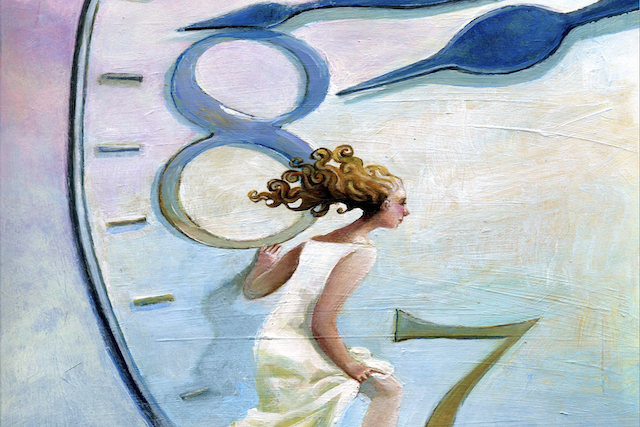
“It is the time you have wasted for your rose that makes your rose so important.” ~Antoine de Saint-Exupéry, The Little Prince
Oh, how I loved sleeping when I was a teenager. I would sleep for twelve hours, just as babies do.
And guess what else?
Another favorite activity of mine was taking selfies until I finally had a perfect one, editing it, posting it on social media, and waiting for likes. And scrolling through the feed.
Wow. So unusual nowadays.
I didn’t care what I was doing with my life. I chose a university degree just for fun and finished it just because I started it. I don’t even like what I chose. I had no goals, no ambitions. I was just drifting through life.
But then adult life got in the way. Suddenly, I was married and had a child.
What a turn.
Now I don’t even have Instagram.
Do you know why? Because I started valuing my time.
And I am here to tell you that you need to do it too if you want to live a fulfilling life.
Why should you value every second of your life?
When I became a mom, I barely had time to brush my teeth. I didn’t have time to do anything that wasn’t related to my son.
I started regretting all the time I’d wasted before.
But let’s be clear: It’s not about productivity. It’s about living your life to the fullest.
You see, when you value your time, you start valuing your life. You set your priorities straight and start doing things that matter to you. And that’s when life gets really good.
Although my situation might be different from yours, time is one thing we have in common. And you’ve heard it a million times, but time is our most precious commodity.
It is non-negotiable. You can’t buy more time, no matter how rich you are. And you can’t save time either. You can only spend it.
Time waits for no one. So the sooner you start valuing your time, the better.
Here are a few things that have helped me start valuing my time and life more that might help you too.
1. Set your priorities straight.
Oh, priorities. They are so important, yet we often forget about them.
If you want to start valuing your time, you need to set your priorities straight. Ask yourself what is really important to you and start making time for those things.
Ask yourself:
- What do I want to do, achieve, and experience in life?
- Who and what matter most to me?
- What makes me happy?
- Where do I see myself in five years?
For me, the answer to these questions was simple: I want to value time with my son more. And I want to find a way to balance work and life.
What I don’t want is to be glued to my phone while my son is next to me, or to watch movies instead of making small steps toward having my own business.
Self-care is on my list of priorities too. I make sure to have enough time for myself. Even if it’s just ten minutes a day (to have a cup of coffee in silence), it makes all the difference.
Self-care keeps me sane and happy. And when I am happy, I can give my best to my family.
2. Realize the importance of limited time.
We all have limited time on this earth, and we need to make the most of it.
The idea of limited time gives so much magic to this life. It makes things more precious. And when you start realizing life is precious, time becomes more valuable to you.
On top of that, it makes you more aware of your mortality. It might sound depressing, but it’s not. It’s actually very liberating. Just think about it: If you knew you’re going to die soon, what would you do differently?
Do it now so you don’t end up with regrets about how you spent your time.
I think about death every day. I accept it. And I thank the universe for being mortal.
We never know when we are going to die, so the best thing we can do is to live each day as if it’s our last.
3. Notice what your distractions are and eliminate (or at least minimize) them.
We all have our own distractions. It can be social media, Netflix, video games, or anything else.
Here is how I deal with my distractions.
- My main distraction was Instagram. I deleted it.
- Then, movies. I decided to watch only one movie per week. No TV series (all they did was make me escape my reality).
- Internet surfing is another one. I decided to use the internet only for work and research. No more browsing without a purpose.
- I open the app only if I want to relax for twenty minutes and watch something. Otherwise, it’s a huge time waster (I used to open the app and scroll through it for five minutes with no purpose).
Once I did that, I noticed that sometimes I even got bored. And I love that feeling of not picking up my phone every time I have a free minute. I just enjoy it.
4. Consciously choose to do one thing despite countless other activities you could be doing.
You know those moments when you’re about to do something, but then you wonder, “Should I really be doing this? I could be doing something else.”
This is a common feeling. We often have so many options that it’s hard to choose just one. But simply do that. Choose one activity and stick to it.
It doesn’t matter if it’s the “right” choice or not. There’s no such thing as “right” when it comes to how you spend your time.
I recently listened to a podcast by Oliver Burkeman. He said that we don’t want to make choices. We don’t want to decide. We want to let all the options remain available to us. This is also why we love dreaming about the future. Because all the options are open.
But we need to make a choice. It is so liberating to make a choice. It gives you a sense of control over your life and your time and it keeps you moving forward instead of standing still.
So, choose one thing and do it. You will feel so much more in focus because you know where you are going.
For instance, I am writing this article. I could be doing a million other things, but I choose to do this. And it feels great. I am all in. And I am focused because I am not thinking about other things that I could do.
5. Know that failure is a sign you’re using your time well.
When we start a project or an activity, we want to do it perfectly. We need to be the best. Otherwise, we think it’s a waste of time.
In reality, it is life itself. You can’t prevent failure. You will fail. A lot.
And that’s a good thing. Failure is a sign that you’re trying something new; that you’re pushing your limits, learning, and growing.
How can we make the most of our failures?
- First, accept them. Don’t try to bury your failures or pretend they never happened. Acknowledge them and learn from them.
- Second, put things in perspective. This one opportunity didn’t work out, but it’s not the last you’ll get.
- Finally, focus on the successes in your failure. Odds are something good came from it, even if you can’t see it just yet.
Oh, I failed so many times. I lost years of my life in failure. But I am grateful for every single one of them because they made me grow and become better, maybe even wiser.
My biggest failure is probably my university degree. It’s three years of my life. I was so naive thinking that I can succeed no matter what bachelor’s I choose. And I chose the easiest one.
Turns out, there is nothing I can do with my bachelor’s degree. It’s useless.
I could have spent those three years better, but I am not regretting it. Because if I didn’t fail, I wouldn’t be so motivated today to start my own business and to create something that has meaning.
—
As I said in the introduction, I was once horrible at valuing my time. But I am glad to say that I have changed. It certainly wasn’t easy. And I am not an expert at this. I still must remind myself to value my time. To cherish every moment.
But my alarm doesn’t annoy me when it wakes me up in the morning anymore. It’s a reminder that I get to wake up and enjoy my time on this earth.
I am grateful to still be alive.
The time that you took reading this article is valuable. I hope it will make you value your time even more.
Remember that time waits for no one.
Remember that it’s non-negotiable.
Remember that you can’t save it.
You can only spend it wisely.
-
How to Live an Extraordinary Life, Starting Right Where You Are
“Let the beauty we love be what we do. There are hundreds of ways to kneel and kiss the ground.” ~Rumi
“Isn’t this a miracle?” I asked myself in the milk aisle at Whole Foods.
It was a Wednesday night after work, and I was buying a few staples to get us through the week. It was a completely ordinary moment in a completely ordinary day, and it was miraculous.
Rewind a few years, same Whole Foods, same shopping list, and you’d find me absentmindedly wandering the aisles, lost in a head full of worries. I couldn’t tell you now what I was worried about then—the house, the kids, money, probably.
My body would be tense, with a hint of tears right behind my eyes.
“Isn’t this supposed to be a miracle?” I might have asked if I had the words to describe that feeling.
For as long as I can remember, I wanted to be one of those interesting people who did interesting things like paint murals or write books. I wanted to see every continent and learn as many languages as my brain could hold. I wanted to feel excited by my life.
As a child, I had no doubt that this is what growing up would be like.
But, for just as long as I can remember, I also lived under the assumption that I had something to prove. My intelligence, my worth, my place in this world.
Somehow, these two ideas became intertwined.
That part of me that felt so certain that her life would be extraordinary started to have doubts.
Could I really pull it off?
Had I really earned it?
Was I being completely delusional?
Over time, that vision of an extraordinary life felt like a silly childhood dream, and I stopped myself from following it. I worked hard and earned a good reputation, but that excitement, that fulfillment was always just out of my reach.
I would let it go saying, it’ll come later, but as I checked off the boxes of life’s to-do list—degree, job, marriage, kids—I wasn’t feeling anything like I thought I would.
The feeling that something was off fueled a restlessness that I mistook for motivation. I poured myself into school and then work, but not necessarily out of excitement. I think a part of me still believed that if you weren’t happy, you just weren’t working hard enough at it.
What confused me about it all was that my life was good. I had a beautiful, growing family, a stable job, and a safe, comfortable house. I mean, I was buying organic milk to pour on my cereal. That’s a privilege.
So, if nothing was “wrong,” why didn’t it feel right?
I’d scold myself for not being more grateful, but I couldn’t shake the feeling that I didn’t feel the way I wanted.
Then, one ordinary day, while squeezing in another email during my lunch hour, a little thought snapped me out of it.
“You’re missing the point, Leslie.”
Time stopped just long enough for me to notice my racing heart.
Maybe you’ve had these epiphanies, where you’re amazed by your own wisdom and you feel so incredibly clear and awake. Maybe it was during a life-changing event, or maybe, like me, it was during an everyday moment, like buying toothpaste or feeding the cats.
The immediate effect wasn’t anything extreme. There was no out of body experience, no inexplicable knowledge of the universe. Just an ordinary little thought that led to another ordinary little thought.
What if living an extraordinary life isn’t about the details?
Every now and then, I’d pull out a list I made that day and add a thought or two to it.
The point is…
Overflowing.
Seeing more magic.
Doing what you love.
Being happy.
Feeling bright, brave, and brilliant.
Waking up and appreciating the mountains.
My children knowing how much they are loved.
Gratefully receiving everything I have.
Letting myself unfold.
Alignment, not approval.
Trusting the wisdom of my own heart.
A hundred percent up to me.
And in a gradual, ordinary kind of way, I figured it out. That feeling I wanted wasn’t an outcome. It wasn’t something that would happen “when.” It wasn’t in the details at all. It’s your feelings, moment to moment, that make your life extraordinary.
There is no committee keeping score and waiting to grant permission to begin. There’s just us, the people we care about, our corner of the world, and those little moments. And we have a choice in what we do with them.
That feeling that something was wrong wasn’t about my reputation or my checklist. It was about my awareness of the miracles right in front of me and my willingness to take conscious, meaningful steps that felt extraordinary to take.
Since that day, my life has changed dramatically.
We live in the same house, we shop at the same store, I have the same job, but now, I’m also one of those people who is curious about everything. Who loses themselves in creative projects just because. Who creates art, writes poetry, and self-publishes books. I’ve become one of those people who sees even the most ordinary moment at Whole Foods on a Wednesday afternoon as extraordinary.
How did I do it? I simply let myself begin right where I was.
You may have a completely different version of extraordinary, and that’s what’s so perfect. How to live an extraordinary life is entirely up to you—it’s your life, after all. The action itself isn’t as important as the intent behind it.
As long as your intent is to make something in your world just a little better, to learn something just a little deeper, to try something you’re just a little curious about, it’s foolproof. You could institute pizza Saturdays or travel the world, saving endangered species. Both are extraordinary.
If you’re not sure where to begin, here are a few things to try. They changed the world for me.
1. Be tenacious in your appreciation and optimism.
First, slow down and look around. Then, appreciate anything and everything you possibly can. Thank the sun, thank the water, thank the air you breathe. Look out for the funny thing that happened on your way to work, beautiful sunsets, and acts of human kindness. Even when everyone around you wants to complain about the boss, be the one who notices that it’s such a nice day.
When I talked about my day, I used to begin with something that went wrong. Then, I gave myself one tiny challenge: lead with gratitude. I made a point of starting conversations with something positive as often as I could, which meant I had to start looking for those positive things and remembering to bring them up. I discovered so much beauty around me with this one simple switch.
2. Define your extraordinary.
What do you want to see in this lifetime? What do you want to learn? How do you want to feel while you’re living your life?
I’d thought about these things before, of course, but they would quickly get taken over by something more serious. I didn’t want to waste time. My attitude changed when I decided that feeling curious, engaged, and alive was more important than being productive.
I began setting intentions for the week. I’d write down an idea that excited me, a feeling I wanted to nurture, and something I wanted to learn or create. Then, I gave myself small, meaningful challenges that fit with those intentions. Carrying a composition book with me quickly led to filling that composition book, and then another and another.
3. Make friends with your body.
Your body was made for living, so live in it. Use it in a life-affirming way. Don’t just feed it, nourish it. Let it move, let it sweat, let it pump its blood, laugh, cry, and feel. Stretch into it and savor its senses. Rest it when it’s tired, heal it when it’s hurting, love it even when you want to change it, and thank it. And when it has something to tell you, lean in and really listen.
I used to treat my body like it had no purpose. I didn’t nourish it, I overworked its muscles, and I constantly tried to remodel it.
It wasn’t until I started paying attention to how I feel now that I asked myself, is this how you would treat a child or an animal in your care?
My answer was an emphatic NO.
4. Lose yourself in curiosity and creativity.
Follow the fun and let yourself overflow. Take on a ridiculous project just because it lights you up, even if it’s silly, you’re “too old,” or it’s “wasting time.” Let it be messy. Let it change directions. And let it fail spectacularly. The outcome isn’t as important as the process of it.
I practice this by painting with my children. They are experts at following curiosity and creativity. While I’m painstakingly sketching a dog or a flower, they’re creating imaginary animals in underwater kingdoms and then covering the entire thing in handprints when the inspiration strikes.
Every time, I shake my head with a smile—this is supposed to be fun, remember?
5. Be of service in a way that’s meaningful to you.
Share something. Create something. Teach something. Go where you are masterful and add value to the world in any way that’s accessible to you. Feed the hummingbirds, pick up litter, volunteer in your community. Big or small, it doesn’t matter; it’s the meaning behind it that makes all the difference.
I started by cultivating the kind of presence I wanted to have in my own life. I wanted to feel present at home, for one, so I reduced the expectations I put on myself. The house may be messier, but our weekend adventures at the park are nothing short of extraordinary.
If you’ve ever wanted to feel differently in your life, take one little, ordinary step. And then another. Let your feelings guide you. Your extraordinary life is waiting for you on the other side.
-
How Happiness Sneaks Up on Us If We Stop Chasing It
One day a man met a hungry tiger. He ran. The tiger chased him. Coming to a cliff, he jumped, catching hold of a tree root to stop himself falling to the bottom where, horror upon horror, another tiger waited to eat him.
He hung on for dear life to that thin root.
Then a little mouse appeared and started to nibble at the root. The mouse was hungry and the fibers started to snap.
Just then, the man saw a ripe red strawberry near him, growing from the cliff face. Holding the vine with one hand, he picked the strawberry with the other.
How sweet it tasted! How happy he was!
Buddhist Koan
There’s no good time to have a heart attack. They really mess up your plans.
The timing of mine could have been worse, though. I guess I should be grateful.
It didn’t seem that way: alone, midnight, searing pain in my spine, chest, arms. Raw fear.
At least I was at home. That’s something to be grateful for.
Three months earlier I’d been directing a show in India. Then a short trip to run a corporate training in Malaysia. I was home in the UK for less than two weeks before I’d flown to China for more corporate work.
Back from China, I drove north to Scotland to sort out my mother, moving her into a care home. A lifetime of books, pictures, clothes, and memories distilled to… almost nothing. How do you fit a lifetime into a small room?
Through all those trips, in airports, mid-workshops, late in the night, I’d had shooting, crippling, breath-stopping chest pains, which I always found some way to ignore. They passed.
I was in my fifties and fit. I was fine. There’s always some explanation, other than the obvious, when the obvious is too scary to face.
The day of my heart attack, I drove eight hours from Scotland to England and, exhausted, collapsed to bed.
I was woken by pain at midnight. At least I woke. That too is something to be grateful for.
It wasn’t a good time to have a heart attack, but it could have been worse.
There’s a lot I can be grateful for.
“Looks like a heart attack,” said the paramedic, studying an ECG print-out in the back of the ambulance. “Let’s get you to the hospital to confirm.”
“Yes, a heart attack,” confirmed the doctor, some time before dawn. “We’ll find you a bed and work out what to do with you next.”
“Not a good time,” I thought, wires taped to my chest, old men wheezing and muttering in the other beds. “I’m due in Greece on Tuesday.”
My clogged arteries didn’t much care I’d booked my flights. Things happen when they happen.
***
I was in the hospital for ten days. There were daily discussions about how to treat me. My heart attack had not been very bad, but not very good either.
Open-heart surgery or stenting?
In the end they couldn’t decide, so they left it up to me. Open-heart surgery is more invasive but maybe safer in the long term. Stents could be done in an hour and I could go home. They might not be enough though.
My choice.
I chose stents. Attention to my body is the foundation of what I do. I couldn’t bear the thought of being cut open. At least, I couldn’t bear it as long as there was some other way.
A good choice?
Time will tell.
I had to wait four days between decision and surgery. Four days in the hospital when I should have been in Greece.
The morning after I chose my treatment, I experienced something very strange. Not another heart-attack, though it happened in the region of my heart. I discovered I was happy.
Not happy about anything. Not happy because of anything. Just happy.
Completely, unconditionally happy.
I’d woken at 5am. It was June, so already it was light. The hospital was quiet.
Sunlight streamed through the window, and I lay looking at the tree outside. My bed was curtained-off, so I was wrapped in privacy.
I started reading my book, relishing the early hour, and being left alone.
A bird sang outside.
I felt spacious.
I was happy.
It was simple. It was quiet. There was a bird in the tree outside, singing, because that’s what birds do.
All that existed was a very quiet “now.” Book, sunlight, scrubby early-morning birdsong.
I was alive.
I didn’t know for how much longer, but in that moment, I was alive, and that was enough.
***
Two months later, I spent a week on an island off the Atlantic coast of Ireland. I was taking myself through a disciplined rehabilitation.
Each day I walked a little further.
I ate well and slept a lot.
I worked my stress and anxiety, which I’d ignored for decades.
A small Irish, Atlantic island in summer is warmer than in winter, but not much else changes. There’s wind and rain and wild beauty. I walked, morning, noon, and night. Each day I went further, took more risks. Slowly, I learned to trust my body again.
On the third day, I stood at the top of one of the larger hills. There was a gale blowing off the sea, and the rain was sheeting down.
It was viciously cold.
My waterproof jacket had given up, and spiteful rain ran down my spine.
I sheltered behind the hilltop cairn, and muttered, “This is vile.”
Then a warmness of the heart.
“I’m happy again,” I thought. Once again, not happy because, or happy to, or happy that, or happy for… Just happy.
***
A few times in the eighteen months since, I have felt it.
A moment of simple happiness.
What is it?
We spend so much time seeking happiness through achievement:
If I can afford this house, I’ll be happy.
If I am in relationship with this person, I’ll be happy.
If I get this job or pass this exam…
If I live by the sea…
If I had more friends…
If I had…
If I…
We seek happiness from outside. We see it as a consequence of things beyond ourselves. As if happiness was a perk of a new job, a company car, or access to the gym, or some secret room in a house we want, one day, to occupy.
But happiness is not a by-product. Happiness is.
We seek happiness from outside, extrinsically, ignoring that it lives only inside. Happiness is intrinsic.
The things that come to us from outside, extrinsic rewards, are not in our control. To rely on them for happiness is to put ourselves at the mercy of fate and luck. If we find happiness within, though, it is truly ours. We can learn to nurture it.
The new house, job, love, car, will not make you happy, though they may distract you from your dissatisfaction for a while.
Only embracing happiness in this moment will make you happy.
Like a grouchy old house cat that will not let you pet her, spurns the food you lovingly put out, and hisses if you get too close, happiness will, unexpectedly, curl up on your lap and comfort you from time to time.
Does that mean that we cannot make ourselves happier? That happiness is arbitrary and we must suffer until it visits us?
Though we can’t force that grouchy old cat to come, we can learn to sit quietly, giving her space and encouragement. We can learn to quieten our mind and allow the happiness of being alive—in this moment—to enter us. We can invite happiness in, by opening to it.
Not doing things to become happy. Letting ourselves be happy.
If I stop seeking outside of myself and start experiencing what it is to live this moment, then happiness might curl up in my chest and comfort me.
Happiness lives on a mountain in a summer gale. It sneaks into an early morning hospital room. It is here now if, between one word and the next, I pause my typing, and I wait.
It lives inside me, not in things I want, or think I need.
It’s here.
Now is a good time to be happy.
Now is the only time there is.
I am grateful I am here, now.
I am grateful that, somewhere inside me, now, there’s happiness and if I stop looking for it out there, perhaps it will come to sit on my lap.
How sweet it tasted! How happy he was!
Buddhist Koan
-
I Am a Survivor, Not a Victim, and I’m Grateful for My Pain
TRIGGER WARNING: This post deals with an account of sexual abuse and may be triggering to some people.
“Emotional pain cannot kill you but running from it can. Allow. Embrace. Let yourself feel. Let your yourself heal.” ~Vironika Tugaleva
I was nine years old, sitting on the couch with my dad, watching a Very Brady Christmas (on my sister’s birthday, December 20th) when he first molested me. Terror, confusion, disbelief, and shame comingled to create a cocktail that would poison me for many years to come.
We grew up in a family that, from the outside, seemed ideal.
We would attend church with my mom’s side of the family every Sunday, going to breakfast at a restaurant after. My brothers, sister, and I spent weekends partaking in fun activities that would range from spending the whole day building towns made out of clay to rollerskating while my mom baked homemade bread. To anyone that knew us, we seemed like the perfect family.
And then one day we weren’t anymore.
After that horrible night, my dad promising me it would never happen again, I was lost and confused. Was there something inherently wrong with me to provoke him to do that to me? Had I in some way invited him to touch me inappropriately? I felt disgusting, soiled, and used, convinced that it was all my fault.
These feelings followed through me the next three years of being molested, then spread and grew through the aftermath of me finally telling my mom what had happened. Even after the abuse stopped and with my dad safely behind bars, I carried guilt and shame with me daily. A badge of honor to remind me of what I had been through and survived.
Survival became my top priority, and it didn’t matter what I had to do to attain self-preservation.
As I grew older, I found survival through drugs and alcohol. For a small moment each day when that liquor touched my lips, when that pain pill was ingested and absorbed, I was free. The incessant dark and ugly thoughts that plagued my mind were blissfully silenced and I was able to breathe a little easier.
Once this method of forgetting no longer worked, I graduated to an abusive relationship, playing out the codependency and toxicity that I had grown up with. I ran from anything that was healthy or good for me because, on some level, I believed I didn’t deserve it. How could someone who had had been molested be worthy of true love and happiness?
I sentenced myself to a lifetime of misery and defeat because I truly believed that I was not deserving of anything but pain.
Living this way was exhausting. I was tired of this so-called life that I was sleepwalking my way through, and I knew that the path I was on would eventually lead to death or an existence filled with depression day in and day out.
So I started making changes to my lifestyle. I went cold turkey cutting out the pain pills and the alcohol. This is not something I would recommend doing, as it’s always best to follow a physician’s orders, but I knew in my heart that I had to stop immediately because if I didn’t stop at that moment, I never would.
Losing the security blanket that the pills provided was one of the scariest things I have ever had to experience. I felt like I had lost a deep, integral part of me, my best friend. I had to walk through life with my eyes open; I was exposed and raw and didn’t know if I could make it through without the assistance of those little pills. Many times I had to reevaluate why I was doing this and what this new journey would look like.
I also started therapy. I knew that I could give up my vices, but if I didn’t start delving into the deep and complex emotions I carried over from childhood, I would not grow as I needed to. For someone who had learned from an early age to sweep everything under the carpet and pretend like nothing was wrong, therapy was difficult, to say the least.
I had been forced to see a therapist on and off as a child and my teens after the molestation, but I never went willingly. Now, as an adult who was doing her best to start making real changes, I tried to approach therapy with an open heart, willing myself not to quit when it got too rough. It’s one of the best gifts I could have given myself.
I started attending therapy diligently, week after week, slicing myself wide open, plunging my hands deep within my heart, pulling out those long-buried emotions, and holding them to the light where they were addressed head-on, albeit somewhat reluctantly.
I began to sift through the complicated feelings that I had held onto for so long. I sat with the emotions and felt them. I cried, I screamed, and I laughed, broken wide open. I was naked and vulnerable and even though it was terrifying, it was also exhilarating. By finally allowing myself to feel what I had repressed for so long, I was able to move through the feelings as I should have all those years ago, to feel truly alive.
Once the feelings were addressed, I begin to journal in earnest. To write about what I could not speak of for decades, to put down on paper what mattered to me, even if it was inconsequential to anyone else.
I began to understand that I matter, that what I felt was important and necessary.
Through journaling, I began to understand that I could look at what happened to me as something horrible, I could continue to feel sorry for myself and wish it had never happened, or I could choose to find reasons to be thankful. Yes, thankful.
Though I wouldn’t choose to be molested, the experience made me stronger than I ever thought possible. I became resilient and self-sufficient, learning that I could turn my pain into something bigger than myself.
One of the main things that helped me shift my thinking from victim mode to empowered, was starting a gratitude journal. I listed ten things I was grateful for daily, and the more I journaled, the more I found myself seeing the beauty in the hardships I was dealt.
There are going to be things that are out of our control, things we wish hadn’t happened. But if we can look at these experiences with appreciation for what they taught us, for how we have grown because of them, we’ll find it much easier to heal—and handle anything life throws at us.
If you find yourself in a situation where you see yourself as a victim and can’t seem to get past the pain, I urge you to look at the situation as a growing opportunity. See everything you’ve learned and how you might even use those lessons to help other people.
Gratitude is a powerful tool that we can come back to again and again throughout our lives. Not only does it help us reframe our past, it makes us more compassionate—toward ourselves and everyone we encounter.
We begin to see that others struggle just as we do, and we are able to be a little kinder when we understand that we all share a common ground through our pain.
Through gratitude, I learned to start having compassion for myself and I realized I could make a difference in this world. By sharing my pain, I found my voice. I am no longer a victim. I am someone who was dealt an unfair blow, but who has emerged stronger and more resilient, appreciative of the good things in life for having gone through the bad.
By speaking out about what happened to me, by sharing my story with others, I have given that nine-year-old the words she never had. It is for her that I expose myself, that I bare my deepest, darkest secrets.
It is my biggest hope that another person reads my story and knows that they are not alone. If you can relate to anything I wrote, know that you too can turn your pain into something useful to others. You are not broken. You matter, you are loved, and you are worthy.
-
What Helps Me When I Feel Down About My Chronic Illness
“Faith is taking the first step even when you don’t see the whole staircase.” ~Martin Luther King Jr.
A few months back, before the pandemic upended life for all of us, I went through one of those times when I could do nothing but sit at home and rest for my health’s sake.
I’d recently had another one of my surgeries; I was born with a genetic condition called vascular malformation, which grew and spread quite rapidly on my left cheek and into the mouth during my childhood. It’s the reason I’ve been paying visits to operation theaters for all of my life.
I had my first successful operation, which was also the toughest time of my life, almost twelve years ago. Yet my visits to the hospital don’t seem to end for one complication or another.
I’d always had faith in my early years that it was only a matter of a couple of years, that by the time I grew up I wouldn’t have to put up with any of the pains and discomforts and interruptions to life goals, that I’d finally be able to lead a normal life after my not-so-normal childhood.
But now it doesn’t seem to be the case; my hopes are running out after two decades of trying to keep them up.
It’s bad enough to live with the multiple scars on my body and my face for the rest of my life, without having to end up in the intensive care unit now and again.
All I can think of right now is how I can’t give up, because I’ve always tried so hard to live according to my needs and wants. I can’t lose hope after everything I’ve done and achieved for myself, from picking up my low self-esteem as a kid and making friends to getting my college degree.
So now I need reasons to keep the spark alive in me.
It’s said that health is wealth, and without it life seems to be pointless. I know there are many others out there struggling with various health issues, which may have led them to not being able to function at their best.
Living with a chronic illness is undoubtedly hard, but it is possible to be happy in spite of its difficulties.
These are some of the things I remind myself of whenever I feel particularly low.
1. You weren’t a mistake.
It’s so tempting to think that being born with a genetic disease implies you weren’t meant to live, that you were a mistake on behalf of nature.
But really, our ancestors survived for almost three million years from the smallest to the largest of dangers. They made it through the heat, frost, starvation, threats from all kinds of animals, from lions and wolves to mosquitoes and bacteria; from earthquakes and hurricanes to the two world wars. And much of it was way before the advancement of technology and science.
But they made it, all the way to you.
You would be too good to be a coincidence, don’t you think?
The human body (and the human mind) is stronger than what you might think. We don’t even fully understand the complex processes that take place inside us, yet if we needed to we could manage to inhabit and survive in every part of the planet, from Antarctica to the Atacama Desert to the Amazon Rainforest.
Have faith that your body would heal and adapt itself to the world in the best possible way. It’s all about the time.
2. Don’t compare your life with other people’s lives.
It can be depressing to watch other people get on with their lives while you may not be able to do the things you want to do.
But comparing yourself to others makes no sense; they are different people who had and still have different circumstances than you. Comparing is a total disrespect to your situation and to who you really are as a person.
Here’s when loving yourself as you are in the present comes into play.
You may not feel very productive or of much use to the world, but that’s all in your head. You are enough as you are.
And sometimes the way to give meaning to the world is to help yourself first. You are setting an example to others by continuing to live life to the fullest.
Allow yourself to rest when the need arises, because it is exactly what you deserve at the moment.
3. Know that life is a gift, and be grateful.
I’ve found that fiction can provide insights on practically anything under the sun, which is why I love to read. One of the books that really moved me was Paulo Coelho’s Veronica Decides to Die , which tells the story of a woman who survives a suicide attempt and ultimately learns that every moment of her existence is a choice between living and dying. I think it perfectly encapsulates the idea of each day being a gift.
I know that being grateful for what you have is a clichéd idea, but it doesn’t make it any less true.
During the times at the hospital, I wasn’t able to take care of my basic needs, so I started to appreciate the little things that I was able to do and experience. I was grateful to be able to eat an egg for breakfast, and to walk around by myself and listen to music on my laptop. I’ve many more reasons to be grateful for right now that I’ve come home.
I wholeheartedly believe that life’s simplest pleasures are the greatest, as Henry David Thoreau says, “That man is rich whose pleasures are the cheapest.”
4. Don’t let the disease define who you really are.
I’ve always felt singled out from the rest because of the apparentness of the scar on my face and the disease. It’s hard to try to be normal when everyone knows at first glance that you’re different.
But I never let that get in my way of how I wanted to live my life because I know that I am so much more than my illness.
You are an individual with a personality, with your own likes and dislikes, your own quirks and interests and opinions about the world.
Earlier in my childhood days I was only an academic achiever, but now I can describe myself as a multi-lingual learner, an avid book reader, and a musician.
But it’s not just about the things you can do. It’s about who you really are.
Sharing our thoughts and feelings is sharing the most important parts of ourselves, so I’ll continually do my best to express myself authentically.
Don’t allow people to put you in a box, especially a box that is labeled as “handicapped,” “ill,” or “diseased.” Remember that you are so much more than that and you can give your life any meaning you want.
Custom artwork by Kelly Benini
-

Radical Gratitude: How to Turn Your Pain into Peace
My journey to living in gratitude began in 2010. And let me say that up until that time, until I was age forty-five, I was a complainer, griper, and a whiner, with absolutely no reason to complain!
Luckily, I was saved from these very wasteful, counter-productive habits when I was given a blank journal one Thanksgiving season by a New Thought minister, who told us if we journaled five things we were grateful for forty days, our life would change exponentially for the better.
I dutifully wrote my gratitude lists, and oh my god, my life did change. It worked! I let go of complaining and started focusing on all the good in my life, and there is plenty.
Since then:
1. I have written five or ten things to be grateful for almost every day for years and years. Each morning and each evening, I also reflect on what I am thankful for.
2. I have realized (and I am thankful) that it is now my calling and passion to share the power of gratitude to inspire others.
3, Because of my passion to share gratitude, I have written and published five books on gratitude!
Nowadays, I keep my gratitude practice alive and well by sending out daily email gratitude reflections to a group, and I also write letters to the universe several times a week about what I am thankful for now, and in advance. I find that each year, my gratitude practice expands. Nowadays, I often write paragraphs rather than a short list about what I am grateful for.
Did you know that scientific studies prove that being grateful helps to be more peaceful, more joyful, and healthier? It is said that you cannot be simultaneously mad or depressed while being grateful, and I’ve found this to be true.
It is my belief that we can almost always find a reason to be grateful, even when confronted with tragedies, unexpected disasters, or even ill health—a practice known as “radical gratitude.” And this holds true for challenging people in our lives as well. Here are two disclaimers:
- Forgiveness and acceptance can often be key to finding the gratitude in a situation, but these two concepts will not be discussed in this article. The article would be too long!
- One more disclaimer: I realize there are some tragedies where a person cannot ever feel gratitude, such as losing a loved one or being sexually abused. It may not work for everybody and every situation.
But more often than not, we can find the gratitude in negative situations in our life.
My Personal Experience of Finding Gratitude in Tough Times
In the summer of 2018, Oregon (where I live) had many devastating wildfires. We watched in horror and disbelief as it came closer and closer to our home. It became obvious we would probably be evacuated. The smoke was black, firefighters and National Guard were checking everyone’s IDs before letting them enter the street to our house.
Neighbors and I got out of our cars to stop and watch it burning fields and trees so close to our homes. I tried to keep a positive attitude, but it got to be only a half-mile up the street from our house. Very, very scary! I love where we live, and the thought of losing our home was terrifying.
On a Saturday afternoon, as I tried to take a nap to escape, our phones started ringing and texting that we were in Level 3, evacuation time. Get out now.
We took our dogs and my cockatiels, computer, important papers, and some clothes and left the rest. We were evacuated for six days and got to come home—all houses and neighbors were thankfully safe and sound. Here are my gratitude takeaways:
1. We were taken in by friends from the Center for Spiritual Living where I attend, and actually about eight other people had offered us refuge as well. I am very grateful for that, and for Alison and Gary who made us feel at home, helping me set my computer up at their house so I could work and putting up with us and our messy pets. We all became much closer friends through this experience, and we socialize with them regularly.
2. I am now grateful for the firefighters and all personnel who helped—in my heart, not only in my head. They are amazing!
3. I think the biggest gratitude I have for the wildfire experience is that I was able to surrender and let go of coming back to our home. This was the only way to stay sane, and that was a gift. After all, it is love, not possessions that matter, and I got clearer on that through the experience.
When I was thirty-five, I lost my beautiful mother when she was only fifty-seven through cancer. This was a horrible time in my life. I remember waking up feeling good and then immediately feeling dread and sorrow, when I remembered that Mom would die soon.
One of my gratitude takeaways from that grief-stricken time is that I was Mom’s main caregiver, and that brought me much closer to her in those last nine months. My sisters and I got closer because of that experience, and that was the first time I got introduced to A Course in Miracles, a spiritual set of lessons that changed my life for the better.
My mother had what I called “Angels” helping her from The Center for Attitudinal Healing in Tiburon, CA and they studied A Course in Miracles, which prompted me to study it as well, because they were so giving and inspirational to me.
Also, before she died, my mother spent time reflecting on her cancer and what could have caused it, and felt that being a people-pleaser and fearful all her life had prompted the disease. She left me with the message not to be like her, which I am very grateful for and have always remembered, and changed my codependent behavior because of it. Additionally, we had time to say goodbye, which cancer usually provides, and that was a big blessing too.
One more example that changed my life incredibly in so many ways was going through a divorce after twenty-four years. This was a very difficult decision, I wasn’t sure if it was the right one, and my ex-husband ended up deciding for us. I was heartbroken. So heartbroken that I finally sought out the Center for Spiritual Living, in Santa Rosa, CA, which many people in my life had gently suggested I might attend because they felt I would love it too. And I did!
From the moment I entered, I got tears in my eyes, seeing all the loving, warm people. As I listened to the talk, I realized even more that this would be my spiritual home the rest of my life, and it has been.
I am eternally grateful for my divorce now. I took the spiritual classes voraciously; became a licensed practitioner, now serving in Oregon where I live. I am blessed to teach spiritual classes and workshops, and in 2019, I spoke at two Centers for Spiritual Living about the topics in this article.
I eventually met my second husband, who I have been with for almost twenty years, and we are much more compatible. He asked me to move to Oregon and I did. And I am in love with the forest, rivers, and beauty. None of this would have happened had I stayed in my first marriage. Very thankful!
In each of these cases, some gratitude was easily available, but more came later. It may take time, even many years to find the gratitude, but looking for it helps your healing.
I want to mention several well-known people and how they found radical gratitude in their lives. Each is very inspiring to me!
Viktor Frankl was a psychiatrist who ended up being put into a concentration camp during the Holocaust, and amazingly, found a way to stay positive. He ended up writing a very impactful book as a result of his experience—Man’s Search for Meaning—which has sold fifteen million copies and thus, impacted so many people’s lives.
His premise is that we need to find meaning in life, and that will help carry us through even the hardest situations. He was a walking example. Here is a quote from his powerful book:
“Everything can be taken…but one thing: the last of the human freedoms—to choose one’s attitude in any given set of circumstances, to choose one’s own way.”
Will Pye who wrote a wonderful book on the subject of radical gratitude, The Gratitude Prescription, after he was diagnosed with a brain tumor and, through gratitude, healed himself completely.
Here is a quote from his excellent book:
“In looking at our self and our life story through the lens of gratitude, we can come into contact with the beauty and heroism inherent in every human alive. Gratitude for self supports a compassion encompassing all of us.”
There are other examples too, of physical healing, where the person ends up being grateful for the illness. Anita Moorjani realized on a deep level that we are love after a near death experience, and could let go of her fear of cancer completely, and had a spontaneous remission. It is her calling to share her findings with others, and she wrote a beautiful book about her experience, Dying to Be Me, which has reached millions of people across the world.
Helen Keller has always been one of my heroes. Even though she was deaf and blind at such a young age, she somehow always found reasons to express her gratitude. I share a very powerful quote from her:
“The best and most beautiful things in the world cannot be seen or even touched—they must be felt with the heart. I thank God for my handicaps. So much has been given me, I have no time to ponder over that which has been denied.”
In conclusion, I truly believe that we can almost always find gratitude in even the most challenging situations. It may take time, so be patient. Life is about how we respond to it, and we are always at choice, like Victor Frankl and Helen Keller so beautifully prove. I feel my own life examples also show this.
Being radically grateful is not always easy but incredibly worthwhile. Our attitude truly affects our lives, and living with gratitude is powerful beyond measure.
-
Why I’m Grateful for Accidents, Pain, and Loss
“If you have nothing to be grateful for, check your pulse.” ~Unknown
I couldn’t feel my legs.
There wasn’t any pain, just this odd “sameness” of non-sensation.
My body was frozen as I turned my eyes downward to scan down my nineteen-year-old body. Below my knees, my legs were splayed out in a very peculiar way. I was halfway underneath my car, pinned down to the dirt and gravel of the road by the back right tire.
The tire had caught my long, curly hair and the puffy left sleeve of my new white peasant blouse, miraculously missing my face.
Blessing Number 1:
In the distance, I could hear my two best friends shouting for help; as passengers, they were fast asleep when I fell asleep driving, hitting a tree and rolling the car. Thankfully, they escaped unscathed.
Blessing Number 2:
My vehicle was lifted off my broken body, and I was carefully hoisted into the ambulance. Without warning, pain seared through me like nothing I’d ever experienced. I remember worrying about my parents and how upset they would be that I’d crashed the car.
The blur of the ER swirled around me, and I was quickly positioned on an ice-cold steel table.
I could hear the ripping sound of my clothes as they were cut off my body. I was aware enough to be embarrassed when they got to my underwear. With no time for pain medication, the doctors yanked my left leg straight. Both of my femurs were badly broken and had to immediately be put in traction.
When it came time for leg number two, the attending doctor told me it was okay to scream, so I did—loudly.
I can still see my mother standing in the doorway of the ER. I will never forget the look of fear and horror on her beautiful face. Not wanting her to suffer, I looked up and said, “Mommy, I’m okay.”
It’s been nearly four decades since my accident, and my eyes still well up as I share this part of my story. Not because of what transpired over the next extremely difficult year, but for the pain it caused my parents. It seems that while I woke up physically under the car, I had also woken up in spirit.
Blessing Number 3:
Before the accident that was to define my life, I was a carefree, hippie-type, artsy teen. Nothing bothered me; I went with the flow, was basically happy, and, like all teenagers, believed I was invincible. Traction, a body cast, a blood clot in my lungs, and a wheelchair would teach me that nothing was further from the truth.
The details of the next twelve months don’t really matter, although they certainly did at the time. All I know is that facing my mortality at such a young age was the greatest gift of my life. Everything that I had taken for granted was gone—I lost everything during that time, from walking to finishing college to using the bathroom and everything in-between.
Blessings Number 4, 5, 6… infinite:
Over the course of the next year, I graduated from traction to a full body cast, into a wheelchair, onto crutches with a leg brace that wrapped around my hip, and eventually to a cane. Just before my twentieth birthday, I was set free, finally able to walk on my own again.
Walking is something almost all of us completely take for granted, but not me, and never again. With each literal “step” back into life, I became more and more grateful. It wasn’t just the joy of advancing from a bedpan to a toilet, but to live in a place that had a toilet. To live in a country where insurance paid my staggering medical bills. To live!
I was grateful to have a family that stayed by my side, day in and out over the course of that year, through multiple surgeries and life-threatening situations. A mother that drove the hour back and forth daily for the three-plus months that the hospital was my home. A father and brother who pressed their hands into my ribcage for an entire night to alleviate the pain of a blood clot that had traveled the distance from my right calf to my right lung.
I was grateful for my older sister, who brought her toddler every week to sit on my stomach while my two legs were in traction. I was grateful to experience life in a wheelchair, being looked at with pity and wanting to scream, “I’m going to walk again!” to total strangers. Grateful for two legs that were still the same length. Grateful to be alive, and so much wiser than my peers.
As soon as I could walk, I returned to college, finished my art degree, and went out into the world. At twenty-seven, I fell madly in love with a crazy comedian, who became my husband and the father of my children.
During our thirteen years together, we traveled the corners of the earth, living a life of love and laughter. Until we didn’t. The loss of my marriage is another story, but I will say this: It was as dramatic and painful as breaking both of my legs and not walking for a year.
There was no money; I lost my home and was forced into bankruptcy.
The word “accident” is defined as “an unfortunate incident that happens unexpectedly and unintentionally, typically resulting in damage or injury,” or “an event that happens by chance or that is without apparent or deliberate cause.”
Losing everything was completely unexpected, extremely unfortunate, and most definitely damaging.
While the signs leading up to the demise of my marriage had been there all along, I had spent years pushing them down to a place where they couldn’t hurt me—at least not then. But I was much wiser this round: I knew that, in order to survive, I had better look for the blessings.
Being broke meant my two sons and I staying home, making cardboard box forts and lots of brownies, which was actually my preference!
The animals we rescued, that my ex-husband never wanted, were to love us for the next fifteen-plus years.
Losing my marriage revealed who my friends really were.
Having no money pushed me into single, working-mom mode, earning me a badge of courage that I proudly still wear today.
My boys learned too: Losing our home made all of us appreciate our tiny rented condo and everything we shared in that beautiful, intimate space. Thousands of art projects, play dates, and burnt Eggo waffles later, my children and I became closer than I ever could have imagined.
To navigate and process my pain, I became a “seeker,” which led me to incredible teachers, a lifelong meditation practice, becoming an author, lots of art, and a master’s degree in art therapy.
Over time, I understood the true meaning of forgiveness and self-love, which fully opened my heart and my life. I understood that compassion was the answer to almost everything, and embarked on a path of helping others overcome hardship. This has become the most gratifying part of my life.
I learned the beauty and blessings of the present moment, and how to stay there. I learned that loving someone with all of my heart did not mean sacrificing my own dreams.
In the end, losing everything led directly to me finding myself.
Both accidents taught me this: It’s easy to find things to be grateful for when life is wonderful. The key is finding things to be grateful about during and in challenge, so we feel good more of the time.
Here’s how I did it: I learned to look at just about every situation and ask this question: “What’s good about that?”
This was no easy feat, and I’m not at all saying that when life gets hard or tragedy strikes, we should immediately be expected to feel grateful. I certainly didn’t. Gratitude is a path and practice, and finding blessings-in-disguise can take years, even a lifetime.
I believe that genuine gratitude is simply about finding good things in less time, whatever that is for you, and however you need to get there.
Knowing all I know now, am I grateful enough to say I am glad it all happened? My accidents made me who I am, and I’m not sure how I would have gotten here without the hardship. So, in that sense, I can honestly say that I wouldn’t change a thing.
I am most thankful for my abiding trust in the knowledge that looking for what’s good in hardship is a transformative way to live, and it both humbles and amazes me. The present moment is all we have, so we may as well find peace in it.
I have absolute faith that by looking at all areas of life—emotional, social, physical, spiritual, familial, and vocational—and asking, “What’s good about that?” I will always have something to be grateful for, even if it’s simply using the bathroom again.