Tag: good

  • Why I Learned to Stay Quiet to Be “Good”

    Why I Learned to Stay Quiet to Be “Good”

     “Your silence will not protect you.” ~Audre Lorde

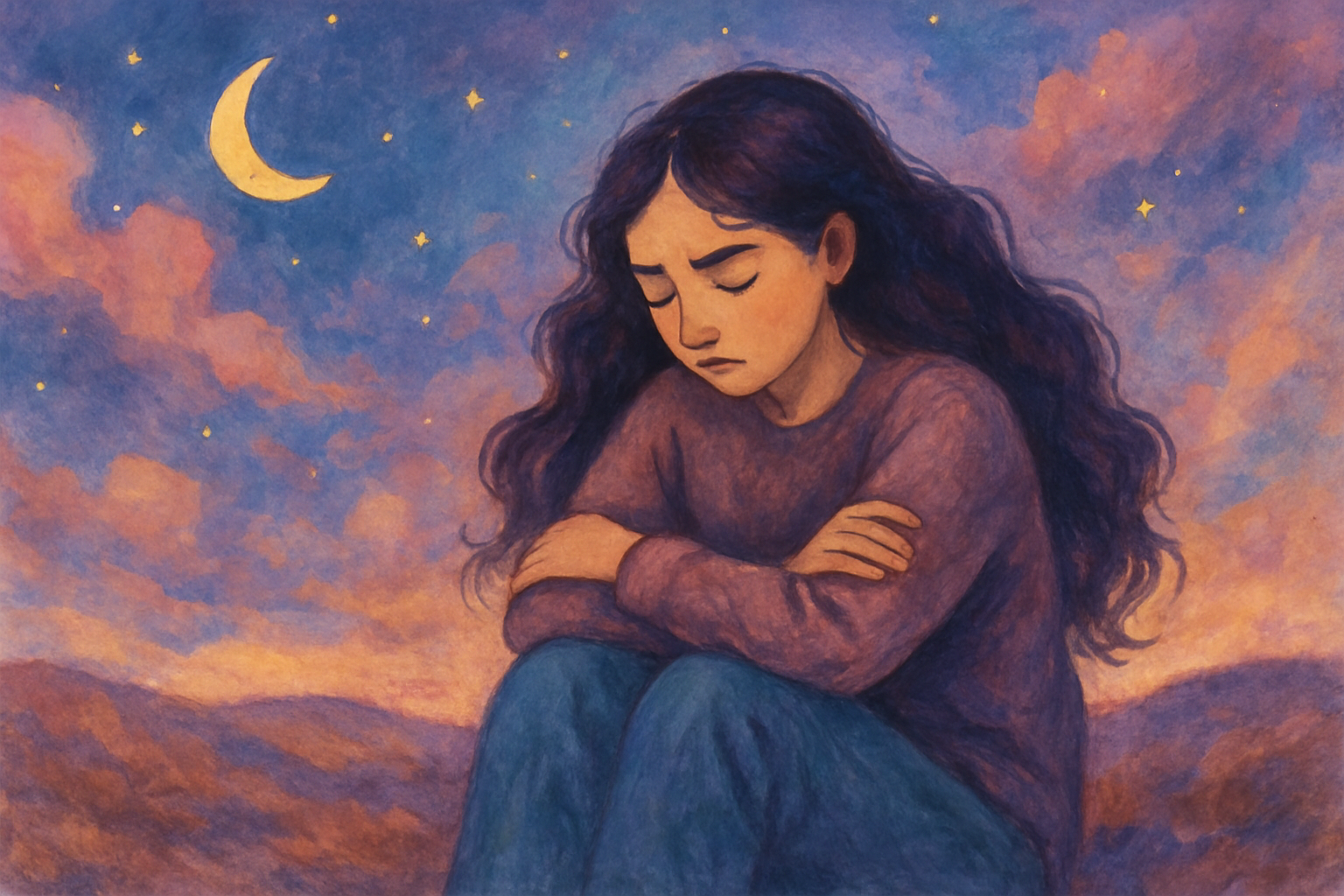
    When I was little, I learned that being “good” meant being quiet.

    Not just with my voice, but with my needs. My emotions. Even the space I took up.

    I don’t remember anyone sitting me down and saying, “Don’t speak unless spoken to.” But I felt it—in the flinches when I was too loud, the tension when I cried, the subtle praise when I stayed calm, agreeable, small. I felt it in the way adults sighed with relief when I didn’t make a fuss. I felt it in the way I stopped asking for what I wanted.

    Goodness, to me, became about not rocking the boat.

    I remember once being told, “You’re such a good girl—you never complain.” And I carried that like a medal. I remember crying in my room instead of speaking up at dinner. Saying “I’m fine” even when my chest hurt with unsaid words. I didn’t want to cause trouble. I wanted to be easy to love.

    So I smiled through discomfort. Nodded when I wanted to say no. Bit my tongue when I had something true to say. I became pleasant, adaptable, well-liked.

    And utterly disconnected from myself.

    The Body Keeps the Quiet

    For a long time, I thought this was just a personality trait. I told myself I was just easygoing. Sensitive. A peacemaker.

    But the truth is, I had internalized a nervous system survival strategy: fawning. A subtle, often invisible adaptation where safety is sought not through flight or fight but through appeasement. Becoming who others want you to be. Saying what they want to hear.

    In my body, this looked like:

    • Holding my breath in tense conversations
    • Smiling when I felt anxious
    • Swallowing words that rose in my throat
    • Feeling exhausted after social interactions, not knowing why

    It wasn’t just social anxiety or shyness. It was a deeply ingrained survival pattern—one that shaped everything from how I moved in the world to how I related to others.

    I didn’t yet have the language for what was happening. But I could feel the cost.

    The silence I carried started to ache—not just emotionally, but physically.

    My jaw clenched. My shoulders rounded forward.  My chest felt like a locked room. I felt foggy in conversations, distant in relationships, unsure of where I began and ended.

    It turns out, when you chronically silence yourself to stay safe, your body starts whispering what your voice can’t say.

    The First Time I Said “No”

    It wasn’t a dramatic moment. There was no shouting or storming out.

    It was a quiet dinner with someone I didn’t feel fully safe around. They asked for something that crossed a line. And for the first time in my adult life, instead of automatically saying yes, I paused.

    I heard the old script start to run: Be nice. Don’t upset them. Just say yes, it’s easier.

    But something in me—a wiser, quieter part—held steady.

    I took a breath. I said, “No, I’m not okay with that.”

    And even though my body trembled, I didn’t crumble. Nothing catastrophic happened. I went home and cried—not from fear, but from relief.

    It was one of the first moments I realized I could choose myself. Even when it felt unnatural. Even when I wasn’t sure what would happen next.

    That one moment changed something in me. Not overnight. But it planted a seed.

    Reclaiming My Voice, One Breath at a Time

    Reclaiming my voice hasn’t been a big, bold revolution. It’s been a slow unfolding.

    It looks like:

    • Taking a few seconds before I respond, even if silence feels uncomfortable
    • Letting myself speak with emotion, not filtering everything to sound “reasonable”
    • Naming what I need, even if my voice shakes
    • Resting after interactions that leave me drained—honoring the impact
    • Journaling the things I wanted to say, even if I never say them out loud

    Some days I still go quiet. I still feel the old fear that speaking truth will cause rupture, rejection, or harm. Sometimes I still rehearse what I want to say five times before I say it once.

    But I’ve learned that every time I listen to myself, even if just with a hand on my heart, I’m creating safety from the inside out.

    And slowly, my body began to shift. I stood a little taller. My breath came a little easier. I started to feel more here—more like myself, not just a reflection of who I thought I needed to be.

    What Helped Me Begin

    Sometimes, what rises first isn’t courage but grief. Grief for all the moments we didn’t speak, for the versions of ourselves that held it all inside. I had to learn to meet that grief gently, not as failure, but as evidence of how hard I was trying to stay safe.

    This journey didn’t begin with confidence—it began with compassion.

    Noticing the times I silenced myself with curiosity instead of shame.

    Asking: What did I fear might happen if I spoke? What used to happen?

    Placing a hand on my chest and saying gently, “You’re not bad for being quiet. You were trying to stay safe.”

    And then, when I felt ready, experimenting with small expansions:

    • Leaving a voice note for a friend instead of texting
    • Telling someone “I need a moment to think” instead of rushing an answer
    • Saying “I actually disagree” in a conversation where I normally would’ve nodded along

    None of these were big leaps. But each one taught my nervous system a new truth: it’s safe to have a voice.

    If You’ve Been Quiet Too

    If you’re reading this and recognizing your own silence, I want you to know:

    You’re not bad for going quiet. You were wise. Your nervous system was doing its best to keep you safe.

    And if you’re beginning to feel the tug to speak—to take up a little more space, to say “no” or “I don’t know” or “I need a moment”—you can trust that too.

    You don’t need to become loud or forceful. Reclaiming voice doesn’t mean overpowering anyone else. It just means including yourself. Honoring your truth. Letting your body exhale.

    You are allowed to be heard. You are allowed to pause. You are allowed to unfold, one breath at a time.

    Your voice is not a threat. It’s a bridge—back to yourself. Your silence once kept you safe. But now, your truth might set you free.
  • Why “Focus on the Bright Side” Isn’t Helpful Advice

    Why “Focus on the Bright Side” Isn’t Helpful Advice

    There are so many memes and quotes out there that say, “Be positive, not negative. Focus on the bright side.” I’ve never been very good at ignoring the negatives and focusing on the positives.

    Call me a critical, over-analytical over-thinker if you want, but at no point in my journey of self-love and self-discovery have I learned to ignore all my flaws, all my mistakes, all my regrets. At no point in my journey of compassion have I learned to ignore all the times that someone has hurt me or all the destruction caused by abuse. That never felt right to me. And you know something? It hasn’t actually been necessary.

    Rewind to six years ago when I was staring at my makeupless face in the mirror. My thoughts said, “Ugly. Horrible. Pale. Look at those blemishes. Look at those hairs. Disgusting. Revolting. Put a bag over your head and hide.” But I kept looking.

    I couldn’t unsee those blemishes. There they were. I couldn’t unsee those hairs. There they were too. Plain as day. I also couldn’t stop myself from thinking that these were disgusting and revolting. Those thoughts were certainly there too! And no amount of positive self-talk was going to make them go away.

    What happened next was fascinating. In addition to observing those hairs, those blemishes, and those thoughts, I saw something else. I saw my face as pure visual information—the way I’d perceive the colors and shapes in an abstract painting. I was giving my face meaning, and I was seeing it as something meaningless.

    Those moments revolutionized my relationship with myself. I didn’t erase my negative self-image. I just added a new perspective. That new perspective balanced my view of myself.

    I think balance is a key word. What bothers me about the whole “be positive, ignore the negatives” idea is that I was abused by some very mentally unstable people in my childhood who did that very thing. They refused to see how they hurt others. They focused only on their good intentions.

    A certain amount of self-criticism, self-judgment, and self-doubt is absolutely essential. It’s what makes us apologize for hurting someone. It’s what makes us improve the areas of our lives that are lacking. It’s what makes us question idealistic, romanticized notions of the world and see things clearly. The so-called “dark side” is essential. It isn’t bad at all.

    A few years ago, my partner and I were in an argument. He was very angry, and the way he was expressing his anger to me was extremely triggering. I felt victimized, oppressed, disgusted. I thought, “I would never do this to you.”

    But then, something happened. Beneath his unhelpful delivery, I saw something. I saw him trying to communicate something about my behavior toward him. Something that hurt me to see. A huge blow to my ego. And he was trying to tell me about it. He was trying to say, “I don’t do this to you.”

    Sure, he wasn’t communicating about it well. But he was communicating something important. We ended the conversation temporarily and went to our separate corners.

    Alone, shame and self-hatred suddenly returned to me, like old friends who don’t bother to knock. My thoughts said, you’re a horrible human being. Look what you’ve done to your boyfriend. Look at how patient he’s been all this time with your intolerable actions, and look at how you treated him for trying to tell you about it.

    Extreme. It was all so extreme. And I couldn’t delete the extremism! I couldn’t remove my self-judgment, and I couldn’t remove my resentment for his angry words. All I could do was find balance.
    I told myself that just because I had made mistakes doesn’t mean I’m a horrible person. I told myself that I could acknowledge that I had room to grow and also respect myself as a human being. I could do both.

    As for him, I could admit that he had something valuable to say and that his communication needed some work. I could see our argument as something that contained pain alongside valuable feedback. It wasn’t good or bad. It was both. It was neither. It just was.

    These moments pop up for me all the time. Last month, when I was travelling, I had something stolen. I felt betrayed, angry, lost. I didn’t try to stop all those feelings, but I also didn’t stop with feeling them. I continued to explore my experience until I found new perspectives on the situation. So being robbed turned into an amazing learning experience! Not because I ignored the pain but because I balanced that pain with lessons.

    Life is paradoxical. Where there’s joy, there’s sadness. Where there is control, there is surrender. Where there is speech, there is silence. Where there’s destruction, there is growth. We do not need to ignore the so-called dark side. It’s an essential part of the way things are. We only need to add an awareness of the other side: what we call the “light.”

    I think this is especially important in these times of political and social unrest. When we try to replace darkness with light, red with blue, wrong with right, we create war. Because what we call dark and wrong exists for a reason. Sometimes, it exists because it is meant to serve us in some way. Sometimes, it exists because it’s a symptom of some bigger issue.

    No matter how much we try to triumph over and defeat our enemies (including our inner enemies), if we do not understand where they come from, they will keep returning in different forms. We need to wage peace, not war, and peace comes from understanding.

    My perfectionism, which destroyed me for many years, was not a malignant tumor to cut out of my experience. It is a helpful pattern. Sure, it doesn’t help when I’m looking at my face or my mistakes. But as I’ve learned to embrace the art of continuously perfecting something (without ever expecting it to be perfect), I’ve become a better writer and a better editor.

    My self-judgment, which almost brought me to an early death, was not a disease. It was overgrown, but it wasn’t unnecessary. My ability to look critically at things helps me expand my perspectives, open my mind, and understand people better. My ability to look critically at myself helps me work on myself, admit my mistakes, and constantly improve.

    My bouts of intense, debilitating self-loathing weren’t useless either. They always had a message. Sometimes, I hadn’t taken a break in months. Sometimes, I was ignoring my own needs while codependently following the desires of the people around me. Sometimes, I had allowed my anxiety to spiral endlessly for weeks and weeks, and my mind had just become tired. I realize now that, in my suicidal moments, I didn’t really want to die. I just wanted to rest. I wanted a break from it all.

    I’ve learned that there is no good or bad. There is only what is most helpful and useful at the time. The answers, as they say, are all within you. They are. And this also means that, in any given situation, some of your inner answers will be more appropriate than others. Everything has its time and place. Everything is a valuable part of your experience.

    This doesn’t mean we should condone rape, murder, or violence. But this attitude can help us understand these tragic occurrences more than judgment can. Why do some people feel like the right answer is to hurt someone else? I think this line of questioning will bring us to a more helpful place than calling those people heartless monsters. It can actually help us work toward solving those social issues.

    And learning to look at ourselves and, instead of asking, “How can I get rid of this horrible part of me? How can I stop doing this unhelpful thing?” We can instead ask, “What could this mean? Which needs might I be meeting with my actions, and how could I meet those needs in a way that serves me more?” We can focus on holistically understanding why something has happened and allowing ourselves to explore different, new solutions to the puzzles of our existence.

    I suppose what I’ve learned over the past six years has been more than self-love. I’ve learned balance. I’ve learned that real happiness is being unafraid of my emotions. I can be sad, angry, happy. I can feel it all, whenever it comes, and know that I won’t get stuck on it. I will let myself experience all the available emotions, and then I will come to peace.

    Instead of trying to focus on the bright side, my task is to let myself see all the sides, remove my judgment about what they mean, and try to appreciate the complexity of my experiences.

    That is the power we have as human beings. We can let ourselves be curious instead of always fearful. We can choose to work on understanding who we are instead of always trying to be who we think we should be. We can let ourselves see what is there and not only what we are used to seeing. We can choose to understand better. We can choose to be aware.

  • Maybe It’s Not All Good or All Bad

    Maybe It’s Not All Good or All Bad

    “You are the sky. Everything else—it’s just the weather.” ~Pema Chödrön

    A farmer has a horse for many years; it helps him earn his livelihood and raise his son. One day, the horse runs away. His neighbor says sympathetically, “Such bad luck.”

    The farmer replies, “Maybe. Who knows?”

    The next day, the horse makes its way back home bringing with it another horse. The neighbor says with a smile, “Such good luck.”

    The farmer replies, “Maybe. Who knows?”

    The following day, the farmer’s son rides the new horse and seeks to tame it. In the process, he breaks his leg. The neighbor says sympathetically, “Such bad luck.”

    The farmer replies, “Maybe. Who knows?”

    The last day of the story, the military comes to the village to draft all able-bodied young men to fight in a war. The son is exempt from the draft due to his broken leg. You can guess what the neighbor said, and how the farmer replied.

    This Zen Buddhist parable illustrates that we never really know exactly why things are unfolding the way that they are, and that labeling them as “good” or “bad” is useless. It only gets us wrapped up in the ups and downs.

    Riding the car of this dichotomy only takes us on a roller coaster ride while our emotions are following whatever storyline is in front of us.

    Because I’m a human, I do this all of the time. I think that something fits neatly into either category, and I place it there then try to not look back. Usually that ends with those contents spilling out all over the place. Like when I try to make certain foods “good” or “bad.” Food has no morality, and categorizing it in this way just brings me shame.

    David Allen explained that the Taoists have their own way of interpreting the complication: the yin and yang symbol. “Good” flows into “bad” and the two are even contained in one another. They can’t really be separated.

    How I’ve Found the “Good” in the “Bad”

    Not too far out of college I had a cushy tech job that I absolutely adored. I relished in the fact that I was doing what I loved, and that I had been promoted to that position after working really hard.

    The perks were great. We had flexible hours, leaving room for naps on my work-from-home days. My favorite perk was a giant snack room, full of all kinds of goodies. We were swimming in startup benefits, and by all measures, I was happy. However, I didn’t realize I was overworking myself until I collapsed.

    The long hours had taken a toll on me, emotionally and physically. My romantic relationships had also gotten me down. I’d been causing myself a lot of pain by continuously going after emotionally unavailable people. I had also been neglecting self-care, sleeping much less than my body required. My mental health deteriorated to the point where I no longer felt safe in my own skin.

    I’d struggled with my mental health throughout my life, but I thought I’d gotten to a good place. Turns out I was wrong. My mind had been slowly building up to a bipolar explosion that mixed mania and depression.

    My mania manifested itself in staying up too late, having impulsive sex, and taking on way too many responsibilities at once. My depression took the form of feeling worthless and losing interest in things I loved, and my hunger was either through the roof or absent. Suicidal ideation was a big part of the mix. This was the scariest part—the fact that I’d lost the will to live.

    As a result of all of this, I had a breakdown. I could often be found writhing in emotional pain, my brain wanting me dead. How quickly this “good” turned to “bad.” 

    Because I was deemed unsafe, I was taken by ambulance to a locked ward. Turns out when you show up to the hospital telling them you’re suicidal, they cart you away to a locked facility of some sort.

    Everyday things like my laptop cord and makeup mirrors were taken from me, lest I harm myself. I slept in a hallway of sixteen girls, and a nurse opened our doors every fifteen minutes at night to check to see if we were still breathing. The food was subpar at best.

    I wanted to die. I had a total mental health collapse and realized I had been running myself ragged at this job. I had to quit it because I knew that this hospital stay wasn’t going to be a quick fix. I had seven more hospitalizations that year, and I thought that my life was over.

    While reflecting on what had brought me to this point, I realized that not only was the job overly demanding on my time, the office had terrible boundaries, with lots of people dating one another (including myself at one point). Most harmful, though, was the unlimited stash of anytime booze. I’m a recovering alcoholic, and though I was able to stay sober, this wasn’t a healthy environment for me.

    Later, reflecting on the time I spent hospitalized, I realized my experiences weren’t all “bad.” 

    My time in and out of psych wards has reminded me how strong I am—the strength it took to get help instead of killing myself was something I didn’t know I had. I thought I’d stay on the path to destruction for much longer, but my will to live came through.

    Also, I was shown, despite my skepticism, that I’m indeed never alone; my loved ones showered me with support. People regularly visited me in the hospital, and their presence helped me heal.

    My friends showed up without judgment, holding space for all of my big feelings. They brought nothing but love (and some snacks). It was vulnerable to be seen in the condition I was in, but my friends proved they could be trusted to be with me in this state. Many of them had been in my shoes before, so they held compassion for what I was going through.

    Most of the friends that visited were AA companions. They were people trying to stay sober, just like me, and we were living many of the same values like acceptance and taking life one day at a time. With their support, I continued on the path of healing both inside and outside of the hospital.

    I’ve even managed to find the “good” in alcoholism. In fact, I now believe it’s one of the best things that’s ever happened to me. My recovery has brought me beautiful friendships, immense personal growth, and ridiculous amounts of resilience. I’ve learned to be there for another person without constantly putting myself first, and I’ve grown to be a better partner.

    It took eighteen months of rest before I was ready to go back to work. I struggled with feeling inadequate and useless during this time. I was so accustomed to working like a maniac that rest felt foreign to me. But I’m now finally well enough to work, though I’ve gotten a job that pays much less than my last one and it isn’t even close to as prestigious. I’m calling it my “get-well job.”

    I’m still working through some shame around it, wanting to call this “bad,” even though I know it’s a mix of things. Instead of calling it “bad,” I do my best to return to “maybe” with a shrug.

    I’m not saying that I’m able to be perfectly non-judgmental and unattached, living without worry at my job and feeling perfectly confident when talking about it. But some days I can just let things be what they are. I can notice that voice inside that’s yelling at me and I can soothe it. I can create a new script and I can practice radical acceptance by not fighting against what’s going on in my mind.

    Looking back, I called my job “good” and the psych wards “bad,” though there were no clear categories. Good is great, but it doesn’t last forever. Bad can hurt, but it doesn’t last forever either. There was a bit of a mix of everything. Much of life is this way.

    I don’t know why things happen the way that they do, and I never know what’s going to happen next. Perhaps this job will benefit my life in ways I could never predict. Maybe it’ll keep me where I’m at, or make things worse; I just don’t know.

    The thing is, though, once I start to move past outcomes I can be more present to and flexible with what’s happening.

    I can just enjoy learning to use the espresso machine at my new job rather than worrying about what people think of my new job choice. I can practice gentleness around my mental health, remaining non-judgmental when I have a difficult day. I can do this instead of thrashing against what is, letting my mind carry me to dreams of what could be and feeling angry about how things are.

    I can work with whatever emotions come up, knowing that it’s all the path. I can’t prevent life from happening and I can’t always force what I want to happen. What I do have control of is l how I react to everything, and today I’m trying to have a “maybe” attitude.

    No matter what happens, I know I can handle it. Being knocked down by my job and mental health reminded me that the human spirit is wildly resilient. I got back up; I did it very slowly, but I did it.

  • When Things Don’t Work Out: Who Knows If It’s Good or Bad?

    When Things Don’t Work Out: Who Knows If It’s Good or Bad?

    Good or bad

    “It’s not the events of our lives that shape us, but our beliefs as to what those events mean.” ~Tony Robbins

    I recently received a rejection letter for a voluntary role befriending and supporting a child in the care system. I was excited at the prospect of supporting a child who had likely been through a lot, and had been quietly confident that I would be great in the role.

    After all, I am an emotionally responsible, fun-loving, deeply caring adult who had lived through a ton of difficulty: addiction and alcoholism (my own and my mother’s); growing up in a single parent household; not meeting my biological dad properly until I was fourteen years old; self-harm, self-hatred, and overwhelming, toxic shame, which I have transformed into courage, confidence, and a powerful calling to be of service to others.

    I felt my stomach knot up as I read, “Some of the information you share online could be confusing for a child and might be inappropriate for their age and understanding. We have therefore regretfully decided that we will not be able to accept your application for this role.”

    First I was disappointed, and then I was angry.

    I was angry with myself and my stupid, “too-much” honesty, angry with the articles I’ve written that have gone viral in the past, leaving me with a permanent digital fingerprint, angry with the system and its red tape and bureaucracy, angry that anyone can have their own baby but in order to support one that is in the care system, you need to be bland, opaque, and un-googleable.

    Then, the wave of shame came—shame that I have shared so transparently over the years, shame that anyone can google me and can find so much… stuff.

    Next came the fear: the letter raised doubts and questions about how transparent and vulnerable it is safe to be. I noticed my mind race with fears about whether I would ever get a voluntary position or job working with children/vulnerable adults again.

    And then (finally!), some understanding and acceptance.

    The recruiters are simply doing what they consider is best for the child.

    I wrote my application in full integrity, so if it’s not happening, perhaps it is not meant to be.

    It’s okay. It’s okay. I’m okay.

    I remembered the fable of the wise farmer. Here is my own version of it:

    There was once a wise farmer, who, with his wife, had a small piece of land and one horse. One day, the horse managed to jump the fence and ran away to freedom.

    The farmer’s nosy neighbor sidled up to the fence, leaned on it conspiratorially, tutting and shaking his head. “You had just one horse,” said the neighbor, “and now he’s gone. Such bad luck!”

    The wise farmer nodded slowly, taking in his neighbor’s words. “Well, who knows if it’s good or bad?”

    The next day, the wise farmer’s horse miraculously reappeared, except that he wasn’t alone: in tow was a second, wild horse.

    The neighbor hurried over excitedly, jabbering away. “You had one horse, then you lost it, and now you have two! This is such good luck!”

    The farmer smiled sagely before replying, “Who knows if it’s good or bad?”

    The following day, the farmer’s only son took on the job of breaking in the wild horse. The horse bucked, throwing the son to the ground. His leg was well and truly broken.

    “Tut, tut, tut,” the neighbor muttered in dismay, “What a week! You lose a horse, get it back, gain an extra horse and now your only son, your only help on the farm, is injured! This is such terrible, terrible luck.”

    Once again the wise farmer shrugged his shoulders, utterly non-committal. “Who knows if it’s good or bad?”

    A week later, the army marched through town, conscripting all and any young men for military duty. The farmer’s son, in a cast and on crutches, was not required to go to war. The neighbor exhaled in relief upon hearing the news. “Oh, what good luck for you and your family! Your son doesn’t have to go to war! Such good luck.”

    Of course, the farmer responded in only the way he could…

    “Who knows if it’s good or bad?”

    I’m not about to suggest that when we see injustice, abuse, or evil in the world, we pretend that it doesn’t matter, or use the “Who knows if it’s good or bad?” line as an excuse for apathy. That would be a gross misinterpretation of the message of this story, which is really, in its essence, a teaching about curiosity and remembering that in the grand scheme of things, we really don’t know what anything truly means.

    The wise farmer in the fable may have had emotions and stories running in his head in response to each unfolding event (although he does appear to be very close to enlightenment if you ask me!), but he kept a truly open mind and consistently responded with curiosity, reminding himself and his drama-addicted neighbor that nobody truly knows what anything actually “means.”

    Since there is never really a finishing line (even death doesn’t necessarily stop the ripple effects), we can’t really declare that something was definitely good or bad. It is always unfolding.

    How many lawsuits are filed years after an actual event has taken place?

    How many terrible events have borne something beautiful and vital to our world?

    How many losses have led to triumphs?

    And how many triumphs have led to losses?

    The self-study metaphysical text A Course In Miracles guides the student to practice acknowledging that “Nothing I see means anything” and that “I give everything I see all the meaning it has for me.”

    It challenges the reader to detach from playing God and from constantly interpreting and attaching meaning to every single thing that happens, to remember that we are always only seeing a tiny aspect of the vast tapestry that is being woven throughout our lifetime.

    Detachment from meaning-making doesn’t mean leap-frogging over difficult emotions. In fact, I believe we are called to do the exact opposite, as hard and uncomfortable as that can be—to lean in and feel it all.

    When I got the rejection letter, I allowed myself to feel the anger, disappointment, shame, judgment and sadness. I gave myself permission to feel and process what came up for me—for a while, anyway.

    Then, at some point, the time came for inner vigilance, for deliberately and consciously choosing to practice curiosity and release control of needing to make anyone right or wrong.

    I believe we are all called to do this deep inner work. Not all of us answer the call, of course, because it’s uncomfortable. Our brains are wired for certainty, which makes the practice of leaning into uncertainty and curiosity spiritual black belt stuff. It goes against our inbuilt survival instinct that wants to have it all figured out.

    Deeply surrendering, practicing humility, and being willing to sit in the uncertainty of really not knowing what is going on, while also having faith that it might just be a friendly universe, are acts full of power.

    This work isn’t easy, but it’s so important.

    It is vital to tame the scared monkey mind that panics at the slightest hint of uncertainty and tries desperately to figure out what on earth is going on.

    It is critical to become conscious of the story and the meaning your mind wants to create, to allow yourself to feel the emotion that is present, and then to choose to commit to the hardcore inner work of remembering that you don’t really know what the outcome of any situation in your life will be.

    For me, it turns out that I will not be befriending a child in the care system anytime soon. This situation was a powerful reminder that I simply am not in charge. It has prompted me to ask some big questions about how vulnerable and transparent I want to continue to be online, to make a choice about whether I will continue to write and speak about uncomfortable topics, even if it means the loss of certain options.

    Who knows if what happened is good or bad. I certainly don’t. I can either roar at the universe about the injustice of this, or I can take a deep breath and acknowledge that I don’t really know what this is for.

    Perhaps one day I will look back and think, “Ah, that’s the gift that came out of this situation.”

    But for now, we only have today. And so today, I wish you a day full of conscious, genuine curiosity.

    Because when trying to figure out if what is unfolding in your life right now is good or bad, the only thing we can say for certain is that more will always be revealed.

  • The Good News About Feeling Bad (And How to Get Through It)

    The Good News About Feeling Bad (And How to Get Through It)

    “To honor and accept one’s shadow is a profound spiritual discipline. It’s whole-making and thus holy and the most important experience of a lifetime.” ~Robert Johnson

    There’s nothing worse than having a bad day (or week or years…)

    Or when emotions take over and carry us away.

    Or when our relationships bring challenges.

    Or when we endure great loss.

    Or when we wish that just once when things started getting good, they stayed that way.

    But difficult times are really offerings that show us what no longer serves us. And once they’re cleared, they no longer have power over us.

    No one, including myself, wants to feel bad. After decades of trying to overcome depression and anxiety, one day, I finally stopped trying to fix myself. I then came to the amazing realization that there’s really no problem with me.

    This is what set me free:

    Several years ago, my parents both died of cancer, I had many miscarriages, my husband and I divorced, and my dog of sixteen years had to be put down.

    It was intensely difficult, and I fell apart. I hardly recognized myself. At the same time, even in my darkest hour, I knew in my gut that I would somehow get through it.

    In the midst of my mid-life crises, wondering when and how I would get over the debilitating, soul-crushing loss, I trusted myself not completely, but enough. 

    During that time, I made a new friend whose father had recently passed. I invited him over for a bowl of my famous Italian chicken sausage lentil soup.

    He was angry and confused. He was in shock. I picked up my soup in the palms of my hands and said to him, “Grief is a big bowl to hold.”

    At any given time, without knowing why or how, grief can overcome us in a number of aching expressions.

    We get super pissed off. Or we want to hide. Or we push away those we love, and wall off. We want to numb the pain. Or cover it up.

    Seemingly insignificant annoyances trigger us. Perhaps a token, memory, or random happenstance wells us up.

    We all mourn in different ways, wanting more than anything for it all to end. And we sometimes pretend that it’s over when it’s not.

    Someone once told me that there is grief and frozen grief.

    Frozen grief is grief that got stuck like water passing from a liquid to a solid state—a cohesion of molecules holding together, resisting separation. Like a Coke in a freezer, it can burst.

    Warmth and equilibrium are what’s needed to nurture it. But there’s not a single temperature that can be considered to be the melting point of water.

    I read once that after suffering a great loss, it takes two years to heal—or at least have a sense that the trauma is now of the past, even if not “over.”

    At two years, I was doing better but I still wasn’t great. I worried then I was frozen.

    Cheryl Strayed wrote in Brave Enough:

    “When you recognize that you will thrive not in spite of your losses and sorrows, but because of them, that you would not have chosen the things that happen in your life, but you are grateful for them, that you will hold the empty bowls eternally in your hands, but you also have the capacity to fill them? The word for that is healing.”

    Cheryl Strayed knew about the bowl too.

    It took four years, and then one day, I saw the clouds disperse and the sun rise. I was frustrated it wasn’t two. It was four. But that’s how long it took me.

    In the grand scheme of things I can look back now and see all that I learned and how I grew. In my most broken hideous moments the most magical thing happened.

    I came to love my big, beautiful, messy self. I came to accept her like nothing else.

    As much as I missed my mother and father, the husband I loved, the babies I didn’t have, and the dog that replaced them, I came to a place of loving myself like my own parent, my own spouse, and my own child.

    I was all that was left. And if that was it, then by God I was going to love her.

    And what did loving myself really mean?

    It meant accepting myself enough to allow myself to be a mess.

    To not apologize 100 times for every single mistake, or kill myself over them.

    To humbly say to others and myself, this is it.

    And then, somehow, I started to accept others like myself. They got to be messes too. And my heart opened. And I could love again. And I let love into my big, beautiful bowl of lentil soup.

    Here are some tools to help you love yourself as you feel all that you’re feeling—the good and the bad.

    1. Accept feelings without judgment.

    Use this question:

    What if it didn’t matter if I felt ________ or not?

    Then, fill in the blank with whatever you’re judging yourself for. Give yourself permission to feel whatever it is.

    Let it be, without doing anything with it or trying to make sense of it, while holding a loving container for yourself and the people around it.

    2. When an emotion is carrying you away, identify the feeling by narrowing it down to one of these:

    • Anger
    • Fear
    • Sadness/Grief
    • Joy/Loving

    Our feelings are layered. Underneath anger is fear, under fear is sadness, and under sadness is our heart, where our joy and loving lies. 

    This formula can guide you in uncovering each of your emotional experiences to come to your heart more quickly.

    For example, after my mother died I was angry. I didn’t know why I felt so angry until I cleared through the layers.

    I discovered I was mad that she left me. But the anger wouldn’t have subsided until I identified the fear underneath it: I was terrified of living life without my mom, and I was shutting down my vulnerable feelings to protect myself.

    Of course, under the fear was tremendous sadness that she was gone. In order to heal, I needed to feel the tears rather than suppress them with anger and fear.

    Once I could touch the tender, fragile parts inside, my tears had permission to flow out whenever necessary.

    When my tears emptied, the sadness lifted and was replaced with enormous love, compassion, and gratitude for my mom. When I thought about her it didn’t come with pain anymore. I think of her now only with happiness and joy.

    3. Realize that spirals both descend and ascend.

    When we hit a particularly difficult downward spiral, we have the opportunity to focus on raising our frequency.

    In these times, I meditate more. I choose not to fuel the negativity by talking too much about it with friends. I clean up my diet. I go to yoga—whatever I can do to make a positive adjustment toward self-loving and self-care.

    I find something to ground me. It could be as easy as taking the garbage out (literally!), jumping into a creative project that fulfills me, or taking a walk in the sunshine—anything to find the scent of the roses.

    4. Know that after good experiences, “bad” things will happen.

    After expansion, we always contract. And that means nothing about us.

    Life brings us lemons so that we can discover how to go deeper and closer to our true selves. Once we’ve hit one level, there’s always another.

    We can have some good days where everything is great, and then WHOA, something steps in that challenges us to grow.

    I’ve come to accept that I will eventually lose momentum after being in the flow.

    The good news about feeling bad is that when we get thrown off course, each letdown strengthens our spirit when we find our way out.

    “Downtimes” are our ally. Without “bad,” “good” wouldn’t exist, and just like life, we learn to roll with it. What’s most important is how we acknowledge and validate our being human as truly enough.

  • Look for the Good and You Will Find It

    Look for the Good and You Will Find It

    Rose Colored Glasses

    “What we see depends mainly on what we look for.” ~John Lubbock

    Have you ever noticed how as human beings, we tend to go negative?

    Looking out into the world, we see the crumpled fast food bag in the street and the torn curtain in the window.

    Looking into the mirror, we see the pores and dark circles under our eyes. We see the freckles and miss the dimple, or we hate the dimple and miss the smile.

    Our eyes focus in on what’s wrong.

    I’ve noticed it’s hard to undo this tendency in myself, though sometimes the veil drops suddenly, and I can see the beauty of the world around me.

    Many years ago, a friend and I made a three-day visit to the Polish city where we were to live for a year while we taught English.

    Arriving on the train, I was struck by the torn metal siding in the station and the crumbling rust of the ancient stair railings; as we walked along the sidewalk, how the entire city seemed one blocky stamped-out Soviet-era apartment building after the next.

    Neither of us spoke, but I felt sure my roommate’s thoughts mirrored my own: This was where we were going to live? This worn foot sole of a town was going to be our home for a year?

    Just as my mind headed in the direction of I don’t think I can live here, a tiny bird flew down a foot or so in front of my shoes, hopping a few inches here and there to nibble the tops of a tuft of grass poking out of the broken concrete.

    I let my suitcase bump to a stop and watched. The bright saturated green of the grass, the pale orange stripe on the bird’s beak, the angle of sunlight against the cracked sidewalk… it was beautiful. And at that moment my heart gave a hopeful thump. There was beauty here, too. I only needed to look for it.

    As humans, we have a built-in bias to see what’s not working, what needs fixing, what doesn’t measure up. In general, it’s not bad to see the negative… we avoid falling into pits by looking out for potholes. But seeing only the negative results in what I call “paper towel tube vision.”

    When you look through the empty cardboard paper towel tube, you only see whatever shows through the little circle at the end of it, and nothing else. This is what we’re seeing when we see only the flaws on our cheeks and only the crumpled coffee cups on the curbs of life. We see whatever appears in that little circle and lose all perspective.

    Seeing the good doesn’t mean we don’t see the bad, too. It means we throw away the paper towel tube and let our eyes take in what we don’t like and invite ourselves to see what’s good there, too. We let ourselves see it all, the big panoramic view that acknowledges that we are more than any mistake or flaw or misdeed.

    Imagine letting your mind unfold like a vast, exquisite map laid out on a table. Seeing the bigger picture can be an awesome way to see yourself with more love.

    Make a habit of looking for the good. Catch yourself looking at the world—or at yourself—with a narrow, negative view. Then step back mentally and spread out your awareness.

    See with the eyes of your heart. Look for something that’s working, something sweet, something lovely, something that opens you up.

    Look for the good in people, even people you wouldn’t want to sit over dinner with.

    Look for the good in the mirror.

    Let looking for the good become a new default for you, and give yourself credit when you’re able to hold whatever’s happening with that big perspective and big heart.

    Woman with rose-colored glasses image via Shutterstock

  • How to Stop Feeling Like You’re Not Good Enough

    How to Stop Feeling Like You’re Not Good Enough

    Woman Smiling

    “Shame is the most powerful, master emotion. It’s the fear that we’re not good enough.” ~Brene Brown

    I’ve always had a temper for as long as I can remember. It would show up at the most innocuous times—when playing a board game with my family, at the dinner table, or sometimes right in the middle of a shopping mall.

    At the time I had no idea why I would get so frustrated, so red-in-the-face with pure rage and an intense feeling of absolute helplessness. Even more puzzling was the triggers to these episodes.

    Usually it involved losing at something as trivial as Trivial Pursuit. Sometimes it was because I was struggling to get my point across and felt dismissed. Other times it could be out of pure jealousy of something or somebody.

    The victims of my ire would be widespread and varied, from my dear sweet elderly grandmother, to my passive cool dude of an elder brother, and many family members, teachers, and friends in between.

    It wasn’t until years later that I began to realize that all these events and triggers had something in common: I didn’t feel good enough.

    Let me give you a shining example that I hope you can relate to.

    I was fourteen years old and in my art class, fooling around as usual. (I later came to realize that was another modus operandi to get attention and distract people from my perceived flaws and real feelings. In later life I even made a successful career as a professional stand-up comedian out of it!)

    We were making the classic piece of art every kid in every school at some time make—sticking macaroni to paper using glue. Yes, it wasn’t exactly Jackson Pollock or Andy Warhol, but I was told it was art all the same.

    The teacher was like a lot of teachers I had, complimentary of the kids she liked, dismissive and frustrated with the ones that challenged her. Guess which category I fell into?

    I empathized with my teacher, as it was easy to get frustrated with me. I could be belligerent, defensive, grumpy, and sometimes downright offensive. However, I never knew why.

    On this particular afternoon, I decided it would be fun to place the macaroni on the paper, but not actually use any glue. When it was my turn to stand up and show my work, the result would be a macaroni tsunami of epic proportions!

    Yes, the kids laughed and I was the clown, the jester, the hero—for a while. Then I became the laughing stock as the teacher berated me for not following instructions. Now I felt angry! From the comedian swept away in adulation to the scolded victim seething with bitterness in less than five seconds!

    I vowed to fail every art class I attended, to make every class difficult for the teacher, to show her she was wrong to dare challenge me.

    The thing is, I was only hurting myself. This is where I learned the idea of projection. I thought I was attacking the teacher, but in reality I was attacking myself.

    It took many years of work, struggle, upset, despair, and hope to get to where I am today. Here’s what I learned to be true: to understand why I was behaving this way, I had to look at when I first experienced trauma.

    Nobody gets out of childhood unscathed. There is no such thing as a “normal upbringing.” We can suffer large scale events that are memorably traumatic, or smaller, more frequent events that are less memorable but no less damaging. I fell into the latter category.

    What I learned is that my mother never really listened to me. She was just too busy. Too busy working nights as a nurse, too busy trying to pay bills, too busy cooking, clothing, and feeding us.

    It really must have been hard for her. At the time I never realized this—of course, which kid does! Now I know that she did her best. She is innocent. I believe every parent is, despite the damage they cause.

    In fact, I realized we are all innocent, and no human being ever sets out to hurt anyone. Our circumstances and experiences make us this way.

    By not being listened to I was denied love, attention, and care. It was a form of subtle neglect. I also learned that when we experience such feelings (that let’s face it, aren’t very nice!) we find ways to cut them off and stop them happening again.

    We do this by deflection. Shutting down, running away, or getting angry are all great deflection techniques that work—for a while. Getting angry was a convenient way of hiding my real feelings. Hiding what pain I was experiencing inside. Hiding the trauma I’d suffered.

    I also learned that humor is another defense mechanism that works well for hiding from the truth. However, like anger, it only serves us for so long. Eventually you can’t operate like that anymore. It simply takes too much energy, costs too many relationships, and feels too painful.

    Now I follow these simple (but not always easy!) rules to help me overcome my struggles:

    1. Recognize triggers.

    When we are triggered, our limbic brain (emotional brain) gets first bite at the trigger. I now know that if I can get past this part of the process, I’ll be fine.

    One technique I’ve learned is to simply excuse myself from any given situation, take stock, and ask myself a few questions.

    These are: What’s the trigger, and what is it triggering? What am I feeling here, and can I allow myself to feel it, understand it, and soothe it? Finally, what’s the truth? Often our emotional brain tells us lies!

    What kind of things trigger you to feel not good enough? Minor rejections? Being around people who seem to have achieved more than you? Receiving unsolicited advice? Recognizing your triggers is the key to taking back your power.

    2. Revisit the situation.

    One of the best ways to bypass and overcome our emotional brain is to revisit what’s making us emotional. Your emotional brain will calm down when forced to see things again in a different light.

    Here’s where you can revisit the situation and calmly and rationally explain how you really feel. This is where you get to be vulnerable and communicate what’s going on for you. The aim here is to be met with empathy.

    The first step is to practice by yourself in the mirror beforehand. So, in a highly charged or triggered situation, immediately take yourself out of harm’s way (for example, make an excuse to visit the bathroom).

    Next, take a few slow, deep breaths, calmly and rationally explaining how you really feel about the situation to yourself in front of a mirror. You can do this out loud (privacy and confidence permitting) or in your head.

    The great thing about this step is the empowerment you’ll feel. By looking inward at yourself and talking to yourself, you learn so much about what’s going on for you.

    If you are still feeling charged, simply repeat the process above again, but a little slower this time and with more feeling.

    When you are ready, take yourself back to the person who triggered you and repeat the process above in front of them. Again, the aim here is to be met with empathy. And because you’ve just practiced this speech and now are more confident and calm, your chances of success will increase dramatically!

    3. Be thankful to your trigger.

    When I’ve gotten the empathy I need, when I’ve been listened to, I’ll thank the person who triggered me. After all, they are never the problem, the trigger is. I’ll acknowledge them and, circumstances permitting, give them an embrace—or at least a smile—with lots of eye contact.

    Here’s where you get to spread your love for yourself onto others. By working on your part of the relationship, you can acknowledge another human being for being understanding, patient, and present for you.

    It’s difficult for people to be vulnerable and show empathy. We’re usually conditioned not to do this through our experiences. So make this step an important one and recognize other people’s bravery. They’ll not forget that in a hurry!

    4. Now forgive yourself!

    Finally, forgive yourself and congratulate yourself for having flaws, for not being perfect, for being simply human. It’s your way of making shame ashamed of itself for ever showing up.

    You see, shame makes us feel not good enough. But the truth is that our greatest fear isn’t being not good enough, it’s actually that we might just be powerful, wonderful, and capable of anything we put our minds to.

    Today, believe what is true. You are an amazing, wonderful, and powerful human being who the planet is lucky to have walking on it.

    Woman smiling image via Shutterstock

  • How Accepting the “Bad” Can Lead to Joy and Growth

    How Accepting the “Bad” Can Lead to Joy and Growth

    Man in Field

    “The main affliction of our modern civilization is that we don’t know how to handle the suffering inside us and we try to cover it up with all kinds of consumption.” ~Thich Nhat Hạnh

    Since I was little, I’ve been taught to avoid what’s “bad” and move toward what’s “good.”

    Growing up, my mom would work day and night not only to support me and my little brother with the basic necessities, but to give us a “good” life.

    She loved us, so naturally she wanted to support us and to give us happiness, and she was obsessed with the idea that if she grew her business we would all have just that.

    She went from selling clothing she sewed in our home to interested buyers to moving millions of dollars of merchandise, made by teams of sewers, to other companies who sold it for her.

    Everything was in an effort to help keep us away from the “bad” and give us the “good.” If anything, she taught us that money was definitely a primary focus (or so I thought).

    I learned to draw a clear distinction between good and bad, and that I’m supposed to react a very specific way toward one (sadness, anger, fear toward those things I didn’t want—the bad) and a very specific way toward the other (joy, happiness, feelings of peace toward those things I did want—the good).

    I lived so much of my life trying to minimize, even eliminate, the bad and amplify the good as high as it would go, following the example that was set for me.

    But I didn’t get anywhere.

    At certain points, things looked better for a time, but then something would happen and mess it all up. At that point, I was left with no energy to continue and wondering if it was even worth it to try.

    Oddly enough, we can have some of our most peaceful moments when we give up all efforts at trying to find or acquire happiness.

    Up until now, I’ve been talking about myself. But this isn’t just about me, is it? No, this is our story—all of ours.

    We’ve all been taught to avoid the bad and do whatever we can to attract, or move toward, the good.

    We’ve also been taught to react negatively to those perceived “bad” things and positively to those perceived “good” things.

    The thing is, good and bad are concepts created in our mind; they’re not reality.

    To divide reality in this way is what’s called “duality,” and it’s the misconception that there’s this imaginary separation between things that really doesn’t exist.

    It’s harmful to live by duality, to imagine that the sorrow we feel when a loved one dies and the joy we get when we smell a flower are separate and unrelated things.

    There’s a saying that goes, “Without the mud, there can be no lotus.”

    What this means is that without our suffering, without the difficulties and challenges we’re faced with, we literally wouldn’t have the capability to experience peace and joy.

    Our pain and suffering is the very soil within which the flower of our true potential can grow. 

    Five years ago I was filled with stress, anxiety, and fear.

    My first son was to be born in a matter of months, and I had no idea how I was going to support my family. I could barely pay my bills, let alone be an example for my son, having still not accomplished anything of value in my life.

    But by accepting my challenges fully and openly, with love and compassion, I became liberated. My mind became clear and my challenges became fuel for the fire of my love to burn and become bright.

    What initially seemed like a great challenge turned into my greatest source of motivation, the motivation to get out there and do something my son would be proud of. And in that moment, my challenges were transformed into great sources of peace and joy. The bad became the good.

    It’s because of the sorrow, the anger, the fear, and the regret, frustration, and stress we feel that we’re able to experience the joys that life has to offer.

    Pain and suffering and peace and happiness are literally one and the same, more of a spectrum than two separate and unrelated things. Without one, we wouldn’t have the other. Knowing this, you must learn how to accept your pain and suffering and transform it.

    We’re the lotus bud waiting to awaken to our true potential. If we can learn to accept our mud (our pain and suffering) openly, honestly, and compassionately, we can transform our very relationship with it and realize greater peace and joy.

    Sometimes, we do things we regret. Sometimes, people do things to us. And sometimes, things happen that will effect us for years to come, or our entire lives.

    No matter how you suffer, no matter what type of pain you feel, accepting it as the bed in which you will grow is a liberating shift in how you see the world.

    Many times, simply making the conscious decision, “I accept this suffering,” instead of running from it or trying to push it away as we’ve been taught to do, can bring us much peace and joy.

    This isn’t about some special technique or practice; it’s simply about that mental shift—making the decision in your mind to honestly and compassionately accept everything that comes your way, good or bad.

    You can use this simple mantra to empower you during tough times and to remind you to accept your pain and suffering with open arms:

    I see you here ______ (fear, anger, sorrow, stress). My arms are open wide. I accept you fully, with love and compassion.

    It’s with this pain and suffering that you’ll blossom into a beautiful lotus.

    Accept these challenges as opportunities for growth and you’ll realize the true peace, joy, and freedom that exists beyond the concept of “good” and “bad.” “Good” things happen when you stop resisting the “bad” and instead allow it to transform you.

    Man in field image via Shutterstock

  • How to Help Yourself by Owning Your “Bad” Qualities

    How to Help Yourself by Owning Your “Bad” Qualities

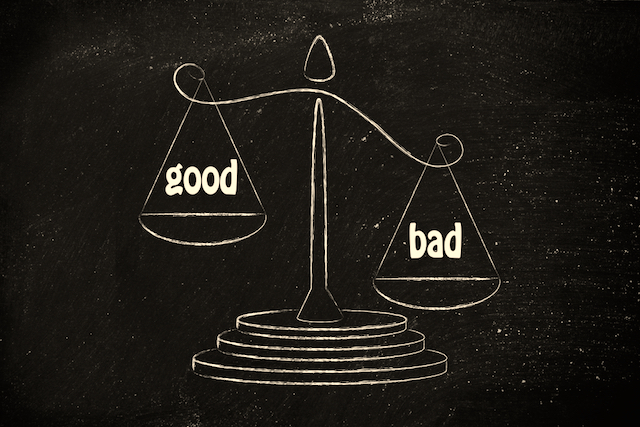
    Good and Bad Scale

    “Nothing is either good or bad, but thinking makes it so.” ~William Shakespeare

    Like many women, I feared my own voice.

    I feared what would happen if I acknowledged my feelings and I feared what would happen if I expressed them.

    Above all, I feared that people would leave me if I ever communicated as my true self.

    In my family and culture, feelings are things that are best when denied. I was taught they are a liability that, if embraced, would lead to fights, pain, and loneliness. I was encouraged to ignore, avoid, and push them down into the recesses of my mind.

    Not surprisingly, by thirteen I developed severe depression, resulting in poor coping mechanisms, a reliance on medication, and a suicide attempt.

    The need to express myself was natural and necessary, but my belief that it was wrong prevented me from ever owning my voice. Instead, I communicated in unhealthy ways:

    • I had angry outbursts.
    • I played the martyr.

    And while I tried to suppress and control this side of me, it came out in waves of anger and hurt. Through decades of transformation, I now understand that many of my behaviors were based on my belief that things are either all good or all bad.

    So how did I unlearn this belief and learn to express my true voice?

    By learning how I played the game of black and white.

    When we’re young, we’re taught that certain aspects of our personality are bad or wrong, while others are good and useful. And like most things we learned as kids, we need to unlearn them.

    In order to fit in, feel loved, and gain acceptance we disown the “bad” qualities we believe we have and try to express ones that are seen as “good.”

    This polarized thinking forces us to see the world in terms of black and white, right and wrong, or good and evil. And in this game of black and white, the only rule is that white must always win.

    Unfortunately, the world isn’t that simple. Most things exist on a frustrating spectrum of grey.

    Fortunately, we can learn to re-own these repressed qualities and transform them into qualities that benefit us and others.

    For example:

    • Owning our anger can lead to self-love, if this enables us to set boundaries to take better care of ourselves.
    • Owning our self-expression can lead to genuine connection, if this enables us to get in touch with and communicate our true wants and needs.
    • Owning our apathy can lead us to a passionate career, if this enables us to redirect our energy and quiet our fear of failure.

    Here’s How:

    The first step to seeing how you play the game of black and white is to determine which traits you’ve put into each category.

    What qualities in others make you angry? Often the aspects of others that trigger us are the things we don’t like about ourselves. These are frequently the areas that we need to work on the most.

    For example, when other people stated their boundaries, I previously felt threatened because I wasn’t comfortable setting my own. This taught me that I needed to address this issue in my own life in order to feel whole and attract other people with healthy boundaries.

    To begin, list several “bad” qualities. These are the traits that go in your “black” pile (i.e.: lazy, late, disorganized, loud).

    What qualities do you think of as good, desirable, and appropriate? These are the qualities that we are praised for or that we value in ourselves or others. List several “positive” qualities. These are the traits that go in your “white” pile (i.e.: honest, flexible, driven).

    Next, determine how the game manifests in your life.

    In what ways do you play the game so that “white” must win? What have been the consequences? For example, in believing that silencing my voice is good, I’ve been in unhealthy relationships, had angry outbursts, and felt depressed.

    If you were to give the disowned trait a voice, what would it say? For example: mine would tell me that it’s safe to be the real me.

    Finally, embrace the trait as neither good, nor bad, simply a part of you.

    If you were to re-own that trait, how could it benefit you? Often, qualities we view as “bad” are harsh criticisms or expressions of our own fears.

    For example, I often find that I am frustrated when I perceive someone to be lazy. This, however, is merely triggering my own fear that I am not doing enough. Owning this trait allows me to see that there are times when I should relax.

    Owning it taught me that I don’t need to overwork in order to prove that I am worthy. Owning my lazy side would allow me to live a more balanced life and cultivate self-love.

    Creating awareness around how you play the game of black and white will give you the freedom to consciously choose your behaviors instead of going on autopilot.

    It will allow you to stop stumbling through life and begin navigating it on your own terms. You don’t need to accept your false beliefs when you have the power to change them.

    Isn’t it time you mastered your life?

    Good and bad image via Shutterstock

  • Why We Should All Stop Trying to Be Good Enough

    Why We Should All Stop Trying to Be Good Enough

    Man Sitting Under Tree

    “Only something as insane as human beings would ever asked themselves if ‘I’m good.’ You don’t find oak trees having existential crisis. ‘I feel so rotten about myself. I don’t produce as much acorns as the one next to me.’” ~Adyashanti

    The feeling of not being good enough is widespread among the population regardless of age or social status. Even people who, from society’s standards, are highly successful may very well feel they are not good enough and that something is missing.

    For most of my life, I suffered from that feeling of not being good enough.

    When I joined a master’s degree program a year and half ago, I was shocked to see how smart some students in my class were. I was surrounded by people who had more work experience than me and were way more confident than I was.

    Sometimes I felt stupid in their presence. No matter how hard I tried, I just couldn’t find a way to contribute in class. Never befor had I felt such a deep sense of not being good enough.

    Achieving, learning, or experiencing more never seemed enough to fix my issue. I started to seriously question whether anything I would accomplish could ever help me feel “good enough.”

    I perfectly understood that there would always be people around me that are more confident, more attractive, smarter, richer, or more knowledgeable than I am, but this still didn’t make me feel better.

    Since I always felt that my duty was to contribute to society, feeling that I couldn’t contribute as much as I would like to made it difficult for me to maintain a healthy self-esteem.

    When it comes to self-worth, experts generally recommend using positive affirmations, learning to be more self-compassionate, or achieving small goals to create momentum and build confidence.

    These techniques are certainly good ways to build self-esteem, and I used them personally with some success. However, it’s likely that they might be missing the point.

    Rather than “How can I feel good enough?” wouldn’t a better question be: “Do I need to feel good enough?” or “Is it actually possible not to be good enough?”

    Most people spend their life trying to be good enough, to be liked and appreciated, often without actually succeeding to fill a void within themselves. It’s insane to see how everyone tries so hard to be “somebody.”

    I started wondering if, during all that time I spent trying to be good enough, I wasn’t actually fighting the wrong battle.

    Our society conditions people to tie up their self-worth to how much they “contribute,” and that supposed “contribution” often refers to the amount of money we earn or our social status. Society creates an artificial duality between “successful” people and others.

    Nowadays, the idea of success is a constant obsession. Media and personal development websites are continually talking about what more can be done to become more successful. Success has become the Holy Grail to pursue, the only path to living a life worth living and earning recognition from society.

    However, I could easily come up with names of people that are regarded as “successful” from society’s standards, but are not from an objective point of view.

    Interestingly, the definition of success is rarely explained. It seems as if we have all agreed with society’s definition. There appears to be very little space to question it; however, could the assumption under which we operate our life actually be false?

    To be honest, this whole idea of good enough or not good enough is nonsense. I’m sure the doctor didn’t tell your parents when you were born that, “I’m sorry, but your son won’t be good enough.”

    The entire paradigm of “good enough or not good enough” comes from the misconception that we need to become “somebody” and that other people have the power to determine our self-worth.

    It is a mere product of social conditioning, not of reality, and it certainly doesn’t have to be that way!

    Depending on your belief or reasoning, you could spend your entire life just meditating under a tree, doing absolutely nothing, and you would still be totally relevant as a human being.

    So why don’t we get rid of that concept once and for all, discard it as irrelevant, and rebuild our life on a healthier assumption?

    Being a total “failure” under society’s standards can never ever make you a failure as a human being. Nothing can turn you into a not-good-enough person without your consent, without you buying into the current fallacious assumption that society is telling you to live under.

    Sure, you might have failed at many of the things you’ve tried and some of your friends might be more “successful” than you are, but then, does that mean you are not good enough? Does that really mean you are not worthy?

    If you buy into society’s expectations, yes, probably. If you don’t, the question then cannot be answered, because it’s irrelevant!

    A tree doesn’t have self-esteem issues. A bird doesn’t ask itself, “Am I good enough?” Why should you?

    Are your attempts to become somebody actually working? If not, it might be time for you to stop trying to be “somebody” and just relax.

    Imagine the sense of freedom that you would experience if you were to stop trying to be “good enough.” Suddenly, the burden you’ve being carrying on your shoulders would become lighter.

    You could then enjoy your time with others without trying to impress them. You’d be able to free up your energy for more creative purposes. Suddenly, you could just be yourself.

    The greatest and wisest spiritual teachers of all time stopped trying to be somebody because they realized that it was not possible. If after all those years of inquiry and self-reflection they came to that conclusion, is it possible that they were on to something?

    So do you really need to be good enough? Are you fighting the right battle? This is something you might want to meditate on. It might require some time before you can change your former conception, but isn’t it worth trying?

    Personally, I chose to fight less and to progressively distance myself from the battlefield. I’m not “not good enough” or “good enough.” I am just who I am and that’s more than enough!

    Man sitting under tree image via Shutterstock