Tag: giving

  • Why People Who Bring Enough to Share Are Happier

    Why People Who Bring Enough to Share Are Happier

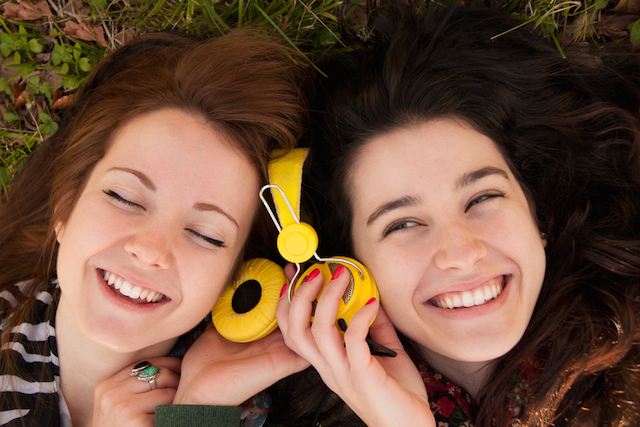
    Girls Sharing

    Joy comes not through possession or ownership but through a wise and loving heart.” ~Buddha

    We all have these random little personal philosophies or rules that we live by. Oftentimes, these rules are hidden beneath the surface, not in a form that we are aware of or is easily expressible.

    But I do have one particular “random little personal philosophy” that I live by (and am aware of!) and would like to explore further. It is my philosophy of tipping.

    This philosophy of tipping was thought up specifically with reference to tipping, say, in restaurants, but can easily be generalized. Here is the original formulation:

    I cannot afford to eat at this restaurant if I cannot also afford to give a large tip.

    Now, this doesn’t mean I need to give a huge tip each time—I just need to be willing to in advance.

    So, if I’m going to a restaurant where I know a decent meal will cost $20, I will commit before going in that I am willing to spend closer to $30. Generally, the tip will be fairly typical—about 20% for a good job—but the actual magnitude isn’t the point.

    What matters in this case is that I consider a large tip to actually be a part of the cost of the meal already. Of course, the tip is part of the cost of a meal, but I don’t think most people look at it that way.

    Rather, most people think of the menu price as the cost, and the tip is this annoying extra that you have to pay at the end. I’ve had friends who go out to eat with me, order whatever they want off the menu, and then find that they don’t have enough cash to pay for a tip at all.

    In my case, if I didn’t have the money available to give a sizable tip, I wouldn’t even make it inside the restaurant. After all, that would mean I couldn’t afford it.

    This may sound like a very simple life philosophy, and one that hardly seems worth reading about (let alone writing about). But the implications, when the principle is taken to its logical conclusion, are far more significant. Let’s generalize it now:

    If I am not willing to share something, I shouldn’t get it in the first place.

    Please, do not take this to be a legitimate moral or economic principle—it is pure and simply a life philosophy, or a heuristic for making choices in my own life. Your property is your own and you are certainly not an immoral person if you don’t share, but you may very well be happier if you do.

    A major benefit of all this is its fiscal sensibility. While you may end up spending more on tips and getting extras of certain things in order to share, you will ultimately end up being more careful with your finances and use your money less.

    This sort of mindset makes you far more likely to have a potluck with friends than to go out to eat, or to save money rather than spend it.

    But once you’ve really internalized the idea, you’ll also find yourself experiencing a significant happiness boost. Why? Because giving feels good. Being kind feels good. And sharing positive experiences with others feels good.

    Ultimately, it involves spending more time and money on others and less on yourself. You certainly shouldn’t be neglecting your own needs and desires. But when you do nice things for yourself, make sure you have a little extra so somebody else can enjoy it with you.

    Okay, great. So how does this work in practice?

    As a whiskey lover, I consider it a nice treat to drink a delicious, high quality whiskey. Jameson may be perfectly fine most of the time, but I like to have Johnny Walker Black Label around for special occasions.

    Unfortunately, JW Black is pretty expensive—it would be very easy for me to hoard it and not let other people drink any. Instead, I drink it primarily when I have close friends around. It’s a vastly better experience when shared!

    The nature of the material possessions that I tend to purchase is similar; I try to buy things that have more sharing potential. Most of my possessions at this point are books and DVDs, both of which I am routinely lending out to others or enjoying with them.

    Predictably, this lends itself to a more “simple” lifestyle. I buy a lot less than I could, but the things I do own have a high return on investment with regards to my happiness.

    A big part of this philosophy, though, is to share with strangers. If you are going out for a night of drinks in the city, throw an extra few singles in your pocket to give to the homeless people in the area. If you can’t afford $5 to give to five homeless people, then you can’t afford the $50-100 it would take to go out.

    It’s not just about money, either. The same principle can apply to the way you use your time.

    If you can afford to play video games all day Saturday, then you can spend an hour of that time volunteering at a soup kitchen or helping a friend move. In fact, studies have shown that spending time on others makes you feel as though you have more time available…cool!

    As with most areas in life, it is hard to apply a philosophy like this perfectly, but that’s not the point. I’m far from perfect with this, but even so, I’ve derived great benefits from focusing on this principle, and you can too.

    Friends sharing image via Shutterstock
  • How to Give Yourself and Others the Gift of Happiness

    How to Give Yourself and Others the Gift of Happiness

    People holding hands

    “It is every man’s obligation to put back into the world at least the equivalent of what he takes out of it.” ~Albert Einstein

    My son recently returned home from college with a new demeanor.

    He was helpful, considerate, interested in others, and genuinely happy. The change was a far cry from the boy who had left for college just a few short months before.

    Don’t get me wrong, he has always been a good kid, but up until now he’s been a typical teenager. He was a bit messy, a bit lazy, and if it wasn’t part of his video game he was mostly uninterested.

    So what changed?

    My husband and I began discussing it over dinner. I told him I thought it had a lot to do with the philanthropic efforts of the fraternity he joined. Now instead of playing video games all weekend, he was volunteering at animal shelters and helping the less fortunate by providing physical labor.

    My husband was intrigued. He had always associated philanthropy with money. After all, it’s a word often associated with wealth or large foundations; was it possible for an average person to be philanthropic?

    We began doing research on philanthropy and found that anyone can be philanthropic.

    The word philanthropy actually means “love of humanity.” To be philanthropic means to care, nourish, develop and enhance the human experience.

    Philanthropy is different than charity. The easiest way to explain the difference is that charity takes care of an immediate need, where philanthropy tries to solve a problem.

    Think of it as you can give someone money so that they may buy a meal (charity), or you can teach the person a skill so that they may make a wage and pay for their own meal (philanthropy).

    Research suggests one of the keys to happiness is the act of helping others. It is known as the “helper’s high.” This would explain the change in my son’s personality.

    Medical research into the “helper’s high” phenomenon has shown people who volunteer experience feelings of euphoria. They also found this “high” has possible health benefits that far outreach the act of giving.

    Research suggests people who regularly participate in charities have less pain, sleep better, and have a personal sense of reward and fulfillment.Giving leads to a happier life.

    Philanthropy goes beyond the basics of giving time or money to a cause. It is a foundation that when regularly practiced builds relationships and strengthens self-worth. It is a circular action that builds momentum. We give because it makes us feel good. We feel good because we give.

    Like anything worthwhile in life, there has to be balance. Sometimes too much of a good thing can cause harm. In order to maximize the benefits of philanthropy it’s important to understand how to be a healthy giver.

    Here are five things you should know in order to maximize the benefits of happiness from philanthropy.

    1. Understand philanthropy is selfish.

    Some people find fault in giving to receive, but how else can you give? It’s like eating without satisfying hunger. Yes. We receive and emotional high when we give, but the happiness experienced from giving is natural.

    Some research suggests that you cannot fulfill happiness without giving. Philanthropy is a route to give happiness away in exchange for our own new recharged happiness.

    2. You cannot save the world.

    Some get discouraged because they think too big and their efforts become unrealistic. This can actually have the adverse effect and brings unhappiness. You cannot change the world by yourself, but your efforts, in conjunction with others, can change a life.

    Concentrate on the smaller benefits of giving to maximize the cycle of happiness.

    3. Don’t give to the greatest need unless your heart is in it.

    Only choose causes that speak to your heart. If you love animals, volunteer in a shelter or become a foster home for a kill shelter. If you love children, become a mentor to a high-risk child. The closer your heart is to the cause, the more benefit for your natural cycle of happiness.

    4. Make giving a regular part of your routine.

    Not being consistent in giving your time or money will not increase your happiness. It’s like diet and exercise. If you don’t practice the change consistently, you cannot maximize the benefits.

    Benefits come when relationships form and strengthen over a time of regular giving. This is the best way to see your efforts at work and receive the valuable feedback regarding the difference your efforts make.

    5. Never give too much of yourself to help others.

    Balance is a key in giving just like in all things in life. Never sacrifice your own needs for the needs of others. It’s just like the flight attendant tells you before the plane takes off. Secure your own oxygen before assisting others.

    After seeing the difference giving has made in my son’s life, I’m ready to begin incorporating regular giving into my own life. I hope you join me.

    Do you have a cause that’s close to your heart where you give regularly? How has it made a difference in your life?

    People holding hands image via Shutterstock
  • I Like Laughter: Video from an Inspiring Comedian

    I Like Laughter: Video from an Inspiring Comedian

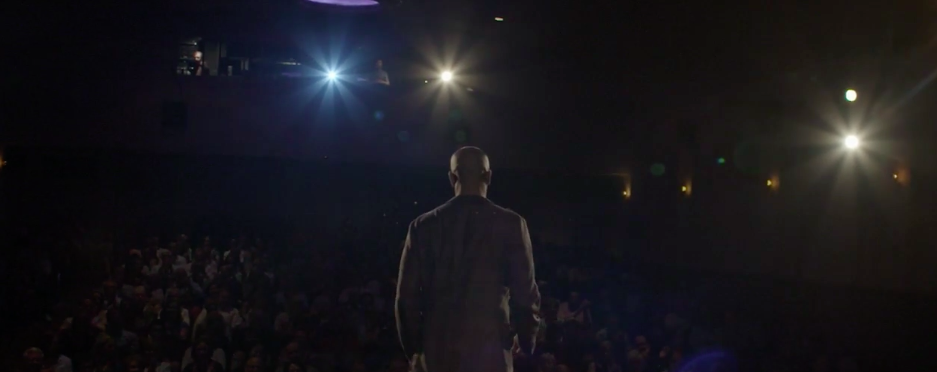
    Most comedians try to get laughs, but Michael Jr.’s goal is to give them. Watch and ask yourself: how can you be the punchline?

  • The Ripple Effect of Kindness, an Inspiring Video

    The Ripple Effect of Kindness, an Inspiring Video

    Giving is always receiving, and kindness is contagious. What ripples can you make today?

  • The Gift of Kindness: A Simple Reason to Give What We Can

    The Gift of Kindness: A Simple Reason to Give What We Can

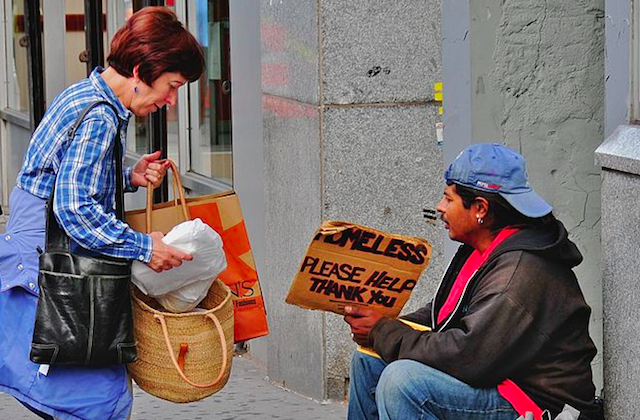
    Helping the Homeless

    “Love and compassion are necessities, not luxuries. Without them, humanity cannot survive.” ~Dalai Lama

    “Look at that guy,” I said to my wife.

    We were circling the block looking for parking when I spotted him on the sidewalk in front of the bank. For some reason he stood out from the other people in the area.

    “Seems off,” I thought to myself.

    As I passed by, I kept an eye on him. He didn’t seem to be going anywhere, just walking back and forth along the sidewalk in front of the bank.

    He was looking around and moving around like he was waiting for someone, but clearly he was alone.

    We came back around the block and I parked in a loading/unloading zone.

    “Make sure they don’t tow me,” I joked to my wife. I hopped out of the car and made my way to the bank’s ATM on the sidewalk.

    Halfway through the transaction I heard a very small voice coming from behind me.

    “Can I have two dollars? I need two dollars for the bus.”

    The voice was so small that at first I wasn’t sure if he was talking to me or someone else. I continued with my transaction without acknowledging the question.

    “That’s awesome. You’re ignoring me,” he continued.

    At this point I realized that he was talking to me. I didn’t respond.

    The voice got smaller and turned into mumbling. I couldn’t understand what he was saying.

    I finished the transaction and turned back toward my car. He was standing near my car but not in the way.

    I looked at him.

    In front of me was a disheveled, forty-something man. The years appeared cut into his face in the form of deep wrinkles accentuated with dirt.

    The wrinkles could have meant a man much older, but his overall demeanor suggested youth. He still had the aura of a younger person.

    His hair was very short and he was holding a coffee.

    As I walked toward my car he stopped talking. I got around to the driver side and opened the door.

    “No,” I said loudly and resolutely while looking at him. It was the answer to his earlier question, and also an answer to him in general.

    He didn’t respond.

    Driving away I felt uneasy and my mind replayed the situation a few times.

    I have given money to people in the past. It hasn’t happened often, but sometimes.

    My problem with this man was that I felt he didn’t need the money. It was the coffee that bothered me. He had a cup of coffee in his hands. Premium coffee.

    Coffee, I later learned, would be our connection.

    I had forgotten about him by the next day while I was waiting in the Starbucks drive-through line. We reached the service window.

    “Hi! The car in front of you paid for you,” the barista said.

    “What?” I replied. I was caught off guard.

    “Your order has been paid for,” she reiterated. She handed us our items. “You’re good to go.”

    “Thanks,” I replied reaching for the items.

    My daughter asked me why I was shaking my head as we pulled forward.

    “The universe is always teaching me lessons,” I said smilingly.

    She looked at me blankly.

    That’s what I call it when stuff like this happens—the universe teaching me lessons.

    Over the years I have learned to pick up on this phenomena. The lessons are broad and typically focus on topics like compassion, forgiveness, understanding, and renewal. They always emerge through the random coupling of everyday events.

    Some lessons are blatant, but others can be very subtle. The subtle ones are the best. Sometimes I will only “get it” after a couple of days letting it sink in.

    This one I considered blatant. The lesson being:

    Share what you have. Give—even if they don’t need it.

    I didn’t give that man any money because I didn’t believe he needed it. My assumption was that earlier that day he had traded some of his money for that coffee he was holding.

    If he really needed two dollars, then he shouldn’t have spent his money on that coffee.

    But, that reaction is totally contrary to the lesson.

    Later, as I stewed on the lesson, a couple of thoughts occurred to me: Maybe there was no coffee in that cup. Maybe he was collecting change with it. Maybe the cup was empty. Maybe the cup only had water in it.

    The point was that I didn’t know. I assumed.

    The bigger point was that it didn’t matter whether the cup was filled with premium coffee, gold coins, or anything else.

    Giving is not about the other person’s perceived need; it’s about the act itself.

    We are choosing to be the best version of ourselves when our actions demonstrate the best within us.

    Do you remember how you felt the last time you gave? I am willing to bet you felt good about yourself, and good about the act. And that’s great!

    Now, was that good feeling because you filled a need, or because of the act in general?

    Think about it. You can say it was both, but I am also willing to bet that you would feel just as good if you gave to someone who didn’t really need it.

    The good feeling comes because giving is an act of kindness.

    The person in front of me in the drive-through that day could have looked in her rearview mirror and concluded that I didn’t need it.

    After all, I am driving a newer car, my clothes were clean, and the assumption is that I can afford a coffee since I am already in the drive through line.

    Her gift to me was not because I needed it.

    Her gift to me was about kindness. It was about doing that extra little bit to lift someone else up.

    Lesson taught. Lesson understood.

    Photo by Ed Yourdon

  • A Small Act of Kindness Can Make a Big Difference

    A Small Act of Kindness Can Make a Big Difference

    “If you want others to be happy, practice compassion.  If you want to be happy, practice compassion.” ~Dalai Lama

    I had an old trench coat that was balled up on the floor of my garage, gathering dust near the washing machine. It was raining. It was unusually cold (for California, anyway).

    I was driving home when I saw a man in a short sleeved shirt wandering through our neighborhood, pushing a shopping cart. He was walking painfully slow. He was dripping wet.

    I paused at the intersection to my street and watched him for several minutes, thinking. My heart was heavy seeing him move so slowly, so wet, so cold. I suddenly remembered the crumpled-up coat. But what if I needed it sometime in the future? A story I had once heard at a church conference came to mind.

    An Inspiring Story of Kindness

    Two boys walked down a road that led through a field. The younger of the two noticed a man toiling in the fields of his farm, his good clothes stacked neatly off to the side.

    The boy looked at his older friend and said, “Let’s hide his shoes so when he comes from the field, he won’t be able to find them. His expression will be priceless!” The boy laughed.

    The older of the two boys thought for a moment and said, “The man looks poor. See his clothes? Let’s do this instead: Let’s hide a silver dollar in each shoe and then we’ll hide in these bushes and see how he reacts to that, instead.” (more…)

  • Why Giving to Others Is Also Giving to Ourselves

    Why Giving to Others Is Also Giving to Ourselves

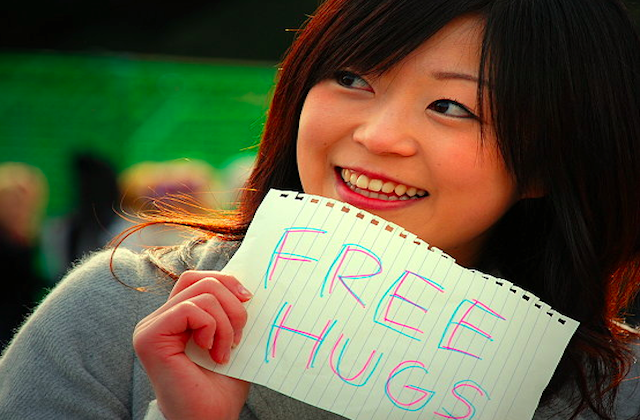
    Free Hugs

    “Don’t wait for extraordinary opportunities.  Seize common occasions and make them great.” ~Orison Swett Marde

    I stood at the library counter waiting to check out a stack of books when I overheard an overworked woman explain to the librarian why her books were late.

    “My boss has me running his errands after hours. It’s a miracle I made it on time to pick up my daughter from daycare,” she said.

    “Are you a personal assistant?” the librarian asked.

    “No, I’m a paralegal,” the woman explained. “But staffing is tight, and if I don’t take on the extra tasks I might lose my job. I can’t be picky in this economy.”

    I understood the woman. Years ago, when my children were younger, I took on extra tasks both because I needed money and because I could not say no. I connected with her story and wanted to do something to let her know she was not alone.

    But what could I offer her?

    The desire to give to others spontaneously was as reflexive as smiling. I had learned it over the years by watching others give to me when I was in no position to give back to them.

    I rummaged in my purse and found two tickets to the movies I had earned from working overtime. I abandoned my books at the counter and followed the woman and her child outside.

    “Excuse me,” I said. “I couldn’t help overhear your conversation about work. I understand what you’re going through because I’ve gone through it myself, and I want you to know I appreciate you even if your boss doesn’t.”

    I handed her the tickets. “Take your daughter to a movie,” I said.

    Her eyes widened and filled with tears. “Thank you,” she said. “You’ve just made my week.”

    That small gesture of solidarity, understanding, and generosity made me feel as close to the woman as I could get to my twenty-two-year old self who worked too many ungrateful hours for too many ungrateful bosses just to help my family survive.

    PBS’s special, “This Emotional Life,” explores the healing power of giving through volunteerism and philanthropy.

    Research shows that once people have enough to meet their needs, additional money and time do not increase their happiness. It’s only when the donor gives away the additional money and time that the donor’s happiness is increased.

    According to Emma M. Seppala, Ph.D., people benefit from giving by connecting with others.

    Humans have a built-in need to relate, resonate, and mirror each other. In a world increasingly dependent on technology, the gift of giving of oneself increases intimacy and reduces the likelihood of loneliness.

    Giving ripples out in waves like a stone plunked into still waters. It connects us in a tangible way. It makes us realize we are not alone.

    Giving doesn’t have to be complicated or grand. It can be an encouraging smile or a gentle hug. Fifteen minutes of attentive listening can be as valuable as a one-hour massage.

    After all, it’s not how much we give, but how we give.

    If we give from the heart, in a desire to connect, then we seize a common occasion and make it special, which is much different than if we give to a great cause out of obligation or self-importance.

    You also don’t have to have a structured system of volunteering and philanthropy to enjoy the benefits of giving. It can become a habit you develop over time until it becomes an integral part of your life.

    Start by paying closer attention to the people you encounter during the day. Soon you will recognize an opportunity to give.

    If you’re leaving a crowded parking lot and notice someone driving around looking for a spot, you can signal for the person to take your parking spot.

    If you see an overwhelmed waitress struggling to keep up with your table’s demands, you can leave a larger tip to show your appreciation. If you notice someone walking around with a permanent frown, you can flash your comforting smile and shine a tiny light on that person’s dark heart.

    Generosity isn’t only for strangers. You can weed a neighbor’s garden, cook a meal for your parents, or pay a visit to someone you haven’t seen in a while. Giving to those you know and love the most prevents you from taking them for granted.

    An odd by-product of giving freely out of compassion and love is how it makes the giver feel. The more you give from a place of unconditional generosity, the more joy you feel. Giving makes you realize how much power you have to make others feel better about themselves and their lives.

    Go out and give whatever you have to whoever needs it. Seek ordinary moments and make them extraordinary. Life truly is a special occasion.

    Photo by Jesslee Cuizon

  • A Powerful Video About Giving

    A Powerful Video About Giving

    Beautiful, moving, powerful, and worth the few minutes to watch it.

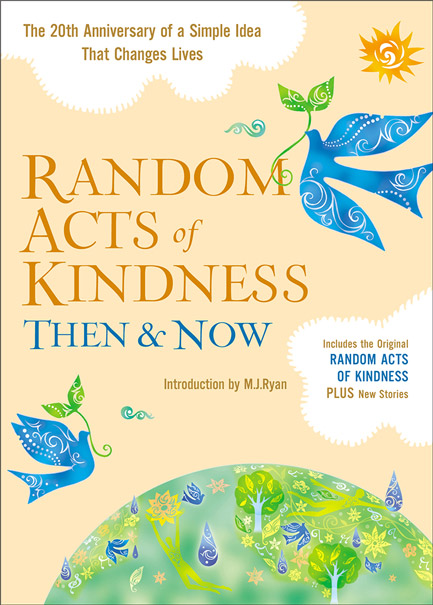
  • Book Giveaway – Random Acts of Kindness: Then and Now

    Book Giveaway – Random Acts of Kindness: Then and Now

    Random Acts of Kindness

    Note: The winners for this giveaway have already been chosen. Subscribe to Tiny Buddha to receive free daily or weekly emails and to learn about future giveaways!

    The Winners:

    “Practice random acts of kindness and senseless acts of love.” ~Ann Herbert

    An unsolicited financial donation right when you need it. Roadside assistance from a stranger after your car breaks down.  An anonymous gift when you’re struggling and in desperate need of a smile.

    These are just a few random acts of kindness that can transform your day and renew your faith in people, and just a small sampling of the type of stories you’ll find in Random Acts of Kindness: Then and Now.

    Twenty years back, Conari Press published the first Random Acts of Kindness book, highlighting stories of people looking out for one another in their daily lives.

    As the book inspired a movement, Conari started the Random Acts of Kindness Foundation, which works with schools and communities to spread kindness.

    Every February for the past two decades, the foundation has spearheaded Kindness week, which runs from the 11th through the 17th.

    To celebrate the week and the book’s anniversary, Conari has offered five copies of the updated book for Tiny Buddha readers.

    Including the original book and new stories sourced through social media, Random Acts of Kindness: Then and Now is an inspiring, feel-good compilation that encourages a more generous, caring, compassionate world.

    The Giveaway 

    To enter to win 1 of 5 free copies of Random Acts of Kindness: Then And Now

    • Leave a comment below, sharing an act of kindness you’ve recently offered or received
    • For an extra entry, tweet: RT @tinybuddha Book Giveaway – Random Acts of Kindness: Then and Now http://bit.ly/Y7Oo9p

    You can enter until midnight PST on Monday, February 18th.

    Learn more about Random Acts of Kindness: Then and Now on Amazon.

  • 5 Reasons to Stop Keeping Score in Relationships

    5 Reasons to Stop Keeping Score in Relationships

    Back to Back

    “It’s one of the most beautiful compensations of life that no man can sincerely try to help another without helping himself.” ~Ralph Waldo Emerson

    During my freshman year of college, my group of friends would always hang out in my room.

    For the most part, I enjoyed playing host.

    Then certain things started to bother me. People would constantly be eating my snacks, and I would constantly be cleaning up after them when they left.

    Day after day, I would provide my friends with food. They would make a mess eating it while sitting on my bed. And they wouldn’t clean up after themselves.

    Perhaps this sounds trivial to you, but over time I found it very annoying.

    And after a few months of this, I became resentful toward my friends.

    The problem here was that I couldn’t help but “keep score” in my relationships with them.

    What do I mean by this?

    Every time I gave my friends food, I would mentally record it, and expect to get something of equal value in return.

    In my mind, I was giving way more than I was getting.

    And then every once in a while when they would come in and offer me some of their food, I felt even worse.

    “How can they think that this is enough after all I’ve given them?”

    If they thought they were giving me a sizeable gift, then suddenly I felt obligated to pay them back to keep the balance in my favor.

    In hindsight, I see how disturbed this way of thinking is. But at the time, it all made sense to me.

    Keeping score got me nowhere, other than feeling bad and deteriorating my relationships.

    This kind of mindset is toxic. It causes nothing but harm.

    Think about your own life and your own relationships. Chances are you are keeping score in some of them.

    And I bet it’s having the same effect on you. (more…)

  • 20 Ways to Give Without Expectations

    20 Ways to Give Without Expectations

    Gift

    “The true measure of a man is how he treats someone who can do him absolutely no good.” ~Samuel Johnson

    Some people say there’s no such thing as a selfless act—that any time we do something to help another person, we get something in return, even if it’s just a warm fuzzy feeling.

    I’ve spent a lot of time playing with this idea in my head. It doesn’t really bother me to know it feels good to help someone else. That, to me, is a completely acceptable type of selfishness. What give me cause for concern are the underlying expectations we often have when we give “selflessly.”

    We’ve all been there. You cover for your coworker because you know you’ll need her assistance next month. You give your sister $20, and then silently look for ways she can pay you back, even if not monetarily. You help your friend get leads for a job, and then feel angry when she isn’t as proactive in offering you support.

    I’ve found that these expectations cause more stress than joy. They mar the act of giving, which makes me feel slightly guilty; they lead to disappointment if the person I helped doesn’t return the kindness; and they tie my intentions to an internal score card, which places a wedge in my relationships.

    Recently I’ve been asking myself, “What is my expectation?” before I do something for another person. The answer I find most acceptable, cheesy as it may sound, is to feel good and show love. Strangely, when I release the need to control what I get for giving, I get enough, somehow.

    I’ve made a list of twenty things you can do to show you care, without needing the recipient to return the kindness—twenty ways giving is its own reward. Maybe some of these will resonate with you. Or perhaps you’ll want to write your own list to spur the spirit of giving without expectations. (Although I’ve written you, these are things I try to do.) (more…)

  • How to Become a Magnet for Friends: 7 Mindful Tips

    How to Become a Magnet for Friends: 7 Mindful Tips

    Group of Friends

    “Always be mindful of the kindness and not the faults of others.” ~Buddha

    Would you like to have more friends? I mean true friends—people who laugh and cry with you.

    My close friends mean the world to me. They are there for me when I need them. When they’re on a high, I celebrate with them; when they fall, I help them up again. My life is so much richer because of my friends.

    But it hasn’t all been an easy ride. For example, one of my best friends is my ex-husband. It took years of work to move through heart-ache, anger, grief, and resentment in order to find the strong friendship we have now. To create a true friendship takes a lot of effort and dedication.

    A friend is one to whom one may pour out all the contents of one’s heart, chaff and grain together, knowing that the gentlest of hands will take and sift it, keep what is worth keeping and with a breath of kindness blow the rest away. ~Arabian Proverb

    How I Lost a Heap of Fake Friends (and Gained a Few True Ones)

    In the past, I learned a hard lesson about friends. I was a professional musician at the time and Director of one of the oldest and most renowned music schools in Australasia. My life seemed to be going fine: I was in a good marriage, had great job with a high public profile,  and was a popular friend of many.

    Or so I thought. Then things disintegrated: I lost my job, and my husband and I separated. (more…)

  • Learning to Receive: 5 Steps to Opening Up

    Learning to Receive: 5 Steps to Opening Up

    Arms Open

    “We must never forget that it is through our actions, words, and thoughts that we have a choice.” ~Sogyal Rinpoche

    I grew up deep in the “Bible Belt” in Texas, and along with that came the teaching that certain beliefs were never to be questioned. This kept life simple and reduced choices, but it also left me with the baggage of dogmas I no longer accept.

    One of the mainstay beliefs was “It is better to give than to receive.”

    Somehow, this one has held on in my head, in my heart, deep in my innermost belief system. Never mind that it makes no logical sense—to give requires someone to receive, so for someone, it must be better to receive. I just don’t know who that person is.

    All my life, I have practiced giving religiously, even while longing to receive. I even wound up with a career in the “Gift Industry”—talk about commitment!

    I could be counted on not only to give material and monetary gifts, but also to give my time, my support, and my skills. And then I would be angry for feeling depleted, all the while still giving.

    No one ever taught me how to receive. Not a compliment; I am a master at countering any comment with insight about all my faults. Not a gift; I immediately feel the need to give something in return, preferably bigger. Not a kindness; I wave people away from helping me in a grocery line, no matter that I am dropping bread as I speak.

    How could I have gone through so much life and have no experience with such a fundamental act as the ability to receive?

    As I begin to examine this, I realize for me receiving involves vulnerability. When I give, I feel in charge. When I receive, I feel less. (more…)

  • 5 Ways to Create Random Acts of Love

    5 Ways to Create Random Acts of Love

    “Practice random beauty and senseless acts of love.” ~Unknown

    I recently decided to reverse the order of common sense, and senselessly follow my heart through an unplanned acts of kindness. After I made the choice, it was amazing how the world changed before my very eyes.

    No longer was I fixated on how quickly I move through the events of my day. With my new focus, people began to shape shift from task zombies to loving beings.

    One situation in particular really humbled me to the true power of random acts of love.

    I was riding a train from LA to San Diego. As the train started I engaged the man sitting next to me in casual conversation. When he told me where he was going, a huge red flag went off in my head. It read DANGER.

    Eerily cold and calculating, he said he was going to an ex-girlfriend’s house, unannounced, to place a tracker in her glove box so he’d know where she is day and night. Then he pointed out an ankle bracelet that lets his probation officer know where he is at all times.

    Taking this train ride would violate his parole, putting him back in the system. He didn’t care. Being on the outside, he said, was meaningless any way.

    I was just about to move seats. Instead, I assessed the situation to see whether it was a conditioned fear response or if I was actually in a safe place. I did an intuitive check in my heart, and felt I was safe and had something to offer this man. I surrendered to what that may be and sat tight.

    Let me preface this with a disclaimer: I’m not recommending you seek out criminals on trains to brighten their days, potentially putting yourself in danger. I’m suggesting you learn to be present so you can receive  inner guidance that may affect other people positively. (more…)

  • 10 Tips to Balance Self-Interest & Sacrifice for a Wonderful Life

    10 Tips to Balance Self-Interest & Sacrifice for a Wonderful Life

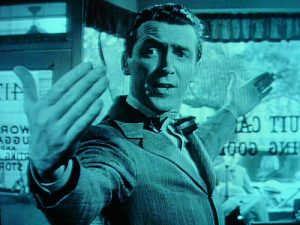
    George Bailey

    “It’s really important to be able to receive love and receive compassion. It is as important as being able to give it.” ~Pema Chodron

    Yesterday morning two of the correspondents on the news in Boston (where I’m home for the holidays) had an interesting conversation about the classic It’s a Wonderful Life.

    One of them said he’s not a big fan of the movie, which instilled a sense of complete outrage in me.

    How dare he take George Bailey’s name in vain! It’s such an inspirational film! From saving Harry’s life to finding Zuzu’s petals, every scene gets my little heart aflutter with renewed hope in our ability to make a difference and find happiness.

    When the initial offense faded, I listened to what clearly-heartless news guy was saying—and he actually had a point.

    The main character, George Bailey, sacrificed everything he wanted in life for the people around him. If he continued to operate in a constant state of self-sacrifice, he’d likely always have regrets where other men have dreams.

    And why should he not have the chance, at some point, to feel satisfaction that isn’t hinged upon having saved someone else’s life?

    At the end of the movie he receives the ultimate assurance that his life is best lived with everyone else’s interests before his own: a party where he receives all the gratitude and admiration he clearly felt had been lacking prior.

    The implication seems to be that he should continue on this path because everyone’s life would have fallen apart if he didn’t come to their rescue.

    The movie critique got me thinking about the sacrifices we make for other people. If you know me, you may find it off that I, ever the eternal optimist, have chosen to dissect the act of selflessness right before a holiday that often inspires it.

    This is precisely why I have.

    Holidays generally bring out the best in people. When we pull out the tear jerkers that remind us people care and miracles happen, we’re motivated to be the change we want to see in the world. To express and show our feelings. To care in action.

    But what’s more important than an epiphany shouted from a balcony on Christmas morning is an understanding of healthy giving—both to others and ourselves—that’s sustainable all year long.

    I, for one, would find this information invaluable, as I’m somewhat of a George Bailey, ever willing to consider someone else’s feelings and interests before my own.

    On some level it’s because I want to be kind, but often I’m motivated by the desire to feel important and useful. Or to please other people. Or even to avoid facing my own needs.

    If you can relate on any level, consider these reasons to find a balance between doing for others and yourself:

    Too much sacrifice can harm relationships.

    According to Ted Hagen, PhD, “The give and take between two people creates mutual respect. It strengthens a relationship.”

    Excessive giving can create internal resentment.

    If you continually put everyone else first, you may eventually resent everyone for expecting so much of you, when in all reality, you had the choice to give less at any time.

    Sacrificing is not always helpful.

    We often give because we think it’s the right thing to do, but sometimes it’s just plain not. People (children especially) need to learn to take care of themselves and to accept the world won’t always meet their every wish, whim, and need.

    To truly give yourself, you need to take care of yourself.

    Your daily car ride may make someone’s life easier, but your bond as a healthy, happy person is far more valuable. You can only offer that if you take care of your own needs, as well.

    WonderfulLife2

    We all deserve a life that involves doing and resisting, and giving and taking, and being selfish and selfless at times. I recommend the following steps to find a balance with all of the above:

    1. Identify your current give/take ratio.

    If you’d like to find a balance you have to know how off-balance you currently are. Is it fifty-fifty? Or seventy-thirty?

    2. Establish your reason for imbalance.

    Are you overextending yourself to feel powerful? Or to please everyone? You need to figure this out to address the next part.

    3. Find an alternative plan.

    If your goal is to feel powerful and helpful, start mentoring a child on the weekend. If you’d like to be well-liked, nurture qualities and skills that attract people to you—other than your tendency to say yes. This is a far better approach to gaining respect anyway.

    4. Take a piece of the pie.

    You can’t give everyone in your life 100%, so you likely give your parents, friends, and significant other a percentage of your energy. Consider a piece of that your own, and honor that in your choices.

    5. Think of taking as another form of giving.

    Everything you get from giving, the people who love you will get the same if you give them a chance to reciprocate. Why not allow them the opportunity to feel helpful and important, too?

    6. Take a drama-free look at your relationships.

    Do some people take more than give? The goal isn’t to blame, attack, or make yourself a victim, but rather to establish which relationships need to change.

    7. Make attempts to repair unbalanced relationships.

    If the give/take ratio is off-kilter, you need to address this, either by asking for what you need when you need it or initiating a constructive conversation. If the bond is worth saving, the other person will be at least a little receptive.

    8. Make a habit of expressing your needs.

    People won’t always anticipate them and step up to the plate, even if you operate that way. If you state your expectations, it will be easier for people to meet them. (Trust that they’ll want to! That’s how healthy relationships work.)

    9. Check in without an even-Steven philosophy.

    You don’t need to keep an internal scorecard of how much people are doing for you, but you should feel that, on the whole, they’re there for you physically and emotionally as much as you’re there for them.

    10. Ask yourself, “Would I need a George Bailey moment of gratitude and admiration to justify all I’ve sacrificed?”

    If the answer is yes, you know you’re not living a completely fulfilling life—one in which you look out for yourself, and honor your wants and needs as much as other people’s.

    This makes now the perfect time to ask yourself: How can I accept where the choices I’ve made have taken me, but make more balanced choices from here on out for a truly wonderful life?

    Photo by mrlerone.