Tag: giveaway

  • Giveaway: Win a 2024 Day-to-Day Calendar, Gratitude Journal, and More!

    Giveaway: Win a 2024 Day-to-Day Calendar, Gratitude Journal, and More!

    UPDATE: The winners for this giveaway have been chosen. The winners, chosen at random, are:

    Please send your mailing address to me at email@tinybuddha.com so I can mail you your books and calendars!

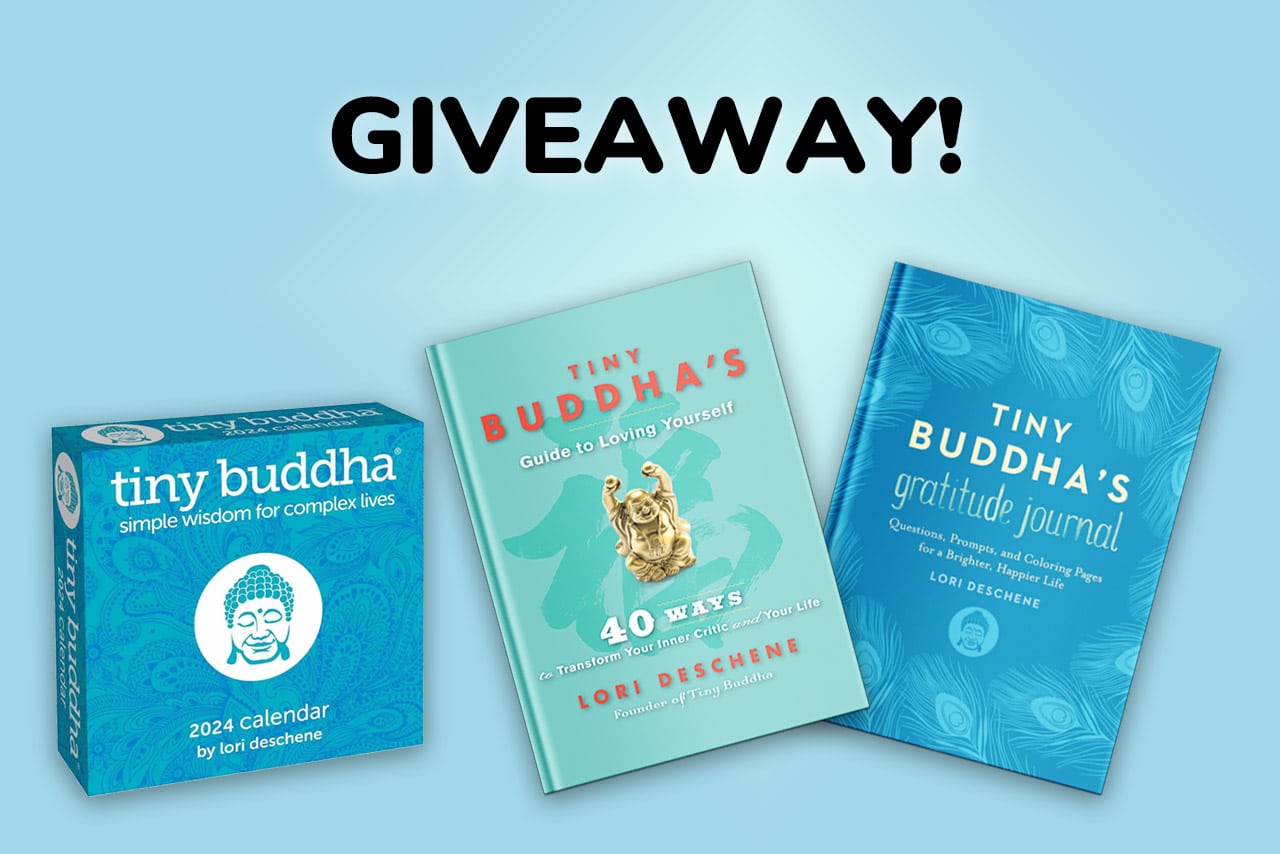
    Hi friends! To celebrate the holiday season, I’m running a special giveaway today. Two people (US only) will win a bundle including Tiny Buddha’s 2024 Day-to-Cay Calendar, Tiny Buddha’s Gratitude Journal, and Tiny Buddha’s Guide to Loving Yourself.

    Uplifting and healing, this calendar offers daily reflections from me, Tiny Buddha contributors, and other authors whose quotes have inspired and encouraged me.

    Featuring colorful, patterned tear-off pages, the calendar is printed on FSC certified paper with soy-based ink. Topics include happiness, love, relationships, change, meaning, mindfulness, self-care, letting go, and more.

    Here’s what Amazon reviewers had to say about this year’s calendar:

    “I discovered the Tiny Buddha site a couple years ago and loved it, so I decided to get the calendar and I’m so glad I did. The quotes/advice are short and sweet but so incredibly profound. I hang my favorites on the bulletin board above my desk.” ~Elizabeth

    “Absolutely love these daily tidbits that always remind me of what’s really important in life and how to deal with stress and life’s difficult situations. I bought one for myself last year and two this year so I can share with my sister.” ~LV 

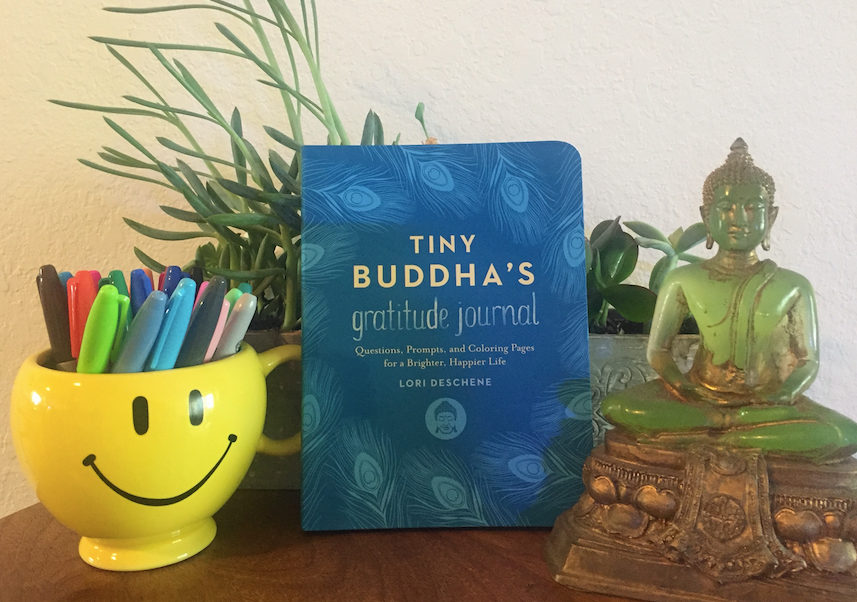
    Tiny Buddha’s Gratitude Journal includes thought-provoking questions and prompts to help you recognize and celebrate all the good things in your life, as well as fifteen coloring pages depicting awesome things we often take for granted.

    Here’s what some Amazon reviewers had to say:

    “This is the best little gratitude journal. The prompts are easy and thoughtful. I absolutely love the little coloring pages as well. Highly recommend.” ~Trisha Coonce

    “I use the Tiny Buddha Gratitude Journal on a bi-daily basis to perk up my spirits. When I am stressed or irritated, this is my go-to for a spot of happiness. I really appreciate purchasing the book.” ~Unnamed reviewer

    Tiny Buddha’s Guide to Loving Yourself is a collection of stories, tips, and insights to help you silence your inner critic, stop judging yourself, and start treating yourself with kindness and care.

    If you focus on your flaws, fixate on fixing yourself, or have a hard time believing in your worth, Tiny Buddha’s Guide to Loving Yourself can help you learn to value, honor, and care for yourself.

    Here’s what Amazon reviewers had to say about this one:

    “I love this little book. It is an incredible read and helped me have so much more compassion for myself and a broader perspective for my life. I’ve read it multiple times and each time I glean something new. I’ve bought this book for a lot of friends and family as well. Highly recommend!” ~CM

    “Hands down the best self help book I have ever read. Bought this as a gift for my honey, who has been struggling lately. Turns out its the book that I didn’t even know I needed. This book is helping me understand a lot about myself and why I act the way that I do. If you’re struggling with yourself, do yourself a favor and buy this book.” ~Samantha

    How to Enter the Giveaway

    Join the Tiny Buddha list, if you’re not already a subscriber. You can subscribe for daily emails (Monday – Friday), a weekly digest of blog posts on Fridays, or just occasional emails about freebies and special offers.

    Leave a comment on this post sharing one thing you’re grateful or one thing you love about yourself (or both!).

    You can enter until midnight PST on Sunday, December 3rd. I will update this post with the winners’ names sometime on Monday. Please check back on Tuesday to see if you’ve won so you can email me your mailing address.

    If you’d like to grab any of these resources for yourself or for a holiday gift now, you can find the calendar here, the Gratitude Journal here, and the Guide to Loving Yourself here.

    Happy Thursday, friends!

  • Giveaway: New Inner Strength Journal – A Tool to Help You Get Through Anything

    Giveaway: New Inner Strength Journal – A Tool to Help You Get Through Anything

    The winners have been chosen! If you see your name here, please email me at email@tinybuddha.com so I can send you a copy. The winners (chosen at random) are:

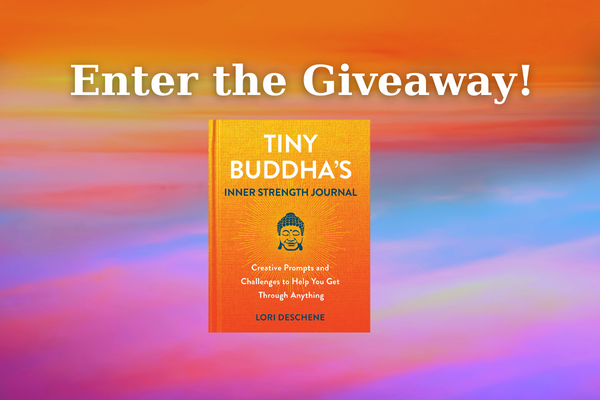
    Hi friends! Today, I’m running a giveaway for my new Inner Strength Journal.

    I created this journal because I know life isn’t easy for any of us.

    Maybe you’re in a dark place right now, perhaps healing from trauma, illness, addiction, or loss. Or maybe things have always been hard for you, and you don’t know much longer you can go on.

    Whatever you’re going through, you have the capacity to not only get past it but also grow through it and even find something good in it.

    Tiny Buddha’s Inner Strength Journal can help you do just that.

    Including writing and doodle prompts, challenges, and colorable quote pages, the journal will help you create your own personal roadmap to resilience so you can change what you can and make the best of the rest.

    How to Enter the Giveaway

    To enter to win one of three free copies, leave a comment sharing a quote, mantra, reminder, or word that helps you when times get tough.

    You can enter until midnight PST on Monday, October 17th.

    ~~~

    “This little book was surprising for me but totally what I needed at this moment. For me this one is more like a journey than a book, and in these trying times, I think it’s exactly what we need to center ourselves and build inner strength in ourselves and project it to the world.” ~Joselyn Moreno

    “Tiny Buddha’s Inner Strength Journal by Lori Deschene is the companion you will want as you weather the personal struggles of the day to day.” ~Andrea Pole

    “This may be my favorite journal I’ve picked up. All the prompts really made me pause and think before I answered them. I also loved that each section started with a lovely quote.” ~Joni Owens

    “As someone that loves to journal, I have found this journal to be very insightful and helpful. Beautifully written HIGHLY RECOMMEND.” ~Michelle Wightman

    ~~~

    If you’d like to grab a copy now, for yourself or a friend who’s going through a hard time, you can find the journal on Amazon.

  • 20 Inspiring Acts of Kindness and Giveaway Winners for HumanKind

    20 Inspiring Acts of Kindness and Giveaway Winners for HumanKind

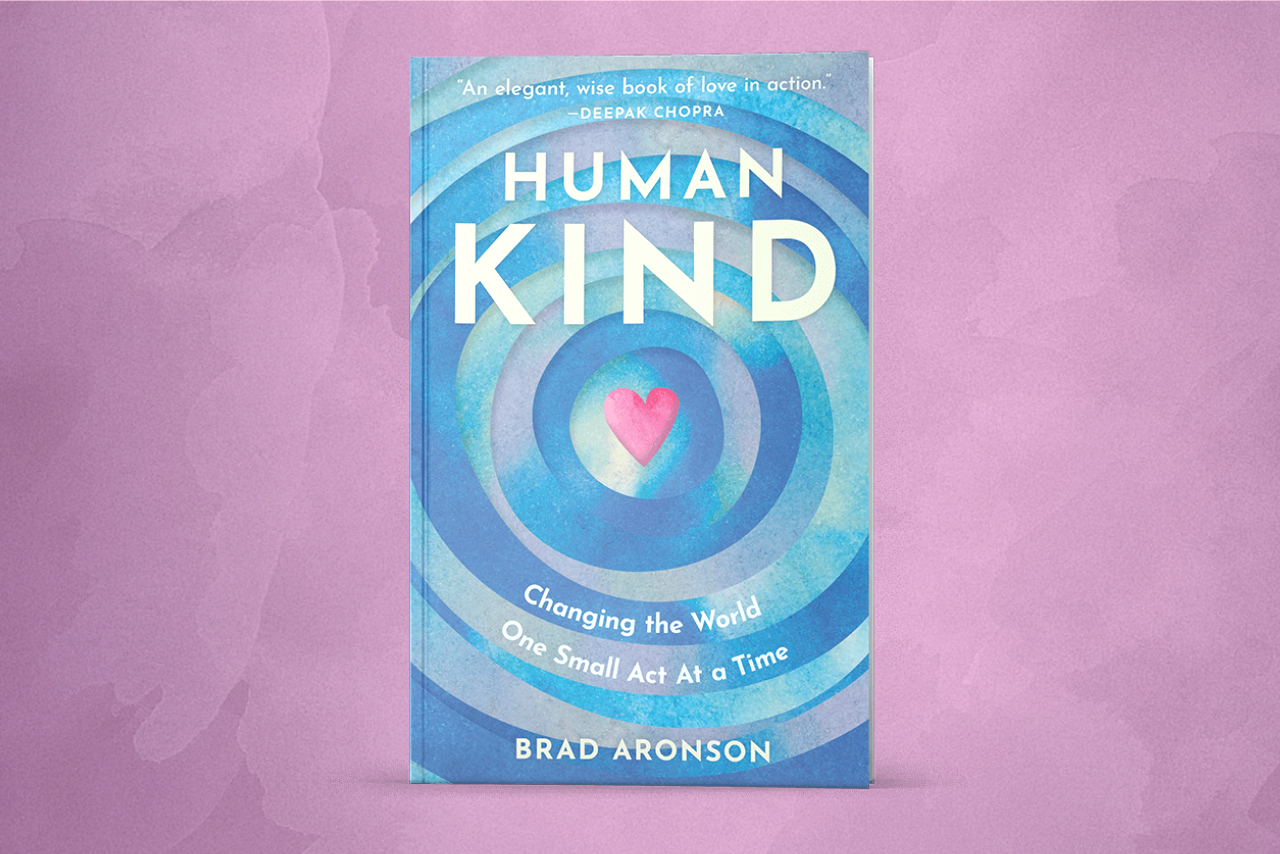
    Last week I ran a giveaway for Brad Aronson’s HumanKind: Changing the World One Small Act at a Time—a heartwarming book that highlights ordinary people doing extraordinary things and offers practical tips for everyday kindness.

    I had ten books to give away—four for the blog, three for Facebook, and three for Instagram—and I invited you all to share an act of kindness you’d recently received or witnessed for a chance to win. The four blog winners, chosen at random, are:

    Please email me at email (at) tinybuddha.com so I can get a book out to you!

    If you didn’t win a copy, I highly recommend you grab one for yourself or a loved one here (perhaps as a Mother’s Day gift to thank your mom for her kindness, or a graduation gift to help someone create a sense of purpose grounded in love).

    There’s a reason HumanKind has over 1,300 ratings on Amazon and endorsements from Deepak Chopra, Gabby Bernstein, and Neil Pasricha, among others. As one reviewer wrote, “It’s a feel good, do good book.”

    Judging from the stories many of you shared last week, I know you all appreciate little reminders that there’s a lot of love in the world, and HumanKind is cholk-full of them.

    Since you may not have seen the entries on social media, and I was deeply moved by the acts of kindness shared, I decided to post ten from each platform here on the blog. I hope they give you all the feels and boost your mood as they lifted mine!

    Acts of Kindness Shared on Instagram

    1. The last time we were in a metro, I stood up and gave my seat to an old lady. My eight-year-old boy observed this and kept quiet. A few weeks later, we were on a bus that carries people to the plane from the airport, and my boy stood up even before me to help an aged uncle with his bag and offered him his seat. He looked at me and winked like “I got this.” I felt so proud! ~@thearistochique

    2. I’m now in a wheelchair and can’t do a lot of things around my house without pain. My neighbor came over yesterday and cleaned my house. I was in tears being that I was so grateful. ~@susan1228r

    3. One afternoon my boss told me to log off and spend the last couple of hours in self-care. Amazing act of kindness. ~@brensiegollihue

    4. After a tragic loss in my family, my students welcomed me back to class by filling the whiteboard with sweet and encouraging messages. I don’t think I’ll want to erase them! ~@christa_ha

    5. I recently found out in January I have Stage 3 kidney disease. I have to watch my sugar to keep it under control. Yesterday was my birthday. I was a little sad because I knew I wouldn’t be able to have a birthday cake. One of my coworkers showed up and surprised me with a sugar-free birthday cake. Her thoughtfulness really touched me. ~vanellaj5

    6. When I was walking my dog last week, someone randomly gave me a dog toy they found on the ground (a rubber ball that looks like a baseball). Today, I took that ball with me to the dog park and donated it as a community toy for all dogs to play with. ~@saira.ashlee

    7. My boyfriend is incredibly selfless, he is always, always, always trying to help others. He recently helped a homeless person get gloves because their hands were in terrible shape from being on the streets so long. During their interaction, the man mentioned to my boyfriend he wanted to call his dad. My boyfriend called, and the father was ecstatic was there within fifteen mins to pick his son up. I told my boyfriend his kindness reunited that family, and he cried. ~coco__magnolia

    8. My landlord recently put a lock on the outside faucet so that I had to trek up and down the stairs from my apartment to water the few plants in the garden. The old lady downstairs noticed, filled eight one-gallon water bottles, and left them for me on the front steps. The plants were delighted, and so was I! ~@avabearbooks

    9. After having extreme hair loss following an extended COVID-related hospitalization, my spirits were low (along with my physical strength and lung capacity). Not only did friends cycle through safely to drop off meals for my family, I was also gifted handmade hair scarves and coverings.  ~@greenalien5000

    10. Our car repairman fixed our daughter’s car for free because he heard we were donating it to a boy who had cancer. Then he gave us plane tickets to fly home. ~@indy_blau

    Acts of Kindness Shared on Facebook

    11. As a voluntary support person for refugees, I have been amazed at people’s heartfelt willingness to help those arriving from war zones. Recently a woman—a single parent on a very basic income herself—donated a pram, highchair, toys, and clothes to the point that my car could not have held any more. The refugee family were in awe, and so was I. There is a lot of goodness in this troubled world. ~@Päivi Kinnunen

    12. My husband and I aren’t very plant-savvy, but we have a next-door neighbor who is! Our yard is much larger than theirs, but we don’t do anything special with it because we wouldn’t know where to begin. After several conversations about how we admire their garden and plants, our neighbor surprised us by planting a line of lilac bushes along the edge of our yard, and they’re now starting to bloom! ~@Melanie Hersh

    13. I am a paraprofessional in a high school where there are a lot of kids that come from rough households. I donated five prom dresses and I am doing makeup for the girls’ day of free of charge. ~@Jessica Ryan

    14. I am a nurse at a cancer clinic and watched one patient buy an obviously underserved patient lunch. The recipient was so grateful. ~@Kim Pirie

    15. I was in line at a grocery store, and I didn’t have enough money on my card. I was ready to put a few items back when the man behind me came up and slid his debit card to cover all my groceries—about $40 worth. That was so beautiful, a random act of kindness by a stranger. I plan on paying it forward when I can. ~@Susan Mahony

    16. We babysit two girls. One was upset over having lost her paci. Her younger sister popped out her own paci, stuck it in her sister’s mouth, and sitting side-by-side, put her arm around her sister. ~@Cindy Kline

    17. We live in a small West Virginia town, and an elderly townsperson hadn’t been seen out and about. She was a regular at the local library. The librarian was worried and knew that this person had health issues and no mode of transportation. She hadn’t been to the library for two days. They reached out to me. and I investigated with law enforcement, and we found her at home—no heat and no water.

    Local law enforcement delivered milk, bread, and personal hygiene products. We offered to put her in a local motel while we restored heat and water. She declined and thanked us for the offer. Local contractors volunteered to help with heat and to repair water pipes. Adult protective services helped with the situation too. I am proud of our community for working together to help a neighbor in need. This is what community is all about! ~@Bill Dawson

    18. I was trying to make a left turn onto a busy road when the next driver saw a break in traffic and slowed to let me turn. A very kind rush hour gesture. I then paid it forward by allowing someone to turn in front of me. We can all use a little rush hour kindness! ~@Lisa Pogge Bragano

    19. My eighty-four-year-old mother helps make “Mercy Meals” for people who are sick, elderly, or have been in the hospital, to make sure they get a nutritious and satisfying meal until they are back on their feet again. ~@Ryan Sherbrooke

    20. The kindest thing I’d ever received was when I was getting ready to transition from a job. Instead of a going away present, a thoughtful coworker gave me ten $20 Walmart gift cards with a card that said, “You always seem to know where help/kindness is needed.” My kids helped me carefully choose where each card should go—and really loved giving the last three away to random folks while shopping. I’m tearing up just thinking of the ripple her kindness sent forth! ~@Brooke Hall

    I don’t know about you, but I can’t get enough stories like these—tiny reminders that the world is full of good people who care and want to help. That’s why I love HumanKind. It’s the kind of book that fills you with hope and joy and inspires you to pay it forward, and the book itself is a kindness story, with all author royalties going to Big Brother, Big Sister.

    Thank you, Brad, for this gift to the world—and thank you to everyone who shared a story here and on social media!

    **Some entries were slightly edited for grammar or length.

  • HumanKind: The Inspiring, Uplifting Book We All Need to Read (Giveaway!)

    HumanKind: The Inspiring, Uplifting Book We All Need to Read (Giveaway!)

    A while back I shared a quote by an unknown author that reads:

    “You know who’s going through a lot right now? Literally everyone. Just be kind.”

    It got me thinking about all the struggles we assume other people don’t have—because we’d never guess from the looks of them.

    You’d never guess that your confident colleague struggles with PTSD from childhood abuse and neglect.

    You’d never guess that your boisterous brother-in-law beats himself up because he doesn’t earn enough to get his family out of debt.

    You’d never guess that your collected cousin cries in the bathroom every day because she’s overwhelmed by parenthood and scared she’s messing it up.

    You’d probably also never guess how many times you’ve been someone’s lifeline, simply by being kind.

    A hug, a hand, an ear, a compliment—small acts of support and encouragement like these can help someone believe in themselves and their future when they feel like giving up.

    And it’s not just the gesture itself that makes a difference, though a little bit of support can provide a massive amount of relief. It’s the reminder that there are good people out there who care and want to help.

    There’s little more powerful than reminding someone there’s more love in the world than hate. Give someone the gift of faith in humanity, and you’re literally giving them the world—a world of light to believe in, no matter how dark things may seem.

    This is why I keep re-reading and gifting Brad Aronson’s book HumanKind: Changing the World One Small Act a Time. The kindness stories are like a palate cleanser after a tough day has left a bad taste in my mouth. They touch me, restore me, and inspire me to be someone else’s reason to believe in people.

    And all the author’s royalties go to Big Brothers, Big Sisters, which means buying a copy is an act of kindness for both yourself and someone else.

    I’ve written about the book several times now, so it’s possible you’re already familiar with Brad’s story. You may already know he was inspired to write this book after his friends and family rallied around him and his wife Mia during her battle with leukemia. You may also know that the book offers both uplifting stories and practical tips to make a difference in the world.

    You might not know that someone in your life needs this book right now and will likely refer to it for years to come. That they may highlight passages and dog ear pages that give them a sense of peace and purpose, and maybe even pay it forward to someone else whose life will be better and brighter because of it. Someone who’s going through a lot right now, though no one would guess or believe it.

    That’s the thing about kindness: it ripples in ways you could never anticipate and will likely never know. But you can know you’re being the change you want to see, and that you’re changing the world even if you don’t see it.

    True to form, Brad has generously offered ten copes of HumanKind to Tiny Buddha readers, four of which I’ll giveaway here on the blog (the others on social media).

    To enter to win a copy, share an act of kindness you’ve recently received or witnessed in the comment section below.

    You can enter until midnight PST on Sunday, April 17th. I’ll update this post with the winners after I choose them and will also send a follow-up email next week.

    If you’d like to buy a copy for yourself or a friend now (which I highly recommend!), you can grab one on Amazon here.

  • Book Giveaway, HumanKind: Changing the World One Small Act at a Time

    Book Giveaway, HumanKind: Changing the World One Small Act at a Time

    The other day, while scrolling through my Facebook feed, I came across the kind of uplifting story that makes my exhausted-mom-bleeding-heart melt.

    It was from a mother who’d decided to fly alone with her two-year-old and five-year-old, only to find herself overwhelmed by two screaming, overtired children.

    I can imagine the stress and anxiety she felt, given that I often feel that way just sitting in my living room with my poor-sleeping baby and high-energy toddler—which is why I almost shed a tear when I read about the other moms who stepped up to offer help.

    One fellow mama let the solo mom cut her in the security line, another helped carry all her bags, and a third woman held one of her children for a long stretch on the flight and carried him all the way to baggage claim, where she left with a hug and a “Merry Christmas!”

    Right when she needed it, this mother found herself the proverbial village it takes to raise a child—through the air and back again. (See what I did there?!)

    Whether it was the spirit of the holiday season or just basic human decency, these women made a tremendous difference through their selfless acts of kindness.

    I don’t know about you, but I can’t get enough stories like these—tiny reminders that the world is full of good people who care and want to help.

    It’s easy to feel discouraged sometimes, whether you’re covered in spit-up at 3am or collapsed under the weight of all your responsibilities after one too many days burning the candle at both ends.

    In moments like these, when we’re feeling drained and depleted, we need to remember that there are kind, loving people all around us who are willing and eager to lend a hand, if only we speak up.

    For me, and for many, that person is Brad Aronson. Not only did he amass a beautiful collection of kindness stories in his bestselling book HumanKind: Changing the World One Small Act at a Time, he walked his talk just recently by offering me his time and support after I reached out for advice.

    True to form, he’s also offered ten free copies of HumanKind to Tiny Buddha readers, and I couldn’t be more excited to get his inspiring book into even more hands.

    There’s a reason Forbes referred to it as “the most uplifting and life-affirming book in years.”

    HumanKind shines a spotlight on the best of humanity and includes countless practical suggestions and ideas to help us bring out the best in ourselves.

    What strikes me most about HumanKindaside from the fact that all author royalties go to Big Brothers Big Sisters—is that the people profiled are just like you and me. They’re everyday people with struggles of their own who one day decided they wanted to do something good—then did.

    Whether you’re looking for confirmation that the world is a caring place or inspiration to make a difference in your own sphere of influence, HumanKind has you covered.

    It will feed your spirit, fuel your motivation to give back, and fill your heart with hope.

    To enter to win a free, signed copy of HumanKind,  comment below, sharing why you or someone you love would appreciate this book. Then email the link to your comment to kind@bradaronson.com so Brad has your email address to contact you if you win.

    You can enter until midnight PST on Sunday, December 12th. Brad will contact the winners directly the following week.

    Happy Thursday, friends!

  • Giveaway: Dalai Lama’s “Inner World,” Mantras & Teachings Set to Music

    Giveaway: Dalai Lama’s “Inner World,” Mantras & Teachings Set to Music

    The winners for this giveaway are:

    If your name is listed above, please email your address to me at email@tinybuddha.com so I can get your CD set out to you!

    Hi friends! I’m excited to share that the Dalai Lama has released his first music offering, an 11-track album of mantras and teachings set to music, and I have five free CD sets to give away to the Tiny Buddha community!

    The CD set was actually released just recently on my birthday, August 28th, after a July 6th release on digital platforms to honor the Dalai Lama’s 85th birthday. Upon the digital release, Inner World debuted at No.1 on Billboard’s New Age Album chart.

    The set features 2 CDs in a beautiful, case-bound, hardcover package, along with a 28-page booklet with stunning artwork and explanations of the mantras and their benefits.

    CD 1 is the standard Inner World album while CD 2 features a disc of album instrumentals.

    “The messages couldn’t be more poignant for our current social climate and needs as humanity.” ~USA Today

    “A genuinely enjoyable, enriching experience…” ~Clash

    “Fusing music with Buddhist chants, His Holiness uses his resounding voice as an instrument, reciting traditional Tibetan Buddhist prayers and presenting teachings on issues close to his heart.” ~Tricycle

    About Inner World

    The origins of Inner World began in 2015, when one of the project’s co-executive producers and a longtime student of The Dalai Lama, Junelle Kunin, wrote to him requesting his participation. She felt that an album by such a compassionate and wise being would help people who struggle with emotional stress. And he agreed.

    She and her husband, Abraham Kunin, spent the next five years working with a small team to bring the project to life.

    The Dalai Lama’s recordings have been thread through music composed by Abraham and performed on thirty-plus instruments by himself and a cast of collaborators from around the world. The composer integrated the live performances with artful programming and production, building a peaceful bedrock for these sacred offerings.

    Net proceeds from the sales of Inner World will go to The Gaden Phodrang Foundation of the Dalai Lama, chosen program: Social, Emotional, and Ethical Learning, an international K-12 education program.

    How to Enter the Giveaway

    To enter to win one of 5 free CD/booklet sets, leave a comment below before midnight PST on Tuesday, September  8th.

    You don’t need to write anything specific, but if you’d like, you can share your favorite quote or affirmation to inspire other community members who scroll through the comments.

    I will list the winners’ names at the top of this post on Wednesday, September 9th. Please note you’ll need to check back here then to see if you’ve won so you can email me your address.

    If you’d like to order Inner World now, you can get the 2CD and book edition here.

    Happy Friday, friends!

  • How to Meditate Like a Buddhist: Book Giveaway

    How to Meditate Like a Buddhist: Book Giveaway

    The winners have been chosen! If you see your name below, please send your address to email@tinybuddha.com so I can get a copy out to you!

    I’ve often wished I found meditation much earlier in life.

    Like in high school, where I once burst a stress ball from excessive squeezing, shooting little beans or beads or whatever filled the ball in every direction around my overloaded desk. Or in college when the triad of my depression, anxiety, and bulimia began to feel like the foundation of my identity.

    I wish I knew when I was young that meditation could heal me both physically and psychologically and help me find a space inside my mind that wasn’t so loud and painful—not to mention the effects it would have on my relationships.

    It’s almost impossible to be available to the people around you when you’re constantly on edge, quick to react emotionally, and slow to let things go.

    Just like meditation creates space in our minds, it creates space in our relationships; it’s strips away our insecurities and judgments and grudges and enables us to meet each other, fully and authentically, in the present moment.

    Though I wish I found meditation years ago, I likely wouldn’t have believed you if you told me, back then, just how profoundly it would change my life.

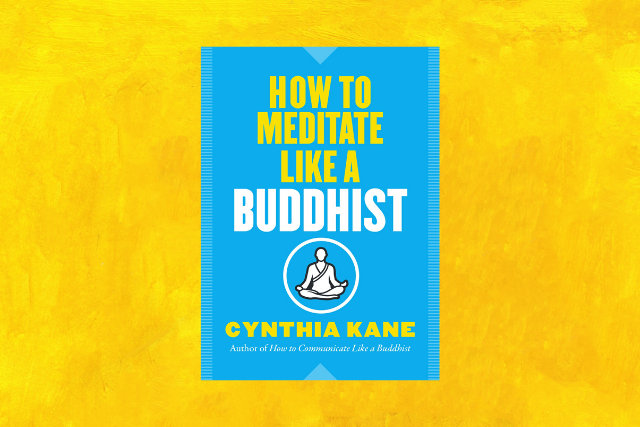
    I now believe meditation is the most powerful tool for personal transformation, and I’m passionate about sharing the practice and its benefits—which is why I’m thrilled to introduce you to How to Meditate Like a Buddhist, the latest book from bestselling author and certified meditation instructor Cynthia Kane.

    Before discovering meditation, Cynthia often felt anxious, disconnected, and overwhelmed by her daily to-do list. No matter what changes she made to her external world, her internal world remained in chaos, and she eventually concluded she was fundamentally broken.

    Peace, presence, and purpose eluded her, until she had no choice but to address her feelings in the aftermath of a tragic loss. Self-destructing and deteriorating both mentally and physically, Cynthia needed to heal her mind, body, and spirit. That’s when she found meditation. And like me, she was blown away by its effects.

    “If you had told me eight years ago that I would find peace in my life, form deep connections with others, see beauty in the world, stop judging and evaluating myself constantly, and change my relationship to fear, death, stress, and anxiety, I would never have believed you. Yet here I sit, writing this book to let you know this is exactly what happened and that beginning a meditation practice was the cornerstone to this way of life.” ~Cynthia Kane

    And thus begins How to Meditate Like a Buddhist, a book that teaches basic meditation practices and their benefits from a Buddhist perspective. By the time you reach the end of the book, you will know:

    • What meditation is and what it isn’t
    • The simple tools you need to practice
    • The many types of meditation you can choose from
    • Some of the obstacles you’ll encounter when practicing
    • How to incorporate meditation into your life with a meditative outlook

    Each chapter begins with a Buddhist story or teaching and ends with hands-on practices to help you bring the benefits of meditation into your everyday life.

    The book even includes structured programs for a 10-Day Meditation Challenge, a 30-Day Meditation Challenge, and a 1-Day Home Meditation Retreat.

    Comprehensive yet easily digestible, How to Meditate Like a Buddhist outlines everything you need to know to start a meditation practice and create mental freedom.

    We can’t change the past or control the future, but we can always come back to the present moment, releasing our worries about what’s behind us and our fears about what’s coming. It’s not easy, and we’ll likely still struggle at times. But that’s why it’s called a practice. And the beautiful thing is once we learn how to meditate, we can always come back to it, no matter how much time has passed.

    The Giveaway

    To enter to win one of five free copies of How to Meditate Like a Buddhist, leave a comment below sharing one reason you’d like to form a meditation practice (or if you already have one, what inspired you to start). You don’t need to write anything specific, and your comment can be as short or as long as you’d like.

    You can enter until midnight PST on Wednesday, June 17th. I will list the winners’ names on the top of this post some time on the 18th. Please note you will need to check back then to see if your name has been chosen so you can then email me your address.

    **Click here to read an excerpt from How to Meditate Like a Buddhist and to sign up for a special live video workshop, taking place on June 22nd, available to anyone who purchases the book, in any format!

  • Giveaway: Tiny Buddha’s Worry Journal – A Tool to Calm Your Mind

    Giveaway: Tiny Buddha’s Worry Journal – A Tool to Calm Your Mind

    THE WINNERS HAVE BEEN CHOSEN! 

    Thank you, everyone, for opening your hearts and sharing a piece of yourself and your journey. I am amazed and inspired by all of you, and so grateful that you shared your strength and your stories here.

    I wish you all peace, joy, and so much love!

    The winners are:

    Please send your address to email@tinybuddha.com so I can send you a copy of the Worry Journal!

    Though life has become a lot less busy for many these days, I suspect a lot of us have incredibly busy minds given all the uncertainty we’re facing.

    It’s easy to get caught up in worst-case and what-if scenarios, trying to create some sense of control in a world where we have very little.

    I know, because I’ve done this many times. I’ve locked myself in a corner in my mind, filled my internal whiteboard with every possible combination of outcomes, and obsessed over how I could avoid potential pain—ironically, causing myself immense pain in the process.

    To some extent advance planning can be helpful. It gives us a chance to prepare for the worst and ascertain how we can do our best to get through it. But beyond a certain point it becomes maddening.

    It’s natural to have worrisome thoughts—they arise without our conscious choice. But we can consciously choose how we engage with them instead of spinning them into a tornado of anxiety that will surely destroy our peace, and possibly our health.

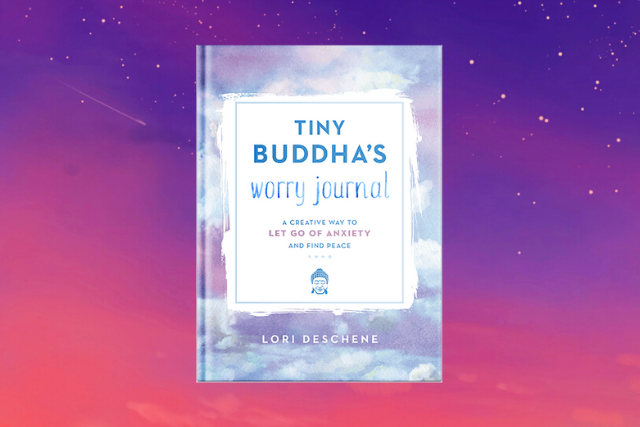
    This is why I created Tiny Buddha’s Worry Journal a couple years back: to help us all work through the fearful thoughts that would otherwise consume and control us.

    With writing prompts, quotes, questions for contemplation, and coloring and doodle pages, the Worry Journal can help you feel calmer, less anxious, and more present in your life.

    It’s a tool to help you reflect and then release, while broadening your perspective and helping you develop trust in your own ability to handle whatever’s coming.

    I think we all need that right now—a reminder that we’re stronger than we think and more resourceful than we realize. And that is why I’m giving away three free copies of Tiny Buddha’s Worry Journal.

    The Giveaway

    There are two things you need to do enter the giveaway:

    1. Subscribe to Tiny Buddha if you’re not already a subscriber. (You’ll receive instant access to Tiny Buddha’s 30-Day Health Challenge and three cool desktop wallpapers!) You can join the list here.

    2. Leave a comment below completing one (or more!) of these prompts from Tiny Buddha’s Worry Journal:

    • Today, I choose to let go of things I can’t control, including…
    • I recognize that I don’t need to have all the answers right now. Today, I give myself permission not to know…
    • Dear inner critic: You always focus on everything I’m doing wrong, but I know I’m doing a lot right, including…
    • I know I’m strong enough to handle whatever comes at me, because I’ve survived a lot, including…

    Your comment can be as short or long as you’d like, and you can enter until midnight PST on Sunday, May 31st.  I will list the winners at the top of this post some time on Monday, June 1st.

    Please note you’ll need to check back then to see if you’ve won so you can email me your address.

  • Book Giveaway, HumanKind: You’ll Laugh, You’ll Cry (Really!)

    Book Giveaway, HumanKind: You’ll Laugh, You’ll Cry (Really!)

    UPDATE: Brad has generously decided to give away seven books instead of five. If your name is listed below, please contact me at email(AT)tinybuddha(DOT)com with your address so I can share it with him! The winners are:

    As I write this, I’m having one of those days. I feel so agitated it’s like there’s a tornado under my skin, yet so drained it took me five minutes to get my fingers to start typing words.

    I’m guessing I’m not alone in feeling a lot of intense emotions as of late, in a homebound life in this highly uncertain world. To be honest, I always experience intense emotions, but today it’s felt like someone poured gas on the flaming feelings within.

    Then a minute ago, I heard a little giggle and turned around to see my baby’s huge grin two inches from my face. My boyfriend had brought him in to lift my spirits because he knows how much that cherubic little face cheers me up. And did it ever.

    Oh, that face, the innocence, the joy, the unbridled excitement to see me, even when I feel like I’m sucking at life. That, right there, is pure bliss—and the kind of simple act of kindness that can make a huge difference in my day.

    Maybe for you it’s a “just thought of you” text with a picture of something you’d enjoy if you were there. Or maybe it’s a compliment on something you thought everyone took for granted—like your omelets or your optimism or your oddball sense of humor.

    We all need a little pick-me-up from time to time, and even if it’s not badly needed, it’s always appreciated. Because who doesn’t love feeling loved? Who doesn’t think it’s amazing to know someone’s thinking of them?

    Though it’s always a perfect time for kindness, I think it feels even more comforting now, when many of us are itching for more human interaction and looking for reasons to stay hopeful.

    Which is why I’m especially grateful for Brad Aronson, who’s kindly offered five free copies of his book HumanKind to Tiny Buddha readers.

    He wrote this book solely to inspire kindness by sharing stories of kindness—and he’s donating all his earnings to the non-profit Big Brothers Big Sisters.

    It’s the kind of uplifting book that makes you feel good about life because it shines a spotlight on the best of humanity—including the proverbial village that came together to help Brad and his wife Mia through her battle with leukemia.

    Chapter after chapter, Brad introduces us to everyday heroes, people using their talents and interests to help make the world a better place, starting with their own sphere of influence.

    And it’s not just a book of stories; it also offers dozens of easy ways to make a difference for the people around you through simple words and deeds.

    It’s encouraging. It’s inspiring. It’s a light in the dark. Like a grinning little face on an especially hard day.

    If you’d appreciate a free copy of HumanKind, enter the giveaway by commenting below, sharing either an act of kindness you recently witnessed or the kindest thing someone’s ever done for you.

    You can enter until midnight PST on Sunday, May 3rd. I’ll update this post with the winners’ names on the 4th,

    Stay hopeful, stay kind, stay safe, my friends.

    Sending lots of love from my pile of bricks to yours.

  • Book Giveaway: Tiny Buddha’s Gratitude Journal and The Self-Love Experiment

    Book Giveaway: Tiny Buddha’s Gratitude Journal and The Self-Love Experiment

    UPDATE: The winners for this giveaway are Alexandra Martinez and Kathy Kortegaard.

    Happy October, friends! Over the past several months since I launched Tiny Buddha’s Gratitude Journal, I’ve been excited to receive some wonderful feedback on the thought-provoking prompts and questions, and the coloring pages.

    I decided to create this journal because adopting a gratitude practice has been life changing for me; it’s shifted my perspective, boosted my mood, and enabled me to hold on to optimism during some of the darkest times of my life.

    And I chose to include coloring pages because I’ve been obsessed with adult coloring since it became a thing. Sitting with my markers and a book with intricate pictures or mandalas, I feel relaxed, completely focused on the present, and joyfully connected to the creative part of my brain.

    If you haven’t yet picked up a copy—or if you’d like an extra for a friend—now’s your chance to win one.

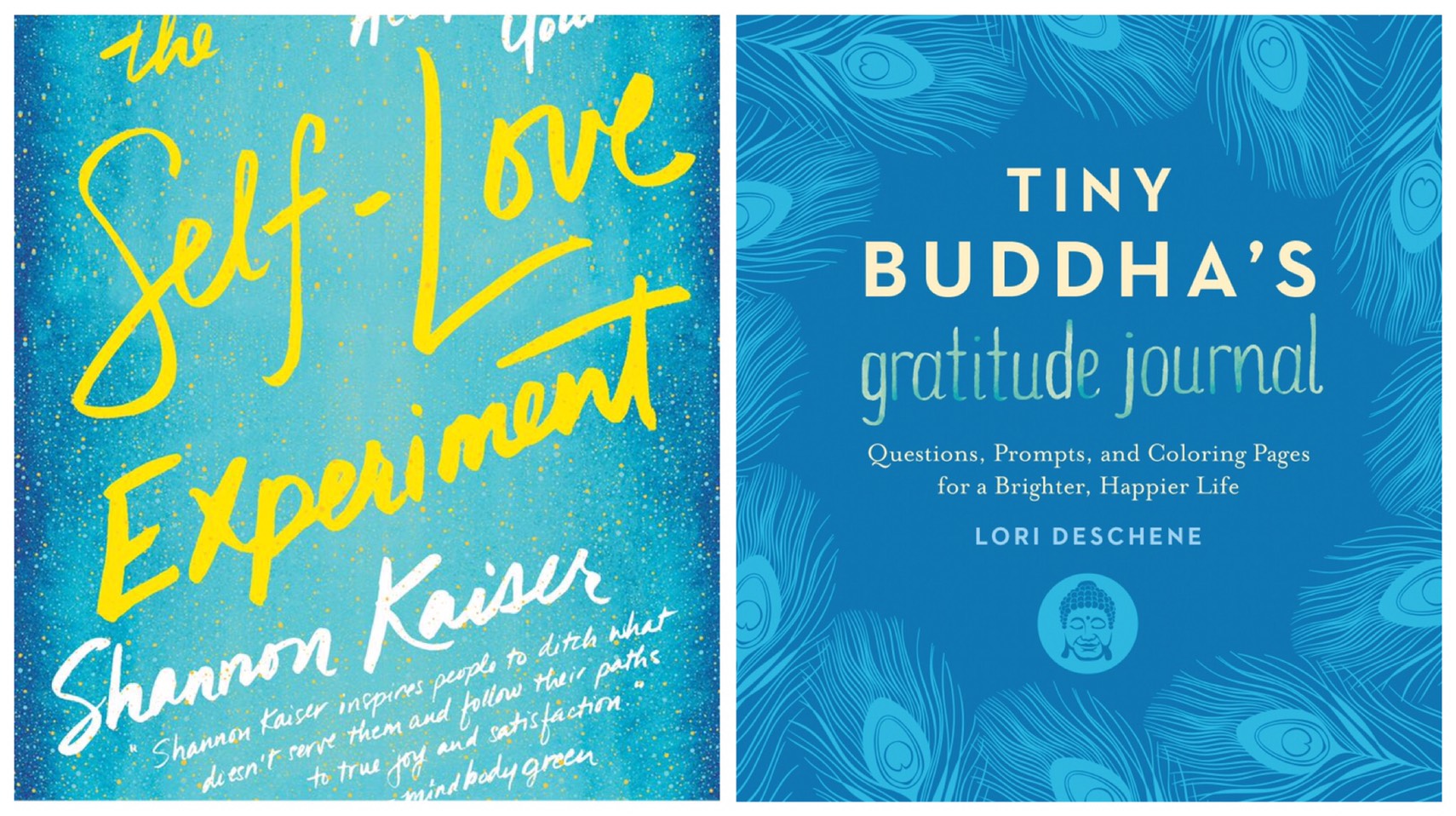
    And because the best gratitude practice is rooted in appreciation for yourself, I’m also giving away a copy of my good friend Shannon Kaiser’s new book The Self-Love Experiment.

    About Tiny Buddha’s Gratitude Journal

    This flexibound interactive journal includes questions and prompts to help you reflect on everything that’s worth appreciating in your life.

    Sprinkled throughout the journal are fifteen coloring pages depicting ordinary, often overlooked objects that enhance our lives, with space for written reflection on the page.

    Tiny Buddha’s Gratitude Journal will help you recognize your blessings, focus on the positive, and foster optimism so you can be your best, happiest self every day.

    About The Self-Love Experiment

    Whether you want to lose weight, land your dream job, find your soul mate, or get out of debt, it all starts with self-love.

    Shannon Kaiser learned the secrets to loving herself, finding purpose, and living a passion-filled life after recovering from an eating disorder, drug addiction, corporate burnout, and depression. She walks you through her own personal experiment, a simple plan that compassionately guides you through the process of removing fear-based thoughts, so you can fall in love with life.

    If you want to change your outcome in life, you have to change your daily habits and perspective. The Self-Love Experiment will help you do just that.

    The Giveaway

    To enter to win a copy of Tiny Buddha’s Gratitude Journal or a copy of The Self-Love Experiment:

    • Leave a comment below sharing something you’re grateful for today or something you appreciate about yourself (or both!)
    • For an extra entry, share the link to this giveaway on one of your social media pages and include that link in a second comment

    You can enter until midnight, PST, on Sunday, October 8th. Books will ship during the week of October 16th (as I’ll be on vacation before then).

    If you’d rather not wait to grab both of these books you can find Tiny Buddha’s Gratitude Journal on Amazon here, and The Self-Love Experiment here.

    FTC Disclosure: I receive complimentary books for reviews and interviews on tinybuddha.com, but I am not compensated for writing or obligated to write anything specific. I am an Amazon affiliate, meaning I earn a percentage of all books purchased through the links I provide on this site. 

  • Tiny Buddha’s Gratitude Journal Giveaway

    Tiny Buddha’s Gratitude Journal Giveaway

    UPDATE: The winners for this giveaway have been chosen. They are:

    • Keri Olson
    • Your Computer
    • Kelly Hawkins
    • Jadice-Teal N Momz
    • Maryrose

    Hi friends! Last week I launched Tiny Buddha’s Gratitude Journal, after sharing some of the book’s fifteen coloring pages over the past several weeks. I’ve received some wonderful feedback so far, and I’m thrilled to know that so many of you are finding the book fun and helpful!

    Along with today’s coloring page, I’m running a giveaway, offering five free copies. If you’ve already purchased one for yourself, you may want to enter the giveaway for a chance to gift one to a friend.

    About the Journal

    Including questions and prompts pertaining to both your past and present, the journal will help you see your life through a new, more positive lens.

    The book also includes fifteen coloring pages, depicting awesome things we often take for granted, like nature and music.

    With space for written reflection, these pages provide all the benefits of coloring—including mindfulness and stress relief—and also guide you to recognize the beauty in the ordinary.

    Whether you’ve been gratitude journaling for years or you’re just giving it a try for the first time, Tiny Buddha’s Gratitude Journal will help you access a state of inner peace, contentment, and joy.

    The Giveaway

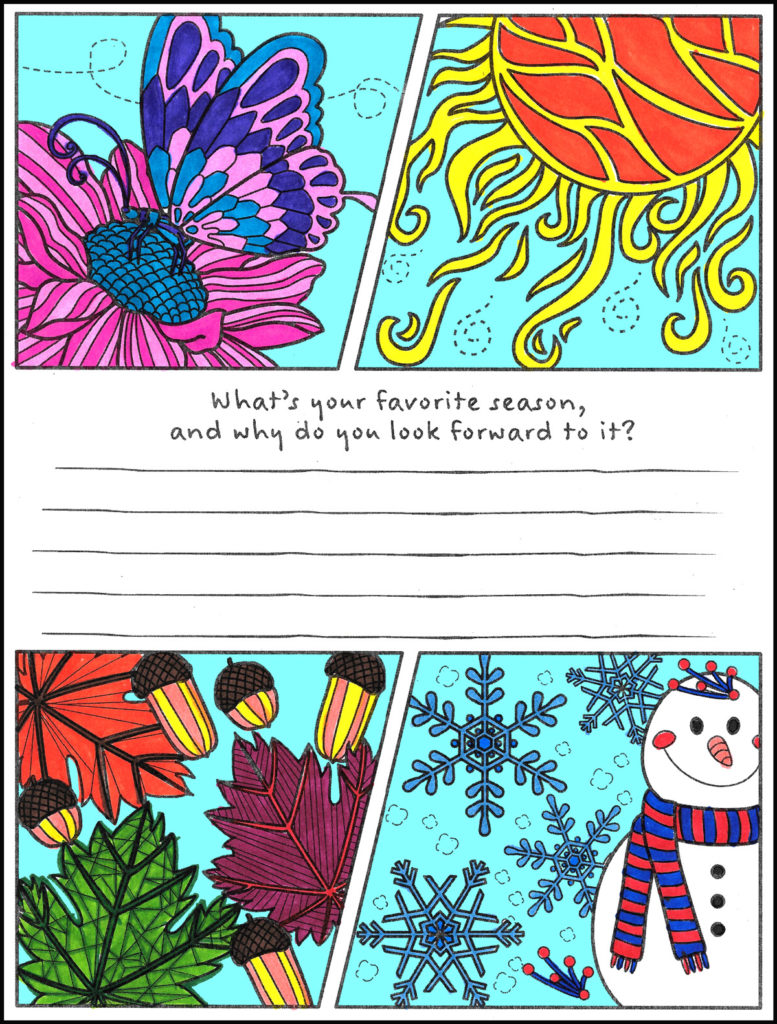
    • To enter to win one of five free copies, leave a comment below answering the question in the coloring page above.
    • For a second entry, share this post on one of your social media pages and include the link in a second comment.

    You can enter until midnight, PST, on Monday, June 26th.

    If you’ve already received your copy, I would appreciate if you’d leave a review on Amazon here. It doesn’t need to be long—even a tiny review can make a big difference!

    And if you’ve already colored a page or two, I’d love to see it! Please share it on social media using the hashtag #tinybuddhagratitude

    Thanks so much, everyone. I am grateful for you!

  • Love Hurts: Buddhist Advice for the Heartbroken – Interview and Book Giveaway

    Love Hurts: Buddhist Advice for the Heartbroken – Interview and Book Giveaway

    Note – The winners for this giveaway have been chosen. They are:

    • Jennifer Moore Hardesty
    • Margie Lynn
    • Dr. Mac
    • Ryan
    • RB
    • Justme
    • Rogério Cardoso
    • Fernanda Garza
    • Benjamin E. Nichols
    • Terri Cross

    When you’re dealing with heartbreak, it can feel like the pain will never go away.

    You may know, intellectually, that everything heals with time, but in that moment, when you’re suffering, it’s hard to hold onto hope.

    Like all humans, I’ve experienced my fair share of loss, and I’ve felt scared, depressed, alone, betrayed, rejected, regretful, and angry—with other people, with myself, and with the world.

    Losing someone or something that has become a part of your identity can feel like losing a limb, and how do you go on when you’ve lost a part of yourself?

    I’ve learned that there isn’t a one-size-fits-all answer to that question. There’s no magic solution that helps us grow, let go, and move on. There are, however, lots of things we can do to help ourselves when struggling with the many nuanced emotions that come up when we’re grieving a painful loss.

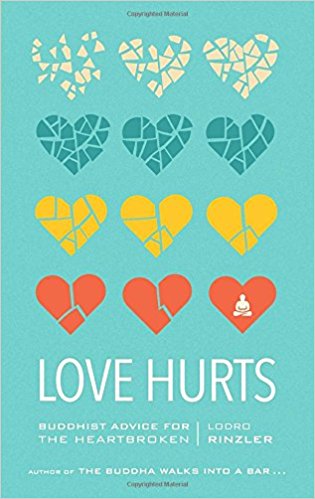
    Tiny Buddha contributor Lodro Rinzler has tackled these varied challenges in his new book, Love Hurts: Buddhist Advice for the Heartbroken. 

    This “short and compact first-aid kit for a broken heart” offers simple, practical wisdom to help you take good care of yourself and work through your pain. 

    With chapters that offer advice based on what you’re feeling, Love Hurts may just what you need to get through your hardest days and find a light at the end of the tunnel.

    I’m grateful that Lodro took the time to answer some questions about his book, and also that he’s provided ten free copies for Tiny Buddha readers.

    The Giveaway

    To enter to win one of ten free copies of Love Hurts: Buddhist Advice for the Heartbroken:

    • Leave a comment below (you don’t need to write anything specific—“count me in” is sufficient)
    • For an extra entry, share this interview on one of your social media pages and post a second comment with the link

    You can enter until midnight PST on Sunday, March 19th.

    The Interview 

    1. Tell us a little bit about yourself and what inspired you to write this book.

    I’m a meditation teacher and author. I grew up in the Shambhala Buddhist tradition, started meditating at the age of six, and have been teaching meditation for the last sixteen years under the guidance of my teacher, Sakyong Mipham Rinpoche. I’ve written six books on the topic and co-founded the network of meditation studios known as MNDFL.

    On an outer level, I wrote this book because I work with a lot of people who are suffering from heartbreak and I wanted to talk to them directly, knowing that I couldn’t sit down and have tea with everyone.

    On an inner level, for a man in his thirties I have known a lot of heartbreak. Yes, the romantic kind, but also from too many people who have died, many around my age, and from every day reading the news and my heart breaking anew, seeing how many people are perpetuating horror and terror on others due to discrimination.

    On a secret level I wrote this because I needed to understand how heartbreak works, and writing is how I process information. That’s why I birthed this book.

    2. Your book isn’t just for people who are healing from a breakup or divorce; you define heartbreak in much broader terms. Who is this book for?

    It’s for humans. We all experience heartbreak. It might be personal, such as a breakup, sure, but it might also stem from job loss, the death of a loved one, or just not feeling like we’re living up to our potential. It might also be more societal, in reaction to hatred playing across the news.

    It’s odd because in some sense, I’m constantly rooting against my own book; I don’t want people to need a book on heartbreak—I want them to feel happy—but so many of us are experiencing heartbreak right now so I’m glad it’s available as a resource.

    3. I love how you sectioned the book based on what readers may be feeling or experiencing. What made you decide to write the book this way?

    When you’re heartbroken, you can’t sit down and read a ten-step plan for healing; heartbreak is messier than that.

    It’s this simple term that encapsulates so many strong emotions, including anger, despair, frustration, loneliness, and more. The underlying emotions of heartbreak—despite what caused it—are all too similar, so I knew I could address those, even though I could never dream of all the scenarios that might spark heartbreak.

    In that sense it’s a bit like a choose-your-own adventure book, where you can read about whatever you’re dealing with on that particular day.

    4. The section heading that most jumped out at me reads “If you feel like you have no right to be heartbroken.” Why do you think some of us feel this way, and why is this not true?

    So many of us feel ashamed of our heartbreak. When I would meet with people to hear their heartbreak stories, people were so shy at first. They would come in and think they would be talking to me about their last big relationship.

    I would ask the question, “What is your experience of heartbreak” and the flood gates would open. They would then start talking about their dead cat, or their high school sweetheart from decades before, and at some point note that they felt totally confused as to why they were heartbroken about this thing that was ages ago or, based on societal standards, “not a big deal” but it was their honest experience.

    Whatever breaks your heart, breaks your heart. It’s quite simple. The last thing we need to do when we feel heartbroken is judge ourselves for feeling that way.

    5. What, in your experience, are the most important things we can do to take care of ourselves when dealing with heartbreak?

    Even the simplest of self-care acts make a big difference when we’re struck down by heartbreak. I recommend:

    • getting more sleep than you think you need
    • eating well, or at least eating (we often forget to when we’re depressed)
    • meditating
    • exercising in whatever way makes sense to you

    6. How does meditation help us cope with our losses and heal?

    There are many types of meditation out there. To get going, I often recommend mindfulness, where we are bringing our full mind to one thing such as the breath.

    There have been a lot of studies done in recent years about this form of meditation. It’s proven what the Buddhists have known for 2600 years: Doing it for even short periods every day increases focus and resilience and leads to a better memory and reduced stress.

    While I appreciate science backing up the practicality of meditation, here’s what it has done for me:

    It has helped me show up fully for every aspect of my life.

    It has helped me wake up to where I get stuck and shut down my heart.

    It has helped me be more present with simple activity in my daily schedule.

    It has helped me get to know, befriend, and ultimately love myself.

    Having established that foundation of love inwardly, I have been able to be kinder, more compassionate, and loving toward others. When I am with friends or on a date with my spouse, I am there, fully. When I am in a painful situation, going through a break up or holding my father’s hand as he died, I am there, fully. It has allowed me to be present with the wide variety of pleasures and pains that life brings.

    Meditation has been an incredible gift to me, particularly when it comes to showing up for my own and others’ heartbreak.

    I’ve discovered that the main way to move through heartbreak is to look directly at it and not flinch. To stay with our discomfort is the best way to move through our discomfort. For me, the best way to learn to stay with all the difficult emotions that come up around heartbreak is meditation.

    7. What do you think is the biggest mistakes most of us make when healing from heartbreak?

    Whenever I would meet with people about this topic, I would ask them how they take care of themselves in the midst of heartbreak. Indubitably, every single person would answer by saying, “Well, the thing I do that I know I shouldn’t is…” and then they would fill in the blank. “I over-eat sweet foods.” “I reach for a bottle of alcohol.” “I go online and find someone to hook up with.”

    When strong emotions come up, we don’t necessarily want to look at them; we want to run away from them and act out in a similarly harmful and habitual way. When you feel like that, I recommend taking a breath, coming back into your body, and seeing if you can stay with the energy of the emotion itself, as opposed to the storylines around it.

    8. What has helped you let go of anger and forgive after being hurt or rejected?

    In my own experience, one thing that helps me when I am suffering is simply to be heard, to be witnessed. When we sit one-on-one in the presence of each other we experience one another in a very human and honest way.

    Sometimes the best way to see ourselves through our heartbreak is to be with our heartbreak, and being with other people who can hold the space for that really helps.

    9. What is the main message you hope people take from this book?

    That you will heal. It may take more time than you would want it to take—and that’s the nature of heartbreak—but even the seemingly devastating emotions that come with this experience are impermanent and that is extremely good news. Because when you do heal, you will love again.

    You can learn more about Love Hurts: Buddhist Advice for the Heartbroken on Amazon here.

    FTC Disclosure: I receive complimentary books for reviews and interviews on tinybuddha.com, but I am not compensated for writing or obligated to write anything specific. I am an Amazon affiliate, meaning I earn a percentage of all books purchased through the links I provide on this site. 

  • 3 Steps to a Happier Life: Interview with Kristi Ling and Book Giveaway

    3 Steps to a Happier Life: Interview with Kristi Ling and Book Giveaway

    Girl and a rainbow

    The winners for this giveaway have already been chosen. They are:

    • Stuart Dods
    • Sheldon Dwyer

    People often tell us we have to choose to be happy, but what they don’t always tell us is how.

    How do we choose happiness when we’re dealing with life’s everyday struggles and devastating traumas and tragedies?

    How can we choose happiness when we’re grappling with persistent negative thoughts and overwhelming emotions?

    What exactly do we need to do—or not do—to overcome our challenges and demons and experience more joy in our daily lives?

    Tiny Buddha contributor Kristi Ling, a renowned happiness strategist and life coach, has created an amazing resource that answers those questions.

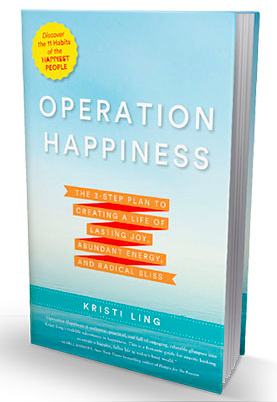
    In her book Operation Happiness: The 3-Step Plan to Creating a Life of Lasting Joy, Abundant Energy, and Radical Bliss, Kristi shares how she rebounded from a long-term illness, a divorce, and the sudden deaths of loved ones.

    Part memoir and part how-to guide, Operation Happiness blends personal storytelling, powerful insights, and practical tools and tips to help us live happier lives.

    I’m grateful that Kristi took the time to answer some questions about her book, and also that she’s provided two free copies for Tiny Buddha readers.

    Operation Happiness CoverThe Giveaway

    To enter to win one of two free copies of Operation Happiness:

    • Leave a comment below. You don’t have to share anything specific; “count me in” is enough. But if you feel inclined, share something that always makes you happy.
    • For an extra entry, share this interview on one of your social media pages and include the link in a second comment.

    You can enter until midnight PST on Sunday, January 15th.

    The Interview

    1. Tell us a little about yourself and what inspired you to write this book.

    I’d always struggled trying to be happy until my early thirties. Then, there was a point when I became so stressed, unhappy, and unwell that I hit a wall. I knew if I didn’t do something to change, I’d stay caught in that downward spiral. So, I quit my job at that point and went on a mission to decode happiness and change my life. That mission lasted several years.

    When I finally experienced a huge positive shift after discovering that happiness is actually a skill we can learn to do, rather than just something we feel, I knew that idea needed to be shared far and wide.

    Happiness really wasn’t being talked about in this way. So, that turned into blogging, coaching, and public speaking. Things kept expanding to the point where I knew it needed to be a book, which lead to writing Operation Happiness.

    2. In your book, you wrote that happiness is a skill—something that can be learned, improved upon, and even mastered. Do you believe anyone can master this skill, even those struggling with depression and anxiety?

    Absolutely. Just as those who are suffering from depression and anxiety can learn to play a musical instrument if they dedicate themselves, they can also learn and become better at the skill of happiness through a series of new habits, mindset shifts, and practice.

    I suffered from depression and anxiety on and off all through my twenties and early thirites. I tried everything from medical treatment to yoga retreats. Some of it helped temporarily, but nothing offered the sustainable sense of happiness and wellbeing I was seeking.

    A drastic, determined, permanent change to the way I approach, view, and do life on a daily basis is what finally created the change.

    3. Why do you think depression and anxiety have been on the rise in recent years?

    Truthfully, I think in part it has to do with social media and electronic overwhelm. We’re vulnerable to more negativity, comparison, and fear energy than ever before. Not to mention hundreds of emails a week, texts, and voicemails claiming our attention and focus.

    It’s all robbing our minds of the chance to have open space. I talk quite a bit in the book about how to reduce that and turn social media and media in general into a more positive experience. Having a practice such as meditation to allow your mind time to rest and clear is more important than ever.

    I also believe the economy has been a factor these past few years. There are real struggles going on for many people. I’ve found being willing to take on some positive new habits and simple supportive shifts can be truly helpful, even in the middle of a storm.

    Happiness is always there for us, it just takes extra effort to tap into it during the tough times. Nobody wants to say that sometimes we actually have to fight for happiness, but it’s true. And, it’s worth fighting for.

    4. In your TEDx Talk, you share the story of how an illness helped you to finally find the answers you were looking for when it came to the keys for creating lasting, sustainable happiness. What was it that you discovered?

    There were two key things that created a massive shift in my happiness. One, as I mentioned, is that happiness is a skill.

    Aristotle said, “Happiness is a state of activity.” That is so true! I get a little irked when I hear the saying, “Happiness is a choice,” because I think it sends the wrong message to people who feel like they’re choosing happiness but it’s still not happening. It’s not a choice, it only begins with one—the rest involves taking action.

    The second key is the power we have to change the neuropathways in our brain to re-wire ourselves for more happiness, positivity, and self-love.

    Through focusing on and practicing these things for an extended period of time, we can literally train our minds to work that way naturally. This is called neuroplasticity, and it’s a surprisingly simple, incredible process that anyone can do.

    5. Some people make happiness look easy. Do you think some people are just naturally happy? Is it possible to become naturally happy?

    I do think some people are naturally happy, but it has much to do with lifestyle and outlook. People who are naturally optimistic are generally happier. People who meditate and exercise regularly are naturally happier.

    The good news is that by creating deliberate, positive shifts in our lives and forming habits that support happiness, we can become naturally happier.

    That’s not to say we’ll all be happy 24/7, because then we’d be robots. Even the happiest people experience sad days and occasional hard times, but the way they think about them is a bit different. They’ve developed skills to bounce back in healthy ways.

    6. Can you talk a little about the link between mindfulness and happiness?

    There is such a strong connection here. Mindfulness is about being present in the moment and paying attention to life. Noticing all that’s around us, and choosing a lens of love. Happiness is much the same.

    I truly believe that becoming more mindful is one of the most important bricks in the foundation of a happy life. There are studies that show that the quality of our consciousness and ability to be present in the moment are directly linked to the levels of happiness we feel.

    We also have the ability to choose our thoughts deliberately, and this is also part of mindfulness. Choosing positive thoughts can produce great results both physically and emotionally.

    7. You’ve experienced some major transitions in your life over the past few years, including a divorce. What do you think is the most important thing to remember when it comes to finding light during the dark times?

    That our happiness is always there for us, even under layers of darkness.

    A while back while going through a hard time, I received a fortune in a fortune cookie that said, “The cloud will rain success upon you.” This is so powerful if you think about it; because it’s not saying when the cloud is gone you’ll feel good again. It’s literally saying it will rain success upon you—while you’re under it!

    It’s about being willing to see, seek, and receive goodness when it’s still raining, even when it feels impossible. Willingness to open our hearts to love and joy when we are at our lowest points can be so supportive. It can create miraculous shifts, really. I write about this quite a bit in Operation Happiness.

    8. I think a lot of us assume if we’re feeling unhappy it means we’re doing something wrong—or that we need to change something, and fast. Do you think it’s possible to be happy all the time?

    Nobody but a cartoon character is happy all the time, and I’d even question that. I still have difficult times and even sad-for-no-reason days now and then. But, there are subtle differences for me now.

    For example, I used to feel depressed on days where I was feeling reflective. Now I feel peaceful and even joyful, because I understand the need for reflection and how important it is to examine life in order to grow. So, I embrace and honor it.

    It is true that sometimes sadness is there to tell us something important. Ignoring something that needs to be changed can sometimes bring sadness, as well as anxiety, and so can neglecting our self-care.

    I’ve learned to pay close attention to sadness when it appears. I’ve found that simply allowing myself to feel that way sometimes for short periods, rather than trying to fight it, allows it to serve its purpose and to pass. If it doesn’t pass fairly quickly, I remember what Aristotle said about happiness being an activity, and I start to take action.

    9. What would you say are the top three habits that compromise our happiness?

    This is a great question. One is looking for external things to bring happiness without first doing the work within. Yes, external things can sometimes contribute to happiness, but it’s only temporary unless we’re at peace and emotionally fit within, so this is where to focus.

    I’d say another is overlooking gratitude for what is. Gratitude is a huge source of joy, and when we’re too focused on the next accomplishment or thing, we lose out on the happiness we can feel in this moment by simply feeling grateful for what we already have. It’s very powerful.

    Finally, I’d say to take a look at your eating habits. Crappy food doesn’t just lead to feeling crappy physically, but emotionally as well.

    What we eat is directly linked to our happiness. Foods have the power to affect our brain chemistry as well as physical energy. I think this is so important that I included an entire chapter on it in my book. When we learn which foods help boost happiness and make us feel better across the board, it makes a huge difference. And, it becomes so much easier to say no to the junk.

    10. If someone is looking to be happier in his or her life, where is the first place to begin creating change?

    I think we’ve covered quite a bit here, but I’d say the best place to begin is with your mornings. The way we experience our mornings is the way we will experience life. So, focusing on those first couple hours of the day and making them positive and healthy will support you in feeling great for the rest of the day.

    Also, just focusing on those first couple of hours seems so doable, right? I love the simplicity in this concept. For me, changing my mornings truly did change my life. And, it’s something anyone can do.

    You can learn more about Operation Happiness and grab a copy on Amazon here.

    FTC Disclosure: I receive complimentary books for reviews and interviews on tinybuddha.com, but I am not compensated for writing or obligated to write anything specific. I am an Amazon affiliate, meaning I earn a percentage of all books purchased through the links I provide on this site. 

  • The Power of Off: Staying Sane in a Virtual World (Interview & Book Giveaway)

    The Power of Off: Staying Sane in a Virtual World (Interview & Book Giveaway)

    Tech Addiction

    UPDATE: The winners for this giveaway have been chosen. They are: Akshay Bhat and Kaitlyn.

    Have you ever found yourself mindlessly surfing the web, hopping from one site to another, when you didn’t have any specific reason to be online?

    Maybe you were looking at a cute cat video on Facebook, and then you ended up taking a quiz to determine which Westworld character you are. And then, five listicles, four memes, three tweets, two comments, and one hour later, you realized you’d spent a whole lot of time doing a whole lot of nothing.

    Worse, you may have been somewhere surrounded by people, and yet you still felt compelled to seek the kind of stimulation that feels unique to a glowing screen.

    It’s like a tiny world inside your pocket, full of information and opinions and conflict, overflowing with stuff to consider and debate and buy, and it can be incredibly addictive.

    As someone who works online, I have struggled with this myself. I promote and practice mindfulness, and yet I have found myself using technology in a compulsive way, distracting myself with emails, social media, and the pursuit of more information.

    Sometimes I recognize my behavior and am able to disengage. Sometimes I don’t. I know I am not alone.

    We are living in the age of constant connection, and ironically feeling more disconnected than ever—from ourselves, from the people around us, and from the world at large.

    But it doesn’t have to be this way. We can learn to use technology mindfully, for good, with greater awareness and with fewer negative consequences in our lives.

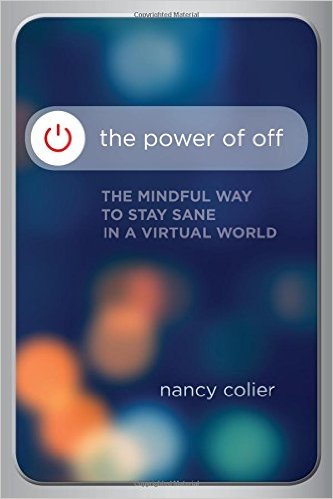
    If, like me, you’ve set this goal for yourself, I highly recommend you check out The Power of Off: The Mindful Way to Stay Sane in a Virtual World.

    Written by psychotherapist Nancy Collier, The Power of Off outlines a process for using technology without compromising our overall well-being, our relationships, or the other things that matter to us in life.

    The book explores:

    • How and why today’s devices push our buttons so effectively, and what you can do to take back control of your life
    • Tips for navigating the increasingly complex ways in which technology is affecting our relationships—with ourselves, others, and our devices themselves
    • Self-evaluation tools for bringing greater awareness to your use of technology
    • Mindfulness practices for helping you interact with your devices in more conscious ways
    • A thirty-day digital detox program to kick-start a new healthier relationship with technology

    I believe this book is a must-read for anyone who owns anything with a screen, or has access to one.

    I’m grateful that Nancy offered two copies of her book for Tiny Buddha readers, and that she’s shared a little about her experience and her book.

    The power of offTHE GIVEAWAY

    To enter to win a copy of The Power of Off:

    • Leave a comment below. You don’t have to write anything specific. “Count me in” is sufficient!
    • For an extra entry, share this interview on one of your social media pages and include the link in your comment. 

    You can enter until midnight PST on Sunday, December 11th.

    *Winners outside the US will receive a digital copy, not a print book.

    THE INTERVIEW

    1. You admit to being addicted to technology. That’s one of the reasons that you wrote this book. Can you give us a sense of your addiction and what it was like for you before you transformed it?

    I was an email addict, checking email far more often than what I was receiving warranted. I experienced a hit of pleasure every time I checked; even just thinking about checking delivered a shot of feel-good chemicals into the reward center of my brain, triggering what I call “lottery brain.”

    Just the possibility that something wonderful might appear in my inbox kept me coming back for more, even if it never delivered.

    I once walked by my own children at the end of a workday, with not much more than a quick hello, to get a fix from my addiction. It was at that moment that I realized that I was not okay with the way I was living, the choices I was making.

    I woke up in that moment to the reality that what I was paying attention to and where I was putting my time and energy was not in alignment with what actually mattered to me.

    It was then that I knew I needed to wake up and start making more mindful choices, to consciously create a handshake between what was most important to me and the way that I was living.

    2. You say that our society has an addiction to technology and that it’s no different than an addiction to food, sex, drugs and alcohol.

    An addiction is a behavior that we act out without awareness, either out of habit or impulse or both. We use technology without consciously deciding if we genuinely want to use, simply because the thought arises to use.

    This is the nature of addiction, and all addictions cause our lives to shrink and eventually deplete our lives as they become more and more about our substance of choice and less about those elements that truly nourish us.

    Technology is no different than any other addiction. It is, however, more like an eating disorder than an alcohol or drug addiction, because we have to find a way to incorporate our substance into our life. We cannot simply do without it, but rather, must find freedom in technology not from technology.

    The only difference between this addiction and other addiction is that we have all drunk the Kool-Aid; we’re all in. This is a condoned addiction.

    Other addictions put you outside the societal norm; they exclude you from being included. Tech addiction offers just the opposite, membership in the club. Tech addiction makes you part of the club, an insider, which makes it that much harder to break. The consequences of tech addiction may prove harder to acknowledge and take seriously.

    3. Can you explain how an addiction to one’s phone is just as serious as a drug or alcohol addiction?

    The negative consequences of a tech addiction are no different than the negative consequences of any other addiction.

    -The addiction keeps you from being present in your life as more and more of your attention goes into getting your fix.

    -The addiction occupies your time and energy, at the expense of other important parts of life (hobbies, activities, friendships, spiritual pursuits) that previously brought satisfaction, enjoyment and nourishment.

    -The addiction causes negative effects on your health, work, social or family life.

    -The addiction causes negative effects on your psychological wellbeing including mood swings, depression, anxiety, aggression, insecurity.

    4. What are signs that one is addicted to technology?

    Ask yourself:

    -Is your reliance on technology increasing?

    -Do you experience withdrawal symptoms when not able to use?

    Are you continuing to use technology despite knowing that its causing impairment in your work, health, social, and/or family life?

    -Is your life increasingly revolving around technology?

    -Have you given up activities you used to enjoy to be able to use technology instead?

    -Are you lying about the extent of your use?

    5. You use the term TWIRED. Tell us what it is and how it feels to be “Twired.”

    To be “twired” is to be simultaneously tired and wired. When we are twired, which most of us now are, we feel exhausted and overwhelmed, spent, and depleted, but also anxious and amped up, over-stimulated and buzzy. The experience of being “twired” is uncomfortable and ungrounded, which is what now is considered normal.

    6. You are not advocating not using technology, but how to have a healthy relationship. How does one go from full force addiction to living a balanced, healthy life along with technology?

    We must shift our relationship with technology so that when the thought or impulse to use arises, rather than just acting on it, we can use it as an opportunity to develop more self-awareness.

    If I am standing in line and the thought arises—Oh, I could check my email, or shoot out a text, or look something up on Wikipedia—instead of obeying the thought out of habit and doing what it tells me to do, I could simply notice the thought itself without acting on it. I could use the thought to point me to the present moment, as in: What is here right now that is making me want to distract myself? Or: What would I have to feel if I didn’t use right now?”

    The appearance of my addictive thought can then turn into a portal to awakening and mindfulness rather than a portal back into my addiction.

    7. Is it true that studies show people would rather give up their friends, wine, even sex for a Wi-Fi connection?

    Yes. One in three of all people would rather give up sex than their phone. Half of millennials would rather give up their sense of smell than their phone. Most millennials would rather give up their pinky finger than their phone. The majority of millennials would rather give up friends, alcohol, exercise, music, movies and TV, going out, and dessert, for a month than their Wi-Fi.

    8. You say that technology is the antithesis of mindfulness, and that our culture’s recent interest in yoga is a result of technology making us feel disconnected. Can you explain?

    We talk a lot about mindfulness these days in our culture, but the way we are living with technology is actually the antithesis of mindfulness. Mindfulness is the act of paying attention on purpose to the present moment, and doing so without judgment.

    Most of us are spending our time staring at a screen, which takes us away from what is happening right in front of us. We are living in the virtual world and missing out on the world that our body is actually inhabiting.

    If we are not staring at our personal screen, we are using our experience to build our personal brand, walking on a country road looking for places to take selfies so we can post on social media and show everyone how we are the kind of person that take country walks.

    If we are not using life to build our personal identity/brand, we are busy taking photos of and capturing our life so we can show everyone the life we are living. We end up then with 64 gigabytes of iPhoto file memories but no direct experience of life lived.

    The cost of this relationship with life, however, as something we can possess or use in service of our identity, is the direct experience of life itself. We end up, therefore, with the concept of mindfulness as something else we use to prove that we are a mindful person, but without the practice of mindfulness, which is living the moment as it is actually happening.

    The way we are using technology is also causing us to become disembodied; that is, entirely identified with our minds and thus controlled by our thoughts, as if we were just little heads floating around in cyber-space.

    Technology offers us a smorgasbord for the mind through data, entertainment, information, and just plain stuff to think about and do. The more technology we ingest, the more disembodied we feel.

    Our fascination with yoga these days is an attempt to get back into and reconnect with our bodies, to feel grounded in our direct, physically-lived experience—to be where we actually are.

    9. You talk about loosing a connection with our “self,” and how our obsession with our “personal brand” is very unhealthy. Can you please explain what you mean?

    We now view our self as a kind of vacuum. Many people experience a sense of dread or terror when left alone with just themselves. We fill our lives with more entertainment, more information, more data, more of everything to avoid ever meeting just ourselves.

    We no longer see ourselves as a destination, a place to inhabit. We fill ourselves up and derive our sense of meaning and worth from external sources, as in, the number of likes and followers we have.

    We no longer process our lives internally. If we stop on the street and open a door for someone struggling with a stroller, rather than spending a few moments thinking about that experience or taking it in, owning and absorbing it, we now immediately post what happened with a #gratitude or #kindness.

    We then wait to find out what the experience should mean and how we should think of it, how we should think of ourselves as a result of the feedback we receive. We ourselves are no longer a place we want to spend time or consider valuable.

    What we care about now is how we are seen by others and how popular we are, not what we think or feel about ourselves. Our own experience has been vacuumed out by the technology that tries to defend it.

    10. How can parents and teachers be of benefit to our children to help them learn to live “with technology” and not “for technology” as you might say?

    We need to set limits with our children and model discernment and moderation. But also, to recognize that young people have no experience with another way of living and that their social, academic, and every other part of life happens online, so separation from their technological life can feel like death or non-existence.

    What we need to do, besides setting clear rules that include periods of abstinence from technology, is to continue pointing our children to remain aware of how they feel in relationship with technology.

    That is, asking our child how she feels after a full day of Snapchatting, Instagramming, and Facebooking, how it is when she’s with a friend who is constantly texting while they’re together, how well she can focus on her homework when simultaneously receiving dozens of notifications on her other devices, how her personality changes when she is asked to give up her phone and how she feels after a a day (or week!) off all technology.

    We need to keep our children awake and tuned into how technology is affecting them so that they don’t lost touch with their own experience and forget that there is another way to feel besides the way that technology induces.

    You can learn more about The Power of Off: The Mindful Way to Stay Sane in a Virtual World, here.

    FTC Disclosure: I receive complimentary books for reviews and interviews on tinybuddha.com, but I am not compensated for writing or obligated to write anything specific. I am an Amazon affiliate, meaning I earn a percentage of all books purchased through the links I provide on this site. 

  • Book Giveaway: Drawn Together (A Dharma Comics Collection)

    Book Giveaway: Drawn Together (A Dharma Comics Collection)

    Drawn togetherThe winners for this giveaway have been chosen. They are:

    • Kristine Charbonneau
    • Jessica Raymond
    • Darren

    Every now and then something pops up in my Facebook feed that simultaneously makes me smile, pulls me out of my head, and pushes me to be the best version of myself. Many times when that happens, it’s a comic from Leah Pearlman.

    I first met Leah in 2010, shortly after she began creating these simple yet enlightening drawings. In person, she exudes warmth, love, and wisdom, and her comics are a reflection of her sunny personality and outlook.

    Since I’m a huge fan of both Leah and her work, I couldn’t be more excited to share her first book with you—or more grateful that she’s provided three free copies for Tiny Buddha readers.

    Titled Drawn Together: Uplifting Comics on the Curious Journey Through Life and Love, the book includes more than 100 color comics—some, favorites from her online collection, and others, new, never-before-published drawings.

    Entertaining and encouraging, as described on Amazon, Drawn Together is the perfect gift for anyone seeking a daily dose of illustrated inspiration.

    More about Leah and Dharma Comics:

    The Giveaway

    To enter to win a free copy of Drawn Together, leave a comment below.

    You don’t need to write anything specific—“Count me in!” is sufficient. However, if you feel inclined, you can answer this question instead:

    What made you smile today?

    You can enter until midnight, PST, on Friday, October 7th.

    Want to get Drawn Together now? You can grab a copy on Amazon here.

    FTC Disclosure: I receive complimentary books for reviews and interviews on tinybuddha.com, but I am not compensated for writing or obligated to write anything specific. I am an Amazon affiliate, meaning I earn a percentage of all books purchased through the links I provide on this site. 

  • Book Giveaway: Tiny Buddha’s 365 Tiny Love Challenges

    Book Giveaway: Tiny Buddha’s 365 Tiny Love Challenges

    Book heart

    UPDATE – The winners for this giveaway are:

    • Melissa Ballinger Dees
    • Julie C. Perry
    • Bobby Irion
    • Michael Jon Piper
    • Hannah

    Sometimes the world can feel like a lonely place. There are billions of people on the planet, and many of us encounter hundreds in the course of our daily lives. Yet it’s easy to feel disconnected from most, if not all of them.

    The many strangers we pass on a given day, who may avert their eyes to avoid awkwardness, can start to feel like part of the scenery—like cars parked in a lot or leaves floating in the wind.

    And, of course, we may feel the same to them, when we attempt to busy ourselves right when we cross paths—anything to avoid an intimate moment of locking eyes with someone we don’t know.

    We look at our feet, or our phones, or our friends. We shut down, cave in, tune them out. In that moment, they’re not people, with stories and feelings just like us. They’re strangers. Unknown. And perhaps a little scary.

    The luckiest of us have deep connections with people we do know. But even those relationships can feel distant at times, and maybe more often than not.

    We may feel judged, or misunderstood, or ignored. We may worry about what those people think of us, or wonder if they’ll be there when we need them.

    And worst of all, we may question if they’d still be there if they really knew us, deepest secrets and all. Proximity doesn’t always equal closeness, and closeness doesn’t guarantee trust.

    If it sounds like I am speaking from experience, that’s because I am. I have felt lonely, and insecure, and suspicious. I’ve feared letting my guard down, letting my feelings out, and letting people in.

    As a result, I spent years living on an island in my head, maintaining a physical presence in the world but remaining as much emotional distance as possible.

    The irony is that I thought I was keeping myself safe from pain, when really I was causing it.

    It hurts to feel separate. We are wired to seek connection and belonging—to feel like we are part of something larger than ourselves.

    They say it takes a village to raise a child, but I believe it also takes one to sustain an adult. We were not built to live in isolation, hidden behind apartment doors, phone screens, and dead eyes.

    We thrive when we feel like part of a tribe, when the people we share space with become part of “us,” not “them.”

    I’ve spent my whole life fantasizing about “us,” and years trying to learn what it takes to be part of that.

    I wish I could say I’ve discovered some great secret to forming deep, meaningful relationships and feeling less alone in the world, but that would be a lie.

    I haven’t discovered any one thing that turns strangers into friends, and friends into family. I have, however, identified countless tiny things, which, compounded over time, can make a massive difference.

    And that’s how Tiny Buddha’s 365 Tiny Love Challenges was born. As you may recall, I launched the book in October of last year.

    I wanted it to be a comprehensive list of small things we can do, every day, to create deep, meaningful connections with the people around us.

    I wanted to offer specific, actionable ways to show kindness, compassion, trust, and support; to be authentic, accepting, forgiving, and encouraging.

    They’re abstract ideas, and not always easy to put into practice, especially when you factor in that other people are flawed and scared, just like us.

    Though I still don’t feel as connected as I’d like to be—a natural consequence of moving every two years for the past sixteen—I no longer live alone on the Alcatraz in my head.

    I have healed relationships from my past, dug beneath the surface with people who would otherwise have remained acquaintances, and most importantly, strengthened my relationship with myself so that I finally believe I am worthy of being loved and fully seen.

    And I feel proud that I’ve created a book that, I’ve been told, has helped other people do the same.

    If you grabbed a copy last year, you may be at the halfway point now—meaning you’ve completed six months of challenges pertaining to kindness, compassion, authenticity, forgiveness, attention, and honesty.

    I’d love to know how this experience has been for you—if you feel more connected, if you’ve strengthened your relationships, or if there have been any other pleasant, unexpected side effects of taking these action steps.

    And if you don’t have a copy, I’d like to offer you a chance to win one today. I’m giving away five autographed books, and all you need to do is leave a comment answering one of the following questions:

    -What is one thing you believe most people want to receive from the people they love?

    -What is one thing you believe most people want to hear from the people they love?

    -What do you think it means to love someone?

    Your comment doesn’t need to be any specific length; in fact, it can be one word. However much you choose to write, know that you are giving all Tiny Buddha readers a gift through your time and effort.

    Whatever you choose to write could inspire someone, guide them toward a life-changing epiphany, or help them form deeper, more meaningful relationships with the people around them.

    Your comment is, in itself, a tiny act of love. And I will be the first to say that I am grateful for it.

    You can enter the giveaway until Wednesday, July 13th, and you can learn more about Tiny Buddha’s 365 Tiny Love Challenges, or grab a copy, here.

  • Whose Mind Is It Anyway? Get Out of Your Head & Into Your Life (Giveaway!)

    Whose Mind Is It Anyway? Get Out of Your Head & Into Your Life (Giveaway!)

    Whose Mind Is It Anyway CoverNote – This winners for this giveaway have been chosen. They are:

    • Stephanie
    • Kait Husmann

    A few years back, Tiny Buddha contributor Lisa Esile wrote a post about negative thinking that was incredibly eye opening.

    Titled 3 Reasons to Stop Worrying About Your Negative Thoughts, her post suggested that instead of trying to suppress negative thoughts or replace them with positive ones—as conventional wisdom suggests—we should observe them, choose not to believe them, and let them naturally pass.

    Brilliant, I thought. Don’t feel bad about the thoughts that go through your head (which adds guilt on top of the stress that comes from constant judging, assuming, worrying, plotting, and controlling).

    Instead, create space between you and your thoughts. Stop fighting your mind and start understanding it.

    Stop struggling to let thoughts go and instead, let them be.

    Ah, instant relief.

    I know what you might be thinking: If we don’t listen to our thoughts, how will we know what to do? How will we solve problems? How will we figure out what we want and make a plan to get there?

    Lisa tackles all of this, and more, in her quirky new illustrated book Whose Mind Is It Anyway? Get Out of Your Head and Get into Your Life.

    Co-written by her husband, Franco Esile, Whose Mind Is It Anyway touches upon how our thoughts can drive us crazy, how our beliefs can sabotage us, and how easy it is to find calm—once we stop thinking our way through life.

    It’s a quick read, but don’t let that fool you: Within seven short, fun chapters, Lisa and Franco have succinctly explained how we can not only find peace from our thoughts, but also be at peace with ourselves.

    I’m a huge fan of Lisa’s work, and I couldn’t be more grateful that she sent me a copy of her book and offered two free copies for Tiny Buddha readers.

    Whether you win a copy or choose to grab one today, I recommend keeping it somewhere you’ll see it often and flipping through the pages whenever you’re getting stuck in a web of thoughts.

    Start paying attention to how your mind works and you’ll notice this happens a lot!

    THE GIVEAWAY

    To enter to win one of two free copies of Whose Mind Is It Anyway?:

    • Leave a comment below. You don’t need to write anything lengthy—“count me in!” is more than enough!
    • For en extra entry, share this post on one of your social media pages and include the link in your comment.

    Good luck!

    Want to grab a copy now? You can order Whose Mind Is It Anyway: Get Out of Your Head and Get into Your Life on Amazon here.

    FTC Disclosure: I receive complimentary books for reviews and interviews on tinybuddha.com, but I am not compensated for writing or obligated to write anything specific. I am an Amazon affiliate, meaning I earn a percentage of all books purchased through the links I provide on this site. 

  • The More of Less: Finding the Life You Want Under Everything You Own (Giveaway!)

    The More of Less: Finding the Life You Want Under Everything You Own (Giveaway!)

    Simple Living

    UPDATE – The winners for this giveaway are:

    • CA Los
    • Joy Nicholson

    When I think of minimalism, I think of two things: freedom and Joshua Becker’s blog, Becoming Minimalist.

    I think of freedom because downsizing has enabled me to afford more experiences with people I love, travel more often, and do it all without the burden of storing and maintaining possessions I don’t really need.

    I think of Joshua Becker’s blog because I’ve turned to it many times over the years for insights and tips to help me simplify and declutter.

    For this reason, I was thrilled when Joshua reached out to me to share his latest book, The More Of Less: Finding the Life You Want Under Everything You Own.

    Currently a bestseller on Amazon, The More of Less explores how our stuff can hold us back from pursuing our dreams, and how getting rid of things we only think we want creates space for what we actually need.

    With personal stories and practical advice, The More of Less is the perfect guidebook to help anyone escape the trap and stress of consumerism.

    I’m grateful that Joshua took the time to answer some questions about his work and his book, and that he’s offered two free copies for Tiny Buddha readers.

    The More of LessTHE GIVEAWAY

    To enter to win one of two free copies of The More of Less:

    • Leave a comment below
    • For an extra entry, share this interview on Twitter or Facebook, and post a second comment with the link

    You can enter until midnight PST on Wednesday, May 18th.

    THE INTERVIEW

    1. Tell us a little about yourself and what inspired you to write this book.

    Eight years ago, after spending an entire Saturday cleaning my garage while my son played alone in the backyard, I made a life-changing realization: Everything I owned wasn’t making me happy.

    Even worse, everything I owned was actually distracting me from the very things that did bring me joy. So my wife and I began a journey to remove the nonessential possessions from our home and life.

    We discovered the first step to crafting the life you want is to get rid of everything you don’t.  That is the message of the book.

    2. Many people equate minimalism with deprivation—possessing the bare minimum and forgoing all luxuries. What does minimalism mean to you?

    Minimalism is not about deprivation; it’s about liberation. It’s less about the things you remove and more about the things you add.

    In the book, I define it this way, “Minimalism is the intentional promotion of the things we most value and the removal of anything that distracts us from it.”

    With that definition and understanding, minimalism becomes entirely freeing. Everybody is going to pursue it differently because everybody defines their values differently.

    3. What do you think are the top benefits of a minimalist lifestyle?

    There are countless benefits to owning less: more time, more money, more freedom, more energy, less stress, less worry, less distraction.

    We become better examples for our kids and better stewards of our environment.

    We quickly discover contentment, gratitude, and margin for generosity.

    Minimalism frees us to better pursue our greatest passions.

    4. Why do you think so many of us get ourselves into debt buying things we don’t need when it ultimately causes so much stress?

    There are reasons both internal and external. But no conversation on the causes of rampant consumerism in our society is complete without considering the effect that media and advertisements have on us.

    According to statistics, we see 5,000 ads every day. And every single advertisement carries the same message, “You’ll be happier if you buy whatever we’re selling.” And I think, because we see this message so many times and from so many places, we begin to believe it without even realizing we do.

    5. Is there anything that can help us resist the urge to over-consume in that moment when we might look to a physical thing to fill a psychological need?

    I think there are a number of ways to overcome consumerism in our lives. As we begin to purposefully own less and recognize the benefits of it, we become more aware of consumerism’s empty promises—that more doesn’t equal better—and we are more equipped to overcome those temptations.

    Others have found great success in establishing a two-day or three-day wait period before making purchases. That time away from the emotion of the purchase allows them to think deeper about the purchase.

    6. As someone who tries to keep clutter down, I’ve struggled when it comes to items with sentimental value, like childhood journals and photo albums. How do you recommend dealing with items like these when downsizing?

    There are definitely some tips and tricks for each of these items. It usually comes down to one important realization: “Less is different than none. And less is better than more.”

    For example, sentimental items. I wouldn’t encourage anyone to remove every piece of sentimentality from their lives. But people would benefit from sorting through their sentimental pieces and keeping only the most meaningful.

    Oftentimes, those who are the most sentimental have accumulated so many things over the years, the pieces are merely stored in boxes in the attic—bringing value to no one.

    Working through those items, perhaps trying to cut their collection in half, brings more value to the memories because the most important pieces are not buried underneath piles of unnecessary things.

    7. Many of us reserve de-cluttering for specific times of year—during Spring Cleaning, for example—but then clutter builds back up again. What are the top habits we can adopt to maintain a clutter-free (or less cluttered) environment?

    That is great insight Lori! For most families, stuff enters the home every single day (especially when kids are present). When we only declutter around certain times of the year, things begin to pile on top of each other—usually leading to frustration and a breaking point.

    It’s helpful to remember if you live in a home where things consistently enter, that you’ll need to consistently be removing things.

    Walk around your home and begin to notice the various “clutter hot spots” where things start to pile up first (kitchen counters, desks, bedroom dressers). Work hard to keep those areas clutter-free and they will set an environment for the entire home.

    8. Do you have any advice for someone who’d like to reap the benefits of minimalism, but shares space with a partner or others who aren’t on board?

    It’s always easy to see everyone else’s clutter than it is to see our own. It’s important to start with that realization.

    Additionally, I’ve become convinced over the years that the best thing we can do is lead by example, offer patience, and engage in constructive conversation (not conversations born from frustration or impatience).

    Focus on the benefits and the positive changes that could come from it. Remember, the simplifying conversation is really not one conversation at all. It’s almost always many conversations.

    9. With so many companies marketing varied products to kids, and so many parents buying them, how can we introduce minimalism to children without making them feel deprived or left out?

    Your young children have probably never heard of minimalism, much less thought about it in any depth. So begin by describing minimalism in simple terms.

    Explain why you and your spouse are choosing to embrace a lifestyle of less, as well as the benefits you are hoping your family will receive from it.

    Kids are often much smarter than we give them credit for. Yours will soon realize that you’re not punishing them; you’re doing this because you love them.

    10. What’s the main message you hope readers take away from your book?

    I want people to realize that their lives are too valuable to waste chasing and accumulating material possessions.

    I want people to know they were designed to accomplish more significant things than filling a big house with a lot of stuff.

    And I want them to realize that all the stuff they own is actually keeping them from fulfilling their biggest dreams.

    FTC Disclosure: I receive complimentary books for reviews and interviews on tinybuddha.com, but I am not compensated for writing or obligated to write anything specific. I am an Amazon affiliate, meaning I earn a percentage of all books purchased through the links I provide on this site.  

    You can learn more about The More of Less or grab a copy on Amazon here.

  • Finding Freedom in Illness: A Guide to Suffering Less When Sick (Interview & Giveaway)

    Finding Freedom in Illness: A Guide to Suffering Less When Sick (Interview & Giveaway)

    Sick

    UPDATE: The winners for this giveaway include:

    • Naomi
    • KC
    • Lisa Pellegrino
    • Caroline Létourneau
    • Viktor Dmitriv
    • Kristin Kollinger
    • Heather S
    • Erica Lombard
    • Christine
    • Bridget Howe

    If you’ve ever been sick for a prolonged period of time, you understand how physically, mentally, and emotionally draining it can be.

    Maybe you don’t know what’s causing your illness, or how to treat it, and you’re tired of searching for answers.

    Maybe you blame yourself for repressing emotions, not exercising, or otherwise potentially causing your condition; or maybe you don’t hold yourself responsible, but fear that others do.

    Maybe you can no longer do the things you love; or maybe you can do them, but it’s much harder, and therefore, far less satisfying.

    While I’ve never struggled with a long-term physical illness, I’ve watched loved ones grapple with serious challenges; I’ve sympathized with their feelings, fears, and frustrations; and I’ve wished I could do something to help.

    Going forward, I will point them to Tiny Buddha contributor Peter Fernando’s new book, Finding Freedom in Illness: A Guide to Cultivating Deep Well-Being through Mindfulness and Self-Compassion. 

    Having struggled with various chronic illnesses through the years, Peter knows what it’s like to live a life that’s full of challenges and losses. He’s experienced prolonged periods of darkness, despair, desperation, and discomfort—and yet he still believes he’s lived a wonderful life.

    Why? Because he chooses to see his illnesses as spiritual teachers. And though he admits he would not have chosen them, he’s learned, through them, to free himself from the mental suffering that comes from judging the present.

    Profoundly insightful, Finding Freedom in Illness explores how anyone can free themselves from their suffering and access the liberating power of here-and-now awareness. Though the book is clearly intended for others dealing with physical conditions, anyone can benefit from the teachings related to mindfulness and self-compassion. I know I certainly have.

    I’m grateful that Peter took the time to answer some questions about his book, and that he’s offered ten free copies to Tiny Buddha readers.
    Finding freedom in illnessTHE GIVEAWAY

    To enter to win one of ten free copies of Finding Freedom in Illness:

    • Leave a comment below
    • For an extra entry, share this interview on Twitter or Facebook, and post a second comment with the link

    You can enter until midnight PST on Monday, May 9th.

    *Winners in the US will receive a print copy. Winners outside the US will receive a gift card to order a free digital copy.

    THE INTERVIEW

     1. Tell us a little about yourself and what inspired you to write this book.

    I’m a guy in his late thirties who was a Buddhist monk in his twenties. I’ve been living with various health conditions for most of my life, and bodily challenges have been a huge part of the path for me. I teach meditation in Wellington, NZ with Original Nature Meditation Centre, and run an online course, A Month of Mindfulness.

    The book arose of out conversations I had been having with other folks on the spiritual path, people who also have been living with illness—and a sense of the disorientation, distress, and confusion that can ensue when faced with such challenges and limitations. So, the main inspiration was wanting so share some love!

    On another level, my own situation has highlighted the difficulty in attending retreats or groups on a regular basis, and a need for a home-based practice that is tailored to the specific issues, emotions, and challenges that accompany the experience of being physically unwell.

    For example: When you can’t sit up for long periods of time, how do you meditate?

    When you are exhausted, how do you open your heart and find a real sense of kindness for yourself and others?

    When you are in pain, how do you find a place in yourself that is still okay?

    So I wanted to share some of the practices and perspectives I have developed through trial and error since my twenties, with the hope that they will be useful for folks in similar situations.

    2. I really appreciated your opening chapter, as I think a lot of spiritual people blame themselves for their physical ailments. Can you talk a little bit about the mind/body connection and the difference between taking responsibility for our part in healing and blaming ourselves for being sick?

    This subtle difference has and (continues to be) a central piece of living with illness, for me personally. The bottom line, I think, is don’t beat yourself up for being ill.

    Shame and guilt are so destructive and painful, and yet can easily follow theories of being absolutely responsible for being ill or healthy. Whatever makes you feel ashamed or guilty isn’t going to lead to well-being in the long run.

    From the perspective of the mind that wants to understand our illness (and of course, be as well as we can, on all levels), there is another key piece, for me: any belief is just a belief. It’s not experience.

    So the belief “I’m creating this illness—it’s my fault” is just an idea, right now. The belief “My mind has no bearing on the state of my body” is also just an idea.

    If there are certain mind-body connections that are contributing to our illness, they can only be known by us. Not through a theory, a doctrine, or even trying to mimic someone else’s healing journey. Of course, they are all useful as hypotheses, but not as fixed beliefs about what is going on.

    Awareness practice, on the other hand, takes us right into our own experience, where we begin to know directly what effects certain mind states have on the body, and what effects they don’t have.

    We become curious, and even innocent in our exploration. We don’t have to have a fixed belief in anything, which allows the tendency toward shame or self-blame to relax, and is also where the feeling of freedom begins to emerge. Curiosity and genuine interest in our mind, body, and heart, in this moment, is where the power lies.

    What the process of paying attention reveals about the mind/body connection is different for everyone. There may be one, and there may not be—that’s just how it is.

    Many enlightened teachers have died following long illnesses, such as the teacher of my teachers, Ajahn Chah. Many uptight and stressed out people live physically healthy, outwardly successful lives.

    So the only touchstone for what is real is our own experience, our own body-mind, in the intimacy of awareness. No shoulds, no guilt-trips, and no identity of being a failure. To me, that is what taking responsibility is about.

    3. How does mindfulness help us cope with physical illness, and what’s a simple mindfulness practice anyone can do daily?

    Mindful awareness helps us cope in every way possible! Without being aware of our reactions to pain, loss, social isolation, or fatigue, those reactions will take over.

    When we are aware of what is happening in the present moment, with an embodied awareness, there is a natural inclination to abide in states of being that feel good, and to relax those that don’t.

    If we don’t see them, they take on a life of their own and can become our entire identity, rather than the momentary arising of emotion or perception that they actually were.

    A simple practice I do daily is to stop, close my eyes, and take stock of what’s going on in the mind and heart, for five minutes. No agenda or desire for a specific outcome—just a real curiosity.

    I ask, “What am I doing, right now, in my heart?” And then, “Is this kindness to myself, or is it something else?”

    This is the gateway to authentic mindfulness, in my opinion. To me, an open, kind heart is an essential part of mindful awareness. Attending to its presence or absence goes a long way in tracking the quality of the mind throughout the course of a day.

    4. In chapter 3, you talk about the stories our minds tell us about the present, the past, and the future. Can you elaborate a little on these stories, how they keep us stuck, and how we can start letting them go?

    The word “stories” is a kind of shorthand to refer to the psychological narratives that arise in the mind’s eye, with regard to “Who I am, what others think of me, what I will be, what I was,” and so on.

    They are the first indicator of underlying heart-drives or emotions that are stirring in us. It’s important to say here that the word doesn’t refer to functional stories, which we need to survive. These are useful, when imbued with creativity and wellness of heart.

    Our psychological narratives, on the other hand, are habitual and don’t come from a sense of choice—they are knee-jerk reactions, often with deep historical roots, that take us into some form of stress, suffering, or emotional stuck-ness.

    The habitual, seemingly out-of-control nature of these is their defining characteristic. Starting to let these go is a process that requires sensitivity and patience, in my experience. It’s easy to say, “Just be present,” but to actually do it requires a journey into our own heart. Otherwise, it can become dissociation or avoidance, which doesn’t lead to well-being.

    For me, there are always three stages to the process. The first is mindfulness: seeing what is happening, with objectivity, rather then being caught in it. It’s a kind of stepping back. We realize we can see the mind, not just be caught in it. This is the miracle of mindful awareness, really.

    But seeing a story is one thing. Freeing attention from its grip is another. So the second part of the process is a receptive awareness, feeling how the energy feels in the body.

    This is more than seeing—it’s sensing, which requires a kind of awareness we may not be used to. So we can begin experimenting with it.

    When we feel what’s going on, we can then pan out to recognize that a story is just the branches of a core root feeling.

    For example, the story “I’m going to have a terrible time seeing my friends tomorrow” could just be the root energy of fear. Knowing it as such makes the story seem less personal, and we recognize that these are forces at work in the present, not realities that will happen in the future. It’s all happening now.

    The third stage in the process is relaxation. When we feel the root of a story we can consciously incline toward relaxing around it. Relaxation is another word for letting go. When we relax around an emotion or an energy, it begins to calm. It also has less power to solidify into a full-blown story. We find we can be with instead of be in. Life frees up as a result.

    5. In chapter 4, you wrote, “openness is courage.” Can you expand on this?

    Being open to what is here is perhaps what is most scary for us as humans, I think. Our lives are geared toward distraction, intellect, and ideas—so much so that sitting somewhere without checking our phone, for example, can feel disorienting and uncomfortable.

    It feels uncomfortable and scary because it means being open to what is actually here—including the body and mind and emotions, just as they are. So cultivating that ability is a courageous act.

    When it comes to illness, the stakes are even higher. We’re not just cultivating an openness to “boring life as it is,” but very often to unpleasant sensations, depleted energy, and physical pain.

    Trusting that our own compassionate awareness can meet that, too, is always an act of courage. Sometimes we just can’t, which is okay. And sometimes it’s just not the right thing to do—especially if it heightens the discomfort in the body or the stress in the mind.

    But when we feel resourced enough to rest in awareness, and be with the pure experience of this moment, we gain vistas into new worlds of possibility. If we remain there for a period of time, we may be surprised by a quiet sense of peace and ease that begins to emerge.

    6. In the section on meeting our dark emotions, you wrote that we need to stop judging anger, fear, and despair as “bad.” What do you think is the key to embracing these feelings without getting lost in them?

    Oh, good question! It’s a fine line isn’t it? For me it always comes back to the Buddhist maxim of the “Middle Way”: that poise in the middle of indulging in destructive emotions on the one hand and repressing them on the other.

    My tendency has been more toward the latter, so learning how to actually feel and un-shame them has been a big part of my own journey. However, if one’s tendency is to feed them, get lost in them, and rail against illness, some discernment and wise discrimination can be really useful.

    But most of us have a default setting that judges dark emotions and tries to push them away, to some extent. We believe this is what being “strong” means.

    From the meditative perspective, we are looking for strength in presence, not just strength of will, however. When presence, grounded in the body, meets a force like anger or fear, there is a transformation that can happen. Through not indulging the story, and not trying to push the energy down, we feel what is here, as just so.

    In Buddhist teachings, this is the essence of the third foundation of mindfulness—mindfulness of the heart. Through this poise, the primal energies of dark emotion begin to dissolve, and transfer their energy back to our core presence. They relax and calm without being pushed away. It’s an alchemy of sorts.

    Of course, sometimes we need to push them away temporarily, just to function. The above isn’t an absolute statement about what we should always do.

    But when we gradually train ourselves in the skill of meeting dark emotions as just so, and feel them in the body, we discover a new place in ourselves that can handle their intensity without resorting to self-judgment. This makes living with illness much easier in the long run, in my experience.

    7. Why do you think so many of us deny ourselves rest when we’re drained or unwell, and what mental shift do we need to make to start taking care of ourselves in this way?

    I think it’s something to do with the way we are conditioned to value ourselves. Modern society puts most value on doing, achieving, and “being somebody,” it seems, and very little on “just being.” So we get hooked into it.

    Rest means relaxing an identity of being useful or productive, which can be scary. If our identity is entirely dependent on value-through-doing, then it can feel intolerable to really rest and take care of ourselves. We believe it’s lazy, or self-indulgent, or that we are a failure and there are other people somewhere out there judging us.

    From the perspective of inner well-being and harmonizing with the limitations of our physical condition, however, we can find a different way of viewing conscious rest.

    On the level of the body, it just feels good, so that’s one thing. On the heart level, we realize that it actually reminds us of our real value rather than takes us away from it.

    Our deepest value is just in being us. When we feel that in our hearts, and relax the need to prove ourselves, be approved of, or the opposite sides to that coin, then paradoxically, a new kind of value emerges. It’s one that feels peaceful and meaningful through just being here.

    When we get a sense of that, it becomes much easier to feel confident about consciously resting.

    There’s always a bit of friction involved in changing gears, particularly if our lives are very busy, but it lessens the more we can tune in to the deeper kind of value that comes through letting go of the need to always be someone doing something useful. And weirdly, when we do that, energy to do useful things, within our capacity, often comes back quite naturally.

    8. Can you tell us a little about the difference between pain and suffering, and how we can suffer less?

    Well, that’s a huge topic, with a lot of subtlety involved, I think. For myself, the Buddhist teaching around the difference between painful or unpleasant sensation in itself, on a sensory level, and the existential dis-ease that usually accompanies it, has been very potent.

    Basically, the teaching says that they are two different things. We tend to think they are one in the same, but when we attend carefully and with sensitivity, we begin to notice that while physical pain or discomfort very often conditions suffering in the heart, it doesn’t ultimately have to. So, it’s a freeing teaching.

    It doesn’t mean liking pain, though, or trying to be fit into some kind of equanimous ideal where we never suffer in the face of it. As an ideal, that doesn’t go very far.

    The journey to suffering less around pain involves meeting exactly what is here, including our reactions to it. But by being curious about them, we discover how to relax the heart-contraction around pain.

    Very often, relaxing the contraction (and the stories, judgments, self-images, or predictions that come with it) can lead to more space opening up in our awareness. In this space, physical pain doesn’t have the same hold over the mind. We suffer less.

    9. It’s easy to get down on ourselves when we feel we’re not at our best. What has helped you stay out of this trap?

    Well, it’s a trap I am very familiar with, and definitely not free of! But it’s something I have gradually learned to relate to rather than be completely identified with.

    For myself, self-compassion has been the guiding light in this regard. I first used it as a concept, which, in itself, was very powerful. It’s a radical shift from the default position of inner-tyranny many of us live within. On the conceptual level, it takes a bit of reflection to come alive.

    I remember feeling like it was indulgent or selfish to be compassionate with myself, in the beginning. But it slowly started to make good sense, particularly when I saw directly that it actually increased my ability to relate to others in the same way.

    Then on the heart level, it’s been a cultivation—creating space around the identity of the me who is “wrong” in some way, and really holding that sense with a sense of great warmth and kindness.

    In this space, I began to feel what tyrannical mind actually does in the present moment: it generates pain. Compassion began to arise when I started being aware of this pain in a very direct but tender and patient way.

    It started to teach me. It was like, “Oh, okay. When I hold on to these self-images, this is the result. Wow—that’s really painful. Maybe I could start to relax that?”

    So the heart began to learn, naturally, when I took the time to bring awareness to bear upon what often seemed so real and true that I never questioned it.

    10. What’s the main message you hope readers take from this book?

    I think the main message I would like to communicate is that being physically ill doesn’t mean we can’t have a rich inner life. There are ways of living with the limitations of illness that can open us right into the magic of this existence.

    We don’t need to feel like we’ve failed, we are wrong, or there is no hope. The real treasures are right here underneath the surface—for all of us, healthy or not.

    FTC Disclosure: I receive complimentary books for reviews and interviews on tinybuddha.com, but I am not compensated for writing or obligated to write anything specific. I am an Amazon affiliate, meaning I earn a percentage of all books purchased through the links I provide on this site. 

    You can learn more about Finding Freedom in Illness on Amazon here.

  • Overcoming Disappointment in Work, Love, and Life (Book Giveaway)

    Overcoming Disappointment in Work, Love, and Life (Book Giveaway)

    Disappointed

    Update – The winners for this giveaway are:

    • simpleshoes
    • twylapopcorn

    When life doesn’t meet our expectations, it can devastate our sense of security, threaten our self-esteem, and leave us feeling lost, scared, and out of control. I know—I’ve been there quite a few times before.

    Like the time I moved across the country to live with a man I’d met online just a month prior, only to recognize nine months later that we were two broken people who were toxic together.

    Or the time I got involved with a multi-level marketing company, thinking I’d be a huge success, only to realize six months later I’d invested myself (and my savings) in a pyramid scheme.

    Or when I left LA with my fiancé, thinking we’d be able to live on two coasts near both of our families, only to realize after three years in limbo that we couldn’t make it work.

    When things don’t go to plan, we feel out of control, angry with ourselves, and possibly with others. We wonder what we could have done differently and if we’ll ever be happy, now that the thing we pinned all our hopes to hasn’t worked out.

    Author Christine Hassler knows a thing or two about dealing with these kinds of life-shattering disappointments.

    In her new book Expectation Hangover: Overcoming Disappointment in Work, Love, and Life Christine addresses how to deal with disappointment on the emotional, mental, physical, and spiritual level.

    If you’re disappointed, maybe even devastated, by unmet expectations in your personal or professional life, you’ll likely appreciate the insight, wisdom, and practical exercises that pepper her book.

    It will help you reframe what’s happened and empower yourself to thrive, not in spite of your struggles, but because of them.

    I’m grateful that Christine took the time to answer some questions about her book, and that she’s offered two free copies of Expectation Hangover to Tiny Buddha readers.

    Expectation HangoverTHE GIVEAWAY

    To enter to win one of two free copies of Expectation Hangover:

    • Leave a comment below
    • For an extra entry, share this interview on Twitter or Facebook, and post a second comment with the link

    You can enter until midnight PST on Monday, May 2nd.

    *US winners will receive a physical book in the mail; winners outside the US will receive an eBook.

    THE INTERVIEW

     1. Tell us a little about yourself and what inspired you to write this book.

    My own expectation hangovers and work as a life coach, spiritual counselor, author, and teacher inspired me to write the book.

    I noticed people’s greatest suffering happens when their realities don’t match up with their expectations and/or when life throws them an unwanted curveball that leaves them with what I call an “expectation hangover.”

    Most of us want to get over disappointment ASAP, but we often miss a big opportunity for positive change with that approach. What expectation hangovers offer us is a way to become more responsible for our own lives.

    Disappointment isn’t a bad thing, or even something to be avoided. In fact, my greatest disappointments have lead to my greatest successes.

    Today I am grateful for all my expectation hangovers, from leaving my successful career as a Hollywood agent at twenty-five to being in debt to health issues to my divorce, and inspired to teach people how to leverage their expectation hangovers!

    2. How do you define an expectation hangover?

    An expectation hangover is the myriad of undesirable feelings or thoughts present when one or a combination of the following things occurs:

    • A desired outcome does not occur.
    • A desired outcome does occur, but does not produce the feelings or results we expected.
    • Our personal and/or professional expectations are unmet by ourselves or another.
    • An undesired, unexpected event occurs that is in conflict with what we want or planned.

    Some examples:

    • A career path that was planned and executed with precision becomes tainted with doubt and lackluster.
    • A relationship with “the one” suddenly becomes the one thing we can’t get right.
    • A salary or promotion that was counted on is not a reality.
    • A home that was dreamed about still remains a fantasy.
    • A pregnancy that is wished for isn’t happening.
    • A parent who we could always lean on suddenly isn’t there anymore.
    • A lover or spouse leaves.
    • An illness interrupts our life.
    • A job and the financial security that came with it is gone.

    And then there are expectation hangovers that are more spiritual in nature that happen when we have checked off everything on our life checklist and still experience a lack of fulfillment.

    The symptoms are similar, but far more miserable and lasting, to those caused by a hangover from alcohol: lethargy, depression, lack of motivation, confusion, denial, anger, poor work performance, diminished creativity, strained relationships, social withdrawal, low self-esteem, regret, and a disconnection from a higher power.

    While suffering from an expectation hangover, we are typically caught up in regretting the past or latching on to something we think will make us feel better. We’d do anything to end our suffering—the problem is we just don’t know what that is.

    Expectation hangovers usually fall into one of the following three categories:

    Situational Expectation Hangovers 

    These occur when something does not turn out the way we wanted or we do not get the anticipated satisfaction from achieving a result.

    Interpersonal Expectation Hangovers

    This kind of expectation hangover occurs when we are let down by someone else or unpleasantly surprised by the actions of another.

    Self-Imposed Expectation Hangovers

    These occur when we do not live up to the standards or goals we have set for ourselves. In other words, we are disappointed in ourselves and the results we’ve achieved or failed to achieve.

    3. What are some of the most common unhealthy ways we cope with expectation hangovers, and what are healthy ways we can begin to treat an expectation hangover?

    It takes a lot more than two aspirin, some greasy food, and staying inside with the lights low to treat an expectation hangover! Because we don’t like feeling bad, we look for an external way to ease the discomfort.

    Rebound relationships; abrupt career changes; miscalculated risks; “over-ing” in the form of drinking, gambling, sex, drugs, work, or shopping so much so that it becomes an addiction; and numbing oneself with something like television are common.

    The first step to treating your expectation hangover is to get yourself out of any kind of victim thinking.

    “Why is this happening to me” is the wrong question to ask. Ask instead, “What am I learning? and “How is this happening for me?” That simple shift in questioning will rescue you from sinking into the quick sand of victimhood and hopelessness.

    Next, keep your mind out of judgment, regret, and shoulda/coulda/woulda thinking. Remember, you did the best you could. You didn’t do anything wrong. Your worth and value are not attached to anything or anyone external.

    Security from any outside source is an illusion—your ultimate “safety” is in love. Surrender is much sweeter than being addicted to control. And again, you didn’t do anything wrong. Really, you didn’t, and neither did anyone else.

    Which brings us to the next step—to forgive. Forgiveness does not mean you condone or agree with what happened or didn’t happen. It means you are in acceptance and letting go of judgments you are holding toward yourself or anyone else.

    4. You talk about “spiritual bypasses” in Chapter Two—immediately jumping to the blessings of a disappointing situation. How can this be harmful? 

    It can be harmful because we may miss an opportunity for healing and change on the emotional, mental, and behavioral levels.

    Yes, every situation has a blessing, and a lot of time that blessing can come in the form of a lesson. If we do not pause to ask, “What am I learning?” and immediately skip to finding the silver lining, we miss out on a deeper opportunity.

    Spiritual bypass also skips the emotional level. We are humans and we feel. It is natural to feel sadness or anger in response to an incredibly challenging situation. Not allowing ourselves to feel can lead to suppression in the disguise of being spiritual.

    To me, part of being spiritual is also welcoming and having deep compassion for the human experience. Spirituality is not just about being positive; it’s about being raw, real, and vulnerable with what we are authentically experiencing.

    5. How, exactly, can we leverage our expectation hangovers for growth and fulfillment?

    Instead of continuing to feel emotionally hungover, you can break the cycle and use those tough times as a catalyst for change.

    That’s not to say you can’t grieve over a loss or express disappointment: Allow yourself to be human, don’t judge yourself, and don’t feel like you need to “fix” things right away. But when life throws you a curveball, you can learn from it and ultimately grow from it.

    Here are three common scenarios that I have seen—and have experienced myself—and how to cope with each.

    A Relationship Ends

    First of all, realize that no one else can be the source of your happiness. The post-breakup period is an important time to work on yourself rather than outsource that responsibility to someone else.

    Second, take off the rose-colored glasses. A lot of people put their past relationships on a pedestal. But if a person breaks up with you, you don’t want to be with that person. And we know it’s tough, but you should stop all contact with your ex (unless you have children together).

    Relationships have expiration dates, just like the yogurt in your fridge. Women tend to have these expectations that we are meant to meet someone, be chosen, be proposed to, and when that doesn’t happen, we feel like a failure. But that’s not true—you learned what you were supposed to learn from that person, you didn’t do anything wrong; it was just meant to end.

    And remember: A breakup is always a transformational door that opens to improve yourself and nurture your spirit.

    A New Job Isn’t All It’s Cracked Up to Be

    At twenty-five, I had climbed the ranks in LA’s entertainment industry, ending up in a big job with a big office, an assistant, an expense account, and power lunches. But I was miserable every day, and finally I quit, and eventually discovered my passion as a life coach.

    Ask yourself: If I don’t feel like my work is meaningful or it’s not making me feel the way I want to, how can I change it? It’s in your power to redirect your thoughts and action.

    Take someone who works at Starbucks: They could hate the drudgery of it and the early hours, or they could appreciate the aroma of coffee and the fact they get to connect with people all day long. It’s all in the way you look at that, and you need to be proactive about it.

    You’re Not Reaching Your Health Goals

    If you’re trying to lose weight, you know how frustrating it can be when the scale doesn’t budge, or you skipped your workout (again). To overcome this pessimistic mindset, be mindful of the “story” that you’re telling yourself.

    When people try to lose weight, they tend to have a negative self-image. They’re eating right and working out, but their negative self-talk is still weighing them down. Plus, a big part of losing weight isn’t only physical—you have to heal your heartache or emotional baggage before you can make other physical changes, she notes.

    There is also an entire section in the book called “Quick-fixes that work” in terms of preventing disappointment, so I’ll share my two favorites:

    Don’t go to a Chinese restaurant when you are craving nachos.

    In other words, be realistic about your expectations of others. Too often we expect people to act the way we desire or the way we would in a situation, when they are just not capable or willing. Period. End of story. You can’t change them. When we understand we cannot change people, and accept them rather than expect something from them, we prevent expectation hangovers.

    Gorge on gratitude.

    Expectation hangovers happen when we pay too much attention to what is either not happening at all or not happening in the way we’d like it to.

    When we shift our focus to the amazing things in our lives—people, health, a place to live, and all the unexpected wonderful surprises the Universe delivers on a daily basis—we move out of a lack-mentality and into an abundant view of the world

    6. Can you elaborate a little on how disappointments can actually be blessings in disguise?

    Often life has to throw us a curveball (or several) so that we look in a different direction. The problem becomes when we desperately try to dodge the curveball, attempting to get out of feeling uncomfortable, and we miss the lessons that are available to us.

    If things are not turning out like you had planned or want them to, that is actually really good news. The Universe has a better idea in store. But first you have to let go of the plan you have been attached to so that your Higher Self and the Universe can conspire for you.

    Instead of thinking about how to treat an expectation hangover, consider how you can leverage it. This goes back to what I mentioned before—ask yourself, “What am I learning?” rather than “Why is this happening?”

    Think about some of the most inspirational people you know. I guarantee you that part of what makes them so inspirational are the expectation hangovers they have been through. They leveraged their hangovers for their growth and learning. Instead of trying to snooze through the alarm of disappointment, they woke up!

    Your expectation hangovers are gifts. Each one has been an opportunity to let go of something external that you have clung to for worth, safety, or love.

    I really get that disappointment is not at the top of your wish list. However, if you learn how to respond to expectation hangovers from the perspective of a student rather than a sufferer, I 100% guarantee you will walk through doorways of transformation that will lead you to more love.

    FTC Disclosure: I receive complimentary books for reviews and interviews on tinybuddha.com, but I am not compensated for writing or obligated to write anything specific. I am an Amazon affiliate, meaning I earn a percentage of all books purchased through the links I provide on this site. 

    You can learn more about Expectation Hangover or grab a copy on Amazon here.