Tag: generosity

  • The Simple, Old-School Acts of Kindness Our World Badly Needs

    The Simple, Old-School Acts of Kindness Our World Badly Needs

    “Whatever is in memory is also in soul.” ~Saint Augustine, Confessions

    Memories of my father are etched deeply in me—not for what he accomplished as a surgeon, a pilot, and an outdoorsman, but for what he was about, a truly gentle and generous man. Ironically, one of the most important lessons I learned from and about him came from a stranger.

    I was alone in my family’s large Victorian-style house in the heart of the Midwest on a muggy Saturday afternoon. My mother had taken my siblings to a summer reading program at the public library, and my dad had been called to the emergency room of the local hospital. But I was not alone for long.

    While watching The Game of the Week with Dizzy Dean and Pee Wee Reese, I heard a thunderous noise at the front door. The power and volume of repeated pounding frightened me. I scampered to the front entry way but was too afraid to show my face from behind the beveled glass panels of the door.

    But I managed to peek outside and saw a giant of a man, dressed in mud-stained overalls, a sweaty blue long-sleeved work shirt, and a beat-up old hat—the kind that train engineers once wore. He was now wiping his hands and neck with a wadded-up red bandana, as though taking a time out before assaulting the front door again.

    I froze in place, for surely this monster-man was a stranger to me. His rough features and seeming impatience made me wonder if I should answer the door at all. But soon, garnering what courage I could as a shy ten-year-old boy, I slowly pulled the heavy walnut door open just a crack, and nearly whispered, “Yes, can I help you?”

    Without pause, the man bellowed with an unmistakable country drawl, “Hey, boy! Is the Docta home? I got somethin’ for him.”

    Still wondering who he was or what he wanted, I meagerly replied, “No, and my mom isn’t here either.” I realized in a flash that I had violated my parents’ warning to never let anyone in the house when no one else was home. Now it was just me, a man that might be some kind of deranged mental case, and an open door between us.

    “Well, son. I bet your dad is out fishin’ or somethin’. It’s a Saturday and hope he’s not workin’ cause he does too much as it is. Two months ago, my missus had to drive me to the ‘horspital’ on a Sunday because my appendix was killing me. Oh, Lord did it hurt!

    “Your dad come down there in his work clothes. Before I know’d it, I was wakin’ up in a horspital room. And there was your dad standin’ at the foot of my bed tellin’ me I was gonna be fine.

    “I come to his office a couple of weeks later to get a checkup. I told him I wanted to pay my bill, but things were a little thin, as the flood had ruined the corn crop that spring.

    “Well, sir. He just told me not to worry about the bill at all—that he knew all about floods and droughts, and what it was like to grow up on a farm, especially in bad times. I’m tellin’ you son, that dad of yours is somethin’ special. I’ll never forget it.

    “Well 
 now I got somethin’ here—you give it to your mom, but you tell your dad that Ole Jim from Wever dropped by. My place is down by Highway 61 near the Skunk River. He’ll know—he likes to duck hunt there in the fall.”

    Before I could say a word, he bent over and slid a huge bushel basket through the front door to my feet. It was brimming with ears of Iowa sweet corn, clusters of ripe tomatoes, bunches of carrots and beets with their green tops, several large cantaloupe melons, a head of cabbage, and a large bag of green beans. And a small sunflower was tucked in the middle of this cornucopia—a perfect touch that no doubt came from Ole Jim’s wife.

    Without another word, he swiveled and quickly made it to his rusted GM pickup truck and backed it down the driveway and set course out of our private lane. With the grinding of gears and belches of exhaust from the tailpipe of his pickup, he was gone. But he waved goodbye to me, as only farmers can do, with the subtle lift of his right index finger in my direction, his eyes staring straight ahead.

    I was relieved he was gone and felt embarrassed by how out of place I felt with him, as our home was expensive and sat across the lane from the country club. I could tell he didn’t have much money and from the location of his farm, I knew it was “bottomland,” which was sandy soil in a flood plain—not worth all that much. But I could tell he was a proud man and had enormous respect for my dad.

    Over the years I have replayed this moment with Ole Jim many times, and I’ve come to realize how much the generosity of my dad and the old farmer down by the Skunk River have affected me.

    Bartering goods for services was an accepted way of doing business in an era gone by. But in today’s world of corporate medicine and mandatory co-pays, it is difficult to imagine how millions in our country get medical treatment without cash or a credit card, let alone have a costly treatment given as a gift, simply because it was the right thing to do.

    I was blessed to live on my grandparents’ farm during summers, and many times I watched simple acts of kindness and home-grown goods exchanged with neighbors and townspeople. This struck me then simply as their way of life; but now I see more clearly these exchanges were also transactions of the heart. But you would never know it, as generosity was given without fanfare or notice—simply bestowed as subtly as a single index figure raised to say hello or goodbye.

    My dad was like that. He never lectured me about the responsibility to treat others equally, and with respect and dignity. Nor did he draw attention to his many gestures of charity or a quiet helping hand to friends, patients, and complete strangers. But I caught him in the act many times, and often heard stories about his generosity and gentle way in dealing with others.

    He simply acted with kindness and good faith to everyone he met. I am sure he was that way because it was how he was raised, not formally taught how to be his best self, but modeled in that way by my grandparents: humble, charitable, and understated—old school.

    Maybe that’s the only way we can learn about what is most important in life—by example, not by books or lectures. The ineffable qualities of goodness and kindness may stream to us from our ancestors if we are lucky to have had such men and women come before us. We are doubly lucky when those qualities quietly stream through us to our children.

    I am a psychotherapist and I have a set fee policy on my website. But when I can tell that a prospective client cannot pay $150/hour, I make it clear I am not in the therapy business just to make a buck. I often let the client set the fee they can afford, even if they cannot pay a dime, and then quickly move on to the work. No fuss.

    In those moments, I can feel their gratitude, as well as their surprise. I often flash back to Ole Jim’s best way to express his gratitude and pay what he could afford. As for my dad, he never talked of such things, even though every now and then, a string of fish would be sitting in an old ice-chest on the back porch, or a gift certificate to the downtown rod and gun store would arrive in the mail without a name.

    Such memories and lessons speak to my soul. I see more clearly today that these simple acts of kindness and generosity—so badly needed in today’s world—were indeed acts of grace. Pure, simple, and subtle, like the farmer’s wave. Old school.
  • The Joy of Unexpected Kindness and 3 Reasons It’s Hard to Be Kind

    The Joy of Unexpected Kindness and 3 Reasons It’s Hard to Be Kind

    “Small acts, when multiplied by millions of people, can transform the world.” ~Howard Zinn 

    Have you ever experienced an unexpected act of kindness that completely changed your day?

    I have, and I sincerely hope you have too.

    Please pause for a moment and try to remember the last time that happened. How were you feeling before? What happened? And how did the act of kindness impact you?

    If I look back on my own life, I can find countless moments where the suddenness, the unexpectedness of an act of kindness, shook me awake.

    It might sound strange, but this seems to have been especially so when it came from a stranger.

    That’s not to say that the kindness of those close to us isn’t important, because it is. The kindness of our friends, family, and colleagues can keep us going when life throws challenges in our way, and their joy in our happiness makes the good moments radiate even stronger.

    But there is something about an act of kindness from an unexpected source that causes its healing ripples to be especially powerful.

    And most of the time this isn’t some great or inspiring act but just a very small gesture: a smile, a friendly greeting, a sincere question, a few words from someone who genuinely seems to wish you a good day.

    I remember the first time I went backpacking, feeling lost in a city, staring at my map, when a random stranger offered me his help in pointing out the way.

    I remember feeling tired and lost in thought after a long drive, stopping for gas and a quick bite, and the man working behind the counter at the restaurant clearing my mind with the pleasure he took in his work, smiling with a disarming friendliness.

    I remember sitting in a train in Thailand for fourteen hours, anxiously moving toward my first month-long meditation retreat, and suddenly getting a few genuine words of encouragement and advice from a pair sitting across the aisle.

    I remember a woman sitting in her car, rolling down her window to share her joy in seeing my son race down a hill on his bike.

    I remember yesterday, when the cook at our canteen advised me on what to choose, doing her best to prepare my dish with full attention and then sincerely wishing me a good day.

    In all these situations I was not only left with a feeling of joy, but also a sense of connection.

    Kindness can bring a short moment of relaxation in an otherwise busy day, or a complete change from feeling stressed and chagrined to feeling elated, open, and interconnected with the world.

    Kindness is just that powerful.

    And the beautiful thing is that we all have the chance, every single day, to contribute to this kindness in the world.

    So, again, pause for a moment and this time think about the last time when you were the kind stranger. When was that? How did it make you feel?

    To start with the second question, my guess would be that it made you feel good. The first question might be more difficult to answer. Looking at myself, although I would love to say “today,” that just isn’t true.

    Interesting, isn’t it.

    So, kindness is very powerful and important, it helps us and others, it doesn’t cost us anything, yet it still is difficult to give every day.

    I can think of many reasons why it is difficult, but to keep it simple I’ll list three:

    1. You can only give what you have.

    If you want to give somebody money, you must first have money in your bank account. If you want to give kindness, you must first practice being kind to yourself.

    That is why, for example, Buddhist meditation on loving-kindness (mettā) begins by giving loving-kindness to yourself, and only then to others.

    But don’t worry, you don’t have to spend hours each day meditating; just start with a few minutes every morning (or any other time that fits your schedule) by wishing yourself and those close to you happiness and health. Then try to act on this throughout the day by honoring your needs and prioritizing things that bring you peace and joy.

    It’s okay to wish yourself happiness; it’s not selfish. If you are happy you will be able to radiate that happiness outward, making spontaneous acts of kindness easier to do.

    As your ability to do so strengthens, you can always add a few minutes to wish the same to people you know but about whom you do not have a specific feeling, or a neutral feeling. If that gets easier and easier you can even start adding people you dislike, strengthening the power of your kindness further and further.

    2. You have to see the other person.

    If you are anything like me, then you probably live most of your life in a form of zombie state. Moving from place to place, working, talking, acting on what’s happening, checking your smartphone way too often, all without any form of true consciousness or mindfulness.

    You can do the following test to check this for yourself.

    At the end of the day, look into the mirror and ask yourself how often that day you truly noticed how and what you were doing. That’s all.

    Chances are the honest conclusion will be that you just rushed through the day (again).

    If you don’t notice how you are during the day, if you are not mindful of your own state of mind, if you do not see yourself, then how can you truly see another person?

    It all comes down to how much conscious space we have—how open our mind is toward ourselves and those around us.

    Consciousness tends to expand when we harbor wholesome qualities such as patience, energy, calm, and so on, and it tends to narrow when we harbor unwholesome qualities such as anger, desire, envy, and so on.

    Fundamentally, these mental qualities depend strongly on mindfulness, on our ability to see our mind for what it is.

    If you let a goat loose in a field of grass it will just do whatever it pleases and eat wherever it pleases. If you tie the goat to a pole, the goat will only eat the grass within the circumference of the rope and pole.

    Mindfulness is like the rope that binds our mind to ourselves, keeping it within. Keeping the mind within prevents it from creating all kinds of illusions and personal realities that cause the unwholesome aspects of your mind to arise.

    Keeping the mind within helps bring calm and contentment.

    To strengthen your mindfulness, you do not necessarily have to sit down on a meditation cushion as is often suggested. Mindfulness is something you can practice every day, whatever you are doing.

    Just pick a few routines you do every day and cultivate the intention to do them as mindfully as possible. Do only what you are doing, with all your attention, and if you find your mind drifting off bring it back to your task.

    The more you practice this, the more it will become an ingrained aspect of your mind, bringing with it the experience of calm and openness—and the better you’ll be able to really see other people and recognize opportunities for kindness,

    3. You have to practice regularly and be patient with yourself.

    In the end, kindness isn’t different from other skills. Every human possesses the potential to be kind, but you have to practice it in order to bring that potential to fruition.

    Research by the University of Wisconsin showed that compassion can be learned. Just like a muscle can be trained by weightlifting, people can build up their compassion.

    The most direct route I know of is training through meditation—by practicing loving-kindness meditation and the practice of being mindful, as mentioned about, even if it is only for a few minutes every day.

    But don’t go at it with the businessman’s approach most of us grew up with. A businessman’s approach means expecting results relative to the time you invest. Developing the mind, developing kindness, doesn’t work that way.

    We all have our own personal qualities and hindrances, and just as with other skills, to some it comes natural, while others need more time and effort.

    Don’t worry too much about the results; getting on the path to becoming a kinder person is the most important thing. If you keep practicing patiently you will develop the power of kindness within yourself sooner or later. And it will become second nature to offer those small gestures of support, appreciation, and encouragement that can completely change someone’s day.

  • How to Reclaim Your Joy After the Pandemic: 3 Things That Helped Me

    How to Reclaim Your Joy After the Pandemic: 3 Things That Helped Me

    DISCLAIMER: Though vaccines have allowed many of us to return to more normal activities, the pandemic isn’t over, and it’s still crucial that we all follow the evolving CDC guidelines to keep both ourselves and others safe.

    “Perfect happiness is a beautiful sunset, the giggle of a grandchild, the first snowfall. It’s the little things that make happy moments, not the grand events. Joy comes in sips, not gulps.” ~Sharon Draper

    It was a rainy, late Sunday afternoon. The sun was already going down, and it was getting dark outside.

    “How are you?”

    “Oh, good. Nothing special. It’s quiet,” my mom responded when I called her a couple of months ago.

    “It’s quiet” had been her response for the past two years, possibly before that. My mom is retired. Since the pandemic, her life became even more “quiet” than before—fewer friends, fewer activities, less fun.

    I’m not retired, but I work from home, and the same happened to me. To some degree, I let it happen.

    I got used to not seeing people, not laughing, and not dancing. I got used to being alone, and it became more comfortable to stay home on Saturdays than going out for social activities. Was I developing a mild form of social anxiety? Maybe.

    Two things were for certain: my social skills had atrophied, and I had forgotten how to have fun. What was joy like?

    “I feel like this must be what it’s like for the elderly; when no one visits them and they don’t have many friends and activities, they sort of start dying inside.”

    “That’s how I feel right now,” my mom responded.

    Have you experienced that too at some point? Not feeling like doing anything and seeing people because you forgot how to connect with them and what you even enjoy doing?

    “I think it’s a slippery slope. We should do something about it. We should make an effort to break the pattern and start socializing and doing activities again before we die inside,” I told my mom.

    After hanging up the phone, I reflected upon what I had just said. I knew that “shoulds” wouldn’t make the situation better; I had to be proactive and do something about it. I took out a pen and a notebook and started writing an action plan.

    Here are the three things I wrote down that day that have most helped me to reclaim a sense of joy in my life.

    1. Do one thing on your list of “joys.”

    A piece of advice that was very helpful came from a friend who lost his partner to cancer a couple of years ago, just a few months after she was diagnosed.

    It was a shock to him. They had projects together, like buying a campervan, traveling around North America, and building a house off-grid. Suddenly, those plans were gone, and my friend had to learn to live alone again while coping with grief.

    One thing that helped him get out of depression and slowly regain his spark for life was to make a list of things that made him happy (even just a little). Every day for the next three months, he did as many things on his list as he could.

    I took that advice and created my list of fifteen “little joys.”

    They’re not complicated. They include things like watching the sunset, reading a book while drinking a mocha latte in the morning, walking in nature, wearing my favorite outfit, dancing to progressive trance music in my living room, and watching funny dog videos.

    Every day, I picked at least three things on my list to do that day; if I could do more, great! But I did at least three. Over a few days, this simple practice started making me feel happier.

    Of course, you’ll first have to create your own list of “joys,” but once you have it, it’s a wonderful tool to bring more joy into your daily life.

    2. Do one thing to trigger the “helper’s high.”

    Another thing that significantly impacted my mood and energy was to do one act of kindness every day.

    I had read articles about the science of altruism and happiness, and I knew that helping or being kind to others makes us happy. There’s even a specific term for it: the “helper’s high.”

    I began asking myself every morning, “What’s one act of kindness I will do today?”

    Since I don’t always feel creative first thing in the morning, I made a list of fifteen acts of kindness ideas that I could choose from. Like my list of “joys,” they aren’t complicated. They include writing a nice comment on someone’s Tik Tok video, posting an uplifting quote on Facebook, and complimenting someone.

    Just doing this one thing, intentionally, every day made me feel more alive. But in case you don’t feel inspired to do one act of kindness a day, here’s another idea.

    Another thing I started doing recently, which I learned from Tim Ferriss’s book Tools of Titans, is a ten-second loving-kindness exercise created by Chade-Meng Tan, the man behind the popular mindfulness-based emotional intelligence course for employees at Google called Search Inside Yourself.

    The exercise is very simple: A few times a day, randomly choose two people you see and secretly wish for each of them to be happy. You don’t have to do or say anything—just think, “I wish you to be happy,” with a sincere intention from your heart.

    I find both the ten-second loving-kindness exercise and doing one act of kindness a day therapeutic. They take our focus away from our problems and increase our sense of connection to others, even when the act of kindness is anonymous, and we don’t physically interact with the person.

    3. Do one thing every day to nurture your social circle.

    It took me some time to realize that my mental health was being affected by a sense of isolation. I’m an introvert and enjoy my own company. It wasn’t obvious that my desire to eat more ice cream than usual and my lack of motivation to get out of bed in the morning had something to do with spending too much time alone.

    Some weeks during the height of the pandemic, I talked to no one except my clients on Zoom and the cashier at the grocery store. And the more time I spent alone, the less I wanted to see people. The idea of socializing began to feel daunting, and I chose to stay home (alone) more and more often.

    But it was killing me inside. I had to break the solitude pattern before the hole I was digging and putting myself in became too deep.

    I started small but did something every day to revive my social life.

    One day, I commented on an acquaintance’s Facebook post. Another day, I messaged a friend on Messenger. The following week, that friend suggested we go for lunch, and I went.

    Friendships must be nurtured to grow stronger and thrive; otherwise, they atrophy.

    So, perhaps you can ask yourself every day, “What’s one thing I can do today to nurture and expand my social circle?”

    Start small.

    I did a few other things to bring more joy into my life in the past few months as well, like taking on a new hobby (learning to play the djembe) and attending social events every other week. But the three actions I mentioned in this article are the ones that made the most significant difference in my well-being in the long run.

    What do you do to feel alive and inspired? Share with us in the comments so we can all benefit from each other’s wisdom.

  • The Power of Compassion: How to Make Do in an Unfair World

    The Power of Compassion: How to Make Do in an Unfair World

    “A good head and good heart are always a formidable combination. But when you add to that a literate tongue or pen, then you have something very special.” ~Nelson Mandela

    Ever thought, “Life is so unfair!”

    Is it, really?

    Has life given you circumstances that keep you in a deep, dark hole of disadvantages that seem impossible to clamber out of?

    Has life decided that you need to live in abject poverty and watch everyone in your life suffer from being denied everything a human needs to be human?

    Has life put you in a position where you wouldn’t dare to dream of something better, for yourself, for your family, about anything, ever?

    My story is specifically about my home, Cape Town, South Africa.

    A place so breathtaking, it reminds you constantly that a higher power must truly exist.

    A place filled with the friendliest people, with a strong sense of family and community.

    People who smile easily and see the bright side of even the darkest realities.

    And, under it all, we have all been touched by the far-reaching hand of hardship.

    Elders have seen extreme poverty and prejudice, while raising large families as best they could under unrelenting circumstances.

    Families have lost loved ones in struggles for a better world at the southernmost point of the African continent.

    And the struggle continues.

    In 2020, the struggle persists.

    Sixty million voices go unheard every single day, with a slew of injustices hurled at them every so often, for good measure.

    Senior citizens have no means to support their modest lives, and no one to care for their needs.

    Unfair, with a lifetime of regrets.

    Able-bodied, competent, grown men and women are forgotten by the system, and left as easy prey to life-shattering temptations.

    Unfair, with daily desperation.

    With an unemployment rate pushing 30%, what will they do, and what will become of them and their families?

    The youth stare a bleak future straight in the face.

    Unfair, with overwhelming depression.

    Children lack the little they need to blossom into the future of this world.

    Unfair, with blissful oblivion.

    How long must they be happy in the little they all have?

    Every family has a story to tell.

    And sadly, the vast majority all sound like a broken record, playing the same tune over and over again.

    My family’s story is no different.

    Grew up in poverty, shared a home with ten other people, had very little to eat, had no gas or electricity, no vehicle, walked long distances in harsh conditions just to get to school every day, no telephone, no television, no appliances, no hot water, problematic plumbing in an outhouse, no healthcare, no dental care, one pair of shoes per person, worn until their soles were irreparable, clothes made from offcuts by the matriarch of the family, left school before the age of fourteen, helped support the family by taking on manual labor, stayed home to take care of eight to fourteen growing children


    And the list of unimaginable challenges goes on.

    Sounds like a village situated in the remote parts of an undiscovered jungle somewhere, forgotten by time and progress.

    Yet, they survived.

    And tragically, so did the circumstances.

    In the age of social media, digital business, and limitless telecommunications, harsh circumstances still exist.

    While some miraculously overcame unbelievable odds, beat the system, and thrived, others were left at the mercy of history chasing its tail in a vicious cycle.

    And today, millions of people in South Africa still live this way, with no way to step out of the madness.

    As a kid, I remember both my mother and grandmother employing domestic workers who lived in an informal settlement (either with their families, or apart from their families who lived in a faraway state), in a makeshift dwelling that could go up in smoke, literally, at any moment, from a neglected candle.

    As an adult, I do the same as my mom and gran before me, and the very same set of criteria exists that has existed for four whole decades.

    No one has come to the rescue.

    Delving into the lives of those loyal domestic workers, it is not hard to imagine that the younger generations of their families walk the paths they always have.

    Unfair, hopelessly so.

    Same story goes for the gardeners, and brick layers, and handymen, and janitors, and security guards, and petrol attendants (who?), and car guards (huh?), and caretakers, and garbage collectors, and


    But wait, there’s more. Devastatingly, there’s more.

    Add to the list, that layer of society who, until now, have managed to live marginally above the breadline (living pay check to pay check) and have a relatively “comfortable” life, who have now lost their gainful employment and don’t know where to start to earn a living wage to keep their families fed, clothed, and cared for.

    How do they get to win and rise above these life-altering, unexpected curveballs?

    The only immediately viable solution for them all that I can see is compassion, kindness, and generosity.

    Compassion from others, kindnesses from strangers, generosity of family and friends.

    And let me just assure you right now, in case you’ve ever wondered, that there is enough to go around on this magnificent planet.

    Interest in the well-being of others—the children, the youth, the family men and women, the seniors.

    Thankfully, this place called Cape Town has scores of beautiful people who practice compassion as a part of everything they do.

    Parents and siblings protect each other from the wolves at the door.

    People make the best of their dire conditions, and are grateful for all that they have, even if all they have is their health.

    Families and friends check that their family members and friends are “okay.”

    And would you believe that, even though you now know almost everyone’s story, they’ll do all that they can to convince you that they actually are okay?

    There’s a term for that: “making do.”

    They make do with what they have, they make do with what has been given to them, they make do with what they receive, they make do with what you can spare them, they make do with how they live, they make do with what they get paid for their hard, often physical, work. They make do.

    Their dignities are intact, in their minds at least, if not in reality.

    Unfair, to you and I, definitely.

    To them, it’s just life.

    And it’s in all of our hands.

  • 6 Ways Gratitude Can Improve Your Life and Make You Happier

    6 Ways Gratitude Can Improve Your Life and Make You Happier

    Girl with heart

    “I don’t have to chase extraordinary moments to find happiness—it’s right in front of me if I’m paying attention and practicing gratitude.” ~BrenĂ© Brown

    For the longest time I sought after happiness in the wrong place, and I wasn’t always leading with my heart to obtain joy.

    I used to picture myself living in a big house, with nice things to furnish and fill the fantasy home I dreamed of.

    I didn’t obtain this large dream home, and I’ve learned that it’s not important, nor is it what I want. I’ve been fortunate to live in a moderate home with exactly the things I need, and more—a happy, healthy, loving family.

    Prior to gaining the wisdom of wanting less, I spent a lot of money on material items, because, one, I thought I deserved it on a good day, because I was “celebrating,” or I worked too hard not to have it; two, I told myself I had to shop on a bad day, because I needed to cheer myself up; three, I shopped out of boredom; or four, I went shopping as a social activity.

    After collecting these possessions of “happiness,” I realized my life wasn’t totally fulfilling and satisfying.

    In fact, I eventually became short-tempered, overwhelmed, and stressed out. I was overwhelmed with the amount of maintenance these material things required, while caring for my family.

    My belongings took over my life, and, therefore, I lost myself underneath everything. I started to hate what I was becoming—someone who wasn’t consistently happy, and someone that lost track of what mattered most.

    My perspective on life changed when my daughter came into my world in 2014. A few months after her arrival, I made a change that has significantly changed me for the better and brought more happiness by

    Practicing Gratitude and Living Simply

    Being thankful for the essentials—appreciating what I already have—has allowed me to live more simply. It’s also revealed these benefits…

    1. You’re better able to be present.

    Being thankful reminds us of what we have to be grateful for in our current state, and that helps us be more present.

    I used to worry more about what I didn’t have and seemed to constantly strive for these things. That changed when I figured out how to be thankful for what I have and in the most important place—the present.

    There’s no better moment than the now. Practice gratitude to enable yourself to be entirely present.

    2. It boosts confidence.

    When you focus on appreciating what you have, you feel less concerned about what you lack, and that can help boost confidence.

    Now that I’m more accepting of myself and my life, I don’t compare myself to others and I take pride in paving my own path. It’s a great feeling to do things that are best for me and my family, without trying to please the rest of the world.

    3. Being thankful means less worry.

    Practicing gratitude helps lift away worry because you recognize and appreciate that you have enough.

    Knowing that I have the essentials brings me relaxation and eases my mind. I’m also more at peace because I don’t add things that aren’t valuable to my life in order to avoid the stress they carry.

    4. Gratitude improves your sleep.

    Recognizing our blessings and worrying less enables us to sleep better.

    It’s a rare event that I’m up tossing and turning because of stress or worry. If something is keeping you from falling asleep, think of a few thoughts that bring gratitude.

    5. It also improves relationships.

    Showing gratitude toward others goes a long way and creates better connections.

    I’m thankful for my family every day. They’re my favorite people and I love being with them. Prior to practicing daily gratitude, it was easiest to take frustrations out on them first. Why? Because I’m most comfortable expressing myself with them, and they put up with me and love me no matter what.

    Since I’m so thankful for my family, and because they love me without question, I’ve improved how I let anger out and make it a point to convey my love for them on a daily basis.

    I want to leave this world knowing that I tried to give people the best version of who I am, with the hope that they know how thankful I am for them. Being around inspirational and joyful souls is contagious, and I aspire to be this type of individual.

    6. Gratitude leads to generosity, which can be highly rewarding.

    Observing thankfulness helps us identify how fortunate we are, which naturally gives us the desire to give.

    I personally prefer not to give material things, as I don’t find it as rewarding as other forms of giving. Sure, it’s nice to give someone a gift they need, but I believe there is more value in giving time or helping a hand.

    Time is priceless, and these days it seems our schedules are packed to the max. People scurry from one place to another, and at the end of the day, they feel stressed and dissatisfied.

    I’ve discovered immense joy in donating my time or helping someone in need. It’s gratifying being able to help with something as small as holding a door open or as big as helping feed the hungry.

    Discover the benefits of giving by helping a friend, family, or the community.

    Practicing gratitude has led me to greater happiness and a better me. The same can happen for you.

    Allow yourself to live simply and make life less complex, in as many ways possible; remove unneeded possessions, stop doing unimportant tasks, or say “no, thank you” to an activity that doesn’t fit in the schedule.

    Start each day with gratitude. There is always something to be thankful for—family, watching spring bloom, your favorite song, or feeling the warm sun on your face. And don’t forget to smile when thinking about these things; it’s a quick and easy way to fill your heart with gratitude and live in those extraordinary moments.

  • How to Make Ordinary Relationships Extraordinary

    How to Make Ordinary Relationships Extraordinary

    Happy Couple

    “In the end, who among us does not choose to be a little less right to be a little less lonely.” ~Robert Braul

    I’ve been married to my wife for almost ten years, most of them involving struggle and drama.

    I had two failed marriages before that.

    This qualifies me to give relationship advice because, well, let’s just say I’ve made every mistake someone could possibly make while attempting to be in a relationship, so I’ve definitely figured out how not to do it.

    Blunders, confusion, and oversights, not to mention abject failures, have bludgeoned me into a few realizations—the most important one was that being a self-absorbed, insensitive jerk wasn’t exactly working for either one of us.

    For so many years, the best relationship I can remember having was with my dog.

    The thing is, watching Beauregard chase sticks, or sitting on the couch together watching football while he scratched himself behind the ear, was hardly going to be the next best-selling romance novel.

    Don’t get me wrong; it wasn’t terrible. I mean, my wife Jeannie and I have never fought very much, but there was always an undercurrent of dissatisfaction and frustration.

    It wasn’t terrible, but then again, it wasn’t great either.

    Shouldn’t it be great?

    Almost ten years into my third marriage, I decided that’s it’s never too late to take responsibility and be the catalyst for change.

    My wife is a sensitive, caring, nurturing woman who loves her children and, I believe, loves me.

    And I love her. I’m a devoted, faithful husband. So what was the problem?

    Well, we had begun moving in our own little worlds. Together but separate. Our own interests and separate friends. We’d pass each other in the hallway occasionally.

    Taking her for granted just snuck up on me. She deserved better, and I knew it.

    Looking back, I can’t believe the amount of resentment and heartache I put her through, yet there she was almost ten years later—despite the frustration and bitterness, she was hanging in there with never a thought of giving up.

    Then I had an epiphany.

    If I were going to have the kind of extraordinary, fulfilling relationship with my wife that I knew we were capable of and deserved, I’d have to bring some focus and intention to the situation.

    How to Become the Partner Your Significant Other Deserves

    Bringing her flowers or cooking him his favorite steak dinner once every six months is kind of like putting a Band-Aid on a broken leg. It’s a nice gesture, but ultimately it won’t fix the problem.

    No, I decided to take a more fundamental approach—changing my attitudes and behaviors so as to create a different paradigm to work from.

    Here are the changes that had the greatest impact on transforming our relationship.

    Give in once in a while (even if you think you’re right).

    Picking your battles can relieve a lot of pressure. It dawned on me that I just didn’t need to be right about everything.

    I stopped digging my heels in and standing my ground about things that didn’t make that much difference in the first place.

    Sure, I still needed to set my boundaries, but now I make certain it’s something that’s truly worth fighting for. I found that most of the things we were getting upset over really weren’t that important for me to be right about.

    I found that if you can just let go and give up your addiction to being right all the time, things will smooth out substantially.

    You know the old saying. “Would you rather be right or happy?”

    Forgive yourself.

    Sometimes I feel like a mistake machine waiting to be turned up to nine on the screw-up-o-meter.

    We all charge off in the wrong direction occasionally, but some of the rock-headed things I’ve managed to pull off have been world class!

    I concluded that the only way to feel good about myself was to forgive myself.

    Once you’ve forgiven yourself, you can then ask your partner to forgive you. This will allow for a fresh start, and you can begin relating to each other in a more open and loving way.

    Tell the truth (but maybe not every fact down to the smallest detail).

    Being honest and forthright is the only way forward.

    I’ve always been faithful, and I’ve been honest about the big stuff.

    It was the $100 power drill purchase or the traffic ticket for sliding through the stop sign that I’d sweep under the table occasionally.

    I’ve learned that it’s about integrity and how you feel about yourself.

    Now I try to be open and aboveboard about everything I do. Even if I think it’s trivial and unimportant.

    That being said, its best to be more sensitive to your partner’s feelings by not needing to share every detail about things in the past that have no bearing on the present or future.

    For instance, things like the intimate details of prior relationships.

    (There is a big difference between being open and honest and insensitively over-sharing.)

    Practice random kindness and generosity.

    I know I mentioned earlier about how bringing her flowers or cooking him a nice dinner was just a Band-Aid.

    Be that as it may, I’ve found that occasionally surprising your partner with something great can move the needle toward extraordinary quite quickly.

    It doesn’t have to be anything expensive. (Or, it could be if it makes financial sense.) Just do something nice.

    You know your partner, so you know what that thing is.

    You’ll be amazed at how good it will make you feel to do something nice for somebody just because that person is your best friend, and they deserve it.

    The reaction you get just might be extraordinary

    Giving your all is the key.

    It can be very frustrating to feel that you’ve given your all to a relationship and not gotten as much (or anything) in return.

    It’s been my experience that you can’t change or “fix” the other person unless that person really wants to change. But if you can stay in good communication with your partner, make sure your boundaries are set, and most importantly (if the relationship is important to you), don’t give up, there is an excellent chance your partner will sooner or later have an epiphany like mine.

    This is what Jeannie did, and it’s one of the main things that eventually led to me waking up like I did.

    The most important realization was that I needed to give much more to the relationship than I had been giving.

    It’s Never Too Late

    Every relationship is different, but I believe that if you practice the above advice, as well as maintain good-quality two-way communication, your relationship will move from ordinary to extraordinary.

    All that’s required is a little focus and intention.

    Jeannie and I could have muddled along the way we were, and things would have been okay, but I chose to make an effort to make it extraordinary.

    What about you?

    Embracing couple image via Shutterstock

  • The Gift of Kindness: A Simple Reason to Give What We Can

    The Gift of Kindness: A Simple Reason to Give What We Can

    Helping the Homeless

    “Love and compassion are necessities, not luxuries. Without them, humanity cannot survive.” ~Dalai Lama

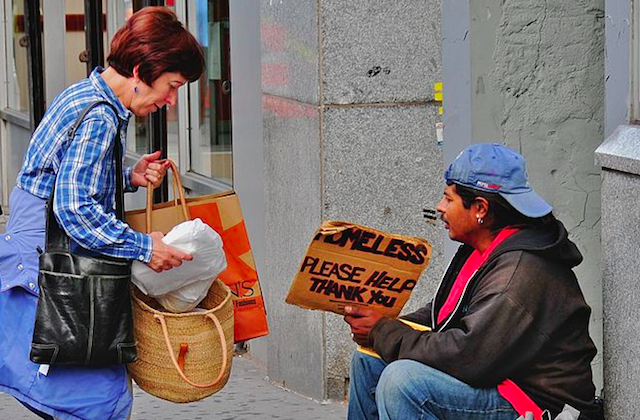
    “Look at that guy,” I said to my wife.

    We were circling the block looking for parking when I spotted him on the sidewalk in front of the bank. For some reason he stood out from the other people in the area.

    “Seems off,” I thought to myself.

    As I passed by, I kept an eye on him. He didn’t seem to be going anywhere, just walking back and forth along the sidewalk in front of the bank.

    He was looking around and moving around like he was waiting for someone, but clearly he was alone.

    We came back around the block and I parked in a loading/unloading zone.

    “Make sure they don’t tow me,” I joked to my wife. I hopped out of the car and made my way to the bank’s ATM on the sidewalk.

    Halfway through the transaction I heard a very small voice coming from behind me.

    “Can I have two dollars? I need two dollars for the bus.”

    The voice was so small that at first I wasn’t sure if he was talking to me or someone else. I continued with my transaction without acknowledging the question.

    “That’s awesome. You’re ignoring me,” he continued.

    At this point I realized that he was talking to me. I didn’t respond.

    The voice got smaller and turned into mumbling. I couldn’t understand what he was saying.

    I finished the transaction and turned back toward my car. He was standing near my car but not in the way.

    I looked at him.

    In front of me was a disheveled, forty-something man. The years appeared cut into his face in the form of deep wrinkles accentuated with dirt.

    The wrinkles could have meant a man much older, but his overall demeanor suggested youth. He still had the aura of a younger person.

    His hair was very short and he was holding a coffee.

    As I walked toward my car he stopped talking. I got around to the driver side and opened the door.

    “No,” I said loudly and resolutely while looking at him. It was the answer to his earlier question, and also an answer to him in general.

    He didn’t respond.

    Driving away I felt uneasy and my mind replayed the situation a few times.

    I have given money to people in the past. It hasn’t happened often, but sometimes.

    My problem with this man was that I felt he didn’t need the money. It was the coffee that bothered me. He had a cup of coffee in his hands. Premium coffee.

    Coffee, I later learned, would be our connection.

    I had forgotten about him by the next day while I was waiting in the Starbucks drive-through line. We reached the service window.

    “Hi! The car in front of you paid for you,” the barista said.

    “What?” I replied. I was caught off guard.

    “Your order has been paid for,” she reiterated. She handed us our items. “You’re good to go.”

    “Thanks,” I replied reaching for the items.

    My daughter asked me why I was shaking my head as we pulled forward.

    “The universe is always teaching me lessons,” I said smilingly.

    She looked at me blankly.

    That’s what I call it when stuff like this happens—the universe teaching me lessons.

    Over the years I have learned to pick up on this phenomena. The lessons are broad and typically focus on topics like compassion, forgiveness, understanding, and renewal. They always emerge through the random coupling of everyday events.

    Some lessons are blatant, but others can be very subtle. The subtle ones are the best. Sometimes I will only “get it” after a couple of days letting it sink in.

    This one I considered blatant. The lesson being:

    Share what you have. Give—even if they don’t need it.

    I didn’t give that man any money because I didn’t believe he needed it. My assumption was that earlier that day he had traded some of his money for that coffee he was holding.

    If he really needed two dollars, then he shouldn’t have spent his money on that coffee.

    But, that reaction is totally contrary to the lesson.

    Later, as I stewed on the lesson, a couple of thoughts occurred to me: Maybe there was no coffee in that cup. Maybe he was collecting change with it. Maybe the cup was empty. Maybe the cup only had water in it.

    The point was that I didn’t know. I assumed.

    The bigger point was that it didn’t matter whether the cup was filled with premium coffee, gold coins, or anything else.

    Giving is not about the other person’s perceived need; it’s about the act itself.

    We are choosing to be the best version of ourselves when our actions demonstrate the best within us.

    Do you remember how you felt the last time you gave? I am willing to bet you felt good about yourself, and good about the act. And that’s great!

    Now, was that good feeling because you filled a need, or because of the act in general?

    Think about it. You can say it was both, but I am also willing to bet that you would feel just as good if you gave to someone who didn’t really need it.

    The good feeling comes because giving is an act of kindness.

    The person in front of me in the drive-through that day could have looked in her rearview mirror and concluded that I didn’t need it.

    After all, I am driving a newer car, my clothes were clean, and the assumption is that I can afford a coffee since I am already in the drive through line.

    Her gift to me was not because I needed it.

    Her gift to me was about kindness. It was about doing that extra little bit to lift someone else up.

    Lesson taught. Lesson understood.

    Photo by Ed Yourdon

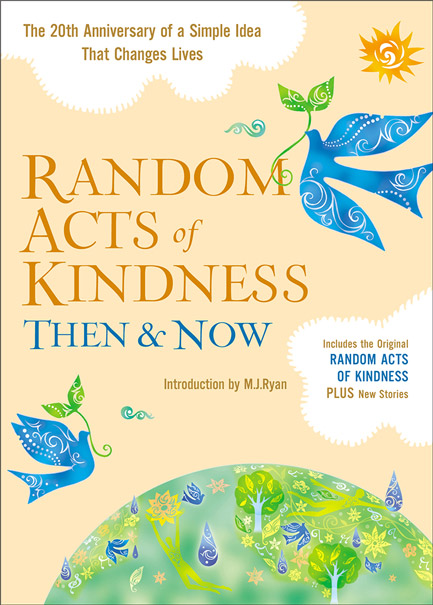
  • Book Giveaway – Random Acts of Kindness: Then and Now

    Book Giveaway – Random Acts of Kindness: Then and Now

    Random Acts of Kindness

    Note: The winners for this giveaway have already been chosen. Subscribe to Tiny Buddha to receive free daily or weekly emails and to learn about future giveaways!

    The Winners:

    “Practice random acts of kindness and senseless acts of love.” ~Ann Herbert

    An unsolicited financial donation right when you need it. Roadside assistance from a stranger after your car breaks down.  An anonymous gift when you’re struggling and in desperate need of a smile.

    These are just a few random acts of kindness that can transform your day and renew your faith in people, and just a small sampling of the type of stories you’ll find in Random Acts of Kindness: Then and Now.

    Twenty years back, Conari Press published the first Random Acts of Kindness book, highlighting stories of people looking out for one another in their daily lives.

    As the book inspired a movement, Conari started the Random Acts of Kindness Foundation, which works with schools and communities to spread kindness.

    Every February for the past two decades, the foundation has spearheaded Kindness week, which runs from the 11th through the 17th.

    To celebrate the week and the book’s anniversary, Conari has offered five copies of the updated book for Tiny Buddha readers.

    Including the original book and new stories sourced through social media, Random Acts of Kindness: Then and Now is an inspiring, feel-good compilation that encourages a more generous, caring, compassionate world.

    The Giveaway 

    To enter to win 1 of 5 free copies of Random Acts of Kindness: Then And Now

    • Leave a comment below, sharing an act of kindness you’ve recently offered or received
    • For an extra entry, tweet: RT @tinybuddha Book Giveaway – Random Acts of Kindness: Then and Now http://bit.ly/Y7Oo9p

    You can enter until midnight PST on Monday, February 18th.

    Learn more about Random Acts of Kindness: Then and Now on Amazon.