Tag: gain

  • Why I’m at Peace with My Weight Gain

    Why I’m at Peace with My Weight Gain

    “Resistance keeps you stuck. Surrender immediately opens you to the greater intelligence that is vaster than the human mind, and it can then express itself through you. So through surrender often you find circumstances changing.” ~Eckhart Tolle

    I took a deep breath, feeling the recent change in my belly. I pinched at my belly rolls. They were familiar, I’d had them before, but recently I had gone through a period of over a year where I was in a smaller body. Now I was gaining weight again.

    I refuse to step on the scale, so I don’t actually know how much weight I’ve gained. I can just feel it in the extra belly rolls and the snugness in some of my clothes. In my mind, I have two choices: to wage war on my body or to surrender to the weight gain.

    Surrender is the ability to let go of the crushing weight of societal and personal expectations. It’s waving the white flag, signifying I’m giving up all the diet culture methods I’ve tried so hard to make work. I’m acknowledging that they actually never worked in the first place. This option isn’t always so easy, though.

    For some context, I’m a body positive and fat positive activist. I advocate for acceptance and health at every size. I tell others they’re worthwhile just as they are. Though when it comes time to put them into practice within myself, it’s very challenging.

    I still have days where I suck in my stomach, hoping to appear skinnier to the world and to myself. I try to shrink to become small enough. I feel as though my worth lies in the number on the scale (even though I’m a stranger to it now).

    I lie to myself and say that I’m never going to find a partner if I keep gaining weight. I beat myself up about the food I’ve consumed and I compare myself to other people.

    My body positive journey is far from perfect; I struggle with all of these things. One big reason is internalized weight stigma or fatphobia. It infests my mind and can take over if I’m not careful.

    I mean, look at the world: We fear and despise fat. People are bullied and discriminated against because of being in larger bodies. Fatphobia is very real. It’s ingrained subconsciously; our society trains us to be this way.

    The Body is not an Apology outlines some ways in which fatphobia rears its ugly head. In jobs, fat employees tend to be paid less for the same work. In dating, they often deal with people who fetishize them rather than seeing them as humans. In fashion, there are rarely sizes available beyond a size 16. In medicine, doctors see them as weak-willed and lazy.

    This is not surrender in our society. This is bullying and prejudice. No wonder it’s hard for people to accept their changing bodies—there are so many consequences for being fat.

    The irony of fat-shaming in the name of health is that it actually causes adverse health effects. According to a survey done by Esquire magazine, two-thirds of people report they’d rather be dead than fat. Can you imagine the damage this amount of stress does to one’s system?

    No wonder we’re terrified of gaining weight. We let those messages infiltrate our minds, and they drive us to pinch at our belly rolls as if we’re the worst people ever.

    On the other hand, being thin means being accepted, flying under the radar, even being complimented. It means that life is easier because you’re not oppressed in this way. Still, fatphobia manages to creep into all of our minds.

    When you’re scared to death of what other people are going to think of you, you’re carrying your own sense of internalized fatphobia. This phenomenon even impacts those who are in smaller bodies because of the negative feelings they have about themselves and the world.

    It makes sense, then, that my first reaction to my body admittedly isn’t always unconditional love. Rather, the old messages in my mind were saying, “You’re not good enough. You’re disgusting. No one will ever love you. You’re a failure.” They were loud and unrelenting. I was familiar with these messages.

    For many years I waged war with myself. I was stuck in cycles of binging and restricting that wreaked havoc on my body. I thought I was being “healthy,” but really I was very sick.

    I was obsessing over every little thing I consumed, making sure to track seventy-two calories of butter to my MyFitnessPal app and being hysterical when I gave into a Twix bar. Weight control owned me. I was constantly thinking about food.

    Binging and restricting create terrible health risks—getting physically sick from too much or not enough food and brittle hair, not to mention the emotional consequences that occur like stress, obsession, and the absence of joy.

    I loathed my very existence, and I definitely was fighting a war against my body and myself. I thought that there was something fundamentally wrong with me. It was utterly exhausting.

    I started to think that there had to be another way to relate to my body.

    When I was twenty-two, I discovered the body positivity movement. I began with a program called Bawdy Love, which was all about being a revolution to loudly declare that every body is worthy and no body is shameful.

    I began to follow body positive influencers online like Megan Jayne Crabbe, Tess Holiday, Roz the Diva, Jes Baker, and hashtags like #allbodiesaregoodbodies. Fat women filled my feed. They were beautiful and unapologetic. They taught me that fat isn’t bad and that people in larger bodies aren’t lazy, unhealthy, or unlovable.

    Now, I must say, I’m in a smaller body. I have privileges that many people do not. My level of weight gain so far is still keeping me in a body that’s relatively accepted by society. I don’t know what it’s like to face discrimination based on my size.

    I do, however, know what it’s like to hate your body and think that you’re broken. I know what it’s like to do the opposite of surrender. When I’m living this way I do things like workout until I’m ill, take my favorite foods out of my diet, and berate my body in front of other people. This is what waging war looks like.

    Instead of doing this, I chose to surrender to weight gain. I make this choice every single day. I try to let go of my expectations and preconceived notions. I’m throwing my hands up in the air.

    This isn’t a happily-ever-after story where everything is perfect. Rather, body acceptance takes rigorous work as well simply just letting myself be.

    I’m continuing to enjoy my food free from disordered eating. This means no restricting; every single food is available at any time. You won’t hear me talking poorly about my body or about anyone else’s. I refuse to diet and I refuse to indulge others in their diets.

    To counteract the voices that tell me I’m not good enough, refute them with “You’re worthy and lovable just as you are. Weight is just a number. You’re okay.”

    Eventually, I started to believe these thoughts are true. Part of me thinks that maybe, just maybe, my existence on this planet isn’t for nothing. In letting go of the self-pity, a beautiful sense of self begins to bloom.

    Surrendering is harder than you may believe. Internalized weight bias runs deep.

    I think at times I come off as someone who’s super-confident in myself and in my relationship with my body, but it takes a whole lot of work to get to the point of surrender. The point of being free from the grips of diet culture.

    I still poke at my belly, but mostly it’s with curiosity. If I feel disgust, I quickly try to turn my thoughts around to have compassion and confidence. I notice when my thighs are pressed against a bench. I smile, feeling thankful that my legs move me around.

    I don’t step on the scale because I know that it can’t tell me anything about my worth. The numbers are irrelevant. I open my arms to weight gain, though sometimes taking a deep breath first. Accepting it means healing from a disordered relationship with my body and food.

    Weight gain is an indicator that I’m living with joy in my life. I’m enjoying meals out with friends, snacking on treats at work, and taking seconds. I’m eating when I’m hungry, what a revelation.

    I’m taking deep care of myself, and that may not look like other people’s definitions of self-care. That’s okay.

    Fatphobia may say that I’m being stupid, but I choose surrender today. For me, that means throwing out lifelong conceptions that I’m not good enough. It means no longer running in circles chasing my tail, trying to lose weight. It’s opening up to the idea that there’s another way to go about this. It’s peace and joy.
  • Seeing Rejection As Redirection: What We Gain When We Lose

    Seeing Rejection As Redirection: What We Gain When We Lose

    “Every time I thought I was being rejected from something good, I was actually being re-directed to something better.” ~Steve Maraboli

    Rejection hurts. Whether it is from family, friends, co-workers, or a new company, when we experience rejection it hits us right in the heart—the control center to our emotions.

    We may wonder, what is wrong with me? We might begin pulling ourselves apart with self-criticism. However, rejection also has a way of teaching us, redirecting us, and ultimately making our lives better.

    I have learned to look at rejection differently these past couple of years. Actually, many of my greatest blessings have come out of what I perceived as rejection. Yes, there have been many painful experiences, but then again, I always have been one to learn more through pain than through pleasure.

    When I was younger, I faced rejection daily. I was an overweight teenager with crushes on any boy who looked at me. Other kids would constantly make fun of me, and no boys dared to show me any bit of interest. I was bullied and rejected simply for being me.

    I experienced rejection around relationships several more times as I grew older. There was a period when I was so afraid of rejection, I clung onto friendships and relationships that I intuitively knew were not healthy for me.

    Unsurprisingly, these relationships eventually died out. This, of course, validated my beliefs that I was unworthy and that I would always be rejected. More so, it led to significant feelings of loneliness, even surrounded by bodies of people.

    As I got into my career, there were several times I did not get the job I had hoped for.

    I did not receive my professional counseling license in the time I wanted and planned for. I did not get that promotion I had worked so hard for. The rejections just kept piling on.

    Finally, it was like a light bulb went on. These things were all happening for a reason, and they were all perfectly timed.

    I began to spin the way I viewed rejection. I started to see it as an ability to reassess and become more acquainted with different parts of myself. In some situations, I was able to see that maybe I was not on the right path. Or, if it still felt I needed to be there, I was able to look within and see where I needed to improve in order to make it happen.

    My perspective became clearer. Every job I was denied for, opened the door to new (and better) opportunities. Every relationship that hurt me, led me to my true love (and husband-to-be). Every mistake I made, guided me to look within.

    I was able to learn, grow, and ultimately make changes. I forgave myself for not knowing what I did not know until I learned it. I found myself thanking all of the people, places, and things that rejected me. They led me on a process to being the person I am today, a woman of integrity, grace, resilience, and strength.

    But, let me warn you, this epiphany did not happen overnight. Slowly, I began to see my perception and my beliefs were no longer serving me. I started to look at situations differently, and began searching for the blessing in disguise. I know, it sounds easier said than done, but there are some tools we could use to help quiet the inner critic that shows up during these times of distress.

    1. Treat yourself with compassion.

    If there’s anyone that knows the dialogue “You deserve bad things because…” it’s me. But, research shows negative self-talk is destructive and ineffective.

    If I believe I deserve bad things, I will start to attract people or things that validate that belief. What we feel on the inside, manifests itself on the outside.

    We need to work on responding to our inner critic with kindness and compassion. A helpful way of doing this is communicating with yourself like a dear friend.

    When a girlfriend went through a job denial, I encouraged her to trust that new opportunities would evolve. I also acknowledged her courage for just showing up and interviewing. I would never have said she’s hopeless and she ought to give up.

    When friends have gone through terrible breakups, I have always done my best to remind them they are worthy of love, and to help them find the lesson in the situation. I wouldn’t have told them it was their fault because there was something wrong with them.

    2. View rejection as getting outside your comfort zone (where all the magic happens).

    If we never experience rejection, we are probably not taking many chances, and therefore, not making many changes.

    When we get rejected, we can at least be comforted in knowing that we are taking risks. These risks help us better understand who we are and where we are going. More so, they help us build strength and develop skills to deal with inevitable adversity life brings, which helps us build up resilience.

    I worked hard to obtain a professional license, which was denied to me when I first applied due to a history of being dishonest. At the time, this broke me. I felt so ashamed and scared. However, this allowed an opportunity to really challenge and get honest with myself.

    My use of alcohol was starting to have consequences that I attempted to hide. It was beginning to slip into other areas of my life. Ultimately, this rejection directed me to a life in recovery, which constantly gets me out of my comfort zone.

    Not only am I living present and sober, it has taught me to get out of myself and be of service to others. Fast forward a year, I got my license. Boy, did it mean way more to me then than it would have the year before, as I put in a lot of hard work to making changes and re-aligning my life.

    3. Don’t let rejection define you.

    Many times when we face rejection, we personalize it. We make the event of rejection far more than the event. We begin to identify with it. This is a failure, therefore I am the failure. It is important to separate what happened to us from who we are.

    Rejection isn’t always personal. Oftentimes when someone rejects us, it has nothing to do with faults on our part; it just means we weren’t a good fit for that person, job, or opportunity.

    If we take rejection to mean we’re unworthy or unlovable, it’s likely because the rejection is triggering an existing belief formed earlier in life—which is a good thing, since this points toward something we may want to address and release.

    I had a tendency to put my worth into external things, and in a sense, abandon myself. After patterns of rejection, it became apparent I wasn’t meeting myself with compassion. I was meeting myself with shame and attempting to shame myself into making changes.

    I worked on consciously being mindful of my thoughts and shifting them to be more supportive. I learned that failure was an event, but not me as a person. Furthermore, I practiced trusting that things will work out at the right time. If it was not working out right now, I still had something to learn even if that was just to be patient.

    4. Find the lesson in rejection.

    We could easily focus on what we have lost when we experience rejection, but it’s more useful to ask ourselves, “What have I gained?” This way we can learn from the experience. Rather than beating ourselves even more over the head, we can turn our adversity into self-growth and self-exploration. With each experience, we can grow stronger.

    Personally, I have learned to look inside and identify what I need to work on. I have begun to see I am more capable to handling loss than I have credited myself. I have also found the ability to use rejection as an opportunity to humble myself, and move forward with wisdom to do things differently.

    At twenty-five years old, I was divorced from my first marriage. I was in a space of regret and shame. I felt I’d deeply let down my family and friends. I found myself isolating from others and alone. I lost a relationship, a home, friendships, and predictability. But in hindsight, I gained much more.

    I began to see I was codependent in the relationship. I was stagnant and not evolving as a person. Slowly, but surely, I began to learn to truly depend on myself.

    I gained wisdom about healthy boundaries in a relationship.

    I then learned to cherish true friendships. Friends who saw me at my lowest and still loved me without conditions.

    Most importantly, I gained a relationship with myself. I learned to love the woman I am unconditionally. In doing so, I finally attracted real love. I learned to value, respect, and love my now fiancé unconditionally.

    Our thoughts have a strong impact on our emotions. Our emotions, in turn, have a strong impact on our decisions and our behaviors. If you find yourself experiencing failure or rejection, ask yourself what is your interpretation of the situation. What meaning are you giving it?

    If you have a tendency toward negative self-talk, you will find your energy draining quickly. This will eventually take you away from what is important. When we are in a battle with ourselves, we cannot possibly be present for others.

    It could be helpful to create a new belief about the situation. On the surface, I may have a loss of relationship, but deeper down I am gaining a better understanding of myself. Train your brain to look for the blessing, not the curse. I, personally, believe I am always being protected. If you don’t believe in a higher power, you could still choose to understand rejection as redirection to something better.

    I choose to trust the universe and that things are happening as they should for my highest good. It is crucial for me to have that faith in order to be with the sense of peace, I feel, we all yearn for in life. And, to be completely honest, I am extremely grateful for things not working out the way I once hoped they would.

  • Post-Traumatic Growth: How Pain Can Lead to Gain

    Post-Traumatic Growth: How Pain Can Lead to Gain

    Butterfly hands

    “When life is sweet, say thank you and celebrate. When life is bitter, say thank you and grow.” ~Shauna Niequist

    It’s been over five years since the unexpected death of my oldest son. The first couple years were fraught with depression, despair, and a sense of hopelessness like I had never felt before. I even kept a notebook in my purse outlining the plan for how I would ultimately end my life.

    It wasn’t until this past year that I told my friends about how close I had been to the edge. After outing myself, I found out they knew way more than I gave them credit for in that first year, and were often on suicide watch (despite the fact that I thought I was being so coy).

    Recently I was talking to a friend about my “list.” It included the things I wanted to have done before I ended my own life (I’m a bit of a planner). Some items were practical things, like “clean the house” and “have the laundry done,” but it also included emotional things, like “write letters to my family” and “distribute special personal items.”

    My friend roared in laughter (not the response I expected) and said, “I’m so glad Brandon (my son who died) kept having you add stuff to your list—you’ll never have all your laundry done!”

    I had to agree, there was no doubt that my angel son, Brandon, had been scheming, along with my other friends, to keep my head above water until I could learn to swim on my own.

    As horrible as those early months and years were, they also led me to deeper spiritual and emotional growth than I’ve ever experienced in my life.

    For me, the loss of my son led me to find my secret super soul powers. For you, it might be a divorce or diagnosis that shook your world to the core and forced you onto the path of what professionals call “post-traumatic growth.” Yes, post-traumatic growth is a real thing!

    Learning about this powerful shift that happens when we’re open to seeing the growth behind tragedy allows us to use these events to evolve into a better, more soul-filled version of ourselves.

    Post-traumatic growth has an organic, innate quality about it, but we have to know to look for it or we might miss it.

    What is Post Traumatic Growth?

    Psychologists Richard G. Tedeschi and Lawrence G. Calhoun originally researched post-traumatic growth (PTG) in the mid 1990’s at the University of North Carolina at Charlotte. The researchers found that 90% of individuals who experience a traumatic event exhibit as least one factor identified as PTG.

    The five cornerstones of PTG include:

    • A desire to be open to new opportunities that weren’t present or didn’t seem like possibilities before
    • An increased sense of connection to others, typically exhibited by being more compassionate or empathetic to other’s suffering.
    • A greater sense of self-reliance or sense that if you lived through that, you can take on anything
    • An increase in gratitude for life in general and an appreciation for things that might have been taken for granted before
    • A deepening of a spiritual connection or purpose, and this could include changing or realigning beliefs

    Examples of PTG

    You may not feel like you’ve changed in all these areas. It’s common to experience your PTG in one or two of them.

    For example, I have a friend who became one of the first women to run the length of the Colorado Trail (486 miles), in order to raise awareness for Parkinson’s disease, after her sister was diagnosed with the disease.

    This is an example of seeing new opportunities and developing an increased gratitude for life. Although I would guess there was also a connection to spirit during those long days on the trail!

    When I speak on this topic I often share the famous icons of PTG—superheroes like Batman and Spiderman, who both were moved to act on their PTG after the loss of a loved one. (Okay, Spiderman had the added benefit of superpowers, but still!)

    Or we could talk about the woman, Candy Lightner, who started Mothers Against Drunk Driving (MADD). The death of her child propelled her to create a drunk driving movement that we’ve all heard of.

    One of my most healing shifts came when I began to feel deep compassion for others who were suffering, and also tapped into gratitude for the beautiful life I still had to live and for the blessings that occur daily when I tuned in to them.

    I have also felt a shift on focusing on what is really important in life and being able to let go of thoughts that no longer serve me.

    Two of my other sons, Brandon’s younger brothers, recently took a year and travelled to Australia. They have both said to me they realize there are no promises in life and want to experience all they can.

    How Can You Tap into PTG for Personal Gain?

    The simplest place to start is checking in with yourself to see if you are stuck asking yourself why something happened to you. If you continue to struggle with a question that, even if it were answered, would not change your current situation, then you start with shifting from the “why me” to the “how.” How can you make something good come of this?

    The next step is starting to practice. All the good stuff we need is labeled practice, not perfect—a meditation practice, yoga practice, gratitude practice. It’s no accident that what we need most we are told to practice, not perfect.

    PTG is the blooming lotus flower in the mud. When we can begin practicing looking for the potential instead of being focused on the mud, our minds begin to shift. Our brains are wired to tune in to what we’re looking for. If we’re looking for the bad stuff, the bad stuff is what we see, and vice versa.

    Remember PTG has an organic element to it, so to help you begin to practice PTG in your own life, start with the most natural shifts. When you consider the five areas above, which one to you feel most drawn to? Perhaps there is one that comes more natural to you.

    For example, have you always felt a connection to spirit? If so, lean into your growth by finding ways to explore your relationship to a higher power.

    Is a part of you that has wanted to take a trip somewhere, but it always felt out of reach or not possible? Why not explore how to make it happen this year? Life is precious; find a way to act.

    I would also encourage you to begin noticing how others you know have shown PTG. Think of friends or other people who handled a crisis in a way that makes you take notice. What action did they take or how did they change themselves?

    PTG has the capacity to take us beyond simply adapting to our current situation. It takes us to new levels of consciousness and being that weren’t available had we not experienced our life event or trauma.

    Think of this as not just making lemonade from your lemons, but having what you need to create a decadent, gourmet, and sweetly delicious lemon chiffon cheesecake with a raspberry swirl topping!

  • Why Losing Weight Might Not Make You Happy (and What Will)

    Why Losing Weight Might Not Make You Happy (and What Will)

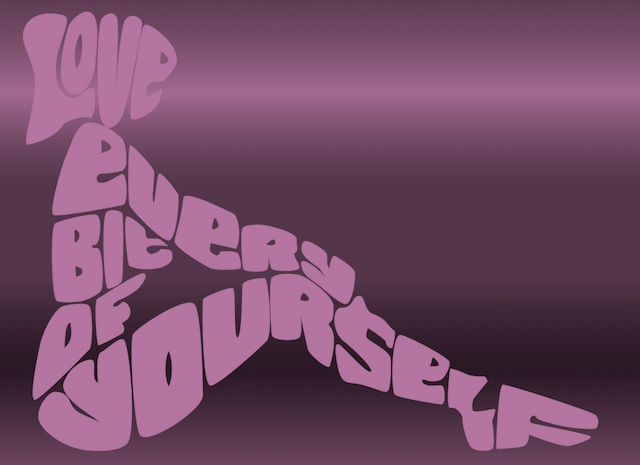
    Love Every Bit of Yourself

    “When I loved myself enough, I began leaving whatever wasn’t healthy. This meant people, jobs, my own beliefs and habits—anything that kept me small. My judgment called it disloyal. Now I see it as self-loving.” ~Kim McMillen 

    Sometimes people ask us questions that change our lives, questions that require us to dig down deep and think about what’s really important. Questions that push the envelope and show us that maybe the direction we’re going in isn’t the one we want.

    My cousin, unknowingly, asked me one of those questions over ten years ago:

    “Well, this is what you always wanted. Are you happy now?”

    I was stunned. It had been such a long time since anyone had ever asked me that. But, much more than that, I was embarrassed that she recognized that “this” is what I always wanted.

    How vain. How trite. How trivial when it came to life as a whole.

    I answered, with a feeling of shame, “Um, yeah, I guess so.”

    And then we walked back upstairs to join the rest of the dinner party.

    I later recognized that, no, I was not happy now that I had “this.” “This” was my weight. I was the smallest I’d ever been.

    I was at a healthy weight before, but it wasn’t enough for me to feel good enough.

    I despised my thick thighs, longed for a leaner tummy, and wished my back fat would just disappear already.

    And now here I was, where I thought I wanted to be, and I couldn’t be more miserable.

    I was shocked. How could this be?

    I’d envisioned feeling so much differently at this weight. Happy. Healthy. Vibrant.

    I’d have a new kick to my step, be the life of the party, and radiate happiness.

    Instead, I was lethargic, grumpy, constipated, and a sense of sadness kept me from ever feeling like me. And trust me, when you can’t feel like your true you, it’s impossible to reflect bounds of happiness and joy. 

    When I realized that I was now “here” and more miserable than ever, it was a turning point. Don’t get me wrong, it was a long slow turn I was going to need to make, but I knew it would be a game-changing one.

    Part of making that turn was recognizing that the number on the scale was never my problem. My problem was that I never felt like I was good enough.

    I thought if I looked a certain way and was thinner, I’d automatically be happier, have more friends, find a loving partner, and be liked more.

    Bottom line: my struggles with body image, food rules, and my weight were symptoms of me not feeling like I was good enough—not actually food. 

    So, I started to address an issue that no diet, food program, meal plan, or fitness routine ever really does: self-love.

    I wasn’t an overnight success story. It took time. And in all honesty, I didn’t even know if I was capable of doing it. (I was.)

    All I knew was that I was ready for my pain to incite change and to grow into a healthier, happier human in body, mind, soul, and spirit.

    Here are some things I learned along my self-love journey that may help you too.

    Being kind to yourself may feel foreign at first.

    Speaking kindly to yourself, appreciating the good in yourself, and treating yourself as you would treat a close friend may seem odd at first. Know that this is normal. Just keep it up and soon it won’t seem so foreign.

    And in all honesty, when you start to do this (and realize how unkind you’ve been to yourself), it won’t be too surprising why you’ve been having a hard time making the next step.

    If there’s one thing I’ve learned it’s that you can’t move along in your journey when your star player is constantly doubting, bullying, and sabotaging him or herself. Be kind to yourself.

    You have to forgive yourself.

    If you’re a sensitive soul, like me, you don’t forgive yourself easily. If the same thing happened to a friend, you’d forgive them in a heartbeat, but yourself, no way.

    When we’re living with blame or shame, we use food to soothe, stay in unhealthy relationships, and let go of all of our boundaries.

    Forgive yourself, just as you would a friend, for the things you’ve been holding on to.

    Let them go so you can move forward without that baggage and live in the light. Write a forgiveness letter to yourself and then burn it, mediate, use mantras, or journal—whatever helps you forgive and let go.

    Until you accept yourself, you’ll keep searching for happiness elsewhere.

    The simple realization that happiness is an inside job is transformative. It’s freeing, really.

    It makes you think about what’s really important to you, what makes you come alive, and what you want more of in your life. You’ll discover it’s not your weight, hair color, or how much money you make.

    When you uncover these questions and discover that self-love and acceptance are the keys to living a life of love, you’ll be consumed with joy.

    You see, a lot of us wait until we get “there” to start doing what we really want to do. But, what if you started doing things because you knew that’s what lit up your soul in the now? I bet you’d get “there” that much faster. 

    You can change your script.

    Remember that at any point, you can change the script of your life. Your past doesn’t define you and neither does your undetermined future. The only thing that matters is now, so make your now one that empowers, strengthens, and fills you with love.

    You have to give love to feel love.

    Smile at others. Give compliments. Express gratitude. You want more love? Then show it. The Universe will throw back at us what we give out, so give good. Give love. And open your heart to the tiny miracles that happen daily around you with thanks.

    When we’re filled with love and gratitude, we make more loving and gracious choices for our bodies, others, and ourselves—and that’s the real food for a journey of self-love.

    Love yourself image via Shutterstock

  • Stop Crash Dieting: An Enjoyable Approach to Sustainable Weight Loss

    Stop Crash Dieting: An Enjoyable Approach to Sustainable Weight Loss

    Woman in the Park

    “It is better to take many small steps in the right direction than to make a great leap forward only to stumble backward.” ~Proverb

    You wouldn’t believe it now, but in my college days I did my fair share of crash diets.

    The craziest was the one where I tried (and failed) to eat nothing but oranges for nine days. My roommate’s ex’s dad was a veterinarian, and after the good doctor lost fifteen pounds on the same high vitamin C, high fiber, non-sense diet, I decided to try it for myself.

    It was based on a specific number of daily oranges to keep your metabolism and energy levels up. Orange juice was off limits, but I could season the slices with my favorite chili powder to mix it up a bit.

    I was off to a good start and enjoying the attention from friends who couldn’t hide their disbelief or their laughter.

    My resolve crumbled after sundown on the third day. No longer hungry, I had eight oranges to plow through before calling it a night. Instead, I ran to the cafeteria for chicken salad, and that was the end of the infamous orange diet.

    Crash dieting on oranges did nothing for my waistline, but it satisfied a deeper need. It was never about my weight or the way I looked. Crash dieting was fun; it broke the routine and more importantly, it was a distraction.

    My dad had just been diagnosed with an aggressive type of brain cancer, and these food fixations kept my thoughts on something that I could control. Instead of worrying about survival rates, I obsessed over the jeans I couldn’t fit into anymore, or how many hours I had to put in at the gym.

    For years my weight yo-yoed, stabilizing only after Dad passed away. At that point I was no longer binge eating to silence my anxiety, or dieting to lose a few pounds before putting them on again. It took two years for the weight to come off but it never returned.

    My relationship with food is still a work in progress, very much linked to my mental and emotional state of mind. Based on these experiences, I have opted for a more balanced approach to health and well-being.

    It’s about being patient, mindful of our impulses, and compassionate in our self-talk. The word “diet” has no place in my vocabulary. Rather, I take the middle road, eating almost anything in moderation. A few thoughts to consider include:

    1. Is it hunger you’re feeding, or something else?

    Dieting is useless unless we deal with the emotional and psychological issues that lie beneath. Anxiety over my dad’s illness fuelled my crash diets and binge eating. Think about the need that is being filled.

    Are you bored, stressed, or just looking for love in a chocolate bar? Is there a healthier way to satisfy that need? Knowing yourself is the first step; this is where a healthy dose of introspection will come in handy.

    There is plenty of reading material on emotional eating. My favorite so far is Doreen Virtue’s book, Constant Craving.

    2. Focus on maintenance instead of weight loss.

    The weight came off when I began eating as if I were already at my goal weight. That slice of chocolate cake was no longer the enemy. I could treat myself in moderation, so long as I listened to my body and stopped when I was full.

    This approach enabled me to make peace with my appetite. It also made exercise fun again, because I went to the gym when I wanted to, no guilt trips included.

    Pushing ourselves at the gym may be a popular option, but finding an activity that we genuinely enjoy makes staying fit so much easier. Whether it’s kickboxing classes, jogging, or ballroom dancing, make sure you have fun and get those sessions in regularly!

    3. Educate, love, and accept yourself fully.

    Buddhist philosophy teaches that ignorance, attachment, and aversion are the three downfalls of human nature. All too often we fall victim to the illusions of the mind, especially where loving and accepting our physical body is concerned.

    Taken to the extreme, wanting to lose weight because we dislike our current size can involve both attachment to an unattainable ideal and hatred of what is. It’s time we release the need to be perfect, love and accept ourselves for who we are, and make informed food and lifestyle choices.

    4. Follow the middle road.

    In my previous life as a crash dieter, my food choices were anything but moderate. Rich and creamy desserts may not have been my friends, but that didn’t keep me away. Trying to avoid that chocolate cake only made it so much harder.

    Instead of avoiding certain foods because of their perceived sugar, fat, or carb contents, let’s think about the big picture. No single food choice is responsible for our health and well-being, rather it’s the combination of foods we eat, and how they are processed, that makes a difference over time.

    This is where we can use knowledge and patience to our advantage, consulting with a qualified nutritionist to develop a healthy and satisfying nutrition plan that can last much longer than a simple New Year’s Resolution or a crash diet.

    5. There’s no time like the present!

    Start today! Don’t put your new life off to Monday, January 1st, or any other mental milestone. And remember that you are not sacrificing anything. Think of this approach as spicing up your meals with a dash of conscious moderation.

    Woman in the park image via Shutterstock

  • The Gains in Our Losses: Growing Through the Pain

    The Gains in Our Losses: Growing Through the Pain

    Loss

    “In this world of change, nothing which comes stays, and nothing which goes is lost.”  ~ Anne Sophie Swetchine

    I’ve always been a “cat guy.” This was long before my Buddhist friends told me stories of how cats are true earthly masters, here on earth to show us the way. Or, to demonstrate the meditative perfection of the feline purr. Or, how the life of a cat is seen in some traditions as reward for good karma.

    When I lived in rural Nova Scotia, the house was blessed with two cats named Midge and Mooch—tabby mixes, who would come and go as they pleased, and were kind enough, if not overly affectionate.

    I kept asking for a cat of my own, and my folks eventually buckled. For my seventh birthday, I received a black and white kitten with golden eyes and a salmon-pink nose. He took to me instantly. Love at first meow.  

    My parents kept pushing me to name him, but whenever I asked what he wanted to be called, he’d just scamper off. Cats are coy like that.

    A few weeks later, my dad pulled out a Canadian road atlas and told me to point to the first town that caught my eye. And that’s how we finally settled on a name: Kitchener.  

    I’d call for him, and he’d come without too much argument, so I guess the name wasn’t that offensive, all things considered.

    For a lonely kid who lived in the middle of Granville Ferry—population 820—this was as close to friendship as I was likely to get. And it was more than enough.  

    A week after school let out for the summer, I was playing across the road on a rope swing attached to the neighbor’s big elm tree. Kitchener would follow me sometimes, climbing up the trunk and perching above as I swung. I’d lean back to scan the sky, comforted by the blurred canopy of branches, and the tiny black and white face nestled within.

    I heard my mom yell that dinner was in 20 minutes. It was a Sunday, so that meant pizza night; homemade dough, tomato paste, cheap chunks of pepperoni, and cheddar cheese were manna from heaven for a seven year old. I leapt off the dangling wooden plank and ran across the road.

    I didn’t hear Kitchener yowl behind me. I didn’t hear the hooded jogger, approaching in the looming dusk, shout an urgent warning. I didn’t hear the engine of the ‘68 Chevy growling down the highway, its elderly American passengers ripe with thoughts of seaside picnics and historic lighthouses. The only thing I heard was screaming. Mine.  

    Screaming through the pain, and blood, and terrifying confusion. Strobing in and out of consciousness, I remember my dad suddenly appearing over me, pale and distraught, and tearing off his flannel overcoat. For some reason, he started beating my leg with it.

    I screamed again—howled, actually. He rolled me over, and almost fainted.

    I’d find out later that my shoe and pant-leg were on fire; I had slid across the road so fast after the impact that they ignited. It didn’t help that I flew face-first. Or, that I had a compound fracture.  

    I can’t imagine how my father felt when he flipped me over and saw the sticky crimson mask, and the shattered fibula and tibia tent-poling through my jeans and flesh. His only child—adopted, no less—the source of all this horror.

    The rest of the injury tale is for another day. Suffice to say, I was hospitalized, hammered and stitched, physio’ed, and sent home with a cast up to my hip. But I wasn’t sad.

    Even with the permanent loss of 100% mobility, and the fact that we had just installed an aboveground pool. (Yup, the Simpsons copied my life. I’m assured the royalty check is in the mail.)

    I wasn’t sad because I had my kitty to come home to. Kitchener would be there for me no matter what, because that’s how best friends roll. 

    Except that he wasn’t. I’d call from my army cot in the living room, louder with each passing day, but only Midge and Mooch would come sniffing. I asked my parents to look for him back in the garden and across the road. They’d just wring their hands and promise to try.

    You see, I’d been in the Halifax Sick Kids’ Hospital for nearly a week. My folks would make the 150-mile trek every day, bringing hopeful smiles, get-well cards from neighbors, and portable cribbage and chessboards to play on. They’d sneak in cake and popsicles, help the nurse with my bedpan, and keep me from picking the scabs off my face.

    But what they didn’t do—what they failed to tell me—was that Kitchener was dead.

    They found him on the side of the road one morning, on the way to visit me. In the same spot where I was hit. He was less than a year old. Almost seven in human years. The same age as me.

    They buried him on the back acreage, near the edge of the vegetable garden. Beside the old colonial graveyard where I used to lay on stone slabs from the 1700’s and see faces in the clouds. Where Kitchener would stalk mice and bees, while making sure I didn’t get too lost in heavy, lonesome thoughts.

    My dad put me in a small utility trailer attached to the riding mower, and took me out to see the grave. It was just a small mound of dirt, crowned by hollyhocks, bluebells, and long grass. I don’t think I cried then. I only remember not looking at that mound of dirt again until months later, when I was able to hobble there by myself.

    I was seven years old when my cat died. I’ve tasted death since. Other pets. Family members.  Good friends. Lovers. But Kitchener was my first. And when my young, broken self stared down at the tiny grave months later, a calm washed over me as the tears began to flow.

    It was like a contract had been fulfilled. A life for a life. A great love. A tragic loss. And, a profound lesson.

    During our brief time together, Kitchener brought the fuzziness of my existence into focus. Up until then, I had felt distant from life. Removed. Like I’d never truly be understood, so therefore I wasn’t meant to be a part of the world around me.

    But his presence snapped a fearful, self-absorbed child out of his shell. His touch made that boy feel more connected to another living being than he had ever dreamed of feeling. His purr filled that young, damaged heart with such complete joy that the thought of ever losing it wasn’t ever a consideration. 

    I’ve learned that not all attachments are bad, even when they hurt (especially so)—unlike our expectations, our whims and desires, our material goods, or our fair-weather friendships. The real bonds—the ones we form on the deepest, most meaningful, most vulnerable levels—they touch us, and change us, and the truth of them endures.

    My little friend and I will always be together. Always. Frolicking in sunbeams in the infinite moment. But he could only teach me this by breaking my heart in death.

    My first guru had four feet. I guess my Buddhist friends were right after all.

    Sometimes we gain through loss. We just need to be willing to see the lesson and let ourselves grow through the pain.

    Photo by Lel4nd