Tag: future

  • Planning Without Panic and Learning to Live in the Now

    Planning Without Panic and Learning to Live in the Now

    “You can plan for a hundred years. But you don’t know what will happen the next moment.” ~Tibetan proverb

    Some days it feels like a fog I can’t shake—this underlying fear that something painful or uncertain is just around the corner.

    I try to be responsible. I try to prepare, make good choices, take care of things now so the future won’t unravel later. But beneath that effort is something harder to face: I feel helpless. I can’t control what’s coming, and that terrifies me.

    Maybe you’ve felt this too—that tension between doing your best and still fearing it’s not enough. Worry becomes a habit, like you’re rehearsing bad outcomes in your head just in case they happen.

    That’s where I found myself when I turned to Buddhist teachings—not for comfort exactly, but for a different relationship with uncertainty.

    What Buddhism Taught Me About the Future

    One of the first things I learned is that Buddhism doesn’t tell us to stop caring about the future. It teaches us to stop living in it.

    The Buddha spoke of suffering as arising from two core causes: craving (wanting things to go a certain way) and aversion (pushing away what we don’t want). When I spin into worry or try to predict everything, I’m doing both—I’m grasping for control and resisting what I fear.

    But the future is always uncertain. That’s the part I don’t want to admit. I used to believe that if I thought hard enough, planned carefully enough, I could outmaneuver risk. But I’ve learned that worry isn’t preparation—it’s just suffering in advance. It doesn’t protect me. It only pulls me out of the life I’m actually living.

    The Real Conflict: Planning vs. Presence

    Here’s the real tension I struggle with—and maybe you do too: I believe in the power of presence. But I also know I have to plan.

    As a filmmaker, planning isn’t optional. Without preparation, things fall apart. A well-structured plan doesn’t just prevent chaos—it makes room for creativity. It allows me to focus, explore, and respond to the moment without losing direction. In that way, planning is part of my art.

    So when I first encountered teachings about letting go and trusting the moment, it felt contradictory. How could I live in the now when my work, and life, require thinking ahead?

    This was the real conflict—the push and pull between control and surrender, between structure and flow. One is necessary for functioning in the world. The other is necessary for actually feeling alive in it.

    A Real-Life Lesson in Letting Go

    Years ago, I received grants to make a 16mm documentary about Emanuel Wood, a traditional Ozarks fiddler with a rich musical heritage and a colorful presence. I had high-quality gear lined up—Nagra 4.2 audio, film stock, the works—and the project felt blessed. Emanuel was eager. I was hopeful. The plan was solid.

    It felt like everything was finally coming together.

    But over the years I’ve learned something the hard way: sometimes, when I feel euphoric about a plan, it’s also a signal—a subtle warning that life might have something else in mind.

    Sure enough, Emanuel died unexpectedly just a few months before I was scheduled to begin filming. Just like that, the film I had meticulously envisioned, built support for, and shaped my year around was gone.

    I was devastated. I couldn’t give the grant money back, and I didn’t want to abandon the deeper spirit of the project. So I did what I didn’t expect to do: I stayed present, and I listened.

    I made a different film. A new one. Something just as honest and grounded in the world Emanuel represented. It was shaped by the same love of music, the same longing to preserve meaning, and it emerged only because I stayed with the discomfort and uncertainty of not knowing what to do next.

    Planning had given me the structure. But presence—and trust—allowed the story to live on in a different form.

    The Middle Path: Flexible Readiness

    I think about that lesson often. The same conflict plays out across many fields. The military trains obsessively for what can’t be predicted. A jazz musician rehearses scales for hours, only to let them go once the song begins.

    We don’t have to abandon planning. We just have to make space for improvisation.

    This is how I’ve come to understand the Buddhist path in a practical world: Planning is necessary. But clinging is optional.

    Now, I try to plan the way a musician tunes their instrument. Prepare with care. Show up with intention. But when the moment comes, play—not from control, but from connection.

    What Helps Me Now

    These days, when fear about the future rises, I pause. I breathe. I ask myself: Am I trying to control something I can’t? Can I still act responsibly without gripping so tightly? Can I trust this moment, even briefly?

    I still make plans. I still take responsibility. But I no longer pretend I can outthink uncertainty. I try to meet it with curiosity, flexibility, and a little kindness toward myself.

    Sometimes I quietly repeat:

    May I be safe. May I meet whatever comes with courage and care. May I trust this moment.

    That doesn’t solve everything. But it brings me back to the only place I actually have any power: here.

    You don’t have to give up planning. Just stop making it your emotional insurance policy.

    You can build the structure, take the next right step, and still leave space for life to surprise you.

    Let your plans serve your life—not replace it.

  • 4 Powerful Ways to Master the Art of Living with Uncertainty

    4 Powerful Ways to Master the Art of Living with Uncertainty

    “Uncertainty is the only certainty there is, and knowing how to live with insecurity is the only security.” ~John Allen Paulos

    Uncertainty has always been a fact of life, but I think we can all agree that its looming presence seems to be more potent than ever.

    As if the uncertainties of personal matters—finding love, holding down a job, raising healthy kids—weren’t challenging enough, now we’re facing political, environmental, and technological uncertainties on a scale not previously known.

    Polarizing figures are running for office and winning.

    Heat domes and super blizzards are disrupting our quality of life.

    Artificial intelligence might single-handedly upend entire sectors of jobs.

    Suffice it to say that uncertainty isn’t going away.

    It’s raised a lot of questions in my own life. How can I secure my future? Am I prepared to give up certain comforts? Should I be stocking up on more emergency food and water?

    I’ve come to realize that it’s in my best interest to learn how to live with uncertainty—not simply to make it less intolerable, but to awaken the personal power that comes through dancing with the unknown.

    Several years ago, I experienced a wake-up call in the face of new uncertainties, and I was in no way prepared for it.

    I sustained work-related injuries that completely upended my life. While living in a state of intense physical and emotional pain for almost a year, I was unable to work or take care of myself. Brushing my hair and putting on skinny jeans was a struggle.

    Long after my injuries healed, my doctor told me the lingering chronic pain was likely going to be permanent. Suddenly, I had to consider a future where I would be unemployable, completely reliant upon others, and in constant pain. But after months of mental suffering, I finally found the silver lining.

    My true power lies in my ability to embrace the unknown.

    From that moment forward, I began taking risks to create the life I actually wanted. I left the career that led to my injury, and I started over, even though I had no shred of evidence to prove that I would be successful. I chose to believe I could reshape my future and thrive.

    Your power isn’t measured by how well you perform when the temperature is just right, everyone agrees with you, and the outcomes are guaranteed. It’s easy to be kind and feel confident when life flows smoothly and predictably.

    But when your kid is having a meltdown two minutes before your job interview?

    Or your landlord decides not to renew your lease?

    Or your spouse is diagnosed with a chronic disease?

    These are the moments when you have an opportunity to stop old habits—catastrophizing, finger-pointing, or coming apart at the seams—and to start trusting yourself to grow into an expanded, more resilient version of you.

    Everything has a degree of uncertainty. I believe that mastering the art of living with unknowns is the secret to being successful at anything you put your mind to—whether it’s building a business or reentering the dating world.

    Because your relationship with uncertainty is a choice.

    What if you could be a master sorcerer at responding to, playing with, and leveraging the unplanned circumstances of your life?

    What if it felt empowering or even magical to be with the unfolding unknown?

    This isn’t to say that feeling afraid or grieving change is wrong. When everything that once felt secure is now on the chopping board, it’s normal to be upset. But endless suffering isn’t necessary, healthy, or empowering.

    If you let your survival brain steer the wheel, you’ll easily get stuck in indecision and doubt, which will obscure what’s possible.

    Power comes through experiencing your unrealized self-agency precisely when everything seems out of control—to remember that you have choice in every moment.

    To be fair, very real, very harmful changes are happening in the world. When your rights are being taken away, global warming is destroying the earth, and no one can agree on what’s the “truth” anymore, we need to mobilize to create the change that’s desperately needed. You can’t make a difference when you’re busy complaining, floundering, or hiding from the problem.

    Expanding your capacity to embrace uncertainty is an inevitable journey that life will keep inviting you to participate in until you finally say yes.

    Here are a few ways to start building a new relationship with uncertainty.

    4 Ways to Master the Art of Living with Uncertainty

     1. Reduce anxiety and turn up the curiosity. 

    Anxiety is the result of your internal threat sensors getting activated, and this is natural, but it can easily become a self-perpetuating cycle.

    Intercepting anxiety is a superpower you want to have. It allows you to problem-solve like a wizard from a place of curiosity. Curiosity is neutral, unbiased, and open to possibilities. It doesn’t care about failure; it only cares about learning. It doesn’t listen to your ego; it only draws insight from your deeper wisdom. Curiosity will help you spark ideas and take action. Anxiety will crush innovation and paralyze you.

    There are countless tools that can help you turn off the stress signals in your brain. Anytime you feel anxiety rearing its ugly head, try this breathing technique. Pause what you’re doing to inhale for four, hold for four, and exhale for four. Repeat a few times. Small interventions like breathing have a powerful cumulative effect in building resilience in your nervous system.

    2. Consult your three centers of intelligence.

    They say there are three brains—one in your head, one in your heart, and one in your gut. There are actually thousands of neurons in your heart, and we all know that gut-instinct feeling in our belly.

    Each of these wisdom centers gives you messages that are each meaningful in their own way if you pause to listen. All you need to do is ask your mind, heart, and gut what they each know to be true about a situation you’re facing.

    To get the most out of this practice, go to a quiet, uninterrupted space. Center yourself, step into your curiosity, and go inward for some wisdom. “What does my heart, gut, and mind know about this situation that’s important for me to know?”

    When I took a leap of faith in quitting my nine-to-five job to become a healer, my heart and gut were in full agreement about this decision. I was excited and relieved to realize what I truly wanted to do. But my mind was initially full of questions like, “How do I start taking steps to make this happen?” and “How can I afford this risk?”

    Sometimes your centers of intelligence might not be in alignment, which creates that feeling of inner conflict. That is completely normal. Consulting your three centers is about gathering information.

    In my case, the practicality of my mind wasn’t ready to shake hands with my feelings and intuition. So I knew I needed to listen carefully to my inner wisdom, which said loud and clear, “You need to plan this out carefully and not make any naive decisions!”

    3. When in doubt, remember you always have two options.

    When you’re struggling to embrace change or uncertainty, remember that you always have one of two options: gracefully surrender or rise up and play a part. In other words, you can change your thoughts about the situation, or you can change the situation.

    Making decisions can feel taxing. Isn’t it easier to choose between one of two options, as opposed to endlessly resisting, lamenting, or overthinking it?

    Whether you decide to surrender or take action, all you need to ask yourself is, “What’s the next smallest step I need to take?” Focus on one small step at a time.

    4. Plant new seeds.

    How often do you doubt yourself or assume the worst? How likely are you to label your experience as “hard,” “impossible,” or “unfair”? If you allow limiting beliefs to run amok, you’re giving up a lot of rent-free space in your mind to thoughts that do not serve you. Fixating on despair and hopelessness creates a self-fulfilling prophecy. Don’t do that.

    You were made to rise up to something greater—believing and embodying this truth is perhaps your greatest unrealized power. Choosing to believe that you have free will, are inherently worthy, and have infinite creativity is a game-changing strategy that very few people take advantage of.

    You get to create the narrative of your life. What beliefs do you want to have about yourself and what you can achieve? Get specific, write them down, and make a regular practice of rooting into these beliefs and embodying them.

    Embodying a belief means that it feels congruent inside when you think it. A belief is just an empty thought if you don’t emotionally embody it. If a new belief feels like too big of a jump, start really small. Remind yourself, “Even though I feel this way, I am learning to feel differently.”

    When I first started putting myself in front of people to talk about my work as a healer, I was not used to the visibility and vulnerability it required. Despite being over-the-moon excited to help people, I was surprised to learn that it was also frightening.

    I knew I needed to build more capacity to feel safe being seen and taking up space. So I started to gently remind myself that “I am safe when I’m visible” as I embodied the feeling of inner security. This is not an overnight trick. This is a dedicated practice that takes time and tenacity to commit to.

    Planting seeds is a long-term investment in yourself—treat it like a non-negotiable part of your health routine and a sacred remembering of who you’re becoming and where you’re going.

    Strengthening your relationship with uncertainty is going to set you up for unimaginable success in your relationships, career, and creative endeavors because it will enable you to take chances you might otherwise be afraid to take. And it will also help you better cope with the varied challenges of our time.

    If you waver on a big decision because you’re scared of the unknown, simply ask yourself what would make you proud of yourself in the long run. Treat every obstacle or mishap as a learning opportunity, where your only job is to stay curious and get better at pivoting. This will build your self-trust muscle and your confidence. Eventually you’ll realize how much more comfortable you are with uncertainty. Last but not least, be sure to celebrate this momentous win!

  • Stop Catastrophizing: How to Retrain Your Brain to Stress and Worry Less

    Stop Catastrophizing: How to Retrain Your Brain to Stress and Worry Less

    “Don’t believe everything you think.” ~Unknown

    A couple of years ago, I entered a depressive state as I sat through many long, eventless days while on partial disability due to a bilateral hand injury. I was working one to two hours a day max in my job, per doctor’s orders. The medical experts couldn’t say if or when I would feel better.

    As I sat in pain on my sofa, day after day, running out of new TV series to occupy my time, I couldn’t help but catastrophize my future.

    What’ll happen if I can’t use the computer again? My whole career is based on computer work. 

    Will I ever be able to cook, clean, and drive like normal without pain?

    Do I have to give up my pole dancing hobby—a form of self-expression that I love so dearly?

    Shortly before my injury, I was preparing to change careers, and I was particularly excited about it. But worker’s compensation required me to stay put in my current job because I relied upon them to cover my medical expenses. I felt stuck, and I didn’t know how to get out.

    If you’re familiar with the slippery slope of catastrophizing, then you’re no stranger to how quickly you can get swept up in a thought that takes you down a dark tunnel. When you fixate on a problem and the worst possible outcome, it can feel viscerally real in your mind and body.

    There’s no mystery as to why any of us catastrophize. Perhaps you do it more than other people, but the truth is that our brains and nervous systems are evolved to keep us safe through protective measures, such as assuming the worst in order to prepare for it or to avoid taking risks altogether.

    If your brain judges a certain situation as potentially dangerous to your physical or social survival, it will not hesitate to activate the stress response in your amygdala, pumping the stress hormone cortisol throughout your body.

    Everyone’s brain also has a negativity bias, so it likes to err on the side of caution—in other words, you often experience more anxiety over a problem than is necessary or even helpful.

    When I was on disability, my nervous system downregulated my body into a depressive state, where I assumed nothing good was possible and I didn’t have to feel disappointed if the worst came true—which it never did.

    When you’re immersed in an anxiety episode, you have less access to the conscious, wise part of your brain that can solve problems. The biochemicals produced in your body generate more similar thoughts and feelings, which makes it easy to spiral into an even worse state of anxiety or depression. Your stories about yourself and the world become increasingly negative. It’s like the stress response is hijacking your brain and nervous system.

    Understanding how your brain functions when you’re engulfed in a catastrophizing episode is important for a couple of reasons.

    First of all, your body is doing what it knows to do best—mobilizing you to stay safe. The stress hormone helped us escape wild animals in our evolutionary past, but we’re not facing life-or-death situations anymore. The problem is that our brains haven’t updated to modern times.

    Once you know that your body is just trying to spin a doomsday story to protect you, then you can drop any beliefs you have about yourself—like “There must be something wrong with me for picturing such horrible possibilities!” Because there is nothing wrong with you.

    Secondly, the key to returning to reality and stopping the habit lies in your ability to reverse the stress response and regain control of your thinking brain, where you have clarity. Regulating your emotions and nervous system will biochemically allow you to change your stories and beliefs about yourself and the future. When you’re regulated, the narrative shifts into hope, possibility, and inspiration.

    How to Change Your Stories

    There is no shortage of somatic and mindfulness practices that regulate the nervous system, allowing you to reduce stress hormones and climb out of the non-existent future catastrophe.

    The first step is deciding you want to change.

    You have control over how you want to feel and what you want to do differently. If you’re ready to let go of catastrophizing your future, then the next step is to start noticing when you’re going down that old habit road. Catch yourself in the moment and try the following techniques to shift out of the problematic state so you can put an end to those unhelpful thoughts.

    Shift into Peripheral Vision

    If your inner dialogue is running rampant and you know it’s not serving you, peripheral vision is a great way to silence those thoughts immediately. Find a focal point in your room or the space around you. Without moving your eyes, soften your gaze like you’re diffusing your focus. Expand your awareness to all the space around that focal point. Continue to slowly expand out, as if you can almost see behind yourself. Try this for about twenty seconds. Shift back into focus and repeat at least once more.

    Palpating + Self-Touch

    Bring your palms together and start rubbing them one against another, creating some warmth and friction. Bring your full attention to your hands, noticing what you’re feeling in between your fingers and palms. Play with speed and pressure. Notice the temperature of your own hands. Maybe you even want to stretch the fingers back and forth.

    Do this for about thirty seconds, and then bring both hands to opposite shoulders, like you’re giving yourself a hug. Let both hands trace down your arms to the elbows in a sweeping motion. Then bring them back to the shoulders and back down again. Repeat for as long as it feels good.

    Build a Case for Possibilities

    As you build a practice of resourcing your body, get curious about what you’re moving through and moving toward. As you find moments of hope and possibility, write down what you’re excited about, looking forward to, and ready to change. Provide the written evidence to yourself that you know how to feel differently about your future. Remember this feeling, because you have control over finding your way back to it.

    Remember That Things Can Always Turn Around

    Recognize that your brain thinks anxiety will help you prepare for the worst, but that too much anxiety limits you. And remember that it’s possible things will turn out far better than you imagine.

    Challenge your own thoughts, and teach your mind how to imagine best-case scenarios instead of tragedies. What’s everything that could go right? This isn’t about hinging your happiness upon a narrowly defined marker of success, because no one knows how the future will unfold. Rather, consider that the future might pleasantly surprise you, so you can have a frame of mind that’ll make it easier to keep moving forward, pivot when needed, and develop resilience for the uncertainty of life.

    Your Brain is Paying Attention

    The incredible truth about interventional self-regulatory practices is that your brain is paying attention. In other words, it’s noticing that you’re cutting short an old habit and taking a turn down a new path. With repetition, this rewires the brain.

    Your brain is always learning, always picking up how you’re feeling and responding to the same old triggers and stressors. Thanks to neuroplasticity, your brain and nervous system are changing. Be tenacious about stopping the self-limiting patterns, and your body will have no other choice than to update.

  • Where Are You Right Now? The Importance of Living in the Present

    Where Are You Right Now? The Importance of Living in the Present

    “The more you are focused on time—past and future—the more you miss the Now, the most precious thing there is.” ~Eckhart Tolle

    Where are you right now?

    Maybe you are at your desk, scrolling through emails, trying to put off the morning’s work in hopes that it will go away if you don’t acknowledge it.

    Maybe you are in your favorite chair with a cup of cheap coffee, enjoying the final moments of morning light.

    Maybe you are walking through your school or office building trying to hurriedly read this from your phone before you bump into someone.

    Wherever you find yourself sitting, or standing, or walking right now, I want to ask you another question:

    Are you really there?

    Where are you right now? Really?

    So much about life in our culture right now has become about the next thing. The next project. The next promotion. The next vacation. The next experience. We’ve become obsessed with growth as it pertains to results, achievement, and living a respected, successful life.

    We’ve forgotten how to be here… now.

    We’ve forgotten about being present.

    Right now, I am sitting on my couch writing this because I wanted to be in the same room as my wife rather than locked away in my office this morning. I am listening to cello music through one earbud in my right ear. I am typing on a writing software that I love, but it doesn’t seem to love my seven-year-old Macbook, so it keeps crashing.

    But earlier this morning, one of my favorite podcasters, Emily P Freeman, posed this question.

    “Where are you?”

    And before I could say, “In the shower after my morning run,” my inner voice (the annoyingly honest one) said:

    “You are ten years in the future.

    You are hoping that you have a thriving business and people who actually listen to you.

    You are looking forward to having the freedom to travel or just spend more time with people you love.

    You are NOT being present, right here, right now, in this shower.

    You are a thousand steps ahead because you want the prize without the work.

    You want the destination without the journey.

    You want the dream without the slow, steady, sometimes frustrating routine.

    You spend all your energy living in the future rather than being present in the moment, so even if/when you get there, you won’t be there either.

    You are always ten years in the future.”

    This is true of me.

    Most of my life I am either ten years in the future, where all my dreams have come true, I do know what I’m talking about, I have proven that I am not an imposter, and other people do kind of listen to me…

    …or I am ten years in the past, finishing up college, learning to be a leader, excited to get married but still free to play sand volleyball any time of the week with my numerous fun friends who are equally free of jam-packed schedules or children.

    If I’m not in one of these two places in my head, then I am typically overwhelmed by one or both of them.

    Overwhelmed by the reality of where I am right now and feeling the guilt and shame that comes with thinking:

    “You should be more than you are by now.”

    That’s the killer right there.

    The idea that I should be MORE.

    MORE successful.

    MORE impactful.

    MORE authentic.

    MORE friendly.

    MORE daring.

    MORE frugal.

    BETTER with my money…of which I have MORE.

    MORE traveled.

    MORE disciplined.

    More more more more more.

    That’s where I am most of the timeashamed that I am not more.

    So I hide.

    I hide behind anger at my boss for his demanding attitude.

    I hide behind consuming entertainment so that I don’t have to create.

    I hide behind junk food that makes me feel less hopeless… until it hits my waistline.

    I hide. Because hiding is easier than feeling the pain, and it’s much easier than having grace for where I am.

    One day, when I was struggling with feeling like I was way behind where I should be, I went to the bathroom. While washing my hands, I looked at the face of the guy looking back at me in the mirror and literally thought:

    “I’d rather have the fun, deep, authentic Kurtis from college, or the wise, disciplined, successful Kurtis of the future. I would take any Kurtis but the one I’ve got.”

    How’s that for sad realizations?

    So let me ask you again: Where are you right now?

    Then let me interject my oh-so-wise advice.

    You know, one of those wise things everyone knows and says but never take their own advice on. Yeah, that kind of advice.

    Where you are today is the most important place you can be.

    That’s right.

    Being present to where you are RIGHT NOW.

    Not where you’ve been.

    Not where you wanted to be.

    Not where you still hope to be one day.

    This moment, in this place, on this couch, in this town, with these people in the midst of these circumstances.

    This is your moment.

    This is the moment that makes you.

    What good is being more successful, more disciplined, more respected, more affluent, or more traveled if anywhere you go you don’t know how to actually BE THERE? To fully feel? To completely live that experience in that space in time?

    What good is it if you cannot breathe in the life that is all around you?

    I have had better moments in my dusty, boring little town of Lubbock, Texas than many have had atop a mountain in Nepal, or on the streets of Venice, or in the seat of a chartered plane, or backstage at a concert.

    I have lived more on my back porch with my dog and the morning light than most people will ever experience by constantly chasing this idea of MORE.

    And the only reason I have been able to embrace these everyday moments and feel alive, if only for a brief time, is because I have worked hard to drop my illusions of more, and practiced being present right here where I am right now.

    Time for more advice. Are you ready?

    Everything in life takes learning, practice, and repetition.

    Learning means looking like an idiot to learn the basics.

    Learning a language means making mistakes and sounding like a three-year-old.

    It means practicing with people better than you.

    It means repeating “The library is at the center of the city” over and over and over and over again.

    And then again.

    Learning to play the cello means plucking the strings for months when you would rather use your bow.

    It means playing “Hot Cross Buns” till you hear it in your dreams.

    It means repeating four notes of music over and over and over and over again until your fingers seem to play it on their own.

    Learning to be a parent, or a friend, or a spouse means making mistakes, asking for forgiveness, trying it differently, then rinsing and repeating that same cycle a million times until you have a mild understanding of how to truly serve this person with your life… and they do the same for you.

    Being present to this moment is no different.

    It takes learning.

    It takes practice and making mistakes.

    It takes disciplined repetition until it almost becomes second nature.

    So where do we start?

    I started with five minutes on a park bench.

    I got to a place where there wasn’t anything asking for my attention.

    No kids needing to be entertained.

    No homework to half-ass.

    No floors to clean or dishes to put away.

    No friends or fun activities to distract me.

    I put my phone on Do Not Disturb, which meant no texts, no calls, and no notifications, and I set my timer for five minutes.

    For those five minutes—which felt like an hour—I sat in complete silence.

    Some of the time I closed my eyes, some of it I watched the grass, the birds, or the water.

    But for the whole five minutes, I did not try to solve a problem, plan ahead, strategize, or prepare myself for anything to come.

    For five minutes, I simply sat and breathed.

    It was very difficult and it was beautiful.

    Do this every day—or multiple times a day if you’re really brave—for at least one week, and you will find yourself less stressed, more focused, and more productive, all because you have started being here.

    This is the best place to start.

    Being here may be one of the hardest things I’ve worked to do in my life. At times it requires us to hold great joy and great pain in the same hand. It sometimes feels like it might pull us apart or drown us in the reality of our struggles.

    But when done regularly, when handled with great care and grace and patience for the process, it is one of the most freeing parts of the journey that I could ever recommend.

    Where you are right now is not perfect. It may not be ideal. But it is your reality.

    And if we don’t start with reality, if we can’t handle this moment with grace, we have no real hope for the future.

    So I’ll ask you again, my friend: Where are you right now?

  • 4 Reasons to Let Go of the Need to Plan Your Future

    4 Reasons to Let Go of the Need to Plan Your Future

    “No valid plans for the future can be made by those who have no capacity for living in the now.” ~Alan Watts

    I went to college a little bit later in life. Because of that, people often mistakenly believed I was operating on a specific (and somewhat urgent) timetable—as though I was running to catch up with the rest of the people my age.

    However, I was already in a career I loved (teaching yoga) that supported me financially. For me, going back to school was mainly about enjoying the process of getting an education without any pressure to get it over and done with.

    As it came time for me to graduate, I frequently got asked, “So, what’s next?”

    I never quite knew how to answer this question, and to be honest, it always made me a little bit uncomfortable. Mostly it made me uncomfortable because I could sense others’ discomfort with my answer, which was: “Nothing’s next.” People seemed to bristle at my reply and worse, give me a list of reasons why they thought it was risky not to have anything lined-up after I graduated.

    Even though their reactions weren’t personal, and for the most part, didn’t really have anything to do with me, the truth was: I was still insecure about making my own way through life and taking the path less traveled—which in this case was teaching yoga full-time and not making any concrete plans for the future.

    People clearly thought I should go out and get a “real” job (as if teaching yoga didn’t qualify as a real job). Another yoga teacher even asked me if I was going to get a “big girl job” when I graduated. Ouch.

    It seemed as though everyone expected me to launch into a new career or go on to higher education, and in spite of myself, I subconsciously agreed that perhaps I should just make a nice solid plan for my life.

    The problem was A) I already had a plan (which was not making any plans) and B) up until that point, my whole life had been spent making plans, and that hadn’t worked out so well. Over-planning had led to a lot of wasted time and energy. Plus, it had become readily apparent that life doesn’t always go according to plan (and thank God for that!).

    While plans aren’t in and of themselves bad, and they can certainly help lend direction to life, equally, I found it was generally in my best interest to leave things wide open to possibility, and here’s why:

    1. Planning tends to solidify life, and life is simply not meant to be frozen solid.

    Cliché as it may sound, life is a lot like water, and making plans is like placing a whole lot of logs and rocks and other obstructions in life’s way—it clogs up the current. Plans create resistance, and life is usually best when not resisted.

    2. When you’re looking for a specific outcome, you’re often not looking at anything else.

    A whole world of fantastic prospects could be surrounding you, but when you have on what I like to call the “focus-blinders,” all you can see is what you think you want, and nothing more.

    3. This one’s sort of an addendum to number two: We might miss out on opportunities.

    For the most part, people are inclined to think they’ll recognize opportunity when it comes knocking, but it’s been my experience that opportunity comes in all shapes and sizes, and it might easily be missed (or severely delayed) if we’re expecting it to look a certain way.

    4. This last one might be the most important, and it’s that over-planning can cause us to overthink and end up second-guessing or compromising ourselves, as well as our values and goals.

    I’ve learned the hard way (on more than one occasion) that having a plan and sticking to it like glue can be a fast path to rock bottom.

    All those years ago, when I was on the eve of graduating from college and on the verge of having a major planning relapse, I looked back at my life so far and could see that everything had always worked out in one way or another, and often in ways I could never have orchestrated (or predicted) myself.

    While the future certainly looked intimidating from where I was standing, I had the sense that I could trust things would continue to work out. Even if I wasn’t the one carefully planning everything out.

    The story we tend to tell ourselves is that if we don’t make plans, then nothing will happen. And if we’re not in control, then things might fall apart.

    But the gentle truth, which is actually the glorious truth, is: we’re not in control, anyway. Not fully. And that’s such a lot of pressure to take off your shoulders. Even if you don’t plan your life down to the last detail, things will still happen. Opportunities will still show up.

    Phew, it’s not all up to you!

    That doesn’t mean you can’t also have some idea of where you’d like to go—there’s nothing wrong with having dreams and goals. But there’s something to be said for staying open instead of being rigidly attached to a specific outcome.

    That compulsive urge to plan comes from the urge to avoid uncertainty, a protective instinct that’s literally hardwired into our biology. Planning is a powerful impulse to minimize risk and ensure our continued safety and security.

    However, if you can find a way of making peace with a future that is largely unknowable, and also recognize that unknowable doesn’t automatically mean bad, it will help soothe that part of your brain that instantly wants to launch into planning mode.

    Ultimately, real security doesn’t come from the outside—from making plans or holding office jobs or earning Master’s Degrees. Real security comes from within.

    The most control we can exercise is to keep on doing the next right thing, taking steps that move us closer to the center of our Self, and living our lives in a way that reminds us of who we are.

    I still occasionally fall under the spell of planning, but every time I get wrapped up in the false sense of security planning offers, I come once more to the realization that life simply does not function according to my made-up agenda (no matter how well-crafted).

  • Stop Striving, Start Stopping: How to Enjoy Life More

    Stop Striving, Start Stopping: How to Enjoy Life More

    “Everyone wants to live on top of the mountain, but all the happiness and growth occurs while you’re climbing it.” ~Andy Rooney

    Three months ago, I was blessed with an awesome opportunity—a free weekend break to Snowdonia, Wales.

    Having experienced chronic health conditions for the past six years of my life, I had been hibernating.

    My days were a black-and-white routine: wake up, drink a smoothie mix, go to work, meditate, come home, lie down, eat, sleep. Yet, my mind was always so busy filled with endless tasks, big dreams, and an expanding sense of pressure as I craved more than what I had.

    When this opportunity arose. I immediately felt fear. What if I couldn’t handle the journey? What if I didn’t get enough sleep? What if I couldn’t find food that I could tolerate?

    Yet, another part of me glittered with gold.

    An adventure. A story. A long lost, forgotten part of me.

    And so, I called a friend.

    The next morning, we were on our way to Wales.

    The seven-hour journey flew by in an ultimate sense of flow.

    We arrived at a quaint, quiet hostel high up on the hills. Sheep scattered their white wool; tiny snowdrops on a vast, barren land. A grey sky painted watercolor clouds, and deep, green trees sang and swayed as they gave way to the wind.

    We sat quietly and observed. High ceilings and red carpets held the space of silence. The wind outside howled and stormed, brewed and bawled, concocting a frenzied feast for the night.

    We drifted off to sleep in our new world. A no man’s land, which oddly felt like home.

    We rose the next morning, with no clear plan but to simply wake and see where the wind would take us. Our eye lashes fluttered as we peered outside to see what surprises the storm had scattered and sown for us.

    We chose to drive around the winding hills of wanderlust, each corner revealing yet another crystal blue lagoon, laced with grey slate and white sheets of snow.

    We parked the car on the left-hand side of the road and looked up in appreciation. Our eyes glistened at the sight of rolling green fields, rusty iron gates, and trickling rivers gently cradled by bracken and boulders. A tiny, snow covered peak painted delicately, precariously and prettily, just waiting to be explored.

    And so, we walked.

    We walked and we walked and saw a lonely red hat, left and long forgotten. My boots stampeded the squelchy mud mashed with fresh fallen snow. We marched on.

    I was determined to reach the top.

    One hour into our climb I squealed with delight, “Look, we’re nearly there!”

    “No,” he said. “That’s just the beginning.”

    And he was right.

    As we reached what I had thought was our peak, another higher, rockier, snowier mountain suddenly arose before our eyes.

    “Oh,” I said.

    And so, we continued to climb for hours and hours.

    Much to my surprise, with every peak we reached, yet another one revealed itself. Each with its own intricate beauties—blue laced lagoons; pretty white blankets of pure, untrodden snow; higher heights with a dazzling white glow.

    Three hours in, I finally realized my drive to reach each new peak was limiting my boundless joy.

    The joy of climbing, the joy of tumbling. The joy of dancing, the joy of being.

    The joy of appreciating, the here, the now, the moment.

    I stopped and turned.

    “I think that’s enough,” I said.

    For once in my life. I didn’t want to reach the top. I didn’t want to conquer the next big challenge. I wanted to stop. I wanted to breathe. I wanted to play.

    And so, we breathed.

    We filled our pale pink lungs with cold, crisp air as we slipped and slid on sheets of ice. We looked at the highest height and laughed. We didn’t need to reach the top. What did we have to prove?

    We had it all right here.

    And so, we made our descent.

    Slowly, lovingly, and longingly.

    Appreciating every layer as if it were the last.

    But this time, we didn’t just walk and walk and walk. We climbed, we ran, we hopped, we danced. We rolled, we sunk, we stepped, and we laughed.

    The blue laced lagoons became sheer slate drops. The pretty white blankets became sludgy stained snow. The dazzling white glow dissolved into a land of green, bracken grass.

    And it was all simply perfect.

    We rolled down our final descent and laughed as we realized that in a land of a thousand acres, we had found the exact lonely red hat that had greeted us at the start.

    We crept through the creaking iron gate and sat on a piece of solid, set stone.

    And for the first time, I knew.

    That the next big thing, the next best thing, the next mountaintop would always be ahead of us. And I realized how much of my life I had wasted. Wanting, waiting, striving. When all there ever really was, was really right here.

    And in the right here, right now, everything was good.

    No matter what the view.

    There was always something to celebrate.

    Every layer of our life is worth living.

    Returning home from this trip, I reflected on my drive, my ambition, my constant search for success. And I realized, this search was, in fact, fueling an unsustainable state of health. On those vast lands, of everything and nothing, I had felt more energized, more free, and more in flow than I had in six long years. For the first time, I felt alive.

    And so, I hope this story inspires you to simply stop striving. For this pattern has tainted so much of my beautiful life here on earth. Stopping the striving, and the endless soul searching, leaves space for our inner peace, our inner flow, our inner glow.

    The mountains will always call us. Higher heights will always tempt us. Newer sights will always blind us. Yet, we have a choice. The choice to sacrifice our present for a future that may never come. Or to lovingly embrace our present as if it’s the only thing we know for sure we have—because it is.

  • How the Past and the Future Can Rob You of the Present

    How the Past and the Future Can Rob You of the Present

    “Remember then: there is only one time that is important and it is now! The present moment is the only time when we have any power.” ~Tolstoy

    Stop for a second and tell me: What were you thinking about just now? Chances are very good that you were thinking about something either in the past or in the future.

    Of course, some of that thinking is necessary. For instance, we think about what we need to get at the store to make dinner tonight, or what we saw on the news yesterday to consider where we stand and what to do about it.

    Sometimes, thinking about the past or future is also a pleasure: remembering happy times or anticipating something exciting in the near future. But often—usually—we end up dwelling instead on things we can do nothing about, because the past and the future exist only in our heads.

    We allow our present moments to be filled with negative emotions caused by something that is not even happening right now—and may never happen!

    Caught in a mental sand trap of our own making, we miss out on real life—what is happening in front of us in this very moment.

    These are the thoughts that rob you of the present. They call up very distinctive emotions: usually regret, anger, and sadness (the past), or fear and dissatisfaction/longing (the future). Although we all indulge in both past and future thinking, I think most of us have a tendency to concentrate on one or the other.

    My tendency has usually been to focus on the future. I used to worry a lot, which is a technique many people use to try to control what is essentially uncontrollable—the future—by imagining all possible outcomes and how they might respond in each case.

    The extreme version of this future-based thinking is a crippling anxiety that robs the here and now of any possibility for joy. You can’t live your current life when all of your energy is spent worrying about what might happen in the future!

    We future-thinkers also tend to be obsessive planners and goal-setters. Rarely pausing to enjoy what we’ve achieved, we’re already focused on the next step in the plan. That (often unconscious) feeling of dissatisfaction with the present and the longing for something different can also take the form of daydreaming about the future.

    What we have right now is never enough—there’s always something “out there” in the future that’s missing, the magic ingredient that will finally make us really and truly happy.

    Unfortunately, that mythical something we’re chasing is a perpetually moving target that keeps us from experiencing and enjoying our actual lives as we live them.

    This came home to me once when I was living in a sweet little rental just blocks from the beach in Hawaii. Obsessed at the time with buying a house (which I couldn’t afford in Hawaii), I moved back to the mainland, only to later regret squandering that wonderful opportunity in favor of the next thing on my list.

    Focusing on the past, on the other hand, often keeps people stuck in a pattern of victimhood. We become prisoners of what has already happened to us, carrying our stories and experiences with us like a burden we can’t (or won’t) set down.

    Yes, they are a part of us. Yes, we can learn from them, use them, and legitimately own their impact on us. No, we don’t have to continually relive them in the present moment.

    This is a hard one. In the case of past physical and emotional trauma, the body actually carries a sensory imprint of the original event that, when triggered, can send a cascade of emotions from your past into the present moment. When that happens, you have no choice but to deal with those very real emotions in real time—but even then, you don’t have to get sucked back into the story. Try this instead:

    Acknowledge the emotions that were triggered, let them move through your body, and stay present. What is happening right now, in front of you? Can you feel your feet on the floor, or your back against a chair? Can you take a deep breath and tune in to any sounds or scents around you? Let your physical surroundings gently bring your body and mind back to the present. That’s the only moment when we have any power, remember?

    Most of the time, it’s not trauma reactions that keep us mired in the past. Usually, it’s just our stories. Stories about bad decisions we made. Stories about people who didn’t treat us well. Stories about things that happened to us. These are the thoughts that rob us of both the power and joy that can only be experienced in this moment.

    You can always recognize when you’re stuck in an unhelpful story by the emotions it stirs up—usually anger, sadness and/or regret.

    Most of our stories are very well rehearsed, because we’ve thought and spoken of them many, many times. Their familiarity gives us a sense of identity, and even a strange comfort.

    I think of how many times I told the story of my divorce, both to myself and to others, but I wasn’t able to finally heal and move on with my life until I stopped telling the story. I stopped letting it define who I was.

    The past and the future exist only in our minds. Focusing on them is a poor stand-in for really living, but for many of us it’s such a pervasive habit that we don’t even realize we’re doing it. This, right now, is the moment when life is actually happening to us, and if we don’t pay attention, it too will disappear into the unreality of the past.

  • When Your Partner Isn’t Sure They Want a Future with You

    When Your Partner Isn’t Sure They Want a Future with You

    “The most painful thing is losing yourself in the process of loving someone too much and forgetting that you are special too.” ~Ernest Hemingway

    At Eagle Point Elementary, where I went for third grade, there was one very cute boy. Jason was the object of affection for seemingly every third-grade girl. He would make a list each day of the five girls he thought were the cutest. The list changed every day. Whoever took the top spot for the day was the girl Jason decided he was “going with.” (Was “going with” a thing in everyone’s elementary school or just in suburban Minnesota? What did that even mean?)

    I still remember the elation when I edged out my friend Caroline for the top spot. It was short-lived. Caroline was tough to beat. My dad got wind of this top five system and sat me down to say, “Never wait to be in somebody’s top spot. If you have to convince someone of how great you are, they shouldn’t be in your top spot.” I opted out of the competition the next day.

    Adults are subtler than Jason was, but my father’s “top spot” lesson was a valuable one.

    In my twenties, I dated a guy who ran cold and hot with me, leaving me insecure and obsessing over the relationship. Heeding my dad’s warning, I ended things abruptly.

    It was initially very painful, and I questioned if I had pulled the plug too quickly. But within a few months, I realized there was no happy future with this person—he either didn’t care enough about me or was incapable of a secure intimate relationship. Either way, I had dodged a bullet.

    Here is a scenario I see play out often in my psychotherapy practice: You meet someone and fall in love. After about a year of dating, you’re eager to marry and have children. Your partner is happy in the relationship, but not ready to move forward.

    Initially, you’re patient and sympathetic. But by the end of year two, you’re frustrated about putting your life on hold while your partner is “figuring things out.”

    Frequently, when you seem to have reached the end of your rope and appear ready to walk away, your partner begs for more time.

    By year four, you’re vacillating between rage and panic, but you feel like this has to work out because you can’t bear the thought of starting over with someone new.

    During year five, your partner announces they might never want to get married or have kids. In fact, they’d like to start seeing other people.

    If you’ve ever found yourself in love with a commitment-avoidant person, you know it can be hard to tell when to be patient and when to pull the plug. Do you walk away from someone you love just because you have different timelines? How much time do you give your partner to decide whether they are in or out? In other words, should you stay or should you go?

    Does any of this sound familiar?

    “He won’t commit because he’s still getting over his first marriage, but if I can hang in, he’s going to see how good I am for him.” 

    “She had a traumatic childhood and doesn’t trust men, so it’s tough for her to be faithful. But she’s working on it.”

    “We’ve been together for five years, but he’s still not sure. He says he’ll know when he knows.”

    If so, let’s look at how you got here, why you stay, and what you can do next.

    Your parents give you your first example of how to give and receive love. Unfortunately, sometimes they’re not the best role models, especially when it comes to relationships.

    Did one parent prioritize work above everything and never make time for you? Or did you feel valued as long as you followed the rules and were easy-going, but shunned when you were struggling or needed extra attention?

    This treatment teaches you that the people you love aren’t reliable, that you’re ‘too much’ for people to love consistently, or that you aren’t valued as much as their work, their hobbies, or the other people in their lives.

    But what if you had terrific, consistent, loving parents? Maybe you even really admire their relationship and dream of having a similar one yourself. Then what?

    Look at your early romantic relationships. These can provide a prototype, for better or worse, for your future connections.

    Say, for example, that your high school boyfriend told you he loved you but blew you off to hang out with his friends at every opportunity. Or your first girlfriend cheated on you repeatedly. Our brains can lock into the idea that this is how love is supposed to feel.

    A different but equally tricky scenario is that you had no early romantic life to speak of. You feel like you’ve never been chosen as the special one. In this case, you might feel like you’re lucky to get any attention at all, and that you’d better not be too demanding.

    If this sounds like you, you may have an “anxious attachment” style. Someone healthily attached may strongly prefer to be in a relationship and may feel they are at their best when coupled up, but would rather be alone than stay in a relationship where their needs are not met.

    If you are anxiously attached, any relationship, no matter how unsatisfying, is better than being alone.

    In his 2012 book Attached, psychiatrist and neuroscientist Amir Levine writes, “Basically, secure people feel comfortable with intimacy and are usually warm and loving; anxious people crave intimacy, are often preoccupied with their relationships, and tend to worry about their partner’s ability to love them back; avoidant people equate intimacy with a loss of independence and constantly try to minimize closeness.”

    I wish I could tell you that if you do everything right and handle yourself correctly, the scales will drop from your lover’s eyes, and you’ll be in the top spot. But that’s probably what you’re already doing, and it’s not working. There’s no magic formula for getting someone off the fence, but here are some ideas to keep in mind:

    1. Don’t bet your future on someone else’s potential.

    People do grow and change throughout a relationship. However, after the first year or so, a desire to share one’s life, the depth of one’s feelings, and enthusiasm about committing to you probably won’t grow exponentially.

    Is what you are getting now enough for you?

    In her bestselling book Eat, Pray, Love, Elizabeth Gilbert, a writer who has extensively chronicled her own relationships, writes “I have fallen in love more times than I care to count with the highest potential of a man, rather than with the man himself, and I have hung on to the relationship for a long time (sometimes far too long) waiting for the man to ascend to his own greatness. Many times in romance I have been a victim of my own optimism.”

    Be realistic. Is the person in front of you who you really want? Or are you waiting for them to conform to your fantasy of who they could be?

    2. Sometimes you have to make clear what you can or cannot accept.

    Ultimatums have gotten a reputation of being akin to bullying, manipulating, or otherwise strong-arming someone into bending to your will.

    Ambivalent partners often feel victimized when faced with an ultimatum. They don’t want to want to be pressured to change the status quo and to risk either stepping up or losing the relationship. But often that’s precisely what needs to happen.

    Everyone should have a bottom line regarding what they want from a partner in a relationship. If you communicate your wants and your partner ignores them or can’t meet them, you should leave. Honoring what’s non-negotiable for you is the cornerstone of healthy self-esteem.

    A long-married couple I know likes to tell a story about the first night they were married. As they settled into bed that night, the man confided, as he had many times before, that he was having doubts; maybe they’d married too quickly.

    This time, his new wife looked him dead in the eye and said, “Why don’t you get out right now and you come back once you’ve figured it out.”

    It wasn’t the first time he had expressed ambivalence about the relationship, but it was the last. “That night straightened me out,” says the man, laughing.

    3. Is there any hope at all?

    Sometimes the person having trouble committing recognizes that they have a problem and wants to work toward change. They might feel that the issue is their anxiety, trauma, or relationship history.

    If they are genuinely working to figure it out, that might be a reason to hang on to a relationship somewhat longer. But there should be a time limit on how long you’re willing to orient your life around someone while your own needs are not being met. Talking this through with a trusted third party, like a therapist, can be very helpful in this scenario.

    Commitment Isn’t the Finish Line—It’s the Starting Gate

    Do you want to stake your future on someone who you have to convince to be with you? It’s important to note that a healthily attached person can become anxiously attached if they spend too long with an avoidant partner. The worst-case scenario isn’t a break-up; it’s spending years of your life with someone incapable of being ‘all in’ a relationship.

    Say your partner doesn’t want to lose you but isn’t interested in changing the underlying dynamics of the relationship, either. Then you’ll find yourself tethered to someone incapable of real intimacy, who sulks in the face any expectations, and who is incapable of prioritizing you and your happiness. You will (sort of) have the commitment, but no closeness or trust. This is the worst outcome.

    How is your story going to end? The answer depends on your tolerance for speaking up for yourself, and your willingness to risk being on your own. Don’t let your partner leach away your time, self-esteem, and happiness. Our lives are determined by the quality of our relationships. Hold out for the partner who unequivocally puts you at the top of their list.

  • I Spent Years Looking for Happiness in the Wrong Places

    I Spent Years Looking for Happiness in the Wrong Places

    “Never put the key to your happiness in someone else’s pocket.” ~Unknown

    About ten years ago I made the mistake of re-reading my journal from high school. Wow, was I ever a miserable, slightly unstable person.

    I dated the same (great) guy for three years, but looking back over my handwritten confessions, you would have thought I was dating Mussolini. I had endless complaints, wanted to control everything my boyfriend did, and every other word I wrote was a gripe. And this was about a guy I tried to get to notice me for months before he finally asked me out!

    This was not the last time getting something I thought would make me happy didn’t do the trick.

    When I graduated from college, I was really stuck on the idea of losing weight. I’d gained some in college, but even after I lost what I’d gained, there was no satisfied feeling.

    Nope, I spent the next couple of years trying to lose more weight, and even when I got to my most slender and random strangers told me I looked great, I was still unhappy. I still thought something was wrong with me and was always trying to change myself for the “better.”

    It was as if getting the thing I wanted all along wasn’t actually the missing piece to my contentment.

    Still, when I gained some of that weight I’d lost back (because it was impossible to maintain long term), I kept trying to lose it again. For years. Seriously, years. I let it control my life. All because I thought it would make me happy… even though there was no evidence that weight loss would bring me any closer to peace than it had the first time.

    Once I was able to let that go (with therapy, lots of self-help, the death of my father, and getting pregnant), I found somewhere else to place my hopes for happiness: my career.

    This had already been lingering in the back of my mind as something to “fix,” but I didn’t really start focusing on it until I stopped obsessing about my body and was at home full time with my daughter.

    I got certification upon certification, got a graduate degree, started multiple online businesses, and even got myself accepted to a second graduate program, which I withdrew from before it started, thank goodness.

    Even once I pinpointed a career focus that felt satisfying and right, I was not happy. I found so many reasons to be upset, from telling myself I would never be successful to worrying that I wasn’t good enough at my chosen profession, to beating myself up for not being like some random person I was comparing myself to on the internet.

    Still, it wasn’t until earlier this year that I finally saw clearly, for the first time ever, that nothing was going to make me happy. Not love, not changing my body, not money, not my career.

    Before you write me a prescription for antidepressants, let me clarify: No thing will make me happy. And by thing, I mean external situation.

    Yes, it’s exciting to have a success in my business. My wedding day was lovely. Holding my daughter for the first time was miraculous.

    But all of those things are fleeting. Achievements and milestones can only lift the mood temporarily.

    Long lasting contentment is possible, though. I just wasn’t looking for it in the right place. I spent decades looking outside instead of inside.

    Now that I know what to do, I can access peace at just about any moment of my day. It’s not the giddy happiness of getting asked out for the first time by a long haired boy in a Nirvana T-shirt, but it’s steady, and it’s deep, and it’s long lasting.

    Here are some ways I access that still, yet joyful part of myself, no matter how much I weigh or how much money I’m making.

    1. I take the focus away from the past and the future and place them on the now.

    Let’s say I look out the window and see that the sunset is absolutely spectacular, and I go outside to take a closer look.

    Things can go a couple different ways at this point. I could see the sunset and let my thoughts run away with me, telling me things like, “go get your phone and post this on Instagram!” or “Oh my gosh this reminds me of that sunset I saw with my husband when we were up in New York and then it got so cold and then the baby got sick and we had to take her to urgent care because we couldn’t figure out what was wrong and the place was out of network and we got this huge bill and that was right before we realized the car needed a new transmission…”
    I think you get the idea. I’m definitely not experiencing or deriving any happiness from the sunset at this point.

    The other way to experience the sunset is to try to keep yourself physically in the present moment, enjoying what is happening around you right now.

    Feel the breeze on your skin. Feel the way your stomach rises and falls while you breathe. Feel the way there is an energy, almost an aliveness in your hands and fingers. Try to see the sunset without labeling it, and if your mind starts taking you away from enjoying the sunset, gently bring its attention back to the beauty around you and the sensations you’re experiencing in your body.

    2. I breathe. And I pay attention while I do it.

    This is really just another way to quiet the mind. Because quieting the mind is the only way to feel lasting happiness.

    Getting a boyfriend didn’t make me happy because my mind constantly came up with reasons things should be different. Losing weight didn’t make me happy because I was constantly thinking about the ways my body should be better. My career has brought more stress than joy because I think about it, what it should and shouldn’t be, instead of just letting it exist as it is.

    So back to the breathing thing. Breathing brings you into your body and out of your head. Breathing gives your mind something to focus on instead of your (negative) thoughts. Breathing brings you to the present.

    3. I consciously remove the pressure from my life circumstances.

    Here’s what all my past disappointments have had in common: me expecting them to make me happy. That’s not working for me anymore.

    Maybe it sounds sad or disappointing to you, but realizing that external situations, things society in general celebrates as success, aren’t going to do anything for my well-being is incredibly liberating.

    Once you realize that a promotion, that a baby, that a new dress isn’t going to make you happy, you’re free. You can still enjoy those things, of course you can, but you don’t have to put the entire weight of your happiness on them.

    So where does that leave us? It leaves us in the moment. Breathing now, creating space in our minds now. It leaves us quiet, still. It leaves us able to let go of judgment, of doubt, of chaos. It lets joy flow through us instead of making us cling to every compliment from a stranger or new pair of shoes.

    You can do this, too. You can allow your life to unfold instead of pressuring it and yourself to look a certain way. You can find a lasting happiness that you’ve never known possible. You just have to stop expecting it to come from a place outside of you.

  • Why I Focus on the Now Instead of What I Want for the Future

    Why I Focus on the Now Instead of What I Want for the Future

    “The next message you need is always right where you are.” ~Ram Dass

    I want you to go back to New Year’s Day 2009 with me for a second. I’d recently left a job and was embarking upon a new career, one in which I was self-employed.

    I pulled out all the stops and created a vision board that contained all of the things: how much money I wanted to earn, how I wanted to dress, where I wanted to vacation, how I wanted to eat, and everything else I could think of. I thought if I created this vision board, if I planned out exactly how things would go, somehow I’d find satisfaction and peace.

    I remember later that same year visiting my then-boyfriend (now husband) when he was working out of state. The area where he was working was gorgeous, and I kept writing down the future I wanted, what it would be like to live in a place like this, how it would feel if only we could afford a place here, near the ocean.

    I also remember being obsessive and miserable.

    None of the stuff I was clinging to so tightly worked out. Life unfolded, all was well, but all that planning wasn’t making my life better; it was making it more stressful.

    Every year, I’d come up with new goals, new dreams. Almost always they’d have something to do with controlling the way I ate, or how much money I made, or how to figure out the “right” career for me.

    Even last year I bought a big old notebook, divided it into sections for each month, and wrote down goals. Big goals for the year, smaller goals for each month, all things designed to bring me the happiness I was seeking.

    But this past year has changed me. I no longer try to plan far into a future I can’t predict, and I no longer expect outside circumstances to bring me internal pleasure.

    I’m not exactly sure what happened, but I know pushing myself to visualize the life I wanted, over and over again, and obsessing about writing down my goals finally got to me. I finally got to a point where the last thing I wanted to do was think about those things.

    I wanted something new. I wanted to meet each moment where it was and ask myself: What’s next? What should I do now?

    Recently I was letting my mind spin into high anxiety mode. I was freaking out about money and career and every other thing you can think of. Instead of my usual planning and searching and trying to come up with something to work toward, I sat down.

    I got out my notebook. I opened it, and I asked myself, “What can I do right now to feel better?” I don’t remember what the answer was, but I’m certain it was something along the lines of “take a deep breath” or “lie down” or “relax.”

    In fact, that’s often the answer I get when I stop and ask what to do in the moment. It may seem weird—I mean, shouldn’t we be planning for our retirement? Maybe sometimes, but more often than not I believe stopping and realizing this is it, this is the moment to stop and breathe, this is the moment to chill out, is a better way to live, at least for me.

    I feel happier and more settled this year, and I don’t have a resolution or goal in sight. Here’s how I’m approaching life nowadays: with the intention to stay in the moment and simply do the next right thing.

    I didn’t come up with any resolutions for this year. Okay, I guess I have one, but it’s an intention, not a resolution: to remind myself to check in with the present moment rather than letting my mind go in circles trying to figure out what the future holds. Because that makes me feel worse, not better.

    I committed to letting go of obsession. I’m still human—I still have things I hope to achieve, and I still have dreams for where my career might go, I still have lots of places in the world I want to visit. I’m not giving up; I’m just doing things differently.

    As soon as I feel my anxiety start to rise, as soon as I start to think the same thoughts (or worry the same worries) over and over again about what the future may bring, even if it’s something positive, I stop. I stop thinking, I stop planning, and I breathe into the moment.

    I remind myself every single day to ask myself what’s next right now. Not what I should do next year, not what my five year plan should be—what I should do in a minute or two from now.

    The way I do this is pretty simple: I either pause for a moment and see which thing seems like the most delightful thing to do next, or, if I’m in a stressed out place, I pause and write to myself.

    It’s journaling, really, but a type where I’m having an internal dialogue with what I think of as my heart. I’m looking inward, intending to hear what the deepest part of me would like to do next rather than letting my mind run away with the show and tell me all of the things I should be worried about.

    I sit still, breathe deeply, think about something that makes me feel calm and content (that usually involves imagining or petting one of my cats), and then write down a question. I ask what to do now. I ask what I can do to calm down. Then I just listen.

    Like I said, the answers I usually get have to do with lying down, or resting, or relaxing, or letting myself have fun. It’s all stuff that sounds really great, truly. It makes me feel better, not worse.

    I can hear the arguments now, though: You have to have a plan. You can’t always have fun!

    I’m not suggesting you empty your 401k or sleep all day, not at all. I’m suggesting that, at least for me, checking in with myself and listening for what to do next—not worrying and obsessing about how to achieve, achieve, achieve—is the key to a calmer, happier life.

    Yes, I have dreams and a vision for the trajectory of my career. Yes, I think about my health. Yes, I have plans to travel this summer. But I think about those things when it’s time to think about them, like in the exact moment I’m at my computer and can look at rentals on Airbnb. I don’t need to worry about it, stress about it, and think about it at other times when I can’t do anything to change it.

    The same goes for everything else in my life: I can’t become an overnight success; what I can do is find out, in each moment, what would serve me in moving toward the ideas I have for my career. Sometimes I truly think I’m being told to rest because that is what will serve me best—because I need a break.

    It’s simple though not always easy: Slow down and check in with yourself. See what the next right move is, the thing you should be doing in the next few minutes. I know it makes me feel calmer and more centered, and, so far, has never led me to feel anxious or worried.

    If you set a bunch of resolutions at the start of the year and are finding it hard to stick with them, maybe this is the perfect time to shift your focus from what you want in the future to what you need right now.

  • Why I’m Choosing to Be Happy Now, Not When I Feel Like a Success

    Why I’m Choosing to Be Happy Now, Not When I Feel Like a Success

    “The meaning of life is just to be alive. It is so plain and so obvious and so simple. And yet, everybody rushes around in a great panic as if it were necessary to achieve something beyond themselves.” ~Alan Watts

    I love how instant modern life has become.

    When I’m hungry, without really moving, I can instantly get food delivered to me. Pizza, of course. When I’m hungry for knowledge, at the touch of a button on my mobile, I can discover answers to the questions I’m pondering. No need to head to the library to search for and flick through books.

    Some would argue that this instantaneousness is making us lazy. Regardless, I find it astonishing the speed we can get what we want.

    Why, then, have I found myself delaying the one thing I want most—happiness?

    Like many of us, I’m driven. I love to challenge myself, set goals, and do my best to achieve them.

    There’s nothing wrong with being ambitious. It’s only a problem when I tell myself “I won’t be happy until… happens” or “I won’t be happy until I have…”

    When I set goals for myself, they’re naturally future-based, and when I tie my happiness to those goals, it too becomes a thing of the future.

    But is there another way? I’ve been pondering this question for a while, and I’ve decided to choose happiness before success. Here are three reasons why.

    1. There will always be more to achieve.

    In the past, once I achieved a goal, I’ve barely celebrated before setting a ‘’bigger, better’’ goal and moving on to the next thing.

    This focus on the next thing looks suspiciously like the journey we find ourselves caught up in as children. Little school. Big school. First job. Better job. Buy a house. Promotions. Buy a bigger house. Work. Working harder. Harder still.

    Alan Watts said this about getting to the end of our lives after chasing the illusive next thing: “But we missed the whole point all along, it was a musical thing and you were supposed to sing or to dance whilst the music was being played.”

    There will always be more. More success (whatever that looks like for us individually). More money, bigger houses, faster cars. We have to decide, at what point we are ‘’there’’? What if we were there now? What if we already have everything we need to be content and simply enjoy our lives, even if there’s more we’d like in the future?

    2. My happiness now will attract success in the future.

    With this journey we’re on, the assumption is that once we’re “there,” once we’ve “made it,” we’ll be happy. In other words, once we have success we’ll be happy. What if it was the other way around? What if once we’re happy, we will have success? Maybe not society’s definition of success, but success we’ve defined on our own terms.

    I’ve made a conscious effort over the last few months to make my happiness a priority. I’ve started to live my life my way. Prioritizing the habits that are most important to me, like meditation. Doing business in a way that lights me up, rather than what the gurus tell me. Exercising in a way I want to—daily walks in the forest—rather than listening to the experts who insist on joining a gym to get fit.

    As a result, I’m attracting the types of opportunities, experiences, and people I want to into my life. By doing things that feel right for me, I’m naturally aligning with the right people and situations.

    I’m also reinforcing to myself that I have everything I need. I’m already complete, I’m already enough, and I can feel good right now regardless of what kind of success I achieve in the future. I’m dancing to the music now, rather than delaying. And that, to me, is its own kind of success.

    3. It’s not really success we’re after.

    I’ve discovered that the only reason I want to achieve any goal is because I believe it is going to make me feel a certain way. When I set goals now, I ask myself, “Why do I want this?” I’ll continue to ask myself this until I get to a feeling.

    We don’t want more money for the sake of more money; we may want the feeling of security we believe it will give us, or perhaps a feeling of significance.

    We don’t want fast cars for the sake of fast cars; we want the feeling of fun we experience when driving at speed or maybe the sense of freedom the car gives us.

    It’s always the feelings we want. I’ve found that I can cultivate those feelings now.

    My walks in the forest give me a sense of freedom. Appreciating my health—which I often take for granted—can give me a sense of security. There are a million and one ways I can have fun today, without waiting for a fast car to be in my driveway; people-watching over coffee, calling an old friend, reading or watching a movie—the list of simple pleasures is endless!

    I’m not saying I’ve given up on having the success I want. There is nothing wrong with wanting and receiving the objects of our desires. I’ve just given up on the illusion that I’ll be happier once I’m “successful.”

    I’ve given up delaying how I wish to feel in the future and started creating those feelings now.

    I choose happiness now.

  • Your Story Shapes Your Life—and You Can Change It At Any Time

    Your Story Shapes Your Life—and You Can Change It At Any Time

    “Every moment of your life is a second chance.” ~Rick Price

    We are constantly telling ourselves stories about who we are and what we are capable of achieving.

    These stories are sometimes the nostalgia of once-upon-a-time that whispers longingly to us. The stories can be the remnants of hardened pain that want us to trace over the lines of old scars. They can also be the tales we invent about imagined futures—what we think will happen.

    All of the narratives that we repeat to ourselves—both of the fiction and nonfiction varieties—are what we internalize and use to create self-identity.

    Wait a minute. We use fiction to shape our self-identity?! That sounds crazy.

    Yep. We do, and probably more than any one of us would like to admit.

    The stories we tell ourselves about our shortcomings and failures fuel the negative self-talk that leads us to accept the myth of a single narrative—a belief in only one version of what our life can look like. We cast ourselves as a character locked in an inescapable maze, saddled with baggage we can not remove, riddled with flaws and insurmountable challenges.

    It’s our interpretation of the past and how we project the future that determines the roads we take to all of our tomorrows.

    These stories can either lift us up or lock us down. They inspire us to reach for more or they make us stuck. The narratives inevitably shape who we become.

    Our storytelling begins at a young age.

    There’s the narrative of your childhood dreams, the one where a kid like me thought she’d become a singer or an Olympic ice skater, own a house in Malibu, and have a Barbie doll body and an endless supply of money and youth.

    Of course I neglected to consider the fact that I couldn’t sing or ice skate, had no desire to learn, and that Barbie’s body is make-believe. None of that would have deterred six-year-old me though. I felt truly unstoppable during my childhood.

    But it passed in the blink of an eye.

    Childhood narratives faded and gave way to the hormonally-charged teenage years. The boundless optimism of my imagination receded as my body changed and life shifted from the slow-moving days of childhood to the volatile ups and downs of being a teen.

    This is when my narratives became toxic. My social life determined the tempo of my weeks, and my identity started to become intertwined with how I felt about my desirability to boys.

    I was a walking powder keg of emotions who somehow managed to earn good grades and visibly hold it together. But on the inside, I was beating myself up to the tune of the dangerous stories I told myself: not good enough, not good enough, not good enough.

    I decided early on that I would never be as cool as the popular girls. I would never be skinny enough or pretty enough, and I wouldn’t even be smart enough to compete with the nerds. I would perpetually feel like I was falling short in all categories of my life.

    Those negative affirmations increased as an adult. My future projections about what my life would look like were often rooted in fear, anxiety, and stress about the present.

    A soundtrack of negative self-talk played non-stop in my head, reminding me about everything I was not, and everything I couldn’t do.

    I’m a failure.

    I’m too ugly.

    I don’t deserve it.

    Not smart enough.

    I’m unlucky.

    I make bad choices.

    I am a bad wife and a bad mother.

    It’s not my turn yet.

    I can never do that.

    I will never have that.

    Yadda, yadda, yadda.

    Whenever something went wrong, I blamed myself. We have this urge to blame someone for our problems, and like many people, I turned myself into my personal scapegoat. I would throw myself under the bus.

    We perpetuate a narrative of hopelessness that makes us believe we are victims with problems that are unique to us. Scarcity mentality tricks us into believing that we can never have what we want. We think we are abnormal and defective and forget that we are merely human.

    The terrible stories win. Those are the ones we become attached to and believe.

    They are us.

    We are them.

    It is difficult to separate who we are apart from those narratives because we spend so much time repeating those stories over and over again.

    I was thirty-four-years-old when I woke up one morning in April 2016 and had my story unexpectedly and irreparably changed.

    I found my husband unconscious on the living room floor. My six-year-old, three-year-old, and one-year-old were asleep in the nearby bedrooms while the firemen tried to resuscitate my husband before they whisked him away to the nearest hospital.

    By the time I followed the ambulance, a doctor met me at the entrance of the ER and greeted me with, “Nothing we could do.”

    My husband was dead.

    I would later find out that he had an aortic aneurysm and went quickly. There was nothing we could have done.

    And just like that, the life that I had on autopilot was over.

    I always experienced negative self-talk, but now I was living the real life horror story of being a young widow and single mother.

    There was nothing more shredding to my identity than getting forced into a story that for once wasn’t the terrible fiction I usually concocted about myself. This was my terrible reality.

    I couldn’t see any hope for the future. It felt too daunting and terrifying to even contemplate. Happiness felt like a cruel joke.

    I defaulted to blaming myself. I spun narratives to explain why I was in that situation, and why I deserved to be miserable and unhappy.

    I needed something to help me understand why I did everything I was supposed to do in my life and still got this crappy hand from the universe. There had to be a reason why I was alone while everyone else got to go home to their significant others.

    My answer to those burning questions was to throw myself under the bus again.

    I must have deserved this.

    I was probably destined to live a miserable life.

    I would feel shame and get judged by society, and I deserved all of it. Single motherhood would be hard and it would make me a societal outcast amongst my social circles. I would become just another sad, overburdened single parent.

    My children would suffer and be damaged by not having a father. I would single-handedly ruin their happy childhoods by not being able to live up to the staggering amount of responsibility required to raise a large family on my own.

    I would never accomplish the things I wanted to do in my life. I’d have to trade in those dreams for survival and my soul would wither. I would deserve it.

    I would never find another person to love me. I was now damaged goods with too much baggage. I would die lonely.

    I would always be mired in struggle. And I would drown in my fears. The pain would throb forever. It could kill me. I would never feel better. I didn’t even want to live. I would never be happy again.

    The nasty voice whispered to my subconscious, wanting me to believe this version of my life. It begged me to accept an exile to the wasteland of a life I did not choose. In the midst of my despair, it seemed easier to give in to that story.

    Later I would realize that I had to get it out of my system. Acknowledge the pain. Recognize the thoughts and emotions.

    Feel all of it.

    And then, let them all go.

    What if we just flat out said no to a narrative that we didn’t want to believe? What if we rejected terrible narratives about ourselves?

    I didn’t want to die a sad widow forced to accept an eternity of unhappiness. I didn’t want to give up my dreams and goals. I didn’t want to be alone forever.

    There was only one thing to do: rewrite the future and reclaim my life.

    Instead of capitulating to our darker thoughts, we can become a gatekeeper who chooses what to let in and what has to pass through.

    Negative thoughts are normal, but instead of holding on to them and becoming attached to those narratives, a healthier alternative is to let those thoughts float in and out. Hold on to the ones that make you optimistic about life—let those be the ones that grow and take root in your subconscious.

    Tell those stories every day.

    Instead of believing the narratives that tell us what we can’t do, we can choose to focus on what is in our control. When we don’t like a narrative, we can write new ones.

    Narrative two. Or a narrative three or four or five or whatever it takes to get to the version of your life story where you are going to be okay, you are important and worthy, and you can live a happy life no matter what happens. Living a life of your own design. One that is true to your authentic self.

    The life you wanted. Not a life that you got stuck in.

    At any given moment, we can make the next choice to move us closer to our personal goals. It doesn’t have to be a monumental choice—just a tiny baby step in the direction of where your goal sits brightly on the horizon.

    That is all you need. Moving toward a new narrative, even at the slowest of speeds, is all you have to worry about.

    It doesn’t mean that life will necessarily go as planned. It doesn’t mean that we won’t ever experience bad things.

    We will.

    Over and over and over again.

    Choosing an alternate narrative is a way to make the best out of what we have to work with in our lives.

    It took a good year after my husband died for me to feel open to creating a new narrative. I had to choose to leave behind the story about myself where I was given a death sentence of misery and obstacles.

    To be able to leave that narrative behind, I had to trust that there were many more narratives in my future, even when I couldn’t always see the details or know what direction they would take me in. I had to embrace the idea that there were still many more chapters in the story of my life.

    When I was ready to turn off the depressing noise in my head about who I thought I was as a pathetic single mother and widow, I began to brainstorm the positive things I had going on in my life. This was the prelude to my Narrative two.

    -I was thankful that I got to share almost ten years of my life with my husband. I learned so much from him, and I feel like a better person for having known him and experiencing the loss of him. This was part of my story, not the end of it.

    -I was thankful for the three children we had together. I wanted to become a mother ever since I was a little girl. I thank my late husband for these gifts, and I will be intentional about how I enjoy my time raising the children and enjoying their childhoods. I will savor motherhood, even when times are tough and stressful. I will focus more on my joy with them rather than the tediousness of single parenthood.

    -I never thought I would get married to begin with, but I did. I will trust that when I meet someone worth losing my single status to, it will happen. Just like it happened the first time. Until then, I will enjoy living my life on my terms, as a whole person regardless of my relationship status.

    -There are pros and cons to everything in life. I might as well take advantage of the benefits of being single and seek a life that I wouldn’t have had while I was married to my husband. I can explore new interests and take the time to reflect about who I am and what I want. I can pursue goals. This isn’t the life I chose, but I can still enjoy the unexpected benefits of being alone. In the end, this time will make me a better person.

    This past summer I was on vacation in Australia. My children and I spent an evening watching the penguin parade on Phillip Island, near Melbourne. Every night when the sun set, thousands of the world’s smallest penguins swim back to the shore and waddle across the sand to find a place to sleep for the night.

    We got to sit literally a foot away from where the penguins passed by. We listened to their noises as they called out to each other in the darkness. The Antarctic winds whipped across our faces.

    It suddenly struck me. This is Narrative two.

    I’m living it. Right now. Here.

    It isn’t what I originally planned for my life. I wouldn’t have chosen it on my own—I would have rather had my husband here with us instead. But this is good too. This was me doing what I wanted to do, seeing the world, raising my children, experiencing beautiful things. Narrative two was not an exile.

    It was an opportunity to rewrite my story. A story worth living, even after the tragedy that threatened to destroy me.

    If you can believe in multiple paths, you can change your narrative.

    If you can believe that whatever you don’t know, you can learn, it will happen.

    If you have a willingness to try new things, you can change your narrative.

    If you can take the time to figure out your preferences, it can happen. What do you like to do? What feels like enchantment in your life?

    If you can believe in yourself, you can write any narrative you want.

    And when something changes and the story isn’t what you want anymore, you can keep writing new ones. You don’t have to be a hostage to any narrative. Give yourself permission.

    Tell yourself the stories about those times when you were courageous. Tell stories about your strength, perseverance, and resilience. Tell stories about how strong you are.

    Tell the stories of your survival. The ones where you got through the hardest of times and experienced joy again. The stories where you knew in your bones that life was worth living.

    You have those stories. Those are the ones to repeat.

    Tell them over and over again so you never forget who you really are.
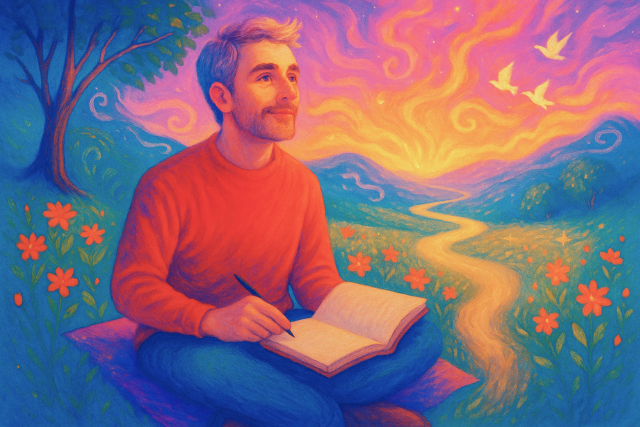
  • How to Stop Worrying About the Future and Start Living Your Life Now

    How to Stop Worrying About the Future and Start Living Your Life Now

    “Every tomorrow has two handles. We can take hold of it with the handle of anxiety or the handle of faith.” ~Henry Ward Beecher

    Retirement. A word that fills people with both excitement and fear.

    On the one hand, we’re excited about the possibilities that retirement brings. The possibility to travel, to try new hobbies, to live our lives the way we want.

    On the other hand, we worry about whether we’ll have enough money to survive until that unknown age at which we’ll die. And maybe not just survive but to actually thrive in our later years.

    That fear, that endless worry about the future, is what keeps many people stuck in soul-sucking careers. Following the safe path in life, trying to save up money for that day in which they’ll no longer be working. Sacrificing their one precious life in exchange for a sense of security later on.

    I understand those fears about the future and retirement. I recently turned forty-nine years old, which means that my retirement is only fifteen years away. Fifteen years may seem like a long time, but I know that those years will pass quickly.

    I have some money saved up in retirement accounts and I will also receive a small pension. And hopefully I’ll also receive money from Social Security.

    Will that be enough? And how long will that money last? I have no idea.

    My retirement years could have been a lot different. Three times in my life I’ve walked away from jobs that paid me lots of money and paid generous retirement benefits. My friends who decided to stay in those jobs will likely have few worries when they retire.

    So yes, I gave up a lot of money and a secure retirement. But I also saved my soul in the process. Those jobs I walked away from? They were destroying me.

    I hated being stuck in a cubicle. I hated sitting in front of a computer all day long. I hated writing pointless memos. I hated going to meetings to talk about things that I didn’t care about.

    My dad spent over twenty years in a job he hated because he had no choice. He had to support his wife and three kids. And I saw firsthand how staying in that job destroyed him. And I vowed a long time ago not to do to myself what he did to himself.

    So I did whatever was necessary to get out of those jobs. And then I used some of my savings and took the time to do things that people say they’ll do in retirement:

    • I backpacked around the world, visiting over thirty countries and living in several others.
    • I volunteered with street children in Mexico and with cancer patients in the Philippines.
    • I learned Spanish, starting from point zero to becoming near fluent.
    • I lived at a yoga center in Pennsylvania and a meditation center in Wisconsin.

    And afterward I started my own business so that I could live life on my terms instead of how others wanted or expected me to live it.

    In my opinion, there’s no amount of money that makes staying in a job that you hate worthwhile. Not for me, at least. Not unless I have absolutely no other choice. Life is now, not in some imagined future.

    I honestly have no idea what the future holds for me and what my retirement will be like. I may not have much money when that time happens. And the money I do have for retirement may run out quickly.

    But over the years I’ve learned to be adaptable. I’ve learned how to do without. I’ve learned how to live simply.

    Most importantly I’ve learned that the three most important things in life are connection, community, and contribution. Those are things that can’t be bought with money. And as long as I have those, everything else is negotiable.

    So whatever happens in the future, I trust in myself and my ability to adapt. I know that I’ll figure something out.

    And I’ll not just survive…I’ll thrive!

    • Maybe I’ll join the Peace Corps.
    • Maybe I’ll live in a monastery in Thailand and study Buddhism in depth.
    • Maybe I’ll teach English in a rural village in Peru in exchange for room and board.
    • Heck, maybe I’ll drive a school bus till I’m seventy-five years old like my dad did (and absolutely loved!) after he finally left his soul-sucking job.

    I leave you with this message. If you’re in a soul-sucking job, and only staying for the money, then do whatever it takes to get out as soon as you can. Your one precious life isn’t worth wasting.

    Yes, you need money to survive. We all do. But there are always far, far better options than sacrificing your life for money.

    So if you’re ready to stop worrying about the future and start living your life now, here are my tips for you:

    Accept and trust that you’ll find a way to make things work in the future, even if you’re not sure how.

    Chances are, you are more intelligent, resourceful, and adaptable than you realize. And that you will find a way to not only survive in the future but also to thrive. That’s what I found out when I started taking more risks in my life.

    For example, I used to think that I couldn’t learn a foreign language. But once I put myself in the right situation (intensive lessons in Mexico), I quickly found out that I could learn a foreign language.

    I also used to think that I couldn’t adapt to living in a foreign country. My first two attempts ended after three months due to homesickness. But my third attempt was successful and I’ve now lived in Bogota, Colombia, for over five years. I’ve adapted to living here even though I thought I couldn’t.

    Start taking a few risks and testing your limits. Just like me, you’ll learn to be more resourceful and adaptable—skills that will both help you in the future and give you more options in life.

    Strike a balance between now and the future.

    You need money for the future and for retirement. But you also need to live in the now. Aim to strike a balance between those two competing desires. Do everything you can to live your life now while also preparing for the future.

    For example, when I go out to eat with my friends, they will often order a glass of wine, an appetizer, a main course, and dessert, spending $50 per person. I, on the other hand, only order a main course and drink water, spending $10-15 dollars. I still get to enjoy a nice meal and the company of my friends (living now) while spending a lot less money (preparing for the future).

    Give up the idea that life has to look a particular way.

    Lots of people follow the safe path in life because that’s what they see everyone else doing. But there’s no reason why your life has to look like everyone else’s.

    By their forties, most of my friends and family had settled down, bought houses, started families, and worked the same jobs for years. On the other hand, when I was in my forties, I quit my job, sold all my possessions, and backpacked through Latin America and Eastern Europe. That’s not what most people do in their forties, but it’s what I wanted to do.

    Similarly, I’m sure my retirement will look a lot different than that of my friends and family. But my life isn’t bound by what other people do and neither is yours. Live the life you want to, the life that resonates with your heart—both now and in the future!

    Accept that the future is ultimately unknowable.

    None of us knows what the future holds. And no matter how much you plan for the future, your future will likely turn out to be very different than you expect. I know that mine has—for example, I never expected to be living in Bogota, Colombia, nor did I expect to own my own business.

    There’s nothing wrong with planning for the future, but in the end you can’t control it. So I suggest that you embrace the unknown, go with the flow, and see what unfolds in your life.

    In the end, you only get one chance at life. You can wait around for the future, wait around for your retirement to finally start living the life you want. Or you can start taking steps to do that right now and let the future take care of itself when it arrives. The choice is yours.

  • Our Future Is Bright—Why Worry?

    Our Future Is Bright—Why Worry?

    “How much pain has cost us the evils that have never happened.” ~Thomas Jefferson

    When my friend said she worried about the kind of future world her grandkids would live in, her daughter and I stared in disbelief.

    I hear it often, the concern for the future. There’s concern for many things, from the Earth itself to the concern for the lack of community and the implications of generations reared in a world where social media appears to be the new community.

    My friend’s daughter is quite a bit younger than me, but our kids are the same age—she came to motherhood early, I came late. Over the years I have watched as this young lady has absolutely blossomed as a mother and as a member of our society.

    Her conversations are intelligent, witty, and insightful, but most precious of all is her ability to ask questions that make people think, to question their beliefs, without creating a defensive reaction. It’s a beautiful thing. As her mum was questioning what the future would be like, my first thought was “with people like this in our younger generation, why worry?”

    The Earth right now, our people and our society, are a reflection of yesterday’s actions.

    Given our actions are driven by our thoughts, I’m really not in the least worried about our future.

    Sure, I can browse the internet, watch media, or walk out my front door and spend time observing the kind of behaviors that created the world we live in today. In fact, it’s fair to say there are many things we can look at and feel utterly horrified about.

    The fact that we do is the catalyst for change.

    There are the people like you and me, becoming more conscious of our actions, becoming more conscious of the thoughts that drive our actions. And there are our younger generations, born with more wisdom and insights into tomorrow than any amount of worry would give them credit for.

    A few years ago I watched an Australian drama series called Puberty Blues, set in the 1970’s, but played by actors born in the millennium. Having grown up in the 1970’s, I could relate to a lot of the experiences the young characters were going through.

    However, the most striking thing was an interview with the actors that I read; they were being asked how different their characters’ experiences were from their own.

    The boys felt that their 1970’s counterparts suppressed a lot of their feelings, masquerading as macho men. One commented how common it is these days for male friends to hug each other, which would have been unheard of then. The girls commented on how subservient to whims of the boys their counterparts were, something they themselves couldn’t contemplate.

    I was astounded, and rather reassured. In just thirty years, society has apparently evolved more than it has in hundreds (if not thousands) of years. The patriarchal ego has been called out; the feminine traits within us all rising to create more of a balance it seems.

    Then there are the likes of Boyan Slat that I saw on a social media site a few years ago, the young Dutch student who invented a way to clean up our ocean’s plastics and is now trialing it, and Melati and Isabel Wijsen, sisters from Bali that I found via Google, who founded Bye Bye Plastic Bags in 2013 and now the entire island of Bali is declared free of plastic bags—with the whole of Indonesia planning to ban all plastic bags by 2021.

    You only need to search “young people changing the world” or similar and you will find countless examples, ranging from environmental to humanitarian. It made my heart soar.

    Yet I need not look even that far; there are my own kids, and my friend’s granddaughter who were all happily playing together as we had this conversation. These are really enlightened kids.

    Just a month or so ago I had been reading a kids’ book about people who changed the world. This particular story was about Martin Luther King Jr. My daughter’s eyes went wide as she took it all in. I could see her wrangling with the injustice of it all and saw a look of what I’d describe as determination appear on her face.

    One of her friends had been reading another children’s book about women who changed the world, and she knew the story of Rosa Parks. I listened to them discuss it in depth as we did a scavenger hunt around a local nature reserve last week.

    These two seven-year-olds and an eight-year old friend, along with my younger child who, despite bouncing around the room at the time we had read Martin Luther King Jr.’s story, had obviously taken in more details than I would have given her credit for.

    Future activists, these kids. Not simply on the topic of equality, but they are informed about environmental issues, diet, money, healthcare, education, politics, and government. This isn’t just because they grow up in homes where we take an interest in these things; it’s because society at large is starting to take an interest.

    They are assessing this world and seeing things they like and dislike, and have the energy and sense of self-worth to believe things can be different. They know they have choices in the way they do things, and it seems likely they will.

    Our kids may not go out and start a movement, but their thinking will lead to actions that change the world.

    Tonight when we watched Disney’s WALL-E movie about a future Earth that was simply a huge garbage dump that humans had abandoned 700 years before, the kids asked so many questions about it, I am sure they came away with a strong resolve that that was not going to be the kind of future they live in.

    Sure, these are just my kids and my friends. However, I see a world full of people just like that, and we are certainly not leading lights when it comes to most of this thinking; we are simply following because it resonates and makes sense.

    In the last decade alone, the amount of choice on supermarket shelves has increased amazingly to incorporate environmentally friendly, free range, and organic produce. Many more independent, locally owned and operated alternatives have sprung up too. Even produce sold for cash along the roadside sports signs such as “spray free.”

    Pharmacies now stock many more alternative and complementary healthcare products. Even doctors are starting to recommend a broader context for treatment than the pharmaceuticals at their disposal. The world is a changing place.

    It really was surreal to listen to someone who has awareness of all these issues express worry, at the same time sitting there with future generations who are so overwhelmingly wise, empowered, and enlightened.

    To be fair, it’s crazy to worry about anything. No amount of worry ever solved anything.

    The worry was more of a habit. One I am not immune to myself, on a myriad of fronts, but mainly when it comes to my personal behaviors and achievements. In other people and in the future of this planet, I have every faith.

    In the hands of our next generation, I’d say the future looks absolutely bright.

  • Life Is Not a Race: Why We’ll Never Find Happiness in the Future

    Life Is Not a Race: Why We’ll Never Find Happiness in the Future

    “Life is not a race but a pace we need to maintain with reality.” ~Amit Abraham

    Almost all of my adult life I’ve competed in the extreme sport of white-water kayaking.

    My life revolved around adrenalin and competition.

    Recently, I had a dream I will never forget:

    I was running in a race and I was out in front, winning.

    I got to a point in the course where there were no signposts showing the next turn. So I asked the race officials, “Where is the course?”

    They replied, “We don’t know.”

    The race officials couldn’t tell me where the course went from there because there was no course.

    All of a sudden I stopped running and thought to myself, “There is no race if the officials don’t even know the course.”

    The feelings that followed were first confusion and then a deep sense of relief.

    I thought, “I don’t have to try so hard. I don’t have to win anything. There is no competition. Just stop. You are enough exactly as you are.”

    And then I woke up.

    This dream has stuck with me for weeks, as it feels like the exact message I need.

    Just stop. You are enough. There is no race.

    What if you already had everything you were asking for? What if this was it, and everything you thought you wanted was just an illusion?

    Two weeks ago I got invited to go scuba diving.

    I did my scuba diving certification course fifteen years ago and thought it was kind of boring. There wasn’t enough adrenalin and no competition involved, so I never went again.

    Upon receiving this recent scuba invitation, I took it as sign and said yes.

    Being a beginner at something is humbling. Not knowing what you’re doing. Not being good. Feeling awkward with the equipment.

    It gives the ego a big check to say, “I don’t know. I’m a beginner. Please show me. Please help me.”

    Listening intently as my instructor reviewed all the details I learned fifteen years ago but had forgotten, I felt vulnerable.

    Most of my life I’ve been at the top of my game as an international white-water kayak competitor, and have been the guide for others.

    What’s it like putting the shoe on the other foot?

    Somehow it was great!

    The realization came that I am an absolute beginner not only in scuba diving but in life.

    This new way of living I’ve embraced requires stopping, being authentic, and learning vulnerability.

    How does this feel?

    Actually, liberating!

    I did my scuba review and absolutely loved it. I was buzzing. The thrill of a new experience and the learning curve of being a beginner was exponential.

    After two real dives in the ocean I was hooked.

    This is what my there is no race dream was showing me!

    The point of scuba diving is to go slowly, see as much as possible, remain calm, breathe, and relax. There is no winner except who has the best time in his or her own experience.

    Under water, it feels like a meditation, no chatting or ego involved. Taking in the beautiful colors, swimming with amazing fish, and experiencing a whole new world was intoxicating.

    Two weeks later I got invited to go again. We did four amazing dives in a world-class dive site in Bali. It was so unbelievably amazing. I asked myself, “How did I get here?”

    I got there by letting everything else go. Embracing an entirely new way of interacting with the world, and with myself. Questioning everything I ever viewed as worthy.

    Three years ago I packed up my life in New Zealand and sold or gave away everything, even my kayaks.

    I decided to say yes to the unknown, landing me in a whole new life in Bali.

    No extreme sports, no adrenalin, no competition; my new life here is about saying yes to everything I never thought I was.

    Going slowly, practicing mindfulness through yoga, meditation, and dance, learning how to speak Indonesian, and now scuba diving, my life looks like something I never in a million years would have guessed it would be.

    I am finding joy in the little things, learning how to be in the moment, and realizing all that I thought was important isn’t.

    There is no race.

    The Western collective consciousness teaches us that when we get to the end of something, then we will be happy, whole, complete, and successful.

    When we graduate from high school or college, when we get married, when we have kids, when we get the dream job, then life will really be rolling.

    We’re constantly chasing a carrot on a stick that’s always just out of reach.

    When we reach the milestone that we thought was our golden key to happiness, the feeling of satisfaction is fleeting.

    So we think, “Okay, well I did that, and it didn’t quite bring me the happiness I was thinking it would, so maybe it was just a stepping stone. Maybe when xyz happens, that will make me happy. That will be the real win.”

    This elusive state of contentment is always around the next corner. We’re racing toward something that will never give us what we’re hoping for.

    The only way to truly win this race of life is to realize there is no race.

    Winning is stopping. Going within. Finding happiness within yourself.

    True satisfaction can only be found inside.

    When we can be alone with ourselves, be at peace, and feel a deeper connection, this is what we have really been racing to find.

    Running toward the next accomplishment will never be able to provide this.

    It will only take us further away from what we’re hoping to feel.

    So what happens when we stop?

    It involves going deeper within, which can be a scary prospect for many.

    Choosing to constantly be on the go is easier. It dulls the pain.

    It means not having to really take a look at yourself. A superficial sense of satisfaction comes from feeling you have accomplished a lot.

    Adrenaline can be a drug, providing a temporary rush.

    Why do you have to accomplish things to be worthy? Are you reliant on completing tasks so that your life can feel some sense of purpose? What if by just being present and showing up consciously you were living your purpose?

    What if instead of feeling constant pressure and anxiety, you could just be with what you were doing in the moment you were doing it?

    Our thoughts are rarely focused on where we are.
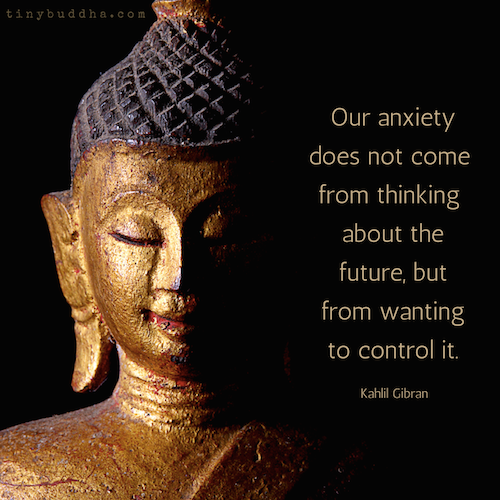
    They’re in the past, wishing we could change it, or in the future, creating false outcomes that will never usually come to fruition.

    Both of these thought patterns are actually a form of insanity, and not based in reality.

    The past is over. There is nothing we can do to change it.

    The future will never come. Reality is always the moment we are in right now.
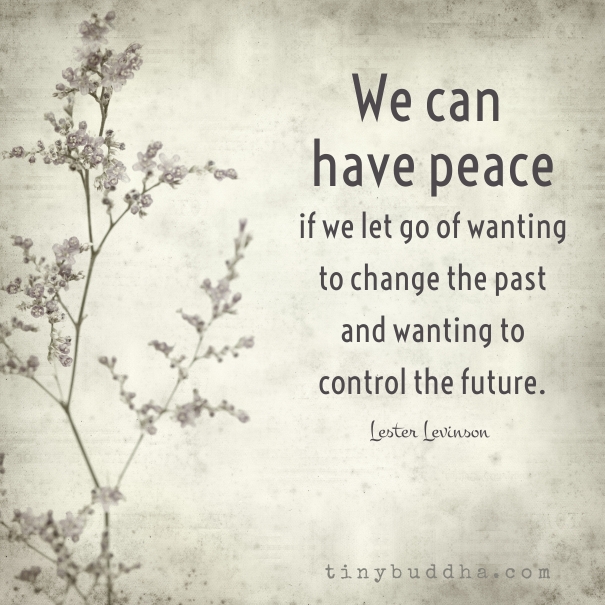
    We can only truly live by stopping the race of the mind to the imagined future—by living in presence. By waking up from the dream that there is something out there that will bring satisfaction, turning inward, and taking responsibility for our lives.

    Realizing there is no race means finding contentment right here and now.

    Quit running and find that what you have been searching for has been right here all along.

    Start by creating small gaps in your schedule. Start small at first. Get places a few minutes early.

    Before getting out of the car or leaving the house, consciously pause.

    Try fitting fewer things into your day. Less is more!

    Do one thing at a time.

    When you eat, be present with your food. Enjoy it, really taste it, see it, smell it, savor it.

    Turn off the TV.

    Take a meditation course.

    Notice and be grateful for the small things.

    Instead of focusing on what you don’t have, focus on the many things you do have.

    Life’s finish line will come one day for us all. Learning how to truly live means we will get to that finish line with a smile in our heart and contentment in our being.

    This is the ultimate win. It requires nothing from outside and everything from inside. There is nowhere to go, nothing to achieve, nothing to prove, and nothing to do.

    All it requires is stopping and refocusing priorities; cultivating awareness by slowing down the race of the mind.

    Creating space to be, and valuing ourselves as enough right here and now, requires an inner commitment and unplugging.

    Contentment is currently available in abundance; we just need to stop long enough to feel it.