Tag: friendships

  • 11 Simple Ways to Nurture Meaningful Connections Offline

    11 Simple Ways to Nurture Meaningful Connections Offline

    “Turn off your email; turn off your phone; disconnect from the Internet; figure out a way to set limits so you can concentrate when you need to and disengage when you need to. Technology is a good servant but a bad master.” ~Gretchen Rubin

    We live in truly extraordinary times. Where once letters and telegrams took days to reach the other side of the world, we can now send messages and emails at the push of a button; and social media has allowed us to connect with people from diverse backgrounds, helping us learn, grow, and aim for the stars.

    The advancements in technology and science have afforded us such a vast array of benefits that it’s hard to argue with their cons. Yet our relationships, the very fabric of human existence, have deteriorated proportionately with the rise of technology and its increasing usage in daily life.

    We now need reminders to disconnect ourselves from smart phones, tablets, PCs, and all sorts of gadgetry in order to just make time for ourselves to rest and tune out from the information overload.

    Photographs of families gathered around the dining table, intently looking into their smart phones, might make for amusing viewing (and a fantastic photo essay), but they paint a picture that is not far from reality.

    We’re so tuned into our virtual world these days that parents and children often have chats over DMs, SMS, or social media, even if they’re sitting in the next room, and sometimes right next to each other.

    People have the time to ‘Instagram’ their fancy dinners or take quick selfies, as if it were second nature, but no one seems to have the time, patience, or inclination to reach out to those who’ve been with us all along, through our highs and lows.

    It could be the parents who we’ve left behind in our small towns in pursuit of our dream career; it could be friends we’ve known since childhood but haven’t bothered asking about, simply because we fell out of touch; it could be that neighbor or teacher at school who always looked out for us; it could be someone going through a struggle in their life who needs our support, though they haven’t voiced it, because we’re captivated no longer by people present around us but by technology.

    When I was growing up, both my parents were working, as was the case in most working-class households; my time was spent between a daycare center, school, and home, where quality time with my parents was at a premium.

    However, the early nineties were relatively gadget-free. There were no phone calls after work and no email checking all the time; nine-to-five shifts seemed quite productive, and no one was carrying work back home on a laptop. So, when we gathered together around the table at dinnertime, we were very much present; distractions were far fewer, and no one was posing with a phone to photograph our food or post it online.

    We didn’t fret over the possibility of presidents and leaders starting a WW3 on Twitter or spend time researching which crazy selfie pose would garner us more Facebook likes. I remember sending handwritten letters to my cousins just to stay in touch and waiting expectantly for Christmas cards during the holidays. There were simple joys to be had, even in the mundane.

    We share so much over social media—our favorite foods, brands, clothes, and lifestyle choices—and there’s so much visual information overload that we end up believing everything we see and read in the media.

    We live in the era of fake news; we’re slowly but surely losing our ability to stay in touch with reality and discern what’s true and not. What we see online about other people’s lives becomes our unconscious standard for how things should be in our own lives.

    We’re losing touch with ourselves and our truth. You don’t have to keep up with the Kardashians; you have to keep up with your own inner circle of loved ones.

    The virtual world is fascinating; you can choose to be who you want to be, and people are going to believe what you put out there even if you do not bear any resemblance to your online persona in real life. The communication is often impersonal—surface conversations that spare you the hassle of emotions, of feeling deeply. It’s easier to be lost in virtual space than to confront harsh realities.

    Two hundred thousand followers on Twitter or a million subscribers to a website do not necessarily translate into the same number of trustworthy relationships you can bank on. Sure, you can campaign successfully for a social good fundraiser with that many followers, but can you count on them during a time of personal crisis?

    Many people view the virtual space as an escape from reality, which is not only damaging our emotional development but is also detrimental to our relationships in the real world. While there is that resounding minority that has managed to forge meaningful friendships online and has benefited from professional associations through networking, personal relationships have undergone a transformation of sorts. The online world has become our confessional, our confidante, and our record keeper.

    Isn’t it ironic then that, despite having everything at the click of a mouse or an app, we’re hardly able to communicate, share, and confide openly within our own families? When was the last time you had a heart-to-heart with your own spouse, kids, siblings, or parents? Does connecting with them deeply have to wait till Thanksgiving, Christmas, date nights, or summer holidays when you can do this just as easily every day?

    Sometimes, you may not even have anything new to share, but those are the times you can let them know how much they mean to you. When it comes down to needing an encouraging hug, you still need a human in your non-virtual reality.

    We should be living in a way that doesn’t make relationships with our loved ones subject to our busy schedules. We shouldn’t need reminders to make time for those closest to us, be they members of our household, parents, siblings, or friends.

    Most of us have the time (or can make the time!) to engage in friendly banter and entertain ourselves with every piece of media, news, or gossip online; however, we find it challenging to direct this enthusiasm to our relationships at home or with those we’re emotionally close with that physically live far from us.

    This is part of the reason why more and more people are looking online for ways to cope with personal struggles—because there’s no one at home or in their immediate environment who has time to hear them out.

    There’s no doubt that the interconnectedness and shared information we have access to in the virtual space is a boon and that social media and networking have afforded us amazing connections as we walk forward with a collective consciousness. But let’s not lose sight of the people and relationships we’ve built our lives’ foundations with. No one’s too busy to make time for another.

    Make time for your loved ones by disconnecting from your virtual world.

    Your smartphone isn’t going to die if it doesn’t hear from you. But your parents may be disheartened that they no longer receive a phone call from their beloved child except on a major holiday; and your kids and spouse may miss telling you the things they so badly want to share because you’re too busy scrolling on your phone.

    Though we can absolutely forge deep bonds online, it’s crucial that we don’t lose our connection to the people right in front of us.

    Here are a few steps to help you connect meaningfully with the people in your life more often.

    1. If you’re on multiple social media platforms, streamline and bring the number of platforms you actively use down to three. If you’re super crunched for time, use these platforms alternatively throughout the week. Schedule time for social media but cut out unnecessary browsing.

    2. Clear out unwanted apps from your smartphone so that you have fewer things to distract you. Call it an app spring cleaning.

    3. Read up on productivity-boosting tips or time management so that you’re better equipped to give everyone in your family your undivided attention.

    4. Have your dinner with the television off, disconnected from the Internet. If that’s the only time you and your family have together, make the most of it.

    5. Make time for some sort of spiritual practice that you and your family can engage in before you retire for the night. It could be praying, meditating, reading/sharing a reflection, or reciting a positive affirmation or an expression of gratitude for the day. You do not have to be religious to be engaged in a spiritual practice!

    6. Volunteer for a social good project in your local community with your friends, siblings, or family.

    7. Take up any group hobby that doesn’t require staying online—like cooking, painting, or dancing… the list can go on.

    8. Plan a picnic and get together regularly in an outdoor environment close to nature. Spending more time in nature is known to be soothing and relaxing, and it makes it easier to switch off your phone!

    9. Lost touch with friends living far away? Don’t succumb to the easy route by sending a message over SMS, Whatsapp, or email. Jot down your favorite memory and send a postcard. Or, if you have more time on your hands, an old-fashioned letter would be absolutely delightful.

    10. Flowers have a way of conveying a whole lot of things without saying much—even a hand-tied bunch of wildflowers. And they’re known to perk up even the most insipid of days. If you feel anyone is in need of a gesture like that, send them a bunch and make them smile!

    11. Return to the joys of simple living with people you love: wake up early to watch the sunrise; walk on wet grass or the sandy shorelines of a beach; inhale the aroma of freshly baked bread or the scent of flowers in a vase; write ‘thank you’ notes often; be mesmerized by the skies at night—look for the constellations, the shooting stars, and the moon. There’s a lot of joy to be had when you disconnect from technology!

    For our relationships to thrive, we must learn to prioritize both our own well-being and that of our loved ones. When you’re giving them the time and attention they need, they’ll feel more loved and confident about themselves, something no one can get through technology alone.

    We need to return to the basics of human loving, caring, and sharing. Unplug from your devices and plug yourself into the healing power of stronger, deeper relationships.

  • Why You Don’t Need Many Friends to Be Happy

    Why You Don’t Need Many Friends to Be Happy

    “Introversion—along with its cousins sensitivity, seriousness, and shyness—is now a second-class personality trait, somewhere between a disappointment and a pathology.” ~Susan Cain, Quiet: The Power of Introverts in a World That Can’t Stop Talking

    I’ll be honest, I don’t have many friends.

    And it’s something I’ve always felt a level of shame about.

    In fact, I recognize it’s a self-limiting belief I’ve been carrying around since secondary school: I don’t make friends easily or have a big circle; therefore, I’m unworthy or there’s something wrong with me.

    That’s not to say I’ve never had friends. I’ve had friends from childhood I’ve drifted apart from. I’ve had my share of intense, toxic friendships. And I’ve even had a few healthy friendships that withered and eventually died because I didn’t nurture them enough (incidentally, this is probably why I can’t keep houseplants alive, either…).

    In all seriousness, is it okay not to have many friends? Does that make me ‘less than’? And just what is a ‘healthy’ number of friends, anyway?

    Understanding the Traditional Tropes Around Friendship

    Let’s be clear here—I’m not denying that friendships can have wonderful benefits.

    Friends provide emotional support, create a sense of belonging, and allow us to build meaningful connections through shared experiences.

    In studies of the Blue Zones—regions where people live the longest and healthiest lives—friendships are often highlighted as one of the main factors contributing to longevity.

    On the flip side, the experience of loneliness or social isolation has been linked with a higher risk of early mortality.

    Human beings are a social species. Historically, the survival of our ancestors relied on forming close-knit social groups. If you became an outcast from the tribe, you were highly likely to die. So, in many respects, the need for friendships and social acceptance is hardwired into our DNA.

    While I don’t think that anyone can exist in a vacuum, it strikes me as important to note that you’re not going to die anymore if you don’t belong to a group. Just like having children used to be an inevitable part of life, forming friendships is now something we have more of a luxury of choice over in a 21st-century world.

    The Moment That Hit Me

    “Have you got a lot of friends?” Steve Bartlett asks out of the blue.

    “No,” Molly-Mae Hague looks uncomfortable. “That’s a blunt question! Straight up, no, no, I don’t. My circle is minuscule… And I wouldn’t have it any other way. I work, I spend time with my boyfriend, and I go to bed. That is literally my life… I don’t really drink, I don’t party, I don’t go out, but that’s because I actually don’t enjoy it.”

    “So you don’t actively want more friends?”

    “No,” Molly-Mae asserts more confidently. “It’s time-consuming, trying to make people happy… I’d rather focus on the things that are going to elevate me.”

    “I ask that question in part,” Steve says, “because every successful person I’ve sat here with doesn’t have a lot of friends.”

    If I’m being truthful, I was unfairly judgmental going into this episode of Diary of a CEO. I can’t say I was expecting to get many pearls of life wisdom from a former Love Island contestant.

    But I think that’s why this was such a lightbulb moment for me—because Molly-Mae strikes me as exactly the type of popular girl in school who would have had a huge, tight-knit friendship group.

    For years, I’ve berated myself for just not trying hard enough when it came to making and keeping friends. Even my family and partner have commented on it before. It’s made me feel like there’s something wrong with me for not wanting or needing friends as a strong presence in my life.

    But perhaps the issue was never my lack of friends, but rather my belief that it was a problem in the first place.

    7 Reasons Why You Don’t Need Loads of Friends to Be Happy

    1. Being introverted is a superpower.

    I’d always seen my introversion as a deficiency.

    Why was I not like other girls who wanted to get ready for a night out together and paint the town red?

    In true rock’n’roll style, I’d much rather be snuggled up in my PJs with a book and a cup of tea at 9 p.m. on a Saturday night.

    But when I strip all the layers back, I see that it’s simply a matter of valuing different things. And just because it looks different, doesn’t mean it’s not valid.

    While introverts may not have the loudest voices in the room, we are gifted with vibrant inner worlds. Our natural disposition toward self-reflection, creativity, and deep thinking are remarkable strengths worth celebrating.

    2. You get clear on what you truly want.

    When you spend time with other people, you’re like a sponge. The psychological concept of mirroring is testament to this—an unconscious tendency to mimic the gestures, mannerisms, and expressions of those around us to establish rapport and empathy.

    There is also an unavoidable level of compromise in friendships where you can’t help but go with the flow (unless you love the exact same things).

    Fewer friendships, on the other hand, mean less social pressure to conform to expectations or engage in activities that don’t align with your values or interests. This enables you to better understand who you are, what you value, and what you want out of life.

    This singlemindedness is probably why Steve Bartlett sees a strong correlation between ‘success’ and fewer friends.

    3. Popularity doesn’t equal self-worth.

    The idea that I could use my perceived popularity as a barometer for my self-worth is something I’d subconsciously internalized for years. But it should go without saying that there is no link here. You are not defined by social status or external validation.

    I’d also point out that it’s so easy to fall victim to comparison. In the past, I was particularly sensitive to social media portrayals of people with the ‘perfect’ group of friends.

    But remember that Instagram is a highly edited version of someone else’s life. Most people don’t have as many friends as they’d like you to think they do.

    4. You are whole and complete.

    First and foremost, your number one relationship in life is with yourself. People come and go, but the one constant you can always rely on is you.

    I’ve been through some of the hardest times on my own. Maybe I’d have found it easier leaning on friends for support. But, in many ways, I think I only found out how strong I was by understanding that I could get through things alone.

    In this sense, loneliness can be transformational. Relying on yourself to be your own best friend encourages independence, self-reliance, and insane personal growth.

    5. You don’t indulge in toxic tendencies.

    When I was younger, I wanted more than anything to be liked and accepted, so I inevitably ended up trying way too hard. I’d go along with what other people said and did because I was so desperate for their approval. And in the process, I completely eroded my own sense of self.

    I recognize countless times where I’ve lacked boundaries, entertained drama, or gossiped and bitched about other people, despite deep down hating how it made me feel.

    Instead of clinging to toxic friendships for fear of being alone, you are 100% better off without these people in your life. Integrity and authenticity are worth so much more.

    6. Family can be your support system.

    I recognize that not everyone is blessed with a strong support network, but it’s worth pointing out that close-knit familial relationships can often provide a foundation of love and trust, especially among siblings.

    Alternatively, we may find much of the emotional security we need in our significant other.

    The unwavering presence of family or a life partner can be reassuring. Having a space where you feel heard, can be unapologetically yourself, and aren’t required to make small talk provides a haven where you can regroup and recharge at the end of a long day.

    7. Quality is more important than quantity.

    When it comes to friendships, the old saying “quality over quantity” holds true.

    Investing in a handful of genuine, supportive friends is far more fulfilling than having lots of superficial acquaintances. If you’ve ever felt intensely alone in a room full of people, you’ll know exactly what I mean by this.

    As humans, we crave deep, meaningful connections that create a safe space for vulnerability and allow us to be our true selves. So, when our circle is too broad, we risk spreading ourselves too thin and diluting the quality of our relationships.

    All relationships require work and commitment, so make sure you’re investing in those which genuinely add value to your life.

    Embracing the Power of Introversion 

    For those of us striving to live more intentionally, it can be difficult to identify where there is genuine room for improvement and where we simply need more self-acceptance. And in this area, it was a case of reframing my perspective to come to peace.

    So, for all the guilt-ridden introverts out there, I want you to know that it’s okay if you find yourself going through life without many friends. So long as you feel happy and fulfilled in yourself, you don’t need to try harder to be someone you’re not.

    Who knows, perhaps I’ve simply not found my tribe yet. Ironically, now that I’m not clinging or wishing things were different, I may allow more of the right people into my life.

    But you know what?  I’m perfectly content either way.

  • ASMR: The Powerful Practice That Helped Me Let People In

    ASMR: The Powerful Practice That Helped Me Let People In

    “For the person that needs to see this today: Your heart will heal, your tears will dry, your season will change. Rest tonight, knowing the storm will end.” ~Unknown

    Like many people, I didn’t have the easiest time growing up. Between having a toxic family upbringing and being bullied, I learned to trust nobody and keep to myself. Being naturally bold and self-sufficient enabled me to move through the world independently, relying on as few people as possible. Living this way was the closest experience to safety I could reference.

    Over the years, my lifestyle of hyper-independence increased, and I drifted further away from others. This coincided with a new career field I’d moved into that required much travel. As I threw myself into making money, I cut ties with many of the remaining relationships in my life, wanting to rid myself of anything that felt interdependent.

    “I don’t need anybody now,” I justified to myself. “As long as I have money, I can buy support.”

    This wasn’t a dig at the people in my life as much as it indicated a deep feeling of unease that had always followed me in relationships. Connection was challenging for me, and I hated being faced with my perceived failures.

    As much as I wanted to disappear into the busyness of work, as time passed, I couldn’t escape how painful it was to be alone. I would often wake up in a new hotel room unsure of what city I was in, and feeling so lonely, I thought at times that I might literally die from the pain of it. The self-imposed isolation started to feel like a prison that I didn’t know how to break out of.

    The more I tried to distract myself, the more suffocating the isolation became. It was as if the walls of the hotel rooms were closing in on me, mocking my attempts to fill the void. Each morning, I would force a smile onto my face, pretending to be content with my solitary existence. Still, inside, my soul ached for connection.

    During this time, I desperately craved human touch. Sometimes, I felt as though my body was withering like a flower while sensing the absence of a loved one to cuddle with or hug. I wanted physical contact that felt gentle and nurturing. Touch that allowed me to feel a sense of home.

    Yet, deep down, fear gnawed at me. Fear that if I allowed myself to let others in, to depend on them, I would be vulnerable to the same pain and rejection that had haunted me in the past. I had constructed a thick fortress around my heart to shield it from potential pain.

    I wish I could say that one day I woke up and decided to make a change, but it took time. As the magnitude of my trauma started to come into focus, I developed a newfound appreciation for the parts of myself I had judged because of their unhealthy coping mechanisms.

    Harsh criticism was replaced by tenderness and even admiration for all I’d been managing to hold up. For the fact that I had still managed to strive and dream and hope in the face of so much pain.

    But it wasn’t until somatic practices were introduced into my life that I was able to heal some of the more profound wounding that had been following me around.

    Somatic means “of the body” and is a growing area of study in the mental health and wellness space. Research studies reveal how trauma isn’t located strictly in the brain but is held in our nervous system and physiological responses.

    For example, our body kicks into action when we encounter a stressful situation. Our psychology cannot tell the difference between physical or emotional pain, so its first instinct when encountering either is to move into a flight-or-fight stress response.

    This shows up in the body as a spike in cortisol levels and blood rushing to our legs so that we can run faster. Our digestive system slows to conserve energy, and our breath becomes shallow. If the trauma isn’t properly processed, these physiological responses can stay “turned on,” so to speak, leaving us in a state of dysregulation.

    As I explored somatic practice, I began to experience trauma leaving my body in visceral ways. Sometimes, my legs would shake, or my jaw would chatter uncontrollably. I began to take comfort in these releases, as my nervous system was always remarkably calmer at the end of one.

    I was hooked and wanted to learn more. I started to read everything I could on trauma and somatic tools as a way to heal. One day, I stumbled across a practitioner who used autonomous sensory meridian response (ASMR) as a form of touch therapy.

    I had only been familiar with ASMR as YouTube videos in which the creator would whisper into the camera while performing reiki or tapping on a microphone. I didn’t know that it could be performed one-on-one, in person.

    I also didn’t know that ASMR can be deeply calming, relaxing, and healing, and that this could be the key to letting my guard down and letting people in.

    When I arrived for my session, I entered a quiet room where my ASMR therapist greeted me. She explained what I should expect from our hour together, and after my questions were addressed, I settled face down on the massage bed. Ambient music drifted from a nearby speaker, and I was instructed to relax.

    What happened over the next hour was unlike anything I had ever experienced. I drifted into one of the deepest relaxations of my life, where every sense was stimulated.

    Various types of head massages and tools were used on my back to draw circles and shapes. There was a gentle tapping on my legs and a soft brush on my neck. There was also an instrument that sounded like rushing water played over top of me periodically. I felt myself sighing deeply repeatedly as decades of emotional tension released from my body.

    By the end of the session, I was on cloud nine, and I slept like a baby that night. For the next week, I felt like I was inhabiting my body in an entirely new way. A light breeze brushing against my cheek would leave me speechless. The fabric of my cashmere sweater felt like a hug. It was as if all my senses were returning online after years of numbness.

    I credit ASMR as a critical practice on my healing journey. In fact, I finally opened my own practice to help others. This tool is still widely misunderstood and underrepresented in therapy modalities, and the benefits need to be shared on a wider platform.

    As I healed, I started to challenge my fear of intimacy and began taking small steps toward building meaningful relationships. I finally addressed the deep-rooted issues that had contributed to my aversion to connection. I gradually learned to let others into my heart.

    It is said that we are not meant to navigate this world alone, and indeed, I have come to realize the truth in this sentiment. As my heart opened to the beauty of human connection, I discovered the transformative power of shared experiences and the profoundly positive impact others can have on our lives.

    No longer bound by self-imposed isolation, I now embrace a life surrounded by a network of kindred spirits. I have learned that strength can be found not only in independence but also in the willingness to forge deep and meaningful connections. And through this journey, I have come to understand that true safety lies not in solitude but in the embrace of genuine human connection.

  • The Allure of Unhealthy, One-Sided Friendships and How I’ve Let Them Go

    The Allure of Unhealthy, One-Sided Friendships and How I’ve Let Them Go

    “The real test of friendship is can you literally do nothing with the other person? Can you enjoy those moments of life that are utterly simple?” ~Eugene Kennedy 

    I could not. When I was with them, we had to be doing something. That is why I didn’t see it. I kept myself too busy to see or feel what was happening.

    It was the panic attack during a long-distance drive home that should have been the sign that something was very wrong.

    I didn’t see or expect that my choice of friendships was ruining my mental health and, in turn, my business.

    It was so much fun, you see. To be with them both.

    We’d stay up late into the early hours drinking, eating yummy food, or watching our favorite TV series. In the thick of a global pandemic, when you could only meet with limited people and had nowhere to go, this felt like the perfect escape. We also did healthy things like yoga and meditations together.

    How lucky I was.

    Or was I?

    I’ve since come to learn about trauma bonds through inner child work, and I’ve recognized there was something seriously wrong with my seemingly perfect and fun life.

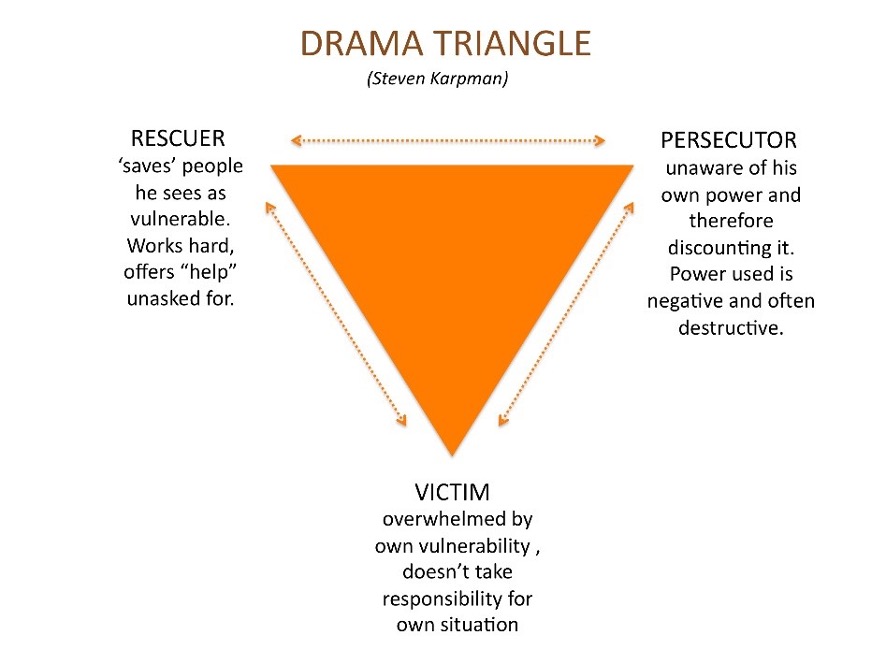
    The Drama Triangle

    From a young age I took on the role of rescuer within my family. My mother suffered from severe depression following my birth, and she needed her children’s love and care.

    Fast forward to 2020, during a global lockdown, I was playing the role of rescuer with my friends, completely unaware of the inauthenticity I was creating within myself and how I was neglecting my own needs.

    What does the rescuer look like?

    Warning Sign Number 1: People-Pleasing

    I was constantly people-pleasing and offering solutions to anyone around me, even though they never asked for help.

    I never considered how my friendships would be if I were not ‘useful’ or ‘fun.’

    I could see the red flags—for example, not speaking up when I felt something wasn’t right and instead working even harder to justify or understand one of my friend’s behaviors, and trying to help and save her even more by doing household chores.

    When we’re people-pleasing to gain someone else’s approval, we chose behaviors that are not true to ourselves. And we act in ways that negatively impair ourselves because in rescuing others, we’re neglecting ourselves.

    Warning Sign Number 2: Numbing Through Binge-Drinking and/or Eating  

    I was constantly binge-drinking with my friends, and it was damaging to my health. As a result, I experienced:

    • Sleep deprivation from the late nights
    • A dysregulated nervous system due to hangovers
    • Weight gain due to eating junk food

    And like a catch-22, the bad feelings I had after these episodes made me want to do it all over again to feel better, leaving me in a vicious cycle.

    I wanted to be with these women, like an obsession or craving, but I was using substances to numb the fact I didn’t feel safe with them. Eventually, this set off my internal radar telling me this wasn’t right.

    If you are in a cycle of unhealthy behavior with certain people and you’re developing self-destructive habits, it could very well be a way to cope/numb deeper feelings that you don’t want to face.

    Warning Sign Number 3: They Are Unavailable

    I began seeing our meet-ups as booty calls, enjoying the thrill and drama of rushing to meet them.

    I would drop everything to be in one friend’s last-minute plan, or I would try to make future plans if I saw her and I didn’t want it to end.

    These friendships felt like a drug—I felt addicted to seeing them, despite knowing it wasn’t good for me or my health. I would eagerly wait for one of my friends to tell me when she was available.

    The thing is, she wasn’t available. She didn’t want to make plans in advance or prioritize us on weekends when she had other plans. So I made myself more available. I’d drop things if she was free and wanted to meet.

    Being someone’s last resort and being okay with that are clear signs that a relationship isn’t healthy.

    I’ve come to realize that I’ve carried a mother/daughter wound my whole life—because my mother wasn’t available due to her mental health challenges—and I was desperate to be seen, wanted, and accepted by people who weren’t available as a result. It was all I knew. It’s how I became programmed.

    I was seeking out women who replicated the relationship I had with my mother as a child. I was befriending those who seemed confident, unattached, and unavailable.

    However, the issue wasn’t what they were doing. The real work was asking myself why I was making the choice to be around people who made me feel unsafe. So unsafe that I was numbing myself with food and alcohol when I was around them.

    Due to my mother’s depression when I was growing up, I didn’t know what it felt like to be in a safe relationship. Since drama and dysfunction were all I knew, that’s all I was seeking out.

    Through trauma coaching I learned how to listen to my physical body and then connect to my inner child. To find and heal that little Rav who was looking for love by people-pleasing.

    Here’s how I connect to my younger self:

    1. I take a moment to pause and feel. I close my eyes and breathe calmly. I scan my body for any aches/tension or obvious pains. After locating the pain, I ask myself when I felt like this as a child, and I explore that.

    2. I FEEL the feeling in all its depth. This might mean crying, shouting into a pillow, or even punching a pillow for the hurt I felt as a child during a specific incident, or for the pain I’m feeling now.

    3. I journal it all out of my mind and ‘re-parent’ my inner Rav: “It’s okay—I got you. That wasn’t very nice. You’re safe now. You don’t need to speak to mum right now. You can play with your toys or cuddle your teddy. Let’s help you feel better.” It can be in the form of an imagined conversation or even acting it out in the now after writing it out.

    The power of this process and being able to recognize those wounds is immense. You really start to understand and sense your own sense of self and your worth. And your current patterns and issues become so much clearer to see.

    The questions I went on to ask myself:

    • Were my friends asking me to rescue them?
    • Did they know I was withholding my honest feelings, too scared to tell them how I really felt?
    • Was it my choice to stay with them when I felt unsafe or to drink and stay up late?

    After I took an honest look at what was really going on, those friendships came to an end, and I still find myself grieving them but far less than when it first happened. It’s not easy. It hurts. However, I now have the tools to feel safe and to come back to my true self.

    Throughout the day I take my right palm to my heart, close my eyes, and remind myself “you are safe.” I repeat this as many times as necessary as I slow my breathing and connect to the present moment.

    It is so worth the struggle and the commitment to healing in order to break free. It’s actually created space for me to welcome more aligned friends into my life.

    It’s a process to adjust to a less dramatic, chaotic life than I had with them, but I am much more content within myself. I don’t need to hustle or the drama. It’s okay to be safe.

  • I Felt Like I Didn’t Belong: 5 Lessons from a Former Misfit

    I Felt Like I Didn’t Belong: 5 Lessons from a Former Misfit

    “I long, as does every human being, to be at home wherever I find myself.” ~Maya Angelou

    In my final year of high school, I had a horrible breakup. I was heavily attached to my girlfriend because, with her, for the first time in my life, I felt like I belonged. Growing up in Germany, of Arabic roots, made me feel like I belonged nowhere. I didn’t feel German nor Arabic.

    With her, I finally thought I had a place somewhere. So when this relationship ended, all I wanted was to escape. I hoped a change of location would solve my problems. So, after graduation, I packed my stuff, booked a one-way ticket, and fled to Australia.

    My early days in Australia were anything but idyllic. Arriving there, not knowing anyone and barely able to communicate in English, I felt lost like never before. During the first month, I was constantly battling self-doubt. It seemed as if this was the first time anyone had ever experienced the harshness that can accompany travel. I felt like a loser.

    Everybody around me seemed to enjoy their trips. They seemed to have found their place. Every conversation I had felt so awkward.

    I was deeply ashamed of my English, so I isolated myself. I wanted to go home, but after telling everybody I was planning to leave, I promised myself not to give up. But the truth was, again, like in Germany, I felt like a misfit. The sense of isolation I had felt back home was still with me. It was so alive. It was like living in a nightmarish loop—unable to escape my loneliness and alienation.

    Two months into my stay, I sat on a bench in Sydney, consuming junk food and battling the urge to give up. Nothing had changed. I felt out of place, had made no friends, and was utterly miserable.

    At that low point, I was reflecting on my time in Germany and I had a realization that, looking back at it now, changed my life: I had taken my problems with me. My issues were about more than just a specific location. They were within me. I was responsible for my misery, isolation, and inability to fit in. The problems I had left in Germany had taken a new form in Australia.

    This insight was crushing but made me stand up from this bench with a new sense of resolve.

    The following day I checked into a new hostel. I promised myself to keep trying, push myself to speak English, and make a conscious effort to form connections with fellow travelers. It wasn’t easy at first, but I became more comfortable speaking as time passed. I started to trust myself more. I began to make friends, people started asking me if I wanted to join them on trips, and people were interested in my past.

    Following my realization on this bench, this month was one of my life’s best. In this month, I made deep, lasting friendships that I still have to this day.

    Ultimately, I stayed in Australia for almost a year and had a great time. I left Germany and was homesick, and I left Australia with newly gained confidence and trust in myself. Since then, I’ve traveled to over twenty-five countries. It became my nature to go to new places, and I no longer have the same issues fitting into a new context.

    Also, I changed my relationship with Germany. Every time I go back, I embrace and like it. Ironically, the attempt to escape my roots formed a deeper connection to my German and Arabic origins. I smile when I look back. I was so ready to give up. I was at the lowest point of my life. One realization, one thought on this bench, changed the course of my life.

    Now I want to share with you the key lessons I learned from my time in Australia.

    1. Trust life.

    Life puts us in difficult situations that ultimately lead us to grow. My time in Australia was a gift, particularly those first two challenging months. They forced me to confront my internal struggles, the issues I had been unwilling to face. I believe that life knows what it is doing and is working for us, not against us. This holds true for me to this day.

    2. Take responsibility.

    In Germany, I had a habit of playing the victim, blaming my circumstances and culture clash for my unhappiness. While those issues were real, acknowledging that I was also a part of the problem was liberating. Understanding that I had the power to change my situation was the first step toward actual change.

    3. Be persistent.

    In Australia, I came close to giving up and returning home. Looking back, I realize that would have been a huge mistake. The best year of my life and experiences that changed the course of my life followed that initial struggle, reminding me that persisting through tough times can lead to beautiful outcomes.

    4. Hard times are necessary for growth.

    Those two months in Australia were some of the hardest in my life. The loneliness I felt was crushing. However, looking back, those challenging times were also when I grew the most. I developed resilience and a better understanding of myself, which I wouldn’t trade for anything.

    5. Be a blank sheet.

    One of the most powerful lessons I learned throughout my travels was the power of approaching each new situation like a blank sheet.

    For far too long, I allowed my past experiences and hurts to dictate my present and future. I was constantly recreating my past wherever I went, not giving my life story a chance to change or evolve. I carried heavy, invisible baggage of past failures, rejections, and loneliness that kept me rooted in a narrative no longer serving me.

    It wasn’t about forgetting or denying what had happened but not letting it control my present and future.

    Like a blank sheet, allow yourself to be open, to receive new experiences, change, and learn.

  • The Major Aha Moment That Helped Me Stop Fixating on Fixing Myself

    The Major Aha Moment That Helped Me Stop Fixating on Fixing Myself

    “The real difficulty is to overcome how you think about yourself.” ~Maya Angelou

    My newest friend ended our three-month-long friendship on a July day when I’d just returned from a dreadful summer vacation. Her Dear Jane email read, “It’s not you, it’s me.” The lever had been pulled, I was dumped, and I thought, “Ha!” I’d spent the last three months trying to help her fix her problems. I knew she had more problems than me.

    But then an anxious, obsessive thought loop began. What did it really mean? How could it not be about me?

    This wasn’t the first time I’d lost a friend, so of course, I needed to diagnose, dissect, and determine the origin of this unhappy pattern. My anxieties were ramping up, and I needed to fix something before this reoccurred. So I made an appointment with a therapist named Dr. Mary.

    After an hour’s drive through big city traffic, I arrived late and shaken to that first therapy session.

    Within fifteen minutes, Dr. Mary helped me recognize the parallel between my friendships and my relationship with my mother and and pointed out I didn’t have to parent my mom, a lifelong project due to her unsteady mental health. I was disappointed but relieved to find I wasn’t there to fix my mom’s narcissistic behavior. I was there just to fix myself. I paid her the ninety-five out-of-pocket dollars I owed and left feeling slightly better.

    Two weeks later, I drove that same hour for my second therapy session. I was not prepared for what I would take away this time.

    When I brought up my mother again, Dr. Mary asked me why I needed to change my mother. Couldn’t I allow her to just be?

    I was confused. Weren’t my mother issues the cause of everything? “If it’s not one thing, it’s your mother,” my friends and I always joked. And why wouldn’t my mom want to gain from my knowledge, love, and insight?

    Dr. Mary fed this next concept to me slowly. “Maybe you need to fix people so you can feel powerful, and then no one will be paying attention to your flaws. Maybe you want to distract others from seeing how unlovable you think you are.”

    This concept slowly hummed in my head until tears seeped from my face.

    Eventually I found tissues near my couch spot. And then our time was up.

    “Do you have any books you can suggest reading on raising self-esteem?” I asked as I paid her, needing something more to help process this information. “No,” she said, and then she opened the door and let a different version of me out into the world than the me who’d entered.

    As I drove to meet my friend for a lunch date, my mind screamed, “I’m freaking forty-five years old, and I have low self-esteem!!??” Over our Cuban pork sandwiches with mojo sauce, my friend Terry said, “Who doesn’t have low self-esteem?”

    Apparently, my discovery of my buried dysfunction was the new trendy life hiccup I was now living. When had low self-esteem become the in thing?

    My head was filled with angry bees as I journeyed the hour-plus back home. I didn’t feel good enough to be my kid’s parent that night. I fumed over Dr. Mary’s edict about my sentence of low self-esteem and not okay-ness.

    I had worked hard all my adult life on my self-awareness and self-love with therapy, self-help books, and humility! How dare she rob me of my self-definition and my purpose of showing others how to be okay. Who was I supposed to be now?

    A week and many journal pages later, I wanted to be done marinating in my indignation, so I crossed the grassy field to the library, intending to check out any and all books on self-esteem. When I explained what had happened, the librarians agreed that it’s hard to fill your self-esteem cup up if you don’t know what that cup or its contents looks like. Wise souls those women.

    At home, I read and thought and sat with my low self-esteem verdict. And then unexpectedly, I began to feel a new peacefulness. My anxiety was diminishing. Dissipating. Disappearing.

    If I was off the hook to fix the faults I saw in others, I would no longer have to fix the faults I saw in myself. My low self-esteem and anxieties were allowed. I could be just where I was until I was somewhere else. I was in a new place where I was okay with me, you could just be you, and where judgments no longer served a purpose. By naming the inner beast, I had somehow released it too.

    I am still attracted to people who self-admittedly need a little life tune-up, but I don’t obsess over “their” recipe for success or what “they” could do to be fixed. I make every day count toward my own healing.

    Eventually, with the help of medication, my anxiety felt like a phantom limb, a memory of a part of me that was no longer there, though I also need an occasional therapy tune-up.

    All I had to do was admit and own who and where I was to stop fixating on the fixing. If I saw her today, I’d thank Dr. Mary for the gift of my freedom. And I’d mention a couple of very good books on self-esteem I’d read.

  • How I’ve Stopped Attracting One-Sided Relationships That Leave Me Feeling Empty

    How I’ve Stopped Attracting One-Sided Relationships That Leave Me Feeling Empty

    “Curiosity will save your soul.” ~Danielle LaPorte

    When I was a young girl, about age five, my mother volunteered weekly at a nursing home. Because she was a stay-at-home mom, I was required to tag along with her.

    While she would wheel all the residents into the front room and sing prayers and read devotionals, I simply couldn’t sit still for 2.5 seconds. I was a busy girl with an agenda. I had people to see and things to do.

    Weekly, I would pop in and out of residents’ rooms while my mom banged on the piano down the hall. In and out of each room I would float, loaded with question upon question for each resident.

    At the ripe age of five, I knew something about these people that many struggle to see. I didn’t see them as sick, helpless people preparing to leave this world.

    Oh, I was fully aware that their last and final days would be spent in this place. I was fully aware that many of the folks sat day after day with no visitors, no family, and no sense of community. And while that broke my heart, I saw these people as productive individuals—teachers, attorneys, homemakers, and accountants who had stories to share and things to offer.

    I saw them as humans who had contributed to society, using their gifts and talents to leave the world a better place.  

    I loved cruising those dark and dim hallways just to see who would make eye contact with me so I could strike up a conversation.

    My curiosity wasn’t just contained to the hallways of the nursing homes. Many times, my mother would find me at a neighbor’s house down the street, following them along while they tilled or pulled weeds in their garden, asking question upon question to experience just a snippet of their worldview and hear their life stories.

    Often, I think my mom was taken aback by this behavior, thinking it was intrusive rather than a gift. Many times, I was told not to bother folks or to be quiet. She didn’t do it to be coldhearted or cruel; I think sometimes my endless curiosity and questions just felt exhausting to her.

    While I have come to see my curiosity as a beautiful gift and one of my strongest skills, I didn’t always see it that way.

    In school, I was often told I was too social, too talkative, by teachers and coaches. My love and curiosity for others weren’t things a lot of other people appreciated. As a child who was also highly empathic, I felt everything. I was very attuned to other people’s feelings and emotions.

    I didn’t really know what my boundaries were, and so I often was overly attuned to others and took responsibility for their emotions, neglecting my own needs and preferences.

    Looking back, I can see how I have always been the cheerleader and the “yes girl” within my friend groups. I was the one who would rally the girls and include everyone because I believed from an early age that everyone mattered, and everyone’s story mattered.

    And frankly, I am not willing to stop using this precious gift of mine. Holding back on using my curiosity in my relationships would be out of integrity for me and mean not showing up as my authentic self.

    However, over these past few years my curiosity led me to realize that these relationships I seemed to care about so deeply were beginning to feel a bit one-sided. Most folks love being around me. I am fun, vibrant, always asking questions and always holding space for others. I love deep conversations and getting to know someone’s heart.

    However, I started to realize that while I was getting to know someone, they really weren’t getting to know me.  

    I started to pay attention to how I felt after being around certain people. It was evident that when I would return home after time with particular friends, I felt empty. Sure, we may have had a “good time,” a few good laughs, but for me, something was missing.

    I turned my own gift of curiosity on myself to explore what that might be.

    I began to realize that many of my relationships were, in fact, one-sided. In order for a relationship to be healthy and to deepen, it has to go both ways.

    While I love getting to know people and deeply understanding them, I crave and need to be known by the other person too.

    I need my relationships to be two-sided.

    Because that is a sign of a healthy relationship. Give and take. Two-sided. Holding space for one another.

    It’s easy for me to allow my curiosity to run rampant when building relationships, but now that I am aware of this deep need within myself there are a few questions I ask myself before giving my time and energy away. Maybe these will be helpful to you too.

    1. Do you take turns sharing about various aspects of your lives?

    2. Do they know about your interests or struggles, just as you know about theirs?

    3. Does this person reach out to you? Or are you the only one initiating?

    If you want to develop healthy relationships, the first thing you have to do is to identify the unhealthy ones. It’s hard to forge healthy friendships if you’re spending all your time and energy on dead-end relationships. So while it never feels good to release old friendships, in order to make room for the new, sometimes you have to release the old.  

    Healthy relationships aren’t created by luck. They are created by knowing what you need and what matters to you and then seeking out or asking for that in your relationships.

    Knowing and communicating our needs is key to intimacy and honesty in our relationships. When we take this step, we are actually teaching people how to be successful in a relationship with us. They get to decide if they have the capacity or desire to meet our needs. Their feedback is all we need to know to either move forward and create greater depth or back away, understanding that this may not be a friendship we want to invest a lot of energy into.

    The truth is that for us recovering people-pleasers, we were often taught to:

    • Be nice.
    • Get along with others.
    • Be polite.
    • Never rock the boat.

    However, being nice, having good manners, and working to make the waters smooth for other people is not how you make good friends. It’s how you become a wonderful houseguest.

    I want more. And I want more for you.

    I want us to learn how to move far away from toxic relationships and pull in healthy ones.

    I want us to have friends who share in our heartaches and celebrate our successes.

    I want us to have friends who know us inside and out.

    In order to have relationships like that—even just one relationship like that—we are going to need to decide we deserve two-way relationships with people who cherish and adore us for who we are, and we’re not willing to settle for less.

  • Dear Childhood Friends, Thank You and I Miss You

    Dear Childhood Friends, Thank You and I Miss You

    “Sweet is the memory of distant friends. Like the mellow rays of the departing sun, it falls tenderly, yet sadly, on the heart.” ~Washington Irving

    Why is it that the older we seem to get the more and more we miss friendships from days long past?

    You know the ones…

    The friendships where you felt 100% happiness being in their presence.

    Where you felt as if you could be your true self—goofy, silly, honest, and real.

    Where you would get lost in conversations, imagination, and being fully present in the moment.

    Where you went on adventures, told them your secrets, and laughed until your bellies hurt.

    They knew you, and you knew them, and it just… clicked.

    You swore you would be BFF’s forever, maybe even got one of those adorable half-heart necklaces, but somehow along the journey your paths drifted.

    You wonder what happened; but you know what happened. Life happened. They went one way, you went another. 

    Leaving a sadness in your heart, you may or may not have been aware of at the time, because life simply went on.

    You met other friends, classmates, co-workers, acquaintances, and as you began to juggle all things life, career, and family the years passed by.

    Until one day, a photo of them pops in your social feed and the floodgates open up as you reminisce on the memories of a simpler time.

    Remembering how important that person was to you.

    How their friendship helped shape who you are today.

    How you truly were 100% yourself around them before life experiences dimmed your essence.

    You think about how much you miss that person in your life.

    About how you wish you hadn’t let the bond of friendship drift as your heart literally hurts.

    You think about reaching out to say hi. To tell them how important they were in your life. How grateful you are for the friendship you shared. 

    That you miss it.

    That you miss them.

    But you fear it would be weird.

    Justifying to yourself:

    They are too busy.

    They have their own life.

    It has been “too long.”

    And as your mind talks your heart out of reaching out, you breathe a heavy sigh and keep scrolling.

    We have all had these friendships.

    And maybe not just one.

    At various stages in our lives we have those special friendships that go that ‘next level.’

    Whether it was your childhood friends, high school friends, college friends…

    There is something about the bond of growing through a time of transition with someone that creates an unshakable foundation.

    And it is not until you find yourself lost in the throes of adulting, longing for connection, that true-authentic-next-level connection that you reminisce and reflect on how special those bonds truly were. 

    Because no one tells you, when you transition into adulthood, parenthood, and midlife how badly you will miss those friendships more than you ever knew was possible.

    How creating authentic, soul-connecting friendships seems to be harder than it once was.

    And how these special friendships will forever be embedded in your heart.

    If you are like most, you may look back and feel some regrets.

    Regret for letting those friendships drift.

    Regret for not saying the things you wanted to say, or saying the things you wish you didn’t say.

    Regret you did not tell them how important they were to you and how they have shaped who you are today.

    Regret for not recognizing the specialness of the bond you shared.

    But the thing is, it is not too late.

    To tell that friend how much they meant to you.

    To apologize for something that you may still regret.

    To tell them how much you valued them.

    To tell them how much you cherished all of the laughs, the trials and tribulations and memories which were made.

    Because although you both may have grown separate ways through life, your roots are forever entwined. 

    So today, I challenge you to choose love.

    To choose bravery.

    To choose vulnerability.

    To choose connection…. re-connection.

    If you have a friend who’s been on your mind but have been hesitant to reach out and tell them how much they impacted your life, tag them in this post. Send them a little note. Add them on one of your social media platforms. Reach out and let them know you are thinking of them with no expectations, but simply to share a smile, a memory, a reminder of how much you value them.

    For what I would give to have one more conversation with one of my best friends who is no longer here.

    To tell her how much I admired her resilience, her dedication, her strong morals.

    To tell her I’m sorry for not being a good friend when I was consumed with my inner demons.  

    To thank her for some of the best memories I could have asked for.

    To tell her I valued her friendship, honesty and love more than anything and I only hope my daughter can have a friendship like we had.

    To thank her for giving me an empathetic ass kicking when I was in the throes of an eating disorder and binge drinking and saving my life.

    Be brave.

    Choose love.

    Choose connection.

    “Growing apart doesn’t change the fact that for a long time we grew side by side; our roots will always be tangled. I’m glad for that.” ~Ally Condie

  • 10 Things You Need to Know to Maintain Strong Friendships

    10 Things You Need to Know to Maintain Strong Friendships

    “A friend is someone with whom you dare to be yourself.” ~Frank Crane

    Studies show that feeling connected to other people is a core human need. A sense of connection impacts not only on our mental health but also our physical well-being. It reduces our risk of disease and increases longevity.

    While the research is clear, statistics also suggest that our level of social connectedness is declining. Social media might help us be more widely connected, but it doesn’t usually replace the connection we experience in offline friendships.

    It seems that as adults we aren’t that good at friendships. People complain that it’s hard to make friends and maintain existing friendships after leaving school. It’s largely because we are busy with jobs and families, but I wonder whether there are other reasons outside of those external circumstances.

    Growing up I had a very specific ideal of what “true friendship” looked like, which I had primarily picked up from books, TV, and movies: You have a best friend who you share everything with, hang out with 24/7 and grow old with—through thick and thin and of course happily ever after.

    Only my reality looked different, which in itself made me feel that there was something wrong with me.

    I also struggled because I felt like an outsider. I am mixed race (half Chinese, half German), was born and raised in Germany, and grew up very conscious of looking different, which is something I simply cannot hide. My parents told me to be proud of being different, but I wanted nothing more than to blend in because I felt that my difference isolated me.

    I was a painfully shy kid. I always found it difficult to approach other kids and I began feeling invisible to the world.

    I wanted to belong so badly and would have done anything to fit in, but because I had convinced myself that I was too different, I eventually stopped trying. Instead, I pretended I didn’t care about not being part of the group. I didn’t want anyone to see that I was upset. On the outside I seemed self-confident and strong, but always faked it and never made it (until much later in life). In short, I was doing the opposite of being myself.

    The belief that nobody noticed me stuck with me into adulthood until I eventually realized that I hadn’t been invisible but rather I had been hiding. I had built a solid wall around me.

    As an adult I can see that I probably wasn’t all that different from the others. How many of us grow up thinking we need to pretend to be someone we are not in order to belong and to be loved? How many of us still do this now as adults? And how ironic is it that by wearing a mask we achieve the opposite of what we intend and basically make it impossible to experience true connection?

    Over the years, I’ve learned a lot about letting people in and creating meaningful connections. And I’ve come a long way from that insecure little girl who hid behind a wall and felt chronically isolated. If you’ve struggled to form and maintain friendships, perhaps my lessons may help.

    1. Not all friendships are created equal.

    Friendships are not a “one size fits all” kind of affair but rather come in different shapes and forms. A friend doesn’t have to cater to all your needs. It’s more natural to have friends for different areas of your life. That doesn’t make any one friend “less than,” but it feels much healthier than placing undue expectations on one person.

    For example, a lot of my close friends live far away and we no longer share our everyday lives with each other, but I know I can still rely on them. Then there are people I’ve just met. While sometimes I instantly click with people, with others it takes longer to connect deeply. I also have loose acquaintances, and while we might not discuss our deepest thoughts, it’s still fun to connect through experiences and mutual interests.

    Once we open our minds to what friendship can look like, we will gain access to connections that would have otherwise gone under our radar.

    2. Connection is a two-way street.

    The quality of connection is made up of what both of you are putting in. And the connection is likely to break apart if you expect what you are not prepared to give.

    This doesn’t just apply to what you are willing to do for the other person. Are you fully showing up as yourself? Are you allowing others to really see you? And are you prepared to really see the other person, too, including the more challenging things that can feel heavy and painful?

    3. People can only honor your needs and wishes if you communicate them.

    We often expect others not only to read our minds but also to be on the same page as us on all matters. Chances are that if you haven’t clearly communicated what you expect from your friend, they might have no idea.

    But also, remind yourself you have no “right” to others fulfilling your needs and wishes. Be prepared that others aren’t able or don’t want to give what you would like them to give you.

    You know that saying “In times of crisis, you find out who your real friends are”? Well, I don’t entirely agree with that. It assumes that there is an unwritten rule about how friends need to behave, but there can be multiple reasons why they might not be able to be there for you to the extent you expect them to.

    When my mum passed away, for example, my friends reacted in different ways. I totally understand that a lot of people find death highly uncomfortable and simply too terrifying to talk about, so, I accepted that I wasn’t able to talk about it with all of my friends.

    Fortunately, some friends were able to be there for me. This experience taught me to formulate my needs and ask for help. On some days, the support I needed was to be able to talk and cry and on other days, I wanted to be left alone. The only way for my friends to know was for me to tell them.

    4. You don’t need to agree on everything.

    Maybe this is just me, but I feel an urge to agree with my friends on everything. Disagreements on even the smallest of issues cause me a certain level of discomfort. Of course, this is where the cycle of not being myself begins: by not saying what I really want in order not to upset the other person. That’s what compromise is for though, right?

    I am therefore teaching myself to remember that it’s okay to disagree and to learn to accept that niggling feeling of discomfort that I still feel, even when I know this won’t affect the friendship overall.

    That being said, sometimes disagreement is a sign that someone isn’t a person I want to be friends with—there are certain no-gos, certain things that just aren’t okay with me. Get clarity on your no-gos and stop sweating about the rest.

    5. You don’t have to like each other all the time.

    This for sure is another remnant of my Hollywood friendship ideal. Do you like yourself all the time? I don’t. I can be moody or thoughtless. I have characteristics I don’t like and that I am working on changing.

    The same goes for every other person. And not only do we all have bad days and do stupid things sometimes; we might also have spleens or characteristics that are annoying to others. But they are likely outweighed by our loveliness . If so, maybe you can accept them in your friends and focus on all the rest instead of getting worked up over them or trying to change them.

    6. Friendships need appreciation to flourish.

    Don’t take friendships for granted, whether it’s the little or the big things: tell and show the other person that they are appreciated and loved, and express your gratitude. Especially when we have known somebody for a long time, we may expect them to just know how we feel. And chances are they do, but it’s always nice to hear it, too.

    7. Not everyone will give as much as you give.

    Just the way we set our own boundaries and decide what we are prepared to give, everyone else has the same right. And everyone’s boundaries are different.

    While solid friendships naturally involve give and take, it shouldn’t be about tit for tat. Don’t keep count and don’t expect reciprocity for everything you are giving into the friendship. Give because you want to, not because you feel obligated or because you want something in exchange.

    8. Grudges erode relationships.

    I am pretty good at holding a grudge. I also know that it’s my coping mechanism for trying to protect myself from getting hurt and disappointed again.

    Here’s a secret: It doesn’t work! Also, is it worth proving that you were “right”? Do you even know for sure that you were “right”? Put yourself in the other person’s shoes: Can you understand where they are coming from? Communicate when you are upset, clear the air, and move on. But remember:

    9. Strong friendships require strong boundaries.

    Boundaries are so important, and a lot of us are unfortunately not very good at a) identifying our boundaries b) ensuring they are honored, and c) walking away when they are not.

    Personally, I have two main areas where I am still learning to communicate my boundaries: First, I’m part introvert and as much as I enjoy socializing, it can also feel depleting. Saying no to an invite or leaving a gathering when my limit has been reached still doesn’t come easy but it’s getting easier. It’s a matter of taking my own needs seriously as well as explaining them to my friends.

    Secondly, people tend to find it easy to open up to me and often come to me for advice. As much as I want to help people and especially support my friends, I am still figuring out where my boundary is. I don’t want to take on a one-sided role of “counselor” in a friendship, since this inevitably leaves me feeling resentful. I am aware this is as much about me naturally putting myself in that role as it is about people’s expectations of me.

    10. People change.

    Are you the same person you were ten years ago? Even one year ago?

    We all change, and especially when we’ve known somebody for a while, it’s easy to assume that we know everything about them.

    I love this quote by George Bernard Shaw: “The only man I know who behaves sensibly is my tailor; he takes my measurements anew each time he sees me. The rest go on with their old measurements and expect me to fit them.”

    Are you still listening? Are you curious? Are you taking an interest?

    Sometimes we change so much that we drift apart, and that’s okay. The fact that we may grow so far apart that we no longer want to be friends doesn’t take away from all the joy and fun we had in the past.

    Though I have long since bid farewell to my warped idealistic friendship model, I do make a conscious decision about who I want to spend my time with. And the criteria for that can change over time and are for me to decide.

    My only advice is this: don’t be quick to discard relationships from a place of disappointment, hurt feelings, a bruised ego, or even a sense of revenge.

    If somebody means something to you, talk to them. Figure out a new way to be friends going forward—one that works for both of you. But also accept that people are not there to adhere to your expectations or to the image you built up of them in your head.

    And remember that connections in whatever form add immeasurably to the quality of our lives. Let’s open our hearts and minds to experience more of them!

  • 13 Insights About Relationships That Could Save You A Lot of Pain

    13 Insights About Relationships That Could Save You A Lot of Pain

    “It’s amazing how quickly someone can become a stranger; it’s even more amazing how quickly someone can become a treasured friend.” ~Unknown

    The past six months have been unbelievably difficult for me.

    My “normal” life turned upside down and inside out, as my beautiful daughter continues to fight a complex pain condition, which took us all by surprise one bright and sunny Monday afternoon. And literally, in a single heartbeat, just like that, instead of a regular routine day of school, work and afternoon activities, our time was consumed with juggling doctors, hospitals, tests, and specialists—all of us fully devoted with how to help her heal.

    Oprah so aptly says that in life, lots of people want to ride with you when you’re in the limo, but what you really want is someone who will take the bus with you when the limo breaks down. Well, my friends, my limo didn’t just break down. It completely crashed, along with my world as I knew it.

    And when days and nights are both sleepless and endless, and you’re not cruising luxuriously through life in your limo but rather doing your very best at any given moment to barely crawl from point A to B without breaking down yourself, you start to realize even more so the complex, beautiful, fragile, and priceless value of real, genuine, consistent friendship.

    Sadly, a few people who I thought would walk me home sort of disappeared.

    They may have jumped off at their desired station—and I’ve come to understand that it’s alright; I truly only wish them well. Perhaps the fear that this could happen to them was all too much to bear, I get that. Or perhaps they are giving me space, I don’t know. All I know, is they aren’t here.

    Others not only ran to my bus, but jumped straight on, and continue to walk me home every single day. These people take the time to check in on me, hold my hand, let me cry, bring me food, make me laugh, and ensure I have enough coffee and love to keep on going through the day.

    I love these friends with all my heart and am so deeply thankful to have them on my journey.

    Here are some insights about people, relationships, and friendships from my bumpy bus ride that might be useful and comforting for you in your own interactions…

    1. Two people can look at the exact same situation and see it completely differently.

    I have always believed this, and I’m even more sure of this after hearing my friends repeatedly tell me how in awe they are of my unwavering strength and optimism while I have never felt more fragile, insecure, helpless, or scared. Perception is everything.

    2. We always see life as we are, not as it is.

    There actually isn’t an objective reality when it comes to people. Facts may be facts, but our viewpoint and our vantage point impact our ability to process the facts as they are neutrally.

    We look at life through our own personal filters, our own past experiences, beliefs, and paradigms. We see everything and everyone through our unique subjective lens that has been forming since we were younger.

    As Marcel Proust wrote, sometimes, the real voyage of discovery consists not in seeing new landscapes, but in having new eyes. If we are courageous enough to remove the lens through which we currently view a situation, we may discover something worth looking at, that we didn’t see before. This is true for opinions and advice. Think about a current dilemma in your life. What aren’t you considering? What are you possibly overlooking because you are still seeing the situation through the same lens?

    3. People change.

    I sometimes secretly wish we would stay exactly as we are, but I know that we are designed to grow. We are allowed to. I am learning to give myself permission to grow and change. Let yourself. Let others. Everyone deserves that.

    4. People come into our life for a day, a week, a month, a season, perhaps a year or longer, always to teach us something.

    Thank them, always. Even if they cause you pain. Some lessons hurt, a lot. In fact, during these challenging months, the voice of my workout instructor reminds me “If it doesn’t challenge you, it doesn’t change you”—true for fitness, true for relationships, true for life. Each person we meet has been brought to us as a gift. Our job is to unwrap it, whatever it may be.

    5. You are allowed to close doors to protect yourself, you may even say goodbye, but never wish someone harm.

    This is the hardest for me personally. My heart is very big and maybe too hospitable and welcoming at times. To look after yourself and preserve what you value most, you sometimes have to be selective about who you let in.

    If someone steals your joy, keep them out. It’s a basic premise of safety and security. Give someone the benefit of the doubt—until they give you reason not to. Then don’t.

    There is a critical difference between being a volunteer and being a victim. The first time someone hurts you, you may or may not see it coming. Like me, I always try see the best in people. And when it hurts and you face a blow to the heart, you come crashing down because you never expected that or foresaw it coming your way.

    If the same person hurts you again, it’s now up to you to see them coming. It’s up to you to set new boundaries to protect yourself. You can be kind to everyone, but not everyone belongs in your inner circle.

    6. You may be willing to do more for others than they do for you.

    Don’t change who you are. Keep doing your thing. People may surprise us. Sometimes they really let us down. Others may step up in ways we never imagined. If you keep a checklist, you’ll often be disappointed.

    Never do things for others just because they would do things for you. You get to decide what kind of person you want to be. And if you choose to give 300%, then go for it, regardless of what others give you in return.

    If you do something for someone just because they did it for you or you want something back, you are doing business, not kindness. Just be yourself, without calculating what you’re receiving in return. When we live this way, we come from a place of generosity and abundance. It’s so much nicer to live this way.

    7. Choose your inner circle wisely.

    We have limited energy. Choose to surround yourself with people who make the time and effort to lift you up, who genuinely care about you, encourage you, and want to see you win. Our time here is limited, precious, and fragile. Choose your sacred relationships, friendships, and partnerships wisely.

    8. Actions speak louder than words.

    We can have the best intentions in the world, but our lives are measured by our actions. If you mean well but don’t do well, no one can read your mind. At the end of the day, what counts is what we do.

    I am all for giving people the benefit of the doubt—often only seeing the goodness in others myself—but when you are in a tight space, what you really need at the end of the day is someone to help you breathe and get you out, not just someone who thinks about you but doesn’t show up and hold out their hand for you to grab.

    That being said, sometimes people can’t show up for us because…

    9. People are always fighting battles we can’t see, or may know nothing about.

    Remembering this will help us be patient, kinder, more empathetic, and far less critical and judgmental. Life is hard and some days we dress up and show up using every ounce of energy and willpower we can possibly muster. We can’t be in top form all the time. No one can. We are human beings, not human doings, so let’s try to notice what’s going on with the people around us.

    10. Minimize the drama.

    We have limited energy, especially when going through a hard time, as I’ve been lately. Let’s preserve our energy for our goals, passions, purpose, and doing more good. We do not have to attend every drama we’re invited to. Decline the invitation and keep moving.

    If you feel you’re getting sucked in to drama—gossip, or creating conflict where there doesn’t need to be any, for example—take a step back and pull away. Keep yourself focused on your needs, your passions, and your purpose. Drama isn’t good for anyone.

    11. It’s okay to gently drift away from people.

    There are seasons when gardens bloom and other seasons where branches lay bare. Let it go, let nature do its thing. We can’t force a flower to grow. Energy is real. If your intuition or gut says someone isn’t right for you anymore, listen carefully.

    12. Not everyone is going to love you or your choices.

    Your job is to love you and your choices. Your tribe will find you. If you live your life according to your values, and you make choices in alignment with them, the right people will be attracted to you and you will gradually ensure you are surrounded by people who are your best fit. Keep doing your thing. I have seen this so beautifully over the years. and when I look at my closest friendships and relationships today, it is testimony to this.

    13. Relationships, friendships, partnerships—they don’t work unless we do.

    Don’t assume that just because someone has been in your life for years, they are going to want to stay there. These are precious, treasured, cherished interactions that require thoughtful investment, attention, love, and care.

    If you want someone in your life, show them. Spend real time with them, genuinely check in on them, do your best in your own unique and special way to help them wherever you can, have fun with them, cry with them, celebrate with them, and please catch the bus with them.

    We are all just walking each other home.

    Who are you walking with?

    You have to really be in someone’s life in order to stay in someone’s life.

  • How Releasing Expectations Takes the Pressure Off Relationships

    How Releasing Expectations Takes the Pressure Off Relationships

    “When you learn to accept instead of expect, you’ll have fewer disappointments.” ~Unknown

    A few months back, I was having drinks with a friend from university for the first time in a while. I sat across from her, smiling and laughing, almost in awe that we were here—here, not as in at this particular restaurant patio, but here, as in, in this moment that felt so free and so light, unbound by who we used to be.

    During our first couple years of university, we were best friends, always hanging out, living together, supporting each other, swapping secrets, and creating unforgettable memories. And then over time, things changed.

    Throughout university, we had found our own niches, our own interests, our own passions, and as we explored who we were and who we wanted to be, our friendship fell by the wayside.

    In our last months of living together, our friendship created a lot of suffering for me. I constantly felt this weight between us, this heaviness that came from pretending that we were still the same as we were in the beginning, this heaviness of a friendship that wasn’t what it used to be.

    Through my yoga practice, I found the tools I needed to free our relationship from this suffering, by shining a light on the truth and choosing something different.

    So how do we find this freedom in our relationships?

    1. Accept the relationship as it is.

    The first step to changing anything is always to see it as it really is. We often create suffering in our relationships when reality doesn’t match the ideal in our head. We end up trying to force our relationships to be what we think they should be, based on the past or a fantasy, rather than accepting how they actually are in the present.

    For me, this meant facing the truth that our friendship wasn’t as close as it once was and we were no longer the people we used to be. Until I accepted this truth, I suffered.

    When we have the courage to face the truth—when we accept and interact with reality instead of clinging to how we want it to be—the pressure on the relationship automatically starts to lift.

    And sometimes when the pressure lifts, relationships naturally get closer and stronger.

    2. Challenge your faulty beliefs.

    Throughout my confrontation with truth, I unearthed different thoughts that I’d had about our relationship. In particular, I became aware of this mantra that I had been repeating in my head: “I don’t belong.”

    This belief was like an infection, poisoning my mind and tainting how I saw our friendship, before any interaction even took place. That story created and contributed to the heaviness that lay between us.

    When relationships change, we often think it’s something we did. We blame ourselves, we think we did something wrong, or that we just are wrong. We might start telling ourselves things like, “I’m not good enough,” “There’s something wrong with me,” or even “It’s all my fault.”

    We internalize something that is beyond our control, something that is often a natural experience as people grow and develop in their own ways.

    As I grappled with the mantra I’d taken on, I realized that it didn’t just exist in this one single relationship; it went much deeper than that and affected how I saw and therefore how I interacted in other relationships.
    I could see how this same thought had led to me feeling like an outsider in other relationships too. The thought was like a wall that kept me at arm’s length from everyone around me, while at the same time, there I was, wishing it were different.

    Once I realized and accepted the truth, I could start to choose something different. I started to challenge that belief by reinforcing the opposite, “I belong here.”

    When I spent time with her and other friends, I reminded myself that I was a part of this group. Whenever I questioned whether or not I belonged with any group, I reminded myself that I did. The more I did this, the stronger the new mantra got and the quieter the old one became.

    3. Practice a new way and let go of expectations.

    When we know the truth about our relationship, and we acknowledge our part in creating the suffering, we can start to practice something different.

    We have to override the way we used to do things, or the thoughts we used to tell ourselves that led us to suffering, and consciously choose a different path. What this practice looks like depends on what truths you uncover.

    For me, I asked my friend if she wanted to get together and catch up. Having recognized that I’d formed this idea that I didn’t belong and that our friendship was broken, I consciously set an intention to not compare our evening with how things used to be, and to let go of any expectations of how it should be. In essence, I wiped the slate clean, leaving myself open to however it turned out.

    When we let go of how we think things should be and allow them to just be, we can interact with what’s really there. If we don’t set an ideal, there is no story to compare reality to. There is only reality.

    As I sat across from her that day, I was no longer tethered to the past mantras or the disillusioned expectations of how things used to be. There was only the present moment, however it was going to be.

    I wasn’t sure what would become of our friendship. We had spent so much time under the heaviness that I didn’t know what would be there when we took it away. I didn’t know if there would be anything left. All I knew was that I didn’t want this friendship to create anymore suffering; we both deserved to be free. I wanted our relationship to be free to be whatever it was now.

    When our relationships create suffering, it often isn’t the relationship that has to change; it is how we see the relationship and how we interact with it.

    Freeing our relationship from expectations brought back the lightness that I had missed so much, that I had fought for so long to get back.

    In some ways, it felt like it used to, only different because the specifics of our friendship didn’t change at all. We aren’t as close, we don’t get together that often, and we aren’t as involved in each other’s lives. The only thing that changed was how we saw it. And because of that, when we do get together, our friendship is fun, supportive, and freeing again.

    Have the courage to seek the truth within yourself and acknowledge the effect of your thoughts, beliefs, and actions with compassion and without judgment. Only then can you choose a different way, a freer way.

    Sitting across from her that day, there was freedom. I could feel it. And I think she could feel it too.

  • 3 Times When I Wasn’t a Good Friend & How to Avoid My Mistakes

    3 Times When I Wasn’t a Good Friend & How to Avoid My Mistakes

    Friends forever

    “I’ve learned that people will forget what you said, people will forget what you did, but people will never forget how you made them feel.” ~Maya Angelou

    In this current age of social media, it is easy to have large and wide social circles. I believe that the larger and wider these circles get, the shallower the friendships become.

    I’ve always been a person who is very selective when forging friendships. I think that has mostly stemmed from the fact that I value depth over breadth, and quality over quantity.

    For this reason, I have had a handful of friendships that have lasted through the test of time. But unfortunately, I have also had a few friendships that I have lost through my own thoughtlessness and complacency.

    Over my adult life, I can identify three times when I failed a very good friend. These times have stayed with me over the years, primarily because of the lessons that I learned from them. Sometimes the lesson was learned immediately; other times the lesson took years to have its full effect on me.

    I hope that by sharing these three stories and their related lessons, I may be able to help you avoid the mistakes I made so you won’t run the risk of damaging any of your most valued friendships.

    When I Ignored Her Needs

    When I was in college, my freshman roommate was a friend from high school. We thought it would be best to room with someone we already knew rather than a total stranger.

    By the end of our freshman year, we realized that we had less in common than we had thought and that it would be better to live separately, but still remain friends. As we both changed and grew over the next two years, we decided to live together again as seniors, and it really turned out to be the best rooming experience of all my four college years.

    During our senior year, we attended the wedding of a mutual friend. At that wedding, I met a man (one of the groomsmen, actually) and had a great time with him. He was from out of town, was going home in the morning, and I really didn’t want the evening to end.

    My friend and I had shared a taxi to the wedding and had planned on going home together. My plans, of course, had changed. I left her to her own devices, to flag down a taxi in a big city, in a part of town that she was not familiar with.

    I should also explain that my friend was not the most adventurous or experienced person I knew. That was part of why she made such a good, reliable roommate.

    I knew that she was very uncomfortable in the situation that I had created for her. But I didn’t care. I thought: “If things were reversed, I would understand. Why doesn’t she understand? What is the big deal anyway? It’s just a cab ride.”

    But to her it wasn’t just a cab ride, and I knew it. I just didn’t want to admit that I knew it. I wanted to pretend it wasn’t true because of my own selfish motives.

    In the end our friendship survived, but the long-distance relationship with the groomsman didn’t. He went back to his ex-girlfriend, and the friend that I had dumped for him comforted me through my heartbreak. She was a much better friend to me at that time than I had been to her.

    The lesson: I learned from this situation that it is so easy to be selfish and not even realize that you are doing it. When you are in the heat of the moment, and you don’t take time to step back and think before you act, you run the risk of letting your emotions get the best of your judgment.

    At that moment, all I thought about was my own interests and completely ignored the needs of my friend. I had no empathy for her, even though I was the one who was putting her in an unpleasant situation through my own selfish actions.

    I learned that true empathy involves understanding and respecting how the other person is feeling even if you would not feel the same way if you were in the same situation. Rather than acknowledging how my friend felt, I expected her to see things my way and to feel as I would have if the situation had been reversed.

    When I Gave in to Pressure

    When I was in my early twenties and living in California, a friend with whom I had remained close for more than ten years flew out from Washington DC to visit me.

    It was her first cross-country trip and a big deal to her. We had not seen each other in years and were both very excited about the visit.

    During the last night of her trip, she was watching TV in my living room when the person who shared my apartment picked up his guitar and started to play. She told him to be quiet because she couldn’t hear the TV. When he took his guitar and left the room, I didn’t think anything of it.

    But later that night he insisted that she had to leave because she had been disrespectful to him. I explained that it was her last night and she’d be gone in the morning. He refused to change his mind, and I gave in to his pressure.

    My friend was in shock, to say the least. She wasn’t even given a chance to apologize. I drove her to a nearby hotel and paid for her room.

    The next morning I took her to the airport, and, to her great credit, she didn’t blame me at all for what happened. I, on the other hand, felt terrible about my lack of conviction and inability to stand up for what I knew was right.

    She and I eventually lost touch over the next year. She never said so, but I suspect that event marked the beginning of the end of our friendship.

    The lesson: I learned that one bad decision can quickly ruin a friendship, especially if you don’t address it. Because my friend acted like she was fine, I preferred to just forget what happened. I thought that was easier than discussing it with her and reminding myself how ashamed I felt about my own behavior.

    I took the easy, immature, and selfish option of sweeping it under the rug. I really think that if I had acted differently and taken responsibility for my mistake, our friendship would have survived.

    When I Didn’t Want to Listen

    Last year I was having a conversation with an old friend. We’ve known each other for almost fifteen years and have shared many of the ups and downs of our lives with each other.

    During that conversation, I asked her if things were any better for her, as she’d just gone through a difficult and tumultuous couple of weeks. She said that things were better and she had not had any more thoughts of suicide.

    Her statement took me completely by surprise, so much so that I had no idea how to react to it.

    My immediate thought was that, as a friend, I couldn’t let a statement like that just slide by unaddressed. I had to say something, anything, in response, but I didn’t. I just acted like she hadn’t said anything out of the ordinary, even though she had never, ever said anything remotely close to that before.

    I later thought about why I hadn’t reacted. And the truth was embarrassingly selfish and simple: I simply was not in the mood to listen.

    I had asked her how she was doing out of politeness, not genuine concern or interest. That day, I was preoccupied and distracted with my own petty problems, and not present or engaged in the conversation. That day, I wasn’t a friend to her at all.

    The lesson: I learned that the true meaning of friendship is to be available and supportive even when it is difficult or unpleasant. That is part of the responsibility that comes along with being a friend.

    Anyone who has children knows that there are days when you don’t feel like doing what needs to be done, but you do it anyway. Similarly, as a true friend, you have to be present no matter what. A true friend doesn’t only provide help and support when it is convenient, but provides it every time that it is needed.

    These are the hard lessons that I have learned about friendship. Do you have any friendship lessons that you learned the hard way?

  • The Truth About Social Anxiety and 5 Ways to Relieve It

    The Truth About Social Anxiety and 5 Ways to Relieve It

    “Perfectionism is a twenty-ton shield that we lug around thinking it will protect us, when in fact, it’s the thing that’s really preventing us from being seen and taking flight.” ~Brené Brown

    About fifteen million adults suffer from social anxiety according to the Anxiety and Depression Association of America. Fifteen million. And we’re not just talking about what you’d call shyness. We’re talking about big fears of judgment and scrutinization from others.

    When we hear statistics it can be difficult to remember the humanness of those numbers. These are people who want to find love, who want to make new friends, or who need to talk to new people for work. Maybe you’re one of them. I used to be.

    I remember feeling uncomfortable in my own skin, being highly aware of what I was saying, how I was saying it, and how other people were taking me in. I even remember being in college at a party standing with a group of friends when one of them loudly declared that I looked super uncomfortable.

    Well, I was super uncomfortable, and that statement only brought more attention to my demeanor making me even more self-conscious. It sucked. I didn’t want to feel awkward let alone be known as the awkward girl.

    I was always so concerned with how I was presenting myself. I wanted everyone to feel like I had it all together. I wanted to appear cool, but mostly I didn’t want to do a lot of things.

    I didn’t want to say the wrong thing. I didn’t want to make a fool out of myself. And I definitely didn’t want to be disliked.

    What I wanted was to be able to speak easily to people. I wanted to feel laid back. I wanted to not be “shy” in groups. I wanted to feel comfortable. I wanted to get lost in the moment instead of watching and analyzing my every move. I wanted to just be me, and be okay with it.

    Often times when we talk about anxiety this is where we stop. But I’ve discovered something deeper. I worked on myself a lot in my twenties. I made a very dear friend who was super outgoing. Being in her presence helped me see that I could present myself differently.

    I could open up a bit more, I could smile a bit more, and I could show my happiness to strangers.

    I also learned a lot about my ego. I saw some of the ways my mind was holding me back. I was able to acknowledge that fear was driving me in these situations and that I didn’t have to pay so much attention to my mind.

    I became more comfortable in social situations through practice. I found my edge and worked from there. I became more cheerful, more outgoing, and it worked.

    People responded, and I connected more deeply. It felt great, but it didn’t entirely feel easy. I still didn’t feel 100% in my own skin, and I found myself exhausted after being in social situations.

    Years later I discovered that all along I had been afraid of being seen.

    I’m not talking about being out in the world and observed by others. I’m not talking about being afraid of showing up at a party or an event and having people look at me. I’m not talking about superficial self-consciousness. I’m speaking about a deep, spiritual need to be seen for who it is we really are.

    All this time I had actually been terrified that if someone saw who I really was they would reject me, and I didn’t know that I could recover from that. But if someone rejected the persona I’d created, well, that wouldn’t be as bad—it wasn’t really me.

    I discovered this truth through something we all have at our disposal 24/7. It’s actually something we all need and use: the breath.

    Breathwork is a powerful active meditation, and it’s changed so many aspects of my life including this one. It’s given me access to deeper truths about myself and about human beings in general.

    We all want to be loved, and to be loved means you’re accepted as you are. So if you’re deeply afraid, unconsciously afraid, that you might not be loved, how do you think your body is going to respond? It’s going to feel fear.

    It shows up as self-consciousness because our minds work to remedy the situation. If I monitor my every movement I’ll be safe. I won’t show too much of myself, and I won’t be rejected.

    The problem here, aside from the fact that we don’t want to actually be living our lives in constant moderation of ourselves, is that we expend so much energy watching ourselves, trying to be the person we think we should be.

    That’s why I was so exhausted after being in social situations. It took up so much of my energy to be around people and not feel like I could really be myself.

    There is so much relief in being able to be yourself. There is so much freedom in having deep, unconditional love for yourself and knowing that the only thing that matters is that you have your own back.

    It leaves you feeling comfortable being you. It allows you to have a more intimate relationship with yourself, discovering who it is you actually are instead of living under the guise you’ve created for yourself. That guise was a defense mechanism; it was your shield so you wouldn’t get hurt.

    But you don’t have to worry about getting hurt anymore. Yes, you will still feel pain, but you will have such a deep trust in life that you know you’ll always get through it.

    With this trust and this love and this new life, it’s not scary to show yourself anymore.

    You know that the right people will forgive you if you mess up. You know that the people who you need to have around you are the ones who love the things that come out of your mouth, who don’t push you or manipulate you or judge you.

    From simple, immediate action steps to deeper healing work, here are five ways you can start relieving your social anxiety today:

    1. Use the power poses.

    Power Poses are simple body movements scientifically proven to increase confidence hormones and decrease stress hormones. Before you’re going into a social situation put your hand behind your head or even simply raise your hands wide and high in the air.

    2. Focus on others.

    When we’re self-conscious in social situations we’re so focused on ourselves that it’s extremely difficult to connect with others or to even relax. Try finding someone to connect with by asking them about themselves. Become interested in them and place all your awareness on what they’re saying. This helps us engage and removes us from our own self-concern.

    3. Find your edge.

    Know where you’re comfortable and where you feel like you’re going to have a panic attack. Somewhere in the middle lies your edge.

    Your edge is the place you can go to that feels uncomfortable but not like you’re going to die. Hang out there, take some risks.

    This might look like you starting a conversation with someone on your own, asking someone a question, making eye contact, or telling someone something about yourself that feels personal. Continue to practice living on your edge, and it won’t be your edge anymore.

    4. Look deeper.

    You can remedy things by watching and emulating those who excel socially. Or you could spend time getting to know yourself more deeply, facing the truth that maybe you’re afraid to show who you really are. Once we’re willing to face the things we’re hiding from we can begin to liberate ourselves from these deep fears.

    5. Use your breath.

    You can use your breath in the simplest way to reduce your stress levels. Take deep belly breaths very slowly. The slower and deeper the breath the more you activate your parasympathetic nervous system creating a relaxing environment in your body.

    If you want to go for full transformation you could try breathwork and see what you discover about yourself.

    There is a life free of social anxiety. When you choose to dig a little deeper and take steps to heal yourself, you’ll find yourself on a new path. On that path you may discover that you don’t even know who it is you really are. But once you discover yourself, you’ll see there is a whole world of people out there waiting to meet you.

  • How Technology Makes It Easy to Flake Out (And How to Stop It)

    How Technology Makes It Easy to Flake Out (And How to Stop It)

    Texting

    “If it is important to you, you will find a way. If not, you’ll find an excuse.” ~Unknown

    How many times have you made plans with friends, only to receive the dreaded, “Sorry, need to reschedule” text just minutes before you were meant to meet?

    Is it any wonder that you get tired of trying, that you struggle to feel secure in relationships?

    But before we get carried away castigating others, let’s take a look at ourselves. We hate it when other people bail at the last minute, but do we do it too?

    As humans, we have an astonishing capacity for denial. People I love and respect tell me how much they despise it when other people text and drive. Then five minutes later, what are they doing? Texting and driving.

    Many of us use our phones and social media accounts to flake out on our people, and it’s messing with our heads.

    That’s why every major world religion emphasizes a version of the Golden Rule: Do unto others as you would have them do unto you. When left to our own devices (pun intended), we are really bad at it.

    Much as I dislike when other people flake out, I’ve done it. I did it to my friend Jozzy a few weeks ago. I’d verbally expressed interest in attending a book group he led, speaking as though I’d be there. In fact, I even put it on my calendar. But when the day arrived, I was feeling exhausted.

    So I messaged Jozzy and told him the truth: I didn’t have the energy. He was gracious and forgiving. It would have been easy to forget about the incident, but I took a closer look. What had happened?

    First, I didn’t take a pause before committing. Instead of realistically assessing my week, I let my enthusiasm take the reigns. You might say, “You couldn’t have known that you’d be exhausted!” But a cursory glance at my calendar told me otherwise.

    Next, I took my own words too lightly. Before messaging Jozzy, I’d spent a few minutes pretending that I hadn’t ‘really promised’ anything. This made it easier for me to go back on my word.

    You could argue, “You just made a casual agreement; it’s no big deal!”

    I understand the lure of this reasoning, but I don’t bite. If we can’t rely on one another to mean what we say, then we don’t have much of a relationship.

    Technology also gets us into trouble by making it easier to renege on our commitments. And if we don’t resist that tendency, it can erode the fabric of our friendships.

    Years ago, if you wanted to cancel an engagement you’d need to speak to the person you were letting down. Now, you can tap a text or change your status with the swipe of a finger.

    As psychologist and author Andrea Bonoir writes in There’s A Modern Affliction Ruining Our Friendships – And We’re All Guilty Of It, “Technology makes it so much easier to flake out … It’s infinitely easier and less awkward than having to talk to someone by phone or, worse, tell them in person.”

    Yes, technology makes it more convenient to flake out and lie. But that doesn’t make it right. So the first and most important thing for us to do is walk the walk.

    As Alex Cornell jokes in Cellphones Are Making People Flaky as #%@*, most people fall into three categories: latecomers, no-shows, and optimizers (that is, people who won’t commit to your plan until they’ve scoped out every other possibility first).

    Cornell says, “… There is potential for a fourth category—those that show up on time, but … this is unlikely.” In other words, people who do what they say they will are rare.

    Be that unlikely person. People will respect you for it.

    But what do you do when you’re on the receiving end of repeated flake-outs? Martha Beck’s paraphrase of the Golden Rule is helpful here: “Never let others do to you what you would never do to others.”

    The next time a friend bails on you yet again, don’t swallow your anger and pretend that it didn’t affect you. Your time and trust matter; when they’re trampled upon, it hurts.

    Emergencies happen, and everyone makes mistakes. I’m not talking about such isolated instances here, but rather a pattern of getting left in the lurch. If that’s what you’re dealing with, say something.

    People only get away with flake-outs because we are too scared to call them out and set the necessary boundaries:

    I care about our friendship, and it’s not okay that you are consistently late. If it happens again, I will leave after [X] minutes. I need to respect my own time.  

    I love you, and I find it so frustrating when you cancel our plans at the last minute. Please either show up when you say you will, or don’t make plans with me at all.

    You are allowed to value your own time. And when you begin to respect this most precious currency, you’ll teach others to do the same.

    Texting image via Shutterstock

  • 3 Questions to Ask Yourself When You Feel Unsupported in Relationships

    3 Questions to Ask Yourself When You Feel Unsupported in Relationships

    “A community of friends supporting each other can make a world of difference.” ~Unknown

    Many of us feel we’re not getting the support we want or deserve in relationships.
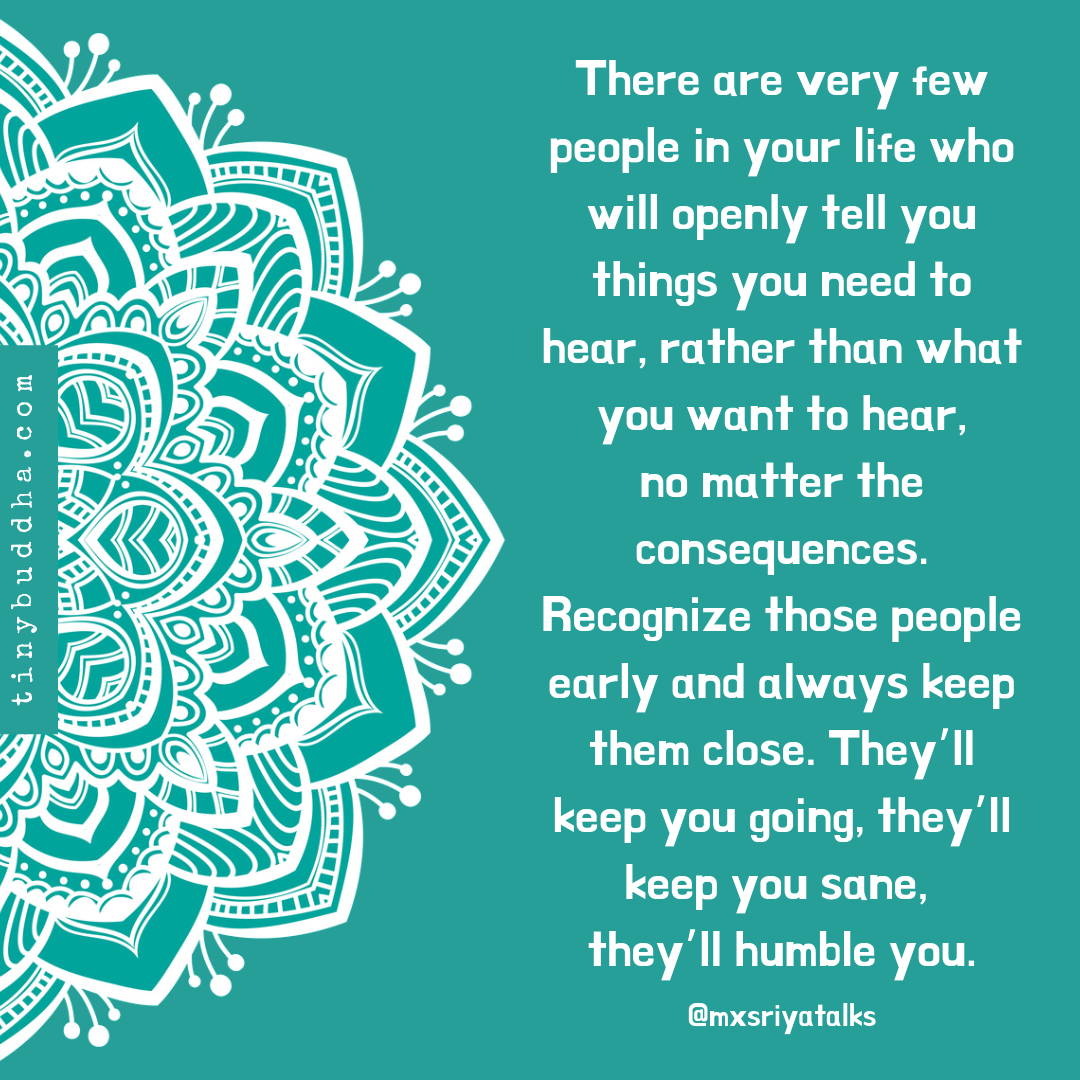
    Maybe we’ve never felt supported by our friends or family. Maybe we don’t feel supported by our peers or co-workers. Maybe we don’t even feel supported by our partner.

    This can leave us feeling drained, tired, and unhappy, like we’re moving through life without much fuel to keep going.

    During my adolescence and early adulthood, this was a huge struggle for me. I rarely found a place or group of friends where I felt like I “belonged” and, therefore, I didn’t feel supported. When I did feel supported by others, it only lasted for a few days or weeks before it dissipated.

    Today, this has shifted. I feel much more supported in my current relationships and don’t feel nearly as drained as I once did.

    There are still moments when I feel like I did growing up, but I’ve realized that opening up to support is a life-long journey. It’s an ongoing process of healing old wounds and allowing ourselves to become something new.

    There are three questions that always help me realize what needs to be healed and how I need to shift my perception. If you don’t feel supported in your relationships, ask yourself:

    1. Is my story preventing me from receiving support?

    Do you tell yourself stories like “Nobody understands me,” “He can’t understand me because he hasn’t experienced what I’ve experienced,” or “I always have to take care of others and nobody can take care of me”?

    Or, do you repeatedly tell yourself, “I am never supported in my relationships”?

    Whatever your specific story is, it blocks you from receiving the support you desire.

    Some other stories that prevent you from receiving support include: “If I tell others about my problems, it will cause them more stress,” “If I share this with others, they will judge me,” “I need to give to others in order to be loved,” and “If I want something from others, I won’t be loved.”

    Formerly, I told myself the story “I will be a burden to others if I seek help and support.”

    I’d think this at work when I needed extra help or a day off, so I’d feel hesitant to communicate this to coworkers. I’d also think this when going through tough times, which made me feel scared to open up to friends, so none of them would know what I was feeling.

    When we acknowledge our stories, we are then able to shift our perception and open ourselves to receiving support from others.

    2. Am I reaching out to others for support?

    Often when we feel like we are not receiving what we desire from others it’s because we are not open to receiving. It’s as if we have a little shop set up for business, but we have all the doors locked!

    Be sure to tell others when you are going through a difficult time. Ask people for help rather than to try to figure it all out on your own.

    By letting people know that we are seeking support, we’re much more likely to receive it.

    3. Am I supporting myself?

    What we experience outside of ourselves is often a reflection of whatever we are experiencing within ourselves. If we are not feeling supported by others, then it is likely true that we may not be supporting ourselves.

    The key to shifting this is to find ways to feel full and supported within ourselves instead of focusing solely on what we want from others.

    This was something I needed to do when dealing with various health issues. For a few years, I failed to address my health problems, which meant others couldn’t support me either.

    I would not stay committed to diet and lifestyle changes that I knew would help me. This meant others didn’t have the opportunity to support me because my actions did not show that improving my health was important to me.

    Ask yourself: Am I supporting my body when it’s sick or tired by letting it rest? Do I support myself by finding time to do the things that I love to do? Do I give myself the things I know I need—like going to doctor’s appointments when I’m sick or finding a therapist when I’m going through a difficult time?

    Then take it a step further and ask yourself: Am I really “myself” when around others? Am I putting myself in relationships with people who truly accept me for who I am? Do I allow myself to share my authentic truth with others?

    If we want to be fully supported in all aspects of ourselves, we need to choose to be in relationships where we feel free to be our authentic selves.

    This might mean letting go of some relationships and releasing expectations that certain people will suddenly change and be supportive. By being in relationships with others who fully accept us, we are supporting ourselves.

    In order to experience the highest degree of love and support in our relationships, we have to really love and support ourselves. So look within and become the master of your own self-care and self-love.

  • How to Foster Better Relationships Just by Being Present

    How to Foster Better Relationships Just by Being Present

    Couple Doing Yoga

    “When you love someone, the best thing you can offer is your presence. How can you love if you are not there?” ~Thich Nhat Hanh

    I love to pose a question in my journal and watch carefully for the myriad responses from The Universe. I always know how much attention something needs based on the quantity and clarity of the answers I receive.

    Lately I’ve been pondering the question: How can I be a better sister, daughter, and friend? The Universe has been responding with a metric truckload of answers.

    The common theme?

    Get present.

    With our busy lives, we’re always ticking boxes off a long list and thinking about the next thing we have to get done. We’re constantly in doing mode.

    Sometimes it can feel like a burden or an annoyance to have to stop, even momentarily, for the people we love.

    It seems a little backward, don’t you think?

    Getting present requires a certain level of self-awareness.

    It is about putting aside your own thoughts, worries, fears, and insecurities and genuinely taking an interest in what that person is saying.

    When you press pause—physically and mentally—and hold a space for a person to express themselves fully, that person feels valued, heard, seen, and loved.

    And that’s all any of us ever really want.

    So how can we bring more presence to our relationships?

    Intention

    Start with setting an intention to be more present.

    It sounds so simple. And it is. Yet many of us enter our relationships with a nonchalant air and very little intent.

    As you begin to engage with the people you love, the intention to be more present acts as a reminder, anchoring you into the present.

    You become aware of those times when you are most present and those times when you are not. And you’ll notice what distracts you from the present moment. Phone calls, to-do lists, busyness overload, social media—whatever it is.

    When you become aware of this stuff, you can work with it or eliminate it so it doesn’t keep distracting you.

    Intention is where it starts.

    Support Yourself

    I support others by supporting myself.

    Next time you’re engaging with someone, take a moment to check in with where you’re at and ask if you’re supporting yourself.

    By this I mean, are you centered, confident, and calm? Or, are you up in your head? Is there a story running?

    I’ll give you an example. I have a tendency to overcompensate when I meet someone new, someone I potentially want to be friends with. I’m overly nice to the point where it’s almost awkward and uncomfortable. Why do I do this?

    At some point, I stop supporting myself and I retreat into my head.

    Here, there is a story running: “What if I say the wrong thing? What if she doesn’t like me? Have I got something in my teeth? Did I put deodorant on this morning? What if I have nothing to say in response to what she’s telling me?” And on and on it goes.

    Yup. As I write this, I see how ridiculous it all sounds. But this is what happens. I stop supporting myself and let my mind run away with the show.

    The result? I lose my presence.

    The same can be said for interacting with people I know well, like family members and good friends. The story is not necessarily the same, but the outcome most certainly is.

    When I support myself, I am connected and grounded. I easily retain the finer details of the conversation. And later, I remember to follow up to see if the person is feeling better/got that job/went on that second date.

    I speak from my heart rather than from my head, bringing value to the conversation. I set adequate boundaries. It actually makes me a better sister, daughter, and friend.

    Supporting yourself is essential to supporting those around you.

    This doesn’t have to be difficult. It might look like:

    • Clearing your busy schedule and creating some space just for yourself
    • Saying no
    • Focusing on your breath
    • Learning to meditate
    • Exploring the stories that are running in your head (journaling and kinesiology are my favorite mechanisms for self-exploration)

    How does presence influence your relationships? Have you noticed the dynamics of the relationships change? Can you feel the connections strengthen with your presence?

    Couple doing yoga image via Shutterstock