Tag: friends

  • Releasing the Need for Approval and Making Peace with Yourself

    Releasing the Need for Approval and Making Peace with Yourself

    “Lean too much on other people’s approval and it becomes a bed of thorns.” ~Tehyi Hsieh

    In the face of a conflict with another, the wisdom that most often brings me peace is the reminder that the only thing I can change is how I react. Whatever or whoever else is a part of the conflict, that is outside of my control.

    While I certainly advocate using your excellent communication skills to work through problems with the ones you love, I am a firm believer in finding my own way to cope rather than being a victim of circumstances.

    These are three powerful tools on the road to doing just that:

    1. Realize that no one else is paying attention.

    Back in high school, I faced the typical struggles of being a teenage girl who was well outside of the in crowd. It was no fun to feel like such an obvious misfit, and I remember more than once worrying about what my peers would think of something or other that I’d done.

    It was then that my dad spoke one of the most liberating truths into my life, harsh as it may sound: “Who says they care enough about you to have an opinion in the first place?”

    And what a revelation it was. Humans of all kinds (even, and perhaps especially, teenage girls!) are obsessed with themselves. Each of us lives in a universe that revolves around me; you, if anything, are a mere blip on the radar.

    In my adult life, this same wisdom continues to guide me.

    Too often, I find myself thinking that I’ll do something to “prove” something to a person I’ve been in conflict with.

    I’ll think that by staying single and being obviously happy and fulfilled, those who’ve expressed sympathy or tried to set me up will realize that their efforts were unnecessary. I’ll be tempted to pursue a job or another degree because someone, somewhere will be impressed by it and maybe realize they underestimated me.

    And then I hear my dad’s words again, and I remember that no one is paying that much attention.

    No one but me cares that much about the direction my life takes, the principles I stand on, or the lines on my resume. Any fraction of this life lived for the approval of someone else is wasted; “they” will never notice, and I will be unfulfilled, waiting for something that will not happen.

    The only one whose opinion matters is the only one I have to look at in the mirror at the end of the day. If she is not okay with who I am and what I’m doing, then I have failed.

    2. Do what you can, and then let it go.

    In the last year, I met the first person who was really difficult for me to be around in a long time; probably since those troublesome teenage days. We didn’t get along, and so I avoided him. I was not unkind, but the feeling of dislike was unfamiliar, and not one I enjoyed.

    One day, I got the idea in my head that I should “make peace.” At a gathering for a mutual friend, I said the things I felt needed to be said, in the best way I could say it, and was disappointed that the result was not what I had intended. We did not become friends, but rather he continued to treat me in a way that made me uncomfortable and left me feeling disrespected.

    For a while after that interaction I wondered if I should try the conversation again with a different approach, hoping for a different result. I think even then I knew I was barking up the wrong tree, but I suppose it’s a part of human nature to want to be liked and understood.

    I then remembered another valuable image that helped me make peace with the matter. Everything we see or experience is filtered through our own unique personality and worldview. How can we say for certain that a color we see or a flavor we taste is the same for anyone else on the planet?

    The same was true for my conflict. No matter how many different ways I tried to send the same message, I could not control the way it would be received by this person. I had to trust that I’d done my part as best as I could, and if and when it was ready to be received it would be.

    No one likes to be nagged. I’ve found wisdom only makes sense when you’re ready to receive it, and the pushier the message-bearer, the more resistant the recipient. Do your part, say your piece, and leave it alone.

    3. Be kind to yourself.

    In all of this, we walk away from the need for the approval of others, focusing on finding our wholeness in ourselves. But this journey will not be a peaceful one if we step from the disapproving voices that surround us to a similarly unkind voice that comes from within.

    I’ve caught myself more than once berating myself for making a mistake. “You colossal screw-up! Way to go, moron!”

    Imagining someone else speaking to me that way opened my eyes. If a friend or coworker talked to me the way I was talking to myself, I’d walk away. I know without a shadow of a doubt that I do not deserve to be treated that way.

    So why would I treat myself that way?

    There is a quote attributed to Plato that I aspire to live by: “Be kind, for everyone you meet is fighting a hard battle.” If we are to give others the benefit of the doubt and treat them kindly regardless of their actions, should we not do the same to ourselves?

    I challenge anyone reading this, myself included, to tread carefully the next time you make a mistake. If someone you loved had done the same thing, wouldn’t you respond gently? “That’s alright; you’ll try again another time. No worries.”

    Let’s use that same voice the next time we talk to ourselves, whether we feel we deserve it or not.


  • Introducing Tiny Buddha’s Community Forums!

    Introducing Tiny Buddha’s Community Forums!

    Tiny Buddha 2

    After much time and planning with Joshua Denney of Think Web Strategy, I’m thrilled to announce that Tiny Buddha now has a new responsive design and community forums!

    The new design enables for a better reading experience on mobile devices, and also gives you access to forum-related information right on the homepage.

    Why Join The Tiny Buddha Community Forums?

    The forums are a place to connect with the community, to share ideas, and to give and receive support. You’ll find topics related to:

    • Art
    • Crafts
    • Emotional Mastery
    • Fun
    • Health & Fitness
    • Parenting
    • Purpose
    • Relationships
    • Spirituality
    • Tough Times
    • Work

    Since site authors officially started using the forums two days ago, there are already quite a few conversations going on over there. I hope you’ll set up a free account to join one or start your own!

    To Set a Free Account on the Tiny Buddha Forums

    1. Click on the “Join the Forums” link at the top right-hand corner of the site.

    2. On the register page, enter a username, your name, your email address, and your password, and then hit “complete sign up.”

    3. You will receive a confirmation email to verify your account. Once you’ve done that…

    4. Login at http://www.tinybuddha.com/login

    Once you’re logged in, you can use the forum link in the main menu, at the top of the site, or check out on some of the popular forum conversations listed on the new homepage.

    Since this is a new site feature, there may be some bugs. If you notice any issues, please let us know in the technical support section, here: http://dev.tinybuddha.com/forum/site-feedback-support/technical-support/

    Thank you for being part of the Tiny Buddha community! 🙂

  • Dealing with Disagreements with Loved Ones: 5 Helpful Tips

    Dealing with Disagreements with Loved Ones: 5 Helpful Tips

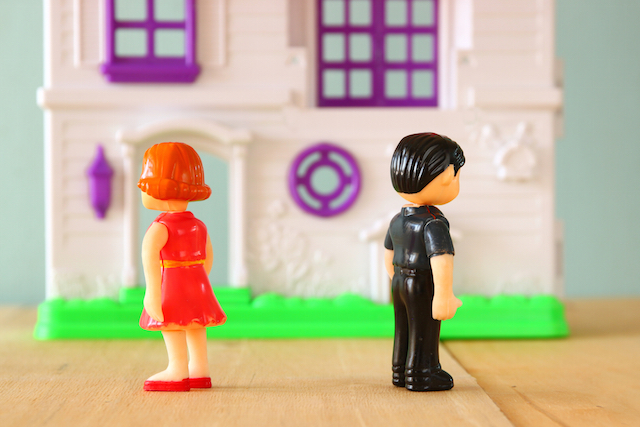
    Fighting couple

    “We find comfort among those who agree with us—growth among those who don’t.” ~Frank A. Clark

    This post is for anyone who has ever disagreed with the people they love the most, to remind them that these disagreements do not have to lead to regret.

    Indeed, they can lead to our deepest growth if we so choose.

    But I’m getting ahead of myself…

    Hi. My name is Sabrina, and despite my best intentions, I don’t always have the most harmonious conversations.

    When it comes to my family, especially my parents, my ego struggles with second-guessing their words, choices, and actions, and in turn, second-guessing my own.

    The truth is, I am no more “right” than they are; in fact, when it comes to making the best choice for oneself, I am a big believer in turning inward in one’s quest for answers.

    Yet I can still get triggered when we don’t see eye to eye, and that’s how I knew this was an area where I had an opportunity to grow.

    So I asked my higher self:

    How can I balance lovingly hearing my parents out without necessarily agreeing with the content of their message?

    And how can I bring loving awareness to the conversation, accepting with my heart while releasing the need to fully comprehend it in my head?

    Here is the answer that I received. (more…)

  • 5 Reasons to Stop Keeping Score in Relationships

    5 Reasons to Stop Keeping Score in Relationships

    Back to Back

    “It’s one of the most beautiful compensations of life that no man can sincerely try to help another without helping himself.” ~Ralph Waldo Emerson

    During my freshman year of college, my group of friends would always hang out in my room.

    For the most part, I enjoyed playing host.

    Then certain things started to bother me. People would constantly be eating my snacks, and I would constantly be cleaning up after them when they left.

    Day after day, I would provide my friends with food. They would make a mess eating it while sitting on my bed. And they wouldn’t clean up after themselves.

    Perhaps this sounds trivial to you, but over time I found it very annoying.

    And after a few months of this, I became resentful toward my friends.

    The problem here was that I couldn’t help but “keep score” in my relationships with them.

    What do I mean by this?

    Every time I gave my friends food, I would mentally record it, and expect to get something of equal value in return.

    In my mind, I was giving way more than I was getting.

    And then every once in a while when they would come in and offer me some of their food, I felt even worse.

    “How can they think that this is enough after all I’ve given them?”

    If they thought they were giving me a sizeable gift, then suddenly I felt obligated to pay them back to keep the balance in my favor.

    In hindsight, I see how disturbed this way of thinking is. But at the time, it all made sense to me.

    Keeping score got me nowhere, other than feeling bad and deteriorating my relationships.

    This kind of mindset is toxic. It causes nothing but harm.

    Think about your own life and your own relationships. Chances are you are keeping score in some of them.

    And I bet it’s having the same effect on you. (more…)

  • Share Your Vulnerable Story: Find Strength by Letting Others In

    Share Your Vulnerable Story: Find Strength by Letting Others In

    Holding Hands

    “Pain is not a sign of weakness, but bearing it alone is a choice to grow weak.” ~Lori Deschene

    In February of 2011, I went to see my doctor because I was suffering from severe headaches that I figured were associated with using computers all day at my law job. After having a few tests, the doctor said that I wasn’t doing well and he suggested that I take a leave from work to focus on my health.

    The next few months, I found myself in and out of doctors’ offices, medical labs, and hospitals on a weekly basis. With a variety of tests already done, my doctor suggested we do an MRI of my brain. I went for my MRI in June of 2011.  

    Weeks passed by after my MRI, and assuming no news was good news, I made plans for my summer. I decided to have a change of scenery and went to San Francisco for a fun summer job that didn’t involve computer work.

    After a great summer there, I was in Toronto in late August for two weeks visiting my parents when I got a call from my neurologist in Vancouver.

    She told me I had a brain tumor.  

    The floor dropped beneath my feet, my heart sank, and my mind raced, contemplating how I would break this news to my parents. I put the phone down, walked into the kitchen, and I told them. We hugged and then we cried.

    In that moment, my life flashed before me. I was 28 years old, single, unemployed, and now, more lost than ever. I didn’t know if I would finish my law license, return to Vancouver, move back into my apartment, or when I would see my friends again.

    But, as it always does, life went on. (more…)

  • 5 Signs You’re in a Toxic Relationship

    5 Signs You’re in a Toxic Relationship

    “Trust your own instinct. Your mistakes might as well be your own, instead of someone else’s.” ~Billy Wilder

    I’ve had my share of toxic relationships. Is it fair to say you have too? My guess is that we’ve all endured the company of people who weren’t rooting for our highest good.

    As for me, the relationships that were the most debilitating and unhealthy gave me the feeling that I wasn’t taking care of myself spiritually, mentally, or physically.

    I felt like less than myself, like I was compromising my life goals with each second I stayed around those people. Mind you, these were both friendships and romantic relationships.

    I call these relationships toxic because my authentic self withered away into someone I didn’t recognize as I denied all that was natural for me.

    The label “toxic” means something that drains life and energy. Before I knew it, I was weak and feeble, subject to the whim of the person to whom I’d given my power.

    I hung around those people too long in an effort to do what was supposedly right by societal standards—fighting to stay in a relationship instead of giving up “too soon.”

    Little did I know that my desire to be agreeable and accepted was suffocating what was right for me.

    Why did I have to sacrifice my happiness for what society says is right? I was living stifled in self-judgment and fear, and I’m sure society couldn’t have cared less!

    While some difficult relationships can open our eyes to new perspectives and expand our awareness, some obviously shut us in and hinder our development. Our intuition will alert us one way or the other. It tells us change and growth should feel good!

    When I was in my toxic relationships, I ignored my intuition in favor of my logical mind, which told me that losing that person was worse than having him/her around.

    But our intuition knows best. Unlike our mind, its only motive is our happiness. (more…)

  • Reaching Out for Help When The Road Gets Rough

    Reaching Out for Help When The Road Gets Rough

    “Pain is not a sign of weakness, but bearing it alone is a choice to grow weak.” ~Lori Deschene

    There was a time in my life when I struggled to share my pain. I actually took great pride in how stubborn I had become. It wasn’t until I started looking within myself that these prideful attitudes started to shift. Actually, my whole life started to change.

    Once I started my journey of self-discovery, I no longer wanted to deal with my pain by myself. I slowly reached out to others and asked them for help.

    It was in asking for help and sharing my pain with others that I felt myself getting stronger. 

    I didn’t expect, however, that I’d need to ask for help repeatedly.

    In August of 2006, I was with a small group of people inside a airplane hanger that was used as a classroom to give instruction for skydiving. Worn-out couches and old beanbag chairs formed  a circle where we gathered. The décor on the walls was something you’d find in a local head shop that sold 60’s and 70’s paraphernalia.

    A positive vibe filled the room, as a young instructor prepped us on the safety procedures needed for jumping out of the plane.

    It had been sixteen years since I had made my first jump. When I shared this information with the instructor, she asked me, “What took you so long to come back?”

    I didn’t respond out loud, but simply smiled. I wasn’t brave enough to explain why I had come back this time.

    Initially, I jumped in the fall of 1990 as a way for me to turn my life over to  a higher power; that jump marked the beginning of my inner journey.

    Skydiving had helped me change my life from despair to hope. For me, it wasn’t about seeking adventure or adrenaline; it was about letting go and finding myself. I had no intention of making a second jump.

    But I eventually discovered that my first jump was only the beginning of my journey.

    Why did it take me sixteen years to come back? Pride and stubbornness kept me away. I didn’t want to admit that things in my life had become difficult. When I did, I felt that I needed to return to skydiving to help me, once again, let go. (more…)

  • Help People Feel Better: The Power of Understanding

    Help People Feel Better: The Power of Understanding

    “When you judge another, you do not define them. You define yourself.” ~Wayne Dyer

    I used to be someone who always gave my opinion, or confronted issues in relationships regardless of whether someone was in the mood for what I had to say.

    I always brought up whatever was bothering me or said my opinion, perhaps in not so tactful ways. Needless to say, this led to a lot of emotional confrontations and blowouts with friends and family members, sometimes destroying important relationships.

    I justified my actions by thinking that people deserved to hear the truth, no matter what.

    Despite my strong opinions, loved ones still came to me for advice or help when they were in need. This might have been because I seemed like a well-grounded person with strong convictions—someone who knew what to do.

    When giving my opinion or advice, I would always think to myself, “Well, they are coming to me for the truth, so they deserve to hear it no matter how bad it might sound.”

    While I thought my advice came from a place of caring, it would take years before I realized how selfish and thoughtless I was being.

    Sometimes my sister would talk to me about issues she had with friends, and I’d say, “Why don’t you just tell them what’s bothering you. Why not tell them the truth?”

    It would frustrate me to see my sister upset with such friends, putting on a happy (or, what I thought was, fake) face, and going on with life.

    What I had yet to realize was that by being patient and understanding with her friends, my sister was avoiding confrontations for situations she may eventually let go of with time and understanding.

    My attitude only began to change after a series of big mistakes that I made. These painful events pushed me to take a big look within. I saw that I’d made a lot of judgments or criticisms of my loved ones for things they had done, when meanwhile, I had done the exact same things!

    I thought about how I had moments when loved ones came to me in pain or in need of a friend, and instead of being there for them or listening, I would give my opinion, for better or worse—even if it made them feel worse off.

    After I made my mistakes and sought advice from others, some of the things I heard really hurt me, and I would think to myself, “Wow, is that how I sounded?”

    Around the same time I had these realizations, I was doing a lot of traveling, and meeting people from all walks of life. I really started to appreciate the beauty in people’s stories, including their blunders. (more…)

  • A Couple of Simple Strategies to Let Others Be Happier

    A Couple of Simple Strategies to Let Others Be Happier

    “Make the other person feel important, and do it sincerely.” ~Dale Carnegie

    About 20 years ago, I read Dale Carnegie’s classic book, How to Win Friends & Influence People. I loved the book and passed it along to my wife, Marcie. She read a bit of it and returned it to me saying, “This is all common sense. I don’t need to read this.”

    Marcie is naturally nice, no doubt one of the things that attracted me to her when we met 30 years ago. And indeed, Carnegie’s strategies, which largely revolve around being nice, were “normal, everyday behavior” for her.

    I’ve always prided myself on being a nice person, but I learned a tremendous amount from Carnegie’s 1936 classic.

    The first Carnegie suggestion that I recall applying is what I thought of as “Let others be right.” Carnegie tells a story of a dinner party he attended. The man sitting next to Carnegie told a humorous story, which included a quotation the gentleman attributed to the Bible. Carnegie knew that the quotation was from Shakespeare and said so.

    They argued the point until a third party, a friend of Carnegie’s, was asked to settle the argument. The third party kicked Carnegie under the table and then agreed with the other man. After dinner, Carnegie’s friend explained that while Carnegie was right, making the other gentleman look bad served no good purpose.

    I knew that I could apply that good advice. I had a habit of getting hung up on being precise, correcting other people because I didn’t like to let wrong information hang out there.

    Carnegie’s story helped me to realize, to paraphrase the title of another favorite book, that I had a bad habit of “sweating the small stuff” regarding precise information that was not important—a habit I then set out to change.

    Being precise is big stuff when you are building something—as the saying goes, “measure twice, cut once.” And it’s important to try to be precise if you are giving someone driving directions (make a left vs. make a right).

    But precision is not important in so many other situations, and correcting friends, your spouse, your kids, or anyone else, is often not necessary, and something that’s much nicer to hold back from doing.

    The first person with whom I had frequent opportunities to practice my new habit was my dad. He and I had started a company together about five years before I read Carnegie’s book. It had become a pet peeve of mine that he was never precise about dates. (more…)

  • Depending on Yourself in the Uncertain, In-Between Space

    Depending on Yourself in the Uncertain, In-Between Space

    “To get something you never had, you have to do something you never did.” ~Unknown

    Life has been strange the past few days.

    All summer there was a trip or an event to count down to the final move—my brother’s wedding in Sedona, Captiva Island with my boyfriend’s family, Thailand with a girlfriend and, finally, a week in Atlanta.

    I have nine days left before the movers come, and I feel as though I’m existing in a space without anything to hold on to.

    My world here in Florida will soon be a memory, and I have no way of knowing what my life in North Carolina will look like. I fantasize about it, but it’s all conjecture.

    The summer getaways provided a distraction for me, obscuring the view of the unknown that was swiftly approaching. My former relationship acted as a life preserver that I knew would be with me no matter where I floated. Now, both have dissolved into the past.

    Very few people in this world feel an obligation or a desire to plan their lives around you.

    Although I have been gifted with amazing and loyal girlfriends, they have their own lives. It’s my parents and significant others that I have counted on for the heavy labor, when the help I need is neither sexy or fun.

    Although my ex-boyfriend would help me move with kindness in his heart, I don’t want to depend on him for this. It seems like I would be carrying on the illusion that I still have the security of our partnership. And what about my parents? Isn’t that always a loaded question…

    At 29, I am confused about my parents’ role in my life.

    While they offer to do whatever is in their power to make difficult times easier for me, their assistance comes with some strings attached. As I move toward making decisions in my life with less input from them, I am also electing to forgo their help in many ways.

    People with long-time partners or even those who still have a cozy and safe place with their parents can say, “What’ the big deal? You’re a grown woman; you can move by yourself.” (more…)

  • When Friends Fear We May Judge Them

    When Friends Fear We May Judge Them

    “When you judge another, you do not define them. You define yourself.” ~Wayne Dwyer

    One of the times I felt my lowest was when I found out a best friend didn’t tell me something important that had happened in her life. I felt about an inch tall when she said she feared I would judge her if she told me, and that’s why she kept it a secret.

    At that point, I broke down. Do all my friends feel this way? Why? I’ve always felt very protective of them and tried my best to be a great friend.

    I’m an only child. I’ve spent a lot of time with my parents. They’re wonderful and they’ve done a lot for me, but one thing they’ve passed on is a sort of judgmental, sarcastic type of humor.

    So as much as I joke around and I suppose, judge what others do, I always thought my friends knew that I would always accept them.

    I catch myself gossiping and talking about others, essentially judging them. I’ll admit there are times when I feel as if I’m better than someone. But who am I to think that? I’ve made mistakes. I don’t always do or say the right things. I’m by no means perfect or better than anyone else.

    Suddenly, I somewhat understood what my friend meant. Even though I hoped she knew that I would never judge her choices and I’d always be there for her—and as much as it pains me—I could see why she was afraid to tell me.

    I didn’t want to define myself as a judgmental person who people couldn’t trust to talk about important issues. Not even for one second. So I vowed to change. (more…)

  • A Little Care Can Go a Long Way and Make Someone’s Day

    A Little Care Can Go a Long Way and Make Someone’s Day

    “Be kind, for everyone you meet is fighting a hard battle.” ~Plato

    Ever since elementary school, I have had a built-in network of friends, family, and colleagues who make up my rock solid foundation of support.

    But recently, I’ve been struggling with being alone and desperate for human interaction—more specifically conversation and affirmation; and conversation that includes affirmation of my creative choices would be the holy grail of friendship.

    Two months ago I moved to a new city where I knew exactly two people; one was my cousin who I hadn’t seen in over fifteen years and the other was an old co-worker’s sister (which, come to think of it, doesn’t really count as knowing someone, does it?)

    Both have become wonderful companions, who I see every other week or so and share many commonalities with. But I wanted a deeper friendship, someone to tell me that, yes, I had gained a little weight and tomorrow we’d go the gym.

    Normally I shied away from strangers, skeptical of their intentions, but if I kept that up I’d meet no one. So, in a bit of a social experiment (forged by pure desperation), I decided to strike up a conversation with someone new every day.

    So far, about 90% of the conversations end with a simple thank you and us parting ways, never to meet again. But the other 10% of my attempts have been eye-opening.

    Today, for instance, while at the gym, I met this stunning woman, whose legs were reason enough for me to hate her. But I smiled sweetly and asked her how she was doing. Ten minutes later I had learned that she ate extremely healthy and worked out every day (hence the amazing figure), but also that she was the mother of a five-year-old girl.  (more…)

  • 11 Ways to Turn Strangers into Friends

    11 Ways to Turn Strangers into Friends

    “Fear makes strangers of people who would be friends.” ~Shirley Maclaine

    Up until a year ago, I saw the world as a place where very few doors opened for me. At first I thought it was due to being extremely introverted. But as time went on, I started to struggle with making friends.

    I didn’t have many of them—and opportunities only knocked a few times a year. That’s when I realized my problems stemmed from my passivity and fear of actually going out and talking to people.

    My few closest friends always told me to join a club or go to parties. People always told me where to meet people. But they never really showed me how to actually create conversation.

    On top of that, I never really liked going to big social gatherings. I’m introverted and tend to be overwhelmed when a lot of people are around. I like talking one-on-one.

    So I decided to do things my own way. I started talking to strangers on my college campus and in the city because I was tired of staying on the sidelines.

    It was scary for a naturally timid person like me, but I decided to fight the fear.

    Great things come to those who are willing to risk rejection and put themselves out there.

    After two months of doing this, I made some great friends, simply by starting conversations.

    It’s an empowering mindset to be able to create conversation with potentially anyone. There is always the choice to talk to whom I want to talk to.

    I asked people what drink they bought from the coffee shop. I asked someone about her customized bike. I asked people to share opinions on things that affected me.

    Some people opened up to me. Some people stayed shut down. Some of them continued talking about themselves when I put the spotlight on them. Others simply answered my question and left the conversation there.

    All of these interactions allowed me to understand how to engage with people. For example, I learned that tone and body language are more important than saying the right thing.

    Through my experiences, I learned that people are usually friendly and happy to talk to you.

    I’ve been able to meet more people than I ever expected just by opening up to them.

    That’s when I learned that it was up to me to be proactive and create my own doors instead of complaining that none were opening for me. It was up to me to create my own opportunities by connecting with people.

    Besides feeling more connected, I feel happier knowing that I have the power to talk to whomever I want to. More opportunities arrived by networking with others. For example, I was able to pursue photography with a new friend simply because I reached out and asked. (more…)

  • 4 Simple Tips for Confronting Someone Who Hurt You

    4 Simple Tips for Confronting Someone Who Hurt You

    “To get something you never had, you have to do something you never did.” -Unknown

    For many years I maintained a relationship that I was not happy with. I’m sure a lot of people have been there, or are there right now. I didn’t feel there was equality in the relationship; I always seemed to be the one giving, yet I consistently felt I was getting nothing out of it.

    A close friend of mine asked me why I tolerated the behavior of the person in question.

    As usual, a few excuses passed through my mind: the other person was going through a rough time; I felt I should be there for them; they probably wouldn’t respond to how I was feeling anyway, so I should strive to be the “better person.”

    I let these excuses wear on for over a decade, until one day I realized I needed to make a change.

    There was no point in silently wishing this person would be better, or hoping they would eventually acknowledge I deserved the same respect and support I gave them.

    After more than ten years without change, I wondered what on earth I was expecting. Did I think this person would suddenly have an epiphany, maybe another ten years later? Gently, slowly, I started to realize that I had to do something I had never done.

    I decided to confront them about it, without aggression or anger. The next time they treated me in a way that I thought was unacceptable, I would say something. I would let them know that they were being unfair or unkind. I wouldn’t try to sugar coat it—I would just be honest about how I felt.

    The moment came and I said what I needed to say. I was willing to accept that they may never agree with me or apologize, but I had to be true to myself. I had to say something, with no expectations—just a commitment to stand up for myself when it was necessary.

    “Integrity is telling myself the truth. And honesty is telling the truth to other people.” ~Spencer Johnson

    To my great surprise, I received an apology. I would have been okay without it—having come to the conclusion that purely standing up for my beliefs was enough for me—but the heartfelt apology made me realize how unnecessarily I had sacrificed myself and my needs. Since then, my relationship with this person has greatly improved. (more…)

  • 21 Ways to Build Strong Friendships

    21 Ways to Build Strong Friendships

    Friends Jumping

    “To have a friend and be a friend is what makes life worthwhile.” ~Unknown

    I lost my beloved husband from complications following a routine surgery. His sudden death changed every facet of my life and rocked me to my knees. Now, more than a year after his passing, I am openly speaking of my grief experience with others and sharing how I’ve coped being a young widow.

    I was asked recently what was one of the great lessons I learned from losing my husband, and I knew what my answer was without hesitation:  the importance of having a diversified life.

    Your financial adviser will tell you to diversify your investments, rather than putting all your “eggs in one basket.” If one investment is lost, you’ll still have others to rely upon.

    The same is true in relationships. Certainly the relationship with your spouse should be your primary focus, but it cannot, and should not, be your only relationship. Emily Dickinson said, “My friends are my estate,” and I couldn’t agree more.

    As a mother of three boys, I lived in a house full of testosterone. My husband knew that not only was time with girl friends beneficial for my mental health, but also the positive tenor of our home. He encouraged me to participate in “girls’ nights” on a regular basis and to take a yearly trip to the beach with my gal pals, a tradition for almost 20 years.

    Thus, when my husband passed away, I had a fully developed support system of ladies who, even now, are still meeting countless needs and making me feel included even though I am flying solo. They have been my lifeline during this dark time. Don’t get me wrong, my family members have been wonderful, but they don’t live close enough to me to give me the daily encouragement I need.

    Cultivating lasting, loving friendships takes time and effort; however, I cannot impress on you how important the investment in friends is, in both good times and bad. Here are some ways to create and cultivate lasting friendships: (more…)

  • 10 Ways to Love the People in Your Life

    10 Ways to Love the People in Your Life

    Friends hugging

    “At the end of life, our questions are very simple: Did I live fully? Did I love well?” ~Jack Kornfield

    We all grow up with some healthy stories about love and some unhealthy ones. I learned some beautiful, life-giving ideas about love, ideas like these:

    • Loving people means believing in their potential.
    • Love means treating people with kindness and gentleness.
    • Loving the people in your life means celebrating their successes and cheering them on.

    But I also grew up with some stories about love that I came to see weren’t so helpful. Those ideas about love bred problems in my relationships.

    One of those stories was: Loving someone means always being available to them. (Turns out, it’s not true, and living as if it is breeds resentment.)

    Another was: Loving someone means always having space for what they want to talk to you about. (Turns out, not true either!)

    Another myth about love: If you love someone, you do what they are asking you to do, out of love, even if it feels difficult. (I can tell you, that doesn’t work so well.)

    I’ve developed my own guidelines for loving the people in my life, guidelines that express how I want to relate to the people around me.

    These are some of my guidelines for loving: (more…)

  • Get Connected: How to Expand Your Offline Social Network

    Get Connected: How to Expand Your Offline Social Network

    “Strangers are friends you have yet to meet.” ~Unknown

    We are living in times of massive change.

    Looking at some of the problems we are facing—the crumbling economy, environmental pollution, wars over scarce resources—sometimes the idea of moving far away to a remote mountain top seems very attractive. Or hiding in that small space behind the computer screen. Anything that helps us avoid real life and all its challenges.

    But of course, if everybody thought that way, who would actually get up and do something about our situation? And is it enough to receive words of comfort through an email? We also need a smile and a good hug.

    Shouldn’t we move closer together in times of hardship?

    Despite accelerating globalization, which is connecting everybody and everything in an ever-growing web, there is a worrying development: People are feeling more and more isolated.

    We have hundreds of friends on Facebook, but hardly anybody knows the names of their neighbors. All the social online sites are great, no doubt about it. But does the exchange happening there provide the human warmth we so desperately need?

    Recently there was a fire in the head office of my internet provider. Over 100,000 customers went involuntarily offline for three days. Lots of people complained, many panicked, and almost everybody suffered from some kind of withdrawal symptoms within the first day.

    Imagine you were suddenly without Internet for a week. No email, no Facebook, and no chat rooms. An important question arises: Do you have enough friends left who live nearby? (more…)

  • 2 Things You Need to Form a Strong Friendship

    2 Things You Need to Form a Strong Friendship

    “To have a friend and be a friend is what makes life worthwhile.” ~Unknown

    Extreme Makeover: Friendship Edition! That would be the best phrase to describe a year in the life of a cross-cultural friendship with my best friend Marisa.

    This is the first deep and meaningful relationship I’ve ever had with someone who doesn’t speak a word in my own language.

    My relationship with her has exposed and challenged many of my cultural beliefs and ideas about friendship.

    There is nothing wrong with being influenced by culture. We all are.

    But it’s good to recognize where some of our beliefs come from. Every so often we need to do little sorting through and, if need be, have a “garage sale” to get rid of things that are not relevant to our lives.

    From the day that we are born, our culture begins teaching us lessons. It shapes our social behavior, conduct, and whole value system.

    Oftentimes, it’s not until we encounter another culture that we realize how our culture and upbringing shaped our value system.

    Before my relationship with Marisa, I had many North American values that shaped my beliefs about friendship. For example, I believed that we needed massive amounts of time together. I also believed that we needed things in common or the relationship won’t work at all.

    And yes, it is true that you do need these things, but it wasn’t to the degree that I had been brought up to believe.

    You see, I’ve had relationships with people in my own language where we’ve had space, time together, and similar backgrounds.

    But in the short time that I’ve known Marisa, our relationship has grown faster and gone further than some of these other relationships that have had the benefits of time and space. So what is the catch?

    The catch is that it’s not about how much time Marisa and I have together, but rather what we do when we have a moment together. It’s not about how full the cup is, but rather what’s in the cup—the quality and the content.

    Relationships experts say that one of the secrets to keeping a relationship healthy is engagement. (more…)

  • Conflicts with Friends: 13 Ways to Communicate Without Drama

    Conflicts with Friends: 13 Ways to Communicate Without Drama

    “Treat your friends like you do your best pictures; place them in the best light.” ~Unknown

    I recently had a disagreement with a close friend.

    There was a good deal of uncontrolled emotion on my side. I wasn’t expressing myself well and I knew it. I became more and more frustrated and less effective at explaining my feelings.

    I found myself laying unwarranted blame on my friend rather than admitting openly that something was hurting me and I was feeling vulnerable.

    Ultimately, he said the words I was having trouble finding for me, and that resolved the situation.

    I was embarrassed and grateful, but I realized I needed to evaluate a few of my shortcomings to avoid making the same mistake again.

    I also realized that what I was feeling wasn’t the problem.

    It was my inability to effectively convey what was in my heart and on my mind that led to hurt feelings and further misunderstanding. (more…)

  • How to Become a Magnet for Friends: 7 Mindful Tips

    How to Become a Magnet for Friends: 7 Mindful Tips

    Group of Friends

    “Always be mindful of the kindness and not the faults of others.” ~Buddha

    Would you like to have more friends? I mean true friends—people who laugh and cry with you.

    My close friends mean the world to me. They are there for me when I need them. When they’re on a high, I celebrate with them; when they fall, I help them up again. My life is so much richer because of my friends.

    But it hasn’t all been an easy ride. For example, one of my best friends is my ex-husband. It took years of work to move through heart-ache, anger, grief, and resentment in order to find the strong friendship we have now. To create a true friendship takes a lot of effort and dedication.

    A friend is one to whom one may pour out all the contents of one’s heart, chaff and grain together, knowing that the gentlest of hands will take and sift it, keep what is worth keeping and with a breath of kindness blow the rest away. ~Arabian Proverb

    How I Lost a Heap of Fake Friends (and Gained a Few True Ones)

    In the past, I learned a hard lesson about friends. I was a professional musician at the time and Director of one of the oldest and most renowned music schools in Australasia. My life seemed to be going fine: I was in a good marriage, had great job with a high public profile,  and was a popular friend of many.

    Or so I thought. Then things disintegrated: I lost my job, and my husband and I separated. (more…)