Tag: friends

  • Finding Kindred Spirits by Honoring Your Inner Misfit

    Finding Kindred Spirits by Honoring Your Inner Misfit

    Friends

    “The thing that is really hard, and really amazing, is giving up on being perfect and beginning the work of becoming yourself.” ~Anna Quindlen

    It should theoretically be simple but being authentic is not easy. It takes gumption to assert with courageous conviction “This is me!” and grace to accept what comes after.

    From my first discordant bear cry in a nursery full of normally crying babies, I was different, quirky. My own way of doing things—dresses over jeans, art over sports—made me an early outcast. Nothing I naturally did fit me within my particular society.

    For a while, during a specific section of years, in order not to be misfit, I conformed completely. I lost not only the misfit but also myself, and with each false friendship, however popular, my spirit gradually disintegrated.

    I forgot the organic, things that for me bring me into alignment—nature, certain family members, words, a childhood best friend—while weekend hazes fizzled my concept of identity. In a fog of boozy, belligerent moments, I grasped for something substantial, some shred of tenderness, but nothing was there.

    Various events cleared the fog enough so I could see the way out—alternative schooling, a trip abroad, college. And out I ran. In the clearing of my twenties I realized popularity was the false idol of an insecure twelve year old. Older, I felt free to reject others and accept myself.

    I have devoted this decade to the integration of all my fractured shards. The process of authentic self-resurrection is like solving a puzzling mystery—examine the evidence, look for clues, decipher what is real and what has falsely been accepted to cover up excruciating truths, reach a conclusion.

    My conclusion is that I am most decidedly a misfit. I have not, do not, will not fit.

    I want winnowed “friend” lists, not 1,000+ and counting, a core group of loved ones, where reciprocity is the foundation—of kindness, respect, intimacy, and sharing. I want Saturday night curled up on a chaise with a stack of board games and a bowl of pasta, Sunday brunch with the seagulls.    

    I am an adult who likes stickers, who prefers a bird call to the drone of a machine. I am more comfortable in the company of older people, Disney still makes me smile, and I never feel more alive than when I am dancing with the wind.

    Energy and time are precious gifts. We do not all get a hundred years; some of us die before we take our first breath, others at six, twelve, thirty-one, fifty-eight, or seventy-four. I have bargained with Death during decades of ill health, so I know how precarious Life is. How brief.

    I do not want to misspend on dangerous entanglements what little time I have, to invest where there is little or no reciprocity, or where I feel unsafe. There are enough worthy recipients; I have especially learned that this year, so it is on these nourishing relationships that I focus.

    During a crippling period of sickness, one where I was completely dependent on others—for a bath, or a sandwich—I was humbled. It is easy to take for granted the use of legs, that we have twenty-eight teeth and five senses.

    I have learned this lesson repeatedly but when I literally could not move without collapsing, my days spent almost entirely alone, inside, I had little else I could to but consider not only the why my circumstances were such but also the who, as it was me I had for company.

    What helped me clarify my authentic self during this time of healing? A notepad and pen. These household items helped me synthesize into simple lists decades of self-examination:

    • Who unyieldingly matters to me?
    • Who do I feel cares deeply about me (during the light and shadow times, when I am healthy and sick)?
    • What do I most and least enjoy?
    • What dreams am I passionate about enough to pursue?
    • What are my flaws?
    • What are my strengths?
    • If this were my last day, moment, would I be sad or happy with my choices?

    The lists, because they were succinct, showed me essential truths.

    I saw someone who dreams sometimes more than they act, who around certain types of people gets weak, someone who can be melancholy, who agonizes, who needs to laugh more. But I also saw empathy, intelligence, a free spirit, a musical, imaginative, loving explorer.

    I saw real—shadowy and flawed, light and strong. I saw popular—with myself.

    I also saw a letter writer. Since I’m an old-fashioned soul, who still listens to records, who prefers the twitter of birds, it is no surprise the unfettered scrawl of my pen to an eager recipient excites and nourishes me. Others say this is a flaw; that I need to catch up with modern culture. I say not.

    Before last year this desire was dormant. I had stashes of stationary stored high on closet shelves, stickers and stamps collected and unused, scattered in drawers and stuffed into boxes. I feel more complete since owning and passionately pursuing this previously invalidated aspect of myself.

    Because I prioritized reflection, and went within to my most gnarly corners, I found something hidden, something incandescent, a forgotten romance, a creative reservoir for deep connection.

    My lists showed me the way to myself, then to a community of like-spirited souls. I listened with my pen, I recorded the words, and I heeded their wisdom. Via Interpals and the Letter Writer’s Alliance, I found in places as diverse as England, New Zealand, Russia, Austria, Slovenia, Canada, and Denmark, others who wanted authentic connection.

    These snail mail relationships are based on reciprocity, on honest, open exchanges. To with the hand intimate the what, where, why, when, and how, to take the time to stamp into an envelope a careful selection of thoughts, sorrows, and hopes, is not only to harken back to a time when this practice was regular, but to decipher profoundly what it means to live, and to connect.

    The status of a person cannot be confined to a certain number of words on a briefly scanned page. We are more complex than that. We deserve more attention, and to attend more thoroughly to others.

    Letters taken seriously are generous that way. We ask questions in letters, and lazy words like “I don’t know,” “Anyways,” “It is what it is,” and “Fine” do not merit a stamp, nor do they fill a page.

    My friend asks me to sum myself up in one word and I have to stop and consider not only the genesis and evolution of my story, but the magnificent supply of words I have to choose from. When “quirky” proudly surfaces it fits. And I am no longer misfit in her company.

    My grandpa said we should consider ourselves lucky if, at the end of our lives, we can count on one hand our genuine relationships. These are soul-level authentic connections, those we can be imperfect and honest with, the people who do not want our tears hidden or our smiles false.

    Use your imagination to honor the misfit within. List your truths, make them visible, and see what parts of your honest identity you have stashed away on high shelves. I might be a quirky letter writer, you an eccentric dancer, but as long as we are real with ourselves and others, how can we be wrong?

    Happy people dancing image via Shutterstock

  • 8 Things I Learned from a Phone-Free Month

    8 Things I Learned from a Phone-Free Month

    “Tell me what you pay attention to and I will tell you who you are.” ~Jose Ortega y Gasset

    I used to live in San Francisco, a city celebrated for its carnivals, free music festivals, thriving bar culture, Mexican food markets, beautiful parks, fantastic literary events, thrift stores, and… (Can you tell I miss it?]

    The effect of having all this culture available is that quite often, we spend more time around the doing of an event than the doing itself. I’ll elaborate.

    I would spend x amount of time on my phone searching for cool events to go to. Then I would be on Facebook, advertising this future event and inviting friends.

    The day of the event I would spend time calling and texting people to establish a meeting place, before following the little blue dot to find that place. Then, during the actual event, I would spend x or even xxxx amount of time trying to find signal to call a lost friend or—in the more likely case—relocate my lost self and find the group.

    When not trying to find signal and/or friends, I would be sending texts telling people who couldn’t make it what they were missing out on.

    Or I’d be holding my phone in the air taking x amount of pictures of where I was and publishing the photos on Facebook/Instagram/Snapchat/all the above (checking my phone every x minutes thereafter to get an update on like-count) trying to show the world how much fun I was having (read: forgetting to have).

    Does any of this sound familiar? The x amount of time spent on my phone combines to way more x’s than the time spent enjoying x event itself. See, I can’t even remember what the event was.

    I remember Nokia’s first advertising campaign: “Connecting People.” Now this slogan would more correctly read: “Connecting Phones,” because I observe that the people behind the phones are actually hugely disconnected from valuable forms of interaction, myself included.

    We live in a world where losing your phone is more dramatic than losing your virginity, and I found it way more distressing because I couldn’t call my mum and tell her about it.

    I lost my phone in the fatal sense; it fell to its death and I was phoneless for a month. This month was somewhat transformative for me. I mean, I know that a phone isn’t technically a limb, but at first it felt very hard to walk anywhere if I wasn’t 100% sure that I was going in the right direction.

    My phone used to guide me. It was brave to go somewhere to meet a friend, not sure if they’d had to cancel without being able to let me know. My phone used to confirm things. Another hard thing was the not knowing what my friends had eaten for dinner the previous night. Instagram used to show me.

    How are people going to invite me to things?! Denial, anger, frustration, loneliness… I’M FALLING OFF THE RADAR! People will forget me! Desperately clicking my heels “There’s no place like phone, there’s no place like phone” … *Spiral into delirious black out.

    It’s hard to believe that a month later I had become pretty nonchalant about even getting my phone fixed. I could now afford to, but I had discovered a charm and liberation to my life without a phone that I was now scared to lose.

    Here are some ways I found myself when I lost my phone:

    1. I would give myself time to get lost, and enjoyed taking notice of my perhaps wayward route.

    I would find things on the way that I’d never seen before—great street art and food joints. If really lost, I would ask locals for directions, and in so doing met interesting characters and appreciated their willingness to help me. I enjoyed not being self-reliant.

    2. My friends were always there to meet me at the time we’d planned in advance.

    When is the last time you made plans with a friend a week or two in advance—Lunch at Rosso on the 12th, 2:00—and not called to confirm before hand? It’s a test in your trust that friends won’t let you down, nor you them. It’s fun to have something to look forward to and to simply… show up.

    3. I didn’t update Instagram nor Facebook for a month.

    I lost the urge to show people a #nofilter photograph of my burrito or let Facebook know which Disney Princess I am according to Buzzfeed. I started reading more, enjoying my own company. When I had moments to spare, I would reflect on my day rather than take out my phone and read about everybody else’s.

    4. I started being present at events in the true sense of the word.

    If you spend all your time on social media telling people where you are, it probably means you weren’t present at all. I mean, take a cool picture, by all means; start a photography blog. But a photograph should be a memory of an experience, not the experience itself. Don’t check out when you check-in.

    5. I became more spontaneous.

    There is something organic about running into friends unexpectedly, when the stars align to connect you with someone even when you couldn’t call to make plans. I could be more spontaneous without a phone, or perhaps it just felt that way because as it was harder to plan things. I started to accept and embrace all the twists and turns of my day.

    6. I became unreachable at times.

    It feels great to be unreachable in a world where we are expected to be so available. We are at the beck and call of a beep or a buzz, and apologize if we respond to a text twenty minutes later because we were in the shower.

    I realized that my time is my own and stopped feeling that I owed people my attention 24/7. When you disconnect from the outside world, you connect with yourself.

    7. I became acutely aware when my company was dividing his/her attention between their phone and me, and I hated it.

    That’s probably how I used to interact before I learned how it feels to speak to the top of someone’s head. I enjoyed the dose of self-awareness, and I like to think I’ve become better company for it.

    8. I realized I wasn’t really staying in touch.

    What I’d been doing to “stay in touch” with friends were things such as liking their Instagram photo, commenting on their Facebook status, vaguely committing to an event they were hosting with no real intention to go, texting sporadic and disinterested-sounding questions like “How’s life?” etc.

    Without a phone, I realized how lazy my most valued friendships had become, namely, because I didn’t suddenly feel disconnected from those people; rather, I realized I hadn’t been connected in the first place.

    I’m not suggesting that you should smash your phone on the ground after reading this; I eventually had my phone fixed, and in these times there are obvious safety and organizational benefits to having one.

    What drives my thought process is this: Phones are merely tools, and we are at risk of trying to extend their function beyond their limitations. Phones are a poor substitute for real interaction, presence, experience and connecting.

    Life doesn’t happen on a tiny screen. Take a leap and leave your phone at home once in a while. Say brb and give your immediate world your undivided attention, because that’s where the good stuff is, and you’re missing it.

  • 5 Ways to Find Your People (The Ones Who Really Get You)

    5 Ways to Find Your People (The Ones Who Really Get You)

    Friends

    “Above all, be true to yourself, and if you cannot put your heart in it, take yourself out of it.” ~Unknown

    For probably over thirty years—since I was old enough to know I needed them—I’ve been looking for my people.

    You know the ones—the people who get you, somehow; who are on the same wavelength. Some might even say the people who share the same brand of quirky, crazy, or oddness that you do. The ones who understand why you do what you do, or if they don’t understand, they either ask or they just accept, and either way is fine.

    It’s not that there was anything wrong with my family or my school or the few friends I had, or my neighborhood—not at all. We all had our ups and downs, but we moved on and through it and had good times and bad. But I just felt a deep sense that the people around me were aliens. Or I was.

    At one point during childhood I even made up a story in my head about how I had been placed with my family as an experiment to see how someone would grow up with people who barely even shared the same language. I’m sure a lot of kids had similar thoughts.

    As I grew up, I continued feeling this odd sense of never being at home, safe, or comfortable.

    Sure, I had friends and close family, and ended up successful in my career, but there was a kind of connection I was missing. Something where my particular gifts were treasured, and my particular sort of oddness was accepted and cherished; and where I felt safe enough to cherish and embrace the odd gifts of those around me.

    I looked for safety and comfort in lots of ways: in relationships, in books, in short-lived hobbies, in TV, in long nature hikes, in workshops on “finding your purpose” or “finding the love of your life,” in meditation, in yoga, in spontaneous road trips. And there’s nothing inherently wrong with any of those, but it was when I got out of my comfort zone that I finally found what I had been looking for.

    It happened when I followed my heart into the places that interested me.

    At first, I joined a group of people that I wanted very much to like me. I tried to be likeable, to support them and to do the work that was required to make our projects successful, to help out when I could, and I attended every party and event. But something wasn’t right.

    Though we shared a lot of interests, I felt like they never truly accepted me for who I was. There was a sense that they wanted me there to work and to even admire them, but few people seemed to be curious about me or to allow me in to become closer to them when I tried to become friends.

    There was an odd sense of people always keeping me at arms’ length. For several years, I decided that there was something wrong with me, which was why they didn’t seem to truly accept me.

    But one day, after camping with this group and feeling, again, that sense of not-belonging, I decided that it was neither me nor them. We simply weren’t a good match.

    I kept looking, following my heart into another group within the same larger community. This time, they seemed to genuinely accept me, to like me, to respond to me, to open up to me, and to both value me and appreciate that I valued them. And I did value them—I do. They’re a bunch of amazing creative, smart, motivated, fun, and genuine people. And it was like night and day.

    It’s not that everything’s perfect and that there are no conflicts or awkwardness, that everyone always gets along or that there aren’t moments of ambivalence where dynamics seem to shift.

    But the people I’ve found more recently, after allowing the ones that didn’t seem to click to move out of my life, seem like they’re going to stick around. And I feel like making the effort to make sure that my friendship and support will keep these people in my life for a long time.

    Here are some steps to finding those people who will love, support, challenge, and accept you:

    1. Do what you like to do.

    It doesn’t matter if you do it for work or do it for play, but do what you like to do. Sports, hobbies, hiking alone, travel, reading, collecting cigars, whatever it is, do it. You don’t even have to be super passionate about it, but if you enjoy it, do it.

    For years I thought nothing was worth doing if I wasn’t Passionate-with-a-capital-P about it. But just enjoyment is enough. And spend the amount of time doing that thing that feel right to you.

    2. Learn how to talk to strangers.

    Every stranger is a potential friend, as they say. I’ve always been really shy, but when I focused on doing the things I enjoy, I started to get less shy, at least about those things.

    It’s okay if you’re shy or feel like nobody understands you; just practice when you can. Learn that sometimes people don’t respond, and that’s okay. And sometimes you say something weird, and that’s okay. It really is.

    3. Find other people who do what you like to do.

    These days, with online social media and the Internet, you can pretty much find people who like to do anything you like to do. From knitting hats for cats to collecting particular kinds of rock, from listening to any kind of music to reading the collected works of obscure Romanian poets. If you like it, someone else likes it, I can almost guarantee it.

    Find them, and introduce yourself. There is no rule that says “your people” have to live in the same town as you.

    4. Participate, even if It’s scary.

    Just because some people like what you like doesn’t mean they’re “your people.” You may have to keep exploring your interests for awhile, and keep exploring groups who share those interests. But when you find people who seem like they can handle you, step in and help out.

    If it’s a group that meets in real life, volunteer your home for a meeting or offer to help out at an event; if it’s one person, invite him or her out to partake in the interest you share. You may feel awkward, but that’s okay. Awkward just means you’re stretching yourself.

    5. Be honest and present.

    Once you’ve met people that you feel you want to connect to, practice being brave enough to be open about that with them.

    One of the first groups I thought were “my people” actually kind of intimidated me, and I never got up the nerve to be honest with people in the group about that. I ended up finding a related group that didn’t intimidate me as much, but I still wonder, if I had been willing to share my vulnerability with that earlier group, if I could have been able to connect with them more deeply.

    Take up space with the people you think might be “your” people. Practice being open, saying what you feel, and being present with them. See how they react. The ones who stay with you in those moments of vulnerability, not judging you or criticizing you, are truly your people.

    Photo by Vinoth Chandar

  • 8 Solutions for Loneliness That Don’t Require a Romantic Relationship

    8 Solutions for Loneliness That Don’t Require a Romantic Relationship

    Lonely woman

    “People are lonely because they build walls instead of bridges.” ~Joseph F. Newton

    The epiphany has finally occurred. Why on earth has it taken so long? I ask myself this as I look back on the last nine years, which I have spent trying to cover up my real issue. Loneliness.

    After getting married at twenty and then leaving nineteen years later, it took another two years before I met another man that I fell in love with almost instantly. He told me from the very beginning it would never be a relationship, and yet I have persevered with our friendship in various formats for the last seven years.

    During that time, I have also tried, albeit unsuccessfully, to find someone else to be a part of my personal life. I met someone else just five months ago, and after a very difficult dating period of three and half months, I ended it. We had completely different primary values. So essentially, I have been single for nine years now.

    To my surprise, the last man taught me that the last nine years have not been a waste. Being single does not mean that I am not of value to society (which is what I had been thinking).

    Now that I am on my own again, I realize that this whole process of finding a partner has not been about finding a relationship at all. I have been desperately trying to overcome loneliness—and possibly for a long as twenty years!

    Let’s look at what has been happening and see if you can identify with any of these:

    Workaholic

    Rather than face the real issue of loneliness, I have dedicated myself to my work and various business enterprises.

    The people out there in the real world can see and have benefited from my productive endeavor. Alas, I have not managed to keep a reasonable amount of rewards for myself or spend as much time as I would like with my children.

    Constantly helping

    Yes, I find it easier to say yes rather than no. Oh Sue, you are so great at … could you please…? And the answer is nearly always yes. It’s only no when I have something else on that I am doing for someone else.

    Neglect

    I don’t cut my hair every six weeks, I only get my nails done if required, and I consider the effort it takes to get dressed up a waste of productive time rather than something fun and special to do. It recently took me four hours to get dressed and ready for a Christmas function, and I felt exhausted by the end of it. Isn’t it supposed to be fun to get dressed up? Why do social occasions feel like work too?

    Social isolation

    I moved from my hometown twenty years ago. Since then, I have raised two children, who are now nineteen and sixteen, without a family support network. I have tried countless times to connect with various people, but somehow they perceive me as too busy and so we hardly ever catch up.

    I have had brief moments of companionship and then lengthy periods of getting on with life on my own.

    Victimhood

    This is the real ugly face of it. I have been very good at disguising it in various forms to attract a bit of sympathy, but if I really want to fess up, then I should admit that I have fallen into the trap of reminiscing and saying “poor me.”

    That stops me from doing what I could be doing, and it gives me an excuse to say why my situation is like this and state that a relationship is the only panacea, when it isn’t.

    I have lost count of the number of books I have read, personal development courses I have attended, and healers I have sought assistance from. I have tried counseling, psychology, hypnotherapy, pastoral care, energy healing, kinesiology, massage, talking to anyone who will listen, writing, walking my neighbor’s dogs, going to all sorts of events, and more.

    I now realize that the root cause of all of this searching for answers or a cure for me is loneliness.

    However, I am wise enough to know that some strategies for overcoming loneliness are more successful than others.

    I also know that loneliness can occur either inside or outside of a relationship, as I have felt it in both situations.

    The irony is that I regularly advise people on how to connect in a new location and have even carried out my own advice, but the safety barrier I have put around myself to protect me from the pain of loneliness has stopped the friendship from coming through.

    I have been friendly but not vulnerable enough to let people see the real me. No wonder they have let me fend for myself!

    If you have also created a personal protection barrier or are feeling lonely, I can recommend these tips to overcome it:

    1. Connect through your sports, hobbies, passions or interests.

    Meet like-minded people who share something that you also love. They will make time for you; other people already have full calendars.

    2. Borrow or adopt a dog and go walking.

    People talk to people with dogs.

    3. Talk to senior citizens.

    They have plenty of wisdom, time, and advice that they can share. By listening, you are also validating them as well as yourself.

    4. Expect it to be challenging.

    It may be difficult for you, but don’t give up. Keep going but start with the easiest options first.

    5. Find out why you feel lonely.

    Perhaps there is some bitterness, resentment, or guilt that you are carrying around. It is time to forgive yourself and others so that you have the best chance possible to connect with yourself and others.

    6. Celebrate.

    Develop new routines and rituals to celebrate special occasions and reward your new healthy behaviors.

    7. Be brave.

    It takes courage and persistence to overcome your bad habits—but it all starts with you, not someone else. Ask for help, seek some guidance, but take full responsibility for your happiness.

    8. Dream big.

    Visualize what you want in the future and watch it materialize. Keep your vision sharp and clear.

    Can you see how none of these suggest finding a partner or fixing the one you have? Isn’t that liberating? By connecting through various people, activities, or regular commitments, you are no longer dependent on a partner to complete you or help you overcome your feelings of loneliness.

    And you may just find that when you are no longer lonely, you will be happy—with or without a partner.

    Photo by Hartwig HKD

  • Addicted to Approval: Reclaim Your Self-Esteem

    Addicted to Approval: Reclaim Your Self-Esteem

    Happy Woman

    “To be beautiful means to be yourself. You don’t need to be accepted by others. You need to accept yourself.” ~Thich Nhat Hanh

    The past few years have been full of hard but necessary lessons that I needed to learn about my relationships with others—their limits, boundaries, what healthy relationships are and are not.

    I realized that the foundation for some of my relationships (the unhealthy ones) was my need for attention and approval. This, of course, was futile, because we can only truly feel good about ourselves despite outside opinions.

    Because I felt inadequate and overly self-critical due to a past full of put-downs and personal failures (real or perceived), I needed “proof” that I mattered and was worthy in the eyes of people who represented the very individuals from my past who had shamed me, abused me, ignored me, and devalued me.

    Growing up, I was always the outlier, and in a lot of ways I still am—the girl with the wild imagination and unpopular hobbies (art over sports, unique tastes over trends, time alone in introspection over socializing).

    I was also the middle child who didn’t quite measure up to the overachieving big sister and gifted little brother—often ignored, humored, my “little” achievements dismissed.

    While I was not mistreated or neglected in any major, obvious way, the lack of attention and validation culminated over time to make me feel like a general disappointment as a human being.

    Even after many major accomplishments, I felt inadequate. I earned a master’s degree, married a wonderful man, quickly built an impressive career, made amazing friends, moved to my dream town and into a gorgeous home, but I still sought validation from others that I was worthy and wanted (and still occasionally do).

    I recently realized that I was holding onto some people not because they were friends I needed (they were actually quite toxic and manipulative), but because they seemed to want or need me. They occasionally fed me a crumb of self-esteem—complimenting me, asking to spend time with me, and telling me how much they liked me.

    These friendships were superficial and damaging to me because of all the times they made me feel just the opposite, because they were too busy or self-absorbed and I interpreted that as a negative reflection on me.

    They reminded me of the people I’d failed to win over in my past. People I was still intent to gain approval from but never will. And I needed to let that expectation go.

    I have ended or distanced myself from these relationships and I often feel heavy with sadness about no longer being close to them. But I know that the grief I feel has more to do with the loss of attention (“approval”) I got from them, not necessarily them.

    It was selfish that I had held onto them for an (artificial) ego boost and out of a sense of duty, because a relationship had been established; that was unfair to them and unhealthy for me. I needed to be selfish in another way: focus inward and provide myself with that ego-boosting energy.

    In approval-addiction friendships, both people seek validation and attention from each other instead of truly being there for one another, unselfishly. That’s a no-win situation.

    I am now on a journey toward self-love and acceptance from within. I have developed four “mantras” I repeat to myself when I find myself drifting back into old relationship patterns, clinging to other people and things to gain feelings of self-worth.

    Self-Love Mantras

    1. No one else can prove your self-worth.

    True friends can help boost it, but only temporarily. Authentic, lasting personal validation exists when you value and approve of you.

    2. You are who you are, and that’s good enough.

    You will have moments, even phases when you’ll doubt this, and that’s okay. Just remember: bad things are going to happen. Some people aren’t going to like you. But these are not a negative reflection of the awesome person you are.

    3. Your friendship, time, and thoughtfulness are precious.

    Invest these wisely and with integrity. You deserve it, as do your loved ones.

    4. Be proud of yourself and all you do.

    Depending on others to confirm that you’re worthwhile is a recipe for disappointment. No one will approve of everything you do. You don’t either, right? You have more than enough to be proud of and that pride should come from within and be unshakeable at its core.

    Photo by kris krüg

  • Love What’s Right Before You Instead of Hating What’s Missing

    Love What’s Right Before You Instead of Hating What’s Missing

    Friends Jumping

    “I have learned that to be with those I like is enough.” ~Walt Whitman

    I take stuff for granted. I suspect you take stuff for granted.

    It’s almost as if it can’t be helped. When things—family, friends, health, amenities, or money—occupy a place in our lives for years, we naturally begin to view them as commonplace; we assume they’ll forever be, just as they’ve always been.

    Yet this mindset—this “Oh, of course that’s there; that’s always been there” perspective—often seems to prevent us from realizing how much it would mean to us if that something wasn’t there anymore.

    Hello, Asia

    In August of 2013, I moved to Busan, South Korea to teach English for a year to a bunch of elementary school kids (lovable rascals, these kids). Three months later, I can tell you that this experience has been everything I imagined and about 10,000 things I didn’t.

    For a while it was similar to what I’d envisioned—like freefalling through some sort of mythical dreamscape. Everything new and interesting, bright and foreign, so much happening, so much to learn, so much to take in. It was experiential overload, at once intimidating and blissful.

    After a few weeks, though, the feelings of novelty and adventure began to wane slightly; a discord had been created.

    My romanticized visions of my new home were coming into conflict with a feeling I’m sure most of you know very well—the slog of routine, the all-too-familiar, the grind. 

    What happens is this: you begin to get used to the new country; it loses a certain sparkle. You start to notice its flaws, its funny odors, its unsexy idiosyncrasies. You realize that a full-time job in a foreign land is still a full-time job, except 95% of the people around you don’t speak your language.

    You realize, “Wow, I’m going to be gone for a while—a whole year! And I’m going to see exactly zero people I know. Nada. None. For 12 months. Oh.” In terms of culture shock, you’re experiencing the end of what’s known as “The Honeymoon Phase.”

    I had read about these things. I thought I understood that they were going to happen. I thought I knew how long a year was. I thought I knew what I was getting myself into.

    I didn’t. Not really, at least. Turns out it was near-impossible to know what an enormous decision it was to move to a foreign country until I was two months in and questioning what in God’s name I was doing here.

    Lonely? Me?

    As someone who usually enjoys solitude, I’ve been surprised at how lonely I’ve felt at times. You discover a special kind of alienation when you’re in a city of five million people and can’t communicate with anyone. It’s easy to dissociate yourself from your surroundings.

    You start talking to yourself. You feel like you don’t exist. You end up shouting to the music in your headphones (“People will know that I’m here!!”) while walking down the sidewalk as you’re drenched head-to-toe and getting wetter by the second because, as you just found out, there are typhoons here. (Okay, maybe that was just me).

    It’s during those periods that you realize you’d trade your big toe for a few days at home with the people you’ve known for years. To do nothing but laugh a few hours away with those irreplaceable personalities whom you know about as well as your own reflection.

    “Man, that’d be heaven,” you think.

    Sure, you can “connect” with loved ones via Facebook, Twitter, Snapchat, Gmail, and a trillion other online mediums. You can even indulge in a pretty convincing illusion of face-to-face conversation with Skype or a Google Hangout.

    But as you do, it becomes clear that these substitutes can never duplicate a sizable bear-hug, or an eye-contact-followed-by-uproarious-laughter moment, or the glorious interplay of energies when you’re actually in the same room with people.

    While living in Korea, I’ve realized what an invaluable gift I sacrificed to come abroad—namely, being a car ride away from most all of my favorite people in the world.

    Before coming here, I’d known that I loved my family and friends endlessly—that they meant everything to me—but I don’t think I quite realized the extent to which being near them and being able to see them were vital to my well-being (and sanity).

    I feel I’ve gained a renewed appreciation for those precious people who’ve been there for years and will continue to be.

    When I do return home, I’ll love them just the same as before, but I’ll truly cherish the time I get to spend with them. I’ll try to remember what it was like without them.

    Gratitude is Slippery

    Simply imagine for a few moments what it would be like if all of the people you loved were just gone, so far away that you couldn’t see them. It’s likely difficult to put yourself in my situation, but my hope is that you can sense it—how you would miss the familiar comfort of just being with them, of just sharing a space or a smile.

    One wouldn’t think that the good things in our lives need to disappear in order for us to understand their worth, yet so often this is the case.

    It seems a bit of a paradox, that what is nearest our hearts can be hardest to see. I humbly submit to you that we ought to be attentive to what lies just below our oblivious noses, lest we recognize the value of things only after they’ve left us.

    I’d be a fool (more so than I already am) if I didn’t understand that this don’t-take-things-for-granted spiel applies to me right this moment.

    In a few years, I’ll look back on my time in Korea and know what an incredible opportunity I was given and how much was here to love.

    If I overlook the wonders that surround me in this place and constantly pine for my home, I’ll set myself up to feel only a sort of wistful gratitude later on, when all that remains of my time abroad are patchwork memories.

    So while I now grasp more fully what I left behind to come to this country, I’m focusing on remembering that I came here for what I couldn’t find at home—a different environment, new friends, fresh perspectives. And those things are all around, plain to be seen, so long as I’m not looking through them, at what isn’t here.

    I’m reminded of a sentence Vonnegut once wrote: “A purpose of human life, no matter who is controlling it, is to love whoever is around to be loved.” I like the whoever especially, but I’d also add whatever, wherever, whichever. 

    In the end, it seems, loving what’s right before us does far more good than hating what’s missing.

    I’m not always keen at seeing what’s near to be loved (so it goes), but here’s to looking a bit closer. Here’s to noticing the important things, before they’re no longer there to be noticed.

    Photo by Antoine Gady

  • 5 Ways You Attract Great People When You Like Yourself More

    5 Ways You Attract Great People When You Like Yourself More

    Friends

    “By accepting yourself and being fully what you are, your presence can make others happy.” ~Jane Roberts

    Several years ago, I was so unhappy with my harsh loneliness that I decided that I was going to try anything under the sun to build a social life and have friends that cared about me.

    I read all the books I could find and tried all the techniques they shared, but I still had to make a lot of effort to build friendships and hold my social life together.

    Then I started to learn and apply the principles of self-esteem.

    I used to think that I needed to be as extroverted as possible. It was exhausting, and people could see that it wasn’t really how I wanted to present myself.

    As a celebration of my uniqueness, I started behaving a little more like who I am—a little calmer and more interested in the depth of things.

    While I became less gregarious-sounding, I actually started making more friends, and more genuine ones; and the relationships with them were more solid.

    I was amazed at those results; I knew that self-esteem would contribute to my happiness, but never thought that being less of a gregarious person would improve my social life.

    When I met new people, I no longer talked about the trendy subjects that everyone was raving about. I talked about what I wanted to talk about. I expressed my unique perspective.

    People responded well; it gave them the chance to meet a human being who’s not afraid to express his genuine thoughts and opinions.

    Self-esteem completely shifted the way I interacted with people and made my social much easier to hold and develop.

    Here, I want to dig deeper and share with you 5 reasons why self-esteem can help you have a better, more fulfilling social life. When you have high self-esteem:

    1. You have healthy boundaries.

    When you like yourself, you no longer have to say “yes” when you mean “no,” and don’t have to make false promises, either. People love to be friends with those who aren’t afraid to say “no.” This strength of spirit inspires them.

    This character makes people see you as trustworthy. Everyone wants friends they can trust.

    When you preserve your self-respect and stand up for yourself, you keep more of your energy and value. If you have no boundaries, you and your energy get depleted.

    2. You’re naturally a giver of value.

    When you like yourself, you believe you have value to offer, so you naturally start to see abundance instead of scarcity. You realize that the world is generous, there is enough for everyone, and we can create even more that didn’t exist before.

    People can tell that you’re not one of those people who think they have to take value from others to have more.

    This instantly puts you out of the selfish category. People fear that they’ll end up with selfish friends, who are only there to take whatever they can and give as little as possible. That’s not who they want in their life; they want friends that like them for who they are.

    Liking yourself indicates that you don’t have any neediness, and therefore, you only hang out with people because you genuinely appreciate them.

    3. You know you’re not perfect, and you’re not for everyone; you appreciate your uniqueness.

    When you like yourself, you appreciate your uniqueness and have no problem with some people seeing things differently than you. You therefore celebrate your unique talents and opinions.

    When you appreciate your uniqueness, you tend to cultivate and grow it. That is exactly what makes you an interesting person to be around.

    For example, if you like Southern Italian cuisine, even if no one you know else does, you start to get more and more interested in it, which means you’ll start to know more about Italian geography, history, and world views. You’ll maybe even go there on vacation.

    People love being around others who are passionate about something; it inspires them to get passionate about their own interests.

    4. You’re cheerful and you can see the good in people.

    When you like yourself, you see the good in yourself, but you also see the good in others. This is an instant charmer! People are keen to know if you’ll appreciate who they are and what they have to offer to the world.

    When you have that positive energy within your own life, you start to project it on to others. First, your cheerfulness catches their attention; second, they realize that you’re not only optimistic for yourself, but for them as well.

    5. You’re not overly serious.

    Liking yourself means that you’re realistic and can recognize your imperfections, quirks, and mistakes. You know you can improve what you want but will never be perfect, and you’re okay with that.

    This means you’ll have enough confidence to poke fun at yourself. Other people recognize this, and know that they can have lots of fun around you, as you don’t take yourself too seriously.

    This also shows a side of you that is vulnerable and completely human. People get fixated on this on the spot because they recognize the same human vulnerability in themselves.

    Great people reserve a special spot in their life for people who can interact and relate without masks or barriers to hide behind—and that comes from liking yourself.

    Photo by Christos Loufopoulos

  • 7 Ways to Form Deep, Meaningful Friendships

    7 Ways to Form Deep, Meaningful Friendships

    Friends

    “To have a friend and be a friend is what makes life worthwhile.” ~Unknown

    I am fascinated by friendships.

    Not the acquaintances you see occasionally or the Facebook friends who wouldn’t recognize you on the street.

    I’m talking about your real people. The people who know and love the deepest parts of you. Their soul sees yours.

    They’re the kind of people you can talk to about how hard it’s been to meditate lately or what’s really going on in your marriage. They’re the kind of people you call for a ride when you get a flat tire and they’re the ones who affirm and support all the “weird” things about you that make other people uncomfortable.

    They’re your inner circle people. The heart of your life.

    I’m so fascinated by deep, meaningful friendships like these because for most of my life, I’ve had none, or only a very small few.

    I always had friends, good friends, who I spent a lot of time with. We celebrated birthdays, analyzed boyfriend behavior, and discussed the pros and cons of the haircut of the season.

    But did I regularly look these friends in the eye and think to myself: Yep, you are a sister (or brother) to my soul?

    No. I didn’t.

    Admit when your friendships don’t nourish your soul.

    It’s not that I didn’t love them. I loved (and still love) them deeply.

    It’s not that I didn’t feel supported and cared for by them. I knew those things were true, beyond a shadow of a doubt.

    And it’s not that I thought I was better than them. I don’t. Acknowledging that you’re different or that you want different things doesn’t make you a snob. It just makes you different.

    According to my belief system, on the deepest of levels we’re all the same and all connected. But we also live in a human world, where personality, lifestyle choices, and values determine the way we live and relate to others.

    So I don’t think we should beat ourselves up for acknowledging that some relationships bring fluidity and symmetry to our hearts more easily and quickly than others.

    Once I faced the fact that I had very few of these profound soul friendships, the obvious next question was: Okay, so where do I find them?

    The general refrain in my head was something like:

    “Yeah, universe, I get that we’re all connected. We’re all one. Uh huh. But over here, in my corner of Planet Earth, I’m not feelin’ quite so connected these days. Where are my people?”

    A booming voice from the sky did not appear. But this old saying popped into mind:

    When you pray, move your feet.

    So I moved my feet. I turned my Soul Friend Radar to full tilt.

    I prowled the corners of the interwebs and relentlessly picked the brains of former colleagues and college friends, all in an attempt to find my siblings of the soul.

    I was determined to find the friends who I could talk openly with about my spiritual beliefs and how they informed every decision I made.

    And I wanted these same spiritually-minded friends to adore my sometimes-12-year-old sense of humor, my introversion, and my devotion to Grey’s Anatomy (even though this last one makes no sense to most of them).

    Spiritual and down to earth. Introspective and prone to kitchen dancing.

    Sounds like the duality of a perfect friendship to me, which is why I give thanks every day that I’ve now found these kinds of friends. It wasn’t that hard, actually (more on that soon).

    These friends have helped me become so much more joyous, fulfilled, and all kinds of giggly.

    And it didn’t take weeks or months for me to know if they were the soul friends I’d been hoping for. I could tell almost immediately.

    How I knew my soul knew yours.

    Stories I’d never told anyone easily fell off my lips. Sadness I thought I’d healed appeared as a crack in my voice. Our laughter together seemed like a sound I’d been hearing for centuries.

    As much as our culture waxes on and on about romantic love, some praise needs to be sent over to the soul brothers and sisters who hold us up through it all.

    The love that comes from your own, custom-made community of kinfolk is vital. Nothing is more nourishing.

    And because I wish that for you, too, here are 7 things I did to find my spiritual soul sisters and brothers. Go forth and make friends!

    1. Consider the possibility that you may already have friends who feel the same as you.

    Choose a few of your nearest and dearest and tell them what spirituality means to you and why it’s a big deal in your life. They may surprise you with enthusiasm, genuine curiosity, or a super-passionate spiritual story of their own.

    2. Be proactive in meeting like-minded people.

    Have you always wanted to go to a sweat lodge? Or do you get giddy at the thought of learning how to make your own incense? Do you daydream about being Byron Katie’s next door neighbor?

    Type whatever search terms tickle your fancy into Meetup.com, select your city, and voila! You’ll have a long list of gatherings to choose from, and they’ll be full of like-minded people who are also looking to make new connections.

    3. Run a Google search for conferences, retreats, or workshops with a spirituality theme.

    Sign up for one. Like, now.

    4. Ask your existing friends, family, or co-workers you trust for some referrals.

    Try something like:

    “Hey, not sure if we’ve ever talked about this in detail before, but I’m reeeally into [insert a specific area of spirituality that floats your boat–could be meditation, yoga, chanting, Eckhart Tolle’s books] and I’d like to connect with some local people who share my passion. Any names coming to mind? Would you feel comfortable introducing us?”

    5. When you find one soul brother or sister, tell them:

    I need more people like you! How about we plan a fun dinner/bowling night/karaoke party and invite a bunch of awesome people you know?

    6. Start a book club that focuses on spirituality/personal development books.

    Stick flyers up at your favorite yoga studios and coffee shops. You can also try posting an ad in the classified listings of your local paper, on a site like Craigslist and also on social media.

    7. If you get jazzed up by affirmations and mantras, try these on for size:

    • Deeply fulfilling friendships are on their way.
    • Love comes in many forms. I am open to them all.
    • Thank you for the friends that are coming. I know already: they’re the best!

    And remember that saying: When you pray, move your feet.

    Your friends are on their way.

    Photo by Vinoth Chandar

  • When Your Friend’s Happy News Fills You with Envy Instead of Joy

    When Your Friend’s Happy News Fills You with Envy Instead of Joy

    “It is in the character of very few men to honor without envy a friend who has prospered.” ~Aeschylus

    It’s crazy, isn’t it?

    Your best friend enthusiastically shares some big news. You say all the right things and display the right emotions. But inside you’re burning up. Instead for feeling truly happy, you’re filled with uncontrollable envy.

    It’s not that you’re a bad person. You really want to feel happy for your friend. You really want to get rid of these feeling of envy. But in the moment, you just can’t.

    When the Green-Eyed Monster Took Me Over

    A few years back my closest friend told me she was pregnant. I responded with appropriate excitement, said the right words, and showed the right emotions. But with each smile, word, and act of joy, I died a little bit inside.

    The first chance I got to be alone, I wept bitterly. It seemed so unfair that while I’d been trying unsuccessfully for over four years, she got pregnant within a month of getting off the pill. She wasn’t even sure if she wanted a baby yet!

    Bad as all this misery was, I felt worse that I had these feelings in the first place. She’s always been a good friend to me, and here I was, seemingly incapable of being happy for her.

    I tried applying conventional wisdom—replace my envy with gratitude, look at all the good things I had, and stop worrying about what I didn’t. But I found out the hard way that’s not how it works in real life.

    I was worried. I feared that if I didn’t get over this feeling I might lose a very good friend. Worse, I might lose myself and become a bitter, resentful person.

    It took quite some effort to finally come of the situation without ruining my friendship or letting it poison my soul. Here are some of the lessons I learned along the way:

    1. Envy is a strong involuntary feeling that you cannot get rid of by just wishing or willing it away.

    Nobody gets up in the morning thinking, “Today I’m going to feel unhappy for my friend’s happiness.” (At least, I hope not!) And yet, sometimes when we want something bad and find that our friend got it instead, it fills us up with envy. It’s not pleasant. It’s not welcome. But it’s there.

    Just because you don’t like it, you can’t wish or will it away.

    Research has found that thought suppression is often ineffective, and can actually increase the frequency of the thought being suppressed.

    In an experiment, researchers found that subjects asked not to think about a white bear paradoxically couldn’t stop thinking about it. Other studies explored this paradox further, and support the finding that trying to suppress a thought only makes it more ingrained.

    So first thing, stop trying to get rid of these thoughts. Accept them for what they are—normal feelings that arise in a normal human being.

    2. Nail down the source of your envy to let the person who made you envious off the hook.

    At first glance it may seem like the person who made you envious is the source of your envy. However, if you dig a little deeper, you may realize that the reason you feel envious has little to do with the person who brought out the feelings.

    In my case, the real source of my feelings was that I desperately wanted a baby. Sure, the fact that my friend got what I didn’t triggered the feeling of envy, but the source was my want and my fear that my want won’t be met.

    3. Let this knowledge lead you toward personal growth instead of resentment and bitterness.

    At this point you have a choice. You know that there is something you want but can’t have. Will you become resentful of those who can, or will you make peace with the way things are?

    I knew there was nothing that my friend could do about my inability to get pregnant. I also realized how illogical it was to expect that nobody in this world have a baby just because I couldn’t.

    It didn’t mean that I stopped feeling envious instantly; I still desperately wanted to have what my friend had. But separating the source of my feeling from the person made it possible to feel happy for her, in spite of my continued feelings of envy.

    Ever so slowly, I started to feel excited about her pregnancy and the opportunity to experience the miracle of a baby through her.

    4. Focus your attention on addressing the source of your envy, instead of trying to eliminate the feeling.

    Your envy is probably here to stay—for a while anyway. Instead of fighting it, address the source of it.

    I knew deep down that four years was a long time to wait to have a baby. But I hated to face it head on. When I realized how easily I fell prey to the green-eyed monster, I knew it was time to take my head out of the sand and deal with the issue.

    I started infertility treatment. My friend was right there by my side as my biggest source of support through this emotionally exhausting roller coaster. In turn, I was able to share with her the excitement of her pregnancy. In fact, it was a huge motivation to keep going on rough days when all I wanted to do was give up and curl into a ball.

    I finally got lucky. Five months after she delivered her son, my daughter was born. Our friendship had survived the difficult test.

    The Green-Eyed Monster Is Never Too Far Away

    I could probably stop right there, and that would be a fine place to wind this story up. But I promised to keep this real, so here’s the rest of it.

    The year that I had my daughter, three of my other close friends had their first kids too, in addition to this one. It was as if the stork had declared a “friends and family” promotional event.

    In the subsequent years, however, it was clear that my little tryst with the stork was over. All my friends had their second kids, but my attempts at growing the family further just did not pan out.

    As my friends got pregnant one after the other and had babies, I looked at their growing bellies and subsequently, their tiny little bundles of joy with longing.

    Even though it’s been years since we’ve decided to move on, I still wish at times that my daughter had a sibling to share her life with. And at odd times, I still feel pangs of envy about my friends’ perfect families.

    Then I remind myself: while you really can’t stop feeling a sense of envy every now and then, you can choose how you deal with it.

    What’s your choice?

  • 4 Ways to Fulfill Your Needs While Helping Others

    4 Ways to Fulfill Your Needs While Helping Others

    Meditating

    “We can never obtain peace in the outer world until we make peace with ourselves.” ~Dalai Lama

    “Take care of the self.” This was the last line of an email I received from a professor many years ago. It was in response to my message explaining that I would not attend class that week because my brother-in-law had been killed by a drunk driver.

    I had expected a standard offer of sympathy and a summary of the assignments I would be missing. Indeed, my professor offered condolences for my loss, but then he told me not to worry about reading, assignments, or even showing up to class until I felt up to it. “Take care of the self,” he said.

    This is the first situation in which I remember feeling that I had permission to allow myself what I needed. After all, fulfilling our own needs before the needs of others is often perceived as selfish. We feel compelled to make commitments, promises, and sacrifices for others, but rarely for ourselves.

    It was not until several years after my professor’s email that I realized I did not have to choose between fulfilling my own needs and the needs of others. On the contrary, the more I focused on my own needs, the more support I was able to offer others.

    Sometimes acknowledging what we need—physically, emotionally, socially, intellectually—is more difficult that actually acquiring what we need. More often than not we simply need to grant ourselves permission.

    These are four methods I use to address and fulfill my own needs on a daily basis.

    1. Admit when you need a break.

    So often we push ourselves far beyond our mental and physical limits. This is often for a worthy cause, an important goal, or a valued relationship. Unfortunately, when we sacrifice our needs to keep working or giving and “push through,” we frequently sacrifice the quality of what we are doing as well.

    If I have a week full of deadlines or commitments, I will often award myself a timeout. That might mean taking an evening off and just watching TV, curling up with a book, taking a leisurely walk with the dog, or maybe even taking a much-needed nap.

    Taking a break can renew your energy and allows you to tackle projects with improved productivity and new perspectives.

    2. Commit to yourself.

    Smartphones and other technologies have made it even easier to over-commit our time and resources. Without even trying, I used to fill my week with coffee dates, book clubs, volunteering, and other appointments. With my life planned out by the hour, time with my family and to myself became things I had to “fit in.”

    Recently, I made a commitment to reduce social outings and plan “me time” into my schedule. Now I am shocked at all the things I have time to do that I was missing before! Make two or three commitments to yourself throughout the week that help fulfill your own needs; take a yoga class, make time to read for fun, or cook a special, healthy meal.

    Don’t just pencil in me time, write it in permanent marker! Be sure to honor commitments to yourself the same way you would keep plans with a friend. When we respect our own time and our own needs, it allows us the capacity to do the same for others.

    3. Reevaluate your external commitments.

    Make sure you are committed to something or someone because of genuine compassion or interest rather than a sense of obligation.

    After reevaluating all your commitments to causes, events, or relationships, you might find that some of them do not align with your values. Continuing to give your time and energy when your heart isn’t truly engaged does you and the person or cause you are involved with a disservice.

    My instinct whenever someone invites me to an event or asks for my participation is to say “yes” before evaluating how that request fits with my own values and needs. Now I try to take a moment, maybe even a few days, to consider whether I have the physical and mental capacity to truly commit to something.

    Spending my time with people whose company I value, or doing work that I believe makes a difference allows me to fulfill my own needs while also connecting with and helping others.

    4. Communicate your needs to others.

    If a friend told you she couldn’t participate in your fundraiser because she was overwhelmed with other commitments, would you make her feel bad? Chances are you would tell her, “No worries! I understand.” Allow yourself the same courtesy and understanding.

    Address your needs with others respectfully, but directly. If someone asks you to commit to something that conflicts with your needs, explain honestly why you can’t: “I’ve been tired all week so tonight I need to stay home and go to bed early,” or “I spent a lot last week so I need to save money; could we have coffee instead of dinner?”

    I often hear people say “I just don’t have the time…” to exercise, take a day off from work, or explore something they’re genuinely interested in. The truth is, without making a commitment to acknowledge and acquire what you need, you will never have the time.

    When you feel too overwhelmed to make time for yourself, remember that the help you can offer others will be limited if you neglect to fulfill your own needs as well.

    Photo by skyseeker

  • Become Open-Minded: The Benefits of Embracing New People and Ideas

    Become Open-Minded: The Benefits of Embracing New People and Ideas

    Clearheaded

    “You have your way. I have my way. As for the right way, the correct way, and the only way, it does not exist.” ~Friedrich Nietzsche

    Toward the end of last spring I was feeling a little restless in Los Angeles, so I decided to take some time in the summer to live on a yoga retreat in Hawaii. I was set on recharging and finding comfort in like-minded people who valued slowing down and mindfulness.

    Learning was not at the top of my list; I was there to unwind from a tough semester and recharge for the semester ahead of me.

    I was in for a big surprise. 

    When I got there, I was greeted by the expected tanned-skin and white smiles of mostly 20-something-year olds in yoga pants. They shared more than yoga tips; there seemed to be an underlying philosophy they shared that, honestly, made me very uncomfortable at the time.

    You see, even though I am really into yoga, slowing down, and the like, I am also a very political person. And by political, I don’t just mean involvement and interest in what is going on around me in the world; I mean that I feel active in my existence on earth and cherish my ability to create.

    This is why I found myself being annoyed by the constant sayings around the dinner table like, “I can’t wait what tomorrow has in store for me” and this talk about going with the flow and letting go.

    The emphasis placed on receptiveness, passivity, and ease seemed antithetical to what I stood for at the time.

    So I left the retreat early. I thought I would feel better surrounded by people who thought like me, and were interested in outrospection versus constant introspection. I wanted to be around people that were a little less hedonistic and self-indulgent—or so I thought.

    When I got back, I got sick. Just a few months back in Los Angeles, I received six biopsies that confirmed I had Celiac’s disease. This explained the incurable anemia, constant nausea, and incredible exhaustion.

    My friends and family here could hardly relate, and they urged me to get back “on track” as soon as I could, to join in the projects I was a part of with them, at my university and at work.

    The “get over it” attitude made me feel so lonely and objectified, and really started making me think, what am I going to do now?

    The pressure to get myself back on that productive momentum was straining me, and made me reconsider my previous judgment about the power of letting go.

    Although I realized that embracing this philosophy would mean I would be contradicting what I previously asserted for myself, it was a small shift in my mindset that would gradually set up a path for my personal enlightenment.

    After pensive thoughts about who I should start surrounding myself with, I realized I should focus on that less and start putting my energy into the kind of person I wanted to be.

    I asked myself, “Will my values continue to be deep-rooted in constructivism, politics, and action, or will I be like the bohemian girls I met on the retreat?”

    The truth is, neither of these perspectives truly satisfied me. After swinging from one extreme to another, I realized I felt more comfortable picking and choosing my philosophies as opportunities and experiences unraveled themselves over time.

    I shifted my mindset to discard my dreams of finding a one-size-fits all philosophy, and settled for middle ground.

    This new perspective has influenced my own work in the field of political psychology; it has shaped way I approach politics; I now analyze it from a bottom-to-top perspective versus a top-to-bottom paradigm.

    I have decided I feel better when I am nonpartisan, and simply support platforms based on how they fit with my values at the moment.

    I am learning to trust myself, because I am learning that with new experiences, values can shift, and that is okay.

    I am going back to this yoga retreat this summer, and hope to go in with a better attitude and more openness so that I get more out of the experience. The whole approach of going in with my mind made up with “who I am” and “what others should be like” has not worked for me.

    This is not to say that I am giving up on reasoned judgment, but that I will place more emphasis on learning and being receptive to change, since it is inevitable anyway.

    So in retrospect, when I went to this retreat in Hawaii last summer, I didn’t think I would learn valuable skills that would serve me in sickness. That’s the beautiful thing about traveling—trying on different perspectives that make you into a more multilayered, understanding person.

    I realize that we may not all get the opportunities to travel, and it can be easy to get so immersed in our own perspective and way of being that we fail to grow from the contrast that travel can provide.

    As Alexis de Tocquevilleonce said, “Without comparisons, the mind does not know how to proceed.”

    I hold the belief that without regular checkpoints and contrast in life, we may develop tunnel vision, which can influence us to think and behave in ways that limit us. Here is some insight and advice I have gathered to bring some perspective:

    Embrace fear in your life.

    Yes, expanding your mind and challenging what you firmly held onto before can be scary. However, know that embracing the unknown can open you up to new experiences, people, wisdom, and insights.

    Keep your priorities clear.

    This means to remember that if you are trying to gain perspective, to keep your mind open no matter what. Place learning at the top of your list of things to do so that receptiveness, openness, and controlled passivity will naturally follow.

    Don’t forget to share!

    Chances are, if you are traveling or even planning on broadening your perspective at home, others can learn from yours as well. In my experience, there is nothing more profound than sharing perspectives and having both parties walk away with an enriched view of life.

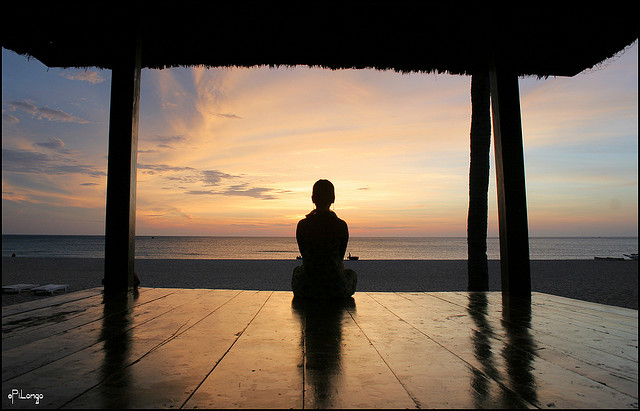
    Photo by ePi.Longo

  • Don’t Respond to Drama and Drama Won’t Come Back Around

    Don’t Respond to Drama and Drama Won’t Come Back Around

    “When you are not honoring the present moment by allowing it to be, you are creating drama.” – Eckhart Tolle

    One day several years ago, I was fraught with anxiety over with how to handle an uncomfortable personnel situation at work. I had an employee that was borderline explosive and insubordinate. I was a wreck over how to best handle the situation because before I was this employee’s manager, I was her friend.

    I found myself wanting to fix the problem by delving deeper into her drama, wanting to know why she felt a certain way, what I had done to contribute to it, and how we could work it out.

    Don’t get me wrong, I am all for conflict resolution and open communication. However, in this case, my employee was demonstrating signs of intense emotions that had the whirlwind energy of a cyclone.

    Her behavior and outbursts were unpredictable and inappropriate for the workplace.

    Her complaints, when listened to with close attention and discernment, were emotionally charged from unresolved personal wounds from the past. The drama— the whirlwind frenzy—was playing itself out in our present time employer/employee relationship, but it had nothing to do with me.

    I knew I needed to step back from this situation to calm my own reaction and fear. I too was becoming overly emotionally charged because of my own insecurities and unmet needs as a new manager.

    I was about to try to resolve her personal pain by bringing in my own whirlwind frenzy of emotions. Not a good idea.

    I needed to practice mindfulness and step into a space of neutrality. A space where my drama and baggage had a zero electrical charge. A space where her pain could not feed off of my pain.

    Was I successful? No.

    However, I did learn a big life lesson that I have been successful with practicing since this encounter: Don’t respond to drama and the drama won’t come back around.

    Drama loves more drama. Pain loves more pain. Negativity loves more negativity.

    With the practice of mindfulness it is possible to not respond to drama. If drama comes into contact with neutrality, it fizzles.

    How is it possible to not respond to drama? The first step is to recognize drama when it is in front of you. It is also critical to recognize if you are bringing the drama.

    Here are three ways to recognize signs of drama:

    You feel passion.

    Passion can be a wonderful experience. It can also fuel dysfunctional behavior and cause you to react without thinking.

    Signs that you are feeling passion include feeling a rush of energy pass through your body, a red face, an increased heart rate, butterflies in your stomach, flared nostrils, or shaky hands.

    Passion can also show up as emotionally charged thoughts and judgments. These include strong feelings of right or wrong, disbelief, blame, sadness, or a vehement desire for justice.

    The words spoken and behavior demonstrated don’t match.

    If someone is saying one thing and doing another, this is a sign of drama. Do not be fooled. What you see is exactly what it is.

    Be the witness of your experience and observe this discrepancy. If someone is telling you they do not mean to be rude, but proceed to offer a berating or condescending comment, trouble is in front of you.

    It feels urgent.

    Very few things in life are really urgent. Urgent qualifies as escaping from a burning building or swerving to miss an oncoming vehicle.

    Many times drama presents itself in the form of pressure that feels urgent. A false sense of urgency can be imprinted on you from another person’s frenzy of charged emotions. Urgency can also emerge from feelings that you are responsible for someone else’s situation.

    If something is not life threatening and you are told it needs to be done right now and you feel a sense of compression or fear, chances are, drama is in front of you.

    Once you practice recognizing drama, you are better equipped to not respond to it which in turn, allows drama to dissolve and stop in its tracks.

    Try these three practices to not respond to drama:

    Observe your body sensations, thoughts, and emotions.

    Mindfulness meditation teaches us to be the witness of our experience. It teaches us that we are not our bodies, not our thoughts, and not our emotions. It teaches us to develop a witness consciousness and be the third party observer of our experience.

    The more you are able to be the witness of your experience instead of identifying with the experience, the more easily you are able to discern the truth and make better choices.

    If you notice your heart rate increasing or your face flushing, let that be your cue to physically step away from the situation. Be present with your sensations and use your breath and mindfulness skills to bring you to a state of physical and emotional homeostasis where your muscles are relaxed and your breath is slow and even.

    Once the body, thoughts, and emotions are back to neutral, re-approach the situation from a grounded and centered place.

    Create a sense of spaciousness.

    Many times being around drama feels like compression, buzzing, or a whirlwind.

    You may notice you holding your breath as lots of people talk at once. You may notice drama feeding off of itself as voice speed, volume, and tone increase.

    Create space in these situations by softening your facial muscles, letting the jaw slightly part, gazing downward, and breathing slowly. Pay attention to the abdomen as your breath in and out to bring space to the body.

    By bringing space to the body, you bring more space to your thoughts and less opportunity to react. Your spaciousness also serves as an orientation point so the drama around you can loosen its grip. By loosening its grip, there is more opportunity for change.

    Sit with the discomfort.

    Not responding to drama is a practice. Not responding to drama means silence. It means not asking questions that take you deeper into the scenario. It means not agreeing or disagreeing, either with words or body language. Not responding means neutrality and not lending energy to the person or situation.

    This is a challenging practice. It feels uncomfortable.

    The most powerful thing you can do to remove drama from your life is sit with the discomfort of not responding.

    What you practice strengthens and gets easier with time.

    If drama comes into contact with neutrality, it fizzles.

    By not lending energy to something you do not want, you immediately create a closer connection to what you do want.

    If you want less drama in your life, drop your drama at the door. If you want more peace, be more peace.

    And remember…don’t respond to drama and drama won’t come back around.

    Peace to everyone and enjoy this practice!

  • When People See the Worst in You: Perceptions Aren’t Always Accurate

    When People See the Worst in You: Perceptions Aren’t Always Accurate

    “If you do not tell the truth about yourself you cannot tell it about other people.” ~Virginia Woolf

    If you’ve ever listened to someone’s description or opinion of you and it sounded completely alien, you probably found yourself wondering where on earth they were coming from.

    We are told that on a universal, spiritual level, the way you perceive someone is more than just an opinion; it’s actually a reflection of you being projected onto that person.

    So if someone tells you that you’re beautiful, kind, or have a good heart, they can only do so because those qualities are present within them. Conversely, if you see someone as dishonest, unkind, or manipulative, that’s because you, yourself, are projecting those parts of you onto the other person.

    When I was going through the depths of healing from adultery and my marriage breakup, I recalled a lot of things my ex-husband told me about myself—some of which I accepted, a lot of which I did not.

    It was very important to me to use forgiveness, self-love, and a sense of perspective as my tools to move on. I worked hard on my own issues, and accepted responsibility for the things within me that had brought me that harsh experience.

    But I have always struggled with this concept that “you can only see in others what you have within you.”

    It’s not because I only want to believe the good things people say about me, or because I think I have no bad traits.

    It’s because when dealing with unacceptable or in some cases abusive behavior in life, it is very difficult to hear and accept that the negative conduct you have received from someone else is simply your own darkness being brought into the open, and nothing to do with the other person.

    This was how I had always interpreted such teachings, and doing so made me feel worse about myself instead of better.

    I now understand that it is possible to witness or observe a behavior objectively, for what it is, without necessarily being that yourself.

    This is true of both positive and negative interactions. For example, I can acknowledge and deeply admire those who can speak publicly with great confidence, but I don’t possess this ability.

    This is not a defeatist attitude or low self-esteem talking; it’s simply an observation. Likewise, I can see someone’s behavior toward me as negative or destructive, but know I’m not like that. I no longer feel the guilt of believing that in order to have observed it, I must be like that too.

    What I believe is that we all have is the potential for the behaviors we are being shown.

    I know that I have the potential for great public speaking, and I know I have the potential for manipulative or intolerant behavior. But though can I recognize these traits in others, it’s not who I choose to be right now.

    This is not intended as way to avoid responsibility for your own behavior, or an opportunity to judge others while saying “but I’m not like that.” But it is important to know, especially when we are feeling emotionally vulnerable, that sometimes it isn’t about us; it’s about them.

    Here are three ways of working out whether what a person says about you is really a reflection of themselves. It’s also useful and healthy to use this exercise from the opposite perspective to see if you are ever projecting your own issues onto another:

    1. Is their opinion about me something I’ve felt about myself?

    We have a deep knowledge of our own psyche—our fears, our dreams, our abilities, and our strengths and faults.

    Does what the other person is saying ring true on any level? If they are saying great things but the words sound hollow to you, it won’t really be about you. But if your heart lifts when someone calls you generous, it’s because you know you are, and they have struck a lovely chord.

    2. Is their opinion about me something I’ve been shown by other people?

    Although trusting your own inner knowing is vital, we are interactive creatures with varied experiences of each other.

    Unless you have a real Jekyll and Hyde personality, other people’s perceptions of you will be largely similar. So, if one person is telling you that you are arrogant and stubborn, while everyone else sees you as kind, patient, and tolerant, then it’s most likely that this one person is bringing their own issues into what they are saying about you.

    3. Do they have another agenda?

    Does the person telling you about yourself want something from you emotionally or physically? Are they speaking to you, or about you, from a place of love, or fear?

    If they have an agenda, then what you are being told about yourself, whether good or bad, is likely to be manipulation on their part and no reflection on you.

    So why are we being told and shown things by others’ behavior if it’s not actually about us?

    I believe that the actual message, whether it’s “you are selfish” or “you should be a professional dancer,” is not the end purpose of the exchange.

    It’s what we learn about ourselves from our response that really matters. Is the comment something we need to pursue or let go of? Does it require a reply or acknowledgement? What does it say about us if we accept what they say, or don’t?

    The things being presented to us through other people’s actions or words simply show us what we are capable of, not necessarily what we are.

    For me, encounters and interactions with others are ripe learning opportunities for growth. We learn to use discernment, tolerance, compassion, and gratitude. We are shown the potential to be strong inspiring and happy; we are also shown the potential to be fearful, negative and unloving.

    What we choose to be is up to us.

  • Making Friends When You’re Afraid People Won’t Understand You

    Making Friends When You’re Afraid People Won’t Understand You

    Friends

    “The greatest mistake you can make in life is to be continually fearing you will make one.” ~Elbert Hubbard

    Tonight I am troubled because I have graduated college, and as I am looking back, I am hyperaware of my losses.

    In the past few years, I have had the opportunity to make many friends and lose many friends, largely because of my inability to understand and articulate my bipolar disorder to others. I am ashamed at times because of the mood swings that others seem to dismiss as problems that are “all in my head.”

    I have lost countless friends, have had relationships end, and have had family members retract because of my seemingly endless cycles of depression and sudden elevation that makes it nearly impossible for others to “sync up” with me.

    It feels as though I am eternally trapped sometimes; even with medication and therapy, this illness still manifests itself in subtle ways, making intimacy (which I equate with understanding) very difficult.

    I have personally known friends and family members with disabilities and illnesses of their own who isolate themselves because they think the challenge of relating to others is too much.

    And I sympathize with them—it sometimes really is! These friends have started seeking out others with other illnesses; they’ve decided to select friends with similar traits versus values.

    It may seem like seeking out those similar traits will lead to understanding, but it won’t necessarily lead to solid relationships. Shared illness and disabilities don’t guarantee shared interests and priorities.

    Illnesses and disabilities don’t tell us who people are as people; it’s really about what they do with the cards they are dealt that reveals their character.

    Some people choose to align with others with similar traits because it’s easier than discovering what their values are. However, the connections made with values are a lot more authentic because values are self-made, not pre-determined.

    And as much as I personally want to give up on seeking these connections sometimes, I remember that we are all different in our own way, and most of us feel like there is some sort of deficit in us one way or another.

    If it’s not bipolar disorder, it may be one’s weight that one is unhappy about, one’s health status or family baggage that holds one back from putting oneself out there to the world. Vulnerability is hard!

    I don’t want to limit myself to only those who can understand me because they have the same illness. I am far too curious about the lives of others as well, although sometimes it is disheartening because I haven’t always had this reciprocated.

    I am conflicted about whether I should live a life of transparency and be upfront about my mental illness to those I meet because I am so afraid of being judged.

    The point is, I have put myself out there before, and the fact that I take personal responsibility, admitting that my moody behaviors have shocked, hurt, and offended others before, makes it both liberating and frustrating.

    I almost want to stop letting new people into my life; the weight of rejection feels like too much sometimes.

    There are a few things I remind myself to get out of this rut.

    1. The more I get to know myself, the more I can predict my tendencies and practice self-care.
    2. The more honest I am with others, the more honesty I am inviting from them, and the more likely I can help set the tone for intimacy.
    3. The more people I come to contact with, the more likely I will come across individuals who might be healthier for me and be in a place to work with me.
    4. The more people I come across, the more practice I will have in learning understanding, self-control, and compassion.
    5. The more I obsess about making a mistake with a new person, the more likely I will.

    Therefore, despite my failed friendships and relationships, I have strong conviction that the strongest relationships are those with deep commitment—and that the first and strongest relationship should be that which is with yourself.

    I have committed to not let past fears and rejection hold me back. This commitment is a type of freedom in itself, and a small model of what I can aspire to in relationships with others.

    Have you ever felt limited by the fear that others won’t understand you? What’s helped you overcome it?

    Photo by Nicole Abalde

  • What Seems Obvious to You Could Help Someone Else

    What Seems Obvious to You Could Help Someone Else

    Friends

    “We are not what we know but what we are willing to learn.~Mary Catherine Bateson

    Despite being a professional blogger, I am not particularly adept at technology.

    I don’t have a data plan on my phone. I don’t have an iTunes account. I have no idea how people do that thing where they connect their computer to the TV. What is this witchery?!

    But because of my age and my profession, people frequently assume that I’m a computer genius. They are sadly mistaken. One day, my significantly-more-tech-savvy BFF was looking over my shoulder as I checked email. She glanced at my screen and said off-handedly:

    “You know you can just click on that little arrow to read the next email, right? You don’t have to keep going back to your inbox.”

    Whhhhaaaaat?! My email-reading life = changed. Productivity = upped. With an afterthought of a comment, my friend significantly improved my work life.

    And I’m sure she nearly didn’t tell me because she thought her suggestion was too obvious.

    We’re all guilty of this, right? Discounting our knowledge because it has become so ingrained in our everyday life that we assume everybody else knows that thing or has that skill set.

    Or we worry that we’ll offend someone by telling them something that seems so incredibly, painfully obvious.

    But here’s the thing: what’s obvious to you is helpful to me. What’s old news to me might be fresh and mind-blowing to you.

    And really, we can apply this to just about every arena of life.

    It’s obvious (to me) that my friend is amazing/intelligent/double-take good looking. But after a series of terrible dates, maybe she needs reminding.

    It’s obvious (to me) that I should @mention people on Twitter when I write about them on my blog. But maybe my clients don’t know that.

    It’s obvious (to me) that when I travel, I should use packing cubes and Airbnb.com. But if you’re not an experienced traveler, you probably have no idea that your suitcase could be revolutionized by some zippered cubes.

    It’s obvious (to me) that I should buy my favorite jeans and tank tops in pairs when they go on sale. But if you’ve never experienced the wonder of Old Navy Rock Star jeans, maybe you don’t know.

    It’s obvious (to me) that I should end blog posts with questions to engage my readers and create a sense of community. You haven’t been blogging for five years? It’s not your fault you don’t know.

    For ages, I didn’t share these obvious insights with anyone. It seemed insulting to state what (to me) seemed readily apparent! 

    But after the fateful day of Email Management Epiphanies I’ve changed my tune.

    If you phrase it correctly, you won’t offend anybody, even if you’re telling them something they already know.

    Here are a few phrases you can use to point out (what you believe to be) obvious:

    “You already know about _________, right?”

    “I’m sure this is old news to you, but ___________”

    “You probably already know this but I always like to err on the side of providing too much information.”

    “Have you tried_______________?”

    And even if these things are obvious? Maybe your friend just needs reminding. Or maybe your comment will be the gentle push they need to make see things differently.

    “You already know about that website that coordinates ads for blogs, right?”
    Yes. And I’ve been putting off signing up and dealing with HTML editing. But I should really join.

    “I’m sure this is old news to you but Hipmunk.com is a great airfare search website.”
    Yup. I was sort of confused by the interface but if you think it’s good, I’ll give it another try.

    “Have you tried giving up coffee?”
    Ugh. No. But I know I need to and I know it’ll help me sleep better.

    And you know what? There are certain obvious things that can never, ever be  said too frequently.

    Things like:

    “You’re so insanely clever.”
    “Gosh, you’re good at that!”
    “You throw great parties!”
    “You really have a gift for this.”
    “That color looks great on you!”
    “You’re so good at handling tough situations.”

    Just because you think a solution is obvious, doesn’t mean it is. Just because you think someone’s talents are self-evident, doesn’t mean they are. Just because you think a best-practice is common sense, doesn’t mean it is.

    So go ahead. State the obvious. We’ll all be grateful.

  • You Don’t Have to Be Lonely: Proactively Choose to Connect with People

    You Don’t Have to Be Lonely: Proactively Choose to Connect with People

    Happy Brother and Sister

    “Make the best use of what is in your power and take the rest as it happens.” ~ Epictetus

    Do you know that feeling when you are completely alone?

    I don’t mean in a calm, solitary, I-choose-to-be-on-my-own kinda way.

    It’s the alone that inflates with silence that makes your ears ring. It’s the ache in the pit of your gut that boils the insecurities and needless feelings of rejection. It’s the push of desperate pain that wells in your eyes and stains your cheeks.

    You know, that kind of alone?

    I never intended to feel this way. When I first moved to Paris, the images of hope and “my future starts here” were bursting from every pore.

    As I whizzed around daily life, getting to know my new colleagues, digging into shiny new work projects and exploring the jewels of this amazing city, I was so engulfed in the newness of it all that I made no time to stop and think about the long term.

    And there was no need to. I was embarking on an exciting new phase of my life. There was no time to stop and think!

    But then the newness faded. My colleagues became familiar to me. My job was less about discovery and more about delivery. My apartment was decorated. I was done being “new.”

    And that’s when reality finally sunk in.

    It was time for normality. Routine. Familiarity.

    But nothing in Paris was like my old life. I didn’t have any real friends here; nobody I could call and say “hey, let’s hang out together today.” Family were in a completely different country too.

    The emptiness was explosive.

    Humans are naturally social creatures, and I am not just gregarious; my energy comes from connecting with others. Taking this option away from me was like stripping my identity bare.

    I didn’t descend into a depression. Neither did I go out nor have wild, cocktail-soaked nights. In fact, there was no defining moment when a flare of inspiration transformed me from the no-friends-alone-on-the-weekends person to a blossoming social butterfly.

    As with anything I had in my life, friendship would take time to achieve. And even then, there was no end game, no one event that signified completion.

    Building a life filled with what I wanted would not swiftly appear through chanting a few affirmations or signing up to a list. I would have to define it for myself. It would be an evolutionary process. The difference was made using two words: what and how.

    What did I actually want? It was simple. I wanted to have someone I could call and spend some time with. But more than ever, I just wanted engagement, conversation, a spark of chemistry and shared experiences.

    I didn’t want acquaintances. I wanted real friends—the ones where we shared a mutual respect and just had each others’ back. Simple!

    How to get there started with letting go of preconceptions and insecurities, like:

    • Everyone already has a circle of friends. Why would they want to befriend me?
    • I don’t speak the language yet, so how can I engage with new people?
    • The French are notoriously unfriendly, so the odds are against me anyway.

    Thoughts like this alone could have been strong enough to keep me routed in my own self-doubt.  But my security did not come from removing the doubts, but choosing to take action in spite of them.

    My journey to finding new friends began with two main themes: the people I knew already, and the things I was interested in doing.

    I decided I would first ask a few colleagues to have lunch with me. These conversations revealed shared interests, so I asked one colleague to join me at a couture class where we learned to sew dresses. Another colleague and I went indoor-wall climbing.

    Mingled with this was using the desire to learn French to also engage with people outside of the office. I joined an online group and began meeting people who wanted to learn English and in turn they taught me French. This created a reason to meet and some common ground to work from.

    Some of these people have become irreplaceable friends and some I will probably never see again. But I found simple joy during this process. Would I ever have encountered these people if I had not made the effort to do so in the first place?

    And that is perhaps the most fundamental lesson from this experience. If I wanted friends, I had to ask for them. It was my responsibility to make the first move. There was no magic pill, no secret formula—just discovering the what and the how.

    What changes have you made to feel less lonely? What has this taught you about yourself?

    Happy kids image via Shutterstock
  • Transform Your Confidence by Learning to Approach New People

    Transform Your Confidence by Learning to Approach New People

    Friends

    “As long as you make an identity for yourself out of pain, you cannot be free of it.” ~Eckhart Tolle

    I remember it like it was yesterday—sitting in the corner of a bar in Holland at a social gathering, feeling alienated because I didn’t know the people I had to mingle with. After all, they were friends of my girlfriend at the time.

    My worries had consumed me and I didn’t know where to begin. I wondered: Should I pluck up the courage to strike up a conversation, or should I withdraw?

    I realized from this experience that I lacked self-confidence.

    I was bullied as a kid, and because of my inability to connect with my peers I spent a lot of time in my room playing video games. I had no idea how to communicate, let alone show people who I really was as a person and what I had to offer.

    In the long-term, my relationships suffered, I did terrible at job interviews, and I was always misunderstood, all things that affected my self-confidence.

    I knew by my early twenties that something had to change. It seemed that everyone in my age group lived normal lives, with a great circle of friends—something that I always dreamed of having, but avoided with video games and social networking.

    I understood that I had to start doing things differently; that I should no longer refuse an invite from a friend to go out and meet new people. That I should no longer say no to potential meetings, and to at least give things a try to see what happens.

    My New Discovery

    I realized that the potential for interacting with people was all around me. I vividly remembered going to department stores with my family, seeing people who I really wanted to meet, and resisting only to regret it later.

    I knew at that moment that this was the biggest hurdle I had to deal with. If I were to simply get over my fears, my social skills and sense of self-confidence would begin to improve.

    I understood at that moment that while I had a fear of approaching and starting conversations with strangers, I could get past it.

    Slowly but surely, I did. I started taking baby steps by asking for directions and creating small talk with coffee shop baristas.

    After doing this repeatedly, I eventually found myself in a place where I could easily strike up conversations and be comfortable in new environments. Sure, I still had a long way to go in being completely natural, but I knew I was making progress.

    Fast-forward to today, my life has transformed. I no longer see people as strangers to fear; instead, I see opportunities to add value and make new friends.

    What I Learned

    The path I took was clear, and I will explain it to you as follows:

    1. Be willing to fail and get rejected.

    One of the first things I had to deal with when getting over my fears with strangers was the idea of getting rejected.

    I would always imagine the worst possible scenario of getting told to go away, and this would prevent me from talking to them. This fear faded after I got rejected a handful of times.

    I eventually understood that there was nothing to be afraid of since many of the people I’d met were indeed strangers who didn’t know me.

    Understand that rejection is part of the process and that it’s never personal. There are a multitude of reasons why some people may not be willing to talk, and often it has nothing to do with you.

    There is no way to know unless you go over and find out!

    2. Find genuine reasons to talk to people.

    What worried me the most was that I wouldn’t know what to say to people. What can you say to someone when you don’t know who they are?

    I was left with only one choice: to somehow come up with a genuinely good reason to talk to them in the first place. Maybe it was it their style. Or I was lost and looking for directions. Or  I was curious about where they were from.

    Whatever the reason, start to become observant and really think about what it is about that person you would like to find out about.

    3. Create a balance between statements and questions.

    Try to imagine how you talk to good friends. How does the conversation usually flow?

    One of the best ways to make a person feel comfortable is to balance statements and questions. Share about yourself and ask about them. Use their responses to your questions to shift the conversation toward topics they’re most comfortable with.

    4. Be positive and playful.

    As I started approaching more people and improving my communication skills, I began to see patterns in what people found comforting and what they found awkward. It was clear that most people prefer talking about uplifting topics, since most of us deal with a lot of negativity in our daily lives.

    The more I appeared warm, friendly, and playful, the more value I was providing to people. I became a beacon of positivity, which emanated out of me, and in turn, allowed others to feel the same.

    5. Be genuinely interested in people.

    When you take an interest in other people’s lives, it makes them see that you’re genuinely interested in who they are.

    What is it about them that you’re curious about? What of what you’ve already learned do you appreciate? Asking them about these things allow you to learn more about what makes them tick.

    6. Remember how happy you feel when you connect with others.

    The more I socialized, the more I started to feel a sense of happiness in myself and with others. I felt connected with society, and knew that the only way I could ever get to this place was through taking personal responsibility and getting out of my own way.

    While I can’t promise the same results as I had when taking these actions, what I can promise you is an increased sense of joy and connection with the outside world. We all want a sense of belonging. And once you find it, your sense of self-confidence will begin to flourish. 

    Photo by Austin Goldberg

  • Making Changes When the People Around You Resist Your Plan

    Making Changes When the People Around You Resist Your Plan

    Standing Alone

    “The greatest step toward a life of simplicity is to learn to let go.” ~Steve Maraboli

    So I took the plunge. I stated out loud that I wanted to simplify my life.

    I wanted to have a life where what I did for a living and how I lived were more in balance with the person I am and aspired to be. The waterfall effect of that verbal declaration catapulted my life into a stratosphere of change that I am still learning to just “go with.”

    Three weeks after that declaration, I got “downsized” at work. Okay, I thought, the universe is listening, so no turning back now.

    I started with putting my house up for sale. Up went the “for sale” sign.

    Next came the purge. Closets were emptied, for-sale ads were posted, and stuff began to clear out. I donated and sold what seemed to be the physical barrier to my new life of “less is more.”

    Finally came the decision: What did I want to be when I grow up? Who we are and what we do always seemed to melt into one for me, so now I had a clean slate, and the “life worth creating” journey began.

    I scoured the career guides, took all the personality tests, hired a life coach. All the while, my external search for career satisfaction was in misalignment with my new values and the journey I had begun.

    So, I finally decided: No more suits, no more cubicle life, and no more aspiring to climb a ladder that I did not even care about.

    I read a great quote: “Better to be at the bottom of the ladder you want than the top of the ladder you don’t.”

    I decided that I was not searching for a new job; I was creating a life. I wanted to write and share my adventures and experiences along the way. I had a dream of inspiring people to dare to dream and achieve what they once thought was impossible. So the new life career began.

    In all my newness and transformation the one thing I had not counted on was the resistance I would receive from those in my inner circle.

    I guess I had assumed that people would be genuinely happy for me if I were happy.

    Unfortunately, that was not the case. They questioned why I wanted to sell my house and belongings, and worse yet, even give my stuff away. People asked me daily where I was going to live.

    A friend runs a charity that enables physically challenged people to experience outdoor adventure. Fantastic, I thought!

    This was exactly in alignment with what I believed to be an essential part of my journey. A donation of gear to the charity enabled additional people to get out and adventure where they had never before.

    This brought about a series of objections and questions from multiple parties about why I wasn’t selling my stuff rather than donating. I was really starting to think that people were missing the point.

    The largest objection of all came in regards to my career, or lack of a career pursuit. A declaration of not wanting to go back to an office, sit all day under fluorescent lights, and climb the invisible ladder to misery seemed to stun family and friends alike.

    I frequently heard, “But you went to university and have all this experience,” especially from family members who helped fund the academic letters behind my name. No amount of explaining seemed to dull the sound of objections.

    So in all of this, I have managed to stay on course, even if it has been a bumpy road, by learning a few lessons and following a few guiding principles to keep the wolves at bay.

    If you’re also making a life change and experiencing resistance from the people around you, these ideas may help:

    1. Realize that other people’s objections often have more to do with the noise in their heads than the words you say.

    Safety, security, and a certain amount of life predictability cloak the people in my life like Linus’ security blanket.

    As they watched me doing the proverbial running naked down the street thing, throwing caution to the wind after acknowledging that there was no security net, no new career prospects, and that I wanted to create a life based upon writing and adventuring, there came about an incessant need to throw their blankets over my shoulders to keep me safe from my goal of living a life of simplicity.

    Objections are often about other people, not us.

    2. Those closest to you may believe they’re an expert on your life.

    If I had received a dollar every time I heard, “If I were you, I would…” I would already have a steady stream of income coming in. Remembering that I am the expert of my own life and know why I am on the path I am has helped dull the volume of platitudes I heard on a regular basis.

    Trust that you know what’s best for you.

    3. Prove to yourself this you’re making the right choice.

    Some days it felt like I was the weak animal waiting to get preyed on during my transformation into a new life, because as soon as I would show doubt, insecurity, or even waffle a tiny bit on whether I was doing the right thing for me, the people closest to me pounced.

    The best defense to these challenges was proof. As time went by and I stayed on course, their challenges began to decrease in volume. Anyone with doubt became less resistant and some even became satisfied as I became happier and in balance with my new life choices.

    When you stay the course, people start to accept it.

    4. Have a plan.

    I have learned in my new journey that without a plan, I am just a leaf blowing in the wind. It is not enough that I say that I want to make a change. That does not make a parent feel confident in their child’s quest for a new life or allow a partner to have faith that an income will be generated.

    So I have made an actionable plan, with milestones and tangible goals that, when achieved, help reinforce my adventurous journey of a new life.

    Making a plan helps you and reassures the people who are trying to look out for you.

    5. Be patient.

    I’ve learned to have patience with others and myself. Recognizing where people come from, the stories in their own heads, and the story in mine assists in keeping me on track.

    Keeping perspective and learning to let go of other people’s fears and objections enables you to continue on, one step at a time.

    I am by no means an expert on self-help, making life changes, or living a life of simplicity. What I have learned, though, is that other people’s objections can fuel the flame and reinforce our decision to create a new life.

    Photo by Alcino

  • Why We Need to Accept That Some People Just Won’t Like Us

    Why We Need to Accept That Some People Just Won’t Like Us

    “If you are always trying to be normal, you will never know how amazing you can be.” ~Maya Angelou

    I’ve been a world-class worrier about what other people would think about me for a long time.

    The clothes, the hair, the shoes. The books I read, the movies I liked, the music I listened to. The hobbies, the people I hung out with. The things I liked and the things I disliked.

    They all got scrutinized under the “am I doing the right thing?” filter.

    Am I being exactly the right amount of cool? Am I being reasonable and responsible? Am I being interesting enough?

    It was a full-time job, making sure I was being the “right” version of me.

    It was time-consuming. It was energy-consuming. It was draining.

    I was going through the motions of living a life that looked great. But without realizing it, I became more and more absent in my own life.

    What were the clothes that I really liked? What were the books that I really loved? What were the hobbies that could really make my heart sing and soul soar?

    Those became tough questions to answer. Those became questions I forgot to ask myself. Those became questions I stopped asking myself.

    Instead, I did the next logical, reasonable thing. Instead, I was busy reading other people’s minds to figure out what they liked. Instead, I did my best to be the flawless perfect version of me.

    Because that’s what happens when we believe that we will be happy once everybody likes us. When we believe that everybody will like us once we are perfect. When we believe that it’s possible and vital to our happiness to make everybody like us.

    I’ve learned that it doesn’t work like that. It’s not possible to make everybody like us. And it sure is not vital to our happiness. Quite the contrary.

    When we believe that we will be happy when everybody likes us, we work hard to make everybody like us.

    So we figure out who we think we’re supposed to be. We figure out the “right” things to do and the “right” way of doing things. We figure out the “right” amount of being quiet or outgoing, the “right” amount of being enthusiastic or cool, the “right” amount of being interested or bored. We figure out the “right” things to have and “right” things not to have.

    And slowly but inevitably, we turn ourselves into some manufactured version of ourselves. The “right” version. The “perfect” version.

    Even that “right” and “perfect” version cannot guarantee everybody liking us. There will still be people thinking we’re too quiet or too outgoing. There will still be people thinking we’re boring and stupid. There will still be people thinking we’re uncool and ridiculous.

    And that leaves us feeling scattered and alone, lost and insecure, small and lacking.

    Because our only conclusion can be that we’re doing it wrong. That there’s something wrong with us.

    So we resolve to work even harder to be flawlessly perfect and to do the “right” thing at the “right” time in the “right” way even better.

    The thing is that even that “right” and “perfect” version cannot guarantee everybody liking us…

    See the vicious circle coming?

    The irony is that even when people do like us, hang out with us, approve of us, we still feel disconnected and alone—because we’ve unknowingly and unwillingly gotten out of touch with ourselves.

    We are working hard to hang out with people that don’t get us. We are working hard to do things that we pretend energize us, but that, in truth, drain us. We are working hard to be someone we are not, never sure we’re “doing it right.”

    Was I too loud? Too quiet? Too thoughtful? Too outgoing? Too polite? Too harsh?

    We’re always second-guessing ourselves, eating away at our confidence.

    Not everybody will like us. Accepting that creates space for happiness to come into our lives. Accepting that creates space for us to be who we truly are.

    It allows us to hang out with people who get us, because we are willing to alienate people that don’t.

    To do things that inspire us and make us feel fulfilled from the inside out, because we are willing to be seen as boring and stupid by people that don’t get what we’re doing.

    To connect with people over something that genuinely inspires them and us, because we are willing to be seen as silly and crazy by others who don’t feel the same way about it.

    That’s a win for us.  And a win for them. Because we both get to spend time with people that are a great fit. And it’s a win for the world.

    When we allow ourselves to be who we truly are, we get to share our unique message with the world.

    We use our talents instead of hiding them because they’re “not right.”

    We use our voice instead of shutting ourselves down because we might say the “wrong” thing.

    We use our style instead of copying theirs.

    We use our ideas instead of figuring out what they’d think.

    We create our own brilliant unique work, which only we can bring into the world.

    Not for everyone to like, but to delight some, who will love it. Need it. Crave it. Get inspired by it.

    And to delight ourselves, making our heart sing and soul soar.

    We thrive and feel fulfilled, from the inside out.

    And all that happens because we were willing to upset some.

    Who are you willing to upset?