Tag: friends

  • The Truth About Social Anxiety and 5 Ways to Relieve It

    The Truth About Social Anxiety and 5 Ways to Relieve It

    “Perfectionism is a twenty-ton shield that we lug around thinking it will protect us, when in fact, it’s the thing that’s really preventing us from being seen and taking flight.” ~Brené Brown

    About fifteen million adults suffer from social anxiety according to the Anxiety and Depression Association of America. Fifteen million. And we’re not just talking about what you’d call shyness. We’re talking about big fears of judgment and scrutinization from others.

    When we hear statistics it can be difficult to remember the humanness of those numbers. These are people who want to find love, who want to make new friends, or who need to talk to new people for work. Maybe you’re one of them. I used to be.

    I remember feeling uncomfortable in my own skin, being highly aware of what I was saying, how I was saying it, and how other people were taking me in. I even remember being in college at a party standing with a group of friends when one of them loudly declared that I looked super uncomfortable.

    Well, I was super uncomfortable, and that statement only brought more attention to my demeanor making me even more self-conscious. It sucked. I didn’t want to feel awkward let alone be known as the awkward girl.

    I was always so concerned with how I was presenting myself. I wanted everyone to feel like I had it all together. I wanted to appear cool, but mostly I didn’t want to do a lot of things.

    I didn’t want to say the wrong thing. I didn’t want to make a fool out of myself. And I definitely didn’t want to be disliked.

    What I wanted was to be able to speak easily to people. I wanted to feel laid back. I wanted to not be “shy” in groups. I wanted to feel comfortable. I wanted to get lost in the moment instead of watching and analyzing my every move. I wanted to just be me, and be okay with it.

    Often times when we talk about anxiety this is where we stop. But I’ve discovered something deeper. I worked on myself a lot in my twenties. I made a very dear friend who was super outgoing. Being in her presence helped me see that I could present myself differently.

    I could open up a bit more, I could smile a bit more, and I could show my happiness to strangers.

    I also learned a lot about my ego. I saw some of the ways my mind was holding me back. I was able to acknowledge that fear was driving me in these situations and that I didn’t have to pay so much attention to my mind.

    I became more comfortable in social situations through practice. I found my edge and worked from there. I became more cheerful, more outgoing, and it worked.

    People responded, and I connected more deeply. It felt great, but it didn’t entirely feel easy. I still didn’t feel 100% in my own skin, and I found myself exhausted after being in social situations.

    Years later I discovered that all along I had been afraid of being seen.

    I’m not talking about being out in the world and observed by others. I’m not talking about being afraid of showing up at a party or an event and having people look at me. I’m not talking about superficial self-consciousness. I’m speaking about a deep, spiritual need to be seen for who it is we really are.

    All this time I had actually been terrified that if someone saw who I really was they would reject me, and I didn’t know that I could recover from that. But if someone rejected the persona I’d created, well, that wouldn’t be as bad—it wasn’t really me.

    I discovered this truth through something we all have at our disposal 24/7. It’s actually something we all need and use: the breath.

    Breathwork is a powerful active meditation, and it’s changed so many aspects of my life including this one. It’s given me access to deeper truths about myself and about human beings in general.

    We all want to be loved, and to be loved means you’re accepted as you are. So if you’re deeply afraid, unconsciously afraid, that you might not be loved, how do you think your body is going to respond? It’s going to feel fear.

    It shows up as self-consciousness because our minds work to remedy the situation. If I monitor my every movement I’ll be safe. I won’t show too much of myself, and I won’t be rejected.

    The problem here, aside from the fact that we don’t want to actually be living our lives in constant moderation of ourselves, is that we expend so much energy watching ourselves, trying to be the person we think we should be.

    That’s why I was so exhausted after being in social situations. It took up so much of my energy to be around people and not feel like I could really be myself.

    There is so much relief in being able to be yourself. There is so much freedom in having deep, unconditional love for yourself and knowing that the only thing that matters is that you have your own back.

    It leaves you feeling comfortable being you. It allows you to have a more intimate relationship with yourself, discovering who it is you actually are instead of living under the guise you’ve created for yourself. That guise was a defense mechanism; it was your shield so you wouldn’t get hurt.

    But you don’t have to worry about getting hurt anymore. Yes, you will still feel pain, but you will have such a deep trust in life that you know you’ll always get through it.

    With this trust and this love and this new life, it’s not scary to show yourself anymore.

    You know that the right people will forgive you if you mess up. You know that the people who you need to have around you are the ones who love the things that come out of your mouth, who don’t push you or manipulate you or judge you.

    From simple, immediate action steps to deeper healing work, here are five ways you can start relieving your social anxiety today:

    1. Use the power poses.

    Power Poses are simple body movements scientifically proven to increase confidence hormones and decrease stress hormones. Before you’re going into a social situation put your hand behind your head or even simply raise your hands wide and high in the air.

    2. Focus on others.

    When we’re self-conscious in social situations we’re so focused on ourselves that it’s extremely difficult to connect with others or to even relax. Try finding someone to connect with by asking them about themselves. Become interested in them and place all your awareness on what they’re saying. This helps us engage and removes us from our own self-concern.

    3. Find your edge.

    Know where you’re comfortable and where you feel like you’re going to have a panic attack. Somewhere in the middle lies your edge.

    Your edge is the place you can go to that feels uncomfortable but not like you’re going to die. Hang out there, take some risks.

    This might look like you starting a conversation with someone on your own, asking someone a question, making eye contact, or telling someone something about yourself that feels personal. Continue to practice living on your edge, and it won’t be your edge anymore.

    4. Look deeper.

    You can remedy things by watching and emulating those who excel socially. Or you could spend time getting to know yourself more deeply, facing the truth that maybe you’re afraid to show who you really are. Once we’re willing to face the things we’re hiding from we can begin to liberate ourselves from these deep fears.

    5. Use your breath.

    You can use your breath in the simplest way to reduce your stress levels. Take deep belly breaths very slowly. The slower and deeper the breath the more you activate your parasympathetic nervous system creating a relaxing environment in your body.

    If you want to go for full transformation you could try breathwork and see what you discover about yourself.

    There is a life free of social anxiety. When you choose to dig a little deeper and take steps to heal yourself, you’ll find yourself on a new path. On that path you may discover that you don’t even know who it is you really are. But once you discover yourself, you’ll see there is a whole world of people out there waiting to meet you.

  • 6 Signs You Have a Strong Friendship That Will Stand the Test of Time

    6 Signs You Have a Strong Friendship That Will Stand the Test of Time

    Best Friends

    “Friendship… is not something you learn in school. But if you haven’t learned the meaning of friendship, you really haven’t learned anything.” ~Muhammad Ali

    Doesn’t it hurt?

    You develop a friendship with someone who appeared to be decent but turned out to be a huge problem in your life.

    I’m not talking about those occasional slip-ups like keeping you waiting at the coffee shop until 4:10 when the rendezvous was scheduled for 4:00.

    I mean those things that completely slash the fabric of your friendship—stuff that truly hurts, like harsh words that prey on your weaknesses and sensitivities, or complete betrayal of your trust and abuse of your goodwill.

    We’re all vulnerable to being hurt by those closest to us, and I’m no exception.

    Over the years, I’ve made friends with several people who turned out to be destructive to my well-being.

    Some had spoken words to me that cut like blades. Others had coldly accused me of things I wouldn’t even dream of doing, just to save their own hide.

    But despite the pain and anguish those experiences put me through, they were telling moments in my life because they forced me to rethink my understanding of the true meaning of friendship.

    We often befriend someone because we see commonalities in them. They have shared interests, a common background, or a similar sense of humor. But while all those things are important, they’re not enough to build a deep-rooted, long-lasting friendship on, at least not by themselves.

    I had lots in common with my friends, and they always cracked me up, so why did they end up hurting me? Something was obviously missing, and after some deep reflection, I found out what it was.

    For a true friendship to form, it has to be mutually built on the essentials—strong pillars that burrow deep beyond the superficial stuff.

    Here are the six signs you have a strong friendship that will stand the test of time.

     1. You stick with each other through the highs and lows.

    You don’t desert each other when things get tough or suspiciously start spending less time together after a promotion at work.

    Your relationship doesn’t fluctuate based on each other’s bank balance, the kind of people you hang out with, or any other trivial variables.

    Your connection to one another stems from one creed—you are friends because you want to be.

    2. You keep each other in the loop.

    You have trust and confidence in each other, and you’ll come to each other directly if any problems arise between you instead of talking behind each other’s backs about it.

    You try your best to avoid getting a third party involved if you do have problems because you cherish how your friendship is like a coin—it’s two-sided and in no need of a third to be complete.

    You’re close enough to confide your problems in each other and come to a sensible solution between yourselves.

    By doing this, you both show that you are actively eradicating any potential threats to your friendship’s survival and that you genuinely care about preserving it.

    3. You view each other through a positive lens.

    You both realize that you’re human and make mistakes, so you give each other the benefit of the doubt.

    You forgive and pardon the petty stuff and don’t reignite the flames of bad memories.

    One day, my friend came over with a gift to encourage me in my studies.

    Now, I’m kind of quirky. I only do well in my studies if I stay focused through my own motivations, and I see outside encouragement as a distraction.

    I know my friend meant well, but at that moment, I rejected his gift with some snappy comment without explaining my position. I regretted it almost instantly.

    Thankfully, he gave me the benefit of the doubt and hasn’t mentioned that little blooper to this day. (Let’s hope he doesn’t mention it anytime in the near future!) Now that’s a true friend.

    4. You respect each other’s boundaries.

    You both acknowledge that you come from different backgrounds and have different upbringings, so you understand that differences of opinion are inevitable.

    You also handle those differences of opinion and other sensitivities tastefully and respectfully.

    You don’t impose your mindsets on each other, take a swipe at each other’s opinions, or become irritated if you differ on something because you both know that respecting and being respected are critical factors in maintaining a good friendship.

    You also value and treat each other as people with freedom of choice and don’t expect each other to bend out of character to entertain quirks and caprices.

    5. You share each other’s shortcomings as a gift.

    You don’t always have a hey-it’s-all-good attitude. You won’t hesitate to advise each other about a particular shortcoming because you deeply care for one another and don’t want to see each other hurt.

    Oscar Wilde once said, ”True friends stab you in the front,” and how true that was for me a few years back when I was developing a strong friendship with someone from a different culture.

    We were watching a bunch of boisterous kids wrestling, and I jokingly said, “They’re like animals!”

    I didn’t think much of it, but he immediately brought to my attention that saying something like that in his culture is very offensive and that it’s like belittling the children and their parents to a sub-human level.

    I really appreciated his sincere concern for me because if he hadn’t corrected my mistake there and then, I probably would have hurt someone with my goofy jokes!

    6. You want for each other what you want for yourself.

    You are both perfectly aware that envy is a massive threat to your friendship and that it can wreak unpredictable havoc because it’s like a festering pot itching to erupt and spew out its nasty contents.

    So you are genuinely happy for each other’s success and aren’t consumed by jealousy when one surpasses the other in any way, like with career, money, or popularity.

    When one of you comes to know of the other’s success, you react positively with hand-on-heart sincerity instead of continuously repeating the phrase, “It should have been me.”

    You are like one mind, and you see each other’s success as your success.

    Build Your Pillars of Deep-Rooted Friendship

    Friendship is truly an invaluable treasure, but only if it’s built on the right pillars. Otherwise, you risk your friends disappointing you when you most need them.

    If you’re looking to deepen and cement your friendship with someone, use these six pillars as your guidelines. Make sure they’re concretely intact, both on your side and theirs, and you’ll begin to relish the sweet fruits of true friendship.

    Or perhaps past friends have put you through painful experiences, and, like me, you don’t want to repeat that mistake.

    So put on your discernment hat and use these six pillars as your screening device. If you see someone constantly doing the opposite of these pillars, they’ll probably hurt you sooner or later.

    You deserve to be in good company, and you don’t deserve to be hurt by the people closest to you.

    So spare yourself the headache of being betrayed by someone you held close, and enjoy the value of true friendship instead.

    Best friends image via Shutterstock

  • 5 Ways to Create Amazing Friendships

    5 Ways to Create Amazing Friendships

    Friends

    “To have a friend and be a friend is what makes life worthwhile.” ~Unknown

    Studies show that perhaps the most important component of psychological well-being is not family, material possessions, or career successes, but rather our friendships.

    For someone like me, that is terrifying news.

    I have few friends. There are several reasons for that: I’ve moved often throughout my life, I’m an introvert, and I was always deeply afraid of rejection. But the root cause was that I never learned how to be a friend.

    Books and movies became my source of information about friendship and, as a result, I had wildly unrealistic expectations. People constantly disappointed me; I was hurt by and fought with every significant friend in my life.

    My inability to create and maintain authentic relationships brought me great pain. I wrote myself off as a loser, inherently flawed, and doomed to be friendless. Luckily, I realized I could teach myself to be a better friend and build meaningful connections.

    Now, I actively seek out new friendships, evaluate my current ones, and fully invest in continuing those that have all the elements of an amazing friendship. It isn’t easy, but it’s worth it.

    It is never too late to learn to be an amazing friend.

    Here’s how:

    1. Make conscious choices.

    I never actively chose my friends; they were based on proximity and convenience. Most of those friendships didn’t last because I hadn’t chosen wisely, or at all.

    Now, I’m selective about who I choose to be friends with. This doesn’t mean that I think I’m better than others. It simply means that I understand how much energy and effort it takes to be an amazing friend.

    It’s possible to choose anyone, no matter their religious, political, or social beliefs. I’ve learned that what matters is to choose people who lovingly challenge and provoke you, who consistently comfort and cheer you, and who wholeheartedly embrace your gift of friendship—as you do theirs.

    It also doesn’t mean you shouldn’t maintain the friendships you already have, even if they began by accident.

    I met my best friend in seventh-grade PE class. We are radically different people. While I didn’t consciously choose to be her friend, I do choose to continue investing in our friendship because we are mutually committed to having an amazing friendship and actively practice the other elements on this list.

    2. Learn to listen.

    What is the value of a friend? For most of us it is to have someone with whom we can share our feelings, hopes, pains, and fears—without judgment or ridicule. Even though our desire is to be heard, we never learn how to truly listen to the intimate expressions of one another.

    I always loved when people would tell me their stories, and I always responded by giving advice. People often said I should be a therapist, which only intensified my tendency to listen by offering opinions and solutions. I now understand that I wasn’t really listening to people in a way that facilitates amazing friendships.

    An important coach taught me that a true friend understands that each one of us has the answers within us. If I am listening to you in order to come up with an answer to your problem, I’m focused on my need to fix and save and not yours to explore and share.

    This doesn’t mean we can’t share our insights or give feedback, but it does mean that we need to learn to listen to and for the other—not to validate our own opinions, but to encourage our cherished friend to explore their own truths.

    I struggle to be this kind of listener, and I often worry that the other person will think I don’t care if I don’t respond immediately. I’ve decided to be honest with my friends about how I’m trying to learn to listen and ask that they be patient with my learning process, which requires the next item on the list.

    3. Be vulnerable.

    Do you tell your friends how much they mean to you, and why? Do you share your struggles and fears? Do you apologize if you hurt someone’s feelings, even if that wasn’t your intention?

    All of the above statements are necessary for amazing friendships, and they’re only possible if you allow yourself to be vulnerable.

    I’ve found that by choosing wisely and really listening and being listened to, I have more courage to be vulnerable.

    I have a former coworker whom I really like. Close while we worked together, we’ve since grown apart. I’m not sure why, but I think it is because I didn’t know how to be a consistently good friend.

    At first, I got defensive. I was reaching out, and she wasn’t responding. Then I got sad, and eventually I decided to be vulnerable.

    I wrote her a letter and apologized for not being an amazing friend and told her how much I value her in my life. I followed up with a visit and emails. It wasn’t a cure for our friendship, but it was worth it. She deserved the acknowledgement, and I could let go with love.

    The friendships I haven’t been able to maintain make me all the more grateful for the ones that I have. And all the more committed to being an amazing friend in the present by letting the friends in my life know how much I care about them.

    4. Be accountable.

    What is your first reaction when your friend hurts or disappoints you—to blame them or to look at yourself? I’ve learned that to be an amazing friend, I have to look inward before I point outward.

    I have one friend from high school. One. It became the most important friendship of my twenties. No matter how bad I felt about myself as a friend, I consoled myself with the fact that I had maintained her friendship.

    That said, I often didn’t feel recognized or valued. We didn’t have the standards of listening I stated above, and I wasn’t willing to be vulnerable with my hurt.

    Eventually, I lashed out, and she ended the friendship. When going through a personal crisis years later, she sought me out. I was so relieved to be forgiven that we never addressed what had happened, and after a few years I began to experience the same patterns of resentment.

    I began to tell myself that she was selfish and didn’t care about me. The more righteous I felt, the more I wanted to end the friendship. But thankfully, in the years that we hadn’t been in contact, I had learned a lot.

    Being an amazing friend requires looking inward, so that is what I did. I never felt valued in my friendship with her because I never valued myself as a friend. My need to be recognized is about me, not her.

    That’s not to say that the problems in our friendship are my fault, or her fault. It’s not a question of fault. It simply means that I have needs and triggers that are about me, not her.

    If the friendship doesn’t continue, it won’t be because I labeled her a bad friend and blamed her. It’ll be because we don’t have the other elements of an amazing friendship. Because if we did, I’d never give up.

    5. Don’t give up.

    If you’ve chosen your friend wisely and you both put in the effort to listen without fixing, have been vulnerable, and have also been accountable, then you assuredly have an awesome friendship. Yet, this doesn’t mean there aren’t fights or disappointments.

    One of the most important friends in my life is a woman I met when I first moved to Brazil. She is loving and funny and equally critical and sarcastic. I’ve felt hurt by her at times, but we always talk it out, no matter how awkward—because we have an amazing friendship with all the elements on this list.

    If there is a moment that you feel betrayed, hurt, or disconnected—don’t give up. Feel your pain, share it, and work through the discomfort. It is easier to walk away in the short term, but the creation and maintenance of amazing friendships has invaluable benefit for the rest of your life.

    Friendships are one of the greatest investments we can make for our long-term happiness and are often totally overlooked.

    If, like me, you have felt despondent about your ability to be a friend or questioned if it even matters, I have good news. I’m proof that anyone can learn to be an amazing friend and that they really are worthwhile.

    Friends image via Shutterstock

  • How Technology Makes It Easy to Flake Out (And How to Stop It)

    How Technology Makes It Easy to Flake Out (And How to Stop It)

    Texting

    “If it is important to you, you will find a way. If not, you’ll find an excuse.” ~Unknown

    How many times have you made plans with friends, only to receive the dreaded, “Sorry, need to reschedule” text just minutes before you were meant to meet?

    Is it any wonder that you get tired of trying, that you struggle to feel secure in relationships?

    But before we get carried away castigating others, let’s take a look at ourselves. We hate it when other people bail at the last minute, but do we do it too?

    As humans, we have an astonishing capacity for denial. People I love and respect tell me how much they despise it when other people text and drive. Then five minutes later, what are they doing? Texting and driving.

    Many of us use our phones and social media accounts to flake out on our people, and it’s messing with our heads.

    That’s why every major world religion emphasizes a version of the Golden Rule: Do unto others as you would have them do unto you. When left to our own devices (pun intended), we are really bad at it.

    Much as I dislike when other people flake out, I’ve done it. I did it to my friend Jozzy a few weeks ago. I’d verbally expressed interest in attending a book group he led, speaking as though I’d be there. In fact, I even put it on my calendar. But when the day arrived, I was feeling exhausted.

    So I messaged Jozzy and told him the truth: I didn’t have the energy. He was gracious and forgiving. It would have been easy to forget about the incident, but I took a closer look. What had happened?

    First, I didn’t take a pause before committing. Instead of realistically assessing my week, I let my enthusiasm take the reigns. You might say, “You couldn’t have known that you’d be exhausted!” But a cursory glance at my calendar told me otherwise.

    Next, I took my own words too lightly. Before messaging Jozzy, I’d spent a few minutes pretending that I hadn’t ‘really promised’ anything. This made it easier for me to go back on my word.

    You could argue, “You just made a casual agreement; it’s no big deal!”

    I understand the lure of this reasoning, but I don’t bite. If we can’t rely on one another to mean what we say, then we don’t have much of a relationship.

    Technology also gets us into trouble by making it easier to renege on our commitments. And if we don’t resist that tendency, it can erode the fabric of our friendships.

    Years ago, if you wanted to cancel an engagement you’d need to speak to the person you were letting down. Now, you can tap a text or change your status with the swipe of a finger.

    As psychologist and author Andrea Bonoir writes in There’s A Modern Affliction Ruining Our Friendships – And We’re All Guilty Of It, “Technology makes it so much easier to flake out … It’s infinitely easier and less awkward than having to talk to someone by phone or, worse, tell them in person.”

    Yes, technology makes it more convenient to flake out and lie. But that doesn’t make it right. So the first and most important thing for us to do is walk the walk.

    As Alex Cornell jokes in Cellphones Are Making People Flaky as #%@*, most people fall into three categories: latecomers, no-shows, and optimizers (that is, people who won’t commit to your plan until they’ve scoped out every other possibility first).

    Cornell says, “… There is potential for a fourth category—those that show up on time, but … this is unlikely.” In other words, people who do what they say they will are rare.

    Be that unlikely person. People will respect you for it.

    But what do you do when you’re on the receiving end of repeated flake-outs? Martha Beck’s paraphrase of the Golden Rule is helpful here: “Never let others do to you what you would never do to others.”

    The next time a friend bails on you yet again, don’t swallow your anger and pretend that it didn’t affect you. Your time and trust matter; when they’re trampled upon, it hurts.

    Emergencies happen, and everyone makes mistakes. I’m not talking about such isolated instances here, but rather a pattern of getting left in the lurch. If that’s what you’re dealing with, say something.

    People only get away with flake-outs because we are too scared to call them out and set the necessary boundaries:

    I care about our friendship, and it’s not okay that you are consistently late. If it happens again, I will leave after [X] minutes. I need to respect my own time.  

    I love you, and I find it so frustrating when you cancel our plans at the last minute. Please either show up when you say you will, or don’t make plans with me at all.

    You are allowed to value your own time. And when you begin to respect this most precious currency, you’ll teach others to do the same.

    Texting image via Shutterstock

  • How I Used My Phone as a Crutch and What I Know Now

    How I Used My Phone as a Crutch and What I Know Now

    “People are lonely because they build walls instead of bridges.” ~Joseph F Newton

    Can you imagine your life without a cell phone?

    It’s hard, right?

    For most of us, we use our phones every day, whether it’s for talking with others, looking up information, or entertaining ourselves during those lulls in the day.

    A short while back, my phone contract expired and I was left without a cell phone. It felt strange at first, since my phone was something that was beside me almost every second of the day.

    But a thought came up: What would my life be like without relying on a cell phone all the time?

    I decided to run an experiment to see how it impacted me. And what I learned surprised me.

    When my eyes weren’t glued to my phone, I was able to look up and notice different things around me. I became more aware of how people used their phones, especially when there weren’t any other electronic devices around to engage them.

    One day, I went to a restaurant for a meal and noticed a family of four sitting beside me. Two adults and two preteen children were seated in a cozy corner, gazing at their menus.

    It looked like they were out having an enjoyable meal as a family. Wasn’t it the perfect time for them to reconnect with one another and share what was happening in their lives?

    But as soon as the orders were given and menus were taken, the dad whipped out his cell phone and began browsing away. The mom followed suit and pulled out her phone as well.

    The little chatter that happened over the table died out, and the two children each pulled out their phones to play with the apps on their phones.

    A while later, the meals arrived.

    Everyone put down their phones to admire their dishes. A few comments were made before digging in. A sip here, a bite there, and soon they went back to staring at their phones again during the meal.

    As the meal progressed the table was silent, save the occasional clink of utensils against plates.

    Ironic, isn’t it? A device that was made to ease communications can end up being a hindrance to talking with others in real life.

    After I left the restaurant, I thought about what happened and couldn’t help but cringe. Not for them, but for its reminder of how I used my phone in the past.

    I would use my phone on the subway, at work, during meals, and almost every other spot in between.

    My phone usage was especially obvious at social gatherings. When the conversation died down and the silence became uncomfortable, it was easy to flip through my phone as a distraction. It was my way of trying to say: “It’s not that I can’t stand the silence—it’s just that I need to check my phone right now.”

    Which, of course, wasn’t true. But it took not having my phone on hand to realize the way I had been using my phone as a crutch. It protected me from uncomfortable situations, from looking bored, and from being unproductive.

    Or so I thought.

    When I didn’t rely on my phone, I shared conversations more easily, became more conscious of my surroundings, and found more meaning in my actions. There are four big realizations I’ve come to about phones—and by extension, a lot of the technology that we rely on today.

    1. You don’t need to be available every second of the day.

    The vast majority of us are in positions that allow us to turn off our phones from time to time. Unless you’re in a job that requires being on call, you can step away and give yourself time off from electronic devices.

    I used to worry that if I didn’t reply to someone’s instant message or email right away, the person would become impatient or I would miss out on an opportunity. I felt myself getting stressed when I forced myself to constantly check for updates.

    But now I know that if I wait to get back to someone, it isn’t the end of the world. It can actually help me develop clarity in how to respond and also gives me peace of mind.

    I’ve learned to appreciate the present moment more now.

    2. Phones are made for communicating with people, not avoiding them.

    Have you ever tried speaking with someone, only for the person to mumble a response while staring at a phone or laptop? Or, maybe you found yourself so preoccupied with your phone that you didn’t notice anyone around you?

    It’s interesting how the urge to fiddle with our phones strikes us when we’re put in a strange situation. Like being in a room with new people. Or running into someone we haven’t seen for a while.

    If you find an urge to use your phone during these situations, stop for a second. Ask yourself, why do you feel more comfortable using your phone at certain moments? Does it have to do with something urgent popping up on your phone, or an effort to avoid feelings of discomfort?

    Not all discomfort is bad. Discomfort can be a sign of growth. It’s an opportunity for you to connect with others and learn something new.

    3. A phone is not a substitute for companionship.

    I have a friend who enjoys spending his time messaging acquaintances and friends that he hasn’t seen for at least several months. When I asked why he didn’t see them even though they lived nearby, he said, “Why should I? I already message them all the time.”

    I admit, I laughed at the response. I believe (and I think you’ll agree) that nothing beats meeting someone in person. Even if we spend months, or years, communicating with someone online or through a phone, we don’t feel like we truly know the person until we’ve met.

    I like to keep a mindful balance between the time I’m using an electronic device and the time that I spend with people. If you’ve been staring at something for most of the day, it’s probably time to put everything down and take a break.

    4. Phones are useful, but use them wisely.

    If you’re thinking about what to do with your phone right now, don’t worry. There’s no need to chuck it in the garbage!

    Phones are great for many things, I can attest to that. They’ve helped me reschedule meetings, get access to information instantly, and choose a wonderful restaurant from time to time.

    Keep in mind, though: phones, laptops, tablets, and other electronics are made to help your life, not consume it. If we set boundaries between technology and our lives, we can use these gadgets to get even more out of our experiences in everyday activities.

    So whatever you choose to do, remember that phones cannot replace the joy of laughing with a loved one, of discovering new places, or the sense of content you feel after making a positive contribution to the world. But if used properly, they can help you get one step closer to achieving those things.

  • How to Make New Friends When You’re Feeling Lonely

    How to Make New Friends When You’re Feeling Lonely

    Boy Sitting Alone

    “The only way to have a friend is to be one.” ~Ralph Waldo Emerson

    It’s a weird paradox.

    In a world where technology and social media seem to bring more of us together more of the time, recent research indicates that more of us are feeling lonely more of the time too.

    People sometimes deflect their feelings of social nakedness by making a joke of it.

    “Look at me: Norma No Mates!” they say when admitting again to having no plans for the weekend.

    But it’s no laughing matter.

    And I get it. I really do. I’ve been Norma No Mates till recently myself. At least that’s how it felt.

    Six years ago, I moved out of the city and away from a community of long-standing friends and neighbors.

    From a scenario in which I used to go out to work pretty much every day and got about on foot or public transport, now I work from home and go everywhere by car. Not great for those bumping into people in the street moments that can give such rich social possibilities.

    Add to the mix that at the same time my husband changed jobs and is now often away for long periods of time, and you can start to understand just how life began to feel very solitary at times.

    I was that person making a virtue out of watching DVD box sets of an evening.

    “Got anything on the agenda this evening?” a client might ask at the end of a call.

    “Catching up on a couple of episodes of Mad Men with a nice glass of red wine,” I’d say, feigning buoyancy, and thinking, “I hope this person can’t tell I’m feeling like Norma No Mates.”

    It sucked.

    And the more I ached for company, the more isolated I felt. The more isolated I felt, the less able I was to reach out. And the less I put myself out there, the worse it all was.

    But recently I’ve broken through this horrible catch 22, and I’m happy to say that Norma has moved on and my countryside life is feeling more sociable at last.

    What changed?

    Well, my circumstances didn’t, but I did. If you want to ditch your own Norma (or Norman) No Mates Status soon, here are some of my insights for you to riff off.

    Feeling lonely is not a judgment.

    We can feel lonely for lots of reasons. In my case it was a big change in my living arrangements, and unfamiliarity with how things worked in my new surroundings. For others, it’s caused by focusing on work and achievement to the detriment of relationships and social life.

    For others again, it’s caused by the loss of someone or something dear: a parent, partner, sibling, friend, or child, maybe even a career or ability once held.

    Someone very close to me right now is becoming profoundly deaf, and I can’t tell you just how that’s causing him to often feel very lonely.

    But irrespective of what’s brought it about, there’s no judgment on you. You are not a bad person because you are feeling lonely.

    Yet I think at times we allow loneliness to say something about our worthiness. I certainly confused the two for too long.

    But the truth is that being lonely is one thing. Feeling that you’re somehow not okay is another.

    So, step one, separate them out.

    And know that, no matter how you’re feeling, you’re already okay just as you are.

    Create time and space for connection.

    If you want to make friends, you have to make space for them. Energetically invite them into your life.

    That seems obvious, but it plays hard.

    For me, making space meant stopping being so anal about work, and being prepared to trade time previously assigned to it with social time. It also meant allowing myself to drop the guilt of missing some of my self-imposed deadlines in favor of being more playful.

    It’s tough to let go of our old, familiar behaviors. But allow yourself to see just how often they keep you feeling lonely, as much as they keep you feeling safe.

    Let yourself experiment, and notice how eventually you feel your life enriched by the connections that you yourself have created.

    Become your own best friend first.

    As you begin to reach beyond yourself, check out how needy you feel.

    Needy is never a great place from which to create anything—certainly not relationships of any kind. If you’re needy, no matter how you try to disguise it, other people pick up your vibe and are likely to distance themselves from you.
    So, while you’re waiting for friendships to coalesce around you, do what I did and overcome the neediness factor by becoming your own best friend. Take yourself on dates to the cinema, museum, coffee shop, and restaurants. Let yourself explore that new hiking route. Check in for an afternoon at the spa.

    Then friendships become the icing on your cake because they truly are about connection and not about making you feel better about yourself.

    Don’t wait for others to reach to you.

    The Norma No Mates factor can cause us to be reticent about reaching out to others. Instead, we wait for them to come to us.

    But that puts us in a pretty powerless position, which doesn’t help the way we’re feeling at all.

    Take the risk. Even if it feels scary, dare to reach beyond yourself and make the first move.

    That can be as simple as making small talk with the person behind you in the coffee shop queue, or saying hello to a face that’s starting to become familiar in your gym.

    And when someone begins to emerge as a person you’d like to spend more time with, don’t overthink it. Don’t get all up in your head about whether you really do want them for a friend, or what they may say if you approach them.

    Trust your gut. If you feel inspired to reach out, do. Then listen to the feeling that forms between you.
    That will guide you on where to go from there.

    Learn the art of rejection.

    Quite often we don’t reach out because we fear rejection. But “no” in whatever form—a silence, a straightforward negative, an unanswered phone message, text, or email, something not followed up—is just a “no.”

    It’s just a piece of information. Someone is in their own way letting you see that they aren’t the kind of person you want to befriend.

    Seeing the truth of this was another big turning point for me.

    By the same token I came to understand that if, having invited someone to coffee I found myself wanting to check my phone early on in our time together, the fact that I’d made the first move didn’t oblige me to say “yes” when they suggested a subsequent get together.

    In fact, the more you can see that both “yes” and “no” are neutral words and don’t need to be laden with shame or guilt, the more lightly you can navigate your way through what begins to become the game of making friends.

    Beware the social media effect.

    Look, I love social media and have lots of friends on platforms like Facebook and Twitter that I’ve never met in real life.

    These are genuine connections. But it’s tempting to make them a surrogate for people you’d have a glass of wine with, or hang out at the weekend’s soccer game.

    So, sure, keep surfing. But know when to put your device down in favor of making an in-the-flesh connection. One of my happy innovations has been finding opportunities to meet social media friends in person. And then subsequently getting the best of both worlds.

    Maybe you could try that too?

    My Life After Norma

    While it has taken time and a shed load of vulnerability, I can honestly tell you that my new life finally feels a lot more social. The dark loneliness cloud has lifted. I’m happy in a way that I was not for a while, and I notice how that gives a new sense of color, hopefulness, and vibrancy to, well, everything.

    Which makes me reflect on how grateful I am for Norma, the challenges her presence made me confront, and the things I’ve learned and the new people in my inner circle as a result.

    So, if you’re sitting there feeling like you’re doomed never to make friends, don’t diss the feeling. Listen to it with curiosity. Try some of the things here that worked for me, and wave Norma a happy goodbye.

    Boy sitting alone image via Shutterstock

  • Create a Team to Battle Fears and Loneliness

    Create a Team to Battle Fears and Loneliness

    People Holding Hands

    “When you realize there is nothing lacking, the whole world belongs to you.” ~Lao Tzu

    Five years ago, I found myself rebuilding my life after my fourteen-year marriage ended. During those first months preceding my divorce, crushing feelings of fear and loneliness often consumed me. Thankfully, I began seeing a wonderful therapist named Muriel.

    Each week, I held my breath until it was time for my appointment, when I could curl up on Muriel’s sofa and exhale all my anxieties.

    One week, when I was particularly overwhelmed, Muriel gave me the number of the local Crisis Hotline and insisted that I save it in my mobile phone.

    “I’m not suicidal!” I said, laughing as I dutifully recorded the number.

    A few nights later, I awakened in the middle of the night filled with anxiety and fear. I couldn’t stop crying. I called a good friend, but she didn’t answer. Just as I began to panic, I remembered the number Muriel gave me.

    After pouring my heart out to a complete stranger at the Crisis Hotline Center, an hour later I hung up the phone and promptly fell asleep. (In fact, I felt better from the moment I heard the volunteer’s voice on the end of the line.)

    Having the right resource empowered me to get the help I needed, when I needed it, in an appropriate manner.

    After that night, I realized the value of reaching out to the “right” person to help me through the various challenges I faced.

    In the months that followed, I came to rely upon my attorney to navigate the often rough waters of custody negotiation and property dispersal.

    I called on my accountant to provide me with guidance on my tax return.

    When I became anxious about my financial situation, I tapped the expertise of a financial planner to help me set up long- and short-term goals.

    In my personal life, I knew I could rely on my sisters for parenting tips, and I tapped the wisdom of my (single) friends when I began dating again.

    I also had colleagues with whom I could share ideas about pitching stories, or finding new clients. And I sought out a spiritual community with whom I could study, meditate, and pray.

    After a while, I began to look at every person in my life who helped me with an aspect of my well-being as a member of “Team Brigid.” Soon, my phone was filled with numbers of “experts” who could help me weather any crisis, or celebrate any triumph.

    Celebrities and millionaires have entourages and handlers to take care of their every task and need. But I don’t have to have fame or fortune to put together my own personal concierge service. In fact, having a team doesn’t have to cost me a cent; I only have to identify the people who are most valuable in my life and ask them for help.

    Creating my team roster didn’t take a lot of effort. Most of these people were already helping me in some capacity. But it’s a great source of comfort and confidence to create a list of all the people in various areas of my life who could help me with different tasks.

    For example, the mechanic who changes my car’s oil every 3,000 miles is an incredibly valuable member of my team—if I choose to look at him that way. Same goes for my hair stylist and my dry cleaner and my editor. I can look at each facet of my life—intellectual, physical, and spiritual—and identify people who are already helping me.

    By using the team perspective, I consider everyone who provides me a service as an ally, which makes the world a friendly place.

    The checkout woman at the grocery store who is always so nice to me (and everyone in her lane), and the Zumba instructor at my gym are all members of my team. As I expand my list, I realize how many people contribute to how I get through the day. Sometimes a friendly smile in the checkout lane makes all the difference.

    I don’t have an intimate relationship with every single person on my list. In fact, most of Team Brigid doesn’t know what’s happening in my personal life, let alone that they are on my “team roster,” but I can count on them all to play their part.

    Today, my team is more important than ever. Some days, just remembering that I have a wealth of (paid and unpaid) experts at the ready to support and guide me helps me maintain sanity and perspective when life becomes difficult.

    “Team Brigid” includes: my accountant, financial advisor, therapist, attorney, gynecologist, general practitioner, dentist, spiritual teacher, my neighbors, work colleagues, editors and clients, my car mechanic, hair stylist, 12-Step Sponsor, 12-Step program friends, my sisters and family members, girlfriends, my son, boyfriend, ex-husband*, my son’s teachers, coaches, and school counselors, and my son’s pediatrician.

    (*Yes, my ex is on my team today, as he plays an important role in helping raise our son.)

    Whenever I begin to feel anxious or lonely, I pull out my team roster and call up the appropriate player. For example, if I’m concerned about my son’s math grade, rather than sit and worry, I send an email to his teacher.

    Sharing my team perspective comes in handy when I have a loved one who is struggling with a difficult situation and leaning on me for support. Like my dear friend who (thankfully) slept through my 2am meltdown years ago, sometimes I just can’t be on the end of the phone—or I’m not the appropriate person to provide assistance.

    By helping my loved one develop her own team roster, I’m empowering her with far more help than I could by simply doling out advice based on my limited experience. (Plus, the team approach helps reduce caregiver burn out.)

    Who’s on your team? Spend some time today making a list of all the helpful people in your life who contribute to your well-being. You might find a position or two that needs to be filled. Or you may discover that you’ve “over-hired” in some areas.

    Looking at my life from a team approach helps me be open to the resources that are around me. I don’t have to be completely self-reliant, nor depend on any one person to take care of my needs.

    Ultimately, creating a list of the Most Valuable Players in my life helps me remember that, no matter what comes my way, I am never alone.

    People holding hands image via Shutterstock

  • Authenticity May Feel Risky But It’s Worth It

    Authenticity May Feel Risky But It’s Worth It

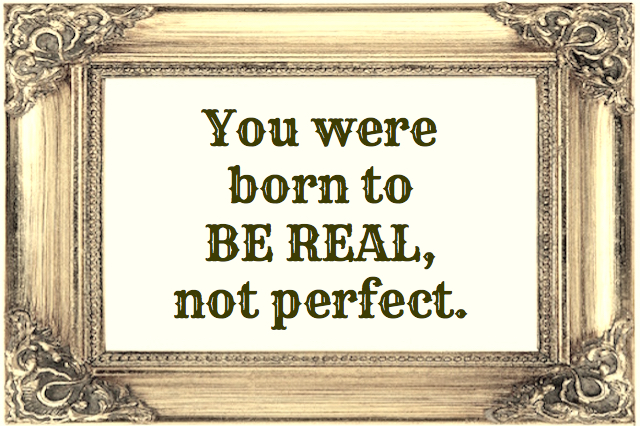
    You Were Born to Be Real

    “Authenticity is the daily practice of letting go of who we think we’re supposed to be and embracing who we are.” ~Brené Brown

    Growing up I experienced a rollercoaster of emotions. One minute I would be on top of the world and the next I felt overwhelmed by anxiety. I didn’t know how to share my difficult emotions in a healthy way with my friends and family, so I started suppressing them instead.

    I realized early on that it felt safe to hide my feelings, because no one could judge me if I kept them to myself. I believed that emotions were a sign of weakness, and there was a reward for keeping it together—I never rocked the boat, and everything around me remained peaceful.

    But I learned that you can’t trade authenticity for safety and expect to stay true to who you are at the core.

    Although it seemed like I was protecting myself, suppressing everything erected walls around my heart and reinforced the belief that it was not safe to share my genuine feelings with anyone else.

    As a result, I started having issues with food, and it soon turned into an eating disorder and resulted in anxiety and depression.

    Rather than being truly authentic with others, I became strategic; everything I said or did was a thought-out plan to gain acceptance. Being truly authentic with others was just too risky.

    I’ve since learned that we cannot truly experience the benefits of a relationship if we are not authentic. To fully feel the love and connection we all yearn for, we have to show people who we really are.

    As I let go of what others thought I should be, feel, and say, I started becoming more authentic with those I trusted most. And as I shared feelings that felt risky to expose, the people who truly cared about me received them with love rather than judgment, and those relationships got stronger.

    Other times, I shared my true feelings and learned I couldn’t trust certain people with them. I had to let go of some relationships because they were holding me back from being my true self. Although not easy, this was necessary in order for me to evolve and grow.

    Authenticity connects us. It is a great gift we give to another person when we let them see behind any masks or the walls of emotional armor.

    Even more so, authenticity is a priceless gift we give to ourselves.

    How do we become authentic in our relationships?

    Begin practicing authenticity with someone who will not judge you, advise you, or try to interrupt your process.

    This person can be a dear friend, family member, mentor, coach, or counselor, who will receive the gift of your authenticity with compassion.

    For me, it started with owning my own story and starting to share it with others. One of the first things I did was write a letter to one of my dearest friends telling her about my struggles, and she embraced all of it with love.

    Develop rituals.

    Rituals teach us to be disciplined and deliberate. Develop rituals that you will use daily to practice authenticity and let go of shame and guilt.

    The first two hours of each day are for me. I exercise, journal, and on a good day, get some meditation in too.

    It allows me to set my intentions for the day, and to say thank you. It allows me to be exactly who I am with myself so that I can be the most authentic person with others. I love my time in the morning and ever since I started consistently doing this, my life has changed.

    Trust your intuition.

    That feeling in your gut that tells you what is right and wrong. Not always easy to do when you’re fighting against the naysayers and those who can’t handle the most authentic you. Trust and follow it anyway.

    This has been a practice for me. I have not always been good at listening to my intuition for fear of standing up, rocking the boat, and being judged. I have learned that my gut is never wrong, and I now listen and trust.

    Forgive yourself.

    If you are holding onto something that isn’t allowing you to move forward, forgive yourself and let it go. Not forgiving yourself will keep you swimming in a swamp filled with your gremlins, and unable to experience healthy and happy relationships.

    I have made many mistakes in life. I followed the wrong crowd, I didn’t always do the right thing, and I held on to that guilt and shame for many years. It didn’t serve me.

    It wasn’t until I was able to forgive myself that I was finally free to move past the mistakes I had made. I was finally able to move forward and become my true authentic self and tell my story.

    Respect and value who you are.

    When you do, you set the standard for how others treat you. You have permission to be you—unapologetically and authentically you. To have strengths and weaknesses and know that those are what make you unique and amazing.

    The truth is that others will treat you with the same respect you show yourself. I didn’t believe I was worthy of having healthy relationships with people who valued who I was, because I didn’t know how to value and love myself. I often sabotaged friendships and relationships with good people.

    When I started my healing journey and practiced self-love, meditation, and positive affirmations, I then started to believe that I was worthy of healthy relationships.

    Know that you are valued and needed by others.

    People need you, and the right people will value who you are and what you stand for when you are authentically you. The world needs to hear your story.

    My healing process started when I shared my story and spoke my truth.

    I learned that it was okay to be vulnerable and authentic. There are people who related to what I had gone through and were inspired and grateful that I could share. It allowed them to be okay with sharing their story and start their own healing journey.

    Just like most skills in life, with practice your ability to recognize and tolerate emotions and be authentically you will improve. Increased self-awareness is the key to having successful, long-lasting, authentic relationships.

  • How to Show Your Friends You Appreciate Them

    How to Show Your Friends You Appreciate Them

    “Life without friendship is like the sky without the sun.” ~Unknown

    You love your friends. They’ve been with you through good times and bad. They are the rare breed of humans that accept your weirdness, accept your authentic self, and even love you for it.

    You wholeheartedly appreciate them. When you’re with them, you get an overwhelming sense of thankfulness that you have this wonderful human being in your life.

    Sometimes, however, you get a sense that you wish you could let that person know just how much they truly mean to you.

    Offering to buy a cup of coffee, giving a sincere compliment, and praising them to others just doesn’t feel like it’s doing them justice.

    Trust me, I’ve been there.

    I’ve felt like the luckiest man on Earth for many years because of the people I’ve been fortunate enough to be surrounded by.

    Some time ago, however, I had the same feeling we all get on occasion—a desire to do more. To appreciate them in a way that will make them truly feel appreciated.

    As a student of happiness, I’ve also known for years the positive impact my friendships have had on my health and mental well-being.

    It’s no surprise that the director of one of the longest studies ever done on human happiness, the Harvard Grant Study, George Vaillant, concluded:

    “Happiness is love. Full stop.”

    The research has confirmed many times over what we’ve all known intuitively for years: our relationships are the biggest contributors to our own long-term happiness.

    For this reason alone, our friends are worthy of more than a simple thank you. Use the following six powerful and simple ways to show your friends you truly appreciate them.

    1. Prioritize them.

    To show your friends you love them, show them that their well-being is a higher priority to you than other things in your life.

    For example, a friend in distress who is in the middle of a big life decision calls you, in tears, and asks for your help. She calls, however, right as you’re about to leave for dinner.

    You must ask yourself which one is truly more important. A true friend deserves to have your attention in this scenario. You don’t have to mention you sacrificed a night out to help them. In time, they may come to learn of the sacrifice you made, and it’ll continue to deepen your relationship.

    2. Communicate like a real human being.

    One of the most concerning sights I’ve seen in the past few years is a group of friends at a restaurant all talking … to people who are not at the restaurant … on their phones, via text.

    If you are physically spending time with a friend, the least they deserve is your very existence. Being lost in your phone or other technologies brings no joy to a meeting, and you might as well not be there at all.

    When I first noticed this pattern emerging in groups, I began to encourage my friends to play a game that I read about online:

    Everyone at the table must put their phones in the middle of the table. The first person to give into the urge to check their phone must then pay the bill for the meal.

    People never want to spend more than necessary, and this game works like a charm.

    3. Believe in your friends and stay by their sides.

    We all have one or two friends with massive goals. As a friend, you can be the one who believes in them, even when most others won’t.

    You can be the one encouraging them to persist in the face of defeat, to reiterate how much of a truly golden heart they have and why they deserve success in whatever venture they may be pursuing.

    For example, I have some friends who are extraordinary artists. Over the years, their journeys of making their passions their careers have been difficult, seeing as we still live in a culture than incorrectly undervalues the importance of art in society.

    I decided a long time ago to always give them a small psychological nudge every time I see them, just to ensure their optimism is maintained.

    I would remark upon their talent, ask them how business was going, and give any advice I was capable of giving, without being intrusive.

    You never know how much resistance and rejection friends are receiving in their desire to live a meaningful and impactful life, and they often highly regard the opinions of friends.

    You can be that friend who never gives up on them.

    Objectivity, of course, is still necessary. It would not be wise, for example, to continue encouraging a friend who is on a clear path to suffering.

    In this instance, you can still be by their side when they decide the doors must close.

    4. Personalize gifts.

    We’re sometimes tempted to get the nicest and newest shiny object when gifting to friends.

    But remember that personalized gifts have always, and will always, be more welcomed than any new object on the marketplace.

    Personalizing gifts shows your friend that you remember the unique things about them and that you value and notice their wonderful wackiness.

    Receiving a gift like this, on every occasion, will open the floodgates of appreciation.

    I once brought a friend a portable smartphone charger for his birthday. This particular friend was notorious for never having sufficient battery left on his phone to make or receive phone calls.

    He greeted the gift with much laughter and gratitude, and it was also the most required and necessary thing he needed at the time.

    A gift like this is simple, inexpensive, and easy to purchase, but most importantly, it’s thoughtful, and that’s what counts.

    5. Ask if your friends need help before they ask you.

    I’m not suggesting that you nag your friends with dozens emails a day with the subject line LET ME CHANGE YOUR LIFE.

    That would be more suited for an article entitled “How to Lose Your Friends in 24 Hours or Less.”

    What does work is being proactive in your desire to be a better friend.

    Whenever you think your friends may be in need of some assistance or guidance, you can casually ask them if they would like a hand, before they realize they might need it.

    This is a wonderful way to show your friends they are in your thoughts outside of the time you see each other in person.

    6. Avoid the trap of required reciprocity.

    This is one of the biggest traps in friendships.

    The belief states the following: If I’m doing this great thing for you, you are required to do something equally great for me.

    It’s a dangerous way of thinking.

    Instead, do great things for your friends simply because they are great.

    Expect nothing in return, and you’ll be surprised what actually comes back to you.

    Yet you may be thinking, what about the ones who will just take advantage of my good nature?

    Well, let them. You’d rather find out they behave this way now rather than later, right?

    When you notice this tendency in another, be strong enough to leave that relationship respectfully and rapidly.

    Going the Extra Mile

    We’ve discussed several ways you can show your friends you love them so they will feel truly appreciated.

    The theme among them all is the importance of putting in that extra effort to value the people who have stuck by you over the years.

    Your friends deserve your time, presence, and companionship, and you are perfectly suited to be the shoulder they may need to lean on in times of distress and despair.

    So enjoy the wonder of relationships in all their emotional color and spiritual zest.

    You are special in your own right, and no one else can provide the love that you do, in your own unique way.

  • 3 Questions to Ask Yourself When You Feel Unsupported in Relationships

    3 Questions to Ask Yourself When You Feel Unsupported in Relationships

    “A community of friends supporting each other can make a world of difference.” ~Unknown

    Many of us feel we’re not getting the support we want or deserve in relationships.

    Maybe we’ve never felt supported by our friends or family. Maybe we don’t feel supported by our peers or co-workers. Maybe we don’t even feel supported by our partner.

    This can leave us feeling drained, tired, and unhappy, like we’re moving through life without much fuel to keep going.

    During my adolescence and early adulthood, this was a huge struggle for me. I rarely found a place or group of friends where I felt like I “belonged” and, therefore, I didn’t feel supported. When I did feel supported by others, it only lasted for a few days or weeks before it dissipated.

    Today, this has shifted. I feel much more supported in my current relationships and don’t feel nearly as drained as I once did.

    There are still moments when I feel like I did growing up, but I’ve realized that opening up to support is a life-long journey. It’s an ongoing process of healing old wounds and allowing ourselves to become something new.

    There are three questions that always help me realize what needs to be healed and how I need to shift my perception. If you don’t feel supported in your relationships, ask yourself:

    1. Is my story preventing me from receiving support?

    Do you tell yourself stories like “Nobody understands me,” “He can’t understand me because he hasn’t experienced what I’ve experienced,” or “I always have to take care of others and nobody can take care of me”?

    Or, do you repeatedly tell yourself, “I am never supported in my relationships”?

    Whatever your specific story is, it blocks you from receiving the support you desire.

    Some other stories that prevent you from receiving support include: “If I tell others about my problems, it will cause them more stress,” “If I share this with others, they will judge me,” “I need to give to others in order to be loved,” and “If I want something from others, I won’t be loved.”

    Formerly, I told myself the story “I will be a burden to others if I seek help and support.”

    I’d think this at work when I needed extra help or a day off, so I’d feel hesitant to communicate this to coworkers. I’d also think this when going through tough times, which made me feel scared to open up to friends, so none of them would know what I was feeling.

    When we acknowledge our stories, we are then able to shift our perception and open ourselves to receiving support from others.

    2. Am I reaching out to others for support?

    Often when we feel like we are not receiving what we desire from others it’s because we are not open to receiving. It’s as if we have a little shop set up for business, but we have all the doors locked!

    Be sure to tell others when you are going through a difficult time. Ask people for help rather than to try to figure it all out on your own.

    By letting people know that we are seeking support, we’re much more likely to receive it.

    3. Am I supporting myself?

    What we experience outside of ourselves is often a reflection of whatever we are experiencing within ourselves. If we are not feeling supported by others, then it is likely true that we may not be supporting ourselves.

    The key to shifting this is to find ways to feel full and supported within ourselves instead of focusing solely on what we want from others.

    This was something I needed to do when dealing with various health issues. For a few years, I failed to address my health problems, which meant others couldn’t support me either.

    I would not stay committed to diet and lifestyle changes that I knew would help me. This meant others didn’t have the opportunity to support me because my actions did not show that improving my health was important to me.

    Ask yourself: Am I supporting my body when it’s sick or tired by letting it rest? Do I support myself by finding time to do the things that I love to do? Do I give myself the things I know I need—like going to doctor’s appointments when I’m sick or finding a therapist when I’m going through a difficult time?

    Then take it a step further and ask yourself: Am I really “myself” when around others? Am I putting myself in relationships with people who truly accept me for who I am? Do I allow myself to share my authentic truth with others?

    If we want to be fully supported in all aspects of ourselves, we need to choose to be in relationships where we feel free to be our authentic selves.

    This might mean letting go of some relationships and releasing expectations that certain people will suddenly change and be supportive. By being in relationships with others who fully accept us, we are supporting ourselves.

    In order to experience the highest degree of love and support in our relationships, we have to really love and support ourselves. So look within and become the master of your own self-care and self-love.

  • How to Stop Trying to Fit In and Finally Belong

    How to Stop Trying to Fit In and Finally Belong

    Puzzle People

    “Perhaps home is not a place, but simply an irrevocable condition.” ~James Baldwin

    It’s normal, isn’t it?

    Wanting to be accepted. Longing to feel at home. Hoping for that reassuring up-nod from the universe that says, “You’re one of us. And you get to stay.”

    So you try to fit in wherever it feels right. You get the job everyone approves of. You marry the person you’re supposed to. You say yes most of the time. And you’re as good as you’re supposed to be.

    You’ve jumped through every hoop and worn all the right masks, but it seems that all your efforts still aren’t good enough. You’re sick of trying to fit in. You just want to feel like you belong the way you truly are.

    I know what it’s like to ache for belonging.

    After six years in a convent as a teenager, I decided it was time to try life on my own. But when I stepped off the plane back home in Memphis, I didn’t feel like I was “home” at all. I was a complete stranger. Nothing seemed to fit.

    I was no longer the girl of fourteen my parents had sent away. But I certainly wasn’t the competent woman in her twenties that I now appeared to be, either.

    The convent where I had spent my youth never thought to give me a transition plan. They didn’t give me medical coverage. Nor did they give me a housing allowance or an education voucher. All they gave me was an orange sweater and a pair of jeans that were too big for me. I set out and had to wing it all on my own.

    Nothing could prepare me to rejoin a world I had never lived in. But even though I was short on book smarts, I picked up pretty quickly on all I needed to know to fit in. I learned that people don’t like you using their stuff. I discovered that men like a woman who’s up for anything. And I found that I got prettier when I drank.

    Acting how I thought I had to be only left me cheated and mistreated, with no friends and way too many hangovers.

    All I wanted was for things to go back to the way they were. To land on something familiar. To get my bearings. To feel at home.

    I had a long way to go . . . but I finally got there. Not to the address I left when I was fourteen, but at home with myself, which is where I always belonged.

    What Does It Take to Truly Belong

    Everybody tries to fit in because they desperately want to feel at home wherever they are. But fitting in will never get you home. Fitting in is about trying to adapt to a world that’s not your own. You don’t belong there.

    Belonging is about inhabiting the world as the real you. And the hard reality is that you’ll never fit in where you don’t belong. Here’s what it actually takes to truly belong where you’re meant to be—even if you don’t seem to fit in anywhere.

    1. You have to rock the boat.

    For the longest time, I hid the fact that I’d been in a convent. It was a complete embarrassment to me. I thought I would never be accepted if I led off with, “Hi, I’m Anne. I was in a convent.” It was scary being the black sheep, so I kept it a secret.

    But living like my whole life never happened became exhausting for me. I finally just rocked the boat and talked about it.

    Nothing shocked me more than the reactions I got. People thought I was trying to convert them. Or worse, recruit them! They stopped using profanity every time they saw me. They retorted with stories about crusty, old nuns hitting them with rulers in school. One guy even told me, “You’ll never be nasty enough to be with me.”

    When I rocked the boat, some people who were on board fell out. Surprisingly, though, the people who loved me never went away. And at last I felt completely at home in my own skin.

    Trying to fit in only molds you into what you think other people want to see. Stop trying to force yourself into someone else’s skin. Only when you can truly be the person you enjoy being can you finally belong where you’re meant to be.

    2. You have to build your dreams, not someone else’s.

    My first job out of the convent was typesetting at a print shop for $7.25 an hour. I was ecstatic. But I quickly learned that career climbing the “right way” meant I had to make more money. So I settled for being an executive assistant, a biologist, an editor, a music teacher, an environmental educator, and a whole lot more besides. I was rich, but I wasn’t doing what I truly wanted to do.

    I love to write. And inspire. And empower people. I can get a salary anywhere, but I don’t feel at home unless I’m doing what I love.

    Fitting in makes you an expert at doing what other people want. Stop trying to be accepted where you’re not allowed to fulfill your own desires. Belonging is all about actualizing your potential. You will always belong where you can follow the dreams of your heart.

    3. You have to forget the “cool people” and find your people.

    I was a bit of a good-time girl when I got home from the convent. Not because I was having such a great time, but because I was trying to fit in with the ones who thought they were. They were the cool people, and the cool people needed me.

    I felt worthwhile when they needed me to be their arm candy. I felt accepted when they needed me to bring the party favors. And I felt necessary when they needed me to be the designated driver.

    Funny thing, though. They didn’t need me when I wanted to be alone. They didn’t need me when I hung out with insightful people. But more and more, the insightful people started feeling like my people. They didn’t want a thing from me. They didn’t need me.

    They already treated me like I was important and acceptable. They convinced me that I was already necessary and worthwhile. They simply wanted me to grow and thrive. And I felt right at home with them.

    When you try to fit in with everybody who wants a piece of you, you open the floodgates to drama and neediness and negativity. And that stuff consumes you. Stop hanging out with people who consume you. You belong where people support and nourish the better parts of you.

    4. You have to make “me first” your mantra.

    I started out as a crowd-pleaser. It was so much easier to follow along and tell people what they wanted to hear. I fit in best when I said, “You come first.” It was all about them—whatever they wanted to hear and whatever they wanted to do.

    But fitting in with the crowd only made me lose myself. I finally got tired of bending over backwards for everybody else. I got sick of putting myself last.

    I knew I had opinions. I knew I had a voice and my own preferences. I knew that I mattered. So I began living that way.

    Fitting in makes you lose yourself to please the crowd. Stop putting everyone else before you. Belonging means that you matter just as much as anybody else does. Only when you know that you count enough to come first will you finally feel at home.

    5. You have to know that you’re already okay.

    When I got home from the convent, dating was a nightmare. I felt like I had to keep moving forward just to keep pace with everybody, like I was in some kind of race I never signed up for.

    “You’ve got a boyfriend! When are you getting married?” So I got married.

    Then it was, “You’ve been married three whole months! When are you having kids?” So I tried to have kids. But I couldn’t. Then all I heard was, “When are you visiting your doctor again?”

    In reality, I was done. I wanted kids, but after six years of untreated health conditions I was unable to. And I was devastated by this. I felt like I should keep trying because everyone was pressuring me to. But living like everybody thought I should only made me believe that my life was empty.

    So I decided to fill myself up with what I wanted. I mentored kids in foster care. I tutored young adults in math and science. I ran a music program for mentally challenged high-schoolers. After a while, I didn’t even need to get pregnant. There was no need to run that race. My life was full. I already had the prize.

    When you try to fit in, you let imaginary standards measure when you’ve arrived. And you never, ever get there. Stop looking outside yourself to see if you’re pretty enough, smart enough, thin enough, or rich enough. You will always belong where you know that you already are enough.

    Time to Feel Completely at Home

    Want to know the truth about belonging?

    It takes courage to belong. It takes bravery to show up in your own skin.

    It’s easy to fit in. It’s easy to blend in and hide your outrageousness.

    And it’s also the easiest way to lose the precious parts of you.

    You deserve to be seen. You deserve to be heard. You deserve to be known for the real deal that you are.

    Stop taking the easy way out. Stop trying to fit in.

    The best place in life is where you’re already okay.

    Come home to you. It’s where you belong.

    Puzzle people image via Shutterstock

  • 6 Things to Keep in Mind When You’re Trying to Make New Friends

    6 Things to Keep in Mind When You’re Trying to Make New Friends

    Friends Taking Selfie

    “No person is your friend who demands your silence, or denies your right to grow.” ~Alice Walker

    When I was young, I never actively wanted friends, probably because I didn’t know the benefits of having strong friendships. I got along fine in my social circle in high school, in part because I could translate Latin more quickly than my classmates, which was helpful to some of them, and because I was pleasant enough.

    I wasn’t going to get on anyone’s nerves, at least not on purpose. In fact, I was so careful not to be a bother to anyone that I essentially rendered myself mute. Yep, you couldn’t get a peep out of me most days.

    Those high school years spent in relative silence created a major gap in my ability to navigate relationships and to deal with major stressors in college, graduate school, and beyond. I don’t think I understood how trust worked between good friends, and that made me vulnerable to all sorts of things, including feeling anxious, uncomfortable, and clueless.

    After entering into my own psychotherapy early in graduate school, I began to work on breaking out of my silence.

    Session after session I practiced speaking about personal matters even when I felt awkward doing so. I began to trust my ability to communicate, even about difficult feelings; I no longer needed to find reasons to shrink into myself.

    Through the therapy process, I also realized I had been holding myself back on many fronts, including my natural inclination to be with people and to be, well, talkative and social. Being able to express myself freely enabled me to learn how to be a good friend and how to have a good time in the process.

    Enjoying true friendship as an adult has undoubtedly been one of the most meaningful aspects of my life.

    Some of the lessons I have learned through my friendships include:

    1. Almost everyone wants to have fun. 

    You don’t have to take yourself or others so seriously. Don’t be afraid to approach people if you have an idea, an instinct about something, or something you just need to say.

    2. We all share the same experiences.

    We all become vulnerable each time a new person approaches or each time we consider meeting up with someone new. There really isn’t a way of getting around this. It’s part of the human experience and it’s not going away. Even further advances in social media and technology cannot erase the wobbly feeling we need to go through when we are social.

    3. We all are different and unique. 

    The fact that no two of us are exactly the same has become a source of relief for me. I no longer have to strive to be just like someone else.

    I now know enough about myself to be able to enjoy exploring the unique aspects of other people in my life. Those differences between us help me to feel sane and to understand my own life experiences better.

    4. We can choose to be open or closed in our relationships.

    It’s dangerous to fool ourselves into believing a closed stance is safer than an open one. When we interact with others in a guarded way, we prevent ourselves from absorbing the finer details of what’s really happening. We miss the present moment because we are watching out for ourselves.

    When we are open, others sense that we are alert, aware, involved, and engaged—all excellent and desirable qualities in a worker, student, partner, or friend.

    Be careful if you find yourself closed off to new information or interactions and if fear is your first response to new demands and opportunities. If you’re wondering why social interactions feel so difficult, see if you might be approaching them with a closed stance.

    When you are open and expressive with your friends, it’s equivalent to building trust and to ensuring loving feelings between you. You’ll begin to feel more at ease and less like shielding yourself from others.

    5. We don’t always have to insist on parity and fairness.

    People who are preoccupied with calculating whether they are getting as much as they are giving in their interactions have very close relationships, but unfortunately, those relationships are with the calculator inside their head instead of the people they are with.

    We can tabulate the costs and benefits, but who really wants to conduct relationships as if they were the next round of taxes?

    Be generous with your time. Give freely of your kindness, knowledge, and expertise.

    6. We can reach into new dimensions.

    I have had the most enriching experiences in the past few years getting to know men and women who are older than I am—about five to ten years older. The extra years seem to bring wisdom, experience, and ease to these friends.

    I know I can have solid advice as quickly as I can send a text. I know these friends will see me through the harder times and will be just as eager to have lunch with me as I am with them.

    Look for friends and acquaintances in areas (and age ranges) you are unfamiliar with. The world is a really big playground. It’s okay to change your outlook and scenery.

    As an adult, I am truly grateful for the group of people I call friends. Though hindsight might have me wishing for the support of these types of friends back in the day, I realize the lessons I have learned making friends as an adult would not have been so meaningful if I had been surrounded by friends when I was younger.

    If you’ve missed some opportunities to find close friendships, don’t fret. There is no time limit on letting others in, learning how to stay open in our interactions, or building great relationships.

    Friendship can be a remarkable and precious resource for us all, and one which reminds us of the sweetness and richness of living.

    Friends taking selfie image via Shutterstock

  • Why We Might Feel Lonely and What to Do About It

    Why We Might Feel Lonely and What to Do About It

    Lonely Woman

    “We have all known the long loneliness and we have learned that the only solution is love and that love comes with community.” ~Dorothy Day

    Throughout my life it’s been really hard to admit when I’ve felt lonely.

    I’ve been through intense periods where I have been without others.

    I’ve been surrounded by people yet have felt no real connections.

    The people I have loved have been physically or emotionally absent.

    I’ve simply been alone over weekends, over weeks, over months, over years, and it has been grueling and horrible.

    I found I had to monitor how much I shared with friends and family about how terribly lonely I felt, and that many resisted hearing it.

    I have been through periods when I’ve been successful and periods where my life has fallen into devastation; loneliness has been a part of both.

    In our society to admit loneliness seems like a big admission of failure. It’s uncomfortable to hear. The subtext is that our loneliness is a result of our inability to make connections. It’s all our fault.

    I don’t know about that. I think it’s time that we understood that we are not alone in our loneliness, and it has more to do with the society we live in than anything else.

    Experts are now saying that loneliness is becoming an epidemic, particularly in western societies.

    Governments are just starting to see loneliness as an issue that has serious repercussions on our health and well-being. It’s become obvious to the structures that govern and to those that study us that loneliness is an issue that needs to be addressed.

    Where Did This Epidemic Come From?

    The fact is that humans aren’t used to being so alone. We’ve had literally hundreds of thousands of years of programming for living in groups.

    Groups were important in keeping us alive. Our children were reared by the group. Meal times were a group affair. Groups were crucial in protecting us from predators and finding food.

    Groups played a part in helping us to advance as a species over our distant cousins, the chimpanzees. We were really good at hanging out, chewing the fat, having some intergroup fighting, and making up with group hugs.

    About 250 years ago the industrial revolution changed all that. Machines replaced the things we could do by hand. Stuff could be produced in mass quantities, which meant that we didn’t need to go down to Mrs Grumblebutt’s cottage for butter, or Arg Arg Arg’s corner of the cave for mammoth meat.

    Two hundred and fifty years is not long time if we consider that modern humans hung in groups for at least 100,000 years.

    This short, sharp change started to cause the dissipation of communities, as we no longer needed to rely on each other but on the system to meet our needs. We could live further apart, raise the height of our fences, and function as independent but separated beings.

    So there it is. It’s simple stuff, I know. We all know that it happened, but when we are crying in our houses we just need to remember that this has only just happened. Only just a little over 250 years ago things were different.

    We changed because our mechanism for survival changed from groups to a system, so it’s asking a lot to expect that a species that has had thousands of years of genetic programming for group living should all of a sudden live separately.

    Turning the Tide

    I think we still need groups for survival, maybe not so much anymore for the food in our mouths, but for everything else—for a chat, for help with working through issues, for a shared direction, a shared passion, for a fight or two if that’s what’s needed, for care, and for hugs.

    We don’t talk so much about pestilence or camels or carving sticks anymore, but there’s lots we need to discuss, such as how to fix a tap, climate change, cake recipes, sadness, music, politics—the list goes on.

    The rise of online communities is evidence that we are programmed for group living, but we really do need face-to-face contact, as that’s what we are used to as a species, whether it be through hobbies, friendships, families, or building better societies. We need to revive our tribes!

    So what’s stopping us from being part of a face-to-face group? One of the remedies for loneliness is within our grasp, so why aren’t we doing anything about it?

    Part of it could have to do with the recent rise of the ridiculously busy movement that seems to have appeared in response to loneliness. It’s about filling one’s life up so there’s no time to feel alone, and it has a particular call and response mechanism.

    “How are you?”

    “I’m so super duper busy. How are you?”

    “I’m ridiculously crazy over-the-top busy.”

    Hmmmm. Being ridiculously busy is not a badge of honor but evidence of imbalance. It’s not surprising that our culture has invented it, as there’s such a big gap to fill, but it’s not the way forward.

    It’s logical that ridiculously busy people get worn out and can feel even lonelier in the process.

    If one is rushing around, there’s little time to forge deeper bonds and be there for others. It’s rewarding and stimulating in the short term, but self-defeating in the long run.

    Many of you could argue that you are ridiculously busy as a result of society and its demands, but I would say that busyness is a choice, and we need to ask ourselves why we have made these choices.

    Was it to fill some gaping hole? Is it necessarily your fault that the hole is there as per the discussion above?

    When I think about my friends and family and their resistance to hearing about my feelings of loneliness, I realize there’s a very real possibility they felt this underlying loneliness too.

    Maybe underneath all those layers of busyness there was a gaping hole, and hearing about someone else’s loneliness was too much of a trigger for theirs.

    The problem with the ridiculously busy movement is that there’s no longer any time to hang out. All engagement must be scheduled. We don’t have time to ask of each other what we truly need. We don’t feel we have a right to do so.

    So what’s the answer? How can we feel less lonely?

    We need to reduce the amount of things we are doing, to see the formation of a group or groups as a priority, and to thank the system sincerely for supporting us but to make a firm commitment to working out how we can support each other. We need our tribes.

    Alternatively, if we aren’t busy and feel terribly lonely, then we’ve got plenty of time to get on our sneakers and get out to find the tribes that we’ve lost. We need to honor our programming.

    I know that there will be resistance and fear associated with making any of these moves, as we’ve put up a lot of gates between us over the last couple hundred years, but we’ve got to swallow this fear and go for it.

    Feel comfort from the fact that it’s the path that almost everyone else in our bloodline walked, so we do have some good intuitive backing to help us.

    Building Community with Self

    As well as being fierce about re-establishing our tribes, there’s something else that might help with loneliness.

    Most people in tribal communities had a role. They made shoes, rubbed goat dung on sick people, made swords and crossbows and feather dusters when they were feeling more peaceful.

    I’ve found one of the absolute keys to feeling less lonely is to ask myself, “If I could be anything, what would I be in the village? How would I serve others?”

    The beauty of asking this question is that we are actually asking who am I? We are getting to know ourselves.

    If we tune in to what we really want, we are ultimately not going to have to ignore or run away from our deepest needs.

    Obviously direction or purpose is just part of the puzzle of getting to know ourselves, but it’s a good place to start.

    I’ve found that honoring my calling as a writer has been absolutely fundamental in feeling comfortable with myself, and I’m far more able to handle times of loneliness and rejoice in times of connection.

    All this comes with the big caveat that society is, once again, not particularly encouraging of this type of thinking, and will do lots of things to put up barriers and fears to stop us from doing and being what we want. Society has created a structure, and there’s an incredible amount of pressure to conform to it.

    That said, it’s worth it to be able to sit down with yourself and say, “I’m happy with you. Finally you are doing what I’ve been asking for all along.”

    Let’s call this process self-talk, self-community, building a helpful dialogue in ourselves. The bottom line is that when we are happy with ourselves and are listening to our beautiful inner voice, we feel a lot less lonely.

    Calling in the Tribe

    So there it is. A little exploration into why we are lonely and what to do about it.

    Feeling lonely is not your fault. Our society has thrown us a bit of a curveball and now it’s time to throw that ball right on back, spit on a wall, build a bonfire, and have a super huge hug with ourselves and someone lovely.

    And right now, I’m also sending you that hug across the campfire, ‘cause that’s what tribe members do.

    Lonely woman image via Shutterstock

  • Letting Go of Unhealthy Relationships and Rediscovering Yourself

    Letting Go of Unhealthy Relationships and Rediscovering Yourself

    “I am leaving you for me. Whether I am incomplete or you are incomplete is irrelevant. Relationships can only be built with two wholes. I am leaving you to continue to explore myself: the steep, winding paths in my soul, the red, pulsing chambers of my heart. I hope you will do the same. Thank you for all the light and laughter that we have shared. I wish you a profound encounter with yourself.” ~ Peter Schaller

    A few months back I was someone you could easily walk all over. I was afraid to let go of friendships because I feared having no one in my life.

    A friend would call me a sissy if I didn’t want to go out drinking with her, so I’d tag along and then feel miserable and angry with myself for the next few days.

    My wake-up call came when I learned that a friend had driven drunk and died in an accident. Even though I barely drank, I knew it was time to make a change.

    I had to let go of old friends who I only hung around to avoid loneliness, as well as one-way relationships. When you cleanse your life, both physically and emotionally, you create space for something better.

    I was tired of holding on to that man for whom I meant nothing; I wanted a relationship that would make me feel alive.

    I was tired of holding on to unhealthy friendships; I wanted friendships that would make me feel supported.

    I realized I had to stop sacrificing myself and my happiness for others. It isn’t healthy. Doing something out of love, to be helpful, is different from doing it out of fear or need, because you want validation.

    I also knew this would help me attract healthier relationships. When you start doing things for yourself, people pick up on that energy and can see and appreciate you for who you are.

    We can face a lot of resistance when we try to let go of people. A call, thought, or memory is enough to reel us back in.

    The ego loves instant gratification. The soul knows something better awaits us. We’ve got to do the work to move past resistance, and the only way is to move through it.

    If you, like me, have considered letting someone go, ask yourself these questions:

    How do you feel in their presence: drained or alive? Does the person always have your best interests in mind? Do they belittle you when you share your feelings? Do they make promises and never follow up?

    If you answered yes to the final two questions, it might be time to move on to make space in your life for healthy, happy relationships.

    If you’re afraid of letting someone go, realize you are doing them a favor. You’re not only creating space in your own life, you’re also creating space in theirs so they can find someone who is a better energetic match for them.

    It’s never easy to let go of the past, but when the pain of holding on is far greater than the pain of letting go, it’s time to take the leap.

    I’ve started incorporating a few practices into my daily life that help me let go; I hope they help you too.

     1. Express your feelings in a letter.

    Focus on one relationship that’s draining you and write a letter to the person you want to let go. Pour out your feelings onto the paper. The letter can be as long or short as you want.

    End the letter with, “I release you across all space and time. Thank you for helping me learn and grow.” Fold the paper, burn it, and bury it in the ground to signify a complete release to the universe. This particular ritual is magical. I instantly start to feel lighter.

     2. Clear your physical space.

    Physical cleaning is so helpful when you are letting go of the past. Our physical space is a representation of what we’re giving space in our life.

    Sell or donate any gifts you received, and burn any letters from the person you’re tying to let go. You’re going to face a lot of resistance; you’ll come up with reasons to hold on to these things. Remind yourself that this crucial to moving on and feeling happier with yourself and your life.

    3. Get clear on what you need.

    Write down how you want to feel in your life and within your relationships.

    This is how I want my life and relationships to feel:

    • Alive
    • Filled with laughter
    • Supportive
    • Loving
    • Understanding

    If you’re not sure how you want to feel on the whole, start with just the immediate future. How do you want to feel this month?

    4. Start filling the empty space.

    Now that you’ve created space by releasing unhealthy relationships, write a list of activities that will help you feel and experience your desires. For example, you could join a dance group to feel alive.

    Put a little time into your passion every day. Writing makes me come alive, so I make sure to write daily.

    As you start dedicating time to things that are important to you, the right people will come into your life—people who see and appreciate you for who you really are.

    When you try to let go of someone, don’t be surprised if they reach out more than they usually would. They can energetically sense that you’re letting go of them.

    When this happened to me, I decided  to have a one-on-one talk and be frank about why I’d decided to move on. Do what is best for you.

    The entire process may seem overwhelming; take it one step at a time, and be aware of the emotions that will come up. If you remember that this is a normal part of letting go, and remind yourself of why you decided to move on, it will be easier to stick to your decision, in spite of your feelings.

    I pray you have the courage to let go of your past.

    I pray you make room for your best life to unfold.

    I pray you live a life beyond your wildest imagination.

  • 52 Ways to Tell Someone You Love and Appreciate Them

    52 Ways to Tell Someone You Love and Appreciate Them

    “The most important thing in this world is to learn to give out love and let it come in.” ~Morrie Schwartz

    As a child, I never heard the phrase “I love you.” Now, I hear people say it all the time—at the end of phone calls and whenever parting ways.

    When I moved away from my hometown of Adelaide, South Australia, twenty years ago, I noticed how much less I felt loved interstate in Melbourne, Victoria. Even though I didn’t hear “I love you” when I was in Adelaide, somehow I knew people cared.

    Soon after I arrived here, I had two wonderful children who’ve taught me all about love. They regularly tell me they love me, and I often overhear them telling their friends.

    This got me thinking: how can we let people know we care, beyond simply saying “I love you?”

    I decided to make a list of some expressions that we can all say more often to family, friends, partners, and even colleagues. Perhaps you could use one of these each week for the next year.

    1. You are special to me.

    2. I feel amazing when I spend time with you.

    3. You give me goosebumps.

    4. I feel safe sharing my secrets with you.

    5. I accept you as you are.

    6. I understand how you feel.

    7. Is there anything I can do to help?

    8. I always have fun when I am with you.

    9. Please tell me how it is for you so I can understand.

    10. Can I hold your hand?

    11. Can I give you a hug?

    12. You inspire me.

    13. I really appreciate it when you…

    14. You are one of the most amazing gifts I have ever received.

    15. I value everything you’ve taught me.

    16. The insights you have shared mean the world to me.

    17. Your thoughtfulness is a delight to receive.

    18. I will never forget how you…

    19. I feel so relaxed and happy when you…

    20. Seeing you when … happened made it all okay.

    21. I can feel it when your heart sings because it makes my heart sing too.

    22. I could sit next to you and not say anything and be at peace.

    23. The way you handled … showed me that you are truly…

    24. Your comments about … helped me enormously.

    25. I’m thankful to have you in my life.

    26. I could go anywhere with you.

    27. I believe your intentions for me are always good, even when I cannot understand what you do.

    28. I trust you.

    29. I can go outside of my comfort zone with you.

    30. Knowing you gives me courage.

    31. The world is less scary when I am with you.

    32. I appreciate that your suggestions help me make difficult choices.

    33. I lose all concept of time when I am with you.

    34. If something serious happened to me, you’re the first person I would call.

    35. You are so generous in spirit.

    36. Surprise me more often because I like your surprises.

    37. I love how you … whenever I need to …

    38. I hear your voice even when we are not in the same place.

    39. I feel connected to you even when I cannot see you.

    40. Your wisdom has saved me.

    41. I feel refreshed and renewed around you.

    42. I enjoy your sense of humor.

    43. Whenever I see a photo of us together, I smile.

    44. I appreciate that you think about my feelings before you do and say things.

    45. Your smile makes me smile.

    46. I love that you know me so well.

    47. When I think about you, I often remember when you…

    48. I want to keep you in my past, present, and future.

    49. I can be me when I am with you—I hope you feel the same way.

    50. Circumstance brought us together; choice keeps us together.

    You are so lovable.

    I love you.

    I know that the positive feedback I’ve received in the past has kept me going during the darkest moments of my life.

    I hope that by saying “I love you” in many different ways, the special people in your life will have good memories that can sustain them during the more difficult moments in their lives.

    How do you let people know you love them?

    I love you image via Shutterstock

  • Keeping Your Word and Showing Up in Your Relationships

    Keeping Your Word and Showing Up in Your Relationships

    Friends

    “The simplest deed is better than the greatest intention.” ~John Burroughs

    In former times, a person’s word was his “bond.”

    In fact, major business deals were transacted and solidified with a simple promise and a firm handshake. It was that basic.

    Court cases were reserved for hardened criminals, not contractual breaches. And trust? It was as much of a commodity as stocks and bonds.

    I miss those days.

    Based upon a number of personal and professional interactions over the last couple of years, it seems that not enough folks consider their word as binding, particularly when it comes to friends honoring verbal (or email) commitments.

    Don’t get me wrong: I recognize that “shift happens.” But being fickle can cause detriment to relationships, violate trust, and ruin reputations.

    Here’s a case in point: Earlier this year, I was immersed in numerous activities surrounding two major events, the first being my twenty year anniversary as the president and founder of a community based arts organization, and the other my thirty-eighth birthday (the sequel).

    Around April, I reached out to my small network of close friends to lend a hand, provide donations, or show support simply through their physical attendance at this highly anticipated two-day gala.

    After all, it’s not every day that a girl celebrates twenty years of faithful service, or their thirty-eighth birthday twice, right?

    As expected, the initial response was pretty good. Some pledged to bring food and drinks, while others confirmed they would minimally be on the scene to help celebrate and serve as hostesses.

    Fast forward…it’s the weekend of the big event, ushered in with a Saturday framed in near-perfect weather and attendance by old acquaintances and new. Though it was a nice sized crowd for the gathering, when I scanned the faces, I noticed that four friends failed to show up; some didn’t even call to offer apologies or explanations.

    Of the ones that didn’t show up, two were supposed to bring dishes and drinks that I relied on to complete my carefully planned menu, which left me scrambling to make last minute substitutions and some experimental combinations. Not cool.

    In all fairness, I should add that overall these pals are quality people who have added greatly to my quality of life over the years. I have been able to count on them for moral support, constructive criticism, and even an emergency loan or two.

    As such, this is not intended to diminish them in any way. It’s for edification. I’d like to think of it as a Public Service Message.

    We’re all busy. Demanding jobs, elderly parents, personal obligations, projects around the house—it seems that the list never ends.

    Still, friendships require ongoing give and take and sacrifice. There‘s no need to keep an open tally of who does what, or when, just a moral obligation to be honest, accountable, and trustworthy—to respond to an S.O.S when it’s issued.

    The role of a true friend is to uplift, not to let down.

    Amid all the chaos and uncertainty of the day, I kept smiling and the function ended on a high note. Thankfully.

    In retrospect, I never want to have a “Plan B” when dealing with “A-list” friends.

    Determined to make this a “teachable moment,” here’s what I concluded after I took the time to reflect. Perhaps these lessons will serve you well in future times too.

    People define friendship differently.

    Just because you share history together does not mean you should necessarily share a future. Choose friends with a similar value system for greater compatibility and lasting results.

    Don’t be bitter, be better.

    Look for the opportunities in adversity. With this situation, I was forced to have some heart-to-heart chats with friends (that were long overdue), that hopefully will lead to a better understanding of our relationship needs and foster greater respect moving forward.

    A wise man once said, “We teach people how to treat us by the things we accept.”

    If something a friend has done causes you to feel betrayed or offended, speak up, gently. Don’t let wounds fester, or suffer in silence. There are far too many people carrying grudges against others who have no idea what they’ve done wrong, and as such, they can‘t apologize or correct their behavior.

    Most importantly, remember that not keeping your word can cause you to lose valued friendships.

    And more often than not, it’s really not worth the gamble.

    Best friends image via Shutterstock

  • Forming Positive Relationships: Two Simple Strategies to Meet New People

    Forming Positive Relationships: Two Simple Strategies to Meet New People

    Friends High Fiving

    “I’ve learned that people will forget what you said, people will forget what you did, but people will never forget how you made them feel.” ~Maya Angelou

    We all want to be around people who make us feel lighter and happy. We love seeing and interacting with people who brighten our days.

    So, why is it that so many of us spend our days with people who don’t lift us up, people who don’t inspire us, and in some cases, people who tear us down?

    It’s tough to remove these kinds of people from our lives, especially if we see them every day.

    These people may be your colleagues or bosses, which makes them tough (or nearly impossible) to avoid.

    In some cases, these toxic people in our lives are, in fact, our own family members.

    That’s makes it really hard to escape the negativity on a daily basis.

    I’ve had negative people in my life ever since I can remember.

    For example, my aunt—who played a major role in my childhood—would give me destructive criticism when I was young.

    She’d say things like, “You look like you’ve gained some weight. Are you really going to eat that cookie?” And “You’re not smart enough to read that book. Why do you even try?” And even “Nobody likes you—you’ll never have friends.”

    Those comments hurt me to the core. I felt like I didn’t measure up, like being myself wasn’t enough.

    And when I began to think that way, I thought that I didn’t deserve to be loved—by my family, by friends, and by myself.

    But then, one day I was watching a TV show. There was a guest on the show and the interviewer asked him, “What’s the key to your long-term success?”

    His response was pure gold: He said, “I’m the average of the five people I’ve spent the most time with over the years. You want to know the secrets to my success? Go meet them.”

    What I took away from that quote was this: I could control my own success and destiny by surrounding myself with the right kind of people. I was in control of my happiness and the way I felt.

    I could eliminate all the negativity in my life by removing certain people and adding new, empowering people in their place.

    This was really inspiring to me, but I underestimated how difficult it can be to meet new people.

    Sometimes, we don’t know what to say to start a conversation, or we start a conversation and run out of things to say. These are roadblocks to forming great friendships.

    After years of hard work and practice, I’ve mastered the art and science of meeting new people. And these are a couple of neat and fun ways you can do so.

    The Compliment Game: The Easiest Way To Start a Conversation with Anyone

    The Compliment Game is pretty self-explanatory.

    You make it a goal to go up to someone and give them a genuine compliment, followed by a brief question.

    For example, I might say, “I really like the color of that shirt. Where’d you get that?”

    Or I might say, “Your hair looks fantastic! Did you do something different?”

    Or even, “You have great taste in coffee. What do you recommend here?”

    Key things to remember: The compliments should be genuine (meaning you actually think what you’re saying is true) and it’s a game, so it should be fun.

    You don’t have worry about saying the perfect things or impressing anyone with your super-amazing attention to detail; just have fun with it.

    Think about some of the things you’d like to be complimented on.

    Maybe you have great taste in books, or are great at finding new music, or maybe you have skill for cooking amazing food. It can be anything, but shy away from flirty compliments; that can make people uncomfortable.

    Give others the gift of compliments in the same caliber you’d like to receive.

    This is a great way to start a conversation, because once they answer your question, you’ve opened the door for more discussion and potential friendship.

    Here’s another game you might try:

    The Sixty Second Introduction Game

    Again, the name pretty much explains the game.

    Make it a goal that within sixty seconds of entering a room, you will introduce yourself to at least one person.

    You don’t have to say anything complicated; you can keep it simply with something like:

    “Hi, how’s your morning going?”

    “Good morning! How are you?”

    “Hi, I don’t think we’ve met. I’m Rob.”

    The key here is to be energetic and upbeat.

    You’ll notice you get very different responses when you say things in different ways.

    For example, saying any of the above introductions with a smile is going to go over much better than if you say it in a flat, monotone voice and with a straight face.

    Play around with this, too. The more people you meet, the more likely you are to get to know empowering and inspiring people.

    These games can be the first step toward surrounding yourself with five amazing friends or mentors.

    Neither you nor I should have to put up with negativity and mediocrity in our relationships.

    We owe it to ourselves to forge better friendships and a better future. Let’s not settle for less. Let’s have the relationships, the respect, and the love we desire and deserve.

    Friends high-fifing image via Shutterstock

  • Family Isn’t Always Forever: When It’s Time to Say Goodbye

    Family Isn’t Always Forever: When It’s Time to Say Goodbye

    “Friends are the family we choose for ourselves.” ~Edna Buchanan

    A few years ago I ended all contact with my parents, and I have not seen or spoken to them since then.

    The truth is I am actually okay with that. Initially, I thought I was going to lose my mind. I had been brought up to believe that family comes first. Children should respect and take care of their parents. Family should—and will—always be there for each other.

    Those beliefs were based on love, and I cherished them.

    I wanted so much to feel that connection—that unconditional love those beliefs promised. It was never there.

    Our lives were filled with so much fear, pain, hurt, betrayal, and lies. Manipulation and deceit were at the core of our home.

    I told myself that all families have degrees of dysfunction, and our family was no different. I could not allow myself to believe that our family was different. I believed that one day my parents would realize what they were doing and change. I desperately wanted their love and approval.

    On the night when my husband and I ended up inside a police station explaining why I thought my father was about to come to my home and hurt me, while my two grown sons waited in the car, I realized I had to wake up.

    My fantasy was over. I could no longer go on pretending our family was just like everyone else. That night I said my last goodbye to my mother as she lied to protect my father. The next day I spoke the last words to my father as he screamed into the phone repeating the lies from my childhood. It was over.

    Giving up the hope that things would get better was the hardest part. I was terrified that I was doing the wrong thing. I thought I was being a bad daughter. I was going against every cherished belief about family.

    It broke my heart to know that my life had been based on an illusion. The picture I had created of my parents was shattered. They had never been there for me, and they never would be.

    I had lied to myself to protect my fantasy and keep them in my life. Now I could no longer do it.

    Over time I began to understand why I had fought so hard to live out the lie, and I began to forgive myself for not being brave enough to stand up earlier.

    One of the problems was my belief that family were always there for each other. That was the cause of my pain and my guilt. The fact that I no longer had them in my life meant that I was going against a code I held close to my heart.

    I had to modify that belief. I had to change my definition of family. It was no longer those to whom I was linked by blood. My family now became the friends who had been there the whole time. People who I knew I could count on when things went wrong. That was never my parents.

    I also realized that I was afraid I was not lovable. In my mind if my own parents could not love me, there had to be something wrong with me.

    I did everything I could to minimize disagreements between us, keeping quiet just to keep the peace. I knew that if I spoke up we would argue, they would get mad at me, and they would not love me. I failed to realize that this was something I only experienced with them.

    It was hard work just to be around them. I was always on edge, cautious, and scared. That was not a loving relationship. I came to accept that if they could not love me, it didn’t change anything about me. I had created other loving relationships around me, and they were the scaffolding holding me up.

    My first Christmas after was hard. I had always gone to my parents’ house to live the fairy tale of being surrounded by love.

    It was always hard to ready myself for those days. We would act out the roles of happy family, hoping in some way that was our truth. It wasn’t. I had no idea how tense I was at these interactions until I no longer had to do it.

    Part of the hurt was that I now had no tradition, so I decided to start a new one. Christmas is no longer a day of obligation. I now spend it with the people who are my true family.

    I’ve come to realize that the love I had for my parents was based on a childhood need for safety and security. I had to see them as the parents who loved me, despite the things they did. I could not accept that the people responsible for my well-being were also responsible for my suffering.

    So much of the world I had created around my parents was simply not real. I have had to accept that truth and move on with my life.

    One of my fears was that by breaking contact with my parents, I was setting an example that my sons could repeat with me. I’d like to think this won’t happen because of my parents.

    The pain of my childhood taught me how important it is for a child to truly feel loved, safe, and cherished. I’ve tried to live that truth with my boys. I don’t know what the future holds for us. I can only hope that the love I’ve shown them will have created a space in their hearts where I will always be thought of with love.

    I try to imagine how I’ll feel when I find out that my parents have died. I honestly don’t know. I’m sure that part of me will be sad that we did not have a better ending. However, I know in my heart of hearts that I tried for over forty years to make it work. In the end, it just wasn’t enough.

    My parents were never who I thought them to be. I have had to let it all go. The fantasy of the perfect ending with them is over. I am setting out on a new horizon where I have redefined my world.

    As abused children, we may feel that it is somehow our responsibility to fix the broken parts of our family. It’s not. Sometimes there is no fairy tale ending where our parents realize how truly wonderful we are.

    The hard part is recognizing that and moving on. Sometimes it’s the only way to find real peace. It’s heartbreaking. It’s not easy. Finding and surrounding yourself with people who truly care for you is your gift to yourself. You deserve that. You will be okay.

    I no longer believe that I have lost my family. I have only now finally recognized who they truly are.