Tag: friends

  • How to Stop Feeling Lonely and Escape the Emotional Eating Cycle

    How to Stop Feeling Lonely and Escape the Emotional Eating Cycle

    “When you no longer believe that eating will save your life when you feel exhausted or overwhelmed or lonely, you will stop. When you believe in yourself more than you believe in food, you will stop using food as if it were your only chance at not falling apart.” ~Geneen Roth

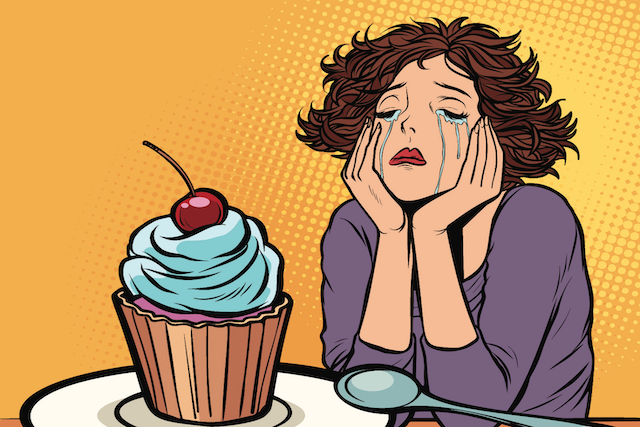
    I used to eat because I was lonely.

    Lunch hour at school would last nine billion years. I’d have no one to sit with—I was spotty and mega bossy, and my hobby was copying pages from anthropology books.

    Everyone would put a sweater on the chair next to them, so I’d have to sit further away. Then, just as I’d pick up my fork, they’d up and leave anyway! “Oh well,” I’d think, “If I eat slowly I can make my fries last till the bell goes.”

    I switched to packed lunches to avoid the dining hall. But I didn’t want to be spotted alone on a windowsill, so I’d eat my sandwiches in a toilet cubicle.

    After, I’d feel full, but unsatisfied. And still have time to kill! So I’d go to the dinner hall and buy a meat pie. I felt sad and gross.

    The truth was, I didn’t know how to be a friend, let alone make one. I was full of resentment toward other kids.

    I acted superior but felt inferior. I was needy, or tried to impress them.

    I didn’t think friendship was something people learned—I thought there was something wrong with me. That I’d be this way forever.

    I also hated that I couldn’t resist overeating. Since my family was big on brown rice and organic vegetables, I felt guilty for buying junk food.

    When I hit my teens, I became body-conscious. I panicked that comfort food would make me fat. I wasn’t! But I thought my thighs were big, and clenched my stomach in all day. All day!

    I felt too embarrassed to ask anyone—especially my parents—for help. I thought they’d say I was greedy. Or lecture me about eating crap. Or take me to a doctor—humiliating!

    I didn’t know it was called “emotional eating,” but I was pretty sure it was bad. So I kept quiet.

    I thought: “I can fix this myself. I just need the self-discipline to eat less!”

    Going on improvised diets made things a whole new level of worse: binge eating, bulimia, and feeling utterly obsessed and depressed about food.

    It took seven years before I found a way to recover.

    I wish I’d known how to deal with lonely emotional eating in the first place, instead of going off on an eating disorder tangent!

    So if you’re dealing with a double-whammy of eating and loneliness yourself, here are eight simple steps. They will guide you through solving your emotional eating, and your loneliness, from the inside out.

    1. Imagine your life without emotional eating, and shift focus away from guilt and shame.

    You’re not greedy. You’re not gross. You’re not ill. You’re just trying to cope with a fear: abandonment.

    It’s the emotional fear we’re born with. Outside the tribal circle, a baby would die. The primitive part of your brain thinks, “I’m alone—I’ll starve!”

    It’s how you’re wired, so give yourself a break.

    If you waste your energy wrestling with guilt and shame over eating, you’ll never tackle the real emotional challenge—loneliness.

    So when guilt and shame come up, shift your focus.

    Imagine a peaceful relationship with food. Imagine eating when you’re actually hungry. Visualize slowly nourishing yourself.

    2. Loneliness is a self-worth issue, so become willing to work on your self-worth.

    It’s like this: You’re by yourself. That’s not loneliness, that’s solitude.

    Sometimes it’s nice, but sometimes you don’t have a choice. Uh-oh!

    Mind games start: you imagine it’s because you’re unlovable.

    That’s loneliness. Low self-worth, in disguise.

    If you’re lonely, it’s easy to think you could earn your self-worth back by changing something external.

    You think, “If I found a great partner, then I’d know I was lovable.”

    Or you think, “I’ll be worth loving once I get a grip on my emotional eating and lose weight.”

    But that’s not how it works! Self-worth isn’t something you earn. Or that drops in your lap either.

    You choose to create it.

    So ask yourself: How can I work on my self-worth?

    (Don’t worry if you don’t know yet. Some ideas are coming up…)

    3. Spend some quality time with yourself.

    Are you enjoying your time by yourself? Or just watching TV?

    Imagine you treated a child the way you treat yourself on a too-tired evening.

    Browsing Facebook when they say, “Play with me.” Sending them to the fridge to scavenge instead of cooking dinner. Binge-watching Netflix instead of putting them to bed when they’re tired.

    They’d feel hurt, and start believing they weren’t worth spending time with. They’d also start misbehaving wildly to get your attention!

    The same is true for how you feel about yourself. When we ignore our inner selves, we start to believe we are worthless, and an emotional eating crisis is a great way for our heart and soul to grab our attention.

    Spend some quality time with yourself.

    Take yourself on a date, just you and you.

    Play (build a go-cart, paint your room), be in your body (move, bathe, meditate), or relax (read, whistle, sit in nature).

    Self-worth grows as you self-connect, so every little counts.

    4. Create thoughts that give an inkling of self-worth.

    When I was rock bottom with food and loneliness, my thoughts were dominated by failure, being a victim, and believing change was impossible.

    Stuff like “I’m gonna be lonely forever,” and “I hate my body, I hate myself for eating, and I’m too pathetic to stop.”

    Three positive thoughts in particular helped me out of my pit.

    They didn’t tell me directly I was worthy or fabulous—saying anything saccharine about my life would have felt like gloss painting a turd.

    They just implied a basic level of self-worth.

    They were: “I’m part of life unfolding.” (I’m not in a vacuum. Even though I feel totally dissociated and alone, I’m still participating in life on the planet.)

    “I really care about my body.” (I’m upset I overate again. But I couldn’t get upset if I were indifferent… So on some level, I must care!)

    And: “Things are already changing.” (Repeating this phrase is a positive action… So maybe I won’t always be like this).

    Find one thought that implies you aren’t your worst fears. That makes you feel worthy-ish. Then repeat it like you’re being paid a piece rate to do so.

    5. Explore how you’ve created loneliness.

    Try this: It’s funny!

    Imagine someone wants to master the art of loneliness. Lucky for them, you’ve honed the perfect system!

    Write down what you’d teach them.

    My own Perfect System for Staying Lonely says: “Don’t have a calendar for friends’ birthdays. Tell yourself that you’re too broke to buy gifts, cards, or book a babysitter.”

    And: “Get hired for shift work, and rehearse theatre shows every weekend.” I disconnected from my relationship like that that for the first five years of my marriage! (Thankfully, the guy’s a legend.)

    The point is, I thought loneliness happened to me.

    But I make myself lonely, when I don’t need to be. Years after my schooldays are behind me, I lead myself back to that painful-yet-familiar place. It’s called a comfort zone.

    It doesn’t mean it’s your fault you’re lonely—this isn’t about blame. This is actually good news: If you’re doing it, you can undo it.

    6. List everything that your loneliness buys you.

    An excuse not to face trust issues?

    A reason to avoid intimacy?

    A cover for social anxiety?

    I know it’s not obvious that loneliness has advantages, but sometimes it’s a way to avoid something even more scary or painful.

    Me? Loneliness excuses me from owning my introvert personality. Intimacy makes me feel vulnerable, and rejection scares the crap outta me.

    These hidden benefits to your loneliness are called “payoffs.” It pays off to explore them!

    Because they’re the reason you’re creating loneliness, even though it hurts.

    7. Explore the ripple effect of loneliness in your life.

    You’d expect loneliness to make you shy at parties, or reluctant to date.

    But has it changed you in other ways?

    Unhealthy self-reliance has made me a nightmare to cook with. And low self-worth has taken its toll on my financial outlook.

    Clean out your worldview.

    Defy your loneliness-inspired beliefs about what you can and can’t do (like, ask someone to chop the mushrooms while you stir the risotto, or ask your boss for a raise).

    It’s a great way to un-victim yourself.

    8. Finally, when you’ve done all that inner work, break up your emotional eating habit.

    Habits weld to each other! Drinking and smoking. Driving and talking to yourself in a variety of accents. Lonely emotional eating and—?

    Break the links.

    Don’t just say to yourself “Stop eating toast.” Don’t make any rules about what you eat.

    Instead, change how you eat. If you don’t know how you eat, slow down.

    Notice what you do at each stage of your emotional eating habit—beforehand, during, after, where, when, with what planning.

    Do any part of your habit differently.

    Say you eat ten slices of buttered toast and jam in front of the TV each evening. Buy different butter that you don’t like so much. Put the TV (or the toaster) in the cellar. Create an eating area, keep the sofa for relaxing. Shop differently. Go out.

    Keep disrupting your habit, and it will eventually dissipate.

    Habit change takes patience, and sometimes repeated attempts too.

    But break up your habit from enough angles, and you’ll eventually find you’ve replaced it with a way to enjoy food again.

    The way I think of it, addressing loneliness is 88% of the solution for emotional eating from loneliness.

    When I solved my eating struggles, I spent a couple of years of journaling and becoming aware of my beliefs, thoughts, and feelings. Then, only a month or two of habit change.

    I know a couple of years sounds really long! Perhaps it will take less time for you. The point is, this isn’t a quick fix. Quick fixes rarely address the underlying issues.

    It’s tempting to rush. To try to skip straight to solving the eating—out-of-control eating feels unbearable and you want it to stop, like, yesterday—but if that hasn’t been working for you, or you’ve even ended up binge eating like I did, give yourself permission and time to go deeper.

    Trust me, changing an emotional eating habit is much easier when it’s just eating, and the compulsion part has had your loving attention.

    So good luck, and don’t rush.
  • There Are Some People You Just Can’t Help

    There Are Some People You Just Can’t Help

    “Be there. Be open. Be honest. Be kind. Be willing to listen, understand, accept, support, and forgive. This is what it means to love.” ~Lori Deschene

    A few months ago, I was totally freaked out.

    I was having a cup of tea with a soul-sister friend, and we were in deep conversation. I was crying.

    I was explaining, between hiccupping sobs, about how there was someone in my life who was suffering deeply.

    Sitting at the café that day, I said to her, “There is this person in my life that I love so deeply, but he is suffering.”

    I told her about all the ways I was connected to this very special person, and told her about how I was committed to helping him.

    My friend was empathetically listening, and my story went on and on.

    “He’s so depressed. When I’m around him, I just suddenly feel so sad. I feel his pain. It’s so deep. I have tried to share my wisdom with him, to help him evolve out of his depressed rut, but he won’t listen. I know he can make a change, but he just won’t listen to me. It’s like his ears are closed to me. What do I do? How can I help him?”

    It was then that my dear friend replied in a way that I will never forget.

    She placed her hand on my shoulder, and looked deeply into my eyes.

    We sat in silence together for a moment.

    Finally, she spoke, with such a gentle tone in her voice. “Anya, your lesson is to learn in this situation is simple, yet difficult. Your lesson is that you cannot help this person. Sometimes, there are people that you just can’t help.”

    I gasped. Chills ran down my spine. Her words resonated through every cell of my body.

    It was all so simple.

    There are people in my life that I just can’t help.

    So simple, yet so profound. Why hadn’t I realized this before?

    And how had I somehow fallen into the trap of taking on someone else’s burden as my own? Why had I gotten trapped in suffering by trying to “fix” someone who was suffering?

    These traps are, unfortunately, all too common for those of us with big open hearts. They are quite common for those of us who are caregivers, lovers, amazing friends, healers, spiritual way showers, and all those who wish to use our lives in service to a higher good.

    Since that day at the café, I’ve been thinking a lot about my sweet friend’s advice. And I’ve come to a few insights of my own.

    First, in order to be helped, a person must first ask for help. A person must make themselves available, vulnerable, open, and humble.

    And this is not easy! It’s not easy to be open. It’s not easy to say, “I don’t know; please help me.”

    Second, in order for you to help someone with your words, that person must first resonate with the kind of wisdom you have to share.

    As a matter of fact, my depressed friend has a totally different worldview than I do, so it’s no wonder he wasn’t open to my words of advice.

    There are a thousand paths and a thousand ways to interpret the world.

    My way may not be your way, and your way may not your neighbor’s way. We are often so different in our concepts and language for interpreting this mysterious thing called life.

    In short, for a person to want your help, that person must be somewhat already aligned to your philosophical or spiritual worldview.

    Further, in order for a person to receive your help, they also must present themselves to you in the most perfect, synchronistic moment.

    Indeed, they must be standing before you in the most precise, delicate moment: the moment just before the blossoming, just before the great change occurs. It can be as small as a split second of opening.

    Timing is everything.

    In that moment of perfect timing, they will be not only ready but hungry for evolution, hungry for growth, hungry for truth, hungry for new ways of seeing the world beyond their limited old perspective!

    My dear friend who is suffering does not want to grow in the way I wish he would (consciously evolve out of suffering through spiritual practice)—at least, not at this time.

    He is suffering and he does not even want to admit that he is suffering. He believes he can achieve no higher or better state in this lifetime.

    Once I realized that there are some people I just can’t help, I felt a tremendous relief. A giant stone lifted from my heart, and I could suddenly breathe again.

    I realized that I had unwittingly taken on his suffering as my own, in a misguided attempt to figure out how to “fix” him. I had allowed my natural empathy to become a wound in my own energetic body.

    If a person you love is stuck in a place of denial to their own suffering or their own addictions or stuckness, then there is a strong possibility that what you say won’t make a bit of difference.

    Denial is an incredibly strong force. And if your worldview differs too much from theirs, then it may not be your place to plant any seeds of wisdom. It may be your place to step back from trying to speak at all.

    That’s a tough lesson of love, I know, but if you can remember it, it will save you a lot of heartache.

    Indeed, if someone is in denial to their own suffering, then that very denial may very well block them from truly hearing you speak.

    So, what do we do in these kinds of situations?

    Can we take any action at all?

    The answer is yes.

    When we deeply love someone and we are invested in them (such as a lover, a friend, a child, or a business partner), what we can do is simply radiate love.

    When we are in their presence, we can be as light, happy, and conscious as possible.

    This light, this presence, this subtle vibration, will subtly shift their energetic field. And though no words are spoken, they will feel a little bit more peace while they are near us (whether they consciously know it or not).

    And we can of course listen to them. When they need to talk, we can listen, and we can offer a hug or a gentle, reassuring smile.

    Indeed, sometimes, when we love someone, the best thing we can do is shut the heck up.

    The best thing we can do is simply be.

    Friends painting by Jerry Weiss

  • The Introvert’s Hate/Hate Relationship With Spontaneity

    The Introvert’s Hate/Hate Relationship With Spontaneity

    “The man who is prepared has his battle half fought.” ~Miguel De Cervantes

    They say you should live in the present, and “they” form a chorus of voices that is growing in number by the second. Everywhere you turn these days, the message is loud and clear: life is better when you live in the moment.

    I get it; I really do. I know that when I hit that flow state, regardless of what I’m immersed in, time passes in a heartbeat and I tend to really enjoy myself.

    It’s just that I would prefer it if I could plan those moments of flow some time in advance. I want—no I need—to prepare myself for the event of letting go. I need to be mentally ready so that I may jump into the river and let the current take me.

    If I’m not prepared, that river turns out to be less of a serene, meandering brook, and more a surge of cascading torrents that pummel my senses until I’m half-drowned and ready to give up.

    This is why I, the introvert, despise spontaneity in all its forms.

    The first few weeks of university really tested me. I lived on campus in a dorm where I shared a communal kitchen with eleven other people. It didn’t matter what night of the week it was, there were people heading out to a bar, restaurant, or club.

    I’d often get a knock at my bedroom door and an invitation to one of these nightly excursions: “Oh, hey, me, Johnny, and Mike are heading to {insert one of many different venues} for some beers. You wanna join us?”

    At this point I’d be searching every corner of my mind for a reasonable excuse, a Get Out Of Jail Free card that would save me the pain of just saying no. I knew that if I did just decline without justification, I’d get the inevitable looks of astonishment as if I were turning down the opportunity of a lifetime.

    “It’s Wednesday.” No, that won’t do.

    “I’m tired.” Not going to cut it.

    “I’ve just sat down to catch up on Friends.” Watch it another time, I’d be told.

    I wanted to tell them the truth, but can you imagine what they’d have said? “Oh, thanks for the invite guys, but I’m an introvert and I can’t stand being spontaneous. Maybe another time, assuming you give me seven days notice in writing.”

    Instead, I’d often just mumble something incoherent about how I’ve got a paper due the next day, or how I’m just on the phone with my parents. They usually got the message.

    I didn’t avoid nights out entirely; I can be quite a social character when I want to be. I just made sure that I was mentally prepared beforehand. I’d agree (with myself in advance) that I was going out on a particular night, and I made sure I spent plenty of time alone in the afternoon or early evening to recharge my batteries for the oncoming festivities.

    Eventually, I had a nice little routine going. I’d go out on Monday most weeks, Friday some weeks, Saturday almost every week, and the occasional Thursday. No other nights really got a look-in. And it tended to be the same set of places each time because of certain student promotions or theme nights.

    What’s more, my friends knew when I was and was not going to accept their invitations, so they stopped knocking when they knew it was a waste of their time.

    Somehow, I had managed to appear fairly sociable and outgoing while avoiding anything unexpected. I had planned my way out of spontaneity.

    Structure: An Introvert’s Best Friend

    My experiences as a student might not exactly mirror your situation, but as a fellow introvert, I’m sure you can relate to the need for structure and routine in your life.

    There are few things less enjoyable for an introvert than being coerced into some random activity at some unplanned time with unfamiliar people. It’s literally our Kryptonite.

    We simply cannot handle the unknowns: Where are we going? What is the place like? What will we be doing there? Who else is going? How are we getting there?

    Perhaps the uncertainty that scares us most is not knowing when it will end. Social activity drains us, but spontaneous social activity burns through our energy reserves in double-quick time because of how much we have to think, react, and absorb when we’re not mentally ready for it.

    If there’s no clear time at which things will draw to a close, we panic, knowing we’ll be utterly spent in the not-too-distant future.

    Put some structure in place—primarily in the form of plenty of warning—and we will be able to extract far more enjoyment out of the very same event or activity. When we know it’s coming, we have time to open ourselves up to the possibility of enjoying ourselves. We remove our shackles and move more freely, both physically and mentally.

    Be Confident In Your Boundaries

    The reason I found those early weeks of university so difficult was because I felt bad saying no to people. I wanted to make friends as much as the next person, and I always had this nagging feeling that my refusal to take part would see me labelled as boring.

    Somehow or another it all worked out, but I could have avoided plenty of insecurity had I just understood that putting personal boundaries in place is not a sign of weakness. I did say no to people, and I did it a lot. These days, I’m much more comfortable doing it, and it reduces the anxiety I feel around spontaneity itself.

    I know I can turn down anything I don’t feel like doing, and I don’t worry so much about what other people think. I’ve learnt that, actually, most spontaneous people care a lot less about receiving a no from introverts like you or me. Or rather, they get over the rejection quickly because they’re too busy just getting on with whatever spontaneous act it is they are doing.

    In these situations, it’s the introverts who tend to overthink everything. You may dwell on the exchange for hours after it happened, considering all of the possible ways you could have handled it better or the consequences of your refusal. The big deal exists almost entirely in your head. So it’s in your head that the battle must be won.

    The challenge is to know your boundaries intimately and to build them strong and sturdy so that you are able to confidently say no to offers and invitations that you either have not planned for or do not think you’d enjoy. No is not a dirty word and you shouldn’t be afraid of using it.

    Take The Reins Yourself

    There is a relatively simple way to avoid spontaneous requests from others: get in there first. You want a plan in place, right? You crave structure in your life. Then create the plan and add the structure yourself.

    Don’t wait for your friends to suggest you meet up that night, or the next night for dinner. Suggest a date and a time that feels comfortable for you. A few days time, next week, in a fortnight; it doesn’t matter as long as it gives you enough time to prepare mentally.

    And if you know that these events tend to happen naturally every couple of months, keep this in mind and put a note on your calendar to start suggesting dates well in advance. This also has the added benefit of making you seem like the sociable one because you’re doing much of the organizing.

    Yes, you may be an introvert, but that doesn’t mean you don’t ever want to see anyone. We introverts can enjoy ourselves as much as anyone else, but having some forewarning will only serve to make the whole process more compatible with your needs and wishes.

  • Don’t Lose Sight of the Big Picture: Spend Time with People You Truly Enjoy

    Don’t Lose Sight of the Big Picture: Spend Time with People You Truly Enjoy

    friends in the fall

    “Even if you are on the right track you’ll get run over if you just sit there.” ~Will Rogers

     How is this happening again?

    Lying in bed watching The Mentalist at 8 P.M. on a Saturday night, my mind begins to wander.

    A year ago I was so happy. I spent almost every night hanging out with amazing friends and now I’m here, alone watching TV.

    As my heart sank into my stomach, I shook my head, suppressed my feelings, and pushed play to start the next episode.

    A few years earlier I moved to Santa Fe, NM, a state I had never even visited before. Excited to start a new journey, I set out to meet new people and create a life full of amazing friends.

    Although that’s exactly what happened, the first few months were extremely difficult. I spent a lot of time trying to make new friends while having zero success. After a couple months, this went from frustrating to depressing.

    Luckily, I was able to solve the problem and learned how to make new friends from scratch. It was amazing. I was having some of the best times of my life.

    Every week I had friends inviting me to birthday parties, barbecues, camping trips, river rafting excursions, and typical nights out on the town. And when I invited people to places, like my New Year’s Eve party, people showed up.

    It was a high I’ll never forget.

    After an exhilarating two years in Santa Fe, I moved back to Huntington Beach, CA, the city I was born and raised in.

    I was excited for yet another new page in my life. Huntington is a beautiful city with great weather (and waves!). My family, best friend, and other great friends live here.

    Kim, my girlfriend at the time (now my wife), and I decided to have a long-distance relationship and I chose to save some money by living with my parents.

    The next year was a disaster.

    It might not have looked terrible from the outside, but I was eating myself alive on the inside.

    Even though I had friends in the area, I was only hanging out with them about once every two months. And about just as often, Kim and I would travel to see each other.

    But that was it. The only other people I hung out with were family members. And as much as I love them, this was not healthy for me.

    I may have seemed happy, but I was faking it. I was hurting. Instead of fixing it, I kept going with the status-quo.

    This feeling was very similar to the one I had when I moved to Santa Fe. A feeling of sadness, hurt, and longing that comes from a lack of spending time with people who make you feel alive.

    But this time was different. I knew I could make friends if I wanted to and I already had friends living here. I just didn’t make the relationships a priority like I should have.

    My laziness was striking me down and I got stuck in a comfort zone of my own making.

    It was easy to say yes and go out with friends when I was living by myself in Santa Fe. But living with my parents made it a little less appealing, which was enough to prevent me from doing it. I’d think to myself:

    I’ve already showered and I’m in my comfy clothes. I can hang out here with my parents, have a couple drinks, and watch this movie, or I can get ready again and meet up with my friends. Ah, I think I’ll just stay here tonight.

    That’s literally how many of my nights played out. And it was similar for the day time too. I’d decline an invite to go surfing because I already showered or because I was about to go to breakfast with my parents, something I easily could have skipped.

    When we finally moved Kim out here to Huntington, I thought my problem would be fixed. Instead, it was more of the same. Mexican food with my parents, cooking chicken piccata with Kim, staying home watching Prison Break, and trail running by myself in the wetlands.

    As much as I love hanging out with Kim and my family, I need that outside energy with friends who share some of my deepest interests and passions. So finally, after way too long, I made this realization:

    I need to spend more time with people who make me feel truly alive.

    My parents and Kim do fill a big part of that need. But I need other friends to fill the rest.

    I started making changes to my life that helped me meet new people and spend more time with existing and past friends.

    I joined a music production class. Kim and I played on a beach volleyball team with her coworkers and a separate flag football team with strangers. I also joined a soccer team.

    I started hanging out with my friends more. I’d text my buddy during the week and say, “Hey, wanna grab sushi Friday night?” I’d send another text to my surfing friends and say, “Surf’s supposed to be good Saturday. Who’s down?”

    On top of that, I’ve been reaching out to people I lost touch with. I recently hit up a friend who I hadn’t talked to in years and said, “Long time no see. Miss you dude. Hope all is awesome. You still running?”

    That text conversation ended with my wife and I scheduling a San Diego day trip and a twelve-mile running adventure for my buddy and me.

    I’ve even been getting together with friends I haven’t hung out with since high school!

    Ever since I put more focus and effort into spending time with my good friends, while still maintaining healthy relationships within my family, my life has improved drastically. I’m happier and more enjoyable to be around. Even better, I’m back to being my old, goofy self again.

    What steps can you take to make sure you don’t fall into the same trap I did?

    If you’re not careful, the same thing can happen to you. In the moment, it’s easy to stay home and watch Netflix because that’s easier and more comfortable. However, in the long-term that can be detrimental.

    Here are three steps you can take to get you on the right track:

    First, determine whether you have the right people in your life to keep you happy. Do you feel like you can be yourself around them? Do you feel free and alive when you hang out with them?

    Second, figure out if they are willing and able to spend enough time with you. Invite them to hang out and see if you can fill the free time you set aside for hanging out with friends.

    If you haven’t spoken to the person for a while, try pinging them first. Shoot them a text, a Facebook message, or even just comment on one of their posts. The main things you want to get across are that you miss them, you hope all is well, you’re curious how they’re doing, and you were thinking about them and wanted to say, “Hi.”

    If you’ve been in touch with them lately, just shoot them a message and say, “Hey, let’s get together soon. I was thinking of hiking El Morro this weekend. Interested?”

    It’s good to invite them to do something specific that you know they would enjoy. If you just ask to hang out, it might be hard for them to imagine what you would do together, which can make them less likely to accept. And if they do want to hang out but can’t or don’t want to do the original activity you proposed, they’ll likely respond with a different idea, still giving you a chance to hang out.

    Third, if your friends don’t have the time or you’d rather hang out with different people, it’s time to consider meeting new people. Join a photography class, sign up for a kickball team, find a book club, or attend a young professional’s social mixer.

    Go out into the world and meet new people. If you can find people while doing activities you already enjoy, even better.

    Once you understand how important your friendships are, you’ve cleared the first hurdle.

    From there, it’s on you to stay proactive to create and nourish the relationships that are so vital to your well-being.

    It might take a little more effort to pick up the phone, text your friend and schedule a hangout, or get outside and join that soccer team, but when you look back on your life you’ll be thankful you did.

  • How Expectations Can Drive People Away and How to Let Go of Control

    How Expectations Can Drive People Away and How to Let Go of Control

    “I’m not in this world to live up to your expectations and you’re not in this world to live up to mine.” ~Friedrich Salomon Perls

    About five years ago, I had a falling out with a close friend. I was irritated because she didn’t do the things I thought she should and she didn’t give as much as I did. I felt I had been very generous with her, and I expected her to do the same. I felt she owed me.

    My anger became unmanageable and started seeping into pretty much every interaction we had. She began cancelling dinner plans and camping trips. She wouldn’t call me back after days of me leaving a message. It happened out of nowhere, and of course everything was her fault.

    Except that it didn’t. And it wasn’t.

    Not too long ago, I was a bit of a control freak. I didn’t know it, of course, and I would have described myself as open-minded and easy going. In reality, I was tormented by my own expectations.

    Since I was a child, I had an image in my head about who I was supposed to be. What my family was supposed to look like. What house I was supposed to live in. What career success was supposed to mean. That’s a lot of supposing! I had always assumed these expectations were my future.

    I am an artist by trade, and in my art studio, I have many tools. Paintbrushes, sanders, stencil cutters, and paper punches fill shelves up to the ceiling. However, I tell people that the most important tools I use are flexibility of mind and a practice of not having expectations as to the outcome. This allows new and amazing techniques to be discovered and yields paintings that continuously surprise and delight me. I find these tools are useful outside of the art studio as well.

    As time went on and distance grew between me and my friend, I began to feel enraged by her apparent apathy toward me and everything that I “had done for her.”

    I thought to myself, “I would never treat anyone that way. How dare she do that to me?” and “After all I’ve given her, she should want to give back!” Every thought I had praised me for all the good deeds I had done and blamed her for ruining our friendship. I was the victim and she was the wrong doer.

    One day, I sat down to enlighten her about how she had negatively impacted our relationship. Her reaction was horrifying to me. She said she was going to take a step back from our friendship.

    I couldn’t believe what I was hearing. I mean, I was telling her how she could singlehandedly improve things. What was wrong with her that she didn’t understand that? We stopped speaking and I didn’t see her for a long time.

    Then something life changing happened—sobriety. In the first year after I quit drinking, I learned a lot about myself and my need to control just about everything in order to meet my expectations.

    I learned how my expectations of others (unexpressed, by the way, because “I shouldn’t have to say it!”) and the anger that followed when people didn’t act the way I thought they should, actually drove people away.

    The entire time our friendship was breaking down, I thought that if she would just do the things I wanted her to do, not only would our friendship be fixed, but everyone involved would be better off. I knew better than she did. My way of living was better than hers. She, of course, ran away from me like I was on fire.

    My need to control others was unfounded, unrealistic, and unattainable. It was a hard thing to admit that my way wasn’t better than her way and, in fact, people weren’t abandoning me. I was driving them to leave. I saw that other relationships in my life were also going down this path. I had to change.

    One day after surfing, I went to sit on a bench overlooking the water. One of the “old guys” we surfed with, who lived across the street, came and talked with me as the sun was setting over the ocean and I was lamenting about the stresses in my life. He said one of the most important things anyone has ever said to me: “I don’t do stress. Stress is optional.”

    WTF? How on earth does one not get stressed? Teach me, Oh Wise One. I thought deeply about this and about my issues with expectations and control. I needed control in order to meet my own expectations. When those expectations were not met, anxiety, anger and depression followed. Where does stress fit in?

    The stress comes from trying to control actions that I think can bring my expectations to fruition. Have you ever seen the YouTube video of the zoo keeper trying to take a photo of all the baby pandas together? He expected a cute shot. All he got is a video of him trying to put baby pandas in a line, as one by one they continuously wandered off.

    I know that’s kind of a cut and dry example, and life isn’t always cut and dry. However, the primary reason that I would get so pissed when my expectations were not met is rather simple: “My way is superior to everyone else’s way. How can people be so stupid and disrespectful?”

    I don’t want to be an angry person. I don’t want to be unhappy with the people in my life. At some point, I realized that all of the control I was attempting to put on others was really me trying to make others meet my own expectations. That doesn’t work. Like ever. And it creates a huge amount of stress and frustration akin to trying keep baby pandas in line.

    The real questions are: Who do I think I am? Why do I think I can control anything? What does it really matter if people are late, or my flight is cancelled, or my hat got lost when it flew off the top of the car.

    Do these things affect my life? Sure, they can. Is it worth having an explosive hissy fit and making myself and everyone around me miserable? Uh, that would be a no. (Embarrassingly, the loss of that damn hat came close to ruining our evening.)

    Advice from an Artist—Three Ways to Let Go:

    1. Have zero expectations about how anything is going to turn out in the end.

    It’s easier said than done, but if I went into the art studio expecting a certain painting to be created, I would be disappointed all the time. It’s so much easier to have an open mind and go with the flow.

    This is also true when it comes to other people. By accepting the fact that people are not predictable, I am not attached to outcomes about how they “should” be.

     2. Stop trying to control everything.

    My passion is creating, but I can’t always get in the studio to paint. And guess what? I don’t pitch a fit. I simply do what needs to be done to continue on.

    For whatever reason, this is easy for me to apply to my business, and harder to apply to situations that involve people. I have to peel my fingers from the white-knuckle grip they have on how people should be and be okay with the possibility of “my way” not being an option. Perhaps somebody else has an awesome way I’ve never even thought of.

    3. Be flexible and don’t be attached to outcomes.

    I choose to open my mind to all the possibilities. In the studio, experimentation and the ability to adjust comes very easily. In life, not so much. Last minute changes in dinner plans aren’t going to kill me. When someone is “inconveniencing” me by wanting to meet at 8:00 instead of 6:30 I don’t get pissed anymore. I go for a hike because now I have time to.

    Does that sound too simple? I don’t think it is.

    My old friend and I have begun to repair our friendship. She moved away and I miss her dearly. We have talked about the past, but not in great detail. I try to show her that my thinking has changed and I don’t want anything from her but her friendship. It’s a hard thing to repair when you live far away but it’s mending little by little.

    I no longer expect her or anyone to think like me. When I start feeling superior, I have to remember that I’m no better and no worse than any other person on the planet. I hope she forgives her wayward friend. At the time, I really thought that I was doing her a favor by showing her a better way to live. It was hard to realize that my ego was running the show.

    When I’m working on a painting and I make a mark that I didn’t intend to, I don’t look at it as a “mistake.” I look at it as an opportunity to go down a road I may not have seen had it not been for that out of place mark. This is how I strive to live my life now. When a monkey wrench is thrown in, I put it in my back pocket figuring that a wrench may come in handy at some point.

    And if it doesn’t, that’s okay. Just as with my art, I choose to live open-minded to all experiences. Also, just like my paintings, life isn’t only made up of straight lines. There are twists, turns, and interruptions. The question I must ask myself is, do I want to put up a fight whenever something unexpected happens, or go with the flow and gracefully see where this new road leads?

    We can’t control other people and situations. But we can choose to set expectations aside and not put so much emphasis on how things are going to end up. After all, it truly is about the journey. And the destination? Well, sometimes the most beautiful views are the ones that we stumble upon unexpectedly, while on the way to where we’re “supposed” to be.

  • You Don’t Have to Go It Alone: How Asking for Help Brings Us Closer

    You Don’t Have to Go It Alone: How Asking for Help Brings Us Closer

    Friends

    “Asking for help does not mean that we are weak or incompetent. It usually indicates an advanced level of honesty and intelligence.” ~Anne Wilson Schaef

    For most of my life, I’ve exhibited contradicting behaviors.

    On one hand, I believe wholeheartedly in collaboration, and have always been quick to help others out. I do it at work and in my personal life. Helping a stranger parallel park, listening to a friend as they go through a hard time, these are common occurrences for me. Once I even helped a blind man walk over a mile to the nearest church…IN THE RAIN.

    #MotherTeresa

    On the other hand, I’ve had this deeply ingrained sense that I’ve needed to be independent, solve my own problems, and go it alone.

    I struggle to ask people for even simple favors like picking me up at the train station, or eating food out of a friend’s fridge even though we’ve known each other for years. I feel this sense of paranoia that somehow I am asking for too much, and I’ve had these visions of people flipping out, and me feeling humiliated and fearing I’ve created distance between us.

    I know it may sound absurd, but this is how I’ve felt for the majority of my life.

    But still, at first glance this may not seem like a big deal, especially in the light of the perks that come with it.

    In fall 2015, for example, I started an online class about Machine Learning, and within a few months I was already confidently writing code for my company. When I shared my work with a coworker, she said, “You learned all of this by yourself?” But to me, this was no surprise—when you don’t feel like it’s appropriate to ask others for help, you find a way to do it yourself.

    What I’ve come to realize, however, is that I’ve held onto the belief that I have to go it alone and can’t ask for others’ help for a unique reason: it makes me feel safe. What do I mean by this? Well, I realize that asking for others’ help is actually a very vulnerable action, and by never doing this, I never had to be vulnerable.

    This “safety” is truly a consolation prize, however; strong social relationships are a key to happiness, and an attitude of never asking for help blocks opportunities to foster personal connections. I never really felt lonely before the working world, but I was aware that I would keep friends at a distance after a certain point. The wall would come up.

    But since mutual vulnerability is necessary to foster deep connections, however, I was also holding myself back from a lot of joy.

    Of course, being vulnerable with anyone is scary, which makes it easy to forgo. I myself have used a lot of excuses and masked them as care for others. When I’d say, “I wouldn’t want to be a burden to them,” it was really code word for “I’m afraid I might be rejected.”

    If you’ve known me for a while, I hope this is an “aha” moment in understanding me. I don’t mean this in a vain way, but rather that the above paragraph describes me so well, just through writing the description, I myself feel a deep sense of relief, and even laugh a bit. After some personal growth, it seems like such an absurd (and unhelpful) way to view the world.

    So, where did this attitude come from? Well, thanks to Google, I’ve been able to psychoanalyze myself. In all seriousness, though, I think it’s a learned behavior that arose from being the youngest child amongst the three children in my family. There have been articles written on the idea of the “Invisible Child,” and that label resonates with me in a strong way.

    Basically, it describes the child who sees problems within his family, and, desperately wanting to help, remains silent about any his/her needs, wants, or problems in an effort not to burden others.

    Out of respect for my family, I won’t disclose details about our challenges, but let’s just say there was an unhealthy dynamic. As a result, from a young age—even though I was too young to understand what in particular was going on—the body language and palpable tension around me enabled me to surmise that something wasn’t right.

    So, what to do in this situation? If I couldn’t fix the situation, at least I could avoid contributing to the problem, I thought. All I had to do was solve my own problems and ask for very little, and in this way I’d make life easier for others and they wouldn’t have to worry about me.

    “Don’t burden anyone, they’ve got enough going on.” That was the motto.

    Of course, this behavior suggested an unhealthy underlying belief—others’ needs were more important than my own. An attitude counterproductive to my happiness, it meant I was likely to view my normal requests in my relationships as unreasonable, preventing me from getting what I needed and allowing anyone into my intimate world.

    This attitude manifested itself in many ways. For example, I often tried to figure out problems myself, only asking for help in dire times. I put on a mask that suggested everything was good in my life, even when it wasn’t. In addition, I never asked for more than I needed; while my brother would ask for expensive gifts like video games or the newest electronic, I always asked for something modest and often practical, like a backpack.

    As long as it wasn’t too expensive, of course.

    Whatever the reason for my difficulty with asking for help, I’ve recently come to understand that life is much richer when you realize you don’t have to go it alone.

    Thanks in large part to my girlfriend, who goes out of her way to help me through her time and connections and reminds me that we all need others’ help, I realize that life is not only easier but also more enjoyable when you allow others to help you (and, of course, give your help in return at some point down the line).

    Let me give you an example.

    Recently, I was to moving out of my apartment. With too many things to bring home—and not wanting to bring them home—I had to find a way to sell my large items quickly. Though I had put up a few ads on craigslist and Facebook, I needed help. The time crunch and the emotions of the situation left me unable to think clearly.

    Without telling me, my girlfriend also put up posts to sell the furniture, too, understanding that I was shy in asking for her help even though I wanted and needed it. Like magic, this problem that I viewed as overwhelming began to disappear, and replacing my overwhelm was deep feeling of appreciation. One by one all the items I needed to sell got sold.

    She also used her exceptional organizational skills to coordinate borrowing a friend’s truck, saving me the time, energy, and money needed to rent one myself. When I unexpectedly created a gigantic hole in the wall while moving furniture, she had the connections to have it plastered and painted, completely solving a problem that on my own would have seemed like a crisis.

    After this experience, I remember thinking and feeling a few things. First, deep love and gratitude that I have a someone in my life who cares about me so much to go to such lengths to help me out, offering her time, mind, body, and heart. And even more amazingly, she was happy to do so.

    That was the real epiphany—when I thought I’d be creating distance in my relationships by asking for help, these experiences actually brought us closer together.

    Secondly, I learned that collaboration shrinks problems that seem insurmountable to one person alone. Everyone brings a unique set of skills and perspectives to the table, and when you ask others for their help, not only do you enable them to showcase these abilities (filling them with confidence), you’re more likely to overcome the problem at hand.

    If you’re having trouble asking for help, I encourage yourself to push yourself to do so. I encourage you to figure out where that little voice and unhelpful belief is coming from.

    You are probably someone who gives often but asks for little—let me tell you now, you don’t need to be a martyr, it’s okay to ask for help. You won’t find that by doing so you create distance or that others get mad—on the other hand, you’ll find that they want to help you because they love you, and that the whole experience brings you closer together.

    It’s a really beautiful thing.

  • What to Do When the World Doesn’t Get You

    What to Do When the World Doesn’t Get You

    Drunk or High at a Nightclub

    “Compassion becomes real when we recognize our shared humanity.” ~Pema Chödrön

    For as long as I can remember, I have always been a little different, defiantly so.

    I was that child who never liked cartoons. I was nicknamed “the little old lady” for the things I said at the age of five.

    I was that girl from northern Vietnam who refused to change her accent and use of language while schooling in the south, despite being made a subject of ridicule for that.

    I was the only pupil that felt indignant about having analyses of literature imposed on us at school—why did everyone have to think and feel the same way about a poem?

    The feeling of being out of place plagued my childhood and early adolescence.

    My disposition as an outsider deepened during my time studying in Singapore. It was bad enough that I found nothing in common with the locals, but I did not feel an affinity with other Vietnamese students either. Joined by origins and circumstances, we were supposed to feel a bond, but I only felt my difference in interests and values.

    When I left Vietnam and subsequently Singapore, I did not know how I would fund my future studies beyond the scholarships I was given. But in my mind, the pain of feeling an outsider justified the risks. I left in search of a place to belong.

    My sense of isolation became acute after university. I was probably more out of place in the investment bank I worked for than I had ever been in my life.

    Although I was very open to my colleagues, I did not develop the kind of relationships that surpassed our time working together. At the same time, I became more distinctly different from my friends. They all wanted to get their first car, buy their first home, and start a family, none of which was a priority of mine.

    Over the years I learned to make peace with the notion that the world did not get me. I was relatively comfortable with my difference but deep down, I never gave up on a hunt for “my tribe.”

    When I eventually found my calling and immersed in the world of entrepreneurs who cared about doing good things in the world, I thought my search was finally over. Yet as the months went by, I once again became acutely aware of how different I was from them all.

    It was then that I decided to look at the matter more closely.

    It became apparent to me that my unreserved self-expression actually did not help people understand me; I seemed to have a different mode of communication from everyone else! As a result, I was almost always “misinterpreted” in early encounters.

    With this realization, it was tempting to conform to social norms and expectations, just to be more understood. Yet I could not bring myself to do it. The idea of adopting “inorganic” behaviors for no good reason did not sit well with me. After all, I never offended or harmed anyone with my way of being.

    This conflict of wanting to be more understood while being fiercely protective of my authenticity came up in a deep conversation I had with someone. For the first time, I was hit by the thought that rather than the world refusing to connect, it may have been me all along.

    Could it be that at some point during my childhood I assumed that my difference would never be welcomed, so I built a self-defense mechanism that kept me from engaging and risking rejection?

    That could not be right. I was always unreservedly open about myself. I had a genuine interest in people and an ability to empathize. How could these not have come from an open heart?

    Yet my heart knew that it was more open to let out than to let in.

    I used to feel that amongst the few, I bore the curse of being different, and in order to not get hurt, I would only let in the special ones who “got” me. From the lofty height of my proud difference, I filtered people as those who I could potentially connect with and those who would be unlikely to get me.

    I had little patience for people who did not seem to be on the same wavelength. While I would still be genuinely interested in their stories, my intention to connect would be taken out of the conversation.

    This filtering process continued throughout every relationship of mine. I remember being disappointed with good friends for remarks that felt off, and a part of me would be forever shut to them from that moment on.

    I was doing to others what I felt the world was doing to me. I judged! The more new people I met on a regular basis, the faster my filtering process became and the more despondent I grew about making new friends.

    I felt a twinge in my heart at this realization.

    And then something hit me.

    More compassion. Yes, I needed more compassion.

    If I could listen with compassion to those I did not instantly like, I wouldn’t dismiss them so quickly. Then who knows, maybe I would find a connection with them on some level.

    If I did not write off everyone who made an unwelcomed remark to me, I would spend more time trying to understand their perspective. Then who knows, maybe I would find that I had simply misunderstood them.

    If I could have more compassion for this world, which works on bases so different from my own, maybe I would not see my difference as such a hindrance for connection.

    If I had more compassion for myself, maybe I could start to believe that I, too, would be loved and understood for who I am by the majority of people out there.

    If I believed that there was always a place for my individuality, maybe I could feel a sense of belonging anywhere in the world. If I believed that I did not need similarity for connection, maybe I could stop the search for “my tribe.”

    I have finally realized that we are all different in our own ways, and what I struggle with, many others do too.

    Making myself special and playing the victim role did protect me, for decades, from becoming someone else. But it also took away my faith in the abundance of compassion out there.

    Whoever you are and whatever your difference may be, there is enough love, respect, and understanding for all of us. Will you choose to believe?

  • True Connection Happens When We Release Cynicism and Judgment

    True Connection Happens When We Release Cynicism and Judgment

    Cartoon teamwork holding hands / happy cooperation

    “Everyone you will ever meet knows something you don’t.” ~Bill Nye

    It’s cool to be a little cynical, right? We’ve all seen the movies; we know an air of ennui and a well-cultivated sneer is all a person needs to get by.

    When I was in my early twenties I used to archly describe myself as an “optimistic cynic.” To me, it sounded cool. I was playing in bands, and I’d decided this was how I wanted to show up to the world.

    Back then I responded to everything, whether good or bad, exciting or not, through a filter of sarcasm. (And for those who don’t know me, I’m talking British sarcasm here too. The strongest kind.)

    Thankfully, though, after years of deep work on myself, I eventually realized that really, in being so cynical, I was just hiding behind a façade, a front. The cynicism was a barrier to protect myself, and ultimately, it halted me making real connections with others, and myself.

    I think I first realized this while at university. There was a guy who lived on my floor who was just a really good person.

    Andy was happy, friendly, well-liked by everyone. The source of good emotions wherever he went.

    At the time, of course, I dismissed his demeanor as an act to be liked, which, as I write this now, I realize was me projecting my own issues on him.

    But even then a part of me knew Andy was doing something right. When he’d invite me to things (and I of course turned him down with a sarcastic aside) I felt a little silly, a little humbled by his great outlook and energy, which contrasted so greatly with my self-defeating ‘cool.’

    You see, deep down I knew I wanted to do all the things he was doing. I wanted to live my honest truth like he was, but for whatever reason I couldn’t bring myself to let go and just be myself. Andy held a mirror up to my sneer, and I didn’t like what I saw.

    I’m glad to say I’m not like that anymore. But it’s still in me on occasion, and I think in all of us if we aren’t careful. It seems more and more, cynicism is becoming the default setting for our collective consciousness. It’s the way to be now in this post-modern world.

    Don’t trust people. Don’t show your feelings. Don’t give a damn, frankly.

    We live in very uncertain times, so it’s understandable, then, that we’ve learned to question people’s motives. But where this once still bordered on liberal curiosity, it is fast turning to simple mistrust, disconnection, and in many cases, actual fear of others.

    It’s a sad situation, and something I feel we all need to be aware of. More so, we need to actively fight against this cynicism and learn to connect with each other again.

    A study at Harvard that was conducted over a staggering seventy-five years has proven beyond any doubt that that when it comes to being happier in every way, it’s all about making real connections:

    “The more areas in your life you can make connection the better…The study’s most important finding is that the only thing that matters in life is relationships…Happiness is love. Full stop.”

    But before we can make powerful connections with others, there’s someone else we need to connect with—ourselves.

    When we are disconnected from ourselves, we lose our power and our confidence in our abilities; thus, our ability to trust ourselves diminishes. And if we can’t trust ourselves, how can we trust others?

    So, we need to take the time to discover our own wants and desires and to connect fully with our core values. When we have this self-knowledge a lot of other things quickly fall into place.

    You can practice this in small ways too. Take time throughout the day to engage in a tech-free walk in nature and get your peripatetic system working. You’ll be surprised how quickly you connect with your truth when you’re completely alone with no distractions of any kind.

    Meditation, too, is a great way of just being with yourself fully. You’ll often find you have great insights once you actively create some silence for a short period and calibrate yourself. In this way, we can quickly become a person who is so focused on their path that cynicism never even gets a look in.

    When we connect with the vision we have for ourselves, we gain clarity and can then relax, become more comfortable, and begin to create real connections with the world outside.

    When you take the time to do this, you make peace with yourself, and it is from this position of power that you can create powerful moments with other people and become the source of good energy wherever you go.

    You can start this today: Practice actively connecting with people on a deep, powerful level. Look into their eyes just that extra second longer; give a hug that has real emotion behind it, a handshake that lasts a little longer than normal, or a comment that hits just right.

    With every person you talk to from now on, make a connection. Create a moment. Turn off the rest of the world and just, warmly, be with them.

    Do this right and it’ll feel like you’ve made time stand still. You’ll soon realize how great you not only make others feel, but how great you feel yourself as your connection and empathy for the world grows.

    Because flip back to the “cynical optimist” version of me you met at the start, and you’d see someone who regularly reacted badly to others, who got annoyed easily.

    I’m sure we all have had those times when other people have riled us—the man on the street walking too slowly in front of us or too close behind us, the rude checkout girl who can’t raise a smile, the work colleague who makes bad jokes or talks too much.

    We know that getting annoyed only ultimately harms ourselves. If something annoys you, that’s on you. And while we might think we’re displaying dominance and superiority by getting annoyed, really, all we’re doing is giving away our power and becoming disconnected to others and our true, better selves.

    Researchers have dubbed this fundamental attribution error, which states that we tend to give too much weight to someone’s personality or disposition in explaining their behavior in a given situation.

    In other words, we all too often take one single thing that someone does and use it to make a judgment on their entire persona. I’m sure you can agree that this does not help at all in creating honest connections with our fellow humans.

    We need to combat this bias whenever we can. A great technique I found, that immediately helps us feel more present and connected with others, is to consciously reframe the event.

    When you feel yourself getting a little antsy, rather than stewing on it and becoming disconnected and wound up, simply change the story.

    That man walking too fast behind you? He’s late for his new job and is a little worried about what his new boss will say.

    The sulky checkout assistant? They’ve just split up with their partner and feel heartbroken.

    If someone annoys you, tell yourself a story about why they are doing what they’re doing, and reframe it in a way that you can relate to.

    In this way we can all learn to be a little more empathetic, a little more connected, a little nicer even.

    And like I say, living this way really is a win/win situation all round; as you grow more connected with yourself and your environment, your own power and confidence will grow as a result. So create moments, reframe the stories you tell yourself about others, and show up in the world as a source of great emotions.

    That’s something we can all connect with.

  • Do You Constantly Think and Worry About Your Relationships?

    Do You Constantly Think and Worry About Your Relationships?

    “When you say ‘yes’ to others, make sure you’re not saying ‘no’ to yourself.” ~Paulo Coelho

    Sometimes it’s easy to define ourselves by our roles and relationships.

    We can look at ourselves as a daughter, or someone’s employee, or so in so’s husband. These things mean a lot to us, and we often subconsciously use a variety of behaviors and mental constructs to protect these roles and relationships.

    It can take form in innocuous ways, like buying clothes you don’t really want or feigning interests in order to fit in. (Go sports team!) But it also affects more serious things, like how we view ourselves, what we think we’re capable of, and what goals we pursue.

    A common theme in movies is the mid-lifer who suddenly realizes they’ve made all of their decisions in life to please other people. It’s reflected in the zeitgeist so often for a reason—because it’s a common occurrence, and an easy trap to fall into.

    My realization that I was doing this started taking shape with several ah-ha moments over the last several years, but it became palpable during an entrepreneurial workshop almost a year ago.

    We all were assigned a personality test to take at home before returning the next morning. Mine said something like: You think with your heart and are excellent at building thriving relationships.

    I thought that was a lovely-sounding result, but the next morning I got a bit of a jolt from the woman putting on this portion of the workshop.

    “Ah, you’re a blue!  You constantly think about yourself in relation to everyone else.”

    “I do not,” I replied, embarrassed.

    “But you do. What are you thinking about when you fall asleep at night?  Your relationships. You wonder if everyone’s okay. You wonder how you affect others. You wonder what they think of you.”

    I must have been nodding, because she said, “See? That’s thinking about yourself in relation to everyone else. Their approval means a lot to you, and that’s how it manifests in your mind.”

    That irritated me in a huge way.

    I ignored her for the rest of the day, fuming about how someone could say something so mean—and because of a silly little test that didn’t say anything about wanting approval! I was still thinking about it when I got home, all riled up with indignance.

    Then it hit me. I’m a fan of Jungian psychology. I’m not an expert or anything, but I like the way that dude thinks.

    He espouses the philosophy that our irritations and overreactions point to key truths about ourselves; when something or somebody really gets to us, it could be because it’s pointing to a truth about ourselves that we don’t want to see.

    I had noted people-pleasing tendencies before, and I had made great strides! I no longer fake-laughed at things that I didn’t find funny.

    I no longer thought of others, or their judgments, when making personal style decisions. And I no longer cared about being as thin as others, after struggling with eating disorders for years.

    These things were a big deal to me, and it took focused effort to make these changes. I thought I was done! Then some random person goes pointing out the other-focused thought constructs in my brain like she can see them? What the what, man? Pssssch.

    I tried to ignore it. Tried to pretend that it wasn’t there. But once something like that is pointed out, life tends to keep pointing it out to you.

    I eventually leaned in and decided to do something about it. I’m a lover of meditation and mindfulness in all forms, so invented a mindfulness game of it.

    I started watching my mind for other-oriented thoughts, and then I imagined shooting them down with the gun from the 80’s Nintendo game, Duck Hunt. Pew! Pew! I shoot them thoughts right down:

    Imagining an argument with a family member: Pew! Pew!

    Comparing myself to someone else: Pew! Pew!

    Wondering how I’d explain myself for doing something: Pew! Pew!

    Overanalyzing lack of reactions to my Facebook post: Pew! Pew!

    (A few things that don’t count: non-judgmental relationship reflection, hoping people are happy, and forgiving others and myself.)

    It might sound silly, and maybe for you it would be, but for me, it’s worked wonders.

    It’s helped me find my center. I feel like my whole life I’ve been off, getting tossed about in the storm of others’ wishes, real or imagined; flung around in subtle manipulations, others’ or mine; and thrashed into the ground by judgments, spoken or merely assumed.

    The benefits of cultivating a centered perspective like this are immense. For one thing, it leaves us free to cultivate inner-direction—to focus on the things that really matter to us, the things that we love to spend time on, the things that make us sparkle.  

    I’ve discovered that we can adopt a centered-perspective as homebase. It had been there the whole time, this calm and peaceful mind, this quiet in the eye of the storm.

    I had frequently visited it, usually while meditating, or by way of painting, or even via chore lists done in a zen-like fashion; but we can learn to operate from this place all the time.

    My mind still swerves into the storm, but less and less. It’s noticeable, and feels odd, far from being a filter for life or a perspective to see it from, like it was before.

    And once we spot mental constructs in this way, we stop identifying with them, and they can’t sweep us up like they used to. They lose power as new neural pathways are created, bringing with them new ways of thinking and of approaching life.

    Try to spot your other-focused mental constructs going forward. Recognize when you’re dwelling on arguments, comparing yourself to others, or looking for their approval, and shift your focus back to yourself. Find your center.

    Know that you’re more than how you affect the people around you. You’re more than what other people think of you. If you can focus a little less on who you are in relation to everyone else, like me, you might find yourself less stressed and far more fulfilled.

  • What to Do When You’re Having Trouble Making New Friends

    What to Do When You’re Having Trouble Making New Friends

    “The measure of intelligence is the ability to change.” ~Albert Einstein

    I’m sitting on the couch by myself watching Dexter reruns on Netflix. But I can hardly focus on the show. I’m freaking out because I still haven’t made any friends, even though I moved here over a month ago.

    I keep thinking to myself: “Will all my Saturdays look like this?” “Will I actually be able to make new friends and build that social circle I was so excited to have?”

    Let me rewind just a bit.

    It’s a hot and sunny summer day in Southern California.

    After hours of Tetris-like packing, my Toyota Corolla is packed to the brim with everything I consider important. My guitar amp has clothes stuffed in the back of it. Even my snowboard is upside down, forming to the shape of the roof.

    I should be exhausted from packing, but I’m not. I’m beaming. Smiling from ear to ear, I can’t wait to start a new chapter in my life.

    With a new promotion in hand, I am given the task of opening a new office in Santa Fe, New Mexico. I have never even been to New Mexico before, but I am ecstatic to meet new people and create new life experiences. So I hop in my car and make the fifteen-hour drive to begin my new adventure.

    I’ve arrived in New Mexico, and I am high on life in the high desert of Santa Fe.

    Life is great. I’m loving the delicious, authentic New Mexican food and the warm monsoons with crazy lightning. I’m spending my time getting to know the wonderful city of Santa Fe.

    More than a month goes by and, just as monsoon season is ending, I’m all settled in and enjoying my job. However, the excitement of making new friends and living the dream is starting to disappear. Actually, it’s starting to turn into fear.

    I’ve never felt so lonely in my life.

    Day after day, anxiety slowly grows deep inside my body. When will I start to make new friends? Will I ever even make any friends here?

    The fear of loneliness is eating me alive. Especially because I didn’t think that this would be a problem at all. But it’s making it hard for me to focus on anything but my inability to make friends.

    I know that if I want to meet new people and make friends that it is up to me. I need to take action and be proactive. The only problem is that I don’t really know how.

    But I try anyway.

    I muster up the motivation to go to a public pub crawl on a Saturday night and tell myself that I am going to turn things around and move toward my social goals. When I finally realize at the end of the night that I only spoke to one person the entire time, it only deepens the pain and stress.

    As bad as it seemed and felt, some good things were taking root even though I didn’t know it at the time. I had been on a self-help kick for quite some time and was constantly reading and doing what I could to improve my life.

    By some stroke of luck and beautiful timing, I got my hands on the book Yes Man by Danny Wallace. In it, recently single Danny was falling into isolation and loneliness until he decided to say yes to everything, and in the book he recounts the events that unfolded.

    In short, he met tons of new people, did a bunch of crazy things, and had one hell of an adventure.

    I read the entire book in one day—quite a feat for me. I may not have known it at the time, but this was a pivotal moment in my life. It fundamentally changed my beliefs and the way I look at life.

    I was missing opportunities left and right.

    My problem wasn’t an unwillingness to do new things; my problem was how picky I was being about the things I chose to do. I would turn down going to music in the Santa Fe Plaza because, “eh, that music doesn’t seem to interest me.” I would turn down an invite to hang out with someone because, “he didn’t seem that cool.”

    But then, after reading Yes Man and deciding that I need to be way more open to new experiences and new people, I decided to be much less picky.

    I hung out with a forty-year-old Texan I met through email and went to a strange and interesting event called Zozobra. I went to a college football game in Albuquerque (definitely not my wheelhouse) and to the Santa Fe Wine and Chile Festival. I also played darts with some people in the back of a cigar club.

    On a Monday evening around 8:00 PM, rather than calling it a night and turning down an offer to go to a BBQ at a friend of a friend’s house, I went. But it wasn’t easy. I still had all those thoughts running through my head: “it’s late,” “you’re tired,” “you have work tomorrow,” “just go next time,” yada yada yada.

    This time, though, I decided to say yes. Even with the knowledge that I had to find my way around the ridiculous streets of Santa Fe, which don’t seem to make any sense whatsoever.

    When I arrive, the friend that invited me meets me out front and shows me in. He introduces me to the hostess who was throwing the BBQ. Fortunately, I’m welcomed with open arms.

    I’m offered dinner, but go straight to dessert (5:00PM is much closer to my dinner time). I sit down at the table and start to talk with a group of six people. I get to know them and they get to know me.

    They seemed cool, although I didn’t think they were anything special. I got a couple numbers at the end of the night and went home.

    The seeds are sown.

    Over the next month, I slowly started to hang out with these new people. One of them invited me to go bowling with his friends. Another invited me to get drinks with some people.

    The momentum kept building and eventually I met a bunch of new people and was doing new things regularly. Before I knew it, I had a core group of five really good friends, and was talking to and hanging out with many others. Things were finally starting to turn around.

    Even though I didn’t think they were anything special right when I first met them, they ended up being some of the most amazing people I’ve ever met. Truly great friends—the type that bring soup to your house during their lunch break when you’re sick.

    Had I continued to judge people before getting to know them, I would never have made the friends I did. Coming from Southern California, I had a much different style and culture than the people I met. I could have easily just asked, “are these really people I want to become friends with?”

    Or, after meeting everyone at the BBQ, I could have shrugged them off and not hung out with them the following times.

    Well, deciding to say yes was the best decision of my life. It’s been almost four years since I left Santa Fe and moved back to So Cal, and I’m still good friends with those people. I’ll even see many of them at my wedding in September.

    This whole process taught me so much. Particularly, that it’s the person on the inside that is much more important than what you see on the outside. The person that you get to know over time, not in the first few minutes you meet them.

    And I’m not saying that just to be sweet and nice. People that I would have typically judged as “not my type” ended up being some of the coolest people I have ever met. Those are things you don’t realize the first time you meet someone.

    What Saying Yes Looks Like

    When people are inviting you to do things with them, you want to be reactively saying yes. Otherwise, you will need to be proactively saying yes by finding your own opportunities to meet people.

    Proactively say yes: Be proactive and find new things to do, while doing your best to meet new people when you are doing them. This can be joining a book club, an adult-league soccer team, or a weekly board game meet up. It can be volunteering or seeing a band at a local bar.

    It can also mean finding people online and emailing them, or going to the disc-golf course and pairing up with others. The goal is to find new experiences where you can meet new people, and then say yes to yourself by going!

    Reactively say yes: When people invite you to do different things with them, say yes. Although you might not be sure if you really like the person yet, or you don’t think the event or activity is something you’d have a lot of fun doing, do it anyway. And do it with the intent of getting to know the people you go with and meeting new people while you’re there.

    Being open to new experiences and new people changed my life dramatically for the better. If you are having trouble making new friends, wherever you are, you might want to consider saying yes more often.

  • 3 Times When I Wasn’t a Good Friend & How to Avoid My Mistakes

    3 Times When I Wasn’t a Good Friend & How to Avoid My Mistakes

    Friends forever

    “I’ve learned that people will forget what you said, people will forget what you did, but people will never forget how you made them feel.” ~Maya Angelou

    In this current age of social media, it is easy to have large and wide social circles. I believe that the larger and wider these circles get, the shallower the friendships become.

    I’ve always been a person who is very selective when forging friendships. I think that has mostly stemmed from the fact that I value depth over breadth, and quality over quantity.

    For this reason, I have had a handful of friendships that have lasted through the test of time. But unfortunately, I have also had a few friendships that I have lost through my own thoughtlessness and complacency.

    Over my adult life, I can identify three times when I failed a very good friend. These times have stayed with me over the years, primarily because of the lessons that I learned from them. Sometimes the lesson was learned immediately; other times the lesson took years to have its full effect on me.

    I hope that by sharing these three stories and their related lessons, I may be able to help you avoid the mistakes I made so you won’t run the risk of damaging any of your most valued friendships.

    When I Ignored Her Needs

    When I was in college, my freshman roommate was a friend from high school. We thought it would be best to room with someone we already knew rather than a total stranger.

    By the end of our freshman year, we realized that we had less in common than we had thought and that it would be better to live separately, but still remain friends. As we both changed and grew over the next two years, we decided to live together again as seniors, and it really turned out to be the best rooming experience of all my four college years.

    During our senior year, we attended the wedding of a mutual friend. At that wedding, I met a man (one of the groomsmen, actually) and had a great time with him. He was from out of town, was going home in the morning, and I really didn’t want the evening to end.

    My friend and I had shared a taxi to the wedding and had planned on going home together. My plans, of course, had changed. I left her to her own devices, to flag down a taxi in a big city, in a part of town that she was not familiar with.

    I should also explain that my friend was not the most adventurous or experienced person I knew. That was part of why she made such a good, reliable roommate.

    I knew that she was very uncomfortable in the situation that I had created for her. But I didn’t care. I thought: “If things were reversed, I would understand. Why doesn’t she understand? What is the big deal anyway? It’s just a cab ride.”

    But to her it wasn’t just a cab ride, and I knew it. I just didn’t want to admit that I knew it. I wanted to pretend it wasn’t true because of my own selfish motives.

    In the end our friendship survived, but the long-distance relationship with the groomsman didn’t. He went back to his ex-girlfriend, and the friend that I had dumped for him comforted me through my heartbreak. She was a much better friend to me at that time than I had been to her.

    The lesson: I learned from this situation that it is so easy to be selfish and not even realize that you are doing it. When you are in the heat of the moment, and you don’t take time to step back and think before you act, you run the risk of letting your emotions get the best of your judgment.

    At that moment, all I thought about was my own interests and completely ignored the needs of my friend. I had no empathy for her, even though I was the one who was putting her in an unpleasant situation through my own selfish actions.

    I learned that true empathy involves understanding and respecting how the other person is feeling even if you would not feel the same way if you were in the same situation. Rather than acknowledging how my friend felt, I expected her to see things my way and to feel as I would have if the situation had been reversed.

    When I Gave in to Pressure

    When I was in my early twenties and living in California, a friend with whom I had remained close for more than ten years flew out from Washington DC to visit me.

    It was her first cross-country trip and a big deal to her. We had not seen each other in years and were both very excited about the visit.

    During the last night of her trip, she was watching TV in my living room when the person who shared my apartment picked up his guitar and started to play. She told him to be quiet because she couldn’t hear the TV. When he took his guitar and left the room, I didn’t think anything of it.

    But later that night he insisted that she had to leave because she had been disrespectful to him. I explained that it was her last night and she’d be gone in the morning. He refused to change his mind, and I gave in to his pressure.

    My friend was in shock, to say the least. She wasn’t even given a chance to apologize. I drove her to a nearby hotel and paid for her room.

    The next morning I took her to the airport, and, to her great credit, she didn’t blame me at all for what happened. I, on the other hand, felt terrible about my lack of conviction and inability to stand up for what I knew was right.

    She and I eventually lost touch over the next year. She never said so, but I suspect that event marked the beginning of the end of our friendship.

    The lesson: I learned that one bad decision can quickly ruin a friendship, especially if you don’t address it. Because my friend acted like she was fine, I preferred to just forget what happened. I thought that was easier than discussing it with her and reminding myself how ashamed I felt about my own behavior.

    I took the easy, immature, and selfish option of sweeping it under the rug. I really think that if I had acted differently and taken responsibility for my mistake, our friendship would have survived.

    When I Didn’t Want to Listen

    Last year I was having a conversation with an old friend. We’ve known each other for almost fifteen years and have shared many of the ups and downs of our lives with each other.

    During that conversation, I asked her if things were any better for her, as she’d just gone through a difficult and tumultuous couple of weeks. She said that things were better and she had not had any more thoughts of suicide.

    Her statement took me completely by surprise, so much so that I had no idea how to react to it.

    My immediate thought was that, as a friend, I couldn’t let a statement like that just slide by unaddressed. I had to say something, anything, in response, but I didn’t. I just acted like she hadn’t said anything out of the ordinary, even though she had never, ever said anything remotely close to that before.

    I later thought about why I hadn’t reacted. And the truth was embarrassingly selfish and simple: I simply was not in the mood to listen.

    I had asked her how she was doing out of politeness, not genuine concern or interest. That day, I was preoccupied and distracted with my own petty problems, and not present or engaged in the conversation. That day, I wasn’t a friend to her at all.

    The lesson: I learned that the true meaning of friendship is to be available and supportive even when it is difficult or unpleasant. That is part of the responsibility that comes along with being a friend.

    Anyone who has children knows that there are days when you don’t feel like doing what needs to be done, but you do it anyway. Similarly, as a true friend, you have to be present no matter what. A true friend doesn’t only provide help and support when it is convenient, but provides it every time that it is needed.

    These are the hard lessons that I have learned about friendship. Do you have any friendship lessons that you learned the hard way?

  • How to Connect with Others and Feel Less Alone in the World

    How to Connect with Others and Feel Less Alone in the World

    Friends holding hands

    “Vulnerability is the birthplace of connection and the path to the feeling of worthiness. If it doesn’t feel vulnerable, the sharing is probably not constructive.” ~Brené Brown

    There is very little in life (if anything) more important than our relationships. How connected we feel to others is a strong predictor of our happiness and our feelings of self-worth.

    From a neurobiological standpoint, we are wired for connection. Our deeply connected relationships can ultimately give us true meaning and purpose.

    But, if we’re feeling disconnected, alone, and segregated from those around us, how can we become more connected? Why does it seem so easy for some to create deep connections while it’s hard for others?

    My Struggle for Connection

    My struggle for connection came after I broke up with my then-best friend in college. Without that deep connection that I had once shared with her, I realized that my other relationships were pretty shallow. I didn’t have anyone in whom I could confide. There wasn’t anyone to whom I could reveal my true self. As a result, I had never felt more alone.

    At the same time, I was surrounded by people. By “friends.” I had cultivated many relationships, but somehow none of them were truly genuine.

    As I struggled with my loneliness, I realized that my lack of connection stemmed from my unwillingness to be vulnerable.

    I had an intense fear of being rejected, or of being seen as unworthy—unworthy of love, and unworthy of belonging. As a result, I would change myself to fit the situation and person or group I was with.

    I would hide parts of myself I felt were controversial or might be frowned upon in some way. I was desperately seeking connection, and changing myself in order to be closer to others without being rejected, but as a result I was feeling less connected than ever.

    In short, what it boiled down to was that I was ashamed of being myself, because I didn’t feel that I was good enough.

    It took a long time (more than a year) for me to work through my feelings of inadequacy and lack of self-worth. Through that, I learned many things about connecting with people in a deep and meaningful way.

    1. Be authentic.

    It took a considerable amount of courage, but I learned to tell everyone who I really was at all times.

    I started telling others all about what I have been through, about my failures and what I have learned. I wasn’t able to be friends with everyone as a result of sharing myself so openly, but the relationships I did form through doing this were much more fulfilling.

    Sure, I felt uncomfortable at times, and sometimes I felt rejected by people. But, I also felt honest, and proud of being true to myself.

    Be imperfect. Your imperfections are what make you beautiful and interesting!

    2. Show yourself compassion.

    I had to learn to be kind to myself. I had to stop putting aspects of myself down. Previously, I felt insecure because I didn’t think I was funny, and I hated my facial expressions, but i had to stop believing that certain parts of me were unworthy of being. I had to truly believe that I was worthy of love and belonging.

    I allowed myself to make mistakes. I allowed myself to take care of my own needs. I started treating myself how I believed everyone should be treated.

    You must learn to show yourself compassion before you can truly be compassionate to others.

    3. Embrace vulnerability.

    I cultivated an awareness of my fear of vulnerability, including when I would run from it, and instead forced myself to face my fear.

    I invested in relationships even though there were no guarantees. I showed when I was hurt. I told people how I felt, regardless of how it would be perceived. I opened myself up to the possibility of rejection and thus became truly vulnerable.

    Opening up to vulnerability was difficult, and this process took a long time. Try and be aware of when you run from vulnerability and push through it. In the longrun, you will be so glad that you did.

    Vulnerability isn’t just essential for creating deep and lasting connections with people, it is also the birthplace of joy, creativity, and a sense of belonging and of love.

    The willingness to be completely vulnerable is necessary to feel worthy. If you’re not vulnerable, and you never put your true self out there, you will never know that you are worthy of connection. We all are.

    4. Don’t numb emotions.

    I was lucky enough not to do this, but I’ve learned (and there is lots of psychology research to back this up) that we cannot selectively numb emotions.

    You can’t say, “I don’t want to feel anger or jealousy or vulnerability. Let’s leave those out, and I’ll just take a dose of happiness instead.” Unfortunately, it doesn’t work like that. If you try to numb the negative emotions, you’ll end up numbing everything.

    If you numb everything, you no longer feel happiness, joy, or love.

    5. Don’t mistake vulnerability for weakness.

    Our willingness and ability to be vulnerable, to put ourselves in a state of emotional risk, exposure, and uncertainty, is our most accurate measurement of courage. It is absolutely not weak to expose yourself.

    Show me a man or a woman who tells someone, “I love you,” for the first time, without any certainty of reciprocation, and you will have shown me one of the most courageous human beings in the world.

    If we want to connect with people, we absolutely have to get over this idea that being vulnerable is synonymous with being weak.

    This also ties back into compassion—we must be compassionate to those who show us vulnerability. Do not judge them, or make them feel weak for having done so. Look upon them as the truly courageous people they are, and applaud them for that.

    Friends holding hands image via Shutterstock