Tag: friends
-
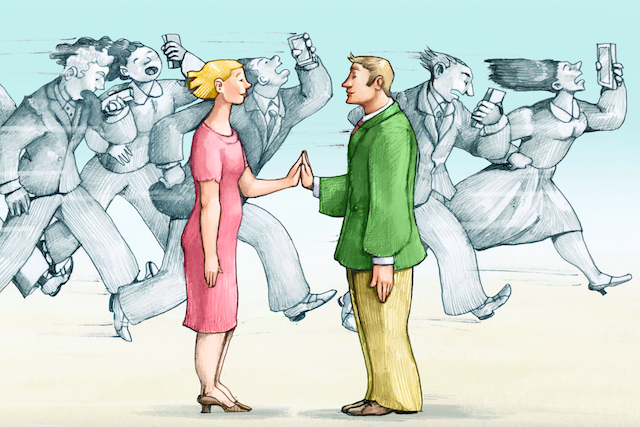
Put Down Your Phone: Why Presence Is the Best Gift You’ll Ever Give
“When you love someone, the best thing you can offer is your presence. How can you love if you are not there?” ~Thich Nhat Hanh
The only thing worse than not listening to someone is pretending to listen.
Giving the vague murmur of agreement, or a quick nod to communicate “Yes, I’m listening, totally,” when really, we’re not.
I remember vividly a dinner I had with friends about four years ago. I’d been backpacking in New Zealand for twelve months and had just returned to the UK. Traveling in the car to my friend’s house, I imagined how the night would look…
There would be lots of laughter (it was always side-splitting when we all got together).
There would be lots of hugging (I hadn’t seen them for a whole year after all).
There would be lots of storytelling (I would get to share my epic adventure).
Did all of this happen? To some extent, yes, but not how I had imagined.
In fact, I left feeling a little miffed, a little gutted.
At first, I couldn’t work out why.
My friends were the same old fun-to-be-around people.
Despite ‘finding myself’ while traveling (I joke), I felt I was pretty much the same old person.
So what was different?
It hit me.
The constant. Mobile. Phones.
The entire evening was tainted by endless selfies, videos, status updates, incoming phone calls, outgoing phone calls, and notifications.
Distraction after distraction after distraction.
There were moments you could have heard a pin drop as the four of us, faces illuminated by the glow of the mobile phones, sat, hands glued to our devices. Ironically, telling anyone who was on Facebook and Instagram that night what a terrific time we were having.
To begin with, I was angry with my friends. But soon I realized I was really angry with myself. I was equally guilty, and people in glass houses shouldn’t throw stones after all.
What could have been, rather, what should have been, an evening of being deeply present with one another, each one of us offering our full and undivided attention, was tainted by technology, spoiled by social media, marred by meddling mobiles.
Backpacking was more campfires and deep life conversations below the stars, so this evening was felt like a return to reality. Most of us struggle to put our flipping phones down.
If we stop and think about it, what message does it send to the human beings in front of us when we are busy on our phones?
I made a vow that evening to get better at this, to be more present with friends and family, anyone I’m communicating with.
I didn’t want to make anyone feel how I felt that evening—unheard and unimportant.
Zoom forward to today and, well, I’m much better but far from perfect.
Technology certainly is a huge barrier to presence, but it’s not the main culprit.
The main culprit lives between our ears, the mind.
The mind is a lot like a talking alarm clock, and you have no control over when it goes off and what it will say.
For example, I can be sitting face to face with someone, physically a few centimeters in distance, but consciously, a world away.
Instead of listening to what the person sitting across from us is saying, we listen to our thoughts.
Hey, did I leave the oven on this morning when I left the house?
I hope my breath doesn’t stink.
Why is that stranger in the corner laughing—is my underwear tucking into my shirt?
Or literally, anything else. Anything. Any other thought can pop up at any moment, pulling my focus momentarily away from the person in front of me.
Luckily for us, people can’t always be certain when we’re not being fully present with them, especially if we’re an expert fake listener, able to give a very convincing response like “Yeah, sure, I get you.” Occasionally, I sense that the person I’m talking to senses I haven’t been listening. I feel bad and forgive myself for being human, before returning to the conversation.
On the other hand, when someone is really listening to us, fully present with us in the moment, we can be certain. Without a doubt, because we feel it.
It’s tough to put such moments into words, but you just know.
Moments when we’re fully present with someone and it’s reciprocated, it’s like magic, like the rest of the world fades into the background. Like the first time you fall in love and you just feel connected; you feel the dance of communication, the resonating, the synchronicity, the oneness.
That’s it. This, for me, is what presence is all about. The oneness.
A few of my favorite ways to get present and cultivate oneness are:
Eye contact
The eyes truly are the windows to the soul. Giving eye contact really lets people know they’re being heard.
Listening to understand instead of listening to respond
We’re stuck in our heads if we’re listening purely to plan our response. Tuning into a person’s words and also how they say the words has greatly helped me to connect with people.
Limiting distractions.
Technology, off. The world can wait.
Remember the good old days when only landline phones existed and if you weren’t at home people would leave a message and patiently wait for a response? Bliss. Nowadays, we’re available on mobile, Facebook, Messenger, Instagram, Snapchat, email… the list goes on. Flight mode is my friend. Anytime I want to get present, flight mode is activated.
Facial expressions.
When I really listen to someone, I find I empathize with them so much more. Naturally my facial expressions will reflect this, communicating I understand how they’re feeling. We all wish to feel understood.
In a few weeks’ time, I’ll be flying back to the UK to spend time with my family. In fact, this will be the first Christmas in six years we’ll all be together (my dear parents, older sister, younger brother, and me).
A part of me is sad knowing that around the world, there will be families sitting in their living rooms, surrounded by their nearest and dearest, but not really being there.
Distracted either by their own minds, their mobiles, or maybe their new presents.
It doesn’t have to be like this. Board games can be played and conversations can be had, with presence, together.
In truth, we needn’t wait until the holidays to connect in this way, as any moment, any conversation, offers a chance to be present with each other. But the holidays, for me, really are prime opportunities.
To be surrounded by the ones we love most and be with them more than just physically, but emotionally and spirituality too, well, this is worth more than any gift you’ll give or receive this year. This holiday season, give presence.
-
The Signs of a Strong Friendship (and an Unhealthy One)
“Lots of people want to ride with you in the limo, but what you want is someone who will take the bus with you when the limo breaks down.” ~Oprah Winfrey
“How on earth am I supposed to survive? I have no friends whatsoever!”
These were the thoughts that ran through my mind then when I first set foot in London five years ago. I felt raw and vulnerable in the beautiful new city that I had to make my new home, alone, with my two kids, while my husband was overseas. I wondered how I was supposed to do it all.
Well, I had J, a friend I’d met on my honeymoon in Bali, but we had only kept in touch occasionally, so I didn’t expect much from her. I couldn’t really call her my friend, maybe a pleasant acquaintance, but surprisingly she turned out to be my much-needed rock-solid support system and guardian angel.
Every Saturday after work, she came over to my place, and we hung out. Sometimes we would walk to the park. Other times she would encourage me to drive (something I resisted). She visited my daughter when she fell and was in a cast and made my four-year-old daughter’s birthday memorable. She even helped me put up my garden table and chair. To say that I was grateful for her kindness would be an understatement.
I was grateful—one, because the help and friendship she offered was unexpected. Secondly, because she did it with a great and open heart. And lastly, because she accepted me for who I was and what I could offer at that point.
For the first time in my life, I was a ‘receiver’ in a friendship. Until then, I was always the giver.
But with J, things were different. Her generosity touched me so much, so I thanked her often and told her how much I truly appreciated the trouble she took. But she always shrugged it off. One day as I was thanking her for the millionth time, she said, “Lana, the friendship goes both ways. I too appreciate hanging out with you and your little kids. They add a lot of joy to my life also!”
She then proceeded to tell me that she lost two of her friends to cancer in the last few years, and the sudden losses left her feeling devastated. She said spending time with us helped her through that. I was shocked to hear it but was also pleased to know that my kids and I could fill that void for her in our imperfect selves.
Her honesty and generosity taught me some essential lessons on friendship and helped me differentiate between a healthy and unhealthy one. So, let’s unpack them.
The Tell-Tale Signs of Healthy Friendship
1. There is an equal amount of give and take in the relationship. Both people’s needs are considered essential, and the friendship doesn’t feel lopsided.
2. You’re both honest and transparent with each other. When J honestly opened up to me, it cemented our friendship because it made me feel equally important. Till then, I thought I was the vulnerable person in need of her, and I was surprised to know that she needed me as well.
3. You’re both kind and compassionate, and you completely accept each other. Whenever J arrived, she was always considerate of how overwhelmed I was. She was happy to have an overwhelmed, scared, and disoriented friend and accepted me for who I was.
4. Good friends don’t try to control, dictate, or tell you how to live your life. Though I was new to many things, she didn’t try to control me. She offered suggestions and sometimes pushed me out of my comfort zone but never crossed any boundaries. She gave me the space I needed.
5. Good friends are generous—with their time, resources, or whatever they have to give. J was generous with her time and company and took me to various places. I was happy to have another adult with me as I visited new locations with my girls.
6. Good friends appreciate each other and don’t try to take advantage of each other’s vulnerabilities.
7. Good friends don’t try to manipulate the other for personal gain. They may help each other, but they don’t use each other. They spend time together because they care for each other and enjoy each other’s company, not because they want something from each other.
Whenever there is an equal amount of give-and-take in a relationship, honesty, respect, and empathy for one another, you can be sure it is a keeper.
Through J, I learned that friendship is a two-way street. Before that, I had no standards and welcomed anyone and everyone in my life as friends. Even the ones who walked all over me and took advantage. J upped the bar for me.
So, what are the signs of an unhealthy friendship?
1. It feels one-sided. The other person dominates the friendship and prioritizes their needs and wants over yours.
2. They’re insensitive to your needs—they don’t consider them essential, or they trivialize them as unnecessary, either by joking or making your needs sound insignificant.
3. They subtly undermine you, implying that you aren’t good enough, can’t do what you want to do, or shouldn’t bother pursuing your wants, needs, and interests.
4. They see you as a means to an end, meaning you are useful for some specific purpose. Maybe you can help them move forward with their career, or you’re a bridge to connecting with someone else.
5. They do not respect you—they ignore your boundaries, talk to you in a condescending tone, and/or treat you like you’re not a priority.
6. They don’t respect or appreciate your time or effort.
7. They’re demanding and think everything rotates around them.
8. They have numerous issues that they can never sort out on their own. They never ask about you; you’re only there to listen to their problems and service their needs.
9. They’re always competing with you, and everything is a game where they want to be the winner.
10. They don’t want to know about you—your past, your feelings, or your interests.
11. They repeatedly bail on you unexpectedly, as if they don’t value your time together.
Walter Winchell says that “A real friend is one who walks in when the rest of the world walks out.” Here’s hoping you find that real friend who understands you, lifts you, and brings out the best in you!
-
Dear Childhood Friends, Thank You and I Miss You
“Sweet is the memory of distant friends. Like the mellow rays of the departing sun, it falls tenderly, yet sadly, on the heart.” ~Washington Irving
Why is it that the older we seem to get the more and more we miss friendships from days long past?
You know the ones…
The friendships where you felt 100% happiness being in their presence.
Where you felt as if you could be your true self—goofy, silly, honest, and real.
Where you would get lost in conversations, imagination, and being fully present in the moment.
Where you went on adventures, told them your secrets, and laughed until your bellies hurt.
They knew you, and you knew them, and it just… clicked.
You swore you would be BFF’s forever, maybe even got one of those adorable half-heart necklaces, but somehow along the journey your paths drifted.
You wonder what happened; but you know what happened. Life happened. They went one way, you went another.
Leaving a sadness in your heart, you may or may not have been aware of at the time, because life simply went on.
You met other friends, classmates, co-workers, acquaintances, and as you began to juggle all things life, career, and family the years passed by.
Until one day, a photo of them pops in your social feed and the floodgates open up as you reminisce on the memories of a simpler time.
Remembering how important that person was to you.
How their friendship helped shape who you are today.
How you truly were 100% yourself around them before life experiences dimmed your essence.
You think about how much you miss that person in your life.
About how you wish you hadn’t let the bond of friendship drift as your heart literally hurts.
You think about reaching out to say hi. To tell them how important they were in your life. How grateful you are for the friendship you shared.
That you miss it.
That you miss them.
But you fear it would be weird.
Justifying to yourself:
They are too busy.
They have their own life.
It has been “too long.”
And as your mind talks your heart out of reaching out, you breathe a heavy sigh and keep scrolling.
—
We have all had these friendships.
And maybe not just one.
At various stages in our lives we have those special friendships that go that ‘next level.’
Whether it was your childhood friends, high school friends, college friends…
There is something about the bond of growing through a time of transition with someone that creates an unshakable foundation.
And it is not until you find yourself lost in the throes of adulting, longing for connection, that true-authentic-next-level connection that you reminisce and reflect on how special those bonds truly were.
Because no one tells you, when you transition into adulthood, parenthood, and midlife how badly you will miss those friendships more than you ever knew was possible.
How creating authentic, soul-connecting friendships seems to be harder than it once was.
And how these special friendships will forever be embedded in your heart.
If you are like most, you may look back and feel some regrets.
Regret for letting those friendships drift.
Regret for not saying the things you wanted to say, or saying the things you wish you didn’t say.
Regret you did not tell them how important they were to you and how they have shaped who you are today.
Regret for not recognizing the specialness of the bond you shared.
But the thing is, it is not too late.
To tell that friend how much they meant to you.
To apologize for something that you may still regret.
To tell them how much you valued them.
To tell them how much you cherished all of the laughs, the trials and tribulations and memories which were made.
Because although you both may have grown separate ways through life, your roots are forever entwined.
So today, I challenge you to choose love.
To choose bravery.
To choose vulnerability.
To choose connection…. re-connection.
If you have a friend who’s been on your mind but have been hesitant to reach out and tell them how much they impacted your life, tag them in this post. Send them a little note. Add them on one of your social media platforms. Reach out and let them know you are thinking of them with no expectations, but simply to share a smile, a memory, a reminder of how much you value them.
For what I would give to have one more conversation with one of my best friends who is no longer here.
To tell her how much I admired her resilience, her dedication, her strong morals.
To tell her I’m sorry for not being a good friend when I was consumed with my inner demons.
To thank her for some of the best memories I could have asked for.
To tell her I valued her friendship, honesty and love more than anything and I only hope my daughter can have a friendship like we had.
To thank her for giving me an empathetic ass kicking when I was in the throes of an eating disorder and binge drinking and saving my life.
Be brave.
Choose love.
Choose connection.
“Growing apart doesn’t change the fact that for a long time we grew side by side; our roots will always be tangled. I’m glad for that.” ~Ally Condie
-
The Most Important Lessons We Can Take from This Pandemic
EDITOR’S NOTE: You can find a number of helpful coronavirus resources and all related Tiny Buddha articles here.
“And the people stayed home. And read books, and listened, and rested, and exercised, and made art, and played games, and learned new ways of being, and were still. And listened more deeply. Some meditated, some prayed, some danced. Some met their shadows. And the people began to think differently.” ~Kitty O’Meara
While this pandemic is turning out to be a very confusing and difficult time for many people, it is undoubtedly giving humanity an incredibly rare opportunity to learn some challenging lessons. I believe these lessons will trigger a much-needed change of perspective for how we do things on this planet and will hopefully enable us to turn over a new leaf.
For so long it felt that we had been living in a way that went against everything that is natural and sacred.
We had been living in a way that neither serves humans nor the natural world, and yet we continued on this path seemingly powerless to stop what we were doing.
It’s as if we were all part of this machine that kept on chugging along, but no one could find the stop button. Well, that stop button has arrived and it’s not like anything we could have ever imagined.
Over the last several weeks we have seen a massive change in our priorities, and the economy has echoed this to a great degree. Sales of food and health products have gone through the roof, while sales of clothes, makeup, cars, etc, (you know, the stuff we don’t really need but think we need to attain some kind of happiness) has plummeted.
In my personal life, I can feel that my priorities have massively shifted due to this pandemic, and it has been eye-opening to see how so much can change in such a short space of time.
I recently found myself looking at pictures I had taken a couple months ago of me and my daughter out and about, and suddenly this strange thought came to my mind: In some way, life will never be the same again.
I think most of us are wondering what the future will hold and how this pandemic will change the way we do things, but I feel there is no way to escape the change in perspective that it will bring.
This is our silver lining, and it will hopefully allow us to look back on this time and feel there were some benefits.
Here are six valuable lessons I think we will learn from this.
1. The power of stillness.
Our lives were put on pause, many were forced to work from home, and we can longer travel unless necessary.
With this, we were given the power of stillness and the opportunity to unapologetically slow down. There is no other situation other than an outbreak of a virus where our world would come to such a pause. This will most likely be an opportunity that we never get again (and ironically, we are all hoping we won’t ever get again).
As such, now more than ever—for those who are still under lockdown—this is the time to go within and be still with yourself. Heal, remove emotional blockages, meditate, and practice yoga. Take this opportunity to do the inner work that you previously had no time for. If ever there was time for personal transformation, it’s now.
And as the lockdowns begin to lift perhaps we will see the value in living a quieter and more peaceful life.
2. Friends and family mean everything.
Probably the most difficult part of this journey for most people is being separated from their friends, family, and maybe even a romantic partner.
I once heard someone say that “connection is something that all humans need, but we are just not very good at it.” Who here feels that maybe they took human interaction for granted before this? I will raise my hand to that.
Connection is something that is so critical for our emotional and mental well-being, yet it something we often take for granted.
After this is over, I think people will reach out to each other like never before and everyone will be so overjoyed to see their loved ones again. And just maybe we might be a little bolder and share our smiles and greetings with those we don’t even know.
3. Nature continues to thrive even if the world has shutdown.
For many during this lockdown, including myself, nature has been a life saver. Whether we spend time in our garden, walk through a park, do gardening, grow food (I grant that not everyone has been able to enjoy these luxuries), or simply poke our head out of our window for some fresh air and sunlight, the serenity of nature has been something we can rely on. While the world stopped, nature remained constant.
Incredible stories have also emerged about wild animals taking over quiet city centers and dolphins returning to waters that they haven’t been spotted in for hundreds of years. Nature never stops, and the sad truth is that less human activity has meant that nature has been able to thrive in a way that most of us haven’t seen in our lifetime.
Yet, maybe seeing nature in full force with all its beauty will prompt us to create new systems where humans and nature can thrive together. I can’t bear to think of losing our new fresh air or the animals that have finally felt safe enough to come closer to us. Perhaps this will be the big wake up call we needed.
Either way, I believe humans will make a renewed relationship with nature and just hopefully this might lead to big environmental change.
4. Material goods mean nothing.
As I have already mentioned, this pandemic has forced us to completely rearrange our priorities, and I can’t help but feel this is a good thing. What good are material things when your health, safety, and access to food are jeopardized? They mean zero at times like this, which I think just helps us put into perspective exactly what we should be prioritizing in our lives.
Since realizing this virus was going to be something that was very serious, I have barely bought anything that isn’t absolutely essential. And of course, this doesn’t mean that I am done with buying beautiful clothes or things to make my life more enjoyable, but it has cast a light on how little I actually need and what truly makes me happy.
5. Our health is gold.
Health is something we so easily take for granted until it is at risk. The possibility of our health taking a downturn has made many of us pay more attention to our nutrition intake and cleanliness. Some of us have even been taking preventative health measures and steps to boost our immune system.
If we have a working body with no serious physical ailments, we should be beyond grateful!
6. Essential workers are heroes.
Every good story needs its hero, and in the story that is playing out on our planet right now, our heroes are of course key workers—healthcare workers, delivery drivers, bus and train drivers, and those who work in the supermarkets and food distribution. These are the people who are keeping everything going and right now risking their health and safety every day to do it.
In the past, so many of these professions were deemed as jobs that require little skill or don’t deserve much pay, but right now there is no saying what we would do without these people.
I hope in the future these professions shall be seen with high esteem, and the soldiers fighting on the frontline will be remembered. If this pandemic is teaching us one thing, it is not to take anyone or anything for granted.
What Will Be the Outcome of All This?
I think everyone is wondering what exactly will come out of this crisis and whether we will really change our ways. Will we learn the lessons or go back to the way we were before—our unhealthy ‘normality’?
This is yet to be seen. However, as individuals we can make our own choices, and it is our individual choice that will make all the difference.
Let us learn from this situation and do what we can to preserve nature, to bring more stillness into our lives, and to never take people or our health and safety for granted again. As always, individual change and transformation will always triumph.
-
10 Things You Need to Know to Maintain Strong Friendships
“A friend is someone with whom you dare to be yourself.” ~Frank Crane
Studies show that feeling connected to other people is a core human need. A sense of connection impacts not only on our mental health but also our physical well-being. It reduces our risk of disease and increases longevity.
While the research is clear, statistics also suggest that our level of social connectedness is declining. Social media might help us be more widely connected, but it doesn’t usually replace the connection we experience in offline friendships.
It seems that as adults we aren’t that good at friendships. People complain that it’s hard to make friends and maintain existing friendships after leaving school. It’s largely because we are busy with jobs and families, but I wonder whether there are other reasons outside of those external circumstances.
Growing up I had a very specific ideal of what “true friendship” looked like, which I had primarily picked up from books, TV, and movies: You have a best friend who you share everything with, hang out with 24/7 and grow old with—through thick and thin and of course happily ever after.
Only my reality looked different, which in itself made me feel that there was something wrong with me.
I also struggled because I felt like an outsider. I am mixed race (half Chinese, half German), was born and raised in Germany, and grew up very conscious of looking different, which is something I simply cannot hide. My parents told me to be proud of being different, but I wanted nothing more than to blend in because I felt that my difference isolated me.
I was a painfully shy kid. I always found it difficult to approach other kids and I began feeling invisible to the world.
I wanted to belong so badly and would have done anything to fit in, but because I had convinced myself that I was too different, I eventually stopped trying. Instead, I pretended I didn’t care about not being part of the group. I didn’t want anyone to see that I was upset. On the outside I seemed self-confident and strong, but always faked it and never made it (until much later in life). In short, I was doing the opposite of being myself.
The belief that nobody noticed me stuck with me into adulthood until I eventually realized that I hadn’t been invisible but rather I had been hiding. I had built a solid wall around me.
As an adult I can see that I probably wasn’t all that different from the others. How many of us grow up thinking we need to pretend to be someone we are not in order to belong and to be loved? How many of us still do this now as adults? And how ironic is it that by wearing a mask we achieve the opposite of what we intend and basically make it impossible to experience true connection?
Over the years, I’ve learned a lot about letting people in and creating meaningful connections. And I’ve come a long way from that insecure little girl who hid behind a wall and felt chronically isolated. If you’ve struggled to form and maintain friendships, perhaps my lessons may help.
1. Not all friendships are created equal.
Friendships are not a “one size fits all” kind of affair but rather come in different shapes and forms. A friend doesn’t have to cater to all your needs. It’s more natural to have friends for different areas of your life. That doesn’t make any one friend “less than,” but it feels much healthier than placing undue expectations on one person.
For example, a lot of my close friends live far away and we no longer share our everyday lives with each other, but I know I can still rely on them. Then there are people I’ve just met. While sometimes I instantly click with people, with others it takes longer to connect deeply. I also have loose acquaintances, and while we might not discuss our deepest thoughts, it’s still fun to connect through experiences and mutual interests.
Once we open our minds to what friendship can look like, we will gain access to connections that would have otherwise gone under our radar.
2. Connection is a two-way street.
The quality of connection is made up of what both of you are putting in. And the connection is likely to break apart if you expect what you are not prepared to give.
This doesn’t just apply to what you are willing to do for the other person. Are you fully showing up as yourself? Are you allowing others to really see you? And are you prepared to really see the other person, too, including the more challenging things that can feel heavy and painful?
3. People can only honor your needs and wishes if you communicate them.
We often expect others not only to read our minds but also to be on the same page as us on all matters. Chances are that if you haven’t clearly communicated what you expect from your friend, they might have no idea.
But also, remind yourself you have no “right” to others fulfilling your needs and wishes. Be prepared that others aren’t able or don’t want to give what you would like them to give you.
You know that saying “In times of crisis, you find out who your real friends are”? Well, I don’t entirely agree with that. It assumes that there is an unwritten rule about how friends need to behave, but there can be multiple reasons why they might not be able to be there for you to the extent you expect them to.
When my mum passed away, for example, my friends reacted in different ways. I totally understand that a lot of people find death highly uncomfortable and simply too terrifying to talk about, so, I accepted that I wasn’t able to talk about it with all of my friends.
Fortunately, some friends were able to be there for me. This experience taught me to formulate my needs and ask for help. On some days, the support I needed was to be able to talk and cry and on other days, I wanted to be left alone. The only way for my friends to know was for me to tell them.
4. You don’t need to agree on everything.
Maybe this is just me, but I feel an urge to agree with my friends on everything. Disagreements on even the smallest of issues cause me a certain level of discomfort. Of course, this is where the cycle of not being myself begins: by not saying what I really want in order not to upset the other person. That’s what compromise is for though, right?
I am therefore teaching myself to remember that it’s okay to disagree and to learn to accept that niggling feeling of discomfort that I still feel, even when I know this won’t affect the friendship overall.
That being said, sometimes disagreement is a sign that someone isn’t a person I want to be friends with—there are certain no-gos, certain things that just aren’t okay with me. Get clarity on your no-gos and stop sweating about the rest.
5. You don’t have to like each other all the time.
This for sure is another remnant of my Hollywood friendship ideal. Do you like yourself all the time? I don’t. I can be moody or thoughtless. I have characteristics I don’t like and that I am working on changing.
The same goes for every other person. And not only do we all have bad days and do stupid things sometimes; we might also have spleens or characteristics that are annoying to others. But they are likely outweighed by our loveliness . If so, maybe you can accept them in your friends and focus on all the rest instead of getting worked up over them or trying to change them.
6. Friendships need appreciation to flourish.
Don’t take friendships for granted, whether it’s the little or the big things: tell and show the other person that they are appreciated and loved, and express your gratitude. Especially when we have known somebody for a long time, we may expect them to just know how we feel. And chances are they do, but it’s always nice to hear it, too.
7. Not everyone will give as much as you give.
Just the way we set our own boundaries and decide what we are prepared to give, everyone else has the same right. And everyone’s boundaries are different.
While solid friendships naturally involve give and take, it shouldn’t be about tit for tat. Don’t keep count and don’t expect reciprocity for everything you are giving into the friendship. Give because you want to, not because you feel obligated or because you want something in exchange.
8. Grudges erode relationships.
I am pretty good at holding a grudge. I also know that it’s my coping mechanism for trying to protect myself from getting hurt and disappointed again.
Here’s a secret: It doesn’t work! Also, is it worth proving that you were “right”? Do you even know for sure that you were “right”? Put yourself in the other person’s shoes: Can you understand where they are coming from? Communicate when you are upset, clear the air, and move on. But remember:
9. Strong friendships require strong boundaries.
Boundaries are so important, and a lot of us are unfortunately not very good at a) identifying our boundaries b) ensuring they are honored, and c) walking away when they are not.
Personally, I have two main areas where I am still learning to communicate my boundaries: First, I’m part introvert and as much as I enjoy socializing, it can also feel depleting. Saying no to an invite or leaving a gathering when my limit has been reached still doesn’t come easy but it’s getting easier. It’s a matter of taking my own needs seriously as well as explaining them to my friends.
Secondly, people tend to find it easy to open up to me and often come to me for advice. As much as I want to help people and especially support my friends, I am still figuring out where my boundary is. I don’t want to take on a one-sided role of “counselor” in a friendship, since this inevitably leaves me feeling resentful. I am aware this is as much about me naturally putting myself in that role as it is about people’s expectations of me.
10. People change.
Are you the same person you were ten years ago? Even one year ago?
We all change, and especially when we’ve known somebody for a while, it’s easy to assume that we know everything about them.
I love this quote by George Bernard Shaw: “The only man I know who behaves sensibly is my tailor; he takes my measurements anew each time he sees me. The rest go on with their old measurements and expect me to fit them.”
Are you still listening? Are you curious? Are you taking an interest?
Sometimes we change so much that we drift apart, and that’s okay. The fact that we may grow so far apart that we no longer want to be friends doesn’t take away from all the joy and fun we had in the past.
Though I have long since bid farewell to my warped idealistic friendship model, I do make a conscious decision about who I want to spend my time with. And the criteria for that can change over time and are for me to decide.
My only advice is this: don’t be quick to discard relationships from a place of disappointment, hurt feelings, a bruised ego, or even a sense of revenge.
If somebody means something to you, talk to them. Figure out a new way to be friends going forward—one that works for both of you. But also accept that people are not there to adhere to your expectations or to the image you built up of them in your head.
And remember that connections in whatever form add immeasurably to the quality of our lives. Let’s open our hearts and minds to experience more of them!
-
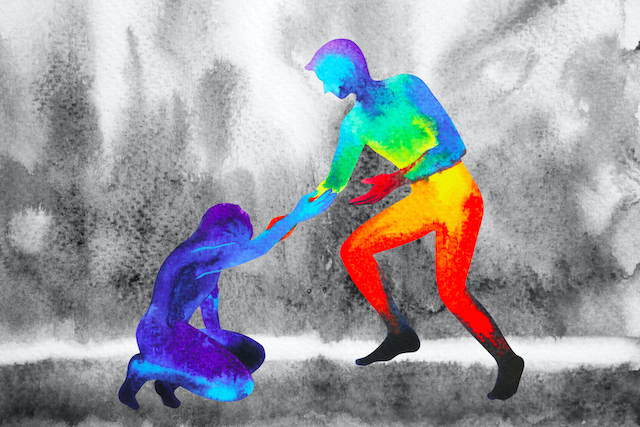
When Someone You Love Is Grieving: How to Really Help
“The friend who can be silent with us in a moment of despair or confusion, who can stay with us in an hour of grief and bereavement, who can tolerate not knowing, not curing, not healing and face with us the reality of our powerlessness, that is a friend who cares.” ~Henri Nouwen
It’s hard to stand at the edge of someone else’s grief.
There’s the awkwardness. You always feel a little like an uninvited guest who arrived late and missed the first half of the conversation—a conversation that turns out to be a wrestle between another person and the deepest parts of their own soul.
What can you say when you realize you’ve barged in on an interaction so intimate, so personal that you just want to avert your eyes and slink quietly away?
Then there are the triggers.
Grief has a way of unsettling everyone in the proximity. It stirs up our own unhealed parts. Is it any wonder that we have the instinct to smooth over the other person’s emotions, to take everything back to normal, before it has the chance to stir up something inside us?
But here’s the thing: Your friends need you. Your family members need you. When we are grieving, we need our closest loved ones more than ever.
I’ve had moments of not knowing how to help too. That’s why I’m sharing my insights about what healed, and what hurt, when I lost my husband to cancer.
Don’t Say Nothing
It would be easier to say nothing. To bury that whisper inside that nudges you to reach out. To focus on the busyness of your own obligations—your life—instead of drawing closer to my dance with death.
I get it. But being on the other side?
It hurts.
It hurts to be this raw, and to have you look the other way.
Please don’t ignore me.
I know it’s a risk. You may get it all wrong. Or you may say all the textbook-right things, only to have me not receive them. My emotions are up and down and all over the place. Some days I’m hard to deal with.
But this risk, it’s the kind that matters. The kind that deepens relationships, cements love, and humanizes both giver and receiver. When we dance together, you and I, trying to figure out how to be in the presence of so much pain, something magical happens. We open ourselves to meaning and beauty and richness. To the purpose of it all.
In facing death, we embrace life.
Don’t Ask How I’m Doing
Sounds counter-intuitive, right?
I just told you not to ignore me. And asking, “How are you doing?” is the first thing we say in most situations to show concern.
The thing, is, answering this question when I’m grieving is painful. It’s so painful that immediately before and after my husband’s death from cancer, our daughters actively avoided going places where people might ask “How are you doing?”
That cut out a big chunk of their support system.
“How are you doing?” asked in passing, say by the clerk at the grocery store, isn’t the problem. It’s the soulful, “How are you doing,” said with words drawn out in long intonations, accompanied with deep pitying eyes, yet said in a rushed or crowded setting, that is tough. It’s tough because:
-Some days going deep enough to give you a genuine answer upsets the emotional balance that’s getting me through the task at hand. Even on a good day, there is so much feeling under the surface. It may be taking all that I have to hold it together. I know you mean well, but please realize it’s hard for me to answer this question honestly and also keep my composure when the setting calls for it.
-The immediate answer doesn’t mean much anyway. Emotions are fragile and unstable, especially in grief. How I’m doing may be different now than it was an hour ago than it will be in another hour. I’m fine and I’m not fine. Some days I’m really at a loss to explain it all.
-Both of us know the answer is messy and complicated and multilayered. When the setting is too crowded or the time is too short for a heartfelt conversation, we each feel the disconnect of a partially true response. It creates distance instead of intimacy between us.
Fortunately, there is a better way to bridge the space between us, and to communicate love and support.
What to Do Instead: Pretend I Already Answered You
You aren’t going to be satisfied by a cheerful “Fine!” when you ask how I’m doing.
You won’t believe me because you can see the grief behind my eyes, despite my smile. And even if you haven’t been through my experience, something deep down tells you that this is big. Too big to be neatly resolved and tucked away in the category of memory.
Trust yourself. You’re right.
So what would you say to me if we fast-forwarded past the “How are you doing?” stage? If I actually had the time and space and emotional stability to give you a full response, how would you answer?
Pretend I just told you that I’m trying in this moment to be strong, but I secretly I wonder if I’m too broken to ever be whole again. That I’m struggling, and it’s so hard. That last night I lay on the bathroom floor and screamed “no, no, no!” to the universe how many times? A hundred? A thousand? That I have to choose, moment by moment, to focus on life and hope. Except sometimes I’m not sure I want to live anyway. That loss is loneliness beyond words.
Pretend I told you that despite all that, there are moments of happiness. And that part of me feels guilty for that. But the other part grasps for any glimpse of joy and peace with the intensity of a drowning person struggling for breath. Pretend that I asked you to please, please not push me to dig deep if this is one of those rare lighter moments. Let me breathe air for a few minutes before I am submerged again by the grief.
What would you say?
Skip the question. Say that instead.
I have no words.
You’ve been on my mind.
I believe in you.
It’s good to see you.
I love you.
Or if you and I are close enough, say it with a hug.
And then, if you really want me to know that you care, schedule a bigger chunk of time for us to spend together. Maybe in that setting I’ll want to talk about the loss. Or maybe I’ll cherish the distraction of talking about something else.
Either way, I need you. Isn’t that what you were really wondering?
Don’t Tell Me That Time Heals All Wounds
Even if that were true, it still wouldn’t be helpful.
What I need is for you to see where I am now. To witness for me, and to share with me, this intensity. I want you to understand how raw, how immediate, how overwhelming the suffering is right now.
But it isn’t true that time heals wounds. At least not always.
Some pain lessens with time. Other pain festers and worsens. Some people grow from tragedy. They become deeper and stronger and more beautiful. Other people become a withered, gnarled caricature of what they used to be.
And it isn’t really time that makes the difference.
It’s heart and hope. It’s choice. It’s victory in this fight against despair and discouragement.
Don’t minimize my battle.
What to Do Instead: Stand with Me
Do you want to help me in the battle? Then stand with me.
In the center of my pain.
Don’t rush to hide it or fix it or silence it (you can’t anyway).
Be brave with me. Accept the discomfort of your own emotions bubbling up when you look at me.
Accept the helplessness of not being able to fix this. (It’s scary, isn’t it? This realization that you are also vulnerable.)
Be a witness to what is.
Choose to stand with me in this place I didn’t choose to stand.
Don’t Tell Me to Call If I Need Anything
Once again, I know this comes from a good place, but the reality is, I desperately need you right now. It’s not a matter of if.
The normal tasks of life are piling up undone around me. Which matter most? It’s hard to focus. To remember. To care.
Truthfully, I don’t even remember when I last ate.
I don’t know how to organize what I need when this grief is so large that it blocks my vision and squeezes against me until I can’t even breathe.
And if by some great effort I did articulate what I need, what if you said no?
What if I called to you, from this broken place, and you didn’t come?
The risk is too much, because even more than I need your practical help I need you. I need to believe that you would be there, if only I could say the words.
What to Do Instead: Help Me
Think of something you could do to bring sunshine, and offer it. The specifics of what you offer matter less than your willingness to reach out.
- Can I drop off food for you tonight?
- Can I come by and mow the lawn/walk the dog/change the oil this week?
- I have a gift card for you.
When you reach out in a tangible way, I come to trust your sincerity. I think that maybe I really could ask for your support when there is a specific challenge I need help solving.
Most of all, I feel you with me. And that was the biggest need all along.
Don’t Tell Me What to Feel
Everyone talks about stages of grief: denial, anger, bargaining, depression, acceptance.
The truth is messier.
There are cycles of grief. I cycle back and forth from one reaction to another, sometimes in the same day. All those feelings are part of the process. All are valid.
I cry. I yell. I laugh. I sink into sadness too deep for words.
It’s exhausting work, grieving.
Imagine wrestling a giant polar bear slicked down with Vaseline. Teeth and claws bear down on you as you struggle against an opponent many times your weight and muscle mass. When you try to get a hold, your fingers slide off and you find your hands empty.
That’s how it feels to grieve.
So don’t tell me to smile.
I will, when that is what my healing calls for. For now I’m doing my best against something terrifying and overwhelming.
Don’t tell me to be strong.
I already am. I am a warrior, and this is what battle looks like.
Don’t question me when I smile or laugh. Sometimes I need to stop and breathe during this intense work. When I do smile it doesn’t change the depth of my pain.
What to Do Instead: Believe in Me
Believe I can fight this fight.
Believe it with so much confidence that you don’t rush to fix what you can’t fix or to control a process you can’t control.
Believe it so completely that you aren’t threatened by my anger or terrified by my despair.
Believe that I can face the rawness of my life ripped open and gutted in front of me and rise again.
I will make it not because I am special or chosen or different than you.
I will heal not because of all the advice and reassurance you give—as much for yourself as for me.
I will heal because in touching the center of my pain, I have found my own strength.
You Will Heal Yourself as You Help Me Heal
You want to help.
Even though it’s hard, sharing this journey. Thank you for trying. I know it’s awkward and emotional and brings up feelings it would be easier not to feel.
But there’s something beyond altruism you might not have considered.
This journey is actually as much for you as it is for me.
Those broken pieces inside you, the ones that are triggered when you witness my pain? They can also be healed as you share in my journey.
I’m not saying it’s easy.
But as you sit with pain—mine or your own—you learn that in a way deeper than words that hope matters. That love prevails.
And as you feel the depth of those hardest emotions, you start to believe in a way raw and real that life is beautiful—even its shadowy underbelly.
Most of all, as you watch me stand naked and vulnerable—yet determined as a warrior—in the face of so much grief, you start to believe in me. Not the kind of faith that is padded and comfortable, insulated by layers of platitudes. A faith born in fire. Gritty. Pure. Powerful.
And as you believe in me, you also come to believe in yourself.
-
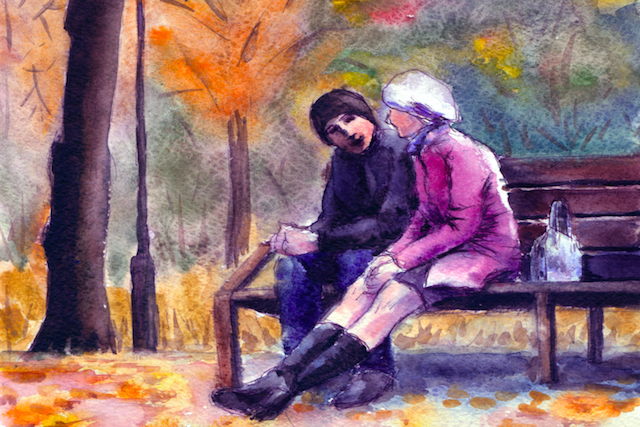
Knowing When to Let Go of Relationships: 3 Signs It’s Time to Move On
“Letting go doesn’t mean that you don’t care about someone anymore. It’s just realizing that the only person you really have control over is yourself.” ~Deborah Reber
Thanks to the Internet, our lives are full of people. We’re connected literally all the time.
And yet, despite our ceaseless connection, we feel disconnected.
As the pace of life becomes ever more frenetic, we’re like charged atoms, bumping into each other more and more, pinballs in the machine. We come into contact (and conflict), but we don’t commune so much.
As real relationships of depth and quality become harder-won in this busy new world, their value is more keenly felt. Simply put, in the words of Brené Brown, “Connection is what gives purpose and meaning to our lives. It’s why we’re here.”
As we fight to carve out space for these connections whose value has become so apparent, it’s natural that we cling to them more dearly.
However, sadly, often the tight clinging to something is the sign that the time has come to let it go. With something as valuable as a relationship, how do we know when that time is? How do we know when it’s time to move on?
I’ve unintentionally become an expert at moving on. Having lived in perhaps a dozen countries and had jobs with as many as 200 days of travel a year, I am keenly aware of the centrality of relationships. Living out of suitcase and having a rented apartment fully furnished by IKEA, they are all I have. They are my lifeblood. But sadly, I have also become far too practiced at needing to let them go.
Traveling so much and relocating so often, my life has been enriched by the people I know. So many nights alone in my hotel room, I wasn’t alone. I was writing, speaking, and despite the physical distance, connecting with my dear friends.
I’d arrange business trips or weekend travel so that I could meet them in some city somewhere in between. It was an effort that I would gladly expend, but I learned to see when that effort was no longer worth it, as difficult as that was to accept.
Here are the three simple signs that tell me when it’s time to move on:
1. When you need to plan and strategize how to present yourself
As life moves forward, we change. Our jobs, our looks, our economic situation, our habits, our interests—everything changes all the time. It’s the one constant in life.
As two peoples’ lives change simultaneously, gaps inevitably form between them. In a relationship that will stand the test of time, these gaps are bridged with each meeting. It’s the classic case of “We haven’t seen each other for five years, but when we met, it was like no time has passed!”
However, there are times when, with each meeting, the gaps get wider, and soon they’re more like gulfs. In these cases, we often spend time before the meeting fretting about how to explain, obfuscate, conceal, or excuse. Shame has crept in, and we feel like we can’t be ourselves. We’re either embarrassed of who we’ve become, or we suspect the “new” us somehow will not be acceptable to the other person.
I’ve put on too much weight—she’ll never like me this way. My career hasn’t taken the same trajectory as his. I got that divorce, while he has the same wife and now three kids. When the joy and anticipation you should feel when reuniting with someone is replaced by anxiety and inadequacy, that’s a really bad sign.
Of course, it could be all in your head. You don’t give up on the first go. You should make an effort to “be real” and lay it out there that things have changed. You might find it was a lot of worry about nothing. However, if your fears are confirmed and your efforts repeatedly result in awkwardness and shame because the other person rejects this new you, then it’s probably time to move on.
It’s important to understand that this is not a matter of blame. True love is knowing someone fully. It’s when two people become one but maintain their individual integrity. If you need to be someone else in order to get along, then you cannot be in a truly loving relationship.
2. When the relationship drains more energy than it gives
There is almost nothing more nourishing, refreshing, and perhaps even exhilarating than truly connecting with someone. All life is energy, and when someone opens up to you, they share their energy with you, and your share yours with them. Both parties are enriched.
That laugh you share with your old friend who calls unexpectedly. The warm feeling in your stomach when he smiles at you. The rush you get when she tells you she feels the same way about you. That is all our life force.
However, some relationships do just the opposite: they drain us. Our interactions with these people do not involve connection, but instead armoring up and deflection, and that requires energy.
What does this look like? It’s the stressful gaming out of what you’re going to say and how you’re going to say it in order to avoid conflict with that person. It’s the unease you feel when you learn that she’s going to be at that party. It’s the constant bickering with your boyfriend into which otherwise joyful occasions degenerate.
How does this feel? After being with the person, you feel tired, relieved to be away, or annoyed. Beforehand, you may feel nervous, low-energy, or simply like you’re going through the motions or doing your duty.
Two big caveats:
First, if this was a relationship that you considered important to begin with, this does not mean you give up on the first bad vibes. Of course you try and try and try again to make things work, but at a certain point the act of pushing the square peg in the round hole becomes too much. It’s just too draining.
A single negative interaction cannot be enough—in fact, an intense argument shows, if nothing else, that you care about what’s at stake in the relationship.
Second, this is not a recipe for selfishness. Getting energy does not equate with being the recipient of another person’s affections and generosity. In fact, quite the opposite: anyone who has loved knows how much better it feels to give than to receive; it’s a cliché that happens to be completely true.
And yet, if over time you are the only one giving, it starts to feel wrong. At some point you realize the person comes to you for help, not to share. A lasting relationship is inevitably one of mutual sharing and generosity. Anything else will start to wear.
3. When you’re the only one making the effort
I never thought I would need to face this topic, but today’s world of constant connecting without connection has given rise to a terrible new phenomenon—ghosting.
Always having access to a connected device, people can easily just switch to some other form of distraction when there is any negativity (or even effort) associated with reaching out or responding to another person. As our reach expands, our time in each other’s physical presence shrinks, and hence it’s now possible to erase people from our digital lives.
Now, it’s rare to be the recipient of a “hard” ghosting—to literally be blocked. To get to that point would involve a clear and unmistakable rupture in the relationship. However, “soft” ghosting—consistently not responding to messages in a timely manner or not at all, and opting for quick texts over thoughtful outreach and connection—this is something you’ve likely experienced.
Responses to your outreach become fewer and further between, and at some point you realize that you’re basically out of contact.
In these cases, the other person has either consciously chosen to focus on other things they deem more important, or they’ve gotten lost in the world of easy connecting. Or, they may simply have decided they no longer care to maintain the relationship and want to avoid the awkwardness of telling you.
As I began to encounter these painful situations some years back, my first instinct was action and confrontation.
I made an effort to increase my touchpoints with the person in question, invited him/her to dinners and other meetups if possible. When rebuffed (or more likely ignored), I got to a point where I directly conveyed my distress about where our relationship seemed to be heading and asked if he/she wanted to turn it around and what we could do the change the situation.
Never once was this route successful. If someone is moving on with his or her life, and there’s no more space for you, no amount of guilting, cajoling, passive aggression, or begging is going to turn it around. That person needs to value your relationship above the alternatives that constantly compete with all our time each second of every day. He or she needs to want to keep you as an important part of his or her life.
In these cases, the best you can do is reach out, but that outreach needs to taper off—pushing and insisting and pleading will only serve to create negative emotions and likely lead to conflict, or even worse, the person feeling the need to respond to you out of a sense of guilt or obligation. Your relationship lingers on and becomes more stilted and forced and loses its value.
In fact, in any of these cases—when you feel like you can’t be yourself, the relationship becomes draining, or you’ve been ghosted—it’s difficult not to generate a lot of emotional or actual drama. It’s a sad situation involving someone who at least was once very important in your life. You naturally want to fight for it, and you should, to a point.
But, like life itself, in relationships you have to learn to trust the flow. You can swim against the current for a little while, steer yourself this way and that, but in the end you cannot control the river. Instead of ratcheting up your response to the situation and effecting an emotional crescendo, do your best to reach out to your friend with honesty and compassion.
There will come a time when you know it’s not worth it any more. You will feel the negative emotional vibration in the form of resentment, frustration, fear, hopelessness, etc. At that point, however, you risk tainting even the good memories of your time with that person with the bitterness of the breakup. Rather than gratitude for the time you had together, you feel loss. You rob yourself of the relationship you had.
There is no way of knowing when to act, but in this case you’re not taking action, you’re letting go. The best way to know when to do that is to follow your instinct, and when your time being with and thinking about the person becomes a negative experience, that’s probably a good time.
The other benefit of letting go rather than fighting is that you allow space for a reckoning if the other person decides to reengage. And though that’s unlikely based on my own experience, it could happen someday.
After all, you rarely know the exact reasons and motivations for the other person’s behavior. Indeed, they’re often unknown even to the other person, and perhaps unknowable. So, one day you may find your phone ringing, and it’s your friend—people always retain the capacity to surprise you!
And as hard as it might be to imagine, there may be a good reason for the person’s behavior. You never really know the suffering they’re feeling, but if they’re letting go of a dear friendship, the least you can say is they’re not thinking clearly. Some other suffering is taking hold, and it’s your friend’s loss. Don’t make it a terrible loss for yourself too by creating a drama.
This is of course easier said than done, but if you stay conscious and draw on your compassion, you can do it.
Recently, a dear friend of ten years ghosted me. She and I had been through it all: moving countries, marriages, deaths, international travel—all the major life milestones.
A little over two years ago, she became more and more distant and less responsive. Not surprisingly, this coincided with her becoming much more active on social media and followed a period of tragedy in her life. I reached out repeatedly for about a year, but my efforts eventually led to total silence, and I let go. I haven’t heard from her in a year and a half.
The moment I knew it was time to let go was when I was tempted to write her something passive-aggressive. At that point I realized I was experiencing the relationship with negativity, which would inevitably come through in my communication with her.
I would be lying if I said it didn’t hurt, but more futile efforts would have hurt even more and put a possible future reconciliation at risk. I also needed to have the compassion to understand that she had recently gone through a tragic time, and undoubtedly that had an impact on her thinking, feelings, and behavior. I hope she’s alright and remain open to the possibility that one day she might come knocking on my virtual door.
But the truth was clear—it was time to let go.
-
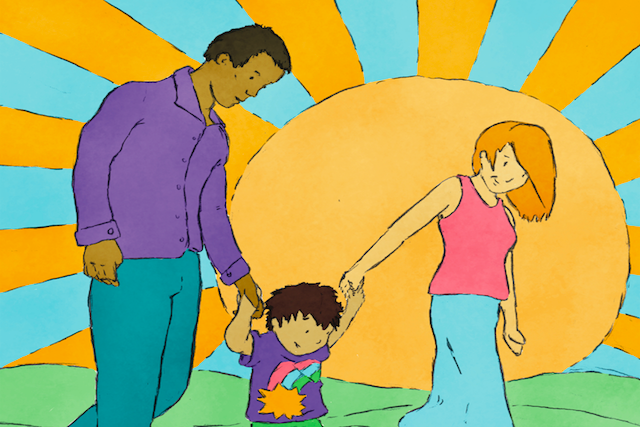
Love Them Today, Before Their Tomorrow’s Taken Away
“Before someone’s tomorrow has been taken away, cherish those you love, appreciate them today.” ~Michelle C. Ustaszeski
Last year, my grandfather passed away.
He had gone to the hospital many times before. Sometimes he went for a minor sickness, sometimes for a severe condition. Unfortunately, the last time he went, we found out that he didn’t have much time left. He was diagnosed with last stage bladder cancer.
It was a shock to our family. My grandfather had always been a survivor. He’d survived the war, the darkest moment of the country. We couldn’t imagine he would lose his life to something like this.
I came home as soon as I could after hearing the news. And luckily, when I was home, he was conscious. He was a big man, but I remember seeing him in bed, looking small and fragile like a sick little cat under his too loose clothes. I was thankful for the chance to be with him for the last time, and happy he knew I was there.
After that, I came to visit and check on him every day. On the last day I was home, I hugged him and told him to get well soon, and that I would come back to visit him when he got better.
Before I even said it, I knew it would never happen. I made a promise that I knew I couldn’t keep.
I returned to the city to work and a couple weeks later, I received the news that he had passed away.
All my memories of him suddenly came flooding back. He was always there in my childhood. He watched me all day so that my mom could go to work, which meant he was basically a stand in parent.
I remembered the time he gently wrapped a bandage around my head after I ran into a wall and my forehead started bleeding. And how he listened patiently to all my childhood problems, from complaints about a dress that was too old to my side of a fight with my sister. And how he often bought me snacks even though he didn’t have much money to spare.
After I grew up, he was still there while I was studying and busy chasing success and promotions. Yet I only visited him a couple times a year, when I had free time.
I was so used to his presence that I didn’t remember to cherish him while I had the chance.
I remembered one time I came back to visit my old school and realized the tree I used to play under was still there, waiting for me to come back for almost twenty years. I felt like I’d treated my grandfather like that tree. I’d never thought much about how long he’d had to wait for me.
I sobbed, tears running down my cheeks. I couldn’t breathe well. My head was heavy. That tree is now gone. Gone for good. My grandfather is no longer. Now every time I drive by his house, the gate will be locked, the door will be closed, and I’ll no longer see him sitting in his chair, drinking tea, and greeting me with a sparkle in his eyes.
Same street, same house, but it will never be the same.
I didn’t come back home for my grandfather’s funeral because I was pregnant, but many of his other grandchildren showed up. Many of them I hadn’t seen in years, even after hearing about his sickness. In fact, I’d forgotten about their existence. How could I remember? They were never there to talk to him, to be with him when he was conscious. Why did they even show up after he’d passed? What were they doing? Who were they trying to impress?
But then it hit me.
They were just like me. They’d treated him like an old tree whose shadow was always there for them to play under. And they only missed the tree when it was cut down and they were exposed to the sun.
I can’t blame them. It makes sense. Life happens. We get busy. We need to work to pay the bills to buy the house to get the promotion. And we just forget. It’s not until we get burnt that we realize how much we needed that tree, and how much we wish we could feel its shade again.
Maybe it’s time for all of us to slow down, look around, and make sure we spend time with the people who really matter to us.
If you also need to get your priorities in check, like I did…
Make plans to spend time with your loved ones.
I’m sure you’re one of the busiest people in the world. We all are. Or at least that’s what we choose to believe. It’s tempting to spend all our time and energy trying to achieve our goals. When we achieve them, we think, then we’ll allow ourselves to take it easy and be with our loved ones.
But what if when that time comes—if it ever comes at all—our loved ones are no longer there?
Don’t wait till you get the time to prioritize the people you love. Make the time. Make a plan. It’s a choice. One you won’t regret.
Put down your phone and stay present.
How many times have you looked at your phone, read emails or the news, or scanned your notifications while talking to someone?
Yes, you might be able to multitask. But did you really listen to the person in front of you?
Put down your phone and look at your mom’s face when you talk to her. Do you notice the extra wrinkles and gray hair that weren’t there before?
It hurts my heart every time I notice a difference in my mom’s face. It’s like standing still while watching her slowly slip away, knowing there is nothing I can do to stop it. We all have but a short time on this Earth. Don’t trick yourself into believing that there will always be a next time because someday, that conversation will be the last.
After my grandfather died I swore to cherish every moment I have with my loved ones. I make eye contact; I listen to them and hold their hands. I hope all of these moments and memories will sustain me when it’s time for the final goodbye.
Let them know how you feel.
You won’t always feel love for the people you care about. Sometimes they’ll annoy you, or you’ll disagree. And that’s okay. No one, and no relationship, is perfect, and we’re all doing the best we can. The important thing is that you value them, even if your relationship has ups and downs, and let them know you care while you have the chance.
Make sure you tell them how much you appreciate them. Send them random texts to tell them you love them. Bring them flowers and watch their eyes light up. These are the memories we’ll remember when we’re about to leave this world. We won’t think about the job, the house, or the promotions, but the little moments we shared with the people who made us feel loved.
I wish I could still do these things for my grandfather. And I wish I did them more often when I had the chance. But I didn’t. All I can do now is take the lesson with me and show up fully for the people who are still here.
Make the most of your time with your loved ones, because you never know when that time will run out.
-
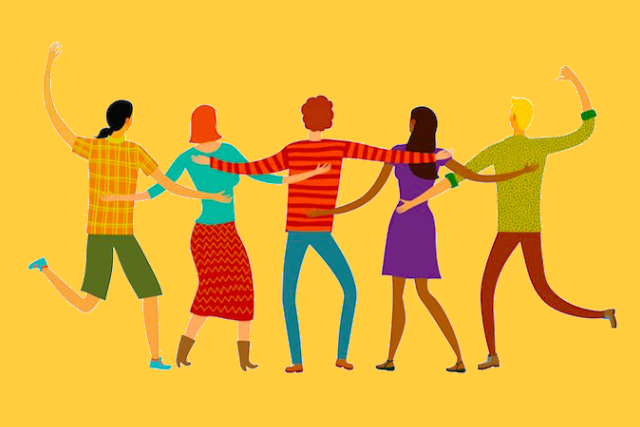
13 Insights About Relationships That Could Save You A Lot of Pain
“It’s amazing how quickly someone can become a stranger; it’s even more amazing how quickly someone can become a treasured friend.” ~Unknown
The past six months have been unbelievably difficult for me.
My “normal” life turned upside down and inside out, as my beautiful daughter continues to fight a complex pain condition, which took us all by surprise one bright and sunny Monday afternoon. And literally, in a single heartbeat, just like that, instead of a regular routine day of school, work and afternoon activities, our time was consumed with juggling doctors, hospitals, tests, and specialists—all of us fully devoted with how to help her heal.
Oprah so aptly says that in life, lots of people want to ride with you when you’re in the limo, but what you really want is someone who will take the bus with you when the limo breaks down. Well, my friends, my limo didn’t just break down. It completely crashed, along with my world as I knew it.
And when days and nights are both sleepless and endless, and you’re not cruising luxuriously through life in your limo but rather doing your very best at any given moment to barely crawl from point A to B without breaking down yourself, you start to realize even more so the complex, beautiful, fragile, and priceless value of real, genuine, consistent friendship.
Sadly, a few people who I thought would walk me home sort of disappeared.
They may have jumped off at their desired station—and I’ve come to understand that it’s alright; I truly only wish them well. Perhaps the fear that this could happen to them was all too much to bear, I get that. Or perhaps they are giving me space, I don’t know. All I know, is they aren’t here.
Others not only ran to my bus, but jumped straight on, and continue to walk me home every single day. These people take the time to check in on me, hold my hand, let me cry, bring me food, make me laugh, and ensure I have enough coffee and love to keep on going through the day.
I love these friends with all my heart and am so deeply thankful to have them on my journey.
Here are some insights about people, relationships, and friendships from my bumpy bus ride that might be useful and comforting for you in your own interactions…
1. Two people can look at the exact same situation and see it completely differently.
I have always believed this, and I’m even more sure of this after hearing my friends repeatedly tell me how in awe they are of my unwavering strength and optimism while I have never felt more fragile, insecure, helpless, or scared. Perception is everything.
2. We always see life as we are, not as it is.
There actually isn’t an objective reality when it comes to people. Facts may be facts, but our viewpoint and our vantage point impact our ability to process the facts as they are neutrally.
We look at life through our own personal filters, our own past experiences, beliefs, and paradigms. We see everything and everyone through our unique subjective lens that has been forming since we were younger.
As Marcel Proust wrote, sometimes, the real voyage of discovery consists not in seeing new landscapes, but in having new eyes. If we are courageous enough to remove the lens through which we currently view a situation, we may discover something worth looking at, that we didn’t see before. This is true for opinions and advice. Think about a current dilemma in your life. What aren’t you considering? What are you possibly overlooking because you are still seeing the situation through the same lens?
3. People change.
I sometimes secretly wish we would stay exactly as we are, but I know that we are designed to grow. We are allowed to. I am learning to give myself permission to grow and change. Let yourself. Let others. Everyone deserves that.
4. People come into our life for a day, a week, a month, a season, perhaps a year or longer, always to teach us something.
Thank them, always. Even if they cause you pain. Some lessons hurt, a lot. In fact, during these challenging months, the voice of my workout instructor reminds me “If it doesn’t challenge you, it doesn’t change you”—true for fitness, true for relationships, true for life. Each person we meet has been brought to us as a gift. Our job is to unwrap it, whatever it may be.
5. You are allowed to close doors to protect yourself, you may even say goodbye, but never wish someone harm.
This is the hardest for me personally. My heart is very big and maybe too hospitable and welcoming at times. To look after yourself and preserve what you value most, you sometimes have to be selective about who you let in.
If someone steals your joy, keep them out. It’s a basic premise of safety and security. Give someone the benefit of the doubt—until they give you reason not to. Then don’t.
There is a critical difference between being a volunteer and being a victim. The first time someone hurts you, you may or may not see it coming. Like me, I always try see the best in people. And when it hurts and you face a blow to the heart, you come crashing down because you never expected that or foresaw it coming your way.
If the same person hurts you again, it’s now up to you to see them coming. It’s up to you to set new boundaries to protect yourself. You can be kind to everyone, but not everyone belongs in your inner circle.
6. You may be willing to do more for others than they do for you.
Don’t change who you are. Keep doing your thing. People may surprise us. Sometimes they really let us down. Others may step up in ways we never imagined. If you keep a checklist, you’ll often be disappointed.
Never do things for others just because they would do things for you. You get to decide what kind of person you want to be. And if you choose to give 300%, then go for it, regardless of what others give you in return.
If you do something for someone just because they did it for you or you want something back, you are doing business, not kindness. Just be yourself, without calculating what you’re receiving in return. When we live this way, we come from a place of generosity and abundance. It’s so much nicer to live this way.
7. Choose your inner circle wisely.
We have limited energy. Choose to surround yourself with people who make the time and effort to lift you up, who genuinely care about you, encourage you, and want to see you win. Our time here is limited, precious, and fragile. Choose your sacred relationships, friendships, and partnerships wisely.
8. Actions speak louder than words.
We can have the best intentions in the world, but our lives are measured by our actions. If you mean well but don’t do well, no one can read your mind. At the end of the day, what counts is what we do.
I am all for giving people the benefit of the doubt—often only seeing the goodness in others myself—but when you are in a tight space, what you really need at the end of the day is someone to help you breathe and get you out, not just someone who thinks about you but doesn’t show up and hold out their hand for you to grab.
That being said, sometimes people can’t show up for us because…
9. People are always fighting battles we can’t see, or may know nothing about.
Remembering this will help us be patient, kinder, more empathetic, and far less critical and judgmental. Life is hard and some days we dress up and show up using every ounce of energy and willpower we can possibly muster. We can’t be in top form all the time. No one can. We are human beings, not human doings, so let’s try to notice what’s going on with the people around us.
10. Minimize the drama.
We have limited energy, especially when going through a hard time, as I’ve been lately. Let’s preserve our energy for our goals, passions, purpose, and doing more good. We do not have to attend every drama we’re invited to. Decline the invitation and keep moving.
If you feel you’re getting sucked in to drama—gossip, or creating conflict where there doesn’t need to be any, for example—take a step back and pull away. Keep yourself focused on your needs, your passions, and your purpose. Drama isn’t good for anyone.
11. It’s okay to gently drift away from people.
There are seasons when gardens bloom and other seasons where branches lay bare. Let it go, let nature do its thing. We can’t force a flower to grow. Energy is real. If your intuition or gut says someone isn’t right for you anymore, listen carefully.
12. Not everyone is going to love you or your choices.
Your job is to love you and your choices. Your tribe will find you. If you live your life according to your values, and you make choices in alignment with them, the right people will be attracted to you and you will gradually ensure you are surrounded by people who are your best fit. Keep doing your thing. I have seen this so beautifully over the years. and when I look at my closest friendships and relationships today, it is testimony to this.
13. Relationships, friendships, partnerships—they don’t work unless we do.
Don’t assume that just because someone has been in your life for years, they are going to want to stay there. These are precious, treasured, cherished interactions that require thoughtful investment, attention, love, and care.
If you want someone in your life, show them. Spend real time with them, genuinely check in on them, do your best in your own unique and special way to help them wherever you can, have fun with them, cry with them, celebrate with them, and please catch the bus with them.
We are all just walking each other home.
Who are you walking with?
You have to really be in someone’s life in order to stay in someone’s life.