Tag: friends

  • When Friendship Is One-Sided: Letting Go of Someone Who Was Never Really There

    When Friendship Is One-Sided: Letting Go of Someone Who Was Never Really There

    “Finally, I realized that I was never asking too much. I was just asking the wrong person.” ~Unknown

    Friendship should nourish the soul. And in my life, for the most part, it has. I have a small, longstanding circle of friends steeped in a long-shared history. We’re basically a real-life, thirty-five-year-long John Hughes film.

    However, every now and then, a hornet in disguise has buzzed into my life and stung.

    He was one of them. A bad sting.

    Love Bombing

    Right off the bat, knowing him felt amazing.

    I was still reeling from the aftereffects of living with an abusive man who died a few months after I finally got away. Emotionally raw, my nervous system felt like it was covered in third-degree burns being scrubbed with a Brillo pad.

    But this new friend? He felt safe. Quiet. Peaceful.

    He wanted to see me multiple times a week. He introduced me to his child. We spent time watching TV, going out for drinks and dinner, living in what felt like a comforting routine. His good morning texts became a comfort for my sleepy eyes.

    It felt good. Really good.

    Until it didn’t.

    A Bouquet of Red Flags? For Me?

    Small things began happening that just didn’t sit well.

    He began to speak ill of others in our mutual friend group. If he’s talking about them like this, what is he saying about me? Then I’d dismiss it. No, Jennifer. He’s a good friend.

    Once, when I asked him to repay money he owed me, I received a semi-scathing text accusing me of not being a “real friend,” because “real friends” don’t expect repayment. Am I here to subsidize your income?

    You’d think I walked away entirely at that point. No, not quite.

    When There’s No Communication, There’s No Friendship

    Instead, I drank too much one night and made out with him. (Stop judging me.)

    I felt uncomfortable and needed to talk about it. I asked if I could come over for a quick chat. He declined. He was “too busy gardening.”

    Right. Gardening. Okay.

    The good morning texts stopped. The invitations to hang out vanished.

    Days later, I texted, “Are you upset with me? We usually see each other all the time, and I haven’t heard from you.”

    His reply: “I’m not upset.” No explanation. No elaboration.

    Five weeks passed. Silence. Crickets.

    And it hurt—more than I expected. I had let someone in after a traumatic experience. I was vulnerable, open, willing to trust again. But the friendship only existed on his terms. Everything was fine—until I asked for emotional accountability.

    Inner Work and Uncomfortable Truths

    After doing a lot of inner work, I realized something painful: I have a pattern of projecting qualities onto people that they simply don’t possess. I want people to be kind, emotionally intelligent, and loyal. So, I make them that way in my mind.

    But people are who they are—not who I wish them to be.

    And for my own well-being, that pattern had to end.

    Not everyone is ready to do the work. And that’s fine. I can only be responsible for my healing, my boundaries, my growth.

    In any relationship—be it romantic, familial, professional, or platonic—every individual has a right to be seen, heard, and valued. To be acknowledged as a complete person with thoughts, feelings, and needs.

    Our voices and wants should be respected and celebrated. Without this foundation of trust, emotional safety, and genuine connection, we begin to feel invisible, diminished, or invalidated.

    And sometimes the most loving thing we can do for ourselves is to leave a space that no longer aligns with who we are.

    It’s not about giving up on people too quickly but recognizing when staying becomes a quiet betrayal of our own needs.

    Self-Respect and Goodbye

    So how did I move forward?

    After acknowledging a deeper truth—that I had lived in a place of unworthiness for far too long, repeatedly allowing myself to be manipulated and emotionally abandoned—I decided to no longer chase breadcrumbs and worked hard on setting clear boundaries. And if those aren’t respected, I give myself permission to walk away.

    And I walked away from him. I declined invites where I knew he’d be present and performed a digital detox: the phone number, the photos, the threads—all deleted. Unfollow. Unfollow. Unfollow.

    And none of it happened out of anger or malice, but from a place of peace. A place of self-respect.

    In the end, we teach others how to treat us by what we allow, and leaving is sometimes the most powerful way to be seen and heard—by ourselves most of all.

    I was whole before I met him. And I remained whole after saying goodbye.

    A Final Note

    Not every friend is meant to stay. Not every connection nourishes the soul.

    Some buzz in for a bit, give a quick sting, and buzz right back out.

    The lesson? To stop letting ourselves be stung over and over again.

  • From Professional to Personal: The Unexpected Joy of Workplace Friendship

    From Professional to Personal: The Unexpected Joy of Workplace Friendship

    “Chance made us colleagues. Fun and laughter made us friends.” ~Unknown 

    A year into my new job, I realized that the hardest part wasn’t the complexity of the work—it was the culture. The office felt like a maze of silos, each person isolated in their corner. The hierarchy was more than just a structure—it was something everyone was constantly reminded of. I was used to navigating high-pressure, competitive environments, but this one was different.

    As a woman in STEM, I had learned early on to keep my personal life separate from my work life. This boundary helped me maintain control, protect my privacy, and avoid becoming the subject of office gossip. It worked for years. But the longer I stayed, the more I felt the weight of that separation. I was increasingly feeling isolated, even in a room full of colleagues.

    For years, I had adhered to the motto: I’m here to do a job, not make friends. I thought I was maintaining professionalism. But here’s the truth: What happens when you spend so much of your waking life in a place that doesn’t let you connect? How can you keep thriving if you aren’t allowed to be fully human, to engage in real, meaningful relationships?

    The paradoxes of modern work culture are everywhere:

    • “Create your own destiny”—but also “Surrender to the universe.”
    • “Work smarter, not harder”—but “Success comes from hustle.”
    • “Don’t tie your identity to your job”—yet when you meet someone, the first question is, “What do you do?”
    • “Collaboration is key”—but everyone is really looking out for themselves.

    These contradictions left me feeling more lonely than fulfilled. The boundaries I had set to protect myself had instead built walls, ones that made me feel increasingly disconnected. It took me a while to even notice how long I was working, or how late I was staying just to “prove” I was worthy of the job. The high turnover rate was a sign that others weren’t faring much better.

    Breaking Down Walls, One Connection at a Time

    But then something unexpected happened. A colleague, stationed right next to me, began to shift everything. She had this unshakable warmth about her. She had big brown eyes and a smile that lit up the room, and more than that—she cared.

    She asked how I was doing, and it wasn’t just casual small talk. It felt real. Unlike many others in the office, she didn’t need to remind anyone of her place in the hierarchy. It was a breath of fresh air. In her presence, I felt seen. Not just as an employee, but as a person.

    For the first time, I realized I had been isolating myself, not just from my colleagues, but from the very kind of connection that could make work feel less like a grind and more like a community. Letting her in was a major shift for me, one I didn’t fully appreciate at the time. But in hindsight, I see that her presence became a lifeline—one that helped me reframe what work could really be about.

    Over the course of my career, I’d met incredible colleagues—mentors, references, even leaders who helped propel my career forward. But none of them had ever become true friends. She, however, became a friend in the truest sense of the word. She listened without judgment, understood without needing to fix, and was a presence that made the office feel less lonely. We remained friends even after I moved on to my dream job.

    And here’s what I’ve come to realize: it’s absurd that we spend so much of our time at work, yet we often avoid forming meaningful, lasting friendships with the people we work alongside. It’s as if we’re all conditioned to believe that work is a place to be productive and professional, and friendship is something that exists elsewhere, in other spaces.

    It’s a lie.

    Work doesn’t have to be a place of isolation. It can—and should—be a place where we bring our full selves, where connection and kindness are valued as much as competence and productivity. I still value privacy. Not every coworker is a safe space. But the idea that friendships cannot begin in the workplace? That’s the real myth.

    Here’s the truth: We all deserve to feel connected, supported, and seen, especially in the places where we spend so much of our time. So, why not break the mold? We don’t have to throw away professional expectations, but we can create new rules—ones that make room for authenticity, kindness, and connection.

    Let’s rewrite the narrative of what work can be. Yes, we must adhere to boundaries and professionalism, but let’s remember that humanity is not a weakness—it’s our greatest strength.

    Practical Tips for Making Meaningful Friendships in the Workplace

    Clarity on Personal Values and Needs

    For any friendship to form—whether at work or beyond—it’s essential to understand what we value and need in a meaningful connection. True friendships aren’t just about proximity or convenience; they are about aligning with people who share our core values and support our growth.

    Through my own experiences, I’ve realized that I deeply respect and connect with people who have strong morals and live by their benevolent principles. I gravitate toward those who are humble and grounded enough to challenge their own beliefs in moments of conflict but who also stand firm against injustice when it truly matters. It took me years to recognize just how much I needed this type of person in my life.

    To cultivate meaningful friendships, we must first ask ourselves: What makes a friendship truly fulfilling for me? When we are clear on our own values and needs, the effort required to build those connections feels worthwhile.

    Reflecting on past and present friendships can reveal patterns—what has worked, what hasn’t, and what truly matters to us. While this type of reflection is often encouraged for romantic relationships, it’s just as valuable for friendships. When we understand who we are, what we need, and who complements our strengths and weaknesses, we can pursue connections that genuinely enrich our lives.

    This introspection may be the hardest part—but once we have clarity, the rest becomes much easier.

    Maintain Healthy Boundaries

    Building friendships at work doesn’t mean oversharing or blurring professional lines. It’s about fostering trust, mutual respect, and human connection—without pressure to disclose every detail of our personal lives. Meaningful workplace friendships can grow even while maintaining privacy.

    It’s also important to recognize that not every colleague will be open to deep friendships, and that’s okay. Focus on organic connections rather than forcing relationships that don’t naturally align.

    Trust Your Intuition

    You likely already have a sense of your coworkers’ personalities—whether through morning greetings, meetings, team events, or casual conversations. Pay attention to the people who make you feel at ease, who you enjoy speaking with, and around whom you feel most like yourself.

    Trust your instincts about who feels warm and safe. Meaningful connections often start with a simple gut feeling.

    Break the Ice with Small but Genuine Gestures

    If no one has approached you first, take the initiative. Start small:

    • Ask a coworker to grab a coffee with you.
    • Chat about shared experiences—projects, books, hobbies, weekend plans.
    • Accept invitations when they come your way. I’ve turned down coffee and lunch invites in the past, overwhelmed by my workload—only to realize later how much I had missed out on. If possible, say yes.

    Pay Attention, Get Creative, and Have Fun

    Sometimes, the smallest moments create the deepest connections.

    At one of my workplaces, there was an auction where one of the prizes included two tickets to a Harry Potter play at a local theater. I discovered that a coworker shared my love for Harry Potter and the theater, so I suggested we buy our own tickets and go together. We were both ecstatic—and it became a memory that strengthened our friendship.

    If you enjoy deeper conversations, suggest an after-work drink following a major project. This keeps the gathering work-related but also allows space for connection and shared recovery from stress.

    When planning activities, don’t hesitate to suggest things that excite you. Passion is contagious—when you light up about something, others feel it too.

    What You Seek is Seeking You

    If you’re searching for meaningful connections, trust that others are looking for the same. There is no one-sided win—friendship is always a mutual gift.

    Meaningful relationships, even in a professional setting, have the power to bring joy, support, and belonging. And in a world where we spend most of our waking hours at work, that kind of connection can be life-changing.

  • How My Ex and I Created a Beautiful Friendship

    How My Ex and I Created a Beautiful Friendship

    When my ex-wife and I separated in 1999 and divorced two years later, I never imagined that we would one day spend a week together as friends.

    Over the past quarter century, our lives had rarely crossed, except on the day our divorce was finalized and at our daughter’s wedding in 2012. Yet here we were, sitting across from each other, talking not just about the past but about the paths that had brought us here.

    It wasn’t just nostalgia. It was an excavation. Over the course of our week together, I realized that my memories of our twenty-year relationship had become skewed over time, focused on the fractures that led us apart rather than the ties that had bound us together.

    Through conversation, we began unlocking memories from our youth. She reminded me of the nine months we lived with my father after both of us contracted mono during our first year of college. Her stories filled in missing pieces and added new depth to my memories.

    We also revisited the challenges and events we’d both experienced during our time together—moments of joy, struggle, and growth that had shaped us in ways we didn’t fully understand back then. Time and distance gave us the clarity to piece these moments together in ways we couldn’t have before.

    For me, the first step back to friendship came about three years ago. I needed her permission to restructure an old pension, which required a detailed financial agreement. I sent her a carefully crafted proposal. Her swift response caught a mistake I had missed, but what stood out was her immediate assurance: “I trust you implicitly.”

    That moment—her trust, so freely given—meant the world to me. It marked the beginning of a slow rebuilding of the mutual respect that had once been the cornerstone of our relationship.

    Since then, life has brought us together in unexpected ways. Two years ago, our daughter asked for financial help, and I was the one who reached out to her mom on our daughter’s behalf. That conversation, the first in over a decade, felt like opening a door that had been closed too long.

    More recently, I’ve been there to support her through her father’s passing and the end of a long-term relationship. In turn, she has listened as I’ve processed the unraveling of my second marriage and found my footing in a new relationship.

    This week together felt like clearing away the rubble of a collapsed house to find that its foundation is still solid. We talked about the ways we had both changed, the lessons we had learned from failed relationships, and the new awareness that comes with time.

    In helping each other process our shared past, we laid to rest ghosts that no one else could have exorcised for us. These were moments only we could give one another—unspoken truths we now had the tools and perspective to understand.

    I’ve come to realize that healing isn’t always about finding closure—it’s often about finding new ways to hold the past with compassion. It’s a pattern so many of us fall into—hoping things will improve instead of addressing the reality. Recognizing this in ourselves isn’t easy, but it can be the first step toward living more authentically.

    At sixty-three, I’ve come to see that life is rarely black and white. It exists in shades of grey. Relationships—whether marriages or friendships—are rarely all good or all bad. I carry immense gratitude for what we shared in our youth, the growth we’ve both achieved, and the chance to rediscover the friendship that lay beneath it all.

    Reconnecting with my former best friend has been a gift. As the years pass, those who share our early chapters become rarer, making these connections all the more vital—not just as a link to our past, but as a reminder of how far we’ve come. These shared histories remind us  who we were and help us understand who we’ve become, anchoring us in ways that feel irreplaceable.

    We’ve already begun planning the next chapters of this friendship. She’ll visit me in the US soon, meeting my current partner, and doubtless, we’ll spend more time together when I’m next in the UK. What we’re creating isn’t just a rediscovered connection—it’s a living, evolving bond that carries us forward.

    Sometimes, healing doesn’t mean repairing what’s broken to its original state. Instead, it means clearing away what collapsed and discovering something new in its place—a friendship that can stand the test of time.

    In clearing the rubble of our past, I found a friendship that could endure. I wonder how many of us might discover the same if we found the courage to begin.

  • 11 Simple Ways to Nurture Meaningful Connections Offline

    11 Simple Ways to Nurture Meaningful Connections Offline

    “Turn off your email; turn off your phone; disconnect from the Internet; figure out a way to set limits so you can concentrate when you need to and disengage when you need to. Technology is a good servant but a bad master.” ~Gretchen Rubin

    We live in truly extraordinary times. Where once letters and telegrams took days to reach the other side of the world, we can now send messages and emails at the push of a button; and social media has allowed us to connect with people from diverse backgrounds, helping us learn, grow, and aim for the stars.

    The advancements in technology and science have afforded us such a vast array of benefits that it’s hard to argue with their cons. Yet our relationships, the very fabric of human existence, have deteriorated proportionately with the rise of technology and its increasing usage in daily life.

    We now need reminders to disconnect ourselves from smart phones, tablets, PCs, and all sorts of gadgetry in order to just make time for ourselves to rest and tune out from the information overload.

    Photographs of families gathered around the dining table, intently looking into their smart phones, might make for amusing viewing (and a fantastic photo essay), but they paint a picture that is not far from reality.

    We’re so tuned into our virtual world these days that parents and children often have chats over DMs, SMS, or social media, even if they’re sitting in the next room, and sometimes right next to each other.

    People have the time to ‘Instagram’ their fancy dinners or take quick selfies, as if it were second nature, but no one seems to have the time, patience, or inclination to reach out to those who’ve been with us all along, through our highs and lows.

    It could be the parents who we’ve left behind in our small towns in pursuit of our dream career; it could be friends we’ve known since childhood but haven’t bothered asking about, simply because we fell out of touch; it could be that neighbor or teacher at school who always looked out for us; it could be someone going through a struggle in their life who needs our support, though they haven’t voiced it, because we’re captivated no longer by people present around us but by technology.

    When I was growing up, both my parents were working, as was the case in most working-class households; my time was spent between a daycare center, school, and home, where quality time with my parents was at a premium.

    However, the early nineties were relatively gadget-free. There were no phone calls after work and no email checking all the time; nine-to-five shifts seemed quite productive, and no one was carrying work back home on a laptop. So, when we gathered together around the table at dinnertime, we were very much present; distractions were far fewer, and no one was posing with a phone to photograph our food or post it online.

    We didn’t fret over the possibility of presidents and leaders starting a WW3 on Twitter or spend time researching which crazy selfie pose would garner us more Facebook likes. I remember sending handwritten letters to my cousins just to stay in touch and waiting expectantly for Christmas cards during the holidays. There were simple joys to be had, even in the mundane.

    We share so much over social media—our favorite foods, brands, clothes, and lifestyle choices—and there’s so much visual information overload that we end up believing everything we see and read in the media.

    We live in the era of fake news; we’re slowly but surely losing our ability to stay in touch with reality and discern what’s true and not. What we see online about other people’s lives becomes our unconscious standard for how things should be in our own lives.

    We’re losing touch with ourselves and our truth. You don’t have to keep up with the Kardashians; you have to keep up with your own inner circle of loved ones.

    The virtual world is fascinating; you can choose to be who you want to be, and people are going to believe what you put out there even if you do not bear any resemblance to your online persona in real life. The communication is often impersonal—surface conversations that spare you the hassle of emotions, of feeling deeply. It’s easier to be lost in virtual space than to confront harsh realities.

    Two hundred thousand followers on Twitter or a million subscribers to a website do not necessarily translate into the same number of trustworthy relationships you can bank on. Sure, you can campaign successfully for a social good fundraiser with that many followers, but can you count on them during a time of personal crisis?

    Many people view the virtual space as an escape from reality, which is not only damaging our emotional development but is also detrimental to our relationships in the real world. While there is that resounding minority that has managed to forge meaningful friendships online and has benefited from professional associations through networking, personal relationships have undergone a transformation of sorts. The online world has become our confessional, our confidante, and our record keeper.

    Isn’t it ironic then that, despite having everything at the click of a mouse or an app, we’re hardly able to communicate, share, and confide openly within our own families? When was the last time you had a heart-to-heart with your own spouse, kids, siblings, or parents? Does connecting with them deeply have to wait till Thanksgiving, Christmas, date nights, or summer holidays when you can do this just as easily every day?

    Sometimes, you may not even have anything new to share, but those are the times you can let them know how much they mean to you. When it comes down to needing an encouraging hug, you still need a human in your non-virtual reality.

    We should be living in a way that doesn’t make relationships with our loved ones subject to our busy schedules. We shouldn’t need reminders to make time for those closest to us, be they members of our household, parents, siblings, or friends.

    Most of us have the time (or can make the time!) to engage in friendly banter and entertain ourselves with every piece of media, news, or gossip online; however, we find it challenging to direct this enthusiasm to our relationships at home or with those we’re emotionally close with that physically live far from us.

    This is part of the reason why more and more people are looking online for ways to cope with personal struggles—because there’s no one at home or in their immediate environment who has time to hear them out.

    There’s no doubt that the interconnectedness and shared information we have access to in the virtual space is a boon and that social media and networking have afforded us amazing connections as we walk forward with a collective consciousness. But let’s not lose sight of the people and relationships we’ve built our lives’ foundations with. No one’s too busy to make time for another.

    Make time for your loved ones by disconnecting from your virtual world.

    Your smartphone isn’t going to die if it doesn’t hear from you. But your parents may be disheartened that they no longer receive a phone call from their beloved child except on a major holiday; and your kids and spouse may miss telling you the things they so badly want to share because you’re too busy scrolling on your phone.

    Though we can absolutely forge deep bonds online, it’s crucial that we don’t lose our connection to the people right in front of us.

    Here are a few steps to help you connect meaningfully with the people in your life more often.

    1. If you’re on multiple social media platforms, streamline and bring the number of platforms you actively use down to three. If you’re super crunched for time, use these platforms alternatively throughout the week. Schedule time for social media but cut out unnecessary browsing.

    2. Clear out unwanted apps from your smartphone so that you have fewer things to distract you. Call it an app spring cleaning.

    3. Read up on productivity-boosting tips or time management so that you’re better equipped to give everyone in your family your undivided attention.

    4. Have your dinner with the television off, disconnected from the Internet. If that’s the only time you and your family have together, make the most of it.

    5. Make time for some sort of spiritual practice that you and your family can engage in before you retire for the night. It could be praying, meditating, reading/sharing a reflection, or reciting a positive affirmation or an expression of gratitude for the day. You do not have to be religious to be engaged in a spiritual practice!

    6. Volunteer for a social good project in your local community with your friends, siblings, or family.

    7. Take up any group hobby that doesn’t require staying online—like cooking, painting, or dancing… the list can go on.

    8. Plan a picnic and get together regularly in an outdoor environment close to nature. Spending more time in nature is known to be soothing and relaxing, and it makes it easier to switch off your phone!

    9. Lost touch with friends living far away? Don’t succumb to the easy route by sending a message over SMS, Whatsapp, or email. Jot down your favorite memory and send a postcard. Or, if you have more time on your hands, an old-fashioned letter would be absolutely delightful.

    10. Flowers have a way of conveying a whole lot of things without saying much—even a hand-tied bunch of wildflowers. And they’re known to perk up even the most insipid of days. If you feel anyone is in need of a gesture like that, send them a bunch and make them smile!

    11. Return to the joys of simple living with people you love: wake up early to watch the sunrise; walk on wet grass or the sandy shorelines of a beach; inhale the aroma of freshly baked bread or the scent of flowers in a vase; write ‘thank you’ notes often; be mesmerized by the skies at night—look for the constellations, the shooting stars, and the moon. There’s a lot of joy to be had when you disconnect from technology!

    For our relationships to thrive, we must learn to prioritize both our own well-being and that of our loved ones. When you’re giving them the time and attention they need, they’ll feel more loved and confident about themselves, something no one can get through technology alone.

    We need to return to the basics of human loving, caring, and sharing. Unplug from your devices and plug yourself into the healing power of stronger, deeper relationships.

  • Why You Don’t Need Many Friends to Be Happy

    Why You Don’t Need Many Friends to Be Happy

    “Introversion—along with its cousins sensitivity, seriousness, and shyness—is now a second-class personality trait, somewhere between a disappointment and a pathology.” ~Susan Cain, Quiet: The Power of Introverts in a World That Can’t Stop Talking

    I’ll be honest, I don’t have many friends.

    And it’s something I’ve always felt a level of shame about.

    In fact, I recognize it’s a self-limiting belief I’ve been carrying around since secondary school: I don’t make friends easily or have a big circle; therefore, I’m unworthy or there’s something wrong with me.

    That’s not to say I’ve never had friends. I’ve had friends from childhood I’ve drifted apart from. I’ve had my share of intense, toxic friendships. And I’ve even had a few healthy friendships that withered and eventually died because I didn’t nurture them enough (incidentally, this is probably why I can’t keep houseplants alive, either…).

    In all seriousness, is it okay not to have many friends? Does that make me ‘less than’? And just what is a ‘healthy’ number of friends, anyway?

    Understanding the Traditional Tropes Around Friendship

    Let’s be clear here—I’m not denying that friendships can have wonderful benefits.

    Friends provide emotional support, create a sense of belonging, and allow us to build meaningful connections through shared experiences.

    In studies of the Blue Zones—regions where people live the longest and healthiest lives—friendships are often highlighted as one of the main factors contributing to longevity.

    On the flip side, the experience of loneliness or social isolation has been linked with a higher risk of early mortality.

    Human beings are a social species. Historically, the survival of our ancestors relied on forming close-knit social groups. If you became an outcast from the tribe, you were highly likely to die. So, in many respects, the need for friendships and social acceptance is hardwired into our DNA.

    While I don’t think that anyone can exist in a vacuum, it strikes me as important to note that you’re not going to die anymore if you don’t belong to a group. Just like having children used to be an inevitable part of life, forming friendships is now something we have more of a luxury of choice over in a 21st-century world.

    The Moment That Hit Me

    “Have you got a lot of friends?” Steve Bartlett asks out of the blue.

    “No,” Molly-Mae Hague looks uncomfortable. “That’s a blunt question! Straight up, no, no, I don’t. My circle is minuscule… And I wouldn’t have it any other way. I work, I spend time with my boyfriend, and I go to bed. That is literally my life… I don’t really drink, I don’t party, I don’t go out, but that’s because I actually don’t enjoy it.”

    “So you don’t actively want more friends?”

    “No,” Molly-Mae asserts more confidently. “It’s time-consuming, trying to make people happy… I’d rather focus on the things that are going to elevate me.”

    “I ask that question in part,” Steve says, “because every successful person I’ve sat here with doesn’t have a lot of friends.”

    If I’m being truthful, I was unfairly judgmental going into this episode of Diary of a CEO. I can’t say I was expecting to get many pearls of life wisdom from a former Love Island contestant.

    But I think that’s why this was such a lightbulb moment for me—because Molly-Mae strikes me as exactly the type of popular girl in school who would have had a huge, tight-knit friendship group.

    For years, I’ve berated myself for just not trying hard enough when it came to making and keeping friends. Even my family and partner have commented on it before. It’s made me feel like there’s something wrong with me for not wanting or needing friends as a strong presence in my life.

    But perhaps the issue was never my lack of friends, but rather my belief that it was a problem in the first place.

    7 Reasons Why You Don’t Need Loads of Friends to Be Happy

    1. Being introverted is a superpower.

    I’d always seen my introversion as a deficiency.

    Why was I not like other girls who wanted to get ready for a night out together and paint the town red?

    In true rock’n’roll style, I’d much rather be snuggled up in my PJs with a book and a cup of tea at 9 p.m. on a Saturday night.

    But when I strip all the layers back, I see that it’s simply a matter of valuing different things. And just because it looks different, doesn’t mean it’s not valid.

    While introverts may not have the loudest voices in the room, we are gifted with vibrant inner worlds. Our natural disposition toward self-reflection, creativity, and deep thinking are remarkable strengths worth celebrating.

    2. You get clear on what you truly want.

    When you spend time with other people, you’re like a sponge. The psychological concept of mirroring is testament to this—an unconscious tendency to mimic the gestures, mannerisms, and expressions of those around us to establish rapport and empathy.

    There is also an unavoidable level of compromise in friendships where you can’t help but go with the flow (unless you love the exact same things).

    Fewer friendships, on the other hand, mean less social pressure to conform to expectations or engage in activities that don’t align with your values or interests. This enables you to better understand who you are, what you value, and what you want out of life.

    This singlemindedness is probably why Steve Bartlett sees a strong correlation between ‘success’ and fewer friends.

    3. Popularity doesn’t equal self-worth.

    The idea that I could use my perceived popularity as a barometer for my self-worth is something I’d subconsciously internalized for years. But it should go without saying that there is no link here. You are not defined by social status or external validation.

    I’d also point out that it’s so easy to fall victim to comparison. In the past, I was particularly sensitive to social media portrayals of people with the ‘perfect’ group of friends.

    But remember that Instagram is a highly edited version of someone else’s life. Most people don’t have as many friends as they’d like you to think they do.

    4. You are whole and complete.

    First and foremost, your number one relationship in life is with yourself. People come and go, but the one constant you can always rely on is you.

    I’ve been through some of the hardest times on my own. Maybe I’d have found it easier leaning on friends for support. But, in many ways, I think I only found out how strong I was by understanding that I could get through things alone.

    In this sense, loneliness can be transformational. Relying on yourself to be your own best friend encourages independence, self-reliance, and insane personal growth.

    5. You don’t indulge in toxic tendencies.

    When I was younger, I wanted more than anything to be liked and accepted, so I inevitably ended up trying way too hard. I’d go along with what other people said and did because I was so desperate for their approval. And in the process, I completely eroded my own sense of self.

    I recognize countless times where I’ve lacked boundaries, entertained drama, or gossiped and bitched about other people, despite deep down hating how it made me feel.

    Instead of clinging to toxic friendships for fear of being alone, you are 100% better off without these people in your life. Integrity and authenticity are worth so much more.

    6. Family can be your support system.

    I recognize that not everyone is blessed with a strong support network, but it’s worth pointing out that close-knit familial relationships can often provide a foundation of love and trust, especially among siblings.

    Alternatively, we may find much of the emotional security we need in our significant other.

    The unwavering presence of family or a life partner can be reassuring. Having a space where you feel heard, can be unapologetically yourself, and aren’t required to make small talk provides a haven where you can regroup and recharge at the end of a long day.

    7. Quality is more important than quantity.

    When it comes to friendships, the old saying “quality over quantity” holds true.

    Investing in a handful of genuine, supportive friends is far more fulfilling than having lots of superficial acquaintances. If you’ve ever felt intensely alone in a room full of people, you’ll know exactly what I mean by this.

    As humans, we crave deep, meaningful connections that create a safe space for vulnerability and allow us to be our true selves. So, when our circle is too broad, we risk spreading ourselves too thin and diluting the quality of our relationships.

    All relationships require work and commitment, so make sure you’re investing in those which genuinely add value to your life.

    Embracing the Power of Introversion 

    For those of us striving to live more intentionally, it can be difficult to identify where there is genuine room for improvement and where we simply need more self-acceptance. And in this area, it was a case of reframing my perspective to come to peace.

    So, for all the guilt-ridden introverts out there, I want you to know that it’s okay if you find yourself going through life without many friends. So long as you feel happy and fulfilled in yourself, you don’t need to try harder to be someone you’re not.

    Who knows, perhaps I’ve simply not found my tribe yet. Ironically, now that I’m not clinging or wishing things were different, I may allow more of the right people into my life.

    But you know what?  I’m perfectly content either way.

  • ASMR: The Powerful Practice That Helped Me Let People In

    ASMR: The Powerful Practice That Helped Me Let People In

    “For the person that needs to see this today: Your heart will heal, your tears will dry, your season will change. Rest tonight, knowing the storm will end.” ~Unknown

    Like many people, I didn’t have the easiest time growing up. Between having a toxic family upbringing and being bullied, I learned to trust nobody and keep to myself. Being naturally bold and self-sufficient enabled me to move through the world independently, relying on as few people as possible. Living this way was the closest experience to safety I could reference.

    Over the years, my lifestyle of hyper-independence increased, and I drifted further away from others. This coincided with a new career field I’d moved into that required much travel. As I threw myself into making money, I cut ties with many of the remaining relationships in my life, wanting to rid myself of anything that felt interdependent.

    “I don’t need anybody now,” I justified to myself. “As long as I have money, I can buy support.”

    This wasn’t a dig at the people in my life as much as it indicated a deep feeling of unease that had always followed me in relationships. Connection was challenging for me, and I hated being faced with my perceived failures.

    As much as I wanted to disappear into the busyness of work, as time passed, I couldn’t escape how painful it was to be alone. I would often wake up in a new hotel room unsure of what city I was in, and feeling so lonely, I thought at times that I might literally die from the pain of it. The self-imposed isolation started to feel like a prison that I didn’t know how to break out of.

    The more I tried to distract myself, the more suffocating the isolation became. It was as if the walls of the hotel rooms were closing in on me, mocking my attempts to fill the void. Each morning, I would force a smile onto my face, pretending to be content with my solitary existence. Still, inside, my soul ached for connection.

    During this time, I desperately craved human touch. Sometimes, I felt as though my body was withering like a flower while sensing the absence of a loved one to cuddle with or hug. I wanted physical contact that felt gentle and nurturing. Touch that allowed me to feel a sense of home.

    Yet, deep down, fear gnawed at me. Fear that if I allowed myself to let others in, to depend on them, I would be vulnerable to the same pain and rejection that had haunted me in the past. I had constructed a thick fortress around my heart to shield it from potential pain.

    I wish I could say that one day I woke up and decided to make a change, but it took time. As the magnitude of my trauma started to come into focus, I developed a newfound appreciation for the parts of myself I had judged because of their unhealthy coping mechanisms.

    Harsh criticism was replaced by tenderness and even admiration for all I’d been managing to hold up. For the fact that I had still managed to strive and dream and hope in the face of so much pain.

    But it wasn’t until somatic practices were introduced into my life that I was able to heal some of the more profound wounding that had been following me around.

    Somatic means “of the body” and is a growing area of study in the mental health and wellness space. Research studies reveal how trauma isn’t located strictly in the brain but is held in our nervous system and physiological responses.

    For example, our body kicks into action when we encounter a stressful situation. Our psychology cannot tell the difference between physical or emotional pain, so its first instinct when encountering either is to move into a flight-or-fight stress response.

    This shows up in the body as a spike in cortisol levels and blood rushing to our legs so that we can run faster. Our digestive system slows to conserve energy, and our breath becomes shallow. If the trauma isn’t properly processed, these physiological responses can stay “turned on,” so to speak, leaving us in a state of dysregulation.

    As I explored somatic practice, I began to experience trauma leaving my body in visceral ways. Sometimes, my legs would shake, or my jaw would chatter uncontrollably. I began to take comfort in these releases, as my nervous system was always remarkably calmer at the end of one.

    I was hooked and wanted to learn more. I started to read everything I could on trauma and somatic tools as a way to heal. One day, I stumbled across a practitioner who used autonomous sensory meridian response (ASMR) as a form of touch therapy.

    I had only been familiar with ASMR as YouTube videos in which the creator would whisper into the camera while performing reiki or tapping on a microphone. I didn’t know that it could be performed one-on-one, in person.

    I also didn’t know that ASMR can be deeply calming, relaxing, and healing, and that this could be the key to letting my guard down and letting people in.

    When I arrived for my session, I entered a quiet room where my ASMR therapist greeted me. She explained what I should expect from our hour together, and after my questions were addressed, I settled face down on the massage bed. Ambient music drifted from a nearby speaker, and I was instructed to relax.

    What happened over the next hour was unlike anything I had ever experienced. I drifted into one of the deepest relaxations of my life, where every sense was stimulated.

    Various types of head massages and tools were used on my back to draw circles and shapes. There was a gentle tapping on my legs and a soft brush on my neck. There was also an instrument that sounded like rushing water played over top of me periodically. I felt myself sighing deeply repeatedly as decades of emotional tension released from my body.

    By the end of the session, I was on cloud nine, and I slept like a baby that night. For the next week, I felt like I was inhabiting my body in an entirely new way. A light breeze brushing against my cheek would leave me speechless. The fabric of my cashmere sweater felt like a hug. It was as if all my senses were returning online after years of numbness.

    I credit ASMR as a critical practice on my healing journey. In fact, I finally opened my own practice to help others. This tool is still widely misunderstood and underrepresented in therapy modalities, and the benefits need to be shared on a wider platform.

    As I healed, I started to challenge my fear of intimacy and began taking small steps toward building meaningful relationships. I finally addressed the deep-rooted issues that had contributed to my aversion to connection. I gradually learned to let others into my heart.

    It is said that we are not meant to navigate this world alone, and indeed, I have come to realize the truth in this sentiment. As my heart opened to the beauty of human connection, I discovered the transformative power of shared experiences and the profoundly positive impact others can have on our lives.

    No longer bound by self-imposed isolation, I now embrace a life surrounded by a network of kindred spirits. I have learned that strength can be found not only in independence but also in the willingness to forge deep and meaningful connections. And through this journey, I have come to understand that true safety lies not in solitude but in the embrace of genuine human connection.

  • 5 Big Lessons I Learned After Losing a Legacy Friend

    5 Big Lessons I Learned After Losing a Legacy Friend

    “You can’t force anyone to value, respect, understand, or support you, but you can choose to spend your time around people who do.” ~Lori Deschene

    There’s a term in IT called “legacy systems.” These are computer systems that are ancient and abysmally outdated yet are kept around because organizations have centered some of their operations around them.

    The exercise to replace a legacy system is challenging and possibly even painful because of the interwoven network of dependencies placed on these systems—but it’s not impossible.

    The benefits of replacing a legacy system with one that is aligned with the current operational standards of an organization far outweigh the burden of doing so. More importantly, though, keeping a legacy system may prove to be a more costly undertaking, perhaps even jeopardizing the survival of the organization.

    Are you rapidly blinking while wondering if you somehow clicked on the wrong article and that perhaps it’s time for you to finally address your poor sleep routine because you seem to be getting an IT 101 lesson in what should be a wellness article?

    Well, apart from being a tech enthusiast who will use any excuse to educate anyone I can on anything IT-related, it was also a good way to introduce a term I recently experienced in an especially gobsmacked manner: legacy friends.

    These are people who remain in your life because, at one point, you befriended them and the friendship persisted.

    The only reason that you’re friends now is because you’ve been friends for some period of time, and the yieldless relationship persisted unquestioned while you somewhat silently evolved over the years. Or, in my case, unquestioned until the realities of life forced me to pause and ponder upon the emptiness of one such friendship.

    A few months ago, I decided to let my adventurous spirit lead the way as I moved to a new country after seven long years of living in the same city. I desperately needed some change, and pretending to be engrossed in patio furniture while a former romantic partner sauntered down the aisle with his mother was not something I found appealing.

    At first, the move was invigorating, inspiring, and all kinds of wonderful. The anonymity of a new place where I didn’t need to feign interest in furniture of any kind was just splendid, but the novelty of everything quickly diminished.

    I experienced the deep difficulty of abruptly losing my entire support system and faced unfamiliar natural elements that spawned symptoms associated with seasonal affective disorder.

    My spark dimmed as I felt lost and alone in a foreign land. A new job in an unfamiliar and taxing work environment and part-time postgraduate studies only added to the increasingly dark cloud of confusion and misery I felt plagued by. The administration around being an immigrant felt never ending, as I struggled to keep up with everything my new life demanded of me.

    It’s not hard to imagine the delight I felt in finding out that a friend from college would be in my new city for an evening and wanted to have dinner with me. For a second it felt like the dark cloud had lifted if only for a moment, and there was an unmistakable feeling of relief at the thought of seeing a familiar face.

    That sense of ease was short-lived, as I soon found out that he had also invited his friend to dinner. I felt a little confused by this, as he had made it seem as though it would just be the two of us at the beginning. But feeling overridden by the thought of seeing a longtime friend, I compromised and committed to dinner.

    Weeks passed by and I plowed on, barely surviving, submitting agonizing assignments and enduring circuitous workplace conversations that left me quickly losing my sense of confidence despite having had almost a decade worth of experience.

    A week before the dinner, I was informed that it was now a dinner party for as many people who were available to attend, and that it started thirty minutes after the time I would officially finish work.

    I was stunned. I’d been working overtime for months on end—with every spare minute spent hunched over textbooks that were apparently written in the English language but were all sorts of Greek to me—and I was now suddenly expected to show up on time, dressed appropriately, and cheerfully mingle with strangers I had never met before while running on barely any sleep.

    Knowing how busy things had been at work, I gave my friend a heads up that my work demands may prevent me from making it to dinner and that, if I did show up, it would be a bit later. His response was something along the lines of “Show up on time or don’t bother showing up at all.”

    Again, I was stunned. I’d prided myself on cultivating respectful, mature relationships and was rendered speechless by his response.

    My other friends were kind and compassionate and consistently demonstrated their unwavering support for me doing what I needed to do in order to be the best version of myself. So his response was shocking to say the least.

    The bewilderment soon gave way to some serious contemplation as I struggled to understand how someone in my life could administer such a senseless ultimatum.

    The more time I spent inspecting the details of our friendship, the clearer things became. The truth of the matter was that we were not actually friends. Well, at least not by the definition of a friend that I had come to know over the past few years.

    To me, a friend is someone who patiently yet firmly prompts you to finally talk about your broken heart and the dysfunctional relationship you clearly needed to remove yourself from.

    It’s someone who is so ecstatic about your final term results that they excitedly lift you into the air with a bear-like hug while you temporarily forget your mild but very real fear of having your feet off the ground.

    It’s someone who will listen to your wails of discomfort in the wee hours of a Sunday morning as you attempt to put up much needed boundaries with your family.

    It’s someone who offers you a sympathetic shoulder to cry on instead of saying, “I told you so” when the deliciously tattooed guy does exactly what they predicted he’d do.

    It’s someone who constantly encourages you to silence your inner over-achiever by continuously telling you that a 50% pass is a fantastic outcome for someone juggling as many things as you are.

    It’s someone who will gladly spend their time letting you interview them for a needs assessment survey while you try to desperately (and very foolishly) finish a two-week assignment in two days.

    It is not someone who has known about your challenges in acclimating to a new continent yet stayed silent about it.

    It is not someone who failed to display any empathy or concern when you mentioned that you were sick yet again.

    It is not someone who offered absolutely no support in helping you navigate an academic degree that they had already completed.

    It is not someone who complained that the three-minute voice note you sent was too long for them to listen to.

    It is not someone who criticizes how you choose to embrace your heritage and culture.

    It is not someone who barely expressed any gratitude for the time and energy you sacrificed in helping them realize their career ambitions.

    It is not someone who childishly refuses to reply to your messages all because you missed a dinner, planned with no consideration to your dietary restrictions or time constraints, that made you feel like an afterthought.

    This person is not a friend by my current standards. They would be what is deemed a legacy friend—someone who had remained in my life simply because they’d been there for some time.

    This conclusion was jarring, but I guess all harsh truths are. The nice thing about the truth is that it really does set you free. With this newfound knowledge, I liberated myself from the hold of this unnecessary relationship and re-framed the experience as an opportunity for self-awareness to outline what I need from friendships in my life.

    Here are five lessons I learned from the loss of a legacy friend.

    1. I am wholly uninterested in superficial conversations and activities that do not enrich my life or society at large in any way.

    2. It’s a messy endeavor to attempt to have people in your life with values that are misaligned with yours.

    3. It’s perfectly fine for you to choose your peace and well-being over people who have taken far more than they’ve given.

    4. As tough as it is to accept, it’s impractical to have people in your life who are stuck in a lifestyle that you outgrew long ago.

    5. There is no way to explain away disrespect, and every single human on this earth, regardless of creed or color, deserves unconditional respect.

    I of course feel saddened by the loss of someone I thought to be a friend, but a consoling outlook is that I’m now making space in my life for people who more closely meet my needs.

    As with legacy systems, removing a legacy friend may be an uncomfortable and even painful undertaking, but the allure of a more enriched life should be a worthwhile incentive to at least consider it.

    Having felt the fierce love of my found family for many years, I believe with all my heart that the goodness you embody will be a signal to like-minded souls, so do not settle for anything less than what you deserve.

  • Navigating Social Anxiety: 10 Powerful NLP Tools for Personal Growth

    Navigating Social Anxiety: 10 Powerful NLP Tools for Personal Growth

    “We need each other, deeper than anyone ever dares to admit even to themselves. I think it is a genetic imperative that we huddle together and hold on to each other.” ~Patch Adams

    A few years ago, I was invited to a work event. When I received the invitation a few months before, the idea seemed fun—a friendly gathering with colleagues, filled with vibrant conversations and laughter, enabling me to create human connections in the workplace.

    As the day approached, a familiar knot tightened in my stomach, I couldn’t breathe deeply, and an overwhelming sense of unease took hold. I was caught in the hand of social anxiety.

    Close to the event, the mere thought of attending sent my mind spiralling into millions of anxious thoughts and self-doubt. The fear of being judged, saying something embarrassing, or feeling awkward became all-consuming. Every scenario played out in my mind, each one more terrifying than the last. My mind went to “making up excuses” mode: from getting sick to imagining the event would be boring—anything to cancel.

    As the day of the event arrived, the intensity of my anxiety escalated. The butterflies in my stomach intensified, my heart raced, and I battled against the urge to retreat into the safety of my home and decline the invitation.

    During the event itself, I found myself on an emotional rollercoaster. Every interaction became a high-stakes performance. My mind raced, searching for the right words, the funny words, the smart words, analyzing every gesture and facial expression.

    My ability to express myself authentically was numbed by a fear of judgment and rejection. I felt like an outsider, trapped in a room filled with people who seemed to effortlessly navigate social situations, which felt utterly foreign to me. This masking left me mentally exhausted and emotionally drained.

    After the event, a wave of relief washed over me as I finally escaped the social arena. I retreated back home, alone, to my safe haven. Unfortunately, my mind was not done racing, as it replayed every conversation and interaction. Self-doubt and self-criticism crept back in, overshadowing any moments of genuine connection or enjoyment I may have experienced.

    Luckily, my story doesn’t end there. This is not me today. I’ve learned to regain control over my inner state and find genuine enjoyment in social interactions with others (even at work). I am also very clear on which social interactions I actually want to join and which are not for me, and I am connected enough to my body that I can choose to say no to fun events on days I need to rest.

    It was through my journey of self-discovery and exploration with the approaches I now coach with, teach, and live by—neuro-linguistic programming (NLP) techniques, yoga, and energy healing—that I began to accept, explore, and then transcend my social (and general) anxiety. Of course, there are still days I have to work harder on it, but overall, I feel in control of my state of being.

    A therapist once gave me this definition of anxiety, which I love and keep using in my life and coaching:

    Anxiety is your level of perceived stress or “danger” over your perceived ability to handle that situation.

    When you perceive a situation as dangerous or stressful and you don’t believe you can handle it, your anxiety will be high and your nervous system in fight-or-flight mode…. potentially chronically.

    Therefore, navigating social anxiety is about lowering your level of perceived stress and strengthening your confidence in your ability to handle life and social interactions, however nourishing or awkward they might be.

    Here are the most important insights I’ve formed, and some practical techniques rooted in NLP and mindfulness that have helped me navigate social anxiety.

    1. Practice self-awareness.

    The first step in overcoming social anxiety is developing self-awareness. Take time to reflect on the situations that trigger your anxiety. Is it speaking in public, meeting new people, or being at work or in general? Or being the center of attention? By clearly identifying these triggers and their contexts, you can begin to understand the underlying thought patterns and beliefs that contribute to your anxiety.

    Practice somatic awareness: Where do you feel those sensations in your body? What colors are they and what texture do they have, if any? Are they warm or cold, stuck or moving? Take a deep breath and allow those feelings to be felt and flow, without judging them.

    Be compassionate with yourself, with your emotions, with the different parts showing up in those moments. Overcoming social anxiety takes time, compassion, and the willingness to change!

    2. Get curious about your habitual thinking patterns and limiting beliefs.

    There are underlying beliefs and habitual thinking patterns underneath the fear of being around people. Ask yourself:

    • What about being around others makes you anxious? Is it a fear of judgment or rejection?
    • Are you imagining the worst that could happen?
    • What beliefs are creating this internal response?
    • What do you think it would it say about you if you could not form a good connection with others during interactions?
    • Do you trust others?
    • Do you trust yourself to be able to handle the situation and whatever comes up? If not, what limiting beliefs underly your mistrust?

    When you recognize that your fear stems from untrue beliefs, it reduces the perceived danger of the social interaction and increases your perceived ability to handle it.

    3. Reframe unhelpful self-talk.

    Unhelpful self-talk can be a relentless companion for individuals with social anxiety. NLP encourages us to challenge and reframe these negative thoughts and limiting beliefs into more empowering ones.

    For instance, instead of thinking, “Everyone will judge me,” reframe it as, “People are just people, looking for real connection just like me.”

    Instead of imagining the worst that could happen, see the interaction’s potential: an opportunity for fun, learning, and connection.

    Transcend your internal dialogue with outward curiosity: What am I interested in learning from this or that person?

    After a social interaction, instead of ruminating about the potential silliness of the things you said or did not say, and how people might have judged you, release the need to be validated by others. And celebrate that you put yourself out there and the moments when you were present and had fun. Replace your inner critic with your inner cheerleader, your inner best friend.

    The next suggestions are approaches to learn to master your state of being and therefore increase your perceived ability to handle the social interactions.

    4. Use mindful awareness and breathing techniques.

    During the social event or interaction, if you feel triggered or overwhelmed, stay tuned in to your body, your breath. If you need a short break, take the time to recharge alone for a few minutes (in an outdoor area, on a patio, maybe in the restroom…). Take a few deep breaths. Remember your reframes, set an intention for joy and connection, remember people are just people, and go back in there!

    5. Access and develop your self-confidence.

    NLP utilizes the concept of anchoring to associate a specific physical or mental state with confidence and calmness.

    Identify a moment when you felt truly confident and at ease. Relive that experience vividly in your mind and body, focusing on the positive emotions and sensations associated with it. Amplify that state by adding colors, sound, and smells to the movie you are creating in your mind. Then, create an anchor, such as touching your thumb and index finger together, to trigger those feelings whenever you need them before or during the social event.

    6. Try mental rehearsal visualization.

    This is a powerful tool in NLP that allows us to mentally rehearse social situations and build confidence. Imagine yourself engaging in a social event with ease, grace, and enjoyment. Visualize positive interactions, with you feeling relaxed and radiating confidence. By repeatedly practicing this visualization exercise, you can train your mind to associate social situations with positive outcomes.

    7. Adopt a powerful body language.

    Our body language communicates more than words ever can. In social situations, pay attention to your posture, breathing, and facial expressions. Stand tall, maintain relaxed breathing, and make eye contact. By adopting a powerful physiology, you not only project confidence to others but also influence your own state of mind.

    8. Gradually increase your exposure to social situations.

    While it may be tempting to avoid social situations altogether, facing your fears is crucial for overcoming social anxiety and living a full life. You want to allow yourself to enjoy the social interactions that you actually deeply want to be part of.

    Gradually expose yourself to increasingly challenging social scenarios. Start with small steps, such as striking up conversations with strangers or attending social gatherings with trusted friends. As you accumulate positive experiences, your confidence will naturally grow.

    9. Be mindful of your language patterns.

    NLP emphasizes the importance of using language patterns that establish rapport and foster positive connections. Practice active listening, ask open-ended questions, and show genuine interest in others. By focusing on the needs and perspectives of those around you, you shift your attention away from your own anxiety and create a supportive social environment.

    10. Nourish your nervous system.

    Remember that anxiety in the body is created by your thought patterns and beliefs, which are creating a chronic fight-and-flight mode within your nervous system. It is paramount that you regulate your nervous system with activities that nourish it on a daily basis: yoga, nature, walks, sleep, nourishing food… Make this a priority if it’s not already. This will make a huge difference in your life and how you manage your perceived stress and, therefore, your anxiety.

    Even the most deeply introverted personalities need social interaction. We are humans. We need others; we need connection to live wholesomely. It is a basis for our well-being and happiness, so it’s important to learn to transcend your social anxiety and balance your need for solitude with social connection.

    This might be hard to do on your own, and that’s okay. You can always find a therapist or coach to support you in your journey to freedom from your limiting beliefs and mind patterns.

    Take a deep breath, implement these strategies, be kind to yourself, and get out there!

  • The Allure of Unhealthy, One-Sided Friendships and How I’ve Let Them Go

    The Allure of Unhealthy, One-Sided Friendships and How I’ve Let Them Go

    “The real test of friendship is can you literally do nothing with the other person? Can you enjoy those moments of life that are utterly simple?” ~Eugene Kennedy 

    I could not. When I was with them, we had to be doing something. That is why I didn’t see it. I kept myself too busy to see or feel what was happening.

    It was the panic attack during a long-distance drive home that should have been the sign that something was very wrong.

    I didn’t see or expect that my choice of friendships was ruining my mental health and, in turn, my business.

    It was so much fun, you see. To be with them both.

    We’d stay up late into the early hours drinking, eating yummy food, or watching our favorite TV series. In the thick of a global pandemic, when you could only meet with limited people and had nowhere to go, this felt like the perfect escape. We also did healthy things like yoga and meditations together.

    How lucky I was.

    Or was I?

    I’ve since come to learn about trauma bonds through inner child work, and I’ve recognized there was something seriously wrong with my seemingly perfect and fun life.

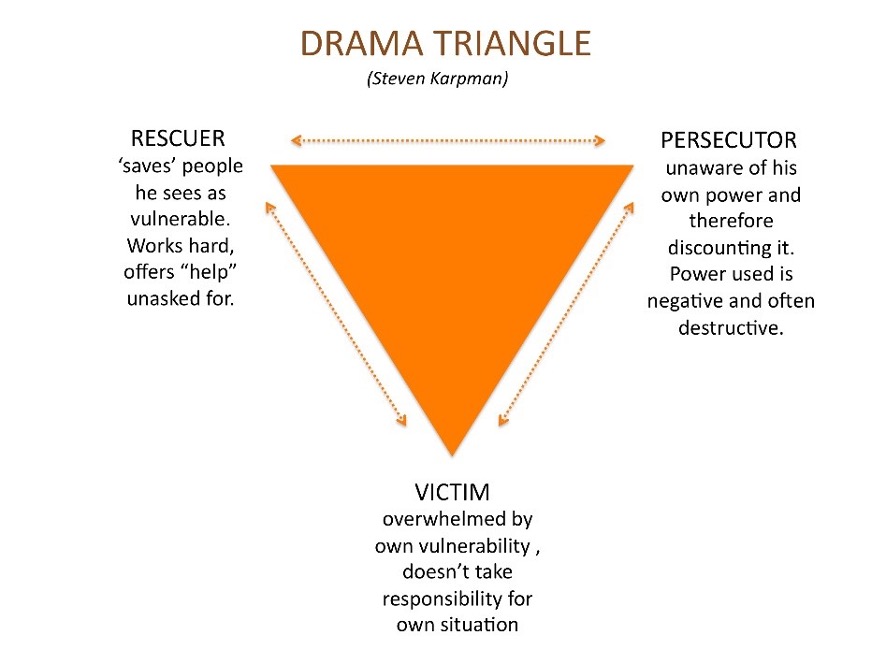
    The Drama Triangle

    From a young age I took on the role of rescuer within my family. My mother suffered from severe depression following my birth, and she needed her children’s love and care.

    Fast forward to 2020, during a global lockdown, I was playing the role of rescuer with my friends, completely unaware of the inauthenticity I was creating within myself and how I was neglecting my own needs.

    What does the rescuer look like?

    Warning Sign Number 1: People-Pleasing

    I was constantly people-pleasing and offering solutions to anyone around me, even though they never asked for help.

    I never considered how my friendships would be if I were not ‘useful’ or ‘fun.’

    I could see the red flags—for example, not speaking up when I felt something wasn’t right and instead working even harder to justify or understand one of my friend’s behaviors, and trying to help and save her even more by doing household chores.

    When we’re people-pleasing to gain someone else’s approval, we chose behaviors that are not true to ourselves. And we act in ways that negatively impair ourselves because in rescuing others, we’re neglecting ourselves.

    Warning Sign Number 2: Numbing Through Binge-Drinking and/or Eating  

    I was constantly binge-drinking with my friends, and it was damaging to my health. As a result, I experienced:

    • Sleep deprivation from the late nights
    • A dysregulated nervous system due to hangovers
    • Weight gain due to eating junk food

    And like a catch-22, the bad feelings I had after these episodes made me want to do it all over again to feel better, leaving me in a vicious cycle.

    I wanted to be with these women, like an obsession or craving, but I was using substances to numb the fact I didn’t feel safe with them. Eventually, this set off my internal radar telling me this wasn’t right.

    If you are in a cycle of unhealthy behavior with certain people and you’re developing self-destructive habits, it could very well be a way to cope/numb deeper feelings that you don’t want to face.

    Warning Sign Number 3: They Are Unavailable

    I began seeing our meet-ups as booty calls, enjoying the thrill and drama of rushing to meet them.

    I would drop everything to be in one friend’s last-minute plan, or I would try to make future plans if I saw her and I didn’t want it to end.

    These friendships felt like a drug—I felt addicted to seeing them, despite knowing it wasn’t good for me or my health. I would eagerly wait for one of my friends to tell me when she was available.

    The thing is, she wasn’t available. She didn’t want to make plans in advance or prioritize us on weekends when she had other plans. So I made myself more available. I’d drop things if she was free and wanted to meet.

    Being someone’s last resort and being okay with that are clear signs that a relationship isn’t healthy.

    I’ve come to realize that I’ve carried a mother/daughter wound my whole life—because my mother wasn’t available due to her mental health challenges—and I was desperate to be seen, wanted, and accepted by people who weren’t available as a result. It was all I knew. It’s how I became programmed.

    I was seeking out women who replicated the relationship I had with my mother as a child. I was befriending those who seemed confident, unattached, and unavailable.

    However, the issue wasn’t what they were doing. The real work was asking myself why I was making the choice to be around people who made me feel unsafe. So unsafe that I was numbing myself with food and alcohol when I was around them.

    Due to my mother’s depression when I was growing up, I didn’t know what it felt like to be in a safe relationship. Since drama and dysfunction were all I knew, that’s all I was seeking out.

    Through trauma coaching I learned how to listen to my physical body and then connect to my inner child. To find and heal that little Rav who was looking for love by people-pleasing.

    Here’s how I connect to my younger self:

    1. I take a moment to pause and feel. I close my eyes and breathe calmly. I scan my body for any aches/tension or obvious pains. After locating the pain, I ask myself when I felt like this as a child, and I explore that.

    2. I FEEL the feeling in all its depth. This might mean crying, shouting into a pillow, or even punching a pillow for the hurt I felt as a child during a specific incident, or for the pain I’m feeling now.

    3. I journal it all out of my mind and ‘re-parent’ my inner Rav: “It’s okay—I got you. That wasn’t very nice. You’re safe now. You don’t need to speak to mum right now. You can play with your toys or cuddle your teddy. Let’s help you feel better.” It can be in the form of an imagined conversation or even acting it out in the now after writing it out.

    The power of this process and being able to recognize those wounds is immense. You really start to understand and sense your own sense of self and your worth. And your current patterns and issues become so much clearer to see.

    The questions I went on to ask myself:

    • Were my friends asking me to rescue them?
    • Did they know I was withholding my honest feelings, too scared to tell them how I really felt?
    • Was it my choice to stay with them when I felt unsafe or to drink and stay up late?

    After I took an honest look at what was really going on, those friendships came to an end, and I still find myself grieving them but far less than when it first happened. It’s not easy. It hurts. However, I now have the tools to feel safe and to come back to my true self.

    Throughout the day I take my right palm to my heart, close my eyes, and remind myself “you are safe.” I repeat this as many times as necessary as I slow my breathing and connect to the present moment.

    It is so worth the struggle and the commitment to healing in order to break free. It’s actually created space for me to welcome more aligned friends into my life.

    It’s a process to adjust to a less dramatic, chaotic life than I had with them, but I am much more content within myself. I don’t need to hustle or the drama. It’s okay to be safe.

  • I Felt Like I Didn’t Belong: 5 Lessons from a Former Misfit

    I Felt Like I Didn’t Belong: 5 Lessons from a Former Misfit

    “I long, as does every human being, to be at home wherever I find myself.” ~Maya Angelou

    In my final year of high school, I had a horrible breakup. I was heavily attached to my girlfriend because, with her, for the first time in my life, I felt like I belonged. Growing up in Germany, of Arabic roots, made me feel like I belonged nowhere. I didn’t feel German nor Arabic.

    With her, I finally thought I had a place somewhere. So when this relationship ended, all I wanted was to escape. I hoped a change of location would solve my problems. So, after graduation, I packed my stuff, booked a one-way ticket, and fled to Australia.

    My early days in Australia were anything but idyllic. Arriving there, not knowing anyone and barely able to communicate in English, I felt lost like never before. During the first month, I was constantly battling self-doubt. It seemed as if this was the first time anyone had ever experienced the harshness that can accompany travel. I felt like a loser.

    Everybody around me seemed to enjoy their trips. They seemed to have found their place. Every conversation I had felt so awkward.

    I was deeply ashamed of my English, so I isolated myself. I wanted to go home, but after telling everybody I was planning to leave, I promised myself not to give up. But the truth was, again, like in Germany, I felt like a misfit. The sense of isolation I had felt back home was still with me. It was so alive. It was like living in a nightmarish loop—unable to escape my loneliness and alienation.

    Two months into my stay, I sat on a bench in Sydney, consuming junk food and battling the urge to give up. Nothing had changed. I felt out of place, had made no friends, and was utterly miserable.

    At that low point, I was reflecting on my time in Germany and I had a realization that, looking back at it now, changed my life: I had taken my problems with me. My issues were about more than just a specific location. They were within me. I was responsible for my misery, isolation, and inability to fit in. The problems I had left in Germany had taken a new form in Australia.

    This insight was crushing but made me stand up from this bench with a new sense of resolve.

    The following day I checked into a new hostel. I promised myself to keep trying, push myself to speak English, and make a conscious effort to form connections with fellow travelers. It wasn’t easy at first, but I became more comfortable speaking as time passed. I started to trust myself more. I began to make friends, people started asking me if I wanted to join them on trips, and people were interested in my past.

    Following my realization on this bench, this month was one of my life’s best. In this month, I made deep, lasting friendships that I still have to this day.

    Ultimately, I stayed in Australia for almost a year and had a great time. I left Germany and was homesick, and I left Australia with newly gained confidence and trust in myself. Since then, I’ve traveled to over twenty-five countries. It became my nature to go to new places, and I no longer have the same issues fitting into a new context.

    Also, I changed my relationship with Germany. Every time I go back, I embrace and like it. Ironically, the attempt to escape my roots formed a deeper connection to my German and Arabic origins. I smile when I look back. I was so ready to give up. I was at the lowest point of my life. One realization, one thought on this bench, changed the course of my life.

    Now I want to share with you the key lessons I learned from my time in Australia.

    1. Trust life.

    Life puts us in difficult situations that ultimately lead us to grow. My time in Australia was a gift, particularly those first two challenging months. They forced me to confront my internal struggles, the issues I had been unwilling to face. I believe that life knows what it is doing and is working for us, not against us. This holds true for me to this day.

    2. Take responsibility.

    In Germany, I had a habit of playing the victim, blaming my circumstances and culture clash for my unhappiness. While those issues were real, acknowledging that I was also a part of the problem was liberating. Understanding that I had the power to change my situation was the first step toward actual change.

    3. Be persistent.

    In Australia, I came close to giving up and returning home. Looking back, I realize that would have been a huge mistake. The best year of my life and experiences that changed the course of my life followed that initial struggle, reminding me that persisting through tough times can lead to beautiful outcomes.

    4. Hard times are necessary for growth.

    Those two months in Australia were some of the hardest in my life. The loneliness I felt was crushing. However, looking back, those challenging times were also when I grew the most. I developed resilience and a better understanding of myself, which I wouldn’t trade for anything.

    5. Be a blank sheet.

    One of the most powerful lessons I learned throughout my travels was the power of approaching each new situation like a blank sheet.

    For far too long, I allowed my past experiences and hurts to dictate my present and future. I was constantly recreating my past wherever I went, not giving my life story a chance to change or evolve. I carried heavy, invisible baggage of past failures, rejections, and loneliness that kept me rooted in a narrative no longer serving me.

    It wasn’t about forgetting or denying what had happened but not letting it control my present and future.

    Like a blank sheet, allow yourself to be open, to receive new experiences, change, and learn.