Tag: freedom
-
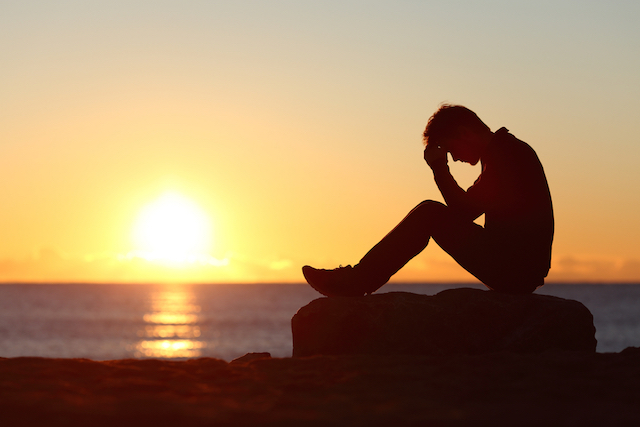
The Path to Freedom: Facing Painful Thoughts and Feelings
“Life is an endless process of self-discovery.” ~James Gardner
My thoughts lately have been so hurtful.
Things like: I’m not a good writer. I’m ugly. I’m stupid.
I’m not funny. I can’t carry a meaningful conversation. I’ll never be special.
The world is out to get me. People take advantage of me. I’m boring and don’t matter.
Like I said, hurtful. Crippling, demoralizing thoughts. One not-so-nice thing after another, and it makes me want to cry.
Why the pain? Why the negative thoughts? Well, recently I spent two weeks playing a video game. From the time I walked through the door at work till the time I left to go home at the end of the day I played.
It was my escape. Finally, just recently, I put the game away. I took the toy away from the little boy.
What I’m left with is that which I try to escape from—my negative thoughts and feelings.
Whether it’s through video games, women, Instagram, Facebook, or food, to name a few distractions, I’ll use just about anything to check out from me. To not be present with my feelings of low self-worth and low self-esteem.
That’s what I did with the video game for two weeks. I opted to numb out rather than sit with my thoughts and feelings and the struggles I’ve been facing with writing my first book. The video game was easier than dealing with the pain.
Funny thing is, the pain from two straight weeks of video games and the inability to put them down became much worse than the pain of sitting still with my thoughts and feelings.
Each day my eyes would hurt and my contacts would blur so much I couldn’t focus. Each day every muscle in my body would tense up as I followed around a little man on a dirt bike racing around on a tiny computer screen.
No wonder I’ve had a stiff neck the past few days. No wonder my head feels like it’s in a vice. I’ve been hurting myself.
We do that, don’t we? Run from our thoughts and feelings, that is. We run from anger, pain, shame, guilt, and fear.
We run from thoughts that tell us horrible things. Things like we wont amount to anything, that we are not likable, not lovable, and don’t matter. We run and actually think that we’re helping ourselves.
News flash: Running, checking out, numbing yourself, or whatever you want to call it isn’t helping. It’s hurting. It’s taking you away from the gift of being fully present with yourself. Yes, I just called it a gift. So then why run?
For me it’s because I was never taught how to like and love myself. I was never taught how to deal with my emotions nor a head full of negative thoughts. Self-esteem? I had none.
See, my mother died when I was three-and-a-half years old, and I grew up alone with my rageaholic father. Through him, I learned to believe that everything was my fault, that the world was out to get me, and that I didn’t matter. No wonder I want to escape.
Feel feelings of low self-worth? No, thank you. I think I’ll check out with a video game.
Don’t know how to esteem myself? Let’s find a woman. She can esteem me and solve all my problems.
Yet in the end, don’t we always come right back to where we started? Doesn’t checking out from ourselves and our feelings only offer a temporary solution? It sure did, and still does, for me.
For years I thought a woman was the answer to all my problems. A woman to complete me and make me whole. Yeah, not so much.
My problems were right there waiting for me when it didn’t work out with the girl. Hi, ugly! So, I’d try again with a different girl thinking I’d get a different result. Nope. Same result. My pain and low-self worth were still right there waiting for me.
I repeated this pattern for the better part of my adult life, until one day I realized that it wasn’t about finding something or someone to make me feel better about myself; it was about me. I realized that it was about me and my inability to esteem myself. My inability to like and love myself.
So I did something I had never done before, ever: I turned inward and chose the path labeled self-discovery rather than continue down the one labeled self-pain. Most of us have or we wouldn’t be here on this beautiful site. Be proud of that; love yourself for that.
Turning inward for me looks like learning how to love the side of myself that’s in so much pain.
It looks like putting down the video game, wrapping my arms around that side of myself, and remembering that I’m okay and that I always have been. It also looks like me getting honest and sharing what I’ve shared with you here today.
The path to freedom is learning to sit still with my thoughts and feelings, not a video game. In return, I get better at esteeming myself and recognizing the true authentic me, the beautiful man that I was born to be.
San man image via Shutterstock
-

Gaining Freedom from Our Obsession with Possessions
“How pointless life could be, what a foolish business of inventing things to love, just so you could dread losing them.” ~Barbara Kingsolver
Approximately one month after graduating from a privileged institution on the East Coast, I was standing knee deep in rainforest on the Big Island of Hawaii cutting weeds with a small kama.
Here I was, with a brand new Master’s degree in Education Policy, genuinely confused as to whether I was cutting the right plant because my entire life before that had been about sitting on the computer doing mind work.
Despite my lack of experience, the humidity, and the mosquitos that just wouldn’t quit, I still remember thinking to myself, “This is the happiest I’ve ever been.”
My goal, like so many others who choose to go to graduate school, was to finish my program in a specialized field and get a higher paying job with the prospect of moving up the proverbial ladder.
I needed a higher paying job to pay not only my bills, but also to maintain all my possessions, which I identified with so strongly.
In an increasingly globalized and interconnected world, countless corporations and advertisers work hand in hand to convince us of our inherent need to possess possessions, and they deliver the message that our worth can be counted by the quantity and price tag of our material belongings.
Catchy songs and slogans, promises of happiness in a bottle, and endless portrayals of a “better” life inundate us the minute we turn on the television or step outside our house to work for a paycheck that seems to slip through our fingers as we buy more and more without ever feeling as if we have enough.
Like countless others, I bought into this harmful ideal and spent the summer of 2013 feeling as if I was drowning in debt.
My credit card was maxed out, I had quit my job because I disagreed with the politics, and the only job I could manage to find was part-time and barely paid more than minimum wage.
When I started my graduate program I thought to myself that if this degree didn’t help me find a well-paying job, I was a failure.
Well, I didn’t end up finding a job after graduation, and in August 2014, I decided that if I was going to be jobless I might as well be jobless in a beautiful setting.
With a few thousand dollars in my savings account, a one-way ticket, and a single suitcase, I went to a donation only ten-day Vipassana meditation retreat on the Big Island of Hawaii.
Looking back on my trek across three beautiful islands in Hawaii, (the Big Island, Maui, and Kauai), I realized that my time spent in silent meditation at the beginning was necessary.
It was the first time since I started kindergarten at age five that I didn’t go to school and/or work in pursuit of “the good life” that had been marketed to me for as long as I can remember.
Among people from all over the world and all walks of life, I ate simple vegetarian meals, slept in a borrowed tent, and gave up any possible distractions including all electronics, books, and writing materials.
It was the single hardest challenge I have yet to undertake, and there were moments of such intense misery that I seriously considered asking for my things and returning home before completion.
With absolutely nothing to entertain me, I found myself reading and rereading a pamphlet I didn’t realize I had from the plane, and watching a group of turkeys for over an hour as they did nothing more than go along with their daily lives.
I realized in tears after a profound meditation that I’d maxed out my credit card because I was trying to fill a void in the midst of an emotionally toxic relationship and I was disenchanted with a job that I had once thought of as perfect for me.
I emerged from the retreat with a better sense of who I was and the resolution to live as simply and sustainably as possible.
On the Big Island I volunteered at an aspiring eco-hostel where I slept on an old school bus that had been cleared of its seats and replaced with two twin mattresses and a table.
In Maui I toiled on a permaculture farm high in the mountains and shared a tent and later a small bedroom with my close friend.
Kauai led us to volunteering at a beautiful multi-million dollar home where my friend and I alternated between sleeping on the couch in the main house and a recently renovated toolshed that fit only a small twin-sized bed.
Throughout my time in Hawaii I left behind many of my things, some voluntarily and others involuntarily.
I donated restrictive clothing that no longer seemed to fit my more laid back attitude and two comfortable pillows that I had initially been sure I would take with me wherever I went.
However, it was my reaction to my involuntary losses that made me realize the futility of holding on to material possessions I once considered essential in the concrete jungle: my cell phone and my music playing device.
Before, these losses would have aroused a plethora of negative emotions in me: regret, anger, sadness, frustration, and most certainly the overwhelming desperation to replace them as quickly as possible.
Having very little came with a big benefit, however: I had very little to lose. An even bigger benefit was that I learned to appreciate what I did have.
Sometimes we make ourselves sick with worry over keeping our possessions safe in our care and sick with longing for what we don’t have.
This comes with associating our worth and our happiness with material objects that no matter how much we care for, eventually deteriorate over time or go out of style only to be replaced with a newer version.
And so the cycle continues.
Breaking the dizzying cycle of materialism doesn’t have to include donating all our belongings to a charity, however. There are three simple steps you can take toward gaining freedom from your possessions and breaking the cycle of more, more, more.
1. Cut down on what you already have.
It doesn’t have to be something drastic. Studies have shown that removing clutter from our surroundings leads to a calmer and clearer state of mind.
Start with one room instead of trying to take on the whole house. Are there any clothes you haven’t worn in years? Be honest and really consider if you’ll ever wear it again.
Personal styles come and go, and there’s no shame in donating something that still has a price tag on it, you’ve only worn a few times, or is uncomfortable due to our beautifully changing bodies.
2. Think twice before you buy.
“If I don’t get this I’m going to regret it tomorrow.” “It’s such a good deal I’d be foolish not to buy it!”
Wait a day to buy whatever you think you need, especially if you hadn’t planned on buying it before you saw it.
More often than not, our concentration is pulled in other directions and we don’t even remember the item we just “had” to have the day before. Or, the prospect of going back to the store is simply not worth it.
3. Be grateful for what you have.
This is by far the most important piece of advice I can give to anyone. There was a day when the servers offered candy for the first time during lunch, and I don’t think I ever enjoyed a small hard candy as much in my entire life.
Being without so much of what I took for granted every day during my meditation retreat (including any chairs with backs!) and during much of my travels led me to realize that focusing on the small things I had made me infinitely happier.
Smiling woman image via Shutterstock
-
Breaking Free from Your Family’s Expectations
“Stop worrying about pleasing others so much. Do more of what makes you happy.” ~Unknown
There comes a time in everyone’s life when you break away from your family. Right? We are all familiar with this. It happens when you turn eighteen, go off to college, and move out the house—and out of the state or country for some.
This is the expectation of society on the whole. Then what keeps us so bound to our families that we sometimes feel paralyzed, afraid of making the “wrong” decisions for our career, relationships, or simply how we choose to live?
Despite each of us eventually breaking through the normal cycle of leaving home and starting our own life, many of us still feel obligated to our family, more specifically our parents.
We feel like we have to choose a specific career path or be with a specific type of person for marriage and beyond. It’s like this unspoken obligation to please our parents, except we know that it can’t last forever and there’s got to be another way.
There is another way. And I know because I’ve been living through it over the past several years.
I was a rebellious child, mostly because my father was so strict and I wasn’t allowed to do anything—well, not much. (I’ll give him some credit, while other credit goes to my mother for allowing friends to come over on occasion.)
But rebellion doesn’t serve healthy relationships and is bound to transform into healthy independence and respect at some point. For some, it’s much later in life than others; I’ve spoken with several people in their late fifties who still feel obligated to their parents yet wildly rebellious and, thereby, resentful.
For me, it started with realizing that I value family. There’s no getting around that. I love my family. Period.
I also love myself, which means that there’s no way I’m going to give up my heart’s desires and dreams to acquiesce to what they think is best for my life, like I had to all throughout my childhood.
Yes, I’m a passionate woman who has a strong desire to break free of the practical way of living. And that’s exactly what I’ve done.
At the same time, I demanded and knew in my heart that true love, especially love between family members, ought to stand up to tests like this.
No doubt, it came with its price. There were several moments when I had to share my desires while lovingly holding space for my family to simply be. I came to them on several occasions over the last years (or they came to me and I opened up) with conscious decisions I made for my life.
Now, let me reiterate this: conscious decisions. If they weren’t conscious, there was no way I could have done this. So, I shared with them my conscious decision while I stood in the fire of their adverse opinions and reactions.
Standing in the fire means I held on to my desire and my love for family while I faced down their criticism. This was challenging. And it burned.
I could feel it all throughout my body. But because I had consciously decided with a strong intention of love and a knowing that it came from my heart, I was able to hold on to my center—no matter what.
I was able to stand there and let their criticism and opinions wash over me while remaining in a loving space. This would not be possible without that conscious choice.
Since then, even though it’s been a process and there are still many fires to stand in, it has been increasingly easier to simply be me and share my “unpractical path” with them. Their expectations are beginning to subside, as they realize that my life may be a bit unorthodox.
I love them anyway. Yes, you heard that right: I love them no matter how unorthodox my life is; therefore, I can influence them to drop their defenses and decide whether they’ll love or hate me because of the life I choose.
By standing up for myself in this way, I let go of any power they had over me and hand it back to them, giving them the option to continue loving me or not. Because I know that no matter what they choose, I’ll always love them.
Standing up for yourself isn’t an easy process. It’s especially hard when you’re trying to build a life for yourself that you actually love, because that’s the time when you most need support.
Holding on to the earnest vision that only good can come from standing in your heart’s desires, you’ll realize what true love really is, and it will completely reframe how you approach life and relationships.
Family often has no clue of the ties and chains they’ve placed on you; therefore, it’s important to come from a loving place when standing your ground and claiming your life.
They don’t know what they’re doing. Would you punish them for that? I wouldn’t. I didn’t. I chose to love them anyways, no matter what, the same way I desire to be love, no matter what.
Break free image via Shutterstock
-

5 Choices to Help You Overcome Your Demons and Be Happy
“If you believe it will work out, you’ll see opportunities. If you believe it won’t, you will see obstacles.” ~Wayne Dyer
I sat, exhausted and alone after a long night, on the stairs outside the train station.
It was 3:00AM, and it was raining. I’d been drinking all night and I wanted nothing more than the warmth of my bed.
But my journey home hadn’t even begun. The gates weren’t due to open for another two hours, the wait for the train would be yet another hour, and the ride itself another hour on top of that.
My misery was compounded by the knowledge that things were only going to get worse when I woke up hungover and alone.
Why had I done this to myself again?
I told myself in sobriety that I was just a young dude who liked to party. I told myself that I went out every single weekend and drank more Jägermeister than Charlie Sheen would advise because I was free, and that’s how free people lived. I told myself lots of things.
But they were all lies. Nobody drinks themselves sick every weekend and winds up sleeping on a staircase because they’re happy. Nobody who has any kind of self-control drinks their cab money away for another few shots, especially when they’ve clearly had their fill already.
It’s amazing how good we are at rationalizing—telling ourselves stories built of lies to hide the ugly truth from ourselves. It’s also extremely worrying. The amount of harm we can cause ourselves when we live in denial is staggering.
There’s a reason that the first step of any good rehabilitation program is acceptance.
I was in denial about everything. I’d just moved to Melbourne, a city with a population 160 times greater than the humble town of Alice Springs I’d moved from. I’d left behind my job, my car, and my girlfriend of three years. I’d moved out of home and now I lived alone.
I didn’t want to admit how afraid and lonely I was. How disturbingly quiet my life had become. I’d prided myself on being the confident and funny guy who had everything under control, and my ego wasn’t ready to release that illusion.
The truth is, I missed the familiar life I’d left behind. I missed the easy job. I missed the warmth of my girlfriend’s bed and her loving embrace after every long day at work.
Getting plastered was a wonderful way to pretend that I was happy. In my mind, the world saw me as a crazy dude who could out-drink everyone and partied like a maniac. In reality, the world saw me as a nuisance and a loser.
It’s been a wild four years since then. Looking back now I can’t even remember what that life was like. These days, I drink maybe six times a year on special occasions, my diet is flawless, and I meditate every day.
My band is doing amazingly well, I’ve been working thirty hours a week toward building an illustrious writing career—something I’ve always wanted—and I have a tight group of friends, each one I trust with my life.
I never went to rehab, I never asked for advice, and I never relied on any particular resource to help me get my life together. I’m sure that those things would have sped up my transformation, but the simple fact is that it was as solitary a venture, as my self-destruction was.
Today, I’d like to share with you what I’ve now learned about during those four life-changing years: the five choices that helped me get over alcohol addiction, paralyzing fear, and inebriating loneliness.
These five choices gave me the freedom to build a new life—a life that gives me unprecedented happiness, and that I can look at with a glowing sense of pride.
1. Develop self-awareness.
When we do the wrong things, our mind’s default response is to rationalize why it’s okay.
You know that cheeseburger is bad for you, but when your mind tells you that, since there was broccoli on your pizza two days ago, you should feel free to scarf it down, the easy thing to do is believe it.
Let’s say that point A is the action you want to take right now (eat the cheeseburger) and point B is the action you know will be more beneficial in the long run (have a salad instead). The bigger the gap between the two, the more your mind will throw rationalizations at you.
Before you can learn to ignore your rationalizations and do the right thing, you have to be aware of them.
2. Foster self-acceptance.
Once you’re aware of your rationalizations, and how weak you’ve been in the past for believing them, it’s crucial that you don’t judge yourself for that.
It’s not your fault that you rationalize; we all do it. Harsh self-criticism doesn’t make you a “realist” or a proprietor of “tough self-love.” It just gets in the way of true change. Accept your flaws as an essential part of who you are. Wear them with the same pride that you wear your strengths with.
3. Study emotional intelligence.
Now that you’re ready to start making changes, you need to learn to know yourself.
Daniel Goleman, author of Emotional Intelligence (a book you should read), wrote “In a very real sense we have two minds, one that thinks and one that feels.” How else could we have such intense internal debates?
If you know how to swim, you seldom panic in a pool. You understand the water, how it works, and how to rise to the surface when you need to.
Our emotions are similar. Managing them isn’t as easy as coming up for air, but the better your understanding of them, the less they can overcome you.
If you don’t want to spend money on a book or your “to-read” list is too long already, check out Psychology Today‘s section on the subject.
4. Embrace generosity.
You can’t expect to receive before you’ve given.
I’m not saying that the universe can read your mind, or cares about you. I’m talking about self-evident fact here. If you cultivate a habit of giving, people will see you in a different way. They’ll attach positive associations to your name when they think of you, and as a result, the joy in your life will increase.
As the saying goes: “Happiness never decreases by being shared.”
The more you give, the more you inspire others to return the favor, and the more fulfilled you feel.
If you’re self-aware, self-accepting, and you’ve cultivated the habit of studying what emotions are and how to handle them, embracing generosity is the fastest and most potent way to now start injecting positivity and love into your life, especially if you’ve never known either before.
5. Practice letting go.
Time for the home stretch! The finale! The purge!
Every seven years, the molecules of our body are entirely replaced. In our lifetime, we ingest and expel far more than we ever weigh. The past only exists as tiny fragments of our experiences we’ve chosen to remember, and the future only exists as speculation.
So, what’s left? What are we if not a moment-to-moment happening? Are we beings, or are we stories?
Whatever you believe, the cold hard fact of life is that people come and go. We move from place to place. We go from job to job.
We only exist in the now. Any resistance to it is futile, unhealthy, and irrational.
If you’ve mastered the first four laws, the only thing keeping you from total happiness are the things that you refuse to let go of. The discrepancies you create between what is and what you believe should be.
Thus, the cycle begins anew. Start with law one again. Become aware of these connections, accept yourself for having them, learn about them, and conquer them.
Man and sky image via Shutterstock
-
The Experiences That Keep Repeating: Finally Learning the Lesson
“Humbleness, forgiveness, clarity and love are the dynamics of freedom. They are the foundations of authentic power.” ~Gary Zukav
I love the way the universe doesn’t let us get away with anything. Its loving energy allows us to repeat similar life experiences over and over again until we learn that spiritual lesson. Lately, I have been having the most profound healing around my stepson James.
This one particular night, the universe was offering a chance to love my own father and forgive myself for how I treated my brother, through my relationship with James.
When he got home from his weekly visit with his grandparents, where he sometimes sees his father, James was a bit off.
“Hey James, can you get your jammies on please? It’s time to get ready for bed, buddy,” I said as nice and firm as possible.
Instead of listening and responding to me, he continued to play with his ninja turtle.
“Hey buddy, can you pick out your clothes for tomorrow and get your jammies on? It’s bed time.”
He continued to ignore me and his mother’s prompts to get going with his night business. Instead, he started asking questions about random things.
Five minutes later, with his negotiating skills increasing, I told him I was about to carry him to bed since it was time. He resisted, and when I placed him in bed, he cried, swung at me, and screamed profanities that would shock anyone hearing such language from a little person.
This is the moment I grew spiritually. I became a container. I held space for James. I didn’t run out the door. I didn’t prevent him, in the million ways I could have, from expressing those feelings. I didn’t emotionally shut off and hide.
I was beginning to see in James my own “inner child” that did not have his father in his life. I also began to see my little brother that I raged on and abused at times during childhood, releasing all the violence I saw in our home and in the streets around me.
James eventually began to wind down. He still flung his arms and legs at me and there were still random cuss words that trickled to one every few breaths. Sage, my daughter, was nervous this whole time and near the end was crying herself.
“Daddy, I don’t like when he talks to you like that. It hurts my feelings!” she exclaimed in tears.
“Oh, honey, he’s having big feelings. You don’t have to be afraid for me. You’re safe. I’m safe. He’s safe.” I tried to comfort her. She seemed to calm down a bit.
Part of our nightly routine is to remove their bad dreams. I do an animated show of pulling all the bad dreams from their head and swirling them around in my hands, tossing them out the window, and cutting the loose ties to their body. This night was no different. I was sticking to our regular routine.
I asked James if he wanted me to take his bad dreams out. He declined and sat with his arms crossed on his bed. “I hate you,” he kept softly repeating.
Sage wanted her nightmares out, so I continued as normal. I decided to be even more lovingly animated so James could see what fun we were having.
At the end they usually ask to take my dreams out and fill me with love. After blasting love in our chests we give one last strong push and it’s over.
This night, when Sage pushed my heart that final time, I flew back in a dramatic flare and fell to the ground full of love. I could see James unlocking his arms, and he had a small smile on his face. I got up and asked James one last time if he wanted me to take his bad dreams out.
He whispered something. “What did you say, buddy?” I asked.
“Yes, I want my bad dreams out,” he said calmly and quietly.
“Sure,” I joyfully responded.
At the end of removing his nightmares, he was his normal self, excited to blow me away with his love. He pushed me and I flew harder and bounced around the room.
He laughed and laughed and I thought, “I did it. I got him out his funk.”
What I didn’t expect was the greater healing. After, I lay on the floor waiting for them to fall asleep. I heard James whimper and softly cry. I got up and rubbed his back and legs and was silent for a long moment.
“You miss your dad, huh, buddy?” I asked gently.
He was curled up facing the wall and shook his head.
“I’m so sorry you didn’t get to see him tonight.”
I just stood there, caressing his back for a few minutes until he relaxed his mind and body. Then I lay down and cried.
I finally got it.
Love is the only answer. I forgave my own father on a deeper level in that moment. My brother and I needed our dad too. I did the best I could and failed at loving my father and not harming my brother. Now, I can forgive myself, and be a dad to James, Sage, and most importantly, to myself.
When we recognize that life provides countless opportunities to heal and develop unconditional love for those that fell short, we feel a sense of freedom.
With that comes humility to face our own spiritual lesson to overcome. If we take the opportunity, there is a release that is deep and everlasting. What spiritual lesson keeps repeating for you?
Man on mountain image via Shutterstock
-

The Path to Freedom: Stop Controlling and Defining Yourself
“The intuitive mind is a sacred gift and the rational mind is a faithful servant. We have created a society that honors the servant and has forgotten the gift.” ~Albert Einstein
I had drawn a line so deep in the sand about who I was.
I was certain I was on my way to becoming a better version of me.
And then.
Water rushed in, softening that line, revealing that I was part of something much bigger than I saw myself to be.
Something much bigger than I could control myself into.
So many children grow up with circumstances far out of their control. Awful circumstances, such as divorce, alcoholism, drugs, and abuse. My home was full of tremendous amounts of love, laughter, and care; yet, I too had my own share of less than ideal circumstances that I longed to make better.
I never could.
By the time I was a teenager, I had a fair share of obsessive tendencies, mostly revolving around keeping things perfectly neat and organized.
Things got profoundly worse when a high school friend began to love me in a way I couldn’t return.
This situation amped up my need to control greatly.
I took the organizing, cleaning madness to a neurotic level. This, of no surprise, was also one of the ways how women in my family before me demonstrated how to gain control where we had none.
Fast forwarding just a short bit, I was in love, married, and making the decision to have our first child.
Love, adulthood, and motherhood gave me the ability and strength to began to dissolve some of these lingering controls.
Nonetheless, motherhood also gave me new reasons to gain control.
I now had a little being to care for, and my lioness self was driven to do it beautifully; perfectly.
New control took hold.
I started eating all the right foods, simplifying our life to the basics, and bubble wrapping ourselves in a safety net of health.
I began doing all the “right” things and looking down on anything not all natural.
Fast forward again.
I miscarried with my third pregnancy.
This came as a ridiculous surprise, as I believed I was doing it all “right,” and took much pride in my first two conceptions, pregnancies, and births.
After I went on to have a third child, I began to look around and realize how many labels I had given myself: stay-at-home attachment mother, homebirthing, homeschooling, breastfeeding, vegetarian, yogi, all natural, simple living.
I began to look around my beautiful, crunchy, progressive town we were now calling home and taking a look at how many labels others had given themselves.
How we were defining ourselves by what we did, not who we really were.
These labels help(ed) to the extent that they give us an identity that informs our choices and invites our surroundings.
Yet, I couldn’t help but notice that they also gave us limits and set us firmly in the center of a vortex, where we were in and others were out.
With these realizations, I began to unravel and dissolve this need to control myself to perfection. I began to realize that I was being held hostage. By myself.
I began to peel away the hardened layers that I had built and began to allow the light that lived beneath to come out, intuiting my way back to the sacredness and simpleness of who I am.
I traded eating perfectly for eating good enough. I traded practicing yoga for enlightenment for practicing yoga for movement and connection with my body. (Lately I don’t practice yoga at all.)
I quit the relentless worry that nearly everything had a horrible consequence, including chlorinated pools, birthday parties without organic homemade cakes, sugar, reusable diapers, and cell phones.
I quit judging myself for falling short, and started understanding that joy, memories, and a damn good time fills you with something that the “right/healthy” choice can kill in you.
Because, you see, when you decide to no longer be a person defined by all the conscious and mindful choices you make, you gain something remarkable.
You gain access back to your intuition that can only get lost when you are always trying to lead the way.
You gain access to the ability to stand with the shadow parts of yourself instead of running away from them.
You gain access back to presence and the ability to be in the moment, in the joy of experiencing the moments in front of you, without worrying if you are somehow failing yourself.
You gain an understanding that these things that you are labeled by are choices, not definitions.
And you gain access to the freedom to live this life fully, undefined.
Traveler walking image via Shutterstock
-
Solve Your Problems and Set Yourself Free with Perceptual Language
“Use what language you will, you can never say anything but what you are.” ~Ralph Waldo Emerson
Imagine using a new language that prevents you from blaming others, being reactive, manipulating, fearing anything in the outside world, needing social approval, being offended by others, and being controlled or controlling others.
Imagine that these problems were simply eliminated from your life because your new language makes them impossible. Welcome to Perceptual Language.
Refined by Jake and Hannah Eagle of Reology, Perceptual Language represents a major development in psychology, perhaps the greatest breakthrough since the days of Freud.
When you learn Perceptual Language, you engage your tongue and your brain toward a new level of enlightenment. Here is a brief overview of how it works.
Principle #1: There is no out there out there.
Perceptual Language honors the principle that we don’t respond to “the world out there.” We respond to our perception of the world. Perception is formed by beliefs, cultural norms, religious affiliation, genetic factors, life experience, sense of right and wrong, and so much more.
All of these factors combine to filter the information that passes through our senses, allowing us to figure out what things mean. In other words, we don’t ever directly experience anything outside of ourselves. We only experience ourselves.
When I listen to my wife talk, I am actually hearing my perception of her words, gestures and so forth. I am making meaning out of what she communicates based on that. This may or not match the meaning she intends to convey.
If I am offended by her, it is important to understand that I am actually offended by what I did with her words based on how I made meaning out of them. In essence, I am offended by her-in-me. Not by her, the real person. I can never experience her, the real person, directly.
In essence, I am offended by this person that I have made a part of me by the way I perceive her. In the end, I am offended by none other than myself. (more…)
-

4 Simple Steps to Freedom
“I know but one freedom and that is the freedom of the mind.” ~Antoine de Saint-Exupery
Once upon a time my mind was filled with negative talk and self-doubt. Those thoughts were so loud I could not hear my authentic self shine through. On a deeper level I knew she existed, but I didn’t how to connect with her.
I believed I would have to work at it, change myself, somehow be good enough so I could be free to be myself. I believed the key to happiness was figuring out how to fix everything that was wrong with me (and oh, was there a lot to fix).
If I fixed myself, then I could enjoy life and be that free woman I always envisioned myself to be. Little did I know the key to this freedom wasn’t fixing myself at all, but realizing that the little voice coming up with all those things to fix was a big, fat liar!
The most profound and important realization I’ve ever had came from reading a little book called A New Earth by Eckhart Tolle. It was that I am not my thoughts, but the awareness behind them.
Wow. My true self is the awareness behind my thoughts, and she is always here! I have the power right now to choose from which place I act—what a magical concept! (more…)
-
We Need to Give People the Freedom to Choose What’s Right for Them
“You must love in such a way that the other person feels free.” ~Thich Nhat Hanh
I’ve read a lot of articles about loving without attachment and respecting other people’s choices, but it wasn’t until one day that I truly got it. And I will tell you what happened to me that day.
My boss and I have a very special relationship. He’s the boss everyone would want to have. He appreciates me for my work and for everything I do. He thinks that I’m a great kid. Every time he has the chance, he praises my results and he shows his confidence in me and my work.
One day, I decided to go to a job interview at another company. I wasn’t planning to leave; I only wanted to see what other companies have to offer. And I told him about it.
His reaction was a complete surprise for me: instead of thinking of himself and offering me everything just so that I wouldn’t leave, he told me, “Andrei, go to the interview, and if you think that’s better for you, then go.”
It was obvious for me that he wasn’t okay with me leaving. He loved my work and he wanted me to stay, but he understood something: the most important thing is for me to be happy. And that made the difference.
He was thinking of me instead of thinking of himself. It was a breakthrough. Instead of forcing me to stay and granting everything so that I don’t leave, he offered me a choice. And choice means freedom.
It meant that I got to compare. I got to see what others have to offer and then choose what is right for me. And of course, when I get to choose, I choose what makes me happy. So I went to the interview, realized that my current project was better than the new one, and returned to work with new forces.
A few days after this I was at home, remembering the whole scene when my girlfriend called and told me that she was thinking of going on a trip for the weekend.
We hadn’t seen each other for a while, and I had made some plans for us for the weekend. But she was thinking of leaving and she wanted to know what I thought about it.
The first thing that popped into my mind when she told me this was: “No! Tell her not to go! We have plans!” But then I remembered how my boss had reacted. I wanted her to be happy.
I wanted her to be able to choose what was right for her. I wanted her to have a choice, as I had, because I understood that choice means freedom. So I told her to go despite the fact that I was a little sad that I wouldn’t be able to be with her.
There are two things that I learned from these experiences.
Letting go gives people a choice.
My boss taught me an important lesson: think about what other people want and need instead of only thinking about yourself.
When someone wants a thing that is in contrast with what you want, there are two choices of action. The first is convincing the other to do the thing you want. This path empowers you. You will be satisfied, but the other will not necessarily be happy with it. By following this path, you take a risk by thinking that you know what is right for the other one. And you might fail.
But there is another path: presenting your choice, but supporting the other’s choice. This path is more beautiful and more powerful because it empowers the other. You may or may not get what you want, but either way there is no way to failing.
Choice means freedom.
Freedom is a thing that we all desire because ultimately freedom brings happiness. Freedom means being able to compare the situations—the benefits and the drawbacks—and choosing what is best for you.
As much as we all want to be free, we have to understand that others have the right to be free, as well.
They say birds are a symbol of freedom. If you look at the sky and watch their flight, you will understand why. I’ve never seen a bird dragging another one around the sky. Yes, they might fly one near the other, they might eat and sleep near each other, but that’s it. If they choose to drag one another, neither of them will be able to fly and they will both fall down to the ground.
It can sometimes be difficult to respect other people’s choices because it conflicts with our ego. But we all want the freedom to choose what is right for us. And everyone benefits when we all choose to give it to each other.
Photo by Cornelia Kopp
-
How to Get Out of Your Own Way and Let Your Life Shine
“I wish I could show you, when you are lonely or in darkness, the astonishing light of your own being.” ~Hafiz of Shiraz
I have been on a quest to be happy for as long as I can remember.
I thought I had looked everywhere. I tried relationships, work, adventure travels, and a life filled with friends and activity, but still I felt anxious. I was disenchanted with life. Years of therapy attempting to work out my problems didn’t give me the sense of peace I somehow thought was possible.
I knew there had to be more, and I am delighted to tell you that I found it when I learned to get out of the way.
The Power of Habits
Without my realizing it, I had been caught up in habitual ways of thinking and feeling that dominated my everyday life. My mind went on endlessly with judgments, expectations, worries, resentments, and stories about what should and shouldn’t happen.
And I had overlooked the feelings of fear and uneasiness that were running beneath the surface almost nonstop.
Life was happening, but with a constant inner commentary about how things weren’t quite right. No wonder I wasn’t happy.
Fast forward to now, and things are very different. No more useless worrying, regret, or getting caught in mental stories about other people or myself. Even my body has relaxed without that lurking agitation. Everything is so open, so fresh!
And here’s what I discovered.
Finding Freedom
Getting out of the way means becoming very familiar with your inner world. You discover what you do that makes you suffer so you can choose peace instead.
Amazingly, you realize that you can press pause in any moment and step back from the momentum of old, recycled habits.
When you do, you see what is actually happening: the pain of being stuck in an old resentment that has been dragging you down, the constricting effect of believing your thoughts, and the chaos that comes from letting your feelings rule.
With your eyes wide open, you are primed to live in ways that are intelligent, affirming, and aligned with your deepest desires. Finally, clarity arrives.
Getting out of the way looks like this:
Ask yourself, “In this moment, what do I really want to feel?”
The answer connects you with your true intention to be happy, peaceful, and clear. Already, you are halfway to being free.
Notice the thoughts and feelings that grab your attention.
See how you get in the way of happiness. Do you live in a belief that you are inadequate? Do you tell yourself you are a victim of your past? Do you define yourself by sadness or fear? This is why you suffer.
Befriend your experience by noting what is present, but know that it doesn’t have to control you.
Just for now, don’t hold onto your stressful stories. Let your feelings be without acting on them. This is the most loving way you can be with yourself.
Experience the space that remains when you are no longer hooked by thoughts and feelings.
Even if only for a moment, you’ve discovered what it’s like to get out of the way. Here you are—whole and relaxed, ripe to enjoy yourself, to make wise decisions that come from love, not fear and limitation. You see that life can be so beautifully simple. You touch into the living possibility of happiness for you.
There is no need to change your thoughts or get rid of any emotions to get out of the way. Just become aware of your inner experience. Realize how defining yourself by it constrains you.
Notice that you can make the choice to live fully now, beyond any self-imposed boundaries, with a clear mind and open heart.
It is the effortless, practical way to happiness available in each moment.
How to Do It: An Example
Let’s take worry as an example. I used to worry about everything; I was full of “what if’s”—what if my plans didn’t pan out, what if I made the wrong decision, what if I didn’t fit in, what if I couldn’t cope. It was endless.
I remember worrying years ago about whether or not I should attend a work-related social function. By that time, I knew that I could actually get out of the way, so I stopped and felt a moment of gratitude—this was my golden opportunity for freedom. I tapped into what I really wanted, which was to be peaceful, present, and clear.
Rather than being consumed by worry, I chose to be curious instead.
I noticed that my attention was completely taken up by negative projections about what might happen in the future. What if I don’t know anyone? What if I feel uneasy there? What if it’s a waste of time?
My mind was flooded with these anxious thoughts. And when I stepped back to observe them, I saw that they squashed my enthusiasm, closed me down to opportunities, and inhibited me from going outside my comfort zone (which wasn’t so comfortable, anyway).
Bringing attention to my feelings, I realized I was locked up in fear, with tension everywhere in my body. It was a light bulb moment when I saw how powerful these feelings were, even though they hadn’t been conscious to me before.
As I noticed these anxious thoughts and feelings, I took a breath. I shifted my attention away from them and returned to simply being present and aware. There was an immediate sense of relief.
No longer feeding worrying thoughts, the tension subsided, and I found the clarity to make a sane, calm decision about whether or not to go. I saw that the unfolding of life right now was just fine. It was amazing to realize that worry was optional.
It took some time, but as I became more aware whenever worry started to grip, I began to see the opening of possibility. Instead of needing to figure everything out, I could relax and trust. Instead of being limited by fear, there was space for wonder, creativity, appreciation, and ease of living.
I was shocked to realize how profoundly this pattern of worry had infiltrated my life.
At first, only a tiny crack in the tsunami of worry appeared, but eventually, the whole thing collapsed. It just didn’t make sense anymore.
Things didn’t change overnight, but with care and diligence to worrying—and every other confused habit—it became obvious that they were not serving happiness. Suffering was the tap on the shoulder that brought me back to peace.
When I saw that the habits were in my way, my interest in them waned until it disappeared entirely. Why? I am happy without them.
Finally Fully Living
When you get out of the way, you stop resisting life. The focus shifts from what you don’t have to what is here and available. No longer doubting everything, you receive what life offers you.
And rather than living in the mind-created past or future, you are available to the simplicity of this now moment.
Unclouded by mental noise, you become crystal clear about what to do next. You tell the truth about what is and isn’t working. And you take practical steps to begin truly living.
As I became aware of habits that were hijacking my happiness, I discovered why my relationships weren’t lasting and began making different choices. I realized how fear had been keeping me from living fully. I began seeing everything through the eyes of love.
Really, it’s true. When you get out of the way, your life will shine…endlessly.
-
3 Powerful Benefits of Accepting Yourself and Your Differences
“Live your life for you not for anyone else. Don’t let the fear of being judged, rejected or disliked stop you from being yourself.” ~Sonya Parker
Our common culture is one that values acceptance from the group over self-acceptance. We base our self-worth on how we measure up against who society tells us to be, and our culture views those who are different as being anomalies that could bring the group down.
And yet deep in our hearts (and in the books that tell our collective history) we know that individuals who go against the grain are the ones that help society progress.
When my father died in front of me, my ability to go to college and progress into the next phase of life (adulthood) passed away with him. We didn’t have the funds to send me to University, as I was now considered a non-resident and would have to pay more than the average Brit.
But that was the furthest thing from my mind, as the pain of losing the only person on earth who understood me and embraced my radical nature had just died abruptly in front of my nineteen-year-old self.
Months turned into years. I moved to the states and began living with my brother, who is also an artist. He tried to encourage me to continue my studies in some form or another, but at that time I was still paralyzed by sadness and confusion. I was basically unemployable and I knew this all too well, which furthered my feelings of inadequacy.
Eventually, I came to accept the two things I was struggling with.
In my soul I knew that Dad had been sick for years, treating himself poorly with toxic substances that eventually killed him. And I also knew that despite being different and perhaps undervalued in how I fit into the world, I had a purpose.
Slowly but surely, I began to embrace the fact that I was a third culture kid and writer. That was that. There was no changing the fact that I act like an absent minded professor (books strewn around the house and nothing in its place) and have a panic attack if I merely think about waking up at 7AM to go to a job.
I’m not skinny and will never be. And I have no interest in ever embracing that view of how a woman should be. In fact, I quite like curves and have accepted that a woman can have them and be healthy at the same time.
My inability to complete the I.B. program (equivalent to senior year in high school) or enroll in college is a thing of the past. I am a devoted life long learner, bibliophile, and polymath, and I happen to like self-education more than being stuck in a classroom.
If potential employers had an issue with my lack of diploma then they were obviously not the right fit for working with me.
I found and married my soul mate and we became parents to a little angel with curly hair and a voracious appetite for travel and adventure. Several years after her birth I finally embraced what my father had pursued himself: the role of entrepreneur.
My passion for travel, food, and culture mingled with my love of the written word and photography.
Living a dream-driven life is not easy in many respects. It requires courage and devotion, with a lot of trial and error. The most important thing for someone who wants to devote their life to their passions is to accept themselves just as they are, right here and now.
Whether or not you improve your supposed flaws in the future is no matter.
Whether or not you get a new degree or network with the right people is of no matter either if you can’t first allow yourself to be who you are. That may sound simplistic, but it’s actually complex if you look at just how narrow the path we have been told to take really is.
That road is one of subservience to an idea or meme that may, in fact, not be healthy or even based in logic.
Empowerment occurs when we accept ourselves.
This doesn’t denote we become egotistical or self-absorbed. Rather, we have now accepted that our path differs from that of others, and there is no need for us to judge ourselves according to the world’s standards. When there is acceptance of who we are, right here and now, we find peace.
Freedom occurs when we accept ourselves.
No matter one’s disabilities, dissatisfactions, or disturbances, we must accept ourselves in order live a passionate life. How can we accept others if we cannot accept ourselves?
No one can attain happiness if they are hung up on what is lacking; we must transcend the need to compare ourselves to others and let go of our apparent flaws and shortcomings. This frees us from self-imposed judgment and the need to fit into society’s standard of what we should look like, be, act, and do.
Happiness occurs when we accept ourselves.
We tend to judge our potential for having an enjoyable life on how much stuff we accrue or social statuses we have gained. Again, this is an illusion and denotes a lack of self-love, as all of the things we truly need to have a passionate life are inside of us, perhaps yet to be discovered.
Happiness can never be purchased and others can never designate it to us. It comes from within.
Sometimes I still get hung up on what I lack and what I could have done with my life had I made better decisions or hadn’t had such a traumatic event happen in my teens. But this feeling quickly subsides when I recognize it for what it’s worth (comparison to social memes) and count the blessings for all that I have within me and around me, no matter how small.
Photo by George Goodnight
-
What to Do When You Feel Caged: The Key to Lasting Freedom
“Wherever you go, there you are.” ~Confucius
Everything I do is about living and sharing freedom. But what is freedom anyway?
To understand freedom, it’s helpful to understand its opposite. The opposite of freedom is feeling caged, constricted, and ruled by guidelines you don’t believe in.
For many people, their job feels like jail. For some people, their community feels like jail. For others, school feels like jail.
I’ve been in all those jails. And for the most part, I was in those jails because I didn’t know there was an alternative. Now that I know the alternative, I have consciously created a life of freedom, but it wasn’t always this way.
I grew up in very religious schools, which felt like a jail, mentally and physically. There were strict rules governing what you could wear and eat and what was expected from you. Living in that jail mentality was stifling, and my need for freedom was bursting at the seams of my soul.
For several years I was curiously obsessed with social justice and the prison system. I now recognize that my fascination stemmed from my feelings about living in a jail of sorts during my youth.
At seventeen I left my hometown and embarked upon finding freedom and discovering who I was.
When you live in a jail-mentality for the bulk of your life, you get out into the big wide world and feel utterly lost. That was me—lost, and essentially going from one jail to another.
From the strict schools of my youth, I went straight to University, not knowing about the other options that were out there. And once again I felt caged. I felt jailed by the confines of my schedule and limited resources.
I was desperate to break free, so I found a summer job in New Hampshire that would give me room, board, pay, and a new experience.
I was taken by New Hampshire the moment I read the state’s license plate: Live Free Or Die. I knew I had landed in the right place. There, I met people from all over the world who had a similar freedom-travel-spirit mentality.
Coincidentally, I met someone there who shared my intrigue with the prison system and social justice, and informed me that I could talk to prisoners on death row.
While communicating with one inmate through letters, I learned that true freedom is in the mind.
That shook me.
I had heard that phrase before, but it wasn’t until I heard it from somebody who was really locked up that it hit home and touched my soul.
Imagine being constrained to solitary confinement. Imagine being thrown into the prison “hole,” a place of pure darkness, without the freedom to see. Imagine having your every move watched, being told when you can eat, shower, and sleep. And imagine even after all that, recognizing that you can still have freedom because it is in the mind. That’s a powerful awareness.
I knew that I was the only one putting the shackles on me. Although this message penetrated, it would take me several years to fully understand it.
After I left New Hampshire, I had a string of adventures and travels that allowed me freedom, possibility, and a life outside the status quo.
For several years all the outward travel fed my need for freedom. But there came a point where it was no longer freeing. I was starting to fall back into feeling jailed, despite making free and adventurous choices.
I knew I had to start moving inward if I was to find true freedom. So began my inner journey.
I started seeking out spiritual books from Deepak Chopra and Louise Hay, and reading the words from John Kabat Zinn, which resonated with me more than anything else. His book Wherever You Go, There You Are was like lightning hitting my heart.
That line was exactly what I had experienced—despite all my travels, where I searched for freedom on the outside, wherever I went, I was still there. I still had to deal with my own limitations and the blocks that I was creating within my own mind.
These limitations pertained to my self-confidence and self-worth—how I thought about myself, and what I believed about my ability to go after what I wanted and succeed. In perpetually thinking I couldn’t do things I wanted to do and that I wasn’t worthy of them, I paralyzed myself with fear.
You need to believe you can do something before you can find the motivation to take action on it. And my beliefs were limiting my actions. Although I was traveling from place to place, my internal limitations came with me.
It’s been a decade since I got that book, which focused heavily on meditation. I have since found the practice of pure presence to be one of the most powerful gateways to freedom. Meditation has this uncanny ability to break away the false self—the self-sabotaging thoughts and limiting beliefs.
So where is freedom? Is it inside us? Is it about our outside choices?
For many years the outward journey did the trick for me. It had an effect on my soul, although I did not have the understanding to recognize it at the time. However, the outward journey only took me so far.
I have found that ultimately it’s the inner journey that leads to lasting freedom.
I still enjoy “getting away” and having adventures. But I have come to recognize that in the confines of the outward journey I can still feel caged. It is only through going inward, specifically through practices of meditation and being present, that I can access long lasting freedom that endures, regardless of my outward circumstances.
If you are looking to enhance the freedom in your life, take some time to pause from your day and practice being fully present with the moment as it is.
Ironically, this is likely why travel is such a great way to feel free. When we travel, we’re more present by virtue of the newness around us—the change of culture or scenery. Everything is so new, so we are like babies enthralled by our surroundings and naturally we get out of our head and are deeply connected to the moment. It is, in effect, living a meditation.
The magic of a meditation practice (and yes, five minutes will do the trick!) is that you can train yourself to strengthen the muscle of presence in your everyday life, so that you can have access to that freedom no matter where you are.
Although five minutes may sound simple, it can still be challenging, so I recommend committing to a specific time, such as first thing in the morning, to ensure you do it.
Then, any time that you feel constricted, scared, stifled, or confused, you can tap into the practice of meditation to help you reconnect with yourself, and reconnect with an inner sense of freedom. This won’t change physical circumstances that may feel constricting, but when you free yourself of mental limitations, it’s a lot easier to find solutions to physical ones.
Meditation is a vehicle to freedom because it often gives us clarity, and allows us to free our mind from our blocks and limitations. Meditation helps us access our intuition, which can guide us to the things that will help us live a more purposeful, freedom-filled life.
Freedom truly is in the mind. If you feel caged in yours, remember, presence is the key.
Photo by Kamil Porembiński
-
A Place to Release Your Secrets and Shame: Share Your Truth in the Forums
Ten months ago when I launched the Tiny Buddha community forums, I hoped they would better enable us all to connect with and support each other.
Since then, I’ve been amazed and inspired to see the love and compassion people extend there, without any agenda beyond helping others feel less alone and more at ease in our uncertain, often confusing world.
There are now over 10,000 active forum members, and there have been more than 1,600 conversations on a wide range of topics related to spirituality, self-esteem, relationships, purpose, parenting, health and fitness, and more.
Whether you’re an active member or just discovering the forums for the first time, I’d like to draw your attention to a new forum category that I hope will be helpful and inspiring.
I launched it last week after receiving a number of blog submissions with a similar message: We can set ourselves free by sharing the stories we may otherwise be tempted to hide.
One of these posts came from a woman who’d given birth secretly in a convent at age sixteen and then given her child up for adoption.
Another came from a brave woman named Sonia Friedrich, who graciously agreed to be the first poster in this new category, with her story about coming out after years of hiding her sexuality.
All the stories had one thing in common: a secret that, when kept, hardened into shame, and when released, softened into peace.
The new section is called “Share Your Truth,” and I launched it with this introductory post:
We all do it to some degree—look at our experiences with a critical eye and decide which ones feel unsafe to share.
We don’t want to be judged, or ridiculed, or misunderstood; we all hope to be loved, supported, and accepted.
But ironically, in hiding pieces of ourselves or our past, we limit our ability to receive unconditional love and acceptance. How can anyone offer us those things if they don’t know who we really are?
And even if they do know who we are, how can we accept their love if we don’t fully believe we deserve it?
That’s what we’re telling ourselves when we choose to hide—that we’re not beautiful, loveable, and worthy, just as we are, and we better hold tight to all the evidence, lest others see it and confirm our fears.
So I say we challenge that scared voice inside that tells us there’s something wrong with us. I say we fight the instinct to cower in shame instead of showing up fully and letting ourselves be seen. I say we own it all—the light, the dark, the highs, the lows—and instead of fearing that others will not accept us, we show them what it looks like to do it.
My name is Lori. I spent more than a decade struggling with low self-esteem, depression, and bulimia. I then spent several more years drinking, smoking, and hiding from the world because I was afraid you wouldn’t like me.
Though I’ve come a long way, due, in large part, to years of therapy and a commitment to personal development, I still struggle with people-pleasing instincts at times, and I still go through phases when I feel insecure. I don’t know if that will ever go away fully, but I am okay with that.
I am proud that I keep going and growing. I am proud that I keep showing up, despite my struggles and imperfections. And I am proud to share my truth.
Is there a truth you’ve been hiding? Are you ready to set yourself free by sharing it?
Start a new thread by scrolling to the bottom of this page: http://dev.tinybuddha.com/forum/share-your-truth/
Feel free to write as little or as much as you’d like—a word, a sentence, a paragraph, or more. This isn’t about getting advice, though you’re free to ask for it, if you’d like. It’s about sharing yourself authentically, knowing there’s beauty in who you’ve been, who you are, and who you will be.
It’s also about letting those who read this know they’re not alone in whatever they’re going through. Whatever it is you’ve been hiding, you can rest assured there are countless others out there, just waiting for someone else to say they can relate.
Just to let you know, before you even share, I admire you for doing this. And knowing this community like I do, I think I can speak for the other members when I say: we value and accept you, just as you are.
—
If you’re not yet a forum member, you can create a free account here. You can then share your truth—whatever it may be—here.
Thank you for being part of the Tiny Buddha community. You make a difference, and you’re appreciated!
-

Why Bad Things Happen to Good People: How Is This Supporting You?
“This being human is a guest house. Every morning a new arrival… Be grateful for whatever comes. Because each has been sent as a guide from beyond.” ~Rumi
Yesterday my boyfriend’s father told me that he doesn’t believe that everything happens for a reason. He explained, “Where I can’t get on board is, if that’s true, then why do bad things happen to good people?”
It touches close to home for their entire family because not only does one of their sons’ girlfriends have a rare and terminal form of cancer, she met their son because he successfully removed a melanoma (a fast acting, lethal cancer).
His girlfriend is in her late twenties, and she’s one of the sweetest young women I know. While she beat it into remission last year, it’s just come back. She’s living with constant fatigue, a broken rib that won’t heal, and the harsh reality is that she could die.
His father and I began to connect over this age-old conundrum: Why do “bad” things happen to anyone—especially the kind-hearted, ourselves, or the ones we love?
Hundreds of thousands of years of religion, philosophy, and artistic expression have sought to grasp: why are we truly here and why is there suffering?
Certain chapters of my own life have seemed ruthless or even tragic as they were happening.
As a child, I was often disappointed by my father, a person in my life who I loved dearly and who disappeared on my birthdays and holidays. sometimes without so much as a call.
As a young adult, I learned that he battled his own demons with drugs, alcohol, and a traumatic past, which helped comfort me for why he wasn’t around when I was a child, but it broke my heart in a different way. I have often asked myself, “Why is there so much pain in the world?”
Asking this question led me to realize it was more about my own pain within. My suffering drove me to search for happiness and freedom within myself. In fact, it’s been through the most challenging and darkest experiences that I’ve cultivated the greatest connection with the light of my heart.
Have you ever heard how when someone has a near-death experience, they begin to realize what’s truly important to them in their lives? It’s said they often begin spending time with the ones they love, and ticking off items from their bucket list to do what they love.
A really dark experience can be like a metaphorical near-death experience. Through the most painful life circumstances, I’ve discovered what’s most important to me.
I’ve realized what’s most important for me is feeling free to do what I love, write, speak what is true from my heart, and cultivate a deep connection with love inside and outside myself.
With love as my intention, I’ve overcome circumstantial challenges to realize that connection, authenticity, and freedom doesn’t depend on what happens in your life as much as how you respond to what happens.
But how do you overcome challenging life-circumstances rather than falling victim to them?
The question I ask myself in times of resistance is:
“How is this supporting me?”
Not everyone believes that certain things are “meant to be,” but opening yourself to how a negatively perceived experience could be supporting you is a powerful way to stop resisting what is and create space for acceptance.
When you fall into a state of acceptance, you naturally connect with your being-ness: the now.
When you are truly in the now, this present moment, is there ever anything actually wrong?
Rumi must have known this about non-resistance, as his words remind the world to embrace everything that happens as a gift, a gift to support you.
If you want an end to pain, resist nothing you feel in the present moment. When you open your heart to feeling, rather than responding with “why” or “why me?” you have a great opportunity to transform your circumstances into your destiny.
Difficulty and challenge aren’t inherently bad. The difficulty of running that marathon, working to chase your dreams, or overcoming challenges—including the failures and disappointments—aren’t they part of the stuff that makes our lives meaningful?
While it may be easier to say this about marathons and dreams than to say it to the little girl who felt more and more betrayed by life with each birthday missed by a father who seemed to cause a hole in her heart, or to the young woman who perceives to be losing her dreams because of a debilitating illness, it doesn’t mean there isn’t a purpose in what is being experienced.
It’s not for me to understand why she is facing this twist in her life story, or what’s true about circumstances that have touched the lives of your family, friends, or those who you feel connected with during tragedies that may hit another part of the world.
I can only say that by embracing every emotion caused by my own life stories, every perceived tragedy, and asking life with an open heart, “How is this supporting me?” I’ve reached acceptance and neutralized my own judgments time and time again.
I have spent a lot of time reminding myself, “This is how I’ve asked it to be, so what is it trying to teach me?”
Sometimes the answer was just to feel helpless, to let go of control, cultivate patience, know a deeper compassion, or just realize that no matter what, I love my father, despite the role that he has played in my life.
I love life, despite the challenges I face.
I’ve learned to keep my heart open to feel. And now I’m not so afraid of feeling. It is through feeling the depth of all my pain that I’ve created more space for love—and now I just feel more alive.
So why do “bad” things happen to “good” people?
When you stop resisting, start feeling, and ask how life is supporting you, you get out of your own way. This is what it means to surrender. And from seeing life that way, bad things stop happening; or rather, it’s not that “bad” things stop happening, you just stop seeing them as such.
For example, if I hadn’t experienced so much pain and suffering in my life, I would have never gone on a journey to connect with my heart at such a deep level.
How can I label pain and suffering as “bad” after realizing it’s what has supported me to expand, to experience more intimacy and love, and become more authentic? True acceptance subtly transforms “bad” into “meant to be” and slowly life naturally becomes less painful and more fun.
The truth is, life doesn’t always give you what you think you want; life gives you what’s perfect. But perfection only becomes your experience depending on how you choose to respond to what happens.
Did Nelson Mandela stop believing in a vision of freedom in jail? No. Do you think Mandela would have felt free stifling what he felt so strongly on the inside even if it kept him outside of jail? In fact, do you feel it’s possible Mandela felt freer even within the confines of that prison cell? Why would that be true? Because he was free in his heart.
He transformed his circumstances into his destiny, and he transformed the world. He was just a man; he is no different from you or me. He chose to transform his circumstances into his destiny.
Freedom and happiness have nothing to do with your circumstances, and everything to do with your level of connection with the truth that you feel in your soul and express to the world.
As my boyfriends’ father and I sat there, he said in an afterthought, “I suppose if that kind of disease happened to me, I would just do my best to stand up as a living example to my children of how to face such an experience with ease and grace, so they would also know that it’s possible.”
And isn’t that all anyone can do, face our own individual challenges with as much ease and grace to discover what we’re meant to do: be our selves, follow our destiny, and realize what’s truly important—love.
For when you transform what happens “to you” into your life destiny, you become the change you wish to see in the world.
Photo by Mitya Ku
-
Are You Limited by the Fear of What Other People Think?
“It is not uncommon for people to spend their whole life waiting to start living.” ~Eckhart Tolle
A few months ago, I found myself on the busy streets of London’s Covent Garden.
It was a mild Friday evening in the capital and the masses were out celebrating the end of the working week, looking forward to the weekend ahead.
But that’s not why I was there.
I’d come to Covent Garden on that day for a special project.
For most of my life, the fear of what other people thought of me had kept me trapped. It had prevented me from reaching my full potential and from enjoying life to its fullest.
I couldn’t bring myself to dance in public for fear that people would point and laugh. At work I was unable to voice my opinions for fear they’d be thought stupid. And at my lowest point, even walking down the street became a struggle, as my mind ran wild with images of people talking about and laughing at me as I went by.
I lived a half-life. I knew I was missing out. I also knew I had so much more to contribute to this world. But I was paralyzed by the fear that if I put myself out there I’d be ridiculed and rejected.
And so the “real me” remained cocooned somewhere inside. I knew she was there, I knew who she was, but fear kept her trapped.
But sixteen months ago, things began to shift. Filled with an increasing sense that I wasn’t living my purpose and a vast emptiness from the lack of meaning my life seemed to have, I quit my corporate office job in search of answers, determined to live a more fulfilling life.
I made a commitment to myself then to face each and every one of my fears and to find a way to reconnect to the real Leah and let her out into the world.
The last sixteen months of my life have been challenging, as I commit every day to living a little further outside my comfort zone. But being in that space of discomfort and crossing the threshold from fear into courage has led to the fulfilment I craved as I realize just how much I’m capable of.
I’d be lying if I said I no longer gave a second thought to what others think, but for the most part I can push past that to do the things I know I need to do.
And so it is that I arrived in Covent Garden, in the hope of now encouraging others to free themselves of that fear of what others think and embrace life in its entirety.
And so there I stood, on the crowded streets of London that evening, holding a sign handcrafted from old cereal boxes, saying:
“How often does the fear of what other people think stop you from doing something?”
The reaction to this simple question left me gobsmacked.
People stopped and took notice.
Some smiled knowingly, acknowledging that their own lives had been affected by the fear of what others think.
Some nodded with something of a sad look on their face. Perhaps there was something they really wanted to do but were being held back by that fear.
Others engaged in conversation, sharing their stories of how the fear of what other people thought had touched their lives or how they’d learned not to care so much.
That day, I experienced for the very first time the extent to which the fear of what other people think affects our lives—all of our lives. What might we be capable of if we could let go of that fear?
I went home that evening having learned some valuable lessons…
You’re never alone.
Too often we suffer our fears in silence. We believe ourselves to be the only one.
Everywhere we look we seem to be surrounded by confident people.
But I’ve come to realize that everyone—those who appear confident or shy; extroverts of introverts—we all, each and every one of us, are struggling with our own fears.
When the fear of what other people think is holding you back, take a look around and remember, everyone is living with his or her own fear. You are not alone.
By confronting your fears, you help others confront theirs.
More than anything, when you stop caring what others think and set out to achieve your goals and dreams, you give others the power to do the same.
Someone is always watching and wishing they had your courage. By stepping up to your own fears, you really do help others face theirs.
Be vulnerable and honest. Being open about your fears and confronting them head on could be the greatest gift you ever give.
What you think they think isn’t the reality.
Those people over there? The ones you think are talking about you? Judging you? They’re not. Really. They don’t have time. They’re too busy worrying about what people are thinking about them!
And even if they were looking at you, judging you, talking about you, you can be almost certain they’re not saying the awful things you imagine.
Instead, they’re envying the color of your hair, your shoes, the way you look so confident.
What we think people think of us usually doesn’t come close to the reality.
Freedom from the fear of what others think is possible.
The fear of what other people think of us is like a cage.
Over time you become so used to being inside that cage you eventually come to forget what the outside might be like. You resign yourself to living within its walls.
By taking deliberate and purposeful action to overcome the fear of what others think of you, you slowly regain your freedom and escape from the confines of the prison you’ve created for yourself.
And life outside that cage? It’s pretty awesome!
It’s a place where you can be the person you always knew you were meant to be.
And that, being fully self-expressed, being everything you know you are, fulfilling your greatest potential in life, well, that’s the greatest feeling you could ever know.
Don’t let the fear of what other people think stop you from living the life you were born to live.
Photo by PhObOss
-
6 Tips to Help You Free Yourself from Your Fearful Thoughts
“Whatever the present moment contains, accept it as if you had chosen it. Always work with it, not against it.” ~Eckhart Tolle
Here I am, huddled up close to the wood burner, my only source of heat, sitting on an old recliner chair that was given to me, in a rented apartment with windows soaked with condensation. Outside it is cold, wet, and dreary, a typical English winter’s day.
My business folded in July with substantial personal debt and I turned forty-four in August.
Perhaps not the most heart-warming start to a post, but rather some raw facts of how my life is now, not x number of years ago before I turned my life around, but now! I’m pretty sure I am not alone in this situation I find myself.
In July when I folded my never very successful business resulting in substantial personal debt, the first thing I did was completely freak out—panic attacks, endless anxiety, depressive thoughts, the whole nine yards.
I went to my doctor who gave me anti-anxiety medication without a second thought. I tried them for a couple of months, but I had been down that route before and this time I felt that it was not the solution to my problems. So after consulting with the doc I carefully weaned myself off of them.
What I needed was answers as to what was causing me so much pain inside rather than a Band-Aid to cover it. I needed to find out why I seemed to have spent my entire life under a shadow, a shadow from which I never felt comfortable emerging to engage fully with the world for fear of being seen.
Enter Tiny Buddha. I found Tiny Buddha by chance while endlessly searching for answers as to what was broken in me. What I discovered after reading hundreds of posts was a revelation: I am not broken.
After digging deeper, I began to realize that I was locked in a trance most of the time, a trance created by my egoic mind. A trance shaped by fear during my formative years. My psyche was trying to protect me from the fear and lack of safety I felt when growing up; it was trying to keep me safe.
My childhood interpretation of the events I experienced, combined with non-compassionate and non-understanding authority figures, led my psyche to decide that the best way to deal with life was to retreat to a place of safety and hide, to not get involved or be exposed in any way.
It met any situation or event that it interpreted as fearful with vigorous resistance.
As most things in life contain some element of fear and anticipation, especially new things, my egoic mind trance was active most of the time, constantly in the background, ready to come to my rescue at the slightest whiff of perceived danger.
The irony is that my mind’s way of “rescuing” me was to paralyze me with feelings of dread, worry, and anxiety, coupled with the physical feelings associated with panic.
It’s not easy when your egoic mind has spent the greater part of your life trying to convince you that it is the only place where you are safe.
Over the years the egoic mind has plenty of time to really go to town building a devilishly intricate trance machine that becomes deeply entrenched in the psyche. Mine was so entrenched that I thought it was me. Until recently, that is.
What I am learning from reading many posts on Tiny Buddha, which led me to books, podcasts, and other resources on the subject of the being, is this:
1. We need to realize that we truly are not our thoughts.
Our thoughts come from the egoic mind. We are the awareness that hears the thoughts.
When you talk to yourself inside your mind, to whom are you actually talking? It is your awareness, and that is who you are, that is your being. Not the thoughts.
Your thoughts are just constructs of your egoic mind. You can actually choose to let them float on by without believing or engaging them, should you choose to.
2. Understand it is not your fault that your mind is causing you such pain; it’s a product of evolution.
Back in the days of caves and things with sharp pointy teeth, you were more likely to survive if you were ever vigilant of danger—meaning the genes that favored this behavior were more likely to get passed down… to you.
The egoic mind thinks it is helping you by keeping you safe and trapped inside a trance. It is not its fault, and you have to face your trance thoughts with compassion and love, and be able to forgive yourself. It really isn’t your fault.
3. Use meditation and mindfulness throughout the day; learn to see the space between the real you—which is awareness—and the egoic mind, as its thoughts race by.
Observe thoughts for what they are: just thoughts. Try not to allow yourself to become absorbed in your thoughts and go into trance, but do not punish yourself if you do.
Be kind and compassionate to yourself when you recognize you have drifted away and start fresh in the moment, returning to a state of mindful awareness whenever you can.
4. Identify the trance thoughts and emotions as they arise and name them.
For example, “Oh, this is fear I am feeling, just fear,” or “I feel you dread and worry; it’s okay,” or “Hello shame and unworthiness; I see you.”
This technique of compassionate recognition will reduce the power they have over you, as you have exposed them for what they really are: just thoughts.
5. Remember that it takes perseverance and practice, lots of it.
Another fun thing we inherited from our ancestors is that the fear of something can become embedded in our long-term memory even after a single, brief exposure to it. Conversely, it takes much longer and repeated exposure to positive stimuli before they are committed to long-term memory.
6. Each time you notice yourself in a state of negativity, use it as an opportunity to practice, to mindfully observe your thoughts with acceptance and compassion.
This will allow them to flow through and out of you rather than be kept inside to be constantly recycled.
Do not beat yourself up if you find it difficult to let go of thinking. Be patient and compassionate with yourself. It took you more than a few days to learn to read and write. It will take a little time for you to calm your egoic mind and let your awareness shine through.
This is the path I have begun to walk. I’ve begun to let go of expectations about others and myself; to learn to be compassionate and to love myself; to accept who I am, and where I am in this moment; to try not to judge others or myself. To know that in this moment everything is okay.
And now that my cat is lying on my lap, I guess that means it is time to finish this. Life is all about these moments.
Photo by D.Ph
-
Letting Go, Trusting, and Allowing Yourself to Be Happy and Free
“Letting go gives us freedom and freedom is the only condition for happiness.” ~Thich Nhat Hanh
First, let’s be clear about something…
Surrender is not about giving up, handing power over, or failing. It is not waving the white flag of defeat.
We are so used to striving and trying so hard for an outcome that anything outside of that formula seems like self-sabotage.
It isn’t. In fact, surrender is the pinnacle of evolved and enlightened behavior.
Surrender is the beautiful soft space of acceptance. It is an allowing—allowing life to unfold and to be what it is, irrespective of your agendas, expectations, and judgments.
It’s that arms-wide-open energy that is deeply rooted in trust. Relaxing and trusting that, even though things might not seem perfect or they might not be according to your plan, that everything will turn out just the way its meant to for your highest good.
Why do we want to embrace surrender? Because this is how we get out of our own way.
This is how we experience a life of real freedom. Free from our limiting self-beliefs, emotional blocks, and negative self-talk—all the stuff that prevents real growth and transformation. Ultimately, preventing you from an extraordinary life—a limitless life.
At first, the journey into surrender can be very destabilizing. Be assured, you will question it, resist, and try to force stuff to happen, but eventually, when you completely let go, you’ll discover that surrender is the space where everything starts to shift.
Surrender allows us to step into our lives ready to receive, completely able to manifest, and willing to embrace everything—the good, the bad, and the ugly—with an open heart. It’s from this place that real magic happens.
To really understand surrender we need to look at its opposite.
Can you relate to any of these scenarios?
1. Something unexpected has happened and you feel a bit down in the dumps.
Are you comfortable with moving on quickly? Or, do you get stuck on how you believed a situation should have played out?
Notice if you notoriously hold a grudge or can’t handle it when things don’t go to plan. The only person that suffers in this situation is you. Turning an annoying situation into a crisis doesn’t help or do anything to change it.
2. You are working on a project that you really care about. You’ve hit a wall, a plateau.
Do you see that as a clear sign you need to back off? Or, do you grip the reins tighter and try even harder?
This one’s for you if you insist on doing more, going further, pushing through, even when it’s time for a breather. This type of behavior will send you straight to Stuck-ville, a place devoid of creativity and joy!
3. In a discussion or argument, is it possible for you to admit when you are wrong, say you’re sorry, or compromise?
Or, is it your way or no way at all?
Take note, self-confessed control freaks and know-it-alls! This type of attitude is a direct route to self-sabotage. This narrow-minded behavior will block you from experiencing different perspectives and detaching from limiting ideas.
Wouldn’t it be so incredible to be free from this energy of control, attachment, resistance, and fear? What kind of life could you live if you were limitless? Free? Wholehearted?
In hindsight, I see that the universe has been coaxing me to let go from a very young age. I think maybe I was born holding on. To what, I’m not sure—my place in the world?
But I do know my grip was tight. I’ve always been light-hearted and happy, but underneath that lived a layer of effort, so structured and controlled that in the end I did nothing. At a standstill, road blocking myself. Life was unnecessarily exhausting.
Ten years ago surrender wasn’t even a concept I was familiar with, let alone one I could fathom embracing. I had no idea that I was about to embark on a master-class in surrender.
How Do We Come to Surrender?
There are three distinct ways that we can come to a place of surrender.
A Lack of Control
Sometimes you look at your life and ask yourself if you can change or leave a negative situation. When the answer you get back is a resounding no, it’s in that moment that the only thing left is acceptance.
Honestly, that’s most of the time. We often have no control over the situation, but we do have control over what we choose to do, what we think, and how we feel—that’s surrender.
When Everything Falls Apart
All hell has broken loose. Crisis in its many forms, death by fire, stuff is going down. Surrender, whether you realize it or not, has come knocking on your door.
If you don’t listen you are just going to go down in flames, figuratively speaking. Instead of armoring up, ready to fight, perhaps a deep breath and a reminder to trust will throw you safely into the arms of surrender. A more peaceful response.
By Choice
Through awareness, personal growth, and intuition we can invite surrender in when it comes knocking. It’s a choice made in the present moment. Seeing reality for what it is and opening up to it wholeheartedly.
Over the last thirty-one years, I’ve been tripped up by many moments, but it’s only been in the last ten that I could almost hear the words “Surrender! Surrender!” chiming in my ears with each stumble.
It sounds like the message had fallen on deaf ears, right? I mean, why else would it keep coming my way?
Well, we are creatures of habit and habits are hard to break. It’s not a rip-it-off-quick type scenario. We may have to fall down a few times before the message gets through and we realize that the path we are walking is leading to a dead end.
It wasn’t that long ago that I fell down a few times before I heard the call to surrender. I had a back injury that was preventing me from moving forward in my yoga practice. I tried to manage the injury, but really, I wasn’t listening to its call. I resisted and, of course, the injury persisted.
Energy flows where attention goes. And my attention was certainly stuck in the limitations of my back. All I could think about was how to fix it. I was so frustrated with my body.
Surrender finally came to me four weeks before my wedding day when I put my back out, again. I emailed my teacher to let her know I would be back soon. She replied, “Take three months off, practice at home, and break the cycle.”
As I read her words I could feel my grip tighten on my routine, my practice, my yoga. Even then, a year after I first sustained this injury, I was still resisting and controlling.
Bizarrely, within days, I realized her email was a divine message. So I listened. The four weeks leading up to my wedding day were the most incredible days. I practiced without rhyme or reason, I went to random yoga classes, practiced outside, or didn’t practice at all.
The irony was, I felt stronger, more balanced, and more connected than I had in a long time. She was right. I had to surrender to break the cycle
Today, I know that surrender is part of my divine journey. I am still on the surrender train. I don’t think I will ever stop learning, nor will you.
The beauty, though, is that now I know what surrender looks like, how it feels and fits in my body, what size and shape I can wear comfortably.
I now know that letting go—right in those moments when I really don’t want to—is always right for me, so I respond faster when I hear the call. I know that the life I truly want—limitless, free, and abundant—comes from that space of pure, openhearted surrender.
It’s from that rich territory of surrender that we finally let go of the limiting energy of control and force.
And when we aren’t controlling, we have completely stepped out of our own way. We are ready to receive, to tap into the abundant possibilities available to us, and to manifest a life free from restraint and restrictions.