Tag: freedom

  • The Invisible Prison Shyness Builds and What Helped Me Walk Free

    The Invisible Prison Shyness Builds and What Helped Me Walk Free

    ā€œLife shrinks or expands in proportion to one’s courage.ā€ ~AnaĆÆs Nin

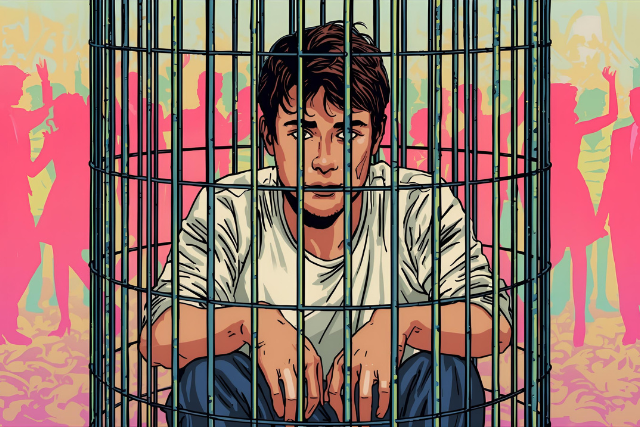
    When I think back on my life, shyness feels like an inner prison I carried with me for years. Not a prison with bars and guards, but a quieter kind—made of hesitation, fear, and silence. It kept me standing still while life moved forward around me.

    One memory stays with me: my eighth-grade dance. The gym was alive with music, kids moving awkwardly but freely on the floor, laughing, bumping into one another, having fun. And there I was in the corner,Ā figuratively stomping paper cups.

    That’s how I remember it—like I was crushing cardboard instead of stepping into life. I can even smile at the image now, but at the time it wasn’t funny. I noticed another girl across the room, also standing alone. She was beautiful. Maybe she was waiting for someone to walk over. But in my mind, she was ā€œout of reach.ā€ My shyness locked me in place, and I never moved.

    It wasn’t a dramatic heartbreak—just another reminder of how many moments slipped by.

    The Pattern of Missed Chances

    That night was only one of many. Over the years I missed far more opportunities than I embraced: the conversations I didn’t start, the invitations I quietly avoided, the women I admired from a distance but never approached.

    Shyness never really served me. I hated it, but it was powerful. I carried it into my adult years, and though I fought hard to loosen its grip, it shaped how I lived and related. Over time I changed; I’d call myself ā€œreservedā€ now rather than painfully shy. But the shadow is still there.

    Shyness as a Prison

    Shyness isn’t just being quiet. It’s a whole system of fear and self-consciousness: fear in the body, doubt in the mind, and inaction in the world. It feels like safety, but it’s really confinement. It builds walls between you and the very connections you long for.

    I’ve come to see shyness as a kind of ā€œsocial yips.ā€ Just as an athlete suddenly freezes when overthinking the simplest movement, I froze in moments of connection. I knew what I wanted to do, but my body wouldn’t follow. And like the yips, the more I thought about it, the worse it became. Buddhism later helped me see that the way through wasn’t forcing myself harder but loosening my grip—letting go of self-judgment and stepping into presence.

    Zorba and the Choice to Say Yes

    As I look back, I know not every missed chance would have been good for me. Sometimes the lure of conquest was more about ego than true connection, and saying no spared me mistakes.

    But there’s another kind of moment that still stings. InĀ Zorba the Greek, Kazantzakis has Zorba say, ā€œThe worst sin a man can commit is to reject a woman who is beckoning.ā€

    The point isn’t about conquest—it’s about clinging. If you say yes when life beckons, you can walk away later without wondering forever. You’ve lived it, and it’s complete. But if you turn away, you carry the ghost of what might have been. That ghost clings to you.

    I know that ghost well—the ache of silence, the memory of walking away when I might have stepped forward. Those are the regrets that linger.

    A Buddhist Lens on Shyness

    Buddhism has helped me understand this prison in a new way. The Buddha taught that suffering arises not from life itself but from how we cling to it. My shyness was stitched together from craving, aversion, and delusion.

    The walls of my prison looked solid, but they weren’t. They were only habits of thought.

    Buddhism also teachesĀ dependent origination: everything arises from causes and conditions. My shyness wasn’t my identity. It was the product of temperament, upbringing, culture, and adolescence. If it arose from conditions, it could also fade as conditions changed. It was never ā€œmeā€ā€”just a pattern I carried.

    And at the heart of it all was attachment to self-image. I was afraid of being judged, of looking foolish, of failing. But meditation taught me that the ā€œselfā€ I was defending was never solid. Thoughts pass, feelings change, identity shifts. When there’s no fixed self to protect, the fear loses its grip.

    Regret Without Clinging

    The memories of shyness still emerge from time to time. They’re not paralyzing anymore—I don’t live locked in that cell—but when they rise, they sting. They make me feel foolish, like a prisoner might feel when looking back on wasted years, replaying choices that can’t be undone.

    What I try to do now is not cling to them. I can see them for what they are: moderately unresolved regrets. They will probably always flicker in my memory. But instead of treating them like permanent failures, I let them pass through. They remind me I am human, that I once hesitated when I longed to act, and that I don’t have to make the same choice now.

    Regret, I’ve learned, can also be a teacher. It shows me what I value most: presence, intimacy, connection. It reminds me not to keep living behind walls of hesitation.

    Buddhism teaches that memory—whether sweet or painful—is something the mind clings to. But the door of the prison has always been unlocked. Freedom comes when we stop pacing the cell and step into the present.

    Saying Yes

    One memory from later in life stands out. I was in my twenties, still shy but trying to push past it. Someone I admired invited me to join a small group heading out after class. Everything in me wanted to retreat, to say no. But that time, I said yes.

    It wasn’t a great romance or life-changing event. We just shared coffee, talked, laughed a little. But what mattered was that I had stepped forward. For once, I wasn’t left haunted byĀ what if. I walked away lighter, without clinging. That small yes gave me a glimpse of freedom.

    I’m still not outgoing. But I am no longer the boy in the corner, stomping cups while everyone else dances. I can step forward, even when my voice shakes. I can risk connection without assuming others are out of reach.

    Shyness may still whisper in my ear, but it no longer holds the keys.

    What I’ve Learned

    • Shyness was my inner prison, but the bars were made of thought, not stone.
    • Not every conquest would have served me—but turning away from true openness creates the sharpest regret.
    • Regret is painful, but it can teach us what matters most.
    • Memories of missed chances still surface, but I don’t have to cling to them.
    • Freedom doesn’t come from rewriting the past, but from choosing differently now.

    I still carry the memory of that eighth-grade dance, the girl across the room, the echo of other missed chances. But I don’t cling to them anymore. They remind me that presence is always possible—because freedom isn’t found in ā€œwhat if.ā€

    It’s found in saying yes when life beckons and in stepping out of the prison of hesitation, here and now.

    To anyone reading this who has ever stood in the corner of their own life:Ā the prison you feel around you was never locked. You can step forward, however awkwardly, and find freedom in the present moment.
  • Full Circle: Reclaiming the Me Who Felt Most Alive

    Full Circle: Reclaiming the Me Who Felt Most Alive

    “We shall not cease from exploration, and the end of all our exploring will be to arrive where we started and know the place for the first time.” ~T.S. Eliot

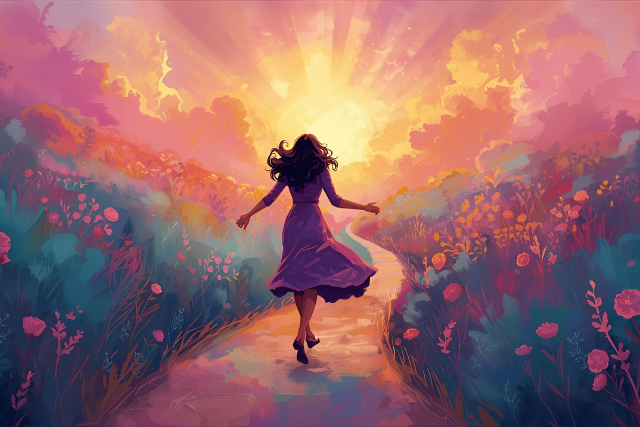
    In my early twenties, I packed a backpack and boarded a plane alone with a one-way ticket to Southeast Asia. It was a move that baffled my father, inspired my friends, and quietly terrified me.

    I was drawn by something I couldn’t fully articulate at the time: a craving for freedom, truth, and a kind of belonging I hadn’t yet known. What I didn’t realize then is that this two-year trip would imprint on me a version of myself I’d spend the next twenty years slowly forgetting, and then, almost by surprise, begin to reclaim.

    Three weeks into that trip, I found myself in Northern Thailand feeling completely lost. I wasn’t sightseeing like I ā€œshouldā€ have been, or checking off cultural highlights. I felt aimless. Lonely. A bit ashamed that I wasn’t ā€œmaking the mostā€ of the experience.

    The structure I was used to (school, expectations, a tidy plan…) had fallen away. I felt unmoored, as if I’d made a huge mistake. Who was I to think I could just wander and have it mean something?

    And then I met Merrilee.

    She was older, solo, sun-wrinkled and wise—the kind of woman who carries stories in her skin.

    Over an afternoon spent talking at our quiet guesthouse, she helped me see something I hadn’t yet understood—that the point wasn’t to fill the time. The point was to be with myself. To let the lack of familiarity and structure teach me how to listen inward. To begin trusting my own rhythm and desire without external cues.

    The kind of freedom I’d dreamed of required discomfort first and a willingness to stop outsourcing my worth to what I was doing.

    That single conversation changed the entire arc of my trip. And it changed me. Forever.

    For the first time, I felt connected to myself not because I was achieving something, but because I was simply attuned. I moved at a pace that felt good. I made decisions from joy, not obligation. I stopped trying to prove anything. And in the middle of that season of self-connection, I met the man who would become my husband. A new chapter began rooted in love and partnership, and eventually, in motherhood.

    And slowly, without really realizing it, the version of me that woke up in Thailand began to dim.

    Over the years, I became a mama to two beautiful boys. I cultivated a stable career. I managed a household. I became, in many ways, the kind of adult we are told to strive for: organized, reliable, efficient, productive. I wore those traits like armor, and at times, even like a badge of honor. But beneath it, there was a soft ache.

    I had flashes of her—that younger, aligned me—the one who had danced through temples, laughed with strangers, trusted the moment. I saw her in photos. I reread journal entries and marveled at how whole I’d felt. But the distance between us seemed too wide. I didn’t resent the life I’d built. I just felt like I’d built it around everyone but me.
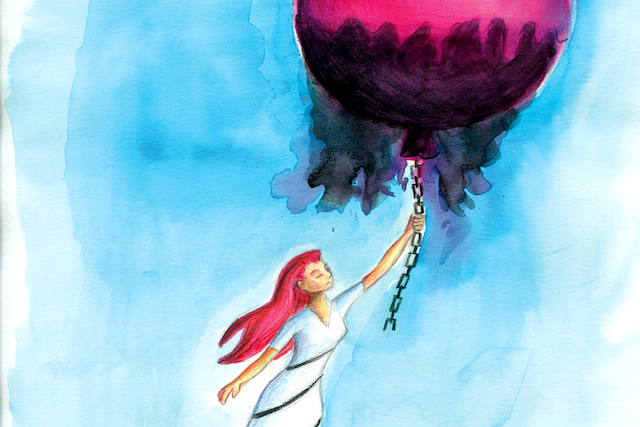
    Some seasons are shaped by who needs us and how we choose to show up. And when we decide to set aside our deepest longings for the sake of others, it can serve as a useful contrast.

    Maybe that soft ache was there to remind me that while raising children, tending to aging parents, or holding together the invisible threads of a household can offer deep meaning and purpose… it’s not the whole of me.

    Somewhere in my early forties, with my kids nearly grown and a job that no longer felt right, the stirring got stronger. Roaring and insistent.

    Only this time, it didn’t send me packing to the other side of the world. It sent me inward. And I was ready for it now. I had the capacity to respond.

    I began exploring new trainings. I started a side business that brought me alive in ways I hadn’t felt in years. I slowly reduced how much I was giving to my secure job to devote more time to the work that felt aligned with my soul. I was awakening again, but with responsibilities and relationships that complicated the path.

    Eventually, I knew it was time to leave my job entirely. It was a leap that, while intentional, shook me more than I expected.

    The weeks after submitting my resignation were not the liberating breath I’d anticipated. Instead, I felt untethered, afraid, and riddled with doubt. Who was I now? What if I failed? What if all of this was some naive midlife fantasy?

    Every structure I had leaned on—title, paycheck, certainty—was gone. I felt like I was falling. And then it hit me: I’d been here before.

    That lost, floating, what-the-hell-am-I-doing feeling? It was the exact same emotional terrain I’d walked through in Thailand. Only now, I had more to lose. The stakes were higher, so the fear was louder, but the lesson was ultimately the same.

    To let go of structure without losing myself. To trust the process of becoming before I had evidence of it all working out. To believe that flow, intuition, and joy are valid guides, even in business.

    This time, there was no Merrilee waiting for me on a bamboo veranda. But there was embodied memory. There was me. There was the version of me who had lived it once and come alive because of it. The gift of having that experience in my early twenties wasn’t just the adventure. It was the blueprint it gave me for how to find my way back when I felt lost.

    I didn’t have to figure it all out from scratch. I just had to remember who I was when I felt most alive. What she trusted. How she moved. What she believed.

    She didn’t need five-year plans or marketing funnels or perfect clarity. She needed space. And courage. And breath. She needed to like herself and to let that be enough.

    And so, I began letting that version of me take the lead again.

    Building a business, especially one rooted in healing, service, and soul, isn’t just about offers and strategy. It’s a spiritual path. It asks you to meet your edges, again and again. It confronts your conditioning. It stirs up your doubts. But it also calls forward your truest voice: the one that got quiet when you were busy being ā€œgoodā€ and responsible and reliable.

    For years, I looked back on that time in Asia with a kind of reverence—a fond and distant memory of a life I couldn’t believe I was once brave enough to have lived. I never saw it as a departure from real life, but I did place it in a separate category, a luminous chapter that shaped me, but felt hard to access again.

    Now I see it more clearly. That moment was the original map of who I am when I’m not trying to be what the world wants. And now, in this middle chapter of life, I get to choose her again.

    Not by backpacking across the globe (though I admit that’s tempting), but by waking up each day and building a life, a business, a version of myself that’s led by truth, flow, and trust. It’s scarier now. But it’s also richer. Because I know what it feels like to come home to myself.

    And I know the ache of the contrast if I don’t.

    Maybe you’re reading this and feel like you’re standing at a similar threshold, untethered, uncertain, trying to trust the pull of something deeper.

    If so, let this be your Merrilee moment.

    The path might feel blurry. You might question whether you’re wasting time, or if you are foolish for wanting more.

    But what I continue to learn in new ways is that the process of returning to yourself and recentering your needs doesn’t always come with clarity. It often arrives with chaos. With fear. With silence. With the pain of letting go.

    But what’s waiting for you on the other side of the unraveling is a more vibrant you. And that person is so worth meeting again.

  • What If Growth Is About Removing, Not Adding More to Your Life?

    What If Growth Is About Removing, Not Adding More to Your Life?

    “Maybe the journey isn’t so much about becoming anything. Maybe it’s about un-becoming everything that isn’t really you, so you can be who you were meant to be in the first place.ā€ ~Paulo Coelho

    For years, any time I felt sadness, insecurity, loneliness, or any of those ā€œunwelcomeā€ feelings, I jumped into action.

    I’d look for something new to take on: a class, a language, a project, a degree. Once, in the span of a single week, I signed up for language classes, researched getting certified in something I didn’t actually want to do, and convinced myself I needed to start training for a 10K.

    Because if I was doing something productive, I wouldn’t have to sit with what I was feeling. That was the pattern: uncomfortable emotion → frantic pursuit of something ā€œmore.ā€

    I became a master at staying busy. If I was chasing something, I didn’t have to face the ache underneath. But the relief was always temporary, and the crash afterward was always the same.

    Because deep down, I wasn’t looking for a new skill. I was looking for a way to feel like I was enough.

    I once heard someone say, ā€œWe can never get enough of what we don’t need.ā€ I felt that in my bones.

    Looking back, I can see why. I spent a lot of my life trying to earn my place, not because anyone said I wasn’t enough, but because it never really felt safe to justĀ be. There was a kind of emotional instability in my world growing up that made me hyperaware of how others were feeling and what they needed from me.

    I got really good at shape-shifting, staying useful, and keeping the peace, which eventually morphed into perfectionism, people-pleasing, and a chronic drive to prove myself. I didn’t know how to feel safe without performing. So, of course I kept chasing ā€œmore.ā€ It was never about achievement. It was about survival.

    But no matter how much I accomplished, I never felt satisfied. Or safe. Or enough.

    It reminded me of something a nutritionist once told me: when your body isn’t properly absorbing nutrients, eating more food won’t fix the problem; it might even make things worse. You have to heal what’s interfering with absorption. The same is true emotionally.

    When we don’t feel grounded or whole, adding more—more goals, more healing, more striving—doesn’t solve the problem. We have to look at what’s blocking us from receiving what we already have. We have to heal the system first.

    We live in a culture that convinces us that growth is about accumulation.

    More insight. More advice. More goals. More tools. If you’re stuck, clearly you haven’t found the right ā€œmoreā€ yet.

    So we reach for books, podcasts, frameworks, plans, certifications—anything to build ourselves into someone new.

    But here’s what I’ve learned from years of doing my own work: Real growth doesn’t come from becoming someone new. It comes from letting go of what no longer serves you so that you can make room for the version of you that’s trying to emerge.

    There’s a quote attributed to Michelangelo that says, ā€œI saw the angel in the marble and carved until I set him free.ā€

    He believed his sculptures were already complete inside the stone; his job was simply to remove what wasn’t part of them.

    When I heard that, I realized: That’s exactly how real transformation works. Not more, not better, not shinier. Just… less in the way.

    But when people feel stuck, they react by piling on layer after layer of effort, advice, and activity until the thing they are actually looking for (peace, clarity, ease, joy) gets buried even deeper.

    When we feel inadequate or incomplete, our instinct is to reach outward for something to fill the space. But the real work is to turn inward and get curious about what that space is trying to show us.

    That might sound airy-fairy, but the truth is, identifying and transforming the parts of us that are carrying old stories isn’t passive. It’s not just a mindset shift or a nice thought on a coffee mug. It’s work.

    It’s learning how to sit with discomfort without immediately escaping into productivity.

    It’s noticing the parts of us that over-function, over-apologize, and over-control and asking where they learned to do that. It’s exploring the beliefs we’ve carried for years, like ā€œI have to earn my worthā€ or ā€œIf I stop striving, I’ll disappearā€ā€”and getting curious about who they actually belong to and what they really need from us.

    This isn’t about erasing who you’ve been. It’s about honoring the roles you played to survive and choosing not to let them lead anymore.

    You don’t have to overhaul your personality or give up on ambition. This work is about clearing away what’s outdated and misaligned. The thoughts, roles, and behaviors that might have kept you safe once—but are now keeping you stuck.

    Here’s what that might look like:

    • Letting go of the belief that love must be earned.
    • Dismantling the habit of saying ā€œyesā€ to avoid disappointing others.
    • Releasing the fear that setting boundaries will make you unlovable.
    • Recognizing that staying small isn’t humility, it’s protection.

    I’ve used every one of these tools myself. I began to notice when I was performing instead of connecting, fixing instead of feeling. I caught myself hustling for approval and validation and started asking:Ā What am I afraid will happen if I stop?Ā I practiced pausing. I gave myself permission to rest, to say no, to take up space. And slowly, I began to trust that I didn’t have toĀ be moreĀ to be enough.

    This kind of letting go isn’t instant. It requires awareness, compassion, and support. It requires choosing to stop running and start listening… to yourself.

    Many of us are afraid to let go because we believe we’ll be left with less—less identity, less stability, less value. But in my experience, the opposite is true.

    When we stop performing and start unlearning, we uncover a version of ourselves that feels more whole than anything we could have constructed.

    Under the perfectionism? There’s peace.

    Under the overthinking? There’s clarity.

    Under the fear of being too much? There’s boldness.

    We are not lacking. We are hidden.

    If this resonates with you—if you’re tired of doing more and still feeling stuck, here are a few places to begin:

    Pause the performance. Notice when you’re trying to ā€œfixā€ something about yourself. Ask what you’re feeling underneath the fixing.

    • Identify the beliefs you inherited. Were you taught you had to earn love? Be useful to be safe? Stay small to be accepted?
    • Get curious about your patterns. What roles do you play at work, in relationships, in your head? Where did they start?
    • Create space. That might mean working with a coach or therapist or simply setting time aside to be with yourself, without distraction.
    • Be gentle. You’re not broken. You’re patterned. And patterns can be unlearned.

    Here’s what I want you to know: what’s on the other side of the removal process isn’t emptiness. It’s clarity. Peace. Energy. Trust.

    That person you’re trying so hard to build? That person is already there, just waiting for you to set them free.

  • Why I Don’t Want to Become Enlightened Anymore

    Why I Don’t Want to Become Enlightened Anymore

    ā€œBeing free isn’t actually that easy.ā€ ~Unknown

    I’ve always been an achiever. I’ve worked hard to reach goals: I was good at school, then got a good job, and ended up making good money. My colleagues valued my clear view of the goal, my ability to break down the big task into parts that one can work on, casting it all as individual problems that one can solve. I was diligent, hard-working, and reliable. An employer’s dream employee.

    At the same time, I’ve always had a wish to be ā€œfree.ā€ Not so much from outer constraints, but from inner ones—depressive episodes, difficult feelings, painful experiences. It sounds terribly naive when you put it like that, but I guess it was a wish to live ā€œhappily ever afterā€ at some point in the future.

    And I was willing to work hard to achieve that, too.

    In hindsight, it all seems clear how that was bound to fail. But working hard was the one thing I knew how to do, so I applied it to everything, including the wish for happiness, the wish for inner freedom.

    I tried a range of different things and ended up connecting with Buddhism. I think what appealed to me was the clear outline of a path to achieving happiness, the methods, and the way the goal was described: enlightenment, awakening, the ultimate inner freedom. So I learned about the methods and began applying myself to them.

    With my scattered mind, I sat down trying to watch my breath. With aching knees, I sat for hours repeating mantras, counting how many repetitions I ā€œgot in,ā€ making progress toward the numeric goal of 100,000 repetitions of various things. That took years.

    I think my wife noticed long before me that there was something unhealthy in my approach. She pointed out how I came down the stairs with a ā€œforced smileā€ after a long meditation session. She tried to encourage me to ā€œlive.ā€ It was no good; I wouldn’t listen.

    The harder I tried to work at it, the more frustrated I became. Since I didn’t see the progress I craved— like peace of mind, like mental calm—I thought the solution was clear: I had to try harder. Devote more time to it, reduce other activities more. Retracting from the world, rather than living in it, my wife called it.

    The big irony was that, in order to feel more alive, I cut myself off from life more and more. I tried to achieve inner freedom by applying the same habitual patterns that governed my life: striving hard, unrelentingly.

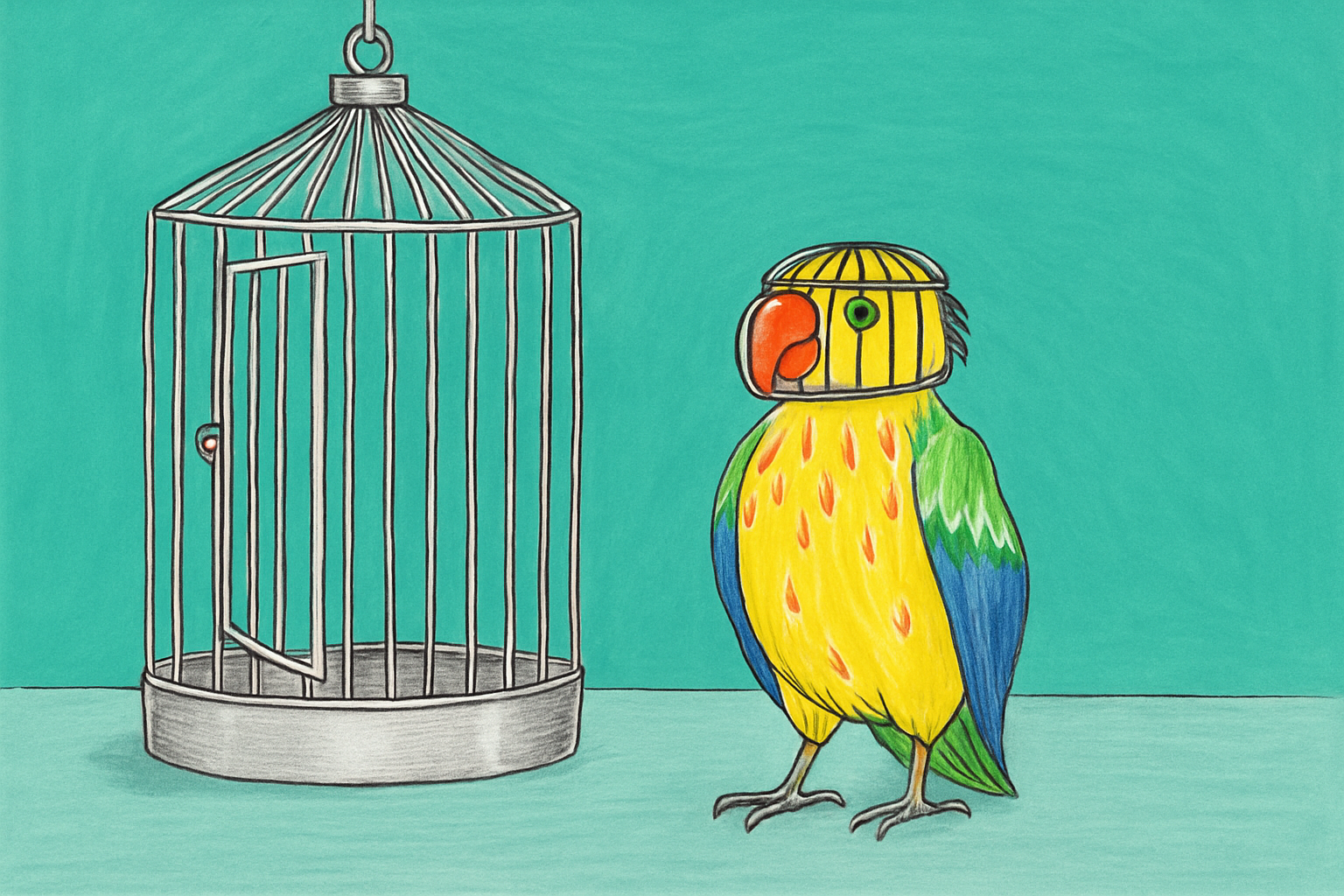
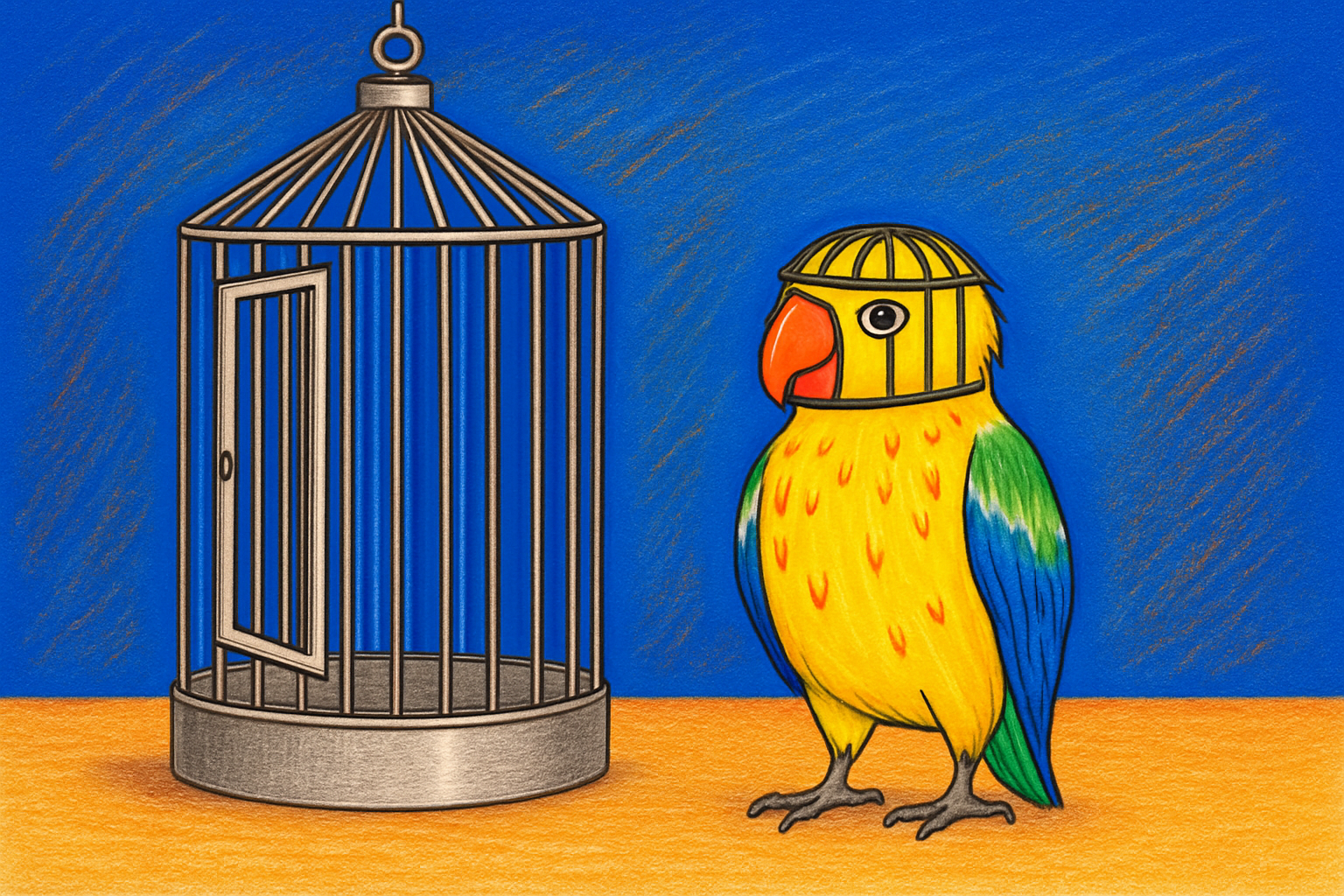
    I once saw a postcard with the drawing of a parrot walking out of its birdcage, while wearing a small birdcage like a helmet around its head. The words on the card said, ā€œBeing free isn’t actually that easy.ā€ I think it summarizes very well how I was trapped trying to be free.

    When my tenacious striving ended up threatening my marriage, I sought help from a therapist, and that’s when things started to change.

    I became aware of the pattern I was caught in. The narrow-mindedness of feeling that I had to achieve something big. The unspoken wish that one day, someone would tap me on the shoulder and say, ā€œWell done.ā€ The rejection of life in the name of an abstract goal—ironically, in my case, the goal of wanting to be truly alive.

    I can’t say change happened overnight, although there was this one therapy session where I had a sense that I could feel that inner truth of just being, of awareness. That felt real and true—and much more than any external rules and descriptions of a path, it has been my compass, my guiding light ever since.

    What amazes me most is that for so many years, I just didn’t see the obvious: that I was applying my habitual patterns of ambition and goal-oriented striving to meditation, to the search for inner freedom. How on earth did I not see that?

    Frankly, I think it’s like with the fish and the water. The joke of the old fish meeting two young fish and asking them, ā€œHow’s the water today?ā€ and the young fish responding, ā€œWhat do you mean, water?ā€ It’s so around you, so much an integral part of your lived experience, that you don’t even notice.

    After that recognition, I think the process has been gradual, and I would say it’s ongoing. The key thing is that I recognize striving as striving now. I’m in touch with the emotional tone that comes with it and have gradually learned to take it as a warning sign. Whenever I feel the narrowness of wanting to achieve, I now pause to check if I’m just digging myself into a hole again.

    As a result, there is now a sense of acceptance, of acknowledging that some things cannot be achieved by willpower. That feeling alive isn’t really something you can work at. In fact, today I’d say it’s the opposite: the way to feel alive is to relax into the reality of the moment, again and again. It’s admitting to myself what’s really there, in every situation, pleasant and unpleasant. It’s breathing with the pain, cherishing the pleasant moments. Valuing the people in my life.

    In short, I’ve given up on the ā€œbig goals.ā€ I still meditate every day, but I do it differently now: I always try to work with what’s really there in that particular moment—sitting quietly with the breath on some days, working with emotions on others, maybe formulating wishes for well-being on the third day… There are so many options, and the key to making it a living practice, for me, has been to allow myself to start with what’s really there, every day anew.

    If any of this rings a bell, if you feel stuck trying to live a meaningful life, here are the lessons I’m drawing from my experience.

    1. Choose a direction, not a destination.

    To me, owning my life is a cornerstone. Grabbing the steering wheel, deciding on my own priorities rather than simply living according to a script that’s provided from the outside. So I totally stand by that original aim of wanting to live with inner freedom.

    In fact, if you don’t already have a clear sense of what you want your life to be, I strongly recommend taking some time to explore that question for yourself. There are great methods for this—reflective prompts or journal exercises that help you envision your ideal future.

    I’ve realized that what matters most is the direction I’m giving to my life—not so much a specific outcome, let alone a timeline for achieving it. Attainable goals have their place with respect to the outside world, such as working toward an education or a place to live, but with respect to inner processes, I’m now convinced that you cannot force things. At the same time, my orientation in the present situation matters deeply and makes all the difference.

    2. Be patient and gentle with yourself.

    This is the hard part for an achiever like me. My habitual disposition is wanting to measure progress. So after I realized the dead end I had maneuvered myself into with that goal-oriented approach to meditation, it’s been an ongoing challenge. The creature of habit in me continues to want to ā€œbe good at it,ā€ to achieve.

    The process has been, and continues to be, getting to know that driven feeling and learning to actively soften it whenever I notice it. One helpful practice has been tuning into the tone of my inner voice—the one reminding me to let go of goals and relax. How friendly or harsh does it sound? And if it’s rather impatient, can I soften that too?

    Suddenly, rather than chasing some goal, I’m exploring what’s really there in myself, discovering and cultivating a friendly stance every day anew.

    3. Connect with your inner compass.

    I’m a rational person, and I often insist on spelling out the reasons for a decision. As far as things go in the world out there, I think that’s useful, even though I tend to overdo it sometimes.

    At the same time, I believe that I have an ā€œinner compass,ā€ which I discovered during my therapy sessions and that I find difficult to put into words. It’s a sense of whether something feels right that I can somehow feel in my body.

    I value this sense as extremely precious, even though I cannot describe it well. This inner compass is the most important guiding principle for me regarding ā€œinnerā€ topics, which cannot always be explained through logic or reason. It’s about whether something feels healthy, whether it seems to move you in the right direction.

    Tuning into this compass, even when I can’t explain it, helps me stay true to myself, no matter what situation I’m in.

    To me, the result of applying these principles has been great. I guess I won’t be enlightened any time soon, but the good thing is, I’m much happier with that now than I’ve ever been in my life.

  • Breaking Free from Resentment: My Journey to Finding Peace

    Breaking Free from Resentment: My Journey to Finding Peace

    “Resentment is like drinking poison and hoping the other person dies.” ~Saint Augustine

    For years, I was unknowingly poisoning myself in nearly every relationship—whether romantic, work-related, or friendships. It always followed the same pattern: I’d form a deep attachment, throw myself into the relationship, and give endlessly, hoping that if I gave enough, they’d appreciate and value me.

    But instead, it felt like they just took and took, leaving me secretly seething with anger and frustration while I smiled on the outside.

    I was doing all the running—couldn’t they see that? Couldn’t they see how hard I was trying? Over time, the exhaustion would set in. Eventually, I’d burn out from the one-sided effort and just give up, walking away hurt and angry, convinced they had wronged me.

    Each time, I added another person to my mental list of people I couldn’t trust. With each disappointment, I trusted fewer and fewer people.

    To protect myself, I started putting up walls, convincing myself I didn’t need anyone. I told myself I was fine on my own. I’d always be the first to step in and help family or friends, but I wouldn’t allow them to help me. I refused to be vulnerable because, to me, vulnerability meant risking rejection. I believed I could do it all on my own—or at least that’s what I told myself.

    When COVID hit, isolation wasn’t a choice anymore—it was forced upon me. Suddenly, I was alone, with no one to turn to because I had pushed everyone away. That’s when I realized just how much resentment had poisoned my life.

    Fed up with the weight it placed on my life, I decided to confront it head-on. I let myself fully feel the resentment, allowing it to wash over me like a wave. It wasn’t easy—leaning into those emotions was painful, raw, and uncomfortable.

    But in that moment, I realized I wasn’t just angry with a few people—I was carrying resentment for almost everyone in my life, even my own mother! The bitterness had been poisoning me for years, and it became clear that it wasn’t just affecting my relationships—it was poisoning my peace.

    That’s when I made the decision to stop drinking the poison. I realized that I had been giving so much power to other people—power over my emotions, my happiness, and even my health. But I didn’t have to. I didn’t need to wait for anyone to apologize or change; I was responsible for my own healing, and I wasn’t going to let others’ actions control my life anymore.

    Self-Realization: The First Step to Letting Go

    Self-realization was the first, and perhaps most difficult, step in battling my resentment. For the first time in my life, I stopped running from the pain and leaned into it instead.

    I started using EFT (Emotional Freedom Techniques) to peel back the layers of emotions I had been burying for years. Through tapping on specific points, I was able to release trapped feelings and bring clarity to the surface. Each tapping session was like lifting a weight off my chest, but it was also incredibly uncomfortable.

    I had to confront memories I had long avoided and acknowledge the emotions I had hidden from for so long.

    What shocked me the most was realizing that I had never given anyone a chance to correct the wrongs I thought they had done. I assumed people knew I was upset, and when they didn’t magically pick up on it, I silently resented them.

    Saying that now, it sounds so ridiculous—how could I have expected people to read my mind? Yet for years, that’s exactly what I did.

    So, I began reframing the narrative. Instead of focusing on how others had let me down, I asked myself: What could I have done differently in those situations? How could I have influenced a different outcome?

    The more I reflected, the more I realized that I had the power to change the dynamics of my relationships. It was a breakthrough—I didn’t need to wait for someone to change or apologize. I had the power to heal myself.

    Testing My New Mindset

    Soon after this realization, I had an opportunity to test my new mindset. I had invited my mum and sister on a weekend getaway, something that meant a lot to me.

    A few weeks before the trip, they both backed out. The old me would have smiled and said, ā€œNo problem, that’s fine,ā€ while secretly adding their names to my mental list of people who had wronged me.

    But this time, I did something different. I spoke up. I calmly explained how much it hurt that they were canceling on something so important to me.

    To my surprise, neither my mum nor my sister had any idea their actions would hurt me. They explained that, because I had always been so independent, they didn’t realize how much this trip meant to me.

    For the first time, we had a genuine, open conversation about our feelings, and it actually brought us closer.

    Instead of silently seething and letting resentment build, I communicated honestly, and the outcome was liberating.

    I realized that so much of the pain I had carried in the past could have been avoided if I had just voiced my feelings. That conversation was a powerful reminder that I have the power to shape my relationships, and that sometimes people just don’t know how we feel unless we tell them.

    Moving Forward: Letting Go and Staying Free

    After learning to let go of years of resentment, I realized that staying free required new habits. I needed to guard against falling back into old patterns, so I came up with a few strategies to help.

    First, I ask myself three key questions:

    1. Is this really worth my peace?

    2. Did they intend to hurt me, or could there be another explanation?

    3. What can I do differently in this situation?

    These questions help me pause, reflect, and reframe my thoughts before resentment has a chance to take root. I no longer jump to conclusions or internalize every slight.

    And then there’s my secret weapon—whenever I feel those old feelings of resentment bubbling up, I silently sing the Disney song ā€œLet It Goā€ to myself!

    I know it sounds silly, but it’s incredibly effective. The moment I start humming that tune, it interrupts my spiraling thoughts and stops me from obsessing over whatever hurt I’m feeling.

    By the time I’ve finished the song in my head, the urge to hold onto those negative feelings has usually passed, and I can move forward with a clearer mind.

    It’s a lighthearted strategy, but for me, it’s a reminder that I have a choice. I can cling to the bitterness, or I can, quite literally, let it go.

    Letting go isn’t always easy, but it’s always worth it. The next time you feel resentment creeping in, remember, forgiveness isn’t for them; it’s for you. It’s time to free yourself from the weight of carrying that poison.

  • Trapped in Shame: How I Found Mental Freedom After Prison

    Trapped in Shame: How I Found Mental Freedom After Prison

    ā€œIf you put shame in a petri dish, it needs three ingredients to grow exponentially: secrecy, silence, and judgment. If you put the same amount of shame in the petri dish and douse it with empathy, it can’t survive.ā€ ~BrenĆ© Brown

    I was in two prisons.

    One physical. One mental.

    The physical version was Otisville Federal Prison.

    I was living so out of alignment with who I was and who I wanted to become and self-sabotaged in a colossal way, defrauding one of the largest tech companies in the world.

    My mental prison, my personal hell, was the all-consuming power of shame. Hurting the one I love, disappointing my family, and letting myself down. Ignoring the voice inside that told me not to commit the fraud.

    I believed with all my soul that I destroyed the most extraordinary gift life has to offer us: love.

    I was trapped in my head and couldn’t see a way out or even a reason to try.

    With every ounce of my being, I believed, ā€œI am undeserving of love, happiness, forgiveness, and peace. I destroyed love and will never be worthy of it again. I deserve a lifetime of punishment.ā€

    This was my prison. This is where I lived, falling further into darkness every day with no end in sight.

    Shame is an insidious disease that lives, breathes, and grows in the darkness. Shame thrives in isolation, separation, and disconnection.

    Shame wants to be alone.

    Unless we do something about it, it will eat us alive from the inside out.

    What do we do with something that lives in the dark? Something that craves isolation, separation, and disconnection?

    We shine a light on it. We shine a light on it by speaking about it. By being open, by having the conversations we’re afraid to have.

    Shame withers and dies in the face of vulnerability.

    When we are vulnerable, not only do we shine a light on our shame, but we also give others permission to do the same.

    When we shine a light on shame, when we are vulnerable and open up, we take the first step out of the darkness.

    And we realize that we are not alone.

    I couldn’t jump headfirst into vulnerability; I was too afraid. But I knew that if I allowed shame to consume me, it would never release its grip on my life.

    How did I get to where I could be vulnerable, open, and share?

    Here are the first three steps I took.

    Accepting Reality

    I spent my days in prison wishing I wasn’t in prison.

    I spent my days wishing I hadn’t made the choices I made that landed me in prison.

    I wished and dreamed for life to be anything other than it was. I was fighting against a past and circumstance that couldn’t be changed.

    I would never have freedom from shame if I continued to fight for what couldn’t be changed. I had to do what I was so afraid to do.

    I had to accept reality.

    I didn’t want to. It felt like giving up; it felt passive. Fighting equals progress. But does it? What was I fighting against? As much as I wish there were, there is no such thing as a time machine Delorean.

    Accepting reality isn’t giving up; it isn’t passive. It was an act of courage for me to say, “I accept that I betrayed myself and chose to commit a crime. I hit the ā€˜enter’ button, the single keystroke that started it all. I accept I made the choice to continue in the face of the universe screaming at me to stop. I accept that I am in prison. I accept that I hurt the woman I love, my family, my friends….”

    A weight lifted off of me when I wrote that. I wasn’t trapped in the past. I felt something I thought was impossible in prison: freedom.

    Self-Trust

    I lost trust in myself. How could I possibly trust myself when I am the one who did this to himself?

    There is an emptiness that is all-consuming when you don’t trust yourself.

    It’s a horrible feeling.

    One day, scrolling through Twitter, my friend posted, “Surest path to self-confidence I know: making and keeping commitments to ourselves.”

    That struck a chord. My friend walks the walk; this wasn’t just lip service.

    From that one tweet, I committed to facing my biggest fear: public speaking. It took five years, but I eventually delivered a TEDx.

    The TEDx was incredible, no doubt, but there was so much more than that. It created a way of life for me.

    When you make and keep commitments, you change your inner narrative to one that’s empowering.

    You change your story to being a person who TAKES ACTION.

    You build trust because you kept your word to yourself. When we trust ourselves, we have confidence in ourselves.

    When we have confidence in ourselves, we believe in ourselves. We trust ourselves.

    Forgiveness

    Forgiveness is hard. It’s one of the hardest things I’ve done as I’ve rebuilt and reinvented my life.

    I had to forgive myself for the choices that resulted in my arrest by the FBI and my sentence to two years in federal prison and cost me everything: my marriage, my homes, my cars, my sense of self-worth, and my identity.

    I had to forgive myself for planning on killing myself.

    I didn’t think I was worthy of forgiveness. Who was I to let myself off the hook with all the damage I had caused?

    I had to take the first two steps of acccepting reality and cultivating self-trust.

    When I took those first two steps, I understood that forgiving ourselves is one of the biggest acts of love and compassion we can do for ourselves.

    When we forgive ourselves, we demonstrate that we are worthy of love and compassion.

    Forgiveness cultivates our self-trust as well.

    Forgiveness liberates you from a past that cannot be changed. You learn to let go of that baggage weighing you down.

    There’s great freedom when we let go.

    From these three steps, I reached a place where I could be vulnerable and, in turn, walk out of the prison of shame.

    When we own our story, we own our life. When our story owns us, it owns our life.

    Huge difference.

  • How I Stopped Worrying About What Others Think of Me

    How I Stopped Worrying About What Others Think of Me

    ā€œLive your life for you not for anyone else. Don’t let the fear of being judged, rejected or disliked stop you from being yourself.ā€ ~Sonya Parker

    On August 4, 2022, I buzzed off my long, thick, luscious hair.

    I marched up Sandy Boulevard in Portland, Oregon, walked into Take Pride Barbershop, and sat in the chair with the most badass barber. She quelled my last-minute fears and boldly took the clippers to my never-shorter-than-shoulder-length hair.

    It was instant liberation.

    I had finally worked up the courage to do so after four years of internal debate and worry, which went something like: What will people think? Will people think I’m a man? Will people treat me differently? What if I’m actually ugly and my ugliness will be revealed? What if my head is oddly shaped? Will I have to wear a bunch of makeup?

    My worries and thoughts were clearly steeped deep in societal conditioning about beauty and femininity. We are told that long hair is feminine and beautiful. We are told that young women aren’t supposed to have short hair. We are told that if you are a woman with short hair, be sure to wear makeup and jewelry so you look feminine.

    But I finally stopped all the thinking, broke free from those norms, and I just did it. I said, ā€œOff with the hair!ā€

    And now I feel free-er, sexier, and prettier.

    I feel more like me.

    It’s as if I shed layers that were actually hiding my true essence. My true essence as an adventurous, empathic, sensual being who sometimes feels soft and tender, and other times feels bold and badass. My true essence as someone who is wary of rules and authority.

    It’s also as if I shed layers of my ego. Because whether I like to admit it or not, my hair was a significant piece of my identity as a woman. Hair is an expert communicator, with the ability to send so many messages through a single glance. Hair communicates gender, sexuality, wealth, age, health, and parts of our personality.

    Now that I have shed my long hair, I think the only part of me that is still communicated via my hair is my personality. For one can no longer look at me and quickly deduce my gender, sexuality, wealth, age, or health. (I do have very toned muscles and glowing skin, so people should be able to make an assumption about my health, but some people only see the short hair and assume I have cancer).

    What is communicated boldly is that I create and live by my own rules. And if people know one thing about me, THAT is exactly what I want them to know.Ā 

    My buzzed hair also lends an air of mystery, as people wonder about all of those other little check boxes (gender, wealth, age, etc.) that are usually communicated via hair.

    While I did shed some layers of my ego, my buzzed head also makes a pretty strong statement, and in full transparency, I get a lot of attention. This attention comes in all forms.

    Sometimes it’s ā€œExcuse me sir…oh! I mean ma’am.ā€

    Sometimes it’s ā€œYou need to wear lipstick to look more feminine.ā€ (Who said I wanted to look more feminine?!)

    Other times it’s ā€œOmg, you’re so beautifulā€ or ā€œI LOVE your hair.ā€

    Sometimes I get free guac.

    I get a lot of smiles from passersby on the sidewalk.

    I get a lot of lingering looks at the post office, the coffee shop, and the dance floor.

    And while I do love to be called beautiful (who doesn’t?!), I don’t attach myself to the praise or the criticism because I have decided for myself that I am strong, radiant, and beautiful, from the inside out. I no longer care if people think I look masculine or feminine, ugly, or beautiful. I don’t care if people in Idaho think I have cancer. I don’t care if people think I look like a skinny boy without makeup on. (What’s wrong with looking like a skinny boy?!)

    This level of not caring, of being so confident in who I am, is the ultimate freedom.Ā 

    Plus, I know that when people react one way or the other, it is not really about me and my hair. Their reaction means that I activated something within them. I activated their desire to be free and to stop following the rules that someone else laid out for them.

    In the best cases, I offer others a little permission slip to step into their own boldness. Which is one of my favorite parts of buzzed life—when women tell me I’ve inspired them to buzz their long hair! That they were so worried about what people would think, but after seeing me do it, they now have the courage too. That is powerful.

    So while the hairstyle of one woman may seem like a simple and insignificant thing, it actually plays a small but important role in the liberation and empowerment of women.

    For when a woman has the courage to push back against beauty standards, that courage is ignited, and she also develops the courage to choose freedom in other facets of her life as well.Ā 

    For me, that has looked like more sexual freedom—making me more playful in bed and bolder in sharing my desires—and more confidence in all areas of my life.

    Buzzing my hair has also created more time in my life, as I spend less time getting ready. It’s created more mental space, as I no longer spend inordinate amounts of time thinking about how to style my hair, when to wash it, and whether or not to get it highlighted.

    It has also freed up more money because I no longer spend hundreds of dollars on highlights and cuts. My fiancƩ buzzes my hair at home and, occasionally, I bleach it myself.

    It’s also led to freedom in how I dress. Sometimes I like to dress to express my femininity. Other times, I dress to express my masculinity. As someone who used to be deeply insecure about her tomboy-ish-ness and lack of desire to wear makeup, I have reclaimed the masculine parts of me with pride, which has been an integral part of my healing and expansion journey.

    It has also deepened my sensuality. In the shower, the water massages my head more intimately. On a summer day, the sun kisses me deeply. On a breezy morning, the wind and I dance a graceful dance. On the dance floor, the softness of my fiancé’s lips activates my crown chakra. I feel less separation between the world and me. I am more integrated. I am more aware of my oneness with the natural world.

    Yes, all of this because of my buzzed hair!

    So I’ll leave you with a few parting words of wisdom:

    1. People are going to talk and have an opinion about you no matter what, so you might as well do what you want and be who you want.

    2. Others’ opinions of you really have more to do with them than they do with you, so don’t take stuff too personally and concern yourself first and foremost with your opinion of yourself.

    3. If you want to buzz your head, do it. If you don’t like it, it’ll grow back. But I bet you will like it!

    So here’s to taking action to live as a more free, wild, and confident you!

  • How I Stopped Worrying About Running Out of Time to Achieve My Goals

    How I Stopped Worrying About Running Out of Time to Achieve My Goals

    ā€œThe only thing that is ultimately real about your journey is the step that you are taking at this moment. That’s all there ever is.ā€Ā ~Alan Watts
    One thing that is promised to each one of us in life is death. No one will avoid dying or feeling the pain of losing others. From a young age I remember being aware of this fact, and it scared me.

    As I got older, I began to feel a sense of pressure that I was running out of time and loss was imminent. The thought of losing my loved ones and the uncertainty of what may happen worried me. I wanted to avoid the feelings of loss and limitation, so I unconsciously began to move faster.

    There was a deep fear that if things didn’t happen fast, they would not happen at all and that I wouldn’t have enough time.

    Faster became better, and I started the hamster race of working hard to achieve my dreams. Whether that was finishing school, starting a career, being in a healthy relationship, starting a family, being fit… even my spiritual journey became a race to happiness that only existed in the future!

    I realized later in life that this mindset was born out of fear—the fear of loss, the fear of the unknown—and protection from these fears was a quick accomplishment. It created an immense amount of stress and suffering because all goals and dreams take time to build.
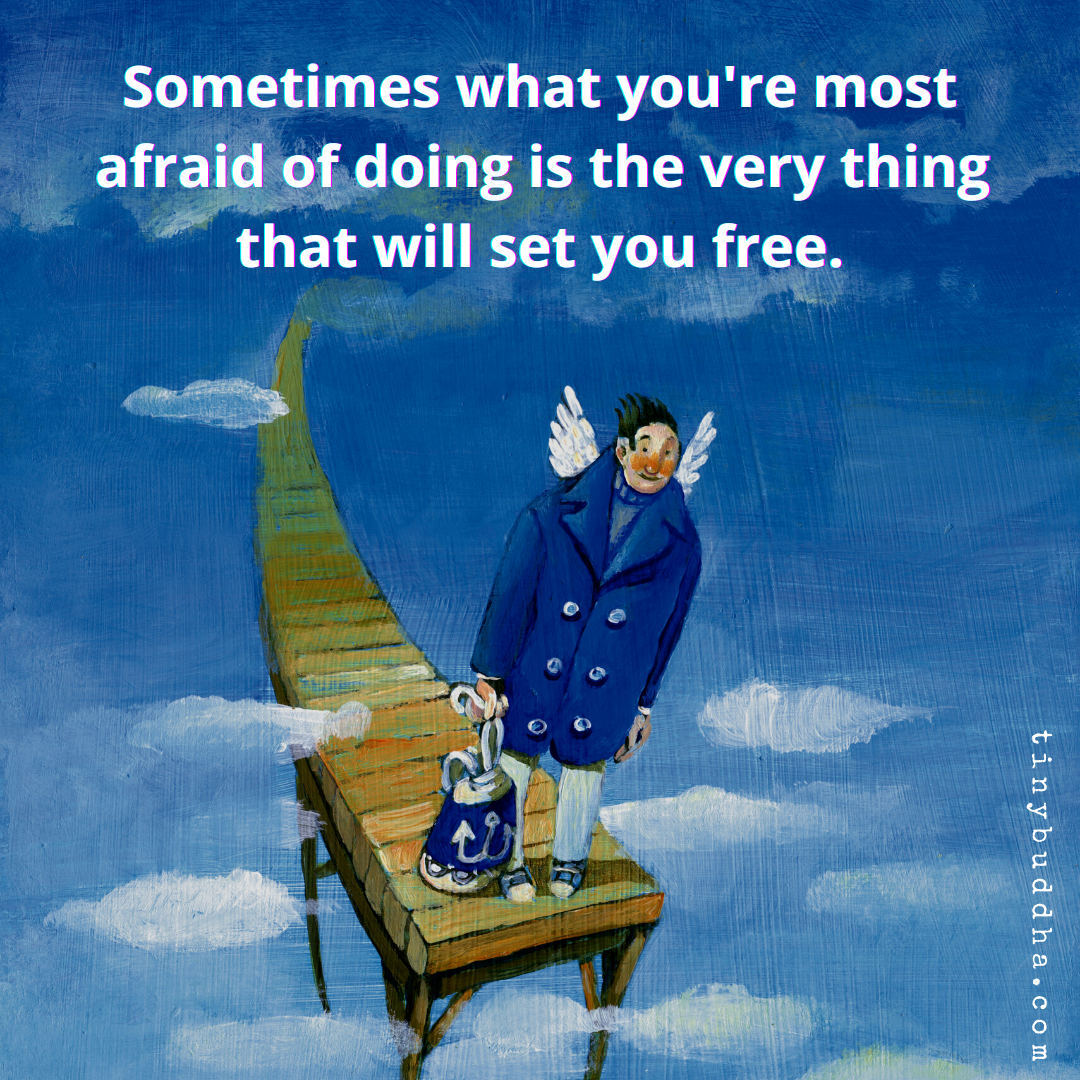
    I believed sooner was better, and if it wasn’t fast then it wasn’t happening at all. I began to find reasons for why it wasn’t happening—that I was not good enough, life was unfair and hard, and it was not possible for me. Each time I repeated these limiting beliefs, I took one step away from my dreams and developed more anxiety.

    This led to a cycle of starting, quitting, and then searching for something different. I would garner the courage to start something new only to fall flat on my face when it didn’t happen. The cycle of shame would repeat, impacting my mental health and my ability to move forward.
    I wanted to see proof that I was achieving my goals and searched for tangible evidence to feel good while simultaneously ignoring all the wonderful things that were right before my eyes. Like living near the ocean, spending time with my loved ones, talking walks along the coast, having meaningful conversations with friends, and enjoying moments of quiet with my favorite cup of coffee. These mean so much to me now.

    I wanted the degree, the paycheck, the happy photo of me surrounded by friends, rather than the silence of uncertainty and the impatience I felt in the present. My fear of time took away the only real time that existed, the now.
    When I slowed down and paused, I realized that I had experienced so much growth and expansion in all the years I’d thought I was wasting time. Every roadblock had challenged me to change. In fact, my anxiety, fear, and disappointment around my slow progress led me inward to heal my relationship with time.

    Though many of my dreams did come true, I was only able to recognize them when I slowed down and let go of the ā€œwhen.ā€

    I was able to achieve this by practicing meditation, breathwork, and awareness. With time and consistency, the present moment became filled with color, and its beauty swept me away from the ticking time bomb of the future. I began to enjoy each step of my journey, whether it was the beginning or end.

    With the gift of hindsight, I can see that it is not about the ā€œwhenā€ but about the ā€œwhat.ā€ What I’m doing right now in the present. The number of negative and limiting beliefs I placed upon myself and the shame I felt were due to an emphasis on always ā€œthinking forward,ā€ and a lack of being with myself in the present.
    The truth is when we let go of our misconceptions of time and follow our dreams patiently, we see that time is not against us; the process is a necessary part of our journey.

    The time it takes to reach our goals is not empty; it is filled with learning and unlearning so that we find ourselves. In the end it is not the achievement that leads to freedom, but the wisdom that comes from living life.

    If we make the present moment our friend rather than our foe, we can experience and appreciate our present journey rather than focusing on our arrival.

  • 3 Key Benefits to Forgiving and Why I Thanked My Imperfect Parents

    3 Key Benefits to Forgiving and Why I Thanked My Imperfect Parents

    TRIGGER WARNING: This post mentions physical abuse and may be triggered to some people.

    ā€œForgiveness is not always easy. At times, it feels more painful than the wound we suffered, to forgive the one that inflicted it. And yet, there is no peace without forgiveness.ā€ ~Marianne Williamson

    The subject of forgiveness comes up often in conversation, but I find that when it comes to the details of what that truly entails, what that process feels like is not actually talked about.

    Over the years, I’ve heard the following statements most often from people when the subject of forgiving someone came up in discussions:

    1. ā€œWhat they’ve done is just wrong! I can never forgive them for that.ā€

    2. ā€œThey haven’t earned my forgiveness. There’s no reason for me to forgive them.ā€

    3. ā€œOh, I already forgave them and let it go. I haven’t told them because we aren’t talking. Why should I be the one to reach out first?ā€

    In 2006, I attended a long weekend workshop with the late Dr. Lee Gibson, where he gifted us one of his brilliant Leeisms: ā€œForgiveness is erasing a debt you think someone owes you. That’s why forgiveness can feel like it’s costing you something.ā€

    I was blown away.

    Yes! I was beginning to understand why it was so hard for me to forgive my parents. I was stuck in the very same mentality of ā€œWhy should I?ā€, ā€œThey were clearly wrong!ā€, and ā€œThey haven’t earned it!ā€

    Late one night when I was nineteen, I was assaulted by my father, who lost his temper and self-control. I thought I was going to die that night, because it certainly felt like he was trying to kill me. My younger brother eventually pulled him off me and kept him away long enough for us all to calm down.

    I was terrified and didn’t sleep for three nights. I also told myself this was the last time I was going to allow this to happen. I started packing that night and moved out in three days. My parents and I didn’t have a relationship for the next ten years, as my mother stood by my father’s side.

    During Lee’s workshop, with a mere group of six attendees that long weekend, we dove into the subject of family dysfunctions and forgiveness. It immediately hit a pain point for me, right in the core.

    I fought with him for about forty minutes (I was told later by someone in the same class) in what felt to me like ten minutes—I was passionately immersed in that moment to prove my point and how wronged I was that time. I was at a standstill.

    I asked him what about fairness and justice, and why must I be the bigger person here when they are the parents? Lee calmly asked, ā€œHow does it feel for you to be the bigger person? Is that okay?ā€ Well, I thought, I suppose it is, but why must I always be that person?

    Then he proposed an even more outlandish concept—thanking the people who had wronged us for all the things they’d done right.

    I was stirred up a little more, but for some reason was curious to hear more. I needed to understand why he thought it was a good idea, and how exactly it would help me be at peace.

    To be honest, I don’t remember all the deep wisdom he had shared as to why. All I remember is that it would create a shift within us if we were open and brave enough to try it, and he encouraged us to share our experience with him afterward.

    No way, I thought. Never. Not gonna happen. Forgiveness is one thing, but thanking them was way beyond what I was willing to consider.

    I was still stewing about all this a week after the workshop. But my adventurous heart wanted to know what it would feel like if I set aside all that my parents had done wrong and thanked them for all the things they had done right.

    I started making a list of some of the things I thought they did right, such as struggling through the hardships of being first-generation immigrants and working day and night to put food on the table and a roof over our heads.

    After much thought, with a racing heart and trembling voice, I did the unthinkable—I called my parents one night, out of the blue, to conduct this ā€œsocial experiment.ā€ I went down my list and thanked them for all the things they did right without mentioning anything that they’d done wrong. They reacted surprisingly well and acknowledged there was a lot they could have done better.

    I’ll admit, I tried not to have any expectations, but a part of me was hoping they’d apologize for what they’d done wrong, and they didn’t. I felt surprisingly okay about that after we hung up.

    I felt proud of myself for having done that. I felt bigger. I felt more grown up. I felt more empowered to be the bigger person. That was my first taste of offering compassion and gratitude from a place of empowerment rather than martyrdom.

    I definitely experienced a shift.

    It probably took another five years for me to fully understand and let go of the night of the assault and all the things I thought they could’ve done better. In hindsight, giving thanks was the first step to feeling more of an adult and less of a helpless child in their presence. Being able to giveĀ my own parents a pat on the back put me at the same level.

    I no longer feel the need to be hopeful that they will treat me a certain way, give me the attention I felt I needed, or make up for what they’d done wrong. I felt more in a position to see them as they are—other human beings also dealing with their own suffering.

    As each year goes by, I continue to get to know my parents as human beings and not just as my parents.

    I have gradually taken them out of the parental role, as I no longer need them to be, and treat them like any other adult. I have established boundaries with them and began to respect their boundaries too, once I got to know their limitations. And I disengage whenever I feel like our interactions start to redirect toward an unhealthy dynamic.

    I understood very well that, as an adult, it was my choice whether to have a relationship with my parents or not. And if I chose to, I would also be playing a part in what kind of relationship we would have. I wanted to have a good relationship with them, and the only way to do that was to forgive.

    At some point in my life, I realized forgiveness is truly for my own benefit. Here’s why:

    Good closure

    The best closure is always amicable. How many relationships have left us feeling abandoned, confused, heartbroken, and questioning our self-worth? We were often not given a choice in those types of endings. But what if we could actively choose a better way to end a relationship with someone? (Or, like with my parents, begin a new relationship with them.)

    While this is a two-way street, we have control over our side. This allows each of us to move on to better future relationships and the next chapter of our lives, without guilt or attachment. A bond with another formed by anger, guilt, or bitterness is an energetic constraint to our own heart and soul.

    Personal growth and transformation

    Whenever we hold onto the victim mentality, we keep ourselves small. When we refuse to forgive, we hold onto the fact that we have been wronged and that we are the victim in that scenario. It’s hard to grow beyond that mindset when we hold onto what hurts us and continue to hold that over those we feel have wronged us.

    It may not feel like it right now (I know I certainly struggled with it for a long time), but the first step to feeling empowered is recognizing that we are in the position to forgive, and that is big. Much like extending gratitude, extending forgiveness comes from a higher place. A place where we have the knowledge that we are in a leadership position to forgive and break through the cage we have built for ourselves.

    Soul freedom

    In a way, we’re helping their hearts and souls to move on. We’re here on earth for a short period of time. As clichĆ© as it sounds, the only things that we’ll think of in our last hours are how much we gave, loved, and lived, and what will haunt us is how much we didn’t.

    I want to make sure I am free of such torment. And if I could free others of such torment in the process, then it would truly be a win-win, on a soul level.

    Forgiveness not only frees us from being permanently tied to those we feel have wronged us; it also releases them from a debt we feel they owe us—a karmic tie I do not wish to adhere to. Only then will we all feel a deep sigh of relief with a freedom to move on to whatever awaits our souls next.

    I sent my father a care package last year with a card attached, letting him know that I wish him happiness and health and he is loved and he is forgiven. And now I am at peace.

    **I am not suggesting anyone else should thank their abuser. I personally found this helpful and healing, but everyone needs to make their own choice based on what’s best for them.

  • 4 Things I Needed to Accept to Let Go and Heal After Trauma

    4 Things I Needed to Accept to Let Go and Heal After Trauma

    TRIGGER WARNING: This post references sexual abuse and may be triggered to some people.

    ā€œThe truth is, unless you let go, unless you forgive yourself, unless you forgive the situation, unless you realize that the situation is over, you cannot move forward.ā€ ~Steve Maraboli

    My family immigrated to the U.S. from India when I was sixteen. Being Indian, my traditional family expected me to have an arranged marriage.

    At twenty-two, as a graduate music student, I fell in love with an American man. When my family found out about our secret relationship, they took me back to India and put me under house arrest. For a year.

    That year of imprisonment and isolation was severely traumatizing. I shut down from my acute distress and pain. I dissociated from myself, my truth, my power, my body, my heart, and my sexuality.

    Two years after they let me out, I escaped to the US but was emotionally imprisoned by my past. I lived dissociated, afraid, and ashamed for eighteen years. Eventually, I broke free from an abusive marriage and my family.

    Since then, I have been on a path of healing and empowerment.

    Beginning my healing journey was like walking through a long, dark tunnel. I was and felt like a victim but was determined to heal.

    To heal from dissociation, I needed to feel again. I felt the bottomless grief, loss, and heartbreak of all that I didn’t get to experience and enjoy.

    I faced and began to address my childhood history of sexual abuse.

    I set boundaries with my family. I started therapy and studied psychology. I learned my mother is a narcissist and my father an enabler.

    Coming from a traditional patriarchal, colonial culture, I had grown up with codes of obedience, sacrifice, and duty. I questioned and challenged my deep internalized beliefs of who I am, what I can do, and what is possible for me as a person of color.

    I learned about my rights. Growing up in India, I had a very different understanding of my rights than those born in Western countries.

    Therapy helped me reconnect with my body, with my needs, wants, and desires. I learned to identify and feel my sensations and emotions. I learned to discern who and what was safe and what wasn’t safe.

    I learned to listen to and trust myself and become more embodied through my dance practice. This allowed me to dance out my rage, shame, grief, and everything I had disconnected from and suppressed. I came alive and opened to pleasure and passion.

    I’ve struggled with low self-worth, people-pleasing, caretaking, perfectionism, fear, shame, guilt, and codependency. One of my most painful realizations was that my inner critic had become as severe as those who abused me. I continue to practice being kind and gentle to myself, loving myself and my inner child and encouraging my artistic self.

    In relationships, it has been hard for me to discern whom to trust and not trust. I had an emotionally abusive marriage and have given my power away in relationships. In romantic relationships, I projected my goodness and integrity and supported my partners’ dreams instead of my own.

    I have finally learned that I can choose myself and honor my needs, wants, desires, dreams, and goals. I continue to shed other people’s projections that I internalized. I am realizing that I am worthy of and can have, dream, aspire for, and achieve what white women can. And finally, I believe in my goodness, of others, and of life.

    Having emerged from the long, dark tunnel of healing, every day is a triumph for my freedom and a priceless gift. Every day I have the opportunity to be true to myself, face a fear, shift a perspective, and love, encourage, and enjoy myself.

    Acceptance

    There are so many steps and milestones on the journey of healing. Of the five stages of grief, acceptance is the final one.

    Acceptance is a choice and a practice. Acceptance is letting go, forgiving yourself and others, and honoring, claiming, and loving every twist and turn of your journey. Acceptance is treasuring all you have learned from your experience no matter how painful it was and how meaningless it seemed.

    Here are some things I have learned to accept.

    Accept the deep impact of trauma

    Coming from a family and culture that valued perfectionism and purity, I wasn’t aware of and wanted to gloss over and hide my trauma, shadow, and coping behaviors. Because I could live a life that seemed relatively high-functioning, I was ashamed to admit and address my childhood sexual trauma to myself for years. I was afraid and ashamed to share my trauma with others because I didn’t want to be seen as broken, damaged, or crazy.

    Once I acknowledged and faced my sexual trauma, I began my healing journey. Healing and acceptance mean seeing, claiming, and loving each and every part of ourselves, however broken or ashamed we feel. As we do that, we liberate ourselves from believing we needed to fit into other people’s ideas to be loved and accepted.

    When we don’t admit and accept our traumas, we can cycle through life alive but not living, succeeding but not fulfilled, and live according to programs we’ve inherited but not from our truths. As a result, joy, pleasure, passion, and true power escape us.

    Accepting that I didn’t get to have the life and dreams I expected

    As a victim, I was stuck in grief, loss, anger, denial, disillusionment, blame, and resentment. Life seemed unfair.

    These feelings are natural after trauma, especially extended severe trauma. But despite years of therapy and healing, I continued to cycle and swim in them and didn’t know how to not have those feelings.

    I was fighting to accept what I had lost. I kept ruminating on who I might have been and what my life would have been like had it not been interrupted or derailed. It was how my subconscious mind tried to control and ā€œcorrectā€ the past to have the outcome I desired and stay connected to my past dreams.

    I was tightly holding on to what I had lost—to who I was then and my dreams. I was terrified that if I let go of what was most precious, I would be left with nothing.

    But the reverse happened. When I decided to let go of my past dreams, regrets, and lost opportunities, I stepped into the river of life anew, afresh, and in the now. I opened to who I am now and what is possible now.

    We don’t let go of trauma because, on a deep level, we believe we will condone what happened, and forget or lose what was so precious.

    Not letting go keeps us stuck like a monkey clutching peanuts in a narrow-mouthed jar. We don’t want to let go of what we had then for fear that we will be left with nothing at all. It keeps us stuck in blame and resentment. It keeps us from joy, pleasure, and possibility.

    But to live and breathe and come alive again, we need to unclench our past. By no means is this forgetting, or condoning, but allowing, receiving, and welcoming new, fresh beginnings, possibilities, and life.

    Accepting the character, mental illness, and wounds of my abusers

    Though my family had been brutal, my inner child wanted to believe in their goodness. I couldn’t accept that people I loved, who were supposed to love, care for, and protect me, could treat me that way.

    I was in a trauma bond and in denial. I had to come to terms with and accept that my mother is a narcissist and my father an enabler. And that the rest of my family only looked the other way.

    I had to let go of my illusion of my family, see through the fog of gaslighting, and accept the truth of who they are.

    Acceptance is learning to see our abusers with clear eyes beyond our expectations, illusions, and stories of what we needed and desired from them, and who we want them to be.

    No matter what was done to or happened to me, I am responsible for my life.

    Staying stuck in a cycle of blame, resentment, and anger told me I wasn’t taking responsibility for myself.

    After severe trauma, it’s painful and challenging to look at ourselves and realize that we played a part in it. Trauma is something that happens to us, but we are the ones who make conclusions about ourselves, others, and life because of it. My beliefs and perspectives about myself, especially about my self-worth, self-esteem, body, and sexuality, drastically changed after the trauma.

    I had to take responsibility for creating my beliefs. I needed to accept every time I didn’t choose, value, and honor myself and my gifts. I realized that just as I had adopted others’ projections of myself, creating a negative self-perception, I could shift to regard myself in a positive light.

    Accepting my part in my trauma set me free from blame and resentment. And it set me free from the power my abusers had over me and my connection to them.

    Acknowledge what I don’t have control over

    My inner child and I wanted to believe in the goodness, love, and protectiveness of my family and partners. But I have no control over who my parents, family, and culture are, or their mental health, values, and behaviors. I had no control over my culture’s beliefs and attitudes toward women and sexuality.

    Because of deep shame from childhood abuse, I felt bad at my core and had a low sense of self-worth. Subconsciously, I tried to control how I was seen. I lived a life acceptable to my family and culture and followed what the world defined as successful, believing it would make me feel good about myself and be accepted and loved.

    But my happiness, freedom, and success lie in my own truth. I learned to honor and follow that. I learned to mother and father myself. I learned about mental illness and mental health and reached out for support from therapists and friends.

    As I let go of trying to please others, pursuing my own needs, talents, and interests, I found myself, my joy, and my purpose.

    Forgive myself

    Looking back, I see so many roads I could have taken but didn’t. I see many ways I could have taken help but didn’t. I was filled with regret for past choices and decisions. I was angry with and judged myself.

    We can be our own harshest critics. I needed to forgive myself.

    I learned to see and be compassionate with my inner child and younger self, steeped as she was in family binds and cultural beliefs. I learned to hold her with tenderness and love for all the ways she didn’t know how to protect and choose herself. And for all she wanted but didn’t know how to reach for and have, for what she wanted to say and do but couldn’t or didn’t.

    As I held my younger selves with understanding, compassion, and love, and forgave them, they began to trust me and offer their gifts, which allowed me to open to joy, innocence, freedom, and play again.

  • Freedom Is the Space Between Each Judgmental or Righteous Thought

    Freedom Is the Space Between Each Judgmental or Righteous Thought

    ā€œIt is inner stillness that will save and transform the world.ā€ ~Eckhart Tolle

    Life is hard. Impenetrable at times. How can we use our spirituality to navigate through the density of life?

    That question inspired this piece of writing. And my navigation tool is almost effortless; I feel compelled to share it.

    When my mind is churning and burning with thoughts and fears and worries, I take myself off to a quiet place, get still, and watch my mind. I wait for the tiny gap between each thought. Bingo.

    That space, that little gap, is freedom in its truest, purest form. It is the birthplace of peace. And every time I enter that space, I am no longer at war with anything. Despite what madness may surround me, that place always remains untouched. It is like an infinite reservoir of strength and love—one that feels like, well, freedom.

    How I came to find that reservoir is a long and nuanced story (that’s why I wrote a whole book about it), but I’ll try and give you the nutshell version.

    Essentially, to even find it, I had to first get to the point where I was so disillusioned—with my cancer, with people, with the system, with the greed, with the house chores, with the destruction of the planet, with war, and with life full stop.

    Little did I know it then, but that disillusionment was freedom’s gateway.

    For so long, I looked to ā€˜the other’ as the source of my disillusionment.

    Sometimes ā€˜the other’ was a person, sometimes it was a situation—my cancer, the pandemic, the person who I believed had wronged me, the political party; anything or anyone that caused a disturbance to my happiness fell into this bucket.

    Of course, it felt good to blame cancer, that person, or the pandemic for my woes, at least on the surface. Yet the blaming was also the root of my suffering. The biggest wars I’ve had in my own life were when I was trying to get ā€˜the other’ to yield / change / admit they have it wrong so I could live in peace.

    But the true source of my disillusionment was never with them. When I stopped waiting for the situation to change and shifted my attention to my mind, I observed something that floored me at first: my own righteousness.

    Staring back in the mirror were my tendencies to be correct, envy, judge, complain, and win. That mirror revealed one simple truth: I was adding to the war I desperately wanted to end. I had arrived at the place where I was simply fed up—no longer fed up with life but rather fed up with the suffering caused by my very own mind.

    The challenges and hindrances of life may have taken you to a similar point—the point where you’ve had enough. Before freedom is even possible, this stage is necessary, essential even.

    The world is unsatisfying. So, now what? This is freedom’s front door. It is the opening to the very core of your being. When we have had enough of looking outside for contentment, only then do we look inward. This is where the rubber meets the road.

    But we have to go deeper—beyond the mind, beyond our thoughts about what is right vs. wrong, left vs. right—to our essential oneness.

    And, as a collective, I think we get there by asking ourselves one simple question: Do I want peace or war?

    If it is peace, we must start with the peace in our minds. In all the frenzy, it is possible to simply stop and enter into the space between every thought. Rest there for a few scared moments. Feel the ease wash over every cell of our being. Come home to that again and again. Life doesn’t need to be any different to enter that space.

    That space is freedom. And true freedom is not bound in any person or situation. Freedom is what sits underneath the war. It is found in the tiny gap between every righteous and non-righteous thought; it occurs through stillness.

    From this stillness, I’ve learned (yes, the hard way) that we can speak our truth, but now we speak it without the need to control any outcome.

    For example, rather than trying to force my husband to read a spiritual book instead of opting for Netflix—as if I know what’s right and best for him—I can respect him for where he is at in his inner journey. I still act. I still suggest books. But my happiness is not dependent on his choice.

    Instead of being angry at a friend who hurt me, I can step out of my righteousness and cultivate empathy for where she is at in her life. I still reach out. I still attempt resolution. But my peace is not dependent on her response.

    I throw my seeds of truth, dug up from the depths of my heart, out into my family and the world. Sometimes they land in the fertile soil of ā€˜the other,’ and sometimes they don’t. So be it. It is action without criticism, judgment, blame or control—without the war. I had found a place within where I could look at ā€˜the other’ and feel compassion and even love instead of anger and annoyance.

    Eckhart Tolle says, ā€œIt is inner stillness that will save and transform the world.ā€

    I couldn’t agree more. Because from that place, from the silent stillness within, war is not escalated but instead averted.

    So, to anyone feeling disenchanted, I want to honor you and say one thing: The freedom your soul is aching for is within arm’s reach. It is as close as your breath, as close as the space between each of your thoughts.

  • How I Stopped Carrying the Weight of the World and Started Enjoying Life

    How I Stopped Carrying the Weight of the World and Started Enjoying Life

    ā€œThese mountains that you are carrying, you were only supposed to climb.ā€ ~Najwa Zebian

    During a personal development course, one of my first assignments was to reach out to three friends and ask them to list my top three qualities. It was to help me see myself the way others saw me.

    At the time, my confidence was low and I couldn’t truly see myself. I didn’t remember who I was or what I wanted. The assignment was a way to rebuild my self-esteem and see myself from a broader perspective.

    As I vulnerably asked and then received the responses, I immediately felt disappointed. All three lists shared commonalties, specifically around responsibility. The problem was, I didn’t see responsibility as a positive trait. In fact, I didn’t want to be responsible; I wanted to be light, fun, and joyful.

    Though I understood that my loved ones shared this trait in a positive light—as in I was trustworthy and caring—intuitively, I knew responsibility was my armor. I used it to protect and control while, deep down, I wanted to be free and true to myself.

    I didn’t trust life. I found myself unable to let go out of fear of what may or may not happen to myself and others. I let my imagination run loose in dark places and believed if I thought my way out of every bad scenario or was on guard, I could somehow be prepared to meet the challenges that arose.

    I thought that if I oversaw everything, it would get taken care of correctly and then I’d be safe from the pain of life. The pain in life was not only my own, but my family’s, the local community’s, and the world’s. I wanted to plan and plot a way to fix everything so that everything would be perfect.

    I saw myself as a doer—a person that takes actions and makes stuff happen. I relied heavily on pushing myself and coming up with solutions and, at times, took pride in my ability to work hard, multi-task, and be clever. With time, however, I felt resentful and exhausted.

    Over the years it became too heavy a burden. My shoulders could no longer carry the weight of the world, and I was incapable of juggling so many balls. I had to let go.

    There were so many things that were out of my control, including situations that had nothing to do with me, and yet there were so many people I loved and so many dangerous possibilities.

    Living in a state of constant responsibility meant I had to be alert; I had to be on guard. I was never present and thus unable to have fun. I didn’t understand how to enjoy life while being responsible. I saw these as competing desires and ended up avoiding joy totally.

    I believed I could save joy for a vacation or that wedding coming up next month. I always postponed joy until later so that I could resume being responsible.

    However, being a doer and taking responsibility for things that were not in my direct control had consequences. I was unhappy and drained, constantly wondering why I couldn’t just relax and enjoy life.

    Even when I went away on a vacation, I was unable to calm my mind and have fun. I told myself once x,y,z was taken care of, then I’d feel calm, but then something new would come up and I’d be thinking about that instead of enjoying my trip.

    This left me with a powerful realization: I felt safer feeling anxious and tense than I did feeling happy.

    In some twisted way, it served me. At the time, being happy was too vulnerable, while being on guard for the next catastrophe felt safer. This was not how I wanted to continue living life.

    I wanted to remove the armor. I wanted to trust and enjoy life, and I wanted to believe that whether or not I was on top of everything, things would work out.

    I knew that I could be responsible without carrying the weight of the world on my shoulders. That I could be dependable and caring without being stressed or serious. Those were expectations I had falsely placed on myself, and it was up to me to remove them.

    Once I realized that solving the world’s problems was harming my health and that I was choosing fear over joy out of a false sense of security, I decided to give myself permission to feel the discomfort and vulnerability of happiness. In doing so I found the courage to let go, trust, play, and love life.

    I began setting boundaries with myself. The person that had placed the badge of responsibility on my shoulders was me, and I had chosen to do it out of fear, not love. I had to let go of knowing everything that was going on in other people’s lives and the world and take space from social media, friends, and family to make space for me.

    I began to cultivate joy by practicing presence daily and taking the time to do things I enjoyed doing.

    I took yoga classes, watched comedy shows, went to the beach, and continued personal development courses.

    I learned that although I was great at multi-tasking and pushing through, it wasn’t what I wanted. I wanted to courageously follow my dreams and enjoy my precious life.

    That meant that I had to feel the uncertainty, sadness, and danger of life’s circumstances without jumping in to fix anything. I had to take a step back and bring awareness to my thoughts so I wouldn’t unconsciously join the merry-go-round of solving problems.

    I was a beginner at all these things, but the more I practiced, the more joy I experienced, and this spread onto others. Surprisingly, friends would tell me how I inspired and helped them—not by solving their problems but by being bold enough to enjoy my life.

    If you want to enjoy your life but stress yourself out trying to save everyone from pain, begin to set boundaries with yourself. Stay in your lane and focus on the areas you have direct control over—your attitude, your daily activities, and your perspectives.

    Try slowing down, investing time and energy into activities that light you up. You can’t protect anyone from what’s coming in the future, but you can enjoy your present by letting go and opening up to joy.

  • Our Creative Genius Shows Us Possibilities the Rational Mind Can’t See

    Our Creative Genius Shows Us Possibilities the Rational Mind Can’t See

    ā€œThere are moments in our lives, there are moments in a day, when we seem to see beyond the usual. Such are the moments of our greatest happiness. Such are the moments of our greatest wisdom.ā€Ā  ~Robert Henri, The Art Spirit

    In my twenties, I worked for a Fortune 500 company at 401 North Michigan Avenue in downtown Chicago. It was fun to work in the city, and my office overlooked Lake Michigan—I never got tired of the stunning view. Weekends were spent with friends eating at unique ethnic restaurants and visiting comedy clubs, blues bars, art galleries, museums, and theater.

    Chicago is a thriving city with a vibrant cultural life. I had a great time.

    I eventually went on to get a Ph.D. at the University of Chicago, and after I completed the degree, everything in my external world nudged me to ā€œget out there and do great things.ā€ Fellow students were receiving grants, fellowships, and prestigious tenure-track positions at major research universities. My advisor (Mihaly Csikszentmihalyi, the author of Flow) was excited about my dissertation research and wanted me to publish.

    Everywhere I went, freshly minted Ph.D.s were busily writing papers, interviewing, and speaking at important conferences. And if that wasn’t enough incentive, my department was being closed by the University, and administrators, faculty, and students were launching a massive fight to try to keep it open. The centerpiece of their argument was to show how their recent graduates (i.e., me…) were doing amazing, brilliant things in the world. Yikes.

    I pushed myself—secluding myself away at a quiet retreat center for a week to try to focus, write a research article, and finally get serious about my academic career. My writing was stiff, contrived, and boring.

    I was miserable.

    So, instead of launching an illustrious academic career, I moved to the wilderness of northeast Montana.

    Montana enchanted me. Everything was so different. I fell in love with the spectacular natural beauty, but also the people who were so different from anyone else I’d ever known.

    There were backwoods hippies living off the grid, musicians who played on homemade instruments, unique one-of-kind handmade houses, and artists of all kinds.

    I moved in with a longhaired hippy in a teepee. My dog and I could hear the wolves howl at night, and we crossed paths with bears during the day. I immersed myself in the beauty of the wild with its craggy mountains and deep dark winters.

    I was far, far away from the world of exalted professional accomplishments. Here’s what happened instead.

    1. I developed self-reliance.

    One day a bird flew in and got stuck between windowpanes when trying to get out. Another day, a neighbor’s stray dog got his eyelid hooked on barbed wire. (Ouch!)

    In the city, my go-to response was to get the nearest person to help. But here in this remote area, there were no neighbors to be called. I managed to successfully extricate both animals on my own and without harming them further.

    2. I developed a wide skill set.

    In rural and remote areas, by necessity, you become a generalist. I did things I never would have done had I remained in the city.

    I was asked to speak at a church service. I started leading creative writing workshops at the yoga center. I was asked by an artist to write a book about her work and the local paper invited me to participate in a community forum.

    3. I developed openness.

    In the city, I held staunch beliefs about issues such as the need for gun control. Living in the country, I developed a deeper and more fleshed out understanding of diverse views. In rural Montana, churchgoers, new-age hippies, and hunters all mix together at the post office, grocery store, and local cafe.

    My perspectives broadened. I was no longer automatically locked into a particular position. Whereas before I saw the world in stark black-and-white, I now saw shades of gray.

    4. I developed leadership skills.

    In the city, civic organizations can feel large and intimidating. In a rural setting, everyone pitches in.

    I was asked to organize a United Way meeting. I became involved in the Rotary club. The employment agency asked me to lead a staff meeting,

    5. I developed passions for different things.

    I became proficient at river rafting. I spent weekends contra dancing. A band needed a bass guitar player and there was no one else around, so I volunteered to give it a try. (I loved it.)

    I had no idea of the fun to be had in the country.

    6. I discovered a freedom of identity.

    I’d spent my life growing up in a conservative Midwestern family, then following corporate rules as a computer scientist before embarking on a rigorous Ph.D. program.

    In Montana, I let myself break the rules for a while, stepping out of everything I had known and trying on something completely new and different. I discovered what it felt like to be free of roles and expectations.

    A friend of mine, a massage therapist, absolutely loved her work. After several years, she decided she wanted to make more money and she made the rational decision to switch to a career in nursing. Since both professions involve healing work, she naturally believed nursing would be a good choice for her.

    Years and tens of thousands of dollars later, she admits that she hates nursing. Logic doesn’t help us find our next step.

    By the way, I also have a dear friend who loves being a nurse. This is not a story about nursing (or academia). It’s a story about uniqueness.

    What are the unique paths that inspire each of us? What are the unique places, people, and situations that help us grow?

    When we’re stuck, it’s often because our minds are dead-set focused on the direction that seems reasonable. It’s the only direction that our minds can see.

    Our creative genius has a much different approach. It offers us unique, peculiar possibilities that our rational mind can’t see.

    Your creative genius will take you in directions that you don’t expect and can’t predict ahead of time. Directions that aren’t a linear, incremental next step. Instead, they open up entire new worlds that you didn’t know existed.

    Here’s a tip…

    When you’d like to make a change, feel blocked, or frustrated that whatever you’re doing is no longer working, consciously step back and imagine opening space for possibilities you hadn’t considered. This can be a challenge—your mind may have a hard time letting go of the reins.

    You are more than your thinking mind. You have another, non-cognitive creative intelligence operating in your life as well. It’s your creative genius and it’s worth listening to.

    Opening space for it will give it a chance to express itself.

  • 5 Simple Ways to Overcome Your Mind’s Constant Judgments

    5 Simple Ways to Overcome Your Mind’s Constant Judgments

    “It’s easy to judge. It’s more difficult to understand. Understanding requires compassion, patience, and a willingness to believe that good hearts sometimes choose poor methods. Through judging, we separate. Through understanding, we grow.” ~Doe Zantamata

    If you don’t live in a cave, you have probably noticed two things. First, there are a lot of annoying, incompetent, stupid, and very difficult folks living in this world. Second, assuming you agree with my previous sentence, you have a very judgmental mind.

    For better or worse, you’re not alone. A hundred thousand years ago, the ability to judge people quickly helped our species survive. If we saw an unknown caveman and thought they ā€œlooked friendly,ā€ we could die if they actually ended up being a killer. Thus, our minds learned to judge people quickly, and if in doubt, with great suspicion. After all, judging and being afraid of strangers could save your life.

    Yet nowadays, the tendency of our minds to judge most everyone as annoying, different than us, or just plain difficult simply leads to stress and unhappiness.

    Fortunately, there are five simple phrases you can use to overcome your mind’s constant judgments, and instead feel open hearted, compassionate, and at ease with others’ behavior.

    Your mission, should you decide to accept it, is to find the simple phrase or phrases that work best for you. Once you find a phrase that works for you, you can maintain a peaceful and loving attitude toward people—even when they’re committed to being super annoying.

    It Must Be Hard Being Them

    The first phrase I’ve used to quickly let go of judgment is, ā€œIt must be hard being them.ā€ This sentence is meant to evoke compassion, not superiority. If you think this phrase and feel superior to whoever you’re judging, you’re not using it the way it’s intended. However, if you think this phrase from your heart, and feel compassion for a person for being burdened by their difficult behavior, then you’re using it well.

    Recently, I talked to a very rude airline reservation clerk over the phone. She was curt, unhelpful, and incompetent (in my judgmental opinion).

    Anyway, she was either a very wounded and angry person, or she was having a particularly bad day. Yet, when I thought in my mind, ā€œIt must be hard being her,ā€ I immediately felt more compassion for her. After all, someone as angry and unhelpful as she must create a lot of havoc in her life.

    She probably feels very lonely, frustrated with her job, and angry that she gets a lot of resistance to her difficult personality.

    Strangely, as soon as I felt more compassion for her, her behavior became less troubling. It often goes that way.

    How is That Like Me?

    I used to live in a spiritual community. I liked some of the members of this community, while others I found particularly irritating. When annoyed, in this community we were encouraged to use a phrase that helped us to immediately let go of our self-righteousness and annoyance. The phrase was, ā€œHow’s that like me?ā€

    So, if Joe was complaining about how it was too hot to work outside when it was eighty degrees, I’d ask myself, ā€œHow’s that like me? Do I ever complain like Joe is doing?ā€ The answer was an inevitable ā€œyes.ā€ In fact, I’d try to pinpoint exactly how I sometimes behaved like Joe’s current annoying behavior. For example, I might remember that my complaining about being out of potato chips was similar to Joe being upset about working in less than perfect weather.

    When I would see how I sometimes acted in ways that were similar to whatever I found annoying or difficult in another, two things would happen. First, I would let go of my self-righteousness and feel humbled. Second, I would feel more compassionate toward whoever I had been judging.

    After all, we all do annoying and even stupid things at times. We’re human. The phrase, ā€œHow’s that like me?ā€ has helped remind me of our shared humanity and assisted me in seeing that I, too, am not perfect.

    Don’t Know Mind

    A third approach to overcoming our mind’s judgmental tendencies is to think a phrase such as, ā€œI don’t really know the whole story.ā€ In the Zen tradition, they call this ā€œdon’t know mind.ā€

    Our mind always wants to attach a story to whatever is happening in our lives. Even when we have almost no information, we create a story in our head as to what things mean and what’s really going on. Most of these stories that we create make us look pretty good and make others look pretty bad. Yet, if and when we get a fuller picture of reality, we see that there’s no such thing as one person being ā€œall good,ā€ and another being ā€œall bad.ā€

    People are complex, and they often have very good reasons for their behavior—even if we can’t see it at the time or know what it is.

    As a psychotherapist, I get to see ā€œbehind the curtainā€ of why people behave the way they do.Ā  Several years back, I had a client who was required by a court to see me due to his having repeatedly hit his wife and kids.

    I had never seen such a person in my office, and my initial reaction to him was one of judgement and disgust. However, I soon learned that his father had not only beaten him, but sexually abused him as a child. As I learned about his life, I understood why he had turned out the way he did. I felt deep compassion for this wounded man, and as therapy progressed, I let go of my judgments and he let go of his violent tendencies.

    Had I held on to my initial judgment that he was a bad person, neither of us would have been healed. Not believing your mind’s initial judgments can be a path to greater freedom for both you and others.

    Ā They Are a Perfect Them

    In most spiritual traditions, there is the idea that behind our personality and behaviors, we all share a common awareness, soul, or divine nature. This divine nature may be hidden under many layers of ego and problematic behavior, but it’s there somewhere.

    If you can quiet your mind and open your heart, you can sometimes tune into this soul or divine aspect in others—even if they’re being annoying.

    A phrase I’ve used to help me along this path is, ā€œThey are a perfect them.ā€Ā  When I say this sentence from my heart, it reminds me that everyone is simply doing the best they can, and that a perfect soul is hidden underneath all their wounding.

    In movies, there’s always a ā€œbad guyā€ or gal who we root against. Even if that character’s behavior is abhorrent, we may still marvel at the acting abilities of the person portraying the antagonist.

    In a similar way, when I see someone doing something I find offensive, I can still admire how well they’re playing their role. They might be a world class jerk, but at least they are playing that role perfectly. And behind the role they are playing, they are a wounded, vulnerable human being—just like me.

    In short, they are a ā€œperfect them,ā€ and as I allow them to be who they are, it gives me the chance to let go of my judgment and feel compassion and peace.

    A fifth and final way to conquer your (and my) judging mind is to use a phrase that Jesus used: ā€œForgive them, Father, for they know not what they do.ā€

    People don’t consciously do stupid or self-destructive things. After all, people never put their hand on a hot stove if they know it’s hot. If we see someone acting in an upsetting or self-destructive manner, it inevitably means they’re too unaware—or too compelled—to do anything else.

    Because we assume babies are not very aware and have little or no free will, we tend to not judge them when they do things we don’t like—such as cry. In a similar manner, we can see that many adults also are so unaware or so compelled by their past conditioning that they’re really like a little baby. From our understanding that they ā€œknow not what they do,ā€ it’s easier to let go of our judging and being annoyed at them.

    Ultimately, we all want to love and be loved. Unfortunately, our Neanderthal-like judgmental minds get in the way of what we truly crave deep down inside. By trying out the four phrases I’ve discussed, you may find a quick way to sidestep how your mind creates separation and annoyance. Once you find a simple way to elude judging others, you can instantly enjoy more peace, compassion, and love.

  • Let Go of Control: How to Learn the Art of Surrender

    Let Go of Control: How to Learn the Art of Surrender

    “You must learn to let go.Ā ReleaseĀ the stress. You were never in control anyway.” ~Steve Maraboli

    I’ve noticed that things go much more smoothly when I give up control—when I allow them to happen instead of making them happen. Unfortunately, I’m terrible at this.

    Although I’m much better than I used to be, I’m a bit of a control freak. I often use perfectly good energy trying to plan, predict, and prevent things that I cannot possibly plan, predict, or prevent.

    For example, I wonder if my baby is going to get a proper nap when we travel and, if not, just how crabby she might be. I think through her travel and napping patterns, attempting to figure out exactly what we’re up against, as if her sleep is something I can control.

    I also think about the weather a lot when out-of-town guests are visiting. I spend my already-limited time planning for every possible weather/mood combination when considering our itinerary.

    Like most humans I know, I spend a lot of time in business that’s not mine. The baby’s business, my friends’ business, Mother Nature’s business.

    As a recovering control freak, there are three things I know for sure about trying to control things: (more…)

  • The Relief of Letting Go and Living Fully Despite My Anxiety

    The Relief of Letting Go and Living Fully Despite My Anxiety

    ā€œWe only live once, Snoopy.ā€ ~Charlie Brown

    ā€œWrong. We only die once. We live every day.ā€ ~Snoopy

    I am an anxious person. I haven’t always been though. When I had my first child, fourteen years ago, it was the week after my father died. My son was born and went right to the NICU where he spent the first fourteen days of his life. In that moment, I changed. I’d already had one miscarriage. I couldn’t lose anyone else.

    Man, life is fragile. I spent the next decade making sure he played on the swings at the park, but not too high since he could fall and break his neck. We always took him to the river or the lake, but no swimming. There are amoebas in the water. (Funny and crazy, I know.)

    I now have two children who are fourteen and nine. Just a couple weeks ago, we went to the zoo. I had to talk about not leaning on the railings; you could fall in an enclosure. I am exhausted. The worry never ends.

    I am a mom, a wife, a daughter, anxious, neurotic, controlling, and scared. I never meant to be that helicopter mom. I had great ideas about how I would parent my kids. My husband and I always talked about how we would raise teenagers and what their curfews would be, but being in the middle of it, I’m terrified. I live in a constant state of panic and fear.

    I constantly worry I’m having a heart attack or a stroke. I worry my kids will die. I worry I will die.

    During the early months of the Covid-19 lockdown, we completely shut off from the world. Guess what? We all got Covid-19, except my nine-year-old. My elderly mother (who lives with us) got it too. I even sanitized groceries. We have no clue how we got it. We are all fine. Thank goodness. I know not everyone is as lucky.

    Every pain or sniffle is a worst-case scenario. Have you ever seen the movie My Girl? I am totally Veda Sultenfuss.

    It took several years, trips to the emergency room, shaky relationships, and a whole lot of self-discovery to figure it out. My lack of confidence, yet another sad part of anxiety, made me think I wasn’t enough. It caused my divorce. Thankfully, we are remarried. He sees me, he sees the moments I am fun and carefree, and he helps me work through my anxiety. Old Bob Ross reruns help too.

    So, what is the lesson here? I am not in control of a single thing. (Mind blown, I know.) Life is full of terrible things, wonderful things, heartache, tears, laughter, death of parents, even children. It’s all those moments in between that make life worth living.

    If we hide because of fear, we miss out on those moments. We miss out on a chance to save a memory we could pull out of our little brain file when we’re seventy-three and watching the snowfall on Christmas morning when all our kids are grown up.

    It’s really scary, letting go. It’s like walking on a tightrope. You see what could happen, but you just walk, because you know you’re not fully living if you sit out, and at the end of that walk, you realize how fast it went by. Either way, it will go by. It’s up to you how you spend that walk. Frank Sinatra says it best, that’s life.

  • The Freedom of Being Ourselves (Whether Others Like Us or Not)

    The Freedom of Being Ourselves (Whether Others Like Us or Not)

    ā€œBe yourself. Everyone else is already taken.ā€ ~Oscar Wilde

    ā€œCringeyā€ is what my kids called it. Me? I was just being Sam.

    After hitting ā€œpostā€ on my highly emotive Instagram video—one of those more-than-one-minute jobbies that winds up on Instagram TV—I closed the app and had a brief moment of panic. Maybe I said too much? Maybe I screwed myself by being too honest? Too open? Too… vulnerable?

    A few hours after sharing that five-minute, tear-filled video on not giving up on our dreams, I still didn’t have the courage to log back in to see how many followers I’d lost. Or to even delete the thing, because that would also require logging back in. I pressed on with my day and chastised myself for this classic case of Sam Oversharing.

    Dammit. When will I learn?

    To combat my feelings of anxiety, I usually resort to hitting the trails. The very act of putting one foot in front of the other soothes my worrying soul, infusing me with renewed perspective. So that’s what I did, the day I thought I shared too much: I went for a walk.

    And as is often the case, I began to see things a little more clearly after asking myself three questions:

    1. What were my intentions in sharing the video?

    2. Did I have something insightful and authentic to offer?

    3. Why did it matter what anyone else thought?

    Let me break it down for you, because I had an epiphany that seems so on the nose, I’m almost embarrassed to write about it. How could it not be more obvious?

    The answer to those three questions all circled back to one simple truth: I was just being myself. That’s it.Ā 

    In the process of being ourselves, we let others see us for who we really are. Turns out, I’m an over-sharing, comfortable-with-vulnerability, sometimes dramatic, heart-on-sleeve gal, fraught with insecurities and rich in idiosyncrasies.

    I eat way too many chips, talk openly about my hormones and hairy legs, and appear to care deeply about the validation of others. It’s nice to meet you.

    Look, it isn’t the first time I’ve put myself and all my weirdness on display. I’ve a long history of posting about my Gong Show life and subsequently surviving the fallout.

    That time I was trapped in my new boots at the Toronto airport, yanking on a broken zipper while holding up the line as exasperated travelers sought to help pull them off. I wrote about it.

    That time I thought the dog was missing but had merely forgotten him in the car after he accompanied me on a midnight procurement trip for junk food. Shared it.

    Or when I left my sixteen-year career in finance. I wrote a short novel for that Facebook status, carefully crafting the narrative in case anyone decided to judge me for starting fresh.

    Other times, I’ve taken to the socials to passionately air my opinion on topics near and dear, like shaming the local news media for missing a triumphant story of international competitive success with my kids’ gymnastics team. Turns out, there was something printed after all, I just didn’t see it. So, let’s add ā€œimpulsiveā€ to the list of adjectives defining me, and ā€œone who doesn’t always do her homework.ā€

    My point is this: I’ve come to the conclusion that instead of wincing every time I share something, or show how I actually feel, I’m going to embrace it. I am who I am, and if it makes you uncomfortable, then you can move on. No hard feelings.Ā 

    Since accepting that my unfiltered ways are simply me, I’ve felt unsurpassed freedom. If I get to be me, and it turns out that you like me, well, alright then! If I get to be me, but you shuffle along, that’s cool, too. The people who understand me are the people who are still here. I don’t need everyone and their damn dog to like me. I’ve been there, tried to do that, and it’s exhausting.

    But if we aren’t hurting anyone in our quests to truly be ourselves, why aren’t more people living this way? Maybe it’s because we assume that being ourselves just doesn’t cut the mustard. We’ve been conditioned to believe we aren’t shiny enough, young enough, rich enough, educated enough, or informed enough to exist in today’s performative world.

    And I’m tired of it, quite frankly.

    Part of the reason I left my career last January was this deep yearning I felt to live unapologetically. As myself.

    Although much of my time as a financial advisor was rewarding, I often felt stifled, required to behave as a version of myself that didn’t line up. I had to shove the real Sam back inside myself. Keep a lid on her. Keep her quiet for compliance and reputational reasons. I maintained this through all of my thirties and half my forties until I nearly broke.

    Over this last year, however, I’ve discovered a tremendous shift in what matters to me. Now unencumbered, I’m exploring my true self without any muzzle or handcuffs.

    If I want to submit a piece I’ve written and say how I really feel, I’m going to do that. Because I can. If I want to dive deep into my creativity to see where it leads, I will.

    For me, the pandemic has also illuminated some habits that were inadvertently hurting me. Being stuck at home has shown me that I’m actually quite introverted. I enjoy time to myself and often find it challenging to give my energy to people outside my family. This is just the truth. Pre-pandemic, however, I’d say YES to almost any invitation because my boundaries around my own mental health were not prioritized over the feelings of others.

    Now, if I don’t feel like Zoom-zoom-zooming, I’m more empowered to just say it like it is. ā€œYou know what? Not feeling it today. Still love you, but no. I’ve got a date with Netflix and a bowl of Tostitos. Let’s talk next weekend.ā€

    I used to view this as selfish. But what I’ve learned is I’m not doing anyone any favors if I show up cranky for something I really don’t want to be at. Because I’m a terrible faker—let’s add that to the list of why I am the way I am.

    I’ve also discovered that I am legit a wandering soul. I know this for sure, because the travel embargo has wreaked havoc with my natural tendency to hit the road. And I will no longer apologize for this passion of mine. Yes, I’m grateful for all the blessings and beauty of my own backyard, but you know what? I’m allowed to miss the wider world. It’s part of what makes me me, and I will no longer water it down.

    Because I don’t want to be an actress. Contrary to the world we live in, where every dish we eat, trip we take (okay, the ones we used to take), outfit we assemble, animal we groom, it’s all up for display, but we showcase only the best versions of our lives.

    We don’t want people to see behind the curtains… The dirty dishes strewn everywhere (check). The dental floss we tossed on the floor instead of in the garbage (check). The bottom half of our attire (long undies with holes in them). We take great pains to ensure that how we represent ourselves is attractive, enviable, and meeting a standard that says we have it all together.

    The thing is, I’ve decided wholeheartedly to embrace my obvious not having it all together. See, I know the truth—nobody has it all together. The second I accepted this universal tenet I became far more comfortable just being me.Ā 

    And that has led to a feeling of freedom I’m just now starting to taste.

    I believe this is what everyone wants: freedom. If we are privileged to live in a world where we can show up as ourselves, that is a gift. For sure, not everyone has access to it. Some live in a world where they must hide their beliefs, their gender identities, dilute their dreams or worse, battle through atrocities the likes of which we have nary a concept.

    So, if we are lucky enough to live in a society where we can show up as ourselves so long as we aren’t hurting others, shouldn’t we be rushing to do so? Isn’t it our duty to interact with people in a richer, more authentic, more emboldened way? Aren’t you tired of trying to be someone else?

    It’s not that I don’t value growth. As long as we’re human, we will always strive for improvement. But there isn’t anyone else in the whole wide world like us. Everyone else is already taken. Therein is our own version of a superpower: an essence of what we can contribute because we are ourselves, not in spite of it.

  • How a Numb, Phony Zombie Started Singing Her Own Song

    How a Numb, Phony Zombie Started Singing Her Own Song

    ā€œAlas for those that never sing, but die with all their music in them!ā€ ~Oliver Wendell Holmes

    Six years ago, I came across a line from an old poem that punctured my present moment so profoundly it seemed to stop time.

    On an average Tuesday, there I was, sitting at my desk, ignoring the stack of papers I was responsible for inputting into a spreadsheet and procrastinating as usual on the Internet instead.

    At this particular time, Pinterest was my drug of choice—anyone else?

    As I was aimlessly scrolling through wacky theme party ideas and spicy margarita recipes, suddenly, here came this old-school poet Oliver Wendell Holmes with these words that leapt off of my laptop screen and stung me like fourteen different bee stings to the heart:

    ā€œAlas for those that never sing, but die with all their music in them!ā€

    I was floored. It was as if Oliver’s invisible hand had reached into my day and popped the protective bubble of my well-established comfort zone, sending me crashing down to the ground of an uncertain reality that I had so expertly managed to hover above for years.

    When I landed inside of the truth of my life for the first time in a long time, here’s what I saw:

    A recent college grad whose dad had died in the first few weeks of her “adulthood,” who took a job in the marketing department of a reputable company because it “looked good,” who spent her time outrunning looming fears of growing up and grief by seeking refuge in extraneous purchases, greasy slices of pizza, late nights under laser lights, and the bottoms of bottles of wine.

    A numb, phony zombie in red lipstick who had forgotten her own song.

    As a little girl, effortless music oozed from my pores. I could laugh, cry, dream, question, create, and believe in magic, and other people, and myself, with such abandon; it was like I was a tiny conductor leading a spontaneous orchestra of full self-expression, always unrehearsed and totally freestyle.

    And I didn’t just speak, I SANG!Ā AndĀ I didn’t just walk, I DANCED!

    HadĀ I put no soundproof walls up around my being then? I could recall what it was like to feel that free. But the memory of my smaller, wilder self marching proudly to the beat of her own drum felt so distant from where and how I was living.

    So instead of continuing on with the endless spreadsheet that I was responsible for completing that afternoon, I decided to take a break. A long break. I found a sunny bench outside of my building where I could go to sit and think.

    Then suddenly, The Little Mermaid swam right into my stream of thought. I closed my eyes and saw the scene where Ariel trades in her powerful voice to the evil sea witch, Ursula, for a pair of legs. She is so certain that becoming a part of the human world is more important to her than speaking her own truth and singing her own song. And I wondered…

    In what ways am I living at the expense of my own inner music?Ā 

    I began to examine the situations in my life where I found myself exchanging an authentic piece of who I was out of fear, in order to achieve a particular outcome in the world. Here are just a few places in my life where I discovered this was so:

    I’d sacrificed my passion, by accepting a job I merely tolerated, because I was afraid of failing and wanted to give the appearance of being successful.

    I’d pushed down my grief, numbing it with shopping, food, and alcohol, because I was afraid of breaking down and wanted to give the appearance of being ā€œfine.ā€

    I’d sacrificed authentic connection for toxic friendships because I was afraid of being lonely while I found the right friends and wanted to give the appearance of being liked.

    I’d sacrificed my authenticity and ended up living a small life because I was afraid of vulnerability and wanted to give the appearance of being in control.

    That was the moment when I decided I was ready to ditch the legs—everything that was just about appearances—and dive deeply into my own true passion, grief, and longings for connection and authenticity.

    I quit my job and enrolled in a spiritual studies certification and celebrant ordination program.

    I hired a therapist to help me heal and a coach to help me dream; these two women would become some of the fiercest advocates for me and my inner music that I’d ever meet.

    I started taking courses in personal development, joined a business mastermind, and got myself into as many meditation circles and yoga classes as I could.

    I began to play around with my expression again, belting my favorite songs from my childhood, wearing colors that sparked aliveness in me, scribbling lines of poetry till I fell in love with my own heart’s language again, and dipping my fingers in rainbows of paint without a plan.

    It felt so good to seek for the sake of seeking, and to create for the sake of creating!

    I finally started to let some of the people that I loved and trusted in enough to really see, hear, and hold me.

    And I got present, like really, really present, slowing down for long enough to fully inhabit whatever moment I was in. From that place, it became so natural to tap into the very real magic that had always existed within andĀ around me.

    I recognized the miraculousness of my two feet on the ground, the blessing of my breath, and the rhythm of my heartbeat.Ā I started to notice the sound and sensation of my full-body NO and YES. This new level of awareness polished my lens of perception, allowing me to see my life through my child self’s eyes once again—from a place of curiosity, excitement, imagination, and hope!

    My dive has brought me to terrifying places where I’ve wanted to sell myself out to the sea-witch over and over again, but still, I keep on swimming.

    For my song cannot be silenced, and neither can yours, thoughĀ both of us will spend months, if not years living in fear of what it will take to truly sing.

    There is so much music inside of you and me. And to be the highest expression of who we are here to be, we’ve gotta sing our songs and sing em’ loud! But to live like that, we’re going to have to give ourselves permission to feel, say, and do what’s true.

    So, maybe owning your truth doesn’t look like finally quitting a job or grieving the loss of a loved one. But I challenge you to really take some time to stop and scan through your life with no judgment, just wide-open eyes and a loving heart, and ask yourself:

    What do I desire? What fear arises in the face of my desire? Where am I sellingĀ myself out to run/hide from my fear? And what must I do to express the full potential andĀ possibility of achieving my desire?

    Do you remember the fierce and fearless drive that you had as a child to learn and grow? Can you imagine how many times the little you tried and failed and tried again at mastering the skills you needed to really engage with life—walking, reading, writing, using your words to ask for what you want, feeding yourself, tying your shoes, wiping your own bum, etc.? Where does that invincible tenacity go?

    The answer is: YOU’VE STILL GOT IT!

    It has been and always will be within you. You and I have the capacity to thrive in any and all areas of our lives. How? By becoming brave enough to stop and listen to our ownĀ music,Ā then allowing ourselves to be truly guided by it as we go!

    Belt out your song like your life and the lives of future generations depend on it, because they do. And if you miss a beat or sing a note or two out of tune, don’t be afraid to own it. It’s all just a part of the dance.Ā 

    If you’re looking for me, I’ll be here, diving deep into the depths of my being, tuning into my own music, swimming through fear, and daring myself to sing. Over and over and over again until my very last breath.

    And you? It is my hope that you will have the courage and the willingness to go deep and begin unleashing the divine music that only you were born to sing.